The Lumberjack


Students Serving The Cal Poly Humboldt Campus and Community Since 1929

Tag: culture

  • Native film showcase brings culture to Eureka Theater

    Native film showcase brings culture to Eureka Theater

    by August Linton

    A great, warm sense of community filled the Eureka Theater during the Da’Luk Native Film Showcase on Saturday. Native American youth, their families and community members gathered to watch short films on Indigenous life in Humboldt, produced by participants in the Voices From the Center and Weaving Culture into Wellness short film projects. These set out to document Native American people’s experiences and ways they found meaning and health by giving them the tools and assistance to set them to video.

    The critically-acclaimed 2022 short documentary “Long Line of Ladies” was also shown. It follows one Humboldt County family’s revitalization of the Karuk Ihuk ceremony, a traditional rite of passage for young women that had not been practiced in generations. 

    Da’Luk Youth Program Coordinator Vincent Feliz opened the event with information about how the program serves Indigenous youth. This division of the Northern California Indian Development Council (NCIDC) focuses on engaging youth with culturally rooted lessons and activities in Humboldt and Del Norte counties. 

    Da’Luk means ‘words and talking’ in Wiyot, a meaning that Feliz feels speaks to the ultimate purpose of the program: to connect youth to each other and ready them to participate in their community.

    The NCIDC offers mental health, anti-discrimination, and educational support to Indigenous youth, and has recently completed several mural projects in Eureka and Arcata.

    At the film showcase, community member Julian Lang also spoke about how language can build community.

    “Look for your language, that’s really important to understanding who you are as a human being; who you are as a tribe, a group, a village,” Lang said. “Not to heal but to reconnect your brain…your soul to where it’s supposed to be connected.”

    Lang then performed an opening song/prayer for the event, which he encouraged others to sing along to if they knew the words. The final descending note rang off the high ceilings with many voices.

    The Voices from the Center film project focused on native youth and elders as the subjects, consisting of many short films ranging from one minute to around five.

    One film documented the experience of building a Yurok plank house, including the healing experience of residing in a traditional Indigenous space. A brief film taught viewers to count to ten in Karuck, using acorns as visuals, while another film explored one woman’s passion for making and wearing regalia, such as bark skirts and deer-skin dresses.

    COVID-19 isolation gave one of the filmmakers, Celinda Gonzales, more time to engage in traditional practices such as beadwork. Her film compares the strength and resilience of her community with how new plants grow out of the burn scar of wildfires. 

    “You see these flowers, the trees coming back, the grasses coming back, you see beauty in the midst of that,” said Gonzales. “With COVID, even though we were all separated out, there was still beauty in that…I had more time at home, I was weaving more, talking to family more.”

    Robbie Lara’s film was about her connection with the plants in the garden she cultivates, and her realization that plants have souls like any other creature. She spoke of her gratitude to the plants for nourishing her and encouraged the audience to keep gardens.

    “It came to me that while I’m passing by all these trees and all this greenery, why can’t I give that my attention,” Lara said. “What I hope that the video does is help you have a relationship with the plant world.” 

    A second collection of short films was shown, produced by the United Indian Health Services’ Weaving Culture into Wellness project. Facilitator Jude Marshall said he started the project after traditional cultural practices improved his health. It was made possible with funding from UIHS and from the Rural Indian Health Board’s program to reduce chronic diseases in Native communities.

    Ernie Albers Jr. starred in a film about the gym that he runs, Lifted Arcata. He described his ‘human-specific’ approach to working out. This means incorporating postures and motions which he said mirror those used in traditional lifestyles.

    Another film in this collection focused on food sovereignty. Liz Lewis  shows the process of making salmon head soup, and speaks on the role of food in reclaiming one’s culture. She uses salmon fished locally by Native people and peppers from the UIHS’ Potawot Community Garden.

    “Not everyone may be able to do all the practices that we used to do, but cooking is a great way to be connected [to your culture,]” Lewis said. 

    In Willard Carlson’s film, he recounts his experiences fighting for river access and fishing rights in the 70s. 

    “We never ever want to give up our cultural identity and where we came from,” Carlson said. “I feel good, optimistic about our future…coming into this inheritance is very special.” 

    These documentaries eloquently showed how deeply supportive and connected the community around their production was through food, song, and stories.

    Daniel Aipa, the Native Hawaiian producer of the Weaving Culture into Wellness films, believes in the power of spreading Indigenous stories.

    “When you tell one story …it becomes 50 or 100 different stories, depending on what you take from it,” Aipa said. “And that’s Native culture. Our oral history is everything to us.”

    “Long Line of Ladies” was shown next, following the Allen family, their spiritual family, and their preparations for Ahtyirahm “Ahty” Allen’s Ihuk coming of age ceremony. The Ihuk is performed for Karuk young women once they have their first period, and was revived in 1995 after a long dormancy. 

    “There’s points [in life] where we all come together, and that’s something that Native people have lost,” said Pimm Tripp-Allen. “This is the kind of thing that we’re supposed to be doing for our young people.”

    The family lives in McKinleyville, and many scenes are set in familiar Humboldt locations, such as the walking path across the Mad River trestle bridge. The documentary has been shown at Sundance, SXSW, and other film festivals. It is available to stream through the end of November on New York Times Op Docs, a platform for independent short films. 

    The family felt at ease among the home crowd attendees, and opened up about funny and personal experiences they’d had during production. 

    “We’re talking to you guys a little different than we talk to other communities,” said Alme Allen. “Because we’re back home, and you’re our people.”

  • What It Means When You’re “Going Through It”

    What It Means When You’re “Going Through It”

    Breaking down the common modern phrase

    Being a college student, adult and overall human being on this planet can be very difficult sometimes. Whether we can explain what we’re going through or not, we very well know that we are going through it.

    “Going through it” is a phrase that has come up in today’s culture and is spelled on social media as “going thru it.” Regardless of how it’s spelled, it usually means a certain aspect of your life, or maybe everything in your life, is getting the best of you and you’re feeling weighed down.

    “Usually when I’m going through it there are a lot of things going on around me and it makes things harder to do. My mind is taking over everything.”

    Emily Lopez

    “When I say I’m going through it, I’m just kind of not feeling it,” Xochilt Reyes said. Reyes, 22, believes the phrase has a lot of emotion behind it. Reyes said you can usually tell someone is going through it before they tell you that they are.

    “You can hear it in their voice and see it in their face,” she said.

    Emily Lopez, 20, is a third-year criminology and justice studies major at Humboldt State University. Lopez agreed when she is going through it, it’s a state of being overwhelmed or sad that makes everyday tasks hard to do.

    “Usually when I’m going through it there are a lot of things going on around me and it makes things harder to do,” she said. “My mind is taking over everything.”

    Going through it is just a simple way for us to share how we’re feeling without having to go super in-depth into how we’re actually feeling. It’s three words that explain why we might have been slacking. This three-word phrase says enough to where we are able to understand our friend either needs a little space or a little help to get through the day.

    Going through it is an unpleasant experience, but one that we have all gone through at least once.

    Although this phrase has a negative connotation, the brand Viva La Bonita, who is known for creating clothes to empower women of color, turned the phrase going thru it into growing through it. The growing implies things might be rough right now, but they lead to a learning experience from which we grow and move forward. We use the experience to handle futures in which we find ourselves going through it again.

    Personally, it makes me look back at times where I was going through it and evaluate how I’ve grown from those times.

    Going through it is an unpleasant experience, but one that we have all gone through at least once. The important thing to know is that you’re not alone and that almost everyone knows what you mean when you say you’re going through it. Resources are out there if you ask for them, and friends are almost definitely there when you need them.

  • Wind Farm Under Scrutiny

    Wind Farm Under Scrutiny

    A panel at Humboldt State University’s Sustainable Speakers Series weigh the pros and cons of the Humboldt Wind Energy Project

    As the global concern to act against climate change increases, Humboldt County is in a position to capitalize on an opportunity to establish a significant renewable resource.

    On Thursday, the Humboldt County Planning Commission votes on the wind energy farm developed by Terra-Gen. Terra-Gen, a Manhattan-based energy company, has proposed a wind farm to be built near Bear River, on Monument Ridge, above the city of Scotia.

    The Terra-Gen wind farm carries controversy for numerous reasons. The project will help achieve carbon emission-reduction goals and provide two million dollars in annual tax revenue for the county, but will impact wildlife, forest ecosystems and the Wiyot prayer site Tsakiyuwit.

    Arne Jacobson, director for Shatz Energy Research Center, said the proposed turbines will produce about 100 times less CO2 than burning fossil fuels.

    “From a climate change perspective, wind looks pretty good,” Jacobson said. “Whatever perspective we have on this particular project, I think one question we should be asking ourselves is what we want to do with that opportunity, because I think it’s there and I think we have the local ethic and the local talent to make that happen.”

    Lori Biondini, director of Redwood Coast Energy Authority, said the Terra-Gen wind project could be part of a solution to address RCEA’s goal of 100% renewable electricity in Humboldt County by 2025.

    “The Terra-Gen project is part of one scenario to reach our goals,” Biondini. “If it doesn’t get built, then we will come up with another scenario.”

    RCEA administers the community choice energy program, a program which allows communities to decide where their electricity comes from. It prioritizes local energy generation and generally more clean energy.

    “I think that one of the promises of community choice energy is that we get to make choices that are good to our entire community.” Biondini said. “Not further marginalize those that might not otherwise have had a seat at the table.”

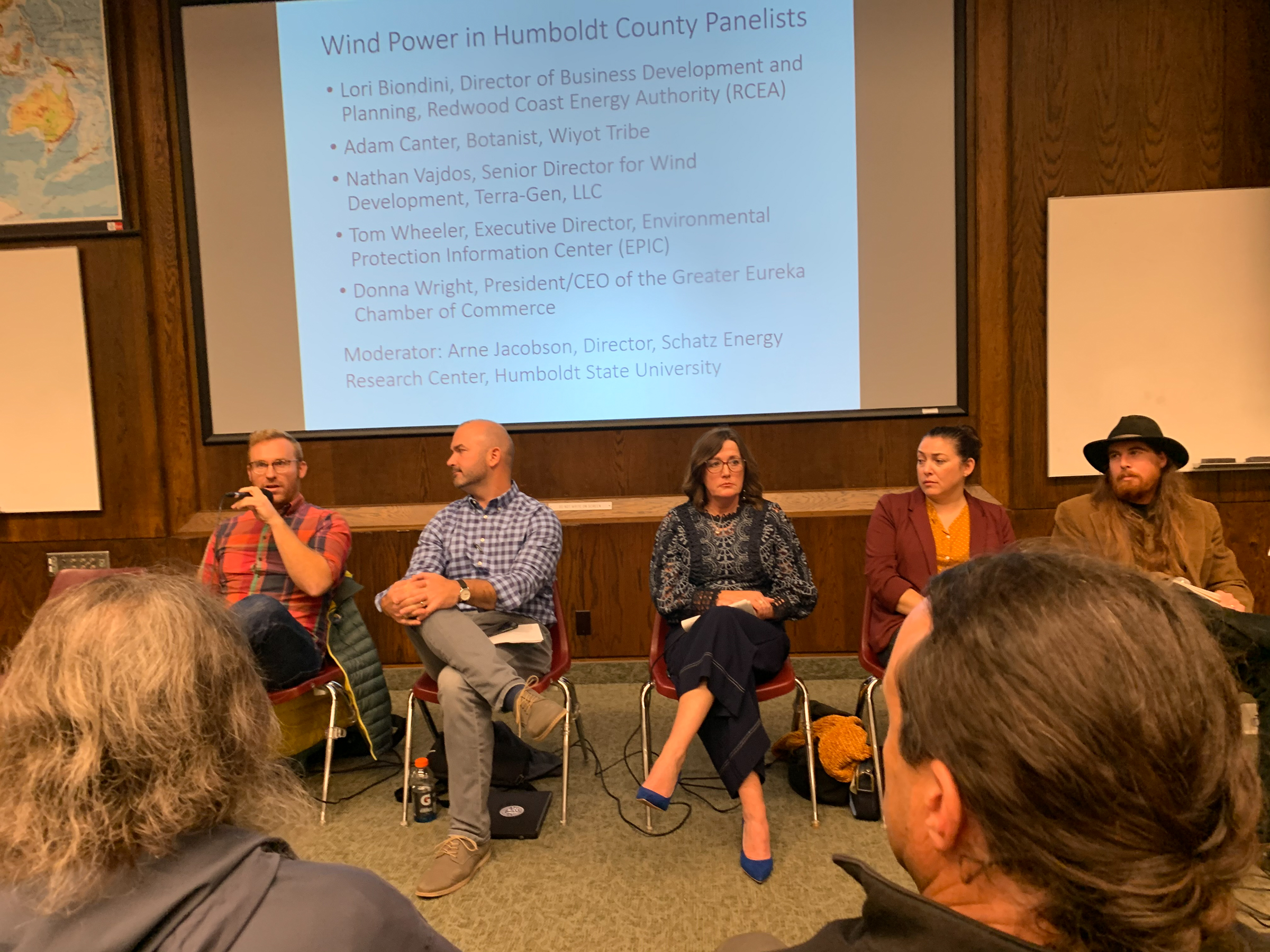
    A crowd waits for Sustainable Speakers panel to begin. | Photo by Michael Weber

    Adam Canter, a botanist and representative of the Wiyot tribal council, defended the preservation of the land and disapproved of the Terra-Gen project. Canter cites ethnobotanical resources and culturally significant sites as reasons not to move forward with this project.

    “When we first heard about this project, there was this big pit that just kind of fell into our stomachs,” Canter said. “We thought when Shell came 10 years ago that no other company would come back and try to build a project here. But we were wrong.”

    Canter pointed out the cultural resource report for the site bound in a green, four-inch binder.

    “The representation of cultural diversity on this ridge is pretty magnificent,” Canter said. “We’re seeing evidence of Athabaskan peoples and the Wiyot-Algonquin peoples and really it should be listed on the National Register of Historic Places.”

    According to Canter, the area is also a high prayer site; a place where a large expanse of Wiyot ancestral territory is visible. Like the turbines obscuring the view, the Wiyot cultural heritage could be obscured too.

    Tom Wheeler, director for the Environmental Protection Information Center, said the proposed site is a questionable area to build a wind farm.

    “The representation of cultural diversity on this ridge is pretty magnificent. We’re seeing evidence of Athabaskan peoples and the Wiyot-Algonquin peoples and really it should be listed on the National Register of Historic Places.”

    Adam Canter

    According to guidelines set by the California Energy Commission and the California Department of Fish and Wildlife, the proposed site is “pristine.” Wheeler said the site has several rare and endangered species, including the rare Horay bat.

    Wheeler is still hopeful to keep the project, and said there is technology that can reduce some of the wildlife impacts. This, however, is only one mitigation measure to the several unavoidable cultural, environmental and wildlife impacts of the project.

    “I want this to be a better project and it’s not there,” Wheeler said. “At least not yet.”

    On Thursday, the final vote by Humboldt County’s Planning Commission will weigh impacts to Native American culture and environmental quality to the people’s interest in local, reliable energy.

    Aside from the benefit of reducing carbon emissions, allowing Terra-Gen to build the wind farm also comes with an economic and infrastructure benefit.

    Senior Director in Wind Development for Terra-Gen Nathan Vajdos said the company would be the second-largest taxpayer in the county, and could fund $14 million to Humboldt’s reliability network upgrades, with $1.3 million to the Humboldt substation.

    “As we charge our iPhones, we fill up our cars with gas, we’re having impacts.” Vajdos said. “Whether this project is built or not, we are having an impact in this room.”

  • This Week: Campus & Community Dialogue on Race

    This Week: Campus & Community Dialogue on Race

    A week of open dialogue to learn about cultures within the Humboldt community

    This week, Humboldt State kicks off its annual Campus & Community Dialogue on Race workshops. Starting Nov. 4 and lasting through to Nov. 8, the theme is Dismantling & Deconstructing To Build.

    Lectures and workshops offer an opportunity for people to come together and have an open dialogue to learn about subcultures within the community. The workshops are open to all students, faculty and locals.

    Programs cover topics such as intersectionality, racial justice, mental health, election activism and more. A wide variety of workshops are offered throughout the week and provide plenty of opportunities to participate. Workshops include an Intro to Social Justice Seminar, an overview of Critical Muslim Studies and a Dia De Los Muertos celebration that includes food and movies.

    Several guest are scheduled to speak in the Kate Buchanan Room, University Center 225, during this event. Assistant Professor of Anthropology at Stockton University Nazia Kazi, Ph.D. speaks on Tuesday, Nov. 5. Director of the Center for Diversity & Inclusion at Sacramento State University John Johnson, Ph.D. speaks Thursday at 5 p.m. Professor and Associate Dean of the College of Integrative Sciences and Arts at Arizona State University Asao Inoue, Ph.D is scheduled to speak Nov. 8 at 10 a.m.

    The CDOR started in 1998 as a recognition of America as a diverse society. Their mission statement fleshes out the intent of the multi-day event.

    “The vision of Campus & Community Dialogue on Race is to achieve racial, social, and environmental justice,” the statement says. “The program’s mission is to promote and facilitate social and environmental change by engaging a diverse range of individuals, communities, and viewpoints to explore the impact of racism and its intersections with all forms of oppression.”

  • Perpetuating Stereotypes Ain’t Cute

    Perpetuating Stereotypes Ain’t Cute

    Costumes that perpetuate stereotypes of cultures and minorities aren’t funny, they’re problematic

    The Halloween season provokes the competitive nature of costume shopping, but costumes that display a person’s culture, religion and tradition should remain off-limits.

    Costumes based off of Native American, Latinx, Asian, Middle Eastern and African cultures are appropriation, plain and simple. Feathered headdresses, beads and tassels don’t adequately reflect the entirety of Native American culture. Just as Egyptian culture is more than gold jewelry and eyeliner. These costumes are tasteless, especially if you aren’t from the cultures you’re dressing up as.

    While these are the obvious examples of appropriation, other costumes can still be offensive even if they aren’t directly ripping off a culture.

    Other costumes that take advantage of different lifestyles, religions and customs include nuns, priests, inmates and military personnel.

    The intentions behind a costume should be highly considered. You need to remain mindful of how you choose to display an idea to ensure you aren’t being offensive to any culture.

    Cultures can’t be boiled down to a single costume, accessory or prop, so don’t wear anything that diminishes a significant part of someone’s life just for some laughs or notoriety.

    The appropriation of cultures are so often portrayed in an ignorant and blind fashion that fail to value the importance and significance behind an item being used purely as an accessory. By appropriating a culture or religion with a costume you’re perpetuating ignorance and preventing the education of how to accurately respect and represent people.

    Costumes that appropriate heritage and traditions pick and choose aspects of a culture purely for entertainment purposes. These ultimately cast a stereotypical image that fails to accurately reflect reality.

    The transition from culture into costume disregards past movements, practices and emotions experienced by those who are being appropriated. Costumes often fail to reflect the original garments through the commercializing process, furthermore disrespecting the authenticity.

    You should be able to decipher which outfits are appropriate and which are inappropriate. If not, you shouldn’t consider these ideas as viable costume options.

    If you’re questioning whether or not your costume choice is offensive, put yourself into the shoes of someone who genuinely practices what you’re posing in.

    Be a critical thinker. Before attending a Halloween party or heading out, check the fit. Examine your decisions, and if it feels unethical or immoral, don’t wear it. That’s it.

  • 18th annual International Education Week

    18th annual International Education Week

    The 18th annual commencement of International Education Week at Humboldt State occurred last week from Feb. 5 through Feb. 9.

    The commencement began with an annual flag ceremony procession that snaked its way from the Feuerwerker House, up around the quad and meandered its way towards the library – all to the beat of an improvised drum line.

    The International Education Week was hosted by the Academic and Career Advising Center, Center for International Programs, the College of Arts, Humanities, & Social Sciences, the College of Extended Education and Global Engagement, the International Advisory Committee, Library, the Multicultural Center and the Global Connections Club.

    The procession was initially just members of the Global Connections Club and international students, but bystanders were invited to select a flag to represent in the parade by Center for International Studies study abroad coordinator, Christiana Frye.

    Ana Nihalani, an exchange student from Pakistan, was excited at the prospect of showing off the parade on her Snapchat story.

    “It looks so cool!” Nihalani remarked excitedly when shown the video taken of her of the procession. “All of us walking together with our flags on from all over the place!”

    Kate O’Connor, president of the Global Connections Club, touched on the purpose of the group as well as the importance of the week itself.

    “When international students come to HSU, either for study abroad or the duration of their education here, they can join the club.” O’Connor said. “Along with some domestic students from around here, we all get together and form connections and friendships and volunteer together for events like this.”

    The keynote address of this year’s international education week was given by Dr. Teresa Wright, department chair and professor of political science at CSU Long Beach on Feb. 6.

    Dr. Wright’s lecture was called “Politics in China: Good Governance Gone Bad?” and focused on the misconceptions many have when it comes to foreign policy.

    Wright encouraged to reject any prejudice.

    “We need to view regime type as a spectrum, not just democratic equates good, undemocratic equates bad.”

    Wright condemned certain actions of the Chinese government over the last few decades. She emphasized that it was fair to be critical of their governance, but not simply because of typical Americanized prejudice that “only a liberal democracy can fulfill functions of good governance.”

    The international film festival screening was held in the Kate Buchanan room on Feb. 7. A variety of foreign student-directed and produced films were made available by Humboldt International Film Fest, a student-run film festival organization founded in 1967.

    The winner of the 2017 festival was “Memory” directed by Ilirjan Himaj.

    “Memory” focused on an elderly Albanian man with dementia trying to find his way home after setting out to buy a toy for his visiting grandson. Despite being only 18 minutes long, the film was profoundly sad and several of the attendants remarked on this aspect when it was revealed that it was this year’s winner.

    If you are interested in participating in next year’s International Education Week, are interested in future international program event or thinking about studying abroad, you can visit the Center for International Programs website or Feuerwerker House on campus for more information.

  • Bringing culture to HSU

    Bringing culture to HSU

    The African American Center for Academic Excellence and Housing & Residence Life brought Mardi Gras to Humboldt State on Feb. 9.

    Mask making took place at 7 p.m., and then DJ C4 took over the dance floor an hour later.

    To Wayne Brumfield, interim vice president of Student Affairs at Humboldt State, the Louisiana tradition is about “Mardi Gras family and having a good time.”

    “I thought it’d be fun to introduce a Mardi Gras type event to Humboldt State University,” Brumfield said. “Mardi Gras is one of those events that is fun. You have a chance to eat some food and dance, so I thought it’d be good for our student body.”

    Corliss Bennett, director of the Cultural Centers for Academic Excellence, had a hard time transitioning to HSU. Like many students, she mostly had to rely on on-campus activities to have some fun.

    “In honor of Black History Month, we wanted to bring New Orleans to Humboldt,” Bennett said.

    Daniel Erb, a biology major at HSU, works for housing and helped put together the Mardi Gras program.

    “I really hope that residents can socialize and have a good time,” Erb said. “This event is a good way to show how different celebrations are celebrated around the world.”

    Josh Lequin, a business and management major, wished there would’ve been more advertising about this event, because he had a great time.

    “I made a mask got some beads and threw them at people who poured themselves out on the dance floor,” Lequin said. “The people who went to the event where the people who wanted to have a good time.”


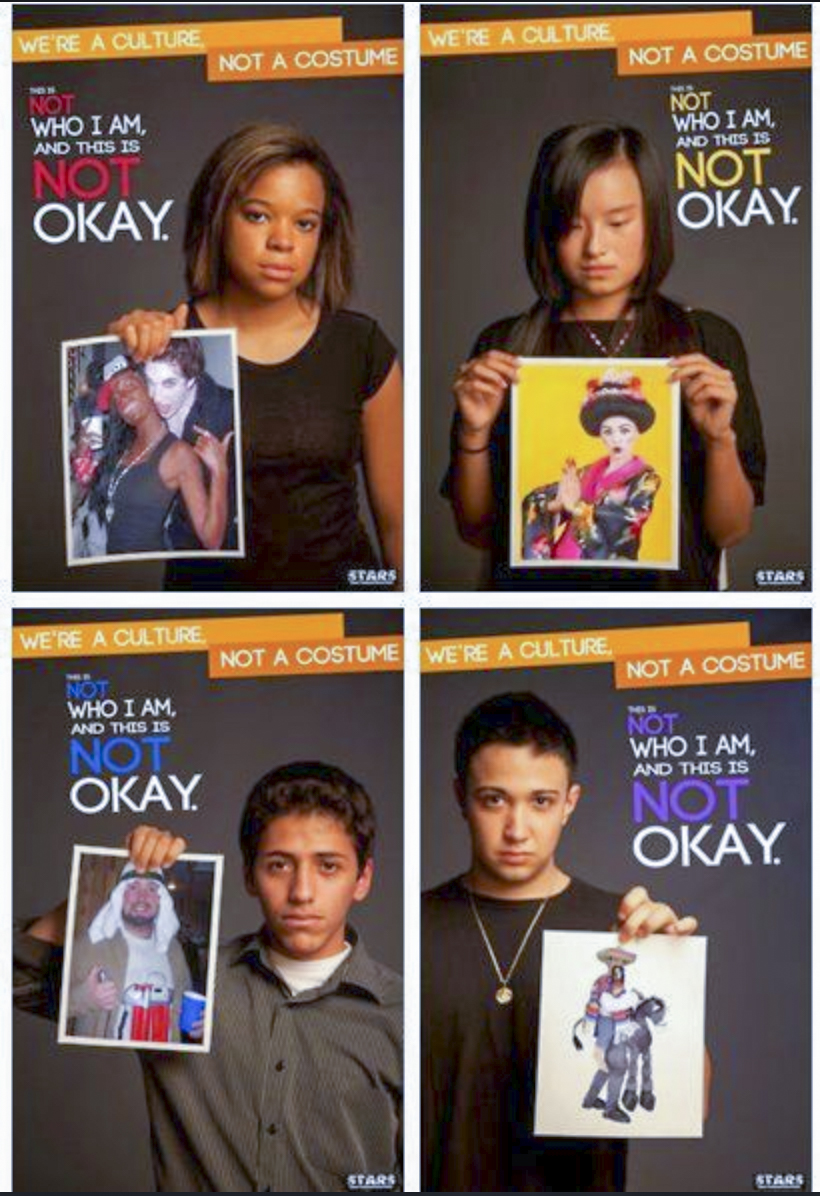
  • My culture is NOT a costume!

    My culture is NOT a costume!

    By | Reza Sadeghzadeh

    Some people might think it’s sexy to wear a Pocahontas costume for Halloween or funny to dress up like a Muslim wearing a thawb with a fake bomb strapped to their chest.

    But ask a Native American woman if she thinks it’s sexy to dress up like a subordinate Disney character where Native Americans are portrayed as a second-class citizens. Ask her if she thinks it’s sexy to dress up like Pocahontas when Native American women have the highest rate of rape and assault.

    Ask Mohammad Maleki, a former HSU student from Iran, if it’s funny to dress up like a stereotypical Muslim suicide bomber when he was unable to come back to America during Trump’s travel ban earlier this year.

    Those who like to use other people’s cultures as costumes might claim that they are only choosing to dress as such just for the sake of Halloween. They’ll add that they don’t mean to promote racial stereotypes. But their intention is irrelevant.

    That is why the My Culture is Not a Costume campaign has been brought to our campus with the endeavor of students like Deema Hindaw to raise awareness about this issue.

    “My goal with this campaign is to show people that cultural appropriation is not a joke,” said Hindaw. “The culture of others shouldn’t be a costume that one gets to wear for a night.”

    Hindaw and other students from the MultiCultural Center have also put together a workshop to inform others about the distinction between cultural appreciation and appropriation.

    My Culture is Not a Costume is a nationwide movement. It is not just about a costume, it is also about “putting on other people’s skin for that one night as a prop,” said Elizabeth Phillips, a Communication student at HSU. “And at the end of the night, you get to take it off and maintain your privilege while other people have to deal with their cultural reality… the reality that our society has viewed skin color in a hierarchy.”

    Every culture is beautiful and slightly different from one another. But at the end of the day, we are all humans who want the same things in life. Cultural appropriation is a systematic ideology implemented by those who are advocates of racial segregation and the scandalous rhetoric of “divide and conquer.”

    Cultural appreciation is a framework for solidarity, because it helps us admire our cultural differences that is used as guidance for a healthy dialogue regarding race. Finally, culturally appropriated costumes discourage us from having any type of healthy dialogue about our different cultures.

  • Consent Culture

    Consent Culture

    By Andre Hascall

    Consent culture has been a vital part of Humboldt State University since Check It, as student led movement to prevent sexual assault, arrived in 2014. That culture is growing further with the new themed dorms in Creekview. The dorms will be called the Consent Culture Living Community.

    The living community will provide a space of comfort for survivors and other supportive students. There are a few themed dorms on campus, with dorms themed for gaming, outdoor adventure and sciences among others. The themed dorms that HSU already has on campus grow together through events geared towards their themes. The events can be as small as ice-breakers or, as we’ve seen in recent years, something as big a creating a community garden.

    The Consent Culture Living Community will have events catering towards consent related activities.

    Morgan Fahey-Reye is a former community advocate while Check It was in its beginning stages at HSU.

    “Check it puts on a lot of events which are safer alternatives to going out on the weekends,” Fahey-Reyes said. “I also like how they do trainings with student leaders to educate them about addressing unsafe situations.”

    Activities that the Consent Culture Living Community will have are centered toward teaching the community about the situations in which they should “check it”, which means ask for consent, and intervene if you think someone could be in danger of sexual assault. However, some believe that this themed housing isn’t necessary such as Adrian Zavala, a freshman at HSU.

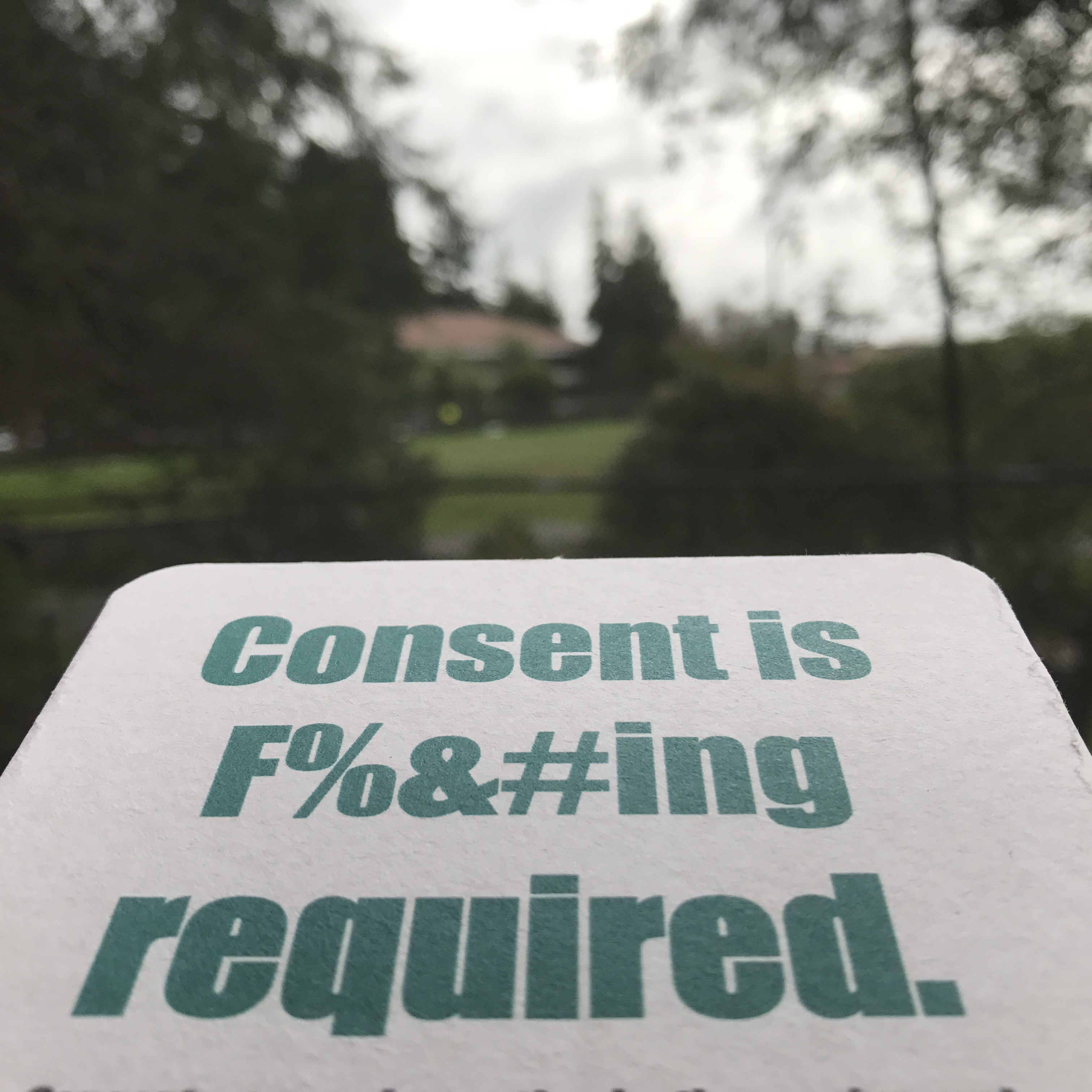
    “Campus should already be aware that consent is required,” Zavala said. “There shouldn’t have to be a separate dorm for that.”

    Humboldt State University is taking the steps to make it known on campus that consent is required. The Consent Culture Living Community will be one of HSU’s tools to combat sexual harassment and assault.