The Lumberjack


Students Serving The Cal Poly Humboldt Campus and Community Since 1929

Tag: film

  • Recasting the narrative at the Latino Film Fest

    Recasting the narrative at the Latino Film Fest

    By Savana Robinson

    Chatter ceased as the house lights dimmed. Hands rustled in bags of popcorn and miniscule pieces dropped to the floor on their way to a mouth as an impressive scene of the Amazon appeared on the massive screen.

    The 25th annual Latino Film Festival at Mill Creek Cinema was held Feb. 27 through Feb. 29. This year’s theme for the festival was environmental issues. The films shown were “Nostalgia de la Luz” (Nostalgia for the Light), “El Abrazo de la Serpiente” (The Embrace of the Serpent), and “A Million Miles Away.”

    “Nostalgia de la Luz” is a documentary that takes place in the Chilean Atacama Desert, where a woman is searching for remains of loved ones whose lives were taken under the regime of Augusto Pinochet. At the same time, astronomers are looking for answers about the past of the cosmos.

    “El Abrazo de la Serpiente” shows a shaman in the Amazon who leads a sick man and his colleague to a flower that may cure him. Years later, a botanist leads him back to the sacred flower, which the shaman had forgotten. The film is set with overtones of the importance of protecting indigenous cultures and sharing knowledge.

    “A Million Miles Away” is a biopic about the life of José Hernández, a migrant farmworker who becomes an astronaut. The film is about hardship, perseverance, and the power of a dream.

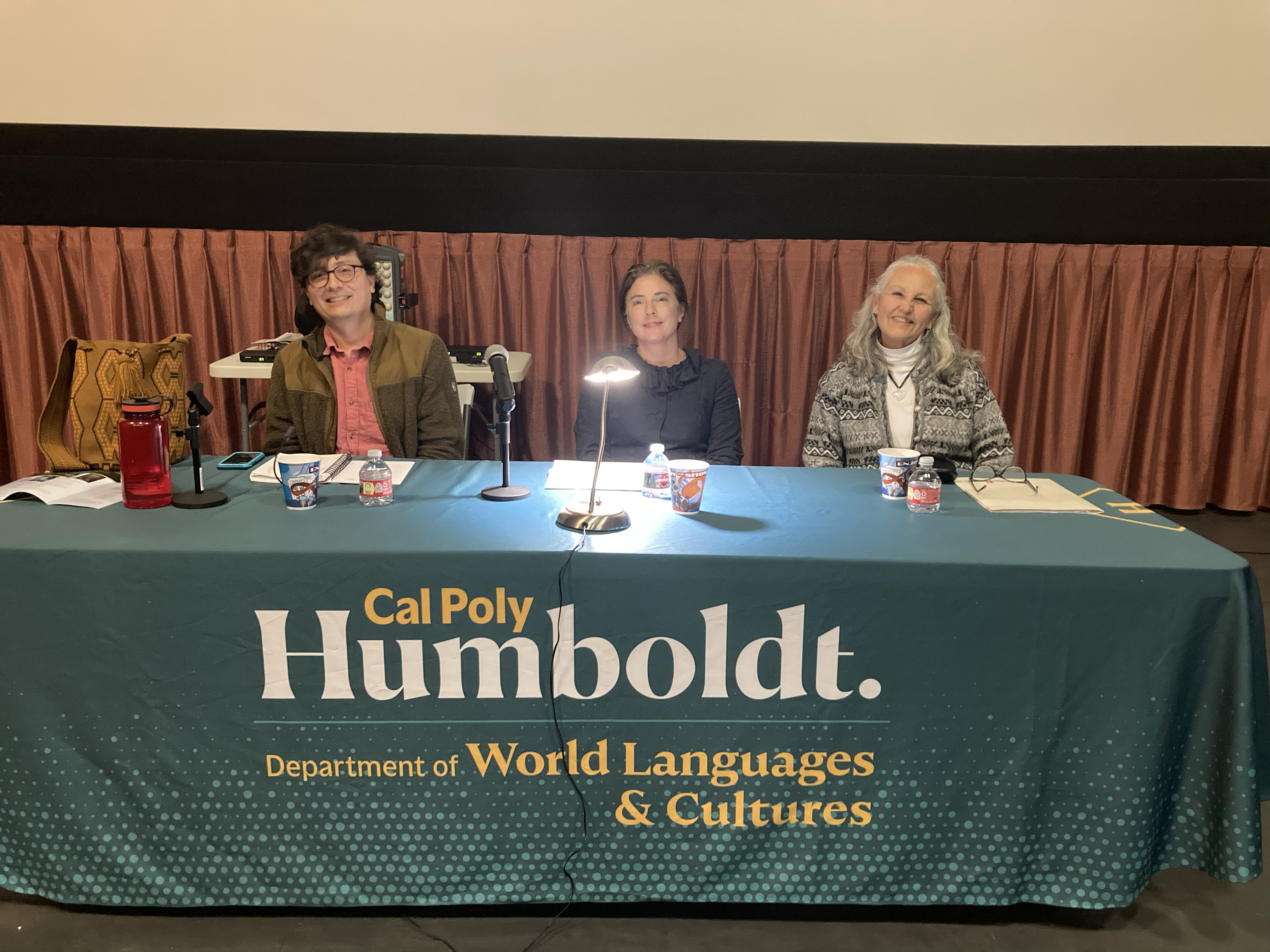
    Gabrielle Gopinath, professor of history of cinema and art at college of the Redwoods, was part of the panel discussion after the screening of “Abrazo de la Serpiente.” Gopinath noted the distinct difference between the film and others of its kind.

     “Films about the jungle typically cast the global south as a crucible existing outside time and history,” Gopinath said. “Indigenous characters only come into focus insofar as they play subsidiary roles in a white protagonist’s journey. However, in “Abrazo de la Serpiente,” the white characters and their quest are accessory to Karamakate’s central character arc.”

    José Marin Jarrín, a professor of fisheries biology at Cal Poly Humboldt, gave a speech during the panel after the screening of “A Million Miles Away.” Jarrín said that the movie reminded him of the history and stories of all immigrants.

    “When we arrive, we change who we are to try to assimilate with the majority,” Jarrín said. “We also eventually realize there’s nothing wrong with who we are, and that we should be very proud of where we come from.”

  • Ten other movies filmed in Humboldt County

    by Eli Farrington

    Humboldt County Residents were recently buzzing with excitement as Warner Bros. Pictures’ mysterious new production codenamed, “BC Project,” began filming in Eureka and Arcata. The film, directed by Paul Thomas Anderson, is set to star Leonard Dicaprio, Regina Hall, and Sean Penn. Other than that, little to no information is available on the secretive motion picture. Until more information on the “BC Project” is made available, here is a list of 10 other movies shot in Humboldt County to watch in the meantime. 

    1. “A Lass of the Lumberlads, Episode 1: The Lumber Pirates,” (1916).

    This silent film serial, or chapter film, was the first fictional movie series to be shot in Humboldt County, starring Helen Holmes and Thomas G. Lingham. The episode follows Lingham in his pursuit of purchasing land from a tribe of Klamath Native Americans so that he can use their lumber to fulfill a contract for 10-million-feet of timber. He ultimately succeeds, but ends up murdering the chief of the tribe in the process. His wife, who witnessed the murder, fears for her life and flees with their newborn daughter, but is swept away in a river clinging to a log. 

    1. “East of Eden” (1955). 

    Based on the acclaimed novel by John Steinbeck, this film adaptation follows Cal Trask played by James Dean as he attempts to win his father’s approval from his golden child brother, Aron, played by Richard Davalos. The storyline is loosely based on the biblical story of Cain and Abel, and follows Cal’s venture to gain his father’s love by pursuing a business opportunity that could save the family farming business. Along the way, Cal meets his estranged mother (Jo Van Fleet) and begins to develop feelings for Aron’s girlfriend (Julie Harris). 

    1. “Star Wars: Episode VI – Return of the Jedi” (1983)

    Once they have rescued Han Solo from Jabba the Hutt, Luke and Leah join back up with the rest of the growing rebel fleet and prepare for their final battle with the empire. At the same time, Palpatine and his troops have constructed a new death star above Endor, and the rebels must team up with the Ewoks, Endor’s furry inhabitants, in order to defeat the evil empire once and for all. 

    1. “Ganjasaurus Rex” (1987).

    This cult classic was originally conceived by the Reagan Administration as an attempt to infiltrate the stoner community and curb cannabis consumption, but after numerous budgeting problems, rewrites, and directorial changes, Reagan’s vision backfired and the film became the hilarious masterpiece that it is today. Andy Serkis stars as the mesozoic pothead in this surprisingly well-received horror comedy. 

    1. “The Lost World: Jurassic Park” (1997).

    After the destruction of the main park, John Hammond (Richard Attenborough) and Ian Malcolm (Jeff Goldblum) venture to a secret secondary site where other dinosaurs are being kept in hiding. Chaos ensues as Malcolm attempts to monitor the beasts, who have been released into the wild to fend for themselves. 

    1. “Butterfly” (2000). 

    This TV Documentary follows the journey of Julia “Butterfly” Hill’s protest of the Pacific Lumber Company in Humboldt County. She set up camp over 100 feet in the air in the branches of a 1,500-year-old redwood tree to protest the clear cutting of ecologically important forests. Hill resided in the tree, which she nicknamed “Luna,” for a total of 738 days without letting her feet touch the ground until the lumber company agreed to her terms. 

    1. “Humboldt County” (2008).

    An aspiring doctor’s (Jeremy Strong) life is thrown off course when his father and medical school professor fails him. Unsure of his next move, he aimlessly wanders the streets of Los Angeles until a one-night-stand sweeps him into a journey up the coast to Humboldt County. Once there, he finds himself stranded in a community of weed farmers and immersed in a culture that he never imagined himself in. 

    1. “The Love Witch” (2016). 

    Elaine (Samantha Robinson), a gorgeous young witch, moves to Arcata to practice witchcraft and search for a man who will love her. She enchants and seduces multiple men to be with her, but her spells are too powerful and she ends up with a collection of men who are all obsessed with her. Eventually, she meets her dream man, but her compulsive need to be loved will come at a cost. This delightfully raunchy romance/horror film tackles gender roles of both men and women, and is a must-watch. 

    1. “Weed and Wine” (2020). 

    This documentary explores the similarities and differences between two farming families that are continents apart. One family – a French mother and her son, tend to their classy old-school vineyard and winery in Southern Rhônes. The other Family, a father and son from Humboldt County, manage and operate a legal organic cannabis farm. This documentary compares and contrasts the centuries-old winemaking traditions of France with the practices of California’s blossoming cannabis industry. 

    1. “Sasquatch Sunset” (2024). 

    Starring Jesse Eisenberg and Riley Keough, this comedy follows the day-to-day lives of two sasquatches over the course of a year as they try to navigate the constantly changing world around them. Directed by David and Nathan Zellner, this highly anticipated hilarious adventure is scheduled to release later this year. 

  • A-listers in Arcata; student extras go to prom

    A-listers in Arcata; student extras go to prom

    by Carlina Grillo

    Hollywood has made its way into the Humboldt scene and Cal Poly Humboldt students are getting in on the action.

    The filming of a new movie, dubbed “BC Project,” occurred right across the freeway from Cal Poly Humboldt. Directed by Paul Thomas Anderson and ushering in other big names like Leonardo Dicaprio, Regina Hall and Maya Rudolph, this film has gained tons of traction among local residents. 

    Among the crowds of bystanders who gathered to watch the filming take place on G street in Arcata, students reflected on their major film debut. Days prior, students were cast as extras for select scenes. 

    Jasmyn Lemus, a sociology major, signed up for the casting call reluctantly. 

    “I saw a casting call and it was [requesting] specifically Hispanic people, and I was like ‘oh my gosh, that’s me,’” Lemus said. “I didn’t know what the scene was going to be until [an email] said ‘booked,’ and I actually read it and it said ‘school dance.’ I was like, ‘uh, I’m playing a high schooler?’”

    At Eureka High School, teenagers and young adults gathered to reenact a high school prom. Many of these extras were local high school and college students.

    Michael Osswald, a computer science major, was one of those students. After seeing filming take place outside of his house, he looked into the project and was casted as an extra. 

    “I danced all day, jumping up and down,” Osswald said. “I liked getting to see the inside of Hollywood.”

    Another student who got to jump up-and-down all day was John Farley, a film major at Cal Poly Humboldt. Farley found out about the casting call through an email from a professor. 

    “Through some internet sleuthing with a couple of my friends, we put the pieces together that it was probably going to be a Paul Thomas Anderson movie,” Farley said. “About two weeks before I came on set, an article was published announcing that Leo was casted in it. As far as actual production goes, I wasn’t even sure where we would film until the day before we were called to set. The casting people told us to dress warm, so after dancing for a while, I was definitely breaking a sweat. At the end of the day, I was absolutely tired.”

    Lemus considered herself lucky for getting to sit down on a table rather than having to dance throughout the day. 

    “We got there at [6 a.m.], keep in mind we had to stay there until 8 p.m. I was working for 13 hours straight,” Lemus said. “It felt like a really low budget quality prom. I’m sorry, but I would be so disappointed if I had to pay 80 dollars to go to prom and my prom looked like that.”

    Lemus mentioned sympathy she had for other extras who had to repeat more intense movements throughout the day, such as dancing in high heels and lifting crowd surfers. 

    “There was a really big lack of communication the whole time we were there,” Lemus said. 

    Jack McCann, an environmental studies major, found out about the casting call via Instagram and also recalled long work days. 

    “The first day, I was on set most of the day. We were there for around 12 hours. The second day, I was there around six hours before being needed on the set,” McCann said. “An interesting group of people for sure.”

    Many locals have speculated on what the movie is about after watching filming take place. Multiple rumors have floated around, with some people more skeptical than others. 

    “I’ve heard from others that it may be based on the Thomas Pynchon novel, ‘Vineland,’” Farley said. “I would see this as a pretty good assumption as this is not the first time the director has adapted a novel from that author.” 

    “I heard some rumors about it being based on a book, but there was no conclusive evidence to convince me either way,” McCann said.

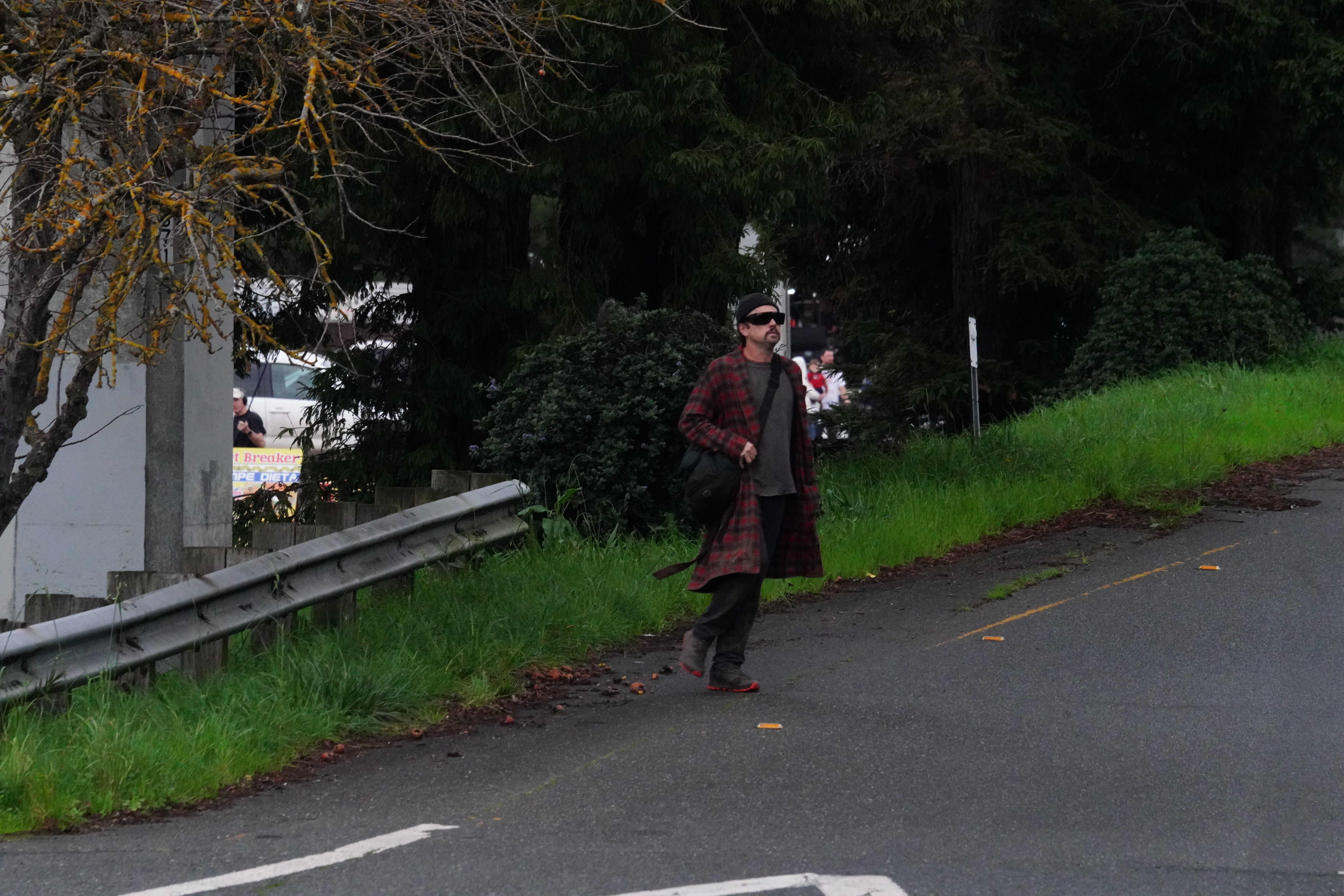
    Despite differing opinions and theories, Cal Poly Humboldt students all agreed it was a unique experience to be a part of and an interesting day to be a Humboldt resident. After all, it’s not every day Leonardo DiCaprio is seen running down Highway 101.

    “​​As a film major, the entire experience was a dream come true,” Farley said.

  • The Boy and the Heron review: magical on the screen and off

    The Boy and the Heron review: magical on the screen and off

    by Griffin Mancuso

    There is a whimsical quality to seeing a movie in the theater. 2023 was a year with many thought-provoking and conversation-starting films like “Killers of the Flower Moon” and “Barbie.” I rarely go to theaters now, but as an enjoyer of Studio Ghibli films, I had to see “The Boy and the Heron” with the classic theater experience. There is no better place to get the classic theater experience than the Broadway Cinema in Eureka. 

    Like any chain theater, the neon sign on the front had not been replaced in a very long time, leaving only the Y glowing in the dusk. The lobby was filled with the sharp smell of popcorn and the carpets were dull and faded where people had walked. While lacking in staff and attendees, the theater still had its charm in the form of large star lights on the ceiling and orange neon accents around the snack table.

    I settled into my cushy chair just in time for the film to start. “The Boy and the Heron” was enough to bring famed Ghibli director Hayao Miyazaki out of retirement, so I had high expectations.

    Before I continue, a minor spoiler alert for this movie.

    The movie begins with the piercing sound of air raid sirens against a gray backdrop of houses, placing us in World War II-era Japan. We meet our protagonist, a young boy named Mahito living in Tokyo, who loses his mother in a hospital fire on that night. Years later, Mahito’s father marries his late wife’s sister Natsuko and moves them to the countryside.

    While trying to adjust to his new life and the loss of his mother, Mahito encounters a strange talking heron who tells him his mother is alive and needs to be rescued from another world. The heron, a mischievous creature who we soon discover is not a heron at all, also traps Natsuko in this alternate world, forcing Mahito to track down the heron and travel to the other world.

    The film tackles themes of family, loss and escapism that mirror Miyazaki’s own experiences. Like many of his films, it is a coming-of-age story that requires the protagonist to embrace fantasy to grow, then let go of it in order to move forward. The parallel world Mahito travels to acts not as a purgatory, but rather as a gateway to many alternative universes. This world contains wild creatures ranging from giant man-eating parakeets to small white blobs called the warawara, which eventually ascend to the human world to be born as human babies. 

    Along his journey, he meets younger versions of the people in his life, including one of the old women living in the countryside house with him and his family. There are so many layers to the world of “The Boy and the Heron” that it feels like a mix of a child playing pretend and a ƒvivid dream.

    The magical wonder of the film didn’t stop at the screen. I’m not sure how it got into the theater, but a small sparrow briefly joined us. It fluttered around the ceiling, adding a bit of immersive surround sound, and the audience couldn’t help chuckling when it settled in front of the projector, leaving a giant bird-shaped silhouette on the screen. It didn’t linger long, but just enough to make me wonder about the irony of its appearance.

    No matter the quality of the story, a Studio Ghibli film never disappoints in the animation category. The characters, while simple in design, move fluidly against meticulously painted backgrounds. Studio Ghibli is famous for preserving the art of hand-drawn animation and drawing on physical media, which helps preserve the detail in the backgrounds. Any use of 3D animation only enhances the magical effects throughout the film, and it is impossible to tell where the hand-drawn animation starts and the 3D animation ends.

    The story itself is complex and the world doesn’t always make sense, but I think it’s meant to be that way. Like most other Ghibli films, the story moves at a leisurely pace and then rapidly picks up the pace in the final act. It is one of Miyazaki’s more esoteric films, which may not appeal to everyone. The meaning behind some of the recurring motifs like birds and fire are up to interpretation, which impacts what each viewer will take away from the film. 

    “The Boy and the Heron” is an individualized experience that doesn’t fully reveal all its secrets. There are story elements that are never explained and blurs between dreams and reality. To fully enjoy the film, viewers will have to put that aside and inhabit the mind of a curious child.

    While not my favorite Ghibli film, I greatly enjoyed my experience watching it at Broadway. As I left, feeling dazed from the visual explosion at the end of the film, two staff members stood near the exit wondering how the bird got inside and where it flew off to. I like to think the bird wanted to appreciate Miyazaki’s work.

  • Film students dive head-first ‘Into The Deep’

    Film students dive head-first ‘Into The Deep’

    by Carlina Grillo

    Into The Deep, a student film-makers showcase, was put on by the Cal Poly Humboldt Art + Film department on Sept. 15 at the John Van Duzer theater. The showcase included a diverse collection of 19 creative short films. 

    Since the fall of 2022, film students have been preparing to make the dive head-first ‘Into The Deep’ with their films for this showcase. Each student film-maker took an exclusive journey of self-discovery to create these one of a kind films, and that was made apparent by the depth in each and every film.

    “‘Into the Deep’ is more than just a theme,” read the program handed out at the showcase. “It’s a guiding principle. It encourages us to venture beyond the surface and embrace the uncharted territories of storytelling,” 

    With a total screen time of around 80 minutes, viewers were taken on a voyage down a deep, and at times dark, college-core rabbit hole. Bouncing between experimental films like ‘Momento Mori,” directed by Wren Kosinski, narratives like “Shrimp Film,” directed by Solomon Winter, and documentaries like “Camino,” directed by Nat Cruz, each piece was completely different from the one before. 

    Film production professors Dr. Michelle Cartier and Dave Jannetta attended the event and expressed the joy they felt during the showcase. 

    “This was the most solid showcase I’ve seen in a minute,” Cartier said. 

    He recalled how big the event used to be pre-pandemic, and how good it felt to see a room full of people celebrating student film-makers. 

    “We’re incredibly proud of the work they’re doing as artists,” Jannetta said. “I want students to make work they’re proud of.” 

    Whether viewers were giggling at Humboldt public bathroom reviews, learning about fisheries and sustainable fishing practices, deep in thought from spoken word and interpretive movement, or questioning their sanity as the films became increasingly unhinged, this showcase proved that Cal Poly Humboldt students are filled to the brim with imagination and creativity.

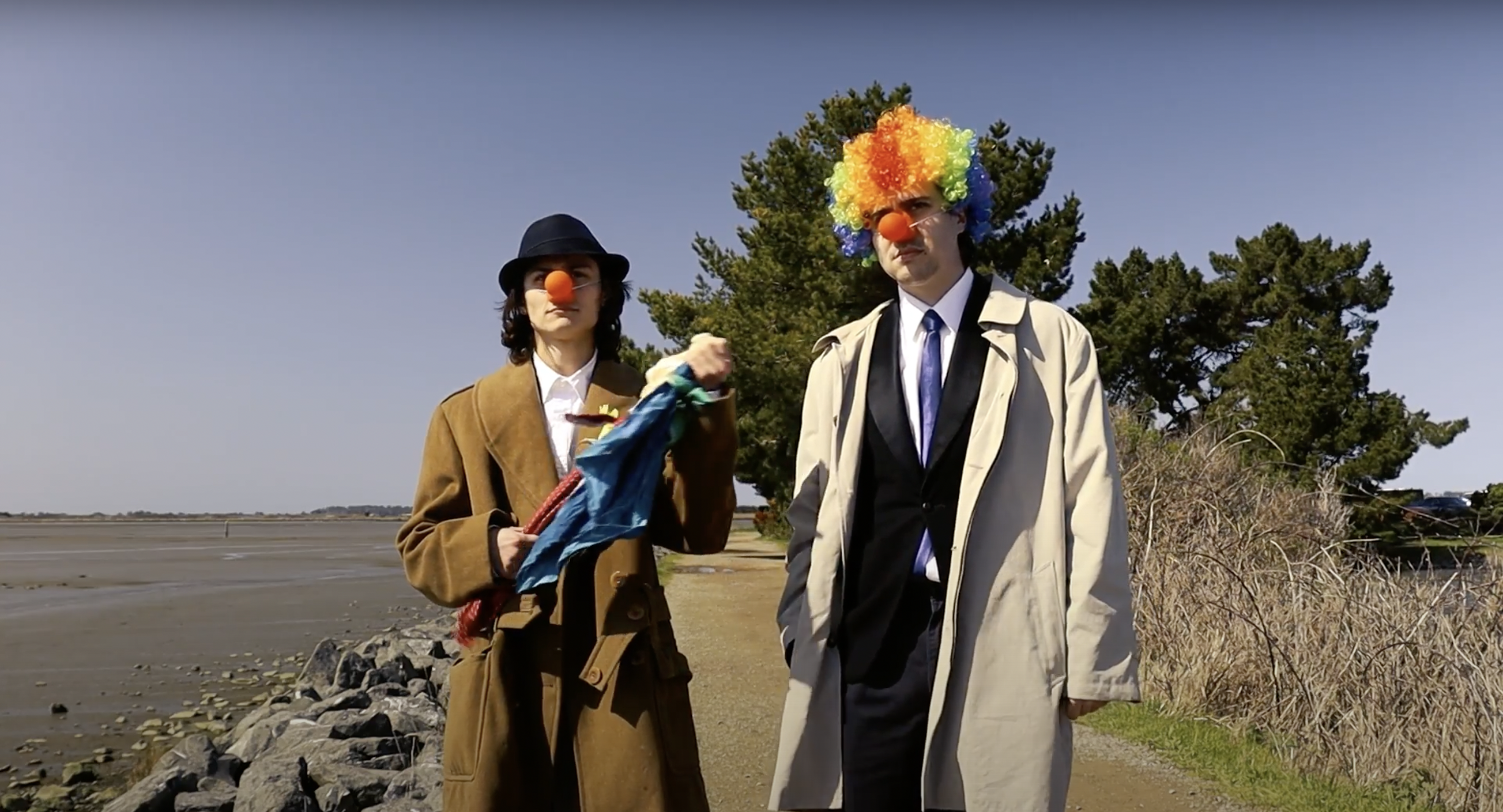
    John Farley, a film major in his fourth year, directed the three and a half minute film “Circus Peanuts. This was a memorable satire mafia film that played at the beginning of the show. The film involved local mobster clowns pushing circus peanuts, and a mafia boss dealing with a snitch in their peanut ring. 

    “It was quite a rush to see something I worked on displayed on the big screen,” Farley said. “Sitting next to my crew who helped with the making of this, we were probably laughing the hardest.”

    Farley ran into a bit of trouble behind the scenes. After a whole day of filming, the original footage for the film was deleted. What viewers saw at the showcase, was actually the second attempt.

    “I felt so defeated, but luckily we were able to rally the troops to get another crack at it,” Farley said. “We got together the following week and shot the entire film in one day. It was fast paced, but an absolute blast getting what we needed to get between scenes and locations. When the actors can’t keep a straight face during a scene and end up breaking character, it is a reassuring feeling that what I’m making will turn out funny.”

    At one point in the latter half of the night, it seemed like films began bleeding into one another and causing a sense of chaos that made viewers question their sense of time. This chaos was apparent as viewers would begin to give an applause just to realize the film wasn’t over. 

    Eventually, realization struck the audience that these pieces were all a part of the larger puzzle: “Teen High School Movie: The Show: The Broadcast,” directed by Mara Lifquist. This film could be described as “Black Mirror” esque, and that is a compliment not to take lightly. This narrative film was around 14 minutes and contained satire commercials, frequent call backs and impressive horror effects. Between laughter and fear was a dissociation from reality that prompted a yearning to watch the film again.

    At the end of the night, viewers left the John Van Duzer theater feeling inspired, touched and possibly disoriented.

  • QTBIPOC Film Coalition hosts first annual film fest

    QTBIPOC Film Coalition hosts first annual film fest

    by Camille Delany

    Originally printed April 26, 2023

    The first annual QTBIPOC Film Festival on campus Saturday, April 15, centered the work of student filmmakers from communities rarely represented on the festival stage. The festival was hosted by the newly-formed QTBIPOC Film Coalition and the Cinema Club. Featuring work by QTBIPOC (Queer, Trans, Black, Indigenous, People of Color) and non-film students, it was a much-needed opportunity for artists from diverse majors to share their work in a festival setting.

    The fest was programmed by Danny Garcia, a Critical Race, Gender and Sexuality Studies (CRGS) senior, and Matthew Mason, a senior in the Film program. They had gained experience in festival programming from attending both the Santa Barbara International Film Festival (SBIFF) and SXSW in Austin.

    “I rediscovered the joy of film through these festivals where I got to see representation that actually resonated with me, and I thought about how to bring this back to the people,” Garcia said. 

    At SBIFF they were inspired by the representation of Trans and Indigenous communities they saw on the big screen.

    “I saw films that I would never have expected to get the spotlight,” Garcia said. “That sparked my interest as a CRGS major in the potential of film as a liberatory medium.”

    The QTBIPOC Film Festival showcased films ranging in length from less than two minutes to thirty minutes, and included experimental dual projections as well as longer films including documentaries and narratives.

    Garcia collaborated with filmmaker and computer science major David Yaranon to write “What a Waste,” a thirty minute narrative critique of misogyny that follows a stalker. Production took place over the span of a week, and involved many of Yaranon and Garcia’s close friends both in front of and behind the camera.

    “I would love to make more films with these guys,” Yaranon said. “This idea was kind of locked in, but it would be great to hear from other people, different ideas and talk about how we can make something meaningful and with a message behind it.”

    Garcia screened their short “i am chicano,” which they produced for Professor M. Cartier’s Fall 2022 class Representation in Film Matters. Among other films that had been produced for the class and screened at the QTBIPOC Film Festival was Lake McLeod’s “I AM,” an experimental short in which the filmmaker reads an original poem.

    Also in the experimental category, Mason showed his 2022 production “Woman in Gold,” starring McLeod and Raelynn Davis, in which a mysterious protagonist follows a woman through a dark forest, and is in turn pursued by a masked stranger.

    Mason welcomes the opportunity to show his work outside of the class it was produced for, because he values the outside viewpoint that the audience brings.

    “Everyone has a different reaction and takeaway from it,” Mason said. “People can see the same thing but take away infinitely different meanings.”

    The QTBIPOC Film Festival encapsulated art created in a pivotal moment for rights and representation of QTBIPOC people.

    “Right now we’re going through a cultural change. Things are shifting. Film still needs to catch up,” Garcia said. “At the forefront of the industry, representation is real and they’re putting money and resources towards it.”

    Disclaimer: The author of this article showed a film at the festival

  • Humboldt students screen their work in film showcase

    Humboldt students screen their work in film showcase

    By Emma Sjostrom

    Originally printed February 22, 2023

    Cal Poly Humboldt film students screened their films at the Film III Showcase on Feb. 21 at the Van Duzer Theatre. Featuring five short films that students worked on during the 2022 Fall semester, the event served as a chance for students to showcase their work to the campus community.

    With guidance from instructor Sarah Lasley, students wrote and directed the films in the showcase last semester. Lasley remarked that past semesters presented difficulties, with students not having access to practical experience. However, the students’ ambition particularly inspires her.

    “The students are so talented, so it’s been exciting because they all have these huge ambitions,” Lasley said.

    Spanning numerous genres, the films exhibit students’ artistic vision through their timely dialogue, emotional music, and methodical cinematography.

    Richard Schild’s comedy “Monster & Me” features an obnoxious roommate who just so happens to be a red-eyed cryptid. A suit-clad protagonist follows and is in turn pursued by mysterious beings in Matthew Mason’s ethereal thriller “Woman in Gold.” A satirical documentary depicts an ambitious and chaotic Bigfoot-hunting YouTuber in Mara Lifquist’s “The Search.” Daniel Delgado spins a comedic depiction of chaotic friendship in his coming-of-age film “Bad Hombres.” A horrific demon-like creature lurks in the depths of a young person’s home in Izzy Starr’s “Where Will You Hide?” The lineup undoubtedly had viewers chuckling, hiding, and looking on with intrigue; all within an hour’s time. 

    A still from Matthew Mason’s “Woman in Gold.”

    Beyond giving students the chance to look back at their hard work, Lasley mentioned the importance of students gaining the sometimes anxiety-ridden experience of screening their work to a broader audience. Delgado commented on the nerves that can come up from such an experience. 

    “It’s cool, but also overwhelming because I have never done [the showcase] before,” Delgado said. “But it’s cool, it does feel a little rewarding.”

    A soon-to-be graduate from the film program, Delgado remarked at the experience of working with and screening the film alongside fellow student directors, how they all bring their personalities to their work. “[We all] see the world differently and that reflects in our films,” Delgado said. “So it’s just cool to collaborate with people like that. I think we all inspire each other, and that gets us excited for what we do.”

    As film students get that experience, the campus community meanwhile gets to see the artwork that students have created. Through the showcase, Lasley hopes that students in the film program and beyond can see the possibilities of what can be created.

    “It’s one of those moments where I feel like you’re watching people exceed their own expectations of themselves in a way,” Lasley said. “And that’s my favorite. That’s why I teach, to show people that they’re bigger than they think.”

    Students whose films were featured are currently working on new productions for final film projects, which will be featured in the Fall 2023 showcase later this year.

  • Cal Poly Humboldt Directors in the spotlight

    by Carlos Pedraza

    In the Van Druzer theater on Thursday, March 3 for the first time since the start of the pandemic student films were shown to a live audience. Around 40 people came to the showing of Cal Poly student films. Several of the films were made in the fall of 2020 there showing being delayed by the COVID pandemic.

    The short films ranged from psychedelic, documentary, serious, and funny; some of the films were a combination. The audience made sounds of laughter, shock and sadness reacting to each film with emotion equal to the film itself.

    A film director who was in the audience was Kylie Holub, a senior film major. Holub directed and wrote the film “Abstraction” in the fall of 2020. They film . During the pandemic Houlb said “ just keeping our crew really lean and realing thinking about how to tell stories with minimum actors.”

    The narrative film “Abstraction” is the story of a beach treasure hunter finding an alien artifact and the fallout of her discovery. The unknown and aliens being major inspiration for the film.

    Holub said “ you see a lot of people with metal detectors, we know very little about the ocean and aliens are fun to play around with.”

    Another director was alumnus Valerie Rose Campbell created the experimental film “Recipe for Young Mothers.”. Campbell goes through the recipe of banana bread while she narrates the experience of a young mother and her attempts to reclaim her life from an abusive relationship and societal expectations of a mother.

    The COVID pandemic heavily impacted the creation of the film Campbell said “ everything got done digitally and that was really hard.”

    The film is inspired by Campbell’s own experience in the local family system. “ How it felt so unjust for my kids and family.” said Campbell describing her own life experiences.

    There will be another film showcase in the fall of 2022 showing films created in the spring.

  • Photos Show Life Around Arcata in the Time of COVID-19

    Photos Show Life Around Arcata in the Time of COVID-19

    A photo series from the end of spring break

    Photographer and Sports Editor Thomas Lal captured these scenes from around Arcata on March 21 at the end of spring break at the beginning of Humboldt County’s shelter in place order.

    The storefronts on the Arcata Plaza look out on mostly empty streets.
    An employee sits at a computer while a sign advertises that the business is still open during the first week of a shelter in place order.
    The shelves in the Arcata Safeway.
    The Humboldt State Library.
    A lone person walks through the mostly empty parking lots at Humboldt State University.
    The Humboldt State Library.
    The Humboldt State Library.
    A single person works at the Humboldt State Library.
    A carton of eggs sits on the shelves at the Arcata Safeway.
    A lone person stands just off of the Arcata Plaza.
    An employee puts up a sign in the door of the Jitter Bean on the Arcata Plaza.

  • “My Neighbor Totoro” at The Minor Theatre

    “My Neighbor Totoro” at The Minor Theatre

    View the magical world of Studio Ghibli animation with special showtimes at The Minor Theatre

    Jump back into the animated world of “My Neighbor Totoro” at The Minor Theatre from Feb. 28 to March 5.

    Hayao Miyazaki is a creator, animator, screenwriter, director and co-founder of Studio Ghibli. He is considered one of the most accomplished filmmakers in anime film and is an acclaimed storyteller through his films. Miyazaki and Studio Ghibli have given us classics such as “Spirited Away,” “Princess Mononoke,” “Kiki’s Delivery Service” and of course, “My Neighbor Totoro.”

    This 1988 masterpiece follows two young girls, Satsuki and her younger sister, Mei. The two arrive at a new house with their father as they wait for their mother’s recovery from an illness at a nearby hospital. Upon their arrival, the two girls find themselves befriending some unusual creatures from the forest, one being a huge, cuddly beast named Totoro.

    The Minor has select showtimes to watch in Japanese with English subtitles from March 2 to March 4 at 8:45 p.m. The rest of the showings will be in English. Ticket prices are $8 before 5 p.m. and $9.50 after 5 p.m. Those with a valid student I.D. can also purchase tickets for $8 for any show after 5 p.m.

  • Why the Oscars Lack 2020 Vision

    Why the Oscars Lack 2020 Vision

    The Academy Awards are broken—here are some ways to fix them

    The nominees for the 92nd Academy Awards were recently announced in the lead-up to the ceremony, which will take place Feb. 9. The nominees are, for the most part, very easily predictable to anyone who is familiar with the kind of films that tend to win Oscars or other similar awards. That isn’t in itself a bad thing, but it does raise the question of how relevant the Oscars really are, and if they really live up to their supposed purpose of granting the “highest honors in filmmaking” to the “best films of 2019.”

    In recent years, the Academy of Motion Picture Arts and Sciences has been under its fair share of criticism for its notably conservative and traditional values. Indeed, the Academy does seem much more inclined to nominate and award reassuring, easily accessible films and blockbusters than they are to consider better, but less successful films.

    A film has to play for at least one week in a theater in Los Angeles County, and its theatrical release has to be the first time that it’s shown.

    Of course, as with all aspects of art, the quality of any film is subjective. But the choices made by the Academy, which is comprised of around 6,000 industry professionals, invite the questioning of their practices.

    The criteria for a film to be considered by the Academy is extremely limiting. For starters, a film has to play for at least one week in a theater in Los Angeles County, and its theatrical release has to be the first time that it’s shown. It can’t be shown on television, released to DVD or Blu-ray or streamed before that.

    Nominees like “Marriage Story” or “The Irishman” would have instantly been disqualified if they hadn’t been shown in theaters before being made available to stream on Netflix.

    This might not sound like a major obstacle at first, but that’s mostly only true for American films with a wide release. Having a decent budget and big names attached doesn’t hurt a film’s chances either. Any independent or foreign film that can’t secure a release in one area of one country is instantly not considered, regardless of how good the reviews are.

    This is just one of several of the Academy’s rules for eligibility, but it’s the most easily-understood example of how limiting the criteria is for one of the most prestigious awards a film can receive.

    Even getting past the extensive list of rules, the Academy is known for usually nominating specific types of films. On this year’s list, only two of the nine Best Picture nominees, “Little Women” and “Parasite,” are not predominantly made by and starring white men, who have been the center of the majority of films that the Academy tends to nominate and award. This is a circumstance that has been the case due to both the criteria for Academy consideration and because the Academy’s board is comprised of, in large majority, white men—a point that is often made into memes with the hashtag #OscarsSoWhite.

    “Little Women”, while receiving nominations for Best Picture, Best Lead Actress, Best Supporting Actress and Costume Design, did not receive any nominations for Best Director or Best Cinematography despite being an incredibly strong film in those categories. An article by Vulture explained how these rare films being nominated cause them to be, possibly unfairly, depended on to please all their demographics.

    “I will say that Greta Gerwig and the film are put in the impossible position of having to represent all things to all women when she became the ‘presumptive representation of all-female directors,’” Angelica Jade Bastien said. “No film can shoulder such a burden.”

    Defenders of the Academy—those who are perfectly content with the nominations—will claim that it’s simply a meritocracy—that the nominations truly represent the best films of each year with no barriers.

    However, the numerous barriers, biased board and skewed representation severely limit which films are considered for one of the most widely recognized honors a film can receive. However, unintentionally, this influences how the film-going public decides what they want to watch and how they interpret what they watch.

    Until the Academy gets some new blood into their board, stops immediately disqualifying films and more frequently overcomes the 1-inch-tall barrier of subtitles, their choices will never fulfill their ostensible purpose.

  • International festival reels universal film into Humboldt

    International festival reels universal film into Humboldt

    Student-run Humboldt International Film Festival hosts film from across the globe for 51 years.

    The longest running film festival entirely managed by students is hosted in the heart of Humboldt every spring.

    Humboldt International Film Fest is open to any film submissions from around the world and combines international film with local film lovers and artists.

    Screenings will begin Wednesday, April 18 and will continue for four days with the Best of the Fest screening on Saturday, April 21. Four final categories include experimental, narrative, documentary and animation.

    A reappearing character in the animation category has been The Bum Collective’s 10-foot, one-eyed, orange monster, Lilly. Lilly Monster was originally drawn up in Calgary, Canada by Xstine Cook’s kids and has developed into a family-run series.

    Cook’s three children, along with her sister’s three daughters, have been making animated shorts since 2010 and have participated in the festival for seven years. The first animated short of the series, Lilly’s Big Day, was drawn and voiced by Cook’s 3-year-old at the time.

    This year, they submitted the film Lilly and the Baby, the most recent adventure of the monster babysitting a human child.

    Cook said she was pleased by the reaction to the previous films by the Humboldt audience.

    “There were all these stoned people and they all got the jokes,” Cook said. “It’s for kids, but they all were laughing.”

    Aside from a class in the film department at Humboldt State, the festival is a campus club that anyone can join and contribute to. Students in the FILM 260 class and club participate in pre-screenings of festival submissions, judge each one and decide on which ones make the final cut.

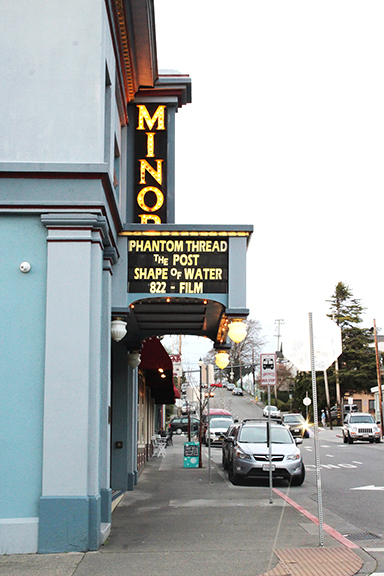
    Over its 51 years, the Humboldt International Film Festival has moved venues. Held for the first time in 1967 at the Sequoia Theater (currently the John Van Duzer Theatre), the festival has expanded to a yearly, four-day celebration of international film at Minor Theatre.

    Maddy Harvey is a senior film major at HSU. Harvey has been involved in the International Film Fest since 2016 and this year, she is the co-director of entries.

    Harvey says this year, the festival received more than 195 films from 22 countries around the globe.

    “It’s really interesting to see how different countries and cultures express themselves through film, how different stories are told,” Harvey said.

    French exchange student Joanna Cottel is part of the film class at Humboldt State and has loved her experience planning the festival.

    “I have been part of organizing other film festivals in France, so I when I saw this one, I was like, hell yeah!” Cottel said.

    Cottel says as an exchange student, she is proud to be participating in the festival.

    Screenings will be divided into four days based on categories, and will begin at 5 p.m. and again at 7:30 p.m. Tickets are $5 for each day and $10 for the Best of the Fest screening on Saturday, April 21.

    “Even though the festival is international, the heart of it is in the Humboldt community,” Harvey said.

  • 18th annual International Education Week

    18th annual International Education Week

    The 18th annual commencement of International Education Week at Humboldt State occurred last week from Feb. 5 through Feb. 9.

    The commencement began with an annual flag ceremony procession that snaked its way from the Feuerwerker House, up around the quad and meandered its way towards the library – all to the beat of an improvised drum line.

    The International Education Week was hosted by the Academic and Career Advising Center, Center for International Programs, the College of Arts, Humanities, & Social Sciences, the College of Extended Education and Global Engagement, the International Advisory Committee, Library, the Multicultural Center and the Global Connections Club.

    The procession was initially just members of the Global Connections Club and international students, but bystanders were invited to select a flag to represent in the parade by Center for International Studies study abroad coordinator, Christiana Frye.

    Ana Nihalani, an exchange student from Pakistan, was excited at the prospect of showing off the parade on her Snapchat story.

    “It looks so cool!” Nihalani remarked excitedly when shown the video taken of her of the procession. “All of us walking together with our flags on from all over the place!”

    Kate O’Connor, president of the Global Connections Club, touched on the purpose of the group as well as the importance of the week itself.

    “When international students come to HSU, either for study abroad or the duration of their education here, they can join the club.” O’Connor said. “Along with some domestic students from around here, we all get together and form connections and friendships and volunteer together for events like this.”

    The keynote address of this year’s international education week was given by Dr. Teresa Wright, department chair and professor of political science at CSU Long Beach on Feb. 6.

    Dr. Wright’s lecture was called “Politics in China: Good Governance Gone Bad?” and focused on the misconceptions many have when it comes to foreign policy.

    Wright encouraged to reject any prejudice.

    “We need to view regime type as a spectrum, not just democratic equates good, undemocratic equates bad.”

    Wright condemned certain actions of the Chinese government over the last few decades. She emphasized that it was fair to be critical of their governance, but not simply because of typical Americanized prejudice that “only a liberal democracy can fulfill functions of good governance.”

    The international film festival screening was held in the Kate Buchanan room on Feb. 7. A variety of foreign student-directed and produced films were made available by Humboldt International Film Fest, a student-run film festival organization founded in 1967.

    The winner of the 2017 festival was “Memory” directed by Ilirjan Himaj.

    “Memory” focused on an elderly Albanian man with dementia trying to find his way home after setting out to buy a toy for his visiting grandson. Despite being only 18 minutes long, the film was profoundly sad and several of the attendants remarked on this aspect when it was revealed that it was this year’s winner.

    If you are interested in participating in next year’s International Education Week, are interested in future international program event or thinking about studying abroad, you can visit the Center for International Programs website or Feuerwerker House on campus for more information.

  • ‘The Shape of Water’ is charming

    ‘The Shape of Water’ is charming

    The Shape of Water is written and directed by Guillermo del Toro. There was a lot of hype leading to the film and it received glowing reviews. It was recently nominated for 13 Oscar awards, making it the most nominated film this year. The film arrived in local theaters a month after national release, and it was worth the wait.

    The lead of the story is Elisa, played by Sally Hawkins, a mute woman who cleans during late hours at Occam Aerospace Research Center with her friend Zelda, played by Octavia Spencer. The center receives a top secret project the scientists must research, a near-human creature no one has ever seen before. By research, they mean torture to see what happens.

    Elisa connects with this amphibian-like animal, and they intimately understand each other without verbal communication. Elisa attempts to rescue the creature with the help of Zelda and her neighbor Giles before the boss of the project catches up to kill the creature.

    It was an exciting and charming story. There are fairy tale elements, like Elisa’s origins. In the beginning, Zelda explains to their superior that she was found by the river as a baby with gill-like scars on her neck and brought to an orphanage.

    With her connection to water and the creature, it was obvious that they were meant to be. This shuts down any beastiality claim, because both of them weren’t humans to begin with. Without the ability to talk, Elisa is still expressive and has a great sexuality to her. She desires love and sex, but doesn’t display her sexuality to the world. If writers are to write a sexy character, it should be for the character and not for the audience, like Elisa.

    Like all fairy tales, there should be a villain, and her boss, Colonel Richard Strickland, played by Michael Shannon, is a decent villain. Strickland is not necessarily maniacal, but he tortures the creature without regret and talks down to everyone around him.

    Strickland goes home in his new car to adoring kids and a loving wife that asks for sex, but he acts like it’s a chore. He clearly has a good life, but has no appreciation for it, making his defeat all the more satisfying.

    If you like fairy tales with more bite than the average Grimms tale, or nostalgia for black and white musicals, this is worth catching before it leaves theaters.