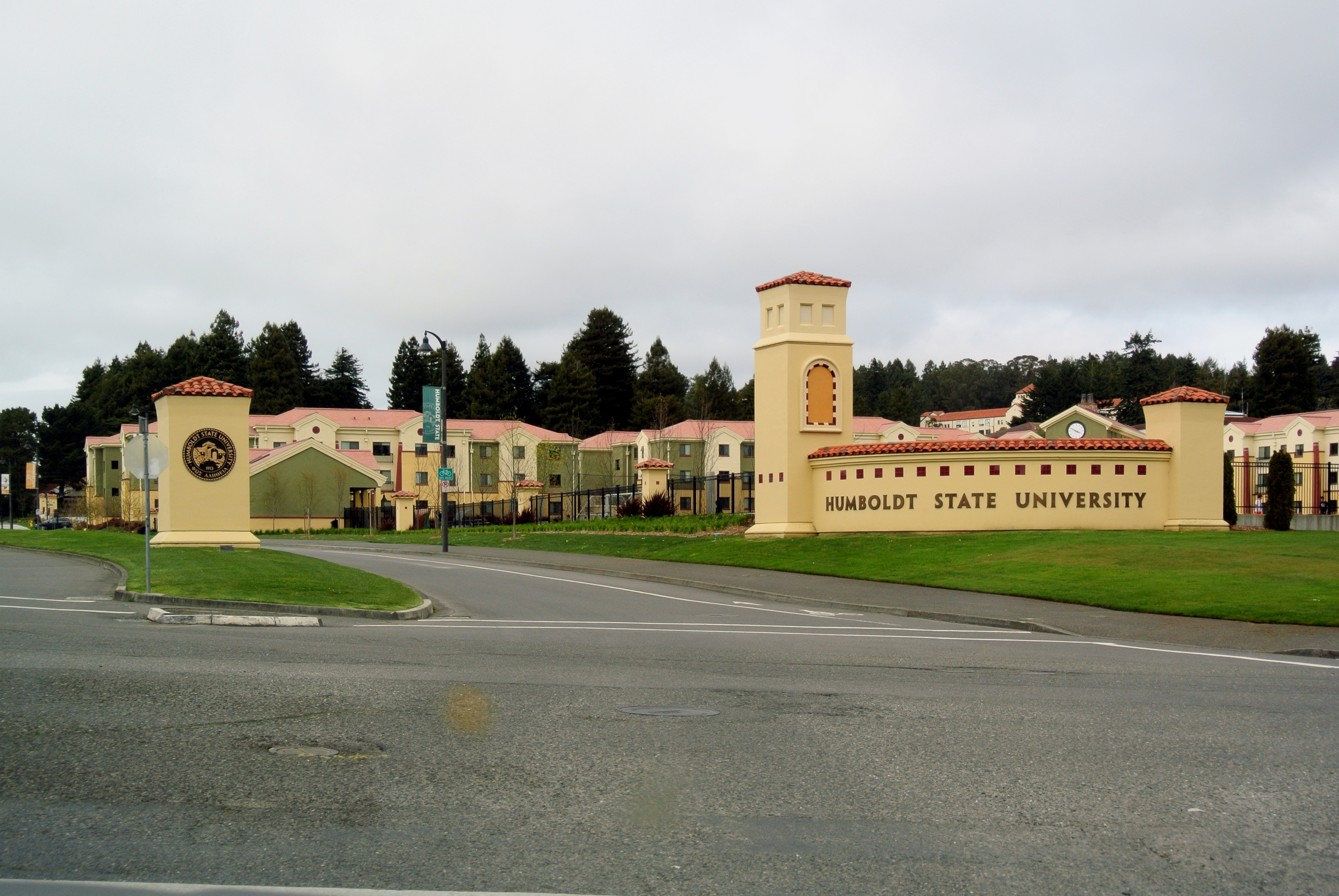
Humboldt State University investigation is ongoing
Humboldt State University announced Feb. 14 it was investigating flyers posted in campus bathrooms alleging a faculty member solicited paid sex from students.
The flyers showed a series of apparent phone messages between a student and a faculty member. In the messages, the faculty member asks the student for sexual contact in return for money.
The flyers also include a demand for faculty members using positions of power to exploit students to be outed and for HSU to hire more counselors of color.
HSU confirmed on Feb. 18 it was investigating the allegations and had made progress beyond the flyers. HSU Spokesperson Grant Scott-Goforth said they could not share any further details.
“It’s under investigation and it’s a personnel issue, so there are a lot of privacy issues,” Scott-Goforth said in an email. Scott-Goforth also declined to tell the Times Standard if HSU has cancelled any classes.
Multiple anonymous student sources have confirmed to The Lumberjack that the classes of one faculty member have been cancelled and a substitute has taken over since the initial flyer investigation was announced. It’s not confirmed that these cancellations are tied to the investigation.
Title IX Coordinator David Hickcox also told the Times Standard the investigation has not been classified as a Title IX case, as no accusers have come forward.
HSU included multiple contacts for anyone with more information or for anyone who had been harmed, including the Campus Advocate Team, Counseling and Psychological Services, the Dean of Students Office, the Title IX Office and the National Sexual Assault Hotline.
Study reveals complex campus parking problem with solutions still far-off
In 2017, Humboldt State University commissioned a parking market demand study which found exactly what commuters knew—there is a problem with parking on campus.
HSU has a total of 2,162 spaces, about 1,000 of which are general parking. These spaces are shared among more than 9,000 students, staff, faculty, visitors and administrators. The study found solving the parking problem might be harder than adding more spaces. Terrain is challenging, space is limited and HSU has a finite budget.
Film student Alice Peterson had a panic attack the first time she had to park on campus.
“It was raining really hard, I was late to class, it was the second or third week, there were no spaces and there was a lot of over-stimulation,” Peterson said. “My fight or flight kind of kicked in and I left.”
Peterson has needed to drive to class more and more ever since. A load of heavy, expensive film equipment makes walking every day impossible. During her time at HSU, she has racked up almost $500 in parking violations because she is forced to park illegally or in spaces meant for visitors.
David Lieb is the national director of higher education mobility planning at Walker Consultants, the parking consultant firm that HSU contracted to conduct the market demand study. Lieb worked on the study personally and said that although universities are a group of people sharing a common parking problem, HSU faces some unique issues.
“You have a challenging topography,” Lieb said. “Everybody wants to park in a space that’s convenient to where they go, but there’s a limit to the number of spaces.”
There is barely any room on or near campus to add a significant amount of spaces, which is why many students are advocating for a parking structure. But Lieb did not recommend a structure.
“The shortage at this point is such that we don’t believe it would solve the problem,” Lieb said. “The survey suggested that there was more demand out there, but people were saying, ‘Why would I buy a permit if I’m not going to get a space?’ So if you increased the number of spaces, the people who are currently saying, ‘I’m not going to buy one,’ are going to buy one.”
This process means the parking situation would remain the same if a structure was built, but the parking prices would have to increase to pay for the construction.
“By what we calculated, parking prices would at least double or possibly triple,” Lieb said. “Our company provides design services for parking structures. We would be delighted to design a parking structure for you, but we’re not going to recommend it if we don’t think it’s the right solution.”
Alternative transportation and ride share programs are already available through HSU.
Jeanne Rynne, the associate vice president of Facilities Management, and Krista Paddock, HSU’s Parking and Commuter Services program coordinator, are working together to alleviate parking demand. All plans are in preliminary stages of development, but the long-term goal is to limit the number of cars that are brought to campus instead of adding more parking spaces.
“We are looking at potential park-and-ride lots in the area,” Paddock said.
There are parking lots in Eureka and McKinleyville that stand nearly empty during HSU’s busiest times. Those lots could be used as off-campus parking. HSU could then provide buses to and from the designated lots to limit the number of cars coming to campus daily.
“We’re always trying to promote ride share with the Zip Cars and the Zagster bikes and the Jack Pass program,” Rynne said.
Alternative transportation and ride share programs are already available through HSU. Both Paddock and Rynne said there are no concrete solutions on the table yet. For the time being, they plan on heavily marketing the programs that already exist.
“We’re always open to feedback,” Rynne said. “We have the Parking and Transportation Committee and there’s two student vacancies.”
Rynne, Paddock and Lieb all agree that parking is an incredibly emotional issue. Finding a space can take a long time. The study noted many commuters take longer to find a space than to travel to and from HSU, and HSU’s lots fill to 100% capacity during peak hours.
Parking is stressful in a special way. No one studying or working at HSU needs additional stress, but money and topography appear to be blocking all the solutions.
Creators say we shouldn’t worry about being replaced yet
There is a new breed of bot accounts coming to Twitter, but these aren’t put there by Russia or the CIA or whoever else is trying to influence an election. They’re novelty accounts, posting large quantities of tweets that mimic the style of existing users.
Twitter user @kingdomakrillic runs one of these accounts. He asked to only be referenced by his Twitter account. His parody account, @dril_gpt2, sends out a new tweet in the style of @dril several times a day. @dril is a somewhat mysterious, absurdist comedy account that posts their jokes from behind the pseudo-anonymity of a profile image of an incredibly blurry Jack Nicholson. @kingdomakrillic explains their reasoning for choosing @dril to imitate.
i love saiyng shit like "Yow! This kittens got Claws!" whenever a woman stabs me 38 times in the neck and chest
“I wanted to do a GPT-2 bot of someone who was both famous and whose voice on Twitter was near-exclusively comedic,” he says. “If I did, say, a Trump bot, the only humor would come from the novelty of a bot generating Trump-like tweets.”
These imitation @dril tweets can be shockingly on-brand yet original at times. It’s not uncommon to see replies wondering if the tweets from the account are still created by a bot.
i hate when you order a pizza and the pizza place just makes you a pizza and then they charge you for it
@kingdomakrillic assures me the tweets are bot-written but hand-selected.
“Curating the tweets is like DJing. I pace the content out, placing tweets I’m sure are funny next to ones I’m more uncertain about,” @kingdomakrillic says. “Sometimes I screw up. It’s a skill, not 1/10th of the skill that goes into actually writing tweets like dril’s, but it’s still something I need to improve on. There’s no excuse to post duds when you can output infinite text.”
i unzipped my pants, and, within, were, a hundred black cockroaches, each with a gun and a thousand rounds of ammo, waiting for me in my pants
That infinite text doesn’t come from nowhere. It comes from GPT-2, a language model created by OpenAI, a research group with a focus on machine learning.
Sherrene Bogle is a computer science professor at HSU with experience using machine learning. Conceptually, teaching an algorithm how to do something is a lot like teaching a person. Bogle uses the example of teaching an algorithm to recognize whether a bird is in the foreground or the background of an image. First the algorithm is given a set of bird pictures that are already labeled as to whether the bird is in the foreground or background, allowing it to figure out the differences. Then it’s given unlabeled bird images, where it looks for those same differences. The difference between a human in a machine doing this task is that the machine doesn’t actually understand what it’s doing. The machine simply recognizes patterns.
Instead of looking for where birds are in pictures, GPT-2 looks for patterns in text. It’s job is to predict not just the next word, but the next couple paragraphs. GPT-2 is so good at this task that it can make paragraphs of human-readable text after being given only a handful of words. The output text can be about anything, but in order to generate text that mimics the style of a Twitter user, programmers need to retrain the model.
“The potential for harm is less than current human bad actors.”
Max woolf
@kingdomakrilic says he retrained GPT-2 on 9,500 tweets, totaling about 750 kilobytes. This focuses the original GPT-2 training data, consisting of almost 40 gigabytes of data, to accomplish a more simple task. The more simple a task, the better an AI can imitate it. Imitating tweets is simple, and with GPT-2’s vast capabilities, imitation yields good results.
There is also @kingdomakrilic’s curation, which gives many of his followers the impression that the AI is better than it really is.
Max Woolf is a data scientist at BuzzFeed, and the person responsible for making these twitter bots so easy to create. He built a tool, called GPT-2 Simple, to easily retrain GPT-2 with any new data—tweets—and wrote an accompanying tutorial. Some people think AI is a threat to humanity, but Woolf says otherwise.
“The potential for harm is less than current human bad actors,” Woolf says.
@kingdomakrilic agrees with this sentiment.
“Some people get freaked out at the fact that GPT-2 can produce sentences that have humanlike coherence, but are made with no meaning or intent on the bot’s part besides to imitate how humans write,” he says. “Markov chains, Madlibs, autocompletors, esquisite corpses—they’re also capable of creating coherent text with the illusion of intent. They’re just not mysterious black box programs like GPT-2.”
Craft beer breweries around Humboldt County are on the rise, offering a variety of flavors and experiences from their establishments.
Here is a brief rundown of the up-and-coming Humboldt Breweries:
Lost Coast Brewery – Throughout the state, Lost Coast Brewery’s products are on shelves or tapped into kegs at other breweries. Kinetic artist Duane Flatmo is the mastermind behind the unique designs on most of the Lost Coast beverage containers. Flatmo transformed one of his popular works of art, “The Great White,” into a statue which can be seen hanging out and greeting people at the main brewery in Eureka.
Six Rivers Brewery – Their slogan, “the brew with the view,” speaks volumes to the brewery that sits atop a hill overlooking farmlands and the ocean. Founded in 2008, Talia Machshon Clare and Meredith Maier are leading the operations in what is considered California’s second all-woman-owned brewery. You can catch them and their vibrant attitudes informing the public about their daily deals and upcoming events.
Mad River Brewery – Tucked away in scenic Blue Lake, Mad River Brewery welcomes all walks of life. On the weekends, the brewery is a popular spot and seating is packed. Parking is a challenge unless you’re a cyclist—many of whom cruise through the area. Mad River Brewery and Eel River Brewing Co. have unique outdoor corridors to enjoy beverages under the Humboldt sky.
Redwood Curtain Brewery – Redwood Curtain Brewery has two locations in Humboldt. Their first location resides in Arcata, and their second location opened up during the fall of 2018 in Myrtletown. Redwood Curtain has gained a reputation for providing new beverages weekly and challenging patrons to games of shuffleboard.
They may not have a kitchen, but they have partnered with LoCo Fish Co. to offer plenty of delicious options to pair with your beverage of choice. While their beverages are found only at brewery sites, anyone with a compatible glass growler can take a glass of Redwood Curtain home. They also press a 32-ounce can for convenient enjoyment.
Eel River Brewing Co. – Eel River Brewing Company throws upcoming beverage releases a week of dedicated events and specials. Located in Fortuna, this brewery was first to introduce Humboldt’s organic beer. During the summer of 2019, Arcata Main Street announced they would not allow the distribution of local craft beers for their annual Oyster Fest. Eel River Brewery partnered up with other Humboldt breweries and threw their own oyster festival. This not only gained support from the community, but drew such a massive crowd that the festival will be thrown again. Eel River Brewing Co. proves that servicing the community is a main priority for craft beer lovers.
At all of these breweries, charity events known as pints for nonprofits are a weekly occurrence that work with local organizations to raise money for their cause. Pub crawls are usually the talk of the town when it comes to bringing people together to raise money, and when it comes to pints for nonprofit you get to communicate directly with the organization.
The Great White at Lost Coast Brewing on Jan. 30. | Photo by Alberto Muro
German-style dunkel beer at Redwood Curtain Brewery on Feb. 1. | Photo by Alberto Muro
Floods and frequent power outages caused issues for KRFH during the fall semester
Editor’s note: members of the editorial staff of The Lumberjack are part of and have been part of KRFH. The author of this article had no previous affiliation with KRFH.
The Humboldt State University student radio station KRFH is back with new and old DJs for the spring semester after dealing with flash floods and frequent power outages during the last semester.
Alejandro Zepeda was the station manager during the fall semester and is assistant station manager.
“It’s been a rough semester for sure,” Zepeda said. “I ended up taking over halfway through the semester as station manager and just kinda walked into a shit storm.”
KRFH is in the basement of Gist Hall, and when it flooded on Sept. 19, 2019, Zepeda said water started coming down from above.
“There was a couple spots where the water literally just came in through the ceiling,” Zepeda said.
Zoe Kelman, the manager for the live music program LIXX, said the lounge they use for recording ended up getting affected badly from the water.
“I’ve probably turned the station back on myself after power outages somewhere between six and 10 times at this point.”
Alejandro Zepeda
“The whole LIXX lounge got flooded and it smelled horrible,” Kelman said.
Kelman went on to say that pieces of the ceiling came down and the whole floor became dyed orange. Kelman also said it was lucky she came in before the event to set things up.
“I had actually gone in and already moved some of the equipment,” Kelman said. “It was already sitting on a table, so we got lucky that when the flooding happened none of our stuff was on the floor.”
Despite the salvaged equipment, the wiring in the KRFH studio runs in the ceiling. At first they couldn’t immediately tell if there was any direct damage to the wiring, but they ended up having to move the LIXX recording that day.
Part of KRFH’s CD collection adorns the wall of the KRFH booth on Jan. 28. | Photo by Seth Finnegan
“We couldn’t do it in the LIXX lounge ’cause it smelled like a swamp, so we decided to do it in a different room,” Kelman said. “It was just like a whole thing where basically all of our equipment cut out at some point. We got dead air. Like, anything that could’ve gone wrong, went wrong.”
The frequent power outages were also an issue for the station.
“I’ve probably turned the station back on myself after power outages somewhere between six and 10 times at this point,” Zepeda said.
Zepeda said the power backup system was out of date so when the power went off, there was no leeway.
Zepeda said KHSU could hold a solution for the station.
“Within the year before they got gutted, they actually just upgraded all of their equipment and got a backup generator and a bunch of emergency supplies,” Zepeda said. “I remember thinking during the blackouts—having nothing to do at home—that I could’ve been on the air. I could’ve been talking. We could’ve been relaying news but instead we were all just sitting on our hands.”
“You can’t break this KRFH spirit.”
Eddie Rivera
Zepeda said if the station was given access to the abandoned KHSU studios, they could’ve taken it over and helped the community.
Last semester was Eddie Rivera’s first time as a DJ. Alongside the floods and power outages, he also described the station’s leadership struggles.
“Students are so busy and so overworked that sometimes you just can’t attend to everything that the club might need,” Rivera said.
He estimated that with class time and time spent on the air, students in the class will add an extra five hours of work to their week. Rivera said their manager struggles are a lot better now.
“We have a couple new managers and people who are taking a lot of initiative,” Rivera said. “The managers that we have are very dedicated to it and very positive.”
Rivera said the setbacks made the semester difficult for them, but they are still going.
Demand extends breakfast burrito availability to 11 a.m. at The Depot
Popular demand for breakfast burritos has extended the serving time at The Depot by an hour. In previous semesters, breakfast burrito service stopped at 10 a.m. Now, it stops at 11 a.m. We asked The Depot’s staff and regular customers how the time extension affected them.
Aileen Dominguez works at the breakfast bar in The Depot, and worked there every day for the last semester. This semester, Dominguez has to close the breakfast bar and open the rice bowl station at the same time, alone.
“Overall it’s positive—the late students can get their burrito.”
Aileen Dominguez
“It is more hectic,” Dominguez said. “I have to be faster since there is only one person working the shift.”
Dominguez said opening and closing two stations at once is a challenge, as there’s no room for both to be done simultaneously.
Despite her challenges, Dominguez said she feels the extension has had a positive effect. For Dominguez, she noticed that students are able to get their burritos at a later time.
“Overall it’s positive—the late students can get their burrito,” Dominguez said.
Adriana Peck is a floor trainer, and oversees different zones at The Depot. This means she helps at the breakfast bar if needed. Peck agreed with Dominguez—she felt the time extension has had a positive impact.
“It is excellent. I am able to get off my shift and still grab a burrito,” Peck said. “It’s nice to know that it’s there.”
Leslie Rodriguez is a regular customer at The Depot. Rodriguez looks forward to eating breakfast burritos.
“It’s really good with Tapatio,” Rodriguez said.
However, Rodriguez didn’t feel like the time extension had much of an effect for her.
“It sucks,” Rodriguez said. “They’re all out by the time I get there.”
Ask Evergreen is a weekly advice column by the students of The Lumberjack
Dear Evergreen,
What do I do for my significant other on Valentine’s Day when I’m broke?
Dear Lootless Lover,
Valentine’s Day is this Friday and with that comes the societal expectation to shower your lover in materialistic gifts. But for those with limited funds, making an extravagant gesture isn’t always possible. There are many creative ways to express your love this Valentine’s Day that don’t involve spending loads of cash.
If you’re a wizard of words you can charm your valentine with a thoughtful card of appreciation. Words are free, so come up with a clever poem for your partner to make them feel special. Bust out your artistic talents and create some art from the heart. You can even doodle some cute cartoons inside a card for a more personal touch to a standard Valentine’s Day card.
With spring inching closer and closer, flowers have already started blossoming. Take a walk and gather some wildflowers and foliage to make a bouquet. Be careful not to pick any poisonous plants. You wouldn’t want to infect your valentine with anything other than love.
Baking a sweet treat for your sweetheart is sure to satisfy. Check your cupboards for basic baking ingredients and whip up something good. If you aren’t the best baker you can easily make chocolate-covered strawberries to set the mood.
Chances are you already have some type of streaming service, so put on some Netflix and chill with your valentine. Pop some popcorn and cozy up with your favorite movie or show. Light candles or incense for an extra touch. Soon enough you’ll be having consensual fun while Netflix asks if you’re still watching.
You can also try going out and sightseeing with your partner instead of a movie night. Go on a scenic walk or take a stroll with your lover somewhere beautiful. If you can swing it, try planning a picnic on the beach or in the redwoods to share some quality, heart-to-heart time together. There’s nothing more pure—and free—than talking with someone you care about.
Think outside the box this year. Whether you can afford it or not, there are plenty of thoughtful and creative ways to express your love.
xoxo
Sincerely,
Evergreen
If you have any questions you’d like to send in, email us at contactthejack@gmail.com. We won’t publish any names and you don’t need to use one.
In 1960, the Kennedys tried to steal the White House. A Kennedy ended up living in the White House, so they may have succeeded. Maybe they stole the election, maybe they didn’t. But because we have the physical ballots, no one can dispute that they tried. In the modern world of voting machines and election apps, we might never know who tries in the future.
If you wanted to rig an election in 1960, you needed a plan, a large team, a smokey basement in Chicago and a lot of money. You needed someone to go to a graveyard and register corpses to vote. You needed to catalog abandoned houses and figure out how many dead or fake people you could put in each one. You needed to physically go out and beat up a few voters—possibly even commit a murder or 20. You needed a large operation full of trusted members willing to do all of this. And perhaps most importantly, you needed to be fine with everyone knowing that you just tried to rig an election.
Stealing an election was incredibly difficult, dangerous, obvious and almost completely ineffective if one candidate had a significant lead. Voting with a paper ballot clearly isn’t a perfect system, but the attempted rigging of the 1960 election is almost common knowledge. We have the paper to prove it.
We know what paper is. We hold it in our hands almost every day. Casting a ballot is an anonymous and easily-understandable physical action. It’s traceable at every step of the way, and we can tell if the ballots don’t make it to their destination.
Conspiracy with physical ballots is possible, even probable, but not effective on a large scale. Certainly, physical ballots aren’t perfect, but they are hard to mess with in a way that will significantly affect an election. There are doubts that, even with all the tampering and violence, the attempted rigging of the 1960 election even changed the result.
Electronic voting, on the other hand, is vulnerable in ways paper voting is not. When you stand in front of a voting machine, there are some questions you probably have.
The most important part of getting people to vote is the trust that the vote goes somewhere. It’s counted. The vote is verifiable, and the process is easily understandable.
Who made the voting machine? Who paid for it? When you press a virtual button on a screen, how do you know the machine tallies it, or gives it to the right candidate? How do you know it reaches a database where it will be counted? Do you know what the software being used is, how it works, if it’s secure, how to tell if it has been tampered with, if the machine is connected to the internet — as many inexplicably are— or if it has been calibrated properly?
The odds are that you don’t. I don’t. Nobody does. Nobody besides the people who managed to remotely change a voting machine’s final tally. Nobody besides interested parties in our own system who might want the election to turn out a certain way. Voting machines are incredibly vulnerable. They are outdated upon release, not tested properly, easy to manipulate and often connected to the internet for some reason.
You don’t have to call on the crime syndicates of the country anymore. You don’t have to organize a massive conspiracy. All you need to rig an election is to know how to hack a virtually-undefended voting machine.
The most important part of getting people to vote is the trust that the vote goes somewhere. It’s counted. The vote is verifiable, and the process is easily understandable.
Electronic voting doesn’t just open our system up to attacks from malicious parties. It erodes the trust between the voter and the system. This would be true even if everything was perfect—even if there was no one meddling. But there is someone meddling. We know there is. There always has been and there always will be. It wasn’t just 1960 and it wasn’t just Democrats. The question isn’t, “Who would rig an election?” It’s, “Who wouldn’t rig an election?”
If someone’s going to attempt to rig the 2020 election in the same way as the 1960 election—and they possibly already have—I want them to have to work for it. I want them to have to go out to graveyards, get their hands dirty and threaten some grandmas. I was disappointed by the Iowa caucuses. These days it’s hard to tell the difference between epic, mind-blowing incompetence and election theft. If these elections are going to be a complete farce, ditch the apps and voting machines. If there’s going to be ballot burning, I want to see the flames.
Humboldt County is known for its beautiful forests, but sudden oak death threatens its trees
Sudden oak death is the common name for a disease that started infecting trees 20 years ago and has since killed over a million trees—including trees in Humboldt County.
“It is caused by a microscopic fungus-like organism, Phytophthora ramorum, a lethal, canker-causing pathogen of certain oaks and tan oak trees,” UCCE wrote.
Susan Marshall, a wildland soils professor at Humboldt State University, is involved in two grant programs that deal with pathogens like sudden oak death. Marshall is connected to Christopher Lee, an HSU alumni with a Ph.D in forestry from the University of Missouri, who now works as a forest pathologist at the California Department of Forestry and Fire Protection.
“It gets into the vascular tissue that is just underneath the bark, and it kills that tissue,” Lee said. “If it does that in several different places around the circumference of the tree, then it will eventually kill a band of tissue all the way around.”
If the Phytophthora ramorum does kill the tissue all around the tree, the tree is effectively girdled. Generally, live tissue transports water and nutrients up the tree, but if those pathways are blocked lower down, everywhere above the infection dies. The organism infects the tree’s circulatory system and can spread to the nutrient tissue and water-conducting tissue, xylem and phloem, essentially starving the tree and clogging it up. A full ring is a sure death sentence.
“As far as these diseases go, it would probably be worse under a warmer and wetter sort of scenario.”
Christopher Lee
Marshall and Lee described Phytophthora ramorum as being like a fungi or brown algae, with characteristics similar to closely related plant pathogens. Specifically, they are in the class Oomycota, which are a distinct line of fungus-like eukaryotic microorganisms. They are fungus-like because they have a long, branching net-like structure like the hyphae of fungi. They are algae-like because they descend from the same phylum, Heterokontophyta, as many algae.
Phytophthora ramorum is not the only pathogen that affects trees, but it is the most visible and the most deadly, devastating thousands of acres of forest. In California, sudden oak death has been most prominent in and around Sonoma County, according to reporting by the Times Standard.
Humboldt County’s dense forests of tan oak, the main host for the disease, is at especially high risk of tree death. Humboldt’s weather and climate are an unfortunately-inviting environment for sudden oak death. The dense oak forests in the area means both greater humidity and a shorter distance for a pathogen to travel.
“As far as these diseases go, it would probably be worse under a warmer and wetter sort of scenario,” Lee said.
The recent fires around California also have an indirect connection to Phytophthoras. The loss of vegetation limits the way pathogens spread due to a wildly new arrangement. It is good to note heat from fire can sometimes help slow a pathogen’s spread by eradicating an area where the pathogen had a large presence. Lee noted that if the root system of a tree isn’t fully dead, however, Phytophthoras may have a chance of surviving in its host.
The main goals of the programs Marshall is involved with are to identify the disease more rapidly and figure out how to slow its spread.
There isn’t a specific way to control a disease like this, but Marshall said rapid testing of plants in nursery stock may catch Phytophthora ramorum before it can infect new hosts.
“Every year that [we] can buy that [sudden oak death] doesn’t leapfrog into some other county and cause quarantines and regulations on those counties is a little bit of economic damage that they’ve staved off,” Lee said.
Sudden oak death has only affected one percent of Humboldt’s trees, but its impacts in California and Oregon demand researchers like the ones Marshall and Lee are involved in will be continuing to study it and find newer and faster ways to help manage the remaining forests along the coast.
Emphasizing equity and integrity in the media February and beyond
Humboldt State University celebrates Black Liberation Month, which promotes black excellence and achievement, every February.
People of color are often covered by the media for achievement in athletics and entertainment, but rarely for academia, volunteer work or simple successes unless they’re a trailblazer in their field. More often than not, Blacks face the most discrimination in media.
At HSU, Black Liberation month emphasizes the great achievements and progress in the Black community—but these often fall out of the public eye once February is over. This is a failure—the celebration of the Black community should extend through the year and into perpetuity. At The Lumberjack, we acknowledge the lack of representation blighting the mainstream media and our own newsroom. We strive to break the toxic cycle of misinformation and misinterpretation and promote the achievements of the Black community at HSU.
“Blacks represent 37 percent of criminals shown in the news, but constitute 26 percent of those arrested on criminal charges. In contrast, news media portray whites as criminals 28 percent of the time, when FBI crime reports show they make up 77 percent of crime suspects.”
Travis L. Dixon
Modern media organizations filter the truths of the world, a behavior that has a significant impact on their audience. The way we absorb news depends on the way it’s delivered. Emphasizing equity and integrity in the media February and beyond
The study, “A Dangerous Distortion of our Families,” by Travis L. Dixon, Ph.D from the University of Illinois, looked into media coverage from local and national media outlets and found they often warped the reality of Black families to fit the narrative of the big screen.
“Blacks represent 37 percent of criminals shown in the news, but constitute 26 percent of those arrested on criminal charges,” Dixon wrote. “In contrast, news media portray whites as criminals 28 percent of the time, when FBI crime reports show they make up 77 percent of crime suspects.”
The study, sponsored by The Washington Post, found that at best, media outlets promoted racially biased portrayals and myths that pathologize black families and idealize white families with respect to poverty and crime.
At worst, the study found that media outlets amplified those inaccurate depictions for political and financial gain. They said such reporting reinforces debunked narratives that justify police brutality or promote economic policies that hurt not just Black families, but all families.
Throughout February, throughout the year, into the next decade and into forever, we shall strive to accurately report on and represent the lives and achievements of the Black community at HSU. We commit ourselves to journalistic accuracy and integrity. We commit ourselves to the celebration of the liberation of our oppressed communities and we commit to support them on their path to self-realization.
Men’s basketball leads early but drops second in a row at home
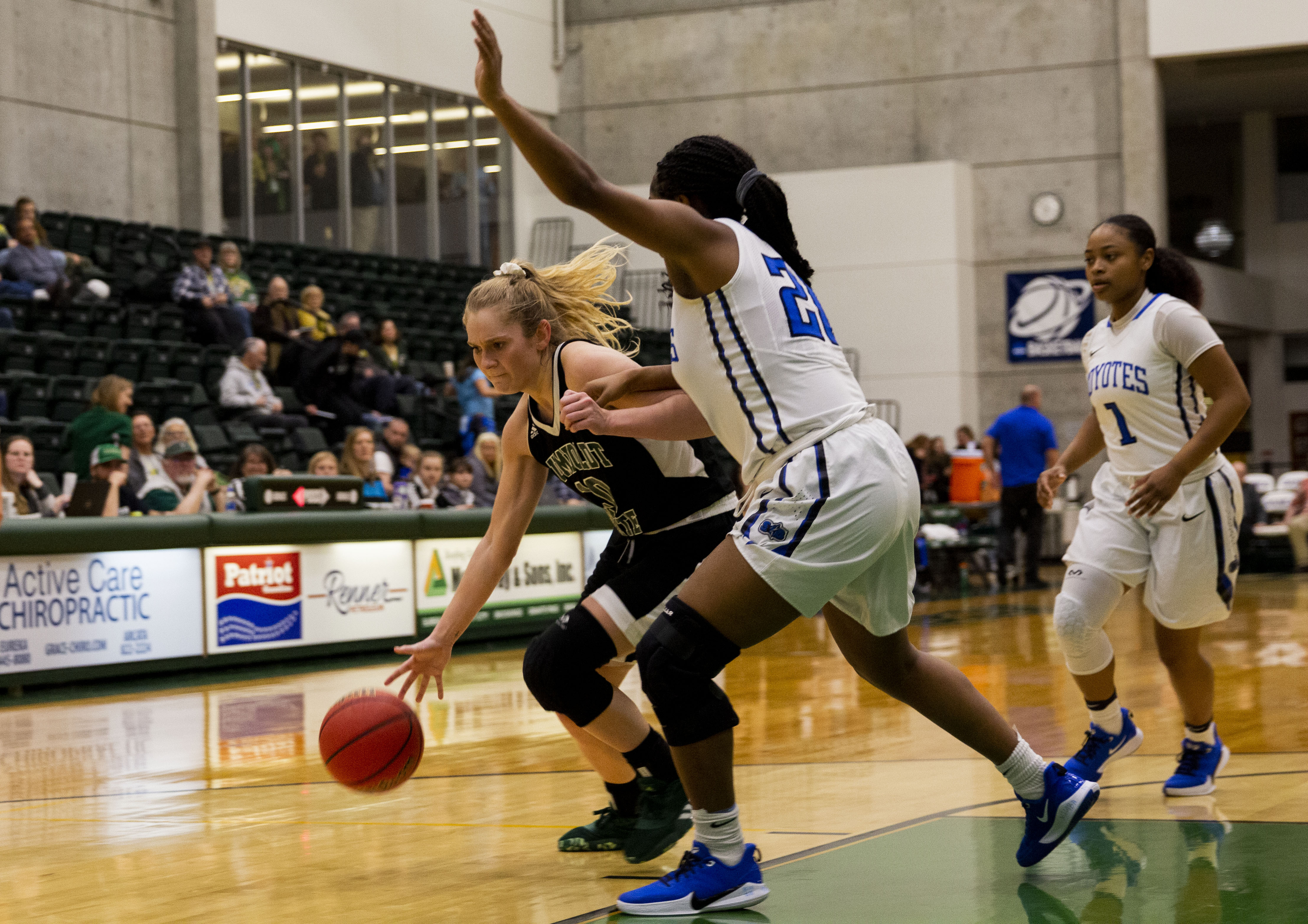
Humboldt State’s men’s basketball home game on Feb. 8 was a challenging one for the team as they took a loss, 72-94, against California State University, San Bernardino.
The Jacks ended the night with a loss and an 8-15 record, but a few highlights kept the fans engaged.
In the first half, Jackson Strong made back-to-back three-pointers, while Zachariah Christian gave the Jacks an early 6-0 lead. The Coyotes caught up, bringing the score to 19-11 in the next nine minutes to take a 19-17 lead on a lay-up by Jordan Mitchell.
#0 Leland Green drives into the paint. | Photo by Liam Warner
#3 Isaiah Pope goes up for the basket. | Photo by Liam Warner
The Coyotes increased their lead to 24-17 with eight minutes left in the first half. Rob Lewis cut the Coyotes lead to 37-30 with four straight points. Coyote player Richard Laku hit a three, which left the score at 40-30 right before halftime. In the second half, the Coyotes led and eventually outscored the Jacks by 22 points, taking the win.
The Jacks had several players with double-digit points. Christian scored 18 points, while Isaiah Pope put up 16. Amari Green had 12 and Lewis scored 10. The Coyotes had 43 rebounds and the Jacks had 34.
Head coach Steve Kinder said it was a hard game, but he was happy with the good start to the game.
“What stood out to me the most was how good Cal State San Bernardino is,” Kinder said. “We just played a very good basketball team. We’re their 19th win—their last victim. They’re a very good basketball team and we competed with them well at the beginning of the game. I thought we did a nice job staying pace with them.”
There are nail biters in sports, and then there are blowouts. For the Humboldt State University women’s basketball team, Saturday was one of those blowouts where the Jacks found themselves on the right side of the scoresheet. Decked out in their black road uniforms for blackout night, the Jacks stormed their way to an early lead and never looked back as they took a convincing 107-62 win over the visiting San Bernardino Coyotes.
The Jacks were led in scoring by Alexia Thrower, who put up her eighth double-double of the season, putting up 26 points to go along with her 12 rebounds. Another standout performer for the Jacks was Sandin Kidder, who put up a double-double of her own with 18 points and 10 rebounds. Madeline Hatch and Gabrielle Carbajal also scored in the double digits along with Emily Packham, who had a career night with 11 points.
The Jacks established themselves quickly, finding reliable 3-point shots from up and down the roster. Hatch struck first from beyond the arc, setting the tone for the night as the senior guard went 5-12 on her 3-point shots. Carbajal put up three 3-point shots of her own while Kidder hit both of her two 3-point attempts.
Head Coach Michelle Bento-Jackson was very pleased with her team’s performance, pointing to the offense’s ability to keep driving the play with a lead.
“I know for the fans and everybody it just seems like 100 is the magic number. I don’t even know when we hit 100 tonight. I was just so focused on just making sure we were still doing what we needed to do.”
Michelle Bento-Jackson
“It’s great when the shots go in,” Bento-Jackson said. “But more importantly I really was focusing on the shot selection and making sure that we got good ball movement. Not just settling for an early shot against the zone.”
Even with such a scoring effort from her team, Bento-Jackson kept the team working hard through the full game.
“I know for the fans and everybody it just seems like 100 is the magic number,” Bento-Jackson said. “I don’t even know when we hit 100 tonight. I was just so focused on just making sure we were still doing what we needed to do.”
Carbajal was happy to see contributions from the whole team, saying that it made for a good experience out on the court.
“It was really nice being able to play with everyone,” Carbajal said. “And everyone contributing out there, and scoring and sharing the ball. It was just a great game.”
Carbajal was also confident that the team could use this game to push them forward going into their upcoming road trip to San Francisco and Sonoma.
“Just using this game as momentum and building confidence for the next game, especially San Francisco,” Carbajal said. “I know that we’ve been struggling on the road but just coming into this next game, we just have to have a different mindset.”
For the future, Bento-Jackson is focused on maintaining a high level of performance even when the team will play three out of their last four regular season games on the road as they aim for the California Collegiate Athletic Association Tournament in March.
“We have three games here on the road and this is going down the stretch,” Bento-Jackson said. “Playing with that same type of energy when we’re not in front of our own fans. And as we say, it requires a lot of mental toughness to go on the road and to get a victory. And that’s something that we need to do for these next two weeks.”
You’ve seen it. You’ve heard it. You’ve become annoyed by it. When will it end?
The seismic retrofitting project in the Humboldt State University library is a five-year project of additions and renovations to the library that aims to ensure the safety of the building in the event of a major earthquake. Much of the work of the project is done or is underway.
The completion date of phase three of the project, which includes improvements and expansions to the basement of the library, has been moved to April 14—although there is a chance that it could get moved back again. Much to the dismay of students and faculty, this means jackhammering and drilling will continue throughout the coming weeks. Director of Planning, Design and Construction, Mike Fisher, pointed to a number of factors contributing to the delayed timeline.
“We have to excavate through a number of existing conditions, and through that action, we reveal things we didn’t know about,” Fisher said.
An example Fisher mentioned was the stairs in the library needing to be redone as his workers discovered that the original stairs were poorly designed.
“It’s little instances like that that compound to lead to a time delay,” Fisher said.
Fisher went on to talk about the permitting process.
“During the project, we were moving through permitting and one of the jurisdictions having authority is the Office of the State Fire Marshal,” Fisher said. “Their permitting process took much longer than expected and we had to halt production until we could get that permit secured.”
Fisher also said he and his crew have been working on retrofitting the theatre arts building alongside the library. They considered the theatre arts building to be a higher priority building, as it’s home to regular instruction.
Deema Hindawi, a senior at HSU and a co-coordinator at the Multicultural Center, is one of many directly feeling the effects of the construction. She said it’s hard for her to function in the MCC both as a student and a co-coordinator because she has had meetings interrupted by construction noise.
As a critical race, gender and sexuality studies and criminology double major, she has found it difficult to function because she has been constantly battling jackhammering and drilling.
“It sucks that we don’t really get much of a say in it and it somehow always comes back onto us.”
Maya Habis
Hindawi also noted that there used to be a sign on the side of the MCC that was placed there as part of the retrofitting project without taking into consideration the impact of its words.
“Having people look at that sign is really uncomfortable, especially when you identify as a part of a marginalized community and having to see the sign that constantly is blaring in your face that reads, ‘No trespassing,’” Hindawi said.
Maya Habis, a junior critical race, gender and sexuality studies major and also a co-coordinator at the MCC, echoed much of what Hindawi said.
Habis added their own two cents on being moved around to the bungalows and back.
“It sucks that we don’t really get much of a say in it and it somehow always comes back onto us,” Habis said. “We kind of get put in between these two things—it’s an ultimatum.”
Dean of the University Library, Cyril Oberlander, said he likes to see himself as part of the student body. He has been told and has noticed for himself that students are not enjoying the noise in the library. He wanted to make it clear that he understands the difficulties of the noise. He invited students and faculty to voice their displeasure with him directly along with suggestions for how he and his staff can make being in the library a better experience for all.
Selling out in less than a week, Dr. Cornel West commanded the stage with emotion and power
Around 800 people formed a line wrapping around campus, anxiously awaiting Dr. Cornel West’s lecture. In high demand, tickets sold out in less than a week. Community members desperate for tickets resorted to bribery.
Brothers United took the John Van Duzer Theatre stage first with the introduction of Humboldt State University Vice President of Enrollment Management Jason Meriwether. After a quick selfie snap and a booming introduction, Meriwether invited West to the stage where a standing ovation followed.
West was the powerhouse speaker of Black Liberation Month and began his lecture with the recognition of the meaning of the month of February to reflect on the history of our ancestors and to recognize and pay respect to their sacrifices.
“When you’re talking black history, you’re talking the best of history,” West said. “February is for the brown, red, yellow and black peoples to dig deep into their r-o-o-t-s so their r-o-u-t-e-s can become international.”
HSU Vice President of Enrollment Management Jason Meriwether and Dr. Cornel West on stage together on Feb 7. | Photo by Benjamin Zawilski
The lecture surrounded West’s book, “Race Matters.” Originally published in 1993 during a time of tense racial turmoil following the trial of Rodney King—a survivor-turned-activist of Los Angeles Police Department police brutality—and the Los Angeles riots—which broke out in response to the trial and heightened racial tensions—the book brings morality into question when analyzing racial disputes. Resurfacing in the modern day, West believes the same issues that arose 27 years ago remain today.
“We live in a highly polarized society,” West said. “It’s polarized by race, it’s polarized by class, it’s polarized by preaching, it’s polarized by politics and I think I was trying to get at some of the ways in which we can understand the polarization and try to create a higher moral, spiritual ground to keep alight the best of our democracy. That’s what I was doing then and it becomes relevant now, all over again.”
Highlighting the best of our democracy and of any situation was a recurring message from West. When asked about polarized education systems, West attacked it with the same approach.
“All institutions are ambiguous and ambivalent in having the best and the worst,” West said. “It depends on the particular features being highlighted. Must be very candid about the ups and the downs, the bests and the worsts.”
“Disabilities aren’t necessarily sad or scary, but just another way to live life.”
Crystal Pasztor
A Q&A session followed his lecture where members of the audience had the opportunity to grab the mic and connect with West. As hands shot up, West emphasized the importance of selecting participants of diversity within the crowd and hearing those voices.
Crystal Pasztor is a sociology major at HSU. She asked West for a favor of recognition, rather than a question.
“My favor was to talk about disability and people as a group because you can’t ignore that every group has a disability,” Pasztor said. “Disabilities aren’t necessarily sad or scary, but just another way to live life.”
Pasztor brought HSU’s own lack of disability recognition into question, describing feeling abandoned by the school and its services.
“When you’re fighting for something as precious, you never give up because the love too deeply and the commitment too real.”
Dr. Cornel west
West ordered the entire theatre to applaud Pasztor in recognition of her feeling of campus abandonment.
“I felt so much better,” Pasztor said. “I was very nervous to say anything because the president is here.”
After a standing ovation for West, the audience flooded to the stage for an opportunity to interact and shake West’s hand. One student handed West their cell phone with Charmaine Lawson on the line. An emotional conversation led to West commending Lawson’s love and fight for her son, Josiah Lawson.
“When you’re fighting for something as precious, you never give up because the love too deeply and the commitment too real,” West said. “So when I was talking to sister Lawson I could just see in her eyes and feel in her heart oh so much love for her precious son and she’ll never give up. That’s what love is—it’s never giving up.”
Justice remains lacking for the Josiah Lawson case. For community healing, West emphasized morality and spirituality as a light in the search for truth and justice.
“You got to re-energize people in a moral and spiritual way,” West said. “So that you can create the kind of awakening that brings people together. That want to fight for truth and justice. But, every generation is re-energized in some way.”
West placed extreme importance on the new generation and their ability to model, lead and revitalize the ongoing dispute over conflicting dialogues and conversations that divide our country. In an exclusive interview with The Lumberjack following West’s lecture, he commended HSU and its administration for their role in developing the new generation by leading by example.
“By example,” West said. “That’s why I salute what president here doing and dear brother Jason Meriwether. Leadership makes a difference in an institution of higher learning.”
West remained humble and credited much of his character and success to the leaders, activists and icons of the past. He spoke highly of notable black leaders like Martin Luther King Jr. and Malcolm X, but more importantly, he credited an intangible spirit of truth and justice.
“I tell them don’t look up to me, look up to truth and justice,” West said. “Truth and justice bigger than all of us, bigger than all of us. We all want to try and be exemplars of living truly and fighting for justice in a moral and spiritual way.”
We asked HSU students for their home remedies to get over colds and flus
It’s about that time of year when empty seats and sniffles become a daily thing in class. Hopefully everybody is taking care of themselves during the winter, because the common cold or even the flu can creep up on you. I asked students and staff what home remedies and tips they use when they feel a cold coming.
The Academy Awards are broken—here are some ways to fix them
The nominees for the 92nd Academy Awards were recently announced in the lead-up to the ceremony, which will take place Feb. 9. The nominees are, for the most part, very easily predictable to anyone who is familiar with the kind of films that tend to win Oscars or other similar awards. That isn’t in itself a bad thing, but it does raise the question of how relevant the Oscars really are, and if they really live up to their supposed purpose of granting the “highest honors in filmmaking” to the “best films of 2019.”
In recent years, the Academy of Motion Picture Arts and Sciences has been under its fair share of criticism for its notably conservative and traditional values. Indeed, the Academy does seem much more inclined to nominate and award reassuring, easily accessible films and blockbusters than they are to consider better, but less successful films.
A film has to play for at least one week in a theater in Los Angeles County, and its theatrical release has to be the first time that it’s shown.
Of course, as with all aspects of art, the quality of any film is subjective. But the choices made by the Academy, which is comprised of around 6,000 industry professionals, invite the questioning of their practices.
The criteria for a film to be considered by the Academy is extremely limiting. For starters, a film has to play for at least one week in a theater in Los Angeles County, and its theatrical release has to be the first time that it’s shown. It can’t be shown on television, released to DVD or Blu-ray or streamed before that.
Nominees like “Marriage Story” or “The Irishman” would have instantly been disqualified if they hadn’t been shown in theaters before being made available to stream on Netflix.
This might not sound like a major obstacle at first, but that’s mostly only true for American films with a wide release. Having a decent budget and big names attached doesn’t hurt a film’s chances either. Any independent or foreign film that can’t secure a release in one area of one country is instantly not considered, regardless of how good the reviews are.
This is just one of several of the Academy’s rules for eligibility, but it’s the most easily-understood example of how limiting the criteria is for one of the most prestigious awards a film can receive.
Even getting past the extensive list of rules, the Academy is known for usually nominating specific types of films. On this year’s list, only two of the nine Best Picture nominees, “Little Women” and “Parasite,” are not predominantly made by and starring white men, who have been the center of the majority of films that the Academy tends to nominate and award. This is a circumstance that has been the case due to both the criteria for Academy consideration and because the Academy’s board is comprised of, in large majority, white men—a point that is often made into memes with the hashtag #OscarsSoWhite.
“Little Women”, while receiving nominations for Best Picture, Best Lead Actress, Best Supporting Actress and Costume Design, did not receive any nominations for Best Director or Best Cinematography despite being an incredibly strong film in those categories. An article by Vulture explained how these rare films being nominated cause them to be, possibly unfairly, depended on to please all their demographics.
“I will say that Greta Gerwig and the film are put in the impossible position of having to represent all things to all women when she became the ‘presumptive representation of all-female directors,’” Angelica Jade Bastien said. “No film can shoulder such a burden.”
Defenders of the Academy—those who are perfectly content with the nominations—will claim that it’s simply a meritocracy—that the nominations truly represent the best films of each year with no barriers.
However, the numerous barriers, biased board and skewed representation severely limit which films are considered for one of the most widely recognized honors a film can receive. However, unintentionally, this influences how the film-going public decides what they want to watch and how they interpret what they watch.
Until the Academy gets some new blood into their board, stops immediately disqualifying films and more frequently overcomes the 1-inch-tall barrier of subtitles, their choices will never fulfill their ostensible purpose.
Innovative research and a discovery in HSU’s molecular biology lab
Biology professor John Steele guided a cell biology lab his first year at HSU wherein he wanted to teach students that cells need nutrients to survive. After 48 hours, the lab discovered quite the opposite. James Gomez, a current student in the lab, had the opportunity to research more into the groundbreaking discovery.
“In science, you’re kinda looking for that unexpected stuff,” Gomez said. “Right after I came in, I was really excited to be a part of that. There was this thing that was happening that we particularly can’t fully explain, and I’m actually in the lab doing that science.”
Steele’s experiment for his class involved students starving the cells of nutrients to trigger a state of autophagy, which is when the cell starts to consume itself. Steele meant to emphasize that cells needed nutrients like amino acids and lipids to survive. It was assumed that starving cells of key nutrients eventually killed them.
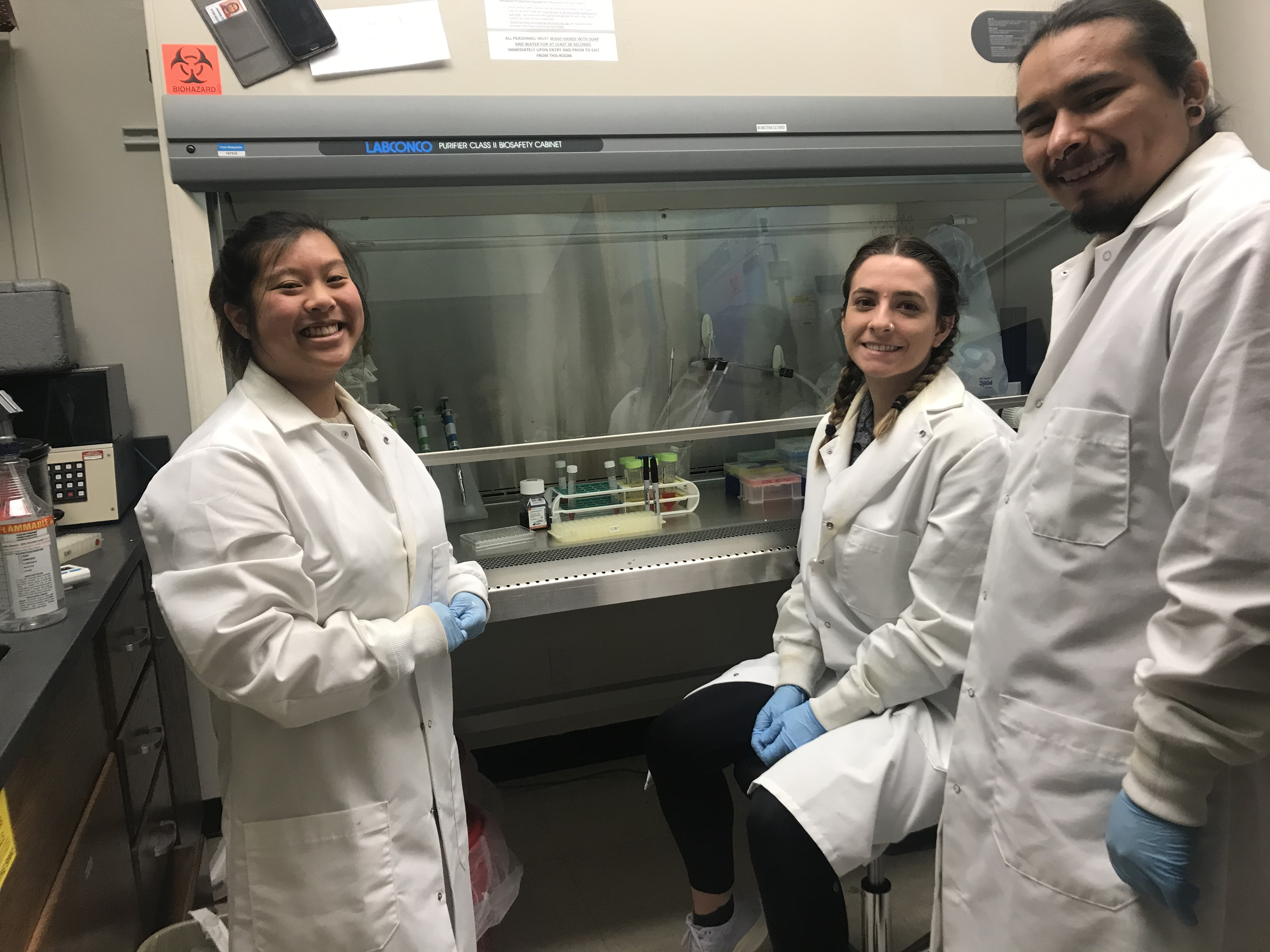
John Steele in his lab with graduate students in the background working on their research on Jan. 31. The lab specializes in molecular biology. | Photo by Collin Slavey
Steele said the experiment was common, and was usually shut down after six to eight hours. Steele decided to run it for 48 hours instead, since that was the time between lab sections. When his class returned returned to the lab, rather than seeing a bunch of dead cells, they were decidedly more alive. The lab had made a discovery.
Despite the cells being in autophagy in Steele’s experiment, they had stopped dividing and took on a strange morphology. Their metabolic rate was high—they were very much not dead.
Now the lab, including Gomez, are deep in research. The lab is introducing pathway inhibitors, or drugs, to block basic cell functions, narrowing down the essential and non-essential. The project is open-ended, as students methodically look at every cellular pathway to determine the needs of cells.
“What I love about this project is that it was born here,” Steele said. “Nobody else that I know of is working on this, outside of HSU. That’s an awesome process to be a part of, where students get hands-on training in phenotypic genetic screening and drug screening, and we get to learn about the basic biology of cells in doing this.”
Steele encourages the students in his lab to explore the boundaries of their knowledge. CRISPR, Cas9 and stem cell cultures are unique tools available to these students, and they offer an opportunity to think outside the box and do creative science.
Steele’s lab combines bio-technologies using unique stem cell cultures and genome editing techniques. The lab cultures stem cells—cells which can grow into any cell type—and chops up DNA using CRISPR, a revolutionary gene-clipping tool, to learn how rare neurodegenerative diseases develop in the brain.
“There have been some really cool applications of CRISPR out there. And they’re just because somebody said, ‘I wonder if we could do that?’ and they did.”
John Steele
Steele’s graduate student Kyle Anthoney, on the other hand, is working on making a model of a rare disease called progressive supernucleogical palsy, which looks like a combination of Parkinson’s and Alzheimer’s diseases. The disease is a tauopathic disease because a main characteristic of the disease is a buildup of the tau protein, which blocks some necessary cell functions. To understand the finer details of the disease, Anthoney developed a new method for growing neurosphere cell types into what is, effectively, a miniature brain.
Scientifically named 3D neural sphere cultures, these miniature brains offer a platform for researchers to study three types of brain cells at the same time. Anthoney’s method allowed him to organically grow neurons, oligodendrocytes and astrocytes, three dominant cell types in the brain, from human stem cells, so they would develop naturally like they would in a growing brain.
Anthoney’s research is up for review in a number of scientific publications and his name is on some breakthrough scientific papers. He is contributing to research about progressive supernucleogical palsy and other tauopathic diseases. His research concentrates the tau protein in a miniature brain to simulate the symptoms of progressive supernucleogical palsy, and he is exploring how the protein and disease impact his lab-grown brain cells.
“There have been some really cool applications of CRISPR out there,” Steele said. “And they’re just because somebody said, ‘I wonder if we could do that?’ and they did.”
The Humboldt State University budget proposal is under overview from President Jackson
What?
The University Resources Planning Committee of Humboldt State University submitted its budget proposal to HSU President Tom Jackson on Dec. 23, 2019. The URPC spent last semester meeting each week to form a new budget to address a projected $5.4 million budget deficit for the next three fiscal years.
The proposal includes $2,500,000 of cuts from instruction, $720,000 of cuts from academic support, $420,000 from student services, $1,070,000 from institutional support and $690,000 from operations and maintenance of plant.
The total cuts amount to 4.4% of the total budget. The cuts would equal 4.4% of the instruction, academic support and operations and maintenance of plant budgets, 3.5% of the student services budget and 4.9% of the institutional support budget. The proposal must be approved by Jackson to come into effect.
When?
The URPC discussed the proposal in the University Senate Jan. 28, and will discuss it again Feb. 11., according to URPC Co-Chair James Woglom.
Why?
The budget deficit stems from HSU’s enrollment decline. Less tuition makes for a smaller budget. When Woglom spoke with The Lumberjack previously, he noted that the URPC has designed a scalable budget model, or a budget that allows HSU to be more flexible with its money as the University’s priorities change. Despite the cuts, Woglom assured The Lumberjack that the URPC was seeking to limit any negative impacts on students’ education. Thus far, HSU has publicly announced plans to phase out employees only through attrition, or not rehiring select employees, rather than outright cutting positions.
The coronavirus continues to spread across the globe
What is it?
A new coronavirus strain has afflicted over 20,000 people across the globe, according to data from Johns Hopkins University. A coronavirus is a type of virus found in mammals and birds. Most coronaviruses are mild, but certain strains can be severe and potentially fatal. Previous notable strains include SARS (severe acute respiratory syndrome) and MERS (Middle East respiratory syndrome).
The new strain, scientifically called 2019-nCoV, has symptoms including fever, cough and shortness of breath. As of Feb. 4, over 400 people have died from the virus in China, with one reported death in the Philippines and one reported death in Hong Kong.
Where is it?
The virus strain began in Wuhan in China’s Hubei province. Eleven people have been confirmed with the coronavirus in the United States, with hundreds being screened. A case has been confirmed in the Bay Area, but no cases are known in Humboldt County.
Should I be concerned?
Thus far, those who have died from the disease have had other illnesses that limited their immune system, according to the World Health Organization. The disease is mainly spread through coughing or sneezing. The virus can cause pneumonia.
The United States State Department raised the threat level of the virus to level four, the highest level, on Jan. 31, meaning that travel to China is no longer advised. Many airlines have since canceled or reduced flights to China.
The World Health Organization determined coronavirus to be a Public Health Emergency of International Concern on Jan. 30. The virus has spread to at least 27 countries.
According to a report by The Guardian, the current estimated mortality rate for the coronavirus is around 2% (though this is likely high, as many people without severe symptoms may not have gone to hospitals). Seasonal flus typically have around 1% mortality rates, while SARS has a mortality rate of 10%. Given current evidence, panic doesn’t appear warranted.
Saving money and the planet at the HSU Bicycle Learning Center
Humboldt State University’s Bicycle Learning Center made the transition in September 2018 from a student club to an Associated Students program umbrellaed under HSU’s Waste Reduction and Resource Awareness Program.
Steven Sperling volunteers at the BLC while pursuing his master’s in business administration.
“Bicycles are the most efficient form of transportation there is for human beings,” Sperling said. “Bicycles can and should save the world, period.”
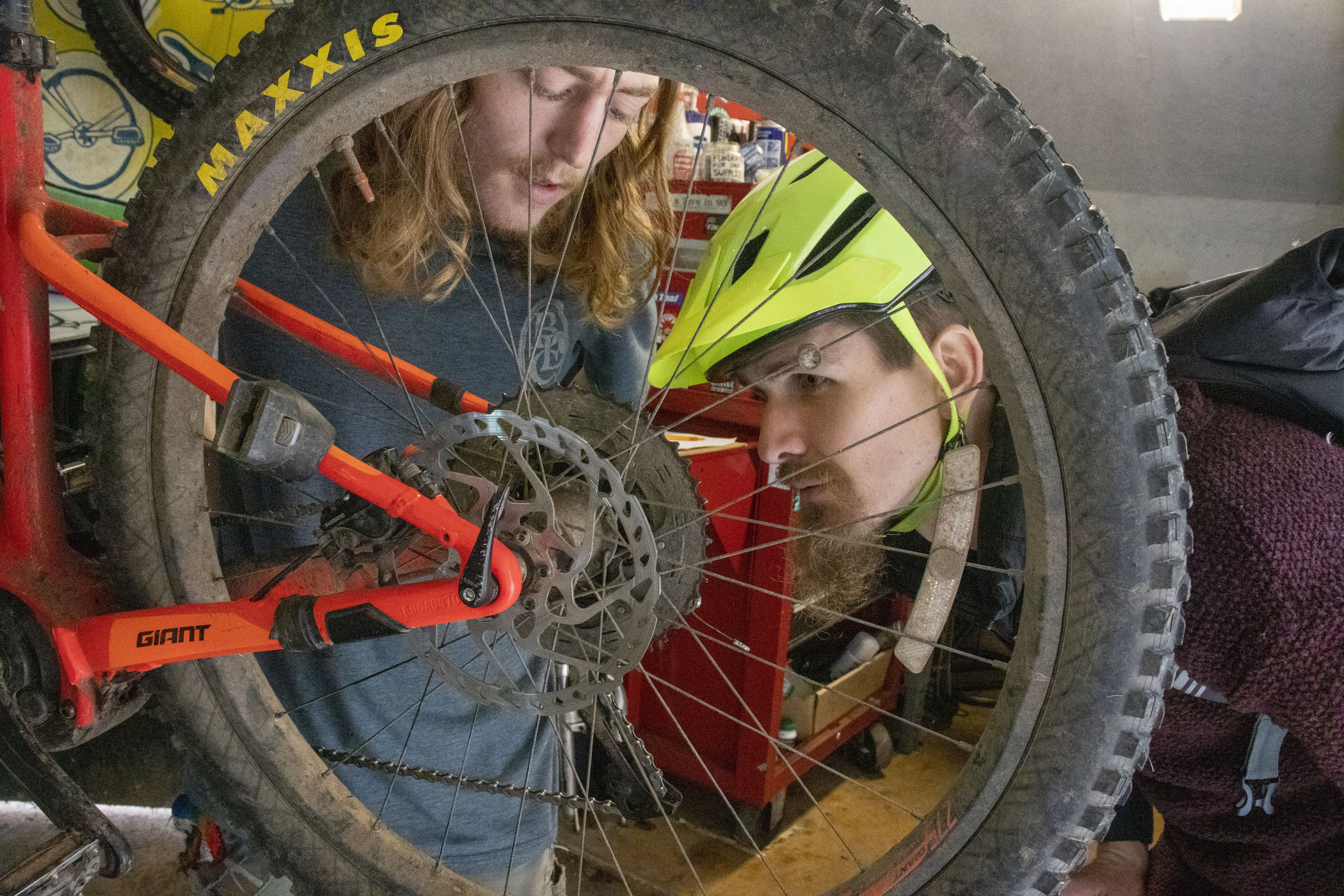
Originally founded in 1992, HSU’s entirely student-staffed Bicycle Learning Center is a free resource available to all HSU students in need of bike repairs. The transition opened up two part-time instructor positions, paid for with student fees, that are currently split between three students.
“Probably the biggest thing that I’m working on here is how to share my bicycle knowledge efficiently,” Sperling said. “Learning how to teach is one of the things that I’m most excited about learning while I’m here.”
BLC Director Julian Palmisano scours the donated pins bin on Jan. 29. | Photo by Dakota Cox
Colton Trent hard at work at the BLC on Jan. 29. | Photo by Dakota Cox
Current Director Julian Palmisano has been a member of the BLC since he transferred to HSU from Santa Barbara City College in 2017.
“We all started as volunteers at the shop to serve and build community, utilize the resources and gain experience,” Palmisano said.
The BLC does its best to provide all of the tools necessary for maintaining a well-conditioned bicycle, along with as many consumable parts that they can get their hands on. With a budget of only $800 provided by WRRAP, the majority of parts that cycle through the BLC are donations.
“Sometimes we just don’t have stuff and we have to tell people like, sorry we can’t help. Which is a real bummer.”
Colton trent
Colton Trent is an instructor entering his third semester volunteering for the BLC.
“The budget provides a buffer in case we run out of stuff,” Trent said. “But for the most part we can function pretty well trying to up-cycle and recycle things.”
As a result of their small budget, the BLC can only provide a finite number of students with bicycle maintenance.
“Sometimes we just don’t have stuff and we have to tell people like, sorry we can’t help,” Trent said. “Which is a real bummer.”
The BLC encourages donations in the form of tools, bicycle parts and old bikes that will be refurbished and donated to a student-rider in need. All cash donations that the BLC receives go directly into the shop’s spare parts fund.
In the fall semester of 2019, the BLC saw over 180 documented student visits, totaling over 100 hours of bicycle maintenance. By spreading the trend of using bicycles as a primary-method of transportation, the BLC is promoting a healthier lifestyle with a significantly smaller carbon footprint.
Located in the eastern tunnel by the Redwood Bowl, the BLC is open 10 a.m. to 2 p.m. Monday through Friday, with instructors and volunteers standing by to assist and educate students in bicycle repair.
A group of students and community members wandered around Redwood Creek to track the local wildlife
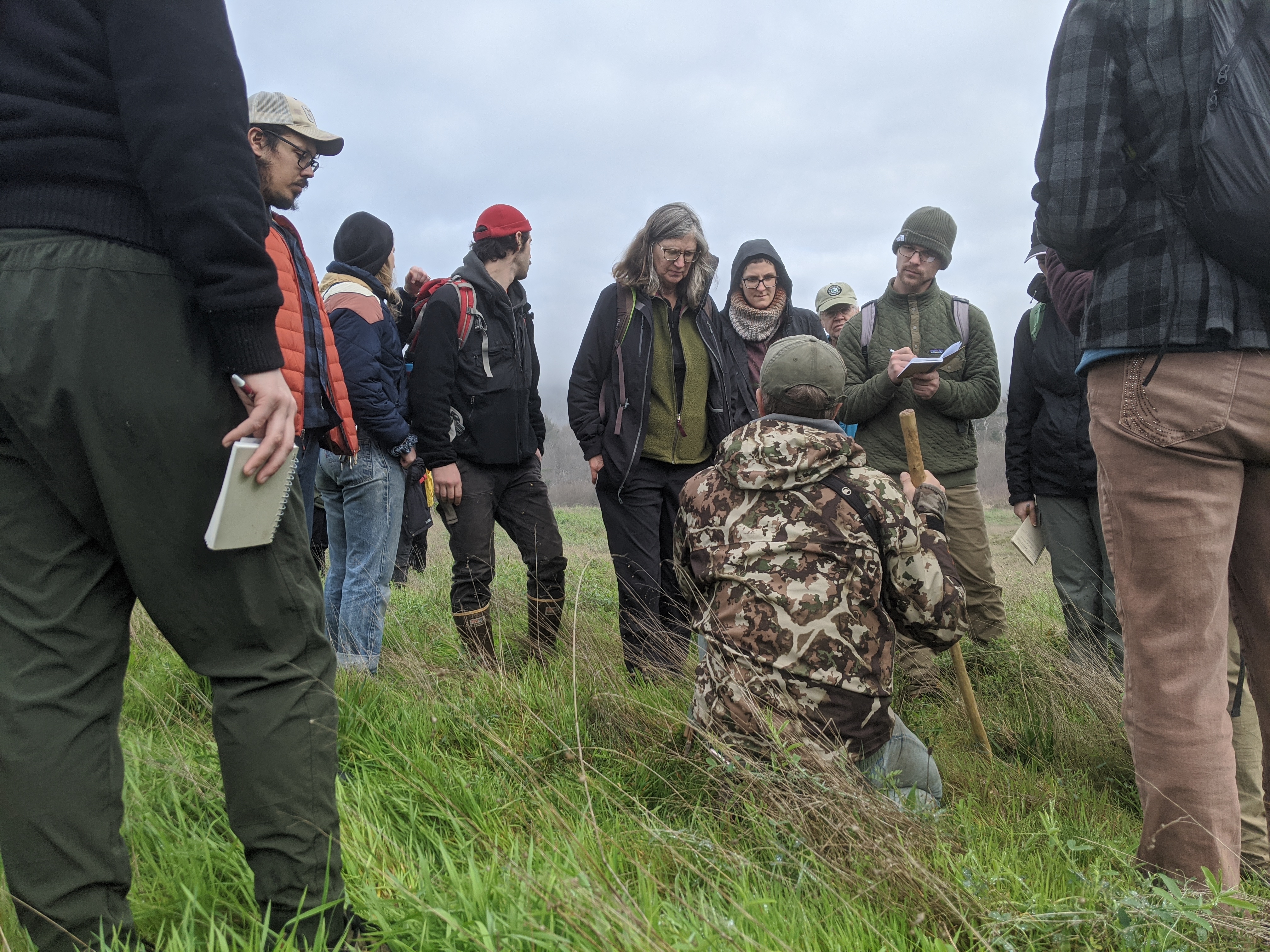
On Saturday, Feb. 1, Phil Johnston, the mountain lion biologist for the Hoopa Valley Tribe, stopped the group of 20 mixed retirees and Humboldt State University wildlife majors to quiz them on the tracks he had noticed in the sand.
The participants all went to the headwaters of Redwood Creek, just south of Orick, to learn about the tracks, scat and other markings of the animals in our area. Some were there to learn what they could and enjoy the hike, and others were looking for a leg up in their future careers.
“If you’re good enough at interpreting signs and staying on the trail, it’s pretty close to watching them.”
Phil Johnston
Throughout the day, Johnston stopped and drew circles in the stand with his walking stick around particular markings, scat or tracks and asked the group to weigh in on the different features and aspects of it. He asked leading questions about what family the suspected animal may belong to as well as what it most certainly did not belong to.
“If you’re good enough at interpreting signs and staying on the trail, it’s pretty close to watching them,” Johnston said.
Johnston leads these wildlife tracking workshops at the Natural History Museum in Arcata. Evaluators certified by CyberTracker will be coming to Humboldt County to test 10 people on their tracking skills, according to CyberTracker standards. People who pay the $170 certification fee must pass the certification exam on April 25 and 26 to receive their certification.
Workshop attendees identifying foot tracks at the mouth of the Redwood Creek on Feb. 1 | Photo by Walker B. True
Louis Salas is a 31-year-old wildlife major pursuing the CyberTracker certification. Salas hopes to work in predator conflict mitigation after he graduates, and figured that if he can earn this certification, he would have a leg up in the competitive field of wildlife biology.
“I’m an older student and I’m competing with a bunch of 18 to 22-year-olds,” Salas said.
The community impact of the workshop didn’t pass him by. Salas said the workshop was a welcoming environment and he enjoyed seeing older people getting out and learning. Salas said when people learn about wildlife, they care about it more.
“If nobody cares about the landscape that we live on, no one’s gonna protect it,” Johnston said.
He wants people to have a connection to the place that they live so that they will want to preserve it for future generations. Johnston said that tracking gives people the ability to feel like a participant in the ecosystem instead of a tourist.
Dave Ramirez is a forestry major and Deanna Lopez is a zoology major. Neither were after the certification and just came out with a friend to learn more about tracking. Both of them said they would probably come back. The commentary and teaching turned what would normally be a quick walk on the beach into something better.
“It’s more meaningful than just hiking,” Ramirez said.
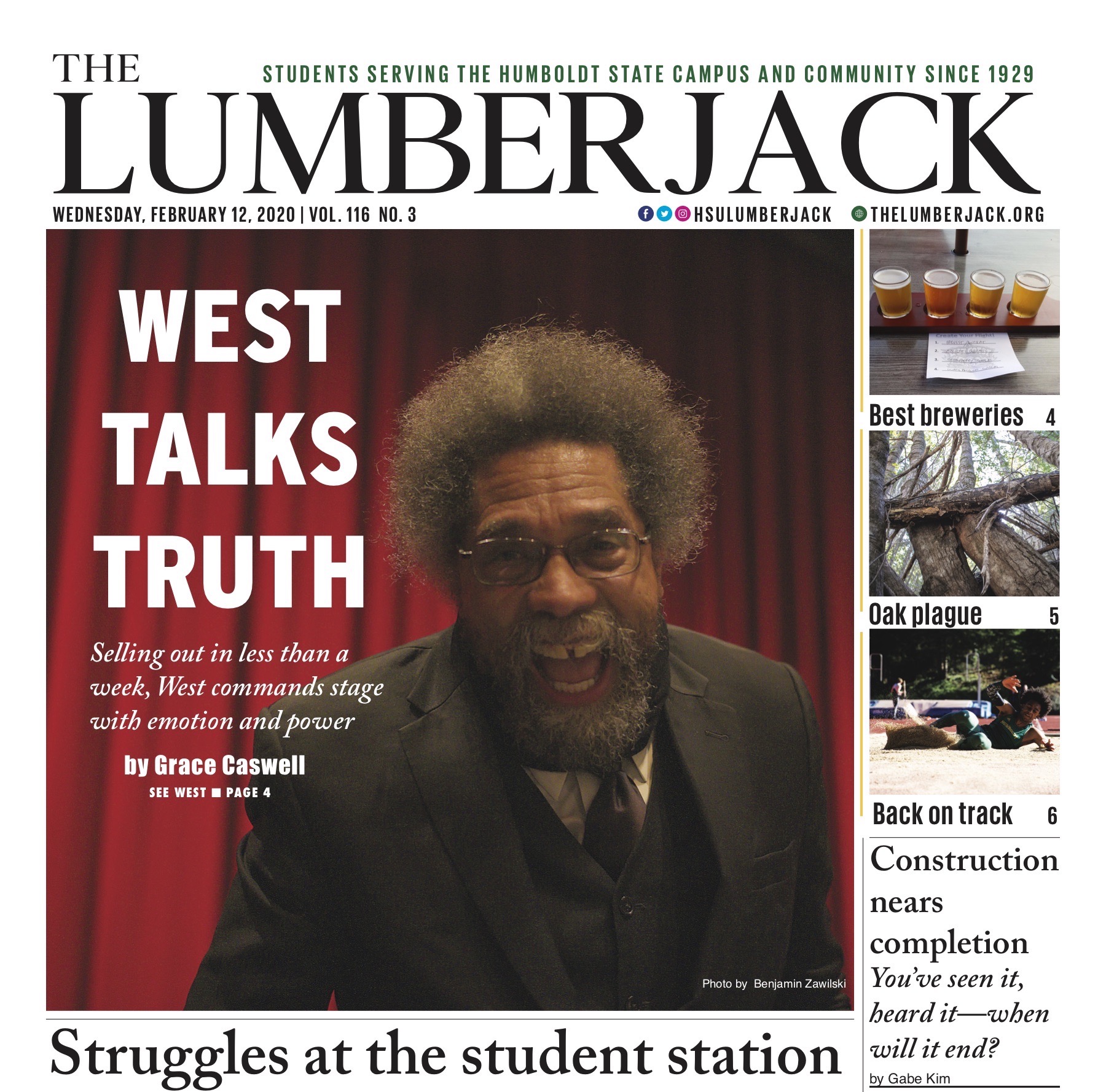
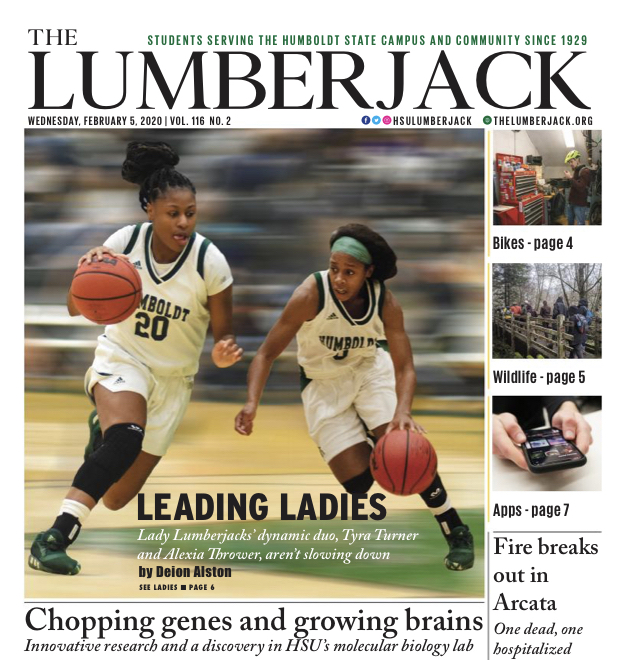
The second issue of The Lumberjack for the spring 2020 semester
This website uses cookies to improve your experience. We'll assume you're ok with this, but you can opt-out if you wish. Cookie settingsACCEPT
Privacy & Cookies Policy
Privacy Overview
This website uses cookies to improve your experience while you navigate through the website. Out of these cookies, the cookies that are categorized as necessary are stored on your browser as they are essential for the working of basic functionalities of the website. We also use third-party cookies that help us analyze and understand how you use this website. These cookies will be stored in your browser only with your consent. You also have the option to opt-out of these cookies. But opting out of some of these cookies may have an effect on your browsing experience.
Necessary cookies are absolutely essential for the website to function properly. This category only includes cookies that ensures basic functionalities and security features of the website. These cookies do not store any personal information.
Any cookies that may not be particularly necessary for the website to function and is used specifically to collect user personal data via analytics, ads, other embedded contents are termed as non-necessary cookies. It is mandatory to procure user consent prior to running these cookies on your website.