The Lumberjack


Students Serving The Cal Poly Humboldt Campus and Community Since 1929

Tag: HSU

  • Celebrating a multicultural campus

    Celebrating a multicultural campus

    With the official beginning of the new school year, clubs and organizations on campus are off to a strong start, including the African American Center for Academic Excellence, also known as the AACAE.

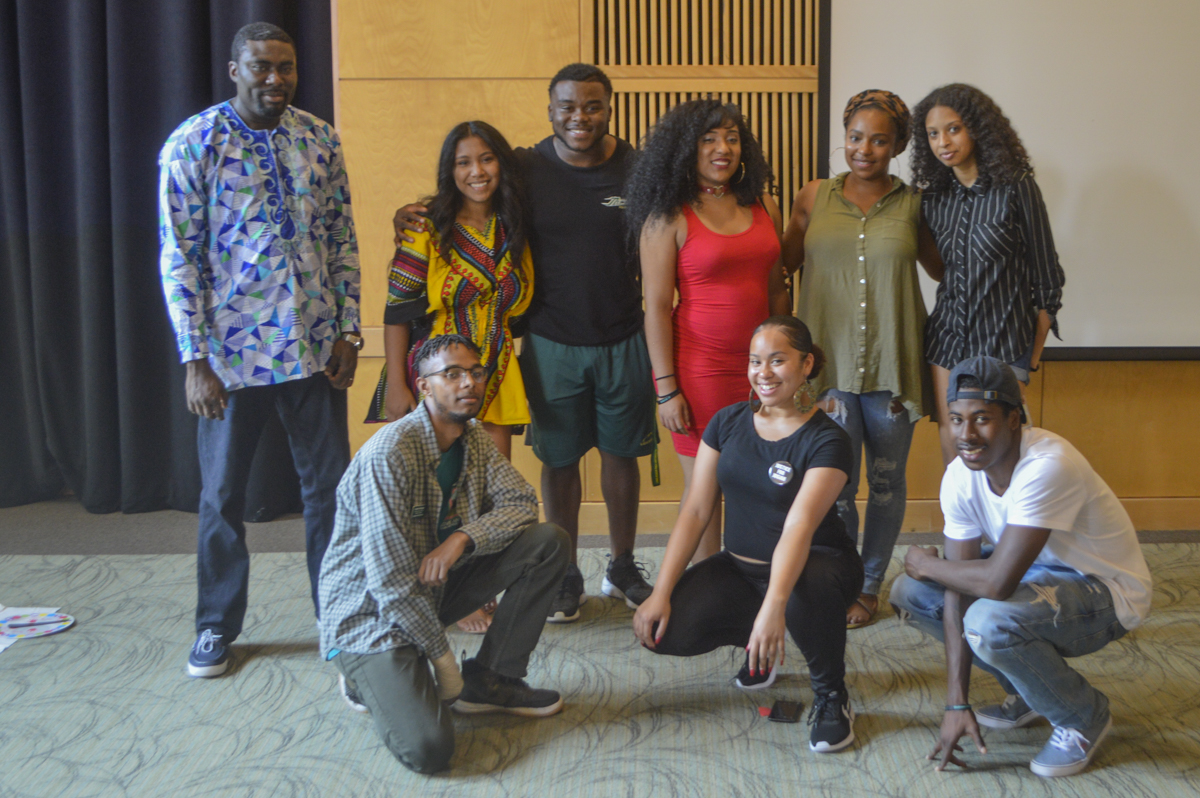
    The Center hosted their first event of the semester on Sept. 2, 2017, a Welcome Black Reception, to incoming and returning Humboldt State University students. The event brought together students and faculty of all different ages, genders, and races together to kick off the new school year.

    The AACAE is a student support space on the campus of HSU that aims to celebrate our multicultural campus by providing a guiding resource for students who identify as African American, Black or of African descent, as well as the entire university community. The organization was established in 2015 and since then has been continuously contributing to the efforts of making the Humboldt campus more inclusive and safe.

    LNACAAE_Web-1.jpg
    Games, snacks and music bring together students at “Welcome Black Reception” in the KBR.

    Erin Youngblood-Smith, who is currently pursuing a master’s degree in Social Work and interning at the AACAE says, this semester, the Center’s goals are to continue helping, providing academic support and guidance for the student body of the HSU campus, as well as planning and collaborating with outside services, as well as other campus-based clubs on upcoming events.

    Additionally, the AACAE has a serious agenda this semester, following the murder of David Josiah Lawson in April.

    Jimento Aikhuele, a graduate student majoring in Environmental Engineering and intern at the AACAE said that the event is what brought him into the Center. “I knew the local [population] would be down and they might need support, one way or another.”

    Both Youngblood-Smith and Aikhuele agree there is a gap between the Humboldt University community and the Arcata community that must be bridged.

    “There cannot be a separation between the campus and the local community, there needs to be really structured communication,” Youngblood-Smith said, “stronger ties between the city and the university’ In order for all students to feel safe.”

    Youngblood-Smith advocates education, such as conversations and workshops on safety in communities other than your own.

    “That’s a priority, making sure our students know there are dangers everywhere and you need to be aware of them,” Youngblood-Smith said.

    One student that has benefited from AACAE’s resources and proactivity is 19-year-old senior Psychology major Gabrielle Fox.

    Fox says her transition to HSU would not have been as smooth if it wasn’t for the Center.

    “There are people there who genuinely, truly want to see you succeed, it really makes a difference when you know you have somebody, who has your back and genuinely wants to see you the best that you could be,” Fox said.

    According to Fox, to be willing to open your mind to different experiences and opinion is a significant step to inclusivity on campus and in the community.

  • Clubbin’ at the quad

    Clubbin’ at the quad


    By | Ian Benjamin Finnegan Thompson

    Sword fighting, physics demonstrations, acro yoga, Folklorico dancing and more were on display at the annual Clubs Fair at the UC Quad last Wednesday.

    Dozens of clubs ranging from an anime fan club to the Society of Women in Math and Science were reaching out to students and informing them about the ideas behind their communities during the lunch hours of 10-2pm.

    Jordi Koopman of the Humboldt Circus said it’s a great way to meet people and play games with others.

    “Being able to co-create with people in a whimsical way is great,” said Koopman.

    According to the Clubs and Activities page on the Humboldt State University website, the goal of the clubs fair is to “Support safe and inclusive opportunities for student involvement and engagement.”

    Many of the clubs are simply safe spaces for students to meet peers and have weekly gatherings to socialize.

    The HSU Browncoats is a fan club of the Joss Whedon single season cult classic tv show Firefly (and spin off movie Serenity) who meet up once a week for Firefly trivia, games, and events.

    “It’s a safe space for nerds to hang out at,” said Kelsey Vaughan, a member of the HSU Browncoats.

    The clubs fair can also be a place to receive much needed scholarly or emotional support for students who may feel isolated or not included in the communities found on the HSU campus.

    Carla Quintero is the president of the Society of Women in Math and Science (SWIM) whose goal is to help women on campus as well as other minority groups succeed in STEM (science, technology, engineering mathematics) majors.

    “Our goal is to encourage other underrepresented groups to become science majors,” said Quintero.

    If you missed the clubs fair there are still plenty of ways to reach out and join clubs on campus. Check out the Clubs and Activities page on the HSU website for a full listing of available clubs. And if you don’t find a club you like, sign up and make your own.

  • Parking & Commuter Services offer solutions to the parking problem

    Parking & Commuter Services offer solutions to the parking problem

    Students, faculty and staff are once again irritated with parking, even with the dip in enrollment this semester. Students who purchased the semester permit for $157.50 or the fall and spring permit for $315.00 are particularly vexed when they can’t make use of it consistently. The fact is Parking and Commuter Services oversells permits. TallChief Comet, Administrator of Parking & Commuter Services, says that when one flow of users hop into their vehicles and vacate space, the next flow of users compete for parking. In other words, the ratio of permits sold balances out with the inevitable schedule turnarounds. Additionally, the chances of developing more parking lots in the future are close to zero. In light of this recurring issue, Parking & Commuter Services encourages alternative modes of transportation to not only lower costs and reduce stress, but to reduce the carbon footprint. Alternatives include the JackPass, which offers free access on the Redwood Transit System, Eureka Transit System and Arcata and Mad River Transit System buses during the fall and spring semesters. Parking and Commuter Services are working with the City of Arcata to implement bike sharing-service Zagster next fall. Also, reconstruction of the G14 and G15 parking lots below the Behavioral and Social Sciences building will slightly increase the number of parking spaces and incorporate “smart” parking technologies to name a few improvements. The smart technology will involve space sensors that will allow permit owners to monitor parking space availability. Reconstruction is expected to start next summer and end before the subsequent fall semester. Vehicle owners who commute to the university within a mile or two of their residence should consider walking to school or taking advantage of said alternative modes of transportation. Participate and reap the rewards of sustainable practices in no time, including the cost of gas. Parking is likely to be an issue for years to come so students, faculty and staff must accept it for what it is and learn to work with the system until further changes can be enforced. In the meantime, there are underused programs available and other sustainable ways to get around town. Use the resources that are available to you. Visit parking.humboldt.edu for more details. Ride on.


  • International Friendly Game Shows the Lumberjacks Potential for the Upcoming Season

    International Friendly Game Shows the Lumberjacks Potential for the Upcoming Season

    Video by Sarahi Apaez.

    The Lumberjacks go big for its only preseason 2017 home game against international team Cetys University from Mexico. Cetys arrived to Humboldt County Thursday, August 31, and shared the Lumberjack’s practice field in preparation for Saturday’s game at 6 p.m. game at the Redwood Bowl.

    The game started with a 94-yard kickoff return by running back, Jaquan Gardner promptly followed by two other touchdowns by Gardner in the first quarter.

    “It was a good start to the game,” Gardner said, “a good way to build momentum for the team.”

    Offensively, the Lumberjacks showed its upcoming competition what it is made of. The team put up a total of 83 points on the board by the end of the game. Eight touchdowns were scored by: JaQuan Gardner, Malcolm Hale, Edwin Campbell, Kaleo Garrigan, and Jabar Byrd before Cetys scored its first touchdown with only seconds left in the 2nd quarter.

    Malcolm Hale, a transfer player from Contra Costa College, had two receiving touchdowns for a total of 157 yards in the first half of the game.

    “I am just happy to be a Jack, to be able to score and be able to win for my team,” Hale said. “Whatever it takes, I am going to do it.”

    As well as offense scoring, the defense put several points on the board. Senior, Edwin Campbell from San Jose, California started with the first big hit of the game. And with 10 minutes left in the 2nd quarter, Campbell intercepted the ball and ran it back for a touchdown.

    “It felt great,” Campbell said, “it felt like a movie, to be honest.”

    Senior, Ryan McKenzie, also from San Jose can relate to his teammate’s enthusiastic play overview. McKenzie went in for a big hit in the 2nd half of the game and also had a 48-yard interception return.

    “When you make big plays like that and can score off the turnovers,” McKenzie said. “It gives a good spark for the team.”

    Now although the Lumberjacks defense made big plays and overall held a high number on the board, first year defensive coordinator Barry Sacks gave us his opinion about where to go from here for the first official season game on the road against Azusa Pacific next Saturday, September 9.

    “I thought we were good, sound, and solid in a lot of situations,” Sacks said. “A little sloppy at times in the second half, but I think it is a great start. We want to make sure we improve as much as we can before next week.”

    The Lumberjacks displayed its potential and had its fans chanting every other minute. The players are ready for another blowout, and the coaches are ready for another smart, well-played game.

    “We are just ready to prepare for Azusa,” Gardner said. “I think we’ll be alright.”

  • Yes! The Y.E.S. House is open

    Yes! The Y.E.S. House is open

    By|Michelle Meyers

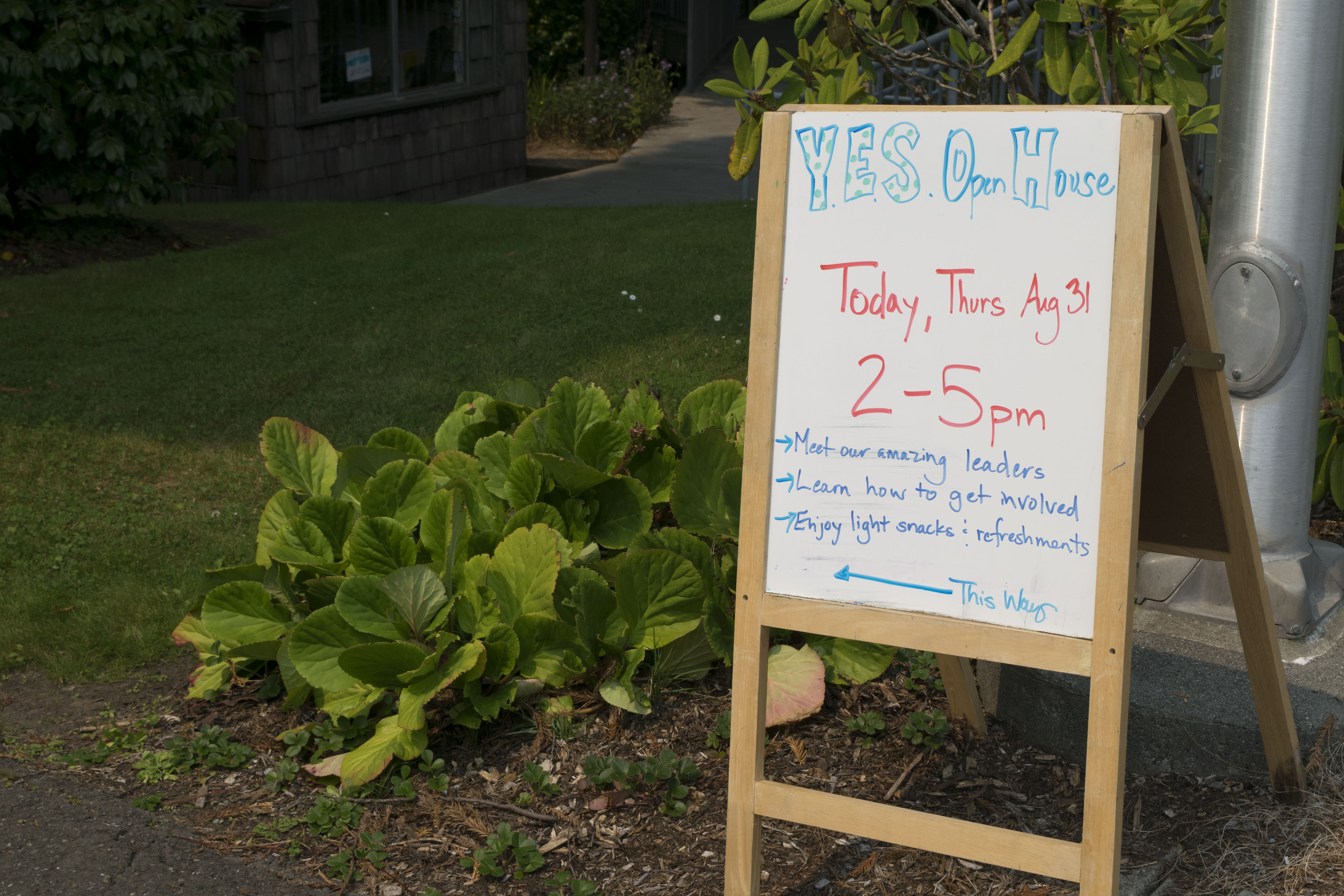
    Thursday, Aug. 31, the Youth Educational Services house on campus, Y.E.S. House, held their open house for students and other members of the community to come and see what the Y.E.S. House has to offer.

    DSC_0094.jpg
    Photo credit: Michelle Meyers

    The Y.E.S. House is a completely student run program of the Associated Students of Humboldt State University and is under the department of Student Affairs. Since 1968, the Y.E.S. House has played a vital role in supporting students in becoming active members in their community and initiating social change by creating and implementing volunteer programs that serve the needs of the community.

    This Way.jpg
    Chalk leading the way to the yes house. Photo credit: Michelle Meyers

    Currently, there are 13 different volunteer programs at Y.E.S. and each of them works with a different population within our local community. Their purpose is to offer support for any kind of needs they may have that arise.

    New Games is one of the programs at The Y.E.S. and has been around since 1991. Cori Simons, a Child Development major at HSU and the newest Program Director of New Games explains that the program was created with the intention to promote “non-violence, non-competitiveness in children, and positive relationships between college students and children” through a wide range of team building games.

    Cori Simons- New Games Program Director.jpg
    Cori Simons, New Games Program Director. Photo credit: Michelle Meyers

    Simons said that New Games is still seeking volunteers and will eventually be hosting rummage sales and games days on the quad.

    “We play a lot of improv games,” Simons said.

    Cindy Xiong, freshman Wildlife major at HSU said that she stopped by the Y.E.S. House during her freshman seminar after her professor instructed her group to ask around and see what the campus has to offer.

    “They told us about all of these different volunteer opportunities, and some of them interested me,” said Xiong, “As a Wildlife major, I wanted to do something that involved being outdoors.”

    Xiong, who signed a volunteer slip, also expressed interest in the Environmental Education Program at the Y.E.S House.

    Critical Race, Gender and Sexuality Studies major Oliver Winfield-Perez is the new Program Consultant at the Y.E.S House. He first joined as a volunteer for the Queer Mentoring and Advocacy Program because he wanted to work with queer youth in the community.

    “Once I joined I found a very close knit sense of community within Y.E.S, I found friends,” said Winfield-Perez.

    During his experience at the Y.E.S House working as a volunteer in the community and within his program, he said that he was able to develop certain professional skills, leadership skills,and social skills, which gave him the motivation to become a director for that program and then eventually apply for a position as Program Consultant.

    “This year our theme is Empowerment and Activate,” said Winfield-Perez.

    Winfield-Perez said his biggest role as the program consultant and the main focus of the Y.E.S. House is to promote community organizing on and off campus. They are also working to make HSU more inclusive.

    “We are also really trying to support our student leaders, foster leadership, foster professional skills and communication skills within our students,” Winfield-Perez said, “and also create a sense of community and a support system for students on campus.”

    According to Winfield-Perez, a good amount of students at HSU who have to fill a certain amount of hours for service learning come to the Y.E.S House to help meet that requirement.

    “We’re really into service learning. Through our work of engagement within the community, we’re experiencing all of these things, so when we come back to the meetings, they reflect on what happened during times when they were in the community, what they enjoyed, what could be worked on, and then we take that knowledge and try to just apply it in different settings and, or apply it in the future,” said Winfield-Perez.

    To submit a volunteer application with the Y.E.S House, you can complete the online volunteer contract located on their website.

    http://www2.humboldt.edu/yes/

    How to Contact The Y.E.S. House

    House 91
    Humboldt State University
    Arcata, California 95521
    Phone: (707) 826-4965
    Fax: (707) 826-5558

    E-mail: yes@humboldt.edu

  • Lumberjack Classic a success for the Jacks

    Lumberjack Classic a success for the Jacks

    Humboldt State University’s Women’s Soccer team kicked of it’s season with two impressive wins against Fresno Pacific and Colorado Mesa to end up 2-0 at the Lumberjack Classic.

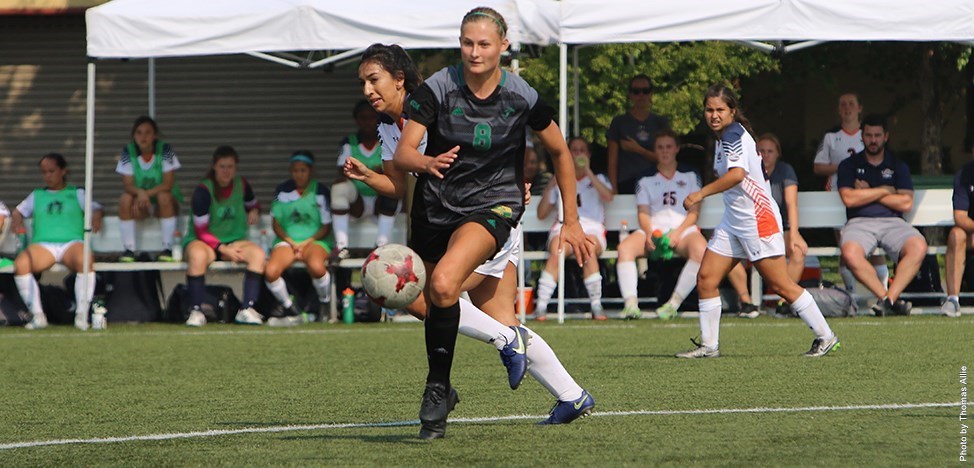
    Saturday against Fresno Pacific, HSU got a steady dose of Alex Jenkins. Jenkins, a junior, scored two goals. The first goal came at 30:32 and the second at 89:23.

    “Sometimes when you have the fastest girl in Californa running around, sometimes you’ll score goals,” Said Head Coach Paul Karver.

    Jenkins led the Lumberjacks in points a season ago, and was the team’s second leading goal scorer from a season ago. She already has half as many goals in the first two games this year as she did last season.

    “Focusing and calming my nerves helped me before the game,” said Jenkins. “The one thing I can control is my work rate, after everything will follow.”

    6N5A9724.JPG
    Junior Forward Alex Jenkins runs with the ball | Thomas Allie

    Defensively the Lumberjacks pitched a shutout. Humboldt State goalkeeper, Sophomore Katelin Talbert recorded nine saves on the day, as the team outshot the Sunbirds 11-10.

    Helping patrol the back line was one of the four seniors on this years team, McCall Madriago.

    “We have a lot of intelligence on this team,” said Madriago. “You can definitely see out there we are comfortable and we trust each other.”

    Coming off of a four win season. The Lumberjacks can only improve. With only five new players this season. The team brings back experience that’s guaranteed to help this year.

    “The second game of a weekend tournament is always about guts and determination,” said Karver. “We put ourselves in some bad situations, our back line came up huge with a shutout.”

    In its first regular season game of the year. The Lumberjacks got a 2-1 win over Colorado Mesa from a late goal by Myriah Epino that capped the victory.

    Freshman, Sabine Postma, scored the first goal of the season for HSU.

    In his first three years as head coach, Karver had seen steady improvement in each of his teams. Topping his totals for wins each year until last. He hopes to make a significant jump this year.

    “We scheduled these games knowing we’d have great competition,” said Karver. “For us to come out of this week 2-0 is fantastic.”

    The maturity and the progress the players have made is what have Karver excited for a rebound season for HSU.

    “We have players that have really embraced the roles and leadership that we’ve asked them to,” said Karver. “The team dynamic is better then it’s ever been.”

  • Students’ J-point money washed away

    Students’ J-point money washed away

    As the end of last spring semester approached, sophomore Tonita Johnson, 19, had around $600 of leftover J-points on her meal plan. During the last weeks of the semester, Johnson was trying to spend her remaining points by paying for her friends who had used up all of their J-points.

    “I paid for other people who ran out of J-points,” Johnson said, “I had to get rid of $600, I got it down to $92.”

    Last year alone, $82,513 worth of unused J-points expired. HSU meal plan J-points expire at the end of every spring semester. Every year a number of students lose their leftover points. These already expensive points are nonrefundable and can’t rollover to the summer semester or the following school year.

    IMG_2885.JPG

    Like many other students, Johnson took out a loan to pay for the gold plan she had last year. Students pay $1.96 for every $1 they get on the gold plan. The plan costs $5,544 while students only get $2,832 worth of J-points. $1,416 for each semester. This hidden,

    prepaid cost is known as a fixed cost.

    Johnson lost $92 of J-points, but adding the fixed cost fees she paid for when purchasing the plan brings her total loss to $180.

    “That money would have gone towards my books and other stuff that I needed for this semester,” Johnson said.

    Besides buying things for friends, before heading home to Los Angeles, Johnson spent some of her J-points buying things from the on-campus markets and left them at a friend’s house in Arcata that caught on fire this summer.

    “My friend house caught on fire, a lot of those things that I’ve bought from all around got destroyed in the fire,” Johnson said. “Everything is gone. They lost a lot of stuff, I lost some of my stuff.”

    HSU does not refund students any part of their remaining meal plan balance.

    “They [HSU] should refund the points. I feel they have the ability to refund the points,” Joey Mularky, president of Associated Students, said.

    Sahil Barot, a 19-year-old international student from India, said it’s a waste of money.

    At the end of last spring semester, he had over $280 leftover points on his meal plan. He spent some of his remaining points on things from the on-campus markets, but still lost around $70 worth of J-points that expired. IMG_2909.JPG

    “It was sad. It’s a lot, it’s a big amount,” Barot said. “With that money, I could buy my stuff for a month. My food, groceries, milk or cereal or vegetables and fruits I could buy it for a month.”

    Barot’s family owns a farm in India where they grow cotton, potatoes and tobacco. His father helped him pay for the meal plan with their farm income savings. His father also took a loan to pay for his education.

    “My father saved some money for me,” Barot said. “My father took a loan from a bank and got money from the farm.”

    In a school where over 50 percent of student come from low-income families, there are no plans to consider refunding student for their unused meal plans money. This brings up the question, what does student who needs that money do?

    IMG_2976.JPG
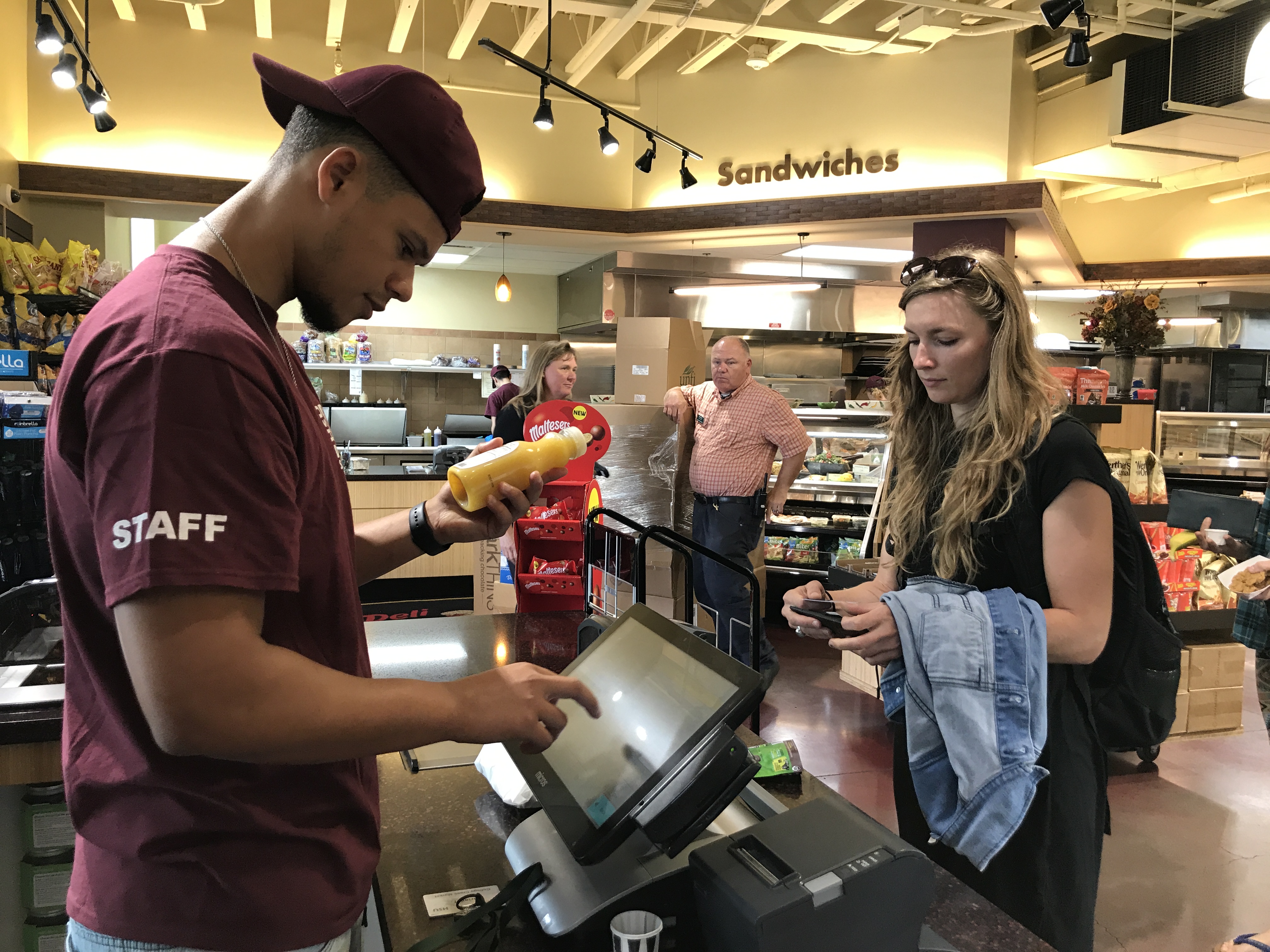
    Brian Thompson (Cashier) checking out items for a student at the college creek marketplace. Photo credit: Ahmed Al-Sakkaf

    “The answer to the question ‘What do student who need that money do?’ I don’t have a good answer for that,” said Ron Rudebock, the director of Dining Services. “Life is not fair sometimes.”
  • Jacks win big in home opener

    Jacks win big in home opener

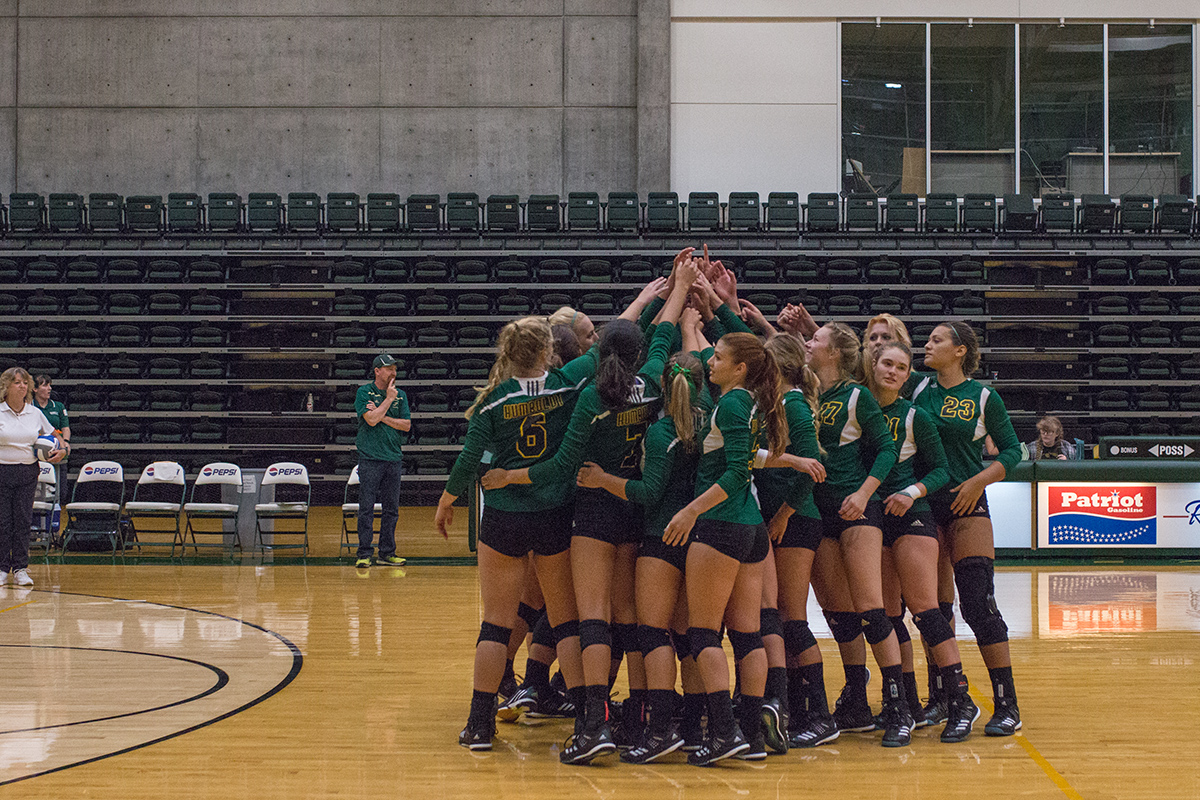
    The Lumberjacks’ women’s volleyball team opened its season at home with a bang on Thursday, Aug. 31, handling the Academy of Art Urban Knights 3-1(25-17, 25-15, 22-25, 25-21).

    Alex Lolland, senior and outside hitter, had a night to remember on what was also her 21st birthday. Lolland had a team high 16 kills. Six of them came in a crucial period when the Lumberjacks were in danger of losing a second straight set.

    LSvolleyball1
    Alex Lolland going towards the ball in the HSU Lumberjacks Arena on Thursday, August 31st. | Photo by Lauren Shea

    Humboldt’s use of the drop shot was evident in the first two sets as they repeatedly were able to fool the opposing teams blockers with smart plays, great digs and teamwork. The team won by a combined 18 points in overall set play.

    “I used to be a big hitter that used to go up and swing at everyone, but you have to realize between a big fancy swing versus an easy tip is a point-to-point,” Lolland said. “Coach Kelly and Greg have definitely been implementing that in me to be a wiser player.”

    The Academy of Art settled down in the third set from what looked like early game jitters and rallied behind strong serving and defense at the net. The Lumberjacks were able to keep the set competitive and went up 20-18, but the Urban Knights held their composure and closed it out on a 7-2 run, winning the third set 25-22.

    LSvolleyball2
    Lauren Reid and Savannah Horton block a spike from Academy of Art in the HSU Lumberjacks Arena on Thursday, August 31st. | Photo by Lauren Shea

    Knights head coach, Ray Batalon wants his team to start doing the small things right early in the season.

    “We were pretty tentative in the first two sets,” Batalon said. “Once we started to serve a little more aggressively and force Humboldt into some bad situations it gave us a few more opportunities.”

    The fourth set remained a competitive one as both teams were fighting to keep their record clean in the first game of the season. The Lumberjacks rallied with a 7-1 run but the Knights quickly responded with a 6-1 run of their own. Tied 19-19, HSU was able to close out the set on a 6-2 run giving the team (1-0) its first victory of the season.

    Senior setter, Jessica Lammers, and junior setter, Taylor Yancey, each finished with over 20 assists on the night. Lammers and senior libero, Nicole Bianchi, had 13 digs a piece.

    HSU head coach, Kelly Wood, is happy with the result of the home opener but knows there is still work to be done.

    “In those first two sets we played really well but Academy of Art gave us a lot of our points in those first two sets but we were playing very well on our side of the net,” Wood said. “Playing at a consistent level throughout every set is something that will make us very hard to beat.”

    LSVolleyball4
    Alex Lolland spikes the ball to the other team Academy of Art in the HSU Lumberjacks Arena on Thursday, August 31st. | Photo by Lauren Shea

    HSU and Academy of Art meet up for the rematch Friday Sep. 1 at Lumberjack Arena. First serve is scheduled for 3 p.m. and HSU students, faculty and staff receive free admission with campus ID.


  • Put em’ in a cage they say!

    Put em’ in a cage they say!

    By Phillip Santos

    The HSU campus is not a zoo. After attending this university for almost four years I’m inclined to disagree with that statement for a variety of reasons, but those who carry that sentiment have made their voices heard. Last semester the HSU Senate passed a draft resolution banning all animals except service animals from campus buildings. Who does this policy affect? Everyone really, but three groups in particular.

    The first group is made up of those who have certified service animals. Service animals go through a vigorous training regiment and are considered “working” animals who assist people with disabilities. Various examples include calming individuals with PTSD, alerting others if the owner is having a seizure, etc. Service animals are trained to perform a task specifically related to the disability the owner has.

    IMG_20170831_165334161.jpg
    Michelle Meyers with her seizure alert dog, ” Roody.”

    The second group is made up of the people who have emotional support animals. There are a few distinct differences between emotional support animals and service animals, but I will only outline two. The first is that emotional support animals are intended to help treat persons with psychological and emotional disorders. Whether or not these qualify as legitimate disabilities is something that mainstream society continues to argue about. The second difference is that emotional support animals don’t go through a vigorous training program, they are essentially prescribed by a licensed medical professional as a way to ease the symptoms of the patient’s disorder.

    IMG_20170831_164941367.jpg
    Kimber Nguyen and her emotional support anima, “Duke.”

    The third group is probably the largest of the three. These are the people who bring their pets to class because they can. When a dog jumps up onto a food surface in the Depot or leaves behind a steamy pile of excrement, these are the people that passerbys think of. Based on the comments made during the HSU Senate meeting when this resolution passed, this is the group that is being targeted by the new pet policy.

    The problem with this policy is that it uses broad measures to target a specific group of people and in the process, causes substantial damage to students with real and pressing needs. These are the students who depend on emotional support animals to make it through a tough class, or to even get there in the first place. Companionship is a powerful thing that enables human beings to do incredible things, but it’s at times necessary to achieve the ordinary. Because sometimes the ordinary becomes the impossible, but an impossible that can be diminished by a familiar friend doing what any friend would do, which is to offer support.

    This policy is also cruel towards the emotional support animals themselves. The policy mandates that emotional support animals be caged or kenneled while their owners are in class. Does anyone have class all day? Both the owner and the emotional support animal lose out in this arrangement. But this collateral damage is readily accepted in an environment where members of the HSU campus are tired of dealing with students who have abused the tolerance towards animals on campus.

    One of the worst things about this policy is that it doesn’t have to be crafted this way. Emotional support animals can be allowed in classrooms, and they should be. But the easiest solution to the host of issues that animals on campus have created is the current version of this policy. Supposed “modest revisions” are being made, but I’m skeptical that will amount to more than the correction of a typo.

    The other awful aspect of this policy is the lack of student input. During the HSU Senate meeting when this draft resolution passed, multiple Senate members expressed the need for student input to formulate a better pet policy. When it comes to this policy, it’s not that the HSU Senate isn’t listening, it’s that the student body isn’t talking. Don’t “sit down, be humble” stand up, don’t mumble!

    Through a variety of voices and action, HSU students and staff have created amazing programs and initiatives to address a variety of issues and interests such as : Check It (a nationally renowned movement to eradicate sexual assault and violence), KRFH (a FM college radio station that reels in awards every year), and WRRAP ( a waste reduction program which has reduced waste by 50% since 1996!). There is no reason that animals on campus cannot be met with the same type of creative and effective measures, but there is an explanation as to why that isn’t happening – I’ll let you finish that thought.

  • Student success in college

    Student success in college

    By|Charlotte Rutigliano

    With the start of the new semester upon us, students like senior Environmental Science major Kelcey Hein, strive for continued success during their time here at HSU without any added stress.

    “This year I want to enjoy the classes and appreciate what knowledge comes out of them without stressing out more than I have to,” said Hein.

    One way she plans to stress less is through her study methods. According to Hein, she only uses a quality pen and notebook because it is more motivating for her to have clean and fluid notes that she knows she’ll review and refer back to later.

    Quality notes are one tip HSU Alum Mary Osteen would give for student success, though that’s not the only one.

    Osteen, who graduated in 2004 with a degree in Political Science, said that it’s important for students to get to know and build a relationship with their professors.

    “Don’t remain a name on a paper, go the distance to build a relationship with each professor because education, to be deeply meaningful, is personal.” said Osteen.

    A statement recent Psychology graduate Dezi Villagomez would agree with.

    Villagomez said it truly pays off to go to your professor’s office hours, even though it may be a little terrifying.

    21215942_1537779426274392_1061477993_o.jpg
    Dezi Villagomez after graduation

    “They are here to help you and your needs,” Villagomez said, “go to them for advice, homework questions, or even academic and career advice.”

    Though professors aren’t the only resources on campus for students, Villagomez was one of many students who took use of the school libraries services.

    The libraries services include research help, checking out books, using computers and printers, reserving a study room and different skills workshops among others.

    It’s library resources like this that can help keep students focused on their classes and study sessions. Whether you are studying with a group or by yourself, our alums advise to not procrastinate, study a little everyday and not wait until Sunday.

  • Looking for answers

    Looking for answers

    By Curran Daly

    David Josiah Lawson died in the early morning hours of April 15, after a fight and stabbing at an off-campus party. On May 7, Judge Dale Reinholtsen ordered the release of Kyle Zoellner, a Mckinleyville native detained shortly after Lawson’s death, citing the prosecution’s insufficient amount of evidence to proceed to trial.

    Since then Humboldt State students left Humboldt County and four months have passed since Lawson’s death. As students return to the University and the surrounding area, the case is still unsolved and local law enforcement and the Lawson family are still searching for answers.

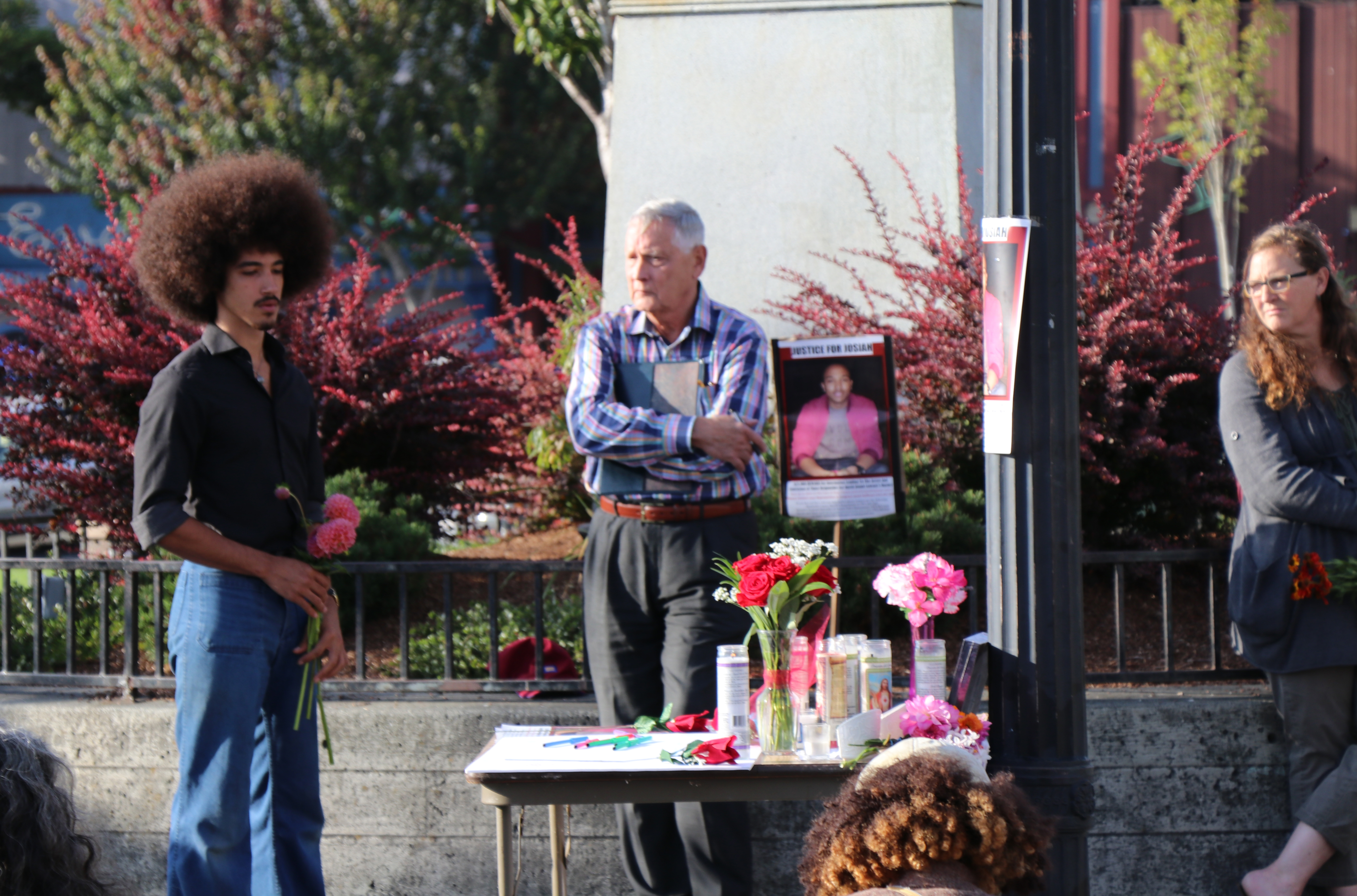
    A vigil to mark four months since Josiah’s death was held in the Arcata Plaza on August 15. At the Vigil, Arcata City Mayor Susan Ornelas fielded questions from community members about the case and the safety of people of color in the community.

    During the vigil it was revealed that a retired FBI investigator was to arrive in Arcata on August 16, to assist with the case. The investigator was brought to the city’s attention by the Lawson family’s legal representation and a contract had recently been agreed to between him and the City of Arcata.

    Mayor Ornelas also spoke of the role of the Justice Department in the investigation.

    “I hate that this is taking so long,” Ornelas said. “The city and I personally contacted the Department of Justice and they can only help us with the forensics of this case.”

    Forensic evidence was recently returned to the Arcata Police Department from the United States Department of Justice.

    At an Arcata City Council meeting on August 2, Ornelas relayed a message from Arcata Chief of Police, Tom Chapman.

    “The investigation is open and ongoing, additional witnesses have recently come forward,” Ornelas said. “We are beginning to recieve forensic testing results from the Department of Justice.”

    The City Council recently approved a community reward program for information leading to the arrest and conviction of the person responsible. The program was announced in a press release on August 1, from the City of Arcata that also confirmed the involvement of an outside agency.

    “Chief Chapman also confirmed that an outside agency from a large city that did not want to be named has committed two experienced homicide detectives to the Lawson case,” according to the press release. “’It’s not uncommon for agencies to take a look at an investigation from the outside, and looking at the investigative steps, make a determination if there is something more that can be done,’ said Chapman. ‘That is in process.’”

    Anyone with additional information is asked to contact the Arcata Police Department  at (707) 822-2428. The Lumberjack will continue to stay up-to-date on the progress of the investigation into David Josiah Lawson’s death.

  • Out of the clouds into the box

    Out of the clouds into the box


    By Charlotte Rutigliano

    After spending the summer testing different data cloud services such as Dropbox, Box.com, Microsoft Onedrive, and Google Drive, Chief Information Officer for Information Technology Services Anna Kircher has said the university has selected Box.com.

    According to Kircher, the university wanted to have this new system completely rolled out by the Fall 2017 semester. However, while they were conducting pilot tests over the summer, they found they still had questions with Box.com.

    “We still had some questions, like how long would it take students to upload/download files when they’re in a large class,” Kircher said. “Also how will it look for students to access the files from Canvas.”

    This fall, ITS and the university will be doing more pilot tests with Box.com to see if the new system will have functionality in the classroom.

    Kircher said that around 12 classes and five hundred students will participate in this fall’s pilot tests.

    “There will be two basic groups for the fall pilots, geospatial (GSP) courses and courses that will require large video and audio files,” Kircher said,

    Most student concerns surrounded security and storage limitations.

    Students currently have 200 megabytes available to them on the user drive provided by the university, and around 15 gigabytes within their Google accounts, which includes Gmail, Google Drive and Google Photos.

    According to Kircher, security is one of Box.com’s biggest concerns, because they often work with clients who require high levels of security.

    “One thing students won’t have to worry about with Box.com is space, using Box will give students unlimited space for files,” Kircher said.

    Kircher said the university’s new goal for rolling out Box.com school wide is the spring semester of 2018, which will improve file storage for all students.

  • Lost Lumberjacks

    Lost Lumberjacks

    By Curran C. Daly

    Sadly, a few members of the Lumberjack family will not be returning to HSU this fall.

    John Vayo

    John Vayo_Web
    Photo provided by Humboldt Area Center for Harm Reduction Facebook page.

    John Vayo passed away on July 2, 2017. He was entering his last year in the undergraduate Social Work program.

    “John struck me as a ‘would give you the shirt of his back’ kind of person—this is not a phrase I use very often—I found that hopeful and inspiring. John was deeply committed to the values and practices of harm reduction and, though he had already done a lot of good, would have gone on to shape our human service community in seriously positive ways,” said Ronnie Swartz, Social Work department chair and a personal friend of Vayo’s.

    Vayo will be missed around campus and in the community. He was an avid outdoorsman and volunteered with the Humboldt Area Center for Harm Reduction. Vayo is survived by his son Aiden. Vayo was 38 years-old.

    Michelle Lane

    Michelle Lane, Business, professor, portrait,
    Photo provided by Humboldt State Business Department.

    Michelle Lane passed away on August 7, 2017. She was an Associate Professor in the university’s School of Business.

    “Michelle was very pleasant and always smiling. She was always helping students and faculty beyond what was necessary,” said Hari Signh, professor and department chair of the School of Business. “Her most important legacy was helping the students succeed.”

    Lane helped launch the M.B.A. program for the School of Business five years ago. She was a big advocate for sustainability. Lane loved animals and was on the Board of Directors for the Sequoia Humane Society. She is survived by her husband, three children and three grandchildren.

  • Unite and strengthen

    Unite and strengthen

    Nazi’s are bad. After recent events in Charlottesville this is something that needs to be reiterated. This isn’t a political attack against the right, this is a statement of fact supported by history. There was an entire war to resist Germany’s Nazi movement. According to the National World War II Museum in New Orleans 416,000 American soldiers died. These Americans did not give their lives to see these same hateful ideals impregnate the American consciousness.

    The very ideals of Nazism and white supremacy go against everything laid out by our forefathers. The Declaration of Independence states that, “We hold these truths to be self-evident, that all men are created equal, that they are endowed by their creator with certain unalienable rights, that among these are life, liberty and the pursuit of happiness.” All men and women are created equal, and while the United States has a less than glamorous record of living up to these “unalienable rights,” one thing we will not do is revert to times where less people were in full control of their rights. We have seen great progress in this country and while there is still more work to be done, we will resist any effort to regress.

    This country is at its best when we stand united as 40,000 counter-protesters did in Boston. A sea of people of mixed races, genders, wealth and ideals, stood against an intolerant and radicalized faction of society. The current political climate has created a nation devoid of unity, yet hope flickers when communities come together and put aside their differences to stand arm-in-arm united. You don’t have to love thy neighbor, but you should get to know them. When we are able to create an understanding and connected community we can fight against injustices as a single, powerful voice. We saw this type of organizing at local and national women’s marches in February. There are things you can do every day at Humboldt State and in the surrounding community. Let your voice be heard at local city council meetings. Enter into discussions with your fellow students and community members. Join clubs. Create a better and more united atmosphere within the our community. If we can unite the campus so that we have all the diverse groups on campus standing together, we can become a more positive force for change.

  • David Josiah Lawson’s four month vigil

    David Josiah Lawson’s four month vigil

    IMG_3317
    Mayor Susan Ornelas answers questions from community members at a vigil for David Josiah Lawson, August 15, Arcata Plaza. | Photo by Curran Daly

    By Iridian Casarez and Curran Daly

    What began as a vigil for HSU student David Josiah Lawson turned into a conversation about the safety and acceptance of people of color in the community.

    Four months after the death of HSU student David Josiah Lawson students and community members organized a vigil to remember Lawson.

    The night started with a message from Charmaine Lawson, Lawson’s mother, through Chryste Johnson. Johnson works as a faculty member in the social work department. Johnson is connected to students on campus through her work. She puts together student support programs during Spring  Preview plus.

    “Whatever the students need me to do, I would do,” Johnson said. “Today, they needed me to read this message from Charmaine.”

    Johnson read the message Lawson’s mother wrote to the crowd.

    “I am D.J.’s voice and I’m going to continue to fight for him,” Lawson said.

    In the message, Lawson’s mother shared a speech that Lawson wrote in the summer of 2015, in which he spoke about his mother being his father figure.

    Julio Torres a.k.a. Julio Perdido performed a song he wrote for Lawson called “3 Chords for the Movement.” Torres wrote the song for Lawson.

    IMG_3204.JPG
    Julio Torres performs “3 chords for the Movement” at David Josiah Lawson’s vigil, August 15, Arcata Plaza | Photo by Curran Daly

    “For me music helps me get through anything,” Torres said. “It’s the biggest tool that can push for change.”

    The vigil facilitator who did not want to give their name, said to the crowd that they are more than welcome to ask questions about the case. When the facilitator addressed the time it is taking for police to investigate the case, Susan Ornelas, mayor of the city of Arcata spoke to the crowd.

    “I hate that this is taking so long,” Ornelas said. “The city and I personally contacted the Department of Justice and they can only help us with the forensics of this case.”

    According to Ornelas, the Arcata Police Department has hired a private investigator, an ex FBI agent, to help with the case. Ornelas said to the crowd that she urges anyone to come forward who was at the party to talk to the police.

    Chelsea Trillo is a master of social work student who identifies as brown and queer. Trillo said to the Mayor “How am I as a brown person going to tell others that they are safe here?” Trillo said she believes this situation is an isolated one. Trillo said she wanted to give an accurate presentation of Arcata to people who are coming into the community.

    Erin Youngblood-Smith, a master of social work student, also addressed the issue of the safety of people of color.

    “We come here because we feel we can make this a better place,” Youngblood-Smith said. “Students of color represent themselves.”

    Mayor Ornelas responded by naming all the efforts the community has put together to try to make the city feel safer for students and people of color.

    Sarah Torres, a native community member, began to ask the Mayor to put Arcata at the forefront of a movement to deal with racism in Humboldt county. She referenced past racial injustices in the county’s history and called for the city to act as the catalyst for change in Humboldt county.

    “The system is not set up for people of color,” Torres said. “Arcata can set the example by taking down the statue of Mckinley.”

    The discussion continued with the Mayor answering questions from additional audience members.

    The vigil ended with a prayer from an HSU student. It has been four months since David Josiah Lawson was stabbed at an off-campus party.


  • Smoking Ban at HSU

    Smoking Ban at HSU

    By Danny Dunn

    This fall Humboldt State University will officially become a tobacco and smoke free campus. This ban includes all tobacco products such as, but not limited to cigarettes, tobacco pipes, and cigars along with electronic smoking devices like vape pens and box mods.

    Several California State Universities have already enforced this rule, and all 23 CSUs will eventually become smoke free.

    There are some exceptions to this ban, though not very many. According to the Executive Order 1108 exceptions include: smoking in a university sponsored theater, as well as ceremonial campus events may be authorized by the President or designee only when a required part of a specific performance. This includes smoking and tobacco use for traditional ceremonial activities of recognized cultural and religious groups.

    The use of nicotine cessation products such as Nicorette products are permitted under the order.

    This order will help to create a safer and more healthy environment on campus, but not everyone is onboard with this new smoke free campus.

    HSU student Jason Henkle believes that this new order treads on his rights as a smoker on campus and that it will give smokers a bad look among their fellow classmates.

    “There will be a stigma now for smokers at CSUs,” Henkle said. “This ban is going to isolate smokers from the non smokers.”

    Henkle went on to say that if he had not already planned on living off campus next fall, that this order would have made that decision for him.

    HSU student Joseph Keith also believes that smokers and even some non smokers social lives will take a hit from this new ban, because of the connections that people make throughout the gazebos on campus, most notably the gazebo at the bottom of campus apartments.

    “What are people going to do, we are not going to hang out our tiny ass living rooms all day,” Keith said. “I have friends now that I would have never had, not just through smoking, but me having a friend that I smoked with that introduced me to their friends.”

    HSU student Oscar Arzate admits that he is relieved that HSU is becoming a smoke free campus.

    “Honestly I am glad people will not be smoking or vaping on campus,” Arzate said. “The smell is very irritating to me.”

  • HSU Takes on the Big Apple

    HSU Takes on the Big Apple

    By Juan Herrera

    Maintaining peace, resolving conflicts, protecting the environment and much more between nations is not an easy task, but someone has to do it. The organization in charge of doing so is the United Nations (U.N.). This group consists of representatives from countries making policies to benefit their needs while trying to attend to other nations problems as well.

    ModelUN 2
    Jenn Bradley (left), Lorea Euskadi (middle), and Maggie Martinez (right) representing HSU at the Far West Model UN conference. | Photos by Juan Herrera

    According to the United Nations website, the organization was set in place to keep international order following World War II to hopefully prevent another one from breaking out. Still, to this day, the U.N., based out of New York City, makes decisions and policies with the intent to maintain peace and security.

    Now imagine a simulation of the actual U.N., but instead of country representatives, you have college kids from around the world meeting at one conference to try and maintain peace. Humboldt State University had the opportunity to compete in the Model United Nations (M.U.N.) conferences; Far West and Nationals. Nationals were held in the heart of New York City from April 9-13, then shortly after Far West was held in San Francisco from April 21-25 of 2017.

    Maggie Martinez, a senior at HSU, was one of the eight representatives that went to Far West and Nationals. She talks a little about the differences in both conferences.

    “Far West is slightly more lenient, but people are more aggressive in an unproductive way,” Martinez said. “Whereas Nationals people are aggressive in a productive manner.”

    According to Martinez, at Nationals, the country HSU represented was Cabo Verde with a total of eight students. She then mentions at Far West HSU took on Russia, Yemen, and Bhutan with a total of 30 students.

    ModelUN 3
    A picture of the country (Cabo Verde) that HSU represented at Model UN Nationals. | Photo by Juan Herrera

    Lorea Euskadi, senior at HSU, another one of the eight student representatives that attended both conferences talks about the importance of M.U.N.

    “This a huge opportunity for college students to network with people that could benefit their future,” Euskadi said. “Model UN has taught me multiple life lessons, but the most important to me is a hard work ethic.”

    According to Euskadi the Nationals conference is actually considered a National Collegiate Conference Association (NCCA) event with a broadcasted closing plenary in the actual U.N. headquarters building. She then mentions that due to Nationals being the world’s largest intercollegiate MUN simulation it brings a lot of stress and pressure on the students.

    “Writing paper after paper for five straight days, with hopefully more than three hours a sleep a night, will mentally drain anyone,” Euskadi said. “Then having to make everything damn near perfect will put a ton of stress on the delegates putting in the work.”

    Humboldt State will be attending next year’s Model U.N. at Nationals and Far West as well. Both conferences will be held at the same venue but the times are TBA for some time in 2018.

    Martinez had one last part of advice for the future Model U.N. representatives that Humboldt State sends.

    “Congregate, compromise and mediate,” Martinez said. “These three things helped me excel very well in the conferences.”

  • HSU Library Faces $150,000 in Budget Cuts

    HSU Library Faces $150,000 in Budget Cuts

    By Erin Chessin

    About $150,000 is being subtracted from the HSU Library due to extreme budget cuts the school is facing.

    This means that $80,000 is coming out of library staff positions and $70,000 is coming out of the library’s research collection, including books, databases, and journals.

    Students and staff will start to feel the impact starting July 1 when the budget cuts will take effect.

    LOLibrary2
    HSU students working on computers at the HSU Library. | Photo by Liam Olson

    Cyril Oberlander, the Dean of the University Library, said he wants to assure students that the school is making its budget cut choices in favor of the students.

    “We have to be strategic about our budget cuts in the end and decide what is most likely to help students out the most,” Oberlander said.

    The library’s biggest concern is to make sure students have all the resources they need to succeed in their education. This means providing more textbooks on reserve, improving the technology, and putting in more tables for students to work at.

    Recently the library has made new additions to the second floor of the library by adding big screens for students to hook up their computers to and collaboration tables with charger ports in order to make the library environment easier to study.

    The Dean of the Library’s goal is to keep student jobs in the library.

    “I would like to hire more students in the library,” Oberlander said. “Student employment is great for retention and many students are dealing with debt.”

    HSU Financial Affairs has to make budget cut choices amongst its departments, and unfortunately, the school cannot hold off the debt any longer.

    LOLibrary3
    Students working and sitting in the HSU Library lobby. | Photo by Liam Olson

    “We only have a budget that stretches so far and this is the year we have to make cuts,” Oberlander said.

    According to Oberlander, there are two reasons the school is facing debt. One reason is out of HSU’s control.

    “Federal and state funding for higher education has been gradually decreasing over the years,” Oberlander said.

    The second reason for the debt is the school’s overspending. A meeting was held on April 9 where the HSU Center Board of Directors met to discuss the debt issue.

    “During the last five years, the University has been overspending and this year the deficit is at $4.1 million,” Peg Blake, the VP of Enrollment Management and Student Affairs, said in the meeting’s release statement.

    LOLibrary4
    HSU students working in the HSU library. | Photo by Liam Olson

    Hundreds of students flow in and out the library every day, many relying on the computer software, databases, and textbooks on reserve to get their degree. Jocelyn Barber is a junior environmental engineering major who relies on the library to get a hold of pricey textbooks required for a class.

  • When life is ruff, pet a pup

    When life is ruff, pet a pup

    Dog Therapy to Help Students Relax during Finals

    Students were able to pet therapy dogs to destress from the stressful workload of finals in the Jolly Giant Commons on April 29. Canyon Student Assistant Elisabeth Torretti and the Canyon staff put on the event for student residents. The therapy dogs will return to campus at the library on May 8 from 1-2:30 p.m. and May 9 from 6:30-8 p.m.

  • Compassionate Bonds — New HSU Chem Prof Goes Above and Beyond

    Compassionate Bonds — New HSU Chem Prof Goes Above and Beyond

    By Bryan Donoghue

    For many students at Humboldt State University, any chemistry class is on a list of the hardest courses a student can take. Humboldt State has taken on a new temporary chemistry professor whom students are dubbing “passionate,” “exuberant,” “enthusiastic,” and “caring.” Walking into his office, some may mistake him for a student. He’s listening to Selena Gomez, One Direction and country music. But it’s his demeanor, not his music preference, that makes Puminan Punthasee so approachable.

    punthasee
    Puminan Punthasee | Photo Credit: Humboldt State University Chemistry Department

    “I’m not afraid to approach Pete, which I sometimes am with other professors,” said Kathryn Buzanski, 29-year-old student and Marine Corps veteran. “With Pete, I can email him, I can approach him, talk to him face-to-face, and have no worries.”

    Punthasee’s approachability follows into his relationships with colleagues in the chemistry department. Joshua R. Smith, chair of the Department of Chemistry, recalls that the first time he met Punthasee. He found him to be funny and deeply empathetic. But it was his passion for teaching that struck Smith the most in the hiring process.

    “He clearly had a passion for teaching, based on what he wrote in his application, and he clearly got that across during the interview as well,” Smith said.

    This enthusiasm and commitment Punthasee brings to teaching chemistry blossomed long before Humboldt State. Dating back to his high school years in Thailand, Punthasee had to take science courses every semester in high school. Thailand’s education system requires six science courses in order to graduate.

    “I wasn’t really a smart kid, I was slow, and couldn’t grab anything that the teacher taught us,” Punthasee said. “My grades were okay but weren’t as high as I wanted them to be.”

    Before graduating high school, Punthasee discovered his passion for learning, as he found a role model at his tutoring school.

    “This chemistry teacher at my tutoring school made chemistry understandable,” Punthasee said. “And that was the starting point that made me realize that if I could understand chemistry, maybe there’s some other stuff that I can understand as well.”

    Following high school, Punthasee graduated from the University of Thailand, and continued to expand his horizons by enrolling in University of Missouri’s Ph.D. program for chemistry.

    “I was in a Ph.D. program at the University of Missouri, and I hated the program,” Punthasee said. “It’s the nature of the Ph.D. program that makes you do a bunch of research, but I don’t like doing the research, so I found myself looking at the clock every five minutes.”

    Although he isn’t passionate about research, Punthasee found his calling as a teacher. He’s won three awards for being a teaching assistant through his graduate program. He’s been awarded with the Number One T.A. Choice award twice, and has also accepted the Green Chalk award for being an excellent teaching assistant.

    “I bet you that no science teacher does things like I do, not in this state,” Punthasee said. “Only two people follow my “Pete” style. Me, and my role model in Thailand.”

    His efforts to reach out to students outside of the classroom further solidifies their appreciation for Punthasee as well. As a professor, he will send three emails each day on average, all for varying, but positive reasons.

    “Pete really likes to send out encouraging emails,” said chemistry student Kate Panebianco.

    Brooke Holdren, a 20-year-old science and art major at Humboldt State, also expressed how much the emails help her.

    “I’ve gotten both general and personal encouragement emails. He’s really taking the time out to say specifically, ‘You’ve done this really well today’,” Holdren said.

    “He sends the most emails out of any teacher I’ve ever had. It’s really great and encouraging, sometimes a bit over the top, but that just shows how involved he is in comparison to the other teachers I’ve had.”

    What makes Punthasee such a well-liked professor boils down to how relatable he is. He’s just like any regular college student, and he likes to keep things simple because simplicity is easier to understand.

    “It’s just human nature,” he said. “We don’t like complicated stuff, we like fun stuff.”

    Attributing his best quality to being a “tremendously freaking hard worker,” Punthasee said his talent lies in his ability to simplify and socialize.


    Buzanski explained this in a way that many of Punthasee’s students can empathize with. “He does want to be our friend, but more importantly, he wants to be our friend while we know he’s our teacher,” she said.

  • Four score and seven years later

    Four score and seven years later

    We need proper advising. Graduation is upon us, yet many students find themselves coming back next semester because they did not receive enough units to complete the graduation requirement. More students are taking more than four years to get their diplomas, and they have to pay even if they only need one or two classes. Freshman are told to take 15 units or more to graduate in four years, an unrealistic pressure to put on an 18-year-old. If you’re living on your own for the first time and taking on a financial burden taking more than 15 units could be too much.  Other students are told to “double-dip” classes. “Double-dipping” is where classes count for two general education classes rather than just one. “Double-dipping” classes leaves a lot more room for students to finish up their major courses. But if some students finish their general education requirements and their major requirements too early they are left with elective credits to make up before meeting the 120 unit cap to graduate and earn their Bachelor’s degree. Some classes are only offered every other semester, and some are offered every two or four years which makes it hard for students to plan their semesters accordingly. This is especially a struggle for transfer students with upper division courses. Transfer students take some upper division courses that they need to take again at HSU. There is a lack of communication with advisors and students. Sometimes advisors are not available to students to discuss their future at HSU. Advisors aren’t fully trained to actually advise students on which classes to take. The university needs to train their staff to the fullest to be able to advise students accordingly. Students should make a four year plan of their classes so they could earn their bachelor’s degree in four years.

  • Breaking Boundaries

    Breaking Boundaries

    By Bryan Donoghue

    A professor develops expertise in their area of study after years of building their intelligence. A martial arts instructor culminates themselves into a master of their craft. There are three professors on campus who instruct in the classroom and the studio.

    Each professor said they see Bruce Lee as an inspirational pop-culture icon, but their own origin stories begin with a simple fascination of martial arts rather than following a role model.

    Hal Genger, an oceanography professor at Humboldt State University, is a 5th dan black belt in aikido and has been practicing the art since attending graduate school. His career at North Coast Aikido began in 1978, and has since become an instructor.

    “I just love to train with people,” Genger said. “When it flows good, I just feel so much better. Almost every time I get out of class I feel better than when I went to class. Every class does not go as well as I think it ought to, but I’m just working on myself figuring out how to do this.”

    Even now, Genger retains interest in martial arts. Not only does he enjoy passing on what he’s learned to his students, but Genger also finds benefit in martial art’s stress relief, as well as how it helps people battle their ego.

    “You know, kind of my whole life I’ve been interested in martial arts, and it really helped with some anxiety issues,” Genger said. “It helped me survive graduate school,

    and then I just got interested in the physical, mental, spiritual part of it. It was important to my whole life.”

    “Any martial art is dealing with your ego, you become a little bit more humble and you learn to listen more, feel the experience that’s going on instead of going directly to a conflict situation,” Genger said. “That’s really important in dealing with your significant others. It’s better to listen instead of argue.”

    Aside from dealing with ego and helping with anxiety, Genger finds the connection between martial arts and the classroom to be related to how he interacts with his students.

    “In the lecture you’re verbally interacting with your students, but it’s not a physical interaction, but with aikido it’s a little bit verbal but it’s just physical,” Genger said.

    A fellow instructor at North Coast Aikido, Peggy Ilene, teaches aikido at the university. Ilene is a kinesiology professor, and although she only instructs aikido at the school currently, she has taught other classes in her time at Humboldt State. Her perspective of how students relate to the dojo and to the classroom is the difference in setting.

    “It’s simply that in the dojo every single person who’s come into the dojo is really dedicated to that art in a more specific way,” Ilene said. “Often people who are coming to the university have a more general either curiosity or they’re coming in to find out about it.”

    The benefit in either the classroom or the dojo is based on the interaction we have with other people. According to Ilene, people learn from each other by working together.

    “There’s something new to learn because, partly because, we’re working with people. People are so intricate,” Ilene said. “We’re working with principles that can simulate that intricateness and find a way to difficult places.”


    Aikido isn’t the only martial art present in Arcata that houses an instructor who is simultaneously a professor. Corey Lewis is an author, master of Arcata’s Sun Yi Tae Kwon Do academy and emeritus English professor at Humboldt State University. He finds that the relationship between martial arts and academics is based on balance.

    “For me, there’s always been that balance of that scholar warrior,” Lewis said. “It’s not just about the jock, the warrior and the athlete. You got to feed the mind and the spirit. You got to have scholar, too. You got to read, you got to write. It’s about the pen and the sword.”

    Fights and bullies were problems Lewis dealt with growing up until he made a decision to learn self-defense at 10 years old. From that point on, Lewis trained with Grandmaster Sun Yi who became like family to him, and then went on to teach his own classes when he turned 21. Lewis taught english classes at Humboldt State until 2014, and helped produce many graduates, and since owning his own practice in Arcata, Lewis has trained around 40 black belts. There’s a method to his instruction.

    “What I would tend to do in classes like that is what I learned in martial arts.” Lewis said. “First, need to break it down into its constituent components and model it several times. Then, have the students practice it a bunch. Then, you critique the students practice to help them improve.”

    A college degree or a black belt can boost a person’s confidence, but the underlying benefit is the way a balance as a martial artist and academic helps an individual grow.

    “I’ve always been really interested about how education empowers us and builds skills, and how martial arts empowers us and builds skills.” Lewis said. “There’s a lot of similarities between both of those.”


  • Calling HSU Home

    Calling HSU Home

    By Skye Hopkins

    When it came to continuing his football career, Humboldt State was not Jamere Austin’s first choice. But now that he is here, his positive mindset is helping him make the best of it. As a new HSU football recruit, Jamere Austin is a 22-year-old junior who traveled  from the San Fernando Valley this spring semester to major in communications.

    “I bought a plane ticket, but didn’t know which school I was going to,” Austin said. “I went to the airport and decided to come to Humboldt.”

    Austin started his college career at Los Angeles Pierce College where he played wide receiver. Considering a handful of the boys were from Austin’s hometown, he was excited to play with familiar faces. The coach that Austin originally spoke with before joining the Pierce Bulls left before the season even began leaving several of the players a little confused.

    “First season was bad,” Austin said. “We went three and seven.”

    With Pierce’s reputation of getting several players to higher division football schools, Austin was only focused on getting ready for the next season. He worked hard during the summer with close to no “off-days.” His sophomore year, they ended up going 5 and 5.

    “We were a good team,” Austin said. “But things got sad.”

    He described his sophomore year as the year that changed his head about football for the better. His views and ideas around the game itself were more clear and his technique got better. During week six of that year, Austin received his first offer. Within a few weeks, he had 16 Division II offers.

    He committed to Lindenwood University in Missouri a little after the season ended. Through the second semester of his sophomore year, Austin received several more offers and ended up committing to Southeastern Louisiana, a Division I school. However, the admissions department was hesitant to admit him because of a statistics class that had to be completed. Unfortunately, he did not end up passing the class. He was lucky enough to get a chance the retake the class, but with no luck. His spot was passed on during the annual recruiting process.

    “I knew it was time to start back up,” Austin said. “So I wrote a little letter explaining my situation and posted it on social media.”

    He picked up roughly ten Division II offers, and with only one week to decide, he narrowed it down to Humboldt State and Midwestern State in Texas.

    After a spontaneous decision to make the trip to Humboldt, Austin was on campus speaking with Head Coach Rob Smith before he knew it. However, for Austin it seemed like if it was not one thing, it was another. Humboldt’s admission office did not approve his acceptance. It took three weeks for Humboldt’s administration and coaching staff to inform Austin that he would not be able to continue his classes for the 2016 fall semester.

    With yet another detour, Austin began to feel extremely discouraged. He was already settled in to the small town, the positive energies of the HSU campus, and the welcoming manners from his teammates and coaches. Having to start over or even take a few steps back once again was not on his agenda.

    “Honestly, I started crying,” Austin said. “It just didn’t make sense. They told me I could come here, so I came and then just like that, I had to go back home.”

    Austin’s roommate, Jonathan Charles, was not too happy about his denial either. It looked like he would not get the chance to play a third college football season with his good friend and roommate.

    “Man was I bummed out,” Charles said. “My boy had to go all the way back home with no football in sight and I was stuck in a two-bedroom house with no Jamere.”

    Through those first few discouraging weeks spent back in the San Fernando Valley, Austin altered his focus and began to work rather than practice.

    “I was on a grind,” Austin said. “A money grind, but in the back of my head I still saw Humboldt.”

    Austin was not ready to only work and not play. He attended the Jacks away game against Azusa Pacific in September and kept in touch with the coaches, especially the wide receiver coach Nick Williams. Ex-roommate Joc was extremely happy about seeing Austin at a 2016 season game.

    With more time off and room to improve, Austin continued to work and picked up a few more offers. The same day he was offered by Division I Double A School Southern Illinois, he received a call from Humboldt State.

    HSU’s football staff asked when Austin was coming back. Austin was stuck between another warm welcome from Humboldt and a Division I offer from Southern Illinois. He knew the recruiting process would be long with Illinois but he wasn’t sure if Humboldt would let him in again. He had less than a week to make a decision and after making a list of the pros and cons, Austin sent his letter of intent to Humboldt State University.

    “Everything was right,” Austin said. “Not too much trouble to get into. I knew it was a small spot where I could focus and get things done.”

    With over two years of ups and downs throughout the recruiting process, Jamere Austin was proud to announce his commitment to Humboldt State with excitement to play in the 2017 fall season.

    Wide receiver coach Nick Williams was thrilled about the newest addition to their offensive team. Several coaches witnessed Austin’s passion and motivation for football and did not want to miss the opportunity of having him on the team.

    “We really wanted Jamere,” Williams said. “We needed him to be here.”

    Austin has been able to continue his football and academic career at Humboldt during the spring semester and will be returning with enthusiasm for the upcoming fall semester. He has been maintaining good grades as well as working hard in hopes of keeping his vibrant presence as a player for the Lumberjacks. He is expected to do well during this upcoming season and several classmates, professors and family members are excited to see how far he has come and what he has to bring to the table.

    “Jamere brings a great energy to not just the wide receiver group, but the team as a whole,” coach Williams said. “He is a natural football player and his foot is always on the gas. I like that he is just so excited to be here; he physically, mentally, and emotionally puts everything into anything he does.”