The Lumberjack


Students Serving The Cal Poly Humboldt Campus and Community Since 1929

Tag: HSU

  • Travel Delays traveling to and from Humboldt

    Travel Delays traveling to and from Humboldt

    By | Andre Hascall

    It’s common knowledge that traveling outside of Humboldt county is a long trip. Plenty of students are getting ready to scurry down south to begin summer vacation, while families and friends of Humboldt State University graduates prepare to make the drive to Humboldt for the graduation ceremony. With the recent storm that has recently hit Humboldt county in the past months, various repairs have been needed along the 101, including a huge rock slide. The usual quickest route back south, Highway 101, may not be such a good choice for students heading home, or families and friends heading to Humboldt..


    Eli Shannon, freshman psychology major, is finishing up his first year at HSU. “I was planning on leaving about a week after finals,” Shannon said. “If the 101 is closed I guess I’m taking the 299.” Shannon’s remark may sound similar to other students who are planning on reaching their destinations as fast possible.


    Currently US 101 has two locations of 1-way controlled traffic, both being in Mendocino county. One of these locations is 12 miles north of Dora Creek Bridge, and the other being south of Garberville. Around 6 miles of the 101 are being reduced to one lane both ways in southern Humboldt County.


    Some students have people coming up to watch the graduation ceremony. One of those graduating students is Araceli Gracia. She is a child development major who will be walking this month.

    “I’m planning on telling my family to take the 299 instead,” Gracia said. “It would be better to take the 299 to be safe rather than taking the 101 getting stuck or having to turn around and take longer.”
    The inconveniences on the 101 are another worry for students as they prepare for finals. Worrying about passing classes is stressful enough without having to endure a lengthy car ride home. One student who calls San Diego home is Melissa Blanford, a marketing major with a minor in English. “Yeah I guess I’m kinda annoyed that there will be traffic,” Blanford said. “But I’m not really worried about it considering I have finals to worry about.”

  • Untitled post 1638

    By Keaundrey Clark


    Softball

    rp_primary_Vigil Swing TOC
    Junior Winona Vigil at the plate | HSU Lumberjacks 

    No. 9 Humboldt State softball split Saturday’s Senior Day doubleheader versus No. 3 Cal State Monterey Bay and punched its ticket to the California Collegiate Athletic Association Tournament. The Lumberjacks matched their best run-scoring total of the season in game one’s 17-8 victory, and the Otters squeaked past the Green and Gold, 3-2, in the regular season finale.

    HSU earned the No. 3 seed in the conference tournament and will face second seed Cal State San Bernardino Friday at 5:30 p.m. at Arnaiz Stadium in Stockton. Monterey Bay is the conference’s No. 1 seed and Chico State rounded out the tournament field as the fourth seed.

    Madison Williams picked up her 16th win of the season. She and fellow senior pitcher Kalyn Paque finished top 10 in wins and in strikeouts. Williams leading the conference with 182.

    This season senior catcher Breonna Bejaran led the Jacks with 11 home runs. She finished fourth in the conference. Senior second baseman Tiffany Hollingsworth lead the HSU with 40 RBIs, finishing top 10 in the conference in that category.

    Women’s Crew

    rp_primary_2017_WIRAs_Team.jpg
    HSU Crew | HSU Lumberjacks 

    HSU Crew’s 2017 season is coming to an end, this season has been one of the best in school’s history. Humboldt State crew teams took another step forward dominance as they captured the Western Intercollegiate Rowing Association Championship title Sunday at Lake Natoma.

    All but one of the Green and Gold boats advanced from Saturday’s preliminaries to Sunday’s finals.

    The women’s V8 boat finished third in the first race of the day. HSU placed behind leader Western Washington (6:23.836) and second place boat UC Santa Barbara (6:29.994) with a 6:31.874 finish.

    The Jacks’ novice eight boat placed sixth against  Division I competition with a time of 7:07.174.

    The best race of the day HSU’s women’s Varsity 4 finished just one second behind Western Washington. The Jacks finished with a time of 7:18.310, while the Vikings crossed the finish line in 7:17.630.

    The Green and Gold will have two weeks off from competition before making a cross-country trip to the Dad Vail Regatta in Philadelphia on May 12-13.


  • It’s hard to take your eyes off this art

    It’s hard to take your eyes off this art

    By Sarahi Apaez

    Sarah Arias, a senior art studio major and business administration minor is in a process of creating a piece for her advanced painting class.

    Arias has created a series piece of gay lovers eyes. Eyes who belong to the Queer Trans People of Color (QTPOC) community. Arias is adding a twist to a late 1700s to early 1800s jewelry fad of necklaces, rings, and broaches which held small photos of their secret lovers’ eyes. Arias was inspired by a similar theme within her life and the lives of her POC friends who still struggle to come out to their families. For her friends, telling their parents about their lovers could jeopardize more than just their relationships, it could jeopardize their schooling if their parents pay for it. This lack of acceptance from Latinx parents results in lovers being kept secret.

    To learn more about Arias and her work, watch the video below.

  • Sexland: Garden of Hedon

    Sexland: Garden of Hedon

    By Sarahi Apaez

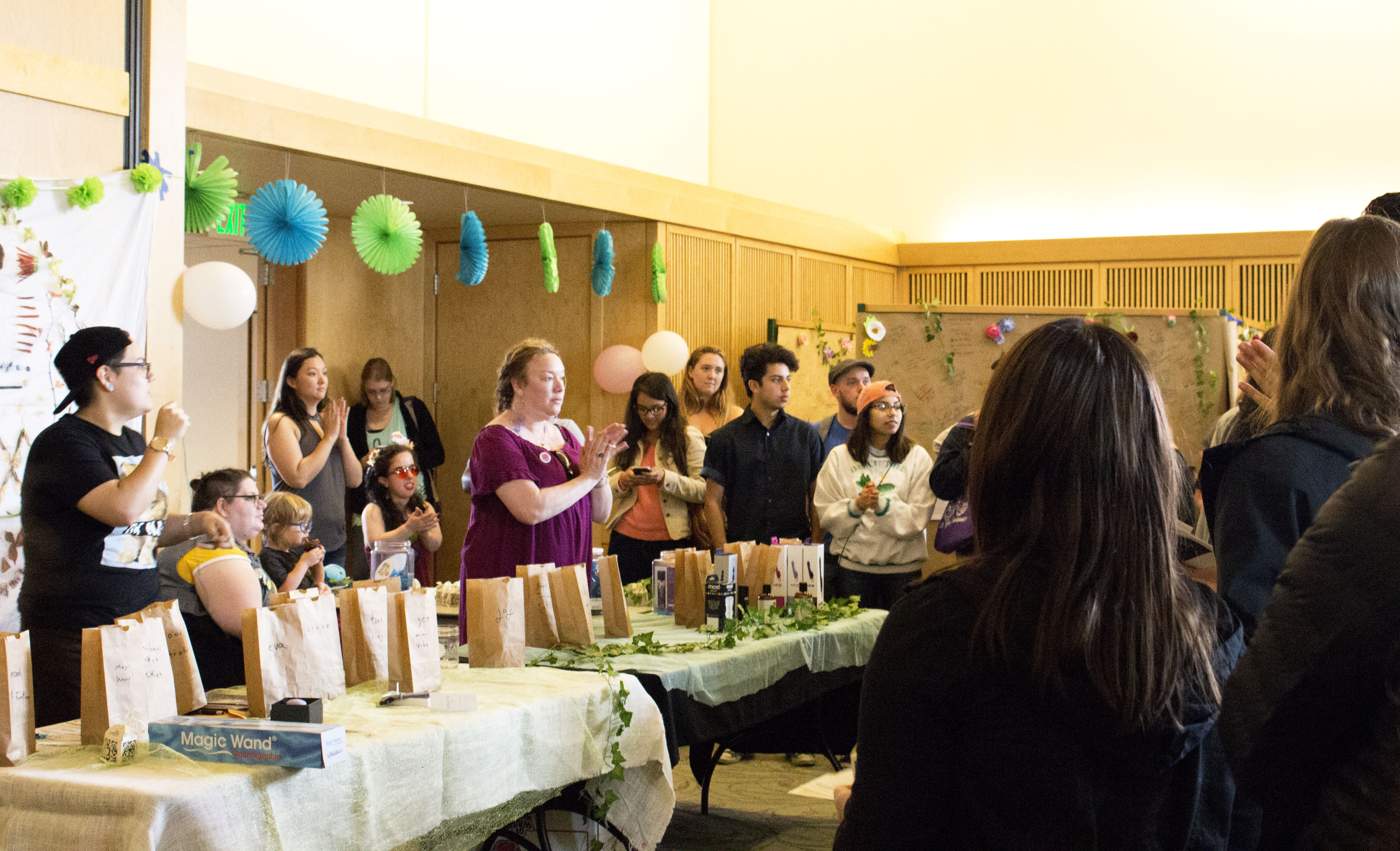
    Sexland is a yearly event at HSU hosted by the Peer Health Education Program. On April 22 at the Kate Buchanan Room, the HSU community gathered at the sexual health event. This years theme was Garden of Hedon which centered around self definition and identity. Tables of HSU clubs and community resources filled the edges of the KBR such as HSU’s Check It, the North Coast Rape Crisis Team, Planned Parenthood representatives, and even HSU’s Botany Club.

    Peer Health Educators planned a sex toy raffle giveaway, games and free food.

  • Great hall becomes prospective renter center

    Great hall becomes prospective renter center

    By Curran Daly

    Todd Larsen, associate director of Housing and Residence admits there is not enough housing on campus for every student who wants to live on campus.

    “This year we have a record number of returners and transfers,” Larsen said. “We had 800 returners apply for the 600 spots we have.”

    The housing office is trying to take some of the stress off of students looking for off campus housing. The housing office has held four events now to help students find housing.

    Their final event held on April 24, gave students an opportunity to meet with real estate management groups. Kimberly Morris was at the event with Kramer Investment Corporation talking with students about renting apartments for them next semester.

    “We try to make it as easy as possible for first time renter,” Morris said. “We try to get the parents involved to help students through the process.”

    Sol Dinay, a freshman physics major, attended the event held by housing. He has already seen about a dozen houses and is hoping to secure his housing for next semester soon.

    “It’s just a matter of getting an app that gets approved,” Dinay said. “I’m not that worried cause I know we’ll eventually get a place.”

    Dinay tried to get an early start looking for houses and has some advice for people just barely starting out.

    “Try getting started on Craigslist because the application process is just an email,” Dinay said. “Apply to as many places as you can cause most will get denied.”

    Levi Mazza a freshman business major already lives off campus. Mazza found a house last May when he came up with his friend and current roommate. For him the hardest part of finding housing was getting his calls returned.

    “Everyone is extremely flaky up here,” Mazza said. “If you find a property, annoy the property manager by phone and in person.”

    He believes that by constantly contacting the manager you have a better chance to get a face to face meeting. It is in this first meeting that impressions are made that can determine whether or not you get the house.

    “When you do meet them in person be well dressed, make eye contact,” Mazza said, “and shake there hand multiple times.”

  • LumberJack Elite

    LumberJack Elite

    By Andre Hascall

    There are many noteworthy student athletes at Humboldt State University. This week we highlight track star and future graduate student, Alyssabeth DeJerez. A fourth year Psychology Major on her way to graduate from Humboldt State, and continue her education in Human Development at Sacramento State.

    DeJerez went to Bonita Vista High School, in San Diego. “In High School I wasn’t really good at track,” DeJerez said. “It quickly became my passion.” Unable to go to a Division 1 school for track, she decided to come to Division 2 HSU. In 2014, DeJerez’s second year at Humboldt, she ended the season being eighth overall in the 400 meter hurdles. Accomplishing this just a year after her promise to Humboldt coaches.

    “I had the opportunity to transfer my sophomore year,” DeJerez said. “Now way. I’m not going to leave the school that believed in me.” Paying back the school and the team that put faith into her by going back to back First overall in the 400 meter and 400 meter hurdles in 2015 and 2016. Alongside being first place two years in a row, DeJerez broke records for the Humboldt State Women’s Track. In the the 400 meter hurdles she is, All-Time Top #1 with a time of  59.23 seconds, All-Time Top #1 in the 400 meter at 54.5 seconds, and All-Time Top #2 in the 200 meter with 34.94 seconds.


    Juggling between sports and studies will always be a difficult task. DeJerez even considered taking a year off from school at one point. But the professors in the Psychology department wanted her to stay on her path. “ They said i had the potential to go to grad school, and walked me through every step of the way,” DeJerez said. “I wouldn’t be leaving in the Fall if it weren’t for them.”
    DeJerez works multiple jobs as well, helping with students in Eureka who have behavioral issues, and in the Research Labs in the Psychology Department. Having a full schedule not only would make you tired, but it doesn’t leave much room for social life other than at practice. “I pretty much don’t sleep very much,” DeJerez said. “But if I didn’t have my team it’d be worse.

  • Humboldt’s hidden hate

    Humboldt’s hidden hate

    By Alexandria Hasenstab

    Humboldt State University has not had a reported incident of blatant racism on campus in the past few years, however, the same cannot be said for the surrounding areas of Humboldt County. Several incidents of racist attacks, both verbal and physical, have been reported in Arcata. The most recent suspected incident resulted in the death of sophomore David Josiah Lawson.

    Elijah Chandler is a close friend of Lawson. The two were members of Brothers United, a cultural club at HSU where Lawson served as president. Chandler felt a culture shock coming up to Arcata, which is predominately white, from South Central California which is known to have a high a population of people of color. He also believes that the population from Humboldt County has a hard time accepting the students of color entering the community

    “People fear what they don’t understand,” Chandler said. “Most of these people aren’t used to seeing people of color. It’s a shock to their system as well. And when people fear something they lash out in hate towards it.”

    Another member of Brothers United, Katauri Thompson, has dealt with racism in the community first hand only about two weeks ago.

    Thompson and some of his friends were approached by police officers who had their guns drawn in Arcata and were asked to get on the ground. Thompson said that when he asked the officer what description they were going off of, the officer replied the only description was that some people in town from Florida were armed and in the area.

    “That’s Florida, that’s a state that’s not a race,” Thompson said. “So why would you pick us out?”

    Despite this, Thompson said that he doesn’t assume that all Humboldt County locals are prejudiced.

    “It’s more ignorance,” Thompson said.

    Thompson expected the community to be less diverse than what he was used to in Inglewood, California. However, he said he felt that the school’s reputation is misleading.

    “I was told it would be liberal and diverse, and I don’t consider this to be diverse,” Thompson said.

    HSU’s President Lisa Rossbacher acknowledges the lack of diversity in Humboldt County and the negative effects it can have.

    “There isn’t a lot of ethnic and racial diversity in this region, except for what the university contributes,” Rossbacher said. “We do end up being a very diverse community as a university in the midst of a region that is far less diverse. That certainly creates some tensions.”

    For student Laura Carlos, who is from San Jose, coming to Arcata from a very diverse area was difficult.

    “I don’t feel unwelcome due to my skintone,” Carlos said. “But as soon as I speak or can’t pronounce words I can feel some vibes and get some looks that’s like ‘you don’t have the potential’.”

    Carlos also feel that professors and lecturers need to be more understanding of students from different backgrounds and incorporate that into their teaching.

    “It’s a downer as a Latina who’s working hard to reach a certain goal for their family,” Carlos said.

    Although racism is everywhere junior child development major Brianna Allen believes that Humboldt State was not transparent about the lack of diversity and racism in the community.

    “You learn about racism, but you don’t know what it really is until you’re in a white environment and a white institution,” Allen said.

    Allen said that the school could be more proactive in creating a safe space for students of color. One solution she thought of was hiring more faculty and staff of different races.

    “I can count on one hand the number of professors of color I’ve had,” Allen said. “It’s hard to get staff of color because of the environment.”

    Allen said that when she first arrived in Humboldt she truly believed it has an open minded and liberal place.

    “My little blindfold about Humboldt came off very quickly,” Allen said. “The school likes to present itself as liberal. They’re hippies in their appearance, but in terms of activism there’s no fight.”

    Allen has been able to avoid racism in the community, although she did face a racist remark in the residence halls. As a community advocate, Allen has been able to live on campus for the past three years.

    “I felt like being able to live on campus was a safety net,” Allen said.“Now I’m not doing the job and I am worried because I will have to live in the community.”

    Allen said that the school is held more accountable than the city, but still more could done between both parties.

    “I feel like more discussion about social and environmental issues and justice, especially in the community,” Allen said.

    One staff member who is taking initiative is Corliss Bennett-McBride. Bennett-McBride is the director of the Cultural Center for Academic Excellence. She came to Humboldt nine months ago and has already been working to make changes in the community.

    “I’m on several committees and task forces,” Bennett- McBride said

    Bennett McBride works with local business to help them become culturally sensitive when people of color enter their businesses.

    “You have a student who walks into a grocery store in Arcata and when she reaches into her purse to get her payment the cashier says ‘we don’t take EBT’,” Bennett-McBride said. “And that was a Latina student.”

    Bennett knows that the students have a lot of power in the city because they make up such a large portion of the population.

    Bennett-McBride also joined the Arcata Public Safety Task force in an effort to create a safer community for students.

    “I know the relationship with the police, no matter where you live, and being a person of color is an issue,” Bennett – McBride said.

    The task force works with the local government and the police to create a safer city.

    Ben Yang is a local from Eureka and a member of the Asian Desi Pacific Islander Collective. As an Asian-American he felt that Humboldt had no spaces for him.

    “I think usually when you see a person of color and you’re a white person you have a feeling that ‘I’m white I’m more privileged’,” Yang said.

    Yang does not feel that HSU is big improvement from the county in term of resources for people of color.

    In regards to the stigma about locals, especially after the stabbing this month, Yang felt that people have the rights to make judgments about the Humboldt locals based off of people’s actions. Yang also feels that many Humboldt locals are conservative despite HSU’s liberal ideals.

    “I think they’re conservative deep down inside,” Yang said. “But I’m sure they could be an ally when it’s necessary.”

    Senior Emily Murphy has also lived in Humboldt County her entire life

    “I thought I knew everything about Humboldt County until I came to HSU,” Murphy said.

    Growing up in Trinidad, Murphy attended Arcata high, but had friends from neighboring town Eureka and Mckinleyville.

    Murphy didn’t see racism first-hand growing up but she acknowledges that exists in Humboldt County, especially in the institutions and the police. Murphy believes that the reason that many conservative people live in Humboldt County is because many of the towns were built off of logging, the logging community tends to be conservative.

    Murphy admits that she wonders whether people make assumptions about her due to the fact that she is a white local.

    “I don’t want to be stereotyped,” Murphy said.

    Murphy hopes that people won’t judge all people from Humboldt County based off the racist actions of certain individuals.

    “That’s a total misrepresentation of what the locals are like,” Murphy said.

    Murphy is not the only person who fears people make assumptions about her because she is white. President Rossbacher said that she constantly faces the challenge of people assuming she is not fit to handle issues of racism as a white female.

    “What I find difficult is that I find people assuming that I have particular challenges,” Rossbacher said. “The assumptions that are made about the challenges of leading an institution as a white woman.”

    Rossbacher has had experience dealing with race when she worked at a school in Georgia with a high population of students of color.

    “That challenging part is finding the ways and the times and the places to have the conversation,” Rossbacher said.

    Bennett- McBride acknowledged that  Rossbacher and the administration were very supportive

    Chandler, on the other hand,  feels that having the conversation in college is too late. He feels that intervention in the youth is necessary to make change because adults already have ideas ingrained in their head.

    “It takes a particular type of person to see past that after they’ve become an adult after they have theses ideas reinforced,” Chandler said.

    Despite the pain the Chandler has endured at the hands of resident of Humboldt County, he still refuses to give into hate

    “I can’t let other people’s actions shape who I am,” Chandler said. “That’s become increasingly harder, but I still don’t hate them. Hate won’t bring anything positive.”


  • New Academic Center Scholars Without Borders

    New Academic Center Scholars Without Borders

    By Sarahi Apaez

    April 11 marked the opening of a new center for undocumented students called Scholars Without Borders Center for Academic Excellence located at the MultiCultural Center.

    The students of the club F.R.E.E (Finding Resources and Empowerment through Education) have been determined to enact change and create a safe space for all undocumented students at Humboldt State, creating a more welcoming campus for future undocumented scholars.

    Scholars1
    Cesar Abarca, advisor of F.R.E.E. and professor of the social work department speaking to students. | Photo by Sarahi Apaez

    Karla Sanchez, senior psychology major and president of F.R.E.E. has been working on creating this center since her freshman year in 2013.

    The idea for this center has been in progress since F.R.E.E. established itself on this campus seven years ago.

    F.R.E.E. founders were affected by their peers undocumented status and the roadblocks they faced and felt it was important to help them in any way they could according to Sanchez.

    Sanchez said that there were many people working on this project way before it got passed down to her.

    “I wish they were here to see this happen,” Sanchez said. “Because they fought tooth and nail for this.”

    Sanchez herself felt that working hard on this was worth it for the people who would come after her and who would benefit from this.

    HSU has 68 undocumented students currently attending the university. However, Sanchez said this number could be higher due to students not wishing to disclose their citizenship status.

    “We are small as an undocumented community,” Sanchez said.

    The center will help navigate students through school, and direct them to the instructors that will help them with what they need.

    César Abarca, professor of social work and the advisor of F.R.E.E. has been the biggest help in Sanchez’s opinion. She acknowledges Abarca who has helped her and F.R.E.E. even when it was not his paid job to do so.

    scholars4.jpg
    HSU student singing and playing guitar while students ate. | Photo by Sarahi Apaez


    After so much change within the center’s presidency, students have been working on their own to make this center a reality.

    Sanchez describes her experience as one of struggle to find resources and figure everything out on her own.

    Sanchez has held a job since her freshman year and hasn’t had the privilege of living on campus or to go on as many outings as she would like. These are the privileges of being a citizen that she does not experience, the privileges of having financial aid, Sanchez said. She wants to make people aware of these privileges. She has had many roadblocks in her university experience regarding travel and financial difficulties.

    Financial barriers have been one of the most significant barriers for undocumented students. Anayeli Auza, is undocumented student at HSU. Her passion for the center stems from her fear that she wouldn’t get enough support financially to graduate.

    Scholars without borders will be a central place for undocumented students to receive legal help, emotional support and other resources. According to Auza, undocumented students do not have it easy when it comes to getting help. Students often have to go to different offices around campus to receive different services. Offices like EOP can only serve some of these students, and the other academic centers on campus don’t provide enough information for specific undocumented students needs.

    The center will also serve to educate more students about the differences between undocumented students, the Deferred Action for Childhood Arrivals program, also known as DACA,  and AB-540.

    DACA is an executive order signed by former President Obama that gives undocumented immigrants the ability to receive work permits and driver’s licenses in addition to allocating some federal funding to support higher education. AB-540 is a 2001 state law that allows in-state tuition for anyone who attends a California high school for three years, among other requirements.

    President Donald Trump has threatened to cancel Deferred Action for Childhood Arrivals during campaign speeches in the past. Recently, President Trump told the Associated Press that undocumented immigrants brought here as children can “rest easy.”

    Although cabinet members say that undocumented immigrants who were brought to the country as children are not at risk for deportation, a 23 year old under DACA is currently having to sue the Trump Administration for being illegally deported. The 23-year-old sued after not seeing any documentation that explained why he was deported according to the New York Times.

    CSU Chancellor Timothy White issued a statement about the CSU system’s stance on undocumented students. White did not outline an overall concrete stance but instead allowed each campus to create their own policy due to the diversity of the universities. HSU President Lisa Rossbacher joined more than 400 other university presidents in December 2016 to continue, uphold, and expand the DACA program.

    The center is only being supported by the campus for a year, and they will need ongoing support after, according to Abarca.

    “In the meantime they have to prove that this center will recruit, retain and graduate more students,” Abarca said.

    $20,000 has been approved for the center to run for a year. Initially the center was granted $17,000.

    “$3,000 has made a huge difference,” Auza said.

    Once up and running, the center will be open 8 a.m. to 5 p.m. Monday through Friday.

    Sanchez hopes that having a centralized space will make it so that people listen to the needs of undocumented students.

    “Not put us on a pedestal,” Sanchez said. “But we’re equal.”

  • Consent Culture

    Consent Culture

    By Andre Hascall

    Consent culture has been a vital part of Humboldt State University since Check It, as student led movement to prevent sexual assault, arrived in 2014. That culture is growing further with the new themed dorms in Creekview. The dorms will be called the Consent Culture Living Community.

    The living community will provide a space of comfort for survivors and other supportive students. There are a few themed dorms on campus, with dorms themed for gaming, outdoor adventure and sciences among others. The themed dorms that HSU already has on campus grow together through events geared towards their themes. The events can be as small as ice-breakers or, as we’ve seen in recent years, something as big a creating a community garden.

    The Consent Culture Living Community will have events catering towards consent related activities.

    Morgan Fahey-Reye is a former community advocate while Check It was in its beginning stages at HSU.

    “Check it puts on a lot of events which are safer alternatives to going out on the weekends,” Fahey-Reyes said. “I also like how they do trainings with student leaders to educate them about addressing unsafe situations.”

    Activities that the Consent Culture Living Community will have are centered toward teaching the community about the situations in which they should “check it”, which means ask for consent, and intervene if you think someone could be in danger of sexual assault. However, some believe that this themed housing isn’t necessary such as Adrian Zavala, a freshman at HSU.

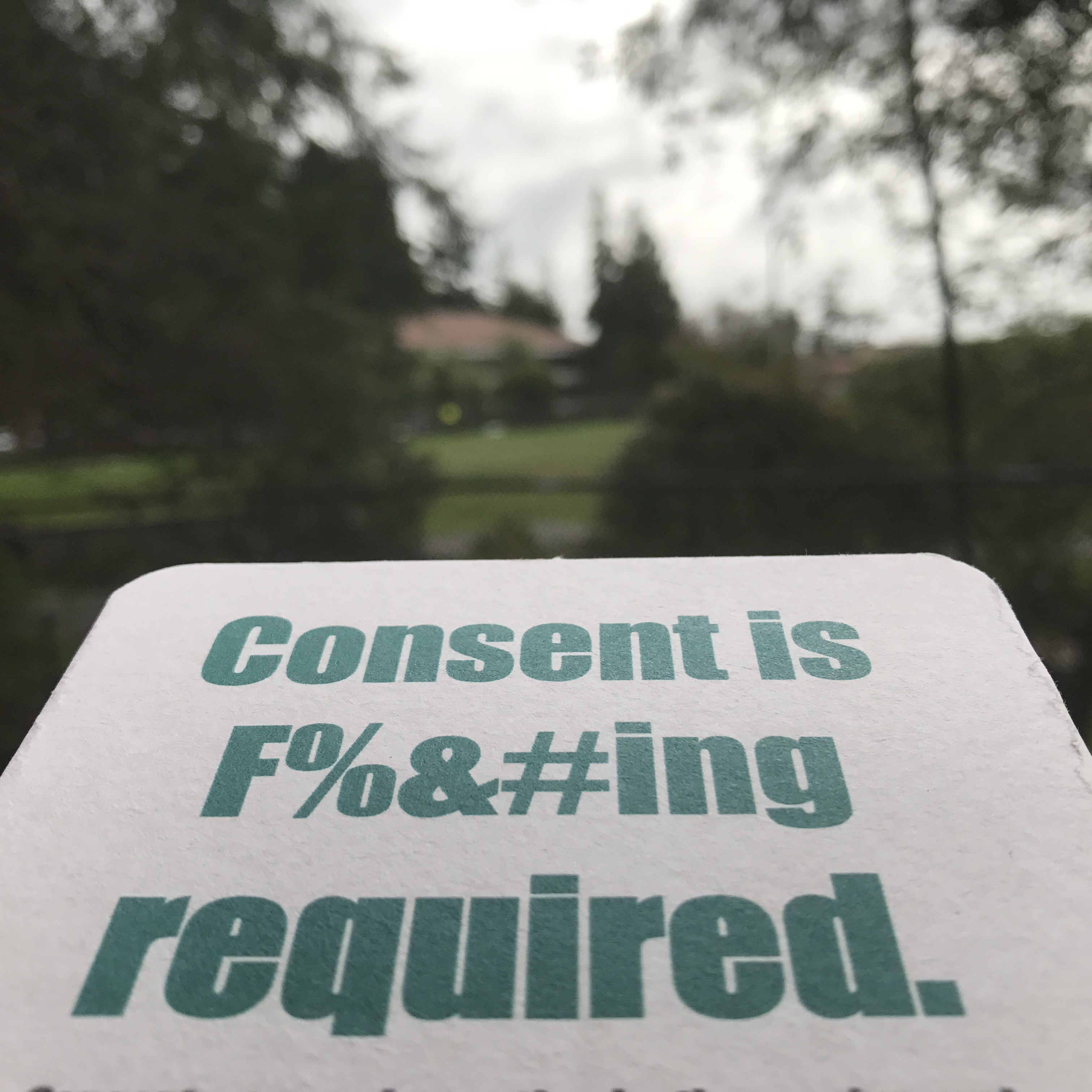
    “Campus should already be aware that consent is required,” Zavala said. “There shouldn’t have to be a separate dorm for that.”

    Humboldt State University is taking the steps to make it known on campus that consent is required. The Consent Culture Living Community will be one of HSU’s tools to combat sexual harassment and assault.

  • Humboldt cuts child care services

    Humboldt cuts child care services

    By Charlotte Rutigliano

    For the past three years, the university has been operating two different child care centers, one located on campus at the corner of 14th and B streets and the other at the end of 10th street.

    According to Steve St. Onge, director of Housing and Residence Life and manager of the children’s centers on campus, the centers have been running on a deficit budget for about three years. The deficit is caused by the extra expenses from the 10th street center, which is why the university has made the decision to close the children’s center on 10th Street on May 12.

    “With the overhead, administrative costs, the cost for teachers benefits and salaries, we could not make that extra center work,” St. Onge said.

    In a press release issued by the university, the total number of children served at the 14th street center will drop from 122 to 88.

    Kaila Swearington is senior child development major who worked at the 10th street location “I was really angry,” Swearington said.

    The 14th street location will still stay open and serve 88 children. According to St. Onge this close will have more of an impact on the community members who use this university services because current students, faculty, and staff have higher priority.

    St. Onge said the goal is to not negatively impact students, faculty, and staffs who need the service so they can keep up doing the good work that they’re doing at HSU.

    “We really have to focus on our values, the reasons that we exist,” St. Onge said, “and that is to support the academic success of our students on campus.”

  • Border Battle 2017 – “Chumboldt” Versus Oregon

    Border Battle 2017 – “Chumboldt” Versus Oregon

    By Andre Hascall

    Oregon and California clash at Humboldt State University. It is called the Border Battle due to the participating schools from Humboldt, Chico, Southern Oregon and Oregon Tech. Humboldt State and CSU Chico teamed up to represent California, Oregon was represented by Southern Oregon University and Oregon Technical Institute. Many of the top performers of the weekend were competing for Humboldt.

    Brendan Roderick, sophomore Kinesiology Major, finished in second place in the triple jump, gaining points for the California team. Roderick is originally from Springfield,Oregon, but he lived in southern california before coming up to Humboldt State. “Its one of my favorite meets because it’s california versus oregon,” Rodrick said. “So we got Chico and Humboldt, also known as Chumboldt, versus Southern Oregon and Oregon Tech.”

    Caitlyn McCoy, junior, runs the 100 and 400 meter hurdles. McCoy placed second in the 100 meter hurdle. McCoy mentioned that hard work all season built this team for success. “We have made huge progress I remember back in the first practice everyone was dying and out of shape,” McCoy said. “Now we can run our events and get first, second or third.”

    Roderick was amongst one part of the successful men’s team that featured plenty of runners and throwers who performed well. Corey Berner, a sprinter on Humboldt Men’s Track. Berner gave his fellow relay runners a strong finish to cement a win. He did this, of course as an anchor being the last runner in the relay. “It was back and forth we got the baton at the same time, and I could see him in the corner of my eye,” Berner said. “I’m pretty sure he took the lead for a moment but I told myself to relax and then I pulled forward, it was close, but we got it.”


  • Remembering David Josiah Lawson

    Remembering David Josiah Lawson

    By Iridian Casarez

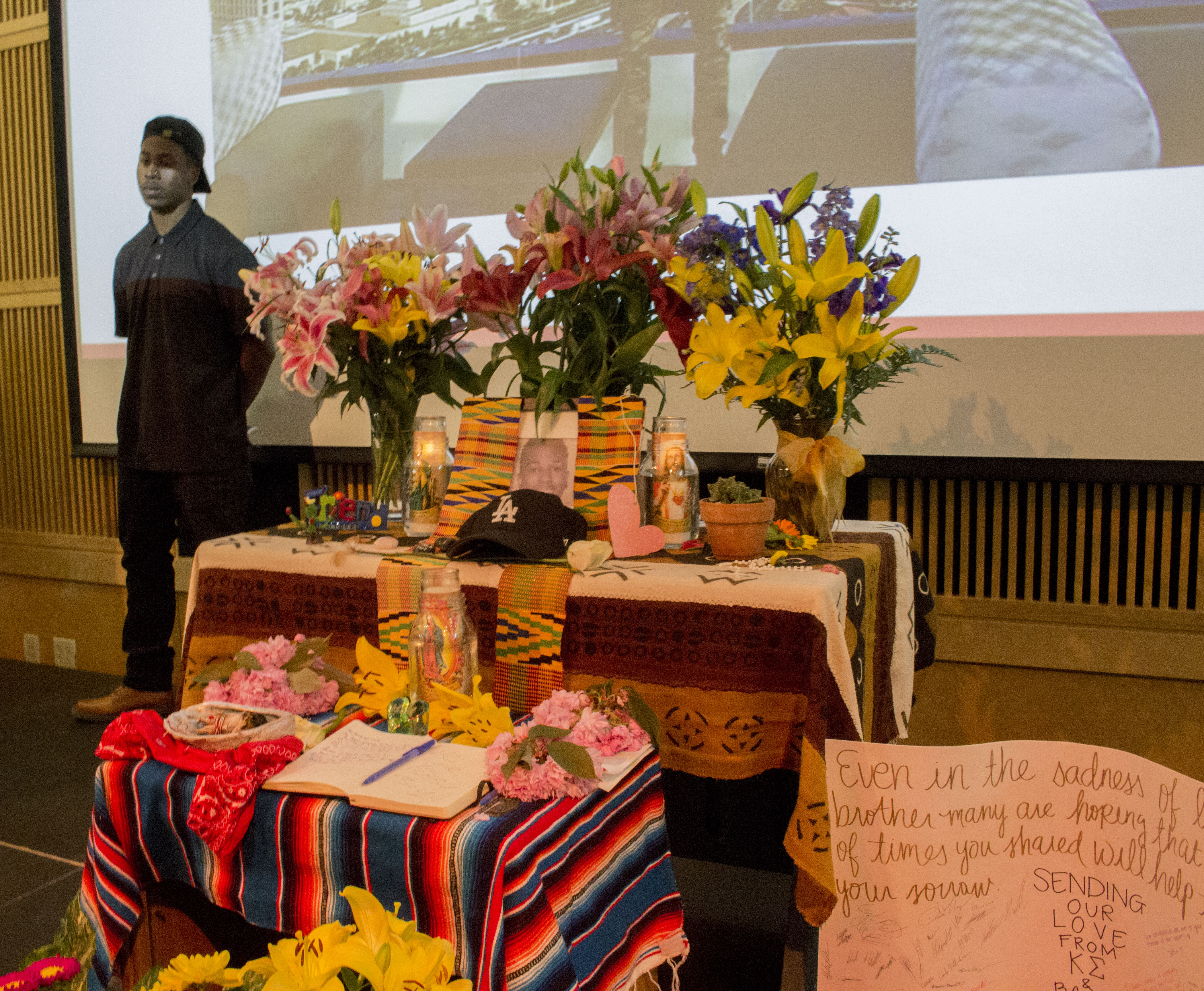
    Family, friends, students, faculty and community members filled the KBR to remember David Josiah Lawson.

    Lawson, a second year criminology major and president of Brothers United was stabbed and killed on the early morning of Saturday April 15.

    Brothers United organized a vigil to remember their brother. The audience consisted of Lawson’s family members who traveled from Riverside, California.

    VIGIL2
    Family members remembering Lawson at the vigil at the KBR on Thursday, April 20 2017. | Photo by Iridian Casarez


  • Home Grown

    Home Grown

    Grow marijuana from the comfort of your home with the Green Box

    By Andre Hascall

    There is a way to grow marijuana easily while keeping costs relatively low. Greenbox Grow is a company that sells the necessary tools for marijuana cultivation for the average consumer. Dylan Osborn, a graduate in business administration at the University of Southern California, is the founder of GreenBox Grow. He currently lives and grows in Monterey, CA.  “Our mission is to teach people how to easily grow medical cannabis at home,” Osborn said. “It’s easy enough for beginners and takes less than ten minutes per day.”

    DSC07867
    Dylan Osborn with the Green Box Grow | Green Box Grow

    Initially, Osborn grew marijuana for his own personal use. Osborn as well as his father have both suffered from sports related injuries, and Osborn turned to medical marijuana to ease the pain.

    “I found an opportunity to help people who use marijuana for its medical benefits.” Osborn said, “Once I got into it, I saw all these things about it [growing] being difficult, but my first grow was close to dispensary quality.”

    You can find tutorials on their website, www.greenboxgrown.com, to help with the growing process along with the products you’ll need to get started. Osborn also works with clients at their homes helping set up their grow, as well as walking them through the different steps of growing quality cannabis. Once the greenhouse is set up, more steps follow such as getting the proper air circulation, how to properly pH your water, the correct amount of water to use, wiring your greenhouse, as well as how to grow while gone on vacation or during winter.

    GreenBox Grow is currently sold through Amazon. Though Osborn would like to have a store for GreenBox Grow in the future.

    DSC07087
    Dylan Osborn and his greenhouse | Green Box Grow

    Using GreenBox is as simple as setting up your greenhouse, watching weekly tutorials and growing your marijuana. There are two different types of growing tents and various sizes for both. Greenhouses are for outdoor grow and for indoor you’d need a hydroponic grow tent. Of course the indoor option will cost more money for both equipment and your monthly electricity bill.

    Osborn favors outdoor growing as it is more environmentally friendly, and provides the grow with fresh air and natural sunlight. “Depending on the size of a greenhouse the costs could be as low a $30 a month, but indoor would be $100 a month at least,” Osborn said. “The bigger size of grow can bring the cost to hundreds even thousands more than outdoor because of electricity.”

    DSC07138
    Marijuana plants growing in the greenhouse | Green Box Grow

    An average greenhouse grow of two plants will put you at a start-up cost of $450, adding around $30 extra on the electric bill for the month. The average time from start to harvest is nine weeks to four months. By harvest you would have a pound of marijuana from the two plants.

    With marijuana being legalized in California, it’s looking like it is easier now than ever to grow marijuana at home.

  • Residence halls cede to weed

    Residence halls cede to weed

    By Curran Daly

    Humboldt County has a reputation for accepting the widespread use of cannabis. While Humboldt State gives a stern warning to students that weed is not allowed in the dorms upon orientation, it is still present. One freshman smokes almost everyday and believes that one of the hardest parts of getting high discreetly is that weed can be very potent.

    “Depending on your CA it can be pretty hard sometimes, the smell can give you away,” they said. “It depends on what you’re smoking. If its wax, it doesn’t necessarily smell as bad as if you are smoking actual bud.”

    For this particular student, the fear of being caught has subsided since the beginning of the year.

    “At first there was a nervousness, but then you realize that everyone smokes and everyone is used it so you’re not worried about being caught,” they said.

    Being caught comes with severe punishment. The Humboldt State housing handbook outlines the potential outcomes of being caught while in possession or under the influence of any drug or controlled substance.

    According to the housing handbook, “Outcomes may include educational administrative sanctions, a student’s removal from Housing, and referral to Student Affairs, and possible legal charges (including arrest and fines).”

    These harsh penalties cause some people living in campus housing to not risk smoking in their rooms. One resident in campus apartments admits to smoking, but never in their room.

    “I have never been caught,” they said. “I honestly never smoke in the dorms, always outside.”

    These types of measures are necessary to not get caught with a very strict and observant CA.

    They believe that the school does not care about students smoking.

    “No [they don’t care] but, they are still a school, and have to function as such,” they said. “Smoking weed openly in dorms would discredit the school I believe.”

    In Creekview, there is only one CA per building. One resident has only ever met their CA three times. To stop from being caught smoking in their dorm, the Creekview resident has their smoke detector covered and window open.

    “It is very very easy to smoke in Creekview,” they said, “It is also very easy to hide, we don’t really have to do it, but we do it as a precaution.”

    Marijuana is a known occurrence in Humboldt County and while the school preaches that it does not allow marijuana on campus, it is readily available and people smoke it openly in the dorms.

  • A Joint a Day Causes Fish to Decay

    A Joint a Day Causes Fish to Decay

    Water diversion for illegal grow operations has significant environmental impact

    Fish need water, and so does marijuana, but people may not realize we’re approaching a point where it’s between one or the other. Many illegal grow operations divert water from streams, which is the most common environmental crime committed, according to Sergeant Kerry Ireland of the Humboldt County Sheriff’s Office.

    BD02
    Time lapse photography of the Mad River taken from Google Earth. This Google Earth image was taken in 2004. | Photo by Bryan Donoghue (using Google Earth)
    BD03
    Google Earth image of the Mad River in 2014. Notice the drastic difference in water level. | Photo by Bryan Donoghue (using Google Earth)

    Ireland is in charge of the Special Services Division of the Humboldt County Sheriff’s Office. He said that there are currently no investigations going on having to do with environmental crimes, but they have seized 135 thousand plants from over 100 marijuana grows, and issued 51 search warrants in 2016.

    “That’s just a drop in the bucket for the number of marijuana plants that are in Humboldt County,” Ireland said. “There’s also at least 20 thousand cultivation sites in Humboldt.”

    The adverse effects of marijuana cultivation are presently more than just an environmental crime, it’s harming our wildlife too.

    Darren Ward is a fisheries biology associate professor and researcher of freshwater ecology at Humboldt State.

    “There’s a real direct reason we should care,” Ward said. “There’s endangered salmon and steelhead that live in those streams. There are cases where they’ve been documented to die when stream flows are reduced because of water withdrawals.”

    According to the Environmental Protection Agency, when stream flows are reduced, they are categorized as a low-flow. Summer low-flows are particularly extreme because higher heats cause water to evaporate a quicker rate.

    Marijuana plant discovered at an illegal grow site near Shelter Cove. The land was torn, with plastic littering the ground. | Photo from Eureka Sheriff’s Department

    “If for no other reason, it’s important to care about that because it’s a violation of federal law,” Ward said.

    Sergeant Ireland works with the California Department of Fish and Wildlife conducting investigations on environmental regulations that are broken. If there is a water violation, he contacts the State Water Resources Control Board, where they assist each other by investigating independently and then sharing their findings. Ireland finds that more marijuana grows continue to appear, and now they’re widespread throughout all of Humboldt County.

    “It is everywhere,” Ireland said. “It’s literally in all parts of the county.”

    Plenty of research is in progress to map how widespread grows are. Redwood Creek is a major contributing stream flowing into the Eel River. It is also one of the areas where major property subdivisions and land-use changes have taken place in the last 50 years, according to geography alumna Cristina Bauss.

    Bauss took a look at the heavily impacted watershed of Redwood Creek in her bachelor’s thesis. Coincidentally, Redwood Creek was one of four watersheds studied by Senior Environmental Scientist Supervisor Scott Bauer associated with the California Department of Fish and Wildlife. Bauss used Google Earth imagery from 2014, whereas the Bauer used imagery from 2012. Bauss duplicated Bauer’s study to examine the difference in greenhouse capacity and found an 18 percent increase in two years. That’s an exceptional amount of land being used for marijuana.

    CristinaBaussMap
    Simplified map of marijuana cultivation sites in the Redwood Creek watershed. Light-gray circles represent clusters of greenhouses, by number; outdoor growing sites are mapped individually. Sites outside the boundaries of the watershed are on parcels that straddle two watersheds, and were recorded because they may draw water from Redwood Creek and/or its tributaries. | Map Cristina Bauss. Sources: USGS Earth Explorer, County of Humboldt, CAL FIRE.

    The trend in growing greenhouse capacity is a growing concern. Ward voices concern as to what will happen come next season.

    “When next summer rolls around, and the flows start to drop and the temperature starts to come up,” Ward said. “If there’s an additional water withdrawal in the stream, that’s when it’s going to be really hard on the fish.”

    Ward said that historically, when people weren’t withdrawing water, then those streams were still connected and the salmon and steelhead could move to a lower spot in the stream to avoid overheating. Currently, due to water withdrawals, these pools aren’t connected anymore so there’s not as much area to swim for cover.

    Andrew Stubblefield, a hydrology and watershed management professor at Humboldt State University finds that the salmon and steelhead are facing a crisis, but marijuana is not the most significant contributor to water deprivation in Humboldt’s watersheds.

    Stubblefield explained that thousands of giant trees drive the water use of a watershed, and a small change in the amount of water those trees get would create a dramatic difference in summer low-flows for these watersheds by shrinking water levels further.

    “It’s not really going to be affected by a tiny greenhouse with a bunch of plants in it,” Stubblefield said. “I’m not saying there’s no effect of the marijuana industry, but forest management is also a big part of the issue with water right now.”

    Stubblefield finds that water diversion for marijuana grows can still have consequences. “When the rivers get down to the summer low-flow, particularly during our drought years, there’s enough left in those rivers to be like the amount you run in your shower; it’s a tiny amount,” Stubblefield said. “So it’s very vulnerable to having that remaining amount be pumped out.”

    Not all Humboldt growers contribute to low-flow. One of Humboldt’s self-proclaimed “mom-and-pop” growers for 38 years, who goes by the alias Terry Giaci, uses sustainable practices and eco-friendly methods of cultivation that do not contribute to low-flow.

    She moved up to Humboldt County in 1980 from San Francisco as a horticulture student because a friend she had met in SF wanted her to come up and help with the crop he was growing. With no cellphones, and only a citizen’s band radio to talk with others, she worked her way up Southern Humboldt by herself and became integrated as an active member of the community, supporting local restoration projects.

    “We’re the back-to-the-land people who grew marijuana to live this life,” Giaci said.

    “If you grew weed, you didn’t live in town. We lived in the hills. There were the town people, and the hill people. We were people that cared about the land, the land got a chance to heal.”

    On Giaci’s property, water flows from three springs through pipes and spring boxes. Giaci also has assistance from a hydrologist she knows personally. Access to water is steady, and since the streams are on her property, Giaci doesn’t illegally siphon water. Giaci also uses all natural organic materials; this infers materials that are not petroleum based or are made from petrochemicals.

    “It’s the difference between chicken shit, and nitrous oxide that’s created in a chemical plant,” Giaci said.

    According to Giaci, you have to be aware of who you’re buying from.

    “There are people, especially now, who just don’t care. They’re just in it to make money,” Giaci said. “They think they’re cool, and that they’re great growers, but they spray all kinds of crap on the plant.”

    Giaci explains that the greedy growers are stealing all the water, and trying to become to majority of the population, and they might succeed.

    “Greed is on the rise here, people are coming here now thinking they can get rich,” Giaci said. “Humboldt County is going to be in a huge transition mode. There are now a lot of people, what they call the ‘green rush’, who are coming up here and paying exorbitant prices for pieces of land.”

    Humboldt State hydrology professor, Andrew Stubblefield, finds that marijuana contributes to water diversion but the issue is much larger than weed.

    “The issue is larger than the marijuana. That’s part of it but it’s something else. I think it’s climate change, I think it’s forest management.” Stubblefield said. “I think of the coho and steelhead that are using those habitats in the summer. Those are the fish that are already struggling to survive, and having the river run dry is like their final coup de grace.”

  • California bail reform bill

    California bail reform bill

    By Iridian Casarez

    A new bill was presented to the State Assembly Committee in the state of California that will effectively eliminate the bail system.

    The State Assembly’s Committee  voted on the bill, Assembly Bill 42. According to the Los Angeles Times, Assemblyman Rob Bonta and Assemblyman Bob Hertzberg wrote the bill to allow individuals to be released on their own bail and at no cost will await trial. It also gives judges and pretrial service agencies more authority to keep potentially dangerous individuals in jail to await their trial without bail. Pretrial services procedures would assess whether a defendant’s release would pose a safety threat and make sure they show up for their court dates. There is another identical bill from the Senate, SB 10, that will also contribute to the elimination of the bail system.

    The bill, AB-42, was written with the intention of making the justice system fairer for people who cannot afford bail, unlike wealthy individuals who can make bail.

    According to Mercury News, the ACLU (American Civil Liberties Union) is one of the proponents of the bill saying that the reform is long overdue. The ACLU says that too many people wait in jail for their trial because they cannot afford to post bail.

    Margaret Dooley-Sammuli is a criminal justice and drug policy director for ACLU of

    California.

    “We support the bills they’re gonna fix the broken money bail system California has,” Dooley-Sammuli said. “It creates a system that works for all Californians.”

    According to Dooley-Sammuli, after the bills get passed from the State Assembly Committee, it gets passed on to the Appropriations committee then goes to floor vote in house. The current bail system determines whether or not a person would get out of jail based on money without using a risk based approach.

    According to the Los Angeles Times, there were dozens of opponents of the bill at the hearing including various bounty hunter and bail agencies.

  • HSU cultivation 

    HSU cultivation 

    More than a 4/20 education

    By | The Lumberjack Editorial Board


    What is the first words that come to mind when you think of Humboldt State University? While it should be environmentally-conscience, often HSU is associated with marijuana culture.


    Don’t let this issue’s dedication to 4/20, the nationally celebrated marijuana day, fool you. Although Humboldt county is a main hub of cannabis production, HSU isn’t as accepting of marijuana culture as our reputation suggests.

    HSU may not actively promote this image — But HSU doesn’t do a thing to stop it either. Students come here thinking that the cannabis culture of Humboldt County will extend to HSU’s campus. Students are shocked when they get fined, suspended or even expelled for possession of cannabis.


    Sure the HSU Student Rights and Responsibilities policy states that under federal law the sale or possession of marijuana are felonies carrying prison terms of seven years or more, but hey… HSU is located in the Emerald Triangle- the largest cannabis-producing region in the U.S. HSU collects on the persona of an accepting weed culture; a culture that attracts new students.


    HSU’s conflicting views on marijuana was witnessed with the treatment of Christina DeGiovanni, a former HSU student and founder of Emerald magazine. In 2012, DeGiovanni was arrested for possession of marijuana sales, and being armed in the commission of a felony.  

    De Giovanni states in her first letter from the editor that the negative and ostracizing treatment she faced from HSU and the community during her trials encouraged her to start the magazine that embraces the stereotypes associated with cannabis users.  


    Not all look to weed culture as positively as Humboldt residents. Critics reject HSU as a serious academic university because of the casually flaunted 4/20 culture. While we are known for our Green initiatives, we are still mocked for being influenced by the marijuana industry that throttles Humboldt County.


    If we want to be taken more seriously as a top University to potential students, we have to do more to address the stereotype that HSU is only about the weed. It attracts students to an area where they feel they will be welcomed into the throws of Humboldt Counties cannabis culture, often a risky and even dangerous endeavour.

    Yes, Humboldt County heavily thrives on the Marijuana industry but HSU is more than just a community of growers, trimmigrants, and stoners. It is irresponsible and flat wrong for a university to benefit from a generalization about its campus, while simultaneously ignoring and demonizing that generalization. Weed: Either love it or hate it HSU.

  • HSU considering alternatives to PepsiCo

    HSU considering alternatives to PepsiCo

    By Andrew Butler

    PepsiCo and HSU have spent the last five years in a contractual partnership. PepsiCo pays HSU athletics $35,000 a year in scholarships, HSU gives PepsiCo 80 percent of available shelving space for its drinks, and the students are left to choose between diet or original.

    The current five year pouring rights contract ends June 30, and many around HSU’s campus would like to see HSU break away from its corporate ties with PepsiCo. The Associated Students council has taken up the fight, urging HSU administration to explore alternate partnerships with more reputable companies – preferably local ones.

    AS representative Tessa Lance has been working to rally her fellow students in support of breaking away from PepsiCo. “At first there was little interest, but since the start of this semester, students have been increasingly involved,” Lance said. “ PepsiCo has a long history of committing environmental injustice. The values HSU claims to represent, the values that students come here to uphold, have nothing in common with PepsiCo,” Lance said. Lance along with the help of other students brought their concerns to Joyce Lopes, Vice President of Administration and Finance. Lopes in turn set up a “Pepsi Task Force” to meet regularly and discuss the impact PepsiCo has on HSU.

    The Task Force included representatives from Dining, Athletics, upper Administration, and a few students, including Lance. These meetings found that administration and students have a lot of common ground, and both are in favor of a more sustainable contractual obligations.

    On Monday, April 17, the AS council held a town hall in the Nelson Forum for students and community members to voice their concerns over the PepsiCo contract. Dozens of students showed up to have their voices heard by members of the Pepsi Task Force, including Lopes and Athletic Director Tom Trepiak. Meredith Garrett, a HSU student, was the first to speak. She first recited the HSU graduation pledge found posted in large font on the wall above her. Garrett said that the reasons students came to HSU were being abandoned within the PepsiCo contract. One of the main concerns echoed again and again by students was that PepsiCo and the Athletics were in a mutually beneficial partnership that left the majority of students out. PepsiCo funds roughly eight athletic scholarships a year under the current contract. Additionally, PepsiCo gives money to athletics for one time expenditures such as new scoreboards, totalling roughly $20k a year. There are about 400 athletes at HSU, and around 200 athletes receive partial or full scholarships a year. Although PepsiCo only covers a small percentage of scholarships, losing PepsiCo’s money would only add to the deficit problem within the Athletic Department and subsequently HSU as a whole.

    Senior communications major and Lumberjack football player Jared Layel attended the meeting and expressed a sentiment in stark contrast from the general tone of the meeting. “AS never asked athletes if they wanted to see PepsiCo go,” Layel said. “Breaking ties with PepsiCo would only force HSU to again raise tuition, and it would worsen the deficit.”

    HSU cannot begin the process of exploring a new contractual agreement with a different vendor until the last 30 days of the current contract; that period begins June 1. Until that time, Tessa Lance, the AS council, and the Pepsi Task Force will continue exploring ways in which HSU might find a sustainable alternative to PepsiCo. As of now, there is no concrete plan to replace PepsiCo and the money it brings HSU.

  • HSU student dies after stabbing

    HSU student dies after stabbing

    By | Andrew George Butler

    3:14 p.m. 4/19: The District Attorney’s office said Kyle Zoellner’s case is still under review, and a decision has not yet been made. Arcata police are urging that the author of an e-mail giving an eyewitness account of the incident come forward to APD.

    9:24 a.m. 4/17: Arcata police have arrested Kyle Zoellner, 23, in connection with the killing of 19-year-old David Lawson.

    1:01 p.m. 4/16: The victim’s name was David Lawson, a 19 year old sophomore attending HSU. The incident occurred on the 1100 block of Spear ave in Arcata, CA.

    A HSU student died early Saturday morning after a stabbing that took place at an off-campus location in Arcata. Arcata police have taken a suspect into custody. The name of the victim is being withheld until the family is notified.

    The Lumberjack will update as more details become available

    1:44 pm 4/15:

    The student was 19 years of age. The suspect detained by APD is not a student at HSU. The stabbing took place at 3 a.m. Saturday morning, during a fist fight at a house party (source: The Journal).

    HSU President Lisa Rossbacher released the following statement:

    “Dear University Community:

    I am deeply saddened to share news with you that one of our students has died after a stabbing last night. I have no words to adequately describe the sorrow of this loss. This tragedy is heartbreaking for all of us, and most especially the family and friends of the victim. Our thoughts are with them and we extend our condolences.

    We are reaching out to provide support and counseling to members of our University community. We will also be in contact and offering support to family members.

    The student’s name is currently confidential while his family is being notified. Because the incident occurred off campus, the investigation is being led by the Arcata Police Department with significant assistance from University Police.”

    HSU Marketing and Communications released the following: “Students who are in need of support during this time are encouraged to contact the Dean of Students office at 707.826.3504 or visit that office in Siemens Hall 211. For after-hours assistance, students can contact Counseling & Psychological services at 707.326.3236. Staff or faculty seeking additional support may utilize the Employee Assistance Program at 707.443.7358.”

  • Why Jennicet Gutiérrez interrupted President Obama’s speech

    Why Jennicet Gutiérrez interrupted President Obama’s speech

    By Erin Chessin

    President Obama was giving a speech at the White House in honor of LGBTQ Pride Month last year when suddenly a loud voice spoke out from the crowd.

    Jennicet Gutiérrez | Photo by La Familia: TQLM

    “President Obama, release all LGBTQ detention centers! Stop the torture of transgender women!”

    That voice rose from the sea of politicians, organizers and advocates of LGBTQ rights. It was the voice of 30-year-old Jennicet Gutiérrez.

    Activist and civil rights leader Gutiérrez spoke at HSU on April 3 to share her story and her organization’s mission. She is a founding member and leader of La Familia, a transgender and queer liberation movement.

    One of the missions of her movement is to end LGBTQ detention centers that criminalize and imprison the transgender community, putting thousands at risk of facing deportation.

    The speaker began by presenting video footage of her causing an interruption at the White House in 2015.

    “It wasn’t easy to interrupt the president,” Gutiérrez said. “But we tried sending letters to him, and we tried reaching out to him. Our voice needed to be heard.”

    As a Latina transgender woman and undocumented immigrant, Gutiérrez has faced undeniable prejudice and societal oppression since childhood.

    Her transgender liberation began at a young age. She started showing femininity around five years old, realizing around seven years old how much “pride and happiness” she felt when her aunt let her try on women’s clothes.

    When her mother found out about this, she scolded Gutiérrez. This was her first realization that there are societal restrictions to being a transgender woman.

    Gutiérrez wanted to be recognized as female despite the male identity she was born with, but her family and the society around her showed no approval.

    “I thought to myself ‘what’s wrong with me, why am I being told not to be myself or not to exist’,” Gutiérrez said.

    Gutiérrez is passionate about denouncing injustices of the transgender community. She has devoted her life to her organization, La Familia, which aims to stand up for transgender rights and put an end to violence towards transgender women of color.

    At HSU, Gutiérrez told her story in hopes of inspiring students to help denounce social injustices of the transgender community. Students listened attentively to her motivating speech and cheered often after powerful statements Gutiérrez made.

    Freshman Grace Hall, an environmental science major, was amongst the crowd of HSU students at her speech.

    “It’s incredibly courageous of her to interrupt the president and stand up for something she believes in,” Hall said.

    While the bulk of the presentation was about her fight for transgender rights, Gutiérrez also talked about the struggles of being an illegal immigrant and the risks of being deported.

    Gutiérrez was denied a visa at age 15 and could not obtain a social security number. This meant she could not advance her education past high school.

    Not having the resources to further her education was her first realization that she was an undocumented immigrant.

    Gutiérrez continued to use her sister’s social security number in order to get small jobs to support herself.

    According to Gutiérrez, transgender immigrants are 12 times more likely to face discrimination than cisgender immigrants.

    Philosophy professor Loren Cannon also attended Gutiérrez’ speech. “There are students who can relate to her status as an undocumented immigrant and as a transgender woman,” Cannon said. “There are students who don’t feel accepted, and it’s important to listen to those students.”

    Gutiérrez hopes she left students with a powerful message.

    “Our issues and struggles can no longer be ignored,” Gutiérrez said. “I am a human being and no human being is illegal.”

  • Shelling out extra cash for shoes

    Shelling out extra cash for shoes

    By Chelsea Medlock

    Broke college student are three words that comfortably go together. However, students still spend money they do not have on things they do not need. Sometimes these items are expensive, making students have to work hard in order to afford them.

    Shoe Story
    Illustration | Joe DeVoogd

    One of these expensive items that students are willing to spend large amounts of money on, are shoes. Each student has a reason for why they shell out extra cash for shoes they may be able to buy for a cheaper price.

    Some students like to buy shoes for the style and brand names. They want to look good walking around in their expensive shoes. Business administration major Paul Chavarria bought a pair of Jordan shoes for $300 as a reward for all of his hard work.

    Chavarria worked hard to earn the money for his shoes having worked two jobs prior to getting his busser job that allowed him to be able to afford his shoes.

    “I bought my first pair of expensive shoes back in 2011 through my job as a full-time busser,” Chavarria said. “I got my second check and wanted black and red Jordan 11’s from Footlocker.”

    However, for some students, shoes are a necessity for the sports they participate in. Some sports such as baseball and soccer require special expensive shoes in order to play. Kinesiology major Jimmy Bautista had to buy expensive wrestling shoes in order to wrestle in high school. In order to buy the necessary shoes, Bautista had to spend money he earned from his part-time job.

    “Most expensive shoes I bought were $120 for wrestling in high school,” Bautista said. “I no longer wrestle but can still fit a size 10 shoe.”

    Sometimes students spend extra money on shoes in order to get better quality shoes that will last longer. By spending extra money, students would not have to constantly buy shoes since shoes of better quality last longer. Environmental engineering major Aaron Page bought an expensive pair of leather shoes for fire fighting. Page worked as a bartender for an entire year before saving enough money to be able to purchase his shoes.

    “I bought $300 leather boots for fire fighting during the summer,” Page said.

    More than a year after his initial purchase of his leather shoes, Page still wears them even while not working for the fire department. The quality of the shoes and the investment of the shoes make the purchase worth the while.

  • Student Strategies: Research

    Student Strategies: Research

    By Liam Olson

    Research is necessary for almost any academic thing you do. Whether it is a research paper, project, or sometimes even a forum post, they all require some sort of background information.

    For junior psychology major Liz Espinoza, research is important for academic work. She uses some of the library databases on the library’s website that are specific to her major to help her get the right information for her work. Not only that but she said that Google Scholar is helpful for sifting through research as well.

    “It’s [research] the only way to test a hypothesis,” Espinoza said.

    Senior zoology major Nicole Gutierrez has a few tips as well for navigating the large amount of research out there. She said that while looking at normal articles on the web, it is important to look at the website source and make sure it is a credible publication. It is also important to look at the author of the source to make sure that they have background on the subject area they are talking about.

    Gutierrez uses the large selection of library databases to more easily find credible research. One tip she has for students who need help figuring out if an article is peer reviewed is to click on the peer reviewed option in the search criteria of the research databases.

    “Stick to research databases so you know you’re getting credible information,” Gutierrez said.

    However, the library website is the not the only place to find resources for research. The library also offers in person research help with a librarian at the Library Research Help desk. Special Collections Librarian Carly Marino, is one of the librarians that helps students at the help desk. She said that the Research Help desk offers students help with developing research topics, learning how to search the library databases, and making citations.

    “It’s a one stop shop for research needs,” said Marino.

    One of the tips Marino gives students is to keep searches down to keywords to get the most relevant search results. She also recommends to look at subject specific research guides put together by the Humboldt State librarians. These guides help students get a starting point for beginning research in the subject they are writing about.

    Special Collections Librarian Carly Marino is one of the librarians that helps students at the research help desk | Photo by Liam Olson

    According to Marino, the library also has various SkillShops available for free to students. Some of these upcoming SkillShops teach students how to make citations and bibliographies which are an essential skills to learn for research papers and projects. The upcoming SkillShops can be found on the HSU library website.

    With these tips and tricks as well as the large amount of resources available, you’ll easily be able to get an A on that final paper.

  • Floating Into a New Reality

    Floating Into a New Reality

    Q&A with author Jai Garbutt

    By Bryan Donoghue

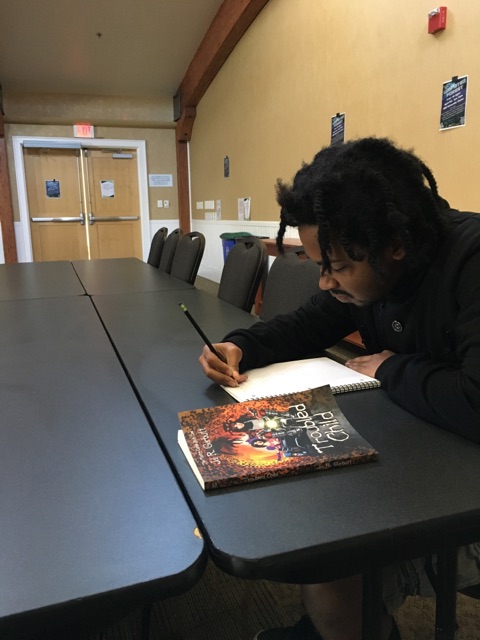
    HSU student Jai R. Garbutt is a business major from Palmdale, California who uses part of his free time to explore his imagination in the form of writing. A fan of fantasy with a passion for writing, Jai is currently working on “The Floating Castle”, a fantasy series that latterly began with his first publishing. Garbutt’s novel “Troubled Child” is a story about 12-year-old Lokkiyama who travels around the country with her mother in the year 8077.  Along the way they eventually settle, but due to Lokkiyama’s reputation as a troubled child, the pair always finds trouble. Garbutt’s 155 page book was published on January 23 and is available now on Amazon.

    Jai Garbutt reads his work | Photo by Bryan Donoghue

    Q: When did you first start writing your novel?

    A: I don’t know the exact month. I know the year I started writing. It was 2013. That was because I graduated high school in 2013. Also, I had to go to college but there were some complications, so I ended up staying home for a year. So during that year my mom was like, ‘You and your brothers, I want you guys to write at least a 40 page book.’ So I started with the 40 pages. That wasn’t really enough for the idea I was going for, so I just went on from there.

    Q: I was also wondering, who are your role models in terms of writing? Who do you look for who? Are your favorite authors?

    A:I don’t have any that I know directly inspired me, but I like, I think his name is Christopher Paolini. He’s the author of Eragon Cycle, Eragon the dragons. I read all four of those in one sitting. I think he’s from, somewhere from Europe. I don’t know if I ever had like took anything from him, but I definitely like him and enjoy his books. His books are some of my favorite books. If I did have inspiration, it’s probably from those.

    Q: Along those lines, what inspired you to start writing fantasy?

    A: I don’t know actually, that one is actually a tough question. I’m not really sure. Especially because the characters for this book is based off the whole universe that’s in my head. It’s been in my head for awhile. I used to draw and just randomly draw in high school, and then I thought to put it in stories, just cause.

    So basically with my mom telling oh you gotta write a book. I’m like oh I have a perfect opportunity to bring these characters to life. So that’s I guess why that started too, I guess I’m just … fantasy is just one of those things that’s just like life, and not just with books but like games and movies and stuff.

    Q: Have you ever wanted to live inside the books that you write?

    A: I would not necessarily live inside them, but I have thought about what the characters might say to me if they were real. And I’ve had mixed feeling about whether or not I’d want them to be real.

    Q: I mean, where did you gather your inspiration? Because your main character sounds pretty fascinating.

    A: It was inspired partially by a song.

    Q: What song?

    A: Set Apart This Dream by Flyleaf.

    Q: How is it inspired by that song?

    A: Well, let me say this without going overly complicated. So basically this is that there’s this entire universe behind this book. I wasn’t entirely sure, I’m not sure if you’ll ask me this later, but when I wrote this book I wasn’t entirely sure where to start with the universe. I had the idea of the character already, but I didn’t really know what I wanted her motivation to be as far as her aspirations. That was part of it.

    I knew that I wanted it to be something not necessarily out of reach, but something she really has to work towards, that I didn’t know. I really like that song. That’s one of the inspirations.

    Q: Do you ever have writer’s block?

    A: Oh yeah, definitely. That happens a lot. Sometimes I’ll be like I’m fire for a while or something, or sometimes I’ll just give it a thought, and when that happens I’m just okay lets give it a break. If I do get writer’s block, I’m like okay it’s better to just not do anything right now, because if I try to work while I’m not really refreshed it makes the quality suffer. Yeah, definitely get a lot of writers block.

    Q: And just kind of waiting it out, is that kind of how you deal with the writer’s block? Just until you got that fire again kind of.

    A: Yeah, I’ll just put it down or whatever, I’ll just stop and just be like okay I’ll think of something eventually, or I’ll get inspired by something later.

    Q: Well that just kind of adds as a continuation to your novel, is it a series?

    A: Planning on it, I think I wrote half way through the second one right now.

    Q: Why did you decide to start a series rather than an individual novel?

    A: Because I don’t think one novel would be enough to say what I have to say.

    Q: Yeah, do you think you’re gonna do another series after this?

    A: I’m not entirely sure, depends on what happens with this, with this current one.

    Q: And my last question for you actually is what can fans and future readers of your series expect from you in the future?

    A: Oh well, it might be different depending on how high of a volume I get, but right now pretty much I have a Facebook page and a Twitter for the book. So if people ask me questions I’ll try to respond as fast as possible, and actually that’s one of the things with the tech input right now. I want to wait for feedback from the first one first to see what people are saying about it, because like this one I’m proud of it and stuff, it’s the first one. But I haven’t really gotten any … the last time I checked I didn’t have any reviews yet or anything on Amazon. So I don’t really want to just keep going without any feedback from people.

    Q: So, maybe give or take a few more months here, fan bases are gonna grow?

    A: Possibly. I think it will more once I start doing more advertising. Right now I haven’t really done much advertising, just because I’ve been busy with school and paying for stuff with school that I haven’t really had a chance to do that, but probably this summer I’ll do a lot advertising.