The Lumberjack


Students Serving The Cal Poly Humboldt Campus and Community Since 1929

Tag: HSU

  • Jalapeño Mummies

    Jalapeño Mummies

    By | Madelyn MacMullin

    Don’t be a party pumpkin, spice up your Halloween party with these cute, easy to make jalapeño mummies. This spooky treat is sure to be a hit with friends and family. Want more of a kick? Leave in a few of the seeds for extra flavor. Heat not your thing? Opt for a simple cream cheese filling or substitute monterey jack cheese for pepper jack. However you stuff them, these mummies will be the star of your gooling good time.

    Makes 20 mummies

    Jalapeño Mummies

    Ingredients:

    • 10 jalapeño peppers
    • 8 oz softened cream cheese
    • 8 oz pepper jack cheese
    • 1/2 teaspoon minced garlic
    • 1 scallion
    • pinch of salt and pepper
    • black olives
    • Pillsbury Crescent Rolls
    IMG_8303.jpg
    Photo credit: Madelyn MacMullin

    IMG_8298.jpg

    Directions:

    1. Preheat oven to 400 degrees
    2. Wash jalapeños, slice in half lengthwise, scoop out insides
    3. Shred cheese
    4. Finely chop scallion
    5. Mix cream cheese, pepper jack cheese, scallion, garlic, salt and pepper
    6. Fill jalapeños with mixture
    7. Unroll crescent rolls, leave in one sheet
    8. Use pizza cutter to slice crescent rolls into thin strips
    9. Wrap strips around jalapenos, leave small opening at the top for eyes
    10. Bake for 10-12 minutes
    11. Immediately after removing mummies from the oven at olive slivers for the eyes

    Black Caldron Margarita

    Ingredients:

    • 3 oz tequila
    • 1 oz Blue Curacao
    • 2 oz cranberry juice


  • Word on street: Students Halloween Plans

    Word on street: Students Halloween Plans

    By | Lauren Shea

    Halloween time is here and most students will be celebrating this weekend since it lands on a Tuesday this year. Some students will be taking a break from their classes to enjoy the holiday while others will be studying.

    LSHalloweenWOTS1
    Dylan Wicker, Anthropology Major, Sophomore Photo credit: Lauren Shea

    Dylan Wicker, Anthropology Major, Sophomore

    “I’m probably going to have a few friends over and hand out candy to trick-or-treaters and going to watch some movies.”

    LSHalloweenWOTS2
    Stephen Alvarez, Biology Major, Junior Photo credit: Lauren Shea

    Stephen Alvarez, Biology Major, Junior

    “I might just tag along with friends and hanging out with them.”

    LSHalloweenWOTS3
    Sami McDonald, English Major, Freshman Photo credit: Lauren Shea

    Sami McDonald, English Major, Freshman

    “Actually I’m going home for Halloween in San Diego. We’ll probably watch ‘It’s the Great Pumpkin, Charlie Brown’ and I’m gonna try to convince my dad to watch The ‘Nightmare Before Christmas’ and hand out candy.”

    LSHalloweenWOTS4
    Angelina Resendez, Social Work Major, Senior Photo credit: Lauren Shea

    Angelina Resendez, Social Work Major, Senior

    “I’m probably going to catch up on my sleep and watch some scary movies with friends.”

    LSHalloweenWOTS5
    Maya Matute, Sociology Major, Sophomore Photo credit: Lauren Shea

    Maya Matute, Sociology Major, Sophomore

    “This weekend, I’m going to dress up and also take part in the Haunted JGC Queers and Allies.”

    LSHalloweenWOTS6
    Robo Oku, Environmental Resource Engineer Major, Senior Photo credit: Lauren Shea

    Robo Oku, Environmental Resource Engineer Major, Senior

    “I’m going to take part in Baile de Otoño at Los Bagels on Saturday.”

    LSHalloweenWOTS7
    Jessie Keller, History Major, Junior Photo credit: Lauren Shea

    Jessie Keller, History Major, Junior

    “I’m going to a friends Halloween birthday party. I’m dressing up as doodle bob. I’m also going to a couple sorority get togethers. One of them is a movie night and we’re going to watch ‘Hocus Pocus’.”

    LSHalloweenWOTS8
    Percival Ferrugia, Theater Major, Junior Photo credit: Lauren Shea

    Percival Ferrugia, Theater Major, Junior

    “I’m going to a theater Halloween party with other theater majors.”

    LSHalloweenWOTS9
    Marie Torres, Criminology Major, Freshman Photo credit: Lauren Shea

    Marie Torres, Criminology Major, Freshman

    “I’m dressing up as Barrel from ‘The Nightmare Before Christmas’. I’m going to go trick or treating with my roommate and her niece.”

    LSHalloweenWOTS10
    Tati Taylor-Willis, Vocal Performance Major, Freshman Photo credit: Lauren Shea

    Tati Taylor-Willis, Vocal Performance Major, Freshman

    “I’m not sure what I’m going as yet, but I’m going to have a friend help me with my costume.”


  • The Freaks Lament – A Humboldt Circus Presentation

    The Freaks Lament – A Humboldt Circus Presentation

    By Keaundrey Clark and Bryan Donoghue

    Humboldt State Circus is hosting The Freak’s Lament Circus Show from Oct. 26-28 in the Gist Hall Theatre

    “Come have some laughs,” said co-president Ashley Bowles. “Don’t take life too seriously.”

    IMG_9046.jpg
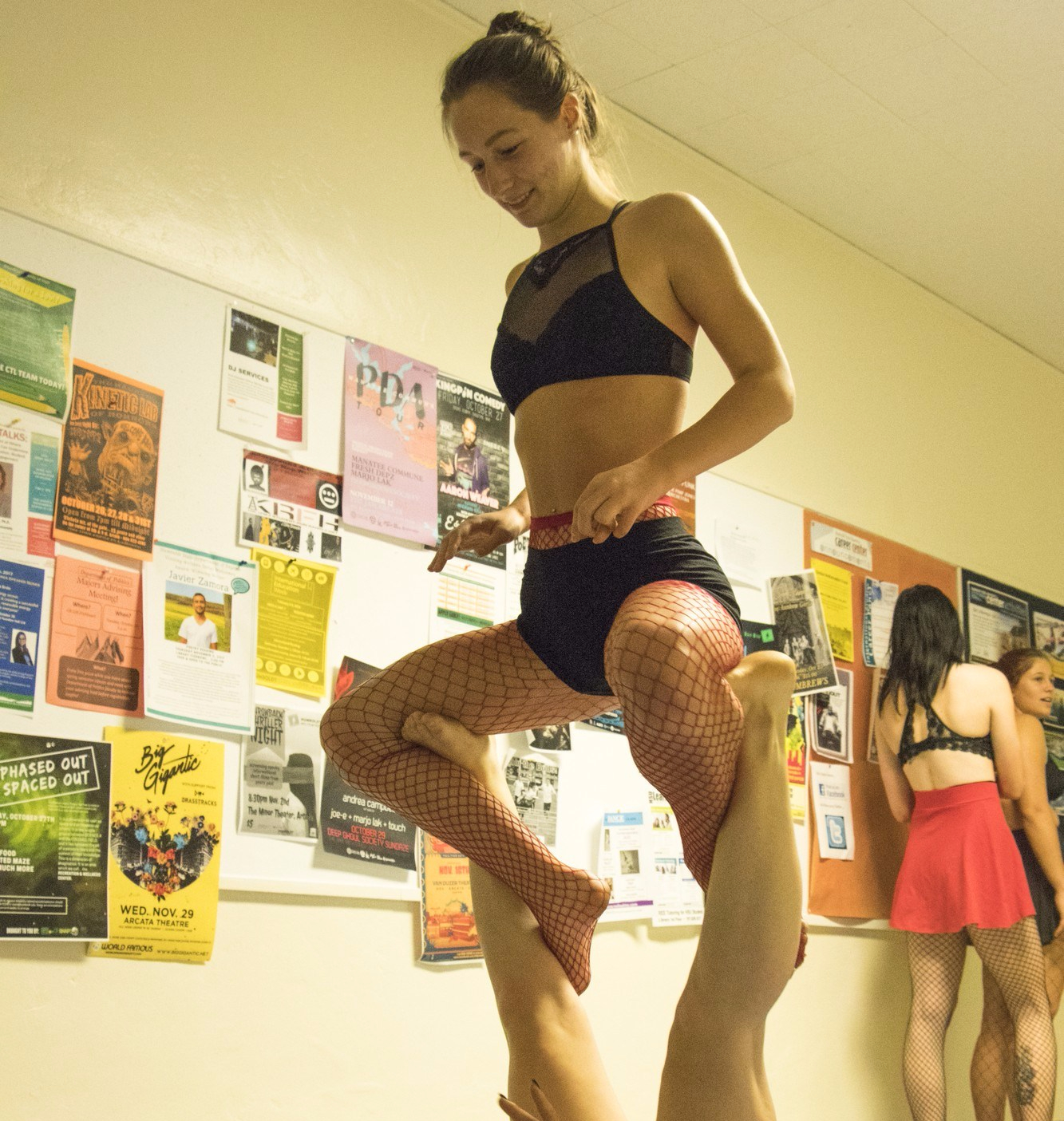
    Acroyoga club president Darci Kudrna (top) and Michael Perez (bottom) practice AcroYoga in Gist Hall. Photo credit: Tyler Boydstun

    HSU’s Circus Club has been around for 17 years. It’s a place where students go to have fun, express themselves.

    “Beacon for anyone who wants to come in be weird and have fun,” said Bowles

    Every semester, the club puts on a performance for HSU and the community. Sometimes they’ll be joined by other groups on campus like The Marching Lumberjacks.

    This year, AcroYoga Club will be performing with them.

    IMG_9028.jpg
    Ariana Catanuso and Michael Perez practice AcroYoga inside Gist Hall. Photo credit: Tyler Boydstun

    “We’re practicing AcroYoga for the circus show,” said club president Darci Kudrna. “There’s a circus performance and circus club, and we collaborated with AcroYoga.”

    AcroYoga is a mix between gymnastics and yoga. It’s partner-based yoga involving a lot of gymnastic based flips and turns, all with partners.

    “We have two acts and both of them have a theme,” said Kudrna. “The general theme of a circus show is the death of a circus.”

    IMG_9073.jpg
    Ariana Catanuso (top) and Darci Kudrna (bottom) practice AcroYoga in Gist Hall.

    “We wanted to stick with that theme in our first act, which is death oriented. We wanted to incorporate colors of red and black to show death,” said Kudrna. “The second one is afterlife, is what we called it. It’s going to be a little more flowy, and gold and white, and have the lighting to show more of the afterlife slower and more different skills they have.”

    Clubs like these on campus are a place where students can go and feel accepted without being judged.

    “It’s a safe free space, we don’t discriminate. said Bowles. “We invite anybody and everybody to come by.”

    The circus is $10 dollars for students and $12 for general admission.

    AcroYoga meets Tuesdays and Thursdays from 5-7 p.m. in the Rec and Wellness Center in room 126.

    Humboldt Circus meets Tuesdays and Fridays at 5 p.m. in the West gym.

    Here is video of the AcroYoga and Circus Clubs practicing for the Fall Circus Show.

  • Goodbye Moonstone, hello rising sea levels

    Goodbye Moonstone, hello rising sea levels

    Picture Moonstone Beach. The sun is setting, creating a silhouette of Camel Rock against a watercolor sky of vibrant pinks and oranges. The ocean is at peace, beautifully calm and picturesque. Now imagine the beach in fifty years or so.

    Moonstone Beach is gone.

    Due to rising sea levels and changing weather patterns, the beach at Moonstone no longer exists.

    Jennifer Savage, the California Policy Manager for Surfrider Foundation, was able to paint a picture of what Moonstone Beach will look like when we fast forward a couple years.

    “It’s not miles and miles of wide open beach on the north side, so I’d imagine that the modeling would predict that the Camel Rock area and the Moonstone area would be the first to disappear,” said Savage. “Then Clam Beach going down toward the Mad River mouth, because it’s wider and broader, may last a little bit longer.”

    moonstone
    Graphic by Kyra Skylark

    A representative for the Surfrider Foundation and an avid surfer and wave lover herself, Savage works to keep the waves clean and preserve the oceans and coastlines worldwide.

    “Essentially, even if we have just a few inches of sea level rise, it’s a vertical. It’s not just the oceans getting closer, it’s that they’re getting taller,” said Savage. “How that affects different places depends on the geography, the weather patterns, the ocean’s current patterns, and a lot of different things.”

    The repercussions of climate change can only be predicted to a certain extent, but there are numerous studies and research constantly happening to determine how our oceans are being influenced and how the could be affected in the future.

    “With Moonstone Beach, we already know that during the King tides the beach is completely covered,” said Savage. “The King tides give us a pretty good preview of what the future will look like.”

    Daniel O’Shea an Oceanography professor specializing in Geological Oceanography was able to provide greater insight on the King tides.

    “The King tides are a play on the words spring tides,” said O’Shea. “Every two weeks, we get what are referred to as spring tides around the new and the full moon, where the tides spring up higher.”

    “Around the winter and summer solstice, we get the highest and the lowest tides of the year, and those are called the King tides,” said O’Shea.

    The King tides show the physical changes to the coastline we can expect in the coming years as climate change continues to alter sea levels.

    “They’re [the King tides] going to be the normal high tide in 15-30 years,” said O’Shea.

    What we currently consider the extreme high tides will become our new normal, and the changes are coming faster than we can anticipate.

    Kim McFarland, the Executive Director of Friends of the Dunes explains how the dunes are being impacted by climate change.

    “We’re doing a climate ready study through the U.S. Fish and Wildlife services, it’s a climate change resiliency study,” said McFarland.

    By measuring how the sand dunes are moving and reacting to changes in the climate, researchers can predict how the environment will change and how far back the dunes will travel.

    “What they’re looking for is how the sand moves through the dunes, because during the winter time when it is wet the sand doesn’t move as much,” said McFarland. “What does happen is we have winter storms, and the storm surges are getting more frequent and more intense and that’s most likely a result of climate change.”

    As the climate changes and sand is continually displaced and moved from the foredune backwards, the dunes themselves will move backwards, potentially displacing buildings and homes near the area.

    As sea levels rise it’s not just the beaches and the local natural environment that will be affected, homes and businesses will be greatly impacted.

    Eventually, individuals with homes and business in the Humboldt Bay will have to be relocated. Homes within the King Salmon area are often flooded during the winter high tide times, so as sea levels rise, those residing within the area and areas nearby will have to move.

    “The key thing is to identify the most vulnerable places and what kind of infrastructure exists in those places and then figuring out what can be moved,” said Savage.

    As we continue to impact the environment, predicting the outcomes of climate change in the ocean and along the coast is very imprecise.

    “What we do know is that the sea is rising and we are not going to be able to stop it, at best we will be able to slow it down,” said Savage. “We’re not preparing for it fast enough.”


  • Humboldt State athletics shows kindness with Sonoma State

    Humboldt State athletics shows kindness with Sonoma State

    By | Keaundrey Clark

    Sports glorifies the competitive spirit where one should be better than their opponent, every little advantage or slip-up can mean victory or defeat. It’s rare to see sportsmanship, and more rare to see acts of kindness when it’s least expected.

    Humboldt State athletics showed it’s sportsmanship this past weekend when Sonoma State’s soccer program used its facilities this past weekend as the Northern California wildfires have displaced many in the Sonoma and Napa Counties.

    Sonomastate2.jpg
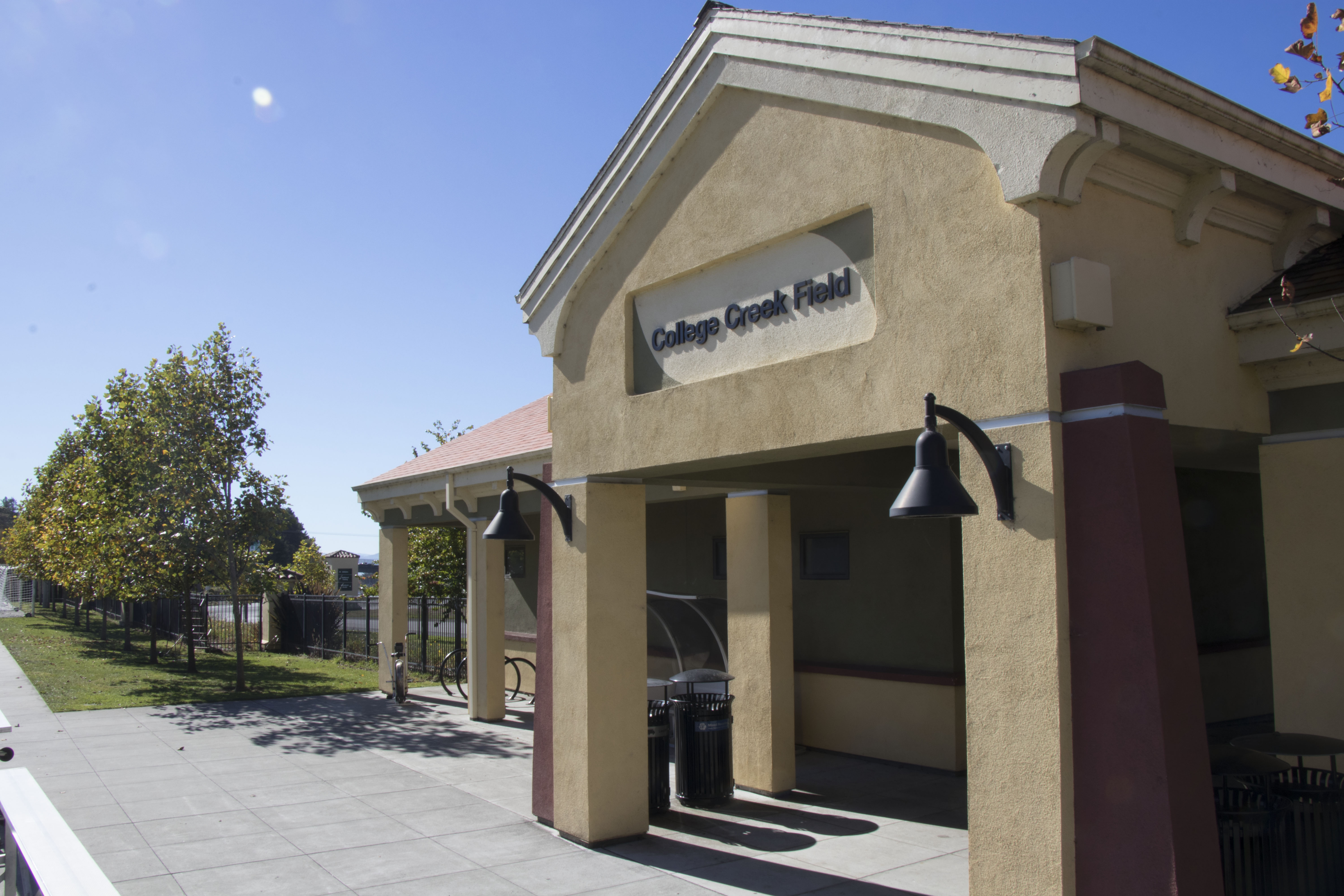
    College Creek Field Photo credit: Iridian Casarez

    “As soon as we heard about fires and people being displaced we contacted Sonoma State to see what we could do,” said Interim Athletic Director Duncan Robbins. “We were worried about our friends down there.”

    Sonoma State closed Oct. 9, and opened back up last Wednesday, making it nine days that the school was closed. The soccer teams haven’t played in two weeks because of the bad air quality which resulted in two cancelled games.

    The team has spent some of that tie in the community helping families who have been displaced by the fires.

    “Our teams have been taking the time off to do a lot of volunteer work,” said associate athletic director Brandon Bronzan “We’ve been at evacuation shelters passing stuff out to those in need, we’ll do clinics to raise for those who’s lost their houses.”

    The fire even claimed the home of Sonoma State President Judy Sakaki.

    Senior Katie Mohr’s family had to evacuate several times because of the fire, luckily her childhood home where her parents live did not burn down.

    “It feels good, we have a really good team and support system,” said Mohr. “It feels good to get away from it all and we know we have bigger reason and purpose to play for.”

    In its first games since Oct. 8, the Seawolves men’s team went 2-0 defeating Cal State L.A. and Dominguez Hills. The nationally ranked women’s team defeated Cal State L.A. and tied with Dominguez Hills.

    If you would like to help and make a donation, here are some charities you can donate to: the Humane Society of Sonoma County, Humane Society of Napa County and Yuba-Sutter SPCA.

  • My beef with killing the meat industry

    My beef with killing the meat industry

    Eliminating the meat industry would do more harm than good to our planet. The idea that animal agriculture is completely unethical and impractical is false.

    The media does a fine job of antagonizing the meat industry, and we all know about the documentaries that reveal the ugly truth behind factory farming, such as Food, Inc. But have you ever thought about what would happen if we put an end to animal agriculture all together?

    “Agriculture cannot be sustainable without animal agriculture,” said Dr. Frank Mitloehner, Animal Science professor at UC Davis. “That is something I’m sure of.”

    For instance, livestock grazing is used as a tool to stimulate soil production, which in turn removes carbon dioxide from the atmosphere. When herds trample through pastures, they oxygenate soil while pushing down seeds that ultimately promote healthy land restoration. Also, excrement produced along the way fertilizes soil. If managed correctly, livestock distribution can be beneficial to the environment.

    “Soils of the world must be part of any agenda to address climate change, as well as food and water security,” said Dr. Rattan Lal, professor of Soil Science at The Ohio State University.

    Animal parts that are not consumed, such as bones or fat, do not get wasted in the Netherlands. Renewable products from soaps to heart valve replacements are sourced from slaughtered pigs.

    The Dutch eat about a third of the pig “and the rest is exported to all kinds of countries in Europe and the rest of the world,” said Christien Meindertsma, a Dutch artist who is known for using raw materials in her work.

    The truth is that we need to reduce our inherited carbon footprint habits: transportation, dieting and consumerism. The global food production and consumption, namely beef, produce more greenhouse emissions than all of transportation combined. In addition, eating less meat could reduce the risk of heart disease and other health-related issues.

    In extreme cases of either a world full of meat eaters or vegetarians, moderation is the middle ground. Following one extreme over the other will not reduce global warming. We can start by agreeing that livestock is a crucial part of the agricultural system.

  • A campaign for things unseen

    A campaign for things unseen

    By | Charlotte Rutigliano

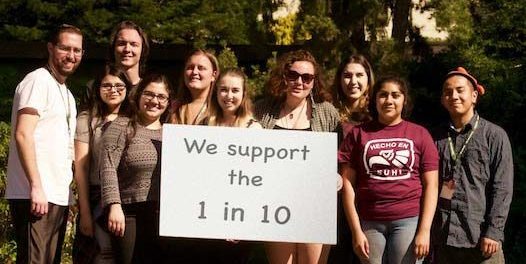
    At HSU, one in ten students have a disability. Most have a registered disability that is non-apparent.

    According to Kevin O’Brien, director of Student Access Services and Student Disability Resource Center, approximately 80 percent of disabilities are non-apparent. This includes chronic health issues, learning disabilities, attention deficits, or psychological disorders that are not immediately obvious.

    “Because disabilities aren’t always apparent, we want to get the word out about this,” O’Brien said. “There’s more than just visual disabilities.”

    This is the first year the Student Disability Resource Center has done this specific campaign. According to O’Brien, past years have been much more dramatized.

    “There was one year that some professors were in a wheelchair for an entire day,” O’Brien said.

    O’Brien said that they try to do something like this campaign every year in the month of October because October is Disability Awareness month.

    The Student Disability Resource Center partners with Tri-County Independent Living center to put on the campaign.

    “We try and encourage self-advocacy for students,” O’Brien said.

  • Mondays are no longer meatless

    Mondays are no longer meatless

    No more Meatless Mondays. They will now become Pollo-pescetarian. HSU Residence Hall Association decided last Monday, Oct. 9th by a unanimous vote to incorporate white meat into Monday’s dining services, and add more vegan and vegetarians options throughout the week to compensate. Chicken, turkey and fish will now be served at the J cafeteria on Mondays.

    IMG_9911.jpg
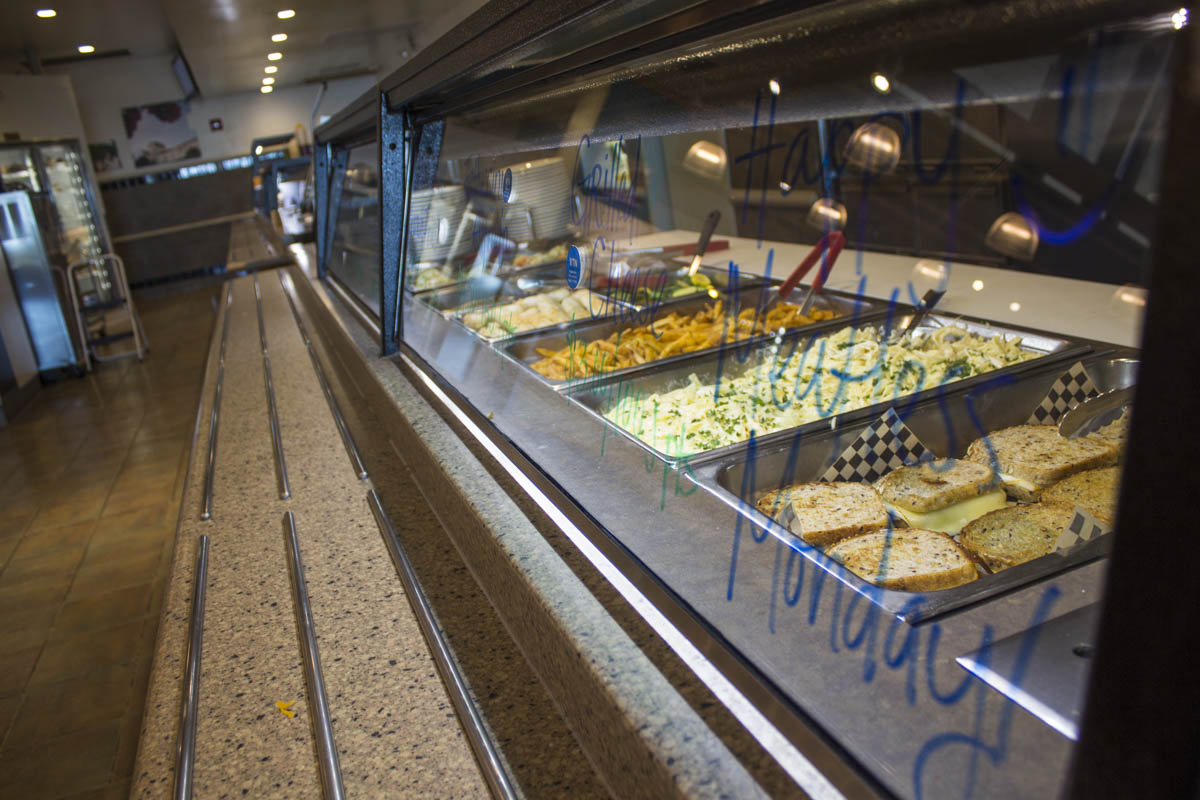
    Students getting food from the J cafeteria on a meatless Monday. Photo credit: Ahmed Al-Sakkaf

    “We came to a vote last week, instead of one whole day for vegetarian and vegan options, we’re going to incorporate it more throughout the week,” Destiny Mendoza, sitting President, said.

    Meatless Monday is an international movement that launched in 2003. Its goal is to reduce global meat consumption by 15 percent. In Spring of 2015, about 700 HSU students signed a petition in support of Meatless Mondays. RHA then voted to implement Meatless Mondays at the J starting Fall 2015.

    Ron Rudebock, director of Dining Services said that the foot traffic in the J has dropped by 15 percent on Mondays compared to compared to other weekdays.

    RHA National Communication coordinator Nicole Laureano said that besides the dip in sales at the J on Mondays, dining services didn’t see an increase of sales anywhere else on campus.

    “The big question was where are people [students] going to eat? Are they not eating? Are people starving themselves? Or leaving campus in order to get what they want?” Laureano said.

    IMG_9880.jpg
    The J food servers behind a counter waiting to serve students. Photo credit: Ahmed Al-Sakkaf

    Many students around campus dislike Meatless Mondays at the J cafeteria. Cynthia Godinez, a student coordinator who works at the J cafeteria, hears students complain and express their frustration about Meatless Mondays.

    “Students come in and they literally roll their eyes and scoff because they hate Meatless Mondays,” Godinez said. “People complain about Meatless Monday all the time… I hear it, I hear it.”

    A large amount of the food served on Mondays is dairy-based and contains a lot of cheese, making it hard for students who are lactose intolerant to eat at the cafeteria.

    “They [students] want to see less cheese,” Mendoza said. “We had Ron from Dining come in and we told him to lay off the cheese.”

    Godinez thinks that the food served on Meatless Monday isn’t healthy as it contains large amounts of fat.

    “You’ll think something like Meatless Monday is healthy, but it’s not healthy, it’s all cheese. It’s very heavy greasy food,” Godinez said.

    IMG_9941.jpg
    Harrison Cole on a meatless Monday making a salad at the J cafeteria salad bar. Photo credit: Ahmed Al-Sakkaf

    With the dip in the number of students going to the J on Mondays, a lot of food went to waste said Godinez.

    “A lot of food goes to waste because of Meatless Mondays,” Godinez said. “We [Dining services] waste a bunch of food, we waste a bunch of money.”

    Last year, chefs from People for the Ethical Treatment of Animals (PETA) visited HSU and suggested changing Meatless Mondays to include some meat. This was to avoid steering students away from the J on Mondays and avoid making them feel excluded.

    The changes made are open to reevaluation and change.

    “If this is not the solution then we’ll reevaluate,” Mendoza said, “it’s not set and stone. Nothing is set and stone.”


  • Homecoming Tailgate

    Homecoming Tailgate

    By | Raymond J. Garcia

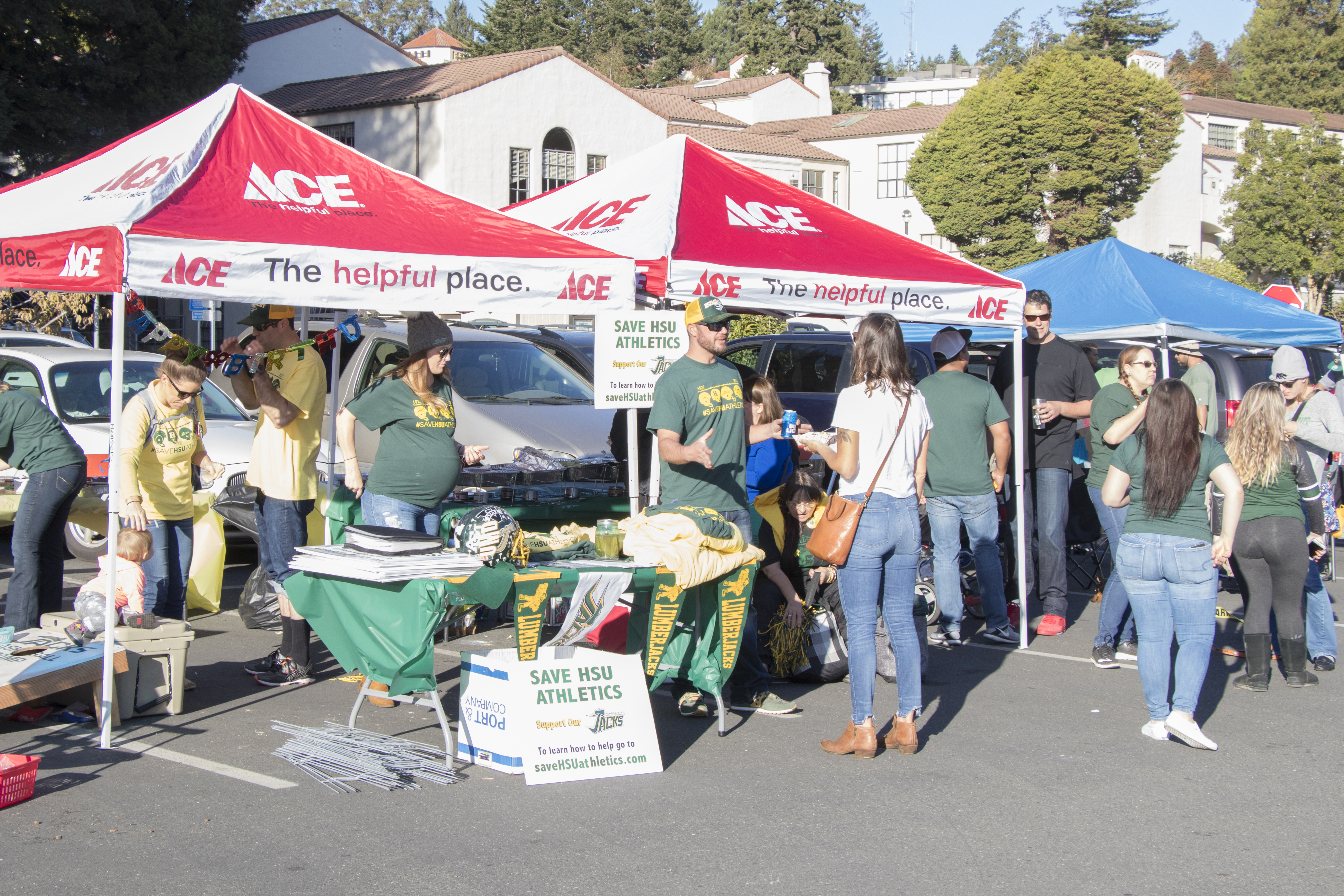
    Students, families and the community gather at the West parking lot with food, drinks and game day excitement. A normal tailgate to some, but to others it was an opportunity to help save HSU athletics.

    As The Lumberjack previously reported, the Lumberjack football team may be in its last season. The school’s reason for cutting the team reflects budget cuts across the board.

    Yet students, their families and locals got together for some time in the sun before Saturday’s game.

    Food was all around, and faces were getting painted. Notably, there was a group with a large following called Save HSU Athletics. Raising money through fundraising and donations, the tailgate provided an additional opportunity to do just that.

    Saturday was an example of our HSU community meshing with the Humboldt community. No ill will, just a bunch of fans with the same mindset: To have fun and support our Jacks.


  • Open Access Week escape room

    Open Access Week escape room

    By | Charlotte Rutigliano

    Imagine a mad scientist is trying to take over the town, and you and your friends are the only ones who can crack the code and stop him.

    In an upcoming escape room simulation presented by the library for Open Access Week, students can do just that.

    According to Kimberly Stelter, first-year experience librarian, this four-day event is about giving greater access to students.

    “Open Access Week is about opening up a number of resources they have access to,” Stelter said.

    According to the Open Access Week website, the global event is entering its eighth year and gives the academic and research communities the opportunity to continue learning.

    Stelter said the library is wanting to students to become more familiar with this information in a fun way.

    “It’s about learning and teaching in a different way, ” Stelter said. “I love games for learning, it’s gamifying education.”

    This skillshop takes place Monday, Oct. 23 through Thursday, Oct. 26 at 5 PM. Registration is still open.

  • Convenience costs

    Convenience costs

    By | Curran Daly

    Getting food on campus is convenient for students, yet comes with an additional price. Humboldt State Dining food is more expensive than food bought at Safeway in Arcata and WinCo in Eureka.

    Chris Bautista has been at Humboldt State for three years and eats on-campus for the convenience.

    “Some things are expensive, but some things are not,” said Bautista, while holding a three dollar cupcake. “Eating here is more convenient so I just eat here.”

    Prices
    Graphic by Curran C. Daly

    Humboldt State is far from the cheapest option for food in the area. When compared to Winco and Safeway, Humboldt State is almost always the most expensive option for many quick grab options for food.

    Humboldt’s beloved Yerba Mate teas are $3.39 on campus when paying cash versus $2.22 at Winco and $2.49 at Safeway.

    Director of Dining Services, Ron Rudebock, wants students to know that due to Humboldt’s small size compared to national chains the price we pay for food is higher.

    “Safeway and Winco beat our prices,” said Rudebock. “At Winco, sometimes, we can find things for sale at a cheaper price than we can buy them wholesale.”

    Humboldt might not be able to beat all the prices of other local retailers, but the money spent at HSU stays at HSU. Rudebock also wants students to understand all the places that their money goes after they spend it at an on-campus location.

    “Food sold on campus helps pay for operating costs of the UC Center,” said Rudebock. “Money spent here on campus stays on campus.”

    According to the 2016-2017 Fiscal Budget for the University Center, Dining’s annual intake from food sales of more than 12 million dollars accounts for 74.8 percent of total revenue for the University Center. Despite the large in-take, Dining’s gross profit is only around $700,000 after paying for food cost, employees, and other operating costs.

    While Dining contributes the most amount of money to the University Center’s revenue, it also must pay its many student employees who make up the majority of HSU Dining’s staff.

    “We only have 28 full-time employees between our various locations,” said Rudebock. “Without student employees, we couldn’t operate.”

    The excess money from the Dining’s revenue goes towards keeping prices down across campus for other University Center organizations such as Center Arts, Center Activities, and the Student Rec Center.

    Ameer Abdullah, a transfer Recreation Major, believes that keeping food affordable is key when serving the college community.

    “It’s college it should always be affordable,” said Abdullah. “The food should be better if we are paying so much for it.”


  • Indigenous People’s Week at HSU

    Indigenous People’s Week at HSU

    By | Robert Brown


    The American Indian community of HSU hosted the 24th annual Indigenous People’s Week from Oct. 9 thru Oct. 16, with many free events held on campus.

    The eight day event began on Monday, Oct. 9, with a celebration on the Quad. Throughout the week, workshops, film screenings, a community-building reception and cultural sharing events were held around campus. Professors of the Native American Studies program hosted the event, as well as guest speakers from the Seventh Generation Fund, and Native American activist YoNasDa LoneWolf Hill.

    BROWN.INDIGENOUS.10.9.2017.IMG_4623.jpg
    Children gather on the Quad at Humboldt State University during a protest that began Indigenous People’s Week Oct. 9-16, 2017. Photo credit: Robert Brown

    An Indigenous Voices Forum titled, “Columbus, The Doctrine of Discovery and Indigenous People’s Rights,” hosted by HSU Professor Cutcha Risling Baldy, and Lorna Bryant from Race Beat on KHSU was held in the Kate Buchanan Room on Wednesday night. HSU Professors Marlon Sherman and Kayla Begay, Chris Peters and Tia Oros-Peters of the Seventh Generation Fund, and Cynthia Boshell of the Environment and Community program at HSU took part in a discussion on the Doctrine of Discovery and how it continues to impact society to this day.

    “Columbus is a figment of people’s imagination,” Oros-Peters said. “He is a construct of a dominating colonizing society that’s become a caricature of what the aspiration of colonization is. He is used as a weapon against people’s minds and their capacity to think freely.”

    “Columbus is part of this nation’s origin story, Columbus Day is really a celebration of White supremacy, Christian superiority, the genocide of indigenous people. The state needs to erase indigenous people in order to legitimize its claim of sovereignty over us.”

    A reception was held on campus Thursday to honor Native American women who have notoriously been murdered at more than 10 times the national average. Participants were asked to wear red in honor of the missing and dead indigenous women.

    “Indigenous women have remained for more than 500 years, the most targeted, exploited, trafficked, raped, murdered, tortured, brutalized, and torn apart group of people on the face of this planet,” Oros-Peters said. “We are the embodiment of Mother Earth. The assault against indigenous women is how they treat the Earth. We are the echo of the Earth within our bodies, and she within us.”

    “Columbus began the sex trafficking trade in America, he gave women away as slaves and prostitutes,” Sherman said.

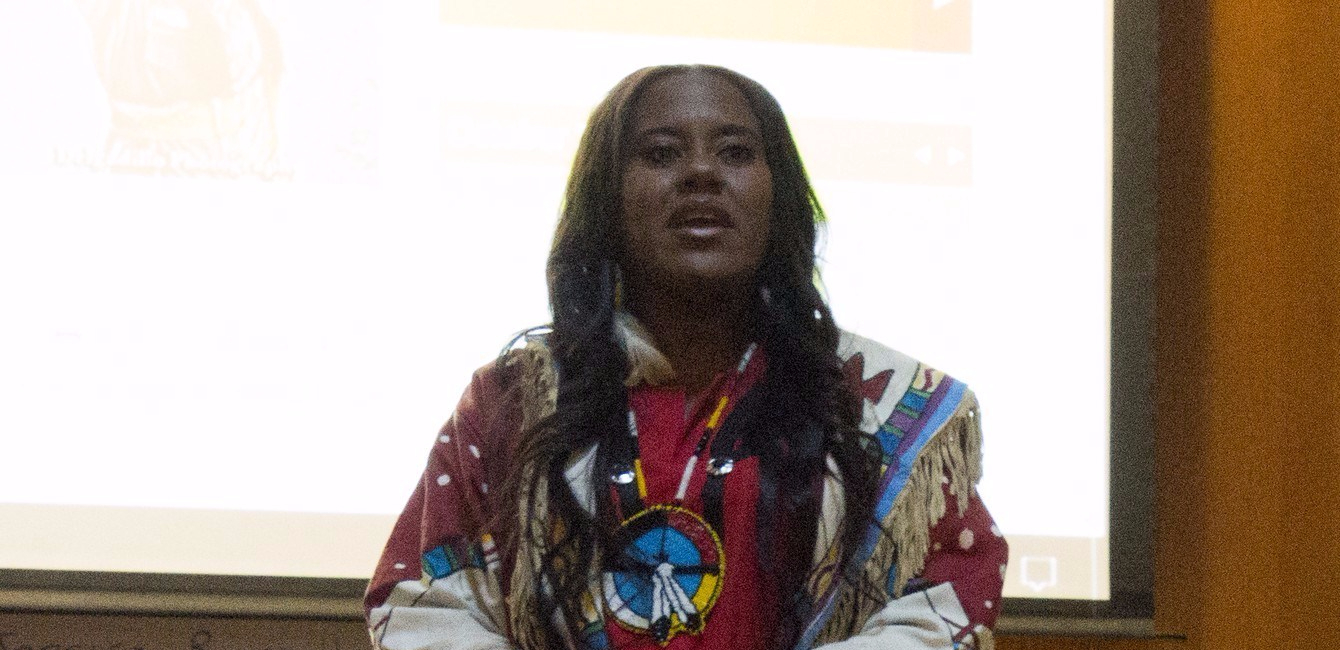
    Also on Thursday, a conversation with YoNasDa LoneWolf Hill was held in the Behavioral & Social Sciences building. Hill is a Lakota and African-American activist, speaker, and published writer of social and environmental justice issues. She was adopted and raised by Minister Louis Farrakhan, leader of the Nation of Islam.

    “The truth is coming out, and the truth hurts, everyone is looking at the truth. There is a separation of good and evil taking place at this time,” Hill said.

    “Women are at the heart of this movement, as mothers, we feel pain, we bear pain when we give birth,” Hill said. “Even if you’re not able to give birth, you still feel it in your blood. It’s all in everything that we are made of as women. In this way, we connect with and feel Mother Earth.”

  • Consent is the word

    Consent is the word

    By | Lauren Shea

    Brave students walked up to the podium to share their story in front of supporters of a culture of consent.

    HSU students attended The Consent Project 2017 in the Kate Buchanan Room on Oct. 10 to talk about consent and listen to survivors of sexual violence.

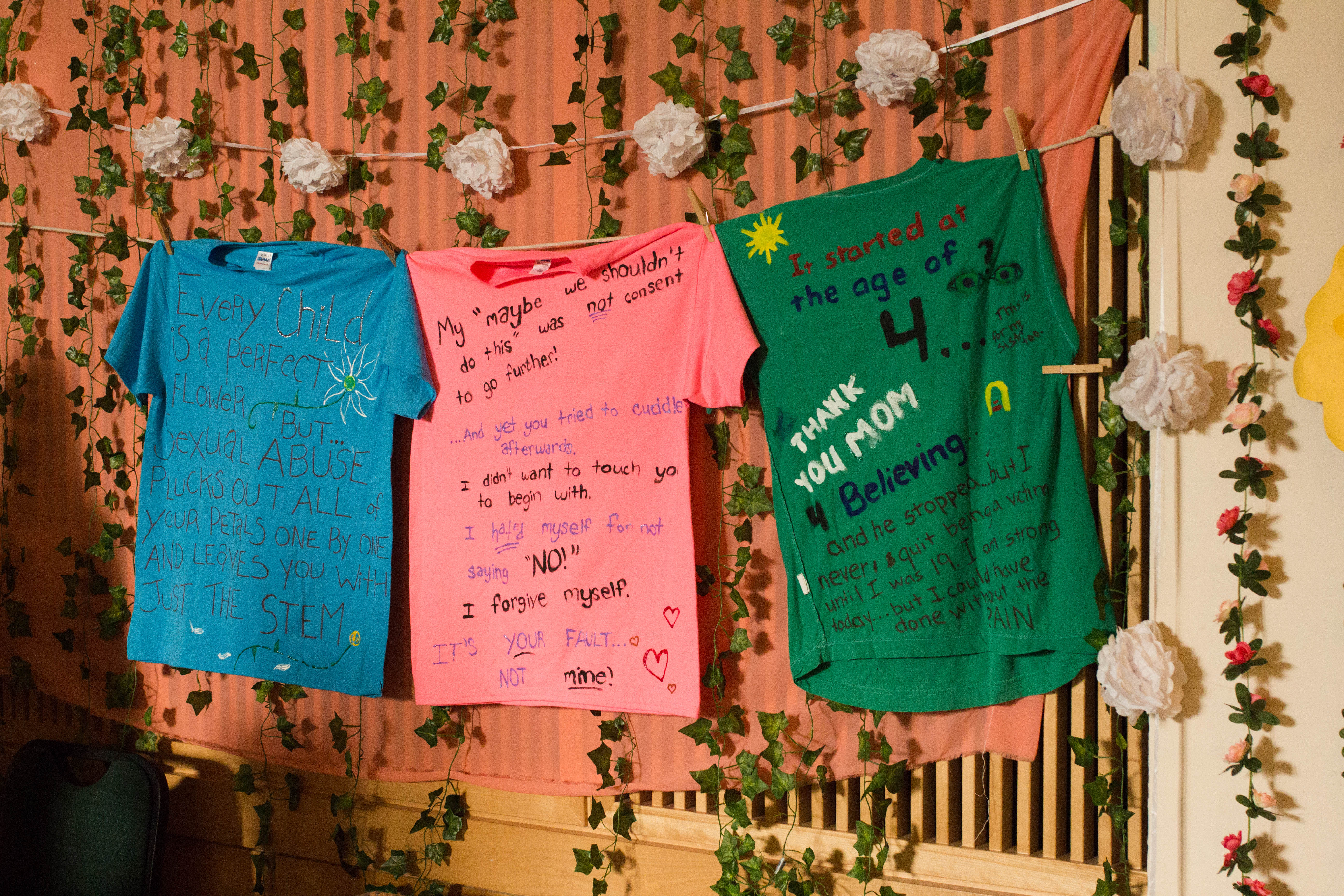
    The Consent Project is an event held through the Check It program to talk about what it means to consent, what consent looks like, and how to communicate consent though choices and actions. The project aims to create a culture of consent and reduce the harm caused by sexual violence. The event provided a place to educate students and the community about consent and provide community resources. It also provided a place where survivors of all genders of sexual violence could speak out about their story.

    018.jpg
    Photo credit: Lauren Shea

    This year’s theme is the Seasons of Change. One of the event coordinators, Skye Peredo, talked about the meaning behind the name by describing how seasons change just as people do.

    The event provided many resources such as the North Coast Rape Crisis Team, Check It, the Women’s Resource Center and the Multicultural Queer Resource Center. The event provided food and drinks as students engaged in conversations about consent and the importance of self-care. Arts and crafts were supplied for students to create crafts and build a comfortable and creative environment.

    052.jpg

    The second part of the night shared a space where survivors talked about their story on consent. Survivors shared their gratitude for programs such as Check It and The Consent Project that encourages a consent culture where people can talk about sexual violence. It also encourages people to support each other and educate people in hopes to reduce to harm caused by sexual violence and the lack of clear consent communication.

    Students talked about consent culture during the event and the importance of caring for yourself. Elissa Rodriguez, a junior at HSU studying English, gave her thoughts about the importance of self-care and mental stress breaks.

    “I advocate a lot to my friends about self-care,” Rodriguez said. “I think we go through so much stress and taking the time even if it’s just a little bit of time to recuperate before getting back to what you need to do is really important.”

    She also talked about her experience with the consent culture being built at HSU.026.jpg

    “I feel like there is always more room for improvement,” Rodrigues said. I feel like people are still afraid to talk about sexual violence because if they weren’t, we wouldn’t need events like this. Not everyone is involved as they should be.”

    Alex Heart, a sophomore at HSU studying Geology, talked about the influence that Check it and the Consent Project has on new students.

    “I think the school does really well on educating freshman that come from all walks of life about consent,” Heart said.

    035.jpgJonathan Salinas, a senior at HSU studying Spanish, talked about his experience with consent culture at HSU.

    “I definitely think there is a lot of work to be done about creating a consent culture here,” Salinas said. “But I think events like this gives students on campus the vocabulary to have the conversations. I think there is that fear to talk about these topics, but at the same time empowers people to have these discussions.”

  • Adventure in aquaponics

    Adventure in aquaponics

    By | Charlotte Rutigliano

    On a warm Friday afternoon, student volunteers help trim eight different varieties of basil leaves for a study headed by undergraduate Fisheries Biology major Bryan Lester.

    Lester is studying which strain of basil grows the fastest using this aquaponics facility, he completed his second trial on Friday. The stains grown in the study are dark opal, holy, Italian large leaf, lemon, lime, spicy globe, sweet Genovese, and Thai.

    CRaquaculture - 01.jpg
    Fisheries Biology student volunteers trimming basil leave to be weighed Photo credit: Charlotte Rutigliano

    A study he might not have been able to do without the help of Coast Seafoods, Hog Island Oyster Co., and Taylor Shellfish. According to assistant professor of Fisheries Biology Rafael Cuevas Uribe, past donations from Ameritas faculty ran out this past summer.

    “The donation we received from these local businesses will help run the facility for about a year,” Cuevas Uribe said.

    Since HSU starting leasing this facility, which belongs to the Humboldt Bay Harbor District, around two years ago Cuevas Uribe and the student volunteers have grown pak choi, lettuce, cilantro, chard, spinach, arugula, kale, and cabbage.

    Cuevas Uribe started this program to help teach students about what aquaculture is and how to maintain and grow in a system like this. CRaquaculture - 06.jpg

    “Aquaponics is an educational tool,” Cuevas Uribe said, “students often run their own research projects, like what Bryan is doing.”

    According to Cuevas Uribe, aside from evaluating growth rates of plants, one of the other student-run research projects was evaluating the growth rates of the fish by changing their diets. A diet that normally consists of pellets made from fish meal, fish oils and other types of oils.

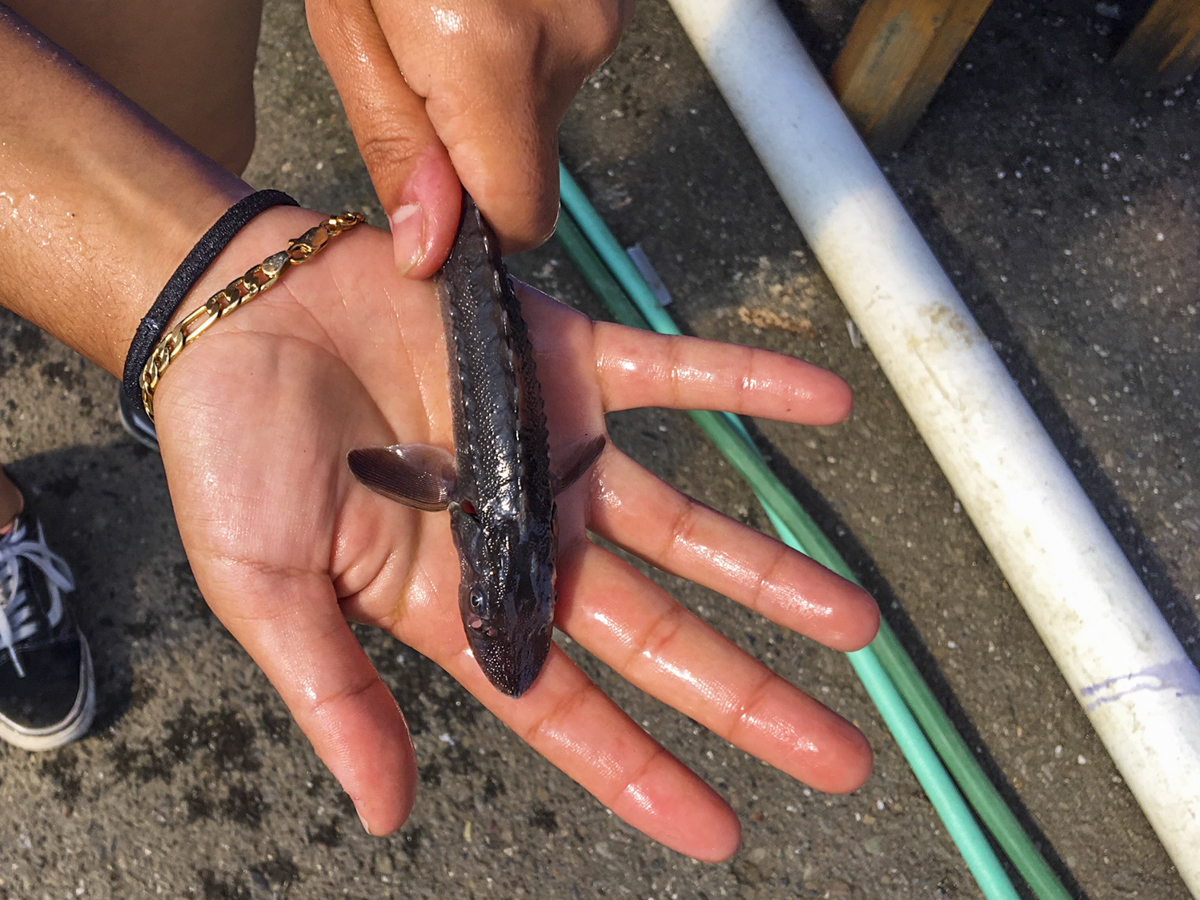
    “This study evaluated the growth and feeding habits of the white sturgeon,” Cuevas Uribe said, “the students gave them a fish-free organic diet, and the results from that study were presented at a national conference.”

    According to Cuevas Uribe, they get the white sturgeon from a fish farm in Galt, Ca.

    “We have about 80 sturgeons that are 2-years old,” Cuevas Uribe said, “and another 400 sturgeons that are a few months old.”

    Cuevas Uribe said that the fish are separated by their biometrics or their size, and student volunteers like senior Fisheries Biology major Alexis Harrison come down to the facility once a day to check on the water quality of the fish.

    “We come down to check the oxygen levels, the temperature, the pH levels, ammonia levels, nitrite levels and nitrate levels,” Harrison said.

    According to Cuevas Uribe, the fish help circulate the water for the plants. The water from the tanks the fish are held in is filtered by a polygeyser bead filter that holds bacterias that have nutrients the plants prefer.

    “It’s a very symbiotic relationship,” Cuevas Uribe said, “even the waste drained from the filter, is strained and reused as soil for the plants.”

    Cuevas Uribe said that everything that is grown at the facility is either taken home by the student volunteers or donated to the open community garden or the Food for People food bank in Eureka.

    Lacy Ogan communications manager with Pacific Seafood, a company who has hired several HSU students as interns to work with the company because of this facility. Ogan said that companies are dedicated to the success of this program.

    “They are in the process of helping to find a long-term funding source,” Ogan said, “so their resources can be focused on increasing internship programs.”

  • HSU compost goes to landfill

    HSU compost goes to landfill

    UPDATED: 6:00 p.m. on Oct. 16

    More than six weeks worth of compost went to a landfill. That’s after the composting contract HSU had with the Local Worm Guy ended and wasn’t renewed. All compost materials which ends up in the compost BiobiN vessel will be sent to landfill, as there is no alternative in sight.

    IMG_9809
    HSU bio bin located near the Jolly Giants Commons. | Ahmed Al-Sakkaf

    Last year, the university signed a $14 thousand contract with The Local Worm Guy farm to divert all the food waste the campus generates. All campus-generated compostable material is deposited to the 20-cubic-yard composting bio bin that was installed a year ago near the Jolly Giant Commons. When the bin is close to full, it’s then hauled away by Recology Arcata to be dumped at the worm farm. The university pays Recology around $80 per haul.

    Last August, the owner of the worm farm Lloyd Barker informed HSU that he wouldn’t renew the contract with the university.

    “It’s probably one of the harder decisions that we’ve had to make as a business,” Barker said. “With the challenges we faced last year we’ve had to take a step back and look at exactly what we need in terms of our business development to be able to offer that service again.”

    The volume and the type of material that is generated on campus is challenging from a composting perspective. The challenges his business was facing from the university’s material didn’t leave him an option.

    IMG_9819
    Organic food wastes inside the bio bin. | Ahmed Al-Sakkaf

    “HSU is really a big feather in someone’s cap, it’s a really important customer for us, but right now it’s really hard to offer them the service we want to be able to offer them,” Barker said.

    The university has a small scale composting facility called the Earth Tub. The Earth Tub is run by Waste-Reduction & Resource Awareness Program. WRRAP compost food waste they collect from student-run coffee tables, departmental break rooms and zero waste events, food waste that is not sent to the biobin where the majority of the organic waste ends up.

    For organic waste to compost, it requires a consistent balance of carbon to nitrogen ratio. The ratio is around 25 to 30 parts of carbon to every one part of nitrogen. The compost material generated on campus mainly consists of heavily water saturated food type materials with very little carbon. Besides the imbalanced ratio of carbon to nitrogen, the university’s compost material tends to have a lot of garbage in it, such as F’real milkshake cubs and other noncompostable plastic bags from dining kitchens.

    IMG_9815
    Organic food wastes inside the bio bin. | Ahmed Al-Sakkaf

    “We end up with a lot of those pre-made milkshakes in a little plastic cups. We end up with probably 50 of those milkshake containers, and up to 150 pieces of recycles and garbage from the cafeteria per load,” Barker said. “We’ll also end up with big bags of stuff from the back of the house. It caused us a lot of problems and issues along the way.”

    Last year alone, the worm farm composted over 200 cubic yards of HSU’s material that weighed about 97 tons. The university paid a total of $64 per cubic yard to divert this food waste from landfill to compost.

    HSU is mandated by California’s AB 1826 law to compost. The law currently requires businesses that generate four cubic yards or more of organic waste per week to arrange for organic waste recycling services. Organic waste includes green waste, landscape pruning and wood waste. The university generates over seven cubic yards of organic waste per week.

    “We are a state agency. We need to be compliant with this law,” said Morgan King HSU’s Sustainability and Climate Action Analyst.

    Neither the university nor the county has the infrastructure or the appropriate facilities to compost large amounts of organic waste. Until the county builds a facility that can accept HSU’s food wastes, the university has no option but to try to work with the local worm farmer to resume their agreement.

    IMG_9793
    Katherine Rodriguez scraping off leftover food into a compost bucket. | Ahmed Al-Sakkaf

    “We’re kinda stuck. We need to haul it out to someone else who is a professional and can compost it,” said King. “He [Barker] can’t take our stuff and there’s no one locally besides him that would take this amount of food waste.”

    Both the university and The Local Worm Guy view this as a temporary setback until they are all ready to resume their cooperation and resume their work.

    “The Local Worm Guy is working on his side to be in a better position to take our food waste, and on our side, we are working on making our material more acceptable,” said King.

    Prior to signing this contract with the local worm farmer, HSU didn’t have a large-scale composting program in place. Madi Whaley, the WRRAP program manager, said that before last year parts of the food waste generated on campus was diverted to a local hog farmer for pigs to eat.

    “It is unfortunate,” said Whaley. “It’s a real shame that the compost is going to the landfill instead of being diverted to a composting facility.”

    HSU prides itself on having a great food recovery system. This past summer, HSU won the Innovative Waste Reduction Award at the California Higher Education Sustainability Conference. The composting program HSU had in place partnering with Barker was a significant factor in winning the award. A factor that isn’t in place now.


  • Moon full of cake

    Moon full of cake

    By | Juan Herrera

    A room full of smiles, laughter, and mooncake took over the Kate Buchanan Room as HSU students celebrated the beautiful full moon.

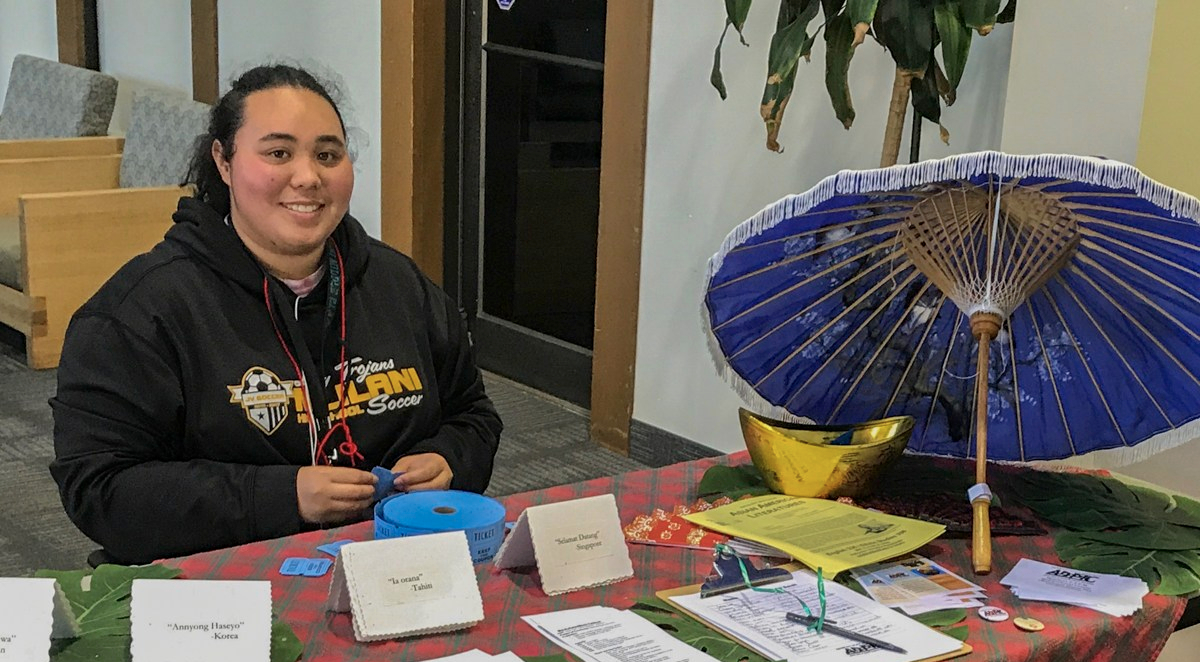
    Matilda Bunchongchitr, co-coordinator of Asian Desi Pacific Islander Collective (ADPIC), says that for her the Mid-Autumn Moon Festival celebration is a slight taste of what home would be like if she was there.

    IMG_0079
    A group of students enjoying mooncake and games at the Mid-Autumn Moon Festival on Oct. 4, 2017.

    “Usually today I’m with family around a table eating and celebrating together,” Bunchongchitr said. “Instead I’m here and can’t go home because the school doesn’t acknowledge it.”

    Bunchongchitr mentioned that ADPIC puts on this festival so students and community members like her have a place to go and celebrate this holiday to give a little sense of home.

    Branden Mark, HSU student and co-coordinator of ADPIC, states that the main dish for this Asian holiday is called a mooncake. According to Mark, the mooncake for Asians is like turkey served on Thanksgiving for Americans.

    “It’s basically the Asian’s version of Thanksgiving.” Mark said. “In America’s culture you celebrate with turkey and in Asia’s you celebrate with mooncake.”

    Mark said that back home people use this holiday as reunion for families to get back together over a big meal and catch up on life. According to Mark, mooncake is more of a sweet tasting dish served best as a dessert.

    IMG_0084
    Nikki Xiong, ADPIC president, standingat their clubs table at the Mid-Autumn Moon Festival on Oct. 4.

    According to Nikki Xiong, president of ADPIC, the history of the full moon not only shows it’s beauty but also would appear the same time Asians would harvest rice fields. He mentions that is the reasoning for a huge celebration with lots of food.

    “Traditionally the moon festival was a celebration of the rice harvest not just the moon,” Xiong said. “People would have so much food they would invite all their family and friends over for a celebration meal.”

    Xiong mentions that ADPIC has put on this festival for five years now and each year keeps getting better and better.

    “We like to provide a home away from home environment for our community,” Xiong said. “This festival gives a chance for anyone to share their background or story in a safe environment with good traditional food.”

    Xiong mentions that ADPIC host two festivals a year and the Mid-Autumn Moon Festival is only the pregame for the next one. According to Xiong his club will also be hosting a much larger Lunar Festival with live music, more games, and more food.

    The Lunar Festival will be taking place Friday, February 16, 2018.

  • Garden Reclamation

    Garden Reclamation

    By | Michelle N. Meyers

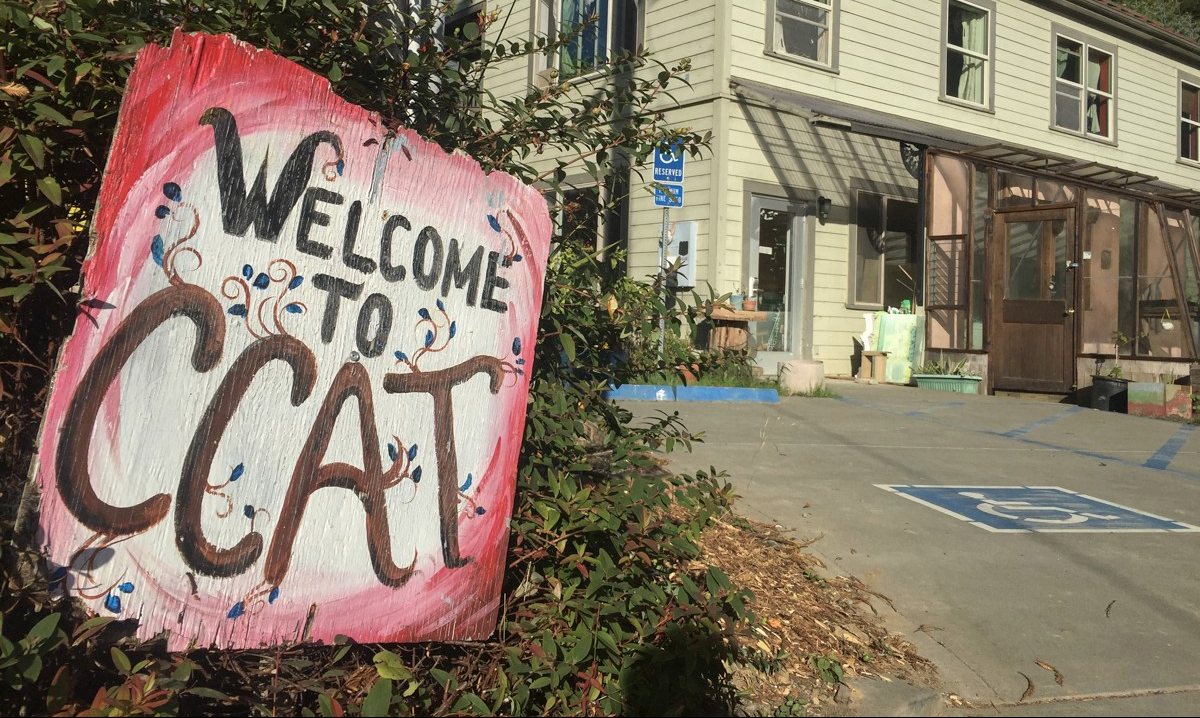
    The CCAT garden’s are moving and bending in shape, forever changing with the seasons, through the helping hands that come and go. The folks at CCAT are welcoming these changes of seasons with open arms. Rows upon rows of seeds have been planted and now they wait patiently for their chance to peek through the top layer of soil to greet the moist air. Yet, it’s still just too early to see what lies within these carefully raked piles of soil. It’s fall in Humboldt, the height of the rainy season will soon be upon us, and outside the rain gently flutters across the terraced gardens, over the open grass, and trickles down the windowed walls of the CCAT greenhouse.

    m
    CCAT herb garden. | Michelle Meyers

    Inside the greenhouse, Austin Anderson, Co-Director at CCAT is hard at work, re-treating its wooden floors in order to limit wear and tear and slow weathering, so that the floors stand strong, hopefully for many seasons to come.

    In regards to the greenhouse, CCAT volunteer coordinator Natalie Rynne says, “The thing that everybody is most excited about, is the hydroponic system.”

    The new system is intended to reduce water usage by controlling the amount of water that goes into the plants and recycling their runoff. In addition, Rynne says crops that can’t commonly be grown in this climate can now be grown year round inside of the greenhouse.

    Outside of the greenhouse, around the CCAT grounds and gardens, coordinators and volunteers are currently working on revamping these surrounding areas to prep for new, exciting projects.

    “We’re trying to reclaim everything again,” said Rynne. “Clear all the weeds, mulch everything, and build up the soil.”

    88
    Cob woodfire oven and Compost Demonstration Site. | Michelle Meyers

    One of the many projects underway in the CCAT gardens is the Food Forest. Rynne says the project works to “create a forest of edible plants,“ by creating different gardening areas that all even have different names.

    The folks at CCAT cook with the food grown on the grounds and would like the Food Forest to be a place where visitors can enjoy the ‘fruits’ of the Food Forest as well. Rynne also hopes that the Food Forest can be a place where people come to simply hang out and relax.

    “It smells amazing up there because of the jasmine” says Rynne as she pauses to gaze at the billowing bushes of jasmine blooms.

    Near the jasmine bushes, the folks at CCAT have also recently constructed by hand what are called Cob structures. Everything that went into these structures was derived from all organic or reused materials, such as clay, straw, sand, newspaper and a natural plaster, used to coat the structures. This form of building has proven to be incredibly versatile, hearty and efficient.

    Anh Bui
    Anh Bui, NRG and ETaP grad student. | Michelle Meyers

    So far they have constructed Cob benches so people have another place to sit and enjoy the scenery, Cob terraces, in order to provide homes to a variety of plants, and even a wood fire Cob oven, which allows them an opportunity to prepare meals outdoors. Due to Cob’s heat retention properties, it makes to be an incredible oven explains Rynne.

    Over the years, CCAT has come a long way. They began their journey in 1978, and since then coordinators and volunteers have been hard at work, addressing issues in the local and global environmental community, hosting sustainability centered workshops and also working the property itself, installing sustainable technology such as a composting bin, solar hot panels, and wind turbines.

    The Buck House itself has undergone immense change over the years. It’s seen repairs, improvements, and new sustainable innovation come and go, such as the addition of a new roof, an entire ground floor and the installation of a Graywater catchment system used to recycle used dish, shower, laundry and hand-washing water.

    A new season has just begun and there’s still lots of gardening and more to be done at CCAT.

    TO GET INVOLVED:

    The Campus Center For Appropriate Technology is located on the Humboldt State University campus near the Redwood Community Forest.

    To learn more about CCAT and to keep up to date on all of the happenings at CCAT, click here.

    Head over to their Facebook page under Campus Center For Appropriate Technology

    To contact CCAT

    (707) 826-3551

    Email: ccathsu@gmail.com

    CCAT Upcoming events:

    Open Mic Night

    Oct. 13 at 7:00pm

    Herbalism Workshop with Loba Loca

    Oct. 18 at 5:00pm


  • Voices of students in science

    Voices of students in science

    By | Kyra Skylark

    Margaret Peck
    Margaret Peck, a Biology major with an emphasis in ecology and evolution, moved to Humboldt this past June. Photo credit: Kyra Skylark

    Margaret Peck, a Biology major with an emphasis in Ecology and Evolution, moved to Humboldt this past June. While drawn to the school’s Science department, Peck found great value in a class outside her major.

    “My Native American Studies course, I want to go into land management and a lot of that is working with the tribes of an area to get them back on the land,” said Peck. “To give the land back to them and have a kind of co-management. So I’m learning a lot of techniques to better understand where they are coming from and learn more about their history. So much of their history is not actually taught to us in our education or if it is taught to us, it is not anything remotely true or factual about what actually happened to them.”

    Learning history and communication skills in addition to her core science classes helps prepare Peck for possible career opportunities in the future.

    “I wanna help get people on the land and I really just want to be outside, that’s where I’m happiest,” said Peck.

    Darrian Francki
    Darrian Francki, a second year Forestry major with a concentration in Wildfire has changed his original goal since taking a variety of classes here at HSU. Photo credit: Kyra Skylark

    Darrian Francki, a second-year Forestry major with a concentration in Wildfire has changed his original goal since taking a variety of classes here at HSU.

    “When I first started at HSU I was thinking more of [a career in] national parks, but now that I’ve learned more, I’m open to anything within my major,” said Darrian Francki. “Whatever comes my way.”

    Cindy Luke
    Cindy Luke, an Environmental Science and Management major just started her second semester. Photo credit: Kyra Skylark

    Cindy Luke, an Environmental Science and Management major just started her second semester.

    “What brought me here was knowing that this was such a good place to be for environmental studies,” said Cindy Luke.

    Focusing specifically on Environmental Education and Interpretation, Luke hopes to teach individuals of all ages the value of being outside in nature.

    “Teaching all people in general, it’s important to start when they are younger, but it’s also important to know that they don’t stop learning,” said Luke.

    Luke is excited to be apart of the HSU community,

    “I have always loved the outdoors,” said Luke. “I was a single mom, so I went into accounting and business, payroll, because I already had an associate’s there. But I’ve always wanted to be outdoors and I’ve always wanted to share that love.”

    Conrad Stielau
    Conrad Stielau, a Forestry major in his second year is stoked to be going to school in the redwoods. Photo credit: Kyra Skylark

    Conrad Stielau, a Forestry major in his second year is stoked to be going to school in the redwoods.

    “It’s the Harvard of Forestry colleges,” said Conrad Stielau. “I’m a Forestry nerd, I deeply care about the trees, and there’s not a better place to learn.”

    Focusing on Wildland Fire Management within the Forestry concentration, Stielau is loving learning tools applicable for his future career.

    “In my Fire Ecology class, we’re understanding fire regimes,” said Stielau. “Basically how fire suppression in the United States has led us to the problem that we are in now, which is why we have more expensive wildfires and more severe wildfires every year.

    Stielau is enjoying all of his classes more than he anticipated.

    “Natural Resource Conservation is very cool, J. Dunks the man,” said Stielau.

    Stielau hopes to use what he leans at HSU to improve the current system.

    “I want to fix the US Forest Service,” said Stielau. “Basically fix America’s forests. I’m a younger generation of educated people in Natural Resource Science, all the people who have been making decisions in the last hundred years are old men. They don’t understand, they don’t think the same way. They still use plastic water bottles or they still drive their car half a block to work, they just don’t understand our sustainability mission.”

    Humboldt State’s commitment to environmental awareness and sustainability is what draws many students to the university, and they carry that after they graduate.

    “To bring a young fresh idea to it, a person like me who gives a shit– I give a lot of shits–it’s something I care about, I’m deeply passionate about Forestry,” said Stielau.

  • Interdisciplinary innovation

    Interdisciplinary innovation

    By | Bryan Donoghue

    When the disciplines of Physics, Chemistry and Geology combine it creates a greater understanding of how the sciences are interconnected. Humboldt State’s professors and faculty understand that, and continue to operate their interdisciplinary program, Stars to Rocks.

    The program is modeled after Humboldt State’s successful pilot program, the Klamath Connection. Katlin Overeem, the HSI STEM lead coordinator said Stars to Rocks is for first time freshman in the Chemistry, Geology or Physics departments. Aside from showing the relations between the three majors, Overeem said Stars to Rocks teaches time management, how to take notes, and introduces students to various resources on campus like the learning center, multicultural centers, and the peer mentoring program.

    StarstoRocks_Web-1.jpg
    Taken from Humboldt State HSI Stem Flickr

    “Students have the tools that they need to know how to succeed as a student at HSU,” Overeem said. “This interdisciplinary strategy creates a more cohesive approach to learning for the student.”


    The ability to articulate your science is a crucial skill. Kevin Boston, a Forestry professor with Stars to Rocks is a believer in, “we learn better when we write about it.”

    “I’m teaching this material in critical thinking really about how to think and reply critically to Environmental Science kind of problems in general, that was sort of the approach I was going to take for the class,” Boston said. “We learn to be better writers by being better readers.”

    This is a sentiment shared among other faculty members, like Overeem. Overeem explains one of the components of the program is block scheduling, which means that their courses are already set up for them. Freshmen in the Stars to Rocks programs get to be in the same sections of their courses together, and that allows the faculty of the program to show how a variety of disciplines is needed in order to be a successful scientist. The set of courses are all GE courses.

    “Even if a student decides at some point that Chemistry isn’t right for them, all the courses that we put them into will count towards another degree at HSU,” Overeem said. “The ability to properly communicate your science is a really important component of being a scientist as well. So we’re able to work with these other departments like English and Communication and build these bridges across campus between departments that don’t typically interact.”

    Zane Comden, a senior Physics major at Humboldt State sees benefit in the public outreach the program is involved in, and finds it to be a great way to show how all these disciplines are interconnected.

    “There’s a lot of openings in the field for public outreach and stuff like that, Especially considering that people want to know where their tax dollars are going when it comes to things like publicly funded research,” Comden said. “When it comes to sciences like that, you can’t really have Geology without Chemistry and you can’t really have Chemistry without Physics, and underneath all that you can’t really have Physics without Math.”

    StarstoRocks_Web-3.jpg
    Taken from Humboldt State HSI Stem Flickr

    Aside from the interdisciplinary aspect, Boston finds the program to be a great way for students to stay on a good path.

    “You would see a number of students that’d struggle in their first year. Good students get into bad habits,” Boston said. “The first year experience from high school to college, and the freedom associated with college can effect students differently. Good students in high school can struggle mightily in college.”

    Boston said drugs and alcohol uses can become common in certain students, and that can contribute to performance problems.

    “I think this is an interesting opportunity to address some of those issues for students and make the first year more valuable to them. It’s a very interesting pedagogical approach,” Boston said.

    The program continues to be a success according to Overeem, and will continue next year. For those looking to join Humboldt State University next semester, Overeem will be communicating with Oceanography and Marine Biology professors to pilot Rising Tides, a new interdisciplinary program.

  • Word on the street: Trump’s response to Las Vegas shooting

    Word on the street: Trump’s response to Las Vegas shooting

    Thirty-two floors above the crowd, a shooter opened fire on thousands of people gathered for the Route 91 country festival in Las Vegas, Nevada on Sunday, Oct. 2 Paddock killed approximately 59 people and injured at least 520. Paddock was a Caucasian male and a retired accountant living in Mesquite, Nevada.

    President Donald Trump responded to the casualty on Monday morning. Instead of addressing the reoccurring issue and the nation’s problem with gun laws, Trump said “we are all looking for some light in the darkness. The answers do not come easy.”

    Additionally, Trump has been less than sympathetic towards the United States territory of Puerto Rico, which was severely impacted by Hurricane Maria. Since then, Trump has continuously denied any problems with Puerto Rico relief efforts, as many parts of the island still remain without running water, gasoline or basic necessities. Trump recently visited Puerto Rico on Tuesday.

    In the wake of a crisis, the President’s response is crucial. Whether President Trump responded accordingly is debatable, however. We asked Humboldt State University students what they thought of Trump’s response.

    Question: “What do you think of Trump’s reaction to the Las Vegas shooting on and his plan to visit Las Vegas on Wednesday?”

    “He has left Puerto Rico as they are and put them on the back burner. I don’t think visiting is what he needs to be focusing on, when he has taken as much money from the NRA as he has, that’s where he needs to be looking for a change.” – Macy Suchan, 21, Communication, Senior

    LN_Shooting_MacySuchan.JPG
    Macy Suchan, 23-year-old senior at HSU stands in front of the half-staff flag on Oct.2 2017. Photo credit: Lora Neshovska

    “I don’t like his demagogic use of Twitter instead of another media outlet. The shooter was portrayed as many other white perpetrators in the news, a ‘lone wolf.’” – Quinn Bornemann, 21, English, Senior

    LN_SHooting_Wren_Broekema.jpg
    Wren Broekeama, a 22-year-old graduate student majoring in Academic Research says Trump showed the ability to respond quickly but only in chosen instances. Photo credit: Lora Neshovska

    “This showed his ability to respond with swiftness, he just chooses not to respond to other disasters, which is not presidential at all.” – Wren Broekema, 22, Academic Research, Graduate Student

    “I think he’s so quick to respond because he wants to justify the action, the keep the “American” image. It’s like anyone who isn’t white is bad and whoever is white is justifiable.”- Romero Perez, 20, Environmental Resources Engineering, Sophomore

    “It bothers me that the media is not referring to this white male as a terrorist.” Kammi Loyd, 18, Psychology, Sophomore

    LN_Shooting_FranciscaCrutchfield.JPG
    Education graduate student, Francisca Crutchfield says Trump has lots of financial and corporate power in Las Vegas, a possible reason he was so quick to respond to the Oct. 2 fatality. Photo credit: Lora Neshovska

    “I can assume Trump has a lot of corporate and financial connections and power in Las Vegas. This is a pretty direct issue, unlike the hurricanes that involve a lot of problem-solving so it’s an issue that he can touch on without getting too involved with.” – Francisca Crutchfield, 27, Education, Graduate Student

  • Humboldt State more like humble state

    Humboldt State more like humble state

    The Lumberjacks football team looked poised for a big push to the playoffs Saturday night at the Redwood Bowl, dismantling the Chadron State Eagles 56-13.

    HSU came out with their chainsaws roaring, when Senior quarterback Robert Webber connected with his No. 1 target, junior wide out John Todd for a beautiful 37-yard catch that set up sophomore running back Jamar Byrd for the first score of the game from the 2-yard line. The team would not look back.

    Todd wants the whole team to get credit for the way they’ve started this season but wants them to remain focused on a week-to-week basis.

    “We all deserve credit,” Todd said. “We work our butts off. Winning is just like a trophy for that but we’re gonna take it step by step. We got a big game with Central Washington next week.” Todd finished the game with two receptions for 123 yards and a score.

    The 1-2 punch of All-American senior tailback, Ja’Quan Gardner and sophomore tailback Jabar Byrd, was on full display. Each back gave the Eagles defense fits, combining for three scores. A big part of the running games success was the performance of the offensive line who were constantly opening holes for the two backs throughout the game.

    Gardner is off to his best start statistically since he was runner up for the Harlan Hill trophy in 2015 and while that is in the back of his mind, he’s more worried about helping his team win.

    “You wanna try to take it game by game, prepare for each game, give it your best every game,” Gardner said. “That’s not really on my mind but it would be cool to win.”

    Gardner lead the team in rushing with 135-yards and a touchdown and Byrd added a career high two scores of his own. Senior quarterback Robert Webber had a near flawless game, throwing for 338-yards, four touchdowns and one interception.

    The offense showed up as usual with 525-yards of total offense but the defense stepped up big time, taking the ball away from the Eagles seven times. The Jacks shut out the Eagles in the final 30 minutes and picked off Chadron’s quarterback five times.

    Davaeon Johnson had a night to remember with a team high three picks off Eagles QB Dalton Holst. On one play, Johnson picked off Holst and ran the ball back 48-yards for an electrifying Jacks touchdown less than a minute into the fourth quarter. Johnson’s three interceptions tied a Great Northwest Athletic Conference single-game record.

    Jacks head coach Rob Smith is proud of his defense for stepping up and taking care of business against a Chadron team that had scored 73 points in the previous game.

    “It’s just doing your job,” Smith said. “It’s trusting the guy next to you to do his job. Everybody wants magic answers and there’s no magic to it. Its guys playing hard and guys doing their job.”

    The Jacks go into this week ranked No. 17 in the nation and are traveling for a tough conference showdown against the No. 13 ranked Central Washington University Wildcats (5-0) Saturday.

    The Wildcats are coming off a 62-0 stomping of Simon Fraser on Saturday in which they held the Simon Fraser offense to just 26-yards on the day. The Jacks defeated Simon Fraser earlier this season 72-14.

    The two powerhouse teams should provide some fireworks in this match-up. The game can be seen via live-stream at the Humboldt State athletics website. Kickoff is at 1 p.m. Saturday, Oct. 7 at Central Washington’s Tomlinson Stadium.


  • The courage to ride

    The courage to ride

    By | Ian Benjamin Finnegan Thompson

    Raina May was two when she rode Dusty the horse on a trail in Crater Lake. When she was one, May remembers being drawn to the images of horses in picture books her mother would read her. Ever since those experiences, May has been in love with horses.

    “I like how they’re really big but really gentle, like gentle giants,” said May.

    Another passion of May’s is archery.

    “When I was five my dad made me a willow bow and quiver,” said May.

    May combines these two loves through horseback archery, also known as mounted archery.

    May wanted to do horseback archery since she saw the Rogue Mounted Archers from Oregon. Through the help of a friend, who was willing to share their horse, May was able to start doing mounted archery. She now competes in international tournaments.

    Last year she won first place in the juniors division at the Rogue Mounted Archers International Competition at the age of eight.

    Saturday was the first day May rode and shot off of Annie the mule. May previously rode a horse named Remedy until the horse died two months ago. Remedy was a temperamental retired Rodeo horse who was partially blind.

    “No one else could ride her, but the horse liked Raina,” said Katie May. “It may have been how light she was on the horse.”

    Annie is owned by Darcey Lima who also owned Remedy. May was introduced to Lima through her principal Bettina Eipper of Coastal Grove Charter School in Arcata after Eipper heard May wanted to do horseback archery. Through the support of May’s family, Eipper and Lima, May was able to ride Remedy and now Annie.

    May practiced horseback archery along with other classmates from Coastal Grove in Blue Lake on Saturday in preparation for the Medieval Festival of Courage.

    Every Waldorf school, including Coastal Grove, has a Festival of Courage event every fall said Eipper. The autumn festival is symbolic of preparing for the dark days of winter and awakening to our inner lives.

    “You have to slay your dragons before winter comes,” said Eipper.

    May’s performance with her classmates and members of the Blue Lake Mounted Archers can be seen at the Medieval Festival of Courage in Blue Lake on October 7 and 8.The festival is a fundraiser for Coastal Grove Charter School. The performances and choreography are being planned by May’s friends and Coastal Grove students Ariana Burchill and Haven Smyth. The horseback archers will incorporate costumes, music, battles, stories and narrative into their equestrian performances.

    Proceeds of the event will support Coastal Grove which will in turn support May’s goal of living and working with horses.

    “I want to have a big farm with a bunch of horses and be a horse trainer,” said May. She also wants a mounted archery course on her farm to teach others how to shoot on horseback.

    To learn more about the festival, visit medievalfestivalofcourage.org.


  • Divesting for a sustainable future

    Divesting for a sustainable future

    Years ago, the movement to move away from fossil fuels was at the forefront of the public eye. Marchers organized and protests took headlines, screaming for change citizens demanded organizations eliminate their support for unsustainable energy practices.

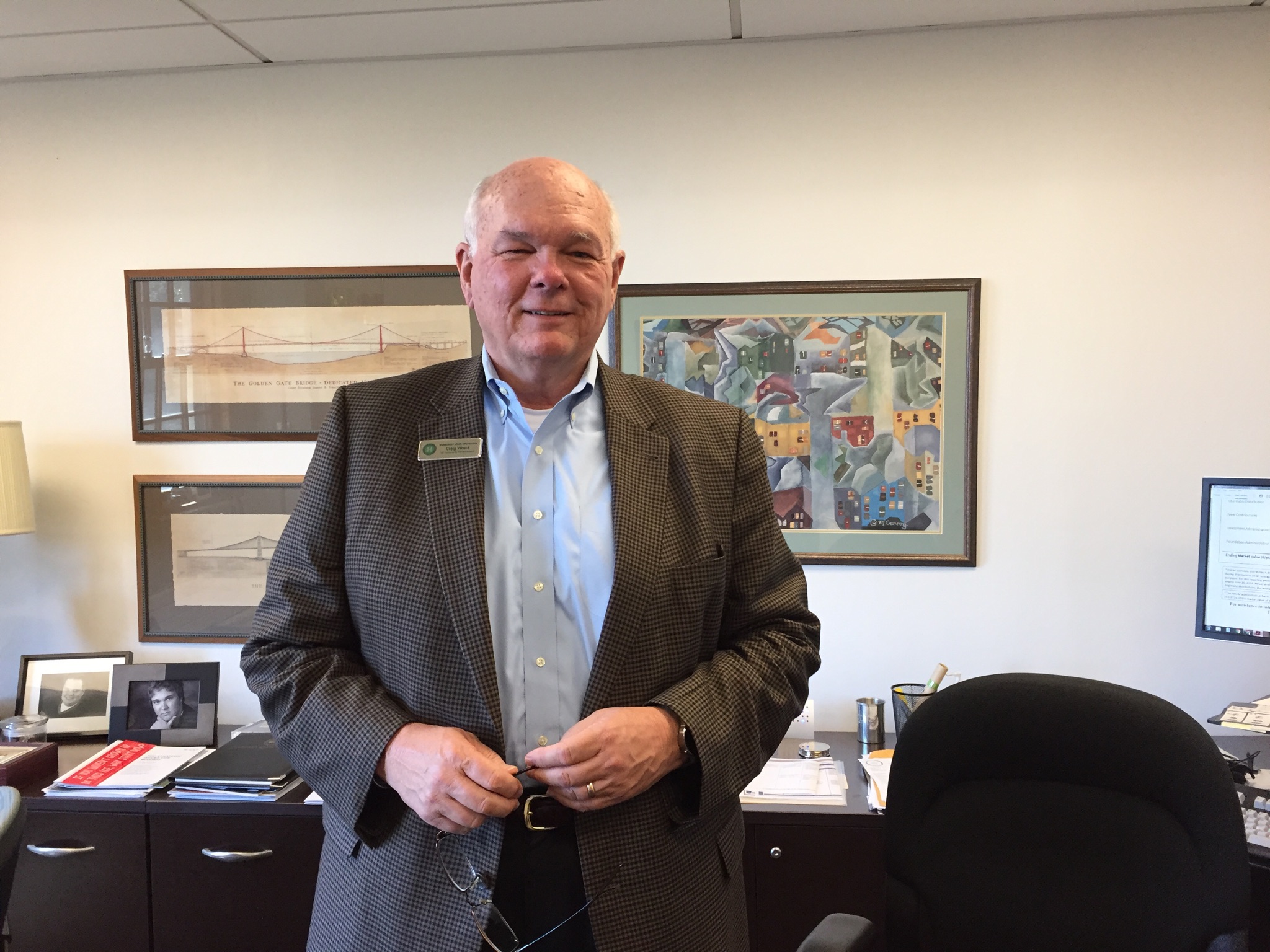
    In the spring of 2013, a group of Humboldt State students approached Craig Wruck, the Vice President of the HSU Advancement Foundation, to discuss eliminating the university’s investments within the fossil fuel industry and other concerning sectors.

    “Four years ago, the students came to us, and it was during the whole run up to the fossil fuels divestment movement,” said Craig Wruck. “Humboldt State has been very good about socially responsible investing since the foundation was reconstituted, so we never had separate investments and we had never owned separate stocks. It would have been easy for us to say, ‘Good news, we’ve already divested, we don’t own any Texaco stock, because that was literally true.”

    Yes, HSU was not directly invested in fossil fuels. However, indirect mutual funds held ties to the fossil fuel industry. This is what the students wanted to change.

    “Our endowments as of the end of last year totaled about 30 to 31 million, and those are contributions over the last thirty years or so. They are then invested, and they are invested in what are called institutional funds, but are actually mutual funds. That’s not unusual for an endowment of our size. We just aren’t big enough to pick individual stocks, we get better diversification and lower costs if we invest in these institutional funds.”

    Sorting through the details of the institutional funds was not an easy decision at first.

    “It was a real risk for the foundation board, because they’re programed to get the best return they can,” said Wruck.

    It took over a year to compromise and for the board to begin the process of divesting from the mutual fund investments that had ties to fossil fuels. The Advancement Foundation and the students worked to find the best compromise environmentally and financially.

    “It’s an interesting argument. Whether the best way to force change in the corporate world, in terms of utilities and energy production, is to stop investing in it,” said HSU President Lisa Rossbacher.

    Rossbacher was also a member of the Foundation board, and debated the next step in divesting from fossil fuels.

    “Do we stay invested and use the fact that we are shareholders to argue from within, or do we make an even more dramatic statement and divest,” said Rossbacher. “We are in the process of divesting.

    The board decided, at the encouragement of the students, to look into the indirect mutual funds and their ties to fossil fuels.

    “We, [the Advancement Foundation] decided to take on the more complicated work of looking into the investments that the mutual funds own and trying to figure out how to green those up,” said Wruck. “Nobody had done that before.”

    According to an article written by Annette J. Penny, a HSU grad and one of the students who originally approached the foundation about divesting, they were finally able to agree on the next steps towards divesting in late 2014:

    1. “To create a new SEROP fund in which donors can rest assured knowing their donation is being invested only in portfolios that align with their own personal Environmental and Social Governance Criteria views.
    2. To move 10% of the existing $26 million portfolio (so $2.6 million) within 12 months of SEROP fund implementation into funds guaranteed to not have holdings in any of our concerning sectors. (HSU’s definition of “concerning sectors” was expanded to include all energy and utility stocks rather than just fossil fuels in order to steer clear of any unintentional fossil fuel investments. Under this definition, 7.5% of HSU’s portfolio is invested in concerning sectors.)
    3. To create a SEROP Investment Challenge which involved massive fundraising for increasing divestment capacity. For every $500,000 that is raised into the SEROP fund, another 10% will be moved. And once we’ve raised $5 million, HSU may be able to go completely Fossil Free!”

    From there, things began to move faster and the Humboldt State Investment pledge was created. Below are the ten agreements stated in the pledge, provided by the 2014 press release on the HSU Investment pledge:

    The Humboldt State University Advancement Foundation will:

    1. Define Socially or Environmentally Concerning Sectors (“Concerning Sectors”) in a broad, bold way so as to include:

    • Energy – extraction, distribution, refining and marketing (i.e. Oil, natural gas, coal and related/supporting industries);
    • Utilities – electricity generation (i.e. Utilities utilizing carbon-based fuels);
    • Aerospace/Defense, Alcohol, Tobacco, Gaming and Casino industries. Revisit definition and revise as appropriate over time.

    2. Continue to abstain from any direct investment in Concerning Sectors.

    3. Monitor and report on the value of indirect investments in Concerning Sectors.

    4. Make reasonable attempts to reduce the size of indirect investments in Concerning Sectors, provided any divestments are consistent with the Foundation’s fiduciary requirements.

    5. Define Socially or Environmentally Responsible (“SER”) organizations, projects or assets initially as ones which are environmentally friendly (i.e. reduce the levels of atmospheric C02) or improve the health and well-being of our community members. Revisit definition and revise as appropriate over time.

    6. Actively seek offsetting investment opportunities in SER organizations, projects or assets.

    7. Invest directly in SER organizations, projects or assets provided that:

    • Investments meet the Foundation’s fiduciary requirements and policies.
    • Investments support the stated HSU mission, vision and values.

    8. Monitor and report on the value of direct investments in SER assets and active investments in SER organizations or projects.

    9. Monitor and report on the value of obvious indirect investments in SER organizations, projects or assets.

    10. Create a SEROP Fund (with appropriate policies) and actively seek donations of funds and assets that could be used to support Humboldt’s SEROP Pledge.

    Since the Humboldt Investment pledge was created, HSU has taken actions to be more sustainable and environmentally responsible.

    “The Humboldt Investment pledge does a couple things,” said Wruck. “We define socially concerning sectors much more broadly than anyone else. So we have always tried to minimize our investments in alcohol, tobacco, firearms, gaming, that sort of thing. We decided to add the entire energy sector and the entire utilities sector.”

    Eliminating investments in both the energy and utility sectors was a huge step for the university.

    “As we debated it we realized, ‘What’s the point of divesting in fossil fuels if you still own utility stocks that have power plants that burn coal,’” said Wruck. “So we decided to just eliminate both of those sectors. That has an impact on investment return, although we are three years in now and our investment return is as good as it’s ever been.

    Deciding to divest from the energy and utilities sectors was not the easiest decision, but it was the next step in the university’s commitment to environmental accountability.

    “A lot of schools have said, ‘Well you know, we’d love to step away from investing in petroleum and other fossil fuels, but we’re worried about what the impact of that would have on our endowment holdings,” said Rossbacher. “Our job is to increase those resources, that then can help the university. We divested and [still] have a really strong return on investment.”

    The endowments the university receives funds numerous programs on campus, in addition to providing individual scholarship funds to students.

    “Endowments are created by donors who give us money, and their direction to us is that we are to invest it and distribute the investment profits, but try to maintain it as a permanent fund,” said Craig Wruck. “So we try to maintain a little bit for inflation each year and then make distributions off of that.”

    There was the possibility of having a much weaker investment return after divesting.

    “They (financial advisors to the foundation) advised us that we would probably suffer about a 10th of a percent loss because we were going to pay attention to these sectors,” said Wruck. “It didn’t work that way, we have had our second best year ever as of June 30th.”

    Since this process began in 2013, the foundation has made significant progress in divesting from concerning sectors.

    “The portfolio itself is totally divested, the equity portfolio has totally divested about a fifth of it. It’s a balance, you don’t get as good investment return if you exclude utilities and energy, so we want to protect the investment return and continue to green up the portfolio.”

    Another main focus for Wruck and the Advancement Foundation is to invest more in environmentally sustainable practices and programs.

    “About a year ago the board members decided to raise money for what they called a ‘Go Green fund,’ to support students working on projects that contribute to a sustainable environment, and they just met their goals,” said Rossbacher.
    During the first few weeks of the semester, the Go Green fund’s reached its goal, and the fund was considered successful enough to continue.

    “We are just this year launching the Go Green interns,” said Wruck. “That’s money that the foundation raised, it’s a little over $100,000, and it’s being used to employ students to do sustainability work on campus.”

    The Climate Action Plan was also fully completed last year, planning out the next steps to create a more sustainable campus. A group of students have been chosen to work on the project alongside the newly formed campus-wide Sustainability Committee.

    “Working through the Office of Sustainability, [the students] are getting paid for their work and their job is to implement the campus’s sustainability plan, [also known as the Climate Action Plan,]” said Wruck.

    Students took the initiative, first bringing the question of divesting to the foundation in 2013. Since then, numerous actions have been taken to carry out the ideas originally

    “We wouldn’t have done this if the students hadn’t brought it to our attention. We were doing good, we were doing socially responsible investing the right way, but we wouldn’t have taken this extra step had the students not encouraged us to do that,” said Wruck.

    Students are the ones who prompted this change, and they did so simply because they cared about the environment and the university. In the article Annette J. Penny released back in 2014, she explains why she needed to fight to divest.

    “So why did I push so hard,” wrote Penny. “Because prioritizing the people and planet over profits is always the right thing to do. Because “Green Funds” are up and coming, allowing for quick growth in fund diversity. And because I can’t stand the thought of one day telling my daughter that I didn’t do everything I could to keep the planet healthy and alive for her to enjoy like we are lucky enough to do today.”

    She was right to push. Since the issue was first discussed we have begun the process of divesting, the Climate Action Plan was created, the Sustainability Committee was formed, and the target for the Go Green Fund was met.

    “We can do both, we can support the green efforts that are so aligned with the values of this institution and still increase the rate of return on our investments,” said Rossbacher.