Ask Evergreen is an advice column by the students of The Lumberjack
It all started with a couple blank posters taped in bathroom stalls. With this advice column as Ask Evergreen I’ve been able to connect with students in a surprising way. I’ve learned their worries and hopes and struggled alongside them as I sought the best advice to respond to each inquiry.
Giving advice isn’t easy. It’s a constant back-and-forth of weighing the options and outcomes. The best advice is that which comes from honesty and reality—that’s the advice that sinks in the most. Things won’t always turn out alright or in your favor, but knowing how to pivot and adapt will allow for opportunities of growth and understanding.
I hope what I’ve had to say has impacted readers, even if I’m not qualified to give advice—no one really is. Only you have the power to tell yourself what to do, I can only wish for the best result with my guiding words.
Each week’s questions taught me more about myself than I would’ve expected. Each question offered me a chance to step into someone else’s shoes and feel the situation they were in.
At times it was difficult to come up with something meaningful to say. Some questions left me stumped for advice. Although other questions were easier to answer than others, each was a learning experience.
No matter how trivial or serious a question was—whether it was a question about fixing a relationship after finding a secret Instagram account, or how to set boundaries with a sexually harassing housemate—I’ve learned the best way to set someone on a clearer path isn’t through belittling or dismissal it’s through consideration and caution.
Sometimes it’s best to have advice come from someone completely not involved in your life, and I’ve been grateful to have this opportunity to lend my thoughts to others.
The U.S. healthcare system isn’t built to handle a pandemic because it’s not built to help everyone
A 17-year-old boy from Lancaster, California died in March due to COVID-19 complications. After having serious respiratory problems the boy went to an urgent care facility. The facility denied care due to lack of insurance. While en route to the closest public hospital, the boy went into cardiac arrest and died hours later.
After the boy passed, doctors confirmed he had COVID-19.
The tragic death of this 17-year-old boy shows the obvious divide and unfair treatment within the U.S. healthcare system. If the boy had been insured or affluent enough to pay upfront for whatever treatment he needed, he would have received care and possibly still be alive.
There are 6,146 hospitals in the United States. Some are community owned, some are owned by the state or government, and some are privately owned.
There is a distinct separation in our healthcare system, but it’s not just about where hospital funding comes from and goes. Hospitals also differ when it comes to if patients actually receive healthcare.
In 1986 Congress passed the Emergency Medical and Treatment Labor Act, which restricts all hospitals from denying care to patients based on a lack of insurance or ability to pay. But this hasn’t stopped privately owned hospitals from denying care to uninsured patients. In a pandemic, this can have deadly consequences.
“We cannot and will not close our eyes to the economic consequences of this crisis.”
Netherlands Prime Minister Mark Rutte
Universal healthcare works to prevent these situations. The Netherlands has universal healthcare and is taking a completely different approach to dealing with COVID-19.
March 16, Netherlands Prime Minister Mark Rutte made an address to the nation.
“The reality is that in the near future a large part of the Dutch population will be infected with the virus,” he said.
He went on to introduce a concept called group immunity.
“Those who have had the virus are usually immune afterwards,” he said. “Just like in the old days with measles. The larger the group that is immune, the less chance that the virus will jump to vulnerable elderly people and people with poor health. With group immunity you build, as it were, a protective wall around them.”
This is similar to what United Kingdom Chief Science Adviser Sir Patrick Vallance calls herd immunity. Herd immunity is the idea of letting the population be exposed and eventually become immune.
Although the Netherlands has closed some facilities like schools and restaurants, that might not be the case for long. Rutte believes a lockdown will not stop COVID-19. He also has much more confidence in the Netherlands’ hospitals and healthcare system than the U.S. has in its own systems.
“We build immunity and ensure that the healthcare system can handle it,” Rutte said. “With the aim that nursing homes, in-home care, hospitals and especially intensive care units are not overloaded. So that there is always sufficient capacity to help the people who are most vulnerable.”
“We cannot and will not close our eyes to the economic consequences of this crisis,” Rutte said near the end of his speech.
Rutte is obviously concerned with the economy of his nation, but he also seems relatively confident that the Netherlands healthcare system could support their entire population if infected by the virus. It’s important to note, the Netherlands pays for their universal healthcare services through taxes as well as a monthly premium payed by individuals.
This is very different from the current situation in the U.S. By all accounts, our healthcare system couldn’t handle the whole population getting infected by the coronavirus. Hence the need to flatten the curve.
Even with social distancing rules in place, cities like New York are struggling to find personal protective equipment or have enough intensive care unit beds for infected patients. Whether or not herd immunity is an effective or morally acceptable approach, the U.S. healthcare system isn’t built to handle it because it’s not built to help everyone.
Giovanni Guerrero makes his case for the Associated Students presidency
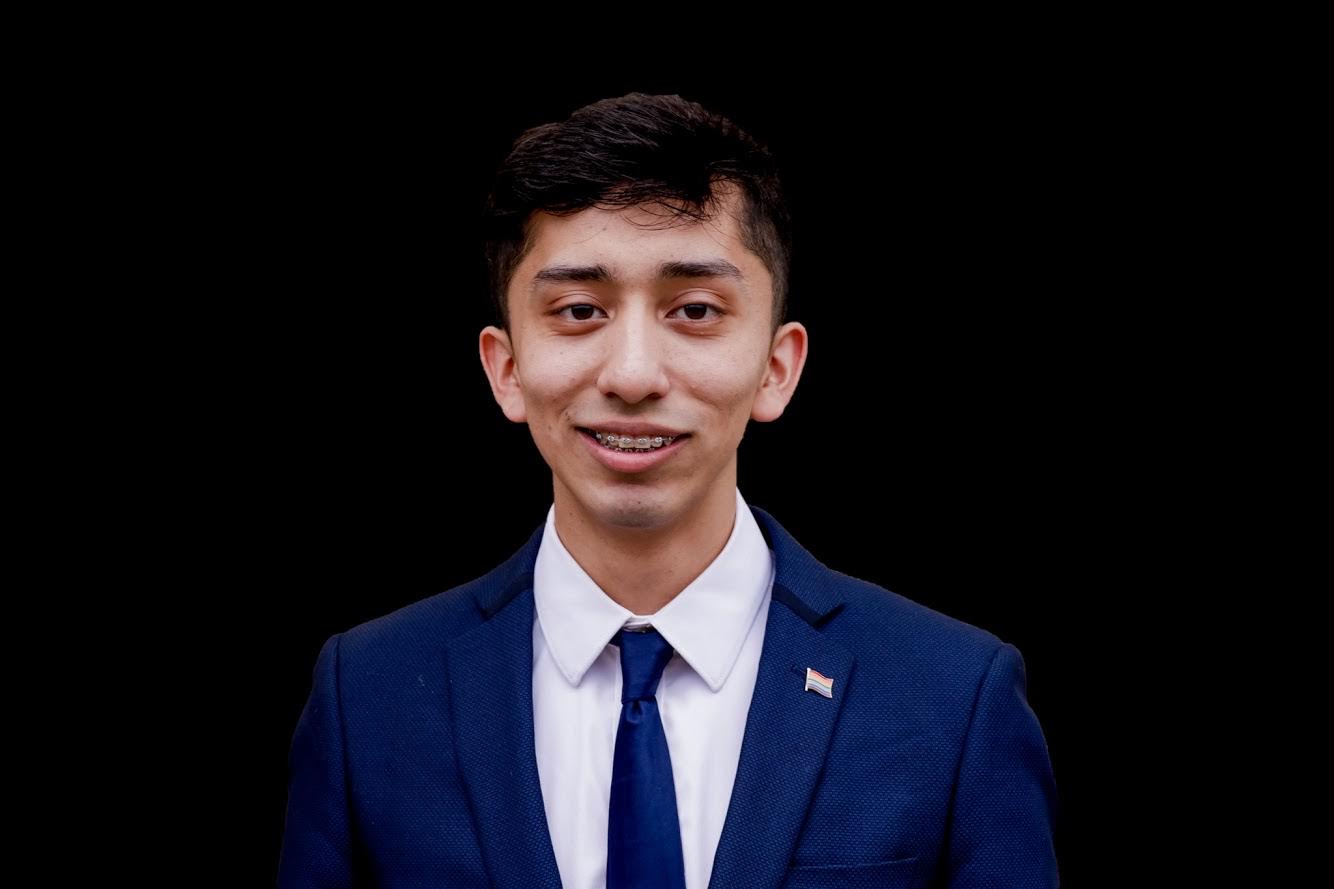
Born and raised in southern California, Giovanni Guerrero is an openly gay, first-generation Latinx student. Coming to the end of his junior year, this is Guerrero’s first time running for a position with Associated Students, and he’s aiming straight for the top—the presidency.
While Guerrero lacks a background with AS, he might make up for with a background working with the Federal Government. Last summer, he attended an internship with the Bureau of Land Management Eastern States division in Washington D.C. The division is an office of the BLM, a branch of the Department of the Interior. He spent time working with fellow interns in a geospatial segment of the Eastern States division—work that involved collaborating on several projects simultaneously.
As an environmental science major, Guerrero brings preservation into the discussion as the foundation of his platform.
“We have resources on this campus that help those students. And I think it’s very essential that we prioritize those resources and make sure that those resources aren’t seeing drastic reductions.”
Giovanni Guerrero
“We have some terrific resources on this campus, but over the next two years we’re gonna be facing $20 million in budget reductions, and that’s a big, scary number,” Guerrero said. “Those reductions will probably come in the form of student interests. So, it’s very important that we recognize the challenges that we’re gonna face, and we’re very vocal about it so that we can protect important resources.”
Humboldt State University is home to many students in need, including those facing housing and food insecurities, as well as mental health issues.
“We have resources on this campus that help those students,” Guerrero said. “And I think it’s very essential that we prioritize those resources and make sure that those resources aren’t seeing drastic reductions.”
Guerrero advocates for more energy to be spent on the promotion of these resources. One idea is to feature a ‘program of the week’ on the HSU homepage because the current navigation system does little to support them.
“I really wanna focus on promoting what Humboldt State has to offer,” Guerrero said. “Because our resources can’t serve the students that they’re meant to serve if they don’t know they exist.”
“I think he would be a great leader because he understands the complexities in debates, that sometimes we have to find productive ways to maintain arguments we can’t end, and because he is so eager to make HSU a better place for students who feel left out.”
Aaron Donaldson, debate team coach
As the only upcoming senior running for the position, Guerrero has the most respective experience on the HSU campus and the challenges faced by its students.
“I’ve been very fortunate to experience different areas around campus,” Guerrero said. “It’s really opened up my perception to how diligently students are working.”
As well as working for Recreation Sports on campus, Guerrero also worked at the J. He’s also involved in several student clubs including the running, climbing and debate clubs.
Aaron Donaldson, coach of the debate team, praised Guerrero as a genuine, sympathetic listener.
“I would describe Gio as thoughtful, careful as an advocate and a good student,” Donaldson said. “I think he would be a great leader because he understands the complexities in debates, that sometimes we have to find productive ways to maintain arguments we can’t end, and because he is so eager to make HSU a better place for students who feel left out.”
If elected president, Guerrero intends to improve HSU’s social media. That way students interested in attending the university will know what the campus has to offer. He advocated that all students take advantage of the opportunities at hand, especially clubs.
“His ability to anticipate, plan for and respond to issues in dynamic and creative ways makes him an asset to any group or team he chooses to be a part of.”
Katherine Earle, Recreation Sports
“Clubs have really helped me to connect with other people, and I think they’re really essential to building community on campus,” Guerrero said. “That leads to retention as well. If you feel connected to your campus and where you live and where you study, then you’re more likely to stay.”
One of Guerrero’s bosses at Recreation Sports, Katherine Earle, spoke highly of his performance.
“Gio has already proven himself to be an effective leader while working for Rec Sports at HSU,” Earle said. “His ability to anticipate, plan for and respond to issues in dynamic and creative ways makes him an asset to any group or team he chooses to be a part of.”
Another priority for Guerrero, as president, would be to ensure the security of student jobs.
“A lot of students depend on those jobs and I think the more opportunities we have on campus, the more attraction we will get at HSU, and more retention,” Guerrero said.
One of the biggest short-comings of AS, according to Guerrero, is active student engagement.
“You could probably go up to any student on this campus and ask them, ‘Do you know what an Associated Student does or who they are?’ And they’ll probably tell you ‘No, I have no idea.’”
Guerrero wants to create avenues to engage with the student body and inform them on what’s going on at an administrative level and within AS.
Guerrero said this will help prioritize what students want from AS. If he wins, Guerrero is aware he has his work cut out for him, and he said he’s up for the task.
“I’ve faced a lot of different barriers and a lot of different challenges, and just in general, it’s really helped me to be a resilient person,” Guerrero said. “And I think that’s the key to success. Cause you’re gonna face a lot of obstacles throughout life, and have to learn how to handle those obstacles.”
Associated Students Legislative Vice President Jeremiah Finley runs for the presidency
Former Vice President of Student Affairs and current Associated Students Legislative Vice President Jeremiah Finely has placed his hat in the race for the 2020-2021 AS presidency.
Majoring in political science, Finley’s passion for politics can be traced to the last presidential election.
“When I watched the 2016 race, I think something just awoke within me,” Finley said. “It got nasty, it got dirty, and that’s something that I don’t want to see happen ever again.”
“When he walked into our first meeting, I knew he was going to be a great leader then.”
Jourdan Lamar, Resident Hall Association president
A sophomore in high school at the time, Finley didn’t put his passion into practice until arriving at Humboldt State University. In his first semester, Finley became president of the Cypress Hill Council after attending the info session and receiving encouragement from the council to run. Current Residence Hall Association President Jourdan Lamar first met Finley when he joined the council.
“When he walked into our first meeting, I knew he was going to be a great leader then,” Lamar said. “He was advocating, asking questions, joining other organizations to learn more about HSU. Since then, I have had the opportunity to work alongside him in many organizations on campus, seeing him become a great student leader.”
From day one, despite the threat of consequences, Finley said he’s made it his number one priority to place students’ interests first.
“Due to this I have been penalized a lot, in various different ways,” Finley said. “Whether it be not getting the votes I needed to pass certain legislation, or not receiving the same type of social treatment. Ultimately, I bet on the students consistently. I think that all my students are worth it.”
Jeremiah is a super bright and motivated student leader, both in AS as the legislative VP and housing as an RA. On multiple occasions, he has combined those roles by educating his residents about current issues on campus as well as bringing his residents to campus events.”
Jenessa Lund, executive director of Associated Students
Finley began making regular visits to the AS office in his first semester on campus, familiarizing himself with the organization. He attempted to apply for the position of social justice and equity officer, but was turned down due to lack of a college GPA. He returned the following semester and was appointed to the position of student affairs VP in February of 2019.
Executive Director of AS Jenessa Lund has worked closely with Finley since he became a part of the board.
“Jeremiah is a super bright and motivated student leader, both in AS as the legislative VP and housing as an RA,” Lund said. “On multiple occasions, he has combined those roles by educating his residents about current issues on campus as well as bringing his residents to campus events.”
Finley’s favorite thing about being part of AS is watching students engage with one another and the various programs on campus.
“When I get the chance to see how my advocacy helped them along the way, those moments are my favorite moments,” Finley said. “I get to interact with folks, I get to hear about their passions, what they’re excited about, what they’re doing.”
“It’s been tough. It’s been really hard trying to navigate that, especially as a person of color in this predominantly white institution. It’s really difficult to make sure I can still be myself, but at the same time, be professional.”
Jeremiah Finley
Beyond the rewarding big-picture projects, Finley finds plenty to be proud of in his daily routine.
“My day-to-day experience is something special,” Finley said. “It’s always fast-paced, there’s always something new going on—so you have to really adapt quickly to the changing scenarios. One thing you hear in the morning could be totally different from what you hear in the afternoon. And it’s been tough. It’s been really hard trying to navigate that, especially as a person of color in this predominantly white institution. It’s really difficult to make sure I can still be myself, but at the same time, be professional.”
Despite everything HSU has to offer, including various programs and resources, a sense of community on campus and the attention paid to student voices, Finley sees endless room for improvement.
“I don’t think anything should really stay the same, and I mean that,” Finley said. “There’s just too much complacency and I think there’s a lot that needs to change.”
Finley intends to place more emphasis on incorporating student engagement within AS.
“Yeah, we have the AS board of directors, but that’s really geared towards AS and what AS wants to do,” Finley said. “But I feel like we don’t have a place where all students can come together to talk about what we all want to do and want to see happen. So, if we can make a central hub where we can talk and just listen to each other and hear what we want to do as a collective, then I think we can truly start generating some great ideas to change the way this campus runs.”
Finley said he understands the struggles college students face, whether it’s coming up with enough money to pay bills or buy groceries, providing for your family or setting aside time for schoolwork.
“But ultimately you just gotta keep going, you gotta keep fighting. And so I’ll keep fighting, I’ll keep going and I’ll keep being persistent, that way I can make sure I can advocate for students.”
Jeremiah Finley
“It’s just this balancing act and I think there’s a lot of things that can be easier for students, things that I currently have no direct control over,” Finley said. “So, if I can put myself in that position to really help, then that’s what I want to do.”
As legislative VP, Finley referred to his magnum opus, his great work, as the AS Constitution, Codes and Policies. He put together a full constitution revision packet over the course of the 2019-2020 school year, including new bylaws and revisions for out-of-date codes and policies. Presented to the board back in February, the revision wasn’t passed.
“It hurt,” Finley said. “It really did hurt when the board decided not to think carefully or listen carefully to what I was saying. I think from that moment I knew that if I wanted to bring the change that I want to see in HSU, and I think that we all deserve here, then I can’t continue in this role.”
Finley said he’s not only prepared, but is determined to take on bigger challenges and face greater consequences in the name of improving the lives of students.
“Some days are good, some days are better than others,” Finley said. “But ultimately you just gotta keep going, you gotta keep fighting. And so I’ll keep fighting, I’ll keep going and I’ll keep being persistent, that way I can make sure I can advocate for students. And come election time, I have faith that I’ll be elected for AS president for the next academic year.”
Quarantine shelter-in-place offers escape for some and anxiety for others—both are damaging
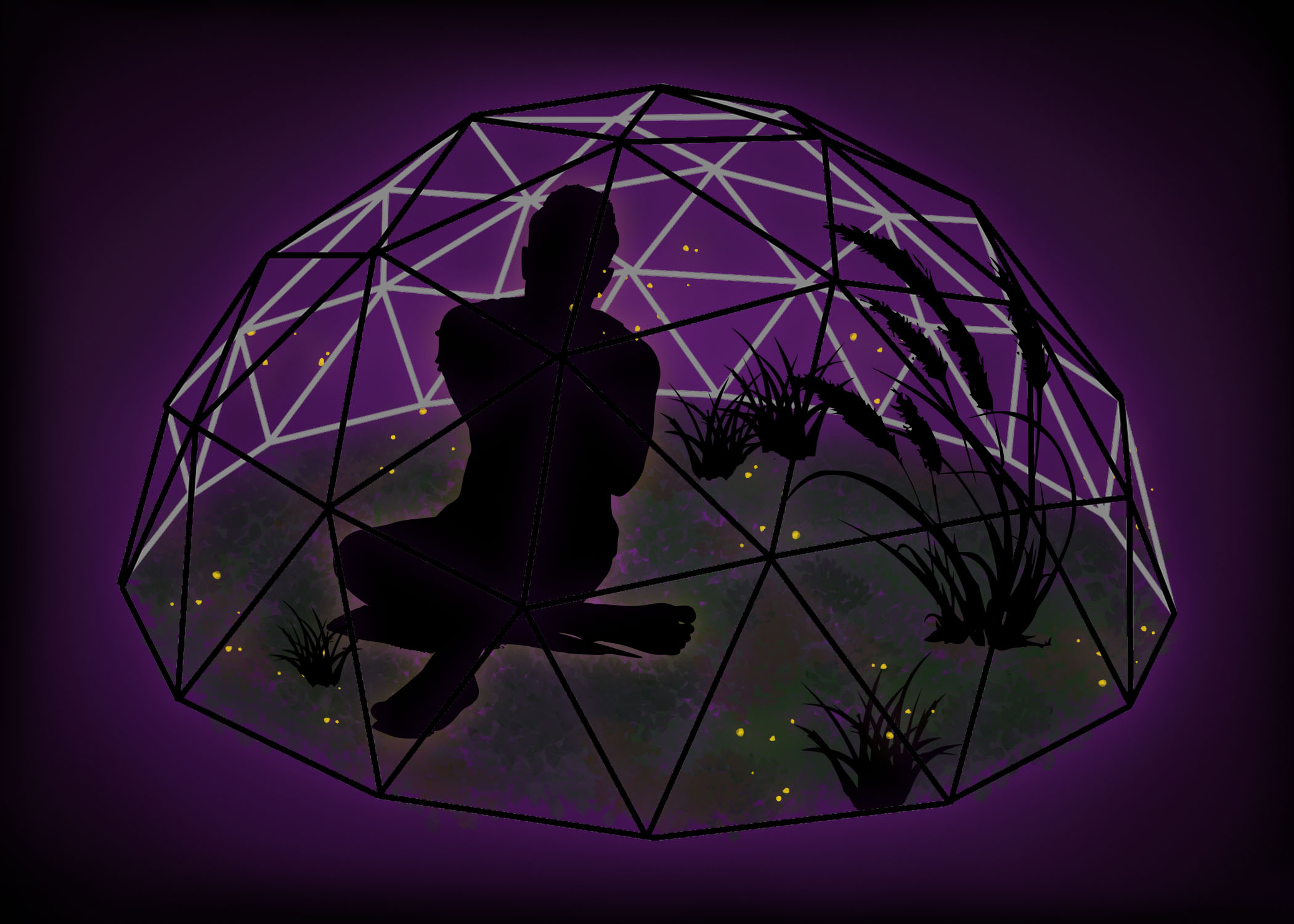
Inhale, pause, exhale. We are living through an unprecedented, intimidating and stressful time, but now is not the time to beat yourself up.
While the world seems at a standstill, many people have taken this time away from their normal daily duties to start new hobbies, lose weight or even learn new languages. These tasks and goals are not a reflection of yourself, nor should they be used to show off your journey through social distancing.
The same, and worse, can be said in regard to many other social media platforms. For example, Instagram can be a mindless escape for some but a shame-inducing harbor for others.
There’s a constant creation of new challenges and trends coming up everyday, whether it’s the pushup challenge, #untiltomorrow or even celebrities singing tone deaf tunes. Or perhaps it’s a stream of self improvement posts and revitalized New Years goals.
Whatever is clouding your social media feed, it doesn’t have to be a standard for you to live up to. This isn’t a productivity competition.
Some of us might have more time on our hands, but that doesn’t make things easier—and some people still working or now taking care of children might not have more time. We are also still dealing with pre-existing mindsets on top of the stress of a viral global outbreak.
Don’t waste this time comparing yourself to someone who’s lost 10 pounds walking in circles in their driveway or to someone who’s learned how to speak Italian while in quarantine.
We need to have compassion for ourselves always, but especially now. The Centers for Disease Control and Prevention’s COVID-19 webpage provides a section for stress and coping information. This page offers insight to stress causes and outcomes all while underscoring the importance of knowing everyone deals with stress differently.
Thus, we escape to viral social media trends for entertainment and relief.
In a recent Vox article, writer Rebecca Jennings supports the flood of Instagram challenges. She argues people should continue this outpour of personal content because it offers connections that will stay in this ephemeral time.
However, instead of cluttering a platform with more dog picture reposts or pictures of people wearing pillows as clothing that only distract from the now, we should contribute to the conversation by being honest and doing something that honors yourself and others. Let your friends on social media know how you really feel—open up, cry, laugh and inspire. If you’re up for it, of course.
Don’t waste this time comparing yourself to someone who’s lost 10 pounds walking in circles in their driveway or to someone who’s learned how to speak Italian while in quarantine. Of course, if walking in circles in your driveway while rambling in broken Italian is your thing, go for it.
Being honest with others allows for accountability. If you continue to keep up a guise of happiness when you’re truly suffering inside, you won’t receive the help you deserve.
Speaking up about how you feel is a challenge more people should face. You don’t need to make immediate changes to improve, but you owe it to yourself to take the time you need.
Pretty flowers offer a punch packed with nutrition
Foraging for your own sustenance is both rewarding and enjoyable. With grocery store shelves low on most necessities like fruits and vegetables, you can still find satisfying snacks out in nature.
According to Encyclopedia Britannica, nasturtiums are a type of flowering herbaceous plant in the tropaeolaceae family. These green, circular-leaved and orange, red or yellow-petaled plants are edible flowers and foliage.
While nasturtiums may be hard to find in the wild as they’re native to Central and South America, they can easily grow in home gardens just about anywhere.
Early spring is the perfect time to start cultivating your own nasturtiums, and you can simply order seeds online to get started. Nasturtium seeds, when dry, look like tiny, brown walnut shells with wrinkled surfaces. When fresh, they are pale green and have a slightly smoother texture. Fresh seeds are edible as well and often pickled and used as caper substitutes.
A great way to prepare nasturtium for your first taste is in a salad with cucumbers, mandarin oranges and spinach with a light vinaigrette dressing.
Once fully grown and blossomed, the sprawling, vine-like nasturtium plant offers a bounty of vitamin C if consumed. Not only are these plants aesthetically pleasing, the amount of nutritional value packed into the entire nasturtium is astounding, as they contain vitamins B1, B2, B3, and magnesium, iron and calcium.
This plant has a peppery, mustard-like taste and can be used as an alternative to potent arugula leaves or mustard greens in salads. You can eat the whole plant, which is said to be similar to the taste of watercress.
A great way to prepare nasturtium for your first taste is in a salad with cucumbers, mandarin oranges and spinach with a light vinaigrette dressing. Or if you’re bold enough, try the leaves and petals on their own after a thorough rinse.
Beyond the beauty and nutrition of nasturtiums, this plant also offers antibiotic and antibacterial properties. These plants are by no means a way to cure colds, the flu or COVID-19, but can offer slight relief. Nevertheless, according to a study published in the Open Microbiology Journal, these plants were found to contain antimicrobial effects and can be safely used in the food industry as an antibacterial oil on foodborne bacteria.
So get your hands on some nasturtium seeds and get to planting. Soon you’ll have a garden full of the edible and nutritional plant.
20 years later and Resident Evil 3 still feels just as good
The Resident Evil franchise began as a survival horror video game that rose to fame in the 90s and has continued with a series of sequels and film adaptations. This is a brief, spoiler-free review about the recently released Resident Evil 3.
Twenty years ago, I embarked on one of my many video game binges. This included playing Resident Evil 3: Nemesis. It was the first time I learned about the anxiety of being chased by the video game’s antagonist, Nemesis. On April 3, I relived that experience, thanks to Capcom delivering on the Resident Evil 3 remake.
The plot of the video game features protagonist Jill Valentine, a returning character from the first game’s story line, which saw the Special Tactics and Rescue Service members trapped in a mansion fighting for survival against nightmarish creatures. In Resident Evil 3, the fight for survival takes place in the streets in the fictional Raccoon City.
In the remake, the game’s mechanics have changed slightly, giving you the ability to dodge more efficiently, as opposed to the original, in which you had to rely on frantic button-pressing and leaving it to chance. Another returning feature is the ability to craft ammunition, giving the player a fighting chance as increasing difficulty makes items more scarce.
With Valentine and Nemesis as the main features of the game, it did radiate the nostalgic feeling I had when I first played 20 years ago.
Although the game was a perfectly rendered remake, I do have some complaints that affected my nostalgia. Let me start off with the main concept, which is encountering Nemesis. In the original game, you had to fight your way through the city, and upon arriving at the police station, you had to fight for your life.
In the remake, that suspense is taken away when you encounter Nemesis at the start of the game. Adding on to that complaint is the use of cut scenes in which Jill Valentine runs away from Nemesis. In the original it was solely up to you, the player, to control Valentine in hopes that you can fend off the creature.
Another grievance focuses on the locations in the game. The remake felt shorter than the original and that’s because the creators decided to cut down the time it took for the player to explore certain parts of the game. Originally it took hours of exploration to acquire items for progression through areas, but by taking that out, it felt more like a rushed experience.
Other than those issues, the game is worth trying out. With Valentine and Nemesis as the main features of the game, it did radiate the nostalgic feeling I had when I first played 20 years ago. Capcom really went above and beyond to deliver another quality product similar to their Resident Evil 2 remake which launched last January.
Whether you are a lifelong fan or new to the Resident Evil series, I assure you the recent remakes are worth the purchase, especially for the revamped story line.
How the body uses multiple levels of defense against foreign intruders
With the coronavirus craze going on right now, it may be nice to know our bodies are working hard to protect us.
When a foreign bacteria or a virus enters the body, it goes into full defensive mode. A complex relationship of cells evolved over hundreds of thousands of years, the human immune system is our reliable defense from sickness and death. The body has developed a battalion of guards, soldiers, intelligence, weapons factories and communication stations to defend us from attackers.
The Kurzgesagt – In a Nutshell YouTube channel published an easy-to-watch video on the immune system. They broke down the immune system’s jobs into 12 jobs including to communicate, kill enemies, cause inflammation, remember enemies and make strategic decisions.
There’s more to the process too. Russel Wheatley is a family practitioner at the HSU Student Health Center. Wheatley said that, even though he doesn’t study immunology, he has a working knowledge of the immune system. He referenced an immunologist colleague named Huang Bo for his explanation.
Wheatley said there are five levels of immunity, and all of these levels work together as a multi-faceted defense.
The first level is a physical barrier, the skin. He said the skin is bacteria and virus-proof. Between the skin and the mucous in your nose and mouth, combined with coughing and sneezing, the body is pretty good at fending off invaders.
If the skin is broken, then the immune system really starts working. When the skin is cut, nearby bacteria take advantage of the break and enter the blood stream, risking infection. First to the plate is the macrophage, a large, abundant cell.
“Most of the time, they alone can suffocate an attack because they can devour up to 100 intruders each,” Kurzegsagt says. “They swallow the intruder whole and trap it inside a membrane. Then the enemy gets broken down by enzymes and is killed.”
If the macrophage is overwhelmed, it begins to call for help from the garrison. Neutrophils are hype- aggressive, destructive cells that appear at the site of the battle to destroy any cell near the cut, including healthy ones. If this isn’t enough, the macrophage calls the dendritic cell to the battlefield.
“You have to rest the body when the immune system is trying to work.”
Russel Wheatley
The dendritic cell is the brains of the operation. When hailed by the macrophage, the dendritic cell starts to collect samples of the intruders and presents them on the outer membrane.
“Now, the dendritic cell makes a crucial decision,” Kurzgesagt says. “Should they call for anti-virus forces that eradicate infected body cells or an army of bacteria killers?”
If a virus has entered the body, Wheatley says a protein in the blood stream called a complement protein identifies the virus and destroys them. Eventually, after the body has torn apart the virus, white blood cells produce antibodies.
In the case of the coronavirus, it’s a little more sinister. The virus tries to hide itself from the immune system by burying itself in lung cells. In a video about the virus, Kurzegesagt says the virus attaches itself to a specific receptor on lung cells and inserts a new DNA command: copy and reassemble. It fills up with more and more cells until it’s full, and then the cell receives a final order: self-destruct.
“At this point, the virus hasn’t done too much damage,” Kurzgesagt says. “After millions of body cells have been infected and billions of viruses swarm the lungs, the virus releases a real beast on you, your own immune system.”
While the immune system pours into the lungs, the virus infects them and confuses the system. The coronavirus causes immune cells to overreact and yell, “Bloody murder.” The immune system wastes a lot more resources than it should to fight the reaction, exhausting the body’s energy.
Wheatley encouraged anybody who is feeling sick to rest. He explained when a person wakes up, the body has a limited bowl of energy. Thinking, exercising and immune-responding all need that energy to do their thing, and expending energy can make the body less effective at fighting invaders.
“You have to rest the body when the immune system is trying to work,” Wheatley says. “Some people have different immune systems and some aren’t nearly as strong as others, especially to these viral type invaders. You have to rest. You have to give it the right kind of energy.”
Arcata High School’s computer science teacher creates community for video gamers
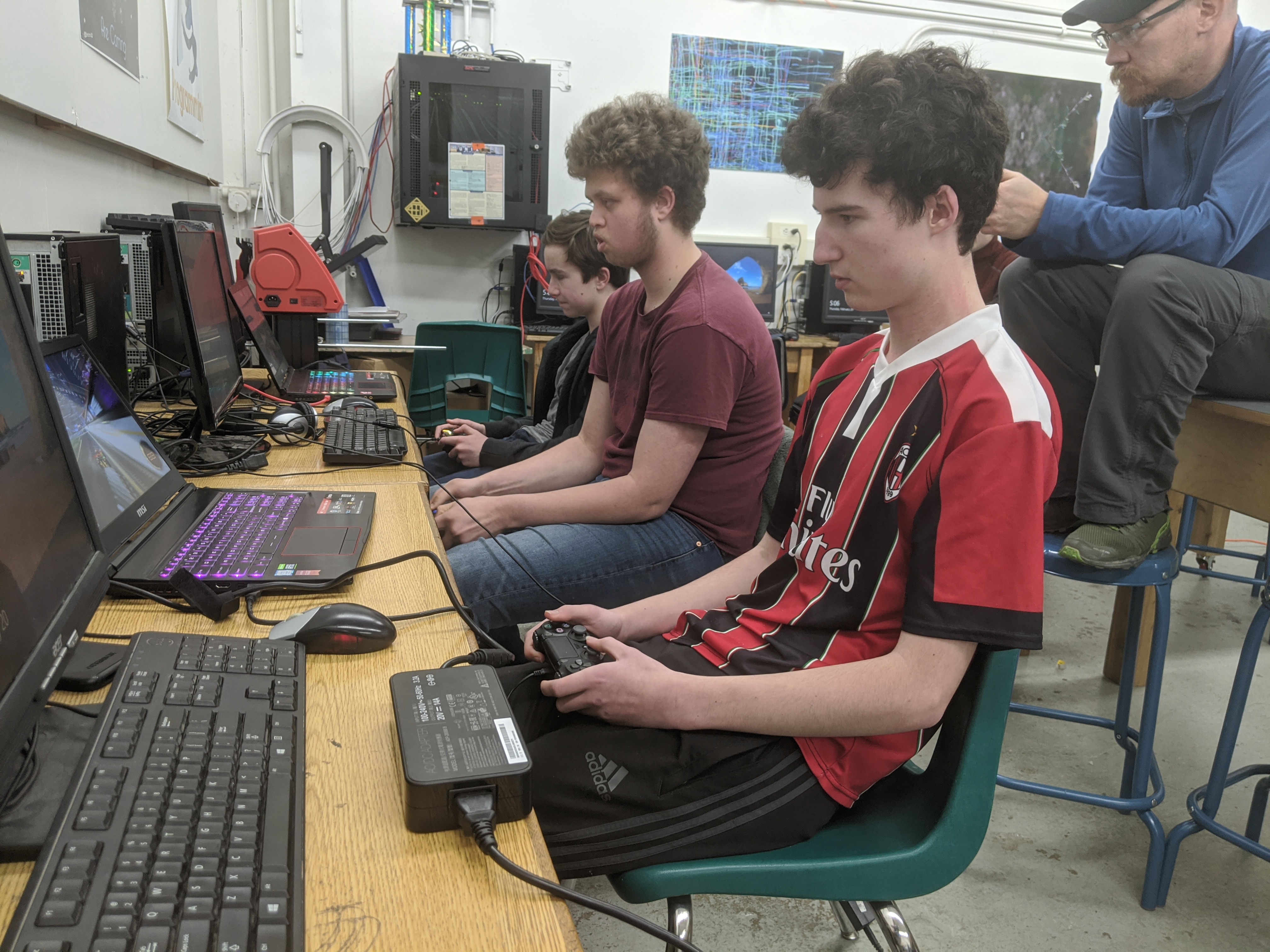
Jason Sidell is an Arcata High School teacher responsible for their Makers Program and esports team. The Makers Program is a curriculum written by Sidell, designed to engage computer skills, wood shop tools and various other equipment to make anything the students want to create.
This year Sidell coached the Arcata High School esports team that played their first season this spring. Fisher Boroughs is one of the team’s League of Legends players who just started playing the game this season.
“He [Sidell] doesn’t know much about League of Legends,” Boroughs said. “He knew as much as me, which is basically nothing when it started.”
Sidell says it’s a lot more like an organized sport than people would imagine. It has all of the same stakes of ranking, a team name, regular practices and all of your fellow gamers sitting right next to you.
“It’s been more intense than I thought it would be,” Sidell said.
Anthony Womack is a senior on the Rocket League team and is in his second year of the Makers class. He describes the Makers class as an incredibly open environment where Sidell encourages students to follow their own ideas as well as giving those less inspired something to begin with.
“You’re just making your own independent projects,” Womack said. “That’s pretty much the only assignment, just make something.”
He recalls building an electric guitar from scratch as being his most impressive project he’s completed in the class.
“I would spend every single lunch inside the class,” Womack said. “I wouldn’t even eat most of the time because I would just be busy working on stuff.”
Sidell graduated from Loyola University in Chicago with a degree in biology but wasn’t sure what direction to take it. On a whim, he took a vacation down to Baja with a childhood friend of his, but when he drove his friend up to Humboldt County, he never left.
“I love the Pacific Northwest and the environment up here,” Sidell said. “I just fell in love with it.”
Like many others moving to Humboldt, Sidell had trouble finding employment. He first landed a dish washing job at Golden Harvest Cafe, then found work through AmeriCorp for two years.
“I made a lot of connections in education that way,” Sidell said.
He would lead backpacking trips on the Lost Coast Trail and can remember the positive impact it had on the youth who had never left the Northern Humboldt metropolis of Arcata and Eureka. Sidell began work on his Master’s in education focusing on curriculum writing. At the same time he began part-time work at another non-profit run by Carol Newetts, called Tiffany’s Garden for Children.
“I remember one year I would teach in the morning at McKinleyville High, and then a class at Eureka High and then I’d end up at Fortuna High in the afternoon.”
The program he headed was called CyberTribe. It was set up as a youth-run computer business where teens would teach each other how to use certain programs including graphic design and fixing computers. They would take on paying jobs from the community like graphic design and web design work.
“It was 20 years ago, but I still remember all those kids’ names,” Sidell said. “It was a really empowering experience.”
Sidell taught a variety of programs to the youth at CyberTribe, but a program that could be used to make video games became very popular. After seeing the interest, Sidell told his boss that he thought that it could be taught as a high school course. His boss agreed and Sidell created a six week module for the video game development course that he began teaching across the county.
“I think I’ve taught at just about every high school in Northern Humboldt,” Sidell said. “I remember one year I would teach in the morning at McKinleyville High, and then a class at Eureka High and then I’d end up at Fortuna High in the afternoon.”
After 15 years of work all around the county, Sidell settled down at Arcata High School where he wrote the curriculum for the Makers program after finding a grant focused on encouraging STEM at the high school level. The funding he secured solidified his own place at Arcata High, assuming that interest remained.
“It was a great feeling,” Sidell said. “Especially because I had been struggling year-to-year to maintain my job.”
Sidell believes he was meant to be a teacher and is passionate about creating a space that welcomes and respects his students. He believes that the best way to positively impact the world and leave a good mark on it is through teaching.
“If you can teach someone an idea and give them skills,” Sidell said, “that knowledge and information can be passed on through history.”
COVID-19 rages through US as students struggle with online schoolwork
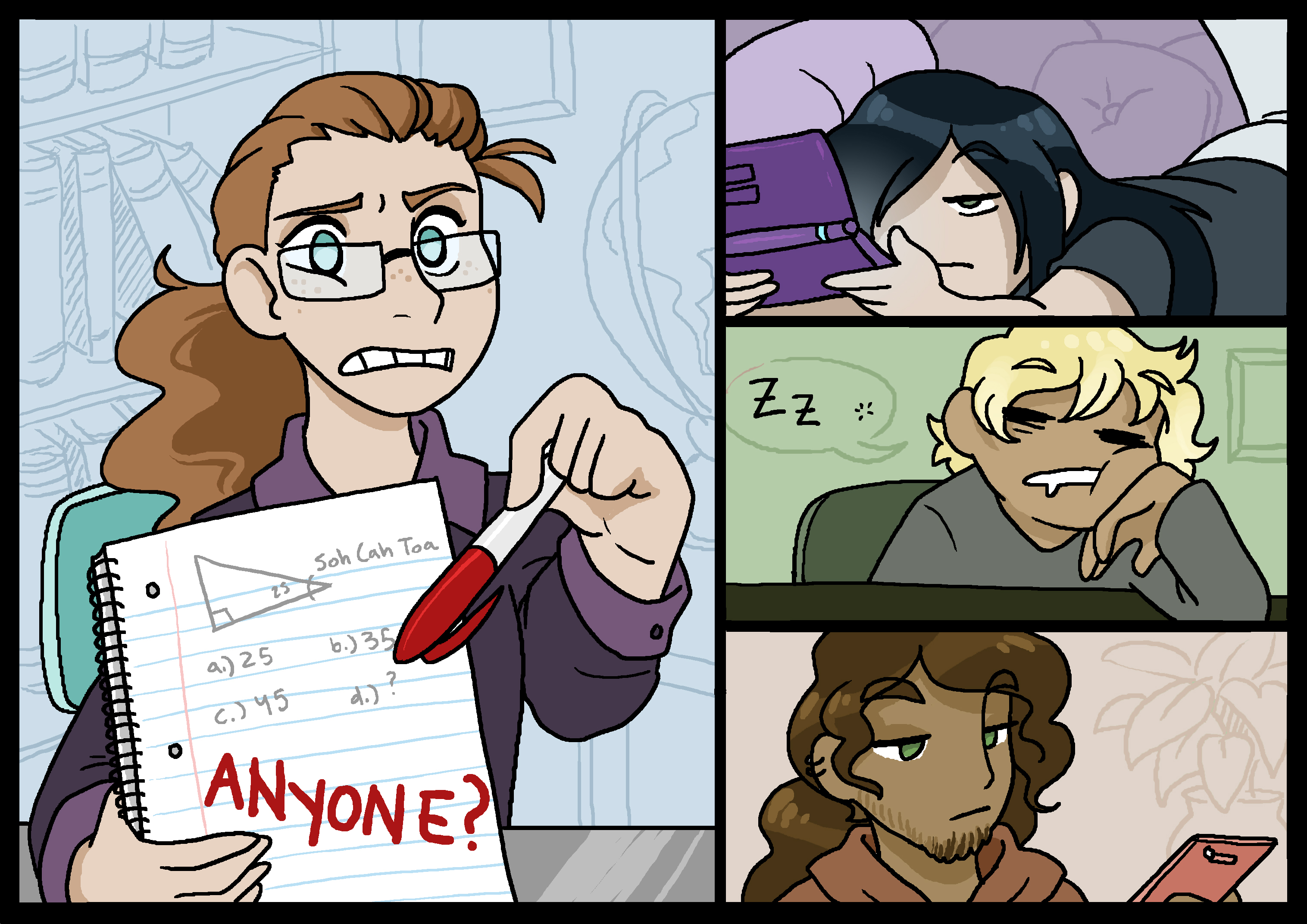
Humboldt State University transitioned to online instruction for the rest of the semester on March 26. Since then, some students have had a hard time staying focused and motivated in online classes.
Deana Lopez, a third-year zoology major at HSU, admitted that this hasn’t been an easy transition.
“I feel overwhelmed with the amount of emails professors and instructors are sending, and everything seems all over the place,” Lopez said. “I have been neglecting my school work so much that I forget that I still have classes. I’ve missed quizzes and assignments already because it’s so easy to forget that I have to do them without a professor reminding me.”
Third-year psychology major Madeline Baker said she was having a tough time staying motivated without face-to-face instruction.
“Not being able to have classes in person further discourages me,” Baker said. “Holding classes through Zoom has been easier for me in contrast to pre-recorded lectures, but they still aren’t the same. Not having that in-person connection alters the learning environment in a way that makes me feel disconnected from my overall learning experience.”
Not only are students dealing with the move from face-to-face instruction to online classes, but they also have to manage the stress of living in a pandemic. With many students moving back home, there’s added family stress as well.
Not only do I feel like my beginning of therapy has been interrupted, but the full college experience for this semester.”
Madeline Baker
Lopez was feeling pressure from school alongside tension from life in general.
“I know I can find the motivation, but everything is hectic at the moment,” Lopez said. “My grandma recently passed away so there was that on top of the COVID-19 situation, and a lot of family problems have occurred as well. I’m trying to get myself and my surroundings organized before I can actually put all of my focus into school.”
No matter how good a job professors are doing, online education doesn’t appear to be the same. For the students, it’s not just the classes they feel they’re missing out on, but the whole college experience.
Meanwhile, the state of the world may be taking a toll on student mental health.
“The resource I would like to use most right now is CAPS,” Baker said. “Before all of this happened, I finally decided to go in and begin appointments, something I feel like I’ve needed to do for a while now. I feel like that has now been interrupted for me. I had a private safe space provided to speak with someone and learn to cope with things. Given my current housing situation, I do not have a private enough space in which I would feel comfortable confiding in someone and work through my personal feelings and issues over the phone or video. Not only do I feel like my beginning of therapy has been interrupted, but the full college experience for this semester.”
Many students are also dissatisfied about paying full-price tuition for resources they won’t be able to access for the rest of the semester.
Kayla Rodenburg, a third-year English major, thinks the tuition price doesn’t add up with all classes now online.
“I do feel like the tuition price is too high for online classes,” Rodenburg said. “Online university is dirt cheap and we are paying CSU prices for that which is kinda ridiculous in my opinion. I’m pretty sure many parts of our tuition fund things on campus that we now don’t have access to, so I hope some type of refund happens, even though it’s kind of a stretch.”
Though the actual fatality rate is unknown, it is much higher than past pandemics such as H1N1 (swine flu). Even if it was low, a small percentage of the total global population is still a staggering amount of people.
Misconception: I don’t have symptoms like fever, cough or difficulty breathing, so I must not have it and I can’t spread it.
Misconception: If I wear a mask, I don’t have to practice social distancing.
Reality: Simple masks for people without symptoms and people not in high-risk groups are recommended by the Centers for Disease Control and Prevention more to protect others from you while in public. Since many cases are asymptomatic, it may help prevent people unaware of their own infection from spreading it. Masks are an additional measure, not a replacement measure. The CDC recommend social distancing along with a mask.
Misconception: There is a cure for COVID-19.
Reality: As of April 2020, there is no specific medicine or cure for COVID-19. Antibiotics are not effective against the viral illness, and there is no evidence of any effective home remedy. There are ongoing trials and possible vaccines being considered, so that may change soon.
Humboldt State issued a press release today notifying the campus community that it had finished its investigation into a faculty member soliciting students for sex. According to the release, HSU no longer employs the faculty member, but since no formal criminal charges have been filed, the University Police Department is not able to bring charges.
Read the full release below:
HSU Concludes Faculty Misconduct Investigation
Humboldt State University has concluded an administrative investigation into anonymous allegations of faculty misconduct, in which a faculty member was accused of soliciting students for paid sex.
Upon discovery of the allegation, the University took immediate steps to protect students from harm, and the employee subject to the investigation is no longer employed at Humboldt State. Because this is a personnel matter, the University is not able to provide details of the investigation or the outcome. However, the University is confident that it responded strongly and appropriately, and that it reached a resolution that ensures the safety and well-being of our students, faculty, and staff.
The University Police Department has also been investigating the incident for any potential criminal violations and charges. Because no formal criminal complaints have been filed, University Police is not able to bring criminal charges at this time. However, the University Police Department’s investigation remains open.
The University encourages anyone who may have been harmed to seek assistance through the following campus support services.
Counseling & Psychological Services (CAPS) provides a variety of support services. You may make an appointment by calling (707) 826-3236. If you are having a crisis, you may reach a CAPS therapist 24 hours a day at the same number (707) 826-3236.
The Campus Advocate Team (CAT) is an on-campus resource for students, staff, and faculty at HSU. CAT is a program of the North Coast Rape Crisis Team, a private nonprofit organization that has been contracted by HSU to provide specialized services to the HSU community. CAT provides 24-hour, confidential support to any HSU student, staff, or faculty who wants to talk about harm they’ve survived (sexual harassment, sexual assault, dating/domestic violence, stalking), or explore their options for support and/or holding accountable the person who harmed them. CAT can be reached at (707) 445-2881, 24 hours a day. On-campus appointments are available.
The Dean of Students Office can help students navigate the steps of any reporting process and provide support and advocacy while navigating a formal complaint, as well as helping students find resources on- and off-campus to best meet their needs. You can reach the office at (707) 826-3504.
Human Resources handles staff employment as well as Title IX matters and can be reached at (707) 826-3626. Academic Personnel Services handles employment and related responsibilities for faculty, and can be reached at (707) 826-5086.
The University also requests that anyone with information report it to one of the offices listed below. The Title IX Office helps students navigate accountability and accommodation for incidents of harm. The University Police Department, which operates from a trauma-informed perspective, assists with accountability and responds to reports of criminal activity.
Title IX Office, David Hickcox at office (707) 826-5177, cell (707) 296-4032, or david.hickcox@humboldt.edu.
Despite Humboldt State University going digital, campus housing remains open
Humboldt State University President Tom Jackson announced via email March 18 that the school would be going entirely online, and he encouraged students to vacate campus housing if possible.
“It is important we reduce the number of people on campus,” the email read. “We encourage students who can return to a home off-campus to do so. We will not displace students who are facing housing insecurities or homelessness.”
“They should have just made the choice before people left for spring break to keep it as safe as possible.”
Calista Tutkowski
Freshman Calista Tutkowski was among those who decided to move back home after learning that classes would transition online. Tutkowski considered her choice the right one for her own physical and mental wellbeing.
“It felt like things were just going to get worse and worse on campus and around the world, so if I was going to be doing online classes, I wanted to be home with my family,” Tutkowski said.
Tutkowski was frustrated with the sudden notice from the school. By the time the school sent out the notice that they were going online and encouraging students to leave the dorms, she had already gone home for spring break and was out of state. Like many other students, she had to return to campus to pick up her things, potentially putting herself and others at risk by traveling.
“They should have just made the choice before people left for spring break to keep it as safe as possible,” Tutkowski said.
Some students are still on campus. Emma Bradley-Solis is one of those who elected to remain in campus housing despite virus concerns.
“I live in Washington and it is a lot worse there,” Bradley-Solis said. “I thought it would be smarter for me to self-quarantine here.”
According to an April 7 Enrollment Management report, about 300 students remain on campus. Most of the campus facilities are closed, including the library, computer labs and University Center.
With the severely reduced numbers of students left behind, pickings are slim. There isn’t much variety left in the food selection, and many staples such as rice, pasta and fresh fruit are out when Bradley-Solis goes to the marketplace. For students who rely on J-points to eat, this is both a serious problem and a waste of the money spent on their meal plans.
“I feel like they could take care of the students still here better—like better food,” Bradley-Solis said. “We paid a lot of money for J-points.”
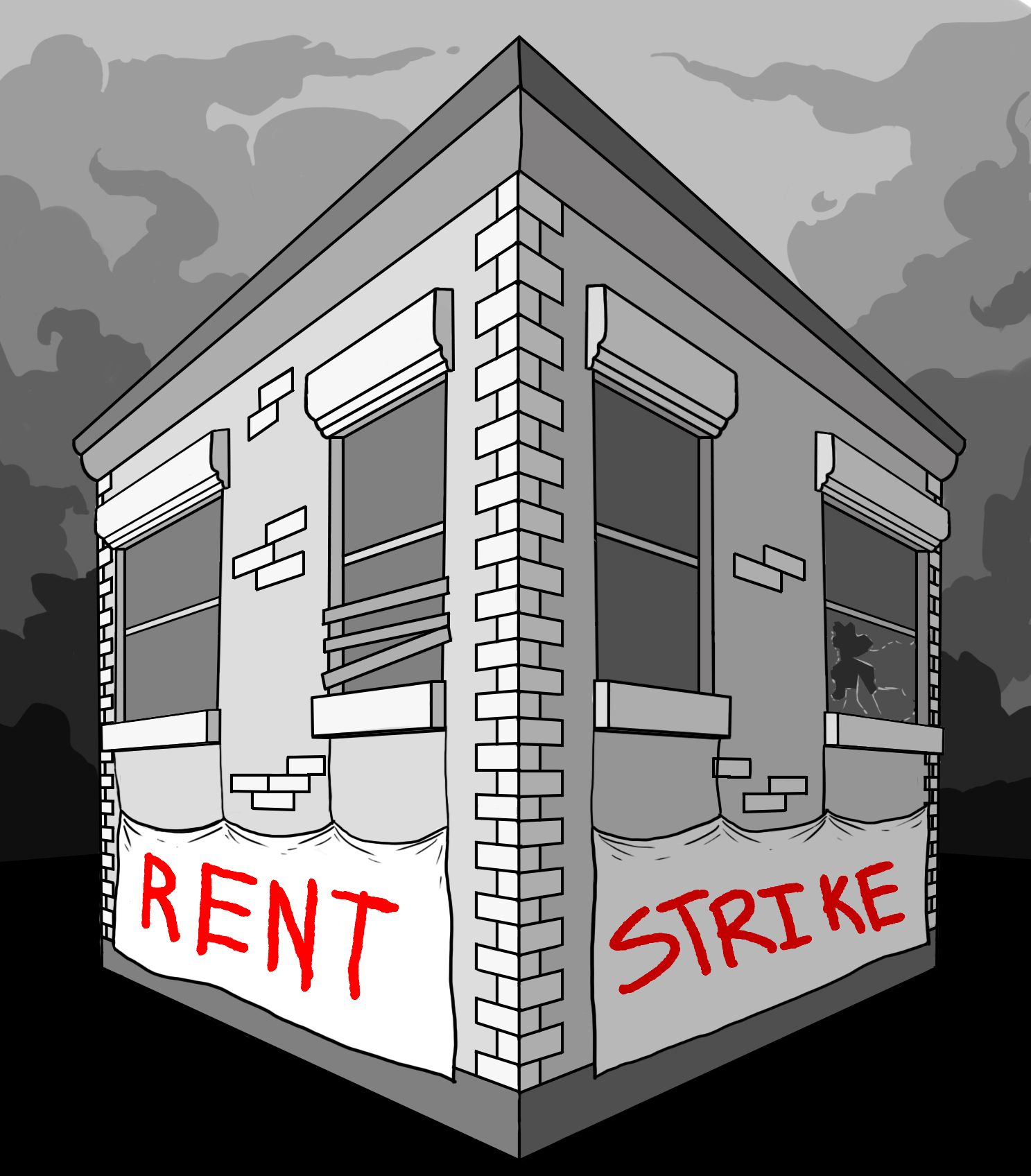
What are rent strikes and why are they building during a pandemic?
Almost a third of Americans have not paid their rent for April, a significant increase from this time last year. In the weeks since the shelter-in-place order, many people have lost their jobs, either temporarily or permanently. Many are wondering how they’re going to pay their rent if they don’t have jobs, but some tenants are wondering why they should have to pay rent at all. You may have seen calls for a rent strike circulating online, but what does that entail?
A rent strike involves a group of tenants organizing and withholding rent until a set of demands are met by their landlords or government. They can be an effective way of improving the conditions of living spaces, lowering rent or creating political change. They have a wide variety of potential benefits as well as risks.
The goal of organizations like Rent Strike 2020 is to freeze rent nationally for the next few months. Although many local governments, including Arcata’s government, have taken measures against evictions due to the pandemic, renters still owe money. The goal of a rent strike would be to eliminate the need to pay while under a shelter-in-place order entirely.
Rent strikes require neighborhood coordination and organization. If one or two tenants in a neighborhood decided to strike by themselves, they are still vulnerable to eviction after a lift on eviction freezes. For a rent strike to be effective, they need to be well organized.
With life disrupted, lecturer Kerri Malloy perseveres with flexibility and humor
A professor noticed students often left Kerri Malloy’s class laughing. One day the professor asked what he was teaching.
“Oh, that’s my genocide class,” Malloy said.
Malloy teaches courses in the Humboldt State Native American studies department on colonialism and genocide. With such somber subjects, Malloy relies on humor and honesty to engage students. Now that classes have gone online during the pandemic, Malloy has employed those traits, alongside plenty of flexibility, to keep students connected.
“The hurdle is going to be maintaining that connection with the students,” he said.
He created class blogs for students to post what they want—questions, memes, dog or cat or reptile pictures. Glance through Malloy’s Instagram, Twitter or Snapchat accounts, and you’ll find lots of memes, like one he posted April 3 on Instagram:
“The year 2020. Brought to you by the letters W, T & F.”
“I think you have to walk into it—at least my plan is to walk into it—with an incredible amount of flexibility.”
Kerri Malloy
“I love a good meme,” he said in one of two Zoom interviews. He sat in his home office. Behind him, family photos and a Star Wars Yoda action figure topped a bookshelf. He wore glasses and a button-up shirt.
Memes dominate Malloy’s social media accounts, but there’s more to the accounts than humor. They make him accessible to students. He receives messages on those accounts about class, and he replies happily.
“There are times where I’m like, ‘Why am I doing this?’” he said. “And then I realize, I’m getting to see a different side of students, and my colleagues, too.”
Malloy also emphasized the importance of flexibility.
“I think you have to walk into it—at least my plan is to walk into it—with an incredible amount of flexibility,” he said. “And let them—let the students—help guide where we’re going to go.”
Yurok and Karuk by heritage, Malloy was born on the Oglala Lakota Reservation in South Dakota, but he grew up on the Quinault Indian Nation Reservation in Washington.
Marlon Sherman, chair of the HSU NAS department, knew Malloy from working together for the Yurok tribe. Sherman and Malloy have a family connection, as Sherman grew up on the Oglala Lakota Reservation where Malloy was born.
“If it wasn’t for Kerri, there might not be a NAS department right now.”
Marlon Sherman, chair of the Native American studies department at Humboldt State
After working together for the Yurok tribe, Sherman and Malloy parted. About six years ago, Sherman asked Malloy to come to HSU to teach two courses for a semester.
Shortly after Malloy came on board, Sherman had to take time off. He had cancer. Sherman returned in about a year, but Malloy became program leader and helped steer the department. Sherman said Malloy basically did all the work and helped the department hire two professors.
“If it wasn’t for Kerri, there might not be a NAS department right now,” Sherman said over the phone.
Malloy said Sherman was too generous, but there’s no doubt that Malloy works, a lot—so much so that Sherman joked it might be illegal.
Malloy wakes up around 4:30 a.m. every day. He gets up so early partly because he finds those early hours productive, and partly because his back is built on metal rods and pins that make lying flat for too long unbearable. He’s not exactly sure how he damaged his back—maybe a car accident—but he had to have surgery that put him out of commission for three years.
He estimated he’s on eight to 10 HSU committees, from the University Resources Planning Committee to the Diversity, Equity and Inclusion Committee. Malloy does this while teaching multiple classes as a lecturer—a position with an uncertain future amid HSU’s projected enrollment decline and budget cuts. He joked when asked how he has the time.
“People usually don’t like my answer,” he said. “How do I have the time? A calendar.”
Kumi Watanabe-Schock, a 23-year HSU employee, works in public programming and as the library media coordinator. She first met Malloy when he was an HSU student getting degrees in economics and Native American studies.
Since then, Watanabe-Schock has worked with Malloy on committees and for classes. Every time she talks to Malloy, he seems to be attending workshops or giving talks around the world. She praised his willingness to help out.
“He’s not good at saying, ‘No,’” she said over the phone. “I don’t know if he’s that way with everybody, but when you ask him to do a favor he always follows through and he always says, ‘Yes.’ So I really am appreciative, yeah. He’s a good person.”
When not working, Malloy is more private. He has a husband and three dogs. He has two sisters and 14 nieces and nephews he tries to see every year. Around 8 p.m. every night, he tries to unwind. Maybe he’ll watch some TV, or maybe he’ll read a book about genocide. Fun.
While COVID-19 has pushed teaching online, Malloy has found his courses as relevant as ever.
A key concept in Native American studies is survivance, a portmanteau of survival and resistance. Survivance is about the living of Native American lives in the present tense. By surviving, Natives resist, and by resisting, Natives survive.
Malloy said people must fight right now to have their voices heard, like many Natives must do at all times. He said individual voices humanize current events and prevent people from kicking the ball of reality down the road.
On that note, Malloy told a story. Last summer, he taught Native history in a program that spent two days in Auschwitz I, the main site of the Nazi concentration camp. One day he stopped and looked out a window. The bizarreness of the situation dawned on him. Here they were, decades later, standing in a place of horror and trying to learn from it.
A window at Auschwitz I, the main site of the Nazi concentration camp on August 20, 2019. | Photo courtesy Kerri Malloy
Later that night he received an email from then-HSU President Lisa Rossbacher. She was checking in, so he wrote back.
“If we can educate in such a place of incredible horror and death, we have the ability to change the world,” he remembered writing. “We really do. If we can actually go into these places and find this incredible darkness and turn it into something that allows us to reach out to other human beings and get us to talk to each other and push the things that really don’t matter aside, I think we can do this.”
To get people to talk, Malloy uses humor, which he said can get us past anything—and Malloy does seem capable of getting past anything. It seems strange to call research on genocide a passion, but Malloy approved the descriptor.
“Passion’s a good word for it, actually,” he said. “You’ll find that for those of that this is what we do, it is a passion.”
Every student interviewed for this story agreed on a few descriptions of Malloy. He’s open and funny, they said, and he can be brutally honest. They warned against getting into an argument with him.
“If you’re gonna have an argument with him, you better have good stats and have all your ducks in a row, because you’re not gonna win Kerri in an argument—I’ve tried,” HSU biology major Michelle Navarette said over the phone.
“And he told me, like, ‘You can’t let the system fuck you up and throw you down.’”
Michelle Navarette, Humboldt State biology major
Navarette, a senior, first had Malloy for a 9 a.m. general education course. Once she got to know him, she tried not to miss his class. Since that first course, she’s tried to have a course with him every semester.
Navarette’s appreciation of Malloy goes beyond the classroom. She said she was losing her job last semester due to discrimination from her boss. She didn’t know what to do, so she went to Malloy.
“He sat me down and was like, ‘You know what, this is just a portion of how life is,’” she said. “’You’re gonna have these obstacles all the time.’ And he told me, like, ‘You can’t let the system fuck you up and throw you down.’”
When she thinks of Malloy, she remembers his honesty.
“I think he was like the first person to tell me, ‘This shit is going to be hard.’”
As a lecturer of general education courses, he usually has to work for the attention of students. He goes into his courses hoping for students to leave with more questions than answers. Students have told him he gives too many assignments, but no interviewed students said Malloy graded harshly.
“My philosophy,” he said, “is if I can get one brain cell to function per student on an assignment, we’ve succeeded.”
Malloy once had a student he didn’t think he had triggered any brain cells in. Malloy said the student believed everyone should be committed to a single belief. Malloy respected the devotion, but he worried about the implications.
About a year after the student left his class, Malloy received a message on one of his social media accounts. The student wanted to know if a site he shopped on looked like a hate group.
“I went and checked the site out and went, ‘Yeah, this is definitely an organization that supports anti-Islam—very Islamophobic,’” he said.
The student thanked him and decided to shop elsewhere. Malloy remembered that as a success.
“It’s when you see those little things, you’re like OK,” he said. “Even at some small level, we were able to plant some idea, some seed that is getting people to think differently, or at least question.”
Like many of Malloy’s students, Joshua Overington, an HSU environmental science senior, only took Malloy’s introductory Native American studies course for a general education requirement.
The class was so good Overington signed up for more. He eventually worked with Malloy on the Northwest Genocide Project, an online archive Malloy manages.
Overington also worked with Malloy on a research project on Tuluwat Island for HSU’s IdeaFest, which led into a research paper Overington is now finishing.
“He is incredibly passionate in what he does and he is uncompromising in his views,” Overington said over the phone. ”If Kerri feels something or has an opinion, he always speaks his mind and really, he’s always the one who’s honest and puts himself out there. And that’s not something I see at all in other teachers.”
“If we can make those connections on that level, this is much more understandable. And then we get to be more willing to go, ‘Alright, maybe I need to look in the mirror.’”
Kerri Malloy
Malloy likes to tell people teaching about genocide is fun. People usually give him a blank stare and change the subject. But if asked, Malloy will elaborate.
“And what it means is not fun as in, ‘Yay, happy stuff.’ It means that it’s fundamental,” he said. “Atrocity is a fundamental part of the human existence. Peace is a fundamental part of the human experience. It’s understandable—we can understand why it happened, how it happened, what needs to be done to prevent it. And it’s necessary.”
Malloy knows most people don’t want to talk about atrocities all day. To get past that, Malloy said we have to be willing to look at ourselves.
Malloy tries to relate concepts directly to his students. He sometimes asks if students curate their social media profiles—do they post every photo they take? They admit they do some curating, and he suggested history books do the same.
“If we can make those connections on that level, this is much more understandable,” he said. “And then we get to be more willing to go, ‘Alright, maybe I need to look in the mirror.’”
Malloy teaches because he believes we’re all here to learn. He admits his own ignorance and encourages others to do the same. That openness to learning is perhaps what makes Malloy love his job. His willingness to let students guide his classes is perhaps what makes students love him.
“I tell my students this directly: ‘This is not my class,’” he said. “’This is yours. You guys are the ones who are paying for it. I am just the tour guide on this expedition.’”
Malloy always ends each of his classes—each chapter of the expedition—with the same message.
“Go out and learn something,” he tells his students. “Go out and breathe.”
Social distancing has strained my relationship, so be grateful if you’re still with your partner
Social distancing life isn’t much different from my usual life. I’m not physically going to school or work anymore, but I’m doing my assignments in bed like I normally would. My free time before quarantine would consist of doing homework, eating, watching movies with my roommate and spending time with my partner. There’s only one of those things that I can’t do anymore—spending time with my partner—and it’s the one that hurts the most.
Life was busy before the days of sheltering in place, and I hadn’t seen my partner much. We vowed after spring break we would spend more time together since I was going to be leaving after graduation and they will be staying up here. But now it looks like our long-distance relationship has started a lot sooner.
If you find yourself being in quarantine with your partner, but want to get away from them, there are little things you can do for some space.
Some of my friends have said they were tired of being quarantined with their partner because they were getting on their nerves and they just needed space. When social distancing started, there were a lot of memes going around about how women trapped their partners in their houses with them so that they can talk about their issues and the partners can’t go anywhere. That’s funny, but you shouldn’t need a quarantine to finally talk about your issues. You should be able to do that all the time.
China reported a spike in the divorce rate and the same is expected for the United States. Due to the quarantine, people’s daily lives have changed and they aren’t used to being stuck with their partners all day. Which is understandable, but also sad. I would love to be stuck inside with my partner during this quarantine. We’ve talked a lot more which is nice, but actually having them under the same roof as me would hit differently.
If you find yourself being in quarantine with your partner, but want to get away from them, there are little things you can do for some space. Maybe put yourself in another room if you have another room—but if you don’t, maybe take a nice long shower.
Instead of both of you going to the grocery store together, make a list and have only one of you go. I would hope that you wouldn’t need to distance yourselves and that this time would be enjoyable for you two, but maybe that’s just because I wish I could be watching movies or getting creative with my partner.
If you’re stuck with your partner and are getting annoyed with the way they do the dishes or something small like that, well, get over it. Either tell them it bothers you or take over the task. There are so many people out there, like myself, that would rather be stuck in a room with their partner no matter how much they annoy them, not to mention all the single people that wish they had a partner to be quarantined with.
An account of one HSU surfer’s last breath of clean, fresh air
When Humboldt State University forestry major Gavin Schreiner set out on a 10-day surf trip over spring break, he had no clue what he would return to.
Planned months in advance, Schreiner wasn’t going to let a virus stand in the way of his vacation. Packing over 50 pounds of food and supplies, he and a friend hiked nine miles up the coast of California. Schreiner stopped along the way to admire otters, countless shells and of course, to surf.
“Surfing is obviously my favorite part and that’s the drive to go, but I love camping anyway,” Schreiner said. “I’m an avid backpacker. I’ve been through the Trinity Alps and definitely backpacked into SoCal a bunch.”
A territorial surfer, Schreiner requested the location not be named, especially after this trip. Between spring break and COVID-19, the waves were packed.
“It’s definitely my life path to surf until I die.”
Gavin Schreiner
“It was the most crowded anyone has ever seen that spot,” Schreiner said.
Fortunately for those adventurous enough, there are nine miles of coast to surf on the way.
“There’s the main surf spot out there, but there’s countless other waves along there,” Schreiner said. “It’s like a wave park. There’s so many different types of waves and different spots you can surf, and all offer different excitements.”
Time between surf sessions consists of eating, sleeping and battling the elements to stay comfortable.
“On the coast the weather changes super quick, so you have to be shedding layers, putting layers back on and also watching the waves 24/7 to make sure you get the best seshes [sessions] in,” Schreiner said.
This is the longest trip Schreiner has taken so far, but he wants to break the record.
“If we could spend a month, I would be in for that,” Schreiner said.
At 20 years old, Schreiner has been surfing over half his life.
“Surfing and the ocean is my number one priority,” Schreiner said. “It’s definitely my life path to surf until I die.”
When he returned from his 10-day trip, Schreiner was greeted by strangers wearing masks and businesses with closed doors. The virus was not a factor in the trip. Surfers treated each other with the same brotherly love and competition. Schreiner would’ve stayed longer if it weren’t for school.
“We kinda knew a little bit going into it that shit was going crazy,” Schreiner said. “The only thing we reconsidered was whether or not we could stay indefinitely and figure out a way to complete homework assignments out there.”
Now that he’s back home, he tries to surf every day to take advantage of the opportunity.
“I know a lot of my friends down south can’t surf because they’re closing the beaches, so I definitely feel super blessed to be up here right now,” Schreiner said. “I can follow social distancing and still go out every day.”
Everything you might want to know about the 2020 census
The United States Census Bureau has fulfilled the constitutional obligation to count every human in the country since 1790. Every home in the United States should have received an invitation to participate in the 24th United States census by April 1.
“The census tells us who we are and where we are going as a nation,” the Bureau’s website said.
The census is a measure of what’s going on in American communities. The data collected from the census helps communities determine where to build infrastructure, from schools and supermarkets to homes and hospitals. Beyond that, California District One (Humboldt County included) House Representative Jared Huffman said it’s a fundamental element of the United States.
“The significance of everyone participating goes so far beyond that,” Huffman said in an email through his spokesperson. “Having a complete picture of the people in communities across the country determines how folks are represented and makes sure everyone has a voice in the decisions their government makes. That’s the foundation of our democracy.”
In the past couple of years, the Trump administration tried to politicize the census as they pursued the addition of a citizenship question, but they failed. To be clear, there is no citizenship question on the 2020 census.
John Meyer, chair of the Humboldt State politics department, explained how an accurate census requires trust between the federal government and residents.
“The goal of the census was an accurate count of who residents are and where they live,” Meyer said. “The citizenship question discouraged that.”
“Students today are the most diverse demographic, and if you’re not counted, other resources will not follow.”
Nicola Walters
Meyer said answering the census should have no personal impact on respondent’s lives, and that there should be no arrests nor barriers to voting following a response. Meyer said immigrants from other countries, especially those with authoritarian, surveillance-heavy governments were often wary of answering the questions for fear of retaliation.
The U.S. Census Bureau has been politicized in the last few years, but the law prevents the Census Bureau from sharing information with law enforcement. The information is supposed to be kept strictly confidential.
“It is in the interest of powerless people to answer the census,” HSU American government lecturer Nicola Walters said. “Students today are the most diverse demographic, and if you’re not counted, other resources will not follow.”
Walters said she would have liked to see the citizenship question on the census. The census is a rare opportunity for scientists like her to collect data on the entire population, rather than just the samples she’s used to. Nonetheless, she is looking forward to the results of the 2020 census.
According to the Census Bureau’s website, many of the planned elements of getting a full count, including door to door interviews, will be postponed.
“The 2020 Census is underway and the most important thing you can do is respond online, by phone, or by mail when you receive your invitation,” the Census press kit said. “Responding now will minimize the need for the Census Bureau to send census takers out into communities to follow up.”
Student resources for school, finances, food, housing and counseling
Here is a list of resources Humboldt State is offering for students. Click here for a student-created site of community resources. Click here for the site in Spanish.
Educational advice:
Enoch Hale is the director of the Center for Teaching and Learning at Humboldt State University. He provided five tips to help students with online learning during the shelter in place order. His tips revolved around being kind and flexible.
“Kindness is having the patience and the benefit of the doubt to know that everyone else is struggling,” Hale said. “Be flexible—no one signed up for this and we are going to have to be agile in our expectations in the changing patterns.”
Five tips to help with online school from Hale:
Don’t ignore feelings—reflect on them so they don’t manage us.
Communicate with professors more, not less.
Log on more frequently. Check your emails and canvas more often. Not all courses will be on Zoom.
Set a schedule, use a study calendar and stick to a routine.
HSU Coordinator of Student Services for the financial aid office Morgan McBroom provided financial advice to students. McBroom suggested students in a crisis contact the financial aid office.
For students who are hard-pressed for money, there is a student emergency loan that ranges from $500 to $1000. It is a short-term loan and can come within a few days. Financial services will work to help students pay it back. Students who have not used all of their student loans from the previous semester may also still have access to them.
Due to the COVID-19 crisis, students’ loan interests are being waived, but the estimated date that it will stop is in June. As of now, the end date hasn’t been established. If you are an HSU graduate, you can have your loans waived for a year with no interest.
Contact: finaid@humboldt.edu or (707) 826-4321.
Housing:
In addition to her advice on financial matters, McBroom also provided housing advice. There is emergency housing available on campus. The off-campus liaison is a resource if you’re struggling with rent.
Contact: housingliaison@humboldt.edu
Food:
1. The recreation room on the first floor of the Jolly Giant Commons offers pre-made bags with food items. This happens twice a week on Wednesday from 10 a.m. until 12 p.m. and Thursday from 1 to 3 p.m. Vegan and vegetarian meal bags are also available.
If you cannot make those times due to isolation or quarantine, contact mira@humboldt.edu and she can set up a delivery time.
2. Oh SNAP! can also help you load your student ID card with J points. You need to express a financial need for food support. If you have over $40 in J points, you need to wait until your card is under $40. You can receive $60 every four weeks, but this is subject to change. If there is an increase of funds there could be an increase in the amount given to students. You can also donate your J points to help students in need.
Contact: ravin.craig@humboldt.edu.
3. For extra help, try applying for CalFresh, a state-funded program to help pay for food. Students not working 20 hours a week can apply for CalFresh, except for students in the Educational Opportunity Program program, students with specialized grants and work-study students. You can qualify for up to $200 a month for groceries.
Contact ravin.craig@humboldt.edu if you need help with the application process or would like to see if you qualify.
Counseling:
Mira B. Friedman is the lead for health education and clinic support services. She provided information about counseling for students.
HSU Counseling and Psychological Services is offering virtual appointments.
Students can call (707) 826-3236 to make an appointment. There’s also a 24/7 hotline for immediate crisis outreach for students to speak with a therapist by phone at (707) 826-3236.
Jane Teixeira begins new position as head of Humboldt State athletics
Humboldt State has a new permanent athletic director for the first time since 2016 in Jane Teixeira, who officially started the job April 6. With COVID-19 ending all sports at HSU for the semester, Teixeira has been adjusting to the area and the position as much as she can.
“I’ve enjoyed my time exploring as much as I can under the circumstances,” Teixeira said. “It was an interesting drive up here to try to make the change in location in these unprecedented times. Beautiful landscape coming up here, and I’m really happy to be here. Every morning it’s nice to hear the chickens that are across the street and be a part of this great community.”
Even without the luxury of meeting people in person, Teixeira has hit the ground running and is doing her best to make connections with people and learn more about the athletics department and where it fits into the university.
“I’m willing to listen, I may not have the answers, I may not be able to give them what they want right away or at all, but I’m willing to listen.”
Jane Teixeira
“A lot of my two weeks have been built upon building relationships,” Teixeira said. “Getting to know what the staff needs, what they want. Where our gaps are, where we stand financially—obviously in these times things are difficult—and how can athletics contribute to getting better under the circumstances with the university as a whole.”
With the loss of football still recent in people’s memories and budget management on the horizon, Teixeira said interacting with the community around Humboldt State and listening to what they have to say will be important for her.
“I’m willing to listen,” Teixeira said. “I may not have the answers, I may not be able to give them what they want right away or at all, but I’m willing to listen. And I’m willing to take their points and understand them and say, ‘Hey, have you thought about this?’ or, ‘That’s a great point. I’ve never thought about that, let me see what we can figure out with that.’ We’re looking forward to working hand in hand and side by side with the Humboldt County community and all of our alumni.”
Teixeira also aims to focus on bringing in more quality student-athletes and using athletics as a way to bring more students to Humboldt State and give them opportunities.
“It’s all about opportunity,” Teixeira said. “Because you never know when that one opportunity happens for a student that may change their life forever. It can happen just like that. And that’s why I’m in this business.”
For Teixeira, the roster expansions would be a chance for student athletes who may get overlooked to have a chance to showcase themselves.
“You never know when you get that one student who the lightbulb goes off for them and it changes their whole entire world. So giving them an opportunity if we expand our rosters a little bit, you never know. You may get that diamond in the rough.”
HSU freshmen got the short end of the stick after facing blackouts and the COVID-19 pandemic
Humboldt State students have experienced a crazy school year. From blackouts in October and COVID-19 ending face-to-face classes, it’s been quite the ride for everyone. For freshmen, this was their first experience with college.
Freshmen learn to live on their own, make new experiences and acclimate to their new surroundings. For the freshmen that entered in fall 2019, it’s been a different story.
Mikayla Diaz, an environmental science management major from Torrance, California, struggled with scheduling her first semester during the blackouts.
“It was just really unexpected,” Diaz said. “Starting college, people will tell you how to stay organized and to keep a weekly planner and stuff like that, so everything I heard just kind of went out the window. Like, I wanted to keep a weekly planner but how do I if I don’t even know if I’m having class? It was difficult to make my way and get the bare minimum done.”
“Keeping in contact with my teachers has been helpful, but it is difficult to do the Zoom thing with my teachers. It’s kind of awkward.
Mikayla Diaz
HSU has a prominent science program, and with that comes a lot of lab classes. Megan Bach, a wildlife management major from Boulder, Colorado, admitted that the blackouts affected her lab class.
“Because of both blackouts I missed two labs,” Bach said, “which I was super bummed about because we didn’t get to do certain activities. Same with the coronavirus too though.”
COVID-19 has affected students throughout the world by pushing classes that are normally face-to-face online. Classes are conducted from home and teachers have been forced to cut assignments that can’t be done from home or without certain equipment.
Bach is concerned about the lack of hands-on learning, specifically for her chemistry lab.
“The teachers are doing a great job. I’m still getting all the information,” Bach said. “It’s just rough because it’s hard, especially from home. I hate online classes. It makes everything harder. I’m a very hands-on learner and I can’t even imagine how they’re gonna do my chemistry lab.”
Although classes are changing to accommodate online learning, students are missing out most on science classes.
“Teachers are cutting out a lot of work,” Diaz said. “Keeping in contact with my teachers has been helpful, but it is difficult to do the Zoom thing with my teachers. It’s kind of awkward. For classes—especially lab classes—I need to go to the Arcata Marsh or something and I can’t go and do that because I’m in SoCal. It’s just kind of disappointing.”
Science students feel they aren’t getting the education they paid for. Science and freshman botany professor, Mihai Tomescu, admits some of his students are struggling with the online format.
“There’s just a lot of stuff I’m missing out on.”
Mikayla Diaz
“Just recently I had a student emailing me and she was a really good student until COVID hit,” Tomescu said. “She was really involved in class, really liked the material, was there in lectures all the time, worked in the lab really hard, she really enjoyed it. She missed an assignment and I checked in with her to see how things were going and she told me that she has really big problems with the internet.”
Tomescu admits that he can’t directly do anything about the situation or to help in any way with the problems his students are facing, such as internet access.
“It’s either slow or not available or spotty. Parts of lectures will stop and she’ll have to wait for the internet to come back on and stuff like that,” Tomescu said. “That’s very worrisome, especially when you see that in a student that was doing really well in class and she was excited. I don’t want it to be a missed opportunity.”
Doing school from home can be frustrating, difficult and demotivating. At times, it’s inaccessible for people that don’t have the resources they need to complete the work. Not only are students missing opportunities on campus or in classes, but they’re also missing out on social opportunities they’ll never get back.
“It’s really frustrating because I’m not getting the material for my classes,” Diaz said. “There’s just a lot of stuff I’m missing out on.”
Humboldt State faces enrollment drop, budget cuts and academic department reorganizations
If Humboldt State University was a ship, it would be sailing straight into uncharted seas, thick with fog.
Atop the tallest mast, HSU administrators spy an enrollment drop of around 20% for the fall semester, mainly due to COVID-19. Administrators project a resulting budget cut of around $7.4 million for the next school year and $20 million in the next two years, according to HSU’s most recent enrollment report and webinars held April 13 and 15.
Faculty and staff are scrambling across the deck to reorganize HSU’s academic departments.
Vice President of Academic Affairs and Interim Provost Lisa Bond-Maupin said HSU’s colleges are looking at combining department staff and faculty and adjusting fall course schedules for a smaller student population.
“Those are the strategies we’re looking at—combining staffing where it makes sense and combining chair leadership where it makes sense,” Bond-Maupin said via Zoom interview. “We’re not doing away with academic programs.”
A proposed plan emailed to department chairs of the College of the Arts, Humanities and Social Sciences divided CAHSS departments into four schools, each of which would have one chair. The presumed thinking behind the plan would be to eliminate the need for each department to have its own chair and free up chairs to teach more courses—reducing the number of other needed faculty.
Bond-Maupin did assure that HSU has no plan to cut any academic departments—but semester course offerings will depend on what students need.
Bond-Maupin said that exact proposal probably would not move forward. Bond-Maupin said she and the deans of the HSU colleges are still figuring out what they will do.
With department reorganizations and course offerings expected to be adjusted for the fall, lecturers will likely end up with fewer courses to teach. Bond-Maupin said schedules for a reduced number of students inevitably affect the availability of work. In other words, if all of a lecturer’s courses are pushed off the fall schedule, they would be thrown overboard too.
Bond-Maupin did assure that HSU has no plan to cut any academic departments—but semester course offerings will depend on what students need.
“As enrollment changes, we need to sort of follow the needs of the students,” Bond-Maupin said.
Over 2,000 individuals signed a change.org petition asking for HSU tuition to be reduced for the spring. Bond-Maupin said a change in tuition would come from the California State University Chancellor’s Office, not HSU.
Tuition reduction or not, HSU faces serious challenges. In an April 13 webinar HSU held on the enrollment decline and budget cuts, Vice President of Enrollment Management Jason Meriwether delivered dire news on enrollment.
“If the CSU is in a recession for enrollment, Humboldt State needs to worry about being in a depression for enrollment,” Meriwether said. “I hate to use those terms, but it just forecasts the impact HSU could face in the terms of COVID-19.”
HSU has refunded nearly $2.5 million to students for housing, parking and dining and projects to lose around $7 million by the end of June.
“We are hearing from the governor that there may be some return to being together but with some new social distancing parameters—so that’s possible.”
Lisa Bond-Maupin
Vice President of Administration and Finance Douglas Dawes emphasized the importance of the campus understanding the need to make quick budget cuts. Dawes said HSU is looking into a mix of measures, including hiring chills, spending freezes and retirement incentives.
These hits to the hull come despite progress HSU made before it entered the murky waters of the pandemic—208 local students accepted the Humboldt First scholarship, up from 32 local students per year for the last three years.
Both Meriwether and Bond-Maupin said details of the fall semester remain uncertain and hinge on public health recommendations. Bond-Maupin said HSU is preparing for a variety of potential scenarios, from remaining online to opening partially.
“We are hearing from the governor that there may be some return to being together but with some new social distancing parameters—so that’s possible,” Bond-Maupin said. “We might work with spacing. We also may look at timing. One scenario I can think of is that we are delayed in going back fully to face-to-face, so we begin online. I think we just have to plan for all those scenarios.”
The Lumberjack requested an interview with HSU President Tom Jackson multiple times for this story, but he could not be reached. HSU Communications Specialist Grant Scott-Goforth cited an “incredibly busy time.”
This website uses cookies to improve your experience. We'll assume you're ok with this, but you can opt-out if you wish. Cookie settingsACCEPT
Privacy & Cookies Policy
Privacy Overview
This website uses cookies to improve your experience while you navigate through the website. Out of these cookies, the cookies that are categorized as necessary are stored on your browser as they are essential for the working of basic functionalities of the website. We also use third-party cookies that help us analyze and understand how you use this website. These cookies will be stored in your browser only with your consent. You also have the option to opt-out of these cookies. But opting out of some of these cookies may have an effect on your browsing experience.
Necessary cookies are absolutely essential for the website to function properly. This category only includes cookies that ensures basic functionalities and security features of the website. These cookies do not store any personal information.
Any cookies that may not be particularly necessary for the website to function and is used specifically to collect user personal data via analytics, ads, other embedded contents are termed as non-necessary cookies. It is mandatory to procure user consent prior to running these cookies on your website.