For many students with dozens of responsibilities, doing their own taxes is byzantine, boring, and back-breaking. Though doing taxes is famously painful, there are resources to help.
The student tax clinic is open to almost all students and community members who make less than $70,000 a year. It’s free and staffed by accounting students. Book an appointment through their website, found through Humboldt’s School of Business website, which operates on Wednesday evenings in Siemens Hall.
International students filing international tax forms are not eligible for the clinic’s help, though Instructor of Record for the clinic Joshua Zender, said the clinic will help international students if they are filing domestic returns.
The clinic’s scope is limited to processing tax documents students provide, using the IRS-supplied TaxSlayer software, and then sending those returns to the IRS. Anyone seeking tax advice or anything more complicated should use a qualified accountant. But just because what the clinic can do is limited doesn’t mean people can’t benefit immensely.
“Oftentimes, we find that people we’re serving are simply not aware that they’re eligible for, maybe, a renter’s tax credit, or they’re eligible for a special tax credit because they happen to be going to college right now,” Zender said. “That’s always a really rewarding experience, to see somebody’s face light up and think, ‘Oh, well, I’m actually gonna get money back from the government that I didn’t know I was eligible for.’”
Another tax credit that’s worth looking into is the Earned Income Tax Credit (EITC), which Zender said some students qualify for. It’s open to low and moderate-income workers.
If someone earned less than $13,850 for the 2023 tax year, they can file and get all of their federal income taxes returned.
The students working at the clinic also benefit from helping people with their taxes. They get a $1,500 stipend provided by the Smullin foundation, an Oregon-based grant-giving organization, as well as a lot of experience.
“The main [benefits] are becoming proficient and more confident in using tax software to prepare a tax return,” Zeller said. “For accounting students, they’re looking for real world experience doing their field. But a second [reason] is establishing an ethos, or a commitment to serve a community, and in particular an underserved community, and so developing the skills to communicate and help and empower people who need assistance with their tax return is a really important skill to be developed from this experience as well.”
Student David Mata is an accounting student who has worked for the clinic for two years. He started doing tax returns six years ago at H&R Block and enjoys the people he gets to meet.
“You get to see people you don’t get to see,” Mata said. “I haven’t done much community stuff. This gives me a perspective on being a part of this community.”
Daniel Taylor, another accounting student in his second year on staff, agreed with Mata. He said the experience he got from working there was invaluable–and the stipend is good too.
“It’s nice to help people,” Taylor said. “Everyone loves free taxes.”
Last Thursday, on the third floor of Cal Poly Humboldt’s library, a very important first birthday was celebrated. Students, faculty and community members gathered to enjoy cake, pizza, pie and refreshments to celebrate the launch of the world’s first 3D herbarium.
Hosted at 3dherbarium.org, the 3D herbarium has digitized 3D models of various plants with information on each species. At time of publication, 39 models are available to view. From the seaside daisy, Erigeron glaucus, to the coast redwood, Sequoia sempervirens, each plant’s page has a classification breakdown, profile and information on the model itself.
Library Dean Cyril Oberlander started the opening speech for the event, thanking everyone for attending and emphasizing the project’s testament to hard work, dedication and collaborative efforts.
“We chose 3D modeling of plants because, well, not really anybody was doing it,” Oberlander said. “You can imagine how hard it is to do a three-dimensional shape of a two-dimensional leaf. While creating the 3D digital herbarium has never been done — and because plants are so crucial to life on Earth, and for our understanding of plants — this was incredibly important.”
The project has been in development for over a year and students have been anticipating its release, including botany major Juniper Beke.
“Last semester, I believe it was teased at the end of a session on satellite information using satellite data,” Beke said. “[The teaser] had appeared there at the end and so I was hyped up for it.”
Many students, like engineering and community practices major Filip Amborski, had ideas for what the program could accomplish. Amborski thinks the herbarium will be a great resource.
“I’m hoping that they have notes on anything that’s been identified as culturally significant to Native tribes,” Amborski said.
The seeds of inspiration
The 3D herbarium was created by Team Flora, which is comprised of computer science and botany students. Botany graduate student Heather Davis, undergraduate botany student Grayson Prater and computer science major David Yaranon helped create the website under the management of computer science graduate AJ Bealum.
AJ Bealum, computer science graduate and manager of Team Flora, credited the idea for the 3D herbarium to Oberlander. The university library was the sole sponsor for this project.
“His main source of inspiration was the anatomage table downstairs and he thought, ‘Why isn’t anyone doing this with plants?’” Bealum said.
Located on the second floor of the library, the anatomage table is a 3D human anatomy system where users can simulate cadaver dissection.
Prater wanted to join Team Flora to bring botany to those unfamiliar with the topic and introduce them to scientific language. Through this project, he has learned about programming and the difficulties that come with scanning plants.
“I really love writing about plants. This was a great job to start doing that and practicing that skill, especially science communication, making botany accessible to other non-botanists,” Prater said.
Davis accepted the position on Team Flora to satiate her passion for bringing the joy of botany to others. Her decision to join the team was inspired by Oscar Vargas of the botany department. Vargas is an assistant professor at Cal Poly Humboldt and director of the university’s Vascular Plant Herbarium.
“Dr. Oscar Vargas has been my professor, mentor and boss for the last couple of years,” Davis said. “Over the summer last year, the job got posted and he had been talking to AJ, so he reached out to me and sent me the link for the herbarium. I applied for it after that and joined the team.”
Current growth
The 3D herbarium website currently has a collection of 3D plant models, plant photos contributed from around the world and a plant identification component.
Each 3D model was created using a process called photogrammetry. Photogrammetry requires around 100 to 300 photos of a single plant from many different angles in order to convert it into a 3D model. Yaranon created many of the plant models for the 3D herbarium.
“As you take more photos, the processing time increases exponentially,” Yaranon said. “In the beginning, we were running these off of rented laptops from the library, so we would have to wait a couple of days per model. Now we’re on a server, so we can put these out a lot quicker.”
Davis collaborated with the computer scientists on Team Flora to annotate each plant model. She collected plant specimens for Bealum and Yaranon to photograph and create a model from. Then, she annotated different parts of the plant model with information for people with all levels of experience.
“It’s a really challenging subject for many people when they’re first introduced to it, especially with the names and all of the different scientific terms you have to learn,” Davis said. “So this project has been [a] really fun [way] to be able to give access to that knowledge and to make it a fun, engaging activity, instead of challenging and being afraid of a new topic.”
The herbarium also adds to its database with photos from iNaturalist, a website that allows users to upload photos of plants and animals to create a public database. Visitors can search up the common or scientific name of a plant and peruse a gallery with hundreds of photos taken around the world.
Additionally, the website has a plant identification program. Once a photo of a plant is uploaded, the program will provide a list of possible species and a short description. The program pulls from websites like Wikipedia, iNaturalist and the Global Biodiversity Information Facility.
From left to right, Team Flora members Grayson Prater, Heater Davis, David Yaranon and AJ Bealum stand in front of a touchscreen monitor displaying the 3D herbarium in the Cal Poly Humboldt library on Jan. 25. Photo by Savana Robinson.
Plan(ts) for the future
During the opening speech, Oberlander announced a planned second version of the 3D herbarium. The day before the ceremony, Team Flora got approval to start a full grant proposal to the Institute for Museum Library Services to get funding for further development of the program. Version two will include models that are applicable for other majors like anthropology or zoology. Oberlander mentioned that Team Flora hopes to receive the funding this summer.
“Our next version is going to be something that is anything that wants to be a 3D model, whether it’s art or something else. People can do all sorts of things with this 3D exhibit tool,” Oberlander said. “It’s either intended for students with projects or a classroom that wants to use this as a lab notebook, as opposed to the print version.”
Team Flora also hopes for other groups on campus to contribute to the 3D herbarium. They plan to make the process of photogrammetry more accessible so that clubs or classes can add to the website’s model collection. Bealum described meeting with the mycology club to help them learn how to use photogrammetry software so they could produce a fungus model for the website.
“Our ultimate goal with this [website] is to make it a school-incorporated tool,” Bealum said. “So that instead of us sitting in our office trying to pump out these 3D models and working with the botany students as assistants, the botany department can ultimately kind of take this over. [They can] make it a part of their classes, make it so that students can submit models as part of a class.”
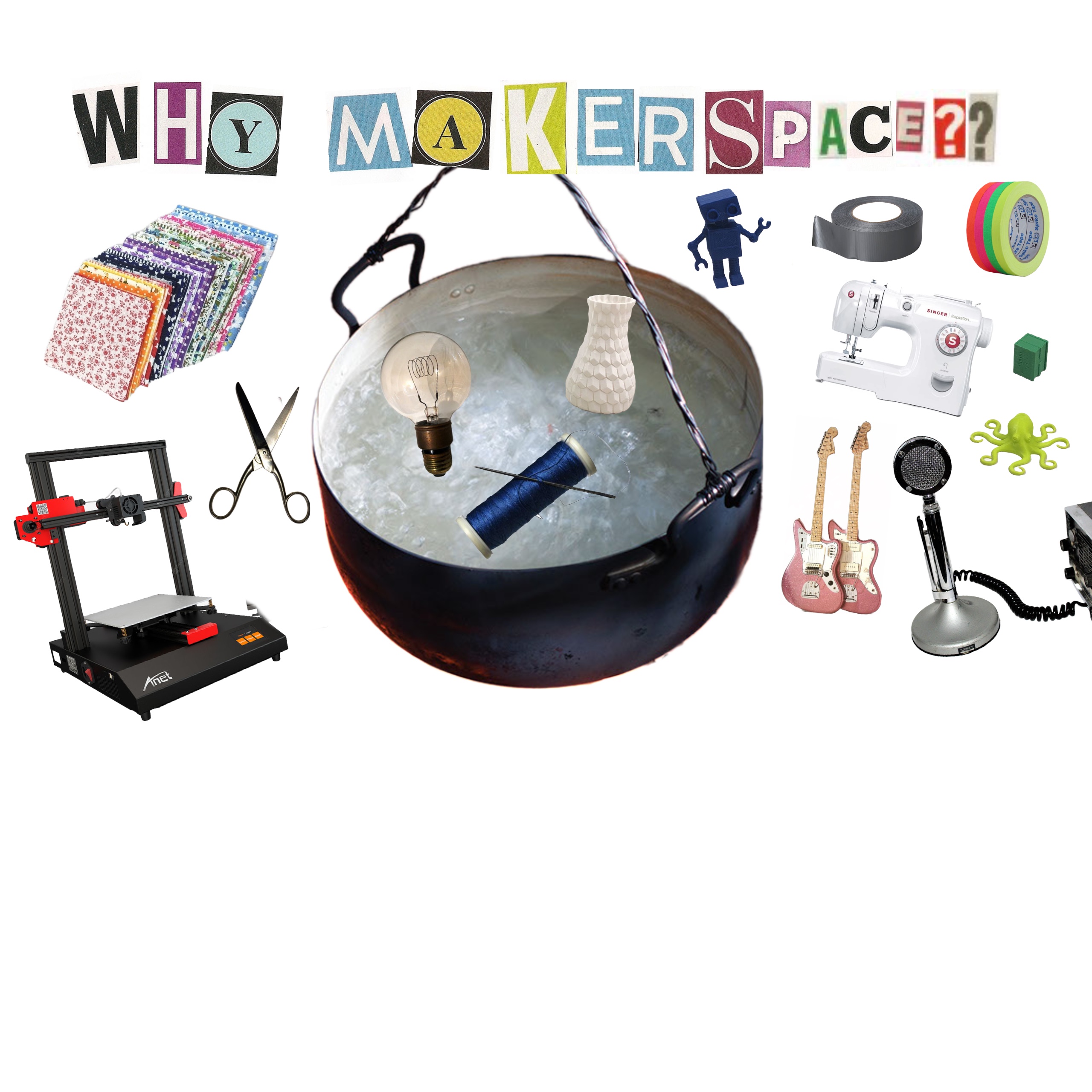
The Makerspace has come a long way, starting out as a humble pop-up. It now has a dedicated room in the library, and offers expanded services so students can amplify their creativity. It’s an important space for students to create and design, where they are able to explore fabrication. The space itself also offers many wonderful hands-on activities, such as the collage station, where students can make multi-media collages from all sorts of different materials, the vinyl cutting station, or the augmented reality sandbox, where students can stick their hands in the sand.
Cyril Oberlander may be the University Library Dean on paper, but in person, he is a very vocal supporter of Makerspace. Much like a pot of pasta you turned up too high and then left on the stove, he is bubbling over with enthusiasm for the Makerspace, and he gleefully talks about all the programs that the Makerspace offers for students.
“We really want to create a space for what people are interested in!” Oberlander said. “We’re going to roll out the vinyl cutter this semester, so you can do paper crafts or do vinyl for stickers or ironing. We have a guitar you can check out, and we have some other audio equipment that you can take home.”
You can see the sparkle in his eyes as he talks, and he looks proudly around the Makerspace as he shows the crown jewels of the room. There is a beautifully shiny yellow electric guitar, a sewing machine surrounded by associated fabric squares, an audio workstation complete with a studio microphone and headphones, and two brand new 3-D printers that members of the Makerspace assembled themselves. While set-up of the printers was “pretty easy,” and only took an hour, the real beast was getting them to work as intended.
“They were pretty difficult to calibrate and to get working,” Oberlander said.
There were some initial anxieties about a lack of funding for the program, but in true Makerspace spirit, they built out and shaped funding around actual use. Oberlander does not feel daunted by their request for funding being denied, and expects that the Makerspace will get more funding in the future.
“We have gotten funding in the past, and so we expect that we will get funding again,” Oberlander said.
Jonathan Pena Centes, head audio expert at the Makerspace, personally appreciates the equipment they have available to check out. Growing up, he didn’t have access to a lot of the resources now found in the Makerspace, and that’s why this function is so important to him.
“A lot of students don’t know about this resource,” Pena Centes said. “It’s a great resource for students who don’t have access to the original materials.”
The Makerspace’s hours are 1-7 pm, Tuesday through Friday, although hours are subject to change with their student staff working their schedules out around fall classes. It is located on the second floor of the school library, right by the exit of the stairs that lead up from the Library Café.
The Cal Poly Humboldt Library is gearing up with lots of new additions and courses for students as we switch from online to in-person classes on campus.
Prior to the pandemic, the library was a common place for studying and meeting with friends, as well as a hub for student support. With students now returning to campus, the library staff is excited to be adding new additions to the library.
“There isn’t much traffic in the library since we’ve slowly begun returning to campus, but now we are, we definitely want students to know that we are still here and there is a lot for them to get involved with,” said Tim Miller, head of SkillShops in the library.
“In addition to academic support and the available technology in the library, we really want the students to know about the upcoming skill shops and the Makerspace,” Miller said.
The Makerspace and SkillShops are located on the third floor of the library. There is a place to study, and access tech and recording equipment. In addition, SkillShops will be offering a series of workshops ranging from learning how to code to learning how to budget starting now and the following semesters ahead.
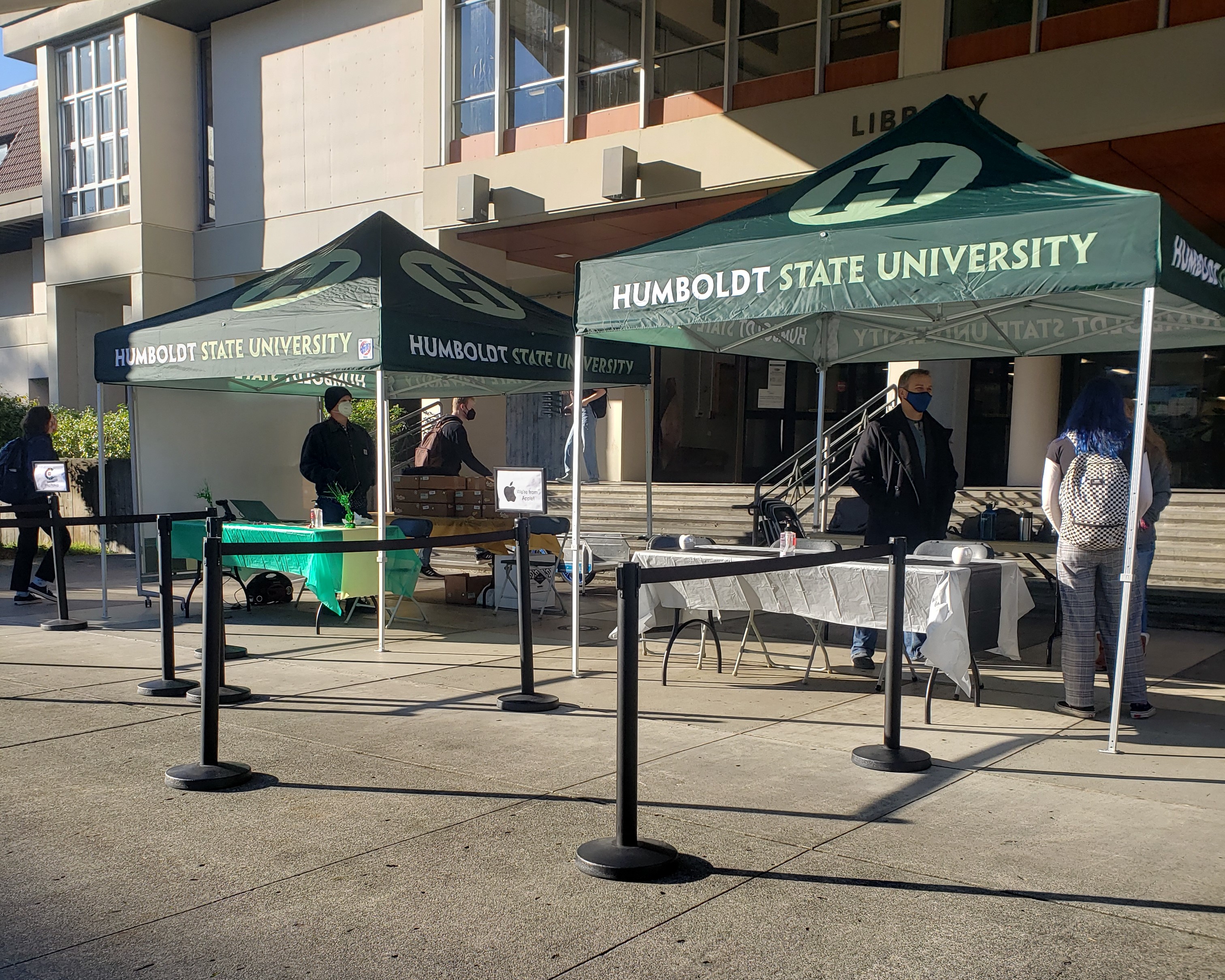
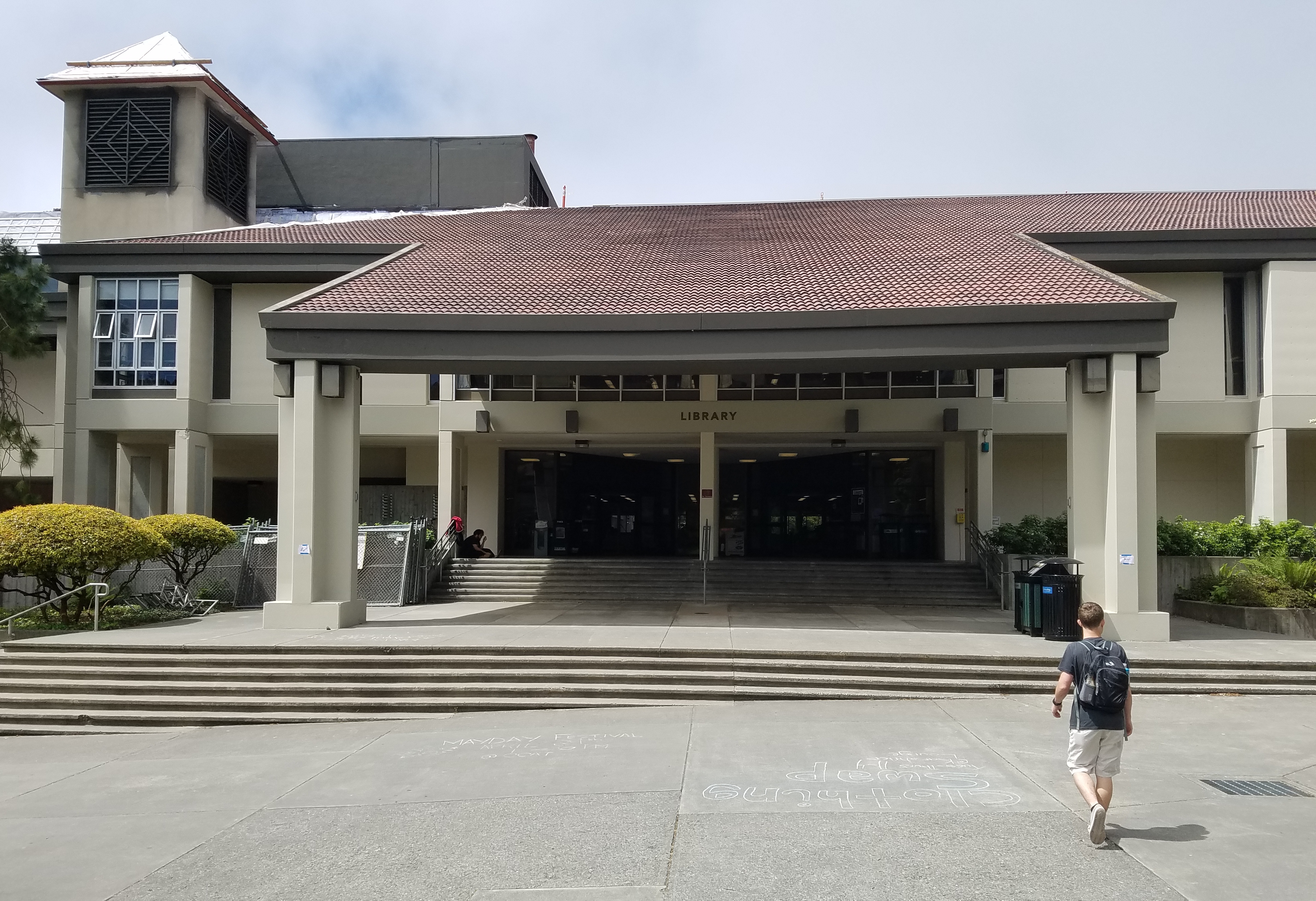
Humboldt State University set up tents in front of the library and gave out free iPads to incoming freshman and transfer students on Jan. 19.
The iPads were provided by the California State University Connectivity Contributing to Equity and Student Success (CSUCCESS) Initiative. CSUCCESS was created by the CSU in partnership with Apple. It debuted at HSU’s campus last fall and returned this semester.
Oceanography junior and transfer student Angelina Mayo got an iPad from CSUCCESS. She just transferred from Shasta College, where she worked as a tutor while attending school. A student that she tutored during the time used an iPad to take notes.
“I think it was just an incentive, and I wanted to try it because I saw a student at Shasta College use it and help keep her organized,” Mayo said. “She was more prepared for our tutoring sessions than some of my other students because of keeping her files together.”
HSU Library Student Assistants adorned the cardboard iPad boxes with HSU stickers. Stickers that are free for the taking at the Information Technology Services desk on the first floor of the library. Mayo stuck a green ‘H’ sticker on the h-button of her keyboard.
Photo by Alexis Valtenbergs | Apple Senior Account Manager Jenni Beck (back) helps transfer student Angelina Mayo (front) set up her free iPad outside the library on Jan. 19.
“I signed up for EOPS and got ‘swag,’ that’s what they called it,” Mayo said as she typed in her HSU ID and password on her new iPad. “And amenities.”
One of the amenities that Mayo opted for was the free iPad.
The goal of the CSUCCESS Initiative is to make technology more accessible to higher education students in the CSU system, especially in the backdrop of the ongoing COVID-19 pandemic that relegated students and faculty alike to remote Zoom classes.
“The biggest reason for that is to ensure equity and access,” Apple Higher Education Senior Account Manager Shawn Vandergriff said. “To provide the same level of technology to every student.”
According to Vandergriff, HSU has provided iPads to approximately 700 HSU students since CSUCCESS came to campus last semester. His goal is to bridge what he referred to as the ‘digital divide’ in higher education, which is often overlooked.
Eligible HSU students get to keep their free iPad throughout the duration of their academic career at HSU. Apple Care insurance will cover up to two instances of breakage, according to Vandergriff.
The CSUCCESS program is expected to return to HSU again in the fall.
“As long as we have a budget to do that, I can see it happening into the future,” HSU Customer Care IT Consultant Andy Pierce said.
To learn more about CSUCCESS at HSU, visit its.humboldt.edu/csuccess.
A note from a local bus driver longing for a crowded bus again
This is a letter to The Lumberjack from local bus driver Mark Condes. The letter has been edited only for grammar and punctuation.
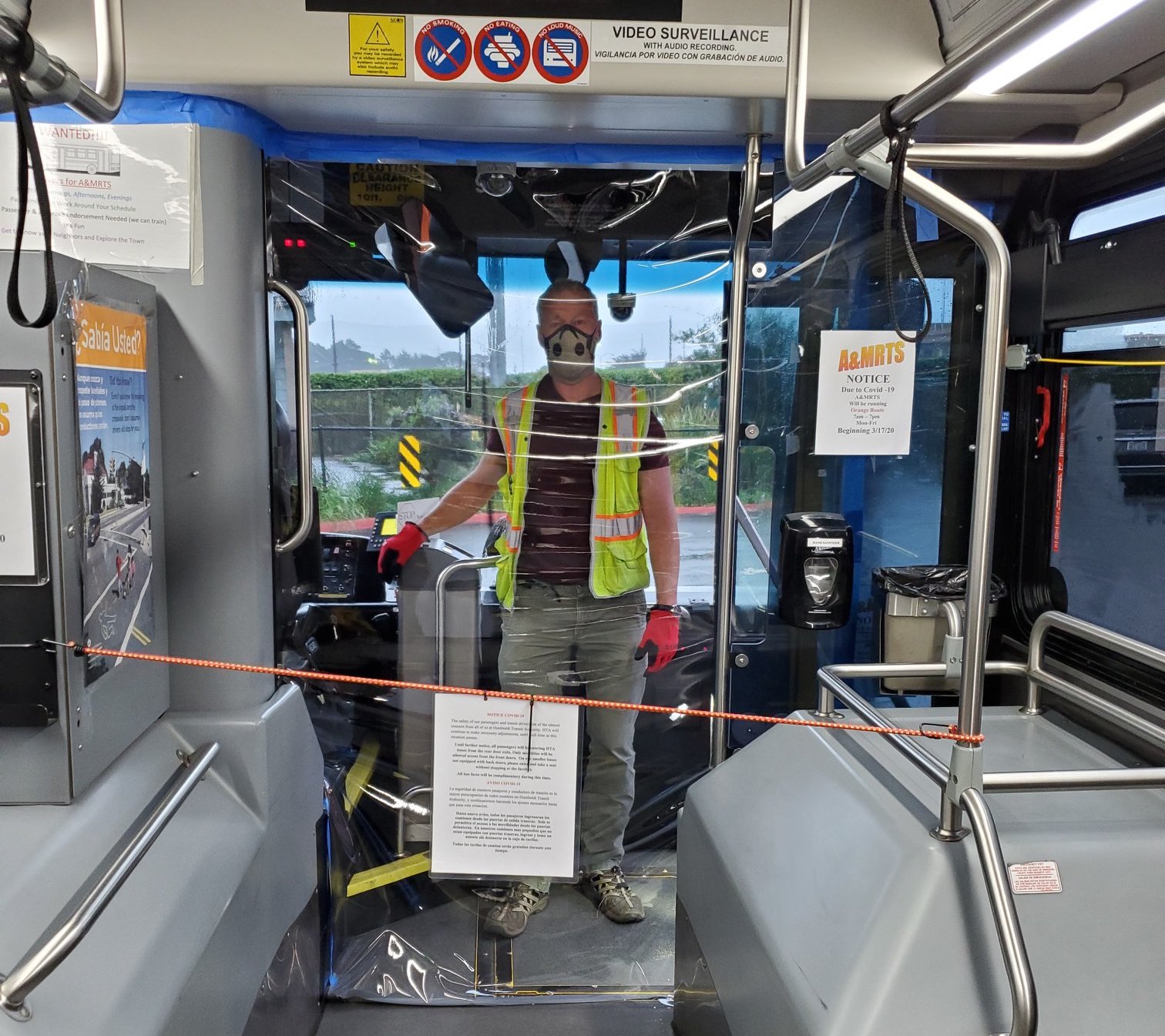
I drive a bus around Arcata, California. I frequent the Library Circle and the 14th Street & B intersection. Lately, on very infrequent occasions, I drop off an HSU student at one or the other. But this has been dwindling down to rare moments. I’m writing this because I just wanted to say that I miss all the students and faculty who have been my passengers for over a year now. . I miss making the rounds on LK Wood down to Camp Curtis, rolling out to Sunny Brae for my three stops there, the long drive down to Greenview Market to pick up the handful of students and a professor in that little corner of Arcata, and out to the Valley West loop where we scoop up the largest busload of students along Alliance and Foster streets, packing them in like sardines, as we like to say, with a call out to the back of the bus, “Do we have room for just ONE more?” . I’m a lucky person lately because I’m still working, still driving all over town. During these times, we only run what’s called the ‘Orange’ route. No more Red, no more Gold, just a mashup of both. . Truth be told, I feel a bit unlucky also. While we still pickup a handful of Townies going about their ‘Essential Needs’ business, nothing replaces all the bustling energy, the fantastic smiles, the mix of voices of my student riders. . I suppose I’m getting to the point, or heart, of the matter… ‘My’ student riders. Maybe I’m just a softie. I know I’m not some old lonely guy grasping at any human interaction, desperate for some validity that I still exist and matter. But yeah, I suppose I’ve formed an attachment at some level. Perhaps it’s a mix of all things that make me who I am, that have allowed me to feel some level of connection with the younger people heading off to HSU and their open road to the future. I have had the pleasure of watching my own kid go through the same process and life experience of college, and that was just a few years ago. I’m sure there’s a relationship here also. . While I ride around, one large circle each hour… hour-after-hour, I will often feel that tinge of loss, that nudge of sadness as I reflect on how alive this lumbering conveyance once felt, and now how hollow and empty it’s become. And then there’s that other factor, an anomaly I hope… the separation of driver from passengers via a vinyl wall. So impersonal, a clear Berlin Wall, if I may. . As I arrive at each stop, in particular the ones where I would pick up students, I still pause while glancing out in the distance. I find myself looking for those waving arms, that transition from a walk to a full-bore run, as a student realizes they may miss their bus ride to school. I grew to know a number of them well enough that I could only grin and patiently wait for them to arrive, panting, fumbling for their student ID to swipe once they clambered up inside. . I realize school will return to business in the future, and students will once again ride the bus. Yet, as with so many derailed aspects of our lives currently, there’s no firm date on when that will take place. . So I drive. I still take in those sweeping views as I top Union Street on my way to the Parkway Apartments, coax the bus up steep grades, and round the circle at the HSU Library. And when I pick up a familiar student, I still take off my sunglasses, pull down my mask, and with a smile call out through my plastic membrane, “Good Morning!” . From time-to-time as I roll through town, I catch a glimpse of a former, frequent student rider or professor, who no longer rides the bus. In those transitory moments, we may glance each other’s way at just the right instant. As recognition unfolds, so do the smiles, the nods, the waving of the hands, and I am granted a brief respite from the isolation imposed upon me by this COVID-19 experience. . While I am grateful to still be working, still driving, I am even more grateful for all the friendly smiles, the greetings, the eye-rolls, headshakes, and laughter over my bad jokes and puns, that I experienced these past semesters. I wonder how ‘My’ students are doing, how they are faring during these trying times… I care. . I look forward to life resuming in a more normal manner, and the days of a busload of students once again bringing their energy, excitement, and friendliness through the doors. I honk and wave whenever I see students in graduation caps and gowns getting their pictures taken by the gates of the university. I shake off that bit of sadness and drive on.
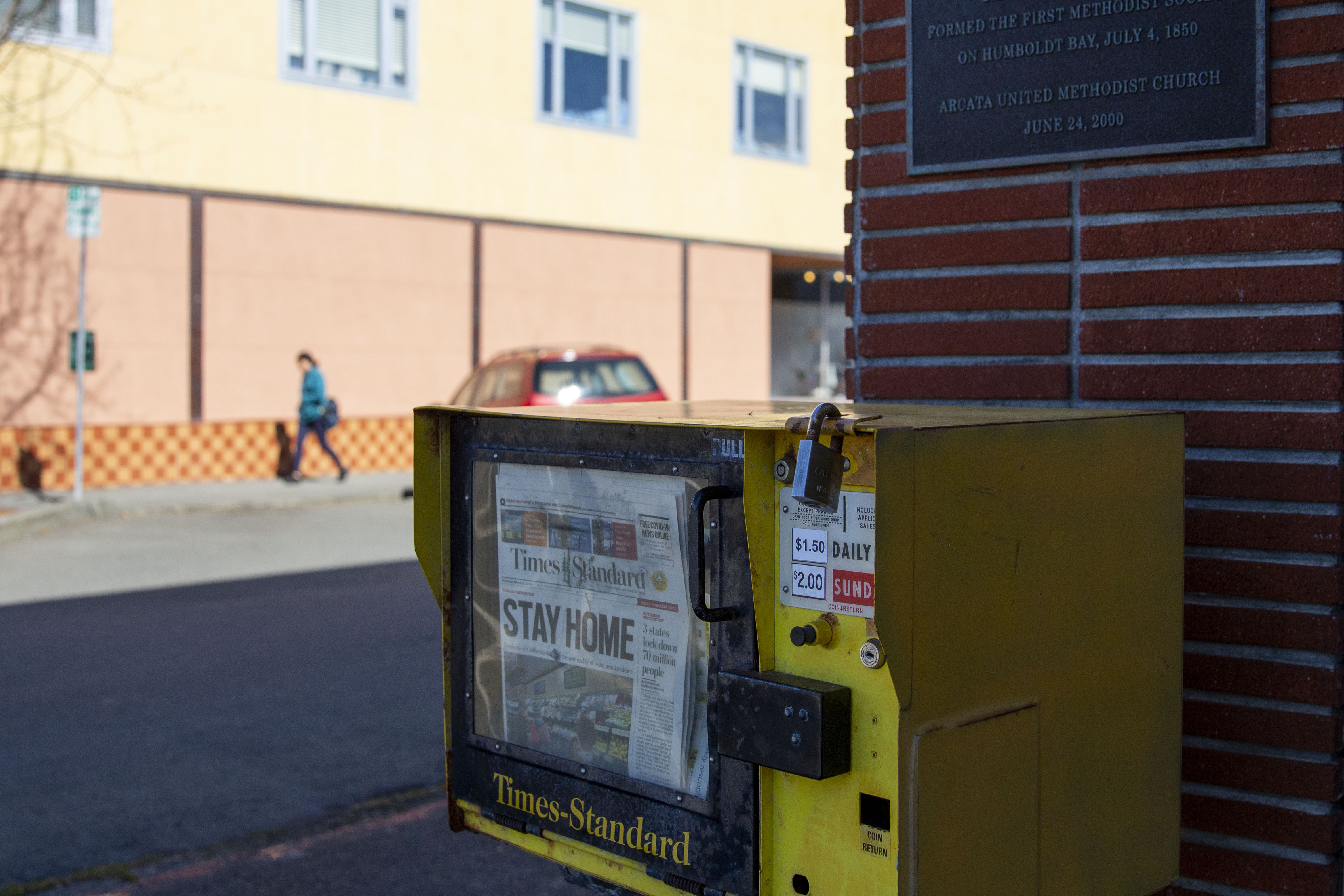
Photographer and Sports Editor Thomas Lal captured these scenes from around Arcata on March 21 at the end of spring break at the beginning of Humboldt County’s shelter in place order.
The storefronts on the Arcata Plaza look out on mostly empty streets.An employee sits at a computer while a sign advertises that the business is still open during the first week of a shelter in place order.The shelves in the Arcata Safeway.The Humboldt State Library.A lone person walks through the mostly empty parking lots at Humboldt State University.The Humboldt State Library.The Humboldt State Library.A single person works at the Humboldt State Library.A carton of eggs sits on the shelves at the Arcata Safeway.A lone person stands just off of the Arcata Plaza.An employee puts up a sign in the door of the Jitter Bean on the Arcata Plaza.
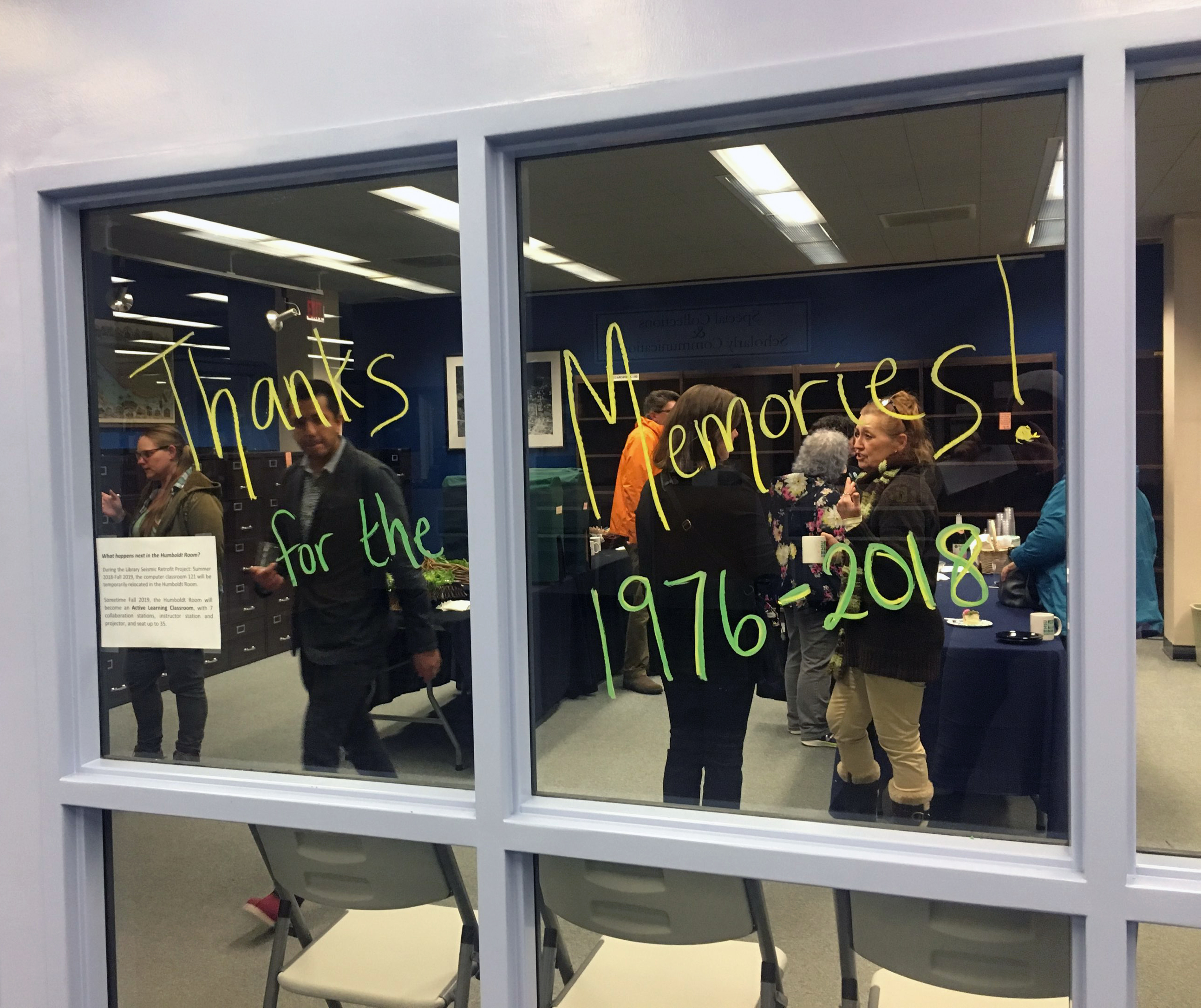
Humboldt State students now have access to more research materials than ever before. On Feb. 27, the HSU library hosted the grand opening of the new special collections section, previously contained to a tiny room on the third floor.
“It’s one of the biggest archives north of Sonoma,” HSU librarian Carly Marino said.
The special collections section is home to archived materials about many local topics of interest, including natural resources, native peoples, the fishing and logging industries, history of local buildings and the history of HSU.
“This is the spot where students and members of the community do research,” Marino said. “We’ve had people fly in from Germany to learn about the redwoods.”
With HSU currently in a budget crisis, this expansion of the special collections section was made possible primarily by grants and private donations from the Van Kirk family and retired librarian Joan Berman.
One of the ways the HSU library is working to make the resources more accessible is by digitizing many of the materials.
“When I came in here for the first time, it was very archaic,” Jorge Ambriz, HSU Early Outreach Department staff and former library scholar intern said.
Ambriz works with a team of people to do the painstaking task of digitizing some of the books and materials in special collections. It has taken them up to four months to digitize one book. But Ambriz finds the work and access to the material valuable, especially for history students.
“As students, we sit for months and months learning methods and theories,” Ambriz said. “This place lets you put those methodologies into practice.”
HSU Library scholar intern Alex Childers has also been working hard on digitizing materials and making them more accessible. Childers and other interns are working on a project adding historical articles, photos and letters to Redwood National Park’s Researching the Redwoods.
“It’s going to raise awareness for not only students, but also the community,” Childers said. “This is a really great place to start for research about anything. People use it for independent research, projects or for fun. ”
Special collections is on the third floor of the HSU library.
Hours are Monday 1-7 p.m. and Tuesday-Friday 1-4 p.m. or contact Carly Marino carly.marino@humboldt.edu for an appointment.
Imagine a mad scientist is trying to take over the town, and you and your friends are the only ones who can crack the code and stop him.
In an upcoming escape room simulation presented by the library for Open Access Week, students can do just that.
According to Kimberly Stelter, first-year experience librarian, this four-day event is about giving greater access to students.
“Open Access Week is about opening up a number of resources they have access to,” Stelter said.
According to the Open Access Week website, the global event is entering its eighth year and gives the academic and research communities the opportunity to continue learning.
Stelter said the library is wanting to students to become more familiar with this information in a fun way.
“It’s about learning and teaching in a different way, ” Stelter said. “I love games for learning, it’s gamifying education.”
This skillshop takes place Monday, Oct. 23 through Thursday, Oct. 26 at 5 PM. Registration is still open.
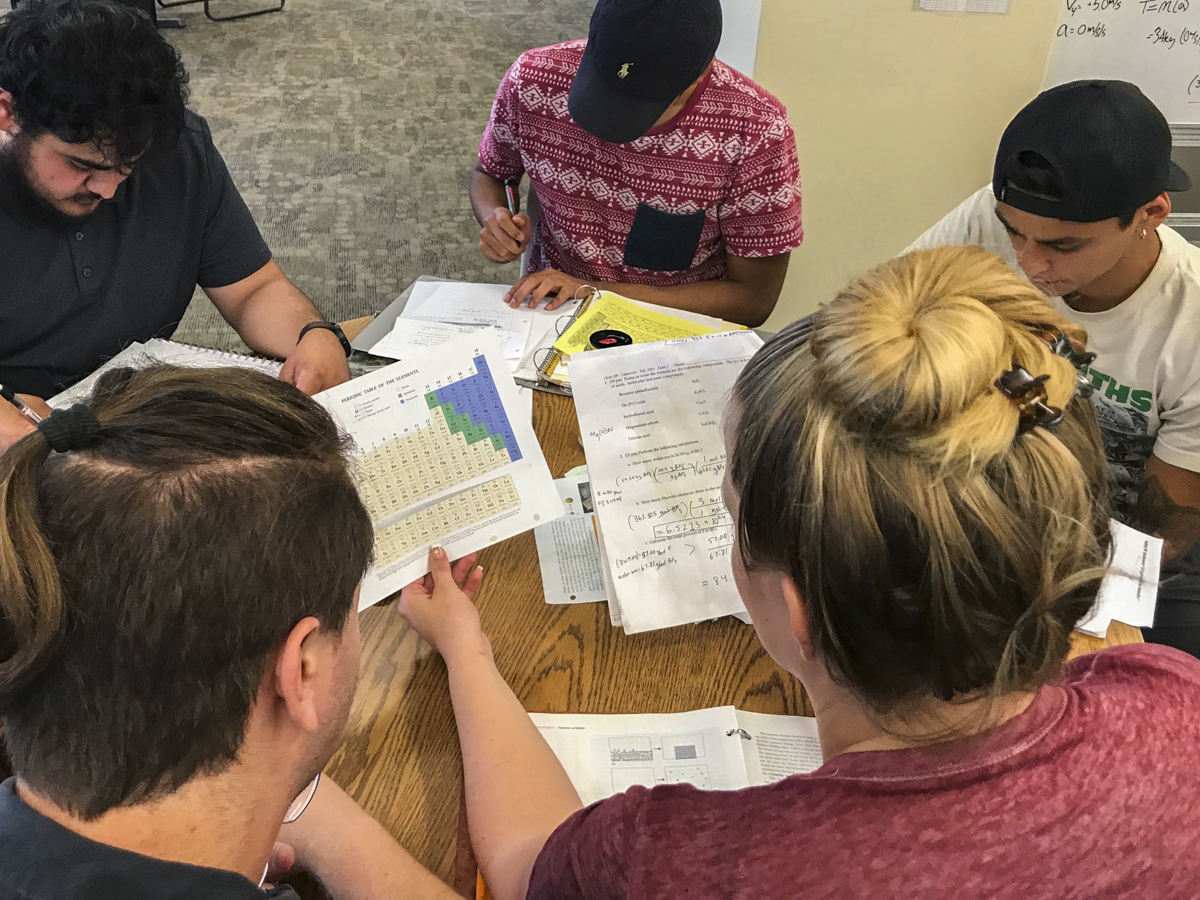
No more paying for individual tutoring or hiding away in dark basements. Tutoring is now free for all students.
The HSU Learning Center opened its brand new tutoring hub on the ground floor of the library. Su Karl, Learning Center Director, said the new facility cost $100,000 to build.
The hub was funded mainly by a $4 million grant by the Hispanic Serving Institution (HSI) STEM grant, which was awarded to HSU last year by the U.S. Department of Education.
“The new space is a lot more spacious and inviting. It was made possible by the HSI STEM grant,” Karl said. “That grant allowed us to build that up.”
Students working on computers in the library Photo credit: Ahmed Al-Sakkaf
Angelica Huerta is a Chemistry major and is a tutor for Chemistry, Math, and Physics. She is one of many students who like the new facility.
“Now I like it way better than last year it was in the basement,” Huerta said. “It was all weird and lonely.”
Mia Arnold and Katy Davidson, both majoring in biology, are also happy with the new location and setup of the tutoring center.
“Now it’s accessible and you can see it,” Arnold said. “Downstairs, it was dark and confusing it was like a maze.”
“It’s a solid setup, I like how it’s more open and you don’t have to go to the basement,” Davidson said.
Also thanks to the grant money, the Learning Center started this year with a budget increase of around $12,000. All tutoring services for about 50 subjects including individual tutoring are now free. Last year, students had to pay for tutoring or find their own groups
.
Finding a small group was difficult for some students, Karl said. Some students schedules didn’t fit with others and some students were shy of reaching out to other students, she said.
“That just didn’t seem fair, it didn’t seem right,” Karl said. “There were too many hoops for students to jump through.”
Huerta thinks the fact that all these roadblocks stopped a lot of students from getting tutoring.
The Learning Center opened in 1998 and was located in house 71, then moved to the library basement in 2009. Though all tutoring services were transferred to the library ground floor, few staff offices remain in the basement.
In the past tutors had little or no training and were also hired or laid off based on demand. Karl said in the past they would hire many tutors, many of them were getting very few hours and it didn’t make sense to train them.
“Some of them didn’t get the very best training because we didn’t have the funds to train them well,” Karl said. “The grant allowed us to increase training for our tutors.”
This year, the center employed 85 tutors, compared to 110 tutors last year. All tutors are a part of the California State University Employees Union – Unit 11.
“We’ve been trying to be more systematic about not just having quantity in terms of tutors, but having tutors who are well-trained who have enough hours,” said Karl.
Although the Math, Science and General tutoring labs fall under the umbrella of the Learning Center. In the past, they were located in different locations throughout the library. The Math tutoring lab was on the second floor of the library while the other tutoring was in the basement.
“The Math tutoring was all the way up on the second floor of the library, not a lot of people knew about the Math tutoring lab,” Davidson said. “It was also a smaller more confined space.”
Now they’re all situated in the same area, making tutoring more accessible for students. The new tutoring hub has become a one-stop-shop for tutoring.
“It’s much more helpful and easier to have the two places together,” Huerta said.
The HSI grant which helped fund the Learning Center’s expansion and reforms were awarded to HSU and divided over five years.
Though the improvements made are great, they aren’t sustainable over the long term. HSU is only receiving the HSI grant for a five-year period. When asked what will happen after five years, Karl said that’s up to the university or other grants.
About $150,000 is being subtracted from the HSU Library due to extreme budget cuts the school is facing.
This means that $80,000 is coming out of library staff positions and $70,000 is coming out of the library’s research collection, including books, databases, and journals.
Students and staff will start to feel the impact starting July 1 when the budget cuts will take effect.
HSU students working on computers at the HSU Library. | Photo by Liam Olson
Cyril Oberlander, the Dean of the University Library, said he wants to assure students that the school is making its budget cut choices in favor of the students.
“We have to be strategic about our budget cuts in the end and decide what is most likely to help students out the most,” Oberlander said.
The library’s biggest concern is to make sure students have all the resources they need to succeed in their education. This means providing more textbooks on reserve, improving the technology, and putting in more tables for students to work at.
Recently the library has made new additions to the second floor of the library by adding big screens for students to hook up their computers to and collaboration tables with charger ports in order to make the library environment easier to study.
The Dean of the Library’s goal is to keep student jobs in the library.
“I would like to hire more students in the library,” Oberlander said. “Student employment is great for retention and many students are dealing with debt.”
HSU Financial Affairs has to make budget cut choices amongst its departments, and unfortunately, the school cannot hold off the debt any longer.
Students working and sitting in the HSU Library lobby. | Photo by Liam Olson
“We only have a budget that stretches so far and this is the year we have to make cuts,” Oberlander said.
According to Oberlander, there are two reasons the school is facing debt. One reason is out of HSU’s control.
“Federal and state funding for higher education has been gradually decreasing over the years,” Oberlander said.
The second reason for the debt is the school’s overspending. A meeting was held on April 9 where the HSU Center Board of Directors met to discuss the debt issue.
“During the last five years, the University has been overspending and this year the deficit is at $4.1 million,” Peg Blake, the VP of Enrollment Management and Student Affairs, said in the meeting’s release statement.
HSU students working in the HSU library. | Photo by Liam Olson
Hundreds of students flow in and out the library every day, many relying on the computer software, databases, and textbooks on reserve to get their degree. Jocelyn Barber is a junior environmental engineering major who relies on the library to get a hold of pricey textbooks required for a class.
The study, “Student Watch: Attitudes and Behaviors toward Course Materials: 2015-2016 Report,” reports that campus stores remain the top source for course materials purchases, with 80 percent of students in the fall and 73 percent in the spring acquiring units from the on-campus retailer.
Students are willing to pay the exuberant bookstore prices for the sake of convenience of a one stop shop for all scholastic supplies and saving time on receiving the text.
According to HSU’s cost calculator the average cost for books and supplies is $1,660. With a little bit of extra planning these alternative methods of purchasing scholastic texts are just as convenient as ordering from the Bookstore and offer more affordable prices.
Online Rentals- Renting a book online textbook providers are often cheaper than bookstore prices. You might be cautious about the cost of shipping, but most sites provide free return shipping. An added benefit for online rentals are that some of these websites offer access to e-book version while you’re hard copy is being delivered. Websites like Bigwords.com let you enter the text’s ISBN number and generates a comparative price list with various online sellers. Some of the most popular textbook ordering sites include: Amazon.com, Chegg.com, and Half.com.
Book Swaps- HSU is a small community and you will inevitably share classes with the people in your major. Form a bookswap. Maybe a friend already has the textbook that you need just collecting dust. Offer a trade off.
Ask your professor- Professors understand that students can’t always afford the high cost of the required text and will sometimes have extra copies they can loan. Also, be sure to ask your professor if the most current issue of the text is necessary. You can save a lot of money buying an earlier model of the book.
Info Boards- Check the info boards near the class in which the text is required. Students who no longer need their book might post flyers selling their old copies for reasonable prices.
Check the Library- If you are really pinching pennies you might just want to check if the library has a copy of the text and photocopy the sections you need. As the cost of the copies can get expensive depending on the number of pages, you might want to try scanning the book and emailing the pages to yourself. Mind copyright laws!
This website uses cookies to improve your experience. We'll assume you're ok with this, but you can opt-out if you wish. Cookie settingsACCEPT
Privacy & Cookies Policy
Privacy Overview
This website uses cookies to improve your experience while you navigate through the website. Out of these cookies, the cookies that are categorized as necessary are stored on your browser as they are essential for the working of basic functionalities of the website. We also use third-party cookies that help us analyze and understand how you use this website. These cookies will be stored in your browser only with your consent. You also have the option to opt-out of these cookies. But opting out of some of these cookies may have an effect on your browsing experience.
Necessary cookies are absolutely essential for the website to function properly. This category only includes cookies that ensures basic functionalities and security features of the website. These cookies do not store any personal information.
Any cookies that may not be particularly necessary for the website to function and is used specifically to collect user personal data via analytics, ads, other embedded contents are termed as non-necessary cookies. It is mandatory to procure user consent prior to running these cookies on your website.