The Lumberjack


Students Serving The Cal Poly Humboldt Campus and Community Since 1929

Tag: life and arts

  • Concrete masquerades as the moon in Bradshaw exhibit

    Concrete masquerades as the moon in Bradshaw exhibit

    by Nina Hufman

    “Photography as Material,” a photography exhibit featuring the work of Julia Bradshaw, is now open at Cal Poly Humboldt’s Reese Bullen Gallery. The exhibit will be featured in the gallery until March 26. Gallery hours are on Tuesday and Wednesday from 11 a.m. to 5 p.m. and Thursday and Friday from 1 to 6 p.m.

    Bradshaw’s work involves taking high resolution photos and then processing them through traditional darkroom and editing techniques as well as computer photo editing.

    “I’ve never seen anything high resolution like that, it’s almost an illusion,” said Isabela Acosta, a Cal Poly Humboldt art history major. “I want to touch it because it looks like it’s coming at you.”

    The exhibition features two of Bradshaw’s bodies of work, “Stacks and Shapes” and “Survey.” “Stacks and Shapes” features manipulated images of paperback books. Photographs of books are arranged to create geometrical forms, some of which resemble landscapes. “Survey” includes images of concrete that resemble scientific photographs of the moon.

    Photo by Morgan Hancock | Julia Bradshaw’s “Survey” project inspired by early astrological photography.

    “All of those are concrete, that’s just concrete, but she’s making it look like images of the moon,” Acosta said. “She does that through different processes of developing films and taking things at a certain angle.”

    On her page on the Cal Poly Humboldt Department of Art website, Bradshaw says that the pieces included in “Survey” were inspired by scientific diagrams and notes. The photos were taken using a cardboard box and were edited using knives, inks, dyes, and other techniques.

    “The simplicity of the materials is a subtle poke at the vast gap between investment in science and investment in art,” Bradshaw wrote. “By pointing my camera at the most abundant of materials, I aim to empower imagination in conjunction with science.”

    Former Cal Poly Humboldt student and current faculty member at the Cultural Resources Facility in the anthropology department, Zedekiah Minkin, was impressed by Bradshaw’s moon-esque photos.

    “Compared to the real scientific images, it looks like it could be straight out of NASA,” Minkin said.

    Religious studies and art history major Cass Jensen also commented on the realism depicted in the photos. They also think that, by comparing concrete and the moon, Bradshaw is commenting on recurring patterns and themes throughout the universe.

    “I really like the collage work because it does look exactly like some sort of scientific model that you would see come from NASA,” Jensen said. “It helps elaborate how certain things can be very similar but very different all at the same time. It’s like how a lot of things that may look really far away and intangible are just, like, everywhere.”

    Jensen is a collage artist as well. They are inspired by how concisely Bradshaw is able to convey her message through her artwork.

    “I like the simplicity of it, it still makes a point without being too much,” Jensen said. “It’s not as complicated and overwhelming as sometimes my pieces come out to be.”

    Overall, the most striking quality of Bradshaw’s work is the illusion that she creates. The images are created to allow the viewer to see beyond just the materials used in each piece. The pieces do not necessarily resemble the materials that they are made of.

    “I get a raw sense,” Acosta said. “She’s just doing things from a different perspective.”

  • Goth Night at Richard’s Goat

    Goth Night at Richard’s Goat

    by Cherish Fulcher

    Photo by Lexi Rangel | (left to right) Lalo Rivera, Gigi Salazar, Chris Servi, and Josie Licavoli pose for a photo at Goth Night at Richard’s Goat on Feb 25.

    On Friday, Feb. 25, Richards’ Goat Tavern & Tea Room hosted its first ever Goth Night, created by recent Cal Poly Humboldt graduate Jamie Cocking. The event was a tribute to the Goth subculture, which originated in the United Kingdom in the early 1980s. The subculture is open ended, yet is heavily saturated with darker tone aesthetics and music.

    “I think goth subculture is all about expressing yourself in your truest form,” Cocking said. “Since I’ve lived here and have turned 21, I haven’t found any clubs or events with the music that I love to dance to, so I just decided to do it myself.”

    Being a small town, Arcata is not well-known for its nightlife. However, contributions to the scene, such as Goth Night, keep it going.

    “I just wanted to create a space where people could dress up as much as they wanted and not feel like they are sticking out like a sore thumb,” Cocking said. “Because for me, I mean everyday is Halloween.”

    Richards Goat will be hosting another Goth Night on April 9.

  • I am a queer Christian, not an oxymoron

    I am a queer Christian, not an oxymoron

    by Matthew Taylor

    My entire existence is a tightrope balancing act between two facets of myself, that are constantly told they cannot exist together. Yet these facets can not be divided from me nor from one another. I am queer. I’m a person of faith. I am a trans and bisexual Christian.

    As Lent rolls in, I often find myself having to reflect upon these two identities. I take this time of the year to re-orientate myself back to my spiritual core. It is a beautiful process that reminds me of my humanity and the love I receive everyday from my Creator, but it is a side that I often feel compelled to hide, just as I am often compelled to hide my queer side from the greater Christian community.

    It is a fine line. I’m constantly aware of my fellow queer peers’ religious trauma, something I’d never want to make them relive. It hurts, though, to know that my faith comes with so many automatic assumptions of my character.

    Some have ideas that I’m conservative in my politics or that I don’t affirm my own queer identity. I am neither of those, and neither are many other queer people of faith. So, I stay silent. Yet in this very silence I only continue to feed into the false narrative that all religious persons or persons of faith are non-affirming of queer identities, bigoted, or close minded.

    Growing up, I was extremely lucky to live in both a queer affirming and religious household. I was raised predominantly in a Christian denomination that had already begun to take the steps towards full LGBT+ inclusion by the time I was born.

    It is a huge privilege, one I constantly try to stay aware of. I also believe it is a statement of hope. I am living proof that one can grow up as Christian, as a religious person, and still fully affirm their own queer existence. It is because of this very truth that I continue to live knowing these two identities are not mutually exclusive.

    I don’t wish to proselytize or to convert any person to my own faith, nor to any religion in general. There is truth, validity and importance to be found in both agnosticism and atheism. All I wish is to break the narrative that all people of faith are non-affirming.

    This perception erases the amazing work that queer people of faith all around the world are doing to create rightful places for us in these sacred spaces. More frightfully, it gives more power to those of faith who may wish to silence us, oppress us or destroy us both within these religious spaces and out of them.

    I want to extend my love and validation to any fellow LGBT+ people out there who also desire to stay in or are currently part of any certain religion, whether you be Christian, Jewish, Muslim or belong to any other faith. There are people out there just like you, and there are resources out there that can allow you to flourish fully and wholly as you are.

    This Lent, as many like me take this moment to pause and self-reflect on ourselves, I hope to show through my actions and pure existence that religion and spiritual expression are as much a right to LGBT+ people as they are to others.

  • International Education Week: Feb. 14 – 18, 2022

    by CPH’s International Studies Students

    Global Engagement Begins at Home

    This year’s keynote speaker, Mary Akpovi, who was born in Nigeria but has lived most of her life in California, inspired us to be both local and global citizens. While Akpovi has spent most of her career in public accounting, her true passion, in recent years, has been charity work. Having been involved with several charity organizations here in the United States and abroad, she has a lot of wisdom to offer.  

    Photo courtesy of Mary Akpovi

    In California, Akpovi was previously a board member for the Exceptional Children Foundation, an organization that provides services to children and adults with learning and developmental challenges. She also worked with Hope of the Valley Rescue Mission, an organization that assists people experiencing homelessness. 

    Her international work has been centered in Sierra Leone, Uganda, and Kenya. She has been instrumental in opening vocational training centers in these countries and continues to support several vocational schools, primarily in tailoring, catering and salon care. 

    When asked where her passion for charity work comes from, she said it was the support she received in her own life, from her father, her religion, and from others.  Now, she is paying it forward by mentoring, and it is at the heart of everything she does. In her opinion, it is one of the best investments a person can make. She hopes participants got the overall message that everyone has potential. That potential can be fostered by encouraging one another, being intentional, and “staying in your lane,” a phrase that Akpovi holds close to her heart.

    by Rachel Hood

    Movement and Identity

    In light of forced displacements, violence, and complex geo-political issues, Dr Tani Sebro (PSCI) explored the cultural performances that have served the critical function of Myanmar’s refugee population in her session “Aesthetic Nationalism: The Dance of War and Exile along the Thai-Myanmar border.” 

    In the context of conflict and exile, music, dance, and the performing arts play a pivotal role in creating a sense of national and community, according to Sebro. As a cultural ethnographer who also underwent training in the traditional performance arts called Jaad Thai, Sebro was able to experience how dance and performing arts made life possible outside the contemporary nation-state system for exiled people. In essence, physically synchronized rhythmic movement promotes a strong sense of unity within all cultures, religions, and nations. It also holds potential for expressing ethnic identity for refugees, especially for the Tai living in a time of danger.  

    by Johnny Mendoza

    IEW Highlights Black Voices 

    On Feb. 14, Professor Maxwell Schnurer kicked off International Education Week with a presentation about the music and activism of Fela Aníkúlápó Kuti, a Nigerian Pan-Africanist and musician. 

    During his life, Kuti reinvented African culture as a revolutionary act to subvert colonialism and reassert his autonomy as a Black person. “I never thought about it, being African as such,” Kuti said in an interview from the 1970s. “It didn’t mean anything to me until much later in my life.”

    Schnurer deconstructed the sociology of colonialism to provide a framework for cultural appropriation, a phenomenon that exploits indigenous Black cultures in particular. Colonialism is a kind of discourse that perpetuates a narrative of European superiority. 

    “You’re born out of the womb into a world of discourse,” Schnurer said. “Your grandparents, your aunts and uncles had language on this planet, before you arrived.” 

    Umoja Center for Pan-African Academic Excellence Coordinator and International Studies alumnus Doug Smith also spoke, sharing his ongoing master’s research about Pan-African identity. 

    “For many people of color, the use of English as a language, as a means of communication, is very tied into their history and engagement with colonialism and settler colonialism,” Smith said. 

    by Emma Roberts and Lex Valtenbergs 

    Levels of Connection

    International Education Week helps inform us about the issues that connect us wherever we are in the world; two presentations made this point very clear. 

    COVID-19 is perhaps the most immediate example of how globalization affects our daily lives. Economics professor Beth Wilson brought this idea closer to home by looking at the impact of the pandemic on education. 

    Wilson’s information-packed presentation examined the different ways that the pandemic has affected the lives of one billion students worldwide, particularly in developing countries with little access to technology. Short term decisions made by local authorities will have long term economic consequences Wilson argued that “COVID-19 is the biggest education disruption in history.”  

    To finish out the week and bringing the world back to Humboldt, alum Viridiana Preciado discussed the work done by the Sovereign Bodies Institute, an organization that helps locate missing and murdered Indigenous women. 

    Preciado’s presentation highlighted the injustices that indigenous communities face on a daily basis and talked about the work SBI has done locally with the Yurok tribe and offered ways people can support this effort. She concluded her presentation by pointing out that she got her job after meeting the CEO of her organization at an IEW session two years ago. 

    “I just followed my heart and introduced myself after the session. I told her I really wanted to help make a difference and here I am,” said Preciado. 

    by Laura Gurney

    Following the Flow: Coffee and Gold

    We are very fortunate here at Cal Poly Humboldt to have professors who are passionate about the work they have done, and who want to share their knowledge and experience. International Education Week offers faculty from across the university the opportunity to showcase their work. 

    Gordon Ulmer and Noah Zerbe traced the “social life” of two very different commodities economically and culturally. 

    Together, they explored the impact of global markets for gold and food (and specifically for coffee) on local communities around the world. Each of these common goods ties together different social, cultural, political, and economic ideas. They also asked us to think about our own responsibility in that global exchange. 

    “Starting my day with a cup of coffee connects us, connects me, connects all of us to these broader economic, political, cultural, environmental questions,” Zerbe said.  

    by Abby Reina-Guerra 

    Only 1% of College Students Study Abroad – Stand Out from the Crowd

    Despite COVID-19 and lockdowns, Cal Poly Humboldt is beginning to plan for study abroad again. Five different sessions during International Education Week helped students prepare for their trips. Videos are available on the IEW website (iew.humboldt.edu/schedule) where you can hear from students about their own experiences; from budget planning and cell phone plans to what it was like to be a student of color in a strange place. 

    Professors Matthew Dean and Joseph Diémé also hosted a session to talk about their Leon, Spain and Nantes, France programs scheduled to take place this summer. They discussed the appeal of faculty-led programs, including the ease of transferring credits and even the possibility of gaining a minor. More information can be found on the Humboldt Study Abroad website, which also includes information about other programs through the CSU or third-party providers. All programs are available to any student at Humboldt regardless of major. 

    A final look at study abroad was presented by Jonathan Maiullo of College of the Redwoods, who discussed the importance of recognizing the impact you have in the communities where you travel. He stressed the importance of “responsible storytelling” as a way to share your experiences with others while respecting the culture you visit. If you are thinking study abroad is not for you because of cost, there are a number of scholarships with deadlines coming soon. 

    Stand out from the crowd – study abroad: https://humboldt-international.terradotta.com/

    by Debora Rios

    A World of Love, Education and Grief

    Kicking off on Valentine’s Day, it seemed natural for anthropologist Mary Scoggin to speak of love in the context of China.She discussed the many different ways in which we understand and express our affection, and how even our most cherished emotion is rooted in our own cultural history. 

    Educating the next generation is deeply rooted in culture. Vincent Biondo, Department Chair of Religious Studies at Cal Poly Humboldt, talked about Islam and citizenship education in Europe. Biondo addressed the question of how Europe should respond to diversity and incoming migrant communities, specifically Muslims. Biondo argued that Europe should invest in schools that teach pro-social values. 

    “There’s a lot of evidence that shows that people solidify their prejudices by the time they’re in middle school,” Biondo said. 

    In other words, if one educates students at a younger age about diversity, communities would become more accepting. 

    On the other end of the spectrum, Kerri Malloy of San Jose State discussed a workshop he was asked to help host in 2019 on promoting and protecting civil and human rights. That year the seminar was exclusively designed for members of the US civil service like ICE and FBI agents. Perhaps more importantly, it took place at the Auschwitz concentration camp as organizers felt there was no better place to talk about the erosion of human and civil rights. 

    As Malloy showed multiple pictures of the camp, he asked his audience to consider these images not simply as foreign, but to think of places here in California that are also places of violence. 

    As he repeatedly observed, “These places were built to last – they have a permanence – they mark the landscape forever.”   

    by Haley Rodden and Cataleena Tchieng

    Work Around the World 

    International careers offer an extraordinary experience for anyone to branch out of their comfort zone and explore the world. Through your experience abroad you can gain a stronger understanding of other types of cultures, peoples, environments, and governments depending on the work you choose. People who work in an international setting are often pushed to confront extraordinary new elements that open any number of lifetime options. 

    Careers extend from working on a campus to help students to build their own international experience. Nora Montoya of Cal Poly Humboldt’s Academic and Career Advising Center took time to work for the Peace Corps, and Ryan Gliha worked for the State Department. He has since spent his career helping build strong relationships between the United States and other nations around the world. Now, as the diplomat in residence for California, Gliha is helping students join the foreign service. 

    Even while still in college there are ways to build a strong international profile. For example, the State Department has remote internships around the world and every government department hosts internships that could help you build your career. 

    “International work is an opportunity like no other,” Gliha said. “It will change your life”. 

    For support or more information contact ACAC and Nora Montoya (nora.montoya@humboldt.edu), John Keller, Peace Corps (Jkeller2@peacecorps.gov) or Ryan Gliha, State Dept (DIRnorthwest@state.gov).

    by Leslie Ortiz


    About International Studies

    Photo courtesy of the International Studies dept.

    International studies is an interdisciplinary major that examines the drivers of globalization. The goal is to better understand the forces that shape the world so we can make changes in that world. Students study other languages and are required to study abroad as part of their own exploration of the interconnections between people and places local and global. 

    International Education Week, now in its 23rd year at Humboldt, is a 1-unit colloquium crossed-listed by six majors and open to the community, but required for international majors. This year, IEW brought together faculty and staff from across Humboldt, California and the world via Zoom to present 30 hours of programming to well over 700 attendees. 

    Students in this year’s international capstone class acted as hosts for each session and wrote this report of the week’s events. We are honored to be guest reporters for The Lumberjack and hope this helps you feel less distanced in a time of COVID-19. We are rooted in this community but still reaching for the world.

    If you have any questions about IEW or international studies, my door is always open. 

    Professor Alison Holmes (alison.holmes@humboldt.edu). 

    International Education Week would like to thank its sponsors and all of our presenters. The full schedule and videos of sessions from 2022 (and 2021) can be found online: https://iew.humboldt.edu/

    International Studies Capstone Class Spring 2022
    Laura Gurney, Rachel Hood, Johnny Medoza, Leslie Ortiz, Abby Reina Guerra, Debora Rios, Emma Roberts, Haley Rodden, Cataleena Tchieng, Lex Valtenbergs

  • Humboldt Circus clowns around campus

    Humboldt Circus clowns around campus

    by Gabriel Zucker

    As his staff flew around his body. It became an extension of himself, twirling over the pavement. Man and tool became one through dance. Liam Boyd, a transfer student, and part-time circus performer ran up to the booth with a clown nose and a staff in hand. He had no idea Humboldt had a circus club and was overjoyed to meet everyone. Boyd started to perform with his staff and soon was joined by others, slowly growing into a full-grown performance.

    The Humboldt Circus is one of many student-led Cal Poly Humboldt clubs. These clubs give students a safe place to meet like-minded individuals and learn new skills.

    Photo by Gabriel Zucker | Louis Parr and Isla Marten sit behind the Circus Club banner, calling people over to check them out. Feb. 11.

    On Wednesday, Feb. 10, student clubs set up booths around the Quad. This gave new students a chance to learn about and join these clubs, opening the door for new friendships and experiences.

    Louis Parr, President of Humboldt Circus, brought a box full of circus props to their booth. Immediately the traffic in front of the booth increased.

    “Circus is a magical place, full of fun and free creativity,” Parr said. “You are allowed to do whatever you want to, within the circus.”

    Every week Circus hosts “Play Time” Monday from 5-8 pm at the West Gym. There they give students a chance to let their inner freak out in an artistically unique way. In this space, students are given complete freedom to explore and experiment to their heart’s content, trying new things every time, or perfecting one act over the course of the year.

    Isla Merten, a longtime member of Humboldt Circus, walked around the Club Fair. They juggled everything from bowling pins to thin disks. Soon they were joined by more and more interested students, all signing up for the club and trying out some of the cool props. By the end of the club fair, multiple students had stopped what they were doing and taken a couple of minutes to try out different props and write down their emails.

    Photo by Gabriel Zucker | Louis Parr, President of Circus Club, does bike tricks around the quad, during the Club Fair on Feb. 11.

    Humboldt Circus gives its members endless possibilities for what they can perform and act out. Character acting and improv also have a place in Humboldt Circus. Props are used for tricks, laughs, and skits, adding a new layer to the performance. This year Merten moved away from the props and instead focused on improv and clowning.

    “A clown means being creative and open to work with what you are given,” Merten said. “The spirit of play and creation.”

    Embodying the clown, they act out scenes by themselves and with others. Merten uses improv to expand and perfect their character. Humboldt Circus, like all the other student clubs, gives a social place for students to bond with one another. When asked about who usually joins the club, Merten didn’t miss a beat.

    “It’s a club for introverted weirdos,” Merten said with a laugh. “We have extroverted weirdos too.”

  • Food sovereignty lab hosts indigenous film series

    by Krisanne Keiser

    In 2019, Cal Poly Humboldt students envisioned a project that would re-indigenize the campus by creating the Rou Dalagurr Food Sovereignty Lab & Cultural Workspace.

    According to the summer 2021 FSL Progress Report, this new indigenized space is “dedicated to the research, practice, and preservation of food sovereignty and traditional ecological knowledge. The purpose of the FSL is to provide an opportunity to work directly with the surrounding communities, tribal nations, and national and international scholars and community leaders to center, learn, and engage with Indigenous science, environmental management, and preservation practices.”

    The Food Sovereignty Lab serves to “unify our students, faculty, local tribes, and communities; to center and support tribal sovereignty, natural resource management, and preservation practices; and to provide students with culturally appropriate education in Indigenous natural resource management that respects Indigenous sovereignty and self-determination and serves our community.”

    To help the public and Cal Poly Humboldt students understand the practice of food sovereignty, there will be an online film series via zoom that highlights the importance of revitalizing traditional food sources in March and April.

    The first film, “Inhabitant: Indigenous Perspectives on Restoring Our World,” will be presented by the Social Justice Summit on Thursday, March 3 at 7 p.m. PST.

    The second film, “Voices From the Barrens: Native People, Blueberries & Sovereignty,” will be shown Thursday, March 24 at 7 p.m. PST.

    “Gather” will be shown on Thursday, April 14 at 7 p.m. PST.

    The third part will be a double feature. “El Cacao: The Challenge of Fair Trade,” and “No Place to Grow,” featuring a discussion with filmmaker Michelle Aguilar, will be shown on Thursday, April 24 at 7 p.m. PST.

    Interested parties can register online at https://forms.gle/UtD35UCCF89LJqY27

  • Glass art with John Gibbons

    Glass art with John Gibbons

    by Lex Valtenbergs

    Tucked away in a small alley behind Six Rivers Solar on Broadway in Eureka is John Gibbons Glass. At his glass art workshop, Gibbons can be found coaxing hot molten glass into stunning art pieces or after melting down raw glass in his homemade furnace.

    Photo by Lex Valtenbergs | John Gibbons (left) and Matthew Gagliardi (right) shaping a glass sphere at Gibbons’ glass art shop in Eureka on Feb. 1

    Gibbons was first introduced to glass art by his father at antique glass shows when he was five or six years old. He’s been hooked ever since. While studying glass art at college, he dreamed of it when he slept.

    “All I could think about was blowing glass,” Gibbons said. “I dreamed about it every night for a year.”

    The glass artist community in Humboldt County is small but tight-knit. Matthew Gagliardi, a glassblower with three decades of experience under his belt, has worked with Gibbons for the last five years. Gibbons and Gagliardi both use soft glass, a fluid type of glass that is ideal for sculpting.

    “We all kind of work with each other,” Gagliardi said. “There’s only so much of us in the county that work with soft glass.”

    Photo by Lex Valtenbergs | Michelle Coelho diverts heat from John Gibbons’ face with wooden heat shields while Gibbons shapes a glass sphere in his shop in Eureka on Feb. 1

    Michelle Coelho is another one of the few Humboldt-based glass artists who works with soft glass. She has been doing it for 20 years, about as long as Gibbons has. Gibbons, Gagliardi and Coelho all specialize in Venetian glassblowing, a technique that dates back to the 8th century AD. The type of tools that they use goes back to the 14th century AD.

    The trio worked in synchronized harmony on the morning of Feb. 1 to transform a glob of raw glass into a beautiful pendant light, a lime green sphere with a hypnotic spiral pattern rolled into the glass on a steel table – a marver – and inlaid with a mold.

    “It’s like a well-orchestrated dance,” Coelho said. “John’s body language tells us what to do next. It’s not so much verbal, it’s visual.”

    They were constantly in motion to prevent the glass from losing its temperature and shattering or drooping down towards the floor like viscous honey falling off a honeycomb, as Coelho put it. They have to be on sharp alert at all times. Not only is the glass is heated up to over 2,000 degrees Fahrenheit, the operating costs involved are expensive as well.

    “There’s a lot of trust, and also money,” Gibbons said. “You gotta trust them not to break your investment because there’s a lot of money that goes into it.”

    Photo by Lex Valtenbergs | A close-up shot of a hypnotic pendant light made by John Gibbons, Matthew Gagliardi and Michelle Coehlo at Gibbons’ glass art shop in Eureka on Feb. 1

    Gibbons hired a media assistant in April 2021 to vamp up his online presence. Makayla Sandifer worked in information technology before she found a niche in media production and picked up the job at Gibbons’ shop.

    As a Black woman in a white and male-dominated field, Sandifer enjoys the opportunity to work in such a dynamic space that fosters her creativity.

    “It’s honestly awesome,” Sandifer said. “It allows me to bring diversity to spaces that didn’t have it previously and to reflect that in my work. It’s super gratifying.”

    The product photos that Sandifer takes for Gibbons’ Etsy profile do justice to his vibrant glass art pieces. Whimsical starfish vases, turtles with bubbles of glass trapped inside their shells, and light fixtures adorned with alluring spiral patterns boggle the mind with their complexity, vibrant colors, and otherworldly beauty.

  • New A24 film shows off the beauty of Humboldt County

    New A24 film shows off the beauty of Humboldt County

    by Sophia Escudero

    On Friday, Feb. 11, the A24 movie “The Sky is Everywhere” premiered on Apple TV+, accompanied by a red carpet event in Old Town Eureka. Filming took place locally on such locations as Moonstone Beach, Arcata High School, College of the Redwoods, and Sequoia Park, and over 500 locals were involved in the production, myself included.

    The film itself explores the grief of Lennie Walker, a high school girl grappling with the sudden loss of her idolized older sister. Lennie, portrayed by actress Grace Kaufman, finds herself caught between a grief-forged connection with Toby, her late sister’s boyfriend (Pico Alexander), and Joe, an intriguing new music student fresh from a Parisian conservatory (Jacques Colimon), but more than that, she finds herself torn between mourning and moving on.

    Director Josephine Decker depicts this world through a lens of magical realism. Lennie’s inner turmoil causes a storm around her only she can see, and the act of playing music literally leaves her walking on air. While these slightly surrealist aspects could serve to take one out of a film, here it serves to highlight Lennie’s turbulent emotions and sense of unreality. The visuals help set “The Sky is Everywhere” apart from many other YA dramas, while characterizing it with a certain twee sensibility and aesthetic.

    The film’s minor characters round out the ensemble with heart and soul. Tyler Lofton’s nice guy Marcus, Ji-Young Yoo’s supportive bestie Sarah, and Jason Segal’s stoner uncle Big are all highlights, but Cherry Jones as Lennie’s grandmother Fiona is the standout star of the ensemble. Jones grounds the piece with her kind yet authoritative presence, quietly stealing the show without detracting from her costars. Though the film focuses on Lennie, it, unfortunately, does so at the cost of the people around her. We never get more than one or two shallow notes on many of the people populating this world, despite the actors turning in genuine performances with what they were given.

    Still, nothing is quite like seeing my own hometown (and in one scene about four minutes in, my own face) filmed so beautifully and professionally on the silver screen. Humboldt is on full display here, with every scene reminding the local viewer of a place they know well. A jubilant dance scene appears before the Old Town Gazebo, a heartfelt apology takes place in the streets of Ferndale, and the Arcata Presbyterian Church hosts the funeral that sets so much into motion. The emotion of seeing one’s home in this way was one shared by Deputy Director of the Humboldt Film Commission Nate Adams, who I interviewed at the red carpet.

    Photo by Sophia Escudero | Eureka Mayor Susan Seaman cuts the red ribbon commemorating the Old Town gazebo as a site of filming Feb. 11.

    “It’s overwhelming, trying to focus on the movie and seeing the locations, and the people, and the art, and even my friend’s stickers made it into the movie,” Adams said. “It’s just overwhelming to see so much of Humboldt.”

    Film Commissioner and HSU alum Cassandra Hesseltine teared up as I asked her about her experience helping create this production.

    “I cried at the end of the movie yesterday when I watched it,” Hesseltine said. “Part of why I cried is because I love working in film. I wanted to work in film since I was five. Besides the content of the movie, and it is a beautiful movie, the reason why I cried was just to think about how all this happened in my community, that I helped it happen, and it was really, really special.”

    “The Sky is Everywhere” is available for streaming at Apple TV+.

  • Drop In and Skate Out: Latin Edition

    Drop In and Skate Out: Latin Edition

    by Matthew Taylor

    A flurry of rainbow colors whipped by as Cal Poly Humboldt students both old and new skated side by side across the West Gym’s floors. Outfits ranging from the mundane to the elaborate, with glitter dotting the faces of many, could be seen throughout the room.

    Near the entrance of the gymnasium, two tables were draped in sarapes and decorated with marigolds, sugar skulls, and an assortment of popular Mexican candies. Behind these tables stood a large speaker and multi-colored spotlights, as well as over thirty chairs where students would fight to get the tight roller skates onto their feet.

    Volunteers collected donations for the El Centro Académico Cultural de Humboldt (El Centro) ‘Graduacion Latinx’ ceremony.

    “The first [Skate Night] was just a phone speaker,” Taylor Sachez, an ESM major, said whilst putting on her own skates. “Since then we’ve got a DJ and sponsor.”

    El Centro is that sponsor. Under the ideas and leadership of Giovanni Guerrero, ESM major and a student staff member of the organization, this Latin-themed skate night was born. This project has been in the works since the fall semester of last year.

    “I heard about HSU having skate nights,” Guerrero said. “I wanted to combine the skate night with Latin music to make it a kinda party.”

    Photo by Abraham Navarro | Cal Poly Humboldt Students round the corner in the West Gym during Roller Skate Night on Feb. 4.

    A party it certainly was. Students skated in circles around the linoleum floor, but many also danced together, swinging each other around with the momentum of their wheels.

    Latin music blasted through the speakers and through the skaters’ bodies, with the DJ, known as B1g $uave, interjecting every few minutes to liven the crowd up. When he’s not spinning the tunes, B1g $uave is José Juan Rodriguez, wildlife biology major and student staff member at El Centro.

    Cal Poly Humboldt students and friends Norma Francisco and Cierra Holmes heard about the drop-in skate nights through El Centro’s sponsorship.

    “I would go [skating] occasionally, mainly while in middle school,” Holmes said. “I think ice skating is easier.”

    “I think this is easier,” Francisco replied with a laugh. “I was nervous to come, both to skate for the first time and from being off-campus for so long.”

    Both friends were able to agree on one thing though, the event was fun and had good vibes.

    Kumami Jackson, a local science major, explained that he’d been skating on and off since the 3rd grade but skateboards pretty regularly.

    “It’s kinda the same motion,” he said.

    A few couples dotted across the room could also be seen skating together. One such couple was Jessica Ordaz, a mathematics education major, and her partner Gilberto Gamboa. He held her arm or hand all night as she attempted to learn how to skate. She was the event specialist for El Centro, but this was one of her first times doing this kind of skating.

    “I’m very grateful for the people here, I want to encourage people to come out,” El Centro staffer Guerrero said nearing the end of the event. “[El Centro] is planning [other] events, Ciencia Para Todos and Cafe con Chisme.”

    Ciencia Para Todos (Science for All) will be hosting the creation of their bilingual science children’s book this Friday at 3 pm in Nelson Hall 206, and community talk space Cafe con Chisme will meet on Friday, Feb. 18th at 3 pm in Nelson Hall 205.

  • Dating in the time of COVID

    Dating in the time of COVID

    by Krisanne Keiser

    None of us thought we would wake up one morning and be told that we could no longer make connections the way we were used to. COVID-19 became a part of our daily lives, affecting us at every turn.

    Dating during a worldwide pandemic has impacted us all in unique ways, including CSH students.

    Local resident and Cal Poly Humboldt alumnus Olivia Brock shared their experience.

    “Dating during COVID times for me is for sure more online now at the beginning of talking to someone,” Brock said. “It definitely restricts what we do … all the dates I’ve been on have been outside usually somewhere in nature with a mask on.”

    Once you’ve managed to meet someone, COVID-19 precautions also complicate bringing them home. Having roommates means that bringing over a new flame has to involve conversations about masking, exposure, and testing.

    “But once enough of the outside dates and FaceTime dates have happened and it feels worth it, then we could move forward with figuring out how to add someone to our exposure bubble. It’s a lot of logistics and communication,” said Brock. “I enjoy FaceTime dates a lot, because I don’t have to leave my house and they’re easier to schedule.”

    Building connections online does have its advantages, according to Brock. She says it forces her to be more engaged in the conversation, because that’s the only way there’s any hope of forging an online connection.

    “Overall, COVID has forced me to go slower in relationships and communicate boundaries more effectively,” she said.

    History major Victoria Bankson often worries about the vaccination status of potential partners. She says that if the person she’s interested in has purposely chosen to avoid getting vaccinated, that completely changes her opinion of them and weighs into her decision to ultimately not date them.

    “I’m not going to mess around with somebody who’s unvaxxed, that’s just not right,” Bankson said. “We don’t have the same values if you’re that way.”

    She also shared that conversing online isn’t the most enjoyable way for her to get to know someone, but that having a phone conversation feels more intimate and comfortable.

    “I don’t like texting online, and I don’t feel like I’m the best communicator that way,” Bankson said. “I’m much more of a ‘give me a phone call’ [person,] which is very much opposite of what things are now.”

    Junior Franziska Daumberger doesn’t feel like COVID-19 changed the dating scene for her personally, but acknowledges that it added some new challenges.

    “People would either be careful about COVID and say like ‘oh I’m vaccinated’ or ‘I wear a mask’ or wanting to meet in outdoor places,” said Daumberger. “And then that’s further stipulation upon whether or not I was interested in them or not … if they didn’t care at the height of it I was like ‘I don’t wanna be even knowing you because your beliefs don’t align with mine.”

  • Caribbean cuisine comes to campus

    Caribbean cuisine comes to campus

    by Angel Barker

    A new local restaurant opened on the Cal Poly Humboldt campus. Located inside the College Creek Marketplace, Taste of Bim is now serving the public. The grand opening for this Caribbean-inspired spot happened on Wednesday, Feb. 2.

    Gabrielle Long is the owner of the Eureka-based restaurant. She was accompanied to the grand opening by her mother Verna. Long says she is excited for the opportunity to bring a fresh set of flavors to campus.

    Photo by Abraham Navarro | Gabrielle Long, owner of Taste of Bim and her mother Verna Long serve up carribean cuisine at the ribbon cutting ceremony on Feb. 2 outside the College Creek Marketplace.

    “Bim is slang for Barbados,” Long said in her statement before the ribbon-cutting ceremony, “I want to continue to spread Caribbean love and flavor.”

    The menu will go through rotations depending on the day of the week, featuring many items including plantains, jerk wings, burgers, curry chicken, and more.

    “A Taste of Bim seeks to satisfy your soul via your taste buds in a warm and classy atmosphere,” the restaurant’s website says on its welcome page. “Our cozy little restaurant specializes in Caribbean cuisine inspired by our family’s heritage.”

    This all authentic food is now available to students, staff, and the public. James Richards, Resident Dining Director, was ecstatic for the opening.

    “It is the kind of place you’re going to go and leave full,” Richards said in his speech.

    Richards went to the restaurant prior to the opening on campus and loved it. Taste of Bim was recommended to him by Dr. Jason Meriwether, Cal Poly Humboldts Vice President, who also loved the food.

    “The food spoke for itself,” Long said. “Dr. Meriwether came down and tried the food and he loved it.”

    All that was left was the logistics. College Creek Marketplace had an open spot for new food and it was a perfect place to add some flair and flavor.

    Many people came out for the grand opening ribbon-cutting ceremony. There were free samples and swag. Janaee Sykes, Social Events Specialist in the Admissions office went for two reasons.

    Photo by Abraham Navarro | Cal Poly Admissions speciallists Rickiyah Mcgrady and Janaee Sykes, enjoy carribean cuisine at the Taste of Bim ribbon cutting ceremony on Feb. 2 outside the College Creek Marketplace.

    “I came out to support local black business. It’s quite refreshing to have them on campus,” Sykes said. “I really liked the cod fritter, it was probably my favorite. I usually don’t like fish but it is not super fishy.”

    Sykes mentioned she had been to the original spot before and it was always delicious with great customer service.

    “The customer service was 20 out of 10, totally recommend,” Sykes said.

    “The plantains are really delicious,” said Admissions Counselor Rickiyah McGrady. “And the beef empanada is just delicious.”

    Many Cal Poly Humboldt faculty and staff showed their support for the new business during the grand opening.

    Featuring all student employees, Taste of Bim is now open Monday through Friday from 11 am to 7 pm. Head there any day of the week to experience flavors from Barbados and the Caribbean.

  • Defining Black History Month

    Defining Black History Month

    by August Linton

    To Zephie Harvey, Black History Month is an acknowledgment of the depth and value of Black heritage and culture.

    “Black History month means looking back at my heritage and knowing where we came from,” said Harvey.

    Photo by Abraham Navarro | Cal Poly Humboldt student Zephie Harvey

    However, they also say that it should serve as a reminder of the inequities that Black people still face. Black History Month is also about the history being made right now. Harvey points out that there are many areas in which Black people have only recently been allowed to exist.

    “It’s 2022 and we’re still having firsts for things,” they said.

    Like many people of color and especially Black people living in Humboldt County, Harvey felt a bit isolated before finding community resources like the Umoja Center.

    “I’m from an area that’s very heavily populated with Black people so it’s hard finding that community here,” Harvey said.

    Harvey is a dance major here at CPH, and will be performing in the “Evening of Dance” show later this semester.

    To Nicole Rahman-Garnier, Black History Month means celebrating the accomplishments of Black people.

    Photo by Abraham Navarro | Cal Poly Humboldt graduate student Nicole Rahman-Garnier

    “In the last couple of years, that script has kind of flipped and we’ve been able to more celebrate the triumphs rather than focus on the tribulations that we’ve faced,” Rahman-Garnier said. “It’s a little more of a positive notation of what it means to be Black, what things that we’ve done.”

    As for her experience in Humboldt, Rahman-Garnier says that becoming a student has connected her to the Black community here. “It’s changed over time, when I first moved here it was hard to find a place,” she said.

    “It’s weird being [a Black person] in the sciences because that’s not something that you see a lot here. That’s something that I’m kind of working on changing right now too, not only for the campus culture but for Humboldt culture in general,” said Rahman-Garnier.

    Rahman-Garnier is a grad student at CPH studying the morphology of fish olfactory organs.

    Gloria Thompson and Joi Mehn table in the Quad for CPH’s Umoja Center for Pan African Student Excellence.

    To Mehn, Black History Month means simply “celebrating Black people.”

    The events that the center is holding over the course of this month represent different facets of that celebration. Among others, these include an event highlighting Black achievements in STEM, a Black history expo, an African diaspora celebration, and regular “Kuumba: Dance for Creativity” classes every Saturday.

    Photo by Abraham Navarro | Cal Poly Humboldt student Gloria Thompson

    Everyone is welcome and encouraged to attend.

    “Not holding a Pan African identity does not disqualify anyone from participation in any events or programs, we value cultural exchange and invite people from other backgrounds to ground with us,” said the Center’s website.

    Thompson said that her experience being Black in Humboldt has been “Interesting, but I’ve been finding my people, and that connection is really important.”

  • Moon Cycles: queer-owned bike shop in Arcata offers alternative space in male-dominated industry

    Moon Cycles: queer-owned bike shop in Arcata offers alternative space in male-dominated industry

    Correction (2/4/22): Co-owners Sage and Sprout did not meet while looking for a job but instead meet years prior as mutual HSU students.

    Moon Cycles, a brightly colored bike shop located on the side of the road near the intersection of Foster and Alliance in Arcata, is hard to miss. The bike shop was founded in October 2016 by nonbinary duo Sage and Sprout, a queer tour de force.

    Sage and Sprout serve the local cycling community by offering a queer-friendly space that goes against the grain of the male-dominated bike industry. Even the shop name is a pun that alludes to queer identity.

    Photo by Alexis Valtenbergs | Sprout standing in the doorway of their store Moon Cycles in Arcata on Jan. 27.

    “It’s a play on words, the moon being associated with femininity and the menstrual cycle,” Sage said. “Even if we don’t feel like women, the moon is a signal to our queerness and difference.”

    Sue Hilton, a 71-year-old lifelong bicyclist, is a regular customer at Moon Cycles. Hilton first caught wind of the shop in the L-Word, a lesbian newsletter based in Humboldt County.

    “My friend Susan did an article for the L-Word, so once I heard about it I started going,” Hilton said. “I loved the idea since I’m a big bike rider. Just that they’re great people, and they’re queer-friendly.”

    Although Moon Cycles is queer-owned, it’s not just for queer people. Moon Cycles an accepting space for everyone, regardless of gender or sexuality.

    “I’ve seen that especially with men but like most people, if they come in and they don’t know the words for things, they’ll feel apologetic,” Sprout said. “We’re not looking down on anyone for not knowing correct terminology or what the names of parts are or stuff like that.”

    Sage and Sprout met in Humboldt County while trying to find jobs at other bike shops, to no avail. After facing gender discrimination in the hiring process and being looked over in lieu of men, they decided to open their own shop instead.

    Photo by Alexis Valtenbergs | Sage (left) and Sprout (right) inside Moon Cycles in Arcata on Jan. 27

    “One year, neither of us could find jobs here,” Sprout said. “We kind of just started scheming and thought, ‘well, maybe we should just try to open a bike shop.’”

    “There’s an important caveat there,” Sage added. “Which is that I applied to all the bike shops here and I felt – I knew – I was being discriminated against and judged by my gender.”

    Sage won a mechanic scholarship from Quality Bicycle Products. The scholarship was an attempt to include more women and gender-nonconforming people in the bike industry.

    “They were trying to bring women – and gender-nonconforming people more recently – into the world of bike mechanics so that the whole industry can get more diversified,” Sage said. “And they can tip the balance a little bit away from men dominating the whole thing.”

    Ever since Moon Cycles opened, Sage and Sprout have played an integral part in tipping the balance in Humboldt. To learn more about Humboldt’s first and only queer-owned bike shop, check out @arcatamooncycles on Instagram.

  • “Something Rotten” is happening this spring

    “Something Rotten” is happening this spring

    The cast and crew of Cal Poly Humboldt’s spring musical have been meeting for two weeks now, ever since the start of the semester. Rather than fully polished scenes, their rehearsals consist of bare-bones run-throughs, scripts in hand and tape on the floor where the set will eventually be.

    The show is “Something Rotten,” a farcical comedy set in an anachronistic 16th century. The two main characters, the Bottom brothers, invent the concept of a musical and feud with their rival, Shakespeare. The show re-characterizes The Bard as a rocker, not dissimilar to a Freddie Mercury type charismatic frontman.

    “The show is about love, relationships, ego, and anachronism,” said director Michael Thomas. “You’ll see a cell phone or two, there might be a modern toilet plunger.”

    Although “Something Rotten” is set in the Renaissance, the music and dancing are rooted in Broadway tradition. At this particular rehearsal, choreographer Carrie Walpole was working with the cast on the dancing for the track “A Musical.”

    This number will feature the cast tap-dancing, and is best described as a classic musical theater style composition. Another track, “Will Power,” performed by the character of Shakespeare, is unmistakably rock. The Bard croons out his famous lines “Shall I compare thee to a summer’s day? Thou art more lovely and more temperate,” over a driving bass line.

    “It’s more like a rock musical, it’s a very upbeat score,” said Thomas.

    Cast members and crew alike were required to be at Wednesday’s rehearsal for most of the evening. Stage manager Ian Aguilera and his two assistant stage managers Benji Salisbury and David Fisher spend just as much time as the actors, if not more, preparing for and producing the final musical.

    Before the rehearsal had even started, before the director or most of the cast had arrived, Aguilera was at Van Duzer Theater, preparing.

    “Tech and acting are kinda fifty fifty,” said Aguilera, when asked about how much the crew do behind the scenes. “The director’s not here, I am.”

    With the support of the crew literally behind the scenes, the musical’s cast can do their best work. While the actors go over scenes, Aguilera sits at the front of the stage assisting with minute production details and even helping with direction.

    “Something Rotten” takes advantage of its self-aware premise for comedic effect.

    “It’s a musical about a musical,” said Aguilera. “It’s [the main characters] versus Shakespeare.”

    In one scene, the soothsayer Thomas Nostradamus, played by Sammi Pietanza, looks into the future of theater. He says that the characters will break into song and dance, and a glass of wine at concessions will cost an exorbitant amount of money.

    Pietanza’s character acting is silly, joyful, and extremely animated, even at this early stage of production. They said that it’s easier for the director to scale back an overdone performance than to draw more out of a timid one. They were the center of attention on stage, striking wizardly poses and speaking the script with mystical energy.

    “The character [Thomas Nostradamus] is like a human goblin,” Pietanza said. “Like a Danny DeVito kinda trash rat.”

    This energy that Pietanza brings seems emblematic of the production as a whole. It’s a whole lot of passionate people, coming together to make something silly, dramatic, and distinctly musical theater.

    Director Michael Thomas is looking forward to what will hopefully be a live, in person performance of “Something Rotten” in April.

    “People should come see it because it’s a fun, silly evening,” said Thomas. “It’s full of action, it’s colorful and upbeat.”

  • Punk Patchwork

    Punk Patchwork

    About half of Xoë Sioux’s wardrobe is covered in scraps of fabric, plastered with the names and logos of various bands and bits of art.

    “The whole thing about punk is to dress your own way, how you want to look and not fit into society’s views of you, and so a big part of it is like creating your own clothes,” Sioux said.

    Wearing patches on their clothes identifies Sioux to other members of their subculture.

    “Other punk kids, or metal kids, or anybody in the subgenre- if they see it and they appreciate it, then that makes me happy,” Sioux said.

    According to Sioux, the history of decorating clothes with patches dates back to the origin of punk itself in the 70’s and 80’s.

    “People were creating patches for all the bands that they liked, like The Clash, Discharge, Sex Pistols unfortunately,” Sioux said. “They started stitching them onto their clothes to create a statement.”

    Patches also serve as free advertising for the bands they represent. Nat Cardos, who came up in the southern California punk scene and now plays in several local bands, explains the process.

    “You have these punks who buy your patches at your show that you make yourself,” said Cardos. “When they sew them on people will see them, and be like, oh, what’s that band.”

    In addition to the aesthetic value they add, patches also help extend the longevity of garments. When the original fabric gives way, a patch can allow one to continue wearing the item of clothing for years to come. Many punks have taken to using more durable dental floss to secure their patches rather than sewing thread.

    “I like the look of it, and they stay together way better in my opinion,” Sioux said. “And they make me smell good because I smell like mint.”

    Sioux’s favorite patch is from a band called Bathory, her favorite band of all time. The band took inspiration from the Countess Elizabeth Báthory de Ecsed of the former Kingdom of Hungary, who was infamously convicted of torturing and killing hundreds of girls and women, in what some say was an effort to retain her youth. The patch, in classic alternative style, depicts a disembodied goat head above the band’s name in gothic script.

    For the people that wear them, patch jackets can be a chronicle, the time and place where each patch was attached forever sewn into the fabric. Cardos recalls exactly what their first patch was as it is still on one of their jackets.

    “I bought it online, and you’re probably going to have to censor this, but it says: ‘fuck all crooked cops, may their corpses rot,’” Cardos said. “It’s my favorite patch I own.”

    Cardos says that patch-making is an integral part of the DIY subculture within punk. In addition to buying patches that bands sell as merch, most also make some of their own patches. There is no set method.

    “A lot of people make them using either screen-printing ink and canvas, or a lot of people also will just use sharpie if they have a light enough fabric for it,” said Cardos.

    Sioux has some guidelines for others looking to get into wearing patches.

    “It’s really fun to dress weirdly, and dress out of the norm, and patches make you look really cool,” Sioux said. “But I definitely highly recommend listening to the music that you’re putting onto your clothes, nobody likes a poser.”

  • The arroz with the most

    The arroz with the most

    Arroz con leche is a delectable delight, come to save you on your freezing nights. This Mexican rice pudding had my tongue rolling out of my mouth like a fruit roll-up as I would float through the hall after a hovering trail of steam all the way to my mama’s sweet, creamy arroz.

    The soft sweet rice will over stuff you and your friends, leaving plenty of leftovers for you to fiend after at midnight (I wont tell if you don’t) because arroz con leche tastes good hot AND cold, and you’ll want to try it both ways, trust me.

    The name translates to “rice with milk,” which is pretty much all this dish is (two kinds of milk, to be specific), making for an uber-simple recipe that takes less than an hour to prep and cook. This dish is simple and sweet with miles of room for improvisation and improvement. Add raisins, almonds, chocolate, strawberries, bananas, churros, apple slices- these are just a few of the unlimited ideas you could throw in the rice. There are lots of different variations, but without further ado: my mama’s bomb ass bare-bones recipe.

    Here’s what you’ll need:

    Ingredients
    
    1 cup regular long grain ricey rice
    
    3 cups soaking wet water
    
    2 sticks of cinnamon
    
    1 14 oz can of sweetened condensed milk
    
    1 12 oz can of evaporated milk
    
    Ground cinnamon to sprinkle on top
    

    In a big ol’ pot on the stove, add your water and cinnamon and bring to a rolling boil. Once boiling, add your rice and reduce the heat. Let simmer for about ten minutes, or until the water has reduced about half way. At this point, lower the heat a touch more and add in your evaporated and condensed milks, stirring it in and mixing every few minutes until hot. Bada bing, bada boom- rice in your spoon, taste it and you’ll be on the moon. Give it to your lover and they’ll swoon. Dust with cinnamon powder, top it off with whatever you fancy, and chow down!

  • Nina G uses comedy to start conversations

    Nina G uses comedy to start conversations

    On Jan. 28, HSU students were able to tune into a virtual event held by the SDRC where comedian Nina Ghiselli, better known as Nina G, provided laughs and a deeper insight into how she got to where she is today.

    Nina G, a comedian, professional speaker and author of “Stutterer Interrupted” reflects on the importance of student resources for students with disabilities.

    “It was resources like those provided by the SDRC that allowed for me to get through school,” Nina G said as she reflected on the struggles that she faced in grades K-12.

    When she was eight-years-old, Nina G was diagnosed with dyslexia and accommodations became essential for her progress in school. It was not until eighth grade, after receiving a failing grade in her math class for only doing half the work, where she recognized the lack of awareness surrounding the accommodations set for those with disabilities.

    Heather Hollingsworth is a first year transfer student at HSU and resonated with Nina G when it came to the lack of understanding when it comes to accommodations.

    “Some of the professor’s excuses are that accommodations give me an unfair advantage”, Hollingsworth said. “It would be too much work on their part, they do not think I need them, and lastly, my favorite, that I need to find a way to get over my disability and stop using it as an excuse to be lazy.”

    Back in October of 2017, the SDRC launched a “1 in 10” campaign. It was an effort to spread awareness about the amount of students with disabilities on campus, encouraging inclusion and acceptance. The campaign expressed that although disabilities are not always apparent, they are still widely present among the student population.

    Kim Coughlin-Lamphear, a student access advisor for the SDRC, feels like it is important that students at HSU keep in mind that the SDRC makes up 10% or more of the student population at times.

    “We are really trying to take away the negativity surrounding disabilities,” Coughlin-Lamphear said. “The usual, visual picture that students will have is someone who has a physical disability that you can make note of, but that is not always the case.”
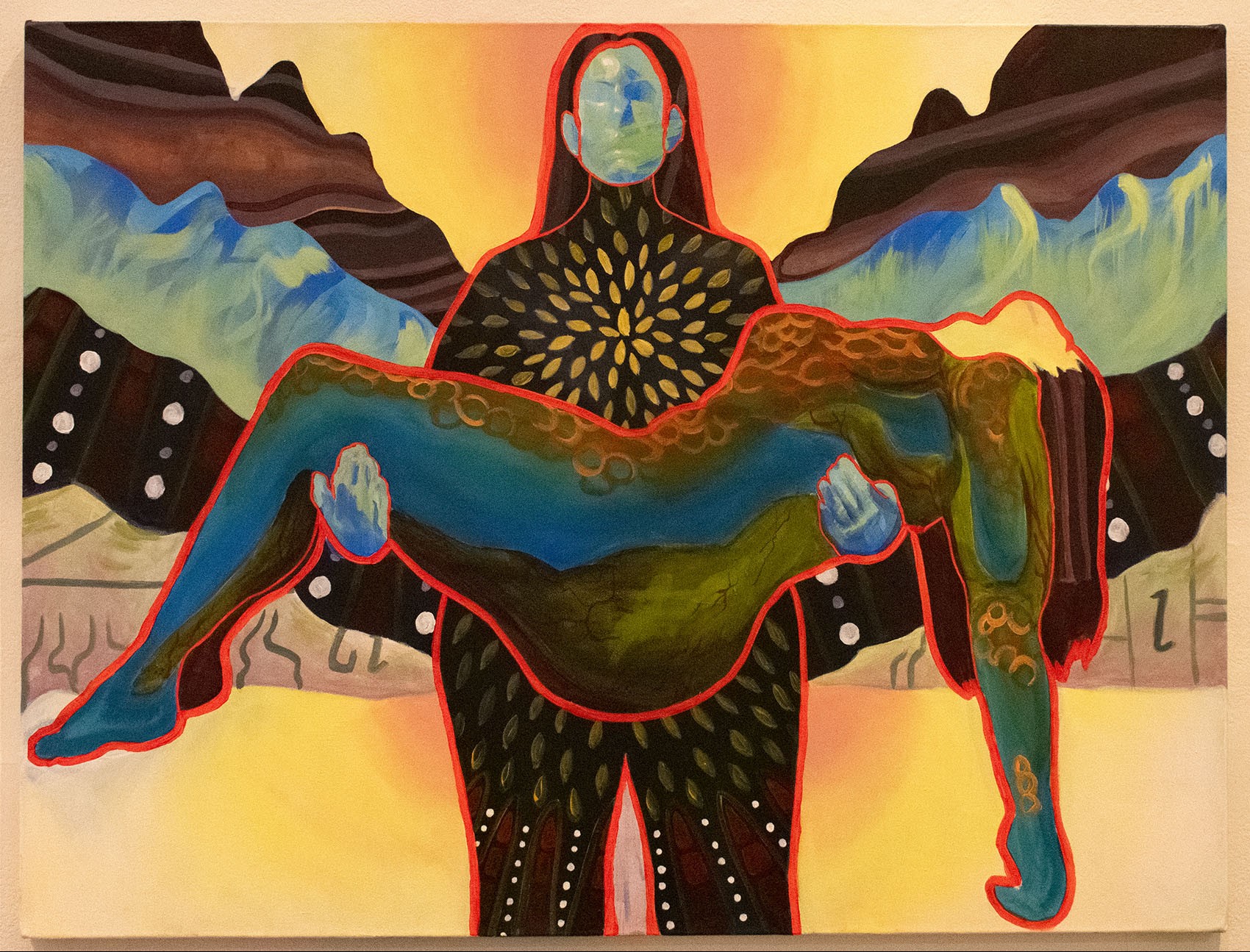
    The reality of living with a disability is diverse and Nina G focuses on that, along with other stigmas surrounding the misconceptions that society has when it comes to understanding and including people with disabilities. Her journey of being a stuttering comedian is continuously a work in progress as Nina G constantly wants to improve her art and reach more audiences. She wants to continue to bring awareness, while also using humor as an unconventional approach to tell her story.

    For the SDRC it is important for the students at HSU to have a deeper understanding of where everyone is coming from and encourage inclusivity across campus.

    “For any individual, there’s this notion about being included, of being understood,” Lamphear said. “So having someone who promotes that understanding and inclusiveness is what Nina brings forward for a lot of people.”

  • Local Mexican Restaurant owner Esteban Gonzalez passes at 55

    Local Mexican Restaurant owner Esteban Gonzalez passes at 55

    Esteban Gonzalez was 55 when he passed away from pneumonia in relation to COVID-19 on January 12. The tragic news shocked the community and everyone that knew him, leaving behind a huge legacy and heartfelt memories with those who knew the well-known Arcata restaurant owner.

    Gonzalez was able to open his first taco truck in 2000. What started as just him and his wife selling food out of a trailer, expanded into a second location and became one of the most popular restaurants in town. After the pandemic started, his outdoor benches continued to be a convenient destination to go out to eat.

    Located in the heart of downtown Arcata, the restaurant provided high school and HSU students a delicious and positive place to stop for lunch or dinner.

    One of those students is Brandon Allen. He grew up in Humboldt County and went to Arcata High School.

    “This is just such a loss for the community all around,” Allen said.

    Allen remembered stealing a soda from Gonzalez in his freshman year of high school when Gonzalez caught him in the act. Allen felt so bad that he went back after school to apologize. Instead of punishing him, Gonzalez was actually happy to see him.

    “He was super understanding, letting me know that everyone makes mistakes,” Allen said.

    Even after high school, he continued to eat there and Esteban would still remember his order and want to hear about how he was doing.

    “Esteban was such an important part of my teenage years,” Allen said. “He taught me a lot without me really grasping it until much later.”

    Kyra Cohen, a senior at Humboldt State and an Arcata native started going to Esteban’s during their freshman year of high school.

    “He was the first in Arcata that all the high schoolers knew and loved. He’d help out kids when they were short of money, and simply had the best restaurant for Arcata kids,” Cohen said.

    Gonzalez’s restaurant was not only a great place to eat. He also created a fun and loving environment every time you walked in.

    Cohen remembers making jokes with her friends, and Gonzalez would just crack a calm smile. He’d often jokingly laugh and smile at them.

    “He’s the go-to for sure. I crave an Esteban’s burrito more than anything,” Cohen said.

    Brook Reeser is an HSU senior who grew up in McKinleyville. She worked at Redwood Day Camp during the summer, and she and all her co-workers would go to Esteban’s for lunch. They all called his burritos the “best they’ve ever had.”

    Arcata Main Street set up a GoFundMe page for Gonzalez’s family and has already surpassed their $15,000 goal with $28,116 as of Feb 1.

  • COVID-19 pandemic seeps into our dreams

    COVID-19 pandemic seeps into our dreams

    The unprecedented and life-altering pandemic is affecting our dream state

    Dreaming is the psychological phenomenon of our minds that creates vivid images as we descend into a deep sleep.

    Humans are hyperactive and social creatures. When we’re not participating in daily activities, our minds enter states of depression, stress, boredom and now more than ever, paranoia.

    The pandemic’s effect on our lives has certainly altered our psyche, undeniably impacting the way we think and the contents of our dreams.

    HSU senior majoring in journalism Alexis Valtenbergs has had multiple bizarre and lasting dreams since the shelter in place began. Her most notable dream involved catching COVID-19 and experiencing symptoms in the dream.

    “I almost had an anxiety attack the first time I woke up like that,” Valtenbergs said. “I was convinced, thanks to the paranoia, that I had COVID, that it would kill me.”

    Valtenbergs found entering a good headspace before bed made a significant impact on her dreams throughout this time in quarantine. Meditation and muscle relaxation exercises before bed does the trick for her.

    Valtenbergs has had her share of great dreams since quarantine began and believes that dreaming is a wonderful thing that can open our minds to things we haven’t noticed before.

    “There is symbolism in dreams, something that symbolizes what you are going through.” Valtenbergs said. “I’ve had amazing dreams that I didn’t want to escape from.”

    Kashan Fields, an Arcata local, hasn’t had too many wild dreaming experiences, but has had trouble sleeping since quarantine began.

    “Ever since COVID, I have been getting less sleep honestly,” Fields said. “I don’t even think I’ve been getting any deep sleep where I would have a good dream state.”

    Fields said the amount of stress that many are facing today is because of COVID-19. With learning online as well as navigating a global pandemic, people are facing a lot. Fields said stress has caused negative effects when it comes to his sleep schedule but, taking time to work on certain things that need to be done can help reduce that stress.

    “It’s usually some type of stress that you’re usually not resolving for the most part,” Fields said. “If you just look at your life and see what you need to tend to, trying to find a way to manifest that can help build a positive headspace. Usually one way to manifest is in a dream.”

    To help understand the act of dreaming, philosophy professor Mary Bockover explains the beauty and overall mystery of these illusions. She believes dreams are a part of who we are and that in a way they’re full embodied experiences. Dreams can cause us to imagine the impossible and create alternate realities that we may never find answers to.

    “When it comes to interpreting the significance of our dreams, we can speculate, develop theories and use our own experience and intuitions as a guide,” Bockover said. “But to know for sure what they mean seems out of our grasp. That’s part of the beauty about dreaming.”

    Bockover recognizes the global pandemic has affected us all in more ways than one. Being stuck in lockdown has thrown off our schedules significantly. Not having daily routines can force our minds to speculate or conjure up scenarios without even realizing until we have fallen asleep.

    Although times may be tough at the moment and our minds dealing with a lot, they are still able to produce a phenomenon that cannot be explained and help us develop interesting ways of looking into our own lives.

    “Dreams allow us to confront a part of ourselves that is a mystery to us and that informs us that we are part of something larger,” Bockover said. “Something beyond the self that is also a part of the self.”

  • Maintaining a sustainable lifestyle during a global pandemic

    Maintaining a sustainable lifestyle during a global pandemic

    HSU students continue to pursue a zero waste lifestyle despite the additional obstacles presented by COVID-19

    Humboldt State University is synonymous with an eco-friendly, green lifestyle. This year, student sustainability values have been put to the test with a nationwide shutdown and a closed campus.

    Sage Palacils, freshman at HSU, was raised in a household that emphasized the importance of sustainability and has been living eco-consciously their entire life.

    “I’ve been practicing [sustainability] since I was young and the practice, more than the reasons are ingrained in me,” Palacils said. “I grew up really poor and we really didn’t have money to keep replacing things or not be sustainable.”

    Since the pandemic began, Palacils’ carbon footprint has been significantly reduced, after they moved to Humboldt and stopped driving. Palacils also found they don’t miss shopping in the massive malls back home in Los Angeles, because they don’t see a need to be flashy this year.

    “Since I don’t go out much, I don’t really buy clothes,” Palacils said. “I don’t really shop online. I kind of reuse the same clothes I have because of the pandemic.”

    This semester, Co-Director for HSU’s Campus Center for Appropriate Technology Klara Hernandez is attempting to provide students with a virtual substitute for the resources and sustainable living information they would have access to in a normal semester.

    “I feel like if I lead by example, people will become aware,” Hernandez said. “[I] just want to show that it’s possible that we can change individually. But at the same time, we have to attack this at the source, the corporations and big businesses, the people in power making the environmental impacts.”

    Hernandez originally got involved through their volunteer Friday events, which are not currently offered. The hardest part about being a member and leader of CCAT for Hernandez this semester has been having to turn away eager students because of the HSU’s pandemic policies.

    “We have to tell them no and it’s sad,” Hernandez said. “People really want to get involved and get their hands-on experiences, which is what we’re all about – providing that and serving the students, but we’re not able to.”

    HSU Waste Reduction and Resource Awareness Program Outreach Director Skylar Fisher believes the pandemic has proved the human race is ill equipped to tackle the much larger issue of climate change.

    “[If] we are not capable of responding to something as serious and as widespread as COVID, then we’re not gonna be able to be prepared for climate change,” Fisher said. “I’m very fortunate because I’m not extremely impacted by [climate change] yet, but you see all these communities that are and I think living sustainably is the least I can do.”

    Unfortunately, Fisher believes a majority of the sustainability advice floating around the internet comes from insincere influencers who are seeking an easy paycheck.

    “I think the current environmental movement is incredibly whitewashed. A lot of people having these conversations have taken it on more so as a fad than as something that they think can actually benefit our greater systems,” Fisher said. “It’s not so much about making a positive impact on the environment, it’s more so buying these products to make more products.”

    Practices like upcycling, thrifting, composting and growing your own foods can significantly contribute to a reduced carbon footprint. Fisher emphasized not putting yourself down for things your unable to accomplish, instead being proud of what you did.

    “It is impossible to expect everyone to be completely zero waste, but the important thing is to stay as aware as you can and reduce what you can.” Fisher said. “Just being aware, I think that’s the most important thing.”

    Given the precautions taken to prevent further spread of COVID-19, living a sustainable lifestyle has become significantly more challenging as stores safeguard their produce in plastic and purchasing in bulk items is no longer an option.

    “It’s super hard to get a hold of cheap, quality, low waste products and that has only gotten more difficult as the pandemic has progressed,” Fisher said. “[In the past] zero waste was the way that you lived if you couldn’t afford to waste, but it’s kind of been swapped now because plastic is subsidized, so it’s really easy for everything to be wrapped in plastic products. Which is hard on the consumer who now is blamed for wasting plastic.”

    For Fisher, the bottom line when it comes to waste reduction and sustainable living is that we all need to get involved and do our part in order to succeed and for species to survive.

    “[Reducing carbon emissions] is something that is very abstract to a lot of people but is very real and we need to understand that this isn’t just a competition to see how little trash we can throw out every week,” Fisher said. “There’s really real ramifications behind our waste output.”

  • Dorm students cling to the college experience

    Dorm students cling to the college experience

    Students living on-campus concerned as Humboldt County enters the red COVID-19 tier

    Students living in dorms, on-campus at Humboldt State University received a sliver of the college experience offered in a normal semester.

    Eli Farrington, an undeclared freshman, came to HSU to escape an unhealthy home-life and an unsafe place to live during the pandemic.

    “I think it’s pretty safe [here], compared to where I came from, which is Oakland,” Farrington said. “Which is way less safe in terms of corona.”

    Farrington enjoys having a triple suit all to himself, but he’s nervous about sharing common areas and only goes into the kitchen to do his laundry. Having little in common with his dorm mates, Farrington spends much less time interacting with people than he expected on a college campus.

    “They put me in Tan Oak, which is the student athlete dorm and I’m not a student athlete at all,” Farrington said. “I don’t really have any friends in my dorm.”

    His appreciation for the nature surrounding campus, having friends from Oakland that came to HSU this year and family tension, Farrington plans to continue living on campus in the spring.

    “I’d rather be here than stuck at home with my parents and also [a lot] of my friends have gone off to college too so there’s nothing really waiting for me at home,” Farrington said.

    Lake Mcleod, a political science major, is another freshman experiencing college life behind a screen of a laptop. Mcleod came to campus intending to live every ounce of the traditional college experience as possible.

    “Being here is helping me experience new things,” Mcleod said. “Personally, for me, back home is a different phase that I’ve moved on from. So, being here, I’m able to grow into the person that I really wanted to be.”

    Given that the university has restricted student interaction opportunities this semester, Mcleod feels more of an emphasis should be placed on the behavior of students on campus.

    “I feel like most people are staying as safe as possible but I’ve still seen huge groups and things that are a little questionable,” Mcleod said. “Which the university can’t control everybody, but I feel like it could be a bit better in terms of restrictions.”

    Mcleod’s main concern is the lenient testing regulations for students who leave the area and interact outside of their bubble.

    Students living in the dorms were only tested upon arrival back in August. All testing and quarantining currently operates under an honors system but, Mcleod has personally met people who’ve broken it.

    “Random people that I’ve talked to have said ‘oh yeah, I’ve been here and there’ and it doesn’t sound like they’ve been tested when they come back or they haven’t really been social distancing,” Mcleod said.

    Mcleod was also bothered by HSU hosting San Jose State University’s football team earlier in the semester. Considering how dorm students are restricted to host guests from other areas of housing and no more than two people are allowed at a table in the J’s dining area.

    “I feel like it was hypocritical in a lot of ways,” Mcleod said. “Having a whole football team here from a different county, from [a place with high cases], for them to come over here where we had low cases, that didn’t really sit too well with me and a whole bunch of other people I know.”

    River Ruiz, a political science major, has been living in the dorms for the past three semesters. His biggest reason for returning this semester was his on-campus job with HSU dining services. His experiences this semester led him to begin searching for other employment opportunities.

    “They need to make a lot of improvements,” Ruiz said. “The population is dwindling a lot, so the current workers, they like overload [them].”

    Ruiz will be making separate trips home to Southern California for Thanksgiving and Christmas because he needs to work between the holiday breaks.

    “It’s just crazy,” Ruiz said. “Cause you’re scared that you might come in contact with someone and you can’t go home because you have to quarantine.”

    No longer having the same access to extracurricular activities, Ruiz is grateful to have work as a distraction from school, despite the risks and drawbacks of this semester.

    “I know a lot of people that live on campus and go to school, they just stay here all the time and they don’t really have a good college experience,” Ruiz said. “[This semester is] kind of depressing, but it’s a depressing time and everybody’s getting through it.”

  • Elementary education students learn to teach online

    Elementary education students learn to teach online

    Limited fact-to-face interaction challenges elementary education majors and K-8 students

    The pandemic forced limited face-to-face interaction between Humboldt State University’s Liberal Studies Elementary Education majors and currently enrolled K-8 students in Humboldt County.

    According to John Lee, a School of Education professor, community building amongst the LSEE students is easier in face-to-face classes. In an effort to build community in his classes, Lee used extended breakout group activities, games for students, breathing exercises, brain and music breaks and regular check-ins.

    “Feeling a part of a community or social integration is essential for learning,” Lee said. “It puts students at ease so they can focus on learning.”

    Fourth-year, undergraduate students and those in the teaching credential program started out the year teaching over Zoom. As more local schools opened up, HSU students were able to conduct limited face-to-face instruction with their elementary students using a hybrid instruction model.

    Stella Mantova, a LSEE major, teaches in a second grade classroom at Alice Birney School in Eureka. Because Eureka started the school year online, Mantova, her students and the other teachers experienced a huge learning curve.

    “Teaching over 20, seven-year-olds at once isn’t an easy task,” Mantova said. “But when you add in the fact that some of them are still learning to unmute their microphones, things become a lot more complicated.”

    Of all the challenges Mantova has faced since the pandemic began, connecting with her students has been the most challenging.

    “Online teaching seems like we don’t have as much time to get to know each other because we need to use the majority of our time to teach the standards,” Mantova said.

    Mother of three and LSEE major, Maxine Welch, missed interacting with her teachers and peers. Instead of being in a classroom, Welch watched pre-recorded lectures.

    “I would have liked to be able to be more interactive as an LSEE student, because I know a lot of my classes revolve around interaction,” Welch said. “Interaction with other teachers to learn their teaching techniques as well as interactions with students to learn how to adapt to the teaching needs.”

    Along with the effects the pandemic has had on LSEE students, the Children’s Center on campus had to adapt. Following local and state guidelines, the Center is currently operating at half-capacity. They’ve had to make several adjustments to ensure the children, parents and staff stay safe.

    Stephen St. Onge, director of the Children’s Center, is most concerned about the lack of social interaction between the children, classmates and teachers.

    “The team at the Center has had to revamp the way children and families are greeted, the number of students allowed in any classroom at a given time, and have had to modify their learning modalities and curriculum,” St. Onge said.

    Betsy Wilson, program director for the Children’s Center, added that the biggest challenges were keeping everyone healthy and making sure the Center stays staffed.

    “The hardest part about being an elementary education major right now is that everything always seems to be changing,” Mantova said. “Just when I think I’ve established a routine and I know what to expect from teaching and from my HSU experience, some new guideline shifts and I have to plan my life all over again.”

  • HSU starts new program for active nurses

    HSU starts new program for active nurses

    RN-BSN nursing program for incoming or working nurses to continue their education

    Humboldt State University introduced a new nursing program this semester. The program started as a hybrid course for returning or new, incoming nurses wishing to continue their college education. Since it is an online format, nurses have a flexible timeframe between school and work.

    Kimberly Perris, the director of the nursing program at HSU, played a significant role in getting the program started, along with Assistive Director Eden Donahue. The program is designed for those who have finished their nursing degree and have prior experience working as a nurse.

    “All the students that come into the program have already been through a nursing program through a community college and have gotten their associate degree in nursing,” Perris said. “This program offers those nurses an opportunity to get their bachelor’s in nursing.”

    The program is less about hands-on nursing and more focused on critical thinking and management as a working nurse.

    “Our particular program is focused on our rural population, Indigenous populations,” Perris said. “So they are getting exposure to cultural humility and the social determinant of health and all the things that affect a person’s healthcare.”

    Prior to the pandemic, the class was designed for working nurses and already planned to operate as a hybrid class with intensives on weekends.

    Hilary Bagnell, a Registered Nurse for Saint Joseph Hospital, is ednrolled in the program. Bagnell decided to further pursue her education after graduating from the College of the Redwoods.

    “I graduated CR a year ago,” Bagnell said. “I was in the mode to do academic work already and I find that it’s a good thing to keep the momentum going and to go for those goals rather than let them get pushed back.”

    Bagnell works as a nurse and has a family, the issue is finding time to manage home life, work and the program.

    “It’s been challenging, on top of working full-time it’s a lot to do, but the content is so applicable to what I am doing,” Bagnell said. “It applies directly to things I experience every day on my job.”

    Katie Ohlsen, a nurse with Saint Joseph Hospital, is participating in HSU’s program. Ohlsen wants to further her education and credentials as a nurse. She found the program online and signed up in July, knowing the class could be altered due to the pandemic.

    “COVID was one of the reasons I decided, the final push I needed to go back to school,” Ohlsen said. “I knew the program was going to be online because it is meant for working nurses.”

    Ohlsen enjoyed classes and even though she’s experienced as a nurse, she finds the new and old critical thinking, and nurse management in class compelling.

    “I’ve actually been a nurse for 22 years now,” Ohlsen said. “So it is interesting to be back in school for being out for that long.”

    Nurses from different backgrounds, ages and hospitals are coming together to attend this new program to learn, boost their credentials and be around peers who experience similar stresses and understand their careers.

    “In a way,” Bagnell said. “It’s kinda like therapy for all of us to come together and talk about these stressful experiences we have as nurses.”