The Lumberjack


Students Serving The Cal Poly Humboldt Campus and Community Since 1929

Tag: life and arts

  • Van life on campus is not for the weak

    Van life on campus is not for the weak

    by Brad Butterfield

    It was Spring semester’s first Monday, 11 p.m., 40 degrees fahrenheit. I was strumming through a sloppy chord progression in an empty campus parking lot with a fellow student I’d just met named Ryan Kelly. We tag-teamed a pasta dinner topped heavily with Egyptian hot sauce that sent me into a sweat. 

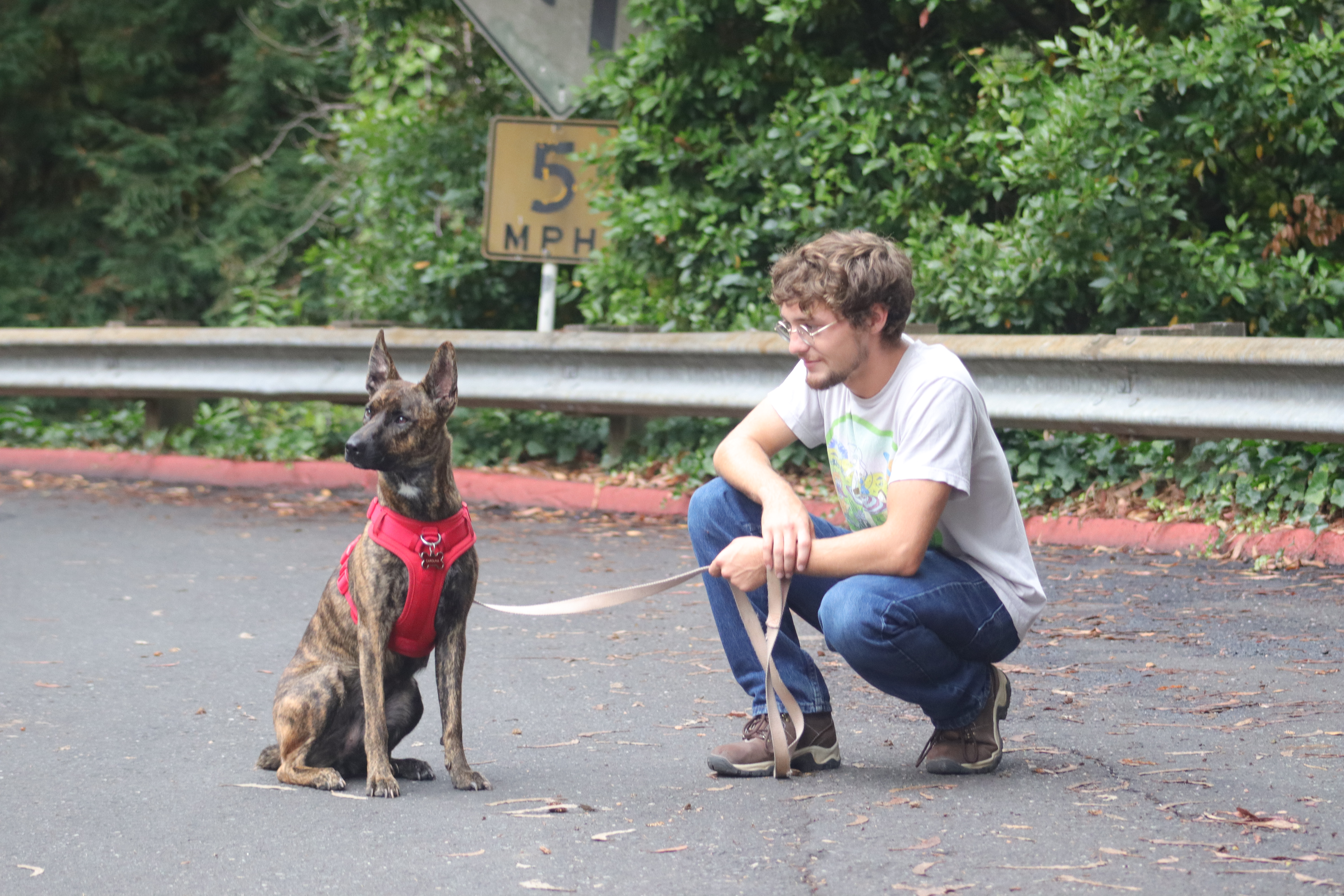
    Kelly’s right-hand-drive Toyota Hius van was parked next to my home on wheels – an all white Chevy 3500 christened ‘The Dump Truck.’ We are both student vanlifers. This unplanned, laughter filled jam session only tells a small aspect of what it means to live in a van. 

    In fact, my first week on campus was mostly colored by a lack of showering and being cold. This is to be expected. I have owned The Dump Truck for nearly three years now and have weathered a number of uncomfortable days in some strange places. 

    By week two on campus, I had found the best shower locations and was pleased to meet a handful of other fine folks choosing the same lifestyle as me. Vanlife is a lifestyle that attracts vastly varied characters with differing goals. 

    Wildlife major Steven Childs put it bluntly to me one evening in Bigfoot Burgers. 

    “It shows sheer willpower, and some intelligence,” Childs said “You don’t do this by fluke. Its not like one day you happen upon an RV or a van and are like -oh fuck it im going to college. You plan it out. You’ve thought about the things you need to do, and some people are willing to go a little further than other people to make it happen. Or their situation puts them in that position.” 

    Childs said there are also financial motivations behind his lifestyle choice. 

    “A room, which is about 500-600 dollars a month and utilities…that’s going to really put me in a financial bind,” Childs said. “On top of tuition and books -and then trying to juggle that- I’d put a bigger burden on my wife. And so, the idea was born.” 

    Obviously, it isn’t just frugality that leads to sleeping in the back of a van. 

    Ryan Kelly explained his sleeping setup to me, which consists of an inflatable camping mattress laid diagonally under his table and thermal undergarments to stay warm. 

    “I’m more mobile, it’s convenient,” Kelly said. “I want to see places and be able to travel and save money. Living in a van is the way to do that.”

    When I pressed him on the lack of creature comforts afforded in our chosen way of life, Ryan doubled down without hesitation. 

    “If you want to live in a house and be comfortable, that’s fine,” Kelly said. “I don’t need much. Just got to have the bare essentials. A place to stay dry. Something to sleep on is good.”

    Students are in a unique bubble here in Humboldt county. There is a lack of housing and lack of jobs. What jobs there are, are often low paying, particularly when compared to the jobs that students have left behind. 

    “I had come from bartending in San Diego in a very rich area and was making really good money and then came here,” said Bobby Howser, another vanlifer.“I passed out resumes for two weeks, didn’t hear back from anybody for two months and then got a bussing position at a spot. I was more experienced than the people that worked above me.”

    Howser is content with his situation.

    “Camping is my favorite thing,” Howser said. “I don’t need a lot to be happy. A comfy bed and I can figure the rest out. It’s about perspective.” 

    Of course, there are the unavoidable inconveniences that come along with sleeping in a vehicle. Vanlife is about perspective, as Howser said, but it is also about reality. And reality can be a gross beast. 

    “When you have an all metal interior, it’s the condensation that gets you,” Howser said. “Things don’t ever dry out here because it’s so moist. When it’s really wet outside, and my breathing is causing condensation on the walls, mold can grow. I had that happen last semester which sucked. And water will drip off the ceiling and hit me in the face while I’m sleeping, you know… Like super fucking cold.” 

    Walking up a cold, steep hill in the morning just to take a piss is less than ideal. I don’t want to have a conversation through the shower curtain either. These are the sacrifices that come when one doesn’t pay rent though; acceptance of these trade-offs was the common theme of all of the conversations I had with van dwellers this week.

    In the past, I’ve used a propane heater to take the edge off of freezing nights. They don’t burn very efficiently and the safety of using one in an enclosed space is highly questionable. Arcata nights are cold, but thankfully not freezing. I have a few fluffy Costco blankets (thanks mom) that keep me comfortable through the night. 

    All of the vanlifers I spoke to were dealing with the chilly nights in a similar fashion. Layers, layers, layers. Of course at some point in the morning one has to depart their blanket cocoon and face the Humboldt dawn hour.

    Childs has served in the military and is no stranger to sub-par sleeping situations. Still, sometimes the reality of the current situation drowns out perspective.

    “When you wake up in your vehicle in the morning, that’s the snap to reality,” Childs said. “That’s when shit gets really real. When you wake up there’s no escaping that you’ve slept in a vehicle. The most challenging thing is to put on chilly pants in the morning.”

  • SZA’s second album gives a blunt evaluation of all those toxic relationships

    SZA’s second album gives a blunt evaluation of all those toxic relationships

    by Alana Hackman

    Following the release of her 2017 debut album, “CTRL,” SZA has graced us again. Known off-stage as Solána Imani Rowe, the singer recently delivered the juicy 23-track album “SOS.” It includes powerful vocal features from Travis Scott, Phoebe Bridgers, Don Toliver, and even a posthumous sample from Wu Tang Clan’s Ol Dirty Bastard.lmwd

    “SOS” is on the search for blood following SZA’s 2017 triple-platinum album “CTRL.”  Now “CTRL Deluxe” with the arrival of seven unreleased tracks this past June 2022, where she delivered a brutally honest 14-track journal entry assessing where she falls short in her relationships due to insecurities. 

     From apologetic melodies about her unshaven legs and lack of attractiveness to her ex in “Drew Barrymore” to longing for her father to be proud of her in “Normal Girl,” SZA has come back for vengeance with “SOS.” 

    Throughout the one-hour and eight-minute album, SZA enters an internal feud where she weighs the pros, cons, and desires she longs for within her past and present intimate relationships. Brutally honest once again, SZA doesn’t hold back in her sophomore album. 

    The 23 tracks are so personal and well-paced it feels like we’re listening to SZA’s stream of consciousness on a facetime call as her best friend.

    SZA approaches all of her tracks from a critical lens of herself and her past partners. She begs plenty of questions listeners have probably asked themselves at some point, which makes the album that much more relatable and enjoyable. 

    Does she want a committed relationship? Is she searching for validation and meaning from her romantic partners? Why can’t she seem to end things with her ex? Is she the toxic partner in these relationships? 

    SZA explores all of these questions in a straightforward conversational manner throughout the album. SOS spans multiple genres, presenting loyal listeners with a twist on the R&B genre we’ve associated with the St. Louis artist in previous years.

    We get a taste of SZA’s rapping abilities in “Smoking on my Ex Pack,” where the singer addresses the rumors and hate her exes have spewed towards her in previous years. The singer also spoils us with the indie-inspired hit “Kill Bill,” detailing her dramatic urge to kill her ex even though she still loves him. 

    She openly displays toxic traits in the alt-rock inspired track “F2F,” her vocals in which bear a striking similarity to Hayley Williams’, staged over a Paramore-esque beat. The lyrics dive into her pattern of having sex with other men just cause she misses her ex whom she continues to ignore for her own enjoyment.

    The honesty that defines the entirety of “SOS” is what has made it so addicting to returning fans and new listeners. 

    SZA doesn’t hide the lack of shame she feels after getting her ‘body done’ in “Conceited.” She candidly sings about her sexual past and how her “pussy precedes” her in “Blind.”

     Anyone who has been stuck in a whirlwind of lackluster situationships, or any intimate relationship that’s short of love and respect outside of the bedroom, can feel connected to SZA’s truthful verses. 

    It’s refreshing to see a female artist be so upfront about her sex life and toxic relationship traits. Which may be why she has gained newly devoted followers after “SOS” and kept the loyal fanbase she’s had since the release of “CTRL.”

    SZA’s fresh melodies and beats on “SOS” paired with her open honesty have allowed the album to break the Billboard record for the biggest streaming week for an R&B record. The album also is in its fifth week on No. 1 for Billboard’s top 200. 

    SZA has brought a relatable and open edge to the R&B table once again and has obviously earned her seat with the big dogs within the genre.

  • Native film showcase brings culture to Eureka Theater

    Native film showcase brings culture to Eureka Theater

    by August Linton

    A great, warm sense of community filled the Eureka Theater during the Da’Luk Native Film Showcase on Saturday. Native American youth, their families and community members gathered to watch short films on Indigenous life in Humboldt, produced by participants in the Voices From the Center and Weaving Culture into Wellness short film projects. These set out to document Native American people’s experiences and ways they found meaning and health by giving them the tools and assistance to set them to video.

    The critically-acclaimed 2022 short documentary “Long Line of Ladies” was also shown. It follows one Humboldt County family’s revitalization of the Karuk Ihuk ceremony, a traditional rite of passage for young women that had not been practiced in generations. 

    Da’Luk Youth Program Coordinator Vincent Feliz opened the event with information about how the program serves Indigenous youth. This division of the Northern California Indian Development Council (NCIDC) focuses on engaging youth with culturally rooted lessons and activities in Humboldt and Del Norte counties. 

    Da’Luk means ‘words and talking’ in Wiyot, a meaning that Feliz feels speaks to the ultimate purpose of the program: to connect youth to each other and ready them to participate in their community.

    The NCIDC offers mental health, anti-discrimination, and educational support to Indigenous youth, and has recently completed several mural projects in Eureka and Arcata.

    At the film showcase, community member Julian Lang also spoke about how language can build community.

    “Look for your language, that’s really important to understanding who you are as a human being; who you are as a tribe, a group, a village,” Lang said. “Not to heal but to reconnect your brain…your soul to where it’s supposed to be connected.”

    Lang then performed an opening song/prayer for the event, which he encouraged others to sing along to if they knew the words. The final descending note rang off the high ceilings with many voices.

    The Voices from the Center film project focused on native youth and elders as the subjects, consisting of many short films ranging from one minute to around five.

    One film documented the experience of building a Yurok plank house, including the healing experience of residing in a traditional Indigenous space. A brief film taught viewers to count to ten in Karuck, using acorns as visuals, while another film explored one woman’s passion for making and wearing regalia, such as bark skirts and deer-skin dresses.

    COVID-19 isolation gave one of the filmmakers, Celinda Gonzales, more time to engage in traditional practices such as beadwork. Her film compares the strength and resilience of her community with how new plants grow out of the burn scar of wildfires. 

    “You see these flowers, the trees coming back, the grasses coming back, you see beauty in the midst of that,” said Gonzales. “With COVID, even though we were all separated out, there was still beauty in that…I had more time at home, I was weaving more, talking to family more.”

    Robbie Lara’s film was about her connection with the plants in the garden she cultivates, and her realization that plants have souls like any other creature. She spoke of her gratitude to the plants for nourishing her and encouraged the audience to keep gardens.

    “It came to me that while I’m passing by all these trees and all this greenery, why can’t I give that my attention,” Lara said. “What I hope that the video does is help you have a relationship with the plant world.” 

    A second collection of short films was shown, produced by the United Indian Health Services’ Weaving Culture into Wellness project. Facilitator Jude Marshall said he started the project after traditional cultural practices improved his health. It was made possible with funding from UIHS and from the Rural Indian Health Board’s program to reduce chronic diseases in Native communities.

    Ernie Albers Jr. starred in a film about the gym that he runs, Lifted Arcata. He described his ‘human-specific’ approach to working out. This means incorporating postures and motions which he said mirror those used in traditional lifestyles.

    Another film in this collection focused on food sovereignty. Liz Lewis  shows the process of making salmon head soup, and speaks on the role of food in reclaiming one’s culture. She uses salmon fished locally by Native people and peppers from the UIHS’ Potawot Community Garden.

    “Not everyone may be able to do all the practices that we used to do, but cooking is a great way to be connected [to your culture,]” Lewis said. 

    In Willard Carlson’s film, he recounts his experiences fighting for river access and fishing rights in the 70s. 

    “We never ever want to give up our cultural identity and where we came from,” Carlson said. “I feel good, optimistic about our future…coming into this inheritance is very special.” 

    These documentaries eloquently showed how deeply supportive and connected the community around their production was through food, song, and stories.

    Daniel Aipa, the Native Hawaiian producer of the Weaving Culture into Wellness films, believes in the power of spreading Indigenous stories.

    “When you tell one story …it becomes 50 or 100 different stories, depending on what you take from it,” Aipa said. “And that’s Native culture. Our oral history is everything to us.”

    “Long Line of Ladies” was shown next, following the Allen family, their spiritual family, and their preparations for Ahtyirahm “Ahty” Allen’s Ihuk coming of age ceremony. The Ihuk is performed for Karuk young women once they have their first period, and was revived in 1995 after a long dormancy. 

    “There’s points [in life] where we all come together, and that’s something that Native people have lost,” said Pimm Tripp-Allen. “This is the kind of thing that we’re supposed to be doing for our young people.”

    The family lives in McKinleyville, and many scenes are set in familiar Humboldt locations, such as the walking path across the Mad River trestle bridge. The documentary has been shown at Sundance, SXSW, and other film festivals. It is available to stream through the end of November on New York Times Op Docs, a platform for independent short films. 

    The family felt at ease among the home crowd attendees, and opened up about funny and personal experiences they’d had during production. 

    “We’re talking to you guys a little different than we talk to other communities,” said Alme Allen. “Because we’re back home, and you’re our people.”

  • Rooted and Rising puts Black voices onstage

    Rooted and Rising puts Black voices onstage

    by Sophia Escudero

    In five years at Cal Poly Humboldt, lecturer Dionna Ndlovu had not seen a single production written by a Black playwright. On Monday, Oct. 24, she will direct one. 

    Rooted and Rising is a series of staged readings produced by CDOR and the Umoja Center for Pan African Student Excellence in collaboration with the Theatre Arts Department, beginning this semester with a reading of “Twilight: Los Angeles, 1992” by Anna Deavere Smith. Each work, including this one, will be one written by a Black writer.

    “The staged reading series will happen twice a year, once in the fall, once in the spring,” Ndlovu said. “It’s a collaboration between multiple departments, faculty, staff, students, and community members.” 

    A staged reading differs from a play in that there is not a set or full costumes. Traditionally, the cast reads off scripts, and there is minimal stage movement, allowing for a lower investment of time and energy while still creating theater. Ndlovu was personally drawn to theater by listening to and participating in staged readings.

    “When I looked at our season, I noticed we didn’t have one staged reading, and we didn’t have use of our second stage space, which is our studio theater,” Ndlovu said. “It creates an opportunity for students who are maybe looking for more performance opportunities, for faculty and staff who want to participate, at low stakes.”

    To Ndlovu, another important aspect of the staged reading format is that it is often followed by a talkback between the audience and the cast and crew. This work, she believes, is part of an important dialogue to be had in the Humboldt community. 

    “Twilight: Los Angeles, 1992” is a series of monologues about the 1992 Los Angeles Uprising, a six-day series of riots. The conflict was born from the acquittal of four police officers in the beating of Rodney King, the killing of 15-year-old Latasha Harlins by a Korean convenience store owner, and years of racial tensions, particularly between the Black and Korean communities. When the riots ended, 63 people were dead, 2,383 more were injured, and over 12,000 had been arrested. All of the monologues are derived from real interviews with people who were involved or directly affected, their words translated directly to the page. 

    Performer Jennifer Be, born in LA county, is very aware of the history behind the show. 

    “I did some research on what the production was going to be, and saw that it was something I could contribute to,” Be said. “It showcases so many perspectives and experiences after the riots, that felt like something I wanted to contribute to and be a part of.” 

    The cast is composed of eight actors, including Ndlovu, of various races, ethnicities, genders, and ages. Casting was entirely open— some actors are students, others members of the greater Humboldt community. Every performer delivers several monologues, each one from a different person’s perspective. 

    “I’m reading four folks, and they all have very contrasting backgrounds,” Be said. “They’re all from different socioeconomic experiences, and what sort of their purpose was during that time was very contrasting as well. There’s such a juxtaposition, that’s really fun, but the most important thing is that there’s something relatable about everyone’s experience.” 

    Several performers had not had any previous experience with theater. Performer Elijah Moore had not acted before, but found himself intrigued by a casting call flyer and joined the production. He says he’s proud of the opportunity to present such powerful monologues on a crucial topic. 

    “It’s groundbreaking work, of course,” Moore said. “The written word is very important, and I think highlighting the massacres and the terrible things that happened during the riots is really important to understand that police brutality is really a thing. Being able to highlight those topics in a performance is really cool.” 

    Patricia Iwok, also new to performance, found the experience to be educational as well. She had never heard about the Los Angeles Uprising before, and feels that she has learned a lot from her involvement. She particularly appreciated the staged reading format. 

    “I feel like it’s the most stress-free experience, like it’s really nice,” Iwok said. “Just reading lines, experiencing what we’re reading, I feel like that’s cool. It’s something new, something exciting.” 

    Fellow performer Binta Wright finds Rooted and Rising to be incredibly significant for Humboldt’s Black community, and an important step forward for representation locally. 

    “To be part of something like this where we are is unprecedented,” Wright said. “Humboldt has never had a focus on Black works, and stage readings have been just as scarce. It’s refreshing and I’m excited that there will be more presence of Black playwrights and stories told in theater here at Cal Poly in the near future.”

    “Twilight: Los Angeles 1992” will be performed at 7 pm Oct. 24 in the JVD Studio Theater, and is free to attend and open to everyone. The reading will be followed by a talkback with the audience.

  • Close-knit friends

    Close-knit friends

    by Victoria Olsen

    Tucked away on the second floor of the library, students gather with plastic needles and metalhooks to partake in the weekly Cal Poly Humboldt knitting group, Close-Knit Friends. This is the group’s first year back since the COVID-19 shutdown in 2020. The group was founded by Katrina Maynez, who started knitting in middle school and has enjoyed it ever since. 

    “I love doing different crafts and such, and so I really wanted to have a space where people could be creative and have that time to really be themselves and just relax and destress,” Maynez said. 

    Knitting needles and crochet hooks as well as yarn are all provided. They also provide “how-to” books and a bunch of other books with pattern ideas and ways to knit or crochet different items. 

    You are also welcome to bring your own supplies and projects if you have them.  

    Haleigh Singleton was one of many people at this event, but one of the few crocheters.

    “I taught myself during COVID, and then I’m kind of relearning as we speak,” Singleton said, intently focused on her project. 

    Close-Knit Friends welcomes all skill-levels of knitters and crocheters. If you are a pro, you are more than welcome to come by and relax with everyone. Or if you are interested in learning, they are more than happy to get you started. 

    Julien Jones’s first time ever knitting was a week prior, and they’d already made tremendous progress on their project. 

    Emma Lowe was one of the other few crocheters among the group and was working on a fairly elaborate cardigan.

    “I love crocheting, and I came last week and they taught me how to knit, so that was really cool,” Lowe said. 

    There were a variety of skill levels. Some had been at this for years, others a few months, some a week or so, and others were in the process of learning.  

    If you are interested in knitting or crocheting projects and also interested in volunteering, Y.E.S. provides a knitting group every Wednesday from 12-12:50 pm. in the library basement, Suite 1. There they work on projects such as scarves, gloves, socks, hats, etc to donate. 

    If you are feeling crafty and happen to have a free afternoon on Mondays check out “Close-Knit Friends” in the Makerspace on the second floor of the Library in room 205. They meet every Monday from 3-5 pm. 

  • El Centro celebrates Latinx community in Heritage Month kickoff

    El Centro celebrates Latinx community in Heritage Month kickoff

    by Sophia Escudero

    National Latinx Heritage Month began on Thursday, Sept. 15, and was commenced on campus in a kickoff event by El Centro Academico Cultural. The event featured performances by Mariachi de Humboldt, Danza Azteca, and Ballet Folklorico, catering by Los Giles Taqueria and Pupuseria San Miguel, and keynote speaker Johanna Toruño. 

    Photo by Sophia Escudero | Dancer Jenny Leon lights the copalero, a traditional vessel in Danza Azteca. In the background, instructor Elizabeth Rivera announces as dancers Covin Sigala and Namixtulu Estevan and drummer Naeem Alston prepare for the dance.

    The event brought in over 100 students and community members of all ages as Humboldt’s Latinx community gathered to celebrate their heritage. 

    According to Fernando Paz, Coordinator for El Centro, community is what the month is all about. 

    “It’s a moment to really recognize and uplift the unique achievements, and celebrate and honor what the Latinx community has accomplished within the United States,” Paz said. 

    This national observation began in 1968 as Hispanic Heritage Week, and it was expanded to a month, Sept. 15 to Oct. 15, in 1988. The starting date of Sept. 15 is significant as it is the anniversary of independence from Spain for Costa Rica, El Salvador, Guatemala, Honduras and Nicaragua. In addition, Mexican Independence Day and Chilean Independence Day are Sept. 16 and 18, respectively. 

    After a land acknowledgement from El Centro, the event began with several songs by Mariachi de Humboldt. Mariachi de Humboldt features performers from the student body as well as the larger Humboldt community, and they soon amassed an enraptured audience, some singing along with the refrains while others simply listened. 

    Photo by Sophia Escudero | Mariachi de Humboldt violinist Raul Torres focuses on the music.

    Next up was speaker Johanna Toruño, a well-known street artist and activist. Much of her work involves messages of queer pride, Latinx identity, community support, and anticapitalism, and she works to make her art accessible through social media. Toruño was born in El Salvador and immigrated to the United States as a child. Many elements of her life are reflected in her artwork: floral frames in reference to the flowers her mother would buy, and a collage on supporting your own inner child featuring her own childhood photos. 

    Her art contrasts strong political messages with pink and pastel imagery in a deliberate subversion of cisheteronormative gender roles. The messages are soft and feminine, and with that, powerful.

    Toruño answered questions from the audience after her presentation, including one on what influences her art. 

    “People,” Toruño said. “And I know that sounds like a very generic answer, but I mean it. People in the community and the folks that look at this work. The people, the migrants, the people around here living our lives, I think of them when I put up posters and I’m telling you right now, the Dominican salon ladies, the mail folks, the kids who are playing in the street– gente. That’s what inspires my work. 100%.” 

    Photo by Sophia Escudero | Street artist Johanna Toruño explains how her lived experience as a queer migrant inspires her art as she presents traditional El Salvadoran art styles.

    Soon after Toruño wrapped up the questioning, the food was served. Students queued the length of the JGC for tacos, pupusas, beans and rice, and horchatas. Meanwhile, the Danza Azteca club, led by instructor Elizabeth Rivera, performed several dances for the assembled guests, even teaching the steps to audience volunteers and encouraging them to dance along. 

    As Paz and Toruño previously expressed, however, the most important part of the event was the people. Attendees eagerly dug into locally made food, applauded the performers, and danced in small groups as music played over the speakers. There was a sense of community, even as people were meeting for the first time. 

    Student Jess Angulo was one of many who felt at home at the event. 

    “I really enjoy it because I’m Hispanic, Latino, whatever,” Angulo said. “It feels familiar, like even the food feels nostalgic. It’s nice to see people like me.” El Centro will continue to hold events throughout the month, and their event calendar can be found on their website and their social media.

  • Reese Bullen Gallery features faculty artwork

    Reese Bullen Gallery features faculty artwork

    by Nina Hufman

    The Staff and Faculty Exhibition is now open at the Cal Poly Humboldt Reese Bullen Gallery, featuring artwork created by members of the art department.

    The exhibition will run until Oct. 15. It features a variety of mediums from all of the divisions of the art and film departments. Isabela Acosta, a gallery attendant and art history major, was excited about the variety of work presented. 

    “It’s literally every faculty member from every art sector, and they’re presenting their work here which is super cool,” Acosta said. “You have jewelry, ceramics, sculptures, paintings, some videos, there’s some digital art that’s really cool. It’s just like a whole nebula of stuff.” 

    Photo by Angel Barker | Sarah Whorf’s “Palm to Pine”, 2005 at the Reese Bullen Gallery on Friday. The piece is a photo screen print construction.

    Students were excited to see their teachers’ work in a gallery setting. Jack Miklik, an English major, talked about the importance of featuring faculty work.

    “They’re practicing artists and teachers,” Miklik said. “It’s good to like, look and see if you enjoy the work that your instructor is making. I think it’s like one of the more important shows as students for us to see in the art department.” 

    Many of the artists featured in the exhibition were heavily impacted by COVID-19. Their works feature themes of isolation and a desire for connectedness. 

    “A lot of this work I think was done during like COVID so when you read their little manuscripts they just talk about like what they were doing during COVID and what came out of it,” Acosta said. 

    Dave Woody, a photography and film lecturer, has two pieces in the gallery. “Gabe” and “Madeline” are both silver gelatin prints created in 2022. In the card next to his work, Woody discusses how the pandemic has impacted his art.

    Photo by Angel Barker | Sarah Whorf’s “Palm to Pine”, 2005 at the Reese Bullen Gallery on Friday. The piece is a photo screen print construction.

    “The lessons learned during that period of isolation really helped me to value the time that I do have with friends and strangers,” Woody wrote. “These photographs included in this show feel reflective of my current state of thinking about images of people- a desire to connect and to embrace the beauty and mystery of life.”

    Dan Molyneux, a lecturer specializing in ceramics, also wrote about his experience of the pandemic. His featured work “Chroma Teapot” is part of a series of ceramic teapots that were created during the pandemic. 

    “As a ceramic sculptor, it became important to focus on this series of teapots/ewers over the course of the pandemic,” Molyneux wrote. “These are abstract vessels that project an idea of function rather than functionality itself but served me as a touchstone of sharing and community during a very isolated time.”

    COVID-19 was not the only subject of the faculty artworks. Sondra Schwetman, an associate professor who specializes in sculpture. Her piece “Witness” was created in 2019 from fabric, pigment, and steel. In her description of the piece, Schwetman writes about how her work embodies the themes of the female experience. 

    “My current body of work addresses the ambiguous space between reality and fiction where the female form and therefore females often dwell,” Schwetman wrote. “The works in this series concentrate on psychological, religious, cultural, and social issues that impact women everyday such as: reproduction and reproductive rights, illness and COVID-19, class systems, colonization, compliance, silence, and war.” 

    Marilyn Koch, a visiting faculty member who specializes in jewelry and small metals, discussed the concept of “self” in her two featured works, “We are a colony,” and “Year 30: Age Badges.” The pieces utilize unique mediums like hair and synthetic teeth.

    Photo by Angel Barker | Sarah Whorf’s “Palm to Pine”, 2005 at the Reese Bullen Gallery on Friday. The piece is a photo screen print construction.

    “It is egocentric in nature and at first glance, coyly uses replicas of the human body to simultaneously repel and entice us,” Koch wrote. “Beyond the skin, teeth, or hair, are themes of ephemeral youth, community, social norms, and a prominent objective: A desperate attempt to define the Self.”

    A wide variety of mediums and subject matter means that there is something that everyone can connect with. 

    “My favorite piece is this painting over here and it’s called ‘From palms to pines.’ It’s just about moving from SoCal to up here,” Acosta said. “There’s like the map of Los Angeles and Orange County that goes into the map of Humboldt County.”“Gina [Tuzzi]’s paintings are really nice,” said Martin Lopez, an economics and studio art major. “And the cars, the ceramic cars, are pretty sweet. Yeah, that shit’s tight.”

  • Scene Kids Make A Scene At Emo Night

    Scene Kids Make A Scene At Emo Night

    by Ione Dellos

    During the pandemic, the Van Duzer Theater Hall sat empty, no encores, no cheers, just silence. Tonight, that all changed. Dozens of black-clad students flooded the doors of the theater, brimming with anticipation for the chance to see one of their favorite songs from middle school played live before their eyes. There was no shortage of smudged eyeliner among the patrons who filled the theater for the sold-out show. 

    With this level of attendance for a show, there are a lot of moving parts involved. Amanda Kachevas, Programming and Event Coordinator for Center Arts, told me about the planning behind this event. They booked the band six months in advance, and had been setting up the concert since 10 am. The event ends at 1 am, so the Center Arts crew will still be there until 2 am breaking the whole thing down. When I asked Kachevas if she gets to go to sleep, she laughed at the prospect.

    “Never!” Kachevas said.

    At around 8:40 pm the band took the stage, and instantly started the show off with an electrifying on-stage presence. Their lead singer, Marcus Leonardo, belted out beloved emo numbers such as “I’m Not Okay” by My Chemical Romance and “Sugar, We’re Going Down” by Fall Out Boy. The lead guitarist, Stephen Henry, leapt around the stage as he shredded run after run, and would even place his guitar behind his head for complicated solos. 
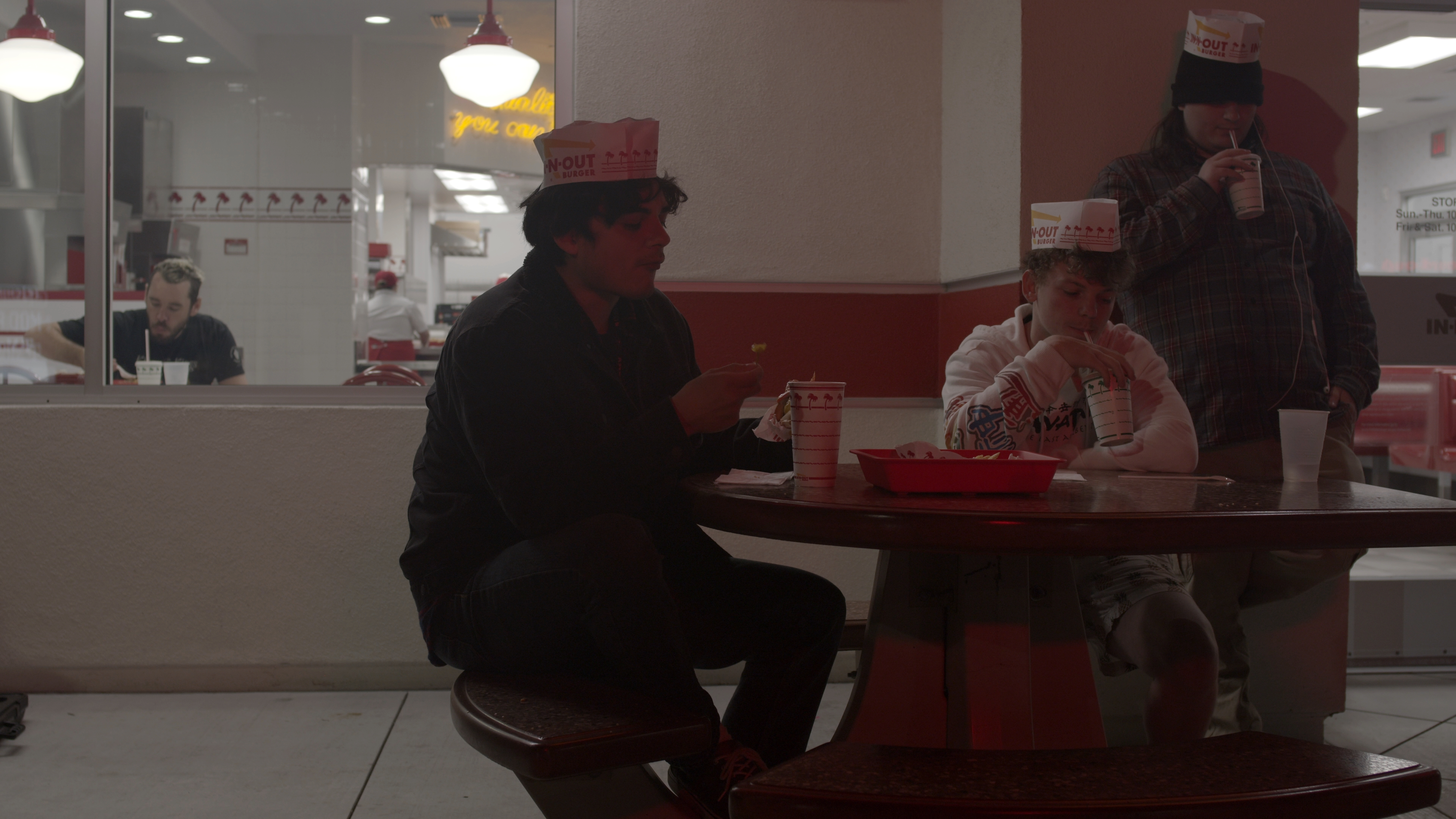
    Concertgoer Liam Boyd, asked if he was having a good time at the show, responded enthusiastically.

    “YEAHHH!” Boyd said. 

    He beamed with joy that the band had played his favorite song, “Welcome to the Black Parade” by My Chemical Romance, just moments before. 

    The crowd coursed with energy, further fueled by the band playing nostalgic hit after hit. Songs from the concert included “Sugar, We’re Going Down” by Fall Out Boy, “I’m Not Okay” and “Teenagers” by My Chemical Romance, “King For a Day” by Pierce the Veil, “Dear Maria, Count Me In” by All Time Low, “American Idiot” by Green Day, “I Write Sins Not Tragedies” by Panic! At The Disco, and more. 

    Large crowds need an even larger security detail, so I asked the Center Arts staff what it’s like to work these events. Lavender Deng, a second-year student at Humboldt who works security for Center Arts, told me a little about what it’s like to work security for the school. 

    “It’s fun,” Deng said. “You just get to watch all of the shows and make sure nobody brings in something that they’re not supposed to.”

    Watching the electrifying setlist, I knew that I needed to get closer to truly capture the band’s presence. Thanks to the help of two concertgoers, Vance Fewell and Taylor Danel, I was able to work with the Center Arts staff to get in front of the barricade. Words cannot describe how incredible it was to get to see the musicians perform less than two feet from my face, and feel the barricade shake behind me as the crowd rocked with the music. 

    Overall, this was a wonderful concert, and it was a hell of a way to relive my middle school years (minus the middle school part).

  • Local bands rock the Gutswurrak

    Local bands rock the Gutswurrak

    by Ione Dellos

    Band members wait in front of the bathrooms, eyes anxiously fluttering from the stage to the growing audience in the Gutswurrak Student Activities Center. After the deepest sigh one could possibly take, they make their way to the stage and prepare their set. It’s Local Band Night at the SAC. Humboldt’s local bands overcame their nerves and brought the good times to the stage.

    Starting the night off, local duo Cowboy Daddy took to the stage. Composed of lead vocalist and guitarist Skye Freitas and drummer/keyboard maestro Conner West, the two have performed as Cowboy Daddy for a little over a year. They work well together, always looking to each other while on stage. They lock eyes to land the ending chords of a song, or to check on each other mid-set.

    This was Freitas’s first live performance in over a year, but aside from temporarily losing her guitar pick, the performance went off without a hitch. She soon discovered it in the right hand pocket of her jacket.

    “The right is always right,” Freitas said.

    Photo by Abraham Navarro | Shaggy Joon’s guitarist and vocalist Lily Worthington sings at the Gutswurrak Student Activity Center on April 28.

    The second band to perform was Shaggy Joon, composed of local duo Lily Worthington and Grant Apicella. Worthington plays guitar and sings, and Apicella backs them up from behind the drumset.

    They came up with the name for the band in Worthington’s dorm room, and they’ve been playing together for about a year. Complicated strumming patterns and rapid chord changes are handled without a sweat when Worthington is on stage, and the assured confidence with which they handle a guitar are nothing to point a finger at. Worthington dedicated one of the songs to their girlfriend.

    “If you got somebody you love, pull them tight,” they said.

    They encouraged the crowd to dance a little slower to the song. Concert attendees locked hands and exchanged loving stares as they swayed gently, the gentle guitar riffs and bubble lights setting a dreamy mood.

    Shaggy Joon closed out the set with “2 a.m.,” one of Worthington’s favorite songs to perform live. They thanked the remaining audience for sticking around until the end of the show, and began to pack up their things. Despite the small crowd size, most attendees stuck around until the end of the night.

  • Cal Poly Humboldt Theatre presents the return of the 24 hour play festival

    by Sophia Escudero

    Putting on a play is traditionally no quick process. It takes months to take a script, design the set, costumes, and lights, cast actors, direct it, and have something polished enough to perform. The 24 hour play festival, however, turns that notion on its head. From 7 p.m. Friday night to the same time Saturday, a group of theater students wrote scripts and presented them as a series of short plays before an audience.

    The event was entirely student run and organized, and was produced by Cal Poly Humboldt students Austin Maisler and David Fisher.

    Maisler served as a producer, director, light designer, and stage manager. He had heard about the 24 hour play festival in his first year at Cal Poly Humboldt, but nothing came of it due to the COVID-19 pandemic. When campus reopened, the idea for the festival returned.

    “Spring came along and our department chair, Dr. Troy [Lescher] brought it up, like, ‘hey, does anybody want to run this?’” Maisler said. “I didn’t want to run it, I wanted to act in it, but nobody came forward so I talked to David. David and I decided to step forward and run this thing.”

    The process of organizing the festival was, by its nature, chaotic. Scripts were written overnight, and given to directors at 7 a.m. the next morning. The actors were cast less than twelve hours before they had to be off-book and ready to present the scene, and rehearsals were intermittently interrupted by costume fittings and discussions of the script. Lighting was finalized shortly before the house opened, and many people found themselves taking on roles that they had not previously had experience in.

    “This is the first show I’ve ever designed lights for,” Maisler said. “I’m actually in the lighting class this semester, so I just stepped forward, like, I kind of know how to do this, so I’ll just do it.”

    The four scenes, each about ten minutes long, took on themes of college-aged ennui, failing romance, finding meaning in absurdity, and impending doom. Of the four playwrights, two also participated as actors, and one as a director.

    Actor and writer Ben Wimer had not been involved in a 24 hour play festival before in either capacity. He found writing for a 24 hour play festival to pose a unique challenge. As the script is to be presented less than a day after its completion, certain factors had to be considered.

    “I wanted to write something that was simple, but had an authenticity to it, and had dialogue that was easy for the actors to memorize⁠— hopefully, it was easy to memorize⁠— but still gave them a lot to play around with,” Wimer said.

    Mollie Donaldson had participated in a previous 24 hour play festival at Cal Poly Humboldt in early 2020 as an actor, a role she repeated two years later. She considers the festival to be intense, but rewarding.

    “It’s definitely stressful,” Donaldson said. “You’re handed a script at 8 a.m. and told at 7 p.m. that you’re supposed to perform it and block it and have everything memorized. It’s a stressful thing, but one of my favorite things is kind of shocking myself with how quickly I can memorize things.”

  • Reese Bullen Gallery features Cal Poly Humboldt student artists

    Reese Bullen Gallery features Cal Poly Humboldt student artists

    by Nina Hufman

    The Arts Graduate Exhibition for the class of 2022 is now open at the Reese Bullen Art Gallery at Cal Poly Humboldt.

    Kylie Maxfield, a senior whose work is featured in the exhibit says that having one’s work in a gallery is an integral part of being an artist.

    “Being a student artist myself, I think it’s really important to be able to showcase my work,” Maxfield said. “To feel validated for what I’ve been working on. It inspires me to continue my education in art.”

    Photo by Angel Barker | Reflective Perspective, made of bronze and glass by Lisa Heikka Huber

    The exhibition showcases the work of graduating students in the Art Department. It features work from a variety of mediums including painting, sculpture, illustration, drawing, printmaking, photography, ceramics, and jewelry.

    “There’s a lot more diversity than I would expect,” said student Duncan McDougall.

    Another student, Justin Henderson, also appreciated how diverse the selection of art is within the gallery.

    “Each one is pretty unique,” Henderson said. “I like that there’s a lot of creativity going on.”

    McDougall and Henderson were excited to be able to attend an exhibition of their peers’ art. Student exhibitions allow for their work to be seen by those outside the art department.

    “Otherwise, I wouldn’t see any of their art,” said Henderson. “I don’t have any art classes, so I’m never over here.”

    “There’s a lot of student creativity,” McDougall said. “You don’t really see a lot of these student galleries.”

    Displaying their work also gives student artists new opportunities.

    Photo by Angel Barker | “Present” by Kaitlyn Ladines. This paining invites students to be apart of the exhibit by sitting in the chair. This piece won 2nd place for the Glenn Berry Painting Award.

    “Having this graduate exhibition also gives students the chance to be awarded for what they’ve been working on,” Maxfield said. “I think that if students didn’t have the opportunity to do something like this that feels real, then they probably wouldn’t make as much or be inspired to.”

    One of the opportunities that Cal Poly Humboldt art students have is the opportunity to win the Permanent Collection Purchase Prize award. The honor is given to one student from each graduating class. The work is then added to Cal Poly Humboldt’s permanent collection of student artwork.

    Maxfield says that selecting the correct piece for an exhibition is a challenging task.

    “I think critiques really narrow down, like what are people interested in and what is catching people’s attention,” Maxfield said. “Getting a lot of opinions on what strikes people as an interesting photograph.”

    Maxfield also discussed challenges with her chosen medium, photography.

    “I think that sometimes it’s hard to get through with people,” Maxfield said. “Like a lot of people kind of think ‘oh, well they just press a button.’ With paintings or drawings it’s a lot more evident the amount of work that goes into it, but with photography, not as much.”

    Photo by Angel Barker | “Human Flower” by Emily Newark. Made from low-fire white clay. This ceramic sculpture won the Phoenix Ceramic Award.

    There were many interesting pieces featured in the gallery. One sculpture entitled The Human Flower was the topic of discussion among students.

    “I think The Human Flower rules,” McDougall said. “If I had a million dollars, I’d buy it right now.”

    Another opinion on the piece was offered.

    “I appreciate that a lot of work went into that, but it just freaks me out,” Henderson said.

    The exhibition will run through Saturday, May 14 with a reception to follow the College of Arts Humanities & Social Sciences commencement ceremony.

  • Cal Poly Humboldt campus hosts Food Summit

    Cal Poly Humboldt campus hosts Food Summit

    by Angel Barker

    A three-week-long Food Summit is on campus, and you’re invited. On-campus organizations El Centro, HEIF, Umoja Center, the Food Sovereignty Lab, Oh Snap!, WRAPP, and La Comida Nos Une all collaborated to make this event happen.

    Liszet Burgueno, Developmental Manager for the Humboldt Energy Independence Fund (HEIF) and environmental resource engineering major, talked about the nature of the event.

    “The Food Summit is a collaborative event where multiple campus organizations came together to start conversations about food justice, food sovereignty, and to give people food,” Burgueno said.

    The first week was about the general topics to introduce people to the issues of food sustainability and justice. This week is about jobs and exploration in the food industry, and next week is about environmental justice and social justice.

    HEIF is funding the Food Summit according to Katie Koscielak, Cal Poly Humboldt’s sustainability analyst and advisor for the event.

    “The campus has done other food summits, but not in several years, and this is the first one funded by HEIF,” Koscielak said.

    Photo by Angel Barker | Katie Koscielak, sustainability analyst for the campus, and Liset Burgueno, development manager for HEIF and environmental resource engineering major at the table for HEIF at the food summit on April 6.

    HEIF funds sustainability projects on campus through instructionally related activities fees that students pay for each semester. Past projects have included water refilling stations, compost bins, lots of lighting upgrades throughout campus, hand dryers, and many more. These projects take effect when students submit proposals to the organization.

    “Last semester, El Centro came to HEIF and submitted an idea paper, where they wanted to get reusable utensils,” Burgueno said.

    Darin Torres, criminology and journalism major, pitched the idea this semester for a food summit. Torres spearheaded the ideas and planning, and after months of collaborating with many campus groups and local organizations, the event planning has been successful.

    “I am really proud of what we’ve done so far,” Torres said. “Education is power.”

    This event is not only to educate, but to get students involved with interactive events to help make the planet a better place. This event is really important to Torres, as food insecurity is a huge part of the greater Humboldt community.

    “We have issues with indigenous cultures’ food not being respected,” Torres said. “Food is a major insecurity in Humboldt County, we have students who face hunger and homelessness so much. So we just wanted to incorporate it all into the food summit.”

    “We have regenerated, and hopefully it will continue,” said Fernando Paz, coordinator for El Centro.

    According to Paz, the event itself is, a way to really reflect on our carbon impact in terms of food that we use.

    This Thursday, April 14, there will be a film screening of Gather hosted on Zoom, and on Friday there is a plant tour on campus and an opportunity to volunteer at Bayside Farm. Many more events are also scheduled throughout the week. To find the whole event schedule, go to https://lcae.humboldt.edu/food-summit.

    “This event is made for you in mind, it was made for students, by students,” Torres said.

  • Toyon volume 68 heals tender wounds

    Toyon volume 68 heals tender wounds

    by August Linton

    The 68th edition of Toyon, Cal Poly Humboldt’s multilingual literary magazine, was released on Tuesday, March 29. It is the culmination of a year of work by the staff, through forced distancing caused by COVID-19, across vast distances, and from a multitude of perspectives.

    Contributions to this year’s Toyon came from countries around the globe. The submission base’s broad scope means that works in many languages are featured. Some of the works originally submitted in a language other than English are presented in both languages, and some of the translation work is only available online on Toyon’s website.

    Maurizio Castè’s ‘Germogli verdi,’ or ‘Sprouts of green,’ published in both the original Italian and translated into English by Toti O’Brien, is a gently insistent witness to the beauty of spring, and to nature’s resilience in the face of climate change. This is a theme that surfaces at other points in Toyon 68, in Dobby Morse’s “The Fate of the Earth,” “Climate Change” by Larissa A. Hul-Galasek, and Meghan E. Kelley’s “What’s Left for the World to Say?”

    In these works, there is a deep veneration of both nature’s delicacy and of her strength. There is also an anger that seems to well up from deep within the Earth; anger for the future of humanity in the face of a climate apocalypse and for the fate of the natural world in our aftermath.

    There are many other standout poetic works in Toyon 68. The magazine’s opening work “Each Time I Held a Dying Bird” by Grace E. Daverson pulls the reader into delicately described and emotional pocket memories. As Daverson methodically describes each bird she has known, the wild joy of holding a bird in one’s hand and the childlike wonder of shining a flashlight into developing eggs organically melt into the glass-sharp grief of not being able to protect the ones you love.

    Toyon also publishes short stories, academic literature, and visual art.

    “Dismantling Structural Systems of Oppression Through a Revolutionized Pedagogy” by Ambar A. Quintanilla systematically explores the institutional barriers to education which Latinx and Black students face, multiplied by conditions during the COVID-19 pandemic. Quintanilla’s emotional connection to the subject matter as someone who has experienced these barriers (and who has seen the people she cares about be affected by them) is as important to the piece as her efficient and insightful analysis of the complex contributing socioeconomic factors.

    Among the magazine’s small selection of visual art, “Thinking” by Ernie Iñiguez and Mario Loprete’s “Concrete Sculptures” stand out. “Thinking” is a polished and pastel digital illustration of a meditating robot, while “Concrete Sculptures” is photos of the artist’s graceful and haunting sculptures of folded clothes.

    The theme of Toyon 68 is “hope and healing,” which is self-evident from the works within. The contributors’ love for this world and for the always painful process of healing is strung throughout the magazine, as taut and musical a guitar string. Healing takes time, passion, work, and love, and Toyon 68 has all of those. On the back cover of the volume, their sendoff is this:

    “WARNING: This product contains love, anxiety, dysphoria, tenderness, birds, affection, grief, orange juice, trauma, anger, and maternal bonds. Side effects may include self-reflection and a sense of inner peace.”

    Toyon 68 is available now in print and online.

  • Cal Poly Humboldt music department performs a once-in-a-decade recital

    Cal Poly Humboldt music department performs a once-in-a-decade recital

    by Sophia Escudero

    One o’clock on a Tuesday afternoon is not the usual time for a music recital. However, this particular performance was more than just a display of student skill. Accreditors from the National Association of Schools of Music were in attendance, after two days on campus visiting classes, listening to students perform, and ensuring the university meets standards for music programs. According to music department chair Cindy Moyer, this process is one that happens only once every ten years.

    “For this particular recital, what they wanted to see was the full spectrum of the program, which is why you can see there were all different music concentrations and students performing,” Moyer said.

    A highlight of the afternoon’s performances was staff accompanist John Chernoff’s rendition of a moody piano piece by composition major Theo Singer. The audience watched in captivated silence as Chernoff played through to the last, lingering note with an intensely focused expression, leaving the music hanging in the air for a moment, before breaking the spell as he turned to the audience with a wide smile and a quick bow, freeing the listeners to rapturous applause. Singer is a senior, but the performers comprised the full range of experience.

    “This was hard because we needed a real breadth of things, we had to find freshmen and sophomores,” Moyer said. “We do an honors recital every year and that’s pretty easy, students audition and the very best play— but that was not the goal here. The goal was not the most advanced, most skilled performers entirely, it was the whole spectrum of performers.”

    Marimba player Makani Bright was singled out by Moyer as a particularly talented senior performer. Bright has been playing for about 12 years, and has an upcoming senior solo recital on April 10. They are a double major in percussion performance and applied mathematics, finding beauty in both.

    “The way that I relate both of my majors in my mind is that I think of them artistically,” Bright said. “I think of mathematics as an art form, it’s perfect and there’s many beautiful things you can do within mathematics. Both of them, to me, are an art.”

    Bright’s piece, “Chain” by composer Kazunori Miyake, was not one they had previously performed before an audience. The instrumental composition had almost narrative elements, combining multiple different feelings and rhythms into a complex and beautiful melody.

    “I feel really good about it,” Bright said. “I feel like I was able to express what I wanted to express and I really enjoyed myself.”

    The majority of the music on display was instrumental, with pianists, percussionists, and a saxophone quartet as standouts, but music education major Pablo Murcia was selected to represent the vocal arts.

    “I’m very honored, honestly,” Murcia said. “I was the only singer chosen, and that’s quite an honor. I’m very flattered, and happy that some people came out to support me. That was nice.”

    Murcia’s piece was an aria from Mozart’s Don Giovanni, “Deh, vieni alla finestra.” He performed in Italian, but his smooth baritone voice, expressive performing style, and connection with the music (which has been part of his repertoire since last semester) carried the story of the song to the audience.

    “Don Giovanni, he’s a Don Juan, he’s a player, and he’s trying to get the attention of a woman at her window,” Murcia said. “The whole piece is just him saying, come to me, come to me, trying different tactics to get her attention, and she just keeps sort of playing coy, and finally, by the end of the piece, she finally gives into his charms.” He laughs. “Quote, unquote charms— he’s kind of a narcissistic jerk, but yeah.”

    Music department ASA Samantha Heppe was excited to be involved in such an important production for the university.

    “I’m just excited for our music students to showcase their talents,” Heppe said. “This recital is in honor of the accreditation team, so this type of recital won’t happen again for another ten years.”

  • Painting it teal for sexual assault awareness

    Painting it teal for sexual assault awareness

    by Matthew Taylor

    Pamphlets and papers flew around the UC Quad. Three teal blue tables stood to the right of The Depot entrance, pushed up close to the SAC’s concrete stairs. Dozens of paint bottles cluttered the leftmost table while various pins cluttered the right. April is international recognized as Sexual Assault Awareness month and The North Coast Rape Crisis Team alongside its on campus program Campus Advocate Team (CAT) have worked together to host its annual Take Back the Night week. The week-long event lasts from April 4 to April 7 and includes activities such as Denim Day, Clothesline Project Workshop, and Take Back the Night.

    Photo by Matthew Taylor | Liliana Cortez (center) speaking with students on the UC Quad about Teal Day on April 4.

    Tuesday marked Teal Day, a day dedicated to the awareness of sexual assault survivors and their stories. Students at the tabling event were encouraged to paint their expressions of positive growth and healing. By the end, all the small canvases would be placed together to form a larger mural. Liliana Cortez, the Violence Prevention Advocate at the Women’s Resource Center, expressed that the mural was an optional part of the activity.

    “It’s up to them,” Cortez said. “If they want to create their piece and keep it, or if they want to go ahead and give it to us so we can make it part of [the mural].”

    Together with Cortez, CAT Education Coordinator Kira Morse was also present at the table.

    “We provide services here on campus for survivors of sexual assault,” Morse said. “We have counseling, we have an office here, and we also respond out if there’s any incidents or things like that and help with [things] like Title IX and accommodations.”

    Rachel Mack, a Rangeland Resource Management major, was one of the handful of students painting at the table.

    Photo by Matthew Taylor | Painting by Rachel Mack created during the Teal Day event at the UC Quad on April 5.

    “It’s nice to have something positive as well as it being important for what it stands for,” Mack said, whilst painting her sunflower piece. “I think [it’s] really important for survivors to be able to have control over their own situation.”

    Alexa Farias, a Critical Race, Gender & Sexuality Studies major, expressed this event is very important to her work and role within Students for Violence Prevention.

    “We actually want to be part of the whole Speak Out, because it’s a really good way to show people what it feels like to really look through the situations,” Farias said.

    Speak Out is one of the many sub-events planned within Friday’s Take Back the Night program. This event will provide a safe space with counselors on hand for survivors to ‘speak out’ about their experiences and tell their stories.

    “The main movement and push with Take Back the Night is that people can feel safe here on campus and have their voices heard,” Morse said. “I feel a lot of times that survivors feel like they’re hush hushed. There’s not that open space where people can name their experiences. Take Back the Night, there is a lot of this amazing support where people feel comfortable.”

    Friday’s event will begin with a speech by Dr. Rachel King that will culminate into a rally and the aforementioned Speak Out event. Lasting between 6 to 10 pm, the event will end in a vigil dedicated to the victims of sexual violence.

    “I feel like [this] is really good,” said psychology major John Clark. “If this could happen at most events, then people would start to see that this is a [common] thing that we should talk about.”

  • Slack is Back at Cal Poly Humboldt

    Slack is Back at Cal Poly Humboldt

    by Liam Gwynn

    Ethereal flute, harmonious tarot prophecies, and a faint vaguely skunkish smell: you’d think it was a description of a sixties wet dream. However, you would be wrong, that dream is very much alive in Humboldt county, particularly with a group of students who have started a slacklining group that meets every Sunday.

    Before the pandemic, Cal Poly Humboldt had a thriving slacklining community with a club that would meet weekly. The club fell apart in 2020, however, one former member has gathered a group of fellow slackers and begun the process of getting this group turned into an official club at Cal Poly Humboldt. Joseph Aguilar, organizer of the prospective slacklining club, joined the original club in 2019 and has been slacklining ever since.

    “I love how when you’re on [the slackline] it’s just you, you have to be focused and present, and in that moment and you have to be hyperaware of all the muscles in your body,” Aguilar said. “It’s really good for core strength and all sorts of stuff.”

    Aguilar decided to start throwing “Slack Sundays” with a group of his friends and it gradually blossomed into a communal gathering of musicians, slack enthusiasts, and an assortment of nature lovers.

    The atmosphere at “Slack Sunday” was laid back and welcoming. Unlike many sports activities, there was no sort of competitive spirit or pressure to perform perfectly. People stretched back on picnic blankets and relaxed while others painted, played a variety of instruments, gave tarot card readings, threw a frisbee, and even tossed around a boomerang. Others came just to meet new people and hang out.

    The skill levels at “Slack Sunday” were equally diverse. For some, it was their first time and veterans held their hands and gave tips on how to cross. On the opposite side of the spectrum, genuine professionals showed off their skills with remarkable tricks on a line five feet off the ground.

    Photo by Abraham Navarro | Gabriela Vargas and Joe Mallory, both experienced slackliners do tricks and balance on their lines at the Mad River Pump Station on March 22.

    One of those professionals was Gabriela Vargas. She started by slacklining in her hometown Mexico City and moved to the US after receiving a sponsorship for competing in a trick line competition. Vargas originally moved to Colorado but was attracted to Arcata because of the slacklining culture that exists here.

    One issue that many professional slackliners face is debilitating injuries. Vargas said one injury she had forced her out of the competitive space after a leg injury that took six months to recover.

    “I like to take my healing slow, because if you don’t let it fully heal and just go back to doing it, it can get chronic and I don’t want that to happen,” said Vargas.

    Despite the setback from her injuries, Vargas has continued to expand her skills and has become proficient in highline, when a slackliner is harnessed to the slackline and balances over massive heights. Vargas showed a picture of her slacklining over an incredible drop of over 6,500 feet.

    People enjoy slacklining for a variety of reasons but one central theme is the benefits of achieving mental and physical balance when on the line. The appointed treasurer of the prospective club Ella Feick explained how her passion for slacklining stemmed from that need for balance.

    “You’re thinking in your head, you’re breathing in your body, and you’re focusing on your balance in a way that you’re not typically. If you’re stressed out or having a hard day you can’t really be thinking about all that stuff, you’re just there,” Feick said. “It’s a very present activity.”

    “Slack Sundays” are hosted every Sunday from 12-5 p.m. at the Mad River Pump Station 4 – Disc Golf Course.

    Photo by Abraham Navarro | Destiny Vera, Joey Agualar, Ella Feic, Ang Younger and Younger, all students interested in the Slacklining club on campus, at the Mad River Pump Station on March 27.
  • Students jam out on campus

    Students jam out on campus

    By Lex Valtenbergs

    On a sunny day in early March, Wildlife sophomores Olie Espinoza and Dee Naranjo played guitar and conga drums in a hidden alcove near the Art Quad. The sound of the impromptu music could be heard from several feet away.

    Photo by Abraham Navarro | Dee Naranjo Plays the Conga drum he uses for for class near the art quad on March 7.

    Espinoza (@itsolie_909 on Instagram) just started learning how to play guitar last year and has been playing it ever since.

    “I picked it up in maybe June of last year,” Espinoza said. “It’s definitely something that I always wanted to do and I never got a chance to do it.”

    Espinoza and Naranjo met in the dorms during their freshman year and jam together whenever they get a chance. Naranjo (@deedeedeedeedeedeedeeeeeee on Instagram) didn’t play any drums prior to learning how to play the congas in a class that they took to fulfill a General Education requirement.

    “I just took it as a GE class for the credits, for the art section of GE,” Naranjo said. “I saw it, it sounded cool. I’ve only been taking it for a month so far, so I don’t know much but it’s been really fun.”

  • Sex toys for the soul

    Sex toys for the soul

    By Alana Hackman

    The college experience is something you hear about before you get the chance to step foot on campus. Whether it’s beer talk with dad or sorority rushing advice with mom, we all get a little taste of the dining hall food and frat parties from the people closest to us before our own orientation day, but they usually skim over one major detail: sex. Blame it on your nearing 20s or the newfound freedom of living hours away from your parents, but sex is definitely a part of the college experience. Whether you participate in it or not, with sex comes sex toys.

    Graphic by Sierra Cosper

    Cal Poly Humboldt’s Peer Health Educators (PHE Humboldt) are here to promote sexual and mental health on campus. The program is funded through the Student Health Center and works to provide student-to-student education surrounding sexual and mental health. The peer educators apply their and others’ experiences to create interactive health promotions such as workshops or guest speakers. The program also focuses on sexual wellness within yourself as well as with partners. The educators encourage the use of sex toys and even have some silicone dildos on display in their office located in the Recreation and Wellness Center in room 127.

    The current Peer Health Educators are Sierra Cosper, Selena Aguilera, and Emily Black. All have been with PHE for over two years now. Cosper explained how they feel there is still a stigma around sex toys and sex education as they experienced it first hand as a peer health educator. Cosper also noted that discussion about sex toys and the use of sex toys sometimes intimidates those who identify as male and is more taboo in their daily discussions compared to women.

    “Sometimes when I talk to them [men] about the job I’m doing they’ve said ‘oh why would I come in here to know anything,’” said Cosper. “ There’s this idea with men and sex toys that they can’t be better than their penis.”

    Black also added they have a tendency to leave out the part about sex toys when explaining their job role to new people they have met to avoid assumptions. She also mentioned how she lacked exposure to toys and sexual wellness before coming to CPH and participating in PHE events.

    The group recommended the local storefront Good Relations in Eureka for those interested in dipping their toes into the world of sex toys for a wide selection of toys in discrete packaging as well as informative and helpful staff.

    “If you’re too embarrassed to go, you gotta remember they’re choosing to work there, they want people to come,” said Aguilera.

    “And then come,” joked Cosper.

    “They want you to be as healthy and comfortable about it as possible,” said Aguilera.

    The group also advised beginners to use toys by themselves before introducing them to a partner as it can cause some miscommunication sometimes. Although, all agreed using toys doesn’t have to be solitary and using them with others is an experience as well.

    Graphic by Sierra Cosper

    “It puts a lot of pressure on relationships sometimes, like ‘I’m not good enough’ feelings cause you’re using this toy, but they’re actually just really fun,” said Cosper. “You can’t expect your partner to get you off every time also.”

    “It’s supposed to enhance your experience not take anything away from it,” added Aguilera.

    Black, Cosper, and Aguilera also encourage proper care of sex toys to avoid sexually transmitted diseases or infections. They recommended a lot of toys are able to be boiled but toys usually come with care instructions on how to clean and properly care for them, also mentioning to steer clear of toys made of porous material and the use of silicone lubes on silicone toys to avoid degradation over time.

    “Something people forget to do sometimes is clean communal toys, which are more popular in queer communities,” said Cosper. “The communal strap-on, you should be using condoms on it between each person. Same with vibrators to avoid any risks of spreading.”

    The PHE educators all agreed they encourage more open discussions about sex toys to break the fears and taboos surrounding them, which is exactly what they’re doing within their roles on campus.

    Black encourages students to participate in their tabling events to enter a safe space for open conversations about sexual health and wellness.

    “Everyone gets embarrassed, but liking what you like is sexy,” said Aguilera. “Not being afraid to show what you like is nothing to be ashamed about, you know.”

    Join the Peer Health Educators at their annual Sexland event on April 23, a sex-positive, kink-based, informative event including sex toy giveaways and much more.

  • Jimmy Baca brings poetry to the people with Project Rebound

    Jimmy Baca brings poetry to the people with Project Rebound

    By Abraham Navarro

    A group of formerly incarcerated students picked up their ultra-wide pizza slabs and towering salad mounds from the counter at the Arcata Pizza Deli. They dragged two tables together, commandeering chairs from the surrounding tables and gathered for the feast. Each of the Project Rebound members were hungry for conversation with the famous award-winning Chicano poet, memoirist and member of the family Jimmy Santiago Baca.

    One of them asks him across the table as he takes a sip of his drink, “So, what’s the pale white monster that’s coming up to get you, Jimmy?”

    They were asking about an excerpt he read from a story where he steps out over frigid ice as it splinters beneath his weight to prove his love for his wife, Stacy.

    “Ah when you’re a kid you look deep in the water under the ice, you imagine all sorts of things,” Baca says.

    Photo by Abraham Navarro | Jimmy Santiago Baca, Chicano Poet, speaks to Cal Poly Humboldt Project Rebound in the Great Hall on March 23.

    Baca has a deep raspy voice, and he lights up when he talks to the student. He has a shaved head, furrowed brow with welcoming brown eyes and a warm complexion. Although he’s bundled up against the Humboldt evening chill in a black turtleneck and a blue down jacket, he feels cozy and right at home amongst the formerly incarcerated and system-impacted students from Cal Poly Humboldt’s chapter of Project Rebound.

    Earlier in the evening in the Great Hall above the College Creek Marketplace he read exclusive excerpts from some of his unpublished work and other poems and stories of his during the Project Rebound’s third annual Reentry Forum.

    Project Rebound is a program for formerly incarcerated and system impacted students at Cal Poly Humboldt. According to their website they aim to empower individuals convicted of a crime in a county, state, or federal jurisdiction who have clearly expressed their desire and readiness to earn a degree at Humboldt.

    Baca has been to previous reentry forums, even attending via Zoom during the pandemic restrictions to show his support for Project Rebound and getting to know the members like Tammy Phrakonkham, 30, a Cal Poly Humboldt Project Rebound member and a returning graduate student majoring in geology in the fall.

    When Phrakonkham heard Baca read his stories and share his wisdom, she felt as though her experiences being formerly incarcerated were validated. Her family comes from Laos as refugees to the United States. Growing up in impoverished conditions, she remembers her brothers and uncles all working in gangs, and she followed suit. Phrakonkham was incarcerated for stealing cars and trafficking ecstasy.

    “It was all I knew,” she said. “When I listen to Jimmy, I feel like I’m not the only one.”

    Despite years of isolation due to the pandemic, Baca was happy to make an appearance in Humboldt to visit his friends at Project Rebound, the first event he said he has been to since COVID-19 caused the shift to online events.

    “You all have become like my adopted family,” he said to them. “If it wasn’t Project Rebound I wouldn’t have even gotten on that flight!”

    Baca was adamant that poetry was for the people, those who suffer and work, play, cry, feel, live and die; poetry was not something that could be hoarded by the wealthy, kept from the poor. It was created by the people and it should be given back to the people. By sharing his work with Project Rebound, Baca feels like he has done that, and he has made a family out of them in the process.

  • Something Rotten! opens at Cal Poly Humboldt

    Something Rotten! opens at Cal Poly Humboldt

    by Nina Hufman

    The Cal Poly Humboldt School of Theater’s production of Something Rotten! was entertaining, energetic, and full of innuendo. On opening night last Friday, March 25, patrons filled the Van Duzer Theater to see the comedy, set in the 16th century.

    From the opening song, ‘Welcome to the Renaissance,’ the cast dazzled in beautiful costumes on a stunning set. All of the actors are extremely talented singers and performers. It was clear that they all put in a lot of work and are proud of what they have accomplished. Jeremy Stolp, an English Education major who played one of the lead roles, Nick Bottom, feels that being in theater is a rewarding experience.

    Photo by Michael Thomas | Jeremy Stolp (left) and Miah Carter (right) star as power couple Nick and Bea Bottom.

    “Theater is such a privilege and so much fun to do,” Stolp said. “If you ever have the opportunity, I suggest you try it.”

    The musical was incredibly entertaining. Some of my favorite scenes included Shakespeare’s John Cena-esque entrances, Bea’s hope for a gender-equal future, and the show’s lampooning of religion. One of the best songs was “Will Power,” featuring a leather pants-clad William Shakespeare (Jaese Lecuyer) and his crowd of adoring fans. I also enjoyed “A Musical,” a comic number during which fortune-telling Nostradamus (Sammi Pietanza) tells Nick Bottom that the next big thing in the theater will be musicals, all while wearing a hat that I am convinced was a paid actor. Many of the jokes are meant to be ironic, making fun of musicals and the theater. The way that this is incorporated into the story is very clever.

    The cast was rightfully proud of what they accomplished and are looking forward to adding to each performance in future shows.

    “I don’t think that they (the cast) expected the reaction that they got so when they did it was just this moment of awe,” said Katie Lem, a member of the ensemble. “Everybody standing up at the end was such a beautiful moment for everybody.”

    Photo by Michael Thomas | Zoë Saylor performs an upbeat musical number about the bubonic plague.

    One of the most compelling performances was Miah Carter as Bea, Nick’s wife. Throughout the play, Bea disguises herself as a man to maintain several different jobs and help her husband financially and push for gender equality. Carter’s performance showcased her talents as an actor and singer, particularly in her solo “Right Hand Man.”

    “This is my first ever lead, so this was a good step up for me,” Carter said.

    Carter says that theater is a great community to be a part of and that they are all incredibly supportive of one another.

    “All of us were so proud of what we pulled through,” Carter said. “I love everyone in this cast.”

    The cast and crew are looking forward to continuing to develop this musical as they perform it more.

    “I’m excited for the depth and complexity that we kind of add into it every single show,” Lem said. “Not every night is the same.”

    The musical is running this weekend on Friday and Saturday at 7:30 p.m and on Sunday at 2 p.m. The musical will have you loving to hate William Shakespeare right along with the Bottom brothers.

    Photo by Michael Thomas | From left to right: Zoë Saylor, Sophia Escudero, Jeremy Stolp, Jaese Lecuyer, Jake Hyslop, Michael Jaye, and Miah Carter pose on set of Something Rotten!
  • Cal Poly Humboldt Directors in the spotlight

    by Carlos Pedraza

    In the Van Druzer theater on Thursday, March 3 for the first time since the start of the pandemic student films were shown to a live audience. Around 40 people came to the showing of Cal Poly student films. Several of the films were made in the fall of 2020 there showing being delayed by the COVID pandemic.

    The short films ranged from psychedelic, documentary, serious, and funny; some of the films were a combination. The audience made sounds of laughter, shock and sadness reacting to each film with emotion equal to the film itself.

    A film director who was in the audience was Kylie Holub, a senior film major. Holub directed and wrote the film “Abstraction” in the fall of 2020. They film . During the pandemic Houlb said “ just keeping our crew really lean and realing thinking about how to tell stories with minimum actors.”

    The narrative film “Abstraction” is the story of a beach treasure hunter finding an alien artifact and the fallout of her discovery. The unknown and aliens being major inspiration for the film.

    Holub said “ you see a lot of people with metal detectors, we know very little about the ocean and aliens are fun to play around with.”

    Another director was alumnus Valerie Rose Campbell created the experimental film “Recipe for Young Mothers.”. Campbell goes through the recipe of banana bread while she narrates the experience of a young mother and her attempts to reclaim her life from an abusive relationship and societal expectations of a mother.

    The COVID pandemic heavily impacted the creation of the film Campbell said “ everything got done digitally and that was really hard.”

    The film is inspired by Campbell’s own experience in the local family system. “ How it felt so unjust for my kids and family.” said Campbell describing her own life experiences.

    There will be another film showcase in the fall of 2022 showing films created in the spring.

  • Latinx artists collaborate on chorus

    by August Linton

    Like the blossoms of our early spring, genuine and vulnerable artistic collaboration is blooming at Cal Poly Humboldt.

    The Toyon Multilingual Literary Magazine’s ‘SANA, SANA: Hope and Healing for Latinx Communities in Times of Precarity’ was a contest that asked for submissions of poetry, with the intention of having the winning entries set to music.

    The poem selected to be interpreted into a choral work by the award-winning composer Carlos Cordero was Alannah Guevara’s ‘Fresh Fruit.’ It is a deeply affecting rumination on vulnerability and intergenerational trauma, filled with haunting and tender images of bruised fruit and parental care.

    Guevara says that she wrote the poem thinking of her father, who passed over ten years ago. She’s a native of California’s Central Valley, where many Latinx people have settled and work on the area’s vast orchards. Guevara is half Mexican; she sees in her family and in her community an unwillingness to discuss the painful past, and an unending hope for the future.

    “I have really vivid memories of going to an orchard in the town I grew up in… It all melded together, these words that I had and these memories,” said Guevara. “Here in Southern California, who’s working in those orchards is Latinx people, Mexican people. And it got me thinking about my familial trauma, my generational trauma, the things that my dad left me to deal with.”

    Graphic by August Linton

    Guevara is about to become a parent herself. In ‘Fresh Fruit,’ she feels the protection and hope that her parents struggled to give her, and also the intense desire to protect and uplift her own child.

    The final choral piece is deeply beautiful, modern, and connected to the emotional core of Guevara’s poem. Cordero was a fantastic composer for the ‘SANA SANA’ project, both as a stunningly talented musician and also as a member of the Latinx community.

    Cordero’s Friday talk, hosted by CPH’s El Centro Académico Cultural, focused heavily on his personal struggle towards vulnerability, and how that has affected his compositions and musical career.

    Cordero’s writing process is a very visual one, although his medium is entirely auditory. He works with charts of inter-connected words and line graphs of emotional intensity to visualize his compositions in a more visceral way.

    “[Vulnerability] isn’t always going to come back to you immediately, but it’s coming to build or to open that door for people who want to connect with you,” Cordero said. “I’ve learned in art that I open up the door, I don’t make you come in. All I can do is present myself.”

    He recounted a story of opening up about his family’s experience of losing his younger sister to members of a choir he was working with. They came to him with stories of their miscarriages, of their losses, and that allowed the whole group to access an emotional connection that was not visible before.

    Cordero is originally from Maracaibo, Venezuela, and now lives in Austin, Texas. He says he, like Guevara, has struggled with an unwillingness to have hard conversations with his family about the traumas they’ve experienced.

    His piece ‘¡Ayúdame!’ was written as a “Venezuelan plea for life.” Members of the choir cry out “ayúdame, escúchame” (help me, listen to me) in Cordero’s attempt to communicate the suffering and disillusionment of the Venezuelan people.

    However, ‘¡Ayúdame!’ also represents the importance of being vulnerable, both by asking for help and by letting other people support you.

    Cordero spoke about the expectation within Latinx families and communities that people be strong, that they don’t show their struggles. As he struggled with the trauma of being Venezuelan in the midst of an ongoing humanitarian crisis, Cordero realized that he sorely needed help, that people need to ask for help.

    “[In ‘Fresh Fruit,’] Alannah showed me that the struggle is OK. It says to our kids, to our generation, to our families: we want to show that everything is ok but we can also share in their struggles,” said Cordero.

    The Cal Poly Humboldt University singers will perform ‘Fresh Fruit’ on Sunday, April 24th, alongside other musicians performing other works from the ‘SANA SANA’ project.

  • Humboldt Hot Air takes over local radio airwaves

    by Eddie Carpenter

    Nearly four years ago, Cal Poly Humboldt decided to abandon local-based programming for KHSU. This heartbreaking decision left local radio personalities with no creative outlet to broadcast from. Recently, some of those same people were able to redeem themselves on a radio station known as Humboldt Hot Air. In its humble beginnings, the station began as a simple recording studio. Any content that was created would be sent to a community-based radio station known as KZZH. In October 2021, station manager Neroli Devaney had set up a live streaming service, which gave rise to an underdog known as Humboldt Hot Air.

    “We are an online internet radio station,” Devaney said. “We are based in the Arcata Playhouse. We are very eclectic and diverse in our programming. We have talk shows [and] lots of music shows. We program every other day of the week except for Tuesdays.”

    Devaney made it clear that she was not the one who founded Humboldt Hot Air. However, the 24-year-old manager also shared what inspired her to take on this role.

    “I did four years of radio at UC Santa Cruz. When I was there, I worked at KZSC, which is the radio station on campus there,” Devaney said. “When I was there, I did a bunch of different stuff, I was also a hip-hop director through a bunch of events, I just found myself really into radio and really passionate about it. I am from Arcata and when I graduated from UC Santa Cruz, I came back to Arcata. When I was in high school, I used to volunteer with the Arcata Playhouse with their teen program, which is called Apprentice Entertainment. Jackie Dandeneau, who is executive director of the Arcata Playhouse reached out to me. [She] said that she started this project called Humboldt Hot Air. They were recording audio and they had this goal of eventually having a live stream…She asked if I wanted to get involved and I said yes. [I] thought it sounded really fun.”

    Devaney also explained how the former KHSU audience had become her most avid listeners.

    “When we started a lot of people felt that there was this need for community radio in Arcata. A lot of the DJs saw that we were doing Humboldt Hot Air and I started getting a couple old KHSU DJs,” Devaney said.

    “We’re still kind of attracting that crowd, which has been really awesome, especially for our own publicity,” Devaney said. “KHSU had this huge fanbase in the community, so to be able to bring DJs back and have them do their shows again– a lot of the community has had a positive response to that, those are our most popular shows, people will be like, ‘oh my god I listened to that show for thirty years and it’s back, that’s so amazing! It’s the same DJ.’ It’s just been really fun.”

    Humboldt Hot Air strives to one day become an FM station.