By Sadie Shields
You have probably heard the honk before you saw them: the unmistakable cry of the Canada goose signaling a seasonal shift across North America. Whether flying overhead in a V formation or grazing in a suburban park, this large bird has become a menace to many lunches and golf putts.
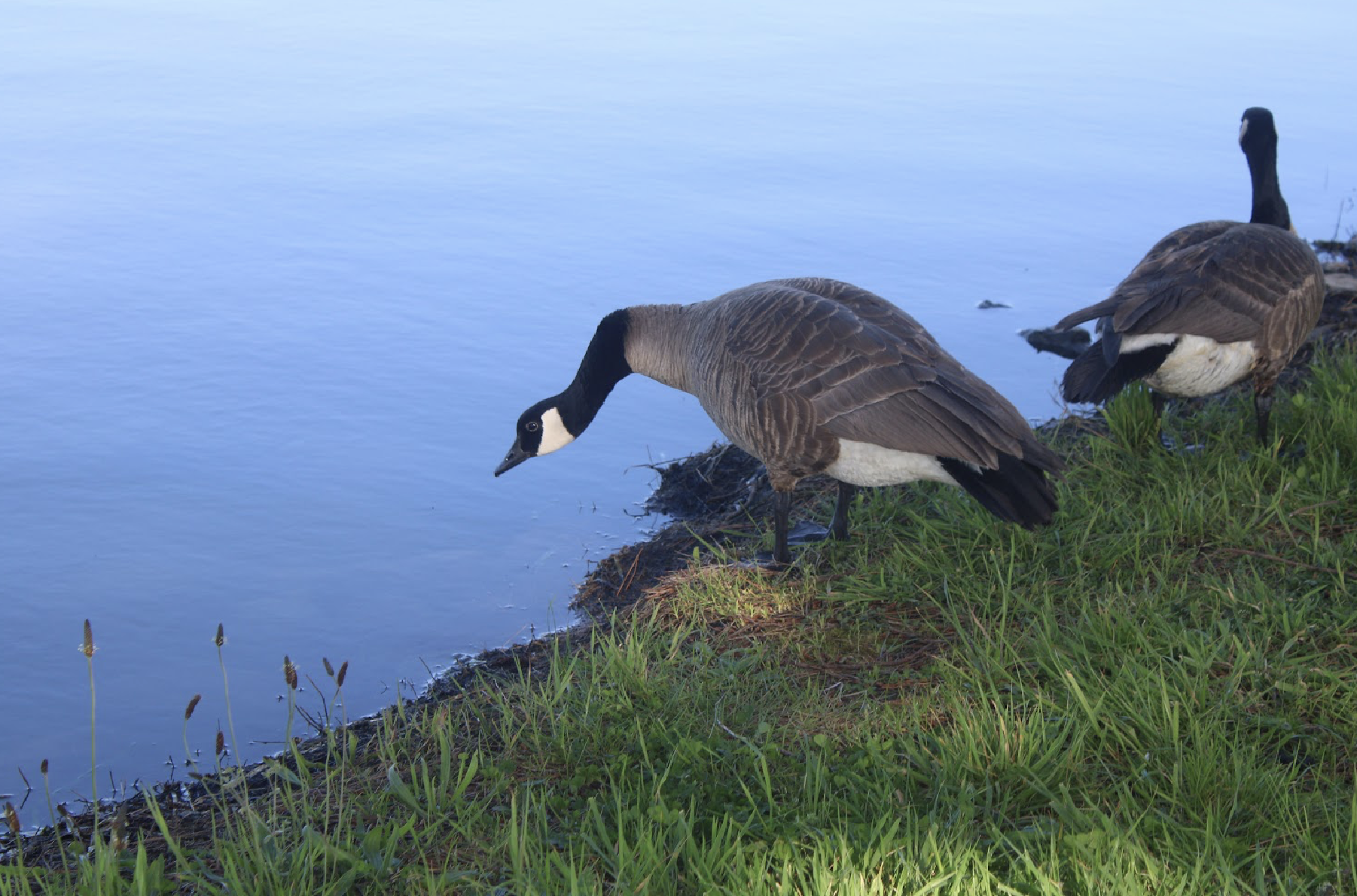
Recognized by its black head and neck, and a bold white patch on its brown body, the Canada goose is a pretty contrast-looking bird. Adults typically measure 30 to 43-inches-long with a wingspan stretching up to six feet. The males and females look alike, though males are usually slightly larger.
In the past, they nested in remote wetlands and tundra across Canada and the northern United States. Nowadays, thanks to conservation efforts and their own adaptability, they can be found in city parks, golf courses, retention ponds and at the Arcata Marsh. The short lawns provide ideal grazing, and the bird’s unmistakable tolerance for people has allowed them to enjoy the developed areas and city life, even becoming slightly aggressive towards humans.
Famous for their migrations, many of their population travel thousands of miles between breeding and wintering grounds, which they navigate with remarkable precision. Some flocks breed in the Arctic and winter as far south as the Gulf Coast. However, not all geese migrate; resident populations in urban areas may remain year-round if food and open water are available.
Canada geese often form strong pair bonds and mate for life. In the spring, females build nests near water and lay four to seven eggs. Both parents fiercely defend their young, called goslings, which can swim within a day of hatching.
Canada geese can create conflicts with people by leaving unwanted material on lawns and crowding waterways.
Love them or hate them, these geese will always be there, even in the heart of our cities.
Bio: Sadie is a junior communications major, journalism minor at Cal Poly Humboldt who has an interest in covering and taking photos for sports and wildlife journalism, and a slight interest in breaking news. She can be reached at sls331@humboldt.edu.
Leave a Reply