By Winter Music
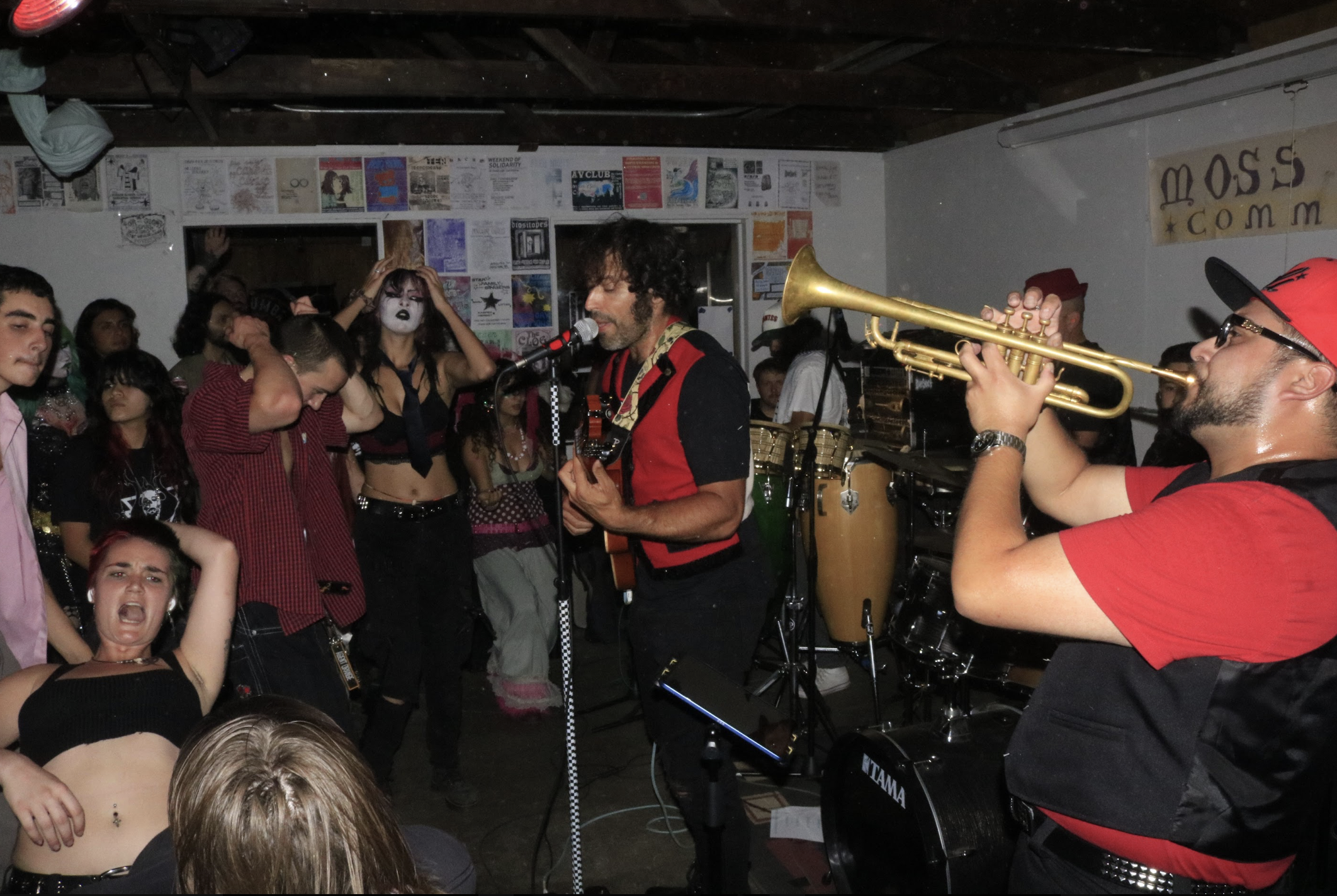
While punks, goths, band members and regular people crowded around Moss Oak Commons, everyone knew this show wouldn’t be just like any other punk show. Being one of the first events of the school year, old friends and new students alike agreed that mariachi punk was something we had to see.
The Rumba Madre is a multicultural mariachi/punk band consisting of members from California, Spain, Puerto Rico and Nashville. Despite popping a tire on their way from San Francisco, they were able to play their set on Aug. 27 at Moss Oak Commons.
That setback filled the crowd and band with determination, leading to an explosive show with crowdsurfing, moshing and a fantastic community atmosphere. In classic punk fashion, The Rumba Madre can’t truly decide on a genre, so they take influences from flamenco, latinx, urban, celtic and punk.
“That’s probably the best genre of music, when you get two different genres and put them together,” Something Wicked bassist, Peter Ramos said. “The Rumba Madre? They do that really well.”
Among t-shirts, mugs and lighters, there was one item rarely seen sold at punk shows. SPANISH PUNK, SCREAMING FOR DEMOCRACY IN A POSTDICTORIAL STATE, a book written by lead singer and guitarist for The Rumba Madre, David Vila Diéguez, was for sale at the merch table.
“In that book, I studied the influence of Spanish punk on the way people thought politically and how they saw themselves politically in Spain right after the end of the dictatorship in 1975,” Diéguez said. “So basically: How did punk influence the way people act and live politically?”
A World Languages and Cultures Professor at Cal State Monterey Bay selling books might not fit classic punk aesthetic, but the music, history, radical politics and hard moshing serves as a reminder that academia and punk rock can and should coexist.
“I believe that we have to think about education, not just in terms of being in university, we have to go beyond the classroom,” Diéguez said “It’s very important that what happens in the classroom of the university, we take outside and bring to places like this.”
Diéguez said that because many people can’t afford college, it’s important to take these conversations out of the classroom and into the community. Everyone deserves to be a part of conversations surrounding racism, sexism, colonisation; Everyone deserves a chance to learn, grow and expand their knowledge.
“Everyone that goes to university, you take that with pride and you share it,” said Diéguez.
Winter is an English major and copy editor with an interest in covering local community events mostly focusing on music and art
Leave a Reply