By Tara Linderborg-Cordry
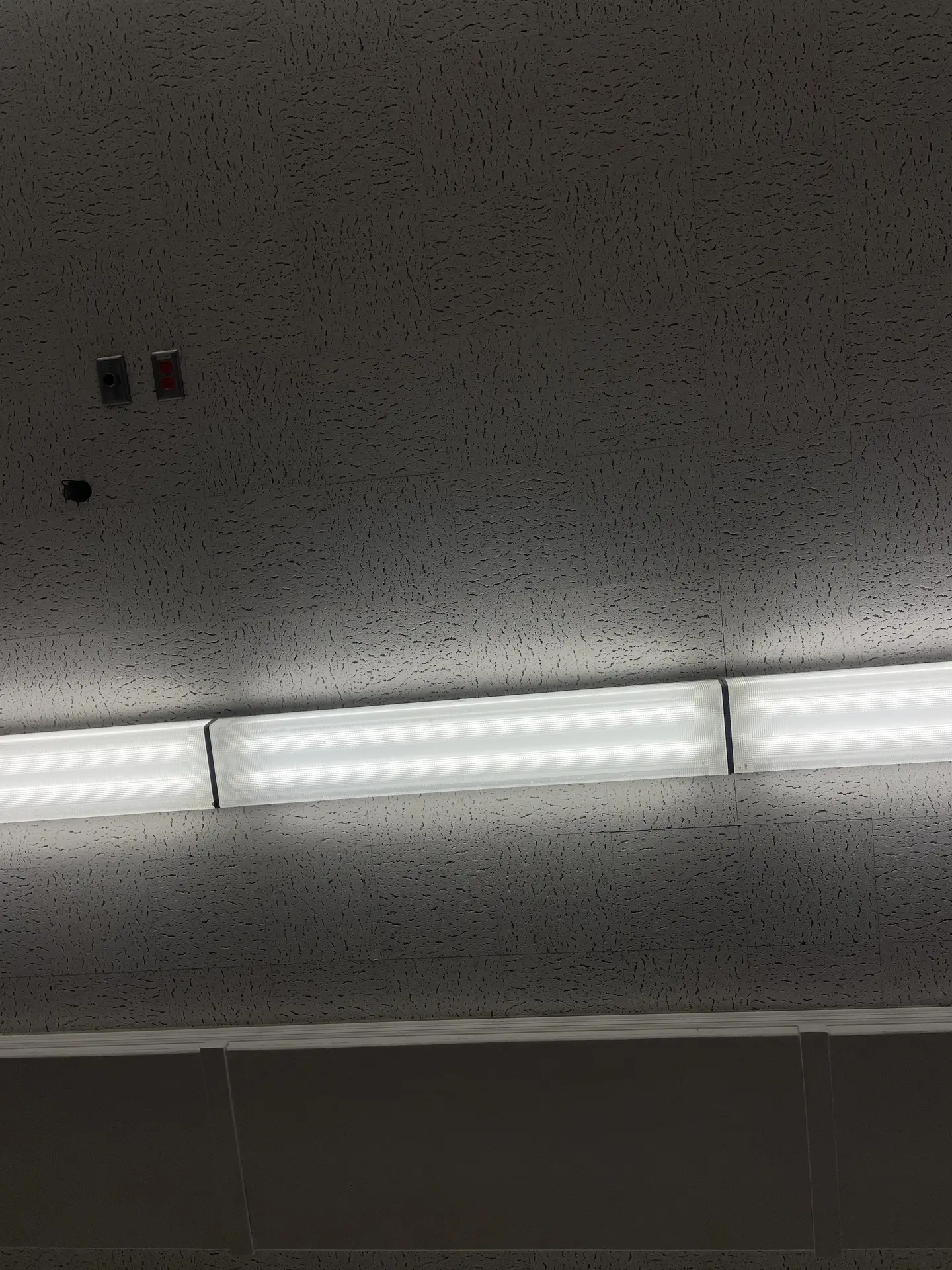
Classrooms, the doctor’s office, even the campus library, all have one thing in common: blinding, fluorescent overhead lighting. These lights — often referred to as the big light — are a common intergenerational conflict. At least some of us have memories of being disappointed as kids when the lights came back on after quiet time. The question is, what makes these lights such an assault on the eyes?
Light directly affects our internal clock. The National Institutes of Health (NIH) found that light is the strongest environmental signal for our circadian rhythm. Artificial lights can disrupt this cycle, causing fatigue and lack of sleep. For many, bright lighting can also cause physical discomfort and headaches. More lighting doesn’t necessarily mean better lighting; multiple studies have found that fluorescent lighting can lead to eye strain, decreased attention and in some cases even lower test scores.
These huge overhead lights are used as if everybody has the same needs, but we all have different sensitivities. Smaller and softer individual lights let people control their personal workspace, making people feel more comfortable and productive. Preventing sensory overload also helps to make spaces more accessible for those with light sensitivities.
Big lights also make a space feel too harsh; softer lighting is more inviting when entering a new space. Places of business often use fluorescent light to increase visibility, but businesses with ambient light feel welcoming, people want to shop where they feel welcomed.
Natural light should be used more often; opening windows and doors can help to air out a room, but can also reduce the need for overhead lighting. This, of course, reduces unnecessary electricity use. With gas and electricity prices climbing higher, limiting your use of lights could dramatically reduce your monthly electricity costs. Rooms can be well lit without blasting white light into every corner.
Schools are a great example of this; students will spend hours under fluorescent lighting, with no way to control their environment. Imagine how much more comfortable your classrooms would be with flexible lighting.
As a culture, we rely too much on overhead lighting, even though we have much more sustainable and comfortable lighting options. It’s time to switch to better, more efficient lighting.
Tara Linderborg-Cordry is a Journalism student and reporter with the Lumberjack. She is a Humboldt local and is pursuing a career in Public relations. When she’s not writing, she’s usually at the beach with her dog, Murphy.
Leave a Reply