The Lumberjack


Students Serving The Cal Poly Humboldt Campus and Community Since 1929

Category: Life & Arts

  • Taiko Drums and Lion Dancers ring in the Lunar New Year at Cal Poly Humboldt

    Taiko Drums and Lion Dancers ring in the Lunar New Year at Cal Poly Humboldt

    By Sadie Shields

    Lion Dancers swayed

    while the taiko drums beat and people chattered as the Lunar New Year event kicked off in the Kate Buchanan Room (KBR), hosted by the Asian, Desi, Pacific Islander and Middle Eastern and North African Center (ADPI-MENA).

    Students, faculty and community members gathered to celebrate Lunar New Year’s Year of the Horse on campus Friday, Feb. 27, from 5 to 8 p.m.

    Student Staff Lead of ADPI-MENA, Shaun Masuda, discussed the event’s overall growth.

    “Last year, we were averaging around 100 people for our bigger events,” Masuda said. “This year, we were just at about 200 people who signed in, including students and community members… which was a significant increase from our turnout last year.”

    The growth was visible as every table and chair was filled to the brim with community members, staff and students. Masuda believes the increase in participants has something to do with the space this year, including the accessibility benefits of the KBR space.

    “We like to host in the KBR not only in the addition of having a big space inside, but also because it’s easily accessible to students and the community, being in the student activity center,” Masuda said.

     The Lunar New Year is celebrated not only in China but also in nine other Asian countries and globally. There are twelve animal Zodiac signs in total in the Lunar New Year, with this year being the year of the Fire Horse. Those born in the Year of the Horse are said to be energetic, creative, confident, cheerful and responsible. You are considered to be born in the Year of the Horse if you were born in 1954, 1966, 1978, 1990, 2002 and 2014. Next year is the year of the Goat.

    Gary Ronnie, the leader of Taiko drummers in Humboldt, explains how much the culture means to him and what it means to share it. According to the United States Census Bureau, only 3.2% of Humboldt County’s population accounts for Asian residents. 

    “There is such a small percentage of Asians in this county that I love, that we are out there and we’re playing music to share the culture,” Ronnie said. “It’s really important. Involve other people. Connect with music.”

    Emily Hsu smiled as she shared her own journey. 

    “I’ve been doing Taiko since I was a kid, maybe in seventh grade,” Hsu said. “I played in Anaheim for a long time, and they went to a group in L.A. After that, I moved to Chicago and played in Chicago for a while, and now I’m here.”

    For three hours in the KBR, culture was not just discussed — it was heard, tasted, worn and shared. As students trickled out into the cool Friday night, the sense of community lingered long after the taiko drums fell silent, music still playing as the ADPI-MENA Center began cleaning up.

    Bio: Sadie is a junior communications major, journalism minor at Cal Poly Humboldt who has an interest in covering and taking photos for sports and wildlife journalism, and a slight interest in breaking news. She can be reached at sls331@humboldt.edu.


  • Geologist digs up an ancient civilization at The Miniplex

    Geologist digs up an ancient civilization at The Miniplex

    By: Will Bishop

    Humboldt County is not often a place where stars land. Our biggest city, Eureka, feels as though, past a certain hour in the depths of night, you could imagine an apocalypse had occurred — wiping the scourge of humankind from the streets. Yet there is a certain pull, an uncategorizable allure that sometimes draws a very bright thing into our orbit. And so, it has happened once more. The inexplicable, almost baffling gravity of The Miniplex has pulled in yet another star. Like our own miniaturized pet black hole. Landing an intimate set with Animal Collective’s own Brian Weitz, currently on a tour under his moniker, Geologist.

    Opener Complex Crown, the stagename of local electronic artist Max Brotman, established a heady atonal atmosphere. Primarily driven through rhythmic gymnastics rather than conventional melodic structures, it’s very much the sort of music you need to buy into entirely, or it will sound like nothing at all. As someone who buys into this sort of thing all the time, who owns stock in Richard Devine and loves killing the vibe with extremely confusing music that makes everyone go, “Why are you doing this?” — I thought it was very cool. A sort of full-body aural wash. Music to rewrite the polarity of your atoms. A projector displayed live video synth-driven visuals courtesy of Wil Bruce. Brotman also wielded a harmonium, establishing a precedent of artists throughout the evening using instruments I had never seen before in my entire life. 

    Thus bringing us cleanly to the hurdy-gurdy man himself: Geologist. I wasn’t entirely sure what his live act would consist of. Weitz, known for using a headlamp onstage because of the sheer amount of knob fiddling necessary to fulfill his role within Animal Collective, has until this year been the solo projectless member of the group. That changed with this year’s release of his debut album, Can I Get a Pack of Camel Lights?, a psychedelic post-rock journey with the aforementioned hurdy-gurdy taking center stage.

    The hurdy-gurdy is a very unusual instrument; something between a guitar, a piano and a gramophone. It conjures a sort of funereal aura, recalling that time you went to war for the independence of Scotland, when you and all of your friends were brutally slaughtered under the yoke of British expansionism. When hearing a hurdy-gurdy as played by Brian Weitz, it is more akin to experiencing a tranquil and voluntary heat death in the high deserts of the mind. Beholding cacti morph into shamanic entities of mysterious power and ambiguous intentions while you pound Arnold Palmers — periodically looking down at the visage embossed upon the can and watching him rapidly age 7,000 years over and over again while asking yourself, “Why 7,000 years?”

    Standing in the tightly enclosed and low-capacity environment of The Miniplex, mere feet from the man while he conjured forth ancient beings from a great beyond, clicking pedals on and off — sans headlamp—  and absolutely hurding the flippin’ gurd. It was easy to feel as though he was playing this show specifically and entirely for you. With only one small, rhythmically confused individual standing in front of me, my eyes were as if magnetically locked to his fingers — clacking with tap dancer’s grace and the speed of genetically modified super gazelles. To witness such esoteric mastery, like the revival of some arcane Byzantine art, was an experience that can truly only be summarized with an enigmatic riddle: what spins round and round, walks five hundred steps and always ends up exactly where it started? The hurdy-gurdy, baby.

    Bio: Will Bishop is a Cal Poly Humboldt journalism major. He is prone to writing essays about things that bother him and fictional works about things that also bother him, but in different ways. A highly bothered individual and a lover of cinema, music, large trees and rocks. He can often be found in the woods, dancing to bring down the sky.

  • My Interview With Jordan Bentley

    My Interview With Jordan Bentley

    By: Kaylon Coleman

    Last Thursday, Feb. 19, I had both the privilege and the opportunity to conduct my second high-profile Q&A style interview, this time with CEO of Hypland, Jordan Bentley. The event, titled Passion to Paycheck: In Conversation with Jordan Bentley, was hosted by the Umoja Center for Pan African Student Excellence as part of their Black Liberation Month events and festivities.

    Bentley is a Class of 2024 Forbes 30 Under 30 honoree and the visionary founder of Hypland, a global streetwear brand redefining the intersection of anime, gaming and fashion. What originally started out as a hustle in high school has since cultivated into a multimillion dollar business, spawning high-impact collaborations with iconic franchises such as Yu-Gi-Oh!, Hello Kitty, Naruto and One Piece. In 2024, Hypland opened its first flagship retail store in the heart of LA’s Little Tokyo. Bentley’s work has been featured in publications like Forbes, Complex, Hypebeast and more.

    Before the actual Q&A started, I was able to converse with Bentley about various topics including relationships, gaming and, of course, anime. It was during this time when I realized just how down to earth Bentley truly is. If there’s one thing I want to highlight from our interactions, it’s Bentley’s character. Throughout the entirety of Bentley’s visit, he took the time to ask the name of every person he encountered, and truly seemed to care about the conversations at play. 

    After some thoughtful conversation and riveting chess matches between my co-facilitator Stanley Checa-Valdez and Bentley, it was time to set up for the event. It was then that I started to feel the weight of the assembly start to build. Seeing flocks of people shuffle in, secure their complementary goodie bags graciously provided by Bentley and reserve their seats, it felt like the spotlight was pointed at me. I’m generally good about public speaking, but this felt real, like an actual spectacle. However, the combination of meeting Bentley beforehand, plus the crowd starting to fill with those I love made my nerves dissolve almost entirely.

    After introductions were made, the panel was on its way. The Q&A consisted of 12 questions split between me and my co-facilitator in which we asked Bentley a variety of questions spanning from his apprenticeship under Virgil Abloh, to his time on Sweet Life: Los Angeles to how hustling chips in high school equipped him with the practices he’d then go on to utilize running a multimillion dollar business.

    Bentley provided thoughtful and insightful pieces of advice that anyone — not just business students — could walk away with. One key takeaway was to try, try, try. The best way to figure out your passion is to try everything. If it doesn’t work out, hey, at least you tried. Failure isn’t definitive. Instead it’s a tool. It’s a building block that either takes you one step closer to your goals or helps align you with what your goals truly are.

    Another key takeaway from the panel was to build relationships. Bentley reflected on how the biggest thing he took from college was the relationships he built and the different perspectives he gained therefrom. He challenged students to leave their comfort zones and to seek connections outside of their circle. As a journalism student this heavily resonated with me as it’s cemented into us that networking is half the battle of the college experience. 

    This advice transcended just personal relationships as well. Bentley mirrored the “closed mouths don’t get fed” sentiment when the panel transitioned to Q&A from the audience and a member inquired about a potential internship opportunity. Bentley respected the hustle, saying opportunities go to those who ask and promised to connect after the event.

    To close out the night, Bentley along with all of the Umoja Center Staff went out to dinner in Eureka and we were able to talk a little more afterwards, with him stating that if we ever need anything his line is always open and to feel free to reach out anytime. 

    Kaylon Coleman is a senior journalism major with a concentration in news and a minor in communications. He is the life and arts editor for LJ, Marketing and Communications lead for the Umoja Center and a part-time radio DJ and merch manager for KRFH. If you have a topic you want him to discuss, email him at kc403@humboldt.edu.

  • Dancing and playing into Fiesta Folkloricas “Viva La Revolución”

    Dancing and playing into Fiesta Folkloricas “Viva La Revolución”

    By Sadie Shields 

    Colorful skirts swept across the stage, live mariachi filled the auditorium and traditional dances from all across Latin America reflected both history, celebration and identity.

    The festival began to the sound of the Hueso Coyoleras, also known as Aztec dancer foot rattles, filling the quiet room. The Aztec dancers walked from the entrance to the stage to begin the show, as the festivities of Fiesta Folklorica began.

    From showing revolutionary imagery, to celebration, to love, the Fiesta Folklorica show was created to represent the culture behind Latin America and give the Latin community a voice at Cal Poly Humboldt, a Hispanic-serving institution.

    Hosted at the Van Duzer Theater on campus, the event brought together student performers, musicians and community members for three nights that honored heritage through movement, music and storytelling. Dance groups representing different regions performed throughout the evening, each piece telling a story through costume, rhythm and expression. 

    For many performers, the event represented months — and sometimes years — of preparation. Luna Salinas, a junior music education major, described their journey into Danza.

    “I’ve been dancing for two years in Danza Azteca,” Salinas said. “I was doing it in the class first and then I got introduced to this whole production.”

    Carlos Jaimes Gaytan, a senior in wildlife conservation and management has also been in Danza Azteca for a year.

    “I was introduced to the club by Keneti Pinones and Naeem Alston to their Danza Azteca club with yolotl,” Gaytan said. “It’s been an amazing journey and I love every bit of it.”

    Beyond performance, Cesar Nuñez, a senior music major and musician, emphasized the deeper meaning behind the event — especially in a small Northern California community.

    “It’s important to hold this type of event in Arcata because it gives us Latinos a voice, and it shows a community,“Nuñez said. “Our culture and how we have fun, how we like to party,  it kind of shows the world that we’re not scared. We’re here, and we’re loud and proud about it all.” 

    The evening included moments of celebration and cultural pride, with audience members cheering and performers sharing their passion for dance and its importance to their culture. 

    “I think [Fiesta Folklorica is] important because they want us to feel shame, but I am not [ashamed] about my culture. Through this experience of dancing and singing our heritage, I have adopted so much pride in the process,” Salinas said. “We’re not going anywhere. And if you just leaned into it, you would find the life and love within it.” 

    Sharing the same sentiment, senior biology major Gala Villavicencio has cultural and personal connections to Danza as well.

    “Danza Azteca specifically has so many layers to it. It has deep roots that we’re blessed to spread,” Villavicencio said. “I just know that it connects back to my family, and even though I carry them with me, they haven’t had that opportunity to learn about Danza Azteca. And here I am out in Humboldt, learning, educating and doing my best to make them proud.”

    Before leaving, Jaime Gatan shared how he wants to let his culture be more known.

    “I want to show, I want to educate, I want my culture to be known, in that it shows other people that [you] too can do things like this wherever you go, however small or little, however big or small,.” Gatan said.“ You are a representative in the area. And we’re doing a really good job here representing our culture and trying our best to educate other people about it.”

    Director Jacqueline Silva, professor and the director of Fiesta Folklorica, explained how the performances represent the stories of the Latin culture.

    “Our dances tell stories which can represent historical events, courtship, animals native to the land and much more. La Revolución is an homage to Las Adelitas [female soldiers] of the Mexican Revolution,” Silva said. “They were such an integral part of war and unfortunately, were not giving the recognition they deserved. Now many groups honor their heroic actions on stage and we felt it was important to share this with our community.”

    Through music, dance and community, Fiesta Folklorica served as both a celebration and a reminder that culture continues to live and grow. Wherever people choose to carry, they will not be silenced. 

    Sadie is a junior communications major, journalism minor at Cal Poly Humboldt who has an interest in covering and taking photos for sports and wildlife journalism, and a slight interest in breaking news. She can be reached at sls331@humboldt.edu.

  • Death and Transformation in the Key of Life 

    Death and Transformation in the Key of Life 

    By Will Bishop

    My Ghosts Go Ghost by By Storm album review

    For as much as we idealize it; for as much as we will it on ourselves, on others, on the world. For as much as we want it, need it, long for it, die for it, there’s nothing more scary than change; the intransmutable transformation. To watch the unyieldingly cruel beauty of the world around you give way in landslides and avalanches. To feel meteors falling down from the sky crashing and destroying with an indiscriminate lust like the libido of a dying and powerful thing. To watch the people around you melt and explode to watch their faces change and mangle and become more beautiful and become more terrible and become something you no longer recognize.

    My Ghosts Go Ghost is an album born out of forced metamorphosis. After the untimely death of Stepa J. Groggs, the trio known as Injury Reserve was forced to change in order to survive. The two remaining members couldn’t continue as they were, Injury Reserve was a project largely defined by the interplay of Groggs and Ritchie with a T. After the release of By the Time I Get to Phoenix, an album which marked a stark contrast from the rest of their discography and was largely completed by the time Groggs passed away, the remaining duo needed to move on. They took on the name of the final track for their final album as Injury Reserve, and together they started over as By Storm.

    Coincidentally, By the Time I Get to Phoenix was an album about death. Ritchie’s stepfather had suddenly passed away, and the resulting project was an outpouring of pain shrouded in the eerily and supernaturally cruel timing of Groggs following shortly after. There’s an innate assumption that both projects are largely about him, when in reality, the theme of death on their previous project was pure happenstance. My Ghosts Go Ghost is a sprawling project covering a multitude of topics disconnected from Groggs — at least it seems that way. But, that’s not how it works; the surreal pain of loss is universal. Like a hallucinogenic third eye awakening, once a new depth is revealed you see it everywhere in everything.

    On the opening track, Can I Have You For Myself?, Ritchie talks about a relationship on the brink of enormous change. A child is on the way, and the protagonist of the song struggles to accept the death of his status quo. “You giving all of you, I want you all for me.” A life killing a way of life. The innate greed of love, the hunger you feel for another person. The desire for your relationship with them, your exact relationship, to endure forever. Frozen under a hundred miles of ice so the sun can never break its spell. Loving someone away from life, deep below and so protected even the imperceptible rotation of the earth can’t touch you. In the most protective parts of our hearts, we all feel this way about anybody, about anything that we love. Real love is love you feel for something as it is. Not how it was, or how it could be, but for what it is in the present. Whether romantic or otherwise, change is that great killer of love. A burning orca whale bullet breaking through the ice.

    But death is not forever, death is not death. The stopping of a heart, the eternal stealing of breath. Death is simply change. And even when love is killed, love can live on.

    “I woke up in a sweat with yesterday still stuck to me like glue,” Ritchie wails, with Parker Corey’s production making it sound like he’s crying out from some awful and trapped place. “It ain’t dead weight, it ain’t dead weight.”

    A frantic mantra in the dark, bouncing off the walls like echolocation, searching for love and meaning within the pitch black cave of death. Knowing that it’s still there, you just can’t see it with your eyes anymore. So, reach out with those quivering limbs and dance. “There’s nothing to run from, it’s all brand new.” You will never escape, you will never make it back to a place that no longer exists. And you will be in love forever.

    It’s a bruising, melancholy listen, even in comparison to By the Time I Get to Phoenix. There’s a profound sense of absence, absence of hooks, absence of easy catharsis. Many tracks feel like decapitated and delimbed versions of songs that might’ve been hits in some other alternate timeline. Moments of propulsion degenerate and degrade into shambolic instrumental anxiety attacks. Drum patterns start and stop and fall away in the mix, swallowed up by growing sonic voids. Jazz, industrial, hip-hop, it’s an unquantifiable blend of sonic ephemera — a difficult listen meant to communicate difficult feelings.

    Will Bishop is a Cal Poly Humboldt journalism major. He is prone to writing essays about things that bother him, and fictional works about things that also bother him but in different ways. A highly bothered individual, and a lover of cinema, music, and large trees/rocks. He can often be found in the woods, dancing to bring down the sky.

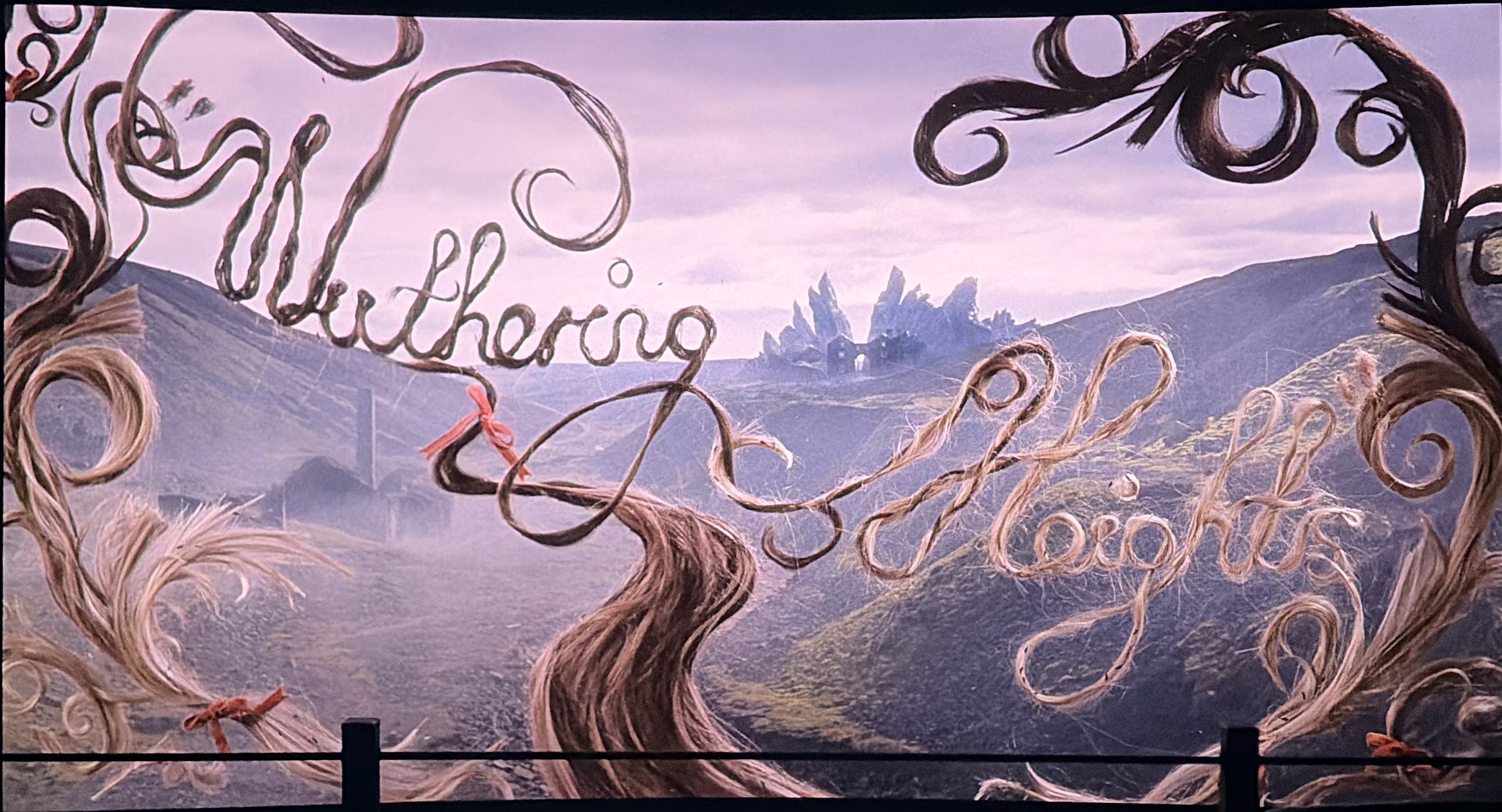
  • Wuthering Heights

    Wuthering Heights

    By Alba Galvan

    I had to use the bathroom for two straight hours, but I refused to go as the movie Wuthering Heights had me glued to my seat. 

    The cinematography in this movie was perfect; if there were things in this movie that the director Emerald Fennell did right, it was the visuals, costumes, hair, makeup, lighting, and music that captured the dark gothic vibes spectacularly.

    I have not read the book by Emily Brontë, published in 1947, but from what I gathered from TikTok, X and other social media apps, the general consensus of those who read it was disappointment in the movie adaptation. Critics claimed it was nothing like the book, but rather a self-insert of director Fennell’s personal fantasy, starring white-boy-of-the-month: Jacob Elordi.

    The male protagonist, Heathcliff, played by Elordi, received backlash that the character got whitewashed, and in Hollywood, this is common with roles meant to be played by non-white actors. There were previous adaptations in which Heathcliff was played by white actors, but in the book, Heathcliff is described as dark-skinned. Elordi, on the other hand, is again, a white man — from Australia. Many of the book’s crucial scenes were cut, like the ghost scene, and there were also a lot of sex scenes that were not necessary, as they were not in the book, leading to disappointment from the readers because they felt the movie had sexualized the original plot of the book. 

    As someone who didn’t read the book, I enjoyed Wuthering Heights for what it was: a tragedy. This movie had me in a trance, I fell in love with Heathcliff. Between you and me, I would make the same choices Isabella Linton did, but only because of how handsome Heathcliff was. Keep in mind that this movie is not to be romanticized. This movie is about two toxic people being horrible towards each other. The choices they made affected those around them in the most cruel ways possible. 

    I wouldn’t call this the all-time best movie I’ve ever seen. Trailers for the film made me believe this would be a love story, especially because it was released on Valentine’s Day. Since I didn’t read the book, I only knew what was shown in trailers. 

    If you plan to watch this movie with family, be warned, it has many, and I mean MANY, intimate scenes. I learned that the hard way by inviting my younger sister and mother to watch the movie with me. It was awkward. 

    I left this movie crying. I entered with a full face of makeup and left the theater with a bare face. What I did like about this movie — other than the aesthetics and how handsome Jacob Elordi was — is the message at the end of the movie. Spoiler incoming, I liked how it showed how two people can love each other so much it hurts, and still don’t end up together. They manage to hurt each other because of pride and miscommunication — that is what made me cry; that is what has been weighing on me for days after I’ve seen the movie. 

    This movie will be interpreted differently by everyone. I know my mom and I disagreed about what the message behind the movie was. If you have read the book, you may or may not like it and interpret it differently. In my personal opinion. I give this movie a 3/5 star review. 

    Alba she/her, LumberJack reporter. Journalism major who loves to read and write. She’s very passionate about sharing and listening to different opinions and loves self-expression. Contact email: agg83@humboldt.edu 

  • Blood on the dance floor

    Blood on the dance floor

    By Will Bishop

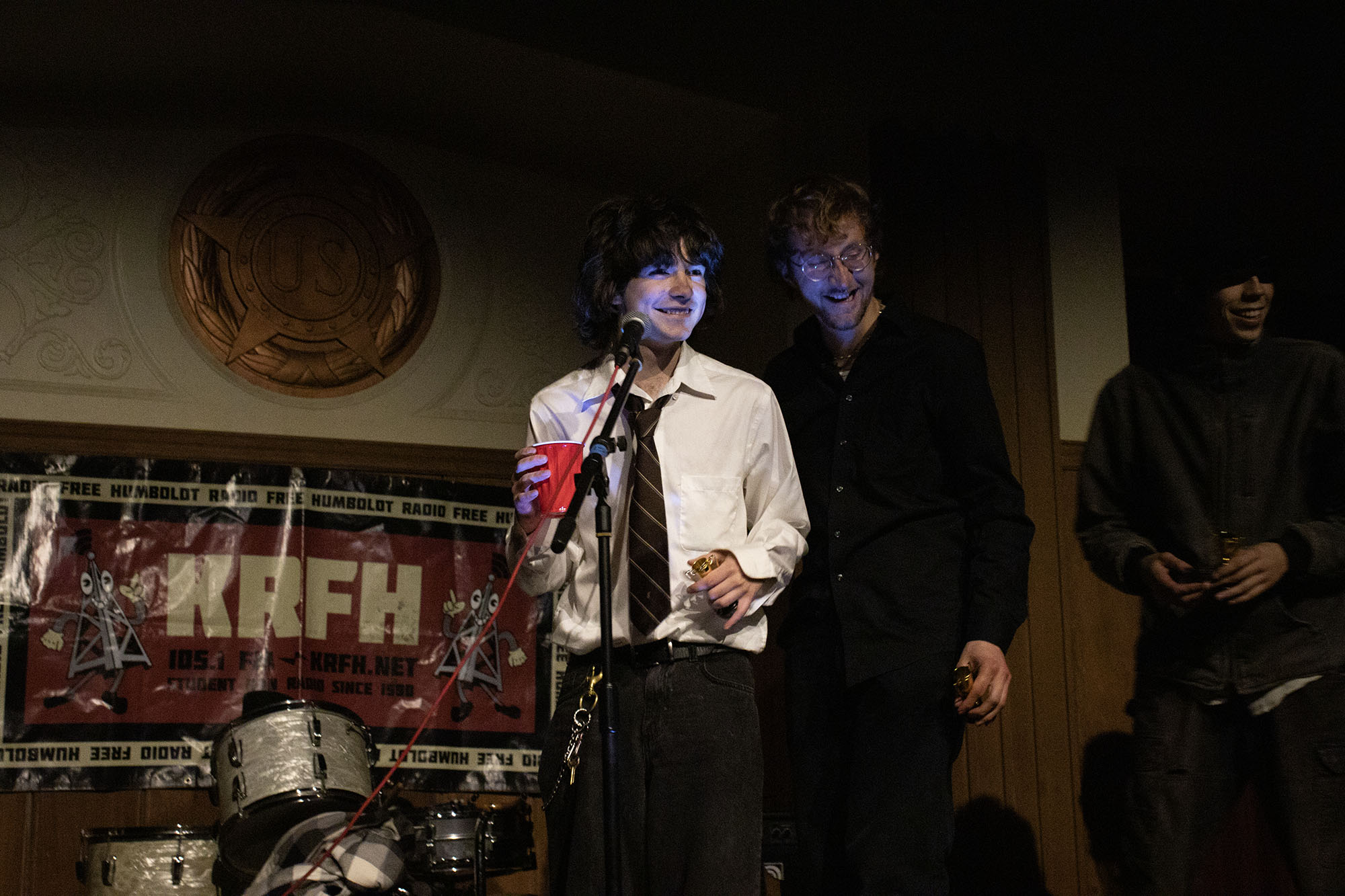
    With the wind howling and the sun sinking, five challengers entered the Arcata Veterans Hall. While generally a place for people whose battles have already been fought, this night was an exception. It was time for a long awaited return; a resurrection of something once thought to be dead and buried — the reemergence of 105.1 KRFH Radio’s Battle of the Bands (BotB) on Saturday, Feb. 21.

    “I’ve seen posters, like, vintage posters in the station of old BotBs, but I don’t think we’ve done one in a minute,” said KRFH Station Manager Miranda Ricks, a senior year journalism major. “This was kind of a little passion project of mine because I think it’s so — I don’t want to use the word cliche, but it’s such a movie trope to have a BotB, and I’m just really happy we were able to pull it off.” 

    Attendees were encouraged to scan QR codes located around the premises to vote for their favorite act, while merch tables could be found all over offering both band specific loot, as well as good ol’ fashioned KRFH memorabilia. Around 6 p.m., the first band took the stage.

    Datura Blues: Starting things off with a moody and atmospheric bang were KRFH BotB vets Datura Blues. Consisting of multiple Humboldt State University (HSU) alums including Oryan Peterson-Jones, who wrote his own ethnomusicology major called “Music as a cultural metaphor.” From 2000-2004, they played every KRFH BotB, and were valiantly defeated every time. 

    “We’re not a winning band,” Peterson-Jones said. 

    Given their sound, a purely instrumental cosmically minded psychedelic maelstrom, this is no surprise. Many of history’s greatest heroes are unsung in their time. 

    Speaking of history, Peterson-Jones’ legacy with KRFH goes all the way back to 1994, with his high school band entering the fray as young upstart contenders. He would go on to become program director and music manager, and even become close friends with KRFH founder Gary Melton. A true KRFH hall of famer if ever there was one. 

    Heaven’s Taint: A lineup choice clearly intended to give the audience whiplash. Regarding the contrast between the first two bands, frontwoman Sunny Breed, a Cal Poly Humboldt (CPH) alum with a psychology major, said, “We’re gonna break that trance, we’re gonna break it up.” Breed, in the purest sense of the word, is a rockstar. A performer equal parts electric and elastic, pogoing around the stage in a pair of white framed shades and spitting out every word.

    Lady in Waiting: It was time for the youths to take the stage to make everybody sad and introspective. This was the band’s first ever live performance, but listening to them you would never be able to tell. Like a newborn baby that’s inexplicably and disturbingly an adult man with a job and a drinking problem, they have arrived fully developed and ready to talk about what ails the world with whoever will listen. 

    The main songwriting duo at the heart of the group, Jack Sparks and Sophia Rudoni, are both art majors at CPH. Additionally, Rudoni is one of KRFH’s own, operating under the alias DJ Beeprincess. 

    The band’s influences are diverse and eclectic, emphasizing 90s New York bands like trip hop innovators Bowery Electric, and Japanese shoegaze act Pasteboard. Their third song, Martial Law, had more modern, political influences. 

     “Next song is about the president of the United States, fuck that guy. Fuck [Immigration and Customs Enforcement],” Sparks said.

    Shortly followed by a student making a quick announcement onstage regarding last week’s Siemens Hall occupation and the upcoming open forum scheduled for Friday, Feb. 27 at 8 a.m.

    Eradescents: By this point in the evening the audience had reached its peak size, and it was time for crowd-pleasing act Eradescents to take the stage. With only three members, they were the smallest band in competition, but they had heart to spare and powered through a rambunctious set rife with memorable moments. From a charged performance of Don’t Want to Know If You Are Lonely by Hüsker Dü to the band being honored with the first and only thrown novelty thong of the night — which swiftly wound up on the drummer’s head for the duration of their set. This was precisely the kind of performance you affiliate with a classic BotB experience.

    Pennies for Pluto: Announcing themselves with an improvised ditty about the event, the band quickly launched into an absurdly impressive set demonstrating virtuosic chops from every member. Frontman and bleeding heart of the band Orion Jesse Paul delivered a soaring vocal performance and shredding licks in equal measure.

    This marked the end of our lengthy and tumultuous journey. Each combatant had said their piece and now it was time for the audience to decide. Out of a grand tally of 112 votes in all, the winner of this most hallowed of tournaments was none other than Lady in Waiting. For their efforts each band member received a KRFH shirt, pin, patch and poster, as well as a slot in an upcoming Local LIXX session, a radio promo, and the opportunity to have their recorded music uploaded to KRFH’s automated system for that sweet sweet airtime.

    Will Bishop is a Cal Poly Humboldt journalism major. He is prone to writing essays about things that bother him, and fictional works about things that also bother him but in different ways. A highly bothered individual, and a lover of cinema, music, and large trees/rocks. He can often be found in the woods, dancing to bring down the sky.

  • Winging it at BSU Trivia Night 

    Winging it at BSU Trivia Night 

    By Marielle Winuk

    Taste buds sizzled on the tongues of sweating students as they scrambled to answer trivia questions and test their Black History Month knowledge at the Black Student Union ‘Hot Ones’ trivia event on Feb. 16. 

    Jei Farner, a bio chemistry and cellular biology major, hosted the four teams, titled Black Pepper, Black Power, Heartburn and Jalepeople through three different rounds.

    The round one categories consisted of Black history, film and tv, and music. The points earned in round one determined what level of hot sauce the teams received on their wings in round two. 

    In round two, it was time to face the first round of hot sauce. Black Power and Heartburn each sent up two members to compete in the Black Math category. Before answering, the team had to eat the hot wing and then answer the question. The first hot sauce used was called Tropical Amariallo, which had a heat level rating of six out of 10. Team Heartburn answered the most questions correctly, advancing them to the final round. The second match up was between Jalepeople and Black Pepper, with Black Pepper moving on to the finals. 

    In the final category, things started to get… hot. There were five wings on the table, and competitors raced to take at least two bites of the increasingly spicy wings while answering the trivia questions correctly. The wings got progressively spicier as they went down the line, and the final wing had The Last Dab Thermageddon hot sauce with a heat level of 11 out of 10. 

    Two gallons of milk and the cold outdoor air became essential to combat the spicy wings. Black Pepper went through their five hot wings and questions, and emerged victorious with a winning time of 12:23. 

    Marielle is a junior journalism major with an interest in politics and sports. She can be contacted at mmw146@humboldt.edu

  • Loretta Ross speaks on evading cancel culture, promoting “calling in” instead

    Loretta Ross speaks on evading cancel culture, promoting “calling in” instead

    by Alexis Blue

    Gutswurrak was filled with chatter, chilled drinks and cookies from a refreshment table on Feb. 11. The room felt lively; students, faculty, staff and community members gathered to listen to renowned author and activist Loretta J. Ross speak on contemporary society’s inclination towards cancel culture. 

    Ross spoke as the Black Liberation Month Keynote Speaker, hosted by the Umoja Center for Pan African Excellence. Ross is an activist, feminist, public intellectual and professor at Smith College in Massachusetts. A 2024 National Women’s Hall of Fame Inductee, Ross was an exceptional figure in the women’s movement. She joined in 1978 by working at the first rape crisis center in the country, where she developed her knowledge on women’s human rights, reproductive justice, white supremacy and the intersectionality of race with each issue.

    In her book, Calling In: How to Start Making Change with Those You’d Rather Cancel, Ross dives deep into what it means to call in, and how this strategy may be used to foster real change in activism as a whole, to fight modern facism in the United States. 

    “I remember Trump coming down that golden escalator,” Ross said. “I knew that America was not prepared for what he represented. Everybody in the media thought that he was a joke. I thought that he was an outcome of what America is and has busily denied forever.”  

    Ross continued by saying that 30 years ago, and even now, American society was so eager to call itself “post-racialist” to move past the fact that racism still exists in this country. 

    As an activist, Ross discussed her experience trying to fight facism in the past, and particularly in the contemporary political climate that surrounds the current administration. Her activism for the larger part of her life has never been easy, but has allowed her to gain insight into how exactly she wants to work towards her goals. 

    In developing how she wants to do work in her activism, she identified certain barriers and ways that people can advocate for change more effectively.
    “Doing anti-Klan work, doing the human rights work, doing the women’s rights work,” Ross said. “All of that slowly brought me to the realization that we cannot effectively fight facism when we’re spending our best bullets on each other.” 

    Ross outlines what she describes as a “Five C Continuum,” a framework for responding to challenging ideas and conflicts amidst one’s own activism: calling out, calling in, calling on, calling off and canceling.

    She strays from the idea of cancel culture, and instead promotes her idea of calling in, as it allows people to confront their own ideas in a more productive way. 

    “The first person you have to call in is yourself… You are modeling your best integrity in the world that you want to live in, not the world that you’re fighting,” Ross said. 

    A part of the continuum, a calling on strategy is useful specifically in addressing the people in one’s life as an incentive for them to confront internal ideas that are affecting their external behaviors. 

    “A calling on strategy is to help [the people in your life] pay attention to the good things that they’re capable of,” Ross said. “Using the adage of what Adrienne Maree Brown says, ‘What you pay attention to grows.’” 

    Ross highlighted the importance of humanizing people that have differing opinions and the importance of human rights. In a world full of hate, facism, racism and people in power trying to strip humans of their basic rights, Ross spoke to the power of love to defeat hate. 

    “For a movement, there will be many different people with many different thoughts moving in the same direction,” Ross said.  

    Alexis Blue is a senior at Cal Poly Humboldt, majoring in journalism – public relations and minoring in writing. In her free time, you’ll probably find her drinking coffee, watching sunsets, collecting shells on the beach and playing soccer.

  • Free showing of the Vagina Monologues

    Free showing of the Vagina Monologues

    by Eli Farrington

    Theater-enthusiasts and feminists rejoice, for The Vagina Monologues has finally returned to the Eureka Theater for Valentine’s Day weekend. 

    Originally written in 1994 by V Ensler, The Vagina Monologues addressed social stigmas surrounding women’s bodies, consensual and nonconsensual encounters, sexuality and conversations centered around rape and abuse. Ensler drew inspiration from real interviews and conversations with women of all ages, races and sexualities, discussing deeply personal topics such as bodily autonomy, self-confidence, intimacy, violence, trauma, resilience, vaginal care, menstruation, prostitution and much more. 

    The New York Times dubbed the play, “probably the most important piece of political theater of the last decade,” and even said “no recent hour of theater has had a greater impact worldwide” in a 2018 article. 

    The play was last showcased at the Eureka Theater 25 years ago by Humboldt director Kristy Hellum. Now, Hellum has returned to the local stage with an updated version that reflects the Humboldt community and current events while remaining true to Ensler’s original theme of empowerment, which is why proceeds from Hellum’s production will be donated to Humboldt Domestic Violence Services and Together Women Rise. 

    The play will be showing from Feb. 13-15. Doors will open at 7 p.m. on Friday and Saturday, and 1 p.m. on Sunday. 

    Stage Manager Liz Whittemore and Hellum are offering students a free showing of the final dress rehearsal on Thursday, Feb. 12. 

    “This is a special opportunity to experience the show before our official performances open on Friday evening,” Whittemore said. “Having an audience for this final run-through means so much to the cast and crew, and we would be honored to share it with you.”

    Hellum and Whittemore are incredibly excited to bring The Vagina Monologues back to the Humboldt community for the Valentine’s Day weekend. In the spirit of inclusivity, they want to make theater accessible to everyone, especially students who may not be able to attend due to financial barriers. 

    “Please arrive and find a seat before 8:00 p.m.,” Whittemore said. “No ticket is required for the dress rehearsal — just come in, settle in and enjoy the show.”

    Eli Farrington is the rosey-cheeked, cherub-esque Managing Editor for The Cumberjack. In his free time, he enjoys flying over the quad with a bow, wearing nothing but a loincloth and angel wings and shooting arrows of love into the hearts of Cal Poly Humboldt students. You can reach him at eaf62@humboldt.edu.

  • Humboldt Burlesque: Reclaiming while Entertaining

    Humboldt Burlesque: Reclaiming while Entertaining

    by Luke Shanafelt

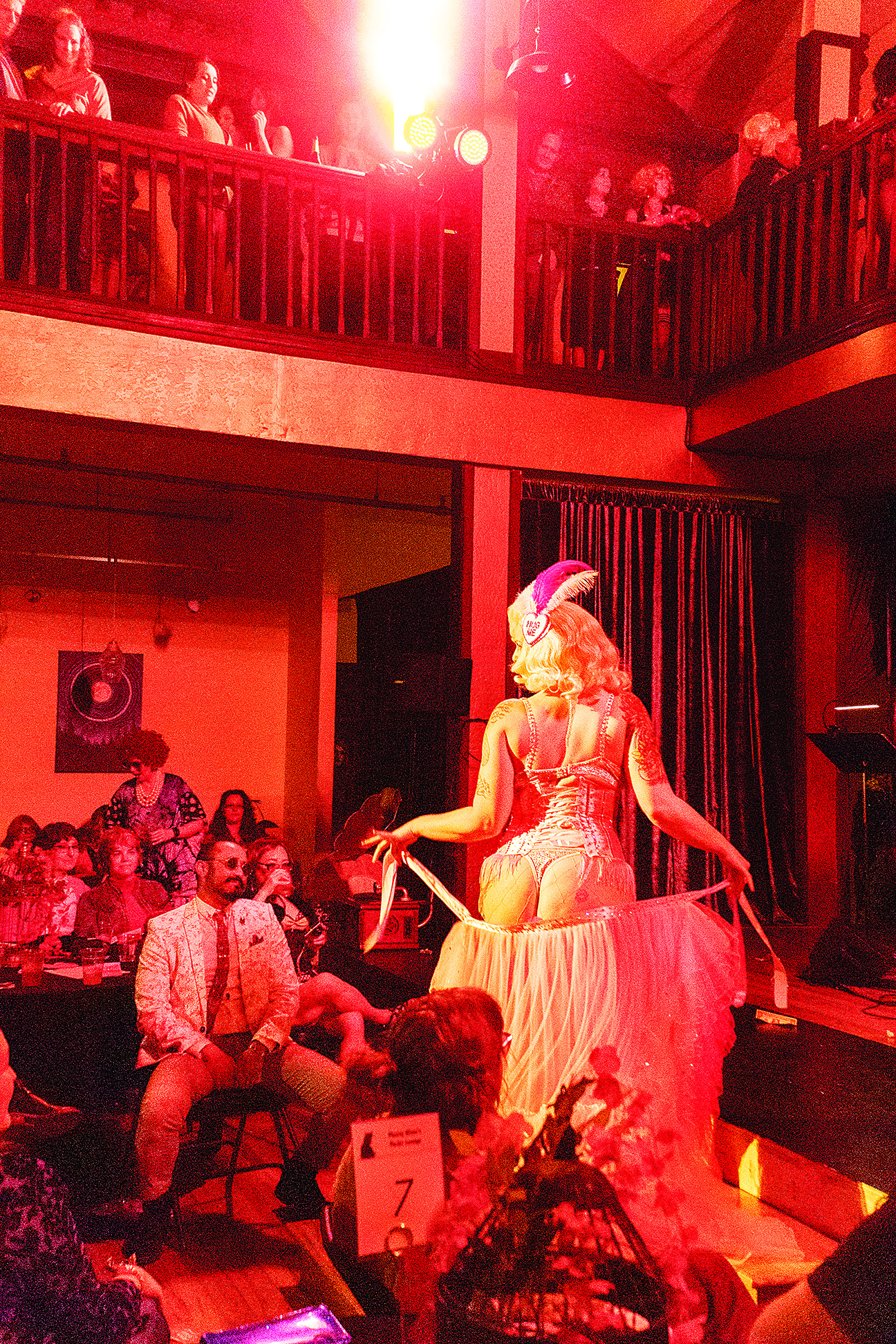
    Tasseled titties spun in circles as the host, Mr. Gino, emerged onto the stage in an emerald crusted blazer. The swing band filled ears with waves of roaring twenties jazz tunes. A pastel pink haircut bounced to the beat, waiting for a dancer to throw shreds of underwear upon them.

    Burlesque entertainment uses elements of comedy, music and striptease to create a feminist counterculture rooted in tradition. On the night of Saturday, Feb. 7, more than 10 dancers, including Eureka Mayor Kim Bergel, took the stage at the Eagle House.

    Harry Sass closed the show with a flamboyant display of unapologetic swag. He came in hot dressed with a funky white suit and a long silver wig. As the crowd begged for more, that white suit began to dematerialize. With an array of stringed disassembly, pasty white quadrecepts revealed themselves in the red light. 

    “Burlesque was kind of like women taking back their power,” Sass said. “It’s about celebrating the beauty in everybody. The perfect body is what society says it is, and it’s unattainable.”

    In Humboldt County, people use burlesque to express themselves without feeling shame. The host for the evening, Mr. Gino, helped highlight why Humboldt is a great spot for drag and burlesque.

    “We have so many performers who feel safe putting themselves out there because we have love and support from our community,” Mr. Gino said.

    Mr. Gino’s hosting skills kept the momentum of the show beating like a pulse. Backed by an incredible talent of jazz musicians and two beautiful singers, Mr. Gino could do no wrong. Cheers rang almost every minute. It was the same enthusiasm some give to the Super Bowl.

    Ryan Citro, an organizer and performer in the event, talked about the style associated with drag and the time period it comes from.

    “When I dress up, I want to look like Marilyn Monroe,” Citro said. “I just love old Hollywood glamor, I love being on the stage and I love creating costumes.” 

    Citro took the stage with the attitude of a burlesque seasoned veteran. Her personality came through in her act with a calm confidence. Her peacock inspired attire also reflected her leadership and owning her own body, flaunting it not to attract mates, but to impress herself beyond her own expectations.  

    “Burlesque gives me a lot of confidence,” Citro said.

    Stripteasing takes some guts, especially performing to a sold-out crowd of more than 50 people. Citro created the peacock costume herself, something she tries to do with most of her costumes when she has the time and money. When she doesn’t, she looks to the community for help. Burlesque has themes of mocking high society, so hand-made costumes are not only sustainable, but also mimic the incredibly expensive culture of high fashion. 

    To striptease for a sold out crowd of people takes major skill, practice and confidence. These artists work hard to own their body and their style, and embracing themselves makes it easy for outsiders to come in and find confidence as well. 

    Burlesque dancers express themselves in a way that inspires. It’s an art form that shines light on glistening nipple pasties of all shapes, colors and sizes. In times of heated political turmoil, Americans have always had the freedom of expression to fall back on. Humboldt county’s hippie transplant origins gave the performers a comfort that holds them soft like a fern. 

    Humboldt is artistically rich. Whether it’s finding confidence in yourself by watching your favorite dancer, getting inspired by the epic costume design and music, or supporting the people who work hard to create events like this. 

    Mr. Gino had some final comments for the students of Humboldt regarding drag and burlesque.  

    “Get out into your community,” Mr. Gino said. “A lot of times students come up here just for school. Don’t just come to school and leave, w. We have a beautiful place here. It really is a special little bubble.”

    Luke is a senior journalism transfer from Socal who enjoys video editing, music journalism, and man on the street interviews. Contact him at ls432@humboldt.edu.

  • Iron Lung movie review

    Iron Lung movie review

    by Bodhi Haugen

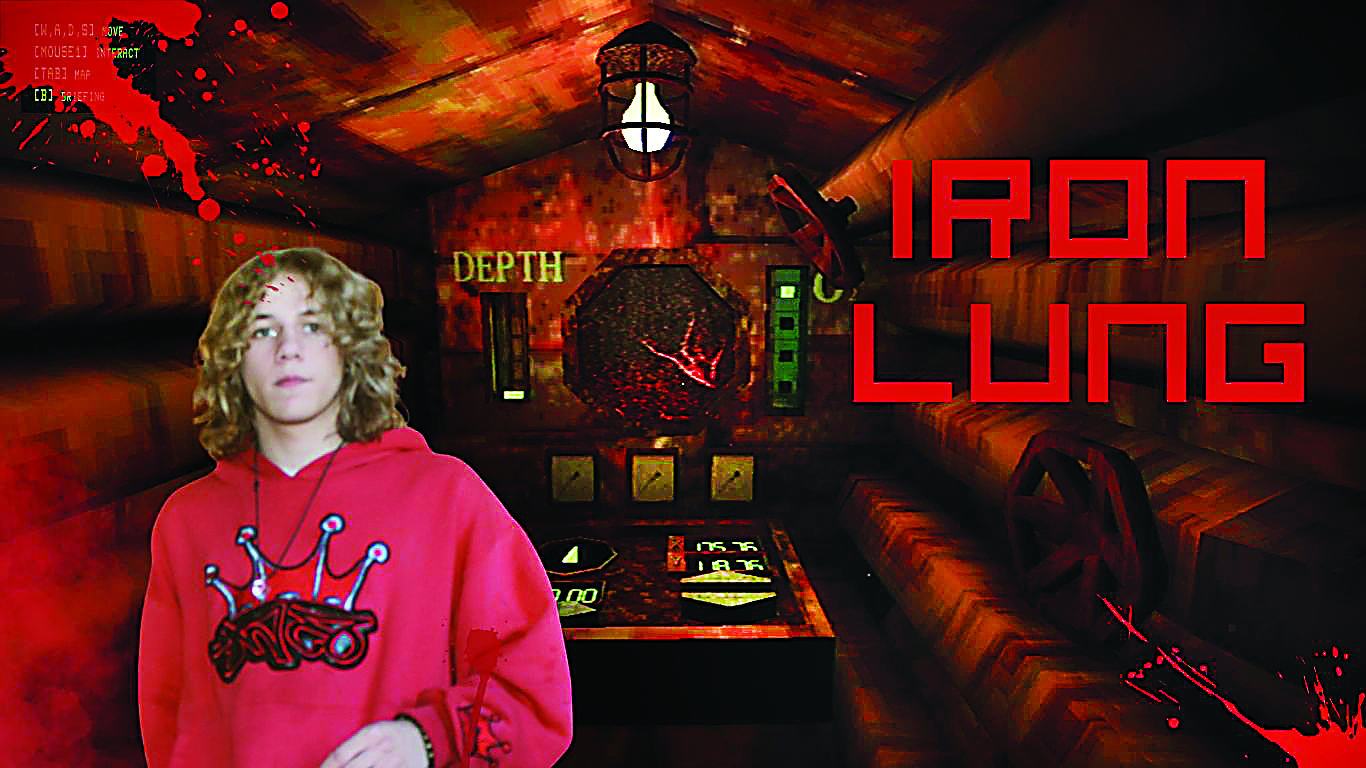
    Iron Lung is based on an unsettling indie horror game released in 2022. Mark Fischbach, also known as popular YouTuber Markiplier, served as the film’s writer, director, producer, editor, and lead actor. The movie was also entirely self-financed by Fischbach, which made the project even more ambitious. 

    I purchased my tickets a week prior and was excited to see Fischbach bring his passion project to life in theaters. I was stunned by what I saw when I walked into Broadway Cinemas late on a Friday night — I hadn’t seen a theater so packed since the release of The Force Awakens over 10 years ago.

    Going in, I wasn’t sure where to place my expectations for a YouTuber movie. I had concerns that the acting might fall short or that the thriller genre could be tainted by my preconceived knowledge of Markiplier as the protagonist. Still, I had hope. 

    Nearly the entire film takes place inside a cramped submarine, with the window and exit welded shut. In this universe, all known planets have mysteriously disappeared, leaving only a single planet with an ocean of blood behind, along with space stations where what remains of humanity survives. Simon, played by Fischbach, is assigned to explore the ocean floor as punishment for his crimes, tasked with researching the phenomenon known as The Quiet Rapture.

    The film excels at making the viewer feel claustrophobic. The submarine is dimly lit and tightly confined, and I rarely saw more than Simon himself could. This limited perspective heightened the tension in various scenes.

    Throughout most of the movie, the only characters we hear are Simon and various voices over the intercom built into the submarine. This places Fischbach’s performance under the spotlight, as the audience spends nearly the entire runtime alone with him. Although the acting wasn’t the best I have seen, Fischbach sold a convincing performance in many of the film’s tense scenarios. 

    A setting like this thrives on silence, and that’s where the movie occasionally stumbles. I felt that Iron Lung relied too heavily on unnecessary monologues from both Simon and the intercom, which pulled me out of the immersion in certain scenes rather than letting the tension speak for itself.

    Visually, the film does not fall. Fischbach was creative with his shot composition, which amplified the anxiety of being on an underwater vessel. The use of unconventional camera angles helped me feel like I was in the submarine with Simon, rather than just observing it.

    Despite watching gameplay videos beforehand and being familiar with Markiplier’s content, I left the theater with more questions than I had going in. The film expands on the game’s eerie lore, but not enough information is provided for all the pieces to easily fall into place by the time the credits roll. While this may have been intentional, a bit more clarity would have helped the average viewer feel a little less lost.

    This movie isn’t for everyone — if you’re a fan of the game or of Markiplier, you’ll probably love it, despite some flaws. As a passion project and self-funded film, Iron Lung is visually compelling and holds its own alongside big Hollywood budgets. Even if you don’t have any prior connection to the game or Fischbach himself, the movie is still worth watching, but it doesn’t necessarily need to be experienced in theaters.

    I give it a 78% on ripe potatoes.

  • Frankie and the Witch Fingers brew a cauldron of sweat with opener Zookraught

    Frankie and the Witch Fingers brew a cauldron of sweat with opener Zookraught

    by Will Bishop

    This Saturday night, beneath a haloed Waxing Gibbous moon, the high ceilings of Kate Buchanan were filled with churning and rapturous sludge. Main act Frankie and the Witch Fingers, in tandem with opener Zookraught, metamorphosed the vast, generally bean bag adorned space into a downright disgusting melee of bodies and sonic warfare. No vast Orwellian projections of Kevin from The Office on the walls this time around. If you wanted to escape your roommates and sleep for an alarming amount of time in Cal Poly Humboldt’s unofficially-official chamber of nap-titude, you were gonna be better off trying your luck under that big lightbulb in the sky.

    Launching the night in T-minus to dance-punk doomsday fashion was Zookraught, a trio from Seattle consisting of Stephanie Jones on bass, Sam Frederick on guitar and Baylee Harper on drums adorned with facepaint that invited the tantalizing question, “What if Kiss was good?” Well, if Kiss was good, and a completely different genre of music and not in any way remotely similar to Kiss with the exception of their facepaint, then perhaps they would be like Zookraught — and perhaps they would be face-meltingly sick as fuck. Like Zookraught. For the first minute or two, I wondered where exactly their vocals were even coming from before realizing this is one of those “OH MY GOD THE DRUMMER SINGS”-type bands, promptly followed by the realization that they in fact all sing, and they will throw around that vocal baton at breakneck speed.

    Describing themselves after the show as “Team Fun,” the band conjures an aura of whimsicality, theatricality and ferocicality (sometimes bands deserve new words) in equal measure, crossing guitar necks like simulated ten-string intercouse and raging at the American political machine with all manner of electro-acoustical might. Nary an ass was left unshaken by the end of this blistering set, as the band perfectly navigated the precarious zone between hard as nails punk and hooky-danceable-borderline pop that you could show to your pop-loving suburban aunt if you wanted to kill her or something. 

    By night’s end, frontman of Frankie and the Witch Fingers Dylan Sizemore was among Zookraught’s biggest admirers, even going as far as to call them one of his favorite bands. 

    “It’s insane they even opened for us, because they’re amazing,” Sizemore said. “I wouldn’t even call them an opener, we just played with them tonight.” 

    Which brings us neatly to psych rock extraordinaires Frankie and the Witch Fingers, whose current lineup is comprised of the aforementioned Dylan Sizemore on vocals and guitar, Nicole “Nikki Pickle” Smith on bass, Josh Menashe on guitar, Jon Modaff on synths and Nick Aguilar on drums. The lone synth of Trash Classic introductory track Channel Rot heralded their arrival, prickling up the back of my neck and wriggling into my ears. Now that I’ve been infected with the Mind Virus, it is time to begin. 

    Cue guitars. The relentless, borderline monotonic ripper T.V. Baby immediately established the cadence of the set. From there on out, it was go, go, go. The jerky stork-like posture dancing of Sizemore, like the hands of a rapidly malfunctioning clock, could practically show you how the music sounded without hearing it. With a head rigidly strapped to a constantly pecking gimbal metronome hybrid apparatus some might refer to as a “perfectly human neck” and a hard V stance akin to an upside down yield sign — which for those of you who don’t have driver’s licenses, means go very fast. He is the visual embodiment of the band’s sound.

    While some may think of psych rock as eternally dressed in kaleidoscopic spaced out collages of LSD ambiance, Frankie and the Witch Fingers quote from a very different book. After the mayhem, Sizemore could be heard telling eager young fans about proto-electronic group Crash Course in Science, and it is precisely this kind of out-of-left-field reference that holds the keys to their unique sonic makeup. The high precision playing, the mutating repetition, the synth lead-ins; it all very much evokes the ethos of fringe, punk-inflected techno long before you would ever think of genre staples such as Spiritualized or Pink Floyd. Like motorik refracted through the scuzzed-out fuzz of psych rock. A mutant, a freak, a disgusting and abominable thing. Give me more, I want to keep hanging out with the swamp monster robot.

    Will Bishop is a Cal Poly Humboldt journalism major. He is prone to writing essays about things that bother him, and fictional works about things that also bother him but in different ways. A highly bothered individual, and a lover of cinema, music, and large trees/rocks, he can often be found in the woods, dancing to bring down the sky.

  • Marty Supreme is a headache in cinematic format

    Marty Supreme is a headache in cinematic format

    Reel Talk with Julia

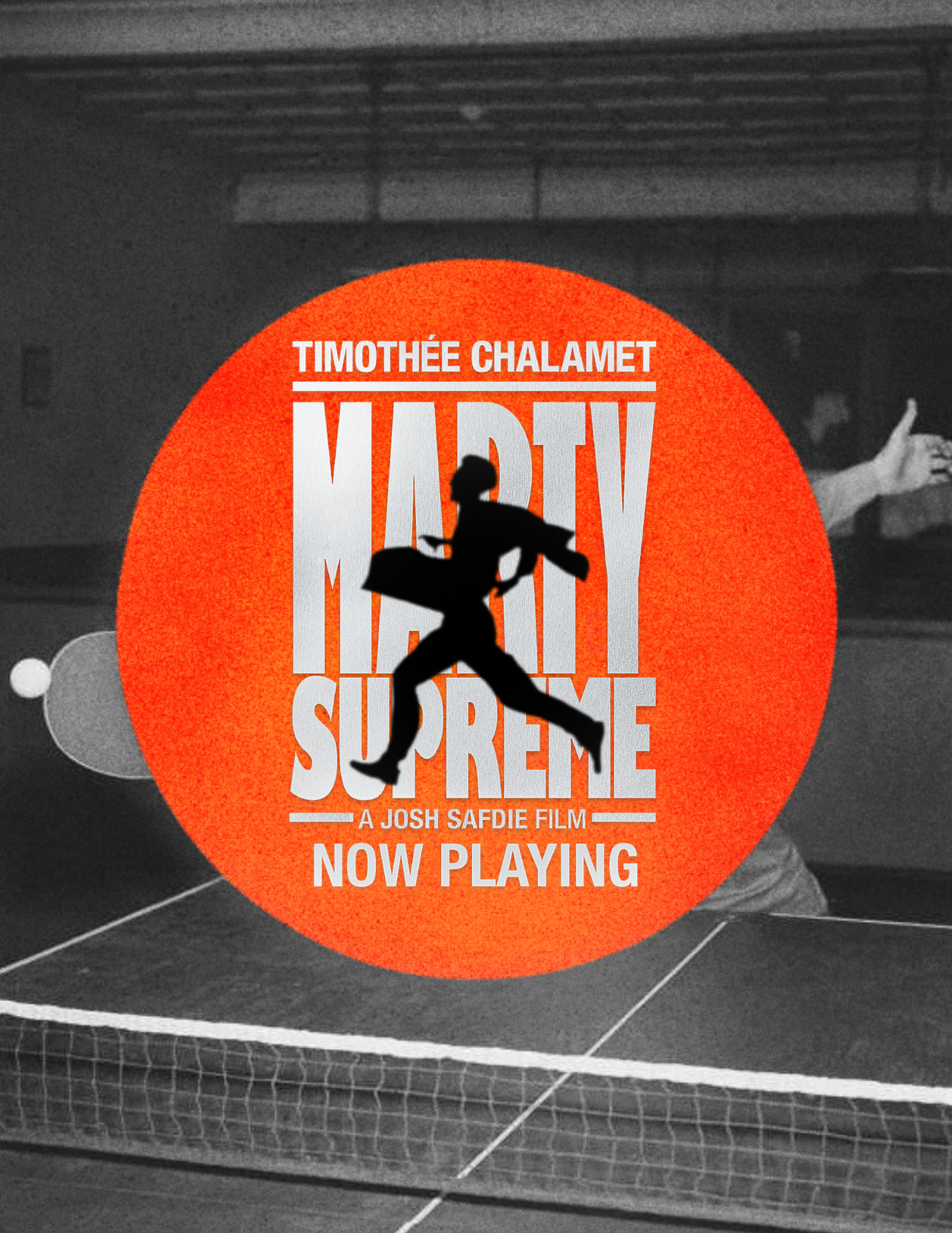
    I had the unfortunate displeasure of watching Marty Supreme, directed and written by Josh Safdie, over the winter break. This film is set in 1950s New York and follows Marty Mauser, a shoe salesman, hustler and above-average table tennis player, played by Timothée Chalamet. Mauser’s tale centers around the many trials and tribulations of how he made his mark as a world-class table tennis champion.

    What can I say positively about Marty Supreme? Let me think…well, Chalamet was amazing in this. Mauser is an extremely unlikable protagonist, which is the point. Mauser will stop at nothing to boost his ego just to serve his self-centered elitism. 

    Mauser wants the title of ‘best table tennis player in the world,’ but it’s one he most definitely doesn’t deserve. Notably I felt there was an extreme lack of ping-pong action for a character that seemingly only cares about the sport and nothing else — but whatever, I guess.

    To unpack the possible meaning behind making Mauser so unlikable, Mauser represents a human embodiment of achieving the ‘American Dream.’ The idea that anyone can achieve their dream often means you must cut down anything or anyone that gets in your way. Mauser does this time and time again through the film’s agonizing two-and-half hour runtime. All thanks to his selfishness and charisma, he makes headway towards his goal. I suppose Chalamet was a shoo-in for that kind of character.

    The rest of the cast honestly didn’t stand out to me. Which makes sense since this film is set in Mauser’s POV — of course, everyone in his life would be one-note nobodies that only act as obstacles or help him achieve something he wants. 

    This movie never lets you get oriented for a moment. You’re immediately thrust into a world of screaming chaos. If that kind of environment is your cup of tea, good for you, I guess? However, if you’re anything like my family, whom I regrettably dragged along, then you’re going to leave with a headache and a hankering for a stiff drink.

    I can recognize that I’m looking at this film through whatever the opposite of rose colored glasses is, I know what this film is trying to achieve. It’s chaotic and painful to watch by nature, but that doesn’t mean I have to give it its flowers either. 

     Marty Supreme doesn’t really have anything interesting to say that hasn’t already been said more eloquently by someone else. If you enjoyed this film, I urge you to ask yourself ‘why.’ Right now, I feel like the positive audience reviews about Marty Supreme remind me of how people say the Mona Lisa is a great piece of art. Do you actually think the Mona Lisa is an amazing work of art, or are you just saying that because everyone else is? Art is meant to be critiqued and analyzed, and if you claim to be a cinaphile but don’t even have the decency to form your own opinion, then maybe get off Letterboxd or something. 

    Although if you genuinely loved it, with opinions you didn’t steal from an Instagram post, I implore you to try to change my mind. Three outta 10 Julia’s.

    If you’re still interested in seeing Marty Supreme for yourself, then showings of the film should be available at the local Minor Theatre in Arcata. 

    Julia is a journalism major and the co-EIC of the paper. She loves film and is a regular on Letterboxd. She also enjoys going on walks in the forest and taking pictures to relax. If you have a movie you’d like her to review, please email her at jk328@humboldt.edu.

  • Five Nights at Freddys 2 caught a vibe

    Five Nights at Freddys 2 caught a vibe

    by Barley Lewis-Mccabe

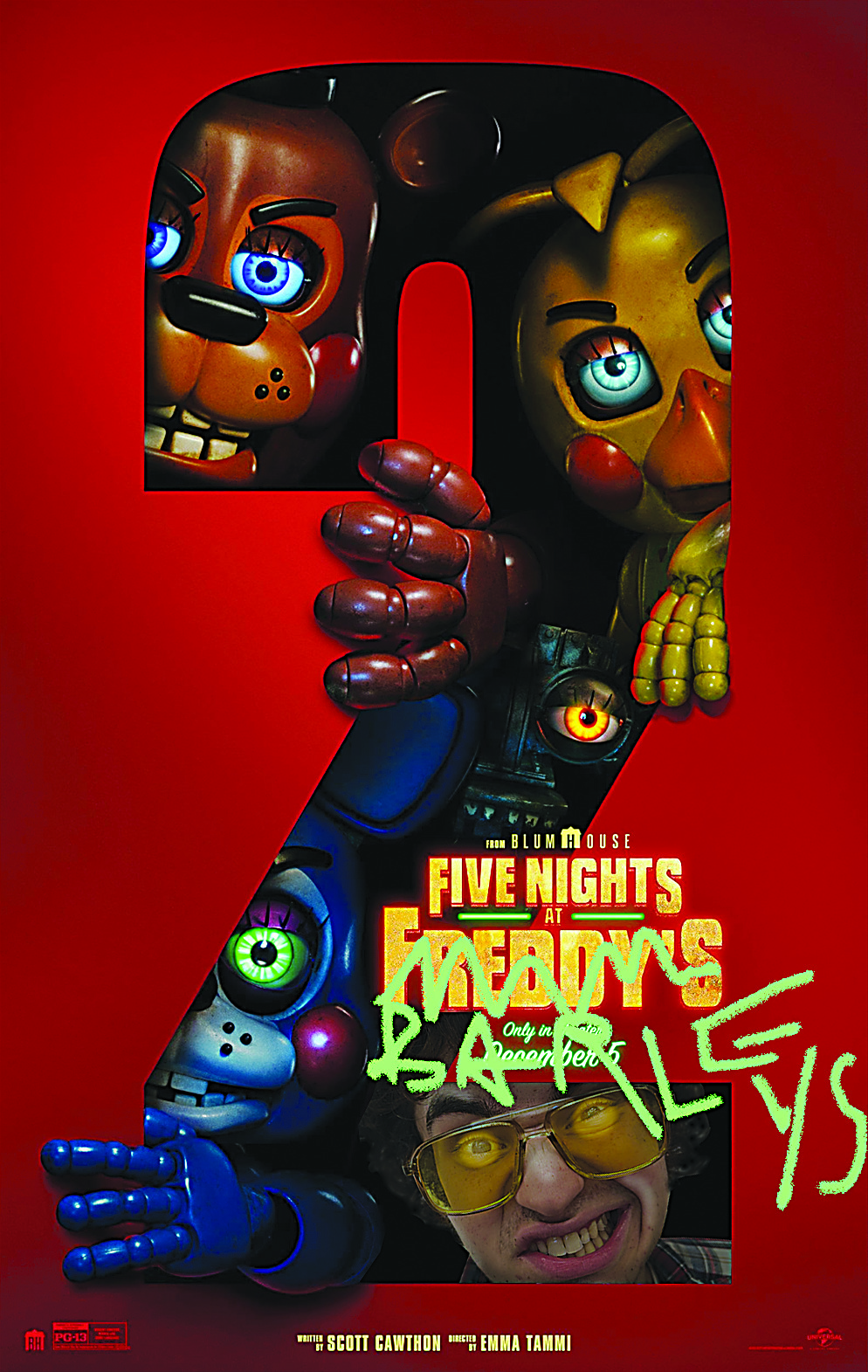
    I have to come clean. I did not see this movie in a theater. I bought front row seats to what may be the year’s best film, Five Nights at Freddy’s 2 (FNAF). However, it turns out that showing was at the same time as the Rock Auction, so I couldn’t go. Instead, I watched it on my TV via an HDMI cable and a totally legal website. I got to see the movie the way I’m sure Emma Tammi herself intended it: deep fried visuals, crunchy audio, theater sounds, laughs during parts where a laugh isn’t needed, coughs, sneezes, the ever present ‘Cinemacity.rip’ watermark and, of course, Spanish subtitles that couldn’t be turned off. So, let’s talk Freddy. 

    I didn’t go into this expecting a good movie. I only wanted a few things: cool robots, some callbacks to the games, to be a bit scared at times and to get out of my head. I wanted to watch a silly movie as an adult, based on something I liked as a kid. Despite everything I can happily say that I got everything I wanted.

    Much like the first movie, the filmmakers took a lot of liberties with the story of FNAF 2, and that’s what makes it so good — or, at the very least watchable. FNAF lore is confusing, stupid and made up along the way. If the movie had stayed faithful to the games, it would’ve been a boring, nonsensical mess. The movie knew what to do with such a dense cannon to work with, using the material for inspiration to tell a fun story with similar core beats. But it’s not all pepperoni pizzas — it has a threequel bait ending, the characters have no real purpose and at some points act at random, it has nearly the exact same story as the first and half the actors learned how to act from Gal Gadot. But that’s ok, it’s a movie with a lot of heart; a sequel that does its job, continues the story and isn’t just a soulless cash grab.

    Listen, not every movie has to win an Oscar, not everything has to be so serious, or important. Sometimes a movie’s artistic value isn’t in the content but in the experience. This is one such movie, a theme park ride of a film. I’m the intended audience for this movie: a college aged stoner who liked FNAF as a kid. I like it just because it is. It’s a fan service movie in the best way possible, because it’s actually fun to watch. While there’s no shortage of, “oh shit it’s that guy,” or, “what the fuck, its the thing from the game,” they have some really good scares, and it consistently keeps you on your toes. At the end of the day it’s a movie that looks cool — if you aren’t watching it filmed off of someone elses phone. Which, of course, I didn’t. Watch this movie with your buddies, kick back, don’t think so hard and enjoy something that doesn’t matter. Trust me, you’ll have fun.

    Barley is the opinionated opinion editor, photographer and an untraditional reporter who focuses on social change and stories with a real human impact. If you’d like to reach the grooviest dude in the newsroom email bl258@humboldt.edu.

  • Keeping it cozy at Froth Cafe

    Keeping it cozy at Froth Cafe

    by Dylan Jewett

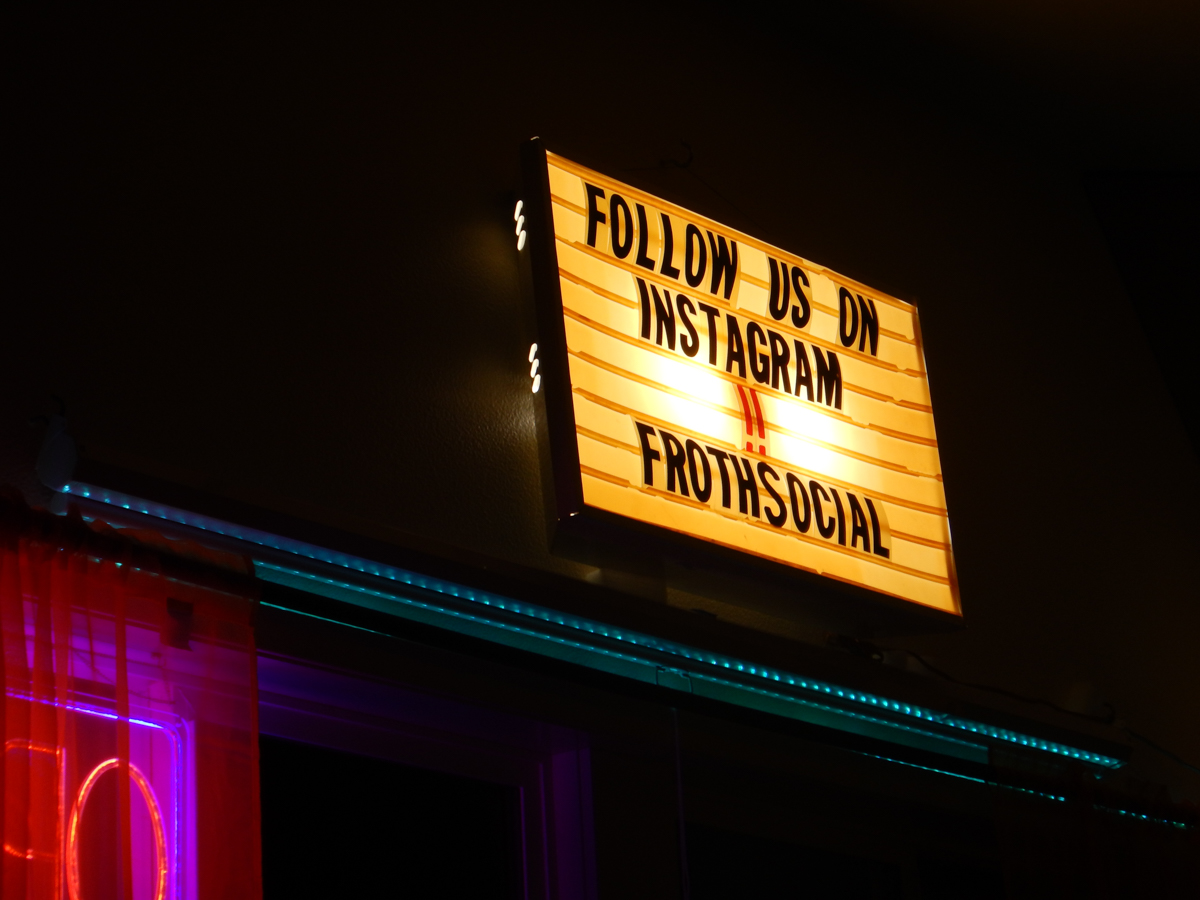
    All I could think about was finding a fun place to relax this past cold, foggy Friday, ready to kick off my weekend. I decided on Froth, a local cafe just a half-mile from campus. After deciding to share the adventure with my two roommates, we packed into my car and made the brief drive to the cafe. The sky was dark and it started to sprinkle as we arrived.

    As we walked in, the warm lighting contrasted with the gloomy evening. The menu featured quite a few different coffee options, like matcha, teas, hot chocolate and a bar with beer and wine. I decided on an iced vanilla oat milk matcha latte and avocado toast and my roommates decided to split an egg sandwich.

     We settled into a cozy seating area near the bar and found my favorite part of our visit: the card and board game collection. The atmosphere of the cafe was warm, with quiet music playing and patrons on their laptops talking amongst themselves. After grabbing some playing cards and starting a game, the food and drinks arrived. 

    My toast was nice and crunchy, my avocado creamy, and the salt and pepper was a nice touch on top. The matcha was delicious, albeit a bit milk heavy. The egg sandwich was full of bacon, cheese and ham, and the sauce that it came with was also quite good, a bit sweet and spicy. The hot chocolate was also served with a massive dollop of whipped cream — a solid 8/10, perfect for a cold fall evening.

    As we snacked on our food and continued to play, more people poured in through the doors. Chatter filled the cafe and it became lively; I can only imagine what it’s like there for the events that they hold weekly. 

    Froth is a wonderful place for friends to gather, people to meet and a great place to eat and drink. On top of that, the decor is just incredible, I found myself in awe of the mural they had painted on the back wall depicting a mermaid pouring a coffee, with coral surrounding her body. Overall, Froth really is a gem here in Arcata, and whether you go alone while you wait for your laundry next door or you go with friends, you are sure to have a good time.

    Dylan Jewett is a fourth-year Journalism major at Cal Poly Humboldt. You can catch them wandering the forest, exploring the coast with their camera, enjoying live music and crocheting little things in their free time. Contact them at daj59@humboldt.edu.

  • West Bank volunteer shares presentation about their experience

    West Bank volunteer shares presentation about their experience

    by Ryndi Greenwell

    **Name of volunteer not shared due to protecting their anonymity/ability to volunteer. This article will refer to them as “volunteer” or “presenter.”

    On Dec. 8, Cal Poly Humboldt received a report back from the West Bank — a presentation and Q&A from a volunteer who spent three months in the West Bank of Israeli-occupied Palestine. They spent most of their time in Masafer Yatta, a rural collection of 19 villages within the occupied West Bank. The presentation took place at the Behavioral and Social Sciences building on campus, drawing in about 20 students and community members. 

    The presentation covered a volunteer’s personal experience while in Masafer Yatta, including risks they encountered as well as the joy they found there. The presenter worked with the volunteer group Masafer Yatta Solidarity Alliance (MYSA), who work to establish a protective presence of international volunteers in the homes and properties of local Palestinians. The presenter discussed how the presence of volunteers made Palestinian families less prone to targeted actions from Israeli settlers.

    “Families are less likely to get attacked if a volunteer is present,” the presenter said. 

    The volunteer reported that in the area they stayed, there was some kind of incident with Israeli citizens or the Israeli Occupational Force (IOF) daily. The force is also known as the Israeli Defense Force (IDF), however the volunteer clarified that the defense part of the acronym is not accurate to their imperial actions. These daily incidents included the deployment of sound grenades to disrupt gatherings, IOF harassing locals for documentation frequently, destroying property and crops, water sabotage and more. Many of the incidents the presenter encountered were related to livestock and land protection.

    “Settler shepherds were encroaching on their land,” they said. “Some days as early as 6 a.m., some days at 8 a.m..” 

    Another main goal of the volunteer organization is to document incidents as they happen. Having a witness to violent or unfair treatment may help the families have a better case in court, and settler forces are less likely to harm Palestinians if an international volunteer is recording. Their phones or cameras are also much less likely to be seized or broken by the IOF. 

    For those who might consider volunteer work like this, the presenter shared that there are few barriers to entry. Volunteers must complete an online training program before they can travel to the West Bank and can choose to not participate even after the training is completed. MYSA asks that volunteers stay for a minimum of three weeks in order to complete necessary on-the-ground training, but encourages the full three months in order to have the most impact. 

    “The relationships you can build are deeper the longer you stay,” the presenter said. 

    That was one major takeaway from the presentation — much of the difference one can make is creating close relationships with local Palestinians. Protective presence volunteer work gives communities some safety, but also leaves volunteers with a greater understanding of human rights. The presenter explained that most volunteers find themselves wanting to stay in the West Bank, and may return many times. 

    “It is a life-changing, radicalizing experience,” the volunteer said. 

    For more information or questions about volunteering, check out MYSA’s Instagram @masaferyattasolidarityalliance or their website my-sa.org

    Ryndi is a news journalism major who loves to cook, paint and sing. Contact her rg315@humboldt.edu

  • Reel Talk with Julia

    Reel Talk with Julia

    Kill Bill: The Whole Bloody Affair, should I sit down in a theater for 5 hours?

    by Julia Kelm

    Kill Bill: Vol. 1 and 2 are Quentin Tarantino cinema classics, returning to the silver screen this Thursday, Dec. 4, at the Eureka Broadway theater. 

    Those unfamiliar with these films, the plot follows the mysterious ex-assassin simply known as ‘The Bride’ — played by Uma Thurman. The Bride wakes from a coma and almost immediately seeks revenge against Bill and the Deadly Viper Assassination Squad, all of whom betrayed her and led to the killing of her unborn son. 

    These films, in typical Tarantino fashion, are intensely violent and chock-full of classic cinema references that would have Tarantino fanboys doing metaphorical backflips. I, on the other hand, find the first film great, but the second one is just okay.

    Much like how the second act of Wicked was — from what I’ve heard — unsatisfying, and disappointing, Kill Bill Vol. 2 doesn’t even come close to meeting your expectations after a much more riveting start. In my opinion, the first film is almost perfect and my favorite Tarantino movie. It’s a basic idea for a revenge story; however, it’s so extreme and jaw-dropping, with innovative editing and cinematography, that it deserves its praise. Tarantino borrows from many other filmmakers, including black-and-white scenes and animation, leading to an interesting, almost mixed-media artwork in film format.

    To summarize, Kill Bill Vol. 1 is an excellently presented action film that goes beyond meaningless violence and into what I would call contemporary art. With part two, you might expect everything good about the first film but better, or at least comparable in quality, right?

    Kill Bill Vol. 2, while not bad, is much slower, dialogue-heavy, and is generally less satisfying as a viewer going from the action-packed, hyper-violent style of the first film. 

    So would I recommend seeing Kill Bill: The Whole Bloody Affair coming to theaters? I’ll say yes if you prefer seeing films in the theatre, haven’t seen the films or are a huge Kill Bill fan. However, if you’ve seen them and don’t care — why are you reading this review? — then I would pass on the opportunity.

    You can watch both Kill Bill films for free by checking them out at the Cal Poly Humboldt library. You can also watch Vol. 1 by accessing the mysterious online school resource “Panopto.” If you can figure out how to access that, you can search for films there as well. Vol. 1 = 10/10 Julias Vol. 2 = 7/10 Julias.

    Julia is a journalism major and the life and arts editor for the paper. She loves film and is a regular on Letterboxd. She also enjoys going on walks in the forest and taking pictures to relax. If you have a movie you want her to review, email her at jk328@humboldt.edu.

  • Reel Talk with Julia

    Reel Talk with Julia

    I love Guillermo del Toro’s monsters – Frankenstein

    by Julia Kelm

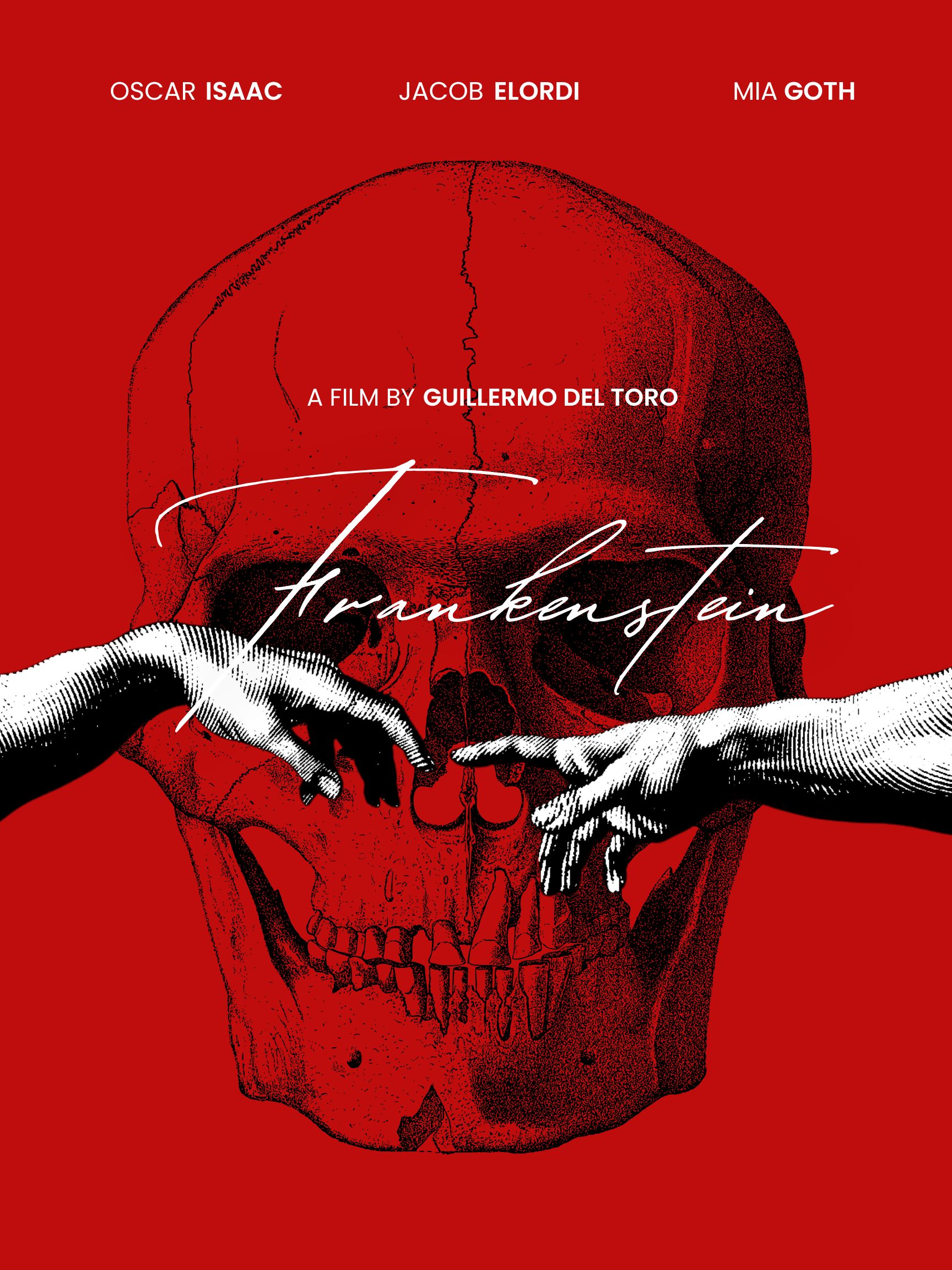
    Frankenstein (2025) made a limited theatrical release on Oct. 17 this year, and then began streaming on Netflix on Nov. 7. The film is an adaptation of the 1818 gothic classic Frankenstein also known as The Modern Prometheus by Mary Shelley.

    If you are unfamiliar with the story, and I don’t know why you wouldn’t, it follows Dr. Victor Frankenstein — Oscar Isaac — a brilliant, yet egomaniacal scientist, who brings a creature made of the parts of the dead to life. The creature — Jacob Elordi — turns against his creator, hunting him to the edge of civilization, which is where the story begins and ends.

    I feel partially like a phony talking about Frankenstein since I have never actually read the source material. However, I think I make up for this with a sister who is obsessed with the story and has told me basically everything to know about the classic. I am also a major fan of Del Toro, who is my third favorite director — something to keep in mind if you like to keep track of the ‘Reel Talk’ lore.

    Anywho, although Del Toro’s film is one of the very few adaptations of the novel that stays somewhat true to the story, he does add his own creative flair and changes to the retelling of this tale. Without getting into the specifics of the story content, this is most notable with Del Toro’s classic art design elements. 

     I can not stress enough how perfect Elordi is to play the monster. In the novel, the monster is described as being 8-feet-tall, and although made of decaying flesh, he was strangely beautiful. The combination of classic Del Toro art design for the creature — gothic and fairy-tale like — and Elordi’s tall beauty, there’s absolutely nobody else I would cast. Elordi also plays the monster in such a kind and pure-hearted way, you can’t help but audibly aww. I hope he gets some award recognition for this role, as it stands out to me among this year’s potential Oscar nominees.

    Isaac was also excellent and really shines as an actor here. He plays Dr. Frankenstein as a cruel father to the creature, his own ego getting in the way of truly seeing the potential in his creation. Frankenstein is wicked in so many ways, but you can’t help but find him endearing and charismatic in the early minutes of the film. 

    However, to me, these were the only standout performances in the film. Elizabeth — Mia Goth — felt like one note to me. Although I understand her lack of depth, since the story doesn’t rely on her existence much.

    Unfortunately, I watched the film in the comfort of my own apartment on Netflix, since I didn’t have time to procure myself a drive to Eureka this week. Minor Theatre, it’s time to retire  One Battle After Another and show some other shit.

    However, I suppose I am grateful that I could watch it at all — and it makes it easier for you, too. It’s much more manageable to open up Netflix between what feels like exam after exam this year, than trying to get into that confusing ass parking lot at Broadway theater.

    So, please, try not to look down on me for not getting to the theater this week, my dear reader. I’d rate Frankenstein a solid 9 outta 10 Julias.

    Julia is a journalism major and the life and arts editor for the paper. She loves film and is a regular on Letterboxd. She also enjoys going on walks in the forest and taking pictures to relax. If you have a movie you want her to review, email her at jk328@humboldt.edu.

  • Getting kinky at Kink in the Quad

    by LIVI E. Lyman

    Love and learning don’t just take one form, at least not on Cal Poly Humboldt’s campus. On Thursday, Nov. 13, the Women’s Resource Center hosted Kink on the Quad, a bi-annual campus event that teaches sex-positivity, self-expression, inclusivity, and ways to be in tune with one’s own sexuality, as well as how other people express it. 

    The event took place in the Kate Buchanan Room of the Student Activities Center. There was a diverse group of student participants, creative vendors, fun beverages, and unique games that created a safe environment for the spectrum of human expression. The event also included a raffle where students could win a selection of items donated by local stores and sex-positive sponsors. 

    Junior botany major and vendor Viviana Morfin shared that it was her first time at Kink on the Quad.

    “This event brings flocks of people together to learn about important issues that you wouldn’t be able to learn on campus in such a fun way,” Morfin said. 

    Alexus Roberts, a music major and vendor for the Shakti Club, shared Morfin’s sentiments about the event. I love Kink on the Quad,” Roberts said. “It is welcoming to all students… covering topics like sexuality, femininity, masculinity, creating a safe space to explore it.” 

    Whether you are fluidly exploring or just getting started, this event supports individuals at any stage, creating a space to learn about being sexually safe and growing people’s confidence in what feels good to them.

    LIVI E. Lyman (they/them) is a senior at Cal Poly Humboldt, studying business marketing, with an interest in combining the art and business worlds. Their first love was words, their expression: fashion and writing about who they are and what they know. Contact oel6@humboldt.edu for more information on how to get involved with the monthly fashion photoshoot or if you have a story you’d like to share. 

  • Daniel Caesar’s Son of Spergy Review

    Daniel Caesar’s Son of Spergy Review

    by Devin Bowen

    As the fall leaves turn different shades of yellowish-gold and each day slowly gets colder, Daniel Caesar’s new album arrives just in time for the agony and pain of the yearning fall season. Son Of Spergy, released earlier this fall on Oct. 24, is Daniel Caesar’s most recent project — and trust me, it will have you locked in. From his last album, Never Enough, Son Of Spergy brings that beautiful soft Daniel Caesar lust with insanely well thought-out lyrics that tell a real story.

    My initial reaction to seeing the album finally released was “Oh, God,” yet it was in excitement and fear. If you’re an avid Daniel Caesar listener, you know how easy it is to resonate with his music. So, of course, I grabbed my headphones, screamed to myself a couple of times, and started the heavenly listening experience. The album starts with the song Rain Down (feat. Sampha) and right off the bat, I got hooked. Caesar has a tendency to incorporate religion into his lyrics and does it in the best way possible. As someone who isn’t religious but more on the spiritual side, I still appreciate that connection he makes through his songs. In a bittersweet sense, it reminds me of some of Marvin Gaye’s religious songs like God Is Love. I may not have any connection to the song, but my finger is moving and my foot is tapping.

    The album is a decent 53-minute listening time and halfway through is where I really got into some of my favorite songs. Who Knows is the sixth track on the album and seems to be the most popular one so far and I understand why. It’s a very raw, human thought process of being with someone, especially being so young. The world rushes your brain to think you should know, but again, who knows, no pun intended. No More Loving (On Women I Don’t Love) [feat. 646yf4t] the second to last song on the album has to be my top favorite. It just has such a great beat drop, the soft vocals of Ceasar and the lyrics! Mhm.

    I would have to rate this album an 8.6/10. Caesar brings the spiritual connection to sex, struggle and life. This album is definitely for those who find themselves lost in a rush that could mean or not mean anything to them. Going back and forth with confirmation of yourself, finding comfort in a higher being, and repeating the actions. It is truly worth a listen, so go get yourself a hot drink or a cigarette and prepare for this album to make you an evil avoidant beast or a yearning spiritual puppy.

    ​

    Devin Bowen is a journalism major and also the social media manager for the student run radio station, KRFH. She admires collecting vinyl records and exploring new artists. They hope to spread new experiences and influence a different perspective with music and culture through The Lumberjack. Contact them at dlb155@humboldt.edu.

  • Sitting on The Philosopher’s Couch

    Sitting on The Philosopher’s Couch

    by Sadie Shields

    California State University, East Bay Professor and Philosophical Counselor Susi Ferrarello has spent years exploring the intersection of philosophy, literature and human emotion, ultimately shaping a body of work that bridges intellectual inquiry and lived experience. Her career in philosophical counseling gradually inspired her to write a book devoted entirely to the practice.

    “I started doing philosophical counseling and then the experience accumulated,” Ferrarello said. “I thought it might be interesting to write a book about that.”

    In her recent keynote at Cal Poly Humboldt on Nov. 6 titled “On the Philosopher’s Couch,” Ferrarello invited students to reconsider what it means to love intentionally. Blending philosophy, literature and personal anecdotes from her practice, she encouraged the audience to explore the potential for deliberate, mindful engagement in their relationships. 

    “I wanted to give students that space — the same one I try to create for my clients — to know that we can become smarter when it comes to love,” Ferrarello said.

    Preparing the lecture posed unique challenges. Ferrarello was aware she would be addressing a diverse audience including students, faculty and community members, and she sought to create a discourse that would resonate with all.

    “When we want to share love with someone, we don’t need to act out of an invisible pressure,” Ferrarello said. “There is a space to make relevant choices in our loving life.”

    Ferrarello explored two primary themes in her talk: the nature of choice in relationships and the role of emotions — particularly rage — in shaping human interactions. Drawing on Homeric literature, she referenced Penelope and Odysseus as an archetype of relational choice. Ferrarello paralleled this with a client named Christina, who, after more than a decade of marriage, faced continual choices regarding her life and identity within the relationship.

    “Love is not just an intention,” Ferrarello said. “Even if I act in good faith, the outcome is not guaranteed.” 

    Rage, she said, often complicates the capacity for rational choice in relationships. Referencing the Iliad, she examined Agamemnon’s destructive anger and drew upon stoic philosophy to distinguish between empty, unnatural rage and justified, purposeful thumos — a form of courageous anger grounded in values. 

    “It’s not blind, violent rage,” she said. “It’s thumos — the kind of courage that lets us stand our ground and assert who we are. In those moments, we become heroes — we become agathos.” 

    To translate these insights into practice, Ferrarello shared exercises from her book The Ethics of Love, designed to help readers reconnect with their capacity for thoughtful, intentional love. Ferrarello said her interest in love is both personal and professional; her book emerged from the intense emotional experiences of counseling clients during the pandemic alongside formative memories from her childhood in Rome. She recalled a neighbor, a woman subjected to psychiatric treatments, whose life left a profound impression.

    “I always thought, oh my God, what a terrible life this woman is having,” she said. 

    Ferrarello also reflected on the experiences of three other women, two of whom died by suicide following abusive relationships. She dedicated her book to these women, citing her own challenging upbringing as a lens through which she could understand the risks and complexities of love. 

    “I could touch with my hands how dangerous and painful love can be if we don’t put our mind into it,” Ferrarello said.

    Anxiety and possessiveness, Ferrarello noted, are pervasive challenges in human relationships. An anxious individual may be warm and affectionate yet fail to truly perceive the needs of others because they are consumed by their own fears. 

    “The other person becomes an object, not the actual person,” Ferrarello said. 

    Recognizing such patterns, she argued, is a crucial step toward healthier relational dynamics. For Ferrarello, the cultivation of self-awareness and humility is central to meaningful love. Humility, she added, prevents people from overestimating themselves or allowing others to define their worth.

    Ferrarello explained that healthy self-love is not selfishness, but an ethical engagement with one’s own needs and potential. It involves recognizing one’s unique talents, moral responsibilities and inherent dignity. From this foundation, individuals are better equipped to nurture themselves and others. Ferrarello warned against seeking validation through superficial markers like popularity or wealth, noting that these forms of recognition are fleeting and can leave individuals vulnerable to manipulation. 

    “This is another easy way of being loved that does not bring true happiness or fulfillment,” she said.

    Ferrarello’s work underscores a central principle: love is a skill that requires reflection, ethical consideration and intentional practice. Through her counseling, writing and lectures, she seeks to equip individuals with the tools to navigate emotion, choice and human connection with greater clarity, compassion and courage.

    Sadie is a junior communications major, journalism minor at Cal Poly Humboldt who has an interest in covering and taking photos for sports and wildlife journalism and a slight interest in breaking news. She can be reached at sls331@humboldt.edu.

  • Surfrider show Cigarette Surfboard film

    Surfrider show Cigarette Surfboard film

    by Luke Shanafelt

    Everyone’s seen a cigarette butt on the ground at some point in their life — a yellowed, plastic tip sitting in the street, waiting to be disposed of. It’s the mascot behind the “I.D.G.A.F” mindset. 

    The Surfrider foundation fights for plastic reduction, ocean protection, clean water and more. On Nov. 4, Surfrider Humboldt threw an event with a screening of The Cigarette Surfboard that showcased the process of creating a surfboard made up of over 10,000 cigarette butts. 

    Dozens of community members flowed through the doors of the Arcata Theater Lounge to support the cause and listen to the filmmaker Ben Judkins talk about the idea behind it all.

    Judkins, a former Arcata resident, was at the event and held a Q&A session after the screening.

    There were many familiar faces interviewed for the documentary. One notable waterman and musician, Jack Johnson, had a significant role talking about environmental consciousness in the film. Local Humboldt student Andy Garvin marveled about the impact of the film.

    “It showed how small amounts of people could make big changes in government,” Garvin said. 

    In the film, Santa Cruz local Taylor Lane entered a contest to create a creative surfboard and his cigarette surfboard entry won. This sparked a movement with Lane refining the design and having real professional surfers like Mikey February styling on the board in a high performance surfing display.

    The film was inspiringly disturbing. Many cigarette butts end up on the beach, then consumed by sea life and birds that come across the discarded pieces of plastic. With the help of local surfers, Lane went to the Santa Cruz city council and passed a bill that will outlaw the sale of filtered cigarettes by 2027. This bill is a huge step in the right direction for ocean conservation — the cigarette surfboard has a movement big enough to initiate change behind it. Starting from a hopeful ideal to reuse a product that most people find useless enough to flick on the ground with no regards, to real legislation being passed in the city of Santa Cruz.

    Humboldt’s surf community has long balanced a love of good waves with a commitment to protecting the places that make them possible. That’s what made this film so real — it turned a familiar object into a mirror of self reflection. The next time you have a cigarette after watching this movie, it is going to be hard to disregard all of the hard work these folks are putting in to combat all the years of flicking butts. 

    Luke is a senior journalism transfer from Socal who enjoys video editing, music journalism, and man on the street interviews. Contact him at ls432@humboldt.edu.