The Lumberjack


Students Serving The Cal Poly Humboldt Campus and Community Since 1929

Category: Opinion

  • Ask Evergreen: Lootless Lover

    Ask Evergreen: Lootless Lover

    Ask Evergreen is a weekly advice column by the students of The Lumberjack


    Dear Evergreen,

    What do I do for my significant other on Valentine’s Day when I’m broke?

    Dear Lootless Lover,

    Valentine’s Day is this Friday and with that comes the societal expectation to shower your lover in materialistic gifts. But for those with limited funds, making an extravagant gesture isn’t always possible. There are many creative ways to express your love this Valentine’s Day that don’t involve spending loads of cash.

    If you’re a wizard of words you can charm your valentine with a thoughtful card of appreciation. Words are free, so come up with a clever poem for your partner to make them feel special. Bust out your artistic talents and create some art from the heart. You can even doodle some cute cartoons inside a card for a more personal touch to a standard Valentine’s Day card.

    With spring inching closer and closer, flowers have already started blossoming. Take a walk and gather some wildflowers and foliage to make a bouquet. Be careful not to pick any poisonous plants. You wouldn’t want to infect your valentine with anything other than love.

    Baking a sweet treat for your sweetheart is sure to satisfy. Check your cupboards for basic baking ingredients and whip up something good. If you aren’t the best baker you can easily make chocolate-covered strawberries to set the mood.

    Chances are you already have some type of streaming service, so put on some Netflix and chill with your valentine. Pop some popcorn and cozy up with your favorite movie or show. Light candles or incense for an extra touch. Soon enough you’ll be having consensual fun while Netflix asks if you’re still watching.

    You can also try going out and sightseeing with your partner instead of a movie night. Go on a scenic walk or take a stroll with your lover somewhere beautiful. If you can swing it, try planning a picnic on the beach or in the redwoods to share some quality, heart-to-heart time together. There’s nothing more pure—and free—than talking with someone you care about.

    Think outside the box this year. Whether you can afford it or not, there are plenty of thoughtful and creative ways to express your love.

    xoxo

    Sincerely,

    Evergreen


    If you have any questions you’d like to send in, email us at contactthejack@gmail.com. We won’t publish any names and you don’t need to use one.
  • Ballot Burning for the Modern Meddler

    Ballot Burning for the Modern Meddler

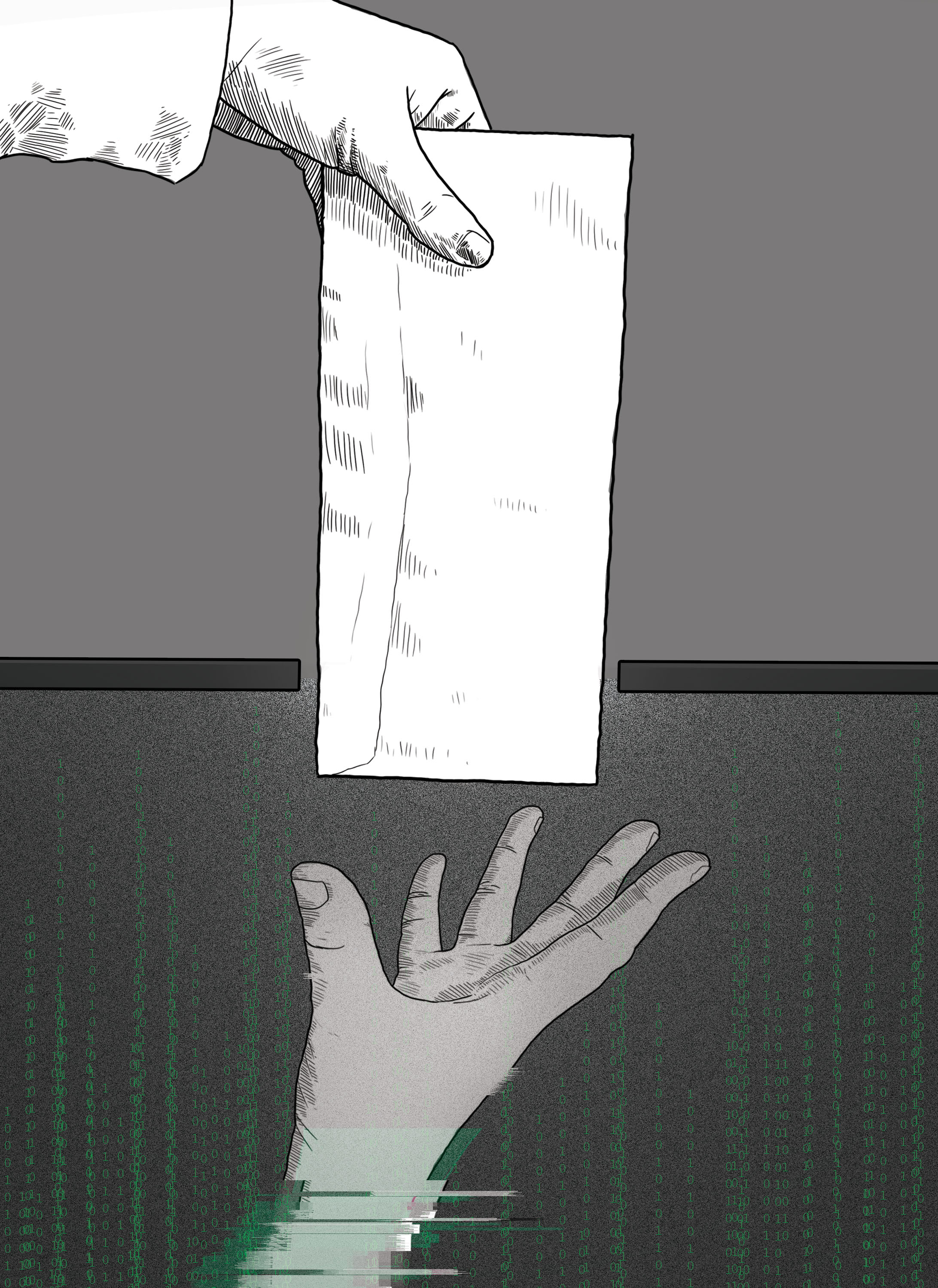
    Why we need to stick with physical ballots

    In 1960, the Kennedys tried to steal the White House. A Kennedy ended up living in the White House, so they may have succeeded. Maybe they stole the election, maybe they didn’t. But because we have the physical ballots, no one can dispute that they tried. In the modern world of voting machines and election apps, we might never know who tries in the future.

    If you wanted to rig an election in 1960, you needed a plan, a large team, a smokey basement in Chicago and a lot of money. You needed someone to go to a graveyard and register corpses to vote. You needed to catalog abandoned houses and figure out how many dead or fake people you could put in each one. You needed to physically go out and beat up a few voters—possibly even commit a murder or 20. You needed a large operation full of trusted members willing to do all of this. And perhaps most importantly, you needed to be fine with everyone knowing that you just tried to rig an election.

    Stealing an election was incredibly difficult, dangerous, obvious and almost completely ineffective if one candidate had a significant lead. Voting with a paper ballot clearly isn’t a perfect system, but the attempted rigging of the 1960 election is almost common knowledge. We have the paper to prove it.

    We know what paper is. We hold it in our hands almost every day. Casting a ballot is an anonymous and easily-understandable physical action. It’s traceable at every step of the way, and we can tell if the ballots don’t make it to their destination.

    Conspiracy with physical ballots is possible, even probable, but not effective on a large scale. Certainly, physical ballots aren’t perfect, but they are hard to mess with in a way that will significantly affect an election. There are doubts that, even with all the tampering and violence, the attempted rigging of the 1960 election even changed the result.

    Electronic voting, on the other hand, is vulnerable in ways paper voting is not. When you stand in front of a voting machine, there are some questions you probably have.

    The most important part of getting people to vote is the trust that the vote goes somewhere. It’s counted. The vote is verifiable, and the process is easily understandable.

    Who made the voting machine? Who paid for it? When you press a virtual button on a screen, how do you know the machine tallies it, or gives it to the right candidate? How do you know it reaches a database where it will be counted? Do you know what the software being used is, how it works, if it’s secure, how to tell if it has been tampered with, if the machine is connected to the internet — as many inexplicably are— or if it has been calibrated properly?

    The odds are that you don’t. I don’t. Nobody does. Nobody besides the people who managed to remotely change a voting machine’s final tally. Nobody besides interested parties in our own system who might want the election to turn out a certain way. Voting machines are incredibly vulnerable. They are outdated upon release, not tested properly, easy to manipulate and often connected to the internet for some reason.

    You don’t have to call on the crime syndicates of the country anymore. You don’t have to organize a massive conspiracy. All you need to rig an election is to know how to hack a virtually-undefended voting machine.

    The most important part of getting people to vote is the trust that the vote goes somewhere. It’s counted. The vote is verifiable, and the process is easily understandable.

    Electronic voting doesn’t just open our system up to attacks from malicious parties. It erodes the trust between the voter and the system. This would be true even if everything was perfect—even if there was no one meddling. But there is someone meddling. We know there is. There always has been and there always will be. It wasn’t just 1960 and it wasn’t just Democrats. The question isn’t, “Who would rig an election?” It’s, “Who wouldn’t rig an election?”

    If someone’s going to attempt to rig the 2020 election in the same way as the 1960 election—and they possibly already have—I want them to have to work for it. I want them to have to go out to graveyards, get their hands dirty and threaten some grandmas. I was disappointed by the Iowa caucuses. These days it’s hard to tell the difference between epic, mind-blowing incompetence and election theft. If these elections are going to be a complete farce, ditch the apps and voting machines. If there’s going to be ballot burning, I want to see the flames.

  • Let’s Make Media Coverage Equal, Always

    Let’s Make Media Coverage Equal, Always

    Emphasizing equity and integrity in the media February and beyond

    Humboldt State University celebrates Black Liberation Month, which promotes black excellence and achievement, every February.

    People of color are often covered by the media for achievement in athletics and entertainment, but rarely for academia, volunteer work or simple successes unless they’re a trailblazer in their field. More often than not, Blacks face the most discrimination in media.

    At HSU, Black Liberation month emphasizes the great achievements and progress in the Black community—but these often fall out of the public eye once February is over. This is a failure—the celebration of the Black community should extend through the year and into perpetuity. At The Lumberjack, we acknowledge the lack of representation blighting the mainstream media and our own newsroom. We strive to break the toxic cycle of misinformation and misinterpretation and promote the achievements of the Black community at HSU.

    “Blacks represent 37 percent of criminals shown in the news, but constitute 26 percent of those arrested on criminal charges. In contrast, news media portray whites as criminals 28 percent of the time, when FBI crime reports show they make up 77 percent of crime suspects.”

    Travis L. Dixon

    Modern media organizations filter the truths of the world, a behavior that has a significant impact on their audience. The way we absorb news depends on the way it’s delivered. Emphasizing equity and integrity in the media February and beyond

    The study, “A Dangerous Distortion of our Families,” by Travis L. Dixon, Ph.D from the University of Illinois, looked into media coverage from local and national media outlets and found they often warped the reality of Black families to fit the narrative of the big screen.

    “Blacks represent 37 percent of criminals shown in the news, but constitute 26 percent of those arrested on criminal charges,” Dixon wrote. “In contrast, news media portray whites as criminals 28 percent of the time, when FBI crime reports show they make up 77 percent of crime suspects.”

    The study, sponsored by The Washington Post, found that at best, media outlets promoted racially biased portrayals and myths that pathologize black families and idealize white families with respect to poverty and crime.

    At worst, the study found that media outlets amplified those inaccurate depictions for political and financial gain. They said such reporting reinforces debunked narratives that justify police brutality or promote economic policies that hurt not just Black families, but all families.

    Throughout February, throughout the year, into the next decade and into forever, we shall strive to accurately report on and represent the lives and achievements of the Black community at HSU. We commit ourselves to journalistic accuracy and integrity. We commit ourselves to the celebration of the liberation of our oppressed communities and we commit to support them on their path to self-realization.

  • Why the Oscars Lack 2020 Vision

    Why the Oscars Lack 2020 Vision

    The Academy Awards are broken—here are some ways to fix them

    The nominees for the 92nd Academy Awards were recently announced in the lead-up to the ceremony, which will take place Feb. 9. The nominees are, for the most part, very easily predictable to anyone who is familiar with the kind of films that tend to win Oscars or other similar awards. That isn’t in itself a bad thing, but it does raise the question of how relevant the Oscars really are, and if they really live up to their supposed purpose of granting the “highest honors in filmmaking” to the “best films of 2019.”

    In recent years, the Academy of Motion Picture Arts and Sciences has been under its fair share of criticism for its notably conservative and traditional values. Indeed, the Academy does seem much more inclined to nominate and award reassuring, easily accessible films and blockbusters than they are to consider better, but less successful films.

    A film has to play for at least one week in a theater in Los Angeles County, and its theatrical release has to be the first time that it’s shown.

    Of course, as with all aspects of art, the quality of any film is subjective. But the choices made by the Academy, which is comprised of around 6,000 industry professionals, invite the questioning of their practices.

    The criteria for a film to be considered by the Academy is extremely limiting. For starters, a film has to play for at least one week in a theater in Los Angeles County, and its theatrical release has to be the first time that it’s shown. It can’t be shown on television, released to DVD or Blu-ray or streamed before that.

    Nominees like “Marriage Story” or “The Irishman” would have instantly been disqualified if they hadn’t been shown in theaters before being made available to stream on Netflix.

    This might not sound like a major obstacle at first, but that’s mostly only true for American films with a wide release. Having a decent budget and big names attached doesn’t hurt a film’s chances either. Any independent or foreign film that can’t secure a release in one area of one country is instantly not considered, regardless of how good the reviews are.

    This is just one of several of the Academy’s rules for eligibility, but it’s the most easily-understood example of how limiting the criteria is for one of the most prestigious awards a film can receive.

    Even getting past the extensive list of rules, the Academy is known for usually nominating specific types of films. On this year’s list, only two of the nine Best Picture nominees, “Little Women” and “Parasite,” are not predominantly made by and starring white men, who have been the center of the majority of films that the Academy tends to nominate and award. This is a circumstance that has been the case due to both the criteria for Academy consideration and because the Academy’s board is comprised of, in large majority, white men—a point that is often made into memes with the hashtag #OscarsSoWhite.

    “Little Women”, while receiving nominations for Best Picture, Best Lead Actress, Best Supporting Actress and Costume Design, did not receive any nominations for Best Director or Best Cinematography despite being an incredibly strong film in those categories. An article by Vulture explained how these rare films being nominated cause them to be, possibly unfairly, depended on to please all their demographics.

    “I will say that Greta Gerwig and the film are put in the impossible position of having to represent all things to all women when she became the ‘presumptive representation of all-female directors,’” Angelica Jade Bastien said. “No film can shoulder such a burden.”

    Defenders of the Academy—those who are perfectly content with the nominations—will claim that it’s simply a meritocracy—that the nominations truly represent the best films of each year with no barriers.

    However, the numerous barriers, biased board and skewed representation severely limit which films are considered for one of the most widely recognized honors a film can receive. However, unintentionally, this influences how the film-going public decides what they want to watch and how they interpret what they watch.

    Until the Academy gets some new blood into their board, stops immediately disqualifying films and more frequently overcomes the 1-inch-tall barrier of subtitles, their choices will never fulfill their ostensible purpose.

  • Ask Evergreen: Cornered Cohabitant

    Ask Evergreen: Cornered Cohabitant

    Ask Evergreen is a weekly advice column by the students of The Lumberjack


    Dear Evergreen,

    What do I do when my housemate makes an advance on me?

    Dear cornered cohabitant,

    Every now and then we find ourselves in uncomfortable situations due to an unwanted admirer. Of course, it’s easier to avoid this when the admirer isn’t your housemate.

    You can steer clear of any further awkward encounters by trying the following.

    First, if your housemate has made it known they’re fond of you by making unwarranted physical advances, be sure to tell someone you trust or an authority figure. Having someone cued into this predicament can help you if your housemate decides to retaliate.

    Reach out to friends for moral support. They might be able to back you up when it comes time to telling your housemate off. You can even consult the school counseling services if you’re feeling agitated about the situation, or campus police if you feel in-danger around your housemate.

    Second, set boundaries. Make it known that you don’t appreciate the way they make you feel. Your most sacred space is probably your bedroom, so be sure to tell them to respect your limitations so you can maintain your safe space.

    Don’t let the familiarity or comfortability of a housemate relationship become a way for them to continue their actions. You don’t have to be friends with your housemate, especially not if they’re making you uncomfortable.

    Third, be kind but steadfast in your rejection. While you don’t owe your housemate an apology, you should be cautious with your rejection execution so you don’t aggravate the situation. Rejection brings out vindication in some, so be careful when breaking it to your housemate that you’re not interested.

    Lastly, talk with any other housemates you may have. See what they have to say about the predicament. They may be able to step in to deescalate things. You could all decide to have a household meeting where you can discuss how to best make a safe and comfortable home environment.

    Remember, you don’t have to do this alone.

    Good luck!

    Sincerely,

    Evergreen


    If you have any questions you’d like to send in, email us at contactthejack@gmail.com. We won’t publish any names and you don’t need to use one.

  • Ask Evergreen: Single and Seeking

    Ask Evergreen: Single and Seeking

    Ask Evergreen is a weekly advice column by the students of The Lumberjack


    Dear Evergreen

    How do I meet people without using online dating apps?

    Dear single and seeking,

    People still find connections through real life interactions despite the prevalence of dating apps.

    Although the existence of dating apps can help speed up the connection process, it’s desensitized many of its users to meaningful connections. Nevertheless, you can navigate through the chaos of cuffing season—or the season in which people pair up—without the digital drama.

    If you are completely against using the web to find love you’ll have to start putting yourself out into the world and approaching people. Start striking up friendly conversations with people at your favorite coffee shop or while you’re on your next hike in the Arcata Community Forest.

    While it may seem brazen to talk to strangers, you’re getting into an immediate conversation rather than thinking of a pickup line or waiting for them to make the first move on an app.

    This way may require thicker skin to deal with face-to-face rejections, but it also helps you learn the art of conversation and confidence.

    Don’t be ashamed to approach someone in real life, but don’t intrude on someone who looks like they would rather not be bothered.

    While you don’t need an app to tell you who to like, dating apps do help you to know who is available while also giving you a faint glimpse into the personality of a possible partner.

    Many online dating users intend to seek sex and nothing more. However, if you’re searching for a more meaningful connection, dating apps can still help. You can also find connections through the internet on places other than dating apps—just be cautious.

    As a student, you’re in a prime location for eligible singles. It’s just a matter of figuring out who’s looking for the same thing as you.

    If you haven’t already, explore a dating app just to see who is out there. Maybe someone from a class or a regular at your favorite coffee place is seeking too. You won’t know who’s out there until you look.

    If you are inclined to keep things organic, try to hang out in the library more often or sunbathe in the art quad.

    If all else fails, ask some trustworthy friends to set you up on a blind date.

    Good luck!

    Sincerely, Evergreen


    If you have any questions you’d like to send in, email us at contactthejack@gmail.com. We won’t publish any names and you don’t need to use one.

  • Memes Communicate Modern Messages

    Memes Communicate Modern Messages

    How memes provide comedic relief in times of conflict

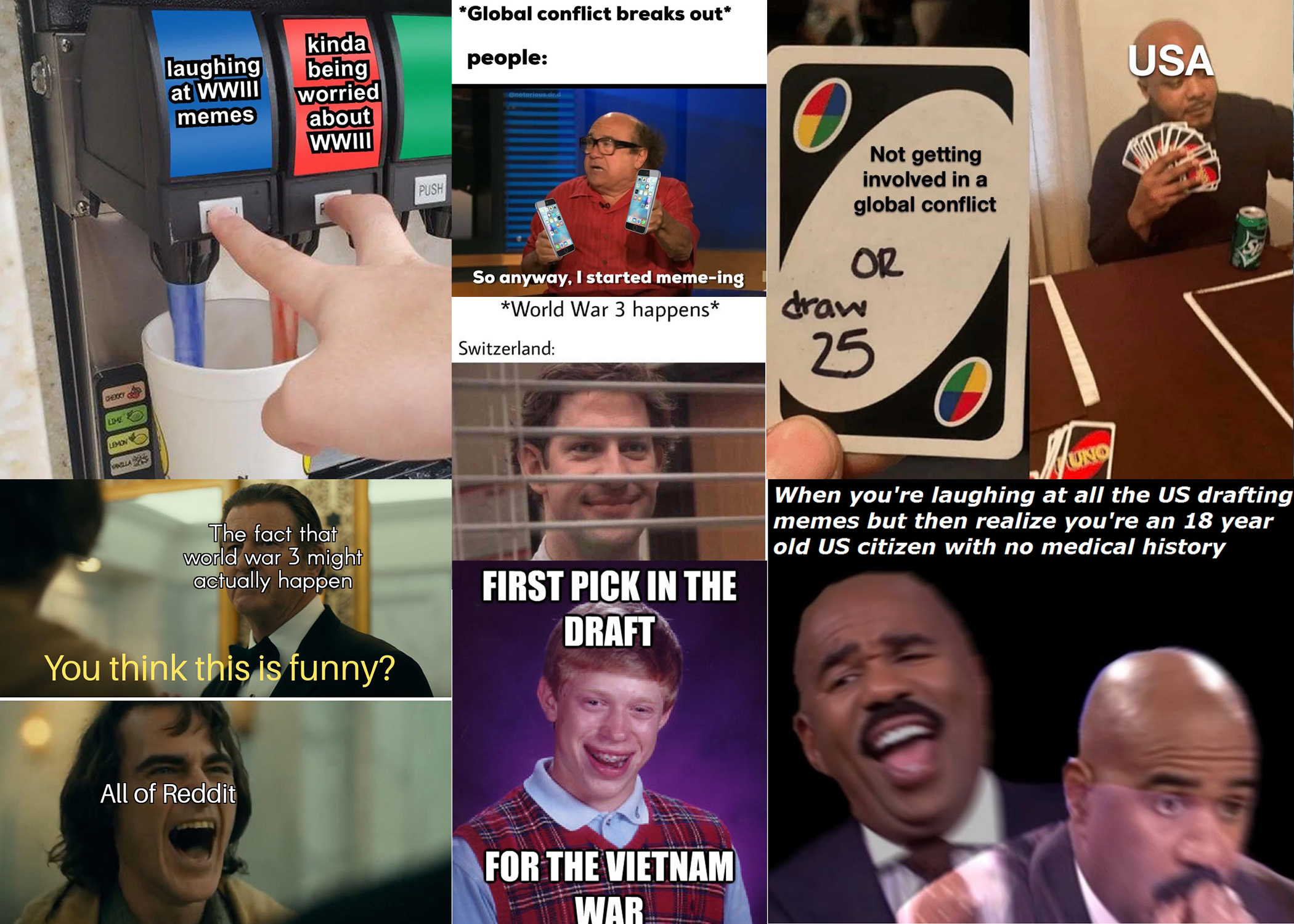
    When a war with Iran suddenly seemed imminent in early January, the people of the Internet reacted the only way they knew how—they made memes. The memes, whatever you think of them, helped people approach a difficult discussion through humor.

    President Donald Trump ordered the assassination of Iranian General Qasem Soleimani on Jan. 3. When Iran retaliated by attacking United States Army bases in Iraq with missiles, talk of World War III went on the rise.

    Many of the resultant memes revolved around the idea of men between the ages of 18-26 getting drafted to go to war.

    If the United States did go to war, there is a possibility that a draft could take place. In World War II, about 20% of men were drafted.

    While serving in the United States military has been voluntarily since 1973, an act of Congress could call for a draft. Male U.S. citizens between the ages of 18-26 and immigrants who are living in the U.S. still must register for the Selective Service System.

    Of course, no one wants to think about a draft. Instead, people address the issue through jokes. This might not be ideal, but at least people are talking about it.

    Should we joke about the hundreds of thousands of people who might die going to war? No, but we should be talking about it and this is a start.

    Using humor and memes to talk about what’s going on in the world isn’t a bad thing. Choosing to only laugh and failing to educate yourself on the issue you’re laughing at is where people go wrong.

    The memes could even be deemed as parody news. From what I learned in a parody news class last semester, people use humor to talk about serious topics without making them sound as serious, so that people can digest what’s going on. Parody news is often described as taking real subjects and making a joke out of them to get people laughing and thinking.

    The draft memes ranged from how women were going to try to get out of the war by being a housewife, to men offing themselves before they got drafted, to how to distract Iranian soldiers so your friends can get away. There were even meta memes about these memes that went something like, “Me laughing at war memes even though it’s probably going to happen.”

    Memes are as prevalent as ever. There seems to be a meme regarding every aspect of this possible war, and for almost every bit of modern life. If it makes news, the memes will follow. Everyday on social media you see memes regarding the upcoming presidential election, climate change, health care and more.

    Often times, I see memes about current events before I even see news coverage. I found myself laughing at the memes about WWIII before I even knew what was actually going on. When I saw the memes, I decided to research why people were saying we were going to war. The memes were my first point of contact on the events with Iran—they informed me.

    Using humor and memes to talk about what’s going on in the world isn’t a bad thing. Choosing to only laugh and failing to educate yourself on the issue you’re laughing at is where people go wrong. The problem isn’t on the people making the memes. It’s on the audience failing to educate themselves and do more with a meme than laugh.

  • Stand-up Comedy Etiquette for Dummies

    Stand-up Comedy Etiquette for Dummies

    Keep your commentary to yourself and let me have a laugh, please

    Sitting in the audience of a comedy show, I expect laughter. After dealing with long shifts at work, assignment deadlines that are past due and staggering grades, that’s what I want.

    After living in Humboldt County for a little over a year, I was ecstatic to hear about Savage Henry Comedy Club from my former classmate and local comedian Peter Nelson. Never would I have imagined such a beautiful place to exist and to remind me that it’s okay to laugh at anything.

    It became my mission to attend more comedy shows and try out some material for more open mic nights at Savage Henry. In November I was blessed with attending my first late night comedy show featuring Kyle Kinane. The night started off perfect as the air filled with laughter. But the mood changed when some audience members felt the need to be included in the comedian’s routine.

    It’s not a rare occurrence for audience members to disrupt a comedy show.

    If I had a dime for every time a movie theater reminded me to silence my phone and exit the area with my non-existent crying child, I would have enough for another movie ticket.

    Unfortunately, comedy shows have always faced problems with talking audience members. Common sense seems to vacate the premises when it comes to comedy. Who thinks that just because they paid money to see an act, they’re entitled to becoming the most hated person in that venue?

    Thankfully, comedians are usually experienced with enduring this kind of behavior, with the exception of Seinfeld star Michael Richards.

    However, for Kinane it was a cake walk dealing with a dreadlocked couple and their redundant responses during his routine. My mood the entire night was a mixture of laughter, anger and finally relief as the obnoxious couple got up and left (but not without loudly announcing that they had a baby at home).

    Had I known this earlier, I would have called Child Protective Services to alleviate the audience of this comedy sabotage.

    Kinane was a trooper and finished strong. He received an applause not just for his resilience, but also for putting on a late show since his Friday and Saturday night shows sold out.

    It’s not a rare occurrence for audience members to disrupt a comedy show. I’ve been present when these atrocities are committed and I’m relieved when they’re dealt with. My favorite distractions are people texting during a comedy show and getting called out, especially since the responses are usually ridiculous.

    When I saw Al Madrigal live a couple summers ago, I sat next to a woman who couldn’t seem to put her phone down. When she was finally called out by one of the opening acts, she tried justifying her actions.

    “My friend is having a baby right now and she’s keeping me updated,” she said.

    Instead of showing sympathy, the opening act trashed her for the remainder of his set.

    If you can’t fathom the idea of someone else speaking, perhaps you need to reevaluate yourself and forego the comedy show.

    I will never understand why people feel they have the right to interrupt a comedy show. Standup comedy is my way of taking a breath of fresh air from a rough week. For it to get obstructed by someone that doesn’t respect the art of making people laugh is just blasphemy.

  • Ask Evergreen: Fretful Fueler

    Ask Evergreen: Fretful Fueler

    Ask Evergreen is a weekly advice column by the students of the Lumberjack.

    Each week we answer anonymous questions sent in by readers about anything and everything.


    Dear Evergreen,

    Is driving to Eureka for Costco gas worth it?

    Dear Fretful Fueler,

    Gas prices in California are some of the highest in the nation, with prices often spilling over $4.00 a gallon, but Costco offers some of the cheapest gas.

    Costco is a popular gas supplier, and here in Humboldt we are fortunate to have one locally. But although Costco gas is an option in the area, it’s not accessible to all.

    To get gas from Costco you must have a membership or a Costco gift card. As someone who doesn’t have a Costco membership, I can’t say for certain that Costco gas is the best alternative.

    For those who can afford the $60 yearly subscription, it makes sense to go to Costco if you’re already using their other services. However, if you plan on getting a membership just for a gas discount, I wouldn’t suggest it.

    If you aren’t a heavy commuter then Costco gas definitely isn’t a good source for fuel. According to Business Insider, the price of a membership won’t be paid off with your gas savings until you gas up around 37 times.

    Costco gas stations are also notorious for having chaotic waiting lines and times. If you do consider Costco gas, be mindful of the time of day you head over, as rush hour times are often busier. It would be counterproductive to wait upwards of 10 minutes for gas while idling in your car wasting fuel.

    If you aren’t inclined to fuel up at a Costco gas station, there are other places you can gas up at. You can find local gas prices with the site and app GasBuddy, which can help you shop around for the best option.

    In Arcata, the cheapest gas can be found at the Patriot station for $3.87 a gallon on Giuntoli Lane. In Eureka, the most affordable gas is from the Costco station which is currently $3.49 a gallon.

    Happy gassing!

    Sincerely,

    Evergreen


    If you have any questions you’d like to send in, email us at contactthejack@gmail.com. We won’t publish any names and you don’t need to use one.
  • Give Me More Than Vague Emails on Campus Crime

    Give Me More Than Vague Emails on Campus Crime

    HSU notifications lack conviction or specific plans of action

    If you’ve checked your email at all within the past couple of months, you’ve most likely read one of the several notices Humboldt State University sent to the campus in regards to incidents of vandalism, racist messages or off-campus crimes.

    Just this semester, HSU notified students via email of numerous instances including racist graffiti on Dec. 7, racist vandalism in a residence hall restroom on Nov. 13, anti-Semitic flyers put up around the campus on Oct. 25 as well as on Sept. 17 with an email notification of a stabbing that happened off campus.

    The emails for the first three incidents listed came a day or less after the occurrence and after the police department had found and cleaned up the perpetrators’ messes. However, the notice about the off-campus crime was sent out a month after the crime itself, which was the stabbing of a student on Aug. 26. HSU seemingly weighed in to clarify because, “recent media accounts and headlines about the incident were filled with many different narratives.”

    Each message HSU sends follows a general formula.

    One paragraph is what the University allots for all of these incidents of crime on or near campus. They follow it up with multiple paragraphs about how the University has no place for racism or violence, and provide the usual list of resources students can take advantage of if they need support.

    But aside from erasing the evidence of the crimes and repeating where students can go ad nauseam, they have never taken any direct action to combat the trend that is clearly going on.

    The messages claim that the University Police Department is investigating these issues, but they have not given any further information as to what they actually plan to do to prevent any further instances of hate speech or vandalism in the future.

    Students have a right to get their education at a school that strives for active protection, not just passive written defense.

    Benjamin Zawilski

    El Leñador reported that “the NAACP penned a letter in April of 2018 condemning HSU’s administration for failing to take an active role in addressing racism and safety concerns in the City of Arcata and Humboldt County, thus endangering the lives to whom it extends acceptance letters.”

    HSU students ought to be able to trust the administration of their school to communicate with them in these situations. But the administration’s lack of vigilance and initiative extends even to direct threats to the safety of students. Last April, they took almost a full 24 hours to send a message that a student had committed assault on campus.

    The administration will not show any sign of actually protecting the safety of the students like they claim to until they take real steps to improve their transparency.

    Students have a right to get their education at a school that strives for active protection, not just passive written defense. The first step might be for administration to disclose crimes that have happened before they have absolutely no choice but to do so.

  • Parody is Protected Speech

    Parody is Protected Speech

    HSU administration cannot tell student media what to publish

    Press at any capacity in the United States is protected by the First Amendment against federal censorship of speech. The government cannot make editorial decisions, retractions or content suggestions. Student press publications in California are protected not just by the First Amendment, but also by the California Student Free Expression Law of 1977, or California Education Code 48907.

    When a government entity such as a state university interferes with the press by policing publications on what is appropriate to publish, it inhibits the independence of the press.

    Recently, Humboldt State University administration sent out a school-wide email regarding material printed in a student parody newspaper, called The Dumberjack, found in an insert in the Nov. 20 issue of The Lumberjack.

    The public announcement accused the students in the parody news class that produced The Dumberjack of reinforcing rape culture and gender-based discrimination through a photo that depicted a “sexist ‘riddle’” which was displayed on a sign in a window of an all-female room at the College Creek Apartments.

    The school administration held The Dumberjack staff responsible for a joke on a sign they did not create nor stage. A student-journalist outside of the parody news class observed and documented campus culture with this photograph. The parody news class simply featured it in the paper and in no way amplified any perceived gender-based discrimination with the story that ran alongside the photo.

    Parody facilitates the palatability of relevant information through comedy.

    No one in The Dumberjack class or on The Lumberjack staff supports gender-based discrimination or wants to reinforce rape culture. But journalism, of any kind, is not public relations. The publication of a photo of a sign on campus does not represent endorsement of what the sign says. Journalism draws attention to troublesome realities by documenting them and showing them to the public. When a publication reveals a sign that a university finds offensive, the university’s focus ought to be on the sign, not on the journalists who documented it.

    Administration officials invited the class to have a conversation to “discuss the impact and implications of the cover photo.” The meeting was intended to be an open dialogue surrounding the development of “critical lenses.”

    Instead, on Thursday, Dec. 5, the class became the site of a direct act of administration intimidation.

    Two school officials—only one of whom had been momentarily invited—came to the class and lectured journalism students on how to make editorial decisions. Chair of the Sexual Assault Prevention Committee Kim Berry and Dean of Students Eboni Turnbow, both of whom are government employees, reprimanded a class of students educated in journalism ethics.

    The administration is demonstrating unprofessional behavior of questionable legality by attempting to contain this incident and filter what student press can and cannot print. The administration cannot tell student media what to publish.

    Parody writers take real world situations and use a critical lens to highlight a topic in a juxtaposed way. These satirical pieces can sometimes be offensive, but the key is that the subject matter is still being discussed.

    The goal of parody is to create a dialogue on topics that are either overshadowed or too controversial to be discussed openly. Parody facilitates the palatability of relevant information through comedy.

    The First Amendment protects speech, including satire and parody. Satire and parody are used as impressionistic language that aim to create commentary on sensitive issues through the use of humor, absurdity and exaggeration. Utilizing these writing tactics serves as a more approachable way of tackling uncomfortable yet prominent issues.

    Journalists aim to relay information in the most accurate and concise manner as possible. Censorship defeats that purpose. The government censoring the media is illegal and obstructs the transparency of journalism. It creates bias and subjectivity, as journalists become fearful of backlash for what they print.

    When censorship appeases a specific group of people, it’s a domino effect. Censoring one thing for a single group leads to censoring all material to please everyone. That defeats the purpose of journalism as an independent eye intended to expose overlooked issues.

    In today’s political climate, journalists are constantly under fire. The fourth estate, journalism, is as vital to uphold as the fifth estate, non-traditional media like parody news. When federal figures undermine the editorial freedom of a publication, even a parody news publication, a slippery slope follows in which government infringes upon the freedom of the press.

  • Instagram Updates Are Wack

    Instagram Updates Are Wack

    With each new update comes new changes that seem to have no input from the user community

    With 1 billion active monthly users you’d expect app developers to listen to users’ comments and concerns about improvements. It doesn’t seem like this is the case for Instagram.

    With each new update comes new changes that seem to have no input from the user community. Although Instagram beta tests new features with random selections of users, it’s done to decipher the functionality of new algorithms and not to satisfy user needs.

    The billion-dollar corporation makes new features and updates for monetary gain rather than to appease consumers and users who beg for practical updates.

    Instagram tests loads of new updates that focus heavily on new features for advertising. Most of the recent and upcoming updates are focused around business profile improvements and shopping accessibility, like augmented reality updates that allow users to try on products before purchasing.

    These changes are made primarily to reel in more investors and advertisers. Other changes seem to be made for no apparent reason.

    Recently, Instagram removed the “following” tab, which was a feature that showed who and what your followers were liking, commenting on and following.

    The purpose of having this moderately unnecessary feature was to further the impact of similar content discovery through the content your followers enjoy. It was a somewhat invasive feature, but it did serve its purpose. Although, some may argue it also caused drama.

    Now that this feature is gone there’s plenty of room for continued drama over the fact that users can’t stalk their followers’ digital actions.

    As if there weren’t enough moving parts to consider in this social media machine and all its updates, users may now lose one of the main reasons why they became hooked to Instagram in the first place: likes.

    With the impending feature removal of like and view counts on posts, users have yet another unnecessary update to deal with.

    With the impending feature removal of like and view counts on posts, users have yet another unnecessary update to deal with.

    Although having like and view counts is trivial, this basic feature is standard across most social media platforms. Reddit has its upvotes, YouTube has its channel statistics, Twitter has its retweets and Facebook has its shares, but now Instagram doesn’t seem to care about this simple facet of what made the app likable. All these features are helpful for potential viewers to discern the relevance or importance of something.

    Last year Instagram released a different unnecessary and invasive feature, which allowed users to delete direct messages they previously sent, but in turn notifying the correspondent that a message was “unsent.”

    This component was ridiculous to have initially. When you send move something to junk mail or delete a text, these actions don’t notify the sender. So why does this feature even exist for Instagram, let alone give the ability to delete a direct message in the first place?

    A benefit from the plethora of recent Instagram updates is the notification one receives when someone screen captures a photo sent through DM. While this is yet another somewhat gratuitous update, the new features are invasive yet beneficial. While they enable users to be more mindful of their social activities, they also can inhibit basic privacy.

    The Instagram user community should have more sway of what features should come and go, not just advertising investors.

  • Motorcycle Tips for Riding in the Rain

    Motorcycle Tips for Riding in the Rain

    It’s always important to drive safely, but especially for motorcyclists in the rain

    Riding a motorcycle is a very exhilarating experience, and just like driving a car, it becomes a little more dangerous in the rain.

    Humboldt County is no stranger to the rain, and if two-wheel transportation is your main way of getting around, here are some things to think about before you ride.

    Proper Gear: Pants and a sweater aren’t going to cut it. Water resistant gear is highly recommended so you don’t freeze, it can impair both your decision making and ability to maneuver the bike. If you can afford it, heated vests and gloves are a great investment. You are better off with boots than sneakers, and luckily a dual-purposed pair of water resistant hiking boots will do the trick.

    Check Your Bike: Wet roads mean less traction. After it rains, oil comes up to the surface of the roads, so make sure your tires aren’t worn out. Leaning and shifting your weight is a critical part of riding. You don’t want the bike to go sliding because of bad tread. Check your brake pads, lights and do any other regular maintenance you may not have kept up on before riding out in bad weather.

    Puddles are NOT Fun: In a car or truck it can be fun to make huge splashes. However, puddles can be deceiving and even a small pothole can send you flying off your bike. If possible, always safely maneuver around puddles.

    Rainbow Roads Are For Mario Kart Only: The pretty little swirls of color you see are just oil puddles waiting to send your bike swerving. Be extra careful at stop signs and lights; cars and trucks sometimes sit at intersections for a while and any leaking oil adds up.

    Stay On Pavement: Try to avoid riding on painted lines, manhole covers or any other shiny/metallic surfaces in general. If it was slippery when dry, it is even more dangerous when it rains, especially given that the reduced tire grip can lead to hydroplaning. If you have to go over something, avoid any sudden inputs such as quick acceleration or slamming the breaks.

    Slow and Smooth: Ease off the throttle sooner and give yourself more room to stop. Take turns at lower speeds so you can keep a safe and constant speed, and don’t shift your weight too abruptly. Sudden actions like slamming on the breaks and quickly switching your weight can put you down quickly even in good weather.

    Find A Dry Path: Trucks and cars clear paths when they drive, pushing away water and other debris. Ride in their tire tracks, but that doesn’t mean tailgate them. You need to give yourself extra room to brake in the rain.

    As always, remember to have fun! Riding a motorcycle is a drastically different experience than driving a car, and they’re meant to be enjoyed. Humboldt is a beautiful place to explore, from the ocean to the forests there are no shortages of great views, and the rain doesn’t need to deter you from that experience.

  • Ask Evergreen: Ant Avoider

    Ask Evergreen: Ant Avoider

    Ask Evergreen is a weekly advice column by the students of the Lumberjack.

    Each week we answer anonymous questions sent in by readers about anything and everything.


    Dear Evergreen,

    What’s the most humane way to divert ants?

    Dear Ant Avoider,

    During the wet season ants furiously seek a dry haven to claim. To best defend your home from ants there are a few harmless and ecologically sound ways you can use to do so.

    There are natural and pet-safe sprays that you can buy to defend your home from ants, however some are aerosol sprays which are bad for the environment because they contribute to greenhouse gases and can alter the formation of clouds.

    To avoid using aerosol repellents, you can make your own water based repellent spray with fresh herbs and essential oils.

    Mint, peppermint and spearmint essential oils are safe alternatives to bug sprays. All you need to do is make a trail of essential oils around any crevices that ants are coming through or may get in from. This will create an invisible barrier that is usually successful at deterring these tiny pests.

    Vinegar is another safe alternative to conventional bug repellents, and you might even have some in your home already. This can be used to block entrances and cut off the message trail that invading ants left for others to follow.

    If these methods fail, you can also try setting up a baited trap. Place a tasty treat in a tray outside your home to lure ants to their demise. Honey works perfectly for attracting and trapping ants.

    One last measure you can take is repairing any cracks in your home which may allow ants to get in. Check door weather strips and windowsills for wear and tear and patch up anything as needed.

    Hope this helps!

    Sincerely,

    Evergreen


    If you have any questions you’d like to send in, email us at contactthejack@gmail.com. We won’t publish any names and you don’t need to use one.

  • Finding Cheer Amid the Holiday Blues

    Finding Cheer Amid the Holiday Blues

    It’s the most wonderful time of the year. For some, anyway.

    Despite the enthusiastic spirit and excitement, the holiday season can be challenging for people to get through. For many folks during the holidays, the time and costs of traveling, balancing end of year responsibilities and potential conflicts with relatives all trigger a degree of stress, drama and anxiety.

    The advertised illusion of the holidays as a joyful and easygoing time of the year discredit the holiday blues. Holiday stress ignites emotions completely opposite to for many people. The emotions are real and ought not to be ignored or made to seem unimportant.

    The joy and ease of the holiday season may not match up with your personal feelings, and that can easily be seen as a betrayal of the holiday spirit.

    Visiting places and people you rarely see, or attending parties and partaking in festivities can be overwhelming. The holiday season may be an extended break from school or even work, but it adds the responsibilities you generally don’t have the rest of the year. Many people are expected to be present and into holiday festivities with family, but sometimes it’s necessary to set up boundaries.

    Remember what makes you happy. One example may be curling up in some blankets with a cup of hot chocolate and a good book. Whatever kind of downtime works for for you, take advantage of any time off to give yourself that much needed break.

    Ben Zawilski

    Telling yourself that holiday stress is uncommon or invalid isn’t helpful. Even though it is a season of generosity and giving, make sure to be generous and give yourself the time and care that you need. And set boundaries with loved ones if necessary.

    The holiday season should be enjoyable for all, including you. Even even if the celebrations and responsibilities consume your time and energy, they shouldn’t interrupt your happiness and peace of mind.

    Find the root to the chaos and what you can do to avoid or overcome it. If a family member is giving you grief, or a gathering takes up too much energy, ask yourself if you should be there. Pleasing everyone is not always the best move, especially if it is overwhelming or too much to handle.

    Remember what makes you happy. One example may be curling up in some blankets with a cup of hot chocolate and a good book. Whatever kind of downtime works for for you, take advantage of any time off to give yourself that much needed break.

    And remember, a visit to see friends and family doesn’t have to push your physical and mental health to the back burner. The holidays aren’t designed to bring anyone misery. We have the potential to make it both a time to celebrate with others and a time to take care of ourselves.

  • Ask Evergreen: Cautious Collegian

    Ask Evergreen: Cautious Collegian

    Ask Evergreen is a weekly advice column by the students of the Lumberjack.

    Each week we answer anonymous questions sent in by readers about anything and everything.


    Dear Evergreen,

    I’m about to graduate and I’m feeling lost. I love this area, but the job market is garbage. I feel if I stay up here I’ll be stagnant. Should I err on the side of caution or dream big?

    Dear Cautious Collegian,

    Congratulations on nearly completing your college career! With one hurdle out of the way you now have the task of facing the world head on, whether you like it or not. It’s normal to feel the pit of existential dread sink into you around this time in your young adult life. Remember you’re not alone, and we’re all kind of misguided.

    You’re a step ahead of the rest by having this contemplation. It’s good to realize your options to sort out which path choice will bring you the most. Consider the monetary gain as well as the emotional gain you may receive from either decision. Remember, money isn’t happiness, but it does solve a lot of problems.

    If you stay in the area you will definitely save yourself money on the cost of living. This area is also quite beneficial to some in terms of emotional wellbeing because of the vibrant environment we have here. If that’s the case for you, you should add another tick to the Humboldt side.

    While staying in the Humboldt area could save you money, the job market is fairly bleak compared to the income you might get from a job in any city south of Mendocino County.

    It doesn’t hurt to apply to jobs all over. Definitely go big with what you want to do. A high-paying position in a field that you genuinely enjoy isn’t something to pass up on, but these dream positions aren’t always plentiful, especially if you’re applying in competitive areas.

    The Humboldt area isn’t all too competitive, depending on the career you’re pursuing. With that in mind, consider how you can upsell yourself in this area compared to another place. Your skills are more likely to standout in an area like this which can make it easier for you to fight for a higher wage, if a potential employer can afford it.

    Whichever decision you make, follow your intuition and don’t be afraid to take a risk.

    You’ve got this!

    Sincerely,

    Evergreen


    If you have any questions you’d like to send in, email us at contactthejack@gmail.com. We won’t publish any names and you don’t need to use one.
  • ‘OK Boomer,’ Let’s Set the Record Straight

    ‘OK Boomer,’ Let’s Set the Record Straight

    Millennials and Zoomers may be fed up, but ‘OK Boomer’ is not equivalent to a racial slur

    If you’re present on social media –or even if you read any of the major news organizations– you’ve probably heard of the latest linguistic controversy, “OK Boomer.”

    Memes have become a fundamental aspect of younger generations’ humor. They are used to convey vast amounts of information within a simple image or text post. Google defines memes as laughable images, text or videos that are replicated and spread quickly around the Internet.

    The “OK Boomer” trend started as just that, a meme. Unfortunately it has taken a new life and those outside of meme culture fail to realize the actual meaning behind the phrase.

    Boomers are those from the post-WWII baby boom era who were born from 1946 to 1964. Millennials are young adults born from 1981 to 1996. Generation Z, or zoomers, were born from 1997 to the present day.

    “OK Boomer” is used to dismiss the disdain older generations have against millennials and zoomers. The phrase can be used as an insult, but it’s often used to blatantly point out double standards that many boomer generation individuals subject younger generations to.

    Don’t worry, Boomer. It’s just a meme.

    The meme began as a way to passive aggressively, and humorously, let loose the frustrations that younger people have at the current state of the world–a world that was created and subsequently tarnished by the boomer generation.

    This comical phrase is by no means equivalent to a racial slur, as some people have insinuated.

    While “OK Boomer” can be misconstrued as a derogatory term against the older generations, it’s not meant to be hateful. Millennials and Zoomers simply found a way to comment on the older generation’s biases. This term isn’t even specifically about age, it’s about issues.

    Nevertheless, this phrase has hit the mainstream with news station stories and business marketing campaigns. Companies like Natural Light and Netflix are jumping on the bandwagon and are trying to appeal to today’s youth by using this meme slogan for marketing.

    Millennials and zoomers are fed up with the boomer generation feeding us disdainful comments on how to lead our lives.

    Boomers often look down upon younger generations and you can commonly hear boomer individuals using phrases that start with, “Back in my day,” or “When I was your age,” which are typically followed by an array of rhetoric that aim to condemn the lifestyles and decisions of younger generations.

    The majority of us zoomers and millennials are not entitled and arrogant as we are so often portrayed. In a general sense, we see and experience the injustices created by an inconsiderate generation, and feel a need to retaliate against the judgement that boomers perpetuate in a creative yet harmless way. We are trying to make them see their own corruption.

    Memes, and “OK Boomer” in particular, can confuse older generations because they don’t have the contextual knowledge that we’ve absorbed through the saturation of media messages surrounding us that help us able to understand pop culture or meme culture references.

    Any older generation will inherently look down upon its successors because as humans we are resistant to change. The fact that older generations now are offended by what the young people have to say just solidifies that they don’t understand what younger generations are expressing, so they react with scorn.

    The older generations fail to realize that we are fed up with how we’ve been viewed and treated by them. Our use of ‘OK Boomer’ is solely used to highlight this mistreatment.

    Overall, the use of this comical phrase isn’t meant to upset the older generations. It’s meant to inform them about the concerns younger generations have which don’t seem to be taken seriously by boomers. Don’t get offended, it’s just a meme.

  • Letter to the Editors: Support John Packer

    Letter to the Editors: Support John Packer

    Retired creative writing teacher Jesse Austin supports John Packer wholeheartedly

    Recently the Lumberjack has run a couple of stories about our campus UPD personnel.

    Here is my opinion: I am a big fan of John Packer, UPD sergeant.

    I salute him for going public with the UPD Chief’s racist remarks, and his unprofessional manner of leading the department.

    I am a retired creative writing teacher and have known John on the HSU campus for 15 plus years. I have seen him in scores of interactions with students, teachers, staff and other UPD personnel and he has always carried himself in a cheerful, engaging and professional manner.

    I have also taught at Sonoma State, Chico State and Reed College in Oregon and John is one of the best at his job I have ever seen.

    To my mind a big part of UPD officer duties include being visible, available and educational (about the rules, laws and mores of the campus) – and John Packer is exceptional in all of these areas.

    I support John wholeheartedly.

    Cheers,

    Jesse Austin

  • Ask Evergreen: Messy Housemate

    Ask Evergreen: Messy Housemate

    Ask Evergreen is a weekly advice column by the students of the Lumberjack.

    Each week we answer anonymous questions sent in by readers about anything and everything.


    Dear Evergreen,

    How do you deal with a housemate who never cleans up after themselves?

    Dear Considerate Cohabitant,

    It’s never easy living with messy people, especially if you maintain a higher level of organization than your housemates. There are a few things you can do to re-establish a cleanly order to your shared home.

    You can keep up your own cleanliness and hopefully that will transfer to your housemate as well. If they see you consistently doing your own dishes or vacuuming up a mess you may have made, they could begin to realize that they too should be proactively cleaning before things get out of control.

    With your housemates start a conversation about shared spaces and shared responsibility. You and your housemate should divide up home chores accordingly. Remind them, respectfully, that they should be mindful of the messes they create.

    Maybe they use the microwave more often than you. If so, they should be on top of keeping it clean if they’re the primary ones making the mess in the first place.

    Don’t clean up for them. They might begin to rely on you to pick up after them if you’ve done so in the past. You’re not their housecleaner, so don’t go out of your way to fix their messes.

    If they continue to forget to clean up, leave the mess there until they deal with it themselves. If they leave a dirty dish on the counter to mold for a week, definitely make sure you mention it to them.

    Don’t leave notes around the house to remind them to clean up. This might trigger them into feeling like they’re back at home with their parents nagging at them to clean. As an adult they should know how to take responsibility for their own actions without having to be reminded. But if your civil approaches don’t work, alternative methods might.

    It’s alright to be a little passive aggressive when it comes to making a point to others about their mess. You can comment on their mess jokingly to make it more obvious to them. Sometimes people are just used to living among their own filth and don’t see it as a problem until someone makes a stink about it.

    Best of luck!

    Sincerely,

    Evergreen


    If you have any questions you’d like to send in, email us at contactthejack@gmail.com. We won’t publish any names and you don’t need to use one.

  • How Disney’s Monopoly Controls Content

    How Disney’s Monopoly Controls Content

    Disney hides films from the theater and decides what you see

    After Walt Disney Studios’s merger with 21st Century Fox earlier this year, rumors have begun to circulate that Disney has been quietly prohibiting the showing of older films produced by 20th Century Fox.

    Articles referencing stories from theaters across the country have confirmed that several theaters have been denied requests to screen films made by Fox.

    In the magical, mystical world of Disney studios, there lies a “vault” in which old films are placed for archival purposes, rarely seen by the public. This is done primarily to keep the focus on currently released titles and to generate excitement among general audiences.

    In this case, the exciting new re-release’s are on Disney+.

    It’s understandable that Disney hides its own films that were produced in house, like its 2D-animated features, but it’s more significant when films from other studios are locked up in the vault.

    This is the case with Fox’s film catalog which includes the “Alien” film series, “The Princess Bride,” “Fight Club” and “The Sound of Music.”

    This isn’t an issue of audiences unable to see “Die Hard” or “Home Alone” on the big screen during the holiday season, although that loss is significant.

    Independently-owned for-profit theaters often rely on screenings of classic titles to maintain revenue. It’s as much a part of theater business as new releases. Disney’s move could be a serious hit to the financial stability of many theaters.

    Last month, the Arcata Theatre Lounge held screenings of “Ghostbusters,” “E.T.” and “Harry Potter and the Prisoner of Azkaban.” These are three of 13 films that ATL showed throughout October. They are owned by Columbia, Warner Brothers and Universal Pictures, respectively.

    If Disney had ownership of these companies, it would have the rights to those films as well. If Disney treated the films the way it treats older Fox titles, the ATL wouldn’t be able to show them.

    When companies take actions like these, the general public loses the option to see films they love and theaters lose options for what it can screen, causing smaller businesses to lose money. This not only harms theaters, but it harms the entertainment industry as a whole.

    Disney hasn’t given an official announcement on new policy. Rather, individual theaters were told privately that they were not allowed to show certain films requested.

    As reported by Vulture, a Disney spokesperson informed The Little Theatre in Rochester, NY that it wouldn’t receive “Fight Club.” The Drexel Theatre in Columbus, Ohio was told by a booking contact that it wouldn’t be able to screen “The Omen” or Fox’s version of “The Fly.”

    These cases expand to major chains including Cineplex, a Canadian entertainment company. In fact, the only theaters still allowed to screen Fox titles are non-profit theaters. However, this could still be a case-by-case basis, and there’s no guarantee of what the technical rules are because Disney has yet to give any official statement or announcement.

    Consequence of Sound explained that this doesn’t just hurt their businesses. It also tests the relationships businesses have with the Disney corporation.

    When Disney prevents classic films from showing in theaters nationwide, it is yet another sign of Disney’s growing monopoly. With Fox under its belt, Disney now owns 35% of the movie market.

    This ‘gotta catch em all’ mentality is proving unhealthy for theaters that relied on presenting films that Disney now owns, and it raises serious questions about the future of the film industry.

    Disney’s ownership of such enormous portions of the market should not be met with enthusiasm or support, no matter how excited corporate loyalists are to finally see the Fantastic Four get shawarma with Spider-Man.

    The loss of jobs, loss of variety and creativity in the film industry and loss of films is no cause for celebration. Disney isn’t considered a monopoly, yet. But they are growing up to that level at an astonishingly fast pace. It’s time to wish upon a star that the company’s dreams do not, in fact, come true.

  • Editorial: Out of Hydration Options

    Editorial: Out of Hydration Options

    Humboldt State needs more clean water fill stations

    Humboldt State banned single-use plastic water bottles in Fall 2011. In the eight years since, it seems HSU has hardly increased the amount of water fill stations on campus.

    Campus banning single-use plastic was the right thing to do. It’s progressive and environmentally friendly, two things Humboldt State prides itself on. But the least administrators could do is give us more than two ‘Hydration Stations’ to fill our own bottles.

    Nearly every building is home to a drinking fountain, but these fountains are outdated and many of them produce warm, ill-tasting water.

    The Lumberjack has highlighted the issue of on-campus stores selling single-use plastic sodas and sugary drinks in the past, but we’re here to hammer it home again.

    Disposable water bottles alone once contributed to a large portion of on-campus waste. Banning single-use plastic water bottles decreased that waste and even reduced HSU’s carbon footprint significantly. But campus makes waste with different products, ones filled with sugar and chemicals.

    You may be thinking that we should just bring our own bottle filled with water to school, and most of us do. But there are times where we forget, and others where we run out. When we run out of water, we run out of healthy options. If we refuse to gargle the room temperature wash that comes out of our out-dated fountains, what options are we left with? Pepsi, Gatorade, Fanta and Vitamin Water.

    It’s an insult to the student body and prospective students that HSU markets itself as pushing the bounds of sustainability when it continues to sell massive amounts of single-use plastic.

    Profit is held far above sustainability and student health. Are we surprised? Not in the least. HSU often prioritizes profits over student health (the windowless rooms in Creekview are a great example).

    If the school refuses to take action, then responsibility falls to us students. One of our only options for retaliation and action as a student body involves our purchasing power. Where students spend their money and what we say we will spend it on does create change. Attending Associated Students meetings and voicing concerns is another helpful tactic.

    We are grateful for HSU’s aim of a more sustainable campus and future through the reduction of plastic consumption. But HSU needs to give students more drinkable water sources. The university needs to prioritize student health and cut ties with brands that continue to use plastic, even if it hurts the bottom line.

    For a school that so desperately needs to increase enrollment and recruitment of students, HSU needs to remember to put effort into the students that are already here. Reputation can be everything, and this issue, just like our water, leaves a bad taste in my mouth.

  • Double Down on Double Standards

    Double Down on Double Standards

    Katie Hill’s resignation highlights sexual misconduct double standards in politics

    At least 25 women have come forward with allegations against President of the United States Donald Trump, some from as far back as 1970.

    Allegations of at least two improper relationships with former staff were made against Congresswoman Katie Hill.

    Trump remains in office. Meanwhile, conservative media ran explicit photos they received from Hill’s previous competition as part of a smear campaign, resulting in Hill’s resignation on Oct. 27.

    We don’t believe Hill to be a perpetrator. We believe Hill to be a victim of revenge porn and of the double standards of our current political and social climate.

    We are entering an era where the up and coming generation are products of a technologically advanced world. This generation will be the next to represent us in politics.

    The men who remain in office despite their sexual misconduct must step down. The justice system must not fail to reprimand those who spread revenge porn the way they’ve failed the women who have spoken up against them.

    There are men who have been removed from their positions or missed out on opportunities because of actual sexual misconduct.

    The difference between these men and Katie Hill is that they were removed because they were sexual predators. They played an active hand in sexual behavior that was not consensual, legal or both.

    Roy Moore, a republican who wanted to fill the Alabama Senate seat left open by Jeff Sessions, lost to democrat Doug Jones in a 2017 special election.

    Moore had four sexual misconduct allegations against him for soliciting sex from minors per Alabama state law and voters were still conflicted on which way to vote.

    This behavior is worth the lost seat. Moore was not fit to be in a position of power as a predator.

    Hill is dealing with allegations of affairs but not of sexual harassment. Though you might be able to identify those affairs as an act of misconduct, the difference between these actions is the severity of the issue and the difference between a malicious act and impropriety.

    Last year Congress passed a law that prohibits sexual relationships between lawmakers and their employees, putting Capitol Hill on par with the military and the private sector.

    Hill’s resignation is about much more than the potential of affairs. She was forced to leave because a couple disgusting men with malicious intentions decided to air her dirty laundry.

    Hill is 32 and therefore a part of the millennial generation. The generation that grew up with the world at their fingertips in the form of the internet and smartphones.

    Sending a risqué photo to someone you trust does come with consequences. Though you place trust in the person you are sending photos to, they still possess the ability to betray that trust and expose something you sent in an understandable private conversation.

    What it does not mean is that you should be ostracized for sending them. Those who stooped low enough to disrespect someone by leaking nudes should be the ones who are ostracized instead.

    The congressional responsibility of making vital decisions regarding people’s lives and welfare from anything to health care, taxes and governing laws are placed in the hands of simple people.

    Because they are representatives of the people, we expect the individuals voted into office to uphold moral and ethical values and decision making.

    Hill has broken no moral code or ethical principle by privately sending photos to someone. The only thing Hill is guilty of is feeling comfortable enough in her sexuality and her relationship at the time to send provocative photos.

    To treat her as if she has made some treacherous decision that suddenly makes her ill fit to hold office, is ludicrous and childish.

    It’s time to grow up and move past the double standards we place on women in politics.

  • Ask Evergreen: Secret Socialite

    Ask Evergreen: Secret Socialite

    Ask Evergreen is a weekly advice column by the students of the Lumberjack.

    Each week we answer anonymous questions sent in by readers about anything and everything.


    Dear Evergreen,

    My boyfriend’s mad I didn’t tell him I have a finsta. What should I do?

    Dear Secret Socialite,

    Healthy relationships involve frequent and meaningful communication, even if that means confessing you have a secret social media account.

    The whole reason for having an alternate Instagram account is to hide it from your regular account’s followers. However, considering that you could have been forthcoming about the situation to avoid any disdain, it makes sense that your boyfriend is irritated.

    Your boyfriend is probably upset with you because you chose not to tell him. If he found out about your finsta on his own or through your friends he could feel like he’s left out of your loop.

    Withholding information is a form of deceit even if you didn’t straight up lie.

    He may think that he’s not important enough to know what you’re up to because you decided to keep your secret Instagram a secret from him. Since he’s your partner, I’m sure he expects to know what’s going on in your life.

    Alternatively, you are your own person and you don’t have to report every action of yours to your partner. And of course, all of this depends on how new and fresh the relationship is.

    Maybe you use your finsta to vent about the annoying things that your boyfriend does. While that may not be the best way to relieve frustration, it’s acceptable and doesn’t make you a bad partner.

    Maybe your finsta is used for posting weird content and you don’t want to be judged by your boyfriend. If it is a new relationship, this is completely understandable.

    If you still actively use your finsta and restrict your boyfriend from following it, be sure you communicate why. It’s more than okay to have areas of your life that are yours and yours alone. If you plan on staying in this relationship, try not to leave your boyfriend in the dark about the important things, and remember that setting boundaries respectfully is an important piece of any healthy relationship.

    Good luck!

    Sincerely,

    Evergreen


    If you have any questions you’d like to send in, email us at contactthejack@gmail.com. We won’t publish any names and you don’t need to use one.