The Lumberjack


Students Serving The Cal Poly Humboldt Campus and Community Since 1929

Category: Opinion

  • Letter to the Editor: HSU Did Not Violate California Law

    Letter to the Editor: HSU Did Not Violate California Law

    A letter from HSU’s vice president of Enrollment Management

    A letter from Humboldt State University Vice President of Enrollment Management Jason Meriwether follows:

    Wednesday, April 22, 2020

    James Wilde, Editor & Reporter
    Grace Caswell, Editor & Reporter
    The Lumberjack Newspaper
    Humboldt State University 

    Dear James and Grace,

    Please accept this letter (also enclosed) in response to the Lumberjack Article titled, Humboldt State Violated California Law by Requiring Registration for a Public Meeting, which was published on April 16, 2020.  

    While you were copied on a series of emails to me, and thus, on my responses, there are still a few important facts that I believe you will find useful in the wake of the April 16thstory.  Since my email was the source of the quotes by me in the article, I never had an opportunity to answer a couple of fundamental questions as you prepared for your story.  As such, I ask you to please consider the following:

    The University did not violate California Law.  

    When I received the original email, which copied numerous parties, Vice President Dawes and I took immediate action to verify that HSU was not in violation of the law.  This included going into consultation with other university stakeholders, including legal counsel.  This consultation reassured us that no violation of policy or law was taking place.  

    In particular, I urge you to please review the actual requirements of the Bagley-Keene Act.  First, please review a guidance document provided by the State’s Attorney General which outlines the scope of Bagley-Keene.  Most pertinent to this issue, the Bagley-Keene requirements at issue apply only to meetings of a statutorily defined “state body” (Section 11121) that do not apply to the informal meetings hosted by VP Dawes and me.  As explained in Section 11121 and in the guide from the State’s Attorney General, the sessions that were hosted do not fall within the scope of Bagley-Keene, which, based on guidance from legal counsel, means this law does not apply and was not broken.  

    With respect to the Brown Act, which was also referred to in the series of emails and in your article, this statute applies to local government agencies and essentially stands as a counterpart to Bagley-Keene, so to speak.  The California State University, in particular Humboldt State, is a state agency, which does not fall under the Brown Act.  Because Humboldt State, as a part of the CSU, is not subject to the Brown Act, legal counsel has advised us that the law was not broken.  

    Why did we add a public link to the originally scheduled presentations?

    We did so to eliminate any perceived barriers to participation.  As quoted in the story from one of my emails, “the entire point of the meetings was to be transparent.”  

    While we were fully aware that we were compliant with the law and that no persons were being barred from the meeting, the very notion that we were trying to keep people out, even though it was false and based on an incorrect interpretation of the law, compelled us to add an extra way to view the meeting.  In our perspective, if any person felt uncomfortable or interpreted the registration function as a barrier, then adding the extra link made sense.   In total, over 300 members of the university, media, and local community attended both meetings, and not a single person was excluded.  The zoom webinar function was not sought out as a barrier, but as the best way to allow so many people to receive the information at hand.  Registration for this meeting was not like a conference presentation or an event with limited access or hidden behind a paid wall.  Many instructors and students are using zoom for class and the majority, if not all, meetings and presentations are held over zoom.  We sent the information out to the entire campus, it was posted on the public events website, and we did not deny access to anyone.  Simply stated, because we could not have a meeting in the Great Hall or KBR, a zoom meeting appeared to be the best option to make sure that this important information was shared with the campus.   

    To be candid, the public webinars were not an attempt at secrecy.  Any notion to the contrary is simply false.  In our belief, these sessions were about being honest with the campus and sharing data that impacts everyone.  Making the report and data available online and readily sharing it with the media, students, faculty, and all interested parties was also necessary.  Personally, I can assure you that it would have been easier to not conduct public presentations about such a negative set of projections, but in fact, the public presentations were the right thing to do.   

    The first person to receive a copy of my report was a journalist from the Lumberjack who received the report even before my first public presentation to the University Senate.  The Senate presentation was also via zoom and on the same day I met with the student journalist.  This information has been presented to Associated Students, the University Senate, the University Planning and Resource Committee, and in two public meetings.  The report has also been cited by the media and directly provided to reporters who requested it.  These actions do not align with any intention to violate the law or fail in transparency.  

    In conclusion, I am committed to the voice of students through journalism, which I believe has been demonstrated during my first year at Humboldt State.  That commitment will not change.  To that end, my commitment to providing facts, information, and access to student journalists has also been demonstrated.  Accordingly, I ask that you please review the information and facts above and please weigh against the information that was provided to you and the information that was published in the article.   

    Thank you for your consideration.  

    Sincerely Yours,

    Dr. Jason L. Meriwether

    Vice President of Enrollment Management

    Humboldt State University

    Ralph M. Brown Act
    https://leginfo.legislature.ca.gov/faces/codes_displayText.xhtml?lawCode=GOV&division=2.&title=5.&part=1.&chapter=9. 

    Bagley-Keene Act’s Section 11121 https://leginfo.legislature.ca.gov/faces/codes_displayText.xhtml?lawCode=GOV&division=3.&title=2.&part=1.&chapter=1.&article=9.

    Attorney General’s Bagley-Keene Act Fact Sheet

    https://oag.ca.gov/sites/all/files/agweb/pdfs/publications/bagleykeene2004_ada.pdf

  • Happy Birthday, Graduation is Canceled

    Happy Birthday, Graduation is Canceled

    An account from an HSU senior living on campus

    I woke up on St. Patrick’s day—my birthday—to sobbing. My roommate was curled up on her bed, across the room, crying her eyes out. She cried for half an hour, if not more, because she’d just received the Humboldt State email canceling our graduation and asking students to leave campus if they were able. An achievement she has been working toward for seven years and one I have been busting my ass off for four years was all taken away in seconds. 

    Instead of celebrating and going to the bars—in true St. Paddy’s day fashion—I spent the day in quarantine having to tell my family to cancel their plane tickets and Airbnb reservations because I wasn’t going to be able to walk. 

    As one of the students left on campus, it’s strange, to say the least. When my roommate and I go for walks or head to get food from OhSNAP!, the university looks like a nightmarish scene from some dystopian novel. Usually, the only people you’ll find walking around campus are construction workers, nurses or other essential HSU staff. Every once in a while there’s the odd student or two, using what little resources are left available on campus.

    In front of the health center, a tent is set up to greet all students where they sanitize their hands and grab a face mask before being allowed to enter the building—even students who just need to pick up medication from the pharmacy. 

    The only students allowed to be seen at the health center are those who show severe symptoms like a fever, sore throat or difficulty breathing. But for those of us who need regular prescriptions through their pharmacy, be it for anxiety medication, emergency inhalers, birth control pills or other medications they offer, we can still access the pharmacy during their posted hours. 

    In my opinion, this is one of the most concerning aspects of COVID-19. Students and community members cannot be tested through campus for the illness unless they are extremely sick, which leaves carriers with less severe symptoms to go untested.

    Before campus was closed, my roommate and I came down with a cough and fatigue that wouldn’t seem to go away so we decided to visit the health center to see what was wrong, maybe a bit paranoid that we might have contracted the coronavirus somehow. But who isn’t a little paranoid during this pandemic? 

    We were seated outside and only admitted into the entrance of the health center one-by-one. A blood pressure monitor, thermometer and other equipment were set up in the hallway, with two nurses wearing masks and gloves. We were given masks, examined and told that, unfortunately, if we did not show severe symptoms, they were unable to test us. 

    In my opinion, this is one of the most concerning aspects of COVID-19. Students and community members cannot be tested through campus for the illness unless they are extremely sick, which leaves carriers with less severe symptoms to go untested.

    My roommate and I were told we had post-viral infections and given medicine to treat that, but the truth is, we could very well have had the illness and not known because of arbitrary rules only allowing people very ill to access tests.

    I’m still sad that graduation was canceled and I know that it’s a momentous accomplishment that I will never get back. But it’s more important to me that we keep people safe than having the chance to walk across the football field to accept a degree. 

    There are “asymptomatic” carriers of COVID-19, meaning there might be tons of people in the area infected with the coronavirus without any knowledge they are sick. There might be people who have mild symptoms who are unable to be tested and are unintentionally spreading illness because they think they aren’t that sick. We aren’t only putting the health of students at risk by not testing those concerned they might have the illness, we are endangering the nurses and doctors who are still working through the health center, members of the community that students might come into contact with while grocery shopping or performing essential tasks during quarantine. 

    But this isn’t only a concern in Arcata. The reason behind such arbitrary testing rules is because, as reported by The New Yorker, there is a critical shortage in medical equipment necessary to perform tests. This is why those who are extremely ill are being prioritized over people who don’t show as many symptoms. We simply do not have the resources to test everyone, so people infected with the illness are falling through the cracks, living their normal lives and potentially spreading the illness because they are unaware they even have it.

    While those who are sick, but not sick enough, cannot get tests, celebrities who show no symptoms of COVID-19 are allowed to be tested, leaving medical professionals, sick patients and community members to wonder if their lives are less important than the rich.

    I’m sitting in my dorm right now going a bit stir-crazy, still trying to find things to do to occupy my time while I practice social distancing in quarantine. Last week, my roommate and I painted canvases to pass the time. I started learning embroidery because I was that bored and today I went to my Zoom English class, then spent the day writing and watching movies with my roommate. We’ve downloaded TikTok just to pass the time.

    I’m still sad that graduation was canceled and I know that it’s a momentous accomplishment that I will never get back. But it’s more important to me that we keep people safe than having the chance to walk across the football field to accept a degree. 

  • Tuition Refund Petition Reflects Student Experience

    Tuition Refund Petition Reflects Student Experience

    With labs, classrooms and most facilities on campus closed, what is being done with student tuition?

    After Humboldt State University canceled in-person classes three weeks ago, students created a change.org petition calling for a reimbursement of tuition. With 2,000 students and supporters rallying behind it, perhaps HSU will bring their concerns into the conversation. Regardless of the administration’s acknowledgement, or lack thereof, HSU students are and will be experiencing a drop in the quality of their education.

    As a journalism major, our classes haven’t been heavily impacted, but our access to the university spaces we all pay for is not as integral as for majors like art, dance, theatre and lab sciences.

    Bryan Gambrel, a kinesiology major at HSU, said the switch to online labs has affected his motivation to learn the material. With an inability to use the lab spaces, the only way to show comprehension of the reading material is through quizzes.

    “My difficult class has become now something that’s based off of reading rather than three hours of experimenting in a lab,” Gambrel said. “I’m not even sure how they can credit it for your GE.”

    Lindsey Miller, an HSU freshman, signed the petition. She is a part of the environmental resources department and is taking a chemistry lab course this semester. With the switch to online classes, lessons consist of videos of the professor completing the experiment. She felt like this semester’s labs were a little more challenging than her first semester.

    “Without having that hands-on experience in the lab, I don’t know when people are gonna learn it again.”

    Raili Makela

    “I was only kinda picking up on it before spring break,” Miller said.

    Raili Makela is a fourth year marine biology major at HSU. This semester she had signed up for two labs and two lectures that have now been transitioned into online courses. Makela noticed the switch to online labs has made understanding the concepts more difficult.

    “It’s because of that hands-on learning that I really start to understand the other material,” Makela said.

    While she has learned a lot from her earlier labs and can work from that knowledge, she is worried about how those getting their first lab experience will be impacted.

    “Without having that hands-on experience in the lab, I don’t know when people are gonna learn it again,” Makela said.

    The situation we are in is reasonable. There isn’t another option that would keep our students, staff and faculty as safe as the current measures we have in place, but it is our money that’s no longer being spent to keep the doors open. Our tuition is not a goodwill donation. It is an exchange for the resources provided by the institution, and if those resources are not being provided, then we are getting shortchanged on our education.

  • Online Learning Isn’t for Me

    Online Learning Isn’t for Me

    Online classes don’t feel like real learning and stifle student motivation

    Spring semester has turned into one of the worst semesters of my life, and online classes aren’t helping.

    Don’t get me wrong, online classes are nice to clear up some room in your schedule for work or other classes. They are still classes and shouldn’t be forgotten. I’ve taken at least one—but no more than two—online classes per semester.

    But online classes usually have a set schedule. Something like: discussion posts due Monday, comments due Wednesday and a quiz every Friday, plus a project like an essay or media presentation due at some point in the semester. Online classes that start at the beginning of the semester allow both the professor and students to be prepared for the whole semester.

    Online classes that start in the middle of the semester? Yeah, those aren’t for me. They’re also not what I paid for.

    None of us know what is going on right now and we’re all taking it day by day, but when your professors start to panic, you start to panic. Some professors know what they’re doing and let you know everything right away, while others don’t know what to do or don’t know how to use Zoom or record online lectures.

    It took me a minute to learn how to use Zoom, and although I appreciate the service and enjoy seeing my classmates’ faces, it’s awkward. It’s just a big FaceTime where your professor is trying to make the education worth your money. And just like in an everyday classroom, not everyone talks in the Zoom sessions. Zoom sessions always seem to glitch and are mostly only useful for group discussions, critiques and presentations.

    We’ve all lost motivation, and quite frankly, it doesn’t even feel as if we’re in school anymore.

    I learn better on paper and in person. I realize a lot of work is done on computers and submitted on Canvas, but being in a classroom and taking notes while a professor is lecturing is how something sticks in my head. There are too many distractions at home that I can’t get away from that just make it even harder to learn.

    Social media tells me that a lot of people feel the same way. Even though we get to be home and work at our own pace, most of the time being at home just makes us not want to work.

    We’ve all lost motivation, and quite frankly, it doesn’t even feel as if we’re in school anymore. Having to remind myself is getting pretty annoying.

    With all of this said, I know we should probably be grateful we’re still getting some kind of education. This is my last semester of college, and although I’m not a fan of how it’s ending, I’m grateful I won’t have to take any more online classes.

  • Learning from These Sudden Senior Year Goodbyes

    Learning from These Sudden Senior Year Goodbyes

    I wasn’t prepared for the school year to end so abruptly

    I’m no good at saying goodbye. Give me no time to prepare, and I think I’m even worse. Amidst the COVID-19 pandemic and the sudden end of the rest of my in-person senior year in college, I’ve had to say goodbye to several friends and colleagues with little warning.

    This abrupt ending has thrown me off. I hate to whine, but I wasn’t ready to part ways with so many people. It takes time to reflect on others and consider what I want to say when I might never see them again.

    No goodbye is easy, and no goodbye ever feels adequate. But it takes a while for the reality of a goodbye to settle in. The natural buildup of expectation over the course of the last semester of college, which Dan Chiasson wrote about for The New Yorker, helps to ease the transition between college life and post-college life.

    Of course, not getting to say a proper goodbye is small potatoes compared to more serious issues people are facing right now, like losing jobs, homes or loved ones. Those things are awful, but they don’t make the little things suck any less.

    Of course, not getting to say a proper goodbye is small potatoes compared to more serious issues people are facing right now, like losing jobs, homes or loved ones. Those things are awful, but they don’t make the little things suck any less.

    In day-to-day life, it’s easy to let the specifics of what you appreciate about someone go unnoticed. Saying goodbye, for me, requires a bit of excavation into those little things. With some time, I can at least have a couple words to say. Even if what I say is inadequate, something is better than nothing. A couple words can signal a greater appreciation I might be trying to articulate.

    In my most recent goodbyes, I’ve tried to give thanks to the person for whatever they’ve done that has made them worth a goodbye in the first place. I try to let them know what I think of them. Then I probably wish them luck. And finally, I might just say “bye,” which is too small a word to encompass all the emotion in a parting of ways.

    There’s nothing wrong with any of that. It just hasn’t felt adequate. And it hasn’t helped that we’re supposed to be avoiding getting too close to anyone. Hugs or anything like them are off the table.

    Maybe all I’m really getting at is that saying goodbye is one hell of a difficult task, and doing so right now almost feels cruel. Being a true digital age child, I browsed the internet for tips on saying goodbye and got some vague ideas and a suggestion to give the person a memento—which, again, doesn’t seem smart right now.

    But no matter how much you prepare, goodbyes are always going to hurt.

    If you’ve made it this far, congratulations, you get my cliché takeways: if you have the chance, make your goodbyes worthwhile. Take time. And if you don’t have to say goodbye to someone yet, treasure them, and let them know how much you appreciate them as a friend or colleague or whatever else.

    You never know when the world might be struck by a pandemic and you have to say goodbye without warning. Be grateful and appreciative and let those that matter know it. Oh, and wash your hands and stay the hell home as much as possible.

  • Myths and Truths of Surgical Face Masks

    Myths and Truths of Surgical Face Masks

    Mirage of safety causes mask supply to plummet and xenophobia to reemerge

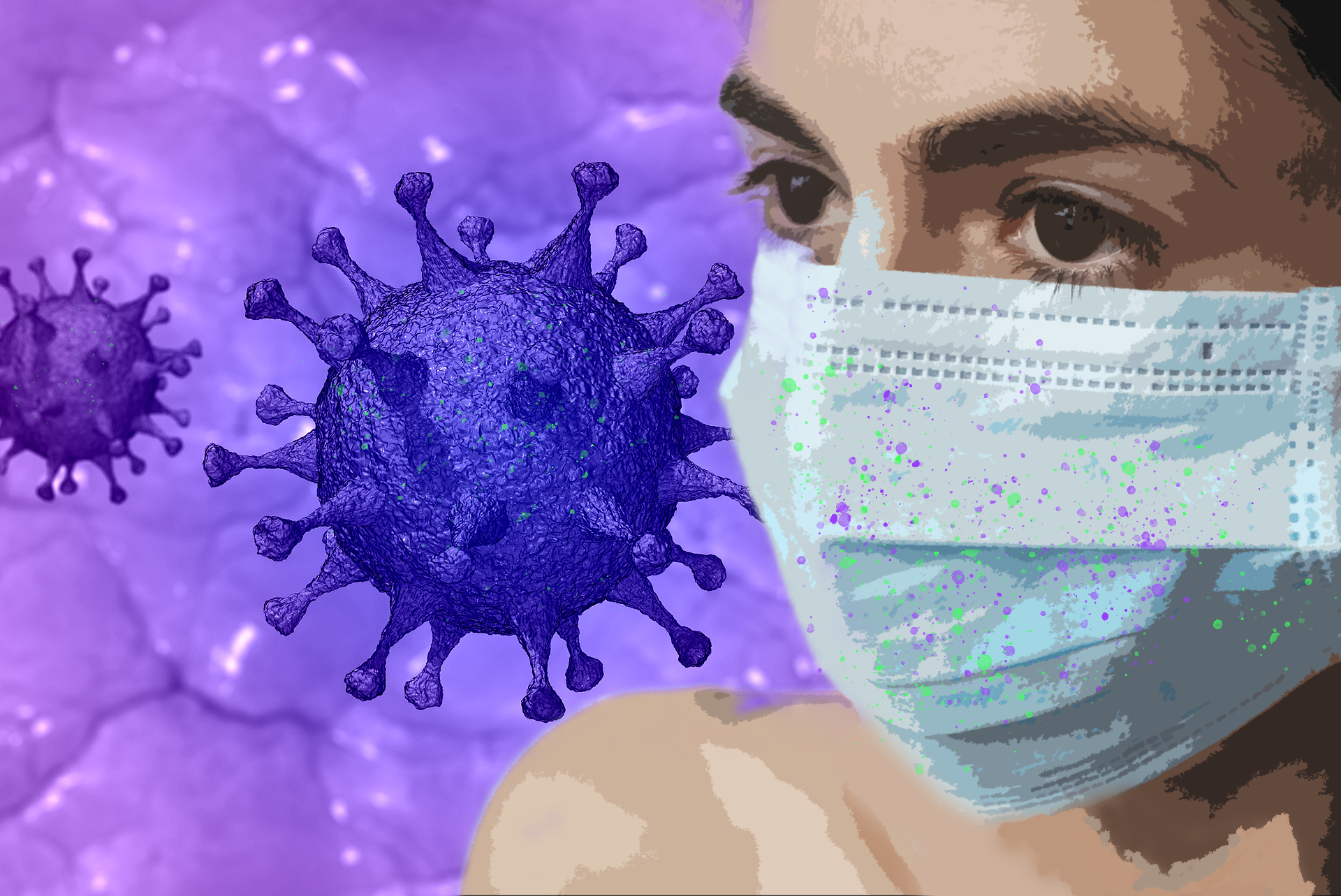
    The emergence of everyday people using surgical masks amidst the COVID-19 pandemic has caused mass misinformation and the perpetuation of xenophobic ideas.

    Myth: Surgical masks make you immune to COVID-19

    Typically found on hospital workers and sick personnel as a safety barrier, surgical masks are almost regarded as invincibility devices, protecting the body from outside pollutants and threats. The implied purpose of surgical masks is to protect patients from the secretions of a doctor’s mouth or nose during surgical procedures or to protect doctors and nurses from infected patients. Either way, a basic surgical mask prevents the exchange of bodily fluids, not air particles. Surgical masks are often mistaken as invincible shields against all viruses and bacteria.

    Surgical masks show no evidence of prohibiting the inhalation or contraction of the virus that causes COVID-19. The COVID-19 virus particles are too minuscule to be stopped by a surgical mask barrier. According to the Centers for Disease Control and Prevention, “most facemasks do not effectively filter small particles from the air and do not prevent leakage around the edge of the mask when the user inhales.” In no way do surgical masks prevent or obstruct contaminated air.

    While surgical face masks are virtually pointless against COVID-19, N95 filtering facepiece respirators are different. These masks are personally fitted to the face and “filter out at least 95% of very small (0.3 micron) particles, capable of filtering out bacteria and virus particles,” according to the CDC. These masks are typically worn by hospital and treatment personnel that come in direct contact with infected patients. N95 masks prevent the inhalation of micro-particles.

    Truth: Surgical and N95 masks are running low

    Due to the personal fitting of each N95 mask, they begin to degrade overtime depending on their usage, storage and environment. The assigned expiration date and high demand due to the current pandemic has resulted in an unexpected shortage in supply. Doctors are now reusing their masks, but they risk contamination due to degrading components affecting the protection and performance of the mask. Government administrations are requesting N95 donations as well as demanding some occupations to give up their assigned mask for medical workers.

    While N95 masks are needed most, surgical masks are running low as well. Infected patients wearing masks benefit surrounding parties by limiting exposure of emitted particles into the air. The pandemic panic has misinformed the public to go buy surgical masks when patients and medical workers need them most.

    Myth: DIY masks provide reliable protection

    YouTube and social media platforms are advertising do-it-yourself face mask tutorials in response to the shortage in surgical mask supply. The misinformation has continued as people attempt to protect themselves with faulty protection materials. Bras and bonnets to sandals and plain cloths are being cut and trimmed to replicate surgical face masks. But, as previously mentioned, surgical face masks provide no protection against COVID-19 virus particles. Any alteration of store-bought or recycled material will have the same, if not less, protection against COVID-19 than a surgical mask.

    Truth: Mask usage has reignited xenophobic ideas

    Surgical masks provide zero protection from contracting COVID-19, but they have effectively reignited xenophobia. It’s completely normal for the mind to want to assign a face to an infected COVID-19 individual or picture what a threat would look like out of caution. Assuming someone wearing a face mask has the virus and extending that assumption past the mask, to their race or ethnicity, is disgusting, racist profiling. In a time of crisis, people should be exercising neighborly behavior and picking one another up, not perpetuating racist, profile-based assumptions on others in an attempt to accuse others of the chaos. It’s unproductive and invasive.

  • Ask Evergreen: Concerned Citizen

    Ask Evergreen: Concerned Citizen

    How to live through a pandemic

    Ask Evergreen is an advice column by the students of The Lumberjack


    Dear Evergreen,

    How do I live in this pandemic?

    Dear Concerned Citizen,

    We’re living through history right now amidst the COVID-19 pandemic. There are many ways you can prevent potential exposure while still leading a balanced life.

    Educate yourself. Learn about the causes, symptoms and preventative measures of this respiratory virus. The California Department of Public Health has pertinent information you should read up on. While Humboldt County is not on the list for community transmissions, it is offering lab testing for suspected cases of the illness. The CDPH news updates page offers consistent updates.

    Isolate yourself. Don’t go out unless it’s necessary. While you may want to see your friends during spring break, don’t expose yourself to others who may not be practicing precautionary measures.

    If you’ve traveled home for break, be mindful of where you go out. It’s OK to not do normal spring break activities. Avoid going to clubs, restaurants, bars and breweries. It’s unlikely someone diagnosed with COVID-19 will be out in these places, but for the benefit of the doubt, you never know if they’ve been in contact with someone who has.

    Protect others. You may not realize how vulnerable certain age groups are to infectious diseases. Young children, the elderly and those with weakened immune systems are more susceptible to become ill. These groups are also less likely to be able to fend off illnesses, so limit interactions with the outside world for the sake of those near you in these populations.

    Prepare yourself. It’s going to get worse before it gets better. Practicing all of the former will help you better understand this illness and prevent further spreading. Just like after any natural disaster, awareness is heightened and preparedness begins for the next event. We shouldn’t wait for something to happen to be prepared for it the next time.

    Instead, we should always be ready for anything—cautious, but not panicked. Take this time to assess your emergency plans and supplies. Don’t stock up on unnecessary items like toilet paper. Do gather important survival gear to assemble a go-bag if you haven’t already. Ensure you have enough non-perishable food to last a potential quarantine or even a self-isolation period. Make sure you have your prescriptions filled, disinfectant stocked and all other daily necessities.

    Advocate for yourself. Perhaps your work has shuttered its doors and you’re worried about your next paycheck. Speak to your boss about what this pandemic means for your employment. Conserve your finances. With the stock market as unstable as it is right now, it’s wise to curb your spending. Don’t waste money on another bottle of hand sanitizer—instead, invest in the necessities.

    Relieve yourself. Don’t forget to take your mental health into account during this chaotic time. Reach out to loved ones and check on their well-being while updating them about yours. Find some stress relieving activities for you to do as you practice social distancing. Paint something, start meditating, study a new language or even do your taxes. There are plenty of things to occupy yourself with that are both peaceful and productive.

    We’re in this together.

    Sincerely,

    Evergreen


    If you have any questions you’d like to send in, email us at contactthejack@gmail.com. We won’t publish any names and you don’t need to use one.

  • No Facts Justify the Pink Tax

    No Facts Justify the Pink Tax

    Businesses capitalize on gender-based price discrimination

    Gender-based price gouging often goes unnoticed, even though it affects the most basic items like clothing, menstrual products and toiletries.

    The pink tax, also known as the tampon tax, refers to women’s products that frequently cost more than equivalent male products. These taxed items aren’t necessarily centered around female hygienic products, but they often target that audience.

    March is dedicated to Women’s History Month, where past actions, sacrifices and challenges advocating for equal rights are respected and celebrated. The pink tax furthers gender discrimination and promotes the patriarchal setup of our society.

    Women pay more for products solely based on the product being used on a female body. This contributes to the suppression of female rights by unrealistically charging women more for the same products.

    The tax allows companies to take advantage of women’s products and manipulate the pricing to further profit. The New York City Department of Consumer Affairs conducted a study of the price differences between products which had male and female versions. The study found, on average, women’s products cost 7% more than men’s products.

    There are only five states which don’t tack on an additional tax for any women’s products—Alaska, Delaware, Montana, New Hampshire and Oregon.

    Research shows the female version of products like razors, clothes, shaving cream, facial cleanser and even children’s toys cost more on average than their nearly identical male counterpart products.

    Take a trip to the Target website and you can see the pink tax in action. A quick browse of Target brand razors will show the different pricing for men and women. A four-pack of women’s razors costs $2.99, while an eight-pack of men’s razors costs $4.89. That’s about 75 cents per women’s razor and about 60 cents per men’s razor.

    Pink taxes still exist in 35 states in the United States. There are only five states which don’t tack on an additional tax for any women’s products—Alaska, Delaware, Montana, New Hampshire and Oregon.

    Both New York and California look to join the five states of pink tax exemption by eliminating gender-based pricing discrimination. Governor Andrew Cuomo of New York is leading a campaign against the pink tax with a budget plan to remove all gender-based pricing. California State Senator Hannah-Beth Jackson motioned for the same action and argued for the removal of the tax through a demonstration provided in a press conference. Jackson placed two basically identical soccer balls on a table, one with a pink stripe priced at $8.99 and the other with a blue stripe priced at $6.99. Jackson showed gender-based pricing to be simply ludicrous.

    As of June 2019, 13 states made female hygiene products tax exempt, including Utah, Ohio, California, Connecticut, Florida, Illinois, Maryland, Massachusetts, Minnesota, New Jersey, New York, Nevada, Pennsylvania and Rhode Island.

    The essence of the pink tax is to further discriminate by gender and sexuality to create immense profit off of the subtle product differences. This makes money for corporate manufacturers and hinders the progression of gender equality.

    To participate in the pink tax revolution and help the gender equality cause, we advocate boycotting products that target women or supporting companies who fight against gender-based pricing. We encourage people to purchase from companies that don’t produce gender-specific products. Collectively, this allows us to retaliate against the existence of the pink tax in the first place.

  • Ask Evergreen: Productive Procrastinator

    Ask Evergreen: Productive Procrastinator

    Ask Evergreen is a weekly advice column by the students of The Lumberjack


    Dear Evergreen,

    How do I productively procrastinate?

    Dear productive procrastinator,

    It’s about that time in the semester where many of us students hit our wall and feel the need to distract ourselves from our priorities. Don’t get comfortable in this phase—we still have eight more weeks of school left. There are a few things you can try to motivate yourself to work more and to keep you focused while still keeping some time to decompress.

    Stay organized and prioritize your work. You can try to create daily to-do lists. If you can visualize what you have to do, you might have more motivation to get the little things done before tackling your bigger assignments.

    Set realistic goals for yourself that you know you can complete. Chip away at your work bit by bit. You’re less likely to get overwhelmed. Read the required chapters for your classes one at a time and take breaks when you feel the need, but only after getting through a good chunk first.

    Study with a purpose. Set aside your phone or just shut it off completely so you don’t get distracted with notifications. Power through the work you have without putting things off. You’ll feel much more relieved and relaxed in your free time if you get your responsibilities out of the way first.

    If you really don’t feel persuaded to work after these tips, you can try productively procrastinating in other ways.

    Tidy up your house while you put off contributing to a group project. Do the dishes while you think of how to start a report that’s due in a week. Scrub your toilet bowl and strategize your study plan for an upcoming midterm.

    Allow yourself to have some time away from your school responsibilities before you buckle down and get to work. This will help you refresh your brain, giving you a better mindset to work with, while also hopefully kick-starting some brainstorming.

    As long as you aren’t staring at a wall watching paint dry, you’re bound to be doing something productive while you put off your priorities.

    I believe in you!

    Sincerely,

    Evergreen


    If you have any questions you’d like to send in, email us at contactthejack@gmail.com. We won’t publish any names and you don’t need to use one.

  • Catcalling Can’t Continue

    Catcalling Can’t Continue

    Verbal harassment toward women is about control and the assertion of gender discrimination

    Overall, 81% of women have experienced sexual harassment or assault in their life, according to Stop Street Harassment. This comes in the form of unwanted touching, being followed, being hollered or whistled at or vulgar gestures.

    People often minimize the effect catcalling has, usually through now-tired and almost memetic clichés.

    “What were you wearing?” some might ask. Or, “How late was it?”

    Some may attempt to advise the recipients of such advances to simply ignore them. Such advice ignores cases of women being killed for doing just that.

    As explained by HS Insider of the Los Angeles Times, the downplay of the effects of catcalling reinforces rape culture.

    “Although catcalling is street harassment, it can be really difficult to report the perpetrator, which also creates the mindset of getting away with something and trying to see what else one can get away with, which can be more violent forms of sexual harassment,” author Karen Rodriguez wrote.

    Even if catcallers claim they’re simply having fun or messing around, they demonstrate disregard for the safety and rights of women.

    Men who catcall use the institutional power they hold that protects them from behaviors that should be seen as inappropriate. They reinforce the idea that men should hold a level of control over women and that women should be subservient. They see resistance to such unsolicited advances as a negative reaction to their exercise of that power.

    “The issue of catcalling and street harassment isn’t an issue on security and protection,” Rebecca Meluch wrote for The DePaulia, the student newspaper at DePaul University. “It should be an issue on the way society shapes people to view groups of bodies as accessible and degradable.”

    “Having to double-check the people walking behind me shouldn’t be routine for me.”

    Paula Ortiz Cazaubon

    HuffPost published a video in which men attempt to explain why they catcall. Most of their responses can be simplified to a man finding a woman attractive and the man instinctively calling out to her. The same men who defended their behavior instantly said they wouldn’t like if women they personally knew were victims of harassment.

    The attitude that men are simply having fun as long as they’re personally and emotionally removed from the victim, reinforces stereotypes of gender inequality and power dynamics. The asserting of one’s power is the real intention behind catcalling, regardless of what perpetrators claim.

    These actions are far from harmless, and they are damaging to women in the long run.

    “Having to double-check the people walking behind me shouldn’t be routine for me,” Paula Ortiz Cazaubon wrote for The Beacon, the student newspaper at the University of Portland.

    This is why education on street harassment is necessary. It starts with holding men accountable for their behavior. Rape culture is not something to be fetishized or taken lightly.

  • Major League Marijuana

    Major League Marijuana

    Why I don’t think marijuana is everything it’s cracked up to be in baseball

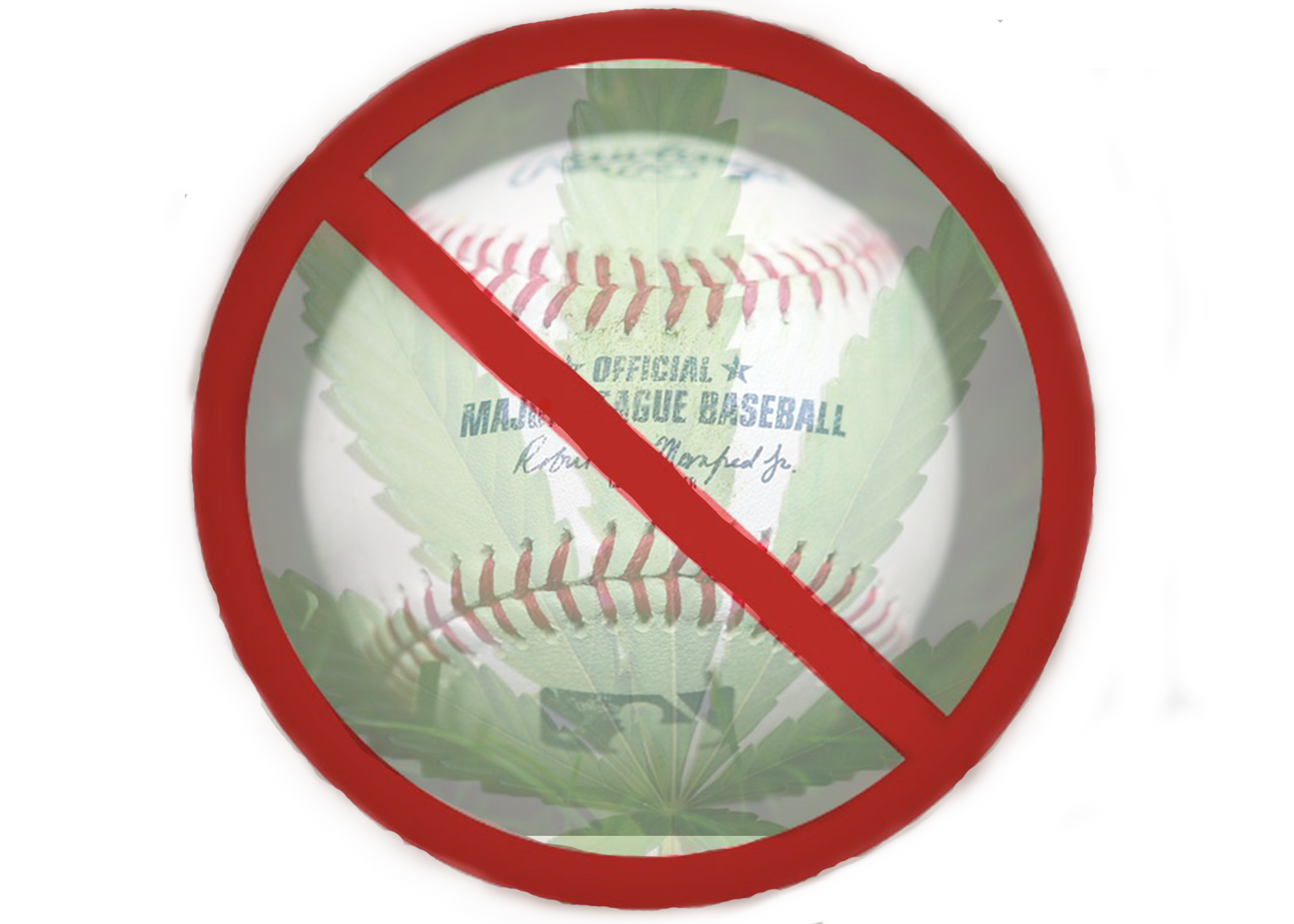
    Major League Baseball is an organization that prides itself on having great talent on and off the field. Players are drug-tested fairly regularly and subject to different levels of punishment if caught with opioids or other banned substances. That is all changing with the legalization of marijuana in baseball.

    Marijuana graces the covers of magazines and virtually everything in sight in modern culture like a groundbreaking scientific discovery. Seemingly everyone will go to great lengths to defend the devil lettuce’s honor if one attacks it. In general, marijuana is looked at like a god. Sure, people have benefited from it, but its usage has gotten out of control and the relaxed restrictions of marijuana in baseball are just more nails in the coffin.

    With the increase in American marijuana users comes the increase of ramifications. While there are many compelling arguments for normalizing marijuana usage, there are also legitimate health concerns around it.

    As a matter of fact, marijuana-induced emergency room visits have jumped up, particularly in more left-leaning states.

    According to the Colorado Hospital Association, a collection of more than 100 hospitals in the state of Colorado, “the prevalence of hospitalizations for marijuana exposure in patients aged nine years and older doubled after the legalization of medical marijuana,” and “emergency department visits nearly doubled after the legalization of recreational marijuana.”

    That is scary stuff. Maybe marijuana can wash away anxiety or depression temporarily, but to risk the added side effects is foolish.

    Returning to the realm of Major League Baseball, we find ourselves in the midst of an organization that is trying to appeal to a younger audience by making games more enjoyable and watchable. After all, the kids are the future of the sport.

    Yet the idea that loosening the grip on marijuana in baseball will do no harm couldn’t be more wrong. It is common knowledge that youth look up to ballplayers as role models in many different facets.

    If marijuana is more debilitating to one’s health than beneficial, we should be making it clear that any, and I mean any, drug or substance will not be tolerated in baseball no matter how harmless it may be marketed as. I certainly wouldn’t want my kids to form the idea that they can get away with smoking weed like it’s no big deal. Marijuana and e-cigarettes are already being passed around like packs of gum in middle and high schools and it’s only getting worse.

    “Drugs work very well, at first, for mentally ill people. If you’re anxious, it’ll go away with a couple of hits, a beer. It’s like magic. But then, the tolerance sets in. So, not only do they need to drink more to relieve the anxiety, but every single time they try to stop, the underlying anxiety comes back worse.”

    Dr. Alex Stalcup

    Beyond setting a bad example for the younger generation, people are using marijuana for non-medical purposes and leaning on it like another shoulder. Especially in Humboldt County, people are socially smoking marijuana and claiming it’s saving their lives.

    I recognize there are some individuals who actually need it to function, but nonetheless, it’s spread like a wildfire and now it’s hard to find someone who doesn’t smoke it or consume edibles.

    Mental health issues affect the extent to which people get addicted to marijuana or other substances, according to Dr. Alex Stalcup, medical director of the New Leaf Treatment Center in a 2016 interview with Healthline Magazine.

    “Drugs work very well, at first, for mentally ill people,” Stalcup said. “If you’re anxious, it’ll go away with a couple of hits, a beer. It’s like magic. But then, the tolerance sets in. So, not only do they need to drink more to relieve the anxiety, but every single time they try to stop, the underlying anxiety comes back worse.”

    Stalcup went on:

    “Fifty to sixty percent of the people with an addiction to marijuana whom [my] clinic treats have some sort of underlying mental health condition,” he said.

    Granted, it is only one clinic, but the point is an overwhelming amount of people across the country who abuse weed are dealing with a mental health crisis of some kind.

    I will admit that I am in the same boat with a lot of these folks, but I will never use weed as a solution to my problems. There is an abundance of other remedies and treatments available to cure internal issues.

    I can’t control what you do. I can’t control what Major League Baseball does. But I hope that baseball will go back to looking at marijuana as a banned substance that could incur fines and treatment.

  • Ask Evergreen: Sensitive Sleeper

    Ask Evergreen: Sensitive Sleeper

    Ask Evergreen is a weekly advice column by the students of The Lumberjack


    Dear Evergreen,

    I’m a sensitive sleeper. How do I stay asleep all night?

    Dear Sensitive Sleeper,

    Falling asleep and staying asleep can be challenging, especially if you live in a community environment like dorms or apartments. There are a few things you can try before heading to bed that may help you sleep through the night.

    Use earplugs or other noise-cancelling items. Earplugs are a blessing when you have noisy neighbors. Pop a pair in your ears and listen to your heartbeat and breathing. The rhythmic melody of these two sounds may help distract you from outside noise.

    Use white noise to help you sleep. The Pulmonary, Critical Care and Sleep Medicine Division of Rhode Island conducted a study on the effects of white noise on patients’ sleep in intensive care unit environments that are a cacophony of noise. The study found white noise facilitates less sleep disruption. You can conduct a similar study on yourself. Try turning on a fan or downloading a white noise app and see how it affects your sleep.

    Have a warm drink. Old wives’ tales suggest having a warm glass of milk to help you sleep. For those who don’t drink milk, try having a hot cup of non-caffeinated tea. There are even specific tea blends to aid restful sleep. I recommend a tea blend with chamomile, mint or lavender elements.

    Get all your priorities out of the way so you don’t worry about them. If you don’t have assignments to worry about, you might sleep better and skip those crazy school panic dreams. Try completing as much work as you can to put your mind at ease. Give yourself some time before bed to relax away from your work to let your brain have a chance to disconnect.

    Don’t use your phone before bed and avoid screens. A study by the Lighting Research Institute in New York found blue light from phone screens and other digital devices can disrupt your body’s natural melatonin release habits. Give your body and mind a decompression period away from screens before trying to fall asleep.

    Get a heart monitoring device. Fitbits and Apple Watches can record your sleep patterns and resting heart rate. While these devices can be pricey, they also offer other life applications that can make them worth it. If you already have one, start paying attention to that sleep data.

    Sweet dreams!

    Sincerely,

    Evergreen


    If you have any questions you’d like to send in, email us at contactthejack@gmail.com. We won’t publish any names and you don’t need to use one.

  • We’re All Lonely But It’s Not Our Fault

    We’re All Lonely But It’s Not Our Fault

    Shifting the blame of loneliness from individuals to institutions

    There’s an epidemic of loneliness in modern America. It’s a trauma encompassing political, economic and social realms. We’re all alone, but it’s not any one person’s fault.

    Imagine the stereotypical millennial: they moved home after college, unable to find a job or afford a home of their own. It may sound pathetic. But maybe they’ve found the home they need.

    The alternative for the millennial generation is living alone in an overpriced closet. It leaves them fragile and alone. A 2018 national survey by the healthcare provider Cigna found 46% of Americans felt alone some or all of the time. Adults aged 18-22 responded as the loneliest age group. A 2010 AARP survey had similar findings.

    Lonely people are vulnerable. Alone, a small problem becomes a crisis. That crisis festers and becomes a trauma that stays with a person for life. Without a support network, a minor issue can snowball into an avalanche. Studies have linked loneliness to depression, distress, suffering, poor sleep, high blood pressure and death.

    Loneliness almost feels normal in a society that sees the world in terms of the individual. Privacy can feel like success. Appearing independent is an achievement. And we see weakness in a cry for help.

    We weren’t always this way. Prior to modern industry, humans often lived in close-knit communities, whether related by blood or not. Fast-forward to the 1950s, and the nuclear family emerges. There’s the working husband, the stay-at-home wife and the two or three kids. It might have been romantic then, but a 2020 article from The Atlantic by David Brooks shows this small, private family wreaked havoc on our social lives.

    Jump forward 60 more years and you get the loneliness epidemic. One could criticize nuclear families for pages—read Brooks’ piece for a full account. But as they relate to loneliness, they popularized small families and mistrust of anyone outside of those families.

    Small families can produce lonely individuals. Imagine a single child. Imagine their parents pass away. That child then has to live on their own, without the support of a family around them. Financial, personal or professional stresses can lead to a free-fall when you have no safety net.

    Small, nuclear families disintegrate, and children are left on their own.

    Youth are finding new ways to survive the aftermath of a nuclear family disaster.

    The good news is we seem to be adapting. We are, in some sense, valuing extended families again. Pew Research Center found a record 64 million Americans living in multigenerational households in 2018. In 2016, Pew found the most common living arrangement for the 18-34 age group to be living with parents.

    We’re also expanding families beyond biological boundaries through shared housing units and groups for single parents. These new arrangments provide a way forward that doesn’t necessitate stay-at-home wives or gender discrimination. We’re finding ways to balance our want for individual freedom with our need for a family.

    Living together doesn’t necessarily make for less lonely people. We should be cautious about praising housing arrangements that can be born out of economic necessity, but research suggests many are choosing less lonely housing by choice. Living together is a good first step toward a more stable society.

    Youth are finding new ways to survive the aftermath of a nuclear family disaster. Make fun of the millennial in their parents’ garage if you want. But it looks to us like they might have found shelter from modern loneliness. They’re going to be OK.

  • The Light at the End of the Speeding Metal Death-Box

    The Light at the End of the Speeding Metal Death-Box

    The United States needs better regulations on rear car lights

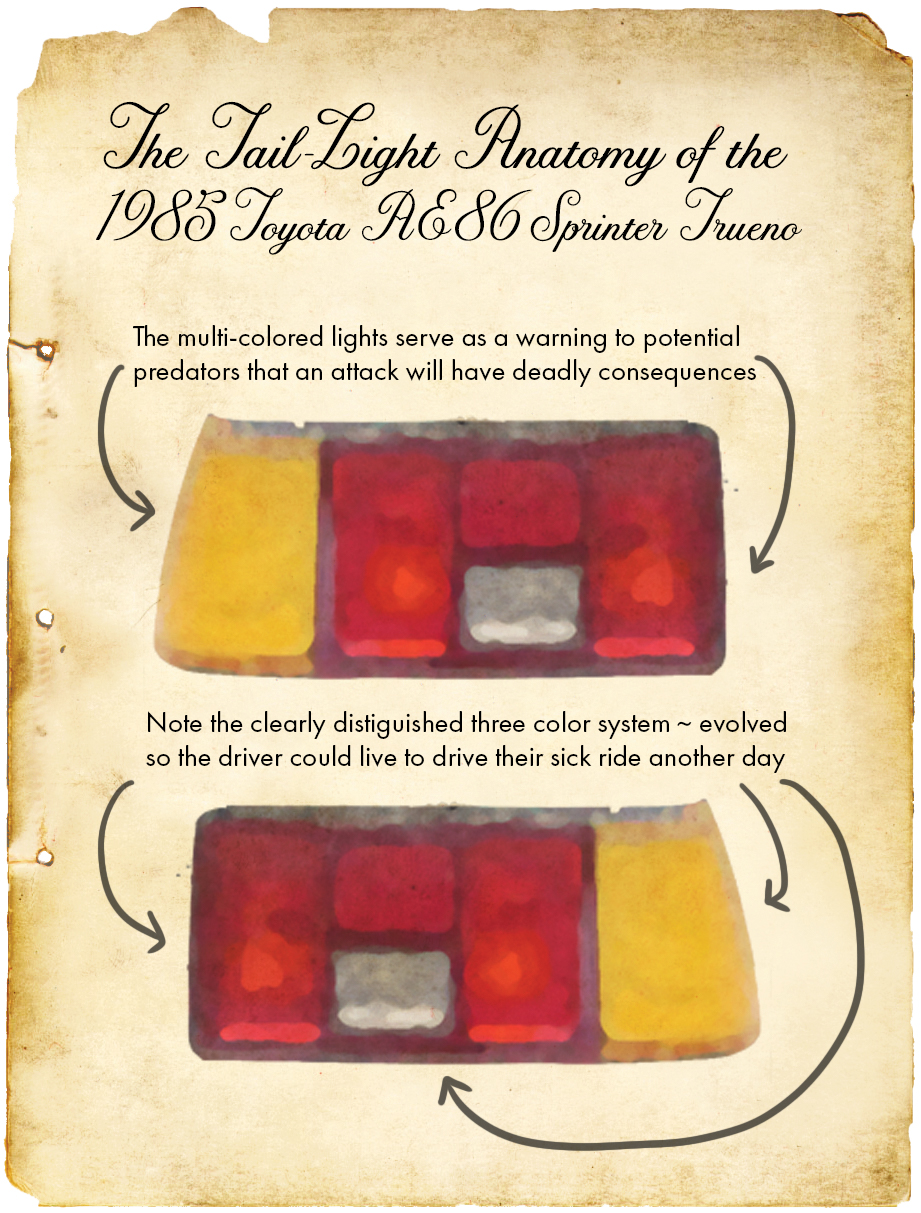
    There is a frightening flaw in American car design clearly visible during every trip to the grocery store. United States auto regulation does not require brake lights to be a different color than turn signals. They should be.

    The colors and positions of rear lights may seem like a small detail, but it has deadly consequences. According to the U.S. Department of Transportation, 36,560 people died in motor vehicle crashes in the United States in 2018. Given this statistic, one would hope we are doing everything possible to ensure the safety of drivers and their passengers.

    Tight and statistically informed regulations on the auto manufacturing industry are important when making something so necessary but so dangerous for the modern worker’s everyday life.

    The lights on the rear of a car are designed to do a lot of jobs, the most important of which are to indicate when the driver is braking, when they’re turning and when they’re reversing. Seeing as communication between drivers is one of the most important requirements of safe driving, these signals must be as clear as possible. A simple system designed to effectively communicate these three actions already exists.

    A three-color system makes driver intent clear. Red brake lights indicate a driver is slowing, white back-up lights indicate a driver is reversing and amber turn signals indicate a driver will be mixing up their position a bit. This is where America stumbles. Back-up lights are required to be white and brake lights must be red, but turn signals can be either amber or red. Worse, they do not have to be separate from the brake lights.

    Turn signal color and separation may seem trivial, but the National Highway Traffic Safety Administration found in a 2008 study that cars with amber turn signals may be up to 28% less likely to be struck while maneuvering in a way that involves the turn signal.

    A 1995 study by the same agency found reaction time to brake signals decreases significantly when the braking driver possess amber turn signals. This remained true even when the braking driver wasn’t using their turn signals.

    Even using the most conservative estimates in safety increase, there is no doubt amber turn signals would save lives.

    We’ve known for at least 50 years red lights aren’t the best choice for communication. Red light can appear to be further in the distance than it really is. It is also difficult for the human eye to see differences in red light intensity. A blinking red light is less noticeable than a blinking amber light, which is something that should be taken into consideration when creating fast, metal death-boxes.

    There are more studies with similar results. The weight of the evidence for better turn signals is overwhelming. Most other countries require amber turn signals. Cars sold in the United States without amber turn signals have them in other countries. The United States and Canada stand virtually alone on this. The question is clear: why are American cars not required to have amber turn signals?

    Is it cost? It’s tempting to think this is yet another example of the auto industry cutting corners. In this case, it’s probably not. Amber turn signals are not significantly more or less expensive than red turn signals.

    Even using the most conservative estimates in safety increase, there is no doubt amber turn signals would save lives.

    It could also be aesthetics. Nothing says boring like safety. The fear of death is just part of what makes driving exciting, apparently. We want sleek, sexy cars. Our most expensive cars look angry and aggressive. They aren’t designed to pick up kids or run to the store. They are accessories or fashion statements, not tools.

    Maybe Americans just enjoy the freedom to refrain from changing simple things that would increase the quality of life for everyone around them. The rest of the world may do something in a way that’s objectively better and uses the same amount of effort, but we’re Americans and we’ll be damned if we let the United Nations tell us what to do.

    Maybe it doesn’t matter. Driving around Humboldt County, one wouldn’t know turn signals are mandated at all. If we do away with turn signals altogether, this isn’t an issue. American ingenuity triumphs again.

  • Biden’s Recent Slip-up is Not His First

    Biden’s Recent Slip-up is Not His First

    The South Carolina gaffe is only his most recent in a series of slip-ups

    In a speech given in South Carolina Feb. 24, Joe Biden asked for support in his campaign—but he may have forgotten what exactly he was campaigning for.

    “My name is Joe Biden, I’m a Democratic candidate for the United States Senate,” Biden said, a Democratic candidate for the United States presidency.

    This, however, was not the first time that Biden has slipped-up on the campaign trail. During the Nov. 20 Democratic debate in Atlanta, Georgia, The Guardian reported Biden said he was supported by the only African American woman to be elected to the Senate, Carol Moseley Braun.

    “We have this notion that if you’re poor, you cannot do it. Poor kids are just as bright and just as talented as white kids.”

    Joe Biden

    Senator Kamala Harris, who was on stage with him, had to chime in and remind him she was also an African American woman elected to the Senate.

    One of his most glaring slip-ups was during a town hall meeting in Iowa hosted by the Asian and Latino Coalition. According to a New York Times article, Biden was talking about education and challenging students.

    “We should challenge students in these schools to have advanced placement programs in these schools,” Biden said. “We have this notion that if you’re poor, you cannot do it. Poor kids are just as bright and just as talented as white kids.”

    He did attempt to amend his statement when he continued.

    “Wealthy kids, black kids, Asian kids, no, I really mean it,” Biden said.

    This isn’t the only gaffe that puts into question his views on race. On June 18, 2019, during a fundraiser event in New York, Biden recounted his time in the Senate in the 70s. Specifically, working with Mississippi Senator James Eastland and Georgia Senator Herman Talmadge, two senators who opposed civil rights and desegregation, according to CNN. He was comparing the Senate from that period to the Senate today.

    The big question regarding this most recent slip-up is whether or not it will affect his poll numbers that currently have him sitting in second place behind Bernie Sanders.

    “At least there was some civility. We got things done. We didn’t agree on much of anything. We got things done. We got it finished,” Biden said. “But today, you look at the other side and you’re the enemy. Not the opposition, the enemy. We don’t talk to each other anymore.”

    Kamala Harris spoke out again against Biden.

    “To coddle the reputations of segregationists, of people who, if they had their way, I would literally not be standing here as a member of the United States Senate, is, I think it’s just, it’s misinformed,” Harris said.

    Even before this election cycle, Biden has made questionable remarks regarding race. According to an article by CNN, when he started his 2008 presidential race, he referred to Barack Obama in a way that drew scrutiny from many people.

    “I mean, you got the first mainstream African American who is articulate and bright and clean and a nice-looking guy,” Biden said during an interview with the New York Observer.

    The big question regarding this most recent slip-up is whether or not it will affect his poll numbers that currently have him sitting in second place behind Bernie Sanders.

  • Mike Bloomberg is Democratic Trump

    Mike Bloomberg is Democratic Trump

    Mike Bloomberg is just another billionaire with outdated views looking for attention

    We’ve all seen the campaign ads. “Mike will get it done,” they profess. What exactly has he done? He’s had 64 sexual harassment cases brought against him. He’s expanded the infamously racist stop-and-frisk policy in New York. He’s spied on the Muslim community. And he has bought his way into the primary.

    Not to bring everything back to another bigoted New York billionaire who got bored with having too much money and went into politics, but Mike Bloomberg certainly does remind me of someone.

    Were it not for the mark on the ballot calling him a Democrat, people would assume based on his fiscal policy and social track record that he was at least a centrist-Independent, if not a conservative-Republican.

    Despite being a registered Republican from the beginning of his political career up until 2007, and an Independent until 2018, he chose to run as a Democrat. Presumably, to gain the support of both Republicans and party-line Democrats.

    He’s an authoritarian, plain and simple. Party isn’t the real issue here. He cares about power.

    Bloomberg has a long history of bigotry. While his predecessor, Rudy Giuliani, first implemented stop-and-frisk, it was under his watch that the program grew to the widespread excuse for police brutality and racial profiling.

    When it was brought up by critics that New York police officers were disproportionately targeting black and brown communities, he gave the rationale that, “That’s where all the crime was.” In addition, he justified having undercover officers stalk Muslim New Yorkers as preventative measures against another 9/11.

    “We had just lost 3,000 people at 9/11,” Bloomberg said in an interview with PBS Feb. 27. “Of course we’re supposed to do that.”

    If anything, Bloomberg is a more dangerous version of Trump. He’s smart. He knows that putting up a polished front and playing up the establishment card will make him look like the opposite of the current president.

    Aside from his dubious past, Bloomberg’s current policy proposals are anything but progressive. While his website claims that Bloomberg will defend equal rights for LGBTQ+ Americans, he has stated as recently as 2019 that he considers transgender individuals as just “some guy in a dress,” or “he, she, or it.”

    On his website, aside from a reference to overturning the military ban, he has nothing to say on transgender rights. By considering equal rights for the transgender community to be reaching too far, he betrays the entire LGBTQ+ community.

    Being progressive is about supporting the oppressed and the marginalized. No ally insults the people they claim to stand with behind their backs and considers the value of their identities negotiable.

    According to his website, his plan for climate change is to “restore America’s leadership in fighting the global climate crisis, propel the United States toward a 100% clean energy future, make environmental justice a national priority.” These promises are all incredibly vague, and his campaign has been silent on the specifics of how they’d achieve any those goals.

    General promises of somehow solving climate change aren’t going to help us. If we want this planet to be livable for ourselves, our children and our grandchildren, we need to take serious and quantifiable steps to ensure it. The science says we need ambitious action. All he offers are glossy advertisements.

    If anything, Bloomberg is a more dangerous version of Trump. He’s smart. He knows that putting up a polished front and playing up the establishment card will make him look like the opposite of the current president.

    I’m not afraid that he couldn’t defeat Trump in an election. If Bloomberg wins the Democratic primary, the general election won’t matter. It’s a self-serving billionaire in office either way.

  • My Hair is Not a Dress Code Violation

    My Hair is Not a Dress Code Violation

    Natural hairstyles are often shunned, but these hairstyles keep hair healthy while representing cultures

    “You would look so pretty if you straightened your hair,” is something I heard a lot growing up. So much so that for two years I straightened my hair everyday. It took three years of haircuts and deep conditioning treatments to get my hair back to normal.

    That comment along with others like, “Your hair gets in the way,” seem small but take a toll on an individual’s self esteem. A lot of care goes into textured hair. Someone tearing it down hurts.

    “It’s discouraging to know that there are not a lot of people that like or can handle your hair,” Humboldt State University student Dimitri Mark said.

    There are still some schools in the United States that ban natural hairstyles such as braids or dreadlocks because they violate dress codes. I’m not sure how they violate dress codes—these hairstyles keep your hair back and can even keep your hair healthy.

    In 2018, a video surfaced on the internet of a 16-year-old boy crying as his dreadlocks were cut off for him to participate in his wrestling match—it was either that or forfeit.

    Hair comes in many different textures, lengths and colors, and should always be taken care of and accepted. Hair doesn’t get in the way. Get over it and stop trying to pick on people of color.

    Girls have also been suspended, sent home or given detention in Boston, Atlanta and Terrytown, Louisiana for their hairstyles.

    At the 2015 Oscars, Zendaya sported dreadlocks to go with her hairstyle. Giuliana Rancic, a host on “Fashion Police,” wasn’t a fan of Zendaya’s locks, which she said smelled “like patchouli oil and weed.” This comment almost led to the end of Rancic’s career. Rancic’s prejudiced words hurt, and they caused a riot against her.

    The reason natural hairstyles such as big curly hair, afros, dreadlocks, braids and twists are a problem is because they’re considered dirty. Things like accents are considered dirty too, unless they’re coming from a blue-eyed, white boy. Many places in Africa, Italy, and Greece once considered braids to be a sign of wealth. Braid-making hairdressers were worshiped and highly trusted.

    It’s understandable why schools have certain dress codes, but hair shouldn’t be part of them. If a school said I had to have my hair in a ponytail everyday, I’d probably fight it everyday and then get kicked out. Hair comes in many different textures, lengths and colors, and should always be taken care of and accepted. Hair doesn’t get in the way. Get over it and stop trying to pick on people of color.

  • We Still Need to Talk About Consent

    We Still Need to Talk About Consent

    Consent is crucial, but some just don’t get it

    Sexuality, sex awareness and sex etiquette are constantly in the spotlight, and yet, we still need to talk about consent.

    Humboldt State University recently experienced a disruption in its supposed safe space when allegations arose against a faculty member by a student. The investigation into that case is ongoing. Unfortunately, violations against consent aren’t limited to our own campus.

    Convicted rapist Harvey Weinstein’s case reveals consent still isn’t understood in the modern world. Weinstein was convicted of taking advantage of and sexually assaulting multiple women.

    Regardless of the circumstance, consent is crucial.

    Consent isn’t complex, but its idea continues to perplex those who fail to understand its simplicity. Yes means yes, and nothing else qualifies as a confirmation unless a yes is explicitly given.

    Affirmative consent needs to be practiced, not just by sexually active people, but by all people, whether or not it pertains to sexual activity. The ability to revoke consent also needs to be understood.

    Consent is far from a one-and-done response. It can be withdrawn at any moment.

    Even in professions where one uses their body for monetary gain, the right to revoke consent at any time remains. The refusal to take further action is linked to the right to control one’s body without interference from another.

    Everyone is born with this right. This universal entitlement to ownership of one’s body transcends all differences between individuals. All communities are entitled to their own bodies and to define consent in their own ways.

    In cases where verbal consent isn’t an option, written consent can suffice. Those in deaf and nonverbal communities can look to signing or reading a partner’s physical signals to help prevent confusion and facilitate mutual, nonverbal consent.

    It’s important to remember proper sex etiquette at all times. The following examples illustrate the ways in which consent is given and revoked:

    • Always ask your sexual partner if they’re ready and willing to engage in a sex act, without coercion.
    • You should cease sexual activities when someone says “Stop” or any other iteration of “No.” Expressing discomfort with an act is also a sign of hesitation, and should be considered before proceeding.
    • Anyone can withdraw consent at any time, even when a sex act is underway.
    • You should only engage in sex when all parties involved are in a coherent headspace, without the involvement of drugs and alcohol.
    • Body language doesn’t indicate consent to an act. Sexual arousal isn’t confirmation.
    • Do not use your position of power to persuade someone into any type of sex act. Professors, bosses, managers and even counselors have a responsibility to conduct themselves professionally, without sexual desires or encounters.

    Regardless of the circumstance, consent is crucial. You can never be too presumptive when asking about someone’s comfort, and you can never be too cautious when verifying consent.

  • Ask Evergreen: Respectful Rejector

    Ask Evergreen: Respectful Rejector

    Ask Evergreen is a weekly advice column by the students of The Lumberjack


    Dear Evergreen,

    How do I learn to say no?

    Dear Respectful Rejector,

    Sometimes it’s hard to say no for fear of disappointing someone or seeming incapable of accomplishing a task. But saying no is a healthy way to protect yourself from unwanted stress. There are a few ways you can retrain yourself to accept the art of rejecting.

    You shouldn’t feel ashamed to say no, no matter the question. You don’t have to please everyone, so don’t worry about letting someone down. You aren’t being selfish by declining a request. You’re being self-considerate.

    Have a solid reason for why you can’t agree to do something. We all experience apathy from time to time, but don’t let laziness be the cop-out for stepping away from an activity. Maybe you’ve spread yourself too thin and just need a chance to collect your thoughts. Remember to not overbook yourself by agreeing to things before recognizing the reality of your limited time and energy.

    It’s important to set boundaries when it comes to limiting your willingness to participate in activities you’d rather not do or don’t have the time for. Express your discomfort at a request. Maybe you don’t feel safe doing a task, or the person asking for assistance doesn’t truly appreciate you for your work. It’s okay to put yourself first.

    Don’t let people take advantage of you for favors, and don’t let people continue to do so just because you’ve agreed upon things in the past. Be kind and assertive with your decline, and make sure they understand how they’re making you feel obligated.

    Always remember you have the power to say yes or no to whatever you choose. Anyone who undermines your decisions or tries to convince you otherwise is a manipulative force who shouldn’t be allowed to deviate your conclusions.

    No, you can!

    Sincerely,

    Evergreen


    If you have any questions you’d like to send in, email us at contactthejack@gmail.com. We won’t publish any names and you don’t need to use one.

  • What It Means When You’re “Going Through It”

    What It Means When You’re “Going Through It”

    Breaking down the common modern phrase

    Being a college student, adult and overall human being on this planet can be very difficult sometimes. Whether we can explain what we’re going through or not, we very well know that we are going through it.

    “Going through it” is a phrase that has come up in today’s culture and is spelled on social media as “going thru it.” Regardless of how it’s spelled, it usually means a certain aspect of your life, or maybe everything in your life, is getting the best of you and you’re feeling weighed down.

    “Usually when I’m going through it there are a lot of things going on around me and it makes things harder to do. My mind is taking over everything.”

    Emily Lopez

    “When I say I’m going through it, I’m just kind of not feeling it,” Xochilt Reyes said. Reyes, 22, believes the phrase has a lot of emotion behind it. Reyes said you can usually tell someone is going through it before they tell you that they are.

    “You can hear it in their voice and see it in their face,” she said.

    Emily Lopez, 20, is a third-year criminology and justice studies major at Humboldt State University. Lopez agreed when she is going through it, it’s a state of being overwhelmed or sad that makes everyday tasks hard to do.

    “Usually when I’m going through it there are a lot of things going on around me and it makes things harder to do,” she said. “My mind is taking over everything.”

    Going through it is just a simple way for us to share how we’re feeling without having to go super in-depth into how we’re actually feeling. It’s three words that explain why we might have been slacking. This three-word phrase says enough to where we are able to understand our friend either needs a little space or a little help to get through the day.

    Going through it is an unpleasant experience, but one that we have all gone through at least once.

    Although this phrase has a negative connotation, the brand Viva La Bonita, who is known for creating clothes to empower women of color, turned the phrase going thru it into growing through it. The growing implies things might be rough right now, but they lead to a learning experience from which we grow and move forward. We use the experience to handle futures in which we find ourselves going through it again.

    Personally, it makes me look back at times where I was going through it and evaluate how I’ve grown from those times.

    Going through it is an unpleasant experience, but one that we have all gone through at least once. The important thing to know is that you’re not alone and that almost everyone knows what you mean when you say you’re going through it. Resources are out there if you ask for them, and friends are almost definitely there when you need them.

  • We Need the Wisdom of Wikipedia

    We Need the Wisdom of Wikipedia

    Wikipedia shows collaboration is crucial for accuracy

    We’ve all been there. You’re sitting in a class. Your professor wants you to write a paper on the different types of asexual reproduction of the Sanderia malayensis jellyfish or some other arcane drivel. Your first reaction is to hit up Wikipedia. Then comes the kicker. You can’t cite Wikipedia. You scowl and snarl under your breath.

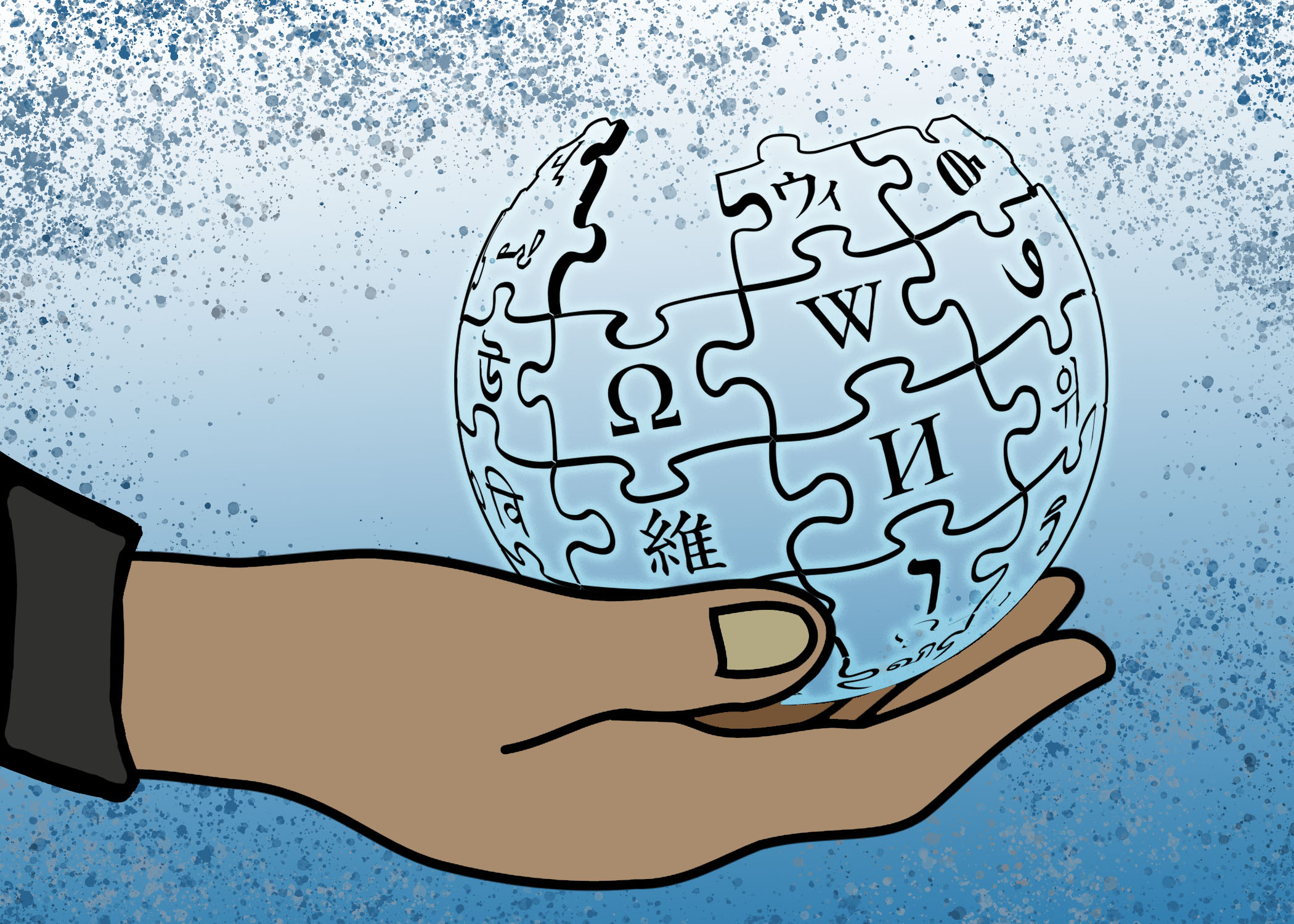
    Wikipedia deserves more credit than we give it. Turning a blind eye to Wikipedia as a reliable source is shortsighted and has implications beyond the realm of encyclopedias. Distrusting Wikipedia represents academia’s unwillingness to open the gates of collaborative truth-seeking.

    Scientific papers, meanwhile, are far from perfect.

    Contrary to what your professors may tell you, Wikipedia, as a source, is statistically just as accurate as published encyclopedias for most of its content. A 2005 study by the Nature research journal, “Internet encyclopaedias go head to head,” found errors in both encyclopedias, but among the entries tested, the difference in accuracy was small.

    Wikipedia, in their signature self-aware style, has reported on their own reliability as well. Wikipedia does not guarantee validity, but it is an invaluable research resource.

    Inaccurate information on Wikipedia is usually corrected quickly. Hyperlinked citations back up nearly every claim made on an entry. The Sanderia malayensis jellyfish’s page hosts six sources from international professionals, biologists and a handbook on poisonous jellies.

    Scientific papers, meanwhile, are far from perfect. Soft sciences have suggested cures to unhappiness or boosts to confidence through simple behavioral change, but as other researchers try to replicate the experiments, their conclusions are significantly different. This indicates a serious error in the scientific method. If science isn’t replicable, science is null.

    In the last few years, a plethora of papers have fallen under criticism after researchers have failed to reproduce their results—it’s been called the replication crisis. The crisis may have a few sources.

    Mistakes happen on Wikipedia too and it is always essential to be critical of anything read.

    First, it’s not hard to get published. The University of World News said in 2018 that too much scientific research is being published. It estimated nearly 30,000 scientific journals are in circulation, publishing approximately two million articles each year. They said the volume burdens the peer review system and makes it dysfunctional.

    Second, the media likes to be the first to report on news, including science news. Journalists can be wrong and often are when it comes to reporting on science, especially when they’re grasping to be the first to report on new findings. These bad practices report inaccurate, unconfirmed, flawed science to their audience before the study can be replicated.

    Mistakes happen on Wikipedia too and it is always essential to be critical of anything read. Search around, find supporting articles for any claim made and be aware that there may be flaws. But be able to recognize valid and sound knowledge.

    Critical review by the editors of Wikipedia—who can be any person—is what makes Wikipedia so powerful and so accurate. It’s the world’s largest encyclopedia—about 50 times larger than Britannica—with over six million entries and over 200,000 contributors. Wikipedia should serve as a banner for collaboration—especially between diverse groups.

    In “The wisdom of polarized crowds,” a 2019 study from Nature Human Behavior, researchers found politically-diverse teams created more accurate entries than teams with less political diversity.

    Wikipedia comes in clutch, often. Using it as a source may be frowned upon by professors, but a short chat with most of them and they’ll say Wikipedia is an excellent place to start. The website is a tool, not a cheat code. It would be ignorant to ignore it, but if it’s used appropriately, maybe, just maybe, we could learn something about jellyfish.

  • Ask Evergreen: Busy Bee

    Ask Evergreen: Busy Bee

    Ask Evergreen is a weekly advice column by the students of The Lumberjack


    Dear Evergreen,

    How do I manage my time when my schedule is jam-packed with work and school?

    Dear Busy Bee,

    It’s always good to be productive and a hard worker, but don’t run yourself ragged by foregoing a much needed break. You can schedule in some “you time” by organizing and maintaining a healthy and punctual schedule.

    Do your homework before relaxing and turning on Netflix. You should reward yourself only after accomplishing certain tasks. Set realistic goals for yourself, like reading two pages from your textbook before checking your phone notifications.

    Find a space where you can feel comfortable and concentrated. If you are able to complete your school work in a stress-free environment, you might power through it faster and be able to relax sooner.

    Don’t go home straight after class if you know you won’t work on homework once you get there. It’s easy to get distracted or lazy in a home-setting, so make sure you commit yourself to finishing, or at least starting, assignments before you leave campus.

    When it comes to work, don’t work more hours than you possibly can. We all need money, but don’t sacrifice your time by working more and focusing on school less.

    Communicate with your boss or manager about your time restraints because of school. Don’t agree to work more and neglect your school priorities. Give yourself time to breathe in between work shifts and classes.

    If your employer isn’t as forgiving to you as a student, then it could be wise to find a more respectable employer. If that isn’t an option, you should still set boundaries, even if that means taking less hours or bad shifts at work.

    The ultimate time management tool is a planner. You can plan your weekly schedule hour by hour to see when you’ll have downtime to get other things out of the way or even relax.

    Write down your class times and work schedule, and fill in the gaps with study sessions and break times. If you can visualize your week, you’ll be able to discern the best times to be productive or peaceful.

    Don’t waste the little free time you may already have. Use your free time wisely by getting ahead of assignments. Chip away at projects bit by bit when you have the chance. You’ll thank yourself later when you’re in a time crunch.

    You’ve got this!

    Sincerely,

    Evergreen


    If you have any questions you’d like to send in, email us at contactthejack@gmail.com. We won’t publish any names and you don’t need to use one.

  • Parking Pisses Me Off

    Parking Pisses Me Off

    The trials and tribulations of finding parking on campus

    Parking on campus sucks. And I’m not the only one that thinks so.

    I try my best to walk or take the bus whenever I can. Sometimes I’m just too slow in the morning and have to drive to avoid being late. The problem is that between the hours of 9 a.m. and 3 p.m. it’s ridiculously hard to find an open parking spot on campus.

    Usually I end up parking on a residential street nearby. To put that into perspective, my apartment is a 21-minute walk from campus according to Google Maps. From where I usually end up parking, it’s an 11-minute walk to get to class. When I add the four minutes it takes to drive there, I only end up getting to class six minutes faster. Sometimes, that’s exactly what I need to make it to class on time.

    “If people have to pay even more for parking permits there HAVE TO BE SPOTS AVAILABLE FOR THEM TO PARK IN.”

    Parking Survey Response

    A 2018 study by Walker Consultants included an anonymous survey on the state of parking on campus. The full results of this study are available, and boy, a lot of people were mad about parking.

    “Prices as they are, are already ridiculous. One should not have to pay $315 a year to only find parking between 7:00-8:00 a.m and after 5:00 p.m.,” one person wrote.

    The survey had multiple respondents to the parking issue.

    “If people have to pay even more for parking permits there HAVE TO BE SPOTS AVAILABLE FOR THEM TO PARK IN,” another person wrote.

    In addition to the sentiments behind these two comments, a large number of the comments suggested building both on-campus parking structures and off-campus parking with shuttles to campus.

    One question on the survey struck a nerve with many respondents when it suggested the cost of parking passes may have to be raised in order to meet the demand. Many of the answers to this question were filled with colorful language.

    “What in the world do you do with all the money that you are unable to sustain the program without raising prices again?” one of the less expletive-prone respondents wrote.

    Another respondent offered to try and get the extra funds themselves.

    “Perhaps we can lobby the state for funds? I’ll go to talk to Jerry on behalf of HSU. Dunno if he’ll see me, but I’ll go,” wrote the hopeful respondent.

    Unfortunately, Jerry Brown is no longer our governor, so if this respondent had it in with Jerry Brown, that won’t work anymore. Even more unfortunate is that this is an issue that is going to take a lot of work from the school if it’s going to be fixed. It’s also likely that even if it is fixed, it’ll take longer than many of our students will be here. In the meantime, it’s still a great excuse for being late to class.