The Lumberjack


Students Serving The Cal Poly Humboldt Campus and Community Since 1929

Category: Science

  • Animal of the week

    Animal of the week

    By Ali Osgood

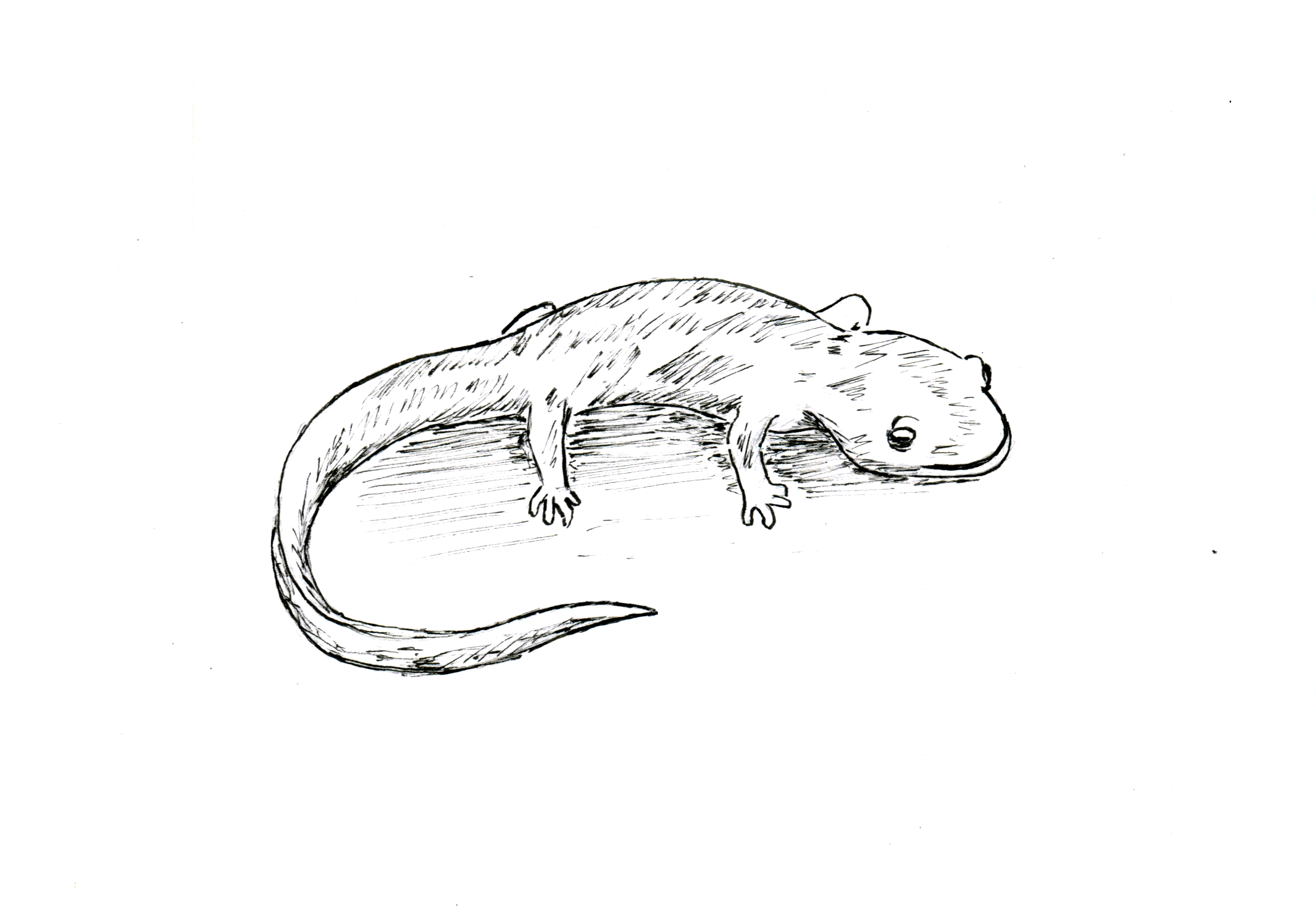
    The coastal giant salamander (Dicamptodon tenebrosus) is a native species to Humboldt County and is certainly a critter to keep an eye out for. Growing up to 13 inches in length, this salamander is the largest terrestrial salamander in North America. Coastal giant salamanders have a purple-brown hue with dark spots across the top of their body and are most commonly spotted on rainy nights near streams or other forms of running water.

    The coastal giant salamander eats invertebrates and even small vertebrates like mice and smaller salamanders. They sit and wait for prey to approach them, using their camouflage to blend into their habitat. Adults defend themselves by thrashing around erratically or by delivering a painful bite to their offender.

    Where to find them:  While they have been spotted regularly in the Arcata Community Forest during the winter, they can also be found in the Jacoby Creek Watershed area regularly. However, they are distributed throughout Humboldt, Del Norte, Trinity and Mendocino Counties and can be found near most running bodies of water.

    Information sourced from CaliforniaHerps.com

  • Voices of student science

    Voices of student science

    By Claire Roth

    Tarah Moleski, environmental management and protection major in the environmental planning option. Photo by Claire Roth

    Tarah Moleski is originally from Sacramento and is an environmental management and protection major in the environmental planning option.

    Moleski’s choice of major stems from her interest in multiple fields of study.

    “I chose my major because I was switching from psychology and was learning a lot about the environment and this one really spoke to me,” Moleski said. “My emphasis is policy and I figure that was the only way to make changes in this world. I’m not too sure about that now.”

    As for the future, Moleski plans to take a break from academics to see what the outside world has in store.

    “I’ve been in school since birth basically, I’m tired of it,” Moleski said. “ I’m going to take some time for myself and travel, but then eventually, I want a federal job somewhere trying to plan for either wildland conservation or maybe sustainable transportation.”

    _____________________________________________________________________

    Jett Hagerty, environmental science major in the ecological restoration option. Photo courtesy of Jett Hagerty

    Jett Hagerty is from Placerville, California and is majoring in environmental science under the ecological restoration option.

    Even before attending HSU, Hagerty always felt an attachment to the natural world.

    “I choose my major because I’ve had a strong connection to the outdoors my whole life and grew up on a beautiful watershed near Lake Tahoe that I’ve been passionate to protect,” Hagerty said. “I want to mainly leave the most positive footprint I can with my life and do something that protects what’s truly important.”

    Following graduation from HSU, Hagerty wants to take up hands-on work involving the environment.

    “I’m thinking that I can see myself being a ranger for a while or working in sustainable  fisheries,” Hagerty said.

  • This week in science (March 22 – March 28)

    This week in science (March 22 – March 28)

    Illustration. | Claire Roth
    Graphic Illustration by Claire Roth

    By Claire Roth

    Paleontology – Dino origins

    Take everything you may (or may not) know about where dinosaurs originated and tell it to hit the road. Through the reexamination of dinosaur fossils, scientists from the University of Cambridge in England recently suggested that the dinosaur evolutionary tree of theropods, a family that includes Tyrannosaurus Rex, to have originated farther north and earlier in time than originally expected.  One of the biggest implications of the discovery is that dinosaurs originally thought to be close together on the evolutionary tree may actually be very far apart, bringing up many more questions as to what exists in the tree’s gaps.

    Source: New York Times

    Archaeology – Clues from an ancient palace

    Illustration. | Claire Roth
    Graphic Illustration by Claire Roth

    Where did bureaucracies truly begin in the history of the world? The discovery of the remains of a royal palace that thrived around 2,200 years ago may have revealed some clues. The remains are located in southern Mexico and contain structures hinting of ancient governmental affairs, including a staircase leading to what would have been a central location in the structure that could have been used for decision making, feasts, or ritualistic human sacrifice.

    Source: ScienceNews

    Illustration. | Claire Roth
    Graphic Illustration by Claire Roth

    Medicine – Spinach hearts

    Scientists at the Worcester Polytechnic Institute recently reached a breakthrough in their attempt to grow human heart cells on spinach leaves. The leaves had beforehand undergone a process called decellularization where their plant cells were removed and only the vascular system of the leaf was left behind. This system was previously responsible for the transport of minerals and water to the spinach leaves and also the transport of food from the leaves to the rest of the plant. After decellularization, however, scientists were able to implant the type of human cells that line blood vessels into the spinach leaf’s vascular system, which is very similar to the vascular structures found within animals.

    Source: Science Daily

    Illustration. | Claire Roth
    Graphic Illustration by Claire Roth

    Wildlife – Oldest dog breed returns

    Until recently, New Guinea highland wild dog was thought to be a canine of the past. A population was discovered in a remote section of mountains in Papua, Indonesia, complete with breeding pairs of males and females with pups. About fifty years had passed since a confirmed sighting of a New Guinea highland wild dog, the only recent possibilities being unconfirmed photographs from 2005 and 2012. This discovery could lead to increased protection of the area in which the dogs live, including the ecosystems surrounding local mining operations.

    Source: Business Insider

  • My Jeff Corwin Experience

    My Jeff Corwin Experience

    By | Ali Osgood

    Super-star naturalist Jeff Corwin walked out onto the stage at HSU’s Van Duzer Theatre to a cheering and excited crowd. Immediately, the child in me bubbled over and I was thrown back to my younger years when the world was for exploring and Jeff Corwin was showing me how. This particular evening would be very similar, only my childhood hero would be talking less about exotic animals and instead be tackling climate change.

    Corwin visited HSU this past Saturday as part of the Distinguished Speaker Series: Tales From the Field. He is an emmy award winning television host and wildlife biologist who has been on the Discovery Channel, CNN, Disney Channel, NBC, Animal Planet, and even the Food Network. Currently he is the host of the television show “Ocean Treks”, but he is best known for his show in the early 2000s, “The Jeff Corwin Experience”.

    I grew up watching Corwin travel the world talking about wild animals and nature. I have looked to him for guidance as an adult conservationist, and he has inspired my wonder for the natural world. I had been looking forward to seeing him in person for the first time in my life, and anticipated he would give the crowd something to walk away with.

    “We do not inherit the earth from our ancestors,” Corwin said. “We borrow it from our children.”

    Corwin spent over three hours talking and answering questions about his career and his concerns on climate change. He reminded the audience of the dangers it poses to our planet. But unlike so many climate change talks I have witnessed, Corwin had a sense of optimism despite the alarming figures he shared.

    He used multiple examples of endangered species to move through his points. He profiled species that were on the brink of extinction that recovered because of the efforts of humans. Corwin seems to believe that with the right amount of passion and scientific approach that humankind can slow climate change and save wildlife.

    “We can do amazing things,” Corwin said. “I don’t think conservation is about politics. You can look at incredible conservation stories, successful and disastrous, that happened from both [political parties].”

    Throughout the evening Corwin took the audience through his life as a television host. I have always loved the energy and sense of humor Corwin has brought to his adventures, and to hear about what was going on behind the scenes was very special.

    The charismatic television host spoke for about an hour before taking questions from the audience. As the night pressed on, he continued taking questions until he had answered every last one, over 25 personal questions. Corwin did an excellent job combining inside facts about his life while inspiring his audience to continue defending the environment.

    “The best thing you can do is begin in your community,” Corwin said. “Find some level of passion in whatever you do.”

  • Why Lead Poisoning Rates in Eureka are Higher than in Flint, Michigan

    Why Lead Poisoning Rates in Eureka are Higher than in Flint, Michigan

    By | Kelly Bessum

    A recent Reuters report showed that the lead poisoning rate of children in Eureka is 10.9 percent, more than one in every 10 kids. This is more that twice the rate seen in Flint, Michigan which had a 5 percent rate. Contrary to speculation spurred by a Lost Coast Outpost article, the heavy metal is not linked to lead pipes like in Flint. Almost every case in Humboldt has been linked to the lead-based paint in aged homes, as confirmed by the Humboldt County Department of Health and Human Services.

    Lead exposure risks according to housing and poverty data in Humboldt County, CA (left) and Genesee County, MI (right). Data Source: Rad Cunninghnam, Washington State Department of Health / Map Credit: Sarah Frostenson / Web Source: Vox
    Lead exposure risks according to housing and poverty data in Humboldt County, CA (left) and Genesee County, MI (right). Data Source: Rad Cunninghnam, Washington State Department of Health / Map Credit: Sarah Frostenson / Web Source: Vox

    Water and related infrastructure is good in Humboldt County and people should feel free to drink the tap water as they wish. Humboldt’s water infrastructure was deemed good to excellent and safe for providing clean water in an independent review done by the American Society of Civil Engineers. There have also been no water quality violations recorded by the Environmental Protection Agency in the county in the past 10 years.

    The real issue of lead paint in Humboldt County remains. According to the New York Times, the effects of lead exposure are often irreversible and preventing them should be a priority. Lead has been connected to decreased intellectual capacity and negative social behaviors. As Seen in the graphic, Vox used the age of houses and poverty rates to create a nationwide map that shows lead exposure risk by census tract. Though Flint was deemed more at risk, Humboldt County children are still facing higher actual exposure.

    Greg Moskowitz, a Humboldt State business major, lives in an apartment where lead paint was recently removed. He noted that many renters in Humboldt County are subjected to living in places with lead paint.

    “I still know a lot of people who are living with lead paint and I’d like to see something done,” Moskowitz said. “City hall should set a certain date that lead paint needs to be removed from residences in Humboldt County.”

    Lead exposure risks according to housing and poverty data in Humboldt County, CA (left) and Genesee County, MI (right). Data Source: Rad Cunninghnam, Washington State Department of Health / Map Credit: Sarah Frostenson / Web Source: Vox
    Lead exposure risks according to housing and poverty data in Humboldt County, CA (left) and Genesee County, MI (right). Data Source: Rad Cunninghnam, Washington State Department of Health / Map Credit: Sarah Frostenson / Web Source: Vox


    Currently, landlords are only obligated by federal law to disclose whether or not their building could have lead-based paint. No further action aside from educating people on how to live with lead paint is required. The Humboldt County website states that lead exposure is the most common and preventable environmental threat to young children in the U.S. Visit the county website to get lead poisoning prevention tips.

  • Humboldt in bloom

    Humboldt in bloom

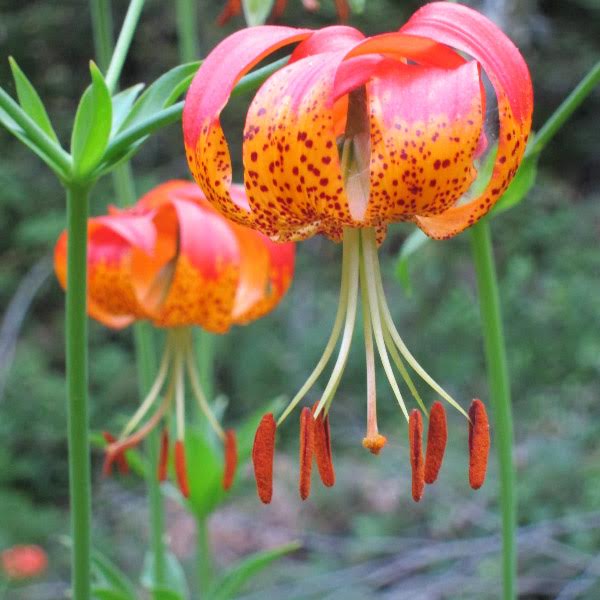
    Native to Humboldt, the Humboldt lily blooms up and down the coast. Photo by Kym Kemp

    Spring breathes fresh life into Humboldt County. Pollen travels in the wind as bees are looking for flowers to pollinate. Given the diversity of flowers in Humboldt County, it’s safe to assume there will be a large number blooming in the upcoming months. According to humgardens.com, a website on gardening in Humboldt, the latter part of February just gave us our last taste of winter. This means many flowering shrubs and trees have begun to bloom, though the temperature may still drop to the mid-to-upper 20s. The California Department of Parks and Recreation shows a list of state parks that host a variety of blooming wildflowers for the spring.

    Closest to Humboldt State University and five miles north of Arcata you can visit Azalea State Reserve, home to beautiful bunches of azaleas that bloom in April and May.

    For a more extensive trip, 50 miles north of Eureka lies Prairie Creek Redwoods State Park. The California Department of Parks and Recreation notes, “careful observers in the park will find beautiful but elusive orchids among the ancient redwood groves as well as more prominent displays of rhododendrons along the parkway in late March through May.”

    Lastly, pack your things for a small road trip. Humboldt Redwoods State Park is 60 miles south of Arcata and generally provides wonderful displays of wildflowers along the Avenue of the Giants. Visitors will find native Humboldt lilies and orchids in late March to April and dogwood trees in April into early May, depending on the warmth of spring.

    Flowers on Humboldt State’s campus are starting to bloom as well.  

    The Humboldt State campus hosts various non-native flowers coming into bloom. By walking through campus, you can see forget-me-nots, azaleas, cherry blossoms, tea tree flowers, and lily of the nile. There are many more that are still coming into bloom as well.

    Michael R. Mesler is an HSU botany professor with a focus in pollination biology.

    “Once the rain starts and you can see the beautiful campus flora, it certainly makes you feel more positive about life,” Mesler said.

    Mesler also notes that even though the campus forest is beautiful, the local gardeners do a wonderful job and work really hard to maintain the flora on campus.

    “But everybody thinks that, not just botanists,” Mesler said.

  • Congress plays the game of environmental legislation

    Congress plays the game of environmental legislation

    By Kelly Bessem

    President Donald Trump stated he would cut 70 percent of agency regulations according to an article by Forbes. A new strategy being employed by Congress, makes this plausible and has environmental regulations in its crosshairs.

    With congress having a Republican majority, the  Congressional Review Act has allowed Congress to rush large-scale rule elimination. According to the House Committee on Natural Resources, the Congressional Review Act is a law that allows Congress to expedite purging agency rules. It was originally made to improve Congress’s oversight of federal agencies and states that no rules substantially similar to those purged can be issued in the future.

    The White House website cites using the Congressional Review Act to overturn “burdensome compliance requirements that force jobs out of our communities and discourage doing business in the United States.”

    In contradiction to this is the 2016 Office of Management and Budget report on federal regulations. It shows the benefits versus costs of the Environmental Protection Agency regulations to be a 4-to-1 ratio.

    According to the Congress website, environmental regulation affected by the Congressional Review Act includes the following:

    • Signed by the president: Reversal of the Stream Protection Rule and a rule calling for the disclosure of payments made by resource extraction issuers (H.J.Res.38 and H.J.Res.41).
    • In line to be signed by Trump: Disapproval of rules that allow the Bureau of Land Management to make regional land management plans (H.J.Res.44).
    • Moving through the Senate and House: Disapproval of the rule that reverses policy protecting predators on Alaska’s national wildlife refuges (H.J. Res. 69) as well as a rule that requires oil and gas producers to reduce natural gas waste and emissions (H.J. Res. 36).

    This only includes legislation related to the Congressional Review Act. It does not include the long list of pending environmental bills. These include everything from a bill to terminate the Environmental Protection Agency (H.R.861) to a bill that will eliminate the current renewable fuel standards (H.R.1314).

    There is an information section on the House Committee on Natural Resources’ website related to the policy protecting predators on Alaska’s national wildlife refuges (H.J. Res. 69). Within this exists an entire section entitled “‘Bull Poop’ Talking Points.” Terminology such as this suggests that the Congressional Review Act is not being used in a serious way to further the interests of the general public.

    Over 60 days have passed since Trump became president. The Congressional Review Act can only be used for rules submitted to Congress or the Government Accountability Office within the past 60 days. In theory, the time to use the Congressional Review Act would be over for “midnight” regulations passed at the end of Obama’s presidency.

    In 2014, a report on agency regulation was released by Curtis W. Copeland, a former government specialist for the Congressional Research Service. It showed that, in 2014, up to 50 percent of agency rules had not been submitted properly. All of these improperly submitted rules are still subject to the Congressional Review Act, meaning that there are still plenty of plays to be made.

  • This week in science (March 15 – March 22)

    This week in science (March 15 – March 22)

    By Claire Roth

    Wildlife – New Colombian bird species

    Graphic Illustration by Claire Roth

    Twenty-five years after its initial sighting, the Tatama Tapaculo has been been identified as a new species. The Tatama Tapaculo resides in the rainforests of the Western Andes in Colombia and was discovered due to research on its call and mitochondrial DNA. The black-brown bird is small at an average of 10 to 23 centimeters in length and 10 to 185 grams in weight. It spends its days on the forest floor and underbrush, scratching away with sturdy legs in search of food.

    Source: Sci-News

    Geology – Canadian crust

    Graphic Illustration by Claire Roth

    Whether you’re the kind of person who enjoys pizza crusts or banishes them after eating the good stuff, a very different and much more ancient kind of crust was detected in the Superior Province of Canada, and geologists are simply eating up (metaphorically). This crust hails from around 4.2 billion years ago when the Hadean eon was in full swing. The Hadean eon received its name after the Greek god and ruler of the underworld, Hades, because it was the time of Earth’s formation and boasted a hellish landscape. The crust was dated through analyzing an isotope of the element neodymium that was present in rock samples. Neodymium itself is a result of the radioactive decay of an extinct element known as samarium. Samarium disappeared within the first few pages of Earth’s history and had been studied in early meteorites from Mars and the Moon, indicating to scientists the age of the rock samples.

    Source: Sci-News

    Wildlife – Hungry hungry spiders

    Graphic Illustration by Claire Roth

    A recent study found that you don’t need to be the largest predator in size to be the largest predator in impact. The Science of Nature journal published research by scientists at the University of Basel finding that spiders consume the same amount of weight in insects as humans consume per year in fish and meat. Let that sink in for a second, but not before noting, for perspective, that the world’s population of spiders cumulatively weighs 24 million tons and that same population consumes somewhere in the ballpark of 400 million tons and 800 million tons of insects per year. The positive impacts of this voracious diet and population size include controlling insect-related damage to plants and also feeding larger critters who enjoy munching on spiders themselves.

    Source: BBC

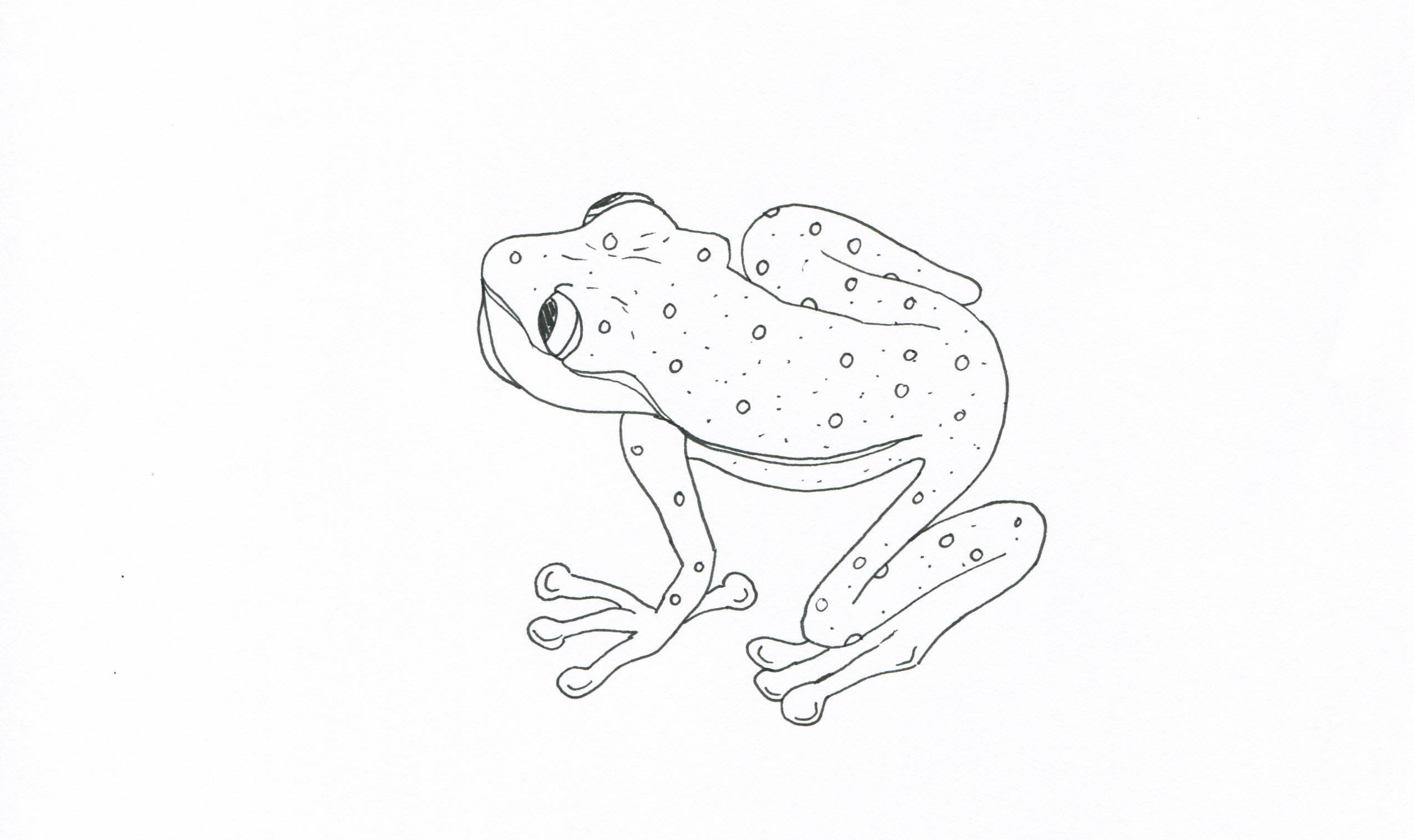
    Wildlife – Fluorescent frog

    Graphic Illustration by Claire Roth

    A study published in the Proceedings of the National Academy of Sciences noted the discovery of the first ever naturally occurring case of fluorescence in an amphibian. Fluorescence occurs when light is absorbed and then emitted. The amphibian, a frog called the South American polka dot tree frog, has a particular structure of molecules within its skin, lymph tissue, and gland secretions that allow it to glow when ultraviolet light is shone on it. This creates a much different spectacle than its normal olive shade under regular light.

    Source: The Huffington Post

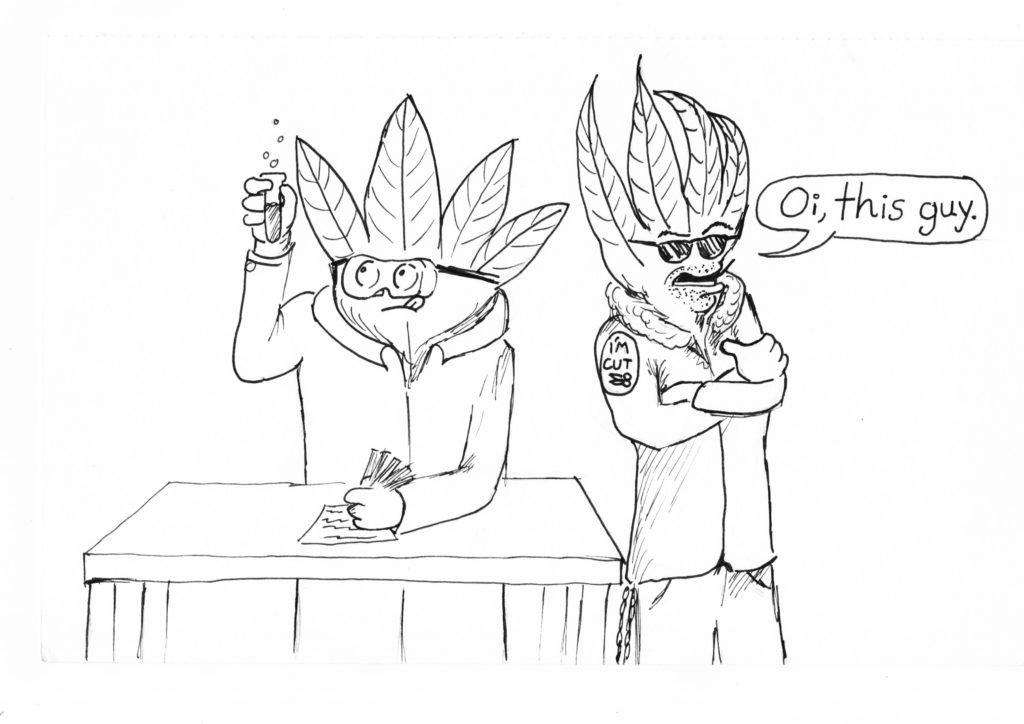
  • The importance of keeping clean marijuana

    The importance of keeping clean marijuana

    By Bryan Donoghue

    Cannabis quality is taken seriously by both consumers and producers alike in Humboldt County. In today’s cannabis market, people expect to buy weed that meets a certain standard. Nallely Orozco, a 20-year-old zoology major at Humboldt State University, is from Los Angeles County and finds the marijuana to be of a higher standard in Northern California.

    “It’s way better quality up here,” Orozco said. “It’s fresher, it smells better, and it gets you way higher.”

    However, the quality of marijuana in Northern California is currently being questioned. An article written by UC Davis microbiologist G.R. Thompson III published earlier this month in the publication Clinical Microbiology and Infection shows the quality of medical marijuana is now raising questions of safety. In Northern California, researchers tested marijuana from various dispensaries and found multiple bacterial and fungal pathogens that could possibly lead to lethal infections. This is especially true for immunocompromised patients, or patients with a higher risk of getting sick.

    “Medical marijuana obtained from dispensaries does not differ in form from recreational marijuana and consists of dried material from the cannabis plant purchased in a variety of preparations,” Thompson said in his report. “Legalization has impacted the public’s perception of safety, and inferences on safety are implied by the ability of physicians to write prescriptions for medical marijuana.”

    The bacteria and fungi on weed has a limited ability to cause someone severe illness, but it still poses an issue with general safety. Dr. Mark S. Wilson, a professor of microbiology at Humboldt State University, commented on a group of organisms known as ESKAPE.

    “It’s an acronym based on the first letter of the genus of the six most common human infections,” Wilson said. “These six bacteria are getting more and more of a big deal because they’ve evolved resistance to many antibiotics, so it’s difficult to treat infections.”

    According to Thompson’s article, all the tested cannabis had two-thirds of the bacteria known to the ESKAPE acronym, including bacteria like E. coli or salmonella. The fungi cryptococcus, mucor and aspergillus are also present in the sample. These pathogens are most likely a problem for a person who is immunocompromised or sick.

    Wilson said that bacteria and fungal cells are everywhere, and their numbers are incredibly high.

    “In something like a stream of water that looks perfectly clear to you, there can still be a million cells in one gram of that water,” Wilson said.

    Existing on our skin, food and inside our body, bacteria isn’t always an unhealthy thing to have. “It’s really difficult to extrapolate from the presence of that organism to the danger of that organism,” Wilson said. “Organisms can be there, but not be causing any problems whatsoever.”

    “This was, I guess, part of the idea too is for medical marijuana, many of people who are smoking it have seriously weakened immune systems,” Wilson said. “So that is the population that should be more concerned about smoking.”

    Thompson’s study is still troubling to people who see a risk in the presence of pathogens. “It’s never something that’s caught my attention before,” Orozco said. “But it’s something that could be going on, and something that could be an issue. But I’ve never personally had an issue with it.”

    Humboldt is known for its high quality cannabis and dispensaries in the area. Collectives and dispensaries are aware of the recent study and seek to uphold the quality of their products. Robert Gale, the CEO of Kind Solutions, a medical marijuana delivery service, works to provide a quality service that the members of his business will appreciate.

    “As a medical collective, people are turning to cannabis to alleviate and treat symptoms, therefore we don’t want to exacerbate their problems by providing meds that aren’t clean to the standards provided,” Gale said.

    The process to ensure the quality of cannabis takes time, but running it through a laboratory gives the results guaranteeing a safe and standard quality.

    “First we establish relationships with cultivators through an interview process, asking them about their methods for cultivating as well as asking about their methods and techniques for pest prevention,” Gale said. “With new farmers, we work with CW Analytical Laboratory and we have the flowers tested for pesticides, bacterias, molds, certain types of residual fertilizers; all that can be tested for.”

    According to Wilson, marijuana is tested in a lab and DNA is extracted from it. After extracting the DNA, scientists put it through a high-sequencer and get back millions of sequence reads. They are then able to compare those readings to a database to see where the sequences came from.

    Once the cannabis reaches the hands of the consumer, however, there’s an entirely separate issue.

    “You can get the cleanest cannabis in the world, then you go home and you go to the bathroom. You don’t wash your hands thoroughly, and then you pick your nose, then you roll a joint. You’re smoking bacteria that was never on the flowers,” Gale said. “Part of it is, if you’re immunocompromised, treat your medicine like you treat your food. You have to wash your hands really thoroughly.”

    Cannabis is also a perishable agricultural commodity. “Just like you can have a tomato that goes bad, just as you can have apples that bruise and turn brown, cannabis goes through the same kind of degradation,” Gale said.

    Gale encourages his patients to ask questions and continue to educate themselves. “We just have to be wary of sensationalistic headlines. We have to continue to educate patients,” Gale said. “Make people not afraid to ask questions.”

  • Discovery of new solar system

    Discovery of new solar system

    By Domanique Crawford

    With NASA’s recent discovery of seven earth-sized planets orbiting a small star, who’s to say extraterrestrials don’t exist? The cosmic possibilities may be endless.

    “It’s definitely possible,” said  HSU history major Cameron McDermid. “It’s not going to be like the way we think of extraterrestrial life though. If anything they will probably be like little tiny microbes growing around.”

    The discovery of the new solar system has astronomers hoping to discover the existence of extraterrestrials. According to a study published in the Journal Nature, “one aim of modern astronomy is to detect temperate, Earth-like exoplanets that are well suited for atmospheric characterization.” Much of modern-day space travel involves a search for planets capable of sustaining life.

    A Belgium research team led by Michaël Gillon, astronomer from the University of Liège in Belgium, found the first three planets of the  solar system using the transit method. To perform this method, the research team used the Transiting Planets and Planetesimals Small Telescope, also called Trappist, to observe the star light around a dwarf star called Trappist-1. Researchers find planets by watching the starlight for periodic blocks of shadow, indicating a planet is orbiting the star. After the discovery of the first three planets, the last four were discovered using NASA’s Spitzer Space Telescope.
    The study reports that  Trappist-1 is about 40 light-years away. Trappist-1 is classified as an ultra-cool star. Not only is the star small, but it is low energy and low temperature. Some astronomers question whether or not the star is big enough to sustain the orbiting planets. Trappist-1 is only 8 percent of the mass of the sun. According to HSU astronomy professor Paola Rodriguez Hidalgo, if the planets are close to the star, the star should still generate enough energy to support the surrounding planets.  

    “They are so close in some cases that when a year for us is 365 days that it takes the earth to go around the sun, in their case it is 20 days,” Hidalgo said.

    The proximities to the dwarf star, the rocky terrains and warm temperatures of three of the earth-like planets, classified as Trappist-le, f, and g-, make them the most likely to sustain life. These three planets also fall into the habitable zone, meaning the area of a planet’s orbit that is close enough to its star to sustain liquid water.

  • This week in science (March 1 – March 8)

    This week in science (March 1 – March 8)

    By Claire Roth

    Graphic Illustration by Claire Roth

    Physiology – Understanding our desires

    Scientists from the United Kingdom recently were awarded with “The Brain Prize” by Denmark’s Lundbeck Foundation for their research on what it is in our brains that makes us enjoy things in life. In value, “The Brain Prize” amounts to one million Euros. The research centered around a chemical present in the brain called dopamine that is responsible for driving our reward-motivated behavior. This behavior includes actions like going to a restaurant again after having enjoyed it the first time or even experiencing a drive to graduate college. One of the methods used by the scientists to understand the brain’s pleasure center was observing the firing of neurons in an animal when they were given fruit juice. It was discovered that over time, if shown the same image before given the juice, the animals’ neurons would fire just the same when seeing the image in expectancy of later receiving the juice. This could be applied to why people are often drawn to high-calorie snack food brands that are packaged in flashy wrappers and bags. The scientists’ research could also prove useful in future studies on drug addiction, the forces behind economics and political elections.

    Source: BBC


    Graphic Illustration by Claire Roth

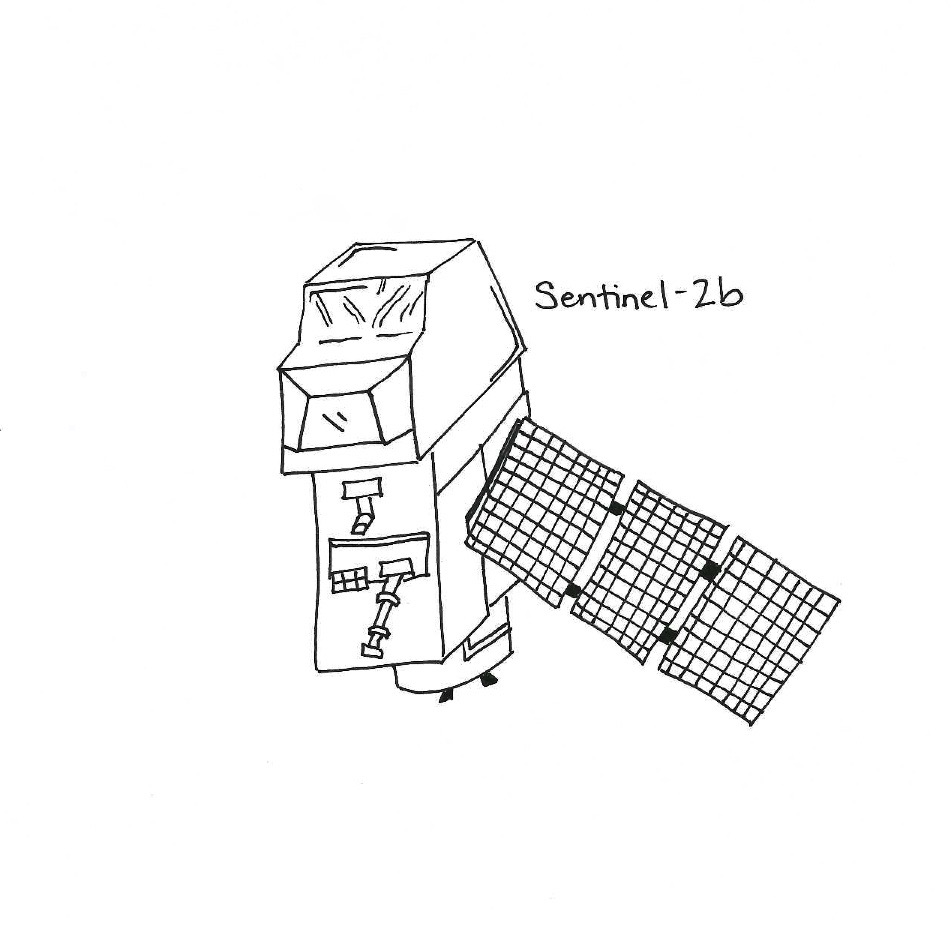
    Astronomy – Satellite launched

    A satellite called Sentinel-2B was sent into orbit around the earth to join its sister satellite, Sentinel-2A, in a mission to photograph all of Earth’s land and waters. This event is part of the European Union’s Copernicus environmental monitoring program. The program aims to create an all-inclusive, continuous observation of planet Earth in order to keep in-depth tabs on the environment, effects of climate change, planetary security and more. The Sentinels have ultra-sensitive cameras that allow them to register details on Earth that measure as small as 10 meters across. This will be utilized by the European Union in a variety of ways, from city planning to measuring the wellbeing of crops to monitoring deforestation. In the future, the project hopes to launch more satellites with capabilities such as monitoring carbon dioxide and measuring the status of the planet’s ice caps.

    Source: BBC

  • Recyclemania hits HSU

    Recyclemania hits HSU

    By Molly Gilmore

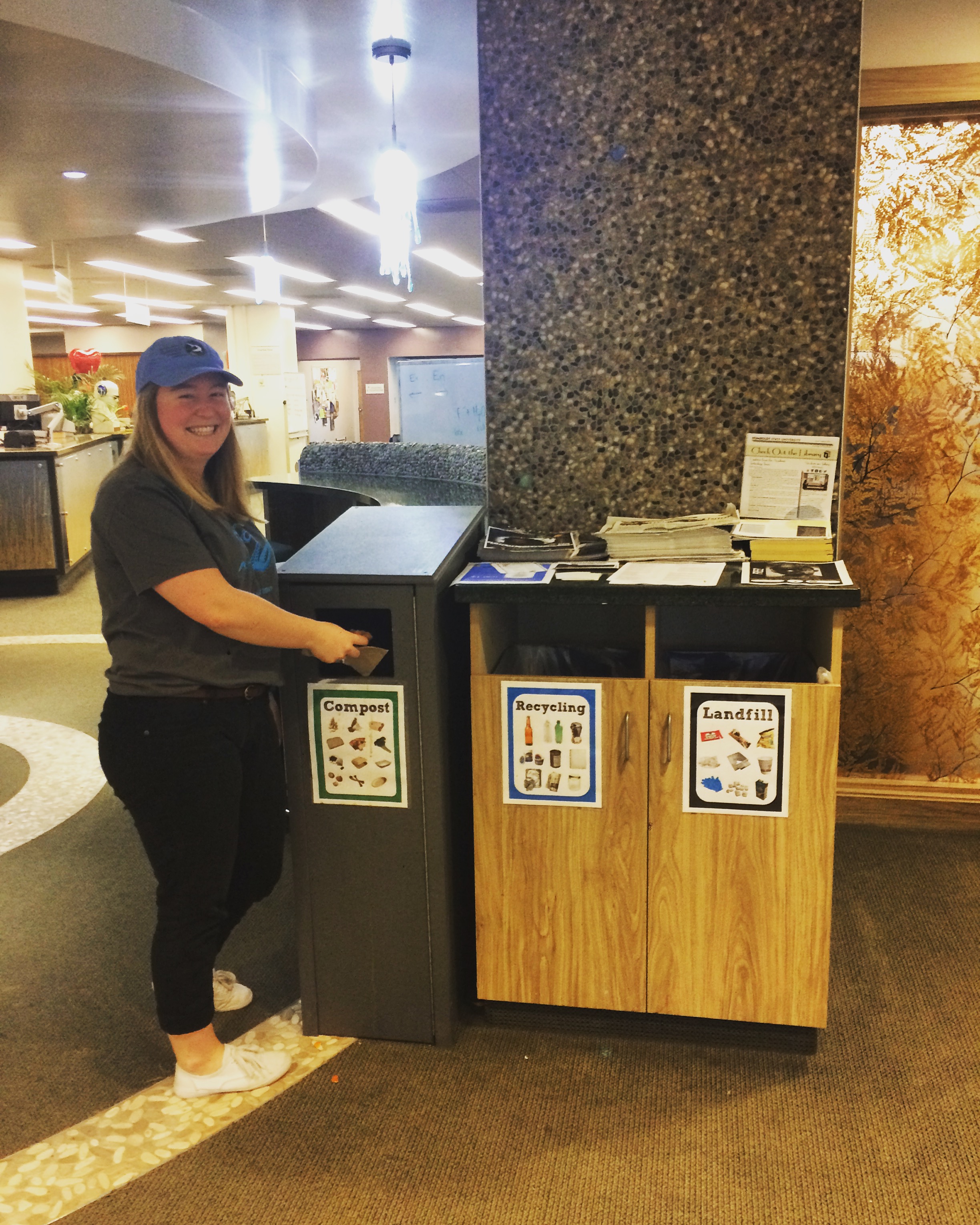
    Humboldt State is participating in a 2-month-long waste diversion competition against hundreds of other eco-conscious schools across the US and Canada. The goal of the competition is to see who can not only reduce the most waste going to the landfill, but also to educate and call attention to the waste habits of students and faculty everywhere.

    With HSU’s efforts being organized by the Waste-Reduction & Resource Awareness Program (WRRAP), Recyclemania is not necessarily about achieving first place. It is more important to use this opportunity to make a true, lasting difference for our campus. The competition’s platform has the potential to increase awareness of our waste habits and how these detrimental habits can be improved by through recycling, composting and reuse.

    Shohei Morita, Education Director for WRRAP, sees potential in the contest.

    “Recyclemania helps encourage the HSU community to work together to be active participants in practicing zero waste principles,” Morita said.

    An important reason for HSU’s participation in Recyclemania is that one of California State University’s sustainability policies calls for all campuses to have a minimum waste diversion rate of 80 percent by 2020.

    For HSU, recycling and composting seem like no-brainers and have become so normalized on campus that it may seem like this competition won’t make much of a dent. HSU Sustainability & Waste Coordinator Morgan Hill has seen a lot of change since the last Recyclemania event in 2013.

    “Over the past few years we’ve seen a continuous decline in the amount of trash generated on campus. This is due in part to changing perceptions and behaviors. More people are concerned about the environmental, economic and social impacts of landfills and waste disposal, and they are doing what they can to reduce waste in their own lives.  I credit groups like WRRAP for leading the charge and for running campaigns like Recyclemania, to not just generate awareness but to spur action,” Hill said.

    The overall goal of Recyclemania is to make recycling, composting, reuse and zero waste practices accessible and normalized for everyone. HSU is rolling into our fourth week of the eight-week competition and is in 19th place with a 58.34 percent waste diversion rate. This rate needs to be at a minimum of 80 percent by 2020; let’s think green and get HSU there together.

  • Deadly mussels in Humboldt County

    Deadly mussels in Humboldt County

    Paralytic shellfish poisoning causes a quarantine of locally harvested mussels

    By Alexandria Hasenstab

    Eating only four locally harvested mussels in Humboldt County could be fatal. On Feb. 14, the Yurok Tribe’s Facebook page released a warning about consuming mussels that read, “Important Mussel Update. Do not eat mussels right now. Please help get the word out.”

    The message also said that mussels from Wilson Creek Beach were sampled by the Yurok Tribe Environmental Program on Feb. 7. Mussels from this area had detections on paralytic shellfish poisoning.

    Native American Studies assistant professor Kayla Begay said that mussels are not only an important food source, they are also a big part of the Yurok Tribe’s culture. According to Begay, eating and gathering mussels is a way to keep tradition alive.

    “It’s an important part of the culture to know how to do these things and to still do them,” Begay said.

    Begay said that the mussels the Yurok Tribe gather are different than commercial mussels that are sold in stores. Although restaurants and grocery stores can still safely sell mussels, locally harvested ones must be carefully watched.

    “It’s something that the tribe monitors for the safety of the people,” Begay said.

    This isn’t the first that paralytic shellfish poisoning has been found in mussels and it won’t be the last. According to Pete Kalvass, the senior marine biologist for the California Department of Fish & Wildlife and an HSU alumni, the phenomenon happens annually. Kalvass said that paralytic shellfish poisoning in mussels is caused by a group of algae they eat called diatoms. This algae is always present in the water but increases in warmer temperatures.

    “This tends to be a seasonal thing,” Kalvass said. “Its unusual to see it this time of year. We always used to say the months with the letter R in them are safe.”

    Contrary to usual patterns, February’s waters were not safe from high levels of diatoms. Kalvass believes this is due to increases in oceanic temperatures over recent years.

    The diatoms that cause paralytic shellfish poisoning are consumed by mussels through filtration. The diatoms produce a biotoxin that is harmless to mussels, but with enough accumulation in the human body it can cause serious problems.

    “This biotoxin affects the central nervous system,” Kalvass said. “You lose muscle control and that would essentially mean death by asphyxiation. That would be in a very rare and severe case.”

    According to Kalvass, less severe symptoms of paralytic shellfish poisoning include tingling around the mouth and fingertips.

    The California Department of Public Health and the Yurok Tribe Environmental Program test local mussels once a month. Both of their websites post updates on the safety status of local seafood. Kalvass is unsure whether next month’s oceanic concentration of diatoms will allow for safe local mussel consumption.

    “It’s possible they’ll all be fine next month, but since we’re coming into the normal quarantine season they probably won’t be safe to eat until fall,” Klavass said.

  • Birding at the marsh may cure those mid-term blues

    Birding at the marsh may cure those mid-term blues

    By Ali Osgood

    Right now you’re probably enduring the long, drawn-out end to a wet Humboldt winter. You’ve been cooped up inside for months and you’re almost certain that you are on the verge of a psychotic break.

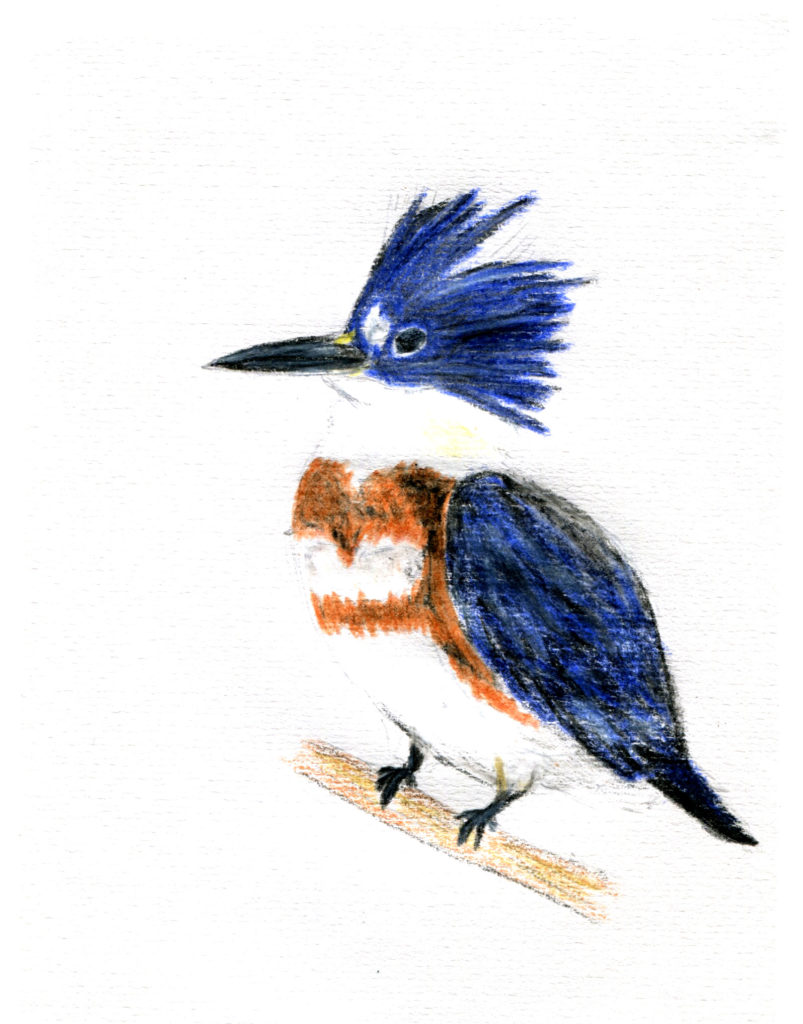
    A great blue heron. Graphic Illustration by Ali Osgood

    Midterms are threatening to push you over the edge and you’ll do anything to get away from that 3-inches thick chemistry book. Have you considered bird-watching?

    Just a mile and a half from the Humboldt State campus is a safe haven for over 300 bird species. According to its website, the Arcata Marsh and Wildlife Sanctuary, located on the southwest corner of Arcata, is 307 acres of freshwater marshes, brackish ponds, salt marshes, mud flats, grassy fields and over five miles of trails. This makes it an excellent location to observe birds and enjoy a quick escape into nature.

    HSU wildlife senior, Cedric Duhalde, walks through the Arcata marsh with his roommate, gripping a spotting scope over his shoulder. He has been coming to the marsh to bird watch since he was a freshman.

    “It’s training grounds of what Humboldt birding is like,” Duhalde said.

    He explained that because the marsh has open wetlands and easy viewing points with a large number of bird species, it is a great place to cultivate appreciation for avian wildlife.

    A North American river otter track identified by the webbing between the toes. Graphic Illustration by Ali Osgood

    The marsh is a popular stopover point for migratory bird species. This is a chance for birds traveling north or south to stop and rest for a while before taking flight once again. It also means that birders have a great opportunity to observe different birds throughout the seasons.

    As walkers pass by George Allen Marsh or Klopp Lake in the marsh, they might see six different bird species foraging on the glassy waters. As the mallards pluck through grasses and a pair of ruddy ducks dive underwater in search of food, a Great Egret stands patiently waiting to strike at a juicy frog. Marsh wrens sing in the brush along the path, while groups of shorebirds pick through the muddy shoreline for bugs.

    Sara Schneider, a recreation and administration major, regularly runs at the Arcata Marsh on weekends. However, on Saturday she walked around just to observe wildlife.

    “It was cool because we were looking at this bird, and it was almost like it was looking at us, and then people were walking on a path behind it,” Schneider said. “It didn’t seem agitated by the people, but then after they passed the egret caught a fish!”

    For those visiting the marsh who are unsure about where to go or what to look for, the Arcata Marsh Interpretive Center is a great place to look for guidance. The center offers maps and brochures, field guides, interpretive exhibits and a log of recent bird sightings.

    The Audubon Society, a non-profit organization dedicated to wildlife conservation, hosts a guided birding walk at the marsh every Saturday at 8:30 a.m. at Klopp Lake. It is free to join and helps visitors new to bird watching identify the many species inhabiting the marsh.

    “It has great leaders and is always a good time,” Duhalde said of the guided walk.

    Before you lose your mind studying what constitutes an alkaline earth metal or the quirks of quantum mechanics, try putting that textbook down and taking an hour to explore the marsh. Birding is a hobby that requires nothing more than an open mind and a will to be outside, though a field guide and binoculars may enhance your experience. Your mind will thank you, your roommate will thank you, and the birds will… well, they probably won’t care either way.

    See how many species you can check off! Here is a list of birds currently hanging around the Arcata Marsh:

    Arcata Marsh bird checklist

    Arcata Marsh bird checklist.
    Graphic by Ali Osgood
  • The battle against English ivy

    The battle against English ivy

    By Kelly Bessem

    HSU student Tim Scully pulls ivy from the ground near HSU’s Natural Resources Building while waiting for other HSU Natural Resources Club members to gather for Saturday volunteering events. The area around the building was restored with native plants many years ago and lies in stark contrast to the opposite side of the pavement still completely smothered by a non-native plant, English ivy.

    Scully is an environmental management and protection major and president of the HSU Natural Resources Club. The Natural Resources Club has spent countless Saturday mornings clearing ivy from areas along the Northern California coast.

    “Sometimes I feel like we’re just the ‘ivy club’ because that’s all we do,” said Scully. “We remove ivy like 30 to 50 percent of the time.”

    Several Humboldt based coalitions petitioned on Feb. 15 to ban English ivy from being legally sold in California. These coalitions are rooted in over 20 groups, including government agencies, businesses and conservation agencies such as the Humboldt No Ivy League and the Environmental Protection Information Center.The Environmental Protection Information Center pointed out in a recent press release that Washington and Oregon have already classified English ivy as a noxious weed. This petition hopes to compel the California Department of Food and Agriculture to follow suit.

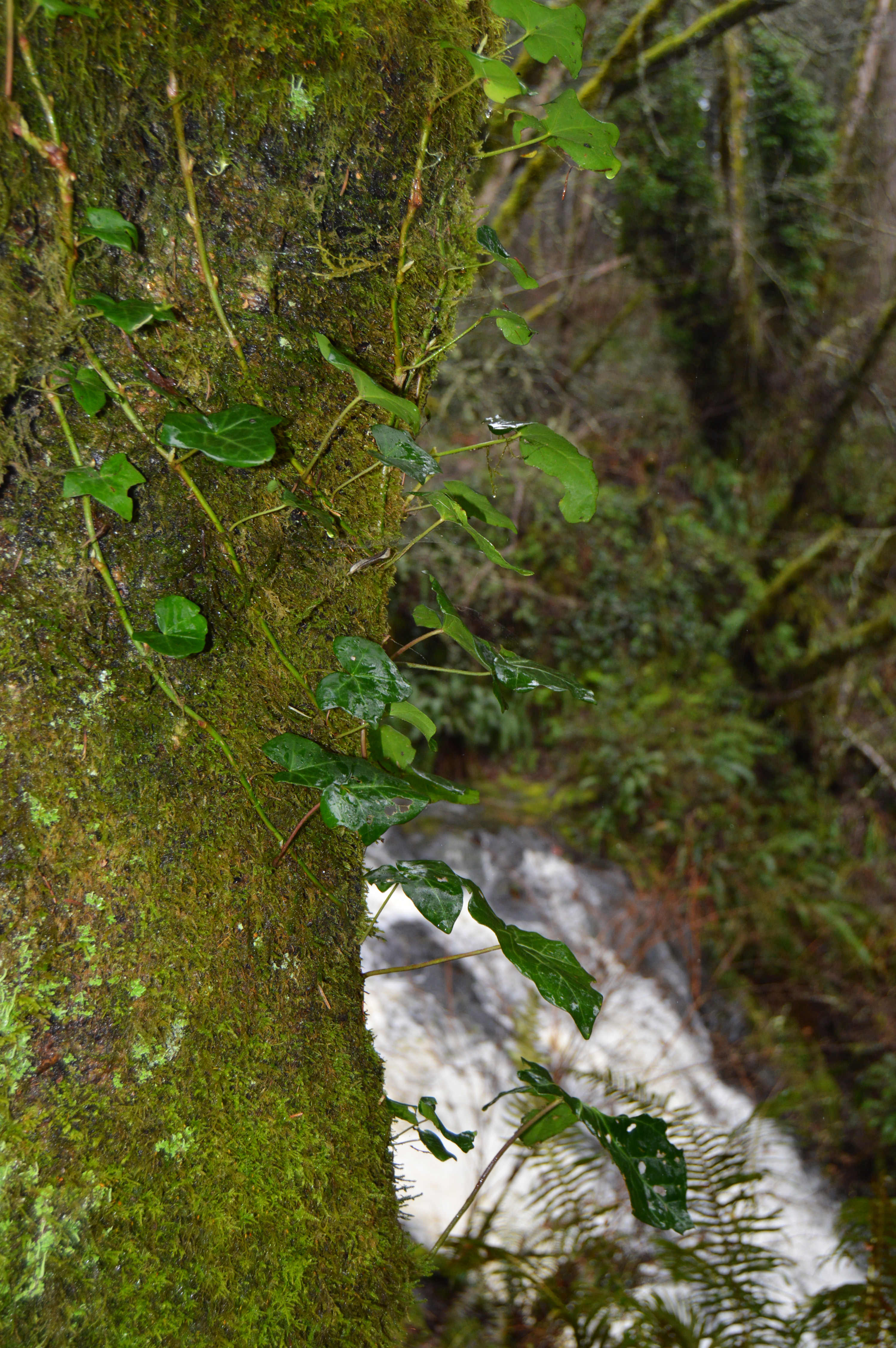
    English ivy winds around a tree by Mill Creek Falls in McKinleyville, Calif. Photo by Kelly Bessem.

    The Environmental Protection Information Center found that government agencies in California spend thousands of dollars each year removing the plant, yet nurseries and garden centers within the state are still allowed to sell it. Cutting ivy from invaded areas is intensive, time consuming work.

    According to the Weeds Gone Wild website that is headed by the National Park Service, English ivy is endemic to Europe and is known for its fast growth rate and ability to adapt to adverse growing conditions. It creeps and climbs among a plant community by sending shoots up from an underground rhizome stem and by producing an extensive amount of seedy berries. Due to these characteristics, ivy usually needs to be removed from an invaded area multiple times.

    “It’s super invasive and hard to completely get rid of,” said Scully. “You have to keep returning to sites.”

    English ivy is used for home gardens and urban spaces because it provides a reliable and attractive ground cover. Its flowers and fruits are enjoyed by some pollinators and birds. It also aids in carbon sequestration and air purification in areas previously without greenery.

    Kevin Maurer is an HSU geography major who volunteers with the Natural Resources Club.

    “I think that pulling English ivy from native trees should be the only way we deal with it; I don’t think we should be banning it,” Maurer said. “I’ve heard that ivy has a pretty good reputation for being an air-cleaner… also as a carbon fixating plant. This definitely outweighs the detrimental effects.”

    Though English ivy may be beneficial in certain applications, the California Department of Fish and Wildlife suggests native alternatives such as Alumroot. For the Pacific Northwest specifically, the Vancouver-based environmental nonprofit Evergreen suggests the plant sword fern.

    Comparison of the unrestored north side (top) and restored south side (bottom) of 17th Street on the HSU campus. Photo by Kelly Bessem.

    The California Department of Fish and Wildlife already includes English ivy on its “Don’t Plant Me!” list. English ivy reduces native biodiversity, adds weight and wind sensitivity to trees and doesn’t control soil erosion because of its shallow roots.

    Tom Wheeler is the Executive Director of the Environmental Protection Information Center and is involved in moving the petition forward.

    “The first step in fighting against an invasive plant is to not make the situation worse. Prohibiting the sale of ivy is a common sense measure to protect California’s unique places,” said Wheeler.

    The petition sprouted from the efforts of a volunteer group known as the Humboldt No Ivy League. The volunteer group hand-pulls ivy from Humboldt County State Parks every weekend.

    said Kim Tays, Humboldt No Ivy League member.”It’s time for our state leaders and land managers to take a hard look at the serious threat that English ivy poses to California’s biodiversity,”  “If we fail to get the English ivy problem under control, we are going to see tremendous damage done to our important native plant communities, including our Sitka spruce and redwood forests.”

    For additional information about the petition, contact the Environmental Protection Information Center’s Tom Wheeler at tom@wildcalifornia.org or the Humboldt No Ivy League’s Kim Tays at kimkat067@gmail.com.

  • Voices of student science

    Voices of student science

    By Bryan Donoghue

    ____________________________________________________

    Voices of student science aims to highlight individual Humboldt State students majoring within the widespread realm of the sciences.

    ____________________________________________________________

    Thomas McBrinn, a HSU fisheries biology major. Photo provided Thomas McBrinn.

    Thomas McBrinn is a junior fisheries biology major with an emphasis on freshwater fish. McBrinn grew up in Lompoc, California, within Santa Barbara County.

    McBrinn chose his major for a couple of reasons.

    “One, is because I’ve been an angler since I was a kid, and it’s me and my father’s favorite thing to do,” McBrinn said. “It got me fascinated in biology and fish specifically at a young age. I’m also an all-around outdoorsman with a respect for all life.”

    McBrinn is working in an independent study with three other students at the HSU marine lab where they are breeding and rearing ornamental fish. McBrinn and his colleagues practice raising ornamental fish, which are species typically found inside a home aquarium.  

    “I hope to in some way increase the love and respect everyone should have for mother nature,” McBrinn said. “And to help preserve the gorgeous gifts this world has to offer, so generations to come can enjoy its beauty too.”

    ____________________________________________________________

    Matt Davis, a HSU general biology major. Photo | Bryan Donoghue

    Matthew Davis is a junior general biology major who was raised in Modesto, California.

    Biology has always captivated Davis’s interest.

    “There’s just something about living things that gets me excited,” Davis said.

    Davis references universal entropy, which the Institution of Creation Research defines as, “indicating that the whole universe of matter is running down, and ultimately will reduce itself to uniform chaos.“

    “The existence of any type of life actively defies the fundamental concept of universal entropy,” Davis said. “Natural order states that things then should become less ordered and more chaotic, but as life develops, it becomes inherently more structured, and hierarchical.”

    Davis goes to Trinidad twice a week for his invertebrate zoology class. He finds the class to be rewarding since he works with live specimens of species he’s learning about.

    “I would never be able to identify Anthopleura Elegantissima [known as aggregating anemone] if I hadn’t witnessed them utilizing their acrorhagi [tentacles] right before my very eyes.”

    Davis hopes to use his diploma to get hired into research jobs so he can sustain himself without the help of his parents.

    “All I want is to be able to live my life without being dependent on other people,” Davis said.

    ____________________________________________________________

    Brittany Myrhang, a HSU general biology major and her pug Molly. Photo | Bryan Donoghue

    Brittany Myrhang is a junior general biology major from San Jose, California.

    Myrhang has been interested in science ever since she could remember and holds a fondness for animals.

    “I’ve always liked science and had a curiosity for the world. I like how everything breaks down in the world, even down to the smallest molecule, to the atoms, and down to cells,” Myrhang said. “I have a passion for animals, so what better way than learning about life and about animals than learning about all of it together?”

    Following her passion, Myrhang hopes to pursue an internship that allows her to work with animals. “I’m hoping to get into an internship, working with wildlife possibly, or doing some shadowing for some vet schools.”

    Myrhang hopes to fulfill her ambition once she graduates. “Once I get my own degree, I hope to go to veterinary school, and then go on to have my own practice.”

  • This week in science (Feb. 15 – Feb. 22)

    This week in science (Feb. 15 – Feb. 22)

    By Claire Roth

    Graphic Illustration by Claire Roth

    Astronomy – Deep space beats

    Today’s music seems to be getting more and more space-age, but scientists recently came across the cause of a sound that really is out of this world.

    Around 10 years ago, astronomers detected strange sounds from within the far-reaches of space. It was not until recently that scientists at Cornell University discovered that the sounds, known as fast radio bursts, had come from 3 billion light-years away.

    Fast radio bursts, much like their name suggests, happen so quickly that they are oftentimes missed. They only last for several milliseconds and because of this only 18 have ever been documented. The way that the recent fast radio bursts were detected is that the bursts repeated and allowed astronomers to get a more accurate reading of where they came from. The origin of the waves is thought to have come from a dwarf galaxy outside of our own and astronomers hope to use the new data to study how radio waves move through different gases and conditions in space.

    Source: The Verge


    Wildlife – Crabby Potter

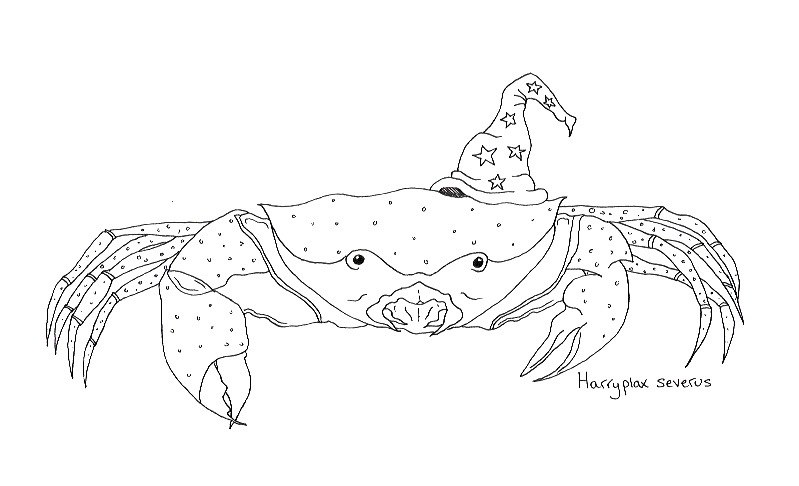
    CRTwis 02
    Graphic Illustration by Claire Roth

    A new species of translucent crab was recently given a name honoring not only the researcher who first discovered it 16 years ago but also a character in the “Harry Potter” series by J.K. Rowling.

    Upon confirmation that it was indeed a new species, researchers at the National University of Singapore named the crab Harryplax severus. The researcher who had originally happened upon the crab 16 years ago off the coast of Guam, Harry Conley, unfortunately passed away in 2002 before the new species status was confirmed. The species designation of the crab, severus, was chosen as a nod to the “Harry Potter” character Severus Snape. In the book series, Snape had been seen as mysterious and villainous until the end of the series when it was revealed that he had a bigger heart than many had expected. Similarly, Harryplax severus had to wait just over a decade and half until being recognized until what it truly was – a species never before identified.

    Source: ScienceNews


    Environment – Chemicals in hiding

    CRTwis 03
    Graphic Illustration by Claire Roth

    Harmful chemicals that had been banned back in the 1970s have been detected in a place far beneath the ocean’s surface.

    Research vehicles positioned over the deepest oceanic trench in the world, the Mariana Trench, and one of the deepest trenches in the world, the Kermadec Trench, were sent to monitor these areas and bring back lifeforms for testing. The lifeforms that were brought back are known as amphipods and are an order of crustacean. What troubled the scientists who led the study, a team from the University of Newcastle, was what was found in the fatty tissues of the amphipods; pollutants banned over 40 years ago.

    The presence of the pollutants, polychlorinated biphenyls and polybrominated diphenyl ethers, could be explained by the fact that they cannot be broken down through the natural processes. Polychlorinated biphenyls and polybrominated diphenyl ethers had been used as ingredients in flame-retardants and insulation for electrical units until it was discovered that they may be connected to increases in cancer rates.

    The bright side of this discovery is that it may provide further proof that all parts of the world are connected, no matter how deep or seemingly isolated.

    Sources: British Broadcasting Corporation, Agency for Toxic Substances & Disease Registry


    Geography – The Old Zealand

    CRTwis 04 copy
    Graphic Illustration by Claire Roth

    Though there is no consensus on how many islands our planet has, scientists recently found that there may be one less major island than originally thought.

    New Zealand is a country that is home to about 4.47 million people and has been defined throughout geological history as an island nation. That definition has gone without challenge until now. A research group in New Zealand known as GNS Science discovered that the landmass that makes up the island of New Zealand is actually part of a much larger, sunken landmass. If still above water, Zealandia, as researchers are calling it, would have met all of the criteria of being called a continent. Some of these criterion include the thickness of the crust of Zealandia in relation to the thinner crust of the surrounding ocean floor and also more elevated (yet still sunken) areas in relation to the surrounding oceanscape.

    The discovery of Zealandia as meeting the requirements for being a continent, though under water, could better help geologists understand the history of our planet’s plate tectonics.

    Sources: Phys.org, The Washington Post

  • Recyclemania at HSU

    Recyclemania at HSU

    By Molly Gilmore

    As of Feb. 6, HSU has taken part in a recycling and composting challenge known as Recyclemania. It is an eight-week long tournament involving hundreds of schools in the United States and Canada and the goal is to see who can divert the most waste from the landfill through recycling and composting. In order to help HSU excel in the tournament, all you have to do is be mindful of your waste habits and make sure you put your trash in the right bins. All on-campus bins are counted. This is week three of the competition and the results of the first week are in. HSU came out with a 58.34 percent diversion rate and ranks 18 out of 115 in the overall tournament. The HSU community is proud of its mindfulness when it comes to the environment. Prove it! Get your heads in the recycling and composting game! For more information on the competition, check out recyclemaniacs.org or HSU WRRAP media.

  • Voices of student science

    Voices of student science

    By | Kelly Bessem

    ____________________________________________________

    Voices of student science aims to highlight individual Humboldt State students majoring within the widespread realm of the sciences.

    ____________________________________________________________

    Alycia Padilla is a 27-year-old wildlife major from Bakersfield, Calif.

    Alycia Padilla, wildlife major. Photo by Kelly Bessem.

    Padilla’s desire to protect and take care of animals helped her choose her major.

    “When I was a child I was only allowed to watch television like National Geographic and Discovery Channel,” Padilla said. “That became all I wanted to watch and I fell in love with animals.”

    Last summer, Padilla set camera traps and collected recordings of bat sounds as part of a decade-long ecological survey. She worked with the California Department of Fish and in the mountains near Sacramento, Calif. 

    Though Padilla wants to get a job in Arcata after graduating, she has considered moving back to Bakersfield because she believes the area needs more wildlife expertise.

    “I feel like I could make some sort of change there,” Padilla said.

    ____________________________________________________________

    Sarah Franzen, 26, is a senior marine biology major. She’s originally from Lake Havasu, Ariz.

    Sarah Franzen, marine biology major, holding sea fan coral. Photo by Kelly Bessem.

    Franzen’s love for the ocean began with television shows such as “Planet Earth.”

    “That’s when I first decided that I wanted to learn how to scuba dive,” Franzen said. “So I got certified when I was 14.”

    It wasn’t until Franzen’s freshman year in college that she saw the ocean for herself. It was during a dive trip for Dixie State University in St. George, Utah.

    “That’s when I really fell in love with the ocean,” Franzen said.

    Last semester, Franzen worked in HSU’s Paul E. Bourdeau Lab making wax snails that are used for crab surveys.

    After graduating, Franzen will study manta rays in Australia and contemplate applying to masters programs.

    ____________________________________________________________

    Erica Siepker, 27, is a wildlife major and scientific diving minor from Long Beach, Calif.

    Erica Siepker, wildlife major and scientific diving minor. Photo by Kelly Bessem.

    Siepker was originally a zoology major but switched to wildlife after discussing her interests with a Humboldt State advisor. 

    “For me the wildlife degree had more practical, hands-on aspects that would take me beyond taxonomy and lab,” Siepker said. “Little did I know that HSU’s wildlife program was so widely known.”

    Siepker experiences many hands-on wildlife studies within her classes. These include the use of raptor perches to combat gopher problems, the relation between crows and human food sources and the habitat selection of salamanders in the Arcata Community Forest.

    Siepker plans to apply for an internship at Disney’s Animal Kingdom after graduating.

    “With an internship there I can study animal behavior, wildlife education and research,” Siepker said.

  • Potential pipeline meets resistance

    Potential pipeline meets resistance

    Story by | Emily Owen

    Since the 1970s, a Canadian-based energy company called Veresen Incorporated has been working on a plan to build a pipeline to carry natural gas through Southern Oregon, just 200 miles north of Arcata. After being repeatedly turned down, documents are currently being prepared to be re-submitted with the expectation of eventual approval. 

    According to Veresen Incorporated’s website, the Pacific Connector Gas Pipeline is proposed to be 232 miles long, cross under five major rivers and result in the clear-cutting of up to 30 miles of forest. At $7.5 billion, the project is worth twice as much as the Dakota Access Pipeline and is being praised for its potential in economic benefit.

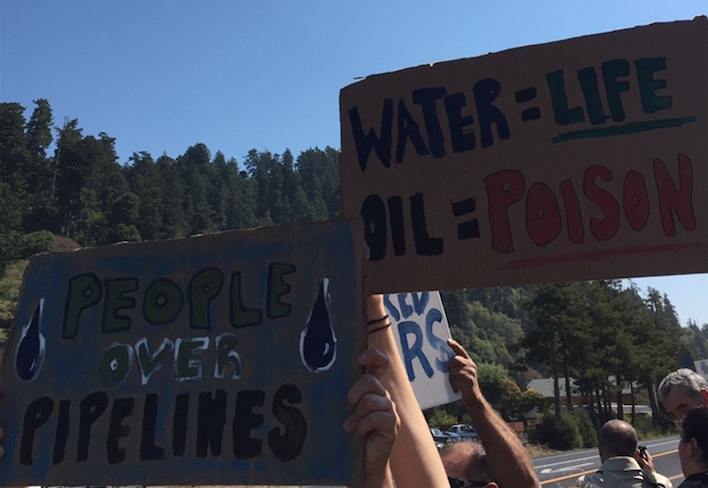
    When Leonard Perry heard about the Pacific Connector Gas Pipeline and that sections were going to pass through the Klamath River, he readied himself for the fight he knew was coming. Perry, an 18-year-old student attending College of the Redwoods, is a founding member of a group known as Humboldt Water Protectors. The group, now called Sacred Seeds, has made it their main goal to protect the abundance of natural resources in and around Humboldt County.

    “We see what’s happening to the world, what’s happening in our own backyard, and people are waking up,” Perry said. “We all drink water. This isn’t a party issue, we need to start looking out for our brothers and sisters. The minute we start coming together there’s change.”

    Mouth of the Klamath River in the fall. Photo by Emily Owen.

    The HSU Environment and Community Club is organizing an on-campus event titled Water is Life: The Standing Rock-Klamath Connection to publicize and spread awareness of the potential Pacific Connector Gas Pipeline. The event will happen on March 4 in the Kate Buchanan Room from 12 to 6p.m. and will shed light on interconnectivity behind the movement for clean and safe water.

    Francesca Gallardo and Yojana Miraya, both graduate students in the environment and community program, are coordinating outreach for the event. Gallardo sees the potential to unite these communities and cross boundaries through building coalitions.

    “These movements are for everyone,” Gallardo said. “We are fighting the biggest fight of our lives. It is time for everybody and anybody to step up.”

    Miraya is from an indigenous tribe in Peru and recognizes the parallels in the global struggle to protect natural resources. 

    “Leaders aren’t working for the communities” Miraya said. “Educating people will bring consciousness and the parts of society that are marginalized can come together.”

    Cutcha Risling-Baldy professor of Native American studies at HSU, is Karuk, Yurok and an enrolled member of the Hoopa Valley Tribe, thinks of pipelines as last resort efforts from the nonrenewable energy industry to stay relevant in a world relying on a failing system.

    “There’s a Gold Rush mentality of wanting to make as much money as possible no matter what the consequences are,” Risling-Baldy said. “That’s why we need to always include an indigenous perspective. Native people consult with the land and we see those connections. You can’t account for the way nature plays with your best plans.”

    Risling-Baldy stressed the importance of divesting from companies and organizations that fund nonrenewable infrastructure. 

    “We’re finding out that people think with their money,” Risling-Baldy said. “The government is actively working against the people so you need to speak with your money. Take it out.”

    Michael Hinrichs, Director of Communication for the Pacific Connector Gas Pipeline, acknowledges the opposition that is growing and wants to assure people that the project is meeting all environmental standards set by the federal government.

    “We’re trying to avoid the impacts that people are worried about,” Hinrichs said. “I would encourage people with concerns to make them known.”

  • The pressure’s on to make metallic hydrogen

    The pressure’s on to make metallic hydrogen

    By Bryan Donoghue

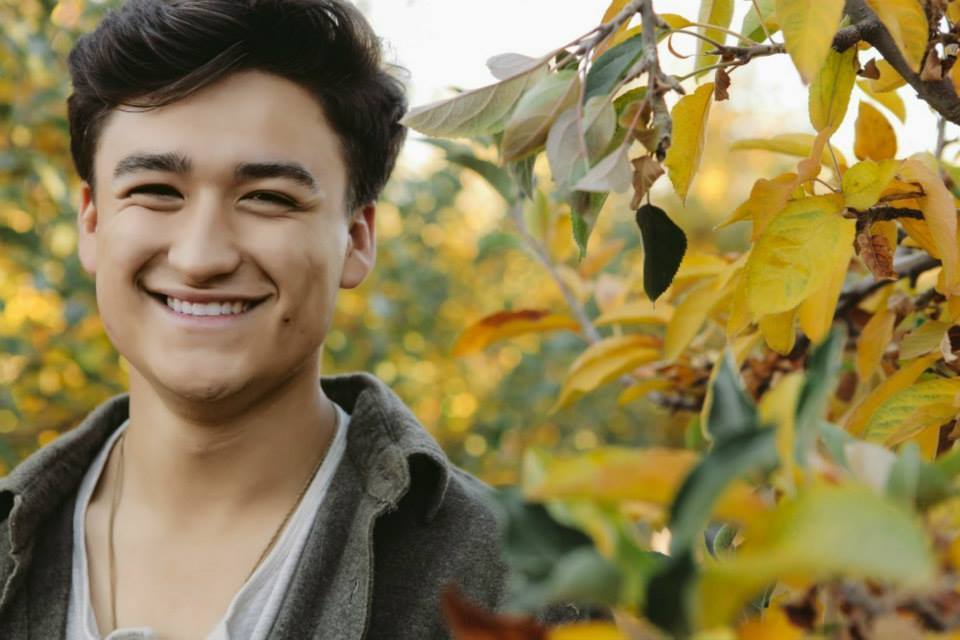
    Within Humboldt State University, in the halls of Science A, there’s a cabinet that houses solid and metallic specimens of almost every element in the periodic table. One of the only absent solids is hydrogen, an element known for being gaseous. Hydrogen contains many impressive properties, one of which is its ability to form strong bonds, known as hydrogen bonds, with other elements. Just recently, two Harvard physicists named Isaac F. Silvera and Ranga Dias have created the correct conditions to form metallic hydrogen. This form of hydrogen is both a superconductor and metastable. If replicated, the results could be revolutionary.

    The process to create this metallic form of hydrogen is delicate, but requires an immense amount of pressure on a single point. According to Harvard’s website, a level of 495 gigapascal of pressure was needed before metallic hydrogen started to form. A gigapascal is a measurement of pressure.

    Robert W. Zoellner is a Humboldt State University chemistry professor who specializes in inorganic and organometallic chemistry. He has experience in using the device that gives off such pressure.

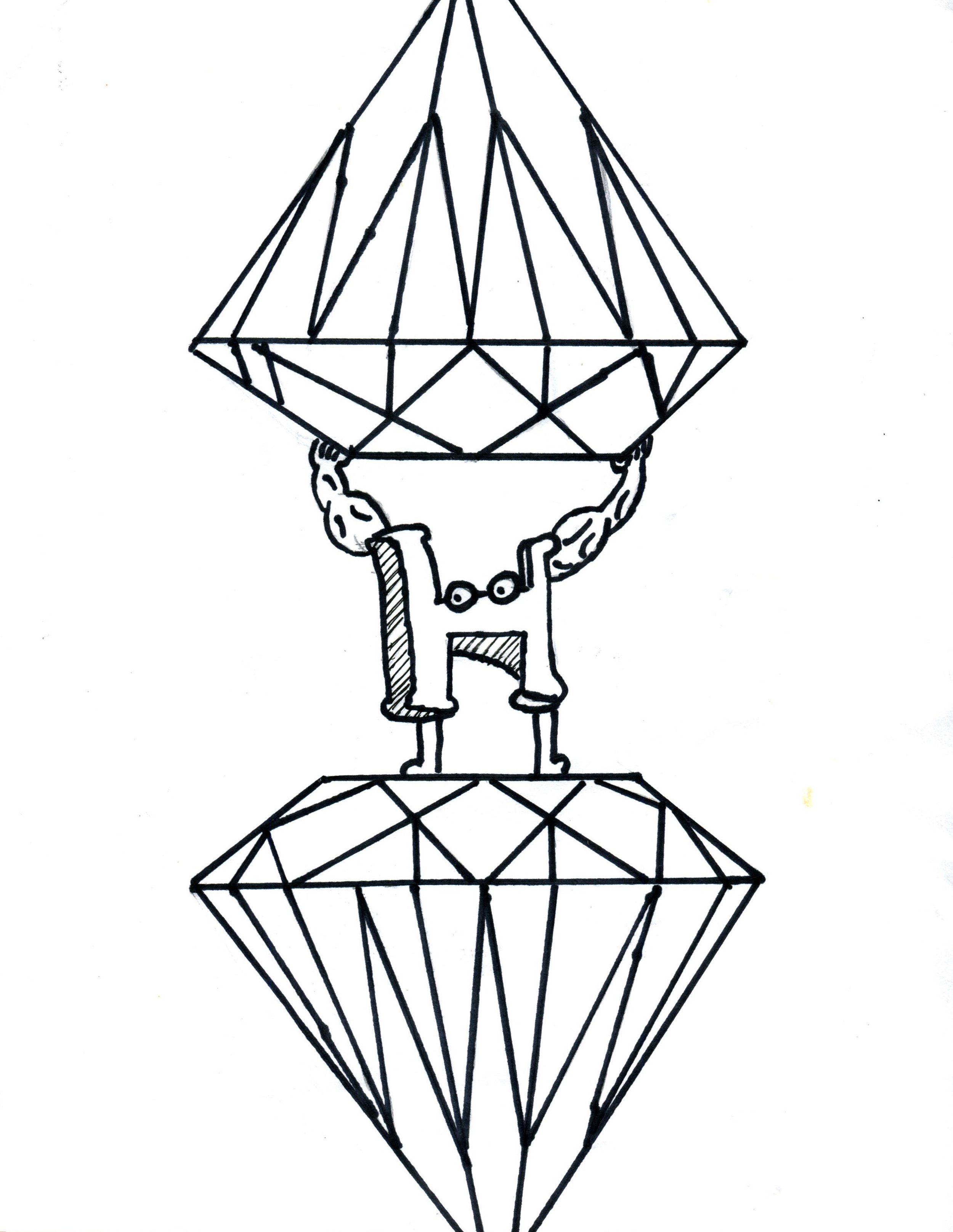
    According to Zoellner, the device is known as a Diamond Anvil Cell. The Diamond Anvil Cell is a contraption in which two diamonds face parallel from one another and push against each other at a single point.

    “The device is really easy to work with. Essentially it’s just a clamp that holds them,” Zoellner said. “It’s a very, very well built clamp, of course. With this clamp, you can literally turn a screw and increase the pressure on the diamonds.”

    The use of diamonds is not only due to structural resilience, but also their transparency. To test the state of matter that hydrogen is in within the Diamond Anvil Cell, scientists use a method called Raman spectroscopy. Raman spectroscopy is a non-destructive way of characterizing diamond-like substances.

    According to Zoellner, Raman spectroscopy is when laser light shone onto a molecule scatters and creates a different frequency of light than before. The frequency of the light corresponds to the vibration of the molecule, so detecting a change in frequency is all that’s needed.

    Diamonds are an expensive commodity, especially the type IIA diamonds that Zoellner says are needed for this experiment. Due to the pressure being forced between them in the vise, these gems have an ability to break.

    “The diamond is also vibrating,” Zoellner said. “The high intensity laser light goes through the diamond, it can excite those vibrations as well. If it does it too much, parts of the diamond will get hot, expand, and they crack and break.”

    Zoellner says they use artificial diamonds which are cheaper than real diamonds, but still expensive.

    “And they have to be polished and carefully machined and everything to make them fit properly. So, the higher the pressure, the more likely it is the diamonds will fail,” said Zoellner.

    According to Silvera, the phase change happens at 495 gigapascal. This immense amount of pressure makes the hydrogen become reflective, indicating its transition into a metallic substance.

    “The reason a metal is reflective is because of the electrons that are in it. Those electrons form a reflective sea of electrons, essentially, that cause the light to be reflected,” Zoellner said. “That’s why all the metals are silver, because they are highly reflective.”

    The uses for metallic hydrogen may be vast with the possibility that it could eventually be metastable, meaning that it will stay in a metallic form for an extended period of time.

    “Here, think of it this way,” Zoellner said, “If you take an ice cube out of your freezer and put it on your counter, does it melt completely, instantaneously? Takes a bit of time, right?”

    Zoellner said that this is what the metallic hydrogen may be doing if it is metastable, only it will take a much longer period of time to change to a liquid or gas than an ice cube does.

    According to Silvera, this gives metallic hydrogen the possibility of being used in magnetic resonance imaging scans (MRI scans) as magnets that can work at room temperature. Currently, magnets in MRI scans need to be cooled with liquid helium. Silvera also said that if metallic hydrogen is metastable and it can be converted to molecular hydrogen, it can release an enormous amount of energy. Seeing the potential use for this as rocket fuel, NASA supports Silvera’s research.

    “Whenever you form a bond, you release lots of energy,” Zoellner said. “If you take a metallic hydrogen with twelve relatively weak bonds, those bonds require energy to break. So you put in some energy, but this is kind of like compound interest.”

    According to Zoellner, we could call this proof of concept and that now people will begin thinking how to we make the process easier, faster and cheaper so that we can use it.

    According to a report given by Silvera to NASA, “To transform solid molecular hydrogen to metallic hydrogen requires extreme high pressures, but has not yet been accomplished in the laboratory. In the proposed new approach electrons will be injected into solid hydrogen with the objective of lowering the critical pressure for transformation. If successful the metastability properties of hydrogen will be studied. This new approach may scale down the pressures needed to produce this potentially revolutionary rocket propellant.”

    Once metallic hydrogen is one the market, Silvera and Zoellner predict that it will have great use as a superconductor, which means that it conducts electricity without losing any.

    According to Silvera, you could create power lines that conduct electricity across the country without dissipating.

    Zoellner said that Hoover Dam typically conducts its electricity to Las Vegas and possibly San Francisco and Los Angeles.

    “Every foot, every mile that the electricity moves, some of it gets lost,” Zoellner said. “If all those lines were superconductors, you could transport it around the world without loss.”

    In an article submitted to the Harvard community, Silvera said that metallic hydrogen is the most powerful rocket fuel to yet exist. Silvera has now taken steps to replicate the process. Soon, metallic hydrogen will have a place in the cabinet housed in Science A and continue to take the pressure off of our daily lives.
  • Love is in the brain

    Love is in the brain

    Where your butterflies get their wings

    By Claire Roth

    Like it or not, we as human beings are wired to fall in love, or at least to feel as though we are. That gooey, wonderful, frightening, upside-down-stomach feeling is actually your brain using the processes of chemistry against your good senses.

    According to biological anthropologist Helen Fisher, the three stages of falling in love are lust, attraction and attachment.

    Lust, involves some of our most primal hormones, estrogen and testosterone. These hormones are present in both men and women. They are responsible for the intense initial attraction when you first see someone without actually knowing who they are.

    Attraction, the second stage of falling for someone, is to blame for the times that you can’t think of anything else but the individual that you are crushing on and find yourself thinking of them when you have more pressing matters to focus on. According to an article in BBC Science, this distracting phenomenon is due to monoamines. Monoamine are compounds that are groups of neurotransmitters. These neurotransmitters include three chemicals that are responsible for making you notice that special someone: dopamine, adrenalin and serotonin. Each chemical has a different effect on the body. Dopamine makes you feel like you want something and gives you a feeling of happiness and satisfaction when you get it. Adrenalin is what makes your heart beat harder and faster when you see your honey walking your way. Serotonin mainly affects your mood and concentration, specifically causing you to want to concentrate on nothing else but that one special person.

    When you feel as though you’ve become attached to someone, you’ve entered into the  third stage of falling in love. This stage is referenced as what can make or break couples in the long run; if both partners feel attached to one another they have most likely reached a level of emotional balance and need for each other.

    Two hormones from the nervous system, vasopressin and oxytocin, are largely involved with the stage of attachment. Vasopressin helps to create a bond between two partners and has been associated with monogamy. It has been observed in species such as the prairie vole that practice monogamous relationships. Oxytocin is released by the brain during important lifetime bonding experiences such as during childbirth when it is released by the hypothalamus in the brain. The chemical also helps to form a bond between partners when an extended amount of time is spent together.

    Almost everyone experiences crushes and love at one time or another in their lifetime. However, the next time you’re thinking of using that ‘we’ve got chemistry’ pick-up line, make sure to give some thought to the actual truth or falsehood behind that statement.

  • HSU’s Waste Reduction and Resource Awareness Program offers services to students

    HSU’s Waste Reduction and Resource Awareness Program offers services to students

    By | Kelly Bessem

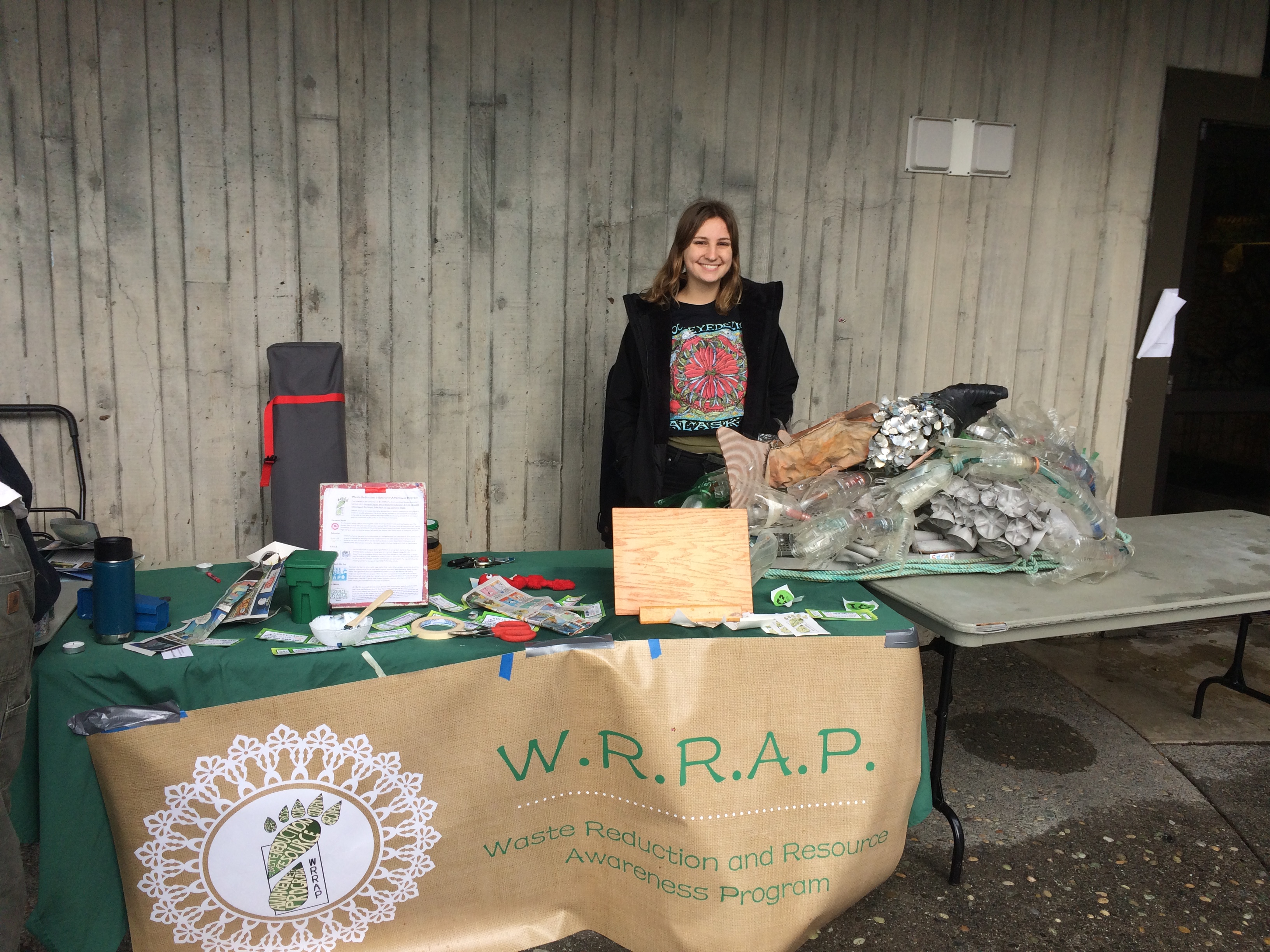
    School can be a mental and financial struggle, but doing your part to reduce waste on campus doesn’t have to be.  Humboldt State’s student-run Waste Reduction and Resource Awareness Program, also known as WRRAP, has been in operation for almost 30 years.

    The campus services they maintain are free to all students. These services include campus compost bins, water refill stations, zero waste supplies, events such as the clothing swap. Additionally, students can visit the Reuseable Office Supply Exchange House, where students can find free school supplies such as notebooks and writing utensils.

    Environmental science major Crystal Singletari was glad to find out that the ROSE House was there to provide an option other than paying expensive prices for new school supplies. 

    “The first two weeks of school I didn’t have enough binders to reuse and was super unorganized so I went to the bookstore, but they’re so expensive,” Singletari said.

    Rangeland resources major Ishmael Guerrero believes helping to reduce waste is good, but it is often difficult to keep track of waste reduction programs on campus.

    “I’m usually focused on school, work, or sports,” Guerrero said.

    WRRAP is set up to direct students toward reducing waste on campus and in the rest of their lives in simple ways rather than having to figure it out alone. Isabel Sanchez, a business major and natural resources minor has been working for WRRAP for more than two years. Sanchez explained how WRRAP can make waste reduction easier for students to understand.

    “It’s a network that allows for exchanges of waste reduction methods,” Sanchez said.

    Need some encouragement to live a less wasteful campus lifestyle? According to a 2015 estimation, Humboldt State University students collectively dispose of 266,314 pounds of waste on campus each year. That’s about the mass of four humpback whales. Though HSU students always seem to strive for improvement, there is still a whale of a problem.

    Check out WRRAP’s website at http://www.humboldt.edu/wrrap or email their student staff at wrrap@humboldt.edu. The program is there so that reducing waste doesn’t become another daunting school task on your checklist.