The Lumberjack


Students Serving The Cal Poly Humboldt Campus and Community Since 1929

Tag: Cal Poly University Humboldt

  • I’m a first generation college student

    I’m a first generation college student

    By Mekiah Glynn

    My mother dropped out of college after one semester and my oldest sister dropped out of two different colleges within the span of two years. I am the definition of a first-generation college student. A third of undergraduates are first-generation, yet we hear very little about the perspectives of these college students.

    Luckily for the third of us here at Cal Poly Humboldt, there are a lot of resources for students who don’t have parents that know how to walk us through each step of college life. With mentors and workshops, Humboldt has helped me with the transition into college.

    Moving eight hours away from my hometown to Humboldt was already a big transition for me, but it was significantly more difficult as a first-generation college student who didn’t have a lot of people to talk to about college. My mother has supported me throughout all of this as best she can. Still, no one prepared me for the mundane things you have to go through in college that most students just know about, such as which meal plan to pick, what you really need for classes, and how to manage your time.

    Those questions were answered by my RAMP mentor for the most part, which was really helpful during the year, but less so before the year started, when I was signing up for classes, housing, and meal plans. During the summer before I started, the only resource available was my sister who is a communications major at UC Davis. She didn’t have much knowledge about a smaller college or classes for an environmental studies major. Because of this, my first semester was really rocky. I failed a class, edited my meal plan, and struggled with online college classes.

    The workshops about organization, mental health, and finding a job were really helpful mid-way through my first semester. The school’s resources weren’t directed at first-generation college students, but they were still helpful.

    Going into my second semester of college was a bit easier. I was more used to the day by day and was more aware of the resources that were available. It was still a struggle. I couldn’t ask my mom about things that I’m sure most of you could ask your parents without even thinking about it, such as questions about how to contact my professors or how to deal with a roommate.

    Being a first-generation college student is hard. The pressure of wanting to succeed where your parents couldn’t and the need to figure out a lot of it completely by yourself will never be easy. There can always be more resources put into place that could help out the third of us that are here alone, but I do believe that Cal Poly Humboldt does a great job trying to help.

    Make sure to check out the basic needs section on Cal Poly Humboldt’s official website if you need any help with mental health, housing, food, etc.

  • Nimby threatens Cal Poly Humboldt student housing

    By Gabriel Zucker

    The California housing crisis can be summed up with one question: to build or not to build? The status quo has always favored single-family homeowners. The recent win for NIMBY (Not in My Back Yard) over UC Berkeley has brought light to the biggest problem California college students are going to face for the foreseeable future: the lack of affordable housing.

    California Governor Gavin Newsom passed a stack of bills focused on fixing the California housing crisis. The biggest bill was Senate Bill Number 9, which allows a four housing unit on a single-family lot. This prioritizes affordable housing for future generations and moves away from the outdated practice of single-family zoning.

    NIMBYs are local homeowners against affordable housing in their neighborhoods. They argue that their home values will drop and they will lose the peacefulness of single-family-owned housing communities if affordable housing structures were built in the area.

    The California Supreme Court sided with NIMBY in a court case against UC Berkeley, going against California’s push towards affordable housing. This forced the school to cut admissions by 2,500 students for the 2022 fall semester. NIMBY won because they argued that UC Berkeley was accepting more students than they could house.

    College students all over California are beginning to feel the effects of the housing crisis. Demand is rising while the options are dwindling. There is a lack of options and if this does not change other colleges will soon be forced to cut their enrollment.

    NIMBYs recent win highlights the division between single-family housing communities and the growing need for affordable housing. College towns are at the epicenter of this issue. College campuses will never be able to house their entire student population. Students rely on the surrounding community to find housing.

    The NIMBY movement is fighting against this change, wanting to preserve a way of life that does not exist anymore. The single-family home is not possible anymore in a changing climate and ever-growing homeless population. NIMBYs are clinging to their current comfortability instead of adapting to the needs of the next generation.

    Cal Poly Humboldt Students will soon feel the effects of this landmark decision. The influx of new students is a great thing for the university’s status but the campus will soon face tough decisions if they do not adapt to the changing times and work with the community to build more affordable housing in the surrounding area.

    A giant problem this semester has been the lack of parking on campus. Students must park farther and farther away from their housing because of the increase of students and stagnation of parking spaces. I had to spend months trying to find an apartment off-campus this past semester. There are already tell-tale signs of the strain the student body is putting on the schools’ resources. If UC Berkeley is a sign of things to come we must adapt before it is too late.

  • Sex toys for the soul

    Sex toys for the soul

    By Alana Hackman

    The college experience is something you hear about before you get the chance to step foot on campus. Whether it’s beer talk with dad or sorority rushing advice with mom, we all get a little taste of the dining hall food and frat parties from the people closest to us before our own orientation day, but they usually skim over one major detail: sex. Blame it on your nearing 20s or the newfound freedom of living hours away from your parents, but sex is definitely a part of the college experience. Whether you participate in it or not, with sex comes sex toys.

    Graphic by Sierra Cosper

    Cal Poly Humboldt’s Peer Health Educators (PHE Humboldt) are here to promote sexual and mental health on campus. The program is funded through the Student Health Center and works to provide student-to-student education surrounding sexual and mental health. The peer educators apply their and others’ experiences to create interactive health promotions such as workshops or guest speakers. The program also focuses on sexual wellness within yourself as well as with partners. The educators encourage the use of sex toys and even have some silicone dildos on display in their office located in the Recreation and Wellness Center in room 127.

    The current Peer Health Educators are Sierra Cosper, Selena Aguilera, and Emily Black. All have been with PHE for over two years now. Cosper explained how they feel there is still a stigma around sex toys and sex education as they experienced it first hand as a peer health educator. Cosper also noted that discussion about sex toys and the use of sex toys sometimes intimidates those who identify as male and is more taboo in their daily discussions compared to women.

    “Sometimes when I talk to them [men] about the job I’m doing they’ve said ‘oh why would I come in here to know anything,’” said Cosper. “ There’s this idea with men and sex toys that they can’t be better than their penis.”

    Black also added they have a tendency to leave out the part about sex toys when explaining their job role to new people they have met to avoid assumptions. She also mentioned how she lacked exposure to toys and sexual wellness before coming to CPH and participating in PHE events.

    The group recommended the local storefront Good Relations in Eureka for those interested in dipping their toes into the world of sex toys for a wide selection of toys in discrete packaging as well as informative and helpful staff.

    “If you’re too embarrassed to go, you gotta remember they’re choosing to work there, they want people to come,” said Aguilera.

    “And then come,” joked Cosper.

    “They want you to be as healthy and comfortable about it as possible,” said Aguilera.

    The group also advised beginners to use toys by themselves before introducing them to a partner as it can cause some miscommunication sometimes. Although, all agreed using toys doesn’t have to be solitary and using them with others is an experience as well.

    Graphic by Sierra Cosper

    “It puts a lot of pressure on relationships sometimes, like ‘I’m not good enough’ feelings cause you’re using this toy, but they’re actually just really fun,” said Cosper. “You can’t expect your partner to get you off every time also.”

    “It’s supposed to enhance your experience not take anything away from it,” added Aguilera.

    Black, Cosper, and Aguilera also encourage proper care of sex toys to avoid sexually transmitted diseases or infections. They recommended a lot of toys are able to be boiled but toys usually come with care instructions on how to clean and properly care for them, also mentioning to steer clear of toys made of porous material and the use of silicone lubes on silicone toys to avoid degradation over time.

    “Something people forget to do sometimes is clean communal toys, which are more popular in queer communities,” said Cosper. “The communal strap-on, you should be using condoms on it between each person. Same with vibrators to avoid any risks of spreading.”

    The PHE educators all agreed they encourage more open discussions about sex toys to break the fears and taboos surrounding them, which is exactly what they’re doing within their roles on campus.

    Black encourages students to participate in their tabling events to enter a safe space for open conversations about sexual health and wellness.

    “Everyone gets embarrassed, but liking what you like is sexy,” said Aguilera. “Not being afraid to show what you like is nothing to be ashamed about, you know.”

    Join the Peer Health Educators at their annual Sexland event on April 23, a sex-positive, kink-based, informative event including sex toy giveaways and much more.

  • Jimmy Baca brings poetry to the people with Project Rebound

    Jimmy Baca brings poetry to the people with Project Rebound

    By Abraham Navarro

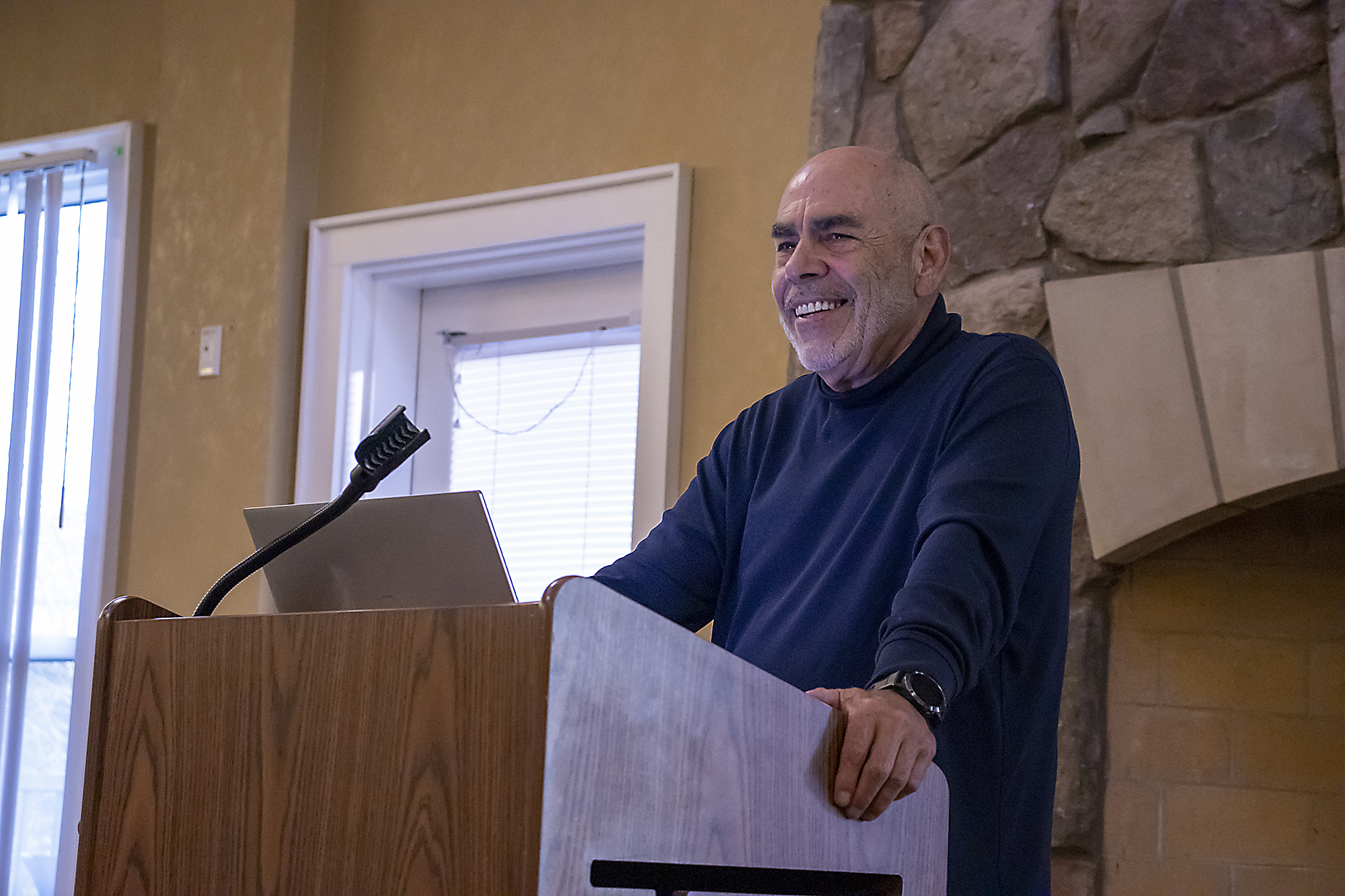
    A group of formerly incarcerated students picked up their ultra-wide pizza slabs and towering salad mounds from the counter at the Arcata Pizza Deli. They dragged two tables together, commandeering chairs from the surrounding tables and gathered for the feast. Each of the Project Rebound members were hungry for conversation with the famous award-winning Chicano poet, memoirist and member of the family Jimmy Santiago Baca.

    One of them asks him across the table as he takes a sip of his drink, “So, what’s the pale white monster that’s coming up to get you, Jimmy?”

    They were asking about an excerpt he read from a story where he steps out over frigid ice as it splinters beneath his weight to prove his love for his wife, Stacy.

    “Ah when you’re a kid you look deep in the water under the ice, you imagine all sorts of things,” Baca says.

    Photo by Abraham Navarro | Jimmy Santiago Baca, Chicano Poet, speaks to Cal Poly Humboldt Project Rebound in the Great Hall on March 23.

    Baca has a deep raspy voice, and he lights up when he talks to the student. He has a shaved head, furrowed brow with welcoming brown eyes and a warm complexion. Although he’s bundled up against the Humboldt evening chill in a black turtleneck and a blue down jacket, he feels cozy and right at home amongst the formerly incarcerated and system-impacted students from Cal Poly Humboldt’s chapter of Project Rebound.

    Earlier in the evening in the Great Hall above the College Creek Marketplace he read exclusive excerpts from some of his unpublished work and other poems and stories of his during the Project Rebound’s third annual Reentry Forum.

    Project Rebound is a program for formerly incarcerated and system impacted students at Cal Poly Humboldt. According to their website they aim to empower individuals convicted of a crime in a county, state, or federal jurisdiction who have clearly expressed their desire and readiness to earn a degree at Humboldt.

    Baca has been to previous reentry forums, even attending via Zoom during the pandemic restrictions to show his support for Project Rebound and getting to know the members like Tammy Phrakonkham, 30, a Cal Poly Humboldt Project Rebound member and a returning graduate student majoring in geology in the fall.

    When Phrakonkham heard Baca read his stories and share his wisdom, she felt as though her experiences being formerly incarcerated were validated. Her family comes from Laos as refugees to the United States. Growing up in impoverished conditions, she remembers her brothers and uncles all working in gangs, and she followed suit. Phrakonkham was incarcerated for stealing cars and trafficking ecstasy.

    “It was all I knew,” she said. “When I listen to Jimmy, I feel like I’m not the only one.”

    Despite years of isolation due to the pandemic, Baca was happy to make an appearance in Humboldt to visit his friends at Project Rebound, the first event he said he has been to since COVID-19 caused the shift to online events.

    “You all have become like my adopted family,” he said to them. “If it wasn’t Project Rebound I wouldn’t have even gotten on that flight!”

    Baca was adamant that poetry was for the people, those who suffer and work, play, cry, feel, live and die; poetry was not something that could be hoarded by the wealthy, kept from the poor. It was created by the people and it should be given back to the people. By sharing his work with Project Rebound, Baca feels like he has done that, and he has made a family out of them in the process.

  • Lifted mask mandate polarizes student opinions

    Lifted mask mandate polarizes student opinions

    By Eddie Carpenter

    On March 14, face mask requirements were lifted on Humboldt’s campus as a way to transition back to normal operations. This has created polarizing views towards how students and staff going maskless might affect the local community. Some students have chosen to ditch the masks while others still embrace them.

    Photo by Eddie Carpenter | Dillon Harp still wears his mask in solidarity with his peers.

    Local musician Dillon Harp expressed how one’s personal choice can affect the community as a whole.

    “As an African-American and knowing that my family has elders in it…the mask is just really there to protect others,” Harp said. “Obviously the mask can let particles in like more so than let particles out…Wearing your mask is really just about kind of looking out for the community for me. I ain’t really unmasking anytime soon. If we can all come together a little and see some of the basic logic behind protecting each other, our elderly family members- I think we can all help out and just keep the mask on a little longer.”

    Carlos Ochoa-Silvas, a rangeland resource major, expressed how masks gave him skin problems.

    “Wear a mask if you have symptoms of anything or if you feel like you’re not a hundred-percent,” Ochoa-Silvas said. “When I heard about it, I was mostly excited just because I didn’t like wearing the mask. I kept breaking out underneath and it was really irritating my skin.”

    Political science major Lake McLeod believes that Humboldt’s recent transition could not come at a better time than this.

    “Personally, I agreed with it. I think that eventually, we do have to kind of return to some kind of sense of normalcy,” McLeod said. “You know after two years of being masked…and the cases are down, so I feel like at this point we should learn to live with COVID like we do [with] the flu.”

    English and CRGS major Mireille Roman thinks of wearing a mask as an act of solidarity.

    “I would say that because it’s not a mandate now, it’s kind of become a personal choice to what you want to do with it,” Roman said. “But your personal choice still impacts people at the end of the day. I think the best way that my professor put it was like ‘I’m going to stand in solidarity with people who can’t take off their masks.’ Because there’s people who [are saying] ‘I’m perfectly healthy. I’m vaccinated. I’m good.’ Yeah, but just because you’re fine doesn’t mean that other people are going to be in a position to do so as well… but I think it really dictates the environment of a classroom when the professor chooses to wear a mask or not. Until the numbers are better and just nationally we’re more responsive to this, I’m probably going to keep wearing my mask.”

    Between March 15 and March 22, Humboldt County Public Health reported 72 new COVID-19 cases with 2 new hospitalizations.

  • Humboldt Hogs go Ham: CPH Men’s Lacrosse

    Humboldt Hogs go Ham: CPH Men’s Lacrosse

    by Morgan Hancock

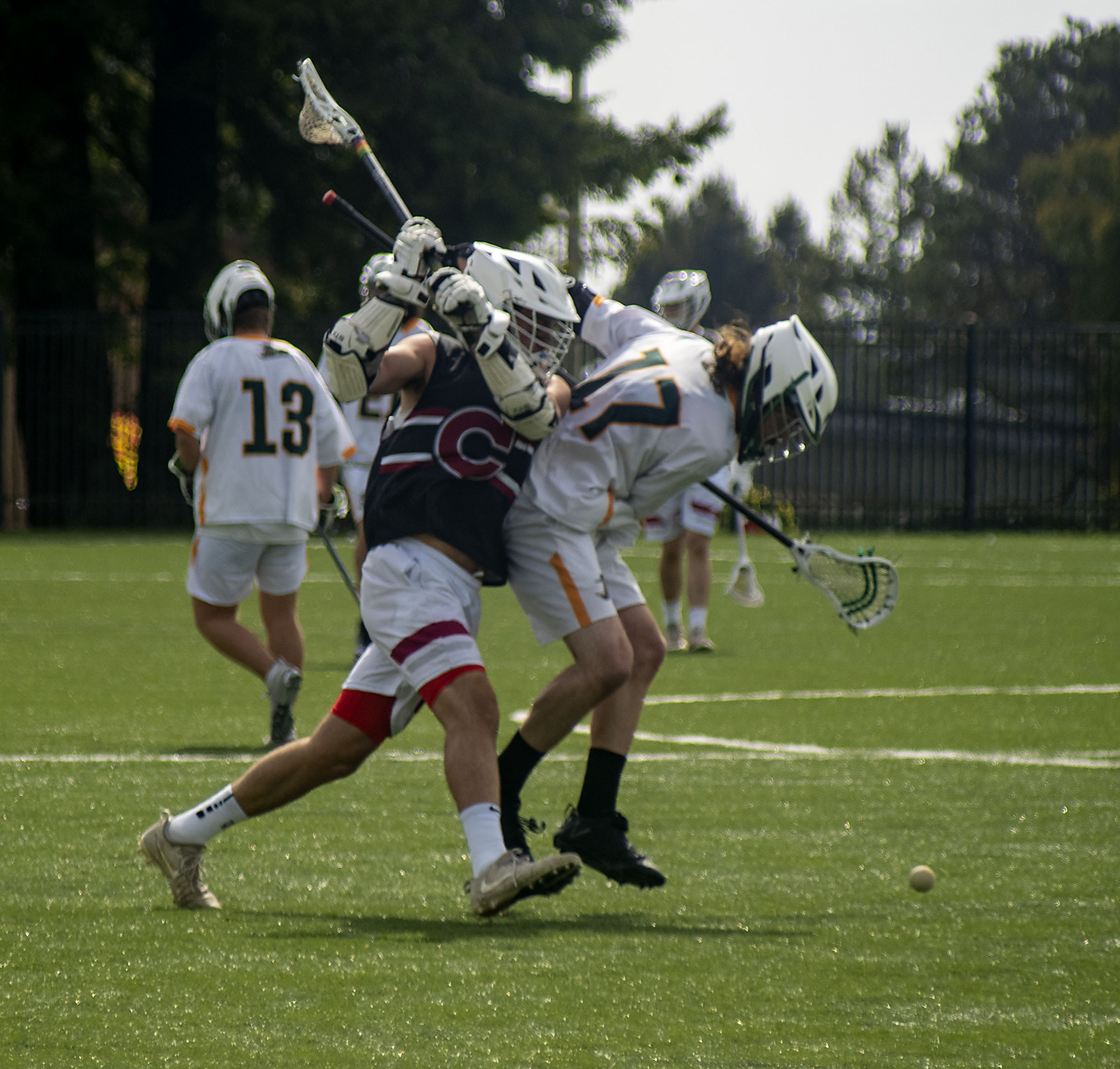
    This week saw two home games for the Humboldt Hogs, Cal Poly Humboldt’s own men’s lacrosse team. The team put up a fight during their Saturday game but ultimately lost to Chico.

    They didn’t let the Wildcats go easily. A strong defense led by goalie Zack Gamble held off the Wildcats for nearly the whole game. The score stuck at 1-7 until the last five minutes of the game.

    The Hogs were down but not giving any room for the Wildcats to score. At around four minutes left on the clock, Humboldt goalie Zack Gamble received a penalty after reacting to a less-than-savory hit from one of the Wildcats.

    “We may lose on the scoreboard, but we send that other team back to where they came from hurtin’,” Gamble said. “This season, we’re not underdogs– we’re like the junkyard dogs. The one thing every team has said about us is we never quit.”

    The Hogs only have twelve members on their team, leaving only one sub. The Wildcats continuously pulled from athletes on the bench while the Hogs gave them sixty minutes of hell. With Gamble out on penalty, there were no subs. River Galas, another defender, quickly swapped out stick and pads to fill the Gamble-sized hole in front of the net. The final score of 1-13 was a vast improvement from Wednesday’s game.

    “It was one of our closer games,” Hunter Hartman said. “Chico is normally a really good team, so it was cool to see this game be a close one. It’s really hard with no subs. We’re definitely gassed. The better half of our game is usually the second half since we’re used to being gassed and the other team isn’t.”

    The team is already getting psyched for the next game on April 9 against the UC Santa Cruz’s Banana Slugs. Substitute coach Sam Barton thinks the team is improving and makes up for a lack of players.

    “These kids got some good fight in them,” said Barton. “These guys are working hard, they got three more games left, and Santa Cruz has always been a good rival game.”

  • Doug Smith curates space for Black liberation

    Doug Smith curates space for Black liberation

    by Lex Valtenbergs

    Growing up as a Black person who attended a predominately white school in his hometown of Palmdale, California, Doug Smith learned early on how to code-switch, or alter his behavior to fit white societal norms. Still, his peers expected him to act a certain way because he was Black.

    “People had perceptions of what it was like to be Black; they have their own ideas,” Smith said. “I remember one time a new Eminem song had come out and some white dudes in my P.E. class knew the lyrics and I didn’t know the lyrics, and they’re like, ‘Oh, so we’re Blacker than you are.’”

    Smith’s formative lived experiences with code-switching and microaggressions – subtle statements or actions that are discriminatory against members of marginalized groups – made him very cognizant of other peoples’ perceptions of him early on.

    “That was really my first understanding of code-switching,” Smith said. “I would totally present differently because I was really conscious of how people were perceiving me.”

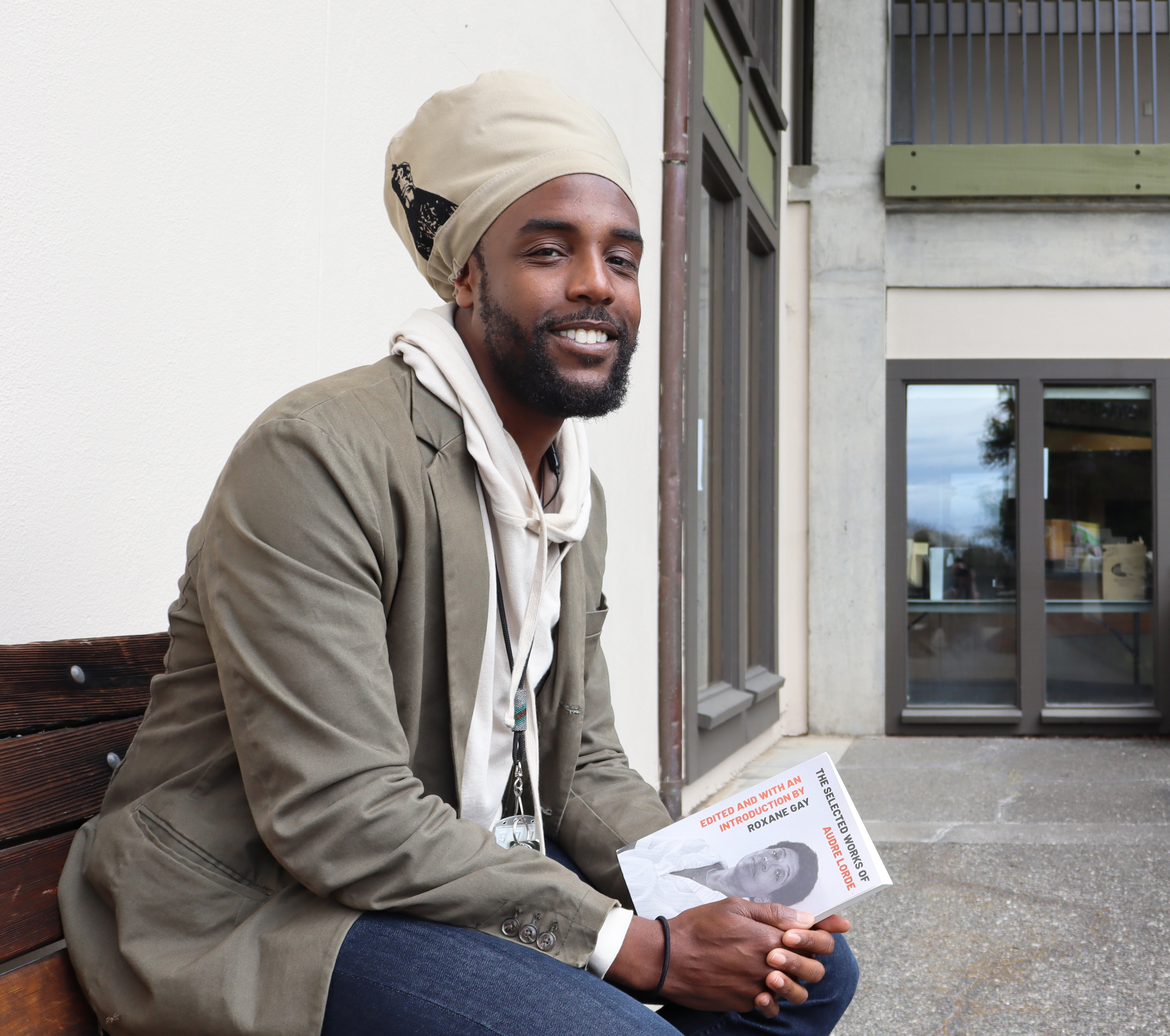
    As a Cal Poly Humboldt international studies alumnus, staff member and graduate student majoring in English, Smith has been involved in the campus community since 2013. Today, he is the coordinator at the Umoja Center for Pan African Student Excellence at Cal Poly Humboldt, a position that he has held since July 2019.

    “It’s such a rare opportunity for Blackness to be centered,” Smith said. “So I really want Black students to be able to make it theirs.”

    Smith’s vision for the Umoja Center going forward is to foster Black student development, including but not limited to publishing their writing, and foster Black liberation by curating spaces that are made for and by Black people. Amplifying Black voices that often get silenced or ignored is key.

    “[I’m] always visible because I’m a Black person, because you stand out,” Smith said. “But then at the same time, I think that oftentimes my voice isn’t always audible or isn’t always heard.”

    Although the Umoja Center is first and foremost a space for Black students, faculty and staff, it’s open to everyone on campus.

    “I think it’s so cool that we have an educational, Black-centric space [at] a university that really has an opportunity to educate our campus and local community,” Smith said.

    To learn more, visit the Umoja Center in Room 206 at Nelson Hall East, follow @umojahumboldt on Instagram, or go to umoja.humboldt.edu. To get involved, attend an event listed on the website or volunteer with the Umoja Center on Fridays from 11 p.m. to 3 p.m. at Bayside Park Farm on Old Arcata Road.

  • The rising cost of visiting Humboldt

    The rising cost of visiting Humboldt

    by Cheyenne Wise

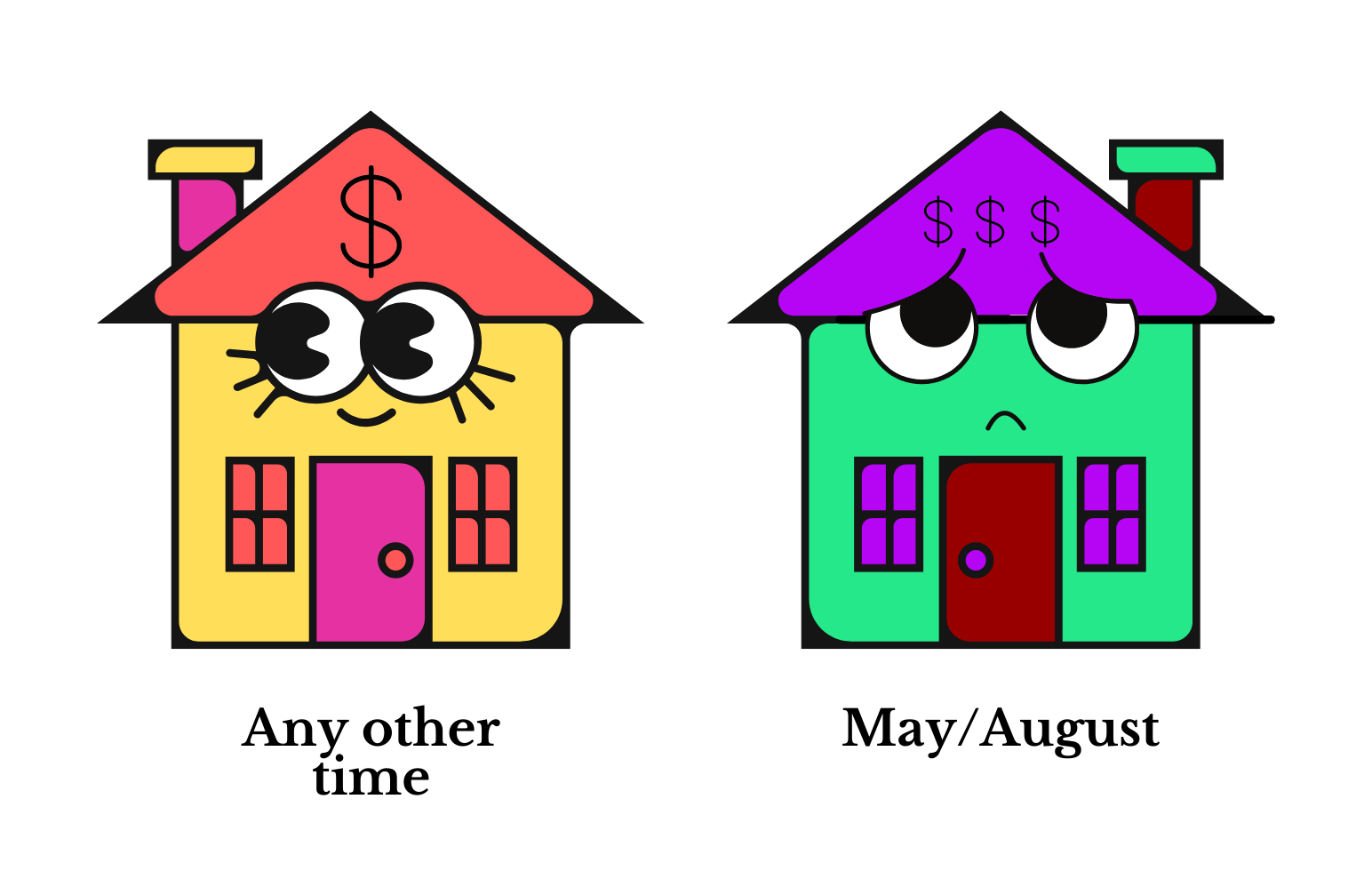
    As May is fast approaching, so is the dreaded inflation of renting in Humboldt. During the year you can get a hotel room or rent an Airbnb for a couple of bucks. On spring graduation weekend, hotel rates double and even triple in price.

    It’s not something uncommon in Humboldt but usually, high prices make it hard to find a place to rent. It’s an opportunistic extortion to get college students to overpay for rundown places. Housing is first-come, first-serve but to take advantage of people who don’t have money is gross.

    For some people, this is the first and only time they can make the trip to Arcata, and it’s to see their family member graduate which is an incredible opportunity that shouldn’t be missed. Just checking the hotels near campus the usual cost of a hotel room for two people is at most $150 at any point during the year. But when you look at the same exact hotels during the week of graduation is $600 for two people a night.

    At Cal Poly Humboldt, about 78% of full-time undergraduates receive some kind of need-based financial aid. That’s 78% of people whose families might not have the ability to see them walk across the stage and be handed their diplomas. Hotels and Airbnb hosts take advantage of people who want to support their loved ones.

    Forget peoples’ families for a second. What about the people who are graduating and haven’t lived in the area for some time because of the pandemic, who are trying to find a place to stay so they can be there for their own graduation? It’s not just the issue of finding a place to stay. The prices of buying a cap and gown are so high for something you will only wear once and not for a long time. I guess you could say the same thing about a wedding dress, but even those are absurd.

    Maybe I’m just someone who likes to count pennies and is a bit of a pessimist, but the price of graduating is excessive. We’ve already shoveled a bunch of money into the burning money pit of college so it would be lovely to be able to step away from the flames and not have to worry.

  • Something Rotten! opens at Cal Poly Humboldt

    Something Rotten! opens at Cal Poly Humboldt

    by Nina Hufman

    The Cal Poly Humboldt School of Theater’s production of Something Rotten! was entertaining, energetic, and full of innuendo. On opening night last Friday, March 25, patrons filled the Van Duzer Theater to see the comedy, set in the 16th century.

    From the opening song, ‘Welcome to the Renaissance,’ the cast dazzled in beautiful costumes on a stunning set. All of the actors are extremely talented singers and performers. It was clear that they all put in a lot of work and are proud of what they have accomplished. Jeremy Stolp, an English Education major who played one of the lead roles, Nick Bottom, feels that being in theater is a rewarding experience.

    Photo by Michael Thomas | Jeremy Stolp (left) and Miah Carter (right) star as power couple Nick and Bea Bottom.

    “Theater is such a privilege and so much fun to do,” Stolp said. “If you ever have the opportunity, I suggest you try it.”

    The musical was incredibly entertaining. Some of my favorite scenes included Shakespeare’s John Cena-esque entrances, Bea’s hope for a gender-equal future, and the show’s lampooning of religion. One of the best songs was “Will Power,” featuring a leather pants-clad William Shakespeare (Jaese Lecuyer) and his crowd of adoring fans. I also enjoyed “A Musical,” a comic number during which fortune-telling Nostradamus (Sammi Pietanza) tells Nick Bottom that the next big thing in the theater will be musicals, all while wearing a hat that I am convinced was a paid actor. Many of the jokes are meant to be ironic, making fun of musicals and the theater. The way that this is incorporated into the story is very clever.

    The cast was rightfully proud of what they accomplished and are looking forward to adding to each performance in future shows.

    “I don’t think that they (the cast) expected the reaction that they got so when they did it was just this moment of awe,” said Katie Lem, a member of the ensemble. “Everybody standing up at the end was such a beautiful moment for everybody.”

    Photo by Michael Thomas | Zoë Saylor performs an upbeat musical number about the bubonic plague.

    One of the most compelling performances was Miah Carter as Bea, Nick’s wife. Throughout the play, Bea disguises herself as a man to maintain several different jobs and help her husband financially and push for gender equality. Carter’s performance showcased her talents as an actor and singer, particularly in her solo “Right Hand Man.”

    “This is my first ever lead, so this was a good step up for me,” Carter said.

    Carter says that theater is a great community to be a part of and that they are all incredibly supportive of one another.

    “All of us were so proud of what we pulled through,” Carter said. “I love everyone in this cast.”

    The cast and crew are looking forward to continuing to develop this musical as they perform it more.

    “I’m excited for the depth and complexity that we kind of add into it every single show,” Lem said. “Not every night is the same.”

    The musical is running this weekend on Friday and Saturday at 7:30 p.m and on Sunday at 2 p.m. The musical will have you loving to hate William Shakespeare right along with the Bottom brothers.

    Photo by Michael Thomas | From left to right: Zoë Saylor, Sophia Escudero, Jeremy Stolp, Jaese Lecuyer, Jake Hyslop, Michael Jaye, and Miah Carter pose on set of Something Rotten!
  • Last Cal Poly Humboldt home track meet of the year

    Last Cal Poly Humboldt home track meet of the year

    by Eddie Carpenter

    On March 26, Cal Poly Humboldt hosted an invitational track meet. The Jacks have competed in a total of six meets so far. This was Humboldt’s first official home track meet of the season. The event kicked off with the women’s and men’s 4×100 meter relay. It was a blink-and-you-miss-it experience consisting of six rival teams.

    Sophomore Joy Hano competed in the long jump, 100-meter hurdles, 100-meter open, and the 4×400 meter relay. She described how ecstatic she felt during her events.

    Photo by Morgan Hancock | Joy Hano leads the 100-meter hurdles at the Cal Poly Humboldt Track invitational on March 26

    “I had this energy in my body just being home,” Hano said. “After a really long stretch on the road, it felt amazing. It was super exciting. Literally, I could not contain my excitement all week long. It’s just an amazing feeling being home. So happy that we have great weather today and a great showing.”

    Hano set new personal records in all of her events. After some hardships in long jump at an OSU meet, Hano was able to come back and set a personal record by five inches. She placed first place in the 100-meter hurdles with a time of 14.85 seconds, third in the 100-meter run, and set a personal record by 0.2 seconds with a time of 12.63 seconds. She also competed in the 400-meter relay where she dropped a second from her personal best time.

    Decathlete Travis Allen believed that the invitational helped him prepare for upcoming meets.

    “I had some highlights. Did pole vault, cleared a couple heights,” Allen said. “Did the hurdles, got a PR there… Going to these events, you’re not going to see improvements every single time, but if I can get more points here and there overall, that’s going to help my decathlon.”

    Distance runner Elliot Portillo was enthusiastic about his performances and those of his peers.

    “Today I ran the 1500 meter and the 1000 meter. I think that the training we’ve been doing- we’ve been out here pretty much since January,” Portillo said. “I think now as we get into the mid of our season, everyone’s been seeing a lot of improvement. Even if you see today, a lot of people came away with personal bests in a kind of more low-key event…Everyone came out today much more confident in their ability to execute when it matters.”

    Portillo hopes to put a time on the record list at the school before he leaves.

    Humboldt’s first section of 4×100 men’s relay team placed third with a time of 3:34.02. Their second section of 4×100 men’s relay was not recorded because they did not finish. In the women’s 4×400 meter relay, Humboldt placed second with a time of 4:02:87. Humboldt athletes are now preparing for the Mike Fanelli Track Classic on March 31.

  • Student debt is coming faster than you might have thought.

    by Ian Vargas

    If you’re anything like me, there’s no way you can afford to pay for college on your own: you’ve probably got student debt. While you’re still taking classes, it feels like you don’t have to worry about it because graduation could be years away. It’s always looming on the horizon, far enough away that it seems like you’ll probably have it under control by the time you’ve actually got to deal with it.

    I am in my last semester as an undergraduate, so that horizon is closing in real quick for me and it’s scary as hell. My current debt is just shy of $20,000, which is slightly lower than the national average, but still by far more money than I than I’ve ever made at a job.

    Ideally college would help with that, but considering the job market, that’s no guarantee.That leaves me and many others with crushing debt in the position of having both a huge amount of uncertainty about what we’re going to do after college and a huge amount of certainty that whatever it is won’t be sufficient to not be living on the bare minimum.

    I appreciate my education. I plan on continuing it into graduate school, but this system feels as if it’s built more to place you into a position of permanent debt than to provide an education to people.

    Even if you’re lucky and don’t end up missing payments, you’re still paying about 10% of your income, and if you aren’t then you can rack up extra fees and put yourself even further back. On top of that are the countless other ways that you end up gouged for money while still enrolled like expensive but mandatory meal plans or fees for services that, depending on the current level of COVID lockdown, may not even be available to the students using them.

    According to educationdata.org, the average monthly payment for someone with a mid-paying job and in the same category of debt as myself is $393 over the course of six years, which is currently more than I even get per paycheck at work.

    These debts are what keeps people from buying homes or starting any kind of family. Ideally this whole thing should be free and improve peoples’ lives instead of operating off of a profit motive at all. But that’s a fight that seems like it will take way longer than any of us will be able to see through to the end.

    As students, we need to press for more scholarships and grants for students. Ones that don’t incur years of debt, and push back harder against tuition hikes that force students to either abandon their education or take out more loans. Otherwise, college becomes the exclusive domain of people who already have money, even more so than it already is.

  • Cal Poly Humboldt Directors in the spotlight

    by Carlos Pedraza

    In the Van Druzer theater on Thursday, March 3 for the first time since the start of the pandemic student films were shown to a live audience. Around 40 people came to the showing of Cal Poly student films. Several of the films were made in the fall of 2020 there showing being delayed by the COVID pandemic.

    The short films ranged from psychedelic, documentary, serious, and funny; some of the films were a combination. The audience made sounds of laughter, shock and sadness reacting to each film with emotion equal to the film itself.

    A film director who was in the audience was Kylie Holub, a senior film major. Holub directed and wrote the film “Abstraction” in the fall of 2020. They film . During the pandemic Houlb said “ just keeping our crew really lean and realing thinking about how to tell stories with minimum actors.”

    The narrative film “Abstraction” is the story of a beach treasure hunter finding an alien artifact and the fallout of her discovery. The unknown and aliens being major inspiration for the film.

    Holub said “ you see a lot of people with metal detectors, we know very little about the ocean and aliens are fun to play around with.”

    Another director was alumnus Valerie Rose Campbell created the experimental film “Recipe for Young Mothers.”. Campbell goes through the recipe of banana bread while she narrates the experience of a young mother and her attempts to reclaim her life from an abusive relationship and societal expectations of a mother.

    The COVID pandemic heavily impacted the creation of the film Campbell said “ everything got done digitally and that was really hard.”

    The film is inspired by Campbell’s own experience in the local family system. “ How it felt so unjust for my kids and family.” said Campbell describing her own life experiences.

    There will be another film showcase in the fall of 2022 showing films created in the spring.

  • Latinx artists collaborate on chorus

    by August Linton

    Like the blossoms of our early spring, genuine and vulnerable artistic collaboration is blooming at Cal Poly Humboldt.

    The Toyon Multilingual Literary Magazine’s ‘SANA, SANA: Hope and Healing for Latinx Communities in Times of Precarity’ was a contest that asked for submissions of poetry, with the intention of having the winning entries set to music.

    The poem selected to be interpreted into a choral work by the award-winning composer Carlos Cordero was Alannah Guevara’s ‘Fresh Fruit.’ It is a deeply affecting rumination on vulnerability and intergenerational trauma, filled with haunting and tender images of bruised fruit and parental care.

    Guevara says that she wrote the poem thinking of her father, who passed over ten years ago. She’s a native of California’s Central Valley, where many Latinx people have settled and work on the area’s vast orchards. Guevara is half Mexican; she sees in her family and in her community an unwillingness to discuss the painful past, and an unending hope for the future.

    “I have really vivid memories of going to an orchard in the town I grew up in… It all melded together, these words that I had and these memories,” said Guevara. “Here in Southern California, who’s working in those orchards is Latinx people, Mexican people. And it got me thinking about my familial trauma, my generational trauma, the things that my dad left me to deal with.”

    Graphic by August Linton

    Guevara is about to become a parent herself. In ‘Fresh Fruit,’ she feels the protection and hope that her parents struggled to give her, and also the intense desire to protect and uplift her own child.

    The final choral piece is deeply beautiful, modern, and connected to the emotional core of Guevara’s poem. Cordero was a fantastic composer for the ‘SANA SANA’ project, both as a stunningly talented musician and also as a member of the Latinx community.

    Cordero’s Friday talk, hosted by CPH’s El Centro Académico Cultural, focused heavily on his personal struggle towards vulnerability, and how that has affected his compositions and musical career.

    Cordero’s writing process is a very visual one, although his medium is entirely auditory. He works with charts of inter-connected words and line graphs of emotional intensity to visualize his compositions in a more visceral way.

    “[Vulnerability] isn’t always going to come back to you immediately, but it’s coming to build or to open that door for people who want to connect with you,” Cordero said. “I’ve learned in art that I open up the door, I don’t make you come in. All I can do is present myself.”

    He recounted a story of opening up about his family’s experience of losing his younger sister to members of a choir he was working with. They came to him with stories of their miscarriages, of their losses, and that allowed the whole group to access an emotional connection that was not visible before.

    Cordero is originally from Maracaibo, Venezuela, and now lives in Austin, Texas. He says he, like Guevara, has struggled with an unwillingness to have hard conversations with his family about the traumas they’ve experienced.

    His piece ‘¡Ayúdame!’ was written as a “Venezuelan plea for life.” Members of the choir cry out “ayúdame, escúchame” (help me, listen to me) in Cordero’s attempt to communicate the suffering and disillusionment of the Venezuelan people.

    However, ‘¡Ayúdame!’ also represents the importance of being vulnerable, both by asking for help and by letting other people support you.

    Cordero spoke about the expectation within Latinx families and communities that people be strong, that they don’t show their struggles. As he struggled with the trauma of being Venezuelan in the midst of an ongoing humanitarian crisis, Cordero realized that he sorely needed help, that people need to ask for help.

    “[In ‘Fresh Fruit,’] Alannah showed me that the struggle is OK. It says to our kids, to our generation, to our families: we want to show that everything is ok but we can also share in their struggles,” said Cordero.

    The Cal Poly Humboldt University singers will perform ‘Fresh Fruit’ on Sunday, April 24th, alongside other musicians performing other works from the ‘SANA SANA’ project.

  • Take me out to the ball game

    Take me out to the ball game

    by Gabriel Zucker

    On March 5, the Cal Poly Humboldt softball team held their first home game this year. I was reminded of an easier time, where relaxing to live sports was an everyday escape from the rigor of school and work. During the next couple of hours, I experienced camaraderie, screaming fans and most importantly, tailgate food.

    Photo by Gabriel Zucker | Junior Pitcher, Megan Escobar pitches against Chico State on Saturday

    Walking around the softball diamond, my eyes fell on a group of parents huddled around a BBQ, waiting on the drumsticks to finish cooking. Walking closer and closer to the food I tried to avoid eye contact, instead focusing on taking photographs of the game. Almost immediately, one of the parents called me over.

    Richard Guevara, the father of one of the freshman softball players, yelled out, “Do you like ceviche?”

    Looking over I saw a stocky gentleman, decked out in Humboldt softball gear, a giant smile stretched across his face. He beckoned me over with the promise of ceviche and chicken. Next thing I knew I was talking and laughing with the parents, enjoying their food, and praising the beauty of Humboldt.

    Taking a bite of ceviche now, I’m transported to a time where sports was a shared experience. A time when sports was more than just the game, it was about the connections you made. After taking a moment to relish in the memories, I opened my eyes to a giant smile and a chicken drumstick.

    Sports is never just about the game; it is about the shared experience. At the softball game, a feeling I hadn’t experienced in year swept over me. Screaming fans, a sound I only recently heard in my dreams, washed over me like a wave. My heart flittered and danced, and as the smell of food and freshly cut grass hit me in the face. I stopped to smile.

  • Cal PolyHumboldt hosted this years CCAA Basketball Championship

    Cal PolyHumboldt hosted this years CCAA Basketball Championship

    by Angel Barker

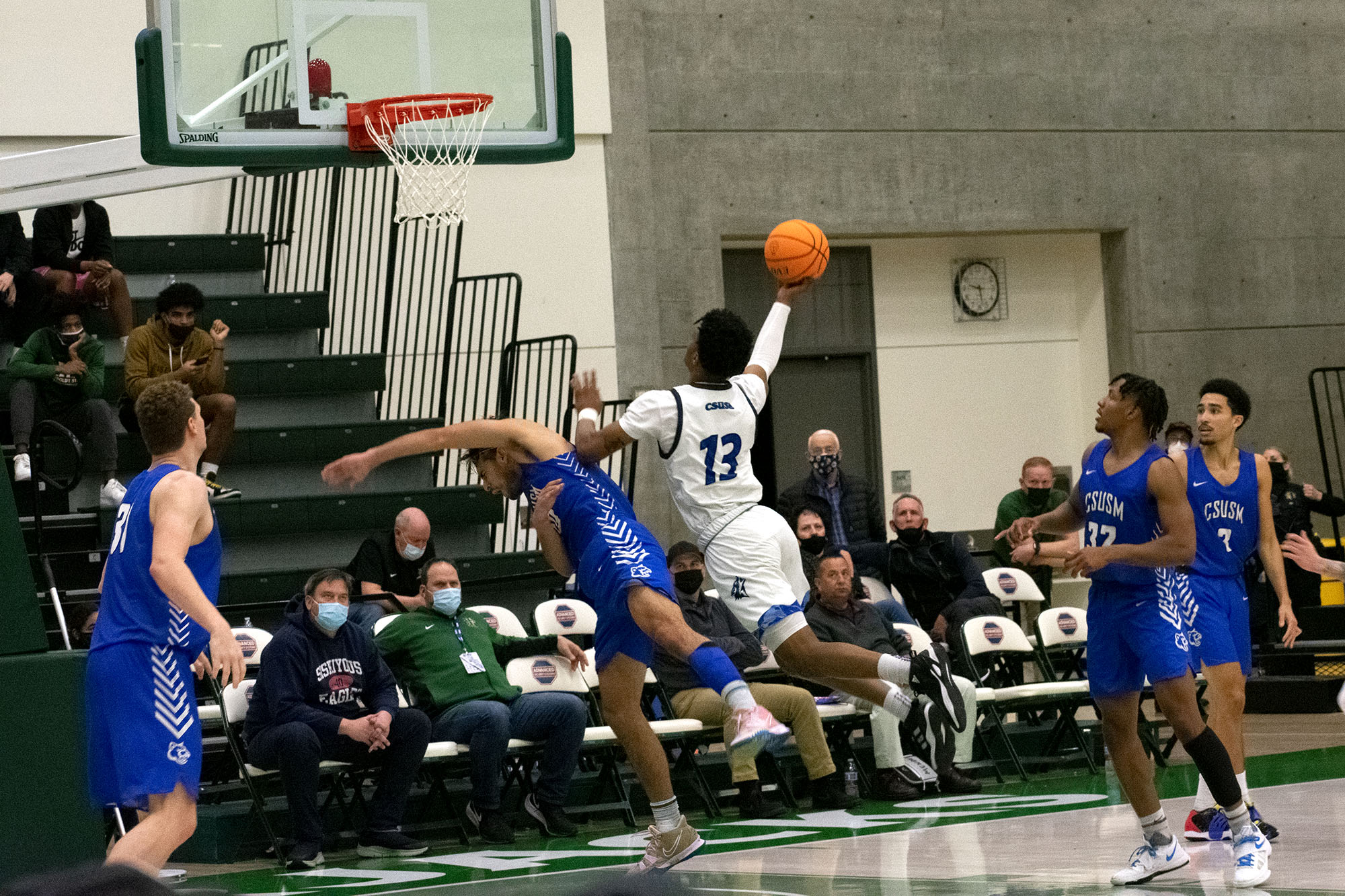
    For the first time under the Cal Poly Humboldt name, the university hosted the California Collegiate Athletic Association (CCAA) championship basketball tournament.

    Although neither basketball team for Cal Poly Humboldt was a part of the tournament, it was a great success for the university. The three day tournament took place from March 3 through 5, creating a lot of foot traffic to the Lumberjack Arena.

    “It is awesome for us to host the CCAA Championship tournament as we get to show people in the conference how special Cal Poly Humboldt and Humboldt County is,” said Joe Danahey, Assistant Athletic Director for Media Relations, in an email statement.

    Photo by Angel Barker

    “They get to see how beautiful our campus is and the surrounding area,” Danahey said. “We also get to bring the best student-athletes and programs in NCAA division II to our campus.”

    For the men’s championship game, it was California State University San Marcos versus California State University San Bernardino. San Marcos dominated the entire game from winning tip off to scoring the first three points with an impressive swish from outside the three point line.

    San Bernardino was never far behind, with four minutes left in the game, San Bernardino was only three points down. However, they were unable to come back and the San Marcos proved to play better, leaving the final score 85-71.

    The women’s side of the tournament was controlled by California State University East Bay. Just like the winners of the men’s team, they won tip off and scored the first points. They were ahead the whole game, but the San Marcos women were neck and neck with them the entire time.

    Going into the second quarter, San Marcos was only three points behind, but before half time, East Bay was able to steal the ball twice in back to back plays. By half time, East Bay was up by nine points. The final score was 80-66 with East Bay winning their third CCAA championship. The women are on a seven game winning streak going into their next tournament.

    Photo by Angel Barker

    There were many game highlights, but for Cal Poly Humboldt student Andrew Gonzales, who was working security for the tournament, it was being able to learn what the game of basketball is.

    “The more I keep watching, the more I understand the game,” Gonzales said.

    Josh Doody, Assistant Athletic Director for Financial Operations, was a huge part of making the tournament happen. For him, watching the games throughout the tournament was the best part.

    “[My biggest highlight was] the increasing caliber of play that really showcases the talent in the conference,” Doody said.

    For Danahey his highlight was deeper than the game.

    “Just being able to reconnect with my colleagues and also hang out with the game officials and also with the coaches from the 12 teams,” Danahey said. “I have been involved in the CCAA for 17 years. 14 years at SF State and three at Humboldt, so I have made a lot of friendships in this conference.”

    Danahey explained that in order for a school to host a post season CCAA tournament, they go through a bidding process that takes place two years prior. This is not the last of the tournaments to be hosted by Cal Poly Humboldt as the university is going to host the men’s soccer tournament in 2023.

  • Concrete masquerades as the moon in Bradshaw exhibit

    Concrete masquerades as the moon in Bradshaw exhibit

    by Nina Hufman

    “Photography as Material,” a photography exhibit featuring the work of Julia Bradshaw, is now open at Cal Poly Humboldt’s Reese Bullen Gallery. The exhibit will be featured in the gallery until March 26. Gallery hours are on Tuesday and Wednesday from 11 a.m. to 5 p.m. and Thursday and Friday from 1 to 6 p.m.

    Bradshaw’s work involves taking high resolution photos and then processing them through traditional darkroom and editing techniques as well as computer photo editing.

    “I’ve never seen anything high resolution like that, it’s almost an illusion,” said Isabela Acosta, a Cal Poly Humboldt art history major. “I want to touch it because it looks like it’s coming at you.”

    The exhibition features two of Bradshaw’s bodies of work, “Stacks and Shapes” and “Survey.” “Stacks and Shapes” features manipulated images of paperback books. Photographs of books are arranged to create geometrical forms, some of which resemble landscapes. “Survey” includes images of concrete that resemble scientific photographs of the moon.

    Photo by Morgan Hancock | Julia Bradshaw’s “Survey” project inspired by early astrological photography.

    “All of those are concrete, that’s just concrete, but she’s making it look like images of the moon,” Acosta said. “She does that through different processes of developing films and taking things at a certain angle.”

    On her page on the Cal Poly Humboldt Department of Art website, Bradshaw says that the pieces included in “Survey” were inspired by scientific diagrams and notes. The photos were taken using a cardboard box and were edited using knives, inks, dyes, and other techniques.

    “The simplicity of the materials is a subtle poke at the vast gap between investment in science and investment in art,” Bradshaw wrote. “By pointing my camera at the most abundant of materials, I aim to empower imagination in conjunction with science.”

    Former Cal Poly Humboldt student and current faculty member at the Cultural Resources Facility in the anthropology department, Zedekiah Minkin, was impressed by Bradshaw’s moon-esque photos.

    “Compared to the real scientific images, it looks like it could be straight out of NASA,” Minkin said.

    Religious studies and art history major Cass Jensen also commented on the realism depicted in the photos. They also think that, by comparing concrete and the moon, Bradshaw is commenting on recurring patterns and themes throughout the universe.

    “I really like the collage work because it does look exactly like some sort of scientific model that you would see come from NASA,” Jensen said. “It helps elaborate how certain things can be very similar but very different all at the same time. It’s like how a lot of things that may look really far away and intangible are just, like, everywhere.”

    Jensen is a collage artist as well. They are inspired by how concisely Bradshaw is able to convey her message through her artwork.

    “I like the simplicity of it, it still makes a point without being too much,” Jensen said. “It’s not as complicated and overwhelming as sometimes my pieces come out to be.”

    Overall, the most striking quality of Bradshaw’s work is the illusion that she creates. The images are created to allow the viewer to see beyond just the materials used in each piece. The pieces do not necessarily resemble the materials that they are made of.

    “I get a raw sense,” Acosta said. “She’s just doing things from a different perspective.”

  • Sharing is caring… unless it’s propaganda: The Russia-Ukraine Crisis

    by Kris Nagel

    Everyone has an impact on someone’s perspective of the world. Almost anything we do or say affects someone in some way. The same holds true for the things we post on social media. We are all influenced by the people around us. When the subject of our virtual discourse is something as poignant as international conflict, our sympathies can be weaponized without us even knowing it.

    Roughly half of Americans regularly get their news from social media, according to a 2021 study from the Pew Research Center. The information we share online can challenge our belief system but oftentimes reinforces it. Al Tompkins, a journalist with the Poynter Institute, says that truth gets little consideration when the content we share aligns with our worldview.

    “We tend to support those things that agree with your position on anything,” Tompkins said. “Whether it’s the designated hitter in baseball or invading Ukraine, we tend to repeat and share things that we agree with.”

    The internet has changed the way information is spread through society. It’s easier than ever to produce fake information.

    “The other piece of it is this,” Tompkins said. “Disinformation is a very powerful weapon. The Russians know it but, let’s face it, the Americans know it too. The American government, particularly through the CIA, has done lots of disinformation over the years. You would expect that they do, it’s kind of part of what they do.”

    Understanding that misleading content is built into our news feed requires us to take a critical look at what we share before we share it. Tompkins’ approach asks four questions:

    What do I know?

    What do I need to know?

    How does that source know what that source claims to know?

    And is there any other way to look at this other than the way that source is telling me?

    Vicky Sama saw the real-time effects of media coverage and propaganda in the several wars she covered during her career at CNN. Sama is now the department chair for Cal Poly Humboldt’s journalism and mass communications program.

    “So there’s two parts of war, usually,” Sama said. “You have the war, the actual war with fighting and then you have the information war, the propaganda war, and that is an essential part of what happens in war as well.”

    When we see things happening live, there isn’t an editing process that we can rely on to verify what we see. Live television, live broadcasting, and live streaming allow for that to happen. Now that consumers are a part of the distribution process, Sama argues they also need to be part of the editing process.

    “If everybody’s going to start considering themselves a journalist just because they have a cell phone, then they need to start doing the work of a journalist and start verifying the information before they put it out there as well,” Sama said.

    However, verifying everything we see is seldom an intuitive process. Kirby Moss, a Cal Poly Humboldt professor in the journalism department, teaches a range of media analysis classes. Moss said that the fundamental way to verify information is to look for other sources reporting on the subject.

    “I tell students, if you find some information that you’re researching on, try to cross-check it with at least three sources if you can,” Moss said. “And then they find out sometimes like, ‘Well I went to one source but the other source says something else, the other says something else,’ and so then they begin to question that message.”

    It takes familiarity to be confident that the information you get is credible. That is not to say that there aren’t tools we can use to check the things we share. Vicky Sama is working on adding a media literacy course for freshmen to the department catalog. In the meantime, JMC 309: Analyzing Mass Media Messages will be open for registration near the end of the semester. Online courses on media literacy are also available to everyone through the Poynter Institute.

    [DISCLAIMER: The Lumberjack rarely uses journalism department faculty as sources for stories. However, an exception was made for this story due to the expertise our professors have on this particular subject. Vicky Sama and Kirby Moss do not exercise editorial oversight on the content The Lumberjack publishes.]

  • Cal Poly Humboldt’s Library Cafe sees the light of day

    Cal Poly Humboldt’s Library Cafe sees the light of day

    by Lex Valtenbergs

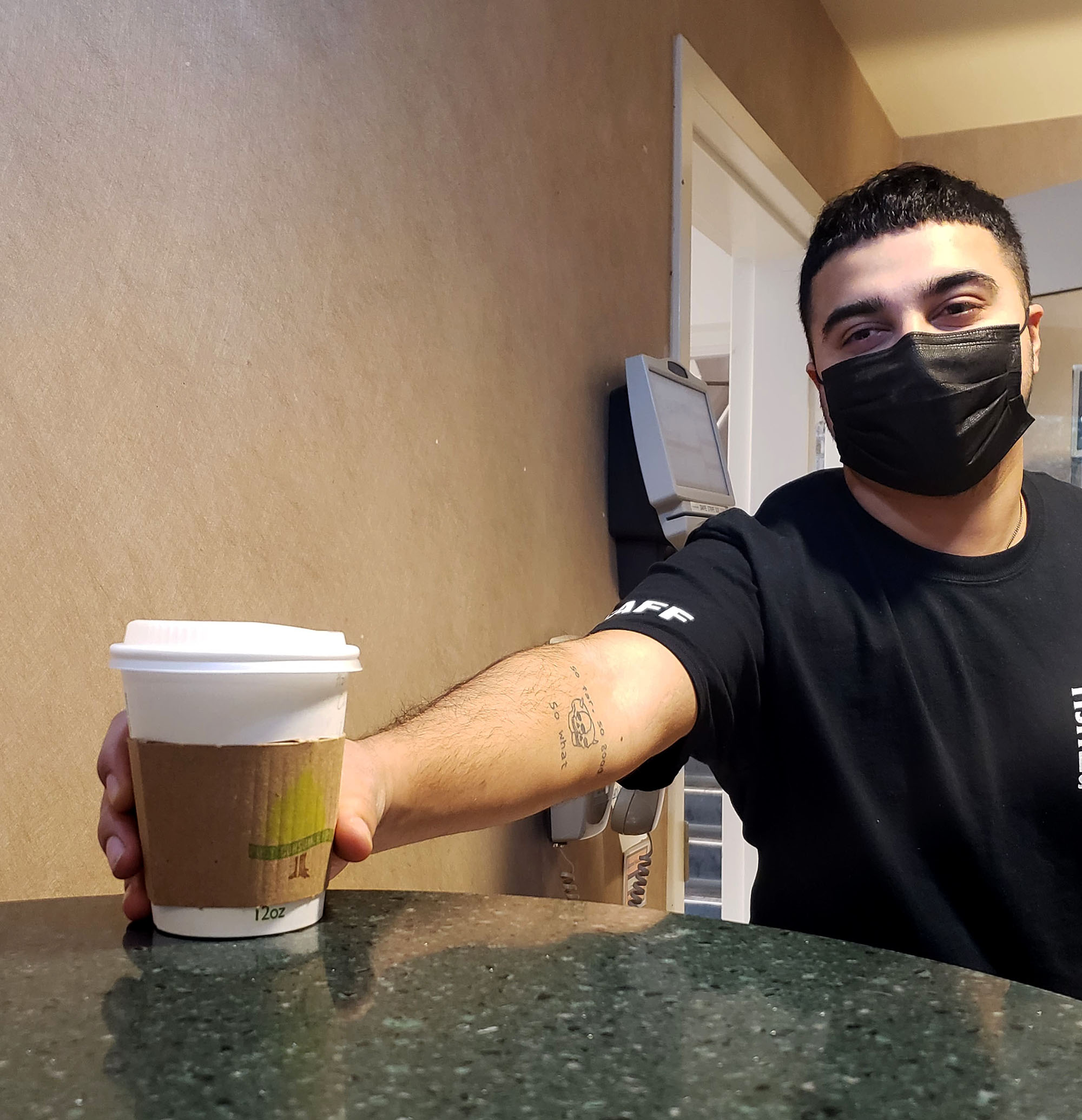
    The Library Cafe lifted its shutters for the first time in several years on Friday, Feb. 26. The cafe serves delicious coffee blends from Muddy Waters Coffee Co. as well as pastries, veggie wraps, drinks, and more.

    Recent biology graduate Kate Mendoza was just hired by the private company Chartwells Higher Ed to work at the newly reopened cafe.

    “Chartwells is really awesome,” Mendoza said. “Honestly, they work really well with students from what I’ve seen.”

    Mendoza’s go-to drink is the cappuccino.

    “I usually like to do the cappuccino,” Mendoza said. “It’s just espresso, steamed milk, and a lot of foam. I think the foam is my favorite part.”

    Mendoza’s coworker Ahmad Shah, a senior majoring in communication, recommended the hazelnut mocha.

    “I like a hazelnut mocha,” Shah said. “Sometimes coffee is a little bit bitter. The sweetness helps balance the bitterness of the espresso.”

    Communication senior and Learning Center academic peer coach Kas Colwell ordered a vanilla latte with two espresso shots from the Library Cafe on March 3.

    “I’m so glad y’all are open again,” Colwell said to Mendoza while ordering. “It’s exponentially improved my quality of life.”

    After getting her drink, Colwell sat down at a nearby table in the dining area. As a library employee, she appreciates how easy it is to get to the cafe.

    “It’s the convenience because I literally work in the library, so it’s on my regular route,” Colwell said. “I don’t have to go walking somewhere else to get coffee.”

    The Library Cafe is available to all Cal Poly Humboldt students and faculty and is currently open on weekdays from 7:30 a.m. to 5 p.m.

  • Humboldt professors speak in ‘Ukraine in Crisis’ forum

    Humboldt professors speak in ‘Ukraine in Crisis’ forum

    by Liam Gwynn

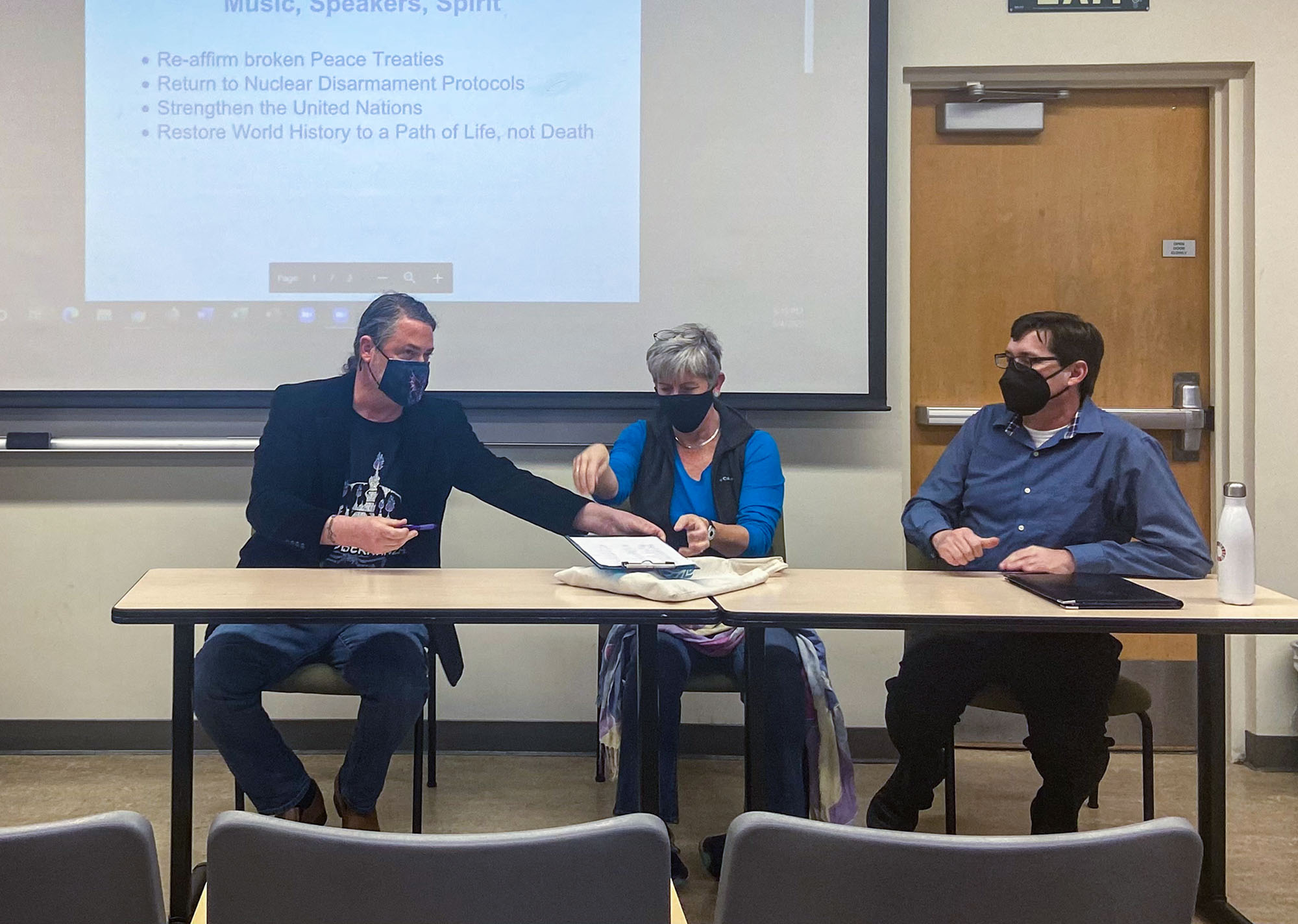
    Professors addressed the complex and multifaceted nature of the Ukraine invasion during an event hosted by the political science department on Friday. They addressed the situation from three different angles with professors breaking down the topic relevant to their expertise.

    Dr. Robert Cliver is a history professor at Cal Poly Humboldt. Cliver gave historical context for the war in Ukraine and explained how the situation is not black and white in his mind. Between the corrupt Ukrainian white nationalist oligarchs and Ukraine’s tentative alliance with the west, Cliver doesn’t think Ukraine is as innocent as they are being painted by the media at large.

    Cliver drew criticism after claiming there were no heroes or villains in war. In his eyes, all of the world leaders are villains fighting over power and resources.

    “I’m against war, period. I think if you’re resorting to violence to achieve your ends you’re not a hero,” said Cliver.

    Cliver warned students against glamorizing and glorifying political figures like Ukrainian president Volodymyr Zelenskyy. Cliver supports the Ukrainian people, but thinks people need to look into the historical context of situations and understand that their perspective may have been altered by nationalistic rhetoric they have been exposed to.

    “It’s very difficult to find heroes and villains historically and when people do, it’s usually for nationalistic reasons and I’m very skeptical of that,” said Cliver.

    After Cliver’s talk, Noah Zerbe from the political science department gave a thorough breakdown of the international relations situation currently unfolding between Russia and the rest of the world. In particular, he explained how the sanctions put in place by NATO would affect both Russia and the global economy.

    “Russia and Ukraine account for about 20% of the world’s corn exports and about 30% of the world’s wheat exports,” said Zerbe, continuing. “So cutting that off from global markets is going to have a huge impact on food prices.”

    Zerbe went on to explain how Russia also accounts for about 20% of the world’s fertilizer so not having that on the global market will impact many types of agriculture on top of the ones previously mentioned.

    Allison Holmes from the international studies department took over after Zerbe. Holmes gave an urgent speech about the importance of fact-checking what you read online and the unreliability of news in the era of social media.

    Holmes explained how social media has changed the way people digest information which has, in turn, made times of crisis like this even more disorientating.

    “Everyone became their own spokesperson, nobody needed to wait for the official statement, nobody waited for a press officer to tell you what was happening out there, the feeds from Twitter, Facebook, TikTok, went straight to the news headlines,” said Holmes.

    She explained how this massive change has resulted in a repetitive news cycle where the most TV-ready looking civilians are asked the same questions over and over and other important developments are pushed to the side.

    “This has produced hours and hours of interviews with young women, most of whom happen to be lovely blondes who all speak perhaps halted but excellent English with at least one if not preferably two children sitting on a train platform going they know not where,” said Holmes.

    Holmes did not want to downplay the situation in Russia, but she does think it is being overplayed by the media, especially in comparison to how other conflicts outside of Europe are covered.

    “I’ve lost the number of times I’ve heard ‘we haven’t seen this since world war II’ which is simply not true,” Holmes said, continuing. “What about Yugoslavia, what about Syria’s impact on Europe and the estimated 13 million refugees or displaced people who are still not home?”637 words

  • The 28th annual Social Justice Summit concluded with paddle-boarding to Big Lagoon.

    The 28th annual Social Justice Summit concluded with paddle-boarding to Big Lagoon.

    by Kris Nagel

    An almost-spring chill in the wind convinced almost all of the attendees present to wriggle into one of the wetsuits piled on the warm sand. The Social Justice, Equity and Inclusion Center (SJEIC), in tandem with Center Activities, hosted a kayaking and paddleboarding trip to Big Lagoon for students on March 6.

    Photo by Kris Nagel | Attendees of the 2022 Social Justice Summit trip to Big Lagoon suited up with life preservers and splash guard gather on the beach on March 6, 2022.

    The event capped off a week of activities as part of the 2022 Social Justice Summit, which was themed around climate justice and intersectionality. Part of a 28-year tradition, the annual Social Justice Summit is a place for students to get directly involved in making our community more inclusive. Frank Herrera, the SJEIC coordinator, helped oversee the student leaders who put together the week’s schedule with accessibility in mind.

    “Big Lagoon is a cool spot. I would imagine that it’s probably going to be transformational for some,” Herrera said. “Hopefully in a positive way.”

    The summit was one of the first programs to be offered in person now that COVID-19 restrictions are starting to be lifted. Herrera said this year drew a smaller crowd than it had before the pandemic hit, with around a hundred students attending events over the week.

    About 16 people went to Big Lagoon on Sunday. In part, the limited itinerary was due to this year lacking a credit program for student organizers of the summit. Normally, a class credit is offered through the Critical Race, Gender and Sexuality Studies (CRGS) department. However, Herrera’s request for the program was denied this year.

    Photo by Kris Nagel | Aelis Hanson, a guide with Cal Poly’s Center Activities, walks a program participant through their launch at Big Lagoon on a paddleboard March 6, 2022.

    The summit was a work in progress for months prior to the first speaker taking the stage at the end of February. However, some accommodations took on-the-ground problem solving by the event coordinators.

    One student registered for the Big Lagoon trip had requested additional assistance in transporting their mobility aid before arriving at the pickup location. Not having planned for the additional cargo, organizers scrambled for an additional vehicle. Fortunately, another van was available that morning and the student was able to join shortly after the first kayaks launched.

    Photo by Kris Nagel | Center Activies’ Mairead Sardina educates program participants on water safety, showing how a tight life vest helps keep the head above water March 6, 2022.

    Mairead Sardina works for Cal Poly Humboldt’s Center Activities and helped plan the outdoor programming of the summit. Sardina hoped that the trip would help re-establish a sense of normalcy on campus, now that activities are held in person again.

    “It gets them out and engaged with the local environment which helps with student retention, makes them feel safer, makes them want to get out and care about protecting the environment and see what a beautiful place Humboldt is to live,” Sardina said, promoting the Center Activities center where students can rent outdoor gear at low or no cost.

    Cal Poly Humboldt student Tatiana Gamboa joined the journey out to Big Lagoon. A second-semester student, Gamboa was drawn to the school behind the redwood curtain because of its emphasis on the local environment.

    “It encourages [students] to come out and do something different, without having the funds to rent gear and the previous knowledge of how to paddleboard and kayak.” Gamboa said. “So it kind of gives that gate to students exploring something they might like and I think that’s pretty special.”

  • To change or not to change

    To change or not to change

    by Eddie Carpenter

    Humboldt State University is now Cal Poly Humboldt, and with this shift comes a lot of rebranding. Cal Poly Humboldt’s marketing partner SimpsonScarborough recently sent out a survey regarding possible logo concepts. If the marketing and rebranding is at the heart of this process, I think that we are in a dire need of new mascot. After all, what does a lumberjack really represent?

    At first glance, it’s a kind of nod to how pervasive the culture of the timber industry used to be in Humboldt County. At one point in time, it dominated the local job market.

    My father was among the masses who used to log up in the hills and work the mill yards. Nowadays, the industry’s number of workers has been reduced to a fraction of what it used to be. Therefore, this figure has sort of faded to the background of the public imagination.

    When my friend used to go to the campus bookstore, she was always greeted by a lumberjack cutout that you could put your face in. This is where you too could’ve been a large bearded white man wielding an ax.

    Even in advertising, lumberjacks are portrayed asserting their dominance over nature with brute force.

    When I look at our mascot, I am reminded of the horrors committed by American settlers in Northern California. In my Native American Studies class, I learned about a book called Genocide in Northwestern California by Jack Norton. In the 1850s, white settlers saw the forests and valley floors as barriers to Manifest Destiny.

    There are pictures that depict how the invaders swaggered around mutilated tree trunks. In their final judgment, the white settlers had set fire to the entire forest in order to make sure that the redwoods were vanquished. In turn, Indigenous populations saw their homelands turn to ruins.

    I do not think an icon with such a checkered past is very representative of the social equity and diversity that our departments wish to strive for. It is the manifestation of white, cisgendered, heterosexual and patriarchal values.

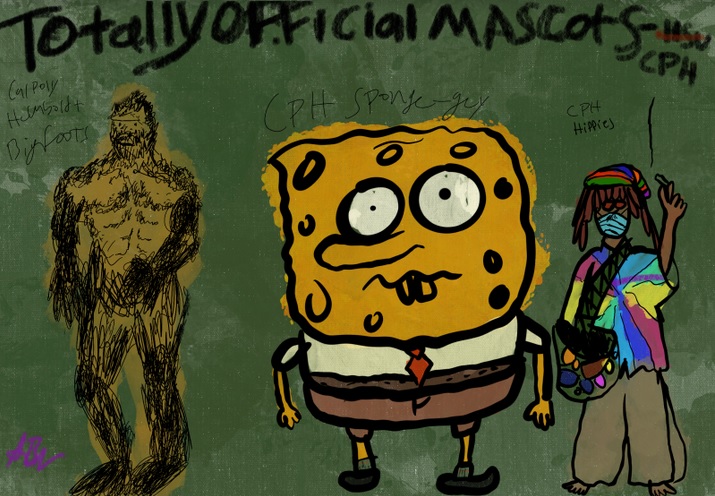
    The question still remains: what should our new mascot be, if not Lucky the Lumberjack? I think that we should consider rebranding ourselves as the Cal Poly Humboldt Bigfoots.

    If a tree falls down in the forest and nobody is around to hear it— it must be Bigfoot! He is an anomaly that simply cannot be contained. He thrives by hiding in the foliage and greenery of his environment. Bigfoot could come to represent our local community’s stewardship of the environment.

    Whether you’re a skeptic or believer (or perhaps somewhere in between), you cannot deny the impact that the mighty Sasquatch has left around the world. Graduating as Cal Poly Humboldt Bigfoots could mean leaving nothing but footprints in our wake instead of taking from others.

  • Basketball hosts Black Out Night

    Basketball hosts Black Out Night

    by Angel Barker

    Students lined the Redwood Bowl Plaza for food, music, games and a performance on Feb. 24 for the Black Out Basketball pre-game rally. Organized by the Umoja Center for Pan African Student Excellence, it was a celebration of Cal Poly Humboldt’s Black faculty and staff.

    Photo by Angel Barker | From left: students Demi Ogunwo, Joy Mehn, Douglas Smith, and Gloria Thompson at the Black Out Rally on Feb. 24 that took place at the Redwood Bowl Plaza.

    The celebration was not just for the faculty and staff, but for the black student community. Douglas Smith, coordinator of the Umoja Center and masters student in English, was a critical part in making the event successful.

    “It means a chance to have community,” Smith said. “A chance for Cal Poly Humboldt to support our Black student community like we would in society.”

    The Umoja Center’s mission is to support the pan-African student community. Lots of students were in attendance for the pre-game tailgate, to support and celebrate community and the campus.

    “I came out to support the game and the celebration that’s going on right now,” said Joy Mehn, a political science major.

    The center is very important to Mehn.

    “To me the center means family,” Mehn said. “So many good friends are in the Umoja Center. It is a place to just relax and come together.”

    Gloria Thompson, a child development major, was attending the rally to celebrate Black excellence. Thompson found her people at the Umoja Center.

    “I was a student at home dealing with a toxic family,” Thompson said. “I found my community and family there [the center].”

    Photo by Angel Barker | Drummer Bongo Sidibe and dancer Joti Singh perform at Blackout Rally on Feb 24.

    The rally featured Southern food and a drum and dance performance by the Duniya Dance and Drum Company. The San Francisco-based company was formed in 2007 to create dance and music.

    Before the men’s basketball game, a video was played in honor of Black History Month and featured student athletes and what the month means to them and who they look up to.

    All throughout the men’s game, free t-shirts were given to every person featuring the hashtag #LoveIsTheNewBlack and Black Out Game 2022. During half time of the men’s game, many of Cal Poly Humboldt’s Black faculty and staff were honored with flowers and a gift bag. The drummers from Duniya Dance and Drum Company were also in attendance and helped hype up the crowd with their music.

    Thursday Feb. 24 was just one of the days to celebrate the Black community on the Cal Poly Humboldt campus.

    “It is to celebrate school spirit, hang out and enjoy each other,” Smith said. “To enjoy good food and Black culture.”

  • Basketball honors their seniors in last game

    Basketball honors their seniors in last game

    by Jake Knoeller

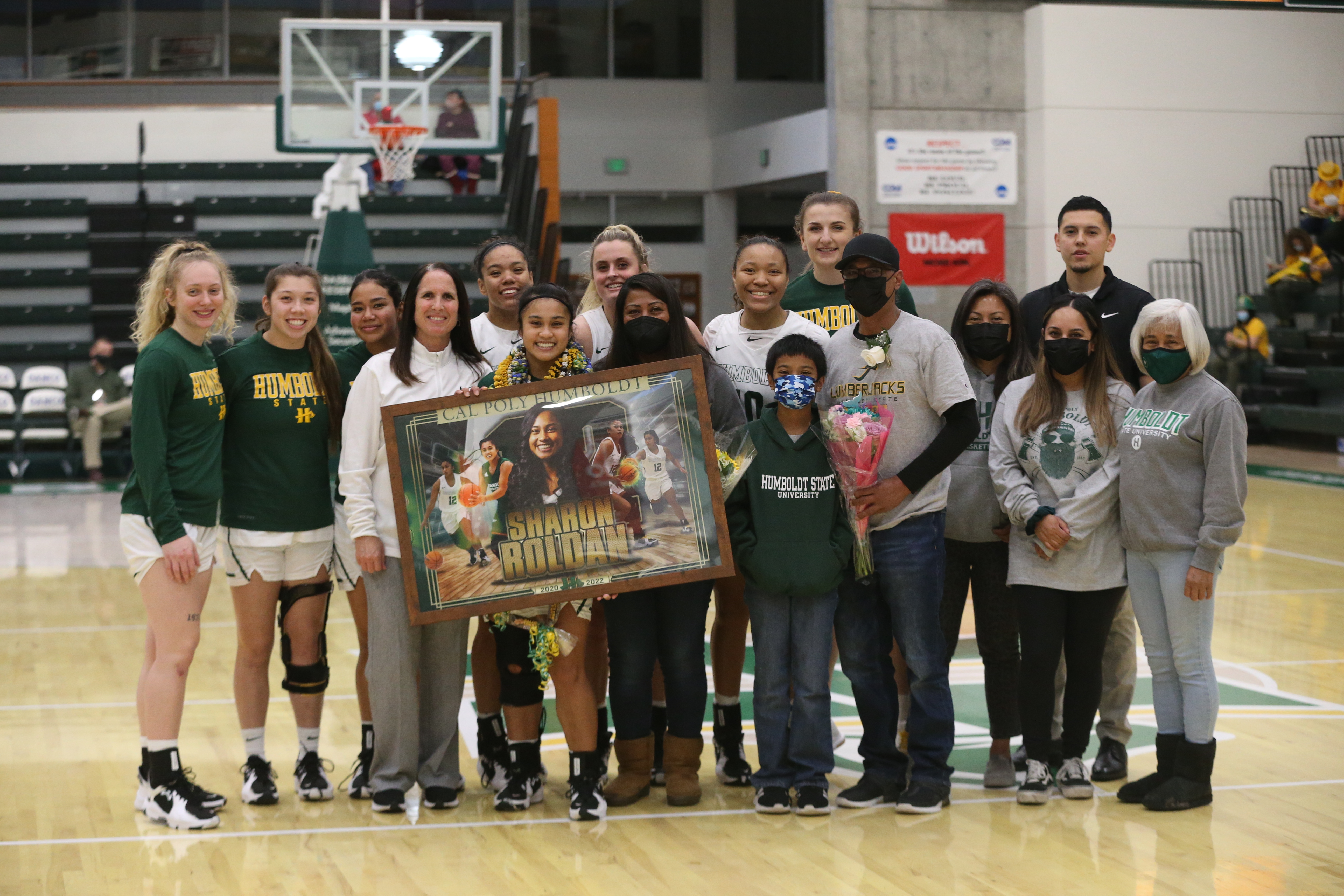
    Two seniors celebrated their college basketball careers for Humboldt in the Lumberjack Arena on Saturday night.

    For the women, Sharon Roldan closed out her second season for the ‘Jacks with 8 points and an emotional moment at the end of the game with her coaches Michelle Bento-Jackson and Guillermo Blas, who she said have had an amazing influence on her.

    “They helped me both on and off the court,” Roldan said. “Coach Blas especially, he would work around my work schedule too. I would always ask him ‘Hey, can you open the gym’ at 7 or 8am. He would always come no matter what.”

    Roldan also expressed how grateful she was that Bento-Jackson accepted her into the Lumberjack family.

    “I can’t thank her [Bento-Jackson] enough,” Roldan said.

    On Thursday night, she scored a career high 20 points and left it all out on the court.

    On the men’s side, Amari Green finished off his fourth straight season with the Jacks, playing 38 of his total 2,054 minutes on Saturday and scoring 10 points.

    “Amari’s meant a lot to this program,” coach Tae Norwood said. “We got this memoir that we utilize: I give myself for the team. He represents that to the fullest.”

    Green said he was very grateful for the memorable night he had celebrating his career here at Humboldt. His family was up in Humboldt for this game and he said how it was amazing to have them and his teammates supporting him.

    “I just loved it,” Green said. “Thank you to the environment, thank you to the fans for coming out, and it’s everything I thought it would be.”

    Both of these teams faced a lot of challenges and adversity during the season and showed a lot of perseverance through it all. They were hit with a lot of injuries and absences and showed their character by never slowing down, even when the results didn’t always show.

    “Obviously our record is not indicative of what these girls went through, however I do feel like we underachieved in certain areas too,” Bento-Jackson said.

    Even though the team will not be playing in the conference championship tournament, the coach did show a lot of optimism about the experience all of the returning players have gained this season from their minutes and believes they will move forward and become much better next year. Norwood had similar feelings about his team, touching on how they always play hard.

    “When we got eliminated from this conference tournament about 3 or 4 games ago, some teams tank it and just go through the motions,” Norwood explained. “I thought these guys came and practiced hard and practiced with great intensity.”