The Lumberjack


Students Serving The Cal Poly Humboldt Campus and Community Since 1929

Tag: Cal Poly University Humboldt

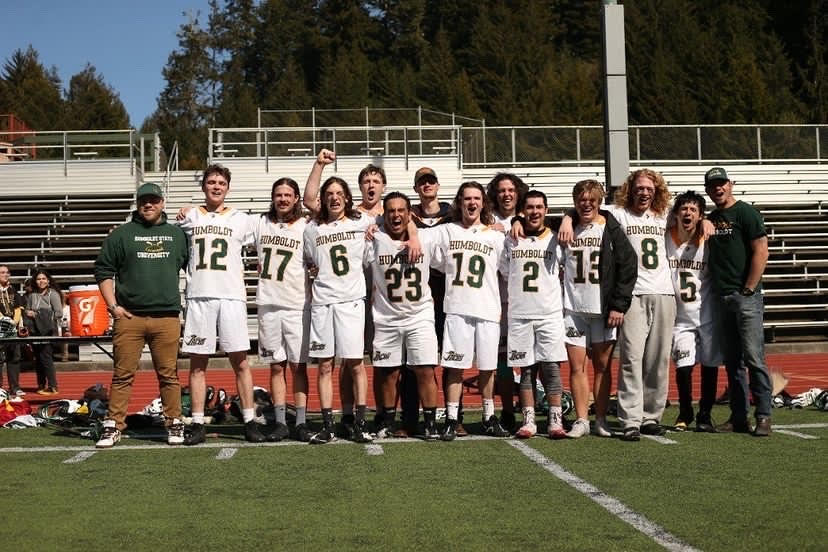
  • Cal Poly Humboldt Lacrosse team is looking to build with a much bigger roster

    Cal Poly Humboldt Lacrosse team is looking to build with a much bigger roster

    by Jake Knoeller

    It’s 5 p.m. on a Tuesday night early in September in the Fieldhouse. Training is already off and running. Many members of the team are very excited about what this team can potentially bring, especially with their newfound depth after struggling to finish last season due to a low amount of players. 

    “We’ve got numbers now,” said team captain Zack Gamble. “We spent all summer recruiting and finally having a full crew of guys that really know what they’re doing is an awesome feeling.” 

    Gamble has been playing lacrosse for 12 years, and his hard work is what earned him the position of captain. 

    “We put in a lot of time and a lot of work,” said Gamble. “It’s paid dividends so far.” 

    He is a goaltender, which comes with a lot of responsibility. According to him, lacrosse is a very robust sport. 

    “There’s something in it for everybody,” said Gamble. “Whether you like to be more physical like a hockey player, or be a little finesse-oriented like a basketball player.” 

    Gamble believes that once they get everybody on the same page and bonding as a team they will be a force to be reckoned with in the league. The coaches are also all in on this team after stepping up to find more players over the summer. 

    “We’ve got a lot of experience,” said head Coach Augustus Johnson. “A lot of these guys out here are new players for us but they all played in high school or they’ve played some kind of club ball a little bit.” 

    Johnson is hoping for the team to work on their game IQ before their first game.

     “I really want these guys to know what to do and when to do it,” said Johnson. “I want these guys to be like Steph Curry and just don’t stop running even when they don’t have the ball.” 

    Having the ability to substitute more with higher numbers will allow players to do this. Assistant coach Daniel Eggert feels good about the way the team connects and his relationship with the players. 

    “Last year I kinda got thrown in late into the year and it was a tough season all around, but you know I connected with everyone pretty well,” said Eggert. “It’s been much better this year so far, I mean the season’s looking pretty good right now.” 

    Eggert said the team is specifically skilled with their short-pulls and many of the players can rip the ball well. He said they just need to get to know each other better so they can be good at working together when it’s time to officially take the field. 

    The team will have to wait until February 2023 for their first official game, but they are planning to play some scrimmages in October and an alumni game on Nov. 5. 

    “That’ll be this current squad against myself and some of the other Humboldt alumni,” said Eggert. 

    Their early start to training shows how dedicated this team is to being successful. They have numbers and depth this year, which means they’re aiming to step up from the last few years.
  • Reese Bullen Gallery features faculty artwork

    Reese Bullen Gallery features faculty artwork

    by Nina Hufman

    The Staff and Faculty Exhibition is now open at the Cal Poly Humboldt Reese Bullen Gallery, featuring artwork created by members of the art department.

    The exhibition will run until Oct. 15. It features a variety of mediums from all of the divisions of the art and film departments. Isabela Acosta, a gallery attendant and art history major, was excited about the variety of work presented. 

    “It’s literally every faculty member from every art sector, and they’re presenting their work here which is super cool,” Acosta said. “You have jewelry, ceramics, sculptures, paintings, some videos, there’s some digital art that’s really cool. It’s just like a whole nebula of stuff.” 

    Photo by Angel Barker | Sarah Whorf’s “Palm to Pine”, 2005 at the Reese Bullen Gallery on Friday. The piece is a photo screen print construction.

    Students were excited to see their teachers’ work in a gallery setting. Jack Miklik, an English major, talked about the importance of featuring faculty work.

    “They’re practicing artists and teachers,” Miklik said. “It’s good to like, look and see if you enjoy the work that your instructor is making. I think it’s like one of the more important shows as students for us to see in the art department.” 

    Many of the artists featured in the exhibition were heavily impacted by COVID-19. Their works feature themes of isolation and a desire for connectedness. 

    “A lot of this work I think was done during like COVID so when you read their little manuscripts they just talk about like what they were doing during COVID and what came out of it,” Acosta said. 

    Dave Woody, a photography and film lecturer, has two pieces in the gallery. “Gabe” and “Madeline” are both silver gelatin prints created in 2022. In the card next to his work, Woody discusses how the pandemic has impacted his art.

    Photo by Angel Barker | Sarah Whorf’s “Palm to Pine”, 2005 at the Reese Bullen Gallery on Friday. The piece is a photo screen print construction.

    “The lessons learned during that period of isolation really helped me to value the time that I do have with friends and strangers,” Woody wrote. “These photographs included in this show feel reflective of my current state of thinking about images of people- a desire to connect and to embrace the beauty and mystery of life.”

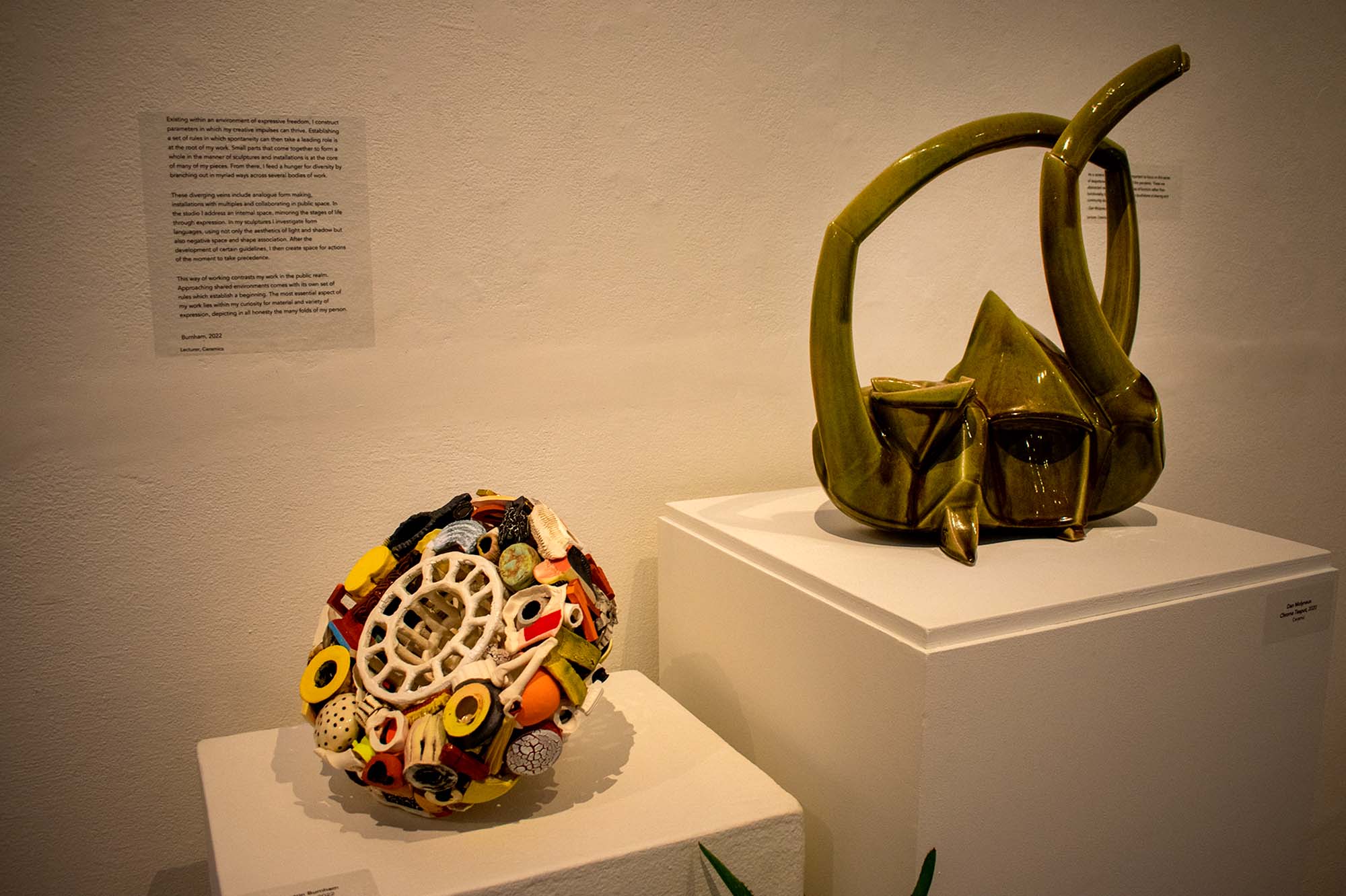
    Dan Molyneux, a lecturer specializing in ceramics, also wrote about his experience of the pandemic. His featured work “Chroma Teapot” is part of a series of ceramic teapots that were created during the pandemic. 

    “As a ceramic sculptor, it became important to focus on this series of teapots/ewers over the course of the pandemic,” Molyneux wrote. “These are abstract vessels that project an idea of function rather than functionality itself but served me as a touchstone of sharing and community during a very isolated time.”

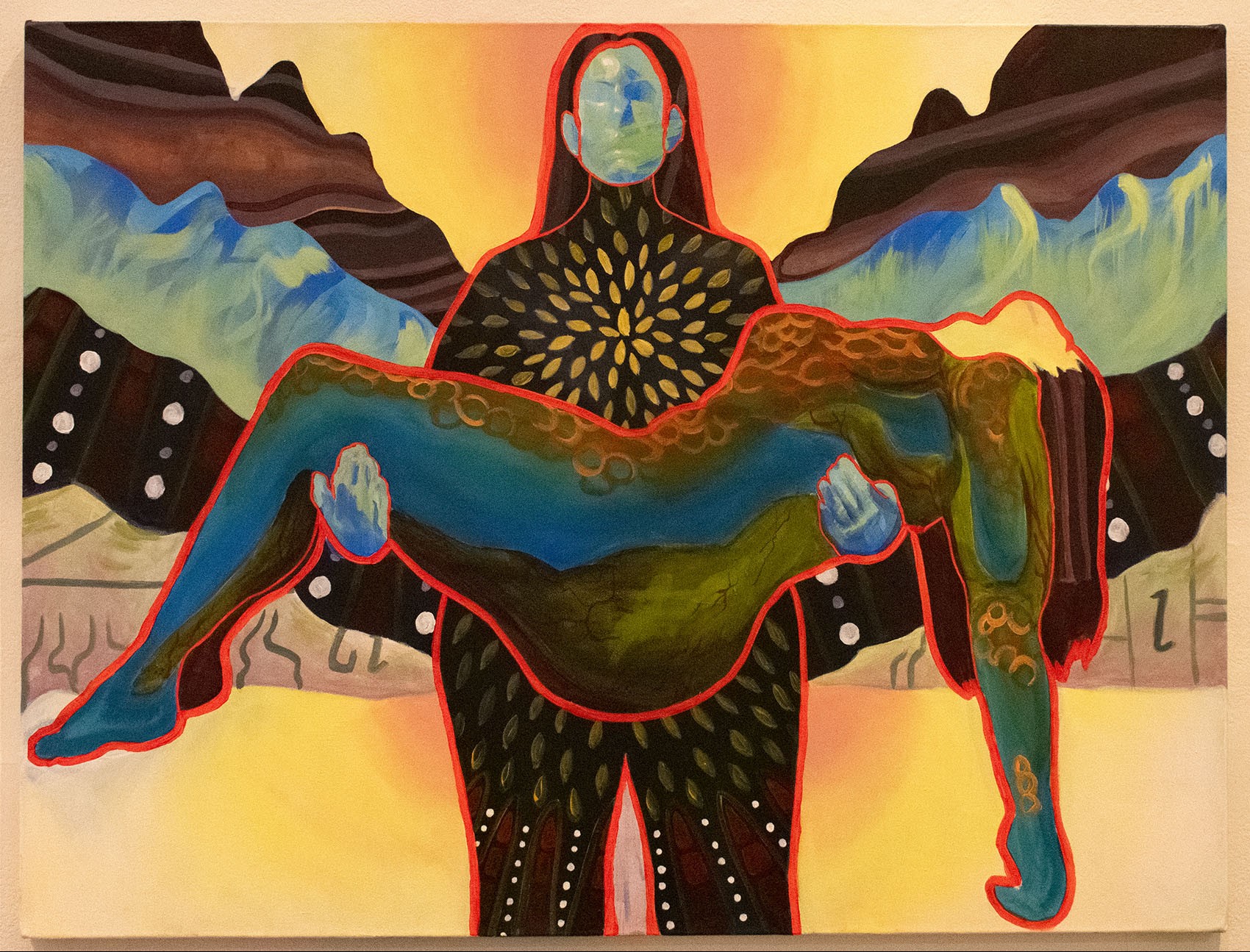
    COVID-19 was not the only subject of the faculty artworks. Sondra Schwetman, an associate professor who specializes in sculpture. Her piece “Witness” was created in 2019 from fabric, pigment, and steel. In her description of the piece, Schwetman writes about how her work embodies the themes of the female experience. 

    “My current body of work addresses the ambiguous space between reality and fiction where the female form and therefore females often dwell,” Schwetman wrote. “The works in this series concentrate on psychological, religious, cultural, and social issues that impact women everyday such as: reproduction and reproductive rights, illness and COVID-19, class systems, colonization, compliance, silence, and war.” 

    Marilyn Koch, a visiting faculty member who specializes in jewelry and small metals, discussed the concept of “self” in her two featured works, “We are a colony,” and “Year 30: Age Badges.” The pieces utilize unique mediums like hair and synthetic teeth.

    Photo by Angel Barker | Sarah Whorf’s “Palm to Pine”, 2005 at the Reese Bullen Gallery on Friday. The piece is a photo screen print construction.

    “It is egocentric in nature and at first glance, coyly uses replicas of the human body to simultaneously repel and entice us,” Koch wrote. “Beyond the skin, teeth, or hair, are themes of ephemeral youth, community, social norms, and a prominent objective: A desperate attempt to define the Self.”

    A wide variety of mediums and subject matter means that there is something that everyone can connect with. 

    “My favorite piece is this painting over here and it’s called ‘From palms to pines.’ It’s just about moving from SoCal to up here,” Acosta said. “There’s like the map of Los Angeles and Orange County that goes into the map of Humboldt County.”“Gina [Tuzzi]’s paintings are really nice,” said Martin Lopez, an economics and studio art major. “And the cars, the ceramic cars, are pretty sweet. Yeah, that shit’s tight.”

  • It’s time to axe the Lumberjack

    It’s time to axe the Lumberjack

    by Oden Taylor

    Pioneer, prospector, lumberjack— what do they all have in common? A significant role in the colonization of North America and a place as a California State University mascot. CSU mascots are rife with cultural insensitivity and, at times, blatant racism— if you don’t believe me, just google the San Diego State University Aztec Warrior

    The names of CSU campus newspapers also nearly always correspond with the school mascot. For example, CSU East Bay’s mascot is Pioneer Pete and the school paper, “The Pioneer.”   

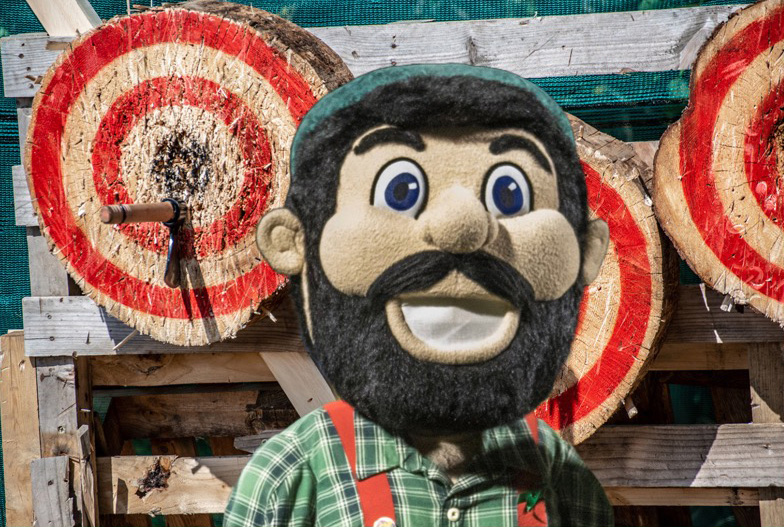
    At Cal Poly Humboldt, “The Lumberjack,” both as a mascot and the name of our paper, symbolizes white supremacy and colonization. It is time for a change, starting with us. The Lumberjack must change its name to continue the removal of white power structures and symbols from indigenous land.

    Lumberjacks worked alongside prospectors during the gold rush, making way for new settlers to build towns and ravage the land for its resources. After the gold rush ended, lumberjacks cleared old-growth redwood forests well into the twentieth century.  

    In fact, only 5% of the original old-growth redwood forest stands from Southern Oregon to Central California, according to the Save the Redwoods League

    There have been many name changes taking place across Humboldt county, from the Gutswurrak Student Activity Center here on campus to the name restoration of Sue-meg State Park. This change comes after nearly 170 years of being called “Patrick’s Point” for Patrick Beegan, a private land owner and accused murderer of Indigenous people, including a Yurok boy. 

    As of 2018, CSU Long Beach abandoned its longtime mascot, Prospector Pete, for Elbee the Shark. Shortly after CSU East Bay claimed to do the same, saying goodbye to Pioneer Pete. Four years later they have yet to choose a new mascot, according to their website

    Unfortunately, despite the example set by other schools and the opportunity presented by an expensive rebrand, Cal Poly Humboldt did not find it necessary to retire the Lumberjack, telling El Leñador in March that there are no current plans to change the mascot.

    Though Long Beach has chosen a new mascot, neither campus changed the name of their newspaper. They remain Long Beach’s Daily Forty-Niner and East Bay’s The Pioneer. This lack of meaningful change promotes white supremacy in newsrooms, including ours. 

    We must move beyond just acknowledging the land we occupy and think critically about the messages we distribute and the symbols we use on it. 

    All CSU campus newspapers should reconsider what they call themselves and why. Does your publication’s name honor and represent your campus community? 

    It’s time we axed the Lumberjack. If the administration isn’t willing to do it, the change must start with us

  • An ode to “The Laundry”

    An ode to “The Laundry”

    by Jack Hallinan

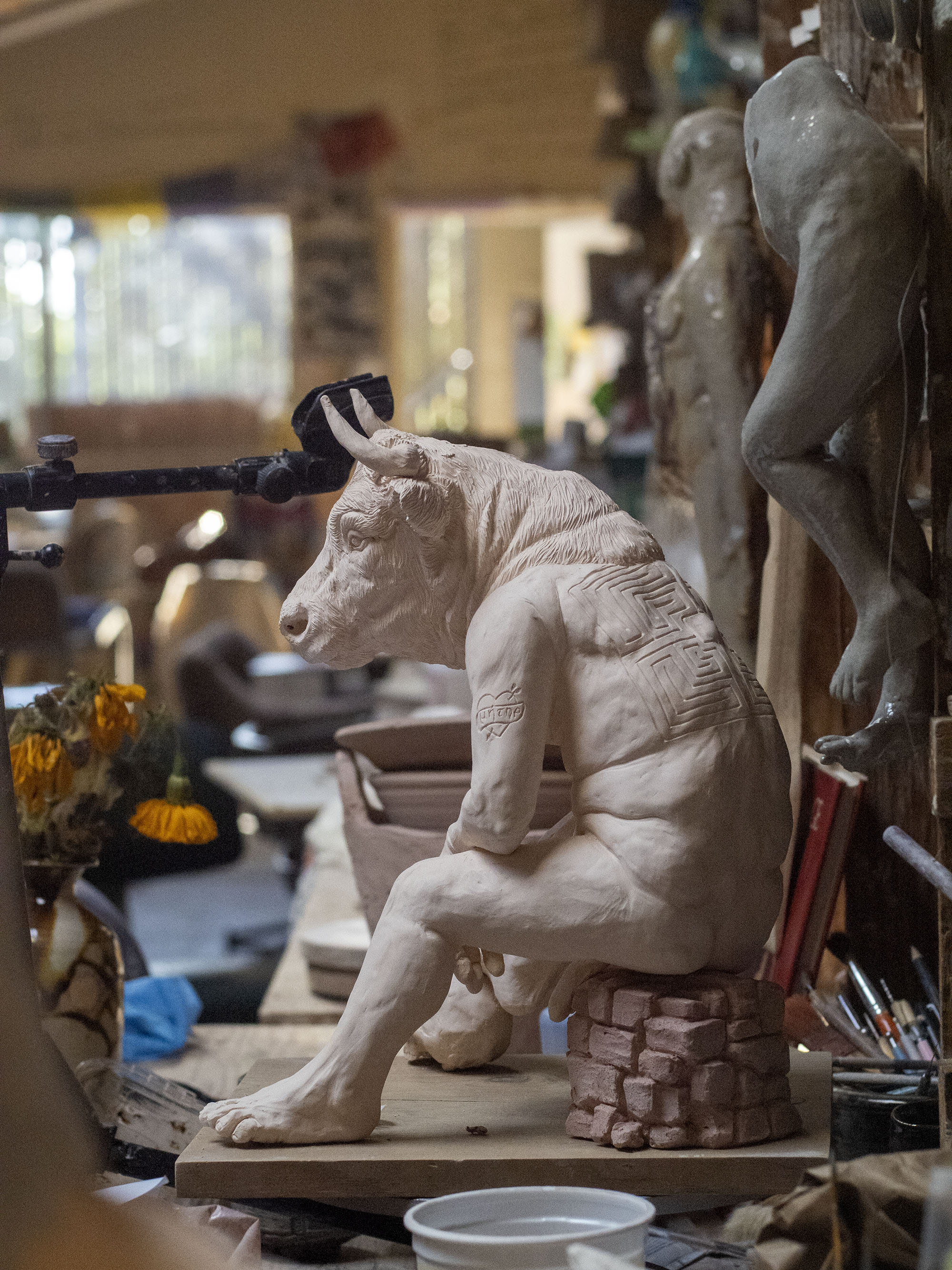
    Anyone who has paid a visit to the ceramics lab here at Cal Poly Humboldt knows that it’s not your typical classroom. The run-down warehouse looks more like an abandoned industrial space invaded by artsy 20-somethings, which, after a look at the history of the building, isn’t far from reality. However rough around the edges the lab may be, it is well loved by ceramics students and staff alike, which is why the recently proposed demolition of the building and its replacement with new housing and parking structures is a controversial topic. 

    While the new construction will provide much-needed parking and housing for Cal Poly Humboldt’s growing student body, the demolition of the art spaces is a cause for some sadness and reflection for the university’s ceramics veterans. Keith Schneider, who retired from his twenty year career as a ceramics professor at Humboldt last spring, reflected on the history of the building as well as his own personal connection to the space. 

    “Over the past 50 years, tens of thousands of students have developed their work and

    honed their skills here, made lifelong friends, and some even met their future spouses

    here in the lab,” said Schneider. 

    The lab’s long history begins with the Arcata Laundry, a commercial laundromat once located in the current ceramics lab location. Reese Bullen, who developed the ceramics program at Humboldt, was successful in purchasing the space under the condition that as a temporary lab, no major structural improvements were to be made to the building. In 1969, the ceramics department staff and students moved all of the laundry equipment out of the space themselves, and replaced it with the ceramics equipment that had previously been stuffed into an undersized room in Jenkins Hall. The ceramics lab continued to be endearingly referred to as “The Laundry,” and in the first few months of its existence as a classroom, former Arcata Laundry customers would wander into the studio with bags of dirty clothes wondering if they could still get them washed. 

    The proposed demolition of this unconventional yet beloved space is one of many small changes occurring throughout campus. The ROSE house and Bret Harte house are also set to be demolished, a decision that has received pushback from students and staff who feel that the charming, if outdated, buildings enrich the character and history of Humboldt’s campus. 

    “Someone said, the best art is made in spaces that look the least like classrooms,” Schneider said. “If you get a chance to walk through the lab, you will get a sense of what our students love about it. It’s not a classroom, it’s a funky old run-down industrial space, with remnants of the past everywhere you look.” 

    Since transitioning to a polytechnic university, Humboldt has received state financial support for the construction of several multi-million dollar projects. At least ten new buildings are listed on the school’s “Infrastructure Projects” web page, mostly including science labs and housing. Included in the prospective are plans to construct a new Campus Apartments building and parking structure where the current residence and ceramics and sculpture labs are now located. 

    According to the web page, the building complex will consist of “600-700 beds in total that will be built in relation to a new 650-stall parking structure.” While Cal Poly Humboldt students are undoubtedly in need of both housing and parking, a vital part of campus culture and art will be replaced by the facilities. Brandy Ayon, who is currently enrolled in their second class in the ceramics lab, expressed this sentiment. 

    “I will miss it. It’s bittersweet,” said Ayon. “The old-timey-ness and roughness of the building is very Humboldt. I’ll miss it, but I’m excited for the new opportunities a new space will bring.” 

    Ayon hopes that the new space will be like a blank canvas for students. It is unclear where the new studio will be located, or when it will be ready to use. The demolition of the ceramics and sculpture studios is proposed to be completed by 2026 and is expected to cost $2.5 million.  

    “A new building may come with all the latest technology, but the character and quality that students have come to love about the Laundry would be very difficult to recreate. A huge part of history will be lost when/if this building goes,” said Schneider.

  • Parking problems perpetuated by parking pass sales

    Parking problems perpetuated by parking pass sales

    by Nina Hufman and Cash Rion

    Every day, Cal Poly Humboldt students drive through full parking lots past rows and rows of parked cars as they desperately and often fruitlessly search for the rare and elusive open parking spot. This is the result of the university selling an excess of both general and residential parking passes in tandem with an increase in students due to the school’s new polytechnic status. There are more active passes than there are permitted parking spaces on campus, with active passes including both semester and year-long parking passes.

    “I’ve heard from a lot of students that don’t live on campus that it can be hard to find parking unless you get here really early,” said Evan Vieira, a wildlife and conservation major. “I’ve known students who have gotten here only as late as 9 or 10 am and have not found parking.”  

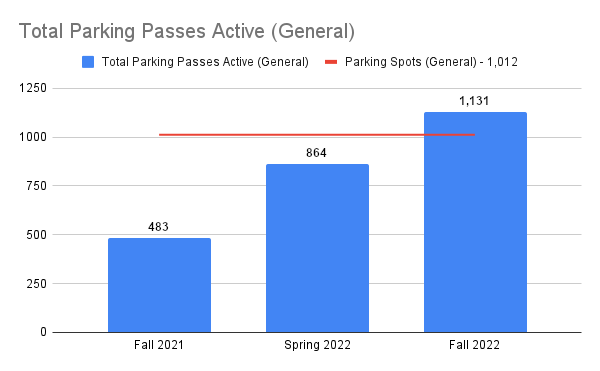
    A public records request revealed that, this semester, Cal Poly Humboldt oversold parking passes for both general and residential parking. As shown in the graphs, overselling parking is a growing trend across semesters, with 119 more general passes sold than there were parking spots, and 431 excess residential passes.

    “It sucks total ass,” said art education major Mikayla Nicholas. “I don’t personally drive but I have friends who do and it takes them at least 20-40 minutes [to find parking.] They sell way too many parking passes than they have spaces.” 

    The number of general parking passes sold has increased from last year. The number of active general parking passes increased by 79% from fall 2021 to spring 2022. The number of active general parking passes for fall 2022 has more than doubled since fall 2021, but the number of general parking spaces has remained the same. 

    Total active residential parking passes

    Meanwhile, sales of residential parking permits have stayed relatively consistent, being oversold each semester. In fall 2021 and fall 2022, 431 more passes were sold than there were spots for, and in spring 2021 the number rose to 579 oversold. Anyone with a residential permit that cannot find a space in resident-specific lots overflows into general parking lots. This further contributes to the lack of general parking.

    “I think it’s alright most of the time if you live on campus,” Vieira said. “I live in campus apartments so my car doesn’t move that often, so I’m typically in a parking spot.”

    While those who live on campus can generally find parking, students who drive to campus are becoming increasingly upset at the lack of available parking.

    “Horrible, absolutely horrible,” said Harrison McDonald, a wildlife management and conservation major. “Since I have an 8 am, I get pretty lucky, but when I don’t, it takes me anywhere from 10 to sometimes even 40 minutes if I can even find parking.”

    Many students are frustrated that they pay for general parking passes, only to have to pay for metered parking or to be unable to park on campus.

    “Humboldt for the year, you pay over 300 dollars for [a parking pass] and you’re not guaranteed a spot and you still have to pay for parking meters,” McDonald said. 

    Other students are frustrated by the message that they feel overselling parking passes sends. The university profits from parking pass sales, but has nowhere to put the extra vehicles. 

    “I did not know that [parking was oversold],” Vieira said. “I feel like that’s not great because then you’re kind of saying to a lot of students, ‘you can all park here,’ but then not actually having the spaces to give them parking.”

  • Scene Kids Make A Scene At Emo Night

    Scene Kids Make A Scene At Emo Night

    by Ione Dellos

    During the pandemic, the Van Duzer Theater Hall sat empty, no encores, no cheers, just silence. Tonight, that all changed. Dozens of black-clad students flooded the doors of the theater, brimming with anticipation for the chance to see one of their favorite songs from middle school played live before their eyes. There was no shortage of smudged eyeliner among the patrons who filled the theater for the sold-out show. 

    With this level of attendance for a show, there are a lot of moving parts involved. Amanda Kachevas, Programming and Event Coordinator for Center Arts, told me about the planning behind this event. They booked the band six months in advance, and had been setting up the concert since 10 am. The event ends at 1 am, so the Center Arts crew will still be there until 2 am breaking the whole thing down. When I asked Kachevas if she gets to go to sleep, she laughed at the prospect.

    “Never!” Kachevas said.

    At around 8:40 pm the band took the stage, and instantly started the show off with an electrifying on-stage presence. Their lead singer, Marcus Leonardo, belted out beloved emo numbers such as “I’m Not Okay” by My Chemical Romance and “Sugar, We’re Going Down” by Fall Out Boy. The lead guitarist, Stephen Henry, leapt around the stage as he shredded run after run, and would even place his guitar behind his head for complicated solos. 

    Concertgoer Liam Boyd, asked if he was having a good time at the show, responded enthusiastically.

    “YEAHHH!” Boyd said. 

    He beamed with joy that the band had played his favorite song, “Welcome to the Black Parade” by My Chemical Romance, just moments before. 

    The crowd coursed with energy, further fueled by the band playing nostalgic hit after hit. Songs from the concert included “Sugar, We’re Going Down” by Fall Out Boy, “I’m Not Okay” and “Teenagers” by My Chemical Romance, “King For a Day” by Pierce the Veil, “Dear Maria, Count Me In” by All Time Low, “American Idiot” by Green Day, “I Write Sins Not Tragedies” by Panic! At The Disco, and more. 

    Large crowds need an even larger security detail, so I asked the Center Arts staff what it’s like to work these events. Lavender Deng, a second-year student at Humboldt who works security for Center Arts, told me a little about what it’s like to work security for the school. 

    “It’s fun,” Deng said. “You just get to watch all of the shows and make sure nobody brings in something that they’re not supposed to.”

    Watching the electrifying setlist, I knew that I needed to get closer to truly capture the band’s presence. Thanks to the help of two concertgoers, Vance Fewell and Taylor Danel, I was able to work with the Center Arts staff to get in front of the barricade. Words cannot describe how incredible it was to get to see the musicians perform less than two feet from my face, and feel the barricade shake behind me as the crowd rocked with the music. 

    Overall, this was a wonderful concert, and it was a hell of a way to relive my middle school years (minus the middle school part).

  • Cal Poly Humboldt’s vertebrate museum opens to the public for the first time

    Cal Poly Humboldt’s vertebrate museum opens to the public for the first time

    by Alina Ferguson

    Cal Poly Humboldt’s campus has a vertebrate museum, dedicated to skulls, skeletons, skins, and tissue from various mammals and vertebrates, such as rats, mice, and sea mammals native to Humboldt county. This student-run museum has about 15,000 specimens, 9,000 of which are available for viewing. 

    The museum is now allowing all students a peek into their collections, which include rodents, otters, seals, and taxidermied elk. Students are also able to view the anatomical study processes such as dissection and labeling.

    Previously, the collection was only accessible to students within the wildlife major. The students would look through the collection and study the specimens, testing their ability to identify them. Now, for the first time since the museum was established in 1969, the museum is open to all students during their open hours on Monday from 11am to 4pm, and Tuesdays through Fridays 12pm to 5pm.

    Shea Daly, a senior who works in the lab and does most of the preparations, extended an open invitation to all students.

    “On the last Friday of the month, we are going to have open labs and live dissections, so come in and ask questions,” Daly said. “We are also trying to start up scientific drawing classes.” 

    Daly added that students from all majors are welcome to come in and watch the process of dissecting and skinning the animals.  

    “The students are very hands-on. They can do preps, they can do skeletonizing, which is the process of dipping the bones into an ammonia bath to make them whiter,” Daly said.

    In the past, the staff would forage and scrounge for their own specimens. According to Collections Intern Ezra Alberts, now they get most of their specimens from donations, people finding roadkill on the highway, and the marine mammal training program. 

    Silvia Pavan, the faculty advisor and grant funding organizer to the museum, explained that they typically only need to work with the skull of the animal, as it provides the most information. The rest of the bones are disposed of in a biohazard bin if there is no room for them in the lab or the museum. 

    Opening a freezer full of numbered vials of tissue samples, Pavan explained the process of tagging each animal and the importance of it. Once an animal has been skinned and deboned, each corresponding part must be labeled and numbered. This tracking lets them trace where the tissue samples came from, the food samples of the animal, and the genealogy of the species.

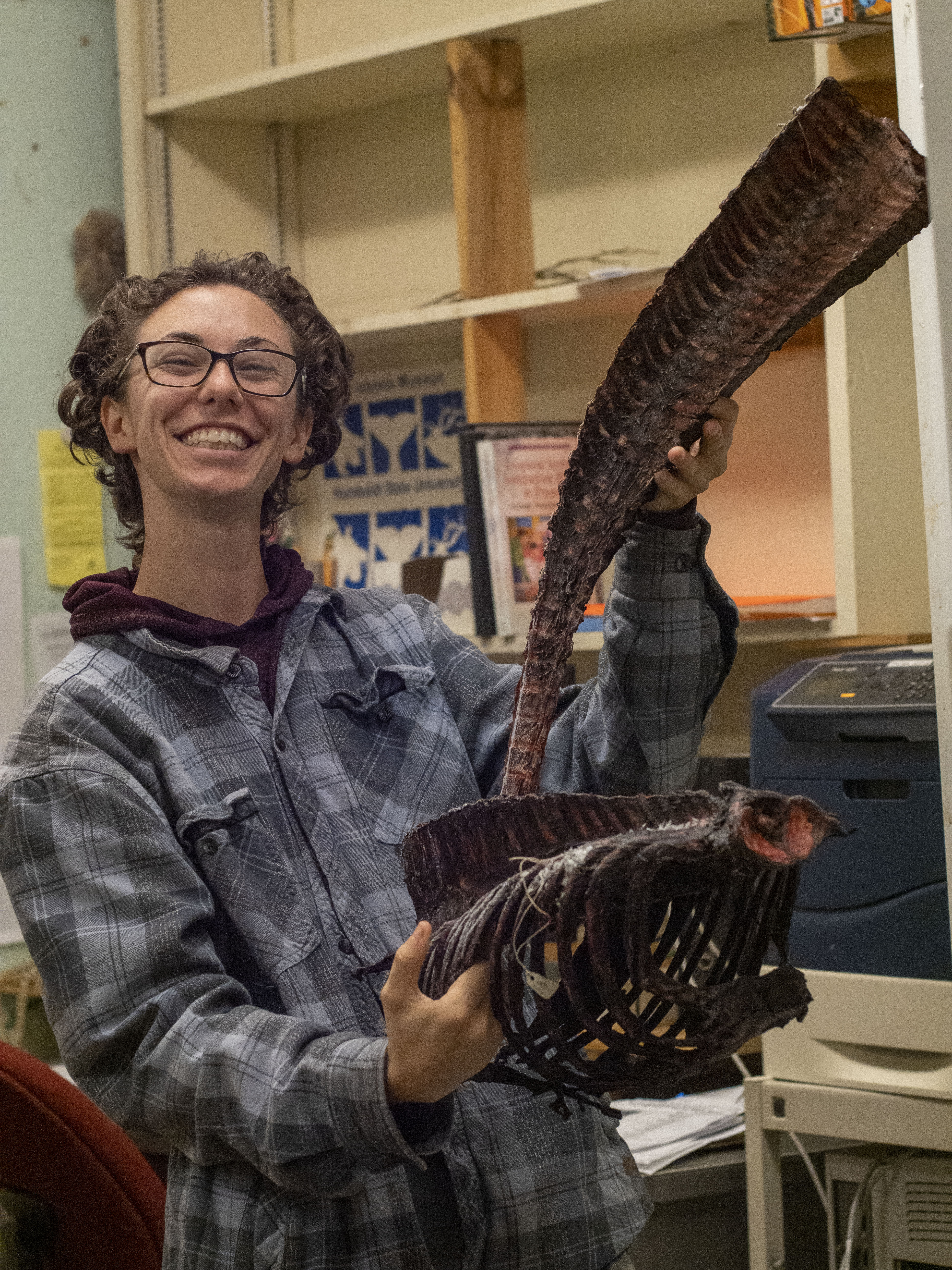
    The museum has a second room, the bug room, where they process the bones that have any remaining flesh or tissue still attached. The bones are placed into a container, where dermestid beetles eat away at everything but bone. Depending on the animal, the carcass may be there for a few days or a few weeks. 

    A large portion of the work the museum does is tissue sampling, genetics, and CT scanning. This work helps the scientists determine what it ate, where it came from, and ultimately, what killed it.

  • Against campus “cop-liments”

    Against campus “cop-liments”

    by Alana Hackman

    A few weeks ago, I accompanied a friend to the University Police Department after her wallet went missing during the Durand Jones and the Indications concert.

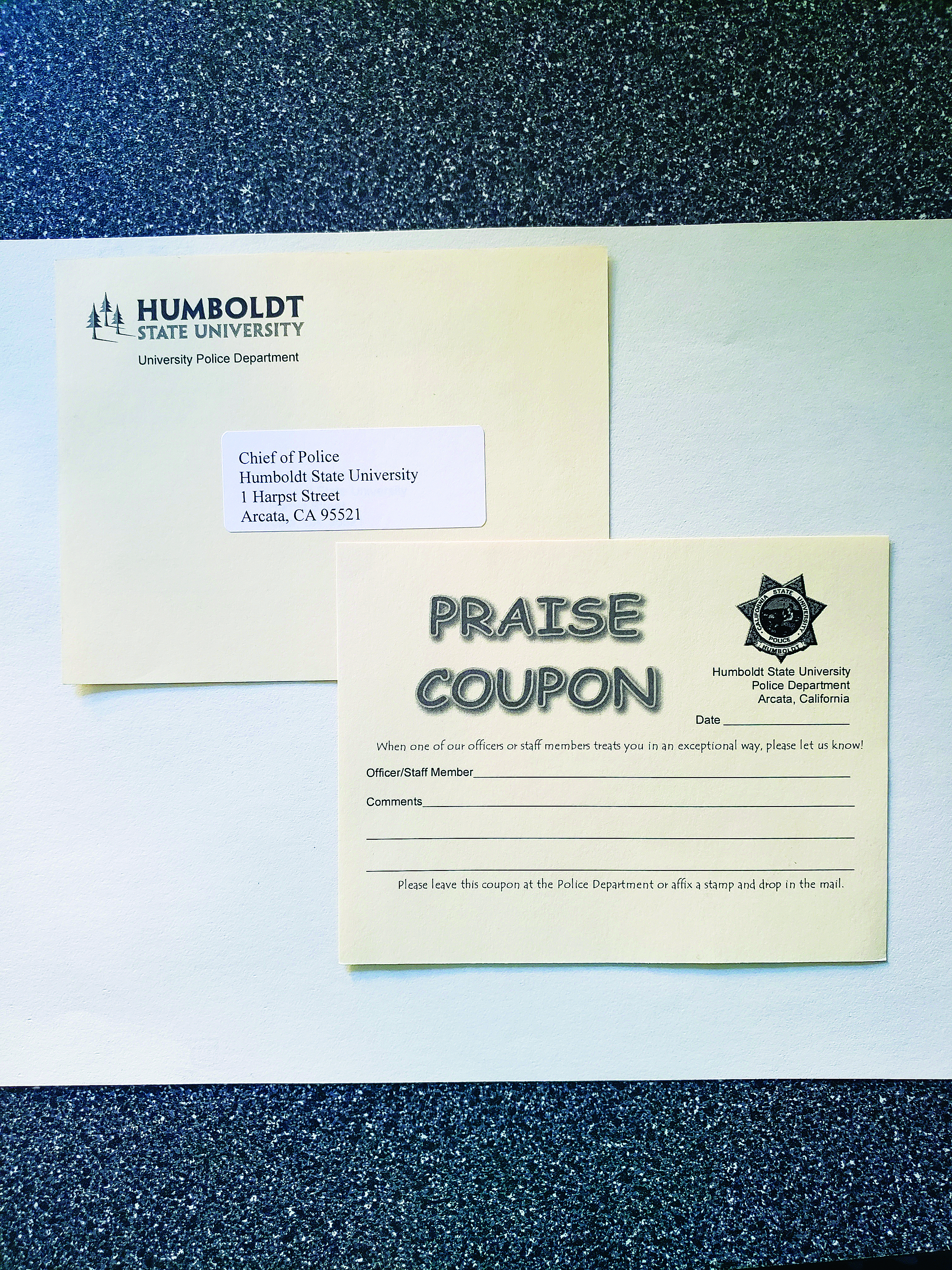
    While in hopeful pursuit of her wallet, I was quickly reminded of the dystopian nightmare we live in when I came face to face with a neatly stacked pile of yellow “PRAISE COUPONS” prominently displayed atop the UPD information desk. “When one of our officers or staff members treats you in an exceptional way, please let us know!”, the coupons exclaim in a migraine-inducing font combination of Papyrus and Comic Sans. There are also blank lines left for comments and the name of the officer or staff you wish to praise. 

    Good to know our Cal Poly windfall went to these babies. Who would’ve thought University police would need “good job” stars to get their jobs done? Although the pile did look pretty untouched the last time I saw it. After this experience, I pondered the reason for these praise coupons’ existence. 

    I wondered why UPD officers are the only ones with access to these praise coupons. Why can’t I give one to the nice lady at the housing desk? Or the groundskeepers who wake up at 5 a.m. to beautify our campus? Why isn’t there a pretty little stack of coupons at every help desk on campus to show some love to our staff? Sure, I could make my own coupons to show my appreciation, but how come the UPD gets the fancy ones on cardstock?

    I then began to wonder what the reason would be for an officer to receive these praise coupons.  Refraining from use of excessive force? Oh, I know, maybe we actually got someone to stay in the position of police chief for longer than a year?

    Then it hit me. It was right in front of my face the whole time. Praise kink. I realized that maybe all of the UPD officers might just have a little bit of a praise kink. Hey, I’m not judging you! This is the only plausible answer to why you have “PRAISE COUPONS” strewn about your department. I mean, you even give people the opportunity to mail the coupons to you if they slap a stamp on them. At least you’ve made it easier for the sender by pre-addressing them to the Chief of Police on the back of each card. It comes off as a little desperate to me, but I’m not here to yuck your yum. 

    I may have judged you too soon, UPD, when you’re just trying to find some pleasure in your work—literally. I wouldn’t say incorporating others into your fantasies is the most humane choice, but you’ve gotten away with far worse human rights violations. 

    For real though, students: show some appreciation for university staff that help you with your daily dilemmas without needing a PRAISE COUPON. Cal Poly Humboldt would crumble without their behind-the-scenes work. Remember kids, validate your local cop’s praise kink, because we don’t kink shame!

  • Cal Poly Humboldt spends nearly $16,000 replacing stolen sign letters over the summer

    Cal Poly Humboldt spends nearly $16,000 replacing stolen sign letters over the summer

    by Ollie Hancock

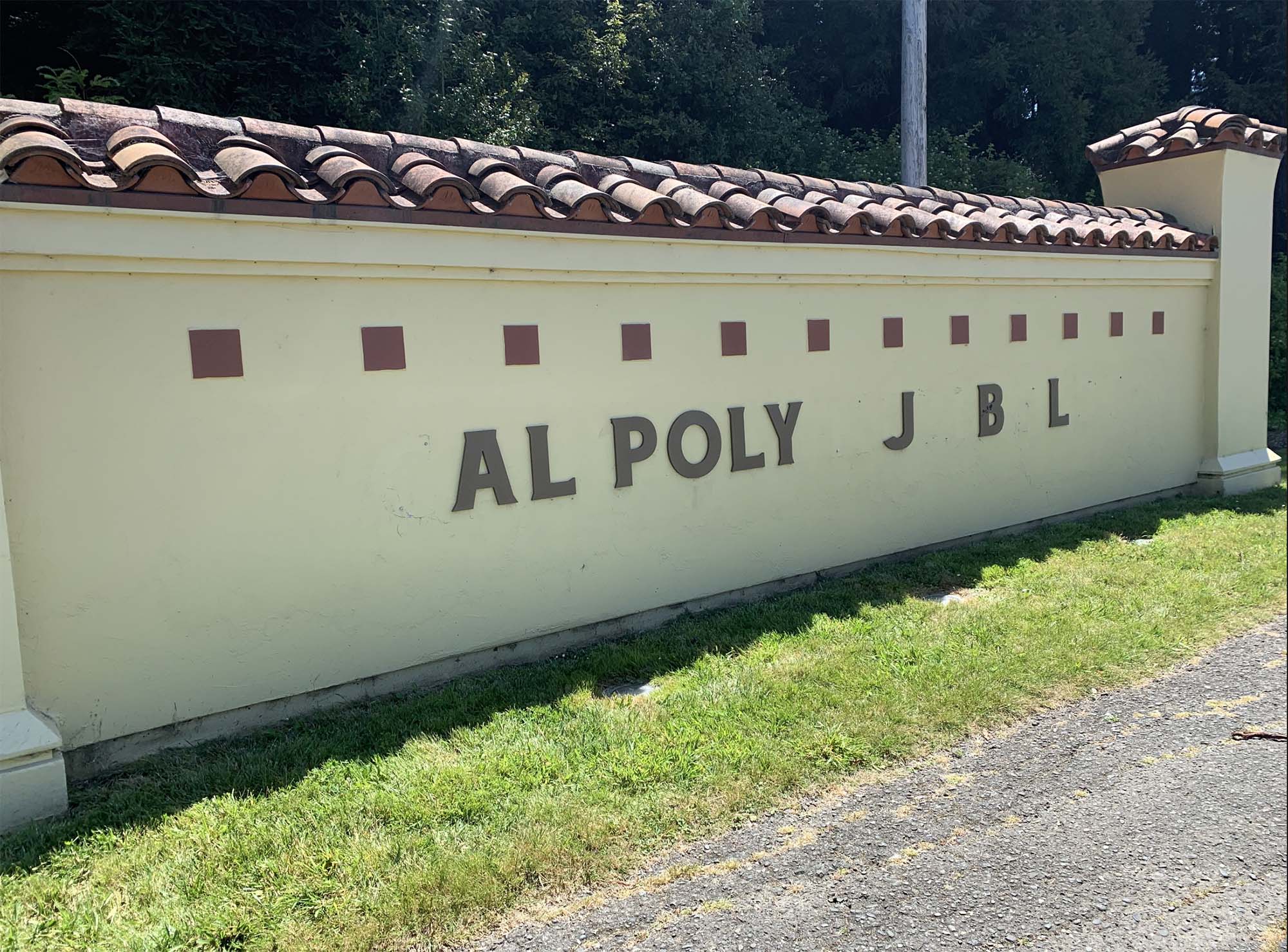
    Over the summer break, the iconic signs brandishing the school’s name lost their letters again and again. Vandals would rip the acrylic letters from the wall over the course of a few nights before they were replaced. The sign might stay intact for a few days, then the cycle would start again. The signs had only recently been changed to read “Cal Poly Humboldt” with the new polytechnic designation.

    The signs read like a game of hangman: “C_L PO_Y HUMBO_ _ _” one week and  “_AL _OLY _UM_O_ _ _” the next. Replacing the sign letters isn’t an easy process either. It requires one member of maintenance staff to place the letters on the facade while another climbs inside the sign to tighten them. An anonymous source, one of the vandals, explained that pulling them out was much simpler. 

    “It was easy,” the anonymous individual said. “They popped right off.” 

    When asked why they pulled the letters down, the vandal explained that they were dissatisfied with the school. They faced backlash over the anonymous chat app Yik Yak, where users complained that their actions would increase surveillance and police presence in the community. This appears to have been borne out, as cameras were installed on light poles facing some of the signs over the summer. 

    “I think that the school is wrong for bringing in more cops to solve the problem,” the anonymous source said. “Why spend so much time and money fixing it when you could do something to show legitimate support for the community instead? They seem more worried about the signs than their students.” 

    There were a total of 54 acrylic letters stolen or broken over the course of the summer. UPD is actively investigating these incidents as repeated acts of vandalism.

    “Unfortunately, signage is expensive and it’s costing the University thousands–nearly $16,000–to cover the amount of stolen lettering, replacement letters, and labor,” said Cal Poly Humboldt spokesperson Grant Scott-Goforth. “If we need to change all the signs to metal letters, it will cost the University at least an additional $12,000.” 

     “[UPD has] increased patrols, and we will pursue the maximum penalty when the people responsible for the vandalism are caught,” Scott-Goforth said. 

    For the last weeks of summer, the signs sat blank. Facilities Management was able to re-letter most of the signs by the start of the semester, so families and new students could identify the campus. Two signs still remain empty on the intersections of 14th and Union St., and 14th and B St. 

    In addition to the increased patrols and surveillance, the University is considering replacing the current sign letters with harder-to-remove metal lettering.

  • Comfortable at the Comfort Inn

    Comfortable at the Comfort Inn

    by Angel Barker

    Dorm life is an important part of the college experience, but what happens when your university does not have adequate housing for its population? They turn a hotel into a residence hall. The Comfort Inn in Arcata, located in the Valley West area, is now home to almost 100 upperclassmen students.

    The housing shortage is nothing new in Arcata. For students like Gabriela Mendez, a transfer student majoring in psychology, finding off-campus housing was unsuccessful.

    “I was hoping to find last minute housing off campus,” Mendez said, “but there was nothing.” 

    Mendez has a roommate in the hotel, as all rooms are double occupancy. Each is supplied with two beds, desks, and dressers.

    When asked her opinion about what it is like living in a hotel, Mendez said, “People can say ‘you don’t get the full college experience,’ and like, the college experience might be cool because I am a transfer student, but I am just grateful to have housing.”

    Osiel Palomino, a returning sophomore majoring in environmental studies and management, had the same reaction. 

    “If it wasn’t for that room, I would have held off on going back to school for another semester,” Palomino said. 

    Palomino lived on campus his freshman year in 2019-2020 right before the COVID-19 pandemic, and moved home and took a break from school until classes were back in person.

    Sarah Neumann, a business administration exchange student from Germany, is Mendez’s roommate.

    “We made a good situation,” Neumann said. “I like it because I think we have more space and privacy, especially with our own bathroom.”

    “One thing that I really love is each room has their own shower and bathroom. You don’t have to share one bathroom with the whole halfway, you avoid those problems,” Palomino said.

    In addition to each room having their own bathroom, they also have free amenities like linens, a minifridge, a microwave, TV with cable, housekeeping services, continental breakfast everyday, Wi-Fi, and pool and gym access.

    Compared to living in a freshman dorm on campus, Palomino said that living in the hotel still feels relatively the same.

    “You still feel the college experience because everyone living there is students,” Palomino said. “You still feel like you’re on campus even though you’re not.” 

    A large banner welcoming Cal Poly Humboldt students and the friendly front desk staff also help with that feeling.

    Staying connected can be difficult, but the RAs and the Office of Housing and Residence Life are hard at work to help the students feel included in campus life.

    “The RAs have little events, to make it feel like the real dorm college experience,” Mendez said.

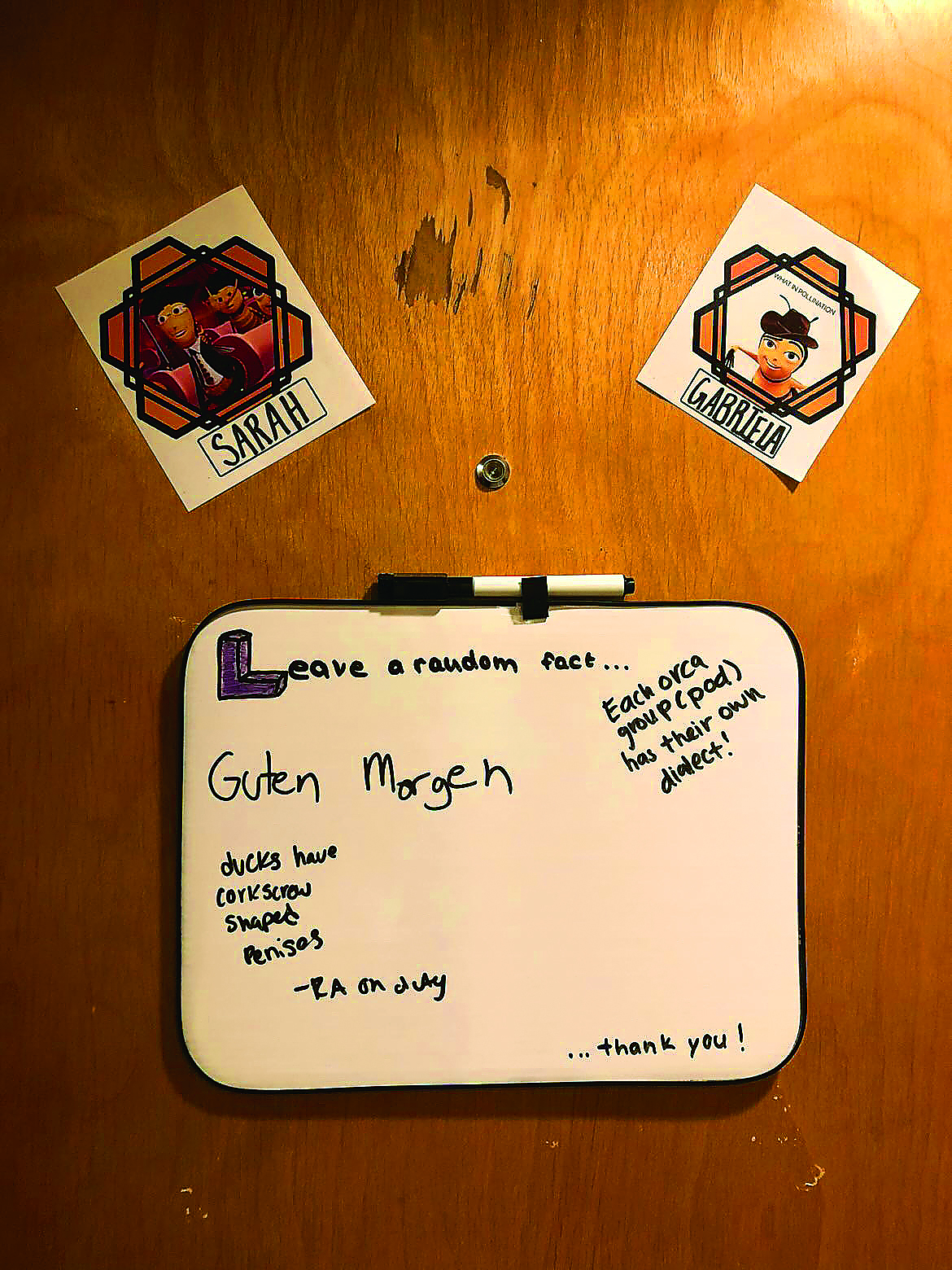
    Neumann and Mendez even bought a whiteboard for the outside of their door.

    “People can just write anything, so we can still communicate with others when we don’t always see them,” Mendez said.

    Overall, students are satisfied with the University and the Comfort Inn solution to the housing shortage.

  • New arts faculty hit the scene

    New arts faculty hit the scene

    by Jasmin Shirazian and Jack Hallinan

    With the recent upgrade to a California Polytechnic, many changes have been occurring on campus. Among these changes is the addition of new arts faculty members Justin Maxon and Sarah Lasley.

    Justin Maxon is a photographer and educator who grew up on the Hoopa Reservation and in Eureka. He moved to Santa Cruz to attend Cabrillo College, where he had his first experience with photography in an academic setting. 

    “I wanted to do environmental science, and then I took a darkroom class and I was just like, ‘this is it,’” Maxon said. “I already loved photography, but I didn’t actually think that I could do it, then as soon as I took that class, I was like, ‘this is what I have to do.’”

    As an artist, Maxon’s focus lies in community based work that has an impact. Although he has a background as a journalist, he considers himself a documentary photographer who prefers to work on long term projects. Maxon’s recent work “A Field Guide to a Crisis” is an ongoing project in collaboration with people residing in sober living homes in Eureka. The work focuses on flipping the narrative of those dealing with substance abuse disorders by “repositioning them as experts in how to survive crisis.” Maxon brings this philosophy of community-based work to the classroom when he teaches his Professional Practices class. 


    “A lot of the folks in the program are like, ‘I wanna work in a specific communal context…’ Well, that can be your art form,” Maxon said. “How you collaborate with people, and the aesthetics of that collaboration and how that is visualized [can be art].”

    This semester Maxon is teaching Darkroom Photography I, Digital Photography I, and Professional Practices in Art. 

      Sarah Lasley, an award winning filmmaker, has joined Cal Poly Humboldt’s film department. Lasley previously taught at the Yale School of Art for over a decade, and later at the University of Texas San Antonio. Lasley is now a part of the Lumberjack family, teaching FILM 378, a digital production workshop showing students the ropes of video and film editing.

    Lasley has had her work featured in several film festivals, including the world-renowned AVIFF Cannes FIlm Festival in France. 

    Lasley has been creating art of all mediums from a very young age, though she began her filmmaking journey in 2006 during her time at Yale School of Art, where she was attending school for painting. 

    “A month into the painting program, I stopped painting and I picked up a video camera,” Lasley said. “Growing up, I had a VHS camcorder, and I would make stop motion animations with my Barbie dolls, so motion had always been in my groove.” 

    Lasley’s most well known film, “How I Choose to Spend the Remainder of my Birthing Years,” is a solo film she created during the COVID-19 quarantine lockdown, in which she replaces Baby in “Dirty Dancing.”

    “I had just moved alone, at the age of 38, to a city where I knew no one, away from everyone, as a single woman,” Lasley said. “I was like, I guess this is it. This is it for me, I’m going to just focus on being alone, and I was feeling down on myself, so I put on Dirty Dancing. I thought, ‘You know what would be so funny?’ To remove the 16 year old who’s romancing the 30 year old, and put like a 40 year old in there.”

    Lasley, who has been in the arts for over a decade, knows the struggles of being a student trying to get their foot in the door of the industry. 

    “Just never quit… going into an industry like film, you’re going to have so much burnout because there are big pockets of long hours,” Lasley said. “You can burn out fast, but what you can’t do is let go of making your own work and your own side projects.”

    Lasley currently has two upcoming screenings for her new film, “Welcome to the Enclave,” a contemporary think-piece on the different reactions received by the Black Lives Matter movement. The showings will be held at the Burb Contemporary in Sacramento, California and The MAC in Dallas, Texas.

  • Humboldt Triathlon team debuts

    Humboldt Triathlon team debuts

    by Dezmond Remington

    A grueling, painful, death march. Triathlon, in the minds of many people, can typically be summed up with adjectives like these. In this sport made up of three endurance events already immensely challenging on their own, competitors race in a 750 meter swim, a 20 kilometer bike ride, and a five kilometer run. The words “fun,” “supportive,” and “enjoyable” do not often come up. However, Head Cal Poly Humboldt Women’s Triathlon Coach Kinsey Laine hopes to build a team which embodies that positive energy.

    “My main goal for all of my athletes is that they enjoy their experience,” Laine said. “The way that they’re going to ultimately improve in the sport is by being excited to come to practice.”

    Laine has experience fostering these environments with her athletes. Before coming to Humboldt, Laine was a triathlon coach at Colorado Mesa University in Grand Junction, Colorado, and before that she was the swim coach at the University of Alaska in Fairbanks. While at Colorado Mesa in 2021, her team placed fourth at the National Championships in Tempe, Arizona, and had three All-American finishers. Laine has also raced long-course triathlon professionally, but that ended when the pandemic started and she started coaching at Colorado Mesa.

    This prior experience has prepared her to coach athletes like junior Elizabeth Odell and sophomore Emily Cates, who like triathlon as a way to avoid injury and seek new challenges. 

    When Odell first heard about the nascent triathlon team, she wasn’t too interested. However, the lower risk of crashing appealed to her, and she started learning how to swim and run this past spring. Though difficult, Odell said the process of picking up two new sports has been enjoyable. 

    “It’s been a good change. I’m not always comparing my times to how fast I was a year ago or something,” Odell said. “It’s just completely new. So all I’m seeing are gains and it’s just all pretty much getting better.”

    Getting away from the stress of injuries was also a motivating factor for Cates when she joined the triathlon team. From a running background, Cates had dealt with a spate of overuse injuries that had left her stressed and frustrated. Training for triathlon, where two out of the three disciplines are zero-impact, was attractive. 

    “I realized that running, just running, was not going to be sustainable for me,” Cates said. “And it’s a great opportunity to cross-train, and if I’m going to be cross-training that much on my own, I might as well race it and have another team atmosphere.”

    Cates has not quit running entirely; she is also on the cross country and track teams at Cal Poly Humboldt. Being a dual-sport athlete does have its challenges, Cates said, as it’s often tiring to train for two sports at once. Recently, she went straight from a swim workout directly to a mile repeat workout for cross country.  

    Hosting this unique sport puts CPH in a unique position– it is the only Division II school on the west coast to offer a women’s triathlon team. Only two other NCAA affiliated schools on the west coast have a team. Laine sees this fresh start as a great opportunity. 

    “I think in three to four years this team is going to be competitive at the national level for DII,” Laine said. “There are teams that have been around five or six seasons, but there is instability in those teams, so we’re not five to six years behind. I think we can come in, and then in a few short years be competitive against those schools.”

    Women’s triathlon in the NCAA is a new sport – the NCAA classified it as an “emerging sport” for women in 2014, and currently there are only 17 Division II schools that host triathlon. Triathlon is only available as a women’s sport in the NCAA. 

    The largest challenge facing the fledgling team is the late start– Laine was hired on a fairly short notice, and as such, there are only four races the team is scheduled for this season. 

    Recruiting is mainly coming from current students with a background in running or swimming or both. A few of the prospective athletes do have a past racing triathlon. The roster will be kept small, with the eventual goal of 9-12 athletes on the team.

    “[I want] a small, focused group of people that are very supportive of one another…but also really passionate about the sport,” Laine said. “As a coach, you can’t make them want to be better at triathlon–they have to provide that passion.”

    Odell agrees. She has a background in mountain biking, but when a bicycle crash in January fractured her neck and gave her a severe concussion, she had to re-evaluate how she wanted to compete. She had to drop out of most of her classes and move home, and could barely walk for two months. 

    “About two and a half months in, I was able to go for a two mile walk, and that was so exciting for me,” Odell said. “Just walking around the block my head would start pounding. It took me like five months to become a functional human being again.”

    The late start and injury-riddled pasts of many triathletes has not made getting the team off the ground easy. However, Cates said she couldn’t wait to race and see what her teammates can do. 

    “I’m excited to know them, to get to travel with them,” said Cates. “They seem like really awesome, dedicated people, and I think we’re going to make an awesome team this year.”

  • Take a Hike, why dontcha: A guide to the best hiking spots near Cal Poly Humboldt

    Take a Hike, why dontcha: A guide to the best hiking spots near Cal Poly Humboldt

    by Alina Ferguson

    Cal Poly Humboldt is famous for its forest and hiking. Arcata is centrally located between hills, forests and beaches, so there are a lot of options for anyone looking to backpack, camp or simply take a hike. 

    Maired Sardina, program coordinator for the Center Activities Recreation and Wellness Center on the CPH campus, has some tips and trips for aspiring hikers.

    The Arcata Community Forest is right here on campus. It is easily accessible for those without cars or any other mode of transportation. This hike is relatively low intensity, so it is not required to be a seasoned or skilled hiker. 

    This hike is also safest for beginners or anyone new to the area, as it is connected not only to campus, but to the town as well, so it is difficult to get lost. “There are so many options to get back into town” said Sardina.

    According to returning senior, seasoned hiker and R.A. Alexis Quiroz, the Community Forest is best for beginners because there are resources available close by.

    “If you get lost or injured and you dial 911, it connects you to the UPD instead of the Arcata Police because the forest is within the school boundary,” said Quiroz. 

    Last semester, Olivia Greenwood, an education major here at Cal Poly, said she spent practically every day in the Arcata Community Forest. 

    “I was hiking like everyday last semester, I would hit the trail at like 4pm and I went pretty deep into the forest,” claimed Greenwood, “Hiking during covid was pretty isolating but kind of nice, to be alone with nature.” 

    A hidden gem that is really only ever traveled by locals, a part two to this hike, is called Beith Creek Loop. While not on the campus itself, it is a short distance away, within the Arcata main town. 

    A 10 minute drive away from the CPH campus, the Ma-Le’l Dunes are a historically significant hiking spot. These dunes lead to the waterfront. This route is the site of many historical events, which mostly occurred during the late 1990s and early 2000s, as protesters lived in trees. To find more information, the Humboldt Nature center has hikes available. 

    The Coastal Nature Center has a visitor center with plaques listing facts about the dunes and the nature around the dunes. 

    “That’s one of my favorite areas” said Sardina, “It’s gorgeous there” 

    Headwaters Forest Reserve is a progressive hike. The first mile is all paved, so it is most popular for casual strolls, skateboarding or dog walking. However, the next four miles are all trail, so the intensity picks up. 

    “You get to choose your own adventure,” said Sardina. “You can choose, I want to go a mile on the pavement, I want to go a mile on the trail, or you can choose to do all ten miles, 5 miles in and 5 miles out” 

    Fern Canyon is one of the busiest and most famous hiking spots in Humboldt. So much so that a permit is now required to get in until October 1st. The canyon itself is a flat hike, with fallen trees and trails partially submerged underwater. Hikers can park directly next to the canyon or hike in from the Prairie Creek Visitor Center, about a 11 mile round trip according to the National Park Service.  

    This hike is much further from campus, about a 40 minute drive. However, the hike leads to a beach called Gold Bluff, where camping out for the night is an option. 

    Prairie Creek Redwood National Park is home to the tallest trees in the world. To see these giants, it takes 45 minutes from campus, if not by car, then by bus as all Cal Poly Students can use their student IDs for free transport.  This is the spot for anyone looking to camp, or go backpacking for a day. Backcountry campsites are very common to find, a couple of the biggest being 44th Camp and Elon Camp. 

    “I couldn’t recommend it more,” Sardina said.

  • Field Camp tests geology students’ knowledge and endurance

    Field Camp tests geology students’ knowledge and endurance

    by August Linton

    Field Camp for Cal Poly Humboldt’s geology majors is a month-long academic camping trip, and a foundational experience in the field that geologists remember with love. 

    Local field trips to places in Humboldt like Agate Beach and Big Lagoon are testing grounds for students used to dusty labs on campus. The university has a large library of rock samples, but students enjoy collecting their own. 

    “Agate Beach was a good one,” said Riley Clark, a CPH graduate and Field Camp returnee. “I’ve had structural geology trips there to look at faults and things like that, and sedimentary geology trips there to look at marine sediments.”

    Geology department classes teach both book knowledge and field techniques. One class called petrology, about the origin and microscopic structure of rocks, uses a technique called thin sectioning. With careful sanding, epoxy, and heat, students can make microns-thick samples of rock for microscope analysis. Field trips give students the opportunity to use these techniques at actual sites rather than in a lab.

    From May 29 to June 29, students from the program visited teaching sites in California’s Eastern Sierras for their capstone Field Camp, which is a more intense iteration of the geology field trip. Other geology programs also visit those same sites.

    “The first field site we went to we were alone, then at the next site there was Sac State, Montana State, a class from Wyoming, Northridge was there,” said graduated geology student Nay de la Torre. 

    Field Camp is analogous to a capstone project for geology students, a field-wide tradition that most programs participate in. It teaches students how to apply their knowledge, but also 

    Photo courtesy of Riley Clark | Roch Creek, an area that students were tasked with mapping near Bishop, California
    Photo courtesy of Riley Clark | Roch Creek, an area that students were tasked with mapping near Bishop, California

    The Poleta Formation is a common teaching location located in the Eastern Sierras, where different layers of sediment are exposed and can tell geologists about the geologic history of that place. 

    “It was deposited during the Cambrian…when California was covered in a shallow sea,” said de la Torre. “You could walk from LA to Las Vegas with water up to your knees.”

    This shallow sea still had tidal action, which geologists can tell based on those layers.

    “The tide would come in and come out, so during this time sandstone would be deposited, then when the tide went out the water would evaporate and deposit carbonate rocks like limestone,” de la Torre said.

    At a second location in the Inyo-White Mountains, students spent time studying igneous intrusions into the crust, called plutons. There are also several wide-reaching fault systems that span the area, which students were tasked with mapping. 

    “At one of our sites we saw a series of faults and then at another one we saw a series there,” said Clark. “It was neat to correlate those…we know that the same compression on the continent caused it.”

    De la Torre says this trip stretched the students to their limits mentally and physically.

    “Everything that you’ve learned, you use it at Field Camp, with every class since freshman year,” said de la Torre. “You don’t really have time to do much else other than go to the field, eat dinner, and go to sleep, cause you’re so tired every single day.”

    Weeks of complete isolation from everything other than a small group of colleagues, six to nine miles of hiking every day in baking sun, and living in tents for a month taxed the students, but also galvanized them. Their daily tasks, like surveying areas for map-making, mirror what they will be asked to do in their careers as geologists.

    “Field Camp feels like something that I’m going to remember for the rest of my life, because all the older geoscience people that I talk to still remember their Field Camp,” de la Torre said.

  • Van Duzer Theatre hosts again!

    Van Duzer Theatre hosts again!

    by Nina Hufman

    This semester, the John Van Duzer Theatre will host a variety of shows, musicians, and speakers. 

    Performances already began earlier this week. On Sunday, the theater hosted Durand Jones and the Indicators, an Indiana based funk and soul band. The show also featured guest performer Keifer.

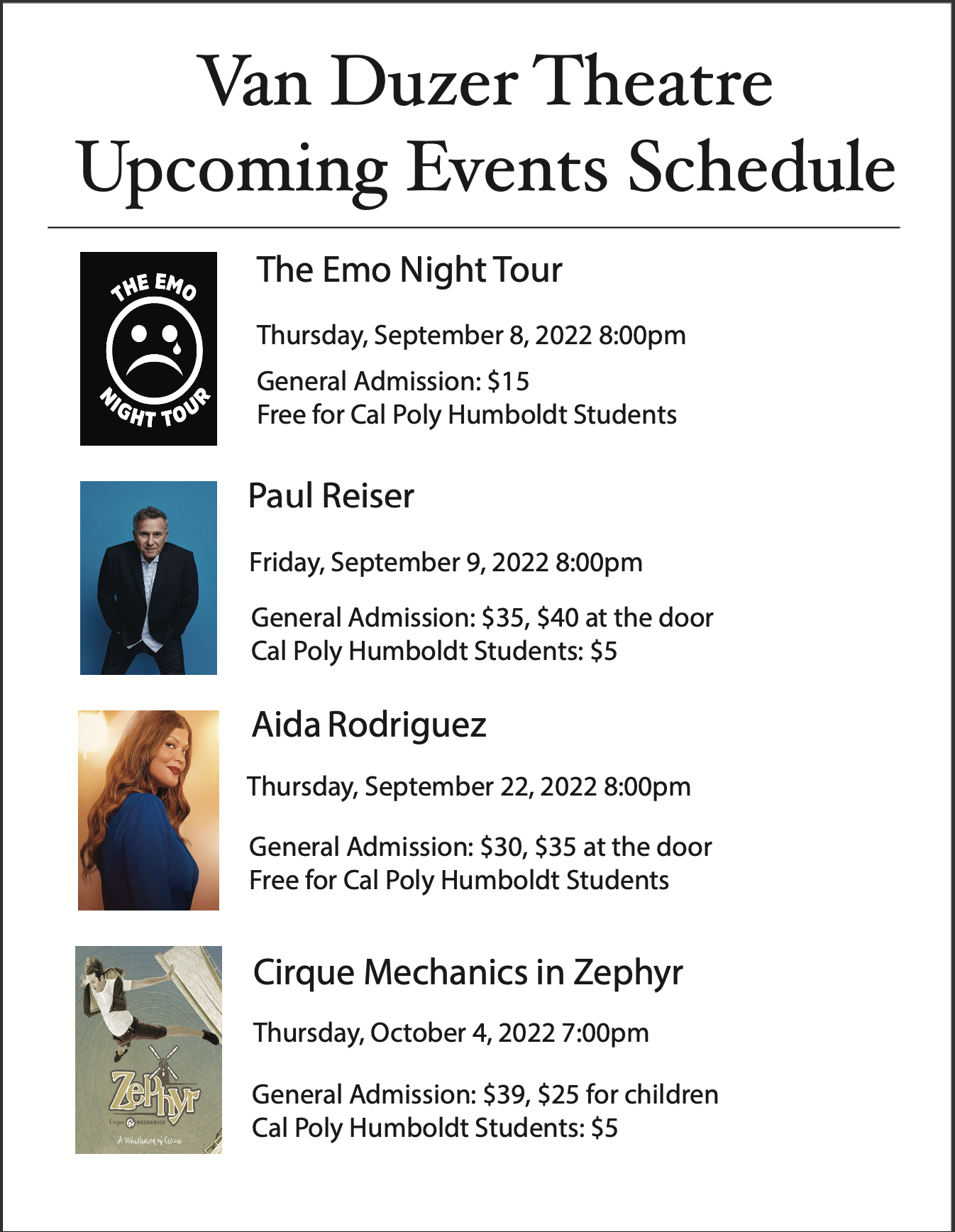
    Another upcoming performance is the Emo Night Tour on Sept. 8 at 8 pm. According to the Cal Poly Humboldt Center Arts website, the tour will feature DJs playing punk and rock music from bands like Fall Out Boy, Taking Back Sunday, Panic! At The Disco, and My Chemical Romance. Tickets for this event are also free to Cal Poly Humboldt students. 

    “The Emo Night Tour DJs will be spinning all the angst your teenage dirtbag heart desires all night long,” the Center Arts website says. “A special guest band will make you feel like you’re at Warped Tour ‘08 minus all the dust and melting in the sun!” 

    Upcoming comedy performers include Paul Reiser and Aida Rodriguez. Reiser is a comedian, actor, and writer. He is known most recently for his roles on Stranger Things and The Kominsky Method. Reiser’s show is on Sept. 9. Tickets are five dollars for Cal Poly Humboldt Students. Rodriguez is also a comedian, actor, and writer and currently has a standup special streaming on HBO Max. Rodriguez will be at the Van Duzer on Sept. 22. Tickets for her show will be free for students.

    Music and comedy are not the only performances that will come to Cal Poly Humboldt. Cirque Mechanics will be performing their newest show, Zephyr, on Oct. 4. 

    “Cirque Mechanics, although inspired by modern circus, finds its roots in the mechanical and its heart in the stories of American ingenuity. ” the Center Arts website says. “The stories are wrapped in circus acrobatics, mechanical wonders and a bit of clowning around.”

    For performance dates, ticket prices, and additional information, visit the Cal Poly Humboldt Center Arts Website or the Cal Poly Humboldt Featured Events page.

  • Humboldt students struggle to find housing

    Humboldt students struggle to find housing

    by Ollie Hancock

     In August of every year, a new batch of students fills the dorms, apartments, and homes in Arcata neighborhoods. Overbearing parents pilot SUVs in a line around the block on check-in day. Students scramble through Craigslist listings in search of a last-minute opportunity. It’s no secret there is a housing shortage in Arcata, but the new polytechnic designation will increase demand. Cal Poly Humboldt expects to double in enrollment in the next six years. There are plans to build infrastructure, but they won’t be available until 2025 at the earliest. During this in-between period, the school will provide “bridge” housing. Steven Onge, a representative of Housing and Residence Life, explained the plan to master-lease nearby hotels to house students in the meantime. 

    “We’ve been working with it for over a year [and] we’ve developed relationships with several hotel owners and property managers,” Onge said. “This property was nice. There’s a pool there, and laundry is included, so we think the location was good, and the amenities are good.”

    This academic year, the Comfort Inn will house almost 98 students with amenities like maid service and free continental breakfast. Residence Life is doing their best to make it a genuine college dorm experience with group dinners. Students can take the bus to campus in about 10 min. 

    “We’ve got some vending machines which will have fresh food in them, and we’ll do weekly community dinners and events to support students,” Onge said. “I’m hoping to get a food truck that we can use.” 

    Students still aren’t convinced. Kirby Marks, a nonbinary student, was made to choose between staying in male or female dorms when the gender-neutral dorms were unavailable in their building.

    “I had to call them, and I was like, ‘I have no choices. There is no housing for me to choose from. I will not be able to live on campus. What’s going to happen?” Marks said. “So I had to change my gender marker to male so that I could actually get into housing.”

    Opportunities for housing off campus are few and far between. Senior Humboldt student Zack Gamble says the high demand for housing allowed landlords to take advantage of students. 

    “It’s too easy to be a bad landlord out here,” Gamble said. “You don’t have the opportunity to turn down a place because you might not get another one for a few months.You have to take what you can get no matter how run-down decrepit it is.” 

    Since moving to Humboldt, Gamble has experienced his fair share of shakey Humboldt housing, from dry rot-ridden houses that shift with every earthquake to out-of-code heaters that require DIY maintenance. Gamble thinks the school should look critically at how the polytechnic designation will impact housing. 

    “You can’t increase your student base every year but have nowhere to put them,” Gamble said.

  • Athlete’s outperform at decathlon

    Athlete’s outperform at decathlon

    by Carlos Pedraza

    The Cal Poly Humboldt Track and Field team participated in the Stanislaus State Multi-Event from Thursday April 7 to Saturday April 9. The team participated in over 10 different events, all of which were multi-day involving different events form the high jump to javelins. Some of the Cal Poly Humboldt athletes were able to make the podium for first and third place.

    In preparation for the event, athletes have been training for months. Sophomore Gracie Kasberger participated in the heptathlon, and spent a long time practicing.

    “We have been training since August,” Kasberger said. “As a multi I practice seven days a week focusing on different events each day.”

    The training paid off for Kasberger, since she was able to win first place on the first day of the Stanislaus State Multi-Event.

    One of the participants was junior Travis Allen who participated in multiple events during the decathlon. With the COVID-19 restrictions being rolled back, the athletes were able to get more training time and interact with each other more openly.

    “We got more time to develop chemistry as a team and with coaches,” Allen said.

    This team support was shown by the athletes staying after their events to support each other. Kasberger mentioned she would compete for three hours but would stay on the field to support Allen until 5 p.m. when the event ended for the day.

    Intense training and camaraderie in the track and field team pushed them to perform well this semester. Both Allen and Kasberger outperformed their previous records. The track and field will participate in several more away games before the end of the spring semester.

  • Understaffed SDRC struggles to support students with disabilities

    By Ollie Hancock

    Ash McElroy is a proudly disabled student. They came to Cal Poly Humboldt well aware of the hills and stairs the campus was built upon. McElroy informed Housing they would need an accommodating dorm for their mobility aid, Housing assigned McElroy to the notably inaccessible College Creek dorms on the hill.

    “To their credit, they put me on the first floor, but I could not get my chair through the door,” McElroy said. “I was like, hey, this is not working. Can we move me?”

    Housing took months to reply after denying the dorm was inaccessible in the first place. McElroy requested at least adding a push button to get in the door.

    “They told me that actually my building was accessible and they didn’t know what I was talking about,” McElroy said.

    In an email to McElroy, Housing said a locksmith had confirmed that the press to open button does work.

    “I had to have the SDRC go and take pictures of the building to prove that there is not one. Like how’s [Housing] straight-up gaslighting me about this?” McElroy said. It would take a few more months before housing accommodated McElroy’s needs.

    13% of Cal Poly Humboldt students have a disability, the second-highest rate of disability in any Cal State University. Humboldt is right behind Cal State Maritime Academy, which has only 600 students. At the Student Disability Resources Center, Mary Smith and one other part-time staff advisor address accessibility needs on campus. Smith believes the access to green space, small classrooms, and positive learning environment attract students with disabilities to Humboldt’s campus.

    “We feel like we’re drowning,” Smith said. “We have nearly 800 students with registered disabilities and one and a half advisors. At California State University San Bernardino, the ratio of accessibility advisors to students is one to 65. At Cal Poly Humboldt, the ratio is one to 500.”

    “A majority of the disabilities on campus are psych disabilities. It used to be learning disabilities,” Smith said. “Learning disabilities are much more manageable. It requires some training and accommodations, but usually, you set them up, and they’re good to go. Psych disabilities are a much more revolving door. You can’t set someone up, and they’re just good to go. The level of services is way more intense.”

    In the past years, between the pandemic and Cal Poly Humboldt’s fiscal history, Smith has struggled with job security.

    Two years ago, the administration offered a retirement buy-out offer. Smith took it and retired.

    “They never replaced me, and they called me back…I have so many asks, and I also have absolutely no job security,” Smith said.

    The strain of an undersupported SDRC can go undetected by non-disabled admin, faculty, and students. It is not something that disabled students have the privilege to ignore. Alicia Martin is a Cal Poly Humboldt grad student and the founder and director of Adaptable, the campus club for students with disabilities.

    “We’re the only club that serves this population of students on campus, and there’s a lot of pressure,” Martin said. “We’re not funded by A.S. It’s all just completely our time and our energy. And we love doing it, but it’s overwhelming. Because we end up having to support students who can’t access food. Who can’t get into buildings. Who aren’t able to hear or see their lectures. Who are months behind in course work because their accommodations aren’t met.”

    Martin is working with students on campus to transition to a post-pandemic world. The pandemic forced to change and exacerbated problems that impact students with disabilities. On the other hand, with so many people adapting to the pandemic new adaptive technologies became commonplace.

    “Some of this technology is very useful,” Martin said. “We have people who don’t use sign language and rely heavily on lip-reading, and so Zoom was great. Now, they’re transitioning back to the classroom.”

    Students with disabilities continue to support each other despite the obstacles and limited bandwidth on campus. They find support from each other while advocating for universal design. Universal design centers on usability and access for all. It often makes life more convenient for everyone when design is accessibility-based. Accommodating issues on a need basis frames people with disabilities as a problem.

    “We are not the problem,” Martin said. “[Campus operates] on a medical model of disabilities. In a social model, the people who say I can’t are the problem, not me.”

  • COVID-19 cases make a comeback

    by Sophia Escudero and August Linton

    Positive COVID-19 cases are once again on the rise in Humboldt County. According to the Humboldt County Public Health Department, 137 confirmed cases were reported between April 19 and April 26, bringing the total number of confirmed cases in Humboldt County up to 17,311.

    A Humboldt Notification was sent out to the campus community in response.

    “The University encourages the campus community to continue wearing face masks,” the email reads. “We want to remind everyone that N95 masks are recommended and effective for reducing transmission for the wearer.”

    Tina deProspero is one of the COVID-19 testing staff currently working on campus. Despite the inherent risk of exposure that comes with her job, she says that she’s not that worried about being infected. She hasn’t tested positive since she started this job in August 2022

    “I make sure I’m wearing my N95, and if somebody looks like they’re going to sneeze I’ll put my goggles down,” said deProspero.

    According to deProspero, about half of the people come to the testing center are “weekly testers,” those who are mandated by the university to test weekly as a result of their vaccine exemption or other special circumstance. Visiting sports teams make up another large portion of the people they test. DeProspero says that she always sees an uptick in testing after breaks and after weekends.

    While mask restrictions have been lifted for campus, the CDC recommends wearing a mask indoors regardless of vaccination status if you are sick, have been in close contact with someone who is sick, live with someone who is at high risk, or are in a county with a high COVID-19 Community Level. The current level for Humboldt County is low.

    University testing services now require that students and staff being tested have insurance coverage. DeProspero said that in the case that a patient does not have insurance, the testing center gives them a rapid antigen test.

    “That really bugged me though, I was like, we better be able to test everybody,” said deProspero.

    Aside from wearing a mask, hand washing, avoiding crowds and poorly ventilated spaces, and socially distancing are still strongly recommended.In an interview with the Washington Post, National Institute of Allergy and Infectious Diseases Director Dr. Anthony Fauci said that although rates of death and hospitalization have been decreasing, the pandemic is still active.

    “Right now we’re at a low enough level that I believe that we’re transitioning into endemicity. We’re not in the full-blown explosive pandemic phase,” Fauci said. “That does not mean that the pandemic is over. A pandemic means widespread infection throughout the world.… In our country we’re transitioning into more of a controlled endemicity.”

    That outcome is what deProspero is also anticipating.”I’m just hoping that it’ll work its way through,” she said.

    Free N95 and surgical masks can be found at the College Creek Mailroom, the Jolly Giant Commons mailroom, the University Police Department, the Admissions Welcome Center, the Library, and the Gutswurrak Student Activities Center.

  • Cal Poly Humboldt Theatre presents the return of the 24 hour play festival

    by Sophia Escudero

    Putting on a play is traditionally no quick process. It takes months to take a script, design the set, costumes, and lights, cast actors, direct it, and have something polished enough to perform. The 24 hour play festival, however, turns that notion on its head. From 7 p.m. Friday night to the same time Saturday, a group of theater students wrote scripts and presented them as a series of short plays before an audience.

    The event was entirely student run and organized, and was produced by Cal Poly Humboldt students Austin Maisler and David Fisher.

    Maisler served as a producer, director, light designer, and stage manager. He had heard about the 24 hour play festival in his first year at Cal Poly Humboldt, but nothing came of it due to the COVID-19 pandemic. When campus reopened, the idea for the festival returned.

    “Spring came along and our department chair, Dr. Troy [Lescher] brought it up, like, ‘hey, does anybody want to run this?’” Maisler said. “I didn’t want to run it, I wanted to act in it, but nobody came forward so I talked to David. David and I decided to step forward and run this thing.”

    The process of organizing the festival was, by its nature, chaotic. Scripts were written overnight, and given to directors at 7 a.m. the next morning. The actors were cast less than twelve hours before they had to be off-book and ready to present the scene, and rehearsals were intermittently interrupted by costume fittings and discussions of the script. Lighting was finalized shortly before the house opened, and many people found themselves taking on roles that they had not previously had experience in.

    “This is the first show I’ve ever designed lights for,” Maisler said. “I’m actually in the lighting class this semester, so I just stepped forward, like, I kind of know how to do this, so I’ll just do it.”

    The four scenes, each about ten minutes long, took on themes of college-aged ennui, failing romance, finding meaning in absurdity, and impending doom. Of the four playwrights, two also participated as actors, and one as a director.

    Actor and writer Ben Wimer had not been involved in a 24 hour play festival before in either capacity. He found writing for a 24 hour play festival to pose a unique challenge. As the script is to be presented less than a day after its completion, certain factors had to be considered.

    “I wanted to write something that was simple, but had an authenticity to it, and had dialogue that was easy for the actors to memorize⁠— hopefully, it was easy to memorize⁠— but still gave them a lot to play around with,” Wimer said.

    Mollie Donaldson had participated in a previous 24 hour play festival at Cal Poly Humboldt in early 2020 as an actor, a role she repeated two years later. She considers the festival to be intense, but rewarding.

    “It’s definitely stressful,” Donaldson said. “You’re handed a script at 8 a.m. and told at 7 p.m. that you’re supposed to perform it and block it and have everything memorized. It’s a stressful thing, but one of my favorite things is kind of shocking myself with how quickly I can memorize things.”

  • Back to the Cal Poly library

    by Cherish Fulcher

    The Cal Poly Humboldt Library is gearing up with lots of new additions and courses for students as we switch from online to in-person classes on campus.

    Prior to the pandemic, the library was a common place for studying and meeting with friends, as well as a hub for student support. With students now returning to campus, the library staff is excited to be adding new additions to the library.

    “There isn’t much traffic in the library since we’ve slowly begun returning to campus, but now we are, we definitely want students to know that we are still here and there is a lot for them to get involved with,” said Tim Miller, head of SkillShops in the library.

    “In addition to academic support and the available technology in the library, we really want the students to know about the upcoming skill shops and the Makerspace,” Miller said.

    The Makerspace and SkillShops are located on the third floor of the library. There is a place to study, and access tech and recording equipment. In addition, SkillShops will be offering a series of workshops ranging from learning how to code to learning how to budget starting now and the following semesters ahead.

  • Reese Bullen Gallery features Cal Poly Humboldt student artists

    Reese Bullen Gallery features Cal Poly Humboldt student artists

    by Nina Hufman

    The Arts Graduate Exhibition for the class of 2022 is now open at the Reese Bullen Art Gallery at Cal Poly Humboldt.

    Kylie Maxfield, a senior whose work is featured in the exhibit says that having one’s work in a gallery is an integral part of being an artist.

    “Being a student artist myself, I think it’s really important to be able to showcase my work,” Maxfield said. “To feel validated for what I’ve been working on. It inspires me to continue my education in art.”

    Photo by Angel Barker | Reflective Perspective, made of bronze and glass by Lisa Heikka Huber

    The exhibition showcases the work of graduating students in the Art Department. It features work from a variety of mediums including painting, sculpture, illustration, drawing, printmaking, photography, ceramics, and jewelry.

    “There’s a lot more diversity than I would expect,” said student Duncan McDougall.

    Another student, Justin Henderson, also appreciated how diverse the selection of art is within the gallery.

    “Each one is pretty unique,” Henderson said. “I like that there’s a lot of creativity going on.”

    McDougall and Henderson were excited to be able to attend an exhibition of their peers’ art. Student exhibitions allow for their work to be seen by those outside the art department.

    “Otherwise, I wouldn’t see any of their art,” said Henderson. “I don’t have any art classes, so I’m never over here.”

    “There’s a lot of student creativity,” McDougall said. “You don’t really see a lot of these student galleries.”

    Displaying their work also gives student artists new opportunities.

    Photo by Angel Barker | “Present” by Kaitlyn Ladines. This paining invites students to be apart of the exhibit by sitting in the chair. This piece won 2nd place for the Glenn Berry Painting Award.

    “Having this graduate exhibition also gives students the chance to be awarded for what they’ve been working on,” Maxfield said. “I think that if students didn’t have the opportunity to do something like this that feels real, then they probably wouldn’t make as much or be inspired to.”

    One of the opportunities that Cal Poly Humboldt art students have is the opportunity to win the Permanent Collection Purchase Prize award. The honor is given to one student from each graduating class. The work is then added to Cal Poly Humboldt’s permanent collection of student artwork.

    Maxfield says that selecting the correct piece for an exhibition is a challenging task.

    “I think critiques really narrow down, like what are people interested in and what is catching people’s attention,” Maxfield said. “Getting a lot of opinions on what strikes people as an interesting photograph.”

    Maxfield also discussed challenges with her chosen medium, photography.

    “I think that sometimes it’s hard to get through with people,” Maxfield said. “Like a lot of people kind of think ‘oh, well they just press a button.’ With paintings or drawings it’s a lot more evident the amount of work that goes into it, but with photography, not as much.”

    Photo by Angel Barker | “Human Flower” by Emily Newark. Made from low-fire white clay. This ceramic sculpture won the Phoenix Ceramic Award.

    There were many interesting pieces featured in the gallery. One sculpture entitled The Human Flower was the topic of discussion among students.

    “I think The Human Flower rules,” McDougall said. “If I had a million dollars, I’d buy it right now.”

    Another opinion on the piece was offered.

    “I appreciate that a lot of work went into that, but it just freaks me out,” Henderson said.

    The exhibition will run through Saturday, May 14 with a reception to follow the College of Arts Humanities & Social Sciences commencement ceremony.

  • Gutswurrak official naming ceremony

    Gutswurrak official naming ceremony

    by Ione Dellos

    On Wednesday, April 20th, the University officially renamed the Student Activities Center to the Gutswurrak Student Activities Center in a ceremony at the building located by the UC quad. Pronounced “guts-wuh-dock”, it is the Wiyot word for “many people gather”. The name for the student union was originally suggested by the Wiyot Tribe, led by Wiyot Tribal Chair Ted Hernandez. He was also a guest speaker at the event, and he expressed his gratitude to the University and to the students, who pushed the renaming effort.

    The event started right at noon, with opening remarks from Wendy Sotomayor, director of the SAC, and Micheal Moore Jr., associate director of the SAC, and the two read Humboldt’s new formal land acknowledgment. Working with the College of the Redwoods, Humboldt has developed the following land acknowledgment:

    “We acknowledge that the land on which Cal Poly Humboldt is located in the unceded territory of the Wiyot people who continue to live and thrive today. It is surrounded by the traditional, ancestral, and present homelands of several indigenous nations including the Hupa, Karuk, Mattole, Tolowa, Wailaki, and Yurok that make up Humboldt County.”

    Following the land acknowledgment, Vice President Jason Meriwether spoke about coming together with the local Native tribes, and on the importance of a name.

    Ted Hernandez gave his remarks after Meriwether’s speech and welcomed students and staff members alike into his home. He offered his blessings to the building, not just to the students who came to the ceremony, but for all students in the future.

    Adrianne Colegrove-Raymond, special assistant to President Jackson, unveiled a new special feature of the building, which is a QR code on the wall that links to a recording of Wiyot youth and adults pronouncing “gutswurrak”. Anyone who visits the SAC can now scan the QR code with their phone and hear the recording of the Wiyot word.

    It was a relatively small ceremony, although, despite the small size of attendees in the SAC, the speakers definitely filled the room with their presence. The event was originally set to be held in the SAC quad, which might have increased the number of students that attended, but was moved indoors to the SAC West Lounge due to the rain. The ceremony only ran until about 12:30, as the speakers were done giving their presentations at that time. Students filtered through the small crowd like minnows, darting from space to space to grab a complimentary t-shirt and a handful of free food on their way out.

    The renaming effort is part of Humboldt’s effort to bring Native histories to the forefront of the University, which has not been the case in the past. The University is attempting to build new bridges and improve their relationship with Native communities through community activities like the SAC renaming.