The Lumberjack


Students Serving The Cal Poly Humboldt Campus and Community Since 1929

Tag: HSU

  • Against the odds

    Against the odds

    Beersheba Kirksey shares how her lifelong dream is becoming a reality

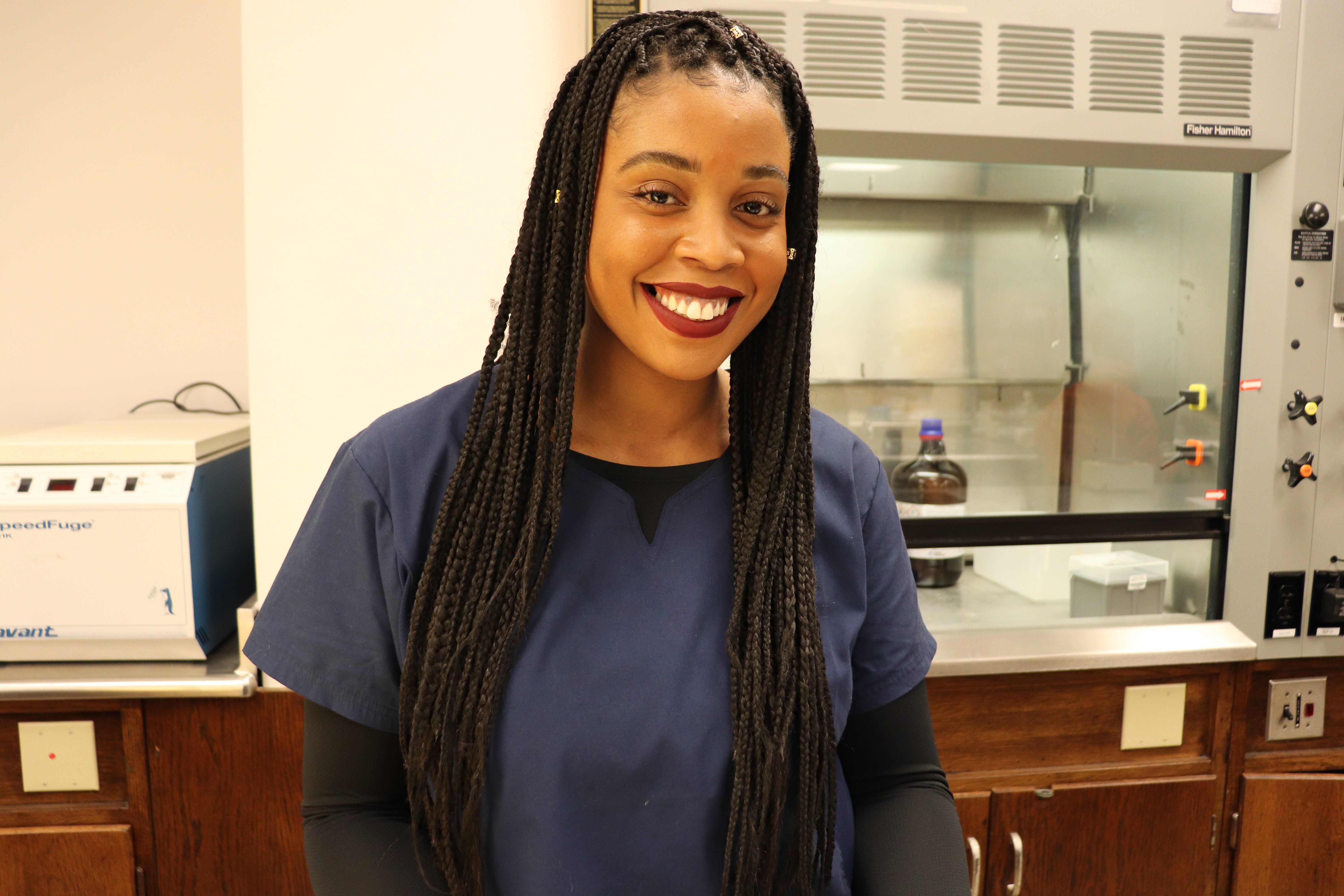
    Ever since high school, biochemistry graduate Beersheba Kirksey has had a knack for the sciences. With multiple obstacles, and an outstanding sense of determination and hard work Kirksey is now on her way to pharmacy school after graduating from HSU this year. As a woman of color she hopes to go against the odds and follow her dreams by staying true to herself.

    Kirksey chose to follow the pharmaceutical route when she was picking up her older sister’s medication. As she bought the medication she noticed a young black female technician at the pharmacy. This was a bit unusual for Kirksey. She had never seen a woman of color working at a pharmacy, especially a black woman.

    “She was really pretty and young, she had a white coat,” Kirksey said. “And I was like, ‘How did you get this job?’ It was different. I’ve never seen any women of color work in the pharmacy before.”

    Kirksey decided to approach the pharmacist to ask her how she got her job, and how she herself could get in the same position. The young pharmacist gave Kirksey helpful advice on how to plan out her future. However, Kirksey was warned about the hard work and challenges that would soon face her.

    “She was like, ‘Well when you go to school you want to major in either biology or chemistry and it’s going to be hard. It’s going to be a lot of work, once you do that you apply to pharmacy school, get experience you know the whole shabang,’” Kirksey said.

    [perfectpullquote align=”right” bordertop=”false” cite=”Beersheba Kirksey” link=”” color=”” class=”” size=”19″]”[The] biology department is a little more diverse but chemistry… It’s not diverse.”[/perfectpullquote]

    Kirksey has been determined to achieve her goal since 2010, after receiving her acceptance to HSU. She majored in chemistry with a focus in biochemistry during her freshman year.

    “It’s been a long, hard, tough journey,” Kirksey said.

    Although she was gaining experience with her job and labs, Kirksey noticed the lack of diversity in the chemistry department and all around Humboldt county.

    “It was a culture shock,” Kirksey said. “Not having anybody to reach out to, it just really felt like you’re out of place, like you don’t belong. Especially in the chemistry department, it’s really not diverse. Biology department is a little more diverse but chemistry, it’s not diverse.”

    Kirksey is used to the SoCal environment. Moving to Humboldt was a drastic change, and she knew that the process was not going to be easy. Against all odds Kirksey managed to stay strong and continued to be true to herself. She found support in herself, and Kirksey said that it benefited her in becoming stronger.

    IMG_5624.JPG Kirksey glowing outside in the sun. Feb. 21. | Photo by Skylar Gaven

    “I’m from SoCal. Just because I’m in the sciences, I still like to dress, I still like do the things that I grew up on,” Kirksey said. “I like to wear lipsticks, change my hair and things like that. It sucks sometimes because it makes you stand out and it brings pressure but at the same time that’s me, if I were to go to school in SoCal it wouldn’t be a problem so why should I change up here?”

    Even though the department is not as diverse as one would hope, HSU still provided Kirksey with a variety of hands-on experience in the labs on campus.

    “One thing that I do appreciate about Humboldt is that it’s a lot of hands on experience that you don’t find on a lot of campuses especially CSUs,” Kirksey said. “We did a lot of hands on things in the lab that I feel really strengthened me. The amount of work and that we do in the labs really prepares, so I give them that.”

    Kimberly White, a biochemistry professor who has been teaching for two years at HSU, has witnessed Kirksey’s strong determination to succeed. Because biochemistry is not the easiest subject for most, White takes into consideration that students have different education methods and tries to incorporate different delivery methods. She does this through detailed lectures that are easy to follow and fun extra credit projects that are the students favorite.

    IMG_2092.JPG Beersheba Kirksey prepares to dilute a 50x solution TAE buffer to a 1x solution for an electrophoresis agarose gel. | Photo by Dajonea Robinson

    White said the Kirksey’s extra credit assignment was “mind blowing”. Kirksey went to White’s office hours more than any student of hers, she had “meticulous” notes and she was prepared for every lab.

    White said that Kirksey’s motivation and attitude were always something that stood out and despite all the many things that were going on in Kirksey’s life she was always cheerful and ready to learn. White wrote Kirksey a letter of recommendation because she believes she can accomplish her goal.

    “She is ready to go, I know that she is,” White said. “Not everybody has had an equal amount of opportunities, she has worked hard. Her success makes it that more sweet.”

    Kirksey has already gotten her degree in biochemistry and is now working on the requirements needed for pharmacy school. She has applied to multiple schools and is looking forward for what the future has in store.

    “I’m looking at Washington, Oregon State, and Midwestern in Arizona. I also had in interest in Roseman (University of Health Sciences) and I also applied to Howard, so we’ll see,” Kirksey said.

    As she continues with her path into pharmacy school, Kirksey is working to use alternative medicines to give to others.

    “I really see a problem when it comes to the pharmaceutical business in general,” Kirksey said. “I think it’s ridiculous. I feel like there are alternative ways to heal and treat people, not just based on harsh chemicals.”

    IMG_2095.JPG Beersheba Kirksey dilutes a 50x solution TAE buffer to a 1x solution for an electrophoresis agarose gel. | Photo by Dajonea Robinson

    Kirksey has many plans set up for herself. Her ultimate goal is to provide healthy, natural-based medicines that can help benefit a person’s health, instead of giving them a prescription that will make them worse.

    “My ultimate goal is to become a pharmacist, get into business, learn everything there is about the body and how it reacts to medication,” Kirksey said. “I eventually want to open my own pharmacy and practice alternative medicine, just to give patients that option to lean off of strong chemicals.”

    Kirksey has an amazing outlook on life and is a hard worker determined to pursue her goals. She now has to wait for an acceptance letter which is sure to be soon. Until then she will walk the HSU campus with radiant confidence and strength that she has built for herself for so long. She believes that every student of color should embrace themselves and not let anything get in the way of following their dreams.

    “I stay true to myself and that’s my advice to anyone here of color, whatever major you’re in just stay true to yourself,” Kirksey said.”Don’t feel like you have to change or dumb down who you are, your culture, or where you’re from.”
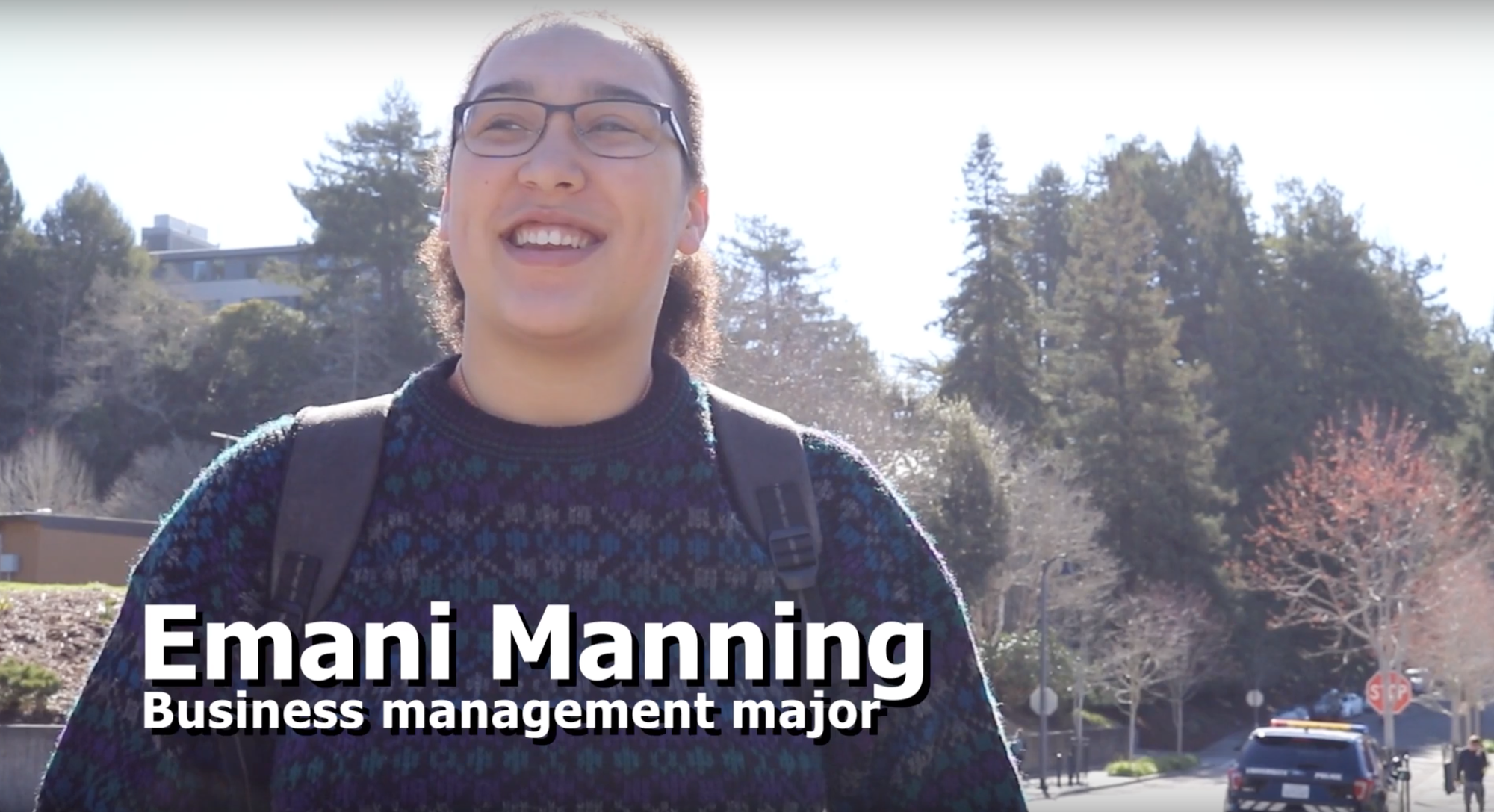
  • #HorrorStories: Road rage woes

    #HorrorStories: Road rage woes

    “…stopped them, slashed their tires, and then drove away.”

    Honks, speed, and middle fingers. We asked Humboldt State students their worst road rage experiences. Share your horror stories in the comments to be featured in future videos.

  • Ch5ck It! out

    Ch5ck It! out

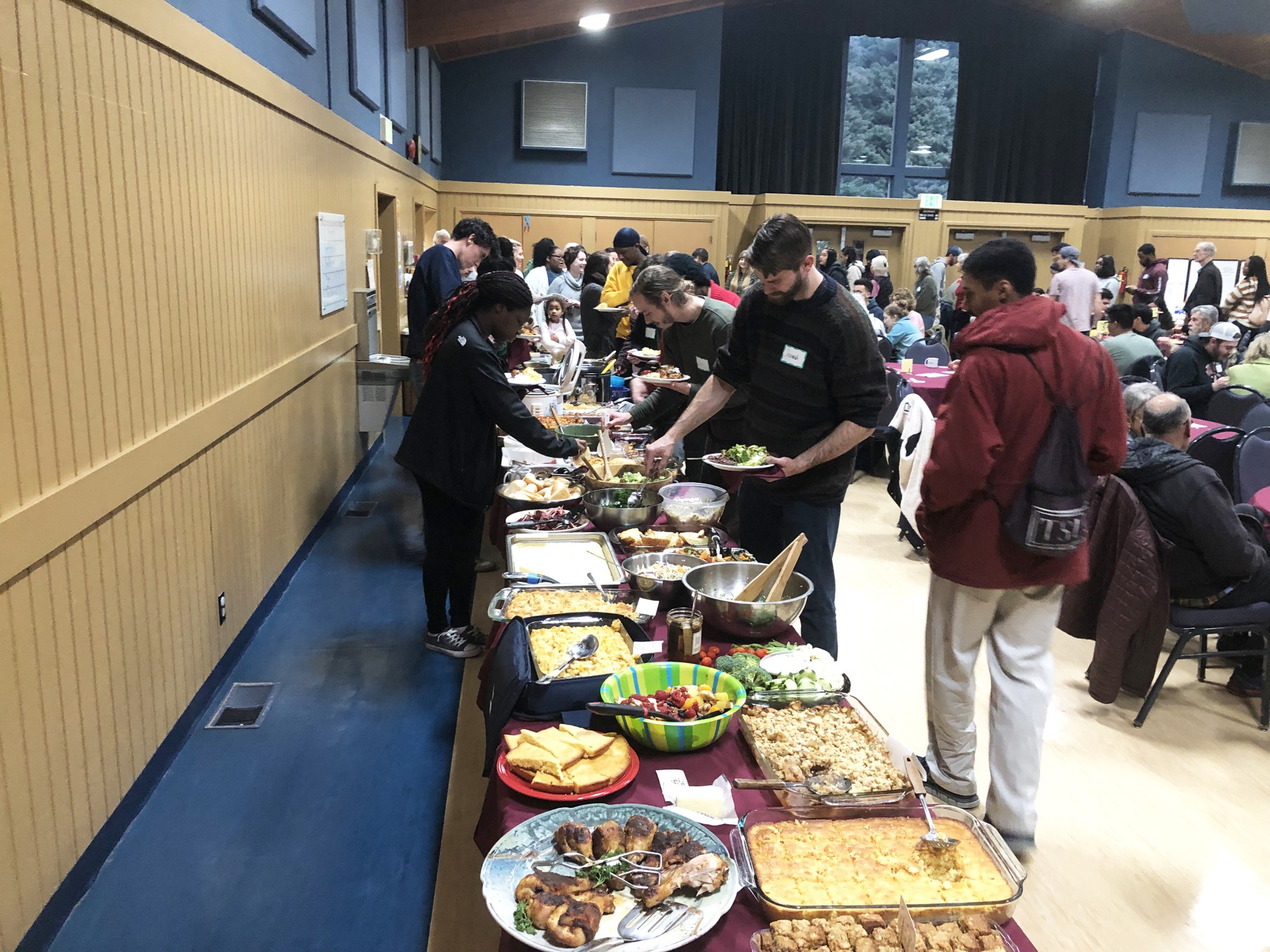
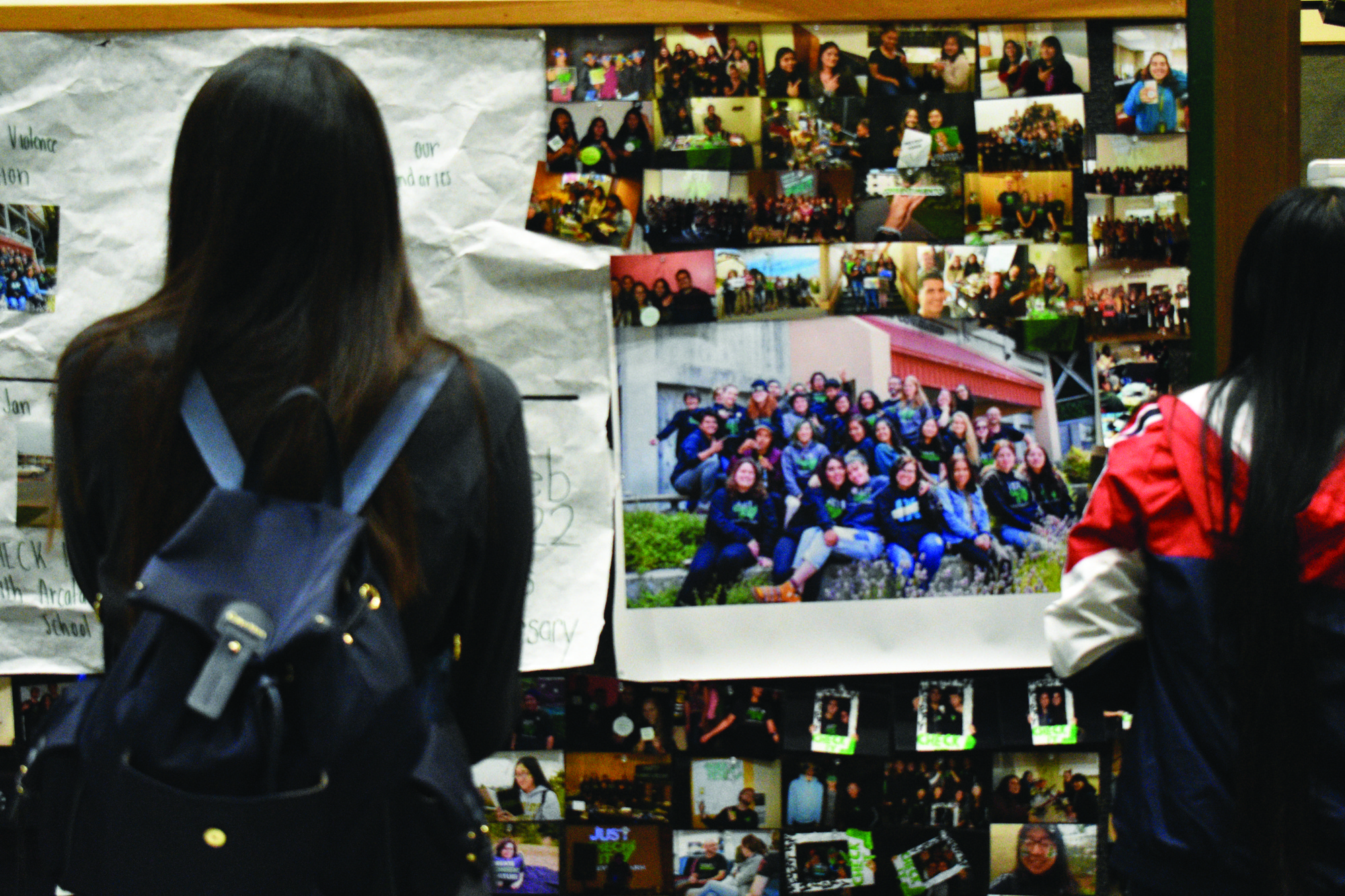
    More than 300 HSU students crowded into the Kate Buchanan room to celebrate the fifth anniversary of Check It. For three hours, the Check It party raged on, filled with good food, karaoke fun and positive protecting vibes.

    364AB6AA-BE9E-46A5-B930-E4558C8A7065.JPG
    Photo courtesy from Check It

    Check It’s head coordinator Mary Sue Savage took the stage early to congratulate the progress made by the organization in its five years of activity. As a HSU alumna herself, Savage has followed not only Check It’s progression, but HSU’s and the community’s as a whole.

    “When I was a student, a very small percentage of folks were involved in violence prevention work, it was really just a solid group of social justice activists,” Savage said. “But we weren’t reaching the people we needed to reach or engaging them. But with Check It, I can see how possible it is to engage everyone on campus in violence prevention work.”

    11BA2224-3BCE-4B28-BD68-4CBBBD601198.JPG
    Photo courtesy from Check It

    As co-founder to Check It, tonight’s celebration meant many things to Savage, as she stood in front of more than 300 supporters of the Check It movement.

    “Tonight celebrates the incredible community support and compassion that makes up this movement,” Savage said. “It’s honoring the amazing consent centered activities students have been doing on campus and just celebrating how much progress has been made over the past five years!”

    LJ- Check It Party pt 3.JPG
    Volunteer students participate in the Karaoke showdown. Singing to Bruno Mars's song "Count on Me". Feb. 23. Photo by: Grace Caswell

    With two hours of karaoke, the room filled with performances from student and staff hand-picked classics. Shelby Gilfuss, a second year psychology major, was one among the 300 plus who attended the Check It’s party in support.

    “I came to support my friend on the Check It team,” Gilfuss said. “I also enjoy the idea of a safe community and have met so many new people, people I would never have had a conversation with before.”

    With free food, hilarious entertainment, and Check It merch, it wasn’t just the guests having a great time. Shelley Magallanesa, a third year psychology major and Check It team member shared her personal relationship to Check It.

    “It’s the best,” Magallanesa said. “I spend all my time here and have a lot of fun. People are so devoted to growing the cause and working hard every day. We’ve had so much success and that makes me feel so good!”

    DB029998-8D2B-44BA-AB3B-B27EF02C389A.JPG
    Photo courtesy Check It

    Back in October, Check It gained the attention of the U.S. Justice Department, which resulted in a $300,000 grant. With new funding, the future of Check It looks bright and promising. Plans to expand and spread the movement, along with upgrade the organizational outreach, displays a promising future for violence prevention.

    “This semester we are working with Arcata High School to launch Check It,” Savage said. “We’re also getting ready to launch our “Love Knows Boundaries” campaign later on this semester with specialized access cards. We really just want to continue to embed Check It within our campus culture.”

    IMG_5468.jpg
    Members of the Check Item posing for their fifth anniversary. | Photo courtsey of Check It

    The first 5 years of Check It can be summarized into a success, with an established office space, tons of students activist volunteers, and a new grant allowing upgraded target outreach. The next 5 years show signs of a promising future to the prevention of violence and the Check It organization as a whole.

  • Kemetic yoga is food for the soul

    Kemetic yoga is food for the soul

    Afrocentric yoga that teaches that movements have purpose

    Most people think that yoga comes from Asia. Kemetic yoga, however, is one of the original practices of yoga. It originates from ancient Egypt, the proper name being Kemet. What differentiates Kemetic yoga from other types is that it’s a series of geometric postures, almost like there’s math in every movement.

    Humboldt State had a Kemetic yoga class taught by Dionna Fletcher as part of Black History Month. This was Fletcher’s first time directing a Kemetic yoga class after completing her training in Jamaica last month.

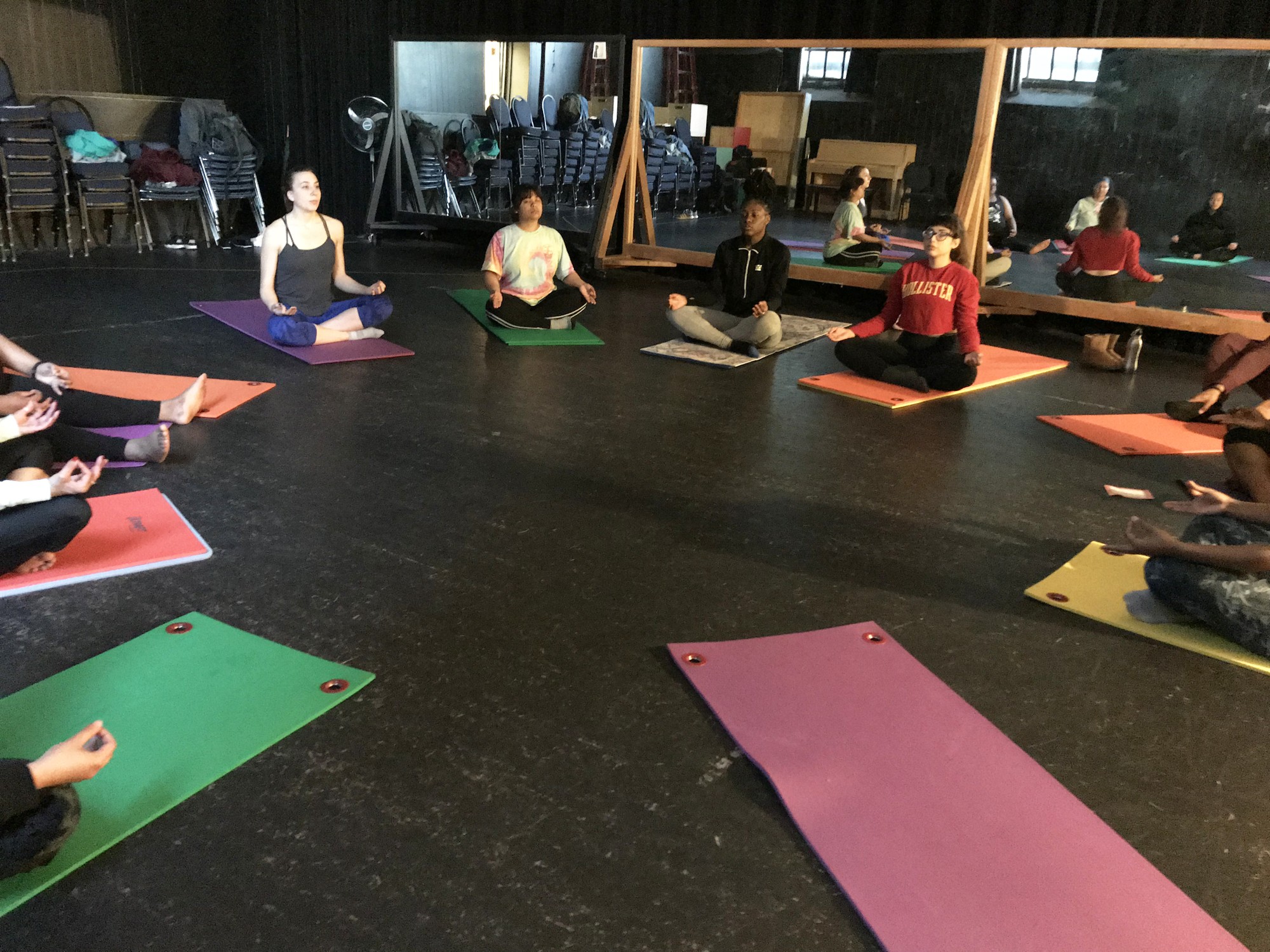
    We sat in a circle as she directed us through each posture. All were welcome, and students trickled in and joined the circle. Kemetic yoga has a breathing pattern to implement purposeful breathing: inhale, pause, exhale, pause. Each of the movements were done three times, following the geometric theme of the activity. Many of the names of the poses were slightly different from what we’re used to hearing. For example, the normal sitting pose is called ‘sesh.’

    “It’s a black practice that needs to be spread,” Fletcher said. “It offers something to the POC community that Asian or Indian yoga does not.

    IMG_8168.HEIC.jpg
    Dionna Fletcher directed the class through movement and breathing techniques. | Photo by Silvia Alfonso


    Fletcher has been part of a series of fitness sessions going on around campus and town. The series was compiled by Chryste Johnson, interim coordinator for the African American Center of Excellence (AACE). Johnson named the series Soul Fitness as a way of representing people of color during Black History month, and intended to bring in new forms of movement that people haven’t heard of.

    [perfectpullquote align=”right” bordertop=”false” cite=”Dionna Fletcher” link=”” color=”” class=”” size=”17″]“It’s a black practice that needs to be spread. It offers something to the POC community that Asian or Indian yoga does not.[/perfectpullquote]

    It is a three-week compilation of different forms of movement. Johnson explained that there’s been hip-hop cardio, there will be a steppin’ class and it’s the same series that made Love Ya’ Self Queen.

    HSU student DiOria Woods was one of the students who attended the series.

    “I’m a dancer, I’ve never heard of this kind of yoga and I like to try new things,” Woods said. “I’m part of the culture center and I wanted to actually interact with these kinds of events.”

    Though it was a small class, it was a relaxing thing to get into after the stress of the day. Fletcher made everyone feel welcomed and comfortable. Even at the intermediate level the people in the class felt comfortable to do the poses no matter how hard it seemed.

    IMG_8163.HEIC.jpg
    Students sat back on their heels, ready for the next movement. | Photo by Silvia Alfonso

    Nicole Lamperti was another student that joined in on the Kemetic yoga class.

    “I’m in a world cultures class and was curious about this kind of yoga,”Lamperti said.

    The lights were off, letting the natural light come in from the sun setting through the windows. This created a more relaxed feel to the class. In the background, Fletcher played music by people of color, supporting the idea of loving yourself and putting yourself first.

    Kemetic yoga brings a new form of movement to a common type of activity. Yoga is done all over the world but can be done in different forms. Kemetic yoga reminds us to be purposeful in our movements and reminds us about the different places we come from.

  • Bridging the gap

    Bridging the gap

    How HSU and Graduation Initiative 2025 are attacking low graduation rates

    Freshman Isabel Duplantier, is planning to graduate in four years, but the odds are stacked against her. According to a recent report, Humboldt State currently has a four year graduation rate of 22 percent. Duplantier, a journalism major, is determined to beat the odds.

    “My first semester was hard, because it took a lot of time adjusting,” Duplantier said. “But this semester I feel like I have figured out how I perceive myself and how others perceive me. I made it my home.”

    Duplantier’s troubles adjusting to HSU are not uncommon. They are the reason why such a low number of students graduate within four years. However, those numbers are not unique to HSU. The California State University system started Graduation Initiative 2025 in 2009 with the intent to “increase graduation rates for all CSU students while eliminating opportunity and achievement gaps.” It didn’t go into effect until 2016, but in that short amount of time progress has been made.

    “When we started GI 2025, our four-year graduation rate was 14 percent,” Lisa Castellino, Associate Vice President of Institutional Effectiveness at HSU, said. “So, we have gone from 14 to 22 percent.”

    By 2025, HSU is hoping to have a four-year graduation rate of 30 percent and a six year graduation rate of 56 percent. Castellino said that HSU had a six year graduation rate of 46 percent when the initiative started, but raised it to 52 percent two years ahead of schedule.

    “That’s a success story that the university should hold up,” Castellino said.

    Some of the contributing factors behind why students either tend to drop out or graduate in a longer amount of time can be complex. Students face a myriad of issues that range from housing and mental health to food insecurity.

    “I know a few freshmen that are having trouble with housing and financial aid,” Duplantier said. “I feel like the school could be better at giving them resources to figure that stuff out.”

    That is where GI 2025 comes in. There are six pillars to GI 2025 and all are aimed at breaking down barriers. The six pillars include: academic preparation, enrollment management, student engagement and well-being, financial support, data-driven decision making and removing academic barriers.

    [perfectpullquote align=”right” bordertop=”false” cite=”Lisa Castellino” link=”” color=”” class=”” size=”18″]“Peer mentoring is very effective, and it is a best practice in higher education.”[/perfectpullquote]

    In the 2017-2018 and 2018-2019 budget cycles, the state spent nearly $75 million a year on GI 2025. This year’s Governor Gavin Newsom announced the California budget would allocate $45 million for GI 2025. A cut of nearly $30 million, but the first time that it was officially a part of the California Budget Proposal. A part of the student engagement and well-being pillar is to “[foster] a strong sense of belonging on campus.” To do that Castellino said HSU is planning on expanding the “Oh SNAP!” program as well as others that have been successful.

    “Peer mentoring is very effective, and it is a best practice in higher education,” Castellino said. “We are looking to expand cultural pedagogy as well.”

    Part of the GI 2025 report points out achievement gaps for underrepresented minorities (URM) and Pell Grant recipients. URMs are defined as those who identify as Black, Latinx or American Indian. Pell Grant recipients are those who come from low-income backgrounds. The URM equity gap rate is 14 percent lower and the Pell Grant equity gap is 11 percent lower than their white, financially secure counterparts, meaning that individuals from these two groups graduated at lower rates than their peers.

    To help bridge that gap HSU announced they would be adding $435,000 for student jobs starting in fall 2019 and hiring a number of new tenure-track faculty members. The boost in student jobs is being implemented to “help students pay for college, enhance their skills to build their resume and engage with campus in new ways,” according to a recent announcement from the HSU news and information department.

    To reach her goal of graduating in four years, Duplantier said she will utilize some of the resources here on campus. So far she has used the writing center and a bit of of counseling from her advisor. Duplantier wants to waste little time in reaching her dreams.

    “Once I graduate, I’m hoping to design and write for some sort of magazine,” Duplantier said. “Maybe start up my own at some point.”

  • Student spotlight

    Student spotlight

    Sociology peer mentors shine with Youth Educational Services and help students

    News editor, T. William Wallin sat down with Ashleigh DeFraga and Belen Gutierrez during separate interviews for a Q&A.

    DeFraga and Gutierrez are seniors in the criminology and justice studies program at HSU. They are peer mentors for the sociology department and can usually be seen helping out a student in the business of social sciences building. They volunteer with YES and are very involved with the community. They both are pursuing law degrees and want to become lawyers after graduation.

    WHAT ARE YOU STUDYING AT HSU?

    DeFraga: I am studying Criminology and Justice studies major, with a double minor in psychology and Philosophy

    Gutierrez: Criminology and Justice studies with the minor in comparative ethnic studies

    WHY DID YOU PICK THE MAJOR AND DOUBLE MINORS?

    DeFraga: I love all aspects of the criminal justice system. Our school has a unique program and since day one I knew I wanted to be a lawyer. I chose psychology because I am interested in how the brain works. I am minoring in the philosophy of ethics, which we talk a lot about ethical dilemmas that get brought up in criminal justice such as rape, or voluntary suicide. Taking philosophy will help me with questions that will be on the bar exam and the LSAT.

    Gutierrez: I interned at a law firm in high school and I knew I wanted to do law when I graduated but I didn’t want to do the traditional political science. Not that there’s anything wrong with that but I was more interested in the criminal justice aspect of it. I started learning about intersexuality in high school and that drew me in having a minor in comparative ethnic studies.

    WHERE DID YOU MOVE FROM?

    DeFraga: I came from Sacramento. I came straight from high school and enrolled at HSU in August of 2016. I have been taking 20-22 units each semester to graduate sooner because I don’t get financial aid. I did get some scholarships but I wanted to get done as fast as possible.

    Gutierrez: Orange County, Santa Ana, in particular, Southern California. I came straight from high school. I graduated in 2015.

    HOW DO YOU JUGGLE THE WORKLOAD AND VOLUNTEER WORK YOU DO?

    DeFraga: I go day by day. You can’t go each day and think past that because then it’ll be overwhelming. I have a google calendar, a wall calendar and a million sticky notes everywhere. I’m really organized.

    Gutierrez: My mom is really good with time-management and I really just inherited her skills a little bit. I really try to think about what I’m taking on and how that is going to fit in with my schedule. I know my limits and I try to stick to them. But google calendar and a planner is your friend.

    WHAT’S THE PLAN AFTER YOU GRADUATE?

    DeFraga: Straight to Law School. I’m going to go to Pepperdine in LA. It’s a private school with lots of scholarships and I love the area its in. It’s smaller than Harvard and I think it’s best for me to thrive.

    Gutierrez: I’m taking a year off and then going to law school. My top schools right now are Berkeley and I got a full-time offer for Chapman Law. I’m debating that because I want to go to the bay so I’m not sure if I’m willing to relocate to So-Cal but we’ll see. Berkeley is number 1. They have a Ph.D. program on social well-being so you can do a program to get your Ph.D. in social justice and also your law degree which is what I’m really interested in doing.

    WHAT ARE YOU MOST PASSIONATE ABOUT?

    DeFraga: I am most passionate about juvenile kids. They need help, it’s not their fault when they get in trouble. I want to make a difference in the juvenile justice system. Kids are important and not enough people are making an effort with them.

    Gutierrez: I think definitely collaborating with communities that are oppressed and striving for social justice.

    WHAT HAS BEEN YOUR FAVORITE EXPERIENCE IN HUMBOLDT?

    DeFraga: My favorite experience is all in all the environment. I think the environment has shaped every aspect of my experience. Everyone is super genuine. The JRVP program has been one of my favorite experience up here.

    Gutierrez: Definitely volunteering with YES. I started volunteering as a freshman through the step-up program which is HSU’s alternative spring break. That’s where we went to San Francisco to volunteer for spring break, and then when I was a sophomore I directed the program myself and planned the Sacramento trip. My junior trip I applied to be one of the five paid staff positions and I got it. This year I applied to be the lead program consultant and I love it. I love YES and I think if it weren’t for YES I would have transferred out of HSU because it’s so isolated. I think finding a community is really important and I found it at YES. That has definitely been my favorite part so far at HSU.

    WHAT ADVICE DO YOU HAVE FOR INCOMING STUDENTS?

    DeFraga: Be brave. Don’t be afraid to ask questions. Don’t be scared to not know something, just ask and be comfortable in your own skin.

    Gutierrez: Definitely, get involved. Maybe not your first semester if you want to get a taste of college and what classes are like as a full-time student and how you fit in because that’s the time to dip in your toes and see what you want to be involved with.

    WHO IS YOUR FAVORITE PROFESSOR AT HSU?

    DeFraga: Michihiro Clark Sugata.

    Gutierrez: Wow, I’ve had so many. I think so far it’s been Nancy Perez. She just got hired through the CRGS department and I took Chicana/Latinx with her last semester. I really like the structure of the class and how she gave us assignments I never had before and so she was really relaxed with what we could do. One of the assignments was to write a children’s book and what stood out for me was to write a children’s book that you wish you had when growing up. I really liked it and I wrote a book about my experiences growing with a message I would have liked to see growing up. That really stood out for me and that has made her one of my favorite professors. She really thinks outside the box and giving us assignments that were challenging because you think you can write a children’s book no problem but really it’s a lot more than that. It’s a lot deeper than that and there’s a lot of thinking that goes into it like ‘how can I put a message into it in a way that a 5-year-old or whoever is reading it will understand it.’ That’s why she’s my favorite professor.

    HOW LONG HAVE YOU WORKED WITH THE JUVENILE CENTER AND WHAT IS IT LIKE? WHAT HAVE YOU GAINED MOST WITH WORKING THERE?

    DeFraga: It’s pretty awesome getting to go into the Juvenile hall and work with the kids there. They are honestly just normal kids we have just labeled them as bad or delinquent! I think that the best part is being able to see that they are just kids, not criminals! To be able to just hang out with them and show them a positive example is a small way in which each and every one of us can help them. I’ve been working with them since my freshman year! It also makes you feel like your life isn’t so bad in retrospective to theirs. Putting yourself in their shoes and looking at the intersectionality that goes along with it!

    WHAT IS WORKING AT YES LIKE?

    Gutierrez: It’s really rewarding in several aspects. It’s not just going out into the community that’s rewarding, it’s also all the skills I have learned that I didn’t even know I had, such as facilitating meetings and learning people’s first language and how there’s a savior complex when volunteering and how YES is striving more towards collaborating with communities instead of really just going in and serving them. It’s more like we’re here if you need us and what is it you would like from us instead of going in and being like we’re here to do this for you. So I think that’s what I really fell in love with YES, there really striving to make those changes.

  • Behind the many medals

    Behind the many medals

    Accomplished track star, Romel Robinson, is a triple-threat

    As a starting sprinter for HSU’s track team, and recipient to over a hundred awarded medals, Romel Robinson, is familiar with identifying himself as a runner. However, beyond the many medals, is a self-taught gymnast and break-dancer.

    “I taught myself [to tumble] in middle school,” Robinson said. “My friend knew how to back flip and tried to teach me, we were just messing around.”

    Finding a new interest in the gymnastics world, Robinson continued to teach himself new tumbling tricks.

    “My favorite is a double back flip,” Robinson said. “It’s a work in progress, I don’t have the right equipment to perform it without hurting myself.”

    IMG_0528.jpg
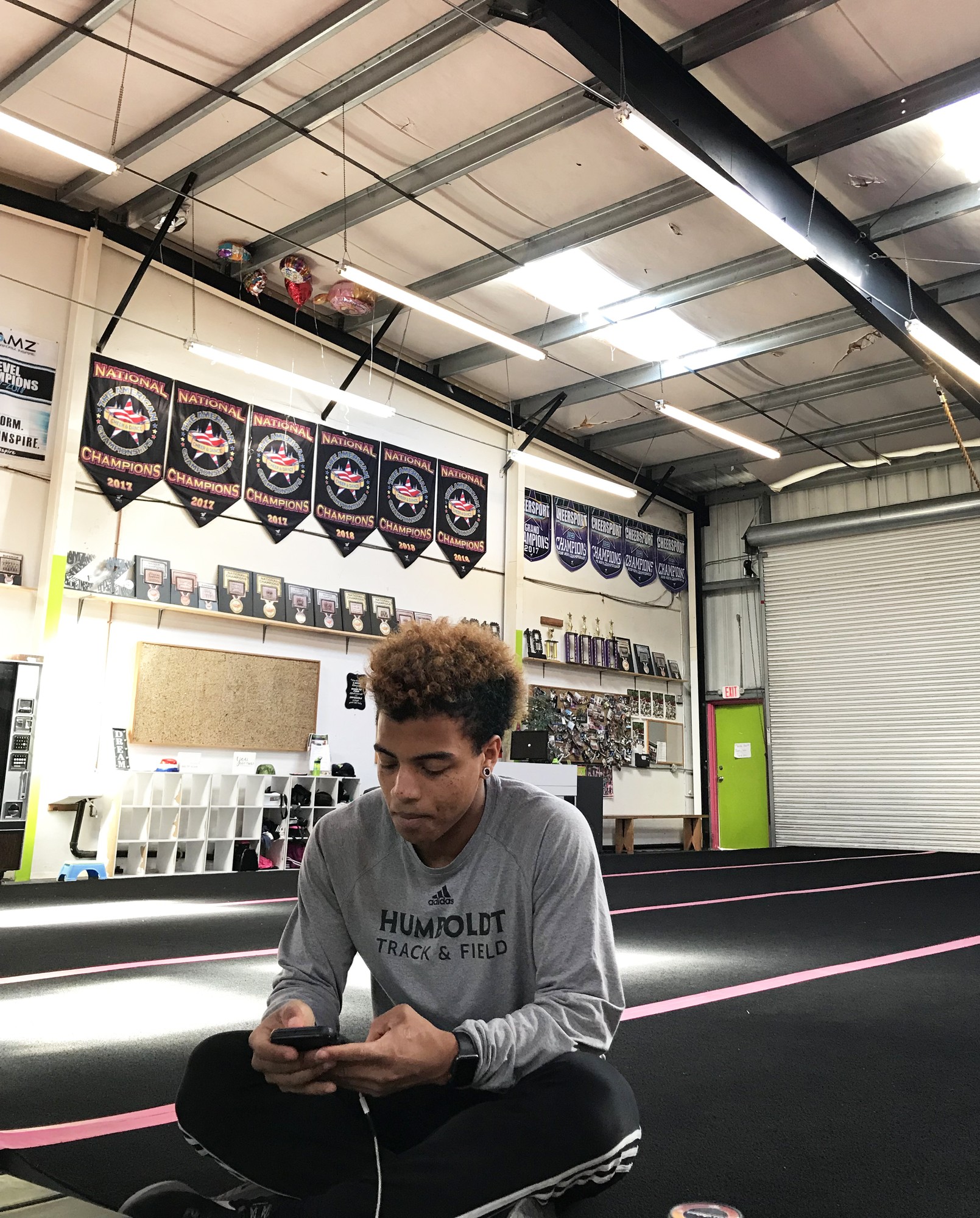
    The right side of the Dream Athletics gym is painted with bright, neon colors and lines of championship banners. Feb. 18. | Photo by Grace Caswell

    Robinson is extremely careful when practicing tumbling, as he’s already out for the season with two pulled hamstrings.

    “It’s a lot of strain, very similar to running,” Robinson said. “You tumble until your body can’t, which is about an hour, to an hour and a half in. After that, you’re sloppy and too weak.”

    While finding a commonality between the physical excursions of tumbling and track, Robinson views the two sports very differently.

    “Tumbling is just for fun,” Robinson said. “I got pushed into track, it’s more competitive, and I take it seriously. It’s a lifestyle.”

    Fellow teammate, roommate, and competitor, Stefan John, supports Robinson both on and off the track.

    “We’re straight up family, we gel,” John said. “We have a lot in common, and run the same events. He wants my stride and I want his quickness! We’re great friends and competitors.”

    IMG_0545.jpg
    Stefan John, HSU track athlete poses in the library post interview. Feb. 19. | Photo by Grace Caswell

    With athletic support, Robinson pursues an environmental engineering major as a first generation college student. Idolizing his first engineering professor, Sintana Vergara, Robinson refers to her as his “Humboldt Mom”.

    “She’s always been there to help,” Robinson said. “She helped me through starvation freshman year, buying me groceries. She’s constantly encouraging me in and out of the classroom.”

    Sintana Vergara shares a very similar attitude toward Robinson. Vergara said that Robinson was the first student she met at HSU.

    “It was a very friendly start,” Vergara said. “I remember he casually mentioned eating one meal a day, it broke my heart, I wanted to advocate for him. It was crazy and exceptionally frustrating. He’s such an amazing athlete and student, full of potential.”

    Robinson pursues a masters and doctorate degree, with a goal of becoming the first doctor in his family. Vergara fully supports and believes in Robinson’s dream.

    [perfectpullquote align=”left” bordertop=”false” cite=”Romel Robinson” link=”” color=”” class=”” size=”17″]“I grew up in a difficult area. I remember we didn’t always have food and my mom was working multiple jobs. She’s my biggest inspiration and is totally killing it now…”[/perfectpullquote]

    “There’s no doubt he can do it,” Vergara said. “Everyone struggles regardless, no matter who you are. It’s a tough major, but, he will be successful.”

    Focused on following a strict plan for the next ten years of his life, Robinson has an interesting goal for his more distant future.

    “After getting my masters and doctorate degree, I want to change my name,” Robinson said. “Romel Fresh Robinson, so when I’m a professor, I can be called Dr. Fresh or Professor Fresh.”

    Coming from the tough area of Visalia, California Robinson emphasizes opportunity and dedication.

    “I grew up in a difficult area,” Robinson said. “I remember we didn’t always have food and my mom was working multiple jobs. She’s my biggest inspiration and is totally killing it now, doing accounting at a firm.”

    Watching a powerful and successful transition in his family, encourages Robinson to achieve and accomplish more.

    “My mom taught me everything I know,” Robison said. “She helps me with whatever I need, even if she doesn’t know how, she’s my favorite.”
    With serious goals and aspirations for the future, track becomes nearly invisible on the long list of objectives. However, it gave Robinson an opportunity in the first place, and will remain his life indefinitely.

    “I like running, it’s something I will always do, until I die!” Robinson said. “I mean, it got me here.”
  • Some progress, but far from perfection

    Some progress, but far from perfection

    Homeless Student Advocate Alliance aims to avoid homelessness

    The housing situation at Humboldt State University has been a huge problem since 2016. In the last year, about 19 percent of HSU students were homeless, according to a recent study done by CSU Chancellor’s office social work professor Jennifer Maguire and CSU Long Beach social work professor Rashida Crutchfield.

    Many students demand more housing. Fernanda Estrada, a junior in psychology, has lived on campus her entire student career and said her biggest fear is not being able to find housing within the next few years she has left here.

    “I am still unsure whether I will even have granted housing next year, to live on campus,” Estrada said. “This school has a huge problem on not having a lot of housing for on campus living. For someone who doesn’t have a car, it is very hard to live off campus as well. I feel like a lot of students aren’t taking action into this situation, and they only will unless they are in this situation.”

    IMG_3703.JPG
    HSU student, Fernanda Estrada reaches for a book. | Photo by Delaney Duarte

    We are mostly unaware of the students that are homeless. We see them on campus and don’t even know they’re having housing insecurity. We see these students in our classes, walking out on the quad, or even in the Depot without knowing they have nowhere to sleep. Christopher Regalado is a junior in marine biology who was homeless for a semester and knows how it feels to be homeless.

    “It was really tough, I had to sleep from one friend’s place to another and I even had a tent, so sometimes I slept in the forest,” Regalado said. “I didn’t want to bother my friends all the time because that is their place and not mine.”

    IMG_1622.jpg
    HSU student, Christopher Regalado stands in College Creek’s soccer field. | Photo by Delany Duarte

    Regalado couldn’t find any housing available on campus or off campus. When he applied for housing on campus he’d gotten a waitlist number, which was 272. That number was far from a single digit number to even have a slight chance on getting a place to live.

    [perfectpullquote align=”right” bordertop=”false” cite=”Christopher Regalado” link=”” color=”” class=”” size=”19″]“I really hope those students who are homeless currently know they aren’t alone…”[/perfectpullquote]

    “I was really disappointed with how the system of on campus was set up,” Regalado said. “It is very unfair. I wouldn’t wish being homeless on anyone, it is such a stressful time.”

    Regalado said he had a hard enough time being homeless for one semester and couldn’t imagine the students who are homeless for a year or more. Regalado hopes that housing changes very soon for those students suffering without a safe place to live.

    “I really hope those students who are homeless currently know they aren’t alone, Regalado said. “And I hope they have supportive friends like I did at a time where I needed them the most.

    On campus, there’s supportive advocates to help those students who can’t find homes.The Homeless Student Advocate Alliance, is a club that creates dialogue services and awareness of housing issues are overlooked. This club was started by Chant’e Catt, who is also the Off-Campus Housing Coordinator. Chant’e Catt assists students who are homeless to find homes off campus and helps support them.

    “There is a lot of awareness now on campus, so professors and faculty staff know what to look for when they see a student in need so they do refer those students to me,” Catt said. “Also when students are brave enough to come out and find help, they are immediately directed to me.”

    Many students want these housing issues to be improved and get better as time goes on. Catt said that the housing situation has improved throughout the years she’s been working on the issue.

    “HSU, while people like to think we aren’t doing a lot, are actually the leader in solving and supporting the students around this need,” Catt said.

    There has been a lot of people who blame the school itself, and the people that work within housing. Catt said that there is emergency housing on campus in the woodworks for next semester that can house one or two students. This

    “I see a lot of progress going on for student basic need,” Catt said. “A lot of people like to blame a specific area or one person but in reality it is just a system failure in the institution.”

    If you are currently going through a similar situation, you can contact Chant’e Catt at cmc1776@humboldt.edu.

  • Black excellence in science

    Black excellence in science

    Cellular and molecular biology major, Tanae Nichols, shows other black girls, anything is possible

    Sacramento California native, Tanae Nichols has a plan to prove to other black girls, anything is possible. Nichols is a third year at Humboldt State and is studying cellular molecular biology.

    “Dealing with genetics on a molecular level, I’m able to break down how things work and function on the most basic level,” Nichols said.

    IMG_1957.JPG
    Cellular molecular biology major, Tanae Nichols sits behind Bret Hart house on Feb. 19. | Photo by Dajonea Robinson

    Nichols takes this goal and brings it to life with her hands-on work as a caregiver. Growing up she had many family members with disabilities and was inspired to find out how she could help. Her love for knowledge and caring for others is what drew her to work in the field. She was also interested in internal medicine dealing with black people.

    “I wanted to learn more on a developmental level, I can fix things in the body,” Nichols said.

    When a Humboldt State recruiter came to her advanced placement class in high school, she became drawn to the beautiful location and the sense of community. These factors are what pushed her to attend school here.

    “I’ve always been into hiking, camping and just being an outdoors girl,” Nichols said. “I am an adventurer.”

    IMG_1940.JPG
    HSU student Tanae Nichols | Photo by Dajonea Robinson

    Nichols moved to Humboldt straight out of high school. She came with intentions to join the pre-med program. She also enjoyed how the school pushed a biology centered curriculum. She tried many different majors before finding a fit.

    “I changed my major from general biology to environmental biology to psychology and then back to pre-med,” Nichols said.

    [perfectpullquote align=”right” bordertop=”false” cite=”Tanae Nichols” link=”” color=”” class=”” size=””]”Continue your studies and trust in your dreams.”[/perfectpullquote]

    Being the first person to go to college in her family, and a black woman in science, she has felt the pressure to succeed.

    “I have professors that really believe in me and tell me ‘Don’t let anyone tell you, you can’t do it,’” Nichols said.

    She takes this advice and strives forward to be a positive role model for her family back home.

    With three brothers and four sisters, Nichols finds herself in the middle. Raised by two hard working parents who did not go to college, education was always important.

    “My parents made sure I was put into schools that were college oriented,” Nichols said.

    The charter school she attended really promoted children of color to go to college.

    IMG_1947.JPG
    HSU student Tanae Nichols | Photo by Dajonea Robinson

    She is involved with the Humboldt State’s club/sisterhood, The Legacy. This group of women aim to be a home away from home for all women and a platform to connect with the Humboldt community. They do different community service events like canned food drives, beach clean-ups and mentoring girls. Nichols believes it is important to be involved with the community to be an effective doctor.

    “When going into medicine, you have to learn the community you are serving,” Nichols said.

    Nichols has about two more years to go until graduation. Her next steps after college are to go to medical school, do a two-year residency and eventually become a doctor. Nichols encourages other young black girls who aspire to go into the science field.

    “Continue your studies and trust in your dreams,” Nichols said.

  • Beyond these walls

    Beyond these walls

    Tony Platt discusses the truth behind the American criminal justice system

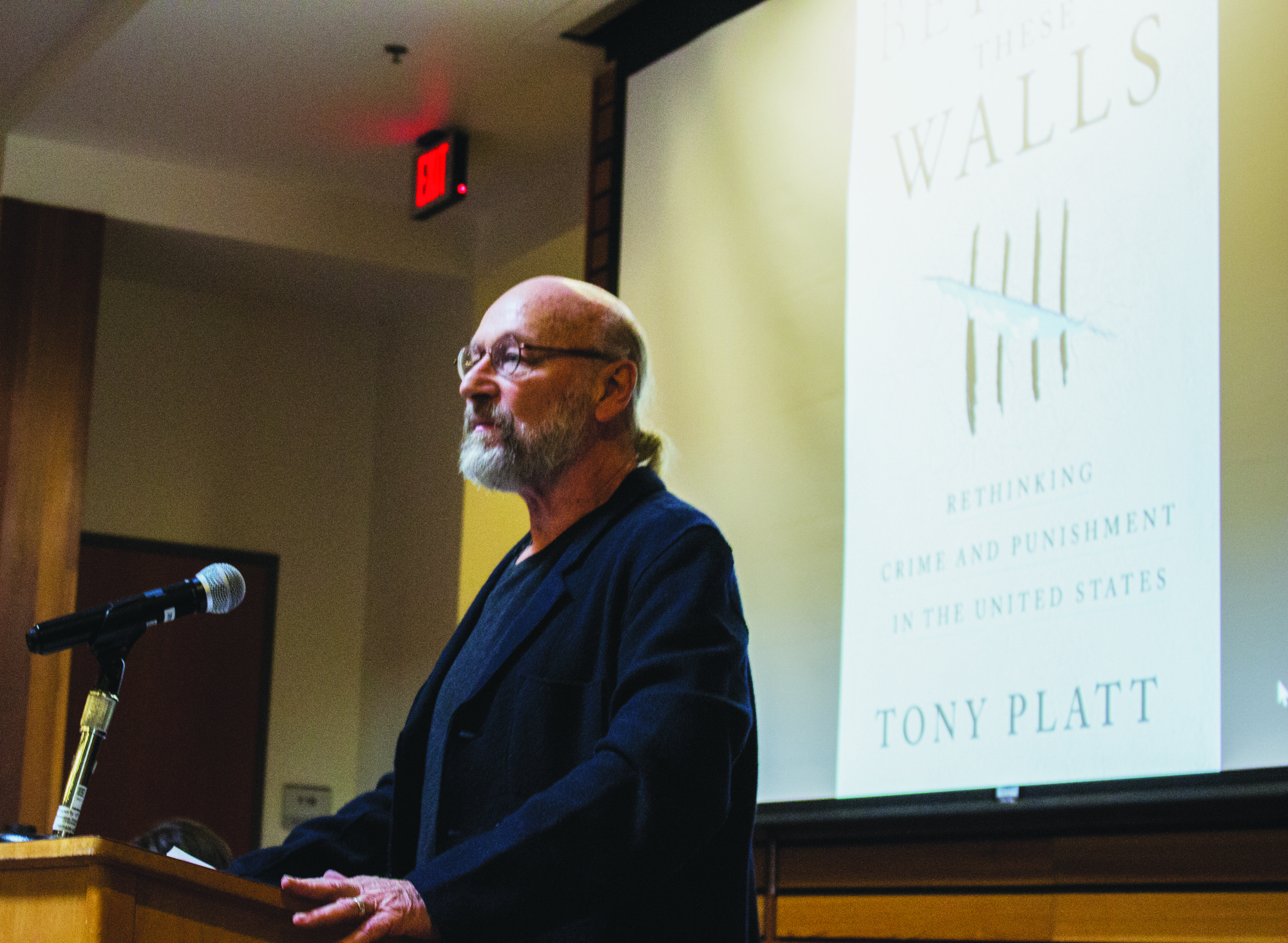
    Criminal justice author Tony Platt visited Humboldt State on Feb. 14 to discuss with a panel his new book, “Beyond These Walls: Rethinking Crime and Punishment in the United States.” Students, professors and community members filled the Native American Forum where the event took place.

    IMG_9189.jpg
    Renee Byrd, sociology professor, introduced author Tony Platt, whose work changed her life. | Photo by T. William Wallin

    Nancy Perez, critical race, gender and sexuality studies professor at HSU and Stephanie Lumsden, scholar and teacher finishing her Ph.D. in gender studies at UCLA, completed the panel. Dr. Renee Byrd, professor of sociology, introduced Platt and said reading his work as an undergraduate in Oakland changed her life forever.

    “Platt is a co-author of my favorite text, ‘The Iron Fist and The Velvet Glove,’” Byrd said. “There were few books at the time that really took a radical approach that looked to the causes of state violence and corrupt criminal activity.”

    Platt is a distinguished affiliated scholar at the Center for the Study of Law & Society, University of California, Berkeley and is familiar with Humboldt county. He resides both in Berkeley and Big Lagoon. Platt said he has been visiting Humboldt county since 1975 and it feels like coming home since he’s done a lot of research here.

    IMG_9197.jpg
    Tony Platt, author of ‘Beyond These Walls: Rethinking Crime and Punishment in the United States, speaks to students, professors, and community memebrs in The Native American Forum on Feb. 14. | Photo by T.William Wallin

    Platt began his talk with the four main themes of his new book: We’re too weak for the fight for social justice within our own movement. Public police and prison guards are just a small portion of how coercive power and social control are executed. The problems now are not products of Trump nor the leftover issues of the past. We have to learn from our forgotten history and bridge activists ranging from high school kids marching for gun control to Black Lives Matter.

    [perfectpullquote align=”left” bordertop=”false” cite=”Tony Platt” link=”” color=”” class=”” size=””]”We have the highest incarceration rate of any other country.”[/perfectpullquote]

    “We have the highest incarceration rate of any other country,” Platt said. “Our solitary confinement violates U.N rules and regulations. The 99 percent of those incarcerated are poor and dis-proportionally African American. We have 30 percent of all women incarcerated in the world.”

    Platt is the author of ten books and 150 essays and articles dealing with issues of race, inequality and social justice in American history. Platt said currently we are too often left picking a choice at the detriment of another group.

    “We’re in an in-between moment in history where were deciding what do we want to look like,” Pratt said. “We know what we don’t want. For the next generation it’s up to them to decide what they want and who it will help.”

    IMG_9182.jpg
    Nancy Perez, CRGS professor, Stephanie Lumsden, scholar and teacher finishing her Ph.D in Gender Studies at UCLA, and Tony Pratt, author of ‘Beyond These Walls: Rethinking Crime and Punishment in the United States, in The Native American Forum on February 14 2019. | Photo by T.William Wallin

    Panelist and abolitionist Stephanie Lumsden agreed and said although it’s negative that there’s so much violence occurring right now this is also the moment of opportunity for us to organize and do something about it.

    [perfectpullquote align=”right” bordertop=”false” cite=”Stephanie Lumsden” link=”” color=”” class=”” size=”17″]”I am not a reformist, I am an abolitionist… I don’t think we should lock people away in cages which for some reason is a radical idea to some people.”[/perfectpullquote]

    “What do we do about justice?” Lumsden said. “Prisons aren’t solving crime. Police aren’t solving crime. Racial capitalism is what we’re working with. Abolitionist politics is overtaking this order. It is taking apart this system.”

    Lumsden said she valued Pratt’s new book for its thorough research. She said the main thing she reflected on was the critique it had on reform work and the reformist attitudes that build the state.

    “I am not a reformist, I am an abolitionist,” Lumsden said. “I don’t think we should lock people away in cages which for some reason is a radical idea to some people.”

    Javon Patterson, a junior in computer science, came to the discussion with his altruism and compassion class to hear the panel talk on how we deal with prisoners when they integrate back into the world.

    “I think this is important because prisoners are not treated very well when coming back into society,” Patterson said. “Even if they try their best to change society makes it difficult. It’s important to talk about this and how we can change.”

  • New program for Arcata tenants & landlords

    New program for Arcata tenants & landlords

    Educated Landlord and Tenant Program aims to educate both parties on mutually beneficial renting practices

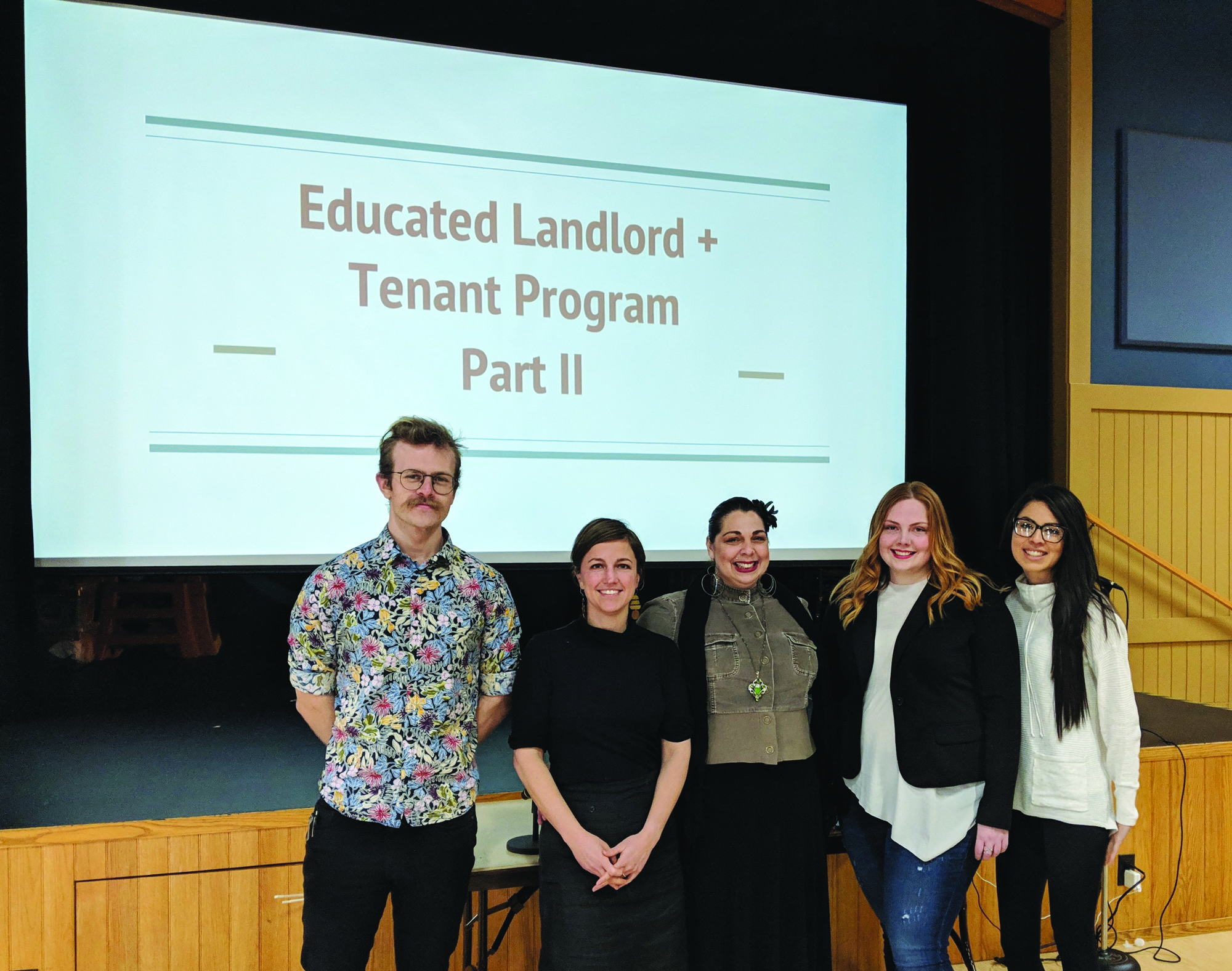
    One of the most daunting prospects of ‘adulting’ is moving into your own space. Soon Humboldt State will offer a program to make that transition easier. Students and faculty presented information on a proposed landlord-tenant certification program, tentatively called the Educated Landlord and Tenant Program, on Feb. 15, at the D Street Community Center.

    The intent of ELTP is to create an equity-based program that educates both tenants and landlords on life skills, their rights and responsibilities and the best practices to follow when renting. Chant’e Catt, who is the off-campus housing director and project leader, said the idea came from a meeting she attended three years ago where students complained about the lack of tenant education programs offered by HSU. The concept stuck in her head until she began collecting input from the community with a team of students eight months ago.

    “What we started hearing was that landlords were interested as well,” Catt said. “The student tenants were being treated poorly, but some landlords could say the same.”

    With this knowledge, the project blossomed into a grassroots community effort to include both landlords and tenants in the discussion, and create a program that could benefit both parties equitably. The team held three town hall meetings to gather information from the community on what the structure of the class would look like, and what specific curriculum would be covered.

    “We felt it was important that all voices came into the planning of this education program,” Catt said. “There’s no way people in the community can say they didn’t have input.”

    MVIMG_20190215_120811.jpg
    Chant’e Catt, the driving force behind ELTP, describes where she plans to take the program in the coming months. | Photo by Jett Williams

    The proposed two to three hour free class session would allow landlords and tenants to learn cooperatively and earn ‘gold star certifications’ upon completion of the program. The certification would be a sign that the tenant or landlord is educated on all aspects of renting a room or apartment. The program is expected to be implemented early next semester.

    One of the landlords attending the town hall meeting was Simone Wyche. Wyche is the office manager of Strombeck Properties and said she is excited to see the execution of this program.

    “I’ve never seen anything like it,” Wyche said. “We won’t just pick tenants with the certification, but it would definitely be enticing.”

    MVIMG_20190215_114121.jpg
    A blend of students, landlords and interested community members gathered to hear the details behind ELTP and provide vital community feedback. | Photo by Jett Williams
    [perfectpullquote align=”right” bordertop=”false” cite=”Jesse Richards” link=”” color=”” class=”” size=”18″]“Waking up and going to the bathroom sounds simple, but for a homeless person it’s never that easy.”[/perfectpullquote]

    Forestry major and ELTP Research Collaborator Jesse Richards’ struggles with housing motivated him to help build the program. He survived living out of the trunk of his car and sleeping in the community forest before buying a van and outfitting it into a livable space.

    “Being homeless adds stress to your day, because so much of your time is spent dealing with simple tasks that become much harder when you don’t have a place to stay,” Richards said. “Waking up and going to the bathroom sounds simple, but for a homeless person it’s never that easy.”

    If this program had been in place when he first came to campus, Richards said he absolutely would have utilized it.

    “This program is designed partly as a buffer to help students with insecure housing, to prevent them from becoming homeless,” Richards said. “Knowing that there’s someone on your side, advocating for you sometimes is all you need to go to school and do things in your daily life.”

  • #HorrorStories: Highs bring lows

    #HorrorStories: Highs bring lows

    “Hey guys, there’s a raccoon staring at me…”

    Not every high will mellow you out, sometimes you might get chased by a raccoon. We asked Humboldt State University students their worst high experiences. Share your horror stories in the comments to be featured in future videos.

  • Track and field opens with green and gold

    Track and field opens with green and gold

    The men’s and women’s track team competed against it’s neighbors the College of the Redwoods on Feb. 16. National Championship qualifiers and alumni from last season were also honored at the meet.

    Michel-Ange Siaba is a sophomore majoring in criminology and social justice at HSU. Siaba is a jumper and thrower looking to build upon his success of last season. Michel placed in second after HSU alumni Teigan Eilers (6.41m).

    “For the first meet of the season, it was better than what I jumped last year so I can see my improvements,” Siaba said. “Especially because the mark I got today was pretty close to my personal best record. It’s rewarding when I see my teammates gain confidence and we mature as a strong team.”

    IMG_8898.jpg
    Sophomore Michel-Ange Siaba competed in different events throughout the day and finished with a strong 6.41 meter long jump earning him second place. | Photo by Matt Shiffler

    Junior Brailee Vandenboom majors in business administration with an emphasis in marketing. Vandenboom sprints and also jumps placing in three separate events. First in 100 meters, 400 meters, and high jump. The 100 meter dash, Vandenboom came in at 13.34 seconds. She finished The 400-meter dash at 1:01.88, and the high jump at (1.62 m).

    “I haven’t been practicing at my best, and it was a real big surprise,” Vandenboom said. “I think it’s setting me up for the entire season. We’re going to have a solid team this year, we’ve always had like a young team in the past, and now we’re all maturing.”

    IMG_8937.jpg
    Junior Brailee Vandenbroom gets first place in all three of her events, the 100-meter, 400-meter, and women’s high jump at Saturdays Green and Gold Open. Photo credit: Matt Shiffler

    Chee Shorty is an undecided student at the College of the Redwoods. Before trying out track Shorty played football, baseball, and tennis. Chee is being recruited by HSU track and field. Although it was his first time throwing the javelin, he never gave up. On his first and second throw posted a scratch. However, on his very last chance, he got the job done placing first, by throwing 34.79 meters which is about 114 feet.

    “I felt surprised honestly,” Shorty said. “This is my first time. I didn’t even know the rules. I liked how everyone around me was encouraging and reminded me not to pass the line.”

    IMG_0123.jpg
    The down pour didn’t stop sophomores Kaylee Thompson and Cessair McKinney during Saturday’s Green and Gold Open. | Photo by Thomas Lal

    Sophomore physical therapy major Jared Del Real throws shot put and discus. Del Real earned a first place finish in shot put with a 14.14. Breaking the 14 meter mark is encouraging and an impressive feat for a sophomore.

    “I scratched on my second throw,” Del Real said. “I tried to stay focused, I felt like I had some more left in me but I’m super excited and we’ve been working really hard this offseason. We’ll be changing people’s minds about the Humboldt State men’s track and field. We have a competition mindset and limit the number of throws to get the best outcome possible.”

    IMG_8925.jpg
    Junior Jaye Washington finished first in men’s triple jump and placed second in the long jump on Feb. 16 inside the rain filled Redwood Bowl. | Photo by Matt Shiffler

    Humboldt State track & field hit the road against Chico State Feb 28 and March 1. The calendar also opens up to tough division one competition during the Stanford Invitational in Palo Alto, CA on March 29 and 30.

  • OPINION: Humboldt, we have a problem

    OPINION: Humboldt, we have a problem

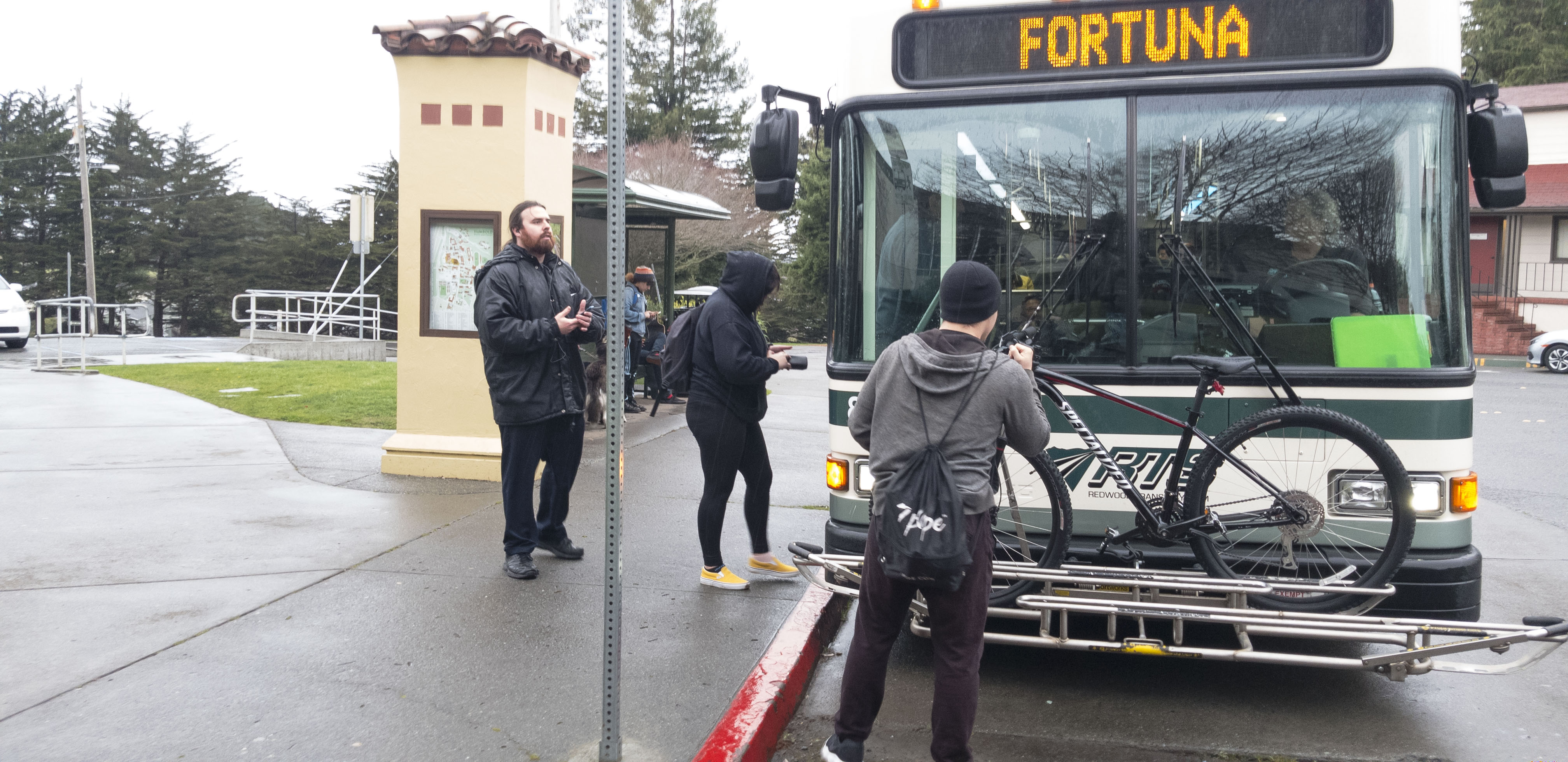
    Humboldt County needs more transportation options

    Humboldt is a beautiful place for someone who is used to an urban area like myself. Being from Los Angeles, seeing the huge redwood forest for the first time was inspiring. I do think it’s a great school to go to for people like me who lived in the city all their life. I just wish it was easier to get here and to get out.

    For starters, the only airport that students can utilize is California Redwood Coast-Humboldt County Airport. It is not considered a major airport like San Francisco International Airport or the Oakland International Airport. ACV is pretty small and limits you to United being the only airline options for getting here by plane. More options for airlines would be great for travelers. SFO and OIA may be an option but those airports are five or more hours to get to from Humboldt.

    While there are shuttles like the Homeward Bound bus service offered by HSU, good luck getting a spot on time. The fall break bus shuttle sold out in a little over an hour of being sold in November 2018.

    A lack of train shuttles is disheartening especially after hearing of the bullet train going from Los Angeles to San Francisco.

    Greyhound and Amtrak shuttles are also here but people who have used those types of shuttles to get to Humboldt (or get out), know that sitting on a bus for hours with “interesting” people can be an unpleasant experience. I’ve personally had a very negative experience taking the Greyhound.

    While I do think that HSU has issues with traveling options, some options do exist for students who want to travel.

    As mentioned, the Homeward Bound bus service is a step in the right direction in combating this issue but I do think there should be more buses available instead of the two buses for students to take to San Francisco or Los Angeles. If there were more buses, there could be a potential to drop off students at other locations like Sacramento, Riverside or San Diego. It would open more options for students.

    HSU also has a service called Zimride, where students can offer a carpool for students who need to get around or they can post that they need a driver to get somewhere. Nelson Hall also has a board on the second floor hallway for students to post carpool services or post that they need to get somewhere.

    There are some solutions to the issue of getting to and from Humboldt but there is still a ton of work that needs to be done to better transportation for homesick students.

  • The golden years

    The golden years

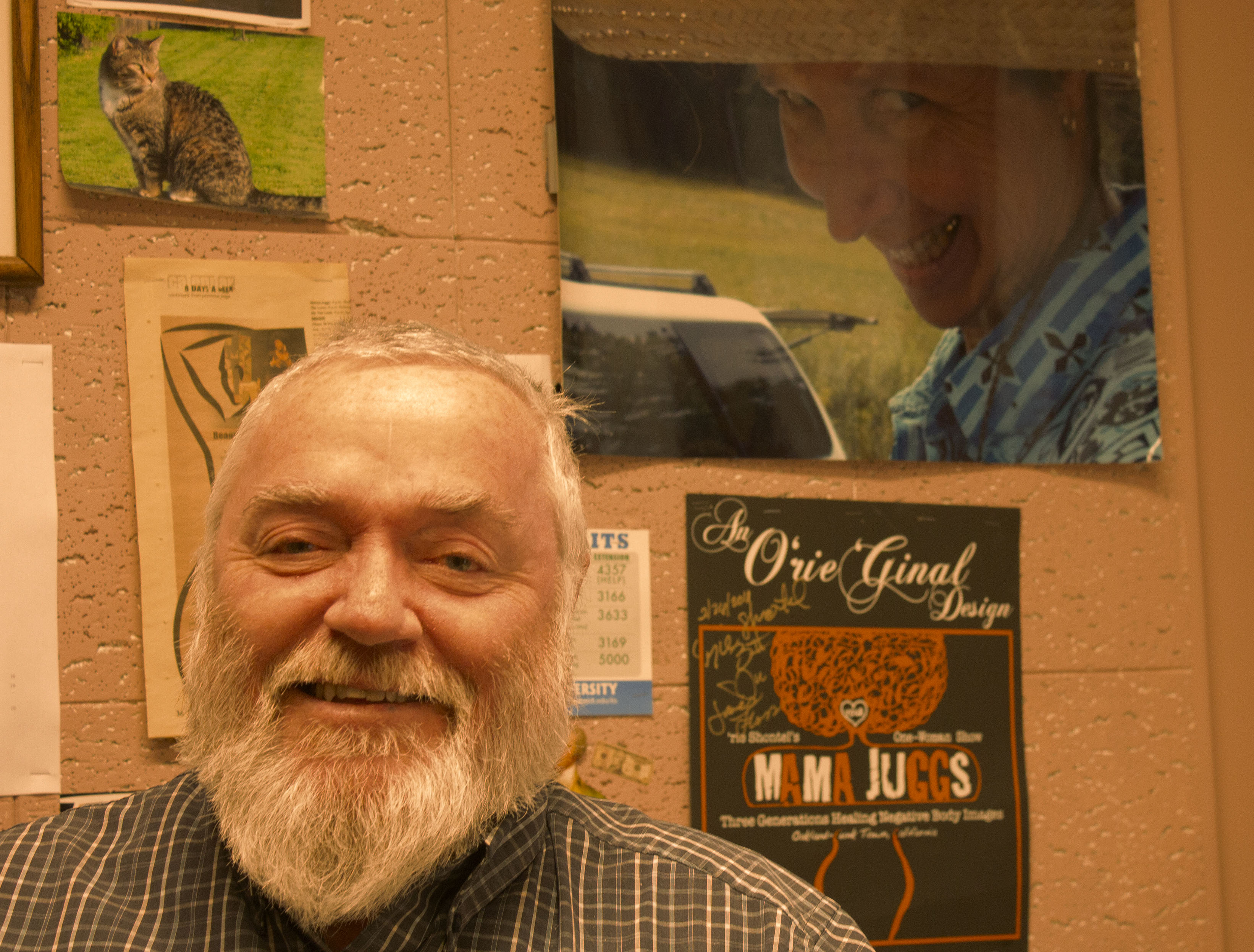
    Professor James Floss shares his long theatrical history here at HSU as he gets ready retire

    At a young age James Floss had an incredible journey, following his courageous instinct and natural talent for the performing arts. After failing his pre-med class at the University of Buffalo, Floss decided to drop out and journey on to a new path.

    “I had failed the class and I have never failed anything in my life, it just rocked my world,” Floss said.

    With the help of a friend from Stanford and a couch to crash on; Floss was already on the path to what would soon become his career. When he heard that his friend’s girlfriend was attending Humboldt State at the time, Floss decided to visit and immediately was mesmerized with the school.

    “I just fell in love with it; the natural beauty of it,” Floss said.

    15621998_10207706625854020_5266066052704511749_n.jpg
    Floss (right) pictured in the Lumberjack Newspaper back in 1982. Demonstrating a duel during a “combat” class. | Photo courtesy James Floss

    A new beginning formed for Floss, and even though he transitioned to a town he wasn’t familiar with, it didn’t seem like he had trouble adjusting to the new environment. He eventually had to find a place of his own, but because he was by himself, he thought of something clever.

    “After dropping out of ‘pre med’ I was on my own, I learned how to live cheap,” Floss said.

    Living cheap meant living in a treehouse behind the school. Some may say that living in a treehouse is bizarre, and they might as well be right, but Floss made it work. He built it with another close friend of his and lived in it for quite some time. It seemed to be a comfortable way to live, and most importantly he saved money without having to worry about other living expenses.

    “I didn’t consider myself homeless, I was trying to live cheap,” Floss said.

    Floss adapted to the HSU community quickly; he found himself participating in many theatrical activities and became a part of a few performative groups. One group in particular was the Humboldt “Chamber Readers.” They are an organization that tours around the schools of Humboldt, delivering creative performances to students ranging from kindergarten to high school. This also happened to be his main source of income that helped him pay through college.

    Another group that Floss joined back in the day were the “Sweet Georgia Brown Clowns.” The group of clowns were introduced to each other by performing arts professor, Gale Mcneeley. Mcneeley taught “clowning” and “advanced clowning” while Floss attended HSU. Floss juggled, mimed and occasionally dressed as a clown with other members. They were active for only six years but Floss became wonderful friends with the group and is still in contact.

    “He (Mcneeley) got us our first tour going and we stayed together as a clown troupe,” Floss said.

    With a wide variety of organizations and clubs that he took part of, Floss truly found his inspiration for the performing arts here at Humboldt State. At the time, guest artists from Dell’Arte which is the International School of Physical Theatre, located in Blue Lake, would come to HSU and teach special skills to students such as clowning, stage combat, and mime. He received an education basically equivalent to those who attended Dell’Arte.

    [perfectpullquote align=”right” bordertop=”false” cite=”James Floss” link=”” color=”” class=”” size=”18″]”It was an accidental career, it was not what I intended to set out to do.”[/perfectpullquote]

    Floss had an outstanding time in college with the theatre department. He kept falling towards more roles, more concepts and more projects; it all came to him naturally.

    “I call them my golden years, I was just having fun, I was really enjoying my experience as an undergrad at Humboldt State University,” Floss said. “I got the letter six years in that said ‘you must graduate,’ they kicked me out. I was just enjoying taking classes.”

    After graduating HSU in 1985, Floss was hoping to become a professional actor, but Humboldt had other plans for him. Later he developed an interest in directing, but as he continued to be an active member in the “Chamber Readers,” Floss realized that he also enjoyed teaching. A job opening for a teaching position back at HSU was brought to his attention, accidentally landing him the role of a full-time professor.

    “They needed somebody to teach a one unit class in oral interpretation as part of the ‘Teacher Preparation Program,’ so that was my foot in the door,” Floss said. “It was an accidental career, it was not what I intended to set out to do.”

    Although it was not the career Floss anticipated; he didn’t regret teaching at all. Floss has absolutely loved his time working here as a professor and sharing different experiences with students throughout the 34 years that he has been teaching. He is known for his vivid ways of teaching, making each class fun and exciting.

    “For me it’s a performance thrill; I’m using my theatre skills everyday in the classroom,” Floss said. “My lectures are my performances.”

    Students who have already taken a communications class with professor Floss, like Bryan Taylor and Jesse Morales, find Floss’ methods of teaching to be very engaging.

    Morales said that having Floss as his professor is always entering and super fun.

    [perfectpullquote align=”left” bordertop=”false” cite=”Bryan Taylor” link=”” color=”” class=”” size=”18″]”I’m sad to see him go…I’ve never had somebody who brings so much of theatrics to communications.”[/perfectpullquote]

    “I like it, compared to other teachers it keeps me awake, cause a lot of teachers just kind of sit there and lecture, it’s very difficult to stay focused,” Morales said.

    Taylor said that Floss is the more interesting professor he’s ever experienced.

    “He’s theatrical than any teacher that I’ve had in the communications kind of world,” Taylor said.

    Floss brings creativity and individuality into his classes. He is a wonderful professor that encourages students to be more active in class, building a positive environment for all who enter his space. Seeing him leave the HSU community for retirement at the end of the school year will surely be bitter.

    “I’m sad to see him go, you know? He’s just a very different teacher, I’ve never had somebody who brings so much of theatrics to communications,” Taylor said.

    As for plans after retirement, Floss is wanting to travel with his wife. He will be exploring more cultures as he is in the process of adapting a new project called “Immigrant Voices” into a stage show, this show will include real stories of real people and their take on immigration.

    “These are the real words of real people, I just want to make a theatrical show out of it,” Floss said.

    Aside from that, he is looking forward to what his retirement has in store for him. The renowned actor and proud “Excellence in Teaching” award recipient will soon bid farewell to HSU, a school that has treated James Floss to a great deal of fantastic experiences that he can hold on to as lasting memories.

    “I have loved it, it was wonderful,” Floss said.

  • Arcata’s Death Cafe

    Arcata’s Death Cafe

    Arcata provides a safe space for people to comprehend the concept of death

    Dr. Gina Belton has been working for years as an end of life educator and consultant; the idea of a “death cafe” came to her because she felt that it could offer something different to the small town of Arcata, and also provide people a space where they can further understand this taboo subject in a creative way.

    “It wasn’t being talked about,” Belton said. “Nobody was talking about it in the way I wanted to…with heart.”

    Belton was inspired by the death cafes that originated in the UK. The first cafe event was held in 2011 in the home of former council worker Jon Underwood. Underwood came across an article one day about Swiss sociologist Bernard Crettaz, who created the concept of “cafe mortels” or death cafes.

    [perfectpullquote align=”right” bordertop=”false” cite=”Dr. Gina Belton” link=”” color=”” class=”” size=”19″]“Nobody was talking about [death] in the way I wanted to- with heart.”[/perfectpullquote]

    Crettaz thought that death was being pushed to the side, it needed to be recognized rather than being hidden, and Underwood agreed. He was fascinated by the idea of bringing people together to receive a deeper meaning of death. When he opened up his home to a few strangers, he didn’t realize that it was going to be such a huge success. A small get together soon spread out around the world, with at least 4800 death cafes held in 51 countries since the first meeting.

    Death cafes are often hosted at a home or other temporary settings. The main goal of these unique cafes is to raise awareness of death and to help show others a different outlook on death so that they can make the most out of their lives.

    In order to host a death cafe, some agreements must be made; cafes should always be nonprofit, they cannot have any agenda hidden behind them and, most importantly, they must serve a nice cup of tea, cake or other treats for guests to enjoy.

    IMG_0441.jpg
    Tea provided for all guests who enter the room at the Death Cafe in Arcata. | Feb. 7. | Photo by Skylar Gaven

    Belton’s cafe takes place on the second week of every month. Many showed their interest on Thursday Feb. 7, as ten locals expressed their take on the strange matter, making it Beltons’ biggest turn out that she has had in a while.

    Death can be seen as a compelling topic to talk about for some, but it can obviously prove to be a touchy subject for others. Belton knows that this topic will lead to vulnerability as people share their thoughts and experiences, which is why she makes sure that the environment is supportive and each individual is respected.

    “It feels supportive, but it is not a support group, you can just be here,” Belton said. “If anything you can cry buckets of tears here.”

    Even though death is the main focus for this event, Belton also tries to highlight the beauty of life. To be clear, a death cafe does not encourage acts toward death itself, instead it simply explains to others what death is to better understand the mystery of death.

    “That is why we come here, because we don’t know,” Belton said.

    Belton has witnessed many forms of both loss and the grieving of others; being a nurse and educator for over 20 years influenced her to continue working with the concepts of life and death. Belton finds joy in preparing her room for events such as these because she also finds joy in hearing what others have to say about this unpopular topic.

    HSU has received lectures from her before, and Belton is more than happy with an idea to facilitate a cafe like this just for college students. Students are out on their own, and with unfortunate incidents regarding other students, Belton believes that having an open space to discuss confusing and/or deep subjects with students is a great way for them to learn and accept loss and life.

    IMG_0428.jpg
    Dr. Gina Belton talking to guests in her office before they left to express their thoughts on how the meeting went, Feb. 7. | Photo by Skylar Gaven

    Having a group of students that share the same confusion about death could serve as a dependable resource during difficult times. Students like Shelby Geilfuss and Cita Hunter express their thoughts about having a death cafe for students; although they believe it would be a good idea to have, they still have mixed feelings because of the sensitive topic.

    “Honestly, I have really bad anxiety when it comes to death,” Hunter said. “It’s important to know that people die everyday, you have to understand that things happen although it’s sad you have to accept that type of stuff.”

    Geilfuss said that she thinks grief is a personal thing and it should be handled on the individuals own time and in their own way.

    “I probably wouldn’t go,” Geilfuss said. “But I do think it’s a good resource for other people to have because many people deal with grief in different ways.”

    Belton further explained that death is a part of life, and though at times it seems like an impossible thing to accept, it also helps us value life itself. Belton has acknowledged that “death” is unpredictable, and because of that, life is something to look forward to. She hopes that all who enter her space can realize that as well.

    “I’m tasting the world, I’m tasting every bit of it before I go,” Belton said.

  • Meet the professor: David Gwenzi

    Meet the professor: David Gwenzi

    David Gwenzi is this month’s professor profile. We talk about his culture, his academic achievements and his contribution at Humboldt State

    David Gwenzi is an assistant professor of environmental science and management at Humboldt State University. He teaches remote sensing classes and geospatial science classes.Gwenzi is the content committee chairman for the geospatial science program, a program that floats between three departments and two colleges. Born and raised in Mutare, Zimbabwe, his values encourage him to be a role model for younger generations and to inspire success.

    [perfectpullquote align=”left” bordertop=”false” cite=”David Gwenzi” link=”” color=”” class=”” size=””]“Whatever you do as an adult, think of how it reflects on younger generations.”[/perfectpullquote]

    “Whatever you do as an adult, think of how it reflects on younger generations,” Gwenzi said.

    Gwenzi was raised in the Bantu culture, a culture made up of several hundred indigenous ethnic groups in sub-Saharan Africa, spread over a vast area from Central Africa across the African Great Lakes to Southern Africa. The culture encourages responsibility to the society rather than just the individual. Gwenzi became an educated man to prove to the people in his community that if they put in similar effort, they would be able to meet their goals and gain achievements as well.

    Gwenzi began his college education at Bindura State University in Zimbabwe, where he researched environmental sciences to help the people of his home country better understand their landscape.

    After two years of classroom education, Gwenzi spent a year researching local pine plantations. This was Gwenzi’s first opportunity to use spatial data for his plantation baboon bark stripping research project in July 2006.

    “I researched baboons on pine plantations in Zimbabwe,”Gwenzi said. “The baboons stripped pine trees of their cambium layer and they chewed on it. There was sugar or sweet in that layer. It was a treat, but it would girdle the trees.”

    IMG_4759.HEIC.jpg
    Professor Gwenzi rendering a map using interpolation, a process which estimates data obscured by clouds or corrupted data bands. | Photo by Colin Slavey

    The nature of the project had Gwenzi surveying the movements of baboon troops on plantations in the eastern highlands using spotting scopes and topographic maps. Gwenzi would record the locations of stripped pine trees in pencil on topographic maps. He compiled the data by hand. His data gave him some idea of the range of each baboon troop on the plantation. It was a tedious process.

    “When I was done with that, that was when I talked with the guy who was a GIS technician,” Gwenzi said. “He showed me you could make cool maps out of all these topo maps. Then the guy told me about how easy it could be digitize. I didn’t have to do it with pen and paper in the end.”

    Gwenzi fell in love with the GIS process. He became familiar with the tools of the trade and focused his education around Geospatial Sciences. After receiving his bachelor’s in environmental sciences with a focus in forestry, Gwenzi moved to the Netherlands to receive his master’s in geoinformation science and earth observation from the University of Twente. He finally completed his education with a doctorate in spatial ecology from the University of Colorado.

    At HSU, Gwenzi shares his passion with many students in the environmental sciences and management department, the forestry department and the geography department. He is renowned through the student body as a high quality professor.

    Bente Jansen is a HSU junior ESM policy and planning major. He said that Gwenzi is a good teacher.

    “He was always willing to work with me,” Jansen said.

    Melanie Stephenson is a senior geospatial science and geology major who has taken some of Gwenzi’s classes.

    “Gwenzi is such a ‘G.’ ‘G’ for Gwenzi,” Stephenson said.

    Sam Wood is a HSU alumni of the geography program.

    “Gwenzi is the best,” Wood said. “He is a genius. I wish he was here now hanging out with us.”

  • The man behind the music

    The man behind the music

    Football and classical romantic music, an unlikely pair of passions

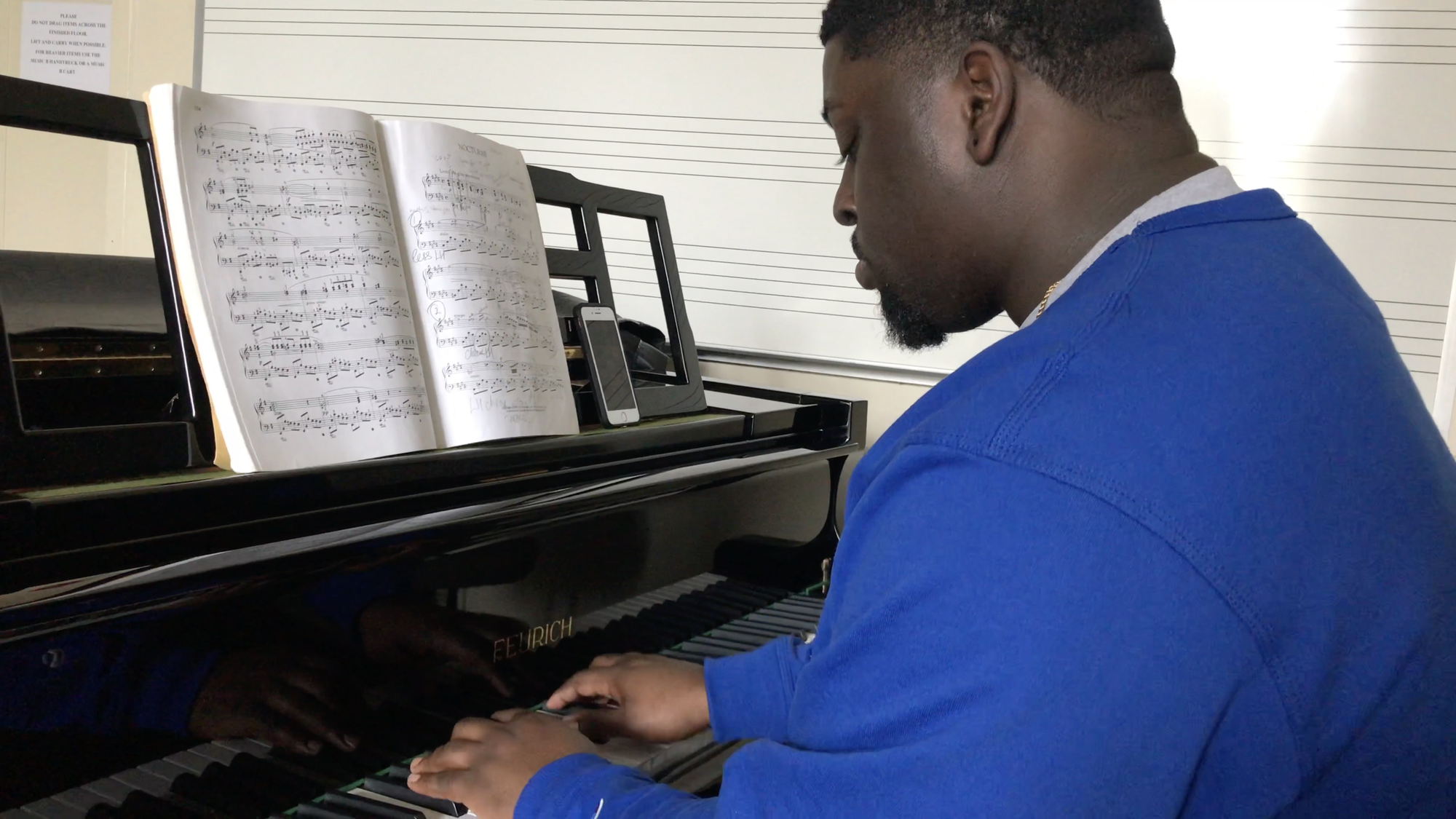
    Born into a family of musical influence, Job René, grew up touring the country with his dad’s reggae band, Phase 2. Continuing the family’s musical legacy, René plays both the piano, and cello skillfully as well as pursuing a music major at HSU.

    “Music has been a part of me since childhood,” René said. “I started piano when I was six or seven and my dad’s a musician. He kind of said you’re playing music, I don’t care what you say, you’re playing.”

    René continued playing the piano up until high school, deciding a break was best for himself.

    “That’s when I said, I’m done with the piano for now,” René said. “I want to play sports, I want to do high school things.”

    After quitting music, René played basketball and a year of football. With a lack of funding, the football program closed and René was pulled back into the world of music, where he decided this time he would learn a new instrument.

    “I always wanted to continue to play music, that never went away,” René said. “What jump started it was in high school, around 10th grade I started playing the cello. A music program came to the school and I thought, I have to get back on this, this is a calling. I told myself I’m doing this and I’m learning a new instrument.”

    Even though René went back to music and started learning a new instrument, he felt discouraged to pursue music as a major.

    “There’s no money in music, I was set on broadening my horizons,” René said. “I did settle for a minor in piano because I knew I had to do something with music.”

    René explored departments and opportunities outside of music to see what else he was interested in.

    “I was undeclared for a good two and a half years,” René said. “At the end of that semester I changed my major to music and started that spring.”

    René decided to embrace the musical aspect of his life and pursue it as a career.

    “I am very happy with my music major,” René said. “I mainly play classical music, it’s what I was brought up on since I was seven. It’s really what I lean towards and I actually like it!”

    René takes pride in his passion for romantic classical music, having dealt with judgements and push back over his preferred music choice in the past.

    [perfectpullquote align=”right” bordertop=”false” cite=”Job René” link=”” color=”” class=”” size=”16″]“My mom is my biggest supporter. She was really proud I was learning piano… It was the fact that she could see a future in it.”[/perfectpullquote]

    “Me being a black person, I get it all the time,” René said. “Like, bruh, why are you listening to classical music? “I connect with it, it was destined for me to like [classical music].”

    Regardless of the judgement, René continues. He said his biggest supporter keeps him motivated.

    “My mom is my biggest supporter,” René said. “She was really proud I was learning piano. I was doing something that a lot of other kids weren’t really doing. It was the fact that she could see a future in it.”

    Mae René, lives 13 hours south of her son in Los Angeles, but still takes time off work and drives to see every recital.

    “I try to be a supportive parent in the audience,” Mae René said. “To me, it’s not a 13 hour drive, it’s me seeing my child.”

    Mae René has trusted her son’s music abilities since a young age and saw a future for him in it early.

    “He picked up music right away,” Mae René said. “To be honest, I wanted him to be a music major from the beginning but I allowed him to step out, and now he knows, mom knows best!”

    Mae René isn’t the only supporter in the audience, fellow Brothers United members also strive to support René.

    IMG_0476.jpg
    Brandin Thomas (left) and Ronald Taylor (right) stand in front of Brothers United table in the HSU quad. | Photo by Grace Caswell

    Ronald Taylor, a third year kinesiology major, and fellow member of BU, described his first experience watching René perform.

    “I went to one recital at the end of last year,” Taylor said. “It was really nice, he did well, no mess ups.”

    Bradin Thomas, a fourth year kinesiology major and member of BU, is a fan of René’s romantic classical music interest.

    “It’s nice,” Thomas said. “I like his music, it soothes you.”

    With support from friends and family, René embraces his musical interest more seriously, and is considering sharing his interest with young kids.

    [perfectpullquote align=”left” bordertop=”false” cite=”Job René” link=”” color=”” class=”” size=”19″]”If I have to stop music, it’d be like taking a piece of my soul.”[/perfectpullquote]

    “Right now, I’m taking a pedagogy class that teaches you how to start your own business,” René said. “Like how to start your piano studio and teach students how to play piano.”

    Wanting to share his musical interest, René emphasizes the impact music has had on his life.

    “If I have to stop music, it’d be like taking a piece of my soul,” René said.

  • Jacks brave the elements and beat the Otters

    Jacks brave the elements and beat the Otters

    Men’s rugby handled the cold, rain, and hail and still beat Cal State Monterey Bay 24-22

    Players, coaches, and fans braved the bitter cold, rain and even a little hail as the Humboldt State men’s rugby team pulled out a close victory over the Otters of Cal State Monterey Bay, 24-22.

    IMG_9404.jpg
    Jacks rugby alumni Dallas Hamilton goes full savage superfan as he watches former teammates get the win at College Creek Field. | Photo by Matt Shiffler

    It was a tough and physical game at the College Creek Field as HSU dominated their share of possession and won the majority of the scrums, where the players lock arms with their opponent and try to get the ball to their side of the formation.

    The weather made for tough conditions throughout the day as passing and ball movement for both teams seemed sloppy.

    “The weather was a big factor in the game,” HSU coach Vince Celotto said. “It was an ugly looking game, if I was a fan, I wouldn’t have enjoyed it at all.”

    IMG_9303.jpg
    The Otters try and contain Adonis Johnson from breaking off another run long run Saturday at College Creek Field. | Photo by Matt Shiffler

    Scoring was hard to come by for the majority of the first half but finally, HSU was able to put a try on the board and add the extra conversion by sending the ball through the uprights to make the score 7-0.

    A turnover near their own try line for the Lumberjacks resulted in a breakaway try for the Otters later in the first half cutting the Jacks lead to 7-5. HSU was able to get to the try zone a couple more times late in the first half, making the score 19-5 heading into halftime.

    IMG_9366.jpg
    Former football player Tumanako Te’i deciding on which play to make during the second half of Feb. 9 game at College Creek Field. | Photo by Matt Shiffler

    The sloppy play continued for the Lumberjacks in the second half as they were outscored by the Otters 17-5, including a late score from a turnover by the Lumberjacks. This led to a late Otter try right before the final buzzer sounded, making the final score 24-22 in favor of the north coast squad.

    Teammate and club Vice President, Andre Hascall said that there are issues that the team needs to work on together.

    “We didn’t pass the ball when we should’ve, and a lot of selfish ball was played,” Hascall said.

    IMG_9378.jpg
    Photo by Matt Shiffler

    Even though the Jacks ended up winning the game, the mood among the team was anything but celebratory as the team felt like they let the game slip away.

    HSU’s forward, Latu Kolopeaua said that as a team the men’s rugby needs to work on their fitness.

    “We felt like we were getting too tired too early in the game,” Kolopeaua said.

    In the postgame huddle the HSU coaches stressed teamwork and taking care of the ball has HSU finished the game with 36 turnovers.

    “As coaches, we felt that we performed poorly as a team,” Celotto said. “We felt like we should’ve beaten this team by a lot more than what we did.”

    Celotto also stressed the importance of re-evaluating and refocusing the team heading into next weekend as the Lumberjacks head down to Moraga, California with a 2-0 record in conference play to take on a strong St. Mary’s squad.

    The next home game for the Lumberjacks is March 2, at 1 p.m. where they take on Sonoma State with a berth in the playoffs on the line.

    IMG_9372.jpg
    Adonis Johnson and the rest of the Jacks push CSUMB back trying to gain possession during the scrum. | Photo by Matt Shiffler

  • Food for the soul

    Food for the soul

    The Arcata community and Humboldt students come together for an Equity Potluck

    The Equity Arcata’s “Home Away From Home Potluck” brought many people within the community of Arcata. The potluck, organized by community members of Arcata, invited HSU students to enjoy a free soul food meal.

    IMG_1654.jpg
    Free donated house goods for the students that attend HSU. | Photo by Delaney Duarte

    The event was located at the Neighborhood Center on D St. in Arcata from 5-7 p.m. on Feb. 10. Community members brought one soul food dish of their choosing to put out for the students, they also collected donations of household items to give out to the students.

    [perfectpullquote align=”right” bordertop=”false” cite=”Christian Boyd” link=”” color=”” class=”” size=”17″]”A lot of students don’t get off campus. So when they come to these events…they feel even more welcomed into the community.”[/perfectpullquote]

    Christian Boyd, a second year student at HSU majoring in political science, is the youngest diversity coordinator for Equity Arcata. She recruited the majority of students to come to this event.

    “This event is to create a more equitable space between community members and students, mainly for students of color to get a feel of the community and who’s apart of the community,” Boyd said. “A lot of students don’t get off campus, so when they come to these events and meet community members and see what they do for them, they feel even more welcomed into the community.”

    IMG_5120.jpg
    Students and community members indulge in food and conversation on Feb. 10. | Photo by Dajonea Robinson

    There were over 100 students that attended the event. Some students even shared seating because there weren’t enough chairs for all of them.

    Wesley Chesbro, a 1974 HSU alumni, is a volunteer co-coordinator for the Equity Arcata organization. Chesbro said that the potlucks started in the fall of 2017 and typically 30-40 community members volunteer and 75-150 students participate.

    “A group of community members had felt that it is important to show in a real way that students of color not only belong here, but we really want them here,” Chesbro said. “It is said that food is love so it is a way of showing our love and appreciation that without the students we would be nobody.”

    IMG_1684.jpg
    HSU students lined up to choose their likings. | Photo by Delaney Duarte

    The organization had live music and raffles as entertainment for the event. The event had a variety of soul food such as sweet potatoes, ham, cornbread and much more. Afua Mensah, a second year student at HSU who is majoring in international studies, attended the event to meet the people who make up the community of Arcata.

    “It was really nice meeting new people from the community, we usually don’t get that opportunity since we all sit with our friends or students that attend the school,” Mensah said. “I enjoyed the food so much, but other than the food the music was most enjoyable, especially the rap, which was really powerful and moving to hear.”

    Image-1.jpg
    Nu Heavenly Tone singers took the stage at the Equity Potluck. | Photo by Dajonea Robinson

    This organization tries to welcome HSU students as much as they can to participate within the community. HSU students talked with local community members and got to know the city a little more. The Equity Arcata organization usually coordinates more than one potluck event a year, with the next event coming up sometime in March.

  • Blotter bytes

    Blotter bytes

    The Rolling Count

    As mentioned in a previous article, it is still illegal to possess weed on campus. Since the new year, four people have been charged with marijuana possession on campus, two of them being for individuals between the ages of 18-20. Although it happened last year, it is worth noting that there were 22 cases of either paraphernalia or “contraband” being seized in 2018. “Contraband” can be considered bongs, bowls, pipes, grinders, you know all the things needed to “blow ‘dro”, “puff cheeba”, “blaze up” or whatever else you call it.

    As part of this series, The Lumberjack will be keeping track of all marijuana possession charges, as well as paraphernalia and “contraband” charges. So far the “Rolling Count” for possession charges is at four and the the “Rolling Count” for paraphernalia and contraband is at zero.

    “Hollerin’ ‘hootie hoo!’ when we see the cops”

    Monday Jan. 28

    • Ew what is that?!?!—Bloody tissues were found along side a blanket near the Rohner Admission Center around 9:00 a.m., however the owner of the bloody tissues and blanket were nowhere to be found.
    • Someone stole something—A petty theft of an item valued over $50 was taken from the Music B building at around 1:30 p.m. hopefully the item will be returned in the near future.

    Tuesday Jan. 29

    • Someone buttdialed the cops—This happens way too often as you will see in future Blotter Bytes.
    • You can’t smoke here bro!—UPD was called to respond to multiple reports of someone smoking on campus. Listen up folx, HSU is a no tobacco campus, puff that stuff elsewhere.
    • A case of mistaken identity (aka fraud)—A camera was previously checked out from the Library using someone else’s ID and was not returned and was reported at 8:19 a.m. as fraud.
    • A trespassing charge was issued to a man “asking the housing department desk for info regarding a homeless shelter.” It is shameful to think that when a person was asking for help, he was detained and arrested instead. Shame on the powers that be.

    Wednesday Jan. 30

    • The skatepark is that-a-way homie!—Someone called the cops to report “skateboarders creating a hazard to pedestrians.” Skateboarding is not a crime…unless UPD catches you.

    Thursday Jan. 31

    • An issue worth addressing—Some of our more marginalized and needing counterparts call our streets, parking lots, forested areas and underpasses home for the night. UPD was called because of a camping violation under the underpass that leads from campus to G Street. The individual was let go without a ticket.
    • Another unneeded call to 911—Arcata Police (UPD and APD work together sometimes) responded and the caller said it was an accident.
    • No Fly Zone—A man was flying a drone around campus at 11:46 p.m. UPD responded and told the individual to land his aircraft, because people thought that aliens were coming. JK JK aliens aren’t coming here, he just didn’t have the proper paperwork.

    Friday Feb. 1

    • Nothing too substantial happened. Just another unneeded 911 call (I told you this happens a lot), someone drew something on a “Telecom box” outside of Maple Residence hall and some people were pulled over for not stopping at a stop sign. I thought Fridays were supposed to wild.

    Saturday Feb. 2

    • Umm excuse me, but you don’t live here—“Two suspicious subjects” were asked to leave the Sunset Residence hall at around 10:00 p.m.
    • Drug Activity! (calm down it’s just weed)—Someone was cited for 11357 (a)(2) at around 10:15 p.m. 11357 (a)(2) is written out for marijuana possession for adults ages 18-20.
    • What the eff is that smell?—A burning smell was reported in Fern Residence hall at 3:14 p.m. Turns out nothing was on fire but a fan in one of the bathrooms stopped working.

    Sunday Feb 3.

    • Super Bowl Sunday! Things are going to get lit AF for sure, right?!?! Turns out not really. Just a couple of people got pulled over and someone accidentally went into the wrong room.
  • Transgender is not a trend, it’s tough

    Transgender is not a trend, it’s tough

    Transgender professor identifies how legislation hurts the trans community

    Dr. Loren Cannon, an award-winning HSU philosophy professor with numerous published essays, presented a talk focused on trans-directed injustice to a room overflowing with students and community members on Thursday, Feb. 7.

    HSU students Elijah Patterson and Summer Gilstrap, who identify as trans, were inspired by Cannon’s experience and wanted to show their support.

    “[Cannon’s] a successful, fully transitioned male and it’s a goal [for me],” Patterson said.

    IMG_2699.JPG Students and community members gather to hear Loren Cannon talk about trans injustice on Thursday, February 7. | Photo by Christina Samoy.

    Cannon believes the Obama administration had an understanding of Title IX, a law that protects people from being sexually discriminated against, which he said the Trump administration does not.

    “Title IX should be interpreted how the Obama administration did,”Cannon said. “They did it correctly.”

    [perfectpullquote align=”left” bordertop=”false” cite=”Summer Gilstrap” link=”” color=”” class=”” size=”18″]”It’s a blatant attack against trans people. They’re not interested in protecting people.”[/perfectpullquote]

    Gilstrap, a political science major who identifies as a trans woman, agrees that the Trump administration is silencing trans people, not allowing them to be heard.

    “It’s a blatant attack against trans people,” Gilstrap said.. “They’re not interested in protecting people.”

    After showing “Keeping Massachusetts Safe,” a commercial made to inflict fear that trans people will assault cisgender people in restrooms, Cannon shared a story where he found himself in a similar situation.

    A couple months into transitioning, while teaching at Arizona State University, Cannon went to use the restroom, not knowing two little girls were in the stall next to him. A woman ran out alerting the girl’s fathers that a man, Cannon, was in the restroom. Cannon, gender ambiguous looking at the time, tried to look as womanly as possible, smiling as he exited.

    “I preformed femaleness well, so I didn’t get hurt, but the option isn’t always there,” Cannon said.

    Some people eventually choose not to go out because they can’t participate in society because they’re prohibited from using restrooms due to their gender identity. Cannon found studies showed trans people are likely to develop PTSD due to fear of bathrooms, which can lead to urinary tract infections.

    “A lot of other trans people have debilitating dysphoria around restrooms that can cause real psychological harm,” Gilstrap said.

    In response to a student asking how HSU can improve the safety of trans lives, Cannon said gender neutral bathrooms on the BSS side of campus is needed, as well as a LGBTQ+ center funded by professionals as a permanent position so administration can be there to advocate for LGBTQ+ people.

    IMG_2698.JPG Students and community members gather to hear Loren Cannon talk about trans injustice on Thursday, February 7. | Photo by Christina Samoy.

    [perfectpullquote align=”right” bordertop=”false” cite=”Neesh Wells” link=”” color=”” class=”” size=””]”There’s still a lot of things trans folks that are affected by. We just want to be respected as people.”[/perfectpullquote]

    While HSU has made improvements like allowing students to change their preferred name and pronouns in their student center, there are still improvements that can be made. Neesh Wells, a non-binary-identifying student, wants others to know that they don’t have to be afraid of trans folks or non-binary people.

    “There’s still a lot of things trans folks that are affected by,” Wells said. “We just want to be respected as people.”

    Offering classes that bring awareness to the LGBTQ+ community more often in course rotations may help people from outside the community gain more knowledge about people within the community and the struggles they face.

    “I personally think it’s super important to continue involving folks who don’t identify as cis gender,” Wells said.

    Maral Attallah, who planned the event, pointed out that Lisa Bond-Maupin, the College of Arts and Humanities dean, was the only university administrator to attend the talk. Attallah, like many other supporters, highlighted the importance of representation and support from allies outside of the community to help advocate for issues the LGBTQ+ community faces.

    Having representation is important for groups who don’t always feel welcomed. Giving Cannon a platform to share his stories and knowledge allows others to use that safe space to share their own thoughts and experiences.

    “It’s inspiring to see someone be successful, who I can relate to,” Patterson said.

    Correction Feb. 20 5:25pm: This article previously listed Lisa Bond-Maupin as the only faculty in attendance.