The Lumberjack


Students Serving The Cal Poly Humboldt Campus and Community Since 1929

Tag: News

  • With Future Unknown Amid Pandemic, HSU Plans for Enrollment Drops and Budget Cuts

    With Future Unknown Amid Pandemic, HSU Plans for Enrollment Drops and Budget Cuts

    HSU, like all colleges, prepares for tough times and serious measures

    Humboldt State University is preparing for an enrollment drop of around 20% for the fall and a budget cut of around $20 million by the 2022 fiscal year, according to a joint press release from HSU and College of the Redwoods.

    Before the COVID-19 pandemic, HSU projected an enrollment drop for total students of around 14% for the fall and had proposed a budget cut of around $5.4 million by the 2022 fiscal year. 

    Given the uncertainty of the next year, HSU is planning for an even larger enrollment decline and budget cut. HSU currently projects new student enrollment to drop by 30%. The specifics of what the budget cuts will mean are still being worked out.

    “Many options are being looked at, including combinations of a hiring chill, spending freeze, operational changes, incentives for retirements, travel reductions, and more,” the press release said.

    In a Zoom interview, HSU Vice President of Enrollment Management Jason Meriwether said a worst case scenario projection might be only 500 new students and 500 transfer students admitted to HSU in the fall. 

    These numbers, to be clear, are projections. No one knows exactly how the next year will play out. Meriwether hoped HSU could keep enrollment and retention as high as possible.

    “The sad part is, I don’t know,” Meriwether said. “There’s no benchmark. There’s nothing to project against. We could be doing all this and, you know, 1400 students show up—which would be wonderful.”

    HSU is not alone. As noted in Meriwether’s Tuesday enrollment management report to the HSU Senate, colleges everywhere are facing enrollment drops amid the pandemic. The report cited articles from Forbes and the Associated Press along with some early data suggesting one out of every six college-bound students won’t attend college in the fall.

    With education expected to shift to a more local focus, Meriwether pointed out that HSU already shifted to local recruitment in the last year with measures like the Humboldt First Scholarship.

    Compared to an average of about 32 local students attending HSU per year in the last three years, HSU currently has 208 local students confirmed to attend HSU in the fall with the Humboldt First Scholarship. 

    “The good news is we’re not starting local recruitment today because there’s a problem,” Meriwether said. “That’s the best part of all this—is that we already have a really solid foundation that we built in the community over the last eight or nine months.” 

    The enrollment management report includes a graph of enrollment scenarios, with red lines for lower enrollment scenarios and a blue line for a growth scenario. Meriwether hoped for HSU to remain close to the blue line.

    “Essentially, pray we get as close to the blue line as possible,” he said. 

    Meriwether pointed out that, since COVID-19 has hit everywhere, current students might not have much reason to transfer. If classes are still online in the fall at HSU, they will presumably be online everywhere. 

    “Let’s say a student says, ‘OK, well, you know, I want to transfer because I didn’t want this experience,’” he said. “OK. Well, the question will be, ‘What school are you going to transfer to?’ Because every school is stuck in this scenario right now.”

    Nevertheless, the pandemic will likely temporarily derail HSU’s efforts to improve enrollment. 

    “Long term, you know, prior to COVID-19, prior to this hit, we had a plan of getting to an FTE of 7600 students [full-time students] in about four years,” he said. “So now, what if the COVID-19 environment says, well, gosh, it can make us take eight years to get there.”

    Meriwether was optimistic that eventually, HSU would get through this.

    “I believe that we will bounce back, and I believe we will bounce back strong if the hit is really bad,” he said. “This is a marathon. Enrollment is a marathon.”

  • HSU Projecting Grave Hit to Enrollment for Fall Semester

    HSU Projecting Grave Hit to Enrollment for Fall Semester

    Freshman class projected to shrink, number of academic departments to be reduced

    For the latest information, see our story here.

    Update 11:10 a.m.: a second email sent yesterday from College of Natural Resources Dean Dale Oliver and obtained by The Lumberjack makes similar points but does not give a specific number to the expected enrollment drop for fall beyond noting that a 15-20% drop was expected prior to the COVID-19 outbreak. We will update this story when we have confirmed the numbers below. The second email is pasted below.

    Humboldt State University has issued a budget directive to take immediate action to prepare for the fall semester, including the freezing of open staff positions and the reduction of the number of academic departments, according to an email sent to faculty and staff of the College of Arts, Humanities and Social Sciences Tuesday morning.

    The email, sent by Interim Dean of CAHSS Rosamel Benavides-Garb, projected a freshmen class for fall 2020 of around 500 students, down from around 1,400 students five years ago and down from around 1,000 students for fall 2019.

    “The scale and impact of our current predicament is grave and as a result our budgetary practice has to be reconsidered and reformulated based on the simple equation of demand and resources,” the email said. “We have become, de facto, a much smaller institution, which compels us to undertake a comprehensive reset at HSU.”

    The email listed six directives, including requests to freeze all vacant staff positions, reduce the number of academic departments and develop online programs for current and transfer students to complete their degrees.

    The email promised to make the process consultative and sustainable.

    “We remain committed to “the student first” approach,” the email said, “and are extremely aware of the critical importance, now more than ever, of issues of social justice, equity, and inclusion in all we do.”


    The full email is copied below:

    Dear CAHSS Colleagues,

    On April 2, the deans of all three academic colleges received new administrative directives from Interim Provost Lisa Bond-Maupin regarding the coming academic year. The directives are a call to action, issued in response to the budget and recruitment/retention reality at HSU. The Interim Provost reiterated these directives yesterday, Monday, April 6 in her Provost/VPAA Report to the senate.

    As we all know, our student enrollment has been declining for several years and the institutional budget has been negatively impacted. The administration’s efforts to address the problem must now be reframed in light of new and profound challenges the current COVID-19 pandemic poses for HSU, and the CSU system in general.

    We are projecting a freshmen class of 500~ students across all three colleges. Five years ago, the freshmen class numbered 1,400+ students. The scale and impact of our current predicament is grave and as a result our budgetary practice has to be reconsidered and reformulated based on the simple equation of demand and resources. We have become, de facto, a much smaller institution, which compels us to undertake a comprehensive reset at HSU.

    The Interim Provost has directed the three academic deans to reduce spending and grow retention/recruitment. Her directives require our college to implement the following action areas immediately:

    1. Freeze all vacant staff positions: This is indefinite or until each college develops a plan to organize staff support within colleges and across colleges.

    2. Reduce the number of academic administrative units (departments): This needs to be planned immediately and be in place for this next fiscal year so we are reorganized starting fall 2020.

    3. Develop online degree completion opportunities for certain existing majors in the last two semesters of their programs.

    4. Develop two-year degree online completion opportunities for transfer students of certain majors beginning fall 2020.

    5. Develop a partnership with CEEGE related to workforce development, responding particularly to a post COVID-19 context.

    6. Integrate the Center for Teaching and Learning (CTL) in the development and implementation of new teaching capacity.The Interim Provost has also indicated that she expects this process to be:

    The Interim Provost has also indicated that she expects this process to be:

    · Consultative with unit leadership.

    · Consultative and collaborative across colleges.

    · Sustainable by creating new retention and recruitment opportunities.

    The deans of the three colleges have already begun discussing the directives. I have also initiated planning within CAHSS, in collaboration with the three associate dean fellows, and will continue to discuss budget with the chairs. We will move forward together, exploring multiple budget management opportunities to make our colleges strong and resilient in the face of present and future challenges. We can also regard these adjustments as unique opportunities to explore new and exciting programs to attract and serve our ever-diverse student population in a shifting and challenging workforce environment. We remain committed to “the student first” approach and are extremely aware of the critical importance, now more than ever, of issues of social justice, equity, and inclusion in all we do.

    Sincerely and in solidarity,

    Rosamel


    Email from CNRS Dean Dale Oliver:

    April 6, 2020

    CNRS Faculty and Staff

    Dear Colleagues,

    Earlier today Interim Provost Lisa Bond-Maupin sent out her report to the HSU University Senate in preparation for Tuesday’s meeting.  Included in her report was a call for collective action to prepare for fewer students and fewer resources in the next academic year.  I’ve pasted the relevant section of the Provost’s report below my signature.

    Current estimates indicate we could have 20% fewer students in Fall 2020 that we had in Fall 2019.  This reduction is significant, and we must plan over the next weeks and months so that those students who start or continue with us in the fall experience high quality, engaged learning that will prepare them well for STEM professions and advanced study.

    Three items from the Provost’s report that I want to highlight are personnel, administrative re-structuring, and online education.

    Personnel: Although we will be finishing out the two faculty searches currently underway, and ensuring we have sufficient temporary faculty to deliver our curriculum, all other hiring is frozen for the moment, including those which are currently vacant and those which will soon be vacant due to expected retirements. Through improving business processes, realigning and reorganizing staff positions, and targeting professional development we will find a way to support our educational enterprise without hiring additional personnel.  This work will be both necessary and challenging, and require collaboration with relevant unions and careful consideration of multiple factors.

    Administrative restructuring: At the Dean’s level we were already planning a partial re-assignment for Associate Dean Rick Zechman to manage the marine lab while marine lab director Brian Tissot transitions from full-time director to FERP faculty.  We are also being asked to reduce the number of administrative units in the college, meaning that some departments will be merged or reformed.  This work will be done in close collaboration with the CNRS Council of Chairs and the other two academic deans.

    Online Education: There are some programs in CNRS for which one of the following scenarios might make sense:  provide an online degree-completion option for a group of students who have a year or less left to complete their degree; provide a degree-starter program for a group of first year (or transfer) students to get started with HSU from home during the fall 2020 semester, and then begin on campus in Spring 2021; provide more online sections of general education courses for undeclared students or majors from outside CNRS.  For the moment, I recommend that faculty discuss within their departments whether one or more of these scenarios might be appropriate for their program.

    For this week I am collaborating with the Provost’s office, with the other academic deans, and with a working group of CNRS Chairs to create possible models for administrative restructuring that can then be discussed among all of the CNRS chairs the following week.  Relatively soon I will also set up a mechanism by which input can be given from across the college.

    We face a significant challenge as a college and university over the next few months and years, but I am confident that we will find solutions that serve our students and the citizens of California well.  My confidence rests solidly on the incredible talent, dedication, and creativity of our faculty and staff, whom I am proud to serve.

    Best wishes, safety, and health to you and your families,

    Dale R. Oliver, Dean

    College of Natural Resources and Sciences

    From Interim Provost Lisa Bond-Maupin’s report to HSU’s University Senate, April 6, 2020

    Realignment of Spending with Reduced Revenue

    In addition to supporting instructional continuity and Academic Master Planning, our division leadership is turning our attention to budget planning for next fiscal year and beyond. Prior to COVID-19, our enrollment picture for next academic year was apparently trending toward a 15-20% fall-to-fall (one year) student headcount decline. We were likely headed toward a reduction to the HSU budget for next fiscal year that was double that anticipated when the URPC created its annual budget recommendations to President Jackson.  While the college-going enrollment impact of the pandemic is unknown for all in higher education across the nation, it is clear that the CSU and HSU will experience further decline in student enrollment. Given the enrollment challenges felt across the state, it is likely that impaction at our southern campuses will be lifted. It is highly likely that more students will choose for financial and other reasons, in the shorter term at least, to remain at home or closer to home to study. 

    While we await the release of up-to-date enrollment projections and budget information, Academic Affairs is implementing a few immediate strategies toward student retention and recruitment on the heels of the pandemic and toward further reducing our spending. As we do so, we are guided by the URPC principles and our own commitments to meeting the instructional needs of our students and protecting employment. In addition to continuing to adjust our academic offerings for Fall, immediate strategies also include: 

    • Working with each dean and director to reduce budget allocations for FY 21 

    • Freezing hiring in all open staff positions for now and planning to absorb staff attrition

    • Working collaboratively with staff within and across colleges and budget units in Academic Affairs to reimagine and reorganize our staff support 

    • Working collaboratively with department chairs and faculty to condense the number of separate academic administrative units in the colleges 

    • Working within the Office of the Provost to realign and reorganize staffing

    • Identifying academic programs ready to continue to offer upper division major courses online into next year and beyond to: a) help students in their final semesters to study from home and complete their degrees, and b) offer new transfer students an opportunity to complete their degrees online 

    • Identifying a COVID-era retention specialist in Academic Affairs who will support the continued offering of all existing retention efforts in a virtual format and will work in collaboration with ODEI to implement inclusive retention practices at a distance. 

    Each one of us will be implicated in and needed for this work. It is tough and unavoidable at this time. Each one of us has a very important role to play, now, more than ever in maintaining close connections with our students, helping them to problem-solve their educational needs and connect to resources and to stay connected to HSU. We need our students. And I think we are finding in their response to our transformed instruction – they need us. This powerful connection will ultimately move HSU through and beyond this tough moment in our collective history to the future we envision. Thank you.
  • Breaking: Planning Commission Rejects Wind Farm Project

    Breaking: Planning Commission Rejects Wind Farm Project

    After three meetings, Humboldt County Planning Commission comes to Terra-Gen wind farm conclusion

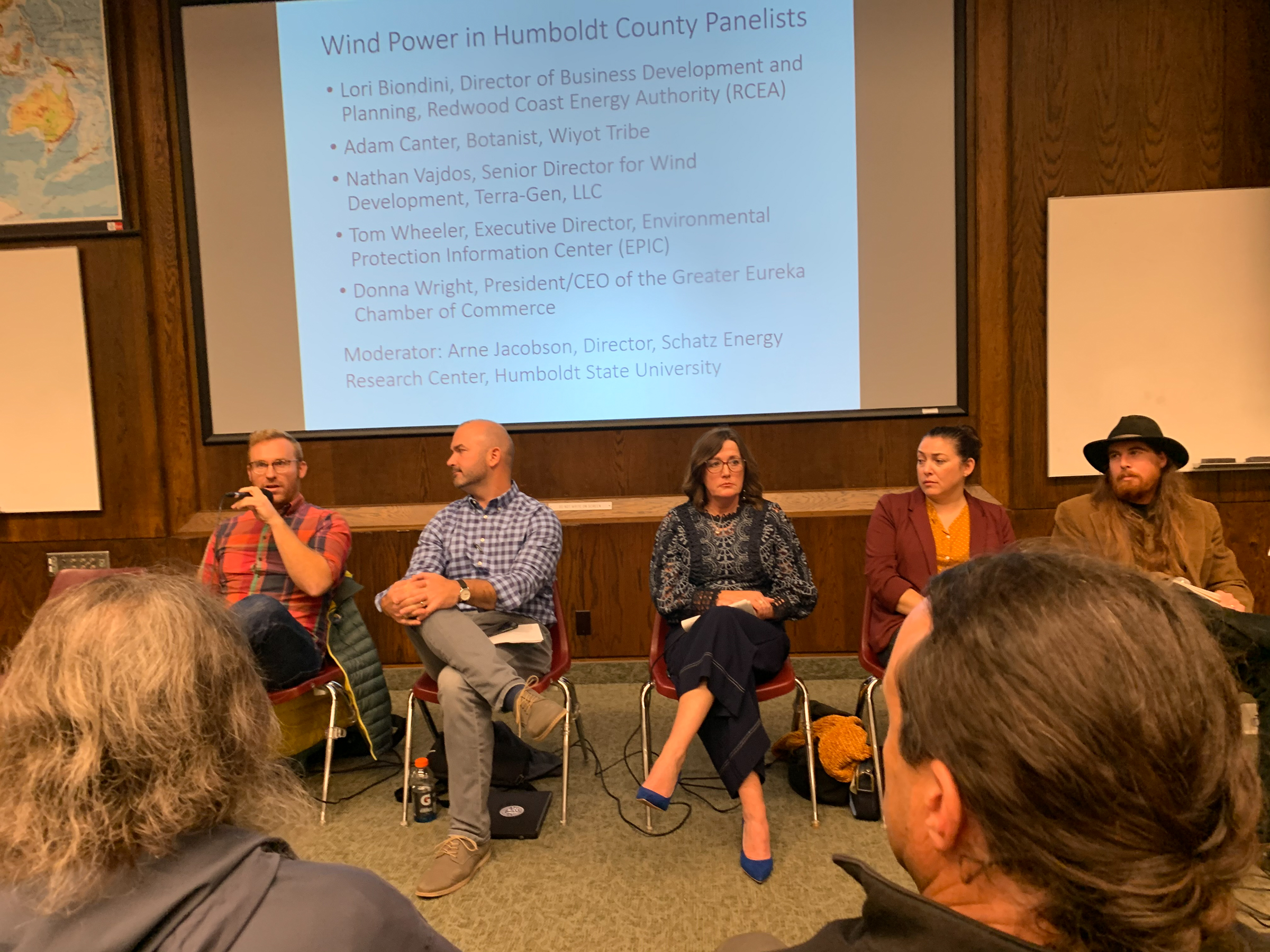
    In a 4-2 vote on Thursday evening, the Humboldt County Planning Commission rejected permitting for the Humboldt Wind Energy Project, a proposed plan to bring 47 Terra-Gen wind turbines to Bear River and Monument Ridges.

    The turbines would have been capable of producing half of Humboldt County’s energy needs.

    The Planning Commission held two previous meetings this month before reaching a decision. Both previous meetings and Thursday’s meeting saw huge crowds.

    The planned wind farm site was located in a sacred Wiyot prayer site and in a pristine wildlife environment home to several endangered species that would be impacted by the turbines.

    The opposition to the project cited visual pollution, an incomplete environmental impact report and inadequate mitigations as reasons to reject the plan. Project supporters cited an urgent need to reduce fossil fuel burning and reinforce the county’s energy resiliency.

    See more information on the project here.

  • PG&E to Shut Off Power for Up to 5 Days

    PG&E to Shut Off Power for Up to 5 Days

    Humboldt County residents prepare for a power outage

    A power outage will hit Humboldt County as soon as midnight, and may last as long as five days according to the Humboldt County Sheriff’s Office of Emergency Services.

    PG&E notified OES today that parts of Humboldt County may see power shutoffs as a result of transmission line shutoffs in California’s Central Valley, due to high winds raising the risk of wildfires.

    OES Public Information Officer Meriah Miracle said Humboldt County residents should prepare for an outage.

    “Humboldt County should expect power outages as soon as midnight,” Miracle said. “PG&E has not given a time frame yet, but it could be as long as five days.”

    Miracle added that PG&E is currently looking into using the local King Salmon power plant to offset any shutoffs. At 4 p.m., Miracle expected an update from PG&E over the following couple hours.

    According to a Humboldt County press release, OES is working with response partners and has notified local health services.

    “Humboldt County should expect power outages as soon as midnight. PG&E has not given a time frame yet, but it could be as long as five days.”

    Meriah Miracle, Office of Emergency Services Public Information Officer

    Humboldt State University has posted a statement on their website promising further information when available, including whether classes will be cancelled. The statement urged students to charge phones and critical electronics.

    Miracle said residents should follow normal emergency preparedness procedures.

    “OES is urging residents to prepare just like they would for any other events,” Miracle said.

    For more information, multiple press released are posted below.

    A message sent out to some PG&E customers today:

    Dear Valued Customer,

    To protect public safety, PG&E may turn off your power overnight. Power will remain off until weather conditions improve and it is safe to restore service. To view a list of your impacted locations visit pgepsps.com.

    Here is what you need to know:


    Please have your emergency plan ready.

    If you have a backup generator, please do a safety check and make sure you have enough fuel to last a few days. Generator safety tips can be found here. Power will remain off until weather conditions improve and it is safe to restore service. We will continue to monitor conditions and will contact you with further updates. In most cases, we would expect to be able to restore power within 24 to 48 hours after weather has passed. Depending on weather conditions or if any repairs are needed, outages (weather event plus restoration time) could last longer than 48 hours. For planning purposes, we suggest preparing for multiple-day outages. If you see a downed power line, assume it is energized and extremely dangerous and report it immediately by calling 911.

    For more information, including regular updates, visit pge.com or call 1-800-743-5002.

    Thank you,


    Pacific Gas and Electric Company


    From the Humboldt County website:

    Humboldt County Sheriff’s Office of Emergency Services (Sheriff’s OES) is preparing for the potential shutdown of PG&E power to areas of Humboldt County. On Tuesday, Oct. 8, PG&E notified the county that it may activate Public Safety Power Shutoff (PSPS) protocols in neighboring counties due to extreme weather. Transmission lines that power Humboldt County could be affected as a result of a shutdown in another county. The shutdown could impact parts of Humboldt County within the next 24 hours.

    Humboldt County is ready to respond to the effects of the power outage; however, the decision to turn off the power and the speed at which it is restored is managed solely by PG&E. The utility is working on a solution to generate power locally at its King Salmon power plant that would help offset the effects of any shutoff.

    Sheriff’s OES has taken steps in preparation for a potential power shutdown after being notified by PG&E of their new PSPS program earlier this year. OES is currently operating the Emergency Operations Center (EOC) and is actively coordinating with our operational area response partners and monitoring the situation.


    Sheriff’s OES has notified community partners including hospitals, skilled nursing facilities, Humboldt Senior Resource Center, PACE, Open Door Community Health Centers and other critical service providers in the county. Adult Protective Services staff are working on contingency plans to protect the most vulnerable. Local emergency services including 911 dispatch have backup power and should remain active in the event of a power shutoff.

    Learn more about PG&E’s Public Safety Power Shutoffs and sign up for PSPS alerts at prepareforpowerdown.com or call 1-877-9000-PGE. PG&E is monitoring weather patterns and will provide updates to customers and Humboldt County when information is available.

    Sign up for Humboldt ALERT at humboldtgov.org/alerts to receive safety information and be informed of imminent threats to personal safety or property, tailored to an address of your choosing.
    To receive updated information from PG&E, update your contact information at prepareforpowerdown.com.
    Talk to your medical provider about a power outage plan for medical devices powered by electricity and refrigerated medicines. Plan for batteries and other alternatives to meet your needs when the power goes out.
    Many medications are still usable for two to three days at room temperature, including insulin, which can keep for 28 to 30 days. However, if you are in doubt, please be sure to check with your medical provider.
    Review the supplies that are available in case of a power outage. Have flashlights with extra batteries for every household member. Have enough nonperishable food and water.
    Use a thermometer in the refrigerator and freezer so you can know the temperature when the power is restored. Throw out food if the temperature is 40 degrees or higher.
    Keep mobile phones and other electric equipment charged and gas tanks full.
    Know how to manually open electric garage doors and gates.

    For more information, including what to do during a power outage, visit prepareforpowerdown.com.

  • Marijuana Breathalyzer Coming 2020

    Marijuana Breathalyzer Coming 2020

    No pee, hair or spit. One blow is all it takes to show marijuana intoxication levels with new breathalyzer.

    Marijuana has been a touchy topic since Colorado and Washington made their first moves to legalize recreational use in 2012. Since then, 29 states have followed and declared marijuana legal for medicinal and/or recreational use.

    Tension forms at the discrepancy between state and federal opinion on where marijuana falls legally as a drug. The lack of legal confirmation from the federal government makes it difficult for government employers, especially police officers, to execute and process circumstances surrounding marijuana intoxication. Recent developments in marijuana detection technology suggest a breathalyzer is in the works.

    Current marijuana testing requires a hair, urine or blood sample. The test results detect past use up to six months and reports the current THC level in the body. This testing proves to be unreliable as past use of marijuana will distort a current reading of bodily intoxication, which is what law officials care about.

    The two technology companies racing to release their version of a more accurate breathalyzer are Hound Labs and SannTek.

    Hound Labs was established five years ago and is leading the race with an expected release of late 2020. The Hound Labs breathalyzer operates on a specified time basis. It can detect marijuana if it’s been used in the last three hours. The three-hour window comes from two findings; one, marijuana is only detectable for the first three hours. Afterward, THC levels drop so low and so fast that it becomes virtually undetectable. Second, the initial three hours of intoxication are the most impaired and therefore the most crucial.

    The breathalyzer method proves to be more accurate and better suited for law and medical officials, as alternative testing can take hours to produce results. In addition, this method is also beneficial to the participant, as the regulated three hour time interval doesn’t hold participants liable for past usage beyond that time frame.

    If this new testing method becomes normalized, the three hours prior to testing will be the most critical, but anything before those three hours is merely tangential. Ideally, someone tested for their marijuana use could not be held liable for their marijuana use prior to the that three-hour window because the breathalyzer would not be able to detect it.

    The opposing company, SannTek, and their breathalyzer the SannTek 315 will operate similarly to the Hound Labs breathalyzer. SannTek 315 is still in early development so the company is not providing much information. Like Hound Labs, their product will utilize a time interval to reveal the last ingestion of marijuana and current intoxication.

    Hound Labs conducted clinical testing in 2017 in cooperation with University of California, San Francisco. However, no findings have been concluded publicly due to the small sample size. SannTek 315 lacks any formal testing or trials at this time.

  • HumBot Says Hello

    HumBot Says Hello

    HSU chatbot introduced to new students to answer campus questions

    This fall, Humboldt State University introduced artificial intelligence chatbot HumBot to provide basic information for new students and transfers.

    Director of Communications and Marketing for Enrollment Management Josh Smith led the project over the last two months until its release.

    Thus far, HumBot has received more than 1000 questions and comments.

    “There is a good chance that those questions may not have been asked if that avenue was not available to them at the time,” Smith said. “We get them at all hours of the day.”

    Provost and Vice President of Academic Affairs Alexander Enyedi initially pushed for the development of a chatbot two years ago after hearing about a chatbot at Georgia State University. Pounce, the name for GSU’s chatbot, delivered more than 200,000 answers to incoming freshman within the first few months of its implementation in 2016.

    Enyedi, with help from Smith and Associate Professor of Social Work Jen Maguire worked together to create HumBot.

    “I’ve been a passionate proponent for the chatbot technology for over two years,” Enyedi said in an email.

    HumBot is one chatbot among seven within California State Universities. AdmitHub, an AI chatbot service designed for students, developed all seven chatbots.

    HSU created HumBot in the last two months after receiving an $80,000 grant from the Irvine Foundation.

    AdmitHub handed over HumBot pre-seeded with answers to the 700 most common questions asked by first-year students. HSU then needed multiple departments to analyze the answers.

    “It was started off by everybody just going in there, reading all the questions and answers, and first making sure that it was accurate, and second, trying to make it a little bit more friendly,” Smith said.

    HSU staff and summer students then seeded HumBot with an additional 150 questions before it was released this fall. HumBot will continue to learn as students interact with it.

    HumBot responds to fisheries transfer student Matthew Howe on Sept. 3. HumBot has answers to over 850 questions so far. | Photo courtesy Matthew Howe

    “That is going to be an ongoing, multi-year, get smarter each time kind of thing,” Smith said.

    Associate Professor Maguire is conducting research through the bot and Smith said she has been shaping HumBot to address issues specific to HSU. Maguire could not be reached for an interview.

    “She is kind of the intellectual arm of the chatbot,” Smith said. “She and her colleagues are seeding the knowledge base of the chatbot with questions that relate to housing insecurity, food insecurity—HumBot is still learning those things, but it is our particular brand.”

    Transfer fisheries student Matthew Howe used HumBot to find out where to pick up his mail. Howe admitted to being surprised by how well HumBot worked.

    “I thought it worked fairly well,” Howe said. “I was expecting it to not perform at all. I was surprised at how well it did work.”

    Howe said he would use HumBot again, although he doubts he would ask it anything personal.

    Smith noted that questions sent to HumBot can be viewed by the project staff. HumBot is unlikely to be helpful for personal matters, although with the possibility of endangerment HumBot can notify university police.

    Smith hopes HumBot can play an important role in the modernization of HSU’s accessibility.

    “I would just encourage students to kind of re-look at those things that maybe they don’t know about or maybe weren’t up to par with a couple years ago,” Smith said.

    For now, HumBot is only available to new students, but it is expected to roll out for second and third-year students next fall.

  • 20 Flights to Remember

    20 Flights to Remember

    Honoring those who lost their lives on 9/11

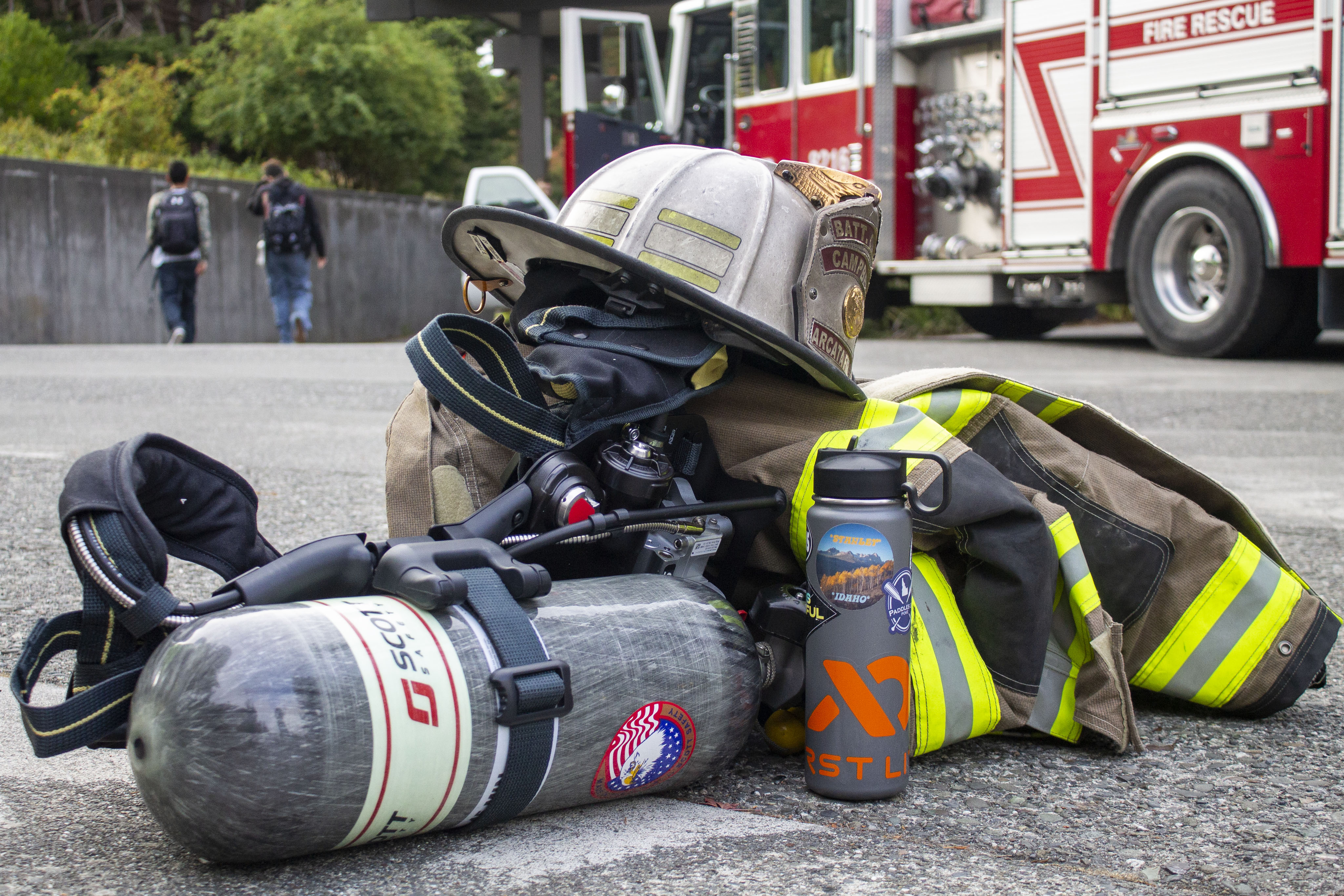
    Humboldt County firefighters, community members and HSU students walk HSU’s Founders Hall stairs in honor of those who died at the World Trade Center on Sept. 11, 2001.

  • This week in news

    This week in news

    By | Charlotte Rutigliano

    World:

    • Pope Francis urged the United States and North Korea on Saturday to defuse their increasingly tense standoff and avert a potentially horrific conflict. (New York Times Update – 4/29/2017)


    Nation:

    • A federal judge on Tuesday blocked the Trump administration from enforcing a threat to take away funds from sanctuary cities. (CNN Update – 4/25/17)
    • Trump administration still considering how to make it easier to sue the media. (Washington Post Update – 4/30/2017)


    Local:

    • A federal judge dismissed portions of a lawsuit claiming Eureka’s ordinances against camping and storage of personal items in public spaces violates the Constitutional rights of homeless individuals. (North Coast Journal Update – 4/28/2017)
    • Highway 101 is open and traffic is flowing north of Leggett. (Caltrans Update – 4/25/17)
  • This semester in news

    This semester in news

    By | Curran Daly

    Spring term began on January 17. Since the first Lumberjack issue of the semester, we have covered a wide range of topics within HSU and the local community. Here is a look at some of the top stories the Lumberjack has covered this semester. For all these stories and more go to thelumberjack.org.


    Largest March in Eureka City History

    On January 21, women and men took to the streets of Eureka to march in protest of the inauguration of Donald Trump.

    “We need to be together, as the mass of humanity, with all our diversity in order to join up and be powerful, and challenge the other powers that are trying to oppress us,” Arcata local, Joanne McGarry said.


    Protesting Banks in Arcata and Eureka

    On January 28, protesters stood outside of local Wells Fargo branches to protest corporate banks funding the Dakota Access Pipeline.

    “We want to tell Wells Fargo to stop financing the North Dakota Access Pipeline. We are here to tell them that we are in solidarity with those at Standing Rock even all the way from the West Coast. We are here to fight.” Mahilija Florendo said, a youth activist who helped organize the protest.


    Uproar Over Shiny New Floor

    Humboldt State’s Fulkerson Recital hall received a new floor that made it hard for students to see the music they were supposed to be playing.

    “It’s super shiny and distracting when standing on the stage and it is very hard to read music. It doesn’t really feel like a performance stage anymore.” Music student Telisha Moore said.


    Berning Green

    Jill Stein, former Green Party Presidential Nominee, came to Humboldt State on March 8. Stein spoke to nearly 400 Humboldt County community members including human rights activists, environmentalists, future, the past, and present politicians and a large number of young people.

    “The important thing here is not to close your eyes to what history is telling us…If you think we have more time to keep beating around the bush, stay in the Democratic Party. If you don’t? Move on, move forward. The more of us the better.” Jill Stein said during her speech.

    The Vote is In, Tuition Goes Up

    On March 22, the California State University Board of Trustees voted 11-to-8 to increase student tuition for the 2017-18 academic year by $270 for undergraduates.  There are over 100,000 more students enrolled in the CSU system today than in 1985 while funding has decreased by 2.9 percent. The state’s gradual abandonment of CSU funding commitments has pressured the Board of Trustees to find alternative financial support for institution services.


    Theatre Arts Retrofit Postponed – Again

    The grandaddy of all structures on Humboldt State’s deferred maintenance list will have to wait at least another year before seeing some much needed tender love and care.

    “It’s frustrating, we spent months preparing to move,” Development director of KHSU David Reed said. “We have a large operation, many moving parts. The only good side is that we digitized much of our paperwork in preparation for the move.”


    Humboldt Cuts Child Care Services

    After running on a deficit budget for about three years, the university decided to close the children’s center on 10th street.

    “With the overhead, administrative costs, the cost for teachers benefits and salaries, we could not make that extra center work,” Director of Housing and Residence Life and manager of the children’s centers on campus Steve St. Onge said. “We really have to focus on our values, the reasons that we exist and that is to support the academic success of our students on campus.”


    Remembering David Josiah Lawson

    David Josiah Lawson, a second-year criminology major and president of Brothers United, was stabbed and killed on the early morning of Saturday, April 15. Brothers United organized a vigil to remember their brother. The audience consisted of Lawson’s family members who traveled from Riverside, California.

  • Trump watch (March 29 to April 4)

    Trump watch (March 29 to April 4)

    President Donald Trump has donated all of his earnings as President of the United States to the National Park Service. Trump donated $78,333, his first salary installment which covers the first 10 weeks he’s been in office. $78,333 is 0.005% of the money Trump’s budget would cut from the National Park Service.

    President Trump wants to warn China that the clock will run out in North Korea when they meet in Florida later this week. President Trump would like Chinese President Xi Jinping to take a tougher stance on North Korea regarding the country’s nuclear program.

    On Monday President Trump signed legislatures to diminish many Obama-era regulations. One of the legislatures included issue about education and school performance. One of President Trump’s new legislation scraps new requirements for programs that train new K-12 teachers and rolls back a set of rules outlining how states must carry out the Every Student Succeeds Act, a bipartisan federal law meant to hold schools accountable for student performance.

    President Trump signed a legislative on Monday that repeals the Federal Communications Commission’s privacy protection for internet users. The new legislature would diminish the landmark policy from President Obama’s time in office. President Obama’s policy would have stopped internet providers from collecting, storing, and selling data from internet users without their consent.

  • This week in News (Feb. 9 to Feb. 14)

    This week in News (Feb. 9 to Feb. 14)

    By | Iridian Casarez

    Local

    El Pueblo Market caught fire

    -El Pueblo Market located on Broadway Street in Eureka burned down in flames Feb. 8 according to the Eureka Times Standard.

    U.S. District court judge rules in favor of salmon

    -U.S. District Court judge William H. Orrick ruled that the U.S. Bureau of Reclamation and the National Marine Fisheries Service must release more water from the Klamath dams, on Feb. 8. Judge Orrick ruled that the Bureau had mismanaged the river, causing “irreparable” harm to the salmon according to the North Coast Journal.

    Nursing program at HSU

    – Six years ago Humboldt State University discontinued its nursing program. HSU and College of the Redwoods announced Wednesday, Feb. 8 they are working to bring a local nursing program back to Humboldt County in the fall 2018 according to the Redwood Times.

    U.S.

    Oroville dam overflows

    -The Oroville Dam’s emergency spillway collapsed after the dam overflowed. Officials ordered residents living below the dam to evacuate Sunday in Oroville, Calif. according to the LA Times.

    African Muslims march

    -Around 200 African Muslims march in New York in protest of President Trump’s Muslim ban on Sunday Feb. 12. According to the Observer, protesters marched to defend the U.S. Constitution against President Trump’s executive orders targeting travelers from countries with high Muslim poplations and undocumented immigrants.

    National Secretary Advisor resigns

    -Michael T. Flynn, the U.S. National Security Adviser, resigned on Monday night after it was revealed that he had misled Vice President Mike Pence and other top White House officials about his conversations with the Russian ambassador to the United States, according to the New York Times.

    World

    North Korea missile tested

    -North Korea has tested a ballistic missile this past weekend calling it a success.  The missile was tested on Feb. 12 under the supervision of the North Korean leader Kim Jong Un according to North Korea’s Korean Central News Agency, KCNA.

    Mexico protests Trump

    -Thousands march in protest of United States President Donald Trump in Mexico City on Sunday Feb. 12. Many people were also holding signs in protest of their own President Enrique Peña Nieto for presiding over rampant corruption and violence at home according to The Guardian.

    Candidate for chief minister found guilty

    New Delhi, India’s Supreme Court convicted  V.K. Sasikala,  an advisor of the late chief minister of Tamil Nadu on Tuesday Feb. 14  in a corruption case that will put her behind bars and effectively end her bid to become chief minister of the southern state.

    The court found Sasikala guilty in the disproportionate assets case, upholding a four-year jail term handed down by a lower court and banning her from seeking elected office for 10 years.

  • This week in news

    This week in news

    By: Iridian Casarez

    Local News 

    Coastal National Monuments in Humboldt 

    Obama expanded the California Coastal National Monuments in Humboldt county. Trinidad Head, Walumph Lighthouse Ranch and the Lost Coast Headlands were officially designated as California Coastal National  Monuments. 

    Women will march in Eureka

    In solidarity with the Women’s March in Washington D.C. women, children and men will march in Eureka on Saturday Jan. 21 at 1 p.m. with a rally at C street Market Square. 

    California

    From parched to plenty

    Despite heavy rains California will continue to conserve water. 

    California is going to keep its modest water conservation rules for now through May. 

    Rallies around the country for the ACA

    Thousands of nurses, doctors, and patients who benefited from President Obama’s healthcare law rallied on Sunday throughout California to denounce the Republican effort to overturn it. Rallies in San Francisco and Los Angeles were part of dozens nationwide taking place in support of the Affordable Care Act. 

    U.S.

    Chelsea Manning to be released

    President Obama commuted the remaining prison sentence of Chelsea Manning. Manning was the army intelligence analyst convicted of a 2010 leak that revealed American military and diplomatic activities across the world.

    Orlando suspect caught

    The Orlando Police captured suspected killer Markeith Loyd after a week long manhunt. Loyd was accused of killing his pregnant girlfriend and sergeant Debra Clayton. 

    International

    Nigerian Air Force bombs wrong target

    The Nigerian Air Force mistook a  town full of people with Boko Haram fighters. The air force bombed a town killing more than 50 who fled Islamist militants. 

    Shooting in Mexico

    A shooting at a BMP music festival killed three foreigners and two Mexicans in Playa del Carmen, Mexico. Mexico’s Zetas cartel has reportedly claimed responsibility.