The Lumberjack


Students Serving The Cal Poly Humboldt Campus and Community Since 1929

Tag: Review

  • Blondies goes out with a bang at fifteenth anniversary show 

    Blondies goes out with a bang at fifteenth anniversary show 

    by Mia Costales

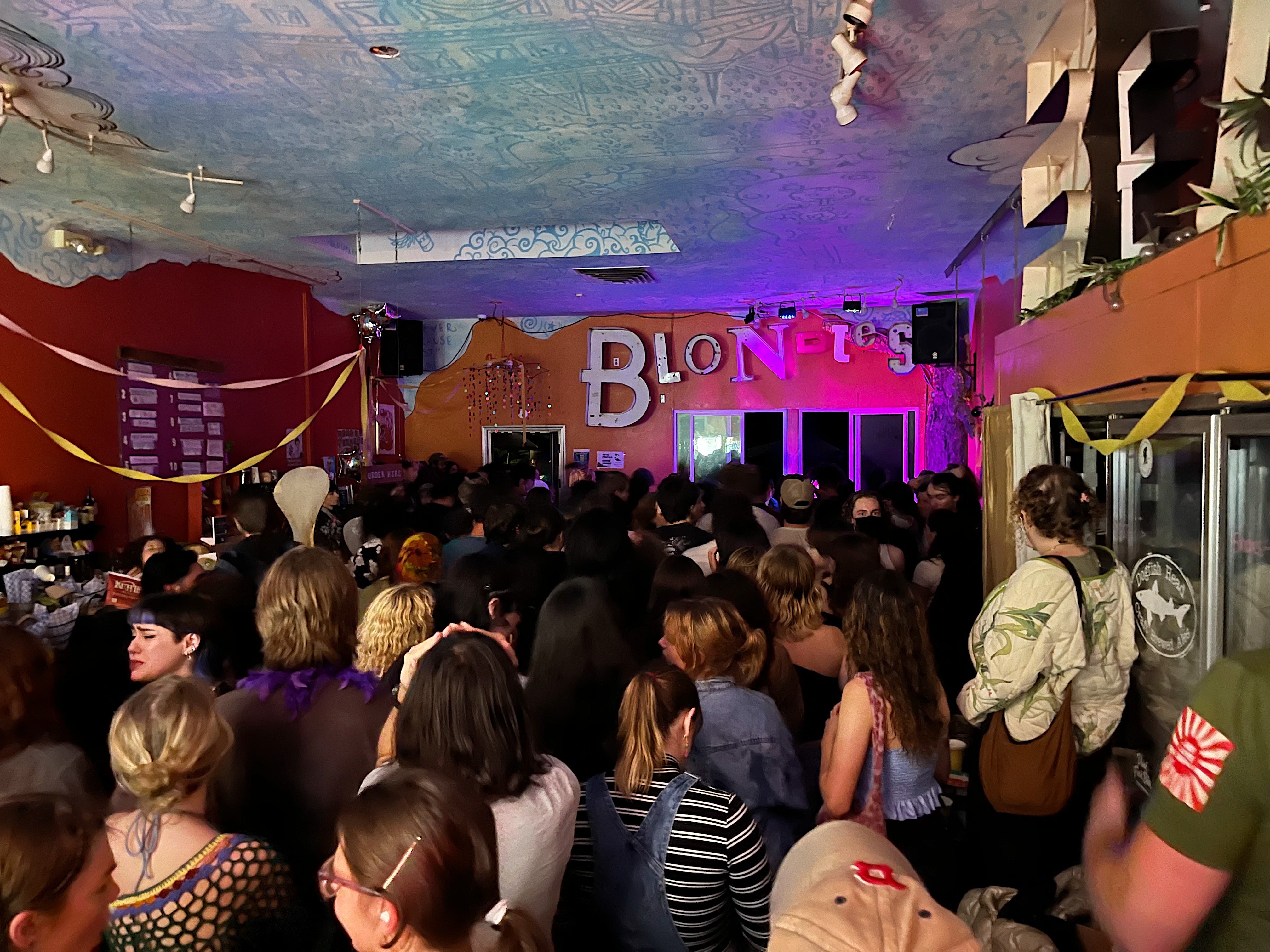
    Distorted guitars and the punch of a kick drum reverberated off the muraled walls as Humboldt locals and music lovers alike crammed into the cozy one-room venue. The energy was electric. Bodies contorted in the neon light, pushing and pulling to the brink of exhaustion. There was a euphoric yet somber tone to the room; an acknowledgment amongst the crowd that this feeling was fleeting, as that night was the last Blondies show they would ever attend. 

    Saturday, Jan. 27 marked the last live show at Blondies, with over ten bands on the lineup. Celebrating their 15th anniversary, the beloved venue advertised the show as a birthday party, adorning the entrance with balloons and handing out festive hats at the door. Music started at 5 p.m. and went on into the night as the room swelled to the boom of the bass. Faster sets were accompanied by moshing and crowd surfing. 

    Blondies has been a staple in the Arcata music scene for years. However, they didn’t get their start with putting on live shows. Blondies owner, Johanna Nagan, recalled getting their foot in the door with open mic nights. Open mic gave community members a chance to showcase their musical abilities in a safe and judgment free environment. 

    “I think it was important for us to have a yes attitude towards if people had an idea, or if they wanted to try something,” Nagan said. “We intentionally made this space not too precious, so that people could feel relaxed enough to try something new. We felt like that was really important for people to have.” 

    Eventually, Blondies would go on to host all sorts of live music events such as live shows and jazz nights. 

    Nagan and the rest of the Blondies crew committed themselves to providing a secure and inclusive spot for seasoned performers and novices. On days when there was no live music, people could be found enjoying sandwiches, craft beer or what some would consider the best tater tots in town. The news of Blondies closing struck the hearts of many because of the environment they had fostered. The announcement was met with many customers reminiscing in the comments of Blondies’ Instagram. 

    On Sept. 24, the Blondies Instagram account, @blondiesfoodanddrink, announced that the business would officially be for sale after a 15 year run. The caption detailed how to contact the owner with regards to buying Blondies as well as a thank you to all of their faithful patrons over the years. 

    While many have questioned why Blondies has closed after all these years, Nagan said that they had faced some challenges in expanding the business. There was also concern expressed by the landlord over the types of events they were holding in the building. It is important to note that Blondies also had their liquor license suspended on Jan. 18 after it was revealed an employee had sold alcohol to an underaged patron who was working with the Alcoholic Beverage Control’s Minor Decoy Program. However, there is talk of potentially opening a similar space when and if the time is right.

    Blondies can now be immortalized as the spot where many Arcata bands got their start. Cal Poly Humboldt alumni and members of local Arcata self-proclaimed “loser rock” gfjuband Porcelain Dog, Jack Hallinan and Vivian Dawn, were able to squeeze in a show right before they closed. 

    “The owners were so cool,” Dawn said. “They were just super interested in helping the scene, and as a new band it was super encouraging.” 

    The Arcata music scene may have lost an iconic venue this weekend. However, all of those jazz nights, open mics and lasting memories will never be forgotten. 

    “It’s kind of hard to put a feeling into words,” said Bailey Allott, junior at Cal Poly Humboldt and guitarist for Mambo Green and Queen Karma. “You build up all this energy during the week and that was the one night that you could just let it all out. Just feeling like no matter what you’re going through, you just felt like you were a part of something bigger.” 

    Concert-goer crowd surfing at Blondies during California Poppies set. Photo by Mia Costales
  • Sipping superb cider at The Local Cider Bar; review

    by Christina Mehr and Andres Felix Romero

    Overall vibes

    The Local Cider Bar is a chill sit-down spot that would be perfect for a mellow first date vibe or an end to a great date. Imagine having a piece of pie and a cider to bond over, or end your night. 

    However, our only drawback is that food does close at 8 p.m. 

    The music was okay, more on the chill indie side.

    They do offer free water which is a bonus. 

    The Cider Bar did have clean selfie-worthy bathrooms.

    The Cider Bar was well-lit and had a relaxing atmosphere with soft indie music playing over the speakers. The environment there felt safe.

    Seating Options and Decor

    The large windows, giving patrons a view of the patio and street, gave the somewhat smaller interior a more spacious atmosphere. If you are someone who loves nautical themes, the big barrels used for seating and tables are a huge plus. The Cider Bar itself has a large wooden bar for patrons to sit alongside a host of tables. The interior design, with its mix of wood and industrial vibe, would allow the Cider Bar to fit into cities like Berkeley.

    The outdoor seating is also a great option for those who want some fresh air, rain or shine. Canopies with space heaters and strung-up light bulbs give your senses a warm and dry feel to the outdoor area of the Cider Bar. However, no smoking is allowed.

    Alcohol

    Flights for $15.

    Swipe right – was sweet and fruity with a hint of cherry .

    Black current – good, but a deeper wine flavor.

    Chile Guava – not spicy enough and a dry cider.

    Dragon Fruit – had a sweet aftertaste, like an adult Capri Sun.

    Blurberry – stronger aftertaste, dark, strong, packaged as wine and wasn’t cidery enough.

    Strawberry – sweet, juicy, good solid cider. Can’t go wrong with strawberries. 

    Mango daydream – not enough flavor, Le Croix lookalike. A hint of piss if you’re into golden showers.

    Gingergrass – very ginger acidic. If you’re a ginger lover then its right up your alley

    Food Review

    Had a wide selection of pies with vegetarian options included. 

    Sweet pies:

    Apple Crumble with Ice Cream – This was my favorite pie. The warm pie with the cold ice cream was an enjoyable temperature contrast.

    Black Bottom Coconut Pie – It was rich and thick, with chocolate mousse and whipped cream.

    Savory pies:

    Veggie Pie – Made my soul feel warmed, which was great considering the cold weather outside.

    Chicken Pot Pie – Crust was flaky, and the pie overall was moist and gooey in a delicious way. There was a very nice hint of sage present with the taste. The pie was warm, homey, yummy and definitely made with love.

    Overall Rating = 4.5/5  STARS

    4.5/5 apple pies.

  • Brunch Review: Nina and Jack rate Arcata

    by Nina Hufman and Jack Stewart

    It is our mission to find the slayest food spots in Arcata. Whether you’re going on a date, meeting up with friends or flying solo, we are determined to create a guide to which places are hot and poppin’ – and which places are not. Our first adventure was to the Aracta staple, Northtown Coffee, for a sunny Monday morning breakfast. 

    A few patrons were scattered at tables around the coffee shop. It didn’t feel empty, but it was quiet and easy to find a table not super close to other people. The music was good and not too loud. The employees took our order promptly when we walked up to the counter and double checked with the cook to make sure that they had what we wanted to order. There are a lot of seating options, both indoor and outdoor. 

    We both got the breakfast burrito. Jack also ordered the light roast coffee and I ordered an iced snickerdoodle latte, one of the specialty espresso drinks. We were a little disappointed with the size of the burritos. They were pretty small and we both left still hungry. The salsa on the burritos was amazing, we just wish there was more of it, or at least additional hot sauce options. The light roast coffee was smooth and crisp. The snickerdoodle latte was delicious, especially if you like sweet espresso drinks. 

    With that, here are our ratings.

    Jack:

    • Food: 7.2/10
    • Coffee: 8/10
    • Bathroom: 9/10
    • Overall: 7.6/10

    Nina:

    • Food: 7.5/10
    • Coffee: 9/10
    • Overall: 8/10
  • Astral projecting with boygenius

    by Kianna Znika

    I’ve found a new appreciation for the act of dissociating, giving the once unhealthy coping mechanism of mine a whole new beautiful meaning. When getting lost in your own head with intention, you may feel as if you’re disconnecting from the world around you, but really, you find that you’re actually connecting deeper within yourself. Maybe, dare I say, you find a deeper connection with the life you think you’re hiding away from.

    Clearly, I tend to romanticize these deep, existential thoughts and feelings, which is why I love music that matches my energy.

     “Music to help you feel like you’re floating through space,” as I like to say. “Instant astral projection.” 

    It’s why I’ve been listening to a lot of shoegaze, indie dream-pop and folk artists such as Alvvays, Teen Suicide, The Sundays and, of course, Boygenius – one of my faves, as of late.

    Within the first few seconds of Boygenius’ newest EP, “the rest,” I was instantly brought into my own head and launched into deep space. What else could I have expected from a song titled “Black Hole?” That’s when I knew: this new Boygenius is going to hit.

    The 12 minute EP only consists of four songs, but carries all the best parts of Boygenius, from Phoebe Bridgers’ dreaminess to Julien Baker’s rawness and Lucy Dacus’ lyricism. Each member is already such a successful star on their own; together, they burn so much brighter. 

    It’s a beautiful thing to enjoy the art of queer women supporting one another, and getting to experience the product of their complementary talents. “the rest” was officially released on Oct. 13, just six months after the trio released their full-length album, “the record,” which features the group’s most popular tracks such as “Cool About It,” as well as mine and everyone’s favorite, “Not Strong Enough.” Don’t ask me how many times I’ve had the lyrics “Always an angel / Never a God” ringing in my head these past few months.

    One thing that really stuck out to me is Boygenius’ mutual respect and admiration for outer space, and how the group uses these themes in their music. It’s worth noting that the song “Not Strong Enough” starts off with the lyrics Black hole opened in the kitchen” while their new EP literally starts with a song called “Black Hole.” These themes are continued in “Voyager” and “Powers” with lyrics like “Walkin’ alone in the city / Makes me feel like a man on the moon,” and “A hostile alien ambassador? / Or am I simply another of the universe’s failed experiments?”

    I feel those last lyrics, heavily.

    There is another theme within this short EP that I strongly relate to: someone you love urging you to take a fatal risk, and while you might not have been too excited about living life, you realize you don’t want to go just yet.

    “I don’t wanna live forever / But I don’t wanna die tonight.” Lucy Dacus, I see you. 

    And I know Boygenius somehow sees me too, because I don’t know how they knew I’ve literally been writing about the connection between getting lost in one’s head and floating through outer space, but I’m glad they did.

    This one is for all the other sad girls finding comfort and healing in the space inside their own minds. 

  • College night: flop or bop?

    College night: flop or bop?

    by Jillian Wells

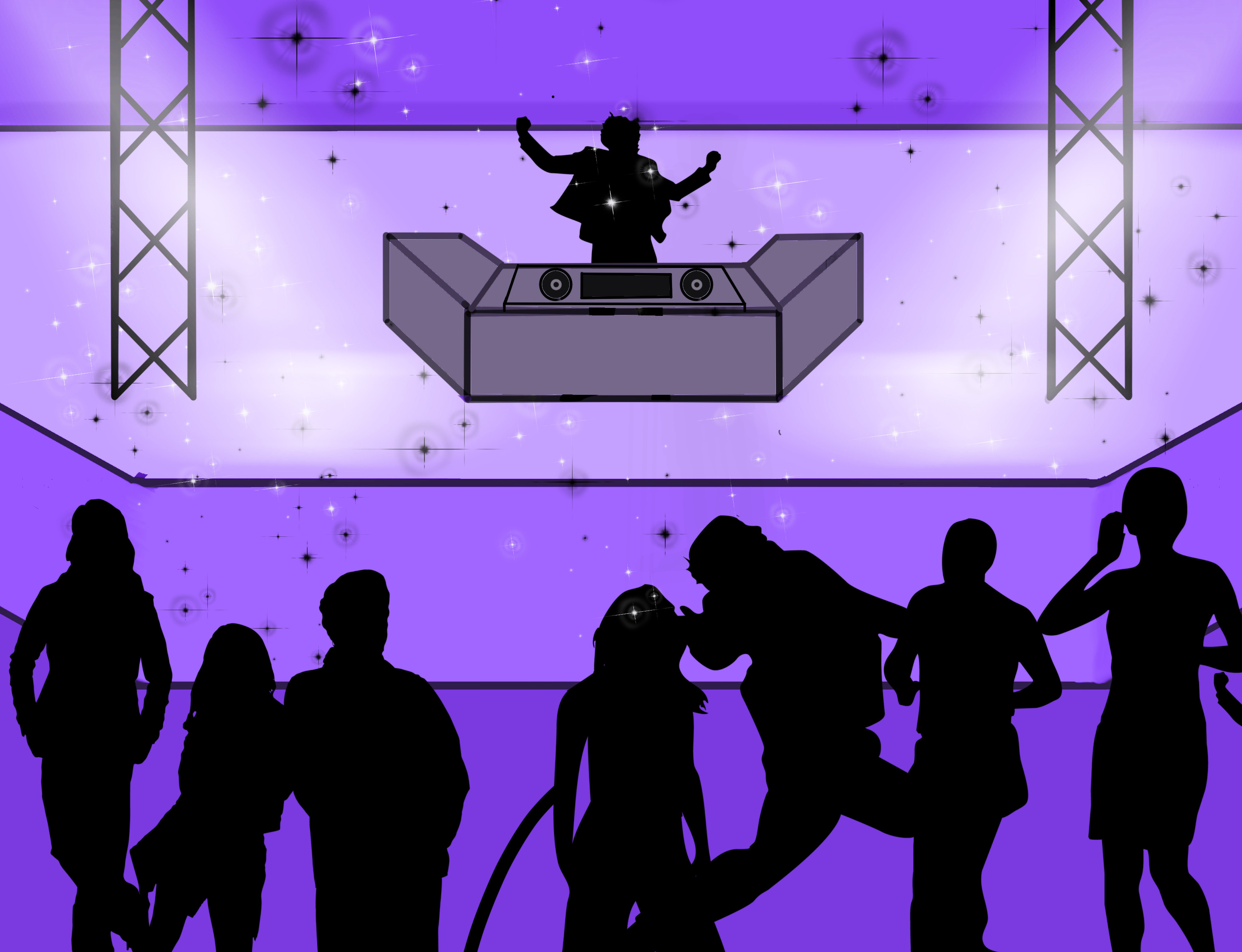
    Sweaty students, creepy men, and lots of crappy EDM-remix music. That’s how I would describe the “College Night” hosted by the Arcata Theater Lounge (ATL). College Night, a fairly frequent event, is popular because it’s one of the few places in Humboldt County where people who are over 18 but not yet 21 can go to have a nightclub-like experience.

    You may be wondering what my qualifications are. I’ve been to College Night at least seven times at this point. I have also been to several nightclubs in South Korea and a few in Europe, so this isn’t my first rodeo. I know it’s not quite fair to compare these foreign nightclubs with the ATL, but this does give me a good perspective about what makes a nightclub, well, fun. 

    So let’s address the elephant in the room – the music. While the ATL does feature some great songs, the experience often gets soured by the sheer amount of EDM remix tracks they play. It feels as though the remixes really drown out the best parts of the song that make you want to dance and let loose. It’s frustrating when I’m really enjoying a song then they completely gloss over the song with an awful EDM remix version. It’s important to note that music is a key element in any nightclub setting, and the ATL could significantly enhance the overall experience by having a more diverse playlist, with less remixes. After all, music has the power to elevate the atmosphere and make a night out all the more enjoyable. 

    I respect the concept of College Night. It gives the poor souls who aren’t 21 the chance to have a nightclub experience which, in Humboldt County, is extremely hard to find. Despite the issues I have with the music, I will continue to attend College Night (with a fair amount of liquid courage) because it holds a special place in the hearts of many, including myself. In fact, it was at College Night where I first met my current boyfriend over nine months ago, so even though these nights have very questionable music, I have some great memories associated with them. Is the music often questionable? Yes. Will I keep going back? Absolutely.

    So, my advice is if you’re looking to go to College Night at the ATL, pregame (drinks are expensive), go with people you trust and know you’ll have a good time with, and make some unforgettable college memories. 

  • She Kills Monsters: not a Nat 20

    She Kills Monsters: not a Nat 20

    by August Linton

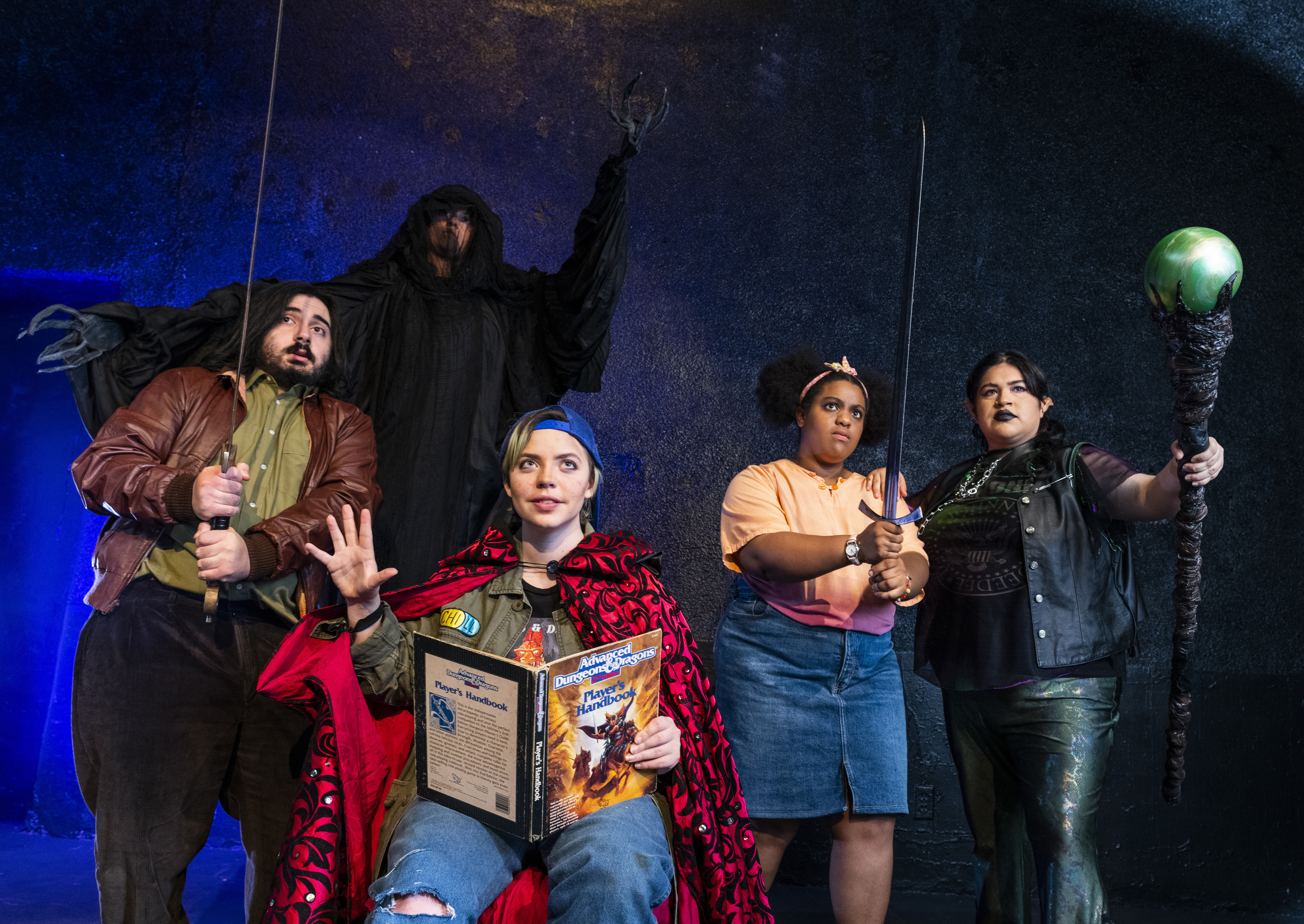
    In the hours before I attended the opening night of She Kills Monsters, I was excited. Live theater has been absent from my life, and the chance to see people perform a play was one I relished. But I didn’t enjoy this production for many reasons, mostly stemming from an amateurish air, and a lack of sensitivity in its queer representation.

    Certain elements of the show’s queerness were successful. The relationship between Tillius the Paladin (Geneva Bell) and Lilith the Demon Queen (Kyrstie Obiso) and their real-world counterparts was surprising and wonderful in its intimacy. As someone who was a nerdy gay teenager, I saw myself in their fear, their yearning. It affected me to see a gay kiss on stage— I hadn’t before. Queerness often intersects with desire to escape into fantasy, and I saw that genuinely represented in She Kills Monsters.

    The decision to cast one of the succubus villains, Evil Tommy (played by Oliver David) as a gay man felt strange considering the role this character occupies. The character is regularly called Evil Tina and played by a female actress. I found myself uncomfortable and struggling with cognitive dissonance as an obviously queer-coded character bullied, screamed slurs at, and borderline sexually harassed another character. 

    The stage combat, too, left me wanting something more. It’s evident that the cast spent blood, sweat, and tears on choreographing and practicing the show’s many fights, but many stretched my suspension of disbelief. Swords swung three feet from their targets, while victims lowered themselves to the ground rather than falling. A show with such a focus on its fights deserved better.

    The production design, however, impressed me and greatly increased my enjoyment of the show. The boss monster props especially charmed and impressed me. The undulating fabric-covered frame of the gelatinous cube, intensely staring papier mache orb of the beholder, and numerous large dragon heads of the final boss fight wow and amaze in cinematic fashion. 

    Other elements of the production seemed unfinished or fell flat, including sometimes jarring sound design and inconsistent costuming. This gave She Kills Monsters a distinctly high school play feel, despite the myriad uses of the word fuck. 

    The age of She Kills Monsters as a script showed in its dialogue and in its ideology. Released in 2011 and set in 1995, it has many elements and jokes which fell flat. Why does the main character Agnes (Miah Carter) treat her sister’s gayness with disbelief and fear? The politics of dating and marriage in Agnes and Miles’ (Stephan Chittenden) relationship also felt dated, and weirdly emphasized. And what was with that joke about Miles touching his girlfriend’s younger sister?

    Despite this, Bell and Obiso as Tilly and Lilith were two standouts, bringing a wide variety of attitudes to their characters in both the real world and the dream world. The character of the Great Mage Steve (Maverick Cheney) deserves a special shout out for being a consistent source of laughs every time he flopped onto the stage to be killed in yet another gruesome way. Vera (Elena German) also very much embodied the role of high school guidance counselor, and drew laughs with her creative use of a rolling chair. However, much of the ensemble’s acting didn’t impress me, lacking physicality and emotion. She Kills Monsters has an emotional core of loss and drama that felt smothered by the production’s issues.

    At the end of the show, about a quarter of the audience stood up, attempting to trigger a standing ovation. It didn’t happen.

  • Our Flag Means Death gives the gays everything we wanted

    Our Flag Means Death gives the gays everything we wanted

    by Sophia Escudero

    In episode five of Our Flag Means Death, the two leads share a moment under the moonlight. Stede gently folds a piece of fabric that Ed’s mother had given him and tucks it neatly into a pocket of his waistcoat.

    “You wear fine things well,” he says, tenderly, and Ed looks up at him with nothing short of adoration in his eyes. He leans in, then stops himself, and as the two part ways they look back at each other, both clearly wanting more but unable to bring themselves to voice it.

    That’s pretty gay, I thought to myself, but I didn’t dare hope that this scene was intended as anything beyond bromance.

    I grew up on Tumblr as a queer kid at the height of Superwholock, reblogging edits of Emma and Regina from Once Upon a Time looking longingly at each other and watching conspiracy videos about how, if you really read between the lines, the BBC are totally going to make Johnlock canon in the next season of Sherlock. I believed that the new Star Wars trilogy would give us gay Jedi, and the MCU would give us gay superheroes. Eventually, this hope faded. Each new season of Sherlock was worse, each “first gay Disney character” was less relevant to the plot than the last, and every video I saw from a con featured actors and writers mocking fans in the audience for daring to ask if there would be queer characters.

    I grew to accept that any show that was not explicitly marketed as being about coming out or facing homophobia would ever have a central queer romance. Any scraps I got would be something confirmed on Twitter or by an actor in an AMA and the void would have to be filled by fanfiction.

    When I saw that Taika Waititi was producing a comedy about pirates, I was all in. I was pleasantly surprised when a side character was revealed to be nonbinary and used they/them pronouns. Frankly, my bar for LGBT representation in media is subterranean. If a single character is canonically queer, doesn’t die and is not treated as a joke by the narrative, I will embrace the work wholeheartedly. I don’t ask for much, but I still rarely get more than a “wait and see.”

    Every episode was tailor-made to convince me that this was a love story, but I refused to be tricked so easily. When these characters were found in suggestive scenarios, I accepted it as a joke, and when they shared moments of tenderness and emotional vulnerability, I accepted that they were just really good friends. Even when the cast and crew said, verbatim, “this is a love story,” I was certain they meant it in the nebulous way that a buddy comedy is a love story, and that if I read into it I was a stupid, greedy little homosexual trying to make pop culture gay. Hell, I made it to the ninth episode, where they kiss each other on the lips and make a plan to run away together, still half-convinced that this was some kind of friendship kiss found only in advanced queerbaiting.

    It shouldn’t be shocking to me that queer people exist in television and movies. As a queer person, I should know that we do. Yet, years of media telling me otherwise had convinced me that maybe I was wrong. It has been over a month since the season finale aired, and I haven’t recovered from the sheer impossibility of seeing a romance between two men as central to the plot in a show about something other than queer pain.

    These characters are in love. They kiss, they hold hands, they exist outside of subtext and punchlines. Some jaded part of me thinks that a second season must end in death and suffering, but the inner 14-year-old that was hopeful enough to suffer through four seasons of Sherlock dares to believe that maybe, just maybe, gay people can be happy outside of fanfiction.

  • Toyon volume 68 heals tender wounds

    Toyon volume 68 heals tender wounds

    by August Linton

    The 68th edition of Toyon, Cal Poly Humboldt’s multilingual literary magazine, was released on Tuesday, March 29. It is the culmination of a year of work by the staff, through forced distancing caused by COVID-19, across vast distances, and from a multitude of perspectives.

    Contributions to this year’s Toyon came from countries around the globe. The submission base’s broad scope means that works in many languages are featured. Some of the works originally submitted in a language other than English are presented in both languages, and some of the translation work is only available online on Toyon’s website.

    Maurizio Castè’s ‘Germogli verdi,’ or ‘Sprouts of green,’ published in both the original Italian and translated into English by Toti O’Brien, is a gently insistent witness to the beauty of spring, and to nature’s resilience in the face of climate change. This is a theme that surfaces at other points in Toyon 68, in Dobby Morse’s “The Fate of the Earth,” “Climate Change” by Larissa A. Hul-Galasek, and Meghan E. Kelley’s “What’s Left for the World to Say?”

    In these works, there is a deep veneration of both nature’s delicacy and of her strength. There is also an anger that seems to well up from deep within the Earth; anger for the future of humanity in the face of a climate apocalypse and for the fate of the natural world in our aftermath.

    There are many other standout poetic works in Toyon 68. The magazine’s opening work “Each Time I Held a Dying Bird” by Grace E. Daverson pulls the reader into delicately described and emotional pocket memories. As Daverson methodically describes each bird she has known, the wild joy of holding a bird in one’s hand and the childlike wonder of shining a flashlight into developing eggs organically melt into the glass-sharp grief of not being able to protect the ones you love.

    Toyon also publishes short stories, academic literature, and visual art.

    “Dismantling Structural Systems of Oppression Through a Revolutionized Pedagogy” by Ambar A. Quintanilla systematically explores the institutional barriers to education which Latinx and Black students face, multiplied by conditions during the COVID-19 pandemic. Quintanilla’s emotional connection to the subject matter as someone who has experienced these barriers (and who has seen the people she cares about be affected by them) is as important to the piece as her efficient and insightful analysis of the complex contributing socioeconomic factors.

    Among the magazine’s small selection of visual art, “Thinking” by Ernie Iñiguez and Mario Loprete’s “Concrete Sculptures” stand out. “Thinking” is a polished and pastel digital illustration of a meditating robot, while “Concrete Sculptures” is photos of the artist’s graceful and haunting sculptures of folded clothes.

    The theme of Toyon 68 is “hope and healing,” which is self-evident from the works within. The contributors’ love for this world and for the always painful process of healing is strung throughout the magazine, as taut and musical a guitar string. Healing takes time, passion, work, and love, and Toyon 68 has all of those. On the back cover of the volume, their sendoff is this:

    “WARNING: This product contains love, anxiety, dysphoria, tenderness, birds, affection, grief, orange juice, trauma, anger, and maternal bonds. Side effects may include self-reflection and a sense of inner peace.”

    Toyon 68 is available now in print and online.

  • Something Rotten! opens at Cal Poly Humboldt

    Something Rotten! opens at Cal Poly Humboldt

    by Nina Hufman

    The Cal Poly Humboldt School of Theater’s production of Something Rotten! was entertaining, energetic, and full of innuendo. On opening night last Friday, March 25, patrons filled the Van Duzer Theater to see the comedy, set in the 16th century.

    From the opening song, ‘Welcome to the Renaissance,’ the cast dazzled in beautiful costumes on a stunning set. All of the actors are extremely talented singers and performers. It was clear that they all put in a lot of work and are proud of what they have accomplished. Jeremy Stolp, an English Education major who played one of the lead roles, Nick Bottom, feels that being in theater is a rewarding experience.

    Photo by Michael Thomas | Jeremy Stolp (left) and Miah Carter (right) star as power couple Nick and Bea Bottom.

    “Theater is such a privilege and so much fun to do,” Stolp said. “If you ever have the opportunity, I suggest you try it.”

    The musical was incredibly entertaining. Some of my favorite scenes included Shakespeare’s John Cena-esque entrances, Bea’s hope for a gender-equal future, and the show’s lampooning of religion. One of the best songs was “Will Power,” featuring a leather pants-clad William Shakespeare (Jaese Lecuyer) and his crowd of adoring fans. I also enjoyed “A Musical,” a comic number during which fortune-telling Nostradamus (Sammi Pietanza) tells Nick Bottom that the next big thing in the theater will be musicals, all while wearing a hat that I am convinced was a paid actor. Many of the jokes are meant to be ironic, making fun of musicals and the theater. The way that this is incorporated into the story is very clever.

    The cast was rightfully proud of what they accomplished and are looking forward to adding to each performance in future shows.

    “I don’t think that they (the cast) expected the reaction that they got so when they did it was just this moment of awe,” said Katie Lem, a member of the ensemble. “Everybody standing up at the end was such a beautiful moment for everybody.”

    Photo by Michael Thomas | Zoë Saylor performs an upbeat musical number about the bubonic plague.

    One of the most compelling performances was Miah Carter as Bea, Nick’s wife. Throughout the play, Bea disguises herself as a man to maintain several different jobs and help her husband financially and push for gender equality. Carter’s performance showcased her talents as an actor and singer, particularly in her solo “Right Hand Man.”

    “This is my first ever lead, so this was a good step up for me,” Carter said.

    Carter says that theater is a great community to be a part of and that they are all incredibly supportive of one another.

    “All of us were so proud of what we pulled through,” Carter said. “I love everyone in this cast.”

    The cast and crew are looking forward to continuing to develop this musical as they perform it more.

    “I’m excited for the depth and complexity that we kind of add into it every single show,” Lem said. “Not every night is the same.”

    The musical is running this weekend on Friday and Saturday at 7:30 p.m and on Sunday at 2 p.m. The musical will have you loving to hate William Shakespeare right along with the Bottom brothers.

    Photo by Michael Thomas | From left to right: Zoë Saylor, Sophia Escudero, Jeremy Stolp, Jaese Lecuyer, Jake Hyslop, Michael Jaye, and Miah Carter pose on set of Something Rotten!
  • Arcane Review: Alternative Canon Done Right

    Arcane Review: Alternative Canon Done Right

    Two months ago, ‘Arcane’ dropped and took the world by force. The animated steampunk series is a League of Legends adaptation that debuts a few show-exclusive characters, most notably the villainous kingpin Silco.

    For people who don’t play League, ‘Arcane’ sets itself apart as an alternative canon to its video game predecessor – and it does it right, something that isn’t always the case for TV and film adaptations.

    ‘Arcane’ catches the viewer’s undivided attention within the first few minutes of the pilot episode and consistently maintains it throughout the course of the tumultuous, action-packed storyline. Beloved League legends roam the streets of the undercity and maneuver testy politics in the edifices of Piltover as the two worlds collide with explosive consequences.

    Viktor, a chronically ill Hextech inventor with a progressive disability, straddles both as undercity stock working far above the poisoned squalor of his original home. He and his research partner Jayce face various moral dilemmas as they make the push for progress, at great cost to themselves, particularly Viktor. An aged-up Ekko, a far cry from the young boy introduced at the start of the series, takes the helm of the Firelights, an undercity rebel group, with unabashed swagger and style.

    Caitlyn, the posh rifle-wielding daughter of a prominent council member in Piltover, finds her bearings in the undercity as Vi, tattooed and grisled from her formative years in the undercity and subsequently in prison, shows her the ropes. While the two women initially find each other at odds, they soon form a strong sapphic bond that defies the strictures of their respective differences in social status and upbringing. Korra and Asami from ‘Legend of Korra’ and Adora and Catra (and many more) from ‘She-Ra’ walked so Caitlyn and Vi could run.

    The unique art style, bombastic musical score, and thorough character development flourish the compact plot, which largely centers around the estrangement of Vi and her younger sister Powder, aka Jinx. The tragedy of Jinx lies in her inability to reconcile her younger self, Powder, with her present self. The inclusion of Silco is necessary to piece together Jinx’s elusive backstory while still maintaining congruence with the original canon of League, a feat that Arcane managed to pull off seamlessly.

    Jinx’s mental health issues are spurred on by Silco, who took on the role of her adoptive father at the end of the third episode and psychologically groomed her to become an explosive human weapon as a means to meet his nefarious ends. In the backdrop of this central conflict, mounting tensions between the elites of Piltover and the vagabonds of the undercity rise to a dramatic crescendo and abruptly halt with a jaw-dropping cliffhanger that leaves the viewer teetering on the razor thin edge of Jinx’s deteriorating mental health.

    When done right, TV and film adaptations embellish the canon of the original source material, not detract from it or contradict it. In the span of only nine episodes, Arcane succeeded and kept its viewers braced for the second season.

  • The Overnight Sensation is Back at It Again

    The Overnight Sensation is Back at It Again

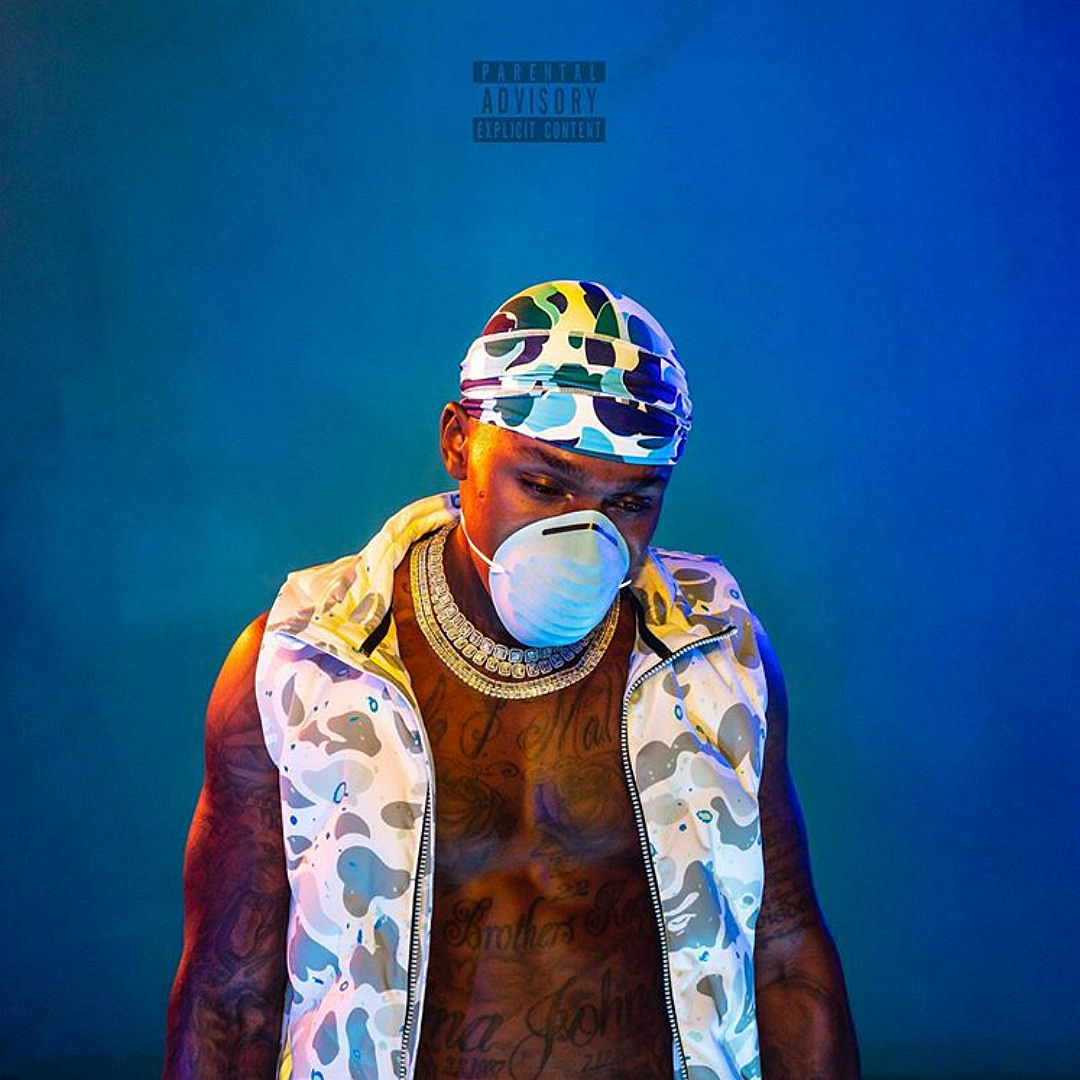
    DaBaby releases his third album in 13 months, “BLAME IT ON BABY”

    Capitalizing on a unique sound and unique circumstances, with COVID-19 providing more available listeners than ever before, DaBaby is flooding the market—a strategy that’s proven most useful to artists like Lil Wayne and Young Thug in the past. Coming less than seven months after his previous effort, “KIRK,” and only a year after his extremely successful debut, “Baby on Baby,” DaBaby has returned with his third album, “BLAME IT ON BABY.”

    Since his introduction to mainstream hip-hop with his platinum-hit-record, “Suge,” DaBaby has kept his name relevant in the media with a string of negative headlines, most recently “accidentally” slapping a female fan. Despite the negative nature of these incidents, each headline only seems to contribute to his success.

    A great deal of DaBaby’s launch into the mainstream can be credited to arguably the most impressive feature run from a rookie, landing himself a verse on songs with the likes of Chance the Rapper, J. Cole and Post Malone and playing a standout role on each of the associated albums. This earned DaBaby the attention of hip-hop fans everywhere.

    “He’s just different from everybody else—his style, the way he goes about it. I just like him cause you can never tell what direction he’s gonna go with it.”

    Jesus Ontiverof, College of the Redwoods student

    Although nothing on “BLAME IT ON BABY” is as personal as “Intro” from “KIRK,” DaBaby switches up the vibe in the second quarter of the album, revealing his emotional side while he sings on “SAD SH*T,” “FIND MY WAY” and “ROCKSTAR.”

    BLAME IT ON BABY” is still mostly filled with the party music that we expect from DaBaby, with raw lyrics about guns, girls and guap laid over high-energy beats intended to be played at high volumes.

    Jesus Ontiverof plans to transfer to Humboldt State University after completing the nursing program at College of the Redwoods. As a casual fan of DaBaby, Ontiverof enjoys all his music.

    “He’s just different from everybody else—his style, the way he goes about it,” Ontiverof said. “I just like him cause you can never tell what direction he’s gonna go with it.”

    “A lot of his music sounds the same, which is kind of a bummer. But I do like some of his shit when he mixes it up.”

    Jay Coch, kinesiology major

    HSU kinesiology major Jay Coch has a different view and experience with DaBaby’s music.

    “A lot of his music sounds the same, which is kind of a bummer,” Coch said. “But I do like some of his shit when he mixes it up.”

    Even though Coch wasn’t eagerly awaiting the new release, he can’t knock the hustle.

    “For him, it seems like he’s being pretty successful putting out a lot of music,” Coch said. “A lot of people like that. They’re like ‘Drop more music, drop more music,’ but it would be cool [if] he took a little more time and really mixed it up and thought about his lyrics more, and actually put himself out there as a musician more than just a big name in the rap industry.”

    Despite having its moments on the song “ROCKSTAR,” with a feature from the other hottest new name in rap, Roddy Ricch, and another feature on the song, “NASTY,” with DaBaby’s biggest featured guest to date, Ashanti, “BLAME IT ON BABY” is easily his most forgettable album yet.

  • Revamped Resident Evil 3 Radiates Nostalgia

    Revamped Resident Evil 3 Radiates Nostalgia

    20 years later and Resident Evil 3 still feels just as good

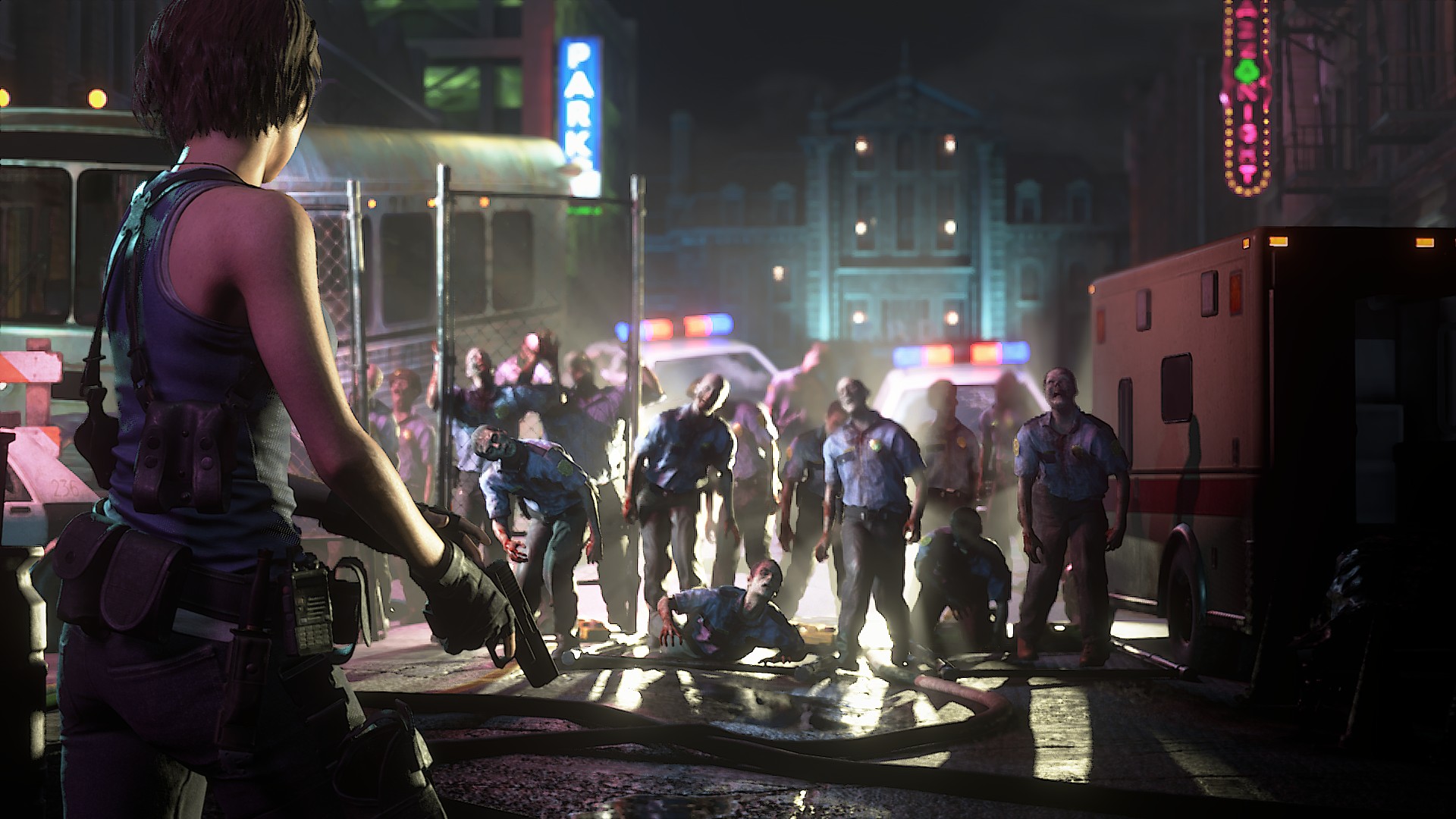
    The Resident Evil franchise began as a survival horror video game that rose to fame in the 90s and has continued with a series of sequels and film adaptations. This is a brief, spoiler-free review about the recently released Resident Evil 3.

    Twenty years ago, I embarked on one of my many video game binges. This included playing Resident Evil 3: Nemesis. It was the first time I learned about the anxiety of being chased by the video game’s antagonist, Nemesis. On April 3, I relived that experience, thanks to Capcom delivering on the Resident Evil 3 remake.

    The plot of the video game features protagonist Jill Valentine, a returning character from the first game’s story line, which saw the Special Tactics and Rescue Service members trapped in a mansion fighting for survival against nightmarish creatures. In Resident Evil 3, the fight for survival takes place in the streets in the fictional Raccoon City.

    In the remake, the game’s mechanics have changed slightly, giving you the ability to dodge more efficiently, as opposed to the original, in which you had to rely on frantic button-pressing and leaving it to chance. Another returning feature is the ability to craft ammunition, giving the player a fighting chance as increasing difficulty makes items more scarce.

    With Valentine and Nemesis as the main features of the game, it did radiate the nostalgic feeling I had when I first played 20 years ago.

    Although the game was a perfectly rendered remake, I do have some complaints that affected my nostalgia. Let me start off with the main concept, which is encountering Nemesis. In the original game, you had to fight your way through the city, and upon arriving at the police station, you had to fight for your life.

    In the remake, that suspense is taken away when you encounter Nemesis at the start of the game. Adding on to that complaint is the use of cut scenes in which Jill Valentine runs away from Nemesis. In the original it was solely up to you, the player, to control Valentine in hopes that you can fend off the creature.

    Another grievance focuses on the locations in the game. The remake felt shorter than the original and that’s because the creators decided to cut down the time it took for the player to explore certain parts of the game. Originally it took hours of exploration to acquire items for progression through areas, but by taking that out, it felt more like a rushed experience.

    Other than those issues, the game is worth trying out. With Valentine and Nemesis as the main features of the game, it did radiate the nostalgic feeling I had when I first played 20 years ago. Capcom really went above and beyond to deliver another quality product similar to their Resident Evil 2 remake which launched last January.

    Whether you are a lifelong fan or new to the Resident Evil series, I assure you the recent remakes are worth the purchase, especially for the revamped story line.

  • Half-Life: Alyx Makes VR Worthwhile

    Half-Life: Alyx Makes VR Worthwhile

    Half-Life: Alyx is the first properly high budget virtual reality effort from a major studio

    The previous game in the Half-Life series ended on a cliffhanger, and since then, the franchise sat in limbo for over a decade. By the time Half-Life: Alyx was announced, most had given up hope of a sequel. The inflated expectations for a new Half Life game made constructing a sequel too daunting a task for developer Valve to ever release anything, but now they have. Does it live up to the hype?

    For the most part, yes.

    With the majority of people currently stuck inside, virtual reality is one of the best ways to pretend you’re not. The problem is the high price point. Currently the barrier for entry for a VR headset is a minimum of $400, and that doesn’t include a gaming PC that meets the hefty requirements of VR. Those PCs generally start at $600. Up to this point, small-scale games made up the majority of the VR catalog. VR lacked a system seller to justify the high price point.

    The game’s story is excellent, but can feel sparse at times. Some chapters should have more dialogue than they do, but the writing and performances that are there are excellent.

    Luckily, Half-Life: Alyx is an incredible game. It takes what made the older Half-Life games great on a 2D screen and translates them to the 3D space with an incredible amount of polish.

    In Half-Life 2, your main method of interacting with the world was the gravity gun, the weapon that could pick up and manipulate nearly any object in the world around you. In Half-Life: Alyx you have gravity gloves.

    These gloves let you aim your hands at nearly any object, press the grab button and flick your wrist to bring that item towards you. It’s an action so simple and satisfying to perform that since playing I have on several occasions found myself with the urge to perform it in my day-to-day life.

    The game’s story is excellent, but can feel sparse at times. Some chapters should have more dialogue than they do, but the writing and performances that are there are excellent.

    During those few encounters with human characters I was in awe at how life-like they were. If there’s anything about the game that is a disappointment, it would have to be the lack of melee weapons. You can pick up almost anything in the environment, but none of it can actually harm enemies. Half-Life is known for having the crowbar as a weapon, so it’s weird to not have that in this game.

    These are all nitpicks though. Half-Life: Alyx is proof that VR as a medium can work. It’s proof that virtual reality can be its own storytelling medium, with its own stories and experiences and that gets me excited for the future of gaming.

  • Joyner Drops Disappointing Debut

    Joyner Drops Disappointing Debut

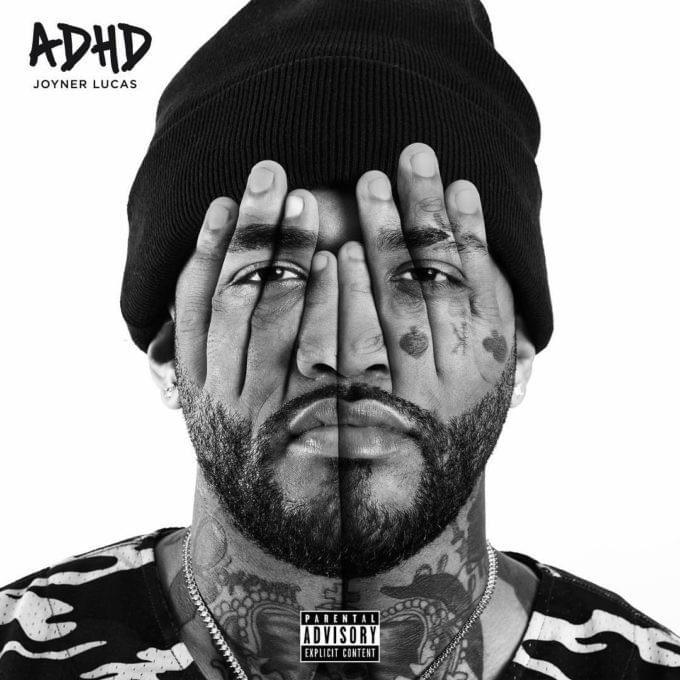
    Grammy-nominated rapper Joyner Lucas shares his debut album, “ADHD,” with the world

    Joyner Lucas, the 31-year-old rapper, first caught traction with his 2015 music video, “Ross Capicchioni.” In the video, Lucas reimagined the true story of a gang initiation gone wrong that nearly claimed the life of a high school student.

    The video’s success can be attributed to the unique strategy Lucas chose, taking on both the perspective of the victim and the criminal. Lucas has managed to keep his name relevant over the years with a string of viral music videos, including the critically praised “I’m Not Racist” and the polarizing “Devil’s Work.”

    Humboldt State University alumnus De’Aundray Gooden has been a fan of Lucas since “Ross Capicchioni.”

    “I think he brings a lot of awareness to certain subjects people don’t feel comfortable talking about,” Gooden said.

    Gooden’s favorite Joyner Lucas songs are “I’m Sorry” and “Devil’s Work.” The first track follows a suicide note as it’s being written into the hands of the victim’s brother or cousin. In the latter song, Lucas calls out to God, questioning his choices in the young men and women he’s chosen to take.

    “We don’t pay attention to people until they die,” Gooden said. “We need to pay attention to the people who are alive, and appreciate them for what they’re doing now.”

    Lucas also racked up hundreds of millions of views on YouTube over a short series of remixes, between 2016 and 2018, and eventually caught the attention of rap god Eminem. Lucas secured a spot on the highest performing song from 2018’s “Kamikaze,” “Lucky You.” The high-tier rapping ability that earned Lucas the legendary co-sign has also contributed to beef with platinum-selling rapper Logic and R&B singer Tory Lanez. The beefs have since been squashed, both resulting in gained exposure and new content, including the third single from “ADHD,” “ISIS,” featuring Logic.

    HSU’s soccer goalkeeper, Tab Heinz, is a fan of old school hip-hop, and appreciated Lucas’ meaningful lyrics and authentic sound.

    “I appreciate the older stuff a little bit more than the newer stuff,” Heinz said. “I like the older style of making music. He has a super cool flow and rhyme scheme. I like the way he doesn’t sound too mainstream. He kinda has more of the underground style.”

    Lucas followed up “ISIS” with the rags to riches track, “Broke and Stupid.” The song paints a picture of all the hard work that has paid off for Lucas. With no chorus, it still competes for best song on the album. Apparently unready to release the project, Lucas proceeded to drop five more singles over the next nine months, at least three of which would’ve been better off left for the album.

    Just two days before the release of “ADHD,” Lucas dropped his ninth single, “Will,” along with another viral music video paying homage to Will Smith. With four skits on the album, including voicemails from Chris Tucker and Kevin Hart, Lucas left fans with a total of five new songs out of 18 on the album.

    Fans were given hope, with features from R&B legend, Chris Brown, industry favorite, Young Thug, and veteran-rapper, Fabolous, that “ADHD” would deliver. Unfortunately, out of the five new songs, only the “I Lied” intro track lives up to the hype. Brown and Thug’s features on “Finally” and “The War” are the most memorable moments of the remaining new tracks.

    After two years of waiting, as Tucker points out in his skit, and with how much of the project we had already been teased leading up to the official release, the anticipation for “ADHD” worked to its detriment. Despite Lucas arguably not producing a bad single, anything less than greatness from all of his new efforts on the album would’ve been a letdown. With most of the new content generating nothing to write home about, fans will be disappointed. Those just now discovering Lucas are much more likely to enjoy what “ADHD” has to offer.

  • Gambino Goes Out with a Banger

    Gambino Goes Out with a Banger

    Childish Gambino releases fourth and final album

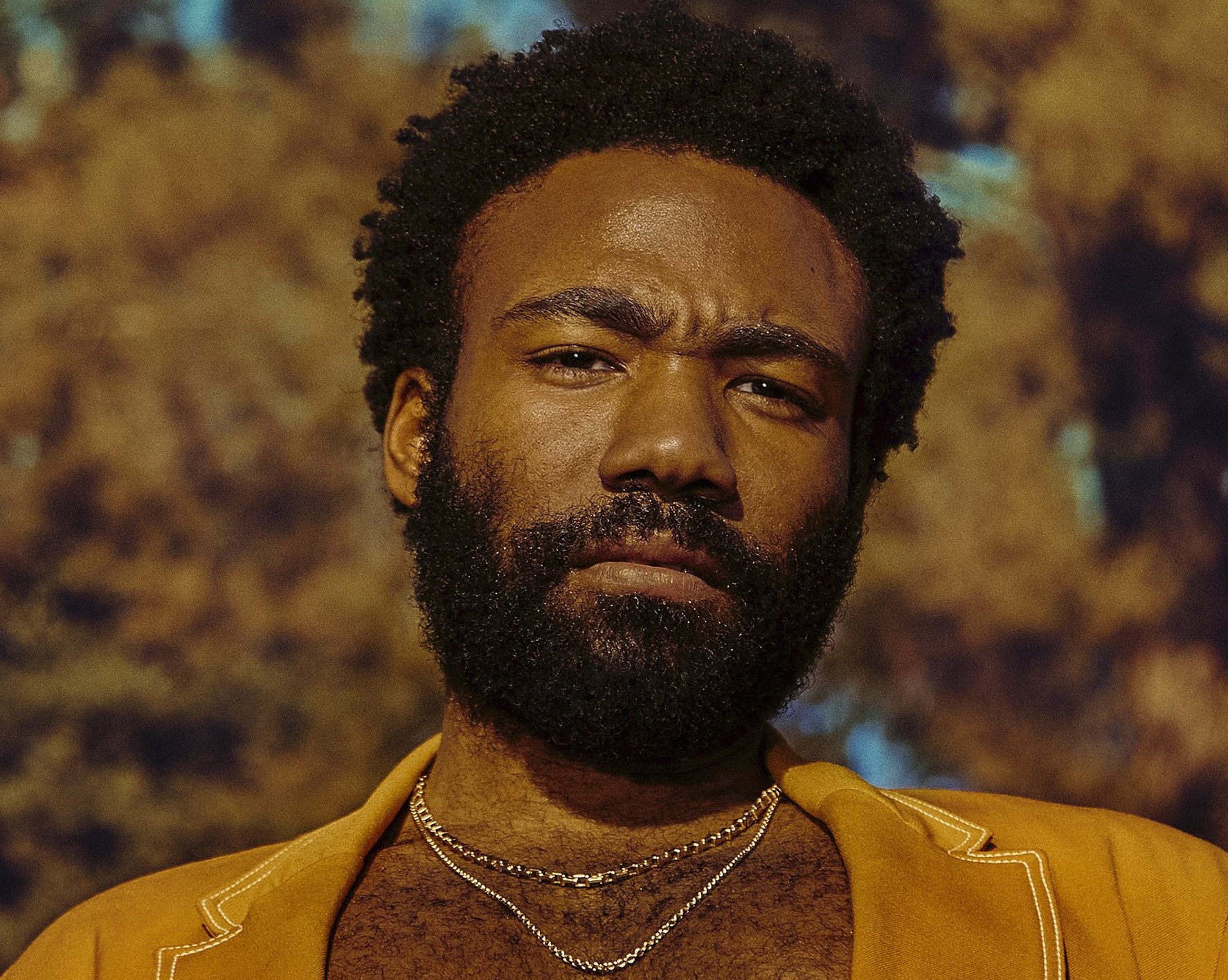
    The Swiss Army knife of creative minds, Donald Glover, also known by his musical alias Childish Gambino, has returned with his fourth and final studio album, “3.15.20.”

    Glover announced the planned retirement of his Gambino alias at the 2017 Governors Ball Music Festival.

    “I’ll see you for the last Gambino album,” Glover said.

    He later doubled down on the retirement of the Gambino name, announcing on his 2018 This is America Tour that it would be the last Gambino tour.

    Glover, meanwhile, has kept himself extremely busy between musical releases, starring as Lando Calrissian in 2018’s “Solo: A Star Wars Story” and voicing Simba in 2019’s rendition of “The Lion King.” Glover also writes, directs, produces and stars in his own television show, “Atlanta,” which is currently green lit for two more seasons.

    Karen Castañeda, a Humboldt State University environmental studies major, discovered Glover through his show, “Atlanta.”

    “I love him as an actor and I blew through the whole show really fast,” Castañeda said. “He’s super talented and I really support everything he puts out.”

    3.15.20” saw its official release on March 21, after briefly appearing on donaldgloverpresents.com before it was removed and replaced with a countdown clock.

    The album is peppered with conscious messages that apply now more than ever, in the current pandemic circumstances. The first real song of the album, “Algorhthym,” was unofficially released to fans that attended the This is America Tour in 2018. On the track, Glover addresses brainwashing of humans by social media to make them feel inadequate.

    Particia Pettit-Blair, an HSU psychology major, discovered Glover’s music through friends, and has listened ever since. Despite the unique sounds he creates by layering instruments and combining styles, Pettit-Blair finds Glover’s lyrics to be extremely meaningful and relatable.

    “I like that he kinda takes a different approach to music,” Pettit-Blair said.

    On the previously released “Feels Like Summer,” now titled “42.26,” Glover confronts the climate crisis with a global warming public service announcement.

    Glover reinforces the same message on the track, “Time.” The song sounds like a remix to “Feels Like Summer,” and stresses the obvious truth that “We’re running out of time.” Glover is able to address serious issues without compromising the quality of his music because they come off as organic with the brand he’s built.

    Glover carries his unorthodox approach to the release of “3.15.20” into the album itself. Out of the 12 tracks, 10 on the LP are simply named after their linear location on the album. The project also has two tracks with hidden features, including pop-star Ariana Grande on the song, “Time,” and Grammy-award-winner 21 Savage on the next track, “12.38.”

    On top of a cinematic intro track, each song has its own intro or outro, providing a transition between each one. This gives the album the cinematic experience Glover was after with his 2013 album, “Because the Internet.”

    3.15.20” is packed with Glover’s versatile singing and the unique sounds he’s developed over the span of his career. He largely leaves rap behind, as he did on “Awaken, My Love” and his “Kauai” EP, with the exception of his distorted verses on the song “Algorhythm” and the highly aggressive flow on the outro track. Glover takes the hardcore fans of his music on a trip down memory lane, incorporating sounds from all of his previous projects into the album.

    Glover brings back the chaotic energy of his debut single, “Bonfire,” on his weirdest song to date, “32.22.” Glover continues to push the boundaries of his audience with the mostly incomprehensible track that can only be described as a war chant. Glover gives fans more deja vu on the track, “19.10,” with a heavy dance vibe resembling Glover’s 2014 single, “Sober,” along with several other tracks from “Kauai.”

    The project with the most influence on “3.15.20” is the most recent and most unique, “Awaken, My Love.” The album’s presence can be felt on multiple tracks, including the heartwarming love song, “24.19,” sung in the same style as his biggest hit, “Redbone.”

    Paired with some of Glover’s most meaningful messages, the experimental sounds Glover has flirted with since he first came on the scene have come together in spectacular fashion for the ultimate payoff on the last Childish Gambino album.

  • Pop-Star Weeknd is Here to Stay

    Pop-Star Weeknd is Here to Stay

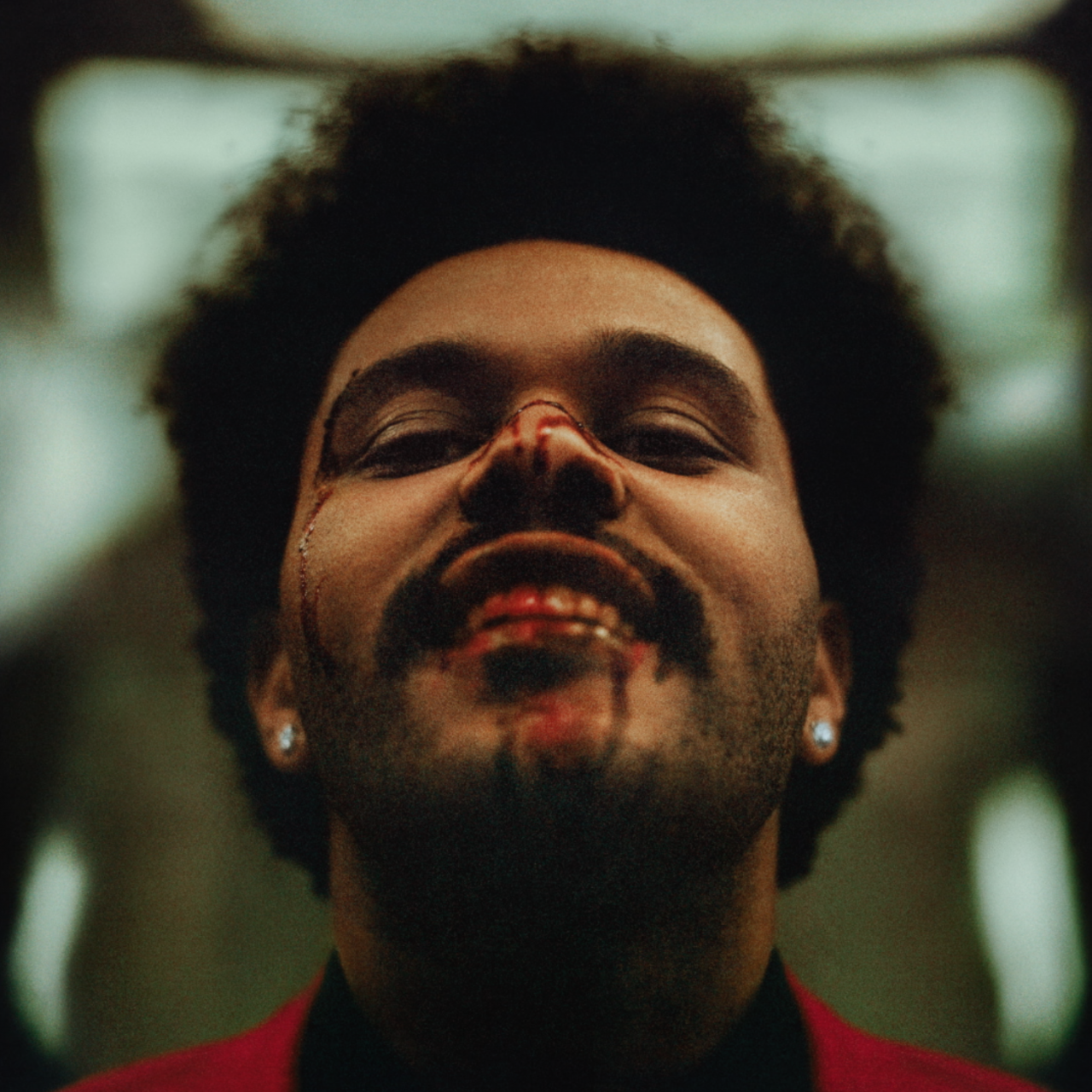
    The Weeknd’s fourth album, “After Hours,” has arrived

    The R&B villain, better known as The Weeknd, has returned with his fourth studio album, “After Hours.” In this album, The Weeknd revisits the same themes of drugs, lust and heartbreak found in previous releases, but this time, with a different approach. In the past, his music has come off generally unapologetic, but “After Hours” brings a mix of emotions on his lifestyle.

    After nearly a decade of partying and coming onto the scene in 2011, The Weeknd reveals on track eight, “Faith,” that he’s spent the last year sober. Still battling the urge to return to the fast life, The Weeknd comes to terms with the choices he’s made in “After Hours” and the mental war he’s fighting to avoid making those same mistakes.

    Coming into this project, The Weeknd set the tone by dropping two pop singles at the end of November, claiming the top position on the Billboard Hot 100 chart with his lead single, “Heartless.” His follow up, “Blinding Lights,” is currently peaking at number two on the Hot 100 chart in the wake of the album release. He followed up in the second half of February with the title track, “After Hours,” as an unofficial single. The song is slow to build, but is equal parts patience and pop, making it clear that the pop-star style is here to stay.

    “I will always prefer his earlier stuff. It’s just a sound you couldn’t have found anywhere else at the time.”

    Alexa Noperi, HSU film major

    Alexa Noperi is a film major at Humboldt State University, and she hasn’t been happy with The Weeknd’s direction since he dropped “Starboy.”

    “I will always prefer his earlier stuff,” Noperi said. “It’s just a sound you couldn’t have found anywhere else at the time.”

    The Weeknd’s gradual transition to pop music has left some of his day-one fans behind in the darkness of his mixtapes. Made official by his 2016 album “Starboy,” the style shift can be attributed to the success of his biggest single, “Can’t Feel My Face,” along with other pop efforts on “Beauty Behind the Madness,” including “Earned It” and “Angel.”

    When he released his first EP, “My Dear Melancholy,” in 2018, the day-one fans that were left behind were delighted by the return of a dark Weeknd. With his latest release, The Weeknd is likely to disappoint hardcore fans again, as he mostly leaves behind the dark, moody atmosphere of his earlier music to make room for the pop sound that generated so much success with “Starboy.”

    After Hours” is a rollercoaster of indecisiveness. The Weeknd’s desires constantly clash with one another on his quest for true happiness.

    The album begins with chilly instrumentals that build into their own pop section. The Weeknd flaunts his typical unremorseful attitude, claiming, “It’s too late to save our souls,” on the song “Too Late.”

    “After Hours” is the most consistently solid project The Weeknd has dropped so far.

    Track four, “Scared To Live,” marks the first shift in his approach. He begins to express remorse for his actions, as well as an authentic desire to leave the fast life behind on the stand-out track “Snowchild,” reinforced on the next song, “Escape From LA.”

    Unfortunately, The Weeknd relapses, back to the fast life on his song, “Heartless.” This marks the beginning of the pop-star section that dominated the sound of “Starboy,” this time, with a heavy ’80s electro-dance influence.

    After Hours” then enters its final section, returning to the slower, chilly instrumentals that opened the album on the “Repeat After Me” interlude. The Weeknd concludes his fourth album, echoing a desire to leave the fast life behind and asking for one last chance at a normal life.

    Though it may be missing the unique, dark sound of The Weeknd’s early music, found on songs like “D.D.” and “The Hills,” as well as the beauty and optimism found on “True Colors” and “I Feel It Coming” from “Starboy,” “After Hours” is the most consistently solid project The Weeknd has dropped so far.

    “It’s not bad background music to try on jeans to. But I don’t think I will be playing it again.”

    Isabelle Eddisford, HSU political science and dance major

    This album marks a growth in his discipline, but also in experimentation. Following the massive success of “Starboy” and the widely-positive reception of “My Dear Melancholy,” the less-than-spectacular “After Hours” might just leave all of his fans a little disappointed.

    Isabelle Eddisford, an HSU student studying political science and dance, felt disappointed that the new songs sounded the same. She described the album as something that would be playing in an Abercrombie and Fitch store.

    “It’s not bad background music to try on jeans to,” Eddisford said. “But I don’t think I will be playing it again.”

    With predicted first-week sales of 400,000 units for “After Hours,” The Weeknd’s continued success in the pop genre may mean the death of his dark times.

  • Stuck Swimming in Circles

    Stuck Swimming in Circles

    Completing and contemplating Mac Miller’s final album

    Mac Miller‘s family and record producer, Jon Brion, released his final album, “Circles,” on Jan. 17. “Circles” completes his previous album, which was under works during his accidental overdose a month after “Swimming” was released in 2018.

    “Circles” goes deeper into his personal life and the struggles he was dealing with. Songs such as the last song, “Once a Day,” hit home. Miller had posted a snippet of the song on his Instagram story the day before his death.

    Jena Schuh, a zoology student at Humboldt State University, said she knew this album was going to be one of, if not the greatest, album Miller worked on when she first started listening.

    Miller’s album goes deeper into the idea that although he was rich and famous, he still dealt with struggles.

    “The style of ‘Circles’ truly portrays who Mac as a person was,” Schuh said. “Even though he had a lot of money and fame, he still went through the daily struggles that a lot of normal people have too.”

    Throughout the album, Miller openly talks about how he was feeling and some of his darker thoughts about the world and himself. He displays vulnerability to himself and is more transparent in “Circles” than any other album he made.

    Miller’s album goes deeper into the idea that although he was rich and famous, he still dealt with struggles. In the song “Circles,” Miller talks about how he’s tried to change, but can’t.

    “He’s just so creative and so unique. I feel like no one could ever guess what Mac would want, you know?”

    Hazel Belair

    This album in particular has a lot of things that people can relate to, such as going around and around in circles in life. In his song, “Blue World,” Miller describes the craziness of the world and the devil being on his doorstep, but carrying on and shining. It’s an album of pain and tribulations, but also triumph. He continues to talk about himself rising up, shining or continuing on.

    This album gave Mac Miller fans mixed emotions. Hazel Belair, a 21-year-old Arcata resident, said she chose to avoid listening to the album because it wasn’t finished by Miller himself.

    “He’s just so creative and so unique,” Belair said. “I feel like no one could ever guess what Mac would want, you know?”

    The family asking Brion to complete the album was an important part of keeping the authenticity. Brion had been working with Miller on not just “Circles,” but also on his last album, “Swimming.” They had been experimenting with different sounds, instruments and lyrics.

    With the amount of time the two spent together, Brion learned a lot about Miller, but particularly about his music style and preferences. After countless hours in the studio with him, Brion picked up on what Miller was looking for in the album and how he wanted it to sound. There isn’t anyone else who could have made this into a more pure Mac Miller album than Brion did.

    HSU geography student Olivia Dorenkamp thought Brion did a great job on the album and brought out new sounds.

    “‘Good News‘ and ‘Woods‘ put me in a state of bliss and remembrance of his past music,” Dorenkamp said. “Overall into a groovy state of mind.”

    Although “Circles” was Mac Miller’s final contribution to the music world, it was one of his most beautiful. He died over a year ago, but his memory continues to live on through his lyrics and the musical creativity that’s portrayed in “Circles” and his other albums.

  • Vance Joy pierces hearts in his sophomore album ‘Nation of Two’

    Vance Joy pierces hearts in his sophomore album ‘Nation of Two’

    Australian singer and songwriter James Keogh, also known as Vance Joy, reminds fans he is capable of taking them on an emotionally packed adventure in his sophomore album “Nation of Two.”

    Joy leaves nothing on the table as his heart penetrates your ears.

    Each of the 13 tracks on “Nation of Two” are distinct in their own unique ways as they evolve around the several ways you can experience love. As Joy reflects on the bittersweet memories of his past, he encourages others to reflect on their own.

    Joy’s acoustic guitar, melodic undertones and emotional presence carry you away into a new-age, folk-infused daydream.

    Songs like “Call If You Need Me,” “Take Your Time” and “Bonnie & Clyde” leave listeners thinking about loved ones. Listening to this album brings back deep and unforgettable memories. Music can play a big part in people’s relationships and this album is effective at bringing you closer to your significant other(s).

    The most emotional track is “I’m With You.”

    “And if you need a light, I’ll be the match to your candle. My darling, I’m ready to burst into flames for you,” Vance says.

    If you are the type of person that is willing to sacrifice everything for your significant other(s), this song will hit home.

    If you never gave Joy a listen, imagine The Black Keys, Mumford & Sons and Ed Sheeran had a hybrid baby. If you are attempting to rekindle the flame and soak up some tears, then give “Nation of Two” a listen.

  • “13 Reasons Why” review

    “13 Reasons Why” review

    By Liam Olson

    The first two episodes of “13 Reasons Why”, “Tape 1, Sides A and B” are a strong and well done start to the story of high schooler Hannah Baker. What makes this show so great is the diverse cast of characters, well thought-out plot, and emotional and convincing acting. “Tape 1, Sides A and B” is so heart wrenching and intriguing, it will keep audiences pressing play to find out each reason why.

    The Netflix show “13 Reasons Why” was released on March 31. The show is adapted from the young adult book, “13 Reasons Why” which was written by Jay Asher. The show was created by Brian Yorkey and the first two episodes were directed by Tom McCarthy. Another well-known public figure who had a hand in the making of the show is Selena Gomez as an executive producer.

    The show’s engaging and thorough plot is one of the many reasons this show is so great. The show follows along each of Hannah’s reasons for committing suicide, but shows some of them out of order causing some differentiation from the book. Furthermore, while the book only goes into the tapes and each reason why Hannah ended her life, the show expands beyond that. It explains how the characters are reacting to Hannah’s suicide, such as her parents searching for the reasons Hannah ended her life and her friend’s interactions with people who are on the tapes Hannah left behind.

    “13 Reasons Why” begins with Hannah’s friend, Clay Jensen, finding a package at his door full of cassette tapes and a map. Clay puts the first cassette tape into his parents’ cassette player and begins to listen. He is shocked to hear the voice of his friend Hannah Baker who ended her own life not long ago. The recording of Hannah tells Clay that the set of tapes contains the 13 people who influenced her decision to take her own life, one side for each person, and that everyone who is on these tapes must listen to all 13 tapes. Not only does each person have to listen to the tapes but they must pass it on to the person after them on the tapes. Also, if one person refuses to pass on the tapes or refuses to listen to them, then a person Hannah entrusted with a second set of the tapes will release them publicly. After hearing the instructions, Clay begins to follow the tapes and find out the answers to why his friend ended her life.

    One of the reasons that “13 Reasons Why” is such a powerful show is the fact that it brings awareness to issues such as bullying, suicide, and other issues that are prevalent in the dark side of high school social culture. In the first two episodes alone, the viewer learns that one of Hannah’s classmates cyber bullied her and that one of her close friends betrayed her and isolated Hannah from her peers. This is just the beginning to the bullying that Hannah Baker experienced.

    Another reason why the show is so amazing is the wide variety of characters throughout the show. Even though there are many characters within the show, it does an amazing job at introducing each character and gives the audience enough background and time to understand each character. Some of these characters include Hannah Baker’s grieving parents, played by Kate Walsh and Bryan d’Arcy James, Clay’s calm and collected friend Tony, played by Christian Navarro, and popular girl and Hannah’s former friend Jessica played by Alisha Boe.

    With so many actors and actresses in the show, all of them gave outstanding performances but it is best to focus on the performances of the actors who play two main characters, Clay and Hannah.

    Dylan Minnette does a phenomenal job of bringing Clay Jensen to life. He perfectly captures the lost and confused feelings that Clay has after finding out that he is one of the 13 reasons why Hannah chose to end her life. In one scene, Minnette was able to show the mixed emotions Clay was feeling while he was riding his bike listening to one of Hannah’s tapes.

    The one person who by far has an outstanding performance in the show is Katherine Langford as Hannah Baker. Langford marvelously narrates the tapes explaining the tragedy contained in each one. Not only that but she perfectly captures the emotions Hannah feels after being betrayed by her close friend.

    “13 Reasons Why”, “Tape 1, Sides A and B” are an amazing start to the tragic and heart wrenching story of Hannah Baker. With outstanding acting, interesting plot, and a wide variety of characters, “13 Reasons Why” will keep audiences wanting to press play to find out each reason.

  • Review: Time After Time

    Review: Time After Time

    By | Liam Olson

    The pilot episode of “Time After Time”, a new show on ABC, is a great introduction to the story of H.G. Wells’ pursuit to stop Jack the Ripper. Filled with lovable and interesting characters along with intriguing plot, the first episode shows promise for future episodes. Even though the show starts well it does have a few issues with rushing various points of plot.

    “Time After Time” first aired on March 5 on ABC. According to IMDb, the show is based off the 1979 book and movie of the same name. The book is written by Karl Alexander and within the same year was made into a movie which was directed by Nicholas Meyers. Marcos Siega directs the television version while Meyers, the director of the movie version, writes the teleplay. Kevin Williamson develops the show.

    The show begins in 19th century England where H.G. Wells is discussing his work with some of his colleagues. Around the same time, Jack the Ripper, also known as Dr. John Stevenson, murders a woman on his way over Wells’ home. After Stevenson arrives at Wells’ house, Wells shows Stevenson and his colleagues the time machine that he is building. Soon after, the police come to Wells’ house to do a search to investigate murder of the woman Stevenson killed earlier. The murder weapon is discovered in Stevenson’s bag and Stevenson uses Wells’ time machine to escape to the modern day. Wells follows Stevenson to the future to stop him and bring him back to past where justice will be served.

    Upon arriving in modern day, Wells is taken by the security guards of the museum in New York where his time machine is displayed. There he meets assistant curator, Jane Walker, who at first does not believe who Wells actually is but after Wells proves that he is from the past, Walker joins Wells quest to stop Jack the Ripper. In the first episode, Jack the Ripper begins his murderous rampage killing women at nightclubs. With the time machine as his advantage, Wells  is able to prevent some of the murders.

    Altogether the plot of the show is interesting but the plot points feel too rushed and forced in the first episode. Giving each point more time would add great character development and backstory to the main plot. It would be interesting to have spent more time in the 19th century learning more about Dr. Stevenson and why he became Jack the Ripper.

    Furthermore, the romance between Walker and Wells is introduced too early making their romantic chemistry seem forced and underdeveloped. The scene where Walker and Wells share a moment together in the moon exhibit seemed awkward and ungenuine.

    Another plot point that would make the first episode even better would to focus on the adjustment that Wells goes through to modern day. Providing more time on this would open up so many opportunities for comedic plot points. Not only that but it is hard to believe that Wells became so well adjusted to modern technology within a matter of days.

    Throughout the episode, all the actors gave performances that make the characters interesting and likable. The one who gives the best performance is Freddie Stroma as H.G. Wells. Stroma is amazing at making Wells a lovable character. He perfectly captures the intelligence and naiveté of Wells. He is able to show Wells as the brilliant writer and inventor while also showing that even the most intelligent people can get lost and need to learn more.

    Genesis Rodriguez does well at playing Jane Walker. Her characterization of Walker as a no-nonsense and driven person is a great addition to the show. She is the best person to play as the guide for the modern world for H.G. Wells.

    Finally, Josh Bowman gives an outstanding performance as Dr. John Stevenson or better known as Jack the Ripper. Bowman is able to perfectly capture the ruthlessness and violent nature of Jack the Ripper. In every scene with Bowman as Jack the Ripper the viewer can tell his malicious and intimidating presence.

    “Time After Time” shows promise with its lovable, interesting characters and intriguing plot. Although it has some issues, the pilot episode is sure to keep audiences wanting to see what the future holds for H.G. Wells and Jane Walker in “Time After Time”.

  • “Logan” movie review

    “Logan” movie review

    “Logan” is the final story of Wolverine, the claw wielding mutant reprised by Hugh Jackman for the last time. The movie  is based on an original story written by director James Mangold, who directed the previous 2013 Wolverine movie, “The Wolverine.” Wolverine’s final chapter is more like a Western than another installment of the Marvel Cinematic Universe, taking a slower pace to show the tragedy of aging heroes.

    The movie shows Logan (rarely ever mentions Wolverine) as a broke and drunk Uber driver in El Paso, Texas that hides out on the other side of the Mexican border with the former leader of the X-Men Charles Xavier (reprised by Patrick Stewart). A former nurse pleads Logan to take a girl up north from the experimenting facility she was raised in, Transigen. The nurse gets killed by the people pursuing the escaped mutant children and wants the girl that the nurse took. It is quickly revealed to be Logan’s daughter Laura (Dafne Keen), who was bred with his DNA. Being chased by Transigen, Logan takes Laura and Xavier on the pursuit for a safe haven for mutants called Eden.

    “Logan” is the second R-rated comic book movie 20th Century Fox released since the release of the largely popular, “Deadpool”. This rating really shows in the fights, often criticized as being sanitized for a PG-13 audience. Instead of deep cuts from the past X-Men movies, “Logan” shows many decapitations, amputation of limbs, and direct head shots. You want claws through the brain? You get claws through the brain. Laura does not spare anything less, being trained as a weapon since birth, and kills many people with her tiny claws.

    Unlike the previous Wolverine movies, “X-Men Origins: Wolverine,” and “The Wolverine,” “Logan” follows closer to a Western movie. James Mangold has some experience in the Western genre with directing the “3:10 to Yuma” reboot and the Johnny Cash biopic “Walk the Line.” There is no singular definition of a Western movie, but “Logan” references classic Western tropes. Taking place on the Texas/Mexico border, later on the country road, this movie shows the decline of Logan. He still has great strength, but he gets tired after fights. He is apprehensive of fighting others and has many regrets of all the people he has killed. Logan does not heal as fast as he did in the past, showing his scars and the infected pus where his claws come out of his hands. Xavier is frail and ill, occasionally suffering from seizures that affects everyone within several hundred feet with temporary paralysis. Logan has to help Xavier take his medication and get in and out of his wheelchair. Logan and Xavier talk about the dead members of the X-Men, sounding similar to any mention of dead friends or partners in previous Westerns. Seeing these men fragile, aging, and regretful follows the likes of classics like “True Grit” and “No Country for Old Men.”

    The movie directly refers to Western classic “Shane,” about an aging gunslinger who stays with a family and a young boy who looks up to him. A clip of the movie appears in “Logan,” where Xavier reminisces watching it as a child with Laura. While on the road, Logan, Xavier, and Laura stay with a farming family after saving their horses and truck, similar to the family in “Shane.” If Logan is Shane, then Laura is the young boy who cries out Shane’s name as he leaves into the sunset. That young boy can also be anyone that loves Wolverine, in the story and in the audience. The tragedy is seeing Wolverine, a symbol of masculinity and hero to many people, not being able to fight with his mutant strength that everyone praised him for.

    Comic book fans will enjoy “Logan” as a formal send off of Hugh Jackman as Wolverine after 17 years of donning the claws. People who don’t follow every X-Men movie could understand the characters’ regrets of the past. Anyone who like Westerns, or any movie about the humanity of heroes, will understand and relate to the story and Logan himself.

  • “Legion” review

    “Legion” review

    By | Liam Olson

    “Legion”, “Chapter 1” brilliantly introduces audiences to the world and mind of David Haller, one of the most powerful mutants in existence. With interesting and in depth characters, great acting to bring these characters to life, and unique story progression, “Legion” will make the viewer want to delve deeper into David’s mind.

    The first episode of “Legion” aired on FX on Feb. 8. Noah Hawley directed “Chapter 1” and also assisted in creating and writing the show. The show is based on the “Legion” comic book series which written and drawn by Chris Claremont and Bill Sienkiewicz.

    From the beginning to the end of “Chapter 1”, reality and fantasy are hard to discern going back and forth between the mind and world of David Haller, played by Dan Stevens. However, the back and forth create pieces of the story that all come together at the end of the episode. Although some pieces of the first episode are to be connected later episodes, the parts that you are given generate interesting discussion with friends at the end of the episode.

    The plot of “Legion” begins in the mind of David Haller where you learn about the memories of his youth. In his youth, he slowly begins to realize his telekinetic powers until his breaking point during his college years where his powers came in at full capacity.

    After his breakdown,  he was admitted to a mental hospital where doctors misdiagnose him with schizophrenia, but in reality he is a powerful telepath that cannot handle his abilities. In the hospital, David spends his days in his daily routine with a fellow patient and friend Lenny, played by Aubrey Plaza. However, everything changes as soon as a mysterious new patient named Syd, played by Rachel Keller, arrives at the mental hospital and Danny immediately falls in love with her. Keller is able to show versatility in her acting by switching between the various sides of her character Syd with ease.

    For some viewers, the story of the hospital seems like the main plot, however, these are just the memories of Danny. The actual plot of the main story begins in an interrogation room. In the room, Danny is monitored and questioned by government agents to determine how much of a threat he actually is to the world.

    In the first episode alone, Stevens does a phenomenal job at bringing the character of David Haller to life. He conveys the instability and insanity that David’s character represents in fun and interesting ways. Plaza channels the laid back and oblivious characterization of Lenny. Plaza’s choice to play Lenny is a great change from the more comedic roles that she has played in the past such as April from the show “Parks and Recreation”.

    The show itself is well done, however, there is one issue that needs to be mentioned. The lighting was overbearing in some shots and, at some points, got in the way of the visuals. One example that stood out among the rest is the scene where Syd walks in on David’s group therapy session, in the background behind Syd there is lots of light that causes Syd’s face to not be visible. Due to the length of this scene, the light was so bright that it made it hard to look at the scene.

    “Chapter 1” of “Legion” is complex and intriguing. Through the unique and interesting characters and storytelling, audiences will want to delve deeper into the insane mind of David Haller.

  • Vampire Penguin celebrates one year of bringing snow to Humboldt County

    Vampire Penguin celebrates one year of bringing snow to Humboldt County

    By | Erin Chessin

    It is unusual to see snow in Eureka. Thanks to Vampire Penguin Shaved Snow and Desserts, the business has brought a unique treat for HSU students, families, and locals to enjoy. Since their grand opening on Feb 13, 2015, Vampire Penguin has made it possible for people to enjoy the taste of ice cream in a low calorie and non-dairy way.

    Sophia Linklater is the supervisor at Vampire Penguin.

    “It’s the perfect combination of ice cream flavor and freshly fallen snow,” Linklater said. “Customers enjoy the taste and how the desserts are served to them as a work of art.”

    Vampire Penguin is a popular chain restaurant created by two brothers according to Linklater. There are seven Vampire Penguin locations in California. The first one opened in October of 2013 in San Luis Obispo. Because it opened on Halloween, the brothers found the name Vampire Penguin suitable.

    Snow Tiger, another customer favorite at Vampire Penguin. Thai tea shaved snow topped with crushed Oreos and condensed milk. Feb. 10, 2017.
    Photo by Erin Chessin.

    It’s not shaved ice, nor is it ice cream. The dessert is ice cream tasting, however it doesn’t weigh heavy in calories and the flavor of the snow is derived from non-dairy cream. The snowball is decorated with toppings such as fruit, condensed milk or candy. Then either chocolate, caramel or fruit sauce is drizzled over.

    “Once you have your first bite, it melts in your mouth just like fresh, powdery snow would,” Linklater said.

    Prices of the shaved snow ranges from $3 to $9, depending on how elaborate the dessert is. Customers can either order a small or a large size, which differentiates in price too.

    Vampire Penguin’s most popular dessert is the Strawberry Cheesecake, which is strawberry and vanilla shaved snow, decorated with fresh strawberries, raspberries and graham crackers. Strawberry and white chocolate sauce is draped over the dessert, the last step to decorating the snowball. Other customer dessert favorites include the S’moreos and the Twix.

    The process of creating the shaved snow takes time Linklater said. Scott Merriam, the owner of the Vampire Penguin Eureka location, comes in once a week to take the pre-made ice blocks and infuse the different ice cream flavors. The flavors Merriam makes are just like regular ice cream flavors, including chocolate, vanilla, strawberry, coconut, green tea, taro, cookies and cream, and coffee.

    Linklater learned how to make the desserts from Merriam along with her co-worker Becca Scholte who is an HSU alumni and supervisor at Vampire Penguin.

    “Each of us have our own creativity, and the job allows our inner-artist come out,” Scholte said.

    Once the ice blocks have been infused with the flavor, the ice is shaved down to a snow-like consistency, then put into smaller individual molds. The ice is then taken out of its mold and put on a plate when ready to be decorated with dessert sauce or other toppings.

    When a customer walks into the store, they have a large menu with many different dessert options to choose from. From the menu, a customer can pick a Menu Special or create their own. If a customer creates their own dessert, they pick the flavor and get one free topping when they order a small size or two free toppings if they order a large size dessert. Customers also have the option to buy a thai tea boba drink on Fridays, Saturdays, and Sundays.

    Mia Pambianco, a freshman at HSU and a Humboldt County local, said Vampire Penguin is one of her favorite places to go for a treat. “I go every time I have a chance,” Pambianco said. “I think it’s an awesome place for dessert because it’s unique.” Pambianco suggests the Coffee Crush, which is made of coffee flavored snow, topped with crushed pretzels, and cocoa powder with chocolate and caramel sauce drizzled all over.

    The Vampire Penguin menu, including the Menu Specials. Feb. 10, 2017.
    Photo by Erin Chessin.

    Vampire Penguin is located on 3144 Broadway Suite C5 in Eureka, CA.  They are open Tuesday through Sunday and are closed on Mondays. Tuesday through Thursday they open at noon and close at 9 p.m. On the weekends they stay open till 10 p.m.

    You can visit Vampire Penguin’s website to check out their dessert menu and hours at http://www.vampirepenguin.com.