The Lumberjack


Students Serving The Cal Poly Humboldt Campus and Community Since 1929

Tag: Trump

  • Getting stuck on the Trump train

    Getting stuck on the Trump train

    Writer Anthony Aragon details his experience of accidentally joining a pro-Trump car rally.

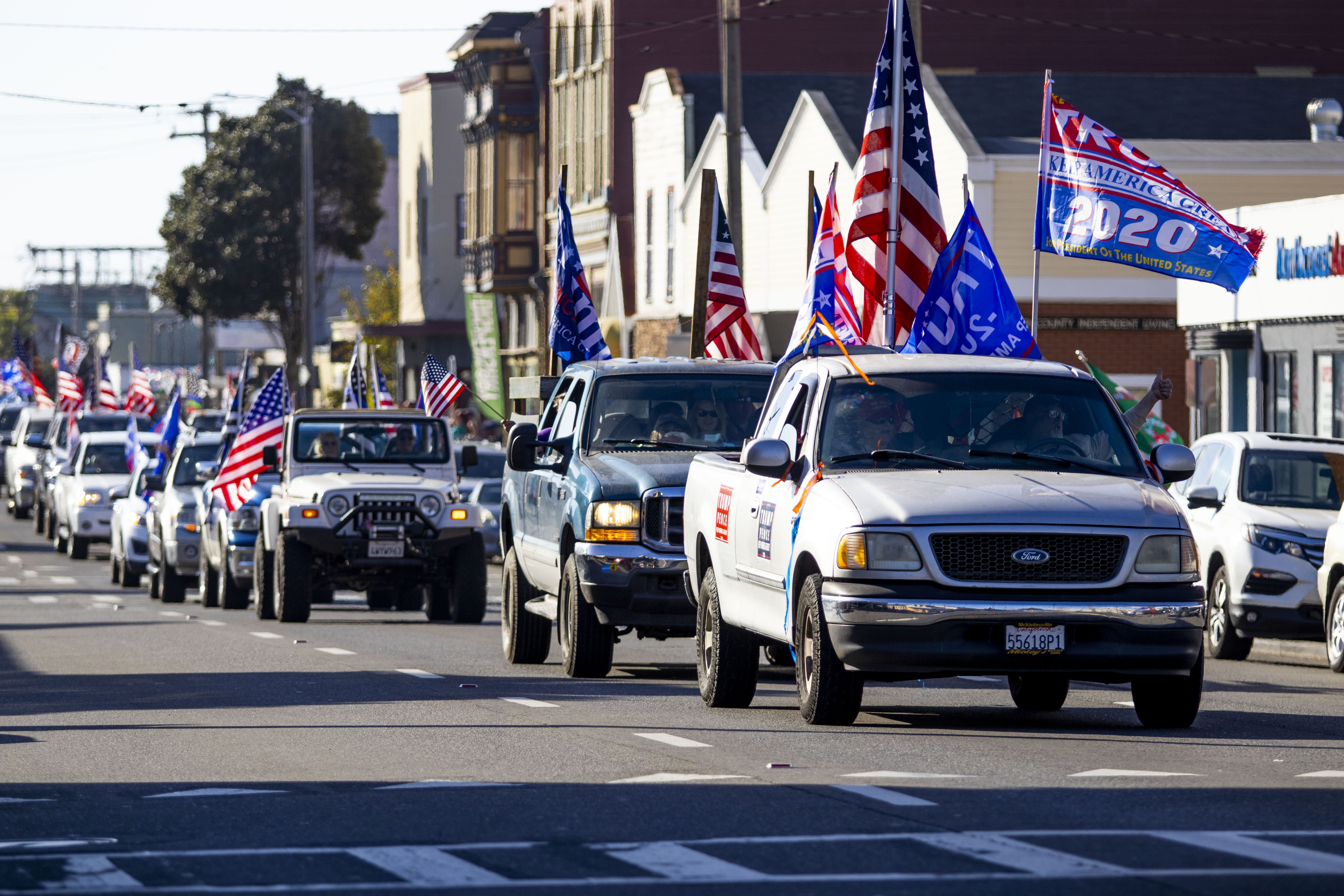
    It all started on Sun., Nov. 1, when hundreds took to the streets of Humboldt County to embark on a political car rally to voice adamant support for current President Donald Trump. The organized caravan of Trump loyalists began the trek in Fortuna around 2 p.m., ending in McKinleyville later that afternoon.

    What came as no I surprise to me with a track record of bad luck, I got stuck in the middle of this parade while out in Eureka doing my normal, weekend errands.

    Once I merged from the corner of Sixth street onto Broadway, I knew I was in trouble.

    Surrounding me was a fleet of lifted trucks and muscle cars boasting banners and American flags flooding the majority of the street. The sounds of revved truck engines and chants of USA from vehicles grew louder as we traveled north towards Arcata.

    As we approached the Eureka courthouse I could see protestors lining the sidewalks on both sides of the street. The small restless crowds chanted in disapproval of the arrival of the conservative coalition. Adversaries were clearly at odds with one another, each party growing more aggressive in verbal taunts. At one point while waiting for the street light to turn green I looked to the individuals on the left side of the road and gave a small smile of approval against the other vehicles stuck in traffic. Evidently, this smirk was mistaken as a sign of disrespect and two female protestors began to shout and throw middle fingers at me while I sat in dismay.

    After what seemed like an eternity the light finally turned green. Trying my best to maneuver past the vehicles participating in the rally, I couldn’t help but begin to read the flags plastered with Trump propaganda. Amongst the various banners that waved freely through Highway 101, one struck me in particular:

    “Trump 2020 NO MORE BULLSHIT.”

    The irony of watching the divide between local, sprung a question into my mind that I’m still trying to come to terms with: how did we become this divided as a nation?

    In the last four years since Trump’s administration has taken office, our culture has become separated in which respecting political beliefs that differ from your own is increasingly more difficult. Polarizing topics such as immigration reform, the constant fight for equality amongst BIPOC, climate change and dealing with the repercussions of COVID-19 have added fuel to the already volatile fire that is in America.

    As time grew closer to election day, the uncertainty of what direction the United States would be headed towards became nerve racking. Attending college during a pandemic in a rural area that lacks diversity has been shrouded in lingering doubts. Paying full-priced tuition for an education that feels subpar, while studying an industry that has been bastardized by Donald Trump is hard to reconcile with. The feelings of frivolity I’ve felt as a college student in such an uncertain era have been amplified by the fear of what is to come in Humboldt County since Trump has lost the election.

    Four days after Tuesday’s, Nov. 3, election it has been officially announced democrat candidate, Joseph Robinette Biden Jr., has won the presidential race of 2020. Though the future seems hopeful, the divide in our nation doesn’t dissipate when Biden takes his eventual oath in office.

    On Nov. 7, Biden held a press conference in Wilmington, Delaware to announce his victory. Within minutes of his speech, it felt incredibly refreshing to not be subjected to coded language and devised rhetoric that became the norm in past years.
  • Students speak honestly on voting in 2020 the elections

    Students speak honestly on voting in 2020 the elections

    Students look toward an uncertain future while factoring in the past four years.

    Students at Humboldt State University took the steps to cast their ballots in the 2020 presidential election.

    For some, like Alejandra Sanchez, it was the first election she could vote in. Sanchez, a criminology major, was not optimistic about what a second term for President Trump would mean.

    “Being a woman and being brown, four more years…four more years would not be the best for me,” Sanchez said.

    Sanchez felt especially disappointed in the Democratic party candidates. She believed the Democratic party could have done better.

    “In my eyes, we were settling for Biden,” Sanchez said. “It’s just like horrible and slightly less horrible, either way you vote it’s not that great. I’m sure there will be little differences that do help.”

    The 2020 election painted Biden as a candidate voters settled for, or defensively voted for in strong dissent of a reelection.

    Maia Nguyen, a wildlife major, believed Biden is not the strongest or most ideal Democratic party candidate. In comparison to Trump, Biden offers more promising initiatives like environmental advocacy.

    “We definitely settled for him as democrats, but I would feel better with him as a president,” said Nguyen. “Someone who takes clean energy and the environment more seriously than Trump does.”

    While Nguyen was not old enough to vote in 2016, she made sure to cast her vote early for the 2020 election. Nguyen emphasized how the past presidential term has been difficult to witness.

    “As a wildlife major, it meant a lot of disappointment overall,” Nguyen said. “You can see terrible things happening and people not listening to scientists. Just a disappointment overall, I would say.”

    On the subject of the 2020 election, Nguyen looked at how future presidents would affect her fields of study. She mentioned the discrediting effects a less science focused presidency could bring.

    “Honestly, I’ve been thinking about that a lot, and I would say that it would be harder in my field,” said Nguyen. “Our funding comes from government funding so if we had pushback, my work would be affected, and a lot of pushback for us because people wouldn’t want to work with scientists.”

    Tayler Reedy, a child development major, voted in 2016 but felt a personal need to vote in the 2020 election and defend communities Trump harms.

    “Well for me personally, with everything that Trump has done with immigration and everything he has said, as someone who is a bisexual woman and person of color it’s a little scary to see how he treated everyone in those categories,” Reedy said.

    Reedy echoed the overarching assumption that a vote for Biden was simply a defensive vote against a Trump reelection.

    “I feel like Biden is more accepting of people like that. He’s not my favorite,” Reedy said. “I was more about Elizabeth Warren at the time, but I feel like he’ll do a better job than Trump.”

    California polls close at 8 p.m., with the state historically leaning Democratic. While initial election results may be called on Nov. 3, the New York Times states that approximately nine of the 50 states will have final results in by noon the day after the election.

  • Letter to the Editor: A Response to ‘Trumpsters’

    Letter to the Editor: A Response to ‘Trumpsters’

    What does Trump have to do to convince you he’s not on the side of the American people?

    Editor,

    I’m writing this in response to those who call themselves a Trumpster. First off, this man is a walking talking crime wave who has zero respect for the rule of law which he has demonstrated many times and sums up by saying, and I quote: “If I were standing on 5th Ave. and shot somebody, I would get away with it.”

    This kind of craziness has never been seen by any of our leaders by any party and to wear a had or shirt and support this man who with without morals, principles or knows no bounds and things he is above the law, those people have to start to think what was it they see in this man?

    What does he have to do to convince you he is not on the side of the working class or average American taxpayer? How much more damage does this man have to do to our Republic and Constitution and how many more laws must he break before he is removed from office.

    No matter what party you’re from, this is not a Republican, Democratic, or Independent issue it is an American issue only

    The only bottom line to me is do we stand with those that chose the Gospel of Hate and Division or do we stand on the side of America.

    Michael D. Owen

    Eureka, Ca.

  • Editorial: Follow the Money

    Editorial: Follow the Money

    Companies outed on social media for funding political advocacy groups

    A long list of companies that use profits to fund pro-Trump advocacy groups was recently published to several social media sites.

    This scandal begs an important question, are our purchases worth it if they support a larger cause, or person, we might not necessarily support ourselves?

    Companies including SoulCycle, Equinox, CVS and Taco Bell were just a few of those exposed on Twitter and Instagram.

    SoulCycle and Equinox were the first two companies to feel the heat. Equinox was quickly trending on Twitter but for all the wrong reasons. With hashtags such as: “#BoycottEquinox” and “#BoycottSoulCycle,” both companies went under fire from paying subscribers.

    The social media frenzy didn’t go without notice for long, as both gym facilities soon released a public disclaimer on social media. Both claimed that the day-to-day operations are in no way affected or influenced by the owner, Stephen Ross, and his political affiliations.

    The boycott continues as news of Ross hosting a fundraiser for Trump in the Hamptons surfaced with tickets costing as much as $250,000.

    SoulCycle and Equinox were not the only major players under scrutiny.

    The boycott hashtag trend lives on with CVS. “#BoycottCVS” was created as the company donated $35,000 to the Trump Victory PAC (Political Action Committee), becoming one of four biggest donors involved in the reelection campaign. Additionally, they donated $500,000 to America First Policies in 2018.

    America First Policies, is a “non-profit organization supporting key policy initiatives that will work for all citizens in our country and put America first,” however, Mike Pence’s face is the first thing you see upon opening the homepage of the website; giving a strong indication of who is involved and what political beliefs are represented.

    Recently, the organization has been accused of being racist, homophobic, sexist and anti-Muslim after several outbursts containing these sentiments from the advocacy director were found online.

    Taco Bell, specifically the Taco PAC, is reportedly one of four companies to donate the most to the Trump election campaign in 2016. In regards to the 2020 election, however, no donations have currently been made to the Trump PAC.

    There are larger consequences to the spending decisions we make. This new information should make us challenge our mindfulness behind the actual value behind a purchase, knowing our money, in a way, is going toward supporting a larger cause. Ultimately, losing leverage and control over our money and what it is funding is an uncomfortable reality.

    However, between public disapproval and social media boycotts, the power in being a consumer is important to remember. Consumers have the power to persuade companies. All the recent public outcry towards Taco Bell has coincided with the withholding of any 2020 campaign donations from them and that is no coincidence.

    Regardless, the power of being a consumer is something we often forget and take for granted. The next time you find yourself in a Taco Bell drive-thru, ask yourself: is the taco really worth the dollar?

  • Temporary solution to bigger problem

    Temporary solution to bigger problem

    Longest government shutdown in U.S. history ends temporarily

    After 35 days of the United States’ longest government shutdown, the President has reopened it conditionally. The government reopened today and will be open for exactly three weeks due to a deal the President has proposed.

    If within the 21 days Republicans and Democrats cannot supply a solution to the supposed drug issue at the southern border then the President will continue with his will. In the past year the President proposed the idea of building a wall at the southern border to primarily keep immigrants out from Mexico.

    During this time of the government being open 800,000 government employees will be receiving back pay for any checks that weren’t received. However, as for federal contractors it is not yet clear whether the same can be said for them.

    If built, this wall will cost approximately $5.7 billion. The President plans to get these funds from various different departments throughout the government. As for now, the government has reopened and the wall is something to worry about in the next 21 days, but today all Americans alike rejoice.

  • Oh, your party lied to you?

    Oh, your party lied to you?

    The “opinion” piece mainstream news will never run.

    The Foreign Intelligence Surveillance Court memo was released by the United States government on Feb. 2.

    The memo details how the FBI applied for a warrant from the FISA court to electronically survey Carter Page, a campaign advisor to President Donald Trump’s 2016 election. To apply for this memo, the FBI submitted a “dossier” compiled by Christopher Steele, who was secretly bribed by the Democratic National Committee to do so. Eventually, the warrant was granted by the FISA court.

    The FBI and CIA operate in secrecy to ensure their actions will not be discovered by the “enemies of the United States,” to be effective as an intelligence agency. There is a large amount of trust placed in these organizations, because of this secrecy.

    Steele, the Clinton campaign and the Democratic National Committee broke this trust.

    Steele was supposed to give the FBI this information as a trusted, reliable and unbiased source to use against U.S. enemies. In time, the true nature of this dossier was revealed.

    “Neither the initial application or any of the warrant removals reference the fact that Steele was on the Democratic National Committees and the Clinton Campaign’s payroll,” Devin Nunes, Chairman of House Permanent Select Committee on Intelligence, said. “Steele was a longtime FBI source who was paid over $160,000 by the DNC and Clinton campaign to obtain derogatory information on Donald Trump’s ties to Russia.”

    Did you read that right? The person who gave the FBI “reliable” information, which indicated President Trump was connected to Russia, was on the payroll of the people who ran against Trump: the Clintons and the Democratic Party.

    Steele was proven to be a biased informant who took bribes to give “derogatory” or falsified information. Is that a conflict of interest? Apparently, not to Hillary Clinton.

    Before Steele was fired for lying, he maintained contact with former Associate Deputy Attorney General Bruce Ohr, a senior Department of Justice official. Steele admitted his biased views about Trump in 2016 when Trump was still a presidential candidate.

    “He was desperate that Donald Trump not get elected and was passionate about him not being president,” Nunes said in his private testimony.

    This clear evidence of his conflict of interest was recorded by Ohr, but not reflected in the FISA dossier that he submitted to the FISA courts under direction of the Clinton Campaign and the Democratic National Committee.

    On Feb. 20 in a political news analysis article, Stephen Collinson from CNN reported, “While the president’s constant assault on the FBI is obviously motivated by his anger at the Russia investigation and doesn’t necessarily indicate that he has something to hide, it comes with a bonus for Moscow.”

    Even though this FISA memo was released, which shows the Democrats meddled in the U.S. elections by fabricating evidence about Trump. 18 days prior to this, CNN is still hypocritically declaring Trump was the one that meddled in the election. The Democrats are condemning the exact thing they did to their political opponents. This is a great example of the Democrat’s infatuation with their own hypocrisy.

    Here is what I think this means:

    1. The FBI investigation regarding Trump’s ties to Russia was forced by his political opponents: the democrats and the Clinton Campaign.
    2. The Clinton Campaign and Democratic National Committee bought out a clearly biased source to lie about Trump to the FBI for $160,000.
    3. The Democrats funded the entire Russia-Trump conspiracy using the FBI. This level of corruption is not only common, but everywhere. Also, there are likely other sources of fake information our politicians have used to smear others.
    4. All of this information was classified. Viewing it is one of our rare opportunities to see inside the beast and witness just how corrupt our politics have become.

    The corporate news entities like CNN, MSNBC, New York Times and many people in power attempted to trick us all into thinking that President Trump has fake connections to Russia.

    Do you fear your government or political party yet? I do.

  • Trump and the Weinstein effect

    Trump and the Weinstein effect

    Now is an appropriate time to have a serious discussion about sexual harassment. Dozens of celebrities have come forward to reveal their stories of sexual harassment, assault and rape. Louis C.K. and Kevin Spacey are just a sample of the latest household names who have been accused. Further, the viral Me Too hashtag has given confidence to millions of victims to follow suit on social media.

    Here’s the thing. Celebrities like C.K. and Spacey quickly lost their jobs and credibility. The same goes for Harvey Weinstein, Terry Richardson and so on. Outside of the Hollywood bubble, Alabama state judge Roy Moore was recently accused of sexual misconduct with multiple minors.

    If the allegations are true, President Donald Trump said Moore “will do the right thing and step aside.”

    That’s a funny thing to say if you happen to recall the numerous accusations of sexual harassment against Trump. Remember the “grab ‘em by the pussy” comment? What a class act. Why hasn’t he lost his job? Why was his “locker room talk” swept under the rug? Why isn’t he doing the right thing and stepping aside?

    To put it another way, Trump said during an interview on The Howard Stern Show that he could “get away with things like that.”

    That’s the thing about privilege. While other high profile figures continue to face the consequences of their action, people like Trump continue to get away with it.

    The truth is, there will be less media coverage of sexual harassment as time goes by. That’s the nature of the new media, it’s fickle. Despite that, it’s important for us to continue this discussion rather turn a blind eye. By doing so, we can create a more welcoming environment for those who feel inclined to share their stories.

  • North Korea = no worry

    North Korea = no worry

    By | Philip Santos

    Donald Trump and Kim Jong Un should be best friends. When I read about escalating tensions between Trump and Kim, I can’t help but see two short, chubby kids fighting over who gets to play in the sandbox. The sandbox tale typically ends with a long-lasting friendship after two people discover how much they have in common. Trump and Kim both employ inflammatory statements, exaggerate oppositional views, resort to strong arm tactics and utilize name calling on a regular basis. This is why U.S. relations with North Korea have become so frightening. We have two similar archetypes locked into a childish war of words, which is precisely why we don’t need to go bunker shopping just yet.

    North Korea agreed to abandon “all nuclear weapons and existing programs” in 2005 during what was called the “six-party talks.” Clearly, that didn’t happen, but it shows us that the polar extreme of today’s situation wasn’t so long ago. More recently in 2015, North Korea agreed to suspend nuclear testing in return for the cessation of the annual U.S.-South Korea joint-military exercises. The U.S. rejected that offer. The takeaway from this is that North Korea has come to the table before, and I think that will continue to be the case.

    What has pushed North Korea away from the negotiating table and into the war room is what we see Trump doing today: name calling and ridiculing. Former president Bush labeled North Korea as part of the “axis of evil,” The Interview portrayed the plotted assassination of Kim and now Trump has gone and said we would “totally destroy” North Korea. These events prompted displays of aggression by North Korea, ranging from withdrawal from disarmament talks to testing missiles. The common theme amongst these events is that they were reactionary and some might even say defensive. The U.S. has “totally destroyed” North Korea once before during the Korean War.

    Curtis LeMay, head of the U.S. Air Force Strategic Air Command during the conflict, would later boast in an article from the Guardian that the U.S. bombing campaign killed about 20% of the population.

    “We went over there and fought the war and eventually burned down every town in North Korea,” LeMay said.

    When the President trumpets about “totally destroying” North Korea, he’s rubbing the pain of history into a wound that hasn’t ever healed. If Trump can keep a lid on statements like that, we’ll be just fine.

    I feel a bit crazy for thinking this, but I think North Korea’s actions are somewhat rational. First consider that, as previously mentioned, the U.S. has demolished North Korea before. The track record since then doesn’t get any better – U.S. weapons have become more powerful and plentiful as a result of endless decades of war. Secondly, the U.S. has a long history of foreign intervention, even when there weren’t necessarily direct threats. I have a book called Killing Hope by William Blum that examines every U.S. Military and CIA intervention since World War II. It was printed in 1995 and has a chapter for each country the U.S. has intervened in. There are 55 chapters. Kim isn’t irrational for being weary of the U.S. His hostility makes a lot of sense. I find these indicators of ration as reasons for relief, because I think Kim understands that any attack on his part would result in the destruction of his country. For that reason, I don’t see him authorizing an attack on foreign countries.

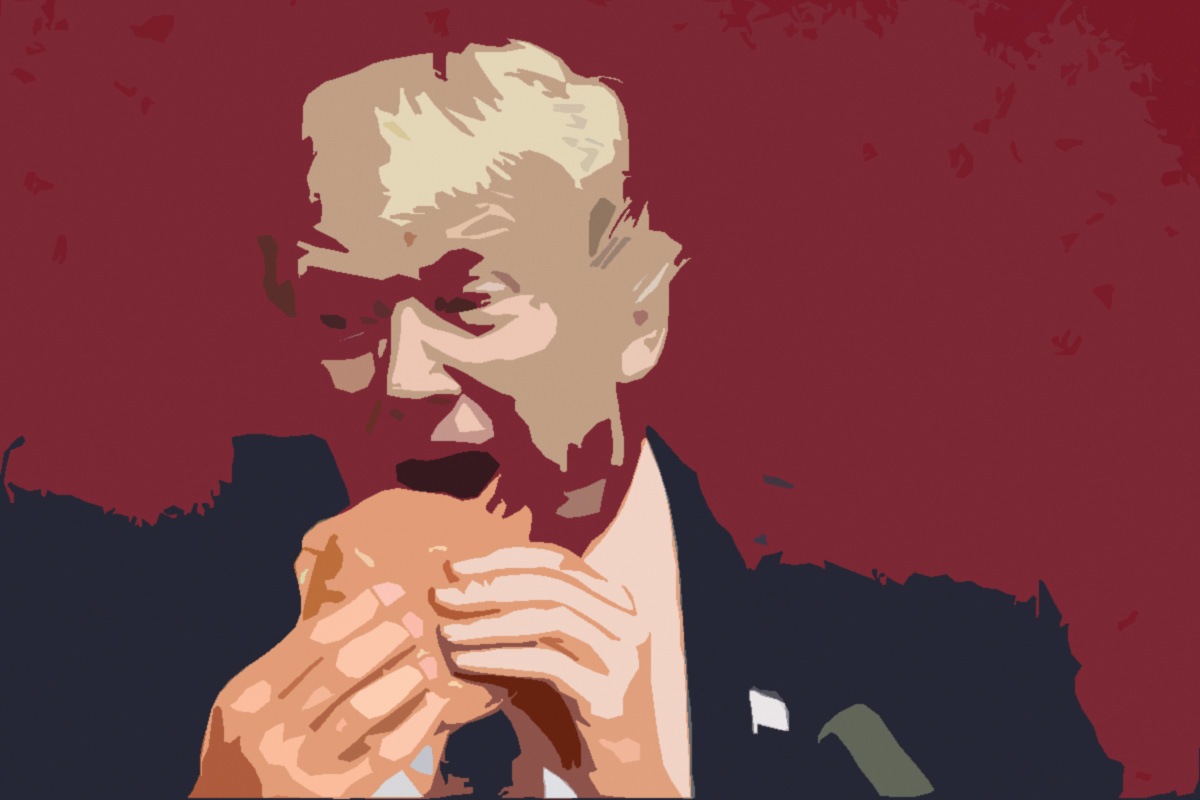
    So why all the showmanship then? Well, the kid throwing a tantrum wants to be heard. Having nuclear power means you have more to say at the table and it might be the only way for North Korea. It may be savvy of U.S. to take North Korea out of corner time, sit down with them to hear their side and maybe even apologize for the hurt that’s been done. But can you see Trump, a man who still eats well done steaks swimming in ketchup, changing his nature to make this possible? I think he’s a playground bully who’d rather see the sandbox filled than change or apologize – and that is what we need to be afraid of.


  • Word on the street: Trump’s response to Las Vegas shooting

    Word on the street: Trump’s response to Las Vegas shooting

    Thirty-two floors above the crowd, a shooter opened fire on thousands of people gathered for the Route 91 country festival in Las Vegas, Nevada on Sunday, Oct. 2 Paddock killed approximately 59 people and injured at least 520. Paddock was a Caucasian male and a retired accountant living in Mesquite, Nevada.

    President Donald Trump responded to the casualty on Monday morning. Instead of addressing the reoccurring issue and the nation’s problem with gun laws, Trump said “we are all looking for some light in the darkness. The answers do not come easy.”

    Additionally, Trump has been less than sympathetic towards the United States territory of Puerto Rico, which was severely impacted by Hurricane Maria. Since then, Trump has continuously denied any problems with Puerto Rico relief efforts, as many parts of the island still remain without running water, gasoline or basic necessities. Trump recently visited Puerto Rico on Tuesday.

    In the wake of a crisis, the President’s response is crucial. Whether President Trump responded accordingly is debatable, however. We asked Humboldt State University students what they thought of Trump’s response.

    Question: “What do you think of Trump’s reaction to the Las Vegas shooting on and his plan to visit Las Vegas on Wednesday?”

    “He has left Puerto Rico as they are and put them on the back burner. I don’t think visiting is what he needs to be focusing on, when he has taken as much money from the NRA as he has, that’s where he needs to be looking for a change.” – Macy Suchan, 21, Communication, Senior

    LN_Shooting_MacySuchan.JPG
    Macy Suchan, 23-year-old senior at HSU stands in front of the half-staff flag on Oct.2 2017. Photo credit: Lora Neshovska

    “I don’t like his demagogic use of Twitter instead of another media outlet. The shooter was portrayed as many other white perpetrators in the news, a ‘lone wolf.’” – Quinn Bornemann, 21, English, Senior

    LN_SHooting_Wren_Broekema.jpg
    Wren Broekeama, a 22-year-old graduate student majoring in Academic Research says Trump showed the ability to respond quickly but only in chosen instances. Photo credit: Lora Neshovska

    “This showed his ability to respond with swiftness, he just chooses not to respond to other disasters, which is not presidential at all.” – Wren Broekema, 22, Academic Research, Graduate Student

    “I think he’s so quick to respond because he wants to justify the action, the keep the “American” image. It’s like anyone who isn’t white is bad and whoever is white is justifiable.”- Romero Perez, 20, Environmental Resources Engineering, Sophomore

    “It bothers me that the media is not referring to this white male as a terrorist.” Kammi Loyd, 18, Psychology, Sophomore

    LN_Shooting_FranciscaCrutchfield.JPG
    Education graduate student, Francisca Crutchfield says Trump has lots of financial and corporate power in Las Vegas, a possible reason he was so quick to respond to the Oct. 2 fatality. Photo credit: Lora Neshovska

    “I can assume Trump has a lot of corporate and financial connections and power in Las Vegas. This is a pretty direct issue, unlike the hurricanes that involve a lot of problem-solving so it’s an issue that he can touch on without getting too involved with.” – Francisca Crutchfield, 27, Education, Graduate Student

  • Defunding women’s rights

    Defunding women’s rights


    By|Domanique Crawford

    Don’t spit on my cupcake and call it frosting, don’t urinate on my leg and tell me it’s raining, and don’t make laws restricting my access to healthcare and claim it’s to protect my taxpayer money.

    On March 30, Vice President Mike Pence cast a tie-breaking vote on a measure that effectively defunds Planned Parenthood [PPFA]. The new legislation allows states to withhold federal funding from PPFA and other healthcare programs that provide abortion services.

    Congress first had to agree to rollback on Department of Health and Human Services rule established under the Obama administration that prohibited cutting funds from Title X family planning grants to community health centers because they offer abortion services.

    Despite what the new administration thinks, these programs are not secret baby killing factories. In fact, abortion services are only 3 percent of PPFA’s total services according to the PPFA fact sheet. Regardless of your feelings on abortion, defunding health clinics like PPFA means limiting women’s access to affordable healthcare.

    More and more the Trump administration and state lawmakers seem to be passing laws restricting women’s right under the guise of de-funding abortion services. When clearly, this is another strike against women’s right to equality.

    Even if critics of clinics like PPFA, are afraid of these programs using taxpayer money to fund abortion services, they could just as easily form greater stipulations and regulations monitoring the usage of such resources rather than then simply defunding it. As usually seen with this administration, they defunded another program without a clear plan in sight for all of the low-income people rejected healthcare services by the bill. An attitude that says the Trump administration doesn’t actually care about what happens to women.

    Lawmakers are using a highly controversial issue of abortion to push laws that subjugate women and classify us as second class citizens unable maintain our simplest values. The right to govern or own bodies.

    Pro-choice is simply your right to choose. I respect pro-lifers decision to have a child despite the physical harm the pregnancy can cause the mother, the mental and physical conditions of the baby, and the determination to have a child despite the circumstance of conception through natural conception or through sexual assault.

    I don’t condone pro-lifers forcing their ideals on the rest of us by threatening our access to healthcare. Pro-lifers are free to make that choice for themselves. However, to enforce those options on someone else is barbaric. What’s worse, is punishing women who depend on these Title X services for access to pregnancy care other than abortions, contraceptives, STD/STI testing and treatment, etc.

    If the government were really worried about protecting taxpayer money rather than restricting women’s right, then they would have installed greater measures that guarantee taxpayer money isn’t going towards paying for abortion services. That is what regulatory agencies are for.


  • Trump watch (March 29 to April 4)

    Trump watch (March 29 to April 4)

    President Donald Trump has donated all of his earnings as President of the United States to the National Park Service. Trump donated $78,333, his first salary installment which covers the first 10 weeks he’s been in office. $78,333 is 0.005% of the money Trump’s budget would cut from the National Park Service.

    President Trump wants to warn China that the clock will run out in North Korea when they meet in Florida later this week. President Trump would like Chinese President Xi Jinping to take a tougher stance on North Korea regarding the country’s nuclear program.

    On Monday President Trump signed legislatures to diminish many Obama-era regulations. One of the legislatures included issue about education and school performance. One of President Trump’s new legislation scraps new requirements for programs that train new K-12 teachers and rolls back a set of rules outlining how states must carry out the Every Student Succeeds Act, a bipartisan federal law meant to hold schools accountable for student performance.

    President Trump signed a legislative on Monday that repeals the Federal Communications Commission’s privacy protection for internet users. The new legislature would diminish the landmark policy from President Obama’s time in office. President Obama’s policy would have stopped internet providers from collecting, storing, and selling data from internet users without their consent.

  • Trump Watch (March 22 to March 28)

    Trump Watch (March 22 to March 28)

    By | Bryan Donoghue

    According to a review of court cases, government and legal documents, and an interview with a former federal prosecutor, Donald Trump and his company repeatedly turned to wealthy Russians from former Soviet republics. Trump, his company, and partners have been linked to at least 10 wealthy former Soviet businessmen with alleged ties to criminal organizations or money laundering.

    Source: USA Today

    President Trump signed an executive order on Tuesday that’s intended to unwind most of President Obama’s climate-change legacy, celebrating the move as a way to promote energy independence and to restore thousands of lost coal industry jobs. The order also covers a suite of narrower but significant Obama-era climate and environmental policies, including lifting a short-term ban on new coal mining on public lands.

    Source: The New York Times

    Summer Zervos, a former contestant on Trump’s reality TV show, “The Apprentice” sued Trump last year before his Jan. 20 inauguration for groping and pressing his privates against her in 2007. President Trump wants to derail the defamation suit by claiming immunity through his job as the nation’s commander-in-chief, according to court papers made public Tuesday.

    Source: New York Post

  • Congress plays the game of environmental legislation

    Congress plays the game of environmental legislation

    By Kelly Bessem

    President Donald Trump stated he would cut 70 percent of agency regulations according to an article by Forbes. A new strategy being employed by Congress, makes this plausible and has environmental regulations in its crosshairs.

    With congress having a Republican majority, the  Congressional Review Act has allowed Congress to rush large-scale rule elimination. According to the House Committee on Natural Resources, the Congressional Review Act is a law that allows Congress to expedite purging agency rules. It was originally made to improve Congress’s oversight of federal agencies and states that no rules substantially similar to those purged can be issued in the future.

    The White House website cites using the Congressional Review Act to overturn “burdensome compliance requirements that force jobs out of our communities and discourage doing business in the United States.”

    In contradiction to this is the 2016 Office of Management and Budget report on federal regulations. It shows the benefits versus costs of the Environmental Protection Agency regulations to be a 4-to-1 ratio.

    According to the Congress website, environmental regulation affected by the Congressional Review Act includes the following:

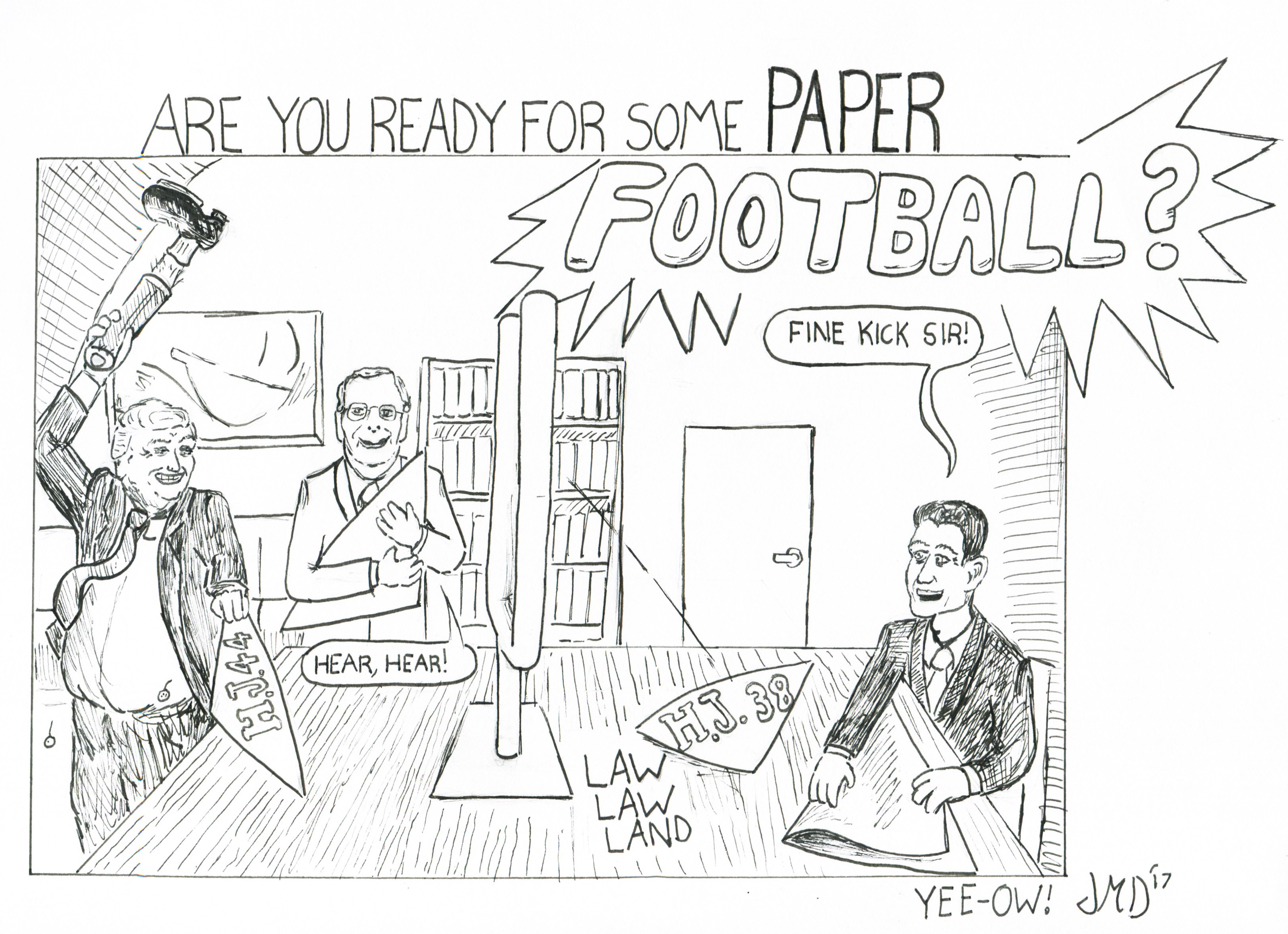
    • Signed by the president: Reversal of the Stream Protection Rule and a rule calling for the disclosure of payments made by resource extraction issuers (H.J.Res.38 and H.J.Res.41).
    • In line to be signed by Trump: Disapproval of rules that allow the Bureau of Land Management to make regional land management plans (H.J.Res.44).
    • Moving through the Senate and House: Disapproval of the rule that reverses policy protecting predators on Alaska’s national wildlife refuges (H.J. Res. 69) as well as a rule that requires oil and gas producers to reduce natural gas waste and emissions (H.J. Res. 36).

    This only includes legislation related to the Congressional Review Act. It does not include the long list of pending environmental bills. These include everything from a bill to terminate the Environmental Protection Agency (H.R.861) to a bill that will eliminate the current renewable fuel standards (H.R.1314).

    There is an information section on the House Committee on Natural Resources’ website related to the policy protecting predators on Alaska’s national wildlife refuges (H.J. Res. 69). Within this exists an entire section entitled “‘Bull Poop’ Talking Points.” Terminology such as this suggests that the Congressional Review Act is not being used in a serious way to further the interests of the general public.

    Over 60 days have passed since Trump became president. The Congressional Review Act can only be used for rules submitted to Congress or the Government Accountability Office within the past 60 days. In theory, the time to use the Congressional Review Act would be over for “midnight” regulations passed at the end of Obama’s presidency.

    In 2014, a report on agency regulation was released by Curtis W. Copeland, a former government specialist for the Congressional Research Service. It showed that, in 2014, up to 50 percent of agency rules had not been submitted properly. All of these improperly submitted rules are still subject to the Congressional Review Act, meaning that there are still plenty of plays to be made.

  • HSU student affected by Trump ban

    HSU student affected by Trump ban

    By Morgan Brizee

    Mohammad Maleki spent all of his tuition money on multiple boarding passes and then had to catch up on a couple weeks worth of classwork because of Donald Trump’s Muslim ban. The ban is an executive order President Donald Trump issued that prohibits people with passports from Iraq, Syria, Iran, Sudan, Libya, Somalia and Yemen from entering the United States.

    Mohammad Maleki is a 23-year-old political science major from Iran who came to HSU as a freshman in fall 2015. Maleki was coming back from visiting his family during winter break when he found himself unable to get back to the U.S. for the spring semester. Before he even got his boarding pass to the US, he had issues renewing his visa. There is no American consulate in Iran, so Maleki went to Dubai to renew his visa. He waited weeks in a hotel until he got approved from his background check by the United States.

    “It was written that my application may take days to several weeks[to get approved],” Mohammad said. “They didn’t give me any information.”

    After waiting three weeks, he received his visa and passport. Mohammad then bought his boarding pass in Dubai for a flight to the San Fransisco Airport. He wasn’t alerted that anything was wrong until he went to the gate to board his flight. The security told him that he was not allowed to come to the U.S. because of his nationality.

    Mohammad Maleki, 23-year-old HSU political science major from Iran working on school work in the library.

    “I was in transit in the airport and I didn’t know what to do,” Mohammad said.

    He was told that because of Donald Trump’s immigration ban he would not be able to board. He then had to get another flight but this time to Turkey to figure out what to do next.

    “I couldn’t go back to Dubai and I couldn’t go back to my country,”  Mohammad said. “If I go back to my country I have to go to the military for two years.”

    Maleki was unsure of what was going to happen next. Turkey was the only place he could go without a visa. Then he learned about a judge in Boston suspending Trump’s ban.

    “I got a call from my father telling me to go to Boston,” Mohammad said.  

    In order for him to go to Boston he had to go from Turkey to the Frankfurt airport in Germany because it was only a German airline that was allowing flights to the U.S. despite the ban.

    “Again, from the Frankfurt they didn’t let me get into board,”  Mohammad said. “They said again because of your nationality.”

    So again, he flew back to Turkey to figure out the next plan of action to try to get back. Another judge, this time a federal judge in Seattle, Judge James Robart could temporarily block Trump’s ban.

    “I asked Turkish airline if the news was true,” Mohammad said. “But they didn’t know what was going to happen in a couple hours or tomorrow.”

    So, he decided to take yet another chance and buy another ticket to the United States. This time it worked and he made it past the gate and into the plane on his way to the US. All while this was happening his younger brother Amir was in the United States waiting for his brother’s arrival back.

    “We had a consideration of me going back if my brother wouldn’t be able to come back,” Amir said.

    If Mohammad couldn’t come back both his brother and him would travel back to Iran and join the military. The current President of Iran, Hassan Rouhani, made an issue that students with temporary visas elsewhere were able to come back to Iran twice, each time for up to three months without having to join the military.

    “I already used my two chances so I can’t go back,” Mohammad said. “If I go back I have to enlist.”

    Once Mohammad made it back into the United States he had another challenge. Mohammad had to get permission from all his teachers to allow him to join the class after school had already begun.

    Jared Larson is  lecturer for the department of politics. Larson is Mohammad’s teacher for two of his political science classes.  He still remembers getting the email from Mohammad that he was having issues getting back into the United States because of Trump’s ban.

    “I about jumped out of my own damn skin,” Larson said. “I responded saying ‘that I was embarrassed and ashamed that this is happening to you’.”

    Larson along with Mohammad’s other teachers did not have to think much when accepting Mohammad into class late in the semester. They just knew that it was going to take a lot of work for him to catch up.

    Amanda Admire, research associate and lecturer for department of geology, is another one of Mohammad’s teachers that was able to help guide Mohammad in catching up with the class.

    “Once I was contacted I didn’t have an issue with helping him get back in the course and working with him to get him caught up on the material on everything,” Admire said.

    Mohammad took multiple quizzes and assignments all at once in order to get caught up on his schoolwork. But the teachers weren’t the only ones on campus helping Mohammad feel comfortable again.

    Megan Mefford, coordinator of international admission and immigration, was a big factor in helping Mohammad get back into the swing of things.

    “Mohammad and I kept in close contact by email and phone,”  Mefford said. “I was the first one to know about Mohammad and yes, I was worried.”

    Mohammad has now caught up with his homework and tests and is able to focus on current work. However, his brother Amir was unable to get his teachers to let him join classes late at College of the Redwoods. Amir is now talking with a lawyer about getting his I-20 student visa reinstated since it was revoked after not being able to rejoin classes.

    “The more the merrier, the more diversity of identity and of experience the better,” Larson said. “We are a weaker group because of this policy choice.”

  • Trump watch (Feb. 15 to Feb. 21)

    Trump watch (Feb. 15 to Feb. 21)

    By | Iridian Casarez

    According to the Washington Post, President Trump made comments about Sweden in a rally in Melbourne, Florida on Saturday, Feb. 18.

    “You look at what’s happening last night in Sweden. Sweden, who would believe this?” Trump then mentioned the French cities of Nice and Paris, and the Belgian capital, Brussels. The three European cities were attacked by terrorists over the past two years. The comments were widely perceived in the U.S. as to suggest there was an attack in Sweden Friday night, but there was no attack.


    President Trump named Lieutenant General H.R. McMaster as his new national security advisor on Monday, Feb. 20, replacing Michael Flynn. McMaster is a career Army officer and strategist according to the Los Angeles Times.


    The Trump administration is planning to establish a revised executive order on immigration. The President says will “protect our people” while at the same time pass muster with courts that halted an earlier version, according to CNN. The new executive order will not impact green card holders.


    President Donald Trump announced Thursday, Feb. 16, his plan to nominate Alexander Acosta as Secretary of Labor. Acosta would be the first Hispanic member of Trump’s Cabinet.

  • Trump Watch (Feb. 8 to Feb. 13)

    Trump Watch (Feb. 8 to Feb. 13)

    By | Iridian Casarez

    Virginia Federal District Court Judge Leonie Brinkema issued a preliminary injunction against President Trump’s executive order on immigration on Monday, Feb. 13. The injunctions were issued based on the fact that it discriminates against Muslims, according to the Washington Post.

    According to the New York Times, the Senate confirmed Steven T. Mnuchin,to be Treseary Secretary on Monday February 13, putting in place a key lieutenant to President Trump will help drive the administration’s plans to overhaul the tax code, renegotiate trade deals around the world and remake financial regulations. Mnuchin is a former Goldman Sachs banker and Hollywood film financier.

    President Donald Trump and Canadian Prime Minister Justin Trudeau meet for the first time at the White House to talk about trade, a task force for women, and energy on Monday, Feb. 13.

    Immigration authorities last week arrested 680 people who were in the United States illegally, according to the Washington Post. Fulfilling one of Donald Trump’s long campaign promise to crackdown on immigration.

  • What you need to know about a Trump presidency and the environment

    What you need to know about a Trump presidency and the environment

    By | Emily Owen

    Donald Trump has been president for almost three weeks, and he has begun making his mark on environmental legislation. Here’s what he has already done and what he has promised to do.

    1. Trump appointed Oklahoma Attorney General, Edward Scott Pruitt, as head of the Environmental Protection Agency on Jan. 18. As a vocal and outspoken climate change denier, Pruitt is currently suing the Environmental Protection Agency and has been involved in 14 lawsuits against the organization to lessen environmental regulations.
    2. Rex Tillerson, the former chairman and chief executive of Exxon Mobil, was chosen by Trump to hold the position of Secretary of State on Feb. 1. During his time with Exxon Mobil, Tillerson was known for rejecting the use of renewable energy sources. As Secretary of State, he will serve as the ambassador between the United States and other nations. He is expected to advance drilling throughout the world.
    3. Despite months of protest from water protectors consisting of a combination of tribal members and environmentalists, Trump officially endorsed the Dakota Access Pipeline on Jan. 24. Trump assured the owners of the Keystone XL Pipeline that their proposal will be approved and encouraged them to re-submit their application after it was repeatedly denied during the Obama administration.
    4. An executive order was carried out by Trump on Jan. 20 that ordered the streamlining of environmental reviews for future high-priority infrastructure projects. The action instructs the Chairman of the White House Council on Environmental Quality to fast track approval of these projects.
    5. On Jan. 24, a document written and published by Trump instructed the Secretary of Commerce to promote the use of U.S. made pipelines throughout the country.
    6. Trump has made promises to build a wall on the U.S. / Mexico border. Many environmentalists say it will cut off the flow of water and be detrimental to wildlife in the area. The construction of the proposed wall will also have a huge impact on greenhouse gas emissions and will only serve to further the issue of climate change.
    7. Trump has discussed the possibility of putting an end to the Endangered Species Act on the grounds of hindered economic development. He said that the act has been unsuccessful in preserving wildlife, despite the National Wildlife Federation reporting that it successfully protects almost than 1,400 plants and animals.
    8. Proposals have been submitted by Trump to cut the EPA’s funding by up to one-third. Trump has already confirmed that he has full support of the Republican Party to back his proposals.
    9. Motions have been made by Trump to censor climate scientists and order government employees to cease all communication with the public unless approved by Trump’s political appointees.
    10. Trump plans to end former President Obama’s Climate Action Plan and replace it with the America First Energy Policy Plan. The America First Energy Policy Plan will push for elimination of climate regulations in order to refocus efforts on coal, oil and gas production.
    11. Trump mentioned the withdrawal of the United States from the Paris Climate Agreement, a global pact to cut emissions which was signed by almost 200 nations.
  • Trump watch (Feb. 1 to Feb. 7)

    Trump watch (Feb. 1 to Feb. 7)

    By Iridian Casarez

    Tuesday 2/7:

    Betsy DeVos needed an historic tie-breaking vote cast by Vice President Mike Pence to become the Secretary of Education. The 51-50 vote saw two senate republicans vote against DeVos, possibly foreshadowing a fracture within party lines in light of Trump’s recent unprecedented actions.

    The Army Corps of Engineers completed its review of the 1,172 mile NDAP, a step that Trump ordered in a January 24 executive order. The Trump administration approved an easement for the project, essentially repurposing the land the NDAP will pass through.

    The Senate Veteran’s Affairs Committee approved David Shulkin to be the Veteran’s Affairs Secretary. Shulkin will now enter the senate confirmation phase where he is expected to be appointed VA secretary.

    The 9th Circuit Court of Appeals is to hear the challenge to President Trump’s Muslim ban. Three federal judges are to hear oral arguments to challenge the executive order on immigration on Tuesday. The decision will determine the fate of the nationwide temporary restraining order against Trump’s travel ban.

    Watch for:

    Trump’s executive order regarding stricter cyber security measures is expected to be signed this week. The order has seen repeated delays since Trump entered office. Should it be signed into action, the order would call for various heads of state to increase measures within their departments. The goal of the order is to have tighter cybersecurity.

    This week in Trumptown:

    Trump went golfing just two weeks into his tenure as President. Former President Obama made it four months, and his predecessor Bush made it five and a half months.

  • What is ‘Greatness’ Measured in?

    What is ‘Greatness’ Measured in?

    In Defense of Resistance

    By | Joe DeVoogd

    It was a bleak and cold morning in Washington DC on January 21st, 2017.  The world watched the day before in trepidation as the US swore in a brash billionaire to the highest office in government. The hang-over was beginning to fade and, for many of us, the reality of a Trump presidency was just starting to sink in.  
    It was 9 o’clock, and our group was just starting to make its way over to the metro station.  Shoulder to shoulder would be putting it mildly; based on how packed that train was sardines could’ve taken a lesson. We get off at the national mall, thinking it’ll be much more spacious on the street but it’s almost just as packed. There were so many people at the Women’s March on Washington, congestion was becoming a health hazard. I was adrift in a sea of signs and pink hats, gobbling up every breath of fresh air that happened to breeze by.  At a certain point, I had to ask myself the question: “What am I doing here?”

    “I should be in school right now! Why do we still have to fight for basic reproductive rights for women?  Why do so many in this country want to undermine women’s healthcare? How could any of this have happened?” 

    Feminism has made so much progress in terms of empowering women in preceding decades, and to have it overshadowed by chauvinist as our “leader of the free world” is depressing to say the least.  Though his influence loomed over us it gave me great deal of courage to see that feminists had not grown despondent.  On the contrary, one could even sense a great air of optimism and hope for the future.  I think if nothing else these marches sent a message to misogynists everywhere showing the sheer size of their opposition.  I was honored to be one of the millions of people around the world marching that day.  

    Then there were those who would ask us: “What are you doing here?  You’re just standing in the way; go back to work!  What sorts of rights don’t women have that you’re fighting for?”  

    Many of people who felt this way were also the same people that protested Obama’s presidency, mimicking a party that famously destroyed private property in the Boston harbor 300 years ago.  Protest and dissent can be as crucial to the political process as paying your taxes.  It makes for a healthier democratic society because it shows all entities of power, where power truly resides when we stand together.  

    Thomas Jefferson once wrote: “When injustice becomes law, resistance becomes duty.”  It’s as true today as when he said it.  There are Republican lawmakers in 5 different states that want to make peaceful protest a criminal offense subject to significant penalty.  If Citizen’s United wasn’t the last nail in the coffin of our American democracy criminalizing peaceful assembly surely would be.  

    It’s no secret that ‘The Donald’ is not a big fan of the first amendment in the Bill of Rights.  Freedom of religion, freedom of speech and the press, freedom to peacefully assemble.  If he did like the 1st amendment he wouldn’t constantly be trying to undermine it.  He wouldn’t have mocked protesters, called journalists the most dishonest people on earth, or ordered a travel ban on 7 predominantly Islamic nations.  He’ll claim that the ban is not a religious thing but then says that he’ll allow Christian refugees priority.  People who could just as easily could be terrorists.  
    What sort of vetting system would that be like?: 
    “Welcome to US immigration sir.  Are you a bad hombre?  Because if you are you have to tell me.”  

    Mr. Trump would like you to just keep you yap shut, and your head down.  He’d tell us “If you can’t say something nice don’t say anything at all!” Well sir, human decency is on the line, and if we don’t stand to defend it then who will?  If we don’t stand up for the inclusive ideas that made this country what it is then what will become of us?  Look at the numbers, migrants simply do not come here to commit terrorist attacks, they come in search of refuge from these attacks.  The more we disenfranchise Islamic citizens, the more families we tear apart, walls we build, bans we impose, the more prone they will be toward radicalization.  That’s why we march, because respect in human decency is a greater defensive policy than the one we’re seeing today.  We march because when we see the mark of tyranny in our administrators it’s not a liability to stand in opposition; it’s a civic duty.  

    During this last election season, we’ve been bombarded by campaign rhetoric and promises.  Yet few mottos were as vague and subjective as the one broadcast by the prevailing campaign: “Make America Great Again”  
    How can you argue with that?  I want to make America great.  I wish our country had the best education system in the world yet we rank 14th in education.  I wish we had the best healthcare system in the world but we are ranked number 37, worst in the developed world besides Russia and right behind Costa Rica.  I wish I could say that the United States has the most equitable system of economics or that our country is leading the way in the green technology revolution.  Sadly, this is not the case.  These are the types of subjects that we will need to improve in if we truly seek to make our country great.  There is however one thing that our country is clearly the greatest at:  We can outspend any country in the world in defense by hundreds of billions of dollars.  

    I won’t lie, it was a truly dreary day on the 21st in DC.  Yet there was little that could serve to dampen the sense of hope and strength that we gave to one another.   Can still hear those chanting “Love, not hate; that’s what makes America great.”  
    When I heard that I knew, so long as we stick together there is no evil policy this man can implement that we can’t tear down. When we stand in solidarity to human rights, we the people, can do anything.  

  • Day of Solidarity event at HSU

    Day of Solidarity event at HSU

    The events include yoga, free massages and free food

    Photos & Story by: Morgan Brizee

    The gloomy, dark, wet and cold weather on Friday Jan. 20 was showing what most Humboldt State students were feeling on the inside after the inauguration of President Donald Trump.

    Throughout the day, HSU held events for students and the entire community to join in on to help lift spirits on a day that, for most people, was a depressing one. It started at  1 p.m. in the Kate Buchanan Room with free massages, cookies and brownies, yoga, and crafts. 

    Celeste Robertson is the Educational Opportunity Program Adviser and the coordinator of the Day of Solidarity events.

    Nicole Raisola a senior and botany major having some fun by playing in the blow up ball pit.

    “I hope this will open up doors so people can talk and exchange ideas without getting angry, without trying to retaliate in anyway,” Robertson said. “This is going to hopefully relax people and get them in a joyful mood.”

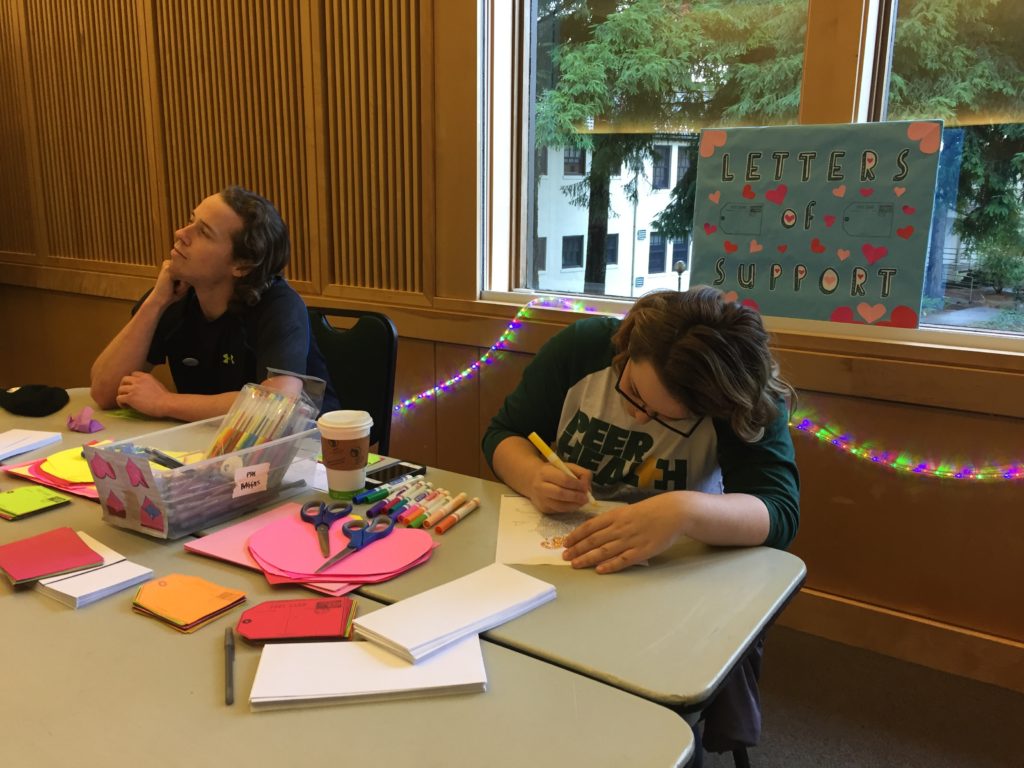
    The EOP was not the only program that took part in the event, Check It, HSU Dining Services, and Peer Health Educators were also at the event helping out and tabling. The event had tables for fun with bath salts, face masks and making your own buttons. Additionally there were tables to get your feelings out with letters of support and coloring.

    Ani Glenn is a senior and critical race, gender and sexuality studies major who helped out at the event as a student assistant for Peer Health Educators at the letters of support table.

    “We need to be taking care of ourselves right now and self care is extremely important especially during a time where a lot of people do feel threatened in many ways,” Glenn said. “It’s always really cool to be apart of these events and see the different types of people that come through.”

    The common reason that people came to the first event was that they were trying to be uplifted and uplift others during a somber time while trying to keep their hopes high for the future. The blow-up ball pit at the event seemed to be something most students thought was fun. Students were throwing themselves in the pit and bringing out their inner child by throwing balls up in the air and rolling around.

    “It[the Solidarity Day event] definitely lifts my spirits because I definitely was not looking forward to today,”  Nicole Raisola, a senior sociology major said. “I am also trying to go to the Women’s March tomorrow as well.”

    The waiting list to get a free massage was quick to fill up as that was one of the popular attractions at the event. During the event students sat in massage chairs to have their backs and necks worked on by professional masseuses. 

    The Solidarity Day event in the KBR brought smiles to students faces and distracted the attention away from a day that was grey for most. The event had free giveaways and attractions for anyone and everybody to join in on.

    Alexis Arancbia, a senior and sociology major, was giving away free face masks from the Peer Health Educators.

    “I feels awesome, I feel like it’s a really great thing to offer to students comfort wise,” Arancbia said. “It’s a good place for students to come if they’re feeling uncomfortable or sad today.”

  • President-Elect Trump’s appointees

    President-Elect Trump’s appointees

    As President-elect Donald Trump prepares to be sworn into office as the president of the United States, he nominates candidates for his cabinet. 

    The president’s cabinet consists of the vice president and the heads of 15 executive departments that include the Departments of State, treasury, defense, justice, interior, agriculture, commerce, labor, health and human services, housing and urban development, transportation, energy, education, Veterans Affairs and Homeland Security. 

    Donald Trump nominated the following for positions in his cabinet. 

    Secretary of State: Rex W. Tillerson

    Tillerson is a businessman and the former chief executive of Exxon Mobil. Trump said he likes Tillerson because of his business success and his history of making deals with foreign governments. 

    Secretary of Treasury: Steven Mnuchin

    Mnuchin was a former Goldman Sachs executive. Mnuchin would be in charge of government borrowing in financial market. 

    Secretary of Defense: James N. Mattis

    Mattis is a retired U.S. Marine Corp general and served as the 11th commander of the U.S. Central Command. His job as secretary of defense would be to shape the fight against the Islamic State. 

    Secretary of Justice/ Attorney General: Jeff Sessions

    Sessions represents Alabama in the U.S. Senate since 1997. Sessions would oversee enforcing the laws of the U.S. federal government and ensures public safety against foreign and domestic threats, including terrorism and preventing crimes.

    Secretary of Interior: Ryan Zinke

    Zinke is a congressman and represents Montana in the U.S. House and is a 23-year U.S. Navy Seal veteran. Zinke is to oversee rules that stop public land development and curb the exploration of oil, coal and gas, while also promoting wind and solar power on public lands. 

    Secretary of Agriculture: has yet to be chosen. 

    The Secretary of Agriculture would oversee the American farming industry. Their duties range from helping farmers with price support subsidies, to inspecting food to ensure safety of the American people. 

    Secretary of Commerce: Wilbur Ross 

    Ross is an investor with wealth estimated to be $2.9 million. Ross would oversee businesses, universities, communities and the nation’s workers to promote job creation, economic growth, sustainable development and improved standards of living for Americans. 

    Secretary of Labor: Andrew F. Puzder. 

    Puzder is the chief executive of CKE Restaurants, the parent company of Carl’s Jr. Puzder would oversee laws involving unions, the workplace and all other issues involving any form of business-person controversies. 

    Secretary of Health and Human Services: Tom Price

    Price is a republican representative from Georgia and an orthopedic surgeon. Price would oversee the health of all Americans and provide essential human services, especially to those who are least able to help themselves. 

    Secretary of Housing and Urban development: Ben Carson

    Carson is a former neurosurgeon. Carson would oversee fair housing laws, development for affordable housing and access to mortgage insurance.

    Secretary of Transportation: Elaine L. Chao

    Chao is a former labor secretary under George W. Bush’s presidency. Chao would oversee the president-elect’s campaign pledge to increase funding to rebuild America’s transportation infrastructure. 

    Secretary of Energy: Rick Perry 

    Perry is a former governor of Texas. Perry would be responsible for protecting and managing the nation’s arsenal of nuclear weapons. 

    Secretary of Education: Betsy DeVos 

    DeVos is a former chairwoman of the Michigan Republican Party and an activist for school choice. DeVos would oversee the education department that establishes policy for administers and coordinates most federal assistance to education. 

    Secretary of Veterans Affair: David J. Shulkin 

    Shulkin is a former president and CEO of the Beth Israel Medical Center in New York City and is currently the secretary of health and human services. Shulkin will oversee the military veteran benefit system. 

    Secretary of Homeland Security: John F. Kelly 

    Kelly is a retired four star marine general and the former head of U.S. Southern Command. Kelly would be responsible for ensuring safety and security of the United States from terrorist attacks and other disasters.

  • The Trump Presidency – KHSU town hall meeting

    The Trump Presidency – KHSU town hall meeting

    By: Iridian Casarez

    Thursday Night Talk, a weekly KHSU radio program, is set to hold an open town hall style forum Jan. 19 in HSU’s Kate Buchanan room. The event will feature local law enforcement members, educational administrators and advocates, and academic professors. 

    The host of Thursday Night Talk, Lorna Bryant, hopes to start a dialogue about the new presidency any ways in which it may impact locals, and how to deal with those impacts.

    Included in the talk will be conversation around potential new laws and regulations under trump, concerns for undocumented citizens, racially motivated crimes, and what the new president should know about our community. 

    “This talk will be the beginning of the discussion,” Bryant said. “We are giving those frustrated by the election a place to air their concerns and feelings.”

    The forum is part of KHSU’s “Race Beat” series; a series that talks about issues of race in the community. 

    Anyone in the public is welcome to join the forum and be part of the audience. Questions from both the audience and radio listeners will be a part of the show. 

    Listeners can email questions before the forum to ThursdayNightTalk@khsu.org or call in that night to 707-826-4805 or send a text message to 707-492-5478