The Lumberjack


Students Serving The Cal Poly Humboldt Campus and Community Since 1929

Year: 2018

  • Midterm Elections in Humboldt County

    Midterm Elections in Humboldt County

    By Alex Harris and Sebastian Lindner

    Voters share their thoughts on the Nov. 6 election.

    Where do I go, what do I do, or who do I vote for? These were questions pondered by perspective voters who showed up or thought about voting in the Nov. 6 midterm elections.

    Many who lined up at polling stations or mailed in absentee ballot votes were first time voters. HSU student Yesnia Celis  said she sees this vote as empowering.

    “I feel like it’s really important and it’s like a really crazy and emotional experience for me,” Celis siad

    Celis is not only a first time voter but also represents many who do not have the privilege to vote. She frames this as her reason for voting on Nov. 6 and why she votes in general.

    “My reasoning (for voting), was that I have friends who are immigrants,” Celis said. “They do not have a say in this, so I am representing them.”

    Similar to Celis’s intent, HSU senior Maddy Tervet believes she is voting for something greater than herself. Tervet also said this is a big turn-around from the last election

    “There is a lot at stake with this election because of all the turmoil after the last,” Tervet said. “I think it’s a time where we’re seeing more people interested in voting and in politics.”

    Victor Ahumad, a senior psychology major at HSU, also took some solace in the voter turnout.

    “I’m excited to see a huge rise in this year’s voter turnout,” Ahumad said.

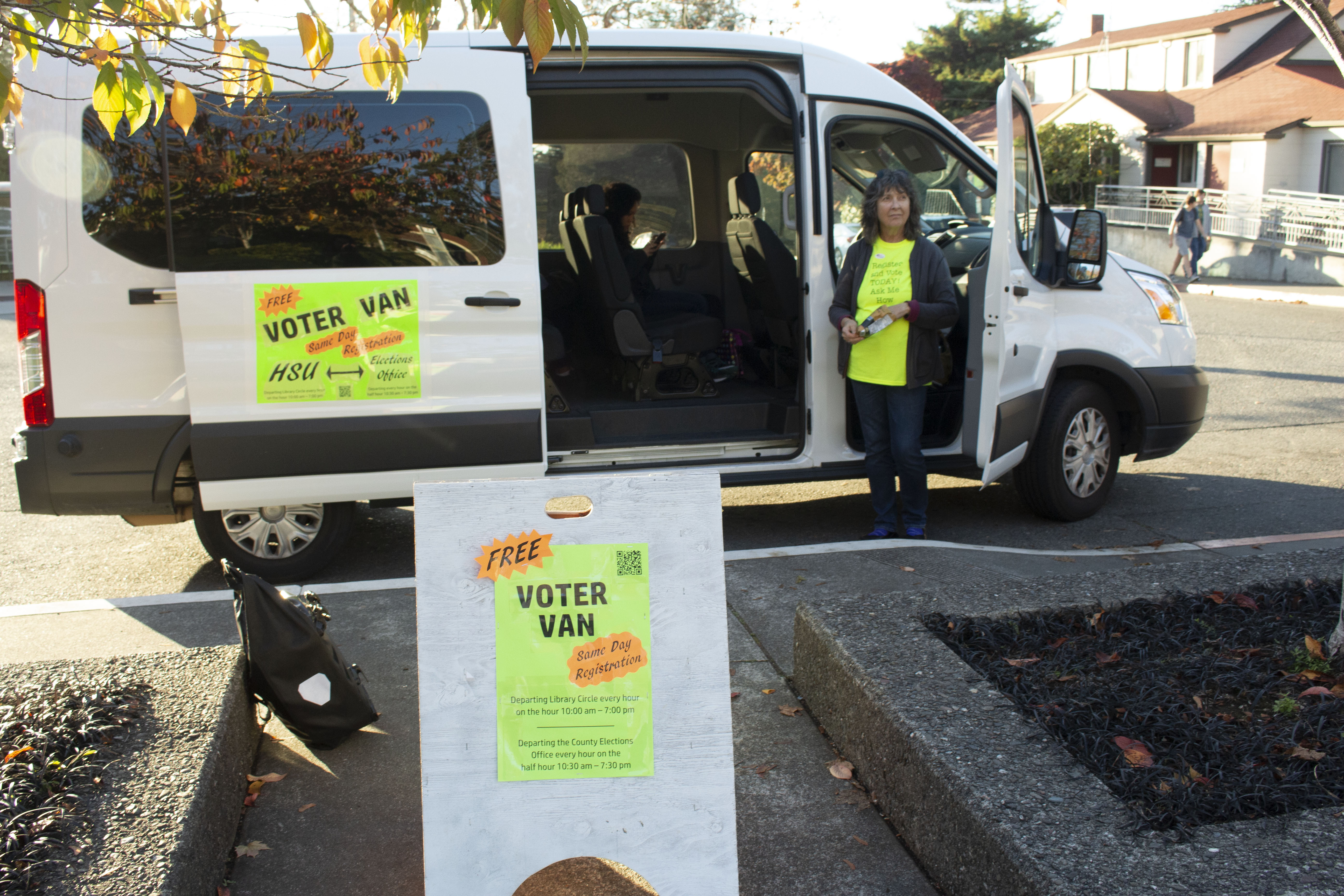
    Although many had their own reasons to show up to the polls not everyone had the resources to make it there. The North Coast People’s Alliance, saw this problem and decided to help, in the form of a voter van. The voter van took people to and from the elections office in Eureka from HSU’s library circle.

    Tamara McFarland, a volunteer van driver from the North Coast People’s Alliance, said many were ecstatic to see this resource on campus.

    “Everyone was so happy they were giving us high fives and thumbs ups,” McFarland said.

    Although some resources were provided for people to attend the elections, some like McFarland felt as though all voters were not 100 percent prepared for the elections.

    “I think especially the propositions were confusing,” McFarland said. “But there has been some good conversation (between students) happening on the bus.”

    Some were not as lucky as those who had these conversations and thusly felt woefully unprepared. Humboldt State student Atalia Cohen, said even when her friends had an election party the night before to research some of the candidates and propositions, they all still felt confused.

    “I did not feel at all prepared,” Cohen said.

    Although Cohen felt like her vote was important, she explained that she did not receive a sample ballot through the mail or any information even though she was supposed to be an absentee voter.

    “I never received anything in the mail,” Cohen said. “I feel like it was even difficult to read all the information that was even presented online because it’s made to actually make you feel confused.”

    Though some felt confused or mislead on what to vote for, many still believed in the importance of their vote.

    Humboldt State students and friends Ashley Martinez and Vanessa Echevarria were sparked to go to the polls. Martinez voted in order to combat some of the politics that she saw as toxic in her hometown of Inglewood, California.

    “Our mayor has been raising the rent in the city, along with pushing for the new (NFL) stadium being constructed which we don’t want,” Martinez said.

    Martinez and Echevarria are apart of a large group of people who were either convinced to vote by friends or something that was affecting them personally.

    “Ashley said to me, ‘quit complaining and go do something about it, go vote,’” Echevarria said. “So, I decided to go out and do something about it.”

  • CCAT Volunteer Fridays

    CCAT Volunteer Fridays

    By Chelsea Wood

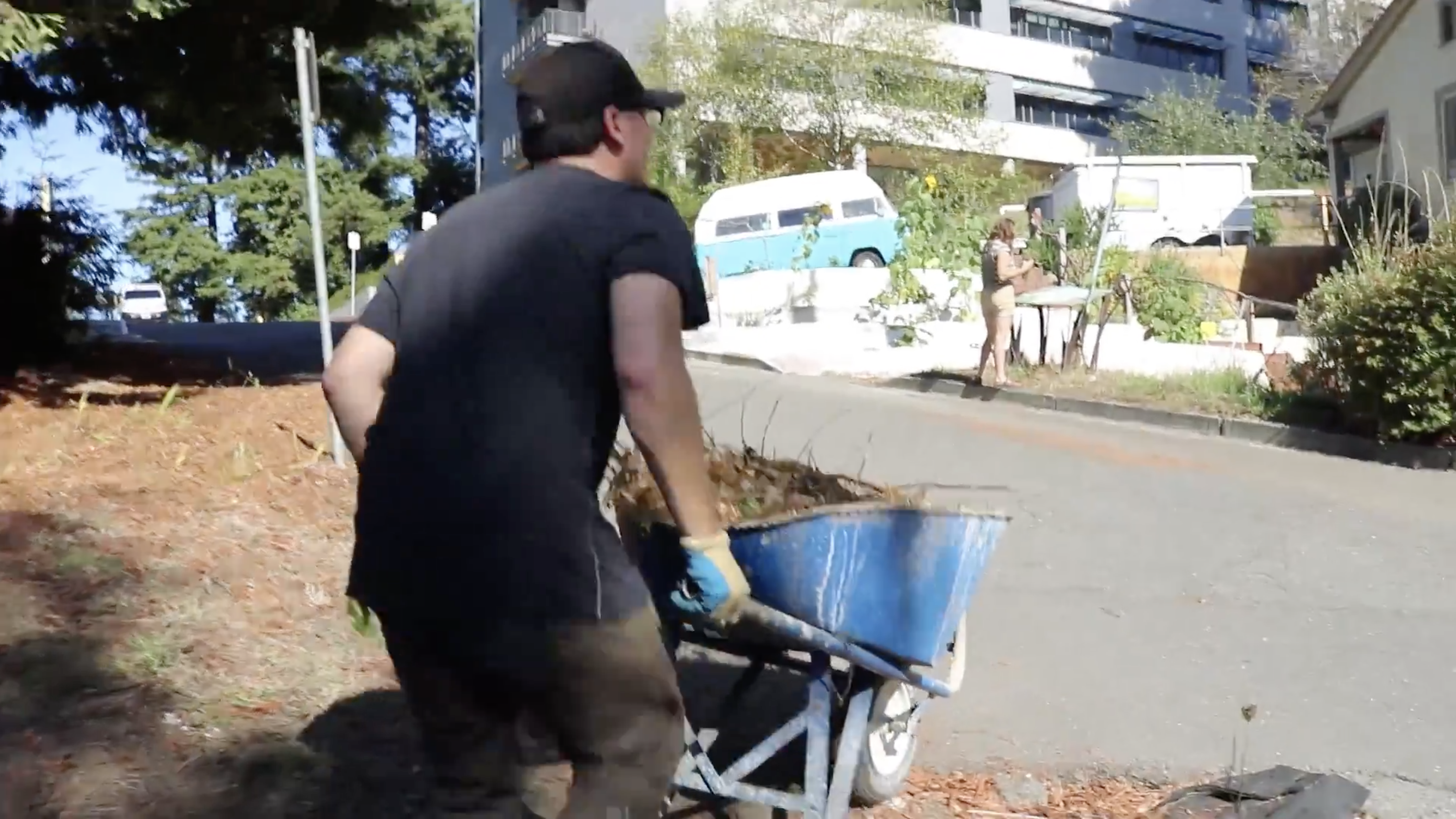
    Getting your hands dirty never felt so gratifying, but for volunteers at Humboldt State University’s Campus Center for Appropriate Technology, otherwise known as CCAT, the satisfaction of hand-to-earth action persists each Friday, Chelsea Wood reports.

  • Local Measure 2018 Election Results

    Local Measure 2018 Election Results

    This page was updated with results on Nov. 7 at 3:55 p.m.

    Some results may not reflect the final results for a few days or weeks due to mail-in ballots being accounted for. Final tally will be determined around December.

    Measure H:

    The county voted 73.66% yes, 26.44% no

    Measure H is a tax that increases the cost of hotel taxes by 10% for those who wish for occupancy at any hotel located at blue lake. The funds will go to the city’s general fund, with an predicted annual revenue of $19,000.


    Measure I:

    The county voted 48.10% yes, 51.90% no

    Measure I is a tax increase for the city of Eureka, it would increase the city’s sales tax by %0.25 in order to fund local roads for 20 years. The predicted annual revenue would be $2.2 million

    Measure J:

    The county voted 48.10% yes, 51.90% no

    Measure J is to continue a tax increase for the city of Rio Del, it would maintain the 1% city sales tax until December 2024. The predicted revenue would be $245,000 annually, with the purpose to fund general city purposes.

    Measure K:

    The county vote voted 51.56% yes, 48.44% no

    Measure K is a county initiative that would make Humboldt county a ‘sanctuary county’, meaning that local law enforcement agencies cannot work with ICE to detain illegal immigrants from the Humboldt county.

    Measure L:

    The county voted 66.39% yes, 33.61% no

    Measure L is a bond that would allow Cutten school district to sell up to $4,000,000 in bonds, it would need %55 of the vote in order to pass the ballot. The intention of the ballot is to fund improvements to the school such as constructions, school safety, and improvements on technology for educational purposes.

    Measure M:

    The county voted 37.84% yes, 63.16% no

    Measure M is an initiative to prevent any modification or removal of the statue of president McKinley on the Arcata Plaza. After a vote from the Arcata city council voted 4-1 for the removal of the statue, measure M was launched with many residences signatures to allow for the voters to have a say on whether the statue should be removed.

    Measure N:

    The county vote 69.27% yes, 30.73% no

    Measure N would allow for the Northern Humboldt Union High School District to issue and sell up to $24.0 million in bonds in an aggregate principal amount with an interest rate not exceeding the legal amount. NHUHSD would also need to provide financing for specific types of school projects that the money would be used for. This would allow, but not limited to, repairing broken parts of the school’s infrastructure, allow to expand school facilities, and modernize classroom’s.

    Measure O:

    The county voted 71.94% yes, 28.06% no

    Measure O would continue with the tax increase that was voted in 2014 by a rate of %0.5, the funds from measure O would be used for general county purposes. The predicted annual rate with the passing of the measure would generate $12 million.


    Sourced from Humboldtgov.org

  • 2018 California Proposition Results

    2018 California Proposition Results

    There are currently 97.2 percent precincts reporting. Here are the proposition results for California.

    CAPROPS.jpg

    Information sourced from https://vote.sos.ca.gov/returns/ballot-measures

    Proposition 1 Bonds Issues $4 billion in bonds for housing programs and veterans’ home loans.

    Proposition 2 Bonds Authorizes state to use revenue from millionaire’s tax for $2 billion in bonds for homelessness prevention housing

    Proposition 3 Bonds Issues $8.877 billion in bonds for water-related infrastructure and environmental projects

    Proposition 4 Bonds Issues $1.5 billion in bonds for children’s hospitals

    Proposition 5 Taxes Revises process for homebuyers who are age 55 or older or severely disabled to transfer their tax assessments

    Proposition 6 Taxes Repeals 2017’s fuel tax and vehicle fee increases and requires public vote on future increases

    Proposition 7 Time Authorizes legislature to provide for permanent daylight saving time if federal government allows

    Proposition 8 Healthcare Requires dialysis clinics to issue refunds for revenue above a certain amount

    Proposition 10 Housing Allows local governments to regulate rent on any type of housing

    Proposition 11 Labor Allow ambulance providers to require workers to remain on call during breaks paid

    Proposition 12 Animals Bans sale of meat from animals confined in spaces below specific sizes

  • EDITORIAL: Life, liberty and the pursuit of self care

    EDITORIAL: Life, liberty and the pursuit of self care

    We the people have a right to life, liberty. . . and self care.

    This has been an election with record high early voter turnout for a gubernatorial race just after two years of America’s most polarizing and unpopular president in history.

    There are also many critically important ballots and measures which could affect everyday life for people in Humboldt county, and it’s very important to take care of yourself during such a high pressure election.

    One of the most critical ballots for people’s livelihoods this year is measure K, an initiative to make Humboldt County a sanctuary county prohibiting local law enforcement with cooperating with federal immigration officers. Proponents of K claim this measure protects families of undocumented persons by granting custodial power and avoids unnecessary pain.

    This measure could likely make or break the practice of separating families in our county. Family separation can cause irreversible harm to kids and their parents. It makes sense that the people whose livelihoods and security depends on this measure will feel the stress this election season.

    Resources for undocumented students and/or citizens are available on both a national and local level.

    • Humboldt State University offers multiple resources through the Student Health and Wellbeing center for students including financial aid options, health care options and legal help.
    • The California State University system offers various resources for legal or con campus help for undocumented students.
    • Teresa Foster, Immigration Consultant 707 255-8666 – According to the St. Joseph’s Community Resource listing, Foster helps immigrants re-unite with loved ones through various visa processes, up to and including residency and citizenship; based in Napa, office serves the immigrant community throughout the state. Foster is not an attorney, she is a consultant with a bond on file at the CA Secretary of State. Because this location is farther away consider calling for information.
    • Catholic Charities, Immigration and Citizenship Services offers mostly legal services regarding citizenship classes, refugee resettlement, DACA, preparing documents for visa petitions, adjustments of status, affidavits of support, consular processing documents and work authorizations. This location involves a four hour drive south, but you can visit their website for general information on any of these topics or family reunification.
    • Those in need of help and advice can also find the closest resource to them through the National Immigration Legal Services Directory. A zip code search will bring up a list of near by resources. Click here to find resources around this a

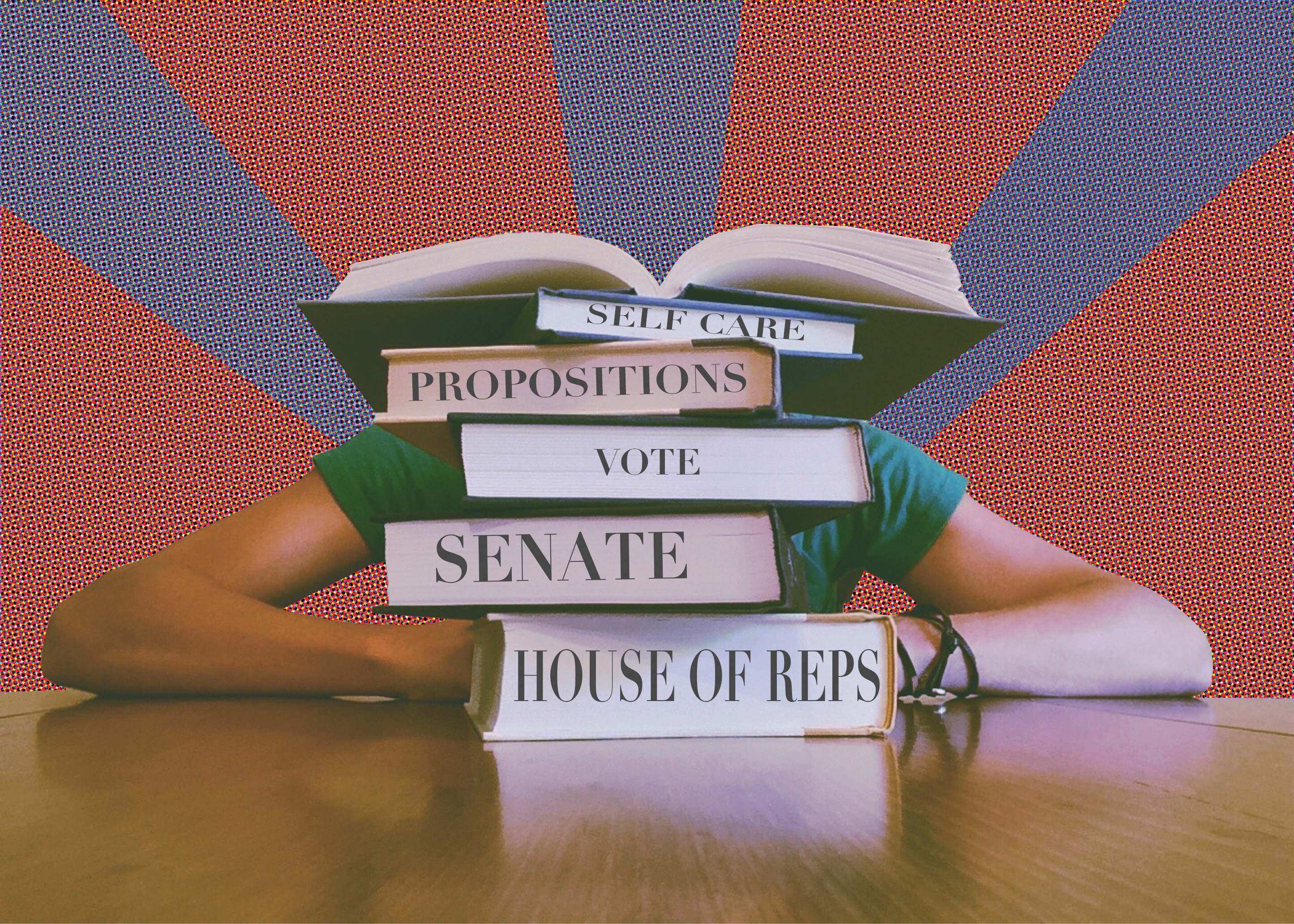
    Though there is not an explicitly a decision on immigration, this election has the potential to sway the political power in both the House of Representatives and the Senate. We recognize the results of this election can still cause great distress about the future of important topics like immigration policies and reform.

    On a mental health care level, this election season, The Lumberjack has some suggestions for people who are feeling uneasy about the future. For whatever reason voters may feel stressed, depressed, angry, sad or happy, people can decompress by taking breaks from social media, watching funny animal videos, yoga and meditation, and emotion management.

    Taking a break from social media is a strong preemptive measure to reduce anxiety and depression for the election. Research from Anxiety and Depression Association of America suggests that social media usage is significantly associated with mood instability, including a prevalence of depression.

    If you see content that might cause you discomfort, turn your phone over for a little bit. There is no shame in logging off in the name of self care.

    Crying also has mood benefits, depending on the person. The act of crying leads to tension relief, and can help with psychological recovery from distress. It is possible that people may feel distress when realizing their candidate has lost, like when President Trump was elected. A healthy cry gets the job done to move on to the future.

    Try watching some online videos like funny animal videos or fail compilations. These are a great way to take the edge off a long election night. Skip the viral videos and play your favorite video game instead.

    Make some time to sleep or exercise as healthy distractions if viral videos and video games won’t cut it.

    Last, but most certainly not least, if you are feeling that you can not handle the pressure alone, here are some resources to connect to the person you need.

  • OPINION: 90 years and a slap in the face

    OPINION: 90 years and a slap in the face

    The Azusa Pacific field goal that beat the Lumberjacks on Nov. 3 sailed through the uprights. At this moment it dawned on me that this was the final play of HSU football. The empty feeling in my gut is all too familiar.

    Born and raised in San Diego, I could never tell local Jacks fans how to feel or how they should feel. However, after over 30 years of cheering for the San Diego Chargers, I have a pretty good idea.

    Year after year, heartache after heartache, I remained loyal to the Chargers. When they went 1-15 after using the second pick in the draft on University of Washington Cougars quarterback Ryan Leaf (the biggest flop in professional sports history), I stuck with it. When management fired head coach Marty Schottenheimer after going 14-2, I stayed true to my team. Get rid of L.T? Why not? There was no quit in me.

    Then, Chargers owner Dean Spanos made the decision to move the Chargers to Los Angeles in Jan. 2017 because he felt it couldn’t compete with the rest of the league financially at his old stadium in San Diego. Loyalty was never on the menu for ownership and I no longer have a team.

    The same can be said for HSU administration. People are pointing the finger at HSU president Lisa Rossbacher and rightfully so. This is the second football program to be eliminated under Rossbacher’s watch.

    Many locals will be getting their wish. Rossbacher’s announced retirement begins at the end of the Spring 2019 semester. One must wonder if future university presidencies are in her future and which team will be on the chopping block next.

    After playing the blame game, the reality of the loss begins to set in. For me, it was the fact that my home team that I had literally bled for was going to leave my city for our rival city to the North. Watching them be successful in Los Angeles this season has been hard to watch to say the least.

    There’s no more cheering for Lumberjacks football even if you wanted to. The game against Azusa was the last game to ever be played at the Redwood Bowl. That is the reality.

    Never again will locals be able to come down early on a Saturday to tailgate before a big game. There won’t be any more Lumberjacks moving on to the NFL, like Jacks All-American offensive lineman Alex Cappa in this year’s draft. At least not in the near future.

    The people with the most to lose in this situation are the players. Many of whom moved up to Humboldt County away from their comfort zones just to play the game of football. For some, HSU was the only offer received. For others this university was their choice.

    Even though HSU won’t fully admit to having a diversity problem, many students would agree that there is one. Losing Jacks football will have a negative effect on the diversity that HSU tries so much to promote.

    90 years of Jacks football apparently means nothing to HSU administration.

    The program is over and the lights at the Redwood Bowl are off. It’s a slap in the face and the feeling will never go away.

  • Webcam wary

    Webcam wary

    You’ve probably experienced that creepy feeling like you’re being watched. You don’t know why, but hairs stand up on your neck and you look over your shoulder, even when you think you’re alone. If you get that sensation while you’re at your computer, you may want to check your webcam.

    Mark Zuckerberg, co-founder and CEO of Facebook, once posted a picture that showed his laptop webcam covered up with tape. If webcam security is something Zuck is concerned about, should you be too? Hackers are likely more interested in someone like Zuckerberg, but that doesn’t mean it won’t ever happen to you.

    Dr. Sherrene Bogle is a professor in the computer science department at Humboldt State University.

    “To the extent that both Big Brother and hackers are watching us, we should all be concerned about computer privacy in all forms, not just web cams, but audio, our telephone conversations being recorded,” Bogle said. “Online security is an ongoing task.”

    Some students at HSU have caught on to the webcam taping trend.

    Erik Ramos, working on his laptop in the Library Cafe, uses a spy guard over his webcam. The guard is a small plastic cover that mounts over a flat surface webcam. Ramos’ guard is made by Targus, and has an adhesive back and a slider hatch for when you want to use the cam.

    “I’ve had this cover on for about a year,” Ramos said. “I’ve heard stories about people being watched through their webcams. It could definitely be the government or just creeps.”

    Ramos said that he used to use post-its before he bought his cover, but since he worked at Staples he was able to get a guard cover for cheap. Sliding guard covers retail online for about $5.

    20181106_101704.jpg

    A webcam spy guard on Erik Ramos’ laptop at HSU library Cafe on Nov. 6, 2018.

    Hailey Hughes has a basic trimmed and taped post-it note covering her laptop webcam. For Hughes it’s better to be safe than sorry.

    “I’ve had this on here for maybe two years,” she said. “I’m just suspicious in general.”

    According to Bogle, both personal computers and Macs are susceptible to webcam attacks, but personal computers are slightly more vulnerable. She also said that new computers aren’t coming up with unbeatable protection.

    “Vulnerabilities still exist with the ubiquity of online and especially wireless network connections,” Bogle said.

    She said there are some things you can do besides covering your webcam to protect your them from getting hacked.

    “Use secured networks, limit or avoid sensitive transactions on free wi-fi, use firewalls, and update your anti-virus software regularly,” Bogle said.

    “The relationship between convenience and privacy is like a see-saw,” Bogle said. “It’s hard to balance because most of us desire convenience and the greater the convenience the more exposed we are and inevitably the less privacy we have.”

  • Dialogue on safety continues

    Dialogue on safety continues

    Charmaine Lawson holds an important meeting with Chancellor

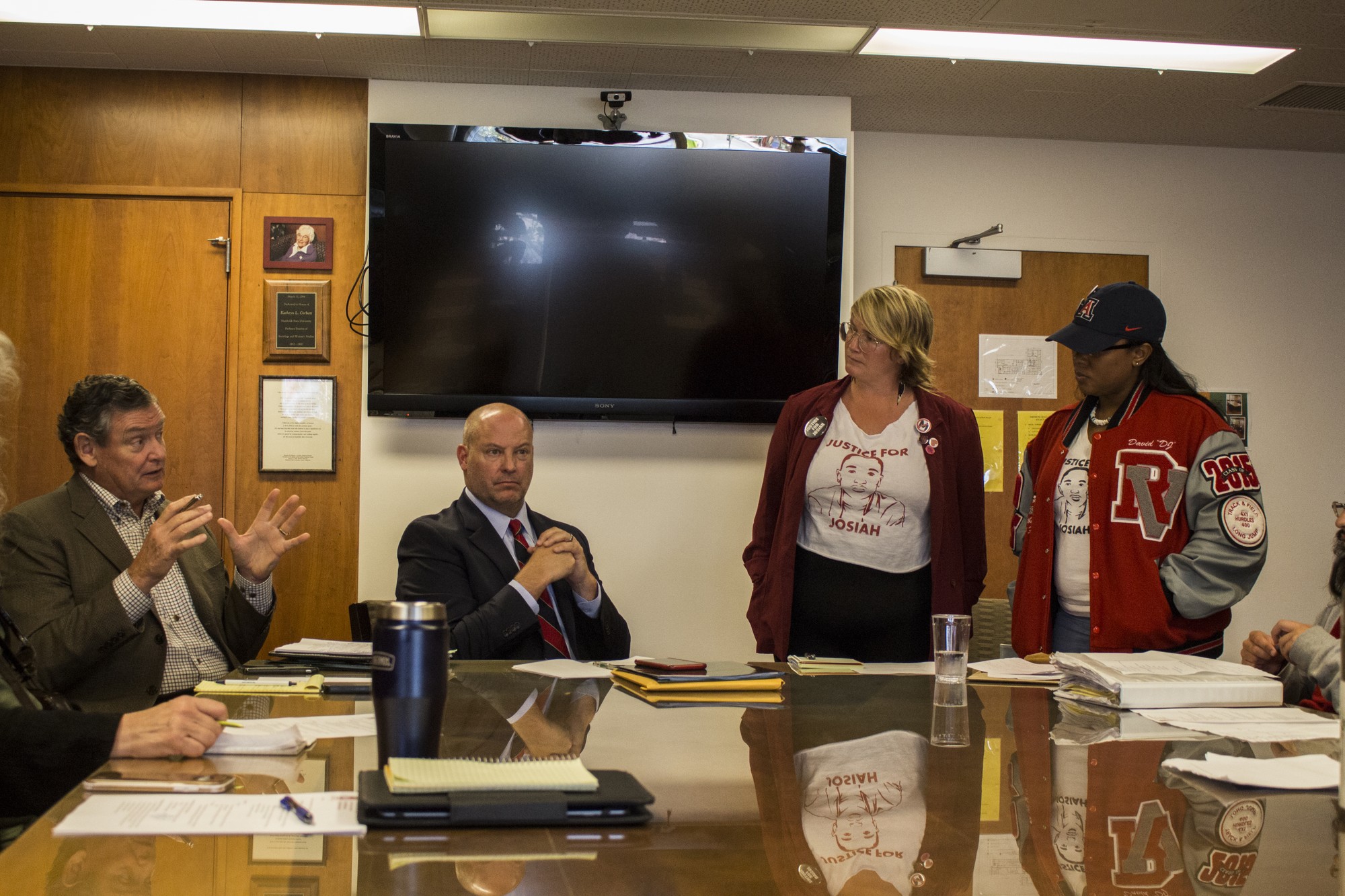
    Charmaine Lawson and HSU student advocates held a meeting on student safety on Nov. 4 with California State University board of trustees chair Adam Day, and Chancellor of the CSU Timothy White.

    Charmaine Lawson is the mother of David Josiah Lawson, a criminology major at HSU, who was murdered at an off-campus party April 15, 2017. Josiah Lawson’s case remains unsolved and his murder has prompted students to raise issues of safety and support on campus, particularly for students of color who move to Humboldt and are unfamiliar with the area.

    Lawson said the meeting was to allow the students to express to Day and White their experiences and concerns involving safety on and off campus, poor housing conditions on and off campus and funding of multicultural centers which provide stable, reliable and safe sanctuary for students of color.

    “This is the opportunity where we get our voices heard,” Lawson said before the meeting.

    Charmaine Lawson met Day at a CSU board of trustees meeting in Long Beach. She asked him to be her guest at Humboldt to talk about safety for black and brown students.

    Charmaine Lawson said White wasn’t originally going to attend the meeting but he arranged his schedule just so he could make it. She said her son did not have safety at Humboldt and wanted Day and White to hear directly from students the problems they have on campus.

    “We want to make safety top priority for new students,” Lawson said.

    Attending in support of Lawson was lead staff for California Faculty Administrator’s Statewide Council for Affirmative Action Audrena Redmond and CFA Associate Vice President of Affirmative Action North, Cecil Canton.

    Redmond said there hasn’t been enough action since Josiah’s death and it was very important that Day and White came to the meeting. She said if this was the first they listened to the student concerns of safety and support on campus then the line of communication is broken somewhere in the CSU.

    Redmond said responsibility is starting to be taken after the treatment of Lawson during a board of trustees meeting where a police officer stood behind her holding his gun belt.

    “Policing of black bodies especially toward a grieving mother is inhumane,” Redmond said.

    Deema Hindawi, active member of M.E.CH.A and employee at the Multicultural Center, was one of the student advocates to express their concerns on continuous problems at HSU that has not been fixed. She said there is no point in calling UPD for help because they take too long and most students of color don’t even feel safe around them. Hindawi said the Multicultural Center at HSU is a reason why people of color are staying here but they are underfunded and have no professional staff that overlooks the center.

    “As students we run the center,” Hindawi said. “We need professional staff but that’s not something the university is giving us.”

    Hindawi also addressed the safety of students and said she doesn’t feel comfortable walking over the Sunset Ave bridge because there aren’t any lights. She said she sometimes doesn’t leave school until midnight and feels it’s necessary to carry a stun gun for safety.

    “I have been hearing that the bridge will have lights since I was a freshman,” Hindawi said. “I’m a third year now.”

    Active member of Students for Equality and Education and M.E.CH.A at HSU Nathaniel Mcguigan addressed the poor quality of on-campus housing and said students are forced to live in poor living conditions. Mcguigan said the campus dorms are too expensive and there are problems with mold and bed bugs.

    “I would like to see improving conditions of on-campus housing,” Mcguigan said.

    Cecil Canton was positive after the meeting and said it appeared Day and White were actually listening and staying present. A major problem Canton said is the disconnect from campus and community. He said the campus doesn’t see their nexus with the community until there is a negative action that takes place.

    “The community is in the campus and the campus is in the community,” Canton said.

    Canton said campuses have to ask themselves how they can work together with community. He said problems of safety for faculty, staff, and students are at all CSUs. Canton knows proof is in doing and action is needed.

    “We can’t afford anymore deaths at Humboldt, or any CSU’s,” Canton said.

  • Congressional Election Results 2018

    Congressional Election Results 2018

    Election result updates for the House of Representatives and Senate

    This post was last updated on Tue. Nov. 6 at 11:43 pm.


    hor

    28 seats not called.


    senate.jpg

    5 seats not called.

    2 Independent Winners: Bernie Sanders in Vermont

    Angus King in Maine


    Information being sourced from the New York Times, CNN and NPR. 
  • Midterm 2018: Races to Watch

    Midterm 2018: Races to Watch

    Election Day is upon us, here are some of the important measures on the ballot

    Today is Election Day for the Midterm 2018 session. A number of measures are up for vote locally but two of them have been hotly debated.

    Measure K, if passed, would prohibit local law enforcement from cooperating with any federal immigration officials or immigration detainers. The measure would also protect undocumented residents from being arrested at their home between the hours of 12 a.m. to 8 a.m., from being arrested near a school, hospital or other medical facilities.

    Measure M, if voted down, would allow the City of Arcata to remove the McKinley statue in the Arcata Plaza. The statue has been at the center of a number of debates at City Council meetings, and nationwide, and was even recently vandalized.

    On the ballot for the statewide ballot are a number of propositions. California propositions one, two, three, and four all deal with the issuing of bond money for a variety of projects. These include housing for veterans, the homeless, water-related infrastructure and children’s hospitals.

    The most popular propositions are six, seven, and 10. Propositions six deals with repealing the 2017 fuel tax, and has recently brought Governor Jerry Brown out to campaign for keeping the tax in place. Proposition seven would allow Californians to do away with daylight saving time. Proposition 10 would allow local governments to implement rent control as they see fit. Proposition 10 has been wavering in its popularity as of recently with a defeat looking like quite the possibility.

    According to realclearpolitics.com there are 38 congressional seat races that are labeled as “toss up.” They have gathered polling data from the New York Times, Siena College and University of California, Berkeley’s Institute of Governmental Studies polls and offer the results on their web page. Some of the “toss up” races are in California.

    Six of the closest congressional races to watch in California will be Districts 10, 25, 39, 45, 48, 49 and 50. The 50th district is currently represented by Duncan Hunter. Hunter was recently indicted on a number of charges including conspiracy and the mishandling of campaign funds. The polls have Hunter up three points, but with the indictments weighing heavy on the incumbent’s conscious and the voters’ minds, his future is up in the air.

    Some of the candidates to pay attention to across the nation will be Karen Handle, Steve King, Greg Gianforte, Peter King, and Dave Brat. All of these candidates are Republicans running in areas where Trump won the 2016 presidential election, but are polling at unusually low numbers for incumbent candidates.

    Handle beat John Ossoff in a closely watched special election in June 2017, and is running in Georgia where early voter turnout is soaring. Steve King of Iowa has recently lost funding from a number of big name donors. Gianforte infamously body slammed a reporter and Dave Brat was a tea party insurgent who took down a long standing incumbent in 2014.

    Other races to pay close attention to are the Senate race in Texas between Beto O’Rourke and Ted Cruz, the Florida governor race between Ron DeSantis and Andrew Gillum, and the Georgia governor race between Brian Kemp and Stacey Abrams. If Abrams wins the governor race, she will be the nation’s first black female governor.

    Look for local live coverage on our Twitter and Instagram feed @hsulumberjack


  • Final fall for football

    Final fall for football

    Jacks fall short of winning last home game ever

    The Humboldt State Lumberjacks lost the overtime coin flip and started with the ball, with pressure to make it to the end zone. The offense stalled, and third string senior quarterback Brenden Davis was flagged for intentional grounding. The 15-yard penalty and loss of down forced senior kicker Jose “Pepe” Morales to attempt a 37-yard-kick. He missed the crucial overtime kick.

    Possession flipped and Azusa Pacific ran eight plays for 29 yards setting up their kicker Jacob Hall for the game-winning 13-yard field goal.

    Quarterback Brenden Davis finished with 68 yards and completed 60 percent of his passes. Three quarterbacks handled snaps after starter Joey Sweeney left the game with a potential head injury.

    “Senior year, last game at the Redwood Bowl, I got an opportunity and I was ready,” Davis said. “We didn’t get the win. Mistakes were made but the effort was there on every play and I believe we closed this thing out right.”

    The loss pushed the lumberjacks to 1-8 overall and 1-6 in Great Northwest Athletic Conference play.

    The opening drive was quickly halted when Azusa Pacific intercepted Sweeney’s pass down the sideline. Azusa led a 10 play, 43-yard march into the end zone. The four minute drive was capped off by a three-yard run by Azusa running back Aaron Baltazar.

    The Jacks were shut out in the first quarter but came alive in the second, finding the end zone twice. Head coach Damaro Wheeler decided to go for it on 4th and goal, trusting the offense.

    Quarterback Sweeney read the defense and handed the ball off to senior running back Tyree Marzetta who jumped into the end zone. The Jacks first touchdown drive lasted 17 plays with an exciting fourth down finish. Marzetta carried the ball a season-high 24 times and has had four touchdowns in the last three games.

    “When there was anything available in the run game I tried to do my part and contribute,” Marzetta said. “Shoutout to our offense, the offensive line, receivers, and our third string quarterback Brenden Davis. His back was against the wall and he didn’t fold.”

    Sweeney was thrown to the turf by two Azusa Pacific defenders in the second quarter on a 3rd down play and left with an apparent head injury. Second string quarterback Andrew Tingstad replaced Sweeney and found the end zone from 8 eight yards out on a designed quarterback keep with 45 seconds left in the half.

    Tingstad was also injured on a two-yard run play in the third quarter and did not return to the field.

    Coach Wheeler thought the injuries were unfortunate but believed in the preparation of the team through practices and film, especially for his quarterbacks.

    “Next man up,” Wheeler said. “He [Brenden Davis] wasn’t nervous and the moment wasn’t too big for him, [going forward] we have to game plan for him.”

    The second half was all defense as both teams did not allow the other to run into the end zone. The Jacks defense was led by linebacker Demetrick Watts, who recorded a team-high 13 tackles. On a fourth down play with 6:37 left, Watts laid a hit on the Azusa Pacific running back and stopped their drive, giving the ball back to Humboldt’s offense.

    Two other linebackers, Moses Finau and Connor Cox, both dished out big hits and brought down Azusa Pacific’s quarterback Tyrone Williams Jr. The play of the day was made in the secondary, when redshirt sophomore safety Adam Herrera intercepted WIlliams Jr. and took it back 32 yards into Azusa’s territory to give the Jacks a shot to win..

    “I listened to coach,” Herrera said. “He said if the dig comes, to look for the post and the quarterback threw it straight to me. I was taking it to the crib and nowhere but the crib. I wanted to hit that open field.”

    The Jacks didn’t come away with a victory but the fans cheered and gave a standing ovation to HSU’s last football team. After the game, quarterback Brenden Davis and running back Tyree Marzetta talked about how much the team meant to them and how honored they felt to have a community that never failed to come out and support.

    “It’s a real home field advantage out here, we couldn’t ask for a better fan base,” Davis said.

    “It’s emotional for me. I’ve never been a part of a team like this. I’m grateful to be a Lumberjack,” Marzetta said. “It’s sad it’s over because I love this place and I appreciate Humboldt for all it is.”


  • Vote because you can

    Vote because you can

    Formerly incarcerated Humboldt State student encourages utilizing your right to vote

    When I was released from Rio Cosumnes Correctional Facility in 2014, I was told three things: I could no longer receive government assistance (like food stamps), I was no longer eligible for financial aid (FAFSA), and lastly I had lost my right to vote.

    At that time, to be honest, I only cared about the first two. Voting was the last thing on my mind when I was stumbling my way back into society and trying to forget what I had seen while I was incarcerated. But as time went on I was getting more involved in my community and volunteer outreach, and voting became more important.

    I say that because there were candidates on the ballot in Sonoma County that would further help organizations I was working with and others that wouldn’t. I became more interested and started to understand the interdependence.

    Although I was keeping track of the candidates running for office, I knew it didn’t matter because I couldn’t even vote for any of them. That all changed when in 2015, California Secretary of State Alex Padilla announced that the state would settle litigation over laws that had barred low-level felony offenders under community supervision from voting.

    This meant that myself and tens of thousands of others who had lost their voting right could vote for the 2016 election. (Bernie lost, but I still feel like my vote mattered, and if anything else I experienced a sense of freedom with casting a ballot.)

    The Sentencing Project estimates that nearly six million Americans cannot vote as a result of previous criminal convictions. We may think we’re quite progressive in California, but Maine and Vermont are the only two states that allow voting rights be retained for those still in prison.

    According to Nonprofit Vote, there are 15 states ahead of California that allow automatic voting rights restored the second you are released from prison. California doesn’t even do that. In blue states like Colorado and New York, you can only vote until you’re off parole.

    Florida, Iowa, and Kentucky are the three states where voting rights can only be restored through individual petition to the government. So even if you do your time and are off parole or probation, you still have no right to vote. They layer punishment atop punishment atop punishment.

    If re-entry programs are supposed to help those integrate back into society, but our political voice is taken away, then it undermines the entire purpose of the sentencing. If I pay taxes and am affected day to day by political figures both nationally and locally, then why would I not be able to act on my right to vote?

    According to the Prison Policy Initiative there are 242,000 people behind bars in California. That means there is a quarter of a million people who are unable to vote in this state. The Sentencing Project also said that Black Americans are five times more likely to be imprisoned than White Americans, giving more evidence of the modern day slavery that is our prison-industrial complex.

    We may think we live in a democratic country, but voter suppression is still happening. Crooked politicians are finding loopholes to keep people from casting their ballot. If voting doesn’t matter, then why would voter suppression be such a big issue?

    According to the Brenna Center for Justice, there is a growing range of threats to voting for the 2018 election. North Dakota has been blessed by the Supreme Court for strict voter ID laws that will make it harder for Native Americans to vote. Texas adopted a similar strict voting law and Georgia has passed stricter voter registration that will create hurdles for minority voters.

    The Brenna Center for Justice found that there has been a huge increase of vote purging in the states of Florida, Georgia and North Carolina, meaning that names identified for removal are determined by faulty criteria that wrongly suggests a voter be deleted from the rolls.

    These are just a few examples of how voter suppression is taking form before the 2018 elections, although this has always been happening. Our government have been suppressing votes for as long as they have been an entity.

    Know who is running for office. Know the measures and propositions. Whether or not you think your vote doesn’t matter, you will be affected by whatever passes or what doesn’t. When you vote, you are voting for everyone who can’t.

  • HSU mourns the loss of student lost at sea

    HSU mourns the loss of student lost at sea

    Coast Guard suspends search for Humboldt State student lost at sea

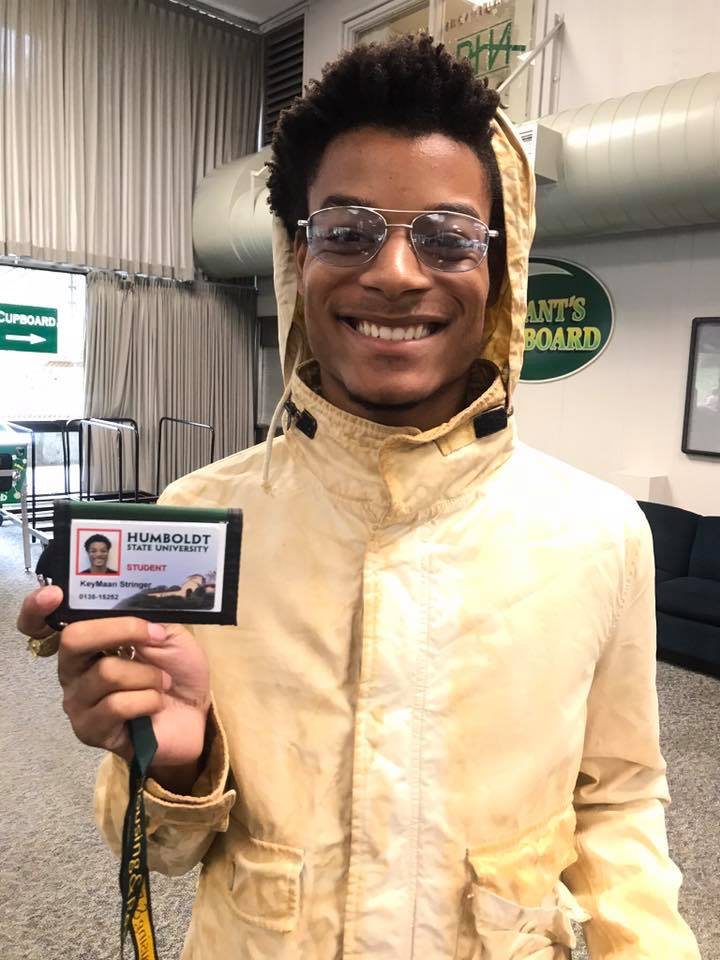
    On Oct. 29 Humboldt State freshman Keymaan Stringer from Los Angeles, was swept away by a sneaker wave around 4:30 p.m. at the North Jetty in Eureka. Stringer has not been found.

    The U.S. Coast Guard and a variety of other first responders were notified of the incident around 4:32 p.m. on Oct. 29 and then searched for Stringer. According to the Coast Guard News’ release the search for Stringer was suspended around 9:50 a.m. on Oct. 30.

    image
    HSU student Keymaan Stringer was seen dancing and singing on the quad during the HSU’s fall preview on Oct. 26. | Photo by Dajonea Robinson

    “The Coast Guard and partner agencies searched approximately 160 square-nautical miles for 16 hours in a continuous effort to locate the man.”

    Singer’s family has created a Go Fund Me campaign for the search and recovery of Stringer in response to the U.S. Coast Guard suspended search.

    image
    Screenshot from Barbie Nichelle’s go fund me page.

    For those in need of support Humboldt State University Counseling & Psychological Services at 707.826.3236 As for staff and faculty who may need support there’s the Employee Assistance Program at 707.443.7358.


  • OPINION: White boys will be white boys

    OPINION: White boys will be white boys

    Cut the “locker room” talk

    There is a saying uttered over and over again in response to when those who do harm or commit a crime are affluent and privileged enough to never deal with the consequences: “boys will be boys.”

    It is stated in many different ways such as “locker room talk,” “boy talk” and more, but all of these sayings mean the same thing.

    Many attempt to argue its definition as leniency to adolescent youth who commit petty crimes or get into some mischievous trouble.

    But what if that mischievousness is assault, rape or murder?

    Ultimately, what these words conjure is the privilege and ability to deflect any culpability when it comes to one’s own actions.

    Take our own president, for example, in the wake of the Access Hollywood tape where Trump infamously utters the line, “Grab’ em by the P****.”

    Melania Trump, in an interview to CNN reporter Anderson Cooper, attempts to justify the sexual assault with the idea that it sounds bad because its just “boy talk.”

    Labeling this behavior this way is an attempt to placate the idea of male pedagogy and violent sexism because men are implicitly allowed to be violent or aggressive towards women. Most men in the U.S. are part of this problem, but most do not have the privilege, whether white or economic, to get away with these crimes.

    White male pedagogy specifically uses brown and black bodies to make the law seem more impartial to sexual assault and violence. This is by arresting them at much higher rates or portraying them in the media as committing more of these crimes, even though statistics show white males commit sexual assault and crimes at a much higher rate than any other ethnicity.

    A study done by the United States Bureau of Justice Statistics, from 2005 to 2010, found that 57 percent of male perpetrators of sexual assault are white. In that same study, the BJS found black males to commit 27 percent of sexual assaults. This is not reflected within our mainstream media.

    Many local news and mainstream news affiliates use black and brown crimes as ways of filling air time, because if anything sells the news, it’s white insecurity. These media outlets use the trope of the “devious stranger,” who is oftentimes portrayed as a poor male of color.

    When we look at the statistics of people who commit sexual assault at higher rates, people with intimate or close relationships with the victim are far more likely to commit the assault.

    According to the 2005-2010 BJS study on sexualized crime, 78 percent of sexual assault crimes are committed by someone with close relationships to the victim. Out of that 78 percent, 34 percent are intimate partners, 6 percent are relatives and 42 percent are well known acquaintances or friends.

    This shows that the attempt to frame sexualized violence as something committed by strangers or the desperate is uninformed and at worst, racism incarnate. The media also imagines sexualized violence as a problem of poverty or upbringing, which ignores the white male pedagogy that runs the US.

    I believe this allows for many white males to ignore their own problems and instead shift blame onto things like music, video games, movies or TV. And although some of those do play a role, they do not instigate the sexual power dynamics that exist between the white pedagogical hierarchy and everyone else in the US.

    That is done simply by the power and meaning behind these words “boys will be boys.”


  • Art behind bars

    Art behind bars

    Local artist brings rehabilitation programs of creativity to Pelican Bay

    Julie McNiel began her career teaching drawing classes at College of the Redwoods. Today, she has a new set of students she instructs in visual arts, inmates at Pelican Bay State Prison in California.

    McNiel said she learned about local artists teaching inmates at Pelican Bay in 2003 and thought it was an amazing idea. That idea followed her for a decade.

    In 2014, she was referred to the William James Association by her colleague from the College of the Redwoods’ art department. She was offered an artist’s contract to teach at Pelican Bay.

    “I look at the prison in a completely different way now,” McNiel said.

    McNiel is now the leading artist for the Arts in Corrections program. As lead artist, she acts as the liaison between the artists, the prison, and the William James Association, making sure there is communication between them.

    “Creativity is everywhere, especially in prison,” McNiel said. “This program allows opportunity for those on the inside.”

    The William James Association started the Arts in Corrections program in 1977 in with the Department of Corrections and Rehabilitations and the California Arts Council. The program is now in all 35 California prisons.

    According to their website, their philosophy behind creating the art program is “based (on) the belief that participation in the artistic process significantly affects a person’s self-esteem and general outlook on the world.”

    L to R: Jose Mendoza, instuctor Julie McNiel, Marquis Louden; Ho
    Visual arts teacher Julie McNiel and two of her students show off their art at Pelican Bay State Prison in California. | Photo by Peter Merts (Courtesy of Julie McNiel)

    “Going through art classes, they’re more likely to attend other programs like GED and enroll in college,” McNiel said.

    McNiel said the program lost all its funding because of the 2008 budget crisis. A pilot program was proposed in 2014 and has been expanding ever since.

    McNiel said when the art program started, there were only three artists teaching one workshop. McNiel said there are now art classes every day of the week.

    Including McNiel, there are five contracted artists: Janessa Johnsrude and Zuzka Sabata with Dell’Arte International, Cecelia Holland who teaches creative writing, and Dale Morgan who teaches guitar.

    “There has been an overwhelming experience of people saying these programs are very much needed,” McNiel said,

    The co-founder of the Dell’Arte Prison Project, Janessa Johnsrude, leads a physical theater ensemble at Pelican Bay. She said they teach awareness to body, availability to change and adaptation, and responsiveness in present moment.

    Johnsrude said the prison environment isn’t conducive to be open with emotions, thoughts and feelings, but bringing in theater gives an outlet for performing.

    “If you give them a chance to grow they will,” Johnsrude said.

    Johnsrude teaches five different classes twice a week. In the two and half years she has been at Pelican Bay, she said she has seen significant changes in her students, and by participating, they are investing in something positive.

    “The data available for those participating in arts programs shows it reduces recidivism,” Johnsrude said.

    Johnsrude said the students come to escape the humdrum of incarceration, and by doing that, they discover something unexpected in the theater program. In her classes, students work on writing components, monologues, actor training, course work in play and theatrical form in ensemble.

    “The main goal is offer a space for people in Pelican Bay to express themselves,” Johnsrude said.

    Dell’Arte Prison Project’s other co-founder, Zuzka Sabata, said the Arts in Corrections program became the ideal model after choosing a selection of professionals and creating a positive impact. She said the participation helps people cope with being incarcerated and leads to having less behavior problems while in the system.

    “The arts program has become the model exemplified across the country,” Sabata said.

    Sabata said the challenges of the program is facilitating support within the prison for rehabilitation. It isn’t a clear system with new programs to help the staff organize themselves. Sometimes staff may be willing to facilitate, but their superiors may not be.

    She also said there are negative responses from the community that reflect the ignorance of the positive impact the program brings due to social prejudices. Sabata said too many people have the idea that a mistake makes someone permanently a bad person, and that isn’t the case.

    “If we don’t acknowledge the stigmas attached to incarcerated individuals it is more challenging to shift from incarceration to a free person,” Sabata said.

  • From gang culture to inmate advocate

    From gang culture to inmate advocate

    2018 Distinguished Alumni Visits HSU

    Eliberto “Eddie” Ramos barely escaped the street-gang violence of his east Los Angeles neighborhood only to return and work in the criminal justice system.

    Ramos, a psychiatric social worker for Los Angeles County, earned his BA in sociology at Humboldt State University in 1999. Ramos went on to earn his Master’s in Social Work from the University of Southern California.

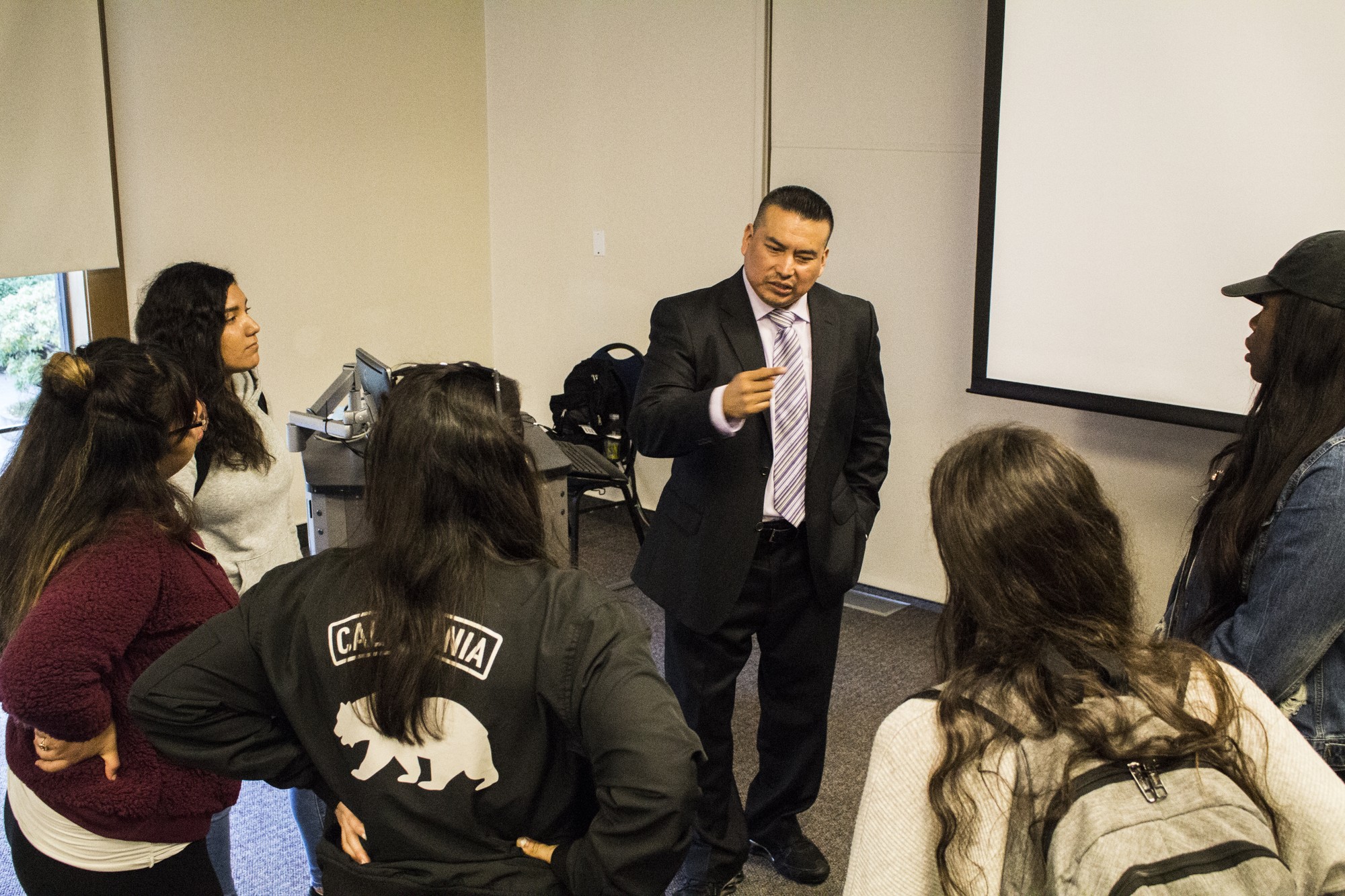
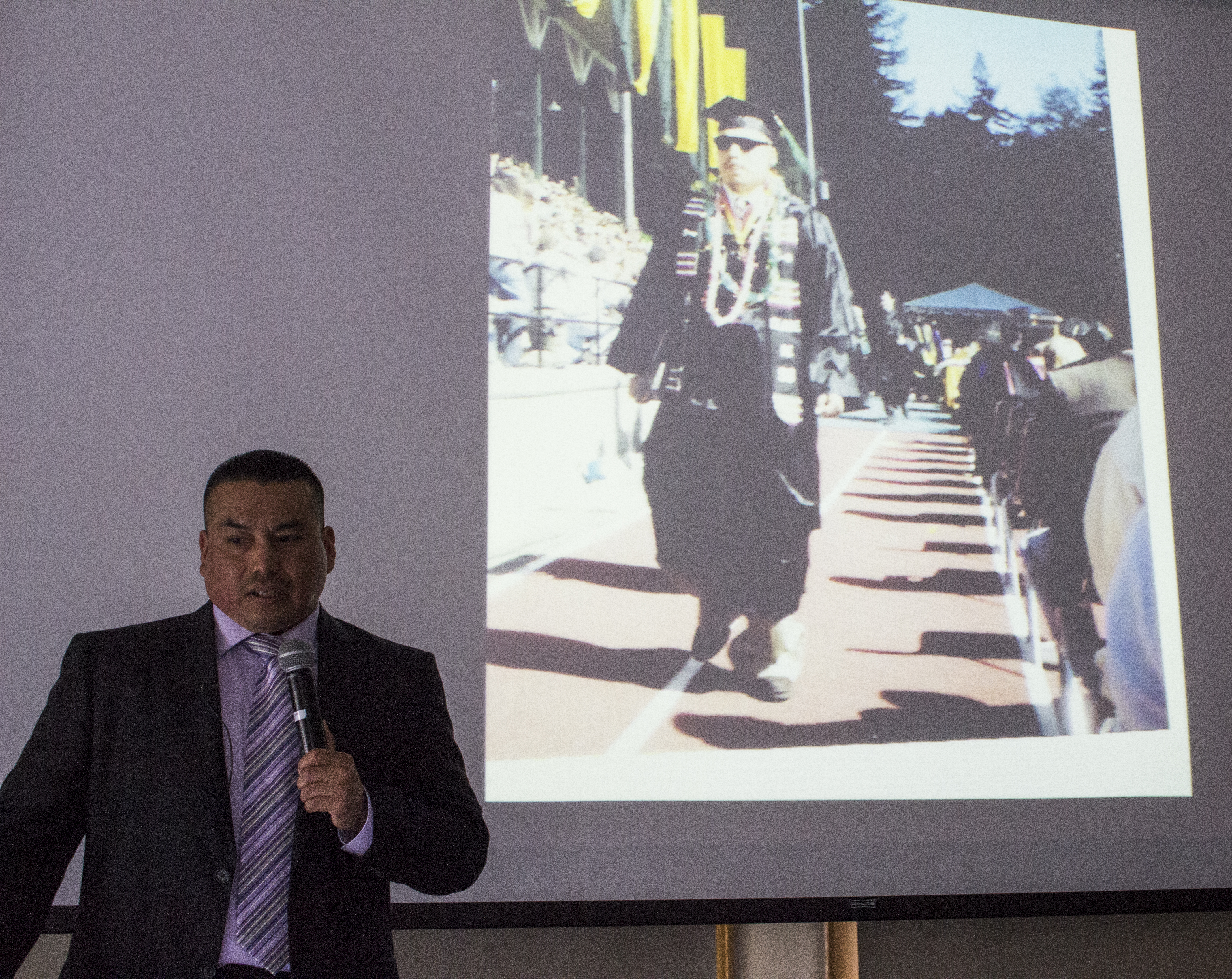
    On Nov. 1 Ramos was presented the 2018 Distinguished Alumni Award at HSU. He later gave a presentation on his journey from growing up in the gang culture to becoming an advocate for inmates with mental health and substance abuse issues.

    “For me it’s a great experience seeing the two sides of where I came from,” Ramos said. “And now I’m working with the law in order to help the system.”

    Ramos grew up in East LA and participated in the gang culture at an early age. He said the culture had been around for 60 years by the time he was born and his whole family was involved. Ramos said it’s hard to wake-up and leave it behind when everyone around you is living it.

    “At that age you’ve already lost so many people you ask yourself ‘whats left for me’,” Ramos said.

    Ramos caught a break from the street violence and crime when a counselor suggested he go to Pyles Boys Camp at the age of 14. The camp, which is nestled among the redwoods in Sequoia National Park, is a program to motivate at-risk or disadvantaged youth. Ramos credits the camp as paving the way for him attending HSU.

    “At the boys camp I had a place to learn how to get along with other people,” Ramos said.

    Retired sociology professor, Jerry Krause, said he had Ramos as a teacher’s assistant in his prison and society class. The field experience for the class was to travel to Pelican Bay State Prison. Krause said he had Ramos lecture the class sometimes because he could vividly describe the environment that inmates would be coming from.

    “He was so attentive and would always sit in the front row,” Krause said. “You could see his eyes light up.”

    eddie
    Retired HSU sociology professors, Jerry Krause and Betsy Watson, pose with Eliberto “Eddie” Ramos after he was presented the 2018 Disinguished Alumni Award on Nov. 4. Ramos escaped the gang culture and now works in criminal justice in LA county. | Photo by Tony Wallin

    Krause said the key in changing life trajectories is with peer relationships. He said it takes people like Ramos to help people with similar situations and backgrounds. Krause said what helps is he has noticed more students are coming from urban areas to Humboldt and studying behavioral science.

    “Since I have retired it has become much more diverse in Humboldt,” Krause said.

    Retired sociology professor, Betsy Watson, was the department chair of the sociology program when Ramos was a student. She had Ramos in a couple of classes and said he had great intuition and could read people very well. She first noticed him when she thought she saw two “gang bangers” walking pass her, only to find out they were students and one was Ramos.

    “I tried to convince him he was as smart as he was,” Watson said.

    Watson said the department was most relieved when Ramos would return back for the fall semester. They were relieved he was alive. She said they knew what kind of environment he was returning back to and couldn’t imagine what the parents were having to go through in the neighborhood. Watson said since Ramos was a student at HSU a lot more students have been enrolling with backgrounds where they are exposed to danger. She said the diversity is important.

    “Once you study the culture of someone else you learn your culture so much more,” Watson said.

    eddie4
    HSU alumni, Eliberto “Eddie” Ramos, gives a presentation on his journey from gang culture to being an inmate advocate on Nov 1. | Photo by Tony Wallin

    Ramos said the future of rehabilitation lies in therapeutic programs. He said the most successful are peer support programs where people can connect with each other because of shared similar experiences and backgrounds.

    Ramos works on alternative sentencing and rehabilitation plans for adult offenders. He said he works as the bridge between the courts, the community, and the clients within the Los Angeles criminal justice system.

    “Find your purpose,” Ramos said. “It may take 10 or 20 years to find but it’s out there.”

  • Voter van comes to the rescue

    Voter van comes to the rescue

    The first ever voter van at HSU will be running on Nov. 6.

    During the Nov. 6 midterm elections there will be a free “voter van” for HSU students running all day long.

    This van will offer free rides from HSU Library Circle to the Humboldt County Offices of Elections in Eureka and back to HSU. Vans are scheduled to leave on the hour from 11 a.m. to 7 p.m. and will be coming back from the elections office every hour starting at 11:30 a.m.

    HSU student, Nathaniel McGuigan is the regional Mecha co-chair of Northern California. McGuigan said that both Mecha and the North Coast People’s Alliance lent a hand to set the voter van in motion.

    “Each organization came up with individual ideas,” McGuigan said. “Mecha [developed] the student side and North Coast People’s Alliance developed it on the community side to get people to vote and register to vote [conditionally].”

    The voter van idea came about from the California state law that now allows voters to register the same day as elections, known as conditional voting. According to the California Secretary of State’s website:

    “Conditional Voter Registration is a new safety net for Californians who missed the Oct. 22 deadline to register to vote or update their voter registration information for the Nov. 6, General Election.”

    There’s only one office in Humboldt County that offers conditional voting. That’s at the Humboldt County Offices of Elections in Eureka. McGuigan said that the voter van is aimed for students who have not registered but want to register and vote on the same day.

    “This election cycle it is available for students but in other election seasons it will be available for everyone else,” McGuigan said. “This is currently a trial run.”

    Carrie Peyton-Dahlberg is the vice chair of the steering committee for the North Coast People’s Alliance and had a big part in putting this together.

    “We’re hoping to increase voter participation and get as many people as possible to get to the county elections office to vote,” Peyton-Dahlberg said. “We want to help people to vote because it’s important.”

    McGuigan said that Mecha wants to help students get their voices heard. He said that he knows everyone does not have access to a vehicle which is essential for students whose polling place is not on campus.

    “We wanted to not only provide a voice but a mechanism that students can use to exercise their voice,” McGuigan said. “Voting is just one step in the political process in creating change, it is something that everyone can participate in no matter your political stance.”

    For more information please visit:

    Northcoastpeoplesalliance.org

    https://ballotpedia.org/Voting_in_California

    https://humboldtgov.org/2343/Conditional-Voting

    https://www.sos.ca.gov/elections/voter-registration/conditional-voter-reg/


  • A brave voice against bullies

    A brave voice against bullies

    A mother and daughter take action against racist bullies in middle school

    While many sixth graders went to soccer practice or hung out with their friends, Sadie Shelmire, a local African American sixth grader from Sunnybrae Middle School, educated people on her personal experience with racism in school.

    “Ever since I moved to Arcata, I have been stared at,” Shelmire said. “I could be walking down the street with my dad and a group of girls will just walk by staring.”

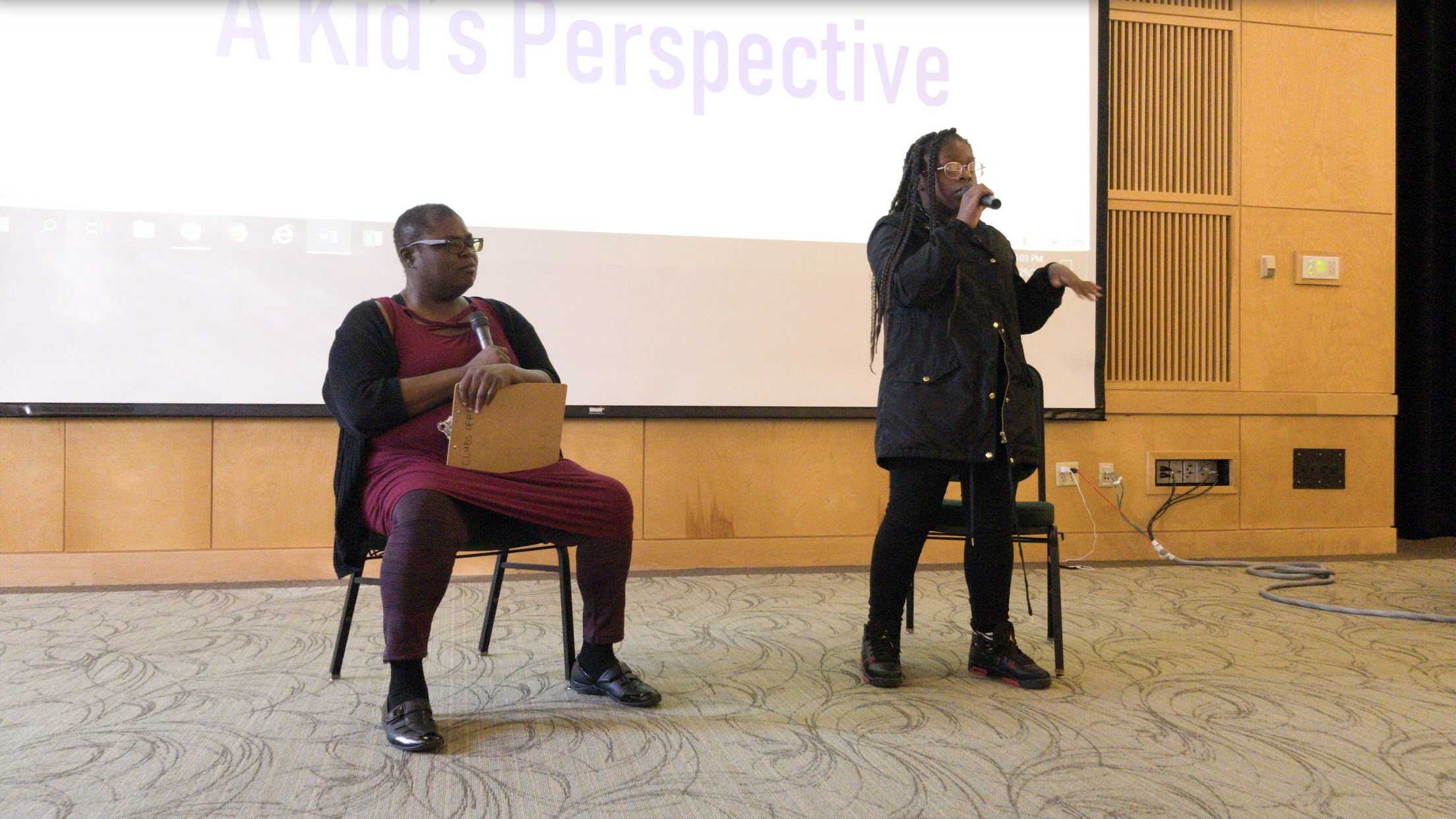
    Microaggressions like this are exactly why Shelmire and her mother, Director of Student Life and Affairs at Humboldt State Tanza Triggs, held a conference on Oct. 29 entitled “Loving the Skin I am in: My Story.”

    The conference was framed as a talk show. Triggs asked questions to Shelmire about her experiences, and then after the floor would be open to the audience’s questions.

    Triggs said that while she came up with the idea for the event, her daughter’s experiences as well as growth and maturity while dealing with racist bullies inspired her.

    “I wanted to show her that I was proud of her because I saw over the course of the six years how she changed personally,” Triggs said.

    Shelmire feels she has gone through a lot over the course of those six years. She moved from a town in Missouri, where the majority of the community is African American, to Humboldt County where the majority are white.

    “I am not sad or angry,” Shelmire said about the predominantly white community. “But I am a little uncomfortable.”

    Humboldt’s predominately white community is reflected in its education systems. This is something that both Triggs and Shelmire said is detrimental to the experience of African American and minority students.

    “There wasn’t any African American teachers,” Shelmire said. “I couldn’t really go to someone who had the same struggles as me growing up.”

    These struggles were mostly in the form of racist comments by bullies from Shelmire’s school.

    Triggs said people have called Shelmire poop, n*****, and other derogatory names. These problems stem from the student’s homes and many parents need to be held responsible when it comes to admitting to these problems.

    “Not only do they get (influences) from YouTube but they are also getting it from their parents,” Shelmire said.

    Triggs and Shelmire said students need to be the facilitators of understanding race and its history. Race education should be ran like sexual education or food programs. They believe schools should provide funds to teach children deprived of an education or experience with minorities or children of a different ethnicity.

    “We provide children with food because we know they might not get it at home,” Triggs said. “So why not address this problem too?”

    Shelmire’s discomforts and experiences revolve around how her teachers don’t discipline the student bullies.

    “They then would send us to the principals office, and then they had to apologize and say what they did wrong,” Shelmire said.

    Shelmire said that this does not address the problem because the student who was verbally assaulted has to sit in class with their bully.

    “After someone just (verbally) racially assaulted you, would you really want to go back to class with them,” Shelmire said. “Especially if kids around you heard it and would stare after.”

    Shelmire inspired many to share their story, including Trinity, a 13-year-old African American girl from the Trinity County area, who was racially bullied to the point of being homeschooled by her mother Judy. Trinity shared similar concerns as Shelmire in regards to how teachers have been insensitive or ineffective when dealing with this type of bullying.

    “They don’t really do anything ever,” Trinity said. “The kid is forced to apologize but usually you know it’s not genuine and they’re not even sent to detention.”

    Trinity also said this mistreatment of the situation creates distrust between the student being bullied and the teacher.

    To Shelmire and Triggs, this problem should not be internalized by the children who are bullied, but be dealt with by the institutions and parents who placate these racist bullies.

    “When you go to a teacher and they don’t handle (racially charged bullying) well and it keeps happening,” Trinity said. “You will not go to the teacher and you just have to deal with it yourself.”

  • Ohana Comic-Con a big success

    Ohana Comic-Con a big success

    Blue Lake Casino hosts the first comic-con ever in Humboldt County

  • Hypnotic Halloween at Arcata Plaza

    Hypnotic Halloween at Arcata Plaza

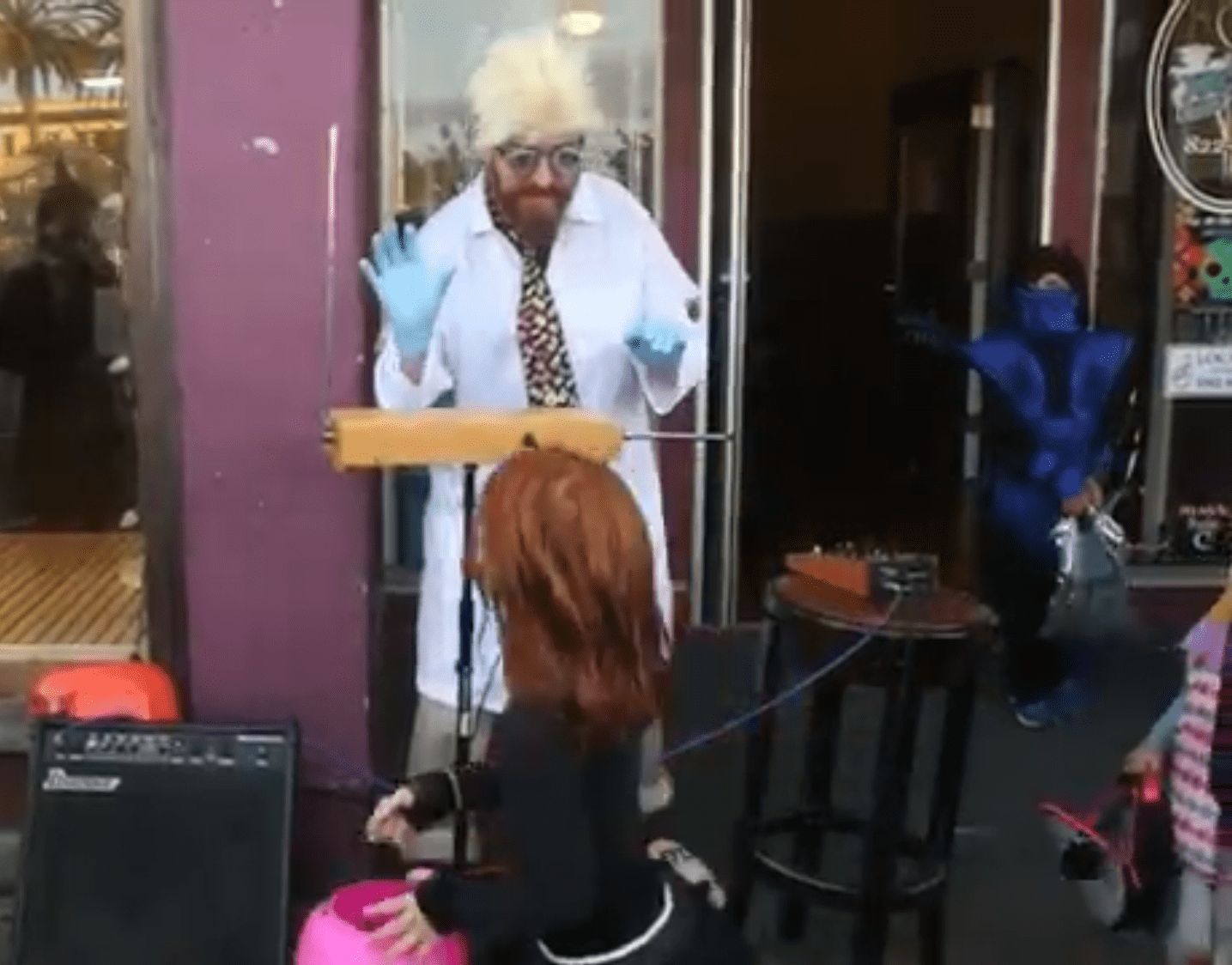
    Theremin player gets spooky on Halloween

  • Lady Jacks basketball dominate in their home opener 109-40

    Lady Jacks basketball dominate in their home opener 109-40

    With an 11 game improvement and an NCAA West Regional bid of an 8th seed, the Lady Jacks look to carry last year’s success into the 2018-2019 season.

    On Oct. 29 in the Lumberjack Arena, Humboldt State Women’s Basketball slashed to the basket with little resistance, pulled up from the key with ease, and shot 48 percent from past the three-point line.

    Bethesda couldn’t solve HSU’s puzzle with defensive pressure. More times than not, the play resulted in a turnover granted to the Jacks.

    Alexia Thrower led HSU with 29 points, Madeline Hatch followed with 23 points, and Jovanah Arrington and Isamar Conde put up 17 and 15 points, respectively.

    The hot start and a 69 point difference is something that hasn’t been done before in decades at HSU. Don’t let the small roster fool you, the 2018-2019 Lady Jacks basketball team can play. There is no doubt that they will have another exciting season. The next home game is Nov. 2nd against Southern Oregon at 5:30 p.m.


  • Diversity on the Plaza

    Diversity on the Plaza


    Diversity Day aims to create dialogue of race between HSU Cultural Centers and Arcata locals

    Arcata’s typical Saturday morning farmer’s market looked more cultured than usual on Oct. 27 during Diversity Day, an event hosted by We Are Your Community and The Campus and Community Dialogue on Race.

    Janaee Sykes, the lead student associate for the African American Center for Academic Excellence was tabling in Arcata plaza to reach out to the community.

    Sykes talked to the people of Arcata and said she had some interesting conversations with the locals.

    “You never know what people can take away from a three to five minute conversation,” Sykes said.

    Sykes represented one of the many multicultural organizations invited by We Are Your Community, a continuing project created by Amy Mathieson last year for her master’s degree in social work.

    Mathieson said she created Diversity Day to get multicultural clubs from Humboldt State to “build bridges with the community outside of campus.”

    Mathieson said she wants to create dialogue with people outside of HSU so that they are more accepting of the different cultures the school brings.

    Some of the multicultural organizations in attendance were the Latinx and African American Centers for Academic Excellence, the Black Student Union, the Global Connection Club and the People of Color Group from Outer Space Arcata.

    The Global Connection Club performed a dance for the Arcata community.

    Parents and children read from the “Book Tree,” where books dangled from a tree like floating fruits.

    “All of the books are from different cultures, and there are free books for kids to take,” Mathieson said.

    181027-103418.jpg
    (Photo by Michael Weber) Father Steve Spain is reading a book to his son Oliver Spain, age 4, in Arcata Plaza on Oct. 27. The “Book Tree” was prepared by We Are Your Community for kids and parents to read culturally diverse books.

    People also interacted with “The Umbrellas of Understanding,” a semi-private place to have a free conversation.

    181027-103919.jpg
    (Photo by Michael Weber) Two people have a private conversation under the “Umbrellas of Understanding” in Arcata plaza on Oct 27.

    Volunteer for Sanctuary Campaign Brenda Dirks-Perez attended Diversity Day to promote Measure K. Measure K is a local ballot measure that promotes changing Humboldt County into a sanctuary county.

    Dirks-Perez said the farmer’s market doesn’t normally allow political campaigns to set up at Arcata plaza, but an exception was made for them on Diversity Day. Dirks-Perez said she is grateful that Mathieson could mediate with the North Coast Grower’s Association.

    181027-103032.jpg
    (Photo by Michael Weber) From left to right: Brenda Dirks-Perez and Lisa Pelletier for the measure K sanctuary campaign are tabling in Arcata Plaza on Oct. 27. They were invited to Diversity Day as an exception to the farmer’s market rules that ban political activism.

    Dirks-Perez’s husband Willie Dirks said political freedom of speech is important for “making a law protecting diversity in the community.”

  • Letter to the Editor: Democratic Minority

    Letter to the Editor: Democratic Minority

    To The Editor:

    I seem to find myself in the minority in today’s national Democratic Party.

    I disagree with the tendency of most Democrats (including political candidates for Congress and those in the news media) to constantly bash Donald Trump over his obnoxious personality and his divisive comments.

    As very-conservative “Morning Joe” Scarborough said on his MSNBC show, when Democrats talk negatively about Trump, his supporters become angrier. It makes his supporters angrier and more protective of him while corroborating their paranoid belief that the Democrats and the liberal part of the media are out to get Trump.

    Rather, as Joe suggests, Democrats need to focus on communicating their humanistic, caring, and compassionate values to the American people and telling the people how the federal government can be a force for a lot of positive good in our country and can make life better for all Americans.

    They don’t seem to realize that research over the past 40 years has consistently shown that most Americans agree with them that we need to protect the safety-net programs such as Social Security, Medicare, Medicaid, food stamps, college student loans, and unemployment insurance benefits.

    These are winning issues and popular programs that we should constantly be talking about, not trashing Trump.

    Sincerely,

    Stewart B. Epstein

    2266 Westside Drive

    Rochester, New York 14624

    585-594-0610

    phenom51@mail.com

    P.S. I am a retired college professor of Sociology and Social Work.

    I taught at West Virginia University and Slippery Rock University.