The Lumberjack


Students Serving The Cal Poly Humboldt Campus and Community Since 1929

Year: 2018

  • HSU Men’s and Women’s soccer win weekend matchups

    HSU Men’s and Women’s soccer win weekend matchups

    Women’s soccer kicked off the weekend with a 3-0 shutout against visitor University of California at Santa Cruz and the men followed with a 4-2 win over Sonoma State on Oct. 20 at College Creek Field.

    “Going in we knew we only had 3 games left,” said senior midfielder MaKenna Dunn. “We played like we had nothing to lose.”

    The Lady Jacks didn’t take long to get on the board as they scored only three minutes into the game. Senior forward Jacquelyn Dompier was able to knock in a rebound off of Santa Cruz’s goalkeeper, Allie Mandel, into a wide open net to give the Jacks a 1-0 lead.

    The Jacks then added another goal in the 27th minute as Dompier sent a cross in from the left side to senior midfielder Alex Jenkins for a one touch into the net.

    “MVP goes to Jackie, she knew she wanted to score today” said Dunn.

    Dompier, who was involved in all Lumberjack goals during the game, added her 2nd of the day at the 30:22 mark off a cross from sophomore midfielder Rose Harman.

    The Green and Gold coasted for the rest of the game as they finished with a 3-0 victory, snapping from their two-game losing streak.

    “Our focus was having fun,” Dompier said. “When we relax everything feels more natural and it allows you to find creative ways to score.”

    While the Jacks offense was on display during the game, the defense also rose to the occasion as the Banana Slugs failed to record a single shot on goal during the second half.

    Although it is late in the season, the Lady Jacks as a whole are beginning to click and sophomore midfielder Haley Miller credits their communication.

    “We’re a family first off and we talk it out in a positive way,” said Miller. “It’s tough having only one week left with each other but we want to communicate what’s going right or wrong to finish the season strong.”

    Both HSU soccer teams have eyes set on ending their 2018 season strong as the men followed up with a 4-2 win over visitors Sonoma State.

    “All week we worked on run ins from behind and quick passes,” said junior defender Gus Baxter. “We want to play quickly and train how we play.”

    The practice worked well as the Jacks buzzed early throughout the first half of the game. Gus Baxter was able to find the ball at the 21:28 mark to send a header in the goal, off of a pass from senior midfielder Daniel Allred.

    Sonoma State’s Sebastian Santos tied the game eight minutes later as he was able to breakaway from Jack defenders.

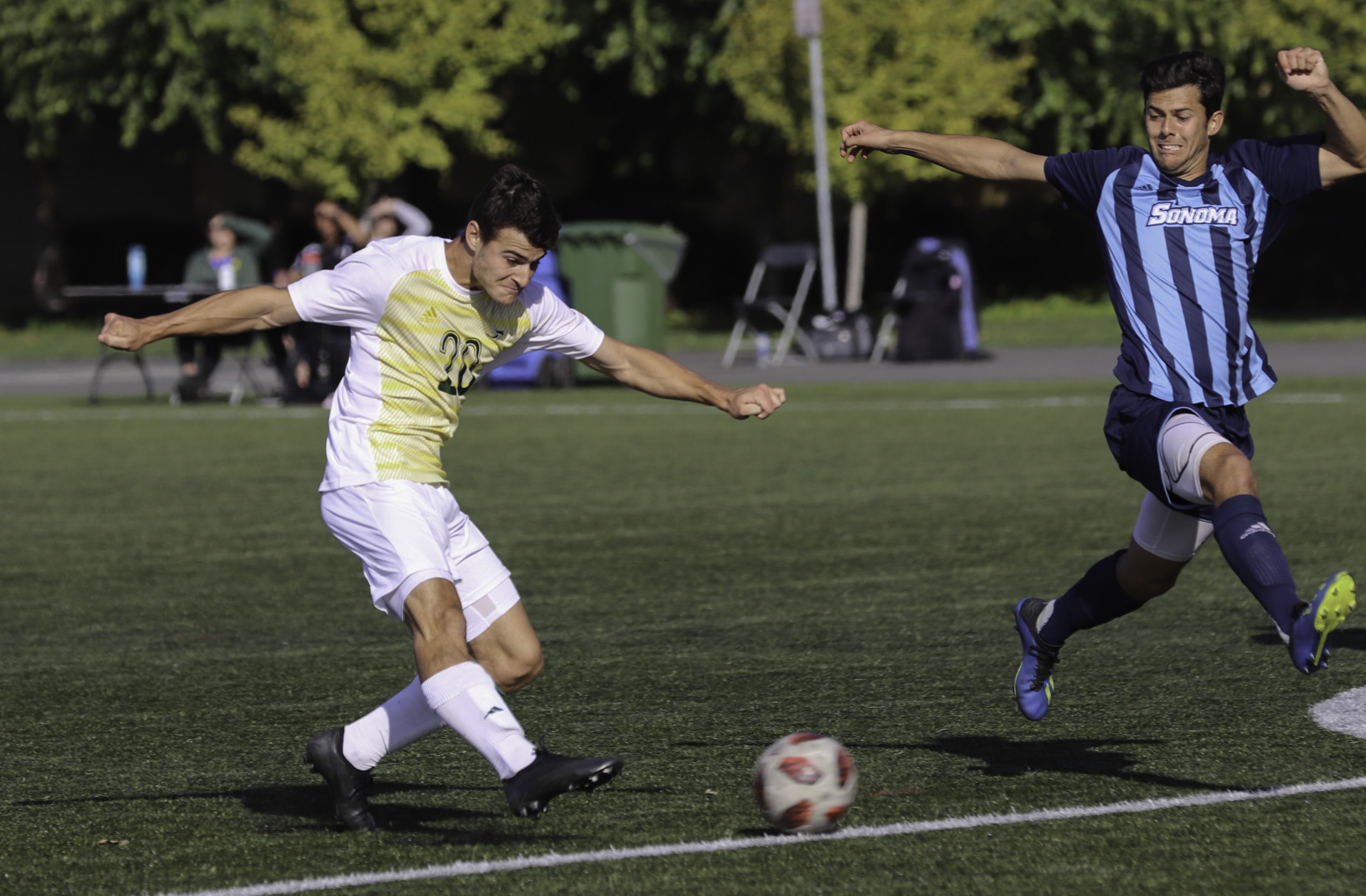
    MS.soccer008MS
    Junior forward Isaiah Dairo’s clean run to the box is interrupted by a sliding Sonoma State defenseman. | Photo by Matt Shiffler.

    “We have to be sharper in transition. We get caught up with what the ref is doing when we need to just stay sharp.” said sophomore forward Marco Silveira.

    HSU responded seven minutes later as Marco Silveira was able to find the net from a rebound off a Sonoma defender to give the Jacks a 2-1 lead.

    The Jacks weren’t finished yet as Dalton Rice capitalized off a corner kick with a header in the 40th minute to give HSU a 3-1 lead before entering the half.

    “We stayed dangerous,” said Silveira.

    Deep into the second half the Green and Gold finished with another goal at the 70:10 mark. Silveira kept the Jacks offense dangerous with a pass to freshman forward/midfielder Devin Hauenstein giving them a 4-1 lead.

    Sonoma’s Sebastian Santos was left alone at the end of the game and knocked in his second goal of the match to set the final score at 4-2.

    Women’s soccer will face Cal State Monterey Bay Thursday, Oct. 25 at 12:30 p.m. in another home game.

    HSU Men’s Soccer will follow as they too face Cal State Monterey Bay at 3 p.m. at the College Creek Field.

  • OPINION: The “N” word

    OPINION: The “N” word

    No clear line for who can use the N-word and who can’t

    The N-word is probably the most loaded word in the English language today. Generally, it is understood that the use of the N-word is reserved for people of African-American descent. But there are views on the exceptions, or lack thereof, of the word’s usage.

    Can Latinx people use it? What about people who are mixed race? And if not, just how black do you need to be for the word to be deemed acceptable to say?

    As someone who is mixed black & white, it is something that has always been on my mind. I personally don’t use the word, but not because I don’t believe I have the right to. I just didn’t grow up with it being used around me. To me, this is one of the biggest factors, other than race, for whether you should be using the word or not.

    Larry Wilmore, former host of “The Nightly Show with Larry Wilmore,” now has a podcast called “Black on the Air.”

    “White people, just don’t say n—-, just don’t say it, just don’t say it and everything will be okay, trust me — you shouldn’t even want to say it,” Wilmore said.

    I think most of us can agree on that. But when you’re mixed race, like myself, the rules can get blurry. I grew up in a relatively well-off community where the N-word was never used. It was never part of my surroundings growing up, and using it now feels forced and unnecessary.

    Latinx people have had to endure racism in America just like African-Americans have, but they haven’t experienced the specific form of racism that is anti-blackness. This is where I start to take issue.

    The N-word comes from the Latin word “niger”— which means “black.” And you probably won’t hear someone who is African-American using derogatory terms that are originally intended for a different race.

    I do think that it is great that some black communities have flipped the meaning of the N-word from a negative to a positive, but if they didn’t use it at all, then there would be far less white kids, who love rap, running around and saying the N-word because they don’t know any better.

    I also don’t think that other ethnic minorities should get a pass from saying it because they also experience racism. It’s a similar but different struggle.

    When it comes down to it, the word is racist.

  • Consent project a reminder of empowerment

    Consent project a reminder of empowerment

    Check-It’s eighth annual event promotes empowerment and support

    The Consent Project, a seminar session at Humboldt State University on Oct.16, was hosted in an effort to create a more consent and survivor centric campus.

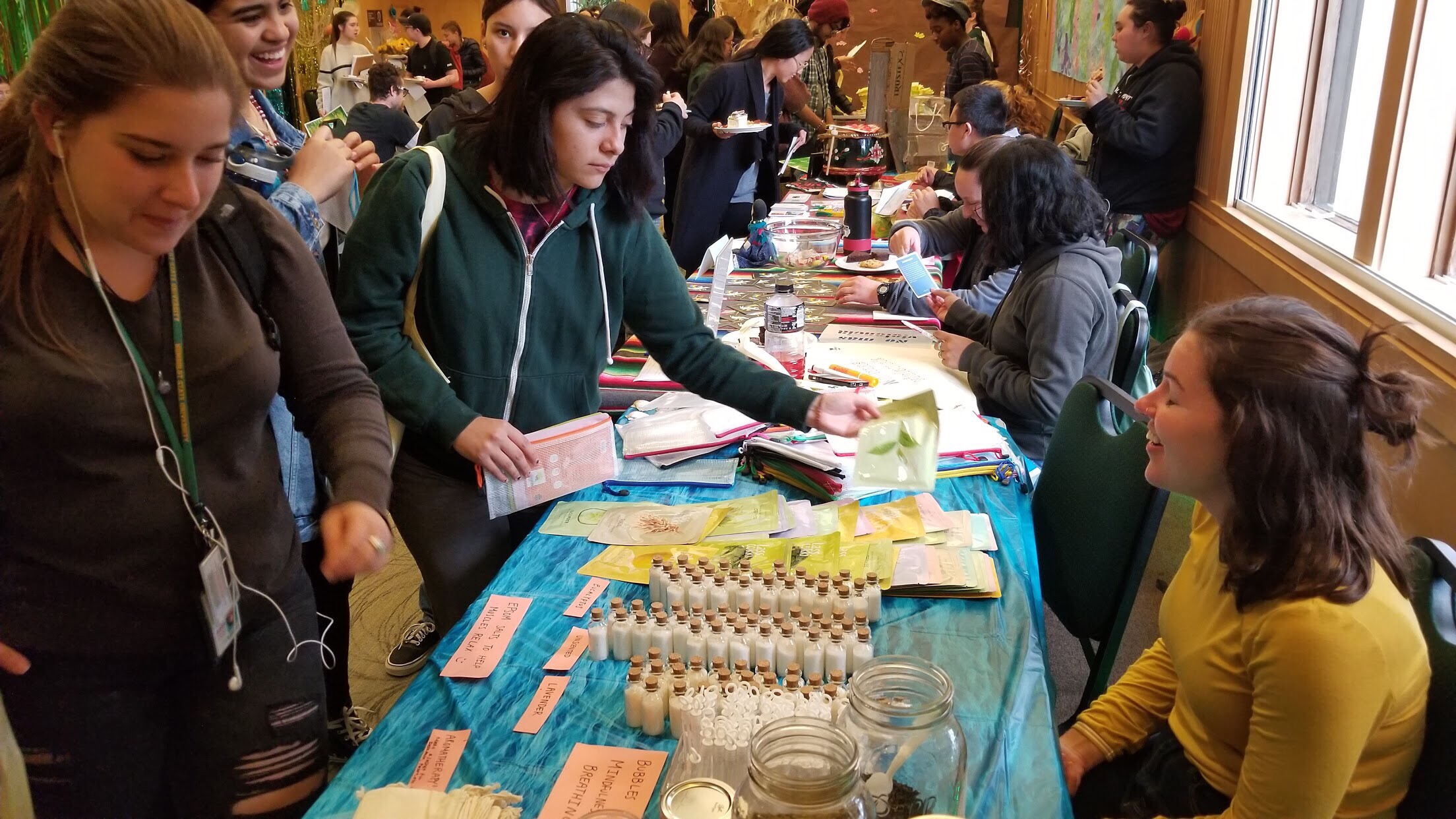
    Stands with activities and campus resources were set up in the Kate Buchanan Room for students of all genders to participate in.

    Juliet Kallen, pure health educator, set up a “self-care pack” stand, filled with salts, aromatherapy herbs and facial masks.

    “We let you do what you want,” Kallen said. “We offer products that help take care of the body, because that is important.”

    Dalia Rivera, another pure health educator, set up a stand called the “community mural” where students can write and draw what is consent to them.

    “For me, consent is good communication with your partner,” Rivera said.

    The Campus Advocate Team was also at the event to offer help for people who are victims of sexual violence.

    Haydee Carrillo, bilingual client advocate for CAT, contributed to the project by describing some of the things that CAT does for students.

    “We offer free 24/7 anonymous calls for those who were victims of violence,” Carrillo said. “Title IX gives us the ability to help students of all genders.”

    Title IX is a federal law that prohibits sex discrimination in education. Regardless of gender identity, students have access to resources like CAT to help them if they are victims of rape and sexual violence.

    According to the Clery Act posted by Humboldt State campus police on Sept. 5, there have been two cases of dating violence and one case of domestic violence that occurred on campus in 2017.

    “This is a space for victims to be listened to,” said community outreach coordinator for CAT Paula Arrowsmith. “With all this news that’s been coming out lately, it has victims fall silent, and never speak of their abuse and struggle.”

    At the end of the seminar, an hour was dedicated for the students who are survivors of sexual violence. An open mic was allowed for survivors to speak of their abuse and their trauma.

    “It’s brave to come up to strangers and tell of your abuse,” Arrowsmith said. “For those who don’t come up tonight because you’re afraid, you’re also brave for listening.”

    For those who need help dealing with sexual violence, domestic violence, stalking, and/or sexual harassment, call or visit these organizations:

    CAT’s 24 hour Hotline: (707) 445-2881

    TTY Line (M-F 8:30-5:00): (707)-443-2738

    https://www.checkithsu.com/

    www.ncrct.org

  • OPINION: Hold the Praise for the Robber Barons

    OPINION: Hold the Praise for the Robber Barons

    It took the murder of a journalist, but we should have acted sooner

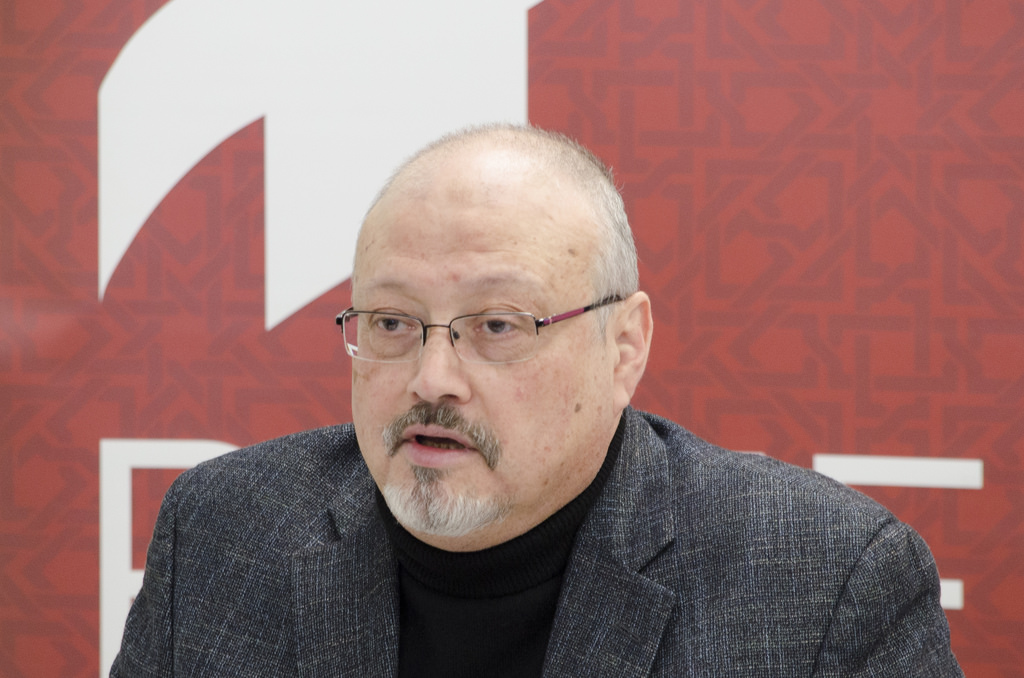
    The death of Washington Post journalist Jamal Khashoggi has caused an uproar amongst those who run our society.
    Khashoggi was allegedly murdered by Saudi agents at the command of their Crown Prince, Mohammed bin Salman. Khashoggi, who was reported “missing,” was last seen entering the Saudi consulate in Turkey on Oct. 2. It has since been discovered he was murdered within minutes of entering.

    Turkish officials, however, stated they had evidence of the supposed hit, thus prompting calls for boycotts and punitive action from the United States—where Khashoggi was a legal resident.

    Various owners of industry have cancelled their trips to a conference colloquially titled “Davos in the Desert,” where investment in Saudi Arabian companies is discussed as well as their role in the future global marketplace. But once again, our “Vulgarian-in-chief” has expressed his reluctance towards any sanctions against a country that buys an alarming number of weapons—which are in turn being used to commit war crimes, mass murder of civilians, and contributing to what the U.N. is calling “the world’s worst humanitarian crisis.” So, while we should applaud the neo-Robber Barons for pulling out of a conference that would further their economic hegemony, we should condemn them for not pulling out sooner when innocent lives have been bombed for nearly three years.

    According to the U.N., 22 million Yemenis are in need of some form of humanitarian assistance and protection. 8.4 million are unsure of where their next meal is coming from, 16 million do not have clean water, and less than 50 percent of the health facilities there are in operation. The fact that it took the murdering of one journalist to finally have a major call from the mainstream press to pushback on Saudi Arabia is appalling.

    Earlier this year the Crown Prince, known as MBS, visited the U.S. and met with a number of influential icons. In an interview with 60 Minutes he was heralded as an “emancipator of women,”—because he allowed women to drive, but only under the guidance of a man—but they failed to properly push him on the atrocities in Yemen. MBS even met the with Dwayne ‘The Rock’ Johnson who said it was “a pleasure to have a private dinner” with the dictator. MBS also met with the tech giants Bill Gates, Tim Cook of Apple, and Elon Musk. He met with Bob Iger of Disney, Richard Branson and the reincarnation of Andrew Carnegie (this is not a compliment), Jeff Bezos.

    All of these Robber Barons met with a man who is almost single-handedly responsible for the deaths of tens of thousands of civilians and for the crisis that is affecting tens of millions of innocent lives, and all they could do was to heap praise on him.

    The coverage of the Yemeni catastrophe by the mainstream media has been lacking at best. However, CNN did recently publish a story where they were able to link the weapons used to kill 50 children and injure 77 to American business Lockheed Martin—with most atrocities taking place in the world right now, America’s hands are not clean. It is inexcusable that what it took to have a major call to sanction Saudi Arabia was the death of one journalist, when they have been systematically killing and oppressing the citizens of the “Arab world’s poorest country” for years.

    In his defense MBS said “I’m a rich person and not a poor person. I’m not Gandhi or Mandela.”

    Yeah, we know.

  • Two Things the Media Get Wrong About Sexualized Violence

    Two Things the Media Get Wrong About Sexualized Violence

    Humboldt State University professors discuss media coverage of sexual assault 

    A discussion panel on media coverage of sexualized violence will be hosted by Journalism Professor Victoria Sama and Communications Professor Maxwell Schnurer.

    The discussion will take place in Founders Hall 118 on Tuesday, Oct. 23 from 4:30 p.m. to 5:30 p.m. The discussion will also be free and open to the public.

    In their panel, “Two Things The Media Get Wrong about Sexualized Violence,” Sama and Maxwell will be taking a look at language and strategy used by the media in sexual assault cases.

    Sama has researched how publications report sexual assault cases since 2003 and Schnurer has focused his research on social movements, language, power, and freedom.

  • Krushin’ it

    Krushin’ it

    By Jonathan Bratthall Tideman and Ross Milne


    Student by day, resident Redwood Drag Queen by night

    In many ways Bryan Pendant is just like other students at Humboldt State University: going from class to class, studying hard at the end of each day and hanging out with friends. However, every Friday night, he performs a drag show as his female alter-ego, Kandy Krush.

    Kandy is bold and brash. She is a self-confessed “diva” who doesn’t care what anyone thinks about her.

    Pendant, a child development major at Humboldt State, said as Kandy Krush he will “drop it so low, I won’t be able to get back up.”

    Pendant started doing drag after taking part in a dance battle with one of his close friends. After hearing the audience cheer for him, he felt they would love him as a drag queen. After that night, Kandy Krush was born.

    On average around fifty people turn up every Friday to Kandy Krush’s performances at the Redwood Dorm’s common area, this, unfortunately leads to many of the shows being shut down due to the excess of people as it is considered a fire hazard.

    “When I perform I’m like, oh my god, all these people are here to watch me,” Pendant said. “How did they hear about me? I thought there was going to be like a few people, but there was like eighty or ninety people and they had to shut it down because it was a fire hazard.”

    Pendant said he has always felt he has needed to do something different with his life, being very introverted throughout his teen years and coming to college. He felt he needed to change and drag artistry appeared to be the answer.

    “Through drag I express myself and my feelings,” Pendant said.

    As Kandy Krush, Bryan sings, dances and mimes for the audience putting on a show that is bursting with emotion. He often starts off with fun, early-2000’s pop songs including Avril Lavigne’s “Girlfriend” which perfectly sets the tone for his show and gets the audience cheering immediately.

    Pendant’s favorite song to dance to is “Dontcha” by The Pussycat Dolls and it is clearly an audience favorite also. He said he loves the song because it allows him to have fun with the people watching him, getting up close and giving them personal dances. Kandy Krush clearly has her fan-base, and they’re a dedicated one too. However, he often ends with a slower song to play himself out.

    The favorite part of performing for Pendant Bryan he says, “is getting up close with my audience and giving them a personal dance.”

    Pendant hopes to one day take Kandy Krush on the road and be on the hit TV series, Rupaul’s Drag Race, by the time he is 30 years old. By then he hopes to have developed his act a lot more and have more routines.

    He loves the art of drag, performing it gives him a “rush of adrenaline” and the most rewarding part of performing in Pendant’s eyes is seeing the look on the faces of his audience.


  • Missing but never forgotten

    Missing but never forgotten

    Unsolved indigenous people’s cases not a priority for law enforcement

    Khadijah Britton, a 23-year-old of indigenous descent, went missing on Feb. 7 in Covelo, California. Britton’s abusive ex-partner was a suspect but because Britton’s body was—and still is—not found, the ex-partner was released.

    Cases like Britton’s disappearance are fairly common with many more indigenous people still missing all over California.

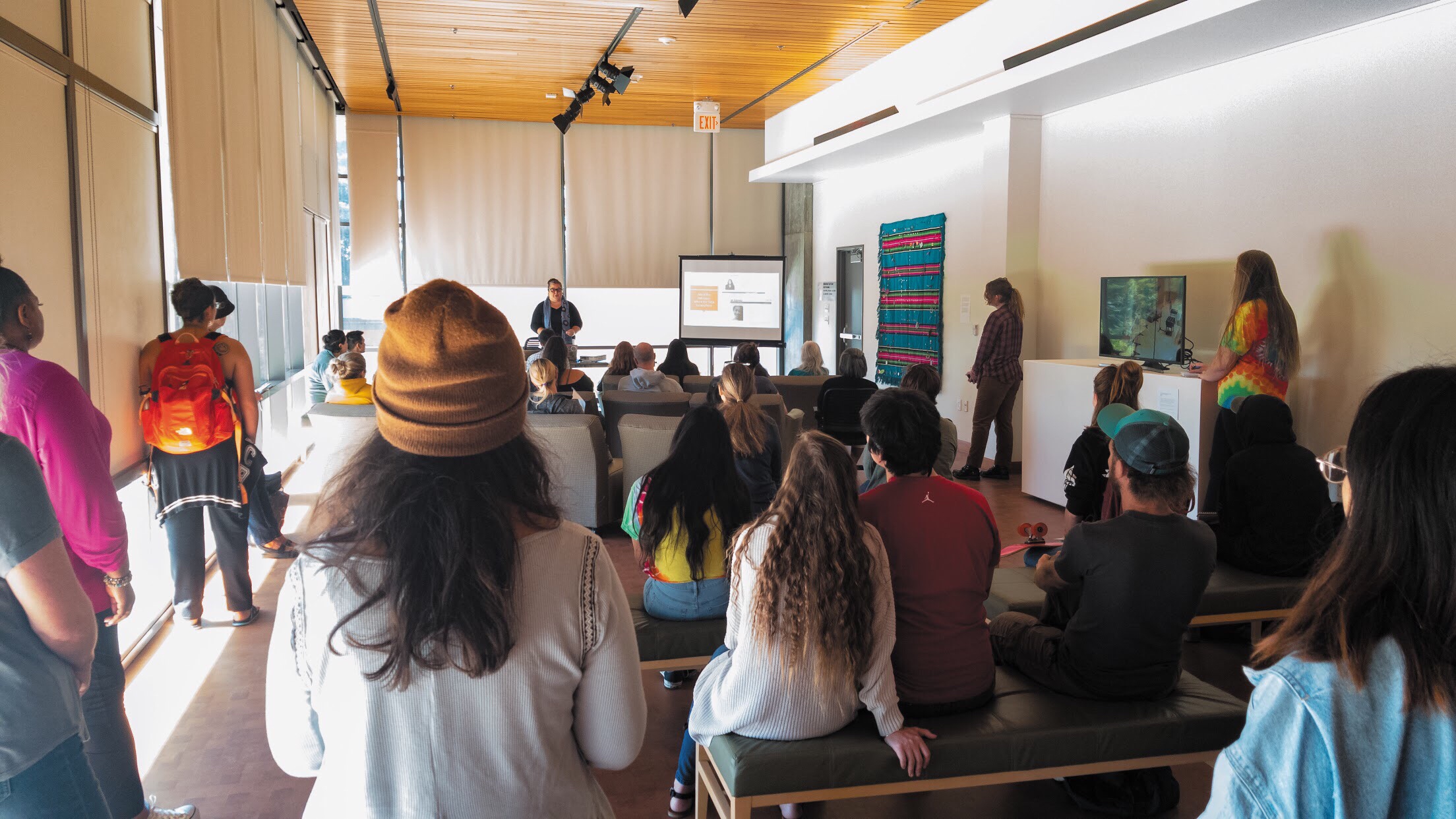
    Annita Lucchesi, researcher and resident of Humboldt County, came to Humboldt State University on Oct. 12 to present to students her findings on missing indigenous people.

    “We can’t address violence we don’t talk about,” Lucchesi said.

    Lucchesi brought up issues like police pushing aside missing indigenous people cases and waving off their disappearance as “runaways.”

    According to Lucchesi’s findings, about 93 murders and disappearances remain unsolved in California. 25,000 to 30,000 indigenous people have gone missing or have been murdered in the United States and Canada since the 1900’s.

    Lucchesi’s researched police documents, obtained through the Freedom of Information Act requests, include news articles, e-mail respondents and social media posts.

    “A lot of the police departments have been very helpful with providing documents,” Lucchesi said.

    HSU student Jen Tatman was surprised with how recent some of the cases were.

    “This is more prevalent than ever,” Tatman said.

    Charley Reed and Daniel Anderson, both students from HSU, left the presentation recognizing the problems with cases of missing indigenous people going cold.

    “In order to heal the wound, we first need to recognize that there’s a wound in our community,” Reed said.

    “Everyone has a role to play, everyone should get involved,” Anderson said.

    Lucchesi’s presentation also provided some solutions to bring the high rate of missing indigenous people to attention.

    “Call your local law enforcement, make FOIA requests for these cases,” Lucchesi said. “Building interests in solving these cases, is a community driven effort.”


    The article has been updated with a name correction and corrected 1970’s to 1900’s. 10.22.18
  • Community still demands ‘Justice for Josiah’

    Community still demands ‘Justice for Josiah’

    Police are past their estimated time for solving the more than one-year-old crime

    He was smart. He had goals. He came to Humboldt to avoid the challenges of South L.A.

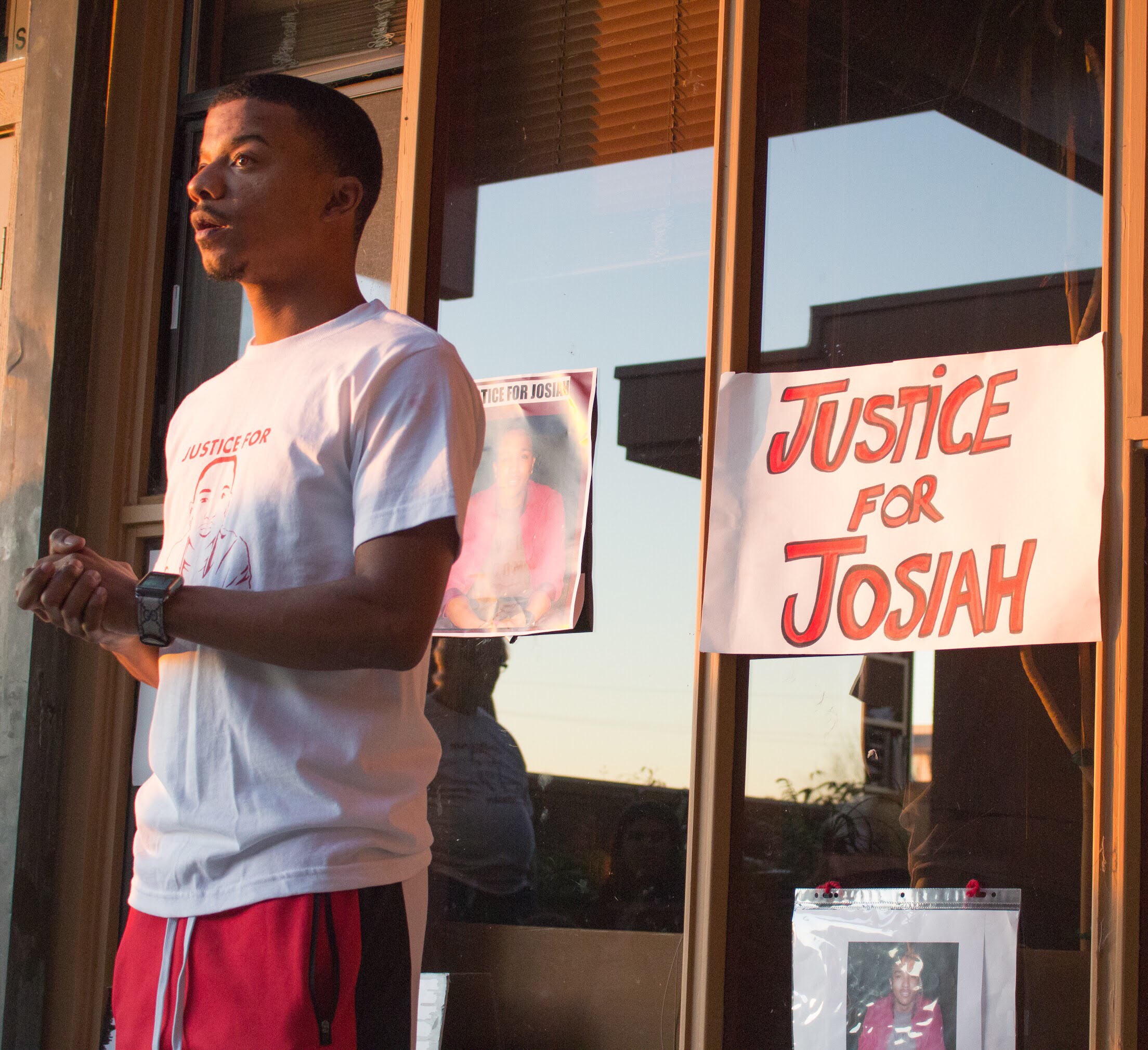
    These words were spoken outside of Arcata City Hall by Karim Muhammed, a friend of David Josiah Lawson. Lawson was murdered on April 15 2017 and his case still remains unsolved.

    Discussion on race and safety in the community were the main subjects amongst community members on Oct. 15. Tears streamed down faces as homemade posters of Lawson were hung on the walls in front of Arcata City Hall.

    Muhammed met Lawson their freshman year in the dorms at HSU. He said he misses Lawson and was at his dorm everyday.

    “He was one of the first people I met when I moved to Humboldt,” Muhammed said.

    Muhammed said he thought Arcata was safe compared to south L.A but that isn’t his experience. How to keep moving forward he said is to bring awareness and continue to inform incoming students about Lawson’s murder.

    “We need to get it solved, get new people in power, get people informed and vote,” Muhammed said.

    Muhammed said the goal is to make the community safer but many people in the community are still oblivious to the death of Lawson or they just don’t care. When he learned of the roster release of the HSU’s predominantly African American student clubs to the Arcata Police Department, Muhammed said that was a big red flag. He said this shows where they stand with the situation and further proves their indifference.

    “People choose what they want to believe or they just don’t want to believe,” Muhammed said.

    Meg Stofvsky, a retired school psychologist, said the vigil’s are held to continue remembering Lawson as well as inform people who are new in the area. Stofvsky was representing Charmaine, Lawson’s mother, and said Charmaine has caught the interest of the California State University system about her son’s murder. She said Charmaine has been travelling to other CSU’s to talk about safety on campus and will be in Sacramento later this week.

    “We need a firm insistence we are not going to continue to let this happen,” Stofvsky said.

    It has been 18 months since Lawson’s murder and Stofvsky said the county seems to be sliding backwards. She said we need to continue having resilience and hope and to keep the Arcata Police Department accountable. Stofvsky said the APD recently gave a six to eight week time limit to solve the case and that limit is up.

    “We hear a lot of talk about progress from the APD but we haven’t seen any,” Stofvsky said.

    When Charmaine Lawson comes into town for court hearings or monthly vigils she stays at Sharon and Michael Fennell’s house. Both are HSU alumni and have been proponents seeking justice for Lawson. Sharon Fennell, was a KHSU DJ under the name Sista Soul and said she met Charmaine at the second vigil held for Lawson.

    “We show up once a month. This is a beautiful thing and Charmaine knows,” Fennell said.

    Fennell offered ideas to start selling “Justice for Josiah” shirts at the HSU bookstore to continue to bring awareness of his murder. She said that way Lawson would be seen more on campus and students would be reminded of what happened. A conflict Fennell has is that students come to HSU but then leave after they graduate, which keeps Humboldt from changing.

    “People need to come, stay, build businesses and change the community,” Fennell said. “If not we stay 80 percent white. Boring.”

    A member of the “Justice for Josiah” movement, Jill Larrabee, said actions by CSU and California Faculty Association are starting to take hold regarding safety on campuses but society needs to change. Larrabee said we need to learn, educate, heal and grow and get more people in office.

    “Humboldt County has the good ol’ boys club in power,” Larrabee said.

    To move forward Larrabee said white people need to converse with other white people about racism. Larrabee said racism is still a big problem here in Arcata but more and more people are coming out and acknowledging their privilege.

    “When we hear white people say we can’t guarantee safety, then we are going to demand it,” Larrabee said.

  • Jacks losing streak continues

    Jacks losing streak continues

    Lumberjacks volleyball is 0-11 in conference play

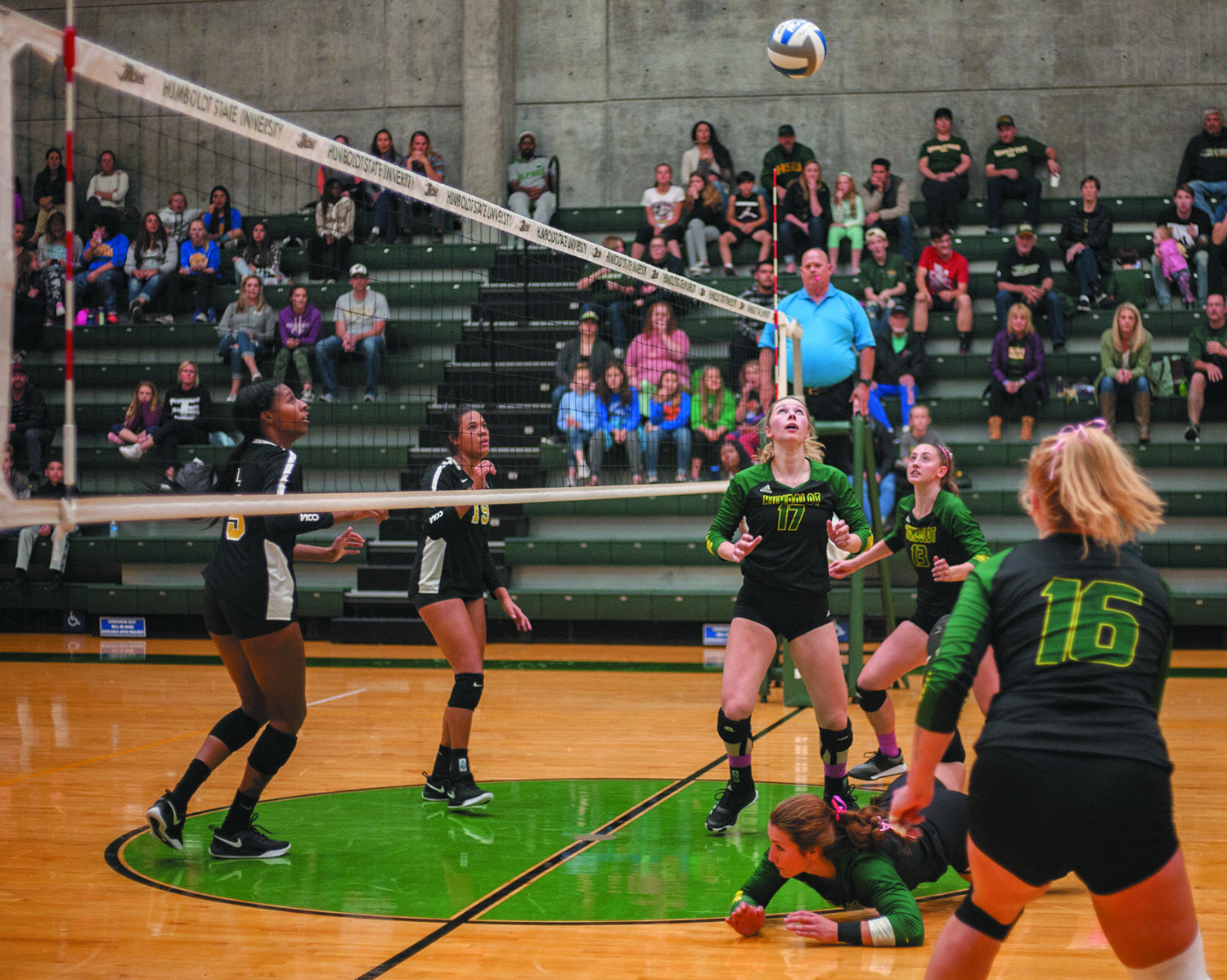
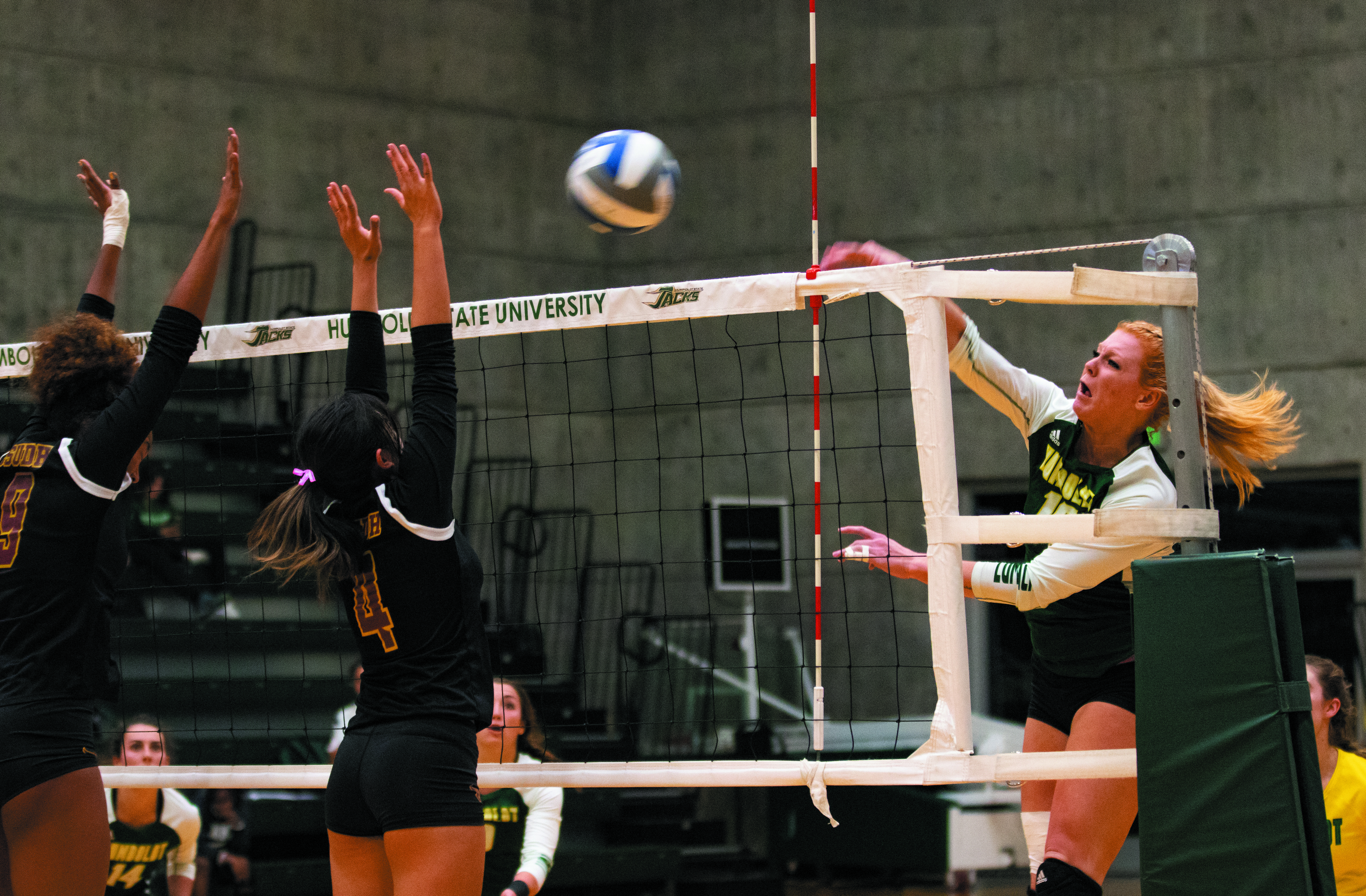
    The Lady Jacks volleyball team showed great effort at their home game against the Cal State Los Angeles Golden Eagles but ultimately fell in straight sets 3-0.

    Lady Jacks middle blocker Hannah Cantrell was able to return to her preferred position after some roster shake ups.

    “It felt amazing! After taking a break from the middle for the past couple of matches it felt good to be back in the position I know best,” said Cantrell. “I was pretty fired up to say the least.”

    In what was a competitive first set, both teams racked up kills but the Golden Eagles took the set 25-22.

    The Golden Eagles led the second set with seven kills over the Jacks total of three. The Lumberjacks tried to rally to match L.A before the end of the set but could not complete the comeback as the Eagles took the set 25-17.

    “We are having a rough season for sure,” Jacks head coach Kelly Wood said. “We’re a young a team and we’re working on development and growing every week.”

    With a significant amount of the players this season being freshman, it definitely changes things a bit.

    The Jacks began the third set and took an early 8-5 lead over the Golden Eagles but their success was short lived. L.A took over and won the game in three straight sets with a final of 25-16 in the last set.

    Even though the Jacks were dealt another loss, Coach Wood seemed to know exactly where she and the team stand.

    “We are trying to keep things into perspective and just keep getting better,” said Wood.

    Hannah Cantrell has remained optimistic and consistently exhibits a ‘never say die’ attitude on the volleyball court.

    “My goal for the rest of the season is to stay as consistent as possible, and continue to play as hard and as confident as I can,” Cantrell said.

    The Lady Jacks move to 3-16 overall and 0-11 in conference play. They will travel to SoCal as they go against the UC San Diego Tritons Oct. 19 at 7 p.m.

  • Retirement rhetoric

    Retirement rhetoric

    California State University Chancellor answers questions on Rossbacher retirement

    The process for Humboldt State University President Lisa Rossbacher’s retirement is underway and controversy looms in the search for a replacement.
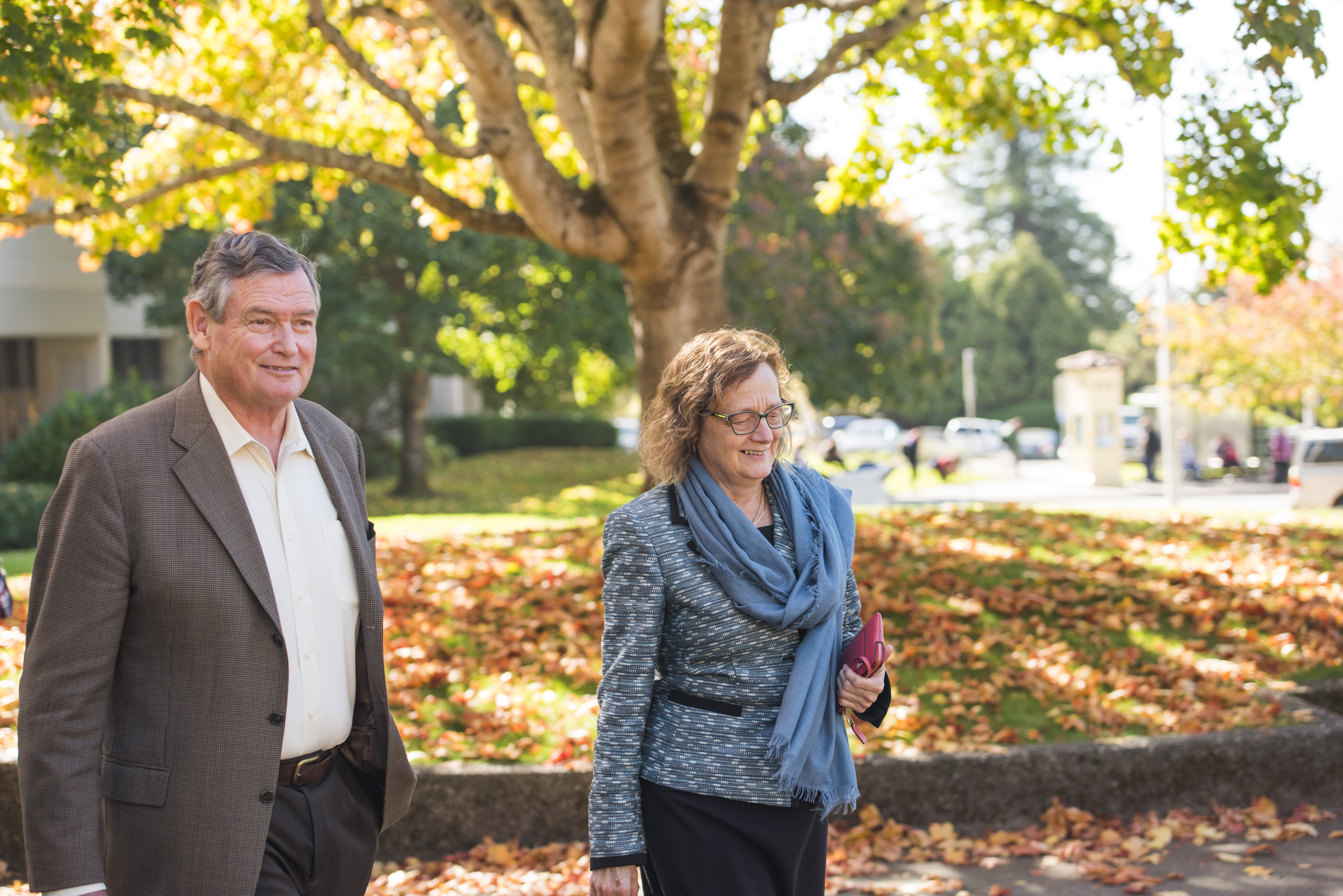
    CSU Chancellor Timothy White visited HSU on Oct. 9 to discuss the process of retirement for Rossbacher.

    “We will be back on campus in early February,” White said. “With a joint committee of trustees, myself and many members of the community here.”

    White said that the committee will also consist of an Associated Students member, staff, faculty and a university stakeholder representative. This committee will be used to create a job description for the presidential position so the best applicable candidates can apply. Ultimately the initial 40-60 applicants will be reduced to around six final candidates.

    The final six will have in person interviews at an undisclosed airport hotel on a tentative date in either March or April. From this group of six three finalists will be presented to the board of trustees of the CSU system in Long Beach sometime between May 15 or 20.

    “At the end of the day they are the ones who have the authority to make the final decision,” White said. “They are the only ones with the authority to do that.”

    White mentioned the controversy that has surrounded Rossbacher’s presidency as well as communications with HSU community on major decision making.

    “I don’t anticipate that any president on any campus will not have controversy,” White said. “The question is, how do you go into things that are difficult and engage the right people.”

    White said he believes decisions made at HSU were made in full discussion with “local stakeholders,” as well as with those who work across the CSU system.

    He touched on how these decisions are difficult to make across the CSU system and how many are a result of the lack of resources in our educational system.

    “There is always more demand then we have capacity for and it’s not if the decision making has been easy,” White said.

    White met with Arcata Mayor, Sofia Pereira, City Manager Karen Diemer, Interim Chief of Police Richard Ehle and other law enforcement and city representatives to talk about new information and their perspectives on the David Josiah Lawson murder case. While White could not provide any new details or information he has learned about the case, he was able to touch on his meeting with student representatives and organizations.

    44491359784_37ca4a6a55_o
    CSU Chancellor Timothy P. White with the Arcata Interim Police Chief Richard Ehle on Oct. 9 at HSU. | Photo courtesy of Humboldt State University

    “[Student feedback] was wide ranging and obviously everyone agonizes over Josiah’s death,” White said. “We had a conversation about safety, both emotional and physical safety, and about microaggressions.”

    White was also asked if he had notified Charmaine Lawson that he was coming to HSU to meet with both student and law enforcement representatives to talk about Josiah Lawson’s case and safety for people and students of color here on campus and off.

    “Not to my knowledge, no,” White said.

    When asked directly about a lack of safety for people of color here on and off campus, White said safety is the CSU system’s ultimate goal whether it was being achieved or not.

    “I want to be very clear of the goal,” White said. “I want our campuses to be welcoming and inclusive, so anybody, regardless of their background and their demographic can be a successful student.”

    The question of how the hiring process will address HSU’s lack of diversity between students and staff was also asked. While White did not give a solid plan to address this problem, White did say that he would like to make cultural changes and not just address this problem numerically.

    “It’s one thing to have numbers and say ‘haha we did it.’ That’s superficial,” White said. “It’s whether you have a range of people of different backgrounds coming together in a community to inform and educate the next generation.”

  • Letters to the Editor: No On M

    Letters to the Editor: No On M

    This veteran will vote No on Measure M, here’s why

    I’m a combat veteran of the Vietnam war that witnessed atrocities committed against Vietnamese civilians by some U.S. troops.

    The Philippine-American war that was initiated by President McKinley with his annexation of the Philippines was a ‘model’ for the later war in Vietnam. This included the massacre of civilians, burning of crops, killing of farm animals, herding of civilians into ‘detention camps,’ designation of certain areas where anyone could be killed (later in Vietnam called “free fire zones”) and the systematic use of torture.

    The Philippine-American war and insurrection lasted from 1898 to 1913 and the estimates of Filipinos killed range from 500,000 to 1.4 million. In Nov. 1901, the Manila correspondent for the Philadelphia Ledger reported: “Our men have been relentless, have killed to exterminate men, women, children, prisoners, and captives, active insurgents and suspected people from lads of ten up, the idea prevailing that the Filipino as such was little better than a dog.”

    It was in this war that the racist label ‘gook’ was first used against the Filipinos which made it easier for some U.S. troops to commit atrocities against them, later ‘gook’ was used in the Korean and Vietnam wars to the same effect. While McKinley was assassinated in 1901, the war and insurrection he started by the annexation of the Philippines lasted long after his death.

    The writer Samuel Clemens (Mark Twain) was a fierce critic of ‘U.S. Imperialism’ and McKinley’s annexations of Hawaii, Cuba, Puerto Rico, Guam, Samoa and the Philippines. In 1906, he described the massacre of an indigenous Filipino group called the ‘Moros’ by U.S. occupation forces.

    I paraphrase:

    600 Moros men, women and children had sought shelter at the bottom of a volcano and when the U.S. military found out that they were there, they brought troops and artillery up to the rim of the volcano and shot downward, slaughtering everyone, including babies in their mother’s arms.

    This reminds me of another massacre called Mylai in Vietnam where around 500 Vietnamese civilians, including babies clinging to their mothers, were summarily executed.

    This is what I think of when I walk by the statue of McKinley, and this is why I want it removed from the Arcata plaza.

    Sincerely,

    Robert J. Hepburn

  • Pollution sours Freshwater field trip

    Pollution sours Freshwater field trip

    Editor’s Note: This an editorial contribution from Deija Zavala. The author currently works for the Lumberjack as an Online Editor.

    I went in search of ferns and ivy, I found instead disgusting evidence of human existence.

    Ecotopia.Fav.10.13.18.DSC_0093
    Assorted garbage trailing down the hill just off Greenwood Heights Dr. on Saturday Oct. 13 in the Freshwater area, east of Eureka. | Photo by Deija Zavala

    On Saturday I explored a local watershed in the Freshwater area. The field trip was for an Environmental Science Management class where the goal was to visit a local watershed and observe.

    I’d seen the beautiful landscape of Freshwater once before and hoped the trip would give me an excuse to get lost for a few hours with nothing but my camera and the wildlife.

    Ecotopia.Fav.10.13.18.DSC_0094
    Pieces of cupboards, particle board, aluminum cans, and other miscellaneous debris pile up less than 15 feet from a sign threatening prosecution over illegal dumping on Oct. 13 in Freshwater. | Photo by Deija Zavala

    At first, it was lovely. I did a short hike and found myself taken by how separated I was from my Eureka apartment and all the rumbling of engines and people on a sunny weekend morning.

    Eventually, I came to a roadside area that had so much debris it looked like a dump. Carcasses, bones and trash of all kinds lay on the side of the road. There were boxes, tiles, kitchen cabinet pieces, bottle caps, cigarette butts and Taco Bell wrappers. It was awful to witness such disregard for the wildlife.

    Ecotopia.Fav.10.13.18.DSC_0087
    A cattle bone found next to chunks of kitchen tile and fallen redwood needles on Oct. 13 in Freshwater. | Photo by Deija Zavala

    The Environmental Protection Agency website states that this kind of pollution is called nonpoint source pollution. After a big rain or when snowfall melts, nonpoint source pollution can ultimately find its way into drinking water sources such as rivers or lakes and even into ground water.

    If you come across an illegal dump, especially if its near a watercourse, you can report it to the Humboldt County Division of Environmental Health at 707-441-5410.

    Ecotopia.Fav.10.13.18.DSC_0091
    Abandoned kitchen tiles sit haphazardly amongst trash just off Greenwood Heights Dr. on Oct. 13 in Freshwater. | Photo by Deija Zavala
  • Letters to the Editor: Vote No on Measure M and Remove McKinley

    Letters to the Editor: Vote No on Measure M and Remove McKinley

    One reader shares his opinion on Arcata’s statue of William McKinley

    The fight to remove the McKinley Statue from the Arcata Plaza has been a long fought battle. The McKinley Statue represents William McKinley, the 25th President of the United States, who gave birth to U.S. imperialism through genocide and colonized over 7,000 islands in both the Pacific and Caribbean by instigating the Spanish-American War and the Philippine-American War. Domestically, McKinley had a similar impact among the Native American community through breaking up several tribes, abandoning the African American community during times of race riots, and driving the U.S. into a depression.

    The current movement to remove the McKinley Statue was launched by Seventh Generation Fund for Indigenous Peoples because the Arcata Plaza is the same site where indigenous peoples were sold into slavery. Grassroots activism, led by the Historic Justice Alliance, successfully pressured Arcata City Council to vote to remove the McKinley statue on Feb. 21, and began the removal process. Following the vote, a small group of reactionaries organized a petition to keep the McKinley Statue, which was approved for the Nov. 6 ballot as Measure M.

    So what does Measure M do? If Measure M goes to a “Yes” vote it would do several things. First, it would overturn the Arcata City Council decision and keep the statue. Second, it would prevent any future modification of the statue. Third, it prevents Arcata City Council from having any future say on the McKinley Statue despite being the original body that erected the statue. Lastly, if the statue comes down before Nov. 6 then the Arcata City Council is legally obligated to put it back up.

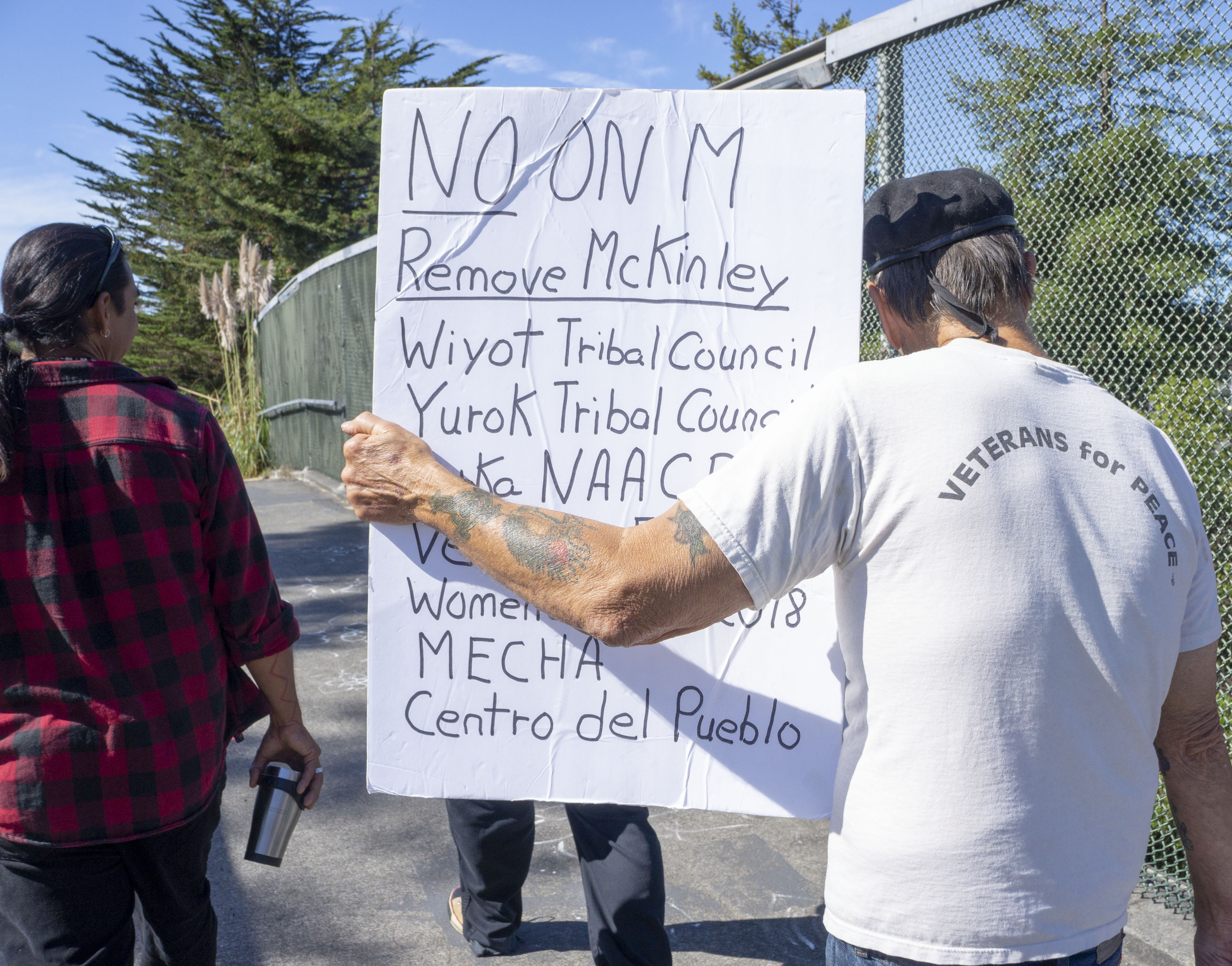
    For students, this means that the next step in removing the McKinley Statue is going to the local polls where we have the power to influence the policies that affect future students. Currently, the Vote No on Measure M campaign is endorsed by more than 40 community organizations, including the Wiyot Tribal Council. Students are encouraged to vote “No” on Measure M on Nov. 6 by registering to vote by Oct. 22 in Arcata at https://registertovote.ca.gov.

    Nathaniel McGuigan

    Regional Mecha Co-Chair Northern California Minister of Communication

    Humboldt PSL Email: nam449@humboldt.edu


  • Q&A Meet the Athlete: Lauren Reid

    Q&A Meet the Athlete: Lauren Reid

    The Lumberjack catches up with Women’s Volleyball star Lauren Reid

    Lauren Reid is a 20 year old, third year volleyball player leading the Lady Jacks in kills this season. She is from Riverside, California and is majoring in Elementary Education here at Humboldt State.

    Q: Why did you choose that major?

    A: I was kind of torn actually between that and kinesiology, but I’ve been surrounded by kids my whole life. My mom runs her own daycare out of our home and she’s been doing that my whole life. I grew up around kids and I coached over the summer. Helping and learning is what I love to do, so I just took that into teaching in the classroom.

    Q: What grade would you teach?

    A: I wanted to do younger kids until last summer when some of the kids I was coaching had a little impact on that! It’s the attention span. I want to be able to get to know their personalities. It was kindergarten. But now it’s fourth grade, fifth grade, but for sure elementary.

    Q: What do you miss most about home?

    A: I miss the sun. I’ll take any sunny day any chance I get up here. I miss feeling like I’m at home. I miss the smell of pollution to be honest, and the sun. I know that sounds crazy, but it’s true. I miss my family for sure.

    Q: What restaurant would you bring up here to Humboldt from home?

    A: Ohhhh, only one? “B-Dubs,” I miss “B-Dubs” a lot. I could go “hammy” on some wings at Buffalo Wild Wings.

    Q: Is it just the wings? Or do you like hanging out with your friends?

    A: It was always just fun to eat there and we’ve had a few parties there too. It’s just an overall good place to have fun and get good food especially if you like sports. I would bring the whole environment up here to NorCal and bless them.

    Q: What do you like most about being here in Humboldt?

    A: I like that I can be independent. Granted, I love my family to death and love all my friends but I like living under my own roof and having my own rules has been a real go-taker for me. One of the reasons I wanted to move away from home was because I wanted to grow up and learn to do things on my own. Grocery shopping for yourself and paying bills or whatever it may be.

    Q: What do you dislike most about Humboldt?

    A: I dislike the weather. Extremely. It gets really, I don’t want to be dramatic, but it gets really depressing. When it gets cloudy and rainy for weeks at a time I get so depressed. The sun literally brings me joy. That and the distance. We’re kind of by ourselves and lonesome up here. I want to get out of here but I don’t want to have to drive five hours to do that. We’re on an island! We’re trapped!

    Q: What position do you play in volleyball?

    A: I’ve played right side for the last two years. I originally played left side in high school. But this year I finally get to play left side again and I’m really happy about that!

    Q: Did you come here to play volleyball?

    A: Yes, I did. I wouldn’t be here without volleyball. I actually didn’t even know Humboldt was a school until I heard that a Humboldt coach was recruiting me. In these last three years it’s taught me more than anything did in high school. I’m grateful that it brought me up here because I’ve met some of my best friends that will last a lifetime.

    Q: Are you a competitive player or an emotional player?

    A: People actually think I look really pissed off when I’m playing or unmotivated, but I’m actually very, very competitive. I just stay to myself and stay very focused.

    Q: You’re killing it on the court, but the team hasn’t won a game yet this season. How do you deal with personal success when the team isn’t excelling in the same ways?

    A: It’s tough when you’re doing your job and doing really well, but your team isn’t winning. You get to the end of the game and you’re like, damn, the team lost but I got this many kills or whatever. I guess I’ve been torn a few times this season. If we can get a couple people getting 10 to 15 kills per game, then we’ll be winning. It would be a game changer.

    Q: Where do you see yourself in five years?

    A: I see myself done with college. I better be! Back home, for sure. And honestly hopefully teaching at the elementary school that I went to. I live half a mile from my elementary school. I mean, I won’t be living there anymore, hopefully I’ll be moved out by then! But I do love kids. So I hope that I can have a little baby bump or something, ya know? I really love kids and want to have them myself.

    Q: It’s time for my favorite question, who is your celebrity crush?

    A: I feel like I can’t just have one, but every time I see him on TV and in his music videos, I’m like, yeah, that’s the one. Maybe Drake!

    Q: Who is his competition?

    A: I only know their names in the show. Stefan and Damon from Vampire Diaries. But I don’t know their names, so I guess it goes to Drake!


  • Women’s Volleyball woes continue

    Women’s Volleyball woes continue

    Lady Jacks still on the hunt for first conference win of the season

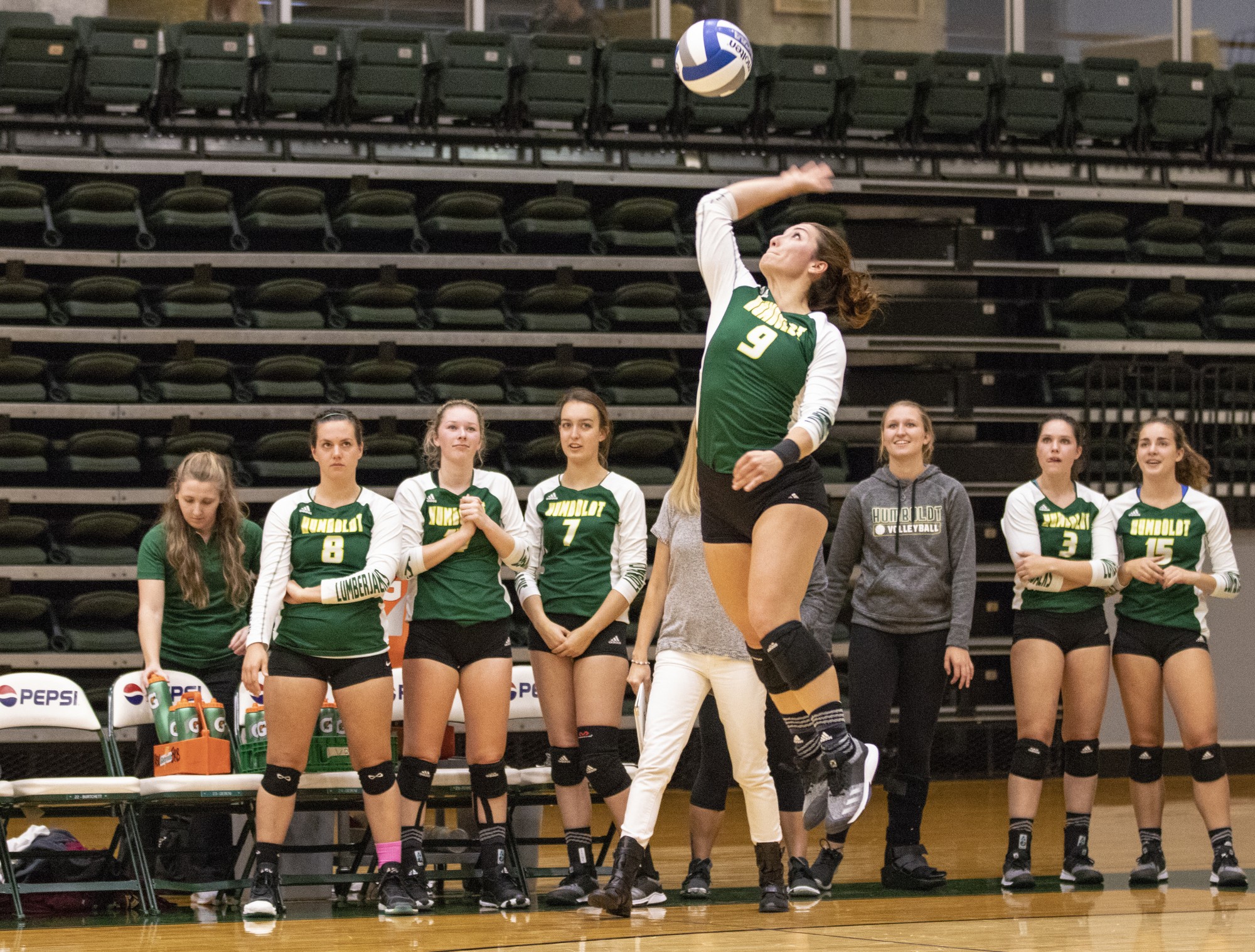
    The Humboldt State Lady Jacks put up a good fight in their 3-0 loss against the Cal State Dominguez Hills Toros on Oct. 11 in Lumberjack Arena.

    The first set was the most competitive set with nonstop action after Dominguez Hills started off hot on a 8-4 run. The Jacks rallied back to tie the set at 22-22 with kills by Lauren Reid and Savannah Horton before calling a timeout. The Toros rallied and were able to score three straight points to take the first set 25-22.

    “We keep fighting until the very end of every set,” junior middle blocker Emma Flewell said.

    Dominguez Hills then scored three unanswered points to take set one, 25-22.

    The Jacks marked the first kill in the second set, but it was hard to get Dominguez Hills out of a groove as they came out hot again and took a 6-1 lead. The Toros led most of the second set comfortably, but a run by the Jacks held a 18-15 lead. The run came a little too late as the Toros regained control and took the second set with a score of 25-22.

    “We all hustled, but I liked Natalie on the outside. She brought it,” Flewell said. “MVP honestly goes to [her], she hit the highest percentage on the team and we need that.”

    Jacks outside hitter Natalie Picone was an issue for Dominguez Hills on both offense and defense but the Toros responded with confidence as they rushed to set their lead at 12-6 in the third set.

    “I was fired up and ready to go,” Picone said. “I’m ready to fight for it and I want to bring all the energy I can.”

    The Jacks bent but did not break as they got within three points at a 13-10 score. However, the Toros completed their sturdy set with a 25-19 win and posed their best offensive set of the night by hitting .378.

    “It’s hard to see us lose, we’re just proud as a team,” said freshman opposite Madeline Woods. “Our outside Natalie Picone does it all and serves as a great role model.”

    Picone had nine kills, most coming very timely in the third set for the Jacks, and Lauren Reid led the way with 14 kills. Juliana Bertolucci led the team in assists with a whopping 34 total.

    “There were too many unforced errors and we need to stay focused at the end of those close games,” said Picone. “We’re still learning and it’s late in season but we need to start games strong. Once we come out with fire, we’re unstoppable.”

  • EDITORIAL: Steps toward reparations

    EDITORIAL: Steps toward reparations

    One week of restitution is simply not enough

    Last week was Indigenous Peoples Week at Humboldt State University. Next month will be Native American History Month. But Indigenous people exist all the time and live their lives everyday. It’s not enough to be recognized for a limited time of the year.

    Instead, all states should stop recognizing Columbus day, historically offensive symbols should be moved or removed and everyone should remember to include the injustices of indigenous peoples in conversations of the past.

    Christopher Columbus wasn’t a hero, he’s a lot worse than the majority of people imagine. He was a slave trader and sought out gold. Columbus and his crew took over modern Bahamas and Cuba, raped the women and children and killed the men in grotesque ways. The Pope decided their land was empty because only Christians could own land. This is only a brief blip in the brutal history colonializers had committed against the Indigenous people.

    Andrew Jackson pushed for the Indian Removal Act, displacing the Cherokee, Choctaw, Chicksaw, Creek and Seminole people from the Georgia/Florida land and forcing the entire tribe to walk to Oklahoma in the peak of a cold, snowy winter and killing almost 4,000 people.

    Fast forward to this millenia, the Internet has videos from the No DAPL protests in 2016 featuring militia shooting tear gas and rubber bullets at American Indian protesters.

    There’s a lot of history that Americans aren’t willing to learn about or teach their children in K-12 schools.

    No amount of guilt will help heal the generational trauma millions of American Indians live with in their DNA. There are some things people can do to help recognize Indigenous people in their life.

    An effective local effort is to vote no on measure M. If passed, Measure M will prohibit modification or destruction of the McKinley statue at the heart of the Arcata Plaza. The man who paid for the statue, George Zehndner, owned a young American Indian girl named Lucy. Lucy was among many young children who were sold as slaves in the Northern California area, after their parents were killed by citizens or their slave owners.

    Another action people can take is to know when it’s appropriate to bring up American Indians into intersectional conversations. Be inclusive when talking about minorities and injustices.

    People believe Indigenous people want reparations or justice for getting their land stolen, having their people massacred and having their culture appropriated. However, reparations for Indigenous people begins with remembering a history that has been erased.

  • Coast Guard gears up

    Coast Guard gears up

    Humboldt Bay Coast Guard prepare for the worst at Big Lagoon

    Despite a barbecue filled with pulled pork and dogs begging for attention, a meeting was held at Big Lagoon Campgrounds in Trinidad with an ominous purpose. Though the setting was light-hearted, the crew donned orange and black suits, preparing for the worst case scenario.

    “The swimmer is basically dragging you through what seems like a monsoon or a mini-hurricane from the rotor wash coming off the helicopter,” said aviation mechanic Matt Lareau, age 28 from Springfield, Massachusetts, still wet after being hoisted up to the helicopter for the first time.

    More than 40 members of the Coast Guard aviation unit went to Big Lagoon on Oct. 11 to practice their annual “wet drills.” The drills involve four training scenarios built around surviving a helicopter crash. The training covered raft and swimming drills, pyrotechnic training with flairs, land survival and vest itemization drills.

    Chief rescue swimmer Chris Razoyk, age 40 from Haverhill, Massachusetts, said this training was a chance for the crew to come together and become well acquainted with procedures before they are in a stressful situation.

    “Today is a good opportunity for the flight mechanics, pilots, whatever, to get a feel for what it’s like to be under the helicopter,” Razoyk said. “And to feel what it’s like for us, for them, to be in a real situation.”

    DC.IMG_7864
    Matthew Lindblad sets off a smoke flare at one station of the annual Coast Guard aviation training Oct. 11 at Big Lagoon Campground in Trinidad. | Photo by Deven Chavannes

    The crew wore neon orange flight suits resembling space suits and waded out into the lagoon to learn how to stay afloat and wrangle each other into a raft of bad scenarios. They also wore bulky black vests to carry survival essentials that weigh 30 pounds on their own.

    Avionics electrical technician John Kummerer, age 28 from Columbus, Ohio, experienced his first round of wet drills.

    “It’s good to know what you have to do, in case god forbid you do go down,” Kummerer said.

    The land survival lecture covered the use of sticks and clothing to create makeshift splints in the event of a land crash involving injuries. Interesting tidbits, such as peeing onto cloth to make it stronger, as made famous in the movie Shanghai Noon, were dispensed to educate the trainees and to also keep the mood light, in opposition to heavy training.

    Kummerer found the lecture to be not only helpful in the event of catastrophe at work, but in day to day life here in Humboldt.

    “You’re hiking and you don’t have any of that gear on you and you realize that you can use sticks, rocks, whatever for tourniquets,” Kummerer said.

    Kummerer may have more use for this practical training now that he’s found a new passion here in Humboldt: disc golf.

    “I had never even heard of it until I moved here,” Kummerer said. “And now I love playing disc golf.”

    About a dozen pilots and technicians in the lagoon waited for their turn to be lifted up into a hovering helicopter and dropped back down again; a drill that simulated what rescue swimmers and victims experience during a real rescue operation. For some trainees, it was for their first time.

    DC.IMG_8098
    A helicopter hoists up the Humboldt Bay Coast Guard at the annual Coast Guard aviation training Oct. 11 at Big Lagoon Campground in Trinidad. | Photo by Deven Chavannes

    Lareau had his first experience being lifted out of the water during these drills. Lareau said he wasn’t scared of the experience at all.

    “The guy that was hoisting us up, I work with him every day,” Lareau said. “So I have really no doubt in my mind that everyone up there has our best interest in mind.”

    The crew in the Coast Guard have dangerous jobs, but they are a tight-knit group, which makes the job, and living in a secluded place like Humboldt County, a little easier.

    “Everybody makes sure that you don’t feel alone,” Lareau said. “We’re pretty close.”

    After the drills finished, the grill churned out burgers and pork sandwiches by high-ranking Coast Guard officers. The crew seemed relaxed and at home despite the high-pressure trainings they had just experienced.

    “It’s exhilarating,” Lareau said. “That’s why we took jobs like this in the Coast Guard.”


  • Prison strikes reveal social costs of incarceration

    Prison strikes reveal social costs of incarceration

    Nation-wide prison strikes reveal problems close to home

    According to the National Reentry Resource Center, 9 million people are released from state prisons each year back into their communities.

    Michihiro Sugata, assistant professor of criminology and justice studies at Humboldt State University, said rural areas with high poverty rates have high incarceration rates.

    This means many families in Humboldt County are directly affected by people in prison. Humboldt county is just south of Del Norte county, home to Pelican Bay State Prison, California’s supermax state prison.

    “So many people in this community are tied and involved with this issue and should care,” Sugata said.

    From Aug. 21 through Sept. 9, prisoners in 17 states participated in boycotts, hunger strikes, work strikes and sit-ins. The nation wide prison strike was in response to the April 15 riot in Lee Correctional Institution, a maximum state prison in South Carolina.

    According to Shadowproof this was the deadliest incident of violence in a United States prison in a quarter of a century. Seven prisoners were killed when prison officials turned their backs on the riot they provoked.

    The strikes started on the anniversary of the 1971 prison rebellion in California’s San Quentin Prison and ended on the anniversary of the famous New York’s Attica Prison uprising of 1971.

    The Incarcerated Workers Organizing Committee demanded humane living conditions, access to rehabilitation, sentencing reform, and the end of “modern day slavery.”

    Sugata specializes in economic justice, and how finances work in society and correctional facilities. California has the largest public education system, as well as one of the largest prison systems — both competing for state funding.

    He said research suggests prisoners would have tremendous success if they bridged education with incarceration.

    Sugata said we have the resources and capacity to measure this benefit, it just comes down to political will. If we get people educated we give higher opportunity for employment. The number one thing to combat recidivism is employment.

    “We have the opportunity in California to do great things,” Sugata said.

    Sugata knows the social cost of incarceration is enormous, and that there are no direct social benefits for keeping people locked up.

    A study by the Vera Institute of Justice said that of the 40 states they surveyed, prison systems in the U.S. cost taxpayers $38.8 billion. Sugata said this escalates each year.

    “Bringing education to corrections would not only be morally great, but economically great,” Sugata said.

    Troy Williams, an HSU student who was formerly incarcerated at Pelican Bay State Prison, knows first hand the conditions inside prison walls and the importance of the strike.

    Williams said there isn’t a push to educate and that most people don’t care. There are people like Williams who are moving forward and would benefit from more services. Those still incarcerated would have more opportunity at education if the Incarcerated Workers Organizing Committee’s demands were met.

    “They want decent wages,” Williams said, “they want opportunities.”

    Williams said his reintegration wasn’t a smooth transition. He said there’s a need in Humboldt County to do more to welcome formerly incarcerated individuals.

    Williams said there are programs for veterans, but not for the formerly incarcerated — even though they suffer from the same issues. The prison strikes address stigma attached to incarceration.

    “I commend the men for getting together and starting the strike,” Williams said.

    An integral person in Williams’ life after release is Sharon Fennell, also known as her KHSU DJ name, Sista Soul.

    Fennell is a long time prison activist that has been following the nation’s trend of the growing prison industrial complex.

    Fennell said the radio station set her on the path to activism in the 80s, and has been fighting for prisoners rights since living in Humboldt County.

    Most people in prison will be released. It is in our best interest to have them come out whole and intact.

    “We want them better than when they came in,” Fennell said.

    Fennell said men and women who have never had access to education before deserve help from the universities. Educational experience is harder without programs and are needed.

    “Rehabilitation is not the correctional facilities M.O,” Fennel said.

    Zuzka Sabata co-founded the Pelican Bay State Prison’s first theater program under the California Arts Council Arts-in-Corrections. Sabata said participating in these types of programs greatly decreases recidivism, the tendency of a convicted criminal to reoffend. It helps people cope with being incarcerated and leads to having less behavioral problems in the system.

    “There needs to be community wide addressing of people reintegrating into society,” Sabata said.

    Sabata said our society’s predominant stigma is people can’t be rehabilitated and that needs to be changed.

    The idea of rehabilitation of creating environments where people can reintegrate into society is very important and the pathway needs to be paved to do so. There is a significant lack of support networks and employment that brings them back in the cycle.

    “Rural areas have a revolving door syndrome,” Sabata said, “we need more re-entry services.”

  • Cheap beer, cheap pizza, and free tunes

    Cheap beer, cheap pizza, and free tunes

    Student shredders take first flight at Jam’s Pint Night

    Icarus & Suns, a three piece band featuring Miles Oliart on drums, Nick Redfern on bass and Rahkiv “Rah” Lewis on guitar, played their first show at the Jam in Arcata last night.

    “We’re progressing and going somewhere now,” Oliart said. “I’m super stoked about the situation.”

    The group takes influence from a number of genres; citing musicians like Jaco Pastorius, Jimi Hendrix and Django Reinhardt as some of their favorite artists.

    “I honestly get my rhythm from Gabriela Quintero,” Lewis said. “She came to campus this semester, but I missed it and was bummed!”

    The Jam has been holding shows in Arcata for more than 30 years, claiming that the Foo Fighters played their first show at the bar on Feb. 23, 1995.

    The Foo Fighters actually played their first show days before on Feb. 19, 1995 in Seattle, Washington, but you can see how the legend would help shape the Jam’s persona for eager young musicians like Icarus & Suns.

    SB.IMG_8288
    Rahkiv Lewis and Miles Oliart, of Icarus & Suns, rock The Jam’s stage during their last Thursday Pint Night show at The Jam in Arcata on Oct. 11. | Photo by Sean Bendon

    Icarus & Suns has only been practicing for a month or so, but the trio already seems to have found their rhythm, playing nearly 40 minutes of downtempo Latin-influenced songs to a packed house on Thursday night.

    “We have three hours [of songs] or something ridiculous like that,” Redfern said.

    Although the band was limited to a 30 minute set, it didn’t take long for the crowd to get in groove with them.

    “Cheap beer, cheap pizza, and free tunes,” said crowd member Connor West. “People are out here having a good time.”

    The name for Icarus & Suns comes from the myth of Icarus and Daedalus attempting to escape Minos maze in Greece with wings made of wax and feathers. Icarus gets carried away with his ability to fly and goes too close to the sun, melting away his wings and sending him to his death below.

    “I wanted to remind myself not to fly too close to the sun,” Redfern said. “Hopefully we don’t melt away.”

  • Moon Cycles mentality

    Moon Cycles mentality

    Small Arcata bicycle shop with good intentions 

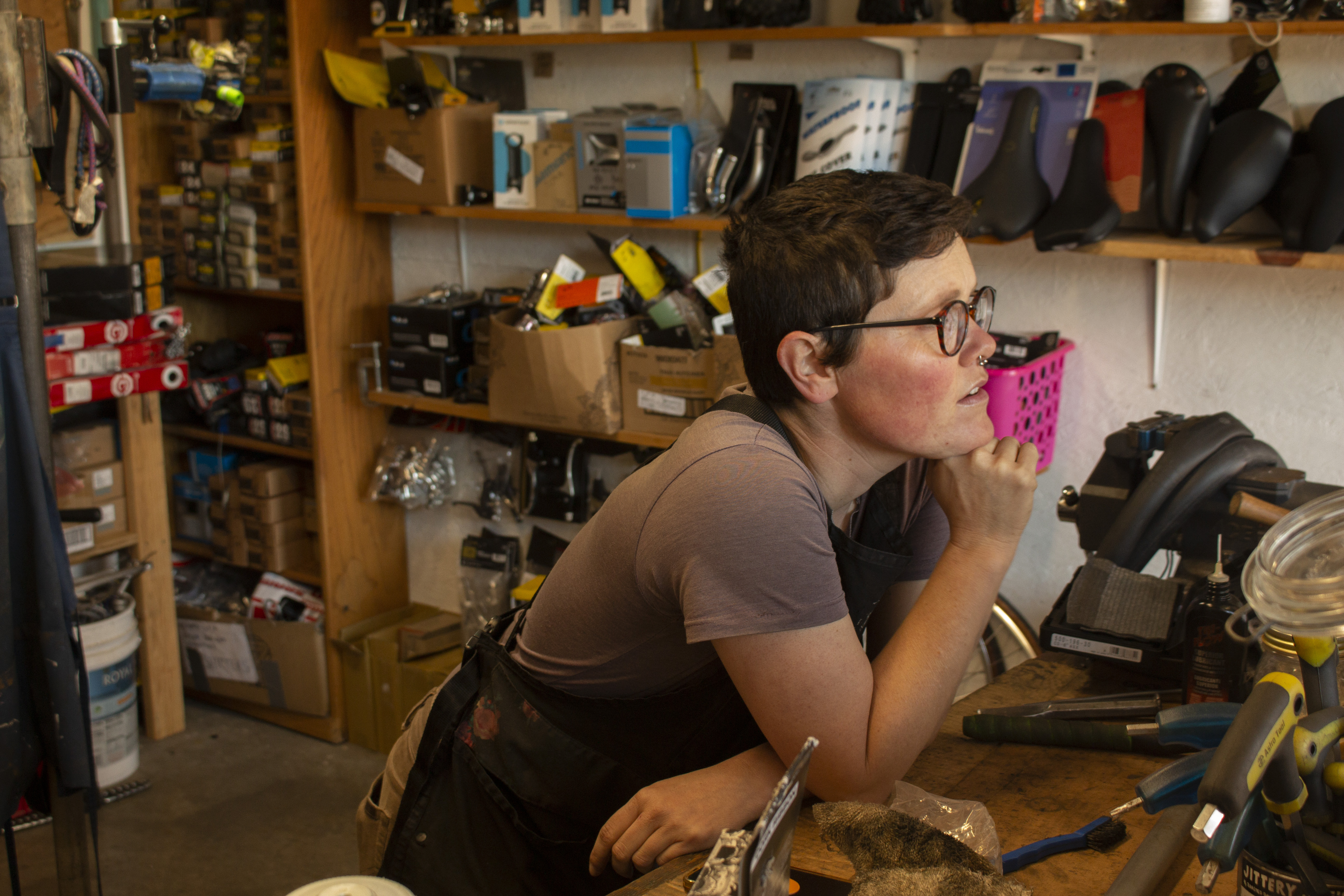
    When Sage Saatdjian and Sprout Page teamed up in 2016 to create Moon Cycles, much more was being made than a bike and roller skate shop. A whole change in culture toward bike repair was stirring.

    “We strive on being a comfortable space for everyone, especially women and queer folks, to serve the average cyclist” said Saatdijan. “We can do the fancy and expensive repairs if we need, but we want to help fix what needs to be fixed.”

    Sage and Sprout prides Moon Cycles and their mission on a consent-based policy between their customers to ensure transparency in what they’re doing to their bikes and if that’s what they want.

    “We don’t do anything without bringing it up with people first,” Sprout said.

    Most people can relate to being at a mechanic and not knowing what questions to ask or how to negotiate pricing. Moon Cycles wants to eliminate that discomfort from the bike shop experience as a whole, especially for women.

    “The culture at a lot of shops, no matter the trade, is not welcoming to anyone that isn’t a conventional male,” said Page.

    With most shops not paying much attention to what the customer really wants, Moon Cycles makes sure to always keep their customers in the know.

    “A majority of places assume you want your bike back to perfect brand new condition, but most people just want it to work and be safe,¨ says Saatdjian. ¨If you don’t care that the gears shift well and just want it to be safe, we can do that while working within your budget.¨

    Saatdjian and Page both have heard enough stories from customers coming in, saying that they feel other bike shops are taking advantage of them.

    “Customers say other places have asked absurd prices for repairs or simply said that some very normal repairs can’t be done,” said Saatdjian. “You get talked to like a baby and people don´t feel respected or listened to.”

    Moon Cycles, on the other hand, is putting the power in the hands of the customer.

    “We want to be a different place where people aren’t taken advantage of or talked down to” said Page. “We are even looking forward to doing some workshops to teach people how to ride a bike because not everyone can.”

    Saatdjian also looks forward to having group bike rides in the future and mechanical workshops on bike repair for women first, then opening it up to everyone.

    Until then, Moon Cycles is setting the standard for bike shops here in Arcata. You can give them a visit at 1905 Alliance Road.

  • A chance to correct history

    A chance to correct history

    No on Measure M is more than just opposing a statue

    Erik Rydberg and his family have dealt with former President William Mckinley for longer than most of the Arcata community. Ryberg’s great-great grandfather was Chamoru, the indigenous people of the Mariana Islands and Guam.

    Mckinley led the United States into the Spanish American war. The Navy took over the Philippines and set their sights on Guam. That’s when Ryberg’s great-great grandfather was sent on a Filipino fishing vessel to the U.S by his family.

    Rydberg said he feels his connection to Mckinley is deep, unlike those who admire the statue. Rydberg’s said he feels resentment toward the “little known” former U.S. president.

    “He represents the abolishment of the tribal governments, courts and land rights of many Indigenous tribes here in the United States, Guam and Puerto Rico,” Rydberg said.

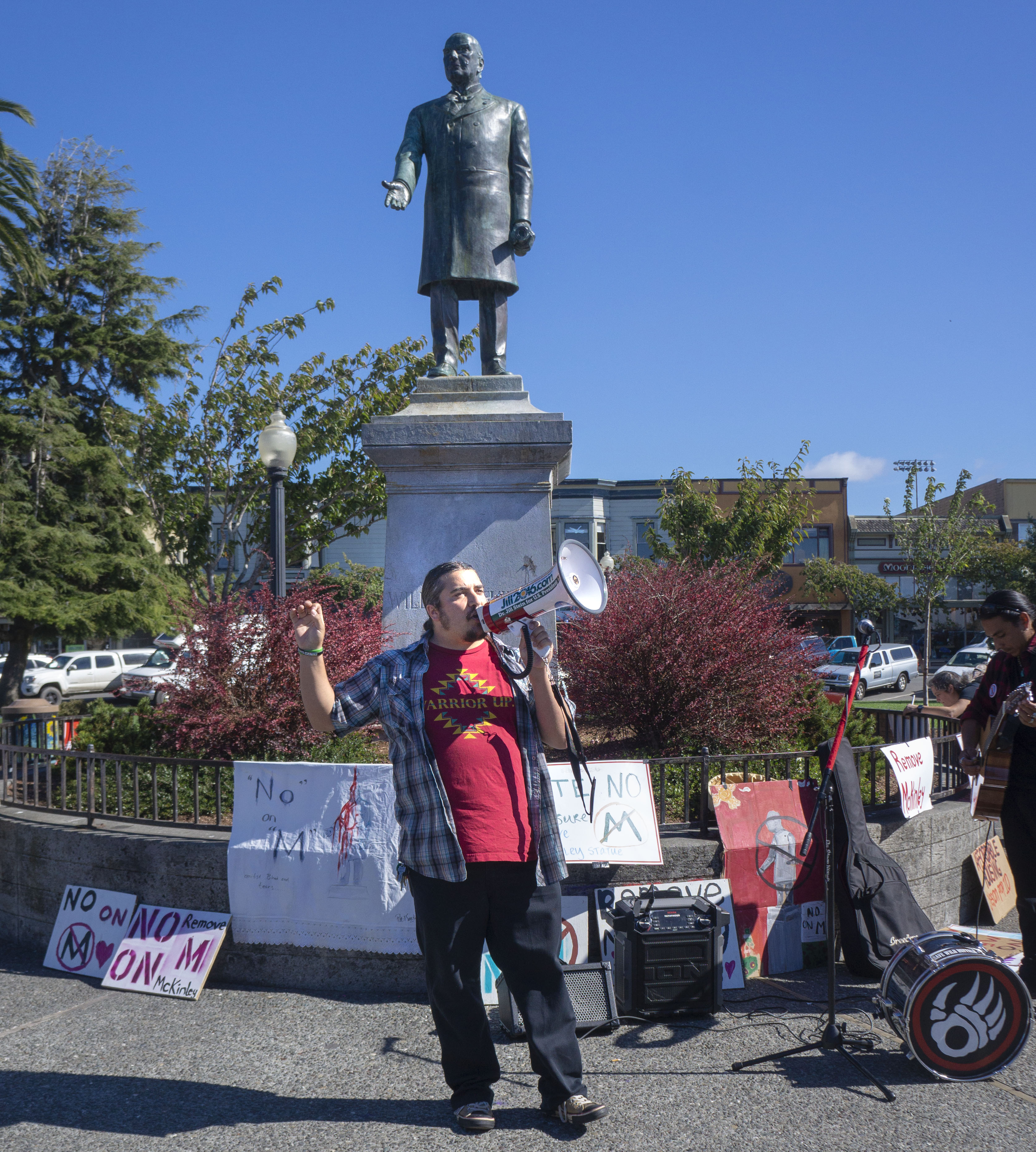
    Rydberg, and about 50 community members, gathered on Oct. 8 for Indigenous Peoples Day. They marched to Arcata plaza to support the removal of William Mckinley’s Statue and encourage others to vote no on Measure M.

    Rydberg said he is focused on showing the significance of this statue’s history. Many don’t know the history of Mckinley, let alone George Zinder — the man who lobbied for the construction of the statue.

    “This statue was put here by George Zinder, a man who owned a seven-year-old child,” Ryberg said. “This statue was put here by a child slave owner.”

    SSNoOnM4
    Erik Rydberg leading a group of community members in front of the statue of William McKinley in the Arcata Plaza on Oct. 8. | Photo by Stella Stokes

    This statue’s history is one that many don’t see resolved today. Julio Torres, a Humboldt State University graduate and activist musician, said this feeling resonates with people who are historically affected by these cultural and physical genocides.

    “This is like being stabbed in the back, and then having the blade be pulled only halfway out,” Torres said. “It doesn’t allow for healing in the present.”

    The statue is only one of the monuments to genocide that Rydberg wants to take on. Rydberg said many of the local community names are hurtful to those affected by atrocities committed by the U.S. government and citizens.

    “First, it starts with names of towns and such, like Mckinleyville, Samoa and Manila,” he said. “Which were named after the colonization of Samoa and the Philippines.”

    Sarah Torres, a local Filipino activist and musician, said she feels that people who support keeping the statue feel nostalgic.

    “I think the misrepresentation of history, allows for nostalgia to thrive,” Torres said.

    Rydberg said he wants people to understand this is not an attempt to erase history — it’s an attempt to correct it.

    “If you want to talk about erasing history every town, waterway, mountain, every native name for everything in this country has been erased,” Rydberg said. “This is about returning history and honoring the first nations of this continent.”


  • 50 Years and Counting

    50 Years and Counting

    YES celebrates 50 years of serving the community

    Youth Educational Services celebrated 50 years of serving the community on Oct. 5. Current students and alumni from the past half-century were in attendance at the anniversary reception that was held on campus in the Goodwin Forum.

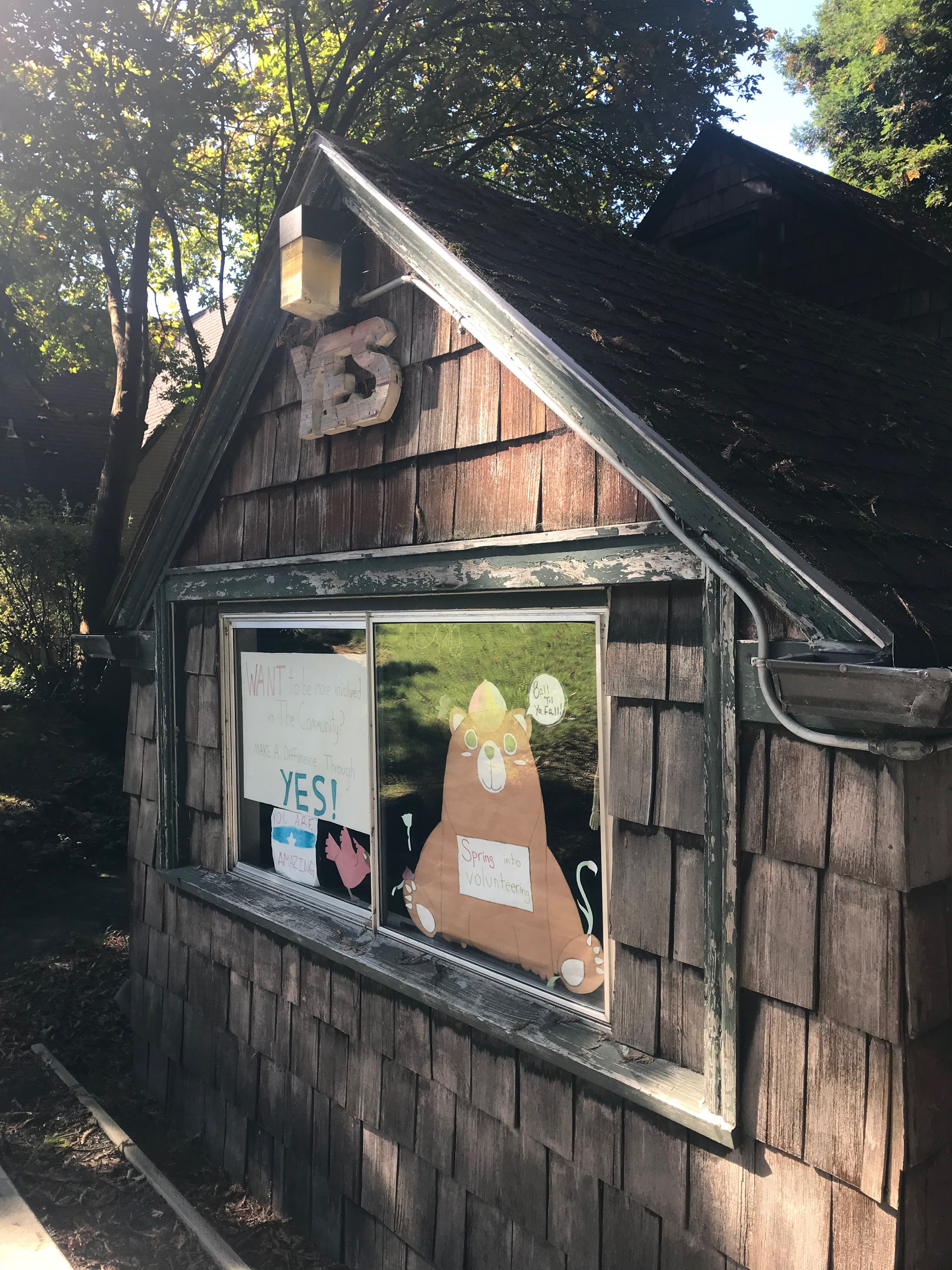
    For the past 50 years, the student-run volunteer organization has sent student leaders out into the community to help make a difference in people’s lives. Through 16 unique services, students serve a wide variety of community members including children, teens, elderly, and even incarcerated youth.

    The variation of clubs allows volunteers to work in a setting that they feel passionate about. They all meet for an hour a week to discuss and plan their volunteer projects. Each semester students get the opportunity to join and impact others in positive ways.

    The reception was a time that brought up many memories of why the YES program is important to the members. Marlene Medina is one of the many alumni attending the event that got to reflect on just that.

    “It was important to me because I really wanted to get to know the community,” Medina said. “When I volunteered it was really like building a family here.”

    Many speakers including campus faculty, alumni, and the co-founder expressed their love for the program as they spoke among the crowd. The event also included program poster boards, a memory wall and a buffet. Following the reception on Friday evening was a volunteer event that took place the morning after on Oct. 6. Monthly volunteer opportunities similar to this event usually take place on Saturday mornings for several hours.

    Study Buddies, formerly known as Tutorial, is the oldest group within the YES program. This program tutors children in grade school and middle school free at cost to those who would not be able to afford these services otherwise. Volunteers meet up with children after school at Trillium Charter School and Jefferson Community Center. As the first group in the YES program, Study Buddies has been very effective and continues to have a great impact on the youth of Humboldt County. Former mayor of Arcata Alex Stillman expressed why she thought this program was so important.

    “It is a very important program tutoring the children in the schools,” Stillman said. “Get[ing] them up to class level is important.”

    Another one of the 16 volunteer groups is Hand in Hand. Hand in Hand works with current and former foster families. They provide them with a positive, safe, and supportive environment as they work to help develop lasting relationships between both children and adults. The volunteers organize arts and crafts, sports, outside adventures and many other engaging activities for the children to participate in.

    As students volunteer in the Youth Educational Services, it sets them up for success in their careers. The students tutoring can continue on to eventually becoming teachers. Students can also gain teaching experience through some of the other groups such as the Art Recreation Theater and Environmental Education.

    As he reminisced about the days he volunteered with YES, former high school tutorial tutor Greg O’Leary mentioned the lasting effects Youth Educational Services has on it’s volunteers.

    “It affects your future in ways you’ll never predict, but in ways that will be wondrous,” O’Leary said.

  • Pep rally pride prevails

    Pep rally pride prevails

    Humboldt State University celebrates rain or shine

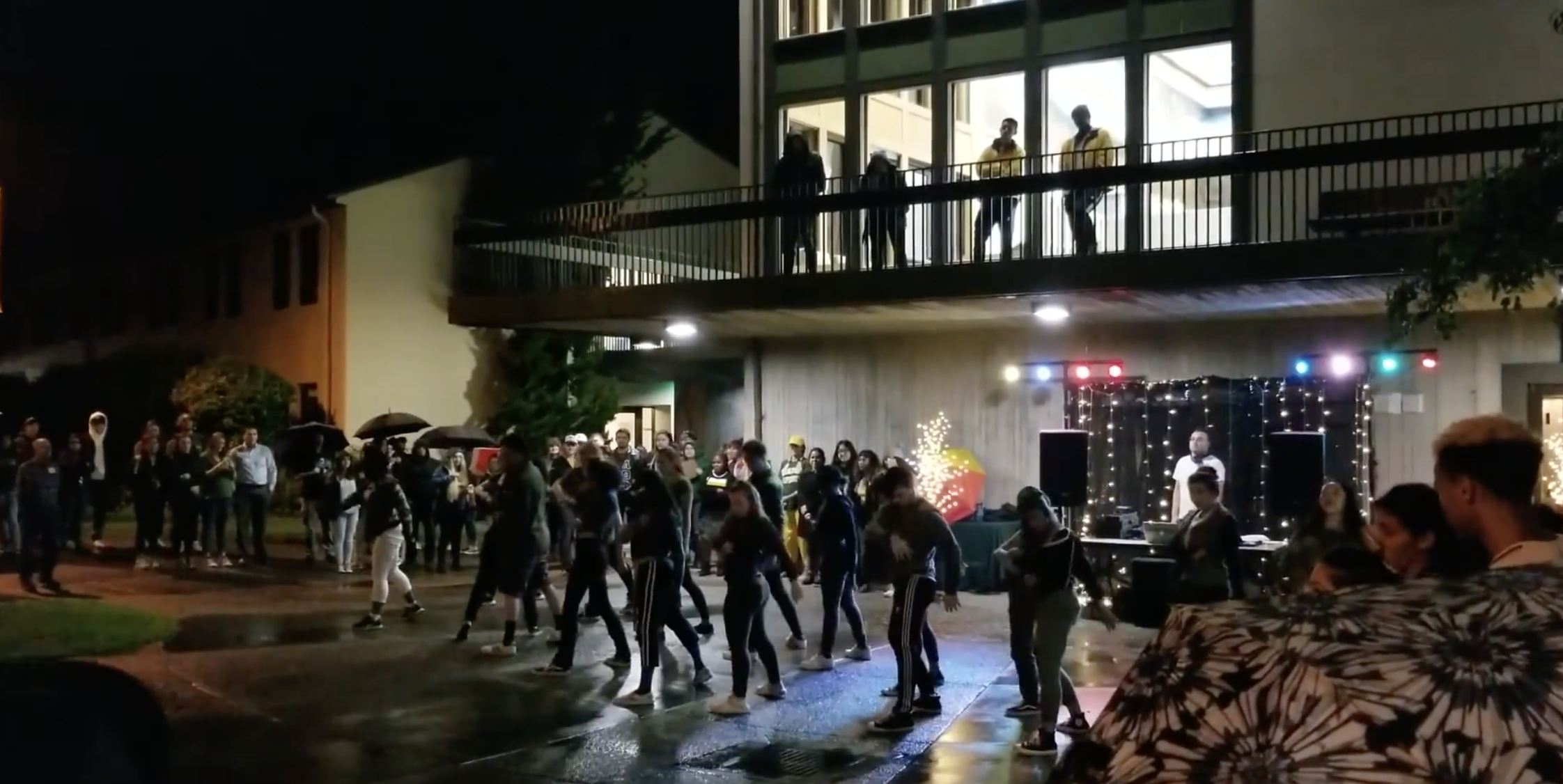
    Humboldt State students came out to celebrate their homecoming week, and not even the rain could stop them.

    With performances from various HSU clubs, everyone gathered in the UC Quad at 7 p.m. as Associated Students kicked off the festivities by introducing our very own Marching Lumberjacks.

    “Honestly, Humboldt has a lot of pride and I’m not quite used to it,” junior transfer student Valeria Banuelos after watching the Marching Lumberjacks storm the quad playing Black Sabbath’s “Crazy Train.” “I’m from SoCal and all the schools I’m used to don’t have school spirit whatsoever.”

    The Marching Lumberjacks were then joined by HSU’s Cheer Club as they played songs like “Heartbreaker” by Pat Benatar and “Rubber Ducky” from Sesame Street.

    “It’s crazy to have us be adults and still have all this school spirit,” Banuelos said . “I’m so out of my comfort zone meeting new people and just how friendly people are here is really helping this feel like home.”

    As the Cheer Club and the Marching Lumberjacks ended their performances, there were also performances by the Global Connections Club, Lambda Theta Phi Latino frat and Lambda Theta Alpha Latina sorority. These performances help bring culture to Humboldt State, something that AS Legislative Vice President Gabriella Valdovinos Balandran strives for.

    “I’ve been a part of a Associated Students programs since the 10th grade,” says Valdovinos Balandran. “Bringing students and culture together like this has always been a passion of mine. This unity also helps our students mental health and that’s one of our missions.”

    As the homecoming pep rally ended, most students left to go warm up and dry off at home. Some chose to stay and dance in the rain as the DJ continued playing his set.

    “It isn’t about just wearing colors, it’s about promoting unity and inclusivity here on campus,” said AS member Estrella Corza. “Regardless of major, hometown or income, this is a place we can be together.”