By Will Bishop
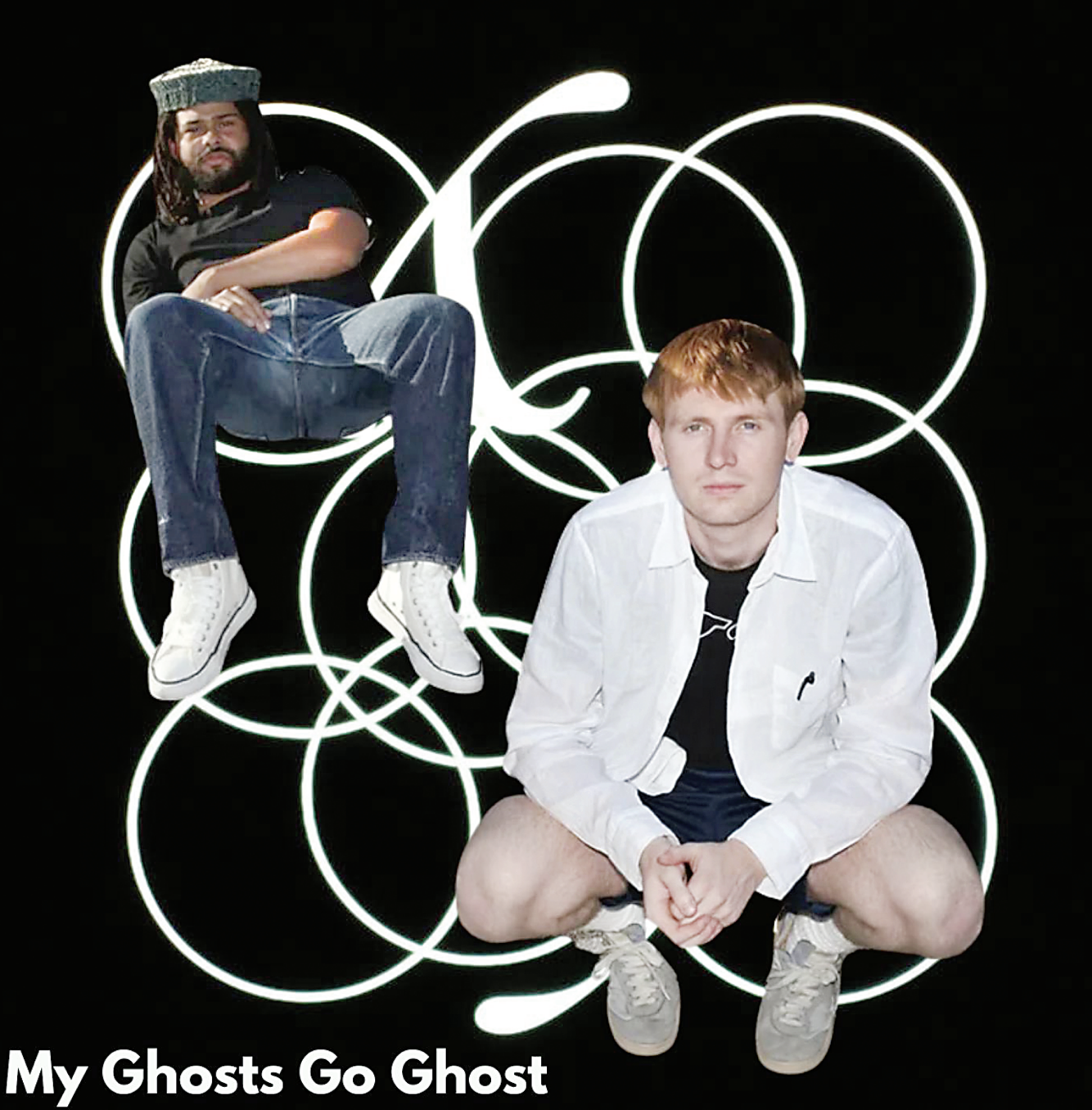
My Ghosts Go Ghost by By Storm album review
For as much as we idealize it; for as much as we will it on ourselves, on others, on the world. For as much as we want it, need it, long for it, die for it, there’s nothing more scary than change; the intransmutable transformation. To watch the unyieldingly cruel beauty of the world around you give way in landslides and avalanches. To feel meteors falling down from the sky crashing and destroying with an indiscriminate lust like the libido of a dying and powerful thing. To watch the people around you melt and explode to watch their faces change and mangle and become more beautiful and become more terrible and become something you no longer recognize.
My Ghosts Go Ghost is an album born out of forced metamorphosis. After the untimely death of Stepa J. Groggs, the trio known as Injury Reserve was forced to change in order to survive. The two remaining members couldn’t continue as they were, Injury Reserve was a project largely defined by the interplay of Groggs and Ritchie with a T. After the release of By the Time I Get to Phoenix, an album which marked a stark contrast from the rest of their discography and was largely completed by the time Groggs passed away, the remaining duo needed to move on. They took on the name of the final track for their final album as Injury Reserve, and together they started over as By Storm.
Coincidentally, By the Time I Get to Phoenix was an album about death. Ritchie’s stepfather had suddenly passed away, and the resulting project was an outpouring of pain shrouded in the eerily and supernaturally cruel timing of Groggs following shortly after. There’s an innate assumption that both projects are largely about him, when in reality, the theme of death on their previous project was pure happenstance. My Ghosts Go Ghost is a sprawling project covering a multitude of topics disconnected from Groggs — at least it seems that way. But, that’s not how it works; the surreal pain of loss is universal. Like a hallucinogenic third eye awakening, once a new depth is revealed you see it everywhere in everything.
On the opening track, Can I Have You For Myself?, Ritchie talks about a relationship on the brink of enormous change. A child is on the way, and the protagonist of the song struggles to accept the death of his status quo. “You giving all of you, I want you all for me.” A life killing a way of life. The innate greed of love, the hunger you feel for another person. The desire for your relationship with them, your exact relationship, to endure forever. Frozen under a hundred miles of ice so the sun can never break its spell. Loving someone away from life, deep below and so protected even the imperceptible rotation of the earth can’t touch you. In the most protective parts of our hearts, we all feel this way about anybody, about anything that we love. Real love is love you feel for something as it is. Not how it was, or how it could be, but for what it is in the present. Whether romantic or otherwise, change is that great killer of love. A burning orca whale bullet breaking through the ice.
But death is not forever, death is not death. The stopping of a heart, the eternal stealing of breath. Death is simply change. And even when love is killed, love can live on.
“I woke up in a sweat with yesterday still stuck to me like glue,” Ritchie wails, with Parker Corey’s production making it sound like he’s crying out from some awful and trapped place. “It ain’t dead weight, it ain’t dead weight.”
A frantic mantra in the dark, bouncing off the walls like echolocation, searching for love and meaning within the pitch black cave of death. Knowing that it’s still there, you just can’t see it with your eyes anymore. So, reach out with those quivering limbs and dance. “There’s nothing to run from, it’s all brand new.” You will never escape, you will never make it back to a place that no longer exists. And you will be in love forever.
It’s a bruising, melancholy listen, even in comparison to By the Time I Get to Phoenix. There’s a profound sense of absence, absence of hooks, absence of easy catharsis. Many tracks feel like decapitated and delimbed versions of songs that might’ve been hits in some other alternate timeline. Moments of propulsion degenerate and degrade into shambolic instrumental anxiety attacks. Drum patterns start and stop and fall away in the mix, swallowed up by growing sonic voids. Jazz, industrial, hip-hop, it’s an unquantifiable blend of sonic ephemera — a difficult listen meant to communicate difficult feelings.
Will Bishop is a Cal Poly Humboldt journalism major. He is prone to writing essays about things that bother him, and fictional works about things that also bother him but in different ways. A highly bothered individual, and a lover of cinema, music, and large trees/rocks. He can often be found in the woods, dancing to bring down the sky.
Leave a Reply