The Lumberjack


Students Serving The Cal Poly Humboldt Campus and Community Since 1929

Category: COVID-19

  • There are no safe options for restaurants during the pandemic

    by Ian Vargas

    While there was only a lockdown for a short period of time in 2020, a lot of restaurants weren’t open for indoor seating. Businesses typically ended up dropping employees they didn’t need. They also had to adjust to significantly less income, and many closed down as a result.

    That’s obviously bad for the restaurant and the people who got fired, but the alternative is that both the employees and customers would have died of COVID-19.

    With the advent of the vaccine most of that has changed; most restaurants are open for both indoor and outdoor seating. They frequently stress social distancing and wearing a mask on your way in, but people are rarely seen sitting very far apart. Cal Poly Humboldt’s dining options have followed the same trajectory. As soon as people could get vaccinated, everything went back to mostly normal.

    Like many students, I’m very poor. When I came up to Humboldt and started looking for work, I did as many do and went to one of the restaurants nearby. This was when everything was still take out only. Businesses had been losing employees like crazy, so getting into something wasn’t too hard.

    Working in any place that has a lot of people coming in and out seems risky, but thankfully I did not typically have to see any customers. I could at least remain mostly isolated, aside from my coworkers. Once people could get vaccinated and everyone started reopening for indoor seating, that changed.

    Now I’m in close contact with unmasked and dubiously vaccinated customers all the time, my job feels very unsafe. Vaccines have given people a lot of inadvisable confidence about their safety. Vaccinated people can still get sick very easily, and even when you don’t get sick there is a danger of spreading disease with an asymptomatic infection.

    Restaurants are particularly dangerous in this regard since there isn’t any way to eat and keep your mask on. Food going down doesn’t push the germs back into your lungs. Walking in with a mask just to take it off as soon as you sit down doesn’t sound like an effective way of limiting the spread of an airborne disease.

    I don’t think restaurants are doing anything wrong, everyone has to get paid somehow after all. Rather, I think that they’re in a position where there isn’t any good options for a response. The initial 2020 lockdown should have been longer and more consistent, and everyone should have received monthly stimulus checks.

    Unfortunately that didn’t happen, which places people in the unfortunate position of risking whatever new strain comes around. At some point, one of them is going to start getting people way sicker than before and there’s no way we’re going to be able to deal with it. More places will close for good and more people will lose their jobs or their health.

  • I traveled and got COVID-19

    by Angel Barker

    Last week I talked about how one of my main fears while traveling during a pandemic is contracting the virus. Well, it happened. To get back to the United States, you have to show a negative COVID-19 test within the last 24 hours. My trip was planned from Thursday to the following Friday. I got tested on Thursday, Jan. 20, and planned to fly out on Friday, Jan. 21. The test came back negative, and I genuinely felt fine.

    I get home Friday night and still feel fine, just tired from traveling. Saturday and Sunday roll around, and I am still okay. On Sunday evening, I feel a trickle in the back of my throat and think nothing of it. On Monday morning, I go to work as usual at 3:45 am, absolutely exhausted with a sore throat. I figured I was dehydrated. It was the same thing on Tuesday, except a cough had developed.

    I called my doctor because it was getting to the point of being sick. Having asthma makes me immunocompromised, and I have never had a cold that was just a cold. It always turns into pneumonia or bronchitis, so I was worried. I really do not have the time to be sick as a full-time student working part-time.

    The nurse comes in and talks to me about my symptoms and wants to test me since it had been five days since my last test. It comes back positive. The doctor sends me home with a quarantine flyer, which is the end.

    Before I went to Mexico, I received my booster shot on Jan. 3. I tested positive 22 days after I got my booster shot. The symptoms I had weren’t mild, but they also weren’t super severe. I had a cough, sore throat, fatigue, headache, runny nose, shortness of breath, body aches, etc. I think my weirdest symptom was that my teeth hurt like it felt like I had braces again, and I had just gotten them tightened. I also had shooting pains in my back.

    Three people so far have blamed it on travel or on me for traveling. It felt very judgmental and almost degrading. I could have gotten it at work, school, the grocery store, or from people I know. I am pretty sure I got it in a restaurant in Mexico, but the same thing could have happened here. Don’t blame me for living my life and having fun.

    I do not think it is fair to judge the ones you love or anyone for that matter on their decisions to travel or whatever they do in their personal time, especially if they are safe. I wore a mask on the plane, the airport, around town, and in the restaurant except when eating. I did my part, and I still got COVID-19.

  • Dating in the time of COVID

    Dating in the time of COVID

    by Krisanne Keiser

    None of us thought we would wake up one morning and be told that we could no longer make connections the way we were used to. COVID-19 became a part of our daily lives, affecting us at every turn.

    Dating during a worldwide pandemic has impacted us all in unique ways, including CSH students.

    Local resident and Cal Poly Humboldt alumnus Olivia Brock shared their experience.

    “Dating during COVID times for me is for sure more online now at the beginning of talking to someone,” Brock said. “It definitely restricts what we do … all the dates I’ve been on have been outside usually somewhere in nature with a mask on.”

    Once you’ve managed to meet someone, COVID-19 precautions also complicate bringing them home. Having roommates means that bringing over a new flame has to involve conversations about masking, exposure, and testing.

    “But once enough of the outside dates and FaceTime dates have happened and it feels worth it, then we could move forward with figuring out how to add someone to our exposure bubble. It’s a lot of logistics and communication,” said Brock. “I enjoy FaceTime dates a lot, because I don’t have to leave my house and they’re easier to schedule.”

    Building connections online does have its advantages, according to Brock. She says it forces her to be more engaged in the conversation, because that’s the only way there’s any hope of forging an online connection.

    “Overall, COVID has forced me to go slower in relationships and communicate boundaries more effectively,” she said.

    History major Victoria Bankson often worries about the vaccination status of potential partners. She says that if the person she’s interested in has purposely chosen to avoid getting vaccinated, that completely changes her opinion of them and weighs into her decision to ultimately not date them.

    “I’m not going to mess around with somebody who’s unvaxxed, that’s just not right,” Bankson said. “We don’t have the same values if you’re that way.”

    She also shared that conversing online isn’t the most enjoyable way for her to get to know someone, but that having a phone conversation feels more intimate and comfortable.

    “I don’t like texting online, and I don’t feel like I’m the best communicator that way,” Bankson said. “I’m much more of a ‘give me a phone call’ [person,] which is very much opposite of what things are now.”

    Junior Franziska Daumberger doesn’t feel like COVID-19 changed the dating scene for her personally, but acknowledges that it added some new challenges.

    “People would either be careful about COVID and say like ‘oh I’m vaccinated’ or ‘I wear a mask’ or wanting to meet in outdoor places,” said Daumberger. “And then that’s further stipulation upon whether or not I was interested in them or not … if they didn’t care at the height of it I was like ‘I don’t wanna be even knowing you because your beliefs don’t align with mine.”

  • Not all masks are made equal

    Not all masks are made equal

    According to Cal Poly Humboldt regulations, face masks are required everywhere on the campus, and at all school functions. Amid the predicted peak of the Omicron surge, mandated masking is a key part of the university’s strategy to prevent widespread transmission of COVID-19.

    Humboldt County Health Officer Ian Hoffman has confirmed that the Public Health Department has been in contact with Cal Poly Humboldt with regards to the university’s COVID-19 regulations.

    “We, as Public Health, have continued to offer, you know, clear guidance on how to make public spaces safe, which includes things like masking, distancing, testing, vaccinations – they are doing all of those things at HSU [Cal Poly Humboldt], and we have been in communication with them,” Hoffman said. “So, I think the ultimate decision is up to them.”

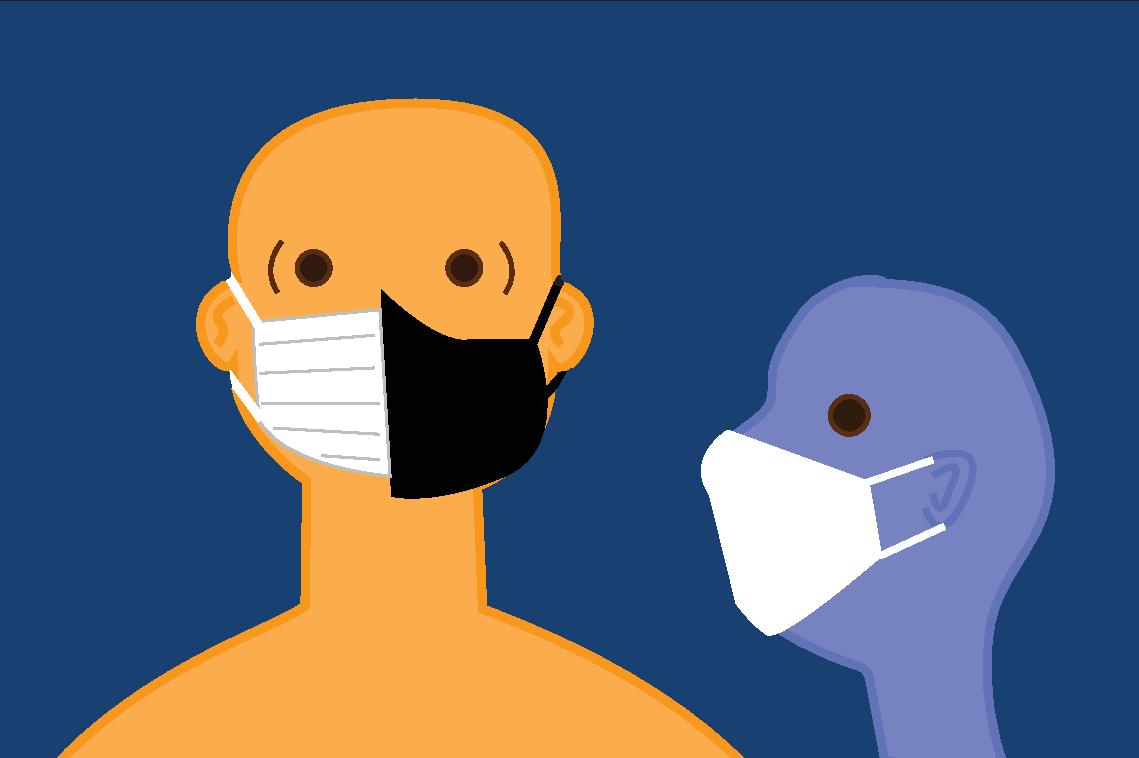
    Graphic by August Linton

    Not all masks offer the same amount of protection, to the wearer or to those around them.

    According to the CDC, NIOSH-approved N95 masks are the best, followed by KN95s and surgical masks. Cloth masks rank the lowest, although it is noted that layered, finer fabrics are more effective than loosely woven or single-layered varieties.

    Whatever type, it is important that masks be well-fitted, with no gaps around the nose or edges. A surgical mask underneath a cloth mask may resolve fit problems.

    County Health Officer Hoffman suggested double-masking for all types except N95s. He also cautioned against masks with one-way vents.

    “Those vents … protect the person wearing it, but they’re not protecting anyone around them,” Hoffman said.

    Despite their efficacy, Cal Poly Humboldt does not currently require that students wear N95s.

    “The reason N95 Masks cannot be mandated on campus is that there are some situations where N95 masks can exacerbate medical conditions for the wearer,” the university stated in a Campus Ready email update. “The campus community is encouraged to wear N95 masks if they are able.”

    Free N95s and surgical masks are available at College Creek Mailroom, JGC mailroom, UPD, Welcome Center, the Library, and the SAC.

  • Stop the surge

    Recently, I saw a petition that advocated for the delay of in-person HSU classes by two to three weeks. Is this too much to ask? Logically, I think that what these advocates stand for deserves careful consideration. Humboldt county’s rates of coronavirus cases are the highest that they have been since the beginning of the pandemic. As of January, the county has averaged 213.9 cases on a weekly basis. Throughout the CSU and UC systems, an abundance of schools have decided to do remote learning for the first month. Why should Humboldt State be an exception to this? This reminds me of any disaster movie ever made. The last group people want to listen to is the scientists. We’re in the middle of a global crisis, yet people and our own institutions want to deny it. It almost feels like the world is on fire, however, I’m one of the few that sees the fire and acknowledges it as an inherent problem with our society. We cannot have another surge! Our local facilities don’t have the capacity to house any more COVID-19 patients. A couple of months ago I was trying to find an appointment for gallbladder surgery. Usually, medical emergencies would have been taken care of at Saint Joseph Hospital in Eureka. Instead, I was scheduled for surgery at Mad River Hospital in Arcata, supposedly because all of the hospital rooms at Saint Joseph Hospital were at full capacity. With rising numbers, I can only imagine how hard it would be to find an appointment for gallbladder surgery now as compared to then.

    The coronavirus has also disproportionately affected Indigenous communities in the inland area. As of January 13, 2022, Public Health Officer Eva Marie Smith has detected an Omicron case in the Hoopa Valley Indian Reservation. With a total of 109 active cases, Smith believes that the tribe is likely experiencing a mix of Delta and Omicron with a predominance of Omicron within the next few weeks. Due to the latest Covid surge, Hoopa Tribal Chairman Joe Davis has authorized a level 4 shutdown of all non-essential operations for at least two weeks. The Omicron surge has also recently caused staff shortages at Saint Joseph Hospital.

    Early studies suggested that the Omicron variant can just as easily infect vaccinated people as it can the unvaccinated population. It can be said with confidence that anyone can be infected by the widespread virus. In addition, it would be wise for Humboldt State to require all students to be tested weekly regardless of their vaccination status. Vaccinated people are just as likely to transmit the Omicron variant as someone who is unvaccinated. If that isn’t enough, it can also reinfect. It seems no matter how much you tell someone to not touch the stove, they have to touch it for themselves in order to figure out what the consequences are. By signing the petition, we can mitigate such catastrophic events from further happening.

  • HSU plans limited in person graduation with online audience

    HSU plans limited in person graduation with online audience

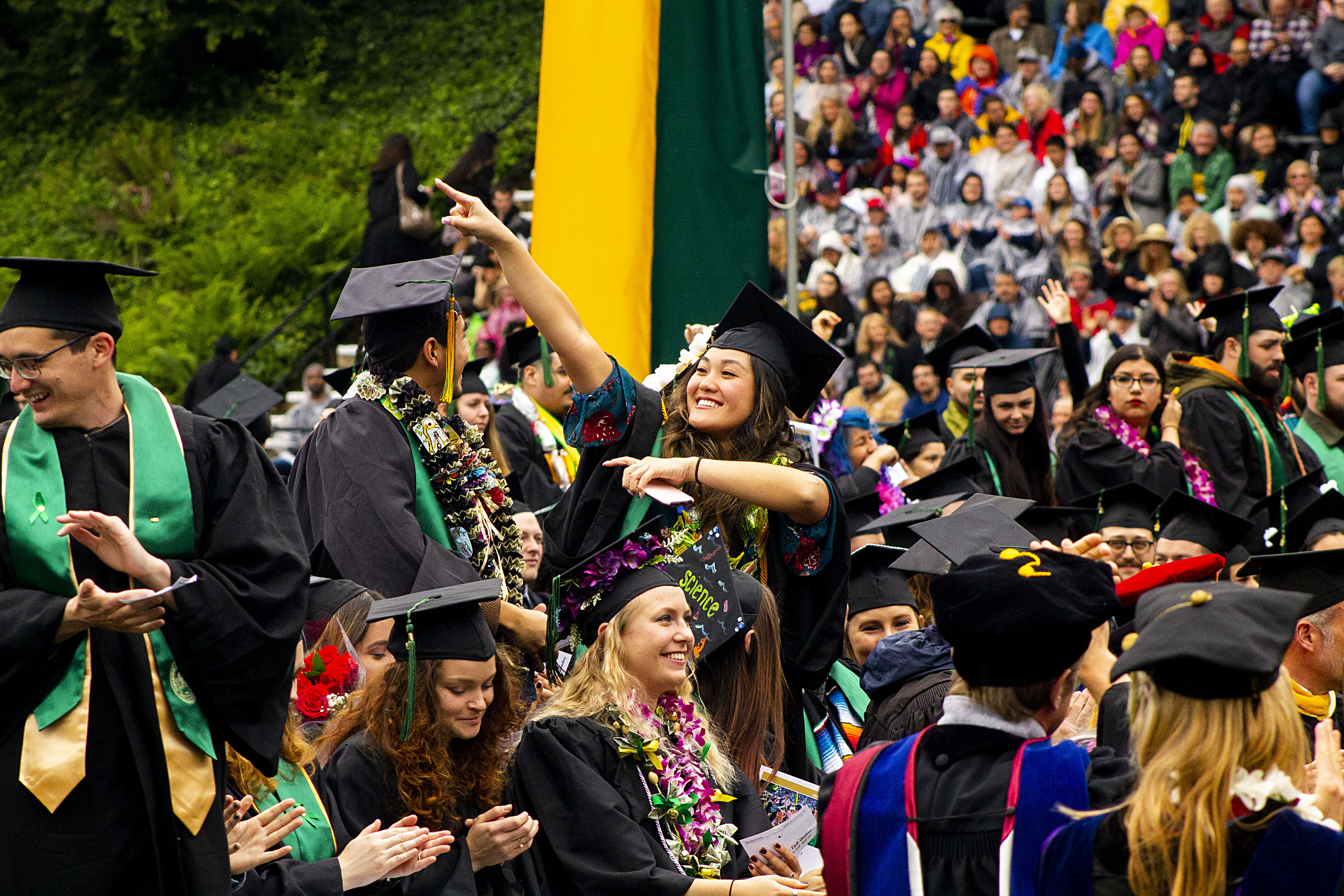
    HSU plans on holding in-person commencement ceremonies for the class of 2021 through a two day event that will have three ceremonies, one for each college.

    Graduating HSU student Shira Kershner, is excited to get her diploma in person.

    “I was thrilled to see that Humboldt State will be holding a student-only, in-person commencement ceremony this year,” Kershner said. “Although I wish my family could be there to cheer me on, it offers us all a chance to get some closure and to experience what it’s like to walk across the stage and receive a diploma. With the pandemic I didn’t expect to have any sort of in-person ceremony, and this is much better than nothing.”

    While the school is opening up more in person activities, a lot of classes will remain closed or limited in order to stick to state and county guidelines. Both the commencement ceremony and the upcoming in person classes will require face masks, social distancing, and recommended self wellness checks.

    While COVID-19 still remains a large concern, Kristen Gould, commencement coordinator and the director of marketing at HSU, says that the school has taken significant steps to limit the possibility of any infection.

    “All plans for commencement ceremonies are based on state guidelines for commencement in addition to our own stringent measures to keep our students, and any employee who may need to support the event, as safe as possible,” Gould said. “Those steps include limiting the number of people in the Bowl, spreading out multiple ceremonies over two days, and making sure that students wear masks and stay physically distanced.”

    The school’s lockdown has been loosening gradually as more and more vaccines are available and the county returns to the red tier. Humboldt County has had a very low number of cases and has remained relatively isolated from the bigger surges that are seen in other parts of the country.

    According to Cris Koczera, the interim director of risk management and safety services at HSU, despite the loosening of restrictions, the school is still proceeding with caution to avoid a possible rise in infections.

    “While we’re all excited for the return of in-person commencement ceremonies, most events are canceled at least through the summer,” Koczera said. “Of course that could change, depending on many factors, and the university continually revisits and occasionally adjusts its operational plans based on what’s safest and what makes most sense for our campus community in consultation with Humboldt County Public Health.”

    While plenty of students are still remaining cautious, a lack of any kind of normal college experience has been draining for many. The move to hold an in-person commencement ceremony is a return to some sort of normalcy during a stressful semester.

  • Corporations and Vaccinations

    Corporations and Vaccinations

    I spent most of last Monday refreshing the CVS website. The site showed seven days of potential vaccination appointments and four of them were already greyed out. So naturally, I clicked one of the remaining three and then clicked again to schedule a time, except it wouldn’t show any available times. It did this for all three days. One of my coworkers had apparently got in after repeatedly reloading it, so I did the same. After three hours of trying, the site showed only one day left. In my frustration I cursed CVS and their website, but it got me thinking. Why was I making this appointment on CVS’ website to begin with?

    Back in October 2020, the Trump administration announced that they had brokered a deal with CVS and Walgreens to distribute the vaccine to seniors in long term care facilities. This deal later expanded to include in-store vaccinations.

    Around the same time, the federal government released its guidance on who was going to be first to get the vaccine and in what order the people would follow. This was passed on to county health departments with the understanding that each county would modify it based on their population and who was most at risk. With that being the majority of the guidance counties received, the message from on high seems to be, “Do whatever you think is best, except you must work with CVS or Walgreens.” But what if you don’t think working with a private company is the best way to accomplish a public goal?

    Companies exist to make a profit. While they may accomplish other things along the way, the end goal is still to make the most money possible. The vaccine may be free at a CVS or Walgreens, but when you go for your vaccination, you’re still a body through their doors. You could go and only get your vaccine with no additional purchases and that would still be a win for them. In fact, that’s exactly what they’re counting on. From that day forward, that’s no longer just another chain pharmacy location, that’s the CVS where you got your COVID-19 vaccination!

    In Walgreen’s case, you have to create a Walgreens account to even schedule an appointment. If you don’t already know sorry to ruin it for you, but store rewards programs exist to track your purchasing habits. That data is then sold to advertisers.

    It would then stand to reason that it’s in these companies best interest to get as many doses of the vaccine as possible. With the limited numbers being produced, they’re in direct competition with the county health departments. Private companies don’t pick locations for how they will best serve populations, they pick them for how they will best reach people willing to pay. They don’t structure their stores around getting people in and out, they structure their stores to sell products. At every step of the way profit is the number one motive. If you think that will change because of a global pandemic, you’re sorely mistaken.

    This purpose built less efficient profit machine is being pitted against our actual health services and the profit machines are much better at competing. Even if you think your county health department sucks, the way to fix it is not by giving it competition. Maybe in the next global pandemic I can struggle to schedule a vaccination with a government website, knowing that at least the government won’t give me a 4 foot string of coupons with my vaccine.

  • COVID-19’s inequitable effect on student’s education: why some students chose to take time off

    COVID-19’s inequitable effect on student’s education: why some students chose to take time off

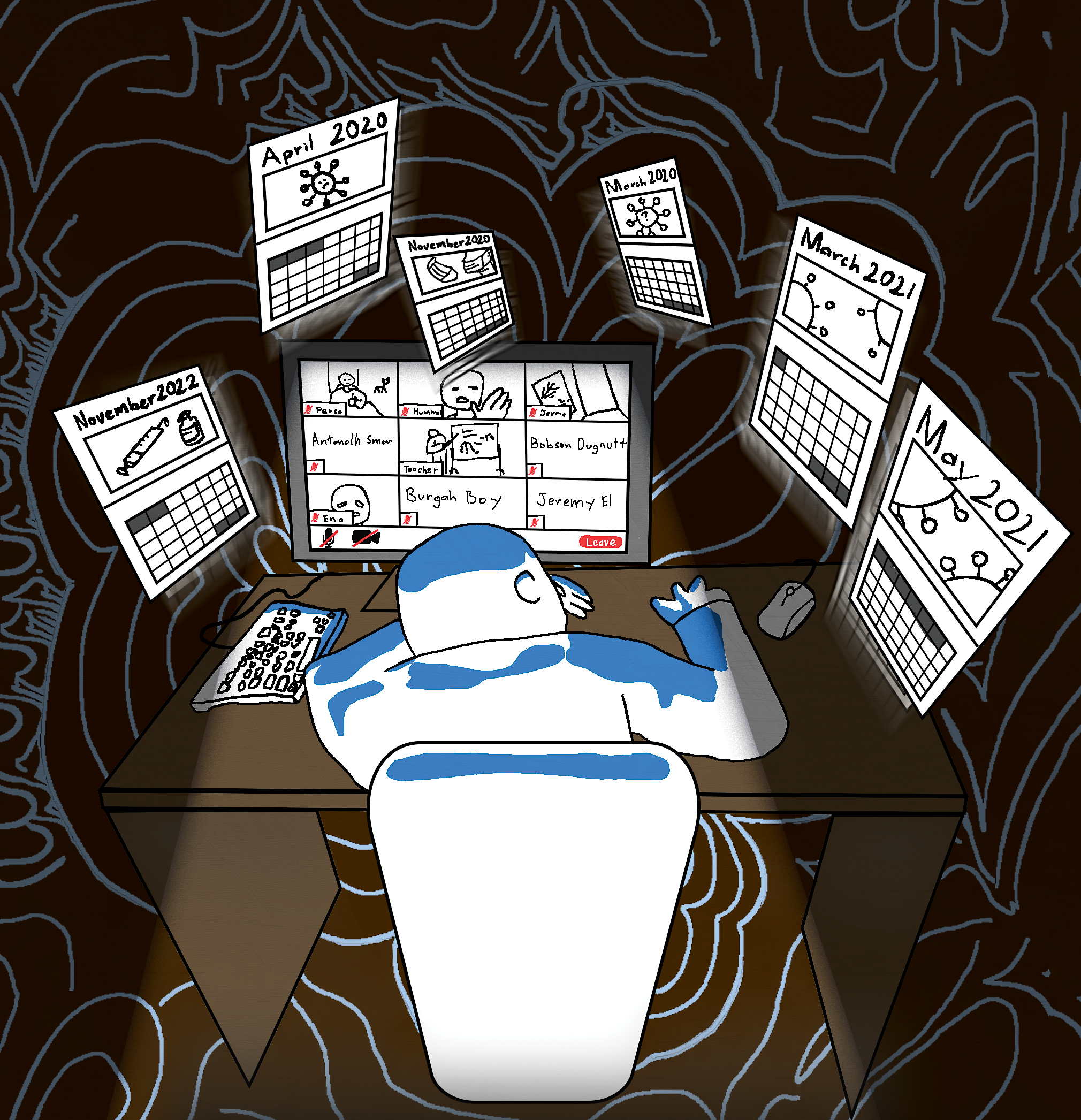
    As we approach the one year anniversary of COVID-19, students around the country are reflecting on their whirlwind of a year when it comes to their education.

    Humboldt State students have continuously voiced their concerns about the effects that the pandemic has had on their educational experience.

    For many, the shift to online learning made retaining information difficult and brought them to feel like they weren’t getting the most out of their education. Others found the shift slightly easier, but encountered other challenges when faced with social isolation and virtual overload.

    Katie Piper is graduating from HSU in May with a major in geography and a minor in geospatial analysis.

    “I was considering jumping into graduate school in the fall but now I just need a break,” Piper said.

    Between being tethered to the computer six out of the seven days of the week and having to Zoom into classes three of those days, Piper’s optimism about obtaining her degree has been shot down. In the face of adversity, she felt like being so close to the finish line really pushed her to stay on track to graduate.

    Online learning itself has not been too challenging for Piper, but she continues to question the quality of her educational experience.

    “I do not like the lack of social interaction and the fact that some days I spend 20+ hours in my bedroom, where I do all my schoolwork, sleep, and hang out,” Piper said. “Some non-students tell me that they would never be able to accomplish school under these circumstances.”

    As for many other students, the virtual learning format was a far more difficult adjustment that affected their ability to even take part in many classes.

    This was the case for Wren Williams, a forestry major at HSU, who struggled to keep up in many classes as school went virtual in the spring of 2020. The online format was unable to accommodate for their learning disability and ultimately led to them falling behind fellow classmates.

    “When the next semester came around, I did initially sign up for classes, but I couldn’t seem to keep up with online reading and just felt like I wasn’t learning anything in the classes that matter most to me,” Williams said.

    Considering they were pursuing a degree in forestry, it was hard for them to want to take classes about the forest while being stuck inside an apartment doing school work. While taking a break from school, Williams has been able to spend a lot of time in the forest, reminiscing about past labs and strengthening their passion for forestry.

    At UC Berkeley, the Student Experience in the Research University (SERU) Consortium administered a special survey on the impact of COVID-19 on student experience at 10 US public research universities in May-July 2020. The students reported significant hardships during the COVID-19 pandemic which they believe will negatively impact their ability to complete their degrees on-time.

    The survey revealed that the top obstacle to degree completion was the a distracting home environment or lack of access to an appropriate study space (52%).

    Elizabeth McCallion, the operations coordinator and staff psychologist for counseling and psychological services at HSU, emphasizes the importance of utilizing resources on campus as an option to help students who are experiencing hardships when it comes to the current online nature of education.

    “Remote learning comes with its own unique challenges and counseling can be a supportive place to work through these challenges,” McCallion said.

    Throughout this past year, many students have found that reducing stress, decreasing isolation, and making healthier lifestyle choices have helped to improve their academics.

    As we continue through the pandemic, it is essential for students to take care of themselves and to understand what is right for them.

    CAPS is available for all HSU students, and for those struggling with the remote learning environment, it may be helpful to get connected: hsucaps@humboldt.edu or at 707-826-3236.

  • COVID-19 defines society’s future mental health

    COVID-19 defines society’s future mental health

    Though it’s still far from over, the effects of the COVID-19 pandemic could last a lifetime.

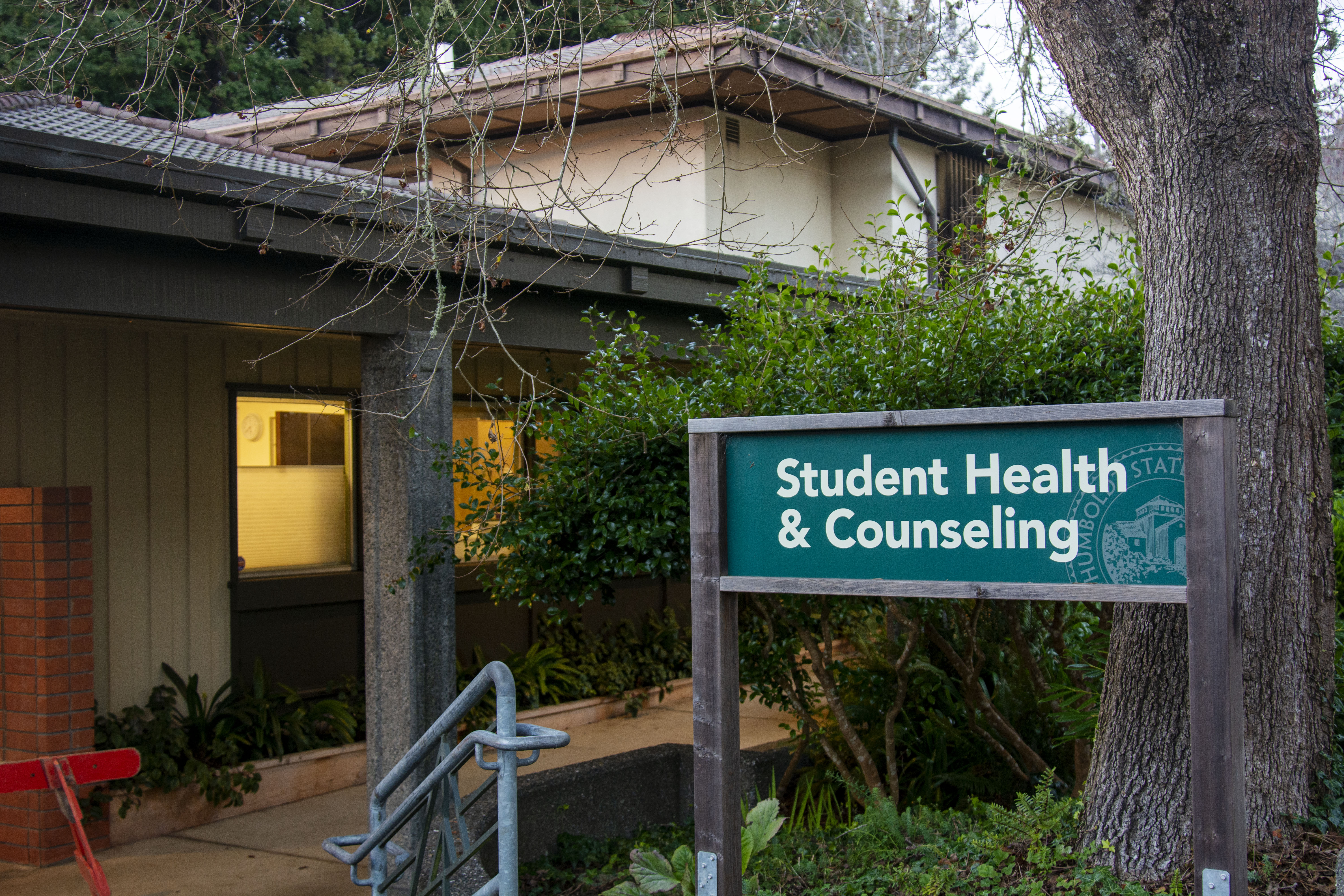
    All CSU campuses offer mental health services with a range of options available, included in the cost of student fees. Operations Coordinator and Staff Psychologist for HSU’s Counseling And Psychological Services program Dr. Elizabeth A. McCallion said their services are especially valuable now that students are facing additional stressors brought upon by the pandemic. Though in-person services are currently unavailable, CAPS is operating at full capacity, offering all of the regular services, virtually.

    “Students come to counseling at CAPS for a range of reasons and I think it’s really important to recognize that,” McCallion said. “We are not just a support for students who are in a crisis situation, though we do provide that support as well.”

    For students curious about the practice or grappling with issues of any size, CAPS provides an opportunity to uncover the answers to some of your questions. For those who decide it’s not for them, McCallion especially recommends placing emphasis on the prioritization of our emotional health.

    “Getting good sleep, nutrition and physical exercise have been shown to have really positive benefits on our mental health,” McCallion said. “So, I think looking at our health behavior and our lifestyle choices can be really key to making sure that we’re taking care of our emotional health.”

    Professor of Psychology Gregg Gold believes the effects of isolation will remain, to some capacity, with those who live through the pandemic.

    “There will probably be some permanent mental health issues for those of us who spent a year and a half alone,” Gold said. “I don’t think you could say that’s not going to have some kind of effect on people.”

    Gold said the pandemic lifestyle has generated more loneliness and frustration in his life as he battles with motivation and concentration droughts. The monotony of quarantine is largely to blame, Gold said, giving us nothing to look forward to with each day being the same as the last. The most significant factor influencing this is the deprivation of genuine, in-person human interaction.

    “It’s a basic human need to be around other people, face to face,” Gold said. “We’ve evolved to crave the company of other humans because the more friends we have, the bigger our network, the more we can ask others to do things we can’t do for ourselves, the more likely we were in the very recent past to be able to survive and even today, [we’re] much more likely to be successful.”

    Our time in isolation is not only damaging to our present well-being, according to Gold. Each day we spend contained inside the walls of our homes, interacting only with a familiar few and the algorithms of our social media accounts, we are being deprived of opportunities to explore new ideas.

    “When you’re out in the real world, you actually run into people that might think differently than you do,” Gold said. “That tends to broaden your view.”

    Though some are willing to place their own lives and those of others in immediate danger in order to go about life as usual, the majority of people are less inclined to make the sacrifice.

    “If you can’t [socialize] safely it means there’s underlying tension and fear and that takes the fun out of it,” Gold said. “It’s like trying to go out and party the night before you have a major midterm, how much fun are you really gonna have?”

    While millions of people lost their homes, their loved ones, and their lives to COVID-19, it can put those who’ve been more fortunate in a position where they don’t feel comfortable feeling sorry for the lesser losses they’ve suffered in their own lives, Gold said. The reality, however, is that the individual struggles we face now will be significant in our entire lives.

    “It’s easier for people to become depressed,” Gold said. “If you think about it, [depression] is the reaction you would expect, given the circumstances.”

    The increase in depression among American citizens is evident by the increased rates of substance abuse and suicide since the pandemic began, Gold pointed out. These reactions also come from severe anxiety surrounding financial and health insecurity. According to Gold, the two are one in the same in this country, where our physical and mental well-being are treated as commodities.

    Masters Student and Associate Professor of Sociology Travis Cunha began work on his thesis around the same time COVID-19 reached the United States and explored how different countries initially navigated the pandemic, specifically in regards to business practices. Given the high volume of jobs that have moved online and are planned to remain there, Cunha is concerned for smaller communities that rely upon only a few providers for a high volume of jobs, as he expects more outsourcing of labor than ever when the pandemic has finally passed.

    Cunha is curious to see what will come of all the vacant buildings left over from businesses that were forced to leave. He fears outside sources will capitalize on the opportunities and feed off the people who are in need of relief. This is especially a problem in low-income communities of color.

    “It was already like that even before the pandemic. These communities aren’t getting the resources other communities are,” Cunha said. “Since the pandemic, those things have just been made a lot worse.”

    According to Cunha, the most shameless offenders are the loan companies by allowing opportunities for business owners to remain open, for families to keep their homes and for students to pursue their educations. With a contract guaranteeing significant profits, loan companies have nothing to lose and everything to gain.

    “It’s not a coincidence that they’re opening places where communities have been hit the hardest,” Cunha said. “These communities need loans and grants and stuff to recover from this pandemic because they got no help during the pandemic, so I think it could be a recipe for disaster in that sense.”

    Unlike the psychological trauma that will follow us out of the pandemic, the financial burden that will plague the post-pandemic society is entirely avoidable if we were to come together in solidarity, recognize the problem and create a solution.

    “I would hope that after this is over, people wouldn’t dismiss the views of scientists as politically motivated when they tell them something they don’t want to hear,” Gold said. “But the incredible ability of people to completely deny reality even when it’s right in front of them is profound.”

  • A quick rundown of a few COVID-19 vaccines

    A quick rundown of a few COVID-19 vaccines

    Pfizer–BioNTech and Moderna mRNA Vaccines

    Vaccines usually function by injecting a safe version of a virus into a patient’s body. Sometimes it’s a whole virus, parts of a virus, or a different virus that can still teach our immune system about the intended target virus. The vaccine essentially gives our immune cells a dummy to fight so they are prepared for the real thing.

    mRNA vaccines are different. Cells in your body contain DNA, a code for creating the proteins we’re made of. They function as a set of instructions for building our bodies. mRNA, or messenger RNA, plays a critical role in the process of interpreting your body’s instructions for making proteins.

    So, instead of injecting a virus, some COVID-19 vaccines inject pieces of mRNA. Using the dummy analogy, the injected mRNA are instructions for our cells to create their own dummies to learn from.

    Those dummies take the form of specific proteins like the ones found on the surface of infectious agents. Our cells build the dummy proteins, recognize that the proteins should not be in our bodies, then send our immune system to fight the dummy proteins. This builds our immunity, but the process takes time.

    The two COVID-19 vaccines currently approved for emergency use here in the United States are both mRNA vaccines. The dummy that the mRNA in the vaccine helps our body make is a harmless piece of a protein found in the spikes of the virus that cause COVID-19. The spikes are what give the virus access to our cells, so they are an effective and easy target.

    This mRNA process has been the target of widespread misinformation. Though you may hear otherwise on social media, the mRNA does not alter your DNA, it only uses the process of creating proteins to construct the dummies for our bodies to fight. The mRNA is destroyed in the process.

    Vector Vaccines

    These vaccines use a harmless virus to deliver DNA to your cells. Once injected, it then works in a similar way to the mRNA vaccines. The DNA delivered by the harmless virus acts as instructions for your cells to create dummy proteins for your immune system to fight.

    The harmless virus does not replicate itself. The DNA that it injects into your cells does not replicate or become a permanent part of you. Rather, it is destroyed when the immune system fights the dummy protein.

    Though many of the mechanisms are like the mRNA vaccine, vector vaccines are easier to transport. The DNA is not as fragile as the mRNA.

    No vector vaccines are approved in the United States as of publication, but there likely will be approved vector vaccines in the near future.

    The Oxford–AstraZeneca vaccine is a vector vaccine that may see approval in the United States. Russia’s Sputnik V vaccine, China’s Convidicea vaccine, and Ad26.COV2.S, also known as the Johnson and Johnson vaccine, are all vector vaccines.

    Inactivated Virus COVID-19 Vaccines

    These three vaccines are not approved in the United States as of publication but are approved in other parts of the world. They function like conventional vaccines with a safe version of the virus injected and used as a dummy by the body’s immune system.

    BBIBP-CorV was developed and approved in China. It has less storage and transportation requirements, making it easier to distribute. The developers claim it has a slightly lower effectiveness than the mRNA vaccines, but there is a lack of publicly available data and some conflicting numbers surrounding its use.

    CoronaVac was developed in China as well. Though approved in some countries, it has a much lower effectiveness than either the BBIBP-CorV vaccine or the mRNA vaccines.

    BBV152 was developed in India and is approved for monitored emergency use within the country. The effectiveness of the vaccine is not yet known.

  • Updates on Testing and Vaccinations for COVID-19 at HSU

    Updates on Testing and Vaccinations for COVID-19 at HSU

    Coronavirus testing will be available for all HSU students and employees in a matter of days. Here are some details on testing and vaccinations for students at HSU.

    Testing

    Beginning this month, Humboldt State, in cooperation with HealthQuest, will be offering free coronavirus tests on campus for all HSU staff, faculty, and auxiliary employees. An HSU ID will be needed when it comes time to take the test but HealthQuest will only bill insurance directly, so there is no need to worry about paying up-front.

    Students who are residing on campus will be tested when they move in and then again seven to 10 days later. These students will be contacted by Housing regarding arranging testing appointments.

    Athletes will be frequently tested as mandated by NCAA and County Public Health protocols.

    Vaccinations

    The University is currently working with County Public Health on plans to give out the vaccine to all HSU staff, faculty, and employees who would like to receive the vaccine when available. HSU aims to administer vaccinations to students when allowable based on state and county prioritization and vaccine availability.

    Additionally, all Humboldt County residents who want to be given the COVID-19 vaccine are able to submit their contact information through an online interest form to be alerted when doses are available for their tier.

  • COVID-19 Testing for Move-in Day

    COVID-19 Testing for Move-in Day

    Move-in day is Feb 19, and the Student Health Center is preparing to test the many students returning to campus after winter break. Due to the sharp rise of COVID-19 cases in California at the end of 2020, the school pushed back the date for students to return to their dorms. Now, hundreds of students from all over are returning to HSU and the Student Health Center is getting ready to test all of them, particularly if the planned return to limited face-to-face classes begins in the fall semester.

    According to HSU spokesperson Grant Scott-Goforth, the school has been testing constantly to keep an eye on campus COVID-19 cases.

    “They have been administering a few hundred tests per week, but that’s expected to go up as students move back and face-to-face classes commence,” Scott-Goforth said. “The Health Center has conducted a total of 5,013 tests since they began testing.”

    All this comes not long after a new strain of the virus, which is more contagious, was first reported in Humboldt County. While Humboldt had been lucky enough to have relatively low rates of positive cases, those numbers have steadily increased and pushed the county into the highest restrictive COVID tier. This comes at a time when many still do not qualify for vaccines and those who do have difficulty getting them.

    HSU is anticipating about 350 students which may increase the number of positive significantly. According to Scott-Goforth the positivity rate on campus is relatively low.

    “The positivity rate is 1.3% among students, and has increased slightly since testing began,” Scott-Goforth said. “For comparison, the positivity rate for Humboldt County is 4.03% and statewide it’s 6.9%.”

    Continued lockdown means the negative effects on students’ mental health are likely to continue as well. According to Student Health Operations Coordinator Elizabeth McCallion. The counseling office is maintaining several programs made to help students deal with stress and to socialize with other students on campus.

    “We have two support groups that students moving back on campus would particularly benefit from,” McCallion said. “The first is Breaking Isolation, which is focused on finding support, connection, and understanding in this time of social distancing. The second is the living on-campus support group, which is a great group for building community with others living on campus.”

    The links to both support groups can be found on the Counseling web page.

    Despite the risks and challenges of living on campus during the pandemic, many students remain hopeful that the school will provide adequate safety precautions to keep them from getting sick or helping them if they do with quarantine rooms and medical care. HSU student America Hernandez thinks the school is doing a decent job at keeping students safe.

    “I do think they are doing a good job,” Hernandez said. “Since they require COVID tests to move in and encourage self-evaluation of symptoms.”

  • Dining during COVID: how restaurants and patrons are adapting

    Dining during COVID: how restaurants and patrons are adapting

    Local restaurants have had to quickly adapt to COVID regulations. With lowered capacity, mask enforcements and staff cuts, the restaurant business has been highly impacted.

    Restaurants have had to consider the risk of reopening and shutting down again, struggling to make ends meet and the financial burden that comes with staying open during COVID.

    “I have a personal family friend who owns a small little café, and they are definitely struggling because of all the equipment they bought in order to code for COVID dining, just to have it shut back down,” HSU student Mollie Donaldson said.

    With COVID cases rising and the constant release of precautionary measures to be taken as tier levels change, many have wondered if it’s worth dining in and risking getting infected.

    “I don’t believe it’s safe to dine inside at restaurants, there are so many risks involved and unknown factors, even with sitting a booth away from someone or a family,” Jade Graham said, “I’ve had my family do a majority of our cooking at home or takeout. Dining out has its risks, not only for customers but employees as well.”

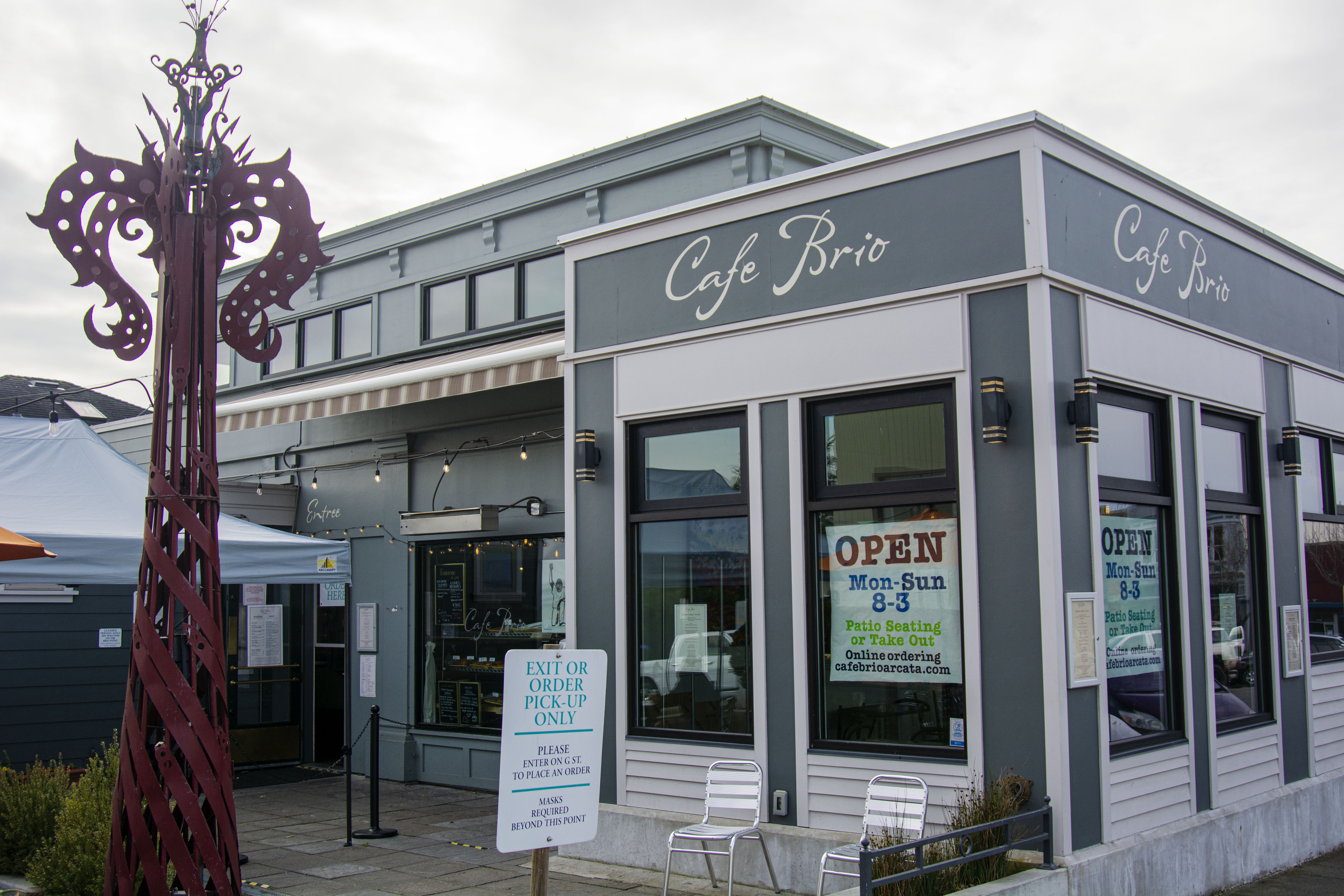
    Café Brio in Arcata is one of the many restaurants that have strictly abided by regulations to serve the community.

    “We ask that all patrons wear a face covering while on the premises, except when seated at one of our distance compliant tables,” reads the home page of their website. “Hand sanitizer and medical-grade face masks are available at our entry host station. We prioritize the health of our patrons and staff and are currently open to the public outside the building only.”

    Many eateries are providing to-go options to support their businesses and community members have come to their aid in keeping their doors open. Whether you’re enjoying a to-go order or a safe and socially distanced meal outside, we can support our local restaurants.

    In a time of isolation and lockdown, restaurants can provide a safe outlet to socialize. Everyone doing their part to be safe can help slow the spread of COVID.

    “Everything is super crazy right now and that feels like the one thing that makes me feel like things are somewhat normal. Supporting local businesses is important when so many things are up in the air for them,” student Layah Soriano said. “If we’re all taking the necessary precautions, then I think it’s safe to enjoy that bit of normalcy.”

  • KRFH Survives the COVID-19 Shutdown

    KRFH Survives the COVID-19 Shutdown

    The Student-Run Radio Programs Remain on Air

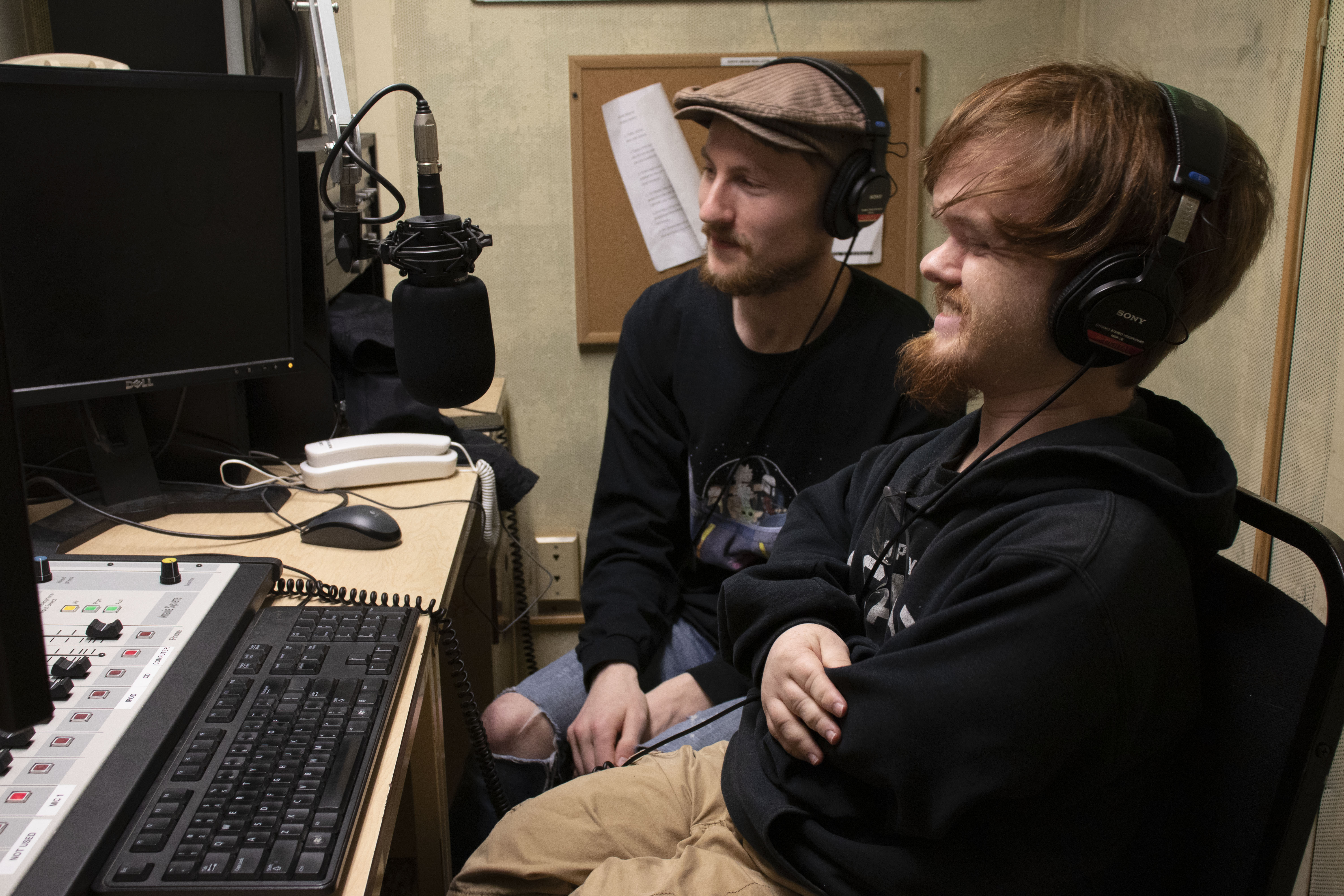
    Despite in-person instruction coming to a halt in the wake of COVID-19, student-run radio shows are still an option for KRFH students. For students not interested in going to great lengths to produce a weekly show, there is an alternative.

    When Humboldt State University first transitioned to online instruction following spring-break, KRFH students were given the option to continue doing shows, as long as they comply with strict CDC regulations. This includes leaving three-hour gaps between shows, having only one student in the booth at a time and wiping down everything inside the booth before and after shows.

    The new protocol lasted less than two full weeks before students were no longer allowed back in the booth. Instead, they were given the option to pre-record shows.

    Ayrton Flaherty has a show with Debate Team coach, Aaron Donaldson, called “Debate and the News.” It was the first show at HSU to utilize Zoom while broadcasting live over the air-waves having Donaldson contribute from the safety of his home and Flaherty sit in the booth for their final live shows of the semester.

    “It’s hard to do radio if you’re not in the station,” Flaherty said. “I guess cause we do a talk show, we’re able to get away with that. Because, rather than having music and occasionally talking, it’s talking and occasionally having music for us.”

    Flaherty has found pre-recorded shows to be far more forgiving, with options to edit and re-take segments. However, they have created hours of post-production time that wouldn’t exist with live shows, in addition to hours they spend on pre-production. But, both Flaherty and Donaldson believe their show is worth the effort.

    “I think all the DJs feel a little bit of a responsibility to stay involved, because otherwise there’s the chance that KRFH could get shut down if people aren’t showing interest.”

    Shelley Magallanes

    “This education is as important as ever,” Donaldson said. “The resources, as always, are very vulnerable and threatened, and students should get involved if they think it’s important.”

    Shelley Magallanes hosts multiple shows on KRFH and they completely agree with Donaldson. Magallanes only intends to attend the class if it’s offered in-person next semester, although, they still might sign up if the program is in danger.

    “I think all the DJs feel a little bit of a responsibility to stay involved, because otherwise there’s the chance that KRFH could get shut down if people aren’t showing interest,” Magallanes said.

    They don’t think the course should be offered next semester if students can’t meet in person, unless that would put the future of the program in jeopardy.

    “If we’re just doing it the way we’re doing it right now,” Magallanes said. “Then the main reason to hold onto the class is just to ensure that later semesters, it still gets put on.”

    Anwaar-Khabir Muhammad is in his first semester with the radio and based on his experience, he doesn’t think the course should be offered next semester unless classes resume in-person and on campus.

    “The radio station in and of itself is the learning experience,” Muhammad said. “I understand trying to maintain a sense of familiarity, but if that maintenance comes at the expense of the student’s overall learning experience, don’t do it!”

    Alice Peterson won best show at KRFH last year with her program, “Ear Hugs.” The program mixes lighthearted discussion with relaxing tunes.

    “Sending out your part and being a storyteller and providing that comfort and that service,” Peterson said. “It just makes you feel good.”

    Since live shows have been taken away, Peterson forgets to attend her Zoom classes and turn in her alternative assignments, which are a five-minute weekly update that are aired on KRFH of students describing how they are navigating their lives through these stressful times.

    “I kept forgetting to do my recording,” Peterson said. “Which was weird for me, because with the radio shows I never missed a show.”

    As a result of missing classes, Peterson was unaware of the option to produce pre-recorded shows. As a senior without a graduation, she takes solace in the fact that she can at least put on a final show.

    With administration still waiting to make an official decision about how classes will be conducted next semester, the future of KRFH remains uncertain and at risk.

  • Birthday Celebrations during Social Distancing

    Birthday Celebrations during Social Distancing

    The pandemic forces people to re-imagine their birthday plans

    When it comes to a birthday, you’d expect a party, a night out, a small get together with friends and family, or maybe a chill day at home. Unfortunately, with social distancing still in order, celebrating alone is the closest option to a party.

    Because social distancing is still in order, many have had to accept the fact that their big birthday plans aren’t going to happen anytime soon. Without the streamers and drinking games, people have found ways to remain somewhat festive on their special day. While some have taken to Zoom for video chat parties, others have spent their day with their fellow quarantine pals.

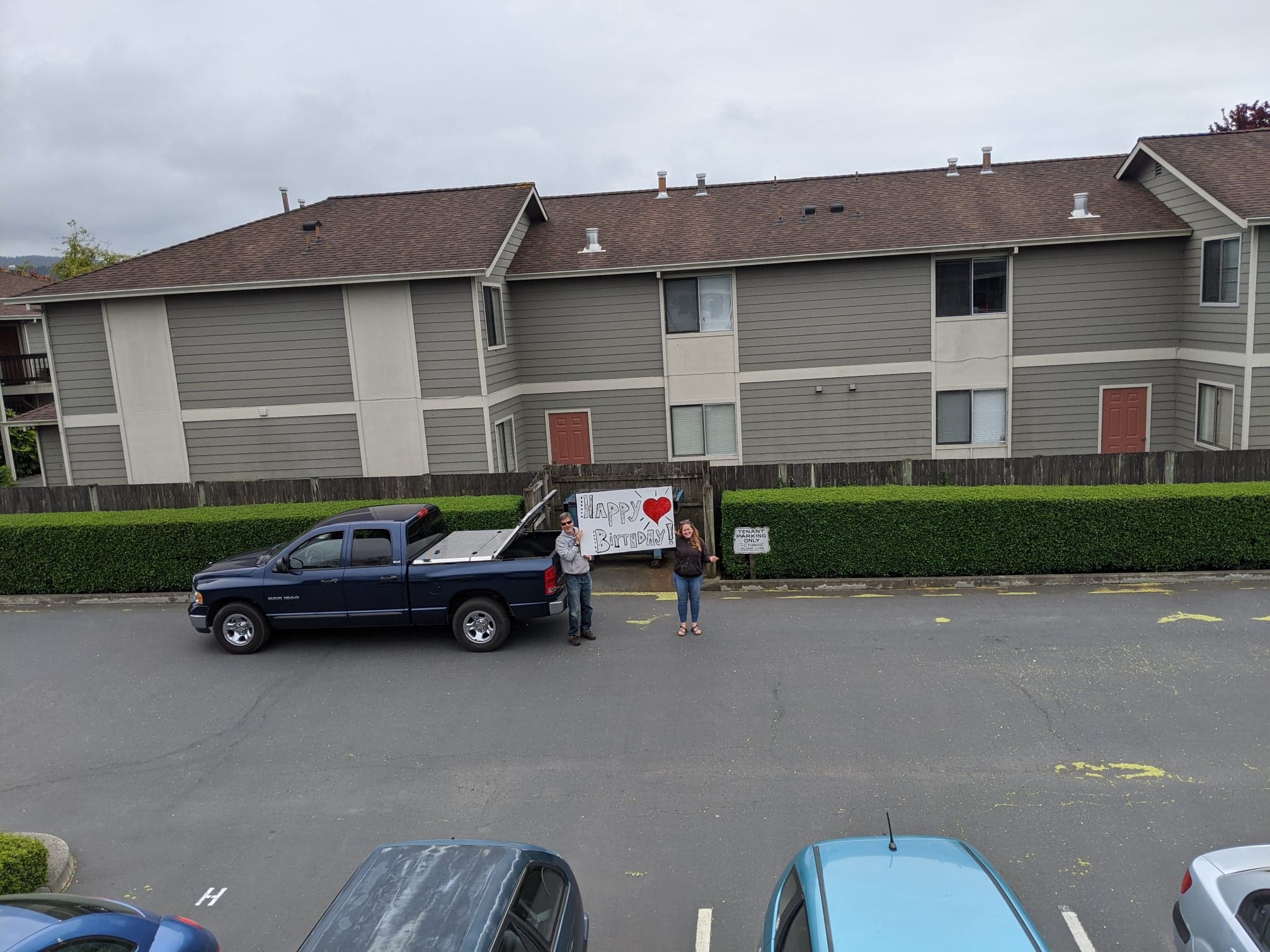
    Tracy French’s, a Humboldt State University alumna from the geology department, birthday was on April 30. French celebrated it with her two good friends, who are also alumni, and have birthdays that same week.

    “My birthday was on April 30,” French said. “It’s one day after a friend’s birthday, and the day before another friend’s birthday.”

    The three had originally planned for a big get together, and reserved the Arcata Common Hall for a huge party. With entertainment and plenty of drinks to go around, it would’ve been one heck of a birthday bash.

    “We were planning on getting a live band called ‘Old Dog’ at the Arcata Common Hall,” French said. “I went to Facebook and invited over 150 people, but that got cancelled.”

    Instead, French spent her day enjoying the warm sun in her backyard along with her friends.

    HSU psychology major, Shelley Magallanes, was hoping to have a night full of fun back home in Los Angeles for their 21st birthday. With social distancing likely to be in order, Magallanes had to cancel their original plans.

    “Because I’m turning 21 I was planning to have a big thing with friends,” Magallanes said. “We’d go into LA and go clubbing.”

    “I had plans to go to the bar with some pals on my 21st to see what it was all about. I had planned to have 30+ people invited to my birthday.”

    Bryan Gambrel

    Magallanes plans to return home around June, but with their big plans ruined by COVID-19 they’re preparing for the second best thing, spending it with the people they love most.

    “I’ll probably end up spending it with my family,” Magallanes said. “Maybe go swimming and eat some cake.”

    Bryan Gambrel, a junior at HSU, originally planned his celebration to be like any other 21st birthday, going out for a drink — legally.

    “I had plans to go to the bar with some pals on my 21st to see what it was all about,” Gambrel said. “I had planned to have 30+ people invited to my birthday.”

    Because of social distancing, going out was a no-go. Regardless, he was happy to celebrate his birthday with a small gathering of close friends and some quality-time with his mother.

    “The most memorable thing was having my mom and I build a garden bed out of spare wood palettes I’ve collected. It was a fun, crafty project,” Gambrel said. “While it was much smaller than I was hoping for, it was very memorable.”

    For those celebrating birthdays during this time, something as simple as a phone call or a video-chat can make all the difference. Drinking with roommates and creating fun games, or even sitting out on a nice sunny day can make this year’s birthday a bit more pleasant. No matter how you decide to celebrate, stay safe and it will definitely be a birthday to remember.

  • California Universities Update Travel Suspension

    California Universities Update Travel Suspension

    The CSU Travel Suspension has just been extended until July 31

    The California State University travel suspension for all international and non-essential domestic travel has officially been extended until July 31, according to an update email from the CSU Chancellor’s office on April 29.

    The update also says that the determinations are made with guidance from the CDC and the US State Department. At the time of the update, the State Department had issued a level 4 Travel Advisory to worldwide travel. Level 4 advisory is a warning level caused by a higher likelihood of life-threatening risks.

    “We regularly monitor data from local, state, national and international agencies and organizations,” wrote the Chancellor’s office. “And may modify the temporal or geographical restrictions in this directive if warranted by future developments.”

    A plan to reevaluate the restriction has been projected to be in discussion again by mid-June.

    The campus presidents are allowed to make exceptions to this rule but only for “extenuating and compelling circumstances.” The authority of these decisions cannot be delegated. Factors for contributing to these exceptions are:

    • Necessity of the proposed travel, including consequences of postponing travel.
    • Needs and preferences of the individual.
    • Availability of safe and secure shelter at the destination.
    • Availability of appropriate medical care at the destination.
    • Availability of transportation, services, and other necessities at the destination.
    • Assessment of risks associated with traveling versus risks of remaining in place.
    • As well as “other relevant factors as determined by the president.”

    The update also clarified what will happen for an essential traveler is allowed.

    “Individuals granted exceptions to travel must observe local health guidelines upon their return. Presidents who grant an exception to the travel suspension must create a written memorialization of how the circumstances were extenuating and compelling, using the factors above.” said The Office of the Chancellor’s COVID-19 update.

    The update ends saying that circumstances and conditions may change at any time and the Chancellor’s office will provide updated information as it becomes available.

  • Reading “Big Sur” in Shelter-in-Place While Going to Big Sur

    Reading “Big Sur” in Shelter-in-Place While Going to Big Sur

    A reflection from a former Lumberjack news editor

    When the entire world is going mad and cities are in disarray and the economy is through the tubes and the government is ordering the people to stay indoors and keep distant from human contact and all the unknowns and uncertainties and precariousness are causing anxieties and confusion and insane isolated thinking, then the only logical solution is to search for the magnificent eternal golden light in Big Sur where Jack Kerouac lost his illumination and was succumbed to mad mad maddening disillusion and deterioration of mind.

    Amidst a global pandemic and forced isolation (both for curving the spread of the disease and government say-so) Kerouac’s “Big Sur” may seem like an unlikely companion during cabin fever tendencies but he nails the coffin of loneliness surrounded by madness…and we are swimming in madness in 2020 and social distancing is causing us loneliness…he may be known for traveling on the road but the majority of his writing deals with the personal struggle of the unrevealed and intangible and intrapersonal relationships with exile and aloneness.

    It was time to go back to find some sanity while the whole world was ravaging in chaos.

    Last week I received a card from my obaasan written in shaky cursive:

    “I’m not myself now/can’t think much things now…” Her youngest son died in the middle of all this virus business and the experience of losing her youngest before her own passing into the next existence and not being able to perform a proper Japanese funeral has weighed a heavy heart on my nearly 90-year-old reincarnation of the bodhisattva Quan Yin. The letter is marked from Monterey, my hometown, just a couple dozen miles from Big Sur, which I am currently in the thick of. Whereas Kerouac fell into his madness, I was born into mine…and it was time to go back to find some sanity while the whole world was ravaging in chaos.

    Passing San Jose on the 280 at rush hour, or what normally is, and we stop not one time and I am convinced there is a God in heaven and miracles exist and coincidences mean something more than just what they don’t.

    A pitter patter of rain began to fall as my partner and I sped away from our Arcata apartment and headed down the curvy empty roads of the 101 en route to console an ailing mother from 6 feet away. My paint-scratched and hood-dented Volkswagen happily ate the white lines through redwood country, wineries, extending bridges and golden rolling hills full of deer and foxes and chirping birds. With everyone staying in doors, the urbanized are becoming again what Gary Snyder calls “wild.” Only 10 cars on the Golden Gate Bridge and all of the city, void of the Tenderloin, which sidewalks are unseen due to the amount of popup tents and stretched out tarps and rucksacks rolling in the gutters. Passing San Jose on the 280 at rush hour, or what normally is, and we stop not one time and I am convinced there is a God in heaven and miracles exist and coincidences mean something more than just what they don’t. Seven hours and not a minute more since we left Humboldt County the magnificent sand dunes of my childhood explode into view as the sun sinks behind cannery row, the fisherman’s wharf and into the pacific.

    We knock on the windowpane glass without warning. My obaasan, 4-foot-5 in frame in blue uwabaki and nearly all white thick Hokkaido curls reminiscent of the ancient Ainu people of our ancestors opens the door white as a ghost. We appear as road warriors traveling to find oil but she is happy nonetheless to see her most handsomest grandson and granddaughter in law (I know this because she tells us so in a faint whisper of grief). She is nearly silent and full of half smiles and sad lonely eyes staring off into a point in space I am unable to see. There is nothing more difficult than to deny a Japanese grandmother’s invitation of hot food and conversation… but these are harrowing times and one must put down their foot for the betterment of others… especially kindhearted compassionate grandmothers who want nothing more than to fill bellies and tell stories.

    Without being able to hug her or get close enough for her to hear me hurt my soul but the space we shared amidst all the craziness going on filled my heart with such joy that I could feel the sanity I had lost while sheltering in place replenish.

    We part for the night with three bows and head to Big Sur first thing in the morning. We were supposed to spread the ashes of my uncle but bureaucracies have slowed down (who would have thought possible they could move even slower) and checks clearing takes longer and so we had no urn and only mandatory intention of flying down the beautifully rugged pacific coast cliffs hugging the Santa Lucia Mountains to the east and infinite deep neon blue waters crashing west. All parks are closed and scattered hikers from who-knows-where park along the highway to hike in. We stop at Bixby Creek of Kerouac’s “Big Sur” but it is not the same for all the turnoffs are filled with parked cars and tourists and selfies… or maybe it is the same because on his last hitchhiking adventure up from Big Sur to Monterey 1,000-2,000 cars passed him by and he was no longer able to relate. We ate lunch beneath the shade of an oak tree 100 feet above the water and 15 miles from the hot springs. We were by ourselves with the lonely wails of the sea and the roaring of the waves and the ghostly spirits of Kerouac and my uncle.

    On our way out of town we said goodbye to my grandmother. She stood behind the screen door as we stood in the sun with bandanas and masks wrapped around our faces. She was in a cheerier mood and her energy level was heightened. She wore full smiles behind her grief and talked about the chaos of the world being unbalanced. Without being able to hug her or get close enough for her to hear me hurt my soul but the space we shared amidst all the craziness going on filled my heart with such joy that I could feel the sanity I had lost while sheltering in place replenish. Kerouac pronounces, “The more ups and downs, the more joy I feel. The greater the fear, the greater the happiness I feel,” and I believe it to be important we share the same intimacies while we are submerged in the unknown dangers of threats and hazards.

  • Letter to the Editor: This Bus Driver Misses Students and Faculty

    Letter to the Editor: This Bus Driver Misses Students and Faculty

    A note from a local bus driver longing for a crowded bus again


    This is a letter to The Lumberjack from local bus driver Mark Condes. The letter has been edited only for grammar and punctuation.

    I drive a bus around Arcata, California. I frequent the Library Circle and the 14th Street & B intersection. Lately, on very infrequent occasions, I drop off an HSU student at one or the other. But this has been dwindling down to rare moments. I’m writing this because I just wanted to say that I miss all the students and faculty who have been my passengers for over a year now.
    .
    I miss making the rounds on LK Wood down to Camp Curtis, rolling out to Sunny Brae for my three stops there, the long drive down to Greenview Market to pick up the handful of students and a professor in that little corner of Arcata, and out to the Valley West loop where we scoop up the largest busload of students along Alliance and Foster streets, packing them in like sardines, as we like to say, with a call out to the back of the bus, “Do we have room for just ONE more?”
    .
    I’m a lucky person lately because I’m still working, still driving all over town. During these times, we only run what’s called the ‘Orange’ route. No more Red, no more Gold, just a mashup of both.
    .
    Truth be told, I feel a bit unlucky also. While we still pickup a handful of Townies going about their ‘Essential Needs’ business, nothing replaces all the bustling energy, the fantastic smiles, the mix of voices of my student riders.
    .
    I suppose I’m getting to the point, or heart, of the matter… ‘My’ student riders.
    Maybe I’m just a softie. I know I’m not some old lonely guy grasping at any human interaction, desperate for some validity that I still exist and matter. But yeah, I suppose I’ve formed an attachment at some level. Perhaps it’s a mix of all things that make me who I am, that have allowed me to feel some level of connection with the younger people heading off to HSU and their open road to the future.
    I have had the pleasure of watching my own kid go through the same process and life experience of college, and that was just a few years ago. I’m sure there’s a relationship here also.
    .
    While I ride around, one large circle each hour… hour-after-hour, I will often feel that tinge of loss, that nudge of sadness as I reflect on how alive this lumbering conveyance once felt, and now how hollow and empty it’s become.
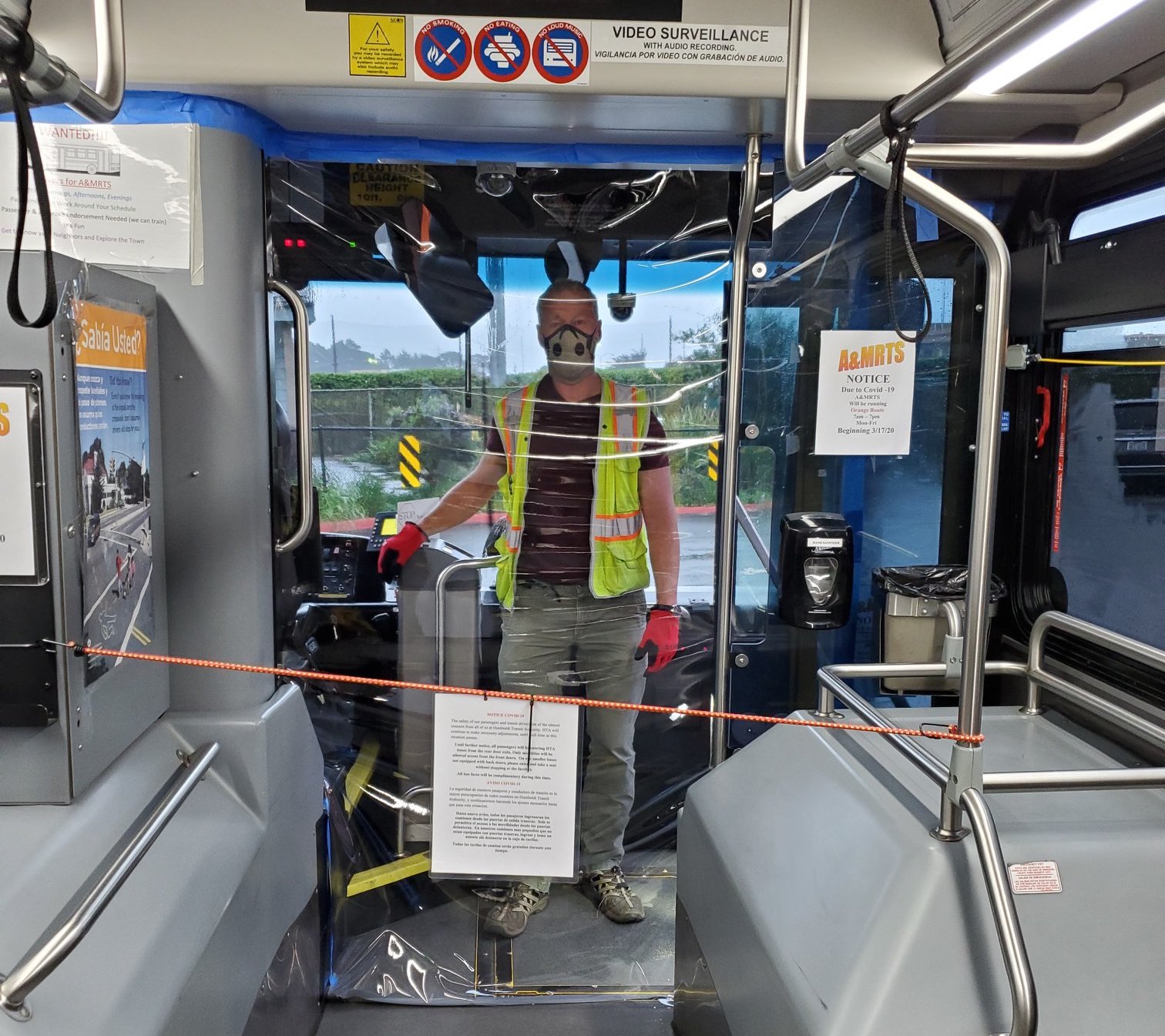
    And then there’s that other factor, an anomaly I hope… the separation of driver from passengers via a vinyl wall. So impersonal, a clear Berlin Wall, if I may.
    .
    As I arrive at each stop, in particular the ones where I would pick up students, I still pause while glancing out in the distance. I find myself looking for those waving arms, that transition from a walk to a full-bore run, as a student realizes they may miss their bus ride to school. I grew to know a number of them well enough that I could only grin and patiently wait for them to arrive, panting, fumbling for their student ID to swipe once they clambered up inside. 
    .
    I realize school will return to business in the future, and students will once again ride the bus. Yet, as with so many derailed aspects of our lives currently, there’s no firm date on when that will take place.
    .
    So I drive. I still take in those sweeping views as I top Union Street on my way to the Parkway Apartments, coax the bus up steep grades, and round the circle at the HSU Library. And when I pick up a familiar student, I still take off my sunglasses, pull down my mask, and with a smile call out through my plastic membrane, “Good Morning!”
    .
    From time-to-time as I roll through town, I catch a glimpse of a former, frequent student rider or professor, who no longer rides the bus. 
    In those transitory moments, we may glance each other’s way at just the right instant. As recognition unfolds, so do the smiles, the nods, the waving of the hands, and I am granted a brief respite from the isolation imposed upon me by this COVID-19 experience.
    .
    While I am grateful to still be working, still driving, I am even more grateful for all the friendly smiles, the greetings, the eye-rolls, headshakes, and laughter over my bad jokes and puns, that I experienced these past semesters. I wonder how ‘My’ students are doing, how they are faring during these trying times… I care.
    .
    I look forward to life resuming in a more normal manner, and the days of a busload of students once again bringing their energy, excitement, and friendliness through the doors.
    I honk and wave whenever I see students in graduation caps and gowns getting their pictures taken by the gates of the university. I shake off that bit of sadness and drive on.

  • Students Rely on OhSNAP! in Pandemic

    Students Rely on OhSNAP! in Pandemic

    On-campus food pantry provides for students in need

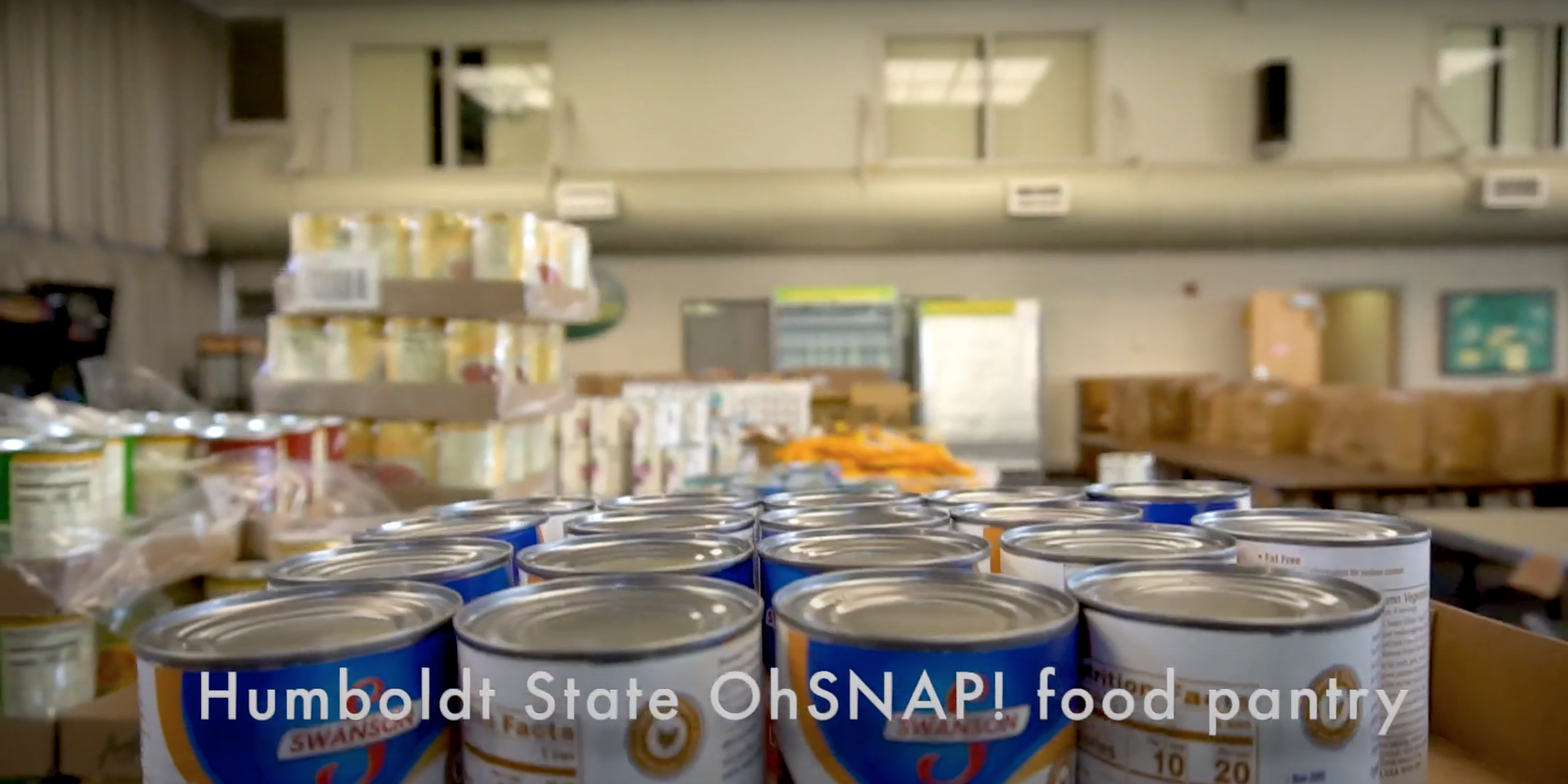
    With the J dining hall closed and grocery stores inducing anxiety, some students are relying on Humboldt State’s OhSNAP! pantry for food.

    OhSNAP! will remain open for the rest of the semester, serving students Wednesdays from 10 a.m. to noon and Thursdays from 1 to 3 p.m. on the bottom floor of the Jolly Giant Commons. OhSNAP! can also deliver food directly to you if you can’t make it to campus (email mira@humboldt.edu for more information).

  • The “Chinese Virus” and the Social Disease

    The “Chinese Virus” and the Social Disease

    No one person is to blame when millions of people are at risk

    A cultural perception of coronavirus has been under scrutiny for people’s repeated insistence on referring to it as “Chinese virus.” This became known when a photographer shared a photo they took of Donald Trump’s script at a press conference March 19, which showed the word “corona” crossed out and replaced with “Chinese” above it.

    The World Health Organization has guidelines that diseases should not be named after geographical locations, partially in response to the consequences of disease names such as Spanish flu, Rift Valley fever or Singapore virus.

    These guidelines were first announced in 2015, with the reasoning that there are numerous other ways to refer to the name of a disease easily without identifying a specific place. One example is the SARS virus, which “avoided stigmatizing any place or any person. And then because of the acronym SARS, it also gave the media and everybody an easy way to refer to the disease.”

    Unfortunately, even outbreaks in recent years are given names such as Ebola, which is the name of a river in Congo, or swine flu, which indirectly blames an entire species of animal.

    When we call illnesses Singapore virus, Chinese virus or swine flu, it shifts the focus away from combating the outbreak and toward the myth that some place or group of people must be at fault for a problem that affects millions of people.

    Those arguing in favor of naming diseases in this manner will cite its supposed “accuracy,” and push back against the suggestion that it might be racist. Senator John Cornyn defended referring to it as the Chinese virus.

    “China has been the source of a lot of these viruses like SARS, like MERS and swine flu,” he said.

    “We’re talking about China, where these viruses emanate from,” he later said.

    Despite what Cornyn and others might claim, citing other examples of names that refer to people or places does not excuse continuing to use the same practice. Naming diseases like this serves as a means of ostracizing people.

    Numerous reports of violent attacks, both verbal and physical, against Asian-Americans occurred in the past few weeks, perpetrated by those who buy into the idea that China has to serve as the scapegoat for this outbreak. Identifying one group of people to blame for a pandemic only serves as a form of fearmongering and reinforces racist ideas among Americans.

    When we call illnesses Singapore virus, Chinese virus or swine flu, it shifts the focus away from combating the outbreak and toward the myth that some place or group of people must be at fault for a problem that affects millions of people.

    Even if a specific source for this pandemic does exist, dwelling on that serves little purpose when the problem is this widespread. It absolves the U.S. government of much of their responsibility to protect their citizens, which they need to be held accountable for.

    Violating World Health Organization policy and reinforcing outdated racist practices that should never have been practiced to begin with will not end this pandemic any sooner, nor make dealing with it any better. The only people that benefit from such ideas are those who do not understand that we are all at risk and need to be taking action, the same as everyone around us.

  • If It Wasn’t Already Obvious, We Need Universal Healthcare

    If It Wasn’t Already Obvious, We Need Universal Healthcare

    The U.S. healthcare system isn’t built to handle a pandemic because it’s not built to help everyone

    A 17-year-old boy from Lancaster, California died in March due to COVID-19 complications. After having serious respiratory problems the boy went to an urgent care facility. The facility denied care due to lack of insurance. While en route to the closest public hospital, the boy went into cardiac arrest and died hours later.

    “But by the time he got there [the local public hospital], it was too late,” Lancaster Mayor R. Rex Parris said.

    After the boy passed, doctors confirmed he had COVID-19.

    The tragic death of this 17-year-old boy shows the obvious divide and unfair treatment within the U.S. healthcare system. If the boy had been insured or affluent enough to pay upfront for whatever treatment he needed, he would have received care and possibly still be alive.

    There are 6,146 hospitals in the United States. Some are community owned, some are owned by the state or government, and some are privately owned.

    According to 2018 data from the American Hospital Association, 58% of community-owned hospitals in the U.S. are non-profit. Out of all U.S. hospitals, 21% are for-profit.

    There is a distinct separation in our healthcare system, but it’s not just about where hospital funding comes from and goes. Hospitals also differ when it comes to if patients actually receive healthcare.

    In 1986 Congress passed the Emergency Medical and Treatment Labor Act, which restricts all hospitals from denying care to patients based on a lack of insurance or ability to pay. But this hasn’t stopped privately owned hospitals from denying care to uninsured patients. In a pandemic, this can have deadly consequences.

    “We cannot and will not close our eyes to the economic consequences of this crisis.”

    Netherlands Prime Minister Mark Rutte

    Universal healthcare works to prevent these situations. The Netherlands has universal healthcare and is taking a completely different approach to dealing with COVID-19.

    March 16, Netherlands Prime Minister Mark Rutte made an address to the nation.

    “The reality is that in the near future a large part of the Dutch population will be infected with the virus,” he said.

    He went on to introduce a concept called group immunity.

    “Those who have had the virus are usually immune afterwards,” he said. “Just like in the old days with measles. The larger the group that is immune, the less chance that the virus will jump to vulnerable elderly people and people with poor health. With group immunity you build, as it were, a protective wall around them.”

    This is similar to what United Kingdom Chief Science Adviser Sir Patrick Vallance calls herd immunity. Herd immunity is the idea of letting the population be exposed and eventually become immune.

    Although the Netherlands has closed some facilities like schools and restaurants, that might not be the case for long. Rutte believes a lockdown will not stop COVID-19. He also has much more confidence in the Netherlands’ hospitals and healthcare system than the U.S. has in its own systems.

    “We build immunity and ensure that the healthcare system can handle it,” Rutte said. “With the aim that nursing homes, in-home care, hospitals and especially intensive care units are not overloaded. So that there is always sufficient capacity to help the people who are most vulnerable.”

    “We cannot and will not close our eyes to the economic consequences of this crisis,” Rutte said near the end of his speech.

    Rutte is obviously concerned with the economy of his nation, but he also seems relatively confident that the Netherlands healthcare system could support their entire population if infected by the virus. It’s important to note, the Netherlands pays for their universal healthcare services through taxes as well as a monthly premium payed by individuals.

    This is very different from the current situation in the U.S. By all accounts, our healthcare system couldn’t handle the whole population getting infected by the coronavirus. Hence the need to flatten the curve.

    Even with social distancing rules in place, cities like New York are struggling to find personal protective equipment or have enough intensive care unit beds for infected patients. Whether or not herd immunity is an effective or morally acceptable approach, the U.S. healthcare system isn’t built to handle it because it’s not built to help everyone.

  • Shelter-in-Place is Not a Productivity Race

    Shelter-in-Place is Not a Productivity Race

    Quarantine shelter-in-place offers escape for some and anxiety for others—both are damaging

    Inhale, pause, exhale. We are living through an unprecedented, intimidating and stressful time, but now is not the time to beat yourself up.

    While the world seems at a standstill, many people have taken this time away from their normal daily duties to start new hobbies, lose weight or even learn new languages. These tasks and goals are not a reflection of yourself, nor should they be used to show off your journey through social distancing.

    A 2013 study by a psychologist at the University of Michigan examined the effects of social media on people’s mental wellbeing. The study found that social media, Facebook in particular, does not facilitate beneficial social interactions.

    The same, and worse, can be said in regard to many other social media platforms. For example, Instagram can be a mindless escape for some but a shame-inducing harbor for others.

    There’s a constant creation of new challenges and trends coming up everyday, whether it’s the pushup challenge, #untiltomorrow or even celebrities singing tone deaf tunes. Or perhaps it’s a stream of self improvement posts and revitalized New Years goals.

    Whatever is clouding your social media feed, it doesn’t have to be a standard for you to live up to. This isn’t a productivity competition.

    Some of us might have more time on our hands, but that doesn’t make things easier—and some people still working or now taking care of children might not have more time. We are also still dealing with pre-existing mindsets on top of the stress of a viral global outbreak.

    Don’t waste this time comparing yourself to someone who’s lost 10 pounds walking in circles in their driveway or to someone who’s learned how to speak Italian while in quarantine.

    We need to have compassion for ourselves always, but especially now. The Centers for Disease Control and Prevention’s COVID-19 webpage provides a section for stress and coping information. This page offers insight to stress causes and outcomes all while underscoring the importance of knowing everyone deals with stress differently.

    Thus, we escape to viral social media trends for entertainment and relief.

    In a recent Vox article, writer Rebecca Jennings supports the flood of Instagram challenges. She argues people should continue this outpour of personal content because it offers connections that will stay in this ephemeral time.

    However, instead of cluttering a platform with more dog picture reposts or pictures of people wearing pillows as clothing that only distract from the now, we should contribute to the conversation by being honest and doing something that honors yourself and others. Let your friends on social media know how you really feel—open up, cry, laugh and inspire. If you’re up for it, of course.

    Don’t waste this time comparing yourself to someone who’s lost 10 pounds walking in circles in their driveway or to someone who’s learned how to speak Italian while in quarantine. Of course, if walking in circles in your driveway while rambling in broken Italian is your thing, go for it.

    Being honest with others allows for accountability. If you continue to keep up a guise of happiness when you’re truly suffering inside, you won’t receive the help you deserve.

    Speaking up about how you feel is a challenge more people should face. You don’t need to make immediate changes to improve, but you owe it to yourself to take the time you need.

  • Inside the Immune System

    Inside the Immune System

    How the body uses multiple levels of defense against foreign intruders

    With the coronavirus craze going on right now, it may be nice to know our bodies are working hard to protect us.

    When a foreign bacteria or a virus enters the body, it goes into full defensive mode. A complex relationship of cells evolved over hundreds of thousands of years, the human immune system is our reliable defense from sickness and death. The body has developed a battalion of guards, soldiers, intelligence, weapons factories and communication stations to defend us from attackers.

    The Kurzgesagt – In a Nutshell YouTube channel published an easy-to-watch video on the immune system. They broke down the immune system’s jobs into 12 jobs including to communicate, kill enemies, cause inflammation, remember enemies and make strategic decisions.

    There’s more to the process too. Russel Wheatley is a family practitioner at the HSU Student Health Center. Wheatley said that, even though he doesn’t study immunology, he has a working knowledge of the immune system. He referenced an immunologist colleague named Huang Bo for his explanation.

    Wheatley said there are five levels of immunity, and all of these levels work together as a multi-faceted defense.

    The first level is a physical barrier, the skin. He said the skin is bacteria and virus-proof. Between the skin and the mucous in your nose and mouth, combined with coughing and sneezing, the body is pretty good at fending off invaders.

    If the skin is broken, then the immune system really starts working. When the skin is cut, nearby bacteria take advantage of the break and enter the blood stream, risking infection. First to the plate is the macrophage, a large, abundant cell.

    “Most of the time, they alone can suffocate an attack because they can devour up to 100 intruders each,” Kurzegsagt says. “They swallow the intruder whole and trap it inside a membrane. Then the enemy gets broken down by enzymes and is killed.”

    If the macrophage is overwhelmed, it begins to call for help from the garrison. Neutrophils are hype- aggressive, destructive cells that appear at the site of the battle to destroy any cell near the cut, including healthy ones. If this isn’t enough, the macrophage calls the dendritic cell to the battlefield.

    “You have to rest the body when the immune system is trying to work.”

    Russel Wheatley

    The dendritic cell is the brains of the operation. When hailed by the macrophage, the dendritic cell starts to collect samples of the intruders and presents them on the outer membrane.

    “Now, the dendritic cell makes a crucial decision,” Kurzgesagt says. “Should they call for anti-virus forces that eradicate infected body cells or an army of bacteria killers?”

    If a virus has entered the body, Wheatley says a protein in the blood stream called a complement protein identifies the virus and destroys them. Eventually, after the body has torn apart the virus, white blood cells produce antibodies.

    In the case of the coronavirus, it’s a little more sinister. The virus tries to hide itself from the immune system by burying itself in lung cells. In a video about the virus, Kurzegesagt says the virus attaches itself to a specific receptor on lung cells and inserts a new DNA command: copy and reassemble. It fills up with more and more cells until it’s full, and then the cell receives a final order: self-destruct.

    “At this point, the virus hasn’t done too much damage,” Kurzgesagt says. “After millions of body cells have been infected and billions of viruses swarm the lungs, the virus releases a real beast on you, your own immune system.”

    While the immune system pours into the lungs, the virus infects them and confuses the system. The coronavirus causes immune cells to overreact and yell, “Bloody murder.” The immune system wastes a lot more resources than it should to fight the reaction, exhausting the body’s energy.

    Wheatley encouraged anybody who is feeling sick to rest. He explained when a person wakes up, the body has a limited bowl of energy. Thinking, exercising and immune-responding all need that energy to do their thing, and expending energy can make the body less effective at fighting invaders.

    “You have to rest the body when the immune system is trying to work,” Wheatley says. “Some people have different immune systems and some aren’t nearly as strong as others, especially to these viral type invaders. You have to rest. You have to give it the right kind of energy.”