The Lumberjack


Students Serving The Cal Poly Humboldt Campus and Community Since 1929

Category: News

  • Lifted mask mandate polarizes student opinions

    Lifted mask mandate polarizes student opinions

    By Eddie Carpenter

    On March 14, face mask requirements were lifted on Humboldt’s campus as a way to transition back to normal operations. This has created polarizing views towards how students and staff going maskless might affect the local community. Some students have chosen to ditch the masks while others still embrace them.

    Photo by Eddie Carpenter | Dillon Harp still wears his mask in solidarity with his peers.

    Local musician Dillon Harp expressed how one’s personal choice can affect the community as a whole.

    “As an African-American and knowing that my family has elders in it…the mask is just really there to protect others,” Harp said. “Obviously the mask can let particles in like more so than let particles out…Wearing your mask is really just about kind of looking out for the community for me. I ain’t really unmasking anytime soon. If we can all come together a little and see some of the basic logic behind protecting each other, our elderly family members- I think we can all help out and just keep the mask on a little longer.”

    Carlos Ochoa-Silvas, a rangeland resource major, expressed how masks gave him skin problems.

    “Wear a mask if you have symptoms of anything or if you feel like you’re not a hundred-percent,” Ochoa-Silvas said. “When I heard about it, I was mostly excited just because I didn’t like wearing the mask. I kept breaking out underneath and it was really irritating my skin.”

    Political science major Lake McLeod believes that Humboldt’s recent transition could not come at a better time than this.

    “Personally, I agreed with it. I think that eventually, we do have to kind of return to some kind of sense of normalcy,” McLeod said. “You know after two years of being masked…and the cases are down, so I feel like at this point we should learn to live with COVID like we do [with] the flu.”

    English and CRGS major Mireille Roman thinks of wearing a mask as an act of solidarity.

    “I would say that because it’s not a mandate now, it’s kind of become a personal choice to what you want to do with it,” Roman said. “But your personal choice still impacts people at the end of the day. I think the best way that my professor put it was like ‘I’m going to stand in solidarity with people who can’t take off their masks.’ Because there’s people who [are saying] ‘I’m perfectly healthy. I’m vaccinated. I’m good.’ Yeah, but just because you’re fine doesn’t mean that other people are going to be in a position to do so as well… but I think it really dictates the environment of a classroom when the professor chooses to wear a mask or not. Until the numbers are better and just nationally we’re more responsive to this, I’m probably going to keep wearing my mask.”

    Between March 15 and March 22, Humboldt County Public Health reported 72 new COVID-19 cases with 2 new hospitalizations.

  • Activist calls out Humboldt community for limited BIPOC support

    Activist calls out Humboldt community for limited BIPOC support

    By Liam Gwynn

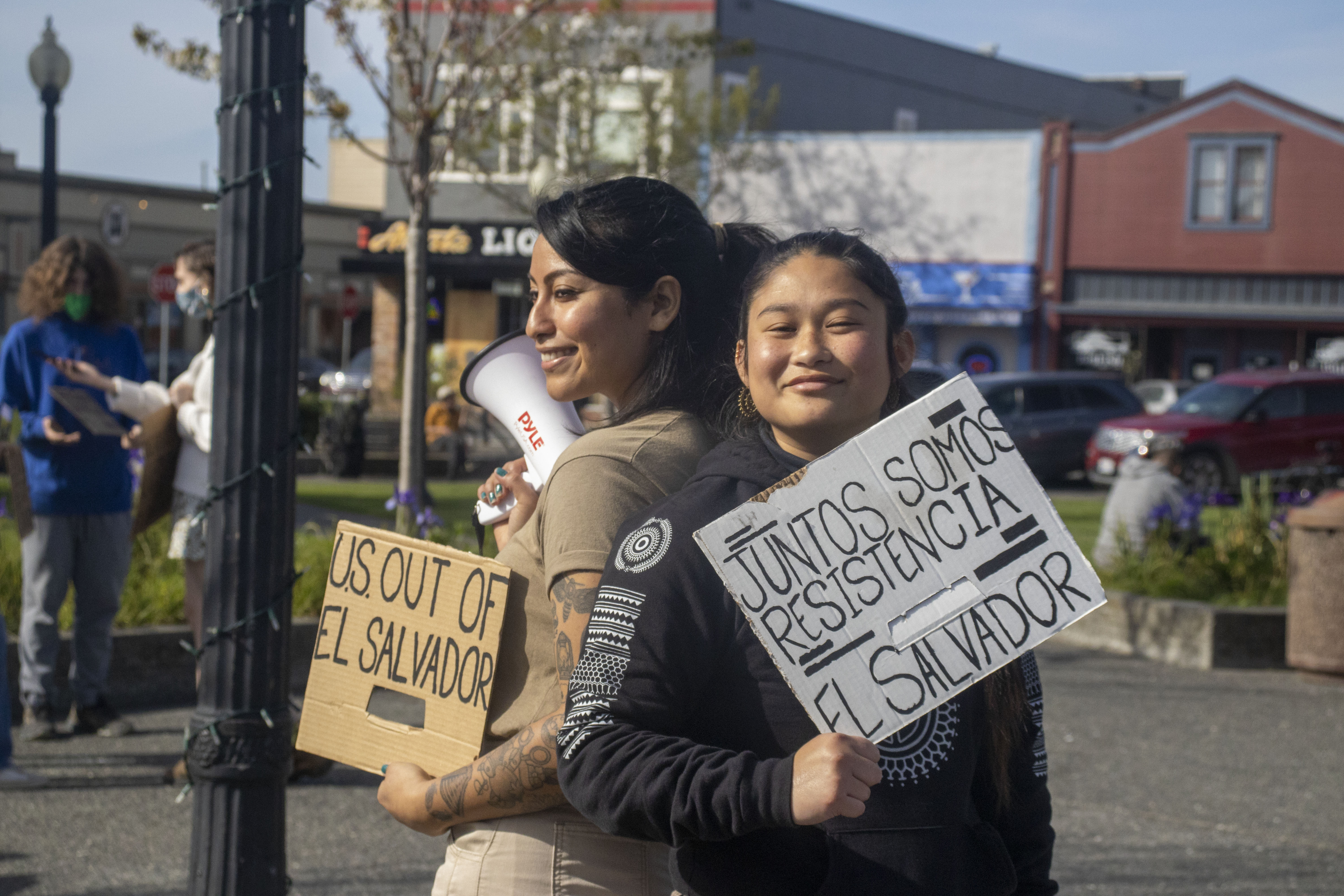
    Nikki Valencia hosts a protest in the Arcata Plaza with a group of supporters on the last Thursday of every month. These protests are meant to raise awareness for the problems facing the BIPOC and LGBTQ communities and March’s protest had an emphasis on Women’s History Month. Despite Valencia’s poster gaining traction ahead of time online, only a handful of people showed up for the actual protest.

    The first hour of the protest consisted mostly of a few people meandering around the plaza while Valencia and her group of supporters sat at booths handing out flyers and selling art created by Valencia. After a few more people arrived, Valencia took out her megaphone and gave an impassioned speech to the twenty or so people who had gathered.

    The protests around these issues weren’t always so small in Humboldt County. In previous protests, during the peak of the Black Lives Matter movement, the community rallied and supported the causes in a far more substantial way.

    Valencia is a Cal Poly Humboldt student and she organized her first protest in McKinlyeville in 2020 and over three hundred people showed up.

    “A lot of supposed allies fell off,” Valencia said. “When I had my protest in 2020, you know, I had three hundred people, all these people cared and it was easy to care because black death you know, it doesn’t take much for that.”

    The problem activists are facing now is getting people to still care and be active when there isn’t a sensational story playing through social media constantly.

    “What I learned from a lot of people is a lot of that (community support) was outrage and outrage runs out fast and then you see who’s really there,” said Valencia.

    Valencia thinks a lot of these problems stem from students lacking intersectionality in their social circles. They said that people will post infographics on their Instagram stories but that doesn’t actually mean they’re attending protests or even connecting with people outside of their race and social circle.

    “People can hide behind their infographics and say that they’re progressive by like sharing something and they don’t have to really read it, apply it or really like care about that,” said Valencia, continuing. “It takes no energy to do that and a lot of people can barely do that.”

    The best way that Valencia thinks allies can show their support for these issues is by diversifying their social circle and embracing intersectionality, educating themselves on topics so others don’t have to do it for them, and finally showing up for events and protests that support BIPOC and LGBTQ communities.

    For more information regarding future protests, follow Nikki Valencia on Instagram @soulbunni. The protests are held in the Arcata Plaza the last Thursday of every month from 3-5 pm.

  • Cal Poly Humboldt’s Library Cafe sees the light of day

    Cal Poly Humboldt’s Library Cafe sees the light of day

    by Lex Valtenbergs

    The Library Cafe lifted its shutters for the first time in several years on Friday, Feb. 26. The cafe serves delicious coffee blends from Muddy Waters Coffee Co. as well as pastries, veggie wraps, drinks, and more.

    Recent biology graduate Kate Mendoza was just hired by the private company Chartwells Higher Ed to work at the newly reopened cafe.

    “Chartwells is really awesome,” Mendoza said. “Honestly, they work really well with students from what I’ve seen.”

    Mendoza’s go-to drink is the cappuccino.

    “I usually like to do the cappuccino,” Mendoza said. “It’s just espresso, steamed milk, and a lot of foam. I think the foam is my favorite part.”

    Mendoza’s coworker Ahmad Shah, a senior majoring in communication, recommended the hazelnut mocha.

    “I like a hazelnut mocha,” Shah said. “Sometimes coffee is a little bit bitter. The sweetness helps balance the bitterness of the espresso.”

    Communication senior and Learning Center academic peer coach Kas Colwell ordered a vanilla latte with two espresso shots from the Library Cafe on March 3.

    “I’m so glad y’all are open again,” Colwell said to Mendoza while ordering. “It’s exponentially improved my quality of life.”

    After getting her drink, Colwell sat down at a nearby table in the dining area. As a library employee, she appreciates how easy it is to get to the cafe.

    “It’s the convenience because I literally work in the library, so it’s on my regular route,” Colwell said. “I don’t have to go walking somewhere else to get coffee.”

    The Library Cafe is available to all Cal Poly Humboldt students and faculty and is currently open on weekdays from 7:30 a.m. to 5 p.m.

  • Humboldt professors speak in ‘Ukraine in Crisis’ forum

    Humboldt professors speak in ‘Ukraine in Crisis’ forum

    by Liam Gwynn

    Professors addressed the complex and multifaceted nature of the Ukraine invasion during an event hosted by the political science department on Friday. They addressed the situation from three different angles with professors breaking down the topic relevant to their expertise.

    Dr. Robert Cliver is a history professor at Cal Poly Humboldt. Cliver gave historical context for the war in Ukraine and explained how the situation is not black and white in his mind. Between the corrupt Ukrainian white nationalist oligarchs and Ukraine’s tentative alliance with the west, Cliver doesn’t think Ukraine is as innocent as they are being painted by the media at large.

    Cliver drew criticism after claiming there were no heroes or villains in war. In his eyes, all of the world leaders are villains fighting over power and resources.

    “I’m against war, period. I think if you’re resorting to violence to achieve your ends you’re not a hero,” said Cliver.

    Cliver warned students against glamorizing and glorifying political figures like Ukrainian president Volodymyr Zelenskyy. Cliver supports the Ukrainian people, but thinks people need to look into the historical context of situations and understand that their perspective may have been altered by nationalistic rhetoric they have been exposed to.

    “It’s very difficult to find heroes and villains historically and when people do, it’s usually for nationalistic reasons and I’m very skeptical of that,” said Cliver.

    After Cliver’s talk, Noah Zerbe from the political science department gave a thorough breakdown of the international relations situation currently unfolding between Russia and the rest of the world. In particular, he explained how the sanctions put in place by NATO would affect both Russia and the global economy.

    “Russia and Ukraine account for about 20% of the world’s corn exports and about 30% of the world’s wheat exports,” said Zerbe, continuing. “So cutting that off from global markets is going to have a huge impact on food prices.”

    Zerbe went on to explain how Russia also accounts for about 20% of the world’s fertilizer so not having that on the global market will impact many types of agriculture on top of the ones previously mentioned.

    Allison Holmes from the international studies department took over after Zerbe. Holmes gave an urgent speech about the importance of fact-checking what you read online and the unreliability of news in the era of social media.

    Holmes explained how social media has changed the way people digest information which has, in turn, made times of crisis like this even more disorientating.

    “Everyone became their own spokesperson, nobody needed to wait for the official statement, nobody waited for a press officer to tell you what was happening out there, the feeds from Twitter, Facebook, TikTok, went straight to the news headlines,” said Holmes.

    She explained how this massive change has resulted in a repetitive news cycle where the most TV-ready looking civilians are asked the same questions over and over and other important developments are pushed to the side.

    “This has produced hours and hours of interviews with young women, most of whom happen to be lovely blondes who all speak perhaps halted but excellent English with at least one if not preferably two children sitting on a train platform going they know not where,” said Holmes.

    Holmes did not want to downplay the situation in Russia, but she does think it is being overplayed by the media, especially in comparison to how other conflicts outside of Europe are covered.

    “I’ve lost the number of times I’ve heard ‘we haven’t seen this since world war II’ which is simply not true,” Holmes said, continuing. “What about Yugoslavia, what about Syria’s impact on Europe and the estimated 13 million refugees or displaced people who are still not home?”637 words

  • The 28th annual Social Justice Summit concluded with paddle-boarding to Big Lagoon.

    The 28th annual Social Justice Summit concluded with paddle-boarding to Big Lagoon.

    by Kris Nagel

    An almost-spring chill in the wind convinced almost all of the attendees present to wriggle into one of the wetsuits piled on the warm sand. The Social Justice, Equity and Inclusion Center (SJEIC), in tandem with Center Activities, hosted a kayaking and paddleboarding trip to Big Lagoon for students on March 6.

    Photo by Kris Nagel | Attendees of the 2022 Social Justice Summit trip to Big Lagoon suited up with life preservers and splash guard gather on the beach on March 6, 2022.

    The event capped off a week of activities as part of the 2022 Social Justice Summit, which was themed around climate justice and intersectionality. Part of a 28-year tradition, the annual Social Justice Summit is a place for students to get directly involved in making our community more inclusive. Frank Herrera, the SJEIC coordinator, helped oversee the student leaders who put together the week’s schedule with accessibility in mind.

    “Big Lagoon is a cool spot. I would imagine that it’s probably going to be transformational for some,” Herrera said. “Hopefully in a positive way.”

    The summit was one of the first programs to be offered in person now that COVID-19 restrictions are starting to be lifted. Herrera said this year drew a smaller crowd than it had before the pandemic hit, with around a hundred students attending events over the week.

    About 16 people went to Big Lagoon on Sunday. In part, the limited itinerary was due to this year lacking a credit program for student organizers of the summit. Normally, a class credit is offered through the Critical Race, Gender and Sexuality Studies (CRGS) department. However, Herrera’s request for the program was denied this year.

    Photo by Kris Nagel | Aelis Hanson, a guide with Cal Poly’s Center Activities, walks a program participant through their launch at Big Lagoon on a paddleboard March 6, 2022.

    The summit was a work in progress for months prior to the first speaker taking the stage at the end of February. However, some accommodations took on-the-ground problem solving by the event coordinators.

    One student registered for the Big Lagoon trip had requested additional assistance in transporting their mobility aid before arriving at the pickup location. Not having planned for the additional cargo, organizers scrambled for an additional vehicle. Fortunately, another van was available that morning and the student was able to join shortly after the first kayaks launched.

    Photo by Kris Nagel | Center Activies’ Mairead Sardina educates program participants on water safety, showing how a tight life vest helps keep the head above water March 6, 2022.

    Mairead Sardina works for Cal Poly Humboldt’s Center Activities and helped plan the outdoor programming of the summit. Sardina hoped that the trip would help re-establish a sense of normalcy on campus, now that activities are held in person again.

    “It gets them out and engaged with the local environment which helps with student retention, makes them feel safer, makes them want to get out and care about protecting the environment and see what a beautiful place Humboldt is to live,” Sardina said, promoting the Center Activities center where students can rent outdoor gear at low or no cost.

    Cal Poly Humboldt student Tatiana Gamboa joined the journey out to Big Lagoon. A second-semester student, Gamboa was drawn to the school behind the redwood curtain because of its emphasis on the local environment.

    “It encourages [students] to come out and do something different, without having the funds to rent gear and the previous knowledge of how to paddleboard and kayak.” Gamboa said. “So it kind of gives that gate to students exploring something they might like and I think that’s pretty special.”

  • Healing a broken student body

    Healing a broken student body

    by Matthew Taylor

    It felt like he had become a completely different person. This was a sentiment that current and previous A.S. members echoed in detailing their experiences with ex-A.S. president Jeremiah Finley over the years.

    On Sunday, Feb. 20, Finley was officially impeached and removed from his office. Due to the Legislative Vice President role being empty, the role was given to previous Social Justice and Equity Officer, Lizabeth Cano Sanchez. A unanimous vote on an impromptu Feb. 8 meeting approved this decision. Currently, six positions within A.S. remain open, with an important and daunting budget season right around the corner.

    Many inside and outside A.S. remain both worried and hopeful for the association, along with many still healing from their time serving under Finley’s terms.

    “I have witnessed many great powerhouses of [the] Associated Students’ with strong voices drop off of the A.S. Board [of Directors],” Representative Tashenea Burns Young said. “Because of the negligence, [disrespect] and [inability] to do their job to their full potential, because of President Finley.”

    For longtime members of A.S. such as Malluli Cuellar, Finley’s change in demeanor beginning in the Summer of 2021 was both shocking and confusing, akin to a light switch being flipped.

    “If we ever had any disagreements it was still very respectful,” Cuellar said, explaining his previous demeanor. “He was still actively listening, I felt like he was taking in a lot of the feedback that we would get back then and you would see your feedback implemented into the work.”

    For Cuellar, much of this seemed to change after the pre-agenda meeting of August 2021, which can be read about in our A.S. impeachment article. However, for previous Administrative Vice President (AVP) David Lopez, this had begun as early as June that year.

    As AVP, Lopez was expected to be the head of the association’s yearly budget proposal. This was a task he took very seriously and based on feedback he had assumed he successfully did that year. A phone call from Finley days after the budget books should have been closed and signed told him differently.

    Under the advice and pressure of the university, Finley had almost completely revised the budget without Lopez’s or the Board’s input. When asked what changes he had made, Finley refused to respond until the next board meeting two days later.

    “I’m not ready to share those at the moment, I’ll bring them up tomorrow at our meeting,” Lopez said, directly quoting Finley’s words at the time.

    Huge cuts were made to General Operations, and funds given to student employees under A.S. programs such as WRAPP and CCAT, along with money taken out of the reserves for reallocation. Lopez also expressed that over the pandemic, Finley repeatedly proposed legislation that directly or indirectly centered power into his presidential position.

    “He’s not like that,” Lopez said. “He doesn’t portray himself as someone who is into power [in that way], he’s the perfect politician.”

    Despite the turmoil, both past and present A.S. members have hope for the future of the organization.

    “As for Associated Students, we are working together to further engage in collaboration,” Burns-Young said. “Understanding that we are students and most importantly we are human. With the support of our advisors, core programs, and staff we are the Associated Students who will once more rise above the conflict to further empower our student body.”

    The next A.S. meeting will be March 4, at 4 p.m. in Siemens Hall 117.

  • Cyclists fill streets in honor of late Arcata woman

    Cyclists fill streets in honor of late Arcata woman

    by Liam Gwynn

    Critical Mass cyclists took over the streets of downtown Arcata on Friday night, carrying flowers to the scene of a tragic accident that took the life of a mother. The bike ride was a memorial and demonstration to raise awareness for the problems facing cyclists and the dangers of unsafe driving.

    Photo by Morgan Hancock | on Friday Feb. 25 Critical Mass cyclists left flowers for the late Jennifer Garcia who was struck by a car in January near the intersection of St. Louis Road and Janes Creek Drive in Arcata, California.

    This January, a 40-year-old mother was killed in Arcata after attempting to cross a crosswalk with her child. In a heroic last act, she pushed the stroller out of the way, saving the child. The local branch of Critical Mass hosted Friday’s bike ride to memorialize her life and put pressure on the city to make infrastructure changes with pedestrian safety at the focus.

    The group met in the Arcata Plaza where organizers handed out flowers to bring to the locations of two accidents involving pedestrians getting hit by cars. The peaceful demonstration took up the streets and blocked traffic on K st, Spear Ave, and finally the crosswalk of the fatal accident on St. Louis road. The group ended the night by regrouping at the Plaza. They then took turns telling stories of dangerous encounters they had with cars while cycling.

    Critical Mass is a peaceful international movement with a focus on promoting ecologically-friendly transportation and raising awareness for safe driving. Jonathan Maiullo is the lead organizer for the Arcata branch and explained how Friday night differed from the usual rides.

    “It’s important that the city be aware that we are paying attention and when a cyclist is killed or injured, something needs to change,” said Maiullo.

    Photo by Morgan Hancock | Young cyclist Felix O’donnell, practices safety with lights at the Critical Mass group bike ride on Friday, Feb. 25

    He explained how this issue requires local development that gives more freedom and safety to cyclists.

    “In the city, we just want greater visibility and that would come with having clear and separated bike lanes,” said Maiullo.

    Carisse Geronimo is the social media manager as well as an organizer for Critical Mass Arcata. According to Geronimo, the biggest problem facing the cycling community is the interactions between people driving cars and cyclists on the road.

    Johnny Newsome said he put flowers in his vest during the Critical Mass bike ride that took place in Arcata on Feb. 25 to remember the woman who died on the crosswalk.

    “The whole interface between cars and pedestrians and cyclists’ safety is a big problem. I think our structure is all backward and we shouldn’t feel like we have to yield to cars,” Geronimo said.

    Critical Mass hosts monthly bike rides in the plaza, however, many new faces showed up for the first time in order to honor the mother who was killed, including community member Johnny Newsome. He was drawn to the event after he heard where the accident took place.

    “I go through that intersection where that lady was killed all the time, and I got to admit I drive through there too fast sometimes myself,” Newsome said. “And you know it needs to be addressed. Some change has to be made on the street.”

    Critical Mass meets in the Arcata Plaza on the last Friday of every month at 6 p.m.

  • Troubled police recruitment at Cal Poly Humboldt

    by Carlos Pedraza

    The Cal Poly Police Department has a total of eight vacant spots in its organizations: two administrative, three dispatchers, one officer, and two sergeants. The CPD has enough staff to work all necessary operations, but this significant gap in positions and recruitments is now common throughout the nation.

    Sergeant Chance Carpenter has noticed fewer people willing to become officers. The College of the Redwood police academy has also had lower recruitment.

    “When I went to an academy in 2006, approximately 27-28 graduated from that police academy,” Carpenter said. He explained how the current number of graduates has dropped to only twelve at an academy that once graduated over double the members yearly. Carpenter added most law enforcement is having staffing issues, not just the ones in Humboldt. Speaking of his feelings, Carpenter feels some portion of society is less supportive of law enforcement.

    Black Lives Matter protests and reaction to police violence changed the public opinion on policing. A recent Black History Month protest in the Arcata Plaza articulated community concerns regarding police officers.

    “I think society should always be critical of professionals that offer services,” said Carpenter in response to questions about the change in the public view of police. Carpenter explained in his view that law enforcement should be invested in their communities and positive changes in policing should be supportive.

    There is still a disconnect between students and the CPD despite Carpenter’s hopeful sentiment. Cal Poly Humboldt freshman Elaina Wargala expressed her feelings about law enforcement.

    “I think that a portion of society may be less appreciative of the work law enforcement does,” said Wargala. She expressed her own discomfort with law enforcement in general.

    “I think a lot of people take advantage of their position,” Wargala said.

    The disconnect between campus law enforcement and the student body makes it difficult to maintain staff and even harder to hire new staff. Despite the high number of vacant positions, the CPD has still been able to maintain operations successfully.

  • Food sovereignty lab hosts indigenous film series

    by Krisanne Keiser

    In 2019, Cal Poly Humboldt students envisioned a project that would re-indigenize the campus by creating the Rou Dalagurr Food Sovereignty Lab & Cultural Workspace.

    According to the summer 2021 FSL Progress Report, this new indigenized space is “dedicated to the research, practice, and preservation of food sovereignty and traditional ecological knowledge. The purpose of the FSL is to provide an opportunity to work directly with the surrounding communities, tribal nations, and national and international scholars and community leaders to center, learn, and engage with Indigenous science, environmental management, and preservation practices.”

    The Food Sovereignty Lab serves to “unify our students, faculty, local tribes, and communities; to center and support tribal sovereignty, natural resource management, and preservation practices; and to provide students with culturally appropriate education in Indigenous natural resource management that respects Indigenous sovereignty and self-determination and serves our community.”

    To help the public and Cal Poly Humboldt students understand the practice of food sovereignty, there will be an online film series via zoom that highlights the importance of revitalizing traditional food sources in March and April.

    The first film, “Inhabitant: Indigenous Perspectives on Restoring Our World,” will be presented by the Social Justice Summit on Thursday, March 3 at 7 p.m. PST.

    The second film, “Voices From the Barrens: Native People, Blueberries & Sovereignty,” will be shown Thursday, March 24 at 7 p.m. PST.

    “Gather” will be shown on Thursday, April 14 at 7 p.m. PST.

    The third part will be a double feature. “El Cacao: The Challenge of Fair Trade,” and “No Place to Grow,” featuring a discussion with filmmaker Michelle Aguilar, will be shown on Thursday, April 24 at 7 p.m. PST.

    Interested parties can register online at https://forms.gle/UtD35UCCF89LJqY27

  • Umoja Center hosts Black History Month Art Exhibit

    Umoja Center hosts Black History Month Art Exhibit

    by Lex Valtenbergs

    Student-made poster boards detailing the lives and legacies of Black artists and activists filled the Gold and Green Room in Founders Hall during the Black History Month Art Exhibit hosted by the Umoja Center on Feb. 17.

    The exhibit was an opportunity for Cal Poly Humboldt’s Black students to express themselves and celebrate their African heritage, much as their forebears did before them in a self-determined push to resist the injustices of slavery, segregation and ongoing oppression.

    “It is a creative way to show our unity and stand for everyone who identifies as Black,” said Demi Ogunwo, a Masters student at Cal Poly Humboldt and Charter President of the National Society of Black Engineers. “It’s a lot of activists, a lot of people who broke out of the norm of oppression to make a name for themselves.”

    Photo by Abraham Navarro | Asia Anderson, a Cal Poly Humboldt chemistry senior stands next to a photo of her great aunt Marion Anderson.

    Biochemistry senior Asia Anderson comes from a line of radical Black women who defied the norm during their lifetimes. She made a poster board about her late great aunt Marian Anderson, a renowned Black opera singer. It was a popular exhibit among the attending students.

    “I don’t sing worth beans, but I do chemistry,” Anderson said. “I still think about her strength and not letting a ‘no’ close doors. That was passed down through the line of women in my family.”

    Jovie Garcia-Diaz, a senior majoring in Environmental Engineering, was a student attendee at the exhibit. Her favorite poster board detailed the appropriation of Black culture in popular social media culture.

    “That’s something that I see a lot on social media that stands out to me,” Garcia-Diaz said. “People who aren’t Black get praised and get popular for [appropriated elements from Black culture.]”

    Cal Poly Humboldt students and faculty alike visited the exhibit as the evening went on. Frank Herrera happens to be both. He is a student pursuing a Masters degree in Business Administration and the Coordinator of the Social Justice, Equity, and Inclusion Center on campus.

    A collage poster board about the life of Fredrick Allen Hampton, former Chairman of the Black Panthers, stood out to Herrera. Herrera was alive in the final years of the Black Panthers’ existence before it dissolved.

    “I had met folks who were involved, I just remember the guys in leather jackets and the energy,” Herrera said. ”It’s amazing what they were doing, the bravery and courage they had during the time.”

    Photo by Abraham Navarro | Students look at posters of black leaders and events in history during the Black History Expo in the Green and Gold room in Founder’s Hall on Feb. 17.

    According to Ogunwo, the art exhibit in general characterized three of the seven guiding principles of the Nguzu Saba, or African heritage, that the Umoja Center stands They are Kuumba (creativity), Umoja (unity) and Kujichagulia (self-determination).

    “The pillars reinforce what we stand for and how we want people to see us,” Ogunwo said.

    Anderson feels a deep connection to her great aunt and to her heritage that empowers her. To her, the exhibit was a chance for Black students to see themselves in the trailblazers before them.

    “They weren’t the first,” Anderson said. “You’re not going to be the last. It feels good because one day, those boards are going to be about you.”

  • Community speaks on Black History Month

    Community speaks on Black History Month

    by Ollie Hancock

    35 to 40 community members gathered in the Arcata Plaza to speak about Black History Month on Feb. 17. A flyer, created by community organizer and artist Nikki Valencia, urged people to come out and show that their allyship wasn’t seasonal or conditional. When Valencia spoke in the plaza, they noted they did not feel that support.

    “This is the perfect time to center Black marginalized folks, but that energy is not here,” Valencia said. “Black History Month is about more than educating. It means nothing if you know Black people are struggling and do nothing about it.”

    Photo by Morgan Hancock | Steve Bell leads protesters in a chant at the Black History Month protest on the Arcata Plaza Feb. 17.

    Marlon Andrew Jones II, who works at Cal Poly Humboldt, spoke at the gathering. He said the voices supporting Black communities are never loud enough. Jones said that students, faculty, and admin need to listen to their communities if they want to support Black people.

    “If you’re a white person and you’re listening to this and it’s making you uncomfortable, it’s supposed to,” Jones said. “You’re not supposed to be comfortable, because there is a community that has lived in discomfort for so long.”

    In Jones’ speech, he urged empathy from white members of the community. The lived experience of Black Americans can be traumatic. Jones believes that white people need to do more than be accountable, they need to love their Black neighbors.

    “Love is an action, and that’s what the Black community needs,” Jones said. “We need people to love us enough to take action and make a difference. Sometimes you don’t know what someone is going through, but you can hold their hand through it.”

    Photo by Morgan Hancock | Raquel Bell speaks about the importance of valuing Black women at the Black History Month protest held on Feb. 17 in the Arcata, Ca. plaza.

    Raquel Bell is a local student who spoke on the importance of valuing Black women. Black women exist at intersections of systemic struggles and deserve love and support. Bell said that when Black women are uplifted, so is the society around them.

    “If you want change, first you need to love the Black woman,” Bell said. “Once her needs are met, you know everyone’s needs are met. Once you love a Black woman you change the world. The Black woman is strong, she is beautiful, she is me.”

  • A.S. President Finley impeached in unanimous vote

    A.S. President Finley impeached in unanimous vote

    by Matthew Taylor

    Former A.S. President Jeremiah Finley was impeached Sunday, Feb. 20, after an almost seven hour trial. All members of the Board were present, many providing their testimonies and evidence against Finley. Impeachment was under the violations of A.S Government Codes Section 9, subsections F, J, L, M, and O. He was voted guilty on four of these five charges.

    Photo by Abraham Navarro | Social Justice and Equity Officer Lizbeth Cano Sanchez crying at the Associated Students meeting in Siemens Hall on Feb. 5.

    “In order to effectively serve students, we must eliminate fear,” said Social Justice and Equity Officer Sachez, the opening speaker for the trial. “Fear that we will not be allowed to speak our minds without retaliation and fear that, despite mediation, nothing will change.”

    Under subsection F, overstepping the bounds of their office without the advice or consent of the Board of Directors, Finley was found guilty of unilateral decision-making, violation of California Law AB 361, and violation of the Gloria Romero Open Meeting Act of 2000.

    College of Natural Resources & Sciences Representative Tashenae Burns-Young gave testimony towards these violations. She stated that President Finley refused to give her Zoom access to Feb. 4’s meeting unless she divulged personal reasons to her non in-person attendance. At the time, only Parliamentarian Kate Bourne was given Zoom access by President Finley.

    “I would like to start as being a black woman on Associated Students,” Burns-Young said. “I have never felt [more] oppressed by my former BIPOC peers, than by our current president.”

    While Burns-Young was able to attend the meeting thanks to Bourne’s own decision to give the Zoom link to all other members, Finley did not count her as quorum and ignored any votes she made during that meeting.

    Under subsection L and M, President Finley was found guilty of conduct that was deemed to be causing distress to the Board as a collective whole and continuous displays of disrespect aimed at students of the association. Resigned A.S. member Malluli Cuellar gave testimony to this section.

    She gave examples of her many conflicts with President Finley as an A.S. member. In the summer prior to fall 2021, during an agenda prep meeting, Finley had requested that she include a talking point within the agenda that he wished to speak on. She expressed discomfort in allowing this agenda item to be added purely in its state as it wouldn’t allow for a debate between the Board, instead she offered similar alternatives.

    “He expressed to me that if the chair was unwilling to work with him,” Cuellar said. “He would simply amend it on to the agenda [in the state he wanted it in].”

    This incident caused her immense embarrassment and a growing panic towards speaking with President Finley. While she explained that they later spoke one-on-one and he apologized for his actions, his disrespectful words and actions continued up again not long after.

    Lastly, the violation of subsection o. negligence to thoroughly communicate with fellow board members, was testified by both Executive Director Jenessa Lund and College of Natural Resources & Sciences Representative Mark Bulgara.

    “When I would support the President in putting agendas together,” Lund said. “I always encourage, like ‘hey can we link it here it’s always best to provide things ahead of time, so people have time to review it and digest it.’ I always got denied.”

    Bulgara stated that Finley had neglected to properly educate him on important legislation and his voting rights when he appointed him to his current position. In the end, this ignorance often led him to blindly follow President Finley’s own words on any matter.

    “Seeing [this] now, I regret every second that I voted yes for him,” Bulgara said. “Because he has done nothing but betray our trust and he abused my ignorance in being a new member.”

    Photo by Abraham Navarro | Student Affairs Vice President Chase Marcum and Social Justice and Equity Officer Lizbeth Cano Sanchez speak to President Jeremiah Finley at the Associated Students meeting in Siemens Hall on Feb. 5.

    Throughout the entire trial President Finley expressed that all accusations against him were refutable and that he never did anything to break any legal laws nor did he mean to hurt any member with purposeful intent. While he did extend apologies when explicitly asked to by Bulgara, he also expressed himself as a victim to these accusations. He believed many of these accusations to actually stem from personal disagreements and opinions to his own past decisions.

    “I don’t see anything in here that results in the punishment that this board is wanting to pursue,” Finley said. “In fact, I feel as though I am being retaliated against for a lot of the ways that I’ve advocated for our students.”

    The impeachment trial ended with a unanimous vote by all Board members to impeach Jeremiah Finley from his role as A.S. president.

  • Administration calls professor’s accusations into question

    by Liam Gwynn

    Dr. Christopher Aberson came forward to the Lumberjack with a story about how he was symptomatic and asked to teach online but was denied the opportunity and asked to teach in person instead. Provost Jenn Capps responded to these accusations after Aberson’s story was released. Capps claims that a majority of the time teachers are allowed to change modality, however, they have to meet certain requirements.

    According to Capps, a professor seeking a modality change has to be verifiably ill and then has to seek approval from their department head to change modality. In cases like Aberson’s where the department head is the one asking, they have to seek approval from Capps directly. Capps couldn’t speak on Aberson’s case specifically due to confidentiality reasons, yet she was able to speak on similar hypothetical situations.

    “I’d say eighty percent of the time a request for a change is being granted, when it’s not being granted, it’s because perhaps a person is operating off of being afraid or they are like ‘something could happen therefore I don’t want to teach in person I’m just going to shift my course online and I’ll let you know when I wanna come back,’” Capps said. “Well, that’s not somebody who is sick and that’s not the agreement that was made with the students.”

    Aberson never tested positive for COVID-19 but he did claim he was symptomatic. In times where COVID-19 takes up the majority of the conversation, people are still getting sick with other illnesses and it can be confusing when symptoms of one illness overlap with COVID-19 symptoms. According to Capps and school policy, just coming in contact with COVID-19 is not enough to warrant staying home or teaching online.

    “For students, faculty, and staff our current policy is that if you are vaccinated and you come into contact with somebody with COVID and you’re masked and vaccinated, that doesn’t mean that anything needs to change,” said Capps, continuing. “What you need to do is continue about your work and life and monitor and keep doing wellness checks, and if you start to experience symptoms then you get tested and isolate.”

    Strangely enough, that is what Aberson was trying to do according to his accounts of the event. He came into contact with COVID-19, started feeling symptoms, and then requested a modality change. Aberson was under the impression that his request was possibly denied due to him being outspoken against different school policies. When asked about whether this was a genuine possibility, Capps firmly denied any bias in the deciding process.

    “Oh of course not, that would be all kinds of wrong,” Capps said. “It’s just really centering on a couple of things, making sure the student gets the instructional experience that they desired and making sure that faculty and staff and student health is protected.”

  • AS President Finley’s refusal to resign leads to more conflicts

    by Matthew Taylor

    Prior to the AS meeting last Friday at Siemens Hall, President Finley received a letter by the collective student body calling for his resignation that evening. If he failed to do so, actions would be taken towards impeachment. This letter was written in part due to his actions at the previous AS Meeting on Feb. 5th, which can be read about here.

    “I have come to understand that recently there are many that felt disrespected,” Finley said, in response to the letter during the meeting. “Reduced to only a vote to count as opposed to the valued team member they are throughout the year by my unintentional behavior.”

    The president continued in offering apologies to any members he may have unintentionally hurt over the past months. He pleaded with the student body to talk personally with him and to allow him to end his final semester, both as a student and president, without burnt bridges. He explained that the extra weight of responsibility expected of him as a Black leader in a predominantly white university may have also gotten the better of him.

    “I cannot leave till I have had a chance to put in order what is out of place for those that are hurt and be your champion once again,” Finley said, ending his speech and thus refusing to resign.

    No members present at the time had further comment. Conflict between Board members and the president continued later on in the meeting, however, as Finley attempted to appoint a new student for Legislative Vice President.

    “First, I want to apologize to you,” At-Large Representative Gio Guerrero said, to the new candidate. “Our Associated Students are in a really big hurdle at the moment, internally. I don’t feel confident that we can support an additional new member on this Board until we get through [this] storm.”

    All other Board members, excluding Finley, concurred with this sentiment. Members expressed that they did want the candidate to be appointed but only once internal conflicts had been figured out. Finley accused the Board of allowing personal opinions of him to cloud their decision. All members present disagreed and appointed Student Affairs Vice President Marcum and Guerrero to keep in contact with the candidate. Plans to properly vote in this appointee are scheduled to happen at the next AS meeting.

    The next AS meeting will be held on Friday, Feb. 18, at 4 pm in Siemens Hall 117.

  • Hunt for new police chief continues despite adversity

    by Carlos Pedraza

    Cal Poly Humboldt is struggling to find a new police chief in the wake of yet another resignation

    For the last two years, Cal Poly Humboldt’s University Police Department has been plagued with resignations at the very top of their hierarchy. Anthony Morgan, the most recent chief, resigned early in Jan. 2022 after a year in the position.

    UPD is still in the early stages of searching for a new chief.

    “Cal Poly Humboldt has not yet made the public announcement for accepting applications,” said Grant Scott-Goforth, a communication specialist in the CPH’s News and Info department.

    The search for UPD’s next leader will be nationwide. Representatives from different university sources will be involved in the decision, including students, faculty, and university police department staff.

    “The University aims for a July 1, or sooner, start of the new permanent chief,” said Scott.

    Morgan was only the latest chief of the campus police to resign. Cal Poly Humboldt’s current acting chief of police is Peter Cress, a 25-year police veteran. He started his career at what was then Humboldt State before moving to Sacramento, and eventually returning to UPD in 2021. Cress stated he will likely apply to become the permanent chief of police.

    Even if the position is filled, the UPD has barely enough officers to be fully staffed. With a more critical eye on police nationwide, the UPD is struggling to maintain leadership and swear in new officers.

    “A lot of people have just said no, they are not interested in living under that kind of criticism,” said Cress.

    For students interested in giving their input for the hiring process or for UPD, the police conduct bi-weekly phone calls with students. The university directory also provides all officers’ contact information, and the general UPD contact number is 825-55-55.

  • Symptomatic and want to teach online? Steer clear of Cal Poly Humboldt

    by Liam Gywnn

    Dr. Christopher Aberson came into contact with COVID-19 the weekend before he was supposed to teach. He requested the school let him teach over zoom and his request was denied. The school would not let him switch his modality despite the Omicron surge and the numerous COVID-19 cases reported on campus.

    “I was told I was not authorized to change modality. After several emails, clarification came that I could not move online. I have symptoms. I am well enough to teach. Not allowed to,” said Dr. Aberson.

    Dr. Aberson is the Professor of Psychology at Cal Poly Humboldt and came into contact with the virus after one of his son’s friends tested positive. He claims that this issue is larger than his individual case.

    “My issue with the surge has and continues to be that faculty who agreed to teach in person are not being allowed to change to online. Faculty agreed to teach in person at times when it seemed we had gotten over the hump and were headed toward a better situation,” said Dr. Aberson in an email, he continued. “In both the fall and spring semesters, as I understand it, most requests to change to online were denied. Both semesters began during surges.”

    Dr. Aberson has been outspoken about a number of issues on campus and believes that could be playing into why he wasn’t allowed to teach online.

    “I have been outspoken about under-compensation of chair duties — it is a full-time job but during the summer and other off times, we are grossly under-compensated for our time. Also, campus safety and working conditions during both the delta and omicron surges,” said Dr. Aberson.

    The California Faculty Association (CFA) negotiated a Memorandum of Understanding (MOU) with campus administration regarding teaching during COVID-19. The document was signed by CFA and Cal Poly Humboldt management. Dr. Aberson presented a passage from the MOU that explicitly supports his position.

    “During the time that an employee may be waiting for an appointment or for testing results every effort should be made for them to be able to work remotely,” states the MOU.

    Prior to Dr. Aberson’s situation, the CFA had already made an official statement addressing the administration and their lack of leniency.

    “No faculty member should be forced to work in conditions that put themselves or their loved ones at risk, especially when there are alternatives,” states a press release provided by the CFA.

    CFA Humboldt president Loren Cannon still supports this idea and thinks the administration needs to be more flexible in situations like Dr. Aberson’s.

    “We have urged that Administration approve all such requests for temporary, or sometimes permanent change in modality,” said Cannon.

    Cannon acknowledges that for some cases transitioning to online can be difficult, however for many other classes transitioning online for a week or two is relatively easy.

    “I believe that at this time, as we still are not ‘in the clear’ of this incredible health crisis, we need to trust each other and make decisions that recognize the complexity of individual context,” said Cannon.

    Leadership has yet to make an official statement regarding the MOU breach and has also failed to respond to our request for an interview.

  • Black chemists celebrate diversity at Umoja Center event

    by August Linton

    Claps and cheers echoed through Founders Hall 118 during the Umoja Center’s Black Excellence in STEM event, probably far more than had graced the room in quite a while. Many HSU community members filled out the seats, just as their enthusiasm and passion filled the room.

    Dr. Kim White, Cal Poly Humboldt professor of chemistry, hosted the event at the request of Umoja Center for Pan African Academic Excellence.

    After an indigenous land acknowledgement, she began by paying homage to several Black scientists under whom she studied. One of these was Dr. Loyd Noel Ferguson, the first Black person to earn a PhD in chemistry from UC Berkeley.

    “He was the original backyard chemist, he synthesized moth repellent and stain removers in his backyard in Oakland when he was growing up,” White said. “He also used his academic talent not only to propel his own career but also to create opportunities for others.”

    She also spoke fondly about Dr. Phillip Crews, a UC Santa Cruz professor of chemistry known for his involvement in diversity programs.

    “Phil instilled in me a strong desire to use my privilege for the benefit of others… seeing him use his strengths to lift up others was pretty fundamental in the trajectory of my career,” White said.

    Dr. Chris Harmon, another member of Cal Poly Humboldt’s chemistry department, spoke next. He spoke on the importance of acknowledging and celebrating the growing diversity within science.

    “It matters where you come from, it matters what language you grew up speaking, and absolutely the color of your skin matters, Harmon said. “When I got into chemistry, one of the things that I loved was all of these rich, beautiful colors that you would see in the lab… if we celebrate the colors of the chemicals why can’t we celebrate the colors of the chemists?”

    Photo by Morgan Hancock | Dr. Kensha Clark speaks to students of her work in chemistry via Zoom at Founders Hall on Feb 11

    Harmon introduced Dr. Kensha Clark, a highly celebrated and accomplished Black chemist currently teaching at the University of Memphis.

    After brief technical problems, she appeared on the projector screen, Zooming in to the event.

    Clark discussed her work, both as a private sector chemist with Chevron and as an academic. Her current fields of interest include molecular electronics, solar energy conversion, and small molecule activation, among others.

    In her lab, she makes sure that students of all backgrounds feel welcome.

    “I think [our diversity] makes our science all the better,” Clark said.

    When she was a student, however, Clark felt that her interest in science was quashed. She described only being encouraged to become a writer or an artist, all the while never wavering from her passion for science.

    Even though strong familial support allowed her to achieve her dream, Clark is still faced with a shocking lack of diversity in her field.

    “By default, you are the representative of your people,” Clark said. “It makes it exciting when one sees up-and-coming scientists of color.”

    Photo by Morgan Hancock | Asia Anderson explains her research into membrane protein isolation on Feb 11.

    Cal Poly Humboldt student Asia Anderson took the stage after Clark, to a joyous round of applause from the audience. A transfer student from College of the Redwoods, Anderson is obviously beloved to the campus community.

    She spoke about the community and support that she has found while studying chemistry at Cal Poly Humboldt, and how her mother’s going back to school to study English inspired her.

    “I feel like every step of the way I’ve had this ushering of peers around me… I will also be the first person in my family to graduate from college,” Anderson said.

    Anderson’s research during her undergraduate degree at Cal Poly Humboldt has been in the targeted extraction of membrane proteins. She said that the proteins’ sensitivity to light means that further study could illuminate ways to use these proteins for targeted medication delivery.

    After graduation, Anderson will study to receive a graduate degree at UC Santa Cruz.

    The Umoja center hosted this event in collaboration with NSBE, the National Society of Black Engineers. Demi Ogunwo is a masters student in Cal Poly Humboldt’s Energy Technology and Policy Program, and spoke at the event as the president of the school’s NSBE chapter.

    “NSBE offers a platform for students to network and get mentored by … Black professionals,” Ogunwo said. “It’s not for engineers alone, it’s for all STEM students.”

    NSBE is a community focused on supporting Black scientists, whether academically or professionally. They will be hosting a social hangout for students potentially interested in joining this Friday Feb. 18, from 1 pm to 3 pm in the University Upper Quad.

  • I traveled and got COVID-19

    by Angel Barker

    Last week I talked about how one of my main fears while traveling during a pandemic is contracting the virus. Well, it happened. To get back to the United States, you have to show a negative COVID-19 test within the last 24 hours. My trip was planned from Thursday to the following Friday. I got tested on Thursday, Jan. 20, and planned to fly out on Friday, Jan. 21. The test came back negative, and I genuinely felt fine.

    I get home Friday night and still feel fine, just tired from traveling. Saturday and Sunday roll around, and I am still okay. On Sunday evening, I feel a trickle in the back of my throat and think nothing of it. On Monday morning, I go to work as usual at 3:45 am, absolutely exhausted with a sore throat. I figured I was dehydrated. It was the same thing on Tuesday, except a cough had developed.

    I called my doctor because it was getting to the point of being sick. Having asthma makes me immunocompromised, and I have never had a cold that was just a cold. It always turns into pneumonia or bronchitis, so I was worried. I really do not have the time to be sick as a full-time student working part-time.

    The nurse comes in and talks to me about my symptoms and wants to test me since it had been five days since my last test. It comes back positive. The doctor sends me home with a quarantine flyer, which is the end.

    Before I went to Mexico, I received my booster shot on Jan. 3. I tested positive 22 days after I got my booster shot. The symptoms I had weren’t mild, but they also weren’t super severe. I had a cough, sore throat, fatigue, headache, runny nose, shortness of breath, body aches, etc. I think my weirdest symptom was that my teeth hurt like it felt like I had braces again, and I had just gotten them tightened. I also had shooting pains in my back.

    Three people so far have blamed it on travel or on me for traveling. It felt very judgmental and almost degrading. I could have gotten it at work, school, the grocery store, or from people I know. I am pretty sure I got it in a restaurant in Mexico, but the same thing could have happened here. Don’t blame me for living my life and having fun.

    I do not think it is fair to judge the ones you love or anyone for that matter on their decisions to travel or whatever they do in their personal time, especially if they are safe. I wore a mask on the plane, the airport, around town, and in the restaurant except when eating. I did my part, and I still got COVID-19.

  • Drop In and Skate Out: Latin Edition

    Drop In and Skate Out: Latin Edition

    by Matthew Taylor

    A flurry of rainbow colors whipped by as Cal Poly Humboldt students both old and new skated side by side across the West Gym’s floors. Outfits ranging from the mundane to the elaborate, with glitter dotting the faces of many, could be seen throughout the room.

    Near the entrance of the gymnasium, two tables were draped in sarapes and decorated with marigolds, sugar skulls, and an assortment of popular Mexican candies. Behind these tables stood a large speaker and multi-colored spotlights, as well as over thirty chairs where students would fight to get the tight roller skates onto their feet.

    Volunteers collected donations for the El Centro Académico Cultural de Humboldt (El Centro) ‘Graduacion Latinx’ ceremony.

    “The first [Skate Night] was just a phone speaker,” Taylor Sachez, an ESM major, said whilst putting on her own skates. “Since then we’ve got a DJ and sponsor.”

    El Centro is that sponsor. Under the ideas and leadership of Giovanni Guerrero, ESM major and a student staff member of the organization, this Latin-themed skate night was born. This project has been in the works since the fall semester of last year.

    “I heard about HSU having skate nights,” Guerrero said. “I wanted to combine the skate night with Latin music to make it a kinda party.”

    Photo by Abraham Navarro | Cal Poly Humboldt Students round the corner in the West Gym during Roller Skate Night on Feb. 4.

    A party it certainly was. Students skated in circles around the linoleum floor, but many also danced together, swinging each other around with the momentum of their wheels.

    Latin music blasted through the speakers and through the skaters’ bodies, with the DJ, known as B1g $uave, interjecting every few minutes to liven the crowd up. When he’s not spinning the tunes, B1g $uave is José Juan Rodriguez, wildlife biology major and student staff member at El Centro.

    Cal Poly Humboldt students and friends Norma Francisco and Cierra Holmes heard about the drop-in skate nights through El Centro’s sponsorship.

    “I would go [skating] occasionally, mainly while in middle school,” Holmes said. “I think ice skating is easier.”

    “I think this is easier,” Francisco replied with a laugh. “I was nervous to come, both to skate for the first time and from being off-campus for so long.”

    Both friends were able to agree on one thing though, the event was fun and had good vibes.

    Kumami Jackson, a local science major, explained that he’d been skating on and off since the 3rd grade but skateboards pretty regularly.

    “It’s kinda the same motion,” he said.

    A few couples dotted across the room could also be seen skating together. One such couple was Jessica Ordaz, a mathematics education major, and her partner Gilberto Gamboa. He held her arm or hand all night as she attempted to learn how to skate. She was the event specialist for El Centro, but this was one of her first times doing this kind of skating.

    “I’m very grateful for the people here, I want to encourage people to come out,” El Centro staffer Guerrero said nearing the end of the event. “[El Centro] is planning [other] events, Ciencia Para Todos and Cafe con Chisme.”

    Ciencia Para Todos (Science for All) will be hosting the creation of their bilingual science children’s book this Friday at 3 pm in Nelson Hall 206, and community talk space Cafe con Chisme will meet on Friday, Feb. 18th at 3 pm in Nelson Hall 205.

  • Tears, power-grabs, and calls for resignation

    Tears, power-grabs, and calls for resignation

    by Matthew Taylor

    The first of this semester’s weekly Associated Students (A.S.) meetings ended in frustration, tears, and calls for the president’s own resignation.

    Conflicts between members arose when President Jeremiah Finley refused to hold the official meeting. His own requirements mandated that the group make in-person quorum; he stated that the student body members which attended the meeting via Zoom would not count. Most members of the present student body and the guest speakers at the meeting voiced disagreement.

    “It’s not fair to place the blame on us,” Kate Bourne, Parliamentarian, said through Zoom. “You just won’t make this hyflex, you can’t just force people to come here. The quorum is met, we’re just not in person, we are all members of this.”

    It was only due to the arrival of Social Justice and Equity Officer Lizbeth Cano Sachez moments later that the meeting was allowed by President Finley to properly take place.

    Photo by Abraham Navarro | Student Affairs Vice President Chase Marcum and Social Justice and Equity Officer Lizbeth Cano Sanchez speak to President Jeremiah Finley at the Associated Students meeting in Siemens Hall on Feb. 5.

    Multiple different issues were discussed regarding the amount of power that President Finley has been exercising during his period of presidency. Issues such as his sole power as the Chair to pick and choose what goes on the agenda of meetings, and to choose which representatives may go to the A.S. & CPH Leadership Meetings.

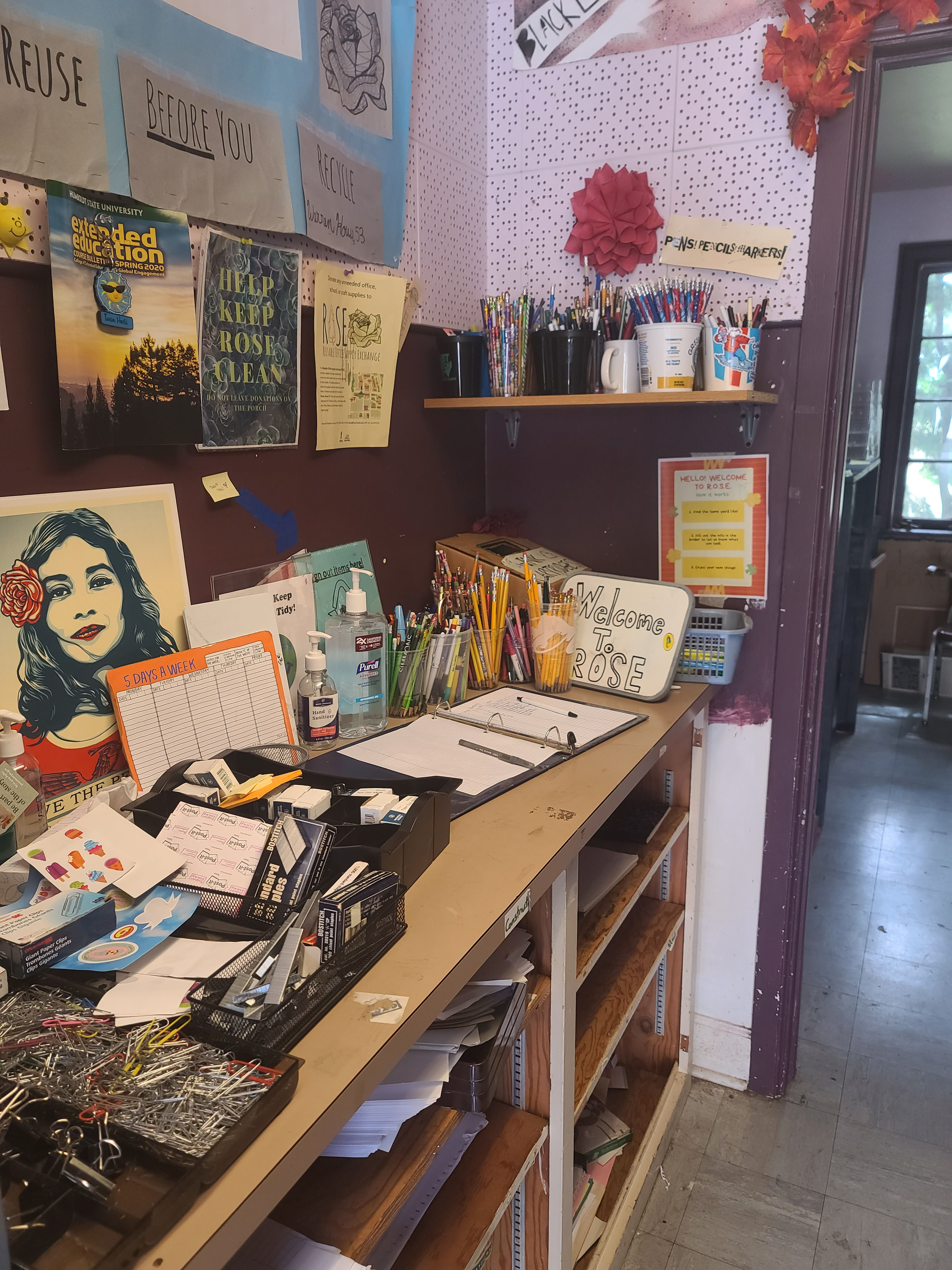
    An expressed lack of communication and ignored emails towards the R.O.S.E House were also present. Director Payton Wills of the organization stated they had been trying to get in contact with A.S. for over 2 months. Members anxious about the eventually demolish of their house and subsequent subpar relocation adding more stress to the tense meeting.

    Emotions ran high when Sachez had to leave to host an event for El Centro, another important student-run organization. She explained that she would continue to participate via Zoom, but under his own ruling on in-person quorum not being met, Finley attempted to end the meeting prematurely.

    Due to the collective stress of the meeting, Sachez began to break down and pleaded with the president to allow her participation through Zoom.

    “I hope I’m not failing any of the members-” Sanchez said, holding back tears.

    “You should be allowed on Zoom. There’s no reason for that to be other than preference.” Kate Bourne said.

    Photo by Abraham Navarro | Social Justice and Equity Officer Lizbeth Cano Sanchez crying at the Associated Students meeting in Siemens Hall on Feb. 5.

    Vice President of Student Affairs Chase Marcum also offered his support, pleading with Finley to make an exception for Sanchez. Still, the president refused.

    “Everyone on Zoom wants this meeting to continue and meet the quorum,” said guest speaker Payton Wills, adding their own opinion. “Lizbeth wants it to meet quorum. All of the people sitting here want it to meet quorum. You are the only person, sitting here, against continuing this meeting. It makes no sense.”

    “Seeing as I’m not leaving, we can continue our meeting…” she said, sitting back down.

    Arguments between members continued to escalate, both Bourne and Sachez accused Finley of refusing to accept not only their previous work experience at A.S. but specifically their roles as female leaders. The angry scraping of chairs could be heard across the room as almost all people present begin to leave the room.

    Unofficially the meeting was adjourned only halfway through the agenda. Only members Marcum and Finley were left, tidying up the room in complete silence.

    In the aftermath of the meeting, Vice President Marcum and President Finley had very different takes on what had occurred.

    Photo by Abraham Navarro | Associated Students President Jeremiah Finley at the Associated Students meeting in Siemens Hall on Feb. 5.

    “Being Black and in this leadership role I bear a weight that many will not understand,” President Finley said. ”Still, I know the work must get done and solutions to issues must be given. So, when my fellow board members and cabinet members won’t show up in person not because they are not able, but because they have something better to do, I still make sure students’ requests are fulfilled because that is why I do what I do and where I find joy.”

    On the other hand, Marcum accused Finley of abusing his power as President and personally apologized on behalf of the A.S. to students and staff members who have suffered hardships under the organization’s current leadership.

    “I truly believe that [Finley] should step down in a dignified fashion,” he said. “Embrace humility, be humbled. It is the most important of all characteristics to carry with you once it is obtained.”

    The Associated Students’ next meeting is planned to take place this Friday, at 3 pm in the same location of Siemens Hall 117.

  • CAP 2.0: The plan to make Cal Poly Humboldt carbon-free

    by Liam Gwynn

    On Jan. 28, Cal Poly Humboldt released an ambitious draft updating the Climate Action Plan. This updated plan promises to have the school completely carbon neutral by 2045. If CAP 2.0 is accepted, the school will implement changes to reduce carbon output and create an ecologically healthier environment.

    Changes would include phasing out gas and replacing it with electric power, implementing new carbon offset projects, introducing a zero-waste plan, and making several changes to transportation on campus. The final draft of the plan will be submitted this April. The budget is not yet finalized, however, if the plan is signed off, it will cost anywhere from 4.4 million to 5.5 million.

    The Climate Action Plan started in 2016 to lower greenhouse gas emissions to levels last seen in the ’90s. They succeeded at that plan in 2020 and started their planning for Cal Poly Humboldt’s next goal, complete carbon neutrality by 2045. This plan came about after The 100 Percent Clean Energy Act of 2018 passed in California, requiring all California businesses to have 100 percent clean energy by 2045.

    Morgan King is a climate analyst at Cal Poly Humboldt and the author of CAP 2.0. For him, this new plan is about more than just meeting the requirements set by the state.

    “We are in the midst of a climate crisis and we understand that climate change events and disasters are already having an impact on our communities, our ecosystems, and our infrastructures,” King said.

    Graphics courtesy of Facilities and Management

    According to King, the main climate threats Humboldt faces are rising ocean levels, wildfires, and extreme weather conditions. These threats are daunting and King is under no illusion that the school has the ability to singlehandedly stop them.

    “Even if humanity took big steps today to curb our burning of fossil fuels, we’re still going to see these climate impacts for many years to come,” King said. ”So we need to start planning and preparing now.”

    Despite the ominous threat of climate change looming in the distance, plans like CAP 2.0 show that there are still people willing to make drastic changes to soften the damage humanity has caused.

    “We are starting to see that resilience and climate protection are becoming part of the culture at this campus,” King said ”We are seeing a greater level than ever before of engagement around these issues.”

  • Campus Community Remembers Local Legend

    Campus Community Remembers Local Legend

    by Kris Nagel and Ollie Hancock

    Ricky Smith, a longtime Arcata community member, was the victim of a deadly assault Wednesday, February 2. The community has spent the last week remembering Smith’s legacy. Known for his big smiles and peace-loving attitude, Smith regularly took to the corner of 17th and G Streets where the assault took place.

    Photo by Morgan Hancock | Community members gather at the corner of G St and 17th St.

    Community members set up a memorial where Smith would spend his days playing songs for passersby. In the days since, the corner has seen people stopping by to share stories of the well-known busker and leave gifts around framed photos.

    Reports say that Smith was killed in a confrontation near the 17th Street footbridge around 5:30 p.m. Although CPR was attempted by two bystanders, he was unresponsive when police arrived on scene. Life saving efforts continued but Smith was pronounced dead shortly after being transported to Mad River Hospital.

    Smith was confirmed dead by Arcata Police the following morning. A 50-year-old Arcata resident was arrested at the scene and taken into custody and booked into the Humboldt County Correctional Facility for murder according to the Thursday press release.

    Photo by Kris Nagel | Arcata resident Ricky Smith plays his guitar on the corner of 17th St and G St on April 28, 2021.

    Smith’s daughter, Sara Smith, has set up a Facebook page for people to share memories of her father. A recent post on the page from Sara shows a note Ricky had made for himself, “Your attitude almost always determines your altitude in life.”

    Ricky Smith was known best for his kind smile, passionate songs, and place in the community reminding us to be good to one another. Though some memories are brighter than others, this moment of loss has brought many in the community to grieve the corner left vacant in Ricky’s absence.

  • Defining Black History Month

    Defining Black History Month

    by August Linton

    To Zephie Harvey, Black History Month is an acknowledgment of the depth and value of Black heritage and culture.

    “Black History month means looking back at my heritage and knowing where we came from,” said Harvey.

    Photo by Abraham Navarro | Cal Poly Humboldt student Zephie Harvey

    However, they also say that it should serve as a reminder of the inequities that Black people still face. Black History Month is also about the history being made right now. Harvey points out that there are many areas in which Black people have only recently been allowed to exist.

    “It’s 2022 and we’re still having firsts for things,” they said.

    Like many people of color and especially Black people living in Humboldt County, Harvey felt a bit isolated before finding community resources like the Umoja Center.

    “I’m from an area that’s very heavily populated with Black people so it’s hard finding that community here,” Harvey said.

    Harvey is a dance major here at CPH, and will be performing in the “Evening of Dance” show later this semester.

    To Nicole Rahman-Garnier, Black History Month means celebrating the accomplishments of Black people.

    Photo by Abraham Navarro | Cal Poly Humboldt graduate student Nicole Rahman-Garnier

    “In the last couple of years, that script has kind of flipped and we’ve been able to more celebrate the triumphs rather than focus on the tribulations that we’ve faced,” Rahman-Garnier said. “It’s a little more of a positive notation of what it means to be Black, what things that we’ve done.”

    As for her experience in Humboldt, Rahman-Garnier says that becoming a student has connected her to the Black community here. “It’s changed over time, when I first moved here it was hard to find a place,” she said.

    “It’s weird being [a Black person] in the sciences because that’s not something that you see a lot here. That’s something that I’m kind of working on changing right now too, not only for the campus culture but for Humboldt culture in general,” said Rahman-Garnier.

    Rahman-Garnier is a grad student at CPH studying the morphology of fish olfactory organs.

    Gloria Thompson and Joi Mehn table in the Quad for CPH’s Umoja Center for Pan African Student Excellence.

    To Mehn, Black History Month means simply “celebrating Black people.”

    The events that the center is holding over the course of this month represent different facets of that celebration. Among others, these include an event highlighting Black achievements in STEM, a Black history expo, an African diaspora celebration, and regular “Kuumba: Dance for Creativity” classes every Saturday.

    Photo by Abraham Navarro | Cal Poly Humboldt student Gloria Thompson

    Everyone is welcome and encouraged to attend.

    “Not holding a Pan African identity does not disqualify anyone from participation in any events or programs, we value cultural exchange and invite people from other backgrounds to ground with us,” said the Center’s website.

    Thompson said that her experience being Black in Humboldt has been “Interesting, but I’ve been finding my people, and that connection is really important.”