The Lumberjack


Students Serving The Cal Poly Humboldt Campus and Community Since 1929

Category: News

  • Erin Henry awarded degree, honored and remembered

    Erin Henry awarded degree, honored and remembered

    No one at Humboldt State University could forget the tragic story of Erin Henry. The 22-year-old HSU student was found deceased in Dec. 2017 after being reported missing for over a week. Henry was only a few weeks away from completing her degree in theatre arts with a minor in social advocacy. Last month, HSU awarded Henry her bachelor’s degree, just in time for her memorial service in Wyoming on Jan. 26.

    Henry’s death came as a shock to her college community. Her theatre professor and academic advisor, Rae Robison, remembers her as a hard-working actress, playwright and passionate social advocate.

    “I’ve never met anyone more kind, more thoughtful and more considerate of others than herself,” Robison said. “She was the type of positive, talented person who doesn’t come along every day.”

    What was most unsettling for Henry’s friends and family was the unusual circumstances surrounding her death. According to the North Coast Journal, the police found Henry’s injuries to be caused by a self-inflicted fall from Elephant Rock.

    “I have no idea what happened,” Robinson said. “I don’t think anyone will ever know.”

    Henry made her mark during her five years in Humboldt. She volunteered for Visiting Angels, a Eureka-based group that provides care for seniors. She also dedicated a great deal of time and energy to the theater at HSU, holding roles in many productions including “Young Frankenstein” and “Julius Caesar.”

    Henry was also a devoted student. She worked hard to earn her degree and according to HSU registrar Clint Rebik, Henry graduated Cum Laude with honors.

    Henry walked for graduation in Spring 2017, though she still needed one more semester for completion.

    A copy of Henry’s degree will be mailed to members of her family next week by the Dean of Students, Randi Darnall Burke.

    Her brother Ian Henry says she was always passionate about theater, but the demands of college did not always come naturally to her.

    “She had to combat that by working hard at it,” he said. “She was always working.”

    Ian is proud of his sister for completing her education and thinks sending her degree is a nice gesture from HSU. Although it is accompanied by bittersweet emotion, reminding him of her compassion and goals for helping others.

    “She was always a big proponent for being a voice for those less fortunate than her,” Ian said. “She was trying to go places. But obviously, that’s not going to happen.”

    Henry grew up in Sheridan, Wyoming and was adopted at two months old by parents Tom Henry and Terry Rowland. Her biological father passed away and biological mother felt she couldn’t handle parenthood alone.

    On Jan. 26, friends and family gathered at the WYO Theater in Sheridan to celebrate her life. Henry’s father says the theater donated their space for her memorial because she had been in several productions there. The venue seems fitting, considering the theater is where she loved to spend her time.

    “Her dream was to use theater as social advocacy to stop human trafficking,” Tom said.

    The memorial service was streamed live on the In Loving Memory of Erin Henry Facebook page, making it possible for all of her friends, fellow students and professors in Humboldt to view. HSU was an important part of Henry’s life.

    Henry’s father sent a letter to The Lumberjack, thanking the community for all of their efforts to find his daughter and emphasizing the importance of reaching out for help.

    “We would also like to encourage others suffering from depression, or related ailments, to seek help,” Tom said.” Please help to eliminate any stigma associated with needing medication or treatment in order to function as a happy, healthy human being,”

    The full letter can be viewed in the Letter to the Editor section of this issue.

  • What’s up, weather?

    What’s up, weather?

    Well, winter is most definitely here. Rain, hail, snow, strong winds and waves nearing 30 feet shook the Humboldt County coastline this week.

    Source: Eureka NOAA

    The National Oceanic and Atmospheric Administration (NOAA) has issued several hazard warnings throughout the week, such as a hazardous seas warning, a winter storm warning for Northern Trinity County and winter weather advisory in Eastern Trinity County.

    The entrance to Humboldt Bay was closed to any and all inbound and outbound vessels due to the high surf on Jan. 18. It opened the following morning, according to the Humboldt County Office of Emergency Services.


    (Tweet: Humboldt County Office of Emergency Services)

    ******

    “The ocean is the earth’s largest wilderness, but it’s clearly more wild here in Humboldt,” ecological restoration student at HSU Gabe Roletti said.

    The Humboldt County coastline and much of the Pacific Northwest are lined with trees and steep beaches, unlike Southern California’s gentle, broad beaches. The average water temperatures here in Humboldt are also much cooler.

    “SoCal is mellow and a little underwhelming,” Southern California native and HSU environmental science student Mike Leone said. He said that in Humboldt, he feels “more surrounded by crazy elements of nature like the big waves and wind.”

    Despite cold, unforgiving conditions, to go or not to go is not the question for some outdoor enthusiasts, but rather to, “Go big or go home,” local resident and surfer Greg Masessa said.

    Jokes aside, Masessa said that in reality, he really doesn’t put much thought into surfing behemoth waves. He just surfs, because it makes him happy.

    In order to practice reasonable precaution during swells like these, Masessa said that he surveys the conditions before going out and will often surf in a more sheltered area, such as a protected cove.

    ******

    A small craft advisory is in effect through late tonight, according to NOAA. A gale warning is in effect from late tonight through Saturday morning. We should be seeing hazardous seas throughout the week.

    Therefore, it’s especially important for all beachgoers to remain vigilant and practice caution when in or near large surf. In addition, beachgoers should always remain aware of sneaker waves.

    View the graphic below for basic information on sneaker wave safety:

    Source: NOAA. Illustration by Michelle Meyers.
  • HSU political science professor running for California Assembly 2nd District

    HSU political science professor running for California Assembly 2nd District

    This story has been changed from its original version on Jan. 25 at 4:24 p.m.

    Humboldt State University’s political science professor, Kevin Murray, will be running as a candidate to represent California Assembly 2nd District in the upcoming  elections.

    Murray has taught college-level political science classes since 1989. He started teaching at HSU in 2015, and plans to take his political experience to the next level.

    “I’ve taught political science for around 30 years and I figured it was time to convert that knowledge into action,” Murray said.

    Murray is running as a Democrat and bases his political platform on four main issues:

    1. Universal health care for California. Murray believes that every Californian should have full health care coverage in order to vastly improve our quality of life. The universal health care plan Murray wants includes mental health care and drug rehabilitation, helping those who are often ignored.
    2. A green economy. By switching from our over-reliance of non-renewable energies, such as oil, to greener and more sustainable energies, we can help lead the way to show that there is a profitable way to have a green society.
    3. Debt-free college. Murray states that an undergraduate college degree now has about the same equivalent to a high school diploma in the 1940s. Because a college experience is becoming essential to get better jobs, there shouldn’t be as large of a barrier for those with low-income backgrounds. By reducing or completely erasing college tuition, Murray hopes to have college graduates leave without debt hanging over their heads.
    4. Affordable housing. With debt and homelessness on the rise in California, Murray wants to bring peace of mind to Californians by pushing for affordable housing. By introducing rent stabilization, tiny homes and Measure J Housing to the 2nd District of California, Murray plans to fix our states housing problem.

    If elected as representative for the California Assembly 2nd District, he will represent several counties such as Humboldt, Trinity, Del Norte and Mendocino. Jim Wood is currently the incumbent representing California Assembly 2nd District.

    “It’s a daunting task, but one I’m well prepared for,” Murray said.

    Murray says that running for office won’t interfere with his current teaching, as his activism will take place only during weekends and, if anything, will enhance how he teaches.

    “I don’t really have anything to lose,” Murray said. “I can take my 30 years of experience into the position or I’ll be able to walk away with the knowledge gained from running and incorporate it into my classes.”

    The primary election is coming up on June 5, and the general election is occurring on November 6. If you’re interested in getting into contact with or volunteering for Kevin Murray, head to his website at http://murray4ca.homesteadcloud.com/

  • Gaining ground: marching for human rights

    Gaining ground: marching for human rights

    Video by Michelle Meyers.

    Protesters lined the streets of downtown Eureka on Jan. 21 to be part of the worldwide Women’s March.

    This year’s Women’s March occurred on the one-year anniversary of Donald Trump’s inauguration. It is now considered to be the largest single-day protest in U.S. history.

    The march in Eureka was part of the larger Women’s March movement that took place not only here, but around the globe. The intention of this movement is to protest the attitudes put forth about women by Trump and to promote women’s rights as human rights.

    The initial rally began at 1 p.m. on C Street Market Square.

    Speakers representing an array of local organizations, including the North Coast Rape Crisis Team, Centro Del Pueblo, Move to Amend and Seventh Generation Fund for Indigenous Rights, took to the stage to address their local and global communities.

    Organizers concluded the rally with an inspiring performance by The Raging Grannies, a local women’s music group that sings about social justice issues.

    The march began around 2 p.m.

    Protesters beared signs that read statements like, “together we rise,” “don’t mourn, organize” and “anything you can do, I can do bleeding” around the streets of downtown Eureka.

    A protester holds a sign at the Women’s March in Eureka on Saturday,  Jan. 21, 2018. Photo by Michelle Meyers.

    They chanted statements that rang through the crowded streets, such as “me too,” which is in reference to the prevalent #MeToo movement.

    “No Trump, no KKK, no fascist U.S.A.” and “I am a woman, hear me roar!” were also heard amongst the crowd.

    This all plays in part of starting a conversation that “just gets brushed under the rug,” protester Loganberry Fernandez said. “Human rights is something that shouldn’t be ignored.”

    Conversation is merely the first step.

    Many protesters lined the streets of downtown Eureka and around the globe to express one purpose: “To be here for women,” protester Athena Gore said.

    HSU students stand by a light post in downtown Eureka, located near the Women’s March on Saturday,  Jan. 21, 2018. Yomayra Mora (left), Myranda Dominguez (top left), Noel DiBenedetto (top right), Sydney Long (right) and Rowan McClelland-Bishop (center) protest with their signs. Photo by Garrett Goodnight.

    “Whether it’s immigrants, Native Americans or people of color, what will forward the movement is unifying voices and hearing other groups talk about advocating in strength and in numbers,” protester Raquel Lee said.

    For Brenda Perez, a voice for Centro Del Pueblo, this is her first time participating in the Women’s March.

    “[The Women’s March] represents the recognition of our neighbors as workers, as students,” Perez said. “For me, saying that we are here isn’t just a statement. We are here.”

    Perez is joined by Yojana Miraya, a fellow voice for Centro Del Pueblo from the Andes of Peru.

    “If injustice happens, women and men come together in Latin America, especially in indigenous communities,” Miraya said.

    When asked if she was afraid of what the future holds for her, as well as for women everywhere, Perez said, “We are going to do it. We have to do it.”

    So in the name of human rights, they will march.

    Number of marches: 673

    Number of marchers: 4,956,422

  • Affordable textbooks for an awesome cause

    Affordable textbooks for an awesome cause

    With a new semester comes a need for new textbooks and class texts. One club on campus, the Society for Women in Math and Sciences (SWiMS), is offering students an affordable book purchasing option.

    Carla Quintero, the president of SWiMS, explains the offer.

    “We are here selling used books which were donated by several people,” Quintero said. “We’re trying to raise money to fund our club’s events.”

    The society has high hopes their book sales will provide students with a much better alternative than the Humboldt State Bookstore or Amazon.

    “I think we can all agree that the bookstore is already overpriced,” Quintero said. “Most people try to find other sources, such as Amazon, to purchase their textbooks. We are selling our books at a fraction of an Amazon textbook price.”

    SWiMS will be using the money raised from book sales to create educational and community-building events for HSU.

    “SWiMS hosts several different events throughout the semester, one of them being Codernoon,” Quintero said. “We have computer science majors who are running this event and teaching people how to code in Python.”

    The club hosts Codernoon twice a week and offers refreshments to participants.

    “Through these workshops, we are trying to break the stigma that coding and computer science is a boys club,” Quintero said. “Coding is accessible and fun. Everyone should learn how to do it!”

    In addition to Codernoon, SWiMS will be using money from book sales to fund Crafternoons, which are crafting events that occur for two hours every other week.

    SWiMS provides participants with crafting materials and lessons on knitting and crocheting. They also offer a space for participants to interact with other majors and destress from their heavy workloads.

    Specifically for STEM majors, Crafternoon hopes to be a space for this group to interact with people outside of their majors. The purpose here is to create a community SWiMS is aiming to establish in their role of being a support group.

    One major event that SWiMS has been pushing to put on annually is a workshop called You Belong Here.

    “In this workshop, we try to inform STEM majors about imposter syndrome, stereotype threat and provide students with the tools to combat these things,” Quintero said. “With these tools, students can move through their respective fields feeling empowered and welcomed because everyone should have the same access to science and math.”

    Money raised from book sales will also be used to host You Belong Here in March.

    To Quintero, being apart of SWiMS means the world to her. As a woman of color in physics, it can be disheartening at times.

    “It can be hard to see yourself in a career when you don’t see anyone else like you in that career,” Quintero said. “The point of SWiMS is for everyone to realize that, while women’s population in the sciences may be small, they still are an important part of the scientific community.”

    Purchasing books from SWiMS will provide the club with the funding to continue their mission of supporting underrepresented groups in the sciences. These include women, people of color, LGBTQIA and other individuals in their scientific journey at HSU.

    Linh Pham is affiliated with Society for Women in Math and Sciences. 

  • International students first few days in the U.S.

    International students first few days in the U.S.

    As the spring semester approached, Humboldt State University welcomed new foreign exchange students. Archana Nihalani from Pakistan and Gereon Ploenes from Germany are two of the new incoming students. Nihalani came from Hyderabad, a city located in the Sindh province of Pakistan, and Ploenes came from Nijmegen, a city in the Dutch province of Gelderland where he resides. Both had stories to tell about their first few days in the U.S. before the spring semester started.

    Nihalani thinks that people are too polite.

    Archana Nihalani from Pakistan. Photo by Ahmed Al Sakkaf

    “People here say thank you a lot and sorry a lot,” Nihalani said. “A lot of times and I’m not used for this.”

    Saying thank you and sorry too much is considered a very formal behavior in Pakistan, according to Nihalani. It may mean that a person has too many boundaries.

    “Here [U.S.], if you don’t say ‘thank you’ or ‘sorry,’ it’s rude,’ Nihalani said. “But there [Pakistan], it’s rude if you say ‘thank you’ and ‘sorry’ all the time, because it means that you’re being too much formal.”

    Nihalani described food to be her worst struggle. She thinks the food here is too plain and lacks flavor.

    “Food here is plain,” Nihalani said. “I’m not used to eating plain food with no flavors… it’s too plain. In Pakistan, we put so such spices in food, so many flavors.”

    Nihalani thinks that people here in the U.S. have more personal space than their counterparts in Pakistan. She also notices that people here are easily offended.

    “People here [U.S.] have so much personal space and there [Pakistan] we don’t have so much personal space,” Nihalani said. “Everything here offends people I don’t know why? They get offended very easily.”

    Ploenes from Germany residing in the Netherlands. Photo by Ahmed Al Sakkaf

    “The first impression I had of the U.S. [is] that it’s exactly like the movies,” Ploenes said. “The J cafeteria and how it works… it’s really like the High School Musical.”

    To save money on his flight, Ploenes flew to San Francisco International Airport and took the Greyhound bus to Arcata. He was surprised when a Greyhound worker asked him several times if he is carrying any guns in his oversized backpack.

    “The guy working in the Greyhound asked me five times if I carry guns in my big backpack,” Ploenes said. “It’s not normal to carry any guns in Europe. You’re not allowed to. But in America, guns are normal.”

    Ploenes was also surprised by the amount of “big cars” and pickups he found in the streets here.

    “I’m not used to seeing a lot of pickups and a lot of big cars. Why [do] people need these big cars?” Ploenes said.

    Ploenes noticed that the toilets here in the U.S uses a lot of water to flush and they have a lot more water in their bowls too.

    “Toilets are totally different here,” Pioenes said. “You use a lot of water to flush.”

    Both Ploenes and Nihalani think that people here are very kind.

    “I was surprised with how friendly the people are,” Ploenes said.

    “People are really nice here,” Nihalani said. “They’re very helpful.”


  • Proposal to cut Third Street Gallery

    Proposal to cut Third Street Gallery

    Humboldt State University’s Third Street Gallery in Eureka may shut down in an effort to reduce the university’s spending budget. The proposal to close the gallery calls for $55,000 of the gallery’s budget to be reduced. That makes a third of the gallery’s whole budget and the remaining two thirds transfer to other gallery programs on campus.

    Jack Bentley is the Third Street Gallery director.

    “The proposal to close this gallery is actually very short-sighted,” Bentley said. “It misses the point of what the purpose of this gallery was and the inherited highly developed community expectation of what we do here.”

    The Third Street Gallery was founded in 1998 to provide students with real world, hands-on learning through work and internship opportunities. It’s also meant to give HSU opportunities to reaching out to the community.

    Pedro Uribe Godoy is an art major and works at the gallery.

    Godoy opposes the proposal to close the gallery and thinks it is “destructive” as it will cut out a venue for learning for current and future art students.

    “There’s a lot to learn here and for them [HSU administrators] to take it away and not expose new students to this line of work, I think, is very destructive,” Godoy said. “They are limiting students of what they’re gonna learn and what kind of avenues of work they can plug themselves into.”

    The gallery is supported by the university, revenue from art sales and public donations. The Third Street Gallery raised around $22,000 from both sales and donations during the first half of the current fiscal year.

    “It’s kinda messed up for the university to take away this gallery and undermine all the donors that have been donating for this gallery for so long,” Godoy said.

    Andrew Daniel is an art alumnus who graduated from HSU 16 years ago. As a student, he had his work shown in the gallery. Daniel wrote a letter to HSU administrators expressing his displeasure with the proposal to close the gallery.

    “The gallery brings a unique perspective to the community. It brings in work from out of the area,” Daniel said. “I don’t know if we’ll get those artworks if not for this gallery.”

    Over the years, Humboldt County has gained a reputation for being a haven for art and artists of all kinds. Besides student artists, local artists exhibit their artwork in the gallery too.

    “It’s such a valuable thing to our community,” Daniel said. “There are a lot of artists in our community that would just not even show their work if it didn’t show at that gallery. It’s such a unique venue.”

    In such a rural area, the Third Street Gallery provides students and the community access to different forms of art from different parts of the world.

    “We’re rather isolated. Here, people have access to art forms and new ideas that otherwise they won’t have,” Bentley said. “They would have to travel several hundred miles to either Portland or San Francisco to have that type of access.”

    The gallery host exhibitions for local artists and other visiting artists from outside the area. It also provides a venue for students and alumni artists to exhibit their work in a professional gallery off campus and in the community.

    “Student artists and alumni artists exhibit here where they have a much higher probability of coming into contact with the public than they would if they’re exhibiting their work on campus,” Bentley said.

    Living in a rural area like Humboldt, art students at HSU can find it difficult to find a job or an internship related to their major.

    Ann Valdes is an art student at HSU and also works in the Third Street Gallery.

    “Being in Humboldt, we’re so removed from a large art market. It’s really hard to get good solid work experience if we didn’t have programs like this,” Valdes said. “We’re learning all the lessons that we may not be able to learn if we’ve never worked in a gallery.”

    HSU prides itself on offering plenty of hands-on learning opportunities for its students. Students say HSU Third Street Gallery provides students with real world experience.

    “I’ve been learning valuable lessons here,” Godoy said. “There’s no more hands on than this. This is hands on.”

    Valdes thinks the proposal to close the gallery goes against how HSU advertises itself.

    “What this budget cut proposal intends almost goes against the way Humboldt State University advertises itself,” Valdes said. “For them to cut this program is almost undermining what Humboldt says it’s about.”

    HSU owns three art galleries. Reese Bullen Gallery and Goudi’ni Native American Arts Gallery are both located on campus, while HSU Third Street Gallery is located off campus in Eureka.

    Bentley thinks all of these galleries are important and serve important purposes. The most important purpose, he believes, is that the Third Street Gallery serves as community outreach.

    According to Bentley, the art department is planning on launching a new Bachelor of Fine Arts program in the future.

    “This gallery is the natural venue for the BFA exhibitions,” Bentley said. “Here, students will have the opportunity to gain more studio time.”

    Bernadette McConnell is another art student who works in the gallery. She opposes the proposal to close the gallery. McConnell thinks the proposal to close the gallery is ill-informed.

    “If it wasn’t for my job here at the Third Street Gallery, I wouldn’t be here at Humboldt State,” McConnell said. “If this place gets shuttered, I have no reason to be at Humboldt State. I will leave Humboldt.”

    Bentley has received many letters that oppose the proposal.

    “The letters I received are very supportive of the gallery,” Bentley said. “Letters from former students, community members who object the proposal very strongly.

    Every summer, the Third Street Gallery hosts an exhibition of work from HSU art graduates.

    All graduates who have a piece in the senior show get to show their work in the gallery. In the Third Street Gallery, students get exposure to the overall community off campus.

    “Every summer we have a show dedicated for graduating seniors from the art department. They get off campus public exposure that they otherwise wouldn’t get,” Bentley said. “If this gallery closes, those type of exhibitions will simply be on campus and not available to the broader community.”

    The proposal to close the gallery came as a surprise to Bentley. He learned about it by reading the list of proposed budget reductions.

    “There’s been no outreach by any of these communities to the gallery,” Bentley said. “I learned about it by opening the proposal. This is how I learned about it.”

    Godoy hopes the community comes together to help keep the gallery open as they did with the football program.

    “I’m hoping that the community does that for us too,” Godoy said. “Hopefully, it all comes together well and we all fight together for it, and I’m hoping that we can keep it alive with the help of the community.”

  • Word on the Street: What students look forward to this semester

    Word on the Street: What students look forward to this semester

    Name: Dalvin Jamal-Milton

    Major: Psychology

    Standing: Sophomore

    “One thing that I’m looking forward to is this rugby season. Our rugby team looks pretty good this year, and I think we have some really good chemistry… we have all the means to do well.”

    ——

    Name: Seth Velasco

    Major: Kinesiology

    Standing: Freshman

    “I’m looking forward to starting off a little better than I did last semester now that I know what I’m doing. I struggled a bit in the beginning of last semester. Now that I know what I messed up on last semester, I can fix it.”

    ——

    Name: Rebecca Bantum

    Major: Psychology

    Standing: Freshman

    “I’m looking forward to taking different classes that I didn’t take in high school. Here in HSU, there’s a lot of options. I’m looking forward to pick what I want to take.”

    —–

    Name: Cailyn Lien

    Major: Cellular Biology

    Standing: Freshman

    “I’m looking forward to learning more stuff about my major. I’m probably going to start working at a blood bank and hospitals to learn more about human biology.”

    —–

    Name: Mei Shimizu

    Major: Child Development

    Standing: New transfer student from Japan

    “I’m excited to take classes about child development. This is what I wanted to learn from before.”

    —–

    Name: Akane Yajima

    Major: Francophone Studies

    Standing: New transfer student from Japan

    “I’m excited to learn about Francophone studies in the English language.”

  • The Ventura Thomas fires

    The Ventura Thomas fires

    By | Gilbert Martinez

    The Ventura County Thomas Fires, which started on Dec. 4, has grown to the the fifth largest fire in California’s recorded history. The video was captured among the hills of Ventura and Santa Barbara throughout the first week of the fire. You can see one of Ventura’s favorite land marks, a giant wooden cross, completely surrounded by flames, yet remained intact the following day.

  • HSU student Erin Henry found deceased near Westhaven

    HSU student Erin Henry found deceased near Westhaven

    The 22-year-old missing HSU student Erin Henry was found deceased this morning near Westhaven 12 miles north of Arcata. Henry was reported missing by her roommate on Nov. 30, 2017.

    A CalTrans worker had found a knee scooter along Highway 101 just south of Westhaven. Arcata Police Department was then notified. APD reported to the location and searched the area when they found Henry’s body at a short distance from the highway.

    According to an APD press release, “The preliminary investigation revealed no sign of foul play.”

  • Is a bitcoin bubble ready to pop?

    Is a bitcoin bubble ready to pop?

    By | Robert Brown

    Bitcoin gained $2,000 during the last week of November, causing internet exchange sites to freeze up as people attempted to buy whatever amount of Bitcoin they could afford.

    If asked, the majority of people would more than likely not know what Bitcoin is, despite the fact that it is the most well known and widely used cryptocurrency, valued at over $10,000 per coin. A debate has sparked online whether or not Bitcoin is experiencing a bubble.

    Many financial analysts and cryptocurrency experts say Bitcoin will continue to rise through the summer, reaching $40,000 by August. Others say it will crash and become worthless, causing people to lose all of the money they have invested. Since its creation, people have continuously claimed that the Bitcoin bubble will pop every time it has reached a new high. People said the bubble will pop when it reached $100, and again when it reached $1,000. Now that it has reached $10,000, many predict the same invevitable outcome.

    As if that wasn’t enough to peak a person’s interest, there is a very mysterious element to Bitcoin. Bitcoin is the first decentralized digital currency invented in 2009 by an unknown person using the name Satoshi Nakamoto. Although some claim the real creator may possibly be Artificial Intelligence. The revolutionary software is open-source and peer-to-peer, and is considered to be the future of technology. Transactions take place between users directly, are verified and recorded in a public ledger called a blockchain.

    There is a unique Bitcoin culture that has been created with new lingo, specific technology and intricate knowledge of how the system works. The nuances of authentication, how to buy, sell and trade, managing wallets and vaults, mining coins, Tether’s and Bitcoin’s blockchain is enough to make any computer nerd think they have died and gone to heaven. The real question is whether or not Bitcoin is a medium of exchange or a tool for the purpose of growing sovereign wealth.

    “It’s both, it is a safe store of value. Fiat currencies are collapsing when measured against Bitcoin,” technology entrepreneur and researcher Steve Outtrim said. “In the Greek Financial crisis in 2014 the opposition leader suggested converting their entire economy to Bitcoin. If they had done that, Greece would have repaid all its debt already and the Greek citizens would be the world’s richest people.”

    Bitcoin has generated a unique ecosystem in which many people are willing to trade and accept it while remaining anonymous. Although it may be disconcerting not to know who is behind the currency or even who its users are, some people perceive Bitcoin to be more valuable than other currencies in that it is a better option for certain purposes, such as digital transfers and use across borders. Also, because there is a cap of 21 million set on the total number of Bitcoins that will ever exist, the currency cannot be devalued through inflation.

    Another key benefit of Bitcoin is known as censorship resistance, which is its ability to be used for transactions that could normally be censored by other payment networks or by government. Julian Assange is well known for leaking out cables of controversial information with Wikileaks during the 2016 election cycle. In retaliation to his leaks, he was blocked and boycotted from receiving funds or donations through any bank, PayPal or other financial institutions. Bitcoins were used to keep him and his organization running.

    Bitcoin was originally used for underground transactions, such as black market trafficking on the dark web. It has become a target for regulation by the United States government, requiring exchanges such as Coinbase to turn over financial information and the identities of over 14,000 users to the IRS. This recent move has made black market traffickers switch to a more anonymous cryptocurrency called Monero.

    Bitcoin has no central control, no central repository of information, no central management and no central point of failure. However, there are two sides of the coin. On one side, Bitcoin is decentralized, taking power away from big banks and the Federal Reserve. On the other hand, it is a fertile ground for predators to scam people out of their money. With the increase in regulation also comes legitimization, which will likely bring more people wanting to buy, sell and trade Bitcoin without the fear of being hacked or scammed.

    Security is a major factor with digital currencies. Millions of dollars in Bitcoin have been scammed, swindled, hacked and stolen from people. One of the greatest in Bitcoin history was the Mt. Gox exchange scandal, involving 800,000 missing Bitcoin worth over half a billion dollars. Recently, over $31 million in Bitcoin was stolen out of a Tether treasury wallet. The address the Bitcoin was sent to happened to be the same address that was responsible for stealing 19,000 Bitcoin from Bitstamp exchange in 2015.

    With the rise of Bitcoin, different products, businesses and services have popped up to support cryptocurrency. These include loan services, brokerage firms and exchanges, ATM’s, Tether’s and external wallets to safely store Bitcoin and other cryptocurrency. One of the more popular wallets is made by Trezor and costs about $100 or a paper wallet can be created for free at bitaddress.org. MyTime, Stream and Brave Browser are other cryptocurrency platforms that have sprouted up that expand the open-source concept, helping people to diversify their own income by converting music, art, video and energy into cryptocurrency which can then be converted into U.S. dollars if desired.

    It’s only a matter of time before all currency is digital. Many countries are developing cryptocurrency, like Kyrgyzstan, Japan, China and Russia with their CryptoRuble. Large investment firms are adding cryptocurrencies to people’s portfolios if anything were to ever happen to the U.S. dollar, which has been speculated to be on the brink of collapse for many years.

    Currency experts like RT’s Max Keiser claim that cryptocurrencies like Bitcoin could eventually replace the U.S. dollar. However, Bitcoin claims to have been created to exist alongside the U.S. dollar – one being used as currency, and the other being used as an investment tool for raising funds.

    BitcoinCash CEO Rick Falkvinge said in an interview on RT’s Sophie & Co. that the U.S. dollar will collapse under its own weight. All Bitcoin needs to do is survive the collapse. He also said that when the value of Bitcoin rises to $2 million per coin, comparing it to the U.S. dollar won’t even be viable. That is because the dollar won’t be worth anything at that point, and won’t be a base of comparison anymore.

    Any way you look at it, it’s apparent that capital flight is occurring. In economics, capital flight occurs when assets or money rapidly flow out of a country or currency due to an event of economic consequence. People are fed up with the Federal Reserve and the U.S. economic dominance over the world, inspiring them to invest in other currencies.

    The U.S. Government has taken notice and is trying to come up with ways to continue to receive the necessary tax dollars from people under their jurisdiction. One idea is for the U.S. government to issue its own form of cryptocurrency tax coin that would be required to be purchased by citizens in order to remain in good standing.

    Internet data mining expert Clif High mines the internet with a web bot he designed, collecting billions of data points to produce forecasts of the future called Predictive Linguistics.

    When asked about financial markets, High says, “We’re screwed. The equity markets in our data sets are highly manipulated. So, if you ask will there be a crash? I say there already is a crash. Everybody that is not part of the financial system at the top end is currently living in a depression, and the media does not acknowledge this.”

    Whether or not you understand exactly what Bitcoin is or how it works makes little difference. All that matters right now is if you have some and how much of it you have. Part of what is driving the Bitcoin market into a frenzy is people’s fear of missing out. A person who bought $100 worth of Bitcoin in 2010 would be worth over $70 million today.

    On the edge of a new precipice, where technology blends with virtually everything in reality, it is expected that cryptocurrency will be an integral part of the future evolution of humanity. We could be witnessing the greatest wealth transfer in the history of mankind.

    As with other forms of investing, it pays to do your research. Be careful with who you do business with or give your money to. Before you start trying to live the Bitcoin life, calculate the risks and rewards, and never invest more than you are willing to lose. One of the more popular and safest internet sites to invest in cryptocurrencies is Coinbase.

    High says, “With cryptocurrency, we are going to be able to say for the first time in history that great fortunes are being made, without their being a great crime.”


  • Farewell time

    Farewell time

    * Ahmed Al-Sakkaf works as front desk student assistant for the Center for International Programs

    The Center for International Programs hosted a farewell party on Saturday for international exchange students who are going back to their home countries. They are leaving with unforgettable memories they’ve made here at Humboldt State.

    Sonja Willigerode is a German exchange student studying Business. During her semester at HSU, Willigerode took a sustainability-focused business class.

    In Germany, Willigerode studied economic theory which was “just about money and trade,” she said.

    At Humboldt she learned how to apply that same theory in an environmental context.

    “I studied economic theory in Germany and it was just about money and trade,” Willigerode said. “But here you learn how you can apply it to environmental context.”

    This is Willigerode’s last semester of study and she chose to spend it abroad here in HSU.

    “It was the best semester in my whole studies,” she said. “I’m so thankful that I can be here and stayed this semester.”

    Linus Kaminski is another exchange student from Germany. He’s majoring in Water Resources Management. Kaminski loves Humboldt and thinks it’s beautiful.

    “I like the area here. It’s so beautiful. The ocean the forest it’s beautiful,” he said. “There aren’t many places where I can see deer and raccoons on just my way walking from my dorm to the library.”

    Kaminski celebrated Thanksgiving for the first time this year. He celebrated it with the family of one of his American friends. He also played American football for the first time.

    “This year it was my first Thanksgiving and it was really cool, I really like it,” he said. “There was so much to eat. I also played football it was my first time playing American football and it was so much fun.”

    Ruby Saint a bilateral exchange student from Australia. Students in the bilateral exchange program pay their tuition fees at their home university and study abroad at another university. Saint grew up in Tasmania and previously studied at the University of Tasmania in Hobart. This year she also celebrated Thanksgiving for the first time. She and her friends had a Friendsgiving celebration.

    “That was interesting , we had like a Friendsgiving,” she said. “It was interesting to kinda experience Thanksgiving.”

    Saint thinks Humboldt is “kinda quirky and interesting,” she said. Saint arrived to the U.S. few days before the beginning of the fall semester. She flew to San Francisco and took the Greyhound bus to Arcata. She was shocked by the smell of weed in the bus.

    “I was like shit where am I,” she said. “Marijuana back home is a big no-no. If the police smell it on you’re done.”

    Here in Humboldt Saint discovered her love for Pumpkin pie.

    “Pumpkin pie, I need to take back and make a thing there.”

    Yasmina Umarkhanova an exchange student from Kazakhstan studying Psychology. When she first arrived in the U.S. at the beginning of the fall semester, she was amazed by the redwood trees.

    “I was really amazed by the redwood forest,” she said. “I really like the fact that I’m living in a forest.”

    Umarkhanova is going back to Kazakhstan in two weeks. She going to miss the redwoods the most.

    “I’m going to miss the forest,” she said. “When I’m walking and looking around, it’s meditation every day.”

    As Umarkhanova reflects on her semester abroad experience at HSU. She thinks it’s the best “chapter” of her life.

    “Humboldt for all international students was one chapter of our lives,” she said. “For me, this chapter of my life is the best.”

  • Homelessness awareness

    Homelessness awareness

    By | Juan Herrera

    Being homeless is a spot where not many people would like to be but if the situation appears you always need to be prepared.

    The Homeless Student Advocate Alliance (H.S.A.A), a club at Humboldt State, put on a three day event to inform, share and educate the students and community about the severity of homelessness in Humboldt County.

    Chant’e Catt, president of the club, said for this being their first annual three day event it was educational and they got their message across.

    “Our main purpose of the event is to let other homeless students know they’re not alone,” Catt said. “And I believe we achieved a majority of that.”

    Catt said the first day of the event was more personal for others by students and members of the community sharing their own stories of past and present times of homelessness in their life. Catt herself even spoke about her own times being homeless when she and her family first moved to Humboldt County.

    “I first hand know the struggles of moving from place to place,” Catt said.” For my first 14 weeks in Humboldt County I was constantly trying to find a secure place for me and my two children.”

    Catt said majority of the students that are homeless at HSU are not because they do not have the money. but purely because the lack of housing Humboldt State and the County provides.

    Daniela Parada, another member of the club, said the second night of the event was the most eye-opening night. The night went into the meaning of what being “homeless” actually is.

    “We wanted to talk about the stigma and labeling that gets put on the homeless community,” Parada said. “Most people assume that anybody who is homeless is dirty, smelly and just plain ole gross.”

    Parada said most of the time that is hardly ever the case. According to her, a person who goes from couch to couch but still showers daily, dresses nice, etc., is still considered homeless. Would you still call that person smelly and gross?

    Parada said the last night of the event was the most hands-on activities they put on. They showed students and members of the community how to put together and take down a tent and also how to start a fire almost anywhere.

    “Personally this was the most educational night for people who attended our event,” Parada said. “Even though we could not start a real fire, people definitely got the hang of how to start one.”

    Arri Sanders, a senior at HSU, said how the event was personal and a huge eye-opener for her.

    “I remember when one of my best friends was going through a similar situation,” Sanders said. “I honestly did’t realize some of the embarrassments or things homeless people had to go through until hearing it first hand.”

    Sanders said even though her friend wasn’t nearly in as bad as a spot as some she still realized part of what she went through. Sanders said now looking back at it she wishes she would have tried to offer her friend more then what she did.

    Sanders had one last message for people who have friends who are homeless.

    “Please! Please! Even if they don’t ask for it, offer any help you can, because they do need it.” Sanders said.


  • Getting ready for finals

    Getting ready for finals

    By | Charlotte Rutigliano

    With finals right around the corner, students like Stephanie Toste and Ellen O’Hare are starting to prepare for them now.

    Toste who is a senior business marketing major said that she has a final in all four of her classes and is starting to study for them now.

    “I normally review my notes and the book for that class,” Toste said, “along with any study guide the teacher provides.”

    According to Angelica Huerta who has been a Chemistry tutor in the Library’s Learning Center for about three years she notices that as it gets closer to finals there are fewer students that come into the library.

    “When it is finally finals week they come in swarms for last-minute study sessions,” Huerta said.

    Huerta said that personally, she starts preparing for finals by studying by herself and with a group of peers. She said she also likes reading through chapters she didn’t fully understand, redoing past exams, and rereading her notes.

    Wildlife major O’Hare said even though she has never used the Library’s Learning Center to help study for her finals, she is still an avid studier in the weeks leading up to her exams.

    “Normally I start by making flash cards or study guides of the material,” O’Hare said, “things I can go over later and quiz myself on.”

    O’Hare who has already taken one final before the fall break is still preparing for her final two exams, one of which is this upcoming week for a lab course.

    Toste who has one more semester of school said that she is looking forward to having a break before next semester and not having to stress as much.

    In an ending piece of advice for students, Huerta said for students preparing for finals should relax, be organized, and be confident.

  • Online Social Work ranked best in the nation

    Online Social Work ranked best in the nation

    By | Charlotte Rutigliano

    The Online Social Work Bachelors program and the Master’s program have been ranked 13th and 12th by College Choice, an online source dedicated to helping students find the best schools for their academic and career goals.

    Alyssa Koh, managing editor from College Choice said that the team she works with often says that figuring out what college to attend can be like drinking from a fire hose.

    “We have all been through the process of researching, applying and choosing a school,” Koh said, “we really are coming at this from experience.”

    According to Koh, the ranking criterion is a question that they got a lot, and one that is very important to them and that they feel confident about.

    “Our methodology is always data-driven and as scientific as possible,” Koh said. “We collect data points from trustworthy sources.”

    Sources that include university and college websites, PayScale, U.S. News & World Report, and the National Center for Education Statistics Integrated Postsecondary Education Data System (IPEDS).

    Koh said that what they’ve done is come up with a way to measure quality, reputation, affordability, value, and satisfaction.

    “Going to college isn’t just books and tests,” Koh said, “it’s a whole host of factors, and we take that into account.”

    According to Koh, the methodology College Choice uses first looks at what students want, what they are looking for and what they can help them with. The data gathered is aggregated into different criteria that composite scores.

    “Most of our lists use three composite scores for determining the ranking,” Koh said, “institutional excellence, student satisfaction and return on investment.”

    Jamie Jensen, assistant professor and director of distributed learning programs for the online Bachelor’s and Master’s, said while she’s less concerned about the ranking of the programs, and that it feels good to see the department and the university out there.

    According to Jensen, the social work programs are generalist programs that teach students to work on issues, populations and system levels. The online Bachelor’s program is set up just like the on-campus program, and the online Master’s program is a part-time year round option that has a new cohort starting every January.

    “The Master’s program model is targeted at providing educational opportunities to those already living and working in rural or Indigenous Communities,” Jensen said.

    Geneva Shaw, lecturer and the Master of Social Work director, said that the online programs allow students who work full time, have families or are currently working in the field to stay rooted where they are and continue their education.

    According to Jensen, these online programs first got started because of an expressed need to bring a pathway to education for people in the surrounding rural and tribal communities who were already doing great work but didn’t have the privilege to attend the program on campus.

    “We graduated our first Bachelor’s in social work distributed learning (BASW DL) in 2013,” Jensen said, “and the first Master’s in social work distributed learned (MSW DL) in 2016.”

    Jensen said that as of May 2017 the program had graduated 68 new BASW and 38 new MSW into underserved rural areas of Northern California, as well as 54 students in both the BASW and MSW scattered across California, Idaho, Oregon, Washington state, Rhode Island and Alaska.

    Shaw said that though she’s also unsure of the ranking process, it gives acknowledgment to programs both on campus and online, and the connections made not only in our own community, but also in the students’ home communities.

  • Living in a windowless room

    Living in a windowless room

    Video by Ian Thompson.

    HSU student Gannon Moore was excited to have his own room for the first time, but his excitement didn’t last long. It died out when he saw his assigned windowless bedroom for the first time.

    “As soon as I got there a lot of those hopes were dashed, everything was dashed,” Moore said.

    In the summer of 2016, HSU housing and residence life decided to convert 23 kitchens in Juniper and Laurel at Creekview into bedrooms with no windows to accommodate more student housing.

    The Director of Housing and Residence Life Stephen St. Onge said these rooms were built because of the urgent need for housing. He said that housing is not trying to capitalize on it, but only trying to combat the issue of homelessness.

    Freya Mitchell is an international exchange student from the United Kingdom. She also was assigned a similar bedroom with no windows. Freya Mitchell was disheartened when she arrived this past August to her windowless assigned room after a long flight from the UK.

    “Is this what I came for? Why have I flown all this way to this tiny room? It’s a bit claustrophobic and you can’t have any natural air flow in it,” Freya said

    David Mitchell is Freya’s father and is an architect from the UK. He said he was shocked to know that there are dorm bedrooms with no windows.

    “We [his family] were surprised that they even have that sort of room, to be honest,” David Mitchell said. “We’ve paid for a legitimate room and what we’re getting is a storeroom.”

    He said windowless bedrooms like the ones in Creekview are illegal in the UK. In his opinion, those rooms shouldn’t have been used as bedrooms.

    As an architect, David Mitchell thinks that there are several fundamentals that are wrong with such bedrooms, one of which is the lack of natural daylight and natural air flow.

    “I don’t think that room should be used as a bedroom,” David Mitchell said. “I think their [HSU housing] decision to convert that room is driven by money. I think it’s driven by profit.”

    Freya’s mom, Michelle Mitchell, also doesn’t think it’s acceptable to have a room without a window.

    “Our friends would say ‘how’s Freya getting on in America?’ and we say she’s living in a cupboard,” Michelle Mitchell said. “Everybody we spoke to about it was horrified.”

    After several efforts have been made by Freya, her family, and the HSU’s international students office, Freya was assigned a different room with windows.

    “I didn’t wanna stay in that room it was horrible,” Freya said. “I just can’t believe that they’ve got rooms like that.”

    According to the international residential code, bedrooms are required to have windows or a second door for air ventilation, natural light and to be used as an escape in case of an emergency. Though the 23 converted bedrooms in Juniper and Laurel at Creekview don’t have a window, they have another exit door that leads to the outside.

    Patricia Rivera is another student who moved into Mitchell’s windowless room after she moved out. Rivera lives right across the hallway from Moore and both of them agree that their small converted windowless bedrooms lack proper ventilation and have no natural light.

    “It gets really stuffy within like five minutes,” Rivera said. “It’s constantly dark no matter what’s in there.”

    When the heat is turned on in Moore’s suite, his room gets very hot compared to other rooms in the suite due to the insufficient ventilation.

    “My room gets boiling hot because there’s no ventilation,” Moore said. “All the heat from the vent gets into the room and just sit it has nowhere to dissipate to.”

    Moore used to open the door that leads to the outside to get some fresh air, but he can’t prop the door open anymore.

    “I can’t leave my door open because the RAs say ‘you gotta close your door, you can’t leave your door open’ even if I’m in the room.” Moore said.

    Moore said he’ll sometimes wake up sweating from his overheated room.

    “When I’m overheating at night, I have to open my door, go walk out into the hallway and just stand there,” he said. “I stand there sometimes in my boxers because I’m freaking overheating and I have nothing else to do.”

    Both Mitchell and Moore agree that living in a room like this affected their mental health. Moore noticed that he started to get frustrated easier than ever before.

    “I started getting angrier and it’s honestly because I’m not seeing any natural light,” he said. “It’s like I’m in solitary confinement.”

    Before Mitchell was relocated and during the time she was in one of the windowless bedrooms, she tried to stay away from her room as much as possible.

    “I didn’t spend much time in the room really I stayed out as much as I could,” Mitchell said. “You’re going to go crazy if you stay there.”

    J.D. Andreas is another student also currently living in one of the converted windowless bedrooms. He said he wakes up not knowing what time it is because it’s always dark in his room.

    “You wake up, you don’t know if it’s midnight, you don’t know if it’s 3 p.m. because it’s just pitch black in there,” Andreas said.

    Andreas and his suitemates found humor in what they called “messed up things.”

    “My roommates and I were always like ‘yo I’m going to take a nap in J.D’s room. I don’t know if it’ll be three hours or 18,’” Andreas said.

    Moore’s girlfriend, Hannah Klein, calls him Harry Potter because he lives in a “cupboard,” she said. He said his windowless room also became an inside joke for him and his friends.

    “Anytime anybody complains about their room,” Moore said. “We tell them at least you have a window, at least you don’t have the dungeon room.”

  • A story of resilience

    A story of resilience

    By | Ian Benjamin Finnegan Thompson

    Jeremy Meed’s strength is tested every time he hauls himself up into his truck from his wheelchair. Meed lifts his whole body weight up into the passenger seat of his truck every night to sleep in his vehicle. His feet swell up from sleeping upright. All his personal belongings lie in the passenger seat and the cab of the truck. Since the beginning of summer, Meed’s truck has been his home.

    Thompson.Ian.Feature-5920

    “Using the bathroom, not having a comfortable place to sleep and not being able to cook,” are some of the hardest parts of living in his truck said Meed.

    When Meed first moved out to Humboldt from Ohio he lived on campus at the College Creek apartments. Unfortunately, this semester his financial aid was only enough to cover his tuition.

    Meed is part of possibly up to 15% of HSU students who are homeless according to a survey done by Chant’e Catt of the HSU Homeless Students Advocate Alliance in 2016. Meed is also physically disabled making it even more difficult to find housing in an area with an already severe housing shortage.

    At the age of 16 Meed ran away from home with his girlfriend from South Carolina in his Subaru. Somewhere on the outskirts of Atlanta Meed fell asleep at the wheel and crashed his car. The next thing Meed remembers is waking up in a hospital.

    “I woke up with a tube in my chest and I couldn’t feel my legs,” said Meed.

    Since then Meed has been paralyzed from the chest down.

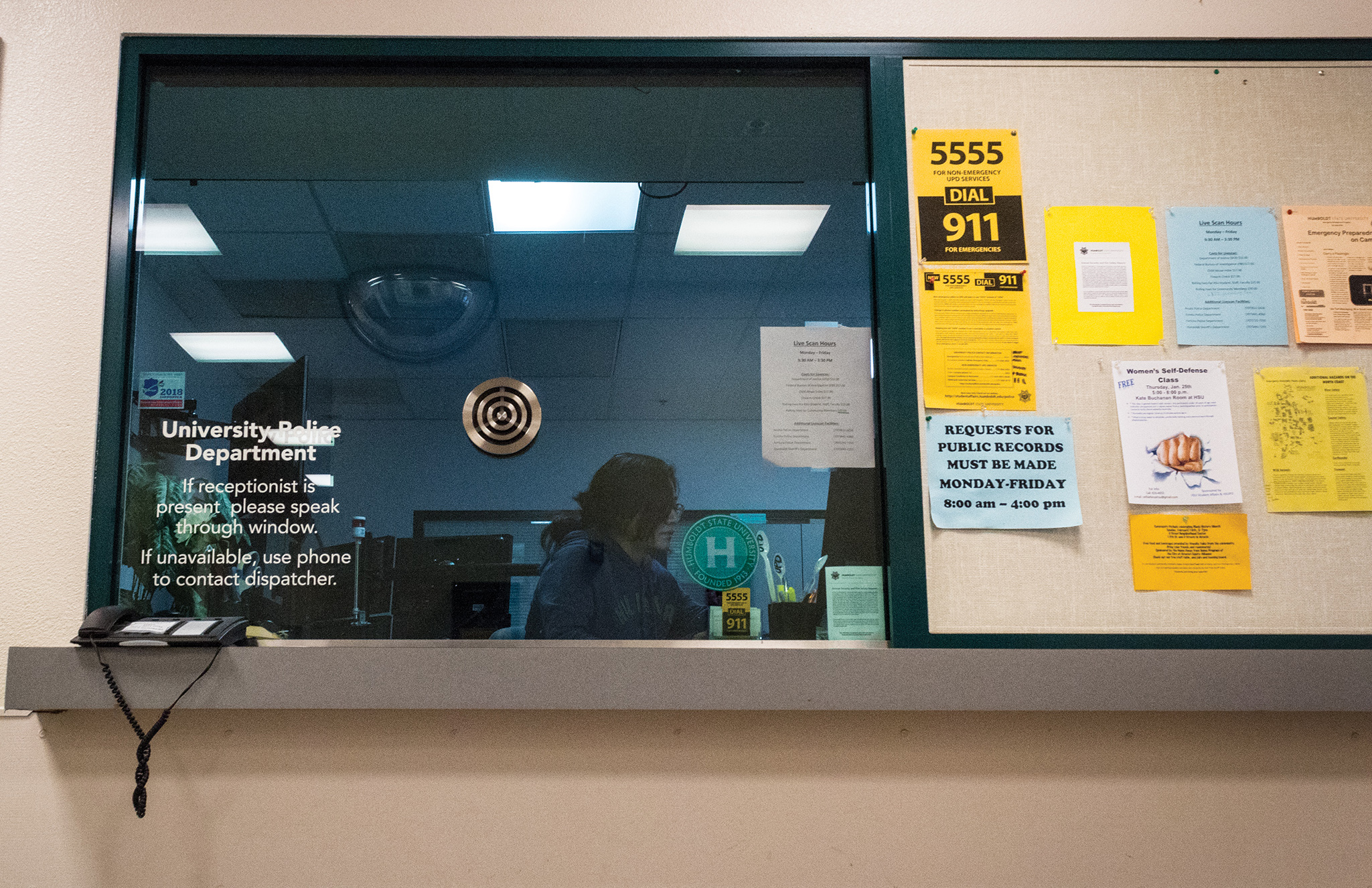
    Meed used to sleep in his truck on campus until University Police Department told him it was illegal to do so. Now Meed finds places away from people’s homes to park his truck and sleep. He doesn’t feel safe staying at the homeless shelter in Eureka and said he wouldn’t feel safe parking near the shelter either.

    Meed is continuing to look for housing but it’s difficult for a low income paraplegic to find housing in a county that the Humboldt County Grand Jury in 2015 said has a “critical lack of affordable housing”.

    There is the Humboldt County housing section 8 voucher waitlist Meed was hoping to get onto which helps low income non elderly disabled residents with rent but the voucher waitlist has been closed now in Humboldt County for over two years.

    According to Affordable Housing Online there are around 1,500 affordable low income apartments available in Humboldt County. But according to the U.S. Census Bureau, roughly 20% of Humboldt County residents are living in poverty. That’s 20,000 people.

    Many of the low income apartments available are upstairs making them inaccessible to Meed. Others don’t have the proper bathroom door width for a wheelchair to fit into.

    Now in his second year as a music major, Meed spends his days practicing his guitar at the music department. He picked up his love for guitar while living in Ohio with his family around seven years ago.

    Meed also works at the Humboldt State University Testing Center which helps students registered with the Student Disabilities Resources Center take tests and also provides a space for make up exams.

    “I try to stay out of my truck as much as possible,” said Meed.

    Meed said that Humboldt State University complies to ADA standards but doesn’t do much more than that.

    Getting around campus is another test of strength for Meed.

    “The hills are the hardest part,” said Meed.

    Meed’s wheelchair is a manual chair, meaning it’s push powered, not electric.

    “An new electric wheelchair costs about $5,000.” said Meed. “Some insurance companies will help pay the cost, but they will only help replace the chair every five years,” said Meed.

    In spite of the adversity Meed goes through on a daily basis getting around the aptly nicknamed hills and stairs university in a wheelchair and living in his truck, Meed is determined to continue his education and graduate within the next three years. The resilience he displays is honorable.

    “I’m a unique situation,” said Meed.

    In an area like Humboldt with an obvious shortage of low income housing, it’s necessary that situations like Meed’s be addressed so others like him can get the support they need to live in Humboldt and continue their education.

  • Housing conference weighs homelessness in Humboldt County

    Housing conference weighs homelessness in Humboldt County

    By | Charlotte Rutigliano

    Chant’e Catt and Mike Barnes, along with the Homeless Student Advocate Alliance (HSAA), are seeking to create a greater connection for students, the university, and the community. Something they plan on doing with the upcoming events after fall break.

    Catt is the founder and president of the HSAA. She said that an estimated 15 percent of students experience homelessness while attending HSU.

    Catt founded the HSAA last September to give a voice to students experiencing homelessness.

    “I eat, breathe and sleep this club,” Catt said. “This club is support for students who find themselves seeking housing.”

    Barnes, who is the current vice president for HSAA, said the three-day event is one of the biggest events they’ve done on campus, especially since they’ve taken on a lot of the event planning and marketing.

    “If I described this event in one word, it would be ‘necessary,’” said Barnes.

    Barnes said there isn’t enough information for students who have housing insecurities.

    According to Barnes, the event will include both student and community led organizations, such as the Affordable Homeless Housing Alternatives, Inc. (AHHA).

    Nezzie Wade is president of the board of AHHA. Wade said that they have worked with several groups of students at the university on housing-related issues and projects.

    Both Catt and Barnes said this event will open up a dialogue for students and will help bridge the local community with the student community.

    Barnes said that it might be hard to find seating for the first two days of the events because of how much support they’ve gotten from the community.

    ————————

    Day 1 – Nov. 28 from noon to 1 p.m. on the HSU University Quad.

    Afternoon sustainability fair consisting of student innovations and ideas of sustainable living outside of traditional dwellings.

    Housing: Indigenous Insights 6 p.m. to 8 p.m. in the Native American Forum at HSU.

    A night of storytelling featuring Jene McCovey, an open forum for attendees to share their stories.

    Day 2 – Housing: Social Justice Insights Nov. 29th from 6 pm to 8 pm in the Native American Forum at HSU.

    Perspectives on social justice and breaking stigma. Featuring a Native Speaker and Vernon Price, a highly knowledgeable advocate for homelessness rights and co-star in I Am I was Homeless, a featured video to be shown; faculty members from the Department of Social Work, members of the Multi-Cultural Center, Affordable Homeless Housing Alternatives and more representatives from HSU.

    Day 3 – Housing: Innovative Insights Nov. 30 from 8 p.m. to 12 p.m. in the University Center Quad at HSU.

    The final day of the summit will consist of an idea fair, featuring student, faculty, and community projects focusing on anecdotal solutions to housing insecurity. The workshop will provide opportunities to acquire skills that will help support the lifestyle should you encounter it.

  • MCC vandalized twice

    MCC vandalized twice

    By | Iridian Casarez

    As Joselin Dorado was walking up to the MulitiCultural Center (MCC) on Sunday afternoon, she started to notice that the “Justice for Josiah” posters as well as “Our Culture is Not a Costume” campaign posters had been torn and left in front of the MCC.

    “This makes me upset,” Dorado said. “We try our best to include everyone at the MCC and this vandalism makes it seem like we’re failing.”

    Dorado also found a note that read “It’s okay to be white.”

    Dorado said she was heading to the MCC to work on a Día de los Muertos altar with a couple of her coworkers when she found the ripped up posters. She sent a photo to her coworkers in a group chat to tell them what happened. Dorado picked up the ripped posters and told her coordinator about the incident.

    “This incident was racist,” Dorado said. “They targeted posters with people of color and culture.”

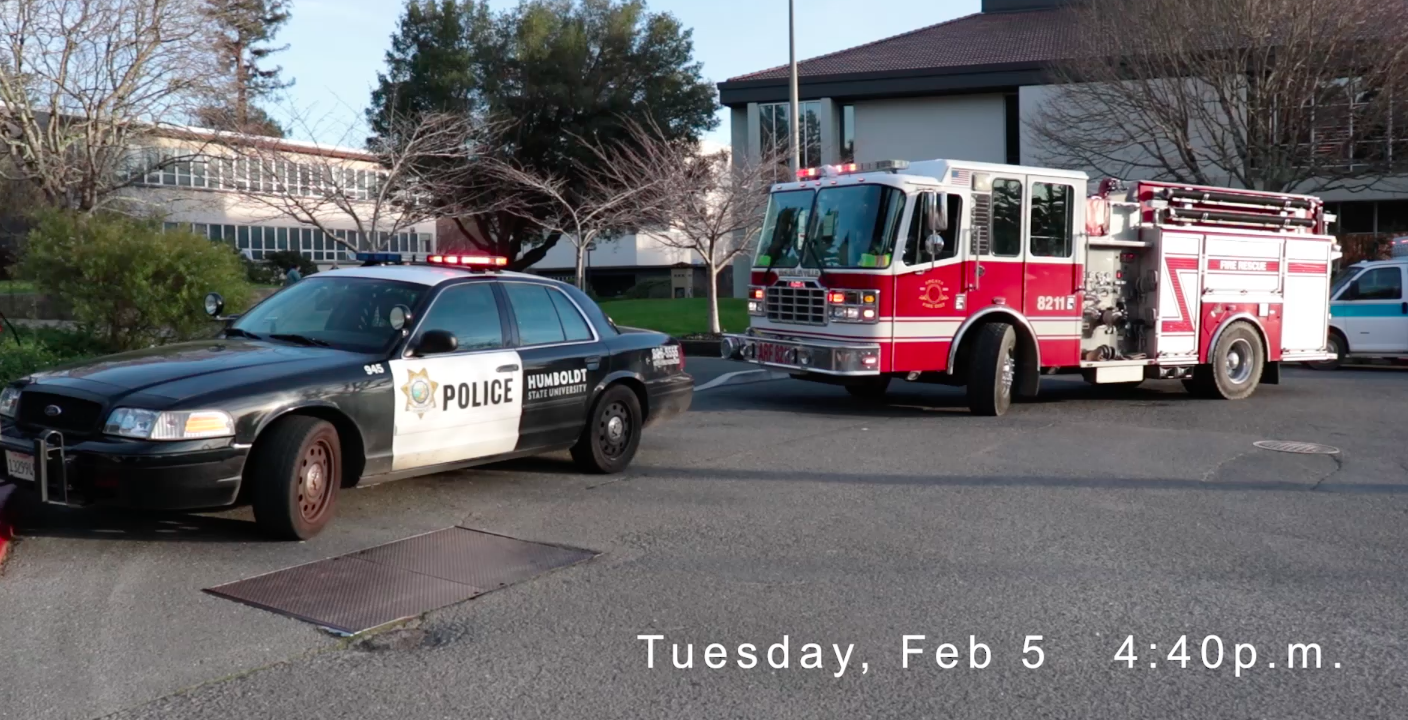
    They contacted UPD and filed a police report. Dorado said that UPD dismissed the incident and said it was because of the Halloween weekend.

    “UPD kind of dismissed it and made it seem like we weren’t going to be able to catch the person,” Dorado said. “They didn’t even offer more patrol.”

    Ana Maria Diaz also works at the MultiCultural Center as the Campus and Community Dialogue on Race Coordinator. When Diaz heard about the incident, she said she was upset.

    “We thought it was a prank until it happened again,” Diaz said.

    The Wednesday after the vandalism occurred, more posters were found torn in front of the MCC. UPD was contacted again, and Dorado said that a different UPD officer was more upset that the incident occurred than the first UPD officer.

    “It’s frustrating, someone targeted a safe house,” Diaz said. “Once is enough.”

    Luz Espinoza, the intercultural intersectional specialist at the MCC said she found the vandalism as a personal attack against the MultiCultural Center and Josiah Lawson’s passing.

    “We have heard complaints about white people not feeling welcomed at the MCC, but that’s not true,” Espinoza said.

    Diaz and Espinoza, with the help of their coworkers Deema Hindawi and Teadja Owings, decided to take matters into their own hands. They decided to stake out the Multicultural Center on Halloween night.

    “We tried our best to make it look like we left,” Espinoza said. “We spent the night hoping to find and confront the person who vandalized the MCC.”

    On the night of their stakeout, the MCC stakeout team didn’t hear or see anything suspicious. They were unable to confront and catch the person who vandalized the MultiCultural Center.

    “If someone has a problem with the MCC, come talk to us,” Diaz said. “We’re open to dialogue.”


  • Sí Se Puede!

    Sí Se Puede!

    By | Robert Brown

    Dolores Huerta spoke to an audience at The Van Duzer Theater at Humboldt State University on Monday, Nov. 13 during her new video documentary tour, celebrating her life’s work entitled, “Dolores.”

    Huerta is legendary for her ability to organize protests and boycotts. She co-founded the United Farm Workers Union with Cesar Chavez and helped to pass the Immigration Reform and Control Act of 1986, giving legal residency status to more than one million farm workers.


    She has won numerous awards throughout her career, including The Eleanor Roosevelt Human Right’s Award, The Ohtli Award from the Mexican Government, The U.S. Presidential Medal of Freedom, and nine Honorary Doctorates from different universities, just to name a few. She was inducted into the California Hall of Fame in March of 2013.

    In her talk, she discussed human rights, which she considers to be a woven tapestry made up of several separate issues including race, gender inequality, and sexual preference. She stressed the importance of being able to live and let live, and not be concerned with others’ identities.

    Another point she made is that it’s not a crime to cross the border, it’s a civil offense. By crossing the border, no one is hurting anyone else. Legalization has always been part of the immigration system in the United States since the country was founded by immigrants centuries ago. She applauded Senator Diane Feinstein, who proposed a bill for a blue card, which would allow undocumented farm workers to stay in the United States as long as they are working.

    Huerta has been actively involved organizing for over 60 years, starting with the Stockton Community Service Organization. At that time, farm workers were only earning 70 cents per hour working from sunup to sundown, they didn’t have toilets or drinking water in the fields, and were not given any breaks.

    She was part of California’s enactment of the Agricultural Labor Relations Act of 1975, granting farm workers the right to organize and bargain for better wages and working conditions. She eventually became one of the UFW’s most visible spokespersons, campaigning with Robert F. Kennedy, Bill and Hillary Clinton, and Barack Obama.

    The slogan she uses, “Sí se puede,” which translates to, “Yes we can,” was used by Barack Obama during his 2008 Presidential campaign. It originated from a law in Arizona stating that if someone said, “boycott,” or, “strike,” they could go to prison. Huerta organized protests against that law. The people in Arizona said, “no se puede, you can’t do that here.” She responded, “No, in Arizona, sí se puede!”

    Huerta directed the first national boycott of California table grapes which caused 17 million people to stop eating grapes, along with a march on Sacramento. During this time, she met Gloria Steinem, one of the leaders of the feminist movement. Women played a major role in the boycott because the women took over the strike and run the picket lines while the men marched.

    In 1988, during a protest of George Bush in San Francisco, she was assaulted by police. She ended up with seven broken ribs and a punctured spleen. The beating was caught on videotape and broadcast on television, allowing Huerta to win a large judgment against the SFPD and the City of San Francisco.

    As she described the many events that she experienced throughout history, the conversation evolved into events happening now at the Standing Rock protests. It’s clear to see that corporate greed, and dirty “politricks” continue to plague society.

    At 83 years old, there is no slowing down for Huerta, who continues organizing movements and expanding her focus from workers rights to women’s rights, indigenous rights, civil rights, and gay rights.

    With the dichotomy of empire looming overhead, it makes it all the more sweet to see a woman who has endured so much, and fought so hard, as she continues to persevere with the vitality and spirit that has become an inspiration for thousands of people.

    Anyone wanting to become active or show support can join the Vecinos Unidos (United Neighbors). The Dolores Huerta Foundation provides organizing, training, and resources to rural, and low-income communities, and also provides a platform to advocate for change. Go to http://doloreshuerta.org for more information.

  • Raising the bar

    Raising the bar

    In the National Survey of Student Engagement, zero percent of faculty think seniors devote “Very Much” or “Quite a bit” of their time doing community service or volunteer work. Six percent of seniors said they devote “Very Much” or “Quite a bit” of their time for community service or volunteer work.

    The National Survey of Student Engagement was sent out to seniors last spring at the same time the Faculty Survey of Student Engagement was sent out.

    In these surveys, 298 seniors and 226 faculties participated. Percentage-wise, that’s around 31 percent of seniors and 40 percent of the faculty. A part of the results from both surveys for the 2016-17 academic year shows how upper division faculty thinks seniors spend their time versus how senior say they spend their time.

    Upper division faculty were asked how much time do they think seniors devote to participating in co-curricular activities. Faculty answered only one percent of students devote “Very Much” or “Quite a bit” of their time participating in co-curricular activities. On the other hand, seniors answered seven percent.

    According to the same surveys, upper division faculty thinks 41 percent of seniors devote “Very Much” or “Quite a bit” of their time relaxing and socializing, while seniors answered only 23 percent.

    Almost half of all seniors in the survey said they devote “Very Much” or “Quite a bit” of their time to prepare for class, on the other hand, Upper division faculty think only 13 percent of seniors do so.

    It’s not the first time HSU students participate in the National Survey of Student Engagement. The first time was back in 2002, according to NSSE website, though last spring was the first time HSU conducted the Faculty Survey of Student Engagement on HSU faculty.

    According to the Office of Institutional Effectiveness, the Faculty Survey of Student Engagement costs $2,008 and the National Survey of Student Engagement cost $5,550.

    Such surveys are important as they help the university administration understand students and how do they spend their time and how both student and faculty are seeing and perceiving things.

  • Student veterans get honored

    Student veterans get honored

    By | Charlotte Rutigliano

    At this week’s football game on Saturday, Nov. 11, three student veterans will be honored during halftime.

    Scott Elsworth will be awarded a thousand dollar scholarship. This scholarship is the first ever at HSU. The money for the scholarship was donated by Sean T. and Robin Baille.

    “It is a nice surprise to be selected,” Elsworth said, “and I’m thankful for the opportunity.”

    Elsworth who is originally from Porterville, California served four years in the U.S. Navy. He is currently in his senior year at HSU majoring in Forestry/Hydrology. Elsworth is an active member of the water resource club on campus and is currently learning to play the violin as a memento of his time in college.

    Former U.S. Navy Fire Controlman James Lamping will be awarded the Veteran Meritorious Award. This award is based on the students’ academics as well as their work with veterans both on and off campus. Lamping’s peers nominated him for this award.

    “I was extremely honored to receive this award,” Lamping said, “I know this is a nomination based award, and those who nominated me, thank you.”

    Lamping who was raised in Irvine, California, served six years in the U.S. Navy aboard the USS Higgins. During his time he was deployed three times. Twice to the Persian Gulf and once on an “Around the World” tour. Lamping is currently a Forestry major with an emphasis in forest soils, he is also working towards a minor in Geospatial analysis.

    McKinleyville local Lucas Miller will be awarded the Humboldt Hero’s Award. This award can be awarded to any veteran in the Humboldt County community. Miller will also be playing in Saturday’s game against Central Washington.

  • Vets day at the zoo

    Vets day at the zoo

    By | Charlotte Rutigliano

    On Friday, Nov. 10 the Sequoia Park Zoo Foundation will be opening its doors to everyone for free.

    In honor of Veterans Day, the Sequoia Park Zoo Foundation with sponsorship from the Times-Standard is offering free admission to the zoo all day.

    According to Ashley Mobley, Events and Marketing Coordinator with the Sequoia Park Zoo Foundation, the zoo has been doing this event for the past few years.

    “The zoo is a community asset, it’s important to serve those who served,” Mobley said, “we can do this by giving a free day to everyone.”

    Mobley said that they are able to do an event like this because they have the sponsorship from the Times-Standard.

    Christina Arends, office coordinator for the Times-Standard, said that in the past they have sponsored the Red Panda Day events but this is the first time they are sponsoring the Veterans day event.

    According to Mobley, there will be a variety of different things for guests to experience at the zoo, from animal feedings, petting barnyard animals, a kids coloring contest, and visiting the resident bald eagles Cheyenne and Juneau.

    “There will also be veterans services tables there as well, the Eureka Vet Center will be there the whole day,” Mobley said, “and the Humboldt County Veterans Services Office will be there from 11 AM to 2 PM.

    Mobley said that when the zoo does free events like this, they tend to see an increase in admissions, but it still does depend on the weather if people will come out or not.

    “Free events like this gives an opportunity to people that might not normally come out to the zoo,” Mobley said.

    The Sequoia Park Zoo Foundation opens at 10 AM and admission is free all day.