The Lumberjack


Students Serving The Cal Poly Humboldt Campus and Community Since 1929

Category: News

  • Career & Volunteer Expo offers job opportunities

    Career & Volunteer Expo offers job opportunities

    The West Gym at Humboldt State held the annual Career & Volunteer Expo on Feb. 15. Employers’ tables were placed systematically in rows, a photographer took free headshots for prospective employees and there was a designated table for students to fill out applications.

    Studio art major Sam Donnell usually drops three hundred dollars on one class for initial art supplies. That amount doesn’t include extra art supplies over the course of the semester.

    “I’ll take any job,” Donnell said. “I need art supply money.”

    Mike Orr, Mad River Park supervisor, graduated from Humboldt State and said almost 100 percent of his recruitment comes from HSU.

    Orr said HSU has changed over the years and such expos were not around in his day.

    “I wish they had this when I was a student, because when you’re a student, you don’t know to access the information,” Orr said.

    Social work and Spanish major Ana Monjaras works for the Academic and Career Advising Center. Monjaras helped create handouts and greeted guests at the expo.

    “It’s really fun and helpful,” Monjaras said. “We are the first ones to know who’s coming.”

    HSU alum and administrative support coordinator Shannon Berge has been part of the Academic and Career Advising Center since 2005.

    “We really do try to get as many types of major jobs as possible to have a nice well-rounded fair,” Berge said.

    HSU alum Amy Martin is the job development coordinator for the academic center. Martin worked for the center when she was a student, but now she coordinates it.

    “It’s much bigger than it was when I started a long time ago,” Martin said.

    Martin works with the Humboldt Chamber of Commerce and national recruiters to bring opportunities to the students.

    “People reach out to us all year,” Martin said. “I keep a list. We have huge databases of the employers in and around the area. [There] are lots of different ways to recruit.”

    The expo had 115 employers this year. Local employers were present, such as the North Coast Co-op, the Arcata Playhouse and Coast Central Credit Union.

    “Seeing all the tables, the students networking and making connections with the employers is the best part,” Martin said.

  • Community gathers for David Josiah Lawson vigil

    Community gathers for David Josiah Lawson vigil

    Lawson’s homicide case is still open.

    Mother of David Josiah Lawson, Charmaine Lawson, drove eight hours to the Arcata Plaza to speak at her son’s vigil to remember, honor and celebrate his life. The African American Center for Academic Excellence organized Lawson’s vigil on Feb. 15.

    “For those of you who are mothers, I drove my baby to school and he came back in a box,” Charmaine said. “It’s not okay, I am not going to apologize for my tears. I am trying to be strong, but it’s hard.”

    Josiah’s homicide case remains open and active. The investigation interviewed 46 individuals that are believed to include all the witnesses who could have seen the fight and events leading up to the homicide.

    The initial review of all the evidence has been finalized with assistance from a retired FBI investigator, Tom Parker.

    Majority of forensic evidence has come back from the Department of Justice. Police are now awaiting a completion of DNA and specialty evidence testing.

    Humboldt State University student Erianna Blackwell said it’s important to come out for support.

    “Not only your people, but the cause,” Blackwell said. “Especially since they still haven’t found the killer.”

    Josiah was murdered 10 months ago at an off-campus house party. The city council held four meetings in 2017 to update the community on the investigation and present strategies on how to improve student safety.

    Michael Fennell, a Lawson supporter, said he’s been wearing his “Justice for Josiah” button for almost 10 months.

    “I didn’t think I would be wearing it for this long,” Fennell said. “I thought it would be solved long ago.”

    With two other children at home, Josiah’s mother told the crowd she was willing to move to Humboldt County to seek justice for her son.

    “If it takes me moving for the police to do their job, I will,” Lawson said. “I don’t care about materialistic things if I have to sell my car [or] my house. I’ll do it for my son.”

    Chairman of the Wiyot tribe, Ted Hernandez, showed up for the vigil and extended a prayer even though he had never met Josiah’s mother.

    “I came to support Charmaine as a parent. I have five children and some have gone to HSU,” Hernandez said. “It is all about the community and supporting the mother. It is a healing process.”

    Each month since Josiah’s death, a vigil has been organized in order to remember his memory and to put pressure on the ongoing investigation to find the murderer.

    HSU journalism major Angel Sylva said she comes every month.

    “I feel tired of having to come out every month,” Sylva said. “I feel like I’m coming out and nothing is being done. I come out regardless.”

    A reward of $40,000 has been offered to anyone with new information leading to the arrest and conviction of Josiah’s murderer.

    Mayor of the City of Arcata, Sofia Pereira, said when the AACAE asked her to come speak at the vigil, she agreed. But Pereira was uncertain on what she was going to say.

    Pereira said to Josiah’s mother, “You have given so much to the community. This is a community you owe nothing to.”

    “As a leader, I am going to fall short at times. I’d rather show up and fall short than to not show up at all,” Pereira said. “If we want true peace, we have to listen to our neighbors and take the situations seriously. I am engaging even though I feel uncomfortable.”

    Pereira has been mayor of Arcata for two months. Her first meeting as mayor was on Dec. 20. The council alternates the position on an annual basis.

    “I felt the gravity of the situation,” Pereira said. “It is not easy to speak in front of people who are grieving and want answers.”

    After the last meeting in October, students requested investigation updates be separated from the student safety discussion and that student safety meetings be held on campus following the October meeting.

    Student safety meetings in November and December were facilitated by students and held on campus. Meetings will continue to be held through the Student Diversity Committee with support from many campus club leaders.

    “My life will never be the same,” Charmaine said. “I can’t even mourn my child, because I have to fight for him. It is taking too long to get results.”

  • 40-day anti-abortion protest begins in Eureka

    40-day anti-abortion protest begins in Eureka

    In association with the global campaign 40 Days For Life, a group of people gathered in Eureka outside of Planned Parenthood to protest from Feb. 14 to March 25 in an effort to end abortion. Feb. 13 was the largest kickoff mlly the group has witnessed so far.

    The chill in the air was almost tangible outside of the Planned Parenthood in Eureka as a group of churchgoers gathered on the corner to protest abortion.

    Feb. 13 was the kickoff rally for the 40 Days For Life campaign, a global organization that strives to end abortion through prayer and peaceful activism.

    Stephanie Goodwin, 51, ran four campaigns in the city of Eureka and says the reaction from the community has not been negative.

    “There’s a lot of positive reactions,” Goodwin said.

    Goodwin said the organization’s aim is to be very peaceful, with their primary goal of restoration and healing.

    The campaign began on Feb. 14 and continues until March 25. The group will be returning to host the 40 Days For Life vigil from 7 a.m. until 7 p.m. every day.

    Bill Belairs, 63, and his wife Donna Belairs, 60, also have had positive experiences in their time participating in anti-abortion activism.

    “Some people flip you off,” Bill said.

    At this rally, not one individual came to protest the protesters.

    The Belairs said this was the biggest kickoff they have ever had for the 40 Days For Life protest.

    The rally began with individuals gathering on the corner of Walford and Wilson, shaking hands, lighting and passing out candles and then gathering.

    The ceremony opened with a prayer from Reverend Eddie Ramon, 46, who is the associate pastor at the Sacred Heart Church in Eureka.

    “We ask the Lord to stop the horror of the taking of human lives,” Ramon said.

    After his prayers, which Ramon recited in both English and Spanish, Mark Seitz, 39, with the Fortuna Church of the Nazarian took center circle to begin his prayers, accompanied by a trumpet made out of an animal horn called a shofar.

    “We must proclaim publically and fearlessly that though abortion may be legal in our land, it is not just in our land. For America, we sound the shofar,” Seitz said.

    A guitar was played and lyrics were passed around as the group sang songs such as “Create me in a Clean Heart,” “Oh Lord I Love you Forever” and “No Longer Slaves.”

    The event concluded with a final prayer from Reverend Ramon and attendees parted ways until they join again the next morning at the official beginning of the protest.

    Reverend Eddie Ramon reading from Matthew 18:19 to a crowd outside of the Eureka Planned Parenthood to protest abortion as a part of the 40 Days For Life initiative. Photo by Abigail LeForge.

    The press release for the event boasts the successes of these campaigns, claiming they have saved almost 14,000 children from abortions.

    “Dozens of abortion facilities have experienced sharp setbacks, cutting back hours and closing down for days at a time,” Goodwin said. “94 abortion facilities have been closed.”

  • City of Arcata plans for future student housing projects

    City of Arcata plans for future student housing projects

    City of Arcata’s planning commission met on Feb.13 to discuss construction projects that are in progress around town. Details of a future project located at the end of St. Louis Road and Eye Street, known as The Village Student Housing Project, were also discussed.

    “We know that there is a need for student housing,” City of Arcata’s director of community development David Loya said.

    Patrick Shanahan of Humphreys & Partners Architects reviewed the projected plan for the site, as this was the seventh continuation of these hearings.

    The plan is said to be four buildings of around 210 units each. They will be a suite of four single units with a common kitchen.

    The commission agreed on Feb. 13 that two of the buildings would be four stories tall and the other two would be three stories tall. The project is designed specifically for students so it will include study rooms and recreation areas.

    “We want the recreation areas to be a highlight of this project,” Shanahan said.

    The commission has recognized the eco-friendly interests of many Humboldt State students and has made sure solar panels, as well as other options to use sustainable energy to power these buildings, are available.

    “I would like to see more edible plants on the plan,” Melanie McCavous, commissioner for the City of Arcata, said. “I know there is a strong desire from students to find sustainable food.”

    While the public hearing was once again continued to another date, the commission is confident they will be able to make a recommendation to the city council after the next hearing.

    “We are going to need more information from the developer before we can really agree on a decision,” chairperson of the planning commission Judith Mayer said.

    While construction is still waiting for approval to begin, it is looking bright for future HSU students to have more possibilities for housing.


  • WRRAP goes beyond barriers during the Zero Waste Conference

    WRRAP goes beyond barriers during the Zero Waste Conference

    Humboldt State University’s WRRAP hosted their second annual Zero Waste Conference on Feb. 9 and Feb 10.

    The conference aimed to focus on the way we’re redirecting waste in our community, as well as the barriers that come with it.

    The two-day conference kicked off on Feb. 9 with DIY workshops focusing on waste reduction in the Humboldt community.

    There was also a banquet with keynote speakers followed by a documentary screening of Wasted Away.

    There was an all-day event of panelist discussions, a compost workshop and speakers on Feb. 10.

    One of the speakers was Dr. Melanie McCavour, lecturer for environmental science and management at HSU.

    McCavour’s presentation went over some common definitions and misconceptions of the terms biofuel, biomass and much more.

    “There’s no one answer to the question ‘Are biofuels sustainable?’,” McCavour said. “They’re not always bad and they’re not always sustainable. It depends on the situation.”

    McCavour expected to see more people in attendance. However, she said that one cannot judge success by the amount of people who turned out, and that it’s better judged by how much those learn from it.

    WRRAP education director Shanti Belaustegui believes this conference is an amazing opportunity to have a dialogue in our community about solutions and to get inspired by things that are happening.

    “I personally am leaving feeling very inspired,” Belaustegui said. “The people that did show up left with their minds nourished. That’s all we could’ve asked for, to create dialogue with the community and start this.”

    Ciera Wilbur, zero waste director for WRRAP, hopes that the Zero Waste Conference becomes a permanent event at HSU for people who don’t quite know about sustainability and zero waste.

    “The way I see sustainability is like the capacity to continue to exist,” Wilbur said. “We’re trying to protect our resources for future generations not just our current gratification.”

    Wilbur described zero waste as something that should bring us away from the current idealism, which is convenience and single-use products. She tries to bring forth the idea that what you use can be reused.

    “… we’re looking to create a circle,” Wilbur said.

    When it comes to sustainability and zero waste, there are barriers that people face. Wilbur said our biggest barrier is accessibility.

    “There’s a lack of education and sharing knowledge of how we can be more sustainable in an easy way,” Wilbur said.

  • Bringing culture to HSU

    Bringing culture to HSU

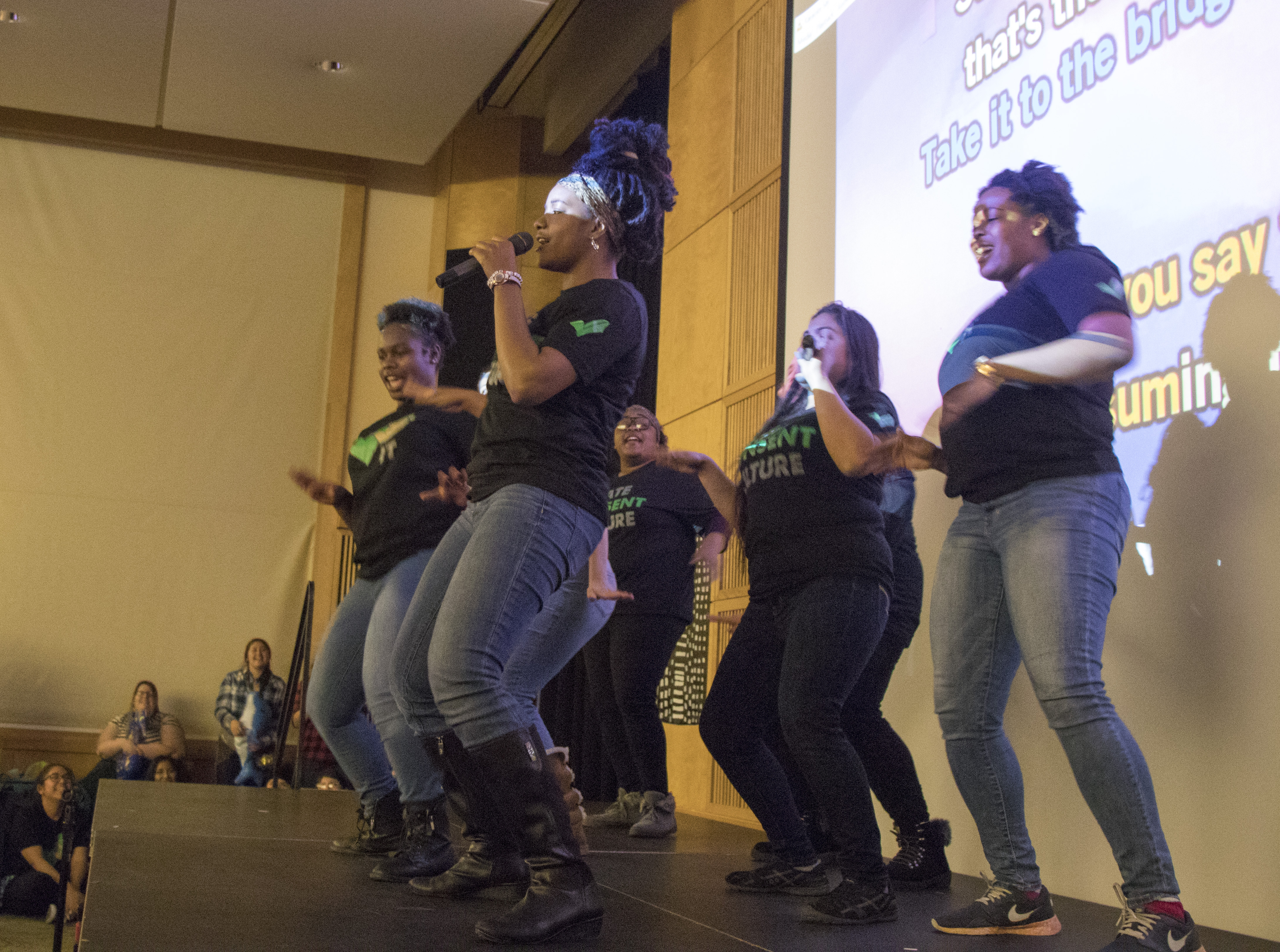
    The African American Center for Academic Excellence and Housing & Residence Life brought Mardi Gras to Humboldt State on Feb. 9.

    Mask making took place at 7 p.m., and then DJ C4 took over the dance floor an hour later.

    To Wayne Brumfield, interim vice president of Student Affairs at Humboldt State, the Louisiana tradition is about “Mardi Gras family and having a good time.”

    “I thought it’d be fun to introduce a Mardi Gras type event to Humboldt State University,” Brumfield said. “Mardi Gras is one of those events that is fun. You have a chance to eat some food and dance, so I thought it’d be good for our student body.”

    Corliss Bennett, director of the Cultural Centers for Academic Excellence, had a hard time transitioning to HSU. Like many students, she mostly had to rely on on-campus activities to have some fun.

    “In honor of Black History Month, we wanted to bring New Orleans to Humboldt,” Bennett said.

    Daniel Erb, a biology major at HSU, works for housing and helped put together the Mardi Gras program.

    “I really hope that residents can socialize and have a good time,” Erb said. “This event is a good way to show how different celebrations are celebrated around the world.”

    Josh Lequin, a business and management major, wished there would’ve been more advertising about this event, because he had a great time.

    “I made a mask got some beads and threw them at people who poured themselves out on the dance floor,” Lequin said. “The people who went to the event where the people who wanted to have a good time.”


  • Volunteer efforts in Jefferson Community Park

    Volunteer efforts in Jefferson Community Park

    The Youth Educational Services (YES) held a volunteer event for Humboldt State students on Feb 10. The event was held at Jefferson Community Park where volunteers were tasked with planting a garden for the community.

    Dean Shearer operates the volunteer opportunity programs for YES.

    “Jefferson Center is a community run center,” Shearer said. “If five or 30 people show up, it doesn’t matter. Any help is much appreciated.”

    Not only did the members of YES show up, HSU fraternity Chi Phi showed up to assist Jefferson Community Park with the planting of the garden.

    “I‘m here because I love to hang out with my friends and this place is perfect for that,” Chi Phi member Eddie Castillo said.

    Another member of the fraternity, Sergio Maciel, said he was involved for the community service aspect.

    “I think that it’s great for the fraternity to go out and do something good for the community,” Maciel said.

    Members of Chi Phi doing their part for the community. Photo by Luis Lopez.

    Richard Evans, vice president of the park, lives near the former school building turned community park.

    “It used to be a school that was closed down in 2012,” Evans said. “The community was tired with the city not doing anything with the building so we bought it and now it’s a park for the community to enjoy.”

    The Jefferson Community building contains many resources for people to utilize. There is a certified kitchen for the public to use, space to hold public forums and a playground for children.

    “The community wanted change for the closed down school,” Mark Weller, the deputy director of the Jefferson Community Park, said. “Events like this are open to any student from HSU who are outside of YES house.”

    Heidi Benzonelli (far left) and Mark Weller (center) helping volunteers put soil on the truck bed. Photo by Luis Lopez.

    Heidi Benzonelli is the president of the Jefferson Community Park.

    “[It was] another awesome day, way beyond what we expected,” Benzonelli said. “The park is coming into shape with the outpouring of volunteers.”

    For people who were not able to attend this event, the community park is always looking for volunteers to help with the park.

    To volunteer or learn more, you can visit jefferson-project.org or follow facebook.com/Jefferson.Project on Facebook.

    All the volunteers who came in to help the Jefferson Community Park on Feb. 10. Photo by Luis Lopez.


  • Nurses knock on McKinleyville doors to promote healthcare for all

    Nurses knock on McKinleyville doors to promote healthcare for all

    Members of the California Nurses Association and volunteers gathered at Pierson Park in Mckinleyville on Feb. 10 to inform residents about the Healthy California Act SB 562, and urge them to call state assemblyman Jim Wood.

    The bill guarantees healthcare coverage to all California residents, but was shelved by assembly speaker Anthony Rendon.

    Humboldt State University student Jacob Stockwell is having trouble getting health insurance. He needs PPO insurance, but his is HMO.

    “I have a polyp in the brain,” Stockwell said. “I have to get an MRI and go down to Santa Cruz. It’s an eight-hour drive… it’s not even worth it.”

    Member of California Nurses Association Patricia Kanzler has openly criticized Wood on different committees before for not taking action on SB 562.

    “He’s a hypocrite,” Kanzler said. “He says he’s for single-payer healthcare, but there’s a bill right out there. If he’s so enthusiastic on single-payer, then why the hell isn’t he working on it? That really pisses me off.”

    Political science professor Kevin Murray volunteered in support of the California Nurses Association.

    “We’re not selling anything,” Murray said to residents after hesitantly opening their doors. “If we all share our horror stories, we’d realize this system is rigged.”

    Canvass volunteer Margy Emerson wore a metal button on her jacket that read ‘Healthcare is a human right’ in support of the cause. Emerson said the bill is important morally and economically.

    “I’m convinced that if one state gets it, the rest of the states will follow,” Emerson said.

    Volunteers met Mckinleyville resident Wilford Ward in his driveway while he worked on his car.

    “This needs to be fixed,” Ward said. “I’m paying $1,000 a month. It’s unconstitutional. There is something wrong when you’re talking about inequities. The rule of government is to protect its citizens. I’m getting screwed over.”

    Originally, Fred Brewster thought he signed up to volunteer, but ended up hosting a canvass. Brewster has been able to have health insurance on and off by working seasonal jobs.

    “I’ll have health insurance for part of the year, and then not for part of the year,” Brewster said. “It’s always a constant fight and worry to make sure I had asthma medicine.”

    Canvass host and College of the Redwoods journalism major Fred Brewster assigning volunteer Margy Emerson door-to-door SB 562 campaigns in McKinleyville on Feb. 10. Photo by Bailey Tennery.

    Brewster created a petition in the past to stop Starbucks from opening in Yosemite National Park, but he has never hosted a canvass before.

    “Going door to door puts a face to the movement,” Brewster said. “It allows [for] a more personal interaction with the people. It is not some distanced thing.”

    Organizer Phil Kim used Territory Helper, a website created by Jehovah’s Witness congregations for their canvassing, to print maps of Mckinleyville neighborhoods for volunteers.

    “They do a lot of door-knocking,” Kim said. “It’s kind of funny they’re helping us out, [because] we’re using the program they created. It helps to coordinate where everyone is walking, so people aren’t knocking on the same doors. It’s a way of dividing the maps in little sections.”

    Healthy California Act volunteers speaking with a McKinleyville resident. Photo by Bailey Tennery.

    Anne Olivia Eldred is a part of the California Nurses Association. She said it’s better to take care of people before they get sick, rather than waiting until they need immediate treatment that is expensive.

    “I see what not having access to healthcare looks like,” Eldred said. “There are people who are dying every day, because of lack of access, and that’s ridiculous.”


  • How neutral are the gender neutral restrooms?

    How neutral are the gender neutral restrooms?

    Critical race, gender and sexuality studies majors have the daunting task of climbing to the top of the Behavioral & Social Sciences building. This is a battle most Humboldt State students know too well.

    Anybody who has made the hike up would hope there is a place for them at the top to relieve themselves, regardless of their gender identity.

    However, the BSS building has been left out of the loop when it comes to gender-neutral bathrooms on our campus.

    For students who don’t feel comfortable using the gendered restrooms, the closest one to the BSS is in the CCAT building, which is not very close.

    “It is not possible for students to have to go across campus between classes and still be on time,” HSU professor Loren Cannon said.

    Cannon’s office is on the fifth floor of BSS. He was confused as to why there was not one gender-neutral bathroom in the building.

    “There are at least four bathrooms on every floor. I don’t think it would be very difficult for the school to put one here,” Cannon said.

    The BSS building is not the only building on campus to lack a gender-neutral bathroom. The library, forestry and natural resources buildings have also been left out.

    However, the BSS is home to HSU’s critical race, gender and sexuality studies department located on the third floor.

    Many alumni from this department were in favor of bringing gender-neutral bathrooms to our campus in the first place. If these existed, the gender studies department would be able to accommodate those of all genders comfortably.

    Bridget Santana is a student majoring in CRGS. She doesn’t like how HSU’s CRGS department advocates for inclusion, yet does not have a gender-neutral bathroom in the department’s building.

    “It’s as if we keep trying to make some moves, but end up just speaking about it without creating action,” Santana said.

    Elizabeth Whitchurch of facilities management explains why this is the case.

    “The single unit bathrooms have always been part of our campus,” Whitchurch said. “They just weren’t specifically labeled.”

    Whitchurch said there were recent talks of opening a “test” multi-unit gender-neutral bathroom, but that project has not moved forward.

    “I honestly think this is kind of contradicting for the CRGS department, since we advocate about these situations and how we should be inclusive towards non-binary and non-gender specific people,” Santana said.

  • Valentine’s Day gifts for a good cause

    Valentine’s Day gifts for a good cause

    Anyone stressed about Valentine’s Day has a last-minute chance this weekend to find that perfect something for that perfect someone while supporting a good cause. The Humboldt Unitarian Universalist Fellowship will be holding Hearts Together, a Valentine’s Day-themed event and auction from 4 to 8 p.m on Feb. 10.

    Event coordinator Edie Jessup says all the funds raised from this event will go towards Humboldt Unitarian, a congregation that is dedicated to helping others.

    “We do a lot of community work,” Jessup said. “We’re very social justice-oriented. ”

    Humboldt Unitarian donates to one local non-profit each month. These have included Food for People, Planned Parenthood, Humboldt Edge, Betty Chinn and Arcata House. In addition to their help with non-profits, the Fellowship is also a sanctuary congregation.

    “We are available for families in threat of deportation,” Jessup said. “Because we are a church, police are less likely to interfere.”

    Front entrance of Humboldt Unitarian Universalist Fellowship in Bayside, Feb. 7. Humboldt UU Fellowship is hosting their annual auction fundraiser on Feb. 10 from 4-8 p.m. Photo by Matthew Hable.

    For a suggested donation of $10, attendees can help and have a good time.

    The price includes all-you-can eat soup, bread and dessert. In addition, there will be beer and wine available for purchase, a Valentine’s gift store and both a silent and live auction. This is the first year the event will feature a live auction, hosted by local actor, Mack Owen.

    All of the items were donated by local businesses or individuals and will include dinners, nature outings, collectable items, classes, art and more.

    Free childcare services are offered during the event for those who reserve ahead of time.

    Jessup says they try to keep this event affordable so that all members of the community, including families and students, can attend.

    “We’re really welcome to HSU students,” Jessup said. “This might be fun for them.”

    For more information, contact Humboldt Unitarian Universalist Fellowship (707) 822-3793 or by email office@huuf.org

    Or visit the event Facebook page for Hearts Together Auction

    Childcare can be reserved with Jen at jkw23@humboldt.edu or (707) 668-1848

  • Laundry machines on campus that rarely work

    Laundry machines on campus that rarely work

    When it comes to the Humboldt State University campus laundry rooms, students are never surprised when they spot an “Out of Service” sign on one of the machines.

    HSU senior Robert Matthews is accustomed to seeing that sign when he walks into the laundry room.

    “I’m never really surprised to see at least one or two machines that are broken down when I’m doing laundry,” Matthews said. “It does get annoying to have a machine that is broken down, and all you can do is call the company in order to have it fixed. Even if you call them, it would take a long time for the machines to be fixed.”

    Many students who live on campus are irritated when they cannot do laundry due to broken machines. This is especially annoying when on-campus laundry rooms have limited machines that need to serve over 2,000 students who live on campus.

    Stephen St. Onge, the Housing & Residence Life director, explains why the laundry machines stay broken for a long time.

    “The company that we bought the machines was from a company called Wash, which is located in San Francisco,” St. Onge said. “When a machine would break down, we would call the company to send someone down to fix the machine… but sometimes it would take awhile for someone to come down here at Humboldt.”

    According to St. Onge, the contract with Wash ended this year.

    “With the contract ending with Wash, the school now owns all the washing and drying machines on campus,” St. Onge said. “What this allows us to do is to self-service the machines ourselves. Students will eventually notice the improvements in laundry machine maintenance in the future.”

    St. Onge also expressed plans to make washing and drying free for students living on campus in the future.


  • Local taxicabs welcome Uber challenge

    Local taxicabs welcome Uber challenge

    Since its recent availability in Humboldt County, Uber has become an increasingly popular alternative to taking taxis. Although the San Francisco based company may provide some serious competition, the local cab companies don’t seem worried about it yet.

    William Startare, 31, is a Eureka resident and the grandson of William Startare, who started City Cab Company. The Eureka based cab company is now owned by his uncles.

    Startare is loyal to the family-owned company, but admits he uses both City Cab and Uber. He believes they both have their advantages. Startare says the Uber app is more user-friendly for younger people.

    “It’s modern,” Startare said. “It’s the way we need information to be presented to us.”

    One disadvantage to Uber, however, is it is not always available. On the other hand, Startare says City Cab might take longer, but they will always show up.

    “Two days ago at 3:30 in the morning, I tried to get an Uber and there was none,” Startare said. “I called City Cab and they said 10 minutes.”

    Jose Zaragoza, 34, was born in Mexico and has lived in Humboldt since he was six. Zaragoza has been driving for Uber for about seven months and is happy the service now exists in Humboldt.

    With a wife, two children and a third on the way, Zaragoza says money from his primary job at Costco is not always enough. Driving for Uber helps him supplement his income without a time commitment.

    “This is a job where you can pick your own hours,” Zaragoza said. “It brings extra income to the table. It helps.”

    Zaragoza says lower rates, cleaner vehicles and the convenience of the app make Uber the better choice for customers.

    “You can see where I am, where I’m going and how far I am from you,” Zaragoza said. “It’s all done with the simple touch of a button.”

    Cedric Pearl, the owner of Plaza Cab, says Uber has not caused his company to take a hit financially so far. He believes the availability and consistency of rates make taxis a preferable choice for some customers.

    “Their rates fluctuate based on demand,” Pearl said. “Our rates never change. You can call a taxi on New Year’s Eve and the price is the same as always.”

    Another advantage of a taxi company is they are required to have commercial insurance, and drivers are required to undergo federal scan background checks and drug tests.

    Despite some disadvantages Pearl sees with Uber, he is not opposed to people using the competition.

    “Anything that keeps drunk drivers off the road is ok with me,” Pearl said.

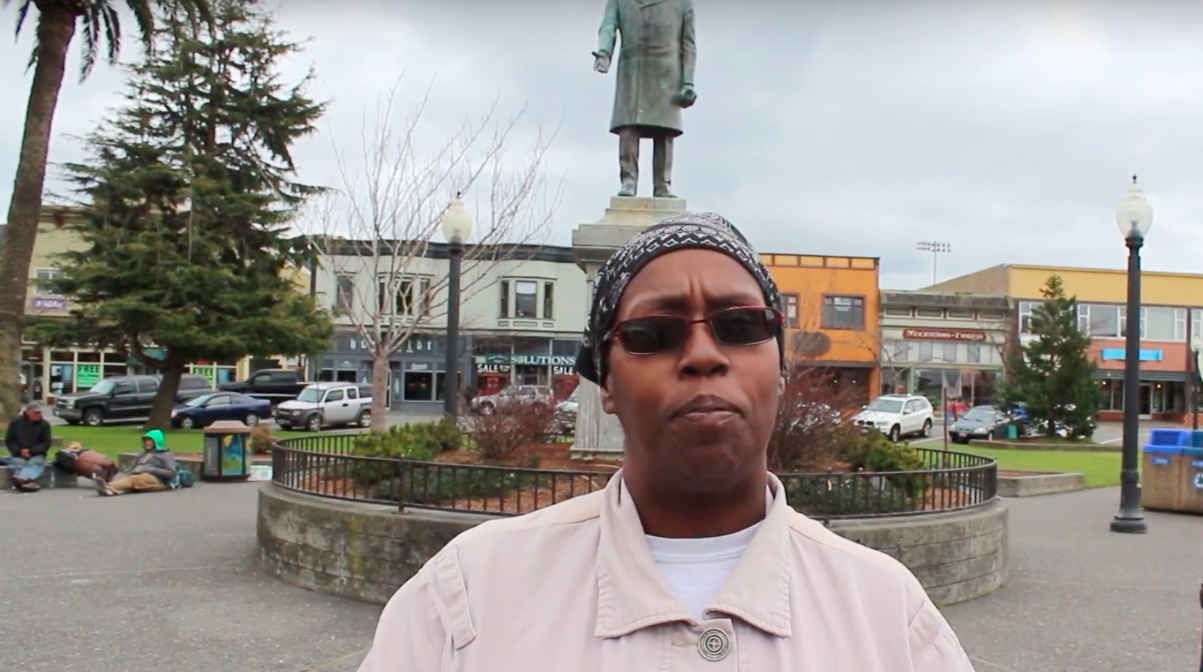
  • Man on Street: The McKinley statue

    Man on Street: The McKinley statue

    Humboldt State University students were asked a single question regarding a controversy surrounding the Arcata community: the presence of the McKinley statue.

    The results were rather polarizing:

    Video by Garrett Goodnight.
  • Spirits of Kerr Tower

    Spirits of Kerr Tower

    Spirits are people, not ghosts.

    The Kerr Tower room is the hidden third floor of Founders Hall at Humboldt State University. According to a Feb. 4, 1971 news release, the Kerr family is from Maple Creek in Humboldt County. They donated $8,000 to HSU for the completion of the tower and the installation of a meditation and prayer room.

    An HSU press release from Oct. 19, 1971 said that the Kerr Tower room in Founders Hall was completed as a spiritual sanctuary, a place of prayer and small gathering place.

    Hal Greer is an oceanography professor at HSU and graduated from HSU in the early seventies. Greer remembers going up there to meditate and feeling the warmth and solitude taking away the pressures of graduate school.

    “Twenty minutes of self-time in the comfort of a nice and quiet place replenished the energy required to keep up on my course load,” Greer said. “Kerr Tower was a spiritually comforting, neutralizing place.”

    Jimmy Allen is another student from the seventies who utilized the tower.

    “I didn’t meditate there,” Allen said. “Sometimes I would lay down and often times a female would come and snuggle.”

    When Allen attended HSU, all of Founders Hall was left open. He and a friend took up residence in the open classrooms, which is where they lived during the spring semester of 1977.

    Describing the social climate on campus at the time, Allen remembers walking into a Neo-Nazi meeting in the Green and Gold room in Founders Hall. At the time, the Green and Gold room was a study hall and a meeting room. No one seemed to mind Allen, who is black. He sat down and remained there studying throughout the entire meeting while no one bothered him.

    Another person around campus who made use of the Kerr Tower room as a meditation place is Jesse Austin.

    “Whenever I seemed to go there, no one else ever came up,” Austin said.

    Austin’s wife Rita got him started in yoga and meditation in the tower room and sometimes they would bring candles up there.

    Austin remembers having a psychic ability as a child and upon entering college at the age of 15, his psychic ability disappeared. Upon the birth of his first child, a daughter, his psychic ability returned.

    Austin’s psychic power experiences in the Kerr Tower developed to become supernatural. He gives himself the title of Psychic Medium.

    One time, the Austin’s brought back all of the past presidents of HSU into Kerr Tower.

    The most memorable contacts with spirits were female professors from the original Humboldt Normal School, but one woman stood out. She lost her son over the cliff on Scenic Drive in Trinidad before there was a Highway 101.

    “This one spirit was upset, but positive and extremely helpful,” said Austin. “The spirit was oriented towards teachers and was not interested in students.”

    Austin emphasized the spirits were people, not ghosts, and she wanted HSU to reopen the tower room.

    “I would like to see Kerr Tower reopened someday,” Austin said.

    There is now a meditation room in the basement of the library. It is only open during lower floor business hours.

  • Humboldt State University budget crisis

    Humboldt State University budget crisis

    Humboldt State University held an open budget forum on Feb. 2 to discuss the threatening budget situation that could put the university in a potential crisis.

    Shortly after the forum, HSU President Lisa Rossbacher sent a message to the campus community:

    “In short, HSU’s budget situation has worsened over the course of this year due primarily to ongoing deficit spending in some areas, unfunded increases in salary and benefits, a continued decline in enrollment and projections based on the recent state budget for 2018-19 proposed by the governor,” Rossbacher said.

    Rossbacher wanted students, faculty and staff to take away a few things from the budget forum.

    First, a sense of the position that we’re in and the history of how we got here. Rossbacher wanted to make clear that it’s not anyone’s fault. This crisis has been ongoing from decisions made 10 to 30 years ago.

    “I want people to understand the situation that we’re in, the importance of working as a community to address it and solve the problems now,” Rossbacher said. “All of us that were involved in the discussions and planning are acutely aware of the impact the decisions will have on people… employees, potentially on students.”

    “We’re trying to do this with care and compassion,” Rossbacher said.

    Beth Eschenbach is the chair of environmental resources and engineering. She doesn’t quite know how the budget cuts will affect her.

    “I think everybody is afraid of saying what they’re really going to do,” Eschenbach said. “What I fear, they keep telling the academic side to save money, but the only way to save money is to teach fewer classes.”

    Zack Pitnick, environmental studies major, is a senior at HSU. He was one of the three students that showed up to the budget forum.

    Pitnick decided to come to the forum after hearing about it from his environmental studies professor. Pitnick wanted more of a student input in the discussion.

    “There needs to be a lot more transparency and [student] involvement,” Pitnick said. “I think there still does need to be cuts to higher up faculty salary. If they are so focused on this budget deficit, that should be the first thing to start instead of the very last resort.”

    Alex Enyedi, provost and vice president for Academic Affairs for Humboldt State, described the financial crisis in a nutshell.

    “It’s a simple overspending of the budget, and the next steps are to identify and trim back where spending is too much,” Enyedi said. “For example, we’ve got certain areas where we’re deficit spending, so we need to stop the deficit spending and that will help us with our budget.”

    Enyedi went on to say the problem is solvable, but it’s going to take combined efforts to solve.

    “It’s not the students’ problem,” Enyedi said. “It’s the administration, the staff and faculty’s responsibility to figure this out and we’re on it. This is a high priority, [and] we don’t have sufficient reserved dollars to be able to keep on covering the deficit spending.”


  • Humboldt State now has a mobile app

    Humboldt State now has a mobile app

    You now can register for classes on the go without having to wait to get to a computer. With the new Humboldt State mobile app, you can access your student center anywhere. Students can not only register for classes through this new app, but they can also check their grades and financial aid status too.

    According to Bethany Rizzardi, chief information officer for ITS, the app has an annual cost of $50,000 and a one-time $25,000 initial setup and configuration fee.

    The app adopted several modules including the student center, library, campus news, course catalogue, events calendar and a new interactive map. All of this and much more is just a touch away.

    According to HSU Information Technology Services project coordinator, Billie Herman, ITS office did extensive research prior to implementing the mobile app. In this research, several mobile app vendors were reviewed.

    “There were two vendors selected out of that research project,” Herman said. “There was Modo Labs and Greyhaller.”

    The decision was then made to pick Modo Labs, a software company that creates mobile apps.

    “There are nine other CSUs that have followed the same model and are using the same vendor,” Herman said.

    This new HSU mobile app is free and available to anyone with a smartphone. You can download the app through the iPhone App Store or Android Google Play Store.

    According to Herman, there’s around 1,000 unique visitors to the app so far.

    Connor Callison is a HSU programmer who works on maintaining and developing the app. He created a new campus interactive map. The map can be found on the homepage of the app.

    The app was first presented to students in both software engineering and database design classes last fall. Students in those classes tested the app and provided feedback to the programmers.

    “[Computer science] students have pretty intricate knowledge of how apps works, [and] we figured they might be able to find some of the holes that we might have to deal with first,” Callison said. “They were our beta testers and we got some feedback from them that was helpful.”

    “ITS likes to reach out and work with the CS students as much as possible,” Herman said. “We love to have a bridge, students brings such vitality and that new perspective.”

    The launching of the app came as a part of an an initiative at ITS to make it easier for students to access campus services using their phones.

    “We are trying to make the business of being a student very easy,” Herman said. “It’s hard to be a student as it is and it’s very nice to be able to easily navigate through all the process and procedures that you have to go through.”

    The app is a work in progress. Programmers at ITS are still working to improve students’ mobile experience with the app. Users can send comments about the app by using the app feedback form found on the home page.

    “This is our first step into this arena and we’re going to continue to evolve this as we get more feedback,” Herman said. “Give us a year and that app is going to sing.”


  • Future housing developments for students in Arcata

    Future housing developments for students in Arcata

    As the busy students of Humboldt State University get back into the swing of things, some students are in the unfortunate situation of being homeless.

    While many think no actions have been taken, it is easy to notice the many construction projects that have popped up around town.

    The one closest to campus is located on Foster Avenue. These buildings are beginning to catch attention.

    According to Alyson Hunter, City of Arcata’s senior planner, this construction is part of a project known as the Sunset Terrace Apartments.

    “The city had known the developer’s plans for the site long before construction started,” Hunter said.

    Construction began in 2014 in several phases. The property developer, Kramer Investment Corp., posts pictures of the construction process on their website.

    It is going to be a 142-unit apartment complex consisting of solely one bedroom and one bathroom units.

    While Alex Hunt of Kramer Investment Corp. was unable to release more information, he said that the first phase was nearing completion.

    “We’ll have to coordinate with PG&E to finish the first phase,” Hunt said.

    At this point, rent prices are unknown, but residents of other properties managed by Kramer Investment Corp. say similar units go for around $700 per month.

    Recent HSU graduate Nathaniel Matteson had been homeless for three months last semester.

    “I was looking really hard and I could not find anything,” Matteson said. “It would have been really nice to have something like this as an option.”

    Future students of HSU may not have to worry about housing as much as students are today, as this project is not the only one in the area. On Feb. 13, a city council meeting will be held to discuss further steps on what is known as The Village Student Housing Project.

    According to City of Arcata’s website, it is proposed to house 800 beds specifically for students. It will be a multi-story complex at the end of I Street and St. Louis Road, which is across the freeway from campus.

    These projects could make housing a smaller problem than it is among the students at HSU. As for now, the eventual completion and opening of the Sunset Terrace Apartments will decide whether homeless students will have some relief of trying to find a place to live.


  • New Bachelor of Arts degree is coming to HSU

    New Bachelor of Arts degree is coming to HSU

    A new degree has resurged in the art department: the Bachelor of Fine Arts.

    The program is a cohort system of 24 students who want to focus on their studio artwork. The BFA program helps prepare students for a professional art career or graduate school.

    The first group of BFA students will be juniors this fall, and will graduate in spring 2020. Applications are due this spring on Feb. 28.

    Department chair of the HSU art history department Heather Madar says that this program has been in the making for a number of years.

    “So at this point we are about to look at our first round of applications and have our first cohort,” Madar said. “Yeah, this is our first one and this is really exciting.”

    The difference between the two degrees is the coursework. The BFA requires 70 units of art classes while the BA requires 54 units. With the BFA, students won’t have the ability to have a minor or a second major.

    “It is a pathway to a degree that really focused in a whole lot of depth on their studio artwork making,” Madar said. “The BFA is seen in the field as a slightly more professionalized degree, so it gives them an additional credential if that is something that makes sense for their future career plan.”

    Art major Ann Valdes has always put an importance on creativity. This year, Valdes is graduating without having the opportunity to be part of the BFA.

    “I guess it just sucks for people who are in the transition and is between HSU not having a BFA and having a BFA,” Valdes said. “But in the future, I guess people will get to choose what they want.”

    HSU students who are in their first two years can become part of the BFA degree by taking the required lower division coursework.

    “We are not requiring them to declare which of the areas they are in,” Madar said. “It is a general BFA program, but generally most of them do identify with their previous coursework, what areas they really want to focus on, like ceramics, for example.”

    Art major Kiya Rutherford enjoys making functional art, but likes painting things for an aesthetic reason – it allows her to express certain ideas.

    “I think it’s pretty important, because I know a lot of people look for art programs,” Rutherford said, “but only go to certain schools if they have a Bachelor of Fine Arts rather than just art. I think it helps with grad school, too.”

    Art major Kiya Rutherford working in the ceramics lab on Feb. 2. Photo by Bailey Tennery.

    Valdes sees the BFA degree as an overdue improvement to Humboldt State’s art department.

    “I think for the school to have a BFA is amazing,” Valdes said. “It makes HSU way more competitive.”

    The tenured faculty will be involved in reviewing student applications. After reviewing the applications, they will have a meeting to decide who will be accepted.

    Valdes considers the BFA degree as a positive addition to HSU, but it wasn’t the right program for her.

    “Having a BA doesn’t mean you can’t be a fine artist, so it is a decision you have to make pretty early on,” said Valdes. “I feel like for me, that wasn’t really the best idea at the time, but I think it is great for people in the future, and that is great for HSU to have.”

    The Feb. 28 application deadline was put together by Madar and the Office of Admissions to make it easier for transfer students to apply to the BFA program.

    “This is not a better degree,” Madar said. “It is just a different degree and for different students, depending on what they are wanting to do with their college career.”


  • Unclaimed property goes to auction

    Unclaimed property goes to auction

    Objects get set down, forgotten and lost. Owners search high and low, their heads turn from side to side, frantically tracking down their lost objects. All lost and found items eventually end up in the University Police Department.

    UPD evidence technician Zan Mendonca uses an ongoing online auction website called Property Room to sell the unclaimed property after being held for a period of three months.

    “People bid like eBay, and then once they get their funds, they take a portion of it and send the check to us,” Mendonca said. “I think it is great. They have saved us a lot of money.”

    Mendonca said that the check, which is received from Property Room, doesn’t normally come in a large amount, because there are not too many items of value that are turned into UPD.

    “A lot of people think it goes to buy bullets and badges and stuff like that, but it actually goes back to the students, which is awesome,” Mendonca said.

    Sandy Wieckowski, student financial services manager, explained that previously the money went to a HSU Short Term Student Loan Fund.

    “At one time, the state told us, and the Chancellor’s Office said, you could either do it in short-term loans or in scholarships,” Wieckowski said. “We were putting some of it originally in the short-term loan fund, so we could give short-term loans, but we have enough money in short-term loans.”

    According to Wieckowski, it was decided to switch the funds to HSU’s Emergency Scholarship about a year ago, with the reason being short term loans have to be paid back.

    “If you truly have a financial crisis, a lot of the time, you can’t pay it back,” Wieckowski said. “Financial aid monitors that scholarship fund to help students out during desperate needs.”

    Peggy Metzger, director of financial aid, works behind the scenes helping students. A small portion of lost and found money is put into a special scholarship. The money goes to students, but isn’t anything that students apply for.

    “It’s basically sort of a little wiggle fund for me,” Metzger said. “Every once in a while, like for instance, say the scholarship is $500, but the interest is only in $427, but I want to give the student 500. I’ll take a little over from the fund, and shove it over so that the student gets the whole amount.”

    Student Financial Services isn’t dismayed when they look at the lost and found money, because there’s not a substantial amount made from unclaimed lost and found money. It’s not like money gained from a Pell Grant.

    “The caveat to claiming a lost property is that you cannot be an employee,” Mendonca said.

    Mendonca always asks herself how this would look from a different perspective. How would it look if an employee dipped their hands in lost and found?

    “They might get upset,” Mendonca said, “because they’re not legally able to claim it. Then I can say, oh, you know all this money that is brought back goes back to the Short Term Student Loan Fund.”

    The money made from lost property no longer goes to the HSU Short Term Student Loan Fund. The change is a positive one, because it means more money is going to a separate fund to help students.

    “It goes back to the students,” Mendonca said. “It usually takes the winds out of people’s sails, and what can you say? It is an awesome place for it to go.”


  • Government shutdowns: uncertainty as a price for democracy?

    Government shutdowns: uncertainty as a price for democracy?

    The showcase of the United States’ unique democratic system happened on Jan. 20. It marked the one-year anniversary of a reality TV star’s presidential inauguration. It also highlighted the country’s freedom of speech in the form of a nationwide women’s rights demonstration, as well as the beginning of a short-lived government shutdown.

    Professor Stephanie Burkhalter, a political science professor at HSU who studies communication strategies between Congress and the president, provides more insights on the phenomena of government shutdowns.

    What is a government shutdown?

    A government shutdown occurs when the House of Representatives and the Senate cannot pass an appropriations bill — the technical name for a bill that funds the government agencies — that the president will sign.

    Shutdowns are a uniquely U.S. government thing, because of our constitution, the filibuster rule and our two-party system. The two parties have become increasingly polarized on policy issues and more willing to have a shutdown if they cannot get the policy changes that they think are important.

    What caused this previous government shutdown and why was it so short?

    This answer depends on whom you ask. The consensus from mainstream media sources is that the Senate Democrats caused the shutdown by filibustering and demanding that the Senate markup — the official term for editing a bill — and debate an immigration bill that would create a pathway to citizenship for DACA recipients, known as “Dreamers.”

    Senate Democrats agreed to fund the government through Feb. 8 in exchange for Senate Majority Leader Mitch McConnell’s promise that the Senate will take up an immigration bill in the next two weeks.

    In this shutdown, Democrats were also able to negotiate six years of funding for the Children’s Health Insurance Program. House Republicans had not funded this program in their version of the permanent appropriations bill.

    What does a shutdown say about the administration of President Trump?

    From my understanding, President Trump was ready to make a deal on Jan. 19 to avoid a shutdown, but his advisers scuttled the deal, because they believed that this deal was not tough enough on immigration policy.

    So, this shutdown says less about Trump and more about the partisan politics plaguing our nation’s capital.

    What could happen around Feb. 8?

    [On Feb. 8], the Senate will reconsider a permanent spending bill. If Democrats again decide to filibuster, another shutdown could occur if a deal cannot be reached between Republicans and Democrats on immigration policy.

    Government employees, such as those who work in the National Park Service and the Bureau of Land Management, will not be paid.

    ——–

    Eric Nelson, the manager of Humboldt Wildlife Refuge, an organization managed by U.S. Fish and Wildlife Service, detailed the obstacles a shutdown would impose on the refuge’s operations.

    “In 2013, there was a shutdown that lasted 13 days, I believe,” Nelson said. “Probably the most challenging part of a shutdown is dealing with the uncertainty, and what it can do to schedules and scheduled work.”

    Because shutdowns are often prevented at the last minute, preparing for them is difficult. Fortunately, most shutdowns occurred outside of the spring/summer restoration work season and did not pose big problems for the refuge’s projects.

    If a shutdown occurs on Feb. 8, the refuge will be closed to most of the public. However, independent researchers working on the refuge will be allowed to continue their work, as long as they can access their research site without the help of a federal employee.

    Nelson added that if the shutdown goes on for three to four weeks, the financial challenge of not getting paid will become an issue.

    “Ironically, Congressional members do get paid during a shutdown,” Nelson said.

    Burkhalter also recognizes that a shutdown’s impact is affected by its length.

    “The effects of a shutdown are felt the longer it continues,” Burkhalter said. “Let’s hope that the Senate can make a deal on immigration policy, a permanent spending measure can be passed and we can feel secure that our government is funded through this fiscal year.”

    On the potential of shutdowns that may occur beyond Feb. 8, Burkhalter said that they could happen again when Congress tries to pass appropriate measures.

    “I would not be surprised if a few more shutdowns are headed our way in the next few years,” Burkhalter said.

  • Staying healthy during the flu season

    Staying healthy during the flu season

    Flu season has begun and the California Department of Public Health provides weekly reports of the epidemic. In CDPH’s third weekly report, all Californians are encouraged to get themselves vaccinated as soon as possible.

    An email sent by the CDPH stated, “CDPH is concerned about the severity of influenza and the impact of influenza on the health of people of all ages.”

    The CDPH went on to inform individuals by asking anyone suffering from the flu to avoid going into emergency rooms unless symptoms become more severe.

    The CDHP lists a variety of symptoms that people need to be aware of. These include:

    • Fast breathing or trouble breathing
    • Chest pain or pressure
    • Abdominal pain or severe vomiting
    • Not being able to eat or drink enough fluids
    • Being confused or not walking normally
    • Having symptoms that improve but then return with a fever and worse cough
    • Appearing dehydrated

    For anyone who is suffering from these symptoms, the CDPH encourages you to get in touch with health care services or seek emergency care as soon as possible.

    Students at HSU looking for a place to get vaccinated can visit Student Health and Wellbeing Services for free flu vaccinations. Vaccinations are only offered from October through January.

    Residents who are not HSU students can also visit the Humboldt County Department of Health and Human Services clinic in Eureka.

    On their website, they inform residents that “the cost of the flu shot is $17, although no one will be turned away for inability to pay.”

    The Center for Disease Control and Prevention offers people methods on how they can prevent themselves from contracting the flu: “Wash your hands often with soap and water. If soap and water are not available, use an alcohol-based hand rub”.

    The CDC also recommends cleaning and disinfecting surfaces and objects. In addition, avoid touching your eyes, nose and mouth. For more information to prevent spreading or getting the flu, visit the CDC’s website.

    The ongoing flu epidemic is being regarded as the worst in decades. The CDC reports that in the third week of the year, doctor visits for flu-like symptoms increased in the United States to 6.6 percent, higher than the national baseline of 2.2 percent. The number of pediatric deaths is 37.

    “It is not too late to be vaccinated,” the California Department of Public Health said. “CDPH recommends that everyone 6 months of age and older be vaccinated each year.”


  • Hummus gives hope to Syrian refugees

    Hummus gives hope to Syrian refugees

    Inside a Humboldt bakery and cafe, a smooth chickpea spread, a greeting card and tote bag are not as ordinary as they might seem to the naked eye. When those items are sold from Los Bagels between Jan. 17-31, all the money goes to support Syrian refugees.

    Los Bagels founder Dennis Rael, 65, uses a hummus recipe given to him by a close friend. His friend got the recipe from a neighbor who was Syrian.

    “My friend asked me, ‘Well, what kind of hummus do you make?’ You’ve got to try my hummus,” Rael said. “I literally wrote it down on a napkin and have that still in my cookbook at home.”

    That same recipe can be tasted at Los Bagels. A hundred percent of the profit goes to Syrian refugees.

    Rael noticed how some Americans stay in their own bubble.

    “It’s something that, in this country, we have a hard time relating to or even thinking about. It’s not a reality, we have other struggles,” Rael said. “We have a lot of things we need to deal with in the United States, but I think it’s good to think beyond that in a bigger world perspective.”

    Rael believes that Los Bagels stands out from other businesses, specifically by the way that they interact with the society.

    “I think everybody should think beyond himself, but it is not in everyone’s nature,” Rael said. “That is probably one of the reasons that set us apart, our overall community involvement.”

    Colin Begell, 39, works for a business that assists people with developmental disabilities and was unaware of Los Bagels’ fundraiser.

    “I love hummus. I have hummus in my refrigerator all the time,” Begell said. “No, I didn’t know about it, but I feel like that is an amazing business idea and humanitarian effort combined.”

    Begell supports the fundraiser for Syrian refugees and found himself surprised when finding out about how much of the profits actually go to the refugees.

    “I 100 percent support that and I will buy some hummus this week,” Begell said. “It is amazing that it’s 100 percent of the proceeds. That doesn’t happen very often.”

    Zach Ziino, a Los Bagels employee in Arcata, has been working for the company for about three years. Day after day, he has seen Los Bagels’ relationship with the community.

    “They really strive to improve the community,” Ziino said. “Again, this, I think, is going beyond that, which I haven’t really seen before, but it is cool that we are doing it.”

    Anne Braak-Katz, a local humanitarian, is Los Bagels’ connection to Refugee Support Europe, which is where the funds raised from Hummus for Hope are sent to.

    Her tote bag and greeting card are displayed on a table in Los Bagels. Braak-Katz gives her insight on the design of the “Small Things Great Love” tote bag that shows two stick figure children holding hands.

    “With all the damage kids have had of war, the smallest thing of holding hands is so powerful,” Braak-Katz said.

    Braak-Katz believes that by sharing the artwork, parents can identify them with their own children.

    “I realize that there are a lot of crises,” Braak-Katz said. “You don’t have to look that far, but I have had a calling to help. Being a victim of war is a radical situation, an unprecedented humanitarian crisis. We need to see past our own bagel, beyond our own cup of coffee.”