The Lumberjack


Students Serving The Cal Poly Humboldt Campus and Community Since 1929

Category: Science

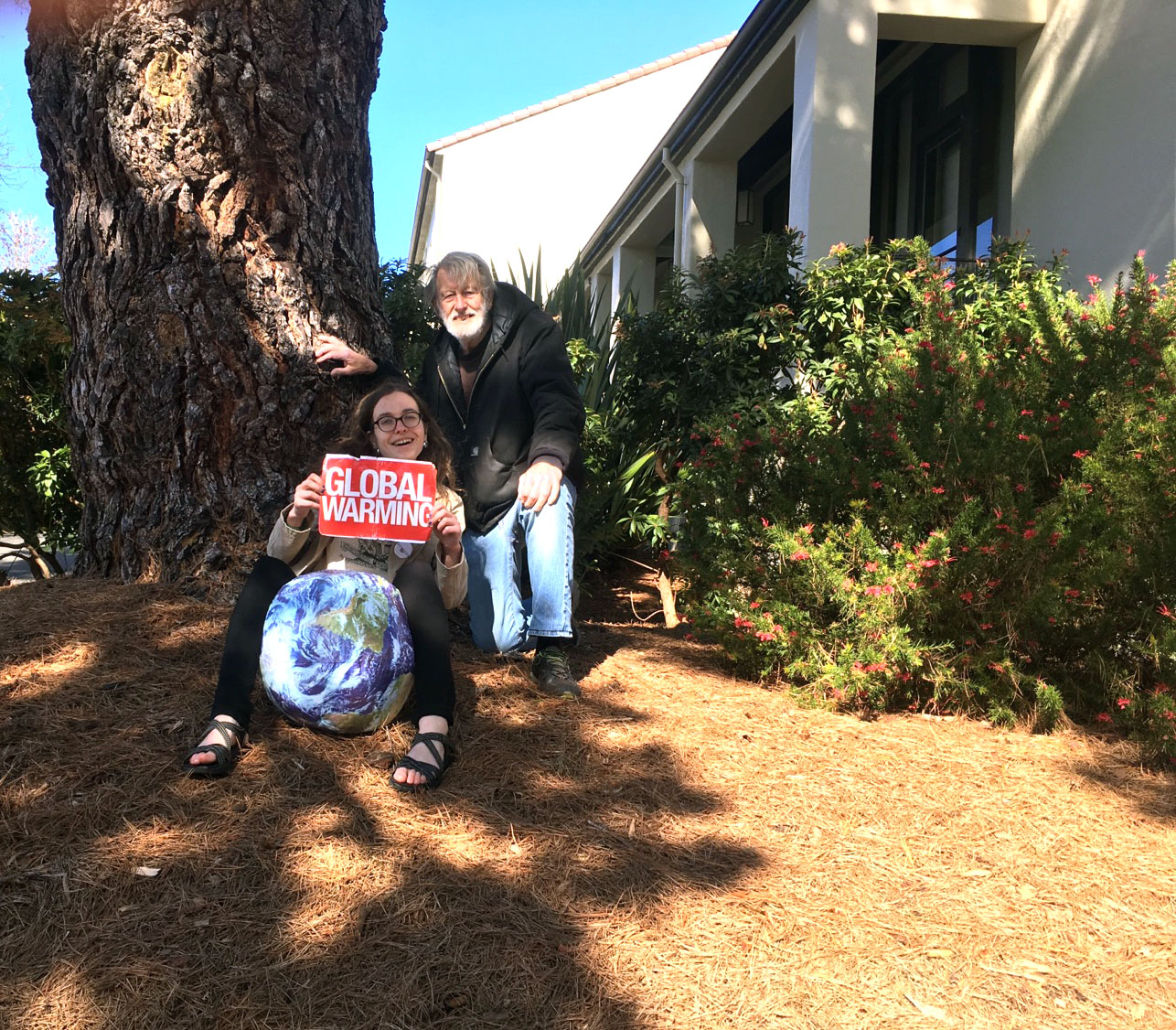
  • Forest defense flies high in the Mattole Valley

    Forest defense flies high in the Mattole Valley

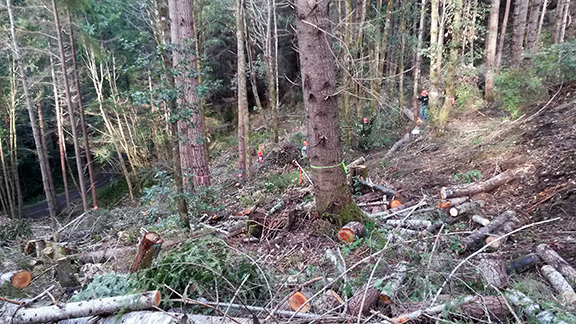
    Chunder Dome activists blockade the Long Ridge Road.

    Old-growth forests no longer exist in many places where they once thrived.

    According to National Geographic, the Redwood National Park contains less than five percent of the original two million acres of old-growth forests that once existed in the park.

    “The forest defenders are here, because the trees are here,” Jack Noonan, Earth First! Humboldt and Humboldt State Climate Crisis member, said. “The forest defenders have a stake in preserving old-growth forests. Trees are the best defense against climate change we have.”

    The Mattole Valley is in southern Humboldt County, stretching from Whitethorn to Petrolia along the Mattole River. Since 2014, the Earth First! environmental movement has been holding off the Humboldt Redwood Company from logging old- growth Douglas-fir forests in the North Fork Basin of the Mattole Valley.

    Jene McCovey, HSU anthropology alumnus and present HSU Climate Crisis member, describes forest defense as three influential steps: direct action, lawsuits and media.

    “Earth First! will slap a lawsuit on Humboldt Redwood Company and they will slap back, filling a lawsuit on Earth First!” McCovey said.

    While lawsuits are being issued, direct action is taking place in the forest. Stanton Wood has been involved in protecting the Mattole Valley since 2014 when this defense of the North Fork Basin got underway.

    “We are out here fighting for forestry best management practices,” Wood said.

    Earth First! opposes clear-cutting methods as well as the hack and squirt practice of killing small trees.

    “The hack and squirt method includes a person with a machete hacking several slices into a one foot diameter tree or smaller, [the tree at a persons chest height] and squirting Monsanto herbicide into the cut to kill the tree,” Wood said.

    The success of the forest defense blockade on Long Ridge Road has to do with the ingenious use of giant tripods built in the middle of logging access roads, known to Earth First! as Skypods or Chunder Domes.

    These Chunder Dome tripods are built from three trees that are tied together at the top. Woody debris, or chunder, is placed inside the tripod. At the top of the tripod legs, a rope is attached. This rope stretches out across the valley and connects to a platform suspended in space, which is connected to a second rope that is attached to another Chunder Dome on the other side of the valley.

    “If someone were to disturb the Chunder Dome or cut the rope, the people on the platform would fall to their death,” Wood said.

    The Humboldt Redwood Company can’t move a Chunder Dome, so they are denied access to the road used to get to the trees.

    Long Ridge, located within the Mattole Valley, had been fought for and won by Earth First! and the Environmental Protection Information Center (EPIC) in the early 2000s.

    “Long Ridge was set aside when the EPIC environmental organization took Humboldt Redwood Company to court and won around 2002,” Wood said.

    “In the past, the Humboldt Redwood Company would negotiate and honor agreements. Today, they seem to only be looking at their corporate bottom line, going after the best of what is left of their holdings,” Rob DiPerna said on EPIC’s blog on Feb. 20.

    The Earth First! victory of blocking Lone Ridge Road has led to the Humboldt Redwood Company amending their Timber Harvest Plan to allow for new road construction to bypass the Chunder Domes.

    “The outcome of the new road is expected in the first two weeks of March. It will either be accepted or rejected,” Wood said.

    The Timber Harvest Plan amendment must go through CAL FIRE and other agencies, following a period of public comments and opinions.

    Karen Coulter is the director of the Blue Mountains Biodiversity Project, monitoring federal agency’s policies regarding logging and spraying toxic herbicides on public lands.

    The HSU Climate Crisis Club is making arrangements to have Earth First! author and environmental and social justice activist Coulter come to HSU in April. Climate Crisis plans to have Coulter host Earth First! workshops on strategic campaign planning: media strategies for activists and public land monitoring.

    If you would like to get in contact with Earth First! in the Mattole Valley, they have a Facebook page, Save the Mattole Ancient Forest, or their email address is: mattoleancientforest@riseup.net.

  • Gangsta Gardener plants power

    Gangsta Gardener plants power

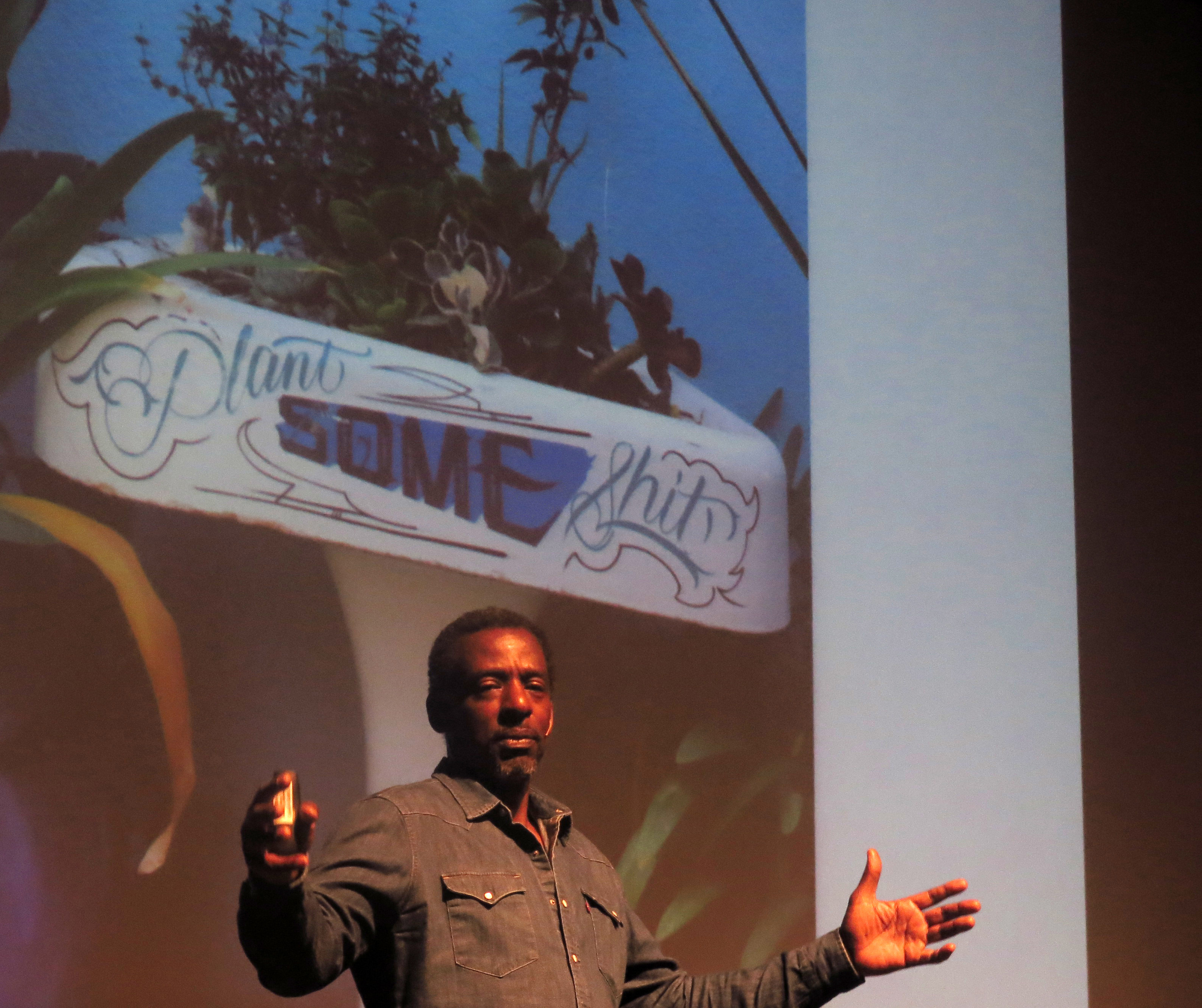
    “There is no justice, it’s just us,” Ron Finley, also known as the Gangsta Gardener, said. As a community leader in South Central Los Angeles, Finley works to take back his community by transforming urban areas into community gardens. Last week, Finley visited HSU to explain his guerrilla gardening activist methods and shared his story.

    Ron Finley’s journey began while searching his hometown for an apple that wasn’t covered in shellac eight years ago. He was faced with an arrest warrant from the city of Los Angeles for planting a tomato plant on the strip of land in front of his house. Finely’s responding petition has since grown into a grassroots movement based in food sovereignty, or people’s ability to grow their own food.

    During his talk at Humboldt State University on Feb. 13, Finley said South Central Los Angeles has limited access to fresh produce. Fresh options come in glossy packaging of all kinds. On the corner of each street, there’s a gas station or fast food.

    “It’s food injustice. It’s apartheid,” Finley said, referring to the areas access to healthy food choices. “There is no justice, it’s just us.”

    Finley connects this food injustice with kidney failure and gang violence. The self-proclaimed Gangsta Gardener sees the answer in a total upheaval of society’s systems.

    “Redesign everything,” Finley said. “Reevaluate everything. If shit isn’t working, fix it.”

    His foundation, the Ron Finley Project, is working to uplift and build communities through the soil. Volunteers throughout California are planting community gardens in elementary schools, vacant lots, homeless shelters and anywhere else that is devoid of nature.

    As reported extensively by National Public Radio, gardening is a clinically proven antidepressant and fosters a relationship with the natural world. This is especially relevant in urban areas where access to the environment is systemically limited.

    In his talk at HSU last week, Finley broke down these barriers to environmental equity. He explained that underserved areas are exactly that, underserved and forgotten by the system.

    Finley went into detail on how the systems we have in place are set up to benefit the powerful and perpetuate oppression. He equates it to an indoctrination of thought from birth that causes injustice to become our normal, because we see it every day.

    “How do we learn to value the shit that we value?” Finley said. “We don’t value our food. We don’t value the people that grow our food. We value all of this dumb shit that we’ve been told to.”

    Finley’s guerilla gardening activist methods are based in a belief that if a problem exists, so does the solution. Faced with a glaring problem that those in power are just ignoring the oppressed, Finley went out and did what he could do to fix it.

    This fight for food sovereignty has planted its roots here in Arcata as well. There are people here working to make healthy food available to HSU students and the community at large. One of these people is Ryan Sendejas, the community garden coordinator at Campus Center for Appropriate Technology, who has found inspiration in Finley and other urban gardeners.

    “We do have a lot of local farmers and gardeners who are spreading good food and good knowledge here,” Sendejas said. “Speaking as a student, it’s hard to gain access to that food.”

    Nic Martin, an environmental science and management junior, calls himself a lazy hippie gardener. He tends to his own sustainable garden and preaches a reciprocal relationship with the land as a way to bridge the gap to healthy food.

    “Gardening is like having a pet,” Martin said. “You get back what you give. It’s an independent dependency, and you’re learning while you’re improving. It’s healthier, and so much better for your body and your mind. You actually have something you worked for and saw grow.”

    There are countless people tapping into this art of growing food. Finley is not the first and certainly not last guerilla gardener, but he has made a name for himself by breaking down barriers and rewriting laws.

    Finley’s parting message at the talk was one of self-motivation. He said you are your own leader and you shouldn’t let others fight for you.

    “Fight for your motherfucking self,” Finley said.

  • Johnston brothers present at Conservation Lecture Series

    Johnston brothers present at Conservation Lecture Series

    “I’ve always been inspired by biodiversity and animals,” Humboldt State senior Jon Johnston said. “Though I’m inspired mostly by the local people.”

    The Sequoia Park Zoo hosted brothers Phil and Jon Johnston on Feb. 14 to give a two-part presentation as part of their ongoing Conservation Lecture Series.

    Jon, a wildlife major at HSU, presented his senior project “The Wildlife of Ecuador’s Disappearing Coastal Dry Forests.” His research brought him to the tropical dry forest of La Cordillera del Balsamo, Ecuador. Tropical dry forests are among the most endangered forest types – about 70 percent have been deforested.

    In an effort to gain information on the animals that live in these forests, Jon deployed cameras that capture pictures automatically when movement is detected, allowing him to leave them out for an extended period of time.

    “Each batch of pictures gives us a new idea of the animals that might live in tropical dry forests,” Jon said.

    Some pictures already collected from the project include animals like the South American coati, the critically endangered Ecuadorian capuchin monkey, and the rufous-headed chachalaca.

    Phil, the mountain lion & fisher biologist for the Hoopa Valley Tribe and HSU wildlife alumnus, presented findings from his research on Lake Earl river otters in Del Norte County. In a repeated diet study originally done by R. Modafferi and C. F. Yocom in 1964, Phil located areas called latrines that are frequently used by otters.

    “In otters, latrines are used for rolling as a way to distribute oils in their coat and for sleeping sites,” Phil said.

    Latrines are also used by otters as sites for repeated defecation. Once a latrine is located, any scat that was found was collected and brought back to the lab for analysis. By carefully examining the scat samples, Phil was able to determine what the otters were eating.

    In the original study, otter diet consisted mainly of starry flounder and crab. In the follow-up study done by Phil, however, otter diet consisted of staghorn sculpin and three-spine stickleback. Another somewhat surprising aspect of the study was the discovery that the latrines were found in similar locations from the original study.

    “Even latrines that were under water for four to five months were reformed after the water had drained,” Phil said. “It’s exciting.”

    Both Johnston were recipients of the Conservation Grant given by Sequoia Park Zoo.

    “Grants that are given out to projects are decided by committee,” zoo director Gretchen Ziegler said.

    Projects are ranked based on certain criteria. A project ranks higher if it is located closer to Humboldt County, as well as how much funds are thought to make a difference and how feasible the project is expected to be.

    Community members can help fund conservation projects by buying a Sequoia Park Zoo membership. One dollar spent for each membership goes into the Sequoia Park Zoo Conservation Fund, which is used to finance conservation projects both locally and abroad.

    The next installment of the Conservation Lecture Series will be “The Zen of Deep Evolution” by Fred Allendorf at Humboldt State University on March 6.

  • The evolution of biology 105

    The evolution of biology 105

    Do sports drinks lie about their sugar content?

    In biology 105, HSU oceanography major Courtney Dressler and her classmates tried to answer this question.

    “We are adding dinitrosalicylic acid into solutions of Gatorade and Vitamin Water Zero,” Dressler said. “The acid helps us identify how much sugar is in these drinks.”

    Dinitrosalicylic acid, or DNS, binds to sugar molecules in a solution. When this binding occurs, the solution’s color can transform into a shade between orange and red.

    Wesley Warren, also an oceanography major at HSU, explains how these color changes are detected.

    “We put the solutions into a spectrophotometer, which tells us how much light they absorb,” Warren said.

    Orange solutions absorb a different amount of light than red solutions. By comparing the sports drinks’ light absorbance values to those of the standards, or solutions with known sugar content, the drinks’ actual sugar concentrations can be determined.

    Dr. John Steele, one of the instructors for biology 105, elaborated on how this experiment fits into the course’s schematic.

    “Biology 105 provides an introduction to topics that a cell/molecular biology, microbiology and general biology major would encounter in their undergraduate studies,” Steele said. “[The experiment] is used to teach students how to make diluted solutions from a stock solution and how to determine the concentration of [molecules] in a given solution.”

    In prior semesters, two laboratory periods were given for students to complete the experiment and learn these essential techniques. Now, students are allowed three periods to conduct the experiment.

    A few other labs in biology 105 were also modified to include more time.

    Video by Linh Pham and Surya Gopalan.

    Dr. Brigitte Blackman, who teaches a section of biology 105, explained the factor that prompted these changes.

    “We try to take feedback from students every semester and change the course based on their comments,” Blackman said. “In past semesters, some students have felt the labs were too long and covered too much in one period.”

    “By spreading out the labs, we hope that students will be able to better understand the principles covered in lab and apply these principles to test a scientific hypothesis,” Steele said.

    For Marjani Ellison, an environmental science major who’s retaking biology 105, the order in which the experiments are conducted also seemed to change.

    “Last semester, the labs and lectures materials did not coordinate. I felt as if the two were separate classes,” Ellison said. “This semester, the labs follow the lectures. I feel that I’m actually learning this time.”

    In addition to student feedback, current trends and issues in biology also determine the necessary changes for the class.

    “Last semester, we incorporated the Small World Initiative into our laboratory curriculum,” Blackman said. “The initiative was introduced to the course by [professor] Mark Wilson. As part of this initiative, students sampled and grew bacteria from the local environment, such as the Arcata Marsh, then searched for bacteria that were producing antibiotics.”

    This semester, biology 105 replaced the Small World Initiative with gene-editing using CRISPR as the current topic in biotechnology.

    “CRISPR is a gene editing system made by two scientists named Jennifer Doudna and Emmanuelle Chapentier. To use this tool, all you need to know is the DNA sequence where you would like to make an edit,” Steele said. “Because of its versatility and popularity in biotechnology, bio 105 students need to learn the basics of this tool and the first step of building it.”

    Learning CRISPR at the introductory biology level could increase the horizon of opportunities for HSU students.

    “This topic has grown from being a sentence in a textbook to a paragraph, and soon, probably full sections of a chapter,” Steele said. “Biotech companies are looking for people who know how to use CRISPR and gene editing technologies. Learning this technique early could really put HSU students ahead of the competition.”

    Steele also claimed a selfish reason for teaching students CRISPR.

    “If more students know how to use this tool, then more students will be able to work for my lab,” Steele said. “My lab uses this tool everyday!”


  • A wrap-up of WRRAP’s Zero Waste Conference

    A wrap-up of WRRAP’s Zero Waste Conference

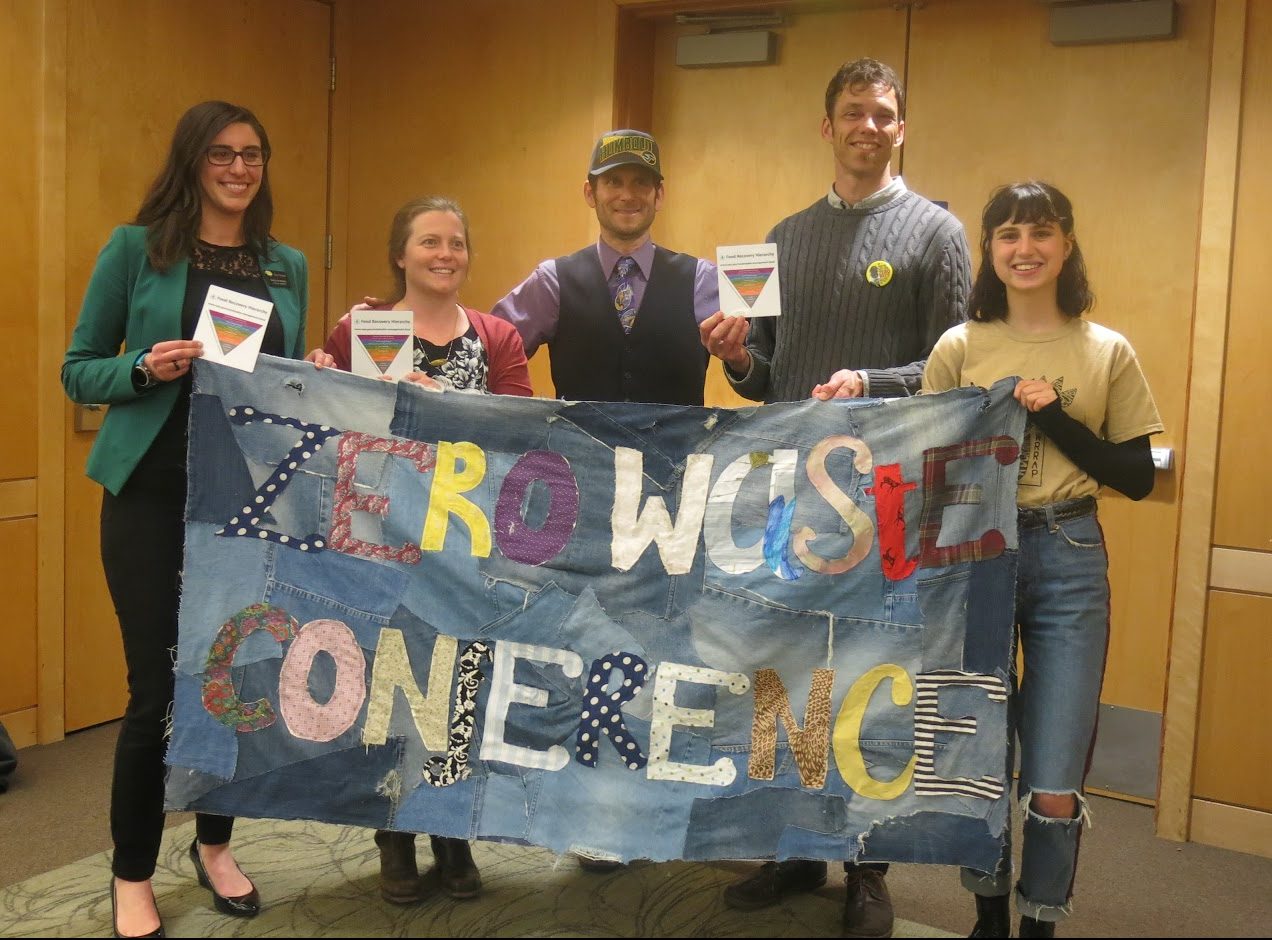
    The theme of the Zero Waste Conference held this past weekend on the Humboldt State campus was “beyond barriers.”

    Hosted by the Waste Reduction & Resource Awareness Program, or WRRAP, their goal is to help make sustainability accessible to everyone.

    The event featured different panels during its two-day run.

    Friday started with tinker time, where there was a clothing swap and different stations for students to learn how to sew, make their own deodorant or fix a flat bike tire. Later that night, WRRAP hosted a free vegan banquet for students and the community. It featured two keynote speakers.

    The mayor of Arcata explained her 10-step plan to transition into a zero waste city. The second speaker was André Villaseñor, an environmental protection specialist for the EPA, who spoke about his specialty of reducing food waste. The night finished with a showing of Anthony Bourdain’s film, “Wasted! The Story of Food Waste.”

    This slideshow requires JavaScript.


  • Sturgeon visit the HSU hatchery

    Sturgeon visit the HSU hatchery

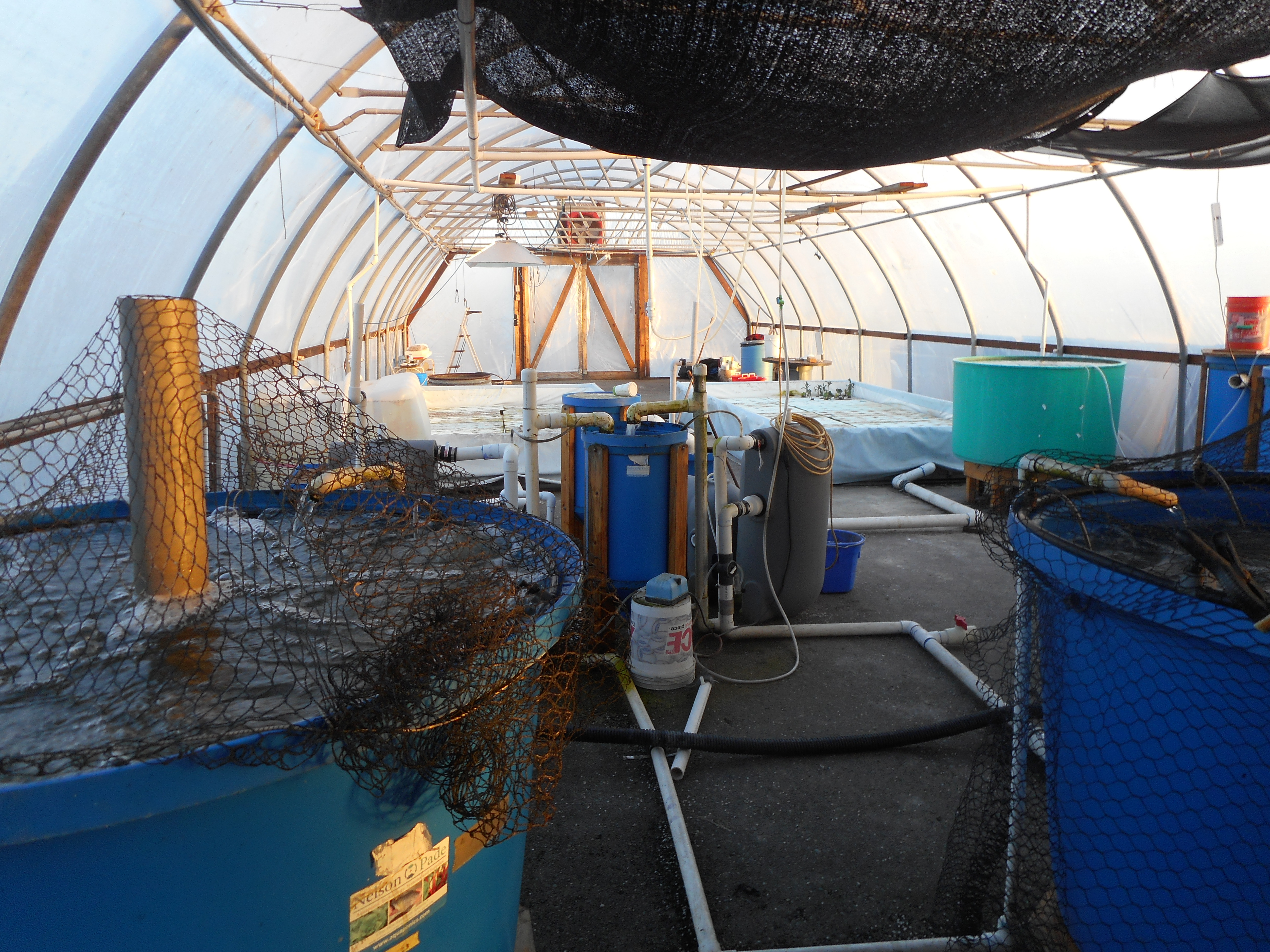
    The Samoa aquaponics facility is a captivating place with plentiful research opportunities for students, fresh air and the sound of bubbling water. Last semester, the fisheries department brought the wonders of sturgeon aquaculture to the Humboldt State campus hatchery.

    Sturgeon are an important commercial fish.

    “Sacramento is the caviar capitol of the United States due to the success of aquacultured sturgeon,” HSU professor Rafael Cuevas-Uribe said.

    Angelo Perez, a fisheries major at HSU, helped move the sturgeon from the Samoa facility to the HSU Fish Hatchery.

    “We were trying to build a better system for the fish,” Perez said. “When they came from Samoa, they were ill and we nursed them the best we could.”

    Students and faculty of the HSU fisheries department learned a lot from the sturgeon and enjoyed having them there.

    “It was a painful experience, but we learned a lot,” HSU fisheries student Jason Long said. “Everything that could go wrong did go wrong. I learned more from my failures then I could have ever learned from success alone.”

    Aidan Belleau, an environmental science major had an aquaponics system in his living room he made himself from a goldfish tank.

    “It cost me $60 and I had plenty of lettuce for salad,” Aidan said.

    If the hatchery brought in sturgeon long-term, it would be the first time the hatchery diversified the species they have. Currently, there are two different species of rainbow trout, cutthroat and steelhead from the same stock since the late 1980s.

    Sturgeon would be a significant addition to the fisheries department and the community in regards to research and education.

    “Sturgeon have a wide spectrum of research,” HSU freshwater fisheries student said. “They go back and forth from rivers to the ocean and live to be over 100 years old.”

    The benefits of HSU’s aquaponics facility stretch out to people of Humboldt County. Eureka, Arcata and Hoopa share the aquaponics facility harvest. With the aquaponics facility up and running, the abundance of greens is so great that Food for People is able to supply families with the freshest, nutritious greens from HSU for free.

  • The health of the ocean is in our hands

    The health of the ocean is in our hands

    Waves with mist trailing off of their crests, sea gulls crying, fishing boats on the horizon, the rewards of enjoying life by the sea are vast. But along with the rewards comes danger. There is a threat to sea life that can change all of our lives, ocean acidification.

    Ocean acidification will either cause adaptation or extinction for most marine life.

    Stephen Palumbi, a professor in marine sciences from the Hopkins Marine Station of Stanford University, says that we have gone from an overabundance of marine life 100 years ago to there being no marine life 100 years from now.

    Robert Matthews, a criminology major at Humboldt State, had never heard of ocean acidification and learning about it shocked him.

    “Ocean acidification is a big problem, it’s bad enough there is a trash vortex,” Matthews said.

    Carbon dioxide absorbed into the ocean helps reduce greenhouse gases in the environment, but this results in ocean acidification.

    Ocean acidification is when the carbon dioxide levels in the ocean change the chemistry of the seawater. Fossil fuel carbon emissions are also changing the chemistry of the ocean.

    According to the National Oceanic and Atmospheric Administration, the oceans have absorbed 25 percent of the carbon dioxide produced since the beginning of the industrial revolution and humankind’s industrial and agricultural activities.

    Biochemistry professor at HSU Jenny Cappuccio has been involved in a project with University of California, Berkeley by removing carbon dioxide from the atmosphere and storing it in the ground.

    “I never expected to be involved in rocks, it wasn’t in my background. It’s great to learn new things,” Cappuccio said.

    Cappuccio’s work on the project had to do with bacterial microbes converting carbon dioxide gas to carbon dioxide solid.

    “Ocean acidified seawater has shifted [seawater] equilibrium to dissolve marine calcifying organisms, shells and corals, rather than build them,” Cappuccio said.

    “Calcifying organisms like shells sequester carbon dioxide,” O’Shea said.

    Oceanography professor Danny O’Shea has hope that we will be able to turn it around.

    “Things are getting better faster than they are getting worse,” O’Shea said. “People like us are going to school and making positive changes out there.”

    At HSU, students, staff and faculty are working to combat ocean acidification. HSU marine lab technician and student Kindle Murie has put her education and future into ocean acidification research.

    “Lab work is paying off,” Murie said.

    Murie is looking forward to a new research project on the effects of ocean acidification in kelp forests, both in the ocean and in the marine lab.

    HSU has grown with knowledge and funding for ocean programs enabling students and faculty to do more research.

    “Water gets more acidic the further you go down,” oceanographer Hal Greer said. “It is getting harder on the ocean and its organisms to buffer the affects of carbon dioxide.”

    At the HSU marine lab, undergraduate and graduate students work together with professors making new research discoveries.

    According to Grant Eberle, the HSU marine lab equipment technician, ocean acidification is currently a “hot topic.”

    “We have a unique upwelling of reduced pH ocean acidic seawater in Trinidad,” Eberle said.

    This unique setting gives students a good opportunity to research ocean acidification.

    The oceans absorb more carbon dioxide and heat from the atmosphere every day. The importance of this research demands our attention.


  • Pick it up, Humboldt

    Pick it up, Humboldt

    We are socialized not to throw garbage on the ground and are ingrained with anti-littering campaigns throughout our entire lives. However, it’s clear that these catchy slogans didn’t stick.

    Everyone knows not to litter, but somehow there’s still trash all over Humboldt’s natural spaces.

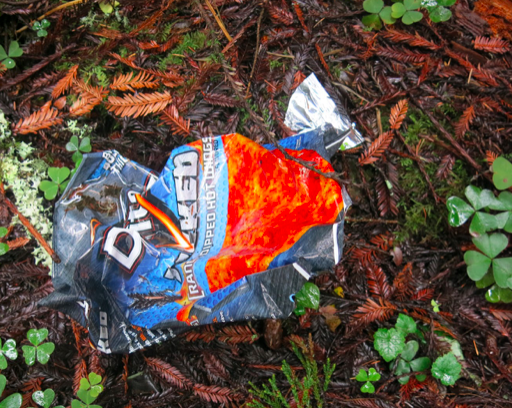
    These photos were taken over a series of days in three different locations throughout Humboldt County: The Arcata Community Forest, Mad River Beach and Strawberry Rock in Trinidad.

    Most of the trash seen is either recyclable or compostable.

    Samantha Stone, compost director at HSU’s WRRAP, explains that orange peels and other organic waste do not naturally break down in a forest environment.

    “It definitely breaks down slower than if it were in a compost bin that generates heat and has other green and brown wastes,” Stone said. “There’s also the thing of food scraps inviting nonnative critters into the woods.”

    A natural space is not designed to properly decompose our trash. In fact, most of what is littered will never actually break down.

    The U.S. National Park Service says that it can take five years for a cigarette butt to biodegrade, up to 40 for clothes, a million years for a glass bottle to disappear and a styrofoam cup will be around forever.

    Reagan Hester, recreation administration major at HSU, described how disappointed she feels seeing trash in our national parks.

    “Properly disposing of trash is such an incredibly easy thing to do,” Hester said. “Even the littlest scrap creates a distraction from the natural beauty of a national park… this is entirely unnecessary. Not to mention the depressive effects on the wildlife and their natural habitat.”

    Anjelica Yee, wildlife major at HSU, thinks a huge part of it is the hierarchy of man versus nature that Western culture emphasizes.

    “It feels as though people disregard the fact that this is habitat for hundreds of different native species,” Yee said. “Humans act superior to other animals and by throwing our trash in their home, it just shows that blatant disrespect of nature.”

    This slideshow requires JavaScript.


  • WRRAP hosts Zero-Waste Conference this weekend

    WRRAP hosts Zero-Waste Conference this weekend

    Waste Reduction and Resource Awareness Program’s Zero-Waste Conference is a reflection of the effort the community and students put toward goals of engaging, expanding, sharing and moving forward.

    Shanti Belaustegui Pockell, an environmental studies major at Humboldt State University, is the education director for WRRAP on campus.

    Belaustegui Pockell said WRRAP hopes to grow in the future by working more with students on campus, as well as other programs to form coalitions and strengthen relationships.

    WRRAP is hosting the Zero-Waste Conference throughout the day on Friday, Feb. 9 and Saturday, Feb. 10.

    Belaustegui Pokell said the event will focus on intersectionality, social justice issues and institutionalizing sustainability practices of evolving and shaping policy.

    Multiple speakers will be attending the event to discuss community challenges.

    Sofia Pereira, the mayor of Arcata, will speak on making Arcata a zero-waste city on Friday and Andre Villasenor, a United States Environmental Protection Agency Sustainable Management of Food program representative, will speak on institutionalizing sustainable materials.

    Ceria Wilbur, an environmental science and management major at HSU, has been the zero-waste director at WRRAP for the past year.

    The conference and banquet at 5:30 p.m. on Friday is new this year and works to extend the message of a sustainable future.

    “It’s just a way for us to connect with our campus community, bring our peers together with a number of different inputs and experiences,” Wilbur said. “This year our theme is Beyond Barriers, Imagining a Zero-Waste Future.”

    Community members are encouraged to attend the event. Vegetarian and vegan options will be available.

    There are activities on Friday from 11:00 a.m. to 4:00 p.m. at the UC Quad that include crafting with Tinker Time and a clothing swap, along with demonstrations from the Campus Center for Appropriate Technology, or CCAT.

    Tinker Time are local and on-campus programs that have workshops for gardening and crafting body care products.

    Campus sustainability groups that are also participating in the zero-waste event are Green Campus, Humboldt Energy Independence Fund, with speakers from local officials, academic departments and the Office of Sustainability.

    WRAAP will host the second half of the Zero-Waste Conference in the Kate Buchanan Room on Saturday, covering topics such as the role of compost in carbon sequestration, biomass and the Yurok tribe.

    Jason Martinez, outreach coordinator for CCAT, will attend the Zero-Waste Conference.

    “Help is always welcome at CCAT, and for folks that come through, there is a lot they can learn, a lot they can experience,” Martinez said.

    Martinez is excited to introduce CCAT to students who don’t know about the house on campus.

    “I love seeing how the projects get started, how they are going to see how CCAT continuously is growing,” Martinez said. “Whether it’s the physical space itself or just the people, I think that is the piece I love seeing.”

    WRRAP’s Zero-Waste Conference is meant to bring together students, faculty and community members to discuss real issues the environment is facing due to human impact.

  • Touring the Tolowa Dunes

    Touring the Tolowa Dunes

    Nestled in a land forgotten by time and human impact lies Tolowa Dunes State Park near Crescent City.

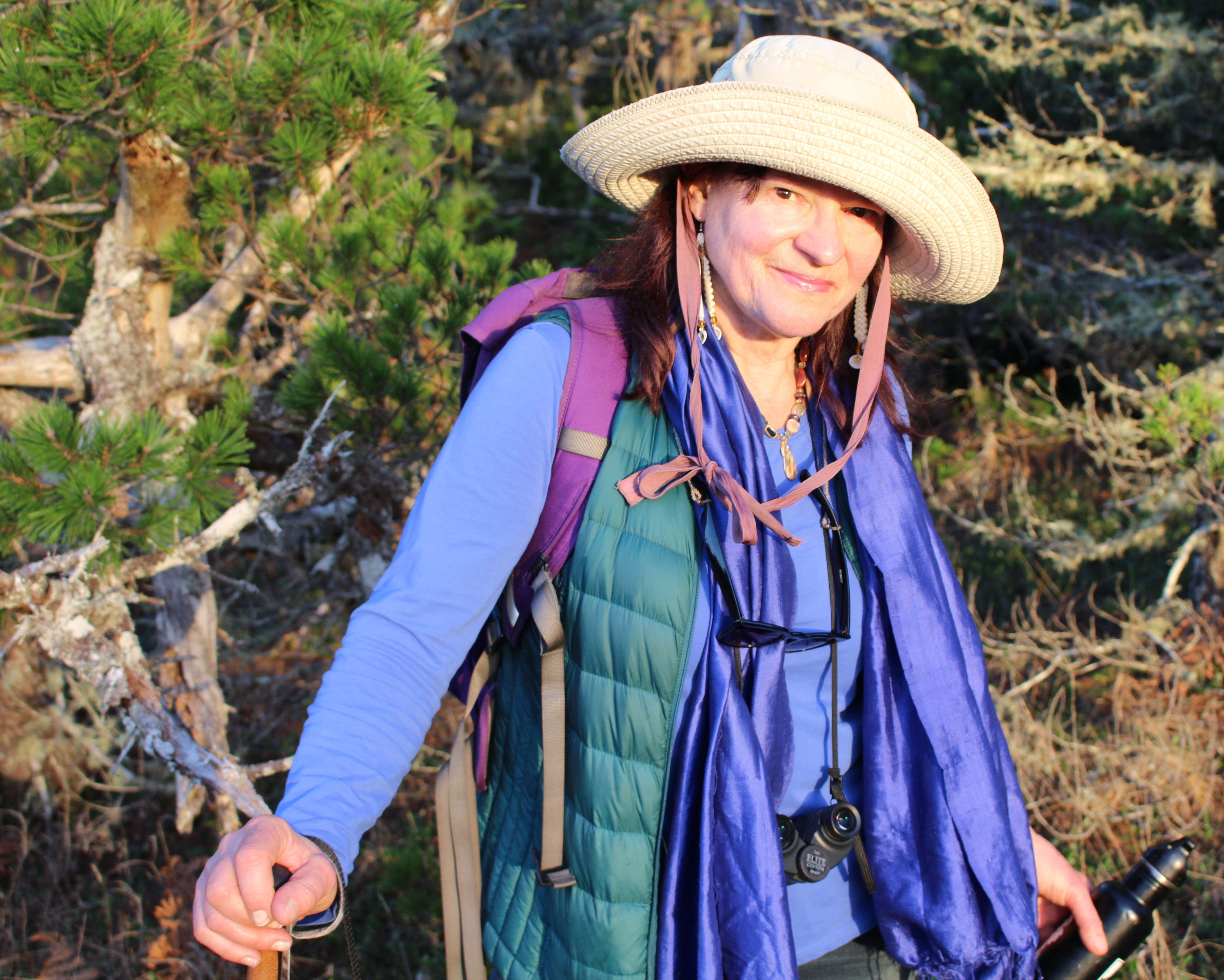
    Sandra Jerabek helps manage Tolowa Coastal Dunes near Crescent City, Calif. Jerabek calls herself a “generalist naturalist” with 20 years of environmental work and says the discovery of Del Norte County was ideal.

    “This was my perfect place, to be grounded, to really dig my roots into this place and learn all about it,” Jerabek said.

    Jerabek and volunteers of the Tolowa Dunes Stewards help maintain the park. Jerabek founded the Tolowa Dunes Stewards and helps to manage the community member volunteers that work to restore the land.

    Jerabek took a group from Friends of the Dunes on a walk through the Tolowa Coastal Dunes forest and lagoon on Feb. 5.

    Cities cause humans to forget how remote areas next door can be. It is abrupt to arrive at Tolowa Dunes visitor center at 2591 Old Mill Road after a few turns from the city.

    The first view is of open grassland towards the ocean, still some distance away. To the east is pine forest with sandy debris ground and low plant cover.

    Tolowa Dunes State Park is only a short distance away by car, about an hour and a half drive north of Eureka. This 11,000 acre is the center where Tolowa Dee-ni’ people lived.

    The once beautiful, free land and ancestral home to the Tolowa Dee-ni’ native people was transformed into ranch land as settlers chose harm and death. The Tolowa Dunes State Park is now free and open to all.

    Friends of the Dunes sponsors dune walks at Tolowa Dunes near Crescent City. With over 60 miles of shore, water is always close at hand while walking through the forest.

    The body of water to the east is called Lake Earl and the Pacific Ocean is further to the west.

    Lake Earl Wildlife Area at Tolowa Dunes is a natural lagoon habitat filled by rain and runoff, a brackish marsh and an ocean mix when the sandbar washes out in winter.

    With otters, hawks, porcupine and over 320 species of birds, this is just the place for binoculars. The area also holds 500 plant species and over 400 fungi, woodland and waterways.

    Bicycling on the designated trail, horseback riding, hiking, canoeing, birding and simply enjoying nature are all wonderful things to do at Tolowa Dunes.

  • Sand, wind and poop: a tale of American dune grass’ life troubles

    Sand, wind and poop: a tale of American dune grass’ life troubles

    For undergraduates Elizabeth Nguyen and Sean Thull, their past summer was spent staring at grass.

    “We spent between two to four hours every three weeks, collecting data on Elymus mollis growth patterns at the Ma-l’el and Eel River foredunes,” Thull said.

    Elymus, or American dune grass, is a native plant that can change the foredunes’ landscape.

    Erik Jules, a professor in the Department of Biological Sciences, advised Elizabeth Nguyen, Sean Thull and Steven La Pointe on the project.

    “Foredunes are dunes’ regions closest to the ocean. They often become eroded from crashing ocean waves or by wind,” Jules said. “U.S. Fish and Wildlife wants to keep foredunes from being eroded too fast and improve their resilience in the face of rising sea levels.”

    Growing Elymus on foredunes is known to help the foredunes withstand heavy waves.

    While Elymus growth at some of the region’s foredunes, such as Lanphere and Ma-le’l dunes, was healthy, Elymus grown at the Eel River foredunes suffered another fate.

    “We wanted to know whether Elymus deaths were due to soil differences between these dunes and Lanphere dunes,” Thull said.

    To answer this question, Nguyen, Thull and La Pointe observed the growth of Elymus from Lanphere dunes that were transplanted into Eel River and Ma-le’l soil.

    HSU biology students Sean Thull (left) and Steven La Pointe collecting data on American dune grass growth at the Ma-le’l dunes. Photo and caption by Dr. Erik Jules.

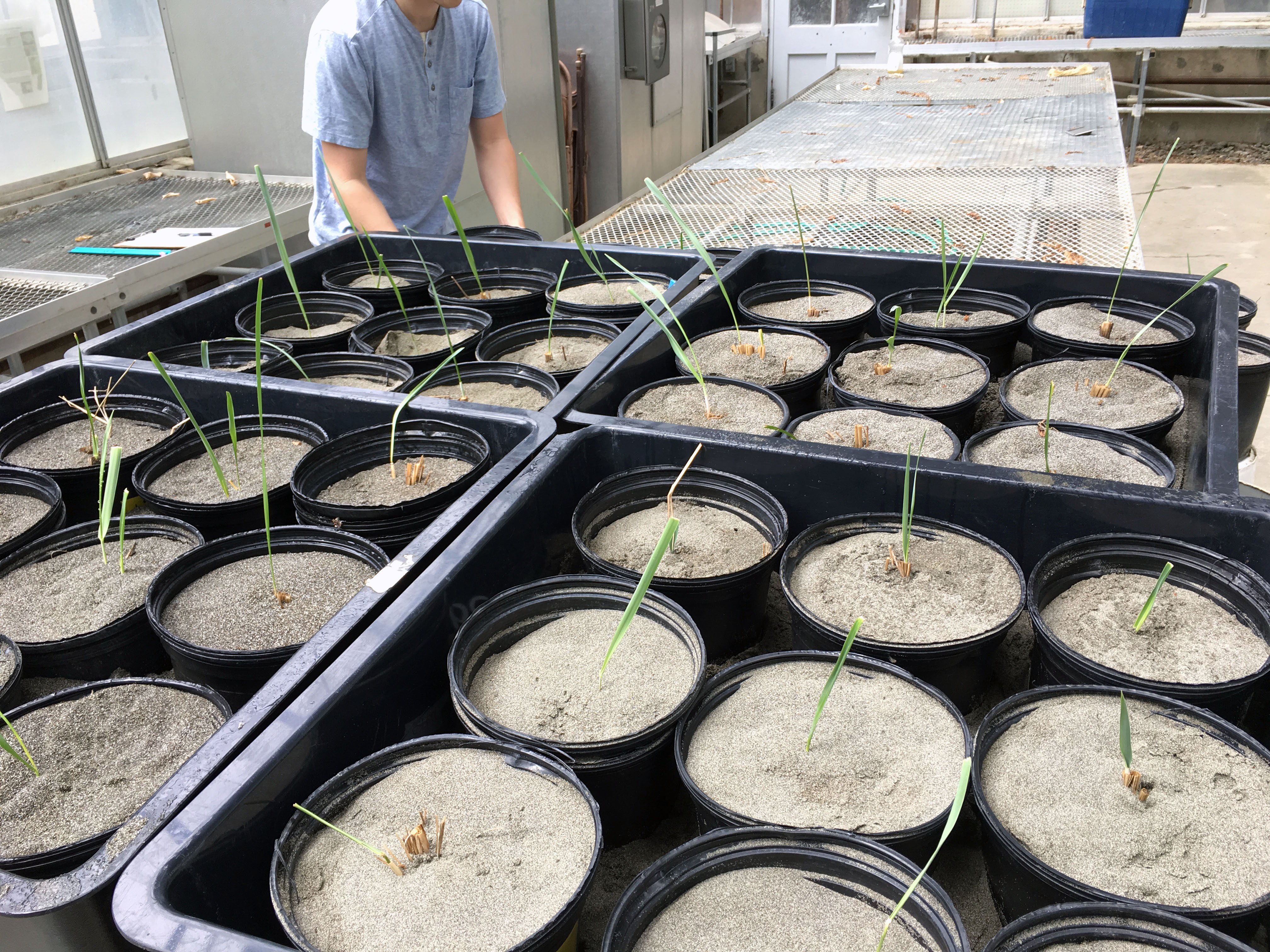
    A hundred Elymus were planted at each dune and an additional 41 plants were grown in the greenhouse.

    “In the greenhouse, we cut the Elymus down to their base, giving them the same start point,” Thull said. “We watered them three times a week, rotated them to evenly distribute the sunlight and measured their longest leaf lengths.”

    While the Elymus planted at Eel River had high mortality rates, the greenhouse Elymus grew strong. The longest leaf lengths in both soil types were not significantly different from each other.

    “This showed that the soil at Ma-le’l and Eel River could supplement the plants just fine,” Thull said, “but something else in the environment is causing the plants to die.”

    Unexpectedly, Elymus planted at Ma-le’l for this study also died.

    “Because the Elymus in our experiment were planted at the same time that the winds at Ma-le’l was strong, this could have caused them to be buried by the sand and affected their growth,” Nguyen said.

    “There were Elymus planted closer to the water, and planted when the winds were not as strong,” Thull said. “These plants were growing better comparing to our plants. If Elymus planting at Ma-le’l begins at the right season and Elymus is planted from the water inward, then maybe the plants could stabilize each other as they grow to alleviate the wind impacts.”

    At the Eel River site, Nguyen and Thull found something different.

    “We found rabbit scats in our Eel River’s Elymus plot,” Nguyen said. “Because there were lots of non-native, thick European beach grass near the plot, we think that the rabbits hide from predators in the beach grass, then come out to the Elymus plot to eat.”

    A large patch of the invasive European beachgrass on the local dunes (left) adjacent to native dune mat vegetation (right). There is growing evidence that dense beachgrass patches harbor more rabbits, and that these rabbits then venture out to consume the native vegetation. Photo and caption by Dr. Erik Jules.

    Nguyen and Thull’s observation made way for another project in Jules’ lab.

    “Currently, I have a master student studying what rabbits eat out in the dunes and how that would impact the vegetation,” Jules said.

    If rabbits are found to be the culprit of stunted Elymus’ growth, removing the invasive European beach grass from Eel River dunes could make them more prone to predators. This would cause the rabbit population at Eel River to decrease, giving Elymus a better chance to grow.

    “Growing another plant species that could both restructure the dunes and deter the rabbits would be difficult,” Jules said. “Not many can tolerate the high salt soil of the dunes like Elymus.”

    “Understanding how to help Elymus grow will usher in the growth of other native plants in the area, which could contribute to further dunes stabilization,” Nguyen said.

    During this project, Thull and Nguyen gained the necessary skills to prepare them for a scientific career.

    “We learned how to analyze our data with statistics and how to design an experiment based on what statistical methods should be employed,” Nguyen said.

    “We’re also writing a report on this project,” Thull said, “and we’re learning that our experimental methodology are also used by professionals.”

    Nguyen and Thull attributed their growth as researchers to Jules’ confidence in letting them work independently. This growth also transferred to their academic experience.

    “We find the materials in our classes more exciting, because we see their applicability to our work,” Thull said. “This really makes us feel excited to eventually enter Ph.D programs.”

  • Flesh-eating Dermestid beetles serve a functional purpose

    Flesh-eating Dermestid beetles serve a functional purpose

    Often called skin beetles, carpet beetles or flesh-eating beetles, Dermestid beetles, from the family Dermestidae, are commonly used to safely clean bones. Consuming the tissue of a carcass, they leave behind a relatively untouched skeleton.

    There are other methods of removing dead tissue from bones, such as applying chemicals and heat. However, these methods can degrade the bones, potentially damaging important structures. Museum curators, wildlife law enforcement and other officials use Dermestid beetles to clean bones.

    Thorvald Holmes, the collections manager at HSU’s Vertebrate Museum, believes the Dermestid beetles are the best way to remove the tissues.

    “Anybody that doesn’t have their head in their armpit knows bugs are the way to go,” Holmes said. “They’re better than any other organism at taking off tissues.”

    “They’re the best way,” HSU curator of the Wildlife Museum Tamar Danufsky said.

    Dermestid beetles are efficient workers. The beetles and their larvae are small enough to wriggle their way inside the smallest of skulls to find tissues that other animals can’t.

    “They work best on small bones,” Danufsky said.

    If the colony is large enough, they can easily feast their way through the tissues of a mouse in just a day. However, caution is advised. If the specimen is left in for too long, the beetles won’t hesitate to devour the rest of it.

    “You have to periodically check in on them,” Holmes said. “They will eat everything.”

    Along with their voracious appetite, they have a variety of particular behaviors that keep maintaining a colony a challenge.

    “They have a lot of rules,” Holmes said. “They don’t like it too cold, they don’t like it too hot or dry.”

    Angela Jones, an HSU graduate, has experience maintaining a Dermestid beetle colony.

    “Spiders are the enemy,” Jones said. “We do daily checks to make sure there are no predators. They will decimate the colony.”

    Any of these issues could cause the colony to crash, but if you know what you are doing, they can easily be cared for.

    “They’re fairly easy to take care of though,” Jones said. “We just make sure the temperature and humidity is at a constant and they’re good to go.”


  • Viewing a Super Blue Blood Moon

    Viewing a Super Blue Blood Moon

    Once in a blue moon an event occurs that brings us even closer to our nearest solar companion: the moon.

    A blue moon and supermoon will occur early Tuesday morning on Jan. 30, followed by a total lunar eclipse, or what some call a “blood moon,” in the early hours of Wednesday, Jan. 31.

    A blue moon is the second full moon that occurs within the same month. The blue moon on Jan. 30 at 5:28 a.m. is special, because it is also a supermoon.

    A supermoon is when a full moon occurs at the same time the moon reaches its closest position to the earth within its orbit. It has the nearest approach to Earth by our moon that causes it to appear 14 percent larger than the furthest distance. The difference is barely noticeable, but it can be quite amazing paired with other astronomical occurrences.

    Tyler Mitchell, a physics professor at Humboldt State who holds a Ph.D in astrophysical and planetary sciences, along with a masters in astronomy, was able to help explain a total lunar eclipse.

    “One way to think about it is that during the lunar eclipse, the majority of the sunlight is blocked by the earth, and the only light that can get to the moon is that which is coming through the edge,” Mitchell said.

    During a total lunar eclipse, the moon slips into the inner shadow of the earth, called the umbra, creating the appearance of deep “blood” red moon. During a partial lunar eclipse, the moon is only partially covered by the umbra shadow. During a penumbral eclipse, the moon only slightly enters the penumbra: the outer shadow of the earth.

    The total lunar eclipse that occurs early on Wednesday will go through all these different phases. The times for the eclipse are below in Pacific Standard Time:

    • Penumbral eclipse begins: 2:51am
    • Partial eclipse begins: 3:48am
    • Total eclipse begins: 4:52am
    • Mid-eclipse: 5:30am
    • Total eclipse ends: 6:08am
    • Partial eclipse ends: 7:11am

    The last total eclipse of a blue moon occurred more than 150 years ago. If you look to the sky in the morning on Wednesday, you can see a once in a lifetime event, a super blue blood moon.

    Noelle Sully, an environmental studies major minoring in Native American studies at HSU, is the president of the Healing Vibrations Club on campus.

    “There is the energy of the moon and the planets, and that energy affects us as well because everything is a frequency,” Sully said. “Everything is in motion: the earth spinning on its axis, the moon circling around us, planets and the sun pulling us through our galaxy.”

    The moon’s motion measures a consistent passage of time. Sully said that astronomical and lunar events are worth celebrating, contemplating, a time to practice healing and bring about a connection to change.

    “The full moon represents heightened emotion,” Sully said. “The moon, I feel, gives emotional aspects of the inner self.”

    The moon has come to mean a great deal throughout human evolution, spiritually representing many different things. For example, the moon has been tied to a woman’s menstrual time and fertility, of ovulating, of conception, of growth and the cycle in which a woman’s body goes through.

    Whether you have a spiritual or scientific connection to the moon, you won’t want to miss the events occurring on Tuesday and Wednesday.

    “Personally I look forward to these things because they bring astronomy and science to the forefront of the public,” Mitchell said. “And to me that is really important, keeping the public interested in science.”

    With Trump signing the Space Policy Directive 1 back in December and NASA planning to release the details of their next trip to the Moon in February, humanity’s curiosity with the moon is as strong as it’s ever been.

  • Plant trees while you search the web

    Plant trees while you search the web

    Working to combat deforestation around the world, Ecosia is a search engine that plants a tree for every 45 searches the user makes.

    In an effort to balance out the harsh effects of deforestation around the world, certified “social business” Ecosia was born. Ecosia is a search engine that benefits the environment with just a click. For every 45 searches, a tree is planted.

    Evan Gamman, HSU environmental science and management major, thinks using this search engine is an easy way to help save the planet while browsing the web.

    “I heard about this site a while ago and it makes me feel productive while I’m searching,” Gamman said. “I do hella searches. It’s sick to see my number go up and know that there are trees being planted somewhere.”

    Since its inception in 2009, over 20 million trees have been planted. Their goal is to reach 20 billion by 2020. The revenue from advertisements are then donated to non-profit tree-planting organizations. The company publishes their monthly financial reports so users can hold them accountable and see where the profits are actually going.

    Lyla Godfryd, HSU senior studying international studies, believes there are multi-faceted advantages in using a search engine that isn’t facilitated by a large corporation.

    “It feels good not supporting a monopoly, like Google,” Godfryd said. “At the same time, you’re supporting reforestation on a global scale.”

    The website encourages users to consciously consume the internet.

    Their mission statement states that they, “believe in everyone’s power to do good.”

    They want to empower people to end deforestation in a way that suits anyone’s lifestyle.

    According to Google, over five billion searches happen each day. Imagine how many trees could be planted if Ecosia was as large as Google.

    Arcata artist Xenia Robles, 21, likes that this website is a way to subconsciously benefit the environment.

    “In a time of complete selfishness, it is refreshing to find an organization that chooses to run in a way that benefits the greater good,” Robles said. “This site in particular is really easy to use and easy to understand what they are doing. We get to see real results from our participation.”

  • Finding an interdisciplinary approach to sustainability

    Finding an interdisciplinary approach to sustainability

    Armed with their usual commitment to sustainability and an updated mission statement, the Waste Reduction and Resource Awareness Program (WRRAP) is starting to integrate intersectionality into their brand of environmentalism.

    WRRAP started as an on-campus recycling program in 1989. Their goal has always been to reduce waste coming from HSU through environmental education. Since its inception, the organization has expanded into compost diversion, water quality assurance and a reusable office supply exchange.

    This semester, the organization is attempting to bring together two important fields of activism by designing this semester’s projects with inclusive sustainability in mind.

    “Environmentalist” is a label that comes with a dark history of eugenics, exclusivity and barriers that WRRAP is attempting to dismantle on a local level. The campus-based organization WRRAP recently hired an environmental justice intern with the intention of making sustainability more accessible for all HSU students.

    Lauren Wardle, the newly hired environmental justice intern, has experience running an intersectional feminist club and wants to bring those concepts to her position.

    “Social issues go hand in hand with environmental problems,” Wardle said. “Environmental justice and intersectionality will bring in the voices of the communities that are most affected.”

    The program’s main goal is to ensure that HSU students are using their available resources to the fullest extent. WRRAP’s first environmental justice project will be a campus-wide survey to assess students’ access and understanding of sustainability.

    Shanti Belaustegui Pockell, an environmental studies major, WRRAP’s education director and intern coordinator, hopes the internship will help shift environmentalism into something more accommodating for everyone.

    “Instead of trying to get more people into this little space we have created, we want to expand the circle,” Pockell said. “We are reimagining what sustainability can look like, because a lot of people are living sustainably, just without the label.”

    Irán Ortiz, environmental studies major and director of the student-led campaign Take Back the Tap, credits WRRAP’s leadership and innovations for social justice.

    “We need to bring together the communities that are affected, but ignored,” Ortiz said. “I hope this new position helps address the problems we see in our institution by creating a new perspective and understanding of intersectionality.”

    When environmentalism is executed with an intersectional lens, social and environmental issues are looked at as one. To put it another way, it is the understanding that all oppressions exist under the same hegemonic systems.

    Ryan Sendejas, environmental studies major and community garden coordinator at Campus Center for Appropriate Technology, realizes the importance of incorporating environmental justice into an institution.

    “In society and bureaucracies specifically, we tend to compartmentalize everything in an attempt to understand it,” Sendejas said. “Nothing is truly singular. So, we need to start thinking in terms of interconnectedness.”

    WRRAP will be hosting a Zero Waste Conference on Feb. 9 and 10. Look out for flyers around campus for more details!

    For more information about WRRAP, visit their website HERE.

  • The North Coast Crab Fleet is geared up

    The North Coast Crab Fleet is geared up

    Standing at the fish counter at Katy’s Smokehouse, you get a sense of the sea around you. The breeze and the roar of the sea is right outside, while the inside is warm. The experience is accompanied by the aroma of smoked fish. If you like fish and crab, there is no place like Katy’s.

    Bob Lake is the owner of Katy’s Smokehouse in Trinidad. He makes his living off of the sea, selling fish at his market. Lake’s routine involves loading and unloading boats and supplying bait to the Trinidad Crab Fleet at the pier, which is located just down the street from his market.

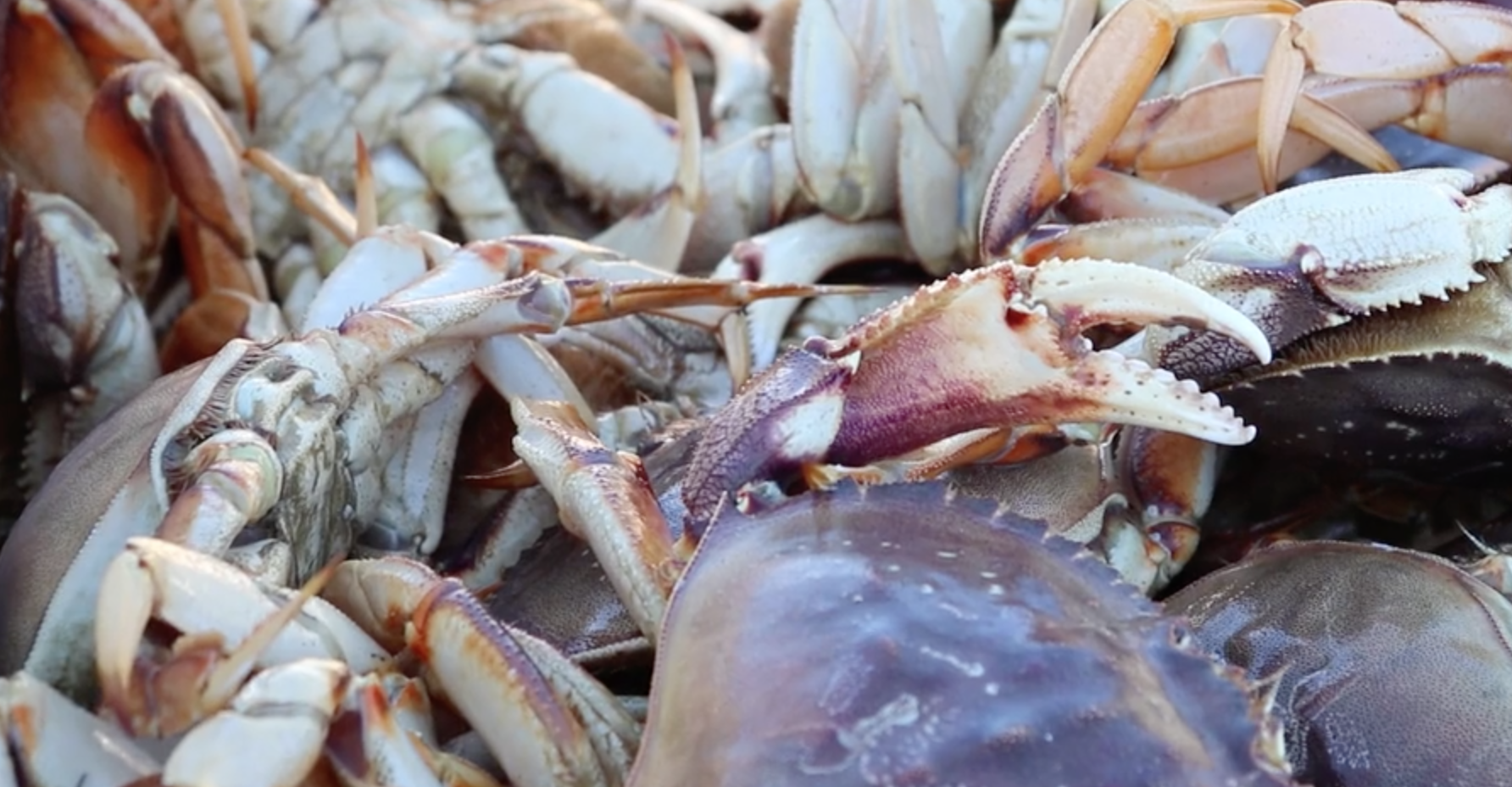
    The North Coast Crab Fleet consists of Eureka, Trinidad and Crescent City combined. The ideal Dungeness crabs have a 25 percent to 28 percent meat-to-shell ratio, but crabs can even get as big as 30 percent, meat per shell. The official ratio for the commercial crab fleet is set at 25 percent meat to shell. People pay good money for Dungeness crabs, and fishermen don’t want to sell anything but the best. A crab with a 25 percent to 28 percent meat-to-shell ratio means a happy customer.

    Fisherman went out Tuesday, Jan. 23 to catch some crabs to send to the processor for meat-to-shell ratio tests. Up until now, the crabs have had a 19 to 20 percent meat-to-shell ratio this season.

    “It would be a waste of a resource, and a travesty, to take these crabs in the condition they are currently in,” Lake said.

    Crab developmental problems have been due to the possibilities of a late molting period and less available food on the ocean floor. The competition for food is a big factor. When crabs get into this state, cannibalism becomes prevalent, and the weak get eaten by the strong.

    “There is just not enough food to keep every crab full,” Lake said.

    Testing protocol states strict testing sites and no selecting of the catch. If the fishermen were to bring in poor crabs and delude the processor, the observers themselves could not afford the cost of doing business. The yield, quality and customers’ perceptions of the crabs are worth the substantial amount of money it costs. These details are all taken into account before the crab season begins. Crab fisherman have to protect the resource and their customers.

    As fishing officially begins, the market sets the price. If the fleet catches a lot of crabs, the price goes down. If more crabs are being caught than can be sold at market, the price will be lowered to allow more people to buy the abundant crabs. If at some point there are not enough crabs, or if the market is sucking them up faster than the fisherman can bring the crabs in, then the price will go up.

    The locally agreed upon ex-vessel price is set by the large buyers and the Fisherman’s Market Association that represents the North Coast Crab Fleet’s three ports in Eureka, Trinidad and Crescent City.

    “The retail price will be around $4.99 per pound,” Lake said. “Canneries and processors pay fish taxes, loading fees, transportation and the employees get paid to cook the crabs.”

    Lake and the crew of the F/V Joie-Lynn, Cary Meyer and Clark Ward, all expect a very good year for crab lovers and the fleet alike.

    “I was born with optimism,” Ward said.

    Optimism swirls aboard Meyer and Ward’s crab fishing vessel, Joie-Lynn. Meyer and Ward said the crabs were caught, tested and showed 25 percent meat-to-shell last week, meaning the crab season can get under way as soon as a dock price per pound for Dungeness crab is set.

    This story was updated on Feb. 1, 2018 from its original publication on Jan. 23, 2018 per request by the author.

  • Sea levels rising in Humboldt County

    Sea levels rising in Humboldt County

    Jennifer Kalt of Humboldt Baykeeper released a community call-to-action through the Northeast Environmental Center in Feb. 2017 to discuss the need for preparation against sea level rise within the area. In the press release, she compares the California Coastal Commission Sea Level Rise Policy Guidance, adopted on Aug. 12, 2015, with the policy plans for the cities of Eureka and Arcata.

    The California Coastal Commission was established by voter initiative in 1972 and was made permanent by the California Coastal Act of 1976. Their goal is to protect and enhance California’s coast.

    Cristin Kenyon, a local Supervising Analyst with the California Coastal Commission, was able to explain some of the responsibilities of the organization.

    “So the Coastal Commission, we basically permit development in the coastal zone but we also certify local governments, policies and regulations as local coastal programs,” Kenyon said. “We can delegate jurisdiction to them so that within their jurisdiction they get to issue the coastal development permits, and we just serve an appeal function.”

    When the local governments are certified, it allows for them to control their own development of coastal areas. However, their decisions still have to be in accordance with the Coastal Commission’s regulations and must go through the proper channels to be approved. Analysts like Kenyon help to evaluate development applications and process them on to the Coastal Commision.

    “The Coastal Commission is the body that actually makes the decisions,” Kenyon said. “So I get applications for development, review them and write a staff report… recommending approval… denial or approval with conditions to the commission.”

    The Coastal Commission’s 2015 Sea Level Rise Guidance report was created as a set of interpretive guidelines and examples to help communities and governments prepare for sea level rise.

    They are not a set of regulations, but a well-compiled source of information provided by the “best available science” in order to help communities make more educated development and policy plans.

    In Kalt’s press release, she also discusses parts of the Coastal Commission’s 2015 Sea Level Rise Guidance report.

    “The Coastal Commission’s 2015 Sea Level Rise Guidance is based on the best available science, and forecasts sea level rise of 0.5m (1.6’) by 2050 and 1.5m (4.9’) by 2100,” Kalt writes.

    The Intergovernmental Panel on Climate Change (IPCC) came out with the most updated global scale assessment of sea level rise in 2013. These projections may be updated soon based on more recent information, according to Kenyon. But when the Coastal Commission’s 2015 Sea Level Rise Guidance came out, the 5th Assessment Report (AR5) was the most factual prediction. Because the IPCC altered the model inputs between AR4 and AR5, this model was the most updated. Additionally, the IPCC AR5 accounted for melting ice sheets as an increase in sea level rise.

    The IPPC 5th Assessment report concluded, “a rise in global average sea level by 10-39 in [26 to 98 cm] by the year 2100 [relative to mean sea level from 1985 to 2005] depending on the emissions scenario.”

    With different studies continuing to show an increase in sea level rise, more communities are working to establish plans and policies to prepare. In Kalt’s press release, she identifies the three basic strategies in preparing for sea level rise:

    1. Protection with higher levees, dikes or seawalls

    2. Adaptation by elevating structures, increasing setbacks along streams and floodplains, and restoring coastal wetlands to absorb wave energy

    3. Relocation of buildings and infrastructure, while prohibiting new development in areas at risk

    These main strategies are the base of most sea level rise planning projects. The Coastal Commision uses these adaptation strategies when assessing coastal resources.

    “It’s just going to be a really tricky situation along the coast of California, because there’s so much development in these vulnerable areas,” Kenyon said. “And with sea level rise there’s going to be even more areas that are highly vulnerable.”

    The Humboldt County coastline is particularly vulnerable, because in addition to the sea level rising, the ground beneath the area is sinking deeper due to tectonic subsidence.

    “We know that Humboldt Bay is subsiding, so the Humboldt Bay is actually going to be impacted greater than other places,” Kenyon said.

    Over the last couple years, Environmental Planner Aldaron Laird has been working on creating sea level rise risk assessments for the Humboldt Bay, the cities of Eureka, Arcata and other areas of Humboldt County. He has extensively researched the area and how it can be expected to respond to sea level rise considering our unique location and vulnerability to the rising waters.

    “Humboldt Bay has subsided from tectonic activity and the open ocean has expanded through thermal expansion,” Laird said. “With the two together, we have had the highest rate of sea level change on the entire west coast of the United States right here in Humboldt Bay.”

    Because we are in a higher risk area, Humboldt County as a whole have received state funding to help them prepare for sea levels rising. Laird has completed risk assessments to help the local governments determine how to best prepare.

    “The vulnerability assessments that have been completed are essentially an inventory of what is at risk and in what areas are they at risk, and when they may be impacted by sea level rise,” Laird said.

    Kant continues to summarize parts of Laird’s Sea Level Rise Vulnerability Assessment for Eureka in the press release.

    “Environmental planner Aldaron Laird recently completed Eureka’s Sea Level Rise Vulnerability Assessment, which found that by 2050, sewer lift stations, sewer lines, and the Murray Field airport will be the most at-risk public assets,” Kalt wrote. “By 2100, the Chevron Fuel Terminal, bulk cargo docks, drinking water and stormwater systems and contaminated sites will be most vulnerable.”

    Kalt then goes on to use Laird’s research as well as the Coastal Commission’s Guidance report to evaluate the policy plans made by the City of Eureka in their latest general plan update draft.

    “In mid-December, the City of Eureka’s staff unveiled draft sea level rise policies that recommend planning for only six inches of sea level rise by 2050—in defiance of Coastal Commission guidance,” Kalt wrote. “This approach is at odds with common-sense strategies to plan for the future and could result in costly damage by putting new development in areas vulnerable to flooding.”

    While it may be disheartening to read that the City of Eureka is not planning on following the guidance of the Coastal Commission, it is not the end of the policy debate. The general plan for Eureka is still in its draft form, but it is expected to be completed in the fall of 2018. Until it is fully completed, the public has a say in what is in the plan and can work to change the sea level rise preparation policies.

    Kristen Goetz is a senior planner with the City of Eureka working on the city’s General Plan Update.

    “There will be public hearings prior to the general plan update which will include the sea level rise goals and policies,” Goetz said. “Then there will be the process with the coastal commission, during which time there will be at least one public hearing and maybe more, depending on how that process goes with them.”

    “We’re looking at a planning horizon right now of 2040,” Goetz said. “So in 18ish more years, the planners who are with the city at that point in time are going to be doing another general plan update. They are going to be 20 years closer to that 2100 point in time and they will have a much better idea of what the forecasted levels are for sea level rise… and how they are going to affect the City of Eureka.”

    With Eureka planning for 2040, there is a chance the community may not be prepared to deal with the situation well. Unless something dramatic happens to demonstrate that sea levels are rising faster than already anticipated, the city plans to continue with their original plan.

    “If something happens between now and the next general plan update, for example, and sea level rise is increasing faster than what the studies are showing right now… then I think that the City of Eureka would speed up our review and our planning for the protection of infrastructure or retreat,” Goetz said.

    However, if you don’t want to wait for some random natural disaster that increases the rate of sea level rise there are simple things you can do as a member of the community to impact the policy around sea level rise. Almost a year ago Humboldt Baykeeper Jennifer Kalt wrote the press release asking the public to get involved, in which she urged community members listen to the science that is telling us our home is vulnerable.

    The time to get involved is now.

    The Humboldt Bay Sea level Rise Adaptation Planning Project was released in two phases the first in January of 2013 and then the second phase in February 2015, then Laird completed the assessments for the cities of Eureka and Arcata.

    Most recently Laird finished the assessment for Humboldt County, “the Humboldt Bay area plan that covers all the unincorporated area on Humboldt Bay,” said Laird. Laird just completed the Sea Level Rise Assessment for the rest of Humboldt County, planning to send the final assessment over to the Coastal Commission on Jan. 12, the document can be expected to be released to the public within the next week.

    With all of the risk assessments done and about to be available to the general public, community members now have more resources than ever to help determine how the area needs to prepare for sea level rise. It also means that the local governments will be working on new policies based off of the new information. Sea level rise is happening and it seems slow. But a prediction of 10-39 in. by 2100 could happen faster than we think. Further, accounting for six inches of sea level rise for the year 2040 may not be enough.

  • Endangered species lives in Arcata

    Endangered species lives in Arcata

    Did you know there are nine endangered species that live around Arcata? Every species is important for a habitat to thrive. The food chain is more like a food pyramid that every species has a specific role to maintain. Of course, some play larger roles than others.

    Some species play a crucial role in keeping the habitat healthy. These species are called keystone species. They are named after a keystone of an arch – without it, the structure would be unstable. Keystone species can be any species no matter the genus or size, as long as it plays a specific important role in helping the environment thrive. That is why it is important to maintain biodiversity in ecosystems, because each play an important part in letting the whole system thrive. Areas known as critical habitats represent zones of where a specific species thrives best and areas important to protect.

    The Point Arena mountain beaver is thought of as one of the most primitive living rodent species, because it has similar behavior and characteristics to some ancient mammalian species. They have been referred to as a living fossil.

    The Point Arena mountain beaver has no designated critical habitat, but they are known to survive along the Pacific coast of North America and thrive in moist forests. They survive mostly underground and tend to be more active at night than during the day. These beavers differ from normal beavers in that they are not aquatic, although they do swim. The most obvious and unique characteristic special to this type of beaver is its black color.

    Gregory Schmidt, biologist at Arcata’s U.S. Fish and Wildlife Service, was able to provide more detail on the Point Arena mountain beaver.

    “They’re pretty unique in that they can eat almost any plant, even poisonous ones,” Schmidt said. “They can survive on plants that would kill most other mammals. For example, poison hemlock.”

    Their bodies have a high tolerance for toxins and heavy metals in their bloodstream that allows them to consume a variety of poisonous plants. They require a large variety of different plant species considering they get most of their water from vegetation.

    “Habitat loss due to agriculture and urbanization are the two main threats to their long-time liability,” Schmidt said.

    Their reproduction rate has slowed immensely due to deforestation, causing loss of habitat and urbanization of the area. All the loud noises and human activity scares the beavers, causing them to run and hide, rather than mate and reproduce like they normally would.

    Another threat to the mountain beaver is livestock. Cattle farming threatens beavers, because they tend to crush the beaver burrows, which can be as deep as two feet underground.

    The Arcata Fish and Wildlife website says, “Activities that produce loud noise or ground vibration, such as directional boring, road or building construction, timber harvest, and mineral extraction, that are to occur in or near occupied mountain beaver habitat should be conducted outside of the mountain beaver breeding season.”

    They also say to carefully manage livestock grazing in areas near potential beaver burrows. The current population of the species is unknown, and they are more rare in urban habitats. Some places, such as the Arcata Marsh, ask visitors to report the sighting of any beaver in the area for research and statistical purposes.

    The Point Arena mountain beavers were placed on the endangered species list in 1991 and again in 1995, when a fire killed approximately 98 percent of their species. A recovery plan for the species was published in 1998. According to The UICN Red List of Endangered Species, their population was under five thousand individuals after the fire, but its current population ranges from ten thousand individuals to one million. It is still on the endangered species list under least concern.

    The Behren’s Silverspot Butterfly and the Lotis Blue Butterfly are both endangered species that live within the local Arcata habitat.

    The Behren’s Silverspot Butterfly: Speyeria zerene behrensii, has a yellow-brown color with black and silver dots. They live along the northwest pacific coast, extending to Mendocino County, areas south of Salt Point, and around some parts of Sonoma County. This species has been endangered since Dec. 5, 1997, but the latest recovery plan was approved by the U.S. Fish and Wildlife Services March 2016. Within the plan there are four main goals, “1. Protect habitat, 2. Determine ecological requirements, population constraints, and management needs, 3. Monitor population status and habitat, 4. Undertake public information and outreach programs.”

    Clint Pogue, Botanist from the U.S. Fish and Wildlife Services said, “Partially due to the rarity of the subspecies, the ecological role of Behren’s silverspot butterfly is poorly understood. However, butterflies are essential components of their natural communities by acting as pollinators.”

    This species is being threatened by overcollection, mass livestock grazing, and loss of habitat due to invasive plant species and human urbanization.

    “These butterflies play a vital role for conservationists, because the presence and trends of these butterflies help indicate health of the ecosystems and natural communities in which this subspecies is found,” said Pogue.

    The endangered Lotis Blue Butterfly: Lycaeides argyrognomon lotis, has been listed since June of 1976 and not much is known about this rare species.

    “The true distribution of the Lotis Blue Butterfly prior to European settlement of North America is not known, however records of the subspecies indicate that it had previously existed in Mendocino, Sonoma, and possibly Marin counties,” Pogue said. “The last detection of lotis blue was in Mendocino county in 1983.”

    Their bodies are small and blue, outlined slightly with black, and with a furry yellow border around its wings. It is thought that the Lotis Blue Butterfly thrives in wet bogs and around pine trees. However, specific details about the conditions in which this butterfly thrives have yet to be determined because the lack of knowledge of the plants consumed by them, particularly as caterpillars. Knowing what the caterpillars eat can help in finding a habitat. If researchers knew more about the lotis’ diet, scientists could better predict the surrounding conditions in which both the plant and butterfly thrive in.

    According to the U.S. Fish and Wildlife Service, the Lotis Blue Butterfly may be the rarest butterfly species in North America. Due to how little is known about the Lotis Blue Butterfly, the main threats to this population remain somewhat unknown as well. It is predicted its largest threats are drying climate, fires, and disturbances caused by urbanization and construction. The most important thing to do regarding the conservation of this species is to find a critical habitat for the species. When a habitat is found, it can be studied and protected to start the conservation of the species. The latest recovery plan for the Lotis Blue Butterfly was initiated in April 2016 and calls for identification of a crucial habitat for this butterfly species.

    There are six endangered species of plants listed on the U.S. Fish and Wildlife Service’s website specific to Arcata: The Kneeland Prairie penny-cress, the McDonald’s rock-cress, the Western Lily, the Beach Layia, the Menzies’ Wallflower, and the Howell’s Spineflower. Some plants play a huge part in maintaining a stable ecosystem. Many plant species are being affected by invasive species that often cause ecological damage because they out-compete native species. A highly invasive species that is located along the coastlines of Humboldt County is the European Beachgrass,

    Dr. Matt Johnson, Wildlife professor at Humboldt State University, said “The beachgrass totally takes over and grows as a thick dense grass that just out-competes everything else. Almost nothing else grows there.”

    The Kneeland Penny-cress: Noccaea fendleri, was listed under the Endangered Species Act in February 2000. The designated critical habitat for this species of plant spans across 74 acres of Humboldt County and they are estimated to have almost 9,000 individuals. The penny-cress is an herb related to mustard grass and it has white flowers that rest on skinny green stalks around three to five inches in height. The latest recovery plan was updated in April 2012.

    According to the U.S. Fish and Wildlife Services, the plant only grows on serpentine soils derived by certain rocks along the coast of Northern California. Characteristics of the soil make it almost impossible for species to grow, unless they have adapted to do so, like the Kneeland penny-cress.

    One of the largest threats to this species is loss of habitat due to construction. The habitat for this plant has been steadily in decline. A main goal in conservation efforts for the penny-cress calls for the restoration of serpentine soil to give the species somewhere to thrive. Other threats include overgrazing and wildfires. One roadblock for the conservation process is landowners. There has been trouble in the past getting permission from landowners to study and develop a conservation plan. The species was last surveyed in 2002 due to the landowners not allowing people to study the plant.

    Another local endangered species of the mustard family is the McDonald’s rockcress: Arabis macdonaldiana. This species has been endangered since Sep. 1978, and was first discovered in Mendocino County in 1902. One interesting characteristic of the McDonald’s rockcress is its lifespan, they can live to be 30-50 years old.

    This plant thrives in soil that from certain rocks as well. These soils tend to have high concentrations of nickel, copper, chromium, and iron. For this reason, they became threatened by mining industries. Nickel mining became a huge threat because it took the soils in which these plants thrive. This species also lacks a designated critical habitat and because of that, there is difficulty estimating their population.

    On top of all that, this is a rare species. This species’ recovery plan calls for protection of land where this specific species can thrive. This plan was last updated in 2013.

    The Western Lily is yet another endangered species without a specific known critical habitat. The Western Lily: Lilium occidentale, can grow to be five feet and has red and pink petals that bulb down over the flower.

    “Plants such as the Western Lily help stabilize soil and function within natural communities by providing nectar for insects and birds,” said Pogue. “For conservationists, Western Lily helps indicate areas of high ecological integrity.”

    They have been on the endangered species list since 1994, and their estimated population is around 7,500 individuals, with their largest population currently residing in Crescent City. Many scrubs and trees have begun to dominate their habitat making it impossible for the Western Lily to thrive in certain areas.

    “Western lilies occur in early successional bogs, poorly drained coastal scrub, and spruce forests within a few miles of the coast from south-central Oregon to just south of Eureka, CA,” said Pogue.

    Urban development and agriculture in our area have posed a threat to this lily as well. Cranberry agriculture has become one of its most significant threats. In 1991, unpermitted cranberry agriculture significantly destroyed populations around Brookings, Oregon. Overgrazing by livestock and wildlife also threaten the species and its population is estimated to remain in decline.

    Greg O’Connell, Co-chair of the North Coast Chapter of the California Native Plant Society, was able to speak on the issue of overgrazing.

    “One of the restoration efforts that have been done for the western lily was goat grazing,” said O’Connell.

    They were brought in to chew back shrubs to create open habitat again. The latest recovery plan, published in 1994, intends to protect areas in which the Western Lily thrives. The plan hopes to set up 20 populations of protected land with at least one thousand plants each.

    The Beach Layia: Layia carnosa, is a succulent that lives along the coast of northern California. This short, thick plant has small flowers that bloom white and yellow, flowering more in moist habitats. Not very much is known about the reproduction of these plants and their population numbers tend to fluctuate a lot throughout the year.

    The Humboldt Bay hosts the largest population, due to the area having the best quality conditions for this plant to thrive. There have been no official estimations regarding the species’ total population. One big threat to the beach layia is invasive species.

    Certain non-native plants, such as European beachgrass, dominate critical areas where the beach layia normally thrives. Construction and traffic on the beach also damage habitats where this species is supposed to thrive. The last update to its’ recovery plan was in 2012 and it calls for the protection of designated areas along the beach, and the elimination of invasive populations of species like European beachgrass.

    The Humboldt Bay Wallflower, or the Menzies’ Wallflower: Erysimum menziesii, thrives along the coast of northern California as well. This species was discovered in the late 1700s, and was listed as endangered in 1992. These plants tend to be short and have short lifespans as well. The wallflower dies after it releases its seed which contributes to their short life. It’s a member of the mustard family and has one subspecies specific to the Humboldt Bay.

    The Humboldt Bay wallflower is pollinated by local solidarity bees that do not live in a hive, instead they make burrows under the sand. The Humboldt Bay wallflower thrives in dune habitats, where the solidarity bees thrive as well.

    This subspecies is estimated to have 30 thousand individuals. Threats include invasive species, herbivore grazing, mining along the beach, and offroad vehicles. Studies show that the threats to the Humboldt Bay wallflower have decreased a decent amount, meaning this subspecies has a chance and it is making a comeback.

    The latest update to its recovery plan was in 2008 and calls for partnerships between California State Parks and other managements, so that organizations can work together to create more suitable habitats. This collaboration would plan for the management of invasive species, designated habitats, and a way to reduce the impact of deer predation.

    Howell’s spineflower: Chorizanthe howellii, is a member of the buckwheat family and is found within parts of Humboldt and Mendocino counties. This plant has a very distinct appearance, growing only to be one to four inches tall. The small plants have a spherical appearance similar to a dandelion, with spikey-looking flowers that are tan and light brown. The rounded flower spreads its seeds relying on passing animals, wind, and other things that the seeds can catch onto, land somewhere and grow. No official estimate for the population of this species has been established, but through studies the species’ population is believed to have had three million individuals in 2002.

    The main threat to Howell’s spineflower is the invasiveness of iceplant, Carpobrotus spp tend to thrive and take over areas where the spineflower should thrive. Other dangerous plants to this species include European beachgrass and burclover. Human disturbance has had a huge impact on their population as well. Small disturbance is good for the population because it can potentially help spread seeds, but larger disturbances often disrupt the habitat.

    Due to the impact of human disturbance, people tend to do more damage to the spineflower’s habitat. In 2011, the Howell’s spineflower recovery plan was updated. It calls for protection of important ecosystem in which the spineflower thrives, removal of invasive species, regulation on disturbances, and an accurate estimation of their remaining population.

    While it may seem like there are a larger amount of endangered species specifically within our small area but,recovery plans are set up and people are working to restore proper ecosystems; because of this, some of these species are making a comeback.

    Support for species through collaboration between parks, organizations, agriculture, and private owners, these species still have the ability to thrive. People need to know about the importance of biodiversity and its role in creating a healthy, sustainable ecosystem where more species can succeed. With recovery plans set in place, many of these species have the chance to repopulate. If humans go about it the right way, it doesn’t have to be too late for any of these unique species.

  • Dunes Climate Ready Study gains ground

    Dunes Climate Ready Study gains ground

    In only the second half of the second year of the Dunes Climate Ready Study, the project is already providing researchers with interesting data. This projected five-year study is expected to provide a better understanding of sediment movement along the Eureka littoral cell, a 32-mile stretch of coastline from Little River north of McKinleyville, down to Centerville beach.

    Friends of the Dunes’ director Kim McFarland provided insight into how the project originated and what stage the study is at currently.

    McFarland explained how collecting topographical data in specific locations along the transect will allow researchers to map sand movement through the dunes under different vegetative conditions, and eventually determine how this affects dune structure.

    “They are able to put all of this [data] into a computer and see the actual contour of the dune and how it changes over time,” McFarland said.

    Andrea Pickart, a coastal ecologist with the U.S. Fish and Wildlife Service, and Ian Walker, a geomorphologist teaching at Arizona State University, are leading the Dunes Climate Ready Study.

    They wanted to do “a bigger picture study on dune restoration and the implications of that for climate change, climate variability impacts and resilience of the dune system to ongoing erosion and future sea level rise,” Walker said.

    Pickart and Walker started out by doing a few basic experiments on air flow and sand transport and how those maintain the dune systems. From there, they worked to get funding to expand their studies on dune restoration applying to multiple institutions in the hopes of starting a new in depth study.

    In 2015, the California State Coastal Conservancy awarded Friends of the Dunes a $249,000 grant to fund the first two years of the Dunes Climate Ready Study.

    “The objective was to better understand the effects of climate change and sea level rise on coastal dunes…to assess vulnerabilities arising from the impacts of sea level rise and assist the community in preparing for those impacts,” Pickart said.

    Originally, the main focus was to establish a monitoring system for the regional beach-dune environment. The first step was to determine the placement and setup close to 60 transects along the 32-mile stretch of coast.

    “We are taking these profiles of dunes all along that 32-mile stretch of dunes… we are taking topographic vegetation profiles,” Walker said. “It’s a way of looking at the beach and the foredune…just behind the foredune, the real land-ocean interface and seeing what kind of sand movements or sand exchange happens between the beach and the fordune.”

    At the end of the five-year study the data will be used as a model response to sea level rise under different circumstances.

    The first survey began on Jan. 4, 2016, and will continue for the duration of the study. Measuring the wind flow and sediment transport is one of the main focuses of the study, but examining how the native versus non-native plants interact with the dunes is also extremely important in order to understand the relationship between these two variables in the dunes environment.

    “There’s different components to this research, and one component of it is how native plants versus non-native plants affect the movement of sand from the beach into the foredune and then the backdune,” Pickart said.

    Invasive plants play an interesting role in altering the physical processes of wind flow and sediment transport. Foredunes produced from invasive vegetation are different than foredunes with native vegetation.

    “The primary non-native species we have here is a non-native beachgrass, which grows much more densely than our [California] native dune grass,” Pickart said. “But they are both grasses that trap sand and allow dunes to build.”

    Data from this study is still being collected and will be a part of the research over the next couple of years.

    “What we’ve seen to date is that after removing the over-stabilizing European beach grass, we have, in fact, observed that the sand budget has been reconnected between the beach and the backdune,” Pickart said.

    “In other words, we’re seeing movement of sand all along the beach and into the back dunes, and that was part of our hypothesis, that native plants would allow for more free movement of sand over the top of the foredune and into the backdune.”

    European beachgrass is the main inhibitor of sand movement. For this reason, Friends of the Dunes works to have volunteers remove the invasive species, allowing sand to move more freely between the beach and the foredune.

    The sands freedom will allow the translation of the foredune: “which is the movement of the foredune inland and up in elevation as sea level rises,” Walker said.

    “Basically, we know that the European beachgrass traps more sand. The experiment is whether having the native plants allow more sand to bypass is going to facilitate this inland translation of the foredune,” Pickart said.

    European beach grass, also known as Ammophila, is a main inhibitor of sand movement. Because of this, Friends of the Dunes works to have volunteers come and remove the invasive species allowing sand to move more freely between the beach and the foredune.

    Another branch of the study has been the creation and monitoring of two different adaptation sites. These sites are meant to help determine the desirable planting composition that allows for sand transport.

    “The experiment is whether having the native plants allow more sand to bypass is going to facilitate this inland translation of the foredune,” Pickart said.

    The sites are often used as to house smaller pilot studies to provide answers to some of the more specific detailed questions, for example, how grain size affects sand movement, the impacts of the upward migration of a foredune, how herbivory affects sand transport and multiple other experiments.

    There are many different collaborators such as the Wildlands Conservancy, students from the University of Victoria and HSU students and staff. The adaptation sites will continue to provide a wealth of information throughout the study, helping to answer specific questions on dune structure and sand movement.

    With the study still less than halfway into their five-year projection, there is still a lot of research to be done. But from the data seen so far, the Dunes Climate Ready Study has the potential to alter how researchers view dune restoration and the impacts of climate change.

    To learn more about the Dunes Climate Ready Study, you can visit the page dedicated to the study on the Friends of the Dunes site HERE! The page contains an archive of quarterly updates on the study if you are interested in learning more about it, or if you simply want to stay updated on the most recent research.

    If you would like to be apart of the dune restoration projects to combat native species and climate change visit the Friends of the Dunes volunteer page, HERE!

    This story was updated on Feb. 1, 2018 from its original publication on Jan. 15, 2018 per request by the author.

  • Let’s shrink our impact over the break

    Let’s shrink our impact over the break

    With winter break fast approaching some of you may have big plans for the semester gap, but in our excitement lets not forget the importance of minimizing our waste and our environmental impact.

    Students on the HSU campus have a few ideas on how minimize our environmental footprint this break.

    Kyla Toole’Wells, a kinesiology major in her third year at HSU says that when we travel we should, “go in groups.”

    “Usually I carpool or take a bus,” said Kyla Tool’Wells.

    Molly Cribari, a Chemistry major at HSU also suggests carpooling or other less impactful forms of transportation when traveling.

    Humboldt State offers a Homeward Bound bus program for HSU students that live in California. Students going back to the bay area or down to LA can go into their student center to sign up for this bus when seats are available. (Seats are no longer available on this bus for the trip down over winter break.)

    Another way to travel efficiently if you don’t already have a fun carpool plan is to use Zimride, the ride sharing service HSU partnered with back in 2013.

    Besides your travel plans there are other things to keep in mind this break. The holidays, Christmas, Hanukkah, the Solstice, and other sacred/special days that are celebrated can increase waste in a few ways.

    Brian Simpson, a forestry major in his last semester encourages those who partake in getting a Christmas tree, to purchase an actual tree.

    Brian Simpson
    Brian Simpson, a forestry major in his last semester encourages those who partake in getting a Christmas tree, to purchase an actual tree. Photo credit: Kyra Skylark

    “Getting an actual tree from a forest seems like its not environmentally friendly, but trees are in fact a renewable resource,” said Simpson. “Getting an actual tree from a tree farm or a forest helps with carbon sequestration.

    The tradition of giving holiday presents can also create a large amount of waste for some families. Both Simpson and Toole’Wells recommend reusing wrapping paper.

    “Wrapping paper and presents creates a lot of trash, so recycle, and I always like to save bags and reuse bags,” said Toole’Wells.

    Reusing bags, using reusable bags, or wrapping in newspaper can be alternatives to simply buying more paper to immediately throw away.

    “Maybe make cute newspaper ones ones and be crafty,” said Toole’Wells.

    Jessica Ramirez, general biology major’s family has reused the same present bags for most of her life.

    “We reuse any christmas bags every year, we’ve probably had the same ones since we were born,” said Ramirez. “We don’t really buy too many presents.”

    Ramirez also thinks we should think about our gifts more and make sure they mean something.

    “Maybe try to just reduce how many presents people actually need,” Ramirez. “I feel like people overbuy because there’s so many deals, but you know it’s not about the deals, it’s just about the thought really.”


  • A tournament to save the future

    A tournament to save the future

    For a topic to be special, it needs to have special qualities. The Environmental Resource Engineering department is providing a competition-based classroom for students to work on self improvement. ENGR 480 is a special topic course that involves two topics for students to compete in, water filtration and creating sustainable renewable energy housing operations.


    Peter Alstone and Elizabeth A. Eschenbach are professors in the Environmental Resource Engineering department that are advising for the Race to Zero competition and American Society of Civil Engineer’s MidPac competition.


    This competition is pertinent to the times as Zero Energy Ready Buildings have started to be readily achievable and cost-effective, according the the United States Department of Energy who sponsors the competition. These buildings are incredibly energy-efficient as their renewable power can offset either most or all of the annual energy consumption.


    “The idea behind the net zero thing is that, on net overall, you’re zero,” Alstone said. “Sometimes you’re pushing energy onto the grid. Sometimes you’re using electricity from the grid. But the overall net is that you have zero at your meter.”


    Alstone operates as the advisor for the class and is excited for the competition as it gives students more creative freedom.


    “It motivates students to turn themselves into self-learners,” Alstone said.


    Instead of instructing, Alstone plans to be more hands off with his students, letting them come to him for advice but otherwise staying open to help the students with their ideas.


    “There aren’t a whole lot of rules of how they should be doing it,” Alstone said. “I try to be hands off more than I’d normally do.”


    In the other special topics class where students prepare to compete in the MidPac competition, Eschenbach finds that Humboldt State’s students consistently perform well and place in the top three for their innovated water filtration ideas.


    “If you were to look for the news last year, you’d see that we’d came in first for the water treatment, and we came in second overall,” Eschenbach said.


    These competition based classrooms are actually based off of a Wildlife competition class known as the Wildlife Conclave. The classes like these are designed to direct students for how they would work in the real world.


    “Just as with the Wildlife Conclave and the Forestry Conclave, these are opportunities for our students to actually practice, to have hands on opportunities to apply what they’ve learned in their classrooms in a setting where they can see how they stand up to other students at a similar place in their education from other institutions,” Eschenbach said. “It’s a great learning opportunity and it’s one that we can’t provide in a more tradition setting.”


    These two classes are open to anyone who wishes to join, no matter what their major may be, but applications have already been sent in. For more information on these two competitions, contact Dr. Eschenbach and Dr. Alstone in the Environmental Resource Engineering department.

  • This week in STEM

    This week in STEM

    By | Bryan Donoghue

    Embed from Getty Images

    A computer chip currently being developed by NASA could be the toughest piece of technology ever sent into space. The chip is designed to be sent to Venus, a planet that is a host to active volcanoes, sweltering heat, and a surface that suggests that the planet may have once had oceans and continents. NASA hasn’t sent a mission to Venus since 1989, and no spaceship has landed there since 1985. The planet’s sulfur clouds, incredible pressure, and extreme heat made space craft navigation borderline impossible for scientists. Now, navigation of Venus has become a possibility. Researchers for NASA working on this product decided to introduce silicon carbide into the equation, which is a compound of silicon and carbon used to make things like fake diamonds. To test the durability, NASA researchers put the silicon carbide chip into something called the Glenn Extreme Environments Rig. This simulates the conditions on Venus artificially to see if the chip can hold up. The chips worked for an entire 33 days in the machine, and could have run longer. NASA scientists working on the project are sure that one day the device will make it’s way to Venus.

    Source: Science Magazine, Popular Mechanics, NASA


    Embed from Getty Images

    Bali is an Indonesian island and resort center popular with tourists around the world. Recently, it’s been under red alert. Mount Agung is a volcano on the island that has recently erupted, and residents have been evacuated in an effort to conserve public health. The deep smoke clouded the sky, and by last Monday morning, the smoke had reached a height of 9,100 meters (5.6 miles.) At Bali’s main airport, Ngurah Rai International Airport, flights were cancelled from 24 hours that Monday, and 59,000 citizens were stranded, with 24,000 citizens evacuated. As the soot and ash continue to spread across Bali and Pulau Lombok, masks are being distributed among residents.

    Source: CNN, ABC, BBC


    Embed from Getty Images

    There’s always a possibility of food poisoning when it comes to what you eat. Recently, the key ingredient in any kind of baking is the culprit of bacterial baddies. E. Coli bacteria has been found in more than 250 flour-containing products. All of the products have been recalled.The bacteria can be reactivated with water, and in a dry food item like flour, that dormant bacteria can revitalize and start replicating. There are multiple to ways to kill bacteria, and the two most common ways to do this are using heat and irradiation. E. Coli bacteria is hard to kill, as higher doses of irritation and heat are needed to fend of bacteria. Next time you reach for the cookie dough this holiday season, you should think twice.

    Source: Science News, CNN, New York Times


    Embed from Getty Images

    The future is here. We can now have hallucinogenic trips without needing to put chemicals into our body. Researchers at Sussex University have developed a machine that lets you have a trip similar to magic mushrooms. The machine integrates both virtual reality and Google’s Deep Dream system. The Deep Dream system identifies patterns and features in images using our brain’s neural network. Volunteers who participated in testing the machine were asked if they ever started to lose control of themselves or their senses. The answers ended up looking similar to a 2013 study on the effects and experience of taking psilocybin. The people involved in this project think this is a great example of how virtual reality can help science. This is not only because of it’s ability to mimic reality so closely, but because this technology tricks our brains. The challenge technology presents to our brains could help reveal more of the important secrets still undiscovered about the brain.

    Source: Science Alert, Newsweek, Nature