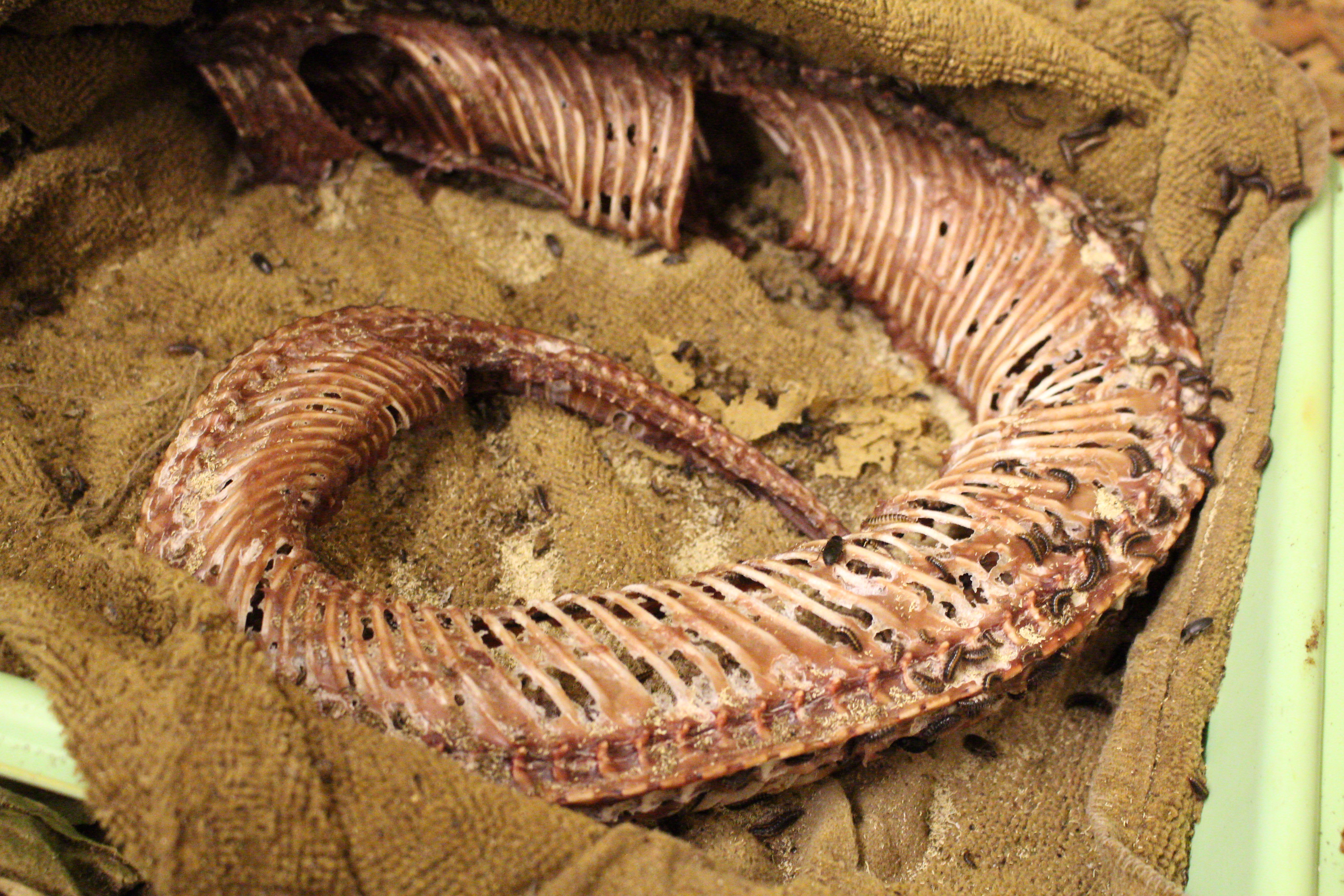
In a dark room flesh-eating beetles consume dead animals. That sounds like a scene straight out of a horror movie, but this is a room on campus at the Humboldt State University Vertebrate Museum.
Melissa Hawkins. is the current curator at HSU’s Vertebrate Museum. She has always been interested in animals, and told her parents she wanted to be a veterinarian at the age of six.
“I did my masters in reptiles and have done bird research as well,” Hawkins said. “I just love vertebrates.”
Melissa Hawkins poses next to a whale bone outside the beetle room at the HSU Vertebrate museum. Photo by Walter Hackett
Hawkins got her bachelor’s and master’s degree at Western Illinois University and her PhD. at George Mason. She applied for the museum curator position at HSU toward the end of 2016, and said she was excited to come to Humboldt.
“The first thing I said to myself was, ‘Wait a second, is that a redwood tree?’” Hawkins said.
Aside from her curator duties, Hawkins teaches mammalogy and evolution. Much of her research focuses on next-generation sequencing methods. She loves the discovery aspect of her research.
“For a moment in time you’re the only person that knows a fact in the the scientific world,” Hawkins said.
Stuffed and preserved chipmunks catalogued in a collection room at the HSU Vertebrate Museum. Photo by Walter Hackett
We left her office and move down the hall to one of the collection rooms. Hawkins pulled out a drawer containing rows of small chipmunks, each one splayed out neatly and accompanied by a catalog tag.
“Feel how soft they are,” Hawkins said.
At this point the small rodents in the drawer have all been stuffed with cotton and preserved, a lengthy process that is carried out at the museum itself. Some of the specimens in the drawer date back to the early 80s.
“I call it creepy arts and crafts,” Hawkins said.
From there went to see the flesh-eating beetles. The beetles remove all the flesh from the bones for any specimens the museum wants to preserve. They do the work that human hands cannot.
Dr. Nicholas Kerhoulas is the HSU Vertebrate Museum collections manager and is responsible for looking after the Dermestid beetle colony.
“Don’t stay in there too long,” Kerhoulas said. “It’ll stay on your clothes.”
We went outside and entered a small dark room. The powerful smell hits your nostrils instantly.
“Here’s the local talent,” Hawkins said.
Hawkins walked over to a box against the wall and opened the lid. A soiled rag resembling a burlap sack is inside. She removed a cover to reveal a snake carcass covered with beetles.
“They like to feel snuggly and warm,” Hawkins said.
Kerhoulas said the snake has taken the beetles some time to get through.
“I think a combination of cooler weather and perhaps that snake not being their favorite is making it take a while longer than I would have expected,” Kerhoulas said.
We headed upstairs to the museum prep room, where the team worked to prep a dolphin specimen for the beetles. Removing as much flesh as they can before giving the bones to the beetles will speed up the process. The team has to be careful though, because if they leave the bones with the beetles too long they’ll start to eat into the bones.
“Once the colony gets going they are hungry little buggers,” Hawkins said.
Dr. Nicholas Kerhoulas removes flesh from a striped dolphin carcass in the HSU Vertebrate Museum in preparation for the beetle colony. Photo by Walter Hackett
The prep room smelled like fish. This particular specimen is a striped dolphin that washed up in Crescent City and died shortly after washing ashore. Hawkins explained that these dolphins are typically found in the deep sea and the team is curious to find a cause for the beaching.
Kerhoulas and with Stella Yuan, a graduate student that works with Hawkins in the museum, are equipped with gloves and knives and removed as much flesh and blubber from the bones as they can.
“I hope you don’t have a weak stomach,” Hawkins said.
University receives forest land for student research
Humboldt State University is about to receive an 884 acre forest 12 miles from campus with old growth trees.
The forest will be used for field work, research and revenue generation. The land, roughly the size of Central Park, is nestled along Jacoby Creek between Fickle Hill road and Kneeland road. The forest has stands of second growth coastal redwood and old growth western red cedar.
David Greene, forestry professor and the chair of the forestry department at HSU, said the new property will provide amazing opportunities for the College of Natural Resources and Sciences.
“The forest will be heavily used by our departments,” Greene said. “We now have a forest we can actually manage.”
Creek and riparian zone on HSU’s new Jacoby Creek forest on Nov. 25. | Photo by Walter Hackett
Creek and riparian zone on HSU’s new Jacoby Creek forest on Nov. 25. | Photo by Walter Hackett
The university has been using the campuses neighboring Arcata Community Forest for much of its forest field work. Greene said the new site will eventually provide a means for revenue.
“Eventually we’ll create a timber harvest plan,” Greene said. “For now let’s let it grow.”
According to Greene, this will be great first hand experience for forestry students who can work on creating a timber harvest plan and see the whole process through. The harvest plan will leave the old growth trees alone and eventually take “a little” of the 60-year-old wood.
Greene credits the city of Arcata for creating the new opportunity for the university. After the land went up for sale, the city worked to secure it through funding opportunities from California Fish and Wildlife, Wildlife Conservation Board, grants, and a significant donation from the landowner R.H. Emmerson and Son LLC.
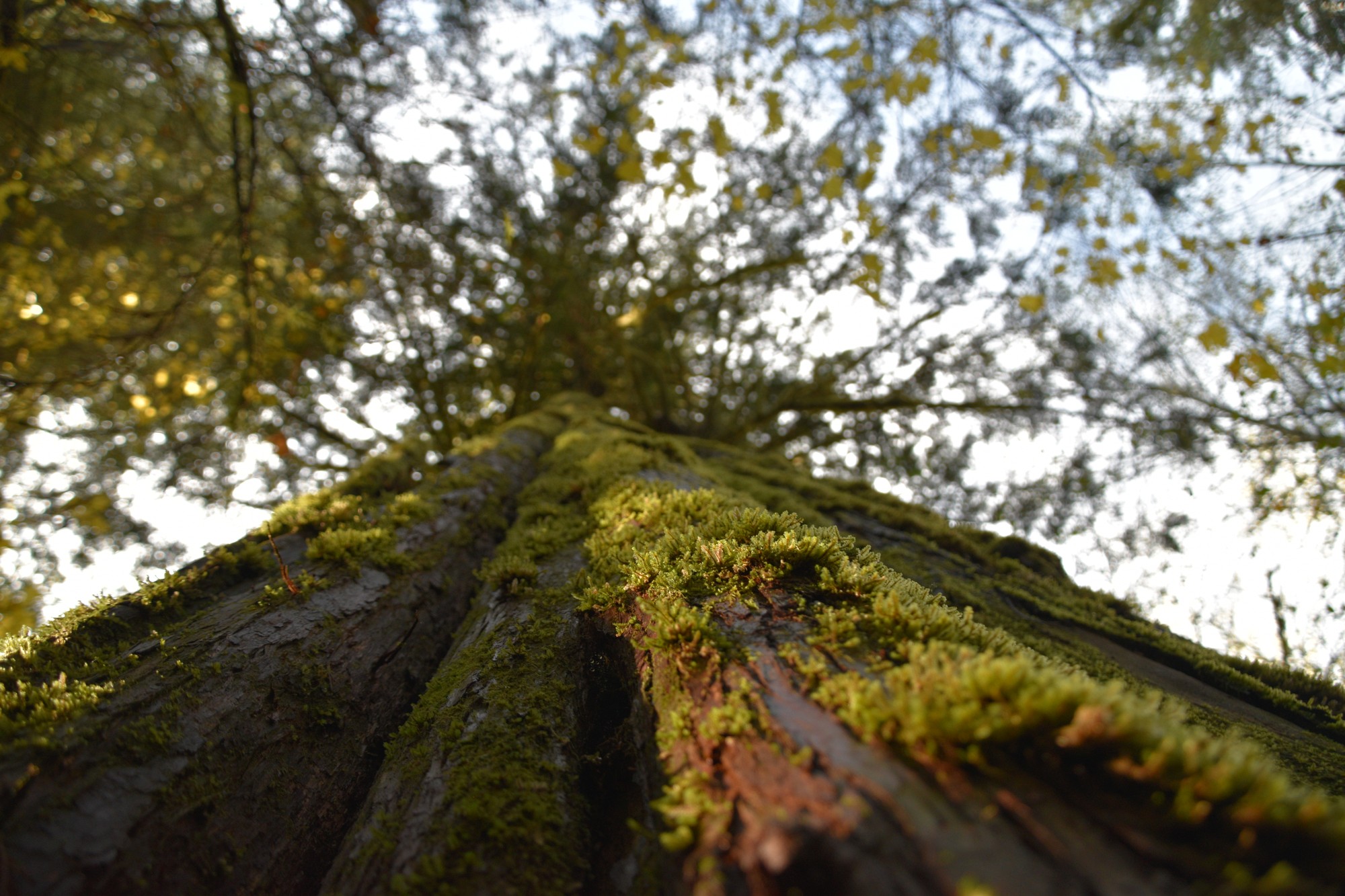
A giant moss covered old growth western red cedar along on HSU’s new Jacoby Creek forest on Nov. 25. Photo by Walter Hackett
A giant moss covered old growth western red cedar along on HSU’s new Jacoby Creek forest on Nov. 25. Photo by Walter Hackett
Arcata Director of Environmental Services for Arcata, Mark Andre and his team have been working on this project since 2009.
He said the city has had a longstanding and productive relationship with HSU in regard to the Arcata Community Forest.
“This project will enhance and help continue that tradition,” Andre said. “HSU students and faculty are a tremendous and integral asset to the city’s forest management program.”
Andre and his team initially became interested in the property when they heard the landowners were planning putting the property up for auction. The city owns land that neighbors the new forest, and became concerned about potential subdivision and how it could affect the environment and wildlife.
“There are 10 separate parcels on the property so the project will prevent fragmentation and diversion in perpetuity,” Andre said. “We want to buffer our existing assets.”
During a sale, there could be 10 different owners each with different goals and management strategies. Andre said that this acquisition will prohibit subdivision and residential development, prevent significant water withdrawals, promote mature riparian and late succession forest reserves, and guarantee that these lands will be managed for sustainable forestry in conjunction with ecological land management.
“We mainly want to keep the integrity of resources land for coho and steel head as well as maintain a working forest,” Andre said. “We want to maintain wildlife corridor and ensure that the land remains a carbon sink over time.”
Wildlife-wise, the new forest provides habitat for threatened and endangered species including the Pacific fisher and the northern spotted owl.
Recent black bear tracks on HSU’s new Jacoby Creek forest on Nov. 25. Photo by Walter Hackett
Recent black bear tracks on HSU’s new Jacoby Creek forest on Nov. 25. Photo by Walter Hackett
“It’s a wilder feeling than our community forest,” Andre said.
Matthew Pedrotti, senior biology major with an ecology and biodiversity emphasis, said he was excited when he heard the news about the new forest.
“It will give biology students an opportunity to measure the impacts of a freshly logged forest,” Pedrotti said.
Currently the forest is in escrow. After it closes at the end of the calendar year, it will be transferred from the city to HSU to be jointly managed through a cooperative agreement. The city and the university will work together on the roads, forest data, scientific studies and public access.
“A bunch of us are alumni here so it was a pleasure to work on this because it felt like we were giving back to the university that set us up,” Andre said.
Fungus thriving on a fallen log in a bed of western sword ferns in HSU’s new Jacoby Creek forest on Nov. 25. Photo by Walter Hackett
Fungus thriving on a fallen log in a bed of western sword ferns in HSU’s new Jacoby Creek forest on Nov. 25. Photo by Walter Hackett
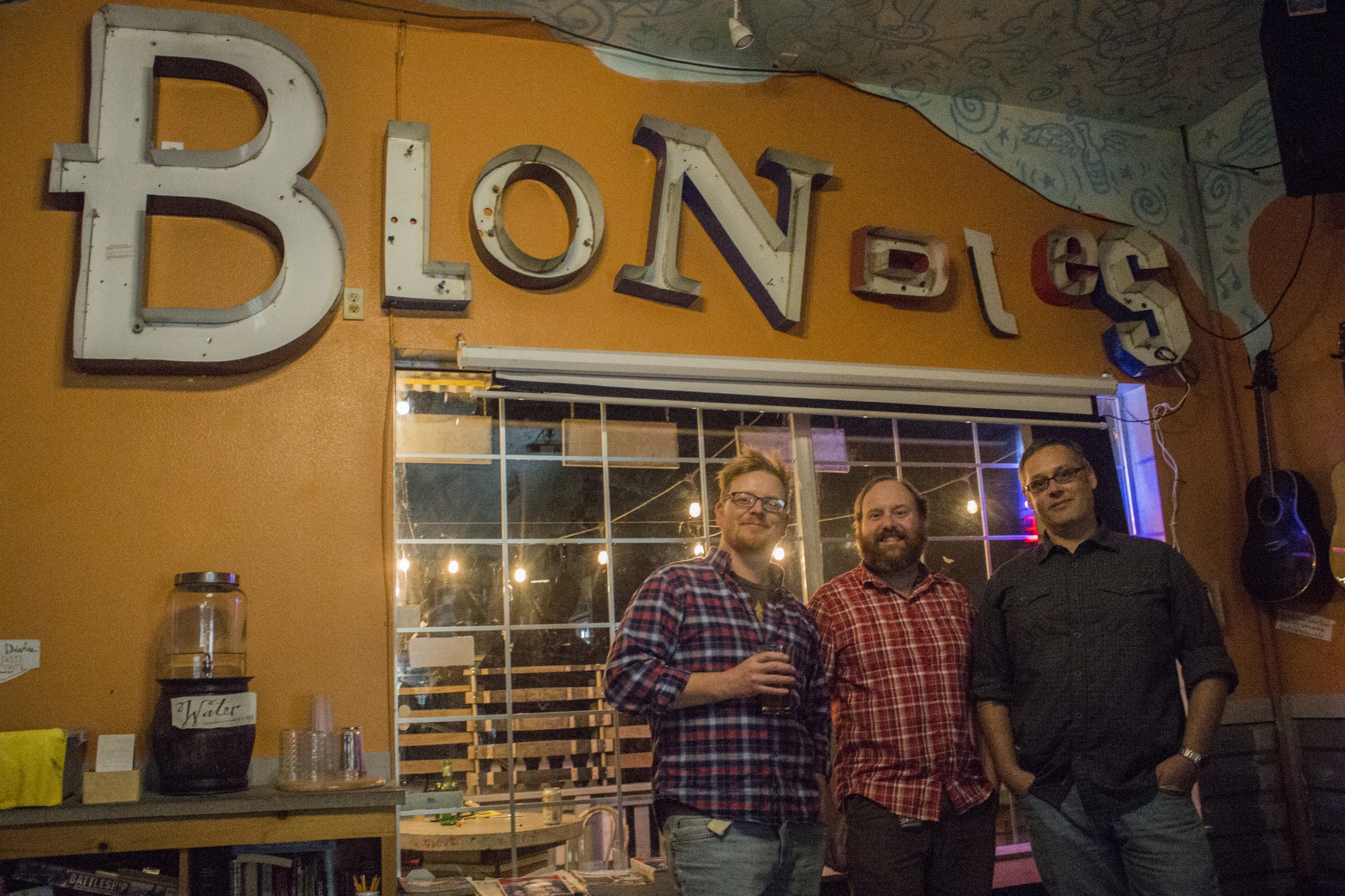
Between games of Foosball, Donkey Kong and pints of Third Wave craft beer, Blondie’s Food and Drink had a packed house for their monthly “Science on Tap” event.
Dr. Tyler Mitchell, professor of physics and astronomy at HSU, gave a presentation on implicit biases and stereotype threats to an audience of HSU faculty, students and community members at the Arcata bar on Nov. 7.
Science on Tap was started by professor of physics and astronomy C.D. Hoyle, after he saw NOVA was sponsoring science events in cafes.
Hoyle is friends with the owner of Blondie’s Food and Drink and decided to mirror NOVA’s science focused cafe events. By fall of 2012 he was doing it every month. He said the event bolsters a healthy relationship with community and the university.
“The goal is community engagement and outreach,” Hoyle said.
Mitchell presents regularly for “Science on Tap” with a variety of topics. Mitchell said he chose the night’s topic because he attended an implicit biases and active learning workshop in La Jolla over the summer. When earning his Ph.D. at the University of Colorado at Boulder Mitchell said he was introduced to their physics education research that involved active learning and incorporates it into his teaching.
“Active learning techniques reduce implicit biases and stereotype threats in students,” Mitchell said.
According to the Perception Institute, the term “implicit bias” is used to describe when we have attitudes towards people or associate stereotypes with them, without our conscious knowledge.
The Oxford Scholarship defines stereotype threat as a situational predicament in which individuals are at risk of confirming negative stereotypes about their groups. Mitchell said we all have pre-conceived notions, both explicit and implicit, about others and ourselves. He said in active classrooms diversity is all inclusive.
“Explicit biases is the tip of the iceberg where the implicit are submerged in the water,” Mitchell said.
Mitchell said in a good active classroom the focus is on the students opposed to traditional style which the focus is on the teacher. He said an active classroom provides and fosters more meaningful social and academic interactions that help students succeed. One way to overcome biases and stereotype threats is to include everyone in the classroom and give enough time for students equally.
“Active classrooms have proven to decrease failure rates,” Mitchell said.
Mitchell said these implicit biases start at an early age and aren’t our fault. Mitchell described a study where five-year-olds picked their own gender equally to the opposite when choosing protagonists, but when they turned six or seven they would start to pick male protagonists as the smarter option because they developed a cultural idea that being smart is a male trait.
He said when games are introduced to girls at that age they will gravitate towards games for hard workers and stay clear of games for smart people. Mitchell said these biases lead to stereotype threats for students at an older age.
“People come to campus with preconceived ideas on how they should perform,” Mitchell said. “They think they aren’t good at something and that isn’t true.”
The reason Mitchell got into physics was because he wanted to be a professor. He said implicit bias research has made him a better teacher and he has seen definite change in students since he became effective at it. Mitchell said HSU is supportive of active learning and more universities are building spaces to accommodate inclusive classrooms.
“With a large Spanish speaking student population using implicit bias techniques is important,” Mitchell said. “We need to get students and faculty both engaged.
Professor of chemistry at HSU Chris Harmon said forums like Mitchell’s implicit biases and stereotype threats expose people to science who may not have a chance to it. Harmon has been co-facilitating “Science on Tap” since 2013 and said everyone involved volunteers their time. He said there is so much science going on at HSU but there is a disconnect with the community. Science on Tap bridges that gap.
“Science is only accessible to people at the university,” Harmon said. “Our goal is to bring access to community.”
You’ve probably experienced that creepy feeling like you’re being watched. You don’t know why, but hairs stand up on your neck and you look over your shoulder, even when you think you’re alone. If you get that sensation while you’re at your computer, you may want to check your webcam.
Mark Zuckerberg, co-founder and CEO of Facebook, once posted a picture that showed his laptop webcam covered up with tape. If webcam security is something Zuck is concerned about, should you be too? Hackers are likely more interested in someone like Zuckerberg, but that doesn’t mean it won’t ever happen to you.
Dr. Sherrene Bogle is a professor in the computer science department at Humboldt State University.
“To the extent that both Big Brother and hackers are watching us, we should all be concerned about computer privacy in all forms, not just web cams, but audio, our telephone conversations being recorded,” Bogle said. “Online security is an ongoing task.”
Some students at HSU have caught on to the webcam taping trend.
Erik Ramos, working on his laptop in the Library Cafe, uses a spy guard over his webcam. The guard is a small plastic cover that mounts over a flat surface webcam. Ramos’ guard is made by Targus, and has an adhesive back and a slider hatch for when you want to use the cam.
“I’ve had this cover on for about a year,” Ramos said. “I’ve heard stories about people being watched through their webcams. It could definitely be the government or just creeps.”
Ramos said that he used to use post-its before he bought his cover, but since he worked at Staples he was able to get a guard cover for cheap. Sliding guard covers retail online for about $5.
A webcam spy guard on Erik Ramos’ laptop at HSU library Cafe on Nov. 6, 2018.
Hailey Hughes has a basic trimmed and taped post-it note covering her laptop webcam. For Hughes it’s better to be safe than sorry.
“I’ve had this on here for maybe two years,” she said. “I’m just suspicious in general.”
According to Bogle, both personal computers and Macs are susceptible to webcam attacks, but personal computers are slightly more vulnerable. She also said that new computers aren’t coming up with unbeatable protection.
“Vulnerabilities still exist with the ubiquity of online and especially wireless network connections,” Bogle said.
She said there are some things you can do besides covering your webcam to protect your them from getting hacked.
“Use secured networks, limit or avoid sensitive transactions on free wi-fi, use firewalls, and update your anti-virus software regularly,” Bogle said.
“The relationship between convenience and privacy is like a see-saw,” Bogle said. “It’s hard to balance because most of us desire convenience and the greater the convenience the more exposed we are and inevitably the less privacy we have.”
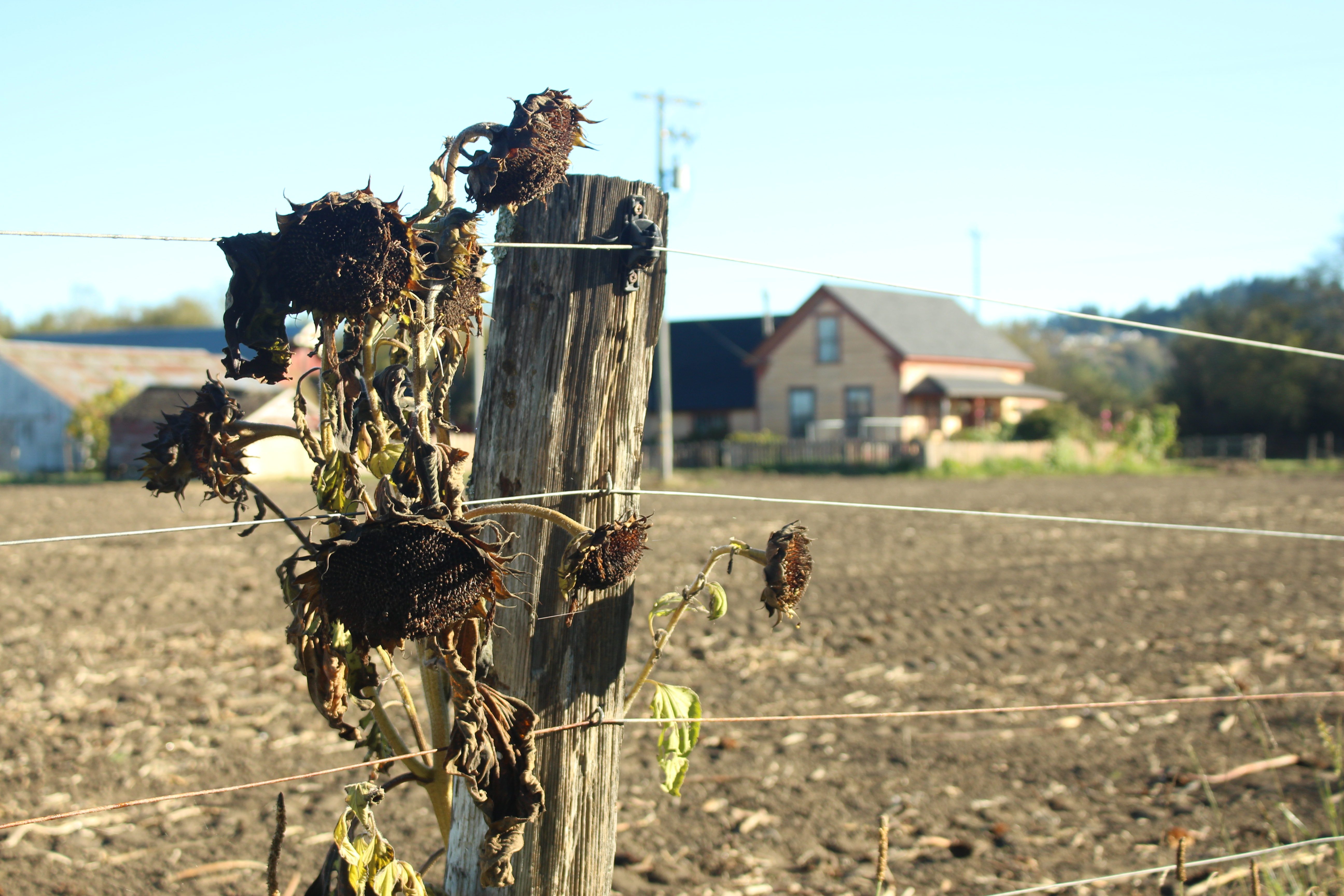
Fusarium. It sounds like it could be a poison used on spies in the 1960s. In reality, it’s the fungus that destroyed Warren Creek Farm’s pumpkin and sunflower crops this year.
“Fusarium is a pathogen,” said Warren Creek Farms owner Abram Stark. “It’s bad for the plants.”
Stark said Fusarium is always in the fields and common with the squash plants. But it came stronger this year, wiping out over half of the farm’s pumpkin and sunflower plants.
“I’m not sure why it’s worse this year,” Stark said. “It could be because of the sunflowers, but then again these fields have had sunflowers and pumpkins on them for many years in a row.”
An Fusarium infected pumpkin lays smashed and rotting in the Warren Creek Farms patch. | Photo by Sean Bendon
Warren Creek Farms has been going strong for more than 20 years with the leadership of local farmer and mentor Paul Guintoli. Guintoli is a former president of the North Coast Growers’ Association.
Guintoli has had a huge influence on many in the community, including another local farm Organic Matters Farm. Heather Plaza is the co-owner of Organic Matters Farm.
“You never know every year what is gonna go on,” Plaza said. “You’re just dealing with nature and the environment.”
Both farms are within a mile of the ocean but use different techniques to protect their crops from the moisture it brings. Organic Matters Farm amends their soil with ash to build up nutrition in the soil and uses a dry farming method instead of watering to grow the crops.
According to a University of California report shared by Humboldt State University Professor Susan Marshall, Fusarium is a pathogen that quite commonly invades pumpkins and squash that belong to the Cucurbitae family.
“You try to prepare the best you can,” Plaza said. “But whatever happens, happens.”
Regardless of the circumstances, the group at Warren Creek Farms did not seem too worried about getting back into the swing of things.
“Next year we’re gonna do it just like we’ve done it before,” Stark said. “This year was just rough.”
Following two other California State Universities failed tests, Humboldt State tested water sources on campus
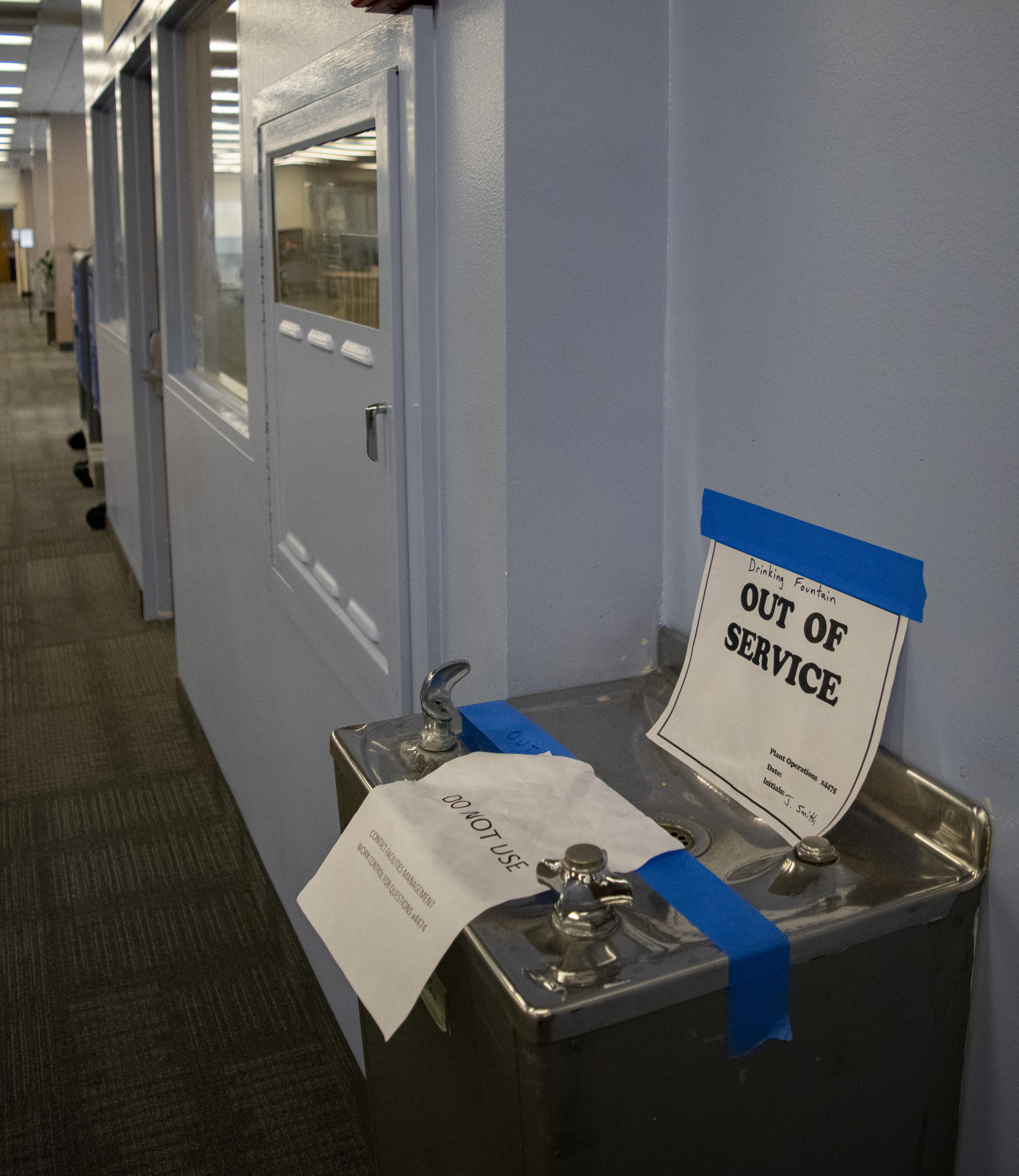
Three drinking water fountains on Humboldt State’s campus have been removed from service for having lead levels higher than Environmental Protection Agency standards.
Humboldt State is the third CSU to test its drinking water for lead with all three finding water sources containing higher than recommended lead levels.
Over the summer HSU decided to test some of its drinking water sources after two other CSUs tested drinking water on their campuses and found that some sources tested higher than the Environmental Protection Agency’s benchmark of an acceptable level of lead in drinking water.
Since 1991 the EPA regards lead levels in drinking water above 15 parts per billion to be the “action level.” Prior to 1991 the federal action level was 50 PPB.
Sabrina Zink is an Environmental Health and Safety specialist at HSU. Zink said that buildings and fixtures at HSU were selected by prioritizing areas that children under the age of six could be exposed to lead; this is the most vulnerable age for lead exposure in humans. After drinking sources were tested from fixtures that children regularly have access to, older buildings were targeted, and one building by original construction date per decade.
One hundred and twenty one drinking water sources were tested at HSU over the summer. Thirty seven of the 121 sources didn’t contain lead levels high enough to register detection during the test. Eighty one of the tested sources registered lead levels but fell below the EPA’s 15 PPB threshold. Three fixtures tested above or at 15 PPB and have since been removed from service.
Of the three that tested higher than the action level two were drinking fountains, and one was a sink. The fountains were in Forbes gym (16 PPB), and on the third floor of the library (86 PPB). The third fixture, a sink in the bottom floor of the library (15 PPB), tested right at the EPA action level.
“We decided to abandon these fountains,” Zink said.
Zink said lead usually finds its way into drinking water systems through the old fixtures and sometimes through dated fittings and solder.
The other two CSUs that tested drinking water on their campuses were Long Beach and Sacramento. Test results from these campuses revealed drinking water sources containing lead high marks of 127 and 390 PPB.
A spokesperson for the EPA, said the Center for Disease Control and Prevention has found that no safe blood level has been identified for lead, and all sources of lead exposure especially for children should be controlled or eliminated.
The EPA website states that children are particularly vulnerable to lead and that low levels of exposure in kids have been linked to learning disabilities and damage to the nervous system and exposure in adults can lead to decreased kidney function and reproductive problems.
The highest lead level samples found in drinking water from three California State Universities and from Virginia Tech’s testing of Flint Michigan’s water crisis in 2015. | Graph by Walter Hackett
According to Zink there is currently no mandate for lead testing in the drinking water at CSU’s though the chancellor’s office did recommend that drinking water should be tested.
“We aren’t required by any regulation or law to test,” Zink said. “We thought it was the right thing to do.”
The CDC website states that you cannot see, taste, or smell lead in drinking water and the only way to know is to have it tested.
Roxanne Moore works at North Coast Laboratories, an Arcata based business that provides drinking water lead testing as a service. Moore said that they charge $27 per sample for lead water testing and the turnaround for results typically takes two to three weeks.
Starting at the beginning of 2018 a law in Calif. was enacted requiring that lead testing be carried out for drinking water for all k-12 public schools. So far, lead sampling for this initiative has tested 3,541 schools and found 137 sites that have tested higher than the EPA action level of 15 PPB.
In 1986 Congress amended the Safe Drinking Water Act to prohibit the use of fixtures, fittings, and solder containing certain amounts of lead in public drinking water systems.
Zink said that further lead testing is planned for campus housing facilities.
“We are testing housing over Thanksgiving and Christmas break,” Zink said.
Editor’s Note: This an editorial contribution from Deija Zavala. The author currently works for the Lumberjack as an Online Editor.
I went in search of ferns and ivy, I found instead disgusting evidence of human existence.
Assorted garbage trailing down the hill just off Greenwood Heights Dr. on Saturday Oct. 13 in the Freshwater area, east of Eureka. | Photo by Deija Zavala
On Saturday I explored a local watershed in the Freshwater area. The field trip was for an Environmental Science Management class where the goal was to visit a local watershed and observe.
I’d seen the beautiful landscape of Freshwater once before and hoped the trip would give me an excuse to get lost for a few hours with nothing but my camera and the wildlife.
Pieces of cupboards, particle board, aluminum cans, and other miscellaneous debris pile up less than 15 feet from a sign threatening prosecution over illegal dumping on Oct. 13 in Freshwater. | Photo by Deija Zavala
At first, it was lovely. I did a short hike and found myself taken by how separated I was from my Eureka apartment and all the rumbling of engines and people on a sunny weekend morning.
Eventually, I came to a roadside area that had so much debris it looked like a dump. Carcasses, bones and trash of all kinds lay on the side of the road. There were boxes, tiles, kitchen cabinet pieces, bottle caps, cigarette butts and Taco Bell wrappers. It was awful to witness such disregard for the wildlife.
A cattle bone found next to chunks of kitchen tile and fallen redwood needles on Oct. 13 in Freshwater. | Photo by Deija Zavala
The Environmental Protection Agency website states that this kind of pollution is called nonpoint source pollution. After a big rain or when snowfall melts, nonpoint source pollution can ultimately find its way into drinking water sources such as rivers or lakes and even into ground water.
If you come across an illegal dump, especially if its near a watercourse, you can report it to the Humboldt County Division of Environmental Health at 707-441-5410.
Abandoned kitchen tiles sit haphazardly amongst trash just off Greenwood Heights Dr. on Oct. 13 in Freshwater. | Photo by Deija Zavala
Humboldt State University food waste feeds worm farm
Every two and a half weeks when school is in session, HSU sends about 18,000 pounds of food waste to a local worm farmer for composting.
According to HSU’s Facilities Management website, CSU sustainability policy calls for HSU to reduce its solid waste disposal rate by 80 percent by 2020.
The Facilities Management website also states that HSU employs two different compost operations. An off campus vermi-composting operation (vermi – relating to worms), and an on campus operation run by the Waste-Reduction and Resource Awareness Program.
Food Waste to the Worms
Megan Tolbert is the Grounds, Recycling & Waste Coordinator at HSU. Tolbert said sending food waste to the worms starts with having the food waste placed in specially labeled compost receptacles in or near dining areas around campus. Student assistants and recycling staff collect food waste from events and from these receptacles and empty into the BioBin.
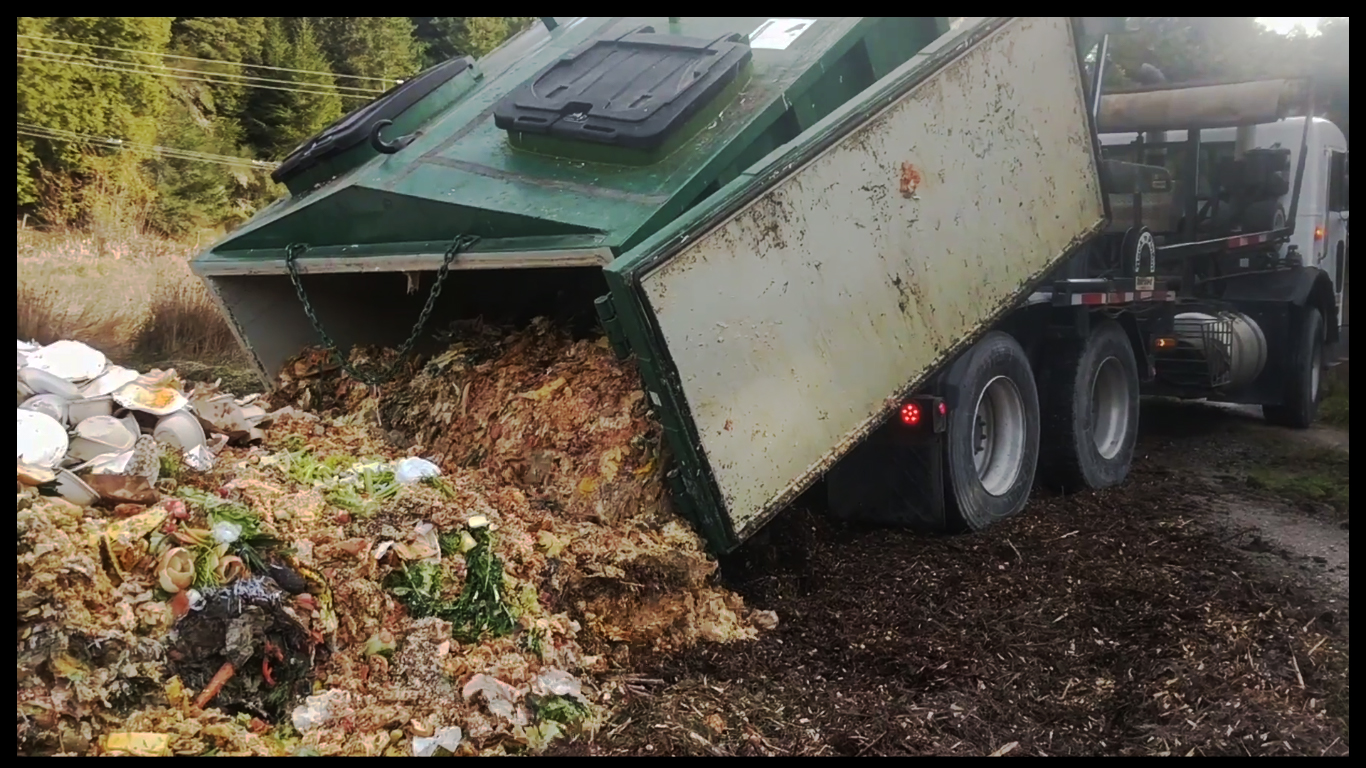
The BioBin is a 20 yard capacity food waste holding receptacle located near the J dining hall. Once the BioBin is close to capacity a truck loads the receptacle and delivers to a worm farm in Humboldt County.
The worm farms are operated by a small, local business, the Local Worm Guy. Lloyd and Stacey Barker operate several worm farms throughout Humboldt County.
Tolbert said that while school is in session BioBin loads are being delivered to Local Worm Guy farms about every two and a half weeks.
Between worm deliveries, according to Tolbert, student assistants and recycling staff maintain conditions of food waste being stored in the BioBin. The goal is to create optimal compost conditions once the food waste reaches the worm farm. Excess liquids are removed, and the food waste is mixed and layered.
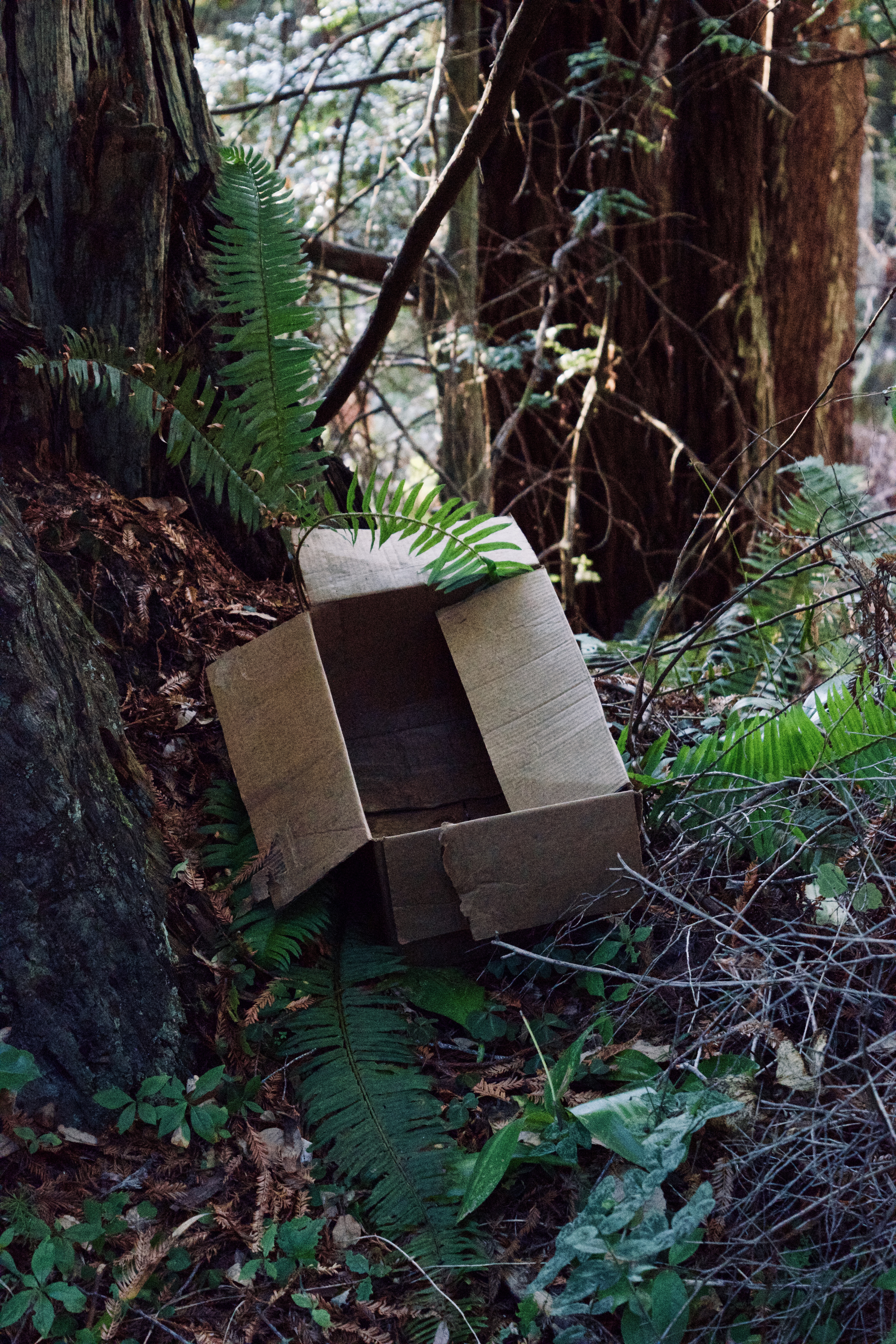
Tolbert said that extra carbon sources are regularly added to the BioBin. Having a proper carbon to nitrogen ratio is important for organisms breaking down the organic matter. Sometimes this extra carbon comes from pizza boxes from campus events since pizza boxes cannot be recycled because of pizza grease saturation.
Contamination or trash is regularly removed from the BioBin. Trash is accidentally thrown into compost receptacles around dining areas which ultimately makes its way into the BioBin.
“We’re controlling contamination better,” Tolbert said. “We must not feed the worms trash.”
Not all contamination can be removed from the Biobin. Lloyd Barker said that once trash lands on the worm farm it has to be removed by hand and none of it can be recycled.
“We really appreciate whenever the students and dining staff are able to keep their CRV’s and trash out of the compost bin, it saves me and Stacey a lot of time and energy,” Barker said.
Red wiggler worms working to break down food waste, and an example of a CRV (Guayaki Yerba Mate lid) making its way into the compost bin, at a Local Worm Guy farm, Humboldt County, Calif. | Photo by Local Worm Guy
A Lumberjack article published nearly one year ago, reported that compost deliveries to the worm farmer had ceased and that all food waste in the BioBin would be sent to the landfill.
Tolbert said that it was true that HSU’s annual contract with the worm farmer had ended last year but deliveries have never stopped. Temporary purchase orders have been used in lieu of a contract.
Katie Koscielak works as a Sustainability Analyst for HSU and said that it’s rare when food waste from the BioBin is sent to a landfill. Koscielak said that it has only happened twice in the past two years.
Tolbert said that BioBin loads are only sent to landfill when weather won’t permit deliveries to the worm farm. During heavy periods of rain a fully loaded BioBin delivery truck has gotten stuck in soft soil while trying to access the farm.
HSU truck with loaded BioBin delivers a load to one of the worm farms operated by Local Worm Guy, Calif. Video from HSU Sustainability Facilities Management.
The HSU sustainability facilities management team said that because of the high volume flow of food waste on campus a rare delivery of a BioBin load to the landfill, determined by weather conditions, is necessary.
Earthtub
Earthtub is an on campus compost receptacle managed by WRRAP. According to WRRAP’s website Earthtub diverts approximately 500 pounds of food waste from the landfill per week.
Diana Orozco is an environmental science and management student who manages compost conditions for Earthtub. Orozco said that Earthtub can hold about three cubic yards of food waste. Unlike the BioBin where worms are eventually used to break down food waste Earthtub uses microbial decomposition.
According to Orozco mobile compost waste buckets are distributed and picked up once a week by operators to 42 locations across campus. Various departments across campus voluntarily opted in to use compost buckets.
Similarly to the BioBin carbon is added to the Earthtub to optimize ratios that favor the decomposition process. Orozco said that the decomposition process takes about three weeks.
After decomposition, compost from Earthtub is available for free for students and staff to use for their gardens. CCAT also uses it in their gardens on campus.
“When you take good care of it you get black gold,” Tolbert said.
Biology student puts classroom lessons to practical use in the Arcata Community Forest
Matthew Pedrotti, a senior biology major with an ecology and biodiversity emphasis, spends much of his free time on campus exploring the nearby Arcata Community Forest in order to locate and classify various plants.
“Look at the lichen in its natural habitat,” Pedrotti said on a walk through the forest.
Pedrotti said he is particularly fond of lichens, which is the union of a fungus and an algae.
“I find them fascinating,” Pedrotti said. “They’re very diverse.”
Pedrotti said he carries a hand lens in his pocket at all times.
“I can’t leave home without it,” Pedrotti said.
Matthew Pedrotti describes some of the vegetative features of lichens found on an alder twig in the Arcata Community Forest. Photo by Walter Hackett
According to Pedrotti, he could spot with his naked eye at least three microlichens and at least two other macrolichens from an alder twig he found.
“This alder twig is an example of how speciose [rich in species] lichens are in nature,” Pedrotti said. “Lichens are excellent ecosystem health indicators.”
An alder twig displaying multiple species of lichens in the Arcata Community Forest. Photo by Walter Hackett
“The black spots of this microlichen are actually sexually reproductive organs,” Pedrotti said.
Matthew Pedrotti dissects a cotoneaster fruit to reveal seeds in the Arcata Community Forest. Photo by Walter Hackett
Pedrotti said he thinks HSU is unique because it has an accessible community forest right next to campus. The forest provides plant specimens to examine such as cotoneaster fruit.
“Fun fact, cotoneaster is highly related to apples and pears,” Pedrotti said.
However, Pedrotti said that just because it’s called a fruit, it doesn’t mean that it is edible to humans.
Base Camp examines and documents environmental impacts of Caltrans ‘Last Chance Grade Project’
Editor’s Note: This a special contribution from Kyra Skylark. The author attended this event as a student volunteer and has previously worked for the Lumberjack as a reporter and Science editor. The current Lumberjack photo editor, Nick Kemper also attended and shot photos for the group.
Contributors Note: I attended this event as both a student volunteer and as a journalist, therefore some of my own personal views may be reflected in the story. -Kyra Skylark
“I discovered the difference between reading about something and seeing,” Tom Wheeler said. “Seeing on a paper is different from seeing in person, in person the trees and the great biodiversity of that area really stood out.”
Tom Wheeler, the executive director of the Environmental Protection Information Center was a group leader on EPIC’s 2018 annual Base Camp trip.
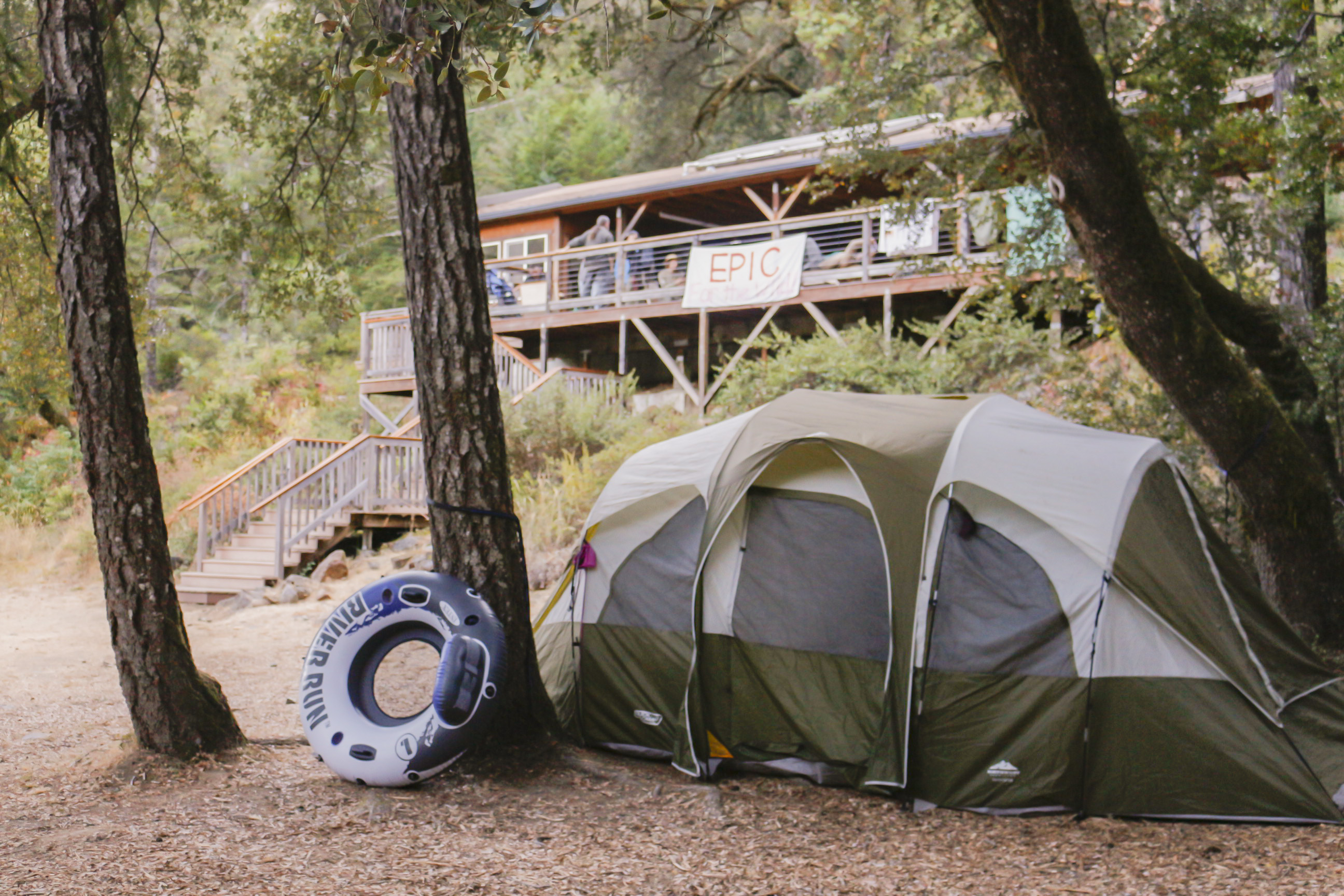
Earlier this month EPIC hosted their second annual Base Camp at Rock Creek Ranch.
Students and community members were invited to volunteer to help in examining and groundtruthing two of the Last Chance Grade Project alternatives.
Groundtruthing is visiting a proposed project site to document what the project looks like through direct observation.
Ariel Nelson, an Humboldt State University student majoring in environmental science and management with a focus in ecological restoration, attended EPIC’s 2018 Base Camp.
“I was looking for more opportunities to gain field experience in regards to environmental work in general and it seemed like a cool camping trip as well, so I cleared up my weekend commitments and went for it,” Nelson said.
The proposed Last Chance Grade Project is a highway development project in Del Norte county, 10 miles south of Crescent City.
“The Last Chance Grade slide area of the 101 has experienced a lot of landslides over the last hundred years with some pretty catastrophic road failures, so Caltrans is looking at ways to redesign or move the road to get around this critical slide area,” Wheeler said. “Caltrans has determined that it needs to rethink the current road alignment because it is not safe and does not provide reliable transit between Del Norte and Humboldt counties.”
EPIC’s Base Camp volunteer group examined and documented two of the six proposed alternatives for the Caltrans project.
“We chose to examine alternatives A2 and L because relative to the other alternatives, these look like they may end up as the main proposed alternatives, so it was necessary for us to examine them and their proposed impacts,” Wheeler said.
Lenore Ogbor, a retired special education elementary school teacher from New York City, happened to be within a few hours of the area just in time to go on EPIC’s Base Camp.
“I didn’t know that the redwoods had such a shallow root system or that they spread horizontally and close to the surface holding each other up as a sort of interdependent system,” Ogbor said. “How putting a road 10 feet away from a redwood, while you may be trying to saving the tree, you’re still damaging the root system. I learned that the redwood trees help each other to stand up and then they are able to support all these different animals, trees, plants and the whole ecosystem within, as they are also cooperating with each other to stay vertical.”
EPIC and the Base Camp group concluded that the L alternative was prefered over alternative A2. Alternative A2 would cut through three acres of old growth redwoods within the Del Norte Coast Redwoods State Park.
Gabe Kim, an HSU film major and a videographer intern for EPIC, who went to EPIC’s Base Camp to document the trip was also amazed by the width of the trees.
“It was cool seeing the 13 foot wide redwood trees [in alternative A2] and watching everyone documenting the area using avenza maps that as I documented through video,” Kim said. “It really got me thinking about how beautiful the scenery is and what we would be missing if the road was in fact built and all those redwoods were cut down.”
Everyone seemed both awed and sad while walking through the old growth redwood forest of A2.
“I’d never seen trees that big in my life,” Nelson said. “It was my favorite part because I was able to step into such an untouched landscape, but it was also devastating to realize if that alternative is chosen all those trees are going to be gone.”
The Base Camp volunteers participated in different activities such as groundtruthing, map and compass orienteering, environmental policy overviews and know your rights trainings. Some individuals, like Lenore Ogbor, were only in the area to participate EPIC’s Base Camp and departed after the weekend was done.
“All of these people gathered with a common interest, with different degrees of knowledge, but sharing in this passion,” Ogbor said. “There was a large range of ages and a good amount of the people there were students.”
Many students in attendance are studying exactly what EPIC was teaching at Base Camp, and were able to apply their studies to the activities.
“It was cool to come into it with an understanding of how environmental assessment works,” Nelson said.
While some were excited to demonstrate and apply their knowledge, others were simply excited to share in everyone’s knowledge and joy.
“Just watching and hearing the students, I could tell they were able to bring some of the stuff they’re learning in class alive right there and then,” Ogbor said. “The students had already learned some of what the group leaders were talking about, it wasn’t all brand new knowledge and their synapses were just click, click, click, clicking away. I’ve been a teacher for many years and I just love seeing that kind of spark and interest.”
The gathering of students and community volunteers was the first step in the environmental assessment of the Last Chance Grade project. From here, EPIC and other organizations will continue to assess the different road alternatives creating additional opportunities for community members to be a part of this process.
“A note to everyone in general, you do have an impact, you can change decisions just by putting yourself out there and getting involved any way that you can, every single person has a roll that they can play,” Nelson said.
During the Great Depression a small college in Humboldt County built a fish hatchery. The hatchery’s popularity among students gave rise to a blossoming natural resources program.
Today, Humboldt State is known for its natural resource and science programs, according to the California State University website. This wasn’t always the case.
In Richard Ridenhour’s book “Natural resources at Humboldt State College: the first 30 years” the author wrote that in 1939 Humboldt State College had under 300 students and had no natural resource classes.
After the construction of the campus fish hatchery in 1940 Humboldt State was the first college in the nation to have a fish hatchery on campus and that success and popularity of hatchery classes led to the expansion of other natural resource and science programs.
Andrew Kinziger is the current chair of the Department of Fisheries Biology at Humboldt State. According to Kinziger there aren’t many universities that have a fish hatchery that can provide hands on instruction and experience.
“It’s one of the keystone facilities for the university,” Kinziger said. “It’s a wonderful resource and we’re fortunate to have it.”
Kinziger said that Fisheries department students and faculty interact with the hatchery on a daily basis.
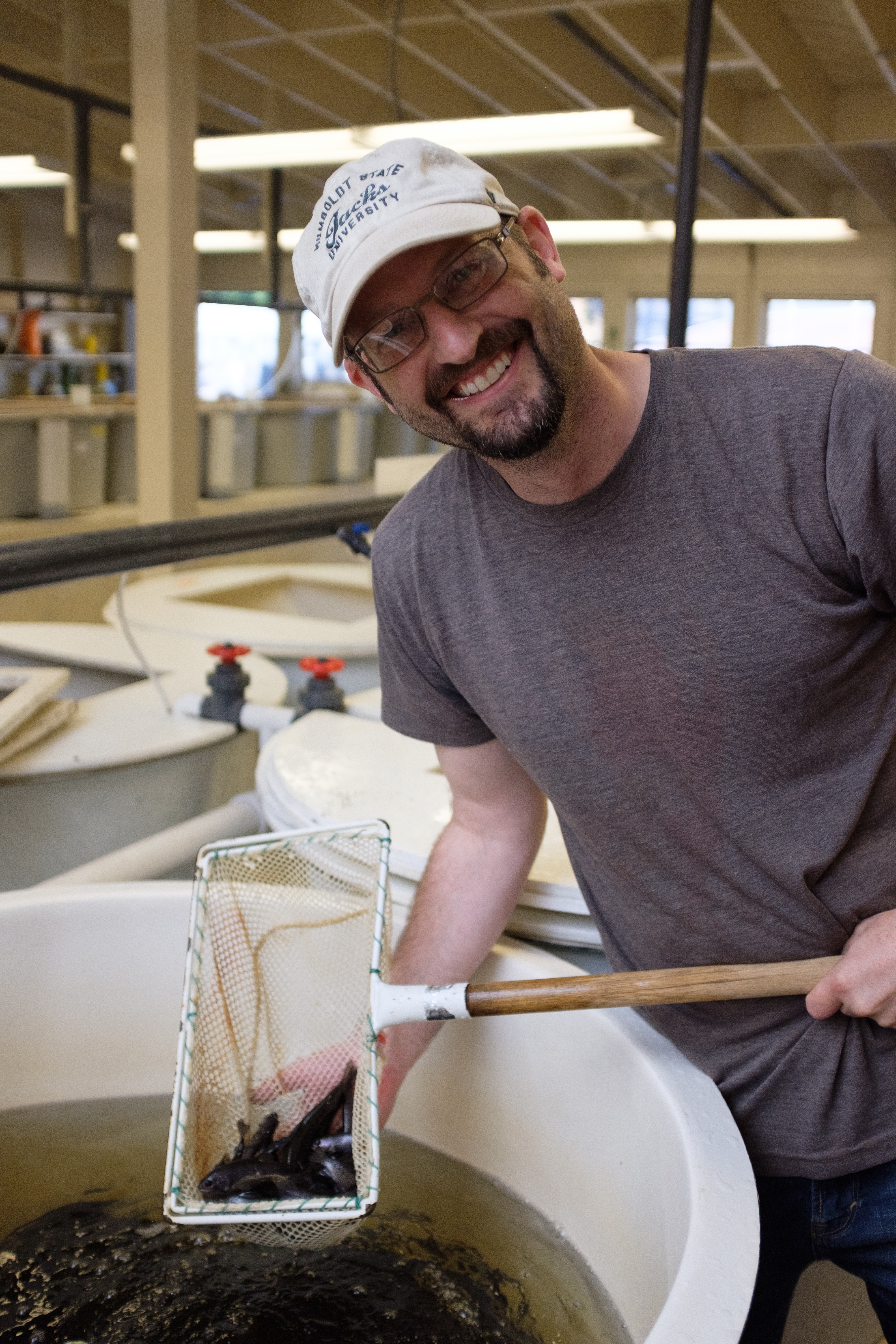
Patrick Nero has been the hatchery manager at the facility for about 11 months. Nero said the hatchery raises native steelhead and native coastal cutthroat trout. According to Nero, fish from the hatchery are used purely for research and aren’t eaten or stocked.
Nero said that the hatchery recently implemented an aquaponics project on the facility. Nero’s goal is to produce something valuable with water discharged from the fish system. The discharged water is full of fish by-product, including lots of nitrogen, and acts as a fertilizer.
Currently the hatchery is growing lettuce, and marigold to transplant in other areas of the campus with discharged water from the hatchery.
“We’re finding ways to use the discharge,” Nero said. “It’s been successful so far.”
Michael Academia, a Fisheries Biology major, is a student employee at the hatchery and has worked there since April. Some of Academia’s responsibilities at the facility include feeding the fish, checking the water quality and back flushing the system, which involves pumping in fresh water to hatchery fish tanks.
Academia said over the summer Nero had asked him to look into ways to work with the Humboldt Energy Independence Fund to improve the facility’s energy efficiency.
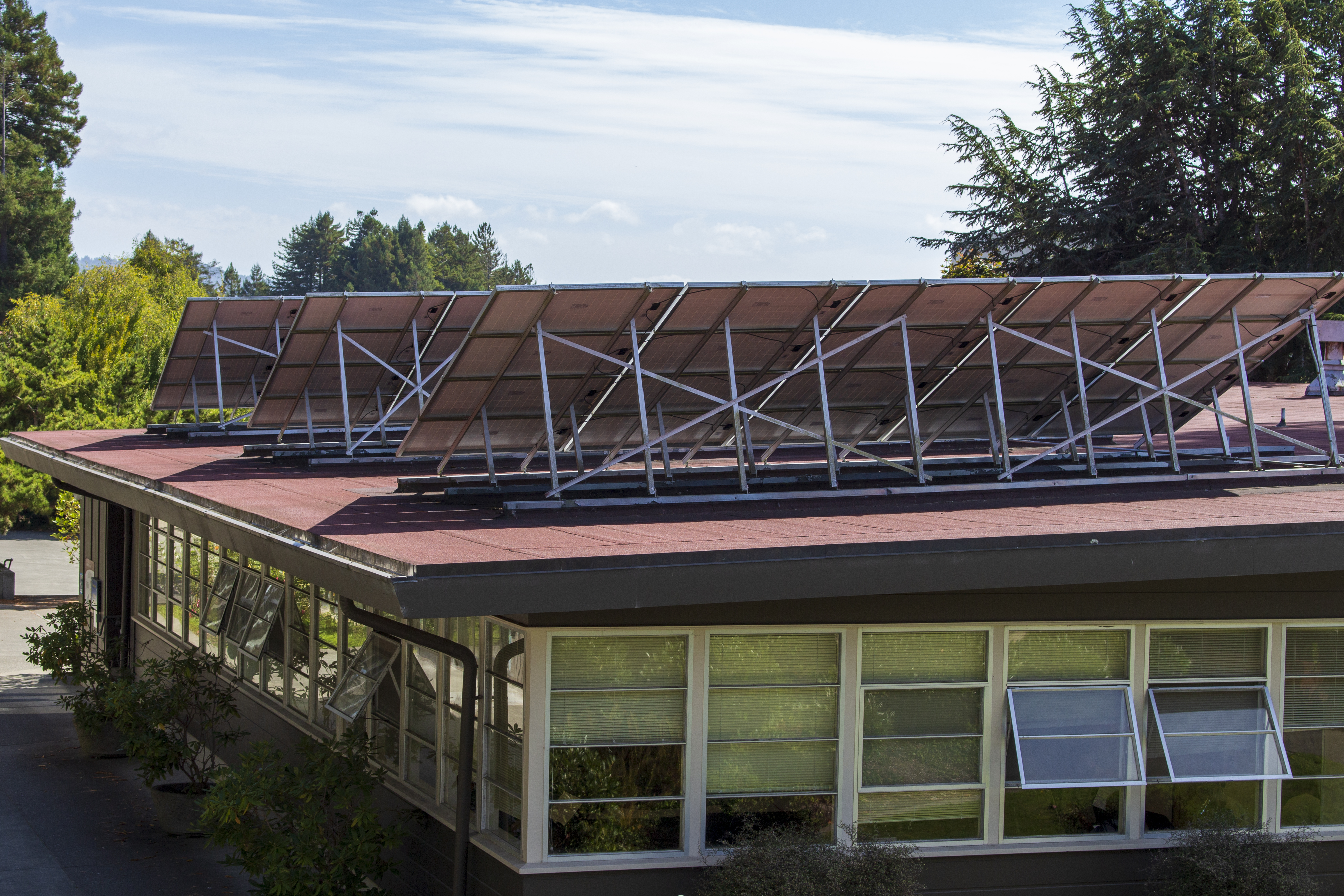
According to the student run Humboldt Energy Independence Fund website their mission is to create a more sustainable campus by promoting energy independence. Notable projects from the organization include the solar panel array on top of Music A building and the relighting of the Redwood Bowl with efficient bulbs.
The Humboldt Energy Independence Fund is funded with a small portion of student’s tuition each semester. According to their website, about $13 from each student per semester goes to the organization to be implemented on renewable energy projects on campus.
Academia said initially he was looking at adding solar panels to the hatchery facility but students from the Humboldt Energy Independence Fund said that the hatchery’s energy costs were too high and that inefficient energy draws on the facility should be addressed first.
This led Academia to look at alternative ways at maximizing facility energy efficiency. Academia worked with a Building Engineer from Facilities Management, Jeff Robison, to conduct an energy analysis on the facility.
The analysis concluded that replacing dated facility equipment could reduce energy usage by 50 percent and save over $14,000 per year.
Academia’s proposed project would replace the existing water pumps and electric motor system with new energy efficient models.
Currently water flow control for the hatchery system is manually controlled and requires two pump motors to run at full capacity for 24 hours a day. The updated pump motors along with an intelligent variable control system, which will automatically control the flow of water through the system would cut energy usage roughly by half.
“We’re trying to integrate more than fish,” Academia said.
Academia’s project is in the beginning stages of the approval process by the Humboldt Energy Independence Fund. The organization is currently looking at the feasibility of the project to see if the project can be done.
“We’re trying to be green pioneers of raising fish,” Academia said.
University sustainability assessments reveal strengths and weaknesses of Humboldt State University’s campus wide environmental impact
Humboldt State University’s total energy consumption from clean and renewable resources is .07 percent, according to figures from a 2017 sustainability assessment report.
In another assessment, HSU ranked 31 out of 269 college institutions as being a sustainable “cool school” according to Sierra Club rankings.
The ranking was based on unique Sierra Club metrics which the Club said were designed to measure how a university is addressing the climate crisis. The ranking included scores from categories such as research, air & climate, energy, water, and waste.
According to the Sierra Club website, the organization ranks schools on sustainability in order to serve as a guide for prospective students, and to raise environmental standards on university grounds.
HSU sociology major Isaiah Hall said he wasn’t aware of the Sierra Club ranking. Hall, who plays on the Lumberjacks football team, said students would benefit if the university focused on sustainability upgrades such as LED lights and more solar panel arrays.
This was the first year HSU participated in Sierra Club’s annual ranking system. Notable universities that ranked higher than HSU included: UC San Diego, Chico State and UC Irvine. Chico State was ranked 9.
In order to participate in the Sierra Club “cool school” ranking HSU had to forward data from a separate and more comprehensive university sustainability tracking report which was compiled in 2017.
Katie Koscielak works as a Sustainability Analyst for HSU and is responsible for coordinating the campus sustainability report.
Koscielak said compiling data for participation in the assessment was an expansive project spanning collaboration from 25 university departments.
Humboldt State has participated in two Sustainability Tracking, Assessment & Rating System reports. The first STAR report was in 2013. The latest report in 2017.
According to Koscielak between the first and latest reports HSU improved by 14 percent and went from a silver to gold rating. The reports are public and specific details about HSU’s score can be found online.
In the latest rating HSU received a gold star, which requires a minimum rating score of 65. HSU received a score of 69.28.
Gold is the second highest rating category currently in place. Platinum, which requires a score of 85 or higher, is the highest. Only four schools have platinum ratings: Colorado State, Stanford, UC Irvine, and the University of New Hampshire.
Ratings are considered valid by The Association for the Advancement of Sustainability in Higher Education for three years.
In the 2017 report, HSU scored high in academics, engagement, and the planning and administration credit sections. The school received poor marks in operations.
The operations credit section includes: air and climate, buildings, energy, food & dining, grounds, purchasing, transportation, waste, and water categories. The university scored lowest in buildings, energy, food & dining, grounds, and transportation.
HSU strongly promotes social and environmental responsibility in its mission statement as well as commitment to sustainability and environmental economic and social responsibility in its vision and values.
However, In the report HSU energy received poor scores due considerably to having a total energy consumption from clean and renewable sources of less than 1 percent.
“We have room for improvement,” Koscielak said.
Koscielak said that launching renewable energy projects can be extremely expensive and larger universities tend to have advantages in this regard because of more funding opportunities.
By comparison UC Irvine has a total energy consumption from clean and renewable sources of 2.14 percent. In fall of 2017, Irvine had enrollment of over 35,000.
Another category HSU received low scores on in the operation category was Grounds. Credit was given to institutions who have official integrated pest management programs or an organic land care standard or landscape management program which uses ecologically preferable materials.
According to Koscielak HSU uses integrated pest management strategies but does not have an official plan.
HSU Waste, Recycling, and Grounds Coordinator Megan Tolbert said one of the integrated pest management strategies that the university currently uses is live traps. Poison is never used to control rat pests on campus and using live traps also helps prevent harm to other wildlife.
HSU masters student Megan Awwad said she wasn’t surprised about the universities low renewable energy statistic. Awwad, who previously attended University of Calif. Riverside, said Riverside promoted itself as being a sustainable school.
The Academic and Career Advising Center hosted a grad school workshop for science majors in the Humboldt Scholars Lab in the library Sept 5. Career Adviser Kristina Hunt attempted to prepare prospective graduate students for what’s to come when applying to colleges across the country.
Hunt clicked through slides aimed at arming students with application information and timelines often available, but almost never compiled into one place. The presentation was designed to streamline the process and nuances of applying to grad school.
The to-do list was lengthy but calculated to optimize time and resources. The tips were varied, but insightful; ranging from hunting for fee waivers, to rationalizing a gap year, to quantifying the social compatibility of prospective new research groups.
After the last slide faded, two students attending the seminar had mixed reactions to the workload ahead.
Hannah Atwood, a student of environmental science and management, left convinced her window to apply had already shut.
“I should have been at this presentation last year,” Atwood said.
Atwood redrew the blueprints from research to a career in teaching.
“I started working with a youth program when I moved here last year,” Atwood said. “And as Kristina mentioned experience in research being important, it made me realize that I already know I enjoy working with kids.”
By shifting gears towards education, Atwood stands to save thousands of dollars and can expect to earn teaching credentials in one year at HSU.
Though Atwood left the seminar courting other options, one student left with hope for the lengthy process.
Junior student Matthew Lotakoon, who studies Hydrology in the Forestry department, is looking forward to grad school, and wants to be “at 100 percent.”
“I want to put together a plan like I did in high school,” Lotakoon said.
Assembling a plan hasn’t always been easy for Lotakoon. During his first two years at HSU, Lotakoon, like many others, struggled with balancing a full schedule and his part in the many clubs he’s joined. That’s in the past. The weight of what’s ahead isn’t stopping him from attempting to be the first in his family to bring home not only a college degree, but a Ph.D.
Hunt sees many students in both Atwood and Lotakoon’s position. Building the foundation to implement the dream of grad school or otherwise is what she does daily in the Career Advising Center.
“I try to pave a path,” Hunt said.
She deals with many different types of students. Some, Hunt said, come in twice a week. Those students are on their own path to graduate school. It’s Hunt’s job to help put it down on paper. Others, she sees only once and is left to wonder.
Hunt does have hope for the job prospects surrounding students pursuing careers at any level in science. Though the sciences, especially environmental, have seen public funding slashed, Hunt says there is hope in the private sector.
With environmental innovations being funded by corporations, there are still research jobs available, with potentially higher pay. Hunt noted that companies like Apple are likely to pay scientists more than the federal government would.
Science students at HSU have options after graduation. There is research work to be done right here in Humboldt County. There is still more literally everywhere else.
Regardless of the next big step the seminar reinforced something for Atwood, a senior looking at graduation, that most students can relate to.
“Applying for school again,” Atwood said. “It stresses me out.”
As fire crews fighting the Humboldt County Mill Creek Fire wrap up local operations after 100 percent containment, California State officials warn that this year’s record breaking fire season is far from over.
According to California’s Climate Change Assessment released last week, a study found that by 2100, if greenhouse gas emissions continue to rise, the frequency of extreme wildfires would increase and the average area burned statewide would increase by 77 percent.
Locally, firefighters at the Mill Creek Fire, reached 100 percent containment last Thursday Aug. 30. The fire, which has been burning since Aug. 16, is located just north of Hoopa, and has burned over 3,600 acres.
The wildfire is believed to have been sparked by arson. There is a $10,000 reward offered for information regarding the origins of the fire.
According to Jeff Knudson of the Great Basin National Incident Management Team 6, no one was harmed by the Mill Creek Fire, and no infrastructure was damaged, but there was significant damage to the Hoopa Tribe’s timber base.
Knudson, the Deputy Incident Commander, said the team is made up of firefighters from federal, state, and local partners from Nevada, Oregon, Wyoming, Utah and Idaho. He has over 30 years of experience fighting wildfires and says that over the years he has seen some changes in wildfires.
“We’re seeing longer fire seasons,” Knudson said. “The fires are more intense.”
On Friday Aug. 31 Great Basin Team 6 was getting ready to head home after returning command of the Mill Creek Fire to the Hoopa Fire Department.
Meanwhile, last Friday Aug. 31, Cal Fire released a Labor Day Weekend news release warning that wildfire risk remains high. The Director of Cal Fire, Chief Ken Pimlott, said that this year firefighters have been busier than ever with record breaking wildfires.
“This year, Cal Fire has responded to 4,434 fires that burned 876,428 acres, compared to last year when we responded to 4,170 fires for 228,803 acres,” Pimlott said.
Cal Fire, with collaboration from the California Environmental Protection Agency, and the California Natural Resources Agency announced earlier this year in their California Forest Carbon Plan that increasing fire treatments through prescribed fires is a California State goal. A recent study has attributed 55 percent of the increase in dry fuels to human-caused climate change.
By 2020 Cal Fire wants to double the current rate of forest restoration and fuels reduction treatments, including planned fires, to 35,000 acres per year for non-federal forest lands.
Additionally, findings from the state’s Fourth Climate Change Assessment supported Cal Fire’s goal further with scientific backing that doubling forest restoration and treatments statewide, by 2020 is an important step.
Jeffrey Kane is an associate professor of Fire Ecology and Fuels Management at HSU and Chair of the Northern California Prescribed Fire Council. Kane said he is encouraged that California is taking steps to scrutinize its legacy of fire suppression. Kane said that the bottom line is California is a fire prone state.
“California needs fire like it needs water and sunlight,” Kane said.
Lifelong Hoopa resident Matthew Sylvia said growing up in the area fires weren’t as severe as they are now. He said regular prescribed burning used to be a tribal practice and spoke of some of the benefits they see from routine low intensity fires such as the thinning of the forest from brush and the removal of pests such as ticks and acorn infesting weevils.
“We also burned for basket weaving materials, and mushrooms,” Sylvia said.
Sylvia said that after a fire, edible mushrooms and grasses used to make baskets would spring up from the ashes.
Kane said the integrated pest management and ecological benefits after a prescribed fire that Sylvia described is called traditional ecological knowledge.
Sylvia, a business major, said being so close to Redding, Calif. and coming off the heels of the Carr fire there was an initial panic in the community from the fire.
“People were worried about it sweeping up the whole valley,” Sylvia said.
Kane said that increasing the amount of prescribed fire treatments isn’t a magic solution but it is a step in the right direction.
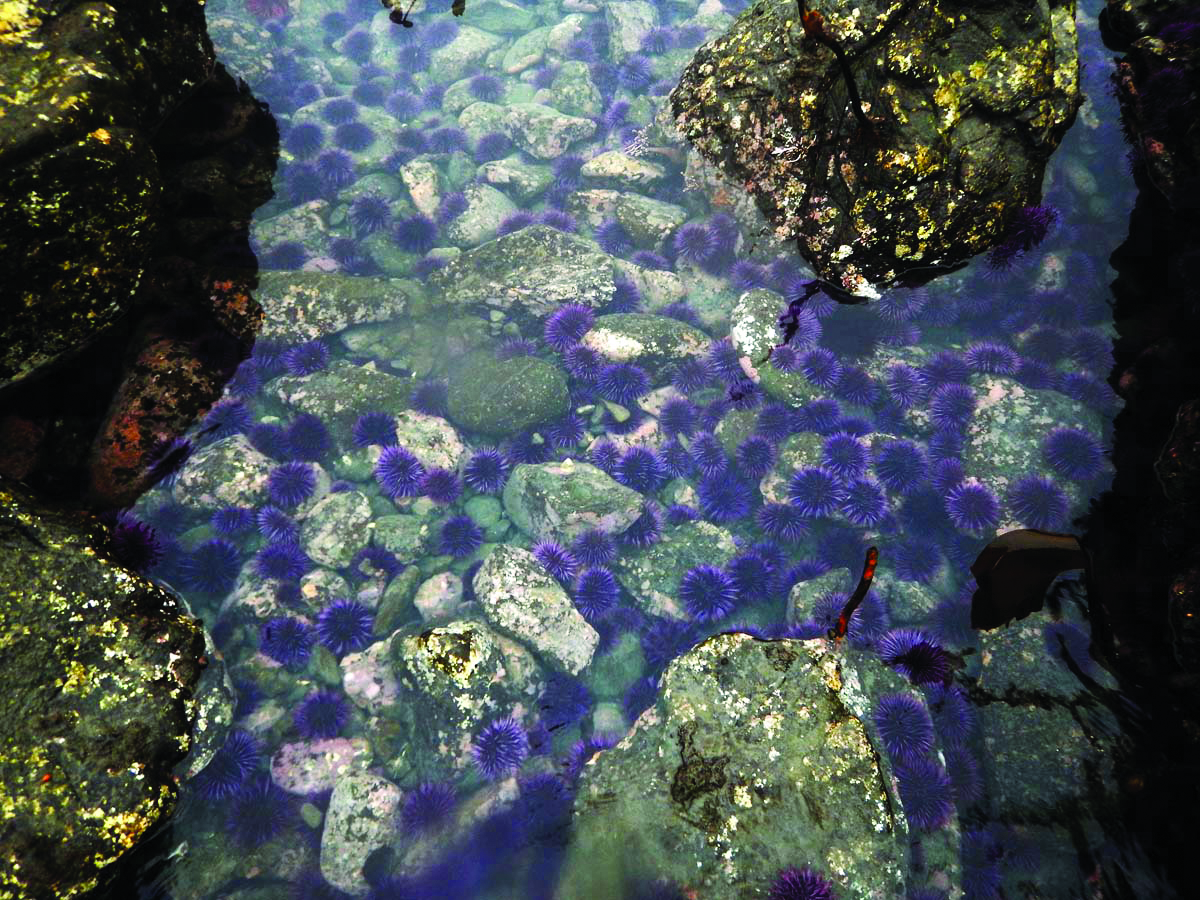
The implementation of 20 MPAs and seven special closures along the Northern Coast of California in 2012 completed the statewide network. Since implementation, there has been a series of harmful events that have altered the underwater habitat and are threatening the existence of kelp beds, sea stars and red abalone.
Sean Craig is a marine biology professor at Humboldt State that studies both MPA’s and non-protected marine environments with his graduate and undergraduate students.
“Kelp beds are getting decimated, the water temperature has changed, there is a warm water blob along the coast, purple sea urchin populations have increased, sea star wasting disease has come along, harmful algae blooms hit along the Sonoma Coast and El Niño brought warm water right next to shore,” Craig said. “All of these conditions, in multiple ways, could have led to the drop in kelp forests and macroalgae (seaweed).”
“Protecting areas underwater provides a sanctuary for fishes,” Craig said, “which should enhance the number of fishes, enhancing the number of species in that area and allowing more fish to get larger and reproduce. That leads to a more functional marine web.”
The addition of MPA’s along the north coast of California has given HSU marine biology and scientific diving students incredible research opportunities. Grants funding base line data surveys are helping undergraduate students and graduate students to get field research and diving experience.
Richard Alvarez is the HSU diving safety officer who teaches scientific diving. Alvarez sees the potential in North Coast MPA habitat restoration, noting the successful restoration of some Southern California kelp beds and improvements in the Van Dame MPA in Mendocino.
“Van Dame was the most heavily-hunted abalone area, and it is now robust. Kelp is there and urchin barrens are smaller. There is a chance to get ahead of the urchins eating all of the kelp,” Alvarez said.
Craig has been a part the research along the North Coast MPA’s since their inception. The North Coast MPA surveys were a combined effort of HSU, UC Santa Cruz, San Francisco State, the Moss Landing Marine Labs and the Smith River Rancheria.
HSU student scientific divers gathered underwater baseline data on the abundance of kelp and macroalgae and identified fishes, noting their abundance and sizes. Divers also collected data on aquatic macroinvertebrates, such as abalone, sea stars, sea urchins and mussels.
“The Sunflower star that feeds on purple urchins is no longer out there,” Craig said.
There are ecological processes that are occurring with the purple urchin out competing other species in the kelp forest. The disappearance of Pycnopodia that eats purple urchins is having a ripple affect. Abalone are starving because the urchins are eating all of the kelp, additionally sea temperature is also affecting the ability of kelp to grow.
“Data collected on sea stars in 2014 shows major contractions in their populations,” Craig said. “In the summer of 2014, data collected at Pyramid Point MPA shows a healthy population of the Ocher sea star, and the following survey at Pyramid Point in the winter of 2014 shows populations decimated by Sea Star Wasting Syndrome. And the following summer of 2015, there were practically none left at Pyramid Point.”
The rocky intertidal region of the North Coast MPA surveys were conducted by UC Santa Cruz, under the direction of Peter Raimondi and Sean Craig. The survey collected data on seaweed and surf grass, as well as mussels, sea stars and other intertidal organisms.
The North Coast MPA sandy beach surveys were led by San Francisco State, under the direction of Karina Nielsen. Beach surveys collected data on sand crabs that burrow into the sand, surfperch (a family of perciform fish) that eat sand crabs and the wracks of seaweed washed up on the beach containing amphipods that crabs and birds feed upon.
“The wrack of kelp that washes up on the beach ties into the microinvertebrates that live on the beach, increasing the sand crab population and shore bird population,” Craig said. “This is the sort of data that would make anyone wonder why they would want to rake up the wrack off the beaches in Southern California to make it prettier, which is totally changing the entire ecosystem.”
After Craig’s presentation, HSU alumnus Gary Bloomfield, who is a renowned wildlife artist, passed out and signed his MPA poster titled “Safeguarding an underwater wilderness.”
“I hope this poster is educational for people to learn about the ocean and MPA’s,” Bloomfield said.
“In summation, we know MPA’s aren’t saving us from everything, but we can follow Sea Star Wasting Syndrome and see its devastation,” Craig said. “In addition, we have learned a great deal about sandy beaches and the trophic links between species.”
The Mathematical Contest in Modeling (MCM) is an international multi-day mathematics competition that has been held annually by the Consortium for Mathematics and its Applications within the U.S. since 1985.
The competition focuses on real world mathematical modeling problems, and the groups of students participating only have a weekend to complete their chosen problem and create the solution paper as their finished product.
Jessica Solomon is an environmental science major with a minor in oceanography at Humboldt State who is working to go to grad school for atmosphere science.
“It’s training you to communicate what you’re visualizing in your head, and that was probably the biggest challenge,” Solomon said. “How do we do this model? How do we all get on the same page and be able to communicate it on a paper without our biases being too much attached to it?”
Solomon worked on the ICM problem E which focused on how climate change influences regional instability.
“Learning to work with people that you’ve never even communicated with before, on a project that involves a lot of complex decision-making, was a really good learning experience,” Solomon said.
This year, there were six problems: three MCM questions and three International Congress of Mathematicians (ICM) questions. The MCM questions have more of a math base, while the ICM questions are created to be more data-based or interdisciplinary. The various types of questions are meant to make the competition more accessible for a larger variety of students, including non-mathematics majors.
“Maybe someone else has more of a math background, someone else has a coding background and someone else really loves writing the paper,” Larripa said.
Kamila Larripa, a mathematics professor here at HSU, was the advisor for the HSU groups participating in the MCM competition.
“It’s a really beautiful, organic collaboration where you’re seeing people having a chance to do the things they like the best or contribute their own unique gifts,” Larripa said.
Mathematics professor here at HSU, Kamila Larripa, was the adviser for the HSU groups participating in the MCM competition. Larripa in front of the sculpture at Mathematical Research Institute of Oberwolfach, in Oberwolfach Germany. Photo courtesy of Kamila Larripa.
At HSU, six groups of three and one group of two competed in the competition, making this the largest group of competitors the school has ever had. The students worked on their chosen problem during the second week of February from Thursday afternoon until Monday night.
All of the HSU teams received successful participant in the contest, meaning they placed in the top 54 percent for problems 1-C, and top 47 percent for problems D-F, out of a total of 10,339 foreign teams and 331 U.S. teams.
This year’s competition had the largest proportion of female competitors from HSU.
“There has been a trend where women are more likely to do this contest than some of the others that are more individually-based,” Larripa said. “So, Stanford has sent some researchers to visit and shadow a team here as part of a larger research project they’re doing that I believe is looking at gender in these math contests.”
Stanford is conducting a study on what draws women to the MCM competition. The study is being conducted by YouCubed with Jo Boaler, the director of YouCubed and professor of mathematics education at Stanford.
Jack Dieckmann is the director of research at YouCubed at Stanford and was a researcher who visited HSU to shadow one of the MCM groups.
“We wanted to understand the features of this contest in comparison to others that makes it so gender-equitable,” Jack Dieckmann said.
Amanda Hemingway, a pure math major at HSU who is graduating this semester, Briana Ramirez, a HSU mathematics major with a minor in statistics, and Jaime Sanchez, an applied mathematics major at HSU, worked on MCM problem C regarding energy production with the purpose of creating an applicable energy profile. Hemingway, Ramirez and Sanchez made up the team the Stanford group shadowed and observed for the duration of the competition.
“We are conducting a study across different U.S. universities in order to explain why, over the past 20 years of this competition, women have been not only participating in this contest, but also achieving higher results,” Dieckmann said.
The MCM competition is swiftly becoming a contest filled with female competitors. However, in many other mathematics contests, such as the William Lowell Putnam Mathematical Competition, women participate rates are low.
“We’ve both taken the Putnam before, we didn’t do well in that. It was awful — miserable,” Hemingway said.
While both Hemingway and Ramirez hated the Putnam, they enjoyed the MCM. Ramirez plans to compete the MCM again next year. Now that she is more familiar with the competition, she plans to compete by herself.
“Overall, we all came out realizing it was really nice applying all of the information we’ve learned,” Ramirez said. “It wasn’t just one class’s information going into it like a test. It was like, I learned this from stats and this from logic, so let’s put it all together. It was really nice applying it not in a classroom or test setting.”
The Stanford researchers reached out to 14 different universities and only ended up sending teams to two of them, one being HSU.
“We chose this university for a site visit over many other places because this university, especially professor Larripa, has really shown a lot of commitment for what it could mean for all of the students, especially the women competitors, in terms of mentoring, preparing and helping them to be successful,” Dieckmann said. “I see her coming around and bringing snacks and just giving as much support as possible — as much positive energy as she can towards this.”
Many of the HSU students participating in the MCM competition said they decided to compete, because Larripa encouraged them to do so for the learning experience.
“My personal experience at the school has lended to women being very involved in math and science, even when you look at the math club,” Hemingway said. “I am the vice president of the math club, and most of the people who attend the math club are female.”
Hemingway and Ramirez presented their work on problem C at the Northern California Undergraduate Mathematics Conference over spring break. All of the groups that competed presented their findings at an HSU mathematics department seminar on April 12. They also created posters for their solutions that were featured at IdeaFest.
Jessica Solomon, a HSU environmental science major with emphasis in Climate and Energy with a minor in oceanography, and Amanda Donaldson, a HSU Forestry major with an emphasis in Hydrology, work on the Mathematical Contest in Modeling ICM problem E on how climate change influences regional instability. Photo credit courtesy of Humboldt State University.
“I wanted to force myself to learn and improve on communicating and working with different types of people,” Solomon said. “Never in life will I be given an assignment and told to write an entire academic paper and solve this massive complex problem in a weekend. But it’s nice know that I can do it — that I have the skills to do it.”
While the competition was hard the competitors learned valuable lessons in collaboration and real world mathematical modeling.
“It was encouraging. I’m excited to graduate now,” Hemingway said.
Community members gather to watch the mesmerizing flights of shorebirds dancing on the wind at the Godwit Days Spring Migration Bird Festival.
The natural habitat of the North Coast includes the Pacific Flyway. The Pacific Flyway spans the Pacific Coast from South America to the Arctic, making Humboldt Bay a stopover for millions of shorebirds on their migration.
Mark Colwell is a Humboldt State ornithology professor. While watching the spring migration at the Arcata Marsh on Sunday, Colwell describes the multitude of bird populations.
“Western sandpipers are one of the most spectacular aspects of bird migration in the Pacific Flyway,” Colwell said. “There are over 100,000 western sandpipers going north every day. They will spend three to four days in Humboldt Bay and then fly on.”
The Godwit Days Spring Migration Bird Festival is a week-long event. Godwit Days has many ways to explore bird species, field trips, lectures, workshops and boat trips, led by expert local guides. The tours include rivers, bay mudflats, redwood forests and the rocky coast.
The Arcata Marsh is a great place to bird watch. The marsh is close to HSU and just a few minutes walk from downtown Arcata. There are hundreds of species of birds that visit and live in the marsh that can be seen from the trails that meander through it.
Samantha Bacon teaches Birding 101 for Godwit Days.
“The marsh is one of the premiere birding places in California,” Bacon said.
Bacon spends an hour in class with her group going over the descriptions, habitats and behavior of birds. Bacon pulls apart the bird families, characteristics and names so the group of beginning birders can learn them better.
Bacon also gave information on bird feeding.
“Hummingbird liquid is four parts water and one part sugar,” Bacon said. “Make sure to keep the hummingbird and other bird feeders clean. Birds can get conjunctivitis from bird feeders and go blind.”
Birding 101 then spends a few hours viewing and identifying birds in the Arcata Marsh. Part of the excitement of birding is identifying or confirming rare sightings of bird species that are not frequently found in this region.
A green heron local to the San Francisco Bay has taken up residence in a tree at the Arcata Marsh.
“The green herons have been coming to the Arcata Marsh for the last three to four years. There is between one to four green herons a year at the Arcata Marsh,” Bacon said.
Citizen science helps identify and maintain reviewed listings of bird sightings on eBird, an online collection of sightings, maps and bird migration routes.
After confirming quite a few bird sightings, the group ends at the Arcata Marsh parking lot. There are numerous tripods mounted with telescopes along the path by the parking lot where people are viewing the tens of thousands of shore birds lifting off, flying back and forth and landing back down on the bay.
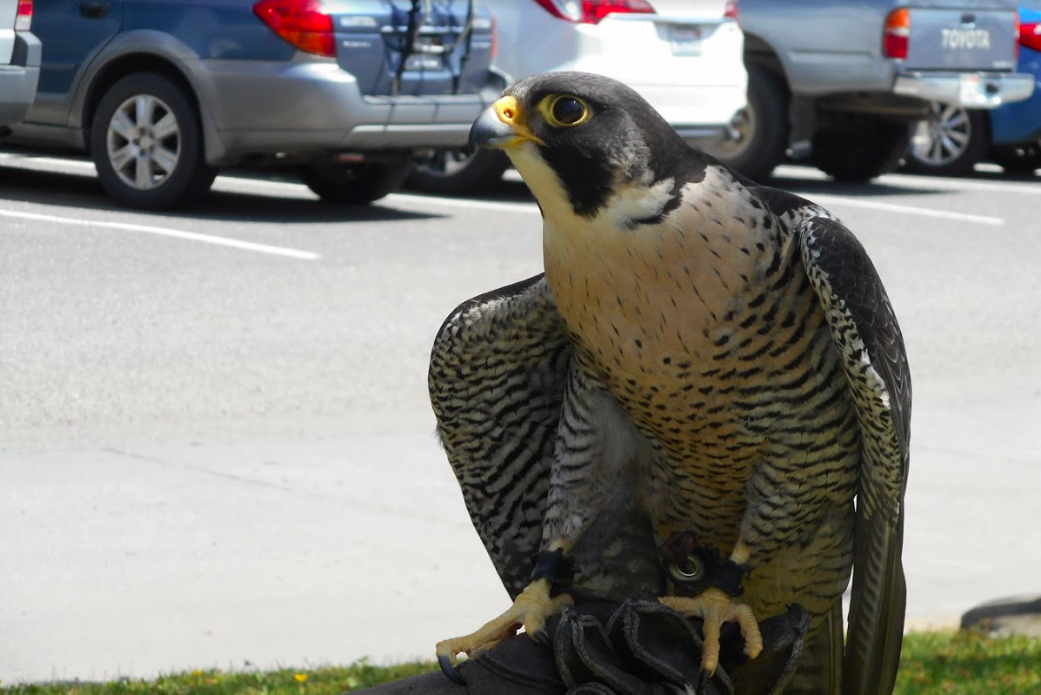
“This is called shuffling the deck,” Bacon said. “A peregrine falcon will fly down upon a flock of shorebirds and try to pick one off.”
Rob Fowler is a HSU alumnus and local editor for the quarterly ornithological journal North American Birds, and the eBird reviewer for the area.
While at the marsh parking lot viewing the shorebirds, Fowler refers to the scope of what is visible in the distance.
“This is a sight you don’t see often in nature — 200,000 shorebirds at once,” Fowler said.
The Godwit Days keynote speaker Sharon Stiteler is from Minnesota. Stiteler has seen 1 million snow geese at once while in Hardy, Nebraska.
“Shorebird-wise, this is exceptional,” Stiteler said.
The Arcata Community Center was “birding headquarters” for Godwit Days on Friday, Saturday and Sunday. At the community center, there were vendors, non-profit groups and government agencies. In addition, there were exhibits, workshops and live birds of prey on display.
Carson is a 16-year-old peregrine falcon. Carson was out in front of the community center with his handler, Amanda Harwood, a senior at Arcata High School. Carson is the fastest animal on Earth, reaching speeds up to 273 mph.
“Carson is named after Rachel Carson the conservationist,” Harwood said. “He was found in the Arcata marsh with a broken femur and taken into the Humboldt Wildlife Center.”
People were fascinated by Carson. Spike Ciotti attends Fuente Nueva Charter School in Arcata and thought Carson looked fast.
“I think Carson can build a nest in about a minute,” Spike said.
You can see the shorebird spring migration on Humboldt Bay from the Arcata Marsh until mid-May.
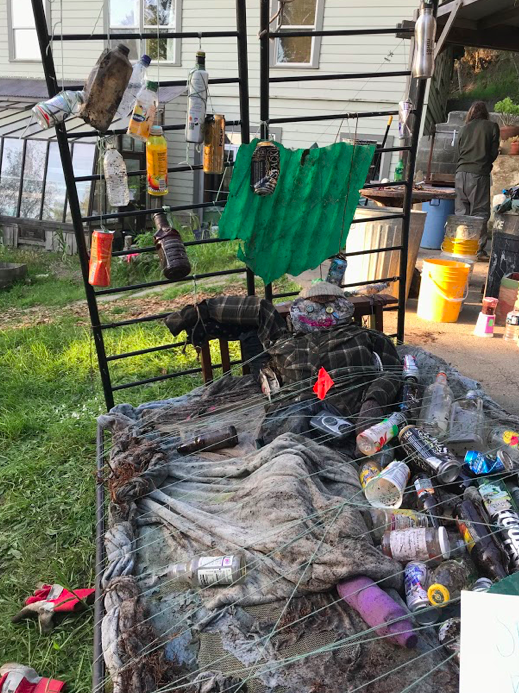
Hands gripped ankles, one leg pointed for balance, creating a human bridge. An arm reaches out over a river in the community forest to grab a long forgotten sour cream container. It would have never decomposed, so instead, it was upcycled into art. A collaborative art installation to visualize human influence on our natural world, showing what we leave behind and what will stay behind. The tagline: “you made your bed, now sleep in it.”
Jonelle Alvarez, a Humboldt State student majoring in environmental science and management, helped collect the trash and turn it into a sleeping student. She was inspired to be participating in the transition from trash to art.
“There was a lot more trash than I imagined and it would’ve stayed out there forever,” Alvarez said. “We had to get really creative with it. Prove we have no limits.”
This past Sunday, a group of students from Earth Guardians suited up in their rain gear and headed to the forest, armed with empty sandbags to fill up with trash. It was the first of many community forest clean up days hosted by the club.
Earth Guardians is a global movement founded and sustained by young people to spread resiliency through direct action activism. They are demanding greener policy from governments and leaders around the world, co-creating our future by empowering youth leaders. They are currently suing the federal government for endangering our generation through excessive fossil fuel consumption.
Earth Guardians picking up trash in the community forest. Photo by Madeline Bauman.
The Humboldt State Earth Guardians chapter meets every Monday in the CCAT house at 5 p.m., fostering an all-inclusive, accessible space for local activists to turn their ideas into reality.
Simone McGowan, an environmental studies student who brought Earth Guardians to Humboldt, struggled to find an accessible outlet for her activism, a space for people to feel good about themselves and what they’re doing.
“We’re uniting a large group of activists for political and social action on the macro and micro scale,” McGowan said. “Activism should be accessible and everyone should be included in the conversation.”
Earth Guardians promotes activism for anyone trying to catalyze change. They are bridging the disconnect between social and environmental justice, starting an open dialogue where all voices can be heard.
Jacob Gellatly, an environmental resource engineering major, believes Earth Guardians’ inclusive, collaborative activism is the answer to the social and environmental problems that plague our planet.
“Don’t focus on what can’t be done,” Gellatly said. “Instead, figure out what we can do together to make it happen.”
In between the Humboldt Redwoods State Park and the King Range National Conservation Area lies Rainbow Ridge, a hidden treasure connecting the redwoods to the sea.
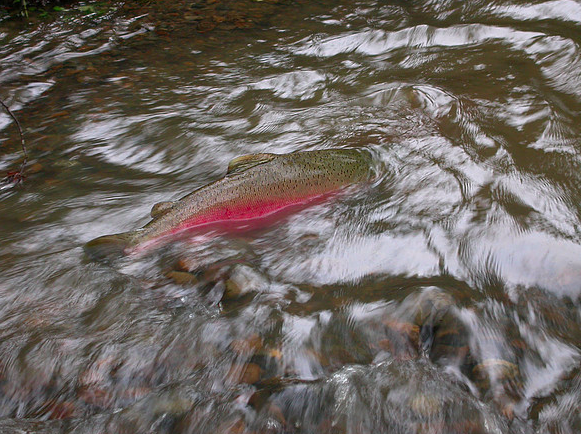
About an hour south from Humboldt State University lies Rainbow Ridge, a fairy tale forest with 300-foot tall trees covered in lichen and moss. Fungi grows in all shapes, sizes and colors. Rare and endangered animals lurk; the agarikon, the pine marten, the Pacific fisher, the spotted owl, Coho salmon and Sonoma tree vole. The endangered Coho salmon return here to spawn.
“It is really important that we save the remainder of old growth. It is all that we have left,” conservation consultant for the Lost Coast League, Gabrielle Ward said. “We need to look at how we can help preserve and maintain landscape connectivity so that animals can continue to move across landscapes and not be isolated.”
Rainbow Ridge is a combination of coastal Douglas fir trees and mixed-hardwood forest along the north fork of the Mattole River. Inside of Rainbow Ridge’s 18,000 acres of forest and meadows lies 1,100 acres of old growth coastal Douglas fir trees.
Rainbow Ridge is “one of only two old growth Douglas fir forests that have been unentered and untouched, and the only one in California,” Joe Seney, a HSU lecturer in forestry and wildland soils, said.
“There are very few remaining tracks of old growth Douglas fir anywhere along this part of the California coast,” Seney said.
The Lost Coast League is a group of citizens from the Mattole watershed and they have been in land acquisition, litigation and conservancy since the early 1970s. The Lost Coast League has acquired and protected thousands of acres of forest since their inception.
“The goals of the Lost Coast League are to study, survey, understand and preserve and restore this forest,” Ward said.
The Lost Coast League hopes to acquire and restore Rainbow Ridge. The Rainbow Ridge is privately owned by the Fisher family, who is known for their GAP clothing stores. The Lost Coast League intends to purchase Rainbow Ridge from the Fisher family.
The east border of Rainbow Ridge is adjacent to Humboldt Redwoods State Park, which holds Rockefeller Forest within it that has the largest contiguous old growth redwood forest in the world.
The west border of Rainbow Ridge is the King Range National Conservation Area. The purchase and preservation of Rainbow Ridge would connect the world’s largest redwood forest with the ocean, creating a wildlife corridor to remain throughout time.
“If the Fisher family would recognize the treasure value of Rainbow Ridge and what kind of legacy they could leave, they could create a Fisher Forest standing adjacent to Rockefeller Forest. This is something that could last throughout time,” Michael Evenson, vice president of the Lost Coast League, said.
The advantages of this biodiverse forest close to HSU provides unique opportunities. The Lost Coast League would like to see the University of California’s nature preserve program or Humboldt State’s College of Natural Resources utilize Rainbow Ridge for research.
“By looking at what is left we can understand what the rest is supposed to look like,” Ward said.
There is the potential for new discoveries on Rainbow Ridge, especially in fungi. Agarikon is a fungus found growing on Rainbow Ridge with medicinal properties that can treat antibiotic resistant tuberculosis.
“There is a vast opportunity for students to be a part of the solution. Looking at fire regimes and restoring portions of the landscape that have been [logged] in the past, and it does have some deep carbon sinks,” Ward said.
The Cascadia Temperate Rainforest spans from Southern Alaska to Southern Humboldt and is the largest carbon sink on the planet.
“The only deep carbon sinks left in the United States are along the coastline of this Cascadian Temperate Rainforest,” Ward said. “It’s all that we have left, we can’t continue to fragment this endangered ecosystem.”
Paulo Sweeney, a forest defender, addresses Humboldt Redwood Company’s inconsistencies in forest practices.
“Humboldt Redwood Company sets aside high conservation areas that they are not going to log at that time. They aren’t going to log the area now but that does not mean that it is protected from being logged in the future,” Paulo said. “These are key places for restoration.”
During Earth Week from April 16-22, HSU will be having talks, films, demonstrations and workshops on environmentally sound practices and sustainability.
Paulo will be having a question and answer period on April 19 after the film “If a Tree Falls” in Forestry Room 201 from 3-4:30 p.m., as part of the documentary day hosted by the Climate Crisis club for Earth Week. Come and learn more on forest defense in the community, climate change, ecological collapse and student involvement in direct action.
The We Are the River: Connecting River Health to Community Health panel met to discuss the state of the Klamath River, and the communities whose lives are tied to the health of the river.
The discussion was held in the Goudi’ni Gallery at Humboldt State during the 32nd Annual California Indian Conference on April 6.
Dale Ann Sherman, a Yurok Tribe member and retired HSU professor of Native American Studies, was one of the four panelists.
“I come from the Klamath and Smith Rivers. I belong to those rivers,” Dale Ann Sherman said. “In our blood runs the rivers and with that blood runs the salmon. We were born to go through time together. The salmon and us.”
There were four panelists for the We Are the River: Connecting River Health to Community Health discussion: Dale Ann Sherman, Louise McCovey, Marlon Sherman and Konrad Fisher.
Marlon Sherman is a Lakota tribal member, as well as the HSU department chair of Native American Studies.
“The people on the Klamath River depend upon the salmon, and other fish,” Marlon Sherman said. “That’s their sustenance and their livelihood. That’s their spirituality. It is what their ceremonies are based on. Everything flows around the salmon, and if those salmon don’t have sufficient water, they will not come back any more. It is fairly obvious.”
The salmon are at their lowest all time in returns due to problems with the river itself.
“Dams, diversions and pollution sums up what is wrong with the river,” Fisher said.
Fisher is a water protector who described the factors plaguing the Klamath River.
“Dams are the biggest source of blue-green toxic algae build up, nasty stuff that will make humans very sick,” Fisher said. “Naturally occurring toxic blue-green algae production is dramatically elevated by dam water restriction. Some of the highest levels [of blue-green algae toxicity] ever recorded on Earth were collected behind the dams on the Klamath River.”
A few years ago, a decades-long lawsuit by the Klamath tribes of the upper Klamath River went to the United States Supreme Court.
“They finally were able to get the U.S. Supreme Court to realize that they had water rights to the Klamath River based on as far back as what they called time immemorial,” Marlon Sherman said.
“Something exciting is happening very soon,” Fisher said. “We are on track for dam removal. Maybe not quite 2020, but 2021. Let’s continue to be hopeful.”
“The [Klamath River Renewal Corporation] is the entity that will essentially take ownership of the dams, and take them out. Go to one of their meetings if you can. It is on their website,” Fisher said.
“The salmon right now are at their bottom ebb. What they need now is plenty of clean, cold water,” Marlon Sherman said. “Water allocation is what the salmon need right now. This needs to be approached right now before the salmon are all gone. When the salmon go, who knows what’s next?”
Water allocation rights and diversions are Fisher’s specialty, and water in the Trinity River that would run into the Klamath River is currently being diverted.
“Water laws say there is a certain amount of water that should be left in the streams to meet certain needs,” Fisher said. “By and large they [the government] don’t [do their job] unless they are being forced, especially when it comes to telling people to use less water,” Fisher said.
The needs of the communities most affected by the destruction of the Klamath have gone unheard.
“The local laws of the people who have always lived there, and know the river, are never acknowledged,” Marlon Sherman said.
“Ceremony is law. Culture is law. Very few people recognize that fact,” Marlon Sherman said. “The tribal attorneys need to be paying more attention to the tribal imperatives of spirituality, culture and tribal knowledges of their indigenous localities.”
“Our people are fix-the-world people, that is what we do in our ceremonies,” McCovey said.
McCovey is the Yurok Tribe environmental director and HSU environmental science alumnus who was on the panel.
“There has been a rash of suicides in our community,” McCovey said. “For me in my job, I try to eliminate the environmental threats so that people can maintain their identity as river people, and feel safe in it.”
Every morning, Humboldt State University senior and cellular molecular biology student Shazi Saboori wakes up next to a stack of pill bottles.
“Depending on the day, I take between 8-10 pills, including Adderall when I wake up,” Saboori said. “I then eat something small, lay in bed for 30-40 minutes and wait for the Adderall to kick in, and allow me to have access to my brain.”
Six months ago, Saboori was diagnosed with postural orthostatic tachycardia syndrome, or POTS.
“There’s a part of my brain that cannot regulate blood flow,” Saboori said. “This causes me to get blood pooling, have a sudden drop in blood pressure and almost faint.”
Saboori’s body attempts to increase the pressure drop through tachycardia, an extremely fast pumping of the heart while it’s at rest.
“At one point, my resting heart rate was 214 [beats per minute],” Saboori said.
In addition to tachycardia, POTS inhibits the left side of Saboori’s brain from communicating with the right side.
“In my classes, I can’t just read the book and understand the material,” Saboori said. “I take a long time to make a master study guide, and to write and rewrite the material. I still get mediocre scores on tests.”
POTS also causes Saboori to have anemia, or red blood cell deficiency, and gastric distress, which makes eating difficult. Saboori feels frustrated when people do not acknowledge her disorder, because it isn’t visible.
“Many people have told me, ‘You don’t look like you’re sick,’” Saboori said. “I’m not looking for pity, or for people to lower their expectations for me. I’m looking for people to understand that [POTS] is not something I can control.”
Michelle Goldberg, another HSU senior cell/molecular biology student, has ankylosing spondilitis (AS).
AS is a form of rheumatoid arthritis (RA), which leads to joint degradation and inflammation of the surrounding membrane. Goldberg was first diagnosed at 12.
“For awhile, I went to a support group for people with RA,” Goldberg said. “Most of the people there were adults. I was there with my dad.”
RA causes Goldberg to experience pain in her lower body, center of spine, hips and joints.
“When I feel good, I go to the gym, and do a little bit of elliptical and weight,” Goldberg said. “If it’s bad, I take some Aleve and put a smile on my face. Some days, I can’t stand up straight. Luckily, this has only happened twice since I’ve been at HSU.”
Similar to Saboori, Goldberg recognizes that an invisible disability is not taken seriously.
“Sometimes, I can encounter people who say, ‘You’re fine.’ But really, I’m not,” Goldberg said. “You can’t see what I have until my knees are really inflamed, and turned red.”
Stephanie Valencia, also an HSU senior cell/molecular biology student, took eight years to finish a bachelor’s degree due to her hidden disorders.
“I became friends with my microbiology teacher at my community college,” Valencia said. “She told me to get tested for a learning disability. I didn’t always have the best grade, but she believed I was a good scientist.”
Valencia was diagnosed with a processing disorder, similar to autism and dyslexia. For people with processing disorders, learning new things takes a lot more time.
“I wanted to know why I didn’t figure this out when I was younger,” Valencia said. “[My psychologist] said that a lot of people who are brown, like me, don’t get diagnosed until they’re in college. Elementary school teachers assume that brown students are dumb. They don’t push for students to go get tested.”
When Valencia transferred to HSU, she began to suffer from anxiety attacks that caused her to miss classes. She was eventually diagnosed with generalized anxiety disorder, or GAD.
“There’s a stigma about anxiety and depression in the sciences,” Valencia said. “People think that you don’t have the mental capacity to complete a rigorous program in STEM.”
Valencia hopes to eventually become a physician-scientist in the field of neuroscience, even though the stigma around GAD could cause her some difficulty in pursuing her dream.
“Unfortunately, people may not give you the opportunity to show that you could do it when they know of your disability,” Valencia said. “People think, ‘Oh, maybe she can’t.’ It’s the maybe that gets in the way of me being able to prove myself.”
Spring time is here. The days are longer, the weather has warmed up and the sun is shinning. Everything is growing.
At Flora Organica farm and nursery the greenhouses are getting full. Fields are being weeded and prepared for planting.
“This is the beginning of the busy season,” Andy Zierer
Andy and his wife Lisa Zierer own and manage Flora Organica in McKinleyville. Flora Organica starts for your garden are sold at Wildberries, the North Coast Co-op and Ace Hardware in Arcata.
“Greenhouses are needed on the coast if you are going to grow peppers, tomatoes and basil,” Andy Zierer said.
The plants in the greenhouse are going to be transplanted into the fields. Peppers that will be planted in the greenhouse now will be ready in June.
The Zierer’s believe the economical and nutritional benefits of growing your own food are extremely rewarding. Andy Zierer’s goal is to grow healthy plants that taste good.
“It’s beyond economical. The taste and the food has much more nutrition than stored food,” Zierer said.
While owner and manager Lisa Zierer has many people to direct and jobs to do, she still has time to say hello and check in to see if anyone needs anything.
The Zierer’s have employed Humboldt State students over the years. Zierer has noticed there have been more rangeland resource science soil majors working for him than students in any other field.
“I have two soil science majors working here now,” Andy Zierer said. “The soil science majors are into learning how things work.”
Jack Horvitz works at Flora Organica and is a soil science major at HSU.
“I have a big passion for food and agriculture. It is pretty fundamental to our society,” Horvitz said.
Horvitz explains the policy decisions in agriculture vary widely according to location, apologizing the benefits and struggles of smaller agriculture farms.
“If we want to have change, we better have more buy-in,” Horvitz said. “Farms in the midwest are thousands of acres. Flora Organica is just four acres. Living in Arcata is nice, but it is living in a bubble inside of a bubble.”
Horvitz would like to see communities getting together and having potlucks at community gardens. Horvitz calls it, “getting the full cycle.”
“Getting your hands in the soil and then sitting down and sharing a meal with everyone at the end of the day, with music,” Horvitz said.
Haley Schmidt is a HSU alumna who really likes her job at Flora Organica.
“These are great people to work for and I really enjoy the farm,” Schmidt said. “They have a great product and they really care about what they do.”
Jarrod Lumley is an anthropology major at HSU who works at Flora Organica. On Saturday nights on the Arcata Plaza, Lumley likes to serve food he and his friends make with leftovers from the farmers market earlier that day.
“There is a lot of upping going on [at Flora Organica],” Lumley said.
Upping is moving the seedling from the seed house and planting it in a four-inch container. Then the four-inch container goes into a bigger greenhouse. From there, some are planted on the farm and some go to the farmers market to be sold as starters.
“Springtime at Flora Organica is a time of cleaning,” Lumley said. “This involves making space for more and more plants through deconstruction, reconstruction and organizing the available space.”
Farmer Eno Riley planting onions at the I and I farm. Photo by Tyrone McDonald.
Flora Organica is bustling with activity, trying to keep up with spring and their customers at the farmers market.
Another local farm, I and I farm in McKinleyville, is a regular booth at the farmers market, owned and managed by Eno and Lauren Riley. Planning, according to Eno Riley, is essential when building a garden.
“There are snails and slugs and birds and pests and bad things you don’t want to have happen,” Eno Riley said.
I and I farm hires students to pick strawberries as a short-term summer job. Students interested are encouraged to ask Eno or Lauren Riley at their stand during the farmers market.
Riley explained a garden layering technique called lasgnage that is possible for anyone to create and maintain.
“You can layer right over your grass on your lawn,” Riley said. “Lay down cardboard, then dirt, and then wood and some more soil, cardboard and soil and you are ready to plant a garden anywhere.”
This website uses cookies to improve your experience. We'll assume you're ok with this, but you can opt-out if you wish. Cookie settingsACCEPT
Privacy & Cookies Policy
Privacy Overview
This website uses cookies to improve your experience while you navigate through the website. Out of these cookies, the cookies that are categorized as necessary are stored on your browser as they are essential for the working of basic functionalities of the website. We also use third-party cookies that help us analyze and understand how you use this website. These cookies will be stored in your browser only with your consent. You also have the option to opt-out of these cookies. But opting out of some of these cookies may have an effect on your browsing experience.
Necessary cookies are absolutely essential for the website to function properly. This category only includes cookies that ensures basic functionalities and security features of the website. These cookies do not store any personal information.
Any cookies that may not be particularly necessary for the website to function and is used specifically to collect user personal data via analytics, ads, other embedded contents are termed as non-necessary cookies. It is mandatory to procure user consent prior to running these cookies on your website.