The Lumberjack


Students Serving The Cal Poly Humboldt Campus and Community Since 1929

Category: Science

  • Dissecting the dead

    Dissecting the dead

    Cadavers and animal specimens give HSU students a unique opportunity

    For many, the sight of a lifeless body is enough to make them spew their lunch. But for many in the sciences, it’s not a problem. The presence of lifeless bodies and the smell of embalming fluid is so commonplace for professor Moana Giacomini that she can enjoy a burger and chocolate chip cookies in the same room.

    “I’ve been around them for so long in physical therapy school that it doesn’t bother me,” Giacomini said. “We had to dissect things all the time.”

    IMG_0160.jpg
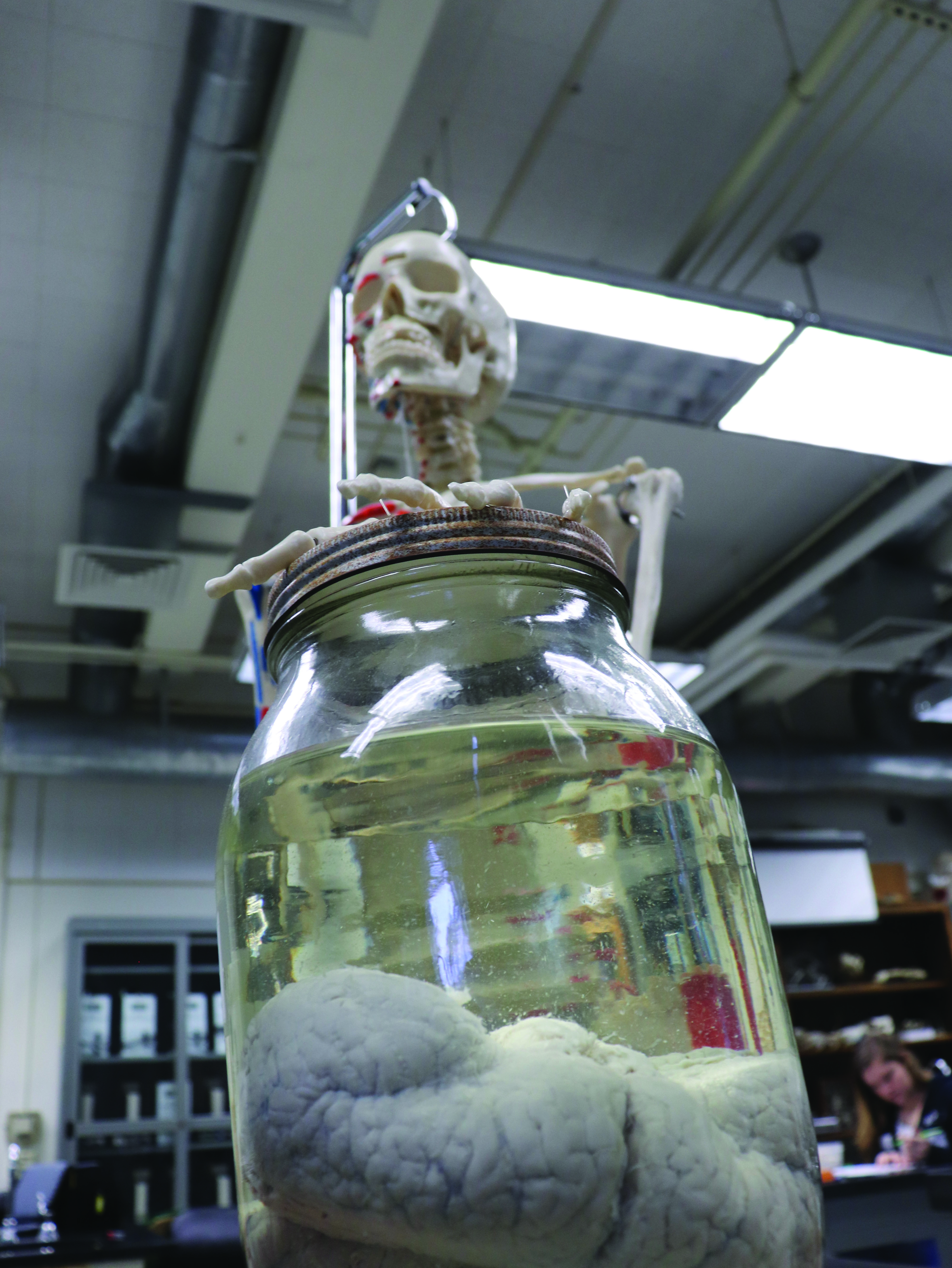
    Professor Moana Giacomini poses with a human skeleton in front of a cadaver case. | Photo by Dajonea Robinson

    HSU has four and a half human cadavers on campus—one is just a torso. Students in the kinesiology, pre-med and biology departments are among those who get to handle the cadavers. Two of the cadavers are male and all are on a five-year loan from UC Davis. The bodies sit in steel tanks filled with a solution of phenoxyethanol and water.

    Each of the cadavers are used for different purposes, but all are dissected. One of them sits with their skin flayed back revealing muscles, tendons and ligaments. Others are in a similar condition and are used to exam to the reproductive, nervous and urinary systems among others. After pulling off body parts and organs students place them into their corresponding bucket, so nothing gets mixed up when they are reassembled.

    “It is very important that we get to have these guys,” Giacomini said. “A book can never give you what a cadaver can. Especially the brain. Holding it. Feeling it. Understanding the size is important. That’s what makes this class special. There are a lot of [universities] that don’t have any.”

    IMG_0153.JPG
    Drawer full of human bones in a Science A lab. | Photo by Dajonea Robinson

    Kinesiology student Martin Gordillo sat within two feet of the cadavers, fully engulfed in a hamburger and textbook as chemical smells wafted from the bodies. Gordillo was unfazed, but admitted that it was a little weird.

    “It’s pretty cool to touch and feel the body,” Gordillo said. “Learning from a model is different. You don’t get to see the muscles. I’m a hands-on learner and getting to see a muscle, a vein or artery is pretty intense.”

    IMG_0151_1.jpg
    HSU student Martin Gordillo holds a spine in his classroom on March 5. | Photo by Dajonea Robinson

    Not everybody in the anatomy classes are as chill as Giacomini and Gordillo are the around lifeless bodies. Giacomini said that she had one student who refused to touch the cadaver all semester, but still managed to get an A. Gordillo said that he has had a few lab partners with similar responses.

    “I had a lab partner last semester who would gag a little when he was near them,” Gordillo said. “I had another one that didn’t want to touch them, but she got over it.”

    IMG_0168.jpg
    Preserved alligator is kept in a jar in the Science A building. | Photo by Dajonea Robinson

    The number of lifeless bodies on campus are not just limited to the human form. HSU has a wide array of animal specimens for students to dissect. John Reiss is a professor of zoology and teaches students about the internal structures of our non-human counterparts.

    “They are used for understanding how animals work and how they compare to others,” Reiss said. “We use worms, crayfish, squids, sharks, frogs, fetal pigs. For invertebrates, we are trying to understand what makes things work and how they evolved into humans.”

    IMG_2593.jpeg
    Junior Evan Miller takes measurements of the bone structure of a small rodent. | Photo By Freddy Brewster

    Reiss said that in one of his classes students dissect sharks. The whole process takes about a third of the semester and students start at the tail and work their way to the head. It is also not uncommon for students to work on large sea mammals as well. Reiss said that HSU has whales, dolphins and sea lions and that the specimens “come in waves.”

    “It is really cool that our students have hands on experience,” Reiss said. “A lot of larger universities have eliminated that, and that is what makes HSU a good school. Would you rather look at a picture, or get in there and do some hands-on learning?”

    IMG_0185.JPG
    A preserved owl is kept in a jar in the Sience A building. | Photo by Dajonea Robinson

    That hands-on learning is what brought junior Evan Miller to HSU all the way from Washington D.C. Wildlife major Miller is currently working on a project comparing the bones and muscles between moles and shrews. This summer he is heading to Madagascar to study lemurs.

    “I love D.C., but I didn’t have the opportunities that I have here at HSU,” Miller said.

  • Power Down HSU!

    Power Down HSU!

    Help out and power down HSU on March 6!

    Wednesday March 6 is Power Down HSU! Turn off unneeded lights, turn the thermostat down and unplug or power down vacant computers. Help lower HSU’s power use as much as possible.

    Megan Moore, Power Down HSU program coordinator, gave some insight into Green Campus’ techniques to turn HSU off.

    “We use slogans like ‘Turn Down for Watt,’ and ‘Energy Savers do it in the Dark’ to get people to pay attention,” Moore said. “We collect data each month to set a baseline for power down. We do this all with the help of our Guerilla Teams.”

    IMG_4866.JPG
    Graphic courtesy of Green Campus

    Click. The room had gone dark. Guerilla Team Alpha successfully powered down Siemens Hall. To achieve a total Power Down, Green Campus dispatches cape wearing Guerilla Teams across campus with one objective, turn off as many lights as possible.

    The Guerillas began marking their tally sheets for Power Down. Siemens Hall: 85 lights flipped off, 40 computers shut down, megawatts saved. Guerilla Team Alpha has to sprint to the next building. They were running out of time. The school day was coming to an end. Before the day was over, all of the campuses lights had to be shut off. All in the name of energy.

    Moore encourages everyone to help out. She said that Power Down helps reduce HSU’s carbon footprint.

    “It will make a difference for the campus and if you power down at home, it will make a difference for you,” Moore said.

    Power Down HSU brings awareness to HSU’s power use and encourages students, staff and visitors alike to change their behavior. The goals of Power Down is to encourage people to embrace natural light by turning off unneeded interior lights. Green Campus makes an effort to unplug appliances, shut down computers on standby and teach the student body about why these actions matter.

    Let’s talk about why energy use is significant. According to the U.S. Energy Information Administration the average U.S. Citizen uses 10,399 kilowatt hours of energy every year. One kilowatt is 1000 watts. Running an appliance that consumes 1000 watts for one hour means one kilowatt hour of electricity has been used. Along the same wire, if ten 100 watt light bulbs are ran for an hour they would consume one kilowatt hour of electricity.

    IMG_4865.jpg
    Graphic courtesy of Green Campus

    Interested in learning your annual energy consumption? Understanding kWh can let you control your electricity bill, reduce your energy use, and minimize your ecological footprint. Most of your appliances, especially light bulbs, will tell you how many watts of energy they use. Do some math and you can figure out it’s kWh usage. Outside the house is a PG&E power meter. This device will tell you how much energy you have used since your last bill. Watch those numbers rise.

    Now let’s upscale. The U.S. Environmental Protection Agency has a calculator which compares watts to other things. 10,399 kWh is equivalent to 827 gallons of gasoline consumed, 8,039 pounds of coal burned, 937,683 smartphones charged, and 519,950 twenty watt light bulbs lit. That’s a lot of resources being used by one American per year. Now consider the fact there are 325 million of us. It’s shocking.

    Moore gave some tips of things people can do to help out such as turning off computers that aren’t being used.

    “Use natural light instead of artificial light,” Moore said. “Encourage you teachers to teach with the lights off or bring class outside for the day. Let’s meet and exceed our 2,755 kWh goal from last Spring.”

    Green Campus has been conducting Power Down HSU for several years now. It began as a club activity to reduce power consumption on campus. Today it is a challenging competition between the members of Green Campus as they spend the day turning off as much of the school as they can.

    Over the past few years Green Campus has been recording the power use of HSU in large data sheets. Compared to a baseline set on non-Power Down Wednesdays, Green Campus and their Guerilla teams make a significant impact on HSU’s power use. You can help too.

    “On the first Wednesday of every month do anything to save energy,” Moore said. “Meet in front of the library to get drafted to a Guerilla Team. If you’re busy Wednesday, try to make it to our Green Campus meetings Thursday, 2pm in Nelson Hall East 106.”

  • The Eel River and cannabis

    The Eel River and cannabis

    The Green Rush took a toll on the Eel River’s health

    Cannabis farms have been polluting the Eel River since the Green Rush began. There is sediment eroding and fertilizer running off into the river and the attached streams. Water is also being siphoned off from the streams and river to use on large grow operations.

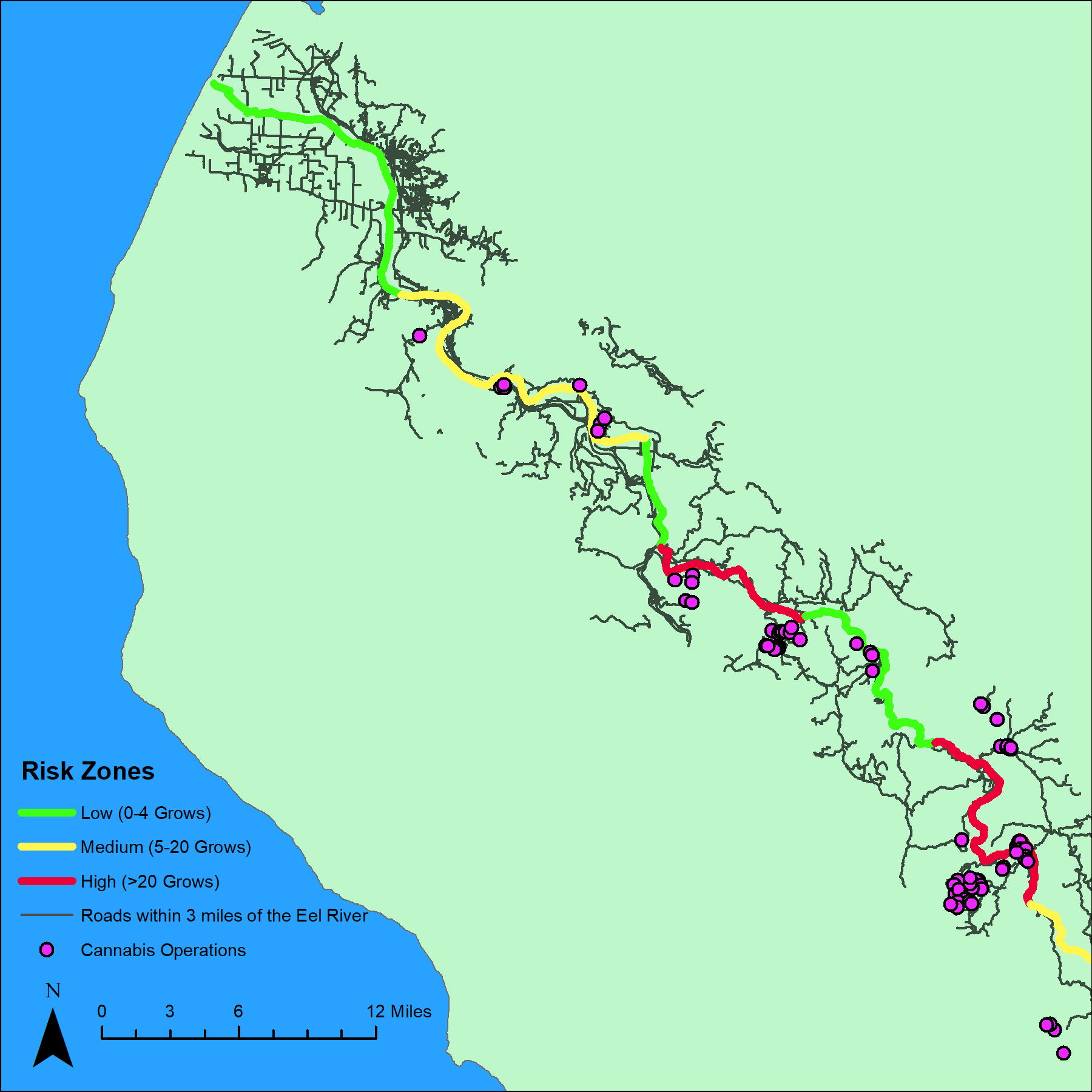
    There are some sections of the Eel River that are at high, medium, and low risk of being polluted by illegal cannabis farms. This map lays out sections that are at those different levels of risk. All of the grows shown are within three miles of the Eel river.

    The sediment that is eroding due to the grow operations building roads that they do not maintain. They are also clear cutting a lot of the redwoods which held the sediment in place. This sediment falling into and settling in the river is causing it to flatten out and become shallow.

    This takes away the salmon’s favored habitat of deep, cold water. The fertilizer is causing algae bloom to occur that is very toxic for the salmon. It causes them to become diseased and die off. The grows are also siphoning off too much water, to the point of the river running dry in some seasons. This makes it hard for salmon to migrate from the ocean, up the Eel River, and to the streams where they lay their eggs.

    Cannabis becoming legal will allow the government to regulate the fertilizer used, maintain roads and minimize the impact of clear cutting, and regulate the amount of water being siphoned out. These regulations will keep the Eel River beautiful and protected.

  • Herb alternatives for students

    Herb alternatives for students

    Everyday ailments and problems often have herbal alternatives

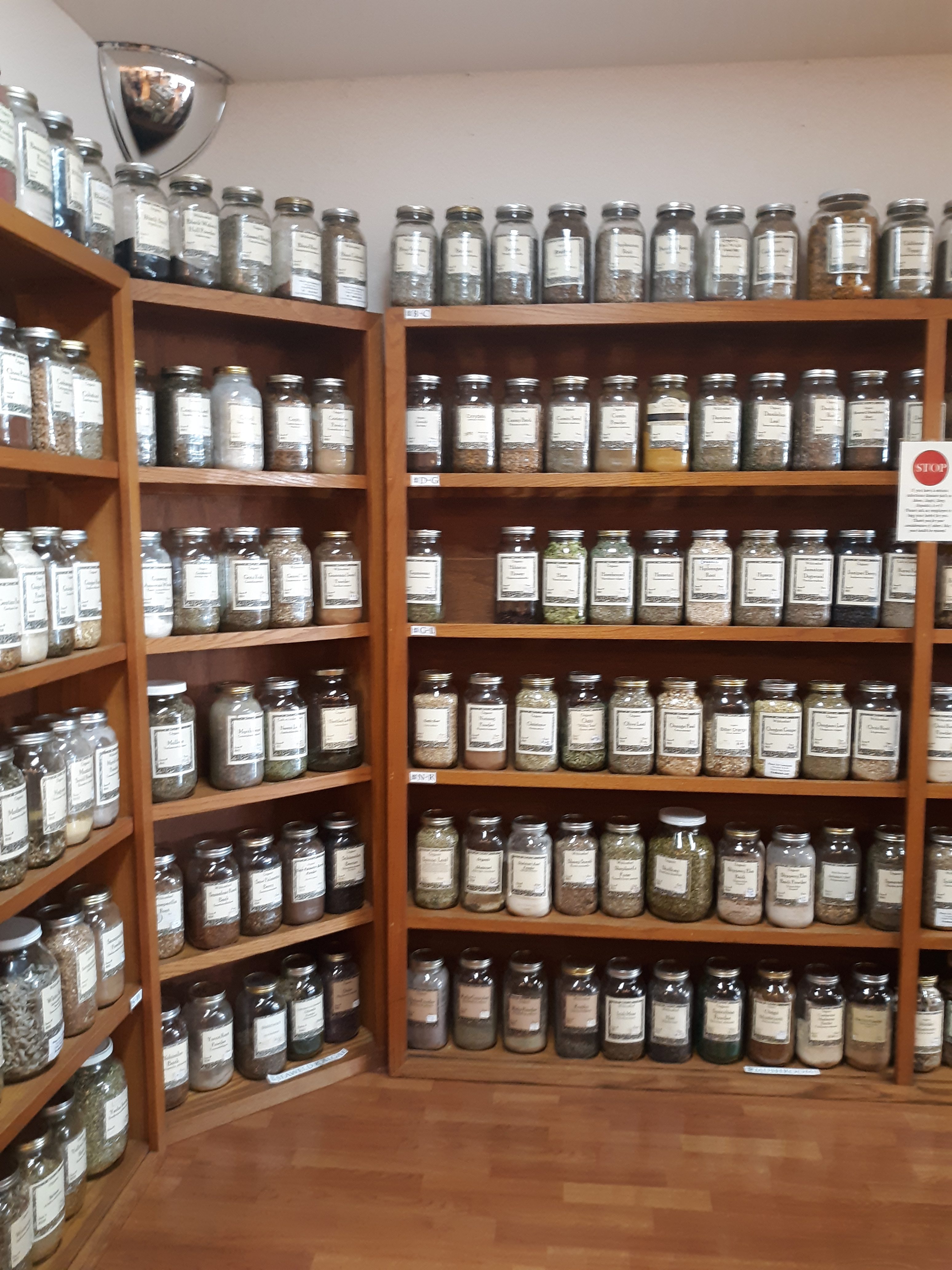
    Plants and herbs have been used for centuries to treat different ailments. With big pharmaceutical companies handing opioids out like candy, many are turning to alternative treatments for different problems.

    Sophia Laverdiere is a local herbologist at Moonrise Herbs in Arcata. Laverdiere received her education at The Southwest institute of Healing Art in Phoenix, Arizona, she has extensive knowledge of over 140 plants.

    “Before pharmaceuticals how did humans survive?” Laverdiere said. “We have all these plants that do everything we need.”

    20190207_165734.jpg
    Sophia Laverdiere is a local herbologist at Moonrise Herbs in Arcata. | Photo by Maia Wood

    She described what the term ‘disease’ means in her line of work.

    “Disease literally is dis-ease in your body,” Laverdiere said.

    When you have health problems, that means your body is not in balance with the environment around you.

    Pharmaceutical drugs and medicine are often derived from plants. Scientists isolate the chemicals in plants that help treat ailments in humans, so going to plants to treat illness is not so far off. Using the whole plant, instead of part, can provide benefits for illness and disease. Before going to a pill, try some of these herbal alternatives.


    Asthma

    Mullin:

    · Description: “Leaves look like lungs”

    · Use: Soothes the bronchioles

    · Origination: Used by the Native Americans

    · How to Consume: Tincture

    Local Organic Honey and Pollen:

    · Use/ Benefits: For asthma and allergies

    · Builds immune system by exposing you to local allergens

    · How to Consume: Eat a spoonful

    Anxiety & Stress

    Ashwaghanda:

    · Use/ Benefits: Sleep and pain

    · Origination: Chinese herb, means “strength of a horse.” The medicine comes from the root of the plant.

    · Lowers your cortisol levels, which get overloaded during stress.

    · How to Consume: Tincture

    Holy Basil:

    · Use/Benefits: For extreme and severe anxiety and panic attacks.

    · Origination: India, used in almost every home in India. Considered to be a sacred plant. The whole plant is used for medicine.

    · Lowers your blood pressure and eases your heart muscles.

    · How to Consume: Tea and tincture. You can just pick the leaves of the plant to consume.

    Oats/Oatmeal:

    · Use/ Benefits: Natural nervous system relaxant because there are some many vitamins and nutrients in oatmeal. These factors come together to create a natural calming effect in your body.

    · Cheap and accessible at most grocery stores.

    · “Food Medicine”

    Insomnia

    Rubious (Rhobilea, Rosea) In the Rose family:

    · Uses/Benefits: This herb gives you a natural boost of energy and vitality.

    · Calms down the central nervous system. Helps increase the moods in your brain

    · How to Consume: Tea or tincture. A little goes a long way.

    Passion Flower/ Passion Fruit:

    · Uses/Benefits: When you wake up at any time at night

    · Works to help reset the brain cycles

    · How to Consume: Eat before bed

    California Poppy:

    · Uses/ Benefits: For deep sleep and to stay asleep

    · Hypnotic herb which means to induce sleep

    · How to Consume: Tea or tincture

    · Uses the whole plant for medicine

    Next time, before you reach for something in your medicine cabinet, pick up a whole plant or herb instead.

    “Plants are here to help us, instead of just taking a pill derived from plants. Go the source and use the whole plant,” Laviedere said.

  • Studying dinosaurs is dino-mite

    Studying dinosaurs is dino-mite

    Humans can learn from dinosaurs’ experiences with climate change

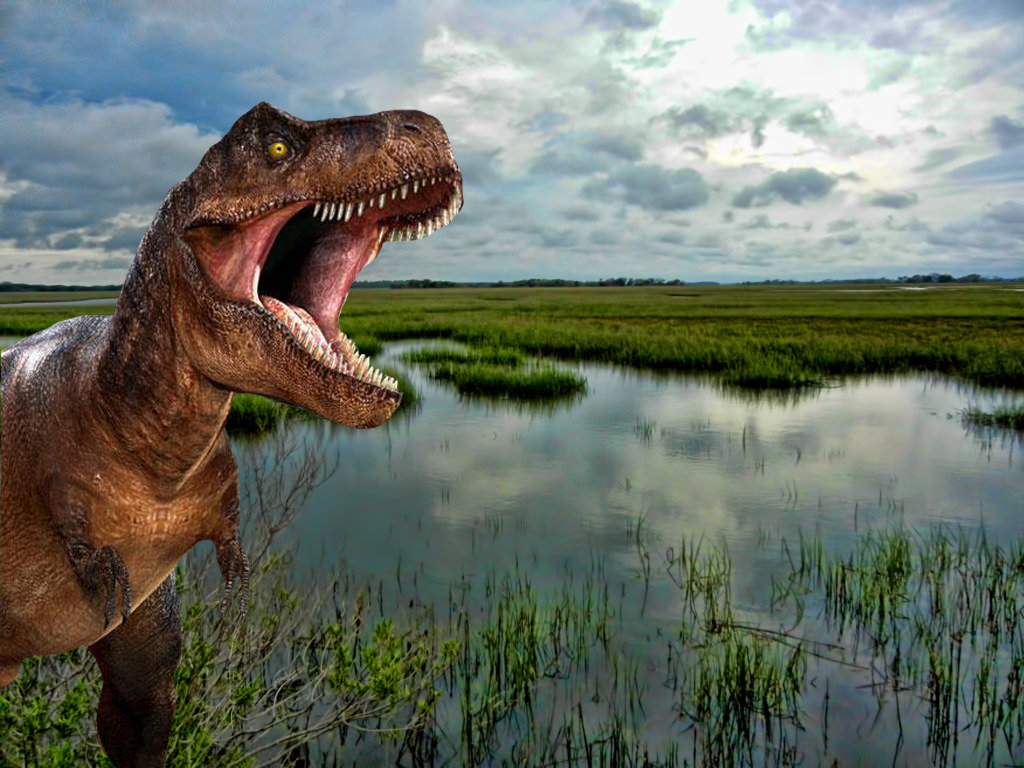
    Humans can learn from dinosaurs’ experience with global warming. Elliot Dabill, president of the board of directors for Friends of the Arcata Marsh, gave a lecture on Friday Feb. 15 on the topic, “What Could Dinosaurs Teach Us About Global Warming?”

    “Of course the answer is a lot,” Dabill said.

    Elliot said that during this time, the continents were crashing into one another to create Pangea. Volcanoes then began erupting. The lava produced was enough to cover Europe.

    Elliot said the heat from the lava cooked limestone and coal which then threw carbon dioxide and sulfur into the atmosphere. The large amount of gases, carbon dioxide and methane specifically, absorbed heat from the sun. Permafrost would then melt, which threw more methane into the atmosphere. During this time, oxygen was being sucked out of the air.

    Dabill referenced statistics that there was only 12 percent to 16 percent oxygen in the air, compared to 21 percent today. This lack of air would make it very difficult to breath at higher elevations.

    “You couldn’t go to Willow Creek,” Dabill said.

    According to Dabill, this is when dinosaurs began to evolve. This is also when Pangea began to break apart. Oxygen levels had just started to recover only to crash again. Volcanoes and poison gas again began to spew into the air.

    “Huge volumes of lava coming out,” Dabill said.

    The Earth started to heat up and oxygen levels were crashing quickly.

    “Volcanoes had to be a factor,” Dabill said.

    Many of the animals during these eras went extinct due to the low oxygen. Thankfully, dinosaurs have special lungs with air sacs. This type of lung system allowed the dinosaurs to absorb more oxygen than the other animals. The air sacs also helped absorb and exhale heat from the air. This allowed dinosaurs to survive while other animals suffered and went extinct.

    [perfectpullquote align=”right” bordertop=”false” cite=”Bill Prescott” link=”” color=”” class=”” size=”17″]“The more you hear about global warming, the more you understand it. The human influence is irrefutable.”[/perfectpullquote]

    Katy Allen, secretary for Friends of the Arcata Marsh board of directors, attended the lecture on Friday.

    “I never knew the reason dinosaurs survived,” Allen said.

    That is when it shifted into the Jurassic era. The dinosaurs began to take over.

    “Dinosaurs end up running the world,” Dabill said.

    Today, the Earth is heating up faster than ever. This is due to the mass of carbon dioxide being emitted across the planet by humans.

    The melting of glaciers and sea level rise are two issues of concern. People across the planet are counting on glaciers to provide water for their rivers. Sea level rise will affect people all across the planet. This will destroy homes and infrastructure for millions of people.

    Bill Prescott is a retired businessman who attended the lecture on Friday.

    “The more you hear about global warming, the more you understand it,” Prescott said. “The human influence is irrefutable.”

    Humans also have a trick to combat these issues. Humans can put their brains together to solve climate change once and for all.

    “This is only the beginning,” Dabill said.

  • Black excellence in science

    Black excellence in science

    Cellular and molecular biology major, Tanae Nichols, shows other black girls, anything is possible

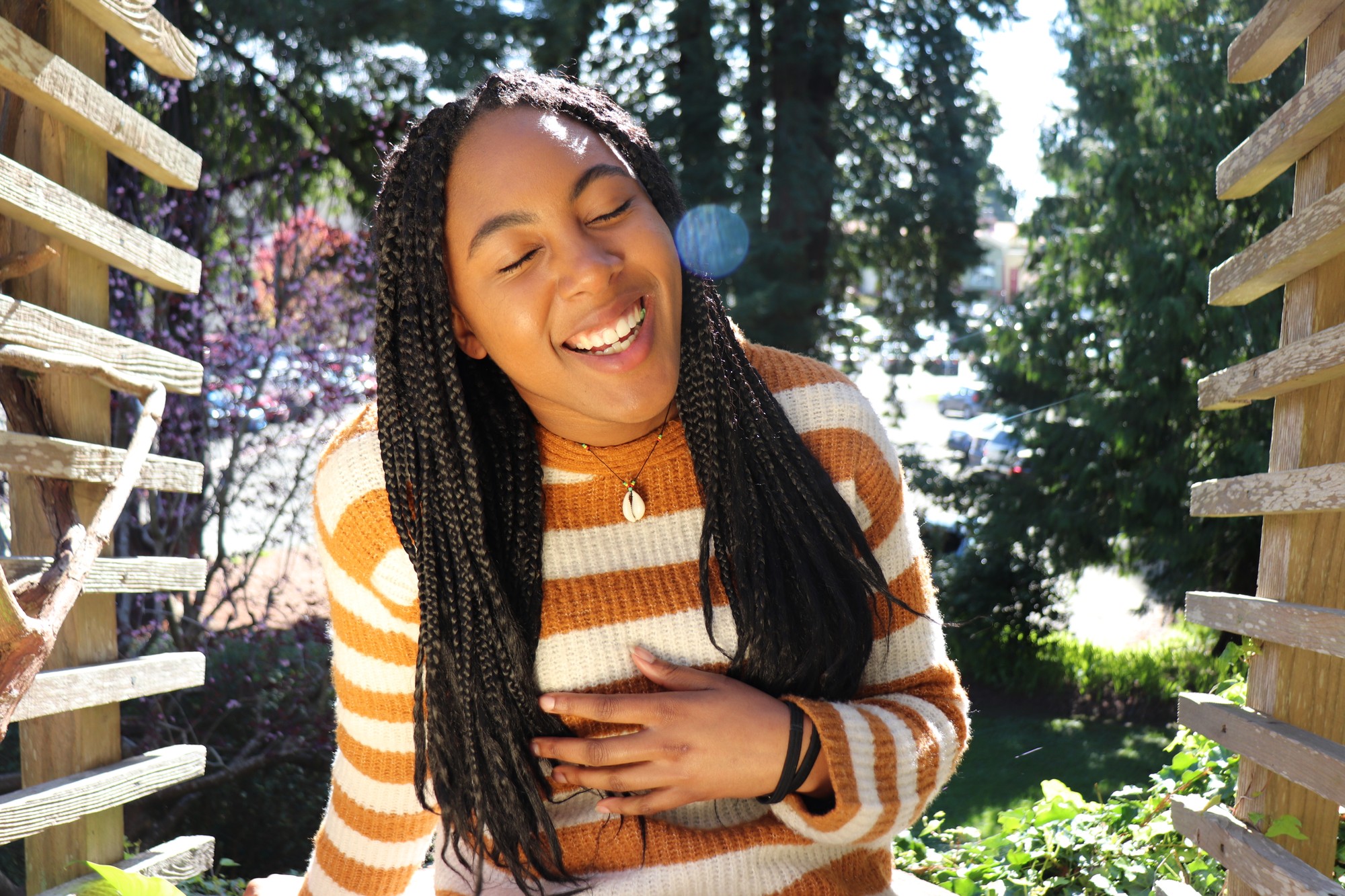
    Sacramento California native, Tanae Nichols has a plan to prove to other black girls, anything is possible. Nichols is a third year at Humboldt State and is studying cellular molecular biology.

    “Dealing with genetics on a molecular level, I’m able to break down how things work and function on the most basic level,” Nichols said.

    IMG_1957.JPG
    Cellular molecular biology major, Tanae Nichols sits behind Bret Hart house on Feb. 19. | Photo by Dajonea Robinson

    Nichols takes this goal and brings it to life with her hands-on work as a caregiver. Growing up she had many family members with disabilities and was inspired to find out how she could help. Her love for knowledge and caring for others is what drew her to work in the field. She was also interested in internal medicine dealing with black people.

    “I wanted to learn more on a developmental level, I can fix things in the body,” Nichols said.

    When a Humboldt State recruiter came to her advanced placement class in high school, she became drawn to the beautiful location and the sense of community. These factors are what pushed her to attend school here.

    “I’ve always been into hiking, camping and just being an outdoors girl,” Nichols said. “I am an adventurer.”

    IMG_1940.JPG
    HSU student Tanae Nichols | Photo by Dajonea Robinson

    Nichols moved to Humboldt straight out of high school. She came with intentions to join the pre-med program. She also enjoyed how the school pushed a biology centered curriculum. She tried many different majors before finding a fit.

    “I changed my major from general biology to environmental biology to psychology and then back to pre-med,” Nichols said.

    [perfectpullquote align=”right” bordertop=”false” cite=”Tanae Nichols” link=”” color=”” class=”” size=””]”Continue your studies and trust in your dreams.”[/perfectpullquote]

    Being the first person to go to college in her family, and a black woman in science, she has felt the pressure to succeed.

    “I have professors that really believe in me and tell me ‘Don’t let anyone tell you, you can’t do it,’” Nichols said.

    She takes this advice and strives forward to be a positive role model for her family back home.

    With three brothers and four sisters, Nichols finds herself in the middle. Raised by two hard working parents who did not go to college, education was always important.

    “My parents made sure I was put into schools that were college oriented,” Nichols said.

    The charter school she attended really promoted children of color to go to college.

    IMG_1947.JPG
    HSU student Tanae Nichols | Photo by Dajonea Robinson

    She is involved with the Humboldt State’s club/sisterhood, The Legacy. This group of women aim to be a home away from home for all women and a platform to connect with the Humboldt community. They do different community service events like canned food drives, beach clean-ups and mentoring girls. Nichols believes it is important to be involved with the community to be an effective doctor.

    “When going into medicine, you have to learn the community you are serving,” Nichols said.

    Nichols has about two more years to go until graduation. Her next steps after college are to go to medical school, do a two-year residency and eventually become a doctor. Nichols encourages other young black girls who aspire to go into the science field.

    “Continue your studies and trust in your dreams,” Nichols said.

  • Humboldt Women’s basketball blocks Coyotes

    Humboldt Women’s basketball blocks Coyotes

    Jacks beat CSUSB 69-66 on Black Out Night

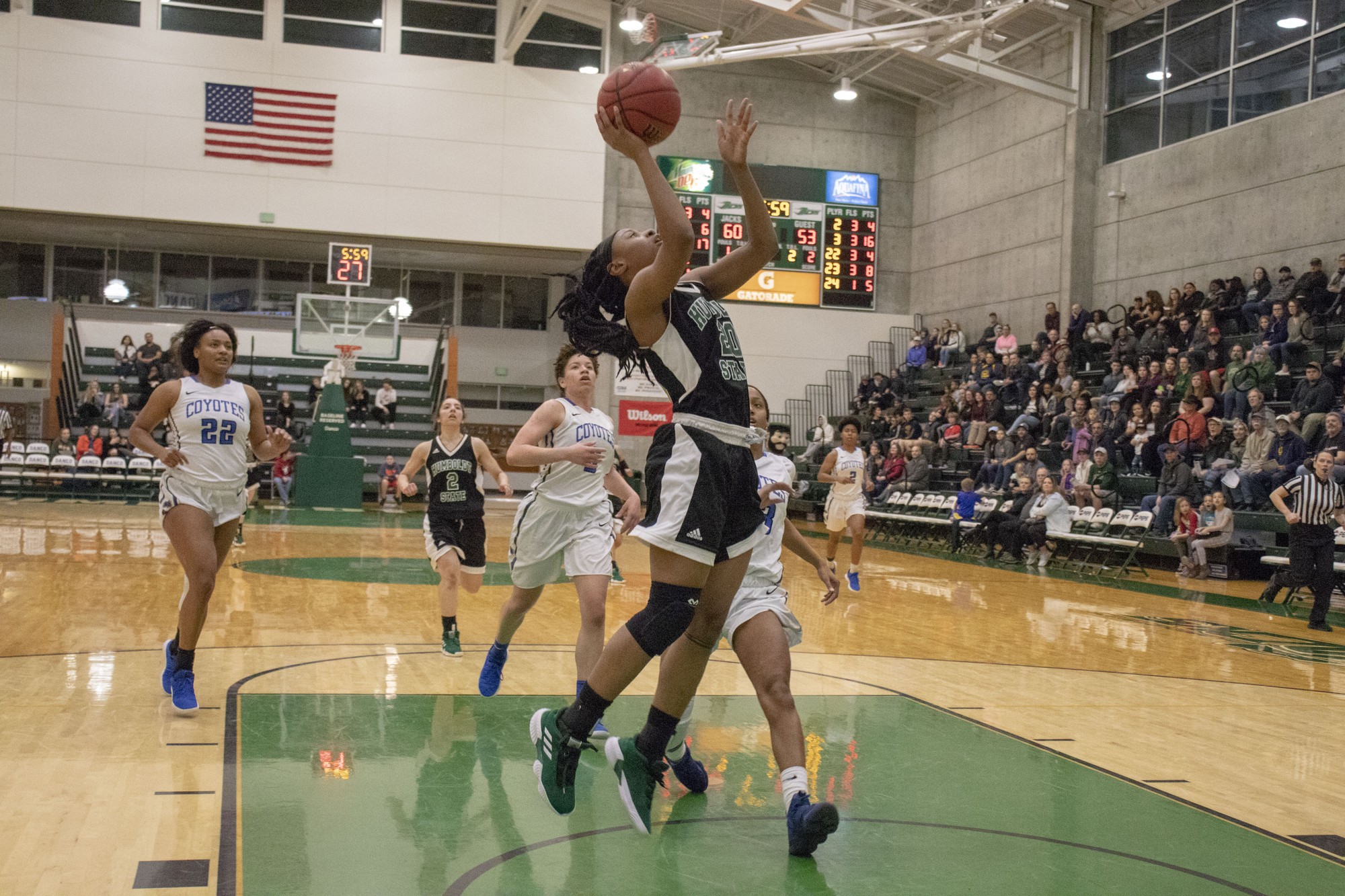
    Alexia Thrower’s physicality was unmatched as she accounted for twenty-four points and tied a season-high sixteen rebounds. Humboldt State secured their fifteenth win on the season against the California State University of San Bernardino on Saturday night. HSU got its fourth straight win, and Thrower earned CCAA player of the week honors.

    “I think we started as a team pretty slow,” said Thrower. “I was just trying to pick up the energy and get everybody going and just try to play my hardest regardless of the situation.”

    IMG_9006.jpg
    Senior Jovanah Arrington gets the Coyote defender to bite on the pump fake in front of the Lumberjack Arena crowd. | Photo by Braedon Delome

    The game went back and forth, with CSUSB getting off to a fast start leading by nine in the first. Jovanah Arrington made a big time jump shot to end an early San Bernardino run at the beginning of the first quarter.

    [perfectpullquote align=”right” bordertop=”false” cite=”Head Coach Michelle Bento-Jackson” link=”” color=”” class=”” size=”17″]”[Alexia Thrower] plays with such a motor in particular when she’s around the basket… Both offensive and defensively she’s going to be on those boards, and she creates problems for our opponents.”[/perfectpullquote]

    Just as San Bernardino was starting to make a strong push late in the quarter, Thrower drained a three and got the crowd into the game. Gabrielle Carbajal added to the early comeback with a three of her own as CSUSB headed to the second quarter with a five point lead.

    The game was extremely physical throughout, with Thrower driving to the basket and drawing hard fouls. She went 10-13 from the free throw line, and shot 50 percent from the field. CSUSB continued to push back whenever HSU would go on a run. Thrower set up a big screen for Arrington late in the second, as she drove to two points.

    Thrower’s ability to grab offensive rebounds and give HSU a second opportunity was pivotal. Teammate Isamar Conde showed how much fight was left in the Jacks, grabbing an offensive rebound between two coyotes under the basket. Conde also piled in a nice driving layup in the second as HSU went to the half with a 37-35 lead.

    “[Thrower] plays with such a motor in particular when she’s around the basket,” HSU Head Coach Michelle Bento-Jackson said. “Both offensive and defensively she’s going to be on those boards, and she creates problems for our opponents. Those were high energy type moments when she was going up and securing rebounds.”

    UCSB took a five point lead to begin the third, but Thrower would continue on the second effort shots. Her ability to draw the foul continued down the stretch. A giant three pointer from Carbajal got the crowd back into it and put HSU up one heading to the fourth.

    IMG_8999.jpg
    Junior Guard Madeline Hatch retakes the lead with a jumper from outside the paint. | Photo by Braedon Delome

    Costly turnovers from the Coyotes continued into the fourth, led by a Carbajal steal and assist to Thrower. Thrower would end up hitting a crucial shot that put the Jacks up nine and forced the timeout from CSUSB. She continued to make big play after big play in crunch time. The Coyotes tried but could not put it together, falling short by three points in the end.

    Thrower’s 24 points were a game-high as she put the team on her back down the stretch. Jovanah Arrington added 15 points and two rebounds, Isamar Conde finished with 13 points four rebounds, Carbajal and Tyra Turner scored six points each and Madeline Hatch had five points and six rebounds.

    “We didn’t get into any flow, but I thought Jovanah Arrington was aggressive in the second half and gave us some big buckets,”Bento-Jackson said. “Along with Lexi Thrower, we did enough just to grind out the win.”

    An excellent performance by HSU puts them into position to potentially host a playoff game. They play this Thursday in Carson against California State University Dominguez Hills.

    “We have an excellent home crowd, they get really into the game,” Thrower said. “So if we get to host a game here that would be pretty awesome.”

  • Pi Epsilon welcomes environmental science majors

    Pi Epsilon welcomes environmental science majors

    Humboldt States new environmental science honor society, Pi Epsilon, offers career building experience

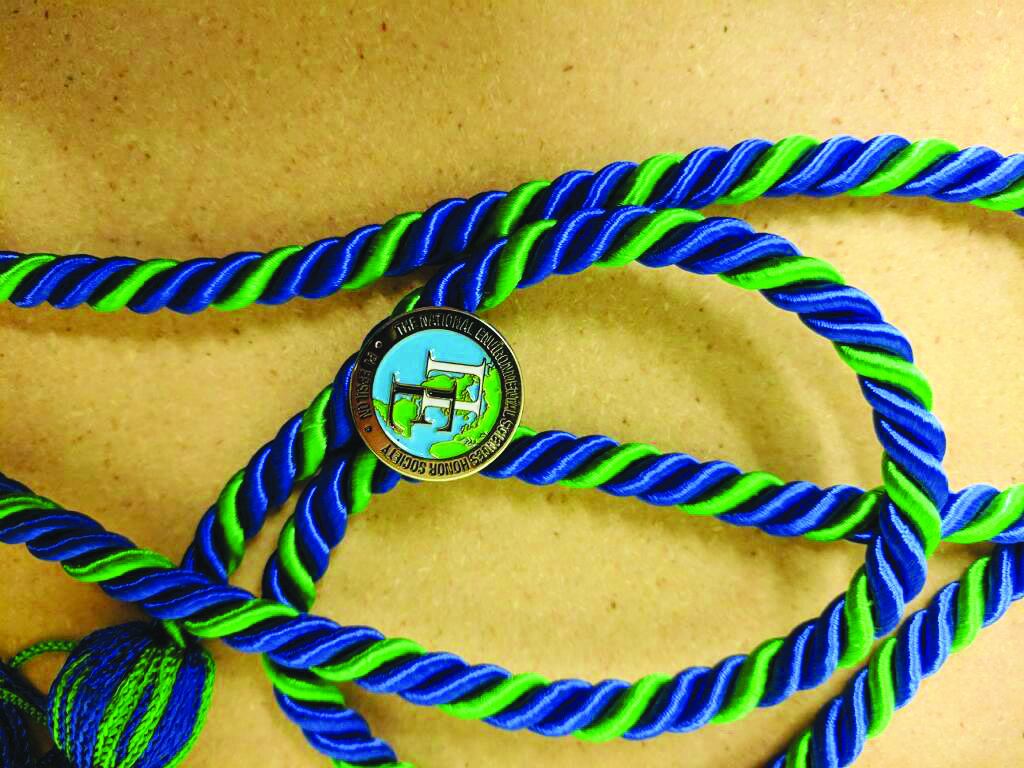
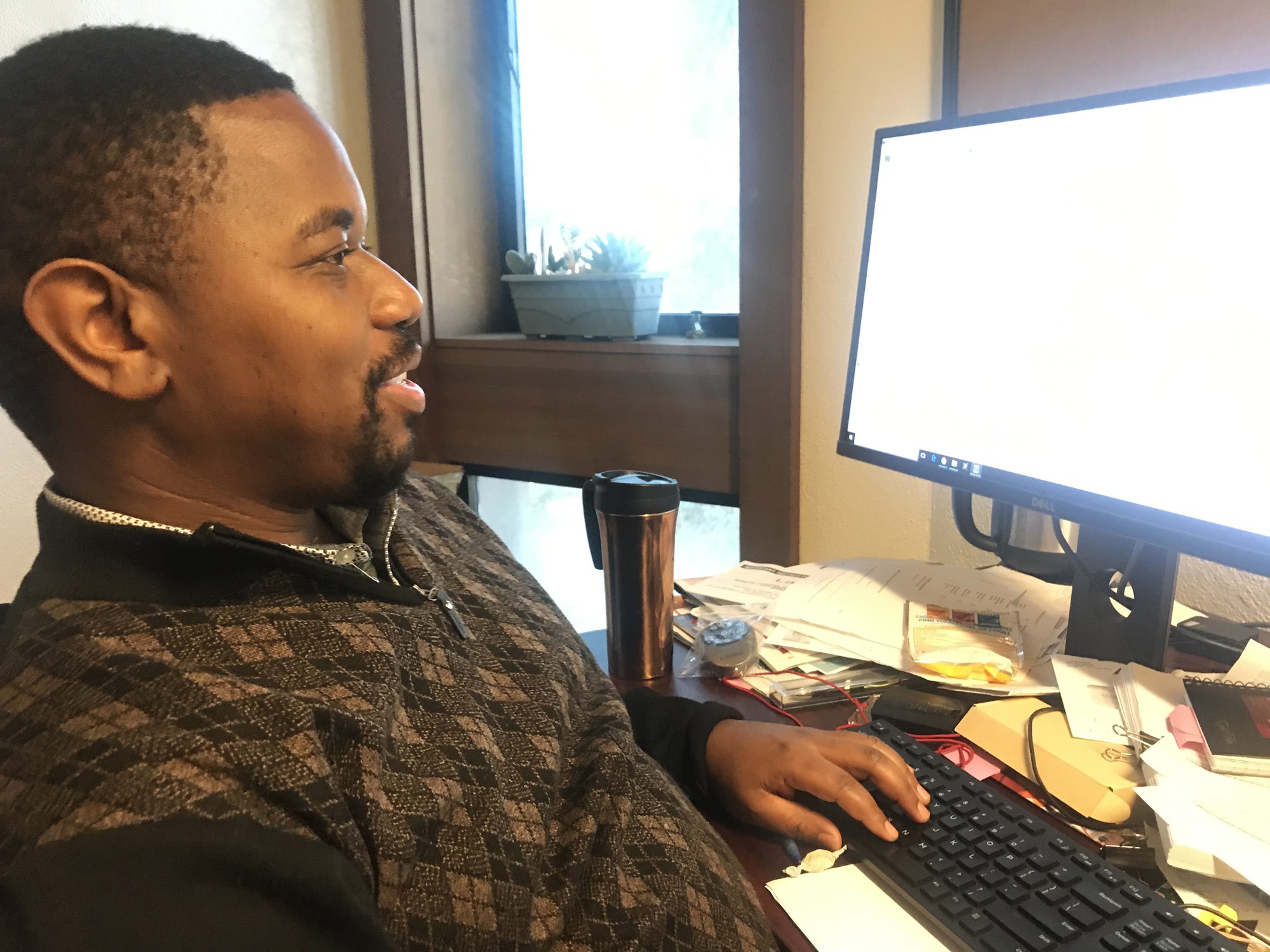
    The National Environmental Science Honor Society, also known as Pi Epsilon, had its first meeting on Feb. 15. President Rosey Ines and Vice President Ethan Reibsome invite qualified environmental science majors to join.

    The Pi Epsilon constitution mission statement is to promote the study of environmental sciences through recognition of exemplary scholarly and professional activity. Environmental science is understood to be the study of our environment and all stressors acting on it. The society seeks to promote interdisciplinary studies and interactions between industry and academia to further the study of environmental science.

    “We hope to establish ourselves and exchange ideas with students, employers and educators,” Reibsome said. “We will coordinate and collaborate with the campus community.”

    IMG_4830.JPG
    Rosie Ines and Ethan Reibsome, president and vice president of Pi Epsilon. | Photo by Collin Slavey

    To qualify to be a member of the honor society, an applicant must meet certain academic requirements. First, they must have a cumulative 3.3 GPA. Second, they must have completed 36 units of a Natural Science. They must also be in junior standing.

    Reibsome said Pi Epsilon would be meeting once or twice a month. They are currently looking for members to fill out their club charter. Anyone who is interested is encouraged to contact Ines or Reisbome over email. They will fill you in on how to get involved.

    Ines and Reibsome talked about the advantages of joining. They said Pi Epsilon offers career building experience, recognition for student achievements and volunteer opportunities. One of the first projects Reibsome hopes to accomplish with the club is an update to the Natural Resources Building lounge. This would show Pi Epsilon’s commitment to the College of Natural Resources.

    Pi Epsilon has enthusiastic support from faculty. Kerry Byrne is the honor society faculty advisor. Byrne is a professor of ecology in the College of Natural Resources. She looks forward to helping the honor society thrive.

    “I’m the faculty advisor for the society,” Byrne said. “I’m here to help you in as many ways as I can.”

    [perfectpullquote align=”right” bordertop=”false” cite=”NESHS Vice President Ethan Reibsome” link=”” color=”” class=”” size=”18″]“We hope to establish ourselves and exchange ideas with students, employers and educators…”[/perfectpullquote]

    The meeting was an opportunity to get potential members in a room together to discuss a vision for the future of Pi Epsilon. Being part of an honor society offers a lot of networking opportunities, including access to conventions. Ines and Reisbome said they would begin looking into professional partners like the American Association for the Advancement of Science.

    There were fourteen people at the event. Many of the students who showed up are peers in the Department of Environmental Science. Their specialties included education and interpretation, policy and planning, ecological restoration and recreation. A diverse set of interests should be a boon to the club.

    “They were really excited,” Byrne said. “Students who are excited, I want to help them.”

    Emily Hunter is learning about environmental education and interpretation. Pi Epsilon plans on tutoring students in the environmental science and management program. Hunter said the honor society will hold people accountable, motivating them to do their best. She looks forward to contributing to Pi Epsilon.

    “I hope to offer a fresh perspective to the club,” Hunter said. “As well as providing a positive attitude, volunteer connections, and be helpful in any way that is needed.”

  • Meet the professor: David Gwenzi

    Meet the professor: David Gwenzi

    David Gwenzi is this month’s professor profile. We talk about his culture, his academic achievements and his contribution at Humboldt State

    David Gwenzi is an assistant professor of environmental science and management at Humboldt State University. He teaches remote sensing classes and geospatial science classes.Gwenzi is the content committee chairman for the geospatial science program, a program that floats between three departments and two colleges. Born and raised in Mutare, Zimbabwe, his values encourage him to be a role model for younger generations and to inspire success.

    [perfectpullquote align=”left” bordertop=”false” cite=”David Gwenzi” link=”” color=”” class=”” size=””]“Whatever you do as an adult, think of how it reflects on younger generations.”[/perfectpullquote]

    “Whatever you do as an adult, think of how it reflects on younger generations,” Gwenzi said.

    Gwenzi was raised in the Bantu culture, a culture made up of several hundred indigenous ethnic groups in sub-Saharan Africa, spread over a vast area from Central Africa across the African Great Lakes to Southern Africa. The culture encourages responsibility to the society rather than just the individual. Gwenzi became an educated man to prove to the people in his community that if they put in similar effort, they would be able to meet their goals and gain achievements as well.

    Gwenzi began his college education at Bindura State University in Zimbabwe, where he researched environmental sciences to help the people of his home country better understand their landscape.

    After two years of classroom education, Gwenzi spent a year researching local pine plantations. This was Gwenzi’s first opportunity to use spatial data for his plantation baboon bark stripping research project in July 2006.

    “I researched baboons on pine plantations in Zimbabwe,”Gwenzi said. “The baboons stripped pine trees of their cambium layer and they chewed on it. There was sugar or sweet in that layer. It was a treat, but it would girdle the trees.”

    IMG_4759.HEIC.jpg
    Professor Gwenzi rendering a map using interpolation, a process which estimates data obscured by clouds or corrupted data bands. | Photo by Colin Slavey

    The nature of the project had Gwenzi surveying the movements of baboon troops on plantations in the eastern highlands using spotting scopes and topographic maps. Gwenzi would record the locations of stripped pine trees in pencil on topographic maps. He compiled the data by hand. His data gave him some idea of the range of each baboon troop on the plantation. It was a tedious process.

    “When I was done with that, that was when I talked with the guy who was a GIS technician,” Gwenzi said. “He showed me you could make cool maps out of all these topo maps. Then the guy told me about how easy it could be digitize. I didn’t have to do it with pen and paper in the end.”

    Gwenzi fell in love with the GIS process. He became familiar with the tools of the trade and focused his education around Geospatial Sciences. After receiving his bachelor’s in environmental sciences with a focus in forestry, Gwenzi moved to the Netherlands to receive his master’s in geoinformation science and earth observation from the University of Twente. He finally completed his education with a doctorate in spatial ecology from the University of Colorado.

    At HSU, Gwenzi shares his passion with many students in the environmental sciences and management department, the forestry department and the geography department. He is renowned through the student body as a high quality professor.

    Bente Jansen is a HSU junior ESM policy and planning major. He said that Gwenzi is a good teacher.

    “He was always willing to work with me,” Jansen said.

    Melanie Stephenson is a senior geospatial science and geology major who has taken some of Gwenzi’s classes.

    “Gwenzi is such a ‘G.’ ‘G’ for Gwenzi,” Stephenson said.

    Sam Wood is a HSU alumni of the geography program.

    “Gwenzi is the best,” Wood said. “He is a genius. I wish he was here now hanging out with us.”

  • Astrology versus Astronomy

    Astrology versus Astronomy

    Similar origin stories don’t change the fact that one tends to be taken more seriously

    Astrology is the study of how the planet’s movements affect our human sphere. Astronomy is the study of celestial objects and these objects are said to surround earth. Both of these fields originated from our ancestors’ observations of the skies.

    Astrology was first recorded in about 3000 B.C., by the Mesopotamian Babylonian people. They believed the stars and planets represented the heavens and used their observations of the sky to create the Zodiac. The Greeks continued these advancements by linking constellations to the planets. The ancient civilizations would use their observations to make decisions about their lives. The Indian civilization created what we use today for astrology predictions in about 1000 B.C.

    Sabrina Ourania is an astrologer at the Arcata Healing Center and has been studying astrology for 10 years. Ourania described how people could have perceived the stars. She said that some people felt that astrology is the divine celestial realm where different gods live.

    “It’s predictable, the sun always rises, the moon is always up,” Ourania said. “It was such a contrast to what the experience was on earth, it brought a lot of awe and admiration and devotion.”

    20190130_164057.jpg
    Sabrina Ouriana, owner and astrologer at Godless Alchemist. | Photo by Maia Wood

    People are still just as interested in how our sky affects us on the inside. According to a Gallup Poll, 25 percent of Americans believe in astrology. The field is more popular now than ever. Though, science has debunked most of the predictions in astrology, people are more connected to these ideas.

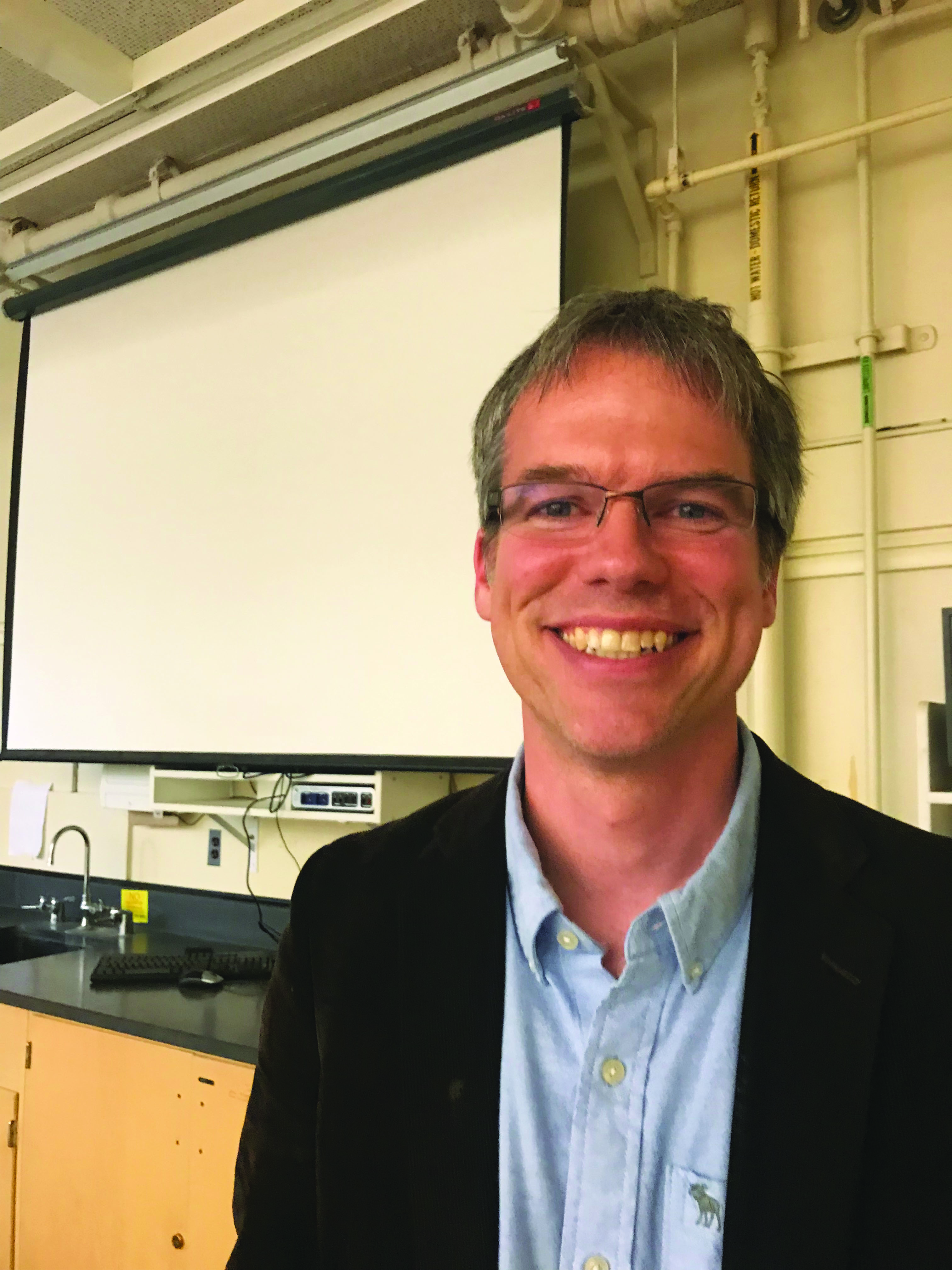
    Humboldt State’s astronomy professor, Ryan Campbell said that people want to believe in astrology because it’s fun.

    “People want to believe in astrology because it’s comforting, we engage in motivated reasoning to reach conclusions that we want to reach,” Campbell said.

    20190129_144708.jpg
    Ryan Campell, Humboldt State University physics and astronomy professor. | Photo by Maia Wood

    With astrology being used as a way to experience the world around them, it makes sense that some of these traditions would still be used today. This said, the Greeks and Mesopotamians had very little understanding of modern day science. Why are these traditions still being used in our modern societies?

    For Ourania, astrology is more than science can explain.

    “I see it as a deeper lay of reality and has a lot do with our own psyche,” Ourania said. “We’ve taken the experiences of our psyche and have projected them onto these planetary bodies.”

    Humboldt State students Norma Warren and Trena Neel agree with professor Campbell. Astrology is not something to believe in but is just something fun.

    “I believe that astrology is something that people believe in, but I don’t treat it as good model about making predictions about the universe,” Campbell said.

    Astronomy and astrology were very closely related throughout history. According to Ourania, many of the great astronomers such as Kepler and Galileo were also astrologists. To fund their discoveries, they would make predictions for wealthy individuals.

    “Back then there were not universities offering grants for new discoveries. But was happening wealthy patrons or leaders were coming to know, should they go to war etc. Astronomers day jobs were astrologers, because that is what they were getting paid to do,” Ourinia said.

    This close tie to astronomy is what keeps astrology alive today. As we try to move forward in advancements in how we perceive the world, it makes it hard to let go of some traditions. As a science-based society, we can appreciate the past while still having a health perception of reality.

    “The history of astrology and astronomy are really tied and I appreciate the historical background that came out of astrology, but I think we have better models now,” Campbell said.

  • Are birds real?

    Are birds real?

    Investigating and debunking the internet trend claiming birds aren’t real

    Since the government shutdown, the skies have been quiet. The previously pervasive and never ceasing song of birds rang out in Arcata, but today that song has quieted.

    A conspiracy theory of sinister government surveillance has spread across the internet. A bold claim, “Birds Aren’t Real” is a movement attempting to spread their truth about birds; they believe birds (particularly pigeons and turkeys) are government drones who have been surveying the American people since 1959.

    BirdsAren’tReal”Prototype”.JPG
    Birds aren’t real “Prototype.” | Photo courtesy from Birds Aren’t Real Instagram page

    The fossil record shows birds have been a diverse part of the natural environment for approximately 66 million years. The Cretaceous-Paleocene extinction event was when a massive meteor hit the earth and wiped out three quarters of all life on the planet. The event challenged dominant dinosaurs and other land dwelling animals to the point of extinction, but birds took advantage of their ability to fly and spread across the world.

    Today, we are faced with a story satirically written on the Birds Aren’t Real website. Delving into the “history” section, we learn about the CIA plot to cause the mass destruction of birds using poison water deployed from unmarked B-52 bombers. Nestled within this history section it’s written: “On June 14, 1959, the CIA secretly began ‘Water the Country.’ Within the next six years, 72 percent of the bird population was wiped out. During this nightmare event, the first few bird prototypes were released by the hundred thousand.” If true, the operation destroyed the 200 – 400 billion birds who inhabited the planet. An absolute travesty.

    We decided to get to the bottom of the issue and find out if birds are, in fact, real. The hypothesis is that a real bird would be made of flesh and blood, whereas a surveillance drone would be made of metal and silicon. The Humboldt Wildlife Care Center (HWCC) was more than happy to talk to me about the birds they help. I met Monte Merrick, a volunteer at HWCC. He had just finished doing an autopsy on a robin who had been hit by a car earlier that day. It was a sad situation- the bird died due to its injuries. Merrick was solemn as we talked about the topic, but he explained that one of the first things you notice when you cut open an animal is that it has a skeleton analogous to ours.

    “We have lots of empirical evidence that birds are real,” Merrick said.

    MonteMerrick.HEIC.jpg
    Humboldt Wildlife Care Center volunteer, Monte Merrick. | Photo By Collin Slavey

    The Humboldt Wildlife Care Center helps treat approximately 1200 animals per year. Seventy-five percent of those are birds. Merrick was very confident that birds are real, claiming “It’s not really a question, it’s knowledge.”

    As the federal government comes back online and birds continue to sing, seek out these beautiful animals. Visit the Arcata marsh any time of day for a chance to see the majestic great egret and listen for duck calls at Allen Lake. You may want to keep an eye on those pigeons, though.

    For more information please visit Birds Aren’t Real website.

  • Snowy plovers fight for protection

    Snowy plovers fight for protection

    Humans act as primary threat to the endangered bird species

    A snowy plover egg sits in a small burrow on Clam Beach. A raven creeps up on the lonely egg and pecks it in half. The scavenger slurps up the egg’s contents and flies away before the father arrives back at the nest.

    Alexa DeJoannis, President of the Redwood Region Audubon Society, gave a speech on the endangered snowy plover Friday Jan. 18 at the Arcata Marsh Interpretive Center. She began studying birds in southern California with the burrowing owls. DeJoannis later moved up to Humboldt County and applied to Humboldt State University for a master’s program. DeJoannis graduated with a Master’s in Wildlife. While there, her ornithology professor, Mark Colwell, introduced DeJoannis to researching snowy plovers. She has been in love with them ever since.

    “I only study cute animals,” DeJoannis joked.

    Many people use nature as a getaway from their stressful lives. The Humboldt Dunes are a great example of a peaceful place to take a stroll. The dunes are also an important place in our environment. Her speech discussed how the dunes slow wind and break storms when they crash in from the ocean. Dunes protect our roads and homes from these weather conditions.

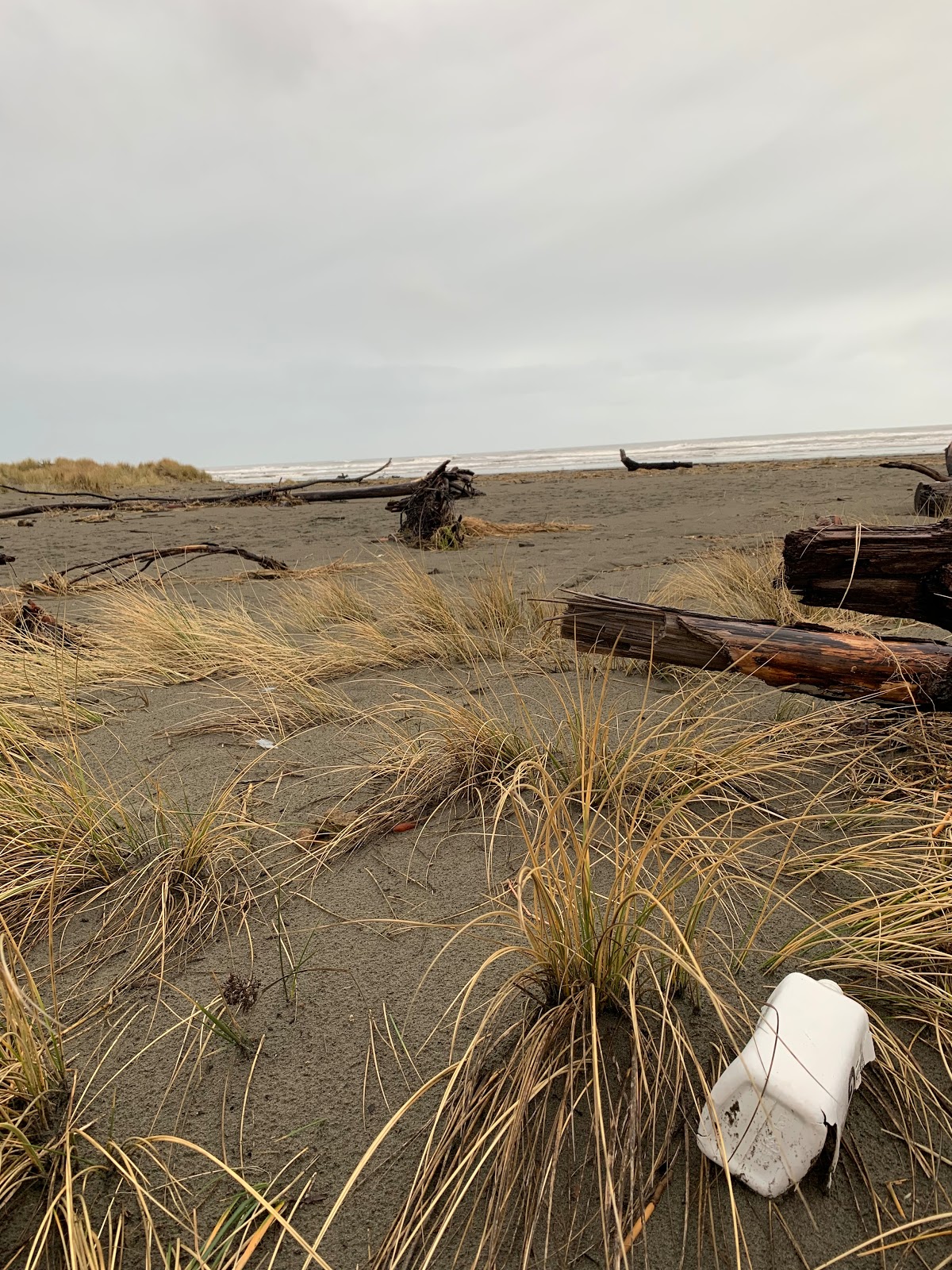
    Snowy plovers also rely on the dunes as their home. They dig holes in the sand to use as nests. Since snowy plovers are semi-migratory, they spend a lot of time at their nests. DeJoannis emphasized how snowy plovers rely on their eyes to find food and watch for predators. The beach is their preferred habitat since it’s nice and open. Unfortunately, European beach grass is taking over their ecosystem. Snowy plovers are being blinded by this invasive plant species, making them vulnerable to predation.

    DeJoannis also discussed how people have a huge impact on the endangered snowy plover. Human litter has helped corvids, which are birds of the crow family thrive. Beaches became an attractive home for corvids such as ravens and crows because of this litter issue. Those large numbers of clever birds then began attacking the plover nests. Corvids found that a snowy plover egg is much tastier than the trash they were eating.

    “Everybody deserves protection from predators,” DeJoannis explained.

    Many nests have been destroyed by people not watching their steps. Snowy plovers nest right on the sand and expertly disguise their nests from predators. Therefore, many people are unaware that these creatures are right beneath their feet. People can look for small scoops in the sand with speckled eggs laid inside.

    Snowy plovers like to have shells or wood around the nest to distract a predator’s eye from their eggs. It is important to keep an eye out for snowy plovers themselves. Plovers have grey, brown backs and tops of their head with a white belly all year round. Their plumage then changes during breeding season, Feb. to Sept. This is when they develop a black stripe above their eye and on their necks. These stripes are usually more pronounced on the male snowy plovers who are trying to impress a female.

    “That’s evening wear,” DeJoannis said.

    Restoration efforts have been focused on pulling invasive grass. Native species of plants like beach strawberry are planted. Snowy plovers can easily see over shorter native plants. Fences have been put up around plover nesting sites during breeding season to prevent the destruction of plover nests. People can also listen to experts and become educated on the issue themselves. If humans work together to protect the little guys, the snowy plover may just have a chance.

  • Devouring dermestids

    Devouring dermestids

    Visiting HSU’s Vertebrate Museum

    In a dark room flesh-eating beetles consume dead animals. That sounds like a scene straight out of a horror movie, but this is a room on campus at the Humboldt State University Vertebrate Museum.

    Melissa Hawkins. is the current curator at HSU’s Vertebrate Museum. She has always been interested in animals, and told her parents she wanted to be a veterinarian at the age of six.

    “I did my masters in reptiles and have done bird research as well,” Hawkins said. “I just love vertebrates.”

    IMG_8744.jpg
    Melissa Hawkins poses next to a whale bone outside the beetle room at the HSU Vertebrate museum. Photo by Walter Hackett

    Hawkins got her bachelor’s and master’s degree at Western Illinois University and her PhD. at George Mason. She applied for the museum curator position at HSU toward the end of 2016, and said she was excited to come to Humboldt.

    “The first thing I said to myself was, ‘Wait a second, is that a redwood tree?’” Hawkins said.

    Aside from her curator duties, Hawkins teaches mammalogy and evolution. Much of her research focuses on next-generation sequencing methods. She loves the discovery aspect of her research.

    “For a moment in time you’re the only person that knows a fact in the the scientific world,” Hawkins said.

    IMG_8710.jpg
    Stuffed and preserved chipmunks catalogued in a collection room at the HSU Vertebrate Museum. Photo by Walter Hackett

    We left her office and move down the hall to one of the collection rooms. Hawkins pulled out a drawer containing rows of small chipmunks, each one splayed out neatly and accompanied by a catalog tag.

    “Feel how soft they are,” Hawkins said.

    At this point the small rodents in the drawer have all been stuffed with cotton and preserved, a lengthy process that is carried out at the museum itself. Some of the specimens in the drawer date back to the early 80s.

    “I call it creepy arts and crafts,” Hawkins said.

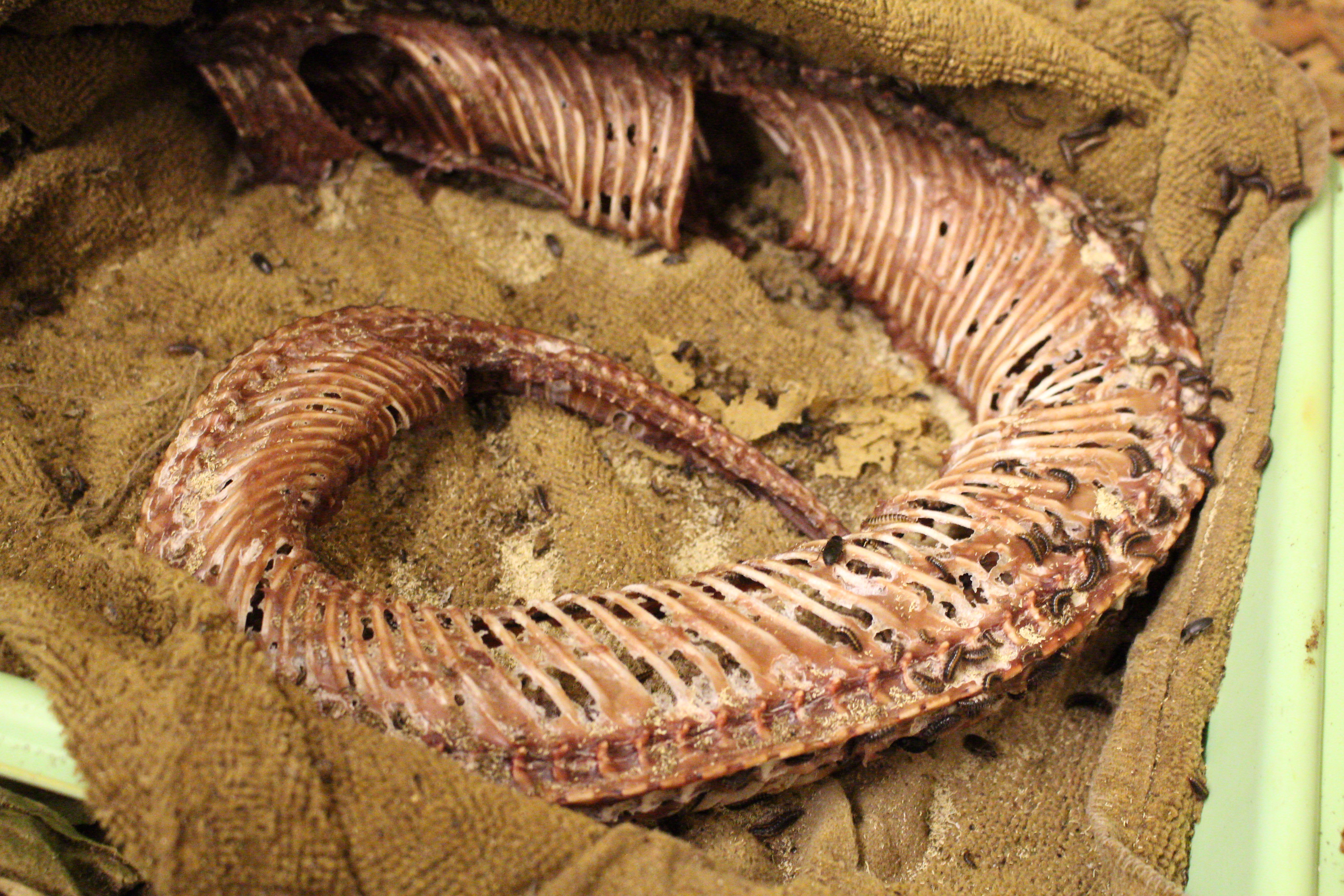
    From there went to see the flesh-eating beetles. The beetles remove all the flesh from the bones for any specimens the museum wants to preserve. They do the work that human hands cannot.

    Dr. Nicholas Kerhoulas is the HSU Vertebrate Museum collections manager and is responsible for looking after the Dermestid beetle colony.

    “Don’t stay in there too long,” Kerhoulas said. “It’ll stay on your clothes.”

    We went outside and entered a small dark room. The powerful smell hits your nostrils instantly.

    “Here’s the local talent,” Hawkins said.

    Hawkins walked over to a box against the wall and opened the lid. A soiled rag resembling a burlap sack is inside. She removed a cover to reveal a snake carcass covered with beetles.

    “They like to feel snuggly and warm,” Hawkins said.

    Kerhoulas said the snake has taken the beetles some time to get through.

    “I think a combination of cooler weather and perhaps that snake not being their favorite is making it take a while longer than I would have expected,” Kerhoulas said.

    We headed upstairs to the museum prep room, where the team worked to prep a dolphin specimen for the beetles. Removing as much flesh as they can before giving the bones to the beetles will speed up the process. The team has to be careful though, because if they leave the bones with the beetles too long they’ll start to eat into the bones.

    “Once the colony gets going they are hungry little buggers,” Hawkins said.

    IMG_8740.jpg
    Dr. Nicholas Kerhoulas removes flesh from a striped dolphin carcass in the HSU Vertebrate Museum in preparation for the beetle colony. Photo by Walter Hackett

    The prep room smelled like fish. This particular specimen is a striped dolphin that washed up in Crescent City and died shortly after washing ashore. Hawkins explained that these dolphins are typically found in the deep sea and the team is curious to find a cause for the beaching.

    Kerhoulas and with Stella Yuan, a graduate student that works with Hawkins in the museum, are equipped with gloves and knives and removed as much flesh and blubber from the bones as they can.

    “I hope you don’t have a weak stomach,” Hawkins said.

  • 884 acres of opportunity

    884 acres of opportunity

    University receives forest land for student research

    Humboldt State University is about to receive an 884 acre forest 12 miles from campus with old growth trees.

    The forest will be used for field work, research and revenue generation. The land, roughly the size of Central Park, is nestled along Jacoby Creek between Fickle Hill road and Kneeland road. The forest has stands of second growth coastal redwood and old growth western red cedar.

    David Greene, forestry professor and the chair of the forestry department at HSU, said the new property will provide amazing opportunities for the College of Natural Resources and Sciences.

    “The forest will be heavily used by our departments,” Greene said. “We now have a forest we can actually manage.”

    JTH_0050.JPG
    Creek and riparian zone on HSU’s new Jacoby Creek forest on Nov. 25. | Photo by Walter Hackett

    Creek and riparian zone on HSU’s new Jacoby Creek forest on Nov. 25. | Photo by Walter Hackett

    The university has been using the campuses neighboring Arcata Community Forest for much of its forest field work. Greene said the new site will eventually provide a means for revenue.

    “Eventually we’ll create a timber harvest plan,” Greene said. “For now let’s let it grow.”

    According to Greene, this will be great first hand experience for forestry students who can work on creating a timber harvest plan and see the whole process through. The harvest plan will leave the old growth trees alone and eventually take “a little” of the 60-year-old wood.

    Greene credits the city of Arcata for creating the new opportunity for the university. After the land went up for sale, the city worked to secure it through funding opportunities from California Fish and Wildlife, Wildlife Conservation Board, grants, and a significant donation from the landowner R.H. Emmerson and Son LLC.

    JTH_0060.JPG
    A giant moss covered old growth western red cedar along on HSU’s new Jacoby Creek forest on Nov. 25. Photo by Walter Hackett

    A giant moss covered old growth western red cedar along on HSU’s new Jacoby Creek forest on Nov. 25. Photo by Walter Hackett

    Arcata Director of Environmental Services for Arcata, Mark Andre and his team have been working on this project since 2009.

    He said the city has had a longstanding and productive relationship with HSU in regard to the Arcata Community Forest.

    “This project will enhance and help continue that tradition,” Andre said. “HSU students and faculty are a tremendous and integral asset to the city’s forest management program.”

    Andre and his team initially became interested in the property when they heard the landowners were planning putting the property up for auction. The city owns land that neighbors the new forest, and became concerned about potential subdivision and how it could affect the environment and wildlife.

    “There are 10 separate parcels on the property so the project will prevent fragmentation and diversion in perpetuity,” Andre said. “We want to buffer our existing assets.”

    During a sale, there could be 10 different owners each with different goals and management strategies. Andre said that this acquisition will prohibit subdivision and residential development, prevent significant water withdrawals, promote mature riparian and late succession forest reserves, and guarantee that these lands will be managed for sustainable forestry in conjunction with ecological land management.

    “We mainly want to keep the integrity of resources land for coho and steel head as well as maintain a working forest,” Andre said. “We want to maintain wildlife corridor and ensure that the land remains a carbon sink over time.”

    Wildlife-wise, the new forest provides habitat for threatened and endangered species including the Pacific fisher and the northern spotted owl.

    JTH_0077.JPG
    Recent black bear tracks on HSU’s new Jacoby Creek forest on Nov. 25. Photo by Walter Hackett

    Recent black bear tracks on HSU’s new Jacoby Creek forest on Nov. 25. Photo by Walter Hackett

    “It’s a wilder feeling than our community forest,” Andre said.

    Matthew Pedrotti, senior biology major with an ecology and biodiversity emphasis, said he was excited when he heard the news about the new forest.

    “It will give biology students an opportunity to measure the impacts of a freshly logged forest,” Pedrotti said.

    Currently the forest is in escrow. After it closes at the end of the calendar year, it will be transferred from the city to HSU to be jointly managed through a cooperative agreement. The city and the university will work together on the roads, forest data, scientific studies and public access.

    “A bunch of us are alumni here so it was a pleasure to work on this because it felt like we were giving back to the university that set us up,” Andre said.

    JTH_0041.JPG
    Fungus thriving on a fallen log in a bed of western sword ferns in HSU’s new Jacoby Creek forest on Nov. 25. Photo by Walter Hackett

    Fungus thriving on a fallen log in a bed of western sword ferns in HSU’s new Jacoby Creek forest on Nov. 25. Photo by Walter Hackett

  • Virtual reality comes to Humboldt

    Virtual reality comes to Humboldt

    By James Wilde


    Virtual reality has come to Humboldt, with VR headsets available in both the McKinleyville and Humboldt State University libraries.

    Reporter James Wilde went to both libraries to check out virtual reality… For real.

  • Science on Tap!

    Science on Tap!

    Professor talks about implicit bias over pints

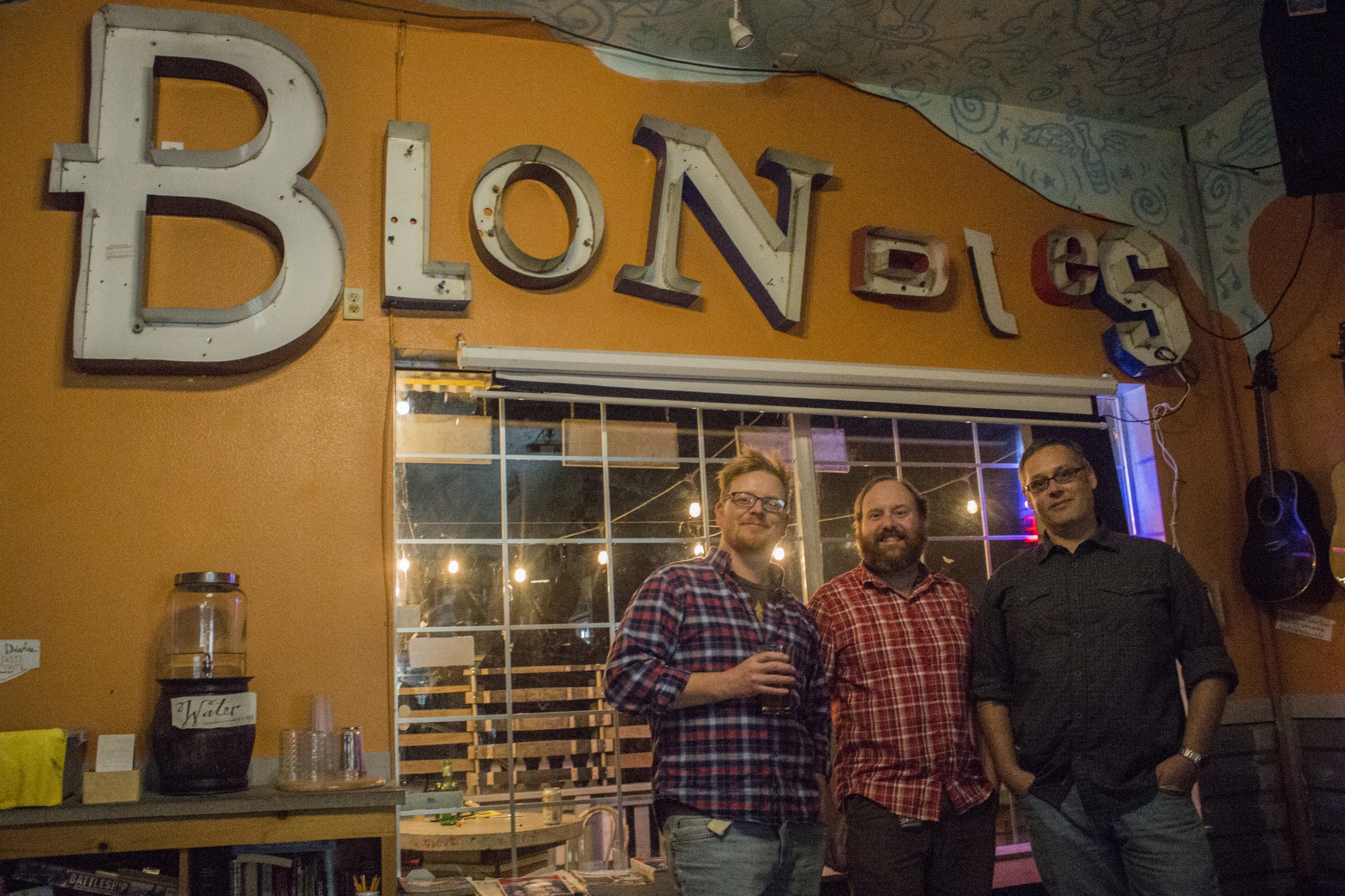
    Between games of Foosball, Donkey Kong and pints of Third Wave craft beer, Blondie’s Food and Drink had a packed house for their monthly “Science on Tap” event.

    Dr. Tyler Mitchell, professor of physics and astronomy at HSU, gave a presentation on implicit biases and stereotype threats to an audience of HSU faculty, students and community members at the Arcata bar on Nov. 7.

    Science on Tap was started by professor of physics and astronomy C.D. Hoyle, after he saw NOVA was sponsoring science events in cafes.

    Hoyle is friends with the owner of Blondie’s Food and Drink and decided to mirror NOVA’s science focused cafe events. By fall of 2012 he was doing it every month. He said the event bolsters a healthy relationship with community and the university.

    “The goal is community engagement and outreach,” Hoyle said.

    Mitchell presents regularly for “Science on Tap” with a variety of topics. Mitchell said he chose the night’s topic because he attended an implicit biases and active learning workshop in La Jolla over the summer. When earning his Ph.D. at the University of Colorado at Boulder Mitchell said he was introduced to their physics education research that involved active learning and incorporates it into his teaching.

    “Active learning techniques reduce implicit biases and stereotype threats in students,” Mitchell said.

    According to the Perception Institute, the term “implicit bias” is used to describe when we have attitudes towards people or associate stereotypes with them, without our conscious knowledge.

    The Oxford Scholarship defines stereotype threat as a situational predicament in which individuals are at risk of confirming negative stereotypes about their groups. Mitchell said we all have pre-conceived notions, both explicit and implicit, about others and ourselves. He said in active classrooms diversity is all inclusive.

    “Explicit biases is the tip of the iceberg where the implicit are submerged in the water,” Mitchell said.

    Mitchell said in a good active classroom the focus is on the students opposed to traditional style which the focus is on the teacher. He said an active classroom provides and fosters more meaningful social and academic interactions that help students succeed. One way to overcome biases and stereotype threats is to include everyone in the classroom and give enough time for students equally.

    “Active classrooms have proven to decrease failure rates,” Mitchell said.

    Mitchell said these implicit biases start at an early age and aren’t our fault. Mitchell described a study where five-year-olds picked their own gender equally to the opposite when choosing protagonists, but when they turned six or seven they would start to pick male protagonists as the smarter option because they developed a cultural idea that being smart is a male trait.

    He said when games are introduced to girls at that age they will gravitate towards games for hard workers and stay clear of games for smart people. Mitchell said these biases lead to stereotype threats for students at an older age.

    “People come to campus with preconceived ideas on how they should perform,” Mitchell said. “They think they aren’t good at something and that isn’t true.”

    The reason Mitchell got into physics was because he wanted to be a professor. He said implicit bias research has made him a better teacher and he has seen definite change in students since he became effective at it. Mitchell said HSU is supportive of active learning and more universities are building spaces to accommodate inclusive classrooms.

    “With a large Spanish speaking student population using implicit bias techniques is important,” Mitchell said. “We need to get students and faculty both engaged.

    Professor of chemistry at HSU Chris Harmon said forums like Mitchell’s implicit biases and stereotype threats expose people to science who may not have a chance to it. Harmon has been co-facilitating “Science on Tap” since 2013 and said everyone involved volunteers their time. He said there is so much science going on at HSU but there is a disconnect with the community. Science on Tap bridges that gap.

    “Science is only accessible to people at the university,” Harmon said. “Our goal is to bring access to community.”

  • Webcam wary

    Webcam wary

    You’ve probably experienced that creepy feeling like you’re being watched. You don’t know why, but hairs stand up on your neck and you look over your shoulder, even when you think you’re alone. If you get that sensation while you’re at your computer, you may want to check your webcam.

    Mark Zuckerberg, co-founder and CEO of Facebook, once posted a picture that showed his laptop webcam covered up with tape. If webcam security is something Zuck is concerned about, should you be too? Hackers are likely more interested in someone like Zuckerberg, but that doesn’t mean it won’t ever happen to you.

    Dr. Sherrene Bogle is a professor in the computer science department at Humboldt State University.

    “To the extent that both Big Brother and hackers are watching us, we should all be concerned about computer privacy in all forms, not just web cams, but audio, our telephone conversations being recorded,” Bogle said. “Online security is an ongoing task.”

    Some students at HSU have caught on to the webcam taping trend.

    Erik Ramos, working on his laptop in the Library Cafe, uses a spy guard over his webcam. The guard is a small plastic cover that mounts over a flat surface webcam. Ramos’ guard is made by Targus, and has an adhesive back and a slider hatch for when you want to use the cam.

    “I’ve had this cover on for about a year,” Ramos said. “I’ve heard stories about people being watched through their webcams. It could definitely be the government or just creeps.”

    Ramos said that he used to use post-its before he bought his cover, but since he worked at Staples he was able to get a guard cover for cheap. Sliding guard covers retail online for about $5.

    20181106_101704.jpg

    A webcam spy guard on Erik Ramos’ laptop at HSU library Cafe on Nov. 6, 2018.

    Hailey Hughes has a basic trimmed and taped post-it note covering her laptop webcam. For Hughes it’s better to be safe than sorry.

    “I’ve had this on here for maybe two years,” she said. “I’m just suspicious in general.”

    According to Bogle, both personal computers and Macs are susceptible to webcam attacks, but personal computers are slightly more vulnerable. She also said that new computers aren’t coming up with unbeatable protection.

    “Vulnerabilities still exist with the ubiquity of online and especially wireless network connections,” Bogle said.

    She said there are some things you can do besides covering your webcam to protect your them from getting hacked.

    “Use secured networks, limit or avoid sensitive transactions on free wi-fi, use firewalls, and update your anti-virus software regularly,” Bogle said.

    “The relationship between convenience and privacy is like a see-saw,” Bogle said. “It’s hard to balance because most of us desire convenience and the greater the convenience the more exposed we are and inevitably the less privacy we have.”

  • Farmers hit a rough patch

    Farmers hit a rough patch

    Fusarium. It sounds like it could be a poison used on spies in the 1960s. In reality, it’s the fungus that destroyed Warren Creek Farm’s pumpkin and sunflower crops this year.

    “Fusarium is a pathogen,” said Warren Creek Farms owner Abram Stark. “It’s bad for the plants.”

    Stark said Fusarium is always in the fields and common with the squash plants. But it came stronger this year, wiping out over half of the farm’s pumpkin and sunflower plants.

    “I’m not sure why it’s worse this year,” Stark said. “It could be because of the sunflowers, but then again these fields have had sunflowers and pumpkins on them for many years in a row.”

    IMG_8597.jpg

    An Fusarium infected pumpkin lays smashed and rotting in the Warren Creek Farms patch. | Photo by Sean Bendon

    Warren Creek Farms has been going strong for more than 20 years with the leadership of local farmer and mentor Paul Guintoli. Guintoli is a former president of the North Coast Growers’ Association.

    Guintoli has had a huge influence on many in the community, including another local farm Organic Matters Farm. Heather Plaza is the co-owner of Organic Matters Farm.

    “You never know every year what is gonna go on,” Plaza said. “You’re just dealing with nature and the environment.”

    Both farms are within a mile of the ocean but use different techniques to protect their crops from the moisture it brings. Organic Matters Farm amends their soil with ash to build up nutrition in the soil and uses a dry farming method instead of watering to grow the crops.

    According to a University of California report shared by Humboldt State University Professor Susan Marshall, Fusarium is a pathogen that quite commonly invades pumpkins and squash that belong to the Cucurbitae family.

    “You try to prepare the best you can,” Plaza said. “But whatever happens, happens.”

    Regardless of the circumstances, the group at Warren Creek Farms did not seem too worried about getting back into the swing of things.

    “Next year we’re gonna do it just like we’ve done it before,” Stark said. “This year was just rough.”


  • Something’s in the water

    Something’s in the water

    Following two other California State Universities failed tests, Humboldt State tested water sources on campus

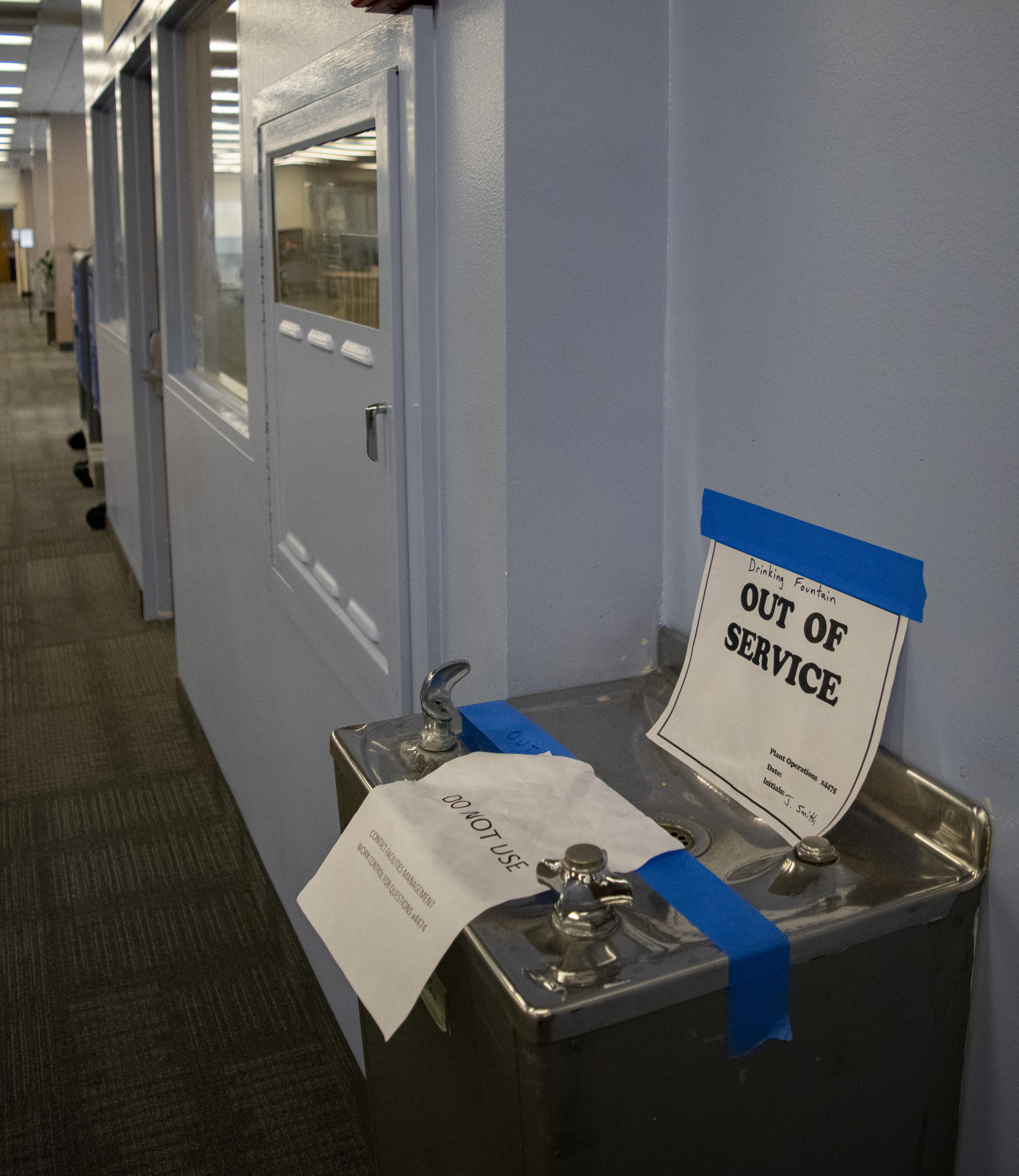
    Three drinking water fountains on Humboldt State’s campus have been removed from service for having lead levels higher than Environmental Protection Agency standards.

    Humboldt State is the third CSU to test its drinking water for lead with all three finding water sources containing higher than recommended lead levels.

    Over the summer HSU decided to test some of its drinking water sources after two other CSUs tested drinking water on their campuses and found that some sources tested higher than the Environmental Protection Agency’s benchmark of an acceptable level of lead in drinking water.

    Since 1991 the EPA regards lead levels in drinking water above 15 parts per billion to be the “action level.” Prior to 1991 the federal action level was 50 PPB.

    Sabrina Zink is an Environmental Health and Safety specialist at HSU. Zink said that buildings and fixtures at HSU were selected by prioritizing areas that children under the age of six could be exposed to lead; this is the most vulnerable age for lead exposure in humans. After drinking sources were tested from fixtures that children regularly have access to, older buildings were targeted, and one building by original construction date per decade.

    One hundred and twenty one drinking water sources were tested at HSU over the summer. Thirty seven of the 121 sources didn’t contain lead levels high enough to register detection during the test. Eighty one of the tested sources registered lead levels but fell below the EPA’s 15 PPB threshold. Three fixtures tested above or at 15 PPB and have since been removed from service.

    Of the three that tested higher than the action level two were drinking fountains, and one was a sink. The fountains were in Forbes gym (16 PPB), and on the third floor of the library (86 PPB). The third fixture, a sink in the bottom floor of the library (15 PPB), tested right at the EPA action level.

    “We decided to abandon these fountains,” Zink said.

    Zink said lead usually finds its way into drinking water systems through the old fixtures and sometimes through dated fittings and solder.

    The other two CSUs that tested drinking water on their campuses were Long Beach and Sacramento. Test results from these campuses revealed drinking water sources containing lead high marks of 127 and 390 PPB.

    A spokesperson for the EPA, said the Center for Disease Control and Prevention has found that no safe blood level has been identified for lead, and all sources of lead exposure especially for children should be controlled or eliminated.

    The EPA website states that children are particularly vulnerable to lead and that low levels of exposure in kids have been linked to learning disabilities and damage to the nervous system and exposure in adults can lead to decreased kidney function and reproductive problems.

    lead in water
    The highest lead level samples found in drinking water from three California State Universities and from Virginia Tech’s testing of Flint Michigan’s water crisis in 2015. | Graph by Walter Hackett

    According to Zink there is currently no mandate for lead testing in the drinking water at CSU’s though the chancellor’s office did recommend that drinking water should be tested.

    “We aren’t required by any regulation or law to test,” Zink said. “We thought it was the right thing to do.”

    The CDC website states that you cannot see, taste, or smell lead in drinking water and the only way to know is to have it tested.

    Roxanne Moore works at North Coast Laboratories, an Arcata based business that provides drinking water lead testing as a service. Moore said that they charge $27 per sample for lead water testing and the turnaround for results typically takes two to three weeks.

    Starting at the beginning of 2018 a law in Calif. was enacted requiring that lead testing be carried out for drinking water for all k-12 public schools. So far, lead sampling for this initiative has tested 3,541 schools and found 137 sites that have tested higher than the EPA action level of 15 PPB.

    In 1986 Congress amended the Safe Drinking Water Act to prohibit the use of fixtures, fittings, and solder containing certain amounts of lead in public drinking water systems.

    Zink said that further lead testing is planned for campus housing facilities.

    “We are testing housing over Thanksgiving and Christmas break,” Zink said.

  • Pollution sours Freshwater field trip

    Pollution sours Freshwater field trip

    Editor’s Note: This an editorial contribution from Deija Zavala. The author currently works for the Lumberjack as an Online Editor.

    I went in search of ferns and ivy, I found instead disgusting evidence of human existence.

    Ecotopia.Fav.10.13.18.DSC_0093
    Assorted garbage trailing down the hill just off Greenwood Heights Dr. on Saturday Oct. 13 in the Freshwater area, east of Eureka. | Photo by Deija Zavala

    On Saturday I explored a local watershed in the Freshwater area. The field trip was for an Environmental Science Management class where the goal was to visit a local watershed and observe.

    I’d seen the beautiful landscape of Freshwater once before and hoped the trip would give me an excuse to get lost for a few hours with nothing but my camera and the wildlife.

    Ecotopia.Fav.10.13.18.DSC_0094
    Pieces of cupboards, particle board, aluminum cans, and other miscellaneous debris pile up less than 15 feet from a sign threatening prosecution over illegal dumping on Oct. 13 in Freshwater. | Photo by Deija Zavala

    At first, it was lovely. I did a short hike and found myself taken by how separated I was from my Eureka apartment and all the rumbling of engines and people on a sunny weekend morning.

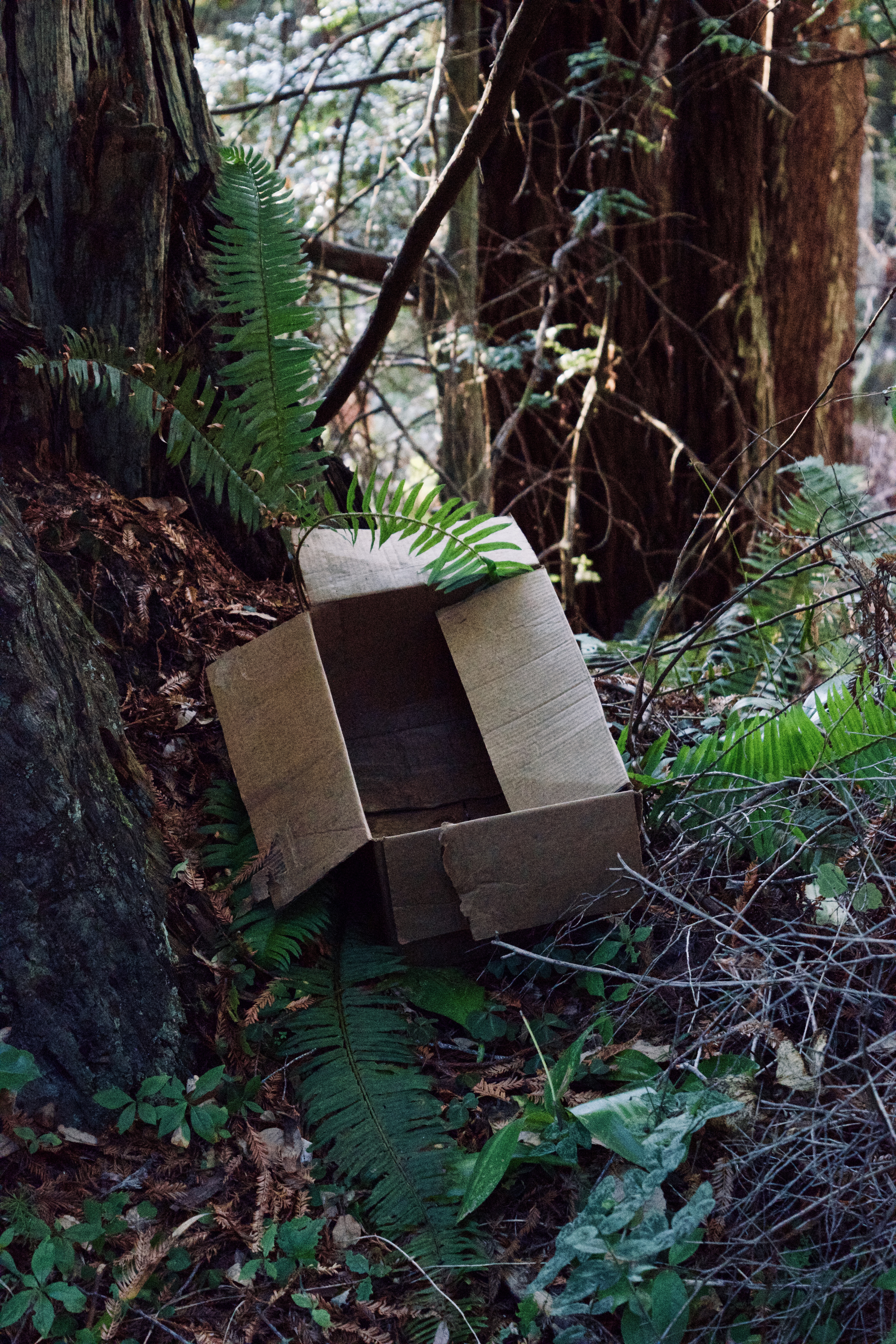
    Eventually, I came to a roadside area that had so much debris it looked like a dump. Carcasses, bones and trash of all kinds lay on the side of the road. There were boxes, tiles, kitchen cabinet pieces, bottle caps, cigarette butts and Taco Bell wrappers. It was awful to witness such disregard for the wildlife.

    Ecotopia.Fav.10.13.18.DSC_0087
    A cattle bone found next to chunks of kitchen tile and fallen redwood needles on Oct. 13 in Freshwater. | Photo by Deija Zavala

    The Environmental Protection Agency website states that this kind of pollution is called nonpoint source pollution. After a big rain or when snowfall melts, nonpoint source pollution can ultimately find its way into drinking water sources such as rivers or lakes and even into ground water.

    If you come across an illegal dump, especially if its near a watercourse, you can report it to the Humboldt County Division of Environmental Health at 707-441-5410.

    Ecotopia.Fav.10.13.18.DSC_0091
    Abandoned kitchen tiles sit haphazardly amongst trash just off Greenwood Heights Dr. on Oct. 13 in Freshwater. | Photo by Deija Zavala
  • Making black gold

    Making black gold

    Humboldt State University food waste feeds worm farm

    Every two and a half weeks when school is in session, HSU sends about 18,000 pounds of food waste to a local worm farmer for composting.

    According to HSU’s Facilities Management website, CSU sustainability policy calls for HSU to reduce its solid waste disposal rate by 80 percent by 2020.

    The Facilities Management website also states that HSU employs two different compost operations. An off campus vermi-composting operation (vermi – relating to worms), and an on campus operation run by the Waste-Reduction and Resource Awareness Program.

    Food Waste to the Worms

    Megan Tolbert is the Grounds, Recycling & Waste Coordinator at HSU. Tolbert said sending food waste to the worms starts with having the food waste placed in specially labeled compost receptacles in or near dining areas around campus. Student assistants and recycling staff collect food waste from events and from these receptacles and empty into the BioBin.

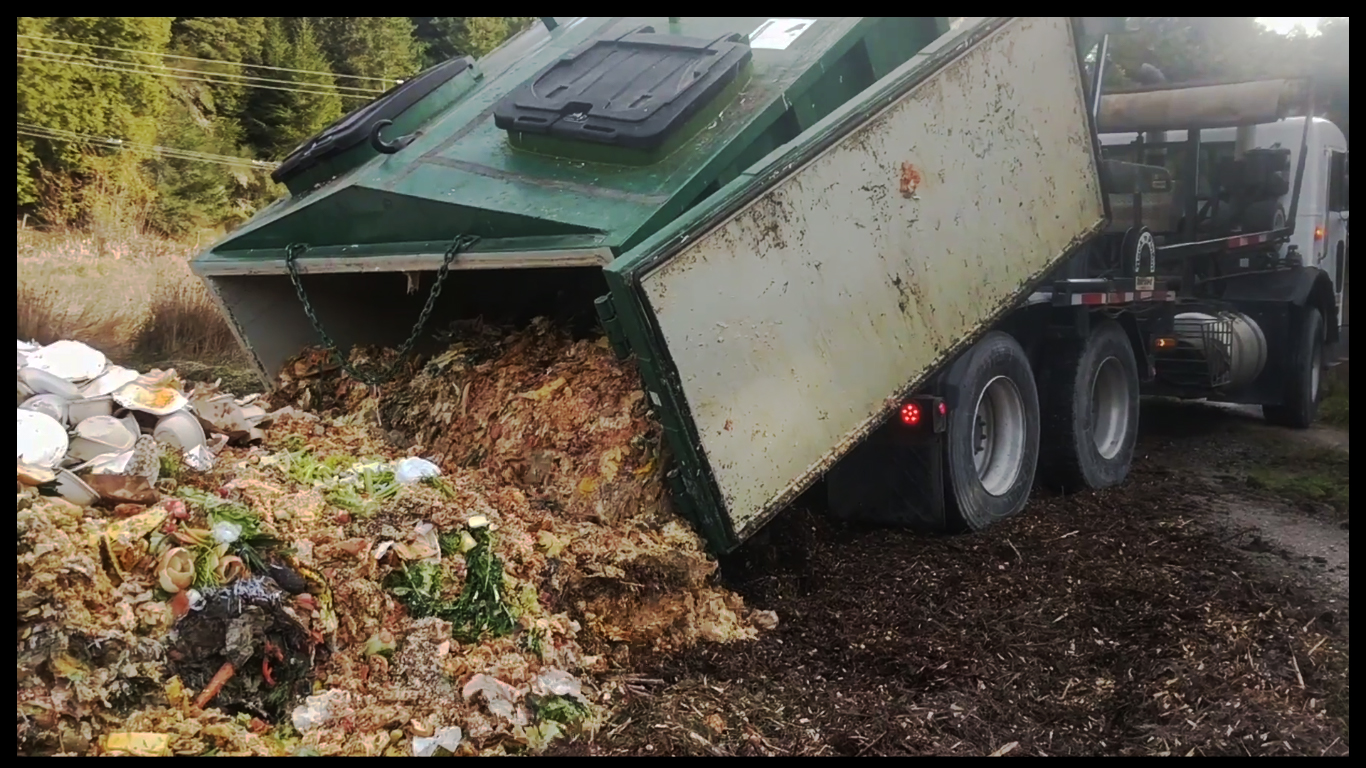
    The BioBin is a 20 yard capacity food waste holding receptacle located near the J dining hall. Once the BioBin is close to capacity a truck loads the receptacle and delivers to a worm farm in Humboldt County.

    The worm farms are operated by a small, local business, the Local Worm Guy. Lloyd and Stacey Barker operate several worm farms throughout Humboldt County.

    Tolbert said that while school is in session BioBin loads are being delivered to Local Worm Guy farms about every two and a half weeks.

    Between worm deliveries, according to Tolbert, student assistants and recycling staff maintain conditions of food waste being stored in the BioBin. The goal is to create optimal compost conditions once the food waste reaches the worm farm. Excess liquids are removed, and the food waste is mixed and layered.

    Tolbert said that extra carbon sources are regularly added to the BioBin. Having a proper carbon to nitrogen ratio is important for organisms breaking down the organic matter. Sometimes this extra carbon comes from pizza boxes from campus events since pizza boxes cannot be recycled because of pizza grease saturation.

    Contamination or trash is regularly removed from the BioBin. Trash is accidentally thrown into compost receptacles around dining areas which ultimately makes its way into the BioBin.

    “We’re controlling contamination better,” Tolbert said. “We must not feed the worms trash.”

    Not all contamination can be removed from the Biobin. Lloyd Barker said that once trash lands on the worm farm it has to be removed by hand and none of it can be recycled.

    “We really appreciate whenever the students and dining staff are able to keep their CRV’s and trash out of the compost bin, it saves me and Stacey a lot of time and energy,” Barker said.

    IMG_20181009_1702376221.jpg
    Red wiggler worms working to break down food waste, and an example of a CRV (Guayaki Yerba Mate lid) making its way into the compost bin, at a Local Worm Guy farm, Humboldt County, Calif. | Photo by Local Worm Guy

    A Lumberjack article published nearly one year ago, reported that compost deliveries to the worm farmer had ceased and that all food waste in the BioBin would be sent to the landfill.

    Tolbert said that it was true that HSU’s annual contract with the worm farmer had ended last year but deliveries have never stopped. Temporary purchase orders have been used in lieu of a contract.

    Katie Koscielak works as a Sustainability Analyst for HSU and said that it’s rare when food waste from the BioBin is sent to a landfill. Koscielak said that it has only happened twice in the past two years.

    Tolbert said that BioBin loads are only sent to landfill when weather won’t permit deliveries to the worm farm. During heavy periods of rain a fully loaded BioBin delivery truck has gotten stuck in soft soil while trying to access the farm.

    HSU truck with loaded BioBin delivers a load to one of the worm farms operated by Local Worm Guy, Calif. Video from HSU Sustainability Facilities Management.

    The HSU sustainability facilities management team said that because of the high volume flow of food waste on campus a rare delivery of a BioBin load to the landfill, determined by weather conditions, is necessary.

    Earthtub

    Earthtub is an on campus compost receptacle managed by WRRAP. According to WRRAP’s website Earthtub diverts approximately 500 pounds of food waste from the landfill per week.

    Diana Orozco is an environmental science and management student who manages compost conditions for Earthtub. Orozco said that Earthtub can hold about three cubic yards of food waste. Unlike the BioBin where worms are eventually used to break down food waste Earthtub uses microbial decomposition.

    According to Orozco mobile compost waste buckets are distributed and picked up once a week by operators to 42 locations across campus. Various departments across campus voluntarily opted in to use compost buckets.

    Similarly to the BioBin carbon is added to the Earthtub to optimize ratios that favor the decomposition process. Orozco said that the decomposition process takes about three weeks.

    After decomposition, compost from Earthtub is available for free for students and staff to use for their gardens. CCAT also uses it in their gardens on campus.

    “When you take good care of it you get black gold,” Tolbert said.

  • Looking for lichens

    Looking for lichens

    Biology student puts classroom lessons to practical use  in the Arcata Community Forest

    Matthew Pedrotti, a senior biology major with an ecology and biodiversity emphasis, spends much of his free time on campus exploring the nearby Arcata Community Forest in order to locate and classify various plants.

    “Look at the lichen in its natural habitat,” Pedrotti said on a walk through the forest.

    Pedrotti said he is particularly fond of lichens, which is the union of a fungus and an algae.

    “I find them fascinating,” Pedrotti said. “They’re very diverse.”

    Pedrotti said he carries a hand lens in his pocket at all times.

    “I can’t leave home without it,” Pedrotti said.

    IMG_9921.jpg

    Matthew Pedrotti describes some of the vegetative features of lichens found on an alder twig in the Arcata Community Forest. Photo by Walter Hackett

    According to Pedrotti, he could spot with his naked eye at least three microlichens and at least two other macrolichens from an alder twig he found.

    “This alder twig is an example of how speciose [rich in species] lichens are in nature,” Pedrotti said. “Lichens are excellent ecosystem health indicators.”

    IMG_9925.JPG

    An alder twig displaying multiple species of lichens in the Arcata Community Forest. Photo by Walter Hackett

    “The black spots of this microlichen are actually sexually reproductive organs,” Pedrotti said.

    IMG_9932.JPG

    Matthew Pedrotti dissects a cotoneaster fruit to reveal seeds in the Arcata Community Forest. Photo by Walter Hackett

    Pedrotti said he thinks HSU is unique because it has an accessible community forest right next to campus. The forest provides plant specimens to examine such as cotoneaster fruit.

    “Fun fact, cotoneaster is highly related to apples and pears,” Pedrotti said.

    However, Pedrotti said that just because it’s called a fruit, it doesn’t mean that it is edible to humans.

    “Yeah, I would not eat these,” Pedrotti said.

  • A Groundtruthing Adventure

    A Groundtruthing Adventure

    Base Camp examines and documents environmental impacts of Caltrans ‘Last Chance Grade Project’

    Editor’s Note: This a special contribution from Kyra Skylark. The author attended this event as a student volunteer and has previously worked for the Lumberjack as a reporter and Science editor. The current Lumberjack photo editor, Nick Kemper also attended and shot photos for the group.

    Contributors Note: I attended this event as both a student volunteer and as a journalist, therefore some of my own personal views may be reflected in the story. -Kyra Skylark

    “I discovered the difference between reading about something and seeing,” Tom Wheeler said. “Seeing on a paper is different from seeing in person, in person the trees and the great biodiversity of that area really stood out.”
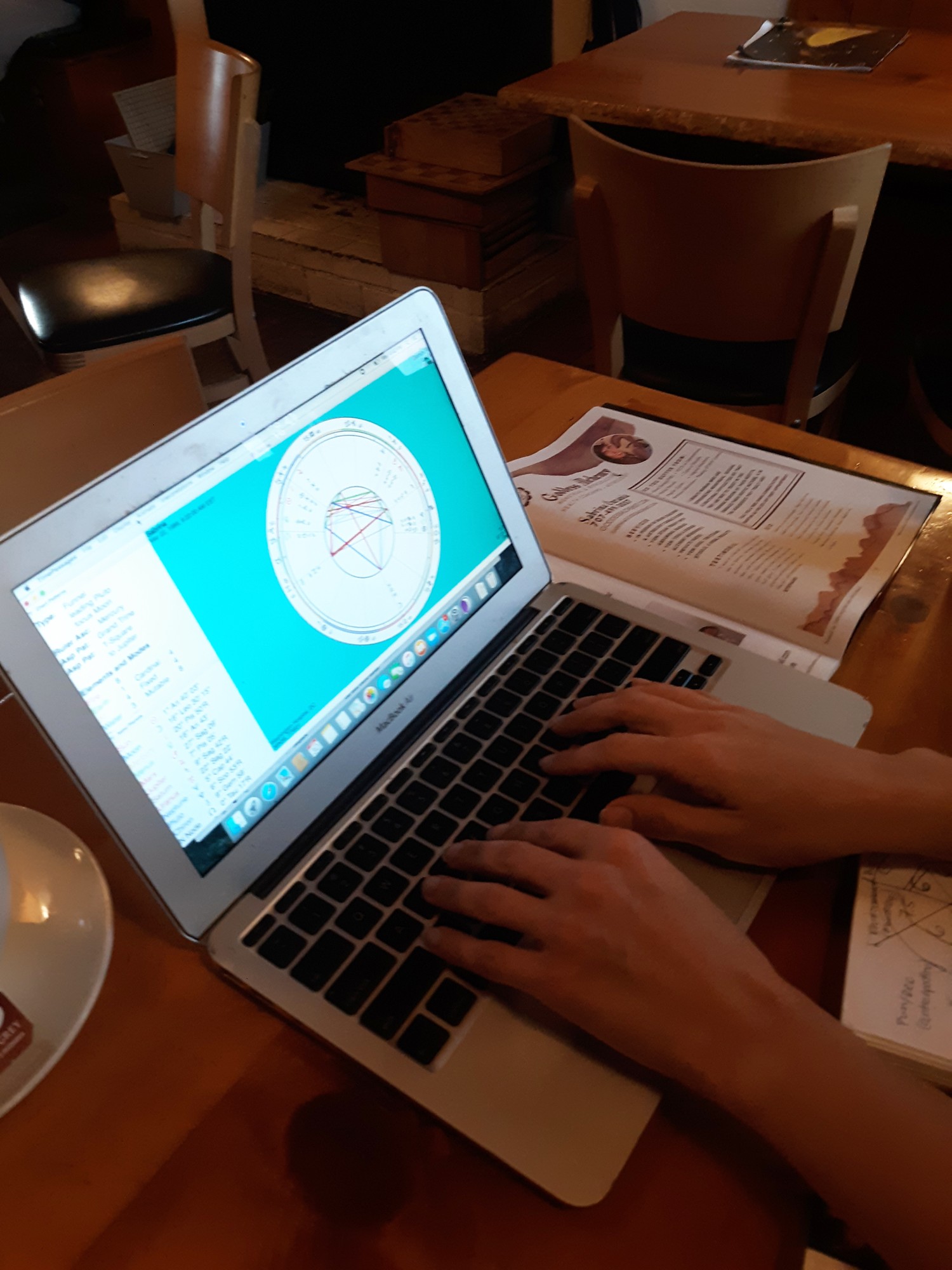
    Tom Wheeler, the executive director of the Environmental Protection Information Center was a group leader on EPIC’s 2018 annual Base Camp trip.

    Earlier this month EPIC hosted their second annual Base Camp at Rock Creek Ranch.

    Students and community members were invited to volunteer to help in examining and groundtruthing two of the Last Chance Grade Project alternatives.

    Groundtruthing is visiting a proposed project site to document what the project looks like through direct observation.

    Ariel Nelson, an Humboldt State University student majoring in environmental science and management with a focus in ecological restoration, attended EPIC’s 2018 Base Camp.

    “I was looking for more opportunities to gain field experience in regards to environmental work in general and it seemed like a cool camping trip as well, so I cleared up my weekend commitments and went for it,” Nelson said.

    The proposed Last Chance Grade Project is a highway development project in Del Norte county, 10 miles south of Crescent City.

    “The Last Chance Grade slide area of the 101 has experienced a lot of landslides over the last hundred years with some pretty catastrophic road failures, so Caltrans is looking at ways to redesign or move the road to get around this critical slide area,” Wheeler said. “Caltrans has determined that it needs to rethink the current road alignment because it is not safe and does not provide reliable transit between Del Norte and Humboldt counties.”

    EPIC’s Base Camp volunteer group examined and documented two of the six proposed alternatives for the Caltrans project.

    “We chose to examine alternatives A2 and L because relative to the other alternatives, these look like they may end up as the main proposed alternatives, so it was necessary for us to examine them and their proposed impacts,” Wheeler said.

    Lenore Ogbor, a retired special education elementary school teacher from New York City, happened to be within a few hours of the area just in time to go on EPIC’s Base Camp.

    “I didn’t know that the redwoods had such a shallow root system or that they spread horizontally and close to the surface holding each other up as a sort of interdependent system,” Ogbor said. “How putting a road 10 feet away from a redwood, while you may be trying to saving the tree, you’re still damaging the root system. I learned that the redwood trees help each other to stand up and then they are able to support all these different animals, trees, plants and the whole ecosystem within, as they are also cooperating with each other to stay vertical.”

    EPIC and the Base Camp group concluded that the L alternative was prefered over alternative A2. Alternative A2 would cut through three acres of old growth redwoods within the Del Norte Coast Redwoods State Park.

    Gabe Kim, an HSU film major and a videographer intern for EPIC, who went to EPIC’s Base Camp to document the trip was also amazed by the width of the trees.

    “It was cool seeing the 13 foot wide redwood trees [in alternative A2] and watching everyone documenting the area using avenza maps that as I documented through video,” Kim said. “It really got me thinking about how beautiful the scenery is and what we would be missing if the road was in fact built and all those redwoods were cut down.”

    Everyone seemed both awed and sad while walking through the old growth redwood forest of A2.

    “I’d never seen trees that big in my life,” Nelson said. “It was my favorite part because I was able to step into such an untouched landscape, but it was also devastating to realize if that alternative is chosen all those trees are going to be gone.”

    The Base Camp volunteers participated in different activities such as groundtruthing, map and compass orienteering, environmental policy overviews and know your rights trainings. Some individuals, like Lenore Ogbor, were only in the area to participate EPIC’s Base Camp and departed after the weekend was done.

    “All of these people gathered with a common interest, with different degrees of knowledge, but sharing in this passion,” Ogbor said. “There was a large range of ages and a good amount of the people there were students.”

    Many students in attendance are studying exactly what EPIC was teaching at Base Camp, and were able to apply their studies to the activities.

    “It was cool to come into it with an understanding of how environmental assessment works,” Nelson said.

    While some were excited to demonstrate and apply their knowledge, others were simply excited to share in everyone’s knowledge and joy.

    “Just watching and hearing the students, I could tell they were able to bring some of the stuff they’re learning in class alive right there and then,” Ogbor said. “The students had already learned some of what the group leaders were talking about, it wasn’t all brand new knowledge and their synapses were just click, click, click, clicking away. I’ve been a teacher for many years and I just love seeing that kind of spark and interest.”
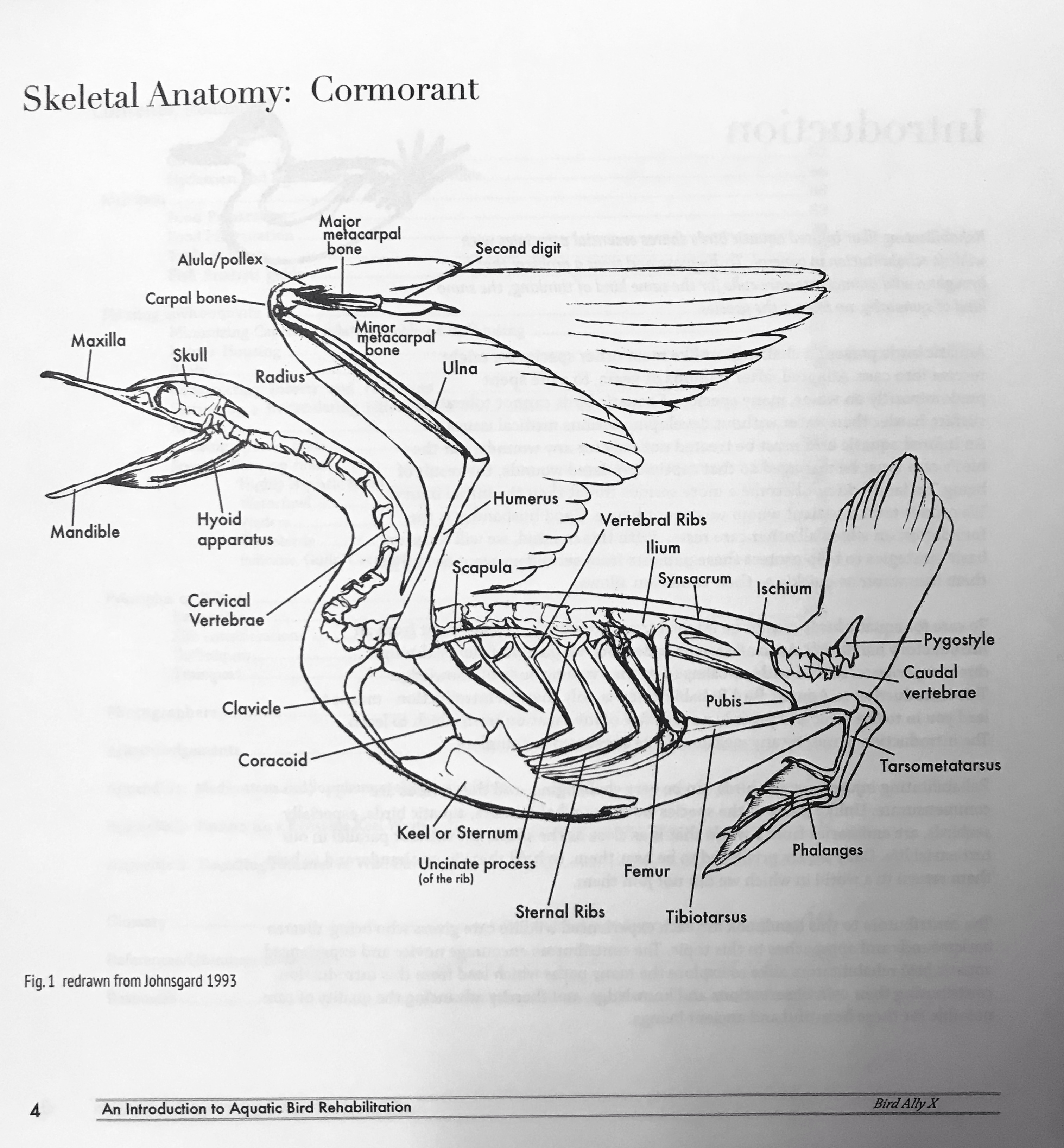
    The gathering of students and community volunteers was the first step in the environmental assessment of the Last Chance Grade project. From here, EPIC and other organizations will continue to assess the different road alternatives creating additional opportunities for community members to be a part of this process.

    “A note to everyone in general, you do have an impact, you can change decisions just by putting yourself out there and getting involved any way that you can, every single person has a roll that they can play,” Nelson said.