The Lumberjack


Students Serving The Cal Poly Humboldt Campus and Community Since 1929

Category: Science

  • Sprinkles Expected for Spring Break

    Sprinkles Expected for Spring Break

    Rains look to rush in this upcoming weekend

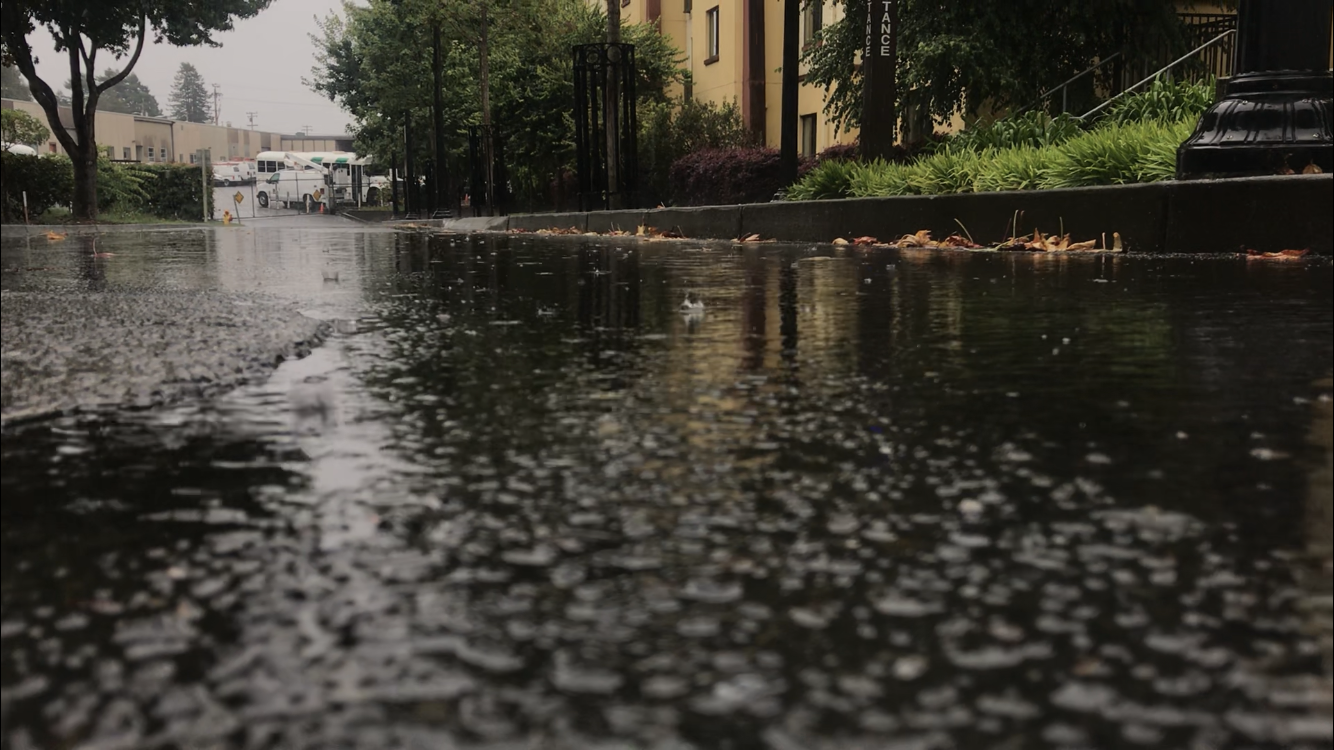
    Cold clouds creep on the horizon, waiting for students to flee Arcata before dumping rain on the city. The days of sunny skies and warm weather may come to a damp halt at the beginning of spring break.

    Spring is here, and it’s wet. This coming weekend, rain is forecasted to fall on Humboldt State. Break is just around the corner and inclement weather may be a downer for partying students, so be sure to check the weather before the rager starts.

    This helpful graph, built by weatherspark.com, shows the average daily chance of rain in Arcata throughout the year. | Graph by Weatherspark

    To prepare for the break, The Lumberjack science section reached out to the National Oceanic and Aeronautic Administration office and asked a meteorologist what we can expect. It may get cold.

    According to Brad Charboneau, one of those NOAA meteorologists, we’ve still got a couple more cold months ahead of us. We’re not out of the chill yet, even though the spring season is when temperatures start warming up.

    “I check the weather often either with the NOAA weather app or by looking at the sky. If it looks questionable or if the sky is darker than usual, check it.”

    Mattea Roberts

    For curious weather geeks, the NOAA station uses a number of sensors and measuring devices to record weather events. For example, they use a tipping bucket rain gauge that measures hundredths of an inch. Each time the bucket fills, the bucket tips over and records a tic. The more tics, the more water. Easy as that.

    Mattea Roberts probably appreciates meteorological instruments like the tipping bucket. A freshman studio artist at HSU, Roberts takes advantage of NOAA science by using their weather app. She said it was a good idea to check the weather if the sky looked questionable.

    “I check the weather often either with the NOAA weather app or by looking at the sky,” Roberts said. “If it looks questionable or if the sky is darker than usual, check it.”

    Roberts also said she brings a rain jacket or an umbrella to school every day, just in case it does rain. She’s probably going to be prepared for whatever the climate has to throw at her this weekend.

    “I can tell you right now, it’s gonna be nice and warm up until Friday,” Charboneau said. “On Saturday, believe it or not, we’re gonna have a shift to cooler, more showery weather that will last through the weekend.”

    Charboneau said the rain isn’t going to be very intense from the perspective of the rivers, but the conditions may make the weekend less than ideal if students have outdoor plans.

    One of Charboneau’s colleagues, Meteorologist Ryan Alyward, explained how NOAA forecasts weather. He said as a meteorologist, his job is to pay attention to what’s going on in the sky and diagnose the conditions. Understanding what’s happening now allows him to make a prognosis of what weather conditions will be.

    Using a program he called Ensemble, meteorologists input real-time data and get a large number of weather predictions. The predictions are future weather patterns that may or may not happen, and it is his job to use these to make a forecast of the weather. The trick is to look at the similarities in each model, because together, those similarities make the most likely prediction.

    The current models, beyond the wet weather forecasted in Arcata, include snow in the mountains east of the city. Charboneau said although snow is more common in January and February, it’s not unheard-of in March.

    “We’re looking for the potential of snow—low-level snow—which will impact the passes going east,” Charboneau said. “It is likely to see some snow over the weekend. Those are the main threats over the weekend.”

  • Chemistry Professor Picks Up $100,000 Award

    Chemistry Professor Picks Up $100,000 Award

    Claire Till of HSU receives lucrative award to aid her research and academics

    Humboldt State University’s top-ranked chemistry program is home to a professor researching how plankton in the ocean interacts with heavy metals in the water.

    “There are lots of people who are doing fantastic research and have awesome awards and grants on campus. So I’m glad for the opportunity to highlight some of the work that we’re doing at HSU and lots of people are doing lots of great work at HSU.”

    Claire Till

    Assistant Professor of Chemistry Claire Till recently won the Cottrell Scholar Award, a $100,000 award honoring trailblazing science professors or researchers who have made large strides in their respective fields.

    “There are lots of people who are doing fantastic research and have awesome awards and grants on campus,” Till said. “So I’m glad for the opportunity to highlight some of the work that we’re doing at HSU and lots of people are doing lots of great work at HSU.”

    Till looks forward to allocating the funds toward her personal research and her classroom. She’s using the funds to support field trips to gather more data and to hire student researchers.

    “We’re going to go sample some rivers this summer,” Till said. “And then we’re going to do a couple of day trips on the research vessel, the Coral Sea, next summer, and some students will be hired throughout that.”

    Till’s research is about iron, a vital nutrient for humans and phytoplankton in the ocean. Unfortunately, in the ocean, there are extremely low concentrations of iron, and as a result, phytoplankton are not growing as much.

    “It’s really interesting—I think at least—to study how the iron gets there and how the phytoplankton uses it,” Till said. “What I proposed, and the work that we’re going to be working on, is to study iron using a new tool, which is another element called scandium.”

    Till elaborated on the relationship between scandium and iron and what she hopes will come out of her research in relation to that.

    “Scandium and iron have some parallels in chemical reactivity,” Till said. “There’s no real reason to expect them to behave similarly based on their chemical properties, and so I’m really interested in figuring out exactly in what ways are they similar and in what ways are they different.”

    The second area Till will be putting funding toward is academics, specifically in her own classroom.

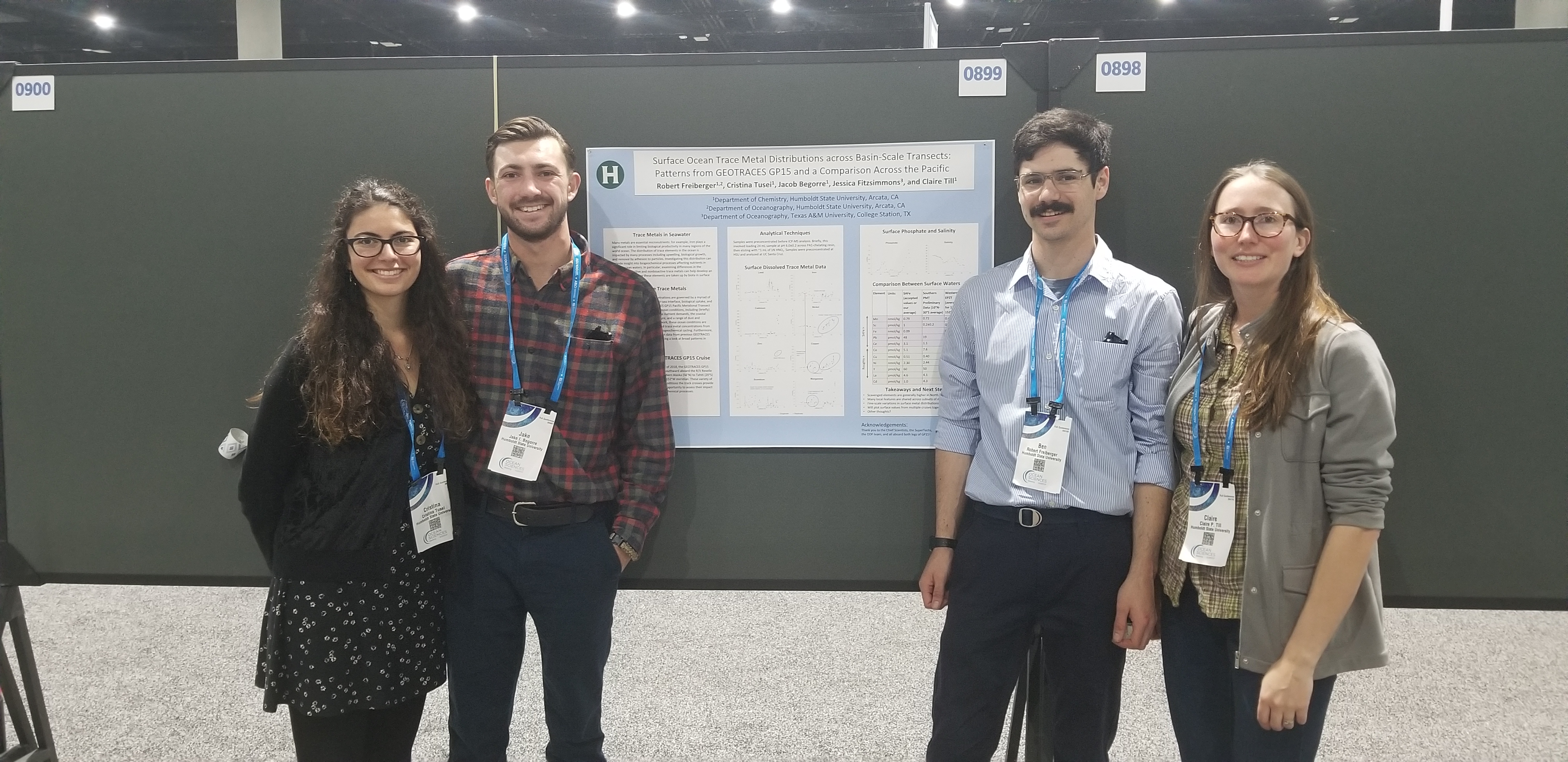
    Ben Freiberger, a senior research student for Claire Till, has worked under her for a considerable amount of time.

    “The money is now helping us to be able to get more accurate numbers and be able to determine more about scandium.”

    Yasmin Zambrano

    “We collect seawater samples, pre-concentrate them, and then measure them,” Freiberger said. “We just finished measuring all these samples from a cruise that went from Alaska to Tahiti. I started measuring those samples at the beginning of summer and I’m just getting finished with a couple hundred of those.”

    He also went on a cruise last summer and is measuring samples he collected on the trip. His research may benefit from Till’s award.

    “It’s good for the research group and it’s great that Claire can get money to keep doing this,” he said.

    Yasmin Zambrano, a junior undergraduate research student for Till, was recently hired to work with her on her iron research.

    “Right now, we’re just reading a lot of articles and trying to find how the treatments change within the different temperatures to see when it’s the best time to do the experiments and stuff,” Zambrano said.

    Zambrano, too, is hopeful for the outlook of the chemistry program with the arrival of the award and subsequent funding.

    “The money is now helping us to be able to get more accurate numbers and be able to determine more about scandium,” Zambrano said. “And again it’s going to be for at least three more years, so that’s three more years that she can do stuff, especially during the summer when students want to work in this field —and it looks good.”

  • Stoners Bake Snacks with Scientific Hacks

    Stoners Bake Snacks with Scientific Hacks

    Finding more creative ways to use cannabis

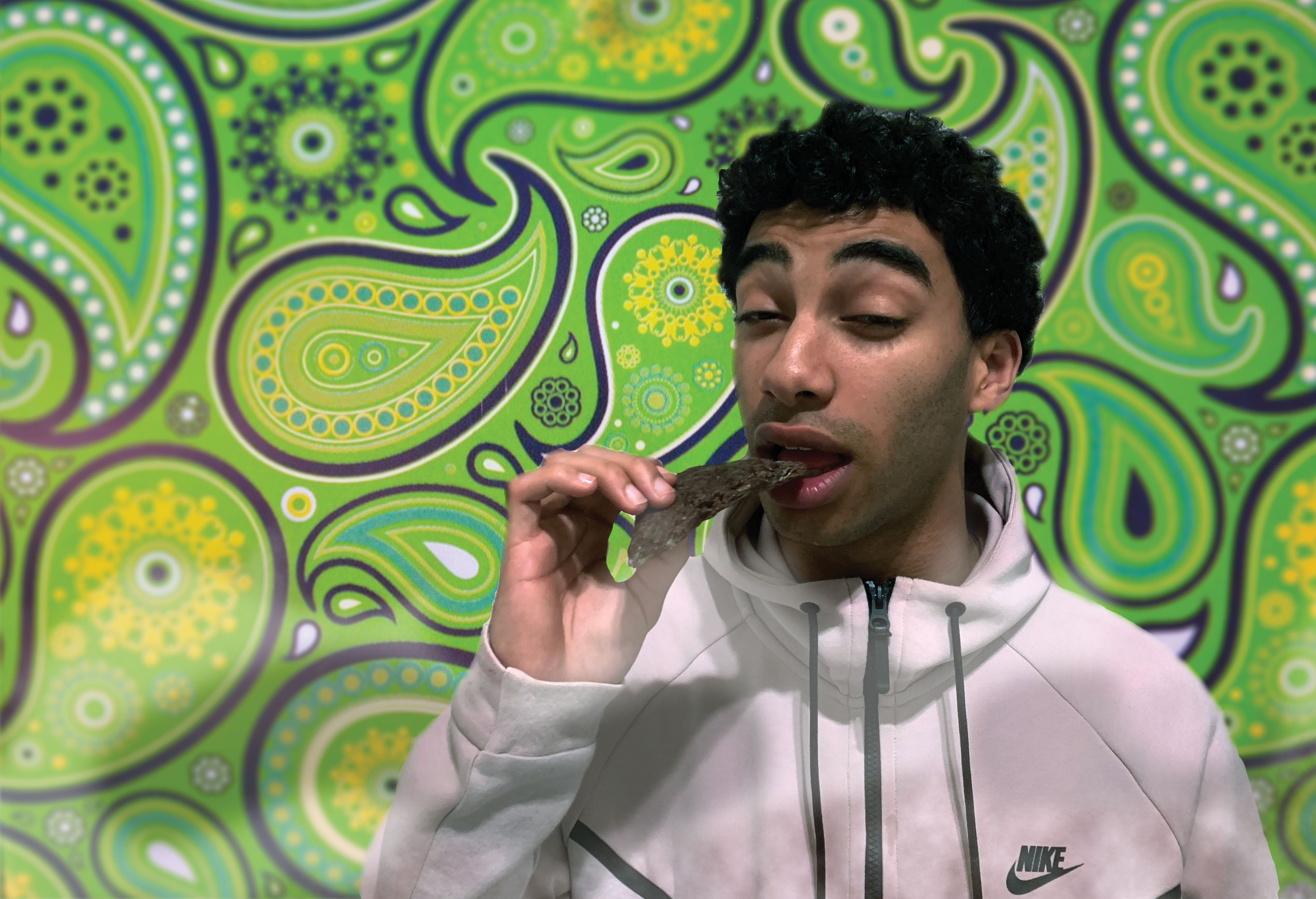
    Edibles or cannabis-infused foods are a common way to consume marijuana. The process of making edibles, just like baking brownies, is a science. The primary psychoactive compound in marijuana is called cannabinoids. When making edibles, you infuse a fat with cannabinoids to activate the chemical.

    Mark Wilson, a Humboldt State University professor with a Ph.D. in microbiology, genetics and toxicology explained that cannabinoids are fat soluble and don’t break down in water.

    “Some substances are water soluble and some substances are fat soluble,” Wilson said. “THC is primarily composed of carbon-carbon bonds and carbon-hydrogen bonds, so it can’t interact well with water, but it can interact well with fats and oils.”

    This characteristic of THC, tetrahydrocannabinol, limits what can be turned into an edible. THC can’t steep in hot water for weed tea. Marijuana would need to be steeped in hot milk instead, where the THC would break down and bond with the milk fats.

    “Things that dissolve into our fat tend to remain in our system much longer. That is, they slowly diffuse into fat, and slowly diffuse out. The fat acts as a sort of absorption compartment. That makes it detectable in drug tests for weeks.”

    Joseph Szewczak

    Many people use butter as the main fatty ingredient in edibles. Dairy-based fats are a good option for infusing cannabinoids, but lactose-free alternatives are also solid options, including coconut and olive oil. Bacon fat can absorb cannabinoid infusions too, if you’re looking for a savory option.

    Joseph Szewczak, an HSU professor who studies and teaches comparative physiology and physiological ecology explained the physical changes to the body when people eat cannabis-infused fats rather than smoking cannabis plants.

    “Things that dissolve into our fat tend to remain in our system much longer,” Szewcxak said. “That is, they slowly diffuse into fat, and slowly diffuse out. The fat acts as a sort of absorption compartment. That makes it detectable in drug tests for weeks.”

    Whether inhaled or eaten, the THC enters the blood stream and messes with brain-cell functions in a unique way. Since THC is shaped like a chemical in the brain, the brain recognizes the chemical and allows to alter normal brain function. That chemical usually tells brain neurons to rest, but THC forces the brain to keep firing, which leads to deep thoughts, increased creativity and anxiety.

    In light of these effects, it’s important to understand what’s going to happen after eating an edible. First, since the body takes some time to digest edibles and since their THC is stored in fat, the high lasts longer. Second, the nature of THC and marijuana may lead to discomfort or anxiety, or may lead to creativity and fun, but that’s dependent on many factors.

    Co-Director of the Humboldt Institute for Interdisciplinary Marijuana Research Josh Meisel is researching the significance of set and setting, or who you’re with and where you are, and how those things impact a high.

    “People’s negative experiences may be influenced by edible use,” Meisel said. “But set and setting may be as influential or more influential than the psychoactive properties of the substance itself.”

  • Pigs Compost on Campus

    Pigs Compost on Campus

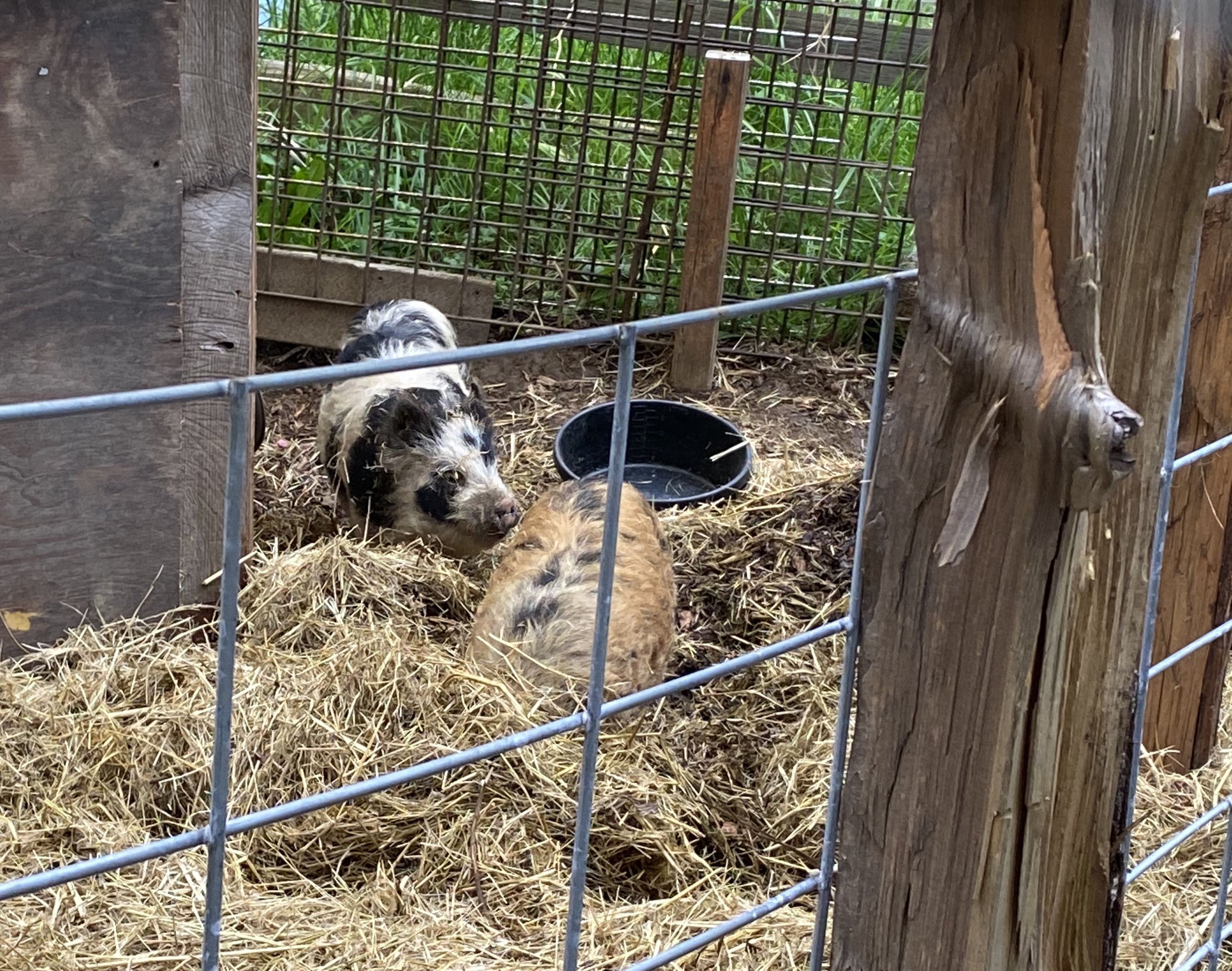
    A few weeks ago, two little piggies went wee-wee-wee all the way home to the Campus Center for Appropriate Technology. On-campus dining services like The J are working with CCAT by delivering their compost to feed the pig project. Instead of the food waste going to the bin, it can fill the bellies of the pigs.

    CCAT acquired the two baby kunekune pigs from Tule Fog Farm in an attempt to reduce Humboldt State’s organic carbon footprint.

    Ben Nguyen, the primary animal caretaker, farmer, project manager and a co-director of CCAT, explained that, depending on their nutrient demand, the pigs will eat as much or as little as they need in order to maintain healthy growth.

    “Usually what we pick up from The J is around 10 pounds of food a day,” Nguyen said.

    The kunekune pig is a small grazing pig that can survive on a low-calorie diet and can weigh anywhere from 150 to 400 pounds. Although different breeders may breed for a smaller size, the pigs from Tule Fog Farm average around 200 to 300 pounds, making them the ideal size for an on-campus composter.

    The pigs will probably be on campus at CCAT eating food waste for the next semester unless someone wishes to keep the project going through the summer and so-on, since Nguyen will be graduating in May.

    Some students are against keeping the pigs and are seeking to purchase the pigs and send them to a sanctuary. But for now, after the completion of the project, the pigs are arranged to be returned back to Tule Fog Farm.

    Before they were adopted by CCAT, Shail Pec-Crouse, Tule Fog Farm owner and farmer, introduced the pigs to a diverse diet. Tule Fog Farm pigs ate compost as a nutritious supplement to their natural grazing diet of fresh grass.

    “We take kitchen waste from a couple of local restaurants like Slice of Humboldt Pie and Los Bagels,” Pec-Crouse said.

    Pigs are omnivores and need a diverse diet consisting of grains, fats, protein and greens. This diverse diet makes them an excellent option for getting rid of food waste or any organic waste in general.

    According to Oxymem, a DuPont brand, when food waste is thrown in the trash and decays unnaturally among plastic and other non-biodegradable things in landfills, a toxic liquid called leachate is produced, which has a high ammonia concentration that isn’t easily biodegraded. Compost solves this problem by keeping biodegradable materials out of landfills so that it can continue its life cycle and be returned to the ground naturally.

    Robert Just, a local livestock veterinarian, described the relationship between human trash and pig diets as an evolutionary interaction. He explained that since humans and pigs have lived symbiotically for so long, their gut biomes may have adjusted to eating our over-ripe food waste.

    Pigs have digestive tracts that are unique to livestock animals, but are similar to the human gut. They have one simple stomach, just like people. Pigs are omnivores and need a diverse diet consisting of grains, fats, protein and greens. This diverse diet makes them an excellent option for getting rid of food waste or any organic waste in general.

    “Pigs aren’t indestructible though,” Just said. “And they are still susceptible to illness from molds and some fungus, but this can be easily avoided by cooking the food into a slop.”

    This project is one more step towards increasing sustainability on campus and problem-solving to reduce food waste.

  • Filling in the Fossil Record with Fungi

    Filling in the Fossil Record with Fungi

    Madison Lalica cracks open 400-million-year-old fossils

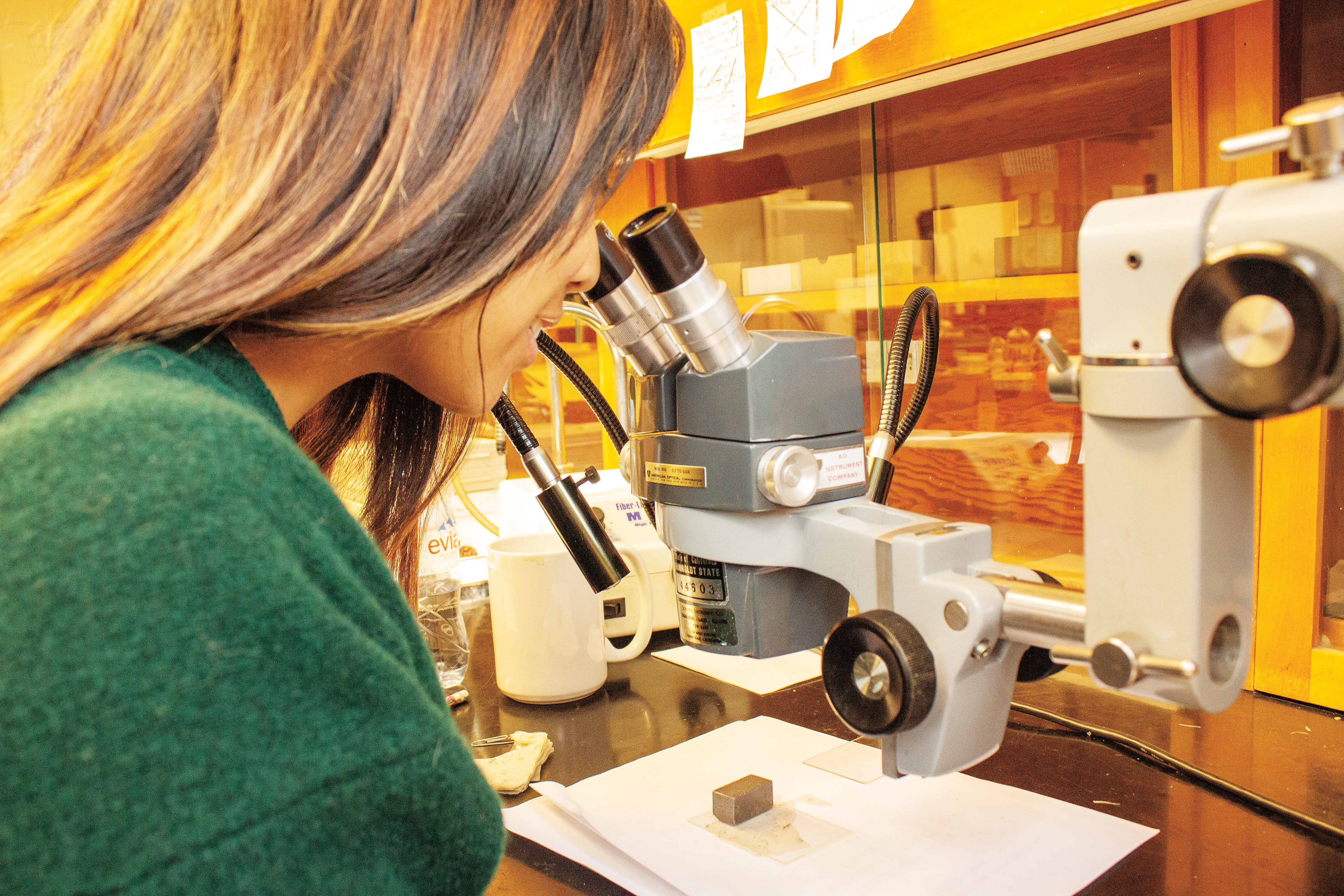
    Madison Lalica is a junior botany major researching ancient fungi in fossilized plants over 400 million years old. She is filling in the blanks of the fungi fossil record with her unique research.

    “Given their importance in current ecosystems, I support [that fungi] must have had such a fundamental role in ancient ecosystems,” Lalica said. “And that is what I’m trying to prove with fossil research.”

    Lalica said she had the privilege to work with a huge box of rocks on loan from the Smithsonian Museum filled with fossilized plants. The fossils came to Humboldt State University by way of the Smithsonian, but they were collected in the 1960s by a paleo botanist named Francis Huber at a rock formation called Battery Point in Canada.

    “We look at a bunch of plant fossils that are 400 million years old,” Lalica said. “They are preserved very beautifully and you can see all of their anatomical features.”

    Graduate botanist Megan Nibbellink works alongside Lalica. She is focusing on the anatomy and relationships of the host plants, called zosterophylls. The Battery Point fossils are preserved in a unique geologic formation that serves to make really good fossils.

    “It is a fluvial deposit,” Nibbellink said. “It was a bunch of pieces of fragments caught up in fine sediment at the end of a river. The reason why I like these fossils is because you can see the individual cells. And that’s also why Maddy is able to do what she does.”

    When the host plants were buried by fine river sediments all those millennia ago, their form was preserved as the sediment solidified over millions of years. The fine particles, though, essentially printed the fossils in high resolution with so much detail that Lalica found what she was looking for: ancient fungi.

    Lalica is scanning and investigating these plant fossils for any evidence of fungal material. Spores, fungal tendrils called hyphae and scars from fungal infection are some indicators she has found. Specifically, Lalica is working on identifying the fungi glomeromycota, a fungal group intimately symbiotic with plants today. She wants to learn how similar the ancient fungi are to modern fungi.

    “Why do you want to know about extinct life, then, one might ask. And to be honest, it is a pretty philosophical pursuit I guess. In the most direct sense, learning about extinct lifeforms helps us understand how the living lifeforms that we see around today evolved.”

    Alexandru “Mihai” Tomescu

    “The plant and animal fossil record is really well understood,” Lalica said. “Like they have a pretty clear timeline of ‘This happened and then this happened,’ but for fungi it is so sparse and incomplete that they have no idea what goes before what.”

    Lalica’s faculty advisor Alexandru “Mihai” Tomescu has made it his life’s work to figure out what goes before what. Tomescu explained that exploring the fossil record is important because fossils offer us the only way to look directly into life in the past.

    Tomescu was Lalica’s botany professor before she had switched majors, but she said she fell in love with the world of paleobotany after his instruction. Showing interest in the subject, Lalica took the opportunity to begin her own research as soon as Tomescu offered her the chance.

    “Why do you want to know about extinct life, then, one might ask,” Tomescu said. “And to be honest, it is a pretty philosophical pursuit I guess. In the most direct sense, learning about extinct lifeforms helps us understand how the living lifeforms that we see around today evolved.”

    The 400 million year old specimens are interesting to Tomescu and his team of researchers because the plants themselves represent the first wave of vascular plants, or plants that move water through special tissues, that evolved on Earth. Vascular plants constitute nearly every modern land plant, so these ancestors are significant. Fungi, too, are significant to life on Earth and may have been part of its foundation.

    “Fungi are probably, almost certainly I think, older than actual plants,” Tomescu said. “Fungi are a lot older. But because they’re just hyphae, since they’re flimsy, their fossil record is not that great.”

    Tomescu has been recruiting undergraduate students to research these fossils in his lab. Tomescu explained that HSU hosts a botany program that attracts a lot of students, but also that the students are enthusiastic to participate in research. He said HSU has students who are interested in the grey areas. Lalica was one of those students.

    Moving forward, Tomescu and Lalica are preparing to publish a paper about her year-long investigation into the fossils. This summer, she is presenting her research at the Botanical Society of America’s annual conference.

    “It seems like in Humboldt opportunities are like, if you talk to the right person or if you become friends with the right person, it just kinda happens,” Lalica said, “And it just so happened that I fell into the world of paleobotany.”

  • Third Athletic Director Candidate at HSU

    Third Athletic Director Candidate at HSU

    On Feb. 11 HSU welcomed its third potential candidate for its next athletic director

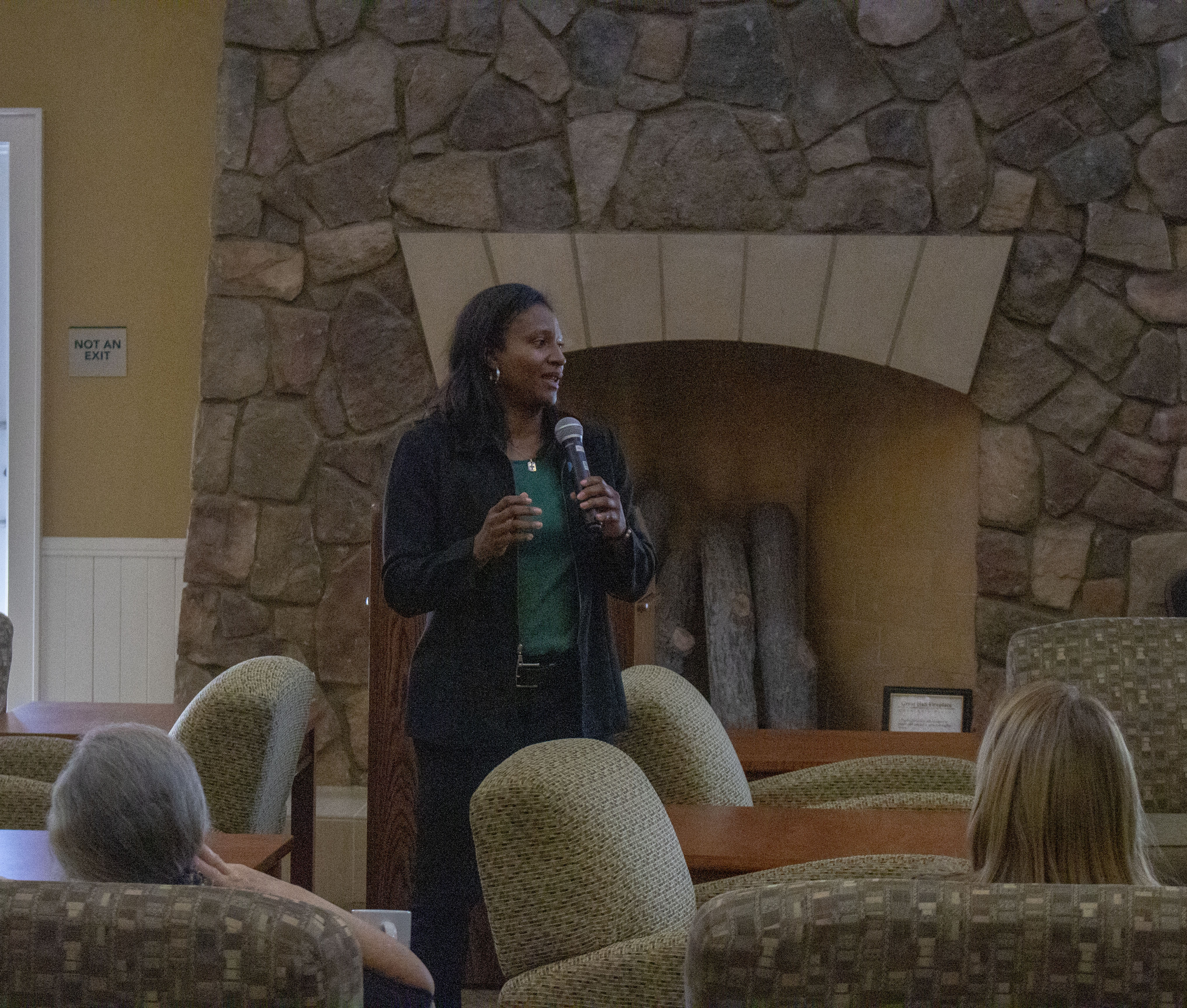
    Jane Teixeira intends on bringing her 25 years of experience working with higher education as an administrator, coach, student-athlete and leader to Humboldt State University. Upon her arrival, Teixeira personally greeted everyone in attendance and made them feel comfortable. In return, staff took it upon themselves to show her the view of the College Creek Field from the Great Hall balcony.

    Once everyone got to their seats, Teixeira introduced herself and began speaking on the importance of establishing a connection with student athletes.

    “Cultivation is important. I’m a relationship builder and I have constructed my career on that,” Teixeira said. “I want to know about people I interact with. I want to know what you bring to the table and how I can help.”

    Athleticism is not the only concern Teixeira spoke about. She also reached out to student athletes at HSU with concerns of life outside of their sports. Whether the concern is athletics or socializing, Teixeira has shown that she can incorporate her goal of unification between students and the community.

    “I also want to see us build championships, not only from wins and losses, but being a champion in the community. And by that I mean leadership.”

    Jane Teixeira

    “I spoke with student athletes yesterday about job interviews,” Teixeira said. “I told them, remember the skillset you bring. Time management and organization as athletes are beneficial in the workforce.”

    Her next talking point was about being competitive––whether it’s on the field or in the classroom. Student athletes at HSU experience obstacles such as going on the road for games, which hinders their focus on academic work. Teixeira also talked about championships, but not in the tone of filling trophy cabinets.

    “I also want to see us build championships, not only from wins and losses, but being a champion in the community,” Teixeira said. “And by that I mean leadership.”

    After introducing herself and the ideas she has planned if she were to become athletic director, Teixeira began taking questions from the audience. The first question involved her unique experiences that she would bring to HSU.

    “Humboldt State Day would be great and you can have it at the plaza or the quad.”

    Jane Teixeira

    “I have worked with 14 institutes and their presidents, their athletics directors, SWAs, their coaches and student athletes on various levels,” Teixeira said. “My claim to fame was cleaning the Reggie Bush mess, not only by myself.”

    The Reggie Bush mess she mentioned involved University of Southern California football player and Heisman Trophy winner Reggie Bush and basketball player O.J. Mayo accepting gifts from agents. This act resulted in Bush relinquishing his trophy. Sanctions were also placed on USC athletics.

    The next question focused on the discontinuation of HSU’s football program and the effect it has had on homecoming. Other sports are capable of hosting the event, which would alleviate any concerns. Teixeira responded with alternatives to homecoming.

    “You can center it around any sport, or any big time of the year for the community,” she said. “Humboldt State Day would be great and you can have it at the plaza or the quad.”

    For the last question, Teixeira was asked if non-traditional sports like esports would have a place at HSU. She said she believes technological growth is important and she wouldn’t disregard esports.

    “Esports is a hot trend right now,” Teixeira said. “In fact the Peach Belt Conference is the first NCAA Division II conference as a whole to have esports. I believe there are six or seven institutions in that conference and we have to be on that innovative technology side. We don’t know if it’s good or bad unless we try it. I’m gonna have to learn it too so it’s exciting.”

  • Sweet Songs, Fancy Feathers, Birds Bang

    Sweet Songs, Fancy Feathers, Birds Bang

    The sex life of a bird is no simple thing

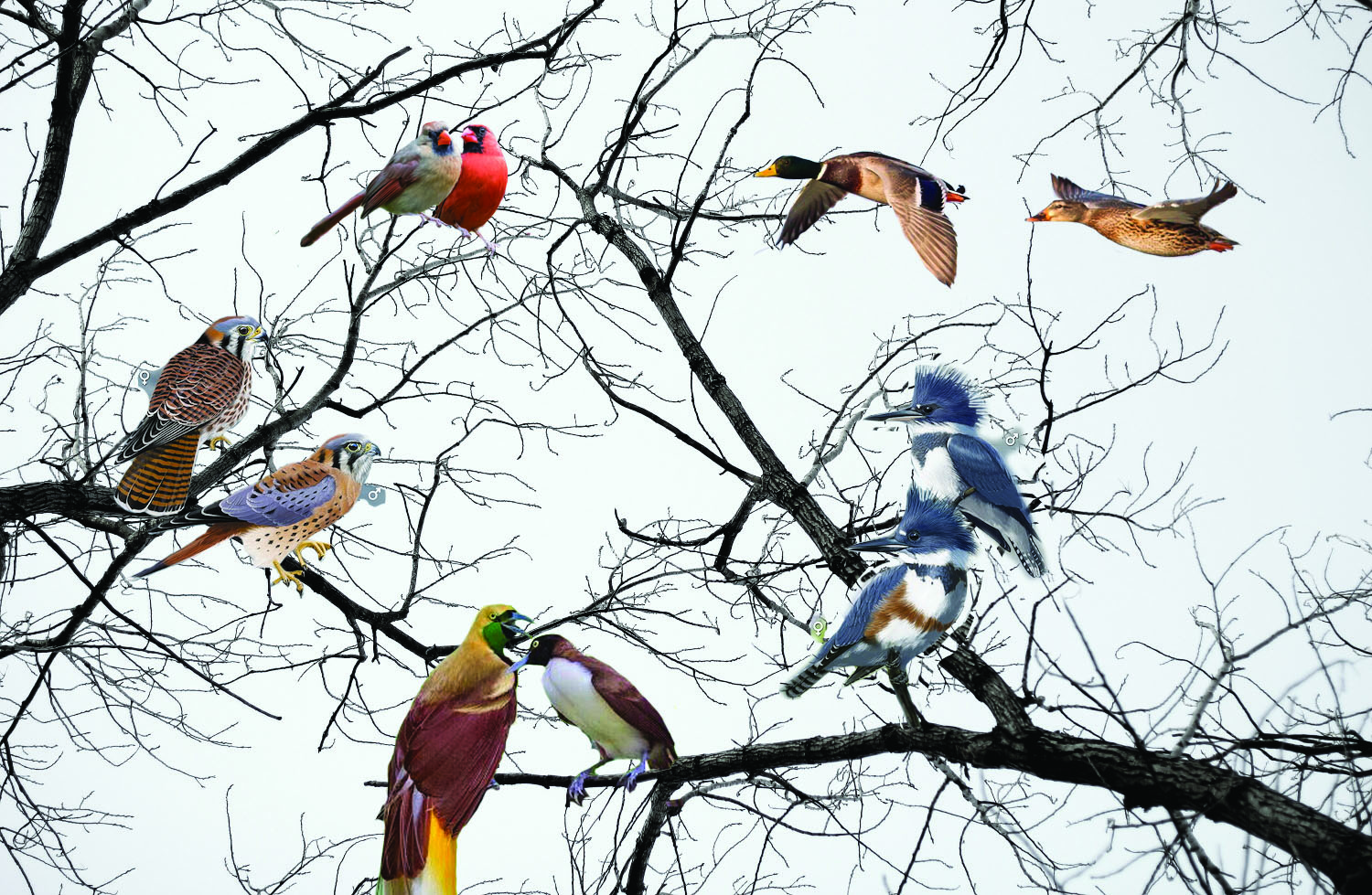
    Sex is a heck of a thing in the animal kingdom. Species of birds, insects, mammals and fish have developed a whole bunch of strategies to get laid. From mating dances to beautiful plumage to carefully engineered bachelor pads, the birds have come up with all sorts ways to strut their stuff.

    Wildlife junior Hannah LeWinter commented on how much effort birds put into reproducing. She remarked on the McGregor bowerbird’s tower—a three-foot-tall structure made of carefully placed twigs, attesting to the bird’s dedication.

    “When we think of animals, we assume they do the basic things like mate and get food and make shelter, but they really do have complex [behaviors] too,” LeWinter said. “They make these intricate structures to impress females to say that they are the best suitors but those structures serve no purpose besides attracting a mate.”

    “We think of animalistic sex of doing it only because you need to reproduce, but there are these animals that create these gestures like a pebble or a structure or a dance.”

    Hannah LeWinter

    Commitment to the craft is just the first step of courtship. The picky female bowerbird inspects her suitor’s structure, carefully judging sturdiness of the construction before joining the male on the forest floor. Then, the show really starts.

    The male bowerbird possesses the ability to imitate sounds and begins a showcase of what he’s learned. His voice can emulate everything from birds and animals in the forest to the sounds of human civilization.

    Once she’s satisfied with his performance, the male begins his dance. A chaotic shuffle from one side of his tower to the other, darting towards the female while flashing a bright orange haircut at her. Once he’s done with his groove, she submits and they do their thing.

    “We like to think we’re the only people or the only species who do that,” LeWinter said. “We think of animalistic sex of doing it only because you need to reproduce, but there are these animals that create these gestures like a pebble or a structure or a dance.”

    The McGregor bowerbird works every year to maintain his tower, but there is no expectation in the species to mate with the same female every year. Jeff Black, a wildlife professor at HSU who studies birds, published a collaborative book with 20 other ornithologists titled “Partnerships in Birds: A Study in Monogamy.”

    “We asked the question, ‘How special are bird partnerships or pair bond?’” Black said. “We asked, ‘How long do mates stay together?’ ‘Are they really faithful?’ ‘Do the faithful ones fare better than the ones that alternate and are less monogamous?’”

    The answer: it depends. Black and his fellow ornithologists quantified bird fidelity on a sliding scale ranging to very faithful to not at all faithful. They also investigated the behaviors between social pairs—pairs who spend their time together raising the young, foraging and nesting together—and genetic, or mating pairs.

    “Birds lay their eggs in a basket,” Black said. “When you look at all the 10,000 different types of birds, some birds even though they’re monogamous, when you look at their babies, the genes come from someone else.”

    “When you look at all the different studies, you can plot out how faithful they are. Swans are 100% faithful, the jays would be about in the middle and other species are just having sex everywhere.”

    Jeff Black

    Faithfulness or lack there of may have a couple of purposes, although the hypotheses are not totally fleshed out. One hypothesis is that, if a female searches for a new male mate, she may be looking for a more fit male than her social partner, and engage in what Black called extra-pair copulation.

    HSU River Ecologist Alison O’Dowd explained fitness is a measure of the ability for an individual to pass on their genes. Similar to natural selection, sexual selection is when a female looks for certain characteristics in their male partner, ranging from vibrant feathers to well constructed towers to perfectly executed dances.

    Black endorsed fidelity in birds. He said in geese and swans for example, more faithful pairs are more likely to successfully reproduce. Their offspring are also more fit for when they’re looking for a mate of their own. There may be a case for faith yet.

    “When you look at all the different studies, you can plot out how faithful they are,” Black said. “Swans are 100% faithful, the jays would be about in the middle and other species are just having sex everywhere.”

  • Syphilis Rates Spike in Humboldt

    Syphilis Rates Spike in Humboldt

    Though prevalent, there are many free treatment and prevention options

    Syphilis rates are spiking throughout California, and Humboldt County is no exception. If left untreated, syphilis can cause a brain condition that resembles dementia, heart problems, skin ulcers and blindness.

    Nurse Practitioner Andrea Shoup is taking an active role to better inform the community about risk factors, prevention and treatment of syphilis.

    “It’s totally treatable,” Shoup said. “People don’t really get tested. If they do, it’s not enough.”

    Syphilis can manifest, but then seem to disappear. If a person doesn’t get regularly tested, they may never know they have it and spread it without knowing. There are also risk factors that increase the likelihood of contracting syphilis. Men who have sex with other men are at a higher risk than men who only have sex with women.

    “It’s just the butthole,” Shoup said. “The anus tears more easily than the vagina.”

    Other risk factors include finding sexual partners using social media, which can create a false sense of trust between partners. Methamphetamine use is also linked to high rates of syphilis. People under the age of 26 are also more likely to contract syphilis than any other age group.

    “That just comes down to promiscuity,” Shoup said. “It’s true in my own life. I kind of doubled down at 20.”

    Dr. Teresa Frankovich, the health officer for Humboldt County, said she is not surprised about the local rate of syphilis.

    “I somewhat expect we would see the same trend as elsewhere,” Frankovich said. “There’s ultimately a large amount of people at-risk.”

    Though the actual number of cases are going up, Frankovich thinks there’s more to it.

    “Part of it is we’re doing a better job at screening individuals,” Frankovich said. “We’re catching more cases of it.”

    “Notifying your partner if you have a positive test is really important.”

    Dr. Teresa Frankovich

    There is a lot that can be done to limit the risk of exposure to syphilis. Frankovich suggested limiting partners. Abstinence and monogamous relationships are ideal for limiting exposure to STDs. Condoms are available at most medical treatment facilities, including the Student Health Center on campus. Condoms are also available by prescription.

    Shoup says condom prescriptions, though important for limiting STD rates, still cause controversy.

    “I had some Republican coworkers that were all, ‘I’m paying for people’s pleasure,’” Shoup said.

    Along with condom prescriptions, yearly screenings are recommended. Since syphilis and other STDs such as chlamydia can go unnoticed, there is no way of knowing the STD status of a partner without a test.

    “Notifying your partner if you have a positive test is really important,” Frankovich said.

    Frankovich acknowledged that communicating with past partners about syphilis can be a challenge for many, which is why the Public Health division of the Humboldt County Department of Health and Human Services provides a service called the Partner Services Program. Public health will assist in contacting partners and inform past partners in order to jump the hurdle of uncomfortable situations.

    The Student Health Center, the Open Door Clinics, Planned Parenthood and any general practitioner can help with preventative measures, testing and treatment.

    “Really it’s a lot of bad things that you don’t want,” Shoup said. “You don’t see the consequences until much later.”

  • Artificial Intelligence Generates Real Jokes on Twitter

    Artificial Intelligence Generates Real Jokes on Twitter

    Creators say we shouldn’t worry about being replaced yet

    There is a new breed of bot accounts coming to Twitter, but these aren’t put there by Russia or the CIA or whoever else is trying to influence an election. They’re novelty accounts, posting large quantities of tweets that mimic the style of existing users.

    Twitter user @kingdomakrillic runs one of these accounts. He asked to only be referenced by his Twitter account. His parody account, @dril_gpt2, sends out a new tweet in the style of @dril several times a day. @dril is a somewhat mysterious, absurdist comedy account that posts their jokes from behind the pseudo-anonymity of a profile image of an incredibly blurry Jack Nicholson. @kingdomakrillic explains their reasoning for choosing @dril to imitate.

    “I wanted to do a GPT-2 bot of someone who was both famous and whose voice on Twitter was near-exclusively comedic,” he says. “If I did, say, a Trump bot, the only humor would come from the novelty of a bot generating Trump-like tweets.”

    These imitation @dril tweets can be shockingly on-brand yet original at times. It’s not uncommon to see replies wondering if the tweets from the account are still created by a bot.

    @kingdomakrillic assures me the tweets are bot-written but hand-selected.

    “Curating the tweets is like DJing. I pace the content out, placing tweets I’m sure are funny next to ones I’m more uncertain about,” @kingdomakrillic says. “Sometimes I screw up. It’s a skill, not 1/10th of the skill that goes into actually writing tweets like dril’s, but it’s still something I need to improve on. There’s no excuse to post duds when you can output infinite text.”

    That infinite text doesn’t come from nowhere. It comes from GPT-2, a language model created by OpenAI, a research group with a focus on machine learning.

    Sherrene Bogle is a computer science professor at HSU with experience using machine learning. Conceptually, teaching an algorithm how to do something is a lot like teaching a person. Bogle uses the example of teaching an algorithm to recognize whether a bird is in the foreground or the background of an image. First the algorithm is given a set of bird pictures that are already labeled as to whether the bird is in the foreground or background, allowing it to figure out the differences. Then it’s given unlabeled bird images, where it looks for those same differences. The difference between a human in a machine doing this task is that the machine doesn’t actually understand what it’s doing. The machine simply recognizes patterns.

    Instead of looking for where birds are in pictures, GPT-2 looks for patterns in text. It’s job is to predict not just the next word, but the next couple paragraphs. GPT-2 is so good at this task that it can make paragraphs of human-readable text after being given only a handful of words. The output text can be about anything, but in order to generate text that mimics the style of a Twitter user, programmers need to retrain the model.

    “The potential for harm is less than current human bad actors.”

    Max woolf

    @kingdomakrilic says he retrained GPT-2 on 9,500 tweets, totaling about 750 kilobytes. This focuses the original GPT-2 training data, consisting of almost 40 gigabytes of data, to accomplish a more simple task. The more simple a task, the better an AI can imitate it. Imitating tweets is simple, and with GPT-2’s vast capabilities, imitation yields good results.

    There is also @kingdomakrilic’s curation, which gives many of his followers the impression that the AI is better than it really is.

    Max Woolf is a data scientist at BuzzFeed, and the person responsible for making these twitter bots so easy to create. He built a tool, called GPT-2 Simple, to easily retrain GPT-2 with any new data—tweets—and wrote an accompanying tutorial. Some people think AI is a threat to humanity, but Woolf says otherwise.

    “The potential for harm is less than current human bad actors,” Woolf says.

    @kingdomakrilic agrees with this sentiment.

    “Some people get freaked out at the fact that GPT-2 can produce sentences that have humanlike coherence, but are made with no meaning or intent on the bot’s part besides to imitate how humans write,” he says. “Markov chains, Madlibs, autocompletors, esquisite corpses—they’re also capable of creating coherent text with the illusion of intent. They’re just not mysterious black box programs like GPT-2.”

  • Sudden Oak Death Plagues Humboldt’s Forests

    Sudden Oak Death Plagues Humboldt’s Forests

    Humboldt County is known for its beautiful forests, but sudden oak death threatens its trees

    Sudden oak death is the common name for a disease that started infecting trees 20 years ago and has since killed over a million trees—including trees in Humboldt County.

    The University of California Cooperative Extension explained that the disease is caused by a pathogen called Phytophthora ramorum.

    “It is caused by a microscopic fungus-like organism, Phytophthora ramorum, a lethal, canker-causing pathogen of certain oaks and tan oak trees,” UCCE wrote.

    Susan Marshall, a wildland soils professor at Humboldt State University, is involved in two grant programs that deal with pathogens like sudden oak death. Marshall is connected to Christopher Lee, an HSU alumni with a Ph.D in forestry from the University of Missouri, who now works as a forest pathologist at the California Department of Forestry and Fire Protection.

    “It gets into the vascular tissue that is just underneath the bark, and it kills that tissue,” Lee said. “If it does that in several different places around the circumference of the tree, then it will eventually kill a band of tissue all the way around.”

    If the Phytophthora ramorum does kill the tissue all around the tree, the tree is effectively girdled. Generally, live tissue transports water and nutrients up the tree, but if those pathways are blocked lower down, everywhere above the infection dies. The organism infects the tree’s circulatory system and can spread to the nutrient tissue and water-conducting tissue, xylem and phloem, essentially starving the tree and clogging it up. A full ring is a sure death sentence.

    “As far as these diseases go, it would probably be worse under a warmer and wetter sort of scenario.”

    Christopher Lee

    Marshall and Lee described Phytophthora ramorum as being like a fungi or brown algae, with characteristics similar to closely related plant pathogens. Specifically, they are in the class Oomycota, which are a distinct line of fungus-like eukaryotic microorganisms. They are fungus-like because they have a long, branching net-like structure like the hyphae of fungi. They are algae-like because they descend from the same phylum, Heterokontophyta, as many algae.

    Phytophthora ramorum is not the only pathogen that affects trees, but it is the most visible and the most deadly, devastating thousands of acres of forest. In California, sudden oak death has been most prominent in and around Sonoma County, according to reporting by the Times Standard.

    Humboldt County’s dense forests of tan oak, the main host for the disease, is at especially high risk of tree death. Humboldt’s weather and climate are an unfortunately-inviting environment for sudden oak death. The dense oak forests in the area means both greater humidity and a shorter distance for a pathogen to travel.

    “As far as these diseases go, it would probably be worse under a warmer and wetter sort of scenario,” Lee said.

    The recent fires around California also have an indirect connection to Phytophthoras. The loss of vegetation limits the way pathogens spread due to a wildly new arrangement. It is good to note heat from fire can sometimes help slow a pathogen’s spread by eradicating an area where the pathogen had a large presence. Lee noted that if the root system of a tree isn’t fully dead, however, Phytophthoras may have a chance of surviving in its host.

    The main goals of the programs Marshall is involved with are to identify the disease more rapidly and figure out how to slow its spread.

    There isn’t a specific way to control a disease like this, but Marshall said rapid testing of plants in nursery stock may catch Phytophthora ramorum before it can infect new hosts.

    “Every year that [we] can buy that [sudden oak death] doesn’t leapfrog into some other county and cause quarantines and regulations on those counties is a little bit of economic damage that they’ve staved off,” Lee said.

    Sudden oak death has only affected one percent of Humboldt’s trees, but its impacts in California and Oregon demand researchers like the ones Marshall and Lee are involved in will be continuing to study it and find newer and faster ways to help manage the remaining forests along the coast.

  • Chopping Genes and Growing Brains

    Chopping Genes and Growing Brains

    Innovative research and a discovery in HSU’s molecular biology lab

    Biology professor John Steele guided a cell biology lab his first year at HSU wherein he wanted to teach students that cells need nutrients to survive. After 48 hours, the lab discovered quite the opposite. James Gomez, a current student in the lab, had the opportunity to research more into the groundbreaking discovery.

    “In science, you’re kinda looking for that unexpected stuff,” Gomez said. “Right after I came in, I was really excited to be a part of that. There was this thing that was happening that we particularly can’t fully explain, and I’m actually in the lab doing that science.”

    Steele’s experiment for his class involved students starving the cells of nutrients to trigger a state of autophagy, which is when the cell starts to consume itself. Steele meant to emphasize that cells needed nutrients like amino acids and lipids to survive. It was assumed that starving cells of key nutrients eventually killed them.

    Steele said the experiment was common, and was usually shut down after six to eight hours. Steele decided to run it for 48 hours instead, since that was the time between lab sections. When his class returned returned to the lab, rather than seeing a bunch of dead cells, they were decidedly more alive. The lab had made a discovery.

    Despite the cells being in autophagy in Steele’s experiment, they had stopped dividing and took on a strange morphology. Their metabolic rate was high—they were very much not dead.

    Now the lab, including Gomez, are deep in research. The lab is introducing pathway inhibitors, or drugs, to block basic cell functions, narrowing down the essential and non-essential. The project is open-ended, as students methodically look at every cellular pathway to determine the needs of cells.

    “What I love about this project is that it was born here,” Steele said. “Nobody else that I know of is working on this, outside of HSU. That’s an awesome process to be a part of, where students get hands-on training in phenotypic genetic screening and drug screening, and we get to learn about the basic biology of cells in doing this.”

    Steele encourages the students in his lab to explore the boundaries of their knowledge. CRISPR, Cas9 and stem cell cultures are unique tools available to these students, and they offer an opportunity to think outside the box and do creative science.

    Steele’s lab combines bio-technologies using unique stem cell cultures and genome editing techniques. The lab cultures stem cells—cells which can grow into any cell type—and chops up DNA using CRISPR, a revolutionary gene-clipping tool, to learn how rare neurodegenerative diseases develop in the brain.

    “There have been some really cool applications of CRISPR out there. And they’re just because somebody said, ‘I wonder if we could do that?’ and they did.”

    John Steele

    Steele’s graduate student Kyle Anthoney, on the other hand, is working on making a model of a rare disease called progressive supernucleogical palsy, which looks like a combination of Parkinson’s and Alzheimer’s diseases. The disease is a tauopathic disease because a main characteristic of the disease is a buildup of the tau protein, which blocks some necessary cell functions. To understand the finer details of the disease, Anthoney developed a new method for growing neurosphere cell types into what is, effectively, a miniature brain.

    Scientifically named 3D neural sphere cultures, these miniature brains offer a platform for researchers to study three types of brain cells at the same time. Anthoney’s method allowed him to organically grow neurons, oligodendrocytes and astrocytes, three dominant cell types in the brain, from human stem cells, so they would develop naturally like they would in a growing brain.

    Anthoney’s research is up for review in a number of scientific publications and his name is on some breakthrough scientific papers. He is contributing to research about progressive supernucleogical palsy and other tauopathic diseases. His research concentrates the tau protein in a miniature brain to simulate the symptoms of progressive supernucleogical palsy, and he is exploring how the protein and disease impact his lab-grown brain cells.

    “There have been some really cool applications of CRISPR out there,” Steele said. “And they’re just because somebody said, ‘I wonder if we could do that?’ and they did.”

  • Walking and Wildlife Tracking

    Walking and Wildlife Tracking

    A group of students and community members wandered around Redwood Creek to track the local wildlife

    On Saturday, Feb. 1, Phil Johnston, the mountain lion biologist for the Hoopa Valley Tribe, stopped the group of 20 mixed retirees and Humboldt State University wildlife majors to quiz them on the tracks he had noticed in the sand.

    The participants all went to the headwaters of Redwood Creek, just south of Orick, to learn about the tracks, scat and other markings of the animals in our area. Some were there to learn what they could and enjoy the hike, and others were looking for a leg up in their future careers.

    “If you’re good enough at interpreting signs and staying on the trail, it’s pretty close to watching them.”

    Phil Johnston

    Throughout the day, Johnston stopped and drew circles in the stand with his walking stick around particular markings, scat or tracks and asked the group to weigh in on the different features and aspects of it. He asked leading questions about what family the suspected animal may belong to as well as what it most certainly did not belong to.

    “If you’re good enough at interpreting signs and staying on the trail, it’s pretty close to watching them,” Johnston said.

    Johnston leads these wildlife tracking workshops at the Natural History Museum in Arcata. Evaluators certified by CyberTracker will be coming to Humboldt County to test 10 people on their tracking skills, according to CyberTracker standards. People who pay the $170 certification fee must pass the certification exam on April 25 and 26 to receive their certification.

    Louis Salas is a 31-year-old wildlife major pursuing the CyberTracker certification. Salas hopes to work in predator conflict mitigation after he graduates, and figured that if he can earn this certification, he would have a leg up in the competitive field of wildlife biology.

    “I’m an older student and I’m competing with a bunch of 18 to 22-year-olds,” Salas said.

    The community impact of the workshop didn’t pass him by. Salas said the workshop was a welcoming environment and he enjoyed seeing older people getting out and learning. Salas said when people learn about wildlife, they care about it more.

    “If nobody cares about the landscape that we live on, no one’s gonna protect it,” Johnston said.

    He wants people to have a connection to the place that they live so that they will want to preserve it for future generations. Johnston said that tracking gives people the ability to feel like a participant in the ecosystem instead of a tourist.

    Dave Ramirez is a forestry major and Deanna Lopez is a zoology major. Neither were after the certification and just came out with a friend to learn more about tracking. Both of them said they would probably come back. The commentary and teaching turned what would normally be a quick walk on the beach into something better.

    “It’s more meaningful than just hiking,” Ramirez said.

  • An Update on HSU’s Climate Action Plan

    An Update on HSU’s Climate Action Plan

    The Humboldt Office of Sustainability reports good news for HSU’s Climate Action Plan

    Humboldt State University’s 2019 Climate Action Plan Progress Report revealed positive impacts for the Climate Action Plan.

    Morgan King, HSU’s Climate Action Analyst, explained how the Climate Action Plan divides campus emissions into three scopes, each categorized by how much control HSU has over reducing them.

    “We’re striving towards reducing our scopes one and two,” King said. “Scope one, the majority of that is natural gas so what we need to do is start weaning ourselves off natural gas.”

    “We’ve completed almost half of our strategies. But the most expensive ones that also have the greatest impact are the ones that we’re still lagging a little bit behind on.”

    Morgan king, HSU’s climate action analyst

    Scope one emissions are from burning natural gas on campus and the fuels fleet vehicles use. Scope two emissions are from electricity use. Scope three emissions are from commuting, business air travel and solid waste management.

    The report said we are on track to meet the 2020 emissions reduction goal. The Climate Action Plan set a course for the campus to reduce greenhouse gas emissions to 1990 levels by 2020, to 80% below 1990 levels by 2040, and to become carbon neutral by 2050.

    To accomplish these emissions goals, the CAP includes 55 strategies that lay out the short and long-term goals necessary to achieve these goals. According to the progress report, 45% of the strategies have been completed.

    “We’ve completed almost half of our strategies,” King said. “But the most expensive ones that also have the greatest impact are the ones that we’re still lagging a little bit behind on.”

    There are three projects in the works for 2020. First is a faculty learning program intended to teach professors how to incorporate sustainability in their lesson plans. Second, over spring break, King is co-facilitating a student leadership institute in climate resilience. King is also developing a sustainability minor to enable students to better understand the methods behind creating a sustainable environment.

    “Within our initial climate action plan we saw it was critical to have an engaged campus population that are making decisions and engaged in actions to improve sustainability for the campus,” King said. “That’s potentially as important as changing out all the lights.”

  • Trees are Here to Help

    Trees are Here to Help

    How planting trees can serve as one branch of a climate action plan

    In the face of climate change, all scales of society, from government to corporations to individuals, are looking for ways to emit less and sink more carbon. The internet latched onto the tree-planting solution, but it’s important the right trees are planted in the right place at the right time.

    The climate crisis is the dominant issue of this decade. According to Robert H. Socolow and Stephen W. Pacala, who wrote the article “A Plan to Keep Carbon in Check” in 2006, the world must avoid emitting about 200 billion tons of carbon over the next 50 years.

    To make the problem manageable, Socolow and Pacala turned the required reduction into one-billion-ton “wedges.” The paper contained strategies that could be scaled up by 2050 to reduce carbon emissions by one million tons per year. For example, a wedge would be achieved if the number of miles traveled by the world’s cars was cut in half or if global deforestation was halted within 50 years.

    Tree planting has become one of the most popular solutions in popular culture. Ecosia and Team Trees are two internet campaigns working to plant millions of trees.

    A consistent goal in climate science is net zero emissions. In other words, the volume of greenhouse gasses going into the atmosphere needs to equal the volume coming out. With a record 37 billion tons of carbon dioxide emitted in 2018, that’s a daunting task. To achieve this goal, society needs to emit less carbon and increase nature’s carbon sinking, or the natural process of turning carbon dioxide gas into solid matter.

    Top minds of the world are putting their heads together to come up with solutions, ranging from modernized public transportation to alternative energy technology to lifestyle changes toward less consumption. Beyond that, policy makers and scientists are working closely with everyday people to educate, inspire and solve the crisis.

    Locally, Humboldt State University, the City of Arcata and Humboldt County have prepared climate action plans. In the spring of 2019, five public workshops were hosted by the county to get ideas from community members on an action plan. The primary goal of these plans is to reduce emissions to pre-1990 levels by 2030.

    2030 is the nearest milestone in climate policy. According to the Intergovernmental Panel on Climate Change Special Report on Global Warming, global emissions will need to fall 45% from 2010 levels by then to be on track for the net zero emissions goal for 2050. This ideal timeline would limit global warming to the best-case 1.5 degree Celsius increase in average temperature, a goal which still brings with it real climate change.

    Tree planting has become one of the most popular solutions in popular culture. Ecosia and Team Trees are two internet campaigns working to plant millions of trees. A number of science-based YouTubers have published videos explaining the project, including SmarterEveryDay, Mr.Beast and Aspect Science.

    Trees are a valuable ally in the battle against climate change because they sequester carbon. A tree’s bark is made out of carbon. During photosynthesis, plants turn sunlight, water and carbon dioxide into glucose. The glucose molecule, along with other essential nutrients, turns into plant matter like leaves, branches and roots, effectively storing carbon in a solid state.

    For this ordeal to be successful, it’s essential the people planting trees understand the silvics of those trees. Silvics is the study of the life history and characteristics of forest trees, and without understanding it, the newly-planted trees are more likely to die.

    With the Earth at a critical time in its life history, the top minds of the world are opting for some deep breaths, planning and deliberate, well-informed environmental action.

  • Connecting Cannabis and Cancer

    Connecting Cannabis and Cancer

    New study links smoking cannabis with testicular cancer

    Those attending Humboldt State University who smoke marijuana regularly may want to rethink their habit.

    Marijuana is the most widely used drug in the United States, and a large part of its popularity as a recreational narcotic comes from the perception that it has very few, if any, long-term health effects. There are, in fact, several positives that are associated with the drug, such as help with depression or anxiety, easing of muscle soreness and a reducing of the number of seizures experienced by people with epilepsy.

    “When you combust any plant, you’re creating significantly more carcinogens.”

    Dr. Jeffrey Chen

    However, despite its positive effects, a recent study conducted by the Journal of the American Medical Association has identified a link between marijuana use in people with male reproductive organs and an increased risk of testicular cancer. The study explained that burning marijuana (which is necessary to smoke it), like burning any plant, triggers the release of carcinogens, which, in this case, may lead to testicular germ cell tumor.

    “When you combust any plant, you’re creating significantly more carcinogens,” Dr. Jeffrey Chen explained to Science Alert.

    The study also analyzed potential connections between recreational marijuana use and lung cancer, oral cancer and head and neck cancer. However, JAMA did not find any connections to any of those cancers.

    The meta-analysis in the data collected by JAMA is specific to white men, leaving out a large part of the global population. Many of their findings also date back as far as 1973.

    There also isn’t a direct causality from marijuana to cancer over a wide range of the population. The American Association for Cancer Research has identified many of the victims of cancer as having used marijuana heavily. However, there is still no evidence of other variables, who else might be at risk or other drugs that might increase or minimize said risk.

    These studies so far are limited in the information they provide, and should not be taken as the final word on any and all links between cannabis and cancer. However, it does contribute to the ongoing discussion of the health effects of the drug, and those who do use it may want to sit up a little straighter and take some notice.

  • So You Want to Compost

    So You Want to Compost

    Composting can be one of the most beneficial ways to handle waste

    Learn the steps to compost.

    Every Wednesday, the trash bin, filled with whatever waste was tossed during the week, goes to the curb to be picked up by Recology and shipped off to a landfill.

    Forty percent of the waste that ends up in landfills is food waste, according to Recology. This can include raw scraps from food preparation, old sandwiches left to rot and unwanted leftovers. When food scraps end up in a landfill, the material is not just waste, it’s being wasted.

    “The average American generates 4.4 pounds of garbage a day,” the Recology site says. “Don’t let your food scraps go to waste.”

    Illustration by Collin Slavey

    It’s a big deal if food waste gets tossed into landfills. Besides taking up space in our already overwhelmed landfills, food waste doesn’t decompose properly in such settings. For example, an apple that falls above ground breaks down into useful nutrients like nitrogen, which enriches the soil. Underground the apple isn’t able to break down.

    Buried in a landfill, the apple is in an anaerobic environment, meaning that it is starved of oxygen. Anaerobic decomposition creates some nasty byproducts. The most malicious of these byproducts are methane and liquid leachate. Both of these are pollutants with consequences.

    “Fortunately, avoiding these pollutants is simple. Just compost it,” international waste management firm ToWaSo said. “Food and yard waste can be reused and turned into nutrient rich compost. Composting exposes the green waste to oxygen, allowing it to decompose as it would in nature.”

    Humboldt State does compost food waste. According to an email from TallChief Comet, the director of sustainability, energy and grounds keeping with Facilities Management, HSU compost is managed in two ways. The Waste Reduction and Resource Awareness Program manages the composting bins on campus, while food waste is diverted from dining services.

    “The on-campus composting process is handled by WRRAP and is using the material from the public compost bins scattered around campus,” Comet said in an email. “This material goes into an Earthtub composting vessel, located at Facilities Management and processes about 10,000 lbs (5 tons) of material per year.”

    “The average American generates 4.4 pounds of garbage a day. Don’t let your food scraps go to waste.”

    Recology

    “The food-waste diverted from all the dining locations on campus is collected by FM waste and recycling staff into a large pre-composting container,” Comet said. “About every three weeks it is transported by Recology (a local waste hauler) to a vermicomposting facility in Dows Prairie run by The Local Worm Guy.”

    Comet emphasized that it is important to keep contamination out of the materials’ stream, and if someone is in doubt about whether or not to compost, trash it.

    “The best effort students can make is to not generate waste in any form to begin with,” Comet said. “For compostable waste they can achieve this by not purchasing more than they will use/consume during the anticipated period.”

    But composting may very well be appropriate. Composting may seem like an intimidating, tedious and smelly thing to do, but with a bit of practice it becomes second nature. Working with local resources like the Campus Center for Appropriate Technologies can help prepare a student for their own compost bin.

    Jacob Gellatly, an active member of CCAT, recommended that students learn about composting.

    “Before a student starts composting they should learn a few things,” Gellatly said. “It is critical to get educated on the process of composting. Learn the recipe.”

  • Green Thumbs at the Greenhouse

    Green Thumbs at the Greenhouse

    Dennis K. Walker Greenhouse provides a haven for a diversity of plant species

    A sky full of grey clouds smothers the sun and with a chilling breeze even the most layered person shivers down to their toes. One step into the Dennis K. Walker Greenhouse transports you away from the cold into a world of warm, enticing, vivacious plants.

    There are six rooms in the greenhouse: temperate, tropical, desert, fern, aquatic and the subtropical dome. Each room has an appropriate climate and a resident community of plants. Greenhouse manager Brianne Lee, along with student assistants Dabid Garcia and Courtney Harris, maintain the greenhouse at Humboldt State.

    “Essentially, the greenhouse is a living museum,” Harris said. “It’s something that we are trying to preserve here and not kill with love.”

    The large botanical collection contains more than 1,000 species of plants belonging to 187 families. According to the Department of Biological Sciences website, students and faculty studying botany and biology use the greenhouse and its plant life to research and learn.

    Harris, a botany major, said the greenhouse is a magical place, especially since there are only two student positions. After transfering from the College of the Redwoods in 2017 Harris was hired as an assistant.

    “It feels like a unique experience being that this is such a cool staple and an important part of the botany program,” Harris said.

    The job of a greenhouse assistant consists of maintaining the facility and its residents residents, which means sweeping the rooms, hand watering plants, managing pests and propagating plants.

    “Essentially, the greenhouse is a living museum. It’s something that we are trying to preserve here and not kill with love.”

    Courtney Harris

    Garcia, a rangeland resource science major, said that there’s a lot of care and research that goes into the plants, but the goal is to make sure the plants are happy and thriving.

    “Every species needs their own little formula of fertilizer,” Garcia said. “Some require more nitrogen than phosphorus and some others more potassium. We have to do our own research and sometimes that research isn’t available, so we’ll give the plant fertilizer and see how the plant reacts to it. A lot of our plants are really rare in the wild.”

    The trio look out for signs indicating whether something might be wrong, such as droopy leaves and discoloration. The team also checks soil moisture levels, but all plants indicate issues to caretakers in unique ways.

    “The biggest challenge is understanding how each plant reacts and responds to the care that we give it, and adjusting our behavior accordingly,” Harris said. “It requires a tremendous amount of teamwork and communication between us.”

    Harris added that some plants don’t like attention while others, if left alone, will wilt and die.

    Mihai Tomescu teaches plant morphology, plant anatomy, paleobotany and general botany. The trio’s work supports Tomescu in the botany department, as well as supporting the biological sciences. Faculty often use plant specimens during lectures and labs.

    “Plants don’t move, and yet they are exposed to pretty much the same challenges that we are exposed to in terms of surviving. There’s all sorts of stressors. They have to procure their food and because of that, just like other types of organisms, have to have some type of behavior.”

    Mihai Tomescu

    Tomescu said his area of expertise and research is plant structure, including topics like how plants are put together, how they grow, how they look and how their features evolve over generations. Some of his methods include digging deep into geologic time.

    “I know how they grow at the cellular level,” Tomescu said. “So coming from that perspective, I realized that one of the most fascinating things about plants that people don’t realize is that compared to us animals, and compared to what we think of in our culture about aliens, is that plants are more alien to us than the craziest aliens that human imagination has come up with.”

    In his classes, Tomescu has his students visit the greenhouse three to four times a semester for assignments and brings live samples for labs when examining roots, leaves, stems, cells and other internal parts of plants.

    “If you have a big botany program that emphasizes organismal biology, the diversity of plant groups and so on, then it makes sense to have something like this,” Tomescu said. “How else are you to teach your students about the diversity of plants if you can’t show it to them alive.”

    Some people may question the general interest in plants because at the surface they seem not to do anything. But Tomescu said that if you are able to slow down and get pass the green blur of a forest of plants, you’ll come to find some interesting organisms.

    “Plants don’t move, and yet they are exposed to pretty much the same challenges that we are exposed to in terms of surviving,” Tomescu said. “There’s all sorts of stressors. They have to procure their food and because of that, just like other types of organisms, have to have some type of behavior.”

    Plant behavior is what a plant does, including how it grows. According to Tomescu, plants have control of their growth, from the depth of their roots to the direction of their leaves.

    “The plant makes a lot of choices because growing in one direction or another means spending energy,” Tomescu said. “It’s very calculated — not consciously calculated– but basically plants sense their environment very well.”

    In the broader sense, he said that plants make him think. Tomescu hopes more people will become interested in plants since they are so different compared to other life forms.

    “It’s kind of exhilarating to realize that we live next to these super weird organisms,” Tomescu said. “It maintains this fascination that there are these organisms that do the business of living in a very different way from us.”


    The Dennis K. Walker Greenhouse is available to instructors and students in the Department of Biological Sciences, and access is limited by the availability of instructors or greenhouse staff.

    It is open to the public by appointment or when greenhouse staff are available. If you are interested in making an appointment contact Brianne Lee at 707-826-3678 or schedule a visit via email at bms561@humboldt.edu.

  • HSU Mycology Club Identifies Mushrooms for National Research Project

    HSU Mycology Club Identifies Mushrooms for National Research Project

    Students at HSU participated in the iNaturalist-sponsored Mycoblitz to contribute to the North American Mycoflora project

    Humboldt State University’s Mycology Club is collecting samples of mushrooms and sending them to Purdue University for DNA testing.

    In association with iNaturalist, the Humboldt Bay Mycological Society and the North American Mycoflora Project, the Mycology Club is helping a national team of scientists record the location and species of as many fungi as possible.

    The North American Mycoflora Project will allow the scientific community to compile and use a huge amount of knowledge and data about the identity and location of macrofungi in the United States.

    “The sheer quantity of data getting piled in will give [scientists] a better idea of where species grow in the world. Sometimes people find species in a place where they were thought to be gone thousands of years ago.”

    Lucas Burton

    Mycology Club members Lucas Burton and Caleb Von Rossum spent a cold Monday afternoon documenting their mushroom samples in the bottom of the Campus Center for Appropriate Technologies. Burton and Von Rossum recorded their amateur identifications of the mushroom and the date and location where it was found on a little slip of paper that would travel with their specimen.

    “We are using iNaturalist,” Burton said. “We upload a photo and GPS location, and people from all over the world can come together and help us positively ID it.”

    iNaturalist is a popular tool for biologists and botanists who want to take advantage of citizen science for data collection. Von Rossum mentioned a lot of people in the club record their mushroom finds on iNaturalist, but Burton and Von Rossum were taking it to the next level by mailing in their samples.

    “The sheer quantity of data getting piled in will give [scientists] a better idea of where species grow in the world,” Burton said. “Sometimes people find species in a place where they were thought to be gone thousands of years ago.”

    Mycology Club President Austen Thibault worked with the Humboldt Bay Mycological Society to get the Mycology Club participating in the Mycoblitz, the official iNaturalist mushroom-recording event.

    “Contributing to the Mycoblitz, you could easily be one of really just a few thousands of DNA specimens ever taken in the history of the globe. And for the rare specimens, your name will be saved with the specimen forevermore.”

    Austen Thibault

    The Mycoblitz was a national week long mushroom foraging event which challenged citizen scientists to record the location of as many mushrooms as they could. Participants rummaged through undergrowth for mushrooms and submitted pictures of their finds on iNaturalist. Locally, the Mycology Club was encouraged by the Humboldt Bay Mycological Society to participate.

    The Mycological Society offered a thorough training on iNaturalist and mushroom identification to prepare participants for the Mycoblitz challenge. The data and specimens that were gathered will be sent to Purdue University for DNA testing so they can be incorporated into the North American Mycoflora Project.

    “Contributing to the Mycoblitz, you could easily be one of really just a few thousands of DNA specimens ever taken in the history of the globe,” Thibault said. “And for the rare specimens, your name will be saved with the specimen forevermore.”

    The Mycology Club meets every other Wednesday in the Campus Center for Appropriate Technologies at 5:00 p.m.

  • Geography Department Celebrates Name Change

    Geography Department Celebrates Name Change

    Geography Department renamed to GESA to better reflect the discipline

    The Humboldt State geography department was officially renamed the HSU Department of Geography, Environment and Spatial Analysis, or GESA for short. Along with the name change, the GESA department will begin to publish a scientific journal called Humboldt Geographic.

    More than 100 people showed up to the name-change celebration. The evening brought with it a number of presentations from professors within the department including department chair Matthew Derrick. Messages of praise came from the Provost and Vice President for Academic Affairs Alex Enydi as well as the Dean of HSU’s College of Arts, Humanities, and Social Sciences Lisa Bond-Maupin.

    “I am grateful to work with students, staff and faculty every day,” Bond-Maupin said. “I am struck by the idea of boundaries. What I am recognizing about this department is it’s about transcending boundaries. I’m struck by that.”

    One of the boundaries the GESA department is transcending is the barrier between the department and the greater academic community. To achieve this, Derrick has been promoting GESA’s scientific journal, “Humboldt Geographic.”

    “In any kind of education, I say there needs to be some sort of artifact,” Derrick said. “This idea is reunification, where you take ideas and values and they come into some physical form… It is the culmination of where we are right now, and hopefully next year we’ll do it better.”

    Humboldt Geographic is a collaborative, student edited and student published scientific journal. It will include coverage of projects within the department as well as alumni updates and stories about the department’s yearly trips abroad. Although each edition should be finished by the end of the semester, the journal will be on the news stands at the beginning of the spring semester.

    Changing the name of the department to Geography, Environment and Spatial Analysis reflects the dynamic nature of the discipline. Geography is the study of the physical features of the earth and its atmosphere, and Spatial Analysis is a type of geographical analysis which seeks to explain patterns of human behavior by layering data-filled maps over one another. The way this science can be used is restrained only by the imagination of the geographer.

    The Humboldt Geographic Society is chock full of imaginative students. The president of HGS, Summer Owen, talked about the direction of the new geography department.

    “As students, we’re not just studying where things are,” Owen said. “We’re studying why things are that way; why people are there, why those lines exist. Through politics, through landscape, mountain ranges, rivers, oceans, the barriers.”

    After the announcement, Derrick asked the student members of HGS to the front of the room for a group picture before everyone began to socialize. The festivities continued into the night fueled by champagne and finger food.

    Enyedi seemed to enjoy himself and was grateful for the invite from the department.

    “President Jackson said we’re gonna have a lot of parties,” Enyedi said. “Partying and celebrating is what we should do. We need to focus on the great things that our students do, that our faculty do, that we do as a community. I’m proud to be part of this community. So thank you for inviting me to [the] party.”

  • HSU’s 4th Annual Zero Waste Conference Recap

    HSU’s 4th Annual Zero Waste Conference Recap

    Waste Reduction & Resource Awareness Program hosts environmental event and educates community

    The Humboldt State Zero Waste Conference, hosted by the campus’ Waste Reduction Resource Awareness Program, taught students and community members how to reduce the amount of waste they produce in their daily lives. The week ended in a city proclamation that Nov. 15 would forever be Zero Waste Day.

    “WRAPP is all about serving students and providing students resources to make lifestyle changes,” Program Manager Amanda McDonald said. “It’s a slow and gradual process where it’s not like you can get rid of every plastic thing in your house at once, but you have to be committed to doing this over time.”

    A week of influential guest speakers, engaging activities and exciting happenings kept students active and engaged in reducing waste. These included a moving speech by Tedd Ward, the authority on Del Norte solid waste, Tinkertime on the quad and the extravagant Green Campus Trashion Show.

    The clothing industry is so detrimental. Fast fashion, in my opinion, is one of the worst industries for the environment. It not only deteriorates sense of commitment, but it also withholds your own sense of style. It’s good to upcycle clothes for a new purpose instead of sending them straight to the landfill.

    The Zero Waste Conference began with a banquet which set the tone for the rest of the week. A keynote speech by Alec Cooley shared the story about the origins of the Humboldt Campus Recycling Program, following closely by the Trashion Show.

    Eight students built magnificent costumes out of household waste. There was a Rob-box, sword wielding cardboard centurion, and the CD bikini-rocking Julian Palmisano. They each strut their stuff across the stage to show off what they made.

    “I think my grandma would be proud,” Palmisano said. “I did it for fun. It’s kind of a joke, really, and it’s a way to bring attention to the unprecedented degree of waste that is in this world.”

    In pursuit of constructive solutions, the following day was Tinker Time. WRRAP, CCAT and Green Campus showed students how to reduce their waste by upcycling recyclable items. Upcycling is the “reuse” part of the reduce, reuse, recycle phrase.

    During Tinker Time, WRRAP showed students how to upcycle their clothes into mason jar coozies and grocery bags. The Campus Center for Appropriate Technologies upcycled wood waste and oyster shells into wind chimes. At the coozie table, WRAPP Compost Site Intern Krissi Fiebig taught students how to cut up old clothes and sew them together for a more beneficial use.

    “The clothing industry is so detrimental,” Fiebig said. “Fast fashion, in my opinion, is one of the worst industries for the environment. It not only deteriorates sense of commitment, but it also withholds your own sense of style. It’s good to upcycle clothes for a new purpose instead of sending them straight to the landfill.”

    In 1964 the first plastic bag was made, and it was the beginning of this. One half of all of all plastic produced has been produced in the last thirteen years. Recycling is ineffective… It was not our decision which led to this. It was fractional distillation and oil refining.

    Finally, Ted Ward’s speech was a somber reminder of the modern state of the world. He said he felt as though he had failed as a waste manager. He reminisced about the day the first plastic bag was created and commented on how we ought to rename our modern era the “Plastocene,” cynically addressing the volume of plastic waste we produce.

    “We should coin this era the Plastocene instead of the Holocene because that is our legacy,” Ward said. “In 1964 the first plastic bag was made, and it was the beginning of this. One half of all of all plastic produced has been produced in the last thirteen years. Recycling is ineffective… It was not our decision which led to this. It was fractional distillation and oil refining.”

    The Zero Waste Conference finished up with Humboldt officially declaring Nov. 15 Zero Waste Day. The official proclamation reflects Humboldt County, the City of Arcata and our local community’s progress towards zero waste.

    “Now be it resolved that the Humboldt County Board of Supervisors joins Humboldt cities and business groups to recognize November 15, 2019 as Zero Waste Day,” the proclamation said. “A day each year we acknowledge the County’s waste reduction progress and urge residents to recommit efforts toward Zero Waste.”

  • Explore Nature Through Your Tastebuds

    Explore Nature Through Your Tastebuds

    Forage for free food locally while learning about your environment

    If you’ve ever dreamed of living off the grid and growing your own food, foraging is the next best thing to fulfill that desire.

    Foraging is a fun and rewarding way to immerse yourself in your local environment. Here in Humboldt County, there are plenty of opportunities for outdoor food morsel scouring. You can find dozens of wild plants that are both useful and edible, from anise, dandelions and yarrow to cattails.

    If you know what you’re looking for, urban food foraging is quite simple. Some yards in Arcata have fruit trees that are tempting to take from, but be sure to ask for permission before picking.

    If you don’t know where to start looking, you can use the Falling Fruit website or app. This site features a global map with geotagged locations of edible and useful items within your area. When you identify something new, you can mark it on the map to help others locate your foraging find.

    If you want to look for wild herbs, fruits and vegetables beyond the cityscape, take a stroll to a park or the community forest and chances are you’ll find something forage-worthy, whether it’s morel mushrooms, blackberries or ginkgo.

    If you aren’t well-versed in fungi identification, there are options in the wild for food finding beyond the typical mushroom hunting. It’s best to steer clear of gathering mushrooms unless you are with an expert or have definitive knowledge of a particular type you are searching for.

    Foraging is a helpful way to inform yourself about natural food cycles. We often forget about the different produce seasons as grocery stores usually supply all types of seasonal produce year-round, but foraging for your own food helps you learn when produce is ready for harvesting.

    Explore beyond the city streets and forested land for scrumptious surprises from the sea.

    If you’re foraging for sea life, ensure you’re legally licensed to do so. You can forage for loads of coastal edibles like seaweed, snails and goose barnacles, but many items require a fishing license to take as well as prior knowledge of eligible sizes and harvesting limits.

    Make sure to have the proper equipment for specific foraging needs. When coastal foraging, it’s necessary to have have measuring equipment for the sea life you’re searching for to verify your finds are within size regulations. Bring a bucket for your finds and a knife or prying tools like a spudger to scrape off treats like limpets or sea snails. Gloves and knee pads are useful, but not necessary as long as you’re cautious on slippery terrain.

    Be aware of red tides and other contaminants that may affect coastal harvests. Humboldt and Mendocino County undergo an annual mussel quarantine form May 1 to Oct. 31 which prohibits mussel gathering to protect people from shellfish poisoning due to oceanic toxins. Avoid this concern by foraging for univalve organisms which don’t filter throughout their body and have singular shells, like periwinkles or black tegula snails.

    Foraging for insects can also be an exciting addition to your food gathering excursions. There are hundreds of species of edible insects including crickets, weaver ants and silkworms.

    Identifying edible insects can be tricky if you aren’t completely sure of what to search for. The most advisable way to consume insects would be through home cultivation of a species like mealworms or crickets.

    Don’t ever consume something that you aren’t 100% sure is safe to eat, whether it’s a fungus, plant or creature. Be sure to know how to properly identify items before your search.

    In addition, prepare foraged food properly. Make sure to wash findings thoroughly and cook it correctly so as to not have an upset stomach.

    Remember, do not forage on private land, or at state and national parks. It’s illegal to take items including rocks, wood, berries and nuts from these parks as they’re protected by state and federal conservation regulations.

  • HSU’s 4th Annual Zero Waste Conference

    HSU’s 4th Annual Zero Waste Conference

    WRAPP hosts full week of speakers, activities and essential waste-reduction knowledge

    This week kicked off Humboldt State’s Waste Reduction & Resource Awareness Program’s Zero Waste Conference. The banquet was the first event of the conference and was held in the Kate Buchanan Room Tuesday evening.

    The banquet began with keynote speaker and former HSU student Alec Cooley, who recounted the history of the Humboldt State Campus Recycling, which he helped found. The evening climaxed with the Trashion Show which displayed upcycled waste products artfully crafted into snazzy fashion statements.

    Tuesday’s event was just the beginning of an action packed conference. The 4th Annual Zero Waste Conference includes events like Tinker Time, a workshopping and tabling event at the UC quad, two clothing swaps and a whole slough of keynote speakers.

    “This is the direction of the future that we’re moving towards, it’s zero waste,” WRRAP Student Director Amanda McDonald said. “It’s becoming more and more evident that we cannot keep mass producing waste and being wasteful with how we consume. It’s not going to sustain us into the future.”


    Full list of WRAPP’s Zero Waste Conference 2019 Event:

    Zero Waste Conference 2019 schedule of events: 

    Tuesday | November 12
    Zero Waste Presentation: Big Oil and Plastics, 5-6 p.m., Founders Hall Room 125. Tedd Ward, Director of the Del Norte Solid Waste Management Authority, will discuss the social, economic, and environmental drivers moving communities toward zero waste, the role manufacturer’s responsibility must take to curb plastic pollution, and the action we can all take to avoid the waste we don’t want.

    Zero Waste Banquet, Keynote and Trashion Show 6-8 p.m., Kate Buchanan Room. Join us for a free zero waste meal. Vegetarian and vegan options will be available. Keynote presentation by HSUAlum and waste reduction expert Alec Cooley. Stay to watch the Trashion Show, hosted by Green Campus.

    Wednesday | November 13
    Clothing Swap, 10 a.m. – 2 p.m. Kate Buchanan Room. All clothes are free. Although encouraged, you do not need to bring clothes to take clothes! 

    Tinker Time, 10 a.m. – 2 p.m., UC Quad. A series of hands-on, interactive, DIY, and zero waste activities all day on the UC Quad, hosted by The Sanctuary, the BLC, CCAT, Botany Club, and more! 

    Sustainable Travel Workshop, 3:30-4:15 p.m., Library Room 209 – Fishbowl. Join students from REC 435 Sustainable Tourism class in a discussion on best practices for minimizing your footprint when travelling locally, nationally, and internationally.

    Oh SNAP! Zero Waste Cooking Class, 6-7:30 p.m., Rec & Wellness Center Room 122. Learn techniques and recipes to make delicious zero waste meals!

    The Climate Crisis and Solutions: A frank discussion on what each of us can do, 5:30-6:30 p.m., Founders Hall Room 118. Dr. Kate Lancaster is a trained Climate Reality Leader through Al Gore’s Climate Reality Leadership Project. Dr. Lancaster will share her Climate Reality presentation, offering a clear picture of what is happening to the planet and the actions we can all take to change course. 

    Thursday | November 14
    Zero Waste Heroes Workshop, 10-11 a.m., Library Room 209-Fishbowl. Tired of being a part of the problem? Join the WRRAP team to learn about simple, low-cost and fun practices with big waste reduction implications. This workshop is part of the Leadership Conference, taking place between 10 a.m. – 3 p.m. today in the Library.

    Clothing Swap, 12-4 p.m., Recreation and Wellness Center Room 126. All clothes are free. Although encouraged, you do not need to bring clothes to take clothes! 

    Zero Waste Thinkshop, 1-2 p.m., CCAT. Take a deep dive into zero waste philosophy, discuss with practitioners and gain DIY skills to reduce your personal impact.

    The Amazing World of Fungi: Mycoremediation, Biomaterials, & Mushroom Cultivation, 5 – 6 p.m., Founders Hall Room 206. Levon Durr is Owner of Fungaia Farm, a company that offers mushroom cultivation kits, workshops, and ecological restoration services. In this exciting presentation, Levon will discuss the critical role mushrooms can play in neutralizing toxins, restoring ecosystems, creating zero waste packaging, and building human health. 

    Calculating the Air Quality & Climate Impacts of Using Forest Residues to Generate Electricity, 5:30 – 7 p.m., Founders Hall Room 118. Dr. Kevin Fingerman and Senior Research Engineer Jerome Carman will present their research on the net environmental impacts of using residues from forest management activities for bioenergy. This talk is part of the Sustainable Futures Speaker Series, sponsored by the Schatz Center and the College of Arts, Humanities & Social Sciences. 

    Ocean Night, 6 – 9 p.m., Arcata Theater Lounge, 1036 G Street, Arcata. Come to the ATL to see films about the ocean, plastic pollution, impacts to marine biodiversity and surfing. All ages, $5 suggested donation. Sponsored by Humboldt Surfrider. More info about films at the Arcata Theater Lounge website.

    Friday | November 15
    Zero Waste Day, all day, Arcata. The City of Arcata has proclaimed this day to be Zero Waste Day. Go to the city website to learn more about events in the community.

    Jewelry-Making from Bike Parts, 10 a.m. – 2 p.m., Bicycle Learning Center. Turn scrap bike parts into coasters and jewelry with the BLC instructors. Bring your bike to get help with maintenance and repairs. 

    Zero Waste Bike Ride, 3 – 4:30 p.m., Harry Griffith Hall Zagster Bike Station/ HGH Room 113. Join the BLC and Office of Sustainability on an all-abilities group ride to check out zero waste activities and businesses. No bike? No problem! Show up to get a FREE promo code to use a Zagster bike!

  • Inspiring the Next Generation of Anthropologists

    Inspiring the Next Generation of Anthropologists

    Assistant Professor Gordon Ulmer, Ph.D draws from his real world research experience to inspire students

    As human hands built roads hundreds of miles long, erected cities covering hundreds of square miles and developed rich, diverse cultures, the experience of human beings has changed and morphed. The evolution of our experiences is researched and studied by the scientific discipline called anthropology.

    The world in which humans live seems regular. It’s easy to believe our towns and cities are areas humans have always been, but that’s not the case. Our roads, transportation, electricity generation and super markets are easily taken for granted.

    For generations, humans have worked hard to turn the world into the convenient form it is today.

    Understanding the scope and scale of humanity is a vast task that requires cooperation between anthropologists and a great number of other scientific and social disciplines.

    In an effort to explore questions about how humans interact with their landscape, Humboldt State Anthropology Professor Gordon Ulmer has committed his academic life to the study of environmental anthropology.

    Anthropologists are generalists. We’re like ecologists. We borrow and we pull and draw upon all kinds of other fields. That’s part of what makes anthropology, I think, one of the best disciplines.

    Gordon Ulmer

    “I look at the relationship between precarity and pollution,” Ulmer said. “[It’s] people’s insecurities and instability in life, contingent labor and how that relates to living and working in a polluted waterscape. The anthropological discipline is about human’s variation, bio-cultural variation across all times and all places.”

    Ulmer typically works with communities who live near polluted water. He investigates coastal areas, rivers and surface waters which are contaminated with everything from sewage to gold mining byproducts. His primary research takes place in the Peruvian Amazon and Costa Rica beaches where he researches how humans contribute to and interact with polluted waters.

    Ulmer’s duty, like most scientists, is to answer questions. The questions that he’s asking, however, are not questions that any one discipline can answer.

    More recently, Ulmer has worked with biologists in Costa Rica as he learns at what extent locals are impacted by polluted runoff on their beaches. Ulmer uses methods ranging from on-the-ground surveys to biological analyses of water samples to answer that question. His use of an array of methods equips him and his colleagues to do good science.

    “Anthropologists are generalists,” Ulmer said. “We’re like ecologists. We borrow and we pull and draw upon all kinds of other fields. That’s part of what makes anthropology, I think, one of the best disciplines. We can collaborate with and also build upon the work of other people.”

    Ulmer is teaching this mindset to his students. At HSU, Ulmer teaches a number of cultural anthropology classes that, according to his students, are really awesome.

    Sophie Maga and Rhiannon Cattaneo are both enrolled in one of Ulmer’s classes: Living in the Anthropocene. Maga shared why she thought Ulmer is such a benefit to HSU’s anthropology department.

    Sophie Maga and Rhiannon Cattaneo are both cultural anthropologists enrolled in Ulmer’s class “Living in the Anthropocene.” | Photo by Collin Slavey

    “I think it’s Gordon’s content in general,” Maga said. “He’s one of the first professors here really diving deep into the Anthropocene and environmental crises and structures that we really need to be looking at that anthropology has lacked.”

    Maga and Cattaneo both said that Ulmer has brought something new to the anthropology department. His teaching methods encourage students to think critically about class readings to prepare them for in-depth conversations.

    “He’s very socratic,” Cattaneo said. “His class is very discussion based. It forces you to use the class time to really think about and process the readings you do.“

    Preparing his students to think and process knowledge is preparing his students to be anthropologists. According to Ulmer, by encouraging deep critical thought, he is equipping his students to contribute to anthropology’s task of understanding the scope and scale of humanity. His students appreciate it.

    “For me, he is a symbol of hope because I see him as an advocate for the next generation of students,” Cattaneo said. “The way he’s approaching [teaching] is very democratic, open and informed, so I think he’s having a very positive impact.”