The Lumberjack


Students Serving The Cal Poly Humboldt Campus and Community Since 1929

Category: Science

  • Gone Foraging

    by Morgan Hancock

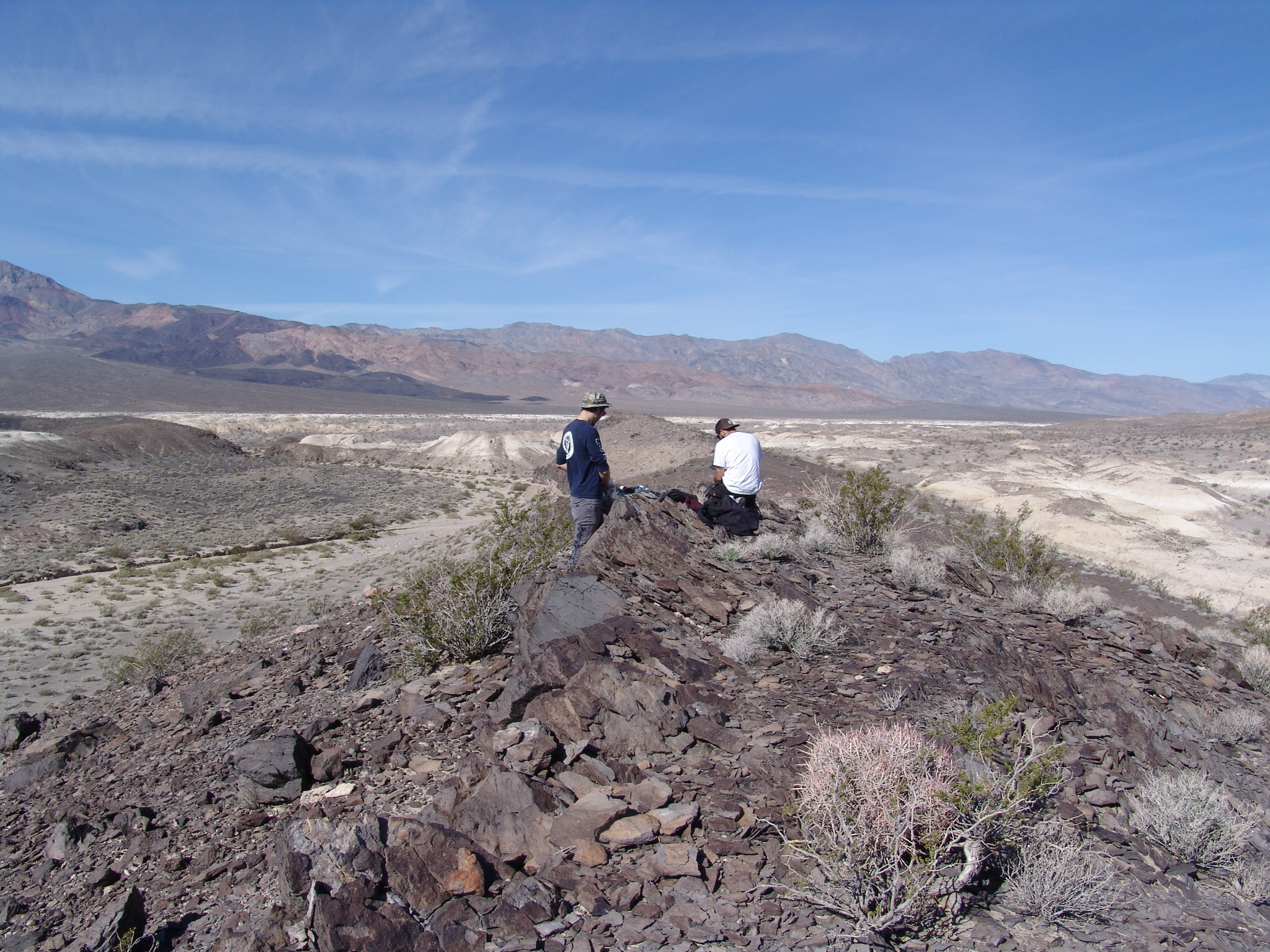
    Edible and medicinal plants grow in every corner of campus. Students can learn to forage for them in Campus Center for Appropriate Technology’s new Foraging class. Josefina Barrantes and Sandra Zepeda are the student instructors of ENST 123. The course expands on their research of ethnobotany on the Cal Poly Humboldt campus.

    Ethnobotany is the study of plants and how people use them. Zepeda and Barrantes spent the last year mapping and researching edible plants on campus. Their map shares a location, name, and photos of plants with ethnobotanical purposes. Students will use the map along with information taught in the class to forage on campus sustainably. The map includes native plants that grow in the area and non-native plants used in landscaping.

    “It’s comparable to urban foraging because we’re not actually nature, we’re on a university campus,” Zepeda said. “A lot of the edible plants on campus are not native, they’re just for decorative purposes.”

    The course will highlight how plants like mountain pepper (Tasmannia lanceolata) can serve as a seasoning alternative and also have medicinal uses.

    “This plant was significant to aboriginal people, they used it to make medicines and tinctures,” Zepeda said, between nibbles of a leaf. Indigenous groups used the mountain pepper to treat stomach aches, colic skin disorders, and toothaches.

    As its name suggests, the mountain pepper is spicy, but it is not quite a pepper. Instead, it is a shrub that uses a tricky chemical reaction to taste spicy, rather than capsaicin like many spicy plants. The pepper taste comes from the compound polygodial, a C15 sesquiterpene.

    According to a study published by The Australian Institute of Food Science and Technology titled “Native Australian fruits — a novel source of antioxidants for food,” the mountain pepper had more than three times the antioxidant levels of blueberries.

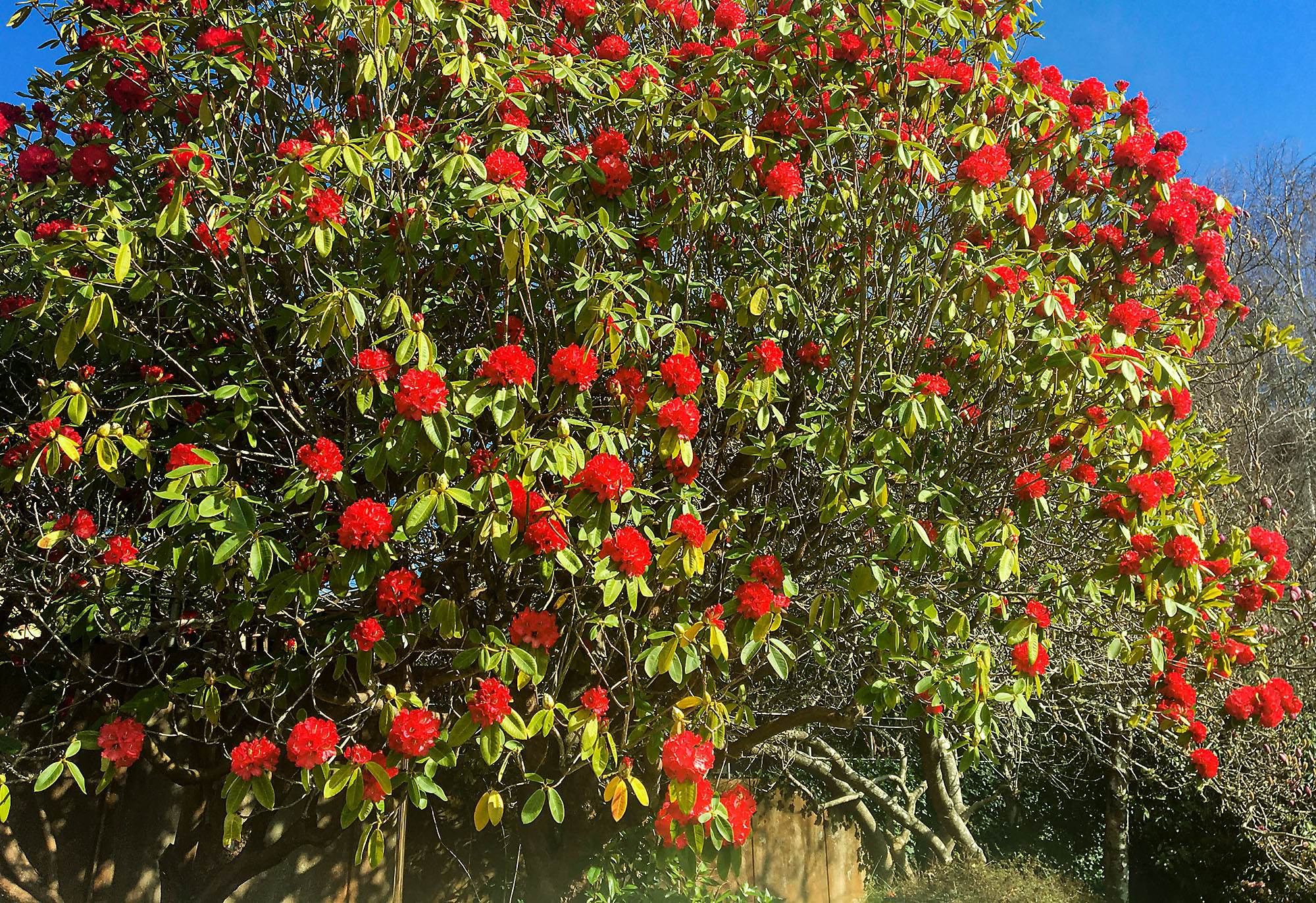
    The instructors shared some of their favorite foragable plants on campus. The Dog Rose (Rosa canina) provides bright red hips packed with vitamins and has many common health benefits.

    Some campus plants have simple uses, like in-between-class snacks. Bolivian fuchsia (Fuchsia boliviana) offers bright flowers and juicy berries. The strawberry tree (Arbutus unedo) also has round edible fruits.

    The ENST 123 course is the result of several attempts to bring sustainable foraging on campus. Barrantes and Zepeda are enabling students to rethink food sustainability.

    “We started this project so that we could add more edible landscape,” Barrantes said. “To show this is what we have and we could do more, and also supports the desire for more sustainable food projects, like the food sovereignty lab or starting an off-campus farm.”

  • Not all masks are made equal

    Not all masks are made equal

    According to Cal Poly Humboldt regulations, face masks are required everywhere on the campus, and at all school functions. Amid the predicted peak of the Omicron surge, mandated masking is a key part of the university’s strategy to prevent widespread transmission of COVID-19.

    Humboldt County Health Officer Ian Hoffman has confirmed that the Public Health Department has been in contact with Cal Poly Humboldt with regards to the university’s COVID-19 regulations.

    “We, as Public Health, have continued to offer, you know, clear guidance on how to make public spaces safe, which includes things like masking, distancing, testing, vaccinations – they are doing all of those things at HSU [Cal Poly Humboldt], and we have been in communication with them,” Hoffman said. “So, I think the ultimate decision is up to them.”

    Graphic by August Linton

    Not all masks offer the same amount of protection, to the wearer or to those around them.

    According to the CDC, NIOSH-approved N95 masks are the best, followed by KN95s and surgical masks. Cloth masks rank the lowest, although it is noted that layered, finer fabrics are more effective than loosely woven or single-layered varieties.

    Whatever type, it is important that masks be well-fitted, with no gaps around the nose or edges. A surgical mask underneath a cloth mask may resolve fit problems.

    County Health Officer Hoffman suggested double-masking for all types except N95s. He also cautioned against masks with one-way vents.

    “Those vents … protect the person wearing it, but they’re not protecting anyone around them,” Hoffman said.

    Despite their efficacy, Cal Poly Humboldt does not currently require that students wear N95s.

    “The reason N95 Masks cannot be mandated on campus is that there are some situations where N95 masks can exacerbate medical conditions for the wearer,” the university stated in a Campus Ready email update. “The campus community is encouraged to wear N95 masks if they are able.”

    Free N95s and surgical masks are available at College Creek Mailroom, JGC mailroom, UPD, Welcome Center, the Library, and the SAC.

  • The HSU student’s guide to COVID-19 in spring 2022

    The HSU student’s guide to COVID-19 in spring 2022

    There is currently a surge in COVID-19 infections worldwide and in Humboldt County due to the rise of the Omicron variant. In an article titled “Potential Rapid Increase of Omicron Variant Infections in the United States,” the CDC has cautioned that this iteration of the virus is more transmissible than previous forms.

    “Increases in infections are most likely due to a combination of two factors: increased transmissibility and the ability of the variant to evade immunity conferred by past infection or vaccination,” the article states.

    Most spring semester classes at HSU are planned to take place in person, even as county infection rates soar beyond any previous peaks. According to county data, Humboldt County saw a peak of 256 new COVID-19 cases on Jan 3. This dwarfed the Delta variant peak of 101 new cases on Aug 9, 2021.

    However, hospitalizations remain well below the rates recorded during the Delta peak of August 2021, according to the NYT’s data sets.

    It is inevitable that some students will be exposed to and catch COVID-19. The responsibility of each is to limit their personal risk while also protecting others from infection.

    Following the HSU masking guidelines and getting your vaccine booster as required by the University will make you less likely to contract the virus. Vaccine boosters also greatly reduce the chance of a severe or even symptomatic infection.

    A study released by the UK Health and Security Agency found that, “Among those who had received 2 doses of Pfizer or Moderna, effectiveness [against symptomatic disease] dropped from around 65 to 70% down to around 10% by 20 weeks after the second dose.”

    Boosted individuals enjoy a re-up of their protection: “65 to 75% [at 2-4 weeks,] dropping to … 40 to 50% from 10+ weeks after the booster,” according to the study’s findings.

    “Deadline for full vaccination, including a booster shot, is Jan. 23,” according to the CSU Chancellor’s vaccine mandate. Exemptions are available, on the condition that recipients commit to a weekly test.

    After a positive COVID-19 test, you are required to contact Student Health & Wellbeing Services at (707) 826-3146 and report your infection. You may also be advised to get a PCR test if you tested positive with a home test.

    Testing positive for COVID-19 means you should also keep a close eye on your personal health. Mad River Hospital’s guidelines for at-home assessment of COVID-19 symptoms state that a persistent fever of 103-104°F, bloody material produced when coughing, and/or difficulty breathing are signs that you should go to the ER.

    In the absence of more severe symptoms, the hospital’s website advises that infected persons “keep warm and rest as much as possible … take plenty of fluids … and for fever, take Tylenol in normal doses.”

    Once you’ve taken care of your health, you should also take steps to limit the exposure of people around you to the virus.

    According to Humboldt County isolation and quarantine guidelines, those who test positive for COVID-19 must isolate for at least 5 days.

    “Isolation can end if a test collected on or after day 5 is negative and the individual is not experiencing symptoms or symptoms are resolving,” states the county website. The guidelines also advised to “wear a well-fitting mask around others for a total of 10 days.”

    Graphic by Morgan Hancock
  • Diving Deeper Into Scientific Waters

    Diving Deeper Into Scientific Waters

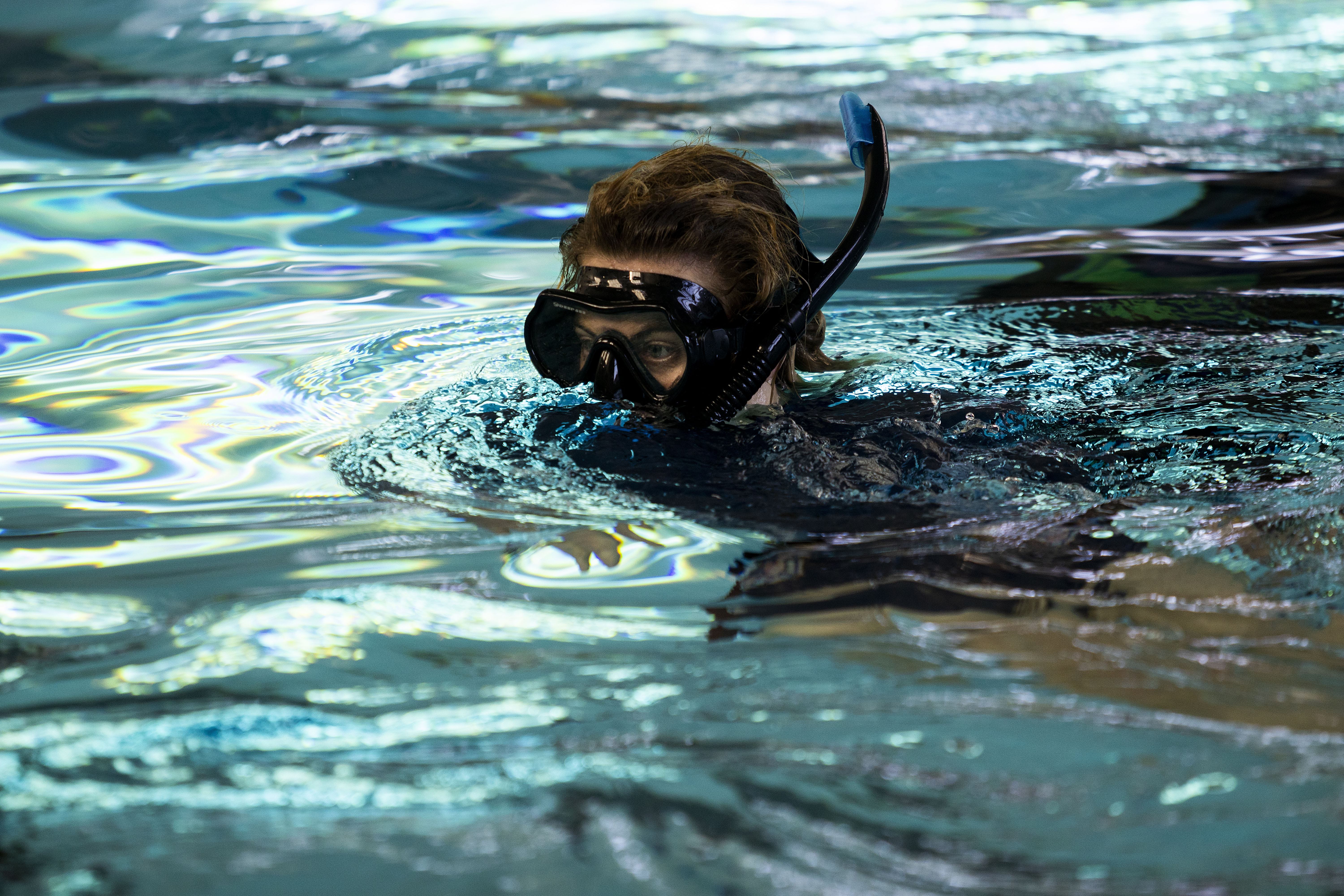
    Okay class, now do a pike dive! Splash! That’s the sound inside the KRA Pool on a typical Rescue Diving class. Between forward rolls, freediving, gearing up, and learning rescue skills, this HSU course has its hands full. Of water that is.

    Jamie Clough, a transfer marine biology major and scientific diving minor is taking the course this spring semester.

    “All the skills you need in the class are going to be taught, so don’t be scared. It’s great, it’s fun, they take amazing care of you,” Clough said.

    Clough wants to work in aquariums and believes the program is helping prepare her to do so.

    “Going through the program here and getting that minor is gonna be helpful for me to get a job at aquariums so i can do anything from aquarium maintenance, cleaning the sand, checking on animals, anything,” Clough said.

    The class teaches a range of skills including swimming, freediving, scuba, how to deal with panic, CPR, first aid, dealing with stress and more.

    Class instructor Hanna Johnston loves teaching and working with the students.

    “My favorite part is watching students go from really uncomfortable to looking like dive professionals,” Johnston said.

    Johnston believes a big part of learning how to dive is confidence.

    “If a diver feels confident in their skill level they’re going to be much stronger in the water,” Johnston said.

    Junior recreation administration major Gracie Oliva is taking the class a second time to receive her advanced rescue diver certification.

    “It makes you a really seasoned professional because not only are we exposed to emergencies that frequent the dive industry but it helps me with my emergency preparedness if I choose to go in the outdoor recreation area as a whole so the skills and experiences that I gain in this class won’t just help me further myself in the dive industry but also will have tremendous benefits for me just in the outdoor recreation field itself,” Oliva said.

    Especially during the pandemic, it has been a challenge for classes to meet in person.

    “During this pandemic era, my favorite part of this class has to be interacting with all these amazing people that you see right here,” Oliva said. “I am so fortunate that I am able to take face to face classes when I know that there’s a very limited number of them.”

    Junior environmental studies major and scientific diving minor Roxanna “Roxy” Reynolds wanted to join the program after inspiration came from her dad telling diving stories.

    “I actually came to Humboldt for the diving program, that was the selling point for me,” Reynolds said.

    While most students may not come originally for the program, Johnston stressed that it is available for everyone, even those who can’t swim quite yet.

    “You just have to show up, be on time, be prepared and have a good attitude and we’ll help you from there,” Johnston said.

  • An adventure up a redwood

    An adventure up a redwood

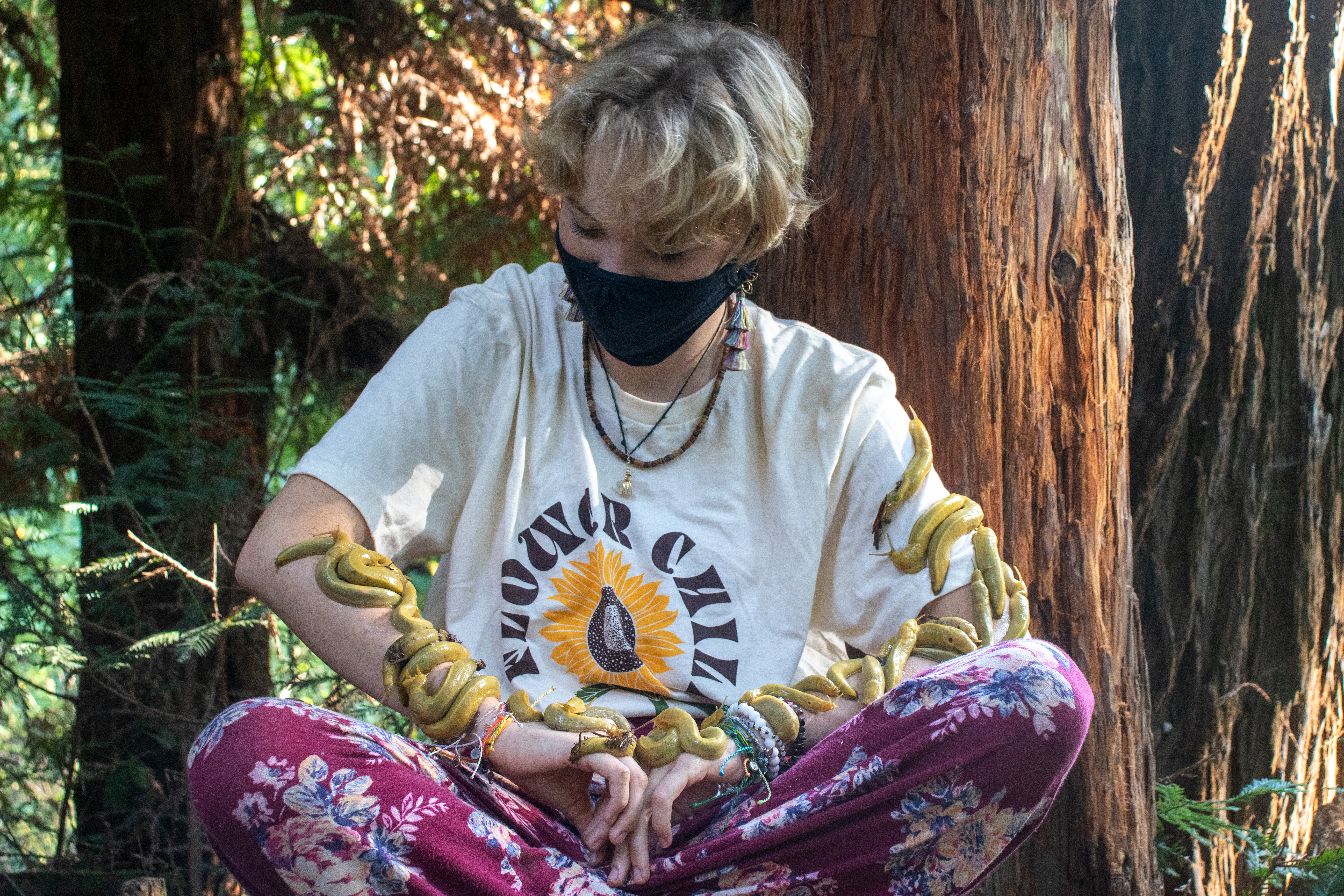
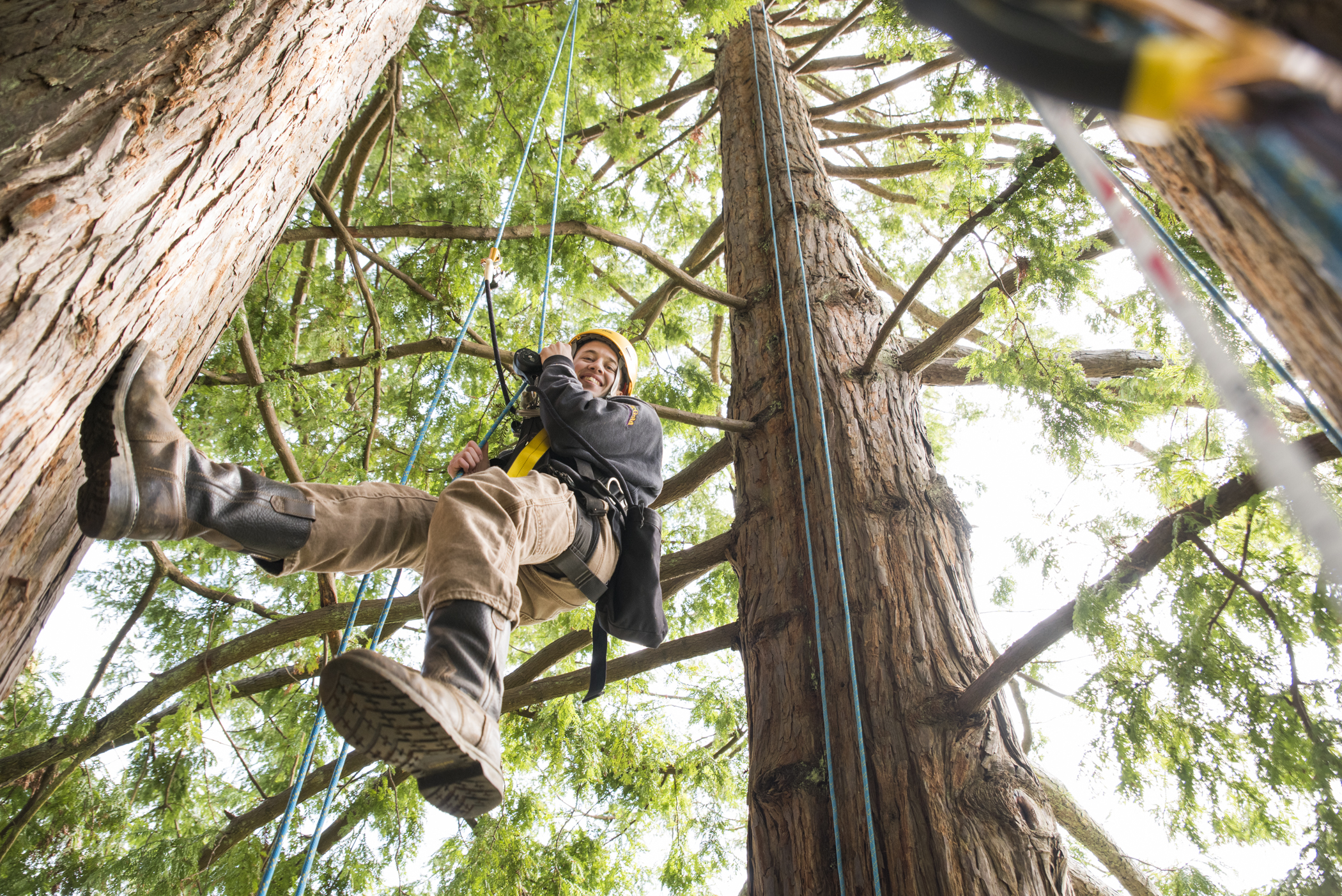
    Sluggy the banana slug had a desire for adventure like no other. They wanted to see the world from above, rather than below like they always had. The idea: climb to the top of a redwood tree. What Sluggy didn’t know were the friends they’d make along the way.

    At the bottom of the tree sat a fox, a sweet orange and white bellied creature with a sly smile.

    “Hello Fox, I’m going up this tree. Any advice?” Sluggy asked.

    “Well Sluggy, I’d say be as clever as you can to make many friends in the trees so you always have food,” Fox said.

    So with that, Sluggy continued up the tree. After a day, Sluggy reached the next friend.

    It was a mother raccoon teaching its young to climb.

    “Hello Raccoon, I’m going up this tree. Any advice?” Sluggy asked.

    “Dear, please be careful! Travel with your family instead of alone sweet Sluggy!” said Raccoon.

    Sluggy suddenly felt lonely, so they decided to ask a fellow slug on the tree to join. They agreed. Another day later, Sluggy and their new tree climbing partner Slugeth reached their next friend. An owl, sitting peacefully with both eyes shut and wings on its sides.

    “Hello Owl, we are going up this tree. Any advice?” Sluggy and Slugeth asked.

    “Woo are you? Banana slugs in the tree? Quite high, don’t you think? Beware the dangers of climbing, be wise when you are traveling to new places. Don’t talk to strangers. Woo!” Owl said.

    Sluggy and Slugeth felt much more prepared after talking to Owl. They knew now that this adventure wouldn’t be as easy as they may have thought.

    Two days of traveling later and after some very windy weather, Sluggy and Slugeth came across their next friend. A bouncy little tail followed a kind and goofy squirrel.

    “Hello Squirrel, we are going up this tree. Any advice?” Sluggy and Slugeth asked.

    “Sluggy and Slugeth, just remember to have fun! This tree is full of surprises and fun branches to climb on! Eat acorns and collect the tops as little hats!” Squirrel said.

    Squirrel then made the two slugs acorn hats and fed them acorn soup. Such a goofy yet generous fellow.

    The climb up the tree continued to get harder and Sluggy became very thankful for the advice from raccoon. Slugeth was a great adventure partner.

    Suddenly they heard a very loud pecking sound and knew they were upon their next friend. It was woodpecker, the sharp beaked fluff ball!

    “Hello Woodpecker, we are going up this tree. Any advice?” Sluggy and Slugeth asked.

    “Don’t forget to make holes in the tree to mark your territory. You need to remember how to get down the tree,” Woodpecker said.

    They continued up the tree, biting tiny pieces of bark to mark where they had been so they remembered the way back down. They were very close to the top.

    Just then, a crow flew overhead and landed on the highest point of the tree.

    “Hello Sluggy and Slugeth. You climbed to the top of the tree! Do you have any advice for going down?” asked crow.

    Sluggy and Slugeth thought very long. How could they sum up everything they had learned on their adventure?

    “Oh, the adventure we’ve been on! I would advise making friends so you always have dinner with someone, going with another friend, being very careful, having fun, marking your path… and well, enjoying the journey because you may never get to do it again,” said Sluggy.

  • A slug’s purpose

    A slug’s purpose

    I woke up this morning and decided I was tired of being a banana slug with my only purpose being to eat, decompose matter, and occasionally fighting off a snake or raccoon.

    I want to be a cranberry farmer.

    Now I know you’re asking how this would even be possible as I am so small, so slimy, so squishable. But nothing is impossible, especially for a banana slug.

    I could be the taste tester. Tasting cranberries to see if they are sweet and delicious enough for juice and cranberry sauce. I can be your favorite slug that helps you prep for Thanksgiving.

    Another option is the cranberry smusher. I mean I’m practically one big foot. I can use my body to jump up and down or squeeze the cranberries.

    Or I could be the farmer that goes through the water and collects the cranberries. I’ll put on my scuba suit and swim through, finding the perfect cranberries and help the humans pick those ones.

    My slug friends believe I’m insane. They don’t understand why I would abandon the home I have to go do a task no banana slug has done before.

    But there’s one thing that drives me to do this, even if I have to sacrifice everything. It’s because I’m a dreamer. I have a burning passion in my slime. I feel as if my life revolves around one thing, and if I cannot be a cranberry farmer, then what is my purpose?

    I have dreams at night of making human friends, surrounded by cranberries and munching the berries all day long.

    My parent slugs each did typical slug jobs. Parent 1 was a blackberry bush finder, and always led slugs to the best places to eat blackberries for meals. Parent 2 was an explorer, leaving the other slugs behind to explore new areas and then make maps for the others to follow.

    My parents met when they were each exploring and searching for blackberries, and they fell in love. Soon they each laid 20 eggs and my siblings and I were born.

    Of all 40 of us, I’m the only one to have such a large passion. My siblings don’t understand, and have abandoned me.

    I know my family will be proud of me when they see me living my dream but until then, I will be alone in my journey.

    Even still, I won’t stop fighting for my dream. I never will.

    – Slugberry

  • The six deadly sins of greenwashing

    The six deadly sins of greenwashing

    The recent trend of purchasing organic products has led to a massive increase in companies labelling their products to fit this demand. It’s not just Whole Foods anymore. Most stores carry products labelled as “organic,” “eco-conscious,” or “green,” making it seem as though it is an easy task to be a responsible consumer. However, these labels are often deceitful.

    Greenwashing is a marketing tool used by companies to inaccurately portray their products as environmentally friendly, resulting in consumers feeling as though they are making the greener choice by purchasing from them. There are six “sins” of greenwashing – a phrase coined by TerraChoice Environmental Marketing after the company conducted research on green marketing. Ignoring these forms of greenwashing is detrimental for the planet.

    These six types of greenwashing do a great job of making consumers feel a false sense of security. Environmental politics professor Nicola Walters believes that greenwashing creates a mask that makes it difficult for consumers to know what is safe and what is okay to purchase.

    “Think about how many products these days are with green ‘down home’ packaging,” Walters said. “The local focus recently has been huge! People want to know where their purchases are coming from and companies know this. They are trying to appeal to this customer interest and there’s big money in it. Being educated about what is good for our bodies and the Earth shouldn’t be akin to a complex calculus question and an elongated research project.”

    The most common greenwashing techniques that consumers should be aware of are hidden trade-off greenwashing and no proof greenwashing. Hidden trade-offs suggests that an entire product is “green” when it’s misleading about what percentage of the product is sustainably made. For example, it could contain only one percent recycled material and still be labeled as “green.” No proof greenwashing is just what it sounds like and occurs all the time. With this, there will be claims with no real certification or evidence.

    Environmental studies senior Cassidy Mullennix admits that she has fallen victim to the hidden trade-off form of greenwashing. She questions whether or not the world can go green while living within a throwaway culture.

    “At Plant Power in San Diego, I used to celebrate with a milkshake because it was packaged in ‘compostable plastic’ and that meant that I didn’t have to avoid it, right?” Mullenix said. “Wrong! I took some time to research how compostable plastic worked and it turns out that the material I was using would break down the same exact way plastic does if placed in the landfill and not sent to a high-temperature compost facility.”

    Vagueness greenwashing is another common marketing tactic. Labels like “green” or “sustainable” that companies slap onto their products with a plastic sticker do not mean that they lived up to a strict standard. These labels are vague and do not clarify what standard of sustainable that they are following.

    Similar to these misleading standards, the irrelevance greenwashing occurs when a company advertises that their product is free of something that is environmentally irrelevant. A common example of this are products that say “CFC free,” even though CFCs have been banned globally by law for over a decade.

    The fibbing tactic is self-explanatory. Companies will simply outright lie about the environmental impact of their products. An example of this is Dieselgate, which is when Volkswagen lied about their automobiles’ emissions.

    Lesser of two evils greenwashing misleads consumers by stating oxymorons. Examples of this are organic cigarettes and “green” pesticides. Although it may feel better to pick these options, they are overall still a bad choice.

    Green marketing is a sinister and highly effective tactic that tells people what they want to hear. It is easy to fall victim to the greenwashing of products.

    HSU alumnus Michael Powell believes that the only solution to this is to do the inconvenient research before purchasing a product.

    “I think greenwashing lulls people into a false sense of security,” Powell said. “It makes us feel good because we want to help the environment and we think we are doing just that. We stop asking questions. The sad reality is that, oftentimes, we’re hurting the environment just the same.”

  • Wildlife program planning balances caution with opportunity

    Wildlife program planning balances caution with opportunity

    Editor’s Note: A version of this story was originally published in the March 24 issue of the Lumberjack. Due to inaccurate reporting, we are issuing a rewrite of the article that more accurately represents the situation as told to us by our original sources.

    Like all academic programs at Humboldt State, the wildlife department has had to operate this semester based on plans that were made during the peak of the COVID-19 pandemic. Now that the number of cases has declined for the time being, some students feel ready for more face-to-face instruction.

    Daniel Barton, chair of the HSU wildlife department, said that because the decision had to start so far in advance, it meant the department had to be cautious in how it planned for the spring semester.

    “Obviously when we were making this decision in the fall, we were asked by the university to provide a schedule and our preferred and planned mode of instruction when the public health situation was looking really bad,” Barton said. “Over the holidays we’re talking 2,000 to 3,000 people a day were dying in the US. So we were conservative and that was our mindset at the time and I think a lot of other people felt the same way.”

    Another factor in the decision making process was considerations for faculty. Dale Oliver, dean of the college of natural resources and sciences, said they didn’t want to overload faculty. If a class is both in-person and online, that’s double the work for the instructor with the same pay.

    “We were trying to avoid telling a faculty member ‘oh, you have to do two courses,’” Oliver said.

    In addition to that concern, the planners making the schedule did not want to make students feel like they had to move to Arcata in the middle of a pandemic.

    “I think the main motivation for faculty not having too much face to face is they didn’t want to compel folks to move up here for a limited face, you know, very limited opportunities in the classroom,” Oliver said.

    Kylie Berger, a wildlife management and conservation major, is worried about how this might impact her career.

    “I feel like with us not being in person, we are lacking a bunch of in-field skills that we should, you know, be able to have before actually being out in the field,” Berger said.

    One of Berger’s fall semester classes would have been mostly field work, but the hands-on parts were replaced with videos.

    “I feel somewhat unprepared, you know, for what lies ahead for my future career and I don’t think I’m the only one that feels that way,” Berger said.

    Although Berger feels there could have been attempts made at outside activities because other departments have in-person activities, she said her professors have been supportive.

    “[My professors] have been super super helpful and understanding and really willing to work with all of us during this hard time,” Berger said.

    Despite limitations that had to be built into the schedule, there are some aspects of the wildlife program that are able to be held in person this spring.

    “There are three courses in wildlife that have field trips,” Oliver said. “They’re just not holding lectures or labs face to face.”

    As HSU heads into another semester, Oliver believes more in-person classes will be beneficial to students.

    “I want to be a good and faithful follower of the recommendations of the state of California,” Oliver said. “But, ideally, I do believe that students will benefit from more face-to-face.”

    Oliver thinks there’s more than just hands on instruction lost when classes go virtual and in-person instruction needs to be kept.

    “Bottom line, I think face-to-face education is powerful and I would hate to lose it,” Oliver said.

    Barton feels in-person activities are important for faculty and students alike.

    “I love teaching hands on face-to-face stuff outside,” Barton said. “That’s why I’m here. This hurts, this whole thing. It hurts the students. It hurts us and the reason I do it is not just because, I love seeing students get the opportunity to do those things that then they’re going to go on and try to do in careers. So I miss it, and we do not take lightly that we radically reduced the number of those types of face-to-face opportunities in response to the pandemic.”

  • The difference between bananas and banana slugs

    The difference between bananas and banana slugs

    Yellow. Long. Squishy. Banana… Slug? If you aren’t in an area that these creatures are home to, you probably think this is a made-up creature from the movie “Coraline.” Luckily enough, we live in our own magical world and these creatures are real.

    Let’s cover the basics. Can you eat a banana? Yes! Delicious! Can you eat a banana slug? I wouldn’t advise it due to their slime and mucus as well as possibly carrying a parasite that could kill you. Who knew these creatures were so hardcore? But some people deep fry them and claim them to be delicious. That brings a new vibe to carnival food.

    “If I had a slimy banana I’d be very concerned,” said Thomas Lal, editor-in-chief of the Lumberjack.

    One is going to fight more when you pick it up. That’s right, a banana who has a skin peel to protect it from being eaten, although like a slug, it’s not the greatest protection. A banana slug only has a layer to it’s head, but if stepped on will in fact smush it. At least they have that in common.

    Bananas grow on trees, whereas banana slugs come from a different place. When two slugs love each other… Fun fact, banana slugs both carry the eggs and the sperm, so they each produce about 20 eggs after mating.

    Banana slugs can live up to seven years! Bananas grow in four to six months and when ripe, go bad within nine days. There is definitely a difference in lifespan. So if you want a long living friend, a banana slug is a good choice. If your child needs a first pet, choose a banana.

    Bananas do not lay eggs. In fact, if your bananas are laying eggs please go to the doctor. What does a banana egg even look like? Banana slugs do in fact lay eggs, but I wouldn’t advise eating them for breakfast.

  • Dying a conscious death

    Dying a conscious death

    As a young and seemingly invincible college student, one presumably does not put much thought into their inevitable death. However, if you are eco-conscious, perhaps it is time to start planning ahead.

    The need to preserve one’s lifeless beauty for just a little bit longer has grave consequences for the earth. When a person dies, it is common for their body to be pumped with an embalming fluid that contains a mixture of toxic chemicals in order to postpone their inevitable decomposition. They are then placed in a casket that is likely made up of inorganic hardwood, copper, bronze, and steel. Their toxic body encased in a casket of unsustainable materials will eventually be lowered into the ground in a concrete crypt.

    Green burials are a sustainable alternative to this contemporary western burial method. They may also be called “natural burials,” and the process does not involve any inhibition of decomposition. Instead, the body in its natural state is placed into the soil so that it can be recycled into the earth and help to nourish the land, as most decomposing life does. The body is wrapped in a biodegradable shroud or casket and then buried shallow enough to decay in a way that is similar to composting.

    Craig Benson, an environmental science and management lecturer, said that the funeral and cemetery industry already appears to be responding to increasing requests for green burials.

    “I would like to see more conservation burial options like the Prairie Creek Conservation Cemetery near Gainesville, Florida,” Benson said. “This is where old restoration ecologists, like me, could make a last ditch effort– pun intended– at creating a contiguous savanna habitat and providing lots of underground munchies for the microfauna and microflora. Why have a feast at your funeral when you can be one!”

    In the United States, cremation has recently become the most popular choice for those who pass away. While the ashes of our loved ones harbor sentimental value, this way of honoring the dead is unfortunately still harmful to the environment. Cremation leads to release of harmful toxins into the atmosphere, including carbon monoxide, fine soot, sulfur dioxide, heavy metals, and mercury emissions.

    When asked about the environmental impact of cremation, Jennifer Kalt, the director of Humboldt Baykeeper, gave insight on the atmospheric consequences of the practice.

    “I noticed that the Los Angeles Air Quality Board recently lifted the limits on cremations temporarily due to the number of COVID-19 deaths,” Kalt said. “I’ve read that cremation is a significant source of mercury pollution. Once it’s released into the atmosphere, it gets re-deposited by rain and fog. All that does make me wonder why people think cremation is a better option. My understanding of the green burial concept is that it prohibits embalming, but human bodies still have contaminants that we store up over lifetimes.”

    There are a few local options for those who choose to give their body back to the earth. Cemeteries in Loleta, Fortuna, and Blue Lake all offer natural burial options. However, Blue Lake Cemetery is the only place that does not require the body to be contained in a concrete crypt.

    Environmental conflict resolution lecturer Natalie Arroyo said that, in her personal opinion, green burials seem like a great end-of-life option for those who would like to practice sustainability even after they die. However, it is important to note that how humans deal with death is wholly intertwined with their cultural, religious, and personal values.

    “I would say as a community member and lecturer who has read and heard a little bit about this, that green burials seem like an excellent alternative with environmental benefits,” Arroyo said. “But they may not fit with people’s religious and cultural values, and they may not suit every circumstance. For example, my own father died far away from home, and his body was cremated due to the low cost and need to transport the remains easily over a long distance.”

  • A slug love story

    Once upon a time lived a kind and courageous banana slug named Sluggy. Sluggy loved to go on adventures and travel around the world, which for them meant about six feet.

    Sluggy was wandering one day when they came across a beach, one full of sand and salt water like most beaches.

    This was new to Sluggy, and very much intimidated them. Yet something pulled Sluggy in the direction of some tide pools.

    There was a lone tide pool, far from the water next to a cliff covered in trees. Sluggy wanted to see what was in the water.

    That’s when they saw Slugaroo.

    Slugaroo was a sea slug, brilliant blue and content as can be.

    Sluggy had to meet them.

    “Excuse me! My name is Sluggy and I believe I traveled all this way… just to find you,” Sluggy said.

    At first Slugaroo found this very creepy, I mean a random land slug shows up and is already in love?

    “That came off weird… Hi. I’m Sluggy,” Sluggy said.

    Ah yes, that’s better, less creepy. Good job, Sluggy.

    The two chatted for quite some time, until the sun began to set. They had fallen in love. Sluggy didn’t want to go, but they knew it was time.

    The next day Sluggy returned, and the next and the next.

    But then, Slugaroo was gone. The tide pool was dried up. The other tide pools were too dangerous for Sluggy, so they came back the next day to check again, and again and again.

    But Slugaroo was gone.

    Sluggy was sad. Their new lover was gone. But they weren’t going to give up yet.

    Sluggy returned for every day of their life, until the last day when Sluggy was a grandpa, Slugaroo returned.

    “Sluggy! I love you!”

    “I love you, too.”

    They then stayed together and watched their final sunset together.

  • Finding Paul

    Finding Paul

    Before you ask, yes this is true. Let’s start at the beginning.

    I went out looking for flowers and other things to forage and while I was unpacking them in my room later, I found that a baby slug had slimed its way into my basket. I moved the sweet fella to my windowsill, with intentions to move it outside in a few minutes. One accidental nap later, the slug was gone.

    I searched my room in hopes that it was in one of my plants, or somewhere close to the window.

    No luck.

    You may be asking, Slug Girl why is this a big deal? You love slugs?

    True, but I have an emotional support animal and a slugs slime is poisonous. I needed to find it before she did.

    After literal hours of looking for a slug the size of my pinky finger nail, I had lost hope.

    I even named the slug Paul in case I had a new roommate.

    I set out some fruit, including blackberries, before bed in hopes it would lure Paul in. I even dreamed about it working. I woke up multiple times in the night, looked over at the fruit and saw nothing had changed.

    I began to worry I’d go weeks without seeing Paul, living in constant anxiety that my ESA would find him and eat him.

    My worry came true. It’s been nearly two weeks now and Paul has made no sign of being found. No nibbles in fruit or plants, and he definitely hasn’t been eaten by my ESA.

    So where is Paul?

    The world may never know.

  • Northern Spotted Owls struggle to survive

    Northern Spotted Owls struggle to survive

    We are watching as the northern spotted owl rapidly declines in population. With fires, barred owl invasions, climate change, and habitat loss, this local species, protected under the Endangered Species Act, needs help.

    Spatial Ecology Professor Ho Yi Wan, who has studied the northern spotted owl for many years, explained the importance of the owl in ecosystems.

    “When you’re protecting the habitat of a spotted owl, you’re protecting a lot of the forested habitat which a lot of other species use,” Wan said. “It’s like an umbrella approach, when you protect one species you are also in a way conserving a lot of other species.”

    HSU faculty member Jeff Dunk, a member of the environmental science and management department, explained why the owl originally joined the Endangered Species Act.

    “It was habitat loss,” Dunk said. “There were huge rates of timber harvesting that happened from post-World War II through the 1980s. And with automation of timber mills and stuff, we just got more and more effective at harvesting trees and then we started to see a response by the owls, that is they weren’t doing as well after a while.”

    But regrowing a forest takes time.

    “See you can get rid of it really rapidly but it takes a long time to grow back,” Dunk said.

    Now, the owl suffers from climate change, fires, and an invasion of the barred owl, as well as continued habitat loss.

    “It’s not like they are affecting the spotted owl by itself, no, those things interact and potentially exacerbate whatever negative influence that each impact might have,” Wan said.

    Each of those challenges are hard to battle, especially that of climate change.

    “Battling climate change requires international collaboration and all countries need to be on board to battle climate change,” Wan said.

    The invasive barred owl also provides many problems for the smaller spotted owl. According to the National Park Service, barred owls are taking over nests and food because they are the larger and more aggressive owl. They also invaded the space of the northern spotted owl when they were already suffering from habitat loss.

    The National Park Service wrote on their website that they have documented many cases of barred owls moving in to spotted owl territories. Because the species are similar, they can’t always occupy the same territory. Unfortunately, the barred owl issue is quite controversial.

    “There’s been some experiments of killing barred owls in some areas and not others and seeing what happens and we do see a response by the spotted owls,” Dunk said. “They survive better when the barred owls are removed and they do a little bit better.”

    Dunk understands why it is a difficult topic. Some disagree with this method because it means killing one owl to save another. Either way, something has to be done.

    “If we don’t do anything about barred owls the vast majority of spotted owls we have now won’t exist,” Dunk said. “And I don’t mean those individuals, I mean within their geographic range spotted owls will be functionally extinct from much of it.”

    The northern spotted owl has a recovery plan. According to the U.S Fish and Wildlife Service, this plan includes limiting the area where people can cut trees and take away its habitat, forest restoration, managing the barred owl, and monitoring the northern spotted owl while continuing research of it.

    “One way to be a good start is to look at biodiversity and to try to help conserve the biodiversity that we have,” Wan said. “We don’t want to lose any species.”

    As individuals, we share information on the species, use public outreach and social media, be careful about starting fires, and learn about the owl and other endangered and threatened species.

    “We are all a part of nature, like humans are citizens of the whole ecosystem,” Wan said. “So we should be good citizens within it and as we are taking advantage and taking other resources from nature, we also have the responsibility to be a good start.”

  • Schatz Lab researches local wind energy opportunities

    Schatz Lab researches local wind energy opportunities

    On a clear night someday in the future, you might look out across the ocean from Trinidad or Clam Beach and see small points of light way out in the distance. And the source for those points of light could be supplying all your electricity.

    The Schatz Energy Research Lab is an affiliate of HSU’s Environmental Resources Engineering program which seeks to study and educate the public about clean energy. They are in the process of investigating a possible offshore wind energy project.

    “We have the best wind resource in the United States,” said Maia Cheli, the communications and outreach manager for the Schatz Energy Research Lab.

    A possible wind energy project could have wide reaching ramifications for both Humboldt County and California as a whole.

    “There are so many reasons to support the development of clean, renewable energy: so that we can breathe healthy air, drink clean water, restore ecosystems, and slow climate change,” Cheli said. “But our critical energy questions don’t stop at how we generate energy – they also include who has access to electricity, how reliable that electricity is, how much it costs, and how well it supports communities. Bringing these outlooks together is the only way for us to build responsible, equitable energy systems.”

    The U.S. Bureau of Ocean Energy Management designated a region 20-30 miles off Humboldt Bay a possible site for an offshore wind farm. The farm would look like a number of floating wind turbines anchored with mooring lines. These turbines would convert wind energy to electrical energy.

    “You have the tower, you have the nacelle, and you have the blades, and so the wind blows on the blades and the blades are converting that in through the generator into electrical energy which then passes back down through the tower and connects in with some kind of a cabling system,” Cheli said.

    A possible project couldn’t just be a set of wind turbines, it would have to include upgrades to Humboldt’s current infrastructure, from our marine ports to current transmission capabilities.

    A wind farm that would produce enough energy to be cost effective would produce more energy than we could use, so it would have to be exported out of the area.

    “What we know of the system is that whether we develop medium or large-scale generation, it will require significant upgrades to the local transmission system,” said Marco Rios, the transmission system planning manager at PG&E. “And that really is because the current grid in this region was not designed to export generation outside of the area.”

    There are more variables like the possible environmental impact of the construction, regular function, and maintenance of the wind turbines.

    The data needed to predict environmental impacts of a wind farm doesn’t exist in full yet, and that’s what the Schatz Lab is working on.

    “There’s not a lot of people that far offshore sitting there and counting seabirds all the time, so we’re working on that right now with the seabird 3D study,” Cheli said.

    But those possible consequences have to be balanced with the consequences of a failure to reach emissions goals.

    Garry George, the clean energy director at the National Audubon Society, spoke about the possible impact on birds at the offshore wind energy webinar.

    “Our science team revealed in a study released last year that three degrees of warming will likely drive 389 species of North American birds to extinction because they’ll lose their wintering and breeding territories due to climate change,” George said. “So it is exciting to have a new resource, a new technology to add to our quiver of climate arrows here in California, like offshore wind, to get us to 100% clean and net zero emissions. This is critical for birds and it’s critical for people.”

    A large-scale project would also have larger social implications. Some of the possible new infrastructure may need to be built on Wiyot land.

    “In general, the Wiyot Tribe has long supported renewable energy development that is well sited, and are open minded and excited about the potential for offshore wind on the north coast,” Wiyot Natural Resource Specialist Adam Canter said at a public offshore wind energy webinar. “Especially the community-based approach and stakeholder involvement that this group of partners is taking early on during the planning process.”

    For now, the feasibility of an offshore wind farm is still being studied. Community input is still being gathered, and nothing is set in stone.

    “The Schatz Center is not committed to any trajectory. We are committed to providing good information so that good decisions can be made,” Cheli said. “I think the more that people can become informed about, you know, the impacts on the opportunities of any particular pursuit related to energy, the better decisions we can make for ourselves and for the planet as a whole.”

  • HSU takes a dive underwater

    HSU takes a dive underwater

    When the coast is right at the fingertips of Humboldt State University Students, some are finding interest in the scientific diving program. This underwater scuba program gives students opportunities to learn about what is in the water around us and take a peaceful and informative dive.

    “The HSU dive program has a phenomenal reputation around the world, so one of the benefits is simply having HSU diver or HSU scientific diver on your resume. It really means something,” said Scientific Diving Instructor Hanna Johnston.

    As one of the very few schools that has scientific diving as a minor, students are given unique opportunities. Johnston calls it the “greatest gift of all” to work with the program again after she had gone through it as an HSU student.

    “The scientific diving program at HSU is a very rare and unique program that I feel very honored for being in, being part of that because it’s like a little family you create,” said alumna Jessica Ramirez who minored in the program and was on the 2020 HSU brochure cover.

    Some of the fan favorite finds are nudibranchs, octopuses, crabs, bioluminescent plankton and bull kelp.

    “The amount of time we get to spend training our divers allows for really honing people skills and making them really highly qualified and comfortable and competent in our pretty dynamic and challenging ocean conditions which means that when they travel the world they can tend to adapt very quickly to whatever environment they are moving to,” said Diving Safety Officer Richard Alvarez.

    The students conduct research through many different programs, including Reef Check California and Marine Protected Area Monitoring Program to see what’s changing, the health of reefs, and what is out there.

    The divers go all over, from Humboldt County to Mendocino and even Catalina Island.

    When COVID-19 hit, the divers had a new challenge. Everything changed according to Johnston, and the instructors spent a whole summer redesigning the program to work with the students.

    “I always feel really really lucky and fortunate to have been able to do face to face in the fall and looking forward to the face to face in the spring because I know every instructor at HSU kind of craves that interpersonal relationship with their students and being able to do that makes all of the COVID precautions well worth it,” said Alvarez.

    Students who have just joined the program know no other, but others see huge changes.

    “It’s so great to see them smiling under their masks every day, or when we see them in person,” Johnston said.

    Ramirez, Johnston, and Alvarez each find their own joy in the program and the community it brings.

    “There’s just little moments of every dive where you find just amazing beauty and interest that it’s hard to catalogue it all but there’s moments of wonder every time,” Alvarez said.

    Ramirez said the program is unlike other classes and schoolwork. It provides a breakaway from stress for students.

    “You are no longer having to do math problems or anything like that,” Ramirez said. “You kinda just forget about that whole part of school and deadlines, like you’re just kinda in the present moment of doing what you’re told to do underwater and it’s very peaceful.”

    Ramirez and Johnston see it as more than classwork, but as a learning community.

    “Whether I’m seeing them doing masked off buddy breathing [pre pandemic] or doing new skills for the first time and seeing that light in their eyes when they complete something, usually with no problem that they didn’t even think they’d attempt, it’s just the most magical feeling,” said Johnston.

    Alvarez says it’s a learning experience for himself and the students.

    “Working with students is just so refreshing and something that there are a lot of things in my brain that I’ve experienced for many many years and you just never know when a student is going to have that same experience but have a different way of affecting them or having a different way of describing it that just unlocks it in a new way for me too,” Alvarez said.

    Students have gone all over the world after being in the program, one even working for NASA.

    “Being adjacent to that and being a part of that journey is really part of the reward for me,” Alvarez said.

    Students have to pass a diving physical and take the prerequisite course, then the courses are available.

    “Every dive is its own unique thing which is what brings me back is that I’m never going to have the same dive even in locations where I’ve done tons of diving,” Alvarez said.

    You can find more information about the program @hsu_diving on Instagram.

  • COVID-19 defines society’s future mental health

    COVID-19 defines society’s future mental health

    Though it’s still far from over, the effects of the COVID-19 pandemic could last a lifetime.

    All CSU campuses offer mental health services with a range of options available, included in the cost of student fees. Operations Coordinator and Staff Psychologist for HSU’s Counseling And Psychological Services program Dr. Elizabeth A. McCallion said their services are especially valuable now that students are facing additional stressors brought upon by the pandemic. Though in-person services are currently unavailable, CAPS is operating at full capacity, offering all of the regular services, virtually.

    “Students come to counseling at CAPS for a range of reasons and I think it’s really important to recognize that,” McCallion said. “We are not just a support for students who are in a crisis situation, though we do provide that support as well.”

    For students curious about the practice or grappling with issues of any size, CAPS provides an opportunity to uncover the answers to some of your questions. For those who decide it’s not for them, McCallion especially recommends placing emphasis on the prioritization of our emotional health.

    “Getting good sleep, nutrition and physical exercise have been shown to have really positive benefits on our mental health,” McCallion said. “So, I think looking at our health behavior and our lifestyle choices can be really key to making sure that we’re taking care of our emotional health.”

    Professor of Psychology Gregg Gold believes the effects of isolation will remain, to some capacity, with those who live through the pandemic.

    “There will probably be some permanent mental health issues for those of us who spent a year and a half alone,” Gold said. “I don’t think you could say that’s not going to have some kind of effect on people.”

    Gold said the pandemic lifestyle has generated more loneliness and frustration in his life as he battles with motivation and concentration droughts. The monotony of quarantine is largely to blame, Gold said, giving us nothing to look forward to with each day being the same as the last. The most significant factor influencing this is the deprivation of genuine, in-person human interaction.

    “It’s a basic human need to be around other people, face to face,” Gold said. “We’ve evolved to crave the company of other humans because the more friends we have, the bigger our network, the more we can ask others to do things we can’t do for ourselves, the more likely we were in the very recent past to be able to survive and even today, [we’re] much more likely to be successful.”

    Our time in isolation is not only damaging to our present well-being, according to Gold. Each day we spend contained inside the walls of our homes, interacting only with a familiar few and the algorithms of our social media accounts, we are being deprived of opportunities to explore new ideas.

    “When you’re out in the real world, you actually run into people that might think differently than you do,” Gold said. “That tends to broaden your view.”

    Though some are willing to place their own lives and those of others in immediate danger in order to go about life as usual, the majority of people are less inclined to make the sacrifice.

    “If you can’t [socialize] safely it means there’s underlying tension and fear and that takes the fun out of it,” Gold said. “It’s like trying to go out and party the night before you have a major midterm, how much fun are you really gonna have?”

    While millions of people lost their homes, their loved ones, and their lives to COVID-19, it can put those who’ve been more fortunate in a position where they don’t feel comfortable feeling sorry for the lesser losses they’ve suffered in their own lives, Gold said. The reality, however, is that the individual struggles we face now will be significant in our entire lives.

    “It’s easier for people to become depressed,” Gold said. “If you think about it, [depression] is the reaction you would expect, given the circumstances.”

    The increase in depression among American citizens is evident by the increased rates of substance abuse and suicide since the pandemic began, Gold pointed out. These reactions also come from severe anxiety surrounding financial and health insecurity. According to Gold, the two are one in the same in this country, where our physical and mental well-being are treated as commodities.

    Masters Student and Associate Professor of Sociology Travis Cunha began work on his thesis around the same time COVID-19 reached the United States and explored how different countries initially navigated the pandemic, specifically in regards to business practices. Given the high volume of jobs that have moved online and are planned to remain there, Cunha is concerned for smaller communities that rely upon only a few providers for a high volume of jobs, as he expects more outsourcing of labor than ever when the pandemic has finally passed.

    Cunha is curious to see what will come of all the vacant buildings left over from businesses that were forced to leave. He fears outside sources will capitalize on the opportunities and feed off the people who are in need of relief. This is especially a problem in low-income communities of color.

    “It was already like that even before the pandemic. These communities aren’t getting the resources other communities are,” Cunha said. “Since the pandemic, those things have just been made a lot worse.”

    According to Cunha, the most shameless offenders are the loan companies by allowing opportunities for business owners to remain open, for families to keep their homes and for students to pursue their educations. With a contract guaranteeing significant profits, loan companies have nothing to lose and everything to gain.

    “It’s not a coincidence that they’re opening places where communities have been hit the hardest,” Cunha said. “These communities need loans and grants and stuff to recover from this pandemic because they got no help during the pandemic, so I think it could be a recipe for disaster in that sense.”

    Unlike the psychological trauma that will follow us out of the pandemic, the financial burden that will plague the post-pandemic society is entirely avoidable if we were to come together in solidarity, recognize the problem and create a solution.

    “I would hope that after this is over, people wouldn’t dismiss the views of scientists as politically motivated when they tell them something they don’t want to hear,” Gold said. “But the incredible ability of people to completely deny reality even when it’s right in front of them is profound.”

  • 5 of the Best Places to Find the Beloved Banana Slug

    Finding these fellas may seem easy, but when you want to find a ton of friends, there are specific places to go. This is your ticket to finding the most majestic creatures you’ve ever seen. This is your journey to find banana slugs.

    1. Blackberry bushes are your number one place. These wonderful fruit bushes don’t just give a tasty treat to us, but to the slugs as well! These cuties love to hang out around the bushes and eat the berries, or just take a nap! Feel free to feed them blackberries if you hold them and they’ll become your best friend! There are many blackberry bushes on the trails behind the HSU campus, and the slugs are friendly to kind students.
    2. Skunk Cabbage. I went on a random adventure and came across a large field of skunk cabbage. It was INFESTED with slugs! I spotted hundreds and hundreds. It was a sight to see, and I only wish Van Gogh had painted this scene. These slugs are vibrant creatures, but love to hide under leaves. Look around! You’ll begin to spot them easily.
    3. Redwood tree nooks are one of their favorite spots. They love hiding in the forest in any nooks and crannies they can find. Often, if there are holes or burrows in trees, you’ll find them. Luckily, redwoods surround Humboldt County, so opportunities for finding one of these fellas are plentiful.
    4. Redwood National Park, just an hour from campus, is an easy place to find banana slugs, but you have to look a little harder if it’s too cold. These creatures love to dance in the rain and slime over mushrooms, but get cold just like you or me!
    5. Of course, your own backyard is one of the best places to find these munchers. They love to eat your garden vegetables, and who blames them? Your tomatoes and lettuce are delish! Remember to be kind if you are removing these creatures. They are simply living off the land!
  • A quick rundown of a few COVID-19 vaccines

    A quick rundown of a few COVID-19 vaccines

    Pfizer–BioNTech and Moderna mRNA Vaccines

    Vaccines usually function by injecting a safe version of a virus into a patient’s body. Sometimes it’s a whole virus, parts of a virus, or a different virus that can still teach our immune system about the intended target virus. The vaccine essentially gives our immune cells a dummy to fight so they are prepared for the real thing.

    mRNA vaccines are different. Cells in your body contain DNA, a code for creating the proteins we’re made of. They function as a set of instructions for building our bodies. mRNA, or messenger RNA, plays a critical role in the process of interpreting your body’s instructions for making proteins.

    So, instead of injecting a virus, some COVID-19 vaccines inject pieces of mRNA. Using the dummy analogy, the injected mRNA are instructions for our cells to create their own dummies to learn from.

    Those dummies take the form of specific proteins like the ones found on the surface of infectious agents. Our cells build the dummy proteins, recognize that the proteins should not be in our bodies, then send our immune system to fight the dummy proteins. This builds our immunity, but the process takes time.

    The two COVID-19 vaccines currently approved for emergency use here in the United States are both mRNA vaccines. The dummy that the mRNA in the vaccine helps our body make is a harmless piece of a protein found in the spikes of the virus that cause COVID-19. The spikes are what give the virus access to our cells, so they are an effective and easy target.

    This mRNA process has been the target of widespread misinformation. Though you may hear otherwise on social media, the mRNA does not alter your DNA, it only uses the process of creating proteins to construct the dummies for our bodies to fight. The mRNA is destroyed in the process.

    Vector Vaccines

    These vaccines use a harmless virus to deliver DNA to your cells. Once injected, it then works in a similar way to the mRNA vaccines. The DNA delivered by the harmless virus acts as instructions for your cells to create dummy proteins for your immune system to fight.

    The harmless virus does not replicate itself. The DNA that it injects into your cells does not replicate or become a permanent part of you. Rather, it is destroyed when the immune system fights the dummy protein.

    Though many of the mechanisms are like the mRNA vaccine, vector vaccines are easier to transport. The DNA is not as fragile as the mRNA.

    No vector vaccines are approved in the United States as of publication, but there likely will be approved vector vaccines in the near future.

    The Oxford–AstraZeneca vaccine is a vector vaccine that may see approval in the United States. Russia’s Sputnik V vaccine, China’s Convidicea vaccine, and Ad26.COV2.S, also known as the Johnson and Johnson vaccine, are all vector vaccines.

    Inactivated Virus COVID-19 Vaccines

    These three vaccines are not approved in the United States as of publication but are approved in other parts of the world. They function like conventional vaccines with a safe version of the virus injected and used as a dummy by the body’s immune system.

    BBIBP-CorV was developed and approved in China. It has less storage and transportation requirements, making it easier to distribute. The developers claim it has a slightly lower effectiveness than the mRNA vaccines, but there is a lack of publicly available data and some conflicting numbers surrounding its use.

    CoronaVac was developed in China as well. Though approved in some countries, it has a much lower effectiveness than either the BBIBP-CorV vaccine or the mRNA vaccines.

    BBV152 was developed in India and is approved for monitored emergency use within the country. The effectiveness of the vaccine is not yet known.

  • Does a new presidency bring new environmental hope?

    Does a new presidency bring new environmental hope?

    A new presidency brings new beginnings, but what does that mean for the environment?

    Professor Nicola Walters has taught environmental policies for the last three semesters at HSU.

    “Right now the big focus is on the executive orders that have been signed in addition to Biden announcing our rejoining the Paris Climate Agreement,” Walters said.

    When Biden and Harris ran for the presidency against former President Donald Trump, they made clear that Biden had a plan for the environment with the Biden Plan.

    Biden’s official website expressed what the plan entails, similar to the Green New Deal.

    The Biden Plan includes zero emissions by 2050, working with the world toward change, confronting polluters who harm communities of low income or of color, and leave no workers behind.

    Not only that, but within his first few days of presidency he also revoked the permit for the Keystone XL pipeline, which is a big deal for environmentalists. This was the beginning of efforts made toward climate change.

    “We’re past the tipping point for taking care of a lot of our habitats and thinking about what would actually maintain the survival for humans on this planet,” Walters said.

    Biden also plans to reverse actions President Trump made against the environment regulations, including to “place a temporary moratorium on oil and gas leasing in the Arctic National Wildlife Refuge,” according to NPR.

    But the Biden and Harris team have made very clear they won’t be ending or putting a ban on fracking, something that progressives have been pushing for.

    Biden has made the announcement that by 2050, his zero emission plan will have led the U.S to achieve a 100% clean energy economy and reach net-zero emissions, a very difficult task as is. But according to UN climate data the 1.5 degrees Celsius limit requires a faster curb in emissions with 45% cut within the decade. Biden also now has control of large polluters like the military, policy toward large corporations, and more which all have large impacts on the environment as well. Will his plan be enough?

    “If we’re thinking about environmentalism on a global level, every single step that is taken to protect an animal species or to protect a habitat is therefore connected to our global health and is necessary at this point if we have any hope at all of reversing the trends of global greenhouse emissions, of the climate change that we are now experiencing at such a catastrophic level,” Walters said.

    “One thing that is central to our area is the removal of the northern spotted owl from the endangered species list,” Walters said about President Trump’s actions of removing 3.4 million acres of land from the federal protections.

    With new plans for the environment, it’s important to hold the new team accountable.

    “I don’t think [Biden is] as environmentally conscious as more far left or more liberal leaning people would like him to be,” Aaron Larkins, second year political science major, said.

    Like Walters, Larkins believes action is critical, but just our leaders won’t be enough.

    “We only get one Earth, we only get one shot at keeping the planet healthy,” Larkins said. “The more we start killing off plants and animals, I mean it’s only so long before we’re the only things left, or we’re not even left.”

    While a new presidency brings new expectations and hope, it’s important to remember they are no cure all.

    “I believe that it’s really important that we not get too fixated on what Biden and Harris are going to do on a federal level,” Walters said. “We have to be involved with that on the state and local level so it’s not just one person attempting to change the shape of environment policy but rather we have investment and involvement all the way down to our local levels.”

    Like Walters said, we cannot just depend on a team of people to create a global change. Some believe it’s a step in the right direction, others believe it’s not enough. So what are students at Humboldt State to do? Walters believes it’s HSU’s job to educate and make the students aware.

    “A lot of times it’s important that we don’t allow us to be sort of enticed by the dream of what this administration will deliver to us but make sure we aren’t masking the realities of what’s happening on the ground,” Walters said.

  • How to Communicate With A Science Skeptic

    How to Communicate With A Science Skeptic

    The year 2020 proved to be the year of difficult and uncomfortable conversations. Topics about politics, race, and inequality in the United States have come to the forefront of daily conversations on a much wider scale than before. Some may see this as an awakening that spread across America, leading to positive political and social reform. Therefore we, as Americans, must keep these conversations going.

    In a nationally representative survey conducted in 2019 by the Yale Program on Climate Change Communication and the George Mason University Center for Climate Change Communication called “Climate Change in the American Mind” researchers found that 12% of Americans do not believe that climate change is real and harmful to the environment. While this seems like a fairly small percentage of people, it comes to a grand total of about 39 million people.

    Thirty-nine million people who disregard accurate data, ignore signs of environmental degradation, and refuse to believe the world’s leading climate scientists. The world can no longer afford science skepticism. How do we persuade this many people– more than the entire population of Canada– to change their worldviews?

    Environmental Communication Professor Jennifer Ortega believes that the solution may lie in a shift in the way we communicate with climate change skeptics.

    “Climate change is so big,” Ortega said. “In every community it looks very different as to how they are supposed to address it. If we talk about how there is, say, a disruption in this hydrological process, people are more inclined to be like, ‘Oh, what does that mean?’”

    The problem with the constant preaching of “we need to solve climate change” is that people do not know where to begin with that sentiment. The destruction of the Earth is often seen as an insurmountable problem which often leads to either complacency or outright denial. This is because, well, it is hardly possible to wrap our human minds around something as colossal as an entire planet in need of help.

    Creating viable, tangible solutions to smaller scale issues has the potential to both give people hope and convince skeptics that these problems are truly occurring. Ortega suggests that leaving the term climate change completely out of the conversation when trying to convince people to take action may be an effective route. People become turned off by the phrase, so keeping them engaged with local issues such as disruptions in a hydrological process or the benefits of electric cars in a city may be more constructive. Language is key.

    Environmental Studies Alumnus Miles Kinman agrees with this sentiment.

    “It is important to show people how climate change would impact their lives and the area in which they live,” Kinman said. “Sometimes the effects of climate change don’t seem real because the conversation often revolves around far off places such as the Amazon forest. Reframing the conversation in a way that makes people feel more connected to the problem of definitely a necessary step in trying to help people understand climate change is real.”

    Environmental studies student Emily Dreyer believes that climate change skepticism is one of the most pressing issues in the United States.

    “I think it’s an issue because it can disrupt the dominant narrative of environmental education,” Dreyer said. “Therefore, pressing issues aren’t supported enough and no change occurs. We are running out of time to save our planet and move towards total sustainability and any skepticism disrupts that process.”

  • Hot gossip: Banana slug Edition

    Hot gossip: Banana slug Edition

    In my eyes the world is yellow and full of slime, but guess what? I love it! Welcome to the official fangirl column for banana slugs. Who knew this even existed?

    Here’s the hottest gossip of the slug world. Prepare yourself for some hot hot tea.

    The Slug Queen Deidre has been accused of interacting with a snake, having a near death experience but survived. She was awarded a badge of survival. Congratulations. Bow down to the slug queen!

    Jen and Thomas Slugs were found eating blackberries after curfew! Scandalous! Luckily they were not seen by predators and only by the slug guards.

    Gabe and Anthony Slugs were found to have helped write an article in the Lumberjack Newspaper with humans! Dun dun duhhhhhh!

    Skylar and Justin Slugs just announced their discovery of a new food: it’s called a banana peel and they were scared of it at first when a human dropped it, but eventually tasted it. These chefs are now introducing the recipes to restaurants around Northern California! Bon Appetit!

    Dakota, Elliott, and Sophia slugs were caught skydiving off a redwood with leaves as parachutes. The slugs below watched as these adventurers made history.

    Dobby and Becca Slugs discovered a human who liked to say hello and moved them out of the way of walking humans. Oh wait! I am that human.

    Poppy, Gabrielle, Whitney, Matt, Elizabeth and Kiera Slugs were all found on the same log having a photoshoot. They are on the cover of Slug Weekly.

    Brianne, Sam, Joseph and Ian Slugs were seen out at the beach enjoying the sun but didn’t go to the salt water. What a fun day!

    That’s it folks, the hottest slug gossip for the week. Tune in next week for more banana slug tea! But not actual tea because that’s disgusting and cruel and well, very slimy.

  • Improving One’s Health Within The Trees

    Improving One’s Health Within The Trees

    Rosa Granados is a member of Women’s Cross Country at Humboldt State University and found when problems arise, doing something with her time was helpful.

    “I started running when there was something crucial going on in my life, running helped me find my home,” Granados said.

    According to pilot studies published in the “Journal of Adolescence,” outdoor activities can improve one’s overall health.

    Granados was raised in foster care, a difficult experience for her, but was able to find a family with the members of her running team and a passion for running which positively impacted her health. Running was a place for her to disengage from stressful situations and focus on the peaceful environment of nature.

    “It’s very important for everyone to practice self-care and expand one’s own definition of wellness,” Granados said.

    Granados enjoys hiking through the forests of Humboldt and the calmness of nature. It was a great place to disconnect from society as there was often a lack of cell reception. This caused her to feel present in the moment.

    Enjoying nature helped Granados cope with depressing situations and accept life experiences that she couldn’t control.

    According to an article published in the journal “Perspectives in Public Health”, “Using a combination of arts- and nature-based activities, present distinct synergistic benefits that have the potential to make a significant impact on the psychosocial wellbeing of adult mental health service users.”

    Granados’ job at Harm Reduction at HSU was about helping others with their mental health and trauma.

    In order to maintain Granados’ job with care, it was important for her to take care of her own mental health and wellbeing.

    Sheila Camerarena had a similar life experience to Granados.

    “Being a social worker can be very draining and I always have to remember that I need to take care of my needs first before I can help others,” Camerona said.

    Camerona also had a hard time at home. She found herself having to grow up very fast, taking a massive toll on her.

    “Knowing these difficulties I had at home is what led me to nature, it was like an escape,” Camerona said.

    Growing up, she found peace with bike riding throughout her neighborhood and grew up to become a lover of hiking.

    Nature helped Camerena get in touch with her spirituality and culture, it gave her a sense of connection with the world around her that she always wanted to find.

    Several studies have suggested that having a deep connection to spirituality can lead to a more positive well-being. According to the article “Enhancing Spirituality and Positive Well-Being Through Nature,” a study by Stringer and McAvoy wrote exposure to nature can lead an individual to connect to something greater, increasing their cognitive abilities and creative abilities.

    Similar to Camerarena and Granados, Annika Slattery was also searching for a home. Fresh from Hawaii and stepping foot in Arcata for the first time in her life, Slattery wasn’t sure if this was the place for her.

    Slattery was planning on getting her degree and moving back to Hawaii, however, things changed when she fell in love with the environment at Humboldt State University.

    “I started learning about my awesome major and it was everything I wanted,” Slattery said.

    Slattery is a recreational studies major and fell in love with forest bathing, being outdoors, and enjoying nature with her fellow classmates.

    She focused on recreational tourism and backpacking trips with classmates, from rafting trips to beautiful hikes in the forest.

    Being outside, enjoying nature, and being disconnected from the world for ten to fifteen minutes, Slattery not only found her home but developed a family bond within her major.

    “With this pandemic, I felt very contained and that my life had shifted into this box, I never realized how being outdoors could greatly improve your mental state,” Slattery said.

  • How a Local Clean Energy Microgrid Could Transform California

    How a Local Clean Energy Microgrid Could Transform California

    A new project in Humboldt County is paving the way for clean energy operations throughout the rest of California. After two years of planning, construction of the Redwood Coast Airport Renewable Energy Microgrid is set to begin in April of this year.

    A microgrid is decentralized from the larger energy grid. It is able to become its own “island.” It ensures that power can be restored to a specific area during emergency situations even when the larger energy grid is down, such as during a public safety power outage. A notable component of the RCAM is that it is entirely run by renewable energy, operating off of solar power, making it even more appealing to the area.

    The prime contractor and lead technology integrator for this project is Humboldt State University’s very own Schatz Energy Research Center. The RCAM will be the first-ever multi-customer microgrid in Northern California.

    Environmental Science Professor Jack Murphy said that in his opinion, the clean energy microgrid is a great idea for two reasons.

    “The first is just that it contributes to the decarbonization of our electrical generation, and that’s good,” Murphy said. “Less carbon dioxide going into the atmosphere is good and humanity needs big clean energy projects ASAP. The second reason it’s a great idea is that the airport could be critically important during regional disasters such as tsunami or earthquake, and having a microgrid operable when the grid is down would be hugely important.”

    Another important goal of the RCAM project is to create a template for the construction of other clean energy microgrids across the state. By partnering with PG&E and the Redwood Coast Energy Authority, the microgrid will be an example for the rest of California of the policies, tariff structures, and operating procedures that are involved with a project like this.

    “The RCAM project has led to the development of PG&E’s recently proposed Community Microgrid Enablement Program,” David Carter, principal engineer for the Schatz Energy Research Center said. “CMEP creates a process and a path for other eligible communities to deploy front-of-the-meter, multi-customer microgrids that will provide resilience to critical facilities.”

    With the details of the successful project documented, other communities can use it as a technical guide for the construction of new microgrids. Reducing the use of fossil fuels in a state that has the second highest amount of annual carbon dioxide emissions in the entire country is an exciting step forward toward combating climate change. The RCAM project demonstrates that it is possible for a community microgrid to be powered by 100% renewable, solar energy.

    When asked about the work of the Schatz Energy Research Center, HSU alumnus Kyle Powell said that he is continuously inspired by the various sustainability efforts that come out of the university’s programs.

    “Humboldt State as a whole does a great job of promoting sustainability and clean energy throughout all of its programs,” Powell said. “It’s one of the main factors that brought me to the university, and it continues to influence my life on a daily basis.”