By | Ian Benjamin Finnegan Thompson and Sarahi Apaez
Los Angeles has made Indigenous Peoples Day an official county holiday. In this video we ask students on the Humboldt State University campus their thoughts on the recent decision by the L.A. County Board of Supervisors to observe the second Monday in October as Indigenous Peoples Day instead of Columbus Day.
Left to right, Ambrose Arellana holds the American Indian Movement (AIM) Flag while family member Rose Pepetone holds a Native American flag. | Photo by Ian Thompson
Left to Right- Joe Sherman, Melvin Farmer and Fred Lewis gather in front of Security National building for the Arkley protest. | Photo by Ian Thompson
Left to right- California Democratic assembly delegate Allen McLoskey talking to crowd while Ambrose Arellana holds American Indian Movement flag. | Photo by Ian Thompson
Bonnie Sherman burning sage in preparation for the protest. | Photo by Ian Thompson
Left to right, Junior Farmer, Dakota Farmer, Richard Moorehead and Dan-Des-Ne Moorehead (child) at the protest. | Photo by Ian Thompson
Joe Mckenzie holding antlers and an abalone shell filled with white sage at the protest. | Photo by Ian Thompson
Left to right- CA Democratic assembly delegate Allen McLoskey with Ambrose Arellana and Rose Pepetone. | Photo by Ian Thompson
Carlo Campagna blows bubbles after chalk drawing in front of Security National building. | Photo by Ian Thompson
Left to right, Ankita Mylatore and Clio Saulsbury holding signs of solidarity against Arkley. | Photo by Ian Thompson
Left to right, Fred Lewis talks to the crowd with Ted Hernandez. | Photo by Ian Thompson
Left to Right- Joe Sherman, Melvin Farmer and Fred Lewis gather in front of Security National building for the Arkley protest. | Photo by Ian Thompson
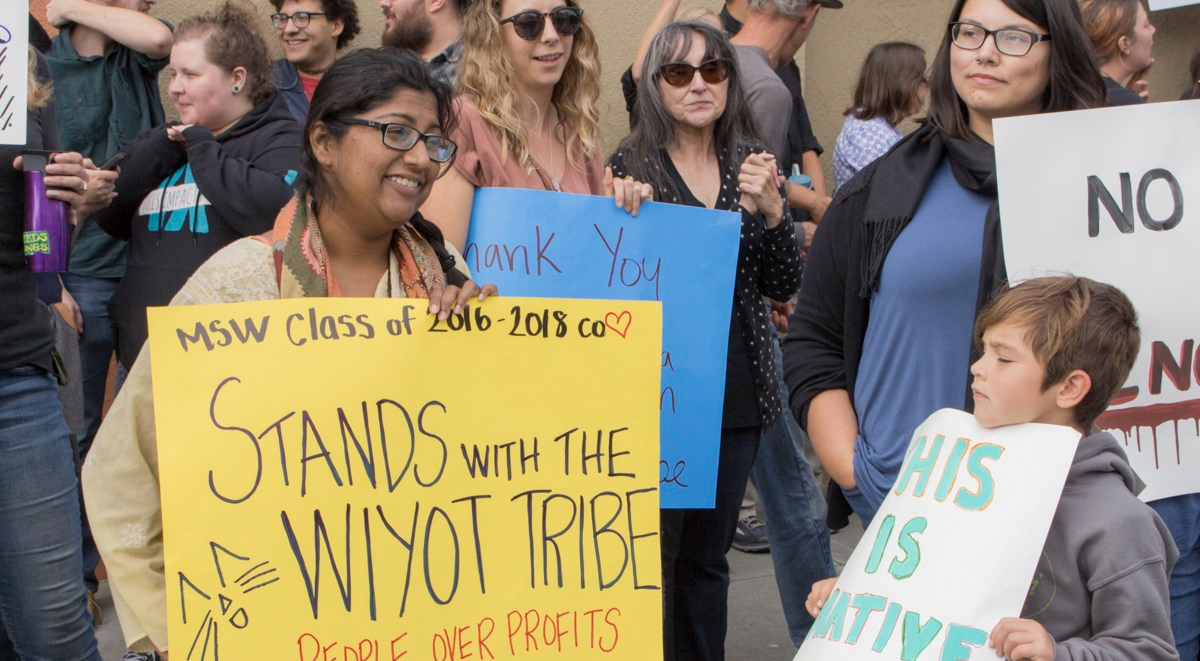
Ownership of the 270-acre Tuluwat Island, also known as Indian Island is being compromised. More than 100 people gathered in front of Rob Arkley’s place of business in Eureka, to show their support toward the Wiyot tribe’s fight.
The reason for protest comes from a KINS radio broadcast of Rob Arkley stating his intention to buy the island from the city as opposed to returning it to the Wiyot tribe. This is happening while the Eureka City Council and the Wiyot agreed to a Memorandum of Understanding, an agreement that is not legally binding, that states that the city commits to restoring the island to the tribe.
Protesters see this issue as a continuation of a battle the Wiyot tribe has been waging since the 1860 Wiyot Massacre in which white settlers murdered several hundred local tribe members. Tuluwat Island holds spiritual and cultural significance to the Wiyot tribe which cannot be replaced.
Assembly Director Allen McCloskey spoke on the microphone at the rally expressing his opinions of Arkley.
“The bigotry that he has exercised toward indigenous people we will not stand for that, not here in Eureka, not in our community, not in our County,” McCloskey said.
The Migratory Birds of the Americas Conservation Act was enacted by the Senate and House of Representatives on July 12, 2017. U.S. Senators Ben Cardin and Rob Portman introduced the bill as a reauthorization to The Neotropical Migratory Bird Conservation Act. The bill is intended to promote long-term conservation of Neotropical migratory birds and their habitats through a grants program, and so far, it is the only federal U.S grant program available throughout the Americas dedicated to the conservation of migratory birds.
This slideshow requires JavaScript.
Projects part of MBACA benefit most of the 386 bird species that breed in the continental United States or Canada and spend the winter in Mexico, Central America, the Caribbean, or South America. In addition, MBACA works to protect over 4.2 mill. acres of bird habitat, spanning across thirty six countries, according to The U.S. Fish and Wildlife Service.
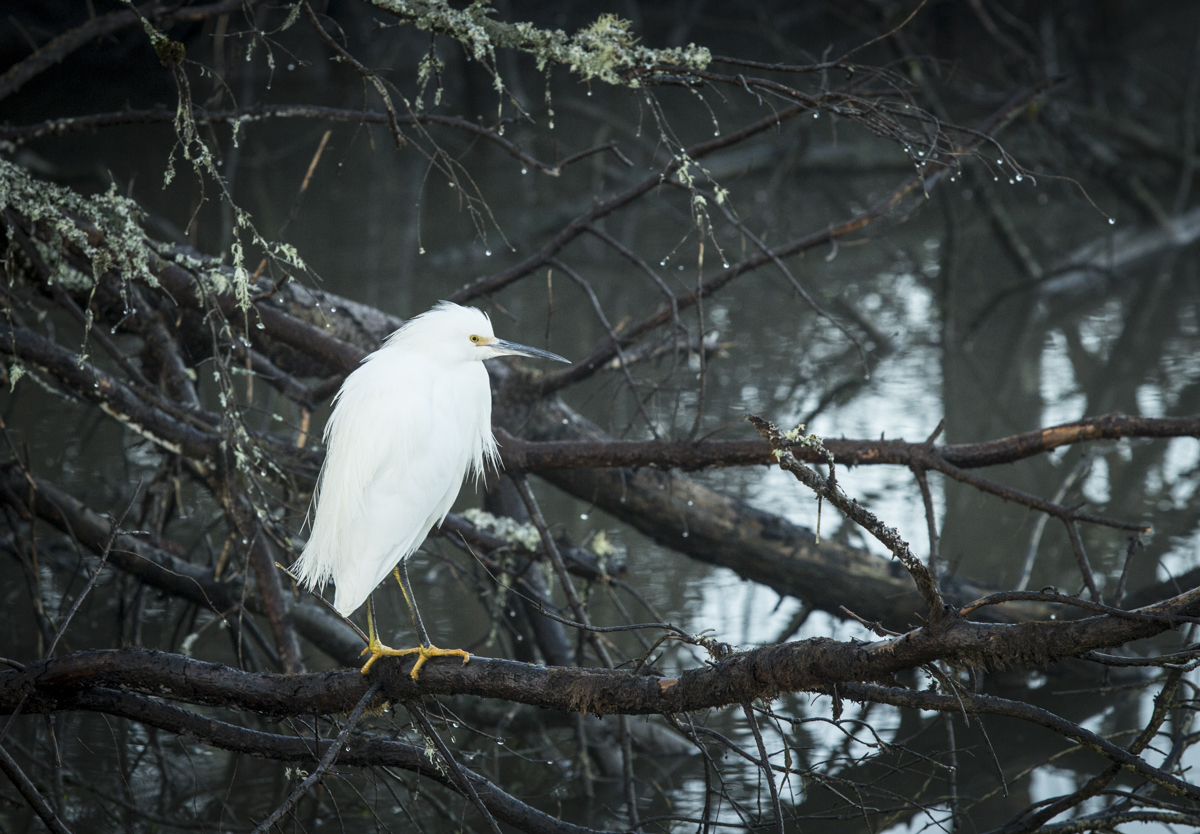
The North Coast of California happens to be one of richest areas in the country in terms of avian diversity, between some 300 and 350 species of birds can be found from just offshore, all the way to the first inland ridge-line. Humboldt Bay in particular is a vital stop for birds migrating along the Pacific Flyway which is a route used by millions of birds for migration to wintering and breeding grounds. The Bay’s coastal mudflats support some of the highest densities of shorebirds in California, housing 60% of all migrating Black Brant, 23% of all migrating and overwintering Western Sandpiper, 44% of all migrating and overwintering Dublin, and 3.5% of all Long Billed Curlews, just to name a few, but there are several other species of birds protected under the act that migrate to and through Humboldt County.
Great Blue Heron with Mallard Ducks at Klopp Lake. Photo credit: Ian Thompson
The Humboldt Bay Wildlife Refuge, located within the Pacific Flyway, serves as a key migratory stopover and/or wintering area for several species of waterfowl and shorebirds. “The purpose of establishing the refuge was to provide habitat for those birds for their Wintering stopover.” said Kurt Roblek of the Humboldt Bay Wildlife Refuge. “Let’s say for example… Aleutian Cackling Goose, we provide Wintering grounds for that species…whose numbers were very low before the bird was listed.”
While he was not aware of Migratory Birds of the Americas Conservation Act itself, he says that-
“We do have projects that will have direct benefits to those species. Such as our White Slough Restoration Project, where we are creating salt marsh habitat along the edges of Humboldt Bay.”
How exactly are you creating these habitats?
“We are actually taking fill material and we are increasing the elevation behind the levees, so when the levees breach, that land will be high enough that it will be salt marsh.”
So what happens when it breaches?
“So once it’s breached… In a few years, through passive and active restoration of that habitat, we will create something that used to exist, but didnt… we’ll bring it back.” Says Robleck. “Pre-human, or pre-white man- In the past, there was salt marsh”
Looking out towards Arcata Bay at sunset from the marsh. Photo credit: Ian Thompson
*
George Ziminsky of the Arcata Marsh Interpretive Center, board member for the Friends of the Arcata Marsh, and graduate of HSU felt similarly about the necessity of our coastal habitats, stating that “Most migrating birds need mudflats for the invertebrates they eat.” Yet, a lot of the other habitats along the Pacific Flyway migratory birds rely on have been compromised, such as “Down in San Francisco Bay, places have been dyked and filled in so what was normally habitat for food for them, just had soil brought in and dumped on top of it.” He stated that over at the Arcata Marsh they are doing what they can to “create a more diverse habitat” and “restore what was taken away.” He also expressed that the city actually has been very involved in their efforts to restore the salt marshes.
“A Lot of the areas west of I Street was being used for agricultural land, 15 to 20 years ago, and the City of Arcata has removed part of the levee and took out the tide gate.”
As of now, The Arcata Marsh, includes around 307 acres of mixed habitat and serves as a solid foraging place for birds on their winter stopover. “The shorebird numbers are in the hundred of thousands in the winter” says Ziminsky
*
Jim Clark The Redwood Region Audubon Conservation Director and 4 time president, who graduated from HSU some 40 years ago, states that The MBACA is “the key conservation act that dictates everything from development to hunting,”
Yet when it comes to avian conservation, “A Lot of it is advocacy,” says Clark. “So we look at the act as backups to those principles. We largely are reactionary, we try to be proactive.” He feels that public awareness, “Going beyond just birdwatching, but understanding a need to protect migratory birds.” plays a vital role in habitat and species conservation. His hope is that one day people will see “that little yellowish’ bird with the black top, Wilson’s Warbler, actually migrates 1000’s of miles. I think that would be an outstanding thing if all the people saw it, better understood what it has to go through to have a life.”
“About 5 years ago we had seeds of varied thrush, and you wonder why this happens” says Clark
“If you don’t protect the birds, there won’t be any birders, because there won’t be any birds to watch, to put it bluntly.”
How can the public get involved in bird conservation?
“Be aware of what they can do on an individual basis for birds”
He recommends “putting reflective strips on windows so you don’t get bird strikes.” In addition, he advises that we also not leave garbage out on the street because it’s attracting crows and ravens, which have now become quite a nuisance. He says that “40 years ago when I was going to HSU I had to get in a car and go over the first ridge inland to see one or two ravens. And now their thick because they’ve learned that where humans live, there’s stuff to eat.”
In regards to what he has done to keep birds coming to his home, he says “in our yard we have planted red alders, it’s a native tree, and they get infected with little leaf hoppers which the warblers love to eat, sparrows love them too, they need them during nesting season.” In addition he states that he’s “planted native grass instead of the typical lawn.”
We can also do our part by “Carrying out invasive, non native plants, encouraging native plants that provide food for birds at the right time of the year.” On the same note, “rat ladders” as he calls them, in reference to Ivy in particular, he states, “let’s rats go up into the trees and eat birds eggs” says Clark “The rats love Ivy, they love Pampas grass, and they love Himalayan Blackberries. All 3 of those plants are non native invasive plants.” Yet the birds aren’t the only ones affected by the fuzzy creatures according to Clark, “When you consider rats it’s also a public health issue.”
What issues do you see having the greatest effect on the community now or in the near future?
“I think we’re going to be looking in the future to sea level rise and how that is going to affect the natural environment and how we’re going to live with that natural environment when we have to change our urban planning to accommodate that sea level rise, and it’s already happening.”
Mid August marked the start of the 2017 school year at HSU. A couple of students recapped on a few of their first feelings and experiences with the first week in or back in college.
The Lumberjacks go big for its only preseason 2017 home game against international team Cetys University from Mexico. Cetys arrived to Humboldt County Thursday, August 31, and shared the Lumberjack’s practice field in preparation for Saturday’s game at 6 p.m. game at the Redwood Bowl.
The game started with a 94-yard kickoff return by running back, Jaquan Gardner promptly followed by two other touchdowns by Gardner in the first quarter.
“It was a good start to the game,” Gardner said, “a good way to build momentum for the team.”
Offensively, the Lumberjacks showed its upcoming competition what it is made of. The team put up a total of 83 points on the board by the end of the game. Eight touchdowns were scored by: JaQuan Gardner, Malcolm Hale, Edwin Campbell, Kaleo Garrigan, and Jabar Byrd before Cetys scored its first touchdown with only seconds left in the 2nd quarter.
Malcolm Hale, a transfer player from Contra Costa College, had two receiving touchdowns for a total of 157 yards in the first half of the game.
“I am just happy to be a Jack, to be able to score and be able to win for my team,” Hale said. “Whatever it takes, I am going to do it.”
As well as offense scoring, the defense put several points on the board. Senior, Edwin Campbell from San Jose, California started with the first big hit of the game. And with 10 minutes left in the 2nd quarter, Campbell intercepted the ball and ran it back for a touchdown.
“It felt great,” Campbell said, “it felt like a movie, to be honest.”
Senior, Ryan McKenzie, also from San Jose can relate to his teammate’s enthusiastic play overview. McKenzie went in for a big hit in the 2nd half of the game and also had a 48-yard interception return.
“When you make big plays like that and can score off the turnovers,” McKenzie said. “It gives a good spark for the team.”
Now although the Lumberjacks defense made big plays and overall held a high number on the board, first year defensive coordinator Barry Sacks gave us his opinion about where to go from here for the first official season game on the road against Azusa Pacific next Saturday, September 9.
“I thought we were good, sound, and solid in a lot of situations,” Sacks said. “A little sloppy at times in the second half, but I think it is a great start. We want to make sure we improve as much as we can before next week.”
The Lumberjacks displayed its potential and had its fans chanting every other minute. The players are ready for another blowout, and the coaches are ready for another smart, well-played game.
“We are just ready to prepare for Azusa,” Gardner said. “I think we’ll be alright.”
Sarah Arias, a senior art studio major and business administration minor is in a process of creating a piece for her advanced painting class.
Arias has created a series piece of gay lovers eyes. Eyes who belong to the Queer Trans People of Color (QTPOC) community. Arias is adding a twist to a late 1700s to early 1800s jewelry fad of necklaces, rings, and broaches which held small photos of their secret lovers’ eyes. Arias was inspired by a similar theme within her life and the lives of her POC friends who still struggle to come out to their families. For her friends, telling their parents about their lovers could jeopardize more than just their relationships, it could jeopardize their schooling if their parents pay for it. This lack of acceptance from Latinx parents results in lovers being kept secret.
To learn more about Arias and her work, watch the video below.
Right when you enter, the strong aroma of medicinal marijuana hits your nostrils so hard you can almost taste it. Over twelve different strains clog your nose of smelly cannabis and yummy edibles. Humboldt Patient Resource Center, also know as HPRC, has been serving Humboldt county for over 15 years.
Michelle Sealy, a bud-tender at HPRC, discusses the patients most preferred cannabis offered.
“Gorilla Glue #4, Girl Scout Cookie, and Titan OG are the winners of the people,” Sealy said.
Girl Scout Cookie at HPRC. | Juan Herrera
Sealy also talks about concentrates and edibles that all their patients love.
“When it comes to concentrates our customers love the live resin by Mr. Nice Guys, or any of the Sour Extract $30 grams,” Sealy said. “As far as edibles, the KIVA bars are a huge hit as well as the smaller size called KIVA bites.”
Sealy explained how each KIVA bar has 100 milligrams of THC, the mind-altering substance in marijuana, compared to 5 milligrams for the bites. According to Ricardo Baca, an author for the marijuana publication The Cannabist, the average dose for a person is 10 milligrams.
Another budtender from HPRC, Mark Moore, talked about the exciting plans their clinic has for the special day of April 20.
“To start off this exciting holiday we will be giving out 420 goodie bags full of different cannabis strains and edibles from the different vendors we use,” Moore said. “There will also be many special deals the clinic is offering as well as live music playing.”
HPRC lighter and matches. | Juan Herrera
Moore goes on to mention how HPRC will also be hosting a delicious barbecue for their patients and also to the community at their location on the corner of 6th and J street in Arcata.
Caeden Williams, a new worker at HPRC, discussed the changes they have seen in patients since the medicinal marijuana laws have passed.
“There has been a lot of anxiety in the air with the new change of what the outcome or end will be,” Williams said. “A lot of patients are scared that the prices are going to skyrocket, while others are anxious to see how far this industry will go.”
Williams explains how as a new employee he is excited to adapt with the new change, but also nervous to see how it will play out.
Moore had one last thing to say the patients of HPRC.
“We are here to fulfill the needs of everyone, from new patients to old ones, we have what you need,” Moore said.
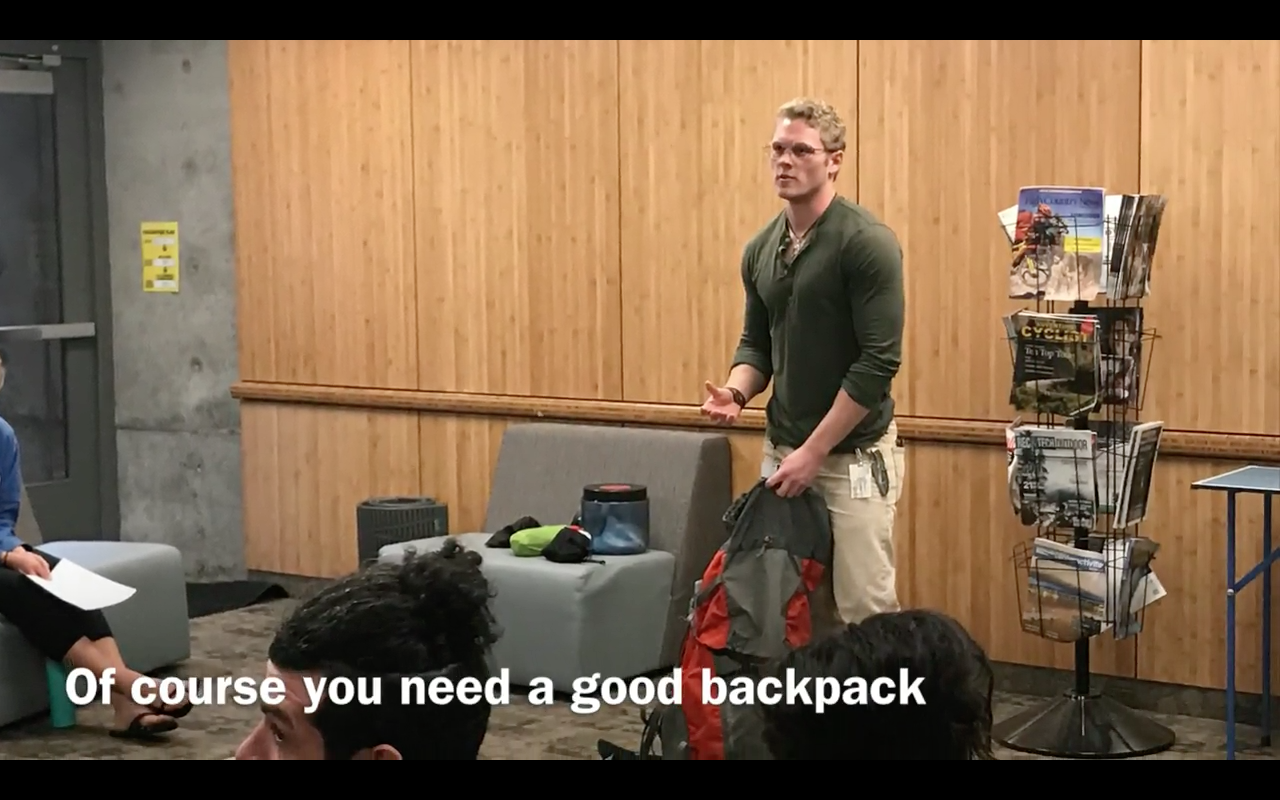
Senior Outdoor Adventure Recreation Administration major, Dillon Travis knows a thing or two about backpacking. He works with Center Activities at HSU, and on April 4th he ran a backpacking seminar in the Rec and Wellness center on Campus.
The big reason for this seminar are the upcoming backpacking trips for HSU students. These students will be backpacking the lost coast from the 7th through the 9th.
There is a plethora of areas to go backpacking at nearby, Travis pointed out locations such as Lost Coast, Redwood National park and the Shasta Trinity Forest to name a few. “I would suggest calling the rangers at each park to get up to date info,” Travis said. “ It’s always a good idea to bring a partner if you haven’t gone before, or go with a guide.”
Did you know the wildlife building has over 15,000 animal specimens. In this installment of Who Knew @ HSU? we take a look at the Wildlife Museum which offers a way for students to research animals close up.
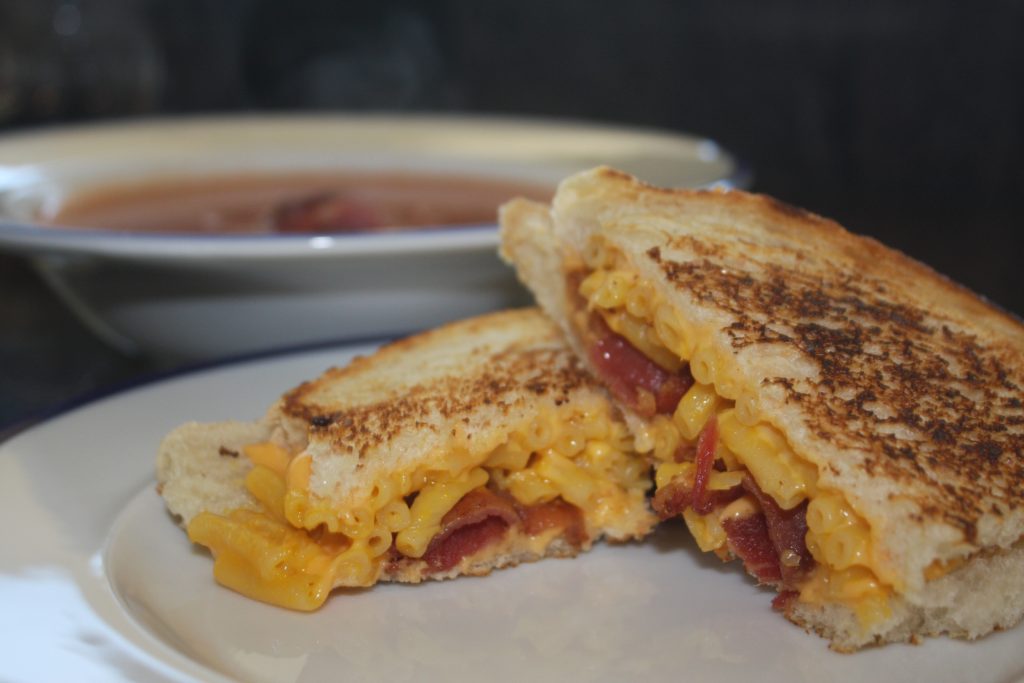
Start with the Mac-n-cheese. Bring 4 cups of water to a boil in a medium sauce pan. Once at a rolling boil pour in the pasta and let cook stirring occasionally for seven minutes. Once done drain the pasta and return to pot. Then add and mix ¼ cup milk, 4 tablespoons of butter, and cheese powder mix. Stir and set aside.
Cook the bacon. Open package and cook to desired doneness in a large skillet. Once done put on plate with paper towels to drain fat. Once dry crumble bacon into small pieces.
Make the tomato soup. Put a medium saucepan on high heat. If you want to get fancy you can saute some garlic in butter and add italian seasoning and red pepper flakes. Then pour the Campbell’s tomato soup into the pan and fill the tomato soup can with milk and add as well. Stir to mix and leave to boil. Once boiling stir and cover and move to low heat.
Assemble and cook sandwiches. Put a skillet on low heat and melt 1 pad of butter. Toast one side of two pieces of bread. Begin assembly by putting toasted side of one piece of bread on pan. Then put two pieces of cheese on the bottom, followed by mac-n-cheese, bacon, two more slices of cheese, and the other piece of bread. Flip when bottom piece of bread is golden brown. Remove from heat when cheese is melted and bread is golden brown.
Cut the bread at an angle to make it easy for dipping. Put tomato soup in a bowl, and serve.
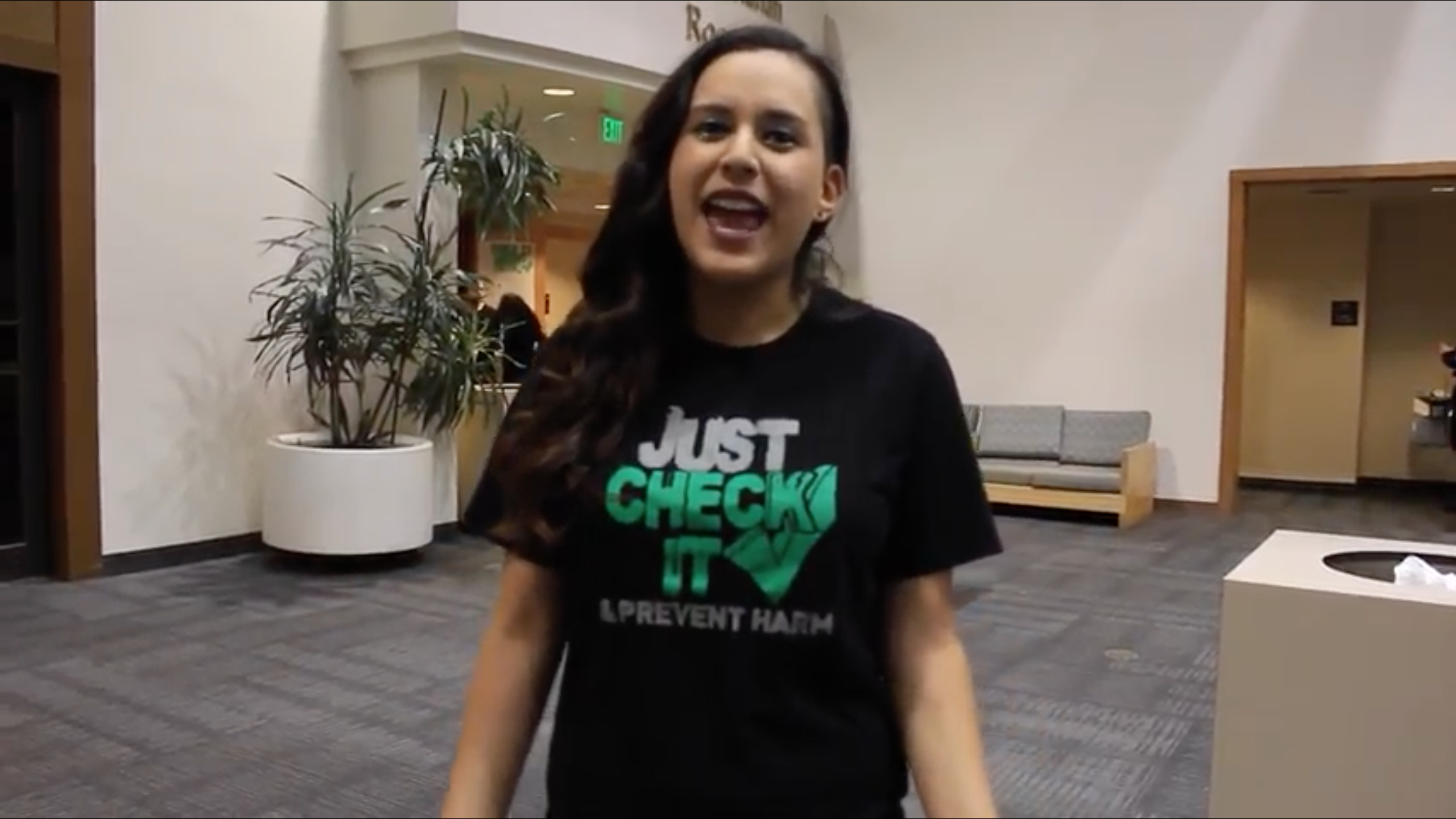
The highly successful student created program about preventing and responding to sexual assault at Humboldt State University celebrates it’s third year.
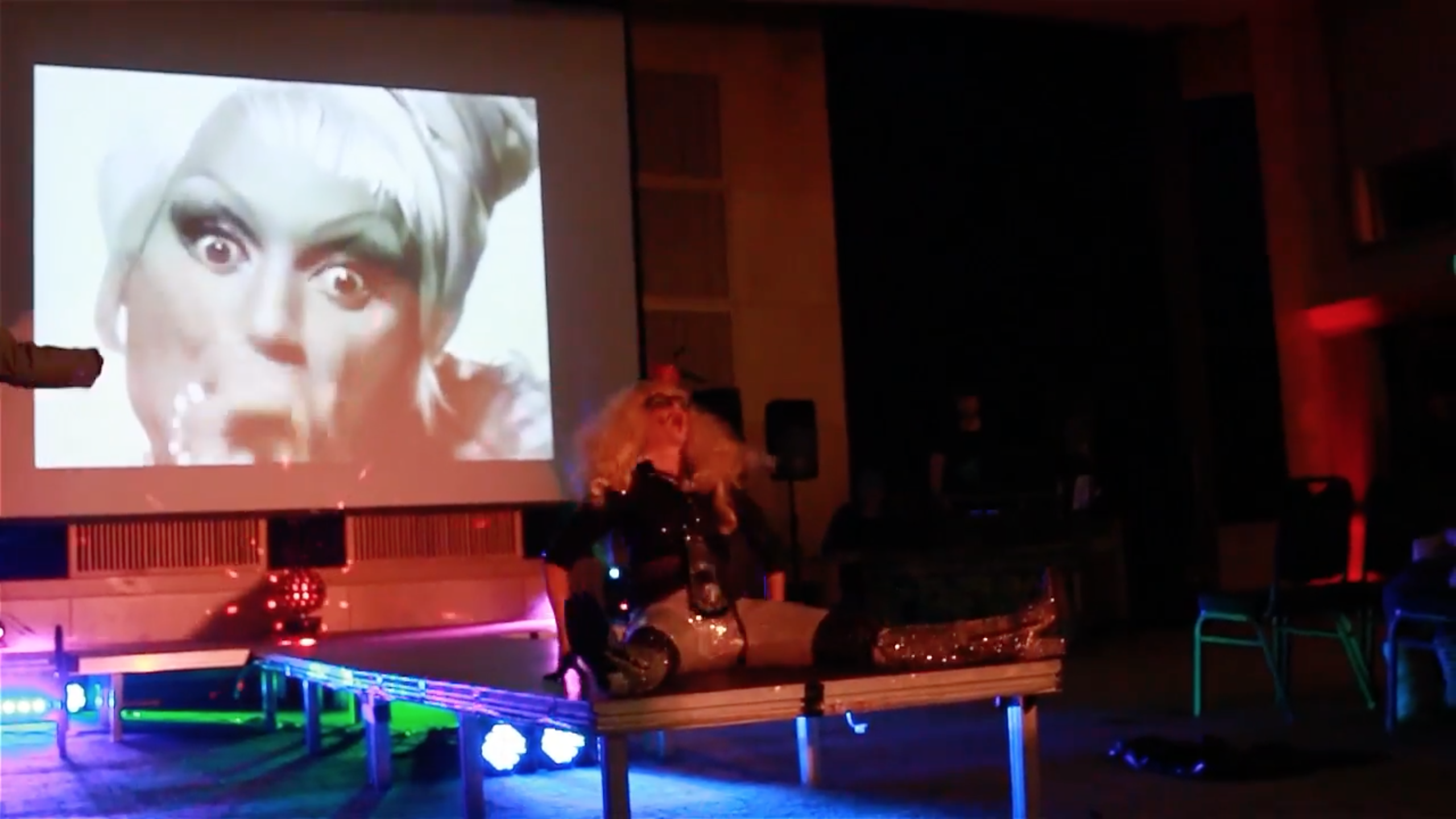
Humboldt’s 4th annual Mr. Humboldt Pageant was held at the Arcata Theater Lounge on February 11, 2017. Mr. King of Outer Space lost the popular vote, but won the electoral college.
In this installment of Who Knew? At HSU, we take a look at OhSnap!. This program offers free food and cooking classes to students as well as other services. Find out about all the hidden gems Humboldt State has offer by watching Who Knew? At HSU every week.
In this installment of Who Knew at HSU, we take an inside look at the Humboldt State University Marine Laboratory in Trinidad, Calif. The lab is used for research in marine biology, fisheries and wildlife. It is also open for the public to enjoy.
Video by: Alexandria Hasenstab
This website uses cookies to improve your experience. We'll assume you're ok with this, but you can opt-out if you wish. Cookie settingsACCEPT
Privacy & Cookies Policy
Privacy Overview
This website uses cookies to improve your experience while you navigate through the website. Out of these cookies, the cookies that are categorized as necessary are stored on your browser as they are essential for the working of basic functionalities of the website. We also use third-party cookies that help us analyze and understand how you use this website. These cookies will be stored in your browser only with your consent. You also have the option to opt-out of these cookies. But opting out of some of these cookies may have an effect on your browsing experience.
Necessary cookies are absolutely essential for the website to function properly. This category only includes cookies that ensures basic functionalities and security features of the website. These cookies do not store any personal information.
Any cookies that may not be particularly necessary for the website to function and is used specifically to collect user personal data via analytics, ads, other embedded contents are termed as non-necessary cookies. It is mandatory to procure user consent prior to running these cookies on your website.