The Lumberjack


Students Serving The Cal Poly Humboldt Campus and Community Since 1929

Tag: Cal Poly University Humboldt

  • Pets keep students healthy and happy

    Pets keep students healthy and happy

    by Savana Robinson

    Finals week: a stressful, anxious time for all. During this time, Raymond Haeckel, a forestry major at Cal Poly Humboldt, had a public panic attack.

    “It was really embarrassing and not the best on my mental health,” Haeckel said. “I’m thinking about how all those people saw me freak out. It sucks.”

    After the panic attack, Haeckel decided to adopt a companion that would ease his troubles and calm his mind; he is now the owner of a beautiful cattle dog mix, Carolina. He is certain that having an animal companion has helped support healthier habits.

    “It’s a really good, big motivator to keep on a healthy schedule in my life,” Haeckel said. “When I’m feeling depressed, I have trouble keeping up with my daily habits. Having a dog to calm me down when I’m feeling anxious is really important for my mental health. It’s thanks to her that I was able to overcome my inability to sleep through the night.”

    Vanessa Hidden, a leadership studies major at Cal Poly Humboldt through the College of Extended Education and Global Engagement, believes having a pet or emotional support animal can be one of human’s deepest connections.

    “Our pets can stimulate the healing process within ourselves,” Hidden said. “They can help us look forward to tomorrow and get out of bed.”

    Hidden is the administrator for the Co-Sheltering Collaborative, a peer-to-peer support network by My Dog is My Home. The organization is a national nonprofit focused on supporting people experiencing homelessness and their pets.

    Having had pets most of her life, Hidden feels a certain sense of comfort and safety from having animals around. She has struggled with depression and anxiety disorder, and her pets were a core part of her healing process.

    “To this day, [they] provide the connection and consistency I need to get through new challenges,” Hidden said. “Being fully remote for school and work… is a challenge that I don’t know I would be able to sustain without the company and emotional stability that my pets provide for me.”

    Maia Ryan, a Counseling and Psychological Services therapist and campus outreach coordinator at Cal Poly Humboldt, provided some insight on how emotional support animals can improve their owner’s mental health. Social connection is crucial to overall wellbeing and there is ongoing research to prove that the positive interactions with animals offer psychophysiological and psychosocial benefits like lowering anxiety, alleviating loneliness and normalizing heart rate and blood pressure.

    “People who may have difficulties with medical or emotional conditions exacerbated by stress could potentially benefit from having an emotional support animal,” Ryan said.

    Mental health is heavily influenced by social connection and animals can provide that necessary companionship. The unique bond between humans and animals is a powerful source of comfort and healing, underscoring the vital role animals play in bolstering our emotional resilience and overall mental health.

  • From DMs to DII National Championship: Isabel Perez-Zoghbi

    From DMs to DII National Championship: Isabel Perez-Zoghbi

    by Vanessa Saltos

    Isabel Perez-Zoghbi is a 2nd year student from Merced, California. Perez-Zoghbi was a long distance runner throughout her whole life, running cross country and track. She thought her career would be done after highschool and was planning on attending Cal Poly Humboldt in Fall 2022. While scrolling through social media, she came across a video of Cal Poly Humboldt’s very own Joy Hano running the 60-meter hurdles. 

    “I saw Joy and I thought she was amazing, and I was just like clearly they must have some good hurdles coaches there because Joy’s doing fantastic,” Perez-Zoghbi said. 

    Once realizing there was a track program, she took it upon herself to direct message Hano. According to Hano, Perez-Zoghbi asked about the program, what Hano’s favorite part about running in college was, and how she wanted to get better at hurdles. Perez-Zoghbi had only started running hurdles her junior year of high school, so she saw this as a learning opportunity. This direct message on Instagram led to a recruitment visit with the track coaches, and Hano was able to meet her in person for the first time. 

    “Meeting her for that first time, it got me excited about hurdles again cause I could just feel her pure love for the sport, and at that point in my season I was, not going throughout, but it was just a low part of season,” Hano said. “Having her energy around, even just on her recruit visit, brought up my energy, brought up [my] team’s energy, and I just had a great feeling about her.” 

    Hano was right about that feeling, because during Perez-Zoghbi’s first year at Cal Poly Humboldt she made huge waves in the program. She qualified for the NCAA Division II Outdoor Track & Field National Championships after running a personal record of 1:00.54 in the 400-meter hurdles. At Nationals in Colorado, she finished nineteenth overall. 

    During her 2023 campaign, she did face some setbacks. Dealing with a hamstring injury, she was kept from competing in a couple of races. Hano recalls a moment at the 2023 Stanford Invitational where Perez-Zoghbi was scratched from the weekend last minute due to her hamstring. Hano and Perez-Zoghbi took walks around Stanford’s facilities and reminded each other about the amazing opportunities they both have. 

    “Isa’s really good about remaining grateful, and it was just during that weekend that I just had to remind her we are in an amazing opportunity to do the thing we love and if anything, missing this right now is just going to make you want it more,” Hano said. “Sure enough after that point in season she continued to rehab her hamstring, she continued to play smarter not harder with her hamstring and made the most out of every day she could.”

    The knowledge that her coaches bring has helped grow her obsession with the sport. Her teammates contribute to this as well. They inspire her daily with their dedication to training and work ethic. She sees how happy people are just to be given the opportunity to participate. What keeps Perez-Zoghbi motivated through it all is her love for pushing herself to her limits.

    “I am always trying to improve and get a better time, and push myself to where I am like dying at the end of practice and I’m like on the floor, can’t breathe,” Perez-Zoghbi said. “Just like that physical challenge and mental challenge of pushing yourself to your limit that’s why I do it.”

    Her teammates feed off of this mindset as well. Hano views her as a role model, despite Perez-Zoghbi being younger. Hano knows that whenever they train together, there will be no slacking of any kind. This has only pushed Hano mentally and physically. Her coaches see this determination as well. Cal Poly Humboldt Assistant Sprint and Hurdles coach Kate Eilers expressed Perez-Zoghbi’s tenacity on the track and compared her competitive drive to that of a veteran. 

    “I love coaching Isabel. She recognizes the value of the time she has here as an athlete and uses every second of it. She is always looking to improve, asking questions and diligently implementing feedback,” Eilers said. “She’s a joy to coach, a supportive teammate and an all around incredible person who knows how to pursue success.”

    Perez-Zoghbi expressed her goals for this upcoming season, which are becoming an All-American and breaking the school record. The current record holder is Alyssabeth DeJerez with a time of 58.68 in 2017. The main goal this season though is winning the conference. Currently Perez-Zoghbi is training for the 2024 season which is set to start on Feb. 18.

  • Low effort and loving it

    by Zack Mink

    Being in your I-don’t-give-a-f*ck (IDAGF) era means that you do what you need to do for yourself. For me currently, this means I’m showing up to class in the same outfits every week, or pressing snooze on my alarm and committing to wearing pajamas all day. It’s giving low effort although I’m still on top of school and work because, “that’s what really matters,” as my Grandma would say. 

    I love clothes, thrifting, design, etc., but who am I trying to impress when I’m running to The Depot during a ten minute break? I’m tired of dressing up for the one cute guy in my class who doesn’t even know my name (yet). I’m done wasting a good outfit on a day when I’m sitting in one classroom for multiple classes back to back. Being as thoughtless as I am when it comes to my daily appearance takes a lot of work though. It takes a sense of style, confidence, and a certain je-ne-sais-quoi you would only know from hitting rock-bottom, possibly even multiple times. 

    When I say hitting rock-bottom, I mean a struggle you have had in life that you learned from. Something that taught you a life lesson, brought a growth opportunity. No judgment to the people who have never been to therapy, but working to improve yourself is super important. It’s a time when you focus on loving yourself, owning your flaws, and working to improve yourself however that looks for you. It’s also hot, so if you have never been to therapy I highly recommend taking advantage of the free resources campus provides. Focusing on your personal growth brings you a third-of-the-way to thriving in your IDGAF era; the second part is being confident. Luckily… you’ve had some time now to work on yourself, learned a life lesson or two, gained some emotional maturity, and are feeling happy with how far you’ve come. 

    The turning point for me was my junior year of high school. It was the third high school I went to, so during the first week I took advantage of the fact that I was the new kid. Being my bold self, I ran for treasurer with no one even knowing my name. I didn’t win, but it was still fun to just not take it too seriously, break down my walls and be confident in who I was. Some may say that was actually the beginning of my IDGAF era.

    The missing piece to being successful in your IDGAF era is having a sense of style. Like I said, I’m an outfit repeater and wear the same exact things every week. Not to brag, but I do consistently get compliments on my eight dollar sweatshirt and the t-shirt I thrifted that has a huge hole in the armpit. Maybe it’s the low standards of Arcata, or maybe I’m just delusional, but all you need is some style to pull off being low effort and presentable.

    Once you’ve reached this point, you can truly enjoy the world around you. You have prioritized yourself, grown emotionally, and gained confidence allowing you to be successful in the other aspects of your life. You also look cute and are the mysterious person someone thinks about after seeing you walk to class. So be free my little birds, get help – because if you’ve read this far you need it, and I wish you a pleasant journey finding your successful low effort lifestyle.
    If you are in need of emotional and mental health support, please reach out to Counseling & Psychological Services at humboldtcaps@humboldt.edu or call 707.826.3146 to sign up for free mental health/counseling services through TimelyCare.

  • Cal Poly Humboldt spending $1.34 million on hotel lease while having 331 vacant beds on campus

    Cal Poly Humboldt spending $1.34 million on hotel lease while having 331 vacant beds on campus

    by Brad Butterfield

    Two-and-a-half miles north of campus stands the seven-figure “temporary solution” to Cal Poly Humboldt’s current housing crisis. However, this fall semester did not bring the thousands of additional students that had been expected, and 331 bed spaces remain vacant in the on-campus dorms. Despite the difficulties presented by living out of a hotel room, students spoke – mostly – positively about life at the Comfort Inn.

    Cal Poly Humboldt’s lease agreement with the Comfort Inn commenced on Aug. 11 and will expire May 12, 2024, for a total of 275 nights. The 49 rooms at the hotel cost the university $100 per night. By the end of the lease, the university will have paid $1,347,500 to the Comfort Inn.

    During normal hotel operations, the city of Arcata charges a ‘transient tax’ of 10% the cost of the room. With the university’s lease, the city of Arcata will not earn its normal 10% tax from the Comfort Inn for the 275 nights that students will call it home. Representatives from the city of Arcata were not immediately available for comment regarding the loss of tax revenue.

    Given the fact that 331 empty bed spaces remain vacant on campus, the Comfort Inn lease could appear like an ugly $1.3 million stain on the university’s management of funds, but perhaps that’s not fair. Enrollment was expected to jump by 2000 students this fall and the university had an obligation to plan for every scenario. Additionally, the university allowed students who were accepted this fall to defer enrollment until next spring, creating a potential housing shortage come spring. The Comfort Inn lease was kept as an insurance measure by the university. 

    “To meet the needs of our students and prepare for a possible influx of more students, the university provided the option of living in university-managed off-campus bridge housing like the Comfort Inn,” said Aileen Yoo, Director of News & Information in a statement. “It’s meant to be a temporary solution as we move forward with building additional housing facilities over the next several years.” 

    In spite of the price tag and lower-than-predicted enrollment, the university kept the Comfort Inn as a housing option, in part because they had to. They had advertised the hotel as a housing option for many students.

    “We also sought to honor the fact a number of students specifically chose to live in the Comfort Inn, even when offered the option to move back onto campus,” Yoo said. “Continuing our contract allows us to not only plan for the future, but to reduce uncertainty and disruption of housing locations for those students.”

    Importantly, all students currently housed at the Comfort Inn are there by choice. 

    “Students who are currently residing in the Comfort Inn have chosen to stay there, even when the university offered them the opportunity to move back on campus and live in residential halls,” said Yoo.

    Neither Sherie Cornish Gordon the Vice President of Administration & Finance, Donyet King the Senior Director for Housing & Residence Life, nor Steve Relyea the Executive Vice Chancellor responded to interview requests.

    The money spent is particularly concerning on the backdrop of the recent CSU tuition hike. Regardless, the students of Cal Poly Humboldt that have been caught in the crosshairs of the university’s rapid expansion, should be the number one priority. Happily, it seems that students now housed in the Comfort Inn are quite content, one might even say they are… (relatively) comfortable. 

    “It’s not a shitty place, it’s really not. People are like, ‘Oh that sucks you guys are living there,’” said Luis Castro, a student living in the Comfort Inn. “I’m like, ‘No, it’s chill. It’s our own thing.’ In my opinion it’s better than living on campus.”

     In fact, there are a number of notable benefits to life in the Comfort Inn that students are stoked on. 

    “It’s quiet. You don’t have the loudness of the community on campus,” said Dylan Harrison, another student who resides in the hotel. “We have our own community here. We have breakfast every morning. We got a pool downstairs if I want to go swimming, or go to Jacuzzi. We have our own laundry as well.”

    In addition to the jacuzzi and laundry, students housed at the Comfort Inn have cleaning services twice a week, free breakfast, and gated parking. Still, there are drawbacks to making a hotel room a home. Namely, the absence of a kitchen. Fortunately, the university has crafted a creative compromise for the students living without a kitchen.

    “They got a deal with this diner called Pepper’s and we use our meal exchanges there, or flex money,” Harrison said. “If I want a burger, instead of going and getting a burger that some student made on campus, who just wants to get paid – I could go to a diner where these people want to make burgers. And they like making burgers. And they got good burgers.”

    In addition to top notch burgers, students are relishing the first floor snacks provided by the hotel.

    “If you want to get something to eat – let’s say you want snacks on campus – then you have to go to the marketplace and pay for it. And here you just go downstairs and just get a yogurt that’s already stocked,” Castro said.

    Naturally, the perks of life at Comfort Inn must be weighed against its inconvenient undesirable location miles from campus.

     “There is a little bit of a disconnect, socially, you know, between big events that are going on [on campus]. But, I mean, the people that I have met here are pretty cool,” said Andres Arteaga, another student resident of the hotel. “Seeing as it’s my first year here, I did actually really want to be on campus. I do like the vibe on campus, but at the same time, It just feels like our own area here in this section of the town.” 

    All things considered, the situation seems decent for students living at the Comfort Inn, but it is far from an ideal college housing arrangement. Directly across the street from the Comfort Inn stands, ‘The Grove,’ a hotel recently converted to a homeless shelter. Behind that, in an undeveloped stretch of land that backs up to highway 101, a small community of homeless folks have put up shop and don’t appear to be leaving anytime soon. 

    “It’s like a 15 feet deep pool and 20 feet diameter wide and there’s tarps and there’s like, people just living over there,” Harrison said. “It’s crazy. You see it off the 101, they’re always burning fires. There’s a lot of people over there. You hear them at nighttime, [and] they’re always screaming.”

    Logistically, it appears the university has set students up for success with multiple options for transport to the campus grounds. Working in tandem with Arcata Mad River Transit, the university created a new route that runs 7am to 10pm to transport students, for free, to and from the campus. The bus does not run on Sundays, but students have the option to call the University Police Department for a ride at any time, if need be.

    “I take the bus to school,” Harrison said. “There’s three options every hour. If you miss all three buses, you’re a dumbass.”

  • Students struggle to navigate COVID-19 safety post-pandemic

    Students struggle to navigate COVID-19 safety post-pandemic

    by Zachary Mink and Griffin Mancuso

    While COVID-19 regulations have become more lenient at Cal Poly Humboldt, many students are still contracting COVID-19 and are unsure of where to find resources.

    EG.5 (Eris) is one of the newer variants of COVID-19 in the United States, known for being highly contagious. The Center for Disease Control and Prevention (CDC) predicts that Eris made up about 24.5% of COVID cases in the U.S. over the last two weeks. The second most common variant, FL.1.5.1, made up about 13.7% of cases. 

    Currently, the data on the number of student COVID-19 cases and which variant students are contracting most often is unavailable.

    Dobby Morse, a graduate student in English who lives on campus, contracted COVID-19 in mid-August. They initially tested negative and assumed they weren’t contagious despite their symptoms.

    “After like the third or fourth day, there was this burning lump in my throat and I couldn’t speak,” Morse said. “So, I went to the health center to try and get help and they tested me there. They said I had [COVID-19] and I had to go into lockdown.”

    Because they were living with a roommate, Morse stayed in a quarantine room in the Cypress dorms for six days with one bedroom, a bathroom, and a mini kitchen with a broken stove. They tested again five days after their visit to the health center and had a positive result.

    “I tried to extend my room for a couple more days, but the housing person said that I wouldn’t be contagious after 10 days,” Morse said. “But there’s internet health websites that say you can be contagious for up to 20 days.”

    According to the CDC, those with moderate or severe COVID-19 should isolate for at least ten days, but those with a severe case of COVID-19 may still be contagious and need to isolate for up to 20 days.

    Many students believe that precautions still need to be taken in regard to COVID-19.

    “I don’t think people are as aware of it or as concerned about it as they should be,” Morse said. “Because I did have one person be like, ‘Oh, you have COVID[-19]? But I’m not scared of COVID[-19],’ and kind of got in my face.”

    Emma Kral, a senior at Cal Poly Humboldt, contracted COVID-19 a week after moving into the dorms. COVID-19 left her unable to prepare for her classes, disrupting the beginning of her semester and leaving her feeling tired and unsettled. She was able to get a rapid COVID-19 test from one of the health vending machines on campus, and wants to see students and faculty taking more precautions.

    “I think masking should be a lot more common on campus,” Kral said. They also thought more ventilation in classrooms would be helpful.

    Many students aren’t aware of the vending machines on campus that carry COVID-19 rapid tests or the resources available in the Health Center. Some students said that they want to see more free masks available around campus. Most frequently, students requested that the school take an active role in addressing the rising number of COVID-19 cases among students and listen to student feedback.

    Photo by Griffin Mancuso. The Student Health Center on campus.

    According to the Cal Poly Humboldt website, students who are symptomatic can make an appointment at the Student Health Center to see a medical provider. If you are unable to get to the Student Health Center, 2-packs of rapid COVID-19 tests are available in health vending machines for $20 each.

    Free 2-packs of rapid COVID-19 tests are currently available to all students at the Student Health Center, but students can only get one pack of tests at a time.

    The Student Health Center currently does not provide COVID-19 boosters, but students can sign up for an appointment or find walk-in clinics near them on myturn.ca.gov. Locations in Arcata and Eureka that have the updated COVID-19 vaccine are Walgreens, CVS Pharmacy and Rite Aid. Safeway locations currently have a limited supply of the updated COVID-19 vaccine.

    The Lumberjack reporters made multiple attempts to contact Jennifer Saford the Executive Director of Student Health & Wellbeing Services, Mira Friedman the Lead for Health Education and Medical Clinic Support Services, Aileen Yoo the Director of News & Information, and Grant Scott-Goforth the Communications Specialist, through email and in-person, but all were unwilling to provide a comment on COVID-19 tests and resources at this time.

    Covid Vending Machine Locations:

    Nelson Hall East (across from Goodwin form)

    Gutswurrak Student Activities Center (1st floor by the Depot)

    Jolly Giant Commons (3rd floor next to housing cashier)

    College Creek Mail Room Lobby

    Creekview Dorm Lounge (must be a Creekview resident to access)

  • Step into the Humboldt party scene: a review

    by Christina Mehr

    Some say there’s no party scene here in Humboldt to have an opinion on, but they’re the people who have no friends and aren’t getting invited to things in the first place. Stay mad. For a campus that claims to be a dry campus, it is certainly most not. Just take a look outside and you’ll smell the scent of earthy weed being consumed by students. Up here, it’s pretty much part of the culture to be involved in the stoner community. Aside from the magnificent coastal redwoods, people know Humboldt as a place that grows good weed.

    Photo by Christina Mehr

    Assuming you’re into the party scene here at Humboldt, then you’re aware of the infamous Nicki House. You can see this party venue from the JGC parking lot, adorned with a flag of Nicki Minaj saluting an American flag. Most “venues” are just an inside space where party-goers can hang out, listening to shitty music and conversing with the same three people you came with, but the Nicki house however has something special. The house is run by all women who are reclaiming the frat party vibe. 

    If dressed in the theme, guys’ entry to these parties are five dollars and girls get in for free. If you’re one to participate in hookup culture, then you’re screwed with that ratio unless you play for both teams. Themes have ranged from Y2K to blackout, to a comfy pajama party. The themed parties bring a sense of playfulness into regular gatherings. The way the community connects is through drugs, alcohol, music and trying to leave the crowded house.

    The cons, there’s only one way in and out of the house which poses a threat of danger in case of emergency. The house itself is quite crowded with the line to get in out the door, but if you’re into the sweaty bump and grind you’ll fit in just fine. If you can’t make it into the main house, or are too cheap to, there’s plenty of overflow out front where the beer pong table sits. Party places are like fads, they come and go, just like the entire freshman class pulling up to the same party. 

    If you know how to have a good time, then you’re part of the population who is living it up in college. The best way to make the most out of your weekend? Pregame with your closest friends, have a few drinks, smoke a joint and find a party. That is until the party gets shut down 45 minutes after starting and the cops start playing beer pong.

  • UPD still doesn’t have a police chief

    UPD still doesn’t have a police chief

    by Brad Butterfield

    After a spring semester that saw The University Police Department’s force spread so thin that single-officer patrols were a norm, they have recently hired two new dispatchers, promoted an officer to sergeant, and hired one new officer. While slightly better than before, the department’s staffing issues have forced many members of its small team to still work long hours with few days off. Despite the successful recent hirings, the department remains without a permanent police chief and ever-cautious in its search for a new one. The still understaffed force has had to rely on its committed team working overtime to remain functional.

    As many students will have been made aware of through the UPD’s advisory emails, it has been a hectic start to the fall semester. The last two weeks have seen an uncharacteristic barrage of criminal activity on our typically peaceful campus among the redwoods. From “Suspicious Bags Found in Wildlife & Fisheries Building” to “Trespassing Arrest at the Children’s Center” and a tragic “Collision That Injured Student” at one of the campus’s few intersections which left a student in critical condition, this has been an unusually chaotic start to the semester. 

    Throughout this spring semester, Lieutenant Peter Cress filled the role of police chief in addition to his normal duties as lieutenant. Currently, Fernando Solozano, a retired police chief from Long Beach, has stepped in as interim chief until a permanent one is finally hired. 

    Unfortunately, a timeline for the hiring of a permanent chief is difficult to nail down with so many factors at play. Even if the perfect candidate showed up on Harpst street tomorrow, they’d still need to go through a full background check, potential recertifications and additional police academy training (depending on where they transferred from). So, it will likely be exactly a while-longer before Cal Poly Humboldt has a permanent police chief.

    On top of all that, hiring a police chief for a university – especially one as unique as Cal Poly Humboldt – has a number of additional hurdles as compared to your average city police department. Most notably are the Clery Act and Title IX federal civil rights, which affect police operations on a university campus distinctly from those at a typical city police department.

    Moreover, the bureaucracy of a college campus means that a very unique skillset and experience is necessary to perform the job tactfully.

    “The CSU system has its own challenges in different ways. It’s not just a police department in a town where you can go to your mayor and say, ‘Hey, what’s going on?’ We have our presidents and we have our chancellor, so we have lots of different steps… What would be nice is if we had somebody who is familiar with the CSU system, who is eager to grow a police department, and comes in with knowledge, all those things,” Martin said before adding, “we’re not looking for a unicorn, but I mean, kind of we’re looking for somebody who can do all of that.”

    The chief of the police sets the tone for the entire department, Martin explained. They look fifteen years down the line and act as captain of the ship, adjusting course towards innovation and progress. The fact that the department has been absent a chief for so many months and remains not only functional but reliable, serves as testament to the unwavering dedication of each member of the department. Importantly, though the search for a permanent police chief remains a top priority for the department, they are not rushing the process and will not pull the trigger unless the fit is perfect.

     “Our VP [Sherie Gordon] has a very set criteria of what she wants to hire. She just doesn’t want to settle. She wants somebody who’s going to do justice to the police department and our campus,” Martin said.

    Martin’s explanation for the still vacant chief position hinted that perhaps having no police chief is better than having the wrong police chief. 

    “It’s about finding somebody who wants to be here, who is willing to put in the work,” Martin said before continuing, “Somebody who’s progressive, understands what we’re trying to do here. And we’ve struggled at finding a very qualified person that can slide into that role and help our police department grow.”

    This spring saw the lean department frequently functioning with only one officer on duty at any given time. 

    The recent new hires have eased that strain slightly but they’re currently still running some single person patrols, as they are having trouble finding qualified officers. 

    Aware of the mounting need for more personnel, the UPD have put together an incentive package and have hired a firm to recruit nationwide to find fitting candidates. A common theme in talking about the difficulties in hiring was UPD’s emphasis on hiring the right candidate. They are not interested in hiring just anybody so that they have additional boots on the ground. They’ve got to be the right boots. And of course, this is Humboldt – they’ve got to have the right vibe.

    “We are not just filling boxes and trying to put a cop in a seat just because I need a number. I’ve got people who are willing to come here,” Martin said. “We just want people who are going to be a positive addition to the police department and how they interact with our community and how they’re willing to change and how they’re willing to grow.” 

    “We are looking for the right people to be a part of that police department as we grow,” Martin emphasized. 

    Remaining a community based police force appears to be a top priority for the department when considering new hires.

    “Our community as a whole is more laid back,” Martin said. “100% we want to be able to be part of that culture.”

    The understaffed department has relied on its indomitable staff to keep the peace on campus. 

    “It’s been the staff. The staff is really the reason that we’re still moving forward and getting stuff done,” Martin said. “A lot of overtime for different people, a lot of hours are being put in and everybody’s just still getting the work done.”

    Martin put in about thirty hours of overtime last month, with this month’s overtime hours quickly racking up. Impressive as that is, dispatcher Jennifer Gomes’ work schedule borders on super-human.

    “I have, technically, one full day off this month. My normal schedule is day-shift Sunday through Wednesday,” Gomes said. “But I’m covering graves for the second half of the week right now, and then my one day off for the week is the day that I rotate back to day shift. So, I sleep all day to try to accommodate coming back to day-shift.” 

    With two new dispatch trainees set to complete their training in October, respite is on the way. The dispatch ‘family’ will be back to three days off per week with just one dispatcher role left to fill. An unsung hero of Humboldt, Gomes explained her reasoning for weathering the recent tough times at the UPD. 

    “Everybody’s pulled their weight, come together kind of as a family and just pushed through the staffing issues,” said Gomes. “Just push through the hard times here, we’re all coming out of it.”

    With millions upon millions being put toward Cal Poly Humboldt’s expansion, it seems the unstoppable force of dollar-driven change is also working overtime here in Humboldt county. Change is a comin’. 

    “As our faculty and our staff grow, there are gonna be different expectations as we modernize our campus and in the directions that we had. So, we’re also gonna have to keep up,” Martin said. “We want to maintain that same service that we’ve had, we want to be able to have these conversations. We want to be able to play pool with our students and whatever events and be accessible and always there. And that’s one of the things we look for when we’re trying to hire people.”

  • Marine biology joins Cal Poly Humboldt’s available science majors

    Marine biology joins Cal Poly Humboldt’s available science majors

    By Emma Wilson and Griffin Mancuso

    The new marine biology major provides students the opportunity to gain practical, hands-on experience in ocean and marine habitats. They will study different organisms and a diverse selection of marine ecosystems, such as salt marshlands and beaches. 

    First-year, first-time students will also be enrolled in Rising Tides, a year-long program of science and general education courses and activities specializing in the Humboldt and Trinidad bays. 

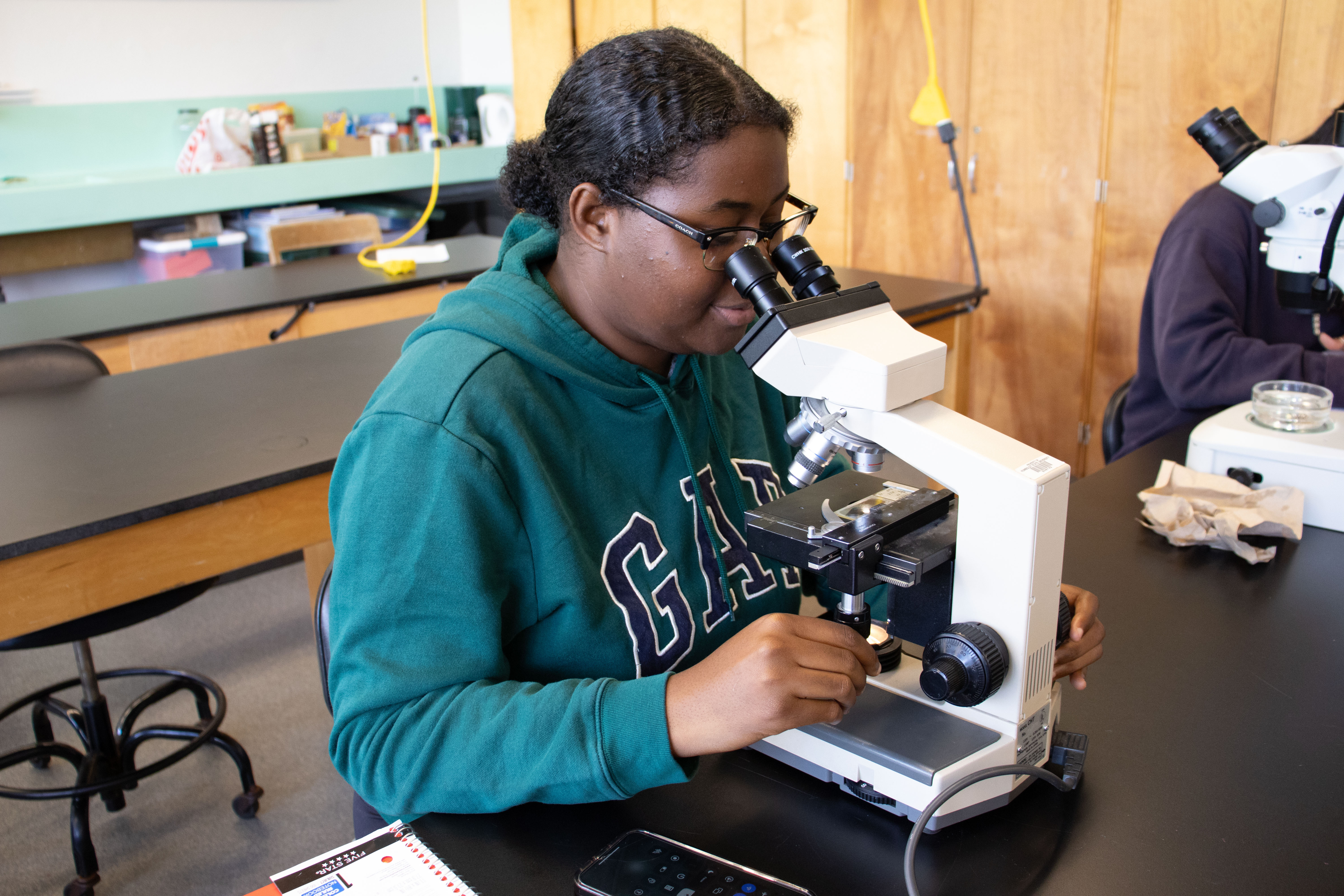
    Photo by Griffin Mancuso. A collection of microscope slides.

    Sean Craig, a professor at the university for 23 years, explains the need for marine biology professors and lecturers.

    Currently, there are only three professors teaching marine biology classes, according to Craig. 

    “We asked for a new faculty member for our new marine biology major but we didn’t get it,” Craig said. “We only got a chance to replace one of our faculty who retired and left.” 

    “Starting in the spring there will be four because we are able to replace the one who left,” Craig said. 

    According to Craig, the university always had a marine biology program, but after becoming a California polytechnic now with the transition you can now declare in marine biology as a major. 

    “The fact that [marine biology] is now a major it rings more bells and connects with more people, especially people applying to Humboldt,” said Craig.

    “Our marine biology major already borrows heavily from other marine majors, especially oceanography and fisheries,” said Craig. “I think it would be good in the future to have all us marine scientists to pull together and decide on things together to make an impact.”

    “I think there are a lot of misunderstandings of the ‘marine biology major’ because really, at least at the moment, firmly in the biology department there are only 3 faculty at the moment teaching marine biology,” said Craig. “Like saying we got the best restaurant in the world off the highway, but we don’t have a sign.” 

    Craig expresses great discernment and feelings about the lack of professors teaching marine biology. 

    “Our biggest problem, which is a long term problem, we have been clambering for years for faculty,” Craig said. “All students benefit better from support systems, tutors and writing center help. All of that is better with more numbers.” 

    It is not unusual for a professor in marine biology to have 55 students. 55 students that need those professors help to figure out what classes to take, or what to retake, especially during registration. This is frankly a lot of students for one professor. 

    “It’s a problem, we don’t have enough faculty to do a good job of advising and providing opportunities for students,” says Craig. “We are handicapped, we can’t keep up with students increasing and with the faculty decreasing.”

    “We were promised a new faculty member and we haven’t gotten that, yet,” said Craig. “We’re all going to have to work together to get exposure and make connections.”

    A really cool and fun thing that you can do as a marine bio major is go on the Coral Sea, which is a research vessel and is 91 feet long. It’s parked on the docks in Eureka in the Woodley Island Marina, and is a wonderful platform for learning. It is the only vessel of its kind in size in California that is devoted to undergraduate education. 

    “The vessel itself is in pretty good shape, but the engines not up to standards in terms of output of different particulates in the air, so there is a major problem there, and to solve that problem so many of our faculty and Associate Dean are working together to, as part of the poly tech transformation, purchase a new brand new vessel that would be better in multiple ways. Eventually I hope there will be a new version of the Coral Sea,” said Craig.

    “Now we have a major, we have a 91 foot research vessel that students can go on cruises for, we have a marine laboratory where students can learn about live animals like crabs and octopus under a dish in a microscope,” said Craig. “Thanks to Cal poly tech, we got new microscopes for the marine lab. Many before dated back to the 1950s, so the new facilities after the Cal poly transformation makes our marine biology department even better.”

    Photo by Griffin Mancuso. Several bay pipefish swimming through seaweed.

    Kaci Dodd, a junior who changed her major to marine biology this fall, aspires to work in marine conservation or scientific diving instruction. She expressed excitement about marine biology having its own program at CPH.

    “Now that they’ve added it more as a major, there’s definitely been more classes and more opportunities — which is super exciting — instead of just having biology with a marine concentration, “ Dodd said. “But I feel like what really attracts people to the marine biology program at this school is how hands-on it is with the equipment that they use and the professional element.”

    Dodd recalls her experiences learning how to use new technology and gear on the Coral Sea. 

    “One of my favorite things in the biological oceanography cruise… It was an otter trawl, “ Dodd said. “And it pretty much was a huge net that went along the water column and collected all the fish or whatever was in that water column. And so we saw a lot of fish, some squid, that was really cool.”

    Dodd also recommends that any student, marine biology major or not, should try the field techniques class taught by Daniel O’Shea.

    “It was just like, so fun — fun to be on the boat and meeting the crew that works on the boat, how to work on the boat, and be a cruise assistant,” Dodd said. “And after that class, when you pass, you’re able to actually become a cruise assistant and work on the boat with cruises and classes, like that is really cool.”

    Marine biology students, along with other majors, analyze marine organisms at the Telonicher Marine Lab, located in Trinidad and home to various marine species and preserved specimens. The lab is open to the public on weekdays, and students also travel there for class labs and research.

    Photo by Griffin Mancuso. Zoology major Kyle Bailey looking at a cross section of a flatworm.

    Kyle Bailey, a junior and zoology major who wants to pursue a career in animal husbandry, described his experience with the marine biology classes at Telonicher Marine Lab.

    “I’m taking invertebrate zoology right now… the class we’re taking is a crossroads for several different majors,” Bailey said. “I’d say the majority are marine bio, but there’s a couple of us who are just general zoology, wildlife, there’s a few others in there.”

    Bailey elaborated on what sets classes at the marine lab apart from other biology classes.

    “The main difference between the lab now and from intro zoo is looking at live specimens,” Bailey said. “It’s super cool to see how these animals would actually look living and we have the sea table to look at stuff. It’s a big difference to see what these animals would look like living as opposed to mush in a jar, which I think is a super fun experience.”

  • Too small for football but on the track to attack

    by Dezmond Remington

    The track is vicious and painful, and Aris Valerio was ready because he has dealt with vicious pain. He ran a half mile in less time than it takes to get out of bed, a minute and 49 seconds to secure a spot at the National Championships back in May of 2023; the only man sent from Cal Poly Humboldt to race in Pueblo, Colorado. The evening shadows were long on the track as the 800m final was due to start, and Valerio lined up in the pole position on the inside lane. 

    It was already a long shot to get there. One of the fastest Division II 800m runners in the nation couldn’t compete because of a family emergency, allowing Valerio to take the final qualifying spot after the prelim races. The next 110 seconds were going to hurt, even without the added stress of a fast prelim the day before and the knowledge that a victory was unlikely. Valerio felt dead tired and scared. But there was no room to think about any of that when the gun boomed and the race started. A journey that started with failure and random chance went a little further. 

    Valerio picked up distance running his freshman year of high school, only after his mom wouldn’t let him play football because he weighed about a hundred pounds. He had always been fast as a kid, so he figured he’d give it a shot after a neighbor told him exactly what cross country was. It wasn’t love at first sight. Valerio still isn’t sure why he stuck with it. Training is boring to him – racing is what makes it worth it. 

    “I just love the anxiety of the races,” Valerio said. “I think it’s fun. It makes it more exciting because that’s what everyone’s feeling. Makes you show that you’re just more locked in than everyone else when you win. I think that’s exciting.”

    His legs churn, eating up ground at a pace of over 18 miles an hour. The first 200 meters are gone in less than 26 seconds, and he’s still at the back of the seething pack. The screams of the crowd are loud, but it’s lost in the rhythm of pounding feet and gasping breath. His mind is blank. It always is at moments like these.

    Valerio’s first brush with greatness came his senior year at Murrieta High School in 2019, when he ran 1:53 in the 800m and ended up being ranked in the top 20 high schoolers in the nation that year. He didn’t even really understand that it was a big deal right when he crossed the finish line. Someone had beaten him. 

    It was a huge margin of improvement from even a month before that, over six seconds in an event that separates a talented collegian from the world’s best. He spent a year training at California Baptist University before transferring to Humboldt in 2020. One of his high school teammates had gone to Humboldt and recommended him to head distance coach Jamey Harris, who gladly accepted him on the strengths of his past races. 

    Valerio’s career has had its ebbs and flows in his time in Humboldt. He’s one of the fastest 800 runners to ever compete for Humboldt, but he’s also suffered from hamstring injuries that left him unable to train and compete for far longer than he would’ve liked. Harris doesn’t regret recruiting him. 

    “With any injury, anybody’s going to have a setback in their enthusiasm, and he was not immune to that,” Harris said. “But whenever he would have a little bit of a setback, he would climb out of it. He’s persistent in that way…on race day, he always brings everything he’s got. I never doubt that we’re going to get a full effort…he may not always be at 100% confidence, but we always know we’re going to get 100% effort.”

    It’s hot, and the guy in front crushed the first half of the race in 50 seconds. Valerio is a few seconds back. Shoes thin as ballet slippers slam on hard rubber, the metal spikes grabbing the track. Reverberation swims up his legs. It hurts, but he’s had worse.

    It wasn’t easy getting to Nationals. Setbacks weren’t solely those of muscle, bone and sinew. Some came from the brain. 

    For a while, a bout with depression during the track season made Valerio consider not racing at Nationals at all, but after running 1:50.3 at the conference meet he reconsidered. He is open about his struggles with mental health. He said his depression comes from the death of his little brother, who passed away when he was in high school. Running, and the team surrounding him, has been one of the things that helped him get through it.

    “I’ll go through spurts of being super unmotivated,” Valerio said. “And it’s super hard to catch myself and get back on my feet. [Coach] Jamey [Harris] and [the team] know all that. They’ve been super supportive about it.”

    Valerio is a lot more than just an athlete to Harris.

    “He’s a complicated beast,” Harris said. “It could be easy to see his consistent success on the track and think that things have come easy for him, but they definitely haven’t. He’s had a lot of difficulties that he’s had to work through and challenges that he’s had to overcome. I think that’s probably the greater accomplishment than being an All American and All-Conference a couple of times and being the second fastest 800m runner in school history. What’s more impressive is what he’s gone through and what he’s overcome to get there.” 

    600 meters have come and gone, and the time has come for a last, desperate drive to the finish. There is no more sun in these last moments, the light blocked by the stadium seating full of screaming spectators. Way ahead, the front runner is run down like a deer in the dying moments of the race. Valerio is still in the back, driving for a First Team All-American spot. A thousand miles away, people watch.

    Valerio’s role on the team goes far beyond simple competition and point scoring. One of his closest teammates and a roommate during the track season when Valerio went to nationals, Sebastian Vaisset-Fauvel considers Valerio a crucial part of the team, although not necessarily always beloved.

    “He’s just really down to the point,” Vaisset-Fauvel said. “He’ll tell you what’s up. He’ll tell you the truth, and sometimes people can’t take the truth… I think that’s what helps him stay true to himself.”

    Although Valerio does sometimes take the abrasive role, Vaisset-Fauvel stresses that that’s not nearly the entirety of Valerio. 

    “Aris can seem like an intimidating guy, but once you get to know him, he’s like a little baby,” Vaisset-Fauvel said. “He’s like my little child, even though I call him my dad sometimes. He’s a really good guy. Really good athlete. 1:49? That fits him, you know? That just fits him.”

    Despite the incredible accomplishments on the track, Harris and Vaisset-Fauvel make it clear that Valerio is a human just like everyone else on the team, and that makes his appeal to his teammates that much more potent. 

    “This is a regular guy,” Harris said. “I’ve seen this guy spill milk. This is a fallible human that I’ve ran with, that is running really fast, and that makes those accomplishments seem more attainable to me.”

    Valerio crosses the finish line, his hands going to his knees as he bends over the track. Last place, but still Second Team All-American. Next year will be better, he thought later. Next season will be the last, the best. It wasn’t just for him.

    “I’m trying to go to Nationals to represent our team, our school in the middle of nowhere,” Valerio said. “‘Who is this Humboldt guy? This is crazy.’ I think you should want to run for everyone, not just yourself. You’re not going to get that far, only running for yourself.”

  • Manic? Don’t panic!

    Manic? Don’t panic!

    by Savana Robinson

    This year, I had a manic episode that lasted from January to March. During that episode, I got very little sleep. I was burying myself in any work that I could find, and my mom said I sounded different. 

    Manic episodes can be caused by a number of things. High stress levels, trauma, changes in sleep patterns or lack of sleep, using recreational drugs or alcohol, or the time of year; some people are more prone to mania in the spring. Mania is classically associated with bipolar disorder, and is also known as the “high” compared to the “low” of a depressive episode.

    According to the Cleveland Clinic, symptoms of mania include, “feelings of invincibility, lack of sleep, racing thoughts and ideas, rapid talking and having false beliefs or perceptions.” For example, during my manic episode, I would go without sleeping for a couple of days at a time and I was talking everybody’s ears off about how I planned to be a motorcycle journalist, or how that semester’s Osprey was going to be the best magazine to come out of this school (it was a banger, though). It wasn’t until one of my roommates sat me down and told me that I was manic that I realized I had not been my normal self for months. I accepted what she had to say, but the only thing I could think to do to help myself was try to get some sleep and just get back to normal; that’s not how it works. I should have gotten help then, but it wasn’t until a month later that I got help the hard way through multiple 5150 holds and a nine-day stay in a psychiatric facility. Listening to those around me was the most beneficial thing that I did during my episode. If I hadn’t let the university police help me by transporting me to Mad River Hospital, where I was put on 5150 for the first time, I might not be writing this.

    If I could go back and do it again, or if I had to get help for someone else, this is what I would do: call 988. That number is not only a suicide hotline, but it’s a mental health crisis hotline. It’s easy to remember in case you can’t find the local number (707-445-7715) and they will give you tips on how to get help for yourself or others. Next, I would make an appointment with a psychiatrist. This can be done through your general practitioner. Students can make an appointment with Counseling and Psychological Services (CAPS). CAPS can be contacted at 707-826-3236.

    Well, I hope this helps. If you have any questions or just want to talk about mental health, email me at sr424@humboldt.edu.

    24hr National Suicide & Crisis Hotline: 988

    24hr Humboldt County Crisis Hotline: 707-445-7715

    Cal Poly Humboldt Counseling and Psychological Services: 707-826-3236

  • Financial aid is not enough

    by Valen Lambert

    Despite a college degree being the cornerstone of upward mobility, the cost of tuition makes it hard for economically disadvantaged students to climb the ladder. However, financial aid makes an education possible for over half of the California State University system’s student population. 

    According to CSU’s 2021-2022 Financial Aid Report, 82 percent of students in the Cal State system receive some sort of aid, and nearly 60 percent of all undergraduates have the entire cost of tuition paid for by grants, scholarships, and waivers. At Cal Poly Humboldt State, 72 percent of the student body receives aid. Compare that to Cal Poly San Luis Obispo; despite being more expensive, 34 percent of the student body receives aid. 

    Cal Poly Humboldt’s relatively lower tuition gives students access to a more affordable education, but inflation and proposed tuition increases are impacting students already on the “economic line.” Many have turned to Calfresh and the OhSnap pantry to mitigate food costs, but other expenses pile up. 

    “Humboldt’s tuition rate based on the financial aid I was offered was a huge reason why I was able to attend college,” said Kayla Penny, senior psychology major. “However, now that tuition is planned to rise and housing prices have gone up, I am left with more stress about being able to continue living in Humboldt as a student”. 

    Harry Singh, a junior business major, spoke about how he had to work at a hospital throughout the summer to afford the books and supplies he needed for the semester. 

    “I would put in 70 hours in my last week to make sure my check was able to cover enough throughout the semester,” said Singh. “It is necessary to work, otherwise I wouldn’t have gas money to get here, money for groceries, and other items.” 

    Many students hold down jobs while taking full-time credits to keep up with the cost of living. Balancing a social life, school, work, sports, and personal time is an overwhelming reality for a majority of the student body. 

    “Even with financial aid, I have had to take out loans,” said Jasmyn Lemus, a senior sociology major. “I work three jobs to support me while studying. Even with all my side hustles I live paycheck to paycheck. As much as I would like cushion room and extra change to enjoy little activities here and there, it is extremely difficult in this economy.” 

    Since attending university is a privilege and an expensive venture, students on financial aid can have a hard time relating to peers whose families can pay for the cost of tuition and even rent. 

    “The way I compare myself to the rest of the student body that may be more financially advantaged than me is not with malice, but with a sense of suspicion that most of those students do not realize how many other students are actually struggling with money,” said Penny. 

    For many first generation college students, they struggle through the economic differences to come out the other end.

    “It makes you feel like an imposter, because you needed so much help and assistance to get here when they were able to go to college simply because their parents were able to afford it,” said Singh. 

    Lemus believes that everyone should have equal access to an education without having to worry about basic needs.“Education is an investment, however it should never put people in a position where they are needing to sleep in their car or wondering where the next meal will come from,” said Lemus.

  • Cal Poly Humboldt students brave bralessness

    Cal Poly Humboldt students brave bralessness

    by Nina Hufman

    Boobs, tits and knockers, oh my! Half the world’s population has boobs, myself included, and for many of us that means being subjected to the torture of wearing a bra. Straps dig into your shoulders, underwire slides out and stabs you, tight bands squeeze your ribs, and all for what? So my boobs will look good? They’re boobs babe, they always look good. 

    I was so annoyed by bras that I chose to stop wearing them entirely. Many Cal Poly Humboldt students have done the same. Bras are becoming obsolete and bralessness is trending, particularly on our campus.

    Many students with boobs are choosing to go braless in the name of comfort and empowerment. Somerset Dwyer, an art major, hasn’t worn a bra in four years. She said that going braless has helped her feel more comfortable in her own skin. 

    “My boobs definitely don’t sit super high up,” Dwyer said. “I feel like wearing a bra is always a thing, like ‘oh they look like this when I’m wearing a bra,’ and then I feel super insecure when I’m not. It was just kind of freeing to not [wear a bra].” 

    Dwyer is not alone in her thinking. Kaya Knutzon, a business major with a studio art minor, feels like not wearing a bra has helped her embrace her natural features.

    “When I was younger, I was very obsessed with looking like the people that I would see on social media,” Knutzon said. “I would wear Lulu Lemon leggings and try to make my 13-year-old self look like I had boobs. I thought that the ideal was to have big boobs that sat up to my chin.”

    Knutzon came to the realization that she no longer wanted to strive to look like other people.

    “If bras didn’t exist, what would I look like completely naturally?” Knutzon asked. “I just like feeling completely like myself, I’m not trying to change anything, it feels very empowering.”

    “For the longest time I didn’t want to wear a bra, but I felt like I had to,” said Kimberly Madrigal, a journalism major. “I don’t feel so sexualized, I don’t have to care about trying to look good.”

    In contrast to these feelings of empowerment, students have also experienced judgment for choosing to not wear bras. No shocker there, what aren’t women judged for? Students most commonly receive scathing looks, uncomfortable comments, and stares from older people, even their own families. Brianna Reynolds, a zoology major, has had her bralessness commented on by her grandmother. 

    “The older generation, when I’m out and about, tend to stare,” Reynolds said. 

    Dwyer has had similar experiences. Boys in her peer groups in high school would point out when she was not wearing a bra.

    “It’s like, okay, yeah, you’re looking at my tits, that’s fine,” Dwyer said. 

    Of course, bralessness isn’t perceived the same for everyone. People with bigger boobs often receive more judgment from others than those with smaller boobs. 

    “I do have a bigger chest and I still choose not to wear bras,” Knutzon said. “I can tell that I have a very different experience overall than my friends who have smaller boobs. When I do it, it is just overall more evident.” 

    Dwyer compared bralessness to other fashion trends, pointing out the fatphobia and body exclusivity that often comes with trending styles. 

    “With the 90’s you had the ‘heroin chic’ with those super super skinny models with the Calvin Klein boxers and the white tank top,” Dwyer said. “That was super awesome, but probably at the same time if someone with a larger body had been doing that it wouldn’t have been viewed in the same light, which is indicative of a lot of our perspectives on bodies.” 

    Some students with bigger boobs don’t feel comfortable going braless. I made a post on Yik Yak asking if anyone would be willing to talk to me about this topic. 

    “Well I wish I didn’t have to wear a bra but I have to because I have big boobs,” one commenter said. “If I don’t, they will sag and cause back problems when I am old.”

    Of course it all comes back to age. We as women are taught to fear aging because we are no longer seen as shiny, new, and desirable. We are told that age strips us of our value. 

    “I’m a little bit afraid of aging,” Dwyer said. “There’s that fear of losing your youth, this young beauty that you have. My mom always talks about that. She looks at photos of herself and is like, ‘oh I used to be so beautiful.’”

    But Dwyer sees the beauty in age and in embracing her body. 

    “You’re still beautiful, it’s just, you’re older, you’ve grown into yourself,” Dwyer said. “I think that it’s kind of a decision for yourself, if you want to succumb to what you consider being old or you can, you don’t have to give anything up in terms of age.” 

    The women that I talked to felt a sense of community here. They see other people choose to go braless and it has inspired them, and they feel comfortable going braless on campus. 

    “Seeing other people doing it, other women, it just made me more comfortable,” Madrigal said. 

    I only talked to four women for this story, but they represent people with boobs around the world who are constantly having to fight to have agency over their own bodies. Small things like dressing how we want or not wearing a bra helps us reclaim some of that agency. It is empowering to have a community of people all performing these small acts of liberation. 

    “Most of my friends don’t wear bras at all,” Knutzon said. “It’s something that’s been very reaffirming, I can talk to them about having weird circumstances and I can have people who relate to it.”

  • Pop meets Y2K grunge in “GUTS”

    Pop meets Y2K grunge in “GUTS”

    by Kianna Znika

    As someone who’s been listening to a lot of early 2000’s alternative/female pop rock lately, I really like the new Olivia Rodrigo album. The girl just gets it, truly.

    “GUTS” makes me feel like I’m the main character in an early 2000’s film, reminding me of some of my childhood favorite movies like “Confessions of a Teenage Drama Queen.” She reminds me of Avril Lavigne and P!nk, delivering stories in her lyrics that even I as a twenty-five-year old can relate to. I love alternative music and I think, as far as pop stars in mainstream music go, Rodrigo does just get it. Everyone who disagrees, I think you’re just being a hater – genuinely. 

    I think a lot of people don’t validate Rodrigo’s angst because she is a young popular artist, but honestly just a few minutes into the album you’ll hear the grunge influences in her track “all-american bitch.” Close your eyes and listen to the chorus and tell me that isn’t Hole. Tell me that isn’t modern-day feminist punk music. I’m in a feminist punk band, I listen to niche artists, and I’m telling you right now: I love Rodrigo’s sound.

    People on the internet were trying to make fun of her screaming in the record, but I think they just didn’t get what she was going for. I don’t think Rodrigo is trying to be the next Bring Me The Horizon; let’s be so for real. I think her choice to scream like that was intentional, an artistic choice that reminds me of Regina George screaming in Mean Girls. If you keep that image in mind, you’ll see that Rodrigo perfectly channels the thoughts and feelings of an angry teenage girl. It’s intentional. It’s poetic, really.

    That’s why listening to her music is so much fun for me. It’s healing. I can still relate to the antisocial, insecure themes that are present in songs such as “ballad of a homeschool girl.” I can definitely relate to having conflicted feelings about an ex, which is a present theme in songs like “bad idea right?” 

    Yes I know that he’s my ex, but can’t two people reconnect? I only see him as a friend – Biggest lie I ever said.”

    I know a majority of you can relate to that, too. It’s like an era that we all have to go through at some point in our life, and Rodrigo knows that.

    The only song I really couldn’t vibe with was “vampire,” which doesn’t surprise me because I didn’t care too much for “driver’s license” from her first record either. I don’t listen to Olivia Rodgrigo for her slower material. I think she truly excels as an angsty artist and I’m glad that she’s continuing to explore that realm. 

    Whether or not you end up liking the album yourself, I at least hope more people give Olivia Rodrigo a chance and stop seeing her as just another “mainstream pop star.” Even then, it’s okay to like popular music. Especially when it’s objectively good.

  • Journalism Department remembers Sam Armanino

    Journalism Department remembers Sam Armanino

    by Alex Anderson

    Sam Armanino was a freelance videographer, editor and photographer who made his living doing what he loved. He wasn’t afraid to put himself in critical positions for his video work, which made his content stand out. A Cal Poly Humboldt journalism graduate and former Lumberjack Editor in Chief, Armanino used the skills he learned in school to chase down his dream. Armanino created content for outdoor sports such as climbing, mountain biking and skiing. He was truly living his dream, but sadly on Aug. 31 Armanino passed away from a mountain biking accident. 

    Sam Armanino was truly one of a kind, both in the sense of his creativity but most importantly in how he treated others around him. It did not matter whether he knew you his whole life or one day, Armanino made people feel comfortable, always giving his utmost respect and attention. I remember the first day that I met him, meeting at my brother’s apartment in Arcata, getting ready to go surf. He was so stoked on learning how to surf, buying a fresh longboard and questioning my brother and I for advice that we might have for him. Instantly fitting into the deep bond that I share with my brother, Armanino fit in like family instantly, being silly and pestering me with jokes while flaunting his huge infectious smile. That was Sam. 

    He dove into new adventures head on and did the same with learning about those around him. Armanino strove to pull as much as he possibly could out of life, learning more about the people he stumbled upon, their stories and what interested them. He was the embodiment of a humble soul, killing people with genuine kindness and curiosity. I interviewed Sam for a class project in Fall 2022 where he described what drove him into journalism.

    “I found journalism and I saw that as something that was really important,” Armanino said. “I really liked talking to people and connecting with people and I have always been a big fan of media. And so my initial thought was to combine recreation administration and the love of the outdoors with journalism.”

    Photo courtesy of Mark McKenna. Sam Armanino (center) standing with other photographers.

    Vicky Sama, an emeritus professor in the journalism department at Humboldt State University and Armanino’s former advanced video production professor, described how Armanino used his kind energy in and out of the classroom.

    “Sam brought positive energy to the classroom and just about everywhere he went,” Sama said. “He combined his passion for the outdoors and journalism and created a career doing what he loved most. He had such a great and young career and so much promise. I’m absolutely crushed to know he is gone.”

    Sam was the type of person that would scream louder than you for your accomplishments, a recurring theme that can be seen in many of the videos that he created. A passionate creator and cameraman, Armanino can be heard howling for joy while filming his friends. He was genuinely happy for you. I remember hearing him playfully shouting as I rode waves past him. Few people possess the infectious joy that Armanino embodied. He legitimately wanted to see the people around him succeed and be the best version of themselves, encouraging people to test their abilities. 

    Sam lived his life to the absolute fullest, chasing powder days while backcountry skiing and blistering down mountain bike trails. Dedicated to being in the outdoors, chasing the beauty of nature and doing everything he could to avoid a typical desk job. Being outside with his friends was where he belonged and he made a living pursuing his dream of capturing people doing amazing things outdoors. Armanino detailed his desire to thrive and create his own path and how pursuing his dream as a freelance videographer made him happy. 

    “I think it’s been a really good way for me to kind of avoid the stereotypical 9 to 5 world, which I just don’t think I could thrive in, that I didn’t thrive in,” Armanino said. “So I think it’s been like a really good creative way to kind of create my own path.”

    Armanino was not a typical human being that could be bound to an ordinary career, he was a special breed. His adventurous personality drove him to creating beautiful content and friendships. His friends point to Armanino’s ability to create light in life through his corny jokes, absurd noises, goofy faces and bubbly laugh. He surely has left a positive mark on this planet and will be sorely missed by many. 

    Kind words from those who knew Sam 

    Vicky Sama – Emeritus Video Production Journalism Professor

    Sam was a talented photographer and editor and he would often visit in my office where we would talk about how he could make a living doing the things he loved such as videography, skiing and mountain biking. He made it happen. He was living the dream. He was full of life. It’s so sad he’s gone.

    Mark Mckenna – Photojournalism/Video Production Professor 

    I will miss those random calls or texts for advice or just to see how I was doing. I will miss seeing the latest instagram post where he nailed it. I will miss him being able to share with current students his talent and passion for life. He was so full of light. I will try to always remember that smile filling up my classroom and his words of encouragement to his fellow students. 

    Andrea Juarez – Advising Professor for El Leñador

    Sam was a wonderful student and human being. He was kind, easy going and laid back, but no doubt, he was dedicated and serious about his craft. He was eager to learn and try new things. Sam was bold and dared to live as he believed, especially with regard to his love of the outdoors. He certainly knew how to capture beauty with his photos and videos, yet it was his spirit and zest for life that captivated those who knew him.

    Garrett Purchio – Librarian at Cal Poly Humboldt

    Sam was truly one of a kind. He was incredibly passionate about journalism and his positivity was unmatched. I thoroughly enjoyed working with Sam and I will miss him dearly. Sam, thank you for your kind spirit and generosity.  

    Javier Rojas – former LJ Managing Editor & El Leñador EIC

    Ask anyone and they will tell you that Sam was the nicest and most genuine person they ever met. He was one of a kind and will be missed by so many people. Love you Sam.

    Miranda Hutch – Class of 2016

    He had a perfect balance of drive and adventure. He had a passion for his work that cannot be learned. You just have it. And Sam had it. It’s not fair that the world won’t get to see what else he could have done with more time. 

    Katelyn Peakes – Class of 2017

    I will miss his random yelling and super sick air guitar skills… He created a career following his passions and was living life to the fullest which we could all aspire to. There was simply no way you could be in a bad mood around him. A great human being and an amazing friend… Much love Sam!

    Austin Anderson – Class of 2017

    My experiences with Sam will always act as a lens through which I see life; always looking for the good, the fun, and of course for what’s right. Sam’s energy was infectious and if you could key into his wavelength, it truly was a portal to a better place. So sad to see him go, but so proud to have been his friend.

    Carmen Pena-Gutierrez

    Thank you for being better than kind, more than genuine, and too much of a force to be described in words. Thank you, Sam. Rest easy.

    Zachary Sibek

    Sam not only met life’s biggest moments with a fearless smile, he was present in the quiet moments. Truly absorbing life and ultimately embodying an example all of us can work towards. Rest in Peace Sam. You are loved and you are missed so dearly. 

    Tessa lance

    Sam was one of my first friends at humboldt, he made me feel like I was in the right place. I’ll never forget his ridiculous smile and over the top wave whenever he skated by and am so grateful for all the beers we shared. I love you Sam.

    Anne Maher

    I will always remember Sam for his exceptional drive to live life exactly the way he wanted to. He truly loved life, and moved through it with unbounded positivity and creativity. 

  • Latinx Heritage Month celebrations are underway in Humboldt

    by Andres Felix Romero

    Those in Humboldt who grew up with Latin culture and influences have reasons to rejoice for this year’s Latinx Heritage Month. The month is officially recognized as National Hispanic Heritage Month and occurs from Sept. 15 to Oct. 15. This year, Latin music takes center stage with Cal Poly Humboldt’s Center Arts with a concert by Mariachi Henrecia de México and a Bad Bunny-inspired dance party, and a joint event between Cal Poly Humboldt and College of the Redwoods called Festejando Nuestra Comunidad will take place at the CR campus.

    Festejando Nuestra Comunidad

    Originally set to take place on the Cal Poly Humboldt campus, Festejando Nuestra Comunidad (in English; Celebrating Our Community) will take place at the College of the Redwoods campus to accommodate a larger-sized festival. 

    The festejando will take place this upcoming Saturday, Sept. 19. The opening ceremony will begin at 11 A.M., with festivities expected to last until 5 p.m. Event-goers can expect a multitude of events that will draw them closer together as a community, such as board games, face painting, balloon animals and yard games such as cornhole and disc golf.

    Performances will be plentiful throughout the day, with the setlist composed of many Cal Poly Humboldt groups including Danza Azteca, Ballet Folklórico and a performance by Cal Poly Humboldt’s own Mariachi band.

    Mariachi Herencia de México

    Mariachi Herencia de Mexico will take the Van Duzer stage along with the lead singer Marisol “La Marisoul” Hernandez from Grammy-award-winning band La Santa Cecilia on Thursday, Sept. 21. Attendees can expect beautiful music with dramatic violins, trumpets, guitars, and soothing vocals. This mariachi band in particular has a blend of classical and hints of modern within their style. The concert doors open at 6:30 p.m. 

    The last time a Mariachi came to Humboldt was just before the pandemic in March 2019. Associate Director of Center Arts Michael Moore shared that this event, as well as an upcoming workshop with the band, came to be in large part due to faculty on campus.

    “The seed for bringing a Mariachi band back to campus came from Fernando Paz, who at the time ran El Centro Académico Cultural de Humboldt, and Professor Jennifer Trowbridge,” said Moore. “They both help coordinate Mariachi de Humboldt, and they hoped to give the students an opportunity to experience a world-class performance as well as a workshop with the musicians.”

    Bad Bunny

    Instead of a concert, on Thursday, Oct. 5 in the Kate Buchanan room at the Student Activities Center, students can expect a dance party called Un Año Contigo (in English; A Year With You) with artist Benito “Bad Bunny” Martínez’s music mixed by DJ Zuhn “Zuhnddry” Espinoza. The dance party begins at 9 P.M.. Zuhnddry will also do a set in the SAC quad the same day at noon. This event in particular came to be thanks to Cal Poly Humboldt students.

    “[Center Art’s] Bad Bunny Night came from the requests from students to have a dance or a space to dress up and have a good time,” said Moore.

    Students are encouraged to dress in what makes them feel comfortable to party and let loose.

     “This is a chance for those who may not have had a prom to come dance and have fun!” said Moore. 

  • Student shredders at Mad River Enduro

    Student shredders at Mad River Enduro

    By Carlina Grillo

    The Mad River Enduro took place on Saturday, Sept. 9th in Blue Lake’s Hatchery Ridge trail system, featuring a few brave students from Cal Poly Humboldt’s very own cycling club. This race was a day long event consisting of long steep climbs, and gnarly downhills underneath the redwood canopy. 

    The race had plenty of out-of-towners who flocked to our backyard to get a taste of the incredible Humboldt hills (or, in this case, Blue Lake berms). Among these visiting riders was a team of local student shredders making Cal Poly Humboldt proud. 

    Cal Poly Humboldt junior, Mason Menna, has been biking his entire life and has raced enduro since middle school. He was repping a green and gold Cal Poly Humboldt jersey throughout the day, coming in first place for the Men’s 18-29 Expert Category, and 17th place overall with a time of 19 minutes and 50 seconds. 

    Photo courtesy of Taylor Chase. From left to right: Garret Hammack (2nd), Mason Menna (1st) and Gio Damonte (3rd) on the podium for the Expert Men 18-29 category.  Did you participate in the 2023 Mad River Enduro? Find your race photos here: https://www.chaseincolor.com/Mad-River-Enduro-2023 Follow Taylor Chase on Instagram @chaseincolor

    “Cal Poly Humboldt teams, straight dogs,” Menna said. “We’re always on the top. Don’t let anyone tell you different. I think we did really great today.” 

    The mountain biking trails in Blue Lake are not for the faint of heart. The initial, and steepest, climb was a 2.5 mile, 1,100 foot climb that took racers about an hour. After each slow climb was a quick descent, sometimes only taking racers a few minutes. The steepest downhill was in the fifth and final stage, with a slope of 25%. 

    Although the routes were tough, the weather was perfect and spirits were high. People crowded around singletracks beneath the redwoods and watched as racers whizzed by. 

    “It was riveting, action filled, death defying… I almost got hit by two riders,” said Hannah Flock, junior at Cal Poly Humboldt and spectator at the event. 

    Once every rider crossed the finish line, people headed over to Perigot Park for live music, food, drinks, podiums and a raffle.

    “I really had a lot of fun. This was my first enduro and I’m really excited to do the next one,” said Henry Grand, who placed seventh in the Men’s 18-29 Expert Category with a time of 22 minutes and three seconds.

    Grand is a Cal Poly Humboldt junior who is involved with the on-campus Bicycle Learning Center (BLC). The BLC is located next to the sports recreation building, underneath the stairs of the west gym, and is a great way to get involved with races like the Mad River Enduro. 

    “If you’re looking for some free bike maintenance, slide to the BLC,” Grand said. 

  • Controversial casting choice reveals ongoing student frustration in Cal Poly Humboldt’s Theatre Department

    By Jake Hyslop

    Theater students are outraged and frustrated after Troy Lescher, an associate professor in Cal Poly Humboldt’s theater arts department, has been cast in this semester’s theater production of The Life of Galileo. The casting decision has faced fierce opposition from students within the theater program, who argue that it undermines opportunities for aspiring actors, and raises questions on inclusivity and fairness in casting. 

    By casting Lescher in the role, the students argue that the department has removed the opportunity for a student to gain valuable learning experience in a leading role. It’s the last straw in a series of decisions and experiences that the students believe have left them unprepared for the world of professional theater. 

    Lescher declined to be interviewed, but provided a statement in response to his casting. 

    “When faculty artists and student artists collaborate… students have opportunities to develop knowledge and skills in realistic ways, preparing them for the diverse production experiences they will encounter after graduation. As a member of The Life of Galileo ensemble, I look forward to applying my professional training put and experience to help strengthen student learning; promote learner success; and bring a special and relevant story to life on the university stage.” 

    Rumors of the casting spread before it was officially announced at the theater program’s “Welcome Back” event on Aug. 24th. Several disgruntled students showed up to challenge the casting decision. Miah Carter, a senior in the program, was among these students. 

    “We just wanted to, first and foremost, make sure that all the students who are in this program and attending were aware that this is not something that benefits college students,” Carter said. 

    At the event, the students asked why Lescher was cast before auditions were held. Linda Maxwell, the theater program leader, did the bulk of the responding. One reason for Lescher’s casting was the scope of the lead role. 

    Cindy Moyer, chair of the Department of Dance, Music, and Theatre, said that Lescher has spent his summer working on the part, and asking a student to put that breadth of work in half a semester isn’t feasible. 

    Maxwell and Julie Eccles-Benson, the co-director of the show, declined to be interviewed. 

    Maxwell spent a large part of the meeting blaming the students’ frustration over not being able to audition for the lead role.

    “Yeah, I’m mad,” Carter said. “Mad I’m not getting the education I’m paying for, not because I wasn’t cast as the lead in a show. Look at me. I’m a young Black woman. I was never going to be slated to play as Galileo himself.”

    Carter wasn’t surprised at the results of the encounter. 

    “We pretty much expected them to give the reaction they did and the excuses they did,” Carter said. “They didn’t really want to hear us out, which didn’t surprise me.” 

    Carter suggested that if the faculty knew The Life of Galileo was going to feature a lead role too bulky for a student, they should have chosen a different show that catered more towards student interest. 

    According to Moyer, the justification for casting a faculty member over affording the opportunity to a student boiled down to how the role of Galileo was too large a workload for a student to handle and how Lescher’s casting afforded an opportunity for collaborative learning. 

    “For Galileo, the theater faculty thought carefully and felt that this play provided an appropriate opportunity for students to learn by working side-by-side with a professional actor,” Moyer said. “It may be several years before students will get this valuable and exciting opportunity again.” 

    Ash Quintana, a theater major in his senior year, felt that the faculty had taken away students’ agency. He said that taking away the students’ choice pampers them and doesn’t prepare them for professional theater, where they’ll often have to multitask between theater and work.

    The students didn’t accept the collaborative learning rationale provided by the department. 

    “When it comes to acting, you learn more by doing than by watching somebody,” Quintana said. “If you want a student to learn, put them in that role, and have the resources to guide them to success, instead of just assuming they can’t do it on their own.” 

    Lescher’s casting is the latest in a series of controversial choices for theater program students. The program once had a season selection committee for choosing future shows, including both faculty and students, but in recent years only two students, including Carter, were on it.

    “It was pretty easy for them to dismiss what we were saying,” Carter said. “I do think they made a little bit of effort to be like ‘oh yeah, here, you’re making some good ideas,’ but it never felt like they were actually considering what we wanted to do.” 

    The season selection committee was disbanded by the fall semester of 2022. The faculty provided no reason why.  During that same semester, they emailed a survey to students, to gather their opinions on shows the faculty had already selected for consideration. Many students only recognized Into the Woods, the show slated for Spring 2024, out of four faculty-selected shows. 

    In Spring 2023, an email announced an in-person show selection meeting. Only one student attended. Carter explained that students didn’t want to bother showing up when they weren’t going to be heard or meaningfully included in any way. 

    The other big issue theater students have faced is the recent glut of “no-prep” auditions. “No-prep” auditions require no preparation going in, and often involve theater games and activities where the director(s) will cast or send callbacks to performers by judging their contributions. Out of the past five semesters since coming back in-person from the Covid-19 pandemic, four of them have been non-traditional or “no-prep.” 

    “I’ve been to a couple of those,” said Zoe Estelle Rose, a child development major. “Nonsense, they’re just nonsense auditions. They don’t prepare you for anything.” 

    When an audition announcement is made with the words “no-prep” attached, many students audibly groan. They don’t feel that actors who attend these auditions are being taught anything useful regarding professional auditions. 

    “We’re going to graduate and go off and try to audition for a real production,” Carter said. “And we’re going to fail immensely. And when they ask us where we trained, we’re going to say ‘I went to Humboldt where they did no-prep auditions and we could just show up and get casted if we were silly.’” 

    In Quintana’s advanced acting class this semester, he noted that many students asked to learn how to audition and recite monologues. 

    “The school is not teaching us how to do that,” Quintana said. “We are not going to be cast in professional shows in the real world.” 

    Moyer said that these nontraditional auditions have been the result of selected directors, but that in the future the department will address this concern and make sure the students get more professional audition exposure.

    The concerned students are speaking out because they don’t want new students to transfer to the department unaware of the issues they’re facing. Both seniors mentioned they wouldn’t have transferred to Humboldt’s theater program if they’d known that going in. 

    Maxwell has started meeting with the frustrated students to open up a dialogue for making the theater program more inclusive, and cut down on the communication divide between faculty and students going forward. 

    “I feel like I’m getting a lot of examples of what not to do in a theater program,” Quintana said. “I personally haven’t had too many opportunities to fully learn theater. I’ve been here for two-and-a-half years, and I’m not really going away with that much.” 

    Here is Lescher’s full statement: 
    Thank you, Jake, for wanting to share additional context and insight on theatre-making within the Cal Poly Humboldt Theatre Arts (TA) academic program. As a TA Major who has acted on our stage several times, you can attest to the frequency of TA Faculty serving in major creative capacities on mainstage productions. Project-based learning is one of the central components of performing arts education within the Department of Dance, Music & Theatre. When faculty artists and student artists collaborate as choreographers, composers, directors, designers, dancers, musicians, and actors, students have opportunities to develop knowledge and skills in realistic ways, preparing them for the diverse production experiences they will encounter after graduation. As a member of The Life of Galileo ensemble, I look forward to applying my professional training and experience to help strengthen student learning; promote learner success; and bring a special and relevant story to life on the university stage.
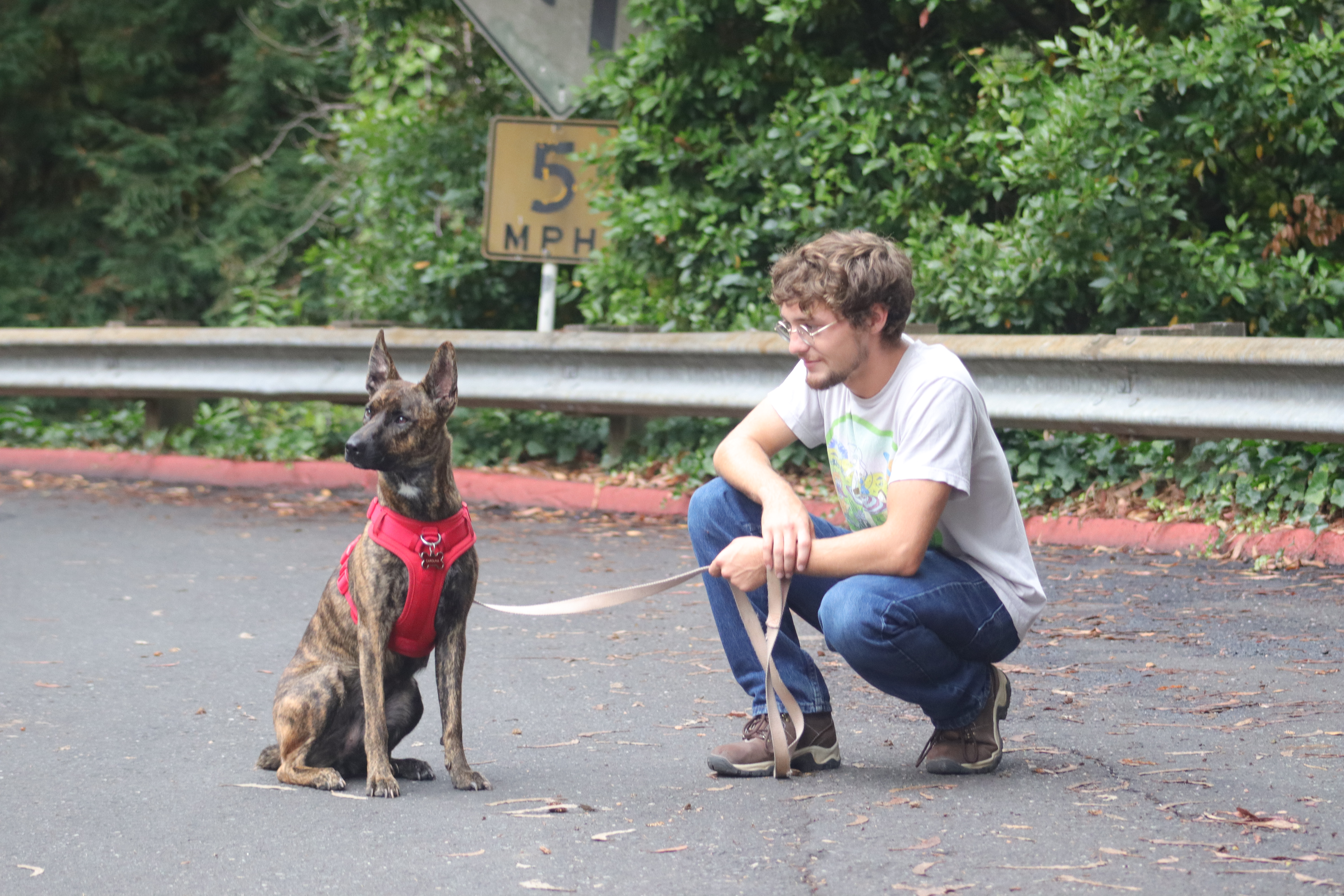

  • Community walks to raise suicide awareness

    Community walks to raise suicide awareness

    by Alex Anderson

    The American Foundation for Suicide Prevention hosted the Out of the Darkness Community Walk in Arcata with 230 registered walkers on Sept. 10th. Attendees shared their stories with one another, walking in solidarity. The walk consisted of a two mile loop around Arcata, passing by Cal Poly Humboldt and Arcata High School. 

    According to AFSP.org, the organization was formed in 1987 by a group of families who lost loved ones to suicide. The organization teamed up with researchers investigating suicide prevention and how suicide affects those left in its wake. This years Out of the Darkness Walk helped raise $17,393, which will help fund suicide prevention research, according to AFSP.org. The goal of these walks is to bring together those who have suffered loss, considered suicide, or have a desire to help the cause of suicide awareness and prevention. The walks are a place for a community to come together and have a welcoming place to discuss their stories.

    Staff Psychotherapist and Suicide Prevention Coordinator for Counseling & Psychological Services at Cal Poly Humboldt Nassie Danesh was in attendance for Sunday’s walk. Danesh joined the walk to honor those who have died by suicide and to bring hope to the community. She wants people to be aware of the resources available on campus for students who may be struggling. According to Danesh, enrolled students have access to short term psychotherapy, single session therapy (SST) and crisis intervention at CAPS on campus.

    “As a psychotherapist, my goal is to support those who suffer from suicidality, suicide ideation and mental health and to increase the community’s awareness about suicide,” Danesh said. “Connection is one of the most important factors to save lives.”

    Heather Freitas, a member of AFSP and chair of the walk for the Arcata event since its origin in 2015, offered information about potential local resources for those in the Humboldt community. Freitas listed the Department of Health and Human Services and United Indian Health Services as some of the local resources for people who strive to seek help. She spoke about the Suicide Crisis Lifeline at 988, something that she described as a great resource that is available 24 hours a day. Freitas explained why she walks. 

    “I walk in honor of my dad and friends that I’ve lost by suicide,” Freitas said. “I’ve lost six people by suicide.”

    Christina Huntress, the area director for the San Francisco/Bay area chapter was present at the event. Huntress shared some history of AFSP and the story of how she got involved in the movement. Speaking to the large crowd, Huntress explained how she lost a close friend named Eric to suicide, which drove her to get involved in suicide prevention. She explained how the walks open up a needed dialogue, revealing that she had not known that her mother struggled for over 30 years in silence until her first walk with fellow family members.

    “I walked to honor Eric that day, but I keep walking because of the conversations that I had at that very walk,” Huntress said. “And at that walk that day, I learned that my mom struggled for over 30 years in silence, and our family never spoke about her struggle because we didn’t know how to.” 

    Photo by Alex Anderson. Kyndra Harris kneeling down next to the tribute photo of her sister Kyla Harris, who was lost to suicide.

    Kyndra Harris, a first time walker, was happy to see the amount of people that showed up for the event to share their stories. Harris came to the event to show support to those in need and remember her father and older sister who were lost to suicide. Harris left a photo of her sister on the memorial board, with a note dedicated to her late sister, Kyla Harris which read:

    “My big sister, Kyla, my biggest inspiration and soulmate. The biggest, most contagious smile that filled any room with a heart of pure gold,” Harris wrote. “Back in her daddy’s arms again.”

  • Cannabis festival “Cannifest” brings buds together

    Cannabis festival “Cannifest” brings buds together

    by Andrés Felix Roméro

    As the sun was setting on the Eureka Waterfront, a few people in their boat called out to the festival-goers on the shore. Through shouts across the water, they requested some weed to enjoy on their aquatic cruise. One kind gentleman was more than happy to oblige and passed along a joint to one of the boatmen who swam to shore on his boogie board. This was just one of many instances of communal actions and feelings present at the 2023 Cannifest, which ran from Sept. 9th-10th.

    For the first time since the pandemic, a cannabis-centric festival returned to Humboldt county with the three-day celebration of the plant and the culture surrounding it through Cannifest. Primarily run and organized by Joe Moran and Steve Gieder, the festival was a hit to those who love to spark, smoke, eat and other methods of enjoying weed. There was no lack of colorful and engaging sights with plenty of music, food, art, activities and of course, cannabis.

    Day 1

    For some, the Cannifest celebrations began not in Humboldt, but on Friday, Sept. 9th in San Francisco. The Roast and Toast bus tour aspect of Cannifest was helmed by the founder of Humboldt Cannabis Tours, Matt Kurth. He acted as the group’s tour guide, spouting fun facts about the surroundings, as the bus reenacted the pilgrimage many people took following the San Francisco Summer of Love in 1967.

    Photo by Andrés Felix Roméro. Snail-Nail Dab Company representative shows off his dab rig that is powered by his Bigfoot statue.

     “There’s always a group of people where mainstream society doesn’t work for them,” said Kurth. “Because Summer of Love only lasted three months and fell apart, some of the people still wanted to find a new way of living because they needed it. So, they started the Back to the Land Movement, leaving the city and going to try to find new ways of living out in the country. The first cheap land was northern Mendo and southern Humboldt, that’s why [the people] stopped there”

    The bus made stops at Santa Rosa dispensary OrganiCann and the Hopland restaurant Rock Seas. At these stops, the passengers happily shared their buds with each other. The passengers ate lunch and took dabs with fruit pairings to enhance the turpentines. Self-described gonzo journalist Cameron Hussain described the desire for community that many of the passengers and cannabis lovers carry, and the importance of accurate representation of the cannabis community.

    “We are contributing to the narrative of the culture just by being here,” said Hussain. “[The community has] been so long underground, we are hungry to connect and enjoy this plant we all love.”

    The bus made its final stop for the day at the Red Lion hotel in Eureka so that the passengers could get ready for the first true party of the weekend, the Cannifest Gala at the historic Eureka Theater. At the Gala, there was cannabis history trivia, the winners of the Cannifest competitions were announced, and the night ended with performances by local artists such as Flow J. Simpson, Eli Fowler, and Object Heavy. 

    Day 2 and 3

    Event Highlights

    The Cannifest Festival properly kicked off Saturday, Sept. 9th. Even for any seasoned festival goers, it would be difficult to experience everything the venue and 50-plus booths had to offer. The backdrop of the Eureka Waterfront was soothing to those wanting to enjoy delicious, diverse food from taco trucks and soul food booths with a calm breeze. A favorite by many was a locally owned Native women business, Frybread Love, which offered fry bread topped with lettuce, sour cream, ground beef and chili beans.

    Besides people sitting and laughing while eating, many community aspects of the event were present thanks to the constant sharing of cannabis between everyone. Everywhere you looked, there were smiling people passing smoking blunts and joints. Plenty of booths offered free dabs to anyone who came by. One gentle soul only known by Big L was rolling free blunts for any passerby to enjoy. 

    Photo by Andrés Felix Roméro. Festival-goer dressed as a stoner icon, Towlie from South Park, enjoys quality time with his class piece.

    The ability to enjoy the event was diverse. Those with a Sativa high could enjoy the music and dancing, and those with an Indica low had plenty of comfortable seats to enjoy. Katie Dalmasso attended Cannifest after just returning from Burning Man, and remarked how the festival was great to reset following the hectic desert festival.

    “What a beautiful way to decompress, coming to a cannabis festival right after [Burning Man],” said Dalmasso. “It’s kind of the same feeling [as Burning Man] but more relaxed, everyone getting together as a community and having fun and supporting each other.”

    In many aspects of cannabis culture, feelings and desires for healing are present, which was case-and-point with the arts at the event. Many who were dancing at one of the two stages looked carefree and happy in their outfits that were peak Humboldt. Festival-goers were treated to music by Hip-Hop legendary duo Dead Prez, and Grammy-award winning Reggae rapper Kabaka Pyramid. 

    Healing and Community Aspects

    Besides music, plenty of other art forms were present. There was a series of amazing murals painted with a variety of different techniques as part of an art competition centered on social justice. Other amazing mediums included dancing, paintings on large canvases, and a glassblower doing his work live. There were plenty of activities to participate in, such as massage chairs, yoga and even a mobile barber.

    Not suprining to Humboldt and Cannabis culture, the event was welcoming not just to bipeds, but to our four-legged canine friends. As diverse as the arts were in Cannifest, dogs of all breeds and sizes accompanied their owners. One individual brought his best friend Roscoe, and also found healing and solace through cannabis culture following a tumultuous childhood, was Jake “Big Jake” Lawrence, a judge for Cannifest and the founder of the non-profit MedVets.

    “My parents used to sell methamphetamine to the cops, I grew up in hell-on-earth, [what] I’ve been through makes most grown men cry,” said Big Jake. “This entire community is part of my larger family. It’s really about the community and supporting the community as a whole that helped [Cannifest] actually exist.”

    These feelings of hegemony, community, and love was the endgame of Cannifest founder and executive director, Steve Gieder.

    “I think it’s important [we have events like Cannifest] because of so many reasons,” Said Geider, “but one of them is bringing people together socially. The way that we do things like dancing, eating and partaking [in this community]. When people dance together and get loose it takes us back to being primal. It brings us back to who we really are as people and can be and can be an opportunity for people to get comfortable expressing themselves in all these different ways, and that helps us learn and grow together.”

  • New food truck serving a Japanese-Mexican fusion cuisine

    New food truck serving a Japanese-Mexican fusion cuisine

    by Maranda Vargas

    Have you visited Cali Crew Hibachi Grill and Sushi yet? There’s a new food truck serving delicious Japanese cuisine parked in front of Pacific Outfitters in Eureka. 

    Cali Crew Hibachi Grill and Sushi has only been operating for two months and is the project of Alejandra Romero and Edir Nevaro. They began planning the business last year as a way to have more freedom to be with their young family, while also pursuing their culinary passion.

    As I waited in line I could hear crisp sizzling sounds from the grill, sending my belly rumbling. The rich smell of garlic butter that all the meat is cooked in wafted from the kitchen.  

    The menu boasts grilled steak, chicken, shrimp and even scallop combinations along with a medley of sauces. I had my eyes on the chicken hibachi bowl with a side of spicy mayo and sriracha. 

    Photo by Maranda Vargas. Alejandra Romero, owner of Cali Crew Hibachi Grill & Sushi, smiling at the order window.

    Having only been in business two months, there was already a steady flow of customers. Romero smiled warmly as she handed me my chicken bowl. The bag felt heavy as I carried it away to dig in – always a good sign. Steam billowed out from the bowl as I removed the lid. 

    Photo by Maranda Vargas. A grilled chicken hibachi bowl from Cali Crew Hibachi Grill & Sushi next to a side of spicy mayo.

           There was a generous amount of seasoned grilled chicken on top of rice, lined with fresh broccoli, zucchini, onions and carrots all grilled to perfection. Not mushy, not hard; the perfect al dente. A side of lemon wedge brightened the flavor and with the addition of the sauce, the dish was next level. 

    Romero’s favorite menu item is a grilled steak hibachi burrito, which can be found on the “secret menu”. 

      “It’s my favorite,” said Romero. “There is grilled steak, noodles, veggies, rice and a chipotle mayo.”

    If you’re craving the experience of a new treat, you can find Cali Crew Hibachi and Sushi at Pacific Outfitters parking lot in Eureka during the week, or at The Bigfoot Taproom on Saturdays. 

  • Water hazards in Humboldt County 

    Water hazards in Humboldt County 

    by Griffin Mancuso

    One of the perks of living in Humboldt County is access to the lush, sprawling redwoods and the coast, both of which are teeming with wildlife and great photo opportunities. With multiple beaches and rivers nearby, it may be tempting to brave the chilly waters with friends. If this is something you are interested in, do so at your own risk.

    BLUE-GREEN ALGAE

    The most prominent risks you will face in Humboldt’s waters are the blue-green algae in lakes and rivers, and rough currents and sneaker waves in the ocean. Blue-green algae, also known as cyanobacteria, is something to watch out for during warmer weather in Humboldt. Its growth is fostered by nitrogen or phosphorus, which can be spread by runoff from cities during rainstorms. It can turn the water into a variety of colors and is more likely to bloom in slow-moving or still water at warmer temperatures, but it can also grow in the ocean with the right conditions. 

    It can also be incredibly toxic to you and your pets if ingested. The Associate Dean of Marine Operations at Cal Poly Humboldt, Rick Zechman, says that even eating clams, oysters or mussels that have ingested toxic blue-green algae can have serious consequences.

    “If you eat something that’s been concentrating Alexandrium or another toxic [genus of algae], your tongue starts to go numb, and your throat can become somewhat paralyzed, and it can cause you to stop breathing,” Zechman said. “ It can make you really sick, like vomiting and diarrhea. It can cause short-term memory loss. That’s where this idea of amnesic shellfish poisoning comes from.” 

    While blue-green algae isn’t always toxic, there is no way to identify when it is or isn’t. Stay away from the water if it has a bad smell, is discolored, has green foam or mats on the surface, or there are many dead fish or animals nearby.

    SNEAKER WAVES

    While Humboldt’s beaches offer plenty to explore, it is critical to keep a close eye on the waves. Sneaker waves, which appear suddenly and move very fast, are only seen in Northern California, Canada and Australia. Bridget Nichols, the Associate Director for Campus Recreation, emphasizes the importance of having awareness of your surroundings at the beach.

    “If people aren’t keeping their eye on the ocean, they don’t really know the power and the impact,” Nichols said. “Trying to run away from a sneaker wave on a really steep beach – such as a place where you might go agate hunting or something like that – it’s going to be very different than at Moonstone Beach, where it’s a flat beach and you’re able to move a lot quicker through the sand.”

    Photo by Griffin Mancuso. A sign warning visitors of the risks they face by standing on the jetty at the Samoa Dunes Recreation Area.

    Tamara Barriquand, an assistant professor in oceanography and physics, explains the science behind sneaker waves and why they are more of a concern at steeper beaches.

    “As a wave is coming into shore, it behaves as what we call a deep water wave. And then as it gets below, half the wave, like the depth… it’s now a transitional wave that’s starting to feel the bottom,” Barriquad said. “And so if that gets really shallow, really fast, all that energy is getting pushed up into the wave. And so you can get this wave that can get generated very, very big very, very quickly.” 

    Sneaker waves are strong enough to knock you over and pull you into the ocean. These can occur no matter how calm the ocean appears.

    COLD WATER AND RIP CURRENTS

    The immediate concerns while swimming are the cold temperatures and rip currents. When the body is suddenly submerged in cold water, it can go into cold shock, which causes temporary muscle paralysis. Nichols strongly recommends wearing a life jacket when going kayaking or rafting in rivers. 

    “When you first fall in the water your immediate reaction is to do a big inhale of breath and if you’re underwater, you can easily choke. So [the life jacket] is buying you time to get over and cough… it’s buying you time to orient yourself to your boat and get back to it. And if you can’t get back inside of the boat, it’s buying you time when your muscles stop working for a second.”

    Grace Oliva, the Assistant Outdoor Program Coordinator and US Sailing Instructor for Center Activities, explains how rip currents are formed. 

    “There will be a small divot in the beach right where the shoreline is, right where the water meets the sandy part. Over time, that can actually cause a deeper section in the beach… So when the water comes up on the beach from a wave, water always likes to go the path of least resistance and if it can go faster [or] farther, it will.”

    Thankfully, it is possible to identify rip currents from the beach. Barriquand describes the visual signs to look out for, including white foamy water that builds up and is pulled out beyond the breaking waves, resulting in a noticeable difference in coloration between sections of water.

    “The other thing you’ll see is right where the rip current is going, there won’t be any waves breaking in that location,” Barriquand said.

    Rip currents are often dangerous not because of their strength, but because swimmers don’t know what to do in a rip current. If you find yourself caught in a rip current, Gracie Oliva strongly discourages students from trying to escape or swim against it.

     “You kind of just ride it like a lazy river,” Oliva said. “And then once you’re out of it, you’ll feel it. You’ll pretty much stop moving as much and then you can swim parallel to shore, and then you can swim into shore.”

    If your friend or pet is caught in a rip current, attempting to rescue them can also put you in danger.

    TSUNAMIS 

    The least common but most dangerous beach hazard is tsunamis. While living in earthquake country puts Humboldt at a higher risk of experiencing tsunamis, they can sometimes be caused by other events, including landslides and storms. While tsunamis can travel from far across the ocean, they are easier to spot as they approach the shore. 

    “If the water got really, really low really, really fast, then you’re seeing the trough of the tsunami,” Barriquand said. “And behind that is going to be a big wall of water.” 

    If you notice these signs at the beach, head to high ground immediately.

    When planning a trip to the beach, take the tide into account to prevent yourself from getting stranded, and read the surf report if you plan on going swimming. Be aware of cliffs and sudden drops while hiking near the beach and never turn your back on the waves once you’re on the shore. 

    If you are traveling somewhere with no reception, tell someone where you will be. In the water, a wetsuit or life jacket is recommended even for experienced swimmers. Most beaches in Humboldt will have blue signs detailing the potential hazards there and how to handle them. In the rare case of a tsunami, learn your local evacuation routes.

    BloomWatch App for reporting toxic algal blooms:

    NOAA Coastal Hazards Resources:

    https://www.noaa.gov/ocean-and-coastal-tools-sanctuary-permits-charts-and-images

    SurfLine for daily surf reports:

    https://www.surfline.com/

    California Tsunami Preparedness Guide:

    https://cadoc.maps.arcgis.com/apps/MapSeries/index.html?appid=61bc8d30b53e4fb5927ae199d31f5aef

  • The Eureka Street Art Festival

    The Eureka Street Art Festival

    by Maranda Vargas

    If you have driven through Eureka, you have probably seen at least one spectacular mural along your travels. The beyond life size artwork peeks out from historic buildings all the way to bridge pilings, overpasses, park benches and sidewalks. The Eureka Street Art Festival is a week-long event where local and international artists transform public spaces into an immersive art experience for the community. 

    The quaint coastal town of Eureka boasts a historic district known as Old Town that’s nestled by Humboldt Bay. Old Town is filled with Victorian era architecture and a variety of art galleries, unique shops, bookstores and a myriad of locally crafted fare. Art installations and murals have become part of the Old Town ambience since its designation as a California Cultural Arts District.

     In 2017, The Black Faun Gallery commissioned two large murals to be created in Old Town. The buzz and interest in the new murals had created an opportunity for further art tourism to the area. Seeing an interest from the community, Michelle Cartledge, Swan Asbury and Jenna Catsos created the Eureka Street Art Festival the very next year. 

    “We saw a desire for murals in the area and we realized that this could really benefit the community,” said Catsos. “We work to make sure that everyone who passes through Eureka can see themselves in the artwork that we present in the city.”

    The festival just completed its sixth year and has added at least 100 new murals to Eureka since its induction. Catsos says one of her passions is to help develop the next generation of mural artists locally, as well as artists of other media transferring their skills into becoming a mural artist. The festival website has information on how to apply to be an artist as well as an apprenticeship program. 

    Photo by Maranda Vargas. ‘Tortured Beauty’ by Artist Tony Diaz for the 2021 Eureka Street Art Festival.

    Local artist Tony Diaz of Ripe Mind Productions has created several murals for the festival. Diaz graduated from Humboldt State University with a degree in the Arts,  with printmaking and graphic design being his focus at that time. It wasn’t until later that he would transform his printmaking skills into a new passion of painting murals. Diaz created his first mural for the 2019 Eureka Street Art Festival. After the first mural, his interest snowballed into a career. 

    The vibrant mural titled ‘Cruising for a groovin’ featured in this year’s festival was one of Diaz’ creations. Diaz invited his fiancé and younger sister to be on his painting crew for the event. The larger than life mural took the crew a week of ten-hour days to complete. Diaz as a college student was uncertain if he was going to be successful having a career as an artist. 

    Photo by Maranda Vargas. ‘Cruising for a Groovin”painted by Artist Tony Diaz for the Eureka Street Art Festival.

    “It’s all about putting yourself out there and just really not giving up,” Diaz said. “If you really want to do it, you’re gonna find that you can make as much money if you just take the leap, and sometimes it’s great to take the leap.” 

    The Eureka Street Art Festival commissions both local and international artists to create murals throughout Eureka. The mission of the project is to create accessible art while enlivening public spaces, revitalizing the community and attracting art tourism to Eureka.

    The murals from this year’s festival have all been completed and are ready for your viewing pleasure. You can find pictures of past murals along with a map of all murals and the names of the artists on the Eureka Street Art Festival website.

  • Life on campus

    Life on campus

    by Alina Ferguson

    I lived on campus for two years without a car. I am now currently living off campus, in another city actually, with a car and I can say without a doubt, to me, living on campus was actually a very nice experience. I will explain why, and I promise it will make sense. 

    I miss the convenience of living on campus. I could walk across the grounds in ten minutes, which is good because if it’s late at night, and I want to visit a girlfriend, it is not a problem. I felt safe and confident walking long distances across campus. 

    It’s just about accessibility and location to me; I could easily rest after class, it’s been a long class day but I still have another couple to go. I could chill in my room, change my clothes, eat, maybe get to watch an episode of my favorite TV show and still make it to class EARLY. Campus is also centrally located, making it easy to walk into town or go to the grocery store. You can explore and get in some exercise, two birds with one stone. 

    Living off-campus makes me long for the redwoods. Living on-campus allowed me to go on a hike between classes. I am in the redwoods after all, and it is amazing that we have trails here in our backyard when living in the dorms. 

    I also feel like most on-campus quarrels begin with sharing a room. For many, it’s their first time  doing so. I’ve been used to sharing a room my whole life, so it was never an issue for me. Having an older sister really prepared me for any roommate, as I learned how to communicate efficiently, calmly and just learned to let some things go. Yes, you may get a bunk, or a roommate, but at least if you’re locked out, someone can let you in. 

    Of course, living on-campus does require you to make some compromises, like the fire alarms. They do not stop unless an RA comes and calls someone else. With maintenance requests, they did do good work when requested, with the work being done quickly and efficiently. Also one of the maintenance men was really cute. I miss that. 

    Okay, hear me out on this one, in a way, you save money, because you have to buy less. If you are anything like me – I sincerely hope you are not – then a trip to Target for one thing turns into buying so much that I need a UHaul to bring it back, and guess what? There is no room in the dorms for all of that stuff. So, it keeps me from buying an insane amount of junk, which I have been doing since moving off-campus. I apparently need 6 pillows and 40 wooden bowls, because I’m into the look of wood currently.  I love wood, wooden bowls, wooden plates, just wood. 


    At the end of the day, for me it is all about nostalgia. Campus was the first place I lived by myself, without my parents. The convenience and accessibility campus gave me makes me miss it now.