With President Jackson and Dr. Frankovich at opposite ends of agreement on in person classes, students caught in the middle feel COVID-19 is inevitable.
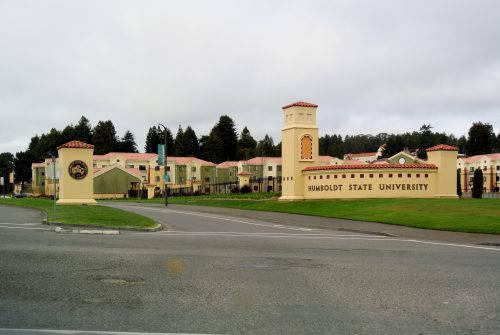
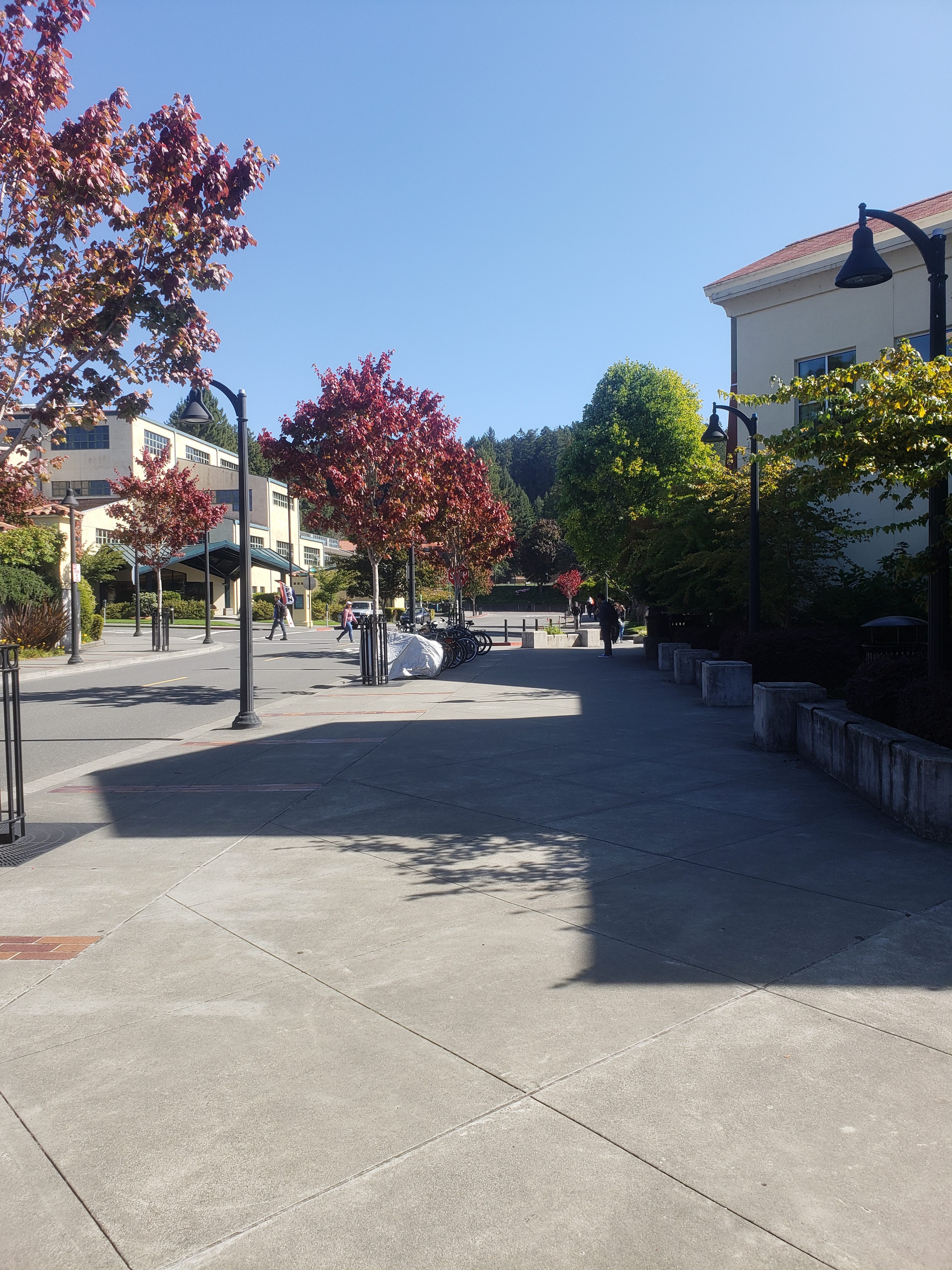
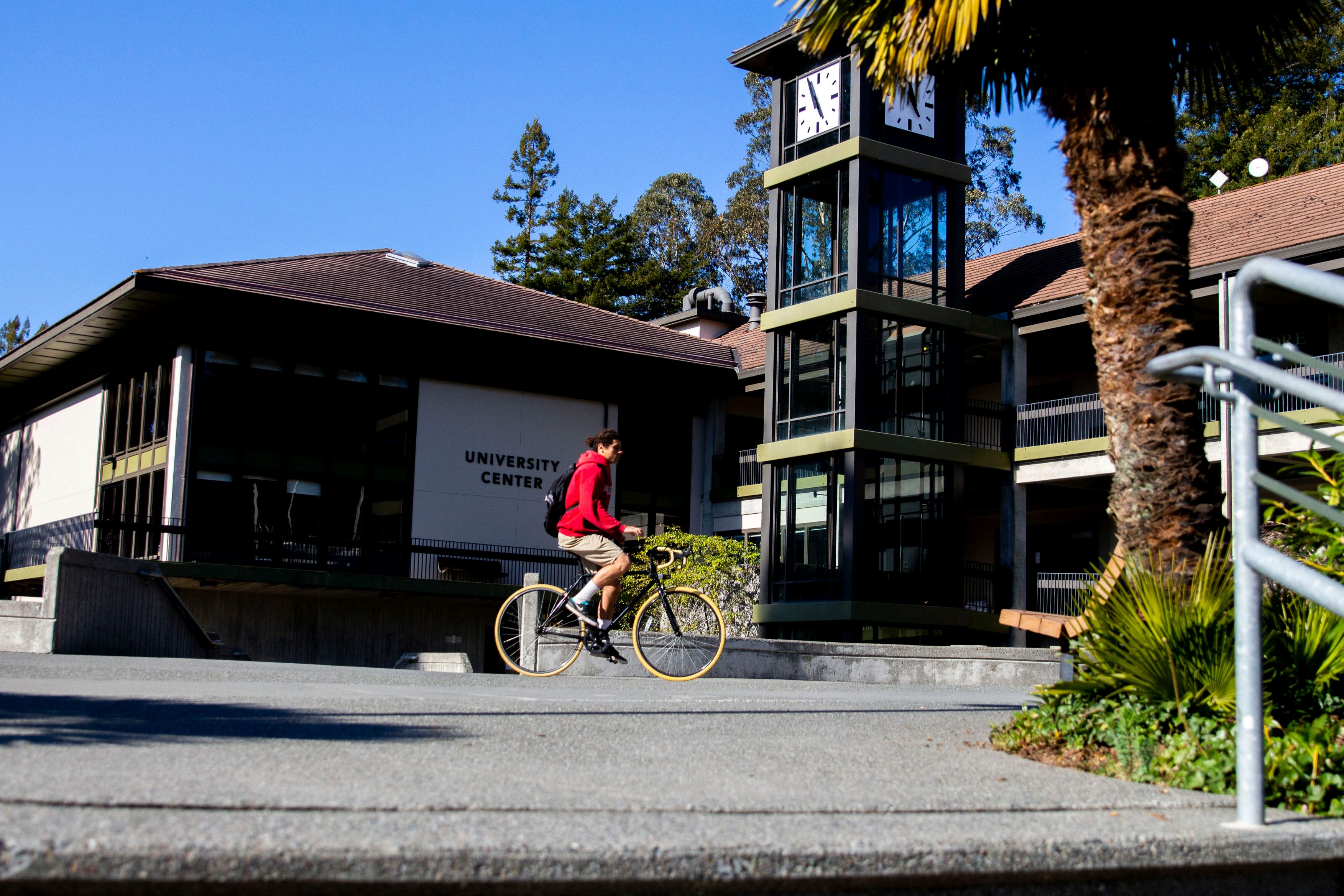
As Humboldt State University moves forward with a hybrid fall 2020-21 semester, starting online before transitioning to an in-person format from Sep. 8 until Nov. 6, community leaders are unsure about the future safety of students on campus.
In a recent set of emails between HSU President Tom Jackson and Humboldt County Health Officer Dr. Teresa Frankovich, made available via Freedom of Information Act requests to the Lost Coast Outpost and North Coast Journal, at times the two leaders appeared at odds with how to proceed with the semester.
Frankovich stated concerns with students returning to dorms and classes, mainly that enclosed shared spaces like dorm kitchens and bathrooms presented an increased risk of spreading infection. Frankovich asked for a possible pause to the start of the semester, so that COVID-19 testing labs within the county could properly prepare for the increased influx of new and returning students.
Jackson replied within the same email chain initially with confusion about the timing of the sudden request before attempting to reassure HSU was following all local and state ordinances regarding proper social distancing and safety.
During the Aug. 18 media availability briefing, Frankovich addressed the emails stating “Let me make one thing clear: This is not a case of ‘othering’. It is a case of trying to make safe choices for the entire community in the midst of a pandemic. This is about trying to juggle competing needs for testing resources across skilled nursing facilities, agricultural settings, tribal communities, local public schools, businesses and organizations, and the community as a whole.”
Frankovich also reiterated that the Humboldt County Health Office was still confident in HSU’s plans and ability to handle the situation, praising the HSU planning team for their continued effort.
“I think they’re working on constructing an environment that is as safe as possible considering the pandemic that we’re in,” Frankovich said.
Those plans were put to the test when on Aug. 17, as students began moving into the dorms, a campus-wide email was sent out stating that HSU had it’s first confirmed COVID-19 case.
By the end of the week, two more students and a faculty member tested positive as well, though emails state that the faculty member’s case was not connected to student move-ins.
While the identities of those who tested positive are being withheld for privacy, an email notification sent out on Aug. 20 said “HSU is working closely with Humboldt County Public Health, which will determine whether there are members of the campus community who need to be advised of their contact with affected people.”
Testing will continue for students who have moved in during a fourteen-day quarantine period to ensure safety.
Blake Hefner, a biology major and resident advisor for the College Creek dorms, expressed both concern and hope after reading the initial emails regarding the first confirmed case.
“If they’re willing to bring students during a pandemic, we are going to see how they are going to handle that and how they are going to value our lives,” Hefner said.
Lori Alcantara, a journalism major, said that as soon as she saw the email, she went to show her roommate.
“We were both kinda surprised that it was so quick,” Alcantara said. “At the same time, I feel relieved that they’re keeping track and not just trying to pretend that it isn’t happening.
Alcantara felt comfortable with the idea of in-person classes, trusting the students around her and the university to accept the new social responsibility of sanitizing workplaces and classrooms. Alcantara had one in-person class for the fall semester and stated that the professor had already reached out and reassured students that proper cleaning will occur before students arrive and when they leave.
“I think what will matter then will be everyone’s ability to clean after themselves, use hand sanitizer and wear their masks,” Alcantara said. “I think if everyone could do that… then I’m not particularly worried.”
Frankovich said during her media availability briefing that “…the presence of this case doesn’t change our plan going forward except that we want to make sure we are doing the testing and trying to monitor progress on isolation quarantine should it occur.”
Hefner felt that the cases meant that students had to step up to the occasion and help shoulder the responsibility and pressure.
“It’s a lot of realizing that this is bigger than us as people,” Hefner said. “Moving back means you’re part of a community now, and being part of that community you have to respect the guidelines that are going to take place.”
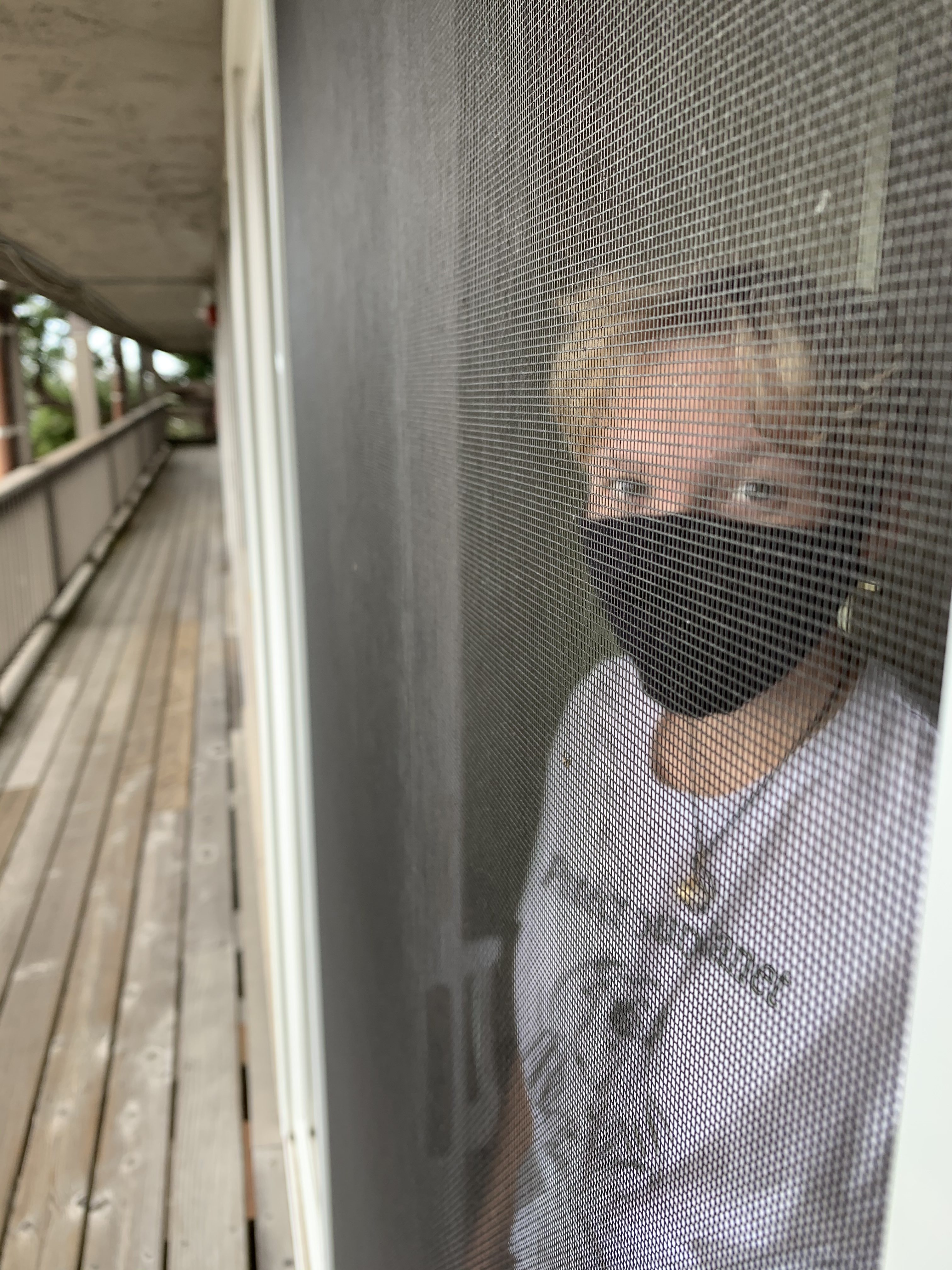
After losing the second half of my senior year to the pandemic and missing out on new friendships at a new school, I begin my college journey isolated in a campus apartment, where my only access to the outside world is through a screen door I’m not allowed to open.
Coming from dusty and deserted Western-Colorado, all I’ve wanted to do since I was accepted to Humboldt State University is explore. An area surrounded by redwood forests and ocean was a dream alone, but it’s also home to the majestic, wild banana slug – I had to see one! But first, there were a few things to do.
On Aug. 17, I took my mandatory COVID-19 test and excitedly began moving things into my dorm, arranging a plethora of houseplants and a cozy corner for my pet tree frog, Terra. Very quickly, this became my new home. Aug. 18 was orientation day – I’d quickly adjusted and felt ready to conquer the world at HSU. That afternoon, I explored campus and the forest, making not just one, but an entire slimy armful of banana slug friends. My dream had come true, at the cost of only a few tiny slug-bites.
Before my parents returned home on Aug. 19, we met at a local coffee shop to say goodbye; that’s when I received the call informing me my COVID-19 test had come back positive. It was as if suddenly the world started spinning; I was speechless. I never imagined it would be me who caught COVID-19; afterall I’m young and otherwise healthy. But this pandemic has taught us what we think we know to be true is often not the case.
I wish I could say we rushed to my dorm, but instead, we stepped out of line and just stood together in shock. It occurred to me, I’d experienced possible symptoms of the virus earlier in the week – shortness of breath, nausea, low appetite, fatigue and headaches – however, each is also a symptom of my anxiety-disorder and it’s unclear which was the cause. My parents asked questions, but all I could think was of myself and every person I’d seen, connected by a piece in my contaminated puzzle. Suddenly, guilt and anxiety filled my entire being. I began to suffer a panic attack.
It took a moment to start my car as I fought to catch my breath; my whole body felt as if it were collapsing. I called my boyfriend in Colorado but all he could understand was how afraid I was.
This fear was never for myself; this fear was for others. Fear for my parents, for my friends, for my boyfriend and his family – fear for people I passed in the grocery store and for those I worked with. I never worried about myself. I worry about the damage I caused, unaware I carried the virus. It all felt like my fault. It felt like I’d let down the entire world.
I was moved to a new room where I said goodbye to my parents and the company of others for at least a week. Over a thousand miles from home and yet it doesn’t seem nearly as far as the four walls separating me from beginning this new chapter of my life.
In a state of constant fatigue and boredom, I sleep most of the day, only waking when my phone rings. Doctors, health centers and housing, all call several times each day asking similar questions and often I can’t tell them apart. When you’re only allowed in one place, you don’t have much aside from your thoughts. Is this my fault? Did I do something wrong? Should I stay quiet about it? When will they let me leave this room?
My new room has a kitchen and a bathroom, a beautiful view through my screen door and plenty of food. HSU staff checks in consistently, doing everything they can to help me through this. I feel like I have a whole team of friends working to guarantee my health and safety.
Despite everyone’s help, I’m still on my own. My main source of optimism is knowing my isolation is protecting others. Recognizing how our decisions affect others is the first step in preventing the spread. Sure, a mask is uncomfortable, but so is being locked in a room for seven days and so is losing someone you love because precautions weren’t taken.
For those who don’t believe in COVID-19, it is real. It is harmful. It is possible for anyone to contract. We all believe we’re invincible until we’re not. My battle with COVID-19 continues, but I know someday I‘ll be able to step outside again and I will find another banana slug.
Actions are being taken to bring about change in a country dominated by racism and police brutality
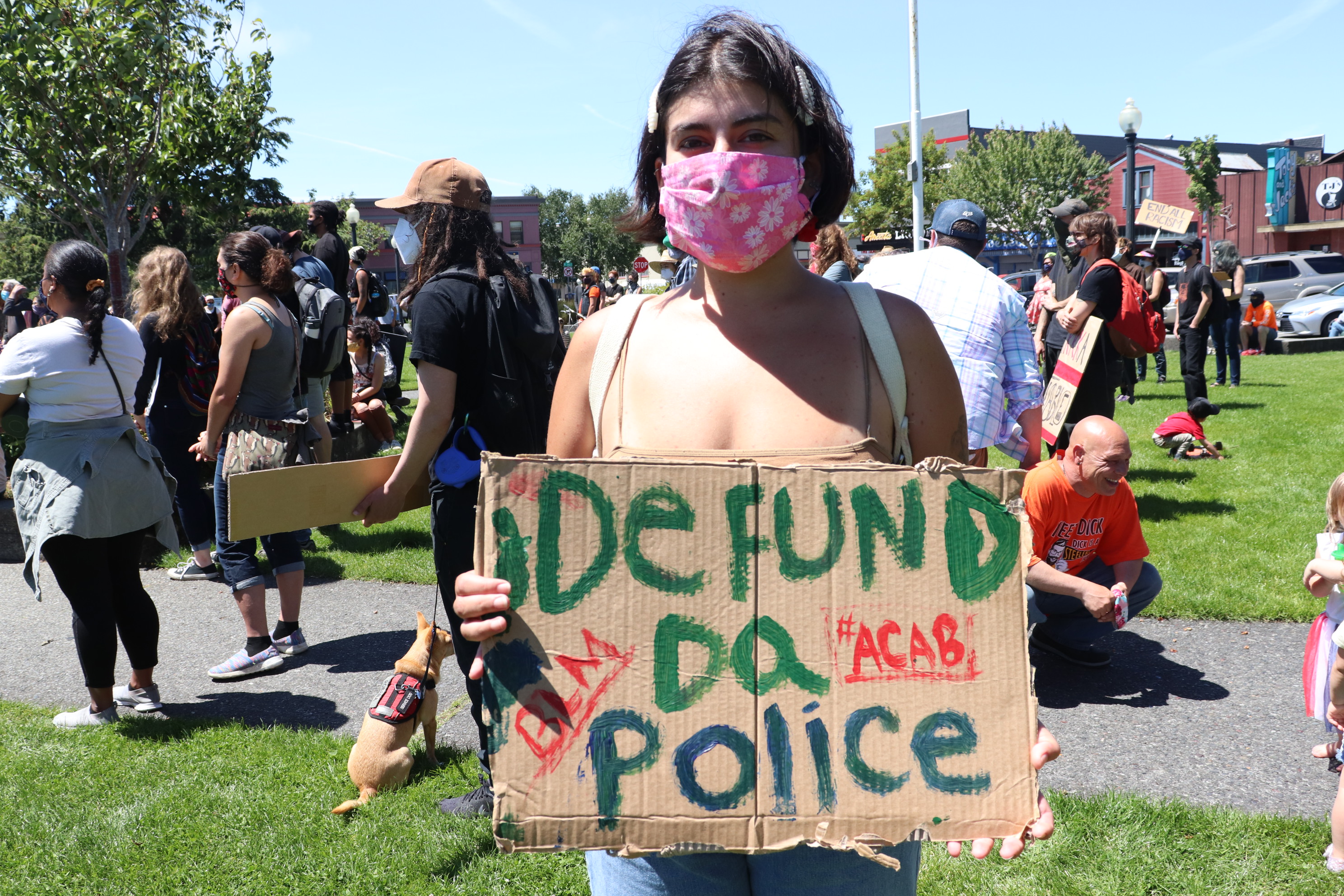
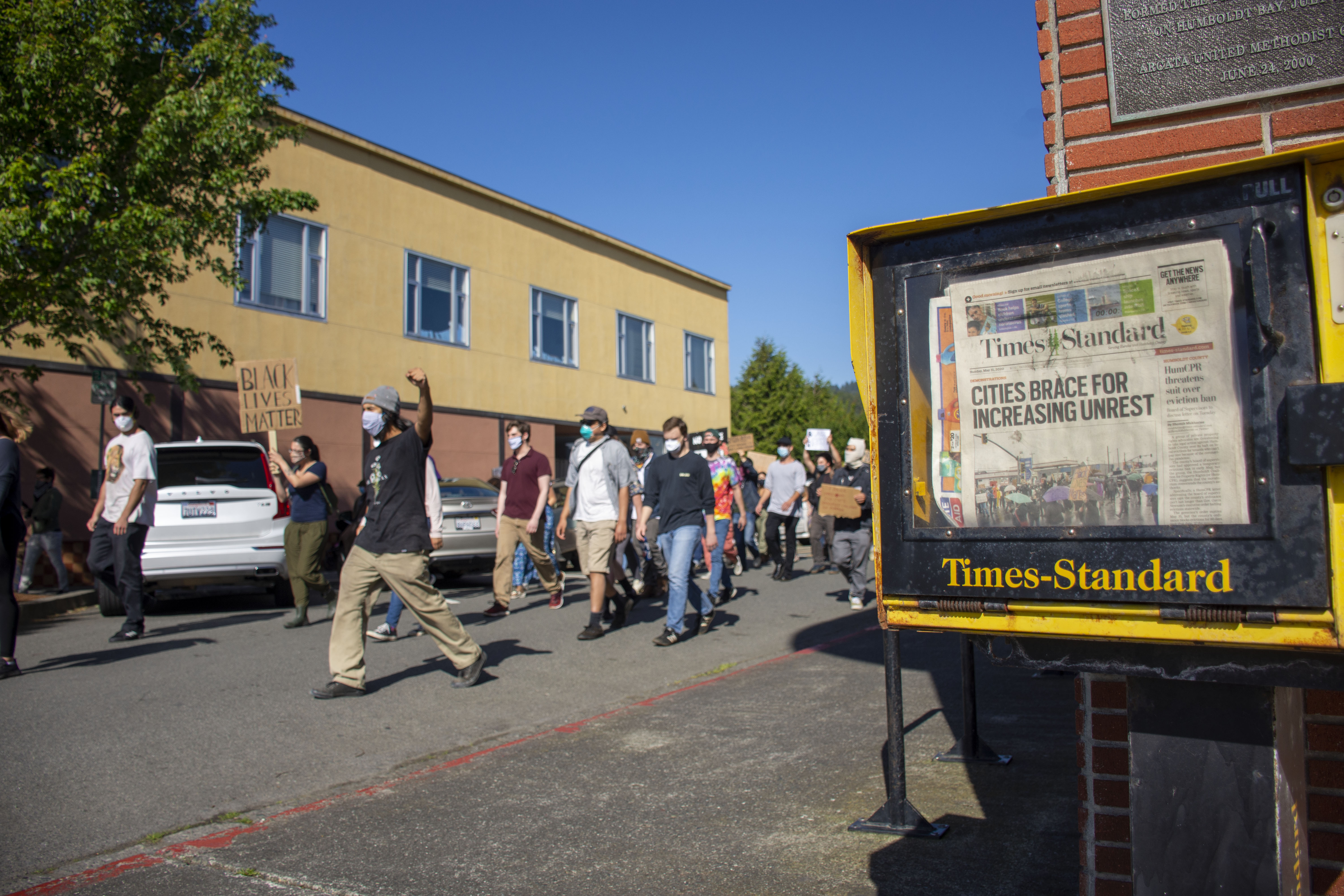
Fueled by the Josiah Lawson case and the George Floyd murder, Humboldt State University students are taking to the internet and the streets in protest of systemic racism. Students and community members alike are actively displaying their pent-up anger and fear surrounding being marginalized.
Kiara Mixon, a fourth-year psychology student, has been trying to educate herself and those around her about what’s going on. Namely, she has been sharing different resources with people who are unaware of the Black Lives Matter movement and watching documentaries about racism to get a deeper insight into it.
While she hasn’t really been going out in the streets and protesting, she has still seen both sides of the movement.
“I see people who are of color protesting and, truthfully, it means a lot that those people are standing up when it’s an issue for them as well,” Mixon said. “But I’ve also had people who aren’t really speaking up or haven’t said anything or don’t really have a personal opinion on the matter and that makes me a little bit uncomfortable because you never know where they’re standing.”
Senior psychology major Edwin Rosales has become more outspoken and animated in the wake of the revamped BLM movement. He lives with his mother’s side of the family and has gone back and forth with them about everything going on.
“After talking with them, it’s kind of difficult to talk to them about it because they’re very, you know, still in the olden ways and are very ignorant about it,” Rosales said. “So, I’ve had to be outspoken about it and be like ‘You know what? You’re not understanding the cause’ or having to explain to them what it is.”
Rosales has carried his new-found, forthright persona around racism into the land of social media as well.
“I never really posted about that stuff,” Rosales said. “I’m not helping if I don’t say anything, and so if I am posting about something, maybe someone will read it and maybe someone will help in some way.”
Julianne Blandford is a senior majoring in child development. She is feeling a lot of mixed emotions in the midst of the string of racist events that have occurred from the George Floyd murder to the leaked video of three HSU students making racist taunts toward Black people. She is attending protests and doing everything she can to move the conversation about racism along.
“It is my time to sit down and listen and also stand up for those who can’t speak,” Blandford said.
Blandford recognizes her own status but also wants to work with those who are being suppressed.
“I’m seeing it as an opportunity to continue to create change, create a more peaceful place to live, create new systems that aren’t founded upon racism, and a world where no-one has to live in fear,” Blandford said.
“We need to redistribute resources and really build communities.”
Dr. Ramona J.J. Bell
Dr. Ramona J.J. Bell, a critical race and gender studies professor, believes that there are a number of factors to look at that are feeding into a racist America.
“We’re a country where we put so much money into our military, but there’s people without health care, so we concentrate on, you know, defending the country,” Bell said. “But we have to reconfigure and reimagine what that really means to defend the country, to defend America.”
Bell emphasized the importance of unifying communities in a country where the opposite is happening at the hands of the police.
“We need to redistribute resources and really build communities,” Bell said. “When you are killing black folks in communities and the police are killing us, that’s not building our community — that’s killing our community. So we have to look at ways in which we can build America because our country was built off the backs of Black people, particularly during the Holocaust of enslavement.”
Bell recognized a need for change in America when it comes to race and embraced the protests that have spawned from it.
“We have to revisit America’s notion of belonging and we have to revisit race in America,” Bell said. “There’s never been a real conversation about race and racism in America. And I think the protests going on all over the country, all over the world are telling us something’s wrong and it needs to be fixed.”
More than anything, Bell emphasized that we are all in this fight together, no matter the color of your skin.
“That’s part of the fight. That’s part of the struggle to get people to understand that Black lives matter,” Bell said. “It’s about letting us be free to live lives like America has promised.”
Two Humboldt State University Students are Suspended from Campus Organizations
A video depicting three Humboldt State University students using the N-word multiple times and bullying a student’s skin was posted to Instagram. HSU’s administration released an official statement suspending two of the students from participating in their campus organizations.
The video was posted to an Instagram account run by HSU student, Victoria,“Vicky,” Ah-You. She posted the video June 3, the day it was sent to her from a friend, who preferred to remain anonymous. Ah-You stated that the video was recorded prior to her post and hesitated when originally sent it.
“I can’t reveal my source but a friend of mine sent it[the video] to me to use my platform to speak. She was too afraid to use her own platform,” Ah-You said. “I believe the video was made at the end of 2019 but it was never spoke on because people felt uncomfortable.”
Ah-You’s intention behind posting the video was to expose the behavior occurring towards people of color in Humboldt County.
“I released the video because I am tired of being silent myself and I know a lot of my brothers and sisters, Black and of color, out here at Humboldt University are afraid as well,” Ah-You said. “So I released the video to make a solid statement that we won’t stand for it no longer.”
Marley Peri, William Blohm and Vincenzo Jardino were the students shown in the racist video. Peri and Blohm participated in extracurricular activities, such as HSU Spirit Squad and the Chi Phi fraternity. Both were suspended from further participation.
After the video was posted, Peri and Blohm deleted their social media accounts after being tagged and identified as the people responsible for the racist behavior.
“If I’m being honest, I understand why the students took down their social media accounts. It caused a lot of outrage,” Ah-You said. “They received a lot of threats and I didn’t put that out there for them to receive threats. I put that out there for them to be checked. I think it was very cowardly to take down their accounts because if you’re going to make a creative video stating those racial slurs, you should be willing to stand behind it and stand on it.”
Ah-You stated that Peri posted an apology on Twitter but believes that’s not enough. Ah-You and her friends have also reached out to HSU Spirit Squad and Chi Phi fraternity but got no response from them either.
The current consequences for the students is suspension from campus activities. Ah-You believes the students deserve harsher punishment. She feels that HSU needs to do more to show their support to their students of color.
“Their actions send a statement out loud whether they know it or not. They do not stand with us in solidarity and they do not support my Black brothers and sisters out here.”
Victoria Ah-You
“If you’re asking me if I think the students should be expelled, I do,” Ah-You said. “This is not the first rodeo. I don’t know these students but I can understand a mistake but just as my Brown brothers and sisters and my Black community has to stand behind our mistakes, they need to stand behind theirs too.”
Ah-You is disappointed in HSU administration’s efforts to combat the social media post. She believes the current handling of the situation is not enough and doesn’t justify the severity of pain this video has caused the community.
“Their actions send a statement out loud whether they know it or not. They do not stand with us in solidarity and they do not support my Black brothers and sisters out here,” Ah-You said. “It’s been an ongoing issue. This video is just part of it. It’s been going on forever. I’ve been out here going on seven years and it’s just been going.”
HSU Vice President of Enrollment Management Dr. Jason Meriwether commented on the issue stating that the recent response from the student body and Arcata community is acknowledged by administration especially due to the current Black Lives Matter movement happening within our country. However with the investigation still ongoing, not much can be said.
“I understand the deep sense of hurt and pain caused by racist systems, language, and behaviors,” Meriwether said in an email. “Our students and campus community feels this right now due to the current national landscape, the very real history of racism, and even more from having this happen within our campus community. I cannot address the specifics of the current investigation or ongoing conduct process beyond the statement.”
Currently, the two students remain suspended from campus organizations. Micaela Harris, an HSU student athlete, unhappy with the current consequences, organized a petition on Change.org demanding the students be expelled from school. A week after the petition was created, more than 21,000 people have signed. That’s more than double the size of HSU’s student body.
“The goal behind it[the petition] is to show HSU that this type of behavior should not ever be tolerated,” Harris said in an email. “High schools are expelling their students for doing the same thing, yet a university isn’t? Humboldt is one of the cheaper universities to go to so this means it is extremely diverse. It should be a safe place for students of color and this type of behavior should not be tolerated.”
Meriwether has confirmed that HSU administrators are aware of the petition and are taking it into account with the ongoing investigation.
HSU AS President Jeremiah Finley responded to the recent incident, acknowledging the petition and expressing his outrage and sympathy with fellow HSU students who feel the suspension is not enough of a consequence.
“I would say I’m outraged as well, and their outrage is valid,” Finley said in an email. “As the Leader of the Student union, I often try to understand the diverse opinions of our students before inserting my own, but so for me, it is clear from the outcry and petition going around that the vast majority of students will not tolerate this type of behavior here at HSU.”
Finley elaborated on the enhanced responsibility and duty of students who partake in extracurricular campus activities and organizations, stating that students are held to high standards when they choose to participate.
“Students in organizations around campus are held to a higher standard,” Finley said in an email. “From clubs to our Greek Orgs, sports teams and Associated Students. Still, these students and their situation exceed the internal workings of their organization, and the final outcome needs to be resolved at the HSU level.”
Finley believes that the responsibility of the Spirit Squad and Chi Phi fraternity is to keep their participants and members in check. Such as monitoring their behavior and attitude towards others, as it not only represents their organization and its values but HSU’s as well, both on and off campus.
“The responsibility that falls on them[HSU organizations] is not condoning it in any way, as well as ensuring that the atmosphere they have doesn’t make it possible for that type of behavior to occur,” Finley said in an email. “Finally calling out any type of microaggressions and racist remarks where they can.”
Both HSU Spirit Squad and the Chi Phi fraternity failed to respond to requests to make a comment.
The recent social media frenzy has also stirred up racial tensions happening within HSU and the Arcata community, specifically the memory of the Josiah Lawson case. Protests, public demonstrations and marches have been the community’s response to the exposure of the racist behavior.
On May 21, Humboldt State University sent out an email announcing that it would be submitting a proposal to the CSU system requesting for a hybrid learning environment where there would be a mixture of face-to-face and online instruction. June 6, another email was sent out confirming that HSU would be able to operate virtually and in-person as needed.
According to the official HSU email, “the University’s academic program has perhaps the highest proportion of courses with a hands-on component in the CSU.”
About a quarter of all HSU courses involve labs and other activities and experiences that can’t really translate online and half of those course sections are able to be taught in-person this upcoming fall.
Regarding all other courses that involve less tangible experiences, like lectures and seminars, they will continue to operate online.
Following the acceptance by the CSU system, HSU can now ramp up its thorough planning process beginning this summer. HSU is also considering a return to a fully online learning environment if things worsen. For now, it will be a hybrid of face-to-face and online instruction.
As for the details of HSU’s plan for the fall semester:
Health and Safety
Steps will be taken to ensure the health and safety of people on campus like limiting capacity and mandating face coverings for all who step foot on HSU turf.
Social Responsibility
Students and faculty will be expected to be socially responsible when returning to campus and remain vigilant in keeping themselves safe.
Schedule
Courses taught in a face-to-face manner will start and finish with virtual interactions to go over safety measures, and all face-to-face parts of courses will start after the initial virtual interaction and end on Nov 6. just in time for the second virtual interaction.
Housing
The combined capacity in HSU’s residence halls will not exceed 1000 students and students will be placed in single-occupancy rooms. Dates and times for moving in will be spread out.
Dining
Dining services will not be as frequent on campus. Takeout and food-delivery will be available to students but buffet-style and self-serve food will not be.
Faculty and Staff
A majority of employees will continue to telecommute. Workers deemed essential will come back to campus to work more regular hours. Employees over the age of 65 will continue to telecommute as well.
Athletics and Recreational Activities
HSU will enact a four-stage plan intended to gradually allow student-athletes and related staff to come back to campus. The availability of recreational activities will increase in conjunction with the availability of recreational activities in the county.
A photo essay of the Arcata protests: fists high and voices raised
An activist addresses the crowd at the Arcata Plaza during a Black Lives Matter demonstration on Monday, June 1. The demonstration is one of hundreds to occur nationwide after the killing of African American man George Floyd by a white police officer on May 25. | Photo by Elliott Portillo
A protester holds up a sign that states “Black Lives Matter” during a demonstration held at the Arcata Plaza on June 1. The demonstration is one of thousands held to protest the killing of African American man George Floyd by a white police officer in Minneapolis on May 25. | Photo by Elliott Portillo
An activist addresses the crowd at the Arcata Plaza during a Black Lives Matter demonstration on Monday, June 1. The demonstration is one of hundreds to occur nationwide after the killing of African American man George Floyd by a white police officer on May 25. | Photo by Elliott Portillo
A protester looks on during a Black Lives Matter demonstration held at the Arcata Plaza on June 1. The demonstration is one of thousands held nationwide to protest the killing of African American man George Floyd by a white police officer in Minneapolis on May 25. | Photo by Elliott Portillo
An activist addresses the crowd at the Arcata Plaza during a Black Lives Matter demonstration on Monday, June 1. The demonstration is one of hundreds to occur nationwide after the killing of African American man George Floyd by a white police officer on May 25. | Photo by Elliott Portillo
Protesters gather and raise their fists in solidarity in the Arcata Plaza during a Black Lives Matter demonstration on Monday, June 1 in Arcata CA. Nationwide protests have occurred since the killing of African American man George Floyd by a white police officer in Minneapolis on May 25. | Photo by Elliott Portillo
Demonstrators stand and sit outside of Arcata City Hall in protest of police brutality and racism on June 1 following the death of George Floyd while in custody of Minneapolis police. | Photo by Thomas Lal
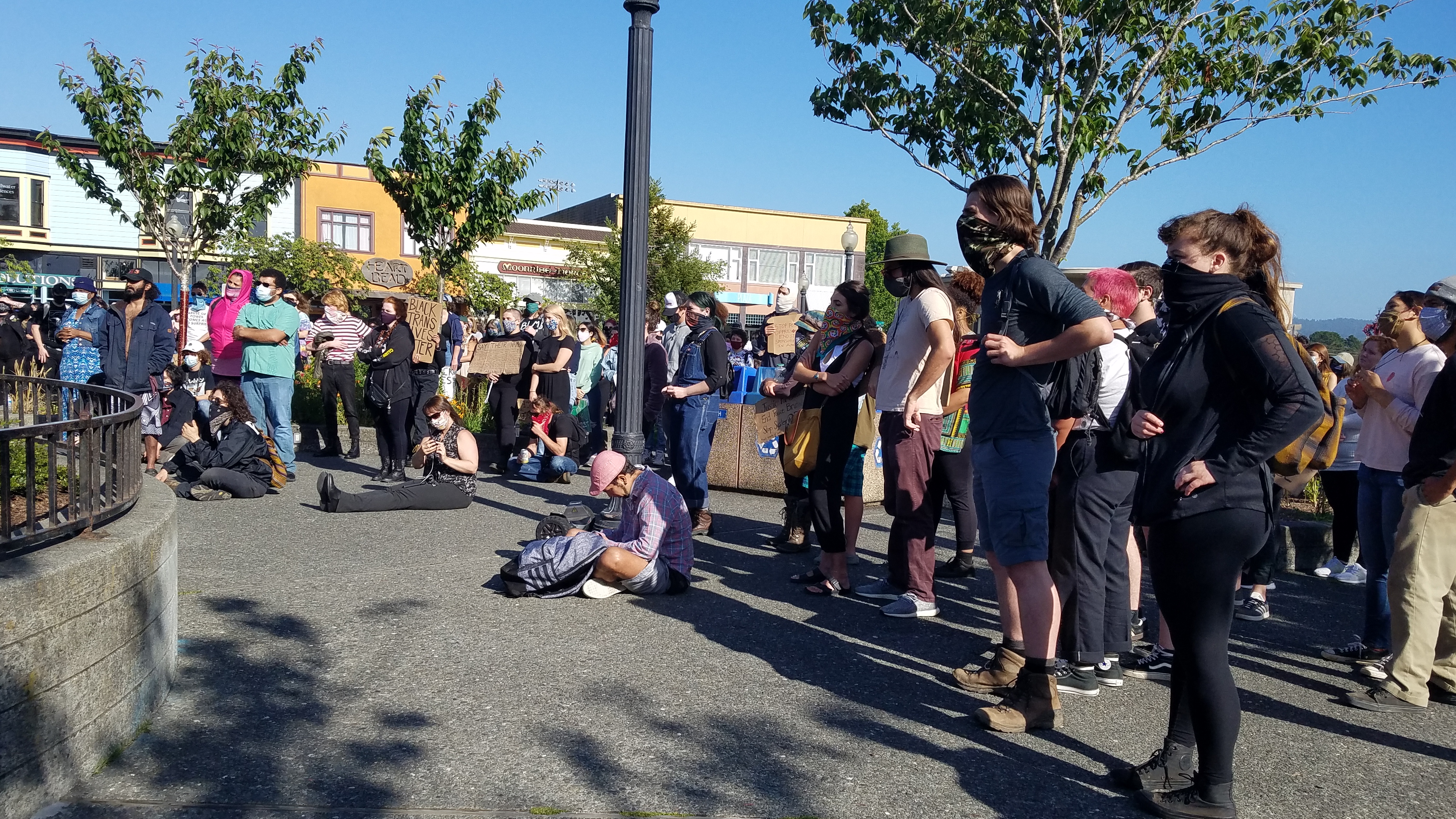
Demonstrators listen to community members speak at the Arcata Plaza while protesting against police brutality and racism on June 1 following the death of George Floyd in Minneapolis police custody. | Photo by Thomas Lal
A demonstrator takes a moment to reflect while listening to speakers from the community at the Arcata Plaza protesting against police brutality and racism on June 1 following the death of George Floyd in Minneapolis police custody. | Photo by Thomas Lal
Demonstrators listen to community members speak at the Arcata Plaza while protesting against police brutality and racism on June 1 following the death of George Floyd in Minneapolis police custody. | Photo by Thomas Lal
Demonstrators sit and stand in front of Arcata City Hall while protesting against police brutality and racism on June 1 following the death of George Floyd in Minneapolis police custody. | Photo by Thomas Lal
Signs calling for an end to police brutality and racism sit are carried by demonstrators outside of Arcata City Hall on June 1 following the death of George Floyd in Minneapolis police custody. | Photo by Thomas Lal
Protesters gathered at Arcata City Hall and the plaza to speak out against police brutality and racism
Peaceful protesters gathered in Arcata on June 1 to continue their demonstrations against police brutality and racism across the nation. People gathered around Arcata City Hall, bringing signs and wearing facemasks while listening to members of the community speak.
Demonstrators spilled off of the lawn and into the streets, taking a moment of silence in remembrance of George Floyd and Black lives that have been unfairly and unjustly taken in police custody.
A moment of silence for George Floyd outside Arcata City Hall on June 1 | Video by Thomas Lal
As demonstrators marched toward the plaza, they chanted in unison, “no justice, no peace,” which quickly became a rallying cry across the country.
Protesters marching to the Plaza, chanting “No Justice. No Peace” on June 1 | Video by Thomas Lal
There was no police present at the gathering which encouraged community members to stand up and share their stories in the center of the plaza where the President McKinley statue used to be. Community members rallied together and demanded for better education on racial issues and systemic injustices. Allies were called upon to do more than simply showing up to rallies and to exercise their rights to reinforce just advocacy.
Eureka protesters gathered in front of the Humboldt County Courthouse
Hundreds of community members gathered in the rain outside of the Humboldt County Courthouse, Sat. May 30, to protest the death of George Floyd who was murdered while in police custody in Minneapolis, MN. From 3 to 10:30 p.m. demonstrators marched through Eureka up to the Slough Bridge, back through town and then down Broadway. Law enforcement was largely cooperative with demonstrators, blocking intersections as people made their way through traffic. Chants could be heard the entire way even as groups split up and went to various parts of the city.
Demonstrators walkin front of the Humboldt County Courthouse to protest police brutality and racism in Eureka, CA on May 30 following the death of George Floyd in police custody in Minneapolis.
A demonstrator walks thorugh the street to protest police brutality and racism in Eureka, CA on May, 30 following the death of George Floyd in police custody in Minneapolis.
Demonstrators walk past the post office though the street to protest police brutality and racism in Eureka, CA on May 30 following the death of George Floyd in police custody in Minneapolis.
A demonstrator holds up a rose above the crowd as they confornt Eureka Police Department officers in front of the Humboldt County Courthouse to protest police brutality and racism in Eureka, CA on May 30 following the death of George Floyd in police custody in Minneapolis.
Demonstrators walk down Broadway to protest police brutality and racism in Eureka, CA on May 30 following the death of George Floyd in police custody in Minneapolis.
As the group returned to the courthouse tensions flared at the sight of several police vehicles, which were soon removed from the scene. Eureka Police Chief Steve Watson was present at the protest and spoke with demonstrators as the crowd dispersed and headed away from the courthouse. These demonstrations in Humboldt are some of countless that have sprung up across the nation following Floyd’s murder.
Demonstrators stop a police vehicle at an intersection as they make their way thorugh Eureka down to Boroadway to protest police brutality and racism in Eureka, CA on May 30 following the death of George Floyd in police custody in Minneapolis. The vehicle attempted to make it’s way slowly though the gathered people and left with a broken back window.
Demonstrators confront Eureka Police Department officers in front of the Humboldt County Courthouse to protest police brutality and racism in Eureka, CA on May 30 following the death of George Floyd in police custody in Minneapolis.
Demonstrators push back against a police vehicle as it attempts to move past the gathered crowd as they protest police brutality and racism in Eureka, CA on May 30 following the death of George Floyd in police custody in Minneapolis.
Demonstrators walk thorugh the street through the rain to protest police brutality and racism in Eureka, CA on May 30 following the death of George Floyd in police custody in Minneapolis.
Demonstrators confront Eureka Police Department officers in front of the Humboldt County Courthouse to protest police brutality and racism in Eureka, CA on May 30 following the death of George Floyd in police custody in Minneapolis.
The reality of ‘going through it’ during a time of a pandemic
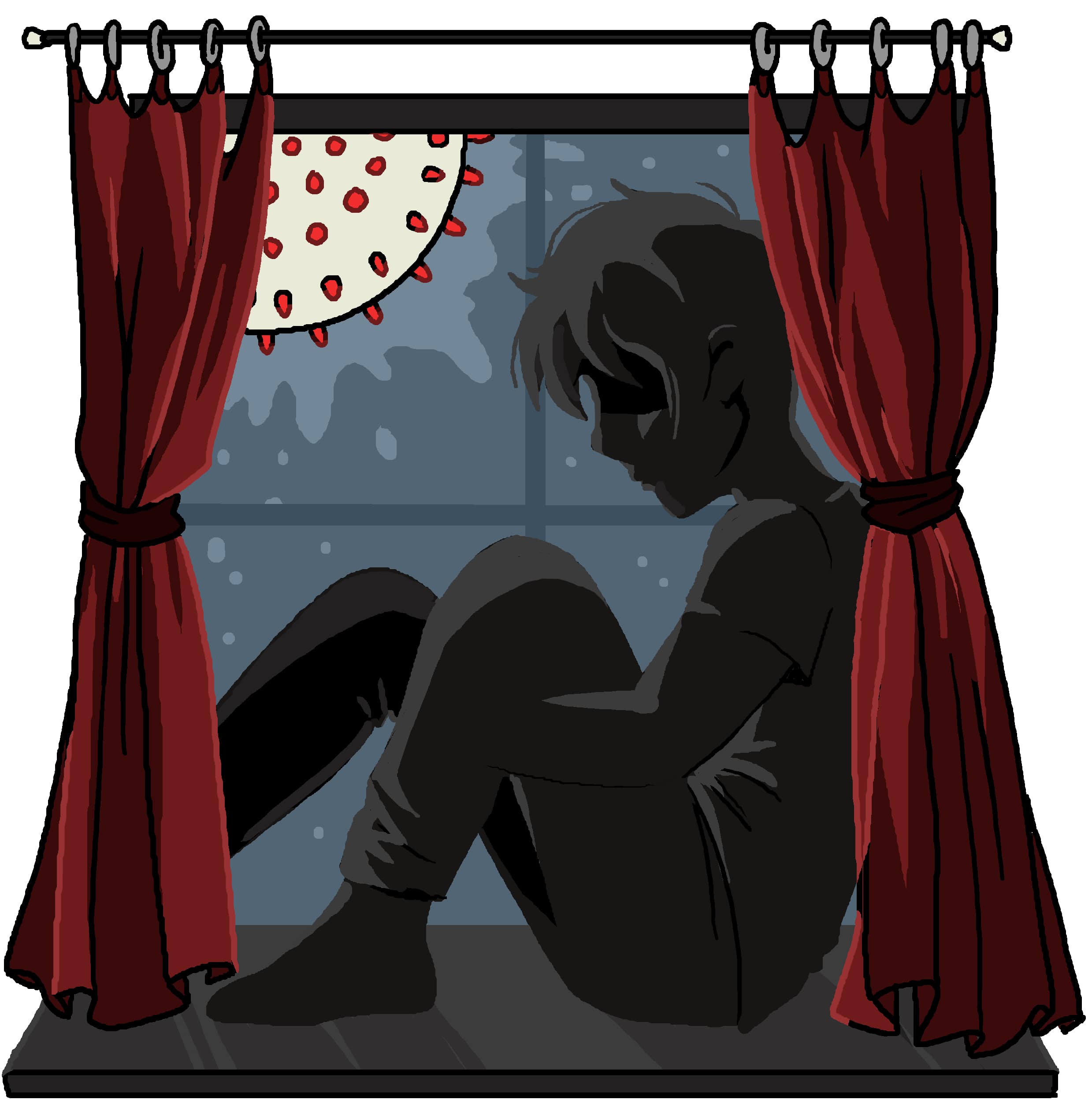
Being trapped in your house with your mind feels like the worst thing possible, but right now is the time to allow yourself to heal. It is more than okay to not be okay, all the time and even more so now. Although we wish this was just a vacation for us to sit around and do nothing, sometimes sitting around and doing nothing makes us feel out of control. It feels like we have lost whatever stability we had before.
We have been in quarantine for over a month now and things were not going too bad. Well, that’s what I thought until I was left alone with my mind and as a result, my anxiety started acting up. Since quarantine started I have gone back to Humboldt to pack up my stuff and move back to my hometown. I made a long-distance relationship plan with my partner only for us to break up less than a week later. I came back to a house where I do not have my own space since I share a room with my teenage sister. Everyone is always in everyone’s business. There’s just no privacy and rules to follow. Plus, dealing with family stuff has really taken a toll on half of the household.
I will always be grateful for the love I had and for the good times.
Everything was happening all at once, I felt as if I wasn’t getting a chance to catch my breath. With the quarantine, it’s not like I could get out of the house or go out with my friends to talk things out or distract my mind. Not to mention, in Southern California you can only go outside for so long before the heat is suffocating you and you’re dripping in sweat. With all that being said, I would rather be dealing and healing with all of this right now, where I’m forced to sit in my home and deal with my thoughts.
I cried for three days straight after my breakup and still find myself tearing up from time-to-time, even as I write this. However after eating all the ice cream I wanted and receiving some tough love from my loved ones, I decided that my world was not going to end just because a relationship did. I will always be grateful for the love I had and for the good times.
As far as dealing with the family drama, all I can really do is take myself out of it. I make some tea and go outside for as long as I can. My sister and I lock ourselves in our room. I FaceTime my friends at least once a day just to have contact with people that live outside the house. For a while, I let my family pull me into each of their own drama, when it really didn’t have anything to do with me since I just got here. I was taking on their issues as if they were my own and they weren’t. Of course, I will always be there for my family, but I have my own things going on and my own healing to do. My responsibilities right now are my school work and taking care of myself. I mean we’re still in school even though it doesn’t feel like it. That degree is the only thing I have my eyes on right now.
If I was still going to work and face-to-face classes, I would have so many distractions that I would forget what was going on or I was feeling some type of way. This might be ideal for some people but in my experience if I do not deal with or acknowledge my feelings, it builds up. The end result is much worse than what would have happened if I just took the time to heal right then and there. Now, of course, I would love to go get drunk with friends and forget about real life for a second, but we can’t because of quarantine. However, when you’re not drunk or hungover anymore your problems will most likely still be there so you will have to deal with them eventually. This quarantine has allowed me to deal with everything at once which has been hard, but it is reassuring knowing that once we are allowed to roam freely, I’ll have my mental and emotional shit together.
Take the time to focus on your well-being. We will be let out again someday. Also, rest assured that you are not the only one. We would all rather not deal with our feelings alongside a pandemic, but it happens and that’s okay.
With the pressures of the pandemic mounting, people are stuck with an impossible choice
On Friday, May 1, around 100 people gathered in front of the Humboldt County Courthouse to demand the reopening of businesses deemed non-essential by the government. With signs like “Every Business Is Essential,” it is clear that the protesters are not being properly supported during this time of crisis.
The government’s attempts to mitigate the spread of the virus have been controversial with over a million reported cases so far. Social distancing is the most effective measure we can take to prevent unnecessary deaths since the swab test is inaccurate and limited at the moment. Unfortunately, mandatory lockdowns and halts to employment in order to support social distancing efforts have left many without jobs and a way to earn a steady, livable wage.
“This crisis is really illustrating both the violence of inequality and also the need for another economic system.”
Thomas Piketty
Everyone has a wide range of debts, rents and other expenses to pay for during this time. If we want to prevent the spread of the virus we need to support disenfranchised workers, not force them back into unsafe working conditions. With 59% of Americans living paycheck to paycheck, for those keeping track at home, the percentage cuts for units is not reasonable to expect them to be able to handle all of their expenses with a one-time stimulus check of $1,200. The writer of the book “Capital in the Twenty-First Century” and economist Thomas Piketty believes that a pandemic like this holds the potential to change dominant narratives about how we should organize our society and build our economy.
“This crisis is really illustrating both the violence of inequality and also the need for another economic system,” said Piketty.
The Americans most impacted by the pandemic are going to be the poorest, most vulnerable members of our society. For as long as our country has existed, so has the divide in quality of life, poverty, and access to government assistance in times of crisis.
We need a societal structure that values every life.
Due to our country’s reliance on employer-based healthcare, every company that is forced to lay off its workers in this necessary time of crisis is creating large swaths of vulnerable, uninsured people. The natural response is to want to go back to work and blame the government for taking away your insurance and employment so you can continue to provide for yourself and your loved ones. The only problem is that we have a virus on our hands, so one is forced to either ignore the dangers of returning to work or slowly drain themselves financially as the dues of existing in our society add up. This is not a fair choice nor a choice we should have to make.
This is our societal structure functioning as it was designed to. When healthcare is tied to employment and to wealth, we are nudged into believing our right to exist is tied to employment and to wealth. When certain marginalized groups are underemployed or possess less wealth, our system is tacitly stating that those groups are worthless.
We need a societal structure that values every life. That means universal healthcare, education, job guarantees, housing and access to technology. Without universal healthcare, there isn’t a solid system for distributing care during a pandemic, and the right to one’s own life is decided by socioeconomic status. Without job guarantees, people are set adrift during emergencies, not knowing if they will be able to get back to work after it’s all over. Without universal housing, a pandemic can leave many unsure if they will have a roof over their head in a month’s time. Without access to technology, some will lose education, jobs, communication with the outside world and entertainment to occupy the time.
But more than all these things, we need a structure that prioritizes us. If everything starts falling apart because of one pandemic, maybe it wasn’t the most stable structure to begin with. An economy that does better when its workers die is like a car that goes up in value when it kills the passenger. The structure should exist to support you. This pandemic is exposing our economic structure for what it has always been. A burden that crushes the marginalized and the vulnerable. A $1,200 check, a rent freeze and a free face mask are only small band-aids on a gushing head wound. Normal, everyday life is why everything is falling apart in the first place.
All we can do is build a system that protects every person within it and values life from the ground up. A system that lets numbers of people die will die along with them. It is a system bound to fail.
President Jackson speaks with Faculty Senate over virtual teaching
Editor’s note: Grace Caswell is a student of Journalism Department Chair Vicky Sama. Almost the entire staff of The Lumberjack has also had Sama as an instructor in journalism courses.
Tuesday, May 19, President Tom Jackson of Humboldt State University resurfaced from his hiatus to discuss the fall 2020 semester instruction plan with the Faculty Senate due to COVID-19.
The transcripts of the meeting between Jackson and HSU Faculty Senate were provided in an email by Journalism Department Chair Vicky Sama. The meeting regarding online instruction for the Fall 2020 semester built off of CSU Chancellor’s Timothy White’s recent statement.
“The chancellor’s statement last week, which we were pretty sure was coming, we knew that was the direction he wanted to take, that leads us in this position as a university that we are 100% virtual,” Jackson said in the email transcripts. “That’s done. We are 100% virtual but we also knew we would have an opportunity to ask for an exception.”
The exception will be sent to the Chancellor requesting face-to-face instruction for classes that are unable to make the direct translation to online instruction. About a quarter of HSU’s classes are hands-on courses, Jackson provided examples that would be included in the request.
“We are preparing a request, in response to the Chancellor’s statement, that HSU be allowed to establish a hybrid approach to instruction in the fall.”
HSU Interim Provost Lisa Bond-Maupin
“One of which was our labs– labs activities-based work– studio, art, ceramics– those elements that can’t easily be converted to a virtual modality but is a really strong core of who we are as a university, could be a reason to make an exception,” Jackson said in transcripts. “Another one, in general, would be the continuation of very specific research or farms or agriculture, forests, oceans, rangelands, other things like that.”
The request is almost finished and asks that HSU be considered for hybrid instruction. HSU Interim Provost and Vice President of Academic Affairs Lisa Bond-Maupin stated that the request for hybrid instruction would still operate and emphasize online curriculum with little in-person contact.
“We are preparing a request, in response to the Chancellor’s statement, that HSU be allowed to establish a hybrid approach to instruction in the fall,” Bond-Maupin said in an email. “That would include virtual instruction, and very limited face-to-face instruction where it’s safe to do so per county health guidelines. This planning requires extensive work, and no final decisions have been made yet.”
Jackson elaborated on Bond-Maupin’s emphasis of following and abiding by county health guidelines. Fall instruction really depends on the Chancellor’s decision to approve or dismiss HSU’s exception request which is estimated to take a day or two. Then, if permitted by the Chancellor to proceed, a chain of discussion will occur between administration, faculty and department chair members.
“With that decision we will know if we are 100% virtual or if we have been permitted to develop face-to-face curriculum based upon on our request,” Jackson said in the email transcripts. “It then shifts to the faculty and the chairs of those specific sections, which are 593, as far as lab-based activities going into the fall, that’s a rough number, and it may change here or there. And then specifically what items need to be taken care of in terms of a safety protocol in accordance with public health, and that will occur very rapidly over the summer.”
Over this coming summer, HSU will enact development plans for professors and lecturers. Those teaching lecture classes that can operate in tandem with online instruction will continue developing those skills. Those who teach labs or studio classes have a chance of having to develop hybrid teaching methods over the summer.
“If you’re scheduled to teach a lecture class, the answer is already there. We’re in virtual mode,” Jackson said in the email. “But if you’re scheduled to teach a lab or studio art or something like that then I encourage you to give it some thought and chat with your chair because there is a 50-50 chance.”
Face-to-face instruction for Humboldt State’s fall 2020 semester has been canceled due to COVID-19. California State University Chancellor Timothy White announced Tues. May 12 that instruction will primarily be offered online. A virtual plan is expected to be implemented into the entire CSU system as the possibility of a second COVID-19 wave of cases is predicted.
“Our planning approach will result in CSU courses primarily being delivered virtually for the fall 2020 term,” Chancellor White writes in a CSU press release. “With limited exceptions for in-person teaching, learning and research activities that cannot be delivered virtually, are indispensable to the university’s core mission and can be conducted within rigorous standards of safety and welfare.”
Academics that can not make the direct translation to an online format, such as artistry and laboratory classes, will be conducted through a hybrid approach which limits in-person contact as much as possible and continues to emphasize online instruction.
HSU, along with other CSU systems, are subjected to differing class standards based on the level of necessity placed behind face-to-face instruction. The fall semester is projected to primarily remain online, however, updates and further information will be announced later in the week.
Drake drops surprise project, “Dark Lane Demo Tapes”
Nearly two years following the release of his last commercial project, “Scorpion,” Drake is back with more music than ever. Surprising fans April 30, Drake hopped on Instagram to announce his upcoming sixth studio album, set to be released this summer. He also announced a new mixtape, “Dark Lane Demo Tapes,” that dropped hours after.
Ashton Pomrehn is a Humboldt State University alumnus from the psychology department. His thoughts on Drake have dramatically changed over the course of Drake’s decade and a half long career.
“I love Drake,” Pomrehn said. “I tried to hate on Drake early in his career but he’s put so much good music out that I’m excited for anything he puts out.”
Kathleen Madrid is an environmental resources engineering major at HSU. She’s not the biggest Drake fan but she is heavily invested in the hip-hop genre and enjoys watching it evolve.
“I will say that I think he has been really influential,” Madrid said. “Drake really brought a different topic of discussion to hip-hop. Males are not traditionally encouraged to express their feelings and I think Drake gave young men that voice.”
Despite his undeniable contribution to the industry, Drake has received heavy criticism in the past over cultural appropriation of different regions’ music, beginning with his 2016 single “One Dance.” Despite featuring one the genre’s prominent artists, WizKid, Drake’s 10-minutes with afrobeats were seen by fans of the genre as a Hollywood actor taking the Broadway stage. The song was also a blend of Jamaican dancehall music – a style that Drake sprinkled throughout “Views” and his “More Life” playlist, without ever featuring an artist from the genre. Drake continued to catch flack for appropriation of UK Grime on “More Life,” however, the project features several guests from across the pond.
“There is a fine line between appropriation and appreciation. Paying homage or showing love may be necessary, but I think it’s more important to educate yourself before you participate in another culture’s genre.”
Kathleen Madrid
Drake set the tone for a possible new release in late Dec. 2019, with the track, “War,” taking the sound of the United Kingdom’s take on drill music and running with it. Similarly, on the song “Demons,” Drake hops on a New York drill beat, this time providing guest spots for the artists that popularized the genre. However, the missing presence of the recently-deceased leader of the movement, Pop Smoke, is heavily felt on the track.
Madrid acknowledges that Drake is in a tough position, but it’s ultimately his own decisions that repeatedly put him there.
“Cultural appropriation is a muddy concept,” Madrid said. “There is a fine line between appropriation and appreciation. Paying homage or showing love may be necessary, but I think it’s more important to educate yourself before you participate in another culture’s genre.”
In this new release, Drake pays his respects to some of the most prominent cities in modern hip-hop on “Dark Lane Demo Tapes,” with tracks like “From Florida With Love” and “Chicago Freestyle.” The later track was originally paired with the song “When To Say When” and released on Leap Day earlier this year as a music video. “When To Say When” samples one of Jay-Z’s most-famous tracks, “Song Cry,” and some of the footage from the video was shot outside the Marcy Projects where Jay-Z grew up.
Despite mixtapes almost always receiving significantly less care and budget than studio albums, when it comes to top-tier artists like Drake, fans still expect top-tier material. With features from Future, Young Thug and Chris Brown on the track list, fans will be let down to find out Young Thug only receives half a placement on the chorus of “D4L.” Chris Brown only provides a handful of background vocals on “Not You Too” and of Future’s two verses on the project, his better performance is significantly shorter. Despite consistently creating a dominant presence on songs where he is featured as the guest, including “Life Is Good,” “No Guidance” and “Going Bad,” Drake has proven unwilling to provide artists with a fraction of space on his own records.
With an entire album on the horizon, a number one record with “Toosie Slide” and a classic track with “Losses,” Drake fans have nothing to complain about – drill fans, however, are a whole other story.
Faults give clues to the history of the earth’s crust and how it impacts our future
Earthquakes are more than just shaking. Turns out the rumbling is sound vibrations from the massive snap caused by slipping, bending and breaking rock.
Deep below Earth’s crust, a mantle of plastic-behaving rock bends and twists under immense pressure. Its mass is 67% of the Earth’s mass. Its temperature ranges from 392 degrees Fahrenheit at the upper boundary of the crust to an incendiary 7,230 degrees Fahrenheit at the core-mantle boundary. Sometimes the overlying, thin 50 to 20 kilometer thick crust cracks.
“The earthquake is the sound waves moving through the rock, elastic waves propagating through it,” said Dr. Mark Hemphill-Haley, a Humboldt State University neotectonics professor and the co-chair of the geology department. “People who have seen the ground moving are seeing the surface waves of rock bending back and forth.”
According to Hemphill-Haley, imagining the scale of the mantle is challenging both in size and as a metric of time. Some people have compared the movement in the mantle to lava lamps or boiling water, a force called convection, where hot liquid bubbles up through cooler liquid, but Hemphill-Haley said that can be misleading.
“We’ve had these old models of the mantle convecting but it’s probably less like that- we’re talking about solid rocks,” Hemphill-Haley said. “They’re solid but they are plastic too. Tectonic plates, which consist of the crust and the upper mantle are in motion and can move faster than four to five centimeters per year. Mantle convection is likely a more slow process than that.”
Like the snap one hears when a pencil breaks, the sound vibrations from the snapping rock shake the ground all around the breaking point, quaking the earth.
Giragos Derderian, a fourth year geology student, explained the nuance between elastic, plastic and brittle rock. Generally, a rock seems solid but if enough force is applied, the rock can change shape. Derderian said the change in a rock is called deformation.
“Plastic deformation is when structures change shape due to a force and the rock stays deformed when the force dissipates,” Derderian said. “After elastic deformation, the rock returns to its original shape when the force is removed.”
Brittle deformation, Hemphill-Haley said, is when forces are so great, the stress exceeds the rock’s elastic limit and snaps it, like a pencil bent too far. An earthquake is when massive bodies of rock experience so much force that they become brittle and break. Like the snap one hears when a pencil breaks, the sound vibrations from the snapping rock shake the ground all around the breaking point, quaking the earth.
The earth’s crust is made up of massive plates that fit together like an ill-constructed puzzle with some plates pushed too hard into each other and some plates pulling away from each other. Force builds up where these plates meet and can deform each other in elastic, plastic and brittle ways.
Hemphill-Haley said the big thing that causes plate motion is the weight of oceanic plates. In this example, oceanic plates have converged with continental plates. he denser oceanic plates are diving below the less dense oceanic or continental plate.
These convergent plates cause a few things to happen on the surface. The leading edge of the less dense plate can crumple into massive mountain ranges like the Klamath Mountains. The oceanic plate descends deep into the mantle at submarine trenches referred to as subduction zones like off our coast—the Cascadia subduction zone. Geologists research the effects of plate tectonics here on the northern California coast in a variety of ways.
Hemphill-Haley’s colleague Dr. Melanie Michalak researches the Klamath Mountains in northern California and Oregon, and the Coast Range closer to HSU. In one research effort, she and her team trench the ground and look at rock layers that have been changed by faults. They seek material that can be used to estimate the age of the rock. Some of her research is also on recently active faults.
“As a geologist I care about all faults, the ancient ones, the active ones, I don’t discriminate,” Michalak said. “But people though, from a risk perspective, they’re more concerned about which ones will cause an earthquake and damage their house.”
Despite in-person instruction coming to a halt in the wake of COVID-19, student-run radio shows are still an option for KRFH students. For students not interested in going to great lengths to produce a weekly show, there is an alternative.
When Humboldt State University first transitioned to online instruction following spring-break, KRFH students were given the option to continue doing shows, as long as they comply with strict CDC regulations. This includes leaving three-hour gaps between shows, having only one student in the booth at a time and wiping down everything inside the booth before and after shows.
The new protocol lasted less than two full weeks before students were no longer allowed back in the booth. Instead, they were given the option to pre-record shows.
Ayrton Flaherty has a show with Debate Team coach, Aaron Donaldson, called “Debate and the News.” It was the first show at HSU to utilize Zoom while broadcasting live over the air-waves having Donaldson contribute from the safety of his home and Flaherty sit in the booth for their final live shows of the semester.
“It’s hard to do radio if you’re not in the station,” Flaherty said. “I guess cause we do a talk show, we’re able to get away with that. Because, rather than having music and occasionally talking, it’s talking and occasionally having music for us.”
Flaherty has found pre-recorded shows to be far more forgiving, with options to edit and re-take segments. However, they have created hours of post-production time that wouldn’t exist with live shows, in addition to hours they spend on pre-production. But, both Flaherty and Donaldson believe their show is worth the effort.
“I think all the DJs feel a little bit of a responsibility to stay involved, because otherwise there’s the chance that KRFH could get shut down if people aren’t showing interest.”
Shelley Magallanes
“This education is as important as ever,” Donaldson said. “The resources, as always, are very vulnerable and threatened, and students should get involved if they think it’s important.”
Shelley Magallanes hosts multiple shows on KRFH and they completely agree with Donaldson. Magallanes only intends to attend the class if it’s offered in-person next semester, although, they still might sign up if the program is in danger.
“I think all the DJs feel a little bit of a responsibility to stay involved, because otherwise there’s the chance that KRFH could get shut down if people aren’t showing interest,” Magallanes said.
They don’t think the course should be offered next semester if students can’t meet in person, unless that would put the future of the program in jeopardy.
“If we’re just doing it the way we’re doing it right now,” Magallanes said. “Then the main reason to hold onto the class is just to ensure that later semesters, it still gets put on.”
Anwaar-Khabir Muhammad is in his first semester with the radio and based on his experience, he doesn’t think the course should be offered next semester unless classes resume in-person and on campus.
“The radio station in and of itself is the learning experience,” Muhammad said. “I understand trying to maintain a sense of familiarity, but if that maintenance comes at the expense of the student’s overall learning experience, don’t do it!”
Alice Peterson won best show at KRFH last year with her program, “Ear Hugs.” The program mixes lighthearted discussion with relaxing tunes.
“Sending out your part and being a storyteller and providing that comfort and that service,” Peterson said. “It just makes you feel good.”
Since live shows have been taken away, Peterson forgets to attend her Zoom classes and turn in her alternative assignments, which are a five-minute weekly update that are aired on KRFH of students describing how they are navigating their lives through these stressful times.
“I kept forgetting to do my recording,” Peterson said. “Which was weird for me, because with the radio shows I never missed a show.”
As a result of missing classes, Peterson was unaware of the option to produce pre-recorded shows. As a senior without a graduation, she takes solace in the fact that she can at least put on a final show.
With administration still waiting to make an official decision about how classes will be conducted next semester, the future of KRFH remains uncertain and at risk.
The pandemic forces people to re-imagine their birthday plans
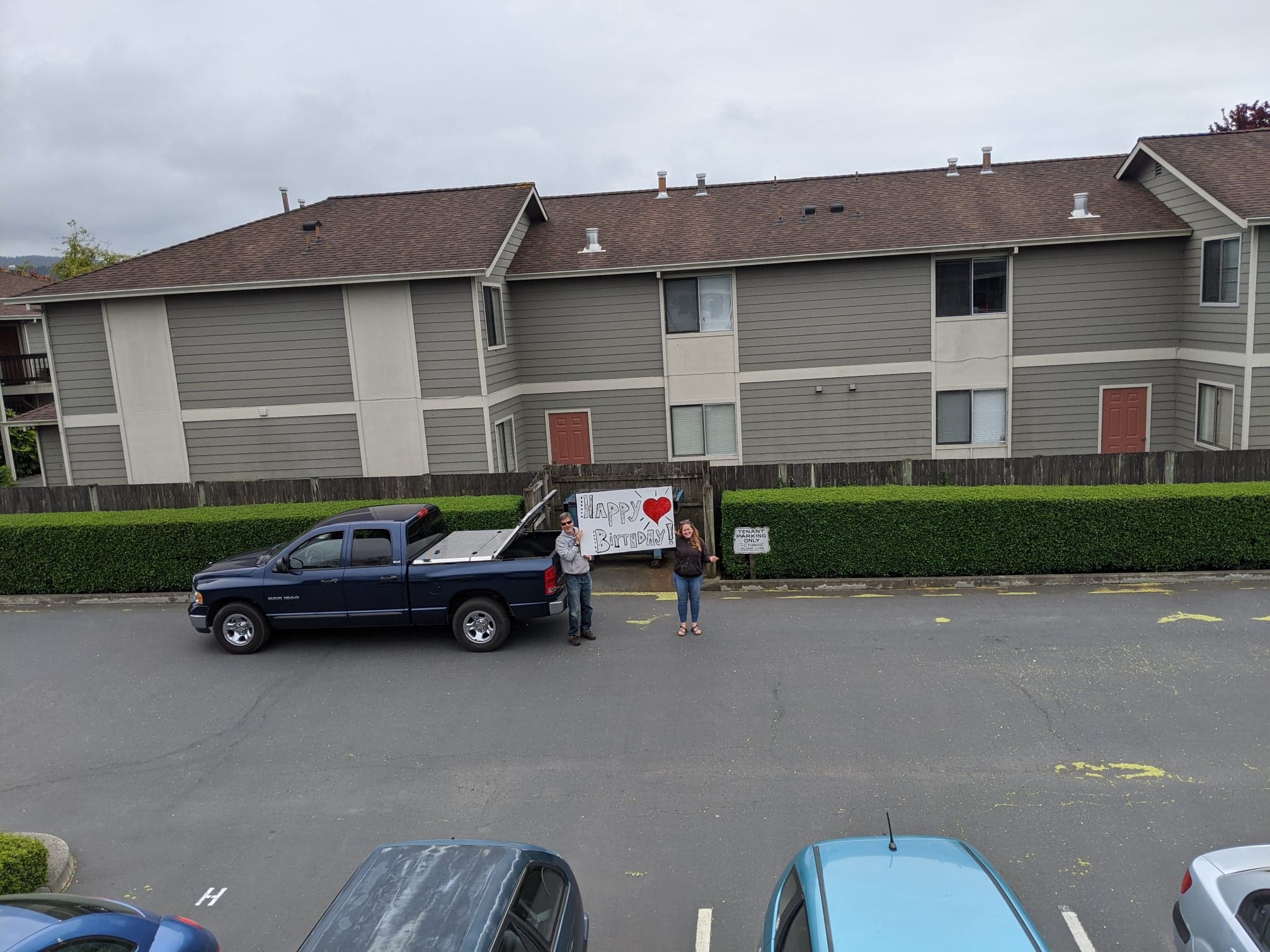
When it comes to a birthday, you’d expect a party, a night out, a small get together with friends and family, or maybe a chill day at home. Unfortunately, with social distancing still in order, celebrating alone is the closest option to a party.
Because social distancing is still in order, many have had to accept the fact that their big birthday plans aren’t going to happen anytime soon. Without the streamers and drinking games, people have found ways to remain somewhat festive on their special day. While some have taken to Zoom for video chat parties, others have spent their day with their fellow quarantine pals.
Tracy French’s, a Humboldt State University alumna from the geology department, birthday was on April 30. French celebrated it with her two good friends, who are also alumni, and have birthdays that same week.
“My birthday was on April 30,” French said. “It’s one day after a friend’s birthday, and the day before another friend’s birthday.”
The three had originally planned for a big get together, and reserved the Arcata Common Hall for a huge party. With entertainment and plenty of drinks to go around, it would’ve been one heck of a birthday bash.
“We were planning on getting a live band called ‘Old Dog’ at the Arcata Common Hall,” French said. “I went to Facebook and invited over 150 people, but that got cancelled.”
Instead, French spent her day enjoying the warm sun in her backyard along with her friends.
HSU psychology major, Shelley Magallanes, was hoping to have a night full of fun back home in Los Angeles for their 21st birthday. With social distancing likely to be in order, Magallanes had to cancel their original plans.
“Because I’m turning 21 I was planning to have a big thing with friends,” Magallanes said. “We’d go into LA and go clubbing.”
“I had plans to go to the bar with some pals on my 21st to see what it was all about. I had planned to have 30+ people invited to my birthday.”
Bryan Gambrel
Magallanes plans to return home around June, but with their big plans ruined by COVID-19 they’re preparing for the second best thing, spending it with the people they love most.
“I’ll probably end up spending it with my family,” Magallanes said. “Maybe go swimming and eat some cake.”
Bryan Gambrel, a junior at HSU, originally planned his celebration to be like any other 21st birthday, going out for a drink — legally.
“I had plans to go to the bar with some pals on my 21st to see what it was all about,” Gambrel said. “I had planned to have 30+ people invited to my birthday.”
Because of social distancing, going out was a no-go. Regardless, he was happy to celebrate his birthday with a small gathering of close friends and some quality-time with his mother.
“The most memorable thing was having my mom and I build a garden bed out of spare wood palettes I’ve collected. It was a fun, crafty project,” Gambrel said. “While it was much smaller than I was hoping for, it was very memorable.”
For those celebrating birthdays during this time, something as simple as a phone call or a video-chat can make all the difference. Drinking with roommates and creating fun games, or even sitting out on a nice sunny day can make this year’s birthday a bit more pleasant. No matter how you decide to celebrate, stay safe and it will definitely be a birthday to remember.
The CSU Travel Suspension has just been extended until July 31
The California State University travel suspension for all international and non-essential domestic travel has officially been extended until July 31, according to an update email from the CSU Chancellor’s office on April 29.
The update also says that the determinations are made with guidance from the CDC and the US State Department. At the time of the update, the State Department had issued a level 4 Travel Advisory to worldwide travel. Level 4 advisory is a warning level caused by a higher likelihood of life-threatening risks.
“We regularly monitor data from local, state, national and international agencies and organizations,” wrote the Chancellor’s office. “And may modify the temporal or geographical restrictions in this directive if warranted by future developments.”
A plan to reevaluate the restriction has been projected to be in discussion again by mid-June.
The campus presidents are allowed to make exceptions to this rule but only for “extenuating and compelling circumstances.” The authority of these decisions cannot be delegated. Factors for contributing to these exceptions are:
Necessity of the proposed travel, including consequences of postponing travel.
Needs and preferences of the individual.
Availability of safe and secure shelter at the destination.
Availability of appropriate medical care at the destination.
Availability of transportation, services, and other necessities at the destination.
Assessment of risks associated with traveling versus risks of remaining in place.
As well as “other relevant factors as determined by the president.”
The update also clarified what will happen for an essential traveler is allowed.
“Individuals granted exceptions to travel must observe local health guidelines upon their return. Presidents who grant an exception to the travel suspension must create a written memorialization of how the circumstances were extenuating and compelling, using the factors above.” said The Office of the Chancellor’s COVID-19 update.
The update ends saying that circumstances and conditions may change at any time and the Chancellor’s office will provide updated information as it becomes available.
NFL Green Bay Packers pick up Eureka standout in the 2020 Draft
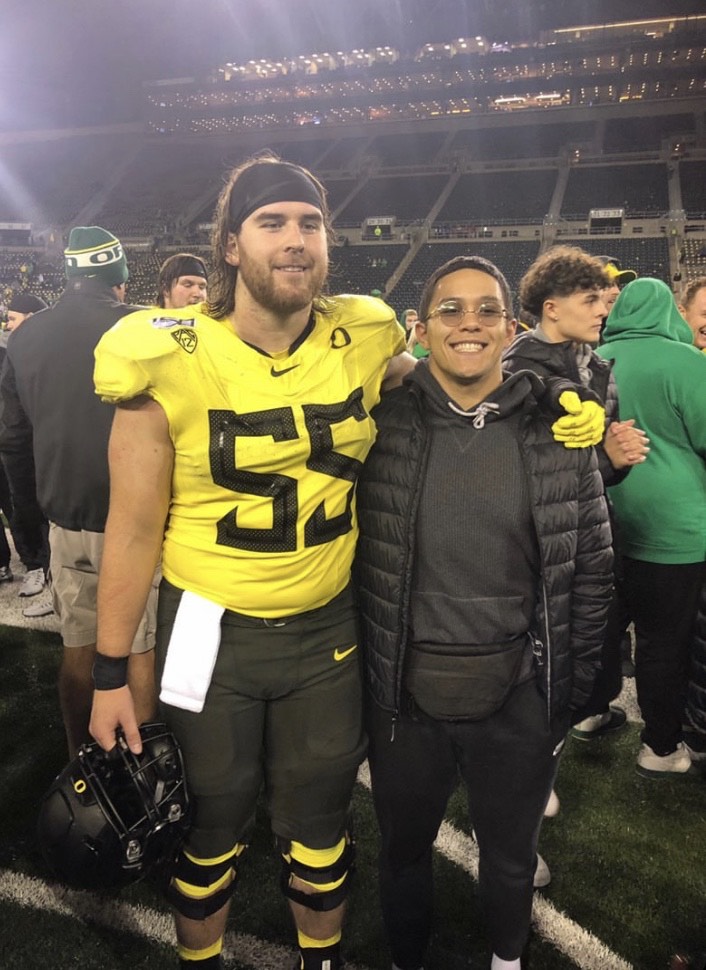
You’re watching the 2020 NFL Draft. It’s the sixth round and the Green Bay Packers are on their 29th pick. The Packers are about to make a life altering call to a player who will soon have the chance of playing alongside the quarterback legend, Aaron Rodgers. A familiar Humboldt County name flashes across the screen. Former local Eureka high school alumnus and University of Oregon center, Jake Hanson has just been drafted as the 208th overall pick for the Green Bay Packers for this upcoming 2020-21 season.
A key component of Hanson’s journey began when he signed to play for the Oregon Ducks in 2015. During his four seasons playing with the Ducks, Hanson started almost every game. During his first three seasons, Hanson didn’t allow a single sack with a total of 2,738 snaps. The starting center received a total of two honorable AP second team Pac-12 All Conference recognitions.
Tyson Miller is a local MMA pro fighter, former high school teammate and good friend of Hanson’s. Miller and Hanson initially met in kindergarten but it wasn’t until the two went to a football camp together their freshman year when they really hit it off and started hanging out. Miller sees what many fans have noticed on social media since the draft. Hanson comes in at almost 6’5”, 303 lbs, his size works to his advantage.
“First of all, his size,” Miller said, “He was bigger than most of the other lineman on the field.”
Size is not the only key feature that stands out about Hanson. Miller points to Hanson’s effort on the field as a big upside.
“He’s going to be a professional football player.”
Tyson Miller
“Jake is going to give it 100%,” Miller said. “If somebody demanded more than 100%, he was more than willing to give more than 100% right back.”
The dedication and game mentality that Hanson possesses is one that is truly admired by not only Miller, but by others as well. The ability to turn up the heat in a game is sets athletes apart from one another.
“[He is] going to be a professional athlete,” Miller said, “He’s going to be a professional football player.”
Hanson is going to be a memorable name within the community and make an unforgettable mark for the Packer Nation.
In an article by Forbes, Packers General Manager Brian Gutekunst pointed out Hanson’s work ethic and personality as a positive for the teams newly acquired offensive lineman.
“Just really a model of consistency and another culture guy,” Gutekunst said. “The kind of guys that we like to bring into our offensive line room.”
While the Packers have their seven year veteran center Corey Linsley under contract for another year, there is no doubt that Hanson will be Linsley’s backup for this upcoming season. Hanson is going to be a great asset to the Packers. His strength, size and quick feet will play a pivotal role in his movement of helping block the defensive line. I am predicting that with time, after the team continues to work with him and his snap consistency, he will be their starting man.
If you’re looking to watch some football and don’t know what to do without Humboldt State’s football program but still want that local spin, be sure to tune into some of the Green Bay Packers match ups. Remember to look for #67 on the field.
FAFSA just released its first wave of emergency CARES grants earlier this month to over 5,200 students enrolled at HSU.
With classes being switched completely online, unemployment at an all-time high, and major debt underway, college students have been hit hard during these times.
Colleges across the country are losing money as time continues and with no definite sign of an end to this crisis, the stimulus package that was issued in late March, sent out emergency grants to all colleges/universities.
The stimulus package conjured up about $14 billion for higher education. Around $12.5 billion will be distributed to every college, while the remaining funds will be given to minority and smaller institutions. Many students will receive extra money to help with whatever they need.
Each college has been sent a set allocation, some higher than others. Humboldt State has been granted an allocation of $10 million, with $5 million to be divided and distributed to enrolled students.
The financial aid services confirmed that each student should expect to see $500-$1000 directly deposited into their banking accounts. Those who do not have direct deposit should expect a check to come in the mail during the months of May and June.
For students who haven’t filed for a 2019-2020 FAFSA and are worried about not receiving the grant, you are still eligible for it. Students can still apply for the CARES emergency grant, the deadline for the application is June 15.
Newly Elected Associated Student Board prepares from the 2020-21 school year
Former Associated Students, Student Affairs Vice President and AS Legislative Vice President Jeremiah Finley will be returning to Humboldt State University next year as the President of AS.
“We’re here to deliver some genuine change,” Finley said. “We’re in a place where we haven’t been before. But I’m optimistic and we should all be optimistic about the direction we’re about to head in.”
Over the summer Finley will be focusing on creating guidelines for allocation processes and beginning to tackle the four-point approach he campaigned on.
“It’s gonna take more than just one person to advocate that something happens,” Finley said. “My leadership style is not centralized. I’m very much a person who’s gonna take input from everybody.”
Finley acknowledges there are students on campus that didn’t vote for him, and not without reason.
“Ultimately, I know that 258 students voted for the runner-up. With that being said, I know 258 students still believe that those points that that candidate brought up were valid, so we want to recognize that.”
Unique to this year, the new AS board will be meeting several times through out the summer, to get a much needed head start.
“This platform allows me to be a voice for all students. I don’t take that for granted.”
Jeremiah Finley
“I think that the work needs to be done,” Finley said. “That way when we move into the actual academic year, we’re able to hit the ground running.”
AS Representative for the College of Art, Humanities and Social Sciences for the 2019-2020 academic year, Montel Floyd will be returning to the AS board next year to serve as an At-Large Representative. He chose to shift roles to gain access to the entire student body.
“This platform allows me to be a voice for all students,” Floyd said. “I don’t take that for granted.”
Malluli Cuellar, Social Justice Equity Officer for AS 2019-2020, is also moving into a new role as the Legislative Vice President-Elect. Cuellar chose to run for the new position largely due to her interest in chairing the Board of Directors.
“I hope to foster an inclusive and welcoming environment at each Board of Directors meeting,” Cuellar said. “While also making sure that Associated Students is running as best as it can internally, and that our codes and bylaws are setting up Associated Students to be the best it can be.”
Floyd intends to spend his next year with the board focusing on breaking down communication barriers between students and administration and ensuring student safety.
“I love advocating for students,” Floyd said. “Listening to their concerns and finding ways to solve the concerns as a collective is what I do best.”
Cuellar believes in the power of student advocacy and students’ collective ability to promote institutional change on campus.
“I want to push for Associated Students to continue to actively uplift the student voice and encourage our students to become involved in the governance of our campus by joining committees or writing resolutions.”
Malluli Cuellar
“The student advocacy that occurs within Associated Students is what inspired me to run for elected office for the very first time,” Cuellar said. “And it is what has kept me involved with Associated Students.”
One of Cuellar’s goals for the coming year is to build and foster an environment that is inclusive and provide a safe space for collaborative thinking and change.
“I want to push for Associated Students to continue to actively uplift the student voice and encourage our students to become involved in the governance of our campus by joining committees or writing resolutions.”
With only seven students elected to the AS board for 2020-21, there are still plenty of positions open for students interested in joining. Incoming AS President Finley advocates that all students take the opportunity to share their voice.
“I would recommend everybody to do it,” Finley said. “It’s empowering. You get the chance to show who you are and put your twist and your spin on what advocacy is and what it should look like, and you end up creating some really creative solutions to old problems.”
Justin Everett continues his basketball career in the Republic of Georgia
Justin Everett was on the Humboldt State University men’s basketball team for five years. After graduating with a major in business marketing and a minor in economics, he decided to continue his athletic career as a professional athlete with the BC Cactus Tbilisi out of the Georgian Basketball League in the Republic of Georgia.
During the signing process, teams based in different countries were interested in Everett, but he didn’t have a specific place in mind that he wanted to play for. He and his sports agent solely based their decision on which team would be the best fit for him to showcase what he can do and get more exposure.
“My goal was to get my feet in the door in a respected league, where I can perform and establish myself as a high level player to propel my career in years to come,” Everett said.
Everett played a total of 15 games during his 2019-20 season with Cactus Tbilisi. He averaged a total of 13.8 points, 7.6 rebounds and 1.3 assists per game. On Dec. 7, 2019, Everett set his season high with 23 points and a season high of three assists in just 35 minutes against BC Titebi. He had a season high of 12 rebounds in 36 minutes against Dinamo Tbilisi on Dec. 22, 2019. Everett also recorded 5 double-doubles, scored in double figures 12 times in 15 games, and had 20 points or more in three games.
Due to COVID-19, his season was cut short. The transition of playing in Georgia to moving back to the States was a big change for Everett. He moved back in with his family, who he hadn’t lived with since he moved away for college. The hardest part has been not having the facilities he normally had. Everett hasn’t been able to shoot a basketball since he got back to the States.
Everett was first inspired to play basketball when he was only two years old, but he didn’t start playing at a competitive level until he was in the second grade. His role models growing up were Kobe Bryant and Shaquille O’Neal, as well as his father, who taught him how to play after he showed an interest.
“I was born in 1996, so Kobe had just gotten into the league,” Everett said. “I grew up watching him and Shaq win all those rings in LA and my dad played college basketball so I kind of just got into it. Once I started working out and started playing, it just felt comfortable and I enjoyed it.”
Everett was born in Glendale, CA but was raised in Clovis from third grade up until he graduated from Buchanan High School. He started taking his basketball career more serious the summer after his freshman year in high school.
“We put in a lot of work after my freshman year of high school,” Everett said.
Looking back on his career as a professional athlete, Everett says he never imagined getting this far. Although he is very passionate about playing basketball and loves the game, he says he had a backup plan of going straight to the workforce if he didn’t get any college offers after high school.
“Honestly, I didn’t think I would make it to college basketball,” Everett said. “I almost didn’t make it to Humboldt State and then Steve Kinder ended up giving me an opportunity to go play basketball over at Humboldt on a full ride scholarship.”
“Humboldt County, the Arcata area and just all the fans and the support was tremendous. They always packed the gym and they were loud every night we were in there. I enjoyed the process of it all.”
Justin Everett
Kinder was the head coach for HSU men’s basketball and was there throughout the entirety of Everett’s college basketball career. After Everett’s sophomore season, he tore his ACL and redshirted the following year of 2016-2017, he went through the rehab process and fully recovered before playing again the last two years he had left at HSU.
During his last season, Everett led the Jacks with 15.6 average points per game and a 6.6 rebounding average. The 2018-19 All-California Collegiate Athletic Association First Team honoree shot 50% from the field and 76% from the charity stripe during his senior season.
Everett says he really enjoyed the years he played basketball at HSU and all the road trips he took with his team.
“Humboldt County, the Arcata area and just all the fans and the support was tremendous,” Everett said. “They always packed the gym and they were loud every night we were in there. I enjoyed the process of it all.”
He said the best part was getting to grow and evolve his game and play for a super league.
“I definitely want to try and play, five, ten, 12 years,” Everett said. “See where it takes me and try to get to the highest league possible.”
For those wishing to follow in Everett’s footsteps, he recommends lifting weights, eating right, getting a routine going, stay disciplined and consistent. With that, he says the results will follow.
Based on projected enrollment, the Associated Students budget is expected to decrease 20% each year, for the next five years
The Associated Students Board finalized their proposed budget for the upcoming academic year, during the April 24 board meeting. The budget includes cutting the entire budgets of the Asian, Desi, Pacific Islander Center, the Eric Rofes Multicultural Queer Resource Center or ERC and the Women’s Resource Center, among other programs.
Jeremiah Finley was elected the incoming AS President for the 2020-21 academic year. He wants to assure students they won’t be losing their programs.
“The reality is that we want to support y’all so bad,” Finley said. “That we’re willing to go into our reserves almost $100,000 to be able to still support in some type of way.”
Budget Administrator of the Campus Center for Appropriate Technology Justin Hawkins was baffled by the budget decisions and spoke out during the meeting.
“How does the budget increase $14,000 and it’s going directly to the AS government in-between these recommended budgets, and yet, all of us are getting cut.”
Justin Hawkins
“It’s just tragic, honestly, to see these massive cuts to the ERC and the Women’s Resource Center,” Hawkins said. “I’m a male body person, I identify that way, but that doesn’t mean that I don’t empathize and really appreciate the services that are provided.”
Hawkins questioned the justification for the AS budget increase after having several thousand dollars of his own program cut.
“It’s really troubling what I see going on,” Hawkins said. “How does the budget increase $14,000 and it’s going directly to the AS government in-between these recommended budgets, and yet, all of us are getting cut.”
Despite losing one of their three staff positions, the AS general operations budget has increased over $15,000 for the upcoming academic-year. This comes as a result of general operations losing miscellaneous revenue, largely made up of compensation for the oversight of Instructionally Related Activities. Without the $35,000 miscellaneous revenue provided for the 2019-20 year, the general operations budget requires additional funds to function.
As a result of budget reductions, AS was forced to down-size their office administrator position. This sharp deadline made it impossible for AS to administer payroll for the upcoming year and as a result student-wages have been removed from AS and most of its funded-programs. Executive Director of AS, Jenessa Lund, said the current system isn’t working.
“Even with three employees,” Lund said. “When we have eight programs spread across campus, the oversight is impossible. It’s a huge liability!”
In order to compensate students for their time, AS has come up with several loopholes to get around the extra paperwork that comes with administering official wages. These include paid-internships and stipends for students, both of which have been allocated specific funds in the final budget.
These allocations include a $15,000 committee compensation package that increased the AS government budget. The package is specifically set aside for non-AS board members that are involved in AS committees.
“The optics on the final number of $111,000 looks bad,” Lund said. “But if you really look at what’s inside of it, it’s support to the students.”
The finalized proposal includes a significant increase to the clubs’ budget, with money that can be used for student-stipends and internships. Programs that didn’t receive any funding from AS have the option to transition their organization into a club and can apply for funding through AS and the clubs’ office. Programs that weren’t given a budget for the upcoming year have also been allocated specific funds.
“I don’t think that all of the clubs should have an equal opportunity for that funding.”
Alexia Siebuhr
Queer Coordinator for the MultiCultural Center, Alexia Siebuhr voiced her concerns about access to AS grants distributed through clubs, at a board meeting on May 8. Siebuhr pointed out a white supremacist club on campus, who promotes hateful behavior towards groups denied an AS budget, is competition for club funding.
“I don’t think that all of the clubs should have an equal opportunity for that funding,” Siebuhr said. “They have the equal opportunity to apply for those grants. That just rubs me a little bit the wrong way.”
President-Elect Finley addressed Siebuhr’s concerns, explaining the reasoning behind the allocation.
“Every fee-paying student has to be able to have access to these funds,” Finley said. “If we do not allow them to have access to these funds, then we are doing a dis-service to our students.”
Programs with a department and a state employee overseeing paperwork are the only ones able to maintain regular wages because their payroll doesn’t go through AS. For programs that didn’t receive a budget from AS, finding a department to adopt them and re-applying for funding is currently their only option.
AS is already in discussion with the Student Access Gallery, the Waste-Reduction and Resource Awareness Program, the Campus Center for Appropriate Technology and several departments about the possibility of adoption. Executive Director Lund believes this will be the most beneficial direction for the programs, moving into next year.
“We didn’t have enough time to do that for every program,” Lund said. “That would’ve been ideal.”
AS is prepared for the possibility of refunding fee-paying students for potentially cancelled events and other unspent student-fee funds. Ultimately, if they aren’t providing the services outlined by student-fees, they shouldn’t be charging them.
Where we were, what went wrong & how we build a brighter future
This is a letter to the editor from Humboldt State University Education Department Chair Eric Van Duzer, Ph.D. It has been edited only for minor punctuation and grammar style preferences.
As I reflect back on nearly 30 years at Humboldt State University, first as a student and then for the past 20 years as a faculty member, I wanted to share some of the thoughts that I have about HSU’s current situation and where the campus might go from here.
As a student I experienced a remarkable education where faculty were fully invested in my intellectual and personal development. There were so many opportunities to explore areas of interest and develop new ones. I have spent many hours trying to encapsulate the nature of the schooling I experienced in a way that would really represent the experience.
The best analogy I have been able to come up with was that HSU offered a graduate education to undergraduates. The small classes typical of graduate school encouraged faculty to fully invest in their student’s growth. The university, set so far from the oversight of CSU headquarters in Long Beach, offered a great deal of flexibility to shape our experiences.
This would be impossible today. In those days HSU had the third smallest class sizes in the 23 campuses of CSU. But more than that, it had a unique faculty ethos that reflected nearly 100 years as a student-focused institution that exalted excellence in teaching above all else.
I was the first student CEO of the Institute of Industrial Technology, a self-supporting club that allowed us to use the skills and knowledge we were developing to grow in business acumen, engage in manufacturing and light construction on campus as well as conduct experiments for local agencies. In its second year, Bill Wilkinson used the institute to earn enough profit making desks for campus offices that it paid for several pieces of expensive equipment for the department.
This would be impossible today. In those days HSU had the third smallest class sizes in the 23 campuses of CSU. But more than that, it had a unique faculty ethos that reflected nearly 100 years as a student-focused institution that exalted excellence in teaching above all else.
Faculty came to campus because this is where they wanted to spend their career. Unlike most universities where faculty play academic hopscotch building their resume through research reputations and earning ever-higher salaries as they bounce from college to college, HSU faculty built their reputations on teaching. These were inherently local reputations, not very valuable if one wanted to move on, but rather a reflection of the values and attitudes associated with a culture of excellence in the service of students’ intellectual growth.
As anyone who has worked with university budgets will tell you, graduate education is expensive. That is why through the first 100 years, the administration and other services were done on a shoestring. It was common for a variety of upper administrative positions to be filled by faculty who served temporarily. Staff was thin and overworked and processes were slow and inconsistent.
What happened? In the early 2000s the CSU was facing the onslaught of a Generation X student bulge. Chancellor Charles Reed decided the best strategy to deal with this situation was to homogenize campuses so that if a student could not get into Sacramento State because it was impacted, they could simply go to another campus and get a similar experience.
Yet, the campus, with significant leadership from the faculty, focused its significant resources on classroom instruction, and through that dedication, produced exceptional graduates who were deeply committed to HSU when they graduated.
I remember an administrator in the early years telling me that he had been in a restaurant on the East Coast and overheard a group of students talking at a nearby table. He was so impressed with their sophistication and the values they held he found out where they came from and immediately applied for a job at HSU.
He was the first person hired under then-president Rollin Richmond to manage our enrollments in the early 2000s. The diversity on our campus is a credit to him and Richmond, who reached out across the state to bring in students from urban areas. Sadly he became disillusioned and left. So did most of the faculty leaders.
What happened? In the early 2000s the CSU was facing the onslaught of a Generation X student bulge. Chancellor Charles Reed decided the best strategy to deal with this situation was to homogenize campuses so that if a student could not get into Sacramento State because it was impacted, they could simply go to another campus and get a similar experience.
Shortly thereafter the upper administration received inflated titles and significant raises in an apparent effort to reduce resistance. Then the attack on the faculty began.
Naturally, faculty on campuses such as HSU who were proud of their traditions and niche identities resisted. Fiercely. At one point, three campus presidents, including Rollin Richmond, suffered through votes of no confidence by their faculty as they implemented this strategy.
To achieve the required changes in the face of faculty resistance, campuses, including Humboldt, began shifting to a corporate structure of top down management. Faculty who had held a privileged position in campus life were systematically reduced to workers with only a symbolic voice in campus decisions. The administration turned its focus inward towards improving the functioning of the bureaucracy. They eliminated administrators such as Rick Vrem, an ethical provost, who refused to implement changes that hurt the traditional focus on instruction.
Vrem was replaced with a provost who had no such compunction. Shortly thereafter the upper administration received inflated titles and significant raises in an apparent effort to reduce resistance. Then the attack on the faculty began. Nearly 80 faculty positions were eliminated over several years and during the same time period, a similar number of new staff positions were created and filled to support administrative functions.
Over the majority of the intervening 15 years, budget reductions for academic programs have been the norm: reductions in staff, program availability and courses. This year it was a 6% cut, last year another and many like it before. The funds have been shifted to an ever-expanding variety of administrative initiatives.
Now we sound more like a parks and recreation office than a university. Come for the redwoods, the beaches, the bike riding—that is wonderful and I love it, but it is not why people pick a university.
We spend nearly 68% of our budget on administration and campus facilities. Despite the results of a study commissioned by Rollin Richmond’s administration that showed the two most important factors that cause a student to come to HSU are quality of education and availability of the program they are interested in, both have been repeatedly attacked, sliced and diminished.
It is surprising that no one seems to notice that every time we cut academic programs, fewer students want to come here. And when fewer students come here, the budget suffers and HSU responds by cutting academic programs even more severely—a cycle the faculty in 2004 described as a “death spiral.”
As we address our current crisis and try to figure out what we need to become in order to grow back to a sustainable enrollment, we might want to engage in some soulful reflection. What would cause a 20-year-old to come to a place five hours from major centers of civilization and spend four years with us? What do we have to offer them that is so valuable, so different from what they can get at any of the other CSU campuses which are closer, cheaper and offer a great deal more college life in the community?
We stopped selling the small classes and close academic relationships with faculty when the hypocrisy became too much to bear as campus priorities shifted. Now we sound more like a parks and recreation office than a university. Come for the redwoods, the beaches, the bike riding—that is wonderful and I love it, but it is not why people pick a university.
When I arrived here as a faculty member in 2000 we had one staff member, John Filce, doing institutional research. He was wonderful and badly overworked. I am sure he still is. Now we have nine staff members listed in the directory in the Office of Institutional Effectiveness, including a vice president. I am sure their work is valuable, but to pay for it we had to cut 64 class sections.
Today, we are an organization of inflexible rules and their keepers.
We have proliferated the bureaucracy, which is unfortunately necessary to achieve top-down control of a professional organization. Had our leadership studied industrial technology with me, they would know what companies in the 1970s learned: that this form of management is ineffective and inefficient in a professional organization.
To achieve control requires monitoring, which in turn requires more staff. For a top-down organization, where the vast majority of employees serve at the will of their manager, fear prevents innovation and compliance is key. Before the shift to this model, administrators were problem solvers. In fact, the standing joke in those days was that everything was an exception. Faculty, staff and administrators had the flexibility to serve the needs of students even when it required bending the rules.
Today, we are an organization of inflexible rules and their keepers. It has greatly diminished the effectiveness of the organization and its ability to make decisions that best serve our students. The resulting bureaucratic culture has seen a proliferation of forms, rule books and rigid adherence to often dysfunctional orders.
This is no way to run a university. Perhaps a grocery store, but not an organization of 500 highly educated experts with thousands of years of collective experience. Top-down decision-making, particularly when the president and upper administrators are drawn from institutions that do not share the culture and values of the campus, is inherently poor compared to what would be possible if faculty once again had a meaningful voice in campus affairs.
No student has ever come to HSU because we have a wonderful registrar’s office or because the president’s office is fully staffed. These only matter when they impact the quality of the education a student receives.
The proof of this is apparent everywhere at HSU. When Rollin Richmond came, he had no interest in what made HSU special. Like a white suburban principal coming to a school in Watts, he thought he knew what needed to be done to remake the university into his vision of a modern institution. That ignorance has cost us immeasurably. Today we face the consequences. The failure to fundamentally change direction of subsequent presidents has simply deepened the mess. We now have a new president, perhaps we can find a new vision.
In my view there are two key concerns that need to be addressed from a rational and values-driven perspective. First, an effective budget model that allows funding to follow enrollment is essential to support growing programs while shifting resources to where they will best serve student needs and interests. This can refocus the campus on providing the service/product students come here for—classroom instruction—and it is essential.
There are so many amazing faculty and academic staff here. They are people with a heart for their students, struggling in a system that constrains and conflicts with their efforts. Let their voices guide the future and we may yet have one worth celebrating.
No student has ever come to HSU because we have a wonderful registrar’s office or because the president’s office is fully staffed. These only matter when they impact the quality of the education a student receives.
Second, we have to decide how we are going to rebuild the excellence we once were known for in our student’s academic programs. The day Rollin Richmond refused to give the Outstanding Faculty Award to a physics professor (selected by the faculty based on his ability to delight and inspire students) because that professor had not published, is the day we snuffed out the soul of the old HSU campus.
Now we need to find out what animates us in ways that provide an experience worth the isolation, cost and struggles required to live in this remote community. Redwoods are not enough; we need a reinvestment in education.
I am retiring from HSU at the end of this May. I am sad to see what has happened to my university. There are so many amazing faculty and academic staff here. They are people with a heart for their students, struggling in a system that constrains and conflicts with their efforts. Let their voices guide the future and we may yet have one worth celebrating.
This website uses cookies to improve your experience. We'll assume you're ok with this, but you can opt-out if you wish. Cookie settingsACCEPT
Privacy & Cookies Policy
Privacy Overview
This website uses cookies to improve your experience while you navigate through the website. Out of these cookies, the cookies that are categorized as necessary are stored on your browser as they are essential for the working of basic functionalities of the website. We also use third-party cookies that help us analyze and understand how you use this website. These cookies will be stored in your browser only with your consent. You also have the option to opt-out of these cookies. But opting out of some of these cookies may have an effect on your browsing experience.
Necessary cookies are absolutely essential for the website to function properly. This category only includes cookies that ensures basic functionalities and security features of the website. These cookies do not store any personal information.
Any cookies that may not be particularly necessary for the website to function and is used specifically to collect user personal data via analytics, ads, other embedded contents are termed as non-necessary cookies. It is mandatory to procure user consent prior to running these cookies on your website.