The Lumberjack


Students Serving The Cal Poly Humboldt Campus and Community Since 1929

Tag: HSU

  • HSU scrambles for new head coach

    HSU scrambles for new head coach

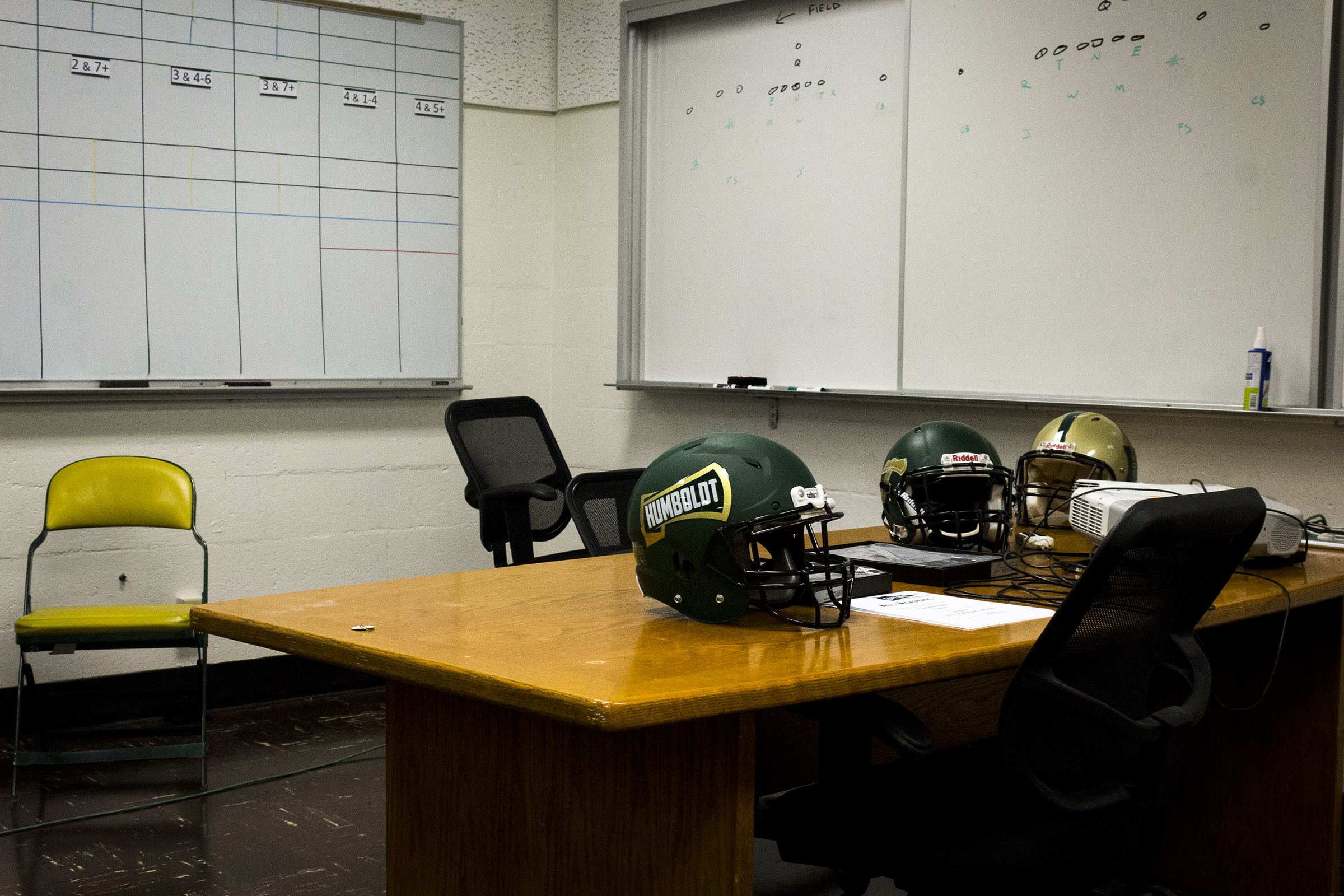
    Humboldt State University football is in shambles once again as interim head coach Cory White stepped down. White has accepted a tight end coaching position at the University of San Diego, leaving HSU players confused and hurt.

    “It’s always a shocking feeling, but I won’t guilt trip him,” player Isaiah Hall said. “The man has to do what he has to do.”

    White, a Humboldt alumnus, served as the HSU offensive line coach during the 2016 and 2017 seasons before being promoted as the interim head coach.

    Prior to joining HSU’s coaching staff, White was the director of football operations at New Mexico State University from Aug. 2015 to July 2016.

    Division I in National Collegiate Athletic Association football in University of San Diego has gotten a hold of White yet again. He served as the Toreros offensive line coach during the 2013 season, and the tight ends coach during the previous 2012 season.

    “I think people first became aware of this when Football Scoop announced White was offered and accepted the tight ends job at (University) of San Diego,” strength and conditioning coach Drew Petersen said.

    Petersen started the strength and conditioning program at Humboldt State in 1991 and has always been a notable leader to the football players. He continues to push them to be the best they can be, both on and off the field.

    “I always tell [the players] they have to enjoy the process and keep working,” Petersen said. “We have to block out the external noise.”

    White was named the interim head coach of the football program on Jan. 29 and planned to implement a 30-60-90 day plan for the program from that day forward. White’s colleagues worked right beside him ready to build and produce a stable program for the Jacks.

    “He was establishing his way of being head coach and building a new foundation here,” player Ereon Nash said. “Now that he is leaving, I don’t really know what to expect next.”

    Jim Redd is a 1969 alum and booster in the community who helped save HSU football in the winter. Redd would like to see this program and its players prosper as best as possible.

    “[Former football head] coach Smith put Humboldt State football on the map,” Redd said. “This is a desirable place to be. The search committee should move forward and hire a head coach as soon as possible. They need to give that head coach as much support as they can.”

    With spring football on the way, HSU players have a lot of speculation about what is to come. They continue to wake up at 6 a.m. three to six days a week and perform to the best of their ability on the field and in the weight room.

    “The biggest thing is about the boys, not us,” coach Wheeler said. “We need to continue to build in the weight room and as a team.”

    Community members, players and alumni alike are looking forward to hearing about the next step with Humboldt State’s football program.

    “There is going to be adversity no matter what program you are at,” coach Wheeler said. “They’ve got to learn to just put their head down and grind.”

    White informed the boosters and interim athletic director Duncan Robbins of his plans to leave last week, but was not available for comments.

  • Women’s basketball rolls over Cal State Monterey Bay

    Women’s basketball rolls over Cal State Monterey Bay

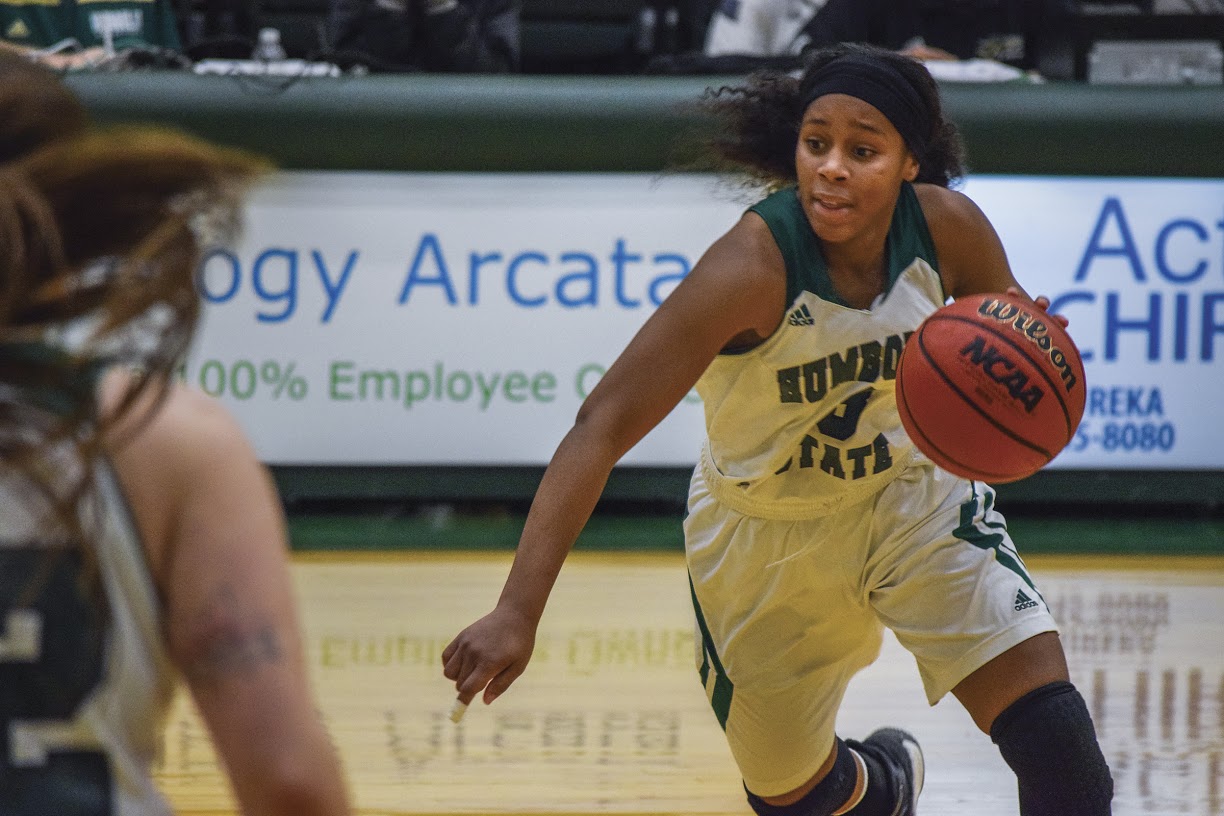
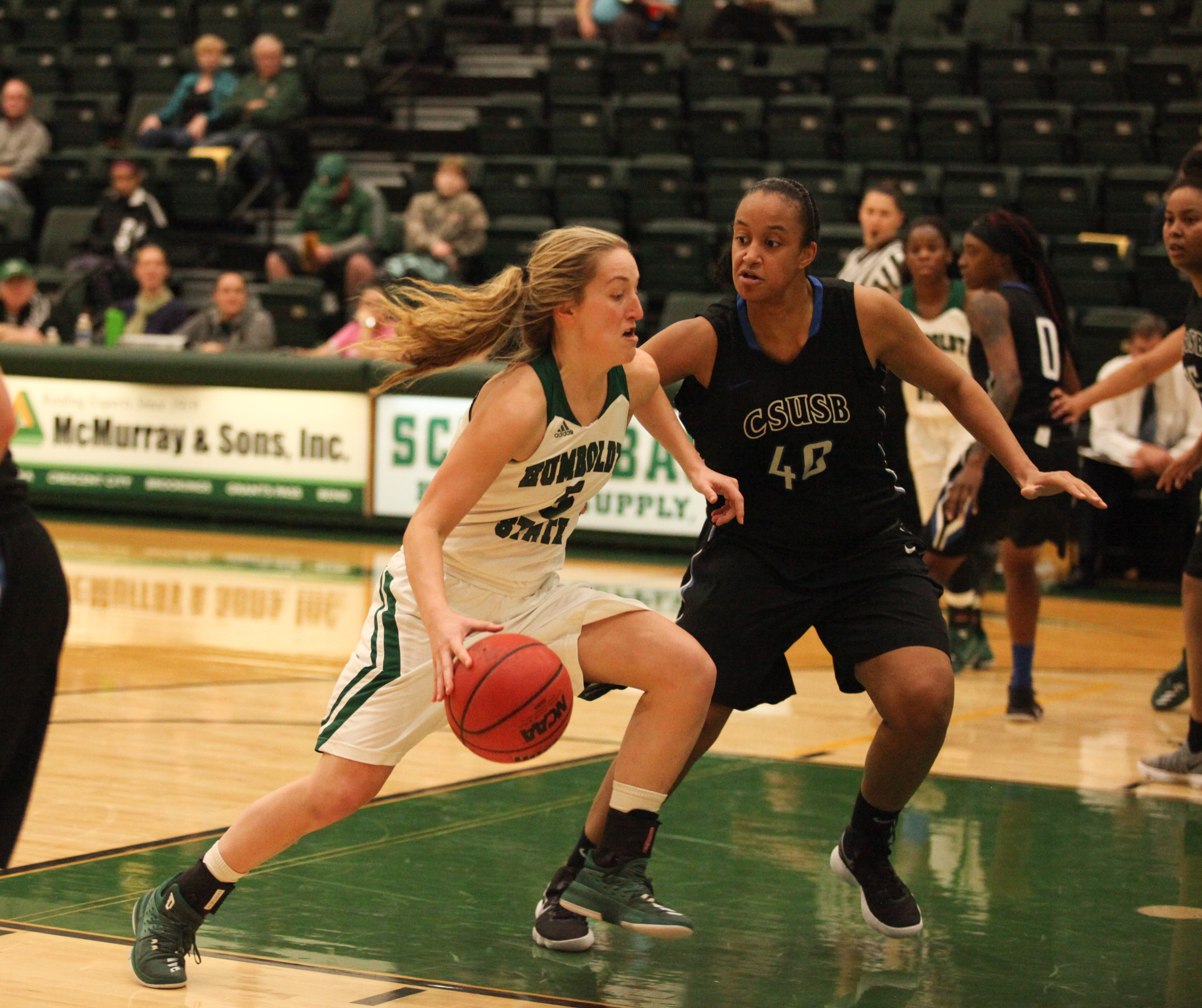
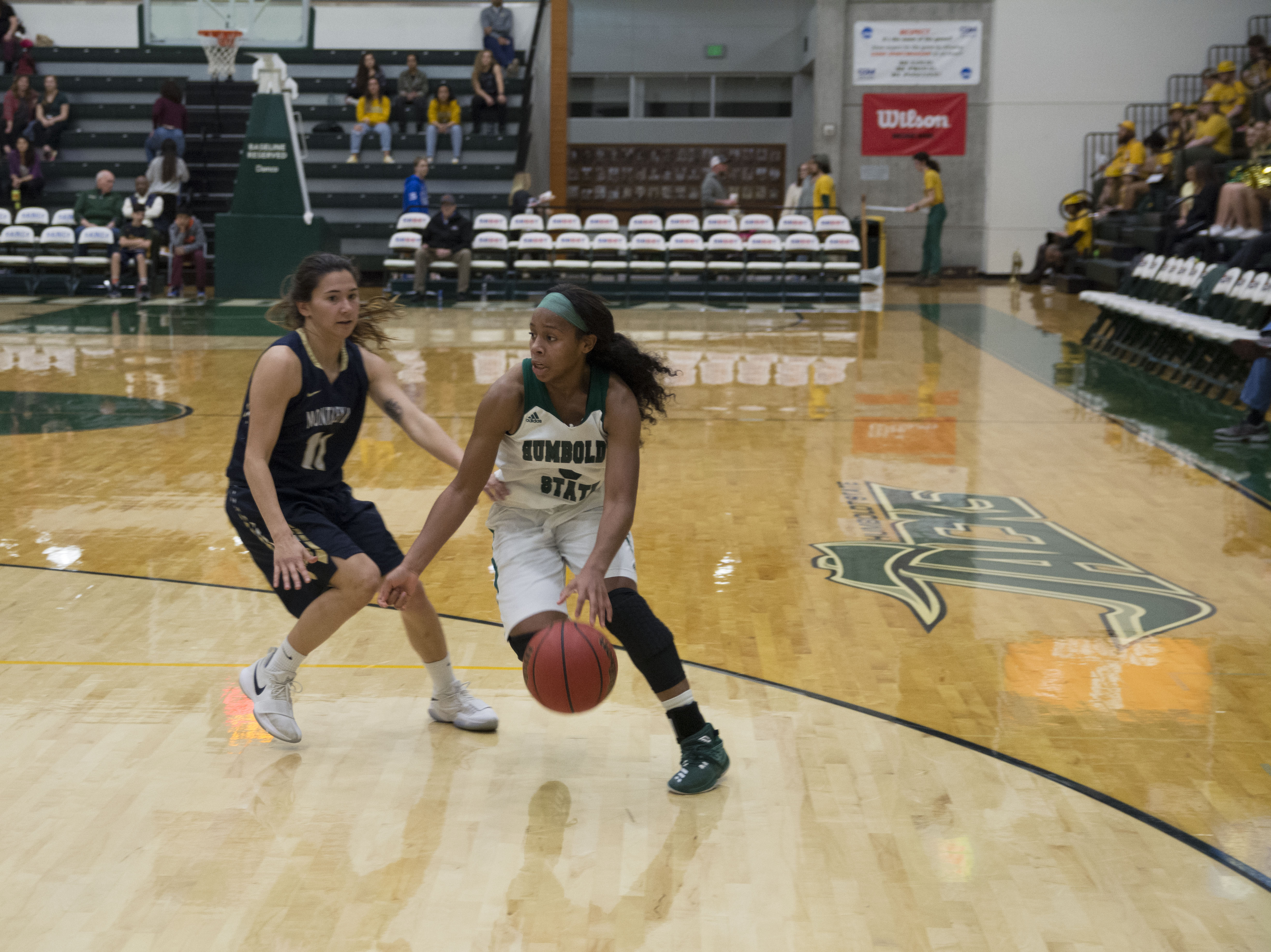
    HSU women’s basketball team rolled over the California State University, Monterey Bay Otters 64-42 at the Lumberjack Arena on Feb. 3

    The game started off as a low-scoring defensive battle, but the Jacks took control in the second quarter. By halftime, the Jacks led by the score of 40-23. Their first-half charge was led in large part by junior forward Isamar Conde, who had 15 points in the first half.

    “Sometimes I’m not really the hot hand,” Conde said. “But today, I made one early, and I just kept shooting.”

    Humboldt State University, led by coach Michelle Bento-Jackson, did not take their foot off the gas after that, as they shot an impressive 57.1 percent from the field in the second half, while shooting a perfect 2-2 beyond the arc.

    “I’m most pleased with our defensive effort. Especially in the first half,” Bento-Jackson said. “We wanted to come out and get the first punch and really send a message on the defensive end.”

    Conde definitely had the hot hand, as she was 3-4 on three-point attempts and finished with 19 points. Another notable performance for the Jacks was sophomore guard Tyla Turner, who ended up with a double-double (18 points and 12 rebounds) and four steals.

    The Jack’s defense was stingy all game, as they held the Otters to a 21.4 shooting percent from the field. Their intensity was visible throughout the game, and they did a great job of setting the tone early on.

    The victory moved the Jack’s current winning streak to three games, and their conference record to 12-5, while their overall record is now 13-9.

    The Jacks are now in second place in the California Collegiate Athletic Association standings, and four games behind University of California, San Diego, which has a conference record of 15-1.

    Conde and her teammates understand the importance of home court advantage with the tournament rapidly approaching.

    “The top four teams get a game at home, and we want to be at home.” Conde said.

    With home court advantage on the line, the Jacks will look to keep their current momentum going and finish the regular season strong.

    There are five games remaining for Bento-Jackson’s team before the CCAA tournament, starting with a February 10 match up on the road against California State University, Stanislaus.

  • Men’s basketball sweeps Monterey Bay

    Men’s basketball sweeps Monterey Bay

    The men’s basketball team defeated the California State University, Monterey Bay Otters 87-79 on Feb. 3, following their epic 82-75 overtime victory against California State University, East Bay on Feb 1.

    The Jacks started the Saturday game off hot, as they began on a 10-2 run. However, they cooled down a bit and the game became a back-and-forth affair in the last three quarters.

    Senior forward Davasyia Hagger led the Jacks in points with 20, while also putting up a double-double with 10 rebounds as well.

    Other notable performances for the Jacks include junior guard Romario Wilson, who scored 17 points, and senior forward Justin Everett, who scored 13 points.

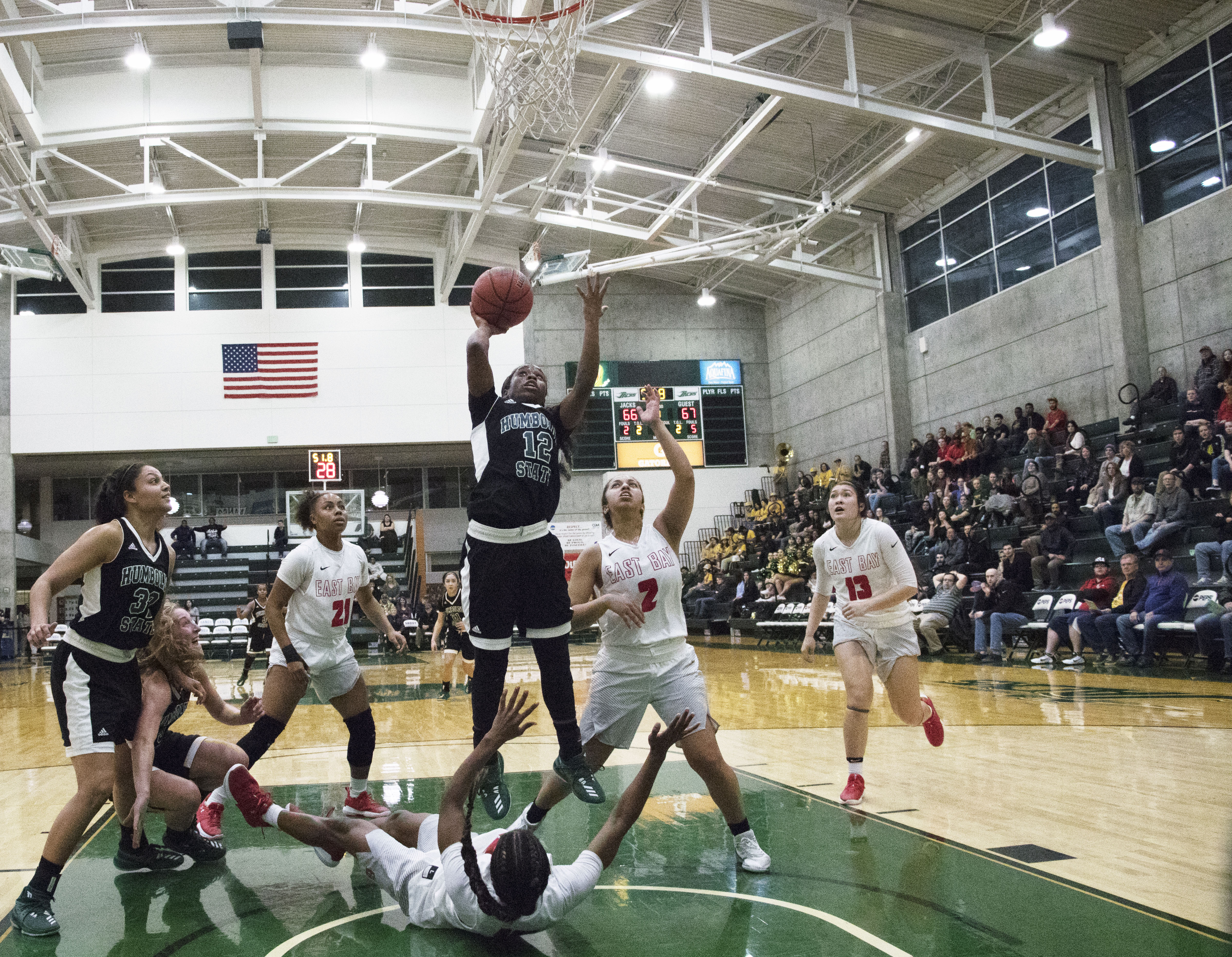
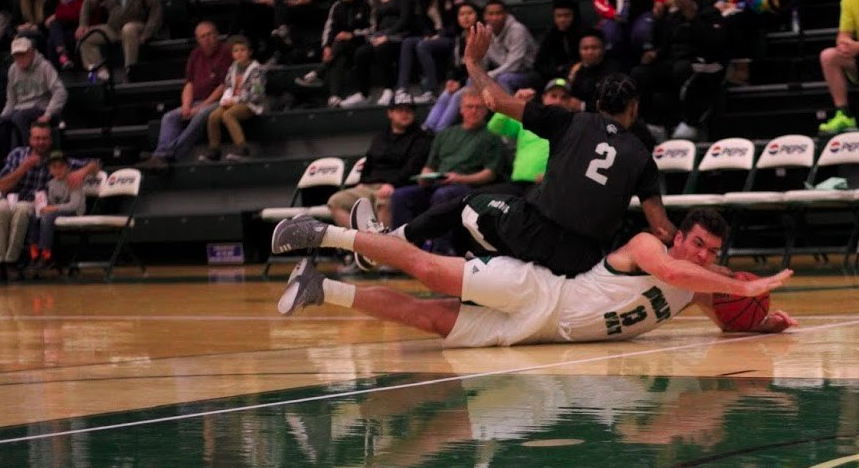
    Romario Wilson picks up the ball for a layup in the second half of Humboldt State University’s 87-79 win over California State University, Monterey Bay on Feb. 3 in the Lumberjack Arena. Photo by Diego Linares.

    “I liked how we executed the game plan,” Jacks head coach Steve Kinder said. “Especially defensively early, which led to some good stops, which led to some breakouts and high percentage shots in transition.”

    The Jacks started off slow behind the three-point line, as they only shot 3-10 from there in the first half. They attempted four threes in the second half, and only made one.

    “Three-point shooting was a high-alert issue at halftime,” Kinder said. “We certainly didn’t want to trade baskets or shoot threes up and down with this opponent.”

    Despite their three-point woes, the Jacks had the advantage on the boards, as they out-rebounded Monterey Bay 45-38.

    They also won the turnover battle, the Otters turning the ball over 15 times as opposed to the Jacks’ eight.

    “That’s good basketball,” Kinder said, “especially for these Lumberjacks this season, being able to limit ourselves to four turnovers at half time.”

    Monterey Bay certainly made it tough on the Lumberjacks, as they hit 14 of their 27 three-point attempts. The Otters average 27 threes per game, and they certainly showed that they could make it rain from deep.

    The Otters were led by forward Josh Kollman. He had 16 points, while shooting 4-5 from beyond the arc, including two late threes that kept his team in the game until the end.

    The win moves HSU to 8-15 overall, with a 5-12 record within the California Collegiate Athletic Association. In their first meeting earlier this year, the Jacks lost 67-62.

    The Jacks have five games remaining before the CCAA tournament begins, starting with a game on the road against California State University, Stanislaus on Feb. 10.

  • Man on Street: The McKinley statue

    Man on Street: The McKinley statue

    Humboldt State University students were asked a single question regarding a controversy surrounding the Arcata community: the presence of the McKinley statue.

    The results were rather polarizing:

    Video by Garrett Goodnight.
  • Spirits of Kerr Tower

    Spirits of Kerr Tower

    Spirits are people, not ghosts.

    The Kerr Tower room is the hidden third floor of Founders Hall at Humboldt State University. According to a Feb. 4, 1971 news release, the Kerr family is from Maple Creek in Humboldt County. They donated $8,000 to HSU for the completion of the tower and the installation of a meditation and prayer room.

    An HSU press release from Oct. 19, 1971 said that the Kerr Tower room in Founders Hall was completed as a spiritual sanctuary, a place of prayer and small gathering place.

    Hal Greer is an oceanography professor at HSU and graduated from HSU in the early seventies. Greer remembers going up there to meditate and feeling the warmth and solitude taking away the pressures of graduate school.

    “Twenty minutes of self-time in the comfort of a nice and quiet place replenished the energy required to keep up on my course load,” Greer said. “Kerr Tower was a spiritually comforting, neutralizing place.”

    Jimmy Allen is another student from the seventies who utilized the tower.

    “I didn’t meditate there,” Allen said. “Sometimes I would lay down and often times a female would come and snuggle.”

    When Allen attended HSU, all of Founders Hall was left open. He and a friend took up residence in the open classrooms, which is where they lived during the spring semester of 1977.

    Describing the social climate on campus at the time, Allen remembers walking into a Neo-Nazi meeting in the Green and Gold room in Founders Hall. At the time, the Green and Gold room was a study hall and a meeting room. No one seemed to mind Allen, who is black. He sat down and remained there studying throughout the entire meeting while no one bothered him.

    Another person around campus who made use of the Kerr Tower room as a meditation place is Jesse Austin.

    “Whenever I seemed to go there, no one else ever came up,” Austin said.

    Austin’s wife Rita got him started in yoga and meditation in the tower room and sometimes they would bring candles up there.

    Austin remembers having a psychic ability as a child and upon entering college at the age of 15, his psychic ability disappeared. Upon the birth of his first child, a daughter, his psychic ability returned.

    Austin’s psychic power experiences in the Kerr Tower developed to become supernatural. He gives himself the title of Psychic Medium.

    One time, the Austin’s brought back all of the past presidents of HSU into Kerr Tower.

    The most memorable contacts with spirits were female professors from the original Humboldt Normal School, but one woman stood out. She lost her son over the cliff on Scenic Drive in Trinidad before there was a Highway 101.

    “This one spirit was upset, but positive and extremely helpful,” said Austin. “The spirit was oriented towards teachers and was not interested in students.”

    Austin emphasized the spirits were people, not ghosts, and she wanted HSU to reopen the tower room.

    “I would like to see Kerr Tower reopened someday,” Austin said.

    There is now a meditation room in the basement of the library. It is only open during lower floor business hours.

  • WRRAP hosts Zero-Waste Conference this weekend

    WRRAP hosts Zero-Waste Conference this weekend

    Waste Reduction and Resource Awareness Program’s Zero-Waste Conference is a reflection of the effort the community and students put toward goals of engaging, expanding, sharing and moving forward.

    Shanti Belaustegui Pockell, an environmental studies major at Humboldt State University, is the education director for WRRAP on campus.

    Belaustegui Pockell said WRRAP hopes to grow in the future by working more with students on campus, as well as other programs to form coalitions and strengthen relationships.

    WRRAP is hosting the Zero-Waste Conference throughout the day on Friday, Feb. 9 and Saturday, Feb. 10.

    Belaustegui Pokell said the event will focus on intersectionality, social justice issues and institutionalizing sustainability practices of evolving and shaping policy.

    Multiple speakers will be attending the event to discuss community challenges.

    Sofia Pereira, the mayor of Arcata, will speak on making Arcata a zero-waste city on Friday and Andre Villasenor, a United States Environmental Protection Agency Sustainable Management of Food program representative, will speak on institutionalizing sustainable materials.

    Ceria Wilbur, an environmental science and management major at HSU, has been the zero-waste director at WRRAP for the past year.

    The conference and banquet at 5:30 p.m. on Friday is new this year and works to extend the message of a sustainable future.

    “It’s just a way for us to connect with our campus community, bring our peers together with a number of different inputs and experiences,” Wilbur said. “This year our theme is Beyond Barriers, Imagining a Zero-Waste Future.”

    Community members are encouraged to attend the event. Vegetarian and vegan options will be available.

    There are activities on Friday from 11:00 a.m. to 4:00 p.m. at the UC Quad that include crafting with Tinker Time and a clothing swap, along with demonstrations from the Campus Center for Appropriate Technology, or CCAT.

    Tinker Time are local and on-campus programs that have workshops for gardening and crafting body care products.

    Campus sustainability groups that are also participating in the zero-waste event are Green Campus, Humboldt Energy Independence Fund, with speakers from local officials, academic departments and the Office of Sustainability.

    WRAAP will host the second half of the Zero-Waste Conference in the Kate Buchanan Room on Saturday, covering topics such as the role of compost in carbon sequestration, biomass and the Yurok tribe.

    Jason Martinez, outreach coordinator for CCAT, will attend the Zero-Waste Conference.

    “Help is always welcome at CCAT, and for folks that come through, there is a lot they can learn, a lot they can experience,” Martinez said.

    Martinez is excited to introduce CCAT to students who don’t know about the house on campus.

    “I love seeing how the projects get started, how they are going to see how CCAT continuously is growing,” Martinez said. “Whether it’s the physical space itself or just the people, I think that is the piece I love seeing.”

    WRRAP’s Zero-Waste Conference is meant to bring together students, faculty and community members to discuss real issues the environment is facing due to human impact.

  • Women’s basketball walks away with another crazy win

    Women’s basketball walks away with another crazy win

    Down by 12 points at halftime at Lumberjack Arena, HSU’s Lady Jacks made a second half comeback in their home game against Cal State East Bay on Feb. 1.

    HSU junior Jovanah Arrington scored a three-pointer in overtime to win the game, putting the Jacks up 76-73.

    “I just shot my same shot that I shoot every time,” Arrington said. “I knew the clock was going down so I had to get it up.”

    East Bay dominated the first few minutes of the game with a 12-3 lead before the Jacks came back determined to put more points on the board. With enough drive, the Jacks regained their confidence to take more shots, until they fell back down at halftime with a score of 24-12.

    “We have certain things that we try to do defensively as far as taking our opponents out of their strengths, so to speak,” HSU head coach Michelle Bento-Jackson said. “I thought we did a very poor job of that in the first half.”

    With another gain of confidence after their halftime talk, the Jacks outscored the East Bay Pioneers in both the third and fourth quarters. The team nailed 15 free throws in the second half, and ended the game in a 69-69 tie, resulting in the first period of overtime.

    HSU sophomore Tyla Turner led the Jacks with a total of 23 points, HSU junior Kindall Murie landed 13 points and Arrington helped with seven rebounds.

    “We got a lot of contribution tonight from different players,” Bento-Jackson said. “I thought we stayed aggressive in transition.”

    The Jacks walk away with an overall record of 12-9 and a conference record of 11-5.

  • Jacks ball appoints coach White as interim coach

    Jacks ball appoints coach White as interim coach

    A new leader has been chosen to usher the Lumberjacks football team into the 2018 season.

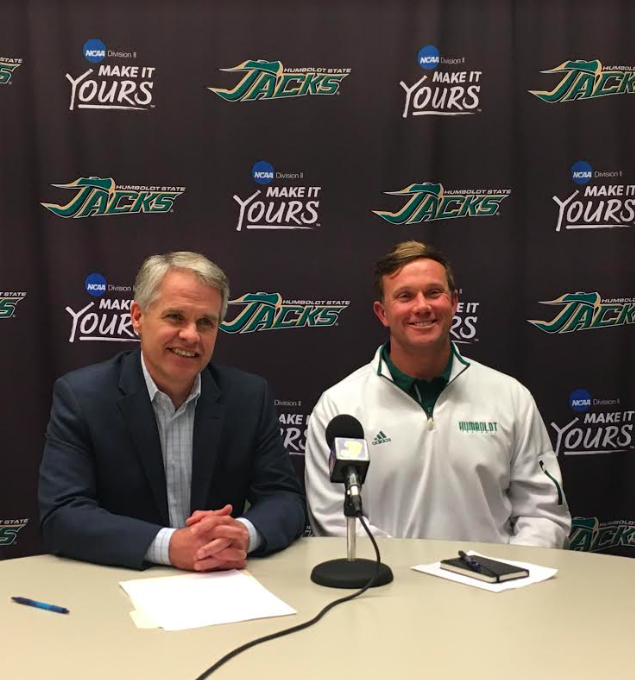
    Jacks offensive line coach Cory White has officially been given the title of Humboldt State’s interim head football coach, as announced at a press conference on Jan. 29.

    Coach White was a student athlete at HSU about 17 years ago and never did he think he would find his way back in the program on the other side of the table.

    “I am an alum,” White said. “I am a Jack. I was once too sitting in those meeting rooms, listening to the head coach, competing on the field and really never thought I would be in these shoes today.”

    Coach White has 14 years of experience coaching college football. He has coached at every level including Division II, Division III and junior college. Before coming to HSU in the fall of 2016, coach White was the director of football operations at Division I Football Bowl Subdivision in New Mexico State for a year.

    Along with coach White, interim athletic director Duncan Robins is greatly contributing to the work being done in keeping the normalcy of the football program for current student athletes.

    “Not only do we have a strong coaching staff,” Robins said, “but everyone is comfortable with Cory leading them, so this interim position was a natural one to offer to Cory and he has accepted.”

    Robins is specifically hired by collegiate athletic programs to improve their organization. He was hired at HSU during June of last year and his first task was to figure out what the budgets looked like.

    After several months of Robins and HSU President Lisa Rossbacher trying to figure out whether or not the football program could be saved, it was announced the program would be back for another year with the help of outstanding boosters.

    “We have a recruiting effort going on,” Robins said. “We have spring season being planned, we have a 10-game fall season waiting for us and our student athletes have some normalcy to their daily routines.”

    Both White and Robins expressed their thanks for previous head football coach Rob Smith for all of the hard work and recognition he has brought to the football program.

    Smith announced his resignation in a press conference a few weeks ago. Jan. 30 would have marked Smith’s 10th year as Jacks head football coach.

    “There is a reason why coach Smith was here for 10 years,” White said. “This is a place of longevity.”

    Senior linebacker Connor Cox has played for the Jacks since his first year in 2015. He is an Arcata native and attended Arcata High School just before coming to HSU.

    “Nothing has really changed for us,” Cox said. “We are up every morning, like all prior years, doing the same workouts and putting in the same effort.”

    With a strong football program still in route for the fall 2018 season, coach White plans on working to make this whole endeavor worth it.

    “Humboldt football is here to stay,” White said.

  • HSU political science professor running for California Assembly 2nd District

    HSU political science professor running for California Assembly 2nd District

    This story has been changed from its original version on Jan. 25 at 4:24 p.m.

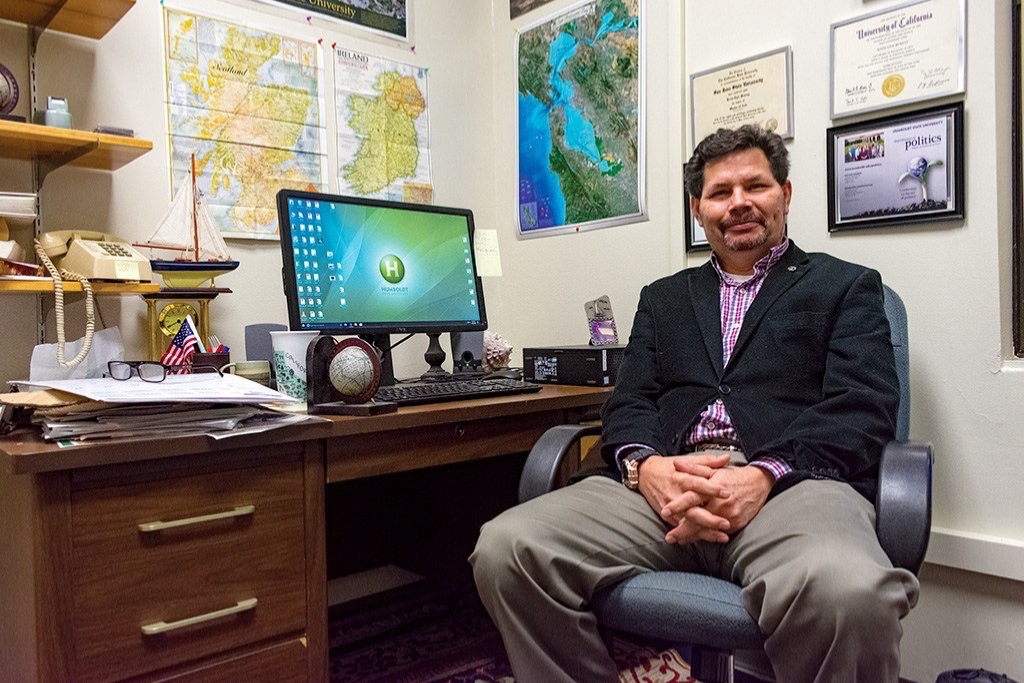
    Humboldt State University’s political science professor, Kevin Murray, will be running as a candidate to represent California Assembly 2nd District in the upcoming  elections.

    Murray has taught college-level political science classes since 1989. He started teaching at HSU in 2015, and plans to take his political experience to the next level.

    “I’ve taught political science for around 30 years and I figured it was time to convert that knowledge into action,” Murray said.

    Murray is running as a Democrat and bases his political platform on four main issues:

    1. Universal health care for California. Murray believes that every Californian should have full health care coverage in order to vastly improve our quality of life. The universal health care plan Murray wants includes mental health care and drug rehabilitation, helping those who are often ignored.
    2. A green economy. By switching from our over-reliance of non-renewable energies, such as oil, to greener and more sustainable energies, we can help lead the way to show that there is a profitable way to have a green society.
    3. Debt-free college. Murray states that an undergraduate college degree now has about the same equivalent to a high school diploma in the 1940s. Because a college experience is becoming essential to get better jobs, there shouldn’t be as large of a barrier for those with low-income backgrounds. By reducing or completely erasing college tuition, Murray hopes to have college graduates leave without debt hanging over their heads.
    4. Affordable housing. With debt and homelessness on the rise in California, Murray wants to bring peace of mind to Californians by pushing for affordable housing. By introducing rent stabilization, tiny homes and Measure J Housing to the 2nd District of California, Murray plans to fix our states housing problem.

    If elected as representative for the California Assembly 2nd District, he will represent several counties such as Humboldt, Trinity, Del Norte and Mendocino. Jim Wood is currently the incumbent representing California Assembly 2nd District.

    “It’s a daunting task, but one I’m well prepared for,” Murray said.

    Murray says that running for office won’t interfere with his current teaching, as his activism will take place only during weekends and, if anything, will enhance how he teaches.

    “I don’t really have anything to lose,” Murray said. “I can take my 30 years of experience into the position or I’ll be able to walk away with the knowledge gained from running and incorporate it into my classes.”

    The primary election is coming up on June 5, and the general election is occurring on November 6. If you’re interested in getting into contact with or volunteering for Kevin Murray, head to his website at http://murray4ca.homesteadcloud.com/

  • Finding an interdisciplinary approach to sustainability

    Finding an interdisciplinary approach to sustainability

    Armed with their usual commitment to sustainability and an updated mission statement, the Waste Reduction and Resource Awareness Program (WRRAP) is starting to integrate intersectionality into their brand of environmentalism.

    WRRAP started as an on-campus recycling program in 1989. Their goal has always been to reduce waste coming from HSU through environmental education. Since its inception, the organization has expanded into compost diversion, water quality assurance and a reusable office supply exchange.

    This semester, the organization is attempting to bring together two important fields of activism by designing this semester’s projects with inclusive sustainability in mind.

    “Environmentalist” is a label that comes with a dark history of eugenics, exclusivity and barriers that WRRAP is attempting to dismantle on a local level. The campus-based organization WRRAP recently hired an environmental justice intern with the intention of making sustainability more accessible for all HSU students.

    Lauren Wardle, the newly hired environmental justice intern, has experience running an intersectional feminist club and wants to bring those concepts to her position.

    “Social issues go hand in hand with environmental problems,” Wardle said. “Environmental justice and intersectionality will bring in the voices of the communities that are most affected.”

    The program’s main goal is to ensure that HSU students are using their available resources to the fullest extent. WRRAP’s first environmental justice project will be a campus-wide survey to assess students’ access and understanding of sustainability.

    Shanti Belaustegui Pockell, an environmental studies major, WRRAP’s education director and intern coordinator, hopes the internship will help shift environmentalism into something more accommodating for everyone.

    “Instead of trying to get more people into this little space we have created, we want to expand the circle,” Pockell said. “We are reimagining what sustainability can look like, because a lot of people are living sustainably, just without the label.”

    Irán Ortiz, environmental studies major and director of the student-led campaign Take Back the Tap, credits WRRAP’s leadership and innovations for social justice.

    “We need to bring together the communities that are affected, but ignored,” Ortiz said. “I hope this new position helps address the problems we see in our institution by creating a new perspective and understanding of intersectionality.”

    When environmentalism is executed with an intersectional lens, social and environmental issues are looked at as one. To put it another way, it is the understanding that all oppressions exist under the same hegemonic systems.

    Ryan Sendejas, environmental studies major and community garden coordinator at Campus Center for Appropriate Technology, realizes the importance of incorporating environmental justice into an institution.

    “In society and bureaucracies specifically, we tend to compartmentalize everything in an attempt to understand it,” Sendejas said. “Nothing is truly singular. So, we need to start thinking in terms of interconnectedness.”

    WRRAP will be hosting a Zero Waste Conference on Feb. 9 and 10. Look out for flyers around campus for more details!

    For more information about WRRAP, visit their website HERE.

  • Jacks pull off road victory at Chico State

    Jacks pull off road victory at Chico State

    The Humboldt State University women’s basketball team defeated conference rival Chico State on the road 69-60 on Saturday. The win moved the Jacks past the Wildcats into third place in the conference. It also changed their record to 10-8 overall with a 9-4 record in the conference, as opposed to Chico’s 10-7 record with an 8-5 record in the conference.

    The Jacks had a big advantage in the inside, as they won the overall rebound battle 31-19. They also outscored the Wildcats in the paint 34-28. Head coach Michelle Bento-Jackson was adamant about the importance of their inside play after the game.

    “We were able to get extra possessions by being aggressive on the offensive boards,” Jackson said. “And we did a good job of preventing Chico from getting offensive rebounds.”

    Humboldt was lead by their standout siblings Tyla and Tyra Turner, who scored 14 points each to lead the team. They were able to compensate for a bad outing, shooting wise by getting to the free-throw line and converting at a high rate. At the charity stripe, Tyra ended up 6-8 and Tyla shot a perfect 10-10.

    The Jacks also got big contributions from junior forward Isamar Conde, scoring 11 points, and junior guard Jovanah Arrington, who scored 10 points.

    The Jacks will face another tough rematch on the road next week against Cal State Los Angeles on Friday at 5:30 p.m. In their first match earlier this season, the Jacks won by the score of 83-73.


  • Jacks ball struggles again

    Jacks ball struggles again

    The Humboldt State men’s basketball team was torched for a 74-36 loss to Chico State on Saturday in what was a forgettable performance.

    The Jack’s record moves to 6-13 overall (3-10 in conference), while Chico improved to 12-5 (9-4 conference).

    It was a rough game all around for Humboldt, but the stat that really stood out was the field goal percentage, as the Jacks shot a mere 18.3 percent (11-60) compared to Chico’s 43.3 percent (26-60). They lost the battle on the glass as well, as they were out-rebounded 52-35. This ugly loss dropped the Jacks to 4-10 in their last ten games.

    There were not a lot of bright spots in this one, as no one on the team reached double-digits in points. However, Jack Kaub and Kameron Curl tied for the team lead in points scored with six each.

    Humboldt faces another tough task in their next game, as they will travel to Cal State Los Angeles on Friday at 7:30 p.m. to face the Golden Eagles. The Jacks won their first meeting of the season by the score of 69-64.

  • This week in sports history

    This week in sports history

    The San Francisco 49ers beat the Cincinnati Bengals 26-21 in Super Bowl XVI on Jan. 24, 1982. This was the first of San Francisco’s five total Super Bowl championships that they would win in the next 15 years.

    The first ever college basketball game was played on Jan. 27, 1894. The University of Chicago beat Chicago YMCA 19-11.

    Jan. 30 will mark the 10-year anniversary of Jacks head
    football coach Rob Smith’s hiring. Smith has earned the conference’s
    Coach of the Year award four times and guided Humboldt State University to national
    recognition since being hired in 2008.

  • Redwood Curtain is a diamond in the rough

    Redwood Curtain is a diamond in the rough

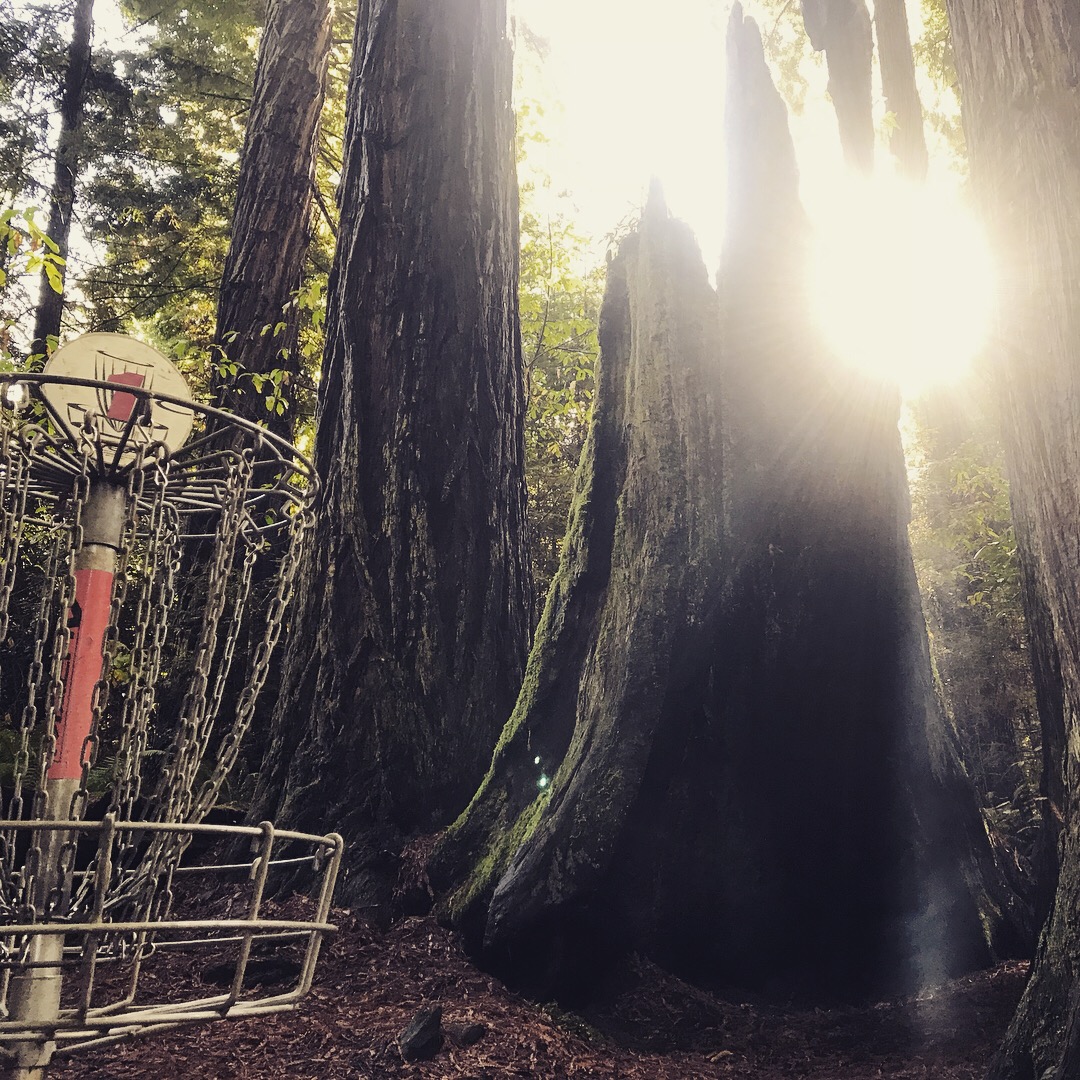
    Like a scene from Jurassic Park, huge prehistoric trees line the fairway of the Redwood Curtain Disc Golf Course, and getting lost in the thick forest was inevitable for Connor Evans and his dad on their first visit.

    “We didn’t have a map. We didn’t know the course at all. First time for him playing disc golf probably,” Evans said. “It was a shit show. It was a lot of fun. We got so lost, but that’s how The Curtain goes.”

    Evans is the president of the Disc Golf Club at Humboldt State University. Unlike most other universities, there is a disc golf course located right in the back of campus among the redwoods.

    “We’re a pretty diverse club,” Evans said. “We get a lot of different students, and The Curtain is our home course.”

    The Redwood Curtain, as it’s named, has been around for more than 30 years and is known for holes that thread their way through redwoods and ferns. With many narrow fairways and lots of trees for obstacles, many disc golfers agree that it is one of the more difficult courses to master in the world.

    The club tends to the course and makes sure it stays clean. HSU alum Wyatt Bettis is the team’s coach.

    “This course is unlike anything in the world,” Bettis said. “Its huge redwoods, trying to navigate through them, just the beauty, the ferns, it’s more of a beautiful course than anything. Whenever I think about playing disc golf, I imagine playing through the redwoods.”

    Disc golf, also referred to as frisbee golf, is rapidly evolving and becoming one of the most-played sports locally. There’s the Redwood Curtain course as well as College of the Redwoods, Manila, Mad River and Cooper’s Gulch.

    According to the HSU club team, The Curtain ranks above all others. It offers a high level of difficulty along with beautiful scenery that is unmatched.

    Dennis Hanson is the Disc Golf Club’s safety officer and has been playing the sport for eight years. He enjoys the local aspect of the Redwood Curtain and not having to go far to play a round.

    “We feel like its part of the school,” Hanson said. “We feel like it’s our course. So we try to take care of it, feel pride for it and keep it up to date.”

    For a course that is loved so much throughout the disc golf community, the Redwood Curtain remains a lesser-known accommodation that HSU provides for their students. Also, it’s good just to get out in nature to lower that end-of-semester stress.

    The disc golf team starts playing competitively against other universities this spring. Students interested in showing off their skills can contact Bettis or check out their practices on Sunday mornings at the Redwood Bowl.

    “It’s something that’s here in Arcata,” Hanson said. “You don’t have to go too far to play and it’s really local, which is why it’s so special to me.”

  • Lady Jacks win big vs Coyotes

    Lady Jacks win big vs Coyotes

    The Jacks women’s basketball team took care of business Saturday night by dismantling the California State University, San Bernardino Coyotes 71-53 at the Lumberjack Arena.

    It was a slow start to the game as both teams struggled to score a bucket. The score was tied at 2-2 until just over five minutes of play.

    The Jacks’ twin sister duo of sophomore guards Tyra and Tyla Turner began to turn it on in the second quarter. Their teammates responded and HSU took a 13-point lead with 3:01 left on the clock, but the Coyotes closed out the first half on a 7-0 run to cut the deficit down to six points.

    HSU head coach Michelle Bento-Jackson was proud of her team for turning it up on the defensive side of the ball.

    “Their two leading scorers Parks and Knox were scoreless at halftime,” Jackson said. “So we felt like we did a darn good job on the defensive end. We never really got into a great flow offensively early on, which I’m sure was pretty boring for the fans.”

    The action picked up in the second half as the Coyotes came out strong with six unanswered points to tie it up at 27, but HSU took control of the game and finished the third quarter with a nine-point lead.

    The Jacks’ bench outscored the Coyotes 25-12 thanks largely in part to the play of junior guard Jovanah Arrington. She knocked down two three-pointers and had 14 points total.

    “I just came in with a mindset to be ultra aggressive,” Arrington said. “It sets a tone for the whole team when you do it as an individual and it gives us good looks on offense and good looks on defense.”

    The Jacks took charge of the game in the fourth quarter and built a commanding 22-point lead with 2:58 left to seal the deal.

    Jacks guard Tyla Turner finished the game with 15 points and a game-high five steals, while sister Tyra finished with 12 points and four assists. Senior forward Kindall Murie finished with 10 points and five boards.

    The result improved HSU to 9-8 overall and 8-4 in conference play, while CSUSB dropped to 6-10 overall and 4-8 in conference.

    The Jacks hit the road this week for a clash against conference rival Chico State on Saturday, Jan. 20. Tip-off is at 5:30 p.m..


  • Surfing giants in Humboldt

    Surfing giants in Humboldt

    Waves upwards of 20 feet tossed and turned against the Humboldt coastline this week.

    According to the National Weather Service Marine Forecast, a small craft advisory is also in effect until Sunday afternoon. While the first big swells of the season are already arriving, the winter swell season has merely just begun.

    With more swells and even bigger waves on the way this season, it begs the question:

    How do such massive waves come to be?

    According to the National Oceanic and Atmospheric Administration (NOAA), water does not actually travel in waves. Waves are merely the transfer of energy, moving from one neighboring water molecule to the next.

    The NOAA says that waves are most commonly generated by wind. Wind-driven waves, or surface waves, start out when changes in temperature produce a change in air pressure. Air then follows its natural path, moving from an area of high pressure to an area of low pressure. This movement is referred to as wind.

    As the wind blows across the ocean’s surface, it generates ripples. This happens in a similar way to how ripples are created when you blow over the surface of a cup of water. These ripples increase in intensity to eventually become waves.

    What determines the size of a wave?

    The NOAA says that the size of these waves are determined by three main factors:

    Wind Speed: How fast the wind is blowing.

    Wind Duration: How long the wind blows.

    Fetch: Distance over water that the wind blows in a single direction.

    The biggest waves occur when wind speed is at its highest, wind duration is at its longest and when fetch is long or unlimited.

    There are several other factors that can affect wave size in a certain area, some of those factors include:

    Swell Direction: The direction in which the swell originated from.

    Ocean Floor Topography: Forms or physical features on the ocean floor.

    Tide: Rising and falling tides are caused by a gravitational attraction between the earth, moon and the sun.

    Why are these big waves in Humboldt?

    “It is because the storms that come out of the North Pacific are incredibly powerful,” said Dr. Jeffry Borgeld, Oceanography professor at HSU who specializes in Geological Oceanography. These storms “can be as energetic as a tropical storm, typhoon or a hurricane.”

    Despite the cold, powerful and often unforgiving conditions, there are a few individuals that can be seen bobbing amidst the chaos and gliding over the massive surf.

    HSU psychology student William Doudna is one of them.

    “There’s something very cleansing about surfing that if i don’t do it, i just don’t feel comfortable in my own skin,” said Doudna. “I feel like a better person every time I come out of the water.”

    Video by Michelle Meyers.
  • Jacks ball safe for now

    Jacks ball safe for now

    By|Keaundrey Clark & Skye Kimya

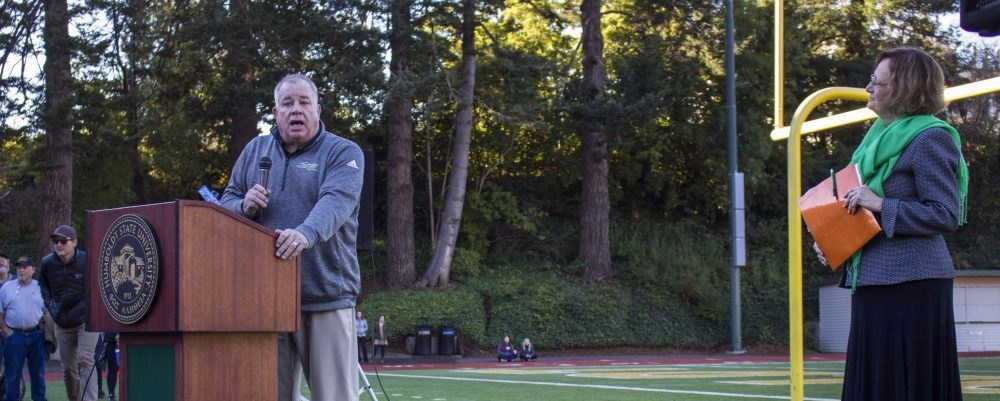
    Through trials and tribulations, Humboldt State football will be playing another year in the Redwood Bowl, as was announced by President Lisa Rossbacher and Interim Athletic Director Duncan Robbins on Tuesday, Dec. 5.

    In front of HSU students, athletes, boosters, administration and coaches, it was announced that the team will return after months of doubt by Rossbacher.

    “Through a lot of work by the boosters and the community,” said Rossbacher. “Alumni generating pledges for support make this possible for next year. “

    President Rossbacher said she was impressed by the passionate group of boosters who led a recent fund drive. This convinced her they could bring in the resources needed to help continue the football program.

    Six months of doubt have been put to bed for now, as boosters led by Jim Redd and Ceva Courtemanche worked endlessly to provide a solution to HSU Athletics financial woes. Redd and SaveHSUAthletics were able to confirm that almost $511 thousand in pledges and donations for 2017-18 has been reached.

    “Not all of this is local community, there are previous athletes from all over the United States that have donated,” said Redd. “People that have just heard about our cause that have donated. It just speaks volumes, that athletics and the student athletes are very important to this community.”

    The future of Jacks football, which is the University’s most expensive athletics program, had been in question due to financial challenges.

    The Athletics Department, Office of Advancement and the boosters struggled to maintain a balanced and working relationship to find a solution to the department’s financial woes. In terms of balancing the budget, the University is working to address an ongoing structural deficit that has been on Rossbacher’s plate for a few years now.

    With an additional $395 thousand for year two, $375 thousand for year three, $355 thousand for year four and $335 thousand for the fifth year, the community of Humboldt showed how much HSU football means to them.

    “We never gave up,”said Redd. “We kept fighting until the very end and the community support is absolutely unbelievable.”

    Several players walked away from the Redwood Bowl Plaza this afternoon with plenty of appreciation for their community and Rossbacher.

    “It feels great, it feels like I got a lot of relief off of my shoulders. Now I can get ready and focus for next season,” said returning player Jamere Austin.

    Plenty of players have been worried about where they would have headed next, but they are looking forward to continuing in their first step foward after today’s decision – Spring Ball.

    “President Rossbacher made the right decision,” said returning player Joey Sweeney. “Next year should be a really good year.”

    Head Coach Rob Smith held a meeting with players, urging them to notify their families that the team will be back. He understands that because of the uncertainty surrounding the program some players won’t return. But he hopes players will stay and be a Jack for life.

    “Most coaches and most players had kind of checked out, they saw the writing on the wall, anticipated the program not being here next year and were preparing for life after this,” said Smith. “Now we all kind of need to get together and figure out how to move forward.”

    One of HSU’s best defenders, junior linebacker Curtis Williams, is excited for the prospects of a great season next year.

    “It feels great,” said Williams. “Knowing we have another season is a great feeling.”

    Humboldt State has been playing football for decades. The prospect of losing the team is something the players, coaches, school and community couldn’t face. Head Coach Rob Smith has his work cut out for him next season.

    “Coaches will come and go, Presidents will come and go, but this team belongs to Humboldt State,” said Smith


  • Farewell time

    Farewell time

    * Ahmed Al-Sakkaf works as front desk student assistant for the Center for International Programs

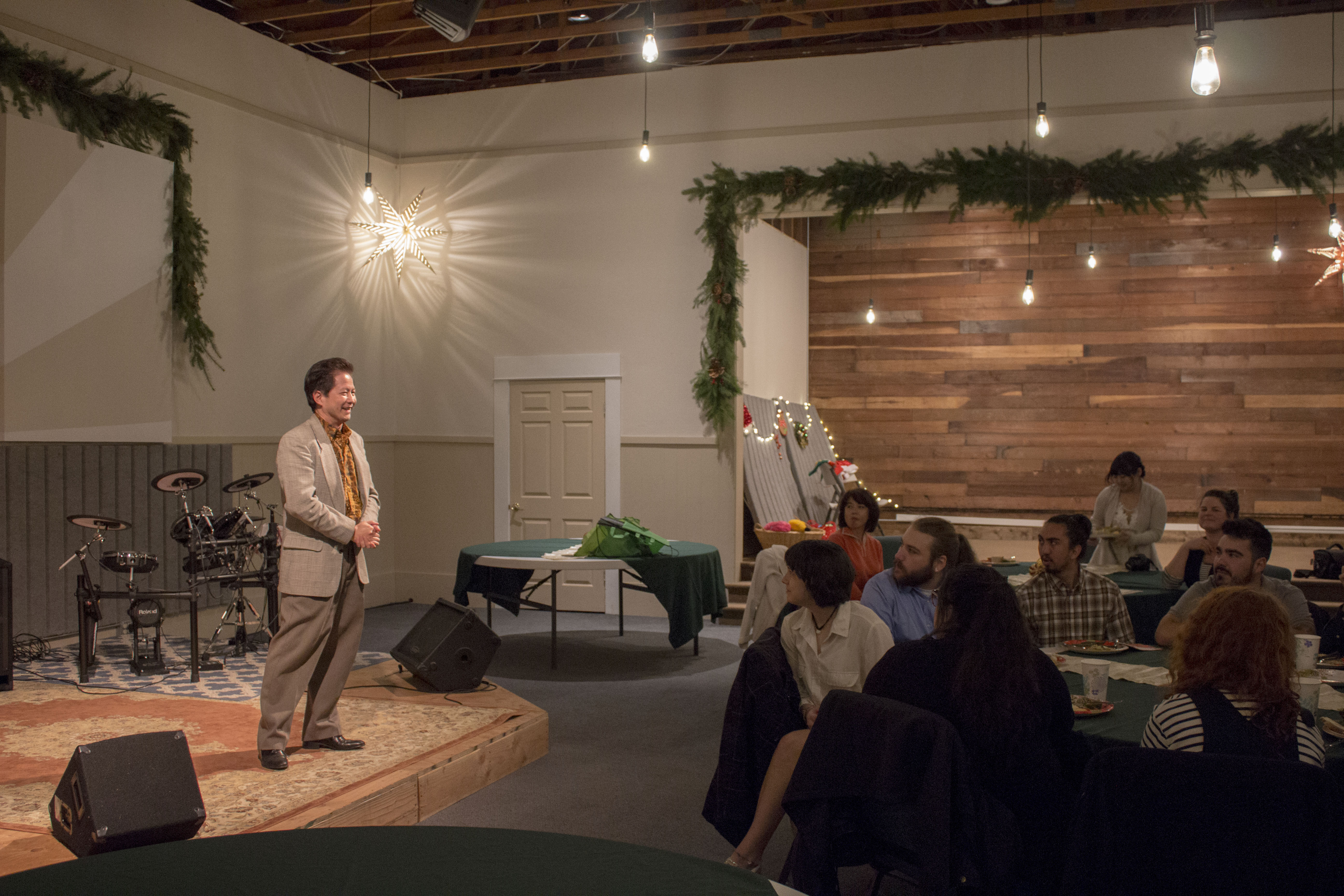
    The Center for International Programs hosted a farewell party on Saturday for international exchange students who are going back to their home countries. They are leaving with unforgettable memories they’ve made here at Humboldt State.

    Sonja Willigerode is a German exchange student studying Business. During her semester at HSU, Willigerode took a sustainability-focused business class.

    In Germany, Willigerode studied economic theory which was “just about money and trade,” she said.

    At Humboldt she learned how to apply that same theory in an environmental context.

    “I studied economic theory in Germany and it was just about money and trade,” Willigerode said. “But here you learn how you can apply it to environmental context.”

    This is Willigerode’s last semester of study and she chose to spend it abroad here in HSU.

    “It was the best semester in my whole studies,” she said. “I’m so thankful that I can be here and stayed this semester.”

    Linus Kaminski is another exchange student from Germany. He’s majoring in Water Resources Management. Kaminski loves Humboldt and thinks it’s beautiful.

    “I like the area here. It’s so beautiful. The ocean the forest it’s beautiful,” he said. “There aren’t many places where I can see deer and raccoons on just my way walking from my dorm to the library.”

    Kaminski celebrated Thanksgiving for the first time this year. He celebrated it with the family of one of his American friends. He also played American football for the first time.

    “This year it was my first Thanksgiving and it was really cool, I really like it,” he said. “There was so much to eat. I also played football it was my first time playing American football and it was so much fun.”

    Ruby Saint a bilateral exchange student from Australia. Students in the bilateral exchange program pay their tuition fees at their home university and study abroad at another university. Saint grew up in Tasmania and previously studied at the University of Tasmania in Hobart. This year she also celebrated Thanksgiving for the first time. She and her friends had a Friendsgiving celebration.

    “That was interesting , we had like a Friendsgiving,” she said. “It was interesting to kinda experience Thanksgiving.”

    Saint thinks Humboldt is “kinda quirky and interesting,” she said. Saint arrived to the U.S. few days before the beginning of the fall semester. She flew to San Francisco and took the Greyhound bus to Arcata. She was shocked by the smell of weed in the bus.

    “I was like shit where am I,” she said. “Marijuana back home is a big no-no. If the police smell it on you’re done.”

    Here in Humboldt Saint discovered her love for Pumpkin pie.

    “Pumpkin pie, I need to take back and make a thing there.”

    Yasmina Umarkhanova an exchange student from Kazakhstan studying Psychology. When she first arrived in the U.S. at the beginning of the fall semester, she was amazed by the redwood trees.

    “I was really amazed by the redwood forest,” she said. “I really like the fact that I’m living in a forest.”

    Umarkhanova is going back to Kazakhstan in two weeks. She going to miss the redwoods the most.

    “I’m going to miss the forest,” she said. “When I’m walking and looking around, it’s meditation every day.”

    As Umarkhanova reflects on her semester abroad experience at HSU. She thinks it’s the best “chapter” of her life.

    “Humboldt for all international students was one chapter of our lives,” she said. “For me, this chapter of my life is the best.”

  • Cross Country National Championship

    Cross Country National Championship

    By | Keaundrey Clark

    On the track’s first 400 meters, she gets her foot stepped on. She looked down and felt her shoe was coming off. Moments later kicks her shoe off. There was no turning back at that point.

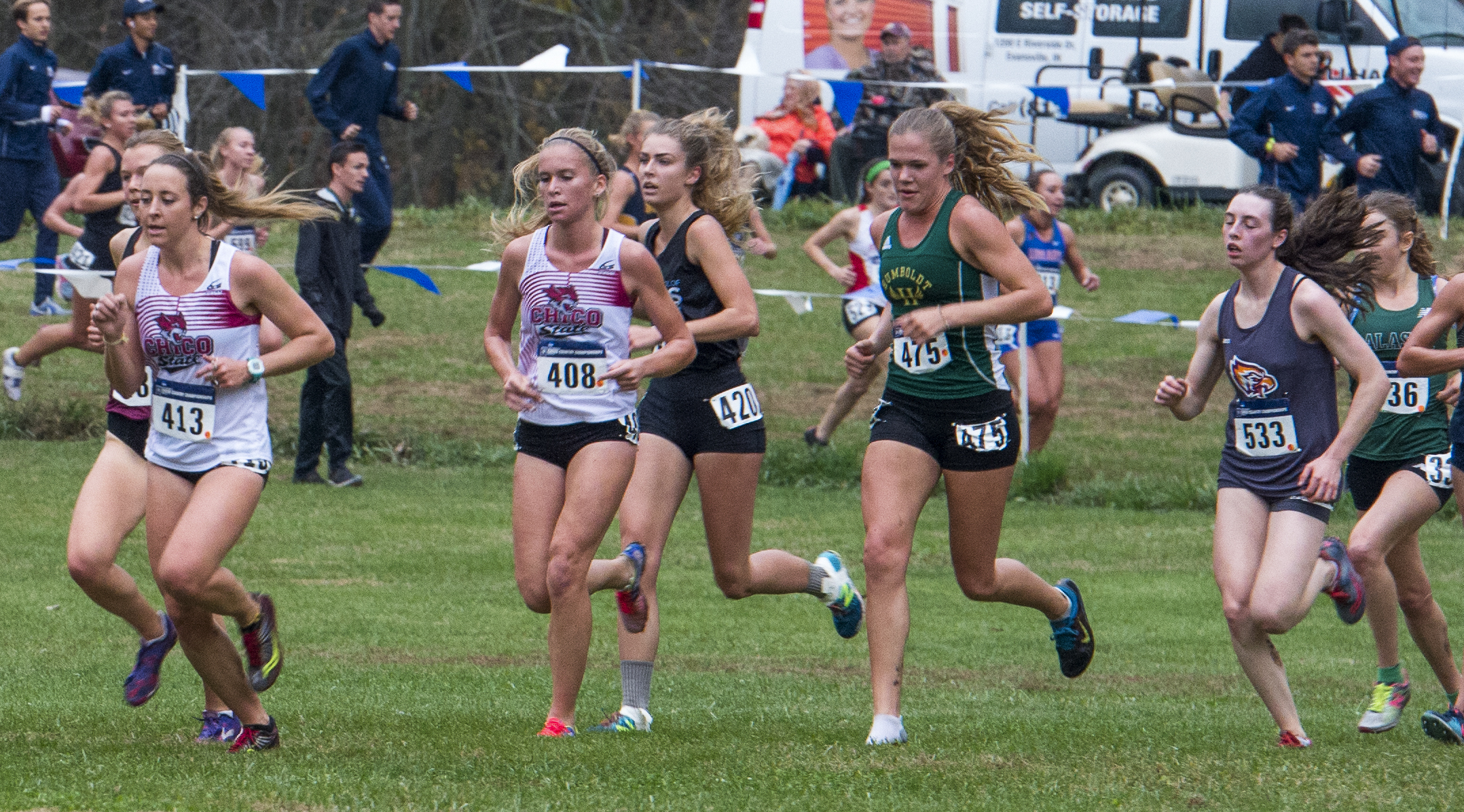
    This is how Junior Tatiana Gillick’s afternoon was spent during the NCAA Cross Country National Championships. Gillick who faced a number of hurdles and obstacles throughout the season, had to face one more, but she didn’t let that stop her.

    Just moments into the National Championships another runner stepped on Gillick’s shoe and pulled it loose. Gillick kept running as the shoe came off halfway through the first turn, she left it on the course and continued the run.

    “Having the fortitude and resilience during the season helped her.” said Cross Country Head Coach Jamie Harris. The toughness and resilience she showed this year was one of the reasons she helped HSU Women’s Cross Country be one of the best in Division Two this season.

    Gillick started the season in adverse fashion as she started the season in a boot, suffered a shoulder injury during the season, she also fell during the California Collegiate Athletic Association championship meet.

    “She was a unique challenge as a coach because she started the season injured,” said Harris.

    Gillick was brought back slowly from injury this year, gradually getting race ready. It took her a few races to get back to the level she displayed last season. She had multiple top 10 finishes this season.

    Saturday wasn’t what Gillick was hoping for, but the Junior All-American looks poised to return next season. For her and her teammates she gained expiernces that will her HSU Cross Country next year.

    “Don’t let the huge crowds psyche you out,”said Gillick. “You have a chance just like everyone else. Everyone who’s get to nationals, at that point you have the power to get an All-American spot.”

    The junior will try for All-American honors next season. HSU Women’s Cross Country hasn’t had a runner receive All-American honors since Bridget Berg in 2011.

    “The silver lining is that Tatiana’s a junior, and has next year to aim for the coveted All-American,” said Head Coach Sarah Ingram. “It’s been a valuable experience for her, and the goal for next year is to get the whole team out here.”

    Despite completing the 6k race with just one shoe, Gillick crossed the finish line in 22:17.7, good enough for a 79th place out of 247 runners.

  • Living in a windowless room

    Living in a windowless room

    Video by Ian Thompson.

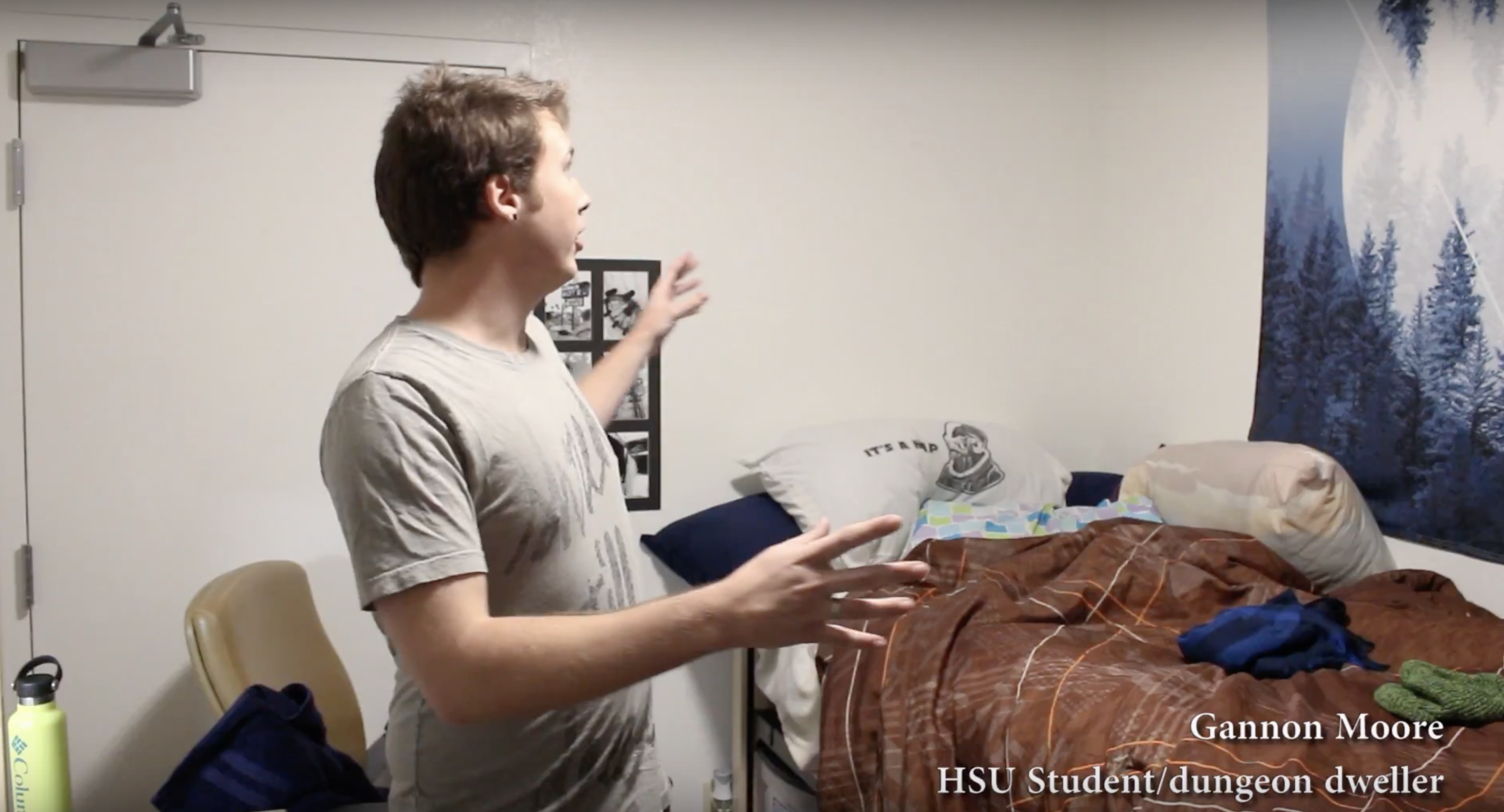
    HSU student Gannon Moore was excited to have his own room for the first time, but his excitement didn’t last long. It died out when he saw his assigned windowless bedroom for the first time.

    “As soon as I got there a lot of those hopes were dashed, everything was dashed,” Moore said.

    In the summer of 2016, HSU housing and residence life decided to convert 23 kitchens in Juniper and Laurel at Creekview into bedrooms with no windows to accommodate more student housing.

    The Director of Housing and Residence Life Stephen St. Onge said these rooms were built because of the urgent need for housing. He said that housing is not trying to capitalize on it, but only trying to combat the issue of homelessness.

    Freya Mitchell is an international exchange student from the United Kingdom. She also was assigned a similar bedroom with no windows. Freya Mitchell was disheartened when she arrived this past August to her windowless assigned room after a long flight from the UK.

    “Is this what I came for? Why have I flown all this way to this tiny room? It’s a bit claustrophobic and you can’t have any natural air flow in it,” Freya said

    David Mitchell is Freya’s father and is an architect from the UK. He said he was shocked to know that there are dorm bedrooms with no windows.

    “We [his family] were surprised that they even have that sort of room, to be honest,” David Mitchell said. “We’ve paid for a legitimate room and what we’re getting is a storeroom.”

    He said windowless bedrooms like the ones in Creekview are illegal in the UK. In his opinion, those rooms shouldn’t have been used as bedrooms.

    As an architect, David Mitchell thinks that there are several fundamentals that are wrong with such bedrooms, one of which is the lack of natural daylight and natural air flow.

    “I don’t think that room should be used as a bedroom,” David Mitchell said. “I think their [HSU housing] decision to convert that room is driven by money. I think it’s driven by profit.”

    Freya’s mom, Michelle Mitchell, also doesn’t think it’s acceptable to have a room without a window.

    “Our friends would say ‘how’s Freya getting on in America?’ and we say she’s living in a cupboard,” Michelle Mitchell said. “Everybody we spoke to about it was horrified.”

    After several efforts have been made by Freya, her family, and the HSU’s international students office, Freya was assigned a different room with windows.

    “I didn’t wanna stay in that room it was horrible,” Freya said. “I just can’t believe that they’ve got rooms like that.”

    According to the international residential code, bedrooms are required to have windows or a second door for air ventilation, natural light and to be used as an escape in case of an emergency. Though the 23 converted bedrooms in Juniper and Laurel at Creekview don’t have a window, they have another exit door that leads to the outside.

    Patricia Rivera is another student who moved into Mitchell’s windowless room after she moved out. Rivera lives right across the hallway from Moore and both of them agree that their small converted windowless bedrooms lack proper ventilation and have no natural light.

    “It gets really stuffy within like five minutes,” Rivera said. “It’s constantly dark no matter what’s in there.”

    When the heat is turned on in Moore’s suite, his room gets very hot compared to other rooms in the suite due to the insufficient ventilation.

    “My room gets boiling hot because there’s no ventilation,” Moore said. “All the heat from the vent gets into the room and just sit it has nowhere to dissipate to.”

    Moore used to open the door that leads to the outside to get some fresh air, but he can’t prop the door open anymore.

    “I can’t leave my door open because the RAs say ‘you gotta close your door, you can’t leave your door open’ even if I’m in the room.” Moore said.

    Moore said he’ll sometimes wake up sweating from his overheated room.

    “When I’m overheating at night, I have to open my door, go walk out into the hallway and just stand there,” he said. “I stand there sometimes in my boxers because I’m freaking overheating and I have nothing else to do.”

    Both Mitchell and Moore agree that living in a room like this affected their mental health. Moore noticed that he started to get frustrated easier than ever before.

    “I started getting angrier and it’s honestly because I’m not seeing any natural light,” he said. “It’s like I’m in solitary confinement.”

    Before Mitchell was relocated and during the time she was in one of the windowless bedrooms, she tried to stay away from her room as much as possible.

    “I didn’t spend much time in the room really I stayed out as much as I could,” Mitchell said. “You’re going to go crazy if you stay there.”

    J.D. Andreas is another student also currently living in one of the converted windowless bedrooms. He said he wakes up not knowing what time it is because it’s always dark in his room.

    “You wake up, you don’t know if it’s midnight, you don’t know if it’s 3 p.m. because it’s just pitch black in there,” Andreas said.

    Andreas and his suitemates found humor in what they called “messed up things.”

    “My roommates and I were always like ‘yo I’m going to take a nap in J.D’s room. I don’t know if it’ll be three hours or 18,’” Andreas said.

    Moore’s girlfriend, Hannah Klein, calls him Harry Potter because he lives in a “cupboard,” she said. He said his windowless room also became an inside joke for him and his friends.

    “Anytime anybody complains about their room,” Moore said. “We tell them at least you have a window, at least you don’t have the dungeon room.”

  • A story of resilience

    A story of resilience

    By | Ian Benjamin Finnegan Thompson

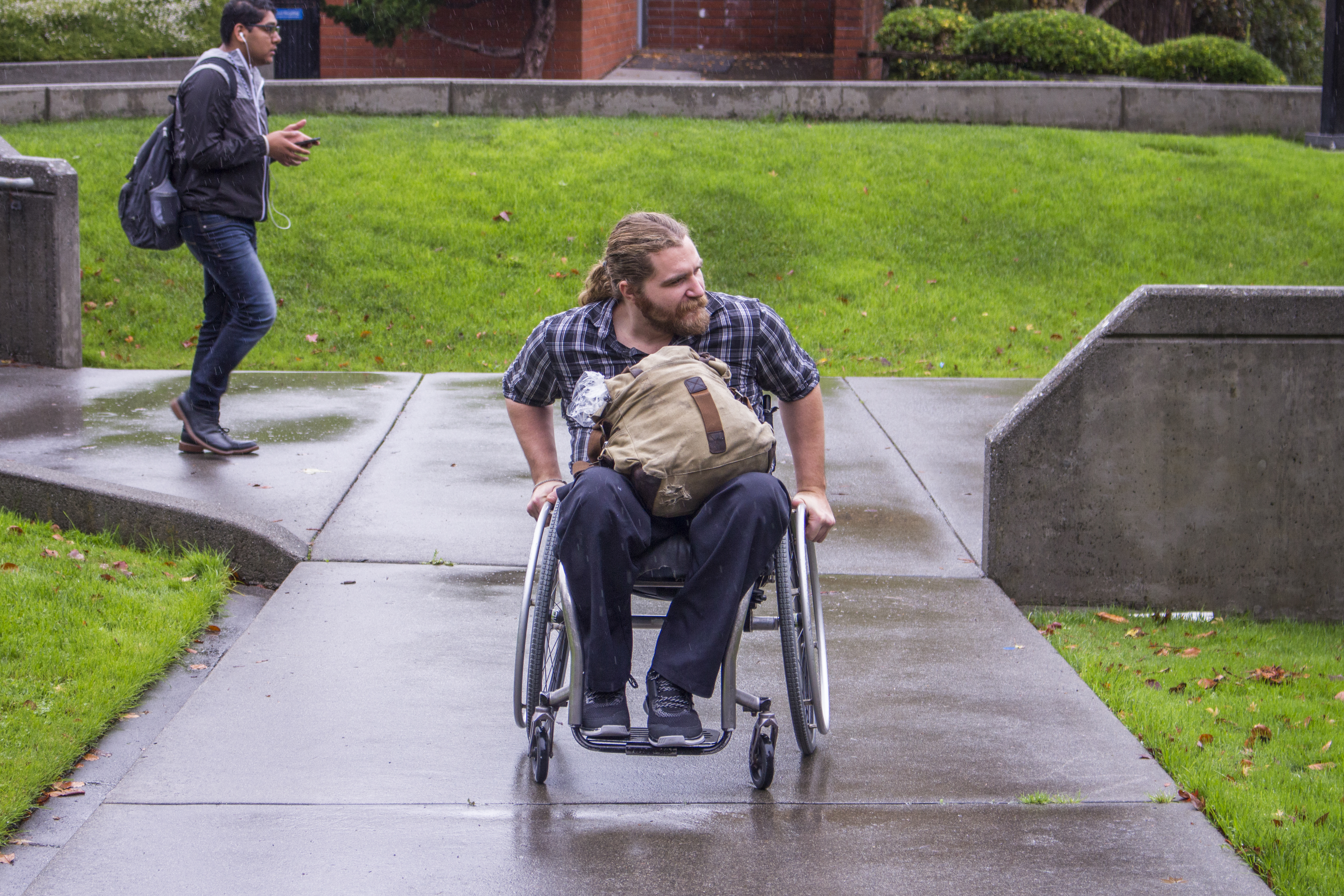
    Jeremy Meed’s strength is tested every time he hauls himself up into his truck from his wheelchair. Meed lifts his whole body weight up into the passenger seat of his truck every night to sleep in his vehicle. His feet swell up from sleeping upright. All his personal belongings lie in the passenger seat and the cab of the truck. Since the beginning of summer, Meed’s truck has been his home.

    Thompson.Ian.Feature-5920

    “Using the bathroom, not having a comfortable place to sleep and not being able to cook,” are some of the hardest parts of living in his truck said Meed.

    When Meed first moved out to Humboldt from Ohio he lived on campus at the College Creek apartments. Unfortunately, this semester his financial aid was only enough to cover his tuition.

    Meed is part of possibly up to 15% of HSU students who are homeless according to a survey done by Chant’e Catt of the HSU Homeless Students Advocate Alliance in 2016. Meed is also physically disabled making it even more difficult to find housing in an area with an already severe housing shortage.

    At the age of 16 Meed ran away from home with his girlfriend from South Carolina in his Subaru. Somewhere on the outskirts of Atlanta Meed fell asleep at the wheel and crashed his car. The next thing Meed remembers is waking up in a hospital.

    “I woke up with a tube in my chest and I couldn’t feel my legs,” said Meed.

    Since then Meed has been paralyzed from the chest down.

    Meed used to sleep in his truck on campus until University Police Department told him it was illegal to do so. Now Meed finds places away from people’s homes to park his truck and sleep. He doesn’t feel safe staying at the homeless shelter in Eureka and said he wouldn’t feel safe parking near the shelter either.

    Meed is continuing to look for housing but it’s difficult for a low income paraplegic to find housing in a county that the Humboldt County Grand Jury in 2015 said has a “critical lack of affordable housing”.

    There is the Humboldt County housing section 8 voucher waitlist Meed was hoping to get onto which helps low income non elderly disabled residents with rent but the voucher waitlist has been closed now in Humboldt County for over two years.

    According to Affordable Housing Online there are around 1,500 affordable low income apartments available in Humboldt County. But according to the U.S. Census Bureau, roughly 20% of Humboldt County residents are living in poverty. That’s 20,000 people.

    Many of the low income apartments available are upstairs making them inaccessible to Meed. Others don’t have the proper bathroom door width for a wheelchair to fit into.

    Now in his second year as a music major, Meed spends his days practicing his guitar at the music department. He picked up his love for guitar while living in Ohio with his family around seven years ago.

    Meed also works at the Humboldt State University Testing Center which helps students registered with the Student Disabilities Resources Center take tests and also provides a space for make up exams.

    “I try to stay out of my truck as much as possible,” said Meed.

    Meed said that Humboldt State University complies to ADA standards but doesn’t do much more than that.

    Getting around campus is another test of strength for Meed.

    “The hills are the hardest part,” said Meed.

    Meed’s wheelchair is a manual chair, meaning it’s push powered, not electric.

    “An new electric wheelchair costs about $5,000.” said Meed. “Some insurance companies will help pay the cost, but they will only help replace the chair every five years,” said Meed.

    In spite of the adversity Meed goes through on a daily basis getting around the aptly nicknamed hills and stairs university in a wheelchair and living in his truck, Meed is determined to continue his education and graduate within the next three years. The resilience he displays is honorable.

    “I’m a unique situation,” said Meed.

    In an area like Humboldt with an obvious shortage of low income housing, it’s necessary that situations like Meed’s be addressed so others like him can get the support they need to live in Humboldt and continue their education.

  • Multi-talented artists

    Multi-talented artists


    By | Juan Herrera

    The art world has no discriminations about who can “join” or become an artist. If someone can randomly put anything together and can technically still be considered art, then anyone who picks up a pencil to draw or crafts to create is technically considered an artist.

    As I passed through the colorful hallway entering the art building I bumped into Adonnis Johnson, junior at HSU, and noticed he had a painting in one hand while juggling a rugby ball in the other.

    “Playing ball while supposedly being an artist, was kind of stressful at first.” Johnson said. “Because in high school not too many of the athletes enjoy’d art or drawing, but I did.”

    DSC_0966_WEB.jpg

    He said that growing up he was always taught to be true to his self no matter what anyone said towards him or about him.

    “At first I was super nervous to share my passion for art,” Johnson said. “But everyone laughed at me and told me they thought it was cool I liked art.”

    Johnson said that he first found his passion for art when he visited his first live art museum. According to Johnson a live art museum is where artists from all around the world come together to either draw, paint, craft, or even weld beautiful pieces of art.

    “I first attempted to draw my freshman year of high school,” Johnson said. “And like most famous past and present artists I sucked bad at first.”

    DSC_0984_WEB.jpg
    Adonnis Johnson showing of his half selfie and half wolf painting in the art building at HSU Photo credit: Juan Herrera

    Johnson said that at first he was discouraged about art but knew he had a great passion for it still. After working on his drawing skills for nearly a year he finally started to notice improvement and get recognition for his art.

    “My parents always taught me to never give up on anything I start,” Johnson said. “So that’s what I did with art, and I guess you could say I’m not that bad.”

    Playing sports practically his whole life and drawing for nearly eight years of it, when asked to choose between the two, if he ever had too, he got shaken up by his own response.

    “Man that would never happen, choosing that would be the hardest thing I’d have to do,” Johnson said. “But honestly i’d probably go with art.”