The Lumberjack


Students Serving The Cal Poly Humboldt Campus and Community Since 1929

Tag: HSU

  • HSU is in search of a new VP for Administration/Finance

    HSU is in search of a new VP for Administration/Finance

    In the third week of the spring semester, HSU held an open forum for the final four candidates for the vice president of administration and finance position. The school welcomed students, faculty and staff to join the live Zoom meetings to meet the finalists who were selected by the search committee.

    The vice president for administration and finance is responsible for reporting to the university president and in collaboration with colleagues across the campus, the incumbent is responsible for the administrative leadership, management, and oversight of the university’s division of administration and finance.

    Each candidate had one hour via Zoom to present their resumes, answer questions and explain their intended approach to the position.

    Candidate Sharooz Roohparvar elaborated on his transparency in handling school budgets and putting student interests first.

    “I believe that my position and everything in the institution is subject to public records requests, so there’s no reason for anybody to keep anything hidden,” Roohparvar said. “I start every conversation with how does this initiative serve students? And how does it improve that college going experience? Really at the end of the day, we’re here to serve those students.”

    Andrew Boyd, another contender, put an emphasis on his prior work at Humboldt State University in the design department, dealing with financing projects and environmental impact on campus.

    “There’s so many opportunities at Humboldt State to think creatively around how we set up the ecosystem and how to partner with the town of Arcata,” Boyd said. “Ideas for strategic planning or where we are in leaning into that is something that I think is critical for the growth of the institution is something that I would look to try to facilitate as a CFO.”

    Candidate Doreen Ferrington shared how her experience at John Hopkins School of Public Health in the dean’s office and as business operations officer at the Architect of the Capitol has led to her diversity in dealing with different groups including staff, students and faculty.

    “I had the opportunity to interact with a variety of individuals across the university and it enabled me to understand university operations and the pain points that each division was experiencing at that time,” Ferrington said. “I can reach out to faculty, I can talk to students, I can walk the hallway and talk to talk to the staff about their experiences. I can go to the cafeteria or the dorms and see what it’s like for the students to be on campus and I can engage.”

    Kathy J. Johnson, Vice President for Finance & Administration at Black Hills State University in Spearfish, South Dakota reiterated her understanding of the school systems and student success.

    “I’ve been a part of students earning nearly 12,000 degrees in my tenure. I love higher education and all the opportunity and hope it provides to the students.” Johnson said. “I lead the division, with full focus on students from ensuring they have the proper resources and learning materials available in the university bookstore. To the best technology infrastructure and classroom technology, we can afford a safe, clean, diverse, inclusive, and sustainable campus.”

    With HSU receiving $16 million in funding via the CARES Act, eyes are on the administration to use the money responsibly. $5 million has been allocated to students experiencing financial burden while the other $11 million is to be distributed in school funding for classes, faculty and staff.

    With the election of a new vice president for administration and finance, the candidatewho gets the job will be responsible for overseeing the distribution of funds to benefit the future of the school.

    “The funds are an incredible resource for our campus to enhance safety protocols, evolve instructional space and technology, expand student support, and improve operational efficiencies in ways which can innovate how we teach, learn, work and engage,” Sherie C. Gordon, Interim Vice President for Administration & Finance, said.

  • MLK day of service zoom event

    MLK day of service zoom event

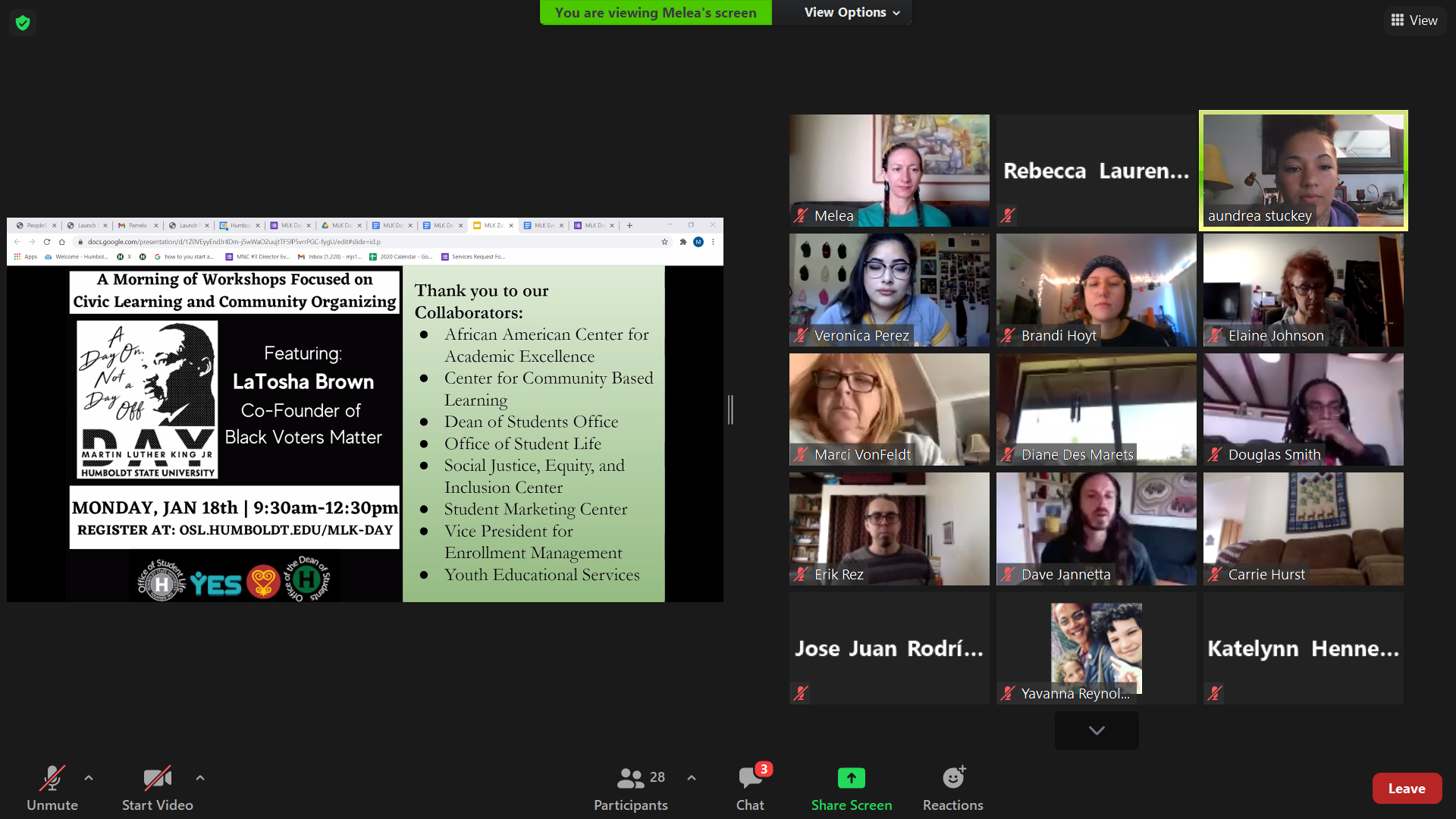
    MLK day of service is a national initiative. This year at HSU there was an event hosted via Zoom for Martin Luther King Jr. that began with a keynote speaker, LaTosha Brown and continued into two breakout rooms with workshops such as Art and Community Activism by Aundrea Stuckey from Youth Art Will Succeed (YAWS).

    Prior to the event, Molly Kresl, the student life coordinator, was excited about the event still going on regardless of not being able to host it in person due to the pandemic protocols.

    “Last year we did MLK day of service and we had three different volunteer sets and over a hundred people to volunteer and eighty participated,” Kresl said. “It was totally successful and we were so happy.”

    Kresl wanted to continue the event virtually to allow the community to be able to participate in the event from the safety of their home and still get a meaningful experience.

    “Us being in a virtual semester, we wanted to continue the tradition because it is a brand new tradition, we think it is a really valuable and important event,” Kresl said. “So we had to kinda reinvent what it looked like.”

    Towards the end of introductions, a slide was dedicated to labor and land recognition such as native land in Humboldt county and acknowledging the labor that built this country.

    LaTosha Brown was the first keynote speaker and spoke about what MLK day means, the work she has done for Black Voters Matters, experience, and motivating the audience. In the beginning, she sang a song and spoke on the impact of the song.

    “A song in their heart, they had hope,” Brown said.

    Brown’s speech related to addressing those who have been affected by COVID-19 and this year in general.

    Within the break, there was an option to join breakout groups composed of participants and main speaker interactions through the chat and aloud. Most of the content of the breakout rooms was back and forth conversation and understanding the importance of MLK day.

    Stuckey’s breakout room focused on subjects within the art community and involvement with POC artwork in Humboldt county.

    “Where do you see black art? Black people?” Stuckey said.

    The second breakout room was dedicated to discussion between participants and main speaker Ron White from the Humboldt Area Foundation discussing his presentation “The Salvation of Democracy: Civic Engagement of the Dispossessed.” Sarah Hammoudi, a senior bachelor’s social work major, attended the second breakout session with White and was a participant for the event.

    “I then attended the workshop held by Ron White on civic engagement and it was an amazing opportunity,” Hammoudi said. “I was even able to speak in a small breakout group with him which gave me even more insight and inspiration.”

    Overall the end of the event ended with questions from participants to the main coordinators and speakers and leveled into a deep discussion.

    “LaTosha Brown, the keynote speaker, was absolutely inspiring and provided amazing insight,” Hammoundi said. “ She said ‘we are called to evolve’ which makes me remember despite how unpredictable the past year’s circumstances have been, we surely can be a piece to making real change one day.”

    Hammoundi was inspired not only by Brown but also the event, the other speakers, and the meaning behind the day itself.

    “MLK day to me definitely is a reminder to do good for others as you wish to receive,” Hammoudi said.

  • Update on HSU’s Climate Action Plan

    Update on HSU’s Climate Action Plan

    As Humboldt State students prepare to graduate, they take a pledge before they walk across the stage and receive their diplomas.

    “I pledge to explore and take into account the social and environmental consequences of any job I consider and will try to improve these aspects of any organizations for which I work.”

    The university makes it clear they want all students to take sustainability into account throughout their careers, but does the school itself practice what it preaches?

    The answer to this question by many standards is yes.

    In 2017, a Climate Action Plan (CAP) was put forth by HSU in order to integrate climate change and sustainability into the curriculum, conduct more research on climate change and resiliency, and reduce the direct and indirect greenhouse gas emissions of the school.

    The plan also includes strategies to curb emissions from energy and utilities, transportation, and waste. This is just a small fragment of what the 26 page plan aims to achieve.

    The most ambitious aspect of the CAP was to reduce the university’s emissions to complete carbon neutrality by 2030, and begin on a carbon negative path thereafter. This course of action comes with progress reports that include an update on the implementation of the CAP’s 55 strategies used to lower greenhouse gas emissions.

    The last report was released in November of 2019, and it states that out of the strategies, 45% were completed, 18% are in implementation, 22% are in development, and 15% are not yet started. While the school is making significant progress, the ambitious goal of reaching carbon neutrality was pushed back to 2045.

    The university budget cuts caused by the COVID-19 pandemic have not had a significant impact on the progress of the CAP.

    “Many of those initial strategies that were completed [in the CAP] were zero to moderate cost (e.g., policy or procedural changes or non-construction related),” Morgan King, climate action analyst for HSU, said. “But some projects requiring a large initial capital outlay (e.g., solar, electric vehicle charging) did not move beyond an initial exploratory phase in part because of funding, but that was an issue before the pandemic.”

    Some of the goals in the 2019 progress report include a reduction in facility and fleet greenhouse gas emissions to 1990 levels by the end of 2020, a further reduction in emissions to 80% below 1990 levels by 2040, and an achievement of carbon neutrality by 2045.

    King is drafting an update to the CAP which the university is calling the CAP 2.0. “We currently have leadership actively engaging with sustainability into all facets of the university,” King said. “So I am optimistic that we will be able to push forward some of the more capital intensive strategies in the CAP 2.0. For example, the campus is already pursuing a microgrid with solar and battery storage, which is a critical element to building resilience and drawing down emissions.”

    The university practices sustainability throughout its curriculum as well. Environmental Studies Associate Professor and Department Chair Dr. Sarah Ray emphasizes the importance of environmental awareness in a social justice based interdisciplinary curriculum.

    “The work of Katie [Koscielak] and Morgan [King] in sustainability is cross-cutting; they go beyond the facilities box and are doing what has to happen on all campuses of merging academics and facilities much more intensely,” Ray said. “The biggest thing we can do to achieve this even better is to continue to center the conversation around social and racial justice– how might those lenses shape what we do environmentally? What and whose traditions are we hoping to sustain, and how do we know what approaches are best for the environment?”

    Environmental studies student August Andrews says that he sees various ways in which environmental awareness is presented by the university outside of the classroom.

    “I definitely see HSU doing so outside of the courses they offer,” Andrews said. “HSU is not only known for its environmental curriculums but, simultaneously, it seems to be rapidly striving to be as ‘green’ of a university as possible, which is inspiring.”

  • The San Jose State University Football Team Comes to Humboldt

    The San Jose State University Football Team Comes to Humboldt

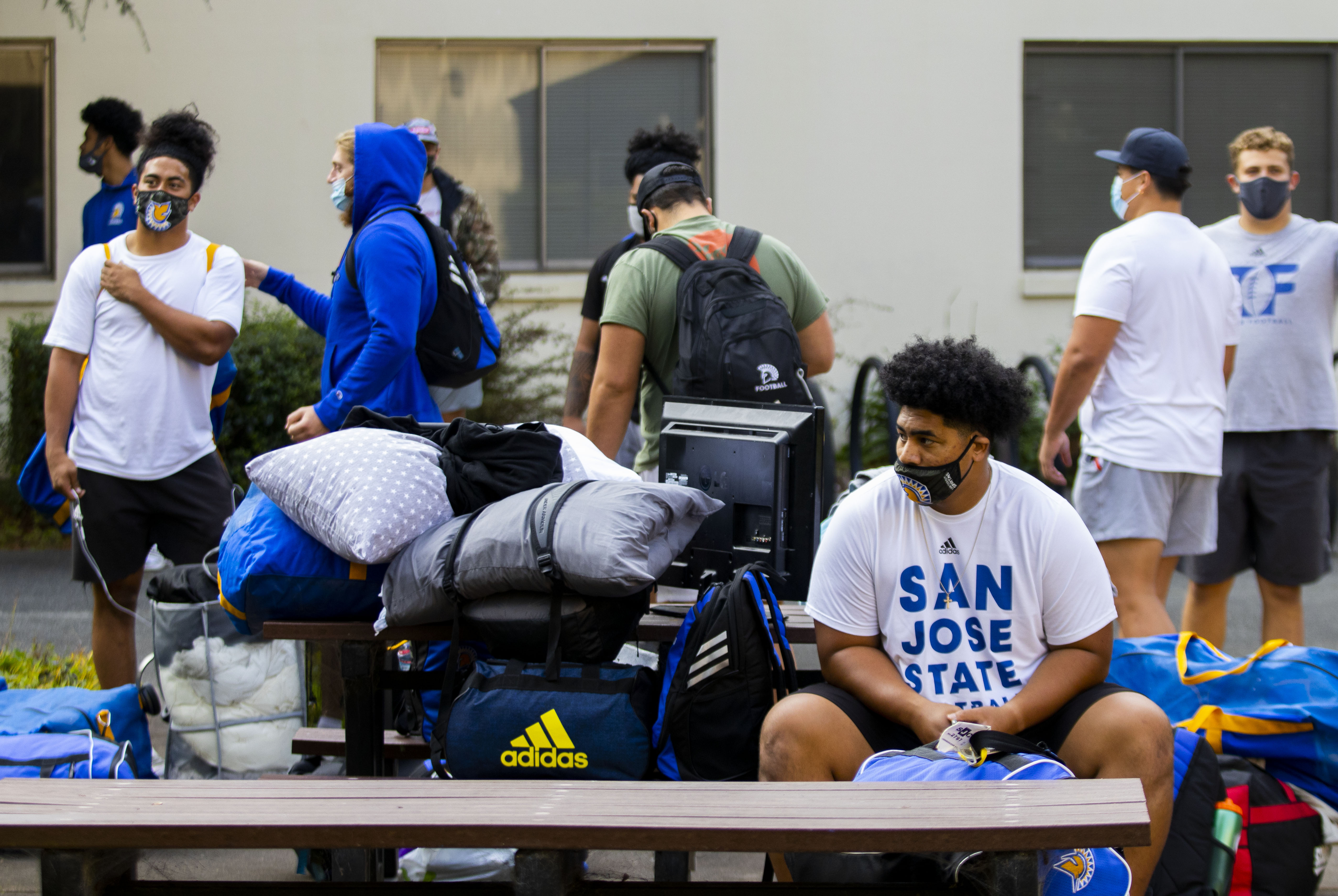
    On a day’s notice from administration, the SJSU football team spends a week and a half in Humboldt practicing because their county did not allow it. Students react to their presence on campus in the midst of a pandemic.

    Directed and produced by Dakota Cox.
    Contributors: Skylar Gaven & Thomas Lal

  • Homelessness in Humboldt, CA

    This is the first trailer of a homeless documentary created by HSU students. We have spent months filming and will continue to film throughout the next year. Follow the heartbreaking stories of the homeless community around Humboldt county and the organizations who are out trying to help in any way they can during the COVID-19 pandemic.

  • Thrifty Arcata

    Taking a tour of the local thrift shops in Arcata during the COVID-19 pandemic.

    Directed and produced by Skylar Gaven.

  • House Plants Generate Peace and Meaning During the Pandemic

    Three different people with the same love for plants!

    House plants have become quite popular these days especially since we’re all basically stuck inside during the pandemic. Not only are they aesthetically pleasing, but these beautiful green oxygen-makers provide more than just a decorative living room. House plants have been known to show positive benefits toward mental health, and with the right amount of care, a healthy connection with all of your house plants will definitely brighten your days. I spoke with three individuals who each shared their experiences with owning plants and helpful tips for new plant parents.

    Follow @tobagoplants on Instagram

    Directed and produced by Skylar Gaven.

  • HSU students work towards improving the future

    Students with science and nature-based majors are motivated to make change

    First-year students at Humboldt State University made it a goal to continue learning in an online environment. Each of the following students are pursuing a science-based major with determination to impact the future.

    Sabiha Bentanzos is majoring in forestry with an emphasis on wildland fire management.

    “I actually want to become a wildland firefighter,” Bentanzos wrote in an email. “I want to persevere in the forest as much as I can and save lives while I’m at it.”

    While becoming a wildland firefighter doesn’t require a degree, Bentanzos wanted to attend HSU to prove female capability in a male dominated field.

    “I also want to prove to myself and others that a female can get a degree in a male-dominated field like forestry,” Bentanzos said.

    In science class, Bentanzo was assigned a poster group project. The project restored her passion for forestry and has been her favorite assignment of the semester.

    “I have a passion for fire awareness and safety and doing the project reignited my passion,” said Bentanzos.

    Tori Bernal was a wildlife major when she first attended HSU. She’s completed multiple projects both interactive and hands-on, despite being 100 percent online. Despite her love for veterinary work and rehabilitation, she switched to be a forestry major after taking a botany course and spending time in the forest here in Arcata.

    “I grew and tested cyanobacteria in water from the Klamath River from the safety of my dorm,” Bernal said over email. “I realized majoring in forestry would be a better fit for my long term interests… I actually fell in love with it.”

    In the midst of a pandemic, Bernal discovered her true interest and what she truly wanted to get her degree in.

    “I am not 100 percent sure what I am looking to get out of my degree. I am not even sure what I want to do career-wise,” said Bernal. “But I know that the forestry program will help me to explore my interests and options in the coming years.”

    After originally being a wildlife major, Lake McLeod made the switch to a political science major. Lake McLeod is majoring in political science to create change. He wants to become a civil rights attorney and go to Berkley for law school after HSU.

    “The science would kind of be the psychology of people, kind of learning how people identify with their own political views and how people act and react to certain things,” McLeod said. “Especially with everything going on right now, I decided to switch to political science because I want to kind of be more in that realm and help people with civil rights and equal rights especially.”

    Regardless of the instruction state utilized at HSU, 2020 has motivated students to hone their skills and interests in hopes of making an impact in the future.

  • 8 of the best local places to safely visit

    Local destinations around HSU to get your adventure on during the pandemic

    (Photos by Elise Fero)

    Trust me as someone who has had COVID-19, it’s better to be in quarantine than to catch the virus and be isolated alone. So what do you do with your spare time? If you have any sort of adventurous spirit, this is the list for you. In no particular order, here is eight of the best places to go to while attending Humboldt State University.

    1. Redwood National and State Parks

    On a cold day in Redwood National Park, the forest is filled with sounds of rain hitting leaves of every individual plant

    While this is a farther location 29 miles north of campus, it’s absolutely worth the drive. This is one of the coolest and most beautiful places I’ve ever been. The area has multiple hiking trails, beaches, a canyon of ferns, and of course, the world’s tallest tree, Hyperion. If you like National Parks, go scratch this one off your list. Not only is it breathtaking, but it’s also where parts of Jurassic Park and Star Wars were filmed. It crosses between Humboldt and Del Norte Counties and protects 45 percent of the remaining coastal redwood trees. This location is an endless adventure that you can return to and still find something new.

    2. College Cove

    Waves crash against rocks where anemone and starfish live at College Cove as people walk dogs and throw frisbees in September

    College Cove is located in Trinidad about 13 miles away from campus. This location has brilliant blue water surrounded by forested boulders. Visitors walk on the beach, and some surf. You’ll also find a plethora of dogs! There are tiny pools of water where anemone and starfish live. Lots of studying to do? Bring your work here. Homework with a view while listening to the sound of waves is unmatched.

    Melanie Guillen is a freshman film major who finds serenity at College Cove.

    “I’m not really a beach person but it’s more secluded than the others,” said Guillen. “I like it.”

    3. Clam Beach

    The sun sets and the tide leaves seafoam scattered across Clam beach on Sept. 24

    This beach is closest to campus and only a short drive headed north, toward McKinleyville. The sand is soft and warm, perfect for finding sand dollars. Watch for jellyfish washed on the shore, that goes for most beaches. While it’s not surrounded by trees, looking back behind you is the forest and beautiful fog. This area is also phenomenal for sunsets and changes in the tide.

    Freshman wildlife major James Lara said he loves Clam Beach for the picturesque views.

    “I like the little dunes it has, it’s pretty cool. It’s very pretty for stargazing,” said Lara. “The water’s pretty low so you can go pretty far into the waves and be safe.”

    4. Arcata Community Forest

    If you want to explore the forest, this location is a lovely place to start. You can find loads of mushrooms. I even found a mushroom in the shape of a heart! Remember to always research and double check when foraging. The forest hosts large trees, tall and wide. There are multiple paths to take, great areas to jog or bike. There’s often people around, but you can find a little oasis within your path. At the top is Redwood Park with a friendly playground and picnic area.

    5. Moonstone Beach

    This beach looks straight out of a fairytale. Located in Trinidad, this beach is on the scenic coast and has a boardwalk. The beach is the perfect local vacation spot. The views are breathtaking, and a large stream of water flows through the sand, leaving a perfect wading area and play space for children. The beach is dog friendly, as well. Sunsets are magical, the waves are great for surfing and there are restaurants nearby. A perfect combination!

    6. Agate Beach

    Waves bring new stones in as people search for the perfect agate at Agate Beach

    Another location in Trinidad, Agate beach is located at Patrick’s Point State Park and has a campground for those interested. You do have to pay $8 for day-use but it’s well worth the expense. This beach is exactly what the name says. You’ll find people looking through all the pebbles on the beach, and you should, too! It’s also a spot to watch wildlife and be completely engulfed by nature. You shouldn’t swim here, but you can take long walks on the beach. It’s a beautiful area, and not too crazy busy. Take some time for yourself, bring a picnic basket and have a good beach day.

    7. Avenue of the Giants

    Of all of the listed locations, this is the farthest from campus at 40 miles north in Humboldt Redwoods State Park. If the name didn’t intrigue you, the description will. Imagine every post you see on Instagram or Pinterest with a van in the middle of the road surrounded by extremely tall trees, I know you know the ones I’m talking about. Those are here. The redwoods surround the road, looking like a magical pathway through 31 miles of epic perfection. Some of the trees are over 300 feet tall, and one tree is almost 1,000 years old!

    8. Forest paths around HSU

    Plants hang over a cliff to show their roots and reach for the sun underneath redwood trees allow the paths around HSU

    If you don’t drive, no worry! Stick to the paths that are connected to campus. You can find all sorts of mushrooms, ferns and creeks. This area is easy to access and absolutely beautiful. Students are usually the only people exploring, but sometimes you’ll see someone else jogging. The area is perfect for walking your pet, biking, running, or just enjoying the views. This is also the spot where I have been able to find the most banana slugs. They love blackberry bushes!

    Undeclared freshman Natalie Barber laughed with her friends, Guillen and Nicole Velazquez, about going on spontaneous adventures on the paths around HSU.

    “One day you’ll be like you guys wanna go hiking? Yeah okay! Let me get my bag ready,” said Barber.

  • COVID-19 pandemic seeps into our dreams

    COVID-19 pandemic seeps into our dreams

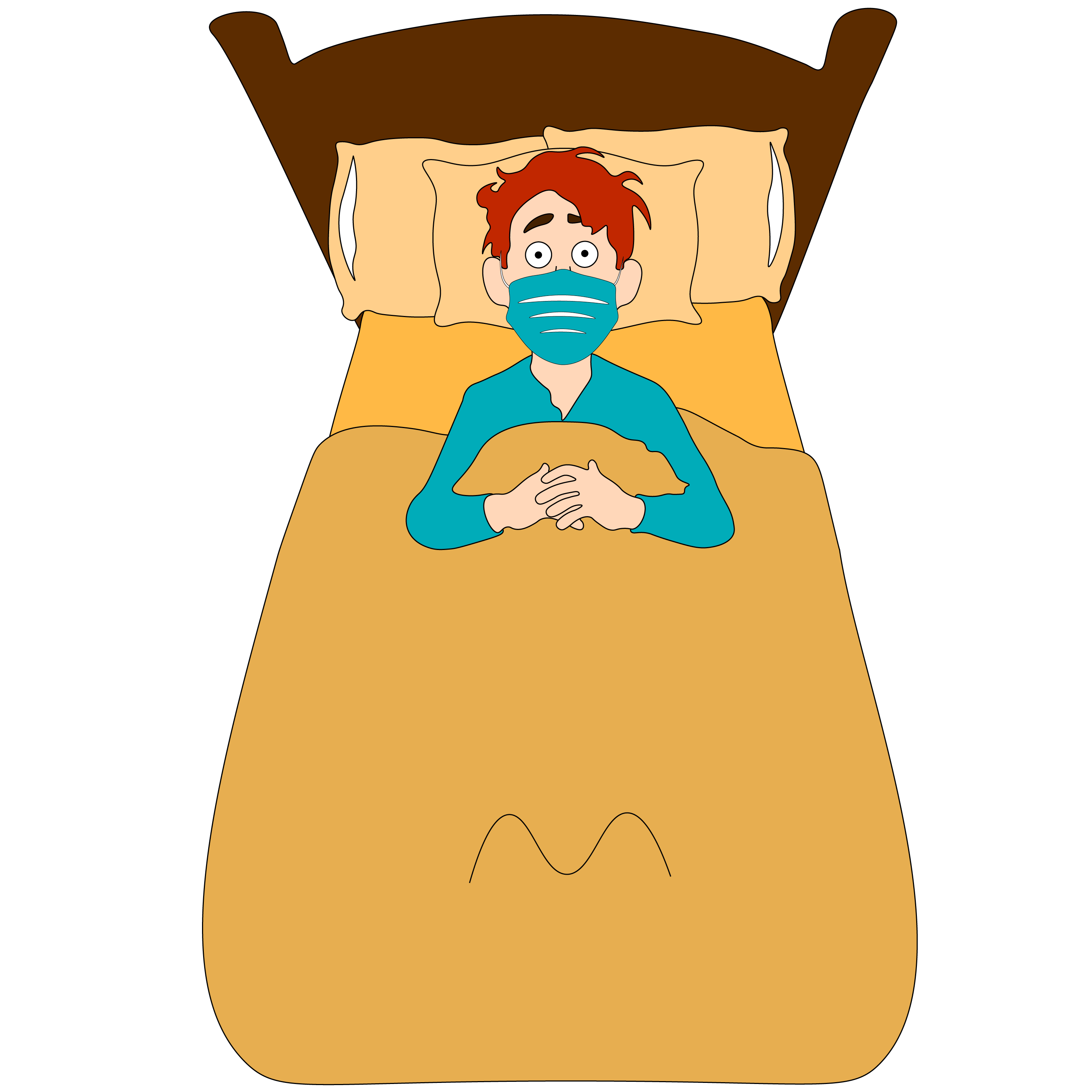
    The unprecedented and life-altering pandemic is affecting our dream state

    Dreaming is the psychological phenomenon of our minds that creates vivid images as we descend into a deep sleep.

    Humans are hyperactive and social creatures. When we’re not participating in daily activities, our minds enter states of depression, stress, boredom and now more than ever, paranoia.

    The pandemic’s effect on our lives has certainly altered our psyche, undeniably impacting the way we think and the contents of our dreams.

    HSU senior majoring in journalism Alexis Valtenbergs has had multiple bizarre and lasting dreams since the shelter in place began. Her most notable dream involved catching COVID-19 and experiencing symptoms in the dream.

    “I almost had an anxiety attack the first time I woke up like that,” Valtenbergs said. “I was convinced, thanks to the paranoia, that I had COVID, that it would kill me.”

    Valtenbergs found entering a good headspace before bed made a significant impact on her dreams throughout this time in quarantine. Meditation and muscle relaxation exercises before bed does the trick for her.

    Valtenbergs has had her share of great dreams since quarantine began and believes that dreaming is a wonderful thing that can open our minds to things we haven’t noticed before.

    “There is symbolism in dreams, something that symbolizes what you are going through.” Valtenbergs said. “I’ve had amazing dreams that I didn’t want to escape from.”

    Kashan Fields, an Arcata local, hasn’t had too many wild dreaming experiences, but has had trouble sleeping since quarantine began.

    “Ever since COVID, I have been getting less sleep honestly,” Fields said. “I don’t even think I’ve been getting any deep sleep where I would have a good dream state.”

    Fields said the amount of stress that many are facing today is because of COVID-19. With learning online as well as navigating a global pandemic, people are facing a lot. Fields said stress has caused negative effects when it comes to his sleep schedule but, taking time to work on certain things that need to be done can help reduce that stress.

    “It’s usually some type of stress that you’re usually not resolving for the most part,” Fields said. “If you just look at your life and see what you need to tend to, trying to find a way to manifest that can help build a positive headspace. Usually one way to manifest is in a dream.”

    To help understand the act of dreaming, philosophy professor Mary Bockover explains the beauty and overall mystery of these illusions. She believes dreams are a part of who we are and that in a way they’re full embodied experiences. Dreams can cause us to imagine the impossible and create alternate realities that we may never find answers to.

    “When it comes to interpreting the significance of our dreams, we can speculate, develop theories and use our own experience and intuitions as a guide,” Bockover said. “But to know for sure what they mean seems out of our grasp. That’s part of the beauty about dreaming.”

    Bockover recognizes the global pandemic has affected us all in more ways than one. Being stuck in lockdown has thrown off our schedules significantly. Not having daily routines can force our minds to speculate or conjure up scenarios without even realizing until we have fallen asleep.

    Although times may be tough at the moment and our minds dealing with a lot, they are still able to produce a phenomenon that cannot be explained and help us develop interesting ways of looking into our own lives.

    “Dreams allow us to confront a part of ourselves that is a mystery to us and that informs us that we are part of something larger,” Bockover said. “Something beyond the self that is also a part of the self.”

  • Backcountry Horsemen of California kick off food drive on horseback

    As a part of the Food For People food drive the volunteers trotted through Old Town Eureka

    All photos by Thomas Lal

  • HSU Softball remembers Evelyn Andrews

    HSU Softball remembers Evelyn Andrews

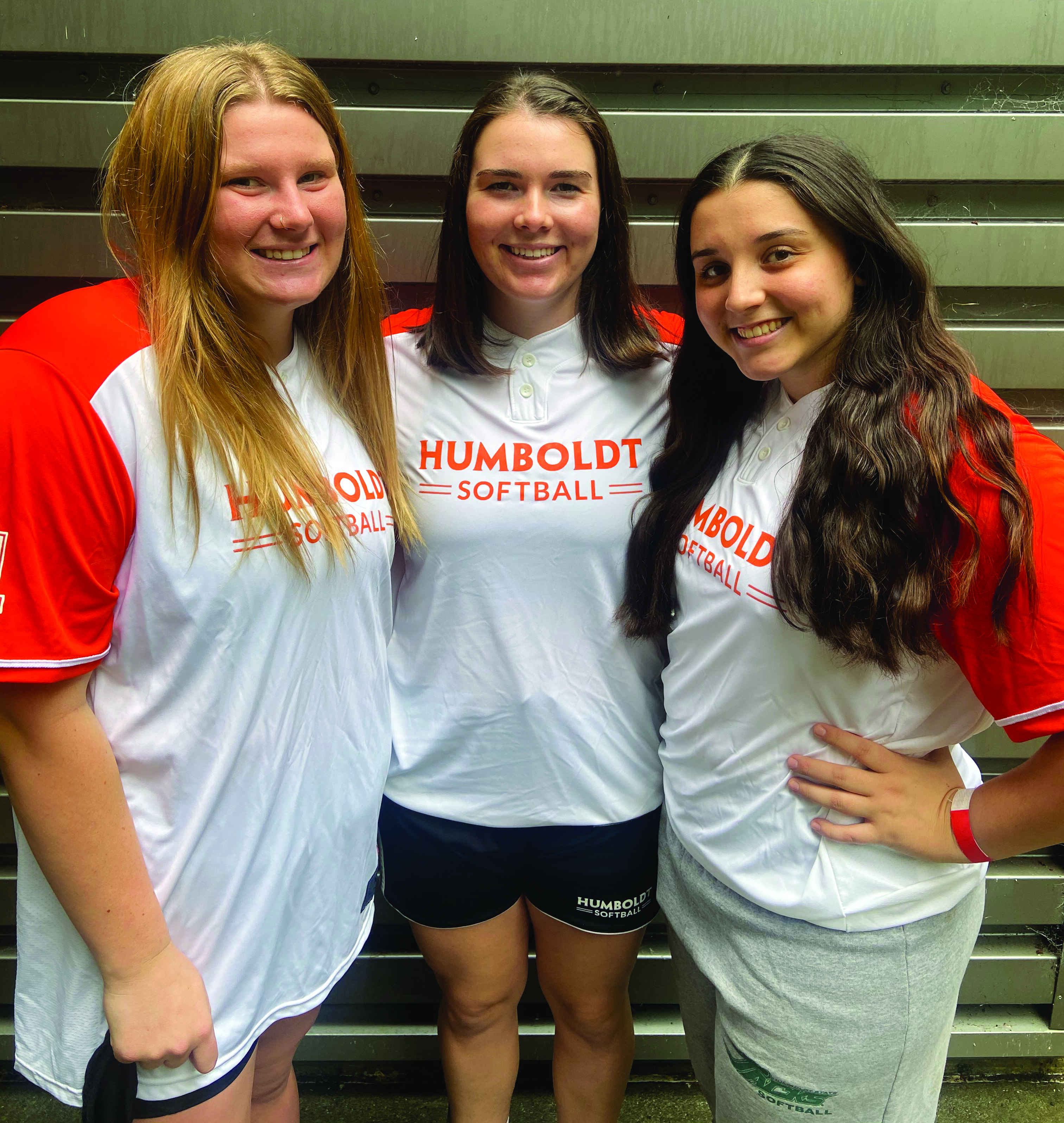
    Coach Sarchett and players reflect on their most memorable memories with Evelyn Andrews

    Evelyn Andrews, a softball player at Humboldt State University that no one will ever forget. Evelyn Andrews loved playing the sport since high school and once Andrews came to HSU she was among the redwoods that surround HSU’s softball field. It has been 10 months since the passing of Evelyn Andrews which wasn’t her losing her battle with cancer. It was due to a clotting complication that is common to Acute Myelogenous Leukemia patients.

    Andrews Coach Sarchett decided that this year was appropriate for Morgan Brant to wear her number in honor of her. “Morgan and Evelyn Andrews were the best of friends and Morgan wanted to honor her this way” said Coach Sarchett. Isabel Starr, a softball player at HSU explaining how she couldn’t see anyone else representing Evelyn Andrews number on the field than Morgan Brant. Morgan Brant, Softball player at HSU decirbies how she felt honored to be wearing Evelyn’s number. “She was the hardest worker I have ever met and always made a huge impact whenever she stepped on the field. I hope to make her proud and emulate the same energy she had” said Brant.

    “Evelyn Andrews was a hardworking and ambitious person. She laid everything out on the field. She dove for every ball in the hole, swung hard at every pitch she went for, and overall, played with a purpose” said Starr. Starr talks about how Evelyn was a selfless teammate and did anything in her power to help the team overcome any obstacle they faced together. Starr says “Morgan plays with a purpose, just like Evelyn. To me, Morgan is a selfless teammate, doing whatever is asked of her and does whatever it takes to help us succeed as a team.” Starr talks about how the number 21 isn’t just any regular number not at least to Humboldt States Softball team “There isn’t a better person to be wearing that number on our field and any other field we play on.”

    Coach Sarchett talks about Evelyn Andrews work ethic as a softball player “Evelyn Adrews work ethic is what stands out the most. It was second to none” said Coach Sarchett. She is now starting to base off on a majority of her recruiting on the type of person Evelyn Andrews was. “I want players that are going to come and work hard everyday, selflessly putting the team ahead of themselves and that is what Evelyn did everyday” , said Coach Scarchett. Brant talks about how Evelyn has impacted her both on and off the field, Brant says, “As a player, she taught me the importance of always being the loudest in the field and the best teammate you could have. Her “Don’t Suck” motto has stuck with my team and I and drives us to be the best person we can be.” Evelyn taught Brant how to see the good in people and taught her that laughter is the best medicine and positivity is the most important thing. “She taught me how to fight and be strong through anything I face in life” says Brant.

    “Evelyn Andrews was one of the most amazing people you’d ever meet. Although there are many people within this world that are amazing, she was one who stood out among everyone else. She was kind, caring and a bit of a butt sometimes.She was one who took advantage of every single opportunity that was thrown her way. Whether it was extra time on the softball field or just being with friends and taking advantage of the happy moments. She was also someone who gave you an extra push when you needed it.”

    Starr talks about the biggest lesson she learned for Evelyn was how to no suck, she learned instead of being regretful of decisions we make, we need to make the most of it. Starr says” The most important lesson Evelyn taught her was not to suck. This was the motto she constantly said that will forever be stuck in my brain. The term “Don’t Suck” applied to everything. Dont suck at softball, and don’t suck at being a decent human. I learned how to love and care for others. I learned that no matter how upset I am, dot shut those who love you out.” Starr talks about how she hasn’t stopped implementing “Don’t suck” into her life now and she doesn’t plan on stopping. Starr says, “To this day I wish I could thank her, face to face. For teaching me subtle, yet valuable lessons.”

    “I think we have learned to enjoy every moment we have and know that it can be taken away any second. So we are all going to go out and live our lives to the fullest” says Coach Sarchett.

    Brant’s best memory of Evelyn was their Sunday movie days they had, “She would always make chocolate chip pancakes for breakfast and we would spend the day watching movies of friends of each other. Usually accompanied by sushi or Toni’s.” Coach Sarchett’s best memory of Evelyn was her smile, “She could change the mood of a room in seconds with her positive and contagious smile.” Starr talks about one of her best moments that she had of Evelyn, Starr was taking her first footsteps on campus and was having a hard time finding her groove and fitting in. “I was trying really hard not to be me, unfortunately. I was trying not to talk too much or too loud. I was just having a hard time figuring out what the vibe was on the team since it was the first time I had ever met any of the girls.” Starr talks about how they were going over simple team things, such as jersey numbers, sizes, and the handbook. As soon as the meeting with the team finished Evelyn and Morgan pulled her to the side and asked Starr how she was doing and Starr told them she was having a hard time to fit in. Evelyn had invited her over for mac and cheese with Morgan, Starr agreed. “That night we talked a lot and ate a lot…all three of us talking about anything and everything there was to talk about. They warned me about morning running and they warned me to never be late to anything I could help it. They made me feel at home. The overall experience with Evelyn and Morgan was comforting. I wasn’t as sad as I was to be away from my family at that moment because I had found mine. I found my Humboldt Sisters that I could forever rely on. Just the simplest memories I have of her are my favorite and they are memories I don’t think I could ever forget.”

    Ev 2, Cancer 0.

  • McKinleyville launches the first Christmas lighting contest

    McKinleyville launches the first Christmas lighting contest

    McKinleyville plans its first Christmas lights, house decorations and door decorating contest.

    McKinleyville will host their first Christmas lighting contest. The contest consists of Christmas lights and Christmas decorations on McKinleyville houses. The contestants are judged based on inflatables, Christmas lights and Christmas decorations.

    The Christmas lighting contest, will have a map drawn out of all participating homes. There will be first, second and third placements with prizes. Participating in the event is free and the event itself will take place Dec. 23, 24, and 25 from 6 to 9 p.m.

    Keith Ownsbey was the first to launch the idea and hopes the event can become an annual tradition. Ownsbey started a Facebook page dedicated to the idea and posted his contact information for those interested in participating and volunteering.

    “I was bored,” Ownsbey said. “I decided to make a post on the local Facebook page and said ‘hey this is who I am, my family and I are lucky enough to call this community our home and I plan on decorating a lot this year and I wanted to put on a Christmas lighting decorating contest.’”

    The event will be following COVID-19 protocol by looking at Christmas lights within the McKinleyville area. The event is being held over a three-day span, rather than one giant event on a single day, as another COVID-19 safety precaution.

    The Christmas light contest is only happening locally in McKinleyville, but the Christmas door decorating contest is available throughout Humboldt County, so more people can participate.

    “Not everybody can drop two or three grand on a bunch of stuff,” Ownsby said. “But almost everybody can decorate a door and send in a picture.”

    Local community members and businesses who wished to contribute to the event offered prize money and donations.

    “All the prize money coming solely from the community members, business and donations,” Ownsbey said. “That’s what we are gonna use for the awards.”

    Cyndi Bainbridge, the treasurer for McKinleyville’s Lions Club, is excited about participating in the event. The Lions Club is a community and worldwide known club that partnered with Ownsbey to help out with the Christmas event.

    “I talked to the Lions Club,” Bainbridge said. “The president felt it was a really good idea to get behind something like that.”

    The Lions Club, by partnering, has helped with donations and credibility regarding the event. COVID-19 has taken a lot from communities this last year, Bainbridge is hopeful the outcome of this event can change that.

    “The community needs this,” Bainbridge said. “It’s been a hard year, we are the type of community that likes to come together and be involved.”

    Kacy Tonkin is a participants in both the Christmas lights and door decorating contest. Once she found out about the event, she messaged Ownsbey asking to participate because she enjoys the Christmas season a lot.

    “I am super excited,” Tonkin said. “Personally I really enjoy driving around at Christmas time looking at lights, and I think less and less people were decorating, so this kind of gives them the incentive for people to decorate.”

    Tonkin mostly decorates inside her home, she’s excited to decorate the outside and help bring cheer regardless of the contest.

    “Gives people something to do,” Tonkin said. “I think that more than any monetary gain, I think just the joy or the happiness it brings people.”

    The deadline to sign up for the event is Dec. 15. The deadline for door decoration contest will be Dec. 22. To participate or ask any questions, reach out to the Facebook page, 1st Annual Mckinleyville Lighting Contest.

  • Maintaining a sustainable lifestyle during a global pandemic

    Maintaining a sustainable lifestyle during a global pandemic

    HSU students continue to pursue a zero waste lifestyle despite the additional obstacles presented by COVID-19

    Humboldt State University is synonymous with an eco-friendly, green lifestyle. This year, student sustainability values have been put to the test with a nationwide shutdown and a closed campus.

    Sage Palacils, freshman at HSU, was raised in a household that emphasized the importance of sustainability and has been living eco-consciously their entire life.

    “I’ve been practicing [sustainability] since I was young and the practice, more than the reasons are ingrained in me,” Palacils said. “I grew up really poor and we really didn’t have money to keep replacing things or not be sustainable.”

    Since the pandemic began, Palacils’ carbon footprint has been significantly reduced, after they moved to Humboldt and stopped driving. Palacils also found they don’t miss shopping in the massive malls back home in Los Angeles, because they don’t see a need to be flashy this year.

    “Since I don’t go out much, I don’t really buy clothes,” Palacils said. “I don’t really shop online. I kind of reuse the same clothes I have because of the pandemic.”

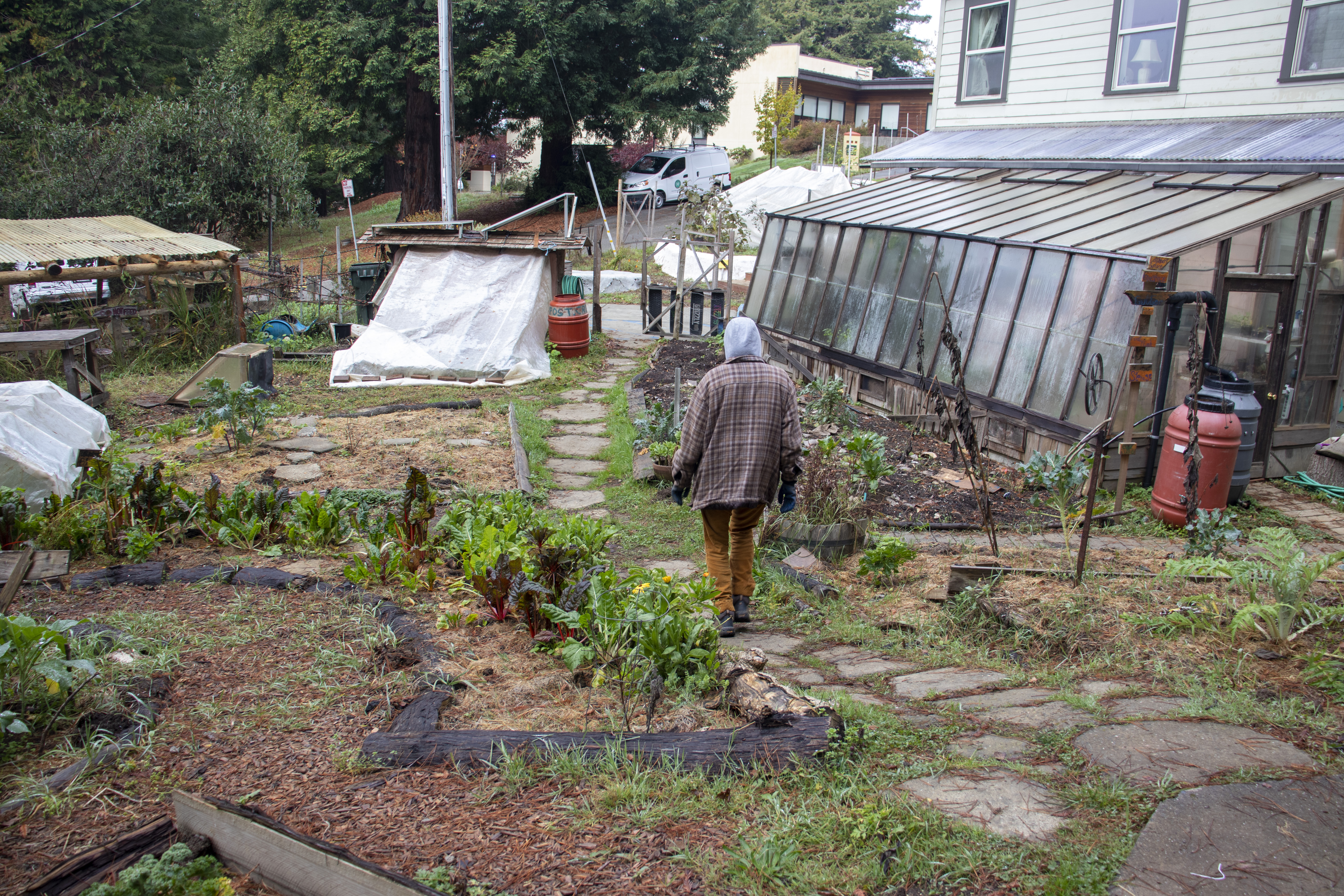
    This semester, Co-Director for HSU’s Campus Center for Appropriate Technology Klara Hernandez is attempting to provide students with a virtual substitute for the resources and sustainable living information they would have access to in a normal semester.

    “I feel like if I lead by example, people will become aware,” Hernandez said. “[I] just want to show that it’s possible that we can change individually. But at the same time, we have to attack this at the source, the corporations and big businesses, the people in power making the environmental impacts.”

    Hernandez originally got involved through their volunteer Friday events, which are not currently offered. The hardest part about being a member and leader of CCAT for Hernandez this semester has been having to turn away eager students because of the HSU’s pandemic policies.

    “We have to tell them no and it’s sad,” Hernandez said. “People really want to get involved and get their hands-on experiences, which is what we’re all about – providing that and serving the students, but we’re not able to.”

    HSU Waste Reduction and Resource Awareness Program Outreach Director Skylar Fisher believes the pandemic has proved the human race is ill equipped to tackle the much larger issue of climate change.

    “[If] we are not capable of responding to something as serious and as widespread as COVID, then we’re not gonna be able to be prepared for climate change,” Fisher said. “I’m very fortunate because I’m not extremely impacted by [climate change] yet, but you see all these communities that are and I think living sustainably is the least I can do.”

    Unfortunately, Fisher believes a majority of the sustainability advice floating around the internet comes from insincere influencers who are seeking an easy paycheck.

    “I think the current environmental movement is incredibly whitewashed. A lot of people having these conversations have taken it on more so as a fad than as something that they think can actually benefit our greater systems,” Fisher said. “It’s not so much about making a positive impact on the environment, it’s more so buying these products to make more products.”

    Practices like upcycling, thrifting, composting and growing your own foods can significantly contribute to a reduced carbon footprint. Fisher emphasized not putting yourself down for things your unable to accomplish, instead being proud of what you did.

    “It is impossible to expect everyone to be completely zero waste, but the important thing is to stay as aware as you can and reduce what you can.” Fisher said. “Just being aware, I think that’s the most important thing.”

    Given the precautions taken to prevent further spread of COVID-19, living a sustainable lifestyle has become significantly more challenging as stores safeguard their produce in plastic and purchasing in bulk items is no longer an option.

    “It’s super hard to get a hold of cheap, quality, low waste products and that has only gotten more difficult as the pandemic has progressed,” Fisher said. “[In the past] zero waste was the way that you lived if you couldn’t afford to waste, but it’s kind of been swapped now because plastic is subsidized, so it’s really easy for everything to be wrapped in plastic products. Which is hard on the consumer who now is blamed for wasting plastic.”

    For Fisher, the bottom line when it comes to waste reduction and sustainable living is that we all need to get involved and do our part in order to succeed and for species to survive.

    “[Reducing carbon emissions] is something that is very abstract to a lot of people but is very real and we need to understand that this isn’t just a competition to see how little trash we can throw out every week,” Fisher said. “There’s really real ramifications behind our waste output.”

  • Climate change puts the heat on clean up of dioxin hotspot

    Climate change puts the heat on clean up of dioxin hotspot

    Vice Mayor alerts City Council to Arcata Bay Shoreline dioxin threat

    City Council Vice Mayor Paul Patino said he intends to pull the approval of the Wastewater Treatment Facility Plan and Plant Improvement Project from the items scheduled to be rubber stamped by the city council.

    The $60 million investment is a response to the threat of sea level rise which involves enlarging levees around the Arcata Wastewater Treatment Facility. Patino is calling on the council to further discuss the project after he learned the mud around the bay shoreline of the wastewater facility has the highest levels of dioxin ever discovered in Humboldt Bay sediments.

    “I don’t see how you could mess with that area without it affecting that dioxin,” Patino said. “I think we need to get clear here.”

    Dioxin can cause birth defects, cancer and organ failure. It is known to undergo bioaccumulation, meaning it increases in toxicity as it moves up the food chain from plants to predators. It was widely used from the 1940s to the 1980s before the EPA started regulating its use.

    Patino raised particular concern with the staff report in the council packet where it states, “This project would involve enlarging the levee surrounding the majority of the outer perimeter of the Arcata Wastewater Treatment Facility (AWTF) by increasing the levee’s height and volume.”

    The Arcata City Council is faced with the choice to approve the final application for the project, or first investigate the dangers of the dioxin believed to be largely the result of pentachlorophenol used during historic lumber mill operations up Jolly Giant Creek several blocks south of the town square.

    The city is only now beginning to grapple with the impact the very high levels of dioxin have on plans to increase the height and volume of dikes around the marsh wastewater treatment facility and prepare for rising sea level already beginning as a result of climate change, and sea-level rise could complicate cleaning the dioxin.

    “Disturbingly, the site near the Arcata Marsh was found to have the highest levels of dioxin ever documented in Humboldt Bay sediments to date (38 parts per trillion),” wrote Jennifer Kalt, director of Humboldt Baykeeper in the report New Dioxin Data: Good News, Bad News.

    Kalt said she learned of the high dioxin levels from the report 2015 Feasibility Study: Beneficial Reuse of Dredged Materials for Tidal Marsh Restoration and Sea Level Rise Adaptation in Humboldt Bay, California.

    The dioxin hotspot extends from the end of Butcher’s Slough, where Jolly Giant Creek hits the bay several blocks south of the plaza, to over 2,000 feet on either side along the bay shoreline: around the wastewater treatment facility on one side, and around the main Arcata Marsh parking lot and boat launch on the other side.

    While Kalt acknowledged that many mills have existed along Jolly Giant Creek, she said, “We do know that Little Lake Industries was one source [of the contamination] because the city got a Brownfield grant…and found it around where the mill used to be.”

    The council signed off on a grant application in October for $300,000 to clean up the Little Lake Industries property 17 years after pentachlorophenol was first discovered in levels exceeding federal benchmarks. The Environmental Protection Agency identified high levels of pentachlorophenol onsite in their 2003 report South I Street Mill Reuse Project, Arcata, California, Targeted Brownfields Site Assessment Phase II Investigation, Final Report.

    Aldaron Laird is an environmental planner that specializes in sea level rise vulnerability assessments for Humboldt Bay.

    “With rising water elevations [the dikes] could be overtopped maybe as early as 2050…on a monthly basis…We really only have 20 to 40 years to relocate all of that utility and transportation infrastructure to higher ground before it is inundated,” Laird said.

  • Dorm students cling to the college experience

    Dorm students cling to the college experience

    Students living on-campus concerned as Humboldt County enters the red COVID-19 tier

    Students living in dorms, on-campus at Humboldt State University received a sliver of the college experience offered in a normal semester.

    Eli Farrington, an undeclared freshman, came to HSU to escape an unhealthy home-life and an unsafe place to live during the pandemic.

    “I think it’s pretty safe [here], compared to where I came from, which is Oakland,” Farrington said. “Which is way less safe in terms of corona.”

    Farrington enjoys having a triple suit all to himself, but he’s nervous about sharing common areas and only goes into the kitchen to do his laundry. Having little in common with his dorm mates, Farrington spends much less time interacting with people than he expected on a college campus.

    “They put me in Tan Oak, which is the student athlete dorm and I’m not a student athlete at all,” Farrington said. “I don’t really have any friends in my dorm.”

    His appreciation for the nature surrounding campus, having friends from Oakland that came to HSU this year and family tension, Farrington plans to continue living on campus in the spring.

    “I’d rather be here than stuck at home with my parents and also [a lot] of my friends have gone off to college too so there’s nothing really waiting for me at home,” Farrington said.

    Lake Mcleod, a political science major, is another freshman experiencing college life behind a screen of a laptop. Mcleod came to campus intending to live every ounce of the traditional college experience as possible.

    “Being here is helping me experience new things,” Mcleod said. “Personally, for me, back home is a different phase that I’ve moved on from. So, being here, I’m able to grow into the person that I really wanted to be.”

    Given that the university has restricted student interaction opportunities this semester, Mcleod feels more of an emphasis should be placed on the behavior of students on campus.

    “I feel like most people are staying as safe as possible but I’ve still seen huge groups and things that are a little questionable,” Mcleod said. “Which the university can’t control everybody, but I feel like it could be a bit better in terms of restrictions.”

    Mcleod’s main concern is the lenient testing regulations for students who leave the area and interact outside of their bubble.

    Students living in the dorms were only tested upon arrival back in August. All testing and quarantining currently operates under an honors system but, Mcleod has personally met people who’ve broken it.

    “Random people that I’ve talked to have said ‘oh yeah, I’ve been here and there’ and it doesn’t sound like they’ve been tested when they come back or they haven’t really been social distancing,” Mcleod said.

    Mcleod was also bothered by HSU hosting San Jose State University’s football team earlier in the semester. Considering how dorm students are restricted to host guests from other areas of housing and no more than two people are allowed at a table in the J’s dining area.

    “I feel like it was hypocritical in a lot of ways,” Mcleod said. “Having a whole football team here from a different county, from [a place with high cases], for them to come over here where we had low cases, that didn’t really sit too well with me and a whole bunch of other people I know.”

    River Ruiz, a political science major, has been living in the dorms for the past three semesters. His biggest reason for returning this semester was his on-campus job with HSU dining services. His experiences this semester led him to begin searching for other employment opportunities.

    “They need to make a lot of improvements,” Ruiz said. “The population is dwindling a lot, so the current workers, they like overload [them].”

    Ruiz will be making separate trips home to Southern California for Thanksgiving and Christmas because he needs to work between the holiday breaks.

    “It’s just crazy,” Ruiz said. “Cause you’re scared that you might come in contact with someone and you can’t go home because you have to quarantine.”

    No longer having the same access to extracurricular activities, Ruiz is grateful to have work as a distraction from school, despite the risks and drawbacks of this semester.

    “I know a lot of people that live on campus and go to school, they just stay here all the time and they don’t really have a good college experience,” Ruiz said. “[This semester is] kind of depressing, but it’s a depressing time and everybody’s getting through it.”

  • Elementary education students learn to teach online

    Elementary education students learn to teach online

    Limited fact-to-face interaction challenges elementary education majors and K-8 students

    The pandemic forced limited face-to-face interaction between Humboldt State University’s Liberal Studies Elementary Education majors and currently enrolled K-8 students in Humboldt County.

    According to John Lee, a School of Education professor, community building amongst the LSEE students is easier in face-to-face classes. In an effort to build community in his classes, Lee used extended breakout group activities, games for students, breathing exercises, brain and music breaks and regular check-ins.

    “Feeling a part of a community or social integration is essential for learning,” Lee said. “It puts students at ease so they can focus on learning.”

    Fourth-year, undergraduate students and those in the teaching credential program started out the year teaching over Zoom. As more local schools opened up, HSU students were able to conduct limited face-to-face instruction with their elementary students using a hybrid instruction model.

    Stella Mantova, a LSEE major, teaches in a second grade classroom at Alice Birney School in Eureka. Because Eureka started the school year online, Mantova, her students and the other teachers experienced a huge learning curve.

    “Teaching over 20, seven-year-olds at once isn’t an easy task,” Mantova said. “But when you add in the fact that some of them are still learning to unmute their microphones, things become a lot more complicated.”

    Of all the challenges Mantova has faced since the pandemic began, connecting with her students has been the most challenging.

    “Online teaching seems like we don’t have as much time to get to know each other because we need to use the majority of our time to teach the standards,” Mantova said.

    Mother of three and LSEE major, Maxine Welch, missed interacting with her teachers and peers. Instead of being in a classroom, Welch watched pre-recorded lectures.

    “I would have liked to be able to be more interactive as an LSEE student, because I know a lot of my classes revolve around interaction,” Welch said. “Interaction with other teachers to learn their teaching techniques as well as interactions with students to learn how to adapt to the teaching needs.”

    Along with the effects the pandemic has had on LSEE students, the Children’s Center on campus had to adapt. Following local and state guidelines, the Center is currently operating at half-capacity. They’ve had to make several adjustments to ensure the children, parents and staff stay safe.

    Stephen St. Onge, director of the Children’s Center, is most concerned about the lack of social interaction between the children, classmates and teachers.

    “The team at the Center has had to revamp the way children and families are greeted, the number of students allowed in any classroom at a given time, and have had to modify their learning modalities and curriculum,” St. Onge said.

    Betsy Wilson, program director for the Children’s Center, added that the biggest challenges were keeping everyone healthy and making sure the Center stays staffed.

    “The hardest part about being an elementary education major right now is that everything always seems to be changing,” Mantova said. “Just when I think I’ve established a routine and I know what to expect from teaching and from my HSU experience, some new guideline shifts and I have to plan my life all over again.”

  • Rugby is the closest sport to football HSU has left

    Rugby is the closest sport to football HSU has left

    With Humboldt’s Lumberjack football gone rugby can take the spotlight.

    Rugby will never be able to replace the gap left by Humboldt State University’s football departure. If youth athletes within the Humboldt community want youth to play a contact sport and watch anything that resembles football, it’s rugby. Not only are they going to be able to watch a contact sport, but they are also going to watch a top level team.

    HSU’s rugby team has been a part of the campus since 1973. The team was Division 1 and battled with the likes of Cal Berkeley and Chico State until 1998, when they became a Division 2 team.

    As a Division 2 team they had their most success in 2005, when they made it to the National Championship but came up short to Colorado State.

    Since then, HSU Rugby has been a part of the National Collegiate Rugby league. The team had great success over the last four years, ranking seventh in the nation without the chance to play the national championship due to COVID-19.

    Much of the team’s success is thanks to ex-football players at HSU and the recruiting of local and Division1 club rugby. Latufeao Kolopeaua, a junior at HSU and former football player, was recruited to join the rugby team after the football team was disbanded in July of 2018.

    “If it weren’t for rugby here at Humboldt I would have transferred over to Montana Tech to play football,” Kolopeaua said. “Even though I sometimes dislike the decisions by this university, I’m very happy I was able to stay here and play rugby because the university is cheap, close to my home of LA, compared to Montana, and I really like it here.”

    HSU Rugby is a great opportunity for local high school athletes, like myself who went to McKinleyville High and played rugby for Chico Rugby club, to still play a contact sport while also staying local. Tali Fonoti, an incoming freshman for the rugby team, was a running back for St. Bernard’s Academy’s team, who won the Division 3 state championship.

    “I wouldn’t be staying here if it weren’t for rugby,” Fonoti said. “If Humboldt offered football then I would be playing for them. I’m happy to be able to stay here and play a sport and to be honest, the rugby team is the only reason I’m staying up here. It is my first time playing rugby, but it is something I’ve watched a little bit growing up. There is just no youth rugby in Humboldt which is the only reason I didn’t play.”

    Picking up rugby came easy to Fonoti. He believes rugby could be the sport to fill the gap of HSU football for local high school athletes.

    “I don’t think it is that hard to transition from football to rugby,” Fonoti said. “I was always in a sport so I am confident in my ability to pick one up easily. The fundamentals of tackling and running the ball are almost the same. If any high school kids wanted to stay up here and play a contact sport I would be for sure talking them up to play rugby because it’s not that hard to learn.”

    Logan McDaniel, a freshman from Belmont, never would have heard of HSU if it weren’t for rugby.

    “I would be playing rugby or football at another school,” McDaniel said. “Humboldt wouldn’t have even been on my radar. I’m happy I was recruited and they have some sort of contact sport at Humboldt because I love it up here.”

    Although HSU football is disbanded and can never be fully replaced by any sport, rugby could be the one that comes closest to filling the gap for the community. Local athletes will be able to stay home, save money and play for a nationally ranked collegiate team.

  • Club sport athletes stay on track

    Club sport athletes stay on track

    Unable to practice as a team, athletes practice one-on-one.

    Humboldt State University’s athletics clubs are currently unable to practice on a team level. Members hold themselves accountable in hopes of the restriction lifting and allowing teams to meet and practice again.

    Part of being ready to play whenever COVID-19 restrictions loosen or end, is staying in shape. Colin Waichler, president of the cycling club, has no set plan for his team, just encourages them to stay on the bike.

    “We haven’t been doing any real individual training this semester,” Waichler said. “To be honest, we don’t do any team training in normal years, there’s no motivation around for that when just going for a rip is way more fun. If you count super chill group rides as training, I guess we train.”

    Waichler said the club members are riding mostly the same amount as they would normally, even without races that would be scheduled.

    “Right now, everyone’s riding at their usual level minus the four or five race weekends we normally have in the fall,” Waichler said. “For most of us, that’s one to three casual rides a week.”

    Waichler has been doing more than just stepping on the bike to stay in shape.

    “Ordinarily, I’d be riding four or five hours a week. Distance varies, but about 30 to 100 miles, usually on less rainy days but occasionally I’ll go for a swim,” Waichler said. “Outside of that I don’t really train but do a good amount of hiking and ski touring when possible.”

    Anthony Perez, president of the archery club, staying in shape is not the only reason he maintains individual practicing, mental health is a huge factor when it comes to being able to practice.

    “I try to at least shoot twice a month, safely of course,” Perez said. “The only reason why I go out is because archery helps me destress. With the whole staying indoors and not having much contact besides the house plant, it gets hard to find motivation but when I go out to shoot, it helps me clear my mind because I’m only focusing on my breathing and the target.”

    Perez elaborated on how practicing helps him stay in touch and focused with his surroundings, a great break from the monotony of virtual instruction.

    “Just overall feeling the surroundings, like how strong the wind is, the leaves falling and just have that feeling of being alive versus migrating from the bed to the desk,” Perez said. “It’s really hard to explain but it’s like you’re in touch with everything because you’re using all your senses to make sure you make that shot, but when I’m inside my house, I only need one or two senses and I’m not at full capacity. Like I’m on autopilot.”

  • Prop 22 represents political favoritism of money over workers’ rights

    Prop 22 represents political favoritism of money over workers’ rights

    California’s passing of proposition 22 on Nov. 5 represents a frustrating history of workers’ rights being trampled by the overwhelming influence of greed in politics. 

    This proposition forces app-based workers to be classified as independent contractors, rather than employees. This classification allows companies like Uber, Lyft and Doordash to pay their workers significantly less than California’s guaranteed minimum as well as provide them with worse benefits than would be guaranteed as a full-time employee.

    This proposition was vehemently opposed by labor unions that represented drivers. Unfortunately they were hugely outspent in advertising by the corporations that funded the ballot initiative for prop 22. Advertisements for a yes on prop 22 were incredibly misleading and placed on Amazon, YouTube and even inside of Uber’s app. They misleadingly claimed being an independent contractor provided workers with the freedom to receive benefits while driving on their own schedule. 

    In fact, under prop 22 drivers are only guaranteed benefits after 25 hours of engaged driving time. Engaged driving time is defined by prop 22 as time actively spent with a rider in the car, or a delivery in progress. With drivers reporting that they spend over half of their time waiting for a pickup, this could require workers to put in more than 40 hours a week for less benefits than a full-time California employee.

    The reason that companies like Uber and Lyft are able to continuously influence political campaigns is due to the fact that within the US, companies enjoy and exercise the same level of freedom of speech granted by the First and Fourteenth Amendments that residents due.  

    In a 1886 Supreme Court case, Chief Justice Morrison Waite said that “the Court does not wish to hear argument on the question whether the provision in the Fourteenth Amendment to the Constitution which forbids a state to deny to any person within its jurisdiction the equal protection of the laws applies to these corporations. We are all of opinion that it does.”

    Two years later, the Supreme Court made the ruling official stating, corporations had equal protection under the law as they were merely expressing and acting on behalf of the people that created and ran them.

    These rulings are what set the stage for one of the most important court cases in the history of politics within the US, Citizens United v. FEC. 

    In the rulings of the case, Justice Anthony Andrews, joined by other Justices of the court, wrote that corporations were protected under the First Amendment to freely express their opinions on matters both domestic and political. 

    Furthermore, Justice Andrews wrote in the majority opinion that the US government was not responsible for creating an equal playing field regarding the use of money, changing the rules of campaign financing, leading to the rise of super Political Action Committees. These PACs could acquire an unlimited amount of funds from corporations, individuals and other PACs to use for supporting political candidates and proposals.

    The consideration for corporations did not always extend to laborers. The US has a history of ruling against labor unions, going as far back as 1806, where the first case regarding a labor strike occurred with Commonwealth v. Pullis. The Philadelphia Mayor’s court ruled that leaders of a union strike were guilty of conspiring to raise their wages after labor strikes failed to do so. This established a precedent that labor unions were illegal, something that stood until 1842.

    The consensus in academic literature is that unions shrink income inequality. Union members make, somewhere between 10 and 30 percent, and enjoy more benefits. Unions also drive worker solidarity and income equality across race and gender lines. The recent rise in income inequality in the US is partially attributable to shrinking union membership. The idea of collective bargaining only works if trade unions have the power of large numbers of workers standing in solidarity. 

    The ferocity companies and governments demonstrate when quelling labor organizations should be all the evidence needed that labor organizations are effective. The total number of workers murdered in response to labor organization in the United States is unknown, but the number of workers killed by law enforcement, company militias, and other anti-labor forces during labor disputes numbers in the thousands. If labor organizations did not work, no one would drop bombs on striking workers and, knowing the risk, no one would strike if it did not benefit them.

    The US Government has often been hostile to labor organizations. During the early years of the industrial revolution, the legality of collective bargaining was uncertain, but often led to convictions and fines. Even when collective bargaining was legalized, the National Guard and local law enforcement were responsible for violence against labor organizers. 

    Resistance to collective bargaining should be expected from people who became as powerful as they did by appealing to moneyed interests. No one in a position of wealth and power can be relied upon to betray their source of power. Greed is bipartisan, and workers should not rely on institutions to grant them rights if those same institutions have proved hostile in the past. 

    Though the labor victories of the past still benefit workers immensely, companies are doing everything they can to undermine those victories. Prop 22 is one in a long line of examples. It undermines workers rights and chips away at our hard won standard of living. It should be a warning sign that no labor struggle is ever over. It will be an ongoing fight against corporate greed, but joining a union and standing in solidarity with workers across divisions of nationality, race, gender and economic background will benefit yourself and your community.

  • Students for Quality Education statewide Abolitionist Meeting

    Students from different CSU locations demanded changes and ideas on how to accomplish them

    Hosted on Zoom Fri., Nov. 13 by Faith Garcia from California State University San Marcos, SQE held a statewide abolitionist meeting.

    The meeting consisted of 65 students from different locations within the CSU system. The meeting began by going over the Key Principles of Freire to discuss popular education, including learning from social realities to make actual change, the importance of respect and dialogue and actually committing to change.

    Adela Gutierrez-Diaz, a CSU student leader, expressed the need to be aware of an injustice and the call to action.

    “Start with issues that carry fear, anger, sorrow, hope,” said Gutierrez-Diaz.

    The discussion examined how to build a new future, to make a difference and accept that emotions will come into play. For this reason, dialogue is even more important and needs to stay open and available.

    “Everyone can learn from each other,” Gutierrez-Diaz said. “Folks have different perspectives rather than more knowledge.”

    Students should search for solutions considering both fact and emotion, as well as reflecting on what had occurred and what could be learned and made better.

    “Use what you learn to change the world because we truly have no choice at this point,” Gutierrez-Diaz said.

    The discussion began with things students had seen from police within their own lives, or through others, and why they hated them.

    They shared instances of mistreatment of the LGBTQ+ community, watching family being unfairly treated or killed, or the way police profile and target communities differently.

    “They treat people like they’re straight up above everyone,” said Andy Aleman-Alvarez from CSU Los Angeles.

    This led to other issues, such as problems within their own communities. Many expressed homelessness as a main problem. Arcata and the HSU community also consistently struggle with homelessness.

    Students mentioned getting School Resource Officer’s out of schools, the access to healthcare and its expenses, prison and unfair treatment, and student debt.

    “I already have debt for my graduate degree,” said Silvia Angulo from CSU Los Angeles.

    Students were not just speaking about issues but finding ways to address problems and plan to do something about it, talking specifically about the risks associated with being outspoken.

    “You need to be willing to lose something,” said Louise Barros from CSU Stanislaus.

    Reforming institutions founded on white supremacy was a heavily discussed topic. The goal moving forward is creating alternative systems and finding other ways for the people to do it themselves.

    “Power can come from all of us supporting one another,” said Nia de Jesus from CSU Stanislaus.

    Led again by Guterriez-Diaz, students engaged in group grounding exercises to calm down after the discussion. Instructed to put their feet on the ground, relax their jaw. loosen their shoulders and breathe in peace, breathe out justice.

    “These conversations can make you very tense very fast,” Guterriez-Diaz said.

    After the grounding exercise, three breakout rooms were created where students could reach out to the Campus Contact, CSU Board of Trustees or State and Local Governments. Contact information and scripts were provided to aid students, as well as access to graphics that could be posted on their social media.

  • Humboldt County skips from yellow to red tier

    Part of a statewide effort to slow COVID-19 cases, Humboldt county enters a heavily restrictive tier.

    Humboldt County moved into a heavily restrictive tier as part of a statewide COVID-19 response. California saw a rise of cases within the past weeks, reporting 57,000 new cases within the past seven days. Governor Gavin Newsom said this will slow down any plans of reopening.

    Part of a 40 county reorganization, Humboldt has been moved from the lowest tier into the second highest tier, with 4.8 cases for every 100,000 tests conducted.

    42 percent of positive, reported Humboldt county cases have occurred within the Latinx community, despite making up only 12.3 percent of the population according to 2019 US Census Bureau data.

    In a Humboldt Health Alert sent out on Nov. 16, Humboldt County Health Officer Dr. Teresa Frankovich said that the current case rates could possibly move Humboldt into the most restrictive tier.

    “Since the state first implemented the Blueprint framework, they’ve signaled that they could move faster if conditions warranted,” said Frankovich. “Our recent data shows why that makes sense because this virus is moving faster than we have ever seen, and rapid response can help to slow the upward trajectory.”

    Under the new tier list all bars, breweries and distilleries will be closed while wineries can be open outdoors only. Restaurants, retail shops and places of worship can be open “…indoors at maximum 25% capacity or 100 people, whichever is fewer,” according to the Humboldt Health Alert.

    The CDC and the Humboldt Department of Health and Human Services both highly advise against having gatherings for the holidays as this will most likely increase the spread of COVID-19.

    “We simply need to stop traveling and stop gathering, especially indoors. It isn’t safe, and it is impacting our schools and our business communities,” Frankovich said in the health alert. “The upcoming holidays need to be single household celebrations if we want to get through this pandemic with fewer hospitalizations and fewer lives lost.”

    Nationwide, cases continue to spike. The New York Times is currently tracking around 11.4 million cases reported nationwide and nearly 250,000 deaths attributed to the virus, as of time of publication.

    The Center for Disease Control has predicted that “…the number of newly reported COVID-19 deaths will likely increase over the next four weeks, with 5,500 to 13,400 new deaths likely to be reported in the week ending Dec. 5, 2020. The national ensemble predicts that a total of 260,000 to 282,000 COVID-19 deaths will be reported by this date.”

  • Savage Henry Comedy Club faces potential closing

    Savage Henry Comedy Club faces potential closing

    The club’s GoFundme is near its deadline

    The Savage Henry, known for its magazine and comedy club, is being threatened with shutting down. Their current GoFundMe stands $9,000 short, as of publication, and the deadline is coming up.

    The club temporarily shut down from March to July due to COVID-19.

    Co-owner of Savage Henry Chris Durant first opened the club in November 2018. Ever since, the club and magazine have been a hit locally and statewide but due to pandemic restrictions, the club faces financial troubles.

    “We couldn’t pay any bills because we couldn’t sell anything,” Durant said. “We were dead in the water,” Durant said.

    Calista LaBolle, a stand-up comedian at the Savage Henry, has been performing at the club for a year and has been friends with Durant prior to stepping on stage. LaBolle emphasized the beauty of the comedy club and it’s importance in the community.

    “It’s a mecca for comedy in Humboldt. It is for many comedians,” LaBolle said. “In our region, it is very well known. A rest fit for a lot of the comedians, a place that they can come and be themselves. That will be difficult for a lot of us, if it has to close.”

    Eric Fitzgerald, a stand-up comedian at the Savage Henry, found the club from open mic acts. For Fitzgerald, the club is a place of creativity and expression, a supportive outlet for local comedians to get their art form public and have fun.

    “A place to get together and see good entertainment that’s hilarious and to get a good laugh,” Fitzgerald said. “Especially now with the pandemic I feel like comedy kind of essential to break up the monotony.”

    Although the club had shows in alternative forms during the pandemic, like drive-in and movie theatre-style comedy with protocol being followed within the building, it is not bringing in as much money as it was.

    “If the comedy club goes away, there’s other things that will go away too and then we are all stuck in our houses staring at our phones,” Fitzgerald said.

    Only certain drive-in and comedy streaming shows within the club are available making it hard to bring money in with the club shut down. Usually, the club packs the week full of different comedy sets.

    “We would have local comics, open mics on Wednesdays and Sundays, the comedians produce their own shows, on the weekends we usually have headliners from out of the area,” Durant said. “The only dedicated comedy club between the Bay area and Portland, OR.”

    The GoFundMe money would go towards rent and keeping the building. There’s still time to raise the money and with flexibility between landlords and the owners, Durant is hopeful.

    “We make jokes about it now,” Durant said. “I would turn to the camera and say, ‘Please donate so this guy doesn’t come running up to you in the store and try to tell you jokes, give him a safe place to do his craft’.”

    To donate, visit their GoFundMe at http://www.gofundme.com/f/save-savage-henry.