The Lumberjack


Students Serving The Cal Poly Humboldt Campus and Community Since 1929

Tag: Humboldt State University

  • Celebrating five years of El Leñador

    Celebrating five years of El Leñador

    El Leñador has been publishing monthly bilingual stories for Humboldt State University since 2013. El Leñador has given a voice for the people whose voices are never heard, and its staff has been carrying on that drive to serve the community for five years.

    Diana Borman and Caroline Moira are students at HSU and read El Leñador in their spare time.

    “It gives a platform for Latino and Hispanic voices to be heard,” Moira said. “It also gives voices to people of color in general, which is something that is needed in this time we are living,” Borman said.

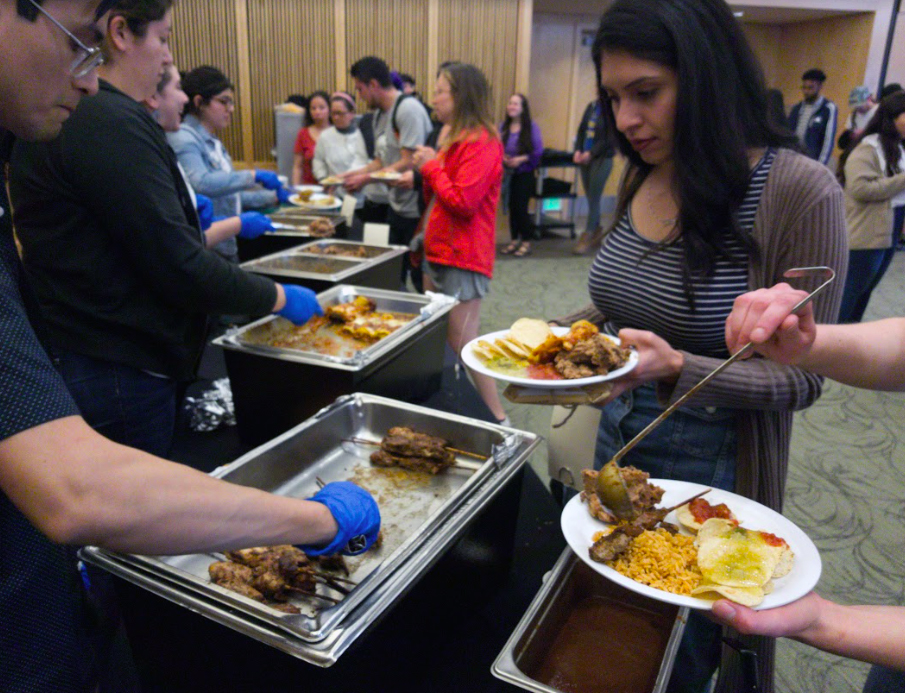
    April 19 marked El Leñador’s fifth anniversary. To celebrate, they offered free food and a place to hang out and learn the progress that El Leñador has made over the years.

    Hector Arzate is the current editor-in-chief.

    “I never imagined being involved in El Leñador,” Arzate said. “I went into the publication voluntarily, but it led to me overseeing the bilingual newspaper.”

    Many were in attendance of the celebration. Some were even former editors of El Leñador.

    Sam Armanino was a photo editor for El Leñador in 2016. He is now working as social media coordinator for the North Coast Journal.

    “There is a lot of room for creativity in a student-run publication,” Armanino said. “Working for El Leñador was a great experience.”

    Another editor from El Leñador who attended the event was Carmen Peña-Gutiérrez. She was editor-in-chief of the newspaper in fall 2017 and is now working as workshop organizer for the Check-It program.

    “I’m very happy to see that El Leñador has grown to become a news source for people,” Peña-Gutiérrez said. “What helped me write stories for El Leñador was helping the community that is underrepresented be heard.”

    Meg Bezak was announced to be the next editor-in-chief of El Leñador for fall 2018.

    “I’ve had two years of involvement in El Leñador,” Bezak said. “I fell in love with El Leñador. The staff has been exceptional and supporting.”

    El Leñador’s advisor, Andrea Juarez, has been involved with the newspaper since 2015.

    “The goal of this newspaper is to allow students to tell the stories they want to share,” Juarez said. “The students who write for El Leñador are getting experience for their careers.”

    In the future, one of the changes El Leñador wants to make is to create more multimedia content for their website, as well as expanding their staff. One thing that won’t change for El Leñador is providing stories for the community.

    “This job has a lot of big shoes to fill,” Arzate said.
     

  • Upset mothers march to Arcata City Hall

    Upset mothers march to Arcata City Hall

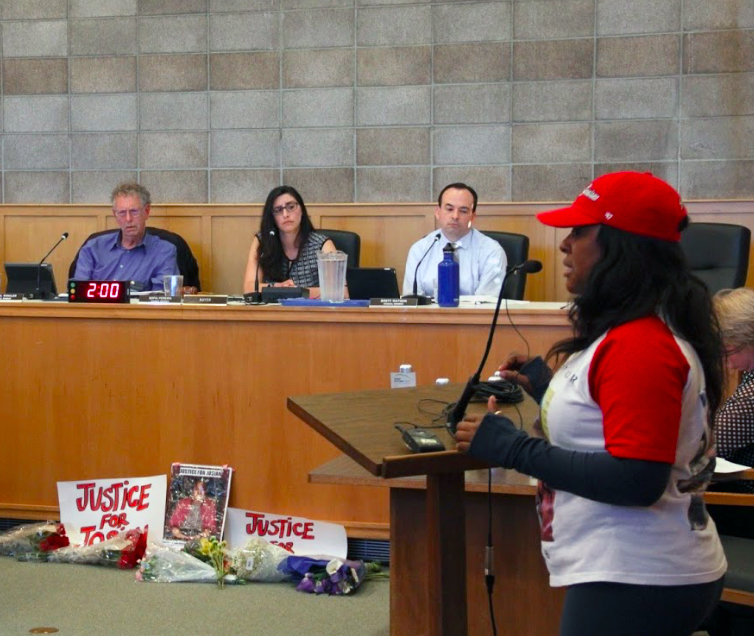
    Angry mothers, students and community members all marched in solidarity with Charmaine Lawson from Humboldt State’s Library Circle to Arcata City Hall demanding Justice for Josiah on April 18.

    Just a few days after the one-year anniversary of the death of HSU student David Josiah Lawson, who was fatally stabbed at an off-campus party on April 15, 2017, people are impatient for answers.

    “We demand justice for Josiah and we want Tom Parker back,” Charmaine Lawson said.

    Tom Parker is a retired FBI agent who was brought up to privately inspect the case for the last eight months. He resigned last week.

    The march made its way from HSU to City Hall through F Street. The city council was meeting that day and the shock could be seen on their faces when up to 100 people marched into the hall chanting, “Justice for Josiah!”

    The mayor of Arcata, Sofia Perreira, was in attendance, as well as city council members Brett Watson, Paul Pitino and Michael Winkler.

    The forum opened up for members of the public to address the board and a line started to form.

    “There is a killer on the loose and if I feel unsafe as an old white lady, how are these students of color supposed to feel safe?” Arcata resident Denny Dorsett said.

    As many other people came up to speak their minds, the energy in the room began to grow more charged.

    “I grew up in this place and I don’t feel safe anymore. Why are you not trying to protect me?” Faith Shaineider, an Arcata High School student who came to show her support said.

    Shaineder’s mother, Zera Starchild, was also in attendance and had some heavy words to deliver.

    “This town has already changed because of this,” Starchild said. “Arcata will never be the same again.”

    While many brought up concern for their own safety, others brought up different reasons justice needs to be served.

    Leslie Rodelander is a grant analyst at the Sponsored Programs Foundation at HSU.

    “If compassion doesn’t move you, hopefully economics will,” Rodelander said. “I see the sheets, and the number of students coming to HSU is dropping and will continue to drop if this does not get fixed.”

    After every other person spoke their mind, it was Charmaine Lawson’s turn. Mayor Perreira did not impose a time restriction on Charmaine Lawson as she had on everybody else, so she was able to deliver a powerful message.

    “I demand Tom Parker back. Call him in the morning Sofia,” Charmaine Lawson said. “If the roles were reversed, I know my son would be sentenced already. I need to know what happened to my son!”

    Cheers and applause could be heard around as people shared their support.

    After hearing from everybody who wanted to speak, Mayor Perreira motioned for a 10-minute recess, during which she approached certain members of the audience. In a strange turn of events, Perreira returned from the recess and adjourned the meeting. People tried to figure out why, but were given no answers.

    It has been over a year since Charmaine Lawson lost her son and the case is still wide open.


  • Records rule again

    Records rule again

    The tables have turned in favor of vinyl records. While CDs and cassettes reigned king in the 1980s and 1990s, it was the rise of digital downloads and online streaming services in the 2000s that inexplicably aided in the resurgence of records. Today, records are outselling digital downloads for the first time since 2011.

    “Vinyl sales were up 10 percent to $395 million — a ‘bright spot among physical formats,’ the [Recording Industry Association of America] noted [in a 2017 year-end revenue report],” Derek Hawkins of The Washington Post said. “The outlook for digital downloads is bleak. This is the third year in a row they’ve posted double-digit declines, according to the RIAA.”

    As Apple commercialized MP3 downloads in the early 2000s, CD sales began to drop. Though cassettes are making a comeback in some areas now, thanks to record labels like Burger Records, they lost their popularity more significantly by that time as well.

    Making our way into the 2010s, millennials caught on to the joys of listening to records as download and streaming services continued to revitalize the music industry. In fact, a great deal of new records these days include free download cards — a good incentive to get the best of both worlds, that is, a tangible medium and a digital download of an album.

    Record Store Day is a global event that has happened every April since 2008. Independent record shops from all over the world participate by selling limited edition records made exclusively for Record Store Day.

    “This is a day for the people who make up the world of the record store—the staff, the customers and the artists—to come together and celebrate the unique culture of a record store and the special role these independently owned stores play in their communities,” the Record Store Day website wrote.

    While it’s slim pickings in Humboldt County, People’s Records in Arcata carries a wide selection of outstanding records year-round. From 11 a.m. to 6 p.m. on Saturday, April 21, People’s Records will offer this year’s exclusive Record Store Day selections, and they’ve made extra room for more records.

    “We will have many of the limited edition Record Store Day items, plus we have expanded and knocked down a couple walls in the store to accommodate 1,000 new records in our stacks,” People’s Records wrote on their Facebook page.

    People’s Records in Arcata. Photo by Matthew Hable.

    Generally speaking, there is nothing wrong with digitalized music. The average human ear can’t detect the sample rates of professionally processed digital audio, nor can they make out the subtle differences in sound of analog waves, aside from the record’s “warmth” people commonly claim to hear in contrast to MP3s or WAV format.

    However, what sets records apart from other formats is their level of interactivity and the way they appeal to the senses. The process of taking a record out from its sleeve, placing it on a turntable, carefully dropping the needle on the record and even the smell of records makes it that more special.

  • “Divergence” dancers amaze audience

    “Divergence” dancers amaze audience

    The audience at the John Van Duzer Theatre were fortunate enough to witness a cacophony of kinetic expression in the form of HSU’s annual spring dance concert on April 15, this year titled “Divergence.”

    Students of intermediate and advanced levels were given an opportunity to work in tandem with other students and alum choreographers. They chose music and themes to collaborate in the creation of 10 beautifully executed dances.

    The performances were varied both thematically and visually, yet all seemed to perfectly complement each other. While some dances were more lighthearted and obviously purely for fun, other performances emphasized the many social issues we as college students and young people have, and may experience in our communities.

    One of the more poignant pieces in the performance was titled “1 in 4. It’s been 5,” a dance deriving some inspiration from the recent #MeToo movement and personal experience, and was choreographed by HSU dance professor and choreographer Kyleigh Carlson.

    Carlson derived much of the performance inspired by her own experiences, and wanted the piece to be as empowering as it was a reflection of the horrible abuse and oppression many women experience in their lives, particularly on college campuses.

    “One in four women on every college campus has been sexually assaulted and it has been five years since my attack,” Carlson said, discussing her title choice for the piece. “I believe in dance as a tool for advocacy and as a healing art form. When combining both of these motivators, I believe it can create real change and that is what inspired me to create this work.”

    The audience was initially confronted by the 12 female dancers walking in unison, illuminated by low-level stage lighting until they reached a spot so far downstage that they seemed nearly atop the front row of the audience.

    They spent a good amount of time there just waiting and looking directly at audience members before delving into more movement. Even throughout their choreography, the dancers continually glared in synchronized confrontation toward the audience, forcing us to pay attention, to watch and to be cognizant of them.

    It was intentional to cast solely female dancers as well, as Carlson wanted to reflect her own experiences and was reflective of them, yet still inclusive of every survivor and their own experiences.

    “It was important to me that while I was creating this piece that it be reflective of my story, and yet give room to allow my dancers to grow and develop their stories and experiences too,” Carlson said. “We opened up to each other during our twice-a- week rehearsals and shared our experiences, creating a safe space and community. The bond was important for performing this piece together as a group of strong unified women on stage.”

    Following “1 in 4. It’s been 5,” was a far more lighthearted piece with dance collective “The Dizzy Delightful Dazzling Dancers,” presenting “Friends on Fire,” a piece inspired by “inspiration itself,” according to choreographer Serena Mann, and all set to the iconic power bop “I Will Survive” by Gloria Gaynor.

    Dancers whizzed around stage in jazzercise-themed choreography, all while clad in outrageously fabulous multi-colored unitards and leotards.

    After intermission, the audience was entertained by the amazing choreography and dance, both executed by HSU dance major, Austin Silavong. Both of Silavong’s pieces in “Divergence” were selected to represent HSU at the western conference of the American College Dance Association that occurred March 14-17 this year.

    Silavong’s solo performance “Asunder” was inspired by the “forced conformity so many of us adhere to,” Silavong said, and he encouraged viewers to “break free” of these conformities.

    In preparation for both “Divergence” and showcasing his two pieces in the western conference, Silavong had to extensively rehearse for nearly five hours a week with HSU dance professors and “Divergence” faculty advisor, Sharon Butcher.

    “Dance is a discipline,” Silavong said. “Talent is always a bonus, but to really connect, you need to show up and practice.”

  • Goodbye to last round of Intensive English students

    Goodbye to last round of Intensive English students

    One staff member was let go from their position, two more members soon to follow.

    Kotaro Kawakubo​ is an international student from Tokyo, Japan who will lose his friend when a second language program shuts down in July.

    “A friend I met here from China is leaving and going to a university in Seattle to study English. I will miss him,” Kawakubo said.

    The International English Language Institute has been open for 30 years. The Center for International Programs that houses the IELI program is downsizing, resulting in a lack of funds. Humboldt State’s financial crisis is the cause.

    “Without this program I will lose my friends I made here that came from other countries to learn English,” Kawakubo said. “They want to stay here, and keep studying English, but they have to go to other universities where there are English language programs.”

    This year Kawakubo returned to the IELI program for a second round. He returned to Humboldt County on March 9.

    Kawakubo plans to go to College of the Redwoods to study English after the program ends, and then transfer back to Humboldt State University.

    He heard about the program closing from his host mother who works at the center.

    “One day, she looked so sad,” Kawakubo said. “She told me the program is closing. Her coworker can’t get next year’s job at the office. She had to move to a different job because of the budget cuts.”

    Tyl​er Bradbury​, academic program coordinator of IELI, emailed host families on April 3 to inform them about the program closing.

    “This was a somewhat sudden and surprising decision I was informed of late last week. I cannot thank you enough for opening your homes and your hearts to the students,” Bradbury said in an email. “It breaks my heart to have to deliver this news.”

    ​Mikayla Kia is an international studies major who ​works closely with the IELI students. Kia is also vice president of the Global Connections Club.

    “Not having the international students would leave an empty space, because when the IELI students come to the club meetings, that is like half the room,” Kia said. “I don’t know what it’s going to be like without them.”

    An employee at the center connects the IELI students to the club. At the club IELI, students play board games, sports and go on sightseeing trips around Humboldt.

    “I’m sad and confused. They bring such joy here. It’s crazy to know they won’t be here,” Kia said. “I feel like they pay so much to come to this school. It doesn’t make sense to me how cutting the program can save money?”

    Angelica Huerta is a chemistry major who works at the center. She is a coordinator for Takachiho University, a Japanese school in Tokyo.

    Huerta plans activities every day for three weeks for the students, and helps integrate the students into American life.

    “A lot of the IELI student recommend the program to other student in their country,” Huerta said. “The students make a presentation in their school about their experiences, and what they learned. They promote for us.”

    Ge-Yao Liu, director of the center, lost his job. A second staff member accepted a job at a different department on campus. A third staff member will transfer to another department when IELI closes.

    Huerta said that Ge-Yao Liu made the students a priority.

    “Ge-Yao Liu was super nice. He would constantly say hi to students. He would ask the students their name, ask where they were from and why they came here. He was like a cheerleader,” Huerta said.

    Carl Hansen, the dean of Extended Education, met with the provost Alexander Enyedi last month.

    “When I looked at the numbers, it was very clear that they did not have the student population to support the program,” Hansen said. “I made a recommendation to the provost looking at the financial report. Once I laid things out for the provost, we had conversations and he agreed that this would be the best thing to do.”

    Hansen said he struggled with creating a sustainable program. A large part of the budget was strictly for recruiting, which meant sending staff abroad to visit partners.

    “We eliminated positions that the general fund was paying for,” Hansen said. “In some ways, it made the budget situation worse because the recruitment effort had not delivered. The budget gave us the incentive to make the program changes.”

    The center is relocating from the Feuerwerker House to the Student and Business Services building. The center will be inside the office of the College of Extended Education.

    “We are still interested in attracting international students, particularly exchange students,” Hansen said. “The difference is those students have the language skills. They would take English in their home university where they are at a level to speak, and then come here.”

  • Trust in police weakens as Chapman resigns

    Trust in police weakens as Chapman resigns

    As students, we have reasonable expectations of safety so we can focus on academic success without fear. This is not the reality for Humboldt State University students of color, both on campus and in the community. Both the Arcata Police Department and HSU have a long way to go to gain the trust of students of color.

    The recent resignation of APD police chief Tom Chapman only worsens public confidence in local law enforcement.

    A good deal of community members, including HSU students, are aware that 19-year-old HSU student David Josiah Lawson was murdered at an off-campus party in Arcata on April 15, 2017.

    McKinleyville resident Kyle Zoellner was arrested at the scene of the crime, but released on May 5, 2017, due to lack of evidence connecting him to the murder.

    There is a clear and serious disconnect within our community regarding racial diversity. Because Lawson is black and Zoellner is white, racial tensions tightened in the community. And as one group tries to engage with the community about race and public safety, others view such meetings as a way to promote white guilt.

    To this day, no one is in custody of Lawson’s open homicide case.

    Former FBI agent Tom Parker, who offered his investigative services on the Lawson case for free, resigned on April 9. According to the North Coast Journal, Parker said a lack of trust and cooperation by the APD led to his decision to resign.

    “It was clear they were holding back things and not telling me the truth,” Parker said. “They had things going on and they wouldn’t tell me what they were.”

    Chapman announced his resignation the following day without reason.

    Following a press release by the City of Arcata announcing Chapman’s resignation, Arcata City manager Karen Diemer followed up with local media concerning both departures.

    “[Chapman’s] decision does not stem from any one single thing,” Diemer said. “It is a combination of personal reasons and professional judgement on what he believes is best for the department and himself.”

    In regards to the Lawson case, Diemer said the APD continues the investigation without Chapman.

    “The investigative team for the David Josiah Lawson case is solidified with members of both the Arcata Police Department and District Attorney Investigators office,” Diemer said. “This team will stay in place and focused on the case through its completion.”

    Parker’s claim that the APD withheld information raises major concerns. While it’s reasonable to conceal information from the public during an open investigation, why wasn’t the APD willing to cooperate with Parker?

    Also suspicious is the timing of Chapman’s resignation. Why did Chapman resign the day after Parker terminated his contract with the APD and just five days before the one-year mark of Lawson’s death? Coincidence would be an unbelievable excuse.

    While there’s only so much we can do in a case like this, we can demand more from from our law enforcement and other officials. Check with the City of Arcata, the Arcata Police Department and the Division of Student Affairs at HSU about the investigation. Don’t just do it once, but follow up as well.

    We must stand in solidarity of not just the Lawson case, but for students of color. By remaining quiet, local law enforcement will prioritize less pressing issues and no progress will be made. We need to stand up for ourselves because the ones who should protect and serve us are stepping down.

  • Salmon and us, tied to the health of the Klamath River

    Salmon and us, tied to the health of the Klamath River

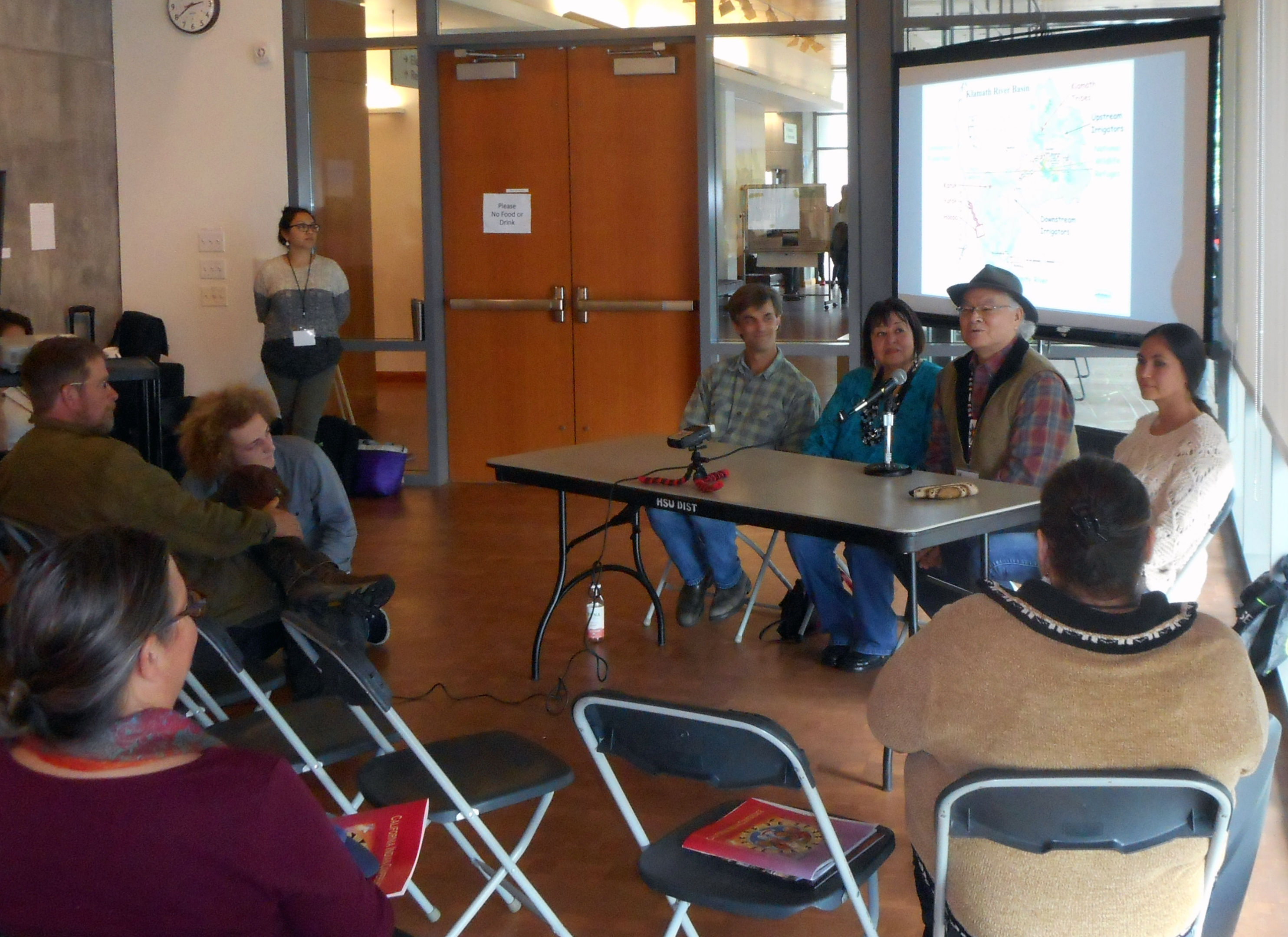
    The We Are the River: Connecting River Health to Community Health panel met to discuss the state of the Klamath River, and the communities whose lives are tied to the health of the river.

    The discussion was held in the Goudi’ni Gallery at Humboldt State during the 32nd Annual California Indian Conference on April 6.

    Dale Ann Sherman, a Yurok Tribe member and retired HSU professor of Native American Studies, was one of the four panelists.

    “I come from the Klamath and Smith Rivers. I belong to those rivers,” Dale Ann Sherman said. “In our blood runs the rivers and with that blood runs the salmon. We were born to go through time together. The salmon and us.”

    There were four panelists for the We Are the River: Connecting River Health to Community Health discussion: Dale Ann Sherman, Louise McCovey, Marlon Sherman and Konrad Fisher.

    Marlon Sherman is a Lakota tribal member, as well as the HSU department chair of Native American Studies.

    “The people on the Klamath River depend upon the salmon, and other fish,” Marlon Sherman said. “That’s their sustenance and their livelihood. That’s their spirituality. It is what their ceremonies are based on. Everything flows around the salmon, and if those salmon don’t have sufficient water, they will not come back any more. It is fairly obvious.”

    The salmon are at their lowest all time in returns due to problems with the river itself.

    “Dams, diversions and pollution sums up what is wrong with the river,” Fisher said.

    Fisher is a water protector who described the factors plaguing the Klamath River.

    “Dams are the biggest source of blue-green toxic algae build up, nasty stuff that will make humans very sick,” Fisher said. “Naturally occurring toxic blue-green algae production is dramatically elevated by dam water restriction. Some of the highest levels [of blue-green algae toxicity] ever recorded on Earth were collected behind the dams on the Klamath River.”

    A few years ago, a decades-long lawsuit by the Klamath tribes of the upper Klamath River went to the United States Supreme Court.

    “They finally were able to get the U.S. Supreme Court to realize that they had water rights to the Klamath River based on as far back as what they called time immemorial,” Marlon Sherman said.

    “Something exciting is happening very soon,” Fisher said. “We are on track for dam removal. Maybe not quite 2020, but 2021. Let’s continue to be hopeful.”

    “The [Klamath River Renewal Corporation] is the entity that will essentially take ownership of the dams, and take them out. Go to one of their meetings if you can. It is on their website,” Fisher said.

    “The salmon right now are at their bottom ebb. What they need now is plenty of clean, cold water,” Marlon Sherman said. “Water allocation is what the salmon need right now. This needs to be approached right now before the salmon are all gone. When the salmon go, who knows what’s next?”

    Water allocation rights and diversions are Fisher’s specialty, and water in the Trinity River that would run into the Klamath River is currently being diverted.

    “Water laws say there is a certain amount of water that should be left in the streams to meet certain needs,” Fisher said. “By and large they [the government] don’t [do their job] unless they are being forced, especially when it comes to telling people to use less water,” Fisher said.

    The needs of the communities most affected by the destruction of the Klamath have gone unheard.

    “The local laws of the people who have always lived there, and know the river, are never acknowledged,” Marlon Sherman said.

    “Ceremony is law. Culture is law. Very few people recognize that fact,” Marlon Sherman said. “The tribal attorneys need to be paying more attention to the tribal imperatives of spirituality, culture and tribal knowledges of their indigenous localities.”

    “Our people are fix-the-world people, that is what we do in our ceremonies,” McCovey said.

    McCovey is the Yurok Tribe environmental director and HSU environmental science alumnus who was on the panel.

    “There has been a rash of suicides in our community,” McCovey said. “For me in my job, I try to eliminate the environmental threats so that people can maintain their identity as river people, and feel safe in it.”

  • Jacks top Western Oregon

    By | Keaundrey Clark

    Football was alive and well Saturday night as the Humboldt State Lumberjacks defeated Western Oregon 42-32.

    It was the arm of Senior Quarterback Robert Webber and the legs of all-American running back that helped lead the jacks to victory as they both scores three touchdowns on the night.

    This win tied the all-time series 5-5. The Jacks are winners of 5 out of the last 6.

    The Jacks are now 6-1 and will go to British Columbia as they face Simon Fraser next Saturday.

  • Show Spirit, Support Awareness

    Show Spirit, Support Awareness

    By | Andre Hascall

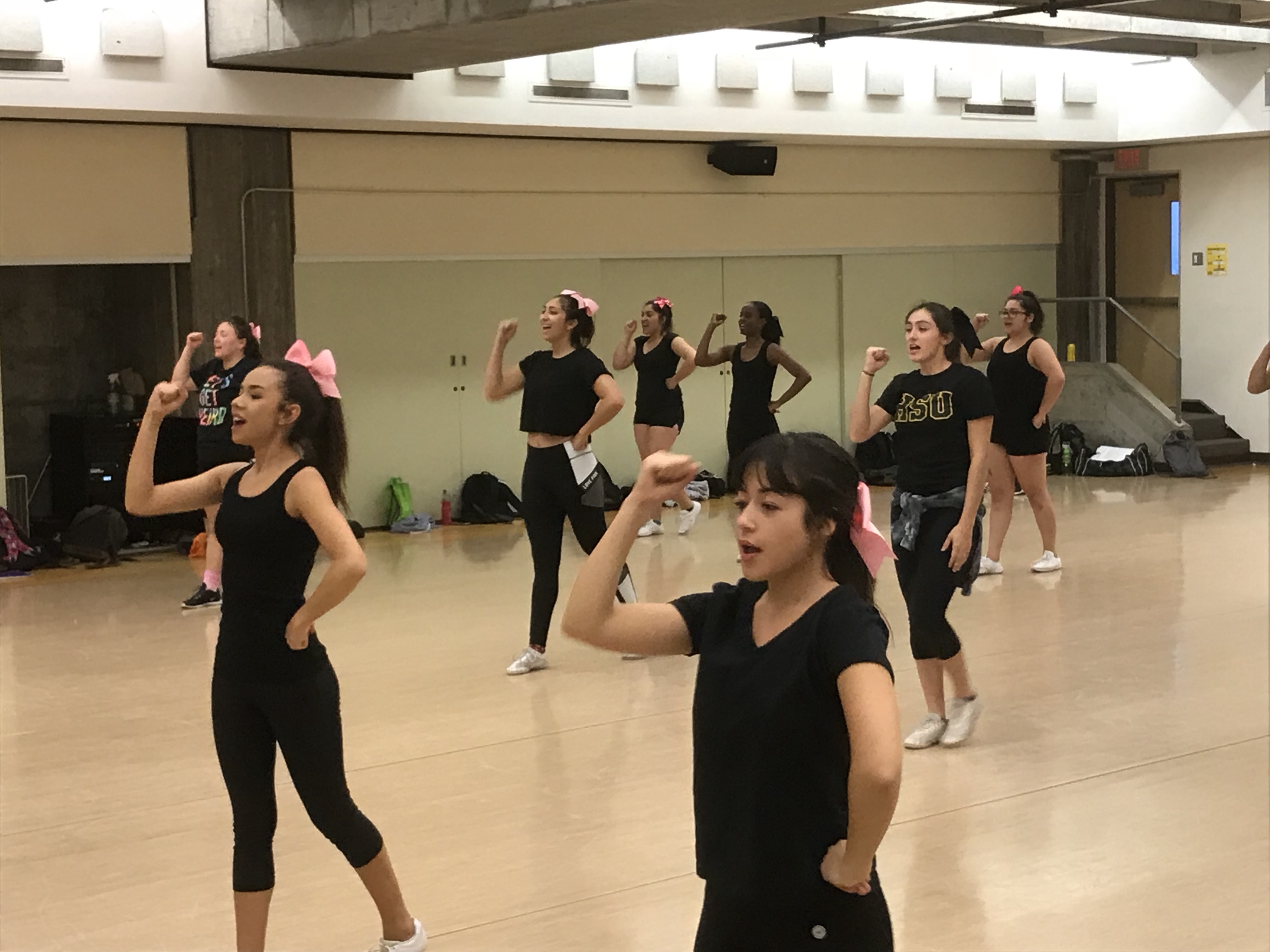
    Football highlights one month of the year to bring awareness to Breast Cancer. Every year the athletes on the cheer and football teams gear up with pink in October.

    Western Oregon comes to town to battle Humboldt, on the 21st. And as a special treat at halftime, the Lumberjack cheer squad is planning a Breast Cancer awareness performance.

    One cheer coach, Teron Schaeffer, emphasized that everyone is welcome to participate.

    AHCheerBCA3.JPG
    Photo credit: Andre Hascall

    “We want to fill the field,” Schaeffer said. “We want a lot of people to flood the field and make it as big as possible.”

    Anyone interested in participating is welcome to come practice a few easy dance moves on three days preceding the 21st. Those days are on the 16th, 19th and the 20th.

    Schaeffer went on to say that bows will be sold the week preceding the game. You will even be able to find them at the tailgate before the game.

    This is a great way to bring the campus together more with the power of spirit. Breast Cancer awareness month is more sentimental for some. That’s true for the Cheer Teams Stephanie Rodriguez.

    AHCheerBCA2.jpg
    Photo credit: Andre Hascall

    “My mom was diagnosed before I came up to Humboldt,” Rodriguez said. “Being 12 hours away from home, having the support of the school and team is heartwarming.”

    Head coach, Isabel Quintero is the mind behind the performance.

    “I did this for my High School, and a lot of NFL teams do it too,” Quintero said. “We get the chance to bring the entire school together and promote awareness.”

  • Rising Tides

    Rising Tides

    Transitioning into college as a freshman can be tough, especially if you are new to the surrounding area. Place-based learning communities at Humboldt State University strive to ease this transition by providing social and academic aid for incoming science students.

    A new place-based learning experience is expected to take off in the fall semester of 2018 and will be available to Marine Biology and Oceanography freshmen. The Rising Tides program will be overseen by HSU Botany professor, Frank Shaughnessy.

    Two communities already implemented on campus include Klamath Connection and Stars to Rocks.

    Shaughnessy has been involved with Klamath Connection since its beginning in 2015 and says it served as a model for the following place-based communities on campus.

    With only 14 percent of incoming HSU freshmen being local, many struggle to adapt and settle into the new environment away from home. Shaugnessy says through place-based learning, freshmen build connections before their semester even begins and learn to “survive and adapt.”

    As part of a place-based learning community, students can choose to live with other freshmen in the program who share similar interests as them. Students also collaborate on a year-long linked project.

    Shaughnessy says the main reasons for student success in Klamath Connection and Stars to Rocks has been the social peer support system these programs help set up.

    The new Rising Tides program will focus on exploration of marine life and science in the outer coast Trinidad and compare it to that of the inner coast of Humboldt Bay through field study. The program also includes explorations of Native American life in these areas.

    Currently, the program has close to 20 faculty and staff members on board and is working on developing close working relationships with the Wiyot and Yurok tribes of Humboldt County, as well as the Trinidad Rancheria.

    Approximately 50 students are expected to take part in Rising Tides in the fall of 2018. The program begins with a 5-day summer immersion before the semester and introduces freshmen to fellow students, professors and faculty on campus.

    Despite the programs being science-oriented, they are cross-disciplinary and implemented in students’ classes outside the science field.

    Two more project-based learning communities are planned to roll out within a couple years.


  • Jacks split weekend at College Creek Field

    Jacks split weekend at College Creek Field

    By | Keaundrey Clark

    Humboldt State’s women’s soccer team had an up and down weekend at home, as the team split a pair of conference games.

    Humboldt State’s women’s soccer team captured its first victory and points against Chico State since 2012 with a 2-1 win on Friday afternoon, at College Creek Field.

    “Everybody that went into the game impacted it in a very positive way,” said HSU Head Coach Paul Karver. “It felt like every time we made subs we were able to come at them in waves.”

    Jenkins led the Jacks with seven shots, three on goal, and one goal this weekend.

    HSU keeper Katelin Talbert made eight saves on the weekend.

    Sunday afternoon at home, they fell to the visiting Stanislaus State Warriors by the final score of 2-0.

    The Jacks record now stands at 5-4-1, 1-3-1 in conference.

    The team will now turn its attention to a pair of CCAA matchups next weekend, Friday at Cal Poly Pomona at 12:30 p.m. and Sunday at Cal State San Bernardino at 2 p.m.

  • Jacks Pass

    Jacks Pass

    By Keaundrey Clark

    Women’s Soccer

    Humboldt State improved its record to 4-3-1 with a dominant victory in Sunday’s 4-0 win over Benedictine at Mesa.

    “I think that Benedictine was well-organized and came out high energy, and our girls did a really good job of absorbing that energy by possessing the ball,” said Head Coach Paul Karver.

    Erin Siegal, Jacquelyn Dompier, Rose Harman and Lindsay Stoner all scored for the Jacks.

    The Jacks will return to CCAA action against Chico State at home on Friday at 12:30 p.m. and follow that with a Sunday, 11:30 a.m. contest versus Stanislaus State also at College Creek Field.

    IMG-0653.JPG

    Men’s Soccer

    Humboldt State improved to 6-1 with a late penalty kick from Mumbi Kwesele to defeat Sonoma State Seawolves 3-2, at College Creek field Sunday afternoon.

    Freshman Ethan Waters put the Jacks up 2-0 with two goals before the five minute mark.

    The team, now 3-0 in conference play, will next turn its attention to home contests this weekend with Chico State, Friday at 3 p.m., and Stanislaus State, Sunday at 2 p.m.

    Webber Run SFU 17.jpg
    Robbert Webber Running versus Simon Frazier. | Thomas Allie

    Football

    The Jacks overcame a 21 point deficit to beat Western Oregon in overtime, 49-48. Senior running back, Ja’quan Gardner finished with 25 carries for 176-yards and two rushing touchdowns. Quarterback, Robert Webber, the reigning GNAC Offensive Player of the Week, passed for 334-yards, five touchdowns. Junior receiver, John Todd, led Humboldt State receivers with 225 yards on seven catches and had three touchdowns in the teams 49-48 overtime win at Western Oregon. His 90-yard touchdown reception is the second longest play in school history. Todd’s 225 receiving yards is the second-best single game performance in HSU history. For the third consecutive week, a Humboldt State football player earned Great Northwest Athletic Conference Offensive Player of the Week honors. John Todd received this week’s award winner after leading the Lumberjacks to a come-from-behind victory. Three weeks into the 2017 campaign Todd ranks second in the GNAC averaging 113.7 receiving yards per game.


  • International Friendly Game Shows the Lumberjacks Potential for the Upcoming Season

    International Friendly Game Shows the Lumberjacks Potential for the Upcoming Season

    Video by Sarahi Apaez.

    The Lumberjacks go big for its only preseason 2017 home game against international team Cetys University from Mexico. Cetys arrived to Humboldt County Thursday, August 31, and shared the Lumberjack’s practice field in preparation for Saturday’s game at 6 p.m. game at the Redwood Bowl.

    The game started with a 94-yard kickoff return by running back, Jaquan Gardner promptly followed by two other touchdowns by Gardner in the first quarter.

    “It was a good start to the game,” Gardner said, “a good way to build momentum for the team.”

    Offensively, the Lumberjacks showed its upcoming competition what it is made of. The team put up a total of 83 points on the board by the end of the game. Eight touchdowns were scored by: JaQuan Gardner, Malcolm Hale, Edwin Campbell, Kaleo Garrigan, and Jabar Byrd before Cetys scored its first touchdown with only seconds left in the 2nd quarter.

    Malcolm Hale, a transfer player from Contra Costa College, had two receiving touchdowns for a total of 157 yards in the first half of the game.

    “I am just happy to be a Jack, to be able to score and be able to win for my team,” Hale said. “Whatever it takes, I am going to do it.”

    As well as offense scoring, the defense put several points on the board. Senior, Edwin Campbell from San Jose, California started with the first big hit of the game. And with 10 minutes left in the 2nd quarter, Campbell intercepted the ball and ran it back for a touchdown.

    “It felt great,” Campbell said, “it felt like a movie, to be honest.”

    Senior, Ryan McKenzie, also from San Jose can relate to his teammate’s enthusiastic play overview. McKenzie went in for a big hit in the 2nd half of the game and also had a 48-yard interception return.

    “When you make big plays like that and can score off the turnovers,” McKenzie said. “It gives a good spark for the team.”

    Now although the Lumberjacks defense made big plays and overall held a high number on the board, first year defensive coordinator Barry Sacks gave us his opinion about where to go from here for the first official season game on the road against Azusa Pacific next Saturday, September 9.

    “I thought we were good, sound, and solid in a lot of situations,” Sacks said. “A little sloppy at times in the second half, but I think it is a great start. We want to make sure we improve as much as we can before next week.”

    The Lumberjacks displayed its potential and had its fans chanting every other minute. The players are ready for another blowout, and the coaches are ready for another smart, well-played game.

    “We are just ready to prepare for Azusa,” Gardner said. “I think we’ll be alright.”

  • California State University enforces system-wide smoking ban on every campus in California

    California State University enforces system-wide smoking ban on every campus in California

    By|Robert Brown

    Beginning with a letter originally issued by CSU President Mark Yudof in 2012 and ending with an executive order, the university system adopted the new policy. Each campus president is being asked to comply with the system-wide policy and create a smoke-free campus by creating a task force, including a student representative that will serve on the Smoke and Tobacco-Free Policy Task Force to ensure the campus is moving forward. Over 1,500 other colleges and universities nationwide have already gone smoke and tobacco free.

    image.jpeg
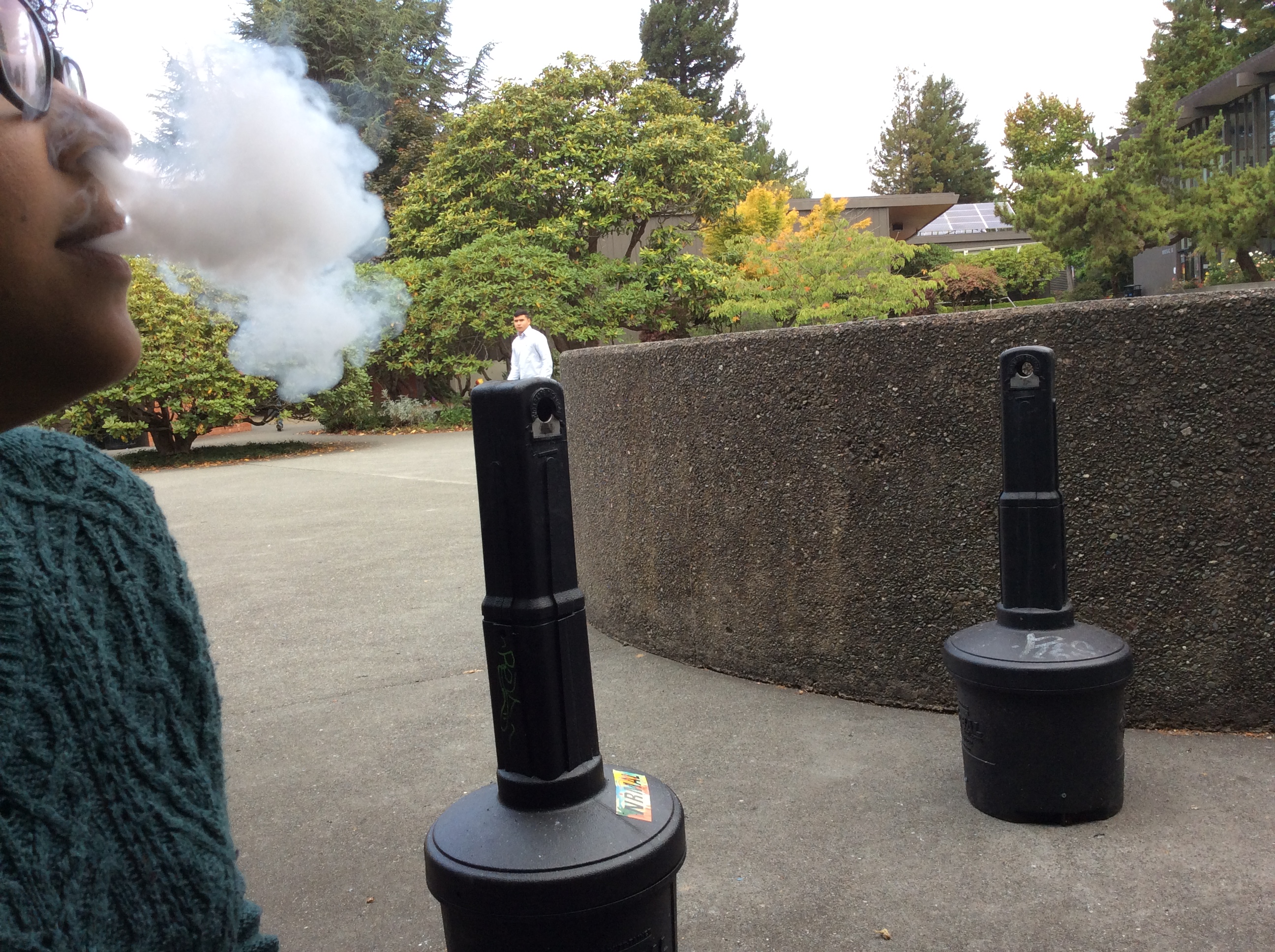
    A designated smoking area on HSU campus.

    Kim Comet, HSU Director of Risk Management and Safety Services, said the smoke and tobacco free policy is per executive order from the Chancellor’s Office.

    “It applies to all CSU campuses,” Comet said. “Smoking has to occur off of campus.”

    The U.S. Department of Health and Human Services created the Tobacco-Free College Campus Initiative (TFCCI) to promote and support the adoption and implementation of tobacco-free policies at universities, colleges and other institutions of higher learning across the United States. Enforcement of the new policy will be primarily focused on educational campaigns, outreach programs and the promotion of tobacco treatment options, including resources and referrals for quitting.

    “We will mostly be dealing with the policy in the form of education and monitoring,” Chief of University Police Donn Peterson said.

    “We will not be the smoking police and will likely refer cases to the appropriate authorities for administrative action once the ban takes place after September 1,” Peterson said, “maps located online and all around campus can be quickly referenced to determine campus boundaries.”

    According to the Center for Disease Control, tobacco use is the leading preventable cause of death and is responsible for 443,000 deaths per year in the United States, with an estimated 49,000 deaths annually due to secondhand smoke exposure.

    HSU Director of Housing and Residence Life Steve St. Onge said, in regards to smoking in the residence halls, the school has never allowed smoking in any campus housing facility.

    “What has changed is that the smoking gazebos, which had been designated as smoking areas are no longer available for students, faculty or staff to use as designated campus smoking areas,” St. Onge said.

    Students have voiced concern over the amount of trash and litter that could increase due to the smoking ban, saying students will not quit smoking and will more than likely resort to becoming sneaky, trying to hide and smoke, which will lead to cigarette butts being thrown on the ground instead of in proper receptacles. Also, the lack of a safe environment on campus to smoke may cause students to walk off campus and put themselves at risk of violence or assault.

    HSU student Elena Rios said you can’t force people to stop a habit they have had for awhile.

    “As a smoker, you are bombarded with why smoking is bad. People do it all the time, they try to get you to quit,” Rios said. “They tell you reasons why you should quit. It’s your life and you should be able to make your own choices. It’s a civil liberty. I think it’s funny to ban smoking outside.”

    According to the CSU website, a cornerstone of the California State University and higher education is the principle of one’s individual freedom to learn, teach, work, think, and take part in their intellectual and career endeavors in a fulfilling, rewarding, safe and healthy environment.

    “I can understand banning smoking in certain areas,” HSU student Alex Pickering said, “if they gave us another solution or something. Just give us another area to smoke.”


  • Osher Lifelong Learning Institute holds fall open house

    Osher Lifelong Learning Institute holds fall open house

    By | Robert Brown

    When California businessman and philanthropist Bernard Osher founded the Bernard Osher Foundation of San Francisco in 1977 he created more than just a place for people to learn, he created a community. During Saturday’s open house, people from all over Humboldt were invited to come see what classes are being offered this semester and meet the teachers and staff at OLLI.image.jpeg

    “After Osher attended his 50 year high school reunion, he said there were two types of people in the room, one type that is waiting to die, and the other type who are learning new things and starting new lives and building new interests.” said Sheila Rocker-Heppe, Director of OLLI.

    With over 120 OLLI’s nationwide, it is the largest continuing education organization in the United States. Every OLLI is created differently based upon its location and the interests of the people in the community. All classes are specially designed short courses with no exams or grades, with subjects varying from religion and genealogy to bridge and dance.

    “We have moved way beyond the expectation that anyone had for continuing education,” Rocker-Heppe said.

    Some classes take place in a traditional classroom setting, but others explore different areas of the community and beyond to teach classes such as kayaking, history or geology. OLLI programs are structured with a learning component in mind. When a person takes a yoga class, they learn the history and vocabulary of yoga as well as the movements.

    image.jpeg

    “When we first started OLLI, the planning grant, which is judged by attendance, didn’t think we would have 500 members to maintain a lifelong learning institute,” Rocker-Heppe said. “We surpassed that number and signed up 1300 members our first year, and have maintained that number for the last 8 years.”

    There is a solid connection between OLLI and their communities, in particular Humboldt State University. The people who attend and teach at OLLI are a vibrant, excited and energetic group of people with an age range of 50 to 95 years old. A number of retired faculty from HSU and the Cal State system teach classes, continuing with their passion to teach and serving the community.

    “I think that really shows the interested and the interesting people that are a part of OLLI,” Rocker-Heppe said.

    OLLI relies on $35 annual membership costs and donations from the Friends of OLLI, who are also members. Donations allow OLLI to stretch into new areas and offer scholarships to offer extended educations to all people in the community, regardless of income.

    “Many of the teachers at OLLI have donated their salaries to provide scholarships for others to attend classes,” Rocker-Heppe said.

    Courses are usually between two and six weeks long and there are over 100 courses to choose from. OLLI members also receive a 20% discount on select Center Arts events. Every Monday OLLI offers a free presentation to anyone in the community that is primarily focused on teaching people some of the local business origin stories, “how to” courses such as how to create a will, or just cut loose and share ghost stories.

    Many members volunteer their time and talents to create an atmosphere that feels truly enriching. OLLI is always looking for volunteers and there are several ways to help, by joining the OLLI advisory committee or the OLLI curriculum committee, by becoming a classroom assistant, or start a Special Interest Group. Call 826-5880 for more information.