So many pro-Trump bootlicking racists think that Insane Clown Posse (ICP), formed by Shaggy 2 Dope and Violent J, is a band that speaks to their ideology and stands for the same beliefs. Some people perceive fans of ICP to be synonymous with white rural racists in this country. However, Juggalos—a term of endearment among fans, akin to Taylor Swift fans being called Swifties—and ICP have always preached inclusivity and freedom of expression.
ICP is against racism, sexism, homophobia, transphobia and the destruction of civil rights. They even sat down with Chris Hansen to talk about their mutual hatred for sexual predators. Who wouldn’t want to hang out with Chris Hansen?
They have fought for years to be seen and heard as valid, especially when the FBI labeled them as a violent gang. Juggalos come from all walks of life, from poor to rich, from all religions and backgrounds. If you are a Juggalo, you’re family.
A self proclaimed Juggalo attacked a gay bar in 2006. In response, ICP’s manager Alex Abbiss said, “It’s quite obvious that this guy had no clue what being a Juggalo is all about. If anyone knows anything at all about ICP, then you know that they have never, ever been down or will be down with any racist or bigotry bullshit. In my opinion, the perpetrator of this crime committed these acts not because he was a Juggalo, but because he was a neo-Nazi. He subscribed to an ideology of racism and bigotry, and was quite clearly, in my opinion, out of his mind.”
While they aren’t full-on political, they are vocal in what they hate and what they do to people they don’t like. In their 2015 song “Confederate Flag,” they really let people know their thoughts on the rebel flag and the people who wear it.
I say fuck your rebel flag/ Out here pretending like you ain’t offendin’/ I say fuck your rebel flag/ You redneck judges with racist grudges/ I say fuck your rebel flag/ If you gotta tattoo, I’m aimin’ at you/I say fuck your rebel flag/You get punched in your faces reppin’ the racists
Even before that, in the 1990s, they were singing:
The country we live in was built by slaves/ Beat down and murdered and stuffed in their graves/ You put a slave owner on the one dollar bill/ And you want to know why I KILL PEOPLE!
ICP took to selling a new batch of t-shirts in 2020 that were originally sold in the early ‘90s. It’s a Juggalo tearing and burning a Confederate flag with the words “Fuck Your Rebel Flag” on the back. They brought it back from the demands of their fans from the devastating events in 2020 with the killings of George Floyd, Ahmaud Arbery, Breonna Taylor and many others. Wearing it pisses off the right people and makes for great conversations with those that love ICP and those that love burning the rebel flag.
While hip-hop/horrorcore mosh pit energy music might bit much for a lot of people, you have to admit putting out music that screams what they think so loudly is pretty cool. Maybe you’ve thought about some of ICP’s lyrics in your head and agreed with them but would never say it out loud. Maybe you’ve thought about picking up a heavy object and just so happening to swing it near a known sexual predator.
I think the world could do with a little ICP in their lives. They are inclusive, body-positive, and LGBTQ+ safe. They don’t care about your bank balance and they stick up for all Juggalos no matter their background. Check out wikiHow’s How to Be a Juggalo: 12 Steps for more information.
Two Humboldt State University Students are Suspended from Campus Organizations
A video depicting three Humboldt State University students using the N-word multiple times and bullying a student’s skin was posted to Instagram. HSU’s administration released an official statement suspending two of the students from participating in their campus organizations.
The video was posted to an Instagram account run by HSU student, Victoria,“Vicky,” Ah-You. She posted the video June 3, the day it was sent to her from a friend, who preferred to remain anonymous. Ah-You stated that the video was recorded prior to her post and hesitated when originally sent it.
“I can’t reveal my source but a friend of mine sent it[the video] to me to use my platform to speak. She was too afraid to use her own platform,” Ah-You said. “I believe the video was made at the end of 2019 but it was never spoke on because people felt uncomfortable.”
Ah-You’s intention behind posting the video was to expose the behavior occurring towards people of color in Humboldt County.
“I released the video because I am tired of being silent myself and I know a lot of my brothers and sisters, Black and of color, out here at Humboldt University are afraid as well,” Ah-You said. “So I released the video to make a solid statement that we won’t stand for it no longer.”
Marley Peri, William Blohm and Vincenzo Jardino were the students shown in the racist video. Peri and Blohm participated in extracurricular activities, such as HSU Spirit Squad and the Chi Phi fraternity. Both were suspended from further participation.
After the video was posted, Peri and Blohm deleted their social media accounts after being tagged and identified as the people responsible for the racist behavior.
“If I’m being honest, I understand why the students took down their social media accounts. It caused a lot of outrage,” Ah-You said. “They received a lot of threats and I didn’t put that out there for them to receive threats. I put that out there for them to be checked. I think it was very cowardly to take down their accounts because if you’re going to make a creative video stating those racial slurs, you should be willing to stand behind it and stand on it.”
Ah-You stated that Peri posted an apology on Twitter but believes that’s not enough. Ah-You and her friends have also reached out to HSU Spirit Squad and Chi Phi fraternity but got no response from them either.
The current consequences for the students is suspension from campus activities. Ah-You believes the students deserve harsher punishment. She feels that HSU needs to do more to show their support to their students of color.
“Their actions send a statement out loud whether they know it or not. They do not stand with us in solidarity and they do not support my Black brothers and sisters out here.”
Victoria Ah-You
“If you’re asking me if I think the students should be expelled, I do,” Ah-You said. “This is not the first rodeo. I don’t know these students but I can understand a mistake but just as my Brown brothers and sisters and my Black community has to stand behind our mistakes, they need to stand behind theirs too.”
Ah-You is disappointed in HSU administration’s efforts to combat the social media post. She believes the current handling of the situation is not enough and doesn’t justify the severity of pain this video has caused the community.
“Their actions send a statement out loud whether they know it or not. They do not stand with us in solidarity and they do not support my Black brothers and sisters out here,” Ah-You said. “It’s been an ongoing issue. This video is just part of it. It’s been going on forever. I’ve been out here going on seven years and it’s just been going.”
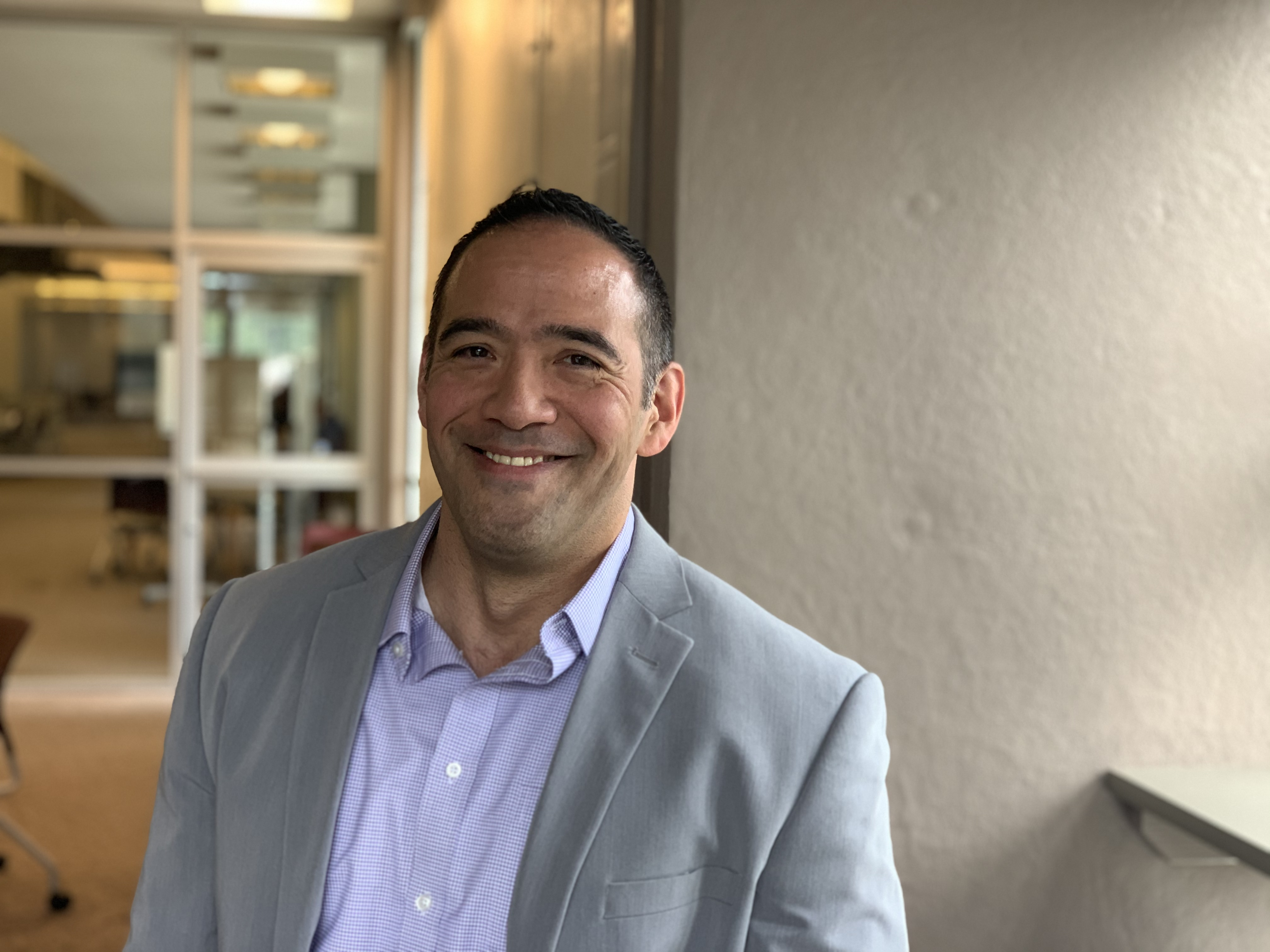
HSU Vice President of Enrollment Management Dr. Jason Meriwether commented on the issue stating that the recent response from the student body and Arcata community is acknowledged by administration especially due to the current Black Lives Matter movement happening within our country. However with the investigation still ongoing, not much can be said.
“I understand the deep sense of hurt and pain caused by racist systems, language, and behaviors,” Meriwether said in an email. “Our students and campus community feels this right now due to the current national landscape, the very real history of racism, and even more from having this happen within our campus community. I cannot address the specifics of the current investigation or ongoing conduct process beyond the statement.”
Currently, the two students remain suspended from campus organizations. Micaela Harris, an HSU student athlete, unhappy with the current consequences, organized a petition on Change.org demanding the students be expelled from school. A week after the petition was created, more than 21,000 people have signed. That’s more than double the size of HSU’s student body.
“The goal behind it[the petition] is to show HSU that this type of behavior should not ever be tolerated,” Harris said in an email. “High schools are expelling their students for doing the same thing, yet a university isn’t? Humboldt is one of the cheaper universities to go to so this means it is extremely diverse. It should be a safe place for students of color and this type of behavior should not be tolerated.”
Meriwether has confirmed that HSU administrators are aware of the petition and are taking it into account with the ongoing investigation.
HSU AS President Jeremiah Finley responded to the recent incident, acknowledging the petition and expressing his outrage and sympathy with fellow HSU students who feel the suspension is not enough of a consequence.
“I would say I’m outraged as well, and their outrage is valid,” Finley said in an email. “As the Leader of the Student union, I often try to understand the diverse opinions of our students before inserting my own, but so for me, it is clear from the outcry and petition going around that the vast majority of students will not tolerate this type of behavior here at HSU.”
Finley elaborated on the enhanced responsibility and duty of students who partake in extracurricular campus activities and organizations, stating that students are held to high standards when they choose to participate.
“Students in organizations around campus are held to a higher standard,” Finley said in an email. “From clubs to our Greek Orgs, sports teams and Associated Students. Still, these students and their situation exceed the internal workings of their organization, and the final outcome needs to be resolved at the HSU level.”
Finley believes that the responsibility of the Spirit Squad and Chi Phi fraternity is to keep their participants and members in check. Such as monitoring their behavior and attitude towards others, as it not only represents their organization and its values but HSU’s as well, both on and off campus.
“The responsibility that falls on them[HSU organizations] is not condoning it in any way, as well as ensuring that the atmosphere they have doesn’t make it possible for that type of behavior to occur,” Finley said in an email. “Finally calling out any type of microaggressions and racist remarks where they can.”
Both HSU Spirit Squad and the Chi Phi fraternity failed to respond to requests to make a comment.
The recent social media frenzy has also stirred up racial tensions happening within HSU and the Arcata community, specifically the memory of the Josiah Lawson case. Protests, public demonstrations and marches have been the community’s response to the exposure of the racist behavior.
Protesters gathered at Arcata City Hall and the plaza to speak out against police brutality and racism
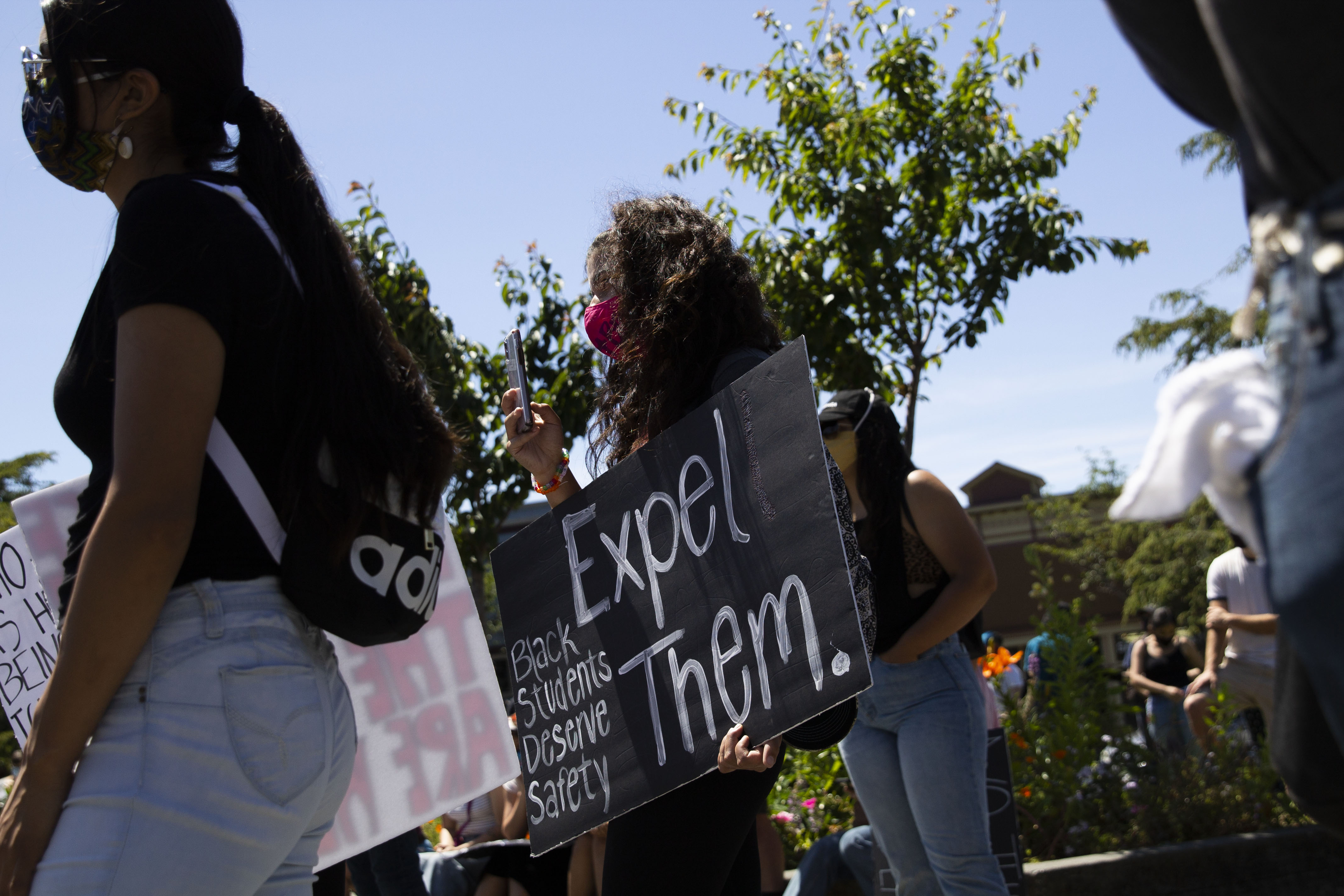
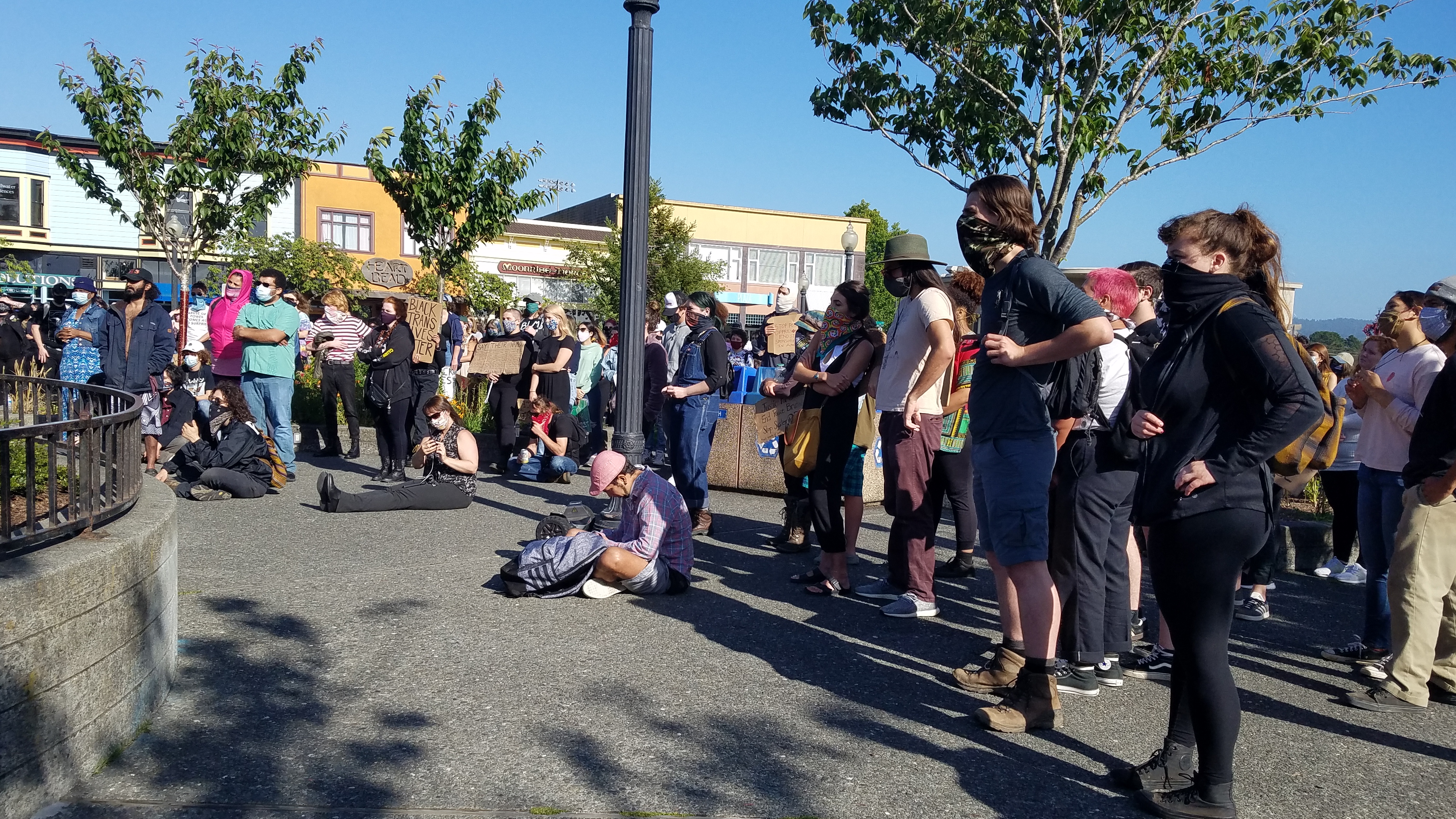
Peaceful protesters gathered in Arcata on June 1 to continue their demonstrations against police brutality and racism across the nation. People gathered around Arcata City Hall, bringing signs and wearing facemasks while listening to members of the community speak.
Demonstrators spilled off of the lawn and into the streets, taking a moment of silence in remembrance of George Floyd and Black lives that have been unfairly and unjustly taken in police custody.
A moment of silence for George Floyd outside Arcata City Hall on June 1 | Video by Thomas Lal
As demonstrators marched toward the plaza, they chanted in unison, “no justice, no peace,” which quickly became a rallying cry across the country.
Protesters marching to the Plaza, chanting “No Justice. No Peace” on June 1 | Video by Thomas Lal
There was no police present at the gathering which encouraged community members to stand up and share their stories in the center of the plaza where the President McKinley statue used to be. Community members rallied together and demanded for better education on racial issues and systemic injustices. Allies were called upon to do more than simply showing up to rallies and to exercise their rights to reinforce just advocacy.
No one person is to blame when millions of people are at risk
A cultural perception of coronavirus has been under scrutiny for people’s repeated insistence on referring to it as “Chinese virus.” This became known when a photographer shared a photo they took of Donald Trump’s script at a press conference March 19, which showed the word “corona” crossed out and replaced with “Chinese” above it.
The World Health Organization has guidelines that diseases should not be named after geographical locations, partially in response to the consequences of disease names such as Spanish flu, Rift Valley fever or Singapore virus.
These guidelines were first announced in 2015, with the reasoning that there are numerous other ways to refer to the name of a disease easily without identifying a specific place. One example is the SARS virus, which “avoided stigmatizing any place or any person. And then because of the acronym SARS, it also gave the media and everybody an easy way to refer to the disease.”
Unfortunately, even outbreaks in recent years are given names such as Ebola, which is the name of a river in Congo, or swine flu, which indirectly blames an entire species of animal.
When we call illnesses Singapore virus, Chinese virus or swine flu, it shifts the focus away from combating the outbreak and toward the myth that some place or group of people must be at fault for a problem that affects millions of people.
Those arguing in favor of naming diseases in this manner will cite its supposed “accuracy,” and push back against the suggestion that it might be racist. Senator John Cornyn defended referring to it as the Chinese virus.
“China has been the source of a lot of these viruses like SARS, like MERS and swine flu,” he said.
“We’re talking about China, where these viruses emanate from,” he later said.
Despite what Cornyn and others might claim, citing other examples of names that refer to people or places does not excuse continuing to use the same practice. Naming diseases like this serves as a means of ostracizing people.
Numerous reports of violent attacks, both verbal and physical, against Asian-Americans occurred in the past few weeks, perpetrated by those who buy into the idea that China has to serve as the scapegoat for this outbreak. Identifying one group of people to blame for a pandemic only serves as a form of fearmongering and reinforces racist ideas among Americans.
When we call illnesses Singapore virus, Chinese virus or swine flu, it shifts the focus away from combating the outbreak and toward the myth that some place or group of people must be at fault for a problem that affects millions of people.
Even if a specific source for this pandemic does exist, dwelling on that serves little purpose when the problem is this widespread. It absolves the U.S. government of much of their responsibility to protect their citizens, which they need to be held accountable for.
Violating World Health Organization policy and reinforcing outdated racist practices that should never have been practiced to begin with will not end this pandemic any sooner, nor make dealing with it any better. The only people that benefit from such ideas are those who do not understand that we are all at risk and need to be taking action, the same as everyone around us.
Mirage of safety causes mask supply to plummet and xenophobia to reemerge
The emergence of everyday people using surgical masks amidst the COVID-19 pandemic has caused mass misinformation and the perpetuation of xenophobic ideas.
Myth: Surgical masks make you immune to COVID-19
Typically found on hospital workers and sick personnel as a safety barrier, surgical masks are almost regarded as invincibility devices, protecting the body from outside pollutants and threats. The implied purpose of surgical masks is to protect patients from the secretions of a doctor’s mouth or nose during surgical procedures or to protect doctors and nurses from infected patients. Either way, a basic surgical mask prevents the exchange of bodily fluids, not air particles. Surgical masks are often mistaken as invincible shields against all viruses and bacteria.
Surgical masks show no evidence of prohibiting the inhalation or contraction of the virus that causes COVID-19. The COVID-19 virus particles are too minuscule to be stopped by a surgical mask barrier. According to the Centers for Disease Control and Prevention, “most facemasks do not effectively filter small particles from the air and do not prevent leakage around the edge of the mask when the user inhales.” In no way do surgical masks prevent or obstruct contaminated air.
While surgical face masks are virtually pointless against COVID-19, N95 filtering facepiece respirators are different. These masks are personally fitted to the face and “filter out at least 95% of very small (0.3 micron) particles, capable of filtering out bacteria and virus particles,” according to the CDC. These masks are typically worn by hospital and treatment personnel that come in direct contact with infected patients. N95 masks prevent the inhalation of micro-particles.
Truth: Surgical and N95 masks are running low
Due to the personal fitting of each N95 mask, they begin to degrade overtime depending on their usage, storage and environment. The assigned expiration date and high demand due to the current pandemic has resulted in an unexpected shortage in supply. Doctors are now reusing their masks, but they risk contamination due to degrading components affecting the protection and performance of the mask. Government administrations are requesting N95 donations as well as demanding some occupations to give up their assigned mask for medical workers.
While N95 masks are needed most, surgical masks are running low as well. Infected patients wearing masks benefit surrounding parties by limiting exposure of emitted particles into the air. The pandemic panic has misinformed the public to go buy surgical masks when patients and medical workers need them most.
Myth: DIY masks provide reliable protection
YouTube and social media platforms are advertising do-it-yourself face mask tutorials in response to the shortage in surgical mask supply. The misinformation has continued as people attempt to protect themselves with faulty protection materials. Bras and bonnets to sandals and plain cloths are being cut and trimmed to replicate surgical face masks. But, as previously mentioned, surgical face masks provide no protection against COVID-19 virus particles. Any alteration of store-bought or recycled material will have the same, if not less, protection against COVID-19 than a surgical mask.
Truth: Mask usage has reignited xenophobic ideas
Surgical masks provide zero protection from contracting COVID-19, but they have effectively reignited xenophobia. It’s completely normal for the mind to want to assign a face to an infected COVID-19 individual or picture what a threat would look like out of caution. Assuming someone wearing a face mask has the virus and extending that assumption past the mask, to their race or ethnicity, is disgusting, racist profiling. In a time of crisis, people should be exercising neighborly behavior and picking one another up, not perpetuating racist, profile-based assumptions on others in an attempt to accuse others of the chaos. It’s unproductive and invasive.
Inoue confronts the supremacist ideas within American academia
From unkind flyers to nasty messages written on bathroom walls, Humboldt State University has dealt with its fair share of acts of hatred and racism.
Asao B. Inoue, a professor and associate dean at Arizona State University, studies student writing assessment, race and racism. In a Social Justice Summit talk and an exclusive interview with The Lumberjack, Inoue pondered how a university can be anti-racist and address white supremacy.
“I was asked to come here and give a talk at a workshop, and I love doing that—it feels like an important part of the public work that I do in the academy,” Inoue said. “I help teachers think about ways to do social justice projects in their class, particularly around literacy classrooms and the grading evaluation and feedback of student literacy projects or writing.”
Inoue’s objective is to change the ways professors think about language and white language supremacy, and to start a revolution within the American grading system.
“My scholarship and research is in writing assessment and racism studies and the intersection of those two things,” Inoue said. “This [workshop] is an extension of that by trying to engage with writing faculty, English faculty and the curriculum.”
Inoue described white supremacy as a condition in which a particular group’s dialogue dominates others.
Inoue said white supremacists are often middle to upper-class people from the East Coast that attended an elite school. Inoue said these conditions collectively make up the identities of white supremacist perpetrators.
“It’s rarely, if ever, anybody else but that group of people from their particular material conditions in life that produce a certain language, which we tend to call standard or proper English,” Inoue said.
Inoue called out academia for actively perpetuating racist standards. He said the American grading system reaffirms racist ideals and practices through assigned curriculum.
Inoue said proper English can be especially problematic in academic settings.
“There’s lots of research that shows that we don’t actually agree about what that standard looks like,” Inoue said. “But I’m talking about when the rubber meets the road and you have to grade a paper based off of this, or decide whether something is consumable for the public. That’s where we start to have a lot of disagreements.”
Inoue called out academia for actively perpetuating racist standards. He said the American grading system reaffirms racist ideals and practices through assigned curriculum.
“I don’t want one to confuse me calling the system racist, with me calling people racist,” Inoue said. “[Professors] are thinking about the disciplines they have to teach and they’re not always thinking about, ‘How do I teach this?’”
One of the structural flaws within the educational system that Inoue noted was that professors fail to question the academic system and how it reaffirms practices of white language supremacy.
“It’s difficult to be critical of a system that has really benefited you,” Inoue said. “It seems like everything is working.”
Inoue said the façade of the education system being equally supportive can be convincing enough that people don’t see the flaws. Inoue said many professors inherit the practices that were inflicted upon them, and because those practices worked for them, they assume they work for others.
“It’s a fairly narrow economic and social bandwidth of people, so that means that all those practices are fairly narrow and the language practices are fairly narrow,” Inoue said. “So it doesn’t really leave a lot of room for considering differences or changes or being critical about those things.”
Editor’s note: members of The Lumberjack staff have been and are currently part of KRFH, including the current KRFH student station manager. The author of this story had no previous affiliation with KRFH, but our coverage is inevitably biased by this crossover.
Students expressed a range of emotions in response to a recent slip-up from their radio production teacher, Cliff Berkowitz.
In a conversation that followed an interview with the Times Standard for his then-upcoming election for the First District Board of Supervisors, Berkowitz said the N-word in a comment he thought was off the record.
When asked to chime in on the conversation surrounding a racist joke that had been made by his opponent in the election, Berkowitz did a Richard Pryor impersonation using the N-word—but he said the complete N-word. Berkowitz requested the reporters not print his slip-up, but they were well within their rights to do so.
In the wake of the interview, Berkowitz lost his primary election by a landslide, although it’s not clear what impact the interview had. Berkowitz issued a public apology to the press that he also read to his students.
“There are words that are so steeped in hate and racism, that they inflame our community when uttered; I am grateful to live somewhere that holds people accountable for what they say and do,” Berkowitz said. “While I did not wield that word as a weapon nor did I direct it at anyone, it does not remove the harm of saying the word. Nothing excuses what I said. There are people who have trusted me and for them this is a betrayal.”
Mikayla Moore-Bastide, first-semester KRFH student, described her experience at the station leading up to Berkowitz’s remark as a welcoming family environment.
“Whether he was on record or not, I still don’t understand why he felt he even had the right to say it anyways,” Moore-Bastide said. “Like, I’m a black person. I don’t even say it. I don’t even say the word at all. Anybody who knows me knows I don’t even say it, ’cause of the history behind it.”
Moore-Bastide intends to return for another semester of KRFH in the fall, not because she forgives Berkowitz, but because of her passion for radio.
“I don’t think I really forgive him yet,” Moore-Bastide said. “It’s gonna take a long while for me to forgive anyone who would just say the N-word around people who feel comfortable to say it.”
“If I’m being totally honest, I was super hurt.”
Delaney Duarte
Moving forward, Moore-Bastide believed Berkowitz has done all he can to repair the damage his statement caused.
“He knows what he did wrong, he knows that he hurt people, he’s not oblivious to that fact—he’s very aware,” said Moore-Bastide. “It’s one of those things where you kind of have to just put it behind you and then just kind of realize that people are probably gonna remember you for that, and you kinda have to accept it.”
Delaney Duarte, manager of KRFH’s TALX program, has been at the station for three semesters.
“If I’m being totally honest, I was super hurt,” Duarte said. “The whole day when I found out I was just like, I don’t know, I couldn’t wrap my mind around someone who I look up to so much to say that.”
Duarte wanted it to be made clear that KRFH is a student-run radio program, and that Berkowitz’s role does not go beyond instruction in the classroom.
“His apology in my opinion was just complete crap, if I’m being totally honest,” Duarte said. “It just seemed like he’s just saying sorry cause he has to. He got caught. You have to say sorry.”
Duarte expressed sympathy and concern for the African-American students in class, feeling a great deal of pain, herself, as a Latinx student.
“I wouldn’t blame them if they didn’t want to join because of that,” Duarte said. “Because, I mean, who wants to be taught by someone who doesn’t respect their students?”
It’s not just the students of color that feel uncomfortable in the classroom.
“People in our group, they’re just like really uncomfortable even going to the booth, like knowing that he’s either upstairs teaching his class, or like, his office is literally in the radio station,” Duarte said. “So it’s kinda hard to not run into him.”
“You have to take into account the perspective of the people that would potentially be offended by these kinds of statements in that regard.”
Elliott Portillo
Elliott Portillo has been a part of KRFH for three semesters, and doesn’t think this single incident should overshadow the good Berkowitz has done for students and the community.
“I think the joke was in bad taste,” Portillo said. “I think it came from more of a position of ignorance rather than of blatant hatred. I don’t think Cliff is a racist in any way, just based on the interactions he’s had with students and his passion for students.”
Portillo pointed out that his perspective should be taken with a grain of salt, as a self-described “white-washed” Mexican.
“You have to take into account the perspective of the people that would potentially be offended by these kinds of statements in that regard,” Portillo said. “But in my personal preference, I think he’s done so much that it’s hard for me to warrant lasting damage or lasting punishment.”
Duarte said students have come forward to request Berkowitz’s replacement because of an unsafe learning environment.
“As much as it hurts to say—I’ve always looked up to Cliff—but now at this point I’m kinda just bummed out and really hurt,” Duarte said. “So, I’d probably want to see a replacement. Someone who’s more respectable to our students of color.”
Entire Statement from Cliff Berkowitz:
I am writing this to formally apologize. I am truly contrite that my words caused pain or anyone to feel less than. I was wrong, it was stupid, and I should not have done it. We all commit harm, and when we do, it is only right to both apologize and work to make things better. I know I harmed people. I am sorry.
I have been asked over and over again about my opponent’s racist comment, which he has attributed to a Cheech and Chong joke. While that may be true, it is still unacceptable. I foolishly compared that to quoting Richard Pryor, trying to make the point that even quoting someone saying the wrong thing is unacceptable, and in making my example, I too said the unacceptable.
There are words that are so steeped in hate and racism, that they enflame our community when uttered; I am grateful to live somewhere that holds people accountable for what they say and do. While I did not wield that word as a weapon nor did I direct it at anyone, it does not remove the harm of saying the word. Nothing excuses what I said. There are people who have trusted me and for them this is a betrayal.
I have spent the past decades of my life trying to facilitate conversations that include rather than exclude. I have used my position to try to give voice to those who often don’t get to talk about their lived experiences. However, that is not enough. I formally, and contritely apologize. I apologize to all those hurt by my words, my friends, my family, the community, and my students. My past actions to help People of Color do not absolve me for the harm I committed. I still said that word. It is still not okay.
As I continue to reflect on how I have harmed people by saying that word, I will work towards a more just society. I will not stop activism or working to dismantle racism, and I will continue to interrogate how racist ideology has worked its way into my own mind. I will continue to work to make things better. I will uphold my promise to make sure all voices are heard and that there will be a place at the table for everyone, especially People of Color.
I am deeply grateful to those people in my life who have held me accountable and shared their personal experiences and knowledge about racism. Thank you to the community for also holding me accountable.
Bestselling author Lawrence Ross calls for more than just black best friends
The two-hour lecture started with Lawrence Ross giving his own rendition of a song centered on the N-word, originally sung by two University of Oklahoma students on a bus in 2015. The song served as an example for the hundreds of activities at universities that continue to perpetuate racism.
Ross has visited several college campuses to give his lecture on campus racism and how it takes different forms. His book, “Blackballed: The Black and White Politics of Race on America’s Campuses,” is meant to address the history of racism at colleges in the United States and to educate its readers on how to best combat it.
Ross’s book was published in 2015, when incidents of hate crimes, vandalism and enforcement of outdated values in educational institutions began rising in alarming numbers. The most infamous instance in recent years was when nooses were found in trees on the American University campus in Washington D.C. and racial slurs were found written on a dormitory door at Cabrini University.
Ross centered his discussion on stories of blackface, nooses placed in trees and songs prominently featuring the derogatory N-word, which helped convey how widespread a problem it’s become.
In research for his book, Ross identified the lack of proactivity on the part of college administrations as one of the ways campuses are complicit in racism.
“Campus racism incidents are happening on a regular base. For colleges and universities before you can be healthy, the first step is to recognize that you’re sick.”
Lawrence Ross
“A lot of the time, it’s the institution not knowing what to do,” Ross said in an exclusive interview with The Lumberjack. “So the easiest thing to do is to deal with the PR slam, wait for the four-year cohort of students to leave and then it’ll be alright. And then you’ll have another four years, do the same thing and something else will erupt.”
One of the major points in Ross’s lecture is how racism on college campuses isn’t limited to any specific areas of the country or to any parts of a school year. It happens everywhere.
“Campus racism incidents are happening on a regular base,” Ross said. “For colleges and universities before you can be healthy, the first step is to recognize that you’re sick.”
Ross explained how schools are more likely to try to minimize racist incidents and avoid bad press than they are to directly acknowledge its existence. As Ross pointed out, this procedure leads students to believe that their concerns aren’t heard and aren’t recognized. This manifests into praying for change without acting and trying to individualize systemic problems.
Ross placed responsibility on college administration to think critically about race relations and to communicate with students to achieve progress in cultivating an environment of discussion.
“Come onto campus and recognize everyone,” Ross said. “Then be able to think beyond your own sense of who you are. Pray on it, but at the same time, work on it.”
In the last five years since the book was published, Ross said over 300 campus protests against racism have occurred in the U.S. Ross believes this goes beyond exercising free speech and serves as proof that students expressing racist views do not face repercussions.
Philosopher, activist and intellectual Dr. Cornel West visiting Humboldt State University
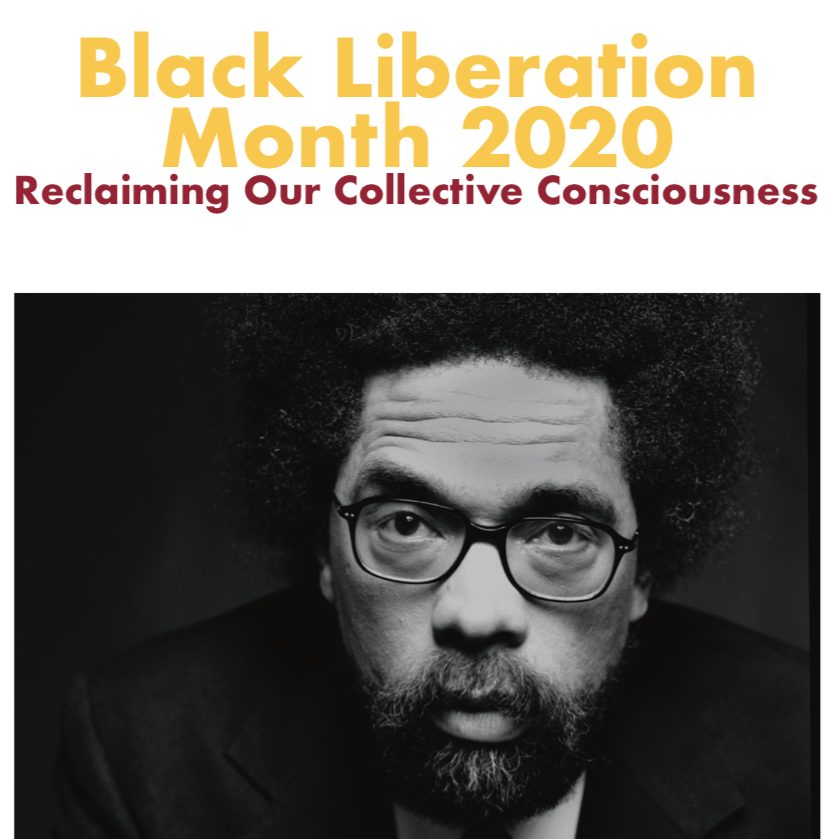
Dr. Cornel West will be at Humboldt State University Friday, Feb. 7 to celebrate Black Liberation Month as the keynote speaker of a series of events.
West advocates for race, gender and class equality. West’s social and political activism goes back to his days at John F. Kennedy high school where he marched for civil rights and protested against the lack of diversity and black studies classes offered at the school.
West went on to become class president of his high school before attending both Harvard and Princeton Universities. He is known for infusing the world with academic inference, intelligence and philosophical reflection.
The event is hosted by HSU’s African American Center for Academic Excellence and HSU Brothers United.
West’s lecture will focus on topics from his 1993 book, “Race Matters.” Doors open at 6:00 p.m. and the lecture begins at 7:00 p.m. in the Kate Buchanan Room.
The first 100 students through the door with an ID will receive a free copy of “Race Matters.” Additional copies can be found at Northtown Books at 947 H St. in Arcata.
Tickets are free and available at the University Center Ticket Office at HSU, which can be reached at (707) 826-3928.
Living in a community full of love, fear and a growing void of justice
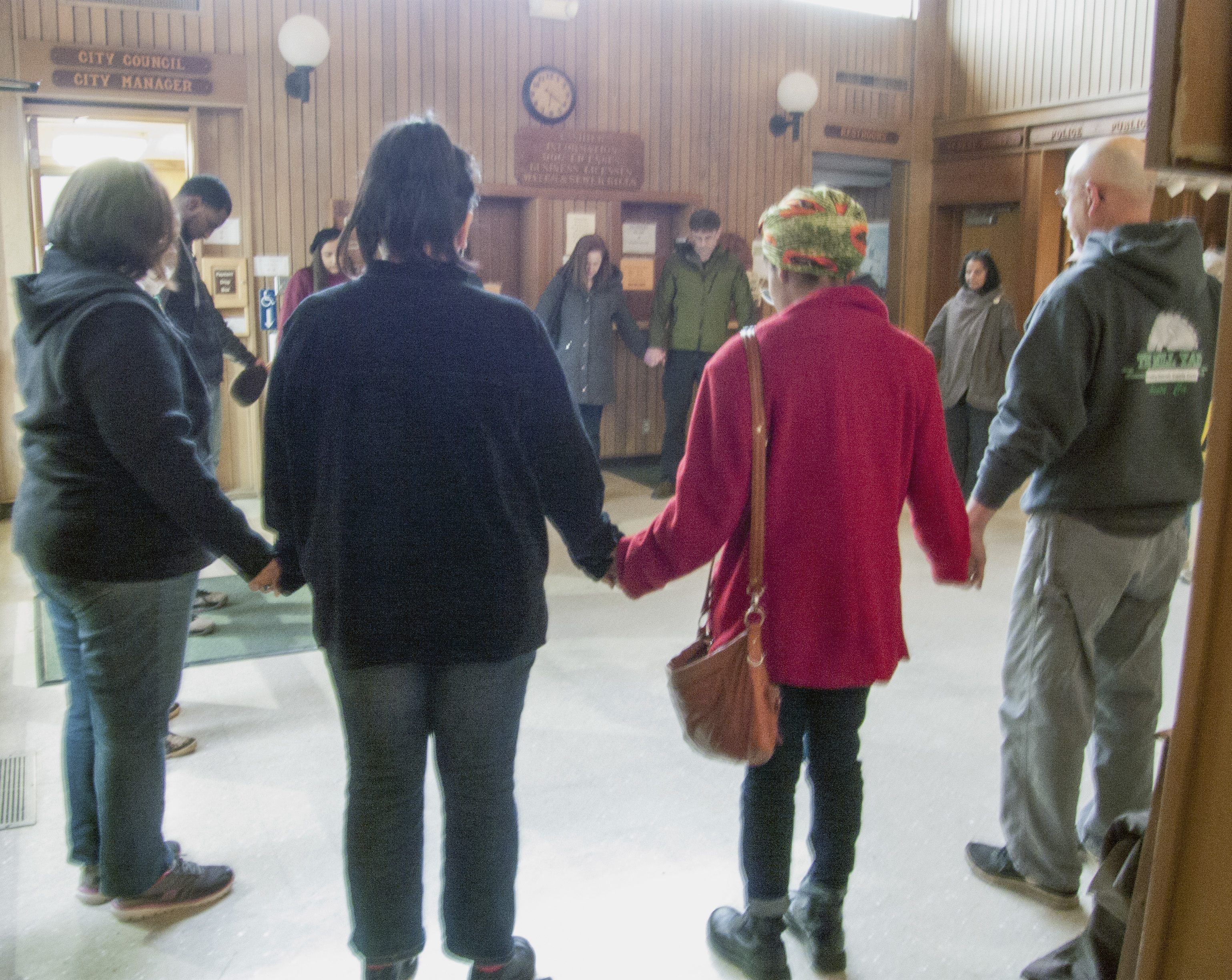
Thirty-three months after a black HSU student was murdered in the city of Arcata, a circle of family, friends, students and community members huddled together, clasped hands and shouted his name.
“Justice for David Josiah Lawson,” the group said loud and clear over and over from the steps of the Arcata City Hall. The sun had set hours ago, and a winter wind was biting at those gathered in attendance, but weather wouldn’t stop the crowd.
“The vibe itself is very upbeat considering the weather,” said attendee Andre Ramos, who wore a heavy winter coat and a beanie pulled over his ears.
Every month since the murder of David Josiah Lawson, a crowd has gathered around Charmaine Lawson, the mother of Josiah Lawson, and together they demand justice for Josiah. Lawson remains steadfast in her belief that justice will happen. She makes the journey all the way up to Humboldt from her home in Southern California to remind those in power that she will make it happen.
“It will happen,” Lawson said. “I serve a mighty god. As long as I have breath in my body I will continue to be here.”
“There are beautiful, amazing, wonderful, compassionate people here. There is love within this community, but there is evil and darkness here.”
Charmaine Lawson
To Lawson, this was an open and shut case. The original suspect, former Mckinleyville resident Kyle Christopher Zoellner, was apprehended the night of the murder. Lawson said the murder weapon was also found. She said DNA evidence should presumably solve this case.
“Why we’re still here? Dumbfounded,” Lawson said.
As the months go by, more and more students move to Humboldt to attend Humboldt State University. Yet Lawson is concerned these students don’t know the situation they’re moving into.
HSU has a much higher population of people of color than the surrounding community. Most HSU students come from Los Angeles or the Bay Area and the small-town culture of Humboldt is different from what they’re used to. Lawson wants to ensure that all students who start the next step of their lives in Humboldt make it out again, but she feels that students of color simply aren’t welcome.
“If you’re a student of color, be careful,” Lawson said. “There are beautiful, amazing, wonderful, compassionate people here. There is love within this community, but there is evil and darkness here.”
Kwame Achebe, a San Diego native, agreed. Achebe has attended every vigil since the murder, but his voice still shook when talking about what happened. He chose his words carefully but spoke with a grim humor when recounting one of his first experiences in Humboldt.
“What’s funny is in San Diego I’m pretty light skinned,” Achebe said with a laugh. “In San Diego I’d have to be convincing people I was black. I didn’t need to convince anybody here. My first day at Arcata High I was greeted as ‘the nigger,’ OK? I was greeted as ‘the nigger.’”
Achebe said his experiences in Humboldt have told him that this isn’t an aberration.
“For us not to have justice 33 months after the murder of a young black man? It’s not out of the norm at all,” Achebe said.
Achebe said the elected leaders of Arcata don’t care about what happened to Josiah Lawson, so it’s up to the people.
“I’ve been out here from the very beginning. I see the look on their faces when they’re addressing us. They have no souls in their eyes,” Achebe said. “They don’t care.”
Part of the goal of the Justice for Josiah movement is justice in the form of political change, not just for Josiah Lawson, but for the whole system. Lawson vowed to keep working to elect people who she thinks will be able to uphold justice.
“I will continue to call people in power out that are elected officials who are not doing their jobs and make sure we get people with integrity and love and compassion in seats,” Lawson said.
Over the course of the almost three-year history of this case, it has faced numerous setbacks. The case against Zoellner was dismissed in 2017. In 2019, a criminal grand jury decided not to indict anyone for the murder of Josiah Lawson, and the California Attorney General declined to take the case.
“Justice for me is having Kyle Christopher Zoellner arrested for the murder of my son David Josiah Lawson and held accountable for his actions,” Lawson said.
The history of the case shows that a system that could bring about the justice that Lawson wants is not the one Humboldt has, but Lawson is convinced it will one day. Until then, Lawson is concerned for the students of color in the here and now.
“Don’t go anywhere alone in this town,” Lawson said. “Stick together so someone can tell your story if you’re not able to.”
HSU notifications lack conviction or specific plans of action
If you’ve checked your email at all within the past couple of months, you’ve most likely read one of the several notices Humboldt State University sent to the campus in regards to incidents of vandalism, racist messages or off-campus crimes.
Just this semester, HSU notified students via email of numerous instances including racist graffiti on Dec. 7, racist vandalism in a residence hall restroom on Nov. 13, anti-Semitic flyers put up around the campus on Oct. 25 as well as on Sept. 17 with an email notification of a stabbing that happened off campus.
An HSU notification sent out Dec. 7 regarding racist graffiti found on campus.
The emails for the first three incidents listed came a day or less after the occurrence and after the police department had found and cleaned up the perpetrators’ messes. However, the notice about the off-campus crime was sent out a month after the crime itself, which was the stabbing of a student on Aug. 26. HSU seemingly weighed in to clarify because, “recent media accounts and headlines about the incident were filled with many different narratives.”
Each message HSU sends follows a general formula.
One paragraph is what the University allots for all of these incidents of crime on or near campus. They follow it up with multiple paragraphs about how the University has no place for racism or violence, and provide the usual list of resources students can take advantage of if they need support.
But aside from erasing the evidence of the crimes and repeating where students can go ad nauseam, they have never taken any direct action to combat the trend that is clearly going on.
The messages claim that the University Police Department is investigating these issues, but they have not given any further information as to what they actually plan to do to prevent any further instances of hate speech or vandalism in the future.
Students have a right to get their education at a school that strives for active protection, not just passive written defense.
Benjamin Zawilski
El Leñador reported that “the NAACP penned a letter in April of 2018 condemning HSU’s administration for failing to take an active role in addressing racism and safety concerns in the City of Arcata and Humboldt County, thus endangering the lives to whom it extends acceptance letters.”
HSU students ought to be able to trust the administration of their school to communicate with them in these situations. But the administration’s lack of vigilance and initiative extends even to direct threats to the safety of students. Last April, they took almost a full 24 hours to send a message that a student had committed assault on campus.
The administration will not show any sign of actually protecting the safety of the students like they claim to until they take real steps to improve their transparency.
Students have a right to get their education at a school that strives for active protection, not just passive written defense. The first step might be for administration to disclose crimes that have happened before they have absolutely no choice but to do so.
Retired creative writing teacher Jesse Austin supports John Packer wholeheartedly
Recently the Lumberjack has run a couple of stories about our campus UPD personnel.
Here is my opinion: I am a big fan of John Packer, UPD sergeant.
I salute him for going public with the UPD Chief’s racist remarks, and his unprofessional manner of leading the department.
I am a retired creative writing teacher and have known John on the HSU campus for 15 plus years. I have seen him in scores of interactions with students, teachers, staff and other UPD personnel and he has always carried himself in a cheerful, engaging and professional manner.
I have also taught at Sonoma State, Chico State and Reed College in Oregon and John is one of the best at his job I have ever seen.
To my mind a big part of UPD officer duties include being visible, available and educational (about the rules, laws and mores of the campus) – and John Packer is exceptional in all of these areas.
Officer John Packer recounts racist remarks from UPD Chief Donn Peterson
In August, nine of 10 University Police Department officers made votes of “no confidence” in Chief Donn Peterson. Now, UPD Sergeant John Packer has released a statement detailing some of the racist remarks made by Peterson to Packer.
In one instance, Packer was in an evaluation meeting with Peterson and UPD Lieutenant Melissa Hanson. Hanson told Packer that she and him weren’t friends and never would be. Packer didn’t know what that had to do with the evaluation, but he agreed.
Then Peterson escalated the situation, according to Packer.
“It went right from the first statement of me saying ‘I agree’ to him saying, ‘You know, John, you’re obligated to work as a slave unto his master,’” Packer said. “’And I’m like, in my head, ‘What the heck?’”
Packer said the next morning, Peterson made another comment to him while walking in the hallway.
“He says to me, ‘Hey John, I can say that because we both read the Bible,’” Packer said. “And now I’m speechless. So now you’re justifying what you said last night?”
John Packer shows his Sergeant’s badge. Packer has been a police officer for 26 years. 16 of which have been with UPD. | Photo by Deija Zavala
Earlier this month, Packer, who is the only African American officer on Peterson’s staff, wrote a statement distributed by the Statewide University Police Association detailing Peterson’s remarks.
However, Packer said before he released his statement, Peterson purposefully moved him to graveyard shift. According to Packer, sergeants have priority pick of shifts, but on Aug. 28 Packer was moved to graveyard under the guise of a Personal Improvement Plan.
Packer told the Lumberjack that the PIP listed two reasons for the shift change: compliance with university procedures and documentation, and maintaining a professional and equitable relationship with all members of the UPD team.
According to Packer, Peterson wrote on the paperwork that he suspected Packer’s “inability to perform” in the first reason was closely tied to the indifference Packer demonstrated in the second.
Packer, an HSU graduate, has lived in Humboldt for nearly 40 years. He served with the Arcata Police Department for 10 years before coming to UPD. He has been with UPD for 16 years.
After serving under seven police chiefs during his 26 years as an officer, Packer said that although he has faced racist comments from people in the workplace and some he has arrested, he has never faced such consistent racism from a superior.
Packer’s statement was released in response to statements made by Peterson in interviews with the North Coast Journal and the Times Standard. According to Packer, Peterson’s claims of misinterpretation of his statements are insulting and do not excuse his actions.
Although he has faced racist comments from people in the workplace and some he has arrested, Packer said he has never faced such consistent racism from a superior.
Packer said six to nine months after the first incident, Peterson, while frustrated, made another comment.
“He said, ‘John, you’re like dealing with the North versus the South,’” Packer said. “And I’m like, okay, I have no idea what you mean by that. I’m not going to get into that.”
Packer wrote that such remarks have only become worse over time.
“Chief Peterson has become more emboldened over the past four years, and moved from making private remarks in our meetings, to demonstrating obvious displays of racism and contempt towards me in whatever audience is available,” Packer wrote.
SUPA’s press release came almost a month after the nearly unanimous vote of no confidence, and Packer’s statement came soon after.
In the statement, UPD Officer Billy Kijsriopas accused Peterson of frequent absenteeism, manipulation of crime statistics and the creation of a hostile work environment that included racial slurs.
The statement also noted that Peterson left his previous job with Florida’s Broward County Sheriff’s Department “amid scandal.”
“Chief Peterson has become more emboldened over the past four years, and moved from making private remarks in our meetings, to demonstrating obvious displays of racism and contempt towards me in whatever audience is available.”
UPD Sergeant John Packer
According to a 2015 article from a Florida news channel, Peterson was involved in a scandal in which multiple department officials used impounded vehicles to avoid toll fees. The Broward Sheriff’s Office was eventually assigned to investigate itself and no arrests appear to have been made.
Peterson denied the recent UPD allegations last month over the phone, but said he supported the investigation as he wanted to strive for transparency.
Peterson declined to comment for this story, and instead referred The Lumberjack to HSU Director of News and Information Aileen Yoo, who then forwarded an email from Vice President for Administration and Finance Douglas Dawes.
In the email, Dawes said HSU has retained the Office of Independent Review, an independent law enforcement firm, to investigate the allegations.
“Out of respect for the process, which could take several months, I have asked Chief Peterson not to comment further until the investigation has concluded,” Dawes said.
SUPA President Jeffrey Solomon said over the phone that it wouldn’t be fair for him to comment on the investigation either, as he called it a local matter. However, Solomon acknowledged what he called “an overwhelming amount of information” that has come forward.
“I have no reason not to believe those officers and their allegations,” Solomon said.
The SUPA Facebook page shared articles from the Times Standard and Lost Coast Outpost on Friday, Nov. 8, about the vote of no confidence and the retention of the OIR.
A Humboldt State University University Police Department vehicle on Nov. 10. UPD Chief Donn Peterson is curently under investigation for the use of racist slurs, frequent absenteeism and the manipulation of crime statistics. | Photo by James Wilde
Despite the events of the last two months, Packer said the UPD office environment does not feel awkward or uncomfortable, as the department already made a vote of no confidence before Packer shared his experiences.
“It’s not awkward right now amongst the officers and dispatchers because we already knew that we had a consensus before I released my statement,” Packer said.
Packer returned to the office, and normal day shifts, after several days off on Nov. 7. It was Packer’s first time since the release of his statement.
Thus far, Packer said no words have been exchanged between him and Peterson.
“I got a nod, and you know, that’s fine,” Packer said. “But no conversations so far. Nothing negative happened.”
Packer said Peterson has always been very professional in public. However, Packer said he has begun to be critiqued through department emails.
“Included in that email will be, you know, ‘We still have divisiveness in the department and you’re still at the center of that and I need you to own the fact that you’re the center of that,’” Packer said.
Packer said Peterson has also berated him to other officers behind his back.
Packer said interviews with the OIR are coming up in a few weeks, and he hopes the investigation will examine and validate the allegations and bring them to HSU.
“They will put together a packet for the University—I assume that will go to the vice president,” Packer said. “These are the things that are inherently prohibiting this police department from functioning professionally.”
Full Statement from Sgt. John Packer:
My name is John Packer and I have served under seven Chiefs during my 26 years as a police officer in this community and currently serve as a sergeant at the University Police Department (UPD). I am the senior police officer in the department and have served under Chief Donn Peterson for approximately five years. I am the only American of African descent serving at University Police Department under Chief Peterson.
I am compelled to share my experiences after reading Chief Peterson’s statements in the October 11, 2019 online issue of the North Coast Journal and the October 14, 2019 online issue of the Times Standard. Chief Peterson claimed that “Anyone who knows me knows I don’t talk politics or religion in a professional setting or during work.”
Chief Peterson’s claim is not true. Chief Peterson claimed that “The racist remarks never happened in the way the officers say.” Chief Peterson’s claim is not true.
I firmly believe that the color of one’s skin, as with all immutable characteristics, is not a predictor of behavior or intelligence or ability, etc. While I have experienced incidents of racism and bigotry during my life, it has been my practice to disregard the ignorance expressed by the person and not carry an angry sentiment with me. I do however clearly remember the times when I have been targeted by racist and bigoted intolerance related to my race and beliefs.
I clearly remember being at a scheduled evaluation meeting with Chief Peterson and Lt Hansen. During that meeting in the Chief’s office, Chief Peterson was extremely upset to the point of using profanity directed at me. The Chief’s frustration and anger stemmed from his opinion that I did not respect Lt Hansen, that I created division at the Department and that I fail as a leader because I am not a “follower.” At the end of the meeting, Lt Hansen stated to me, “We’re not friends and we never will be, admit it.” I agreed with her statement. Chief Peterson followed with, “John you know you’re obligated to work as a slave unto his master.”
At the beginning of my next shift Chief Peterson approached me in the hallway outside the dispatch center and stated, in reference to the slavery comment he made in our meeting, “John I can say that because we both read the Bible.” I was speechless and walked away without responding to the Chief.
Over time Chief Peterson has made additional derogatory statements to me such as, “John you’re like dealing with the North verses the South,” and he excuses himself with follow up statements such as, “I’m just trying to find analogies that work with you.”
Chief Peterson has become more emboldened over the past four years, and moved from making private remarks in our meetings, to demonstrating obvious displays of racism and contempt towards me in whatever audience is available. What once only occurred behind closed doors, has now progressed to belittling statements in department meetings, and to outright derogatory statements at sergeant’s meetings.
Any claim that Chief Peterson’s analogies, historical quotes, nuances or his intent were misinterpreted by me or other officers is insulting and does not excuse the impact or justify Chief Peterson’s actions.
John Packer
Full Statement from Vice President for Administration and Finance Douglas Dawes:
As communicated to the campus community in October, the University has retained the OIR Group (Office of Independent Review) to review the allegations and complaints against Chief Peterson.
The OIR is an independent and respected law enforcement assessment firm. The University has been working with the OIR by providing information the firm needs to conduct a thorough and rigorous investigation. Out of respect for the process, which could take several months, I have asked Chief Peterson not to comment further until the investigation has concluded.
A week of open dialogue to learn about cultures within the Humboldt community
This week, Humboldt State kicks off its annual Campus & Community Dialogue on Race workshops. Starting Nov. 4 and lasting through to Nov. 8, the theme is Dismantling & Deconstructing To Build.
Lectures and workshops offer an opportunity for people to come together and have an open dialogue to learn about subcultures within the community. The workshops are open to all students, faculty and locals.
Programs cover topics such as intersectionality, racial justice, mental health, election activism and more. A wide variety of workshops are offered throughout the week and provide plenty of opportunities to participate. Workshops include an Intro to Social Justice Seminar, an overview of Critical Muslim Studies and a Dia De Los Muertos celebration that includes food and movies.
Several guest are scheduled to speak in the Kate Buchanan Room, University Center 225, during this event. Assistant Professor of Anthropology at Stockton University Nazia Kazi, Ph.D. speaks on Tuesday, Nov. 5. Director of the Center for Diversity & Inclusion at Sacramento State University John Johnson, Ph.D. speaks Thursday at 5 p.m. Professor and Associate Dean of the College of Integrative Sciences and Arts at Arizona State University Asao Inoue, Ph.D is scheduled to speak Nov. 8 at 10 a.m.
The CDOR started in 1998 as a recognition of America as a diverse society. Their mission statement fleshes out the intent of the multi-day event.
“The vision of Campus & Community Dialogue on Race is to achieve racial, social, and environmental justice,” the statement says. “The program’s mission is to promote and facilitate social and environmental change by engaging a diverse range of individuals, communities, and viewpoints to explore the impact of racism and its intersections with all forms of oppression.”
Costumes that perpetuate stereotypes of cultures and minorities aren’t funny, they’re problematic
The Halloween season provokes the competitive nature of costume shopping, but costumes that display a person’s culture, religion and tradition should remain off-limits.
Costumes based off of Native American, Latinx, Asian, Middle Eastern and African cultures are appropriation, plain and simple. Feathered headdresses, beads and tassels don’t adequately reflect the entirety of Native American culture. Just as Egyptian culture is more than gold jewelry and eyeliner. These costumes are tasteless, especially if you aren’t from the cultures you’re dressing up as.
While these are the obvious examples of appropriation, other costumes can still be offensive even if they aren’t directly ripping off a culture.
Other costumes that take advantage of different lifestyles, religions and customs include nuns, priests, inmates and military personnel.
The intentions behind a costume should be highly considered. You need to remain mindful of how you choose to display an idea to ensure you aren’t being offensive to any culture.
Cultures can’t be boiled down to a single costume, accessory or prop, so don’t wear anything that diminishes a significant part of someone’s life just for some laughs or notoriety.
The appropriation of cultures are so often portrayed in an ignorant and blind fashion that fail to value the importance and significance behind an item being used purely as an accessory. By appropriating a culture or religion with a costume you’re perpetuating ignorance and preventing the education of how to accurately respect and represent people.
Costumes that appropriate heritage and traditions pick and choose aspects of a culture purely for entertainment purposes. These ultimately cast a stereotypical image that fails to accurately reflect reality.
The transition from culture into costume disregards past movements, practices and emotions experienced by those who are being appropriated. Costumes often fail to reflect the original garments through the commercializing process, furthermore disrespecting the authenticity.
You should be able to decipher which outfits are appropriate and which are inappropriate. If not, you shouldn’t consider these ideas as viable costume options.
If you’re questioning whether or not your costume choice is offensive, put yourself into the shoes of someone who genuinely practices what you’re posing in.
Be a critical thinker. Before attending a Halloween party or heading out, check the fit. Examine your decisions, and if it feels unethical or immoral, don’t wear it. That’s it.
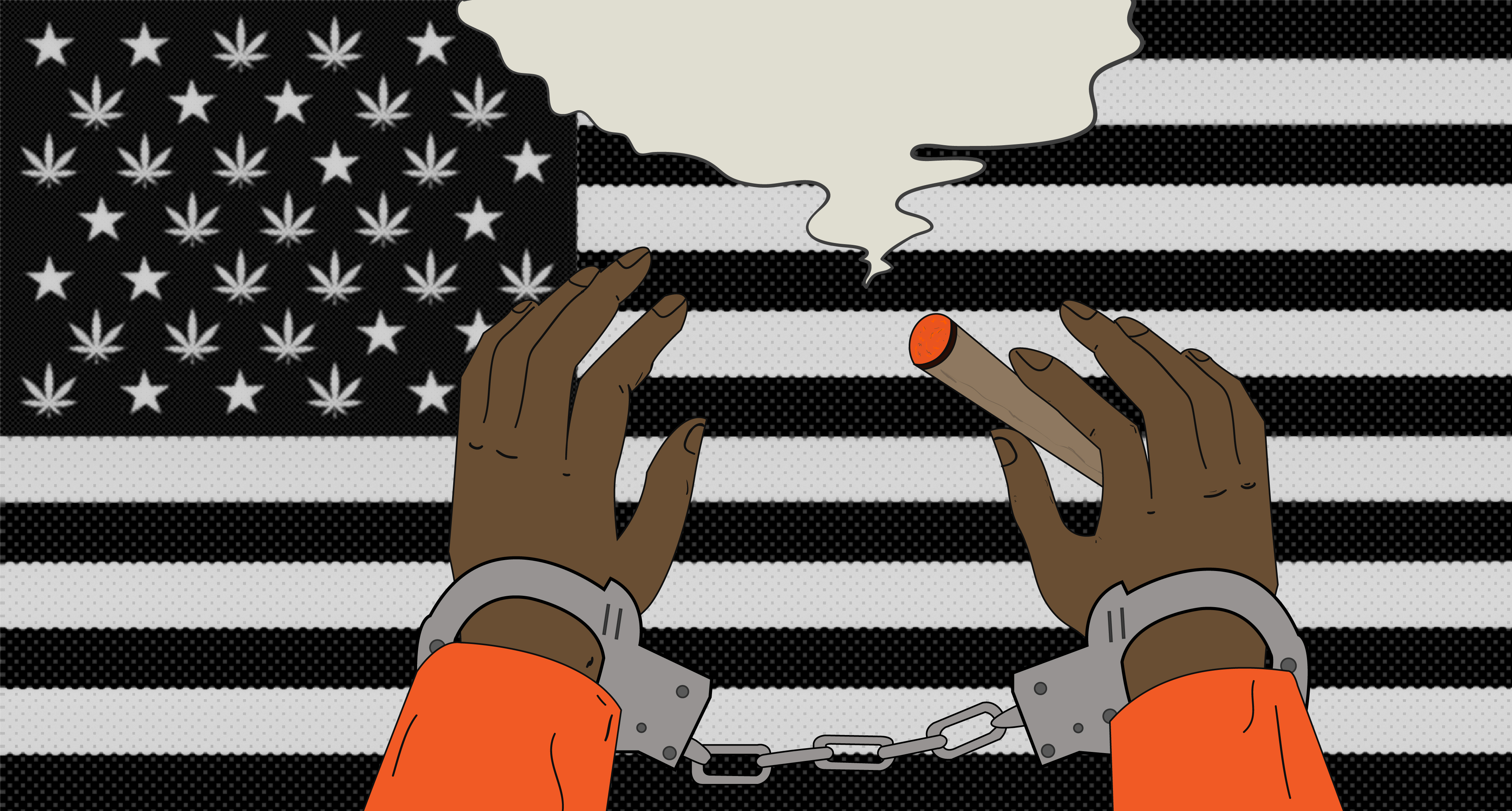
Marijuana laws are enforced unequally and minority communities bear the brunt of the consequences
Many states have voted on the legalization of marijuana, a schedule one drug, and 11 states have legalized recreational cannabis. Weed is now a large source of legal income in the U.S.
Forbes shows that the top three states where recreational marijuana is legal profited over $4 billion in 2018 on cannabis sales. But according to a 2010 study by the American Civil Liberties Union, states waste over $3 billion a year in weed-related arrests.
We believe states waste more time and taxpayer money by not legalizing and decriminalizing weed. Law enforcement often enforce weed laws unequally, with more arrests in underprivileged neighborhoods, which are often filled with people of color. According to the ACLU, black people are four times as likely than white people to be arrested for marijuana possession despite similar usage rates.
We are fed up with blatant inequality and discrimination.
In July 2016, a Minnesota police officer shot and killed black 32-year-old Philando Castile in his vehicle. The Minnesota Bureau of Criminal Apprehension investigated the case, and was told by the officer that he “feared for his life” due to the smell of marijuana and Castile’s lack of concern for the child in the vehicle. This ended in the officer’s acquittal.
While most states don’t keep data for marijuana possession by Latinx individuals, New York City’s data shows that the Latinx community has the same rate of use as black and white individuals, but recent data shows that marijuana possession is the fourth most common cause of deportation.
It’s obvious that many of those affected by these ludicrous laws are from black and brown communities. And it may be relevant to note that there is political gain to keep it this way, as many people who have been arrested for marijuana can no longer vote.
This war on drugs, specifically the war on marijuana, is a war on communities of color. Children are left without parents and people are locked up for years on minor counts. And yet, even when white people commit similar crimes the punishments are all too different.
Opioid addiction is at an all time highs in the states. It has largely affected white communities, but the amount of arrests is no where near that of other cultural communities when marijuana is involved.
If treatment and repercussions are unequal, we need to understand that the system is flawed. When one group is given more freedom to make mistakes than another, it seems that there is a hidden agenda at work to keep white communities more prosperous.
Drug laws are just one example of discriminatory regulations within the United States. Data shows that law enforcement agencies often treat people of color differently, our laws only add tension to the problem.
As of now, 10 states plus Washington D.C. have legalized recreation marijuana and an additional 20 allow medicinal use. These states should quickly look into decriminalizing the drug fully. If we take steps to free individuals locked up for minor drug possession charges and use the money saved to focus on bigger issues, then we take one major step toward reforming the country’s unjust system.
It may be a slow process, but it’s one that needs to happen now.
Pro sports is a two-sided business in need of a power redistribution
Owners of professional sports teams have made headlines the last few years for all the wrong reasons. The primary issue regards team owners treating players as property instead of as people, and a good amount of this coverage surrounds the National Basketball Association and the National Football League.
Since 2014 there have been numerous situations where owners of sports teams made racially-toned remarks concerning their athletes, who are predominately black. Simply referring to whomever controls the majority of the team as ‘owner’ can have its own racial implications in leagues where most players are people of color.
According to the NBA’s 2015 Racial and Gender Report Card and a 2014 NFL Census, 75% of NBA players and 68% of NFL athletes are black. The NBA also has the largest percentage of people of color in its fan base, whereas NFL fans are primarily white.
In 2014, The NBA forced former LA Clippers’ shareholder Donald Sterling to sell his team after a tape of him spouting racist remarks was released to TMZ. But in the NFL it seems like their majority shareholders are able to get away with more. NFL team owners were more vocal than ever this past season due to the outrage from many fans about players kneeling during the National Anthem.
While NFL contracts may seem ridiculous compared to other high-grossing sports, professional football players receive the lowest percentage of guaranteed money in their contracts. In contrast, NBA athletes make every cent of their contracts and are often considered to be involved in the daily running of the league as opposed to just their respective teams’ shareholders making all the decisions.
When it comes to the relationship between owners and their athletes, a large factor in the athlete’s treatment is how fans act. Rhetoric during the kneeling protests relayed many of the players who took a knee as unpatriotic, spoiled and privileged, with fans telling players to “shut up and play.”
Fans treat players as if they are toys for amusement instead of human beings. And team owners treat players like property that can be replaced at any moment. But when there is a media storm of fans and others calling for change like with the Clippers in 2014, progress can be made. Fans hold more power than they know and can directly affect how teams are handled and how athletes are treated.
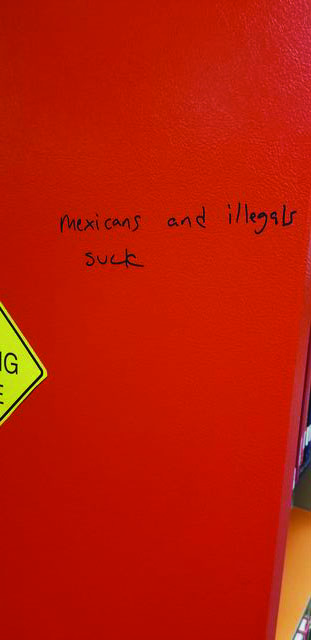
Open letter to the folks tearing down David Josiah Lawson pictures/posters, immigrant rights posters and writing hateful, racist, anti-immigrant rhetoric on whiteboards and office doors:
Maybe you are the same folks, maybe not, but my message is the same.
Ignorance does not justify or excuse hate!
Your statements about immigrants are factually incorrect. I do not intend on debating you but I am happy to share resources to help educate you and maybe then engage in some dialogue. It’s not a problem, it’s what I do… but you know this because you’ve stood in front of my office door and know what I teach. I am giving you the benefit of the doubt because it’s also what I do. At this point you have the choice of learning or remaining willfully ignorant. Take some time to think about it.
I hope that after you tore down David Josiah Lawson’s picture that you paused to see my open letter right below it, where I reflect on his passing. I hope you read it and I hope you felt a tinge of guilt for your actions, I know you are capable of empathy, most of us are. I hope that is why you left my letter up. Regardless of your intentions, your actions were hateful but I will still show you empathy and I’ll do you a solid and put the picture back up for you! It’s all good, it’s already back up.
You can learn from this moment and become a better human being or you can remain willfully ignorant, your choice. A young man has died and you tore down his picture. Think about that. Immigrants are needlessly suffering, in part due to the ignorance you parroted with your permanent marker. Dehumanizing language does not change the facts. The crazy thing is permanent markers are not permanent; your message did not stay up very long. You can tear down pictures/posters but folks will keep printing and posting. Take some time to reflect on your actions and in the meantime, we will keep putting up posters with statements like, “Everyone is Welcome Here”, “No Human Is Illegal”, “Compassion is Invincible” and my personal favorite, “Sí Se Puede!”
Lastly, for those who may feel unsafe or targeted by these hateful actions, hold strong in the fact that so many folks have your back! “They tried to bury us; they didn’t know we were seeds.”
College campuses nationwide targeted with white nationalist posters
Stickers representing the white nationalist hate group, Identity Evuropa, were found on the campus of CSU San Marcos the same week as posters reading “its okay to be white” on Humboldt State’s campus in Oct 2018. Courtesy of CSU San Marcos.
On Nov. 1, 2018 unpermitted fliers were hung throughout HSU’s campus stating “it’s okay to be white,” which were part of a nationwide recruitment effort by white nationalist groups. The incident prompted UPD to patrol the campus tearing down the fliers and looking for any of the individuals responsible. The incident went unreported by the university administration and left some students worried and confused as to what was happening.
“At that moment, all of us were on edge and upset that that was going on and we weren’t told about it until the end of the day,” said Laura Garcia, a junior majoring in social work. “I am Mexican and was pretty on edge and scared.”
Garcia gathered over 30 signatures from students who were upset over the lack of attention the incident received and submitted them along with a prepared statement to the University Senate on Nov.13, 2018. Garcia’s statement outlined the group’s frustrations about being kept in the dark about the potential danger to their lives and demands for more safe spaces for students of color.
“They didn’t do enough and they still haven’t told the students about it,” Garcia said. “I feel like we should have got an email like ones that go out when a student dies. I was waiting all that weekend to get an email but didn’t get anything. It is rude that we didn’t get anything. What if something happened?”
According to the minutes from the University Senate meeting on Nov. 13, 2018, University Police Chief Donn Peterson “reported that some fliers… had recently been posted around HSU by a person or persons who, based on their attire, are potentially white nationalist(s) or white supremacist(s).” The fliers, and the lack of university response, are yet another issue on campus where some students of color feel let down by the current administration.
“When the next group got up I realized that this is a recurring topic and issue,” Garcia said. “I knew it was an issue before with Josiah. They said it is an inclusive school, but it is not.”
According to the minutes from the senate meeting, University Senator Jeffrey Dunk, a professor of environmental science and management, acknowledged a Washington Post article that stated “the intent of the fliers is to stir up trouble and recruit white nationalists.” Despite the acknowledgement of the intent of the fliers, HSU administration still failed to notify students, unlike other universities.
Stickers representing the white nationalist hate group, Identity Evuropa, were found on the campus of CSU San Marcos the same week as posters reading “its okay to be white” on Humboldt State’s campus in Oct 2018. Courtesy of CSU San Marcos.
CSU San Marcos had similar posters spread across their campus that bore only a logo that represents Identity Evuropa; a white nationalist organization deemed by Southern Poverty Law Center as a hate group on the “forefront of the racist ‘alt-right’s’ effort to recruit white, college-aged men and transform them into the fashionable new face of white nationalism.”
Margaret Chantung, Associate Vice President of communications at San Marcos, said this wasn’t the first time racist advertisements were found on campus. Chantung said the President of San Marcos made the decision to release a statement across the campus the morning the posters were found to inform their student population of the incident, unlike HSU administration.
“This came across the heel of national events where people had the sense of ‘What is happening here?’ like two shootings of African Americans and the Tree of Life shooting and we were already going to send out a solidarity message about that,” Chantung said. “I know every campus has issues with these occurrences and we aren’t unique to this.”
Chantung said at 8 a.m. the posters were found by a staff member who then brought it up their boss and then University Police. Both the President and University Police at San Marcos felt it necessary to issue out a statement as soon as possible.
“There was a national conversation already happening about hate and bias and for us [issuing a statement] felt like the right thing to do,” Chantung said. “From our President’s perspective it was important to her to condemn the message being spread across the campus. We wanted to make sure the campus knew we condemn anything that promotes racism, antisemitism, violence, homophobia and any kind of discrimination.”
I, Skye Kimya, believe I was detained on Feb. 14 over a $40 on-campus parking ticket because of the color of my skin.
Around 8 a.m. that morning, I walked out of a building on the northeast side of campus to find two parking officers giving me a ticket for where my car was parked.
After getting into a small verbal altercation with these parking officers, I realized it wasn’t worth the argument. I asked them to give me the ticket and let me go about my day.
The parking officers were not happy with me driving off while they were still giving me my ticket, and before I knew it, Humboldt State police Chief Donn G. Peterson was pulling me over in an undercover vehicle.
Within minutes, another University Police Department vehicle arrived to the scene. I was interrogated for approximately 10 minutes by two officers on each side of my car about the incident that had just occurred. After the officers spoke with each other for a few minutes, another cop car pulled up, and UPD officer Delmar Tompkins made his way to my driver side.
“Please step out of your vehicle and put your hands behind your back,” Tompkins said.
“Excuse me? I don’t understand,” I said.
I was told I was being detained under suspicion of assault with law enforcement. After questioning this accusation, I was told I was a threat at that time and needed to be detained for the safety of the officers because they did not know the full story yet.
Confused and scared, I got out of the car, did what Tompkins asked me to do and began to cry like a baby as he placed me in the back of his cop car.
Imagine being detained and told you are a threat, under suspicion of assault, by a white officer twice your size. Imagine feeling confused and alone. Imagine questioning what could possibly happen next.
When you grow up trying to understand the purpose behind discrimination, you begin to notice how common it is and wonder if it will ever go away.
At times, you lose hope for your children’s generation. Yet other times, you want to become the greatest activist that has ever walked this planet, in order to actually make things right for those future generations.
Students at HSU don’t feel at home. We don’t feel as though there are people by our side, and we don’t see the amount of people of color around campus that the HSU pamphlets and website photos presented to us when we were deciding which university to attend.
According to HSU’s “fast facts,” the incoming class of fall 2016 consisted of 549 Hispanic/Latino students, 51 African American students, 31 Asian students, 11 American Indian students and four Pacific Islander students.
Additionally, the entire fall 2016 student body consisted of 2,869 Hispanic/Latino students, 271 African American students, 279 Asian students, 89 American Indian students and 20 Pacific Islander students.
With a student body total of 8,503, you can imagine what it is like to see only 270 other faces similar to yours on one side, and only 88 other faces similar to yours on the other side.
Hispanic and Latino students made up almost 35 percent of the entire student body that same year. Seems like a reasonable amount, right?
HSU actually receives funds from the U.S Department of Education ever since they became a Hispanic-Serving Institution at the start of the fall 2013 semester.
To become a Hispanic-Serving Institution, the university has to have an undergraduate full-time equivalent enrollment of at least 25 percent Hispanic students, and HSU was at 26.6 percent for the fall 2013 semester.
HSU continues to flaunt a great amount of diversity that it does not have. These incoming students, like many of us who were once in their shoes, attend HSU and slowly begin to witness and experience how diverse this campus and community is truly NOT.
Just the other day, the NAACP Eureka Branch called out HSU and asked them to stop recruiting students from minority-majority neighborhoods until changes are made around campus and within the community.
A majority of the students of color who have attended HSU for at least two academic years have experienced some type of discrimination, whether it was verbal, physical or emotional.
In 2013, Tompkins had a civil lawsuit filed against him by a Fieldbrook man who alleged he was the victim of a brutal assault back in January 2012. It turns out the Fieldbrook man wasn’t lying and the Cal State University system paid him $135,000 to keep him quiet.
As students of color at this university, how are we supposed to feel safe if our own UPD officers don’t do things the right way and have our back?
Cases like the murders of HSU African American students Corey Clark (2001) and David Josiah Lawson (2017) are still unsolved to this day, and we as students have not seen enough action taken by our president, UPD and even the Arcata Police Department.
Students of color do not feel safe, nor protected here. The NAACP Eureka Branch is right and something has to change before HSU tries to drag more students of color to this campus.
More than 8,000 Starbucks coffee shops will be closed on May 29 to train employees on “implicit bias,” as opposed to explicit racism, and “promote conscious inclusion,” according to their press release on April 17.
The racial bias training, scheduled for nearly 175,000 Starbucks employees, is a grand publicity stunt that will prove to be futile in the short run. When the smoke clears, and it’ll clear fast, Starbucks will be business as usual, and racism in the U.S. will be the same as it ever was.
In fairness, Starbucks CEO Kevin Johnson wasted no time in personally addressing the issue in light of the incident. Johnson ultimately put himself in the hot seat, rather than refer to a spokesperson.
President of Humboldt State University, Lisa Rossbacher, could learn something from Johnson.
Rashon Nelson and Donte Robinson were arrested at a Starbucks coffee shop in Philadelphia on April 12. The reported scenario allegedly goes like this: two black men walk into a Starbucks for a business meeting involving an ongoing real estate deal with investor Andrew Yaffe. While waiting for Yaffe to arrive, Nelson asked to use the restroom, but was denied by the manager, who is white. The manager asked if they wanted to order drinks, but they said no. The manager then called the police for assistance to remove Nelson and Robinson from the cafe for trespassing, which was promptly granted.
If you’ve been following the local news about David Josiah Lawson and Humboldt State University’s budget cuts, Rossbacher was absent during rallies and community events of critical importance this semester, including the budget cuts walkout on March 21 and the one-year vigil of Lawson’s murder on April 15.
Starbucks can implement strategies and enforce new policies, but racism will prevail in the long run. This is the America we have lived in for a long time, which is apparently accentuated in the days of the Trump administration. We can write dozens of editorials protesting racism, but in the grand scheme of things, racism is too deeply rooted in the U.S. to overcome as a nation. It’s only a matter of time before the next person of color gets arrested at a bourgeois, corporate establishment and receive the highly-ratable spotlight by the mainstream media.
At the very least, the CEO is ensuring his company is responsible for addressing the issue without delay, and Johnson himself is making the attempts to be present and accountable.
Rossbacher’s absence reduces her credibility amongst students, regardless of deans or the provost speaking on her behalf. Not just credibility, for her sake, but trust in the institution as a whole, especially for people of color. As we wrap up the spring semester, we urge Rossbacher to be more present in the future.
City of Arcata supported a Dialogue on Race forum at the D Street Neighborhood Center on March 22.
Mayor of Arcata Sofia Pereira attended the forum in hopes to create a space for the Arcata community to discuss racial discrimination.
“There’s a lot of pain in this community based on what people of color have experienced here. It’s not going to be overnight, ending that pain,” Pereira said. “The more we have a space for these conversations and concrete actions, we can take [those] as individuals and as a community. I think that can get us to place of healing.”
Pereira wanted to absorb everything that was discussed in the forum in order to get a sense of the right direction to take moving forward.
“As for the next steps, I heard the feedback for making sure that we have representation from the Arcata Police Department, along with making sure we’re inviting Humboldt State’s administration,” Pereira said.
Arcata mayor Sofia Pereira attends the monthly forum on race and public safety at the D Street Community Center on March 22. Photo by Nick Kemper.
The City of Arcata gave Pastor Roger Williams the opportunity to facilitate the discussion on race.
“I’m here because it’s a heart condition of mine, where I want to see people come together. I know it’s not easy, but it’s a passion of mine,” Williams said. “In a potentially charged environment with potentially angry people, with city hall here in the same building and in the backdrop of an unsolved murder, it went well.”
Williams said that the point of the forum gue was to make people more aware of the fact that we live in a community where racism exists. He wanted to make those unaware of it to address racism in their community.
“It’s not so much about black folk standing up and talking about race because we’ve been doing it forever,” Williams said. “It’s white folks taking some responsibility for themselves and not just not taking responsibility for being woke, but trying to wake other people. Come with an open mind and with the intent to understand [than] just reply. That’s where grassroots change happens.”
Community member Paula Jones speaks at the D Street Community Center forum on race and public safety on March 22. Photo by Nick Kemper.
Community member Erik Rydberg went to the forum, because he felt that the subject of race in this country needs to be talked about everywhere, regardless of how uncomfortable it makes people feel.
“We need to understand the construct of race,” Rydberg said. “What it means historically in this country and why it was developed by the elite ruling class in this country in order to keep a select few people in control of the apparatuses of society.”
Rydberg said this discussion matters to him, because he has experienced the injustices people of color have endured in this country, particularly in California.
“As an indigenous person, the legacy of genocide and the holocaust of the American Indian, especially here in California, is an erased history,” Rydberg said. “[It] makes people who are really proud to be American extremely uncomfortable to talk about what’s transpired here in California, as far as the colonization of my continent.”
Rydberg was one of the many people who decided to speak out at the forum. He decided to share the realities of racism, because he felt that it would be helpful to hear from an indigenous person’s point of view.
“It was infuriating to see that the Arcata Police Department did not show up,” Rydberg said. “You’re in a position of authority. You need to be the most educated on this. You’re holding people’s lives in their hands every time you put [on] that belt buckle with your gun in it, every time you hop in your car with your shotgun [or] every time you have an AR-15 with you, with the legal authority to use that force.”
Rydberg has a message for people who didn’t attend the forum.
“You can’t stand in solidarity with somebody if you don’t know anything about their culture or their people,” Rydberg said. “Authority figures need to be [the] ones packing these kinds of events to learn about the people whose lives you hold in your hands.”
David Josiah Lawson was a victim of a hate crime and has become the poster child of the racism that exists in Humboldt County. Though the Arcata Police Department has been working through the investigation using physical evidence and witness statements, the trail remains cold in the pursuit to bring justice to Lawson.
Lawson was a black 19-year-old criminal justice student at Humboldt State when he was stabbed to death at a house party in Arcata on April 15, 2017. The efforts of local authorities attempting to solve the case of his death fall short to this day. Those who spoke up after the incident hold little water in the eyes of the law due to conflicting reports of hearsay and lack of evidence. So much is against Lawson under these unfortunate circumstances.
A vigil has been held for Lawson every month since his untimely death last April. The turnout of the 11th vigil on March 15 at Arcata City Hall was lower than usual due to spring break and heavy rain, but over a dozen people participated in solidarity of Lawson nonetheless.
During the vigil, Alex Foster, a leading force in finding justice for and preserving the memory of Lawson, said mixed messages aired by the media continue to hamper with the development of the murder case.
“There’s a lot of rumors and false narratives, especially from newspapers,” Foster said. “It’s just different perspectives.”
McKinleyville resident Kyle Zoellner was arrested for allegedly stabbing Lawson, but was released by Judge Dale Reinholtsen for lack of evidence. During the preliminary hearings, contradicting testimonials by eyewitnesses include Zoellner’s physical condition when Lawson was murdered.
In a report by Mad River Union, Zoellner’s family said Lawson was stabbed to death while Kyle was unconscious due to a brutal assault. However, the Lost Coast Outpost reported Elijah Chandler, a friend of Lawson who was at the scene of the crime, witnessed Zoellner “drop something shiny on the ground” a moment after discovering someone had been stabbed. Conflicting reports such as these only muddy the waters of the case.
What students, police officers, politicians and other community members need to understand is that the murder of Lawson brings up broader issues of social injustice and public safety.
If people continue to downgrade the importance of this case or stay disinterested, then we are doing ourselves a huge disservice. We are allowing criminals to get away with hate crimes in a town that brings in innocent students year after year.
Despite some of the challenges Foster and other tenacious supporters face, the search for justice carries on.
Though the case remains open, relentless efforts are made to not only keep Lawson’s memory alive, but to spread awareness about the injustices that people of color still face in the area.
April 15 will mark the one-year anniversary of Lawson’s death. Though details for the next vigil are in the works, tentative plans include a community gathering at the Arcata Plaza and a march to the D Street Neighborhood Center. Full details will be announced on the Justice For David Josiah Lawson Facebook page.
In addition, the City of Arcata is supporting a safe space for a Community Dialogue on Race on March 22 at the D Street Neighborhood Center, located at 1301 D St. in Arcata. The meeting starts at 5:30 p.m.
This website uses cookies to improve your experience. We'll assume you're ok with this, but you can opt-out if you wish. Cookie settingsACCEPT
Privacy & Cookies Policy
Privacy Overview
This website uses cookies to improve your experience while you navigate through the website. Out of these cookies, the cookies that are categorized as necessary are stored on your browser as they are essential for the working of basic functionalities of the website. We also use third-party cookies that help us analyze and understand how you use this website. These cookies will be stored in your browser only with your consent. You also have the option to opt-out of these cookies. But opting out of some of these cookies may have an effect on your browsing experience.
Necessary cookies are absolutely essential for the website to function properly. This category only includes cookies that ensures basic functionalities and security features of the website. These cookies do not store any personal information.
Any cookies that may not be particularly necessary for the website to function and is used specifically to collect user personal data via analytics, ads, other embedded contents are termed as non-necessary cookies. It is mandatory to procure user consent prior to running these cookies on your website.