The Lumberjack


Students Serving The Cal Poly Humboldt Campus and Community Since 1929

Tag: Students

  • HSU takes back the night

    HSU takes back the night

    By Charlotte Rutigliano

    Students, faculty and members of the community came out to the Kate Buchanan Room this past Friday to show their support for survivors of sexualized violence.

    One student who came out to show support was graduate student Irene Vasquez.

    “I think it’s wonderful that the university cares about the students and is spreading awareness like this,”  Vasquez said.

    The university has been the host of the take back the night events since the mid-1980’s. Take Back the Night was co-sponsored by the North Coast Rape Crisis team and the Women’s Resource Center.

    Paula Arrowsmith-Jones, Community Outreach Coordinator for the North Coast Rape Crisis Team,  said that these events have been going on since the 1970s but have been held on and off campus since the mid-1980s.

    “Back in the 70s women were told not to go certain places at night without a male chaperone,” Arrowsmith-Jones said. “Because if something happened it fell on the women. These events were created to reclaim everyone’s right to go somewhere and not get hurt.”

    According to Arrowsmith-Jones, it’s important for the university to hold events like this because there is so much shame, secrecy and denial that surrounds sexualized violence, it’s about raising awareness for those who don’t think it happens. CFR69 - TBTN 1

    Take back the night student coordinator and graduate student Ariel Fishkin said we are living in a rape supported society, where individuals are taught that “rape culture” is okay and where victim blaming is too common.

    “I have experience with sharing,” Fishkin said. “People don’t realize that it’s a systemic thing that’s why we have these events.”

    Take Back the Night was part of a week long event to let survivors know that they are believed. The week long event took place during sexual assault awareness month.

    “Sexual violence is so prevalent,” Arrowsmith-Jones said “we want to show people affected that they are supported, we have counselors at all the events to help.”

    The university does have a lot of student activism with Check It, Peer Health Education, and the Women’s Resource Center. Fishkin hopes to continue to bring awareness to this issue as a campus to the community.  

    Sophomore zoology major Katie Marks said it is amazing that the university is doing this because she knows people who have experienced sexualized violence and she wants to be a part of the change for a world without violence.

    “Hopefully this will inspire other universities and communities to change too,” Marks said.

  • Student Strategies: Office Hours

    Student Strategies: Office Hours

    By | Onaja Waki

    There may be times when students need that extra one on one time with their professor for things like making up assignments and exams, discussing grades or getting clarity on homework or a project. These are the reasons professors offer their students office hours. Most professors and lecturers have the days and times on their syllabus. However, not all teachers abide by their assigned office hours which sometimes makes it a hassle for students to meet with their teacher.

    There are a few HSU professors that some students claim are hardly available during their office hours. However, when trying to get in contact with some of these professors for an interview they never responded.

    In addition to reaching out to some of the teachers who students feel aren’t always at their office hours, a lot of HSU teachers who are always at their designated office hours responded with confidence about their abidance to their listed times.

    Dan Faulk, a political science professor said that his students can always find him in Founders Hall room 118, and that he’s available even when his office hours are over.

    If you asked the teacher across the hall from me, you would discover that not only am I at my office for my office hours, but that I stay until way past my office hours, if there is a line of students outside my office door, or if students want to continue a conversation past normal office hours,” Faulk said. “My office hours are always right after class, so I am always in my classroom or at my office after class.”

    Spanish professor Anna Montoya said the most reliable way to set up a meeting with her is through phone or email, and that she is always open to working with students on times to meet. “The best way to get a hold of me is through email or phone,” Montoya said.“ I’m also open to setting up a time to meet.”

    Faulk and Montoya are some of the many professors here at HSU who abide by their office hours making it easier for students to meet with their teacher when needed. But for students who may experience the opposite with their professor, they can

    use some of these strategies students have used while on their academic journey here at Humboldt State:

    Samantha Pincus

    Major: Forestry Wildland Fire Management Major

    “I’ve found that emailing them with two different times during their office hours that I know I can meet up works and they’ll choose one,” Pincus said. “Even though it’s inconvenient to set up a meeting, it guarantees that they’ll be available.”

    College of The Redwoods Student Naiomi Leitu:

    Major: Nursing

    “I usually follow them after class and ask them to answer my questions right away,” Leitu said. “Or I email them on their personal email!”

    Yadi Cruz

    Major: Criminology and Justice Studies

    “Usually emailing them before showing up to their office hours, making an appointment with them, or asking them in person what time they’re going to be there,” Cruz said.

    Tre’von King

    Major: Business Management

    “I try emailing them ahead of time. Some teachers don’t go to their office hours because no one shows up,” King said. “If you let them know in advance then they know when and where to be.”

    Jhsiri Massey

    Major: Art Education

    “Email the shit out of them until it’s damn near annoying,” said Massey.

    Alby Alawoya

    Major: International Business

    “I’ve had that problem in the past and honestly I just called my teacher out in front of the class,” Alawoya said. “I also left a note on the door that said ‘students look up to you, and you’re example of keeping your word makes a difference.’ After that my professor sent an apology email to the entire class.”

    Treanna Brown

    Major: Criminology

    “I don’t have any strategies that could get them to show up to their office hours,” Brown said. “But I do think that they should make reasonable office hours. As students we aren’t as flexible as them. We work 9-5 jobs on top of however many units we have to take during the semester. Our campus is suppose to be the place where professors are more engaged but I don’t see that as much as I did my freshman year.”

    Cynthia Godinez

    Major: Psychology “I don’t think I’ve had that issue,” said Godinez. “All the professors I’ve had are good with meeting with students, and if they can’t make their office hours they’ll reschedule for another time. But I think a good strategy to prevent teachers from missing their office hours could be to just talk to them and suggest that they actually be there. Or maybe talk to someone that runs their department so they can figure out why that professor can’t make their office hours.”  

  • The Spring Deal-Breaker: Midterms on the day after break

    The Spring Deal-Breaker: Midterms on the day after break

    By | Erin Chessin

    Earlier this month, HSU students enjoyed a much needed week long spring break, but not everyone was relaxing.

    While classes may have adjourned for a week, school work continued in motion. Students said they spent the free week studying for midterms because they were scheduled on the day they came back from the break.

    Nicole Heighes is a senior psychology major at HSU. Heighes had a midterm on the Monday after spring break and a speech in her senior seminar the day after

    “It defeats the purpose of spring break when professors place midterms on the Monday or Tuesday after the break,” Heighes said.

    She spent hours studying over the break, going over study guides and preparing for her speech.

    “You need a few days after Spring Break to get back into school-mode,” Heighes said.

    Daniel Burrell, a biology professor at HSU, said he always considers the break when planning his midterms.

    “I like to grade midterms over the break and thus plan my midterms before the break,” Burrell said.

    He believes stepping away from schoolwork allows students to maximize their relaxation time.

    “I feel that students prefer to finish their exams before break so they have the break to relax,” Burrell said.

    Stephanie Toste, a senior business marketing major, typically has lots of homework throughout the week. Like Heighes, she had a midterm on the Monday after spring break and found herself using the break to study.

    “Luckily I didn’t have any homework to do after the break, but I had a midterm the day we got back,” Toste said. “I prefer to have midterms before the break because that week is dedicated to getting a break from school.”

    Some benefits come out of having midterms scheduled after spring break. Toste said that without class interrupting study time, students might be able to focus more on their midterms. “On the other side of things it allows students to not stress about going to class while trying to study for midterms,” Toste said.

    There are seven weeks of the spring semester left. With no more breaks aside from Cesar Chavez Day coming up this Friday, studying and school work is in full swing till the end of the semester.

  • Humboldt State Students Missing In-N-Out

    Humboldt State Students Missing In-N-Out

    By | Curran Daly

    Julia Hunt left for the In-N-Out in Redding, California a little after 8 p.m. one night in September, arriving at the In-N-Out a little before midnight.

    “My roommates and I were sitting on our couch all looking at Facebook and we came across a video of In-N-Out,” Hunt said.

    The video sparked an idea. Hunt and her friends decided to drive to In-N-Out. They got in a car and drove for three hours to Redding in the dark.

    “It was a bonding trip, we got to know each other better throughout the car ride,”Hunt said. “We would talk about our families and everything.”

    Hunt and her friends made a pilgrimage to In-N-Out. Hunt’s trip to In-N-Out was about more than food, her and her friends got to share stories and memories from their childhood going to In-N-Out.

    Yvette Valdez-Beas, a kinesiology sophomore, was also on the trip with Hunt.  

    “They were just like ‘be ready in five minutes’,” Valdez-Beas said.

    They all got in a car and began their long and turn-filled road trip along state Route 299 toward Redding.

    “We went to Redding and we took the 299 and I’d never been that way,” Valdez-Beas said. “ The drive was kinda scary because it was at night and I didn’t know how windy it was.”

    Many people make the claim that In-N-Out is the best burger place. Valdez-Beas craves an In-N-Out burger whenever she has a burger from any other restaurant. No other burger can replicate the flavor and simplicity of an In-N-Out burger.

    The round trip roadtrip totalled 240 miles and six hours of driving on dark and winding roads. In-N-Out served as the focal point of a bonding experience that these friends hope to do again in the future. Hunt, Valdez-Beas, and friends are not the only people who miss In-N-Out while behind the Redwood Curtain.

    Alex Hain is a freshman psychology major who found the transition away from In-N-Out difficult.

    “In-N-Out used to be the only thing I ate back home and I abandoned it,” Hain said.

    Hain has been trying to organize a trip with friends to the new In-N-Out in Ukiah. The only thing stopping him from heading to the In-N-Out is finding someone able to drive him on a Sunday.

    The new In-N-Out in Ukiah is about 25 miles farther than the one in Redding, but the drive takes about the same amount of time. The road to Ukiah is much less intimidating especially if it is dark.

    Freshman marine biology major, Carlino San Miguel, misses the In-N-Out by his home in the Los Angeles area. He believes that its simplicity is what makes it so popular.

    “They’re different than other burger place, it’s only hamburgers, you can’t get chicken strips or chicken sandwiches, it’s just straight hamburgers so you go there and you know what you’re gonna get,” San Miguel said.

    While a six hour drive for a hamburger may seem impractical, these journeys done and planned focus more on feeling at home. San Miguel, Hain, Valdez-Beas, and Hunt all admitted to In-N-Out being one of their first stops while heading home.

    Sometimes living in Humboldt can feel distant and isolated from what people are used to. In-N-Out offers that feeling of coming home.

  • HSU students share their thoughts on the tuition increase

    HSU students share their thoughts on the tuition increase

    Jacqueline Gomez, junior, engineering "It was like a slap in the face because they're not telling us where the money's going. And I know Lisa [Rossbacher] got a salary increase. So she can get a salary increase, but we have to pay more tuition?"
    Jacqueline Gomez, junior, engineering “It was like a slap in the face because they’re not telling us where the money’s going. And I know Lisa [Rossbacher] got a salary increase. So she can get a salary increase, but we have to pay more tuition?”
    Brian Taylor, freshman. "If it was going somewhere to actually improve my time here, that'd be okay. But I'd want to know exactly where the money is going. I obviously don't want to pay the extra money because I'm already going to have a lot of debt for four years of something I don't even necessarily want to do, but I have to do because that's what society has put in front of me.”
    Brian Taylor, freshman. “If it was going somewhere to actually improve my time here, that’d be okay. But I’d want to know exactly where the money is going. I obviously don’t want to pay the extra money because I’m already going to have a lot of debt for four years of something I don’t even necessarily want to do, but I have to do because that’s what society has put in front of me.”
    Dèsha Arthur junior computer science. "I don't think it's justified. I don't think it's valid. The benefits that it's going to bring - I don't think the students think it's worth while to charge us more. If you're raising tuition you should be benefitting the students more.”
    Dèsha Arthur junior computer science. “I don’t think it’s justified. I don’t think it’s valid. The benefits that it’s going to bring – I don’t think the students think it’s worth while to charge us more. If you’re raising tuition you should be benefitting the students more.”
    Sarah Dunn, junior, religious studies. "I just think it's bulls**t because it's not going to fund something worth funding. No one - no student at least - is going to benefit from it. The CSU system just seems as corrupt as the government that runs it.”
    Sarah Dunn, junior, religious studies. “I just think it’s bulls**t because it’s not going to fund something worth funding. No one – no student at least – is going to benefit from it. The CSU system just seems as corrupt as the government that runs it.”
    Khalil Robinson,senior, zoology and biology. "My biggest issue is that there isn't enough transparency with what they're doing with the money going towards tuition. They say we need it to build facilities to get more reach with the students. But then when the time comes we're like 'where is it? Why aren't we getting longer library hours? Why do people in the dorms have to pay for toilet paper?'”
    Khalil Robinson,senior, zoology and biology. “My biggest issue is that there isn’t enough transparency with what they’re doing with the money going towards tuition. They say we need it to build facilities to get more reach with the students. But then when the time comes we’re like ‘where is it? Why aren’t we getting longer library hours? Why do people in the dorms have to pay for toilet paper?’”
  • The Vote is In, Tuition Goes Up

    The Vote is In, Tuition Goes Up

    By | Maricela Wexler

    On March 22, the California State University Board of Trustees voted 11-to-8 to increase student tuition for the 2017-18 academic year by $270 for undergraduates.  There are over 100,000 more students enrolled in the CSU system today than in 1985 and concurrently funding has decreased by 2.9 percent. The state’s gradual abandonment of CSU funding commitments has pressured the Board of Trustees to find alternative financial support for institution services.

    The recent vote came as a blow to students and their families statewide who are already struggling with the costs of education.  The CSU system is a public institution that relies on state funding to provide high quality education for its students. (jump)  With diminishing state support, universities increasingly rely on students and their families to fill the void.

    An increase of $270 for the 2017-18 academic year is especially tolling for the large number of low-income students currently enrolled in the CSU system. According to a report commissioned by CSU Chancellor Timothy White, 1 in 10 CSU students today experience homelessness during their college career and one in five do not routinely have enough food. Amidst rising living costs, the state of California is investing $6,888 per student in the California State University system as opposed to the $11,607 it invested in 1985.

    The recent Board of Trustees decision strengthens pre existing barriers to higher education for current and prospective low-income students. Additionally, the quality of education students receive is compromised due to insufficient resources. As detailed in the California Faculty Association Spring 2017 report, “Equity Interrupted”, instead of providing a system designed to maximize access and quality for the benefit of the state of California, CSU’s are shrinking access to higher education because of increased tuition, and failing in its duty to support the new generation of CSU students so that they will help our state prosper in the 21st century.

    Cost of tuition is not the only thing that has changed in California over the last 30 years. According to the CFA report, the CSU had over 150,000 more students in 2015 than it had in 1985, a student body increase of 64 percent over those 30 years. In 1985, 63 percent of the CSU student body identified as white, and only 27 percent identified with another ethnic group. By 2015, this changed to 26 percent and 62 percent, respectively. CFA Associate Vice President Dr. Cecil E. Canton said in front of the State Assembly in 2016, “as the student body of the CSU became darker, funding became lighter.”

    Students around the state have been advocating for the CSU system to reclaim its title as the “people’s university” by demanding  free, safe, inclusive, and quality higher education. Students opposing tuition hikes are now moving attention towards the updated budget proposal to be submitted by Governor Jerry Brown’s office this May. Those fighting tuition hikes have not lost hope. There is potential for the Board of Trustees to vote against tuition hikes in the future, which could put pressure on the state to increase the education budget. Other proposals and bills have surfaced, including Assembly Bill 393 which would prohibit California State University and the California Community Colleges from increasing tuition and any mandatory student fees until the end of the 2019-2020 school year.

    Student groups currently focusing on this issue at Humboldt State University include: M.E.Ch.A., HSU Green, I.N.R.S.E.P., Double Dare Ya, Humboldt Unity Coalition Front, and Associated Students of HSU, and Power Up!. To find out more about the recent tuition hikes, relevant upcoming legislation, and how the CSU Board of Trustees operates, visit the Cal State website.

    Maricela Wexler submitted this piece on behalf of Power-Up! A student advocacy group at HSU. Power-Up!

    Photo of HSU’s Power Up! members discussing organizing strategies and tactics to address unequal access to higher education. Photo courtesy of Maricela Wexler
    Photo of HSU’s Power Up! members discussing organizing strategies and tactics to address unequal access to higher education. Photo courtesy of Maricela Wexler
  • Editorial: Where is our President?

    Editorial: Where is our President?

    By | The Lumberjack Editorial Board

    Oh where, oh where, oh where in the world is Humboldt State University President Lisa A. Rossbacher? President Rossbacher has been at best unavailable, and at worst dismissive and non communicative with The Lumberjack. The Lumberjack works to engage with and provide a voice for the HSU community.

    By deciding not to engage with The Lumberjack, Rossbacher is deciding not to engage with her campus community.
    As the president of Humboldt State University, Rossbacher is in charge of supporting the campus community. A key component of delivering that support is communicating with and being available to the campus media.

    Just like any governmental official, Rossbacher is held accountable to the public through the media.

    The Lumberjack has time and time again reached out to Rossbacher for comments on the ongoing athletic deficit, the recent tuition hike, and even parking with not one response.

    The Lumberjack is not only a media outlet but a mandatory class for all Journalism majors. Shutting out The Lumberjack also shuts out the 40 students who take the class every semester from having an opportunity to complete well-sourced, informative stories.

    In doing this, she fails to reinforce HSU’s mission to support its students educational opportunities.
    Failing to communicate with the media distorts the facts, it leaves people confused, and it fails to promote transparency — the chief responsibility of a community’s leader.
    On occasion, we students gather and sing, shout and even march to support the issues that are important to us; however, the one thing that has been missing during all this time is the voice of our university leader President Rossbacher.
    The Lumberjack staff would like to hear from President Rossbacher. The student body deserves a chance to hear from the president within the pages of its own, historic newspaper.
    We need a president that is present.

    One that shows up for the student body not only in making policy, but in communicating what steps, if any, are being taken to protect students and Humboldt State University’s values.

  • Tips to Get Back Into Study Mode

    Tips to Get Back Into Study Mode

    By Domanique Crawford

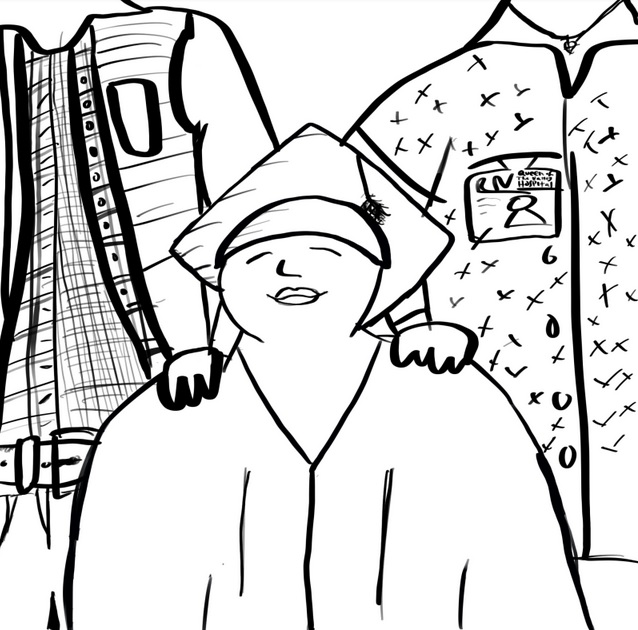
    Illustration by Joe DeVoogd

    Monday morning hits and you are dreading rolling out of  bed. The alarm has already gone off twice and you know your days of sleeping in, free afternoons with no  back-to-back hours of homework, and evenings when you actually have time to cook a decent meal is over. A one week break hardly feels like enough.

    However, playtime is over. It’s time to scrape your eye boogers, lace up your boot straps and hike hardcore obstacle course that is disguised as the Humboldt State campus and get back to work.  

    There are only have seven solid weeks of work left. Then you can go back to relaxing and hanging out with friends. Forget about the first half of the semester. Forget about whether you were crushing it or just hanging on by a thread. Look at spring break as a reset button. Here are some tips on how to refresh after spring break and finish with a successful semester.

    1.     Get Back on a Sleep Routine – Make sure you get the full eight hours of sleep but don’t overdo it. Oversleeping is just as bad as not getting enough sleep. Besides a whole host of physical illnesses,  oversleeping can cause depression and anxiety. Be sure to get the proper amount of hours so that you can function properly.
    2.     Hydrate and Energize – Keep a clear head and make sure you are fueling your body with enough water and foods that give you energy so that you can make it throughout the day. Try eating a healthy breakfast packed with fruit.
    3.     Plan It Out – Don’t lose sight of your goals. If you want to succeed make sure you have a clear destination. It would be good to write out your goals and create a schedule. You don’t have to micromanage your schedule. However, glance back at it at the end of every month and make sure you are staying on point.
    4.     Have Some Fun – If you are feeling burnt out this semester, that’s because you didn’t take time to have fun.  Fun doesn’t have to only come around with school allotted breaks. Schedule time, at least one day of the week, to relax and de-stress. Do something as simple as going to tea with the your homies, plan a game night, or  even Netflix and chill. Do something that gets you relaxed and refreshed so you can continue your work without feeling depressed and overwhelmed.
    5.   Review – Bonus points for the A+ student who review their notes before school starts again. Refresh your knowledge. If you don’t use information everyday, you tend to forget about. Just do a quick breeze through of your class notes so that you remember were the class left off.
  • Editorial: What’s in your coverage?

    Editorial: What’s in your coverage?

    GOP presents the American Health Care Act

    If you are worried about obtaining health care insurance, well… you should be. After House Republicans faced a firestorm of criticisms for hiding away on the Hill to hash out their healthcare reform policies, Republicans finally introduced their version of health care reform last Monday, March 5. 
    The potential repeal of the Affordable Care Act, more popularly known as Obamacare, would leave college students at a disadvantage. We are still allowed to piggyback off of our parent’s insurance (if they have it) until we are 26 years old. However, for those who can’t, this measure creates additional expenses for college students. 
    As college students working in Humboldt County earning a minimum wage of $10.50 per hour, the possibility of affording health care coverage under the GOP’s American Health Care Act is unlikely. Obamacare tried to secure affordable healthcare for all and is by no means perfect, but instead of taking the time to fix the deficiencies, Republican’s “Obama-lite” healthcare system is wasting time and money.  
    While we are waiting for the new administration to learn the ins and outs of health care law, millions of people are at a standstill wondering how they are going to get and stay covered. 
    The bill wasn’t released with an analysis from the Congressional Budget office, and even conservative republicans are worried about the negative impact the measure could cause on the economy. The bill notes four key changes that shifts the fiscal burden from the government back to the people: Refundable tax credits, health saving accounts, block grants, and high- risk pools. These fiscal policies might sound like a dream solution — to those who can afford it. 
    Refundable tax credits is money the government is willing to give back to you. The problem with these credits is that they are based on age unlike Obamacare’s income-based regulation. Age does not dictate the severity of medical care cost. A refundable tax credit is insufficient cushion for the unexpected cost. Under this new bill, young adults are considered the less in need. The bill states just $2,000 are credited to individuals under 30 years of age.
    The new bill risks denying millions in coverage with its proposed block grants that would provide a fixed amount of money to states for their Medicaid programs. A fixed block of money that doesn’t rise with inflation, meaning that states might not be able supply coverage at the amount they have in the past.
    The GOP also sliped in a provision that would defund Planned Parenthood [PPFA]. At least 60 percent of Planned Parenthood patients use Medicaid or some other type of government based insurance according to PPFA. This means that if the program is defunded, all of these women would lose access to affordable health care. 
    Although people with pre-existing conditions will still be protected under the new bill, they will potentially have to pay more if they want to be insured. Insurance agencies will be allowed to increase the premium of those with pre-existing conditions while everyone else’s insurance rates are reduced.
    On top of all these new policies that would drain young adults pockets, the new bill includes a penalty for people who let their insurance lapse. The bill allows insurance agencies to raise their premiums 30 percent. This makes it hard for people to even try to regain coverage after losing it. All of these methods have been tested, tried, and found to be lacking in effectiveness. Obamacare was enacted in the first place as a solution to these problems. 
    While Obama care extended coverage to over 20 million people, the GOP’s health care plan seems to be ripping coverage out of the average American’s hands. The new healthcare reform bill may as well read: The poor, low-income, and persons with pre-existing conditions need not apply. 

  • Word on the Street: Spring Break

    Word on the Street: Spring Break

    By Curran Daly

    Humboldt State will be going on spring break next week. Spring break is an opportunity for students to travel, relax, and take a break from studies. We hit the streets to ask some fellow Lumberjacks what they are going to be up to next week.

    Photo | Curran Daly

    I’m heading to Red Rock Canyon right outside Las Vegas to go rock climbing. The rock climbing there is world class.

    -Max Kittel, senior, environmental management and protection major

    Photo | Curran Daly

    I’m gonna travel down to Santa Barbara to visit a friend, then I’m going to visit my awesome roommate in Pasadena and visit Joshua Tree and then I’m going home to celebrate my mother’s birthday.

    -Melissa Lozano, freshman, environmental science major

    Photo | Curran Daly

    I’m doing absolutely nothing, I’ll be staying in my dorm. My friend might be coming up from Southern California so we might do some hiking.

    -Kelsey Meusburger, junior, psychology major

    Photo | Curran Daly

    I am going to be staying on campus and researching for a class. I’m going to be researching Tibet and the Himalayas.

    -Quint Migliardi, junior, geography major

    Whatever you’re doing over spring break, have a fun and safe time.

    Going somewhere cool for Spring Break? Or just staying home? Take a selfie of yourself and tag #LJSpringBreak in the caption for a chance for it to be in the next issue of The Lumberjack.

  • Former HSU athlete comes to U.S. From Mali for education

    Former HSU athlete comes to U.S. From Mali for education

    By | Danny Dunn

    Moussa Sy is a 21-year-old junior at HSU, majoring in environmental science. Sy moved from the country Mali, located in West Africa, to Ojai, California in 2011 at the age of 16.

    Every year scholarships are given to African students, to give them the opportunity to come to America and study. The scholarship is good for three years.

    Sy was awarded this scholarship and began attending a boarding school in Ojai, where he was determined to learn English.

    One of the toughest things for Sy was learning English once he came to the United States. Back home in Mali, he grew up speaking French and a mix of other African dialects.

    It took Sy about a year to learn the language, he would study night and day trying to master it, while taking an English as a Second Language course at his boarding school.

    Humboldt State was not Sy’s first choice when he thought about college. Sy had hopes of playing Division two, or Division three basketball before an injury hindered his plans. Sy broke his leg during his senior year of high school, which lead him to start considering other options in college besides playing basketball.

    Humboldt State’s Environmental Science program caught Sy’s attention, and with a combination of the program and the Humboldt scenery Sy chose to attend HSU.

    Upon arrival at HSU Sy attempted to join the Humboldt basketball team, however lingering injuries prevented him from playing.

    This did not deter Sy from playing sports. In the fall of 2016 Sy joined the HSU soccer team and played the position of center guard. Sy felt welcomed by the guys on the squad from the very first day of practice. Sy admitted it was a little strange being the new guy, but his teammates helped him make an easy transition to team.

    Sy was forced to stop playing after only one semester do to a heavy school and work load. Sy is currently enrolled in 15 units and works 20 hours per week on campus.

    “I would wake up at 5 a.m. every day to get to the 6 a.m. soccer practice. I would not get home until 10 p.m. which left no time for studying or doing homework, just go straight to bed to wake up for practice the next morning,” Sy said. “ It was just too much to handle.”  

    Thinking back on his first week at HSU, Sy recalled it being an interesting environment.

    “The smell, and people were so different here at HSU, it was a little overwhelming seeing all the people,” Sy said. “The redwood forest stuck out the most though, that and the air was more pure than city air.”

    Due to financial issues Sy has been unable to return to his home in Mali to see his family, specifically his mother who was Sy’s hero growing up. Sy’s father would travel a lot for work while Sy was growing up, so his mother acted as head of the household.

    Back home Sy would play or watch soccer every day, his favorite team is Manchester United. Sy knew that in America soccer was not the most popular sport, but had to admit he was still shocked that people here really do not follow as much as back home in Mali.

    Sy’s plan for after graduation is to stay in America for awhile, perhaps around Santa Barbara, California, and gain some experience in the working world. Once he returns home, Sy hopes to help the underprivileged children of Africa.

    “Children are the future, and I would like to one day build my own orphanage to help the children of Africa,” Sy said.

  • Humboldt State Men’s Rugby beats Sonoma State on Freshman’s first try.

    Humboldt State Men’s Rugby beats Sonoma State on Freshman’s first try.

    By Curran Daly

    On a wet and windy March 4, the Humboldt State Men’s Rugby team defeated Sonoma State 24-17.

    From the beginning of the game, Humboldt State was pressing Sonoma. For much of the first half it looked like the Lumberjacks would score the first points of the game. However, a number of defensive stands by Sonoma at their own try zone, rugby’s end zone, kept the game deadlocked at zeros.

    Sonoma’s biggest stand came with seven minutes left in the first half. Soon after, Sonoma was able to break through the Lumberjack line to score the opening try. After a successful conversion Sonoma led 7-0. Justin Herrera, a senior in the lock position, admitted that getting scored on was a bit of a shock to the Lumberjacks.

    “We were kinda a little bit lost at first, we got scored on, then we focused up and got it together,” Herrera said.

    Humboldt came right back and was pushing deep into Sonoma’s end, but were unable to score. The half ended with Sonoma leading 7-0.

    As halftime the weather began to turn. What had been a drizzle in the first half, turned into a full on onslaught of rain. According to Ricky Gomero, a junior scrum half, the shift in the weather caused the Lumberjacks to shift their approach to the game.

    “It started to rain, we know our game has to be a lot different,” Gomero said. “After the first half, we started seeing our guys focusing down, nailing it, and running like good rugby players.”

    The Lumberjacks came out fast in the second half scoring a try after only three minutes of play. A missed conversion left Sonoma in the lead 7-5.

    The game was back and forth, until Humboldt scored again 10 minutes later to take a 10-7 lead. Then, Sonoma scored and missed the conversion to lead 12-10 with 20 minutes remaining.

    The Lumberjacks kept pushing, but could not find a way to put points on the board. At one point the Jacks celebrated a try only to have it called off by the ref. With five and a half minutes remaining the Lumberjacks would not be denied anymore. Freshman winger Cameron Arnold, picked up the ball off of a Sonoma kick and ran through the line to give the Jacks a 15-12 lead. After a successful conversion the Jacks lead 17-12.

    “The turning point of the game was when Cameron scored a try, because that just really put us over,” Herrera said. “He ran it all the way back from the 22, that was the uplifting point, we were like ya we can do this and we had it on lock down.”

    Arnold’s go ahead try was his first try for the rugby team.

    “It was a great feeling, scoring my first try for the team,” Arnold said. “It got the team pumped up.”

    Humboldt went on to score another try pushing the score to 24-12. Sonoma scored on what was the last play of the game and the game finished 24-17.

  • Dreams of American baseball

    Dreams of American baseball

    By | Danny Dunn

    Miki Fukasawa’s journeyed from Sagamihara City, Japan, to Arcata, Calif. in his pursuit of playing baseball in America.

    “My lifelong dream was to play baseball in America and now I am,” Fukasawa said.

    Fukasawa is a catcher on the Humboldt State Intramural Baseball team. Fukasawa came to HSU in a study abroad program. He previously attended J.F. Oberlin University, located about an hour outside of Tokyo, Japan. There, Fukasawa was studying English. Fukasawa was also a catcher on the J.F. Oberlin baseball team and hopes to rejoin the his former team after his semester at HSU.

    “When I move back to Japan, I want to learn more English, and play baseball as long as possible,” Fukasawa said. “The dream would be to become a professional baseball player either in Japan, or even for Major League Baseball.”

    Fukasawa found out about the study abroad program, from some friends at his university back home.

    Fukasawa said that so far he cannot complain about the Humboldt life. His favorite food since arriving at HSU has been the pizza from The Depot on campus. Fukasawa said that he feels no added pressure to perform on the baseball team, and that he enjoys his teammates very much

    Fukasawa found housing in Arcata with fellow intramural teammate and HSU student Christian Clouthier. Clouthier is a second year transfer student from Sacramento. This is Clouthier’s second season with the team, while also acting as the team treasurer. These duties include getting people reimbursed for away games, collecting the dues of the players, and estimating the total cost of the season expenses.

    Clouthier has done more than that, he has opened his apartment to Fukasawa for the semester. Clouthier lives in the same complex with an international student coordinator at Humboldt State, who told him about Fukasawa.

    “It was just me and my girlfriend in the apartment, she is half Japanese and thought it would be a good idea,” Clouthier said. “We had an extra room, so we thought it would be a good thing to do.”

    Fukasawa is not the only Japanese ball player on the HSU intramural squad, Shinya Arai is from Kanazawa, the capital city of Ishikawa, Japan. He also plays catcher and a little bit of third base for the intramural team.

    “I have always wanted to attend an American university. I chose HSU because I like the California climate,” Arai said.

    Arai started playing ball around when he was around 9 years old, but stopped around junior high school. He was fortunate to have the opportunity to contribute to the HSU team.

    Arai has enjoyed his time in Humboldt County, he is staying in an apartment in McKinleyville. His favorite food so far has been from the Chinese restaurants around town.

    Arai likes playing on the baseball team, but says at times there can be confusion on the field with the language barrier.

    When Arai returns home he will continue with school, and learn more about travel and english, in hopes of one day becoming a sightseeing organizer.

  • Check it! Anniversary party

    Check it! Anniversary party

    By | Ali Osgood

    The highly successful student created program about preventing and responding to sexual assault at Humboldt State University celebrates it’s third year.

  • Housing sees more open beds

    Housing sees more open beds

    By Charlotte Rutigliano

    Because enrollment decreased this past term, less students struggled to find openings in campus housing. Senior psychology major Victor Perez was able to change dorms from the campus apartments to the College Creek complex because there was the space available for the upgrade.

    Stephen St. Onge, director of Housing and Residence Life, said housing normally starts off the fall semester with around 104 percent occupancy and drop a little in the spring.

    Currently housing is at 96.5 percent occupancy, having more open spaces for female students than male students. This has been a trend over the past few years.

    Twenty-four-year old transfer student Kimberly Encio said when she lived in the College Creek housing complex it was a little overcrowded. The only reason she decided to move off campus was the high cost of living on campus.

    “If it wasn’t so expensive I would have stayed on campus,” Encio said. “I loved the convenience of it all, being able to come home between breaks, close to the library and class, all of it.”

    According to St. Onge, one goal the housing department has is to provide a reasonable cost for on campus housing.

    “One of the strongest factors in student retention is living on campus for at least one year,” St. Onge said.

    Housing is not just focusing on the cost, they are also very focused on opening up more spacing for both new and returning students. St. Onge said they have increased the number of lottery seats for returning students by 100.

    With the university getting larger there is more demand for housing both on and off campus for students. Both Perez and Encio agreed that the university should have another dorm complex on campus to help with overcrowding and so they could provide more spaces to new and returning students.

    St. Onge said that the housing department is always open to suggestions and feedback from students and said they have an open forum on March 2 from 3:30 to 4:30 p.m. in the Jolly Giant Commons to discuss the potential for adding new housing on and off campus.

  • International Education Week at HSU

    International Education Week at HSU

    • Free food, films, and lectures from professors working internationally.

    By Morgan Brizee

    International Education Week is back at HSU. During International Education Week students, staff, and the community can listen to speakers address what is going on around the world from those doing research and work across the globe.

    The International Education Week events are being held Feb. 13 through 17 from 9 a.m. till 9 p.m. in room 209 in the library fishbowl (unless otherwise noted on the schedule).

    Ariana Hendren, a 22-year-old HSU International Studies major, is the president of the Global Connections Club at HSU and is responsible for managing the volunteers that work at each event.

    The lectures of International Education Week are both motivational and helpful for those who are interested in gaining more information about traveling and working abroad or studying international issues,” Hendren said.

    Most of the speakers of the event are professors who work at HSU and do international research. Other speakers who are not HSU professors are the key note speaker which is Dr. Marga Gual Soler who is the project director at the Center for Science Diplomacy at the American Association for the Advancement of Science, Dorothy Ngutter who is a diplomat in residence, Erik Jens who is an instructor at the Department of Defense, and Sarah Sedlack who is an HSU alum and founder of a sex education program in Kenya called “What’s Not Said”.

    Dr. Alison Holmes, HSU assistant professor of politics and program leader of the international studies department, said that school usually gets the guest speakers by anyone who is interested usually because it is hard to get people who are available to come up to HSU.

    “Who we can get is often the first criteria,” Holmes said. “I’ve been working hard in the last two or three years to ensure CPS [College of Professional Studies] and CNRS[College of Natural Resources ] also have speakers and are engaged and having the keynote seemed like a good way to make sure that our colleagues in CNRS were also really involved in International Education Week.”

    Holmes is also speaking during International Education Week on Feb. 15 at 9 a.m. in room 209 in the library fishbowl. Her lecture is called Global Diplomacy: Upside Down and Backwards.

    International Education Week this year will have a different impact than past years because of President Donald Trump’s “Muslim” ban.

    Mathew Derrick, HSU assistant professor of geography and co-organizer of the International Education week, said that international education is of most importance now because of what is going on politically.

    ““International education is always important, but it is especially important at this point in time,” Derrick said. “In short, it is critical that HSU students–and the broader citizenry–develop higher levels of geographic-global literacy.”

    The definition of geographic-global literacy from National Geographic is the ability to use geographic and global understanding and reasoning to understand far-reaching decisions.

    During International Education Week students can enjoy food, music, and films from around the world to fully submerse themselves into learning about the different cultures.

    Celicia McLean, a 22-year-old HSU International Studies major, said that she is going to go abroad for work after she graduates in May so she is excited to listen to related speeches.

    “International Education Week has a wide variety of discussions on issues and other aspects about our world presented by incredibly knowledgeable and experienced scholars,” McLean said. “The evening events are especially great locations for cultural exchanges through food, film, and music and are a must for a culture enthusiast, like myself.”

    Even after graduating HSU, some students still feel connected and feel a want and need to give back to the school in some way. Sarah Sedlack graduated from HSU in 2013 with a BA in Psychology and was excited to be able to share her progress of the campaign, What’s Not Said, with the school during International Education Week. She will be giving her lecture on Feb. 15 at 10 a.m. in room 209 in the library fishbowl. Her lecture is called Let’s Talk Sex (In Kenya). Her lecture is talking about her campaign with teaching people to normalize talking about relationships and sexual health.

    “It also feels amazing to be sharing a passion project and receive so much positive feedback from the community here, both on and off campus,” Sedlack said. “Because when communities benefit from international prevention efforts in the face of major sexualized violence and public health issues, all communities everywhere, benefit because we are all connected.”

    Whether students are wanting to travel abroad for fun, work, school or just want to learn about what is going on around the globe, International Education Week will go over all of these and more.

    Christiana Frye, HSU coordinator at the International Center, said that students should choose a couple of interesting lectures that are being given whether it be educational or just for fun.

    “There’s all different kinds of things from all over the world, information about Africa, information about food justice, teaching abroad,” Frye said. “I also encourage people to attend one of the fun things in the evening because there is free food, on Monday night, there is good international food.”

  • HSU looks at the big picture for enrollment

    HSU looks at the big picture for enrollment

    By Charlotte Rutigliano

    The days of generalizations may be in the university’s rear view as various department’s throughout Humboldt State aim to start writing personalized letters to prospective students due to a drop in enrollment this past term.

    This is part of a plan the university has created to start focusing more on prospective students who applied and turning them into current students. Director of Admissions Steven Ladwig said every student needs to have a relationship with someone on campus before attending to make them feel more comfortable once they’re here.

    This plan has been put into place with the hope that it will boost enrollment for the 2017-2018 school year. According to Nicholas Conlin, coordinator for Orientation and New Student Programs, enrollment only dropped this last year. There were about 200 to 250 fewer students than the university was hoping for.

    Graphic by | Charlotte Rutigliano

    The drop in enrollment was not a drastic one, and HSU was not the only California State University to see this drop.

    “There were six CSU’s who didn’t meet enrollment numbers this term,” said Ladwig. “Chico, Fresno, Monterey Bay, San Bernadino, San Francisco, and Sonoma.”

    The slight drop in enrollment last term didn’t affect the number of impacted majors [majors that have more students than the program accepts.] Additionally, the number of visitors to campus was not impacted.

    HSU is known for its science programs with the most sought after majors being biology, botany, environmental resources engineering, wildlife and zoology. This past year however, both the social work and environmental management & protection departments became impacted as well.

    John Panting, lead admissions counselor, said that there hasn’t been a decline in the number of tours given but the number of visitors does depend on the time of year, saying that November through January typically have less visits.

    “In the beginning of February is when the number of visitors really starts to ramp up,” Panting said.

    HSU, in an attempt to identify the contributing factors hired John Capaccio as Associate Vice President of Enrollment Management. Carpaccio’s role is simple —  to increase enrollment without lowering admissions standards.

    Graphic by | Charlotte Rutigliano
  • HSU’s Waste Reduction and Resource Awareness Program offers services to students

    HSU’s Waste Reduction and Resource Awareness Program offers services to students

    By | Kelly Bessem

    School can be a mental and financial struggle, but doing your part to reduce waste on campus doesn’t have to be.  Humboldt State’s student-run Waste Reduction and Resource Awareness Program, also known as WRRAP, has been in operation for almost 30 years.

    The campus services they maintain are free to all students. These services include campus compost bins, water refill stations, zero waste supplies, events such as the clothing swap. Additionally, students can visit the Reuseable Office Supply Exchange House, where students can find free school supplies such as notebooks and writing utensils.

    Environmental science major Crystal Singletari was glad to find out that the ROSE House was there to provide an option other than paying expensive prices for new school supplies. 

    “The first two weeks of school I didn’t have enough binders to reuse and was super unorganized so I went to the bookstore, but they’re so expensive,” Singletari said.

    Rangeland resources major Ishmael Guerrero believes helping to reduce waste is good, but it is often difficult to keep track of waste reduction programs on campus.

    “I’m usually focused on school, work, or sports,” Guerrero said.

    WRRAP is set up to direct students toward reducing waste on campus and in the rest of their lives in simple ways rather than having to figure it out alone. Isabel Sanchez, a business major and natural resources minor has been working for WRRAP for more than two years. Sanchez explained how WRRAP can make waste reduction easier for students to understand.

    “It’s a network that allows for exchanges of waste reduction methods,” Sanchez said.

    Need some encouragement to live a less wasteful campus lifestyle? According to a 2015 estimation, Humboldt State University students collectively dispose of 266,314 pounds of waste on campus each year. That’s about the mass of four humpback whales. Though HSU students always seem to strive for improvement, there is still a whale of a problem.

    Check out WRRAP’s website at http://www.humboldt.edu/wrrap or email their student staff at wrrap@humboldt.edu. The program is there so that reducing waste doesn’t become another daunting school task on your checklist.

  • Mellow out with meditation

    Mellow out with meditation

    By  Morgan Brizee

    Learn to de-stress with the One Breath meditation group class

    HSU staff psychologist with a residential life focus, facilitating the One Breath meditation with students. Photo by Morgan Brizee

    A long light grey table split the Recreation and Wellness Center room in half. Students and a staff member were on one side and the facilitator on the other during the One Breath meditation group class on Feb. 1.

    Every Wednesday at 5 p.m., Craig Beeson teaches those who want to learn to destress and wind down. The group is run by Counseling And Psychological Services and is open to the HSU community including students, staff and faculty.

    Beeson is a staff psychologist with a residential life focus and does workshops like One Breath in the resident halls on HSU campus.

    “I noticed when this [One Breath Meditation workshop] was on my mind, preparing for it, I was getting stressed about it,” Beeson said. “This is counterproductive, I’m getting really stressed about a mindfulness presentation.”

    With a new semester starting up again, and most students being far from home, it can be easy to get overwhelmed.

    Karen Zurdta, a 23-year-old English grad student, talked about how coming to this class has taught her to love herself more.

    “I was going through a tough time with school last semester and I got really sad and emotional,” Zurdta said. “I was having problems showing myself love and that I am worthy of good things.”

    Beeson is using the book, “The Mindful Path to Self-Compassion” by Christopher Gerner, to teach the class about not fighting the feelings you have but instead accepting them. The class goes over how to cope with issues from anxiety to insomnia that many students can relate to.

    Matt Cunningham, a 25-year-old senior English major, has been meditating for five years and even went to the City of Ten Thousand Buddhas in Ukiah, Calif. last spring to help with his practice of mindfulness.

    “It’s kind of taught me to think of my thoughts and feelings as senses and to react to them like I would to any other sort of negative stimuli,” Cunningham said. “Mindfulness has helped me address those things more directly in a lot of ways.”

    The class begins with a group discussion of feelings and how to address them in a positive way. After about 30 minutes, Besson directs the group to close their eyes and focus on their individual breathing. He then moves on to telling the group to focus on one body part at a time, relaxing each body part individually, until the group feels their body and mind is calm. Beeson ends class by checking in with each member of the group on how they feel afterwards.

    “We talk about things like how to connect to yourself and live a more present, relaxed life,” Beeson said.

  • Word on the Street: Valentine’s Day

    By | Liam Olson

    Valentine’s Day is the perfect time to show your significant other how much you love them. You can get them chocolates, watch their favorite movie, or make them a nice dinner. However, there are some people who don’t care about Valentine’s Day and think that it is not important enough to celebrate. This day has different meanings depending on the people you talk to. Here are some opinions on Valentine’s Day from  Humboldt State students.

    Why do you celebrate or not celebrate Valentine’s Day?

    Photo by Liam Olson

    Left: “I celebrate Valentine’s Day because it’s a day to remind myself and others of the love that is important in my life.” -Simone Rani McGowan, Freshman, Environmental Science

    Right: “It doesn’t make sense to make a national day for love when love should be celebrated everyday.” -Nicholas Lara, Junior, Social Work

    Photo by Liam Olson

    “I like to celebrate Valentine’s Day because it is the one time a year I get to go out to a nice restaurant.” -Cassady McLaughlin, Junior, Psychology

    Photo by Liam Olson

    “Me and my partner have been together for six years and at this point it has become just another day for us.” -Alleigh Sullivan, Senior, Art History

    Photo by Liam Olson

    “I celebrate Valentine’s Day because it is a day dedicated to love, which I think is pretty neat.” -Alex Ballesteros, Junior, Environmental Science

  • Who Knew? At HSU: OhSnap!

    Who Knew? At HSU: OhSnap!

    In this installment of Who Knew? At HSU, we take a look at OhSnap!. This program offers free food and cooking classes to students as well as other services. Find out about all the hidden gems Humboldt State has offer by watching Who Knew? At HSU every week.

    Video by: Alexandria Hasenstab

  • Jacked up

    Jacked up

    Losing Headphones and the Headphone Jack

    By | Liam Olson

    Graphic by Joe DeVoogd

    Headphones are an essential for every college student, and it is the worst when you lose them. Without them, you would not be able to listen to music while doing your homework or watch a video without annoying the people next to you.

    You could leave them at home to only forget where they are or leave them at the library on accident.

    But you’re not alone, many others lose their headphones all the time.

    Library Circulation and Student Assistant Sineva Hosea, is an environmental science major in her junior year. She finds lost objects all the time around the library while she is working, but headphones seem to be the most common.

    Earlier in the week, she even found a pair of earbuds along with the iphone that they were attached to. Luckily, the owner was able to retrieve their phone and earbuds from the lost and found. But others are not so lucky and have to go buy a new pair of earbuds. “Some don’t get returned, but when I do my rounds, I mostly find earphones,” said Hosea.

    In the near future, wired earbuds and headphones could be a thing of the past. Apple removed the standard 3.5mm headphone jack on the iPhone 7 and soon other companies, such as Samsung, may follow this model.

    This change forces customers to switch to small, wireless earbuds. The new design could lead to more earbuds getting lost since there are no wires to keep it from slipping out of your pocket.

    When asked about this new design, students are not fond of the idea that would have to change to wireless earbuds and headphones.

    Brittany Heller, an international studies major in her senior year, is used to the normal wired earbuds. She finds that it is easier to keep track of wired earbuds over wireless earbuds since the wires help her hold on to her earbuds so she would not lose them.

    “I wouldn’t know where to put them,” she said.

    Amber Norwood, a zoology major in her junior year, keeps track of her earbuds, but her friends seem to lose theirs often. She says they have to go buy new a new pair about every month. She thinks that  wireless earbuds would be easier to lose with their small design. It would also become expensive to replace them often.

    The thought of having two separate earbuds makes you appreciate how they have always been connected by a wire, so that one earbud is never lost. “It would suck to lose one and still have the other,” Norwood said.