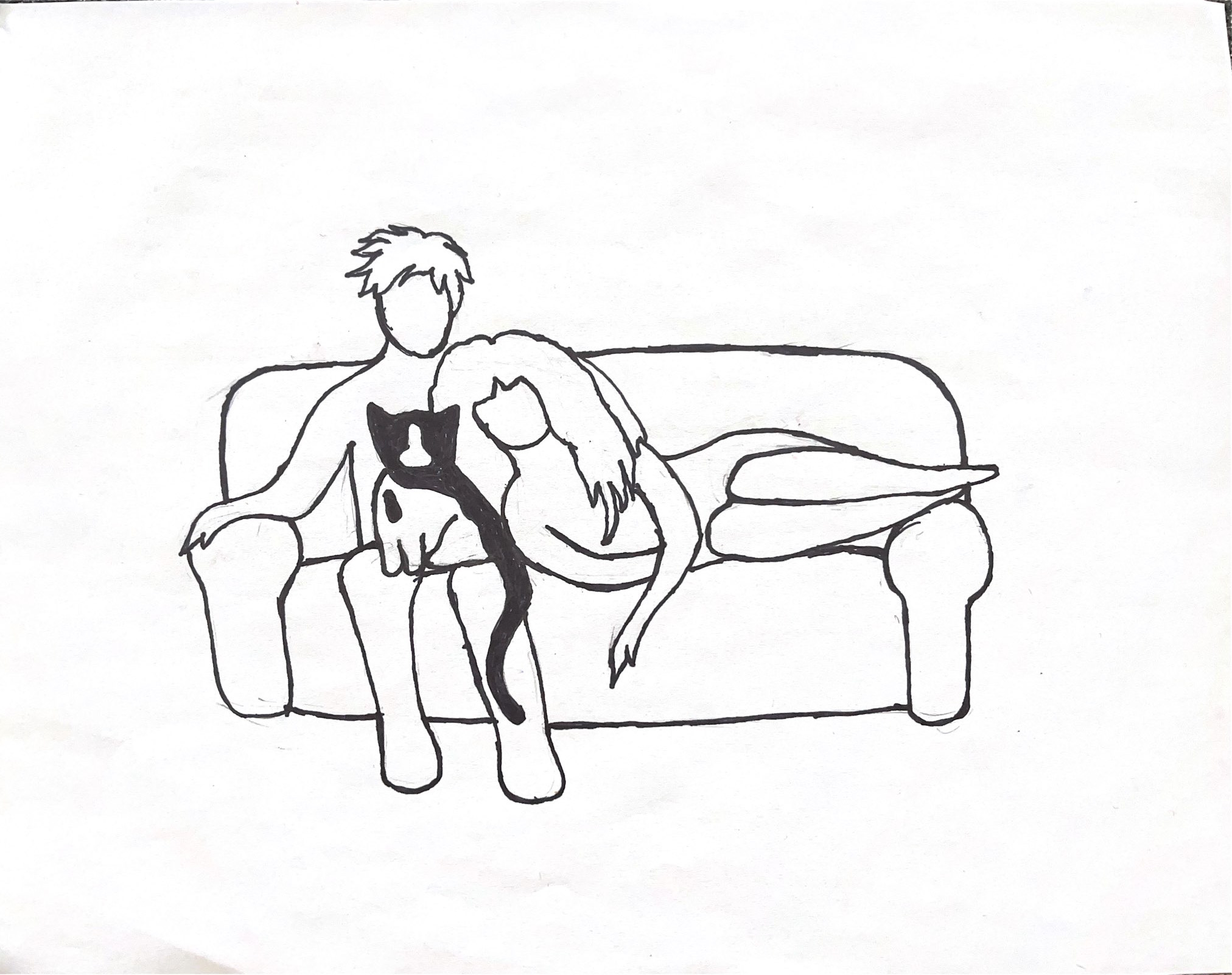
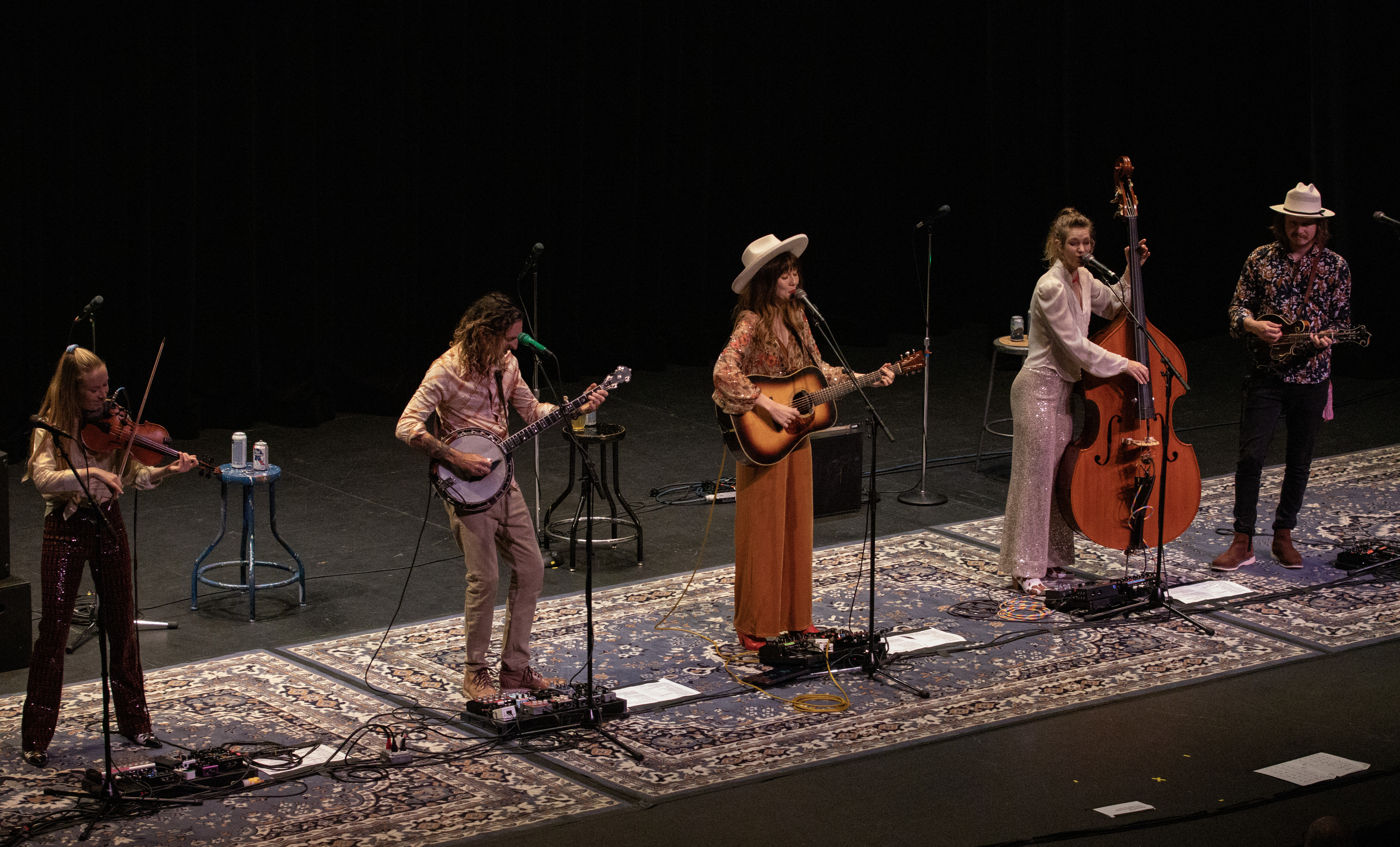
Many of us consider our pets to be our children. And like children, they become a focal point in our lives. Some of us may have social media accounts dedicated to our furry, feathered, or scaly children and our experiences raising them. Some may have shirts or bags proudly declaring our status as pet parents. Some even spend hundreds of dollars a month on toys, gear, and other enrichment for their pet. We make the choice to let a living being into our lives and take care of them, giving us a sense of fulfillment and joy. We would give them the whole world if we could.
But is the world you’re giving your pet making them happy?
There are limits to what we can provide our pets. Unfortunately, we are raising our animals in a world made for humans. For dog and cat owners, we cannot let them run free outside without the risk of them getting hurt or ending up in the back of an animal control van. Reptile owners cannot give their pets a perfect replica of the desert or jungle they were meant to live in. Bird owners can’t give their feathered companions the sky to explore and rodent owners have to keep their pets confined to cages and pens for most of the day.
Does that mean we should trash the collars and cages and set our animals free? Not necessarily.
The most common household pets like dogs, cats, rabbits, or hamsters are domesticated species and, at the very least, tolerate human interaction. Independent bioethicist and writer Jessica Pierce suggests that dogs and cats in particular may have been active participants in their domestication process.
For example, a study headed by psychologist Juliane Kaminski with the University of Portsmouth, UK, found that dogs evolved to have “puppy dog eyes” as a means of communicating with humans. Cats also developed a unique way of communicating with humans—meowing. Cats rarely meow at each other, but rather use it to ask their humans for attention, food, or other needs.
Having a pet isn’t inherently unethical, but the way in which we love our pets and care for them needs to come from a place of well-researched knowledge and compassion for them.
Research and reflection is a critical step before adopting a pet. If you want to adopt a pet, do you have the financial means to take care of one? What type of pet will you get? How will you obtain this pet ethically? Are you ready to handle potential physical or mental health issues your pet may experience? Does the type of animal you want live better alone, as a pair, or in a group? How much space will they need? Are you able to take them to the vet regularly? What physical and mental stimulation will this pet need and do I have time to give it to them? If you go out of town, should you hire a pet sitter or board them in a facility?
Once you have obtained your pet, you are making a commitment to take care of them for their entire life. Now the second-most difficult part of pet ownership begins. Some requirements for pet ownership are objective, like giving them adequate food, water, shelter, and not causing them unnecessary suffering. But like children, everyone raises them differently.
There are endless choices of enclosures, gear, food, enrichment, training, and medical decisions to make. You can ask an expert like a veterinarian or trainer for advice or do research on your own time.
The first and most painful part of owning a pet is the guilt. There will always be someone telling you that you aren’t doing enough, and usually that someone is yourself. You may spend hours researching and hundreds of dollars buying the best food and toys, but the brief rush of dopamine is ever fleeting.
I find that spending some quality time with your animal baby helps combat the random surges of panic and guilt—take your dog out on a hike, play with your cat, give your rodent or reptile an extra piece of fruit and give them very gentle pets if they are up for it. If you have a fish, stare lovingly at them through the glass.
Education is a powerful thing, and by taking the time to learn how to keep your pet fulfilled and happy, you are helping shift the tide in today’s pet industry. Your pet is a responsibility and a living being with feelings and wants, and you need to treat them as such. If you were a couple inches or a couple feet tall, you wouldn’t like being ignored and stuck inside with nothing to do all day.
While more people are adopting pets, there is also a greater number of people advocating for responsible pet ownership, and you can be one of them. You may not be able to give your pet the world, but you can get pretty darn close.
Guys, give a shit about your rooms. I’m looking at you Mr. Floor-mattress who sleeps next to the dirty laundry you throw on your bed. I’m not kidding around. Get a plant, thrift some art, perhaps invest in some fine linen. Us ladies (or whoever) are tired of “going back to your place” and it smells like wet dog and Mountain Dew.
You’ve ever been in a girl’s room? It’s like entering a church where she worships herself. Candles, incense, the world’s biggest comfiest bed, ambient lighting, art on the walls, succulents, a healthy and thriving monstera. If it’s messy, it’s messy in a cool, hot, sexy way. When a man’s room is messy it’s just gross. A girl will spill a glass of wine on her bed but a guy will straight up vomit on his carpet.
Our bedrooms should never be taken for granted. It’s a safe space where we can truly be ourselves and feel at home. It gives us a space to really express ourselves through the way that we decorate it. It takes us out of the homogeneity of society and into the fantasy of ourselves.
In it we can display the artifacts of our lives. The mementos from our travels, photographs, notes from our loved ones, anything of emotional significance can go on our walls and remind us of how alive we are. Give it a shot fellas! Embrace your tenderness and sentimentality! Get soft and self-reflective! And then maybe your mess will be as cool, hot and sexy as a lady’s.
I will say I’ve been in some vibey ass rooms belonging to men. Not every guy is sleeping on the ground in a fluorescently-lit sensory deprivation chamber. I’ve also been in some whack girls’ rooms. Things aren’t black and white. So honestly no matter who or what you are, give a shit about your room. It’s the only place you get to call your own. Do something about it! Because you won’t be able to decorate your coffin.
Ah, the rainy season is upon us. Despite the odd sunny, muggy day that Humboldt likes to shuffle into the fall and winter seasons like a wild card, it is getting cloudier and more drizzly, slowly but surely.
I quite like rainy weather, so I couldn’t be happier in that regard. With an umbrella or other rain gear, the inconvenience can be diminished into an enjoyable aesthetic. Sometimes I be out here just raw dogging the downpour with a T-shirt and shorts. Yes, swampy shoes are the worst, but watching where you step is an easy way to avoid that nightmare.
Speaking of watching where you step, that brings me to the point of this ramble. I am not the only creature who thrives in the rain (as are many of you, excluding the rainphobic). Allow me to paint a picture for you.
Thousands of students, staff, and faculty traverse campus on foot to some degree, day-in and day-out. They avoid puddles and stroll along the sidewalk to their class or job. Every once in a while, someone hears a crunch or a pop underfoot, but often it’s so small they think nothing of it. Little do they know, the blatant endangerment they are causing.
Yes dear reader, from the arboreal salamander to the simple snail, and all the slugs, worms, and more in-between, there is an entire ecosystem of creatures that love the rain more than we do. In fact, rain is an outright necessity for these creatures.
Snails and slugs rely on moisture to survive, making them extremely active during the rain. All kinds of worms use rainy days to migrate, as above ground is normally too dry for them. Salamanders and frogs migrate and breed in the rain as well.
These creatures have no choice but to sometimes venture onto the cold, wet pavement in order to fulfill their quests. But often, too often, they never make it.
That’s right. Martha the earthworm travels the equivalent of many human miles in order to meet her lover, Jim, only for her soul to be snuffed by a single checkerboard Adidas slip-on.
The worst thing about these literal crimes against nature, is that they are crimes of negligence. It is incredibly easy to not step on and crush a helpless critter. All it takes is a little look down every few steps.
Unless you have some sort of neck mobility issue, there is no excuse not to look where you’re stepping and avoid crushing a snail into paste. No, they cannot move to a new shell. That is a myth. Snails ride or die for their shell.
We cannot blame the critters for getting in the way. After all, there didn’t used to be concrete on their path. We must be better. Next time you’re out on your travels during a particularly damp day, think of the critters and watch where you step.
The pristinely green field of Hiller Park, normally home to gophers, was taken over by pirates last weekend. These pirates were not armed with swords, but sturdy, white frisbees. After warming up with expert frisbee throws and swift catches, they gathered in a circle on one side of their playing field. They started a lively chant to match their pirate attire, jumping with their fists in the air:
“Yo-ho yo-ho, a bug’s life for me!”
The ultimate frisbee teams of Cal Poly Humboldt, the Buds and the Hags, came together for the weekend as the Bugs for a community tournament, the Humboldt Harvest. Humboldt Harvest is one of the longest running ultimate frisbee tournaments in Humboldt County, and it isn’t surprising to see why. The presence of young alumni and older alumni teams made it clear that ultimate frisbee is a lifelong passion and community.
Ultimate frisbee is a no-contact sport that consists of two teams of seven players trying to get the disc to their end zone. Players cannot run with the disc and must pass it to other players to get it to the goal line and score a point. If a pass is not made successfully, it is turned over to the other team. The disc can be taken back if a player fails to catch the disc, or if a defense player knocks it out of the air.
Ultimate frisbee sets itself apart from other sports by upholding the spirit of the game. The sport has no referees and requires its players to hold themselves and their team members accountable. Players must be able to call out fouls, retract unnecessary calls, have good sportsmanship and discuss outcomes for fouls. This integrity-based system fosters a unique bond between teams and their opponents.
Photo by Griffin Mancuso. Old alumni team member Mason Banner makes a leaping dive for a frisbee at the Humboldt Harvest tournament.
Both the Buds — the men’s ultimate frisbee team — and the Hags — the women’s ultimate frisbee team — grow stronger with the foundations of teamwork and trust that ultimate frisbee provides.
Cate Roscoe officially joined the Hags as their coach this semester, but also offers some assistance to the Buds. She played ultimate frisbee professionally for 34 years and previously coached for the Hags for a couple years during grad school. She feels that her specialties have been a good fit for the current team.
“I really like to teach foundational skills, the biggest one of course being throwing,” Roscoe said. “But then also things like defensive footwork and positioning, offensive cutting and positioning, communication, a little teensy bit of strategy, two different styles of offense and a couple different defensive strategies.”
She also emphasized the sense of community that ultimate frisbee players have, no matter how far apart they are.
“There’s a lot more genuine friendship and camaraderie across teams and throughout the country,” Roscoe said. “I literally had a friend who played community in Tacoma who needed heart surgery in Kansas City. I was able to contact the Kansas Ultimate group through other connections of Ultimate I had. They picked her up at the airport. They housed her for over a month, fed her, drove her to all her appointments and took care of her while she had heart surgery. They had never met her — they had never even met me. But we all played ultimate [frisbee], and we’re in that same community.”
Andre Sargissian, the current captain of the Buds, has been playing ultimate frisbee for two years at the university and has great hopes for the newer team members this semester.
“We have so many [promising rookies], man. It’s been so exciting,” Sargissian said. “I feel like a lot of our soccer people who played soccer in high school, they always really succeed. I don’t know, it’s really cool because anyone can pick it up, anyone can throw the frisbee, anyone can run a cut, so anyone can be really good all of a sudden.”
The Hags is a gender-inclusive team that aims to empower their players. Captain Jillian Snowhook has been a Hag for five years, becoming captain in the Spring 2023 semester.
“From last semester to this semester, there were only five returning players, and there are five officer positions, and I was the only one who had played for more than a year,” Snowhook said. “I had also been one of the co-captains the previous year, so I took on the presidential role as well as captain because I do love this team, and there’s no way that I could let anything happen to it by not stepping into that role.”
Roscoe described the Hag name as a subversion of a term that has historically been used to oppress women who held power and knowledge. Today, many of the team members take pride in being a Hag.
“It means being burly. We are the burly Hags, and that basically means you show up for your team, for the game, in all conditions, with all you have, with your whole heart, with all the energy you have,” Snowhook said. “It’s really just being a part of a community that loves to do the same thing together, which is chase down frisbees like golden retrievers.”
Natalie Christenson, previously a soccer player, is in her first semester with the Hags. There has been a sharp learning curve, but the support system built into ultimate frisbee has helped.
“It’s super different to be a new person on the team and trying to learn what I’m supposed to be doing, as well as how I’m supposed to be communicating, so it’s kind of a lot of overwhelming things all at once,” Christenson said. “I’m mostly looking to the veteran players, and also our captain, Jill, who really takes hold of the team and coaches us.”
Otto Berndt, a long-time member of the Buds, emphasized how ultimate frisbee has given him a solid support system.
“The reason I have good grades is because I come out to ultimate [frisbee] and have a support group of people that care for me, and I care for them,” Berndt said. “We exercise, we have fun and we get to travel to other schools, and it’s just like — it’s a family, and anyone can be part of that family.”
Christenson has greatly enjoyed her time with the Hags and encourages other students to consider joining.
“I love the team so much and I cannot recommend it enough for anyone that is a little scared to try out or anything,” Christenson said. “I mean, I’m a first year and it has been a great experience. Everyone’s so welcoming that there’s no fear in trying something new.”
Roscoe suggests ultimate frisbee for people who might not feel like they fit into traditional sports communities.
“It’s a place where you can really surprise yourself and you can come for a lot of different reasons,” Roscoe said. “It doesn’t just have to be about the sport, but, um, it’s amazing to discover what our bodies are actually capable of.”
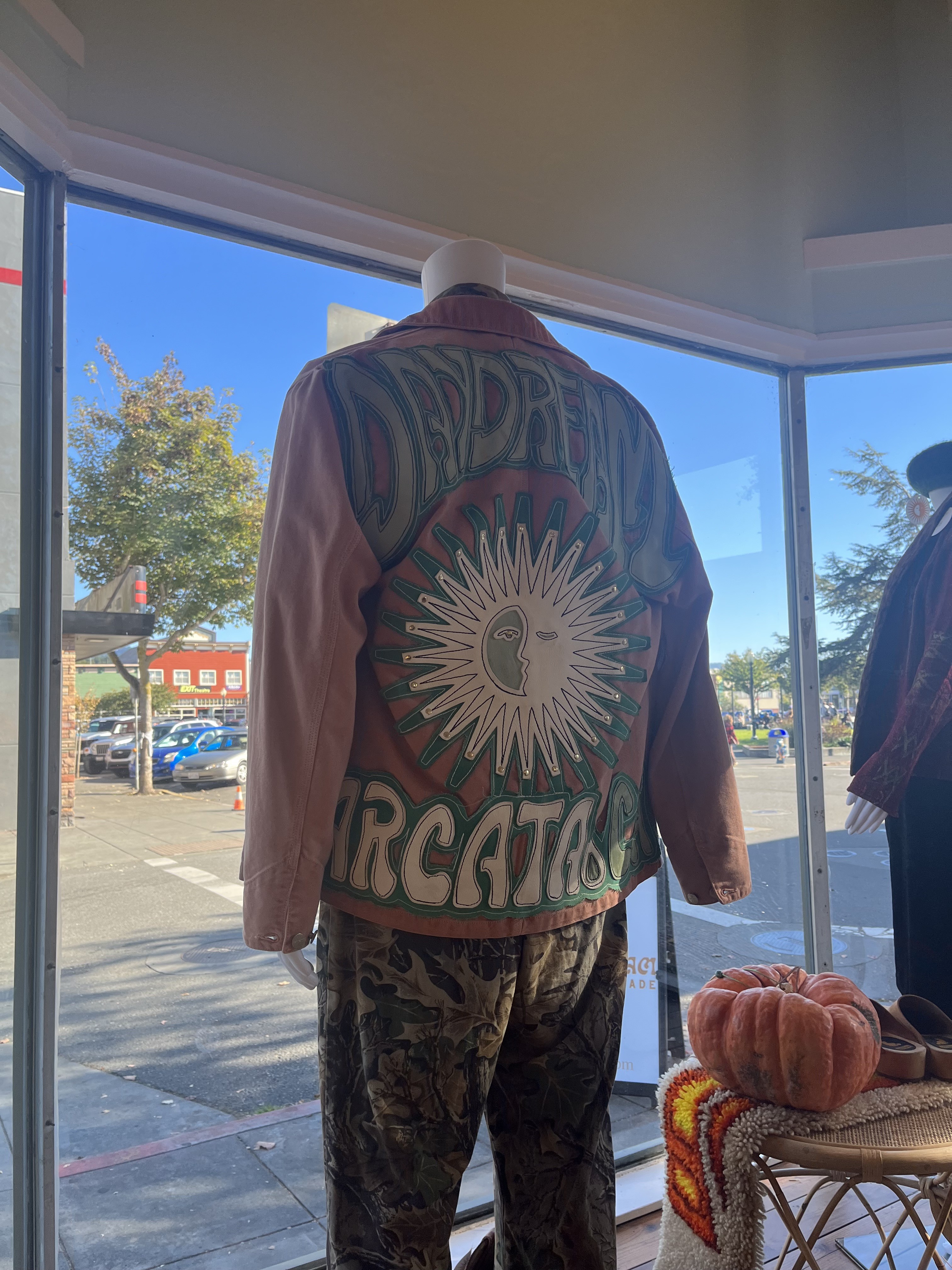
Thrifting for second-hand clothing has become a hobby and part of the culture for many Cal Poly Humboldt students, making the community an eclectic and stylish one. This combats the destructive industry of fast fashion. At Arcata’s new thrift store, Daydream, you can buy high-quality clothing and make money by clearing out your own closet.
Daydream, is a new buy-sell-trade second-hand clothing store on the corner of 9th and H St. across from the Arcata Plaza. The store provides a space for students and locals to make some cash while discovering a new sense of style. The warm-toned inviting store opened two months ago and is one of three local second-hand clothing stores co-owned by Jayna Nix and Ben Blair. Open seven days a week from noon to 6 p.m., you can go in to buy, sell, or trade any time before 5 p.m. and walk away the same day with cash or store credit.
What makes Daydream unique in comparison to the many other second-hand stores in the area is that they buy everything from the public and provide compensation either with store credit or cash on the spot. This process can be quite quick and is guaranteed to be completed within a single day. The store’s warm, clean, and inviting energy is represented in its curated racks of vintage clothing, rows of used trending shoes, and a wall filled with scented candles and accessories. Styles range from cottage-core to street style to retro and everything in between.
Photo by Zack Mink. Daydream boasts a collection of cute and colorful vintage.
Unlike the duo’s other stores, Redwood Retro and Modern Finds, both in Eureka, Daydream brings a focus to the art, styling, and sustainability of fashionable clothes. Rather than organizing the racks by gender, they are organized by size, style, and even season. This not only represents their push for gender and size inclusivity, but it encourages buyers to be more intentional and thoughtful when purchasing seasonal clothes that will last a lifetime.
The buy-sell-trade business model is also unique as the entire store relies on customers and locals bringing in their clothing to exchange.
“It creates a community hub where people come in, hang out while we go through their clothes and shop,” Nix said.
Daydream’s high standards for buying and trading clothing does highlight a downside of this model, which is that the sizing availability takes a hit when locals don’t have petite or plus-size clothes to bring in.
“We can’t control what people bring to us or the sizes we have… although we want to have more size inclusivity,” Nix said. With this being said, they are always looking for more variety in the sizes that are being traded and sold.
Despite facing challenges curating wide size ranges, Nix’s goal to recycle as much high-quality, sustainable clothing as possible is easily attainable with their buying standards and community support.
“Part of our mission is sustainability and recycling clothing. We try not to accept more
of the fast fashion brands and the buy-sell-trade model creates a space where we can recycle… what we already have,” said Nix.
Rather than buying clothes from fast fashion brands or selling old heirlooms to help partially cover monthly bills, Daydream is the place for students and Arcata locals to step up their style game, be financially responsible in a struggling economy, and stay committed to having a low impact on the environment.
It was a full house for the nearly two hour long production and helped feed into the performers liveliness. Cal Poly Humboldt’s Theatre Arts Department presented their fall semester play, “The Life of Galileo,” Nov. 3 in the Gist Hall black box theater.
I had yet to attend a play at the black box in my time at Humboldt State, and I believe it has to be my favorite location so far. The stage was smaller and a lot more intimate. It was also a lot easier to hear the actors more clearly.
Immediately, the prop and set design caught my eyes. Working with such a small space, they were able to create multi-purpose prop designs to be used throughout the entire production, and create separate rooms and energies on such a limited stage. Bookshelves of Galileo’s scriptures and studies that doubled as Roman columns — and even circus tents when flipped around — were genius to me.
The use of projections and other media really brought the whole production together. Like a silent film, they projected title cards on the castle walls to set the scene, which was a really creative way to occupy the crowd while stagehands moved props for the following scene.
Even the stagehands added to the artfulness of the play. They were adorned in plague masks and cloaks to blend into the scenes, which kept things interesting during an otherwise liminal transition.
Everything involved with props and set design was very thorough. Hanging planetary orbs and stars above the theater to back the play’s theme was gorgeous, as well as the creative use of such a small stage. A large brick castle with a spiraling staircase was tucked away in the background, and the use of hidden tables and raised platforms allowed for Galileo to easily bop around the stage. The production had no mics and was fully reliant on the actors belting capabilities, which proved successful.
Graphic by Griffin Mancuso.
The cast seemed much larger than what I have seen in other productions put on by the theater department. The play itself was more comedic than I expected it to be, through youthful banter and sassy characters like Galileo’s pupil, Andrea, played by Jenny Campos.
Although I will say the humor does seem a bit dry and for a specific audience, which I myself was not a part of. The one-liners seemed reliant on historical knowledge and for more of an older audience. One audience member continuously giggled throughout scenes in the first act while the rest of us remained silent, it felt I was missing something, or maybe we all were.
It wasn’t until the second act that I fully grasped the commentary of the play itself, a humorous meditation on the historical battle between religion and science, following Galileo returning from his near death experience after his scientific discovery that Earth was not the center of the universe.
The lead Galileo (Troy Lescher) had many asides within the show that seemed necessary for witty comments, but I feel they did fall a bit flat.
Although it took a bit for me to get into the play, the second act’s circus scene was fantastic. Actress Penny Dellapelle carried three roles in the production and was phenomenal. Her line delivery was hilarious and she really proved to be a firecracker on stage. Especially in her roles as the ballad crier in the circus performance and the snarky philosopher turning down Galileo’s scientific discoveries. The audience’s giggles also seem to reflect my opinion.
Lake Terre’s playing of the Bursar of the University of Padua was also quite animated and entertaining to watch on stage, especially during his scenes where he was trying to avoid interaction with Galileo. Although, I will say some of his scenes with Galileo kind of skewed the curtain of acting and reality for me.
The acting of all cast members was quality work in nearly all of the scenes. Some of the more busy scenes really shifted the veil of reality and performance for me. Watching a group of callow, college-age actors surrounding the obviously decade-older lead threw me off a little bit, and made the production feel more juvenile and high school-esque than I was prepared for.
All of the characters within the play were seemingly near the same age, so watching a baby-faced Bursar or philosopher scold Galileo, an obviously older actor, made me snap out of the entertaining theater-goer energy quickly.
The production brought a modern commentary on the history versus religion theme. Projections of Elon Musk, Mark Zuckerberg and Bill Gates to describe “elite Italian families of the 1500s” was extremely comical. Also projecting images of COVID-19 deniers when discussing the relationship of science with the priest was super timely and the cherry on top of the production.
Overall, the Theatre Arts Department put on a spectacular production and really killed it with The Life of Galileo. Opening night brought lots of energy from the performers and a packed audience. The technical aspects really tightened the show up completely. The production’s ability to play off the recent historical events of science-deniers really lightened the mood in such historically dense productions.
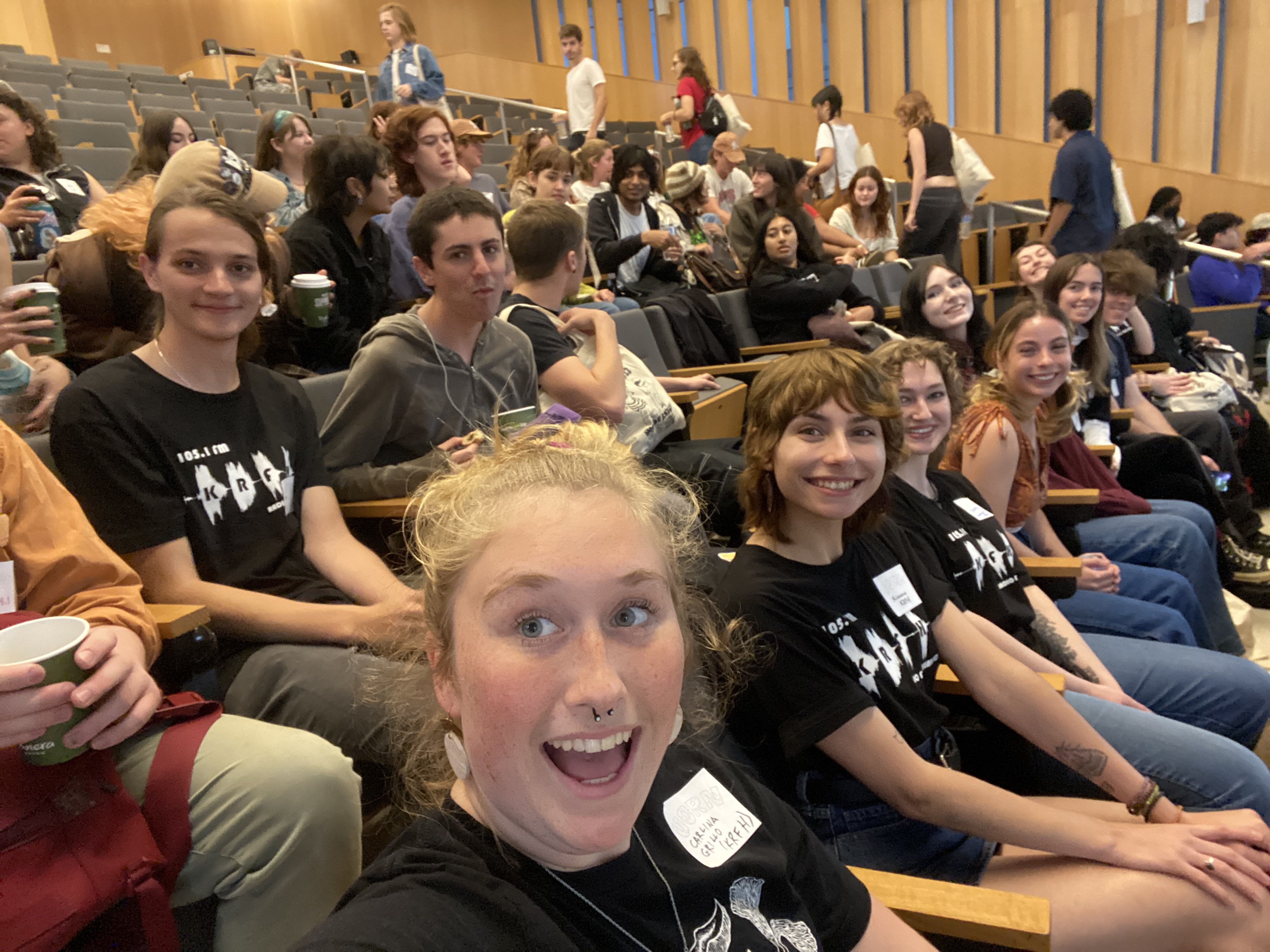
This past weekend, KRFH DJ’s made the journey down to Los Angeles to attend the University of California Radio Network Conference held on Nov. 4 by KXLU at Loyola Marymount University. The day consisted of three sessions, where students could choose between workshops and panels like creating DIY promotional materials, developing an on-air persona, staff training protocol, life after college radio, and more. Students especially interested in play-by-play sports broadcasting and news casting were given the opportunity to attend a journalism seminar also held at LMU featuring professional broadcast journalists.
Outside of the panels, workshops, and seminars we attended, this conference proved to us how hard-working and committed KRFH DJs are; the kind of people who would drive 12 hours on a Friday to attend a 10-hour event on Saturday, just to drive the 12 hours back the very next day.
Although the conference seemed to be targeted towards UC’s and private schools, we’re grateful that we committed to the voyage because it genuinely left us feeling inspired and validated as DJ’s, and station managers, for a student-run radio station. Being compared to almost 10 other bigger stations, where there is paid staff, we learned that there is something so special about Humboldt and our student-run station. KRFH is full of real, passionate, small town DIY DJ’s. No amount of money could buy what we have, which makes sense because as a class and a club, open to only students, we are responsible for raising the majority of our funds.
We’ve hosted three 24-hour live radio events, featuring live radio dramas such as “War of the Worlds” and “Coraline”, something other college radio stations absolutely aren’t doing. We brought back our Local LIXX, featuring local bands live from our station, and brought back KRFH News, offering the community weekly news in an audible format.
And, for the first time in our KRFH career, we not only got 15 DJ’s to make the trip down to LA, we also got them fed, sheltered and inspired.
One of the most eye-opening realizations during the conference was the fact that most, if not all, leadership positions at other college radio stations are paid, but at KRFH, we do everything solely out of passion for college radio.
KRFH is so much more important than Cal Poly Humboldt gives us credit for. Upon a Google search, you can see KRFH is one of the most popular stations in the county, and as we grow, every day we become more and more of a community resource. In places such as Berkeley, eccentric radio is seen as a necessity for local commuters. A question we asked ourselves was: Why is KRFH seen as anything different?
The truth is, KRFH will never be like KALX or KXLU, other big college radio stations with lots of funding. However, that’s kind of the beauty of our station. KRFH is entirely student-run, and although it’s difficult sometimes, this weekend has shined a light on how beautiful, important and rewarding the work we do actually is. Despite coming from higher-funded, and arguably more organized stations, students from other stations at the conference vocalized the way our small town aesthetic and methods have inspired them.
KRFH deserves to be celebrated and recognized for all that we do. We aren’t simply a group of journalism and communication majors who like to spin vinyls late at night. In reality, KRFH is made up of students from many different majors coming together for the love of music, community, and most of all, college radio.
As registration for Spring 2024 opens, we highly encourage any student who’s interested in being a part of our community to enroll in JMC 154 and JMC 155, the classes that will teach you about audio editing and get you in our station. For most of us, college radio isn’t forever, college radio is right now, a time in our lives where we, like many other college radio alums, will look back on very fondly. Our hope, as the 2023 KRFH station managers, is for anyone who feels compelled to radio gets to experience the beauty of KRFH.
Other contributors: Alex Anderson and Dezmond Remington
In a powerful show of unity, students and faculty members gathered in the rain at Cal Poly Humboldt to protest the recent decision to evict students living in vehicles on campus. The protest, which took place on Thursday, Nov. 2, highlighted the larger problem of homelessness in Humboldt County.
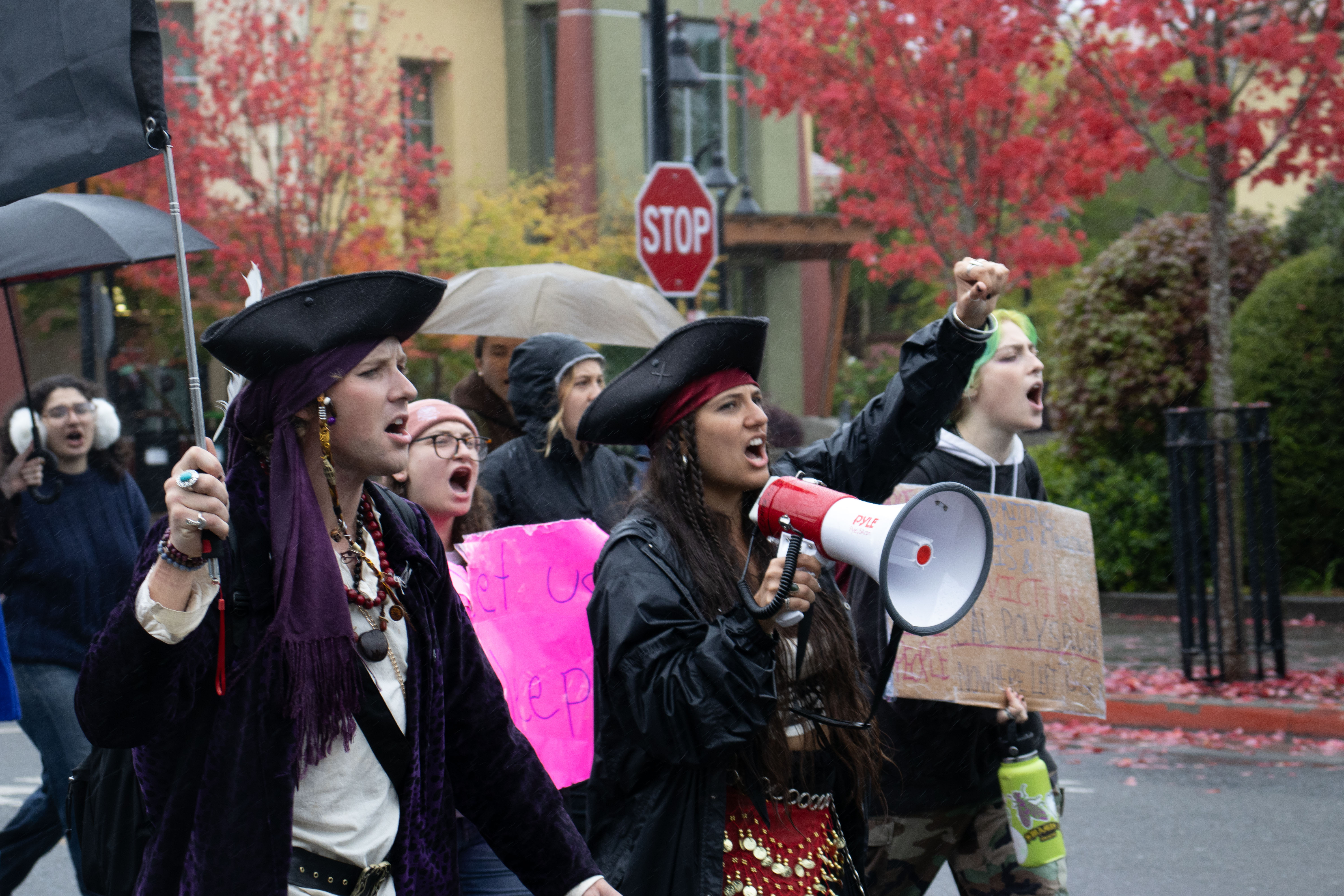
The protest started at 11 a.m. in the G11 parking lot and lasted throughout the night. At 12 p.m., protestors marched to the quad in the rain chanting, “Hey, ho, hey, ho student eviction has got to go!”
Photo by Cedrik Vonbriel. A sign at the protest.
The protest was led by Maddy Montiel and Brad Butterfield, the president and vice president of the Alternative Living Club, who were dressed as pirates because of a long-running joke of them being “land pirates” and their RV’s being ships on wheels. Furthermore, the initial eviction email occurred during Halloween week, and since then Montiel and Butterfield have been solely focused on securing safe housing, but didn’t want the situation to take celebrating Halloween from them.
“The university took a lot from us last week,” Montiel said. “We decided we wanted to keep one thing for ourselves and still dress as pirates and give our outfits a chance to see the light of day.”
Photo by Cedrik Vonbriel. A sign at the protest.
The protest also featured an open discussion, where Montiel and Butterfield stated their list of demands from the university.
Their demands included the university allowing overnight camping or sleeping in vehicles through the end of the fall semester, at least, a formal apology for the dehumanizing language in the initial eviction email, the establishment of a committee for long-term solutions, more transparency in defining camping and its implementation, and evidence of the “unsafe and unsanitary conditions” that was stated in the email.
At the protest, Butterfield stated students living in their vehicles are open to finding a solution that works for them and the university, but that the university hasn’t been willing to negotiate. For the students living in their vehicles, protesting was a last resort.
“For the school to assume that they can just get rid of us and push us out onto the streets and we’re going to go away quietly, is wrong,” Butterfield said.
On Tuesday, Nov. 7, the University Senate passed a resolution that would pause the enforcement until the end of the 2023-2024 academic year; this resolution was sent to President Jackson’s office. It awaits a decision. Mark Johnson, the President’s Chief of Staff, who attended the meeting on behalf of Jackson, declined to answer any of The Lumberjack’s questions, as did Dean of Students Mitch Mitchell.
During the protest, various speakers articulated their concerns, frustrations, and demands, emphasizing the need for understanding and fair solutions. The protest featured many voices and perspectives within the community, stressing the importance of addressing the issue with attainable solutions and compassion.
Photo by Cedrik Vonbriel. A sign at the protest.
Rouhollah Aghasaleh, an assistant professor in the School of Education, attended the protest and said that he sympathizes with the students who are being evicted.
“Living in a [vehicle] doesn’t make you less human.” Aghasaleh said.
Meheret Vasquez-Suomala, a religious studies major, expressed disappointment in the administration and hopes that they will listen and work with students, not evict them.
“You [Cal Poly Humboldt] are deliberately misplacing lower-income students and that’s what’s frustrating.”
Raymond Haeckel, another one of the speakers at the protest, questioned the accusations made by the university and stated that without proof of the unsafe and unsanitary conditions. Haeckel will continue to believe this is an effort to force these students into on-campus housing and collect housing fees.
“This is motivated by money and money alone,” Haeckel said.
Jules Tatum, another student at the protest, condemned the university’s decision to evict students.
“To say that these people are unsanitary, unsafe, dangerous individuals is just a slap in the face. The only dangerous conditions are being created by the institution,” Tatum stated.
Ultimately, the protest highlighted the need for realistic and attainable solutions that work with students, not evicting one of the most vulnerable student populations.
If you’re interested in learning more about this on-going issue, the Alternative Living Club is meeting on Friday, Nov. 10, at 3:30 in front of the library.
Disclaimer: Brad Butterfield is a member of the Lumberjack. He did not help write or edit this article.
Arcata is a great place to drink. During these long, dreary winters, what better way to pass the time than to head on over to one of our many local dives and question all your life decisions? Whether you’re newly 21, or simply do not get out much and are seeking some guidance on where to spend your big night out on the town, allow a seasoned bar hopper to show you the way.
Everett’s
I had to start at an all-around fan favorite; really just a gem of a dive. It’s a dark, dingey, hedonist’s paradise. Look closely around the taxidermied walls and you’ll always find a new nick-nack or picture (hint: look for the boobs next to the stuffed deer). If you’re lucky enough to order from Robert, you can count on a questionably dirty joke. Beers and cocktails are dummy cheap. Watch out, you’ll come here thinking you’ll stay for one drink and end up hanging out ‘till close, eventually getting kicked out to the curb with the Plazoids. Daytime is when this place really shines though; flies buzz around en masse while Arcata’s day-drunks play a dusty game of pool.
Graphic by Valen Lambert.
The Alibi
Punk bar. Great place to use the bathroom when the lady’s line is too long at Everett’s – also makes a mean bloody mary.
Dead Reckoning
Love this bar and its bisexual lighting. Kind of your classic cool hip craft beer joint; they solely spin great vinyl (lots of afro-future and jazz) and have a great tap selection. It’s a huge selection though, and looking at the menu is like scrolling through Netflix trying to pick a movie. Good place for a date, or if you want to get a drink with friends and actually be able to hear each other. The best part is that it’s got a whole mini arcade. Come on Tuesday nights to watch (or join) a bunch of pinball wizards duel it out for the pinball league.
The Local Cider Bar
Best place to get drunk on cider at 5:00 p.m., and a great option for all our gluten-free baddies. Casual, cute, cozy – The Cider Bar is great for autumn vibes. A Slice of Humboldt Pie also shares the building, so after tossing back a couple Blurberrys, you can get a slice of pie or an empanada.
Richard’s Goat
Definitely the most vibed out of these joints – stained glass windows and bisexual lighting abound. If you have a hankering to dance, this is the spot. Always live shows and DJs. Yummy cocktails and non-alc options. Plus, probably the best damn karaoke nights (Thursdays and Sundays) this side of the marsh. It’s a total hoot. If you come to sing, you’ll definitely stay for the lady that does opera staccatos in a tutu (you’ll know what I mean).
The Pub
Good place to get drunk and eat dinner. Gentrified, but free pool.
The Basement
Ah, finally, a place of sophistication and class. Or, as some women have put it, a place where they don’t feel preyed on. This newly reopened lounge is a great place to roleplay as someone with good taste. Live music and comedy abound. Expensive drinks so make sure you go with a date who’s gonna pay for them. My only suggestion is, more bisexual lighting.
The Jam
Almost forgot to mention this place because I usually avoid it for no good reason except I’m pretentious. A watering hole for local wooks and the occasional biker or metalhead. It’s a great place if you love EDM and getting freaky on the dance floor. Whomp Wednesdays is a classic – it’s exactly what it sounds like.
Blondies
Hands down best spot for local music. Plus, you don’t need to be 21 to get in. Quirky venue with a real DIY bodega sort of vibe, and they sell food. Sunday nights they host the jazz jam, and open mics are every Thursday. Always something going on, so make sure to check their Instagram for events.
The past few years have been undoubtedly some of the strangest to be coming of age. A global pandemic, inflation, social unrest, war, climate change, political turmoil and the insidiousness of social media has Gen Z – AKA “Zoomers” – shook. Attending college through these trying times is no small feat, and professors who have taught multiple different generations are attentive to what makes Zoomers different.
Recognized as the first generation to not know a world without the internet, they have been labeled with many different stereotypes: short attention spans, anxious, weary of face-to-face interaction, lazy, coddled. Ouch, right? Professors are quick to recognize that things aren’t that black and white, and that Zoomers have a unique edge because of their balanced set of experiences.
“I feel like Gen Z just came of age in much more difficult times,” said Dr. Heal McKnight, an English professor at Cal Poly Humboldt who has been teaching for over 20 years. “And as such, they have a real sense of their own durability, and they do not have an inflated sense of what they’re entitled to. It seems like they have a much more realistic way of forming relationships with each other and with adults… I feel like Gen Z has a ballast to them.”
But others are worried these experiences may have caused delays in social development. Cal Poly Humboldt art history professor Dr. Julie Alderson has been teaching for 20 years, and noticed a remarkable amount of timidity in passing students when she used to throw dance parties on the quad.
“I just watched the students have so much anxiety about it,” said Alderson. “I could see them in the distance putting in their earbuds, or pretend they’re talking on their phone, or not catch our eye. They’re still kind of in that high school, ‘I don’t want to be weird,’ mindset. And it’s because they were sort of sheltered in this way… their development towards being adults who don’t care what other people think about them is not as far along as students in the past.”
Professors have evolved with the changing generations to make the classroom more student-friendly. Recently, Alderson noticed that students have become savvy of a multitude of up-and-coming artists thanks to social media, and opens up space in her projects for students to explore them.
“The thing that I do feel is especially important to know in order to connect with [Gen Z] is that they want to be doing stuff that feels relevant to them,” said Alderson. “And I love doing that because they are way more excited and what they do is a lot more interesting.”
McKnight has noticed the impact that the Digital Age has on students’ focus in the classroom and found out a way to cater to these new tech generations, but in the process, realized it’s a better system for students of all ages.
“I think as soon as I realized I was teaching millennials, I understood that I needed to switch things up and run a classroom that goes in 20 minute cycles,” said McKnight. “I don’t think that Gen Z is any different from the generation above them in terms of that. I don’t think any person really can pay quality attention outside of a 20 or 30 minute bite.”
At the end of the day, professors agree that it’s a sweeping generalization to try and define Gen Z.
“It’s always so funny to label people as a whole generation,” said Alderson. “It’s so much more complex than that – it’s cultural. Like, it’s gonna be different here than it is in the city.”
Cal Poly Humboldt’s administration has proven that the university is insensitive to its most vulnerable students and their precarious situations. The eviction of students living on campus parking lots in their vehicles is inhumane.
The university has posed several solutions to these students, like temporary housing or staying in RV parks, but these options are unrealistic and unaffordable for most students living in their vehicles. These students have sacrificed many comforts in order to attend this university and have found a creative solution that allows them to earn their degree despite economic hardship. Many of these students will be forced to drop out if they are no longer allowed to live on campus.
Housing in Humboldt has always been a problem. Digging through old Lumberjack archives from the ‘70s reveals articles about housing insecurity and crises 50 years ago. There’s a reason these students don’t live under a roof. Very few, if any, of them are choosing this option voluntarily. Living here is expensive and tuition is expensive. The allowance of overnight camping has allowed impoverished individuals to earn their degree with a lower cost of living.
Pushing the students out would be at their detriment and only serve to clean up the image of Cal Poly Humboldt administration. Admin also neglects to realize the opportunity for mutually beneficial change in infrastructure as the campus grows. This is simply forcing students from campus out into the streets, where they will be shuffled around by law enforcement. It’s ignorant to assume that van lifers can just find an apartment after being evicted, especially with the limited options in Arcata. Campgrounds are also not always an affordable option for students. In addition, they are often far away and far from safe.
This is dehumanizing and unjustifiable. This will directly affect the lives of these students for the worse. They have made great sacrifices in order to attend Cal Poly Humboldt and deserve the right to remain on campus without being harassed.
If the university really is for a “high quality and affordable education” and a “just and sustainable world” like their Strategic Plan claims, then they have to consider how this will affect those students they’re evicting. How will they manage to study or turn in assignments if they don’t know where they’re sleeping that night? Or without WiFi? How will they stay healthy mentally without the security of a safe and reliable place to park their vehicle each night?
It’s definitely not ideal that there are students living in parking lots. The administration cited “unsafe and unsanitary” living conditions as being a driving force for the sudden enforcement of parking regulations, but the evidence provided is far from conclusive. They also mentioned complaints, but as of now, they are staying silent about what those complaints are, or who exactly they came from. It is obvious that the issue is rooted in a lack of affordable housing and the competitiveness of applying for on campus housing, not in the students themselves.
It looks terrible, especially a month away from finals. The students living in their vehicles are not requesting any significant accommodations or services from the university—they are able to live sustainably and independently and want to be left alone.
Houseless students have been living in their cars for decades. People view it as a viable option. In fact, several students who are getting evicted were previously told by members of the parking patrol that they would not be ticketed, towed or bothered if they slept in their vehicles.
This is a problem with no simple solutions, but even the absolute bare minimum is still better than the amount of assistance the university is offering. If outdoor cooking is an issue for university officials, then it should have been communicated clearly to those doing it. If the officials think the houseless students are unsanitary, give them 24/7 access to showers and bathrooms on campus. There’s a completely empty football locker room with showers that could be put to use.
These vulnerable students deserve help from the administration in their effort to earn their degrees. They should not be cast out, degraded, and othered.
The actions of the administration will only leave the university buried in even more terrible press. This is an opportunity to do something wonderful for the students who have to live in vehicles, something this community can be proud of. We, the editorial board of the Lumberjack, urge the university to come up with a real solution to this problem rather than degrading and displacing its most vulnerable students and hoping people will forget about it.
If the administration truly is committed to the “just and sustainable world” they claim to be, then it’s time to prove it.
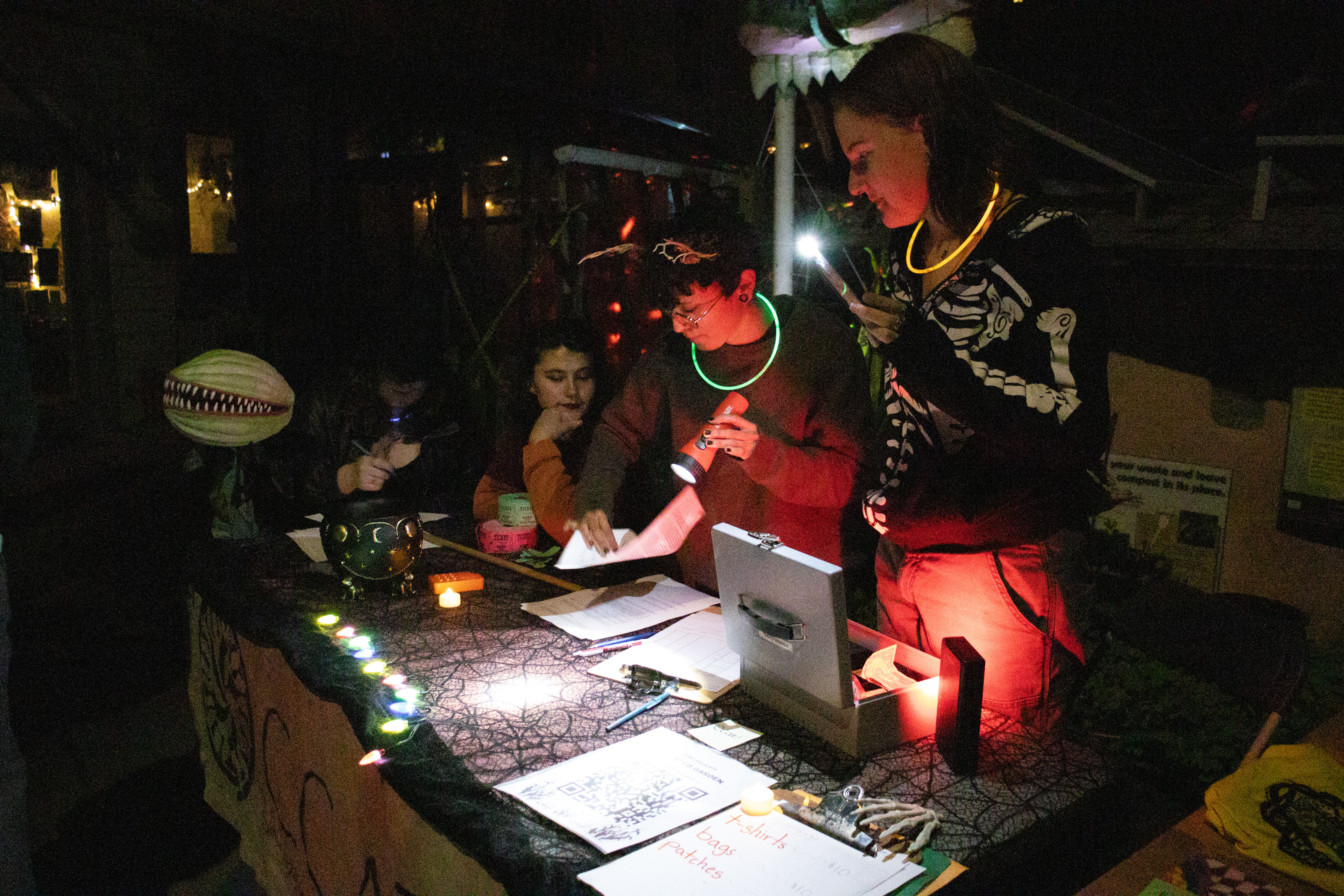
On the edge of campus, the sound of Michael Myers’ theme floated up from the entrance to the Campus Center for Appropriate Technology’s Buch House. The garden, normally home to a variety of edible crops and other plants, was transformed into a maze with shadowy figures lurking in every corner. Guests in a variety of costumes from Little Red Riding Hood to Sonic the Hedgehog paid the one dollar entry fee and vanished into the maw of a green monster with curled horns.
CCAT’s Haunted Garden event on Oct. 28 garnered lots of attention from students and community members this year, and I had to see for myself if the scares were worth the one dollar entry fee.
After I passed the toothy threshold of the maze, four small pumpkins with “CCAT” carved into them were the last remaining comfort before I was enveloped in darkness. A string of colorful fairy lights outlined the pathway and added to the whimsical atmosphere, but did little to illuminate the surrounding decor. Going in, I was aware that there were volunteer scare actors, but I greatly underestimated their dedication to their roles.
Photo by Griffin Mancuso. The entrance to the CCAT Haunted Garden.
I started my journey through the haunted garden behind a group of guests, so I got a ten-second notice before any upcoming scares. Unfortunately, it was so dark that I couldn’t tell where they were coming from or what they looked like.
A mysterious figure wearing a ragged newspaper mask, who I initially assumed was a part of the group in front of me, suddenly turned around and gave me the most uncomfortable eye contact for a solid 20 seconds. The eye holes in the mask were small, black pits that I couldn’t bear to look away from. I expected them to eventually scream or lunge towards me, but they eventually stepped to the side, watching me closely as I rushed forward.
I became highly aware of my surroundings after that. I passed another actor who had finished scaring a group ahead of me and decided to watch me silently, crawling around in a way that I don’t think humans are supposed to move. I turned around to make sure no one was following me, only to notice a decapitated torso near the trail’s fairy lights (a fake one, thankfully).
Following the steady incline to the upper level of the garden, a disembodied voice whispered, “Boo!” I whipped my head around to see an actor dressed in all black smiling at me, crouched behind a bush. I decided to try being funny, raised my hands in the air, and loudly went “Ah!” The sound of their ominous giggling followed me as I continued.
As I walked along the upper ledge, a rare source of light from a workbench area appeared ahead of me. As I got closer, the roar of a weed wacker met my ears as an actor revved it in the direction of a group ahead of me. I was not initially startled, but my face twisted into an uncomfortable frown as I saw who was holding the weed wacker. The actor wore a dull, flesh-colored mask with no features besides a large mouth with sharp, bloodstained teeth.
I was caught off-guard twice after that. As I walked along the upper ledge, I was startled by an actor in a clown mask whose blood-curdling scream made me jump out of my skin. I rushed forward through a section of the garden that was lined with tarps. As I turned around a corner, I screamed again as a witch with a shrill cackle lunged towards me. I cursed my tendency to easily startle and pressed forward.
Hiding in a corner just before a short descent was a person in a full body black suit with large googly eyes pointing in opposite directions and a toothy grin. While this actor’s costume was almost comedic, it was a little less funny once they started shuffling towards me while making intense googly eye contact. They reminded me of a spider, but one of those terrifying, giant Australian kinds.
Just past the last source of light in the maze where a three-foot tall skeleton lounged in an Ace Hardware wheelbarrow, I heard a stream of chilling laughter behind a corner. I approached nervously and found that the laughter was coming from a ghostly nun with black lipstick. I was more impressed than anything and felt compelled to tell them. They seemed flattered.
I stepped out of the maze back onto the blacktop leading up to the Buch House, slightly frazzled but satisfied with my experience. For a haunted maze set up in a small garden with a limited budget, it was definitely worth more than a dollar.
In our world of competitive capitalism, natural disasters and general man-made atrocities, it is normal to set huge, unattainable goals for ourselves. From the time we are children we are told that, in order to matter, we have to do something important with our lives. We have to save people, make a ton of money, win awards, change the world and be the best at whatever we do. Well I’ve won the awards, I’ve been the best, I’ve believed I can change the world – I was incredibly unhappy.
When I was in high school I got perfect grades, I played varsity sports and I was not only involved in extracurricular activities, I was in charge of them. Everyone around me praised me for how smart I was, how much potential I had, how far I would go in life. I was so caught up in being perfect and so incredibly scared to fail. I believed all of my value came from academic performance and extracurricular involvement. I believed that if I wasn’t incredible, amazing and perfect, then I wasn’t anything.
Fuck that. Fuck being perfect. Fuck being amazing. I have no desire to win a Nobel Peace Prize, to run the New York Times, to be rich (well maybe just a little), or famous or to save the world. I’m just a girl who loves writing feature articles about the quirky town she lives in. I don’t want to report from an active war zone in a foreign country, I’ll write my pieces from my nice cozy bed. I don’t want to expose political scandals, I want to write about the North Country Fair, the Medieval Festival of Courage, local art galleries and students on campus who choose to go braless.
For so long, I believed that to be important was to be valuable, and to be incredible was to matter. It has taken me a long time to realize that I still matter, I am still significant, even if I don’t achieve something amazing. I matter when I write an article about a great new business that gets them a lot of customers. I matter when I write about sexual health resources for students. I matter when I give a voice to people in my community. These examples pertaining to my career are actually the least significant ways in which I matter.
I matter to my dad when I call him to tell him about my latest bench press PR and show him a new band that I like. I matter to my mom when I hold her hand while we walk around the grocery store. I matter to my boyfriend when I get up and make him breakfast before he goes to work or send him a song that I think he will like. I matter to my cat when I give her treats and scratch her on the chin; I might not be able to save the world, but I saved her from living in the street and I think that’s just as valuable. I can’t solve homelessness, but I can buy a hot cup of coffee for an unhoused person on a cold day. I can’t solve the climate crisis, but I can carry reusable utensils and recycle as much as I can.
The small things are significant, and they bring me more joy than big achievements ever did. My connection to my family, friends and community is what makes me significant, not my big achievements. I’m not going to live my life to change the world. I’m going to live to help who I can and enjoy it. I like my small, unimportant life and I would like it to stay small and unimportant.
When I was in 7th grade, I played Rebecca Gibbs in my school’s production of “Our Town.” I had this line that people told me was really powerful. I don’t really think I understood it until recently.
Rebecca: I never told you about that letter Jane Crofut got from her minister when she was sick. He wrote Jane a letter and on the envelope the address was like this: It said: ‘Jane Crofut; The Crofut Farm; Grover’s Corners; Sutton County; New Hampshire; United States of America.’
George: What’s funny about that?
Rebecca: But listen, it’s not finished: the United States of America; Continent of North America; Western Hemisphere; the Earth; the Solar System; the Universe; the Mind of God–that’s what it said on the envelope.
George: What do you know!
Rebecca: And the postman brought it just the same.
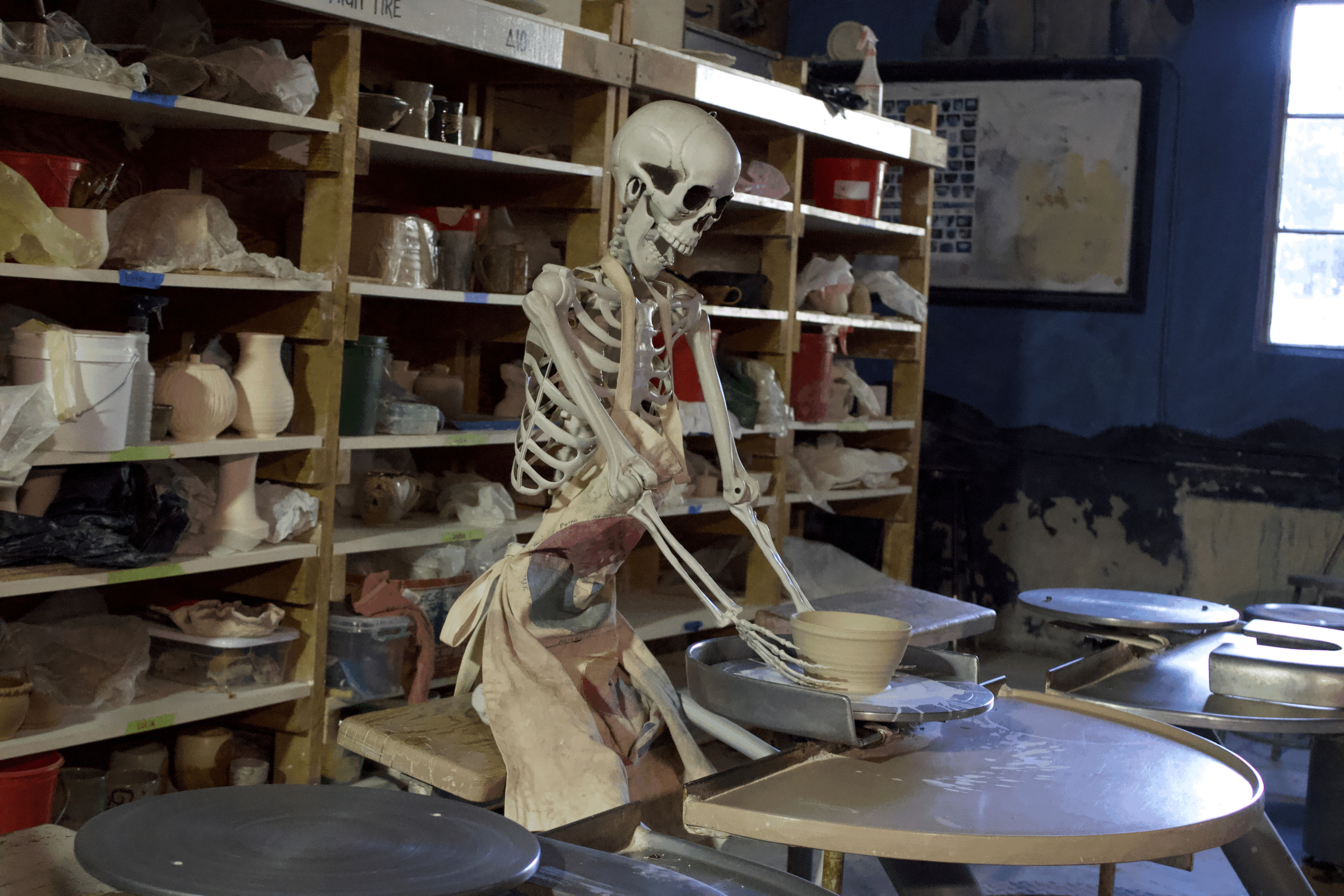
The Cal Poly Humboldt ceramics department put on their 2nd annual spooky block party at the ceramics lab on the day of Halloween. The festivities were held in The Laundry from 4p.m – 7p.m.
It was open to all Humboldt students and their friends and family too. Hosted not only by the jewelry and small metals club as well as ceramics, but with the help of the art education department as well.
Photos by Christina Mehr. Students walk around and observe artwork in the ceramics building.
There were free hotdogs and snacks provided for attendees, pumpkin carving, button making, the art show, raffle prizes, costume prizes and all sorts of spooky good times. Oh, and smoke machines!!!
The event offered a chance for art students to showcase their work this semester so far. Students were able to submit their work to be shown at the event. They accepted all art mediums in this show and the ceramic masterpieces were spooktacular.
“We’ve been working together to try and create a fun little art show and sale to support the art department. We divided ourselves into committees like decorating, food, art and we all just worked together to make this happen,” said Jade Hisamoto.
The ceramic spooky block party was a hauntingly good time for everyone who dared to attend. Ghostly creations and eerie vibes filled the air of the studio as attendees unleashed their creativity alongside the art community.
Bachelor of fine arts (BFA) student Max Parrish helped run the clay club sale table.
“I am one of the treasures for the clay club and we’re just trying to host a fun event. We did this last year as well as this year. We want to make it an annual event where we can have a little block party and do cute Halloween stuff and bring more and more clubs in,” said Parrish.
“It’s also a great opportunity for students to showcase their work and put things in their resume or for grad school.”
You can follow along on the Clay Club’s instagram for updates @HumboldtClayClub if you want to join the Clay Club and get involved in their future events.
The Miniplex, located in the back of Richards’ Goat, was dark with only a purple light emitting from the stage. People slowly shuffled in, some donning costumes in the Halloween spirit. The crowd was bustling with excitement, many concert goers with a drink in their hand. The show began around 9:45 p.m. and lasted about an hour and a half. Collectively, the boys put on a show that had a modern emo, hyperpop feel. The crowd danced and a small moshpit opened up in the center. With smiles on their faces, it was obvious that the crowd was happy to be there.
Louie Lingard, Osha Fiuty and Benny Pavloff make up the local trio Cemetery Boys. Respectively, the boys go by NotLewy, MESpirit and beninpayne. The collective played a show on Saturday, Oct. 14. The show had a turnout of about 20 people, which was perfect for the tiny showroom in the back of the tavern.
Playing more as a collective than a band, the boys took turns taking the stage, each playing a set of about ten songs. Pavloff went first, then Fiuty and Lingard last. Although they each had their own sound, they complemented each other at the same time.
Pavloff dedicated a song to his girlfriend, Shannon. It was a heartfelt song where he stated he doesn’t know how she got him and falling in love isn’t like him.
“Girl, you got me floatin’/ I be swimmin’ through your oceans,” sang Pavloff.
Pavloff’s sound could be described as emo y2k electronic. His soft yet bold vocals mixed with the autotune and hyperpop backtrack blended well.
Pavloff described his sound as influenced by Midwest emo with math rock samples and a mix of different types of vocals.
“I have a lot of different things that I do. Sometimes it’s really harsh autotune, and very glitchcore-hyperpop stuff,” Pavloff said. “I’ve recently been branching out and trying to get my real voice more out there and just singing.”
Fiuty’s sound was also drenched in hyperpop with an emo overtone. Bassy lines and quick lyrics made his music sound polished.
“Real cemetery shit, yeah I’m in for life,” sang Fiuty, referring to his dedication to the group as a whole.
Fiuty said that the group’s music has changed throughout the years.
“It started with the emo rap wave that was happening in 2016, 2017,” Fiuty said. “We’ve all kind of developed and gone off into different directions with it.”
Lingard played several songs off his mixtape “2k13” released Oct. 13. The mixtape has heavy overtones of trap.
“Now we in a different league,” sang Lingard.
Lingard has a sound influenced by a blend of genres including rap and witchhouse.
“I’m really influenced by 2010s trap music. Chief Keef, Gucci Mane, Young Thug, Rich Homie Quan, stuff like that,” Lingard said.
The group has been together since 2019, but took a break during the pandemic. They have played a total of nine shows together. Lingard and Pavloff are both College of the Redwoods students who plan to transfer to Cal Poly Humboldt.
It’s no secret that transportation is a big issue here at Cal Poly Humboldt. With almost 6,000 students currently enrolled and only 2,137 parking spaces, parking is the least fun game of musical chairs played daily by students. Despite past assurances of more parking spaces in the future, students are left to maneuver the measly parking available until then. Some students will graduate long before additional parking is finalized.
Morgan King, chair of the Sustainable Transportation Committee and a Climate Action Analyst in the Office of Sustainability, has been working on programs and initiatives to provide a variety of transportation options to, from and around campus. At a time when parking is a limited commodity, King is striving to offer students equitable options.
“Our focus is on transportation equity,” King said. “We really need to look at how we can ensure that everyone has access to the same levels of service, regardless if they’re taking a bus, walking or riding a bike.”
Not only does sustainable transportation operate to provide non-single occupancy vehicle (SOV) alternatives, they also focus on making these methods of transportation as sustainable as possible. Cal Poly Humboldt has established a reputation as an eco-friendly university, releasing two Climate Action Plans (CAP) since 2017. These plans are drafted with the intent of reducing emissions across campus and achieving carbon neutrality by 2045, essentially rendering the school free of fossil fuel use and conceivably running on sustainable, clean energy.
Vehicle commuting accounts for 16.9% of greenhouse gas emissions at Cal Poly Humboldt, measuring at 2,323 metric tons of carbon dioxide equivalent emissions. According to the most recent CAP, SOV trips account for the largest part of commuter emissions.
“[Administrators] are saying that they want to be a green campus,” said Zachary Meyer, student Transportation Specialist in the Office of Sustainability. “Well, one of the biggest sources of emissions is transportation emissions.”
Ranging from a Ride Share program that matches up students to carpool with guaranteed preferential parking to the simple but effective Jack Pass that provides unlimited free bus rides during the semester, there are a myriad of options available to students. King urged students to take advantage of the Jack Pass in particular, as the pricing is already built into the tuition students are paying. One service to take note of is the Lumberjack Express, which launched in early October. The new bus system offers free rides to students and is designed specifically to get around campus, only stopping at campus and campus-adjacent locations.
A large portion of sustainable transportation focuses on biking. Options offered to students include the Bike Share program, which provides low-cost bicycle rentals for conveniently getting around campus, as well as the Bicycle Learning Center (BLC), a student-run bicycle shop located under the West Gym stairwell by the Recreation and Wellness Center. The BLC offers free bicycle maintenance and bike parts, plus it raffles away free bikes on its Instagram. Unfortunately, bike theft remains a persistent problem for cyclists on campus.
“The immediate thing I’d suggest is registering your bike with the UPD because they can get you a free new lock,” said Adam Wood, student co-director for the BLC. “The free lock is a much better option than the more common braided steel cable lock, which can be cut through real quick.”
Luckily, through a student proposal approved by the Humboldt Energy Independence Fund (HEIF) and awarded $120K in 2021, there is a secure, weatherproof bike structure currently being designed for on-campus use in the near future.
Some issues impeding progress include funding and outreach for visibility to students. King mentioned that students often aren’t aware of the options available to them. Often, news and events are relegated to the end of department newsletters. The annual transportation fair used to be mandatory for new students as part of orientation, but King said they’ve lost administrative support for that.
“It needs to be constantly communicated,” King said. “It can’t only come out of my office. We’re trying to work on that, but there’s a lot of work to be done.”
“I think there could definitely be more funding towards [sustainable transportation],” Meyer said. “I personally don’t know what my budget is, what I can do fiscally. I’ve switched my approach this semester to do more education and event organizing to increase awareness and outreach.”
Meyer and King both also noted how hard it can be to push sustainable means of transportation when cars are so central to society.
“We live in a car-centric paradigm where people have grown up always respecting the car,” Meyer said. “The thing in your pocket to identify yourself is your driver’s license. That’s how ingrained driving is in our culture.”
Because of the need for the campus to become more sustainable, King said additional parking structures are not the priority.
There’s no telling whether the university would be able to substantially ease parking difficulties, including the pricey permits, at any point in the future, as the school aims to reach an estimated enrollment of 11,000 students by 2028. This sentiment was echoed at a mid-October meeting for the Sustainable Transportation Committee.
“Building more parking is just going to make parking cost more,” said Hank Kaplan, Transportation Analyst for the CSU system.
Major changes are being proposed for the university. One proposal considered is for a shuttle system designed to transport students from school to offsite parking located away from the campus. Another such change is to “pedestrianize” the streets, closing the core of the campus off to cars, thereby making it safer for pedestrians and more encouraging for non-SOV transportation.
“I’d like to see no cars in the center of campus,” Meyer said. “We have people getting hit by cars, and it’s pretty unsafe to walk and bike around that.”
Most of these radical changes are some years off, so in the meantime, King encourages students to make use of the alternative means of transportation available to them.
“It costs a lot of money to own, gas up and park a car – money that many of our students do not have,” King said. “And the single occupant vehicle is a major contributor to the global climate crisis affecting us all. But riding the bus with JackPass is free! Walking is free! Riding a bike is healthy and non-polluting! Carpooling is a great way to meet new people and save on gas and parking! So, if you are only driving alone to campus, try to walk, roll or bus one day a week.”
Diving can take you to magical, strange places that can be beneficial to science, research and our understanding of the oceanic unknown. There are still many mysteries to be discovered in the deep sea.
“Humans are not meant to be submerged underwater,” Cal Poly Humboldt diving student Rory Bourdage said. “We are aliens in that world.”
At Cal Poly Humboldt, students can enter that alien world through the scientific diving courses offered. This can lead to them getting certified in scientific diving, along with hands-on experience in conducting underwater research and preparing them for a career in marine science.
Richard Alvarez, the university’s Diving Safety Officer since 2005, has been diving since 1994. He consults and oversees the diving classes, making sure everyone is staying safe and equipped with diving equipment that is properly maintained.
When you go through the scientific diving process, you can get your certificate in American Academy and Underwater Sciences — also known as AAUS — for free through Cal Poly Humboldt. It will take about four semesters, as the classes are not always offered each term.
“To get that certification as a scientific diver, you have to do 12 open water dives,” said Alvarez. “What we traditionally do is we learn a scientific protocol, we have people go out and they learn that protocol, they show me that they can do it in the ocean, [that] they can do the extra scientific stuff in addition to being safe scuba divers.”
Photo by Angie Edmunds. Master diver students completing a navigation dive under the supervision of leadership diving students and instructors.
Scientific diving is an important skill to have for conducting underwater research, but is also physically and mentally challenging. Common barriers for aspiring divers are the expense, access to training and gear required for getting the AAUS certification.
“[There’s] a lot of things that you have to learn so that you can do it safely. Diving in Northern California waters is a couple of notches higher than most other places because our ocean is just a little bit more demanding,” Alvarez said. “We are exposed to a lot of open ocean swells, we see a lot of ocean energy. Our visibility is pretty limited by world standards. You know, we’re pretty happy with five to 10-foot visibility.”
Marine biology student Rory Bourdage has been in the scientific diving class for almost three years. He is currently a teaching assistant for the scientific diving class. Bourdage is certified as a beginner diver and as a master diver.
One of the projects the class conducts is measuring sea creatures, sometimes down to the nearest millimeter, depending on their rarity. For example, a red abalone, an underwater sea snail, will need to be measured as accurately as possible.
“In our protocol for the class, we want to measure abalone, for example, since they have been struggling for years, so we want to track not only how many there are in a location, but how big they are getting to get a better idea of their recovery – or decline if that’s the trend that is found,” said Bourdage.
Bourdage mentioned that it is easier to conduct research in certain areas since the animals are less likely to be afraid of humans. An example of one such place is Catalina Island situated southwest of Los Angeles, a marine protected area.
Photo by Angie Edmunds. Student diver and the California state fish called a Garibaldi.
This means they heavily restrict what can go in and out of it. Due to these restrictions, the animals are a lot more comfortable with people, compared to other places and sometimes they will come right up to you.
“Many of these animals have gone generations without having the fear of humans,” said Bourdgae. “They can get right up in your face.”
Rebecca Colyar is a transfer student who started in the scientific program two years ago. She is originally from Fresno, CA, and when she was looking for schools to apply to, Cal Poly Humboldt was the only one to have a scientific diving program, which caught her eye.
Colyar’s interest in diving began the summer before her freshman year in high school after her mom took her snorkeling in the Bahamas.
“That was the one big thing that got me really into ocean life and documentaries,” Colyar said. “I kind of realized if I wanted to do that, if I wanted to tag animals, that I have to scuba dive, like there’s no other way than to start learning how to dive and be comfortable in the water. So, I found out about the scientific diving minor.”
Colyar is, in a way, a superhero. A large obstacle that may normally scare off some divers, does not deter her.
“I have a superpower — I can breathe underwater,” Colyar said. “It’s just that, like, feeling of being in a place where your body knows you’re not supposed to be, and being able to overcome those obstacles that your body and fighting your body to. I feel like there’s a lot of accomplishing hard things.”
While it may seem like the only people in the diving program are science majors, it is not a requirement. You can have any major or other interest, just as long as you are willing to put in the work for the AAUS certification.
“You don’t have to be a STEM major or Marine Science major, you can be anybody,” Bourdage said. “As long as you have the willingness to, you know, take the plunge into the unknown.”
I’ve found a new appreciation for the act of dissociating, giving the once unhealthy coping mechanism of mine a whole new beautiful meaning. When getting lost in your own head with intention, you may feel as if you’re disconnecting from the world around you, but really, you find that you’re actually connecting deeper within yourself. Maybe, dare I say, you find a deeper connection with the life you think you’re hiding away from.
Clearly, I tend to romanticize these deep, existential thoughts and feelings, which is why I love music that matches my energy.
“Music to help you feel like you’re floating through space,” as I like to say. “Instant astral projection.”
It’s why I’ve been listening to a lot of shoegaze, indie dream-pop and folk artists such as Alvvays, Teen Suicide, The Sundays and, of course, Boygenius – one of my faves, as of late.
Within the first few seconds of Boygenius’ newest EP, “the rest,” I was instantly brought into my own head and launched into deep space. What else could I have expected from a song titled “Black Hole?” That’s when I knew: this new Boygenius is going to hit.
The 12 minute EP only consists of four songs, but carries all the best parts of Boygenius, from Phoebe Bridgers’ dreaminess to Julien Baker’s rawness and Lucy Dacus’ lyricism. Each member is already such a successful star on their own; together, they burn so much brighter.
It’s a beautiful thing to enjoy the art of queer women supporting one another, and getting to experience the product of their complementary talents. “the rest” was officially released on Oct. 13, just six months after the trio released their full-length album, “the record,” which features the group’s most popular tracks such as “Cool About It,” as well as mine and everyone’s favorite, “Not Strong Enough.” Don’t ask me how many times I’ve had the lyrics “Always an angel / Never a God” ringing in my head these past few months.
One thing that really stuck out to me is Boygenius’ mutual respect and admiration for outer space, and how the group uses these themes in their music. It’s worth noting that the song “Not Strong Enough” starts off with the lyrics “Black hole opened in the kitchen” while their new EP literally starts with a song called “Black Hole.” These themes are continued in “Voyager” and “Powers” with lyrics like “Walkin’ alone in the city / Makes me feel like a man on the moon,” and “A hostile alien ambassador? / Or am I simply another of the universe’s failed experiments?”
I feel those last lyrics, heavily.
There is another theme within this short EP that I strongly relate to: someone you love urging you to take a fatal risk, and while you might not have been too excited about living life, you realize you don’t want to go just yet.
“I don’t wanna live forever / But I don’t wanna die tonight.” Lucy Dacus, I see you.
And I know Boygenius somehow sees me too, because I don’t know how they knew I’ve literally been writing about the connection between getting lost in one’s head and floating through outer space, but I’m glad they did.
This one is for all the other sad girls finding comfort and healing in the space inside their own minds.
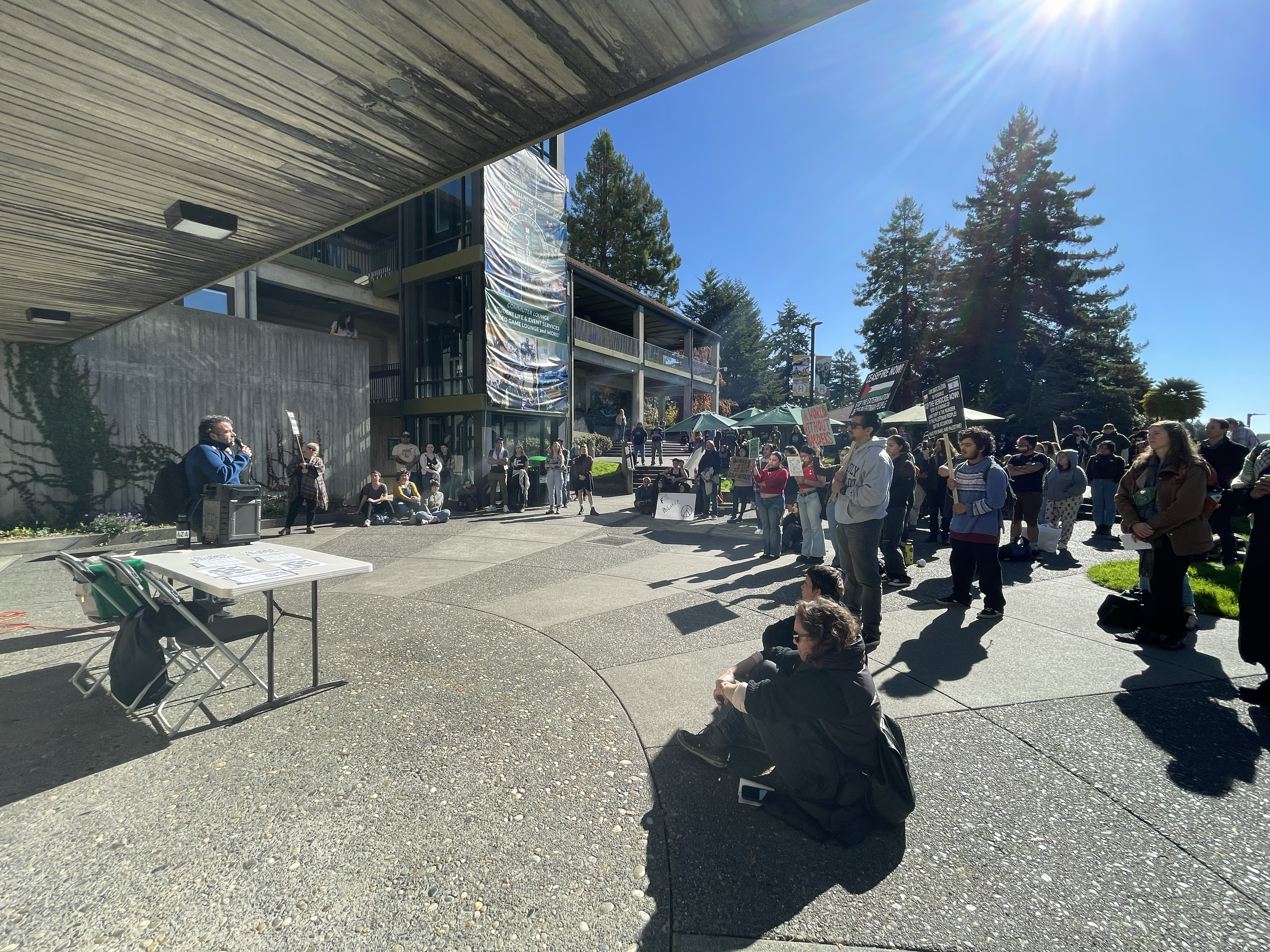
Students gathered in the University Center quad on Oct. 27 for a vigil to honor the lives that have been lost due to the war in Palestine.
Student and organizer of the vigil, Jamilla, who has declined to share her last name, began by thanking the crowd for joining her to remember and honor the Palestinian people. She continued speaking about the attacks that had been launched onto civilians, mentioning the resilience of the Palestinian people and expressing thankfulness for the safety of her family members that are still in Palestine.
Jamilla passed the microphone to her friend and colleague, who told a personal story of growing up in New Jersey as a young Jewish girl, being told to collect donations for causes that funded tree planting in Israel and feeling responsible for the loss of lives after being informed on the history of the State of Israel. The microphone was passed to various students and faculty members who had prepared speeches entailing their experiences and calling for an end to the occupation of Palestine.
Throughout the speeches, a few were able to form a volunteer group, with students and community members offering to be involved in gathering press, spreading awareness, helping with city council matters and more. Jamilla ended the vigil with chants for peace in Palestine as classes were being let out at 1 p.m.
Students and community members alike attended the vigil. Kiara Farias, a Critical Race and Gender Sexualities (CRGS) major, attended the vigil to become more educated on what’s happening in Gaza and the West Bank and to show their support for Palestinians.
“This is a humanitarian crisis,” Farias said. “[I am] forever and always going to be against genocide and going to [support] liberation for those like Palestinian people.”
Michael Steeleman, also a CRGS major, attended the vigil for the same reasons as Farais.
“I come from a population who was forcibly removed from their land and is still continuing to deal with that trauma,” Steeleman said. “I think it’s ridiculous to still view that and have that happen in the present day.”
Steeleman and Farias both believe that through unity, petitions, protest and creating opportunities to show community support, vital steps can be taken to make a difference individually and collectively.
One of the students who volunteered to help with organizing future vigils and protests is Margarita Fedorova.
“I’m here because I feel pain – I heard the cries of Palestinians in Gaza, for people to draw awareness and support,” Fedorova said. “I’m Ukrainian, and we have a lot more in common than people may think. As long as we keep talking about it, things can get better.”
Jamilla, the organizer of this vigil, has been taking several initiatives to educate the community on what is happening, such as the history of resistance through embroidery.
“The level of violence that we are seeing happen right now is just the most horrific, egregious thing I’ve seen broadcast on TV,” Jamilla said. “I’m grieving. I have family and friends in Gaza that have lost their homes at this point. This is the least I can do to be speaking out against that, and organizing a collective response to end this horrible violence.”
Jamilla believes that the university needs to have a stronger stance in response to what is happening to Palestinians.
“A neutral stance on this is unacceptable. The university really should be… acknowledging the level of violence of what this actually is, and not just taking a neutral stance because they’re worried about creating riffs or waves,” Jamilla said. “It’s about being against genocide, and our voices matter in bringing an end to that.”
Cal Poly Humboldt served what is essentially an eviction letter to students experiencing homelessness and residing in vehicles such as vans, campers, RVs and motorhomes on-campus. To provide a comprehensive understanding of this evolving situation, we’ve compiled a timeline of key events in this ongoing story.
Wednesday, Oct. 25 – Initial Notice
Cal Poly Humboldt sent out a campus-wide announcement on Wednesday, Oct. 25, that sent shockwaves through the campus community. In the announcement, the university said that they have decided to enforce a previously overlooked policy, stating that students living in their vehicles on campus would have to find housing elsewhere due to “unsanitary and unsafe conditions.”
This abrupt announcement took the community of students living in alternative housing by surprise as many of them have been living in alternative housing for multiple semesters without incident.
“University policy will soon be enforced without exception,” the email stated.
The announcement didn’t highlight any specifics in regards to what the unsanitary conditions were, or how this policy would be enforced. The Marketing and Communications department for the university declined to comment on these questions.
For many students living in alternative housing, being on campus is crucial, because it’s the only viable way they can afford to get an education. With the increasing prices of tuition and everyday living, several students stated that if they’re forced to move off campus, that will cause them to leave permanently.
“It’s really hard for me to be able to live any other way,” said Carrie White, a senior biology major. “If I was forced to move, I would probably have to drop out of school.”
Students also prefer to live in their vehicles on campus because with the community they’ve built, it adds another layer of safety.
“We park close together because we look after each other … it feels a lot safer,” White said.
Friday, Oct. 27 – Alternative Living Club
The Alternative Living Club held its first official club meeting, which was originally meant to inform others who are interested in living in alternative housing. Instead, due to the recent announcement, they had an open discussion about the RV sized elephant in the room: the university evicting them.
The meeting was packed with students and faculty alike, who were concerned about the recent policy enforcement. The club meeting, which was led by President Maddy Montiel and Vice President Brad Butterfield, asked club goers to help support their cause by signing their petition to stop the eviction, and continuing to share their mass emails.
“We are now going to push for the campus to offer us resources and amenities in a way that would actually help us,” Montiel said.
Samuel Parker, President of Associated Students (AS), stated that AS would continue to pressure administration and figure out the root of the issue.
“It just came out of nowhere,” Parker said.
Many of the students at the meeting stated that the solutions the university provided in the email such as temporary housing were just that— temporary, and not a real solution for them. They say being on campus is the only concrete solution.
Tuesday, Oct. 31 – Official eviction letters have been served
On the afternoon of Tuesday Oct. 31, in parking lot G11, a heated meeting erupted between students and administrators after eviction letters were handed to students who have been living on campus in their vehicles.
Students pushed back against the decision and stated that there was no communication beforehand and that the enforcement and timing of this policy is extremely problematic for their safety and well-being. The unsigned letter of eviction stated:
“If this vehicle remains parked on campus after noon on November 12, it may be towed at your expense. Additionally, the owners of those vehicles that require towing may be referred to the Dean of Students for disciplinary action.”
At the tense Tuesday meeting, students waited for Cris Koczera, Interim Director of Risk Management & Safety, Stephen St. Onge, the Executive Director for Student Engagement & Enterprise Services, and Dr. Mitch Mitchell, the Dean of Students, who presented the letters of eviction.
At the meeting, Koczera stated that the sanitary issues are what brought the conversation up, but that ultimately they are going through with the eviction due to the violation of campus policy that has been long overlooked. Koczera added that the camping on campus was getting out of control.
“It’s not camping, it’s homelessness,” White said, adding that this is a reflection of the administration, and instead of pushing them off campus into county resources that are already full, they should do something about it and work with the students.
Students also raised concerns over the technicalities of what enforcement would look like. For instance, according to Koczera, students would be able to park their vehicles all day and overnight, but sleeping in the vehicle overnight is what violates policy and could lead to citation.
When asked how they would determine if students were sleeping in their vehicles, Koczera said that it would be both the Parking and Transportation Services and the University Police Department observing the vehicles. If they see behavior that leads them to believe there are people occupying them, a citation could be issued.
Students continued to press the administrators about the evidence there was of them being unsanitary. Students argued that this evidence was not proof of them being unsanitary. Koczera stated that there had been several complaints about the students living in their vehicles on-campus, including that photos were taken of buckets with human waste, and a photo of feces on the pavement. Koczera would not say who took the photos.
Caleb Chen, a graduate sociology student who lives in alternative housing on campus, stated that he does in fact have a bucket outside of his vehicle that’s been there since mid-August. However, it’s used for foraging and collecting rain water.
“There has never been human waste in this bucket,” Chen said. “I use it to transport foraged goods that I eat. It’s a before bucket for human food not an after bucket for human waste. For the school administration to send an email to the entire campus accusing a handful of students of spreading human waste around campus is straight up slanderous.”
Photo by Alex Anderson | Associate Vice President for Student Success Mitch Mitchell (left) and Chris Koczera (dressed in blue next to right of Mitchell) the director for risk management & safety services at Cal Poly Humboldt serve a perceived eviction letter and campus resource flyers to those living in their vehicles on campus on Oct. 31. Maddy Montiel (dressed in white) expresses concerns for the students who will be effected by the decision.
Tuesday, Oct. 31 – Senate Meeting
Alternatively housed student eviction notices was a topic of discussion at the university senate meeting on Oct. 31 in Nelson Hall. Faculty raised concern over the new policy and the negative effects that would be placed on students. The wording of the schoolwide email regarding the new enforcement of the university’s parking policy alarmed several faculty members who were in attendance.
Associate Professor in the Sociology department Michihiro Clark Sugata raised concerns over the new parking enforcement policy and the school wide email that was sent out on Oct. 25. Sugata worried about the new enforcement policies and the effects that would have on the well being of the students involved. Sugata felt the students were being wrongly characterized as unsafe and unsanitary.
“Regardless of the fact, if it is a policy issue, policy could be changed and the central fact should fall onto what is the best interest of our students and protection of their well being,” Sugata said. “And this is where the other two rationals become incredibly problematic…the language was that this was creating unsafe and unsanitary conditions for the community as a whole. Thus, our students were being framed as dangerous and dirty. And these are classic tropes that are used to criminalize certain populations.”
There are several campuses in California that have taken action to help students who are living alternatively. Long Beach Community College and UC Santa Cruz have set up alternative housing options and have provided services to students living alternatively. Specifically, LBCC set up a safe parking program that connects students who shelter in automobiles to a designated location for overnight parking.
Cal Poly Humboldt Sociology Professor Josh Meisel referenced LBCC’s safe parking program as a potential model that Cal Poly Humboldt could explore in order to look out for the well-being of students. Meisel proposed to the senate that the issue should be agendized, and that senate members should open a dialogue to discuss what is needed to help students.
“These are our students, they are not to be feared and there are models out there that we could potentially explore,” Meisel said. “There’s a model program at Long Beach community college that provides a safe place for students to park and have access to facilities on campus overnight.”
The meeting concluded with the senate agreeing to set a time during next week’s meeting to discuss the eviction matter in depth and review what further actions will be taken.
Thursday, Nov. 2 – Protest
Citing the university’s lack of compromise and inability to reach an agreement with students, students are organizing a protest on Thursday, Nov. 2 in the G11 parking lot at 11:00 am and will run all day into the night. The homeless students living in vehicles encourage those who wish to show their support, to bring signs, set up tents if you have one, park your cars and occupy the space.
Disclaimer: Brad Butterfield is an editor for The Lumberjack, however he did not help write or edit this article.
Cal Poly Humboldt Biology Major Amelia Francis uses frosting and food coloring as an artist uses pigments, paints and glazes to create works of art. Her love of science and art has transformed into a home-based business selling delicious, mouth-watering cupcakes. Every cupcake is skillfully frosted to create a near-accurate representation of a flower. The artistic details offer far more than just a beautiful cupcake adorned with a frosting flower. The cupcakes and cakes at Barn Owl Bakery are delicious and that is not by chance, every recipe has been diligently planned and taste-tested to create a delectable treat.
Barn Owl Bakery is an approved California Cottage Food Operation, which means it sells home-made food prepared outside of an industrial kitchen. The California Homemade Food Act (AB 1616) allows for home-based culinary businesses to sell certain non-perishable homemade food products, so long as they register with the county, follow the approved Cottage Food Operations application process and are in line with procedures.
“I looked at all of the different rules that followed a cottage food operation and went: could I make that work? Yes. Could I make this work? Yes. Could I pay that much for permitting? Yes,” said Francis. “The more I mentally said ‘yes’ to the different aspects, the more I committed to doing it.”
The idea of creating a home-based business appealed to Francis for many reasons, a couple being that it offered the freedom to work for herself and have quality control over the product, while still allowing less financial risk than having a brick-and-mortar restaurant. Francis was finishing up her associate degree when she began the application process and testing recipes last fall. Barn Owl Bakery has been open for business, busting out delectable cupcakes and cakes since it was licensed as a Cottage Food Operation in May 2023.
“It’s very risky to be a business owner,” said Francis. “I did it as a Cottage Food Operation intentionally because you don’t have to pay for rent and utilities, all that stuff. It’s a lower risk, but it’s still risky.”
The Cottage Food Operation application process requires each recipe to be carefully written out with all the ingredients listed along with their precise weight. Next, the labels and information are mailed to the Department of Health to check and approve for licensing. Francis says the paperwork was fast; it was the process of creating the recipes and labels that required the most time. Once all the labels were submitted, they were approved quickly, and Barn Owl Bakery was open for business. She’s created recipes for products beyond cakes and frosting that she submitted for approval, but customer demands have kept her focused-on baking floral cupcakes and cakes.
“I thought that at most, I would sell like a dozen cupcakes every month or so,” said Francis. “I didn’t anticipate finding a niche in our community. I would rather bake myself than buy something that wasn’t as good as homemade! I had the thought, maybe there are other people in the community who like their baked goods to taste how I like them too.”
Francis has got the baking down to a science. Francis says the Food Network show “America’s Test Kitchen” was influential to her success as a baker. The educational cooking show explains the chemistry processes behind baking. She accredits having an understanding of the sciences to successfully adapting her recipes without wasting ingredients.
“I’d say understanding the science behind the ‘why’ in baking is vital if you are going to sell baked goods, because problems arise that you need to troubleshoot all the time,” said Francis.
Francis practiced diligently on frosting cupcakes as well as thoughtfully creating flavors for her recipes before opening for business. Of all the recipes she perfected, Francis says perfecting a frosting recipe that will please a wide range of tastes was the most challenging. A mixture of chemistry and personal creativity, Francis homed in on what makes a perfect cupcake with perfect icing on top.
“My favorite part is mixing in wet ingredients and seeing them all come together in one homogenous mixture, which sounds weird, but it’s very satisfying,” said Francis. “Yeah, it all becomes smooth with the correct temperature, and I know that it’s all on the right track and going to be perfect.”
Balancing the demands of running Barn Owl Bakery and being a full-time student takes structure and determination. Education has always been a top priority and focus for Amelia. That is one of the reasons why she embraced the idea of a Cottage Food Operation over a full-time business that would require her to take time away from school.
Before starting Barn Owl Bakery, baking was an outlet for creativity and a way to relieve stress. Francis had always felt a calling towards science and art. The flowers that adorn the cakes are little works of art themselves. Before baking as a creative outlet, Francis had taken several ceramics classes as well as a color and design class. Customers are spreading the word about her cakes and orders are filling up.
“I like to do all kinds of art,” said Francis. “If I feel stressed, I usually turn to baking. Baking has been my creative outlet to release stress, but now it’s also my work.”
Barn Owl Bakery has now taken on wedding cake orders and is booked out until the New Year. Perhaps the last chance this year to try some of Barn Owl Bakery’s delectable desserts will be on Saturday, Oct. 21, at the Harvest Artisan Faire held at the Eureka Veterans Hall. Barn Owl Bakery will have a table set up selling cupcakes, as well as several other treats that she hopes to offer in the future. There will be cake pops and cake slices, cocoa bombs and free samples at the event. New cake flavors such as vanilla latte and angostura orange will also be available. Appetizing flavors and nuances, as well as every visual detail has been artfully thought of in creating each treat that Barn Owl Bakery offers.
“It’s been amazing, and I’m so thankful for everyone that has supported me so far,” said Francis. “I love this community so much.”
Authentic champagne is created in France, highly acclaimed wine comes from Napa and Humboldt County stands as the central hub for premium cannabis.
Measure A, also known as the Humboldt Cannabis Reform Initiative (HCRI), is a voter initiative scheduled to appear on the March 5, 2024 ballot in Humboldt County. If approved by voters, this measure would introduce 38 pages of new rules and restrictions to all existing cannabis farmers operating legally in Humboldt.
Origins of HCRI
The HCRI spawned from a conflict between Kneeland residents and a neighboring cannabis farm concerning water resources and traffic. Mark Thurmond and Cal Poly Professor Emerita Betsy Watson took charge as proponents, collaborating with people in other areas of the county.
A petition circulated, highlighting the protection of the environment and small cannabis farmers, along with preventing large scale cannabis farms. After reaching 7,000 signatures, the measure qualified for the ballot.
Notably, the 38-page initiative was drafted by a San Francisco law firm, Shute Mihaly & Weinberger, which was submitted on March 4, 2022, and did not undergo public review or receive public input. If passed, Measure A cannot be altered or amended from its original form, requiring a ballot initiative for the next elections.
Current legislation
Due to the impact of changing market dynamics and statewide legalization of cannabis, Humboldt County revamped its legal framework. The Humboldt Board of Supervisors (BOS) enacted two land use ordinances, starting with the Commercial Medical Marijuana Land Use Ordinance in 2016 and the Commercial Cannabis Land Use Ordinance in 2018.
Both followed public scrutiny with many stakeholders including cannabis cultivators, environmental groups, neighborhood organizations, as well as county and state officials for implementation. Further refinements were made in 2020 to enhance the framework’s efficacy.
“These changes have successfully reduced the overall environmental footprint of the industry and strategically relocated many [cannabis] farms to agricultural land,” said Executive Director of the Humboldt County Growers Alliance (HCGA), Natalynne Delapp.
Delapp explained how the county has experienced an 89% decline in cannabis farms since 2015, decreasing from 15,000 illegal grows to 775 legal permitted farms, with an estimated 1,000 illegally still operating.To obtain cultivation permits, applicants must display the serviceability of their farms’ access roads, reduce neighborhood impacts and ensure water sourcing methods are environmentally sustainable.
At a BOS meeting on June 27, 2023, the Director of Planning, John Ford, explained the agencies subject to review include the county Department of Public Works, Department of Environmental Health, along with state and federal agencies owning public land, California Department of Fish and Wildlife, Regional Water Quality Control Board and often surrounding tribes.
Foggy fine print
The initiative would modify the county’s General Plan, which serves as the primary guide for land use planning in Humboldt. Delapp said this revision would replace a significant portion of the existing county cannabis regulations, which took eight years of robust public process.
The initiative is “unworkable and would be devastating to the [local] cannabis industry,” said Attorney Paul Hagen from the North Coast Environmental Law Office.
A restriction of one active permit per cultivator could leave additional permits for activities void.
“If Measure A passes, the seed of [Humboldt] cannabis tourism will die before it has a chance to root,” said Founder of Humboldt Cannabis Tours, Matt Kurth.
Annual expiration of cultivation permits would make reapplication necessary. The vagueness of the renewal process creates ambiguity regarding public hearings for renewal applications. Ford explains in the Amended Analysis that conducting public hearings annually for permit renewals is inconceivable. Furthermore, renewal on any outstanding complaints would be prohibited regardless of validation.
The HCRI broadly defines expansion as “any increase in the number or size of structures connected to cultivation,” including environmental improvements. In relation, farms must be located on two-lane paved roads, challenging the hundreds of farms currently operating on dirt roads. According to a technical memorandum provided by LACO Technologies engineering department for the county in 2020, upgrades would range from $170,000 to $280,000 per mile.
Cultivation of cannabis includes drying, curing, grading and trimming, requiring a ‘processing’ license which would also be prohibited.
Additionally, farms would be capped at 10,000 square feet, including a discretionary review for any expansion over 3,000 square feet.
Out of sight, out of mind
In an effort to explain why class II whitewater rapids rivers are being de-watered, Watson provided a map of permitted cannabis farms. She said there were 1200 active cannabis permits with an estimated 300 non-operational due to the overproduction of cannabis statewide from price drops.
“In 2022, the south fork of the Eel [river] ran dry, and Freshwater Creek did not have enough water for the park to have its annual swimming hole,”said Watson.“The ordinance in place now calls for 2400 more [permits], for a total of 3600.”
Watson added that the initiative would cap the number of permits at 1200.
According to the HCRI Amended Analysis by the Humboldt County Planning and Building Department on June 27, 2023, there are 1,027 active permits, with 210 of them being newly approved. Areas with prime agricultural land are concentrated with retirement, remediation and relocation permits, which were redirected from environmentally sensitive areas.
“This is prohibition masquerading as environmentalism,” Delapp said.
A controversial summary, due to letters filed back and forth between HCRI’s attorney and the county’s Planning Department of the HCRI analysis, refers to geological studies, stating “the initiative’s groundwater protection measures are unnecessary because average per-acre groundwater recharge in Humboldt County is high, even during drought years.”
Currently, there are no environmental groups in the county endorsing the initiative or taking sides.
“The current ordinance is the best in the country, maybe even the world,” a confidential source from a local environmental group said.
Lawsuit
As of Oct. 11, 2023, the HCGA and seven cannabis farmers filed a lawsuit at the Humboldt County Court, alleging the petition of the HCRI did not include the complete initiative text, as required by law. It also contests false and misleading information in the petition. As a result, the lawsuit seeks the removal of the initiative from the ballot to protect the integrity of the election process.
If you are not a registered voter and want to participate, go to http://registertovote.ca.gov. The last day to register is Oct. 23, 2023.
“She makes it look easy, but I assure you – it is not,” banjo player Kyle Tuttle said to an audience of over 800 packed into the Van Duzer theater on Saturday, Oct. 7. Tuttle was referring to the guitar-phenom standing center stage who had sold out the venue, Molly Tuttle. The Tuttles were joined onstage by stand up bassist, Shelby Mea, and mandolin player, Dominick Leslie, calling themselves Molly Tuttle & Golden Highway. For over an hour, Molly and her band put on an absolute clinic of bluegrass musicianship to a unanimously captivated audience.
The night began with opener Cristina Vane who detailed the hellish 37 hour drive that the performers recently made from Nashville. She clarified that it was the most beautiful hell you can be in.
Vane’s set consisted of skillful guitar playing, stellar vocals and ultimate confidence on stage. Her style of music both tipped the hat to traditional country, folk and bluegrass, while remaining distinctly unique with a contemporary sound. It would have been a tough act to follow, had the next performer been anyone other than two-time International Bluegrass Music Association’s (IBMA) guitarist of the year, also the first woman to win the award, Molly Tuttle.
Photo by Brad Butterfield. Molly Tuttle sings to a packed Van Duzer theater on Oct. 7th.
Molly’s booking at the Van Duzer theater is in large part thanks to Michael Moore Jr., the Associate Director of the Gutswurrak Student Activity Center and the lead of the Centre Arts program.
“Molly is early in her career and she’s really on the rise right now,” Moore said. “This is mostly a community show, there are some students here and it’s over 10% students, so it’s not like it’s a small number, but it’s mostly community.”
Tickets to the show were free to all students currently enrolled at Cal Poly Humboldt. Allison Hair had a fun time despite the low student turnout.
“I love Molly Tuttle,” Hair said. “I think she’s really beautiful and talented. I was kind of sad there were no students here, but I had fun.”
Tuttle learned to play guitar by ear, only receiving a formal education in music when she enrolled in Berklee College of Music. Once the crowd had been warmed up, the bassist and mandolin player exited the stage for the Tuttle duo’s rendition of “San Francisco Blues,” which Tuttle described as a universal feeling.
“I got the San Francisco blues / Now there’s nothin’ left to lose / I can’t afford the dues and so I’m leavin.”
In another ode to the Golden State, Molly Tuttle and the Golden Highway played a cover of “White Rabbit,” originally written by the San Francisco band Jefferson Airplane. While the song may not seem suited for a bluegrass cover, the band captured the essence of the song with brilliant musicianship and uninhibited vocals from Molly, who has also won IMBA’s female vocalist of the year for the past two years.
Photo by Carlina Grillo. Molly Tuttle closing up her performance without her wig on.
An undeniable aspect of Molly’s performance and music is her acceptance of, and strength to share her experience with alopecia, an ailment which causes hair loss.
“I was inspired and moved to tears when she took off her wig before performing ‘Crooked Tree,’” said Jennifer Trowbridge, an accomplished guitarist and professor teaching music classes at Cal Poly Humboldt.
Not only did Molly hit each note perfectly throughout the performance, her band also played exceptionally well, continually weaving in and out of lead parts with ease. It was a special night to be in the Van Duzer theater and Molly’s confidence and conviction were infectious.
Among the many empowering songs in Molly’s setlist was a song called “Side Saddle.”
I said I don’t wanna ride side-saddle / Side-saddle, side-saddle / I just wanna ride bow-legged / Bow-legged like the boys.
“This song resonates with me as a female guitarist and teacher,” said Trowbridge. “In the CSU system, there are over 40 guitar instructors and only two are women.”
Before her final songs, Molly told the packed theater that she was going to let her hair down and subsequently tossed her wig onto a chair lit by a spotlight. The band circled around a singular microphone and closed the show to an entranced audience.
“She sang powerfully and looked like my imagination of a chic Amazon[ian] warrior,” Trowbridge added. “She absolutely glowed. As a woman, I felt proud of her strength and courage to share it on stage,” said Trowbridge.
This website uses cookies to improve your experience. We'll assume you're ok with this, but you can opt-out if you wish. Cookie settingsACCEPT
Privacy & Cookies Policy
Privacy Overview
This website uses cookies to improve your experience while you navigate through the website. Out of these cookies, the cookies that are categorized as necessary are stored on your browser as they are essential for the working of basic functionalities of the website. We also use third-party cookies that help us analyze and understand how you use this website. These cookies will be stored in your browser only with your consent. You also have the option to opt-out of these cookies. But opting out of some of these cookies may have an effect on your browsing experience.
Necessary cookies are absolutely essential for the website to function properly. This category only includes cookies that ensures basic functionalities and security features of the website. These cookies do not store any personal information.
Any cookies that may not be particularly necessary for the website to function and is used specifically to collect user personal data via analytics, ads, other embedded contents are termed as non-necessary cookies. It is mandatory to procure user consent prior to running these cookies on your website.