By Jacqueline Zuniga
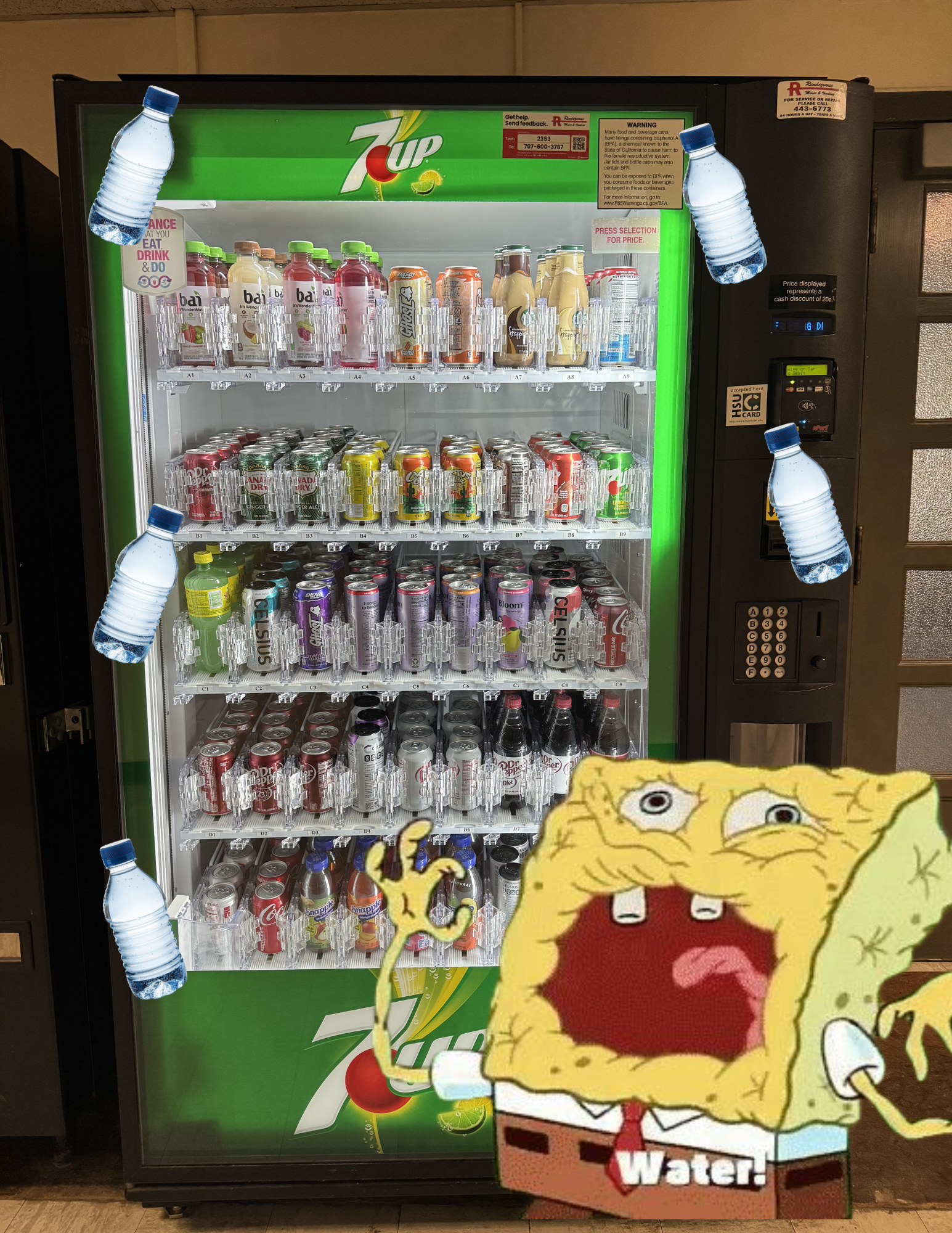
Students who have ever purchased anything from the vending machines on campus may have noticed that there are no water bottles being sold.
The university began phasing out plastic water bottles in 2011 after students ran a successful environmental campaign. According to Melissa Hutsell, Communications Specialist for Marketing and Communications at Cal Poly Humboldt, students participated in a grassroots initiative called Take Back the Tap, which pushed campus leaders to eliminate the use of plastic water bottles. This made Cal Poly Humboldt one of the first public universities in the nation to do so. In 2018, the California State University system adopted a policy to eliminate the sale of plastic bottles, straws and bags across all of its campuses. With the phasing out of bottles, the installation of water bottle filling stations increased.
“Before this, the university sold as many as 80,000 single-use plastic water bottles annually,” Hutsell said. “The goal was always to make water more accessible to students by encouraging reusable containers for free water filling.”
The university has received recognition for reducing plastic use and was awarded a Plastics Reduction Partner certification from the National Wildlife Federation in 2024. Additionally, the Post Landfill Action Network recognized the university with a bronze Zero Waste Certification, ranking it third out of the top 10 Zero-Waste campuses in 2023.
Waterfill stations are located throughout campus, and more are being added as facilities staff work to upgrade drinking fountains over the next two years. For students without reusable bottles, free water bottles are sometimes given away at campus events by teams such as Housing and Residential Life and Dining Services. Reusable bottles are also sold at campus retail locations. The university’s new water bottle policy seems to be receiving positive feedback from the campus community.
“Generally, we’ve found that most people have expressed gratitude and inspiration, stating that they appreciate this effort and are excited by these kinds of initiatives from the university,” Hutsell said.
While the university reports positive feedback, some students don’t have many positive things to say about the policy. Ava Hernandez, a second year student, states that the lack of bottled water can be frustrating.
“I think it’s kind of annoying that they’re not in the vending machines, especially when I used to live on campus,” Hernandez said. “I know that water from the fountains isn’t always the cleanest, and buying something like a Brita isn’t the most affordable option for some people. I wish water were available to buy in vending machines.”
Katelyn Lemos, a second-year psychology student, thinks that because of how much she has to walk, there should be more water.
“I feel like there should be vending machines with water on campus, especially with the amount of stairs and hills everywhere,” Lemos said.
Stores on campus, like The Depot, College Creek Market Place and The Cupboard do have aluminum and glass bottles as options, though they can be out of the way for some students.
“I do think metal water bottles are a good alternative,” Hernandez said.
Lemos, on the other hand, believes the restriction to reusables is still a step too far.
“I think the aluminum waters are okay. I understand it’s for recycling, but they make the water taste like pennies,” Lemos said.
As the university continues to emphasize sustainability and reduce plastic use, the absence of water bottles in vending machines remains a topic of debate among students.
Jacqueline is a journalism major, a news manager for KRFH and she aspires to be a sports journalist one day
Leave a Reply