In the past few days, I, like any Cal Poly student, have received several messages in my university email. Of those, two in particular stuck out to me.
The first was an email from the Office of Sustainability on campus, a message both plain and plaintive: Would I take a brief survey regarding the sustainability of the university? Since I wasn’t doing anything important other than checking my email, I did what I felt was responsible and gave it a moment of my time.
As I recall, the survey asked for me to explain my knowledge of the sustainability programs on campus, my feelings on them, and my understanding of the concept of sustainability in general. I felt generally confident in answering the questions; after all, any Humboldt student would surely have some awareness of the “green” initiatives, from the food composted diligently by workers in The J to roving RA’s urging residents to turn off electronics not in use and save a few watts. And, of course, it’s often said that Humboldt County as a whole has a community that encourages sustainable practices and products. From paper coffee cups to public transportation, electric vehicles to the many varieties of locally sourced, small-batch cannabis. The Humboldt community seems to have a good relationship with the university, or, failing that, at least similar goals in sustainability. My coworker, pushing 50, often cycles to work — about nine miles from his house in Eureka — along what I’m told is a relatively new bike path. On campus, you’d be hard-pressed to find a spot to sit that’s more than twenty feet or so from a recycling bin, or to walk to class without a cyclist whizzing past you. Cal Poly Humboldt, it could be said, is sustainable.
Considering all this, it came as almost a shock to receive the second email that caught my attention this week: an email from OpenAI, straight into my university-assigned inbox, inviting me to join a workspace for “ChatGPT EDU” called — you guessed it — “Cal Poly Humboldt.” Whatever could this mean? In the contemporary discourse on artificial intelligence, it’s often said — and often believed — that AI uses a lot of water. This is somewhat true; cooling systems used in data centers that process users’ AI requests and prompts use massive amounts of freshwater. Yes, 70% of the Earth is covered by water; however, only 3% of the world’s water is freshwater. It’s estimated by the United Nations Environmental Report that close to two-thirds of the world’s population will experience a water shortage at least one month out of every year, with that number increasing in the near future. The report states that water use should be “’Decoupled’ from economic growth by developing policies… to reduce or maintain consumption.” Generative AI specifically has also markedly raised the water usage of many artificial intelligence companies.
Less discussed, yet still relevant, is AI’s electricity usage — data centers are projected to reach 12% of the US’s total electricity consumption by the year 2028, according to the 2024 United States Data Center Energy Usage Report. The amount of electricity and water used to create, maintain and operate data centers continues to rise, without any associated rise in sustainable methods or technologies to offset this increased usage. AI, it could be said, is not sustainable.
So, wait; if Cal Poly Humboldt is sustainable, why is it encouraging students to use AI?
I’ve had several teachers spanning critical thinking with computers to native american studies, showing in their classes how Google AI summaries, Large Language Models and yes, even ChatGPT, are decidedly incorrect or misinformed in a variety of situations. Every course syllabus I read during my first week of classes included a clause prohibiting the use of artificial intelligence for coursework and assignments. What I initially saw as the university’s stance on AI, that it shouldn’t be used in an academic setting, is being contradicted by this invitation, this encouragement to use AI. It flies in the face of the sustainable vision mentioned on Cal Poly Humboldt’s website, claiming: “We are proud of our longstanding commitment to environmental and social responsibility.”
It would seem to me that there is no pride in that commitment. I certainly can’t take any pride in it, given the circumstances. I would go so far as to say that at this moment, that commitment has been broken. In my opinion, AI has no place at a college that wants to call itself sustainable.
Where does that leave us? The survey asked me if, while applying to colleges, Cal Poly Humboldt’s drive for sustainability was a factor in my decision to attend. I answered yes. When it came down to it, choosing the right college was choosing a place I could grow into the kind of person that enacts positive change in the world. Humboldt certainly seemed like the place to do just that — and I believe it still can be. I hope that the university, as it continues to grow and change — just like its students are proud to do — can return to and honor its stated ideals, so that we may all take pride in a campus committed to sustainability.
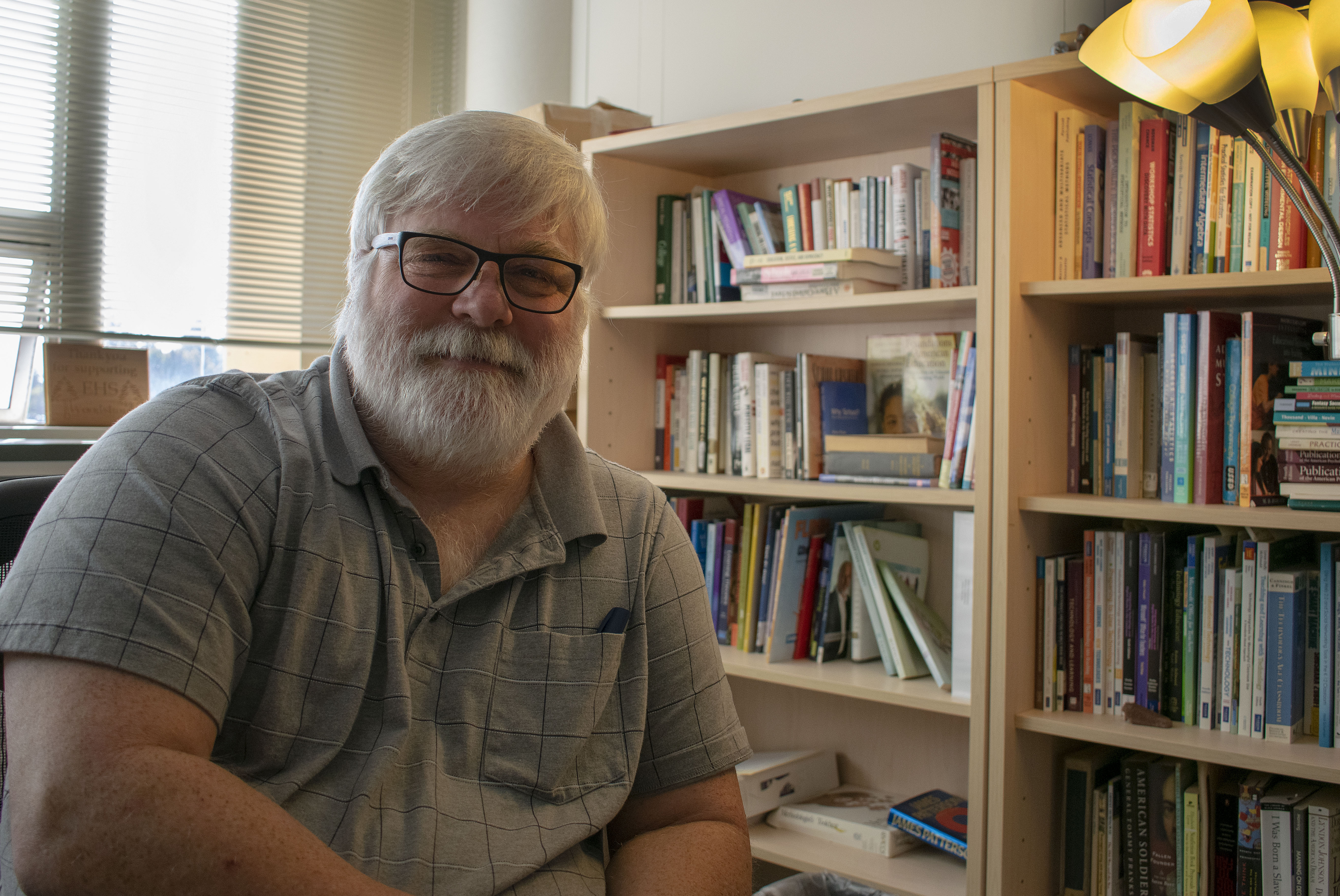
Peter Nielsen (he/him/any) is a freshman at Cal Poly Humboldt and an avid writer and poet. He is double majoring in Theatre and Computer Science. He is deeply passionate about environmental and humanistic topics.
Interim President Michael Spagna recently called for us to, “come together as a community.” But what does community mean to you, Dr. Spagna? Is it just a place, a logo, or something more?
True community is rooted in compassion, respect, and mutual support. It involves standing up for each other, not merely engaging in, “courageous conversations.” I do not feel welcomed by this empty call for unity while voices speaking out against the oppression of Palestinians are suppressed. Silence in the face of such injustices is complicity. The real community at Cal Poly Humboldt consists of those who speak out, even in the face of repression, for the dignity and humanity of the Palestinian people. As long as your version of community includes the dehumanization of others, I cannot be part of it. My community is with those who fight for justice.
To my fellow humans: the time to stand against oppression is now. True community is built on shared joy and struggle for liberation. Free Palestine.
To the students of the university of Cal Poly Humboldt,
It is my regret to inform you that over the summer I was recalled by our campus’ administration from the Panetta Institute for Public Policy, I was disavowed by our dean of students Dr. Mitch Mitchell for being “unfit to represent” our university, and ultimately I was impeached and removed from the office of A.S. president on meeting number 2.5 of the board of directors. It is my understanding that this is unprecedented, as all of this occurred before the typical orientation/training that occurs for the position and before the semester even began. After being interviewed by Brad Butterfield, I was thinking about how he asked a question along the lines of, “If you were still president, then what policies would you be supporting on campus?” Afterwards, I wrote a list of seventeen policies that I would support if I were still the A.S. president. This list is not comprehensive and is in no particular order. It is focused around policies that I would support, rather than focus on policies that I oppose, although the two can often get intertwined. I would like to clarify that several points were written in reference to the lockdown of campus that took place over the summer. Since then, a new Time, Place, and Mannerpolicy has been put into effect which officially closes off campus at night and removes the one-hour of sound amplification that was previously permitted on the SAC Quad each day. It is yet to be seen what impact this will have on the activism that takes place on our campus.
Keep it up out there,
Ethan LeVering
Seventeen Policies
1. I support the expansion of waste reduction techniques and our campus’ zero waste initiatives.
2. I support an end to the ticketing of students living in their vehicles and the implementation of a safe parking program on our campus for these students.
3. I support increased access to menstrual products to all public restrooms on our campus.
4. I support increasing the number of gender-neutral restrooms on our campus.
5. A Bachelors of Arts in Communications is currently the only degree our university offers to the prisoners of Pelican Bay State Prison. I support increasing the number of degrees the Incarcerated Schoolers Program offers.
6. I support increasing collaboration between the Associated Students and the cultural centers & collectives, such as ADPIC, El Centro, and Umoja on our campus.
7. I support the pro-ceasefire resolutions regarding the ongoing genocide in Palestine passed by the Associated Students and University Senate last semester (Spring 2024).
8. I support reopening campus to the wider community of Arcata. I oppose the new surveillance systems being put in place after the pro-Palestinian occupation of Siemens Hall.
9. During the occupation of Siemens Hall, access to Nelson Hall West (alongside that of the rest of our campus) was shut down. I support the Associated Student’s acquisition/purchase of a new building which is to be student-operated separate from the overarching key-card system on our campus.
10. I was very fortunate to have had the experience of taking the Yurok language class at Eureka Senior High School. I support the implementation of local indigenous language classes, such as Yurok, Wyiot, and/or Hupa, into the curriculum that our university offers.
11. I support our university reimplementing its currently defunct Industrial Technology program as a part of polytechnic rollout.
12. I support increasing the number of field courses, such as the Klamath Basin field course, Mattole River field course, and Costa Rica field course, offered by our university.
13. I support our university purposefully preserving several historic houses around campus. This includes guaranteeing the SJEIC’s continued residence in the Balabanis House and CCAT’s continued residence in the Buck House for as long as those organizations see fit.
14. I support the Campus Center for Appropriate Technology using the footprint of the now demolished Jensen House for the purpose of constructing a greenhouse attachment to the community garden.
15. I support, when also supported by respective departments, the implementation of new masters level degree programs.
16. I support the expansion of employment opportunities on campus, particularly within the core programs of the Associated Students.
17. I support implementation of more genuine student-lead democratic processes, and less systems of bureaucracy, within the general operations of the Associated Students board of directors.
I am writing in response to the article published on 11/16/22, “Faculty Union Challenges TimelyMD.” While I was frustrated by the one-sided tone of the article, as well as the unsubstantiated claims, and inaccuracies, within it, most of all I came away from it feeling sad and disheartened as I believe that, ultimately, the article is damaging to our students. The article was published immediately prior to fall break—a time when Counseling & Psychological Services (CAPS) was closed, and many traumatized, isolated, and struggling students would have benefitted from seeking help from TimelyCare therapists. The article essentially discourages students from seeking such support due to its unfair characterization of TimelyCare. For example, the sub-heading of the article calls it an “online faith based counseling service” while it is nothing of the sort (strangely, acknowledged late in the article, contradicting the earlier claim).
The University contracted with the company “TimelyMD” in order to expand health services on campus during a period of very high need, through special one-time pandemic funding. This funding, incidentally, could not be used to hire additional faculty counselors at CAPS. The CAPS faculty counselors were not replaced or harmed by the contract, instead they gained a partner in caring for, and expanding additional services to, our students. Contract or no contract, on-site counseling at CAPS will be expanding in the years to come.
It bears repeating, TimelyCare is not a faith-based counseling service. With a client base of about 250 colleges and universities, they have a breadth of providers to appeal to and serve the breadth of their population base. Their clinicians represent and reflect the diversity of the student populations served throughout the 38 states where they have contracts.
Counseling is just one of many of the health services TimelyCare offers. They provide same-day and appointment-based medical services, psychiatry, health coaching, and psychoeducational activities too. We wanted our students to have 24/7 access to these services whether they live locally or across the country. We wanted our traveling athletes to have access to all of these services. We wanted our students of color to have access to therapists with similar identities. We wanted all of our students to have “more”—more access, more choice, services over the winter and summer breaks. And, of course, as always, access to CAPS therapists when school is in session.
The argument that we should avoid business with companies that have a presence in one of the 23 travel-ban states is misguided and unrealistic. The CSUs, just like universities everywhere, have many business relationships / contracts across the nation. TimelyMD may have administrative offices in Texas, but the company and its employees are located across the United States. Most of the therapists who work with our students live, and are licensed, in California.
The article implies that students who come to CAPS are automatically referred to TimelyCare. This is not accurate and is oversimplified. The truth is that referrals are commonplace in the health industry and there are some cases where CAPS clinicians do refer to TimelyCare and other resources. October is always our busiest month of the year and historically we have had to refer students to other services at this time of year. Like any mental health facility, we must triage and figure out how to make the best use of all of our resources in order to provide
students with the care they need. Typically, at this time of year, we would be referring many students to off-campus private practitioners where they would need to pay out of pocket or use their insurance, and it can be hard to find someone with an actual opening. Now, with TimelyCare, we are able to also offer students a referral that will have no added expense, where they are guaranteed access, and that will work closely with CAPS to integrate care. With this contract, we doubled the services that students can access.
The idea that this service “puts faculty at a disadvantage” is just not true. The therapists at CAPS have an extra resource at their disposal. Clients in need have access to immediate support in the evenings and weekends when CAPS is closed—this gives the providers at Student Health & Wellbeing Services (SHWS) peace of mind and can be an important part of a treatment plan.
The claim that this “poses a new risk to students engaging with TimelyCare” is unsubstantiated. In fact, the ratings of TimelyCare counseling have been consistently high. For example, the average provider rating is a 4.97 out of 5. If any student has concerns about the care that they have received from TimelyCare clinicians, I encourage them to talk to me or a CAPS clinician to address it. We want to make sure our students are getting high quality and compassionate care whether it is through CAPS, TimelyCare, or an off-campus referral.
The statement that we are “outsourcing responsibility for our students’ wellbeing” is simply unfair. We have not replaced CAPS clinicians with this service, instead, we have supplemented the breadth and depth of services available. Our students of color have a greater diversity of clinicians to choose from; students can seek care in the evenings; and out of state students are not turned away due to licensing regulations. In my view, the campus is taking responsibility for our students’ wellbeing by offering expanded services during a national mental health crisis. Students can get real help—not just a nursing line or a crisis line—24/7—in addition to the substantial services that our medical and counseling teams provide.
As always, we encourage students to be informed participants in their health care, whether with us, TimelyCare, or outside practitioners or agencies. When students are seeking therapy through TimelyCare, I encourage them to look through the clinician bios or call the customer support line to find a therapist that is likely to be a good match. The therapy relationship is an intimate one and the therapist-client match is important.
I sincerely hope that students will take full advantage of all the wellbeing resources available to them. I have dedicated my career to the health of our students and I would hate for anyone to be deterred from being their own advocates and getting the support they deserve. In the future, I hope that Lumberjack reporters will seek comment from SHWS leadership prior to printing an article that addresses mental health resources for students, and that may negatively impact their health and wellbeing. Neither myself nor the Int. Associate Director of CAPS were consulted prior to the article’s publication.
Sincerely,
Jennifer Sanford, PhD, Int. Executive Director, Student Health & Wellbeing Services; Director of CAPS
I find it extremely redundant that Cypress residents are required to own an All Access meal plan. When I’ve asked school officials why they’re needed, they’ve just responded, “Cypress residents are required to have one of the All Access meal plans. Upperclassmen living areas that do not require a meal plan are College Creek and Campus Apartments, both of which have shared kitchen areas.”
I’m a junior who’s lived on campus for three years now, and Cypress has the best kitchen out of every residence hall I’ve seen. Yes, even better than the one in College Creek apartments. Having lived in College Creek apartments as a sophomore, I’ve found that Cypress has more counter space and many more cabinets for storage space. The Cypress kitchen has offered my suitemates and I enough room and resources to cook for 20+ people once a week for Cypress eighth floor’s “family dinners,” where both sides of the floor come together for a weekly feast.
A suite on Cypress can house up to twelve students, so I’d understand if we were required to have a meal plan due to the number of suitemates who share the kitchen. However, I can’t understand why we’re required to have an All Access meal plan.
As a student working in the housing department as a Resident Student Services Assistant, I’ve had the opportunity to study each housing option and meal plan that the school offers. The more I learn, the less it makes sense that Cypress suites require an All Access meal plan.
For anyone who isn’t aware how the on-campus meal plan system works, here’s a quote directly from the Meal Plans page on our campus housing website: “All living areas require a meal plan except College Creek and Campus Apartments. Residents of the Hill, Canyon, Cypress and Creekview Suites are required to have one of the All Access meal plans. Residents of Creekview Apartments are required to have any one of the meal plans.”
The cheapest All Access meal plan is the 5-day All Access plan. It’s $5,000 per academic year, and contains all access meals to the J five days a week, including 300 Flex dollars and 66 or 62 meal exchanges per semester. (The housing website says 66, the dining website says 62.)
One of the alternative meal plans that I’ll be using as a comparison is the Lumberjack 125. This meal plan that Cypress residents don’t have access to costs $3,500 per academic year, provides 125 meals in the J (which is honestly still more than enough J food for me), has 525 flex dollars, and 31 meal exchanges per semester.
As someone who isn’t impressed with the food that Chartwells has to offer at the J, I’d much rather have the Lumberjack 125, which has 225 more flex dollars and costs $1,500 less per year!
If I can’t convince school officials that Cypress residents should have access to the other meal plans available, I at least want an adequate answer to why we shouldn’t.
Associated Students do not stand nor condone any kind of disrespect. We value everyone’s thoughts, opinions, and presence within AS.
We are aware of an unsettling situation that occurred during our Executive cabinet meeting on Feb. 4 concerning members of the Associated Students and members of AS Core Programs at Cal Poly Humboldt.
During the meeting, President Jeremiah Finley was uncooperative with fellow board members and had cut the meeting short. During this meeting, the WRRAP’s R.O.S.E branch team was expecting a response from the board, but would not move forward due to solely wanting in-person attendance.
In addition to this, President Finley neglected his team by failing to acknowledge the presence of appointed members who joined through Zoom, assuming that, “they only joined through Zoom simply because they didn’t want to be in attendance in person,” though this was not the case.
First and foremost, we, the Associated Students do not accept or tolerate the sort of behavior that was presented on that evening. We understand the concern, the anger, and the feelings of disrespect. You are heard and your feelings matter.
Next, we find it critical, to be honest with our student body and with each other. Unfortunately, there has been an unhealthy power dynamic within AS. There have been many issues regarding communication, equality, and access to opportunities. These are issues AS members have been dealing with but have managed to persevere through while keeping our student body and AS Core Programs at the top of their priority list. We are actively working towards community building and furthering our relationships with our staff and student leaders.
Due to the continuous amounts of disrespect and unacceptable behavior, AS will be moving forward with the impeachment process.
Associated Students stands for the purpose to educate, empower, and most importantly elevate all student voices.
Often times elections bring new ideas, new hope for every side of the political spectrum or group you are a part of and as we, 2020-2021 Associated Students Board of Directors, approach the horizon of our end of session it’s important to take a step back and reflect on some of our accomplishments, challenges, and experience navigating the already turbulent scene of university politics. Let’s not forget that famous line of “in the middle of a pandemic.”
We started the fall term by creating our yearly priorities, which are: ACCESSIBILITY TO STUDENT RESOURCES & EDUCATIONAL NEEDS with the goal being for colleges to provide more research and professional development opportunities that are easily accessed by students through increased communication and up-to-date online presence. Our next priority being AMPLIFYING STUDENT VOICES having our mission outcomes to be creating a feedback form for asynchronous feedback with a button on the AS website. Design social media policy that expands public comment to our official platforms. Finally, TRANSPARENCY, ACCOUNTABILITY, ENGAGEMENT with our goal being to create measurables for AS funding, for instance post-grant surveys and monthly financial reviews. Extend the time allowed for appeals in the budgetary process. Develop and provide more training and information on the AS website. And I’m happy to say that we have made enormous strides in each area. We have been able to hold multiple student resources forums gathering feedback from students. We are utilizing our social media to receive information and communicate with students on a number of hot topics. We have initiated ongoing professional development and are making plans to ensure that all AS employees are fully trained and equipped with the support they need to help improve the student experience. And we are promoting other professional development opportunities that are occurring within each college. All while ensuring that our staff members are recording this data to furnish the incoming Board with ample support.
The 2020-2021 AS Board of Directors, like many before it, began new things that will leave a blueprint for the next Board to potentially follow. The most notable of those changes are working though our academic breaks. COVID-19 has enabled the Board to be across the town, state, and at times the nation, and still meet whereas before we all had to be in the same room for business to get done. In seeing this and working with the Board Chair, Malluli Cuellar, we developed a summer meeting scheduled that was approved to come forward for a vote and it passed unanimously. During this summer period we were able to appoint a full board before September, pass resolutions in direct response from student calls such as: A Resolution to Call for the Restructuring of the University Police Department, An Act to Formalize the Associated Students Social Justice and Equity Committee, Resolution to support the former Hilltop Marketplace be designated as a Food Sovereignty Lab and Cultural Workspace, Resolution In Support of the student voices that initiated the Change.org petition titled, “Expel 2 Racist Students”, A Resolution In Support of the Creation of a One-Unit Academic Course Fulfilling the F-1 Visa Requirements, An Act to Update the AS Fiscal Code, and A Proclamation titled Associated Students In Solidarity with Black Lives Matter.
Over Winter break, we encountered issues around the University Center, so AS leadership engaged where it was thought necessary to challenge and probe our Administration to shed the light of transparency onto what seemed like a murky scenario. As we approached spring break we ensured that students were informed of our plans to re-establish core programs which are in essence central services that AS provides to students and we responded to their needs and have altered our plan based on student feedback.
During the regular academic session we have been able to pass many resolutions and internal legislative pieces such as: A proclamation titled Associated Students to Affirm Student Voices at HSU, Resolution to Create Long-Term Nutrition Alternatives, An Act to Alter the Method of Legislation & Resolution, An Act to Create a Staff Compensation Review Policy, Resolution in Support of SQE Demands, and a Resolution to Support Trans Lives & Prosperity. Still, there are many more resolutions in the pipeline and we hope to get as much done as possible before our transition on May 7th. We have also had the opportunity to be the first Board of Directors to update the campus community in the University Senate on our yearly goals, progress made, and make a call for candidates for our elections. Additionally, we were able to bring an update to some of the student staff in housing and residence life.
Now, only a week or so away from our potential successors being elected, and in reflection of this past year, I, like many of my board members, would say, are grateful to have advocated for all students here at HSU. While we have had to challenge more than our predecessors, we were still able to collaborate with our campus partners, providing feedback on multiple space recommendations, funding opportunities, campus initiatives like the recent work with the HSU Strategic Planning Committee and now the Polytechnic self study. There will be multiple opportunities for people to get involved next year, through board positions and though committees, so if you’re interested, and want to make an impact come to our AS website and check out all the amazing resources your student government has to offer or bring to our attention what you want to have offered.
Where we were, what went wrong & how we build a brighter future
This is a letter to the editor from Humboldt State University Education Department Chair Eric Van Duzer, Ph.D. It has been edited only for minor punctuation and grammar style preferences.
As I reflect back on nearly 30 years at Humboldt State University, first as a student and then for the past 20 years as a faculty member, I wanted to share some of the thoughts that I have about HSU’s current situation and where the campus might go from here.
As a student I experienced a remarkable education where faculty were fully invested in my intellectual and personal development. There were so many opportunities to explore areas of interest and develop new ones. I have spent many hours trying to encapsulate the nature of the schooling I experienced in a way that would really represent the experience.
The best analogy I have been able to come up with was that HSU offered a graduate education to undergraduates. The small classes typical of graduate school encouraged faculty to fully invest in their student’s growth. The university, set so far from the oversight of CSU headquarters in Long Beach, offered a great deal of flexibility to shape our experiences.
This would be impossible today. In those days HSU had the third smallest class sizes in the 23 campuses of CSU. But more than that, it had a unique faculty ethos that reflected nearly 100 years as a student-focused institution that exalted excellence in teaching above all else.
I was the first student CEO of the Institute of Industrial Technology, a self-supporting club that allowed us to use the skills and knowledge we were developing to grow in business acumen, engage in manufacturing and light construction on campus as well as conduct experiments for local agencies. In its second year, Bill Wilkinson used the institute to earn enough profit making desks for campus offices that it paid for several pieces of expensive equipment for the department.
This would be impossible today. In those days HSU had the third smallest class sizes in the 23 campuses of CSU. But more than that, it had a unique faculty ethos that reflected nearly 100 years as a student-focused institution that exalted excellence in teaching above all else.
Faculty came to campus because this is where they wanted to spend their career. Unlike most universities where faculty play academic hopscotch building their resume through research reputations and earning ever-higher salaries as they bounce from college to college, HSU faculty built their reputations on teaching. These were inherently local reputations, not very valuable if one wanted to move on, but rather a reflection of the values and attitudes associated with a culture of excellence in the service of students’ intellectual growth.
As anyone who has worked with university budgets will tell you, graduate education is expensive. That is why through the first 100 years, the administration and other services were done on a shoestring. It was common for a variety of upper administrative positions to be filled by faculty who served temporarily. Staff was thin and overworked and processes were slow and inconsistent.
What happened? In the early 2000s the CSU was facing the onslaught of a Generation X student bulge. Chancellor Charles Reed decided the best strategy to deal with this situation was to homogenize campuses so that if a student could not get into Sacramento State because it was impacted, they could simply go to another campus and get a similar experience.
Yet, the campus, with significant leadership from the faculty, focused its significant resources on classroom instruction, and through that dedication, produced exceptional graduates who were deeply committed to HSU when they graduated.
I remember an administrator in the early years telling me that he had been in a restaurant on the East Coast and overheard a group of students talking at a nearby table. He was so impressed with their sophistication and the values they held he found out where they came from and immediately applied for a job at HSU.
He was the first person hired under then-president Rollin Richmond to manage our enrollments in the early 2000s. The diversity on our campus is a credit to him and Richmond, who reached out across the state to bring in students from urban areas. Sadly he became disillusioned and left. So did most of the faculty leaders.
What happened? In the early 2000s the CSU was facing the onslaught of a Generation X student bulge. Chancellor Charles Reed decided the best strategy to deal with this situation was to homogenize campuses so that if a student could not get into Sacramento State because it was impacted, they could simply go to another campus and get a similar experience.
Shortly thereafter the upper administration received inflated titles and significant raises in an apparent effort to reduce resistance. Then the attack on the faculty began.
Naturally, faculty on campuses such as HSU who were proud of their traditions and niche identities resisted. Fiercely. At one point, three campus presidents, including Rollin Richmond, suffered through votes of no confidence by their faculty as they implemented this strategy.
To achieve the required changes in the face of faculty resistance, campuses, including Humboldt, began shifting to a corporate structure of top down management. Faculty who had held a privileged position in campus life were systematically reduced to workers with only a symbolic voice in campus decisions. The administration turned its focus inward towards improving the functioning of the bureaucracy. They eliminated administrators such as Rick Vrem, an ethical provost, who refused to implement changes that hurt the traditional focus on instruction.
Vrem was replaced with a provost who had no such compunction. Shortly thereafter the upper administration received inflated titles and significant raises in an apparent effort to reduce resistance. Then the attack on the faculty began. Nearly 80 faculty positions were eliminated over several years and during the same time period, a similar number of new staff positions were created and filled to support administrative functions.
Over the majority of the intervening 15 years, budget reductions for academic programs have been the norm: reductions in staff, program availability and courses. This year it was a 6% cut, last year another and many like it before. The funds have been shifted to an ever-expanding variety of administrative initiatives.
Now we sound more like a parks and recreation office than a university. Come for the redwoods, the beaches, the bike riding—that is wonderful and I love it, but it is not why people pick a university.
We spend nearly 68% of our budget on administration and campus facilities. Despite the results of a study commissioned by Rollin Richmond’s administration that showed the two most important factors that cause a student to come to HSU are quality of education and availability of the program they are interested in, both have been repeatedly attacked, sliced and diminished.
It is surprising that no one seems to notice that every time we cut academic programs, fewer students want to come here. And when fewer students come here, the budget suffers and HSU responds by cutting academic programs even more severely—a cycle the faculty in 2004 described as a “death spiral.”
As we address our current crisis and try to figure out what we need to become in order to grow back to a sustainable enrollment, we might want to engage in some soulful reflection. What would cause a 20-year-old to come to a place five hours from major centers of civilization and spend four years with us? What do we have to offer them that is so valuable, so different from what they can get at any of the other CSU campuses which are closer, cheaper and offer a great deal more college life in the community?
We stopped selling the small classes and close academic relationships with faculty when the hypocrisy became too much to bear as campus priorities shifted. Now we sound more like a parks and recreation office than a university. Come for the redwoods, the beaches, the bike riding—that is wonderful and I love it, but it is not why people pick a university.
When I arrived here as a faculty member in 2000 we had one staff member, John Filce, doing institutional research. He was wonderful and badly overworked. I am sure he still is. Now we have nine staff members listed in the directory in the Office of Institutional Effectiveness, including a vice president. I am sure their work is valuable, but to pay for it we had to cut 64 class sections.
Today, we are an organization of inflexible rules and their keepers.
We have proliferated the bureaucracy, which is unfortunately necessary to achieve top-down control of a professional organization. Had our leadership studied industrial technology with me, they would know what companies in the 1970s learned: that this form of management is ineffective and inefficient in a professional organization.
To achieve control requires monitoring, which in turn requires more staff. For a top-down organization, where the vast majority of employees serve at the will of their manager, fear prevents innovation and compliance is key. Before the shift to this model, administrators were problem solvers. In fact, the standing joke in those days was that everything was an exception. Faculty, staff and administrators had the flexibility to serve the needs of students even when it required bending the rules.
Today, we are an organization of inflexible rules and their keepers. It has greatly diminished the effectiveness of the organization and its ability to make decisions that best serve our students. The resulting bureaucratic culture has seen a proliferation of forms, rule books and rigid adherence to often dysfunctional orders.
This is no way to run a university. Perhaps a grocery store, but not an organization of 500 highly educated experts with thousands of years of collective experience. Top-down decision-making, particularly when the president and upper administrators are drawn from institutions that do not share the culture and values of the campus, is inherently poor compared to what would be possible if faculty once again had a meaningful voice in campus affairs.
No student has ever come to HSU because we have a wonderful registrar’s office or because the president’s office is fully staffed. These only matter when they impact the quality of the education a student receives.
The proof of this is apparent everywhere at HSU. When Rollin Richmond came, he had no interest in what made HSU special. Like a white suburban principal coming to a school in Watts, he thought he knew what needed to be done to remake the university into his vision of a modern institution. That ignorance has cost us immeasurably. Today we face the consequences. The failure to fundamentally change direction of subsequent presidents has simply deepened the mess. We now have a new president, perhaps we can find a new vision.
In my view there are two key concerns that need to be addressed from a rational and values-driven perspective. First, an effective budget model that allows funding to follow enrollment is essential to support growing programs while shifting resources to where they will best serve student needs and interests. This can refocus the campus on providing the service/product students come here for—classroom instruction—and it is essential.
There are so many amazing faculty and academic staff here. They are people with a heart for their students, struggling in a system that constrains and conflicts with their efforts. Let their voices guide the future and we may yet have one worth celebrating.
No student has ever come to HSU because we have a wonderful registrar’s office or because the president’s office is fully staffed. These only matter when they impact the quality of the education a student receives.
Second, we have to decide how we are going to rebuild the excellence we once were known for in our student’s academic programs. The day Rollin Richmond refused to give the Outstanding Faculty Award to a physics professor (selected by the faculty based on his ability to delight and inspire students) because that professor had not published, is the day we snuffed out the soul of the old HSU campus.
Now we need to find out what animates us in ways that provide an experience worth the isolation, cost and struggles required to live in this remote community. Redwoods are not enough; we need a reinvestment in education.
I am retiring from HSU at the end of this May. I am sad to see what has happened to my university. There are so many amazing faculty and academic staff here. They are people with a heart for their students, struggling in a system that constrains and conflicts with their efforts. Let their voices guide the future and we may yet have one worth celebrating.
A note from a local bus driver longing for a crowded bus again
This is a letter to The Lumberjack from local bus driver Mark Condes. The letter has been edited only for grammar and punctuation.
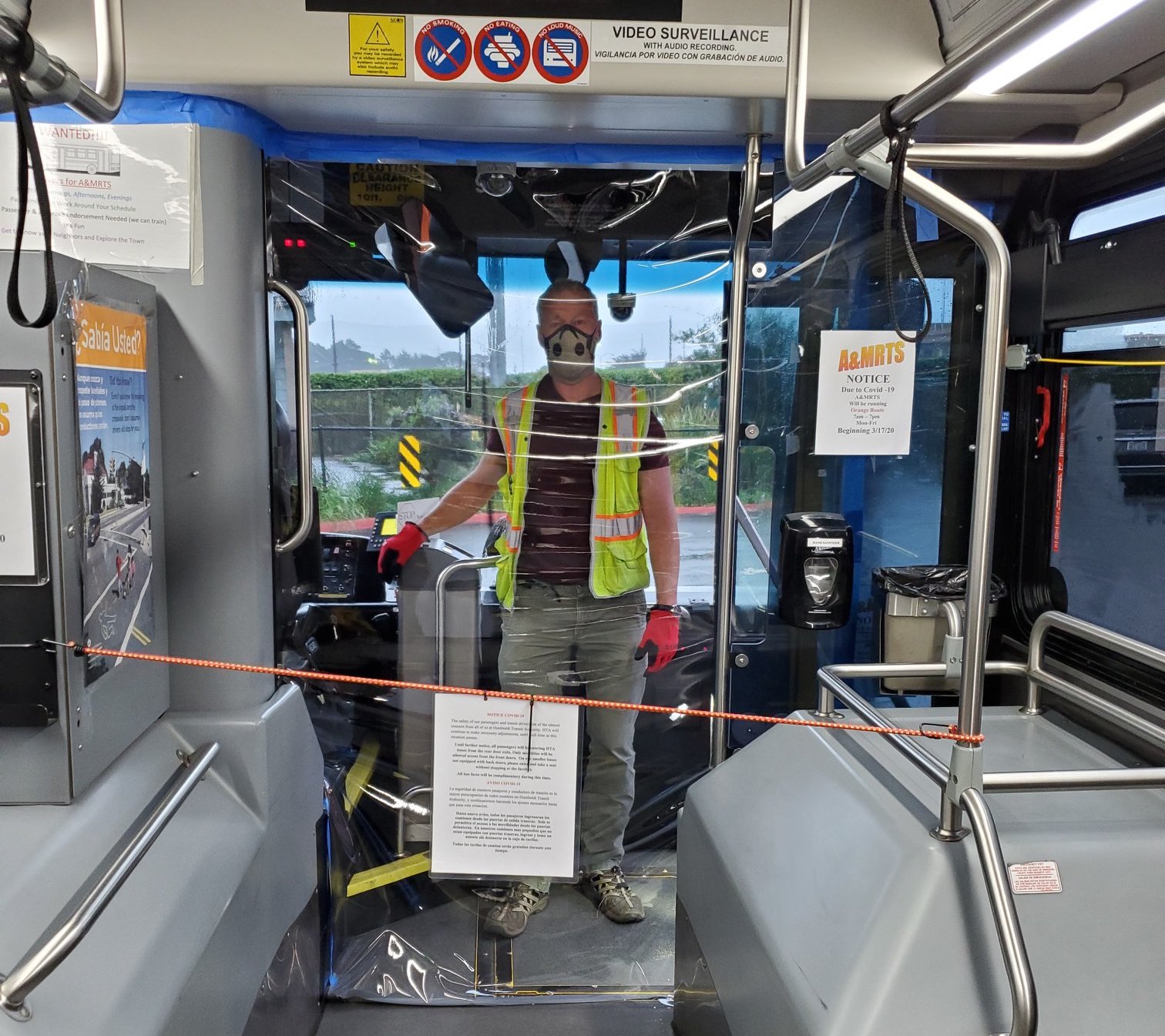
I drive a bus around Arcata, California. I frequent the Library Circle and the 14th Street & B intersection. Lately, on very infrequent occasions, I drop off an HSU student at one or the other. But this has been dwindling down to rare moments. I’m writing this because I just wanted to say that I miss all the students and faculty who have been my passengers for over a year now. . I miss making the rounds on LK Wood down to Camp Curtis, rolling out to Sunny Brae for my three stops there, the long drive down to Greenview Market to pick up the handful of students and a professor in that little corner of Arcata, and out to the Valley West loop where we scoop up the largest busload of students along Alliance and Foster streets, packing them in like sardines, as we like to say, with a call out to the back of the bus, “Do we have room for just ONE more?” . I’m a lucky person lately because I’m still working, still driving all over town. During these times, we only run what’s called the ‘Orange’ route. No more Red, no more Gold, just a mashup of both. . Truth be told, I feel a bit unlucky also. While we still pickup a handful of Townies going about their ‘Essential Needs’ business, nothing replaces all the bustling energy, the fantastic smiles, the mix of voices of my student riders. . I suppose I’m getting to the point, or heart, of the matter… ‘My’ student riders. Maybe I’m just a softie. I know I’m not some old lonely guy grasping at any human interaction, desperate for some validity that I still exist and matter. But yeah, I suppose I’ve formed an attachment at some level. Perhaps it’s a mix of all things that make me who I am, that have allowed me to feel some level of connection with the younger people heading off to HSU and their open road to the future. I have had the pleasure of watching my own kid go through the same process and life experience of college, and that was just a few years ago. I’m sure there’s a relationship here also. . While I ride around, one large circle each hour… hour-after-hour, I will often feel that tinge of loss, that nudge of sadness as I reflect on how alive this lumbering conveyance once felt, and now how hollow and empty it’s become. And then there’s that other factor, an anomaly I hope… the separation of driver from passengers via a vinyl wall. So impersonal, a clear Berlin Wall, if I may. . As I arrive at each stop, in particular the ones where I would pick up students, I still pause while glancing out in the distance. I find myself looking for those waving arms, that transition from a walk to a full-bore run, as a student realizes they may miss their bus ride to school. I grew to know a number of them well enough that I could only grin and patiently wait for them to arrive, panting, fumbling for their student ID to swipe once they clambered up inside. . I realize school will return to business in the future, and students will once again ride the bus. Yet, as with so many derailed aspects of our lives currently, there’s no firm date on when that will take place. . So I drive. I still take in those sweeping views as I top Union Street on my way to the Parkway Apartments, coax the bus up steep grades, and round the circle at the HSU Library. And when I pick up a familiar student, I still take off my sunglasses, pull down my mask, and with a smile call out through my plastic membrane, “Good Morning!” . From time-to-time as I roll through town, I catch a glimpse of a former, frequent student rider or professor, who no longer rides the bus. In those transitory moments, we may glance each other’s way at just the right instant. As recognition unfolds, so do the smiles, the nods, the waving of the hands, and I am granted a brief respite from the isolation imposed upon me by this COVID-19 experience. . While I am grateful to still be working, still driving, I am even more grateful for all the friendly smiles, the greetings, the eye-rolls, headshakes, and laughter over my bad jokes and puns, that I experienced these past semesters. I wonder how ‘My’ students are doing, how they are faring during these trying times… I care. . I look forward to life resuming in a more normal manner, and the days of a busload of students once again bringing their energy, excitement, and friendliness through the doors. I honk and wave whenever I see students in graduation caps and gowns getting their pictures taken by the gates of the university. I shake off that bit of sadness and drive on.
Ask Evergreen is an advice column by the students of The Lumberjack
It all started with a couple blank posters taped in bathroom stalls. With this advice column as Ask Evergreen I’ve been able to connect with students in a surprising way. I’ve learned their worries and hopes and struggled alongside them as I sought the best advice to respond to each inquiry.
Giving advice isn’t easy. It’s a constant back-and-forth of weighing the options and outcomes. The best advice is that which comes from honesty and reality—that’s the advice that sinks in the most. Things won’t always turn out alright or in your favor, but knowing how to pivot and adapt will allow for opportunities of growth and understanding.
I hope what I’ve had to say has impacted readers, even if I’m not qualified to give advice—no one really is. Only you have the power to tell yourself what to do, I can only wish for the best result with my guiding words.
Each week’s questions taught me more about myself than I would’ve expected. Each question offered me a chance to step into someone else’s shoes and feel the situation they were in.
At times it was difficult to come up with something meaningful to say. Some questions left me stumped for advice. Although other questions were easier to answer than others, each was a learning experience.
No matter how trivial or serious a question was—whether it was a question about fixing a relationship after finding a secret Instagram account, or how to set boundaries with a sexually harassing housemate—I’ve learned the best way to set someone on a clearer path isn’t through belittling or dismissal it’s through consideration and caution.
Sometimes it’s best to have advice come from someone completely not involved in your life, and I’ve been grateful to have this opportunity to lend my thoughts to others.
While you were copied on a series of emails to me, and thus, on my responses, there are still a few important facts that I believe you will find useful in the wake of the April 16thstory. Since my email was the source of the quotes by me in the article, I never had an opportunity to answer a couple of fundamental questions as you prepared for your story. As such, I ask you to please consider the following:
The University did not violate California Law.
When I received the original email, which copied numerous parties, Vice President Dawes and I took immediate action to verify that HSU was not in violation of the law. This included going into consultation with other university stakeholders, including legal counsel. This consultation reassured us that no violation of policy or law was taking place.
In particular, I urge you to please review the actual requirements of the Bagley-Keene Act. First, please review a guidance document provided by the State’s Attorney General which outlines the scope of Bagley-Keene. Most pertinent to this issue, the Bagley-Keene requirements at issue apply only to meetings of a statutorily defined “state body” (Section 11121) that do not apply to the informal meetings hosted by VP Dawes and me. As explained in Section 11121 and in the guide from the State’s Attorney General, the sessions that were hosted do not fall within the scope of Bagley-Keene, which, based on guidance from legal counsel, means this law does not apply and was not broken.
With respect to the Brown Act, which was also referred to in the series of emails and in your article, this statute applies to local government agencies and essentially stands as a counterpart to Bagley-Keene, so to speak. The California State University, in particular Humboldt State, is a state agency, which does not fall under the Brown Act. Because Humboldt State, as a part of the CSU, is not subject to the Brown Act, legal counsel has advised us that the law was not broken.
Why did we add a public link to the originally scheduled presentations?
We did so to eliminate any perceived barriers to participation. As quoted in the story from one of my emails, “the entire point of the meetings was to be transparent.”
While we were fully aware that we were compliant with the law and that no persons were being barred from the meeting, the very notion that we were trying to keep people out, even though it was false and based on an incorrect interpretation of the law, compelled us to add an extra way to view the meeting. In our perspective, if any person felt uncomfortable or interpreted the registration function as a barrier, then adding the extra link made sense. In total, over 300 members of the university, media, and local community attended both meetings, and not a single person was excluded. The zoom webinar function was not sought out as a barrier, but as the best way to allow so many people to receive the information at hand. Registration for this meeting was not like a conference presentation or an event with limited access or hidden behind a paid wall. Many instructors and students are using zoom for class and the majority, if not all, meetings and presentations are held over zoom. We sent the information out to the entire campus, it was posted on the public events website, and we did not deny access to anyone. Simply stated, because we could not have a meeting in the Great Hall or KBR, a zoom meeting appeared to be the best option to make sure that this important information was shared with the campus.
To be candid, the public webinars were not an attempt at secrecy. Any notion to the contrary is simply false. In our belief, these sessions were about being honest with the campus and sharing data that impacts everyone. Making the report and data available online and readily sharing it with the media, students, faculty, and all interested parties was also necessary. Personally, I can assure you that it would have been easier to not conduct public presentations about such a negative set of projections, but in fact, the public presentations were the right thing to do.
The first person to receive a copy of my report was a journalist from the Lumberjack who received the report even before my first public presentation to the University Senate. The Senate presentation was also via zoom and on the same day I met with the student journalist. This information has been presented to Associated Students, the University Senate, the University Planning and Resource Committee, and in two public meetings. The report has also been cited by the media and directly provided to reporters who requested it. These actions do not align with any intention to violate the law or fail in transparency.
In conclusion, I am committed to the voice of students through journalism, which I believe has been demonstrated during my first year at Humboldt State. That commitment will not change. To that end, my commitment to providing facts, information, and access to student journalists has also been demonstrated. Accordingly, I ask that you please review the information and facts above and please weigh against the information that was provided to you and the information that was published in the article.
Ask Evergreen is an advice column by the students of The Lumberjack
Dear Evergreen,
How do I live in this pandemic?
Dear Concerned Citizen,
We’re living through history right now amidst the COVID-19 pandemic. There are many ways you can prevent potential exposure while still leading a balanced life.
Educate yourself. Learn about the causes, symptoms and preventative measures of this respiratory virus. The California Department of Public Health has pertinent information you should read up on. While Humboldt County is not on the list for community transmissions, it is offering lab testing for suspected cases of the illness. The CDPH news updates page offers consistent updates.
Isolate yourself. Don’t go out unless it’s necessary. While you may want to see your friends during spring break, don’t expose yourself to others who may not be practicing precautionary measures.
If you’ve traveled home for break, be mindful of where you go out. It’s OK to not do normal spring break activities. Avoid going to clubs, restaurants, bars and breweries. It’s unlikely someone diagnosed with COVID-19 will be out in these places, but for the benefit of the doubt, you never know if they’ve been in contact with someone who has.
Protect others. You may not realize how vulnerable certain age groups are to infectious diseases. Young children, the elderly and those with weakened immune systems are more susceptible to become ill. These groups are also less likely to be able to fend off illnesses, so limit interactions with the outside world for the sake of those near you in these populations.
Prepare yourself. It’s going to get worse before it gets better. Practicing all of the former will help you better understand this illness and prevent further spreading. Just like after any natural disaster, awareness is heightened and preparedness begins for the next event. We shouldn’t wait for something to happen to be prepared for it the next time.
Instead, we should always be ready for anything—cautious, but not panicked. Take this time to assess your emergency plans and supplies. Don’t stock up on unnecessary items like toilet paper. Do gather important survival gear to assemble a go-bag if you haven’t already. Ensure you have enough non-perishable food to last a potential quarantine or even a self-isolation period. Make sure you have your prescriptions filled, disinfectant stocked and all other daily necessities.
Advocate for yourself. Perhaps your work has shuttered its doors and you’re worried about your next paycheck. Speak to your boss about what this pandemic means for your employment. Conserve your finances. With the stock market as unstable as it is right now, it’s wise to curb your spending. Don’t waste money on another bottle of hand sanitizer—instead, invest in the necessities.
Relieve yourself. Don’t forget to take your mental health into account during this chaotic time. Reach out to loved ones and check on their well-being while updating them about yours. Find some stress relieving activities for you to do as you practice social distancing. Paint something, start meditating, study a new language or even do your taxes. There are plenty of things to occupy yourself with that are both peaceful and productive.
We’re in this together.
Sincerely,
Evergreen
If you have any questions you’d like to send in, email us at contactthejack@gmail.com. We won’t publish any names and you don’t need to use one.
Ask Evergreen is a weekly advice column by the students of The Lumberjack
Dear Evergreen,
How do I productively procrastinate?
Dear productive procrastinator,
It’s about that time in the semester where many of us students hit our wall and feel the need to distract ourselves from our priorities. Don’t get comfortable in this phase—we still have eight more weeks of school left. There are a few things you can try to motivate yourself to work more and to keep you focused while still keeping some time to decompress.
Stay organized and prioritize your work. You can try to create daily to-do lists. If you can visualize what you have to do, you might have more motivation to get the little things done before tackling your bigger assignments.
Set realistic goals for yourself that you know you can complete. Chip away at your work bit by bit. You’re less likely to get overwhelmed. Read the required chapters for your classes one at a time and take breaks when you feel the need, but only after getting through a good chunk first.
Study with a purpose. Set aside your phone or just shut it off completely so you don’t get distracted with notifications. Power through the work you have without putting things off. You’ll feel much more relieved and relaxed in your free time if you get your responsibilities out of the way first.
If you really don’t feel persuaded to work after these tips, you can try productively procrastinating in other ways.
Tidy up your house while you put off contributing to a group project. Do the dishes while you think of how to start a report that’s due in a week. Scrub your toilet bowl and strategize your study plan for an upcoming midterm.
Allow yourself to have some time away from your school responsibilities before you buckle down and get to work. This will help you refresh your brain, giving you a better mindset to work with, while also hopefully kick-starting some brainstorming.
As long as you aren’t staring at a wall watching paint dry, you’re bound to be doing something productive while you put off your priorities.
I believe in you!
Sincerely,
Evergreen
If you have any questions you’d like to send in, email us at contactthejack@gmail.com. We won’t publish any names and you don’t need to use one.
Ask Evergreen is a weekly advice column by the students of The Lumberjack
Dear Evergreen,
I’m a sensitive sleeper. How do I stay asleep all night?
Dear Sensitive Sleeper,
Falling asleep and staying asleep can be challenging, especially if you live in a community environment like dorms or apartments. There are a few things you can try before heading to bed that may help you sleep through the night.
Use earplugs or other noise-cancelling items. Earplugs are a blessing when you have noisy neighbors. Pop a pair in your ears and listen to your heartbeat and breathing. The rhythmic melody of these two sounds may help distract you from outside noise.
Use white noise to help you sleep. The Pulmonary, Critical Care and Sleep Medicine Division of Rhode Island conducted a study on the effects of white noise on patients’ sleep in intensive care unit environments that are a cacophony of noise. The study found white noise facilitates less sleep disruption. You can conduct a similar study on yourself. Try turning on a fan or downloading a white noise app and see how it affects your sleep.
Have a warm drink. Old wives’ tales suggest having a warm glass of milk to help you sleep. For those who don’t drink milk, try having a hot cup of non-caffeinated tea. There are even specific tea blends to aid restful sleep. I recommend a tea blend with chamomile, mint or lavender elements.
Get all your priorities out of the way so you don’t worry about them. If you don’t have assignments to worry about, you might sleep better and skip those crazy school panic dreams. Try completing as much work as you can to put your mind at ease. Give yourself some time before bed to relax away from your work to let your brain have a chance to disconnect.
Don’t use your phone before bed and avoid screens. A study by the Lighting Research Institute in New York found blue light from phone screens and other digital devices can disrupt your body’s natural melatonin release habits. Give your body and mind a decompression period away from screens before trying to fall asleep.
Get a heart monitoring device. Fitbits and Apple Watches can record your sleep patterns and resting heart rate. While these devices can be pricey, they also offer other life applications that can make them worth it. If you already have one, start paying attention to that sleep data.
Sweet dreams!
Sincerely,
Evergreen
If you have any questions you’d like to send in, email us at contactthejack@gmail.com. We won’t publish any names and you don’t need to use one.
Ask Evergreen is a weekly advice column by the students of The Lumberjack
Dear Evergreen,
How do I learn to say no?
Dear Respectful Rejector,
Sometimes it’s hard to say no for fear of disappointing someone or seeming incapable of accomplishing a task. But saying no is a healthy way to protect yourself from unwanted stress. There are a few ways you can retrain yourself to accept the art of rejecting.
You shouldn’t feel ashamed to say no, no matter the question. You don’t have to please everyone, so don’t worry about letting someone down. You aren’t being selfish by declining a request. You’re being self-considerate.
Have a solid reason for why you can’t agree to do something. We all experience apathy from time to time, but don’t let laziness be the cop-out for stepping away from an activity. Maybe you’ve spread yourself too thin and just need a chance to collect your thoughts. Remember to not overbook yourself by agreeing to things before recognizing the reality of your limited time and energy.
It’s important to set boundaries when it comes to limiting your willingness to participate in activities you’d rather not do or don’t have the time for. Express your discomfort at a request. Maybe you don’t feel safe doing a task, or the person asking for assistance doesn’t truly appreciate you for your work. It’s okay to put yourself first.
Don’t let people take advantage of you for favors, and don’t let people continue to do so just because you’ve agreed upon things in the past. Be kind and assertive with your decline, and make sure they understand how they’re making you feel obligated.
Always remember you have the power to say yes or no to whatever you choose. Anyone who undermines your decisions or tries to convince you otherwise is a manipulative force who shouldn’t be allowed to deviate your conclusions.
No, you can!
Sincerely,
Evergreen
If you have any questions you’d like to send in, email us at contactthejack@gmail.com. We won’t publish any names and you don’t need to use one.
Ask Evergreen is a weekly advice column by the students of The Lumberjack
Dear Evergreen,
How do I manage my time when my schedule is jam-packed with work and school?
Dear Busy Bee,
It’s always good to be productive and a hard worker, but don’t run yourself ragged by foregoing a much needed break. You can schedule in some “you time” by organizing and maintaining a healthy and punctual schedule.
Do your homework before relaxing and turning on Netflix. You should reward yourself only after accomplishing certain tasks. Set realistic goals for yourself, like reading two pages from your textbook before checking your phone notifications.
Find a space where you can feel comfortable and concentrated. If you are able to complete your school work in a stress-free environment, you might power through it faster and be able to relax sooner.
Don’t go home straight after class if you know you won’t work on homework once you get there. It’s easy to get distracted or lazy in a home-setting, so make sure you commit yourself to finishing, or at least starting, assignments before you leave campus.
When it comes to work, don’t work more hours than you possibly can. We all need money, but don’t sacrifice your time by working more and focusing on school less.
Communicate with your boss or manager about your time restraints because of school. Don’t agree to work more and neglect your school priorities. Give yourself time to breathe in between work shifts and classes.
If your employer isn’t as forgiving to you as a student, then it could be wise to find a more respectable employer. If that isn’t an option, you should still set boundaries, even if that means taking less hours or bad shifts at work.
The ultimate time management tool is a planner. You can plan your weekly schedule hour by hour to see when you’ll have downtime to get other things out of the way or even relax.
Write down your class times and work schedule, and fill in the gaps with study sessions and break times. If you can visualize your week, you’ll be able to discern the best times to be productive or peaceful.
Don’t waste the little free time you may already have. Use your free time wisely by getting ahead of assignments. Chip away at projects bit by bit when you have the chance. You’ll thank yourself later when you’re in a time crunch.
You’ve got this!
Sincerely,
Evergreen
If you have any questions you’d like to send in, email us at contactthejack@gmail.com. We won’t publish any names and you don’t need to use one.
Ask Evergreen is a weekly advice column by the students of The Lumberjack
Dear Evergreen,
What do I do for my significant other on Valentine’s Day when I’m broke?
Dear Lootless Lover,
Valentine’s Day is this Friday and with that comes the societal expectation to shower your lover in materialistic gifts. But for those with limited funds, making an extravagant gesture isn’t always possible. There are many creative ways to express your love this Valentine’s Day that don’t involve spending loads of cash.
If you’re a wizard of words you can charm your valentine with a thoughtful card of appreciation. Words are free, so come up with a clever poem for your partner to make them feel special. Bust out your artistic talents and create some art from the heart. You can even doodle some cute cartoons inside a card for a more personal touch to a standard Valentine’s Day card.
With spring inching closer and closer, flowers have already started blossoming. Take a walk and gather some wildflowers and foliage to make a bouquet. Be careful not to pick any poisonous plants. You wouldn’t want to infect your valentine with anything other than love.
Baking a sweet treat for your sweetheart is sure to satisfy. Check your cupboards for basic baking ingredients and whip up something good. If you aren’t the best baker you can easily make chocolate-covered strawberries to set the mood.
Chances are you already have some type of streaming service, so put on some Netflix and chill with your valentine. Pop some popcorn and cozy up with your favorite movie or show. Light candles or incense for an extra touch. Soon enough you’ll be having consensual fun while Netflix asks if you’re still watching.
You can also try going out and sightseeing with your partner instead of a movie night. Go on a scenic walk or take a stroll with your lover somewhere beautiful. If you can swing it, try planning a picnic on the beach or in the redwoods to share some quality, heart-to-heart time together. There’s nothing more pure—and free—than talking with someone you care about.
Think outside the box this year. Whether you can afford it or not, there are plenty of thoughtful and creative ways to express your love.
xoxo
Sincerely,
Evergreen
If you have any questions you’d like to send in, email us at contactthejack@gmail.com. We won’t publish any names and you don’t need to use one.
Ask Evergreen is a weekly advice column by the students of The Lumberjack
Dear Evergreen,
What do I do when my housemate makes an advance on me?
Dear cornered cohabitant,
Every now and then we find ourselves in uncomfortable situations due to an unwanted admirer. Of course, it’s easier to avoid this when the admirer isn’t your housemate.
You can steer clear of any further awkward encounters by trying the following.
First, if your housemate has made it known they’re fond of you by making unwarranted physical advances, be sure to tell someone you trust or an authority figure. Having someone cued into this predicament can help you if your housemate decides to retaliate.
Reach out to friends for moral support. They might be able to back you up when it comes time to telling your housemate off. You can even consult the school counseling services if you’re feeling agitated about the situation, or campus police if you feel in-danger around your housemate.
Second, set boundaries. Make it known that you don’t appreciate the way they make you feel. Your most sacred space is probably your bedroom, so be sure to tell them to respect your limitations so you can maintain your safe space.
Don’t let the familiarity or comfortability of a housemate relationship become a way for them to continue their actions. You don’t have to be friends with your housemate, especially not if they’re making you uncomfortable.
Third, be kind but steadfast in your rejection. While you don’t owe your housemate an apology, you should be cautious with your rejection execution so you don’t aggravate the situation. Rejection brings out vindication in some, so be careful when breaking it to your housemate that you’re not interested.
Lastly, talk with any other housemates you may have. See what they have to say about the predicament. They may be able to step in to deescalate things. You could all decide to have a household meeting where you can discuss how to best make a safe and comfortable home environment.
Remember, you don’t have to do this alone.
Good luck!
Sincerely,
Evergreen
If you have any questions you’d like to send in, email us at contactthejack@gmail.com. We won’t publish any names and you don’t need to use one.
Ask Evergreen is a weekly advice column by the students of The Lumberjack
Dear Evergreen
How do I meet people without using online dating apps?
Dear single and seeking,
People still find connections through real life interactions despite the prevalence of dating apps.
Although the existence of dating apps can help speed up the connection process, it’s desensitized many of its users to meaningful connections. Nevertheless, you can navigate through the chaos of cuffing season—or the season in which people pair up—without the digital drama.
If you are completely against using the web to find love you’ll have to start putting yourself out into the world and approaching people. Start striking up friendly conversations with people at your favorite coffee shop or while you’re on your next hike in the Arcata Community Forest.
While it may seem brazen to talk to strangers, you’re getting into an immediate conversation rather than thinking of a pickup line or waiting for them to make the first move on an app.
This way may require thicker skin to deal with face-to-face rejections, but it also helps you learn the art of conversation and confidence.
Don’t be ashamed to approach someone in real life, but don’t intrude on someone who looks like they would rather not be bothered.
While you don’t need an app to tell you who to like, dating apps do help you to know who is available while also giving you a faint glimpse into the personality of a possible partner.
Many online dating users intend to seek sex and nothing more. However, if you’re searching for a more meaningful connection, dating apps can still help. You can also find connections through the internet on places other than dating apps—just be cautious.
As a student, you’re in a prime location for eligible singles. It’s just a matter of figuring out who’s looking for the same thing as you.
If you haven’t already, explore a dating app just to see who is out there. Maybe someone from a class or a regular at your favorite coffee place is seeking too. You won’t know who’s out there until you look.
If you are inclined to keep things organic, try to hang out in the library more often or sunbathe in the art quad.
If all else fails, ask some trustworthy friends to set you up on a blind date.
Good luck!
Sincerely, Evergreen
If you have any questions you’d like to send in, email us at contactthejack@gmail.com. We won’t publish any names and you don’t need to use one.
Ask Evergreen is a weekly advice column by the students of the Lumberjack.
Each week we answer anonymous questions sent in by readers about anything and everything.
Dear Evergreen,
Is driving to Eureka for Costco gas worth it?
Dear Fretful Fueler,
Gas prices in California are some of the highest in the nation, with prices often spilling over $4.00 a gallon, but Costco offers some of the cheapest gas.
Costco is a popular gas supplier, and here in Humboldt we are fortunate to have one locally. But although Costco gas is an option in the area, it’s not accessible to all.
To get gas from Costco you must have a membership or a Costco gift card. As someone who doesn’t have a Costco membership, I can’t say for certain that Costco gas is the best alternative.
For those who can afford the $60 yearly subscription, it makes sense to go to Costco if you’re already using their other services. However, if you plan on getting a membership just for a gas discount, I wouldn’t suggest it.
If you aren’t a heavy commuter then Costco gas definitely isn’t a good source for fuel. According to Business Insider, the price of a membership won’t be paid off with your gas savings until you gas up around 37 times.
Costco gas stations are also notorious for having chaotic waiting lines and times. If you do consider Costco gas, be mindful of the time of day you head over, as rush hour times are often busier. It would be counterproductive to wait upwards of 10 minutes for gas while idling in your car wasting fuel.
If you aren’t inclined to fuel up at a Costco gas station, there are other places you can gas up at. You can find local gas prices with the site and app GasBuddy, which can help you shop around for the best option.
In Arcata, the cheapest gas can be found at the Patriot station for $3.87 a gallon on Giuntoli Lane. In Eureka, the most affordable gas is from the Costco station which is currently $3.49 a gallon.
Happy gassing!
Sincerely,
Evergreen
If you have any questions you’d like to send in, email us at contactthejack@gmail.com. We won’t publish any names and you don’t need to use one.
Ask Evergreen is a weekly advice column by the students of the Lumberjack.
Each week we answer anonymous questions sent in by readers about anything and everything.
Dear Evergreen,
What’s the most humane way to divert ants?
Dear Ant Avoider,
During the wet season ants furiously seek a dry haven to claim. To best defend your home from ants there are a few harmless and ecologically sound ways you can use to do so.
There are natural and pet-safe sprays that you can buy to defend your home from ants, however some are aerosol sprays which are bad for the environment because they contribute to greenhouse gases and can alter the formation of clouds.
To avoid using aerosol repellents, you can make your own water based repellent spray with fresh herbs and essential oils.
Mint, peppermint and spearmint essential oils are safe alternatives to bug sprays. All you need to do is make a trail of essential oils around any crevices that ants are coming through or may get in from. This will create an invisible barrier that is usually successful at deterring these tiny pests.
Vinegar is another safe alternative to conventional bug repellents, and you might even have some in your home already. This can be used to block entrances and cut off the message trail that invading ants left for others to follow.
If these methods fail, you can also try setting up a baited trap. Place a tasty treat in a tray outside your home to lure ants to their demise. Honey works perfectly for attracting and trapping ants.
One last measure you can take is repairing any cracks in your home which may allow ants to get in. Check door weather strips and windowsills for wear and tear and patch up anything as needed.
Hope this helps!
Sincerely,
Evergreen
If you have any questions you’d like to send in, email us at contactthejack@gmail.com. We won’t publish any names and you don’t need to use one.
Ask Evergreen is a weekly advice column by the students of the Lumberjack.
Each week we answer anonymous questions sent in by readers about anything and everything.
Dear Evergreen,
I’m about to graduate and I’m feeling lost. I love this area, but the job market is garbage. I feel if I stay up here I’ll be stagnant. Should I err on the side of caution or dream big?
Dear Cautious Collegian,
Congratulations on nearly completing your college career! With one hurdle out of the way you now have the task of facing the world head on, whether you like it or not. It’s normal to feel the pit of existential dread sink into you around this time in your young adult life. Remember you’re not alone, and we’re all kind of misguided.
You’re a step ahead of the rest by having this contemplation. It’s good to realize your options to sort out which path choice will bring you the most. Consider the monetary gain as well as the emotional gain you may receive from either decision. Remember, money isn’t happiness, but it does solve a lot of problems.
If you stay in the area you will definitely save yourself money on the cost of living. This area is also quite beneficial to some in terms of emotional wellbeing because of the vibrant environment we have here. If that’s the case for you, you should add another tick to the Humboldt side.
While staying in the Humboldt area could save you money, the job market is fairly bleak compared to the income you might get from a job in any city south of Mendocino County.
It doesn’t hurt to apply to jobs all over. Definitely go big with what you want to do. A high-paying position in a field that you genuinely enjoy isn’t something to pass up on, but these dream positions aren’t always plentiful, especially if you’re applying in competitive areas.
The Humboldt area isn’t all too competitive, depending on the career you’re pursuing. With that in mind, consider how you can upsell yourself in this area compared to another place. Your skills are more likely to standout in an area like this which can make it easier for you to fight for a higher wage, if a potential employer can afford it.
Whichever decision you make, follow your intuition and don’t be afraid to take a risk.
You’ve got this!
Sincerely,
Evergreen
If you have any questions you’d like to send in, email us at contactthejack@gmail.com. We won’t publish any names and you don’t need to use one.
Retired creative writing teacher Jesse Austin supports John Packer wholeheartedly
Recently the Lumberjack has run a couple of stories about our campus UPD personnel.
Here is my opinion: I am a big fan of John Packer, UPD sergeant.
I salute him for going public with the UPD Chief’s racist remarks, and his unprofessional manner of leading the department.
I am a retired creative writing teacher and have known John on the HSU campus for 15 plus years. I have seen him in scores of interactions with students, teachers, staff and other UPD personnel and he has always carried himself in a cheerful, engaging and professional manner.
I have also taught at Sonoma State, Chico State and Reed College in Oregon and John is one of the best at his job I have ever seen.
To my mind a big part of UPD officer duties include being visible, available and educational (about the rules, laws and mores of the campus) – and John Packer is exceptional in all of these areas.
I support John wholeheartedly.
Cheers,
Jesse Austin
This website uses cookies to improve your experience. We'll assume you're ok with this, but you can opt-out if you wish. Cookie settingsACCEPT
Privacy & Cookies Policy
Privacy Overview
This website uses cookies to improve your experience while you navigate through the website. Out of these cookies, the cookies that are categorized as necessary are stored on your browser as they are essential for the working of basic functionalities of the website. We also use third-party cookies that help us analyze and understand how you use this website. These cookies will be stored in your browser only with your consent. You also have the option to opt-out of these cookies. But opting out of some of these cookies may have an effect on your browsing experience.
Necessary cookies are absolutely essential for the website to function properly. This category only includes cookies that ensures basic functionalities and security features of the website. These cookies do not store any personal information.
Any cookies that may not be particularly necessary for the website to function and is used specifically to collect user personal data via analytics, ads, other embedded contents are termed as non-necessary cookies. It is mandatory to procure user consent prior to running these cookies on your website.