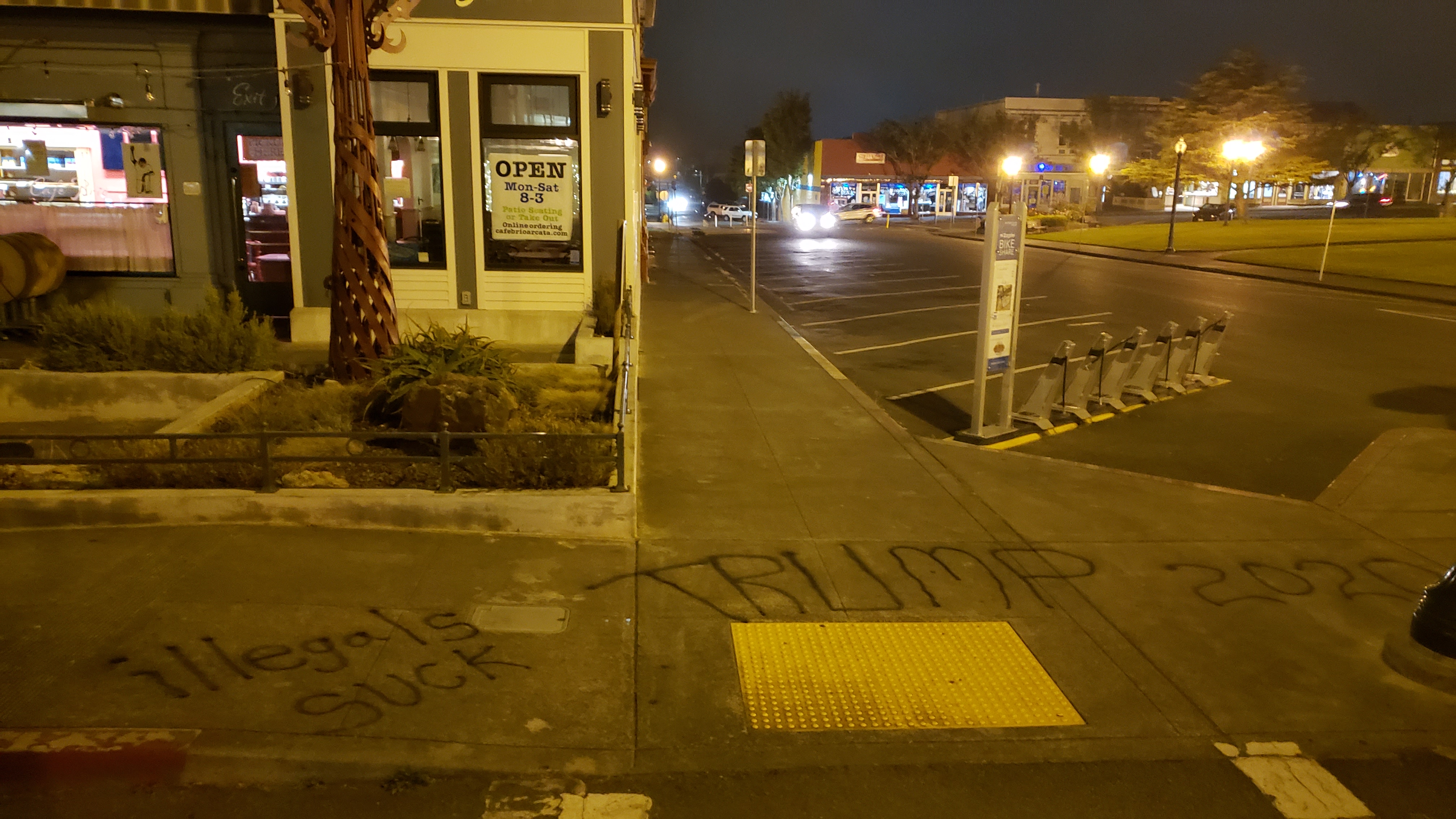
Anti-immigration graffiti was spray painted outside the corner of Cafe Brio and The Heart Bead store in the Arcata plaza.
“Trump 2020” as well as “Get out of America” were plastered around the sidewalks just outside of Cafe Brio and Heart Bead. It was reported to APD by Heart Bead store owner, Kim Alveraz, on Aug. 16 and the graffiti was later washed off on Aug. 18.
APD sergeant, Brian Hoffman, said that the anti-immigration messages were not a hate crime. The APD said that they are not able to open an investigation until suspects are reported. If anyone does witness vandalism or have information on a possible suspect(s), it can be reported to APD at 707-822-2424.
When the entire world is going mad and cities are in disarray and the economy is through the tubes and the government is ordering the people to stay indoors and keep distant from human contact and all the unknowns and uncertainties and precariousness are causing anxieties and confusion and insane isolated thinking, then the only logical solution is to search for the magnificent eternal golden light in Big Sur where Jack Kerouac lost his illumination and was succumbed to mad mad maddening disillusion and deterioration of mind.
Amidst a global pandemic and forced isolation (both for curving the spread of the disease and government say-so) Kerouac’s “Big Sur” may seem like an unlikely companion during cabin fever tendencies but he nails the coffin of loneliness surrounded by madness…and we are swimming in madness in 2020 and social distancing is causing us loneliness…he may be known for traveling on the road but the majority of his writing deals with the personal struggle of the unrevealed and intangible and intrapersonal relationships with exile and aloneness.
It was time to go back to find some sanity while the whole world was ravaging in chaos.
Last week I received a card from my obaasan written in shaky cursive:
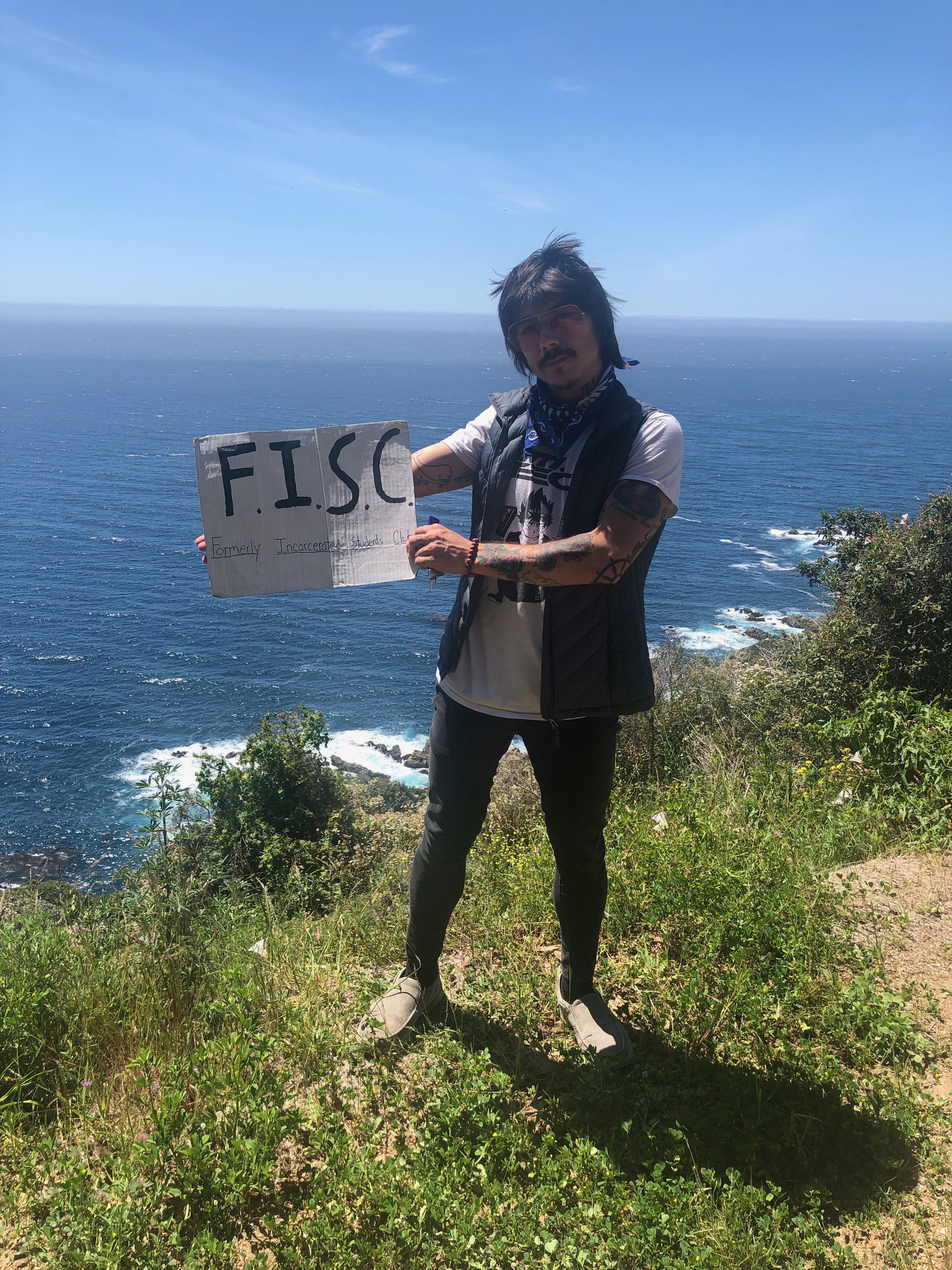
“I’m not myself now/can’t think much things now…” Her youngest son died in the middle of all this virus business and the experience of losing her youngest before her own passing into the next existence and not being able to perform a proper Japanese funeral has weighed a heavy heart on my nearly 90-year-old reincarnation of the bodhisattva Quan Yin. The letter is marked from Monterey, my hometown, just a couple dozen miles from Big Sur, which I am currently in the thick of. Whereas Kerouac fell into his madness, I was born into mine…and it was time to go back to find some sanity while the whole world was ravaging in chaos.
Passing San Jose on the 280 at rush hour, or what normally is, and we stop not one time and I am convinced there is a God in heaven and miracles exist and coincidences mean something more than just what they don’t.
A pitter patter of rain began to fall as my partner and I sped away from our Arcata apartment and headed down the curvy empty roads of the 101 en route to console an ailing mother from 6 feet away. My paint-scratched and hood-dented Volkswagen happily ate the white lines through redwood country, wineries, extending bridges and golden rolling hills full of deer and foxes and chirping birds. With everyone staying in doors, the urbanized are becoming again what Gary Snyder calls “wild.” Only 10 cars on the Golden Gate Bridge and all of the city, void of the Tenderloin, which sidewalks are unseen due to the amount of popup tents and stretched out tarps and rucksacks rolling in the gutters. Passing San Jose on the 280 at rush hour, or what normally is, and we stop not one time and I am convinced there is a God in heaven and miracles exist and coincidences mean something more than just what they don’t. Seven hours and not a minute more since we left Humboldt County the magnificent sand dunes of my childhood explode into view as the sun sinks behind cannery row, the fisherman’s wharf and into the pacific.
We knock on the windowpane glass without warning. My obaasan, 4-foot-5 in frame in blue uwabaki and nearly all white thick Hokkaido curls reminiscent of the ancient Ainu people of our ancestors opens the door white as a ghost. We appear as road warriors traveling to find oil but she is happy nonetheless to see her most handsomest grandson and granddaughter in law (I know this because she tells us so in a faint whisper of grief). She is nearly silent and full of half smiles and sad lonely eyes staring off into a point in space I am unable to see. There is nothing more difficult than to deny a Japanese grandmother’s invitation of hot food and conversation… but these are harrowing times and one must put down their foot for the betterment of others… especially kindhearted compassionate grandmothers who want nothing more than to fill bellies and tell stories.
Without being able to hug her or get close enough for her to hear me hurt my soul but the space we shared amidst all the craziness going on filled my heart with such joy that I could feel the sanity I had lost while sheltering in place replenish.
We part for the night with three bows and head to Big Sur first thing in the morning. We were supposed to spread the ashes of my uncle but bureaucracies have slowed down (who would have thought possible they could move even slower) and checks clearing takes longer and so we had no urn and only mandatory intention of flying down the beautifully rugged pacific coast cliffs hugging the Santa Lucia Mountains to the east and infinite deep neon blue waters crashing west. All parks are closed and scattered hikers from who-knows-where park along the highway to hike in. We stop at Bixby Creek of Kerouac’s “Big Sur” but it is not the same for all the turnoffs are filled with parked cars and tourists and selfies… or maybe it is the same because on his last hitchhiking adventure up from Big Sur to Monterey 1,000-2,000 cars passed him by and he was no longer able to relate. We ate lunch beneath the shade of an oak tree 100 feet above the water and 15 miles from the hot springs. We were by ourselves with the lonely wails of the sea and the roaring of the waves and the ghostly spirits of Kerouac and my uncle.
On our way out of town we said goodbye to my grandmother. She stood behind the screen door as we stood in the sun with bandanas and masks wrapped around our faces. She was in a cheerier mood and her energy level was heightened. She wore full smiles behind her grief and talked about the chaos of the world being unbalanced. Without being able to hug her or get close enough for her to hear me hurt my soul but the space we shared amidst all the craziness going on filled my heart with such joy that I could feel the sanity I had lost while sheltering in place replenish. Kerouac pronounces, “The more ups and downs, the more joy I feel. The greater the fear, the greater the happiness I feel,” and I believe it to be important we share the same intimacies while we are submerged in the unknown dangers of threats and hazards.
Where we were, what went wrong & how we build a brighter future
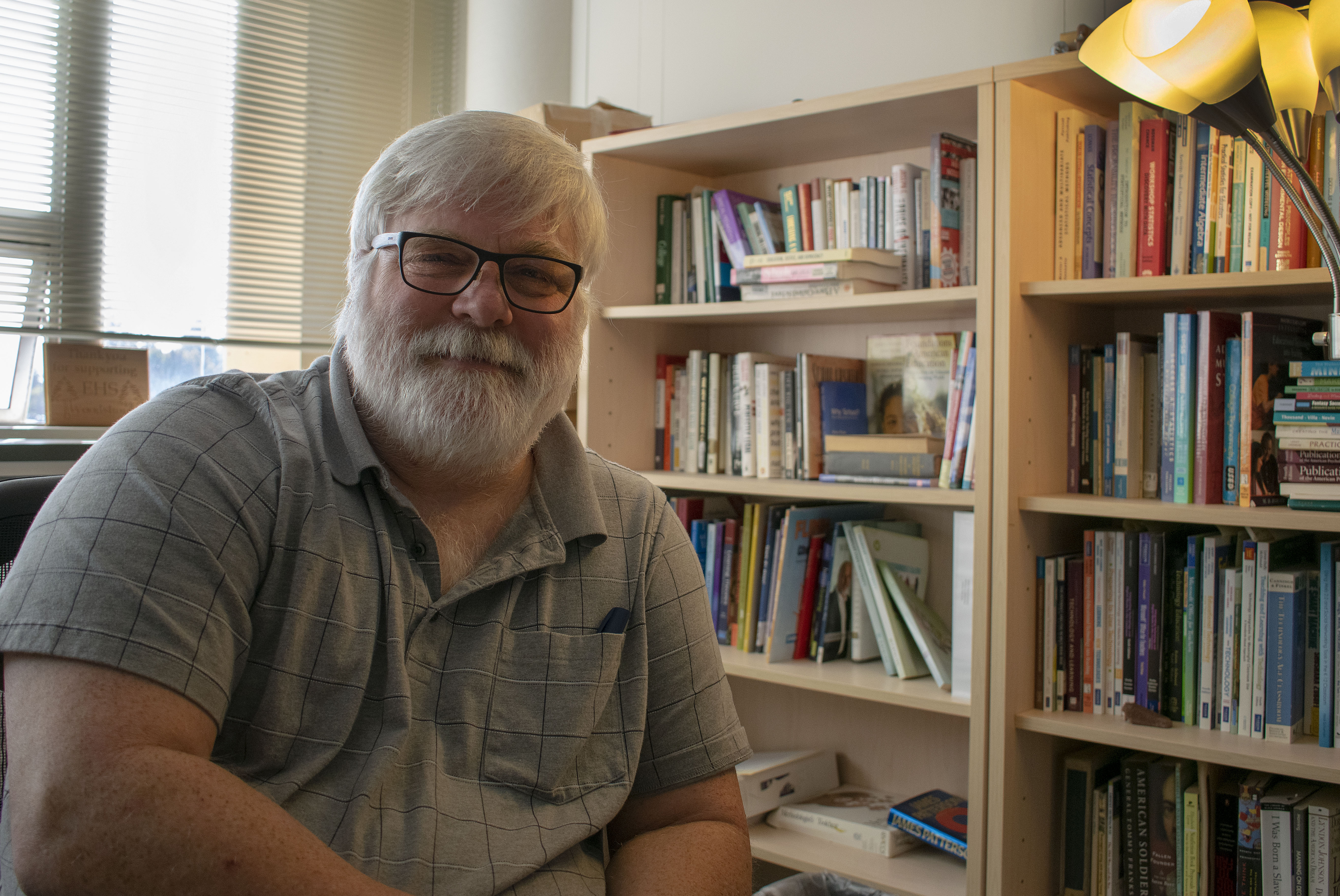
This is a letter to the editor from Humboldt State University Education Department Chair Eric Van Duzer, Ph.D. It has been edited only for minor punctuation and grammar style preferences.
As I reflect back on nearly 30 years at Humboldt State University, first as a student and then for the past 20 years as a faculty member, I wanted to share some of the thoughts that I have about HSU’s current situation and where the campus might go from here.
As a student I experienced a remarkable education where faculty were fully invested in my intellectual and personal development. There were so many opportunities to explore areas of interest and develop new ones. I have spent many hours trying to encapsulate the nature of the schooling I experienced in a way that would really represent the experience.
The best analogy I have been able to come up with was that HSU offered a graduate education to undergraduates. The small classes typical of graduate school encouraged faculty to fully invest in their student’s growth. The university, set so far from the oversight of CSU headquarters in Long Beach, offered a great deal of flexibility to shape our experiences.
This would be impossible today. In those days HSU had the third smallest class sizes in the 23 campuses of CSU. But more than that, it had a unique faculty ethos that reflected nearly 100 years as a student-focused institution that exalted excellence in teaching above all else.
I was the first student CEO of the Institute of Industrial Technology, a self-supporting club that allowed us to use the skills and knowledge we were developing to grow in business acumen, engage in manufacturing and light construction on campus as well as conduct experiments for local agencies. In its second year, Bill Wilkinson used the institute to earn enough profit making desks for campus offices that it paid for several pieces of expensive equipment for the department.
This would be impossible today. In those days HSU had the third smallest class sizes in the 23 campuses of CSU. But more than that, it had a unique faculty ethos that reflected nearly 100 years as a student-focused institution that exalted excellence in teaching above all else.
Faculty came to campus because this is where they wanted to spend their career. Unlike most universities where faculty play academic hopscotch building their resume through research reputations and earning ever-higher salaries as they bounce from college to college, HSU faculty built their reputations on teaching. These were inherently local reputations, not very valuable if one wanted to move on, but rather a reflection of the values and attitudes associated with a culture of excellence in the service of students’ intellectual growth.
As anyone who has worked with university budgets will tell you, graduate education is expensive. That is why through the first 100 years, the administration and other services were done on a shoestring. It was common for a variety of upper administrative positions to be filled by faculty who served temporarily. Staff was thin and overworked and processes were slow and inconsistent.
What happened? In the early 2000s the CSU was facing the onslaught of a Generation X student bulge. Chancellor Charles Reed decided the best strategy to deal with this situation was to homogenize campuses so that if a student could not get into Sacramento State because it was impacted, they could simply go to another campus and get a similar experience.
Yet, the campus, with significant leadership from the faculty, focused its significant resources on classroom instruction, and through that dedication, produced exceptional graduates who were deeply committed to HSU when they graduated.
I remember an administrator in the early years telling me that he had been in a restaurant on the East Coast and overheard a group of students talking at a nearby table. He was so impressed with their sophistication and the values they held he found out where they came from and immediately applied for a job at HSU.
He was the first person hired under then-president Rollin Richmond to manage our enrollments in the early 2000s. The diversity on our campus is a credit to him and Richmond, who reached out across the state to bring in students from urban areas. Sadly he became disillusioned and left. So did most of the faculty leaders.
What happened? In the early 2000s the CSU was facing the onslaught of a Generation X student bulge. Chancellor Charles Reed decided the best strategy to deal with this situation was to homogenize campuses so that if a student could not get into Sacramento State because it was impacted, they could simply go to another campus and get a similar experience.
Shortly thereafter the upper administration received inflated titles and significant raises in an apparent effort to reduce resistance. Then the attack on the faculty began.
Naturally, faculty on campuses such as HSU who were proud of their traditions and niche identities resisted. Fiercely. At one point, three campus presidents, including Rollin Richmond, suffered through votes of no confidence by their faculty as they implemented this strategy.
To achieve the required changes in the face of faculty resistance, campuses, including Humboldt, began shifting to a corporate structure of top down management. Faculty who had held a privileged position in campus life were systematically reduced to workers with only a symbolic voice in campus decisions. The administration turned its focus inward towards improving the functioning of the bureaucracy. They eliminated administrators such as Rick Vrem, an ethical provost, who refused to implement changes that hurt the traditional focus on instruction.
Vrem was replaced with a provost who had no such compunction. Shortly thereafter the upper administration received inflated titles and significant raises in an apparent effort to reduce resistance. Then the attack on the faculty began. Nearly 80 faculty positions were eliminated over several years and during the same time period, a similar number of new staff positions were created and filled to support administrative functions.
Over the majority of the intervening 15 years, budget reductions for academic programs have been the norm: reductions in staff, program availability and courses. This year it was a 6% cut, last year another and many like it before. The funds have been shifted to an ever-expanding variety of administrative initiatives.
Now we sound more like a parks and recreation office than a university. Come for the redwoods, the beaches, the bike riding—that is wonderful and I love it, but it is not why people pick a university.
We spend nearly 68% of our budget on administration and campus facilities. Despite the results of a study commissioned by Rollin Richmond’s administration that showed the two most important factors that cause a student to come to HSU are quality of education and availability of the program they are interested in, both have been repeatedly attacked, sliced and diminished.
It is surprising that no one seems to notice that every time we cut academic programs, fewer students want to come here. And when fewer students come here, the budget suffers and HSU responds by cutting academic programs even more severely—a cycle the faculty in 2004 described as a “death spiral.”
As we address our current crisis and try to figure out what we need to become in order to grow back to a sustainable enrollment, we might want to engage in some soulful reflection. What would cause a 20-year-old to come to a place five hours from major centers of civilization and spend four years with us? What do we have to offer them that is so valuable, so different from what they can get at any of the other CSU campuses which are closer, cheaper and offer a great deal more college life in the community?
We stopped selling the small classes and close academic relationships with faculty when the hypocrisy became too much to bear as campus priorities shifted. Now we sound more like a parks and recreation office than a university. Come for the redwoods, the beaches, the bike riding—that is wonderful and I love it, but it is not why people pick a university.
When I arrived here as a faculty member in 2000 we had one staff member, John Filce, doing institutional research. He was wonderful and badly overworked. I am sure he still is. Now we have nine staff members listed in the directory in the Office of Institutional Effectiveness, including a vice president. I am sure their work is valuable, but to pay for it we had to cut 64 class sections.
Today, we are an organization of inflexible rules and their keepers.
We have proliferated the bureaucracy, which is unfortunately necessary to achieve top-down control of a professional organization. Had our leadership studied industrial technology with me, they would know what companies in the 1970s learned: that this form of management is ineffective and inefficient in a professional organization.
To achieve control requires monitoring, which in turn requires more staff. For a top-down organization, where the vast majority of employees serve at the will of their manager, fear prevents innovation and compliance is key. Before the shift to this model, administrators were problem solvers. In fact, the standing joke in those days was that everything was an exception. Faculty, staff and administrators had the flexibility to serve the needs of students even when it required bending the rules.
Today, we are an organization of inflexible rules and their keepers. It has greatly diminished the effectiveness of the organization and its ability to make decisions that best serve our students. The resulting bureaucratic culture has seen a proliferation of forms, rule books and rigid adherence to often dysfunctional orders.
This is no way to run a university. Perhaps a grocery store, but not an organization of 500 highly educated experts with thousands of years of collective experience. Top-down decision-making, particularly when the president and upper administrators are drawn from institutions that do not share the culture and values of the campus, is inherently poor compared to what would be possible if faculty once again had a meaningful voice in campus affairs.
No student has ever come to HSU because we have a wonderful registrar’s office or because the president’s office is fully staffed. These only matter when they impact the quality of the education a student receives.
The proof of this is apparent everywhere at HSU. When Rollin Richmond came, he had no interest in what made HSU special. Like a white suburban principal coming to a school in Watts, he thought he knew what needed to be done to remake the university into his vision of a modern institution. That ignorance has cost us immeasurably. Today we face the consequences. The failure to fundamentally change direction of subsequent presidents has simply deepened the mess. We now have a new president, perhaps we can find a new vision.
In my view there are two key concerns that need to be addressed from a rational and values-driven perspective. First, an effective budget model that allows funding to follow enrollment is essential to support growing programs while shifting resources to where they will best serve student needs and interests. This can refocus the campus on providing the service/product students come here for—classroom instruction—and it is essential.
There are so many amazing faculty and academic staff here. They are people with a heart for their students, struggling in a system that constrains and conflicts with their efforts. Let their voices guide the future and we may yet have one worth celebrating.
No student has ever come to HSU because we have a wonderful registrar’s office or because the president’s office is fully staffed. These only matter when they impact the quality of the education a student receives.
Second, we have to decide how we are going to rebuild the excellence we once were known for in our student’s academic programs. The day Rollin Richmond refused to give the Outstanding Faculty Award to a physics professor (selected by the faculty based on his ability to delight and inspire students) because that professor had not published, is the day we snuffed out the soul of the old HSU campus.
Now we need to find out what animates us in ways that provide an experience worth the isolation, cost and struggles required to live in this remote community. Redwoods are not enough; we need a reinvestment in education.
I am retiring from HSU at the end of this May. I am sad to see what has happened to my university. There are so many amazing faculty and academic staff here. They are people with a heart for their students, struggling in a system that constrains and conflicts with their efforts. Let their voices guide the future and we may yet have one worth celebrating.
DaBaby releases his third album in 13 months, “BLAME IT ON BABY”
Capitalizing on a unique sound and unique circumstances, with COVID-19 providing more available listeners than ever before, DaBaby is flooding the market—a strategy that’s proven most useful to artists like Lil Wayne and Young Thug in the past. Coming less than seven months after his previous effort, “KIRK,” and only a year after his extremely successful debut, “Baby on Baby,” DaBaby has returned with his third album, “BLAME IT ON BABY.”
Since his introduction to mainstream hip-hop with his platinum-hit-record, “Suge,” DaBaby has kept his name relevant in the media with a string of negative headlines, most recently “accidentally” slapping a female fan. Despite the negative nature of these incidents, each headline only seems to contribute to his success.
A great deal of DaBaby’s launch into the mainstream can be credited to arguably the most impressive feature run from a rookie, landing himself a verse on songs with the likes of Chance the Rapper, J. Cole and Post Malone and playing a standout role on each of the associated albums. This earned DaBaby the attention of hip-hop fans everywhere.
“He’s just different from everybody else—his style, the way he goes about it. I just like him cause you can never tell what direction he’s gonna go with it.”
“BLAME IT ON BABY” is still mostly filled with the party music that we expect from DaBaby, with raw lyrics about guns, girls and guap laid over high-energy beats intended to be played at high volumes.
Jesus Ontiverof plans to transfer to Humboldt State University after completing the nursing program at College of the Redwoods. As a casual fan of DaBaby, Ontiverof enjoys all his music.
“He’s just different from everybody else—his style, the way he goes about it,” Ontiverof said. “I just like him cause you can never tell what direction he’s gonna go with it.”
“A lot of his music sounds the same, which is kind of a bummer. But I do like some of his shit when he mixes it up.”
Jay Coch, kinesiology major
HSU kinesiology major Jay Coch has a different view and experience with DaBaby’s music.
“A lot of his music sounds the same, which is kind of a bummer,” Coch said. “But I do like some of his shit when he mixes it up.”
Even though Coch wasn’t eagerly awaiting the new release, he can’t knock the hustle.
“For him, it seems like he’s being pretty successful putting out a lot of music,” Coch said. “A lot of people like that. They’re like ‘Drop more music, drop more music,’ but it would be cool [if] he took a little more time and really mixed it up and thought about his lyrics more, and actually put himself out there as a musician more than just a big name in the rap industry.”
Despite having its moments on the song “ROCKSTAR,” with a feature from the other hottest new name in rap, Roddy Ricch, and another feature on the song, “NASTY,” with DaBaby’s biggest featured guest to date, Ashanti, “BLAME IT ON BABY” is easily his most forgettable album yet.
A note from a local bus driver longing for a crowded bus again
This is a letter to The Lumberjack from local bus driver Mark Condes. The letter has been edited only for grammar and punctuation.
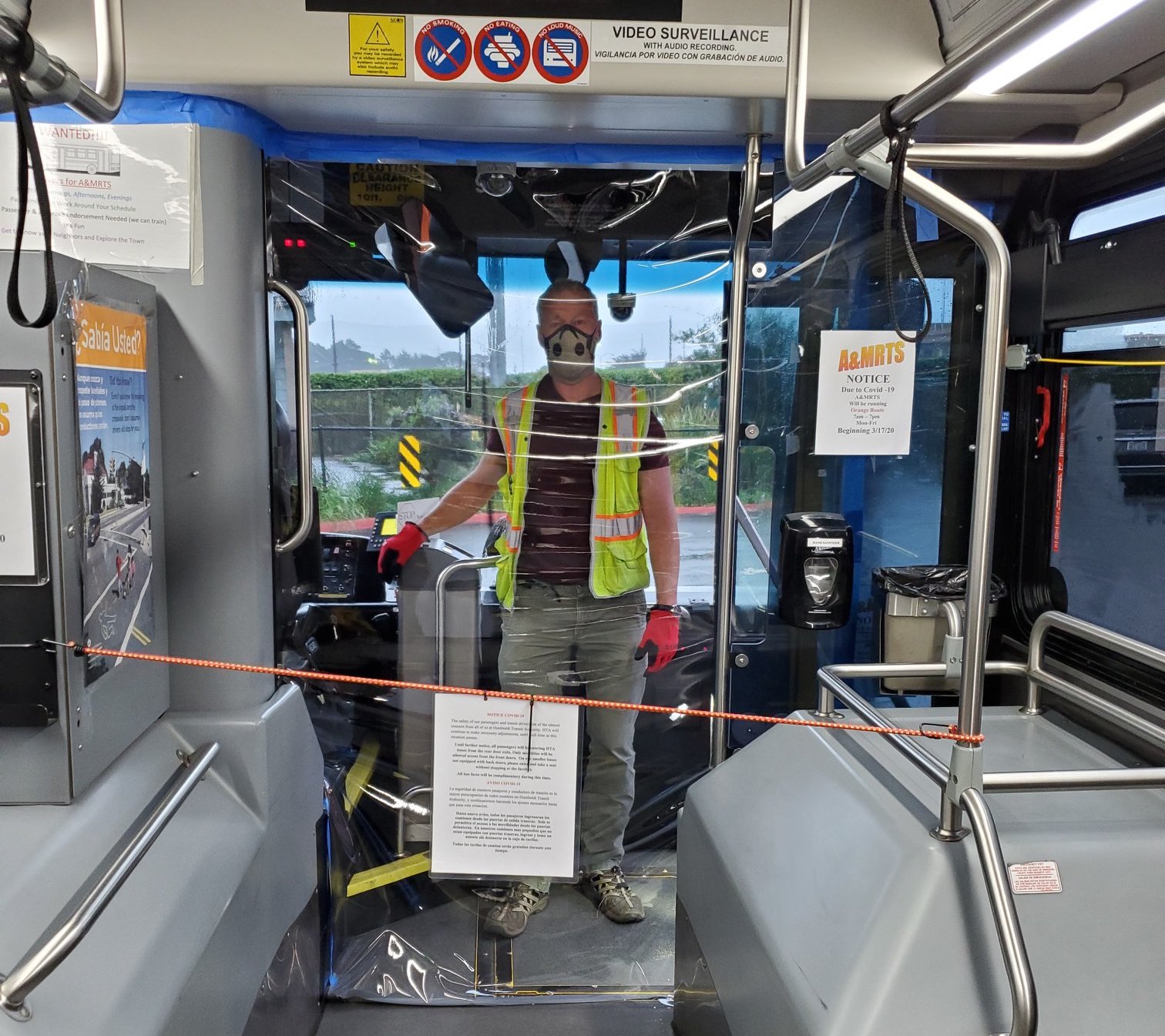
I drive a bus around Arcata, California. I frequent the Library Circle and the 14th Street & B intersection. Lately, on very infrequent occasions, I drop off an HSU student at one or the other. But this has been dwindling down to rare moments. I’m writing this because I just wanted to say that I miss all the students and faculty who have been my passengers for over a year now. . I miss making the rounds on LK Wood down to Camp Curtis, rolling out to Sunny Brae for my three stops there, the long drive down to Greenview Market to pick up the handful of students and a professor in that little corner of Arcata, and out to the Valley West loop where we scoop up the largest busload of students along Alliance and Foster streets, packing them in like sardines, as we like to say, with a call out to the back of the bus, “Do we have room for just ONE more?” . I’m a lucky person lately because I’m still working, still driving all over town. During these times, we only run what’s called the ‘Orange’ route. No more Red, no more Gold, just a mashup of both. . Truth be told, I feel a bit unlucky also. While we still pickup a handful of Townies going about their ‘Essential Needs’ business, nothing replaces all the bustling energy, the fantastic smiles, the mix of voices of my student riders. . I suppose I’m getting to the point, or heart, of the matter… ‘My’ student riders. Maybe I’m just a softie. I know I’m not some old lonely guy grasping at any human interaction, desperate for some validity that I still exist and matter. But yeah, I suppose I’ve formed an attachment at some level. Perhaps it’s a mix of all things that make me who I am, that have allowed me to feel some level of connection with the younger people heading off to HSU and their open road to the future. I have had the pleasure of watching my own kid go through the same process and life experience of college, and that was just a few years ago. I’m sure there’s a relationship here also. . While I ride around, one large circle each hour… hour-after-hour, I will often feel that tinge of loss, that nudge of sadness as I reflect on how alive this lumbering conveyance once felt, and now how hollow and empty it’s become. And then there’s that other factor, an anomaly I hope… the separation of driver from passengers via a vinyl wall. So impersonal, a clear Berlin Wall, if I may. . As I arrive at each stop, in particular the ones where I would pick up students, I still pause while glancing out in the distance. I find myself looking for those waving arms, that transition from a walk to a full-bore run, as a student realizes they may miss their bus ride to school. I grew to know a number of them well enough that I could only grin and patiently wait for them to arrive, panting, fumbling for their student ID to swipe once they clambered up inside. . I realize school will return to business in the future, and students will once again ride the bus. Yet, as with so many derailed aspects of our lives currently, there’s no firm date on when that will take place. . So I drive. I still take in those sweeping views as I top Union Street on my way to the Parkway Apartments, coax the bus up steep grades, and round the circle at the HSU Library. And when I pick up a familiar student, I still take off my sunglasses, pull down my mask, and with a smile call out through my plastic membrane, “Good Morning!” . From time-to-time as I roll through town, I catch a glimpse of a former, frequent student rider or professor, who no longer rides the bus. In those transitory moments, we may glance each other’s way at just the right instant. As recognition unfolds, so do the smiles, the nods, the waving of the hands, and I am granted a brief respite from the isolation imposed upon me by this COVID-19 experience. . While I am grateful to still be working, still driving, I am even more grateful for all the friendly smiles, the greetings, the eye-rolls, headshakes, and laughter over my bad jokes and puns, that I experienced these past semesters. I wonder how ‘My’ students are doing, how they are faring during these trying times… I care. . I look forward to life resuming in a more normal manner, and the days of a busload of students once again bringing their energy, excitement, and friendliness through the doors. I honk and wave whenever I see students in graduation caps and gowns getting their pictures taken by the gates of the university. I shake off that bit of sadness and drive on.
On-campus food pantry provides for students in need
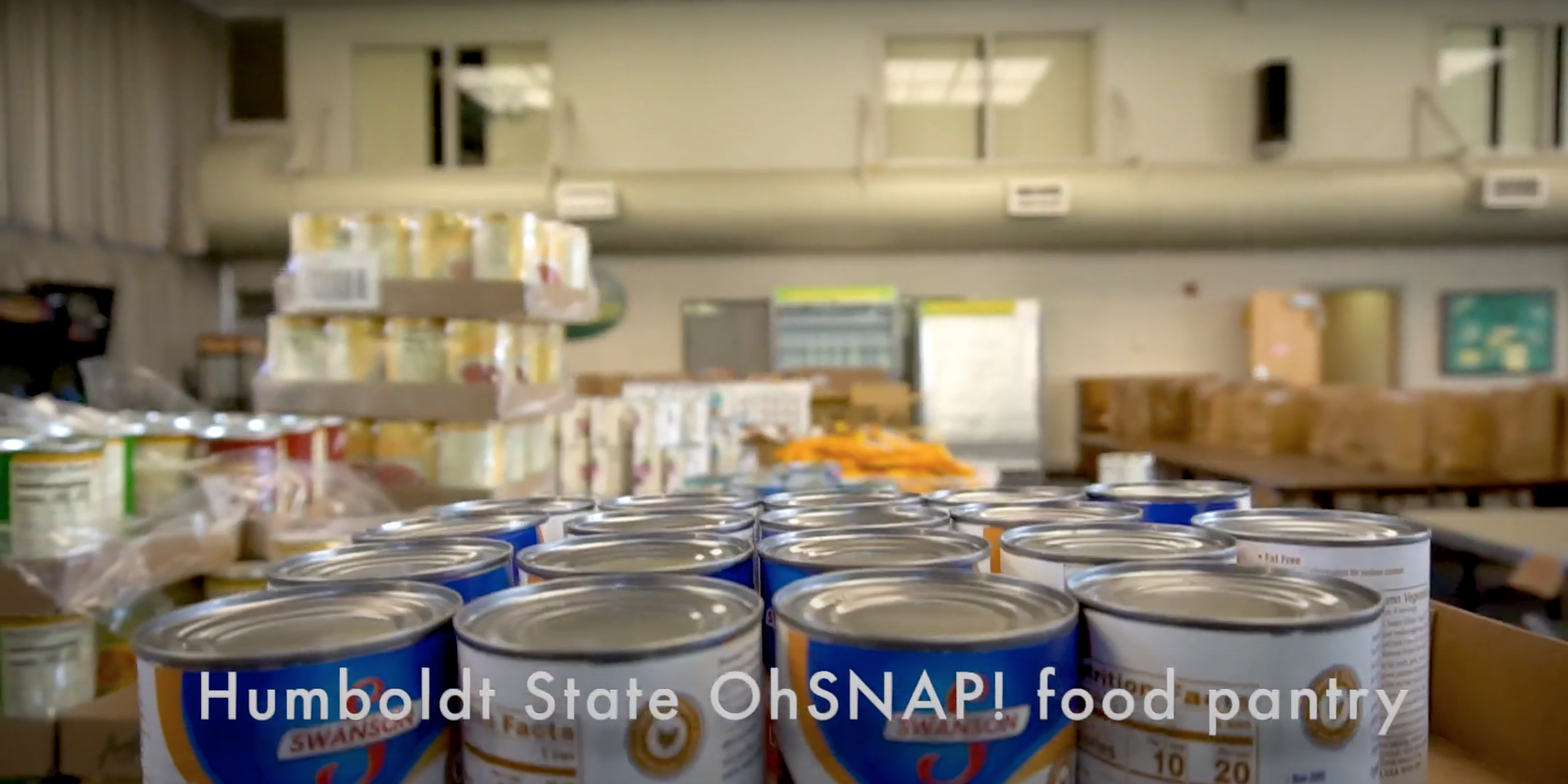
With the J dining hall closed and grocery stores inducing anxiety, some students are relying on Humboldt State’s OhSNAP! pantry for food.
OhSNAP! will remain open for the rest of the semester, serving students Wednesdays from 10 a.m. to noon and Thursdays from 1 to 3 p.m. on the bottom floor of the Jolly Giant Commons. OhSNAP! can also deliver food directly to you if you can’t make it to campus (email mira@humboldt.edu for more information).
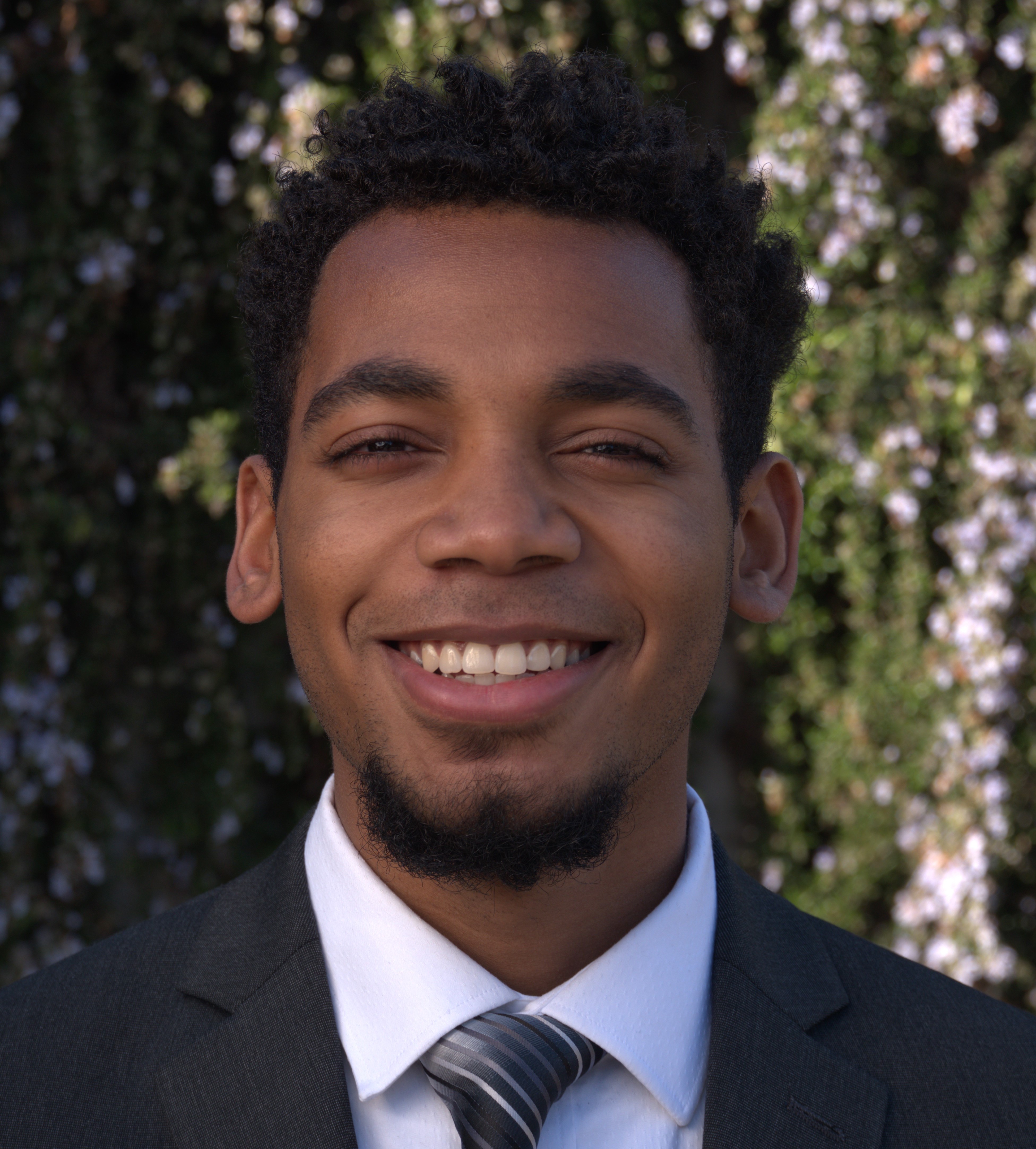
Associated Students Legislative Vice President Jeremiah Finley runs for the presidency
Former Vice President of Student Affairs and current Associated Students Legislative Vice President Jeremiah Finely has placed his hat in the race for the 2020-2021 AS presidency.
Majoring in political science, Finley’s passion for politics can be traced to the last presidential election.
“When I watched the 2016 race, I think something just awoke within me,” Finley said. “It got nasty, it got dirty, and that’s something that I don’t want to see happen ever again.”
“When he walked into our first meeting, I knew he was going to be a great leader then.”
Jourdan Lamar, Resident Hall Association president
A sophomore in high school at the time, Finley didn’t put his passion into practice until arriving at Humboldt State University. In his first semester, Finley became president of the Cypress Hill Council after attending the info session and receiving encouragement from the council to run. Current Residence Hall Association President Jourdan Lamar first met Finley when he joined the council.
“When he walked into our first meeting, I knew he was going to be a great leader then,” Lamar said. “He was advocating, asking questions, joining other organizations to learn more about HSU. Since then, I have had the opportunity to work alongside him in many organizations on campus, seeing him become a great student leader.”
From day one, despite the threat of consequences, Finley said he’s made it his number one priority to place students’ interests first.
“Due to this I have been penalized a lot, in various different ways,” Finley said. “Whether it be not getting the votes I needed to pass certain legislation, or not receiving the same type of social treatment. Ultimately, I bet on the students consistently. I think that all my students are worth it.”
Jeremiah is a super bright and motivated student leader, both in AS as the legislative VP and housing as an RA. On multiple occasions, he has combined those roles by educating his residents about current issues on campus as well as bringing his residents to campus events.”
Jenessa Lund, executive director of Associated Students
Finley began making regular visits to the AS office in his first semester on campus, familiarizing himself with the organization. He attempted to apply for the position of social justice and equity officer, but was turned down due to lack of a college GPA. He returned the following semester and was appointed to the position of student affairs VP in February of 2019.
Executive Director of AS Jenessa Lund has worked closely with Finley since he became a part of the board.
“Jeremiah is a super bright and motivated student leader, both in AS as the legislative VP and housing as an RA,” Lund said. “On multiple occasions, he has combined those roles by educating his residents about current issues on campus as well as bringing his residents to campus events.”
Finley’s favorite thing about being part of AS is watching students engage with one another and the various programs on campus.
“When I get the chance to see how my advocacy helped them along the way, those moments are my favorite moments,” Finley said. “I get to interact with folks, I get to hear about their passions, what they’re excited about, what they’re doing.”
“It’s been tough. It’s been really hard trying to navigate that, especially as a person of color in this predominantly white institution. It’s really difficult to make sure I can still be myself, but at the same time, be professional.”
Jeremiah Finley
Beyond the rewarding big-picture projects, Finley finds plenty to be proud of in his daily routine.
“My day-to-day experience is something special,” Finley said. “It’s always fast-paced, there’s always something new going on—so you have to really adapt quickly to the changing scenarios. One thing you hear in the morning could be totally different from what you hear in the afternoon. And it’s been tough. It’s been really hard trying to navigate that, especially as a person of color in this predominantly white institution. It’s really difficult to make sure I can still be myself, but at the same time, be professional.”
Despite everything HSU has to offer, including various programs and resources, a sense of community on campus and the attention paid to student voices, Finley sees endless room for improvement.
“I don’t think anything should really stay the same, and I mean that,” Finley said. “There’s just too much complacency and I think there’s a lot that needs to change.”
Finley intends to place more emphasis on incorporating student engagement within AS.
“Yeah, we have the AS board of directors, but that’s really geared towards AS and what AS wants to do,” Finley said. “But I feel like we don’t have a place where all students can come together to talk about what we all want to do and want to see happen. So, if we can make a central hub where we can talk and just listen to each other and hear what we want to do as a collective, then I think we can truly start generating some great ideas to change the way this campus runs.”
Finley said he understands the struggles college students face, whether it’s coming up with enough money to pay bills or buy groceries, providing for your family or setting aside time for schoolwork.
“But ultimately you just gotta keep going, you gotta keep fighting. And so I’ll keep fighting, I’ll keep going and I’ll keep being persistent, that way I can make sure I can advocate for students.”
Jeremiah Finley
“It’s just this balancing act and I think there’s a lot of things that can be easier for students, things that I currently have no direct control over,” Finley said. “So, if I can put myself in that position to really help, then that’s what I want to do.”
As legislative VP, Finley referred to his magnum opus, his great work, as the AS Constitution, Codes and Policies. He put together a full constitution revision packet over the course of the 2019-2020 school year, including new bylaws and revisions for out-of-date codes and policies. Presented to the board back in February, the revision wasn’t passed.
“It hurt,” Finley said. “It really did hurt when the board decided not to think carefully or listen carefully to what I was saying. I think from that moment I knew that if I wanted to bring the change that I want to see in HSU, and I think that we all deserve here, then I can’t continue in this role.”
Finley said he’s not only prepared, but is determined to take on bigger challenges and face greater consequences in the name of improving the lives of students.
“Some days are good, some days are better than others,” Finley said. “But ultimately you just gotta keep going, you gotta keep fighting. And so I’ll keep fighting, I’ll keep going and I’ll keep being persistent, that way I can make sure I can advocate for students. And come election time, I have faith that I’ll be elected for AS president for the next academic year.”
Humboldt State issued a press release today notifying the campus community that it had finished its investigation into a faculty member soliciting students for sex. According to the release, HSU no longer employs the faculty member, but since no formal criminal charges have been filed, the University Police Department is not able to bring charges.
Read the full release below:
HSU Concludes Faculty Misconduct Investigation
Humboldt State University has concluded an administrative investigation into anonymous allegations of faculty misconduct, in which a faculty member was accused of soliciting students for paid sex.
Upon discovery of the allegation, the University took immediate steps to protect students from harm, and the employee subject to the investigation is no longer employed at Humboldt State. Because this is a personnel matter, the University is not able to provide details of the investigation or the outcome. However, the University is confident that it responded strongly and appropriately, and that it reached a resolution that ensures the safety and well-being of our students, faculty, and staff.
The University Police Department has also been investigating the incident for any potential criminal violations and charges. Because no formal criminal complaints have been filed, University Police is not able to bring criminal charges at this time. However, the University Police Department’s investigation remains open.
The University encourages anyone who may have been harmed to seek assistance through the following campus support services.
Counseling & Psychological Services (CAPS) provides a variety of support services. You may make an appointment by calling (707) 826-3236. If you are having a crisis, you may reach a CAPS therapist 24 hours a day at the same number (707) 826-3236.
The Campus Advocate Team (CAT) is an on-campus resource for students, staff, and faculty at HSU. CAT is a program of the North Coast Rape Crisis Team, a private nonprofit organization that has been contracted by HSU to provide specialized services to the HSU community. CAT provides 24-hour, confidential support to any HSU student, staff, or faculty who wants to talk about harm they’ve survived (sexual harassment, sexual assault, dating/domestic violence, stalking), or explore their options for support and/or holding accountable the person who harmed them. CAT can be reached at (707) 445-2881, 24 hours a day. On-campus appointments are available.
The Dean of Students Office can help students navigate the steps of any reporting process and provide support and advocacy while navigating a formal complaint, as well as helping students find resources on- and off-campus to best meet their needs. You can reach the office at (707) 826-3504.
Human Resources handles staff employment as well as Title IX matters and can be reached at (707) 826-3626. Academic Personnel Services handles employment and related responsibilities for faculty, and can be reached at (707) 826-5086.
The University also requests that anyone with information report it to one of the offices listed below. The Title IX Office helps students navigate accountability and accommodation for incidents of harm. The University Police Department, which operates from a trauma-informed perspective, assists with accountability and responds to reports of criminal activity.
Title IX Office, David Hickcox at office (707) 826-5177, cell (707) 296-4032, or david.hickcox@humboldt.edu.
With life disrupted, lecturer Kerri Malloy perseveres with flexibility and humor
A professor noticed students often left Kerri Malloy’s class laughing. One day the professor asked what he was teaching.
“Oh, that’s my genocide class,” Malloy said.
Malloy teaches courses in the Humboldt State Native American studies department on colonialism and genocide. With such somber subjects, Malloy relies on humor and honesty to engage students. Now that classes have gone online during the pandemic, Malloy has employed those traits, alongside plenty of flexibility, to keep students connected.
“The hurdle is going to be maintaining that connection with the students,” he said.
He created class blogs for students to post what they want—questions, memes, dog or cat or reptile pictures. Glance through Malloy’s Instagram, Twitter or Snapchat accounts, and you’ll find lots of memes, like one he posted April 3 on Instagram:
“The year 2020. Brought to you by the letters W, T & F.”
“I think you have to walk into it—at least my plan is to walk into it—with an incredible amount of flexibility.”
Kerri Malloy
“I love a good meme,” he said in one of two Zoom interviews. He sat in his home office. Behind him, family photos and a Star Wars Yoda action figure topped a bookshelf. He wore glasses and a button-up shirt.
Memes dominate Malloy’s social media accounts, but there’s more to the accounts than humor. They make him accessible to students. He receives messages on those accounts about class, and he replies happily.
“There are times where I’m like, ‘Why am I doing this?’” he said. “And then I realize, I’m getting to see a different side of students, and my colleagues, too.”
Malloy also emphasized the importance of flexibility.
“I think you have to walk into it—at least my plan is to walk into it—with an incredible amount of flexibility,” he said. “And let them—let the students—help guide where we’re going to go.”
Yurok and Karuk by heritage, Malloy was born on the Oglala Lakota Reservation in South Dakota, but he grew up on the Quinault Indian Nation Reservation in Washington.
Marlon Sherman, chair of the HSU NAS department, knew Malloy from working together for the Yurok tribe. Sherman and Malloy have a family connection, as Sherman grew up on the Oglala Lakota Reservation where Malloy was born.
“If it wasn’t for Kerri, there might not be a NAS department right now.”
Marlon Sherman, chair of the Native American studies department at Humboldt State
After working together for the Yurok tribe, Sherman and Malloy parted. About six years ago, Sherman asked Malloy to come to HSU to teach two courses for a semester.
Shortly after Malloy came on board, Sherman had to take time off. He had cancer. Sherman returned in about a year, but Malloy became program leader and helped steer the department. Sherman said Malloy basically did all the work and helped the department hire two professors.
“If it wasn’t for Kerri, there might not be a NAS department right now,” Sherman said over the phone.
Malloy said Sherman was too generous, but there’s no doubt that Malloy works, a lot—so much so that Sherman joked it might be illegal.
Malloy wakes up around 4:30 a.m. every day. He gets up so early partly because he finds those early hours productive, and partly because his back is built on metal rods and pins that make lying flat for too long unbearable. He’s not exactly sure how he damaged his back—maybe a car accident—but he had to have surgery that put him out of commission for three years.
He estimated he’s on eight to 10 HSU committees, from the University Resources Planning Committee to the Diversity, Equity and Inclusion Committee. Malloy does this while teaching multiple classes as a lecturer—a position with an uncertain future amid HSU’s projected enrollment decline and budget cuts. He joked when asked how he has the time.
“People usually don’t like my answer,” he said. “How do I have the time? A calendar.”
Kumi Watanabe-Schock, a 23-year HSU employee, works in public programming and as the library media coordinator. She first met Malloy when he was an HSU student getting degrees in economics and Native American studies.
Since then, Watanabe-Schock has worked with Malloy on committees and for classes. Every time she talks to Malloy, he seems to be attending workshops or giving talks around the world. She praised his willingness to help out.
“He’s not good at saying, ‘No,’” she said over the phone. “I don’t know if he’s that way with everybody, but when you ask him to do a favor he always follows through and he always says, ‘Yes.’ So I really am appreciative, yeah. He’s a good person.”
When not working, Malloy is more private. He has a husband and three dogs. He has two sisters and 14 nieces and nephews he tries to see every year. Around 8 p.m. every night, he tries to unwind. Maybe he’ll watch some TV, or maybe he’ll read a book about genocide. Fun.
While COVID-19 has pushed teaching online, Malloy has found his courses as relevant as ever.
A key concept in Native American studies is survivance, a portmanteau of survival and resistance. Survivance is about the living of Native American lives in the present tense. By surviving, Natives resist, and by resisting, Natives survive.
Malloy said people must fight right now to have their voices heard, like many Natives must do at all times. He said individual voices humanize current events and prevent people from kicking the ball of reality down the road.
On that note, Malloy told a story. Last summer, he taught Native history in a program that spent two days in Auschwitz I, the main site of the Nazi concentration camp. One day he stopped and looked out a window. The bizarreness of the situation dawned on him. Here they were, decades later, standing in a place of horror and trying to learn from it.
A window at Auschwitz I, the main site of the Nazi concentration camp on August 20, 2019. | Photo courtesy Kerri Malloy
Later that night he received an email from then-HSU President Lisa Rossbacher. She was checking in, so he wrote back.
“If we can educate in such a place of incredible horror and death, we have the ability to change the world,” he remembered writing. “We really do. If we can actually go into these places and find this incredible darkness and turn it into something that allows us to reach out to other human beings and get us to talk to each other and push the things that really don’t matter aside, I think we can do this.”
To get people to talk, Malloy uses humor, which he said can get us past anything—and Malloy does seem capable of getting past anything. It seems strange to call research on genocide a passion, but Malloy approved the descriptor.
“Passion’s a good word for it, actually,” he said. “You’ll find that for those of that this is what we do, it is a passion.”
Every student interviewed for this story agreed on a few descriptions of Malloy. He’s open and funny, they said, and he can be brutally honest. They warned against getting into an argument with him.
“If you’re gonna have an argument with him, you better have good stats and have all your ducks in a row, because you’re not gonna win Kerri in an argument—I’ve tried,” HSU biology major Michelle Navarette said over the phone.
“And he told me, like, ‘You can’t let the system fuck you up and throw you down.’”
Michelle Navarette, Humboldt State biology major
Navarette, a senior, first had Malloy for a 9 a.m. general education course. Once she got to know him, she tried not to miss his class. Since that first course, she’s tried to have a course with him every semester.
Navarette’s appreciation of Malloy goes beyond the classroom. She said she was losing her job last semester due to discrimination from her boss. She didn’t know what to do, so she went to Malloy.
“He sat me down and was like, ‘You know what, this is just a portion of how life is,’” she said. “’You’re gonna have these obstacles all the time.’ And he told me, like, ‘You can’t let the system fuck you up and throw you down.’”
When she thinks of Malloy, she remembers his honesty.
“I think he was like the first person to tell me, ‘This shit is going to be hard.’”
As a lecturer of general education courses, he usually has to work for the attention of students. He goes into his courses hoping for students to leave with more questions than answers. Students have told him he gives too many assignments, but no interviewed students said Malloy graded harshly.
“My philosophy,” he said, “is if I can get one brain cell to function per student on an assignment, we’ve succeeded.”
Malloy once had a student he didn’t think he had triggered any brain cells in. Malloy said the student believed everyone should be committed to a single belief. Malloy respected the devotion, but he worried about the implications.
About a year after the student left his class, Malloy received a message on one of his social media accounts. The student wanted to know if a site he shopped on looked like a hate group.
“I went and checked the site out and went, ‘Yeah, this is definitely an organization that supports anti-Islam—very Islamophobic,’” he said.
The student thanked him and decided to shop elsewhere. Malloy remembered that as a success.
“It’s when you see those little things, you’re like OK,” he said. “Even at some small level, we were able to plant some idea, some seed that is getting people to think differently, or at least question.”
Like many of Malloy’s students, Joshua Overington, an HSU environmental science senior, only took Malloy’s introductory Native American studies course for a general education requirement.
The class was so good Overington signed up for more. He eventually worked with Malloy on the Northwest Genocide Project, an online archive Malloy manages.
Overington also worked with Malloy on a research project on Tuluwat Island for HSU’s IdeaFest, which led into a research paper Overington is now finishing.
“He is incredibly passionate in what he does and he is uncompromising in his views,” Overington said over the phone. ”If Kerri feels something or has an opinion, he always speaks his mind and really, he’s always the one who’s honest and puts himself out there. And that’s not something I see at all in other teachers.”
“If we can make those connections on that level, this is much more understandable. And then we get to be more willing to go, ‘Alright, maybe I need to look in the mirror.’”
Kerri Malloy
Malloy likes to tell people teaching about genocide is fun. People usually give him a blank stare and change the subject. But if asked, Malloy will elaborate.
“And what it means is not fun as in, ‘Yay, happy stuff.’ It means that it’s fundamental,” he said. “Atrocity is a fundamental part of the human existence. Peace is a fundamental part of the human experience. It’s understandable—we can understand why it happened, how it happened, what needs to be done to prevent it. And it’s necessary.”
Malloy knows most people don’t want to talk about atrocities all day. To get past that, Malloy said we have to be willing to look at ourselves.
Malloy tries to relate concepts directly to his students. He sometimes asks if students curate their social media profiles—do they post every photo they take? They admit they do some curating, and he suggested history books do the same.
“If we can make those connections on that level, this is much more understandable,” he said. “And then we get to be more willing to go, ‘Alright, maybe I need to look in the mirror.’”
Malloy teaches because he believes we’re all here to learn. He admits his own ignorance and encourages others to do the same. That openness to learning is perhaps what makes Malloy love his job. His willingness to let students guide his classes is perhaps what makes students love him.
“I tell my students this directly: ‘This is not my class,’” he said. “’This is yours. You guys are the ones who are paying for it. I am just the tour guide on this expedition.’”
Malloy always ends each of his classes—each chapter of the expedition—with the same message.
“Go out and learn something,” he tells his students. “Go out and breathe.”
How and when to watch HSU administrators make big decisions
University Senate Meetings:
Meetings are available online via Zoom from 3-5 p.m. Email senate@humboldt.edu to receive a Zoom link.
Senate meetings will be held Tuesdays on April 21, May 5 and May 19 (if needed—undecided at the moment).
University Senate Meetings are open to the public. If members of the campus wish to speak during the senate’s open forum period from 3:15-3:30 p.m., sign-ups are available on their website.
University Senate Executive Committee Meetings:
Meetings are available online via Zoom from 3-5 p.m. Email senate@humboldt.edu to receive a Zoom link.
Executive Committee meetings will be held on alternate Tuesdays from regular University Senate meetings on April 28 and May 12 (if needed—undecided at the moment).
Associated Students Board of Finance Meetings:
Meetings are available online via Zoom from 2:30-3:30 p.m. Zoom link (unless changed).
Thursdays on April 23, April 30 and May 7.
Weekly schedule of administrative meetings:
Mondays
Tuesdays
Wednesdays
Thursdays
Fridays
4/21: University Senate Meeting 3-5 p.m.
4/23: CAHSS Council of Chairs Meeting TBD AS Board of Finance Meeting 2:30-3:30 p.m.
4/28: Executive Committee Meeting 3-5 p.m.
4/30: CAHSS Council of Chairs Meeting 9-11 a.m. AS Board of Finance Meeting 2:30-3:30 p.m.
5/5: Associated- Residential-Athletic Council 1-2:30 p.m. University Senate Meeting 3-5 p.m.
5/7: CAHSS Council of Chairs Meeting 9-11 a.m. A.S. Board of Finance Meeting 2:30-3:30 p.m.
Students on campus can still reach out to medical services
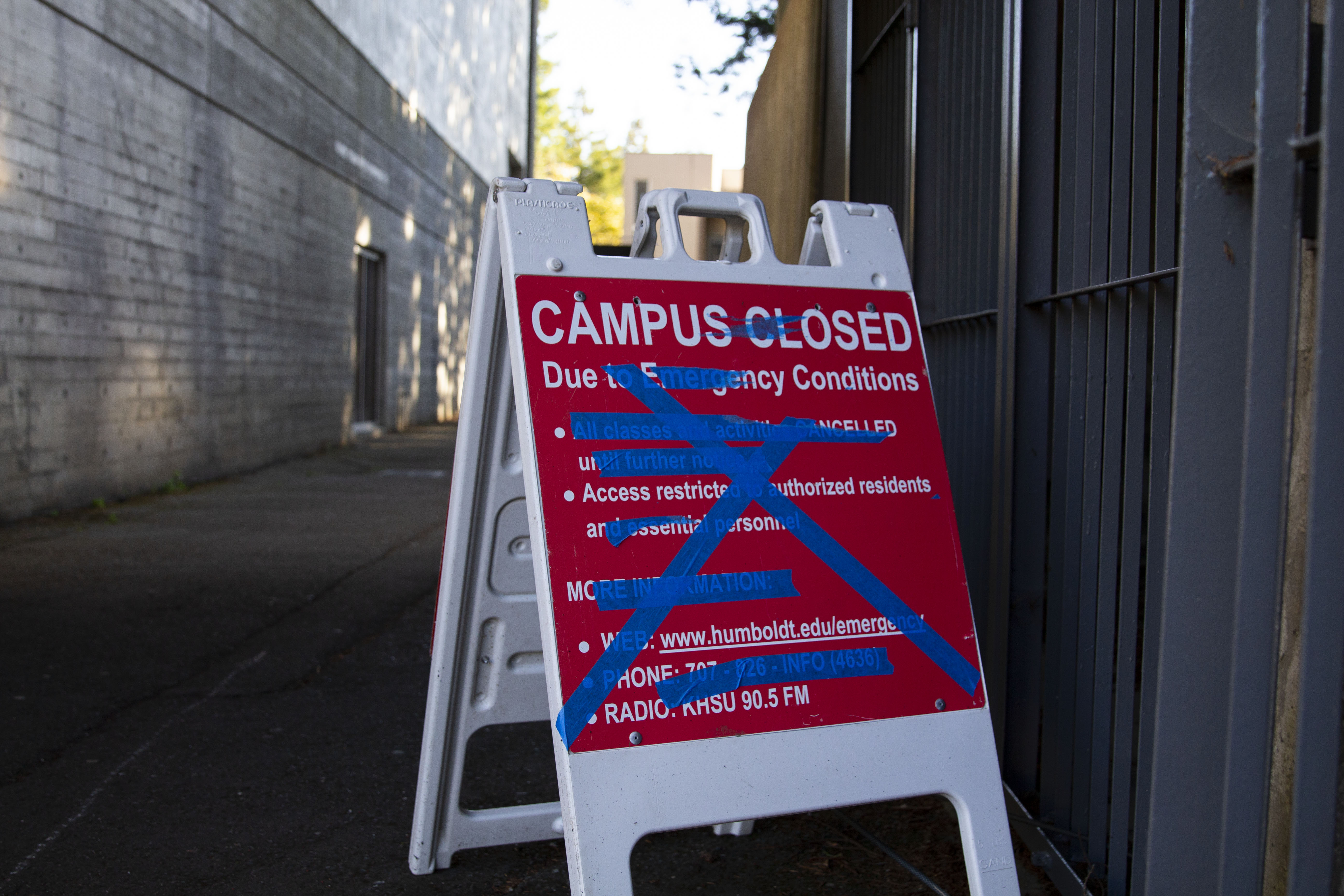
The Humboldt State University campus is closed to the public, but the Student Health Center expects to remain open for the remainder of the semester to help any students remaining on campus. The health center is limiting face-to-face contact as much as possible, but is still helping students without physical appointments when possible.
“We’re doing everything we can to help minimize the risk of exposure for students and Student Health and Counseling staff by limiting as much face-to-face contact as possible,” HSU Director of News and Information Aileen Yoo said. “For emotional support, for instance, students can talk to a CAPS counselor over the phone and, in most cases, if preferred, Zoom.”
The Health Center is still offering other essential services like prescription refills and COVID-19 testing.
“For those who are sick or suspect they have COVID-19, we have urged them to call before visiting the health center,” Yoo said. “When it comes to COVID-19, our main focus is assessing the student and collecting swab samples if we think that’s necessary.”
“It is normal to have ebbs and flows with your mood and productivity levels but if you get “stuck” in a dark space for an uncomfortably long time, consider reaching out to get help such as from a counselor at CAPS.”
Jennifer Sanford, director of Counseling and Psychological Services and associate director of student health and wellbeing
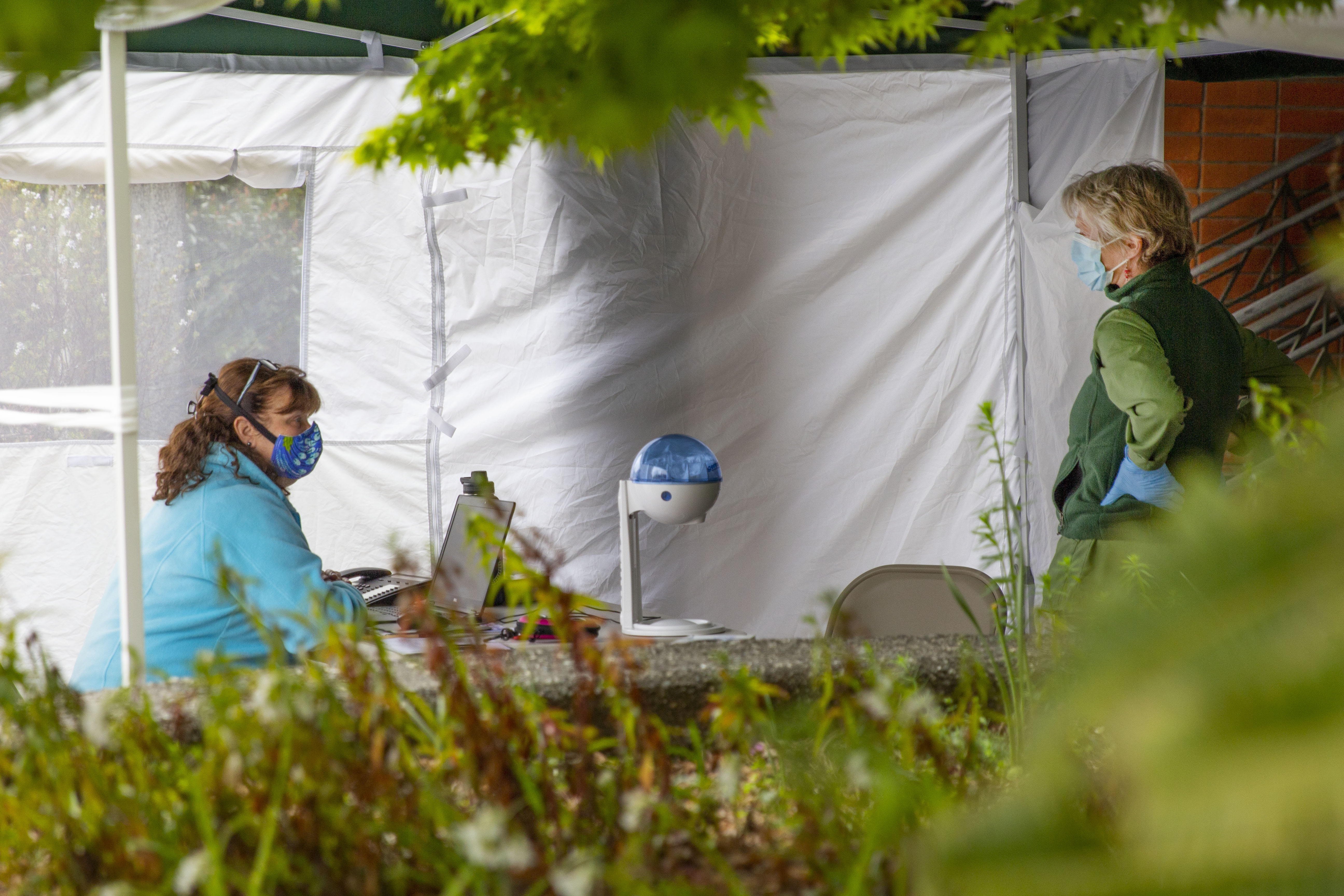
The Health Center set up white triage tents in front of the building to help students check in and get assessed. If a student tests positive for COVID-19, the Health Center will work with county health services to make sure the student gets the treatment they need.
During a pandemic, the disease itself isn’t the only medical problem facing students. The Center for Disease Control warns the stress of a pandemic can cause or worsen mental health problems, and recommends calling a health care provider if symptoms persist.
The Director of Counseling and Psychological Services and Associate Director of Student Health and Wellbeing Jennifer Sanford asked students to consider reaching out to Counseling and Psychological Services if they feel their mental health is deteriorating.
“Pay attention to how your thoughts and attitudes in any given moment are impacting your mood and overall wellbeing,” Sanford said. “Talk with others, connect. It is normal to have ebbs and flows with your mood and productivity levels but if you get “stuck” in a dark space for an uncomfortably long time, consider reaching out to get help such as from a counselor at CAPS.”
Sanford said that this can be an uncertain time, but it’s important to see social distancing as community care.
“The reality is that in our physical distancing, we are displaying compassion and care for our elderly and medically compromised,” Sanford said. “We are allowing our healthcare system to better manage the flow and care of patients, and we are caring for ourselves by lessening our own risk.”
HSU briefly required registration for two public webinars as a security measure
Update, April 22: Humboldt State Vice President of Enrollment Management Jason Meriwether penned a letter to The Lumberjack, making the case that HSU did not violate California law. Read it here.
Editor’s note: Grace Caswell is a student in Journalism Department Chair Vicky Sama’s media law course. Almost the entire staff of The Lumberjack has also had Sama as an instructor in journalism courses.
Humboldt State University hosted public meetings via Zoom to inform the public about its projected enrollment decline and budget cuts April 13 and 15. However, as a security measure protecting the university from “Zoom bombings,” HSU enacted mandatory registration requirements prior to entering the meetings in violation of California state law.
“Zoom bombings” describe a new term for an infiltration or hijacking of a Zoom session with the intent to harass and disrupt the session. With an increase in Zoom users, from 10 million in December 2019 to more than 200 million in March of 2020, Zoom CEO Eric S. Yuan released a statement April 1 detailing additional measures being taken to enhance Zoom security over the next 90 days.
HSU Vice President of Enrollment Jason Meriwether claimed HSU has experienced Zoom bombings and enacted the registration as an additional security measure. The additional measures required the public to respond twice via Google forms before being sent the Zoom meeting invitations, basically giving the administration, a government body, the power to sift through and deny public access.
An approved registration screen for one of HSU’s enrollment and budget webinars held April 13 and 15.
HSU Chair of the Department of Journalism and Mass Communication and media law professor Vicky Sama alerted and engaged with HSU administration, specifically Meriwether, on the violations being committed.
“Using ‘security’ reasons to require the public additional registration to access a public meeting on the people’s business does not satisfy the openness and liberties that our Constitution provides,” Sama said in an email. “In addition to violating state law that I explained in my earlier email.”
“The unintentional message is that some people are not welcome and/or we at HSU don’t want the public to know what is going on.”
Vicky Sama, HSU journalism chair
Sama said the additional requirement for the public to register prior to receiving an invitation was tantamount to reviewing their qualifications.
“The email did not justify the registration nor did it outline its purpose, raising suspicions that the university doesn’t want certain people to attend or know what is going on,” Sama wrote. “The unintentional message is that some people are not welcome and/or we at HSU don’t want the public to know what is going on.”
Specifically, HSU’s actions against the public violated the Brown Act and Bagley-Keene Act. Both California state acts provide assurance of rights to the public. Sommer Ingram Dean, staff attorney for the Student Press Law Center, explained how these security measures directly conflict with both acts.
“Section 54953.3 of Brown says ‘A member of the public shall not be required, as a condition to attendance at a meeting of a legislative body of a local agency, to register his or her name, to provide other information, to complete a questionnaire, or otherwise to fulfill any condition precedent to his or her attendance,’” Dean explained in an email.
“Section 11124 of Bagley Keene says ‘No person shall be required, as a condition to attendance at a meeting of a state body, to register his or her name, to provide other information, to complete a questionnaire, or otherwise to fulfill any condition precedent to his or her attendance.’”
Sommer Ingram Dean, staff attorney for Student Press Law Center
Additionally, Dean cited the Bagley-Keene Act and the measures it provides ensuring the public’s rights.
“Section 11124 of Bagley Keene says ‘No person shall be required, as a condition to attendance at a meeting of a state body, to register his or her name, to provide other information, to complete a questionnaire, or otherwise to fulfill any condition precedent to his or her attendance,’” Dean wrote.
Sama informed Meriwether of the illegal activity violating both the Brown and Bagley-Keene Acts April 13, citing the specific sections mentioned above. In response, Meriwether continued with the registration in place and adjusted the meetings by offering public links.
“Since this issue was just raised today, it appears to me that the best thing to do is to move forward with today as planned,” Meriwether said in an email. “We will also explore hosting a third event. We will provide both the option for registration and the public link for the already scheduled event on Wednesday. The entire point of having these events was to be transparent.”
Since then, the links to the April 13 and 15 meetings went public. However, the concern more surrounds HSU’s decision to filter through the public’s right to access a public meeting regarding matters directly impacting them.
The registration requirement, Sama wrote, amounts to intimidation and goes against the spirit of openness and transparency, and “reeks of sneakiness.” In a time of crisis, government bodies can use the mirage of security to deny the public their right to voice their opinions. Ultimately, it can amount to an abuse of power against the public.
APD asks witnesses to come forward on third anniversary of David Josiah Lawson’s death
FOR IMMEDIATE RELEASE
JOSIAH LAWSON HOMICIDE OCCURRED THREE YEARS AGO
On this day three years ago HSU Student David Josiah Lawson was murdered in Arcata. This case remains under investigation and the Arcata Police Department is seeking the public’s assistance during the on-going investigation. On April 15, 2017, while attending a house party on Spear Avenue, Josiah was stabbed during an altercation. Josiah was pronounced deceased shortly thereafter at Mad River Community Hospital.
Witnesses described upwards of 100 people in attendance at the house party. Many of those who were present have not been identified nor have they been interviewed by Detectives from the Arcata Police Department. The completion of this investigation is dependent on a number of factors including interviewing all people who were present at some point during the party or who have information that can corroborate what occurred that night.
The Arcata Police Department established a 24 hour confidential tip line for community members to provide information relative to this investigation. The phone number is (707) 825-2590. Community members can also call the APD’s Dispatch Center at (707) 822-2424.
Keeping Josiah’s memory alive is paramount to this case. The Arcata Police Department will continue to investigate this case and will continue to work all investigative leads until justice prevails.
Attached in a separate email is a Public Service Announcement developed in partnership with DJ’s Mother, Charmaine Lawson, the Arcata Police Department, the Eureka Broadcasting Company and the City of Arcata’s IT Department. The PSA link is Facebook compatible. All are encouraged to share this link with anyone in order to never forget DJ and to encourage community members who have any information at all regarding who else was in attendance at the party and/or the events that led to DJ’s death, to come forward.
Public service announcement video reposted by the North Coast Journal:
I woke up on St. Patrick’s day—my birthday—to sobbing. My roommate was curled up on her bed, across the room, crying her eyes out. She cried for half an hour, if not more, because she’d just received the Humboldt State email canceling our graduation and asking students to leave campus if they were able. An achievement she has been working toward for seven years and one I have been busting my ass off for four years was all taken away in seconds.
Instead of celebrating and going to the bars—in true St. Paddy’s day fashion—I spent the day in quarantine having to tell my family to cancel their plane tickets and Airbnb reservations because I wasn’t going to be able to walk.
As one of the students left on campus, it’s strange, to say the least. When my roommate and I go for walks or head to get food from OhSNAP!, the university looks like a nightmarish scene from some dystopian novel. Usually, the only people you’ll find walking around campus are construction workers, nurses or other essential HSU staff. Every once in a while there’s the odd student or two, using what little resources are left available on campus.
In front of the health center, a tent is set up to greet all students where they sanitize their hands and grab a face mask before being allowed to enter the building—even students who just need to pick up medication from the pharmacy.
The only students allowed to be seen at the health center are those who show severe symptoms like a fever, sore throat or difficulty breathing. But for those of us who need regular prescriptions through their pharmacy, be it for anxiety medication, emergency inhalers, birth control pills or other medications they offer, we can still access the pharmacy during their posted hours.
In my opinion, this is one of the most concerning aspects of COVID-19. Students and community members cannot be tested through campus for the illness unless they are extremely sick, which leaves carriers with less severe symptoms to go untested.
Before campus was closed, my roommate and I came down with a cough and fatigue that wouldn’t seem to go away so we decided to visit the health center to see what was wrong, maybe a bit paranoid that we might have contracted the coronavirus somehow. But who isn’t a little paranoid during this pandemic?
We were seated outside and only admitted into the entrance of the health center one-by-one. A blood pressure monitor, thermometer and other equipment were set up in the hallway, with two nurses wearing masks and gloves. We were given masks, examined and told that, unfortunately, if we did not show severe symptoms, they were unable to test us.
In my opinion, this is one of the most concerning aspects of COVID-19. Students and community members cannot be tested through campus for the illness unless they are extremely sick, which leaves carriers with less severe symptoms to go untested.
My roommate and I were told we had post-viral infections and given medicine to treat that, but the truth is, we could very well have had the illness and not known because of arbitrary rules only allowing people very ill to access tests.
I’m still sad that graduation was canceled and I know that it’s a momentous accomplishment that I will never get back. But it’s more important to me that we keep people safe than having the chance to walk across the football field to accept a degree.
There are “asymptomatic” carriers of COVID-19, meaning there might be tons of people in the area infected with the coronavirus without any knowledge they are sick. There might be people who have mild symptoms who are unable to be tested and are unintentionally spreading illness because they think they aren’t that sick. We aren’t only putting the health of students at risk by not testing those concerned they might have the illness, we are endangering the nurses and doctors who are still working through the health center, members of the community that students might come into contact with while grocery shopping or performing essential tasks during quarantine.
But this isn’t only a concern in Arcata. The reason behind such arbitrary testing rules is because, as reported by The New Yorker, there is a critical shortage in medical equipment necessary to perform tests. This is why those who are extremely ill are being prioritized over people who don’t show as many symptoms. We simply do not have the resources to test everyone, so people infected with the illness are falling through the cracks, living their normal lives and potentially spreading the illness because they are unaware they even have it.
While those who are sick, but not sick enough, cannot get tests, celebrities who show no symptoms of COVID-19 are allowed to be tested, leaving medical professionals, sick patients and community members to wonder if their lives are less important than the rich.
I’m sitting in my dorm right now going a bit stir-crazy, still trying to find things to do to occupy my time while I practice social distancing in quarantine. Last week, my roommate and I painted canvases to pass the time. I started learning embroidery because I was that bored and today I went to my Zoom English class, then spent the day writing and watching movies with my roommate. We’ve downloaded TikTok just to pass the time.
I’m still sad that graduation was canceled and I know that it’s a momentous accomplishment that I will never get back. But it’s more important to me that we keep people safe than having the chance to walk across the football field to accept a degree.
Here’s how HSU received the trees and where you can find them
Humboldt State University has a handful of redwood trees grown from seeds that went to the moon.
In 1971, astronaut Stuart Roosa brought around 500 tree seeds with his personal items on the Apollo 14 NASA mission to the moon. Roosa intended to test the seeds to see if space radiation would affect their germination. While he never set foot on the moon, he orbited the moon 34 times while his colleagues walked the lunar surface.
When Roosa returned, he sprouted most of the seeds. NASA then sent the seedlings around the world. Around 1976, HSU received a handful of redwood seedlings and planted them around campus. Some of those trees remain near the theatre arts and natural resources buildings and near the Campus Center for Appropriate Technology and Facilities Management.
Looking to the past to learn about the present pandemic
There’s a saying that goes something like, “In order to prevent future mistakes, we should look to the past for guidance.” While this current pandemic may be new to all of us, humans have gone through this before. Some of the more recent pandemics include the SARS virus, the H1N1 virus, Ebola and HIV.
The term pandemic is defined as something “occurring over a wide geographic area and affecting an exceptionally high proportion of the population.” Obviously, the current COVID-19 virus fits into this category. While some of the aforementioned pandemics did not enact a devastating, history-altering toll on Humboldt County, another pandemic did.
From 1918 to 1920, the Spanish flu swept across America, resulting in an estimated 675,000 deaths according to the U.S. Department of Health and Human Services. The first official report of the Spanish flu in California was reported Sept. 27, 1918, just two weeks after an outbreak on the East Coast. By November 1918, the total cases throughout the state hit about 115,000—overwhelming doctors and government officials from north to south.
One of three doctors that helped Spanish flu patients in the Ferndale area.
Although Humboldt County sits in an isolated area protected by the “Redwood Curtain,” the area was soon amassed in its own troubles combatting the illness. Humboldt County had a population of about 37,000 people with Eureka holding around 12,000. The Spanish flu resulted in around 200 deaths (although it is thought to be much higher) and thousands grew ill.
In 2012, Humboldt State alumnus and McKinleyville native Jeff Benedetti-Coomber wrote a detailed history of the impact the Spanish flu had on Humboldt County. For it, he was awarded the Charles R. Barnum History Award by HSU’s history department. For his research he scoured through old newspaper clippings for primary source documentation. He read academic analysis on how the Spanish flu affected the entire nation and he cited Matina Kilkenny, a researcher and local author for the Humboldt Historical Society who also wrote about the impacts the Spanish flu had on Humboldt County.
What prompted Benedetti-Coomber to focus on the Spanish flu was its lack of local research. As his peers decided to look into European history, he decided to focus his attention on the effects locally.
“I was walking through the graveyard in Arcata and noticed a family of graves, not necessarily related to the [Spanish] influenza but it got me thinking about what effects the flu may have had because it was around the same time,” he told me over the phone from his place in Los Angeles. “Once I started researching it I saw how it did affect the county and I was pretty amazed.”
Benedetti-Coomber’s senior thesis, titled “Death In the Redwoods: The Effects of the Spanish Influenza on Humboldt County,” spans 30 pages and breaks down how each town dealt with the outbreak. He highlights what preventative measures seem to have worked and where officials, the public and the media went wrong and what they got right.
“It’s just like today when you tell people to do something and they kind of resist. A lot of people had that with the Spanish influenza and it was a reason a lot of people died, because they didn’t take it seriously.”
Jeff Benedetti-Coomber
Some of the highlights from his research that still stand out to him are how Eureka initially closed all schools, which flooded the streets with children. They soon changed their minds and brought the kids back into the school to try to quarantine the children. Another nugget of research that sticks out in his mind has to do with masks and the public’s initial reluctance to wear them.
“It’s just like today,” Benedetti-Coomber said, “when you tell people to do something and they kind of resist. A lot of people had that with the Spanish influenza and it was a reason a lot of people died, because they didn’t take it seriously.”
When the Spanish flu hit Humboldt, the United States was in the middle of World War I and young men from Humboldt were signing up to join the war effort. There were war rallies and large gatherings of people throughout the towns in Humboldt in the fall of 1918 as the Spanish flu began to creep in.
“Although the Great War was still the main focus in Humboldt County, more and more citizens were beginning to take notice of the spreading pandemic,” Benedetti-Coomber wrote.
Some of the newspapers in Humboldt at that time seem to have downplayed the seriousness of the Spanish flu. Benedetti-Coomber points to an ad that was in the Humboldt Standard by Vicks VapoRub that was “disguised as an article… and it assured readers that the [Spanish flu] was ‘Nothing new simply the Old Grippe and la Grippe that was the epidemic in 1889-90.’”
Benedetti-Coomber wrote that it is believed the Spanish flu was brought to Humboldt County by locals traveling to other parts of the state to help care for sick family members and then returning before symptoms started to show. By mid-October 1918, reports of the Spanish flu were starting to pop up in the local newspapers.
“The Humboldt Times also reported that there were roughly 150 cases in Eureka by [Oct. 22] and hospitals were short staffed. Doctors were so busy they did not have the time to report new cases or treat the majority of their patients.”
Jeff Benedetti-Coomber
“The Humboldt Times and Humboldt Standard newspapers offered daily accounts of what was happening,” he said, adding that they also seemed to not care about the Spanish flu at first.
On Oct. 12, 1918, four cases were reported in the Humboldt Times and those infected were quarantined in a “‘safe house’” on 8th Street where they could be quarantined and cared for,” Benedetti-Coomber wrote.
At first, the mayor of Eureka downplayed the danger to the public, but two days later, five more people were infected. By Oct. 22, 1918 there would be more than 150 cases and one death.
“According to the Humboldt Times, Mrs. Garber Dahle was the first person in Humboldt County to die from the deadly virus,” Benedetti-Coomber wrote. “The Humboldt Times also reported that there were roughly 150 cases in Eureka by [Oct. 22] and hospitals were short staffed. Doctors were so busy they did not have the time to report new cases or treat the majority of their patients.”
Action to combat the Spanish flu across the county began to take root. Arcata was the first town to pass a requirement that all residents had to wear a mask while out in public, and by Nov. 7, 1918, the entire county was required to do so. Emergency hospitals were soon established across the county with some residents offering up their homes for the infected.
Arcata escaped the pandemic with only four deaths, but the same can’t be said for Eureka and especially for the logging camps in the remote areas of the county. The number of cases grew in the urban areas, and by Oct. 23, 1918, the logging camps were left to fend for themselves.
“Logging camps and small towns were informed by the newspapers and from local physicians that they would have to face the Spanish Influenza on their own as all of the county hospitals were completely full,” Benedetti-Coomber wrote while citing a Humboldt Times article titled “Influenza Increases Alarmingly in Two Days.”
Young women wearing masks in Humboldt County.
But one logging camp was able to escape the pandemic with no cases at all. In her article, “Missing Faces,” Matina Kilkenny reported how Carl Munther set up a quarantine system for his workers who decided to go into town. (Kilkenny’s article has a number of great photographs of life in Humboldt County during the Spanish flu.)
“Munther required every person returning to camp… to stay four days in a tent he’d pitched some distance from the workers’ cabin,” Kilkenny wrote, adding that the returning workers were also required to work and eat separately from their peers. “Thanks to their boss, very few men chose to leave the Barrel Company camp and not one case of influenza occurred there.”
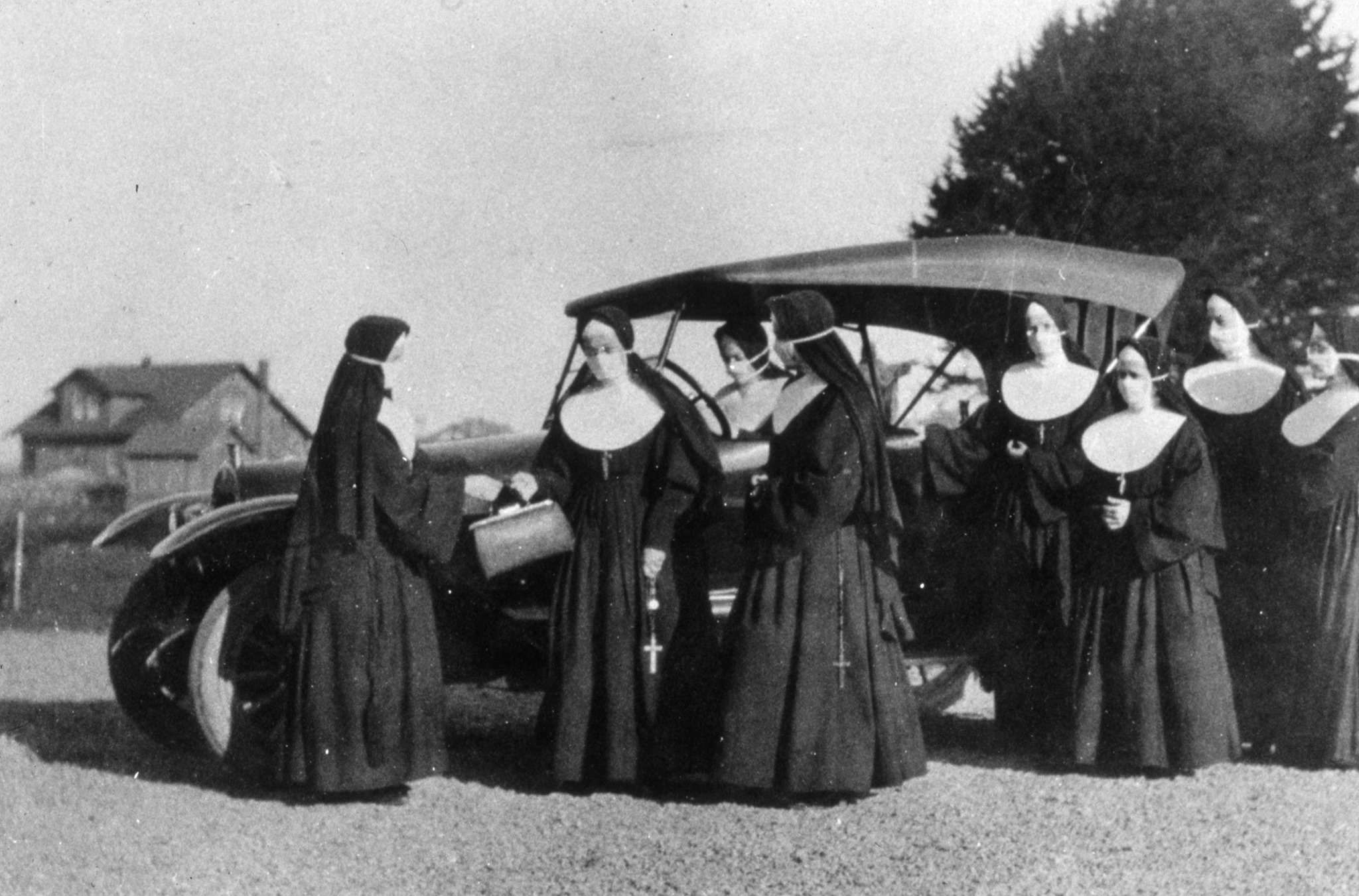
Sisters of St. Joseph wearing masks during the Spanish flu. The sisters helped many patients in Humboldt from 1918-1920.
Throughout her research, Kilkenny was able to find where a number of hospitals were set up across Humboldt. There was a Red Cross Hospital in Korbel, Arcata, Blue Lake and Eureka. Kilkenny also came across an interview between a member of the Sisters of St. Joseph of Orange in Eureka and a man named Brad Geagly. Kilkenny wrote the following:
“[Mother Bernard] sent [the Sisters] out in twos, in cars provided by the Red Cross. She armed each Sister with a kit containing camphor and sweet oil, castor oil, and mustard plasters. Into the homes… the sisters came, arriving at seven o’clock and leaving at the end of a 12-hour shift, to be replaced by two other Sisters. They would attend first to the adults….They would bathe the delirious victims completely, rubbing their chests deeply with the camphorated oil. Mustard plasters would be applied, and then the sisters would wrap the sick tightly in whatever woolen material they could find; then they would tend the children. Once they had been bathed and medicated, the sisters turned to washing linens or cleaning house. They fed their charges warmed milk and broth prepared from the food furnished by the Red Cross.”
Kilkenny noted that, generally, it was the poor who were admitted into the hospitals, while the more well-off were cared for in their homes. Because of this the actual tally for those infected and the deaths attributed to the Spanish flu is unknown. Kilkenny also points out how the Native American tribes were hit hard by the Spanish Flu as well.
“Of the [11] Native Americans whose deaths are on record at the County Courthouse, five were from Table Bluff, two from Hoopa, one from Miranda, one from Orleans, one from Requa, and one was a laborer at Korbel,” Kilkenny wrote. She also noted evidence that many Native Americans often refused treatment by White settlers around this time period.
Kilkenny was also able to find county death records from that time and noted that between Sept. 1, 1918 and April 1919, 175 Humboldt residents died with 91 of them between the ages of 20 and 40.
And so what can we learn from this history?
There is evidence that social distancing works by the example set by Carl Munther at his logging camp and how travel throughout the state can spread the virus. We can see how hospitals were eventually inundated with those infected with the Spanish flu and how staff were stretched thin. We can also see how it is important to get ahead of a pandemic and try to prepare as much as possible.
Humboldt County seems to be doing just that. They have recently distributed around 30,000 pieces of personal protective equipment to first responders and medical staff across the county. Humboldt State chipped in and prepared 1,250 COVID-19 test kits. Also, as I’m sure you are aware, we are in a “shelter in place” order that was enacted to help stop the spread of the virus and to give medical staff the ability to fight the virus without being overwhelmed.
Towns across Humboldt are also doing their part to help prevent an outbreak. Trinidad passed a moratorium on all short-term rentals and added some pretty forceful consequences to anyone who breaks it.
“Over the course of the meeting, council members added some teeth to the resolution with language saying that a single violation may result in the City revoking a proprietor’s short-term rental license for up to a year,” the Lost Coast Outpost’s Ryan Burns recently reported, adding that the county may consider a similar measure.
A stained glass piece by Humboldt artist Colleen Clifford.
As this thing progresses, we are all going to have to make some sacrifices, but we’ll get through it. Help out the elderly and the immunocompromised if you can. Help out each other by not going out or attending pretty much any gathering of any number of people.
Let’s all work together — but at least six apart — to help “flatten the curve.”
Blue mussels are a type of edible bivalve found in cold coastal waters. These orange-fleshed, blue-shelled mollusks are high in vitamin B and iron. Mussels and other bivalves feed by filtering water throughout their body. Bivalves, including mussels, can be deadly if consumed during red tide conditions.
You can forage for mussels along the California coast legally with a California fishing license. The legal daily limit for mussels is 10 pounds and you must carry a scale with you. Do not use tools to scrape mussels off rocks. This damages the mussel beds and is prohibited for mussel collecting. Instead, get a sturdy pair of gloves to twist and yank the mussel free from its byssal thread attachments (also known as beards) that secure it onto rocks.
Mussel gathering is prohibited in Humboldt County every year from May 1 to October 31 due to the warmer climate during this time, which facilitates the proper conditions for toxic algae blooms. Mussel quarantine may vary year to year. Always call the shellfish bio-toxin hotline before you plan on foraging.
Bio-toxin information line: (800) 553-4133 shellfish toxins/quarantine information
Editors note: This article previously stated an incorrect limit on mussel harvesting and has been corrected. We have updated information about mussel quarantine. Updated January 21, 2021
HSU, like all colleges, prepares for tough times and serious measures
Humboldt State University is preparing for an enrollment drop of around 20% for the fall and a budget cut of around $20 million by the 2022 fiscal year, according to a joint press release from HSU and College of the Redwoods.
Before the COVID-19 pandemic, HSU projected an enrollment drop for total students of around 14% for the fall and had proposed a budget cut of around $5.4 million by the 2022 fiscal year.
Given the uncertainty of the next year, HSU is planning for an even larger enrollment decline and budget cut. HSU currently projects new student enrollment to drop by 30%. The specifics of what the budget cuts will mean are still being worked out.
“Many options are being looked at, including combinations of a hiring chill, spending freeze, operational changes, incentives for retirements, travel reductions, and more,” the press release said.
In a Zoom interview, HSU Vice President of Enrollment Management Jason Meriwether said a worst case scenario projection might be only 500 new students and 500 transfer students admitted to HSU in the fall.
These numbers, to be clear, are projections. No one knows exactly how the next year will play out. Meriwether hoped HSU could keep enrollment and retention as high as possible.
“The sad part is, I don’t know,” Meriwether said. “There’s no benchmark. There’s nothing to project against. We could be doing all this and, you know, 1400 students show up—which would be wonderful.”
HSU is not alone. As noted in Meriwether’s Tuesday enrollment management report to the HSU Senate, colleges everywhere are facing enrollment drops amid the pandemic. The report cited articles from Forbes and the Associated Press along with some early data suggesting one out of every six college-bound students won’t attend college in the fall.
With education expected to shift to a more local focus, Meriwether pointed out that HSU already shifted to local recruitment in the last year with measures like the Humboldt First Scholarship.
Compared to an average of about 32 local students attending HSU per year in the last three years, HSU currently has 208 local students confirmed to attend HSU in the fall with the Humboldt First Scholarship.
“The good news is we’re not starting local recruitment today because there’s a problem,” Meriwether said. “That’s the best part of all this—is that we already have a really solid foundation that we built in the community over the last eight or nine months.”
The enrollment management report includes a graph of enrollment scenarios, with red lines for lower enrollment scenarios and a blue line for a growth scenario. Meriwether hoped for HSU to remain close to the blue line.
“Essentially, pray we get as close to the blue line as possible,” he said.
Meriwether pointed out that, since COVID-19 has hit everywhere, current students might not have much reason to transfer. If classes are still online in the fall at HSU, they will presumably be online everywhere.
“Let’s say a student says, ‘OK, well, you know, I want to transfer because I didn’t want this experience,’” he said. “OK. Well, the question will be, ‘What school are you going to transfer to?’ Because every school is stuck in this scenario right now.”
Nevertheless, the pandemic will likely temporarily derail HSU’s efforts to improve enrollment.
“Long term, you know, prior to COVID-19, prior to this hit, we had a plan of getting to an FTE of 7600 students [full-time students] in about four years,” he said. “So now, what if the COVID-19 environment says, well, gosh, it can make us take eight years to get there.”
Meriwether was optimistic that eventually, HSU would get through this.
“I believe that we will bounce back, and I believe we will bounce back strong if the hit is really bad,” he said. “This is a marathon. Enrollment is a marathon.”
Update 11:10 a.m.: a second email sent yesterday from College of Natural Resources Dean Dale Oliver and obtained by The Lumberjack makes similar points but does not give a specific number to the expected enrollment drop for fall beyond noting that a 15-20% drop was expected prior to the COVID-19 outbreak. We will update this story when we have confirmed the numbers below. The second email is pasted below.
Humboldt State University has issued a budget directive to take immediate action to prepare for the fall semester, including the freezing of open staff positions and the reduction of the number of academic departments, according to an email sent to faculty and staff of the College of Arts, Humanities and Social Sciences Tuesday morning.
The email, sent by Interim Dean of CAHSS Rosamel Benavides-Garb, projected a freshmen class for fall 2020 of around 500 students, down from around 1,400 students five years ago and down from around 1,000 students for fall 2019.
“The scale and impact of our current predicament is grave and as a result our budgetary practice has to be reconsidered and reformulated based on the simple equation of demand and resources,” the email said. “We have become, de facto, a much smaller institution, which compels us to undertake a comprehensive reset at HSU.”
The email listed six directives, including requests to freeze all vacant staff positions, reduce the number of academic departments and develop online programs for current and transfer students to complete their degrees.
The email promised to make the process consultative and sustainable.
“We remain committed to “the student first” approach,” the email said, “and are extremely aware of the critical importance, now more than ever, of issues of social justice, equity, and inclusion in all we do.”
The full email is copied below:
Dear CAHSS Colleagues,
On April 2, the deans of all three academic colleges received new administrative directives from Interim Provost Lisa Bond-Maupin regarding the coming academic year. The directives are a call to action, issued in response to the budget and recruitment/retention reality at HSU. The Interim Provost reiterated these directives yesterday, Monday, April 6 in her Provost/VPAA Report to the senate.
As we all know, our student enrollment has been declining for several years and the institutional budget has been negatively impacted. The administration’s efforts to address the problem must now be reframed in light of new and profound challenges the current COVID-19 pandemic poses for HSU, and the CSU system in general.
We are projecting a freshmen class of 500~ students across all three colleges. Five years ago, the freshmen class numbered 1,400+ students. The scale and impact of our current predicament is grave and as a result our budgetary practice has to be reconsidered and reformulated based on the simple equation of demand and resources. We have become, de facto, a much smaller institution, which compels us to undertake a comprehensive reset at HSU.
The Interim Provost has directed the three academic deans to reduce spending and grow retention/recruitment. Her directives require our college to implement the following action areas immediately:
1. Freeze all vacant staff positions: This is indefinite or until each college develops a plan to organize staff support within colleges and across colleges.
2. Reduce the number of academic administrative units (departments): This needs to be planned immediately and be in place for this next fiscal year so we are reorganized starting fall 2020.
3. Develop online degree completion opportunities for certain existing majors in the last two semesters of their programs.
4. Develop two-year degree online completion opportunities for transfer students of certain majors beginning fall 2020.
5. Develop a partnership with CEEGE related to workforce development, responding particularly to a post COVID-19 context.
6. Integrate the Center for Teaching and Learning (CTL) in the development and implementation of new teaching capacity.The Interim Provost has also indicated that she expects this process to be:
The Interim Provost has also indicated that she expects this process to be:
· Consultative with unit leadership.
· Consultative and collaborative across colleges.
· Sustainable by creating new retention and recruitment opportunities.
The deans of the three colleges have already begun discussing the directives. I have also initiated planning within CAHSS, in collaboration with the three associate dean fellows, and will continue to discuss budget with the chairs. We will move forward together, exploring multiple budget management opportunities to make our colleges strong and resilient in the face of present and future challenges. We can also regard these adjustments as unique opportunities to explore new and exciting programs to attract and serve our ever-diverse student population in a shifting and challenging workforce environment. We remain committed to “the student first” approach and are extremely aware of the critical importance, now more than ever, of issues of social justice, equity, and inclusion in all we do.
Sincerely and in solidarity,
Rosamel
Email from CNRS Dean Dale Oliver:
April 6, 2020
CNRS Faculty and Staff
Dear Colleagues,
Earlier today Interim Provost Lisa Bond-Maupin sent out her report to the HSU University Senate in preparation for Tuesday’s meeting. Included in her report was a call for collective action to prepare for fewer students and fewer resources in the next academic year. I’ve pasted the relevant section of the Provost’s report below my signature.
Current estimates indicate we could have 20% fewer students in Fall 2020 that we had in Fall 2019. This reduction is significant, and we must plan over the next weeks and months so that those students who start or continue with us in the fall experience high quality, engaged learning that will prepare them well for STEM professions and advanced study.
Three items from the Provost’s report that I want to highlight are personnel, administrative re-structuring, and online education.
Personnel: Although we will be finishing out the two faculty searches currently underway, and ensuring we have sufficient temporary faculty to deliver our curriculum, all other hiring is frozen for the moment, including those which are currently vacant and those which will soon be vacant due to expected retirements. Through improving business processes, realigning and reorganizing staff positions, and targeting professional development we will find a way to support our educational enterprise without hiring additional personnel. This work will be both necessary and challenging, and require collaboration with relevant unions and careful consideration of multiple factors.
Administrative restructuring: At the Dean’s level we were already planning a partial re-assignment for Associate Dean Rick Zechman to manage the marine lab while marine lab director Brian Tissot transitions from full-time director to FERP faculty. We are also being asked to reduce the number of administrative units in the college, meaning that some departments will be merged or reformed. This work will be done in close collaboration with the CNRS Council of Chairs and the other two academic deans.
Online Education: There are some programs in CNRS for which one of the following scenarios might make sense: provide an online degree-completion option for a group of students who have a year or less left to complete their degree; provide a degree-starter program for a group of first year (or transfer) students to get started with HSU from home during the fall 2020 semester, and then begin on campus in Spring 2021; provide more online sections of general education courses for undeclared students or majors from outside CNRS. For the moment, I recommend that faculty discuss within their departments whether one or more of these scenarios might be appropriate for their program.
For this week I am collaborating with the Provost’s office, with the other academic deans, and with a working group of CNRS Chairs to create possible models for administrative restructuring that can then be discussed among all of the CNRS chairs the following week. Relatively soon I will also set up a mechanism by which input can be given from across the college.
We face a significant challenge as a college and university over the next few months and years, but I am confident that we will find solutions that serve our students and the citizens of California well. My confidence rests solidly on the incredible talent, dedication, and creativity of our faculty and staff, whom I am proud to serve.
Best wishes, safety, and health to you and your families,
Dale R. Oliver, Dean
College of Natural Resources and Sciences
From Interim Provost Lisa Bond-Maupin’s report to HSU’s University Senate, April 6, 2020
Realignment of Spending with Reduced Revenue
In addition to supporting instructional continuity and Academic Master Planning, our division leadership is turning our attention to budget planning for next fiscal year and beyond. Prior to COVID-19, our enrollment picture for next academic year was apparently trending toward a 15-20% fall-to-fall (one year) student headcount decline. We were likely headed toward a reduction to the HSU budget for next fiscal year that was double that anticipated when the URPC created its annual budget recommendations to President Jackson. While the college-going enrollment impact of the pandemic is unknown for all in higher education across the nation, it is clear that the CSU and HSU will experience further decline in student enrollment. Given the enrollment challenges felt across the state, it is likely that impaction at our southern campuses will be lifted. It is highly likely that more students will choose for financial and other reasons, in the shorter term at least, to remain at home or closer to home to study.
While we await the release of up-to-date enrollment projections and budget information, Academic Affairs is implementing a few immediate strategies toward student retention and recruitment on the heels of the pandemic and toward further reducing our spending. As we do so, we are guided by the URPC principles and our own commitments to meeting the instructional needs of our students and protecting employment. In addition to continuing to adjust our academic offerings for Fall, immediate strategies also include:
• Working with each dean and director to reduce budget allocations for FY 21
• Freezing hiring in all open staff positions for now and planning to absorb staff attrition
• Working collaboratively with staff within and across colleges and budget units in Academic Affairs to reimagine and reorganize our staff support
• Working collaboratively with department chairs and faculty to condense the number of separate academic administrative units in the colleges
• Working within the Office of the Provost to realign and reorganize staffing
• Identifying academic programs ready to continue to offer upper division major courses online into next year and beyond to: a) help students in their final semesters to study from home and complete their degrees, and b) offer new transfer students an opportunity to complete their degrees online
• Identifying a COVID-era retention specialist in Academic Affairs who will support the continued offering of all existing retention efforts in a virtual format and will work in collaboration with ODEI to implement inclusive retention practices at a distance.
Each one of us will be implicated in and needed for this work. It is tough and unavoidable at this time. Each one of us has a very important role to play, now, more than ever in maintaining close connections with our students, helping them to problem-solve their educational needs and connect to resources and to stay connected to HSU. We need our students. And I think we are finding in their response to our transformed instruction – they need us. This powerful connection will ultimately move HSU through and beyond this tough moment in our collective history to the future we envision. Thank you.
A reminder of the few things we know that help prevent the spread of COVID-19
I received a text from a housemate recently recommending we all drink hot liquids and think happy thoughts to get us through the COVID-19 pandemic. Sadly, happy thoughts and hot liquids won’t save us.
In the midst of a pandemic, it makes sense that people will seek home remedies—they can give you actionable measures to take to try to inoculate yourself against COVID-19. But peddling bunk medicine like a medieval plague doctor only makes things worse.
Random herbs, hot liquids and happy thoughts do nothing against COVID-19 (neither does weed). What can help stop the spread of COVID-19 are these much less sexy things you’ve probably already heard, adapted from the Centers for Disease Control and Prevention:
Social distancing. Hang out with yourself for a while. The crushing introspection may seem scary, but who knows, maybe you could learn something about yourself. The CDC gives suggestions on how to cope in this stressful time.
Frequent hygiene. Wash your hands with soap and water for at least 20 seconds. Sanitize doorknobs in your home. Sanitize your debit or credit card if you’re grocery shopping. You might even go so far as to ask to scan your own groceries at the checkout stand.
Don’t touch your face. According to disease expert Michael Osterholm, the virus behind COVID-19 chills out in the throat and lungs, and it likes to get in your body through your eyes, nose and mouth. Your hands provide an Uber ride for the virus straight into your system.
Also, cover your face. The CDC have shifted course and now recommend people cover their face with a cloth mask in public, especially in high-risk areas like grocery stores or pharmacies. If you have a sewing machine, here’s how to make your own mask. If you don’t have a sewing machine, the CDC provides a video on its site on how to make a mask out of any old cloth and a couple rubber bands.
Keep your body healthy. Eating a well-balanced diet, getting enough sleep and exercising all maintain a healthy immune system.
Find a new hobby. Don’t allow depression to set in from all the time spent indoors. Netflix is nice, but it’s not a hobby. Try reading, painting, knot-tying or bread-making. Blogger Matt Gilligan compiled a list of 19 inexpensive hobbies for self-quarantining.
Connect with your friends and family. Don’t gather with people in person. (No group hugs.) Instead, take advantage of your phone and call up your friends and family. For a more socially stimulating experience, use FaceTime or Zoom to have a video chat. Invite all your pals and make it a virtual party. If you happen to be posted up in a house with a friend, try to hang out with them rather than hiding away in your room.
We have no cure for COVID-19. A vaccine, by all accounts, remains a long way off. If you end up with the coronavirus, we only have treatments that can relieve symptoms as suggested by the Mayo Clinic, like Tylenol, cough syrups, rest and fluid intake.
I’m no stranger to distrusting authority or being suspicious of science—I grew up in Southern Humboldt and wasn’t vaccinated until I was a teenager. But for the sake of yourself and the rest of the world, put your suspicions aside and have a little faith in the only proven measures we know against COVID-19.
Alpha Psi Omega attempts a comeback with new students and adviser
Humboldt State University’s theatre fraternity is trying a comeback to campus (or it was, prior to the COVID-19 outbreak). Alpha Psi Omega intends to allow students to increase funding for competitions and student-directed shows.
Rae Robinson, the faculty adviser for APO, said the return of the fraternity excited her.
“The first chapter was like 1919 or 1920,” Robinson said. “There have been a few different departments as long as there has been Humboldt State.”
Robinson said APO was reinstated when she arrived at Humboldt State 14 years ago. APO had a few years of club work, but the group of students interested in the fraternity graduated. APO went dormant.
“We want to pull all of our performing art students together so we can all support each other better.”
Jaiden Clark, APO president
“Those kids graduated, the MFA was dissolved by the university, and it went under the radar for a while,” Robinson said. “Last year we had a new group of incoming students and they said, ‘We want a theatre club again,’ and I said, ‘We have Alpha Psi Omega.’”
APO President Jaiden Clark said they’re passionate about creating change within the theatre department by unifying performing arts students through APO.
“We want to pull all of our performing art students together so we can all support each other better,” Clark said. “We want to make more connections with more clubs around the school like the improv club and the circus club.”
APO’s fundraisers will allow students to determine how the money is used instead of the theatre department allocating funds. The fundraiser money will allow for student competitions and student-operated shows.
“School-wide enrollment is down, and as far as I understand, the school can’t afford to hire another faculty member to the theatre department. We need the students to feel empowered to do more.”
Jaiden Clark
“They don’t give us the money that we need in this department,” Clark said. “Neither have any schools in any theatre department that I have ever been to. So the students are going to pick it up.”
Clark said the theatre department is low in faculty members, and having a more unified body of performing arts students would better support the students.
“We lost a lot of faculty all at once,” Clark said. “School-wide enrollment is down, and as far as I understand, the school can’t afford to hire another faculty member to the theatre department. We need the students to feel empowered to do more.”
Professor Patrick Ulrich, assistant adviser for APO, looked forward to working with the students to reach their goals.
“I would like to work directly with the students,” Ulrich said. “Making money for their goals, serving their community, getting our name out to everybody and really just having an avenue for an honors fraternity.”
APO would give the students freedom to advertise themselves how they see fit.
“It really is in the hands of the officers,” Ulrich said, “who are all students.”
A moderate rainstorm will make its way through Humboldt County
A storm is hitting Humboldt this weekend will bring a considerable amount of rain.
Jonathan Garner, a meteorologist for the National Weather Service in Eureka, gave us a preview of what to expect.
“All in all, maybe up to two inches of rain over the weekend,” Garner said. “I’m also expecting accumulated snow across the mountains for elevations mainly above 3500 feet. We could get a little bit of small hail and stronger showers and perhaps a thunderstorm as well.”
The rain is mainly forecasted to fall on Saturday but will linger in showers on Sunday. Expect high temperatures to be in the low to mid 50s with lows in the lower 40s.
“It will put a very small dent into our deficit. We’re about 10 or 11 inches below normal right now.”
Jonathan Garner, meteorologist for National Weather Service in Eureka
Garner said the storm won’t resolve our rain deficit for the year.
“It will put a very small dent into our deficit,” he said. “We’re about 10 or 11 inches below normal right now.”
Emily Read, a junior environmental studies major, is still around in Humboldt amidst the coronavirus outbreak. With the rain looming, she planned on not doing much this weekend beyond trying to learn a new program for an engineering class.
“I typically am fine with rain,” Read said. “I like it most of the time—but right now, since we’re stuck at home anyway, I kind of just am tired of it and I just want it to stop raining so it can be nice and warm.”
Jared English, a junior film major, also planned to remain indoors this weekend even though he was initially looking forward to getting outside and doing the one thing he can do in Manila—frisbee golf.
“It does kind of make me a little sad,” English said. “Because that means even more time inside and even more time isolated in this quarantine, and the rainstorm kind of takes that one thing away.”
This website uses cookies to improve your experience. We'll assume you're ok with this, but you can opt-out if you wish. Cookie settingsACCEPT
Privacy & Cookies Policy
Privacy Overview
This website uses cookies to improve your experience while you navigate through the website. Out of these cookies, the cookies that are categorized as necessary are stored on your browser as they are essential for the working of basic functionalities of the website. We also use third-party cookies that help us analyze and understand how you use this website. These cookies will be stored in your browser only with your consent. You also have the option to opt-out of these cookies. But opting out of some of these cookies may have an effect on your browsing experience.
Necessary cookies are absolutely essential for the website to function properly. This category only includes cookies that ensures basic functionalities and security features of the website. These cookies do not store any personal information.
Any cookies that may not be particularly necessary for the website to function and is used specifically to collect user personal data via analytics, ads, other embedded contents are termed as non-necessary cookies. It is mandatory to procure user consent prior to running these cookies on your website.