The Lumberjack


Students Serving The Cal Poly Humboldt Campus and Community Since 1929

Tag: Food

  • Depressing Dishes: recipes for when you’re feeling down

    By Alexandra Berrocal

    I normally don’t like spinach because people typically serve it raw. Many people don’t like “creamed” spinach either. Try this recipe. It isn’t raw, or creamed. It is simple to make. It is also very nutritious because it includes soybean paste, which adds nutrients. According to a research paper called Effects of Doenjang, traditional Korean Soybean paste has anti-obesity, anti-diabetic, anti-cancer, and anti-inflammatory properties. Garlic is also known as a natural antibiotic. The blanching in the cooking process also leaves most of the nutrients intact, unlike the boiling process in other recipes. 

    Depressed people often don’t feel up to doing anything fun. It was my goal in publishing “I am the darkness”, my recent cookbook, to let people know they aren’t alone in their depression. And, if they want to cook a recipe along the way, well, that’s great too!  The tofu recipe is also easy to multiply in case you want to serve it to others. The tofu recipe, on the other hand, is a simple, tasty way to prepare tofu. Usually tofu is a bit bland, but the sauce counters this. It is a good way to add more protein to your diet. You can combine the spinach and the tofu into a simple meal, if you like.

    SOY SPINACH

    1 bunch spinach (or other greens)

    Salt

    1 tablespoon soybean paste

    1 minced clove garlic

    1 tablespoon sesame oil

    Toasted sesame seeds

    Wash spinach and remove dead leaves and roots. Blanch spinach for about 20 seconds in boiling water. Cool with cold running water. Gently squeeze to get out as much excess water as possible. Add soybean paste, garlic, and sesame oil. Mix it all by hand. Sprinkle some sesame seeds on top as garnish.

    PAN FRIED TOFU

    1 package medium firm tofu

    1 tablespoon avocado oil

    1 green onion

    4 teaspoons soy sauce

    2 teaspoons rice vinegar

    1 teaspoon sesame seeds

    1 teaspoon sugar

    Blot the tofu with paper towels. Cut the tofu block in half, then into slices.  Grease the pan with the oil. Place the tofu in the pan without overlapping or touching. Put the lid on the pan and cook for three minutes on high heat, or until crispy and golden brown on one side. Repeat on the other side.

    Thinly slice green onion, and combine all other ingredients in a bowl for the sauce. Enjoy!
  • The great Humboldt diner crawl

    The great Humboldt diner crawl

    by Valen Lambert

    In a Western world fraught with the tasteless chrome of modern design (AKA gentrification), we seek refuge in vestiges of the past. That’s why nothing hits home more than the timelessness of a good ol’ fashioned diner.

    Americans love diners; besides baseball, rock n’ roll and the worst gun violence in the world, it’s a sliver of culture we can really call our own.

    What does it take to be a diner? I can tell you it is not looking like the nauseating drab that is Toni’s. What they need is a waitress who is certainly going to call you hun. They need to serve eggs, sausage, bacon, toast and pancakes. They need to have the worst coffee you’ve ever had in your life. The food is always mediocre at best and the interior design needs to look like the inside of a 1970’s old folk’s home, or the kind of retro where you’d expect Elvis to walk out of the bathroom at any moment. 

    Deb’s Great American Hamburger Co. – 5/5 stars

    Tucked away in the 1,500 person town of Redway, just a 5 minute drive from Garberville, lives Deb’s Great American Hamburger Co. If you ever really want to wow a hot date or need a moment of respite on your heinous commute to anywhere south of Humboldt county, this is the place to go.

    Walking in, I could tell it’s the kind of spot that serves as a living room for locals. A little boy was running around while his parents watched a show on their laptop. In the corner were several arcade games where two guys drank beer and cussed over a deer hunting game. Then there was me, bent over a slice of pie. 

    It’s got faded black and white checkered floors, and the walls are adorned with tacky Betty Boop memorabilia and pictures of motorcycles. It’s got classic American breakfasts and dinners. It’s wonderfully retro; the ghost of an American past. It’s the closest you’ll ever get to a Twin Peaks diner around here. If you need a muse to write a Tom Waits song, this is the place. 

    Kristina’s – 5/5 stars

    Kristina’s is a place you can’t miss, resting right at that sharp turn as you drive the 101 north, just before that shady strip through downtown Eureka. It’s got an inviting pink exterior and abundant booth and bar seating that makes it look hauntingly empty on a quiet night. It lies more on the old-folks-home side of the design spectrum, but just a tad saucier with pink neon lights, red accents and funky carpeting. 

    Here, you can eat a classic diner breakfast anytime between 6 a.m. to 9 p.m., or go crazy and get some New York steak and scampi for dinner. My waitress didn’t call me hun but she was wearing 4-inch platform knee high goth boots and that was good enough for me. 

    Samoa Cookhouse – 6/5 stars

    Dear reader, I am saving the best for last. In the odd little town of Samoa lives the revered Samoa Cookhouse, which has literally been in business for 150 consecutive years. It was originally an old dining hall that fed 500 mill workers at a time but opened up to the public sometime in the 1960’s. 

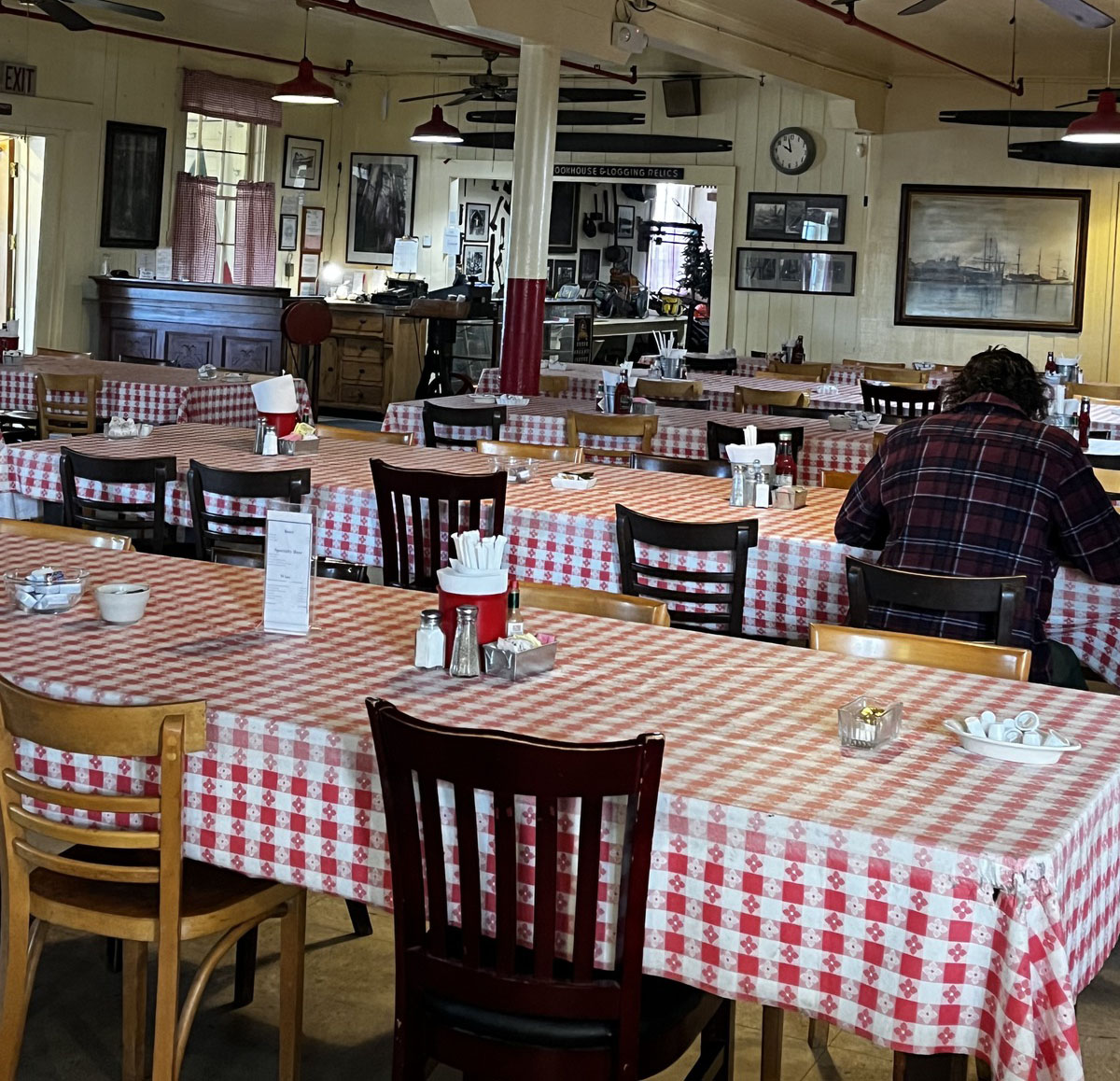
    It’s a huge red building overlooking the bay that always has stray cats lurking around outside. Inside is a massive cafeteria layout with plaid tablecloths and old logging equipment adorning the walls. They even have a little museum where you can eat amongst rusty old chainsaws and other ambiguous logging paraphernalia.

    Their only menu item is a breakfast, lunch or dinner special that changes everyday of the week that they serve family style. You can eat breakfast until you pop and it’ll only be $14.25. To my luck I landed on their sausage, scrambled eggs, and homemade toast special, but I was weak, and barely made it through two rounds of their perfect diner breakfast. 

    When this world gets a little too shiny for you, when the fluorescent lighting of the classroom starts to burn a hole in your brain, when TikTok starts digging your personality into a grave, you can time-travel away from all your problems in the dusty neon lights of Humboldt’s diners.

  • Indigenous Foods Festival highlights the importance of food sovereignty

    Indigenous Foods Festival highlights the importance of food sovereignty

    by Krisanne Keiser

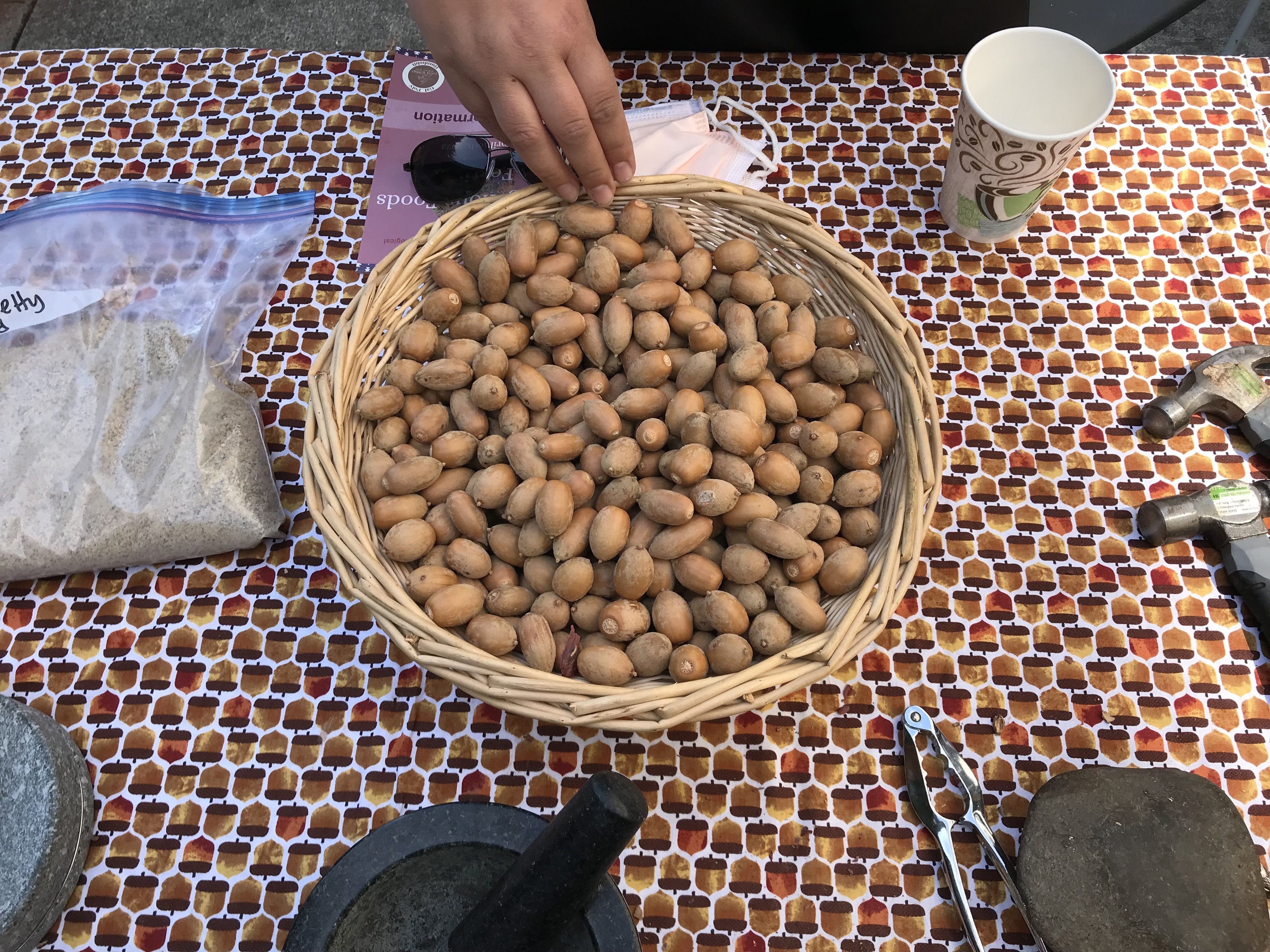
    On a bright sunny Saturday morning, students, faculty, and local tribal peoples came together to celebrate the Rou Dalagurr Food Sovereignty Lab & Cultural Workspace at the Indigenous Foods Festival. The event was held on the Cal Poly Humboldt campus on April 16 and was part of a month-long Food Summit that is focused on educating students, staff, and the public about food sovereignty. The event featured special featured films, keynote speaker presentations, and numerous outdoor volunteer opportunities working with plants and learning thoughtful ways to gather that respects Indigenous self-determination of land.

    Several speakers presented in the Native American Forum, each giving information about their respective organizations and how they are practicing food sovereignty. One event hosted by the California Indian Museum & Cultural Center was incredibly informative. Executive Director Nicole Myers-Lim led the presentation and discussed the projects their native youth are working on as part of the museum’s Tribal Youth Ambassadors program. One of those projects was creating acorn bites, which was an idea that came from one of the youths, and was being sold during the event. I must add that they were extremely delicious!

    During the presentation, Myers-Lim reminded the audience that in order to practice food sovereignty, there are several elements to consider such as land access, settler laws and regulations within park systems, as well as handling public harassment and racism when gathering on public lands. Additionally, the monetization and over-harvesting of natural foods such as abalone have prevented their tribe— the Pomo Tribe— from utilizing this natural resource, which is a large part of their culture.

    “Our Pomo food that we love is abalone…we can’t eat abalone right now but when abalone was harvested, it was overharvested,” said Myers-Lim. “We’re really trying to educate non-native communities that this is our cultural resource; we need it for the continuity of our culture. It doesn’t have to be sold for $70 dollars on a plate at Oma’s in San Francisco.”

    Another aspect that Myers-Lim highlighted was how native youth had gradually lost interest in gathering natural foods and resources due to being subjected to harassment by the public. At one point the racism and harassment became so severe that the youth feared practicing their traditional gathering activities at local parks on local trails. To help mitigate this issue, the Native Youth Program created an educational card pamphlet called the ‘Culture Card: Tribal Member Educational Handout’ to give to park visitors who questioned, disturbed, and accused them of harming the environment while they were gathering. The culture cards discuss the cultural significance of traditional harvesting and gathering as well as explaining how and why gathering is a healthy activity. It also highlights gathering and harvesting permits.

    “We’re out there praying and giving gratitude to the plants that are sustaining us and so to be accused of abuse is ironic,” said Myers-Lim. “After hundreds of years of the abuse that’s happened through the Gold Rush, the wildfires and the dams and everything else.”

    If that wasn’t harmful enough, the program also has to obtain special 24-hour permits before gathering which is just another hoop to jump through.

    “We have to work with them to have ancestral gathering rights that are recognized throughout the state,” said Myers-Lim. “As tribes we need to advocate for that through our consultation policies and try to change that on those levels.”

    Past Cal Poly Humboldt chemistry major, Sunny Rojas (Yurok/Karuk/Apache) stated that his people were not equipped to consume processed foods, and doing so has caused much damage to the health of his community.

    “It has a devastating effect on Americans and my people…we never ate like that in the past and our bodies are not quite equipped to deal with a lot of things that are surprisingly allowed in our food,” said Rojas.

    He expressed that one of his goals as a chemistry major was to learn more about the components of the earth, people, and the contents of America’s food.

    “I wanted to try and find some way to help this poisoned food system we have in America right now,” said Rojas.

  • Why do Cypress residents need an All Access meal plan?

    by Shane Jarvie

    I find it extremely redundant that Cypress residents are required to own an All Access meal plan. When I’ve asked school officials why they’re needed, they’ve just responded, “Cypress residents are required to have one of the All Access meal plans. Upperclassmen living areas that do not require a meal plan are College Creek and Campus Apartments, both of which have shared kitchen areas.”

    I’m a junior who’s lived on campus for three years now, and Cypress has the best kitchen out of every residence hall I’ve seen. Yes, even better than the one in College Creek apartments. Having lived in College Creek apartments as a sophomore, I’ve found that Cypress has more counter space and many more cabinets for storage space. The Cypress kitchen has offered my suitemates and I enough room and resources to cook for 20+ people once a week for Cypress eighth floor’s “family dinners,” where both sides of the floor come together for a weekly feast.

    A suite on Cypress can house up to twelve students, so I’d understand if we were required to have a meal plan due to the number of suitemates who share the kitchen. However, I can’t understand why we’re required to have an All Access meal plan.

    As a student working in the housing department as a Resident Student Services Assistant, I’ve had the opportunity to study each housing option and meal plan that the school offers. The more I learn, the less it makes sense that Cypress suites require an All Access meal plan.

    For anyone who isn’t aware how the on-campus meal plan system works, here’s a quote directly from the Meal Plans page on our campus housing website: “All living areas require a meal plan except College Creek and Campus Apartments. Residents of the Hill, Canyon, Cypress and Creekview Suites are required to have one of the All Access meal plans. Residents of Creekview Apartments are required to have any one of the meal plans.”

    The cheapest All Access meal plan is the 5-day All Access plan. It’s $5,000 per academic year, and contains all access meals to the J five days a week, including 300 Flex dollars and 66 or 62 meal exchanges per semester. (The housing website says 66, the dining website says 62.)

    One of the alternative meal plans that I’ll be using as a comparison is the Lumberjack 125. This meal plan that Cypress residents don’t have access to costs $3,500 per academic year, provides 125 meals in the J (which is honestly still more than enough J food for me), has 525 flex dollars, and 31 meal exchanges per semester.

    As someone who isn’t impressed with the food that Chartwells has to offer at the J, I’d much rather have the Lumberjack 125, which has 225 more flex dollars and costs $1,500 less per year!

    If I can’t convince school officials that Cypress residents should have access to the other meal plans available, I at least want an adequate answer to why we shouldn’t.

  • Cal Poly Humboldt campus hosts Food Summit

    Cal Poly Humboldt campus hosts Food Summit

    by Angel Barker

    A three-week-long Food Summit is on campus, and you’re invited. On-campus organizations El Centro, HEIF, Umoja Center, the Food Sovereignty Lab, Oh Snap!, WRAPP, and La Comida Nos Une all collaborated to make this event happen.

    Liszet Burgueno, Developmental Manager for the Humboldt Energy Independence Fund (HEIF) and environmental resource engineering major, talked about the nature of the event.

    “The Food Summit is a collaborative event where multiple campus organizations came together to start conversations about food justice, food sovereignty, and to give people food,” Burgueno said.

    The first week was about the general topics to introduce people to the issues of food sustainability and justice. This week is about jobs and exploration in the food industry, and next week is about environmental justice and social justice.

    HEIF is funding the Food Summit according to Katie Koscielak, Cal Poly Humboldt’s sustainability analyst and advisor for the event.

    “The campus has done other food summits, but not in several years, and this is the first one funded by HEIF,” Koscielak said.

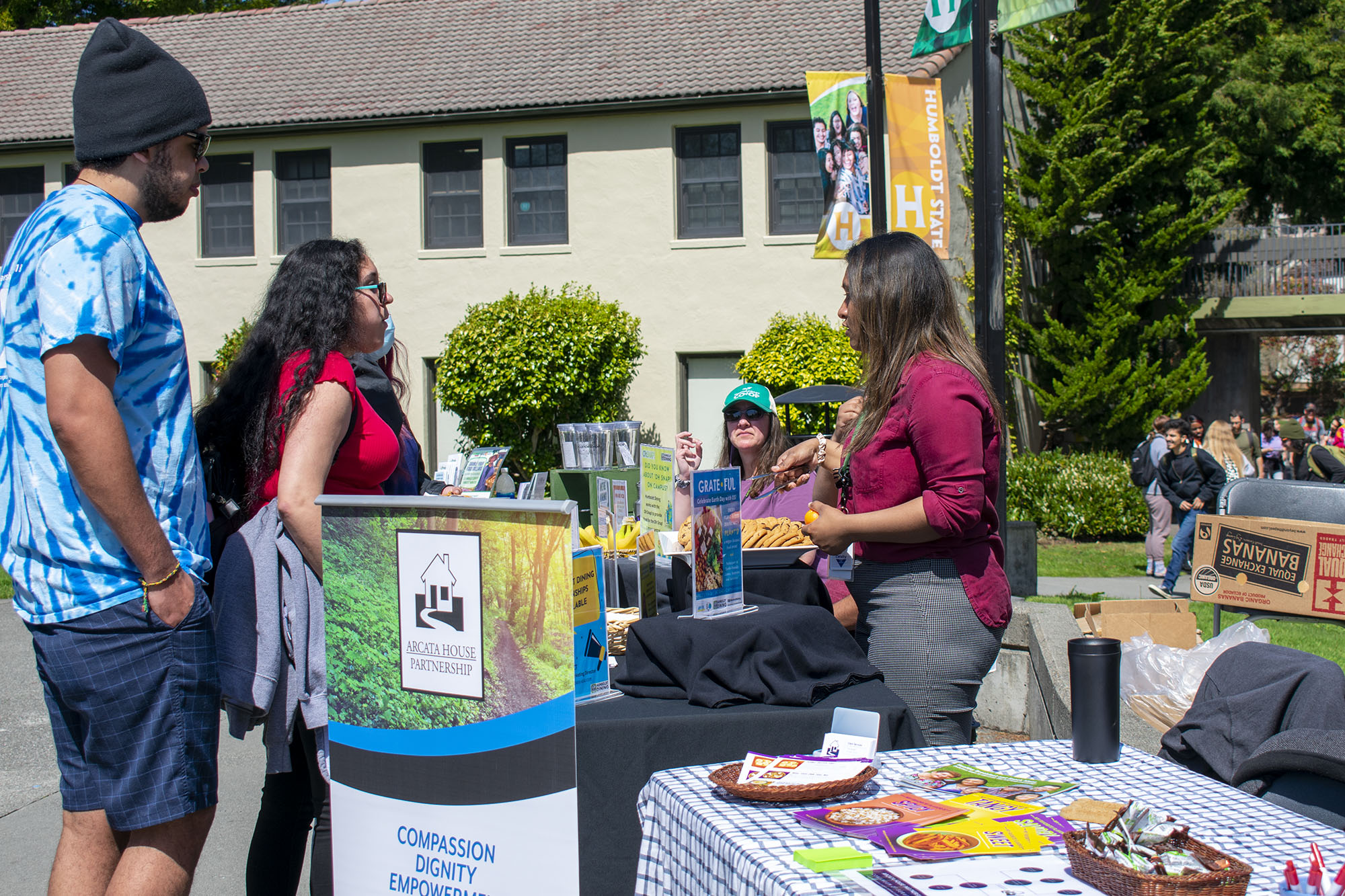
    Photo by Angel Barker | Katie Koscielak, sustainability analyst for the campus, and Liset Burgueno, development manager for HEIF and environmental resource engineering major at the table for HEIF at the food summit on April 6.

    HEIF funds sustainability projects on campus through instructionally related activities fees that students pay for each semester. Past projects have included water refilling stations, compost bins, lots of lighting upgrades throughout campus, hand dryers, and many more. These projects take effect when students submit proposals to the organization.

    “Last semester, El Centro came to HEIF and submitted an idea paper, where they wanted to get reusable utensils,” Burgueno said.

    Darin Torres, criminology and journalism major, pitched the idea this semester for a food summit. Torres spearheaded the ideas and planning, and after months of collaborating with many campus groups and local organizations, the event planning has been successful.

    “I am really proud of what we’ve done so far,” Torres said. “Education is power.”

    This event is not only to educate, but to get students involved with interactive events to help make the planet a better place. This event is really important to Torres, as food insecurity is a huge part of the greater Humboldt community.

    “We have issues with indigenous cultures’ food not being respected,” Torres said. “Food is a major insecurity in Humboldt County, we have students who face hunger and homelessness so much. So we just wanted to incorporate it all into the food summit.”

    “We have regenerated, and hopefully it will continue,” said Fernando Paz, coordinator for El Centro.

    According to Paz, the event itself is, a way to really reflect on our carbon impact in terms of food that we use.

    This Thursday, April 14, there will be a film screening of Gather hosted on Zoom, and on Friday there is a plant tour on campus and an opportunity to volunteer at Bayside Farm. Many more events are also scheduled throughout the week. To find the whole event schedule, go to https://lcae.humboldt.edu/food-summit.

    “This event is made for you in mind, it was made for students, by students,” Torres said.

  • Cal Poly Humboldt’s Library Cafe sees the light of day

    Cal Poly Humboldt’s Library Cafe sees the light of day

    by Lex Valtenbergs

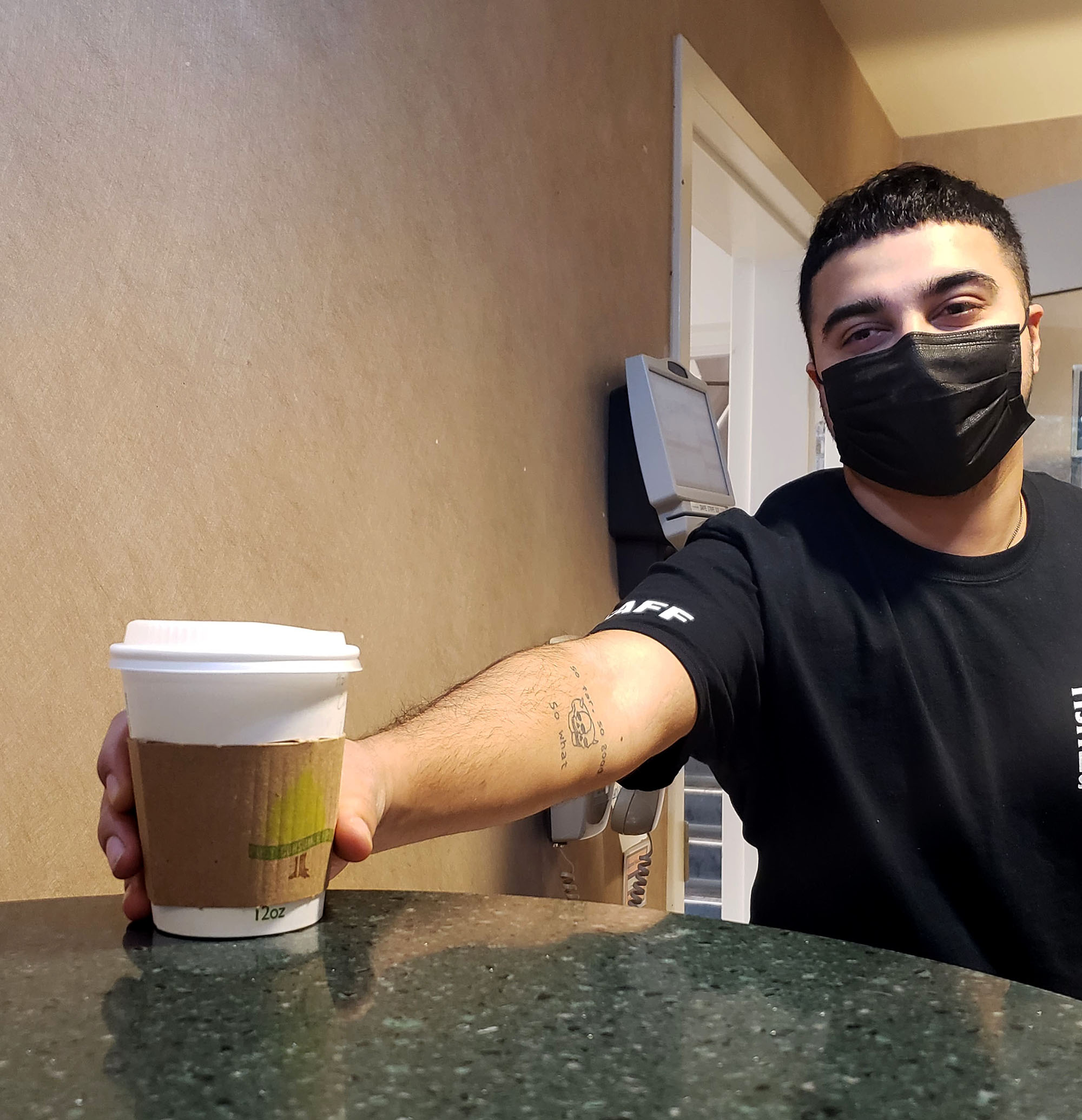
    The Library Cafe lifted its shutters for the first time in several years on Friday, Feb. 26. The cafe serves delicious coffee blends from Muddy Waters Coffee Co. as well as pastries, veggie wraps, drinks, and more.

    Recent biology graduate Kate Mendoza was just hired by the private company Chartwells Higher Ed to work at the newly reopened cafe.

    “Chartwells is really awesome,” Mendoza said. “Honestly, they work really well with students from what I’ve seen.”

    Mendoza’s go-to drink is the cappuccino.

    “I usually like to do the cappuccino,” Mendoza said. “It’s just espresso, steamed milk, and a lot of foam. I think the foam is my favorite part.”

    Mendoza’s coworker Ahmad Shah, a senior majoring in communication, recommended the hazelnut mocha.

    “I like a hazelnut mocha,” Shah said. “Sometimes coffee is a little bit bitter. The sweetness helps balance the bitterness of the espresso.”

    Communication senior and Learning Center academic peer coach Kas Colwell ordered a vanilla latte with two espresso shots from the Library Cafe on March 3.

    “I’m so glad y’all are open again,” Colwell said to Mendoza while ordering. “It’s exponentially improved my quality of life.”

    After getting her drink, Colwell sat down at a nearby table in the dining area. As a library employee, she appreciates how easy it is to get to the cafe.

    “It’s the convenience because I literally work in the library, so it’s on my regular route,” Colwell said. “I don’t have to go walking somewhere else to get coffee.”

    The Library Cafe is available to all Cal Poly Humboldt students and faculty and is currently open on weekdays from 7:30 a.m. to 5 p.m.

  • Food forests flourish at Cal Poly Humboldt

    by Ollie Hancock

    CCAT courses are back this spring. One of the classes on the roster this semester is Organic Gardening. In this one-unit course, students will learn the basics of gardening. Students grow their plots in the campus community garden using sustainable techniques.

    Since the pandemic disrupted CCAT operations, the course has not been offered. Now, the course has returned, and students have a lot of work ahead of them. Ben Cross is a political science major who’s more than excited to be back in the Buckhouse.

    “I’ve got lots of passion for this, and it’s an amazing area to learn it,” Cross said. “If there is a place I’d want to take this class, it’s at Humboldt. I want to have my garden and tend to it with confidence.”

    Julia Simmons is the student instructor of ENST 123.

    “We’re teaching the basics of what goes into gardening,” Simmons said. “I want to focus on how plants affect each other. Some plants have nitrogen-fixing properties and support other plants in the soil. I want to teach students to cultivate ecology and grow food forests.”

    Food forests are a farming technique that mimics the natural patterns found in ecosystems. Growing plants interact with each other in a network of reciprocal relationships. The result is healthy biodiversity, nutrient-rich soils, and a sustainable food source.

    Agroecologic farming methods have the potential to localize food systems and make them more efficient. A 2018 study titled “Permaculture—Scientific Evidence of Principles for the Agroecological Design of Farming Systems” by the EU Institute for Environmental Science establishes environmental damages caused by industrial agriculture. Monoculture causes biodiversity loss, soil degradation, and alteration of biogeochemical cycles and greenhouse gas emissions. The study cited food forests to remedy the damage done by monoculture.

    Monoculture is the standard agricultural practice in the United States. Crops are planted in rows, where they can be most efficiently harvested by machine. Though it is convenient for machinery, this practice does not benefit plants or local ecologies. Without ecological support and context, isolated crops require fertilizers and pesticides to grow.

    Plants can fend off pests and fertilize each other in food forests. One example Simmons describes is the three sisters. This pairing of beans, squash and corn, comes from traditional ecologic knowledge.

    “They grow really well together, and they use each other to grow well,” Simmons said. “The beans provide nitrogen for the other plants to grow. Ground cover [from the squash leaves] keeps weeds from growing.” The tallest sister, corn, acts as a trellis for the beans to climb up. Growing together, they protect each other and help one another flourish.

    “We’re going to be working in the community garden. We’ll design food forests with their own ecologic networks,” Simmons said. “I want anybody to be able to garden, and everyone should garden.”

  • There are no safe options for restaurants during the pandemic

    by Ian Vargas

    While there was only a lockdown for a short period of time in 2020, a lot of restaurants weren’t open for indoor seating. Businesses typically ended up dropping employees they didn’t need. They also had to adjust to significantly less income, and many closed down as a result.

    That’s obviously bad for the restaurant and the people who got fired, but the alternative is that both the employees and customers would have died of COVID-19.

    With the advent of the vaccine most of that has changed; most restaurants are open for both indoor and outdoor seating. They frequently stress social distancing and wearing a mask on your way in, but people are rarely seen sitting very far apart. Cal Poly Humboldt’s dining options have followed the same trajectory. As soon as people could get vaccinated, everything went back to mostly normal.

    Like many students, I’m very poor. When I came up to Humboldt and started looking for work, I did as many do and went to one of the restaurants nearby. This was when everything was still take out only. Businesses had been losing employees like crazy, so getting into something wasn’t too hard.

    Working in any place that has a lot of people coming in and out seems risky, but thankfully I did not typically have to see any customers. I could at least remain mostly isolated, aside from my coworkers. Once people could get vaccinated and everyone started reopening for indoor seating, that changed.

    Now I’m in close contact with unmasked and dubiously vaccinated customers all the time, my job feels very unsafe. Vaccines have given people a lot of inadvisable confidence about their safety. Vaccinated people can still get sick very easily, and even when you don’t get sick there is a danger of spreading disease with an asymptomatic infection.

    Restaurants are particularly dangerous in this regard since there isn’t any way to eat and keep your mask on. Food going down doesn’t push the germs back into your lungs. Walking in with a mask just to take it off as soon as you sit down doesn’t sound like an effective way of limiting the spread of an airborne disease.

    I don’t think restaurants are doing anything wrong, everyone has to get paid somehow after all. Rather, I think that they’re in a position where there isn’t any good options for a response. The initial 2020 lockdown should have been longer and more consistent, and everyone should have received monthly stimulus checks.

    Unfortunately that didn’t happen, which places people in the unfortunate position of risking whatever new strain comes around. At some point, one of them is going to start getting people way sicker than before and there’s no way we’re going to be able to deal with it. More places will close for good and more people will lose their jobs or their health.

  • Gone Foraging

    by Morgan Hancock

    Edible and medicinal plants grow in every corner of campus. Students can learn to forage for them in Campus Center for Appropriate Technology’s new Foraging class. Josefina Barrantes and Sandra Zepeda are the student instructors of ENST 123. The course expands on their research of ethnobotany on the Cal Poly Humboldt campus.

    Ethnobotany is the study of plants and how people use them. Zepeda and Barrantes spent the last year mapping and researching edible plants on campus. Their map shares a location, name, and photos of plants with ethnobotanical purposes. Students will use the map along with information taught in the class to forage on campus sustainably. The map includes native plants that grow in the area and non-native plants used in landscaping.

    “It’s comparable to urban foraging because we’re not actually nature, we’re on a university campus,” Zepeda said. “A lot of the edible plants on campus are not native, they’re just for decorative purposes.”

    The course will highlight how plants like mountain pepper (Tasmannia lanceolata) can serve as a seasoning alternative and also have medicinal uses.

    “This plant was significant to aboriginal people, they used it to make medicines and tinctures,” Zepeda said, between nibbles of a leaf. Indigenous groups used the mountain pepper to treat stomach aches, colic skin disorders, and toothaches.

    As its name suggests, the mountain pepper is spicy, but it is not quite a pepper. Instead, it is a shrub that uses a tricky chemical reaction to taste spicy, rather than capsaicin like many spicy plants. The pepper taste comes from the compound polygodial, a C15 sesquiterpene.

    According to a study published by The Australian Institute of Food Science and Technology titled “Native Australian fruits — a novel source of antioxidants for food,” the mountain pepper had more than three times the antioxidant levels of blueberries.

    The instructors shared some of their favorite foragable plants on campus. The Dog Rose (Rosa canina) provides bright red hips packed with vitamins and has many common health benefits.

    Some campus plants have simple uses, like in-between-class snacks. Bolivian fuchsia (Fuchsia boliviana) offers bright flowers and juicy berries. The strawberry tree (Arbutus unedo) also has round edible fruits.

    The ENST 123 course is the result of several attempts to bring sustainable foraging on campus. Barrantes and Zepeda are enabling students to rethink food sustainability.

    “We started this project so that we could add more edible landscape,” Barrantes said. “To show this is what we have and we could do more, and also supports the desire for more sustainable food projects, like the food sovereignty lab or starting an off-campus farm.”

  • Caribbean cuisine comes to campus

    Caribbean cuisine comes to campus

    by Angel Barker

    A new local restaurant opened on the Cal Poly Humboldt campus. Located inside the College Creek Marketplace, Taste of Bim is now serving the public. The grand opening for this Caribbean-inspired spot happened on Wednesday, Feb. 2.

    Gabrielle Long is the owner of the Eureka-based restaurant. She was accompanied to the grand opening by her mother Verna. Long says she is excited for the opportunity to bring a fresh set of flavors to campus.

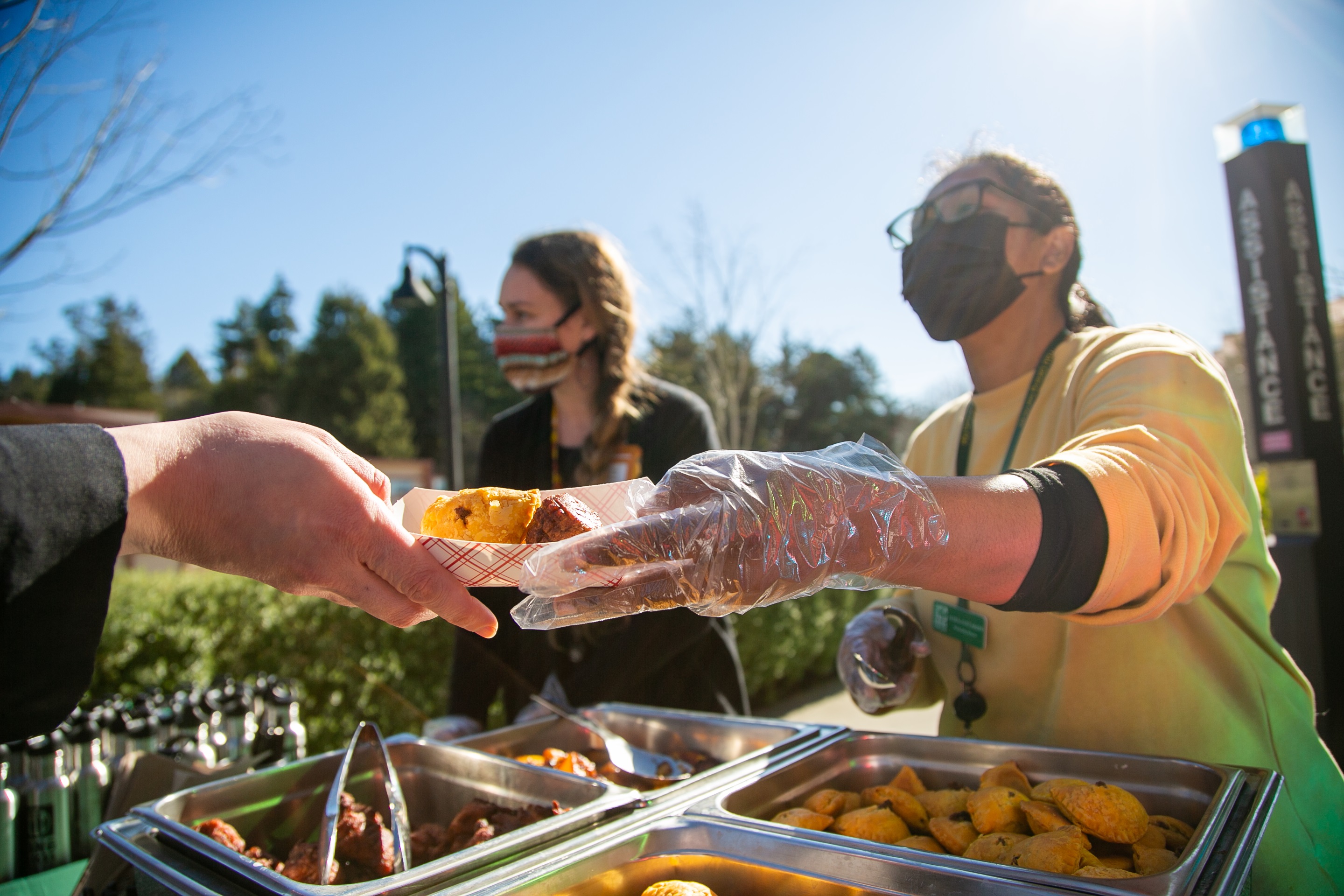
    Photo by Abraham Navarro | Gabrielle Long, owner of Taste of Bim and her mother Verna Long serve up carribean cuisine at the ribbon cutting ceremony on Feb. 2 outside the College Creek Marketplace.

    “Bim is slang for Barbados,” Long said in her statement before the ribbon-cutting ceremony, “I want to continue to spread Caribbean love and flavor.”

    The menu will go through rotations depending on the day of the week, featuring many items including plantains, jerk wings, burgers, curry chicken, and more.

    “A Taste of Bim seeks to satisfy your soul via your taste buds in a warm and classy atmosphere,” the restaurant’s website says on its welcome page. “Our cozy little restaurant specializes in Caribbean cuisine inspired by our family’s heritage.”

    This all authentic food is now available to students, staff, and the public. James Richards, Resident Dining Director, was ecstatic for the opening.

    “It is the kind of place you’re going to go and leave full,” Richards said in his speech.

    Richards went to the restaurant prior to the opening on campus and loved it. Taste of Bim was recommended to him by Dr. Jason Meriwether, Cal Poly Humboldts Vice President, who also loved the food.

    “The food spoke for itself,” Long said. “Dr. Meriwether came down and tried the food and he loved it.”

    All that was left was the logistics. College Creek Marketplace had an open spot for new food and it was a perfect place to add some flair and flavor.

    Many people came out for the grand opening ribbon-cutting ceremony. There were free samples and swag. Janaee Sykes, Social Events Specialist in the Admissions office went for two reasons.

    Photo by Abraham Navarro | Cal Poly Admissions speciallists Rickiyah Mcgrady and Janaee Sykes, enjoy carribean cuisine at the Taste of Bim ribbon cutting ceremony on Feb. 2 outside the College Creek Marketplace.

    “I came out to support local black business. It’s quite refreshing to have them on campus,” Sykes said. “I really liked the cod fritter, it was probably my favorite. I usually don’t like fish but it is not super fishy.”

    Sykes mentioned she had been to the original spot before and it was always delicious with great customer service.

    “The customer service was 20 out of 10, totally recommend,” Sykes said.

    “The plantains are really delicious,” said Admissions Counselor Rickiyah McGrady. “And the beef empanada is just delicious.”

    Many Cal Poly Humboldt faculty and staff showed their support for the new business during the grand opening.

    Featuring all student employees, Taste of Bim is now open Monday through Friday from 11 am to 7 pm. Head there any day of the week to experience flavors from Barbados and the Caribbean.

  • Local Mexican Restaurant owner Esteban Gonzalez passes at 55

    Local Mexican Restaurant owner Esteban Gonzalez passes at 55

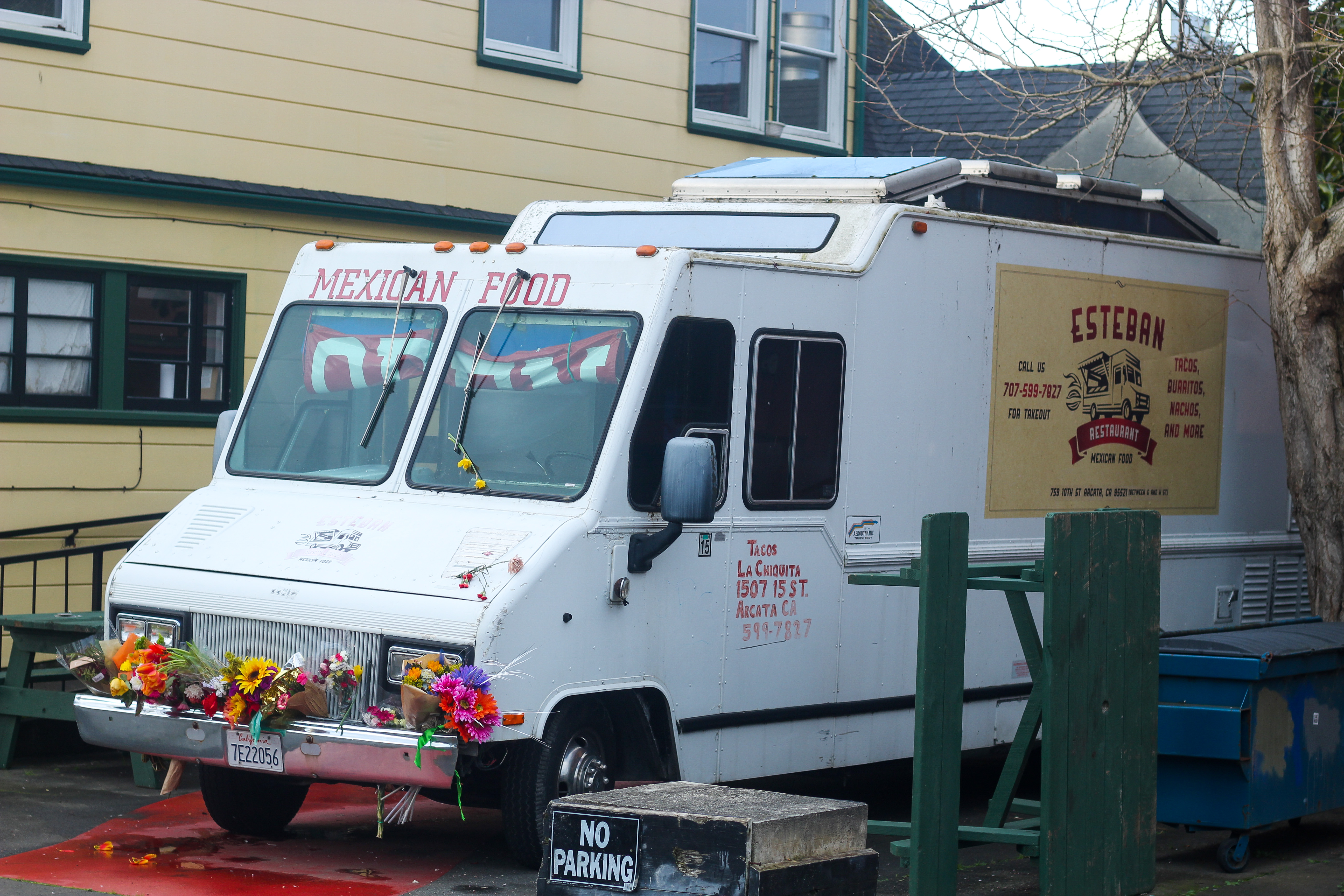
    Esteban Gonzalez was 55 when he passed away from pneumonia in relation to COVID-19 on January 12. The tragic news shocked the community and everyone that knew him, leaving behind a huge legacy and heartfelt memories with those who knew the well-known Arcata restaurant owner.

    Gonzalez was able to open his first taco truck in 2000. What started as just him and his wife selling food out of a trailer, expanded into a second location and became one of the most popular restaurants in town. After the pandemic started, his outdoor benches continued to be a convenient destination to go out to eat.

    Located in the heart of downtown Arcata, the restaurant provided high school and HSU students a delicious and positive place to stop for lunch or dinner.

    One of those students is Brandon Allen. He grew up in Humboldt County and went to Arcata High School.

    “This is just such a loss for the community all around,” Allen said.

    Allen remembered stealing a soda from Gonzalez in his freshman year of high school when Gonzalez caught him in the act. Allen felt so bad that he went back after school to apologize. Instead of punishing him, Gonzalez was actually happy to see him.

    “He was super understanding, letting me know that everyone makes mistakes,” Allen said.

    Even after high school, he continued to eat there and Esteban would still remember his order and want to hear about how he was doing.

    “Esteban was such an important part of my teenage years,” Allen said. “He taught me a lot without me really grasping it until much later.”

    Kyra Cohen, a senior at Humboldt State and an Arcata native started going to Esteban’s during their freshman year of high school.

    “He was the first in Arcata that all the high schoolers knew and loved. He’d help out kids when they were short of money, and simply had the best restaurant for Arcata kids,” Cohen said.

    Gonzalez’s restaurant was not only a great place to eat. He also created a fun and loving environment every time you walked in.

    Cohen remembers making jokes with her friends, and Gonzalez would just crack a calm smile. He’d often jokingly laugh and smile at them.

    “He’s the go-to for sure. I crave an Esteban’s burrito more than anything,” Cohen said.

    Brook Reeser is an HSU senior who grew up in McKinleyville. She worked at Redwood Day Camp during the summer, and she and all her co-workers would go to Esteban’s for lunch. They all called his burritos the “best they’ve ever had.”

    Arcata Main Street set up a GoFundMe page for Gonzalez’s family and has already surpassed their $15,000 goal with $28,116 as of Feb 1.

  • Students Rely on OhSNAP! in Pandemic

    Students Rely on OhSNAP! in Pandemic

    On-campus food pantry provides for students in need

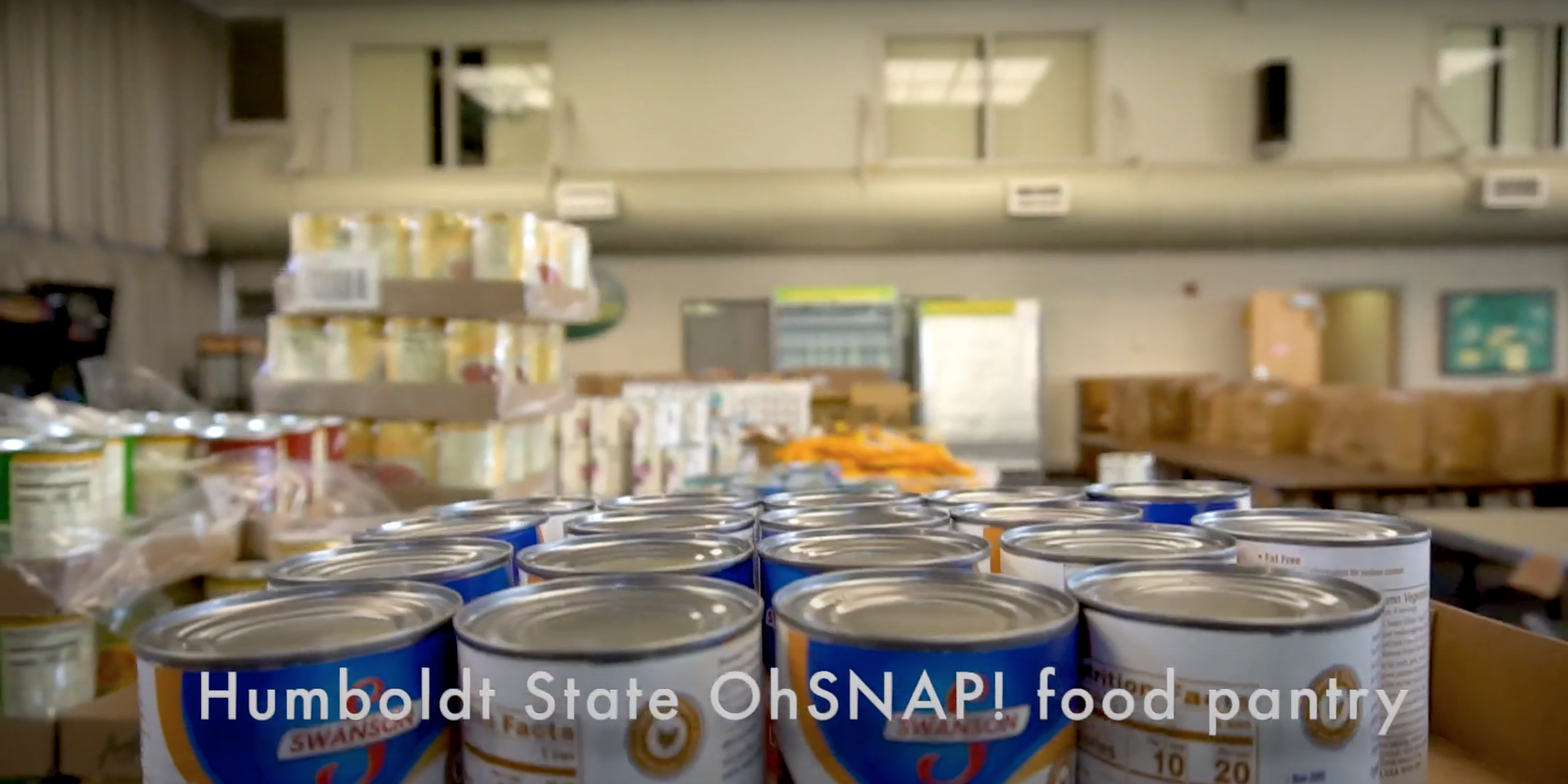
    With the J dining hall closed and grocery stores inducing anxiety, some students are relying on Humboldt State’s OhSNAP! pantry for food.

    OhSNAP! will remain open for the rest of the semester, serving students Wednesdays from 10 a.m. to noon and Thursdays from 1 to 3 p.m. on the bottom floor of the Jolly Giant Commons. OhSNAP! can also deliver food directly to you if you can’t make it to campus (email mira@humboldt.edu for more information).

  • HSU Student Resources to Get Through the Pandemic

    HSU Student Resources to Get Through the Pandemic

    Student resources for school, finances, food, housing and counseling

    Here is a list of resources Humboldt State is offering for students. Click here for a student-created site of community resources. Click here for the site in Spanish.

    Educational advice:

    Enoch Hale is the director of the Center for Teaching and Learning at Humboldt State University. He provided five tips to help students with online learning during the shelter in place order. His tips revolved around being kind and flexible.

    “Kindness is having the patience and the benefit of the doubt to know that everyone else is struggling,” Hale said. “Be flexible—no one signed up for this and we are going to have to be agile in our expectations in the changing patterns.”

    Five tips to help with online school from Hale:

    1. Don’t ignore feelings—reflect on them so they don’t manage us.
    2. Communicate with professors more, not less.
    3. Log on more frequently. Check your emails and canvas more often. Not all courses will be on Zoom.
    4. Set a schedule, use a study calendar and stick to a routine.
    5. Check the Keep Learning website.

    Finances:

    HSU Coordinator of Student Services for the financial aid office Morgan McBroom provided financial advice to students. McBroom suggested students in a crisis contact the financial aid office.

    For students who are hard-pressed for money, there is a student emergency loan that ranges from $500 to $1000. It is a short-term loan and can come within a few days. Financial services will work to help students pay it back. Students who have not used all of their student loans from the previous semester may also still have access to them.

    Due to the COVID-19 crisis, students’ loan interests are being waived, but the estimated date that it will stop is in June. As of now, the end date hasn’t been established. If you are an HSU graduate, you can have your loans waived for a year with no interest.

    Contact: finaid@humboldt.edu or (707) 826-4321.

    Housing:

    In addition to her advice on financial matters, McBroom also provided housing advice. There is emergency housing available on campus. The off-campus liaison is a resource if you’re struggling with rent.

    Contact: housingliaison@humboldt.edu

    Food:

    1. The recreation room on the first floor of the Jolly Giant Commons offers pre-made bags with food items. This happens twice a week on Wednesday from 10 a.m. until 12 p.m. and Thursday from 1 to 3 p.m. Vegan and vegetarian meal bags are also available.

    If you cannot make those times due to isolation or quarantine, contact mira@humboldt.edu and she can set up a delivery time.

    2. Oh SNAP! can also help you load your student ID card with J points. You need to express a financial need for food support. If you have over $40 in J points, you need to wait until your card is under $40. You can receive $60 every four weeks, but this is subject to change. If there is an increase of funds there could be an increase in the amount given to students. You can also donate your J points to help students in need.

    Contact: ravin.craig@humboldt.edu.

    3. For extra help, try applying for CalFresh, a state-funded program to help pay for food. Students not working 20 hours a week can apply for CalFresh, except for students in the Educational Opportunity Program program, students with specialized grants and work-study students. You can qualify for up to $200 a month for groceries.

    Contact ravin.craig@humboldt.edu if you need help with the application process or would like to see if you qualify.

    Counseling:

    Mira B. Friedman is the lead for health education and clinic support services. She provided information about counseling for students.

    HSU Counseling and Psychological Services is offering virtual appointments.

    Students can call (707) 826-3236 to make an appointment. There’s also a 24/7 hotline for immediate crisis outreach for students to speak with a therapist by phone at (707) 826-3236.

  • Get Your Spooky On with These 6 Snacks

    Get Your Spooky On with These 6 Snacks

    Heading to a party or just chilling at home, try these six snacks to get into the ‘spooky szn’ mood

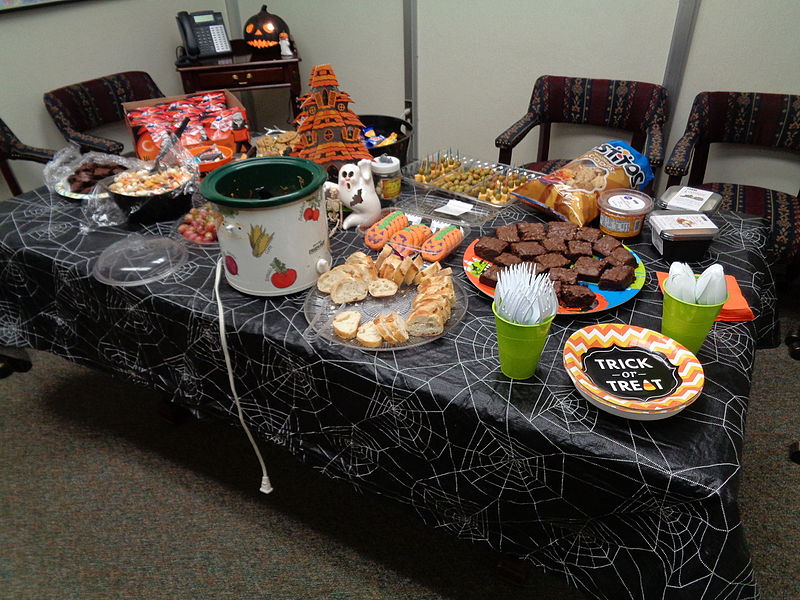
    Munching on a snack is a must when watching a movie but since it’s spooky season, having a spooky snack while watching a Halloween movie is even more festive. There are many seasonal snacks in your local grocery store but not many people know what snacks to grab. Here are the top snacks to remember to get in the Halloween mood:

    1. Bags of Bones Flamin’ Hot Chips/White Cheddar

      If you are sick and tired of pumpkin spice flavored everything, these snacks are the perfect thing for you. If you like cheesy or maybe just a bit of a kick, make sure to grab these when you’re at the store later.

    2. Oreos “BOO” Edition!

      These are sure to get you into a festive mood with an October take on the classic Oreo. The filling of the Oreos is colored orange and acts as something sweet and spooky!

    3. Pillsbury Sugar Cookies (but the Halloween editions, of course)

      If you aren’t in a rush to eat some grab and go snacks and you’re down with waiting for fresh baked goods, these warm treats are just right for you. They’re sweet, festive and perfect for cuddling up and watching a Halloween movie.

    4. Spooky Cereals (Boo Berry, Count Chocula, and Franken Berry)

      Morning after Halloween got you down? These are less of snack and more of a breakfast treat. Just because it’s November doesn’t mean spooky season needs to end!

    5. Spooky Veggie Chips

      If you want a cute and semi-healthy treat, these will satisfy your salt craving and your taste buds. These bat and ghost shaped chips are almost too cute to eat, but I’m sure you’ll come around.

    6. All the Candy!

      Reese’s Eyeballs, M&M’s Cookies & Scream, Butterfinger Cup Skulls, and any of the large array of gummies shaped like brains, guts and ghouls! Just like you’re never too old to trick or treat, you’re never too old to munch on some themed candy.


    Honorable Mentions:

    Pumpkin Spice Any and Everything

    While personally I am not a fan of pumpkin spice, I feel like I had to put this in here just in case. The fall and spooky seasons bring all the pumpkin spice to the scene. Pumpkin Spice Oreos, pumpkin spice lattes, pumpkin spice bagels, pumpkin spice pop tarts, etc. If pumpkin spice is your thing, make sure to grab a few of these themed favorites before they’re off the shelves.

    Candy Corn

    Although I’ve never been too fond of the little orange and white cone-shaped candies, I appreciate them for existing. And I’d be a fool, or shall I say ghoul, not to mention the classics.

  • Oh SNAP! Farm Stand Feeds Students

    Oh SNAP! Farm Stand Feeds Students

    In addition to nonperishables, Oh SNAP! offers fresh produce twice a week

    Oh SNAP! is an on campus resource with a goal of helping Humboldt State students get food. During the fall semester, weekly stands of fresh-picked produce are available to students. Cooking a nutritious meal can be financially strenuous, but Oh SNAP’s farm stand is available twice a week.

    For students like HSU junior and microbiology major Matthew Peter it was their first year using Oh SNAP! to get their groceries.

    “This is technically my third time,” Peter said. “Now I’m trying to make an effort in coming.”

    The farm stand wasn’t the only service that Peter used, he was also familiar with the Oh SNAP! food pantry which provides nonperishable ingredients to make full meals.

    Peter says he enjoys the farm stand because he feels canned goods can go to students that need it.

    “I feel veggies are more volatile, for lack of a better term,” Peter said. “If there’s any leftovers they will have to be used that day, whereas cans can be stored for later.”

    Since the farm stand sets up twice a week, students have the opportunity to attend both days which Peter says he has started doing.

    Linda Mateo and Pand Moua at the Oh SNAP Farm Stand on Wed., Sept. 25. | Photo by Alberto Muro

    Unfortunately, not all students are aware of the Oh SNAP! program. Valerie Hernandez, a HSU senior and art major, says this was the first year she is using the program and didn’t recall it being mentioned during orientation.

    “Some people think they need to fill out paperwork, but no, it’s easy for students,” Hernandez said. “All you need is your student ID. I forgot mine at home but they can still help you.”

    If you accidentally forget your ID, like Hernandez did, don’t be alarmed because the volunteers at Oh SNAP! can still pull up your information.

    HSU senior and social work major Pand Moua volunteers at the Oh SNAP! farm stand every week and says the program also assists students in applying for alternative ways of getting food.

    “We have a ton of resources for students on campus,” Moua said. “We even help with Cal-Fresh applications and faxing.”

    Cal-Fresh is a resource that alleviates complications for students who do not have time to access the food pantry or farm stand.

    The Oh SNAP! food program is located at room 114 of the Recreation Wellness Center. Moua says that for students with disabilities, the location can be difficult to access but there are resources on campus to help.

    “Disabled students can use the Students Disabilities Resource Center for transportation and come get whatever they need.”

    The services provided by Oh SNAP! goes beyond food distribution, it also ensures the well being of HSU students.

    The growing season for local farms affects the operational days for the farm stand, but the program should be accessible for students even after finals. The academic calendar on HSU’s website has the farm listed until the end of the year.

  • Something in the sauce: Humboldt Brews

    Something in the sauce: Humboldt Brews

    Humbrews’ wings make students’ stomachs happy 

    Arcata can get fairly chilly once the sun goes down. In response, many flock to Humboldt Brews on Saturday nights for drinks, food and to hang with friends.

    Located on 856 10th St., Humboldt Brews (or Humbrews for short) is a great place to immerse yourself in the Arcata lifestyle. With 25 beers on tap, award winning hot wings and a banquet room/nightclub for shows, there aren’t many places around to get a more complete college town vibe.

    As you walk in, there is an instant feeling of Humboldt State University as many of the patrons are wearing HSU gear while they wait for their drinks. There are sports broadcasts on all televisions with a distinct focus on the Bay Area’s teams like the Golden State Warriors or San Jose Sharks.

    Not too many people yet as its only 7 p.m. but the servers do well in making sure everyone has their drinks filled. Along with a pool table, seating for the restaurant and even some old school arcade games, Humbrews has everything you’d want from a college bar. The bar transforms from a mellow early dinner setting to a more energetic “party” setting as more people start to pile in to escape the cold.

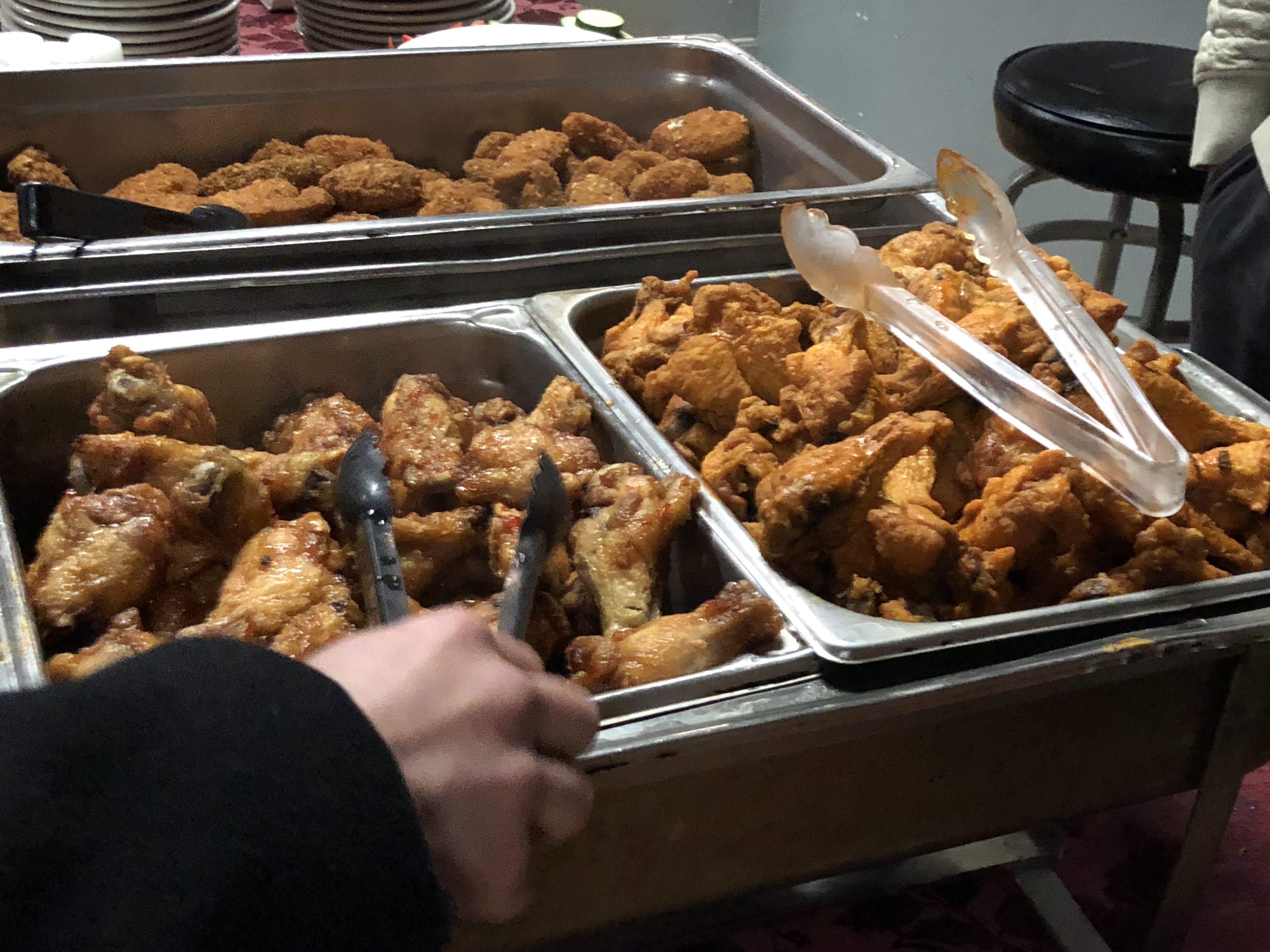
    What better way to warm up from the cool breeze than with hot wings?! Humbrews offers a basket of wings including a side of french fries and some celery as a palate cleanser for $10. The sauces vary depending on the bravery of the customer, but for the fan of traditional wings you can’t go wrong with the hot buffalo sauce. A perfect amount of spicy earns this wing its “award-winning” title as soon as you take a bite.

    Portions are sized reasonably to what you’re paying and you’ll have extra hot buffalo sauce to dip your fries in after. This goes great while treating yourself or watching a game with friends on the large projector screen in the back of the restaurant.

    For those who dare, you can also try Humbrews’ handmade “Suicide Sauce” which is made from many different spices including the notoriously hot “ghost pepper” for an extra $2. Ask for the “Suicide Sauce” on the side to enjoy at your own pace. If you don’t mind sweating through your shirt, this sauce will definitely have you breathing fire.

    Ordering a pound of wings ($12) with a side of “Suicide Sauce” can be fun with a large group as everyone grabs a wing and a dab of sauce to see who can ride the bull without getting kicked off. Wash it down with one of Humbrews’ many beers or ciders. One of the best is from Eureka’s own Humboldt Cider Company called Hibiscus Hemp Cider. A pint of Hibiscus Hemp cider ($6) along with a pound of wings will have you full and feeling good all for under $20.

    Humbrews sets itself apart from other Arcata bars with its variety of quality food choices and upbeat vibe. It is also well lit so you don’t get the creepy, “dingy” feeling that other Arcata bars give off. It’s open daily at 11:30 a.m. until 2 a.m. on most nights. Stop by after class and you might be able to catch happy hour from 3 p.m. – 6 p.m. for drink specials.

    Overall, Humbrews is a staple bar for the HSU student or any Arcata resident with its exceptional drink choice and consistently well-made food, not to mention the hottest wing sauce you can find in Humboldt County!

  • Pasta Alla Bolognese recipe

    Pasta Alla Bolognese recipe

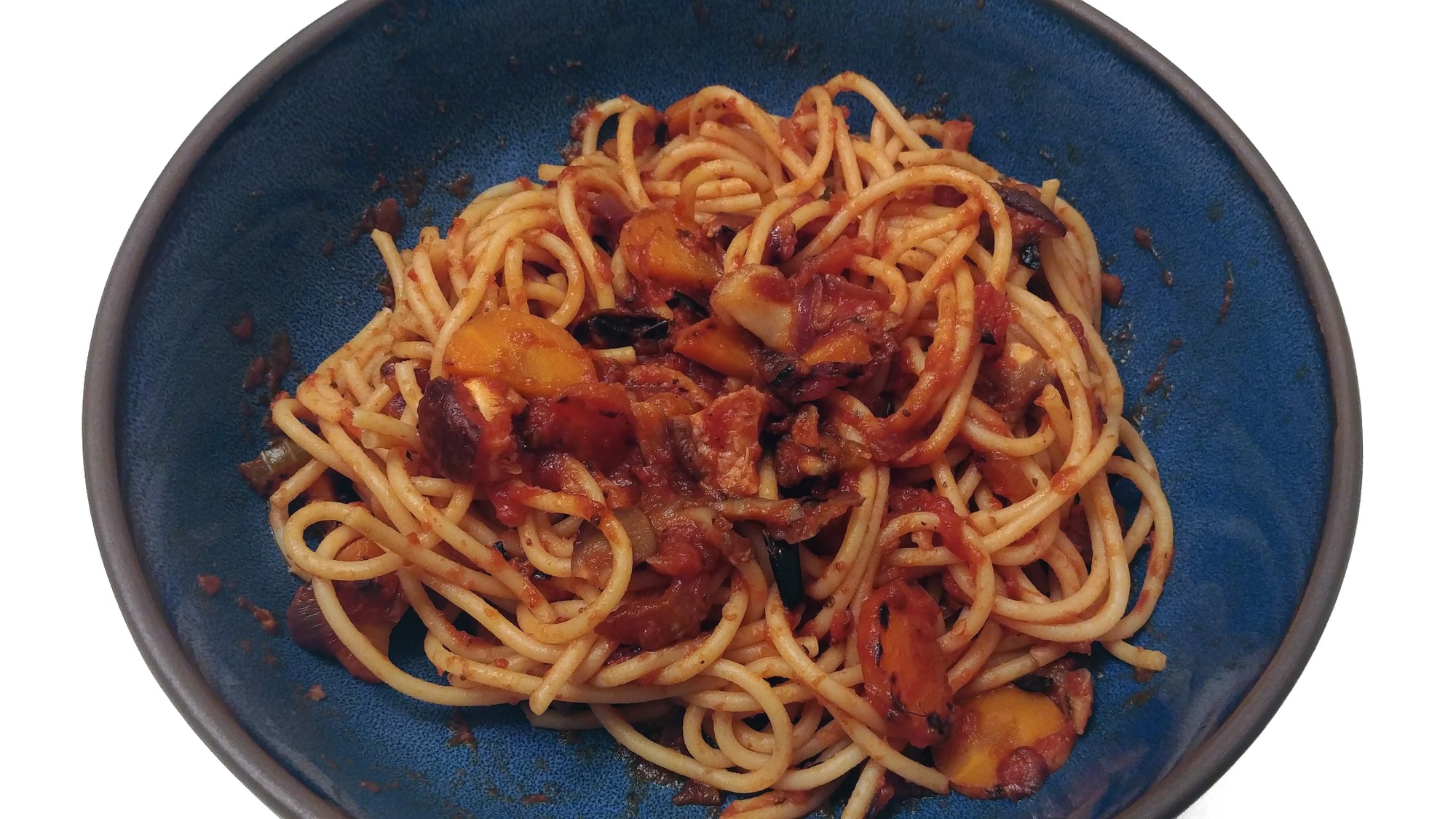
    The Bolognese sauce in Pasta Alla Bolognese is typically meat-based, but this version substitutes using different vegetables and herbs. For the meat-lovers out there, ground beef can be added to the sauce if desired. The “Beyond Meat” brand has plant-based burgers that can be used as well, but the recipe below is the one I used and turned out to be super tasty!

    Serves 2-3

    Ingredients:

    • 200g of your preferred spaghetti

    • 2 tbsp olive oil

    • 1 small red onion, finely diced

    • 1-2 garlic cloves (or more if you’re a garlic freak like me), finely diced

    • 1-2 carrots, very finely diced

    • 1 celery stalk, very finely diced

    • 1 or 2 handfuls of shiitake mushrooms, finely diced (optional)

    • 12.5 ounce jar of pasta sauce (garlic & basil store-bought is what I used)

    • Add salt and pepper, for taste.

    Instructions:

    • Boil a large pot of water for the pasta, heat up olive oil in a non-stick skillet.

    • Add diced onion to the pan on low heat, then add in diced carrot and celery. Fry until soft, stirring frequently.

    • Add the garlic and sauté until soft.

    • Once water has come to a boil, add your pasta and cook until al dente. This usually takes 12-14 minutes.

    You can check for this by throwing a noodle at a wooden cabinet door and if it sticks to the wood then it is ready or very close.

    • Add shiitake mushrooms to the pan with veggies once the carrots begin to soften, reduce heat.

    • Mix in your tomato sauce with the vegetable mixture.

    • Drain pasta once cooked thoroughly and mix together the sauce and noodles in a large pan.

    You just made a tasty pasta filled with simple and nutritious ingredients. Enjoy!

  • Convenience costs

    Convenience costs

    By | Curran Daly

    Getting food on campus is convenient for students, yet comes with an additional price. Humboldt State Dining food is more expensive than food bought at Safeway in Arcata and WinCo in Eureka.

    Chris Bautista has been at Humboldt State for three years and eats on-campus for the convenience.

    “Some things are expensive, but some things are not,” said Bautista, while holding a three dollar cupcake. “Eating here is more convenient so I just eat here.”

    Prices
    Graphic by Curran C. Daly

    Humboldt State is far from the cheapest option for food in the area. When compared to Winco and Safeway, Humboldt State is almost always the most expensive option for many quick grab options for food.

    Humboldt’s beloved Yerba Mate teas are $3.39 on campus when paying cash versus $2.22 at Winco and $2.49 at Safeway.

    Director of Dining Services, Ron Rudebock, wants students to know that due to Humboldt’s small size compared to national chains the price we pay for food is higher.

    “Safeway and Winco beat our prices,” said Rudebock. “At Winco, sometimes, we can find things for sale at a cheaper price than we can buy them wholesale.”

    Humboldt might not be able to beat all the prices of other local retailers, but the money spent at HSU stays at HSU. Rudebock also wants students to understand all the places that their money goes after they spend it at an on-campus location.

    “Food sold on campus helps pay for operating costs of the UC Center,” said Rudebock. “Money spent here on campus stays on campus.”

    According to the 2016-2017 Fiscal Budget for the University Center, Dining’s annual intake from food sales of more than 12 million dollars accounts for 74.8 percent of total revenue for the University Center. Despite the large in-take, Dining’s gross profit is only around $700,000 after paying for food cost, employees, and other operating costs.

    While Dining contributes the most amount of money to the University Center’s revenue, it also must pay its many student employees who make up the majority of HSU Dining’s staff.

    “We only have 28 full-time employees between our various locations,” said Rudebock. “Without student employees, we couldn’t operate.”

    The excess money from the Dining’s revenue goes towards keeping prices down across campus for other University Center organizations such as Center Arts, Center Activities, and the Student Rec Center.

    Ameer Abdullah, a transfer Recreation Major, believes that keeping food affordable is key when serving the college community.

    “It’s college it should always be affordable,” said Abdullah. “The food should be better if we are paying so much for it.”


  • Students’ J-point money washed away

    Students’ J-point money washed away

    As the end of last spring semester approached, sophomore Tonita Johnson, 19, had around $600 of leftover J-points on her meal plan. During the last weeks of the semester, Johnson was trying to spend her remaining points by paying for her friends who had used up all of their J-points.

    “I paid for other people who ran out of J-points,” Johnson said, “I had to get rid of $600, I got it down to $92.”

    Last year alone, $82,513 worth of unused J-points expired. HSU meal plan J-points expire at the end of every spring semester. Every year a number of students lose their leftover points. These already expensive points are nonrefundable and can’t rollover to the summer semester or the following school year.

    IMG_2885.JPG

    Like many other students, Johnson took out a loan to pay for the gold plan she had last year. Students pay $1.96 for every $1 they get on the gold plan. The plan costs $5,544 while students only get $2,832 worth of J-points. $1,416 for each semester. This hidden,

    prepaid cost is known as a fixed cost.

    Johnson lost $92 of J-points, but adding the fixed cost fees she paid for when purchasing the plan brings her total loss to $180.

    “That money would have gone towards my books and other stuff that I needed for this semester,” Johnson said.

    Besides buying things for friends, before heading home to Los Angeles, Johnson spent some of her J-points buying things from the on-campus markets and left them at a friend’s house in Arcata that caught on fire this summer.

    “My friend house caught on fire, a lot of those things that I’ve bought from all around got destroyed in the fire,” Johnson said. “Everything is gone. They lost a lot of stuff, I lost some of my stuff.”

    HSU does not refund students any part of their remaining meal plan balance.

    “They [HSU] should refund the points. I feel they have the ability to refund the points,” Joey Mularky, president of Associated Students, said.

    Sahil Barot, a 19-year-old international student from India, said it’s a waste of money.

    At the end of last spring semester, he had over $280 leftover points on his meal plan. He spent some of his remaining points on things from the on-campus markets, but still lost around $70 worth of J-points that expired. IMG_2909.JPG

    “It was sad. It’s a lot, it’s a big amount,” Barot said. “With that money, I could buy my stuff for a month. My food, groceries, milk or cereal or vegetables and fruits I could buy it for a month.”

    Barot’s family owns a farm in India where they grow cotton, potatoes and tobacco. His father helped him pay for the meal plan with their farm income savings. His father also took a loan to pay for his education.

    “My father saved some money for me,” Barot said. “My father took a loan from a bank and got money from the farm.”

    In a school where over 50 percent of student come from low-income families, there are no plans to consider refunding student for their unused meal plans money. This brings up the question, what does student who needs that money do?

    IMG_2976.JPG
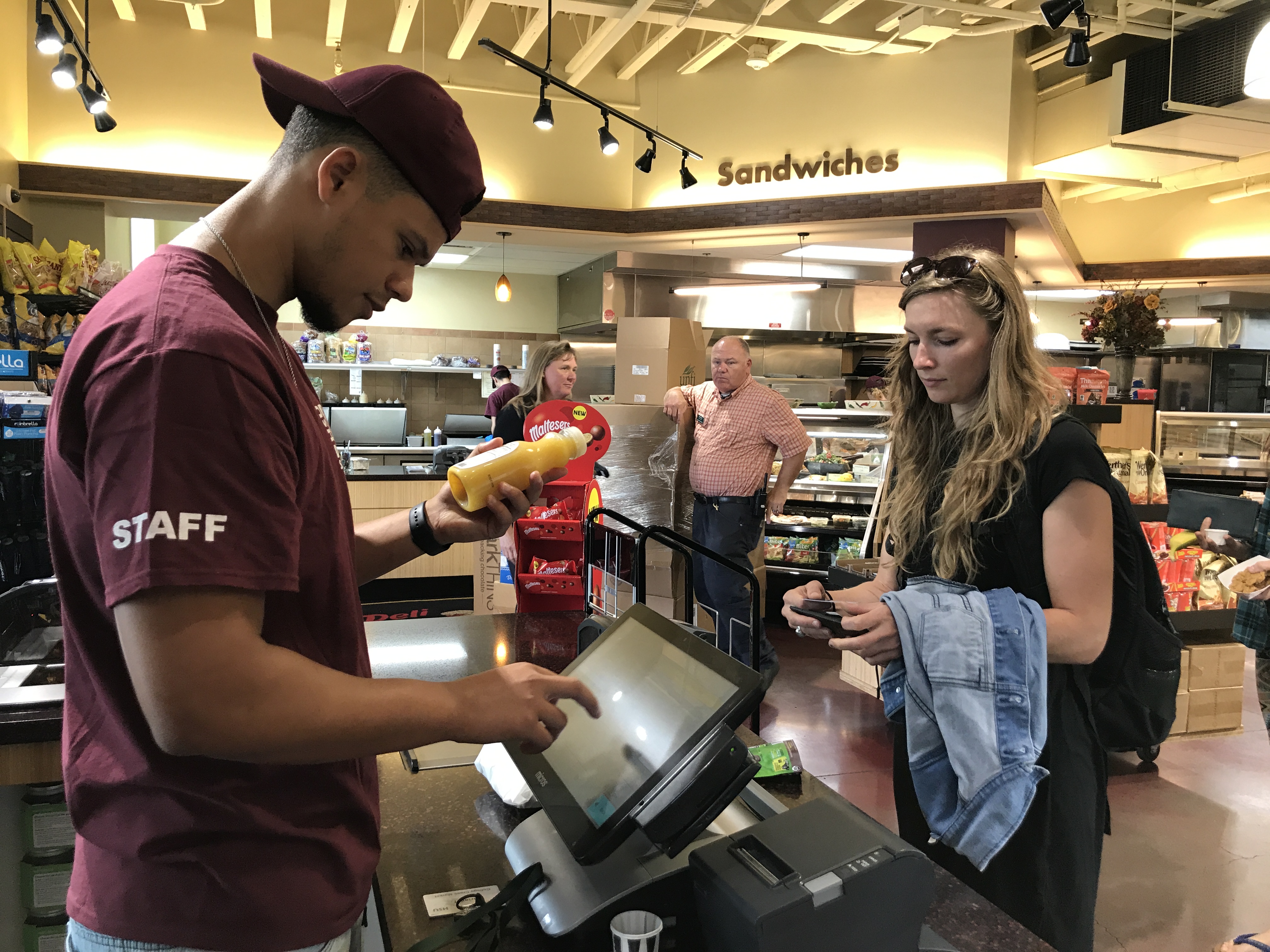
    Brian Thompson (Cashier) checking out items for a student at the college creek marketplace. Photo credit: Ahmed Al-Sakkaf

    “The answer to the question ‘What do student who need that money do?’ I don’t have a good answer for that,” said Ron Rudebock, the director of Dining Services. “Life is not fair sometimes.”

  • Recipe: Toad in the Hole

    Recipe: Toad in the Hole

    By Liam Olson

    Breakfast is one of the most important meals of the day. It helps you get your day going and keeps you not hungry until lunch. However for some college students, it is hard to make breakfast with the short amount of time to get ready in the mornings. Well here at The Lumberjack, we’ve got you covered with this quick and easy breakfast recipe.

    LORecipe2
    Toad in a hole on a plate. | Photo by Liam Olson

    Ingredients:

    1 egg

    1 slice of bread

    Butter or olive oil

    Garlic salt

    Pepper

    Cumin (optional)

    Shredded cheese (optional)


    Steps:

    1. Grease the frying pan with butter or oil on medium heat. Let the oil or butter heat up in the frying pan.
    2. Make a hole in the middle of the slice of bread and eat the circle of bread that you took out.
    3. Place the bread on the frying pan and crack the egg in the center of the bread slice.
    4. Quickly add seasonings to the egg before the egg becomes too cooked.
    5. For a runny yolk, let the egg cook for less time. For a more solid yolk, cook egg for a longer period of time. Make sure the bread does not get burned.
    6. Cook both sides of the egg and bread.
    7. Put cheese on top of bread and let it melt.
    8. Serve and enjoy!
  • Food review: Kebab Cafe

    Food review: Kebab Cafe

    By Bryan Donoghue

    To me, there’s nothing compared to a greeting full of warmth. Whether it be the humid sun of the Mediterranean or the staff of Kebab Cafe, genuine warmth is the type of feeling that makes someone feel right at home. Kebab Cafe’s warmth is akin to nostalgia, and you can feel right at home at 5000 Valley West Blvd in Arcata.

    BDDKebab03
    The cooking station in Kebab Cafe | Photo by Bryan Donoghue

    Their lighting in the front of the restaurant is fluorescent leading into a dim casual setting in the back of cafe, and the staff welcomes me with a similar brightness as I tell them it’s my first time at the Kebab Cafe. Every team member is open and amiable as they show me the menu, their cabinet display full of fresh food, and even the open grill where the kebabs are made. In their presentation about what’s on the menu, the highlight I chose was the gyro sandwich, and before starting me off with that, I ordered a few dolmas.

    I need to attest to the flavor of the dolmas Kebab Cafe makes in house. Dolmas are a unique appetizer among any cuisine. They are seasoned rice and herbs that are tossed together before being formed, and ultimately, wrapped with a grape leaf. It reminds me of a vegan burrito, but with a harmony of Mediterranean tastes, and much smaller in scale. Dolmas tend to be finger food, but Kebab Cafe’s freshly wrapped dolmas feel relatively too small in comparison to dolmas I’ve had previously.

    BDDKebab01
    Four dolmas neatly arranged in a plate | Bryan Donoghue

    That being said, size isn’t a testament to how they taste. The ratio of flavors is the key impact this dish had. At first bite, my taste buds note a splash of lemon as I bite into the leaf, until the herbs combine with the citrus flavor. The chewy texture of the rice along with the prominent flavors of herb and citrus make these little wrapped bundles delicious. Kebab Cafe’s dolmas are 90 cents each, and I recommend getting more than one.

    After I devour the dolmas, I move into the gyro sandwich. Kebab Cafe’s gyro meat is a blend of ground beef and ground lamb that’s first seasoned seasoned until being grilled on a vertical boiler. The meat is thinly sliced and served inside a warm pita with a combination of raw onions, tomatoes, cucumbers, and lettuce. You choose your sauce, with the choices being either tzatziki or red sauce. I chose tzatziki, a sauce made from yogurt and cucumbers that have a tangy kick. In accompaniment to the dolmas, this was the absolute best follow up I could have chosen as my main plate. As I chew, I notice it’s soft, chewy, and plays a trick on my perception of temperature because of how it’s layered. The pita is warm, as well as the meat in the middle. The contrast is in the vegetables, as they’re cold and smothered with tzatziki sauce. This contrast makes each bite different from the last, as the temperature of the sandwich is trying to find an equilibrium. This is one of the few meals I’ve had in recent times where not only did I finish my plate at the restaurant, but I couldn’t think of a single piece of criticism. It’s a remarkable dish at $8.35.

    From Santorini to Turkey, Kebab Cafe captures the essence of the Mediterranean, but condenses it into a small cafe where customers can feel at home. Open Monday through Friday from 11 a.m. to 8 p.m., or Saturday from noon to 7 p.m., Kebab Cafe is cooking up food six days a week.

  • Spam Fried Rice

    Spam Fried Rice

    By Curran Daly

    Inspiration from Michael Francisco

    Ingredients:

    2 cups uncooked rice

    2 1/4 cups water

    1 can spam

    1 whole sweet onion

    3 cloves garlic

    1 bottle soy sauce

    ½ of a stick of butter

    4 eggs

    Step One: Cook the rice. For this recipe to work you need day old rice. While you could go buy the rice from a chinese food restaraunt and leave it in your fridge overnight, it’s more fun to cook it yourself. Bring 2 ¼ cups water to a boil with some salt and pepper and olive oil. Once at a boil, pour in your rice, quickly stir, and then cover for 20 minutes. Once your rice is cooked let it cool then lay it out on a tray to dry out overnight.

    Step Two: Cut everything. Before you can start cooking your are going to want to get everything cut and prepared. Take your onion and cut it into small half inch by half inch slices. They don’t have to be uniform but roughly the same size so they cook evenly. Then take your garlic cloves, crush them with the side of your knife, and then mince them until they’re in very small pieces. Open your can of spam and dice the spam into little cubes. You’re also going to want to crack your 4 eggs and beat them until they’re mostly yellow, as if you were making an omelet.

    Step Three: Start cooking all the other things. Melt your butter down in a large pot on medium to low heat, once melted throw in your garlic, stir until browned, but not burnt. Then in the same pot throw in your chopped onion and stir it around. Once the onions are browned you’re going to throw in the spam and cook until every piece has a nice golden brown edge.

    Step Four: Time for the rice. Dump in your rice that has been sitting overnight and mix everything together. Now take the soy sauce and start adding till you get a light brown color, constantly stirring so make sure every piece of rice gets coated. Add salt and pepper to taste, and if you think it needs more soy sauce, add it. Once done, you’re going to push everything to one side of the pot and put your beaten eggs on the side that is empty. Cook them just like scrambled eggs, constantly moving the eggs until golden and fluffy. Then mix it all together.

    Step Five: Enjoy. You could be done here as it is, but the way I was originally taught to make it, would be to add one small mixed bag of peas and carrots and cover it until the peas and carrots thawed.

  • Humboldt State Students Missing In-N-Out

    Humboldt State Students Missing In-N-Out

    By | Curran Daly

    Julia Hunt left for the In-N-Out in Redding, California a little after 8 p.m. one night in September, arriving at the In-N-Out a little before midnight.

    “My roommates and I were sitting on our couch all looking at Facebook and we came across a video of In-N-Out,” Hunt said.

    The video sparked an idea. Hunt and her friends decided to drive to In-N-Out. They got in a car and drove for three hours to Redding in the dark.

    “It was a bonding trip, we got to know each other better throughout the car ride,”Hunt said. “We would talk about our families and everything.”

    Hunt and her friends made a pilgrimage to In-N-Out. Hunt’s trip to In-N-Out was about more than food, her and her friends got to share stories and memories from their childhood going to In-N-Out.

    Yvette Valdez-Beas, a kinesiology sophomore, was also on the trip with Hunt.  

    “They were just like ‘be ready in five minutes’,” Valdez-Beas said.

    They all got in a car and began their long and turn-filled road trip along state Route 299 toward Redding.

    “We went to Redding and we took the 299 and I’d never been that way,” Valdez-Beas said. “ The drive was kinda scary because it was at night and I didn’t know how windy it was.”

    Many people make the claim that In-N-Out is the best burger place. Valdez-Beas craves an In-N-Out burger whenever she has a burger from any other restaurant. No other burger can replicate the flavor and simplicity of an In-N-Out burger.

    The round trip roadtrip totalled 240 miles and six hours of driving on dark and winding roads. In-N-Out served as the focal point of a bonding experience that these friends hope to do again in the future. Hunt, Valdez-Beas, and friends are not the only people who miss In-N-Out while behind the Redwood Curtain.

    Alex Hain is a freshman psychology major who found the transition away from In-N-Out difficult.

    “In-N-Out used to be the only thing I ate back home and I abandoned it,” Hain said.

    Hain has been trying to organize a trip with friends to the new In-N-Out in Ukiah. The only thing stopping him from heading to the In-N-Out is finding someone able to drive him on a Sunday.

    The new In-N-Out in Ukiah is about 25 miles farther than the one in Redding, but the drive takes about the same amount of time. The road to Ukiah is much less intimidating especially if it is dark.

    Freshman marine biology major, Carlino San Miguel, misses the In-N-Out by his home in the Los Angeles area. He believes that its simplicity is what makes it so popular.

    “They’re different than other burger place, it’s only hamburgers, you can’t get chicken strips or chicken sandwiches, it’s just straight hamburgers so you go there and you know what you’re gonna get,” San Miguel said.

    While a six hour drive for a hamburger may seem impractical, these journeys done and planned focus more on feeling at home. San Miguel, Hain, Valdez-Beas, and Hunt all admitted to In-N-Out being one of their first stops while heading home.

    Sometimes living in Humboldt can feel distant and isolated from what people are used to. In-N-Out offers that feeling of coming home.