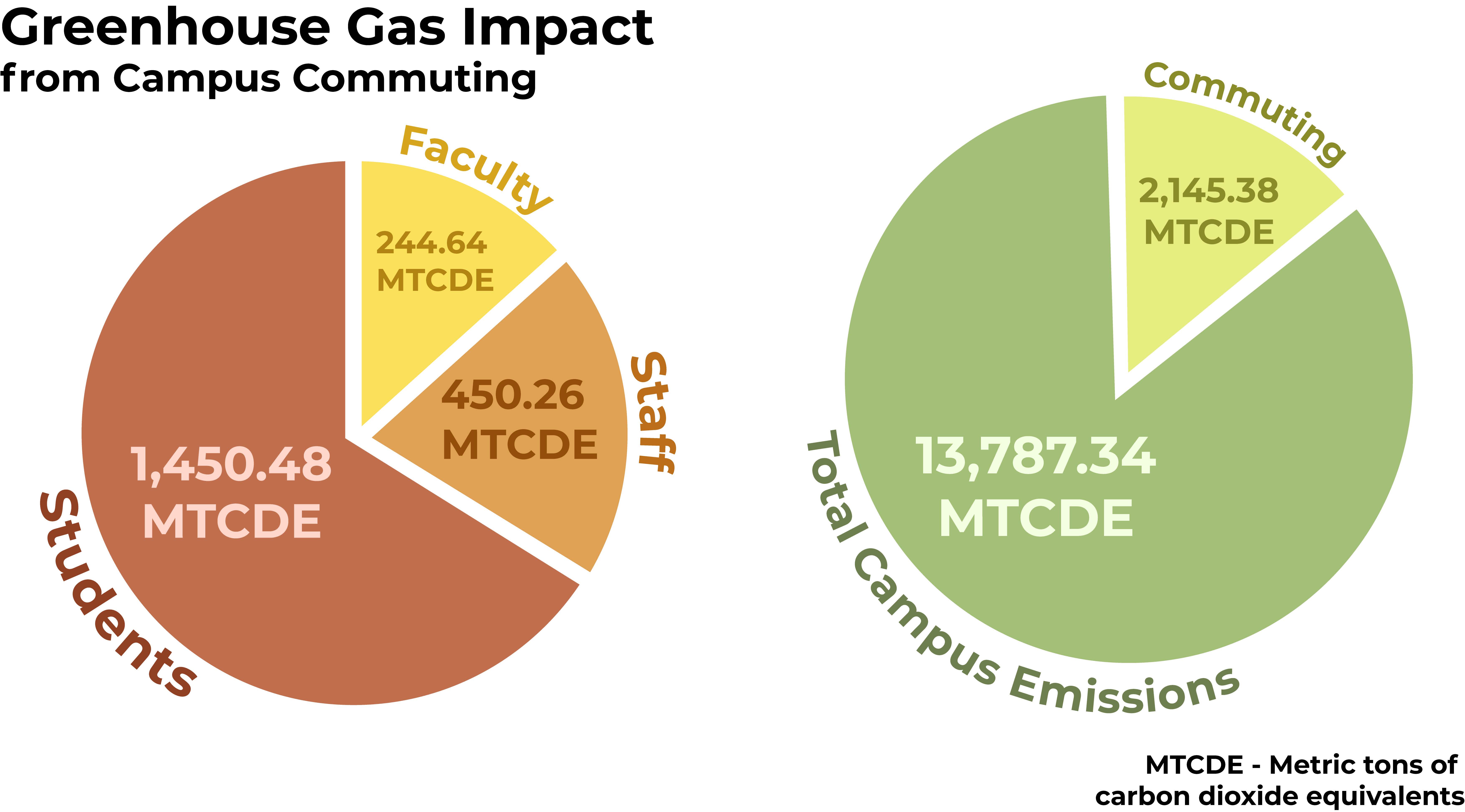
On Jan. 28, Cal Poly Humboldt released an ambitious draft updating the Climate Action Plan. This updated plan promises to have the school completely carbon neutral by 2045. If CAP 2.0 is accepted, the school will implement changes to reduce carbon output and create an ecologically healthier environment.
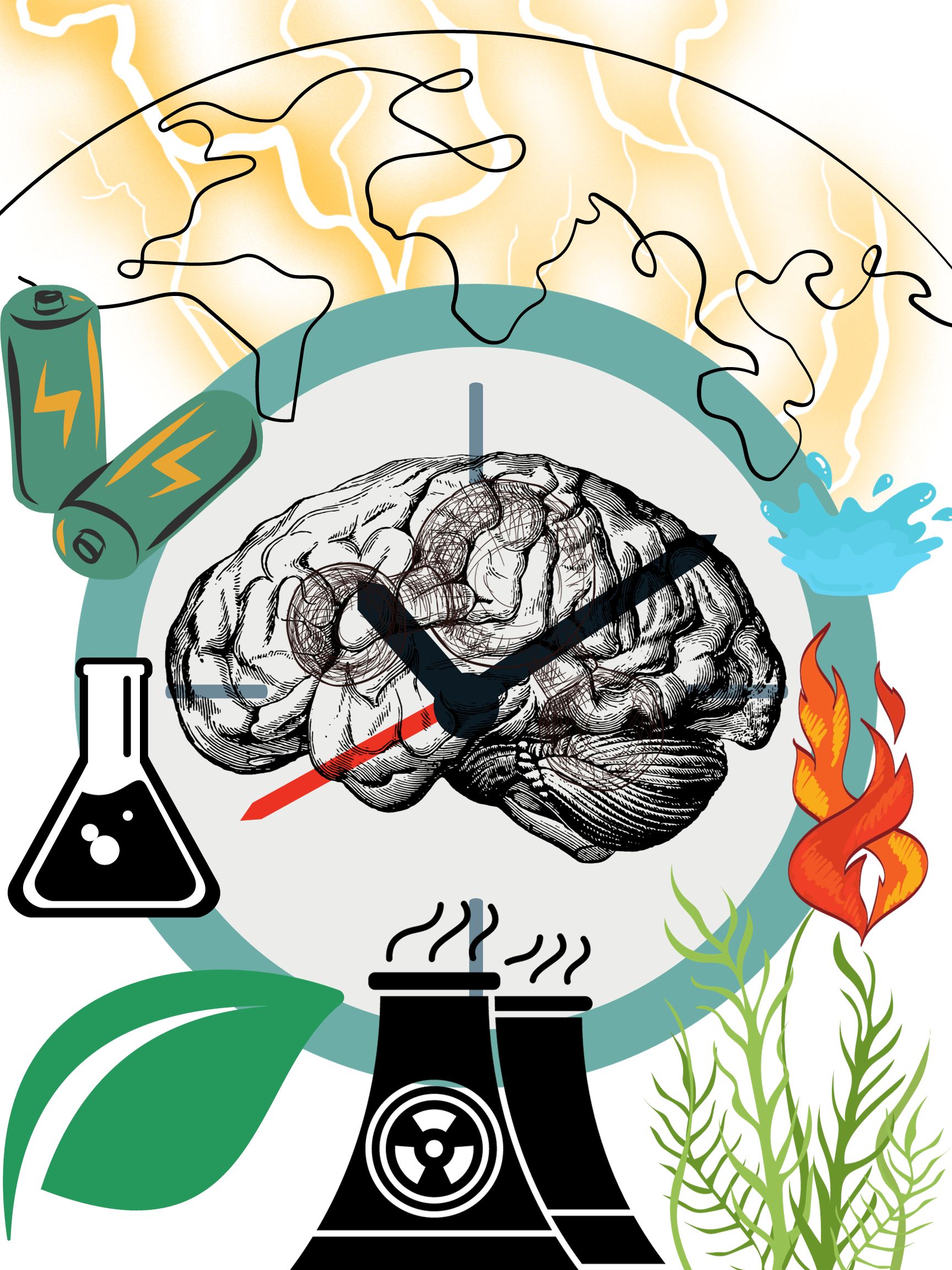
Changes would include phasing out gas and replacing it with electric power, implementing new carbon offset projects, introducing a zero-waste plan, and making several changes to transportation on campus. The final draft of the plan will be submitted this April. The budget is not yet finalized, however, if the plan is signed off, it will cost anywhere from 4.4 million to 5.5 million.
The Climate Action Plan started in 2016 to lower greenhouse gas emissions to levels last seen in the ’90s. They succeeded at that plan in 2020 and started their planning for Cal Poly Humboldt’s next goal, complete carbon neutrality by 2045. This plan came about after The 100 Percent Clean Energy Act of 2018 passed in California, requiring all California businesses to have 100 percent clean energy by 2045.
Morgan King is a climate analyst at Cal Poly Humboldt and the author of CAP 2.0. For him, this new plan is about more than just meeting the requirements set by the state.
“We are in the midst of a climate crisis and we understand that climate change events and disasters are already having an impact on our communities, our ecosystems, and our infrastructures,” King said.
Graphics courtesy of Facilities and Management
According to King, the main climate threats Humboldt faces are rising ocean levels, wildfires, and extreme weather conditions. These threats are daunting and King is under no illusion that the school has the ability to singlehandedly stop them.
“Even if humanity took big steps today to curb our burning of fossil fuels, we’re still going to see these climate impacts for many years to come,” King said. ”So we need to start planning and preparing now.”
Despite the ominous threat of climate change looming in the distance, plans like CAP 2.0 show that there are still people willing to make drastic changes to soften the damage humanity has caused.
“We are starting to see that resilience and climate protection are becoming part of the culture at this campus,” King said ”We are seeing a greater level than ever before of engagement around these issues.”
Ricky Smith, a longtime Arcata community member, was the victim of a deadly assault Wednesday, February 2. The community has spent the last week remembering Smith’s legacy. Known for his big smiles and peace-loving attitude, Smith regularly took to the corner of 17th and G Streets where the assault took place.
Photo by Morgan Hancock | Community members gather at the corner of G St and 17th St.
Community members set up a memorial where Smith would spend his days playing songs for passersby. In the days since, the corner has seen people stopping by to share stories of the well-known busker and leave gifts around framed photos.
Reports say that Smith was killed in a confrontation near the 17th Street footbridge around 5:30 p.m. Although CPR was attempted by two bystanders, he was unresponsive when police arrived on scene. Life saving efforts continued but Smith was pronounced dead shortly after being transported to Mad River Hospital.
Smith was confirmed dead by Arcata Police the following morning. A 50-year-old Arcata resident was arrested at the scene and taken into custody and booked into the Humboldt County Correctional Facility for murder according to the Thursday press release.
Photo by Kris Nagel | Arcata resident Ricky Smith plays his guitar on the corner of 17th St and G St on April 28, 2021.
Smith’s daughter, Sara Smith, has set up a Facebook page for people to share memories of her father. A recent post on the page from Sara shows a note Ricky had made for himself, “Your attitude almost always determines your altitude in life.”
Ricky Smith was known best for his kind smile, passionate songs, and place in the community reminding us to be good to one another. Though some memories are brighter than others, this moment of loss has brought many in the community to grieve the corner left vacant in Ricky’s absence.
Anyone with information regarding the David Josiah Lawson case is encouraged to call the APD’s 24-hour confidential tip-line at (707) 825-2590 or the APD Dispatch Center at (707) 822-2424
On April 15, 2017, Humboldt student David Josiah Lawson was fatally stabbed at an Arcata house party around 3 am. McKinleyville resident Kyle Zoellner, 23, was taken into custody relating to the incident. After five days of the preliminary hearing, the judge ruled that there was not sufficient evidence to hold Zoellner and the suspect was released despite witness testimonies.
Since this day, David Josiah Lawson’s mother, Charmaine Lawson, has fought endlessly to bring justice to her son. There have still been no arrests made and Charmaine Lawson pleads for those in the community who know something about what happened to come forward.
Over the past four years, approaching five, there has been a documentary made about the injustice of David Josiah Lawson and the case has attracted the attention of a number of murder mystery channels.
Danielle Hallan is a true crime YouTuber who investigates unresolved cases through news outlets, speculations of investigators, journalists and family members. Charmaine Lawson encouraged the video that was made by Hallan about the Lawson case to be shared to the Humboldt community to keep the case alive with hope that justice will be served.
For me, the start of the spring semester means the return of the eternal struggle to find a parking space. Many Cal Poly Humboldt students, both on and off campus, are finding it difficult to find a parking space. Even those of us who usually walk to campus are impacted by a lack of parking.
The parking situation on and around campus is absolutely abysmal. Campus parking permits and metered parking are expensive and purchasing a campus permit does not guarantee that you will find an open parking space. $157 a semester is a lot of money to pay to not be guaranteed a spot to park. I know students who live on campus who can’t even park outside of their own dorms. I’ve talked to commuter students who have to move their cars multiple times a day to avoid being ticketed.
You would think that living in an off campus house within a short walking distance of the school would resolve any parking issues. However, parking is still a huge problem for my roommates and I. One side of our street is 4-hour parking from 7 am to 5 pm, intended for students to be able to park off campus and walk if they don’t have a campus parking permit or if campus parking is full. The other side of the street is reserved for vehicles with residential parking permits. I have four roommates and we all have cars. That’s five vehicles that we have to try and fit in our parking zone, which we also share with our neighbors.
Photo by Nina Hufman | The parking zone in an off campus neighborhood in Arcata, California.
We can usually fit four of our cars in front of our house if we park as close to the edges of the residential zone as possible. Because my neighborhood is so close to campus, there are usually several student vehicles parked in the 4-hour zone. I often come home to find that our residential parking is full. I am then forced to parallel park, very poorly might I add, across the street from my house.
Parking, specifically parking enforcement, is something my roommates and I commiserate about almost daily. We sit in our kitchen, talking about how much we hate the guy who enforces parking on our street. He’s a jerk, he takes his job way too seriously, and I honestly think he has it out for my brother. It feels like he targets our street, and my brother’s car specifically.
He literally stopped my brother in the street to ask him which car was his and tell him that it’s illegal to remove chalk from the tires of your car. He kept moving his little, three-wheeled car in front of my brother to prevent him from walking away. During this interaction, he was in the way of one of my other roommates who was trying to park. Imagine being a middle aged man having beef with a 21-year-old who’s just trying to park in front of his house. That feels like an inappropriate interaction to have with an “authority” figure. As a college student who is just trying to get an education, the last thing on my mind is fighting with parking enforcement.
I can’t help but think, if I’m fed up with the parking situation, it must be absolutely enraging to have purchased a campus parking permit, but never be able to park. It’s not the students’ fault that they’re parking in my neighborhood. To be honest, it’s a very convenient distance from campus, especially if you can’t park any closer. The real problem is that campus parking is so scarce.
Cal Poly Humboldt students pay a lot of money for parking to only be able to park on campus sometimes. The issue doesn’t only impact the campus. Student vehicles overflow into the surrounding neighborhoods, creating a lack of parking for everyone who lives nearby.
MLK Day is more then simply a day off, it holds an important message
“These are revolutionary times. All over the globe men are revolting against old systems of exploitation and oppression, and out of the wounds of a frail world, new systems of justice and equality are being born.” said Martin Luther King Jr. in his A Time to Break the Silence speech.
Last Monday marked the country’s annual day of recognition towards civil rights leader and minister Dr. Martin Luther King Jr. A contention day to some as increasing more citizens have come to see the commodification and sanitization of MLK’s legacy to be problematic. Many efforts have been made across the nation to realign this day with his actual messages of racial and economic justice, not only through the medium of peaceful protest, but also civil disobedience and radical structural change. Many of the MLK events in Humboldt could be found partaking in this national movement.
Local bilingual and charter elementary school, Fuente Nueva, last Friday celebrated the upcoming holiday through a series of black guest speakers from organizations ranging from Black Humboldt, Eureka’s NAACP, B-Men, and many more. After the event’s collection of inspiring speeches, delivered to the awaiting children located in the front rows, all attendees were invited to walk a mile march in remembrance of MLK’s own March on Washington.
HSU held its own MLK event on Monday as well. Starting in the early hours of 8am and hosted by Youth Educational Services (Y.E.S), the event was labelled “A Day On, Not A Day Off” and focused on community service volunteering. Guest speakers included our own Dean of Students, Dr. Eboni Ford-Turnbow, and prominent activist Bree Newsome. Volunteering activities ranged from on campus to off, Arcata to Eureka, and included a variety of public services. For many students and community members in Humboldt, MLK Day was not simply a vacation but an opportunity to give back and to keep Martin Luther King Jr’s dream truly alive.
Photo by Morgan Hancock | HSU student volunteer on MLK day Monday Jan. 17.
Starting Jan 23, students, faculty, and staff must be fully vaccinated to use campus facilities. This Humboldt State announcement was made in December shortly after students left for break. Anyone not able to receive a vaccination or booster can submit for an appropriate exemption. Following an updated certification date, the university said the likelihood of infectious spread in the classroom will be low given vaccination requirements, mandatory testing, masking, and other efforts made by the school.
In a press release sent to all students earlier this week, HSU clarified full vaccination status as ”attesting that you are fully vaccinated (including a booster if eligible) or have submitted for the appropriate exemption.” Recipients of the Pfizer and Moderna vaccines are eligible for boosters five months after completing their initial series. Johnson & Johnson recipients can get a booster two months after their initial dose.
The university asked that those who have already received the booster should go into their student portal and complete the attestation about vaccination status. Students can do so by logging into their Health Portal at myhumboldt.edu. To find a vaccination clinic in your area, visit My Turn California (myturn.ca.gov). However, clinic availability in some areas is limited, including Humboldt County.
Giovanni Guerrero makes his case for the Associated Students presidency
Born and raised in southern California, Giovanni Guerrero is an openly gay, first-generation Latinx student. Coming to the end of his junior year, this is Guerrero’s first time running for a position with Associated Students, and he’s aiming straight for the top—the presidency.
While Guerrero lacks a background with AS, he might make up for with a background working with the Federal Government. Last summer, he attended an internship with the Bureau of Land Management Eastern States division in Washington D.C. The division is an office of the BLM, a branch of the Department of the Interior. He spent time working with fellow interns in a geospatial segment of the Eastern States division—work that involved collaborating on several projects simultaneously.
As an environmental science major, Guerrero brings preservation into the discussion as the foundation of his platform.
“We have resources on this campus that help those students. And I think it’s very essential that we prioritize those resources and make sure that those resources aren’t seeing drastic reductions.”
Giovanni Guerrero
“We have some terrific resources on this campus, but over the next two years we’re gonna be facing $20 million in budget reductions, and that’s a big, scary number,” Guerrero said. “Those reductions will probably come in the form of student interests. So, it’s very important that we recognize the challenges that we’re gonna face, and we’re very vocal about it so that we can protect important resources.”
Humboldt State University is home to many students in need, including those facing housing and food insecurities, as well as mental health issues.
“We have resources on this campus that help those students,” Guerrero said. “And I think it’s very essential that we prioritize those resources and make sure that those resources aren’t seeing drastic reductions.”
Guerrero advocates for more energy to be spent on the promotion of these resources. One idea is to feature a ‘program of the week’ on the HSU homepage because the current navigation system does little to support them.
“I really wanna focus on promoting what Humboldt State has to offer,” Guerrero said. “Because our resources can’t serve the students that they’re meant to serve if they don’t know they exist.”
“I think he would be a great leader because he understands the complexities in debates, that sometimes we have to find productive ways to maintain arguments we can’t end, and because he is so eager to make HSU a better place for students who feel left out.”
Aaron Donaldson, debate team coach
As the only upcoming senior running for the position, Guerrero has the most respective experience on the HSU campus and the challenges faced by its students.
“I’ve been very fortunate to experience different areas around campus,” Guerrero said. “It’s really opened up my perception to how diligently students are working.”
As well as working for Recreation Sports on campus, Guerrero also worked at the J. He’s also involved in several student clubs including the running, climbing and debate clubs.
Aaron Donaldson, coach of the debate team, praised Guerrero as a genuine, sympathetic listener.
“I would describe Gio as thoughtful, careful as an advocate and a good student,” Donaldson said. “I think he would be a great leader because he understands the complexities in debates, that sometimes we have to find productive ways to maintain arguments we can’t end, and because he is so eager to make HSU a better place for students who feel left out.”
If elected president, Guerrero intends to improve HSU’s social media. That way students interested in attending the university will know what the campus has to offer. He advocated that all students take advantage of the opportunities at hand, especially clubs.
“His ability to anticipate, plan for and respond to issues in dynamic and creative ways makes him an asset to any group or team he chooses to be a part of.”
Katherine Earle, Recreation Sports
“Clubs have really helped me to connect with other people, and I think they’re really essential to building community on campus,” Guerrero said. “That leads to retention as well. If you feel connected to your campus and where you live and where you study, then you’re more likely to stay.”
One of Guerrero’s bosses at Recreation Sports, Katherine Earle, spoke highly of his performance.
“Gio has already proven himself to be an effective leader while working for Rec Sports at HSU,” Earle said. “His ability to anticipate, plan for and respond to issues in dynamic and creative ways makes him an asset to any group or team he chooses to be a part of.”
Another priority for Guerrero, as president, would be to ensure the security of student jobs.
“A lot of students depend on those jobs and I think the more opportunities we have on campus, the more attraction we will get at HSU, and more retention,” Guerrero said.
One of the biggest short-comings of AS, according to Guerrero, is active student engagement.
“You could probably go up to any student on this campus and ask them, ‘Do you know what an Associated Student does or who they are?’ And they’ll probably tell you ‘No, I have no idea.’”
Guerrero wants to create avenues to engage with the student body and inform them on what’s going on at an administrative level and within AS.
Guerrero said this will help prioritize what students want from AS. If he wins, Guerrero is aware he has his work cut out for him, and he said he’s up for the task.
“I’ve faced a lot of different barriers and a lot of different challenges, and just in general, it’s really helped me to be a resilient person,” Guerrero said. “And I think that’s the key to success. Cause you’re gonna face a lot of obstacles throughout life, and have to learn how to handle those obstacles.”
I woke up on St. Patrick’s day—my birthday—to sobbing. My roommate was curled up on her bed, across the room, crying her eyes out. She cried for half an hour, if not more, because she’d just received the Humboldt State email canceling our graduation and asking students to leave campus if they were able. An achievement she has been working toward for seven years and one I have been busting my ass off for four years was all taken away in seconds.
Instead of celebrating and going to the bars—in true St. Paddy’s day fashion—I spent the day in quarantine having to tell my family to cancel their plane tickets and Airbnb reservations because I wasn’t going to be able to walk.
As one of the students left on campus, it’s strange, to say the least. When my roommate and I go for walks or head to get food from OhSNAP!, the university looks like a nightmarish scene from some dystopian novel. Usually, the only people you’ll find walking around campus are construction workers, nurses or other essential HSU staff. Every once in a while there’s the odd student or two, using what little resources are left available on campus.
In front of the health center, a tent is set up to greet all students where they sanitize their hands and grab a face mask before being allowed to enter the building—even students who just need to pick up medication from the pharmacy.
The only students allowed to be seen at the health center are those who show severe symptoms like a fever, sore throat or difficulty breathing. But for those of us who need regular prescriptions through their pharmacy, be it for anxiety medication, emergency inhalers, birth control pills or other medications they offer, we can still access the pharmacy during their posted hours.
In my opinion, this is one of the most concerning aspects of COVID-19. Students and community members cannot be tested through campus for the illness unless they are extremely sick, which leaves carriers with less severe symptoms to go untested.
Before campus was closed, my roommate and I came down with a cough and fatigue that wouldn’t seem to go away so we decided to visit the health center to see what was wrong, maybe a bit paranoid that we might have contracted the coronavirus somehow. But who isn’t a little paranoid during this pandemic?
We were seated outside and only admitted into the entrance of the health center one-by-one. A blood pressure monitor, thermometer and other equipment were set up in the hallway, with two nurses wearing masks and gloves. We were given masks, examined and told that, unfortunately, if we did not show severe symptoms, they were unable to test us.
In my opinion, this is one of the most concerning aspects of COVID-19. Students and community members cannot be tested through campus for the illness unless they are extremely sick, which leaves carriers with less severe symptoms to go untested.
My roommate and I were told we had post-viral infections and given medicine to treat that, but the truth is, we could very well have had the illness and not known because of arbitrary rules only allowing people very ill to access tests.
I’m still sad that graduation was canceled and I know that it’s a momentous accomplishment that I will never get back. But it’s more important to me that we keep people safe than having the chance to walk across the football field to accept a degree.
There are “asymptomatic” carriers of COVID-19, meaning there might be tons of people in the area infected with the coronavirus without any knowledge they are sick. There might be people who have mild symptoms who are unable to be tested and are unintentionally spreading illness because they think they aren’t that sick. We aren’t only putting the health of students at risk by not testing those concerned they might have the illness, we are endangering the nurses and doctors who are still working through the health center, members of the community that students might come into contact with while grocery shopping or performing essential tasks during quarantine.
But this isn’t only a concern in Arcata. The reason behind such arbitrary testing rules is because, as reported by The New Yorker, there is a critical shortage in medical equipment necessary to perform tests. This is why those who are extremely ill are being prioritized over people who don’t show as many symptoms. We simply do not have the resources to test everyone, so people infected with the illness are falling through the cracks, living their normal lives and potentially spreading the illness because they are unaware they even have it.
While those who are sick, but not sick enough, cannot get tests, celebrities who show no symptoms of COVID-19 are allowed to be tested, leaving medical professionals, sick patients and community members to wonder if their lives are less important than the rich.
I’m sitting in my dorm right now going a bit stir-crazy, still trying to find things to do to occupy my time while I practice social distancing in quarantine. Last week, my roommate and I painted canvases to pass the time. I started learning embroidery because I was that bored and today I went to my Zoom English class, then spent the day writing and watching movies with my roommate. We’ve downloaded TikTok just to pass the time.
I’m still sad that graduation was canceled and I know that it’s a momentous accomplishment that I will never get back. But it’s more important to me that we keep people safe than having the chance to walk across the football field to accept a degree.
Looking to the past to learn about the present pandemic
There’s a saying that goes something like, “In order to prevent future mistakes, we should look to the past for guidance.” While this current pandemic may be new to all of us, humans have gone through this before. Some of the more recent pandemics include the SARS virus, the H1N1 virus, Ebola and HIV.
The term pandemic is defined as something “occurring over a wide geographic area and affecting an exceptionally high proportion of the population.” Obviously, the current COVID-19 virus fits into this category. While some of the aforementioned pandemics did not enact a devastating, history-altering toll on Humboldt County, another pandemic did.
From 1918 to 1920, the Spanish flu swept across America, resulting in an estimated 675,000 deaths according to the U.S. Department of Health and Human Services. The first official report of the Spanish flu in California was reported Sept. 27, 1918, just two weeks after an outbreak on the East Coast. By November 1918, the total cases throughout the state hit about 115,000—overwhelming doctors and government officials from north to south.
One of three doctors that helped Spanish flu patients in the Ferndale area.
Although Humboldt County sits in an isolated area protected by the “Redwood Curtain,” the area was soon amassed in its own troubles combatting the illness. Humboldt County had a population of about 37,000 people with Eureka holding around 12,000. The Spanish flu resulted in around 200 deaths (although it is thought to be much higher) and thousands grew ill.
In 2012, Humboldt State alumnus and McKinleyville native Jeff Benedetti-Coomber wrote a detailed history of the impact the Spanish flu had on Humboldt County. For it, he was awarded the Charles R. Barnum History Award by HSU’s history department. For his research he scoured through old newspaper clippings for primary source documentation. He read academic analysis on how the Spanish flu affected the entire nation and he cited Matina Kilkenny, a researcher and local author for the Humboldt Historical Society who also wrote about the impacts the Spanish flu had on Humboldt County.
What prompted Benedetti-Coomber to focus on the Spanish flu was its lack of local research. As his peers decided to look into European history, he decided to focus his attention on the effects locally.
“I was walking through the graveyard in Arcata and noticed a family of graves, not necessarily related to the [Spanish] influenza but it got me thinking about what effects the flu may have had because it was around the same time,” he told me over the phone from his place in Los Angeles. “Once I started researching it I saw how it did affect the county and I was pretty amazed.”
Benedetti-Coomber’s senior thesis, titled “Death In the Redwoods: The Effects of the Spanish Influenza on Humboldt County,” spans 30 pages and breaks down how each town dealt with the outbreak. He highlights what preventative measures seem to have worked and where officials, the public and the media went wrong and what they got right.
“It’s just like today when you tell people to do something and they kind of resist. A lot of people had that with the Spanish influenza and it was a reason a lot of people died, because they didn’t take it seriously.”
Jeff Benedetti-Coomber
Some of the highlights from his research that still stand out to him are how Eureka initially closed all schools, which flooded the streets with children. They soon changed their minds and brought the kids back into the school to try to quarantine the children. Another nugget of research that sticks out in his mind has to do with masks and the public’s initial reluctance to wear them.
“It’s just like today,” Benedetti-Coomber said, “when you tell people to do something and they kind of resist. A lot of people had that with the Spanish influenza and it was a reason a lot of people died, because they didn’t take it seriously.”
When the Spanish flu hit Humboldt, the United States was in the middle of World War I and young men from Humboldt were signing up to join the war effort. There were war rallies and large gatherings of people throughout the towns in Humboldt in the fall of 1918 as the Spanish flu began to creep in.
“Although the Great War was still the main focus in Humboldt County, more and more citizens were beginning to take notice of the spreading pandemic,” Benedetti-Coomber wrote.
Some of the newspapers in Humboldt at that time seem to have downplayed the seriousness of the Spanish flu. Benedetti-Coomber points to an ad that was in the Humboldt Standard by Vicks VapoRub that was “disguised as an article… and it assured readers that the [Spanish flu] was ‘Nothing new simply the Old Grippe and la Grippe that was the epidemic in 1889-90.’”
Benedetti-Coomber wrote that it is believed the Spanish flu was brought to Humboldt County by locals traveling to other parts of the state to help care for sick family members and then returning before symptoms started to show. By mid-October 1918, reports of the Spanish flu were starting to pop up in the local newspapers.
“The Humboldt Times also reported that there were roughly 150 cases in Eureka by [Oct. 22] and hospitals were short staffed. Doctors were so busy they did not have the time to report new cases or treat the majority of their patients.”
Jeff Benedetti-Coomber
“The Humboldt Times and Humboldt Standard newspapers offered daily accounts of what was happening,” he said, adding that they also seemed to not care about the Spanish flu at first.
On Oct. 12, 1918, four cases were reported in the Humboldt Times and those infected were quarantined in a “‘safe house’” on 8th Street where they could be quarantined and cared for,” Benedetti-Coomber wrote.
At first, the mayor of Eureka downplayed the danger to the public, but two days later, five more people were infected. By Oct. 22, 1918 there would be more than 150 cases and one death.
“According to the Humboldt Times, Mrs. Garber Dahle was the first person in Humboldt County to die from the deadly virus,” Benedetti-Coomber wrote. “The Humboldt Times also reported that there were roughly 150 cases in Eureka by [Oct. 22] and hospitals were short staffed. Doctors were so busy they did not have the time to report new cases or treat the majority of their patients.”
Action to combat the Spanish flu across the county began to take root. Arcata was the first town to pass a requirement that all residents had to wear a mask while out in public, and by Nov. 7, 1918, the entire county was required to do so. Emergency hospitals were soon established across the county with some residents offering up their homes for the infected.
Arcata escaped the pandemic with only four deaths, but the same can’t be said for Eureka and especially for the logging camps in the remote areas of the county. The number of cases grew in the urban areas, and by Oct. 23, 1918, the logging camps were left to fend for themselves.
“Logging camps and small towns were informed by the newspapers and from local physicians that they would have to face the Spanish Influenza on their own as all of the county hospitals were completely full,” Benedetti-Coomber wrote while citing a Humboldt Times article titled “Influenza Increases Alarmingly in Two Days.”
Young women wearing masks in Humboldt County.
But one logging camp was able to escape the pandemic with no cases at all. In her article, “Missing Faces,” Matina Kilkenny reported how Carl Munther set up a quarantine system for his workers who decided to go into town. (Kilkenny’s article has a number of great photographs of life in Humboldt County during the Spanish flu.)
“Munther required every person returning to camp… to stay four days in a tent he’d pitched some distance from the workers’ cabin,” Kilkenny wrote, adding that the returning workers were also required to work and eat separately from their peers. “Thanks to their boss, very few men chose to leave the Barrel Company camp and not one case of influenza occurred there.”
Sisters of St. Joseph wearing masks during the Spanish flu. The sisters helped many patients in Humboldt from 1918-1920.
Throughout her research, Kilkenny was able to find where a number of hospitals were set up across Humboldt. There was a Red Cross Hospital in Korbel, Arcata, Blue Lake and Eureka. Kilkenny also came across an interview between a member of the Sisters of St. Joseph of Orange in Eureka and a man named Brad Geagly. Kilkenny wrote the following:
“[Mother Bernard] sent [the Sisters] out in twos, in cars provided by the Red Cross. She armed each Sister with a kit containing camphor and sweet oil, castor oil, and mustard plasters. Into the homes… the sisters came, arriving at seven o’clock and leaving at the end of a 12-hour shift, to be replaced by two other Sisters. They would attend first to the adults….They would bathe the delirious victims completely, rubbing their chests deeply with the camphorated oil. Mustard plasters would be applied, and then the sisters would wrap the sick tightly in whatever woolen material they could find; then they would tend the children. Once they had been bathed and medicated, the sisters turned to washing linens or cleaning house. They fed their charges warmed milk and broth prepared from the food furnished by the Red Cross.”
Kilkenny noted that, generally, it was the poor who were admitted into the hospitals, while the more well-off were cared for in their homes. Because of this the actual tally for those infected and the deaths attributed to the Spanish flu is unknown. Kilkenny also points out how the Native American tribes were hit hard by the Spanish Flu as well.
“Of the [11] Native Americans whose deaths are on record at the County Courthouse, five were from Table Bluff, two from Hoopa, one from Miranda, one from Orleans, one from Requa, and one was a laborer at Korbel,” Kilkenny wrote. She also noted evidence that many Native Americans often refused treatment by White settlers around this time period.
Kilkenny was also able to find county death records from that time and noted that between Sept. 1, 1918 and April 1919, 175 Humboldt residents died with 91 of them between the ages of 20 and 40.
And so what can we learn from this history?
There is evidence that social distancing works by the example set by Carl Munther at his logging camp and how travel throughout the state can spread the virus. We can see how hospitals were eventually inundated with those infected with the Spanish flu and how staff were stretched thin. We can also see how it is important to get ahead of a pandemic and try to prepare as much as possible.
Humboldt County seems to be doing just that. They have recently distributed around 30,000 pieces of personal protective equipment to first responders and medical staff across the county. Humboldt State chipped in and prepared 1,250 COVID-19 test kits. Also, as I’m sure you are aware, we are in a “shelter in place” order that was enacted to help stop the spread of the virus and to give medical staff the ability to fight the virus without being overwhelmed.
Towns across Humboldt are also doing their part to help prevent an outbreak. Trinidad passed a moratorium on all short-term rentals and added some pretty forceful consequences to anyone who breaks it.
“Over the course of the meeting, council members added some teeth to the resolution with language saying that a single violation may result in the City revoking a proprietor’s short-term rental license for up to a year,” the Lost Coast Outpost’s Ryan Burns recently reported, adding that the county may consider a similar measure.
A stained glass piece by Humboldt artist Colleen Clifford.
As this thing progresses, we are all going to have to make some sacrifices, but we’ll get through it. Help out the elderly and the immunocompromised if you can. Help out each other by not going out or attending pretty much any gathering of any number of people.
Let’s all work together — but at least six apart — to help “flatten the curve.”
Blue mussels are a type of edible bivalve found in cold coastal waters. These orange-fleshed, blue-shelled mollusks are high in vitamin B and iron. Mussels and other bivalves feed by filtering water throughout their body. Bivalves, including mussels, can be deadly if consumed during red tide conditions.
You can forage for mussels along the California coast legally with a California fishing license. The legal daily limit for mussels is 10 pounds and you must carry a scale with you. Do not use tools to scrape mussels off rocks. This damages the mussel beds and is prohibited for mussel collecting. Instead, get a sturdy pair of gloves to twist and yank the mussel free from its byssal thread attachments (also known as beards) that secure it onto rocks.
Mussel gathering is prohibited in Humboldt County every year from May 1 to October 31 due to the warmer climate during this time, which facilitates the proper conditions for toxic algae blooms. Mussel quarantine may vary year to year. Always call the shellfish bio-toxin hotline before you plan on foraging.
Bio-toxin information line: (800) 553-4133 shellfish toxins/quarantine information
Editors note: This article previously stated an incorrect limit on mussel harvesting and has been corrected. We have updated information about mussel quarantine. Updated January 21, 2021
HSU, like all colleges, prepares for tough times and serious measures
Humboldt State University is preparing for an enrollment drop of around 20% for the fall and a budget cut of around $20 million by the 2022 fiscal year, according to a joint press release from HSU and College of the Redwoods.
Before the COVID-19 pandemic, HSU projected an enrollment drop for total students of around 14% for the fall and had proposed a budget cut of around $5.4 million by the 2022 fiscal year.
Given the uncertainty of the next year, HSU is planning for an even larger enrollment decline and budget cut. HSU currently projects new student enrollment to drop by 30%. The specifics of what the budget cuts will mean are still being worked out.
“Many options are being looked at, including combinations of a hiring chill, spending freeze, operational changes, incentives for retirements, travel reductions, and more,” the press release said.
In a Zoom interview, HSU Vice President of Enrollment Management Jason Meriwether said a worst case scenario projection might be only 500 new students and 500 transfer students admitted to HSU in the fall.
These numbers, to be clear, are projections. No one knows exactly how the next year will play out. Meriwether hoped HSU could keep enrollment and retention as high as possible.
“The sad part is, I don’t know,” Meriwether said. “There’s no benchmark. There’s nothing to project against. We could be doing all this and, you know, 1400 students show up—which would be wonderful.”
HSU is not alone. As noted in Meriwether’s Tuesday enrollment management report to the HSU Senate, colleges everywhere are facing enrollment drops amid the pandemic. The report cited articles from Forbes and the Associated Press along with some early data suggesting one out of every six college-bound students won’t attend college in the fall.
With education expected to shift to a more local focus, Meriwether pointed out that HSU already shifted to local recruitment in the last year with measures like the Humboldt First Scholarship.
Compared to an average of about 32 local students attending HSU per year in the last three years, HSU currently has 208 local students confirmed to attend HSU in the fall with the Humboldt First Scholarship.
“The good news is we’re not starting local recruitment today because there’s a problem,” Meriwether said. “That’s the best part of all this—is that we already have a really solid foundation that we built in the community over the last eight or nine months.”
The enrollment management report includes a graph of enrollment scenarios, with red lines for lower enrollment scenarios and a blue line for a growth scenario. Meriwether hoped for HSU to remain close to the blue line.
“Essentially, pray we get as close to the blue line as possible,” he said.
Meriwether pointed out that, since COVID-19 has hit everywhere, current students might not have much reason to transfer. If classes are still online in the fall at HSU, they will presumably be online everywhere.
“Let’s say a student says, ‘OK, well, you know, I want to transfer because I didn’t want this experience,’” he said. “OK. Well, the question will be, ‘What school are you going to transfer to?’ Because every school is stuck in this scenario right now.”
Nevertheless, the pandemic will likely temporarily derail HSU’s efforts to improve enrollment.
“Long term, you know, prior to COVID-19, prior to this hit, we had a plan of getting to an FTE of 7600 students [full-time students] in about four years,” he said. “So now, what if the COVID-19 environment says, well, gosh, it can make us take eight years to get there.”
Meriwether was optimistic that eventually, HSU would get through this.
“I believe that we will bounce back, and I believe we will bounce back strong if the hit is really bad,” he said. “This is a marathon. Enrollment is a marathon.”
A reminder of the few things we know that help prevent the spread of COVID-19
I received a text from a housemate recently recommending we all drink hot liquids and think happy thoughts to get us through the COVID-19 pandemic. Sadly, happy thoughts and hot liquids won’t save us.
In the midst of a pandemic, it makes sense that people will seek home remedies—they can give you actionable measures to take to try to inoculate yourself against COVID-19. But peddling bunk medicine like a medieval plague doctor only makes things worse.
Random herbs, hot liquids and happy thoughts do nothing against COVID-19 (neither does weed). What can help stop the spread of COVID-19 are these much less sexy things you’ve probably already heard, adapted from the Centers for Disease Control and Prevention:
Social distancing. Hang out with yourself for a while. The crushing introspection may seem scary, but who knows, maybe you could learn something about yourself. The CDC gives suggestions on how to cope in this stressful time.
Frequent hygiene. Wash your hands with soap and water for at least 20 seconds. Sanitize doorknobs in your home. Sanitize your debit or credit card if you’re grocery shopping. You might even go so far as to ask to scan your own groceries at the checkout stand.
Don’t touch your face. According to disease expert Michael Osterholm, the virus behind COVID-19 chills out in the throat and lungs, and it likes to get in your body through your eyes, nose and mouth. Your hands provide an Uber ride for the virus straight into your system.
Also, cover your face. The CDC have shifted course and now recommend people cover their face with a cloth mask in public, especially in high-risk areas like grocery stores or pharmacies. If you have a sewing machine, here’s how to make your own mask. If you don’t have a sewing machine, the CDC provides a video on its site on how to make a mask out of any old cloth and a couple rubber bands.
Keep your body healthy. Eating a well-balanced diet, getting enough sleep and exercising all maintain a healthy immune system.
Find a new hobby. Don’t allow depression to set in from all the time spent indoors. Netflix is nice, but it’s not a hobby. Try reading, painting, knot-tying or bread-making. Blogger Matt Gilligan compiled a list of 19 inexpensive hobbies for self-quarantining.
Connect with your friends and family. Don’t gather with people in person. (No group hugs.) Instead, take advantage of your phone and call up your friends and family. For a more socially stimulating experience, use FaceTime or Zoom to have a video chat. Invite all your pals and make it a virtual party. If you happen to be posted up in a house with a friend, try to hang out with them rather than hiding away in your room.
We have no cure for COVID-19. A vaccine, by all accounts, remains a long way off. If you end up with the coronavirus, we only have treatments that can relieve symptoms as suggested by the Mayo Clinic, like Tylenol, cough syrups, rest and fluid intake.
I’m no stranger to distrusting authority or being suspicious of science—I grew up in Southern Humboldt and wasn’t vaccinated until I was a teenager. But for the sake of yourself and the rest of the world, put your suspicions aside and have a little faith in the only proven measures we know against COVID-19.
Alpha Psi Omega attempts a comeback with new students and adviser
Humboldt State University’s theatre fraternity is trying a comeback to campus (or it was, prior to the COVID-19 outbreak). Alpha Psi Omega intends to allow students to increase funding for competitions and student-directed shows.
Rae Robinson, the faculty adviser for APO, said the return of the fraternity excited her.
“The first chapter was like 1919 or 1920,” Robinson said. “There have been a few different departments as long as there has been Humboldt State.”
Robinson said APO was reinstated when she arrived at Humboldt State 14 years ago. APO had a few years of club work, but the group of students interested in the fraternity graduated. APO went dormant.
“We want to pull all of our performing art students together so we can all support each other better.”
Jaiden Clark, APO president
“Those kids graduated, the MFA was dissolved by the university, and it went under the radar for a while,” Robinson said. “Last year we had a new group of incoming students and they said, ‘We want a theatre club again,’ and I said, ‘We have Alpha Psi Omega.’”
APO President Jaiden Clark said they’re passionate about creating change within the theatre department by unifying performing arts students through APO.
“We want to pull all of our performing art students together so we can all support each other better,” Clark said. “We want to make more connections with more clubs around the school like the improv club and the circus club.”
APO’s fundraisers will allow students to determine how the money is used instead of the theatre department allocating funds. The fundraiser money will allow for student competitions and student-operated shows.
“School-wide enrollment is down, and as far as I understand, the school can’t afford to hire another faculty member to the theatre department. We need the students to feel empowered to do more.”
Jaiden Clark
“They don’t give us the money that we need in this department,” Clark said. “Neither have any schools in any theatre department that I have ever been to. So the students are going to pick it up.”
Clark said the theatre department is low in faculty members, and having a more unified body of performing arts students would better support the students.
“We lost a lot of faculty all at once,” Clark said. “School-wide enrollment is down, and as far as I understand, the school can’t afford to hire another faculty member to the theatre department. We need the students to feel empowered to do more.”
Professor Patrick Ulrich, assistant adviser for APO, looked forward to working with the students to reach their goals.
“I would like to work directly with the students,” Ulrich said. “Making money for their goals, serving their community, getting our name out to everybody and really just having an avenue for an honors fraternity.”
APO would give the students freedom to advertise themselves how they see fit.
“It really is in the hands of the officers,” Ulrich said, “who are all students.”
A moderate rainstorm will make its way through Humboldt County
A storm is hitting Humboldt this weekend will bring a considerable amount of rain.
Jonathan Garner, a meteorologist for the National Weather Service in Eureka, gave us a preview of what to expect.
“All in all, maybe up to two inches of rain over the weekend,” Garner said. “I’m also expecting accumulated snow across the mountains for elevations mainly above 3500 feet. We could get a little bit of small hail and stronger showers and perhaps a thunderstorm as well.”
The rain is mainly forecasted to fall on Saturday but will linger in showers on Sunday. Expect high temperatures to be in the low to mid 50s with lows in the lower 40s.
“It will put a very small dent into our deficit. We’re about 10 or 11 inches below normal right now.”
Jonathan Garner, meteorologist for National Weather Service in Eureka
Garner said the storm won’t resolve our rain deficit for the year.
“It will put a very small dent into our deficit,” he said. “We’re about 10 or 11 inches below normal right now.”
Emily Read, a junior environmental studies major, is still around in Humboldt amidst the coronavirus outbreak. With the rain looming, she planned on not doing much this weekend beyond trying to learn a new program for an engineering class.
“I typically am fine with rain,” Read said. “I like it most of the time—but right now, since we’re stuck at home anyway, I kind of just am tired of it and I just want it to stop raining so it can be nice and warm.”
Jared English, a junior film major, also planned to remain indoors this weekend even though he was initially looking forward to getting outside and doing the one thing he can do in Manila—frisbee golf.
“It does kind of make me a little sad,” English said. “Because that means even more time inside and even more time isolated in this quarantine, and the rainstorm kind of takes that one thing away.”
HSU students are under-informed and unprepared for the beast that is mold
It accumulates like there’s no tomorrow, unleashing its inner animal at every turn. No damp area is safe from the monster of mold. What can students do to fight it?
The rainy season is still around in Humboldt. Lurking amidst the hundreds of buildings students live in—and may be stuck in—is a hidden and nasty phenomenon—mold.
Mary Gaviglio, a freshman business administration major, has had first-hand experiences with mold, from seeing it grow on a bowl of cereal she left out overnight to meeting someone who was severely affected by it.
“He’s actually allergic to the mold spores here, so he gets really excited because they’re in the air,” Gaviglio said.
Gaviglio also remarked on how it’s easier to breathe in Humboldt than where she is from in Southern California.
“I usually get sinus infections when the Santa Ana winds come in because of all the pollutants, and now that I’ve moved here, I actually breathe a lot better,” Gaviglio said.
Dr. Miriam Peachy, an accredited practicing naturopath in McKinleyville and a mold expert, gave a breakdown of the ins and outs of mold and mold illnesses.
There are five different kinds of mold and the mold that humans can see is called active mold. Mold reproduces through spores, which get in the air, fly around, settle on surfaces and eventually begin to grow as moisture emerges.
Mold toxins, the waste products of mold, are what can get people sick. Most people aren’t affected by most kinds of mold, but for those with weakened immune systems or allergies, extended exposure to some mold can cause nausea, headaches and cold sweats.
“I’ve had people literally sleep outside because they didn’t have anywhere else to live.”
Dr. Miriam Peachy
Colton Trent, an environmental science senior, talked about how he’s dealt with mold in his apartment. His bathroom is in the middle of his apartment and has no window and an old ventilation fan, which makes for a messy situation in the winter when humidity is high.
“Whenever me or my roommates take showers or if we leave the door closed for too long, the condensation collects on the ceiling and the walls,” Trent said. “And we have to clean the walls and the ceiling pretty frequently because mold spots will start to grow.”
No matter where you stand in the mold illness spectrum, there are steps that can be taken to treat it.
The first step is distancing yourself from the mold, which means permanently leaving the environment in which the mold is taking over.
Unfortunately, in Humboldt, the lack of housing is a known factor that is doing the mold illness treatment process no favors.
“Too many people are afraid to rock the boat or lose their rental and they don’t have anywhere to go and they don’t know if the next place they go will be moldy,” Peachy said. “It’s almost impossible to find a place that’s not moldy here.”
The next step in treating mold and mold illness is remediation. That is to say, removing and replacing anything and everything that might’ve contracted mold from kitchen wooden cabinets all the way to furniture.
“I’ve had people literally sleep outside because they didn’t have anywhere else to live,” Peachy said.
The final step in the process is washing and cleaning everything that can be wiped down or otherwise cleaned like clothes and metal surfaces.
Above all, Peachy stressed the importance of getting a dehumidifier, as it can work wonders and is the most basic way of combating the spread of mold.
Photographer and Sports Editor Thomas Lal captured these scenes from around Arcata on March 21 at the end of spring break at the beginning of Humboldt County’s shelter in place order.
The storefronts on the Arcata Plaza look out on mostly empty streets.An employee sits at a computer while a sign advertises that the business is still open during the first week of a shelter in place order.The shelves in the Arcata Safeway.The Humboldt State Library.A lone person walks through the mostly empty parking lots at Humboldt State University.The Humboldt State Library.The Humboldt State Library.A single person works at the Humboldt State Library.A carton of eggs sits on the shelves at the Arcata Safeway.A lone person stands just off of the Arcata Plaza.An employee puts up a sign in the door of the Jitter Bean on the Arcata Plaza.
Locals react to HSU students bused back to Humboldt from coronavirus-afflicted areas
A bus chartered by the Humboldt State Homeward Bound program picked up 31 HSU students March 21 from San Francisco and Los Angeles—two cities where the coronavirus has become more and more prominent—and brought the students back to Humboldt.
Lost Coast Outpost posted an article about the bus March 24. The Facebook post for the story has 433 comments as of March 29, many of which are critical of HSU.
“This is beyond irresponsible of HSU,” one comment reads.
“And one more reason we feel GREAT about not sending our kids to HSU,” reads another.
Sarah Ray, an environmental studies professor, defended the students.
“Quite a few of our students live here and have moved here and have their lives here and they were visiting family,” Ray said. “So, just like we would expect and hope that kids and students who are from Arcata and the area—we would fully respect and appreciate that they would want to come home and be home with their families once their classes got cancelled in this really frightening moment—it’s reasonable that students would want to go where they’re most comfortable and feel at home.”
She went on:
“There’s also a lot of research out there about how many students across the nation going through this exact problem are not safe at home, and this might be a safer place for them,” Ray said.
“I feel like it’s not a simple solution to just say, ‘Go back there,’ because many of these students live here.”
Xochitl Andrade, HSU English and biology major
Grant Scott-Goforth, communications specialist for HSU, explained the precautions implemented on the buses returning to HSU.
“The buses were partially full so that people could have social distancing on the buses while they rode,” Scott-Goforth said. “And then, obviously when they return, we’re asking everyone to shelter-in-place, to quarantine if you’ve been exposed or been to an area with exposure, and to contact the Student Health Center or hospitals with concerns about health.”
As much as HSU wished it could’ve been in command over which students came and which students left Humboldt, there was no way to do that. Of course, as Scott-Goforth asserted, the coronavirus situation is nothing to sneeze at.
“I think it’s terribly unfortunate and I’m very sad for them and I feel very protective of students because it’s what I do.”
Sarah Ray, HSU environmental studies professor
Xochitl Andrade, an HSU senior majoring in English and biology, said the situation is complicated.
“I feel like it’s not a simple solution to just say, ‘Go back there,’ because many of these students live here,” Andrade said. “They may have no where else to go if they were told to go back. We don’t know if they were just visiting friends or family. And for those who don’t have any family to go back to, what are they supposed to do?”
While Andrade agrees that the students should be quarantined, she said she thought HSU knows what it’s doing.
Ray hoped the harsh words toward HSU students from the Lost Coast Outpost article weren’t representative of the Arcata community.
“I think it’s terribly unfortunate and I’m very sad for them and I feel very protective of students because it’s what I do,” Ray said. “I would like to think that it’s only an extreme, fringed, vocal, internet types of social media people who are saying those kinds of things. The vast majority of the university, especially the community and many people in the community—that’s not the kind of sentiment I see.”
The Weeknd’s fourth album, “After Hours,” has arrived
The R&B villain, better known as The Weeknd, has returned with his fourth studio album, “After Hours.” In this album, The Weeknd revisits the same themes of drugs, lust and heartbreak found in previous releases, but this time, with a different approach. In the past, his music has come off generally unapologetic, but “After Hours” brings a mix of emotions on his lifestyle.
After nearly a decade of partying and coming onto the scene in 2011, The Weeknd reveals on track eight, “Faith,” that he’s spent the last year sober. Still battling the urge to return to the fast life, The Weeknd comes to terms with the choices he’s made in “After Hours” and the mental war he’s fighting to avoid making those same mistakes.
Coming into this project, The Weeknd set the tone by dropping two pop singles at the end of November, claiming the top position on the Billboard Hot 100 chart with his lead single, “Heartless.” His follow up, “Blinding Lights,” is currently peaking at number two on the Hot 100 chart in the wake of the album release. He followed up in the second half of February with the title track, “After Hours,” as an unofficial single. The song is slow to build, but is equal parts patience and pop, making it clear that the pop-star style is here to stay.
“I will always prefer his earlier stuff. It’s just a sound you couldn’t have found anywhere else at the time.”
Alexa Noperi, HSU film major
Alexa Noperi is a film major at Humboldt State University, and she hasn’t been happy with The Weeknd’s direction since he dropped “Starboy.”
“I will always prefer his earlier stuff,” Noperi said. “It’s just a sound you couldn’t have found anywhere else at the time.”
The Weeknd’s gradual transition to pop music has left some of his day-one fans behind in the darkness of his mixtapes. Made official by his 2016 album “Starboy,” the style shift can be attributed to the success of his biggest single, “Can’t Feel My Face,” along with other pop efforts on “Beauty Behind the Madness,” including “Earned It” and “Angel.”
When he released his first EP, “My Dear Melancholy,” in 2018, the day-one fans that were left behind were delighted by the return of a dark Weeknd. With his latest release, The Weeknd is likely to disappoint hardcore fans again, as he mostly leaves behind the dark, moody atmosphere of his earlier music to make room for the pop sound that generated so much success with “Starboy.”
“After Hours” is a rollercoaster of indecisiveness. The Weeknd’s desires constantly clash with one another on his quest for true happiness.
The album begins with chilly instrumentals that build into their own pop section. The Weeknd flaunts his typical unremorseful attitude, claiming, “It’s too late to save our souls,” on the song “Too Late.”
“After Hours” is the most consistently solid project The Weeknd has dropped so far.
Track four, “Scared To Live,” marks the first shift in his approach. He begins to express remorse for his actions, as well as an authentic desire to leave the fast life behind on the stand-out track “Snowchild,” reinforced on the next song, “Escape From LA.”
Unfortunately, The Weeknd relapses, back to the fast life on his song, “Heartless.” This marks the beginning of the pop-star section that dominated the sound of “Starboy,” this time, with a heavy ’80s electro-dance influence.
“After Hours” then enters its final section, returning to the slower, chilly instrumentals that opened the album on the “Repeat After Me” interlude. The Weeknd concludes his fourth album, echoing a desire to leave the fast life behind and asking for one last chance at a normal life.
Though it may be missing the unique, dark sound of The Weeknd’s early music, found on songs like “D.D.” and “The Hills,” as well as the beauty and optimism found on “True Colors” and “I Feel It Coming” from “Starboy,” “After Hours” is the most consistently solid project The Weeknd has dropped so far.
“It’s not bad background music to try on jeans to. But I don’t think I will be playing it again.”
Isabelle Eddisford, HSU political science and dance major
This album marks a growth in his discipline, but also in experimentation. Following the massive success of “Starboy” and the widely-positive reception of “My Dear Melancholy,” the less-than-spectacular “After Hours” might just leave all of his fans a little disappointed.
Isabelle Eddisford, an HSU student studying political science and dance, felt disappointed that the new songs sounded the same. She described the album as something that would be playing in an Abercrombie and Fitch store.
“It’s not bad background music to try on jeans to,” Eddisford said. “But I don’t think I will be playing it again.”
With predicted first-week sales of 400,000 units for “After Hours,” The Weeknd’s continued success in the pop genre may mean the death of his dark times.
More Humboldt State students are electing to stick around, but there’s still work to be done
Corrections: a previous version of this story incorrectly quoted Casey Park as saying “We’re absent as an institution.” The quote should have said “We were absent as an institution.” The story also wrongly included “interim” in Jason Meriwether’s title.
Humboldt State revealed more students were staying on its campus rather than taking off for other schools or ventures in a Jan. 31 press release.
Tracy Smith, the director of the HSU Retention through Academic Mentoring Program, said she was proud of the work she and her peer mentors have accomplished over the years.
“I think Humboldt sincerely believes that whether students decide to stay at Humboldt or not is really a product of our entire campus community and off-campus community,” Smith said. “RAMP really is designed to support incoming students and them finding a place where they feel a connection.”
“85 percent of new first-year students said if they were given the option to choose a college again, they ‘probably’ or ‘definitely’ would attend HSU again.”
National Survey of Student Engagement, spring 2019
A study done in conjunction with HSU by the National Survey of Student Engagement in spring 2019 provided some data on student perceptions of HSU.
“85 percent of new first-year students said if they were given the option to choose a college again, they ‘probably’ or ‘definitely’ would attend HSU again,” the study said. “And 89 percent of first-year students said their overall experience was ‘good’ or ‘excellent’, compared to an overall CSU system rate of 84 percent.”
Jason Meriwether, Ph.D., vice president for Enrollment Management, said a few things have contributed to the increased retention rates, including Enrollment Management staff and related faculty streamlining the registration process and connecting students with support services—all in an attempt to create a sense of belonging for students.
“It’s the experience but it’s also the listening and packaging it into one,” Meriwether said. “So, all of that is about looking at the students and giving them what they’re asking for first, and using the resources that we have to create an experience for the student.”
Meriwether said his staff’s hard work has paid off by meeting student needs.
“We have to be aligned with what students are expressing that they need and putting ourselves in a position to support students,” Meriwether said.
“There wasn’t attention given to the most affected and traumatized students. And those are the students who went back to where we recruit from and said ‘Humboldt is not a place for me,’ and ‘Humboldt is not a place for you.’”
Casey Park, HSU alumna
He noted a growing trend at HSU of transfer students outnumbering first-time freshmen. HSU has needed to move around campus resources to accommodate the influx of transfer students.
“It’s about being nimble and seeing where the student population is going and meeting those needs,” Meriwether said.
Meriwether added that in recent months, the Student Disability Resource Center and cultural centers have received major face-lifts, which, in turn, have opened up more doors for students.
Casey Park, an HSU alumna, was glad for the rising number of retained students, but said the campus administration’s past actions around retention shouldn’t be ignored as a new wave of measures are enacted. Park is an Associated Students coordinator, but gave her perspective only as an alumna.
“We are still going to need to reconcile the years where we were neglectful of students,” Park said. “It’s going to take a lot of really good decisions to hold ourselves accountable for that and kind of be like, ‘We were absent as an institution.’”
Park said the HSU administration’s inaction regarding the Josiah Lawson case and other events affected previous student perceptions of HSU.
“There wasn’t attention given to the most affected and traumatized students,” Park said. “And those are the students who went back to where we recruit from and said ‘Humboldt is not a place for me,’ and ‘Humboldt is not a place for you.’”
All classes to go online for the rest of the semester and other plans, plus a translation
Humboldt State University informed its students March 12 through email that classes would be going online following spring break. Concerns of spreading COVID-19 led the California State University system to suspend face-to-face instruction. HSU initially said it would be shifting to online classes March 26 until at least April 17. But in a March 17 message from President Tom Jackson, HSU announced classes would be taught online for the rest of the semester.
Jackson’s message said all exams, labs, field trips and in-person meetings are canceled. HSU encouraged students living on-campus to return home if possible. However, HSU promised it would not displace students living on campus.
Other notes from Jackson’s message included: non-essential student employees will work from home. Campus will close to the general public. Most of campus will close, with the exception of the Student Health Center, the University Center and the library, all of which will remain open with reduced staff. Finally, HSU said it will review alternatives to celebrate commencement.
HSU has also launched a web page with resources for working from home. HSU plans to provide laptops for students without computers and internet hotspots for students with no internet at home. Programs like the Adobe Creative Cloud Suite and SPSS are expected to be available on HSU’s remotely accessible virtual lab and for downloads to personal computers. Multiple phone and internet companies have also agreed to waive late fees, not cutoff service and open up internet hotspots.
HSU began updating students and staff through emails starting Feb. 24, when it informed them of the single case of COVID-19 confirmed in Humboldt County. They continued to provide updates weekly on how HSU would be handling a potential pandemic. The week before students were meant to head home or hunker down in Humboldt, HSU ramped up its online communications.
HSU suspended all international and non-essential domestic travel March 10 for the remainder of the spring semester. In a March 11 email, they defined essential domestic travel as travel for academic credits that are necessary for graduation and cannot be postponed or substituted.
Through several emails on March 11 and March 12, HSU canceled all instruction from March 23-25 to allow faculty to prepare for online classes. HSU then canceled all intercollegiate and club sports.
HSU canceled non-essential events on and off campus March 13. Essential events—following HSU’s previous definition of essential—are any events done for academic credit necessary to meet a graduation requirement that cannot be postponed or substituted.
On March 15, HSU noted the closure of local K-12 schools, and how that may affect staff and faculty. HSU later advised faculty aged 65 and older, or those with underlying health issues that make them more vulnerable to COVID-19, do not come to campus. HSU will arrange telecommuting for adaptable positions, but anyone not able to work remotely will be placed on administrative leave at their current rate of pay and for their normally scheduled work hours.
Humboldt State University President Tom Jackson’s March 17 Message to Campus:
Message from President Tom Jackson on Plans for the Semester
Dear Campus Community: Over the last week, I have had the privilege of observing the amazing work of so many people in their efforts to assist others. The work by all of you to not only protect yourself, but to care for your family and our students is beyond remarkable. We are a very caring Lumberjack Family and I thank you.
Things are changing rapidly and these updates are subject to change based on the fluidity of this situation. Every day, nearly every hour it seems, we are asked to pivot and address a new challenge in our efforts to reduce the spread of COVID-19. Our guiding light remains the health and safety of our Lumberjack Family while also helping our students to progress in their education. At times these efforts may appear in conflict, but they are not. At the root of all we do is our humanity and our underlying willingness to do what must be done.
The time has come for HSU to implement a number of additional contingency plans and bolster our COVID-19 precautions. While there are no known active COVID-19 cases in our County at this time, and there have been none on campus, these additional precautions are consistent with recent federal and state health directives. In short, we must now do more to protect the health and safety of our campus and local communities.
HSU will operate virtually through the end of the semester.
Beginning today, we will shift as quickly as possible to virtual operations. Non-essential employees, including student staff, are to work remotely (telecommute) once they have received direction from their supervisor. Please continue to work with your supervisor on your work assignments and technology support needs.
It is important we reduce the number of people on campus. We encourage students who can return to a home off-campus to do so. We will not displace students who are facing housing insecurities or homelessness. More information will follow.
From Monday to Wednesday, March 23-25, the faculty will prepare for a complete shift to virtual instruction by Thursday, March 26. All professional development and preparation activities will now occur remotely. For the remainder of Spring 2020, all instruction is to be virtual and the primary operational state of campus is to be virtual. There will be no face to face meetings, events, instruction, exams, instructional labs, field trips, live performances, or small group seminars.
We have closed all access to campus facilities to the general public.
Most campus facilities will be closed to the campus community, including all sports and recreation facilities. We have also suspended all intramural and recreational activities for students. Any services remaining open for students – such as the library, student health center, and university center – will be operating with reduced staffing and must implement social distancing.
As a campus we must continue to carefully practice social distancing techniques for those essential individuals who remain on campus, including students in our residence halls who truly have no other place to reside, and the food services and other staff who are supporting those students.
Lastly, and sadly, we must review other ways to celebrate degree recipients instead of the traditional Commencement. We are a very creative campus and we will find alternative ways to celebrate our students’ success.
There are many questions to be answered, and we will do our best to answer them in a timely way. We will share more information soon as we prepare campus to shift to virtual operations.
We are resilient. From the Marching Lumberjacks doing what they do, to alumni making a difference in the world, to hiking in the Redwoods, to kayaking in the great Pacific ocean, we are Humboldt. This pandemic is challenging us but it will not break us. We are Humboldt, and while we may be socially distant for now we remain close at heart.
Thank you for all that you are doing. I ask you to be flexible and understanding as we work together to protect the health and safety of the campus community. You are appreciated.
Respectfully,
Tom Jackson, Jr. President
El Mensaje en Español:
Mensaje del Rector Tom Jackson sobre los planes para el semestre
Estimada comunidad universitaria, durante la última semana he tenido el privilegio de observar el increíble trabajo y esfuerzo de tantas personas que quieren ayudar a otros. El trabajo de todos ustedes, no sólo para protegerse, sino que también para cuidar a su familia y a nuestros estudiantes es notable. Somos una familia muy cariñosa de leñadores y se los agradezco.
Las cosas están cambiando rápidamente debido a la fluidez de la situación. Todos los días, parece que casi cada hora, se nos pide que viremos y abordemos un nuevo desafío en nuestros esfuerzos para reducir la propagación del COVID-19. Nuestra luz guía sigue siendo la salud y seguridad de nuestra familia de leñadores y, al mismo tiempo, el apoyo necesario para que nuestros estudiantes progresen en su educación. A veces, estos esfuerzos pueden aparecer en conflicto, pero no lo están. La raíz de todo lo que hacemos está nuestra humanidad y en nuestra voluntad fundamental de hacer lo que sea necesario.
Ha llegado el momento de implementar en HSU una serie de planes de contingencia adicionales para reforzar nuestras precauciones acerca del COVID-19. Si bien no hay casos activos conocidos del COVID-19 en nuestro Condado en este momento, y no ha habido ninguno en el campus, estas precauciones adicionales son consistentes con las recientes políticas de salud de nivel federal y estatal. En resumen, ahora debemos profundizar nuestros esfuerzos para proteger la salud y seguridad de nuestro campus y comunidades locales.
HSU va a funcionar virtualmente hasta el fin del semestre.
A partir de hoy, pasaremos lo más rápido posible a operar virtualmente. Los empleados no esenciales, incluyendo el personal estudiantil, deben trabajar de forma remota (teletrabajo) una vez que hayan recibido instrucciones de sus supervisores. Por favor continuar trabajando con su supervisor en sus tareas de trabajo y apoyo técnico.
Es importante que reduzcamos la cantidad de personas en el campus. Alentamos a los estudiantes que puedan regresar a sus hogares fuera del campus que lo hagan. No desplazaremos a los estudiantes con inseguridad de vivienda o falta de vivienda. Proveeremos más información sobre este tema.
Del lunes 23 al miércoles 25 de marzo, los profesores se prepararán para un cambio completo a la instrucción virtual, a comenzar el jueves 26 de marzo. Ahora todas las actividades de capacitación profesional y preparación se realizarán de forma remota. Durante el resto de la primavera del 2020, toda la instrucción será virtual y todo el campus funcionará de forma virtual. No habrá reuniones presenciales, eventos, instrucción, exámenes, laboratorios, excursiones, presentaciones en vivo, o seminarios de grupos pequeños.
Hemos suspendido todo acceso público a las instalaciones del campus.
La mayoría de las instalaciones del campus estarán cerradas a la comunidad del campus, incluyendo todas las instalaciones deportivas y recreativas. También hemos suspendido todas las actividades extracurriculares y recreativas de los estudiantes. Cualquier servicio que permanezca abierto para los estudiantes, como la biblioteca, el Centro de Salud Estudiantil y el Centro Universitario, funcionará con un personal reducido y se deben implementar distanciamiento social.
Como campus, debemos continuar practicando cuidadosamente técnicas de distanciamiento social. Esto se aplica a aquellas personas en roles esenciales que permanecen en el campus, incluyendo a los estudiantes en las residencias universitarias que realmente no tienen otro lugar donde ir, y proveedores de servicios de comida y otro personal que apoya a estos estudiantes.
Por último, y lamentablemente, debemos explorar otras formas de celebrar a los nuevos licenciados ya que no podrán tener una ceremonia de graduación tradicional. Somos un campus muy creativo y encontraremos formas alternativas de celebrar el éxito de nuestros estudiantes.
Hay muchas preguntas por responder y haremos todo lo posible para responderlas de manera oportuna. Compartiremos más información pronto, a medida que preparemos el campus para cambiar a operaciones virtuales.
Somos resistentes. Desde la banda de los “Marching Lumberjacks” que hacen lo que saben hacer, y los egresados que hacen una diferencia en el mundo, y las caminatas en los bosques de los gigantes rojos, hasta el paseo en kayak en el gran océano Pacífico, somos Humboldt. Esta pandemia nos desafía, pero no nos romperá. Somos Humboldt y aunque es posible que estemos socialmente distantes por ahora, seguimos estando cerca en el corazón.
Gracias por todo lo que están haciendo. Les pido que sean flexible y comprensivas/os mientras trabajamos juntos para proteger la salud y seguridad de nuestra comunidad universitaria. Todos son apreciados.
View the magical world of Studio Ghibli animation with special showtimes at The Minor Theatre
Jump back into the animated world of “My Neighbor Totoro” at The Minor Theatre from Feb. 28 to March 5.
Hayao Miyazaki is a creator, animator, screenwriter, director and co-founder of Studio Ghibli. He is considered one of the most accomplished filmmakers in anime film and is an acclaimed storyteller through his films. Miyazaki and Studio Ghibli have given us classics such as “Spirited Away,” “Princess Mononoke,” “Kiki’s Delivery Service” and of course, “My Neighbor Totoro.”
This 1988 masterpiece follows two young girls, Satsuki and her younger sister, Mei. The two arrive at a new house with their father as they wait for their mother’s recovery from an illness at a nearby hospital. Upon their arrival, the two girls find themselves befriending some unusual creatures from the forest, one being a huge, cuddly beast named Totoro.
The Minor has select showtimes to watch in Japanese with English subtitles from March 2 to March 4 at 8:45 p.m. The rest of the showings will be in English. Ticket prices are $8 before 5 p.m. and $9.50 after 5 p.m. Those with a valid student I.D. can also purchase tickets for $8 for any show after 5 p.m.
Learning to forage for sustenance is a convenient and exciting way to spend a day. In Humboldt County you can find your next snack or meal on the coast or in the forest—if you know what to look for.
One easy item you can forage for is sea lettuce, an edible green algae scientifically known as Ulva lactuca. Sea lettuce looks similar to garden-grown lettuce, as it has ruffly, thin leaves that bunch together, forming a head.
This vibrant green algae is found along coastlines worldwide, typically in tidal zones on rocks and docks. Ollie Relfe, a British blogger and self-professed nutrition expert, says sea lettuce offers antioxidant qualities and is a great source of vitamins A, C and E, to name a few.
Sea lettuce thrives in areas with high levels of nutrients or pollutants, which makes harvesting for consumption depend on water quality. A bushel of sea lettuce from a remote beach is surely more pristine than a bushel harvested from the mouth of a boat harbor.
According to Capital Regional District, a Canadian governmental sustainability organization, sea lettuce is a valuable food source to numerous creatures. Grazing sea animals, including snails, amphipods and sea urchins, all rely on seaweeds like Ulva lactuca to provide nutrients. Too much sea lettuce can inhibit the growth of other seaweeds, especially when large, floating blooms block sunlight from reaching other oceanic plants below the surface.
As sea lettuce decomposes, it releases hydrogen sulfide, a chemical compound which smells like rotten eggs. The United States Occupational Safety and Health Administration says this toxic gas can be harmful to humans and animals alike, and can even be deadly in high amounts.
When foraging for anything, it’s important to take only as much as you need. Harvesting sea lettuce is no different. However, foraging for sea lettuce can help reduce its decomposition and subsequent toxic contamination.
It’s important to verify the safety of any body of water you plan on foraging in. You can do so by checking local biotoxin warnings. During hotter months, steer clear of consuming coastal collections due to potential red tide contamination.
You don’t need a fishing license to recreationally collect seaweed in California. The daily limit is 10 pounds of wet seaweed, and you must carry a scale with you to ensure you’re within regulation standards.
To collect sea lettuce, one needs a sharp knife and a bucket. Only harvest bushels that are large enough to leave some behind after collecting. Be sure to leave a good amount to ensure you don’t affect the holdfast of a sea lettuce head so the algae can grow back next time.
Before heading out to the coast to collect sea lettuce, check local regulations and make sure you aren’t harvesting on protected land.
The Humboldt County Department of Health & Human Services Public Health Branch has received confirmation from the California Department of Public Health and the U.S. Centers for Disease Control and Prevention (CDC) of one case of COVID-19 in a Humboldt County resident. A close contact who has symptoms is being tested as well.
This marks the first confirmed case of the novel coronavirus in Humboldt County. Presently, the ill individuals are doing well and self-isolating at home, while being monitored for symptoms by the Public Health Communicable Disease Surveillance and Control Unit.
Close contacts of these individuals will also be quarantined at home and monitored for symptoms by Public Health staff. With the amount of foreign travel by county residents, including travel to China, it is not surprising that a case has emerged locally. Additional cases may occur either in returning travelers or their close contacts.
“It’s important to remember that the risk to the general public remains low at this time,” said Humboldt County Health Officer Dr. Teresa Frankovich. “Despite the fact that Humboldt County now has a confirmed case of COVID-19, there is no evidence to suggest that novel coronavirus is circulating in the community at large.”
Frankovich added that transmission in the U.S. to date has been among close contacts and not among the general public.
Public Health suggests the following precautions to prevent the spread of COVID-19 and all infectious diseases, including common illnesses like colds and flu:
Stay home when you are sick
If you have a fever, stay home or go home if you are already at work or school, and stay home for at least 24 hours after you no longer have a fever (without the use of fever-reducing medicine).
Wash your hands frequently and particularly before eating or drinking.
Promote good hand hygiene in your home by educating household members and making sure soap, hand sanitizers, and tissues are available.
Avoid touching your face, particularly your eyes, nose and mouth.
Encourage proper cough etiquette. Cough or sneeze into a tissue, sleeve or arm. Do not use your hands.
Perform routine surface cleaning, particularly for items which are frequently touched such as doorknobs, handles, remotes, keyboards and other commonly shared surfaces.
The county’s Communicable Disease Surveillance and Control Unit will continue to provide updated information about COVID-19 to health care providers, hospitals and schools, as well as the general public.
If you are ill and in need of medical care and have been in China within the previous two weeks or have been in contact with an individual who has COVID-19, please contact your health care provider or emergency department before presenting for care. Arrangements will be made to have you evaluated in the safest manner possible for health care staff and other patients.
This website uses cookies to improve your experience. We'll assume you're ok with this, but you can opt-out if you wish. Cookie settingsACCEPT
Privacy & Cookies Policy
Privacy Overview
This website uses cookies to improve your experience while you navigate through the website. Out of these cookies, the cookies that are categorized as necessary are stored on your browser as they are essential for the working of basic functionalities of the website. We also use third-party cookies that help us analyze and understand how you use this website. These cookies will be stored in your browser only with your consent. You also have the option to opt-out of these cookies. But opting out of some of these cookies may have an effect on your browsing experience.
Necessary cookies are absolutely essential for the website to function properly. This category only includes cookies that ensures basic functionalities and security features of the website. These cookies do not store any personal information.
Any cookies that may not be particularly necessary for the website to function and is used specifically to collect user personal data via analytics, ads, other embedded contents are termed as non-necessary cookies. It is mandatory to procure user consent prior to running these cookies on your website.