The Lumberjack


Students Serving The Cal Poly Humboldt Campus and Community Since 1929

Tag: Students

  • The Overnight Sensation is Back at It Again

    The Overnight Sensation is Back at It Again

    DaBaby releases his third album in 13 months, “BLAME IT ON BABY”

    Capitalizing on a unique sound and unique circumstances, with COVID-19 providing more available listeners than ever before, DaBaby is flooding the market—a strategy that’s proven most useful to artists like Lil Wayne and Young Thug in the past. Coming less than seven months after his previous effort, “KIRK,” and only a year after his extremely successful debut, “Baby on Baby,” DaBaby has returned with his third album, “BLAME IT ON BABY.”

    Since his introduction to mainstream hip-hop with his platinum-hit-record, “Suge,” DaBaby has kept his name relevant in the media with a string of negative headlines, most recently “accidentally” slapping a female fan. Despite the negative nature of these incidents, each headline only seems to contribute to his success.

    A great deal of DaBaby’s launch into the mainstream can be credited to arguably the most impressive feature run from a rookie, landing himself a verse on songs with the likes of Chance the Rapper, J. Cole and Post Malone and playing a standout role on each of the associated albums. This earned DaBaby the attention of hip-hop fans everywhere.

    “He’s just different from everybody else—his style, the way he goes about it. I just like him cause you can never tell what direction he’s gonna go with it.”

    Jesus Ontiverof, College of the Redwoods student

    Although nothing on “BLAME IT ON BABY” is as personal as “Intro” from “KIRK,” DaBaby switches up the vibe in the second quarter of the album, revealing his emotional side while he sings on “SAD SH*T,” “FIND MY WAY” and “ROCKSTAR.”

    BLAME IT ON BABY” is still mostly filled with the party music that we expect from DaBaby, with raw lyrics about guns, girls and guap laid over high-energy beats intended to be played at high volumes.

    Jesus Ontiverof plans to transfer to Humboldt State University after completing the nursing program at College of the Redwoods. As a casual fan of DaBaby, Ontiverof enjoys all his music.

    “He’s just different from everybody else—his style, the way he goes about it,” Ontiverof said. “I just like him cause you can never tell what direction he’s gonna go with it.”

    “A lot of his music sounds the same, which is kind of a bummer. But I do like some of his shit when he mixes it up.”

    Jay Coch, kinesiology major

    HSU kinesiology major Jay Coch has a different view and experience with DaBaby’s music.

    “A lot of his music sounds the same, which is kind of a bummer,” Coch said. “But I do like some of his shit when he mixes it up.”

    Even though Coch wasn’t eagerly awaiting the new release, he can’t knock the hustle.

    “For him, it seems like he’s being pretty successful putting out a lot of music,” Coch said. “A lot of people like that. They’re like ‘Drop more music, drop more music,’ but it would be cool [if] he took a little more time and really mixed it up and thought about his lyrics more, and actually put himself out there as a musician more than just a big name in the rap industry.”

    Despite having its moments on the song “ROCKSTAR,” with a feature from the other hottest new name in rap, Roddy Ricch, and another feature on the song, “NASTY,” with DaBaby’s biggest featured guest to date, Ashanti, “BLAME IT ON BABY” is easily his most forgettable album yet.

  • Letter to the Editor: This Bus Driver Misses Students and Faculty

    Letter to the Editor: This Bus Driver Misses Students and Faculty

    A note from a local bus driver longing for a crowded bus again


    This is a letter to The Lumberjack from local bus driver Mark Condes. The letter has been edited only for grammar and punctuation.

    I drive a bus around Arcata, California. I frequent the Library Circle and the 14th Street & B intersection. Lately, on very infrequent occasions, I drop off an HSU student at one or the other. But this has been dwindling down to rare moments. I’m writing this because I just wanted to say that I miss all the students and faculty who have been my passengers for over a year now.
    .
    I miss making the rounds on LK Wood down to Camp Curtis, rolling out to Sunny Brae for my three stops there, the long drive down to Greenview Market to pick up the handful of students and a professor in that little corner of Arcata, and out to the Valley West loop where we scoop up the largest busload of students along Alliance and Foster streets, packing them in like sardines, as we like to say, with a call out to the back of the bus, “Do we have room for just ONE more?”
    .
    I’m a lucky person lately because I’m still working, still driving all over town. During these times, we only run what’s called the ‘Orange’ route. No more Red, no more Gold, just a mashup of both.
    .
    Truth be told, I feel a bit unlucky also. While we still pickup a handful of Townies going about their ‘Essential Needs’ business, nothing replaces all the bustling energy, the fantastic smiles, the mix of voices of my student riders.
    .
    I suppose I’m getting to the point, or heart, of the matter… ‘My’ student riders.
    Maybe I’m just a softie. I know I’m not some old lonely guy grasping at any human interaction, desperate for some validity that I still exist and matter. But yeah, I suppose I’ve formed an attachment at some level. Perhaps it’s a mix of all things that make me who I am, that have allowed me to feel some level of connection with the younger people heading off to HSU and their open road to the future.
    I have had the pleasure of watching my own kid go through the same process and life experience of college, and that was just a few years ago. I’m sure there’s a relationship here also.
    .
    While I ride around, one large circle each hour… hour-after-hour, I will often feel that tinge of loss, that nudge of sadness as I reflect on how alive this lumbering conveyance once felt, and now how hollow and empty it’s become.
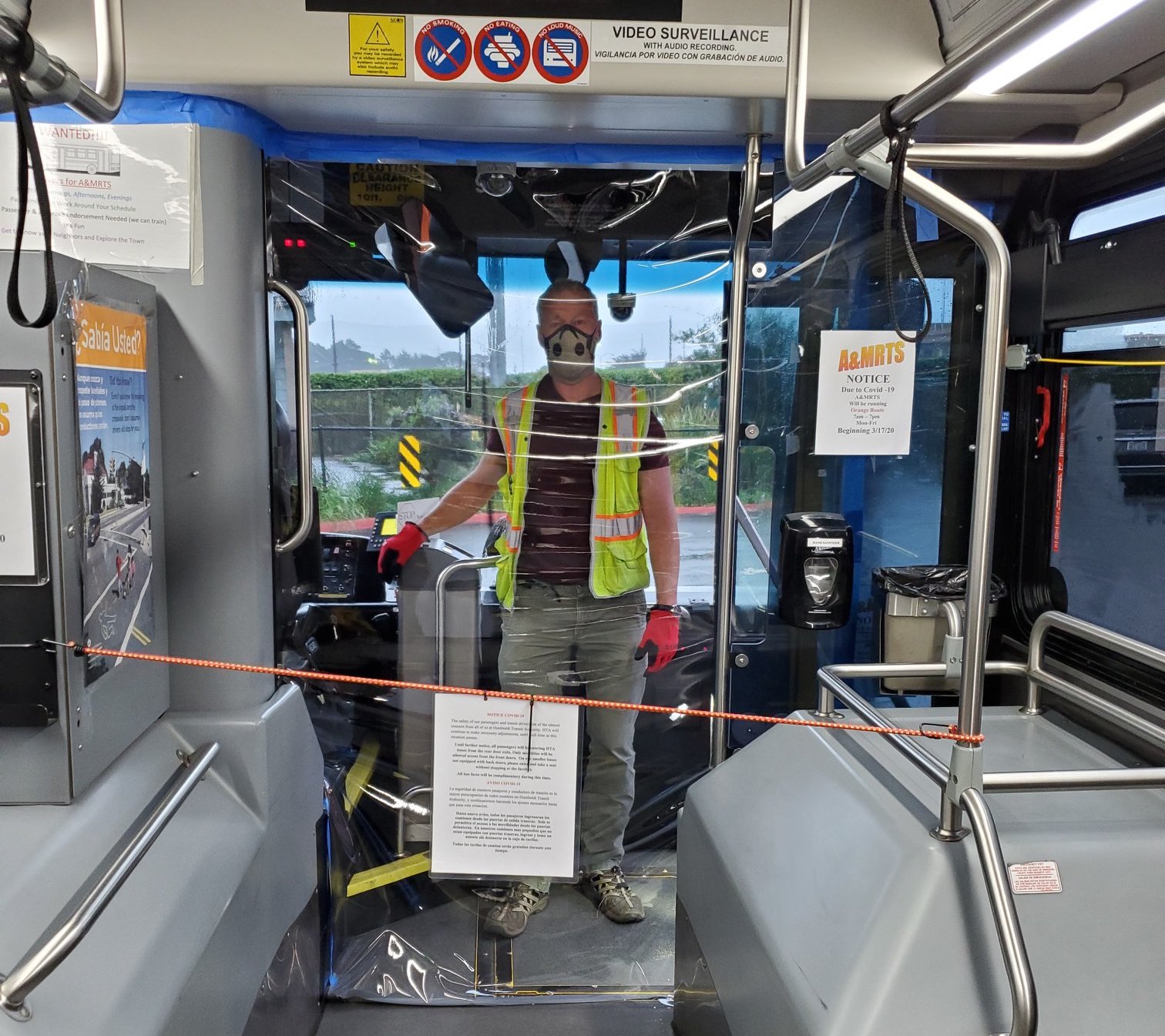
    And then there’s that other factor, an anomaly I hope… the separation of driver from passengers via a vinyl wall. So impersonal, a clear Berlin Wall, if I may.
    .
    As I arrive at each stop, in particular the ones where I would pick up students, I still pause while glancing out in the distance. I find myself looking for those waving arms, that transition from a walk to a full-bore run, as a student realizes they may miss their bus ride to school. I grew to know a number of them well enough that I could only grin and patiently wait for them to arrive, panting, fumbling for their student ID to swipe once they clambered up inside. 
    .
    I realize school will return to business in the future, and students will once again ride the bus. Yet, as with so many derailed aspects of our lives currently, there’s no firm date on when that will take place.
    .
    So I drive. I still take in those sweeping views as I top Union Street on my way to the Parkway Apartments, coax the bus up steep grades, and round the circle at the HSU Library. And when I pick up a familiar student, I still take off my sunglasses, pull down my mask, and with a smile call out through my plastic membrane, “Good Morning!”
    .
    From time-to-time as I roll through town, I catch a glimpse of a former, frequent student rider or professor, who no longer rides the bus. 
    In those transitory moments, we may glance each other’s way at just the right instant. As recognition unfolds, so do the smiles, the nods, the waving of the hands, and I am granted a brief respite from the isolation imposed upon me by this COVID-19 experience.
    .
    While I am grateful to still be working, still driving, I am even more grateful for all the friendly smiles, the greetings, the eye-rolls, headshakes, and laughter over my bad jokes and puns, that I experienced these past semesters. I wonder how ‘My’ students are doing, how they are faring during these trying times… I care.
    .
    I look forward to life resuming in a more normal manner, and the days of a busload of students once again bringing their energy, excitement, and friendliness through the doors.
    I honk and wave whenever I see students in graduation caps and gowns getting their pictures taken by the gates of the university. I shake off that bit of sadness and drive on.

  • Giovanni Guerrero Aims to Promote and Protect Campus Resources

    Giovanni Guerrero Aims to Promote and Protect Campus Resources

    Giovanni Guerrero makes his case for the Associated Students presidency

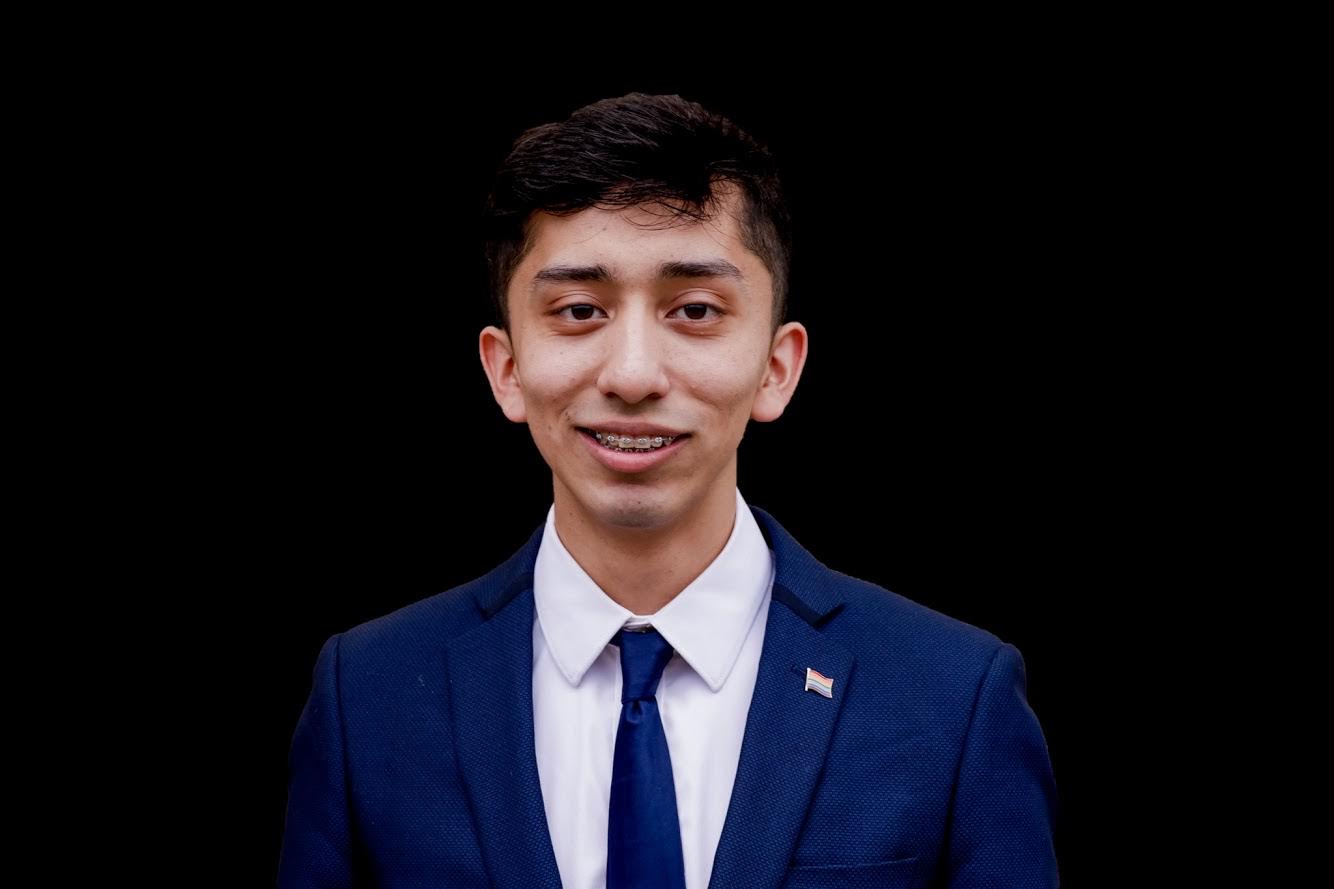
    Born and raised in southern California, Giovanni Guerrero is an openly gay, first-generation Latinx student. Coming to the end of his junior year, this is Guerrero’s first time running for a position with Associated Students, and he’s aiming straight for the top—the presidency.

    While Guerrero lacks a background with AS, he might make up for with a background working with the Federal Government. Last summer, he attended an internship with the Bureau of Land Management Eastern States division in Washington D.C. The division is an office of the BLM, a branch of the Department of the Interior. He spent time working with fellow interns in a geospatial segment of the Eastern States division—work that involved collaborating on several projects simultaneously.

    As an environmental science major, Guerrero brings preservation into the discussion as the foundation of his platform.

    “We have resources on this campus that help those students. And I think it’s very essential that we prioritize those resources and make sure that those resources aren’t seeing drastic reductions.”

    Giovanni Guerrero

    “We have some terrific resources on this campus, but over the next two years we’re gonna be facing $20 million in budget reductions, and that’s a big, scary number,” Guerrero said. “Those reductions will probably come in the form of student interests. So, it’s very important that we recognize the challenges that we’re gonna face, and we’re very vocal about it so that we can protect important resources.”

    Humboldt State University is home to many students in need, including those facing housing and food insecurities, as well as mental health issues.

    “We have resources on this campus that help those students,” Guerrero said. “And I think it’s very essential that we prioritize those resources and make sure that those resources aren’t seeing drastic reductions.”

    Guerrero advocates for more energy to be spent on the promotion of these resources. One idea is to feature a ‘program of the week’ on the HSU homepage because the current navigation system does little to support them.

    “I really wanna focus on promoting what Humboldt State has to offer,” Guerrero said. “Because our resources can’t serve the students that they’re meant to serve if they don’t know they exist.”

    “I think he would be a great leader because he understands the complexities in debates, that sometimes we have to find productive ways to maintain arguments we can’t end, and because he is so eager to make HSU a better place for students who feel left out.”

    Aaron Donaldson, debate team coach

    As the only upcoming senior running for the position, Guerrero has the most respective experience on the HSU campus and the challenges faced by its students.

    “I’ve been very fortunate to experience different areas around campus,” Guerrero said. “It’s really opened up my perception to how diligently students are working.”

    As well as working for Recreation Sports on campus, Guerrero also worked at the J. He’s also involved in several student clubs including the running, climbing and debate clubs.

    Aaron Donaldson, coach of the debate team, praised Guerrero as a genuine, sympathetic listener.

    “I would describe Gio as thoughtful, careful as an advocate and a good student,” Donaldson said. “I think he would be a great leader because he understands the complexities in debates, that sometimes we have to find productive ways to maintain arguments we can’t end, and because he is so eager to make HSU a better place for students who feel left out.”

    If elected president, Guerrero intends to improve HSU’s social media. That way students interested in attending the university will know what the campus has to offer. He advocated that all students take advantage of the opportunities at hand, especially clubs.

    “His ability to anticipate, plan for and respond to issues in dynamic and creative ways makes him an asset to any group or team he chooses to be a part of.”

    Katherine Earle, Recreation Sports

    “Clubs have really helped me to connect with other people, and I think they’re really essential to building community on campus,” Guerrero said. “That leads to retention as well. If you feel connected to your campus and where you live and where you study, then you’re more likely to stay.”

    One of Guerrero’s bosses at Recreation Sports, Katherine Earle, spoke highly of his performance.

    “Gio has already proven himself to be an effective leader while working for Rec Sports at HSU,” Earle said. “His ability to anticipate, plan for and respond to issues in dynamic and creative ways makes him an asset to any group or team he chooses to be a part of.”

    Another priority for Guerrero, as president, would be to ensure the security of student jobs.

    “A lot of students depend on those jobs and I think the more opportunities we have on campus, the more attraction we will get at HSU, and more retention,” Guerrero said.

    One of the biggest short-comings of AS, according to Guerrero, is active student engagement.

    “You could probably go up to any student on this campus and ask them, ‘Do you know what an Associated Student does or who they are?’ And they’ll probably tell you ‘No, I have no idea.’”

    Guerrero wants to create avenues to engage with the student body and inform them on what’s going on at an administrative level and within AS.

    Guerrero said this will help prioritize what students want from AS. If he wins, Guerrero is aware he has his work cut out for him, and he said he’s up for the task.

    “I’ve faced a lot of different barriers and a lot of different challenges, and just in general, it’s really helped me to be a resilient person,” Guerrero said. “And I think that’s the key to success. Cause you’re gonna face a lot of obstacles throughout life, and have to learn how to handle those obstacles.”

  • With Future Unknown Amid Pandemic, HSU Plans for Enrollment Drops and Budget Cuts

    With Future Unknown Amid Pandemic, HSU Plans for Enrollment Drops and Budget Cuts

    HSU, like all colleges, prepares for tough times and serious measures

    Humboldt State University is preparing for an enrollment drop of around 20% for the fall and a budget cut of around $20 million by the 2022 fiscal year, according to a joint press release from HSU and College of the Redwoods.

    Before the COVID-19 pandemic, HSU projected an enrollment drop for total students of around 14% for the fall and had proposed a budget cut of around $5.4 million by the 2022 fiscal year. 

    Given the uncertainty of the next year, HSU is planning for an even larger enrollment decline and budget cut. HSU currently projects new student enrollment to drop by 30%. The specifics of what the budget cuts will mean are still being worked out.

    “Many options are being looked at, including combinations of a hiring chill, spending freeze, operational changes, incentives for retirements, travel reductions, and more,” the press release said.

    In a Zoom interview, HSU Vice President of Enrollment Management Jason Meriwether said a worst case scenario projection might be only 500 new students and 500 transfer students admitted to HSU in the fall. 

    These numbers, to be clear, are projections. No one knows exactly how the next year will play out. Meriwether hoped HSU could keep enrollment and retention as high as possible.

    “The sad part is, I don’t know,” Meriwether said. “There’s no benchmark. There’s nothing to project against. We could be doing all this and, you know, 1400 students show up—which would be wonderful.”

    HSU is not alone. As noted in Meriwether’s Tuesday enrollment management report to the HSU Senate, colleges everywhere are facing enrollment drops amid the pandemic. The report cited articles from Forbes and the Associated Press along with some early data suggesting one out of every six college-bound students won’t attend college in the fall.

    With education expected to shift to a more local focus, Meriwether pointed out that HSU already shifted to local recruitment in the last year with measures like the Humboldt First Scholarship.

    Compared to an average of about 32 local students attending HSU per year in the last three years, HSU currently has 208 local students confirmed to attend HSU in the fall with the Humboldt First Scholarship. 

    “The good news is we’re not starting local recruitment today because there’s a problem,” Meriwether said. “That’s the best part of all this—is that we already have a really solid foundation that we built in the community over the last eight or nine months.” 

    The enrollment management report includes a graph of enrollment scenarios, with red lines for lower enrollment scenarios and a blue line for a growth scenario. Meriwether hoped for HSU to remain close to the blue line.

    “Essentially, pray we get as close to the blue line as possible,” he said. 

    Meriwether pointed out that, since COVID-19 has hit everywhere, current students might not have much reason to transfer. If classes are still online in the fall at HSU, they will presumably be online everywhere. 

    “Let’s say a student says, ‘OK, well, you know, I want to transfer because I didn’t want this experience,’” he said. “OK. Well, the question will be, ‘What school are you going to transfer to?’ Because every school is stuck in this scenario right now.”

    Nevertheless, the pandemic will likely temporarily derail HSU’s efforts to improve enrollment. 

    “Long term, you know, prior to COVID-19, prior to this hit, we had a plan of getting to an FTE of 7600 students [full-time students] in about four years,” he said. “So now, what if the COVID-19 environment says, well, gosh, it can make us take eight years to get there.”

    Meriwether was optimistic that eventually, HSU would get through this.

    “I believe that we will bounce back, and I believe we will bounce back strong if the hit is really bad,” he said. “This is a marathon. Enrollment is a marathon.”

  • HSU Projecting Grave Hit to Enrollment for Fall Semester

    HSU Projecting Grave Hit to Enrollment for Fall Semester

    Freshman class projected to shrink, number of academic departments to be reduced

    For the latest information, see our story here.

    Update 11:10 a.m.: a second email sent yesterday from College of Natural Resources Dean Dale Oliver and obtained by The Lumberjack makes similar points but does not give a specific number to the expected enrollment drop for fall beyond noting that a 15-20% drop was expected prior to the COVID-19 outbreak. We will update this story when we have confirmed the numbers below. The second email is pasted below.

    Humboldt State University has issued a budget directive to take immediate action to prepare for the fall semester, including the freezing of open staff positions and the reduction of the number of academic departments, according to an email sent to faculty and staff of the College of Arts, Humanities and Social Sciences Tuesday morning.

    The email, sent by Interim Dean of CAHSS Rosamel Benavides-Garb, projected a freshmen class for fall 2020 of around 500 students, down from around 1,400 students five years ago and down from around 1,000 students for fall 2019.

    “The scale and impact of our current predicament is grave and as a result our budgetary practice has to be reconsidered and reformulated based on the simple equation of demand and resources,” the email said. “We have become, de facto, a much smaller institution, which compels us to undertake a comprehensive reset at HSU.”

    The email listed six directives, including requests to freeze all vacant staff positions, reduce the number of academic departments and develop online programs for current and transfer students to complete their degrees.

    The email promised to make the process consultative and sustainable.

    “We remain committed to “the student first” approach,” the email said, “and are extremely aware of the critical importance, now more than ever, of issues of social justice, equity, and inclusion in all we do.”


    The full email is copied below:

    Dear CAHSS Colleagues,

    On April 2, the deans of all three academic colleges received new administrative directives from Interim Provost Lisa Bond-Maupin regarding the coming academic year. The directives are a call to action, issued in response to the budget and recruitment/retention reality at HSU. The Interim Provost reiterated these directives yesterday, Monday, April 6 in her Provost/VPAA Report to the senate.

    As we all know, our student enrollment has been declining for several years and the institutional budget has been negatively impacted. The administration’s efforts to address the problem must now be reframed in light of new and profound challenges the current COVID-19 pandemic poses for HSU, and the CSU system in general.

    We are projecting a freshmen class of 500~ students across all three colleges. Five years ago, the freshmen class numbered 1,400+ students. The scale and impact of our current predicament is grave and as a result our budgetary practice has to be reconsidered and reformulated based on the simple equation of demand and resources. We have become, de facto, a much smaller institution, which compels us to undertake a comprehensive reset at HSU.

    The Interim Provost has directed the three academic deans to reduce spending and grow retention/recruitment. Her directives require our college to implement the following action areas immediately:

    1. Freeze all vacant staff positions: This is indefinite or until each college develops a plan to organize staff support within colleges and across colleges.

    2. Reduce the number of academic administrative units (departments): This needs to be planned immediately and be in place for this next fiscal year so we are reorganized starting fall 2020.

    3. Develop online degree completion opportunities for certain existing majors in the last two semesters of their programs.

    4. Develop two-year degree online completion opportunities for transfer students of certain majors beginning fall 2020.

    5. Develop a partnership with CEEGE related to workforce development, responding particularly to a post COVID-19 context.

    6. Integrate the Center for Teaching and Learning (CTL) in the development and implementation of new teaching capacity.The Interim Provost has also indicated that she expects this process to be:

    The Interim Provost has also indicated that she expects this process to be:

    · Consultative with unit leadership.

    · Consultative and collaborative across colleges.

    · Sustainable by creating new retention and recruitment opportunities.

    The deans of the three colleges have already begun discussing the directives. I have also initiated planning within CAHSS, in collaboration with the three associate dean fellows, and will continue to discuss budget with the chairs. We will move forward together, exploring multiple budget management opportunities to make our colleges strong and resilient in the face of present and future challenges. We can also regard these adjustments as unique opportunities to explore new and exciting programs to attract and serve our ever-diverse student population in a shifting and challenging workforce environment. We remain committed to “the student first” approach and are extremely aware of the critical importance, now more than ever, of issues of social justice, equity, and inclusion in all we do.

    Sincerely and in solidarity,

    Rosamel


    Email from CNRS Dean Dale Oliver:

    April 6, 2020

    CNRS Faculty and Staff

    Dear Colleagues,

    Earlier today Interim Provost Lisa Bond-Maupin sent out her report to the HSU University Senate in preparation for Tuesday’s meeting.  Included in her report was a call for collective action to prepare for fewer students and fewer resources in the next academic year.  I’ve pasted the relevant section of the Provost’s report below my signature.

    Current estimates indicate we could have 20% fewer students in Fall 2020 that we had in Fall 2019.  This reduction is significant, and we must plan over the next weeks and months so that those students who start or continue with us in the fall experience high quality, engaged learning that will prepare them well for STEM professions and advanced study.

    Three items from the Provost’s report that I want to highlight are personnel, administrative re-structuring, and online education.

    Personnel: Although we will be finishing out the two faculty searches currently underway, and ensuring we have sufficient temporary faculty to deliver our curriculum, all other hiring is frozen for the moment, including those which are currently vacant and those which will soon be vacant due to expected retirements. Through improving business processes, realigning and reorganizing staff positions, and targeting professional development we will find a way to support our educational enterprise without hiring additional personnel.  This work will be both necessary and challenging, and require collaboration with relevant unions and careful consideration of multiple factors.

    Administrative restructuring: At the Dean’s level we were already planning a partial re-assignment for Associate Dean Rick Zechman to manage the marine lab while marine lab director Brian Tissot transitions from full-time director to FERP faculty.  We are also being asked to reduce the number of administrative units in the college, meaning that some departments will be merged or reformed.  This work will be done in close collaboration with the CNRS Council of Chairs and the other two academic deans.

    Online Education: There are some programs in CNRS for which one of the following scenarios might make sense:  provide an online degree-completion option for a group of students who have a year or less left to complete their degree; provide a degree-starter program for a group of first year (or transfer) students to get started with HSU from home during the fall 2020 semester, and then begin on campus in Spring 2021; provide more online sections of general education courses for undeclared students or majors from outside CNRS.  For the moment, I recommend that faculty discuss within their departments whether one or more of these scenarios might be appropriate for their program.

    For this week I am collaborating with the Provost’s office, with the other academic deans, and with a working group of CNRS Chairs to create possible models for administrative restructuring that can then be discussed among all of the CNRS chairs the following week.  Relatively soon I will also set up a mechanism by which input can be given from across the college.

    We face a significant challenge as a college and university over the next few months and years, but I am confident that we will find solutions that serve our students and the citizens of California well.  My confidence rests solidly on the incredible talent, dedication, and creativity of our faculty and staff, whom I am proud to serve.

    Best wishes, safety, and health to you and your families,

    Dale R. Oliver, Dean

    College of Natural Resources and Sciences

    From Interim Provost Lisa Bond-Maupin’s report to HSU’s University Senate, April 6, 2020

    Realignment of Spending with Reduced Revenue

    In addition to supporting instructional continuity and Academic Master Planning, our division leadership is turning our attention to budget planning for next fiscal year and beyond. Prior to COVID-19, our enrollment picture for next academic year was apparently trending toward a 15-20% fall-to-fall (one year) student headcount decline. We were likely headed toward a reduction to the HSU budget for next fiscal year that was double that anticipated when the URPC created its annual budget recommendations to President Jackson.  While the college-going enrollment impact of the pandemic is unknown for all in higher education across the nation, it is clear that the CSU and HSU will experience further decline in student enrollment. Given the enrollment challenges felt across the state, it is likely that impaction at our southern campuses will be lifted. It is highly likely that more students will choose for financial and other reasons, in the shorter term at least, to remain at home or closer to home to study. 

    While we await the release of up-to-date enrollment projections and budget information, Academic Affairs is implementing a few immediate strategies toward student retention and recruitment on the heels of the pandemic and toward further reducing our spending. As we do so, we are guided by the URPC principles and our own commitments to meeting the instructional needs of our students and protecting employment. In addition to continuing to adjust our academic offerings for Fall, immediate strategies also include: 

    • Working with each dean and director to reduce budget allocations for FY 21 

    • Freezing hiring in all open staff positions for now and planning to absorb staff attrition

    • Working collaboratively with staff within and across colleges and budget units in Academic Affairs to reimagine and reorganize our staff support 

    • Working collaboratively with department chairs and faculty to condense the number of separate academic administrative units in the colleges 

    • Working within the Office of the Provost to realign and reorganize staffing

    • Identifying academic programs ready to continue to offer upper division major courses online into next year and beyond to: a) help students in their final semesters to study from home and complete their degrees, and b) offer new transfer students an opportunity to complete their degrees online 

    • Identifying a COVID-era retention specialist in Academic Affairs who will support the continued offering of all existing retention efforts in a virtual format and will work in collaboration with ODEI to implement inclusive retention practices at a distance. 

    Each one of us will be implicated in and needed for this work. It is tough and unavoidable at this time. Each one of us has a very important role to play, now, more than ever in maintaining close connections with our students, helping them to problem-solve their educational needs and connect to resources and to stay connected to HSU. We need our students. And I think we are finding in their response to our transformed instruction – they need us. This powerful connection will ultimately move HSU through and beyond this tough moment in our collective history to the future we envision. Thank you.

  • Students Bused Back to HSU Met with Mixed Messages

    Students Bused Back to HSU Met with Mixed Messages

    Locals react to HSU students bused back to Humboldt from coronavirus-afflicted areas

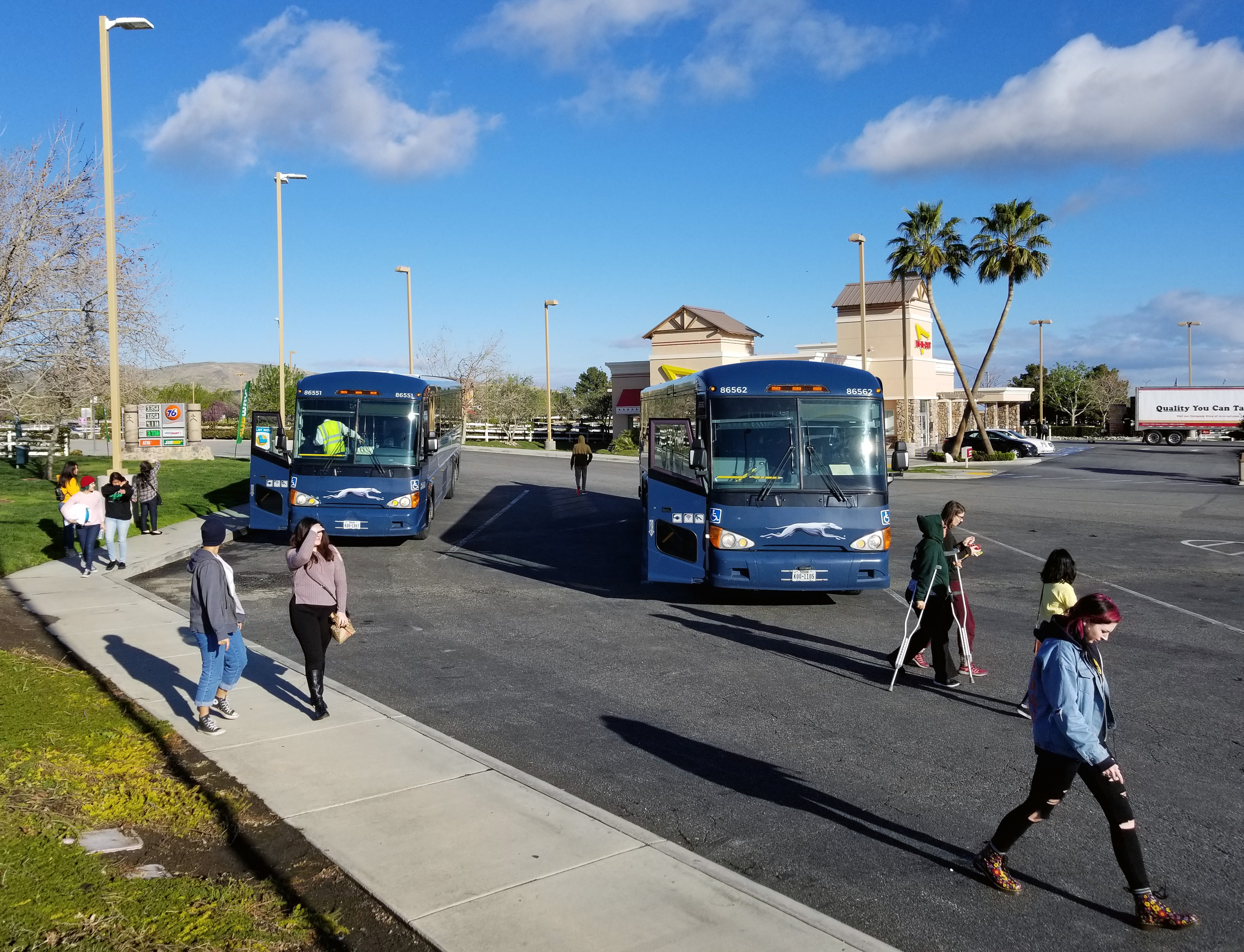
    A bus chartered by the Humboldt State Homeward Bound program picked up 31 HSU students March 21 from San Francisco and Los Angeles—two cities where the coronavirus has become more and more prominent—and brought the students back to Humboldt.

    Lost Coast Outpost posted an article about the bus March 24. The Facebook post for the story has 433 comments as of March 29, many of which are critical of HSU.

    “This is beyond irresponsible of HSU,” one comment reads.

    “And one more reason we feel GREAT about not sending our kids to HSU,” reads another.

    Sarah Ray, an environmental studies professor, defended the students.

    “Quite a few of our students live here and have moved here and have their lives here and they were visiting family,” Ray said. “So, just like we would expect and hope that kids and students who are from Arcata and the area—we would fully respect and appreciate that they would want to come home and be home with their families once their classes got cancelled in this really frightening moment—it’s reasonable that students would want to go where they’re most comfortable and feel at home.”

    She went on:

    “There’s also a lot of research out there about how many students across the nation going through this exact problem are not safe at home, and this might be a safer place for them,” Ray said.

    “I feel like it’s not a simple solution to just say, ‘Go back there,’ because many of these students live here.”

    Xochitl Andrade, HSU English and biology major

    Grant Scott-Goforth, communications specialist for HSU, explained the precautions implemented on the buses returning to HSU.

    “The buses were partially full so that people could have social distancing on the buses while they rode,” Scott-Goforth said. “And then, obviously when they return, we’re asking everyone to shelter-in-place, to quarantine if you’ve been exposed or been to an area with exposure, and to contact the Student Health Center or hospitals with concerns about health.”

    As much as HSU wished it could’ve been in command over which students came and which students left Humboldt, there was no way to do that. Of course, as Scott-Goforth asserted, the coronavirus situation is nothing to sneeze at.

    “I think it’s terribly unfortunate and I’m very sad for them and I feel very protective of students because it’s what I do.”

    Sarah Ray, HSU environmental studies professor

    Xochitl Andrade, an HSU senior majoring in English and biology, said the situation is complicated.

    “I feel like it’s not a simple solution to just say, ‘Go back there,’ because many of these students live here,” Andrade said. “They may have no where else to go if they were told to go back. We don’t know if they were just visiting friends or family. And for those who don’t have any family to go back to, what are they supposed to do?”

    While Andrade agrees that the students should be quarantined, she said she thought HSU knows what it’s doing.

    Ray hoped the harsh words toward HSU students from the Lost Coast Outpost article weren’t representative of the Arcata community.

    “I think it’s terribly unfortunate and I’m very sad for them and I feel very protective of students because it’s what I do,” Ray said. “I would like to think that it’s only an extreme, fringed, vocal, internet types of social media people who are saying those kinds of things. The vast majority of the university, especially the community and many people in the community—that’s not the kind of sentiment I see.”

  • Learning from These Sudden Senior Year Goodbyes

    Learning from These Sudden Senior Year Goodbyes

    I wasn’t prepared for the school year to end so abruptly

    I’m no good at saying goodbye. Give me no time to prepare, and I think I’m even worse. Amidst the COVID-19 pandemic and the sudden end of the rest of my in-person senior year in college, I’ve had to say goodbye to several friends and colleagues with little warning.

    This abrupt ending has thrown me off. I hate to whine, but I wasn’t ready to part ways with so many people. It takes time to reflect on others and consider what I want to say when I might never see them again.

    No goodbye is easy, and no goodbye ever feels adequate. But it takes a while for the reality of a goodbye to settle in. The natural buildup of expectation over the course of the last semester of college, which Dan Chiasson wrote about for The New Yorker, helps to ease the transition between college life and post-college life.

    Of course, not getting to say a proper goodbye is small potatoes compared to more serious issues people are facing right now, like losing jobs, homes or loved ones. Those things are awful, but they don’t make the little things suck any less.

    Of course, not getting to say a proper goodbye is small potatoes compared to more serious issues people are facing right now, like losing jobs, homes or loved ones. Those things are awful, but they don’t make the little things suck any less.

    In day-to-day life, it’s easy to let the specifics of what you appreciate about someone go unnoticed. Saying goodbye, for me, requires a bit of excavation into those little things. With some time, I can at least have a couple words to say. Even if what I say is inadequate, something is better than nothing. A couple words can signal a greater appreciation I might be trying to articulate.

    In my most recent goodbyes, I’ve tried to give thanks to the person for whatever they’ve done that has made them worth a goodbye in the first place. I try to let them know what I think of them. Then I probably wish them luck. And finally, I might just say “bye,” which is too small a word to encompass all the emotion in a parting of ways.

    There’s nothing wrong with any of that. It just hasn’t felt adequate. And it hasn’t helped that we’re supposed to be avoiding getting too close to anyone. Hugs or anything like them are off the table.

    Maybe all I’m really getting at is that saying goodbye is one hell of a difficult task, and doing so right now almost feels cruel. Being a true digital age child, I browsed the internet for tips on saying goodbye and got some vague ideas and a suggestion to give the person a memento—which, again, doesn’t seem smart right now.

    But no matter how much you prepare, goodbyes are always going to hurt.

    If you’ve made it this far, congratulations, you get my cliché takeways: if you have the chance, make your goodbyes worthwhile. Take time. And if you don’t have to say goodbye to someone yet, treasure them, and let them know how much you appreciate them as a friend or colleague or whatever else.

    You never know when the world might be struck by a pandemic and you have to say goodbye without warning. Be grateful and appreciative and let those that matter know it. Oh, and wash your hands and stay the hell home as much as possible.

  • CT Bombers Explode on Arcata’s Music Scene

    CT Bombers Explode on Arcata’s Music Scene

    Garage-band veterans rock Humboldt with their psychedelic sounds and brutally honest themes

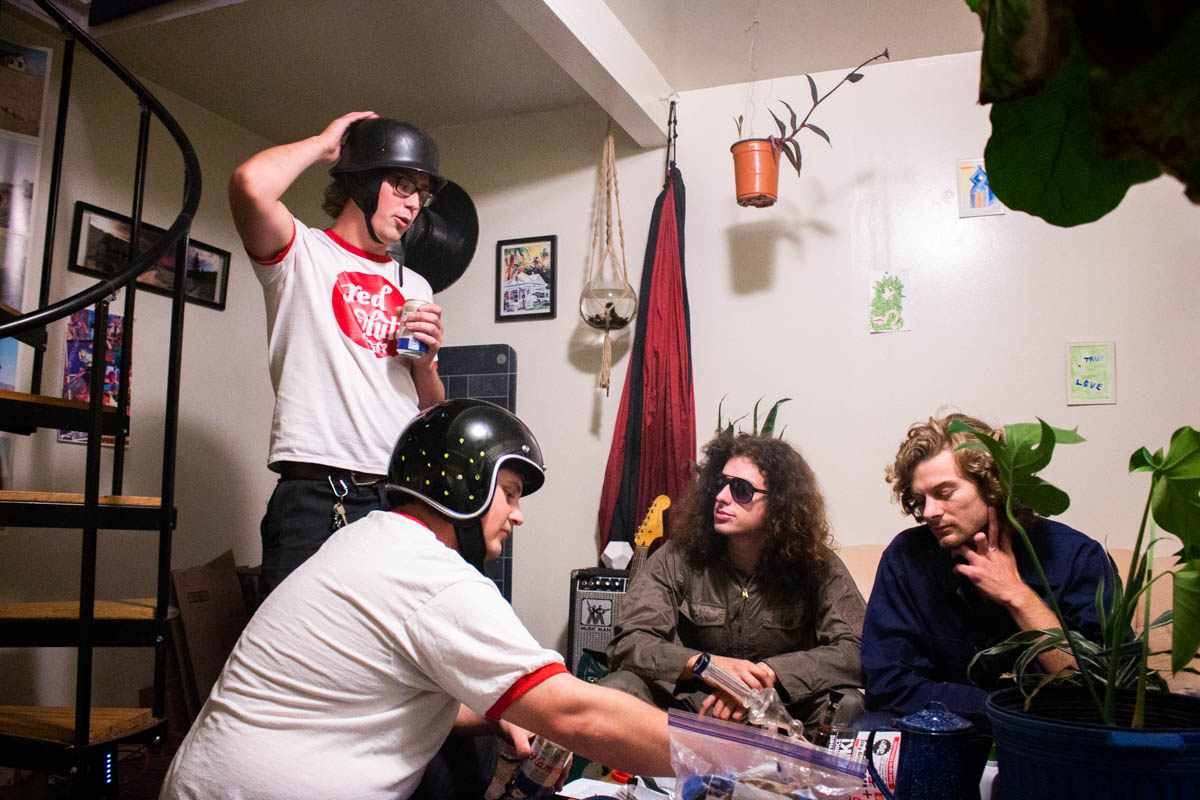
    The CT Bombers are a local band consisting of best friends Wyatt Brenner, Willem Kernkamp, Delphin Browne and Quonton Waull. Brenner and Kernkamp play guitar while Browne and Waull play double drum sets.

    The band formed in July 2016 after finishing high school in Temecula, California, where they grew up together and played in numerous bands over a span of 10 years.

    After high school, some members of the band relocated to different states, but the separation was short lived. They all eventually ended up in Humboldt and reformed the CT Bombers. Since then, the band has consisted of alternating guitars, drums and vocals to create a garage and psychedelic rock influenced sound.

    “The common theme is just spending a lot of money really,” Browne said. “People want to say it’s not about the money, but it is. That’s just the blunt truth.”

    The band says the Arcata music scene has been overwhelmingly supportive. Even though the band travels to many different areas, Kernkap says they have yet to find a place as unique as Arcata to display their musical talents.

    “The Arcata scene is really, really good for live music,” Kernkap said. “People love to dance and people love new ideas. No one here is stuck up and everyone just wants to dance and everyone doesn’t care if you’re weird. I don’t know what it is, but you don’t get that anywhere else. At least not where I’ve been.”

    Brenner is the mastermind behind orchestrating their music and boasts his songwriting contribution.

    “I think we thrive more as a live band than as someone you find online. Our internet presence isn’t nearly as big as our chops on the scene.”

    Willem Kernkamp

    “I learned how to lucid dream, “Brenner said. “And would go into my lucid dreams and just write songs. It sort of all comes together when I bring it to them. They’re the glue, you know? We record, we mix, we master, we send the masters to a pressing plant. Then we make designs for album art.”

    They release their music as physical copies, but also on streaming services such as BandCamp, Youtube and Soundcloud.

    “I think we thrive more as a live band than as someone you find online,” Kernkamp said. “Our internet presence isn’t nearly as big as our chops on the scene.”

    CT Bombers played at Richard’s Goat on Oct. 18. The band will also be releasing their second project with a music video. The name couldn’t be released, but will consist of new material and will be released on most streaming platforms. In addition, they’ll make physical copies through a label created by Brenner.

    “We have a label thing that we release our stuff through, just ourselves,” Brenner said. “We call it DataRoomRecords. So we have a website and we will do cassette tapes.”

    Along with the release of new material, music videos and shows, the friends have experience touring alongside other bands.

    “We haven’t done CT Bombers yet, but we’ve been meaning too,” Brenner said. “I think we are going to plan something for the spring.”

    Overall, the band has been more than just shows and money to the four friends.

    “It’s nice to be in a real band that actually does stuff, and it’s really fun,” Waull said. “I used to think music was very straightforward and you got to get paid and instant gratification. But I’m learning with these guys, they are showing me that it’s more than that. It’s something we can all be around and do.”

    CT Bombers has their EP, “Tsar Bombas” on their BandCamp.

  • Next Outage Could Hit Humboldt As Early As Tuesday

    Next Outage Could Hit Humboldt As Early As Tuesday

    Although areas of Humboldt County have the “all clear” for power restoration, another PSPS may be scheduled for Tuesday morning

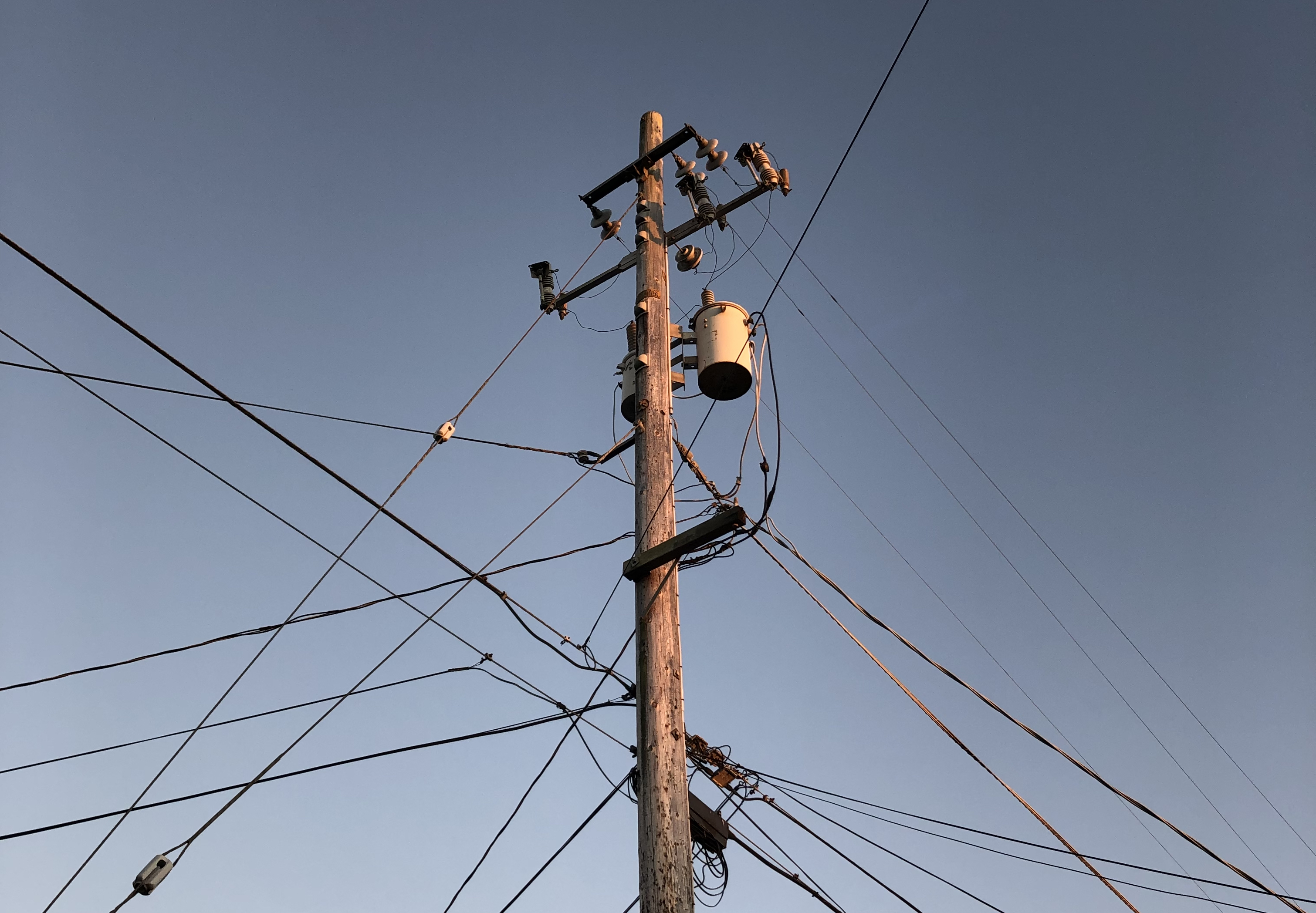
    Parts of Humboldt have been given the “all clear” to begin line inspections and restorations for the current Public Safety Power Shutoff.

    “PG&E notified Humboldt County Office of Emergency Services (OES) that portions of Humboldt County have been given the “All clear” for the weather event and will begin the restoration process as soon as conditions allow,” the latest update from the Humboldt County Office of Emergency Services said.

    However, PG&E has also notified the county that another PSPS event may affect Humboldt as early as Tuesday morning.

    “PG&E also notified OES that another weather event is scheduled for Tuesday 10-29-19 at 6 a.m. which will also result in a possible Public Safety Power Shutoff (PSPS),” the update said.

    OES says it expects “a small window of time” between the two shutoffs, and urges residents to use the time to once again prepare to have no power.

    “As always, this information from PG&E is subject to change,” the update said. “Updates will be provided as soon as they become available.”

  • Power to Go Out Between 9 and 11 p.m.

    Power to Go Out Between 9 and 11 p.m.

    PSPS update delays outage by 4 hours due to changing weather conditions

    The power will now go out in Humboldt between 9 p.m. and 11 p.m. due to shifts in the weather, according to a Humboldt County Administrative Office update.

    “These delays in the power shut off are in part because PG&E is trying to limit the time that customers are impacted,” the update said.

    PG&E increased the number of accounts within the scope of its latest Public Safety Power Shutoff today from 850,000 to 940,000. Since many accounts provide power to multiple customers, PG&E estimates that over two million people are within the PSPS scope.

    PG&E expects to give the “all clear” for the windy weather event by 4 p.m. Sunday for Humboldt. However, the update clarifies that that is not when power will be restored.

    “The weather “All clear” time is the time when PG&E personnel can begin inspecting the lines,” the update said. “It can take up to 48 daylight hours from the weather “All clear” time until power is restored because any damage found during the inspection will need to be repaired prior to power restoration.”

    In a PG&E press conference at their headquarters in San Francisco, PSPS Incident Commander Mark Quinlan emphasized that the restoration will take different amounts of time for different areas as PG&E works to patrol 31,000 miles of lines. 

    “The restoration time is a sequence as well,” Quinlan said. “It doesn’t mean that every customer is going to be out for 48 hours. It means that we’re going to begin restoration activities at the times that I mentioned, and we believe we will incrementally restore everyone all the way up and not have anyone out past 48 hours.”

  • Students are still struggling with homelessness

    Students are still struggling with homelessness

    Under the Bridge Awareness Benefit event raises money for SHAA, new book to be published on student homelessness

    The benefits of attending a four year university attract more than 484,000 students to enroll in the CSU system, yet more than 50,000 of them have experienced homelessness in the last year.

    Eleven percent of CSU students have gone to school without having a roof over their head. This finding was part of a research study for “Addressing Homelessness and Housing Insecurity in Higher Education,” a book set to publish in June.

    The book is authored by Assistant Professor of social work at CSU Long Beach, Rashida Crutchfield and Associate Professor of social work at Humboldt State University Jen McGuire.

    They also found that roughly 400,000 students enrolled in the California community college system have experienced homelessness in 2019, and nearly 20% of students at HSU reported being housing insecure at least once in the last year.

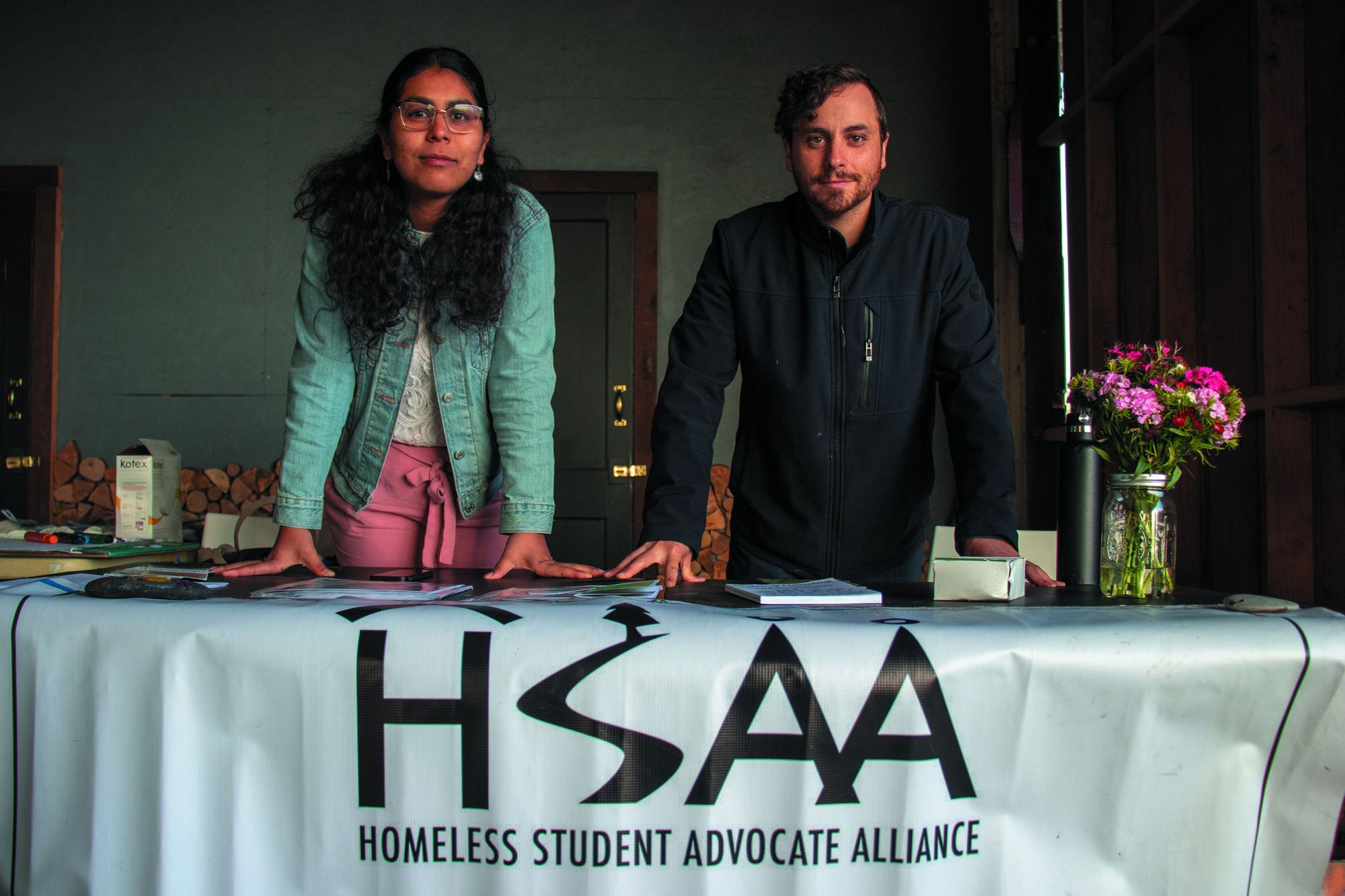
    this is an image
    Community members bid on art donated by HSU students and local artists during the silent art auction at the Under the Bridge Awareness Benefit. All proceeds went to SHAA. | Photo by T.William Wallin

    One group helping to reduce these numbers and offer resources for students at HSU is Student Housing Advocate Alliance (SHAA), who has worked closely with McGuire since the group was founded three years ago.

    The purpose of SHAA is to advocate for the rights of homeless students, locate resources to assist students, engage in activism to help push this issue to the forefront and engage the larger community in the struggle to end homelessness.

    Because of the work they do, recreation administration senior Ines Aguilar co-coordinated the Under the Bridge Awareness Benefit event at the Humboldt Bay Social Club to raise money and spread information about SHAA. The event was her senior project and she said her and her event partner felt SHAA’s cause was the best to address.

    “I was homeless with some friends for a while,” Aguilar said. “We found housing eventually but it was scary. You think, ‘I’m a student paying tuition, how can I be homeless?’ I didn’t know what I was going to do or how I was going to go to school.”

    Aguilar said she didn’t know there were resources like SHAA on campus, and more students need to know what they offer. Aguilar would like to get involved with a similar non-profit organization once she graduates and said the goal is to be able to give back to community.

    “We have a large percentage of homeless students dealing with housing insecurity,” Aguilar said. “(SHAA) helps with housing, food and just basic needs getting met.”

    IMG_0097.jpg
    Art was donated by local artists and HSU students. | Photo by T.William Wallin

    SHAA staff member Daniela Prada also experienced homelessness while working on her senior project at HSU and said it encouraged her to get involved with SHAA. Prada’s project was about policy processes of homelessness and while conducting research she met other students who were navigating school without a home.

    “I wanted to make it a personal project,” Prada said. “We started talking with community members who were experiencing similar experiences. There were a lot of students going through the same thing but not voicing it.”

    Prada has been with SHAA since its beginning. She first worked as a secretary and then started working towards policy changes. She is currently an apprentice for a local law firm that she said is involved with family and juvenile criminal law, which intertwines with housing issues.

    “There is a plan for us to look into complaints with tenants and landlords so we can know the platforms people go through in Humboldt county,” Prada said. “We are in a fucked up system when people are living on the streets and we are one of the wealthiest nations.”

    SHAA Co-founder Michael Barnes agrees with Prada. Even with money in their savings and good credit, Barnes and his partner had trouble securing a spot to live when he transferred to HSU. It took them three months to find a rental.

    Barnes said HSU was falling short of helping students secure housing and one of the goals for SHAA was to get HSU to partially take responsibility for the state of the current housing issue.

    “They eventually took some responsibility, they should take more but it was a start,” Barnes said. “We felt validated, like all this effort was for something.”

    Barnes said that other CSU campuses are looking to SHAA so they can improve their own campuses and help their students. A point-in-contact position was created last year for the first time, not only at HSU but for the entire CSU System. Co-founder of SHAA, Chante Catt, filled that position as off-campus housing liaison.

    Barnes said they collaborate with other CSU campuses who don’t have a point-in-contact position and advocate for them. Barnes said in other states like Washington this position is carried out by professors who have rapport with students.

    “It’s someone students can rely on and have an ear to the ground about what’s happening with housing opportunity in the community,” Barnes said. “The person of contact has the info but also the empathy of being able to relate with the experience of the student.”

  • They mean business

    They mean business

    Two former Humboldt State students run their own companies

    Over the past year, two former Humboldt State University students Oscar Perez and Tex Keith created and manage their own Humboldt County based companies at the ages of just 23 and 21.

    Perez and Keith started off as football players for the HSU Lumberjacks but then decided earlier in the year to take a break from enrolling in classes in order to pursue their careers. Though both men’s companies are vastly different, they both enjoyed the idea of being their own boss.

    “Seeing the way my old boss ran his shop looked really fun, but I’ve never liked authority,” Perez said.

    Oscar Perez story.jpg
    Oscar Perez, owner of The Speakeasy Hair Lounge on K street in Arcata gives client a haircut on Nov. 29. Photo by Amanda Schultz

    Since freshman year of high school, Perez had always had a passion for cutting hair as a barber. He knew he wanted to one day open his own barber shop. It wasn’t until just a couple of months ago when Perez spontaneously decided to take a chance as he found a storefront available in a popular location in the middle of Arcata on K street. A month and a half later, The Speakeasy Hair Lounge opened up on Oct. 2.

    “I’ve always dreamed of opening my own shop,” Perez said. “The opportunity came up quick. I saw the shop and just ran with it.”

    As CEO of Inertial Media, Keith also manages a corporation within Humboldt. This business maven and marketing agency provides expert consulting, brand strategy, and social media management to help their clients. As Inertial Media grew larger Keith became more successful. Keith was awarded top 10 entrepreneurs and had his company featured in Entrepreneur Magazine.

    “I’m using this as momentum to keep on growing and helping out other people,” Keith said.

    As a college athlete, Keith had hopes of starting a career in the NFL. It wasn’t until after buying two laptops with extra financial aid money and discovering digital marketing did he make the decision to commit most of his time toward business.

    IMG-7326.JPG
    Former HSU student Tex Keith is the new CEO of Inertial Media. Photo courtesy by Tex Keith

    As Keith learned more about marketing, he was sought out by one of the most successful self-made entrepreneurs in America, Tai Lopez.Keith continued to learn and grow in Lopez’s program which ultimately landed him a spot in Tai Lopez’s Exclusive 300 Group which consists of his best students. Keith is also planning to teach in one of Lopez’s upcoming courses.

    “Going from seeing his YouTube videos in 2015, to being in them is pretty cool,” Keith said.

    Keith has strengthened his team at Inertial Media by hiring other young like-minded marketers and brokers to keep things running smoothly. Perez also hired like minded barbers with similar hair cutting styles.

    “I have a barber from Florida, Central California, and Riverside,”Perez said. “I never actually met any of them. I hired them through Instagram and gave them my pitch.”

    Efrain Rosario is one of The Speakeasy’s barbers. Perez first saw Rosario’s barber skills as he posted pictures of his work on social media. After a few conversations, Rosario was convinced to stay in Humboldt County for a fresh start in the industry after moving from Florida.

    “My experience working here so far has been pretty fruitful,” Rosario said.

    Both companies have plans to expand and further their business along in the future. Perez and Keith have put in countless hours and given up many nights of sleep to get these companies to where they are today. The grit and determination of these two men have started to inspire others to also follow their dreams of starting up a business.

    “Don’t hesitate,” Perez said. “Ride with the momentum and just go for it.”

  • The Educated Landlord and Tenant Program has been brought to the table

    The Educated Landlord and Tenant Program has been brought to the table

    Tenants, landlords and community members were invited to discuss the development of the ELT Program during town hall meeting

    A study done by the CSU office of the chancellor found that one in five Humboldt State students reported being without housing one or more times last year.

    Humboldt State’s off-campus housing coordinator, Chant’e Catt hosted a meeting on Nov. 30 in the Great Hall on campus to discuss this major concern of housing and other potential issues that lay ahead for student renters and landlords in Humboldt County.

    “We’re looking to get feedback and create connections in the community,” Catt said.

    Catt has been collecting data since Aug. to develop a program called the Tenant and Landlord Education Program. This program is centered around educating local landlords and student tenants. Catt’s goal is to raise awareness about equitable practices and cohesion between the two sides.

    “We want to create open communication and bridge the gap between the community and campus,” Catt said.

    SB.TOWN.HALL.IMG_9254.JPG
    A frustrated community member goes on about privatization in housing while event organizers Ashley Bradshaw and Chant’e Catt listen in the back. Photo by Sean Bendon

    Sasheen Raymond, a support administrator in the social work department on campus, explained the need for good communication between tenants and landlords. Raymond also called attention to the issue of finances in some cases.

    “The goal is coming to some sort of agreement between students and landlords,” Raymond said. “ We want to know where the middle ground is for both sides.”

    Raymond and Catt have been working to create a donor supported stipend that could be applied to student housing deposits in the future. This could help create a better system for student housing and alleviate some of the pressures students face when looking to find off campus housing.

    Humboldt State’s associate director of housing, Todd Larsen supports the idea of the program.

    “They’re trying to create a better future for the students,” Larsen said.

    SB.TOWN.HALL.
    Ashley Bradshaw listens as a community member voices their concerns at the landlord and tenant town hall meeting held in the Great Hall. Photo by Sean Bendon

    Catt and her associates have been working to reach out to students about their concerns by emailing well over a 1000 students and holding open meetings in the UC Quad. Students and landlords alike have come forward to express their fears in hopes of finding a balance.

    “Today’s meeting was a synthesis of all the concerns students and landlords presented us with,” Catt said. “We asked them what they didn’t like and now we’re working on it.”


  • Homelessness awareness

    Homelessness awareness

    By | Juan Herrera

    Being homeless is a spot where not many people would like to be but if the situation appears you always need to be prepared.

    The Homeless Student Advocate Alliance (H.S.A.A), a club at Humboldt State, put on a three day event to inform, share and educate the students and community about the severity of homelessness in Humboldt County.

    Chant’e Catt, president of the club, said for this being their first annual three day event it was educational and they got their message across.

    “Our main purpose of the event is to let other homeless students know they’re not alone,” Catt said. “And I believe we achieved a majority of that.”

    Catt said the first day of the event was more personal for others by students and members of the community sharing their own stories of past and present times of homelessness in their life. Catt herself even spoke about her own times being homeless when she and her family first moved to Humboldt County.

    “I first hand know the struggles of moving from place to place,” Catt said.” For my first 14 weeks in Humboldt County I was constantly trying to find a secure place for me and my two children.”

    Catt said majority of the students that are homeless at HSU are not because they do not have the money. but purely because the lack of housing Humboldt State and the County provides.

    Daniela Parada, another member of the club, said the second night of the event was the most eye-opening night. The night went into the meaning of what being “homeless” actually is.

    “We wanted to talk about the stigma and labeling that gets put on the homeless community,” Parada said. “Most people assume that anybody who is homeless is dirty, smelly and just plain ole gross.”

    Parada said most of the time that is hardly ever the case. According to her, a person who goes from couch to couch but still showers daily, dresses nice, etc., is still considered homeless. Would you still call that person smelly and gross?

    Parada said the last night of the event was the most hands-on activities they put on. They showed students and members of the community how to put together and take down a tent and also how to start a fire almost anywhere.

    “Personally this was the most educational night for people who attended our event,” Parada said. “Even though we could not start a real fire, people definitely got the hang of how to start one.”

    Arri Sanders, a senior at HSU, said how the event was personal and a huge eye-opener for her.

    “I remember when one of my best friends was going through a similar situation,” Sanders said. “I honestly did’t realize some of the embarrassments or things homeless people had to go through until hearing it first hand.”

    Sanders said even though her friend wasn’t nearly in as bad as a spot as some she still realized part of what she went through. Sanders said now looking back at it she wishes she would have tried to offer her friend more then what she did.

    Sanders had one last message for people who have friends who are homeless.

    “Please! Please! Even if they don’t ask for it, offer any help you can, because they do need it.” Sanders said.


  • Housing conference weighs homelessness in Humboldt County

    Housing conference weighs homelessness in Humboldt County

    By | Charlotte Rutigliano

    Chant’e Catt and Mike Barnes, along with the Homeless Student Advocate Alliance (HSAA), are seeking to create a greater connection for students, the university, and the community. Something they plan on doing with the upcoming events after fall break.

    Catt is the founder and president of the HSAA. She said that an estimated 15 percent of students experience homelessness while attending HSU.

    Catt founded the HSAA last September to give a voice to students experiencing homelessness.

    “I eat, breathe and sleep this club,” Catt said. “This club is support for students who find themselves seeking housing.”

    Barnes, who is the current vice president for HSAA, said the three-day event is one of the biggest events they’ve done on campus, especially since they’ve taken on a lot of the event planning and marketing.

    “If I described this event in one word, it would be ‘necessary,’” said Barnes.

    Barnes said there isn’t enough information for students who have housing insecurities.

    According to Barnes, the event will include both student and community led organizations, such as the Affordable Homeless Housing Alternatives, Inc. (AHHA).

    Nezzie Wade is president of the board of AHHA. Wade said that they have worked with several groups of students at the university on housing-related issues and projects.

    Both Catt and Barnes said this event will open up a dialogue for students and will help bridge the local community with the student community.

    Barnes said that it might be hard to find seating for the first two days of the events because of how much support they’ve gotten from the community.

    ————————

    Day 1 – Nov. 28 from noon to 1 p.m. on the HSU University Quad.

    Afternoon sustainability fair consisting of student innovations and ideas of sustainable living outside of traditional dwellings.

    Housing: Indigenous Insights 6 p.m. to 8 p.m. in the Native American Forum at HSU.

    A night of storytelling featuring Jene McCovey, an open forum for attendees to share their stories.

    Day 2 – Housing: Social Justice Insights Nov. 29th from 6 pm to 8 pm in the Native American Forum at HSU.

    Perspectives on social justice and breaking stigma. Featuring a Native Speaker and Vernon Price, a highly knowledgeable advocate for homelessness rights and co-star in I Am I was Homeless, a featured video to be shown; faculty members from the Department of Social Work, members of the Multi-Cultural Center, Affordable Homeless Housing Alternatives and more representatives from HSU.

    Day 3 – Housing: Innovative Insights Nov. 30 from 8 p.m. to 12 p.m. in the University Center Quad at HSU.

    The final day of the summit will consist of an idea fair, featuring student, faculty, and community projects focusing on anecdotal solutions to housing insecurity. The workshop will provide opportunities to acquire skills that will help support the lifestyle should you encounter it.

  • Raising the bar

    Raising the bar

    In the National Survey of Student Engagement, zero percent of faculty think seniors devote “Very Much” or “Quite a bit” of their time doing community service or volunteer work. Six percent of seniors said they devote “Very Much” or “Quite a bit” of their time for community service or volunteer work.

    The National Survey of Student Engagement was sent out to seniors last spring at the same time the Faculty Survey of Student Engagement was sent out.

    In these surveys, 298 seniors and 226 faculties participated. Percentage-wise, that’s around 31 percent of seniors and 40 percent of the faculty. A part of the results from both surveys for the 2016-17 academic year shows how upper division faculty thinks seniors spend their time versus how senior say they spend their time.

    Upper division faculty were asked how much time do they think seniors devote to participating in co-curricular activities. Faculty answered only one percent of students devote “Very Much” or “Quite a bit” of their time participating in co-curricular activities. On the other hand, seniors answered seven percent.

    According to the same surveys, upper division faculty thinks 41 percent of seniors devote “Very Much” or “Quite a bit” of their time relaxing and socializing, while seniors answered only 23 percent.

    Almost half of all seniors in the survey said they devote “Very Much” or “Quite a bit” of their time to prepare for class, on the other hand, Upper division faculty think only 13 percent of seniors do so.

    It’s not the first time HSU students participate in the National Survey of Student Engagement. The first time was back in 2002, according to NSSE website, though last spring was the first time HSU conducted the Faculty Survey of Student Engagement on HSU faculty.

    According to the Office of Institutional Effectiveness, the Faculty Survey of Student Engagement costs $2,008 and the National Survey of Student Engagement cost $5,550.

    Such surveys are important as they help the university administration understand students and how do they spend their time and how both student and faculty are seeing and perceiving things.

  • Student veterans get honored

    Student veterans get honored

    By | Charlotte Rutigliano

    At this week’s football game on Saturday, Nov. 11, three student veterans will be honored during halftime.

    Scott Elsworth will be awarded a thousand dollar scholarship. This scholarship is the first ever at HSU. The money for the scholarship was donated by Sean T. and Robin Baille.

    “It is a nice surprise to be selected,” Elsworth said, “and I’m thankful for the opportunity.”

    Elsworth who is originally from Porterville, California served four years in the U.S. Navy. He is currently in his senior year at HSU majoring in Forestry/Hydrology. Elsworth is an active member of the water resource club on campus and is currently learning to play the violin as a memento of his time in college.

    Former U.S. Navy Fire Controlman James Lamping will be awarded the Veteran Meritorious Award. This award is based on the students’ academics as well as their work with veterans both on and off campus. Lamping’s peers nominated him for this award.

    “I was extremely honored to receive this award,” Lamping said, “I know this is a nomination based award, and those who nominated me, thank you.”

    Lamping who was raised in Irvine, California, served six years in the U.S. Navy aboard the USS Higgins. During his time he was deployed three times. Twice to the Persian Gulf and once on an “Around the World” tour. Lamping is currently a Forestry major with an emphasis in forest soils, he is also working towards a minor in Geospatial analysis.

    McKinleyville local Lucas Miller will be awarded the Humboldt Hero’s Award. This award can be awarded to any veteran in the Humboldt County community. Miller will also be playing in Saturday’s game against Central Washington.

  • What’s your costume?

    What’s your costume?

    By | Iridian Casarez

    IMG_4404

    Bailey Tennery

    Journalism, 3rd year

    Velma

    “I chose to be Velma from Scooby Doo, I have always loved her,” Tennery said. “She was the smartest one.”


    IMG_4407John Yu

    Zoology junior

    Monkey

    “All weekend, I was at Halloween parties as a monkey with a bundle of bananas and people kept asking me for them, so I decided to get bananas and started giving them away,” Yu said. “I’m the Monkey King.”


    IMG_4410 (2)

    Alycia Padilla

    Wildlife senior

    Steampunk Keyblade Master

    “I’m a steampunk Keyblade Master from the video game Kingdom Hearts,” Padilla said. “I’ve always liked steampunk style and Kingdom Hearts has different Keyblade Masters so I came up with my own.”


    IMG_4400
    Photo by Iridian Casarez

    Madeline Lueck

    Botany

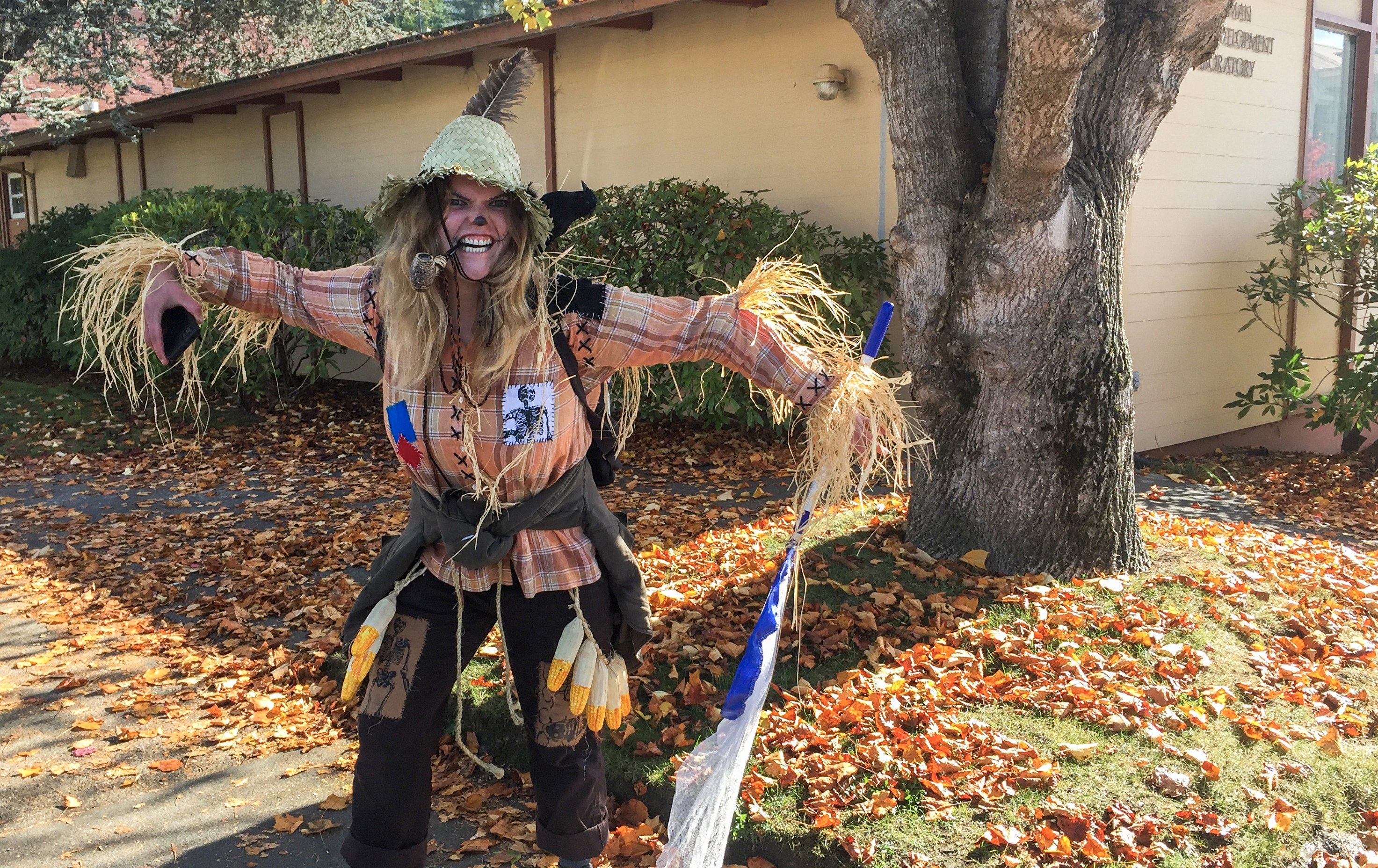
    Scarecrow

    “My partner went as a crow, so I decided to be a scarecrow,” Leuck said. “It took days to put it together but I thought it’d be fun.”


    IMG_4416Ryan Maberry

    Forestry 2nd year

    Elf on the Shelf

    “I’ve been told I look like an elf so I dressed up as the Ellf on the Shelf,” Maberry said. “It took me about two hours to put together.”


    IMG_4419

    Zachary Warren

    Sophomore Econ major

    Ash Ketchum

    “I normally do really bad costumes, I will have an idea and then try to do it myself and it doesn’t work out, so I wanted to be something really cool this year,” Warren said. “Ash is a recognizable character. A lot of people grew up with Pokémon so I thought it’d be really cool.”


  • Word on street: Students Halloween Plans

    Word on street: Students Halloween Plans

    By | Lauren Shea

    Halloween time is here and most students will be celebrating this weekend since it lands on a Tuesday this year. Some students will be taking a break from their classes to enjoy the holiday while others will be studying.

    LSHalloweenWOTS1
    Dylan Wicker, Anthropology Major, Sophomore Photo credit: Lauren Shea

    Dylan Wicker, Anthropology Major, Sophomore

    “I’m probably going to have a few friends over and hand out candy to trick-or-treaters and going to watch some movies.”

    LSHalloweenWOTS2
    Stephen Alvarez, Biology Major, Junior Photo credit: Lauren Shea

    Stephen Alvarez, Biology Major, Junior

    “I might just tag along with friends and hanging out with them.”

    LSHalloweenWOTS3
    Sami McDonald, English Major, Freshman Photo credit: Lauren Shea

    Sami McDonald, English Major, Freshman

    “Actually I’m going home for Halloween in San Diego. We’ll probably watch ‘It’s the Great Pumpkin, Charlie Brown’ and I’m gonna try to convince my dad to watch The ‘Nightmare Before Christmas’ and hand out candy.”

    LSHalloweenWOTS4
    Angelina Resendez, Social Work Major, Senior Photo credit: Lauren Shea

    Angelina Resendez, Social Work Major, Senior

    “I’m probably going to catch up on my sleep and watch some scary movies with friends.”

    LSHalloweenWOTS5
    Maya Matute, Sociology Major, Sophomore Photo credit: Lauren Shea

    Maya Matute, Sociology Major, Sophomore

    “This weekend, I’m going to dress up and also take part in the Haunted JGC Queers and Allies.”

    LSHalloweenWOTS6
    Robo Oku, Environmental Resource Engineer Major, Senior Photo credit: Lauren Shea

    Robo Oku, Environmental Resource Engineer Major, Senior

    “I’m going to take part in Baile de Otoño at Los Bagels on Saturday.”

    LSHalloweenWOTS7
    Jessie Keller, History Major, Junior Photo credit: Lauren Shea

    Jessie Keller, History Major, Junior

    “I’m going to a friends Halloween birthday party. I’m dressing up as doodle bob. I’m also going to a couple sorority get togethers. One of them is a movie night and we’re going to watch ‘Hocus Pocus’.”

    LSHalloweenWOTS8
    Percival Ferrugia, Theater Major, Junior Photo credit: Lauren Shea

    Percival Ferrugia, Theater Major, Junior

    “I’m going to a theater Halloween party with other theater majors.”

    LSHalloweenWOTS9
    Marie Torres, Criminology Major, Freshman Photo credit: Lauren Shea

    Marie Torres, Criminology Major, Freshman

    “I’m dressing up as Barrel from ‘The Nightmare Before Christmas’. I’m going to go trick or treating with my roommate and her niece.”

    LSHalloweenWOTS10
    Tati Taylor-Willis, Vocal Performance Major, Freshman Photo credit: Lauren Shea

    Tati Taylor-Willis, Vocal Performance Major, Freshman

    “I’m not sure what I’m going as yet, but I’m going to have a friend help me with my costume.”


  • Bumpin Beats

    Bumpin Beats

    By | Curran C. Daly

    The UC Quad was alive with music and dancing at noon on Tuesday as Zion I performed for students. An Associated Students Presents event, the free show featured Zion I’s Baba Zumbi, also known as MC Zion, R&B and Reggae artist Winstrong, and DJ Twelvz.

  • The challenge is ON

    The challenge is ON

    By | Robert Brown

    “Outdoor Nation is a fun way to get outside and be active,” Bridgette Hanson of Center Activities said. “That’s different for everyone, it’s why Humboldt won last year.”

    Open to students and anyone in the community, all you have to do is download the app, get out and take pictures of yourself, then post them to win prizes. The challenge is sponsored by REI, The North Face, eno, and Hydro Flask, and local businesses Adventures Edge, Minor Theatre, and Muddy Waters.

    “It’s so inspiring to live in this community,” Scott McCrary, student representative for ON said. “We have some of the most amazing nature spots here in Humboldt.”

    Some examples of ON Challenge events are guided walks, tidepool exploration, restoration projects, crafting, and volunteer events, also workshops on hiking, bike maintenance and birding.

    ON flyer.jpg

    “Our biggest event is Paddlefest,” Hanson said. “Around 200 people come to that event, some people get to try kayaking for the first time.”

    Each event accomplished earns a certain amount of points, for instance, backpacking, camping, and biking earn 10 points. Skateboarding, slacklining, and yoga earn 5 points. Birdwatching, gardening and stargazing earn 2 points. Add up points by completing as many events as you can and use them to redeem prizes.

    “A really fun event is the scavenger hunt,” McCrary said. “People follow clues through the week hidden in different places. Then take a picture with the clue once they’ve found them and post them in the app. to win a North Face backpack.”

    Along with an individual winner, schools are also competing to have the most number of people participating in their communities challenge. Last year HSU won the title of number one outdoorsiest school.

    “Winning was exhilarating,” one of last years winners, Ruby Garcia said. “Especially because we did it as a community and we won a $3,000 gear library that is available to students free of cost.”

    To find out more go to hsuoutdoors.humboldt.edu or www.oncampuschallenge.org

    “A big thank you to the Humboldt community,” McCrary said. “This wouldn’t be possible without the local radio and local sponsors.”

  • Voices of student science

    Voices of student science

    By | Bryan Donoghue

    BDVoices_Web-1.jpg
    Samuel Vassallo, sophomore, Wildlife major Photo credit: Bryan Donoghue

    Samuel Vassallo, sophomore, Wildlife major — “I hope to work outdoors and possibly for government agencies like the U.S. Fish and Wildlife Service, or the park service, or the U.S.G.S., or any of the state agencies that are equivalent to national agencies like those. I could work for a nonprofit like the World Wildlife Foundation, or Nature Conservancy, or I could work for a company that needs to do environmental impact and see if there are any endangered species on their property, so if they could log or mine. Probably not as much into working for a private company, I would like to work for the government. I love the classes, it’s great. When I chose this major I just thought it sounded cool and looked at the course list and chose it. You had to pick a major as a freshman to be in the Klamath Connection, which was a program I was in. We show up a week early to school and meet our professors, and I just picked Wildlife because it sounded cool and when I got here I’ve been loving every minute of it, so I feel like I’m in the right major, it’s pretty lucky.”

    BDVoices_Web-2.jpg
    Romeo Javier Dominguez-Rameriz, recent graduate, Criminology major Photo credit: Bryan Donoghue

    Romeo Javier Dominguez-Rameriz, recent graduate, Criminology major — “I’m doing an extra semester to see what I want to do with my graduate program. Right now I’m looking into international relations, so I’ve been looking in to see what programs I can go into that are in Germany. Nothing set in stone or anything. Personally, I love it up here. I’m from the SoCal area, the main reason why I came here was because of the environment and everything and I pretty much enjoy the people and environment like I hoped I would. The staff from my department is pretty rock-on, so I’m most fortunate for our faculty.”

    BDVoices_Web-3.jpg
    Jade Simms, senior, Engineering major Photo credit: Bryan Donoghue

    Jade Simms, senior, Engineering major — “I’m hoping to get a job. I think it would be cool to work in river restoration, but we’ll see who wants to hire me. I think the Engineering department is a very supportive department, I’ve been given a lot of opportunities to learn what I want to learn. For future Engineering majors, do it! Don’t be afraid. I’ve talked to a lot of people, I know women especially are a little intimidated, but screw it, just do it.”

  • Open house with open arms

    Open house with open arms

    On a seemingly quiet Friday afternoon on the Humboldt State University campus, the MultiCultural Center was booming with energy, as international music and the savory smell of lumpia filled the air. Dozens of HSU students gathered in front of the center on Sept. 12 for the MCC open house to represent and celebrate the various cultures our campus consists of.

    LN_OpenHouse(3).JPG
    The MCC featured a cultural exchange through cultural cuisine. Photo credit: Lora Neshovska

    The center open house aimed to familiarize students with the numerous cultural centers available on campus and create a comfortable environment for socializing and learning.

    Among the representatives were Scholars without Borders (SWB), Women’s Resource Center (WRC), the Latinx Center, and the Eric Rofes Multicultural Queer Resource Center (ERC). These centers, as well as much more serve as resources to anyone on campus, especially students who may feel marginalized.

    Although these centers and clubs seem to differ, they all share a passion for solidarity and intersectionality. Jonathon Salinas, 20, is majoring in Spanish and currently working as the event coordinator at ERC. Salinas says instead of viewing activism as separate social movements, it’s important to support each other, heal and move forward together.

    LN_OpenHouse(1).JPG
    Criminology and CRGS student Deema Hindwai (right) converses with EOP staff, Rama Rawal (left). Photo credit: Lora Neshovska

    According to a 2013 Humboldt retention report, an average of 25 percent of the first year, full-time undergraduate students were not retained.

    Cesar Abarca, faculty coordinator of SWB and an assistant professor in the Social Work department said this emphasizes the importance of student support centers, such as the MultiCultural Center and SWB.

    “In a small, rural area,” Abarca said. “It’s really important to make students feel welcome and accepted.”

    Abarca also said there needs to be support and advocacy specifically for underrepresented students

    As of late, SWB has shifted their focus towards assisting undocumented students, specifically with the application process for D.A.C.A. renewal. This includes providing information about the U.S. Immigration and Customs Enforcement (ICE) and basic guidelines and civil rights when dealing with law enforcement.

    Angie Muñoz, current editor of the Cultural Times said the MCC caters to what students need and can benefit from the most. This includes representing student voices and opinions in the Cultural Times, as well as opening up staff meetings to students with suggestions for the center.

    The MultiCultural Center on campus is located in the Balabanis House and is open Monday-Thursday from 10 a.m. to 8 p.m. and Fridays from 10 a.m. to 5 p.m.